
Helping Peru’s top hot sauce find US success
Introducing Tari, a flavorful new kick for everyday American foods.
Alicorp has direct operations in Peru, Bolivia, Ecuador, and Chile, manages export operations in more than 30 countries, and oversees over 150 brands. While its AlaCena sauces are ubiquitous in South America, the brand’s North American market primarily consisted of purchases made via Amazon by Peruvians living abroad. To help the CPG giant expand meaningfully and sustainably onto US grocery shelves—and achieve its ambitious $50 million retail sales goal in five years—Alicorp and IDEO collaborated on multiple projects over a two-year period. The partnership began in early 2020 with consumer research and product strategy, ultimately leading to the development of initial product branding, positioning for launch, and an in-market pilot in late 2021.

Through a combination of large-scale digital surveys and in-depth, in-person and remote research interviews, IDEO discovered that AlaCena’s Tari and Uchucuta’s hot sauce recipes resonated the most with US consumers. Made from native Aji Amarillo and Rocoto chili peppers ground using a traditional Andean “batán” technique, consumers appreciated their complex flavors and enjoyed how they enhanced, not overpowered, everyday foods like burgers and fries. The sauces’ authentic Peruvian culinary roots were also a key differentiator. In addition to consumers, IDEO consulted with industry experts—including executives from large-scale grocery chains and chief merchants of leading big-box stores—to explore retail and marketing trends and identify potential innovation partners for Alicorp in the US.
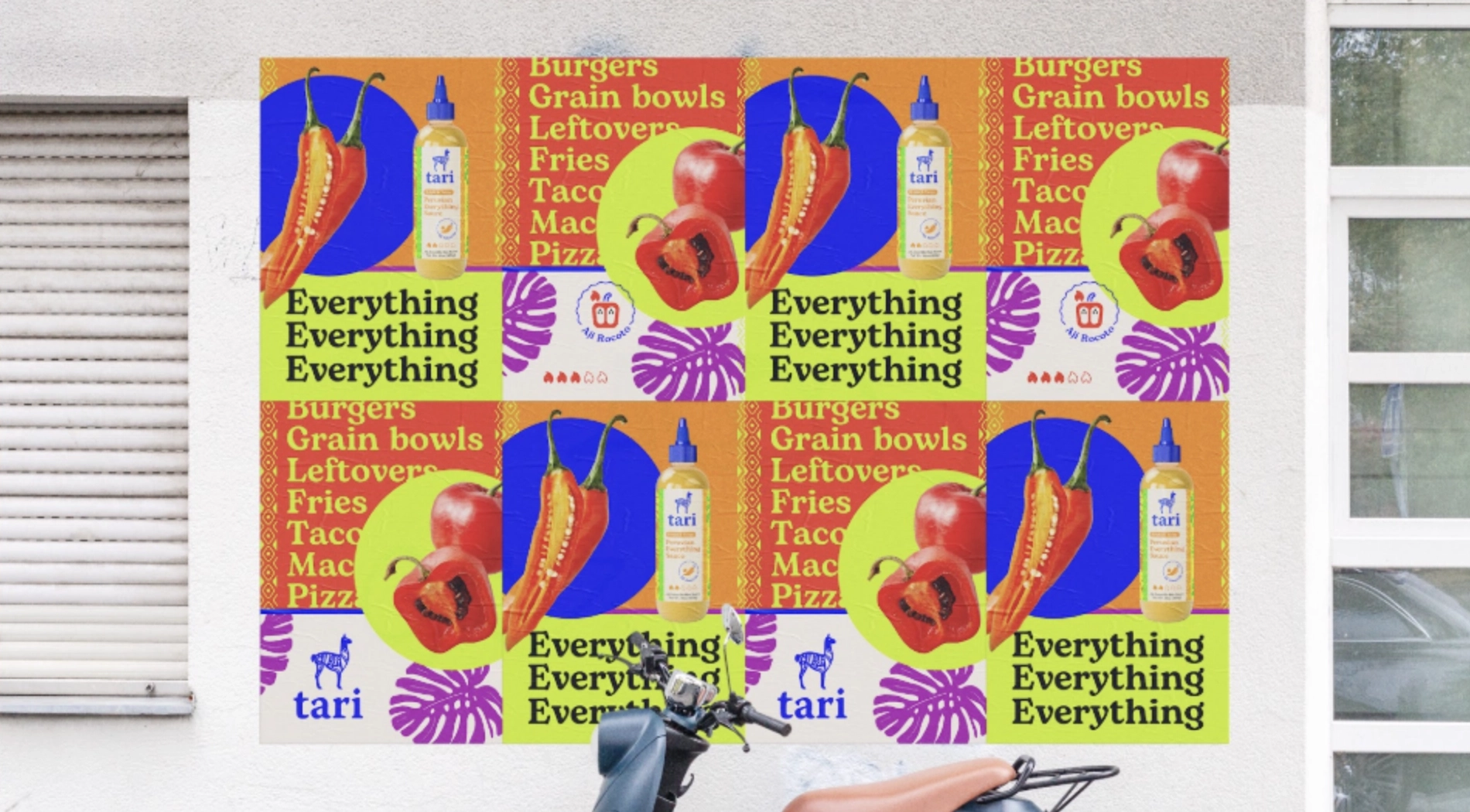
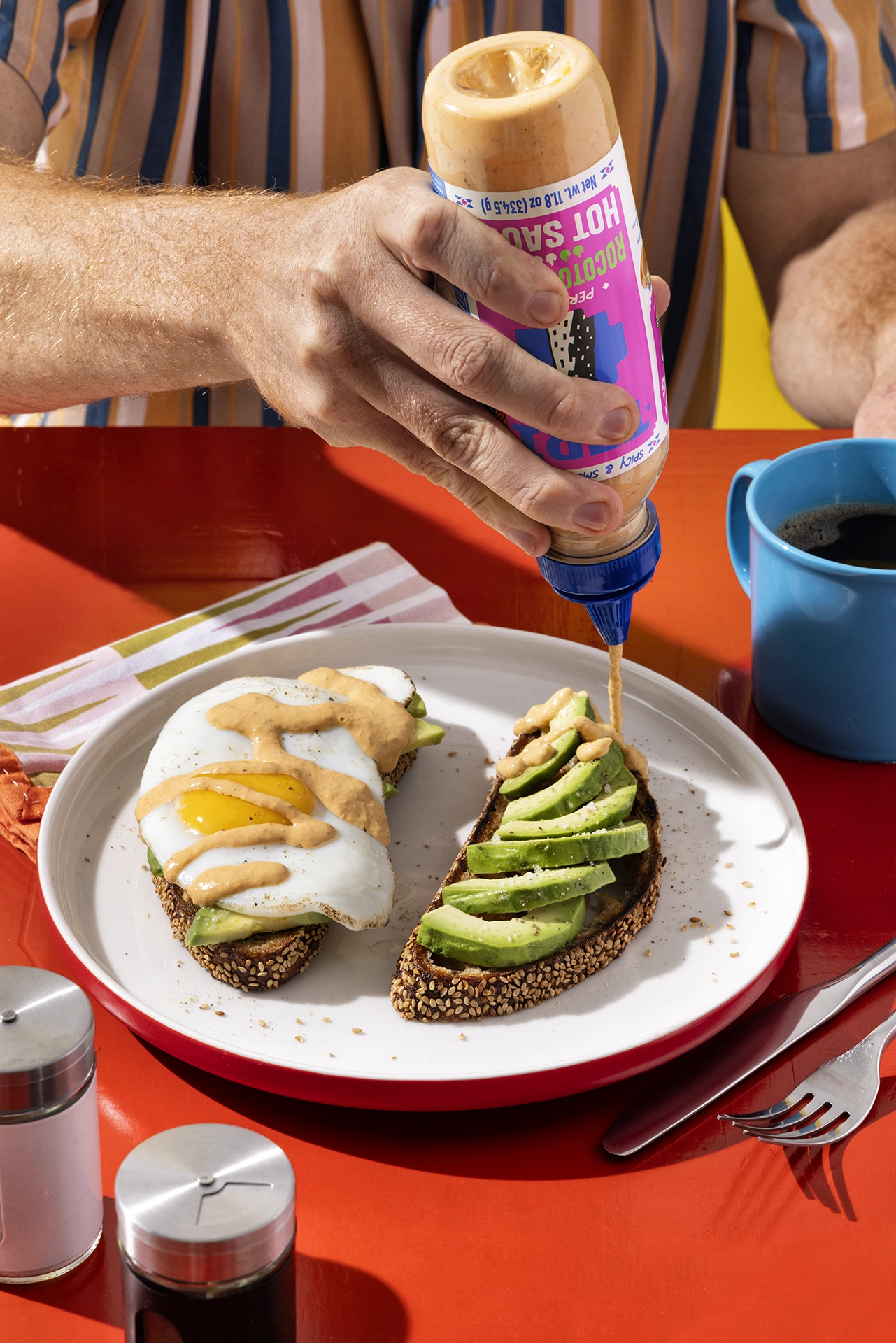
Based on the research, IDEO recommended a few changes to ensure a successful launch: Lead with the Tari brand, which was the most memorable and easiest to pronounce, and position it as an “everything sauce.” Change the packaging from a large plastic pouch to a smaller squeeze bottle to better align with consumers’ expectations and stand out on the inside of refrigerator doors. Adjust the product formulation to appeal to mainstream consumers looking for cleaner labels. And visually celebrate Tari’s Peruvian roots through bright colors, traditional textiles, and a llama, an animal closely associated with the Andes Mountains. In addition to these recommendations, IDEO provided a comprehensive go-to-market retail strategy that included potential US regions for launch, retail brokers, distributors, manufacturers, and R&D and pilot retail lab partners, as well as job descriptions for a new North American-based sales team.
While Alicorp worked on reformulation and packaging strategies, IDEO refined Tari’s initial branding strategy. Steeped in Peruvian aesthetics, the brand’s new look and feel featured a vibrant color palette, geometric patterns, and—of course—a friendly llama icon, which could also be found on all in-store point-of-sale items IDEO designed for Tari's pilot launch in late 2021.
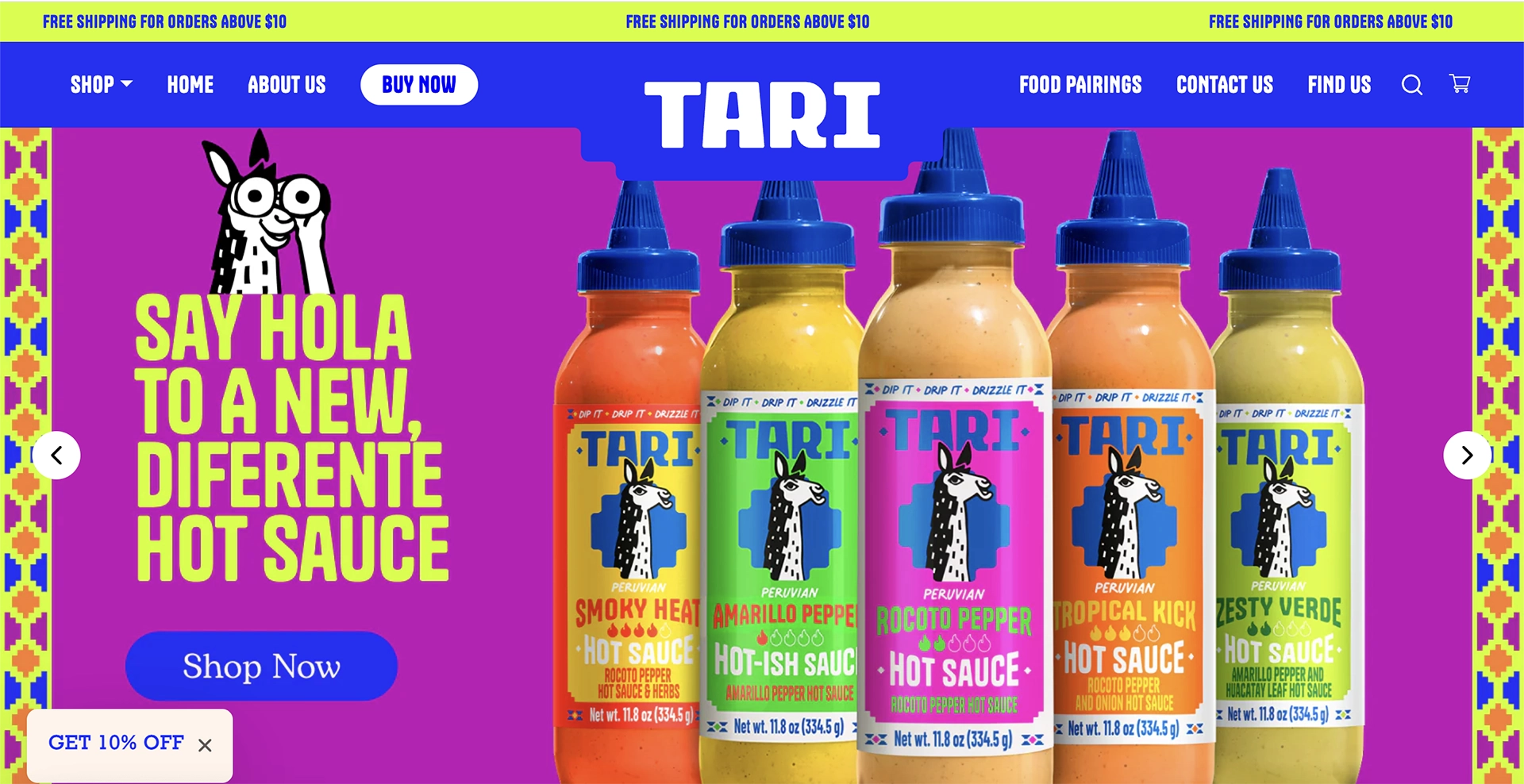
The successful 12-week in-market pilot in Tom Thumb grocery stores gave Alicorp the confidence to have its in-house design team make the brand even bolder and more eye catching, and to launch two flavors, Amarillo Pepper and Rocoto Pepper, on Amazon and in over 50 retail stores in late 2024.
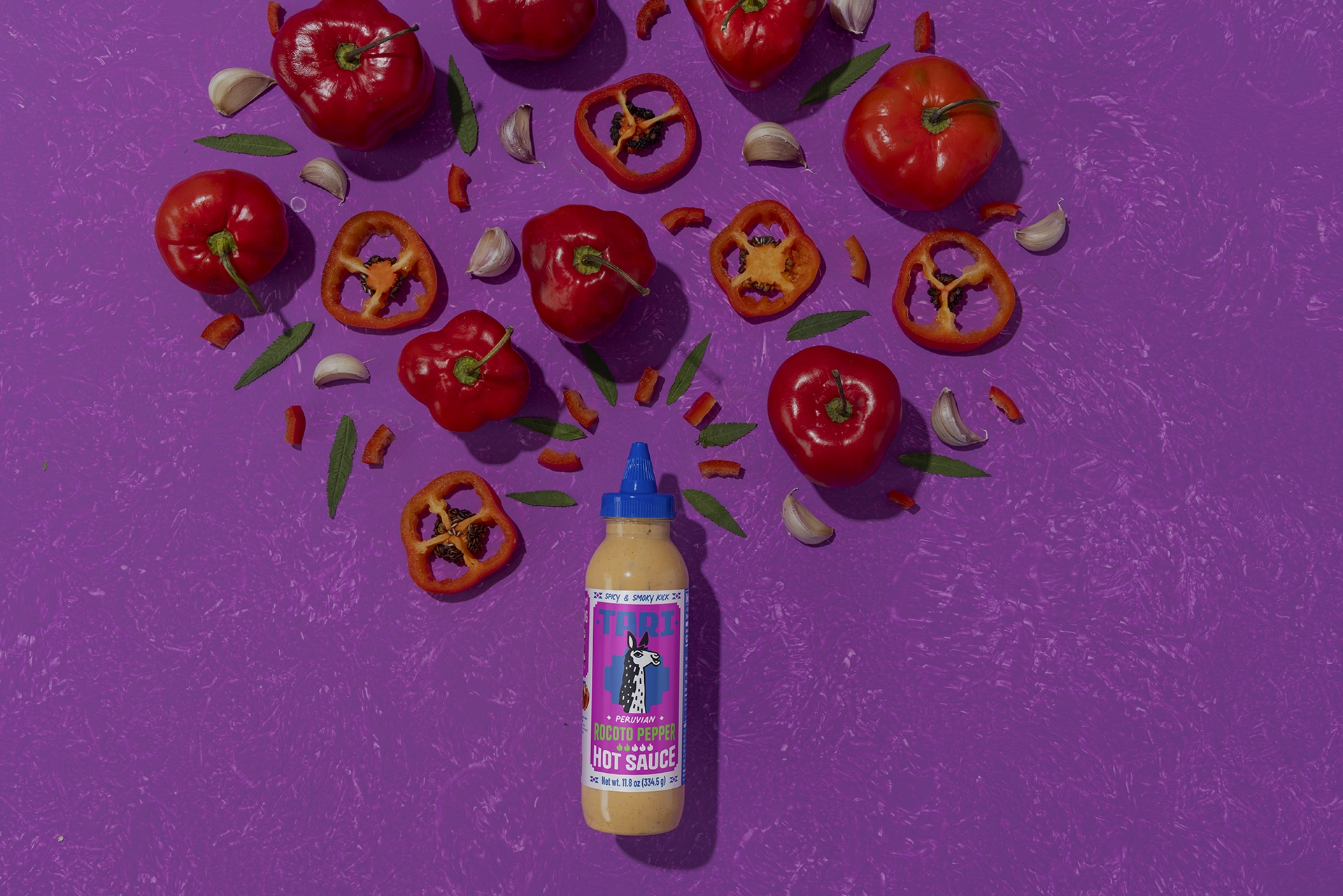
Since then, the popular sauces consistently rank among the top 50 percent of the fastest-selling products on US shelves, with 80 percent of sales revenue representing new business. In 2025, Tari expanded its offerings with three additional flavors: Zesty Verde, Tropical Kick, and Smoky Heat. Today, Tari is in transit to 3,000 major grocery stores, including Wegmans, Meijer, Central Market, and The Fresh Market, as well as available for purchase on Amazon.
Alicorp had a vision to expand its beloved and delicious hot sauces to the US market, but needed help fine-tuning the brand and product for an American audience.
3,000
major US grocers, including Wegmans and Meijer, have signed on to sell Tari hot sauces
80%
of Tari’s sales revenue represents new business, a significant expansion of the overall category
Ranked in the top 50%
of the fastest-selling products on US grocery shelves
Transforming sick days with play
Playhouse MD brings comfort, connection, and a little joy to pediatric care.
Fevers. Boogers. Yucky meds. IDEO Play Lab designers dove deeply into the challenges of sick days and doctors’ appointments through video diaries, online surveys, and in-person interviews with parents, healthcare providers, and small children in homes and pediatric offices across the US. They heard about the struggles of giving medicines, wonky thermometer readings, kids having “stethoscope scaries,” and, worst of all, what happens when kiddos hear the “s-word”—shot.
The research confirmed Sydney and Kaitlin’s initial hunches about playful healthcare products and provided the team with insights on how to move forward. The answer was a formula of sorts. To help reduce kids’ anxiety and keep them calm at the doctor, give them a choice in their care whenever possible. Build familiarity with doctor’s visits and medical devices through playful moments at home. Redirect their attention away from fear. Design for multisensory richness. And provide age-appropriate narratives about healthcare experiences.

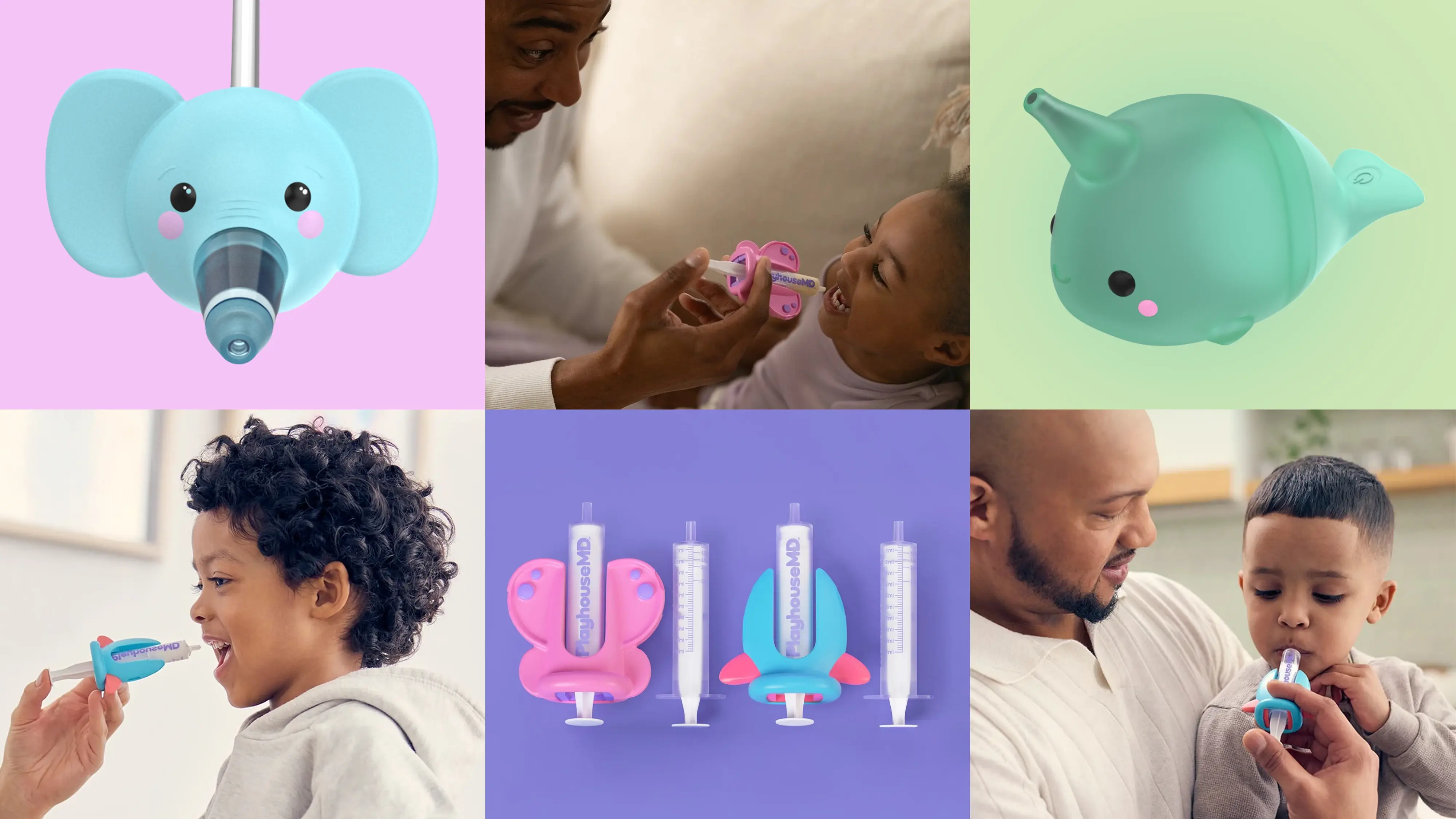
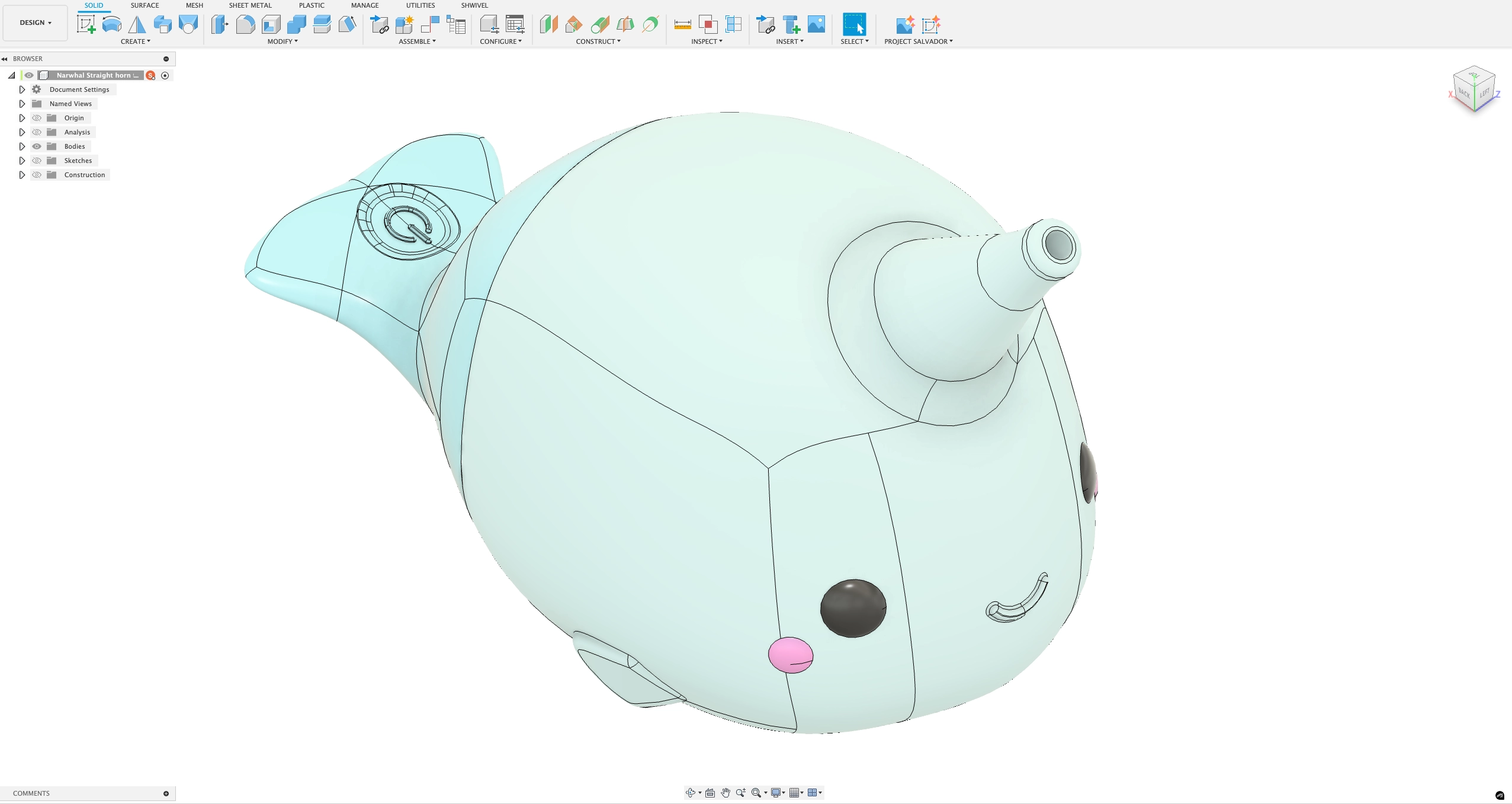
Inspired by this kid-centric formula, the IDEO Play Lab team worked closely with Sydney, Kaitlin, and their co-founder, Michael Kamins, to iterate on several designs, winnowing down more than 150 brainstorm ideas into a dozen tangible prototypes (or tinker models) that were shown to doctors, nurses, parents, and young kids for feedback. The designs—a rocket ship medicine dispenser, an elephant-shaped nose aspirator, and a narwhal nasal bulb, among others—were intended to evoke a sense of playfulness, comfort, and familiarity, with features designed for maximum cuteness. Some even lit up and played sounds, like popular toys.
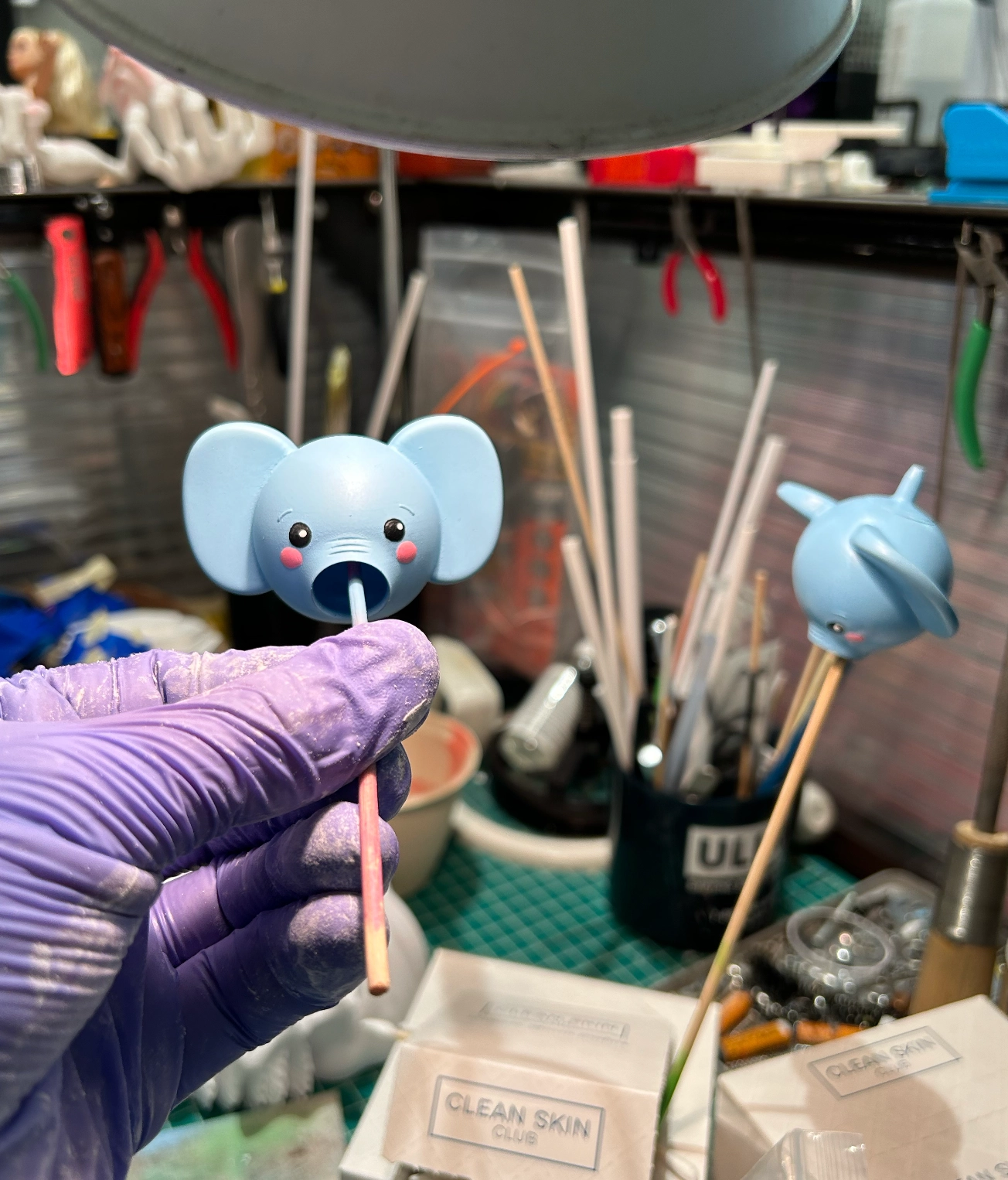
While the designs passed the fun test with kids, they also needed to be functional for parents, trusted by doctors, easily manufactured, and affordable. Eventually, they would need to be approved by the FDA as regulated medical devices. Playhouse MD also requested patentable innovations to help protect their products from imitation.
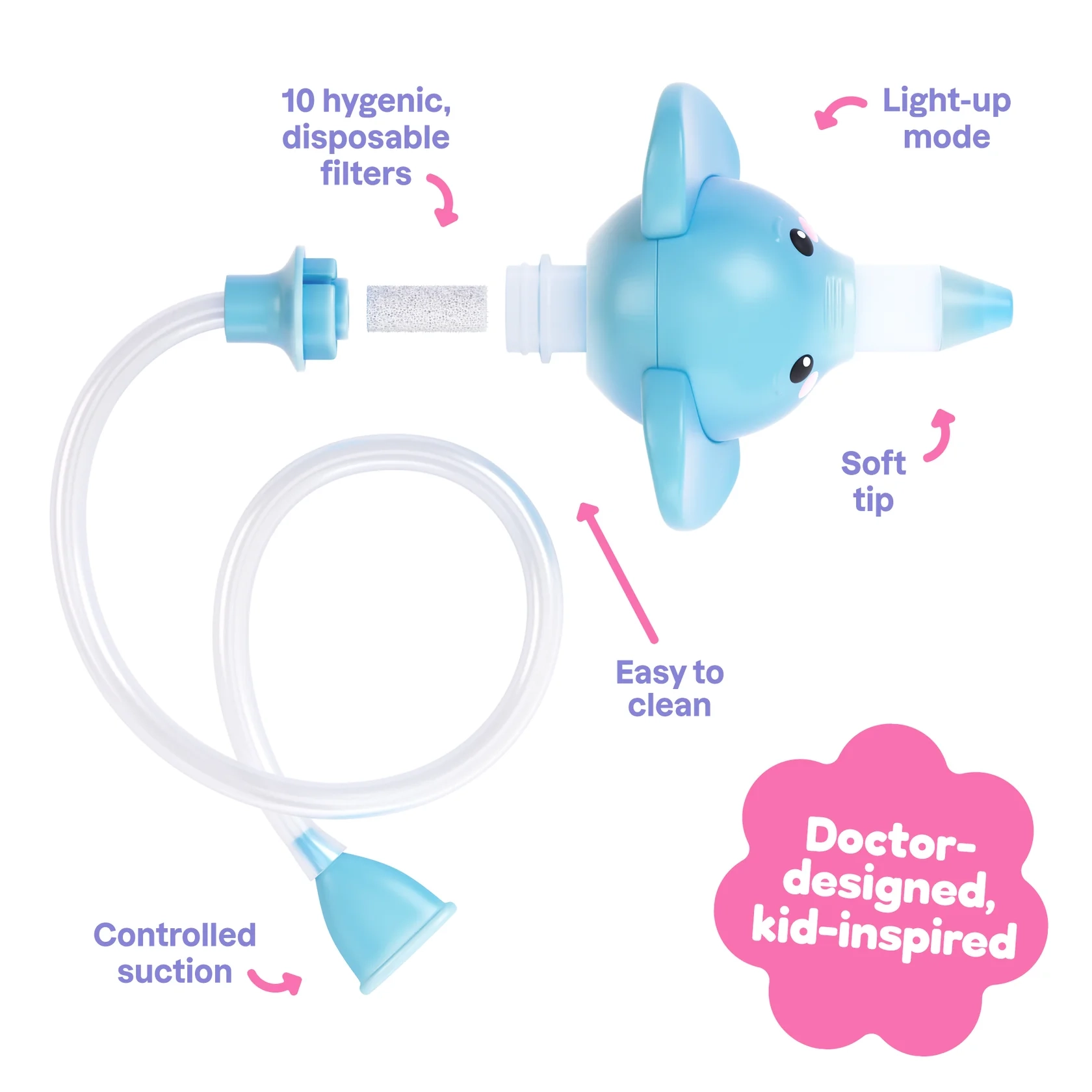
With these constraints in mind, IDEO Play Lab delivered a collection of nine unique, high-fidelity prototypes that add a dose of fun to caretaking challenges in homes and doctors’ offices. The final designs were durable, medically sanitizable, and safe for testing with real kids, which helped the startup secure multiple rounds of funding and bring its first products to market in 18 months.
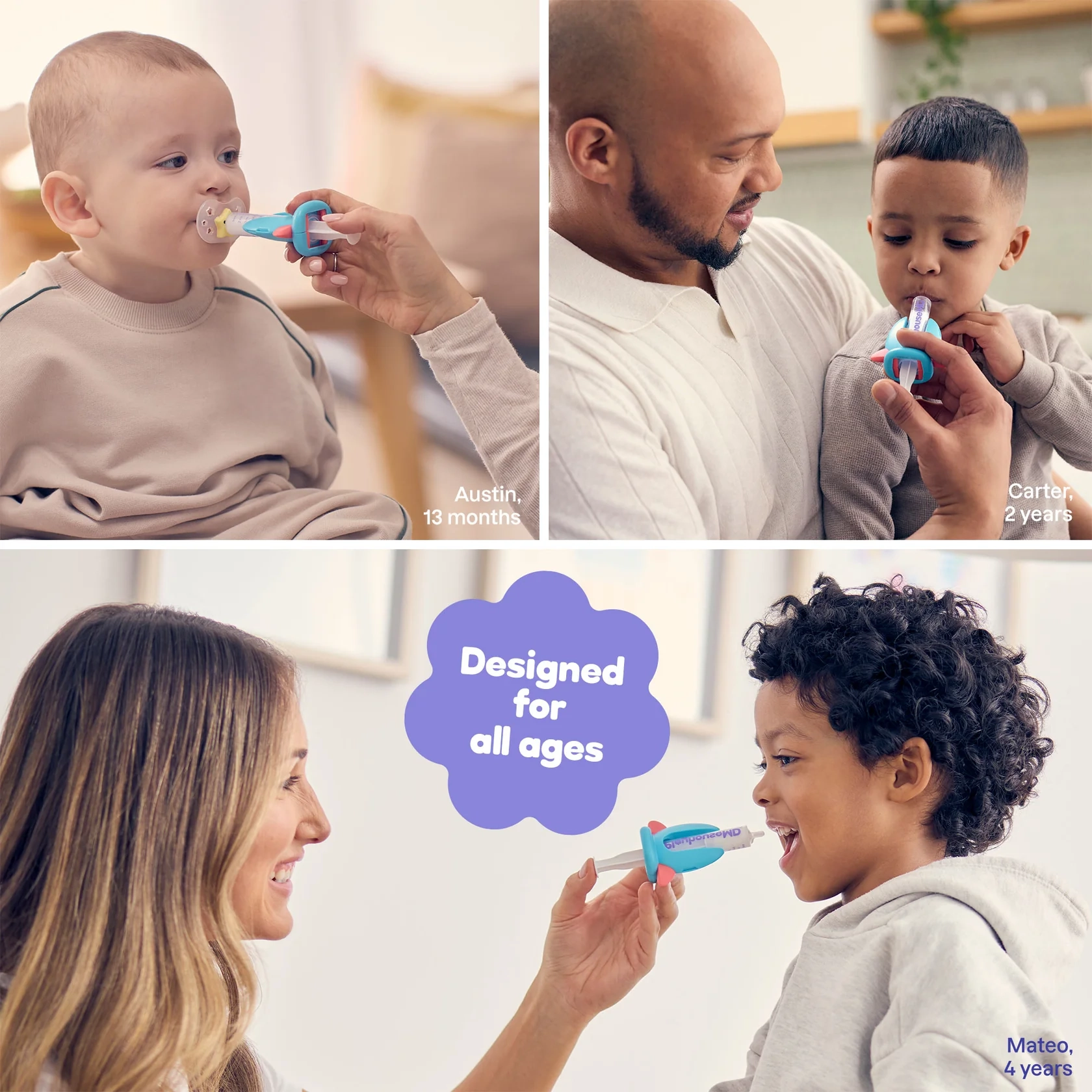
Playhouse MD began selling its first four direct-to-consumer products on its website in June 2025: two Medicine Buddies (medicine dispensers shaped like a rocket ship and a butterfly) and two Booger Buddies (a light-up nasal aspirator elephant called Luna and a light-up nasal bulb narwhal named Noa, which was named one of The Best Inventions of 2025 by TIME). The products are available at Target and Babylist stores, and on Amazon through leading medical distributor McKesson Medical-Surgical.
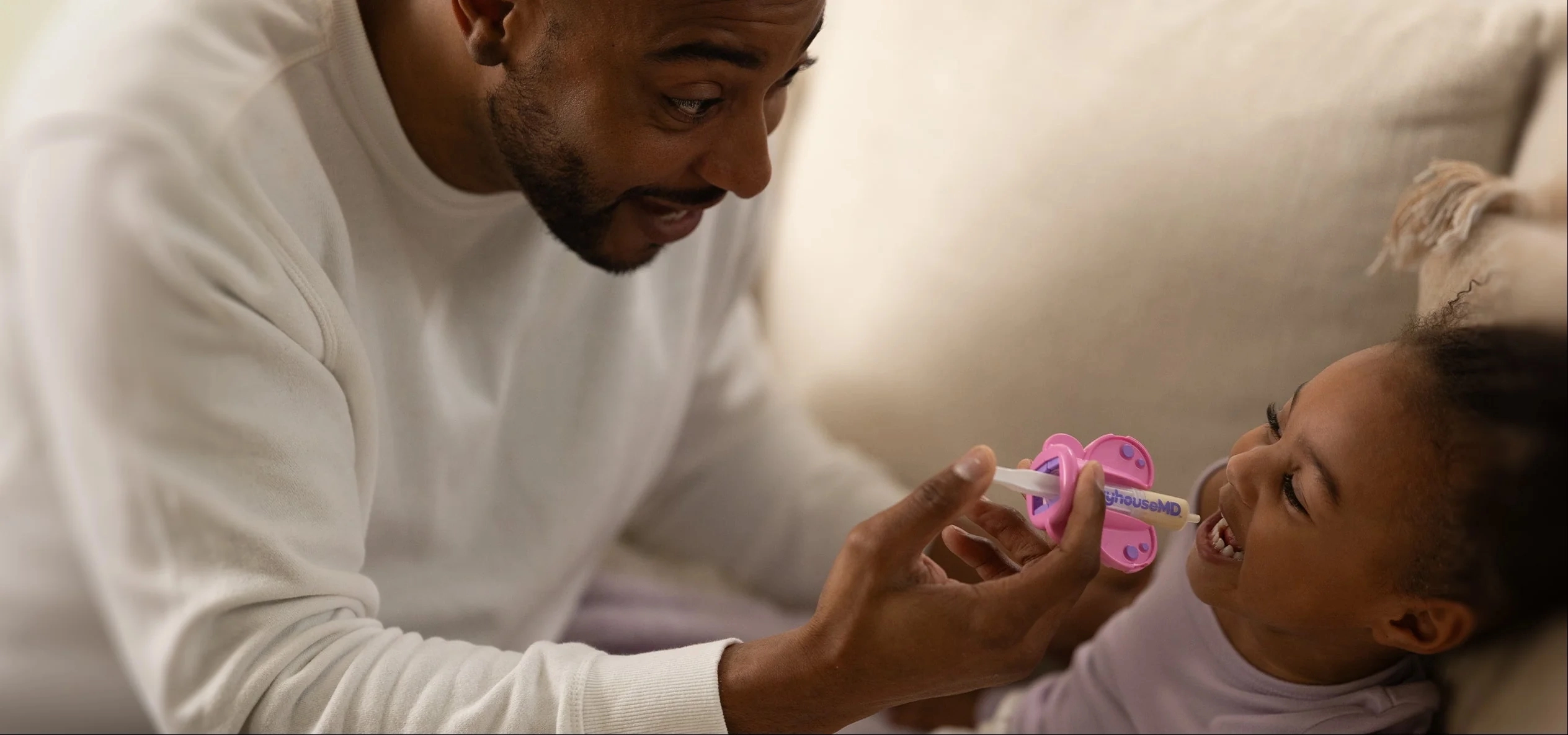
Most companies design child healthcare devices with parents’ or doctors’ tastes in mind; none, however, focus on what will make kids smile, too.
TIME Best Inventions of 2025
in the Parenting Category, Playhouse MD's Light-Up Nasal Bulb
1 ½ years
from initial brainstorms to in-market launch of 4 kid-centric medical products
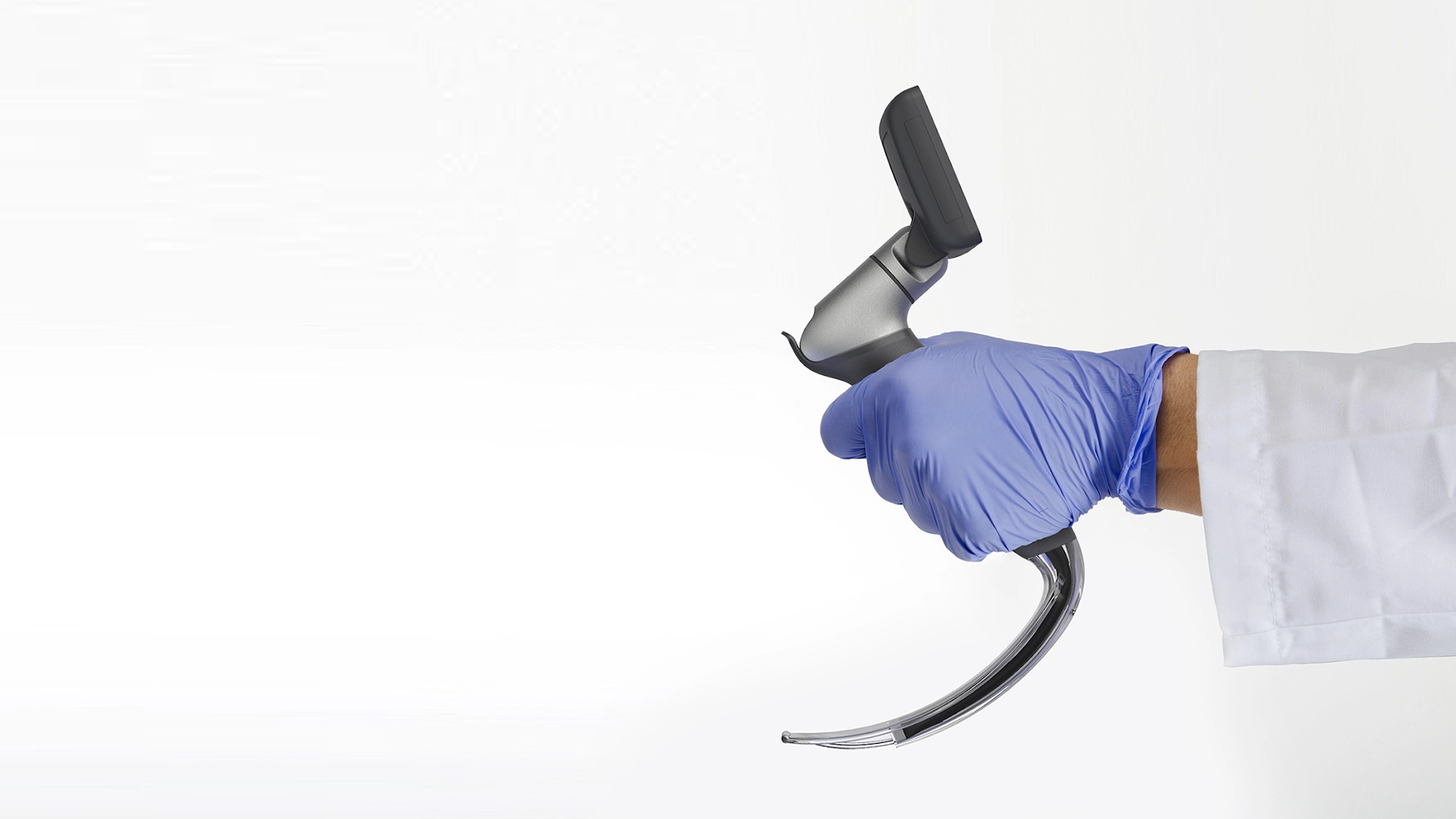
Designing a next-gen airway visualization system
Improving patient outcomes with the GlideScope ClearFit Video Laryngoscope.
Verathon offers one of the broadest portfolios of video laryngoscopes on the market. While these life-saving devices increase the likelihood of successful first-time intubations, reducing trauma and speeding recovery times, they are more costly and can be more challenging to learn how to use than traditional mechanical ones, which rely on directly looking at the vocal cords. Wanting to make it easier for cost-conscious hospital administrators to transition from traditional laryngoscopes to Verathon’s video systems, the medical device manufacturer asked IDEO to technically and visually unite its next-gen reusable baton and stats, ensuring they worked together seamlessly, flexibly, and intuitively during the most routine and demanding healthcare moments.
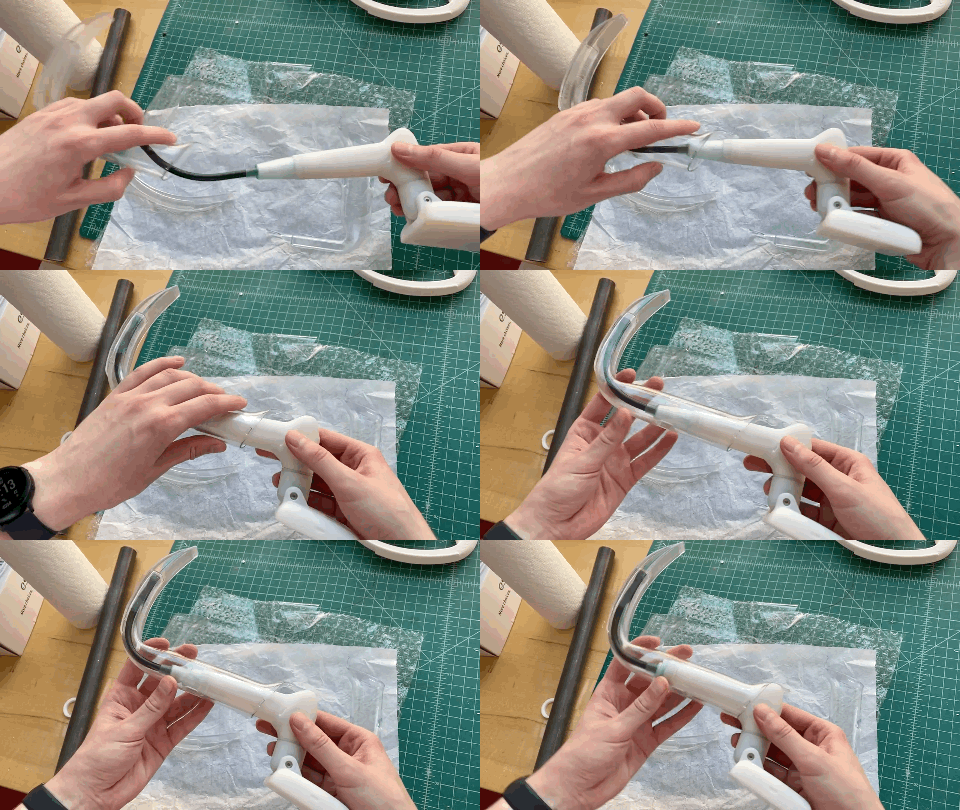
The IDEO and Verathon teams used a prototype-led approach to safely gain feedback from anesthesiologists and emergency physicians. Research participants were given various intubation models to simulate surgical use cases and understand ergonomic trade-offs between different design directions. Insights from the field led to design principles such as prioritizing device balance over weight reduction, providing flexibility to accommodate a variety of gripping positions, making connection points between various parts clear, intuitive, and secure, and ensuring the device was easy to clean.
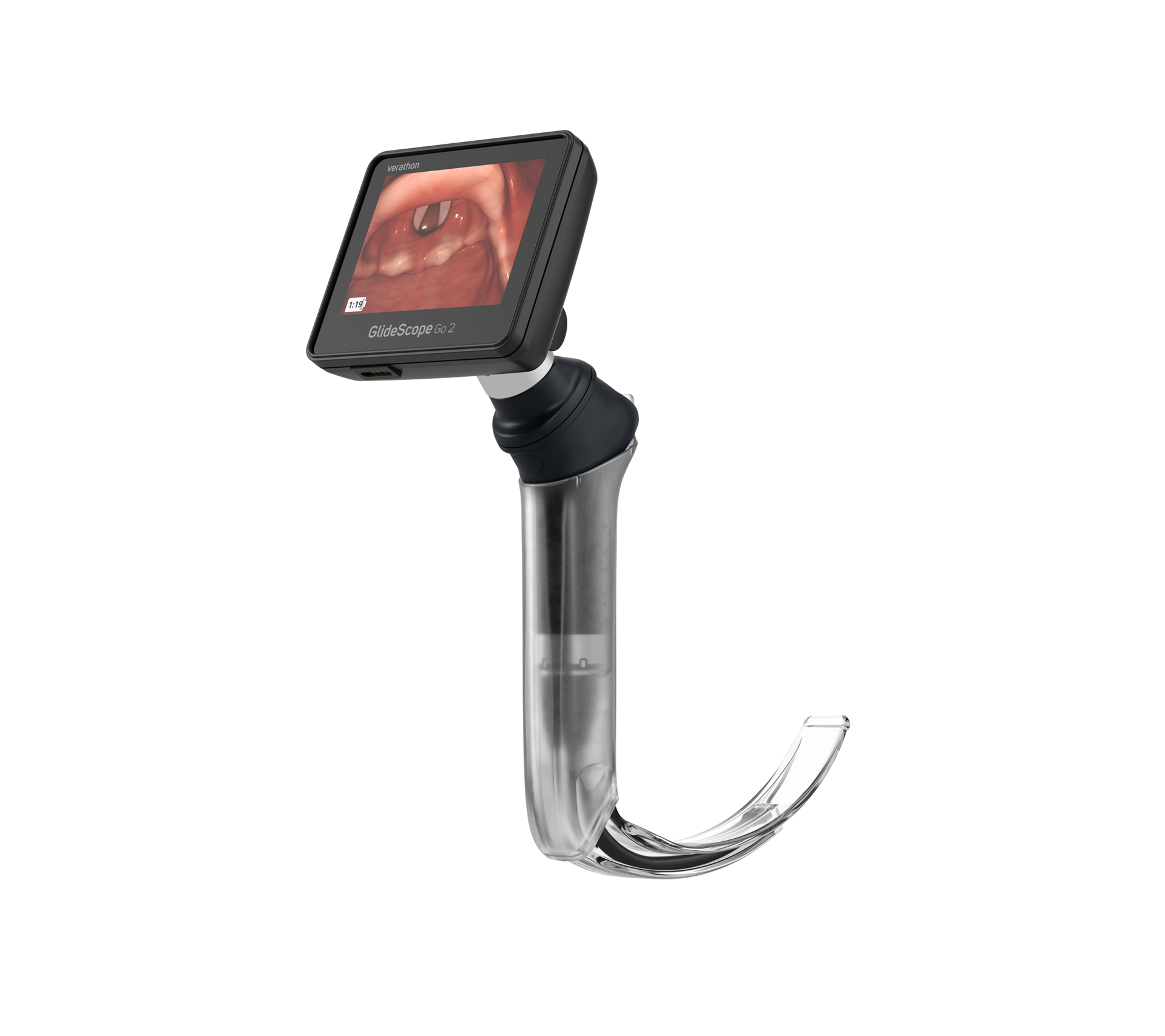
Inspired by physician feedback, the team designed an innovative video baton that felt both familiar and new, supported the ergonomics of diverse holding styles, and fit Verathon’s wide range of stat sizes (one of its competitive advantages). To prevent accidental disconnections, users receive clear tactile, visual, and sound feedback when the monitor and cover are correctly attached to the baton. IDEO chose color, materials, and finishes to help clinicians quickly distinguish between parts of the system and easily identify reusable components from single-use ones.
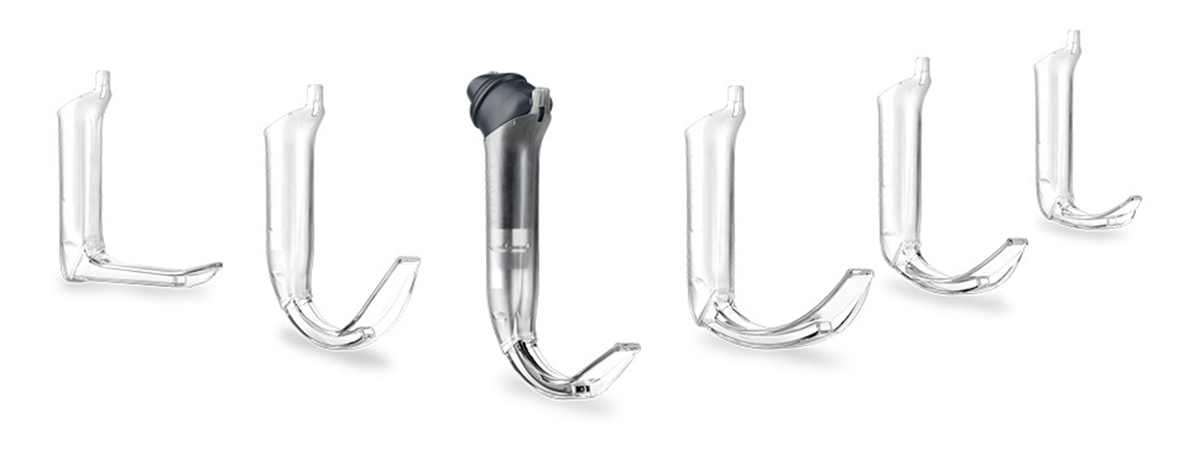
Verathon’s new GlideScope ClearFit stats-based video laryngoscope hit the market in August 2025. Combining one reusable baton with an industry-leading selection of six single-use stats, it’s compatible with both the GlideScope® Go™ 2 handheld and GlideScope® Core™ cart-based systems. Magnetic QuickConnect™ technology allows doctors to seamlessly switch between platforms, giving hospitals a standardized airway management solution that simplifies workflows, streamlines inventory, enhances medical education and training, and promotes cost-effective care.
Verathon invented video laryngoscopy technology. Twenty years later, the COVID-19 pandemic spurred more competitors to enter the market.
Cutting-edge technologies like video laryngoscopes are critical—and costly—devices. Hospital systems want to invest in the most comprehensive, flexible, adaptable, and affordable tools for quality patient care
6 shapes and sizes
of single-use covers fit one video baton, enabling health workers to quickly access different throat anatomies
Improving STEM education in the Philippines
GBF Class Builder supports teachers to advance learning for students.
Since its founding in 1992 by the Gokongwei family, which also operates one of the nation’s largest conglomerates, JG Summit Holdings, GBF has supported Philippine education through student scholarships, teacher training funds, and donations to top universities. Over its 30-plus-year history, GBF has reached more than 200,000 teachers and impacted over 1.5 million learners nationwide. When the foundation approached IDEO in 2021, it wanted to move the needle on STEM education in the country’s struggling public schools.
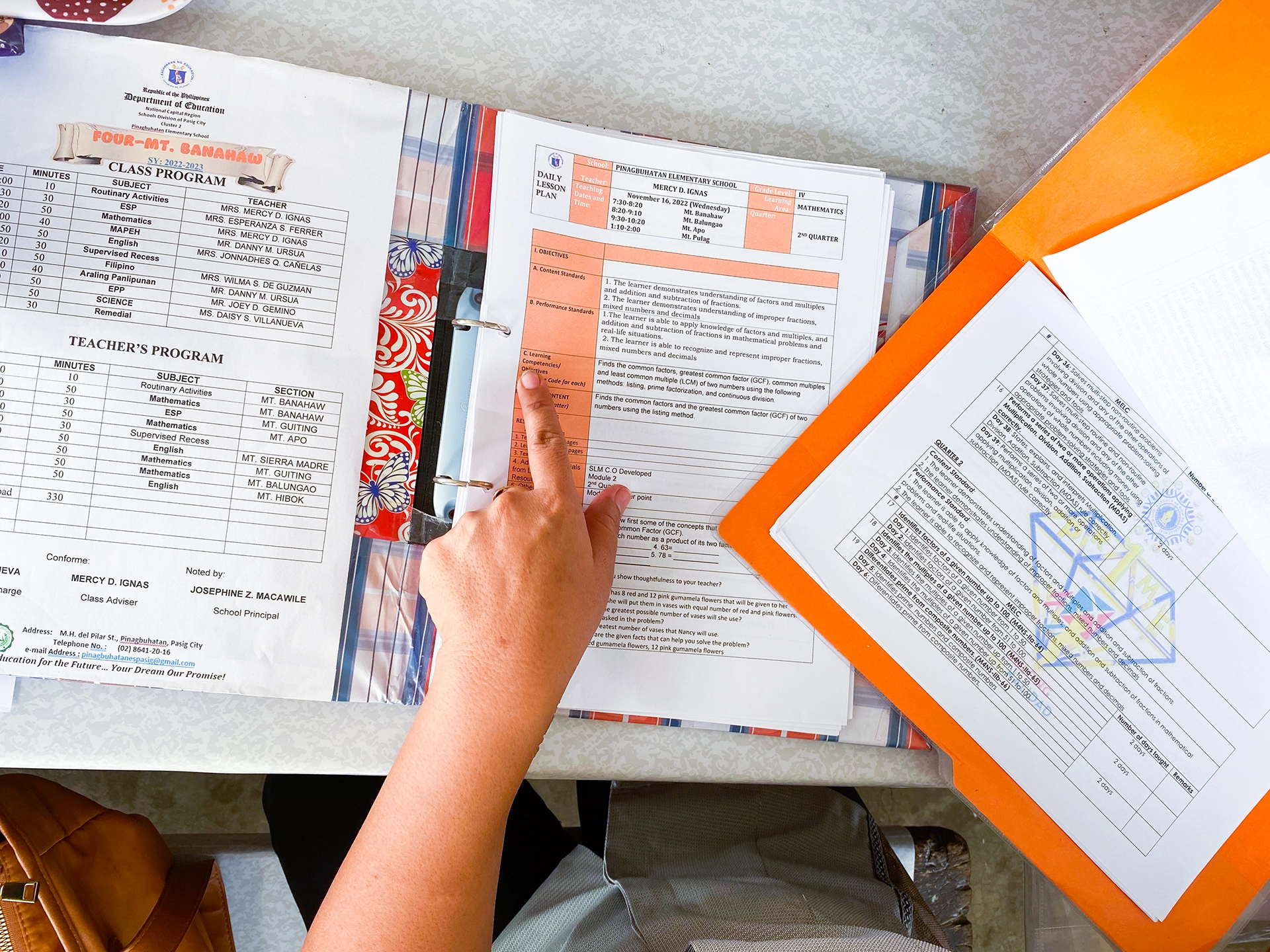
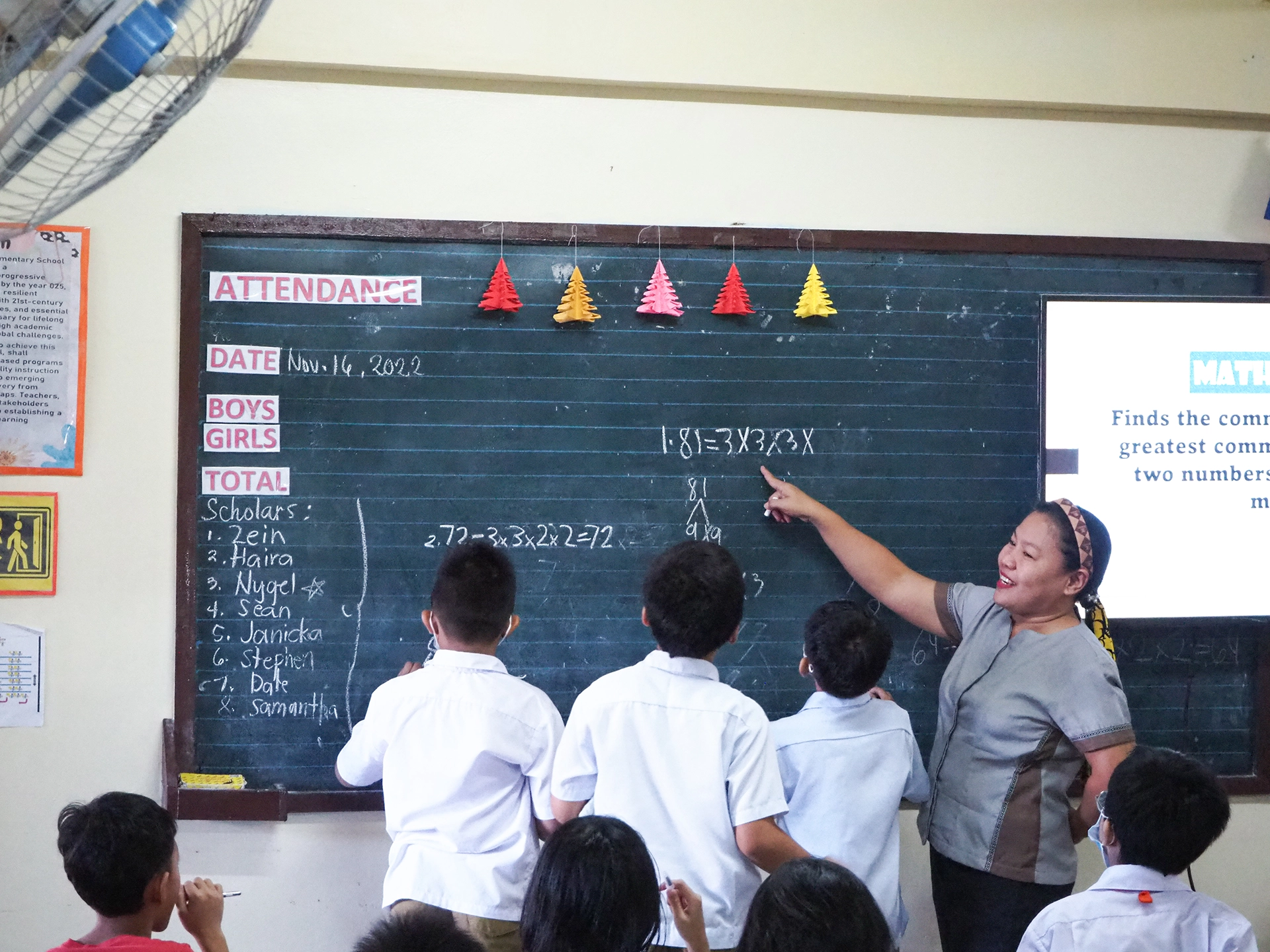
The IDEO and GBF teams interviewed more than 100 subject-matter experts across various government agencies, leading technology companies, and top national universities and educational institutions to build a comprehensive understanding of the current state of STEM in the Philippines. To experience classroom struggles firsthand, the team also shadowed STEM educators and principals. The research revealed that time-strapped teachers needed help mastering overall STEM content, preparing for their classes, and selecting the most suitable activities for their students. They also didn’t always feel supported in their own career development journeys. But the burden of daily responsibilities didn’t leave them any time for outside learning opportunities, either.
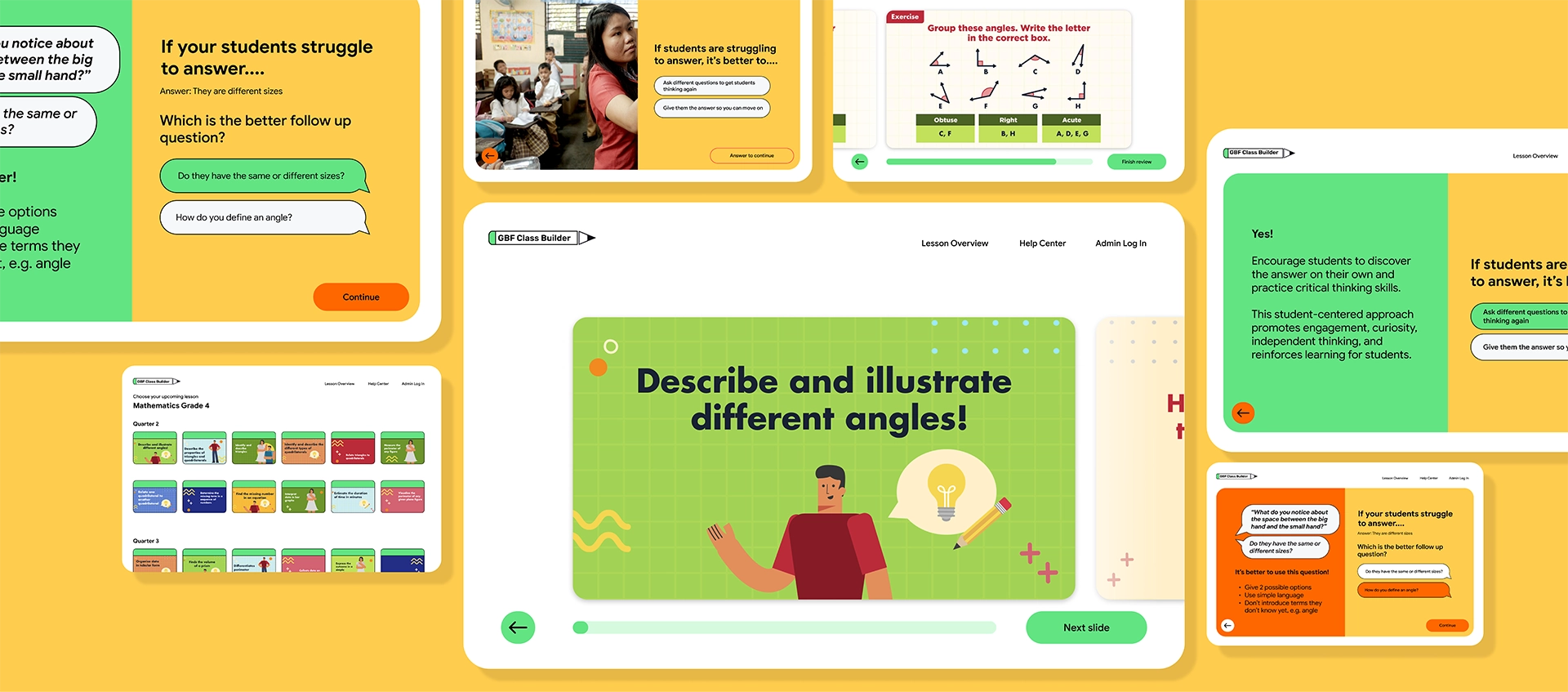
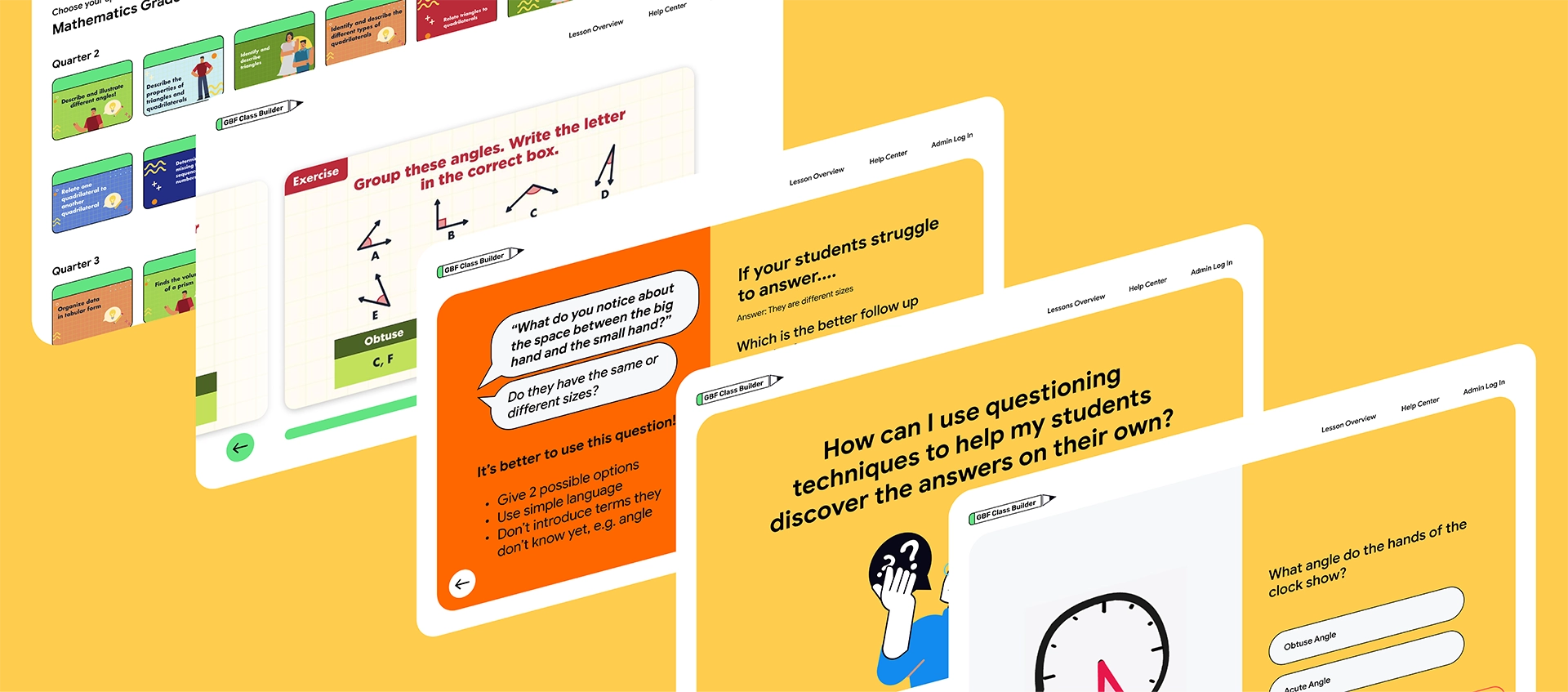
Recognizing that empowering teachers empowers students, the team created an innovative lesson prep tool, the GBF Class Builder, that's based on these insights. Using existing technology and course materials designed to align with school curricula, IDEO developed a working prototype of the Class Builder in under a week, with minimal investment. The team then systematically improved it over several “build-test-iterate” feedback cycles in real classrooms over the course of four months.
The final GBF Class Builder is a targeted program that helps STEM teachers deliver compelling lessons for their students, learn new teaching strategies, and build content mastery along the way. In addition to helping design the Class Builder, IDEO continues to advise GBF on key aspects of the program's piloting and rollout. This includes advising on how to implement the content development, think through the curriculum development process, support in designing feature iterations, define metrics for success, and decide which additional roles GBF will need to support the ambitious program going forward.
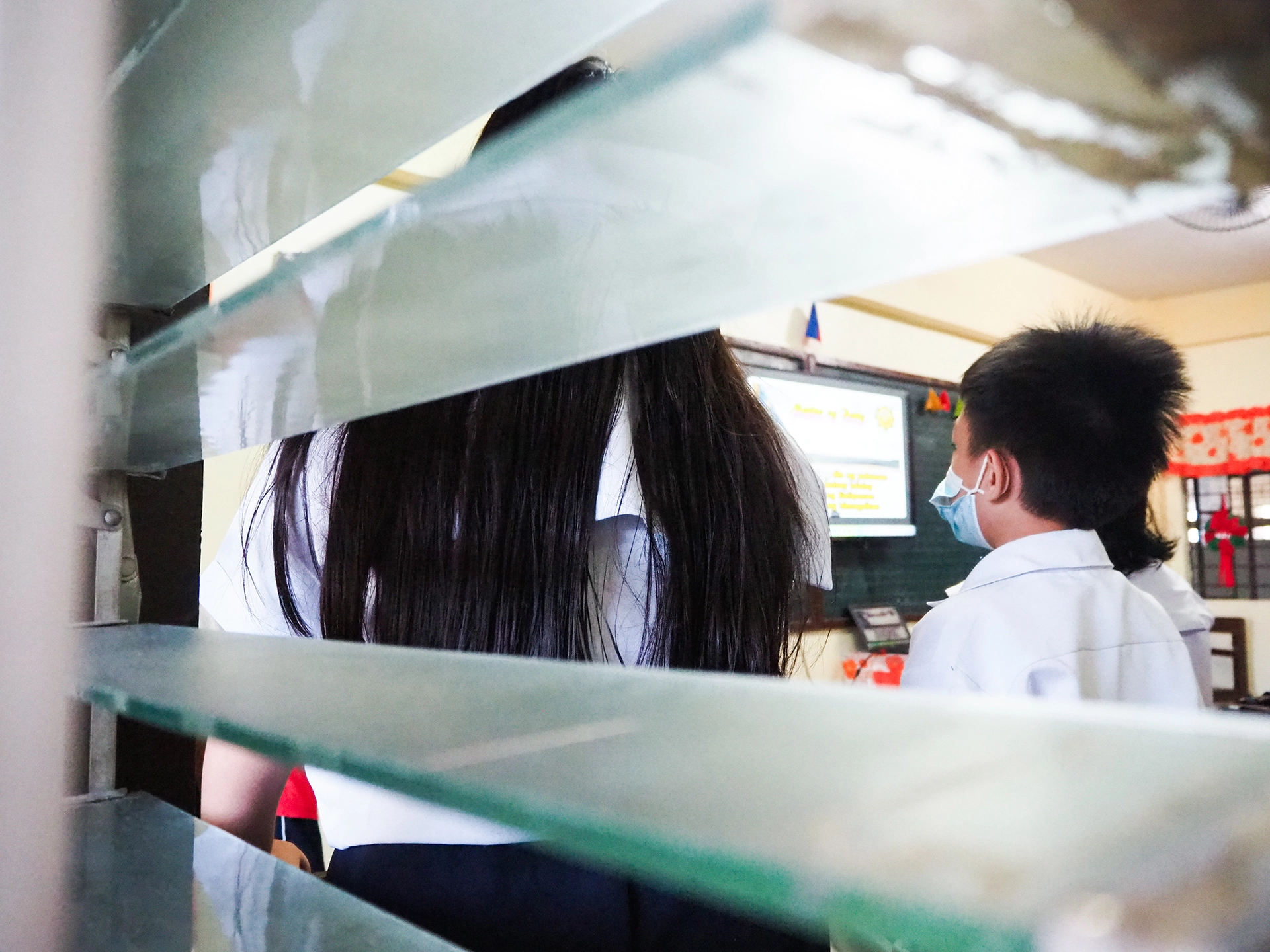
The foundation launched the GBF Class Builder at its 30th-anniversary celebration in 2023. Feedback from pilot 3,500 public schools and 15,000 teachers has been overwhelmingly positive. “Through the GBF Class Builder, we envision our teachers to be more confident and effective in class, more ready to face the challenges of the future, while enjoying every class—feeling proud to be a teacher, " says Grace Colet, Executive Director of GBF.
The ambitious program continues to scale and is on track to be rolled out in public schools nationwide by 2029.
90% of 10-year-olds in the Philippines can’t read a simple text, according to a Southeast Asia Primary Learning Metrics report. Eighty-three percent of Filipino 10-year-olds lack minimum proficiency in math.
More than 15,000 teachers in 3,500 public schools
are now using the innovative GBF Class Builder program
94%
of teachers report the GBF Class Builder has improved student engagement, while 89% say it saves them 1-2 hours in prep time per lesson

Looking for Love in All the Places
Why I stalk lovers and put their pictures on Instagram
Two years, two photography classes, and a few countries later, I did a deep clean of my hard drive. Between filing away evidence of big parties in tiny apartments and hundreds of nearly identical photos of elephants, I realized that I had taken a lot of pictures of couples. Not five or 10, but closer to 100. And not of people that I knew, but of complete strangers.
On their own, these photos could have been easily overlooked amidst thousands of snapshots of friends and family, but seeing them all together gave me a rush of giddiness and warmth. So, I set out to gather more and began posting the shots on Instagram.

As soon as I launched the account, publicly declaring my habit, I found more and more moments of tenderness in everyday life. I shot from a distance to maintain a layer of anonymity and focus on the transfer of emotion rather than the individuals themselves. My intent wasn’t to get the story behind the shot, but simply to collect these unprovoked and unpolished moments. And as I collected, my definition of public displays of affection expanded to include heads on shoulders, joint selfies, synchronous footsteps—even the imagined closeness of two people standing in proximity to one another. I've found love on street corners, in subway cars, and at national monuments. Instead of walking around with my head down, I was discovering tiny moments of joy in the world.
And the more I found, the more I felt like at any given moment, anywhere in the world, hundreds of people are holding hands, or touching arms, or leaning in to each other. The act of looking for love led to finding it, which led to actually feeling it.
Head to @lookingforloveblog for your fix.

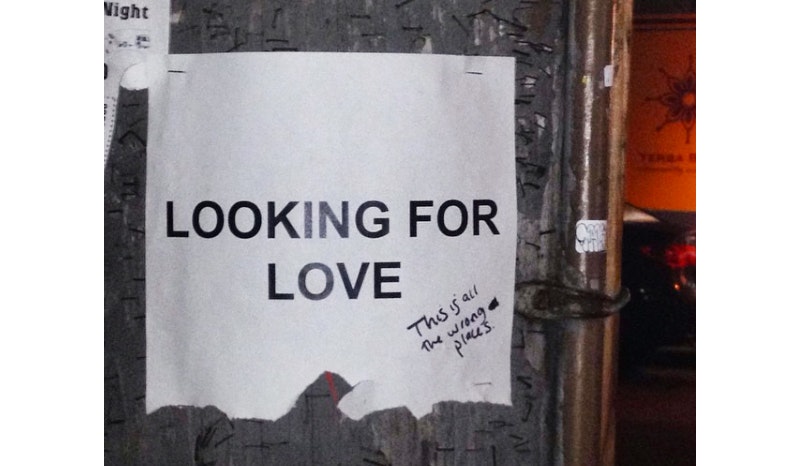
A few years ago, I spotted a tear-off paper flyer stapled to a telephone pole that read LOOKING FOR LOVE. Every tab had been pulled.
Welcoming Bots to the Design Team
How automation helped us dig into our data (and add magic to our prototypes)
However, more data means more time spent managing data. So about four months ago, I pulled together this little helper, an automated assistant that I coded to save our design team a little time. We even gave it a little personality to make living with it more fun.
The bots
The inspiration for this bot came from our Chicago team, which was working to develop a health monitoring app for smartphones and watches, and wanted to include a prototype messaging system. Rather than spending time coding a system that would automate responses, they hooked up the Slack interface to a service that would send and receive text messages. The result was a system that allowed a non-technical design researcher to send targeted messages directly from Slack, freeing up the developers to work on the next challenge.
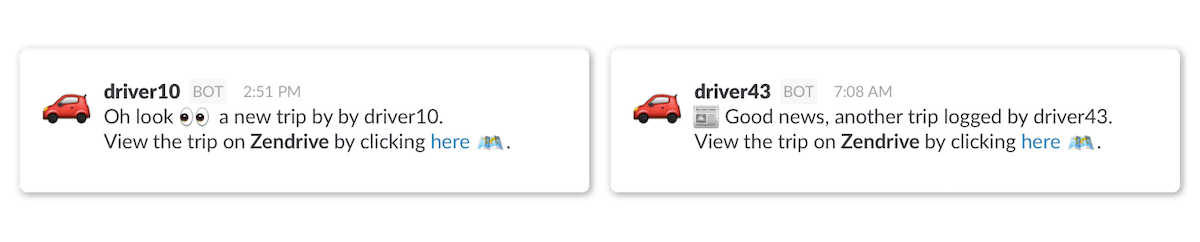
Meanwhile, in London, we were tracking the daily travel of more than 40 people. During the course of the project, we recorded more than 160,000km of driving, so we built a bot to help us keep tabs on our fleet. Each time a journey was complete, the bot would post a note into a special channel, allowing the whole team to see the activity without having to log in to a separate system. The bot also helpfully included a direct link to a separate dashboard, in case anyone wanted to dig deeper into the data.
The tech stacks
Chicago's bot was part of a loop that connected each of the participants’ smartwatches directly to a design researcher:
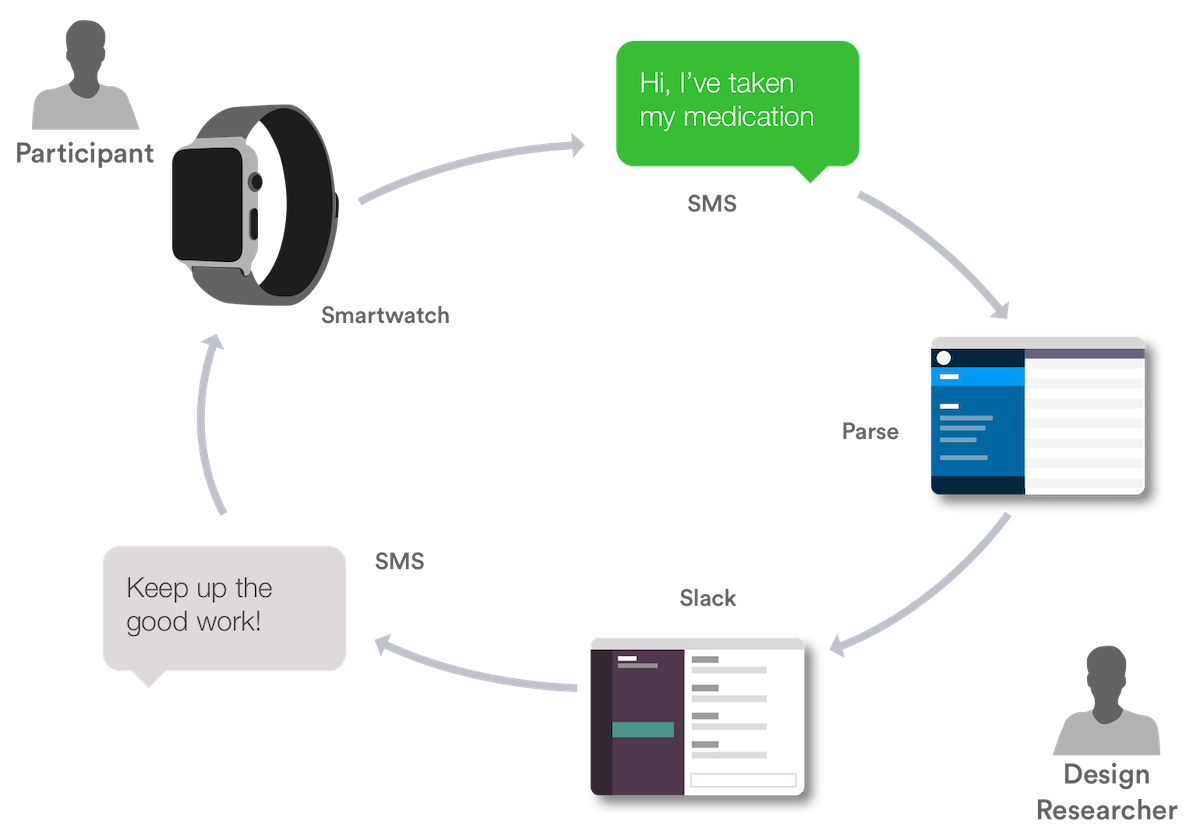
Each day, participants would log their activities using Siri’s voice-to-text feature. Siri then transcribed the voice message, and the text was sent to the database, where it was time stamped and stored. From there, a copy was sent to Slack, where each participant showed up as a team member in the chat interface.Then the whole stack reversed, allowing any member of the team to send a message to the participant. Each day, the design researcher simply had to send a normal Slack message and it appeared on the participant’s smartwatch.
We found their workaround really inspiring, so when we started our travel behavior project, we looked for similar ways to save time.
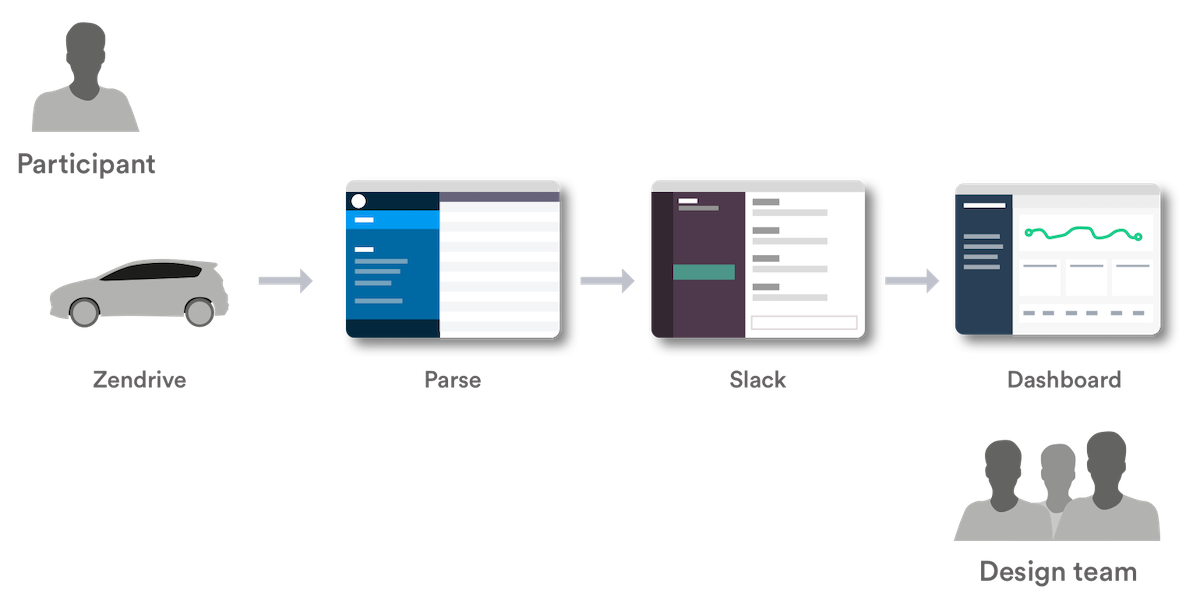
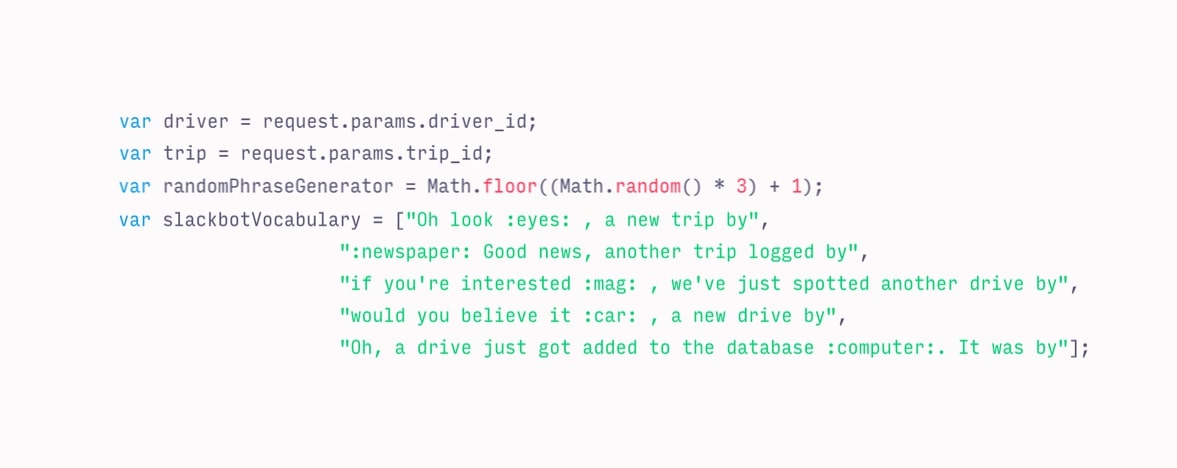
To start, we opted to store each trip in Parse. Once a drive was complete and recorded, we used Parse's Cloud Code functionality to send a message to Slack using the Incoming Webhook integration. The result was a message from the slackbot each time a drive finished. Cloud Code allowed us to format the message with a link back to the data, so it was easy for researchers to click to learn more about each trip. We could format the message however we wanted, so we gave the bot a small bank of phrases to use to add a little personality. We also gave it a few emoji so that it would fit in with the Slack communication style.

These messages popped up in a specific channel. Our team could choose to listen in, or mute it. Over the course of the project, it became a useful reminder that there were real people behind these driving patterns.
What we learned
The Chicago bot showed us that we don’t always need a technical person to manipulate complex systems. Not only did our bot save us time, we were also able to add a little magic to the prototype, which gave our participants a better experience. It also gave all parties—the design team, the client, and a technology partner—a better sense of what was going on, and a quicker way to jump into the data. We’re constantly working to find better ways to collaborate with our clients, and small touches like these make it easier to act on our research. Perhaps the most revealing thing about our adoption of these tools was how quickly we assimilated them into our teams. The new tool went from novel to normal surprisingly quickly.
The future
While adding intelligence to the bots seems like an obvious next step, it could be a dangerous move to outsource too much of our process. After all, we’re here to learn. I'd rather have a legion of simple "toolbots" shaving time off repetitive tasks than software that makes decisions for us, which could cause us to miss valuable insights. Our goal is to empower our teams, not to replace them.
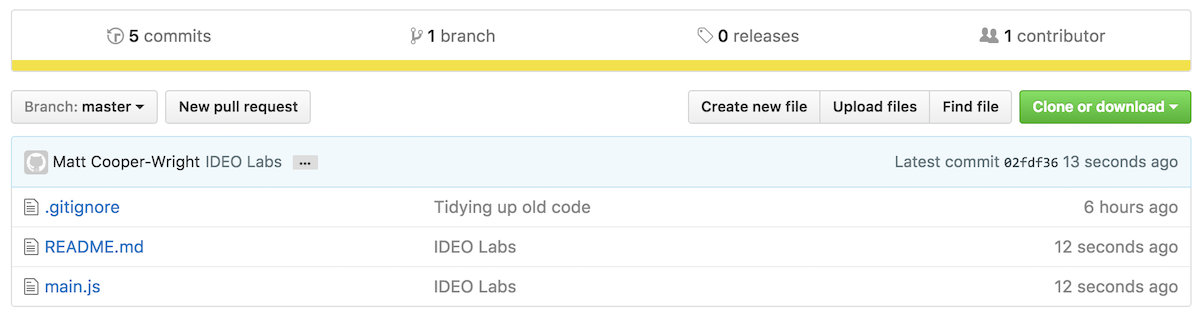
See the London Bot on GitHub here.
Special thanks to Ben Syverson for his help on this post.
We’re always looking for smart ways to learn more in less time. This mentality has led our researchers to push the boundaries of the data we can record in our research process. Alongside the qualitative data we gather from interviews, we also pull together behavioral data collected over longer time periods. We might record someone’s steps per day, or the route they take to work, in order to find insights into the patterns of everyday.
The One Sport the Olympics Should Include
Our intern is bringing it to Rio
A self-proclaimed “sports guy,” Marc first tried archery at 12. By 18, he was a competitive archer, training 4-6 hours a day and traveling across Spain to shoot arrows alongside the country's best bowmen and women, including members of the current Olympic archery team in Rio, Miguel Alvariño, J. I. Rodriguez, and Antonio Fernandez. (Although the modest interaction designer is quick to shun any comparisons.)
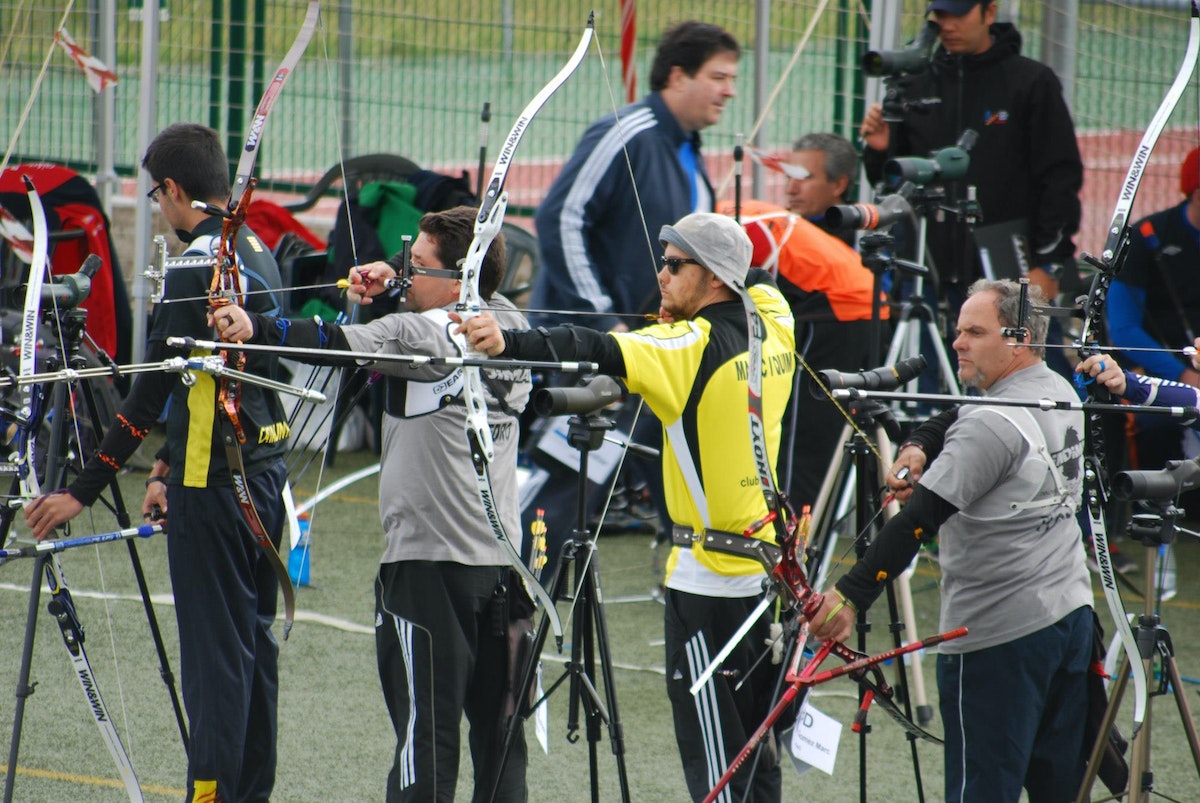
Marc left his custom-made, Olympic-grade bow at home when he relocated to IDEO Chicago for a 7-month internship, but he cheers on his country’s team remotely every night, binge-watching Spanish videos of the day’s competitions on his home laptop thanks to some clever, scrappy, and—ahem—ingenious online “workarounds.”
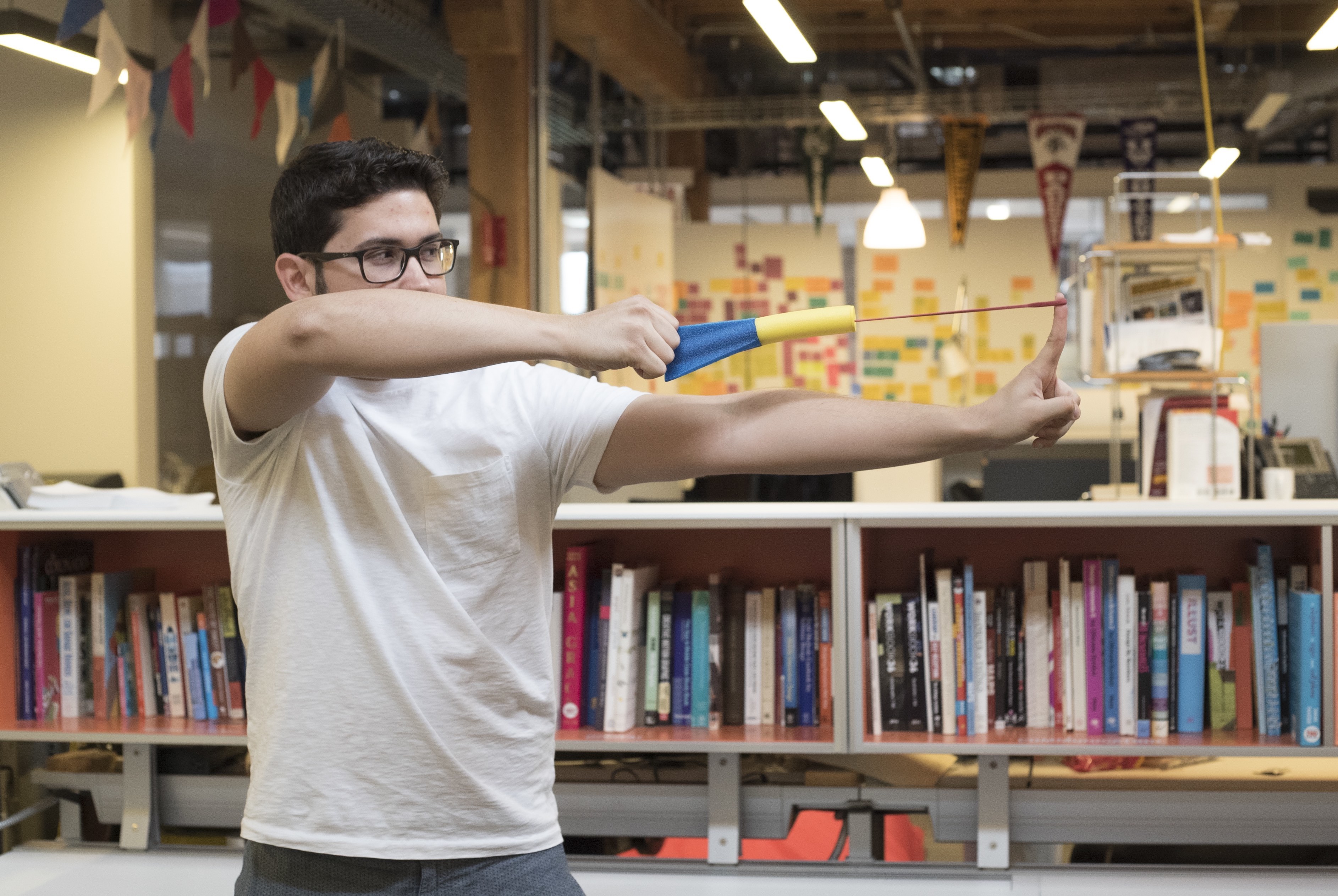
While firing arrows at a bullseye 70M away might be a thing of the past, archery taught Marc many lessons he pulls out of his quiver as a designer today: honing your technique, being honest about your strengths and weaknesses, staying open to new ideas and strategies, and improvising in the moment. Lessons that also apply to successfully launching a Finger Blaster to nab a coveted banana 10 yards away.
WATCH: The ever-hungry intern takes aim at a midday snack. Video by Sophie Feng.
But, then again, if this design thing doesn't work out, there's always Tokyo 2020!
Marc Exposito was born for the Olympics. Literally. The Barcelona native arrived into the world during the heyday of the city’s 1992 Summer Olympic Games.
The Beautiful Future of Living Technology
Designer Natsai Audrey explores our bio-factured future
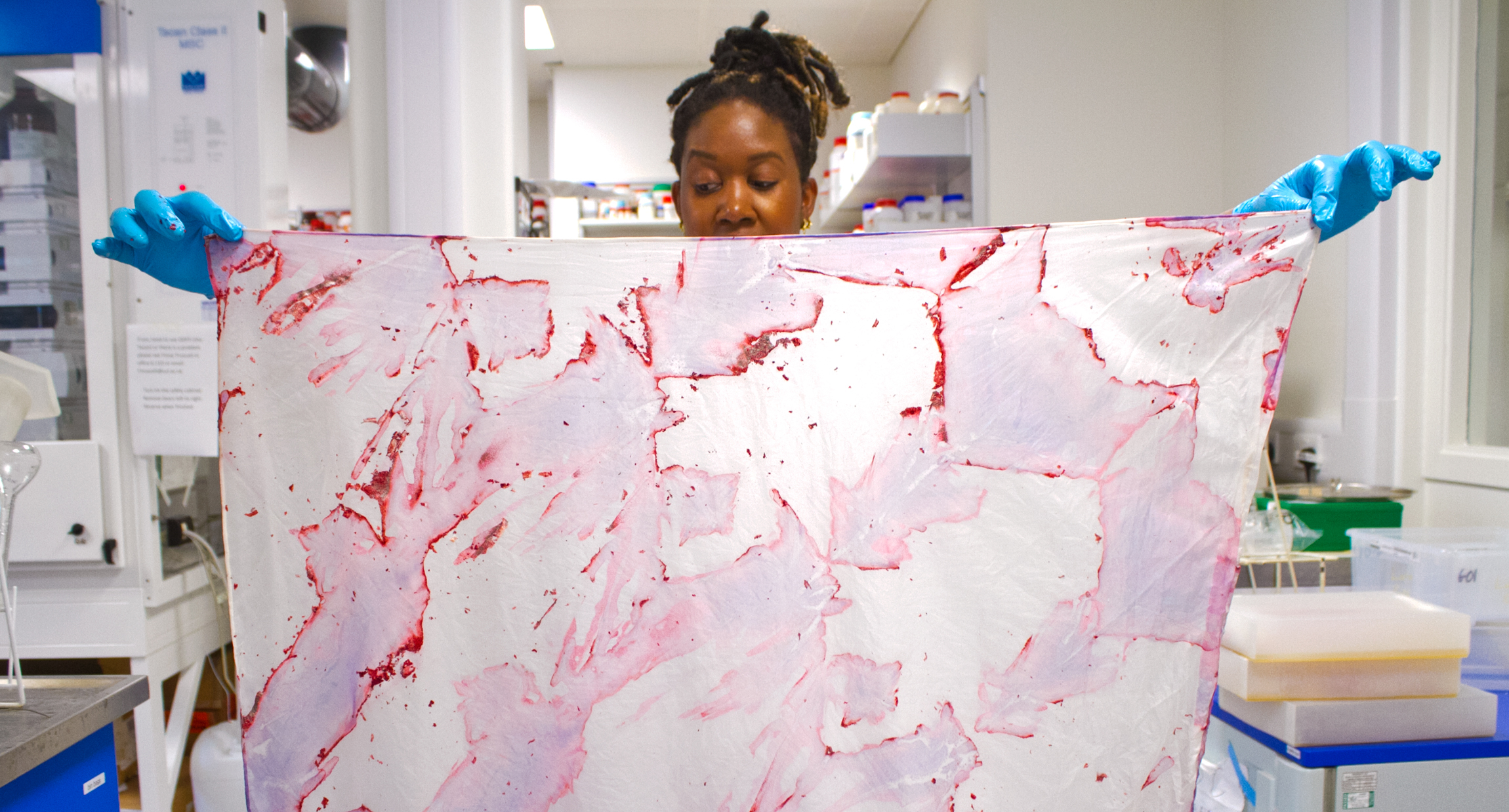
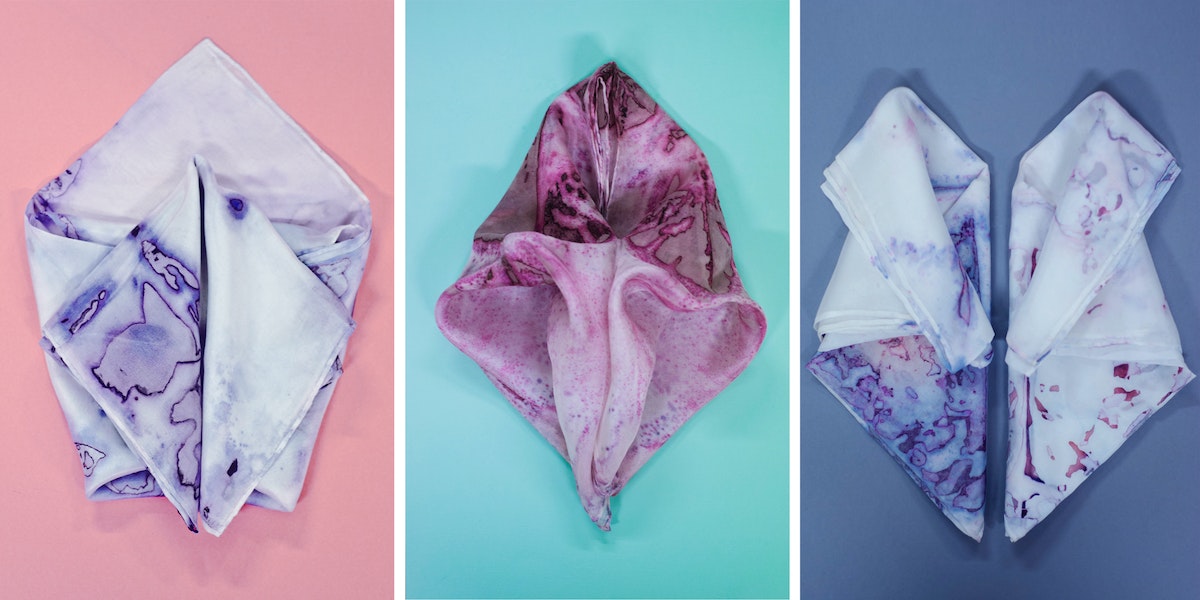
Zimbabwe-born Natsai studied architecture at Edinburgh University, then at Central St. Martin’s Material Futures course. There she learned about synthetic biology, and met Dr. John Ward, a professor from UCL’s microbial molecular biology lab. He became a supporter of her scarf project, called Fold.
Natsai is at the forefront of an emerging field, biodesign, that aims to tackle the climate change problems caused by textiles and farming. Fueled by advances like the gene editing technique CRISPR, which is making designing with DNA simpler and cheaper, scientists and designers are looking to harnessing nature itself to ‘biofacture’ everything from leather, to meat, to medicine.
Companies like Bolt Threads are spinning synthetic spider silk, while Modern Meadow is growing meat in labs. Meanwhile Autodesk is creating design tools for the field—think AutoCAD for DNA.
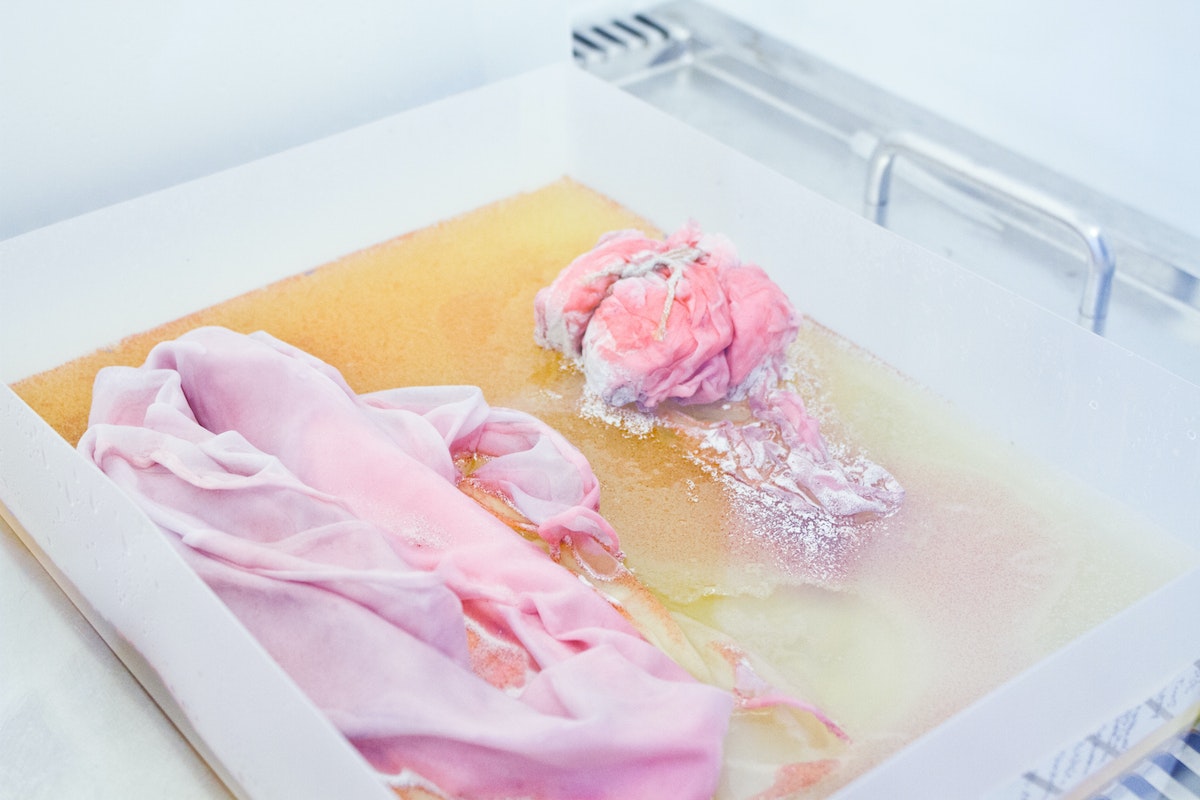
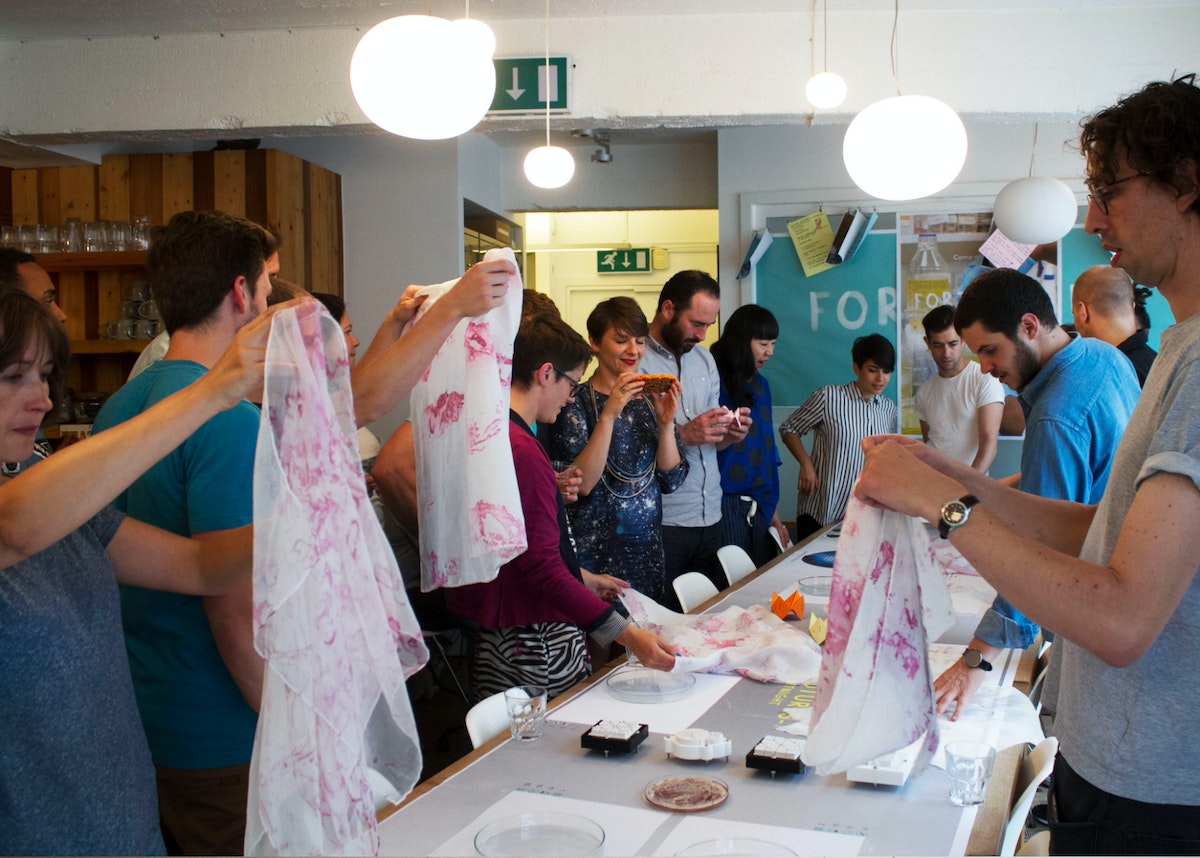
Natsai joined IDEO’s London studio as part of our two week-long Fortnight residency, collaborated with the community here, and shared the resulting scarves. As part of her final presentation, she brought to life the potential of biodesign with a series of five tweets. Here, she explains the speculative future they’re framed in. It is a future in which synthetic biology is shaping brands, products, businesses, and people’s behavior.
Future Craft
“Hyper-specialized hybrid technologies signal the rise of the niche maker. #DIYbio #biomakerspace”
Natsai: I’m really interested in the dialogue between craft and technology. This tweet depicts my own reality: my craft is so specialized that I have to design the tools to create it, and I also have had to learn how to maintain the life that co-creates it, without any precedents to learn from. Imagine a world where our materials are alive or derived from living systems. Every maker will intimately know the biochemistry of their chosen species, and will find new ways of transforming those organisms’ behaviors into truly unique products and processes. We’ll be using other living systems and even amalgamating layers of digital technology to biofabricate.
Service Design
“Who owns your wardrobe? #panasonic4nike”
Natsai: I had a conversation with a colleague about how one might go about democratizing the production of ‘bio-factured’ products. At the time I was thinking about how to streamline the process for scaling up this technology, but he challenged me to think about new models of distribution that tap into DIY culture. Ultimately, his question was: if you can grow your own textiles, then who owns your wardrobe? The hashtag #Panasonic4Nike points towards a future that sees unlikely stakeholders coming together to offer true innovations in designing the products we use, as well as the services and hardware that enable us to do this in a personalized way.
Convergence
“Digitized biology has democratized the creation of complex biological consumer products. #autodesk #synbio #AI #IOT”
Natsai: I understand that not only do I work with a pigment-producing bacteria, but that medium is also a biological sensor. Producing pigment signals a crucial stage in the bacteria’s life cycle. This made me ask: how could we harness living sensors and build them into our everyday environments? The notion of technology convergence is definitely something I see happening further into the future. Wearable technology, household electronics and the Internet of Things, in my view, will expand and come together to create mutually-beneficial ecosystems of bacteria and digital technology.
Metabolic Materiality
“Biofacturing process & biological characteristics of an organism now define a brand’s identity and its business model. #bottomupprimacy #IP”
Working in a fashion context, I am hyper aware of how a brand’s identity communicates. The product itself needs to hold true to the values of the brand. This is the part that gets tricky working with a living technology: at some point I relinquish control to my bacterial colonies to finish the garments—conceptually speaking, I provide the structural parameters. The lack of control is a challenge and an opportunity to design interventions that end up in line with the brand identity. Creativity therefore becomes crucial, to push the aesthetics and craft processes in the development of each garment. Although it’s true of any industry, fashion is a particularly interesting space to consider a business model based on that uniqueness. Even before we think about synthetic biology as a way of manufacturing, designers can and should push innovation beyond a simple “genetically-modified organism 1 fixes problem A.”
Beyond Monoculture
“Happy Kombucha shares rally as merger with Kvadrat announced. #symbioticventures #closedloopsystem”
This really looks at future business models and ecosystems of information and skill exchange. Happy Kombucha actually exists and it’s my go-to for food and beverage bacterial cultures in the UK. They mainly sell starters and toolkits for brewing your own kombucha, kefir water and kefir milk. This tweet is a little tongue-in-cheek: it imagines that their business strategy has evolved to sell the SCOBYs (the symbiotic colony of bacteria and yeast that ferments tea, to make kombucha) as fabrics, leading to a merger with major textile manufacturing brand Kvadrat. It also speaks of the current and future reality of the trade of living organisms.
IDEO Fortnight with Natsai Audrey Chieza from Alexandra Whiting on Vimeo.
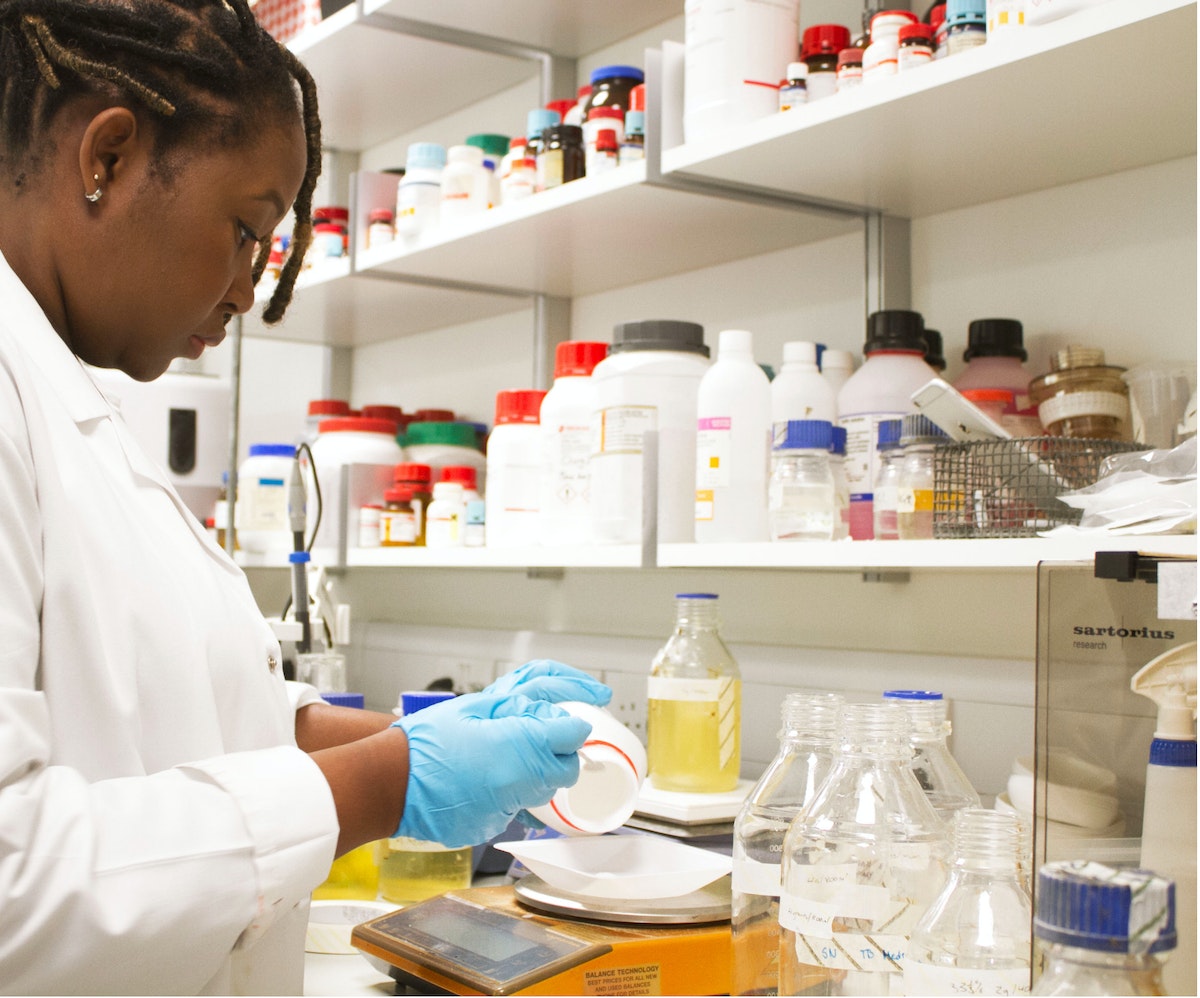
Vivid pinks, blues, greens and yellows form beautiful, organic abstract shapes on Natsai Audrey’s delicate silk scarves. But they’re not drawn by her, or silkscreened in a print studio. Instead, the shapes are the life and death of streptomyces bacteria writ colorful on silk, folded into a petri dish, in a lab.

Lindsey Turner
I’m passionate about building brands, products, and experiences that help organizations show up with meaning and momentum.
I help organizations cut through complexity by shaping how they show up, through brand strategy, identity, and storytelling.
Working at the intersection of brand and business, I bring an editorial eye and a bias toward making—turning ideas into tangible experiences that people can understand, trust, and believe in.
My work spans government, healthcare, financial services, media, and consumer goods, from launching Gen Z-focused ventures to building innovation labs and reimagining legacy brands. I relish moments of ambiguity and enjoy translating across teams, perspectives, and priorities to move ideas forward.
I started my career in editorial and digital design, shaping cross-platform experiences and identity systems in publishing and agency environments. That foundation still shapes how I work today: I’m detail-oriented, collaborative, and overreliant on the Oxford comma. I hold a BFA in Visual Communication from the School of the Art Institute of Chicago.

Rachel Young
My work helps organizations see who their products aren't working for—and build the will and the tools to do something about it
For 25 years, I've asked the same question: Who does this design exclude—and what are we going to do about it?
My work spans human-centered strategy, inclusive design, and qualitative research, with clients ranging from Microsoft, Google, and Verizon to the National Science Foundation, and San Francisco Unified School District.
Before IDEO, I taught elementary school in East Palo Alto and spent a decade doing design work with social service organizations—where I learned firsthand what it costs people when systems are built without them in mind.
I am currently writing User Error, a nonfiction book about digital access and the design decisions behind it. I live in Oakland, California.

Brian Pelsoh
I lead with craft, ensuring our work is creatively excellent: rooted in deep human insight and imagination, while also grounded in the realities of business and technology.
My expertise spans brand, communication, and product design across tech, education, the arts, and social impact.
I believe great work demands both high-level vision and obsessive attention to detail, and only happens through collaboration.
I bring an inclusive, hands-on approach and a deep understanding of business, which enables me to consistently deliver excellence while always asking why.
Before joining IDEO, I worked at the brand firms Pentagram and VSA Partners. I began my career as a designer, leading teams at the School of the Art Institute of Chicago and the Milwaukee Art Museum. I hold an MFA in graphic design from Maryland Institute College of Art and a BFA in communication design from the Milwaukee Institute of Art & Design, and have taught at some of the best design schools in the US.

Tony Wong
I am responsible for IDEO’s long-term success in China and working with clients to use design as a tool to enable growth.
I am responsible for IDEO’s long-term success in China and working with clients to use design as a tool to enable growth. Specifically, I have helped Chinese companies design holistic brand solutions through the development of their products, communication, services, and innovation teams, and I have helped multinationals expand their presence and influence in China.
I advise global leaders on developing China-led innovation and capabilities.
In over 15 years in IDEO Shanghai, I have worked on projects that use design to elevate the quality of the experience of healthcare products and services, streamline processes that increase productivity, create spaces and programs that promote and enable inclusive communities, and build next generation mobility solutions that are planet-positive.
Before joining IDEO, I worked at Philips Electronics and the Electrolux Group in Italy, the Netherlands, and Singapore on a number of breakthrough commercial products. I am a member of the Young President Organization in Shanghai.

How to use AI as an editor, not a writer
Ed White shares how he uses AI as an editor—not a writer—to sharpen storytelling, rehearse ideas, and preserve the productive friction that makes creative work better.
Ed White has a rule he's tested on his own writing: hold yourself as the writer, and let AI be your editor. Ed is a Senior Design Director at IDEO's London studio, where he co-leads the firm's AI portfolio across Europe. Before IDEO, he spent 12 years as a writer and editor at the Financial Times, Wired, and Contagious. So when he talks about when to use AI for storytelling and when not to, it comes from two decades of crafting his storytelling skills.
In this episode, Mina Seetharaman talks with Ed about two specific tools he uses to keep AI in an editor's seat: a "roasting agent" prompted to critique his drafts without any sugarcoating, and a simulated audience he rehearses pitches on before the real thing. They also get into what Ed is hearing from design leaders at Anthropic, Lovable, Shopify, and Google Creative Lab about how creative work is changing, and why he thinks the friction of writing something yourself is worth protecting rather than automating away.

Building a personal AI for the messiness of life: Sida Li
Becca Carroll talks with Cue co-founder Sida Li about designing a personal AI for the messiness of everyday life—not just work. They explore how Sida stays anchored to human needs while navigating fast-changing technology, product tradeoffs, business-model experimentation, and the realities of building an AI company today.
Most AI products today are built for work—a space with clear problems and established systems. One founder noticed a gap: personal life is messier, harder to systematize, and mostly left behind by the AI boom. So she built Cue, a personal AI that lives inside iMessage and group chats, to go where the other tools haven't.
In this episode, Becca Carroll, IDEO's Chief Strategy Officer, talks with Sida Li, co-founder and CEO of Shared Context Lab, about staying anchored to a human need while the technology around her keeps changing shape, why she treats her business model with the same rigor she'd bring to a product, and what it feels like to build a company at this particular, disorienting moment in AI.
The conversation also gets into how Sida makes design decisions: the language Cue uses to describe itself, the tradeoffs behind building inside iMessage instead of a new app, and a real story about a business idea that didn’t pan out.
This is the second in a two-part series profiling founders from IDEO's Startups-in-Residence program. The first conversation is with Johannes Seemann, founder of Sooner, on designing GenAI for the emotional side of money.

Designing GenAI for the emotional side of money: Johannes Seemann
Designing financial tools around the feelings that shape money decisions.
Most personal financial tools are built to run the numbers and optimize towards a budget. While that works for some, most people experience money as a lived relationship that does not neatly fit into a spreadsheet. Johannes Seemann and Becca Carroll discuss why money is emotional before it is mathematical, and what a human-centered approach to building a generative AI financial product looks like in practice.

The curious leader's edge in uncertainty: Scott Shigeoka
How genuine curiosity helps leaders navigate uncertainty with greater confidence.
Mina Seetharaman talks with Scott Shigeoka, author of Seek and Head of Curiosity Cultivation at the Eames Institute, about what distinguishes genuinely curious leadership from performative curiosity, how power dynamics shape curiosity, and why practicing curiosity can restore energy rather than drain it.
Looks like you might be in search of something very specific?
Or reset the filters above and try another angle.
Here’s some random inspiration

Podcasts about creative leadership

Articles about the power of prototyping