Creating an out-of-this-world STEM learning experience
Aboard the Verizon Explorer Lab, students can travel to Mars and learn engineering basics along the way.
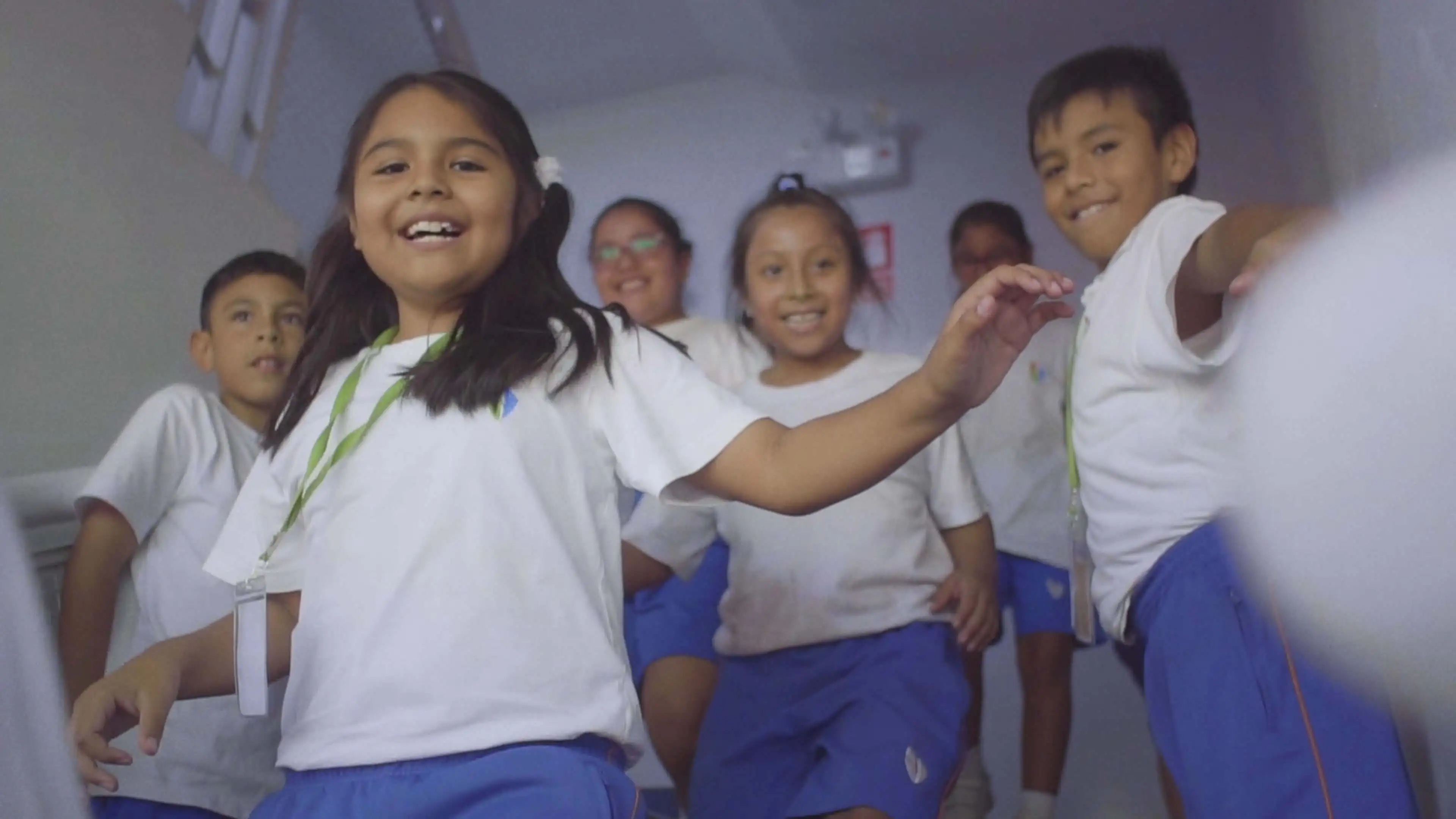
When Mr. Gordon told his fifth grade students they were taking a field trip on a bus, many of them envisioned the city bus that they ride each day to school. But when they saw the Verizon Explorer Lab pull into the school parking lot, they realized a unique experience awaited them. Painted in bright colors, this bus promised something very different from their daily commute.
“Climb aboard, explorers!” says the Lead Explorer. The students walk through the bus’ sliding doors and inside, where instead of rows of seats, they find a sleek research lab. Suddenly, the lights dim. The bus makes a rumbling noise as though it’s about to lift off. And on a large screen, a vision of Earth from space appears. The students listen and point as the video narrator briefs them on NASA’s ongoing search for life in space.
Science education isn’t always this fun. Some kids have a chance to learn through interactive games, immersive experiences, or engaging field trips; but many lack access to rich educational experiences in science, technology, engineering, and math (STEM). As a result, they can be less likely to pursue careers in STEM, though many future jobs will demand mastery of these subjects. This not only impacts a student’s potential and future, but reduces the diversity and number of qualified STEM job applicants.
In under-resourced schools, students are often limited to the scarce tools available for STEM learning in their classrooms. Many kids rarely have a chance to leave their neighborhoods. For these kids, mobile learning experiences that come to their school offer unparalleled exposure to cutting-edge, technologically advanced, and—most importantly—inspiring gateways into these critical academic subjects.
As part of its focus on digital inclusion, Verizon partnered with IDEO to share the excitement of STEM learning with middle schoolers. To facilitate access and discovery of STEM, the team designed a learning experience that takes place on a coach bus and can be scaled to reach kids across the nation.
The team set out to transform the bus into the Verizon Explorer Lab: a futuristic research lab that transports kids to new environments, from outer space to under the sea. As part of the larger Verizon Innovative Learning program, the Verizon Explorer Lab offers delightful and rigorous content that meets national science standards.
A multidisciplinary team comprised of designers across interaction, communication, environments, games, and software partnered with Verizon to bring the Verizon Explorer Lab to life.
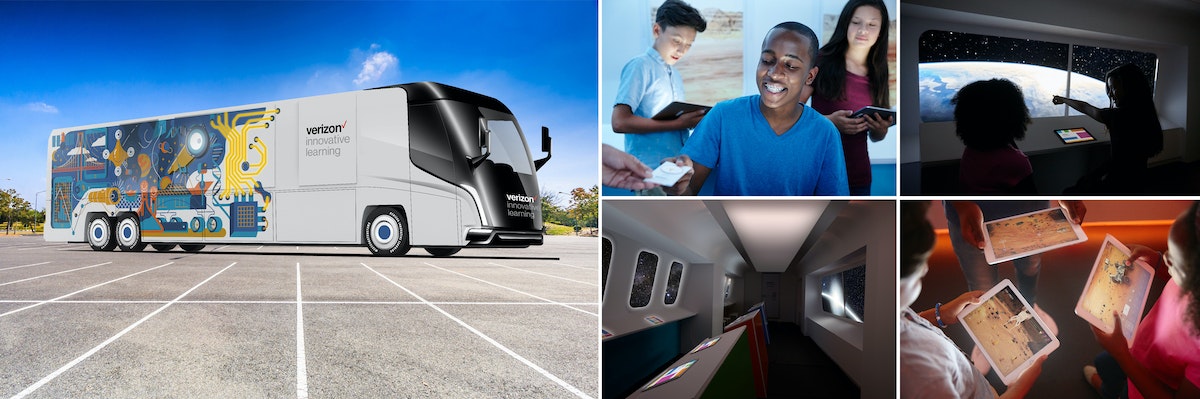
To keep the student at the center of the experience, the team designed alongside kids. Their gravitation toward play, interaction, and technology inspired the digital game that students play onboard the bus. When developing the game’s narrative, the designers turned to popular kids’ books and movies. What began as a card game prototype eventually became a 360-degree video and virtual reality expedition to Mars—complete with a custom musical score—that introduces middle schoolers to engineering basics.
After stepping through the bus doors and taking a tour of the solar system, Mr. Gordon’s students receive an emergency call from NASA: They must rescue the missing Curiosity rover, which is dedicated to collecting evidence of life on Mars. Eager to save Curiosity, the students become immersed in the adventure at hand. And through the adventure, they become immersed in science.
Students use tablets to design their own Mars rover. Each rover appears on a large screen and traverses the planet’s extreme terrain. The goal is to collect data that suggests life on Mars, including ice deposits, photos, and more. Students iterate on their rover’s design—wheels, power sources, and sensors—to test if it can stand up against dust storms and craters. The team consulted a NASA planetary scientist to ensure accuracy, as well as educators to establish cohesion with classroom curricula.
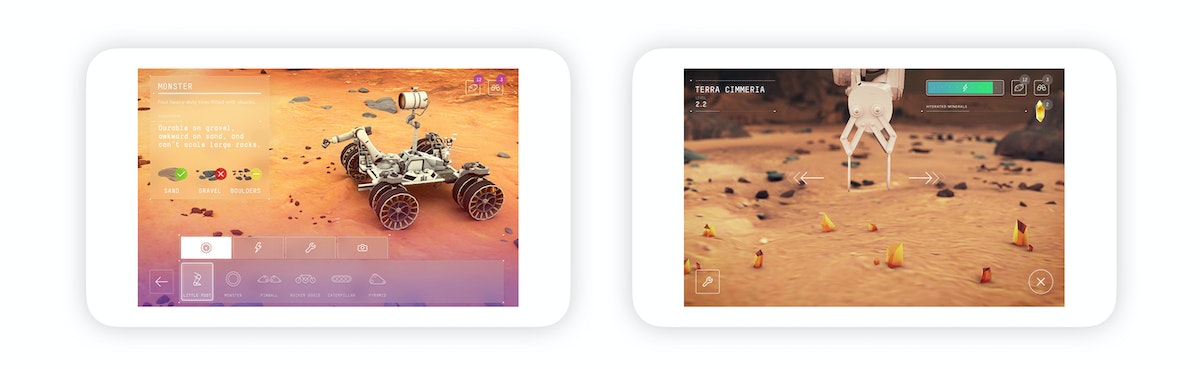
During the game, students are encouraged to compare designs and learn from each other: One rover may be able to travel long distances and take various photos, while another can carry large quantities of ice and sediment samples but can’t go far because of its size. At the end of the mission, the group finds Curiosity and sends all of the evidence they’ve collectively gathered back to NASA to aid the search for life beyond Earth. Before departing the bus, students watch an animated video that explains various jobs in STEM and encourages kids to pursue one of these careers.
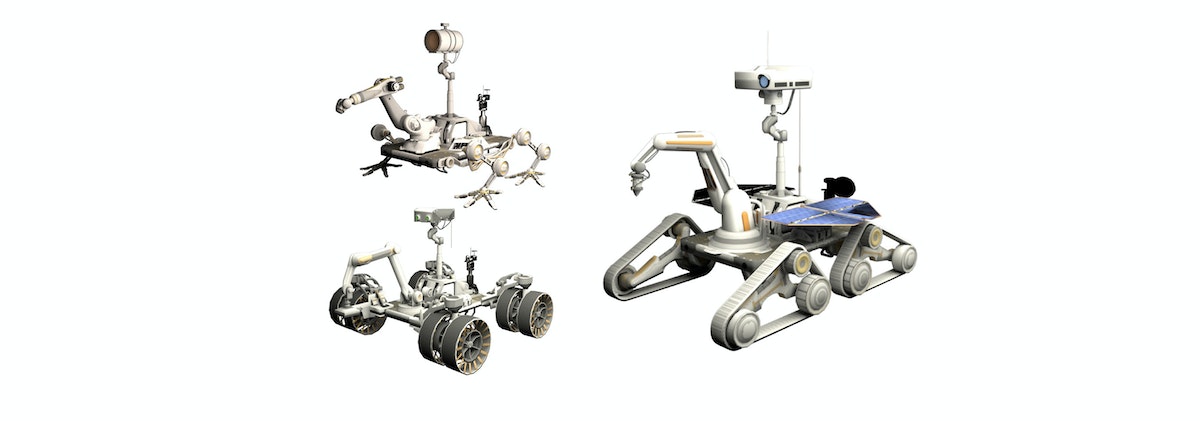
The Verizon Explorer Lab teaches students the engineering design loop, the value of collaboration and teamwork, and what a career in STEM might look like. The mission to Mars game is just one of many potential STEM learning opportunities for students and integrated, customizable learning modules for teachers.
Since launch, the Verizon Explorer Lab has traveled to various parts of the United States and reached thousands of kids. It continues to be managed by Learning Undefeated, Verizon’s nonprofit partner. By designing for and with students, it’s possible to create educational experiences that facilitate meaningful learning and genuine fun. The Verizon Explorer Lab represents progress towards a more inclusive future for employers and the STEM field.
A leading food company’s human-centered transformation spurs rapid growth
How The J.M. Smucker Company embraced customer centricity to build a culture of innovation.
Over more than a century of leadership in the food and beverage industry, The J.M Smucker Company has expanded its range of products to maintain its relevance and address market demand. Today, the company leads numerous categories, with beloved products like Jif, Milk-Bone, and Folgers, which are the top choices of millions of Americans. By growing and diversifying their brands over the decades, Smucker has successfully weathered major shifts in consumer habits and technology. Today, though, CPG companies are experiencing unprecedented disruption, and leaders at Smucker understand that the escalating pace of change will require more than just new products.
Geoff Tanner, Senior Vice President, Growth & Consumer Engagement at The J.M. Smucker Company recognized the need to identify new market opportunities and establish practices that put innovation and growth at the heart of their business. And he saw the potential to bring those goals to life through his relationship with IDEO.
WATCH: Balancing innovation and efficiency through design has helped Geoff Tanner, Senior Vice President, Growth & Consumer Engagement at The J.M. Smucker Company, brave the unfamiliar, transform organizations, and ultimately bring game-changing ideas to market faster.
Geoff has stewarded a close partnership with IDEO for over a decade and throughout roles at numerous organizations. Together, Geoff and IDEO have worked on 25 projects, beginning while Geoff was VP of Marketing at Big Heart Pet Brands, and continuing on throughout his career at The J.M. Smucker Company. By working with IDEO to adopt a design thinking approach, Geoff has enabled collaboration across teams and empowered his organizations to find new ways of working that result in measurable business impact. For The J.M. Smucker Company, the partnership has brought creativity and human-centered design to the forefront of its operations, strengthening its ability to bring new products and brands to market and create a pipeline of growth.
WATCH: The J.M. Smucker Company has shifted to embrace growth and innovation as a mindset throughout the organization to bring more consistency to the innovation process.
Looking to the past to creatively connect with the future
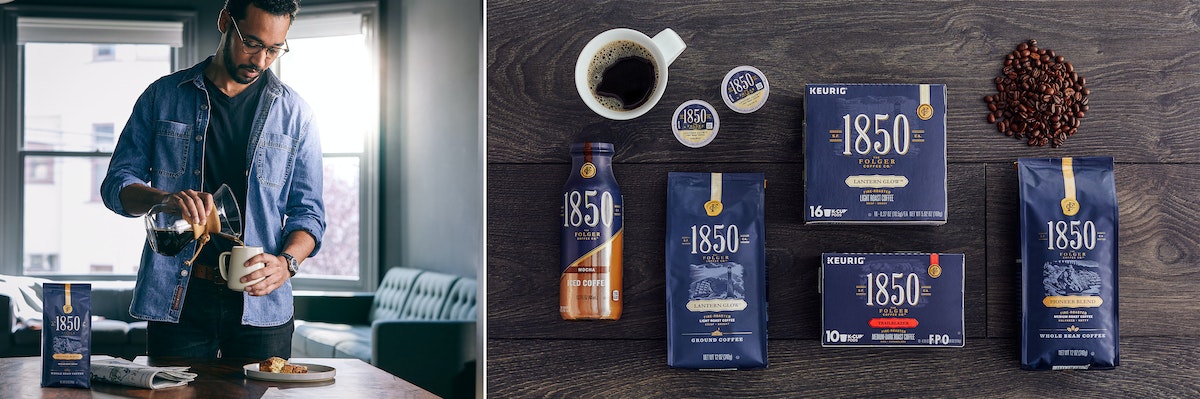
As an example of this, Geoff and The J.M. Smucker Company suggested to IDEO that they explore how Folgers, America’s leading at-home coffee brand, might resonate more deeply with a millennial audience. Design research revealed that the mindset of today’s millennial coffee drinkers aligned with Folgers entrepreneurial brand roots. The teams collaborated to create a new concept: a brand called 1850 and an end-to-end, go-to-market product experience, including packaging, retail, and merchandise. 1850 hit shelves in 2018 and has since been reported by IRI Advantage as the top launch in the Coffee Category for 2019.
Frankly, I don’t think innovation gets any easier. You just get a little more comfortable with the discomfort, and that’s when the work starts to get consistently better.
Geoff Tanner, Senior Vice President, Growth & Consumer Engagement, The J.M. Smucker Company
Creating an innovation pipeline that’s inspired by consumers’ needs
With 1850 underway, Geoff and The J.M. Smucker Company continued to invest in human-centered design to drive new offerings. The next collaboration with IDEO explored how Jif, the iconic peanut butter brand, could extend beyond the jar and become more readily accessible and appealing to busy parents who want to feel confident about the snacks they give their kids.
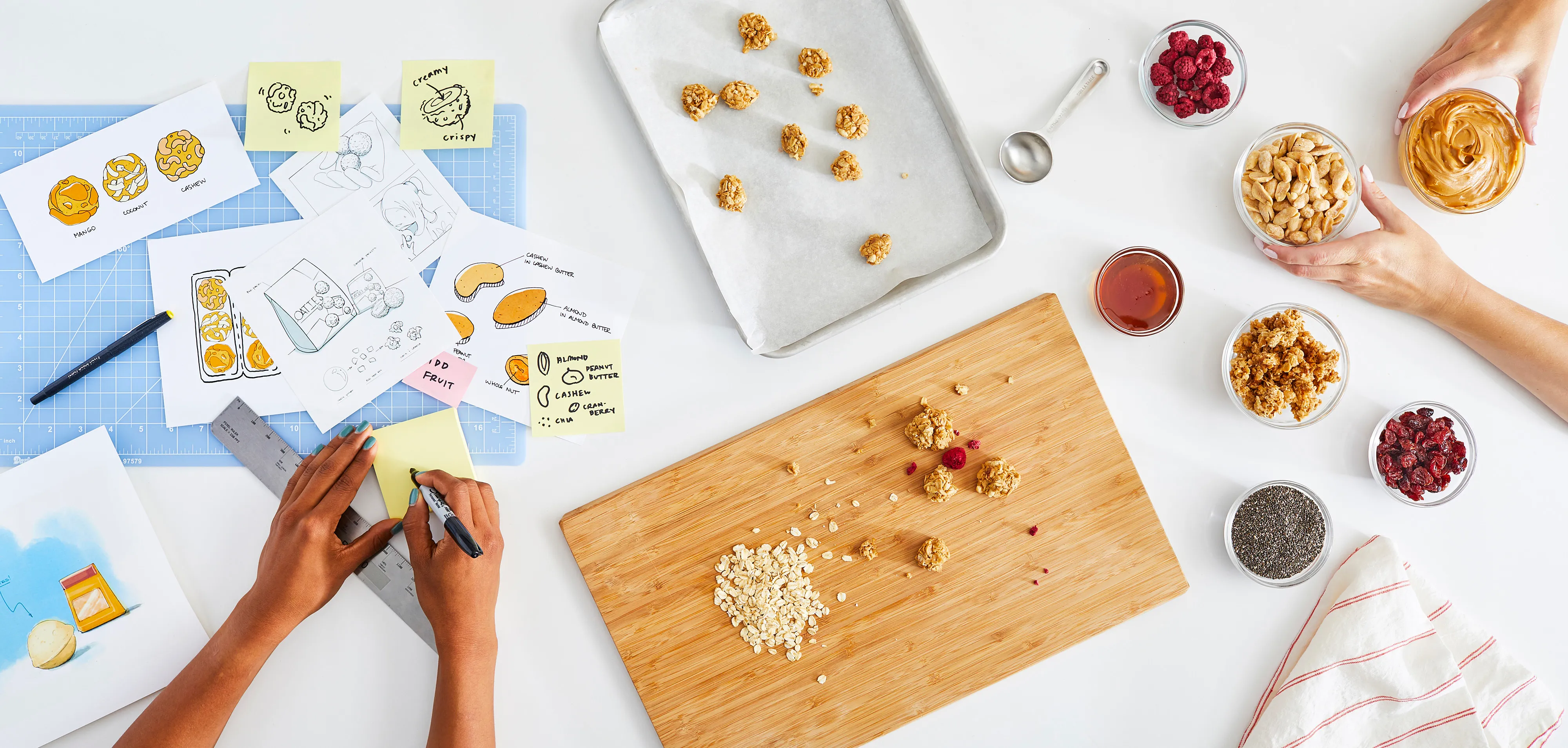
The design team was moved by the challenges that parents face: They want the best for their kids, but struggle to choose between what’s wholesome and what’s convenient on a daily basis. The ideal foods are filling, nutritious, and energizing, but often take more time to prepare and aren’t backpack or carpool-friendly. On the other hand, more convenient options tend to be full of empty carbs. Based on this insight, IDEO and Jif decided to tackle the snack-time parenting struggle. The IDEO and Jif teams worked side-by-side to prototype multiple product ideas and formats and tested them with on-the-go families to ultimately create Power Ups.
Available at over 200 retailers worldwide and online at Amazon, Jif Power Ups make wholesome, delicious grab-and-go snacking possible for kids and parents alike, across products ranging from Soft Baked Bars to Creamy Clusters, which are filled with peanut butter and rolled in whole grain oats. All are made with peanuts as the first ingredient and contain no high fructose corn syrup. Since going to market in 2018, Jif Power Ups has been named the top innovation launch in the Snack Bars category by IRI Market Advantage.

Design thinking underpins everything we do.
Geoff Tanner, Senior Vice President & Corporate Officer, Growth & Consumer Engagement, The J.M. Smucker Company
WATCH: The J.M. Smucker Company is on a transformational journey, committed to three pillars of growth: Lead in the best categories, build brands consumers love, and be everywhere.
The J.M. Smucker Company has experienced accelerated growth and speed to market by testing bold new ideas and evolving the role of innovation at the company. Design thinking and consumer empathy have permeated the organization’s new product development process, making it easier to uncover sharp, human-centered insights that lead to thoughtful and uniquely differentiated brands in a competitive, ever-shifting, and overcrowded industry. The work has fueled Geoff’s vision to inspire a culture of innovation at the company so that it can move at the speed of consumers and remain a best-in-class family of brands for future generations.
Creating a fresh, modern take on the Indian culinary experience
Designing a scalable restaurant, retail, and packaging experience that highlights the diversity of regional Indian foods.
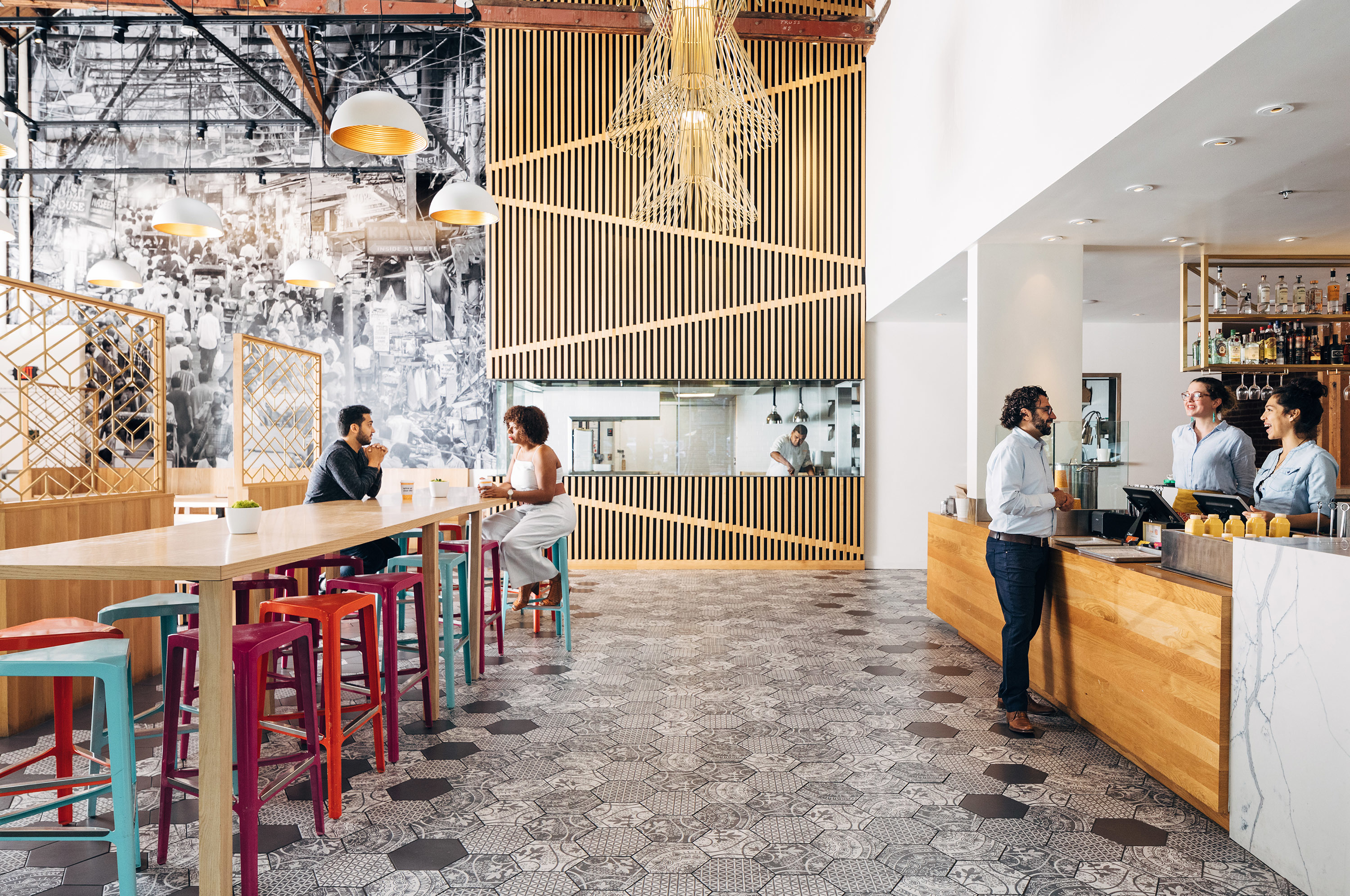
It’s a Thursday afternoon in Oakland, California. A line of lunchtime diners snakes out the door of dosa by DOSA. Upon entering, eaters are greeted by the smell of tangy dosa—a large paper-thin crepe made from a fermented batter of rice and lentils—and sweet, spicy chai. Turquoise chairs pop against a floor-to-ceiling mural by Oakland artist Namita Kapoor that transports diners to Chandni Chowk, one of the busiest markets in Old Delhi, as if enjoying their food at a local vendor.
In 2003, Emily and Anjan Mitra spent their honeymoon in India, savoring the street food of Anjan’s childhood in Mumbai (often still called Bombay). After returning to San Francisco, they found themselves longing for those distinctive flavors and dishes. Realizing that most Bay Area diners had never seen nor tasted these foods, Emily and Anjan founded DOSA, an upscale, full-service restaurant that introduced the Bay Area to Southern Indian cuisine. Locals came to try the unique, plant-forward dishes, and left with satisfied bellies and a broader understanding of Indian culture.
The entrepreneurs envisioned a brand extension of DOSA: a counter-service restaurant that could scale nationally. The hospitality venture, called dosa by DOSA, would offer healthful Indian street food made from local and seasonal ingredients. Emily and Anjan also set out to expand their existing product line-up—including cold lassi beverages, simmering sauces, and grab-and-go-meals—to national grocers and retailers and needed launch-ready packaging that was convenient, eye-catching, and environmentally-friendly. The new expression would enable consumers to experience dosa by DOSA and Southern India in a variety of forms and places. Emily and Anjan partnered with IDEO to establish a cohesive and consistent brand experience, from the restaurant and to-go meals to retail stores and mobile delivery.
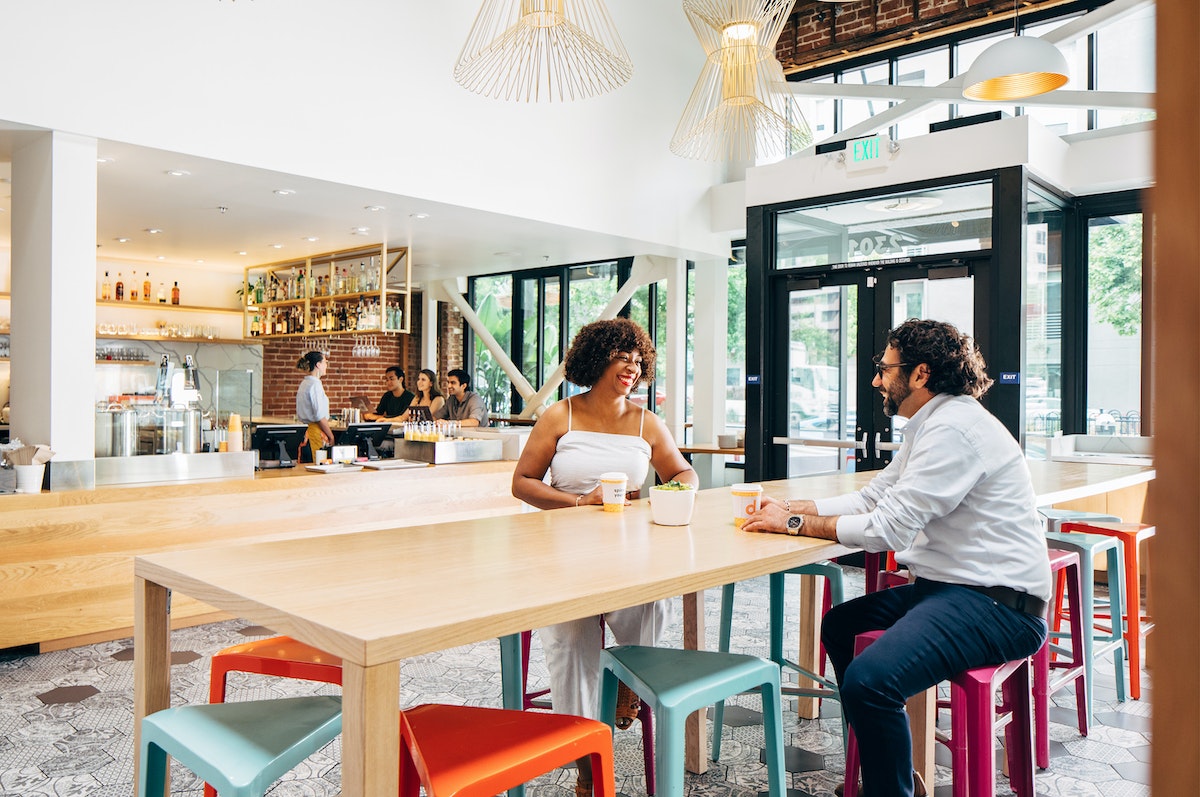
In close partnership with the founders, their staff, Feldman Architecture and MPADA, IDEO set out to bring dosa by DOSA to life and help it scale through brand, environment, and experience design. This included creating everything from the logo and packaging to the menu and operations strategy, with each element tying back to the founders’ vision of sharing Indian heritage and traditions through cuisine.
The group began by seeking cultural inspiration for dosa by DOSA’s brand identity system—the logo, colors, values, fonts, and messaging—to guide future designs. They were inspired by Indian truck drivers who decorate their trucks with garlands, signs, or flags that engage other drivers or bring luck. The dosa by DOSA logo design and its wood-cut typeface are inspired by the dimensionality of this homespun art form, while the vibrant, eclectic colors reflect the streets and textures of urban Mumbai.
The goal of opening people’s minds to Indian cooking and culture extends to the packaging, which meets customers’ needs and playfully educates them. The food containers—made from recycled and compostable material—feature brightly patterned labels reminiscent of the trucks. Some have built-in compartments suited to multiple dipping chutneys, making it convenient to sample a variety of Indian flavors. Paper tray covers resembling Mumbai newspapers offer eating tips like “Be civilized. Eat with your hands,” encouraging diners to experience an Indian custom.
The vibrant brand comes to life across an array of packaging, including cold cups printed with the phrase “thanda thanda pani”—meaning “cold cold water”—which comes from a popular Indian parody of the Vanilla Ice song "Ice Ice Baby."
To design the diner experience and restaurant environment in a way that invites curiosity about the culture and cuisine, the team started with diners: They identified key moments in their experience like entering, waiting in line, and paying. The floor plan, furniture, lighting, signage, and menu were designed around these touchpoints. For example, while customers wait in line, they can watch dosa being prepared, as if they’re eager and hungry travelers awaiting street food.
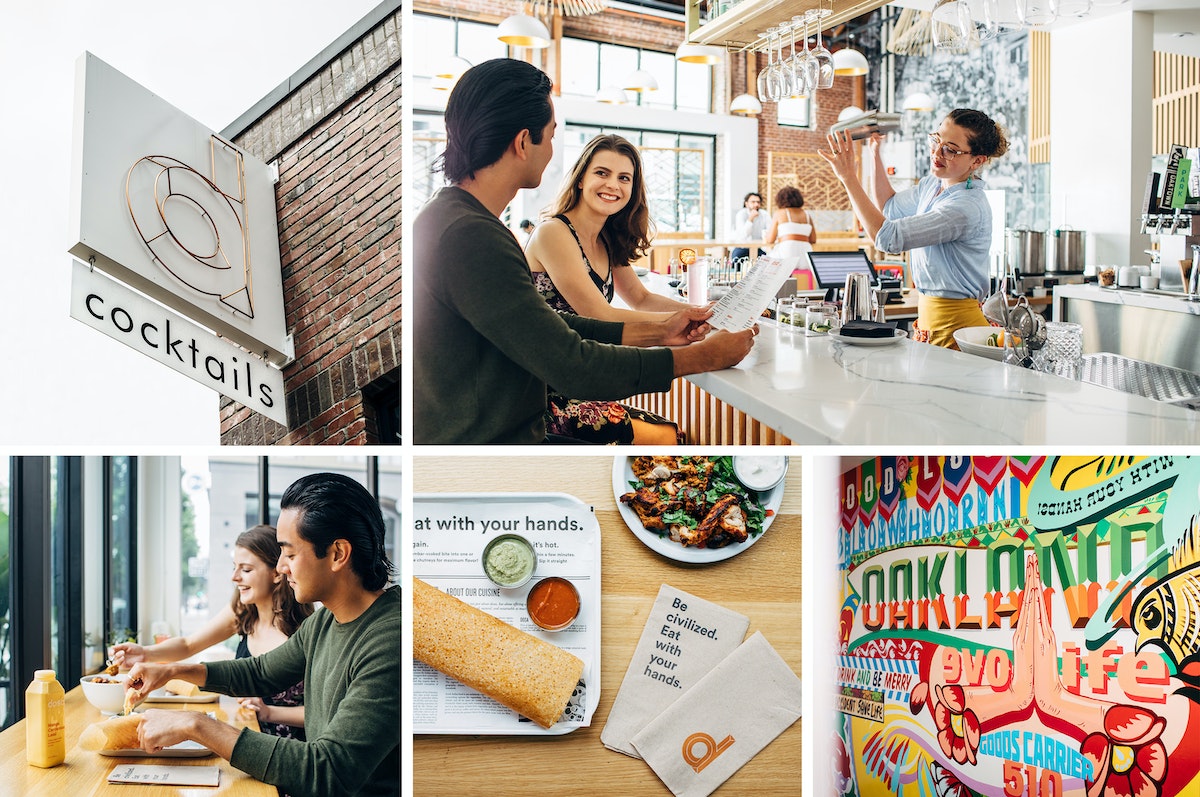
The dosa by DOSA menu includes distinctive items like coconut kale mung bean salad and hot masala chai made with caramelized milk—the way Anjan’s mother prepared it. To help the restaurant scale, the team created a preliminary furniture, fixtures, and equipment (FF&E) budget, 3D renderings of the space, and an operations strategy for the founders and their employees.
The dosa by DOSA flagship launched in January 2018 in Oakland, California. The IDEO brand guidelines have enabled the dosa by DOSA team to independently and easily shepherd new product lines to market, including salads, wraps, curry bowls, samosas, and simmer sauces. The brand’s packaged food launched in over 200 natural food stores in 24 months—including over 100 Whole Foods locations—as well as online retailers and delivery services like Good Eggs and Caviar. These items and the restaurant have helped Emily and Anjan realize their vision of bringing the flavor and spirit of Southern Indian cuisine to new communities around the world.
Revitalizing Japan’s food industry through design and software
Redefining the “middleman” role of produce wholesalers in Japan.
In recent years, due to shifts in Japan’s demographics, the food industry has faced challenges such as a decrease in market size and a shrinking number of producers. As a result, social impact opportunities abound in this field.
When Japanese software company NJC (Nippon Jimuki Co. Ltd.) approached IDEO seeking to identify new business opportunities that would build on the company’s core strengths, the food and agriculture industry rose up as a promising area of focus.
NJC is a well-established software company that has spent over 50 years helping to build backend business systems for small to medium enterprises. NJC works across healthcare, retail, and food and beverage, computerizing core processes to support and improve operations.
In partnership with IDEO, NJC explored its strengths and potential as an organization, as well as the ideas and visions of the employees, and emerged with the goal of using their capabilities to address large-scale issues facing regional farmers.
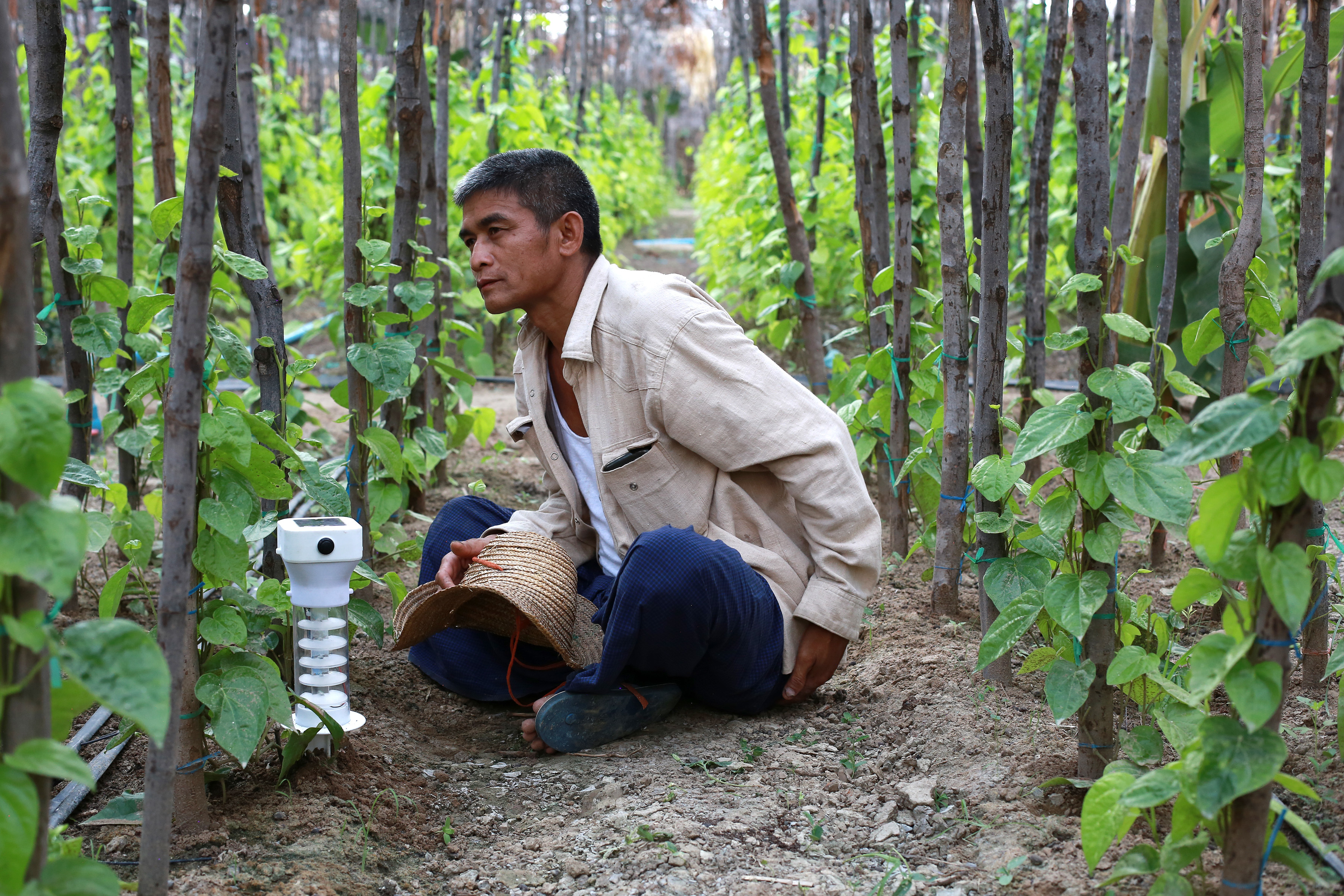
During research across Japan, local growers described challenges with multi-layered supply chains and analog systems, which led to “overwork for minimal profit,” as well as a gap between supply and demand. Because agricultural wholesalers lacked clear information in advance on the status of crops or the volume to be harvested, they struggled to negotiate with buyers, which led to wasted food On the other hand, the farmers who grow the crops are engaged in manual labor, and do not always have the energy to focus on business aspects such as efficiency or the pursuit of increased profitability, which leads to a diminished interest in farming among young people.
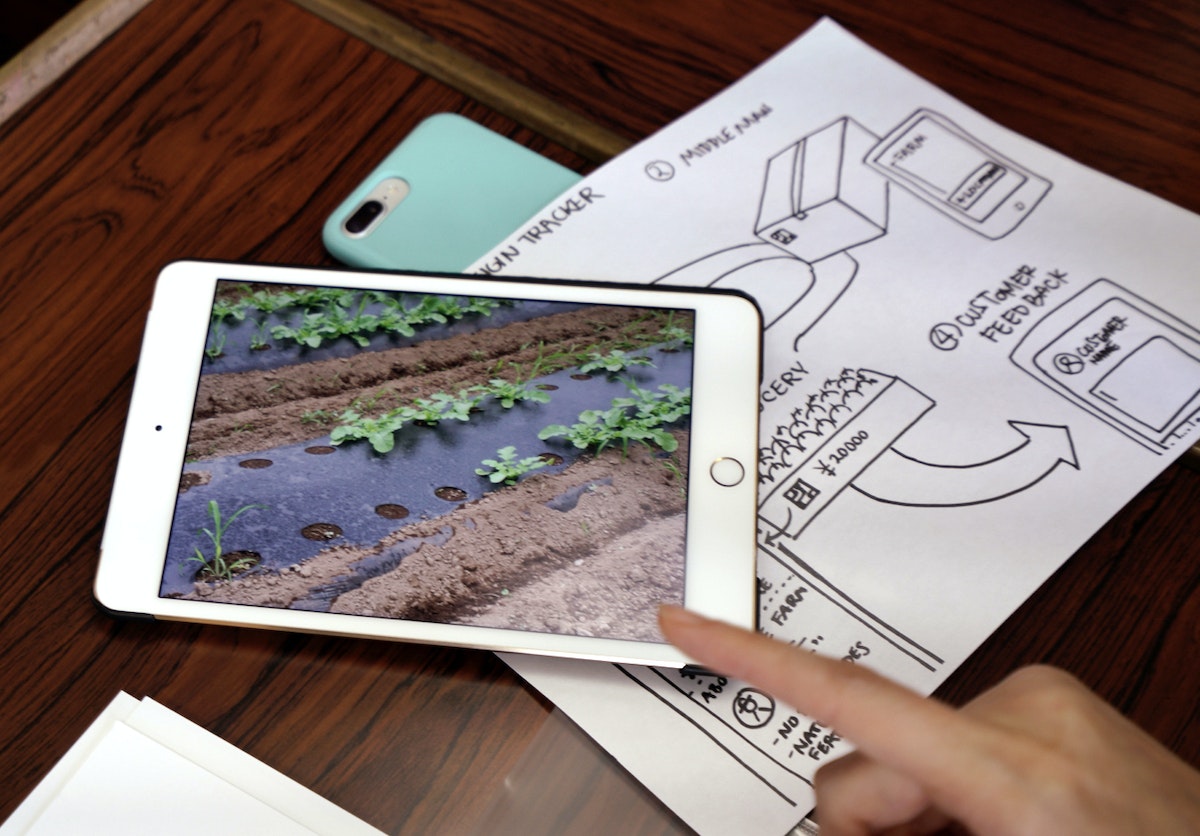
One question that emerged through research was why agricultural producers weren’t utilizing IT. This evolved into “How can profitability be improved for all stakeholders?” and, “How might we create a system that will provide useful data without creating a burden for either farmers or agricultural wholesalers?”
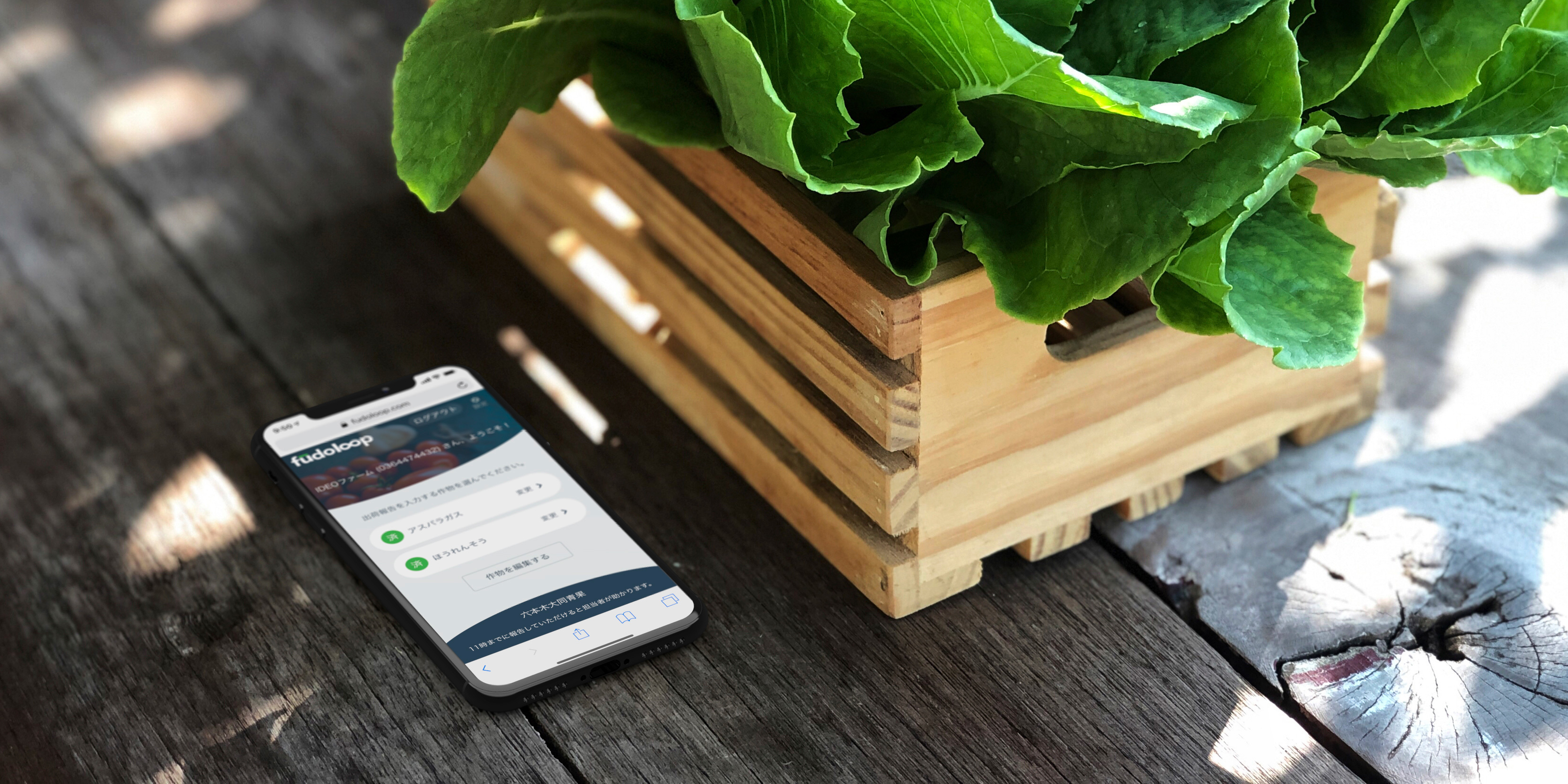
The result was fudoloop.
fudoloop is an app that enables farmers and wholesalers to conduct business more profitably by bringing transparency to the fluctuating produce market. Through fudoloop, wholesalers receive information from farmers a day in advance, and can coordinate the various requests of buyers, such as order size, production location and other special requests. As a result, wholesalers can function as “community managers,” doing business with both producers and buyers at a more appropriate price point.
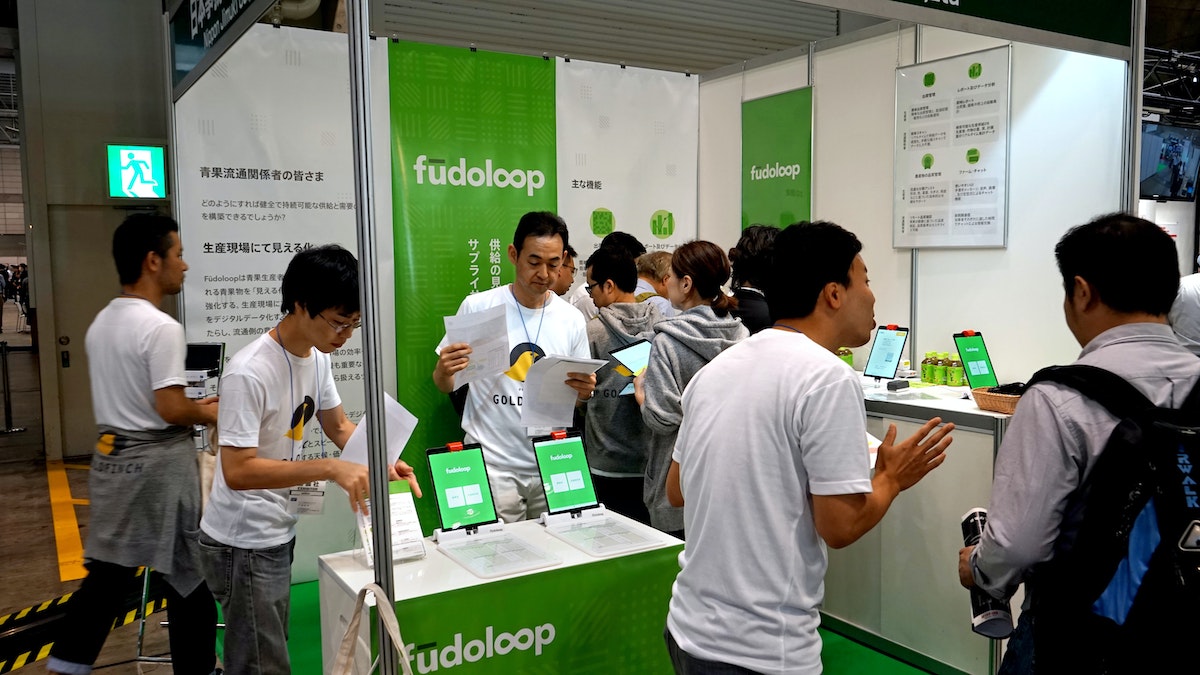
NJC aims for fudoloop to be the first step in a cycle that brings value to all stakeholders, from farmers to wholesalers, retailers and even customers, by redefining the “middleman” role of produce wholesalers.

The Freelancer's Guide to Hustling
3 ways to fuel your freelancing
Between the allure of the WFH lifestyle, more flexible working hours, and be-your-own-boss independence, it’s no wonder more people are staying home. But the other side of that coin is that everyone and their mother is freelancing, so it's harder than ever to stand out. We asked our freelance IDEOers and those who hire them to tell us the best ways to make it work.
Here are the top three ways to rethink and refuel your freelancing:
1. Turn ‘networking’ into ‘helpworking.’
Before you audibly groan at the word “networking,” hear us out. Let’s try an exercise: Write down a favor you might ask of someone in your field. Pause. How do you feel? A little anxious? Maybe kinda bummed?
Now, imagine how you might offer to help one of your clients. Jot down three provocative ideas you have for them. Pause. How do you feel? Energized?
We thought so. And that’s the thing. It turns out that while asking for help is hard and can make us feel bad, giving help is actually invigorating and makes us happy. Huh.
So what does this mean for your freelancing? It means looking for opportunities to come together with other collaborators or companies in a way that generates good vibes all around. You can make this happen by bringing together other freelancers for your own hackathon-style event. (Maybe even get a company to sponsor it in exchange for your combined thinking). Or you can join a community-based network. There are tons of places to find like-minded creative people, like co-working spaces or meet-ups.
Whether one-on-one or one-on-many, flip networking from the downer of asking for help, to the booster of giving help—and upgrade the kinds of projects and people you work with as a result.
2. Show all your angles. #nofilter
Help companies hire you by showing them all the kinds of work that you do. Are you a medical illustrator with expertise drawing physiological diagrams? That's exactly what we need for one of our health-related projects. When you say “interaction designer,” explain the very specific range of interactions you design. And if you worked on a group project, add a sentence to call out the parts of the project you did.
There’s a fear that by being very specific in what you do and don’t do, you’ll pigeonhole yourself. But the truth is that when a company needs to hire a freelancer, it’s almost certainly because of a very specific task that requires a skill or resource that the company doesn’t already have. If you happen to do that very niche craft… you’re hired!
So don’t leave the range or specificity of what you can do to the imaginations of your prospective clients. Lay it all out (preferably on your website, in emails, on LinkedIn—the Skills section is great for this), and you’ll be increasing the likelihood of a “swipe right” when it comes to new collaborations and projects.
3. Repetition does not spoil the prayer.
So you met a prospective client or collaborator at an event (perhaps the recent Break the News brainstorm we hosted in our Cambridge office), you clicked, you exchanged information, and then… crickets.
It’s tempting to think that the prospective partner will keep you top-of-mind for future projects. The reality is that, while they probably felt the spark too, life happens. And in the chaos they might not remember important details—like how to contact you! So make it easy for them by reminding them regularly of your work, what you’re up to, when you’re available, and how to get in touch.
There’s a reason advertisers commonly reference the number seven as the sweet-spot in terms of “effective frequency”—the number of times a customer needs to see an ad’s message before they buy. Think creatively about how you stay in touch and top-of-mind for potential partners. Send them a monthly email showcasing your latest work. Mail them a beautiful poster you made. Send a note praising their most recent project. Continue to show up to more events. Aim for more. To you, it might seem repetitive, but to a prospective client, it’s a reminder that you’re there, ready to co-create.
In the end, more is more. That’s the key to navigating today’s ambiguous (and exciting) un-9-to-5.
With the rise of the gig economy, the workplace has changed dramatically—and for the better, we think. The definition of a “long and successful career” has been flipped on its head. (Hint: It’s no longer about walking into the same office building for 30 years). And who’s leading the charge? Freelancers.
Thoughtless Acts: A Seat on the Street
Thoughtless Acts: A Seat on the Street. The intuitive ways we adapt and react to things in our environments
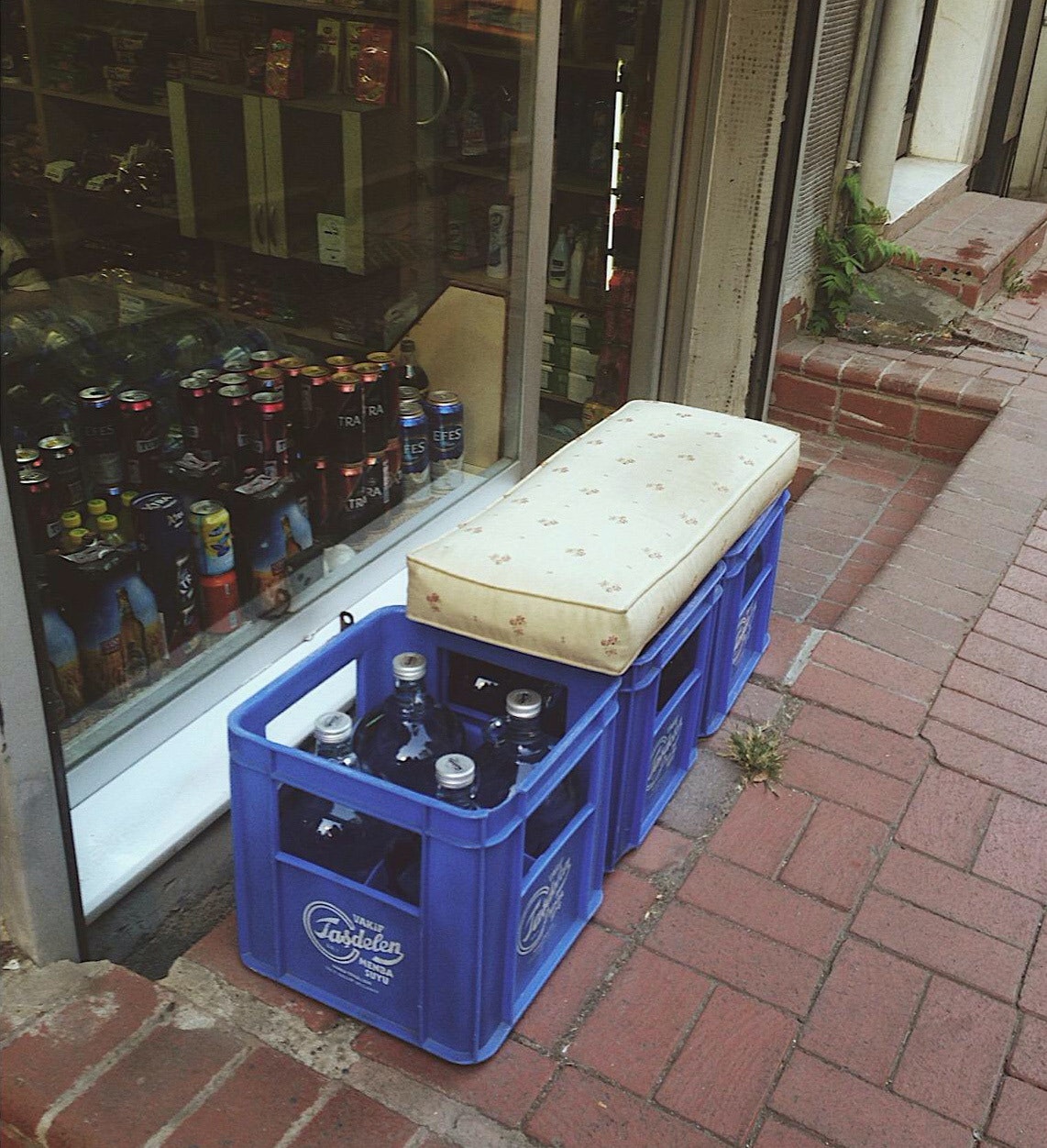
I took this picture last summer while I was back home in Istanbul. Istanbul is a city that people mold to fit their needs. Market owners, residents, even kids always find ways to reimagine the streets. Sometimes it’s a group of kids turning a cul-de-sac into a football field. Sometimes it’s the residents of the neighborhood having tea on the stairs of a building, treating the street as a café.
Growing up in there made me look at sidewalks in a completely different way. Last summer, while I was wandering around my neighborhood, I noticed this amazing piece of furniture that our neighborhood market owner made. He put a pillow on top of the water containers and turned them into a bench. It’s a perfect temporary seating arrangement.
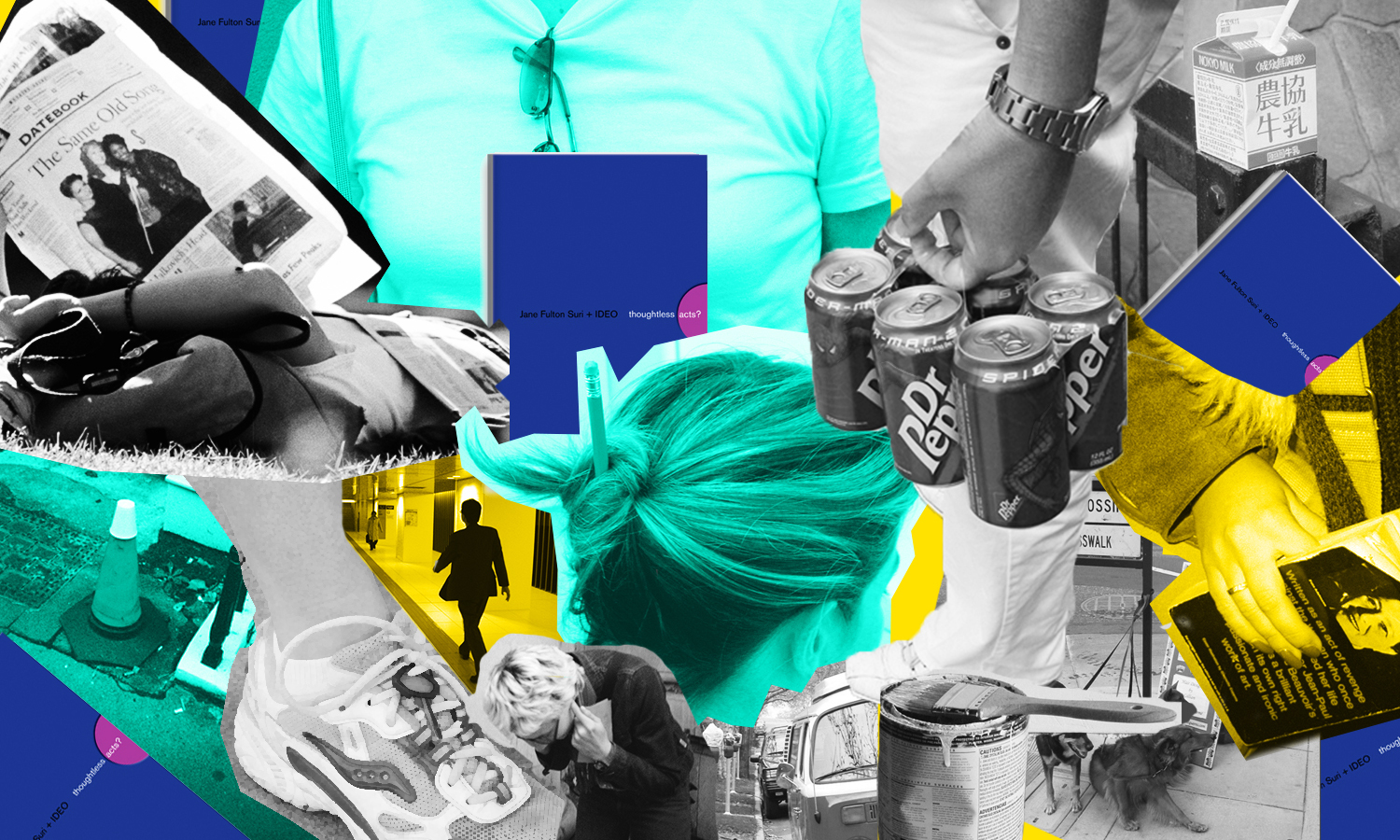
Human-centered design requires us to observe human behavior with beginner's eyes, so that we can spot the innate ways people interact with the world around them. We call these intuitive and unconscious reactions Thoughtless Acts, and IDEO designers collect photos of them to inspire their work.

Writing a Novel? Harness the Power of Design Thinking
Your novel is a prototype. Treat it that way.v
But that’s the thing. Finding readers who have the time to slog through an unpublished manuscript is hard. Like, really hard. Many people said they would read it, but never got further than the first few chapters. Was it because they hated the book? Or just because they got busy watching season four of Orange is the New Black? And the wonderful friends who did read it—were they actually honest with me? Or pulling punches because, who wants to make a friend cry?
That’s when a friend who actually finished my book had an idea: What if we could take some of the best aspects of the design thinking process (such as collaboration, multidisciplinary perspectives, prototyping) and adapt them for the writing and publishing space by connecting authors with a diverse pool of readers who could provide thoughtful, honest feedback? Meet The Spun Yarn.
We hypothesized that there was a whole universe of potential readers out there—moms and dads and students and grandparents who might be interested in earning a bit of extra cash by providing thoughtful feedback on an unpublished novel. So we placed a Craigslist ad in four cities to see what would happen. Within 24 hours, we had to pull the posting because we were flooded with wonderful applicants. A traveling musician from Wisconsin. A cookbook author from Georgia. A retiree and jewelry maker from San Jose. We hired these folks and others and created the framework and the process to provide honest and actionable feedback on people’s novels—including mine.
Here's how it works:
Every novel that we receive is matched with three readers, each of whom reads the entire book and provides feedback using the same evaluation matrix (a mix of qualitative and quantitative input).
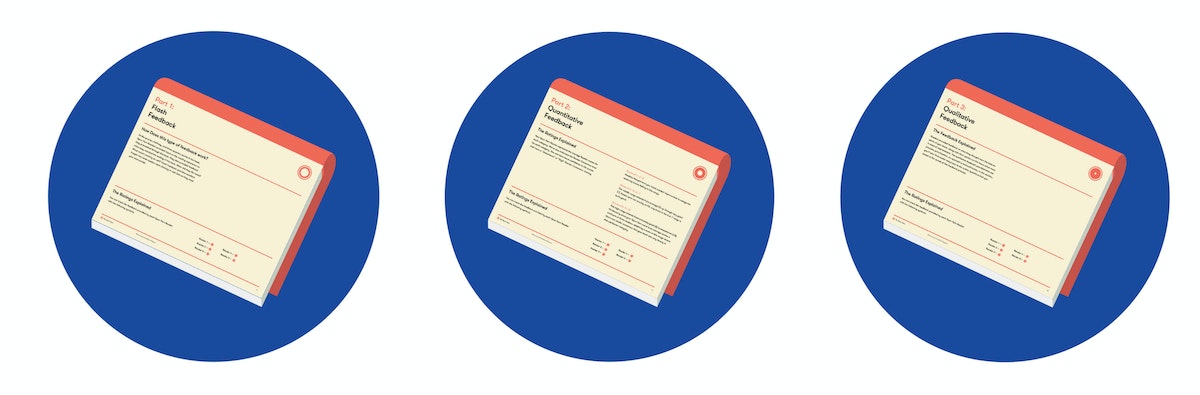
Once this stage is complete, our Spun Yarn team crunches the reader input and identifies the themes and patterns that have emerged about the manuscript. We deliver this synthesized feedback report to the writer. In a sense, what we’re doing is helping writers understand that a draft of their book is just like a design prototype. Most of the time, what we’re finding is pretty straightforward stuff. A main character needs to be fleshed out. An author’s ending ties things up way too neatly. Readers absolutely loved the glimpse into the world of surgery that a certain novel provides. Double down on that in a future prototype (I mean, draft) of the novel.

There’s a saying attributed to IDEO founder David Kelley that there’s no such thing as one magic idea. What I’ve learned from the Spun Yarn is that the same goes for novel writing. It turns out (based upon input from three very thoughtful and very honest Spun Yarn readers), that I haven’t written a masterpiece. There is a ton of work that still needs to be done. But thanks to help from my own multi-disciplinary design team (based in Minnesota, Rhode Island, and Berkeley, respectively), the next draft of my novel will be just a little bit closer.
Have you written a novel? Want some honest feedback? Visit thespunyarn.com.
About a year ago, I finished a novel. After much editing in the early morning hours, I arrived at that place where I could no longer see any flaws in the book. What I needed next was feedback (on what I hoped was a masterpiece, but couldn’t be quite sure).

Time to Burst Your Research Bubble
Why you should make this one simple change to your research plan
From a business perspective, I can appreciate why this demographic is appealing. It makes economic sense to consider a customer segment primed to understand the company's proposed product or service.
But limiting research to the East and West Coasts is exclusionary, and can even be discriminatory. Following recent events in our national story, there’s been a lot of chatter about ignorance—about a hidden America. And this isn’t just our problem: Events like Brexit, the Catalonian referendum, and the rise of populism at large all point to the need to address different perspectives. The context has shifted, and it’s our responsibility to respond.
So, a Cambridge-based team of designers decided to do something about it. We know that addressing geographic bias begins by identifying your blind spots, so to kick things off, my colleague Graham Gardner helped us prototype a simple yet elegant solution: a data-rich Google Map.
For every engagement, we document where the team conducts research and upload this information to the map. It’s the first step in visualizing hotspots, as well as potential design research deserts. Just seeing the spread of icons across the country helps teams realize if their sample population is skewed or appropriately representative.
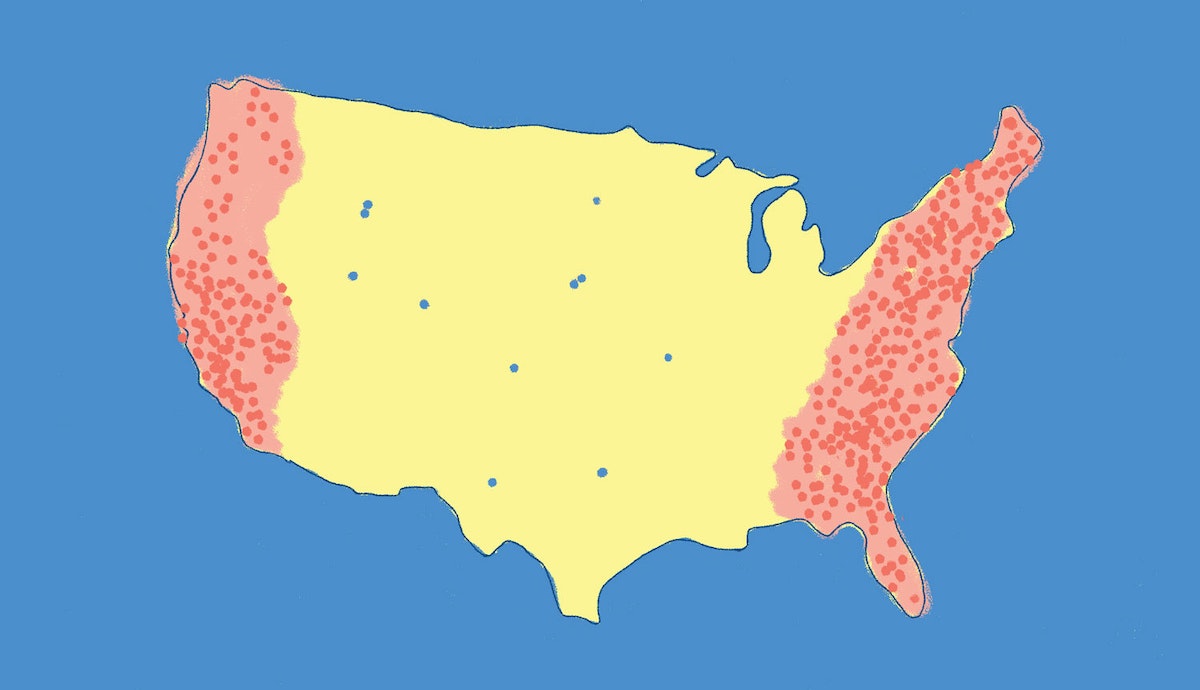
Mapping is a simple hack that keeps teams accountable, and it’s easy to do yourself. Here's how:
- While signed into your Google account, open the “My Maps” page on Google Maps.
- Click on Create a new map in the upper-left corner.
- Click on Untitled map and give your new map a name, for example, “Design Research Phase 1".
- Search for the addresses of locations you’ve selected for your research.
- Click + Add to map to create a marker at that location.
- Zoom out to see a birds-eye view of your research plan.
It’s that easy. And it’s incredibly effective.
Maps motivate action. This isn’t a revolutionary perspective. Organizations across the globe use maps to identify blind spots in their work. Consider the USDA’s Food Access Research Atlas (designed to prompt policymakers to close the gap to healthy foods) or the New York Times’ powerful piece on "Mapping Segregation," which was intended to spark dialogue about systemic segregation.

Now, we're designing ways to burst our own design research bubble, and I’ve already begun to notice some changes. On a recent client engagement, we revised our plan and suggested a few days of research in Kansas and Missouri, instead of just Boston.
To our delight, the client loved the idea. Two weeks later, we were on a flight to Kansas City. While there, we noticed the importance of community relationships in a much stronger way than we did at home base. This pushed us to reconsider how we incorporated community advice into our final product design.
Inclusive, forward-thinking design doesn’t mean replicating what works well or feels right in our backyard. It means getting out there, dialing up your inner listener, and sitting down with someone completely unlike you. Your perspective will never be the same.

At IDEO, we take listening pretty seriously. That means talking to people who are outside of our comfort zone. That said, in my years conducting design research interviews, I’ve found that our targets fit a certain profile: Coastal. Millennial. Liberal. Globally-minded.

Lindsey Turner
I’m passionate about building brands, products, and experiences that help organizations show up with meaning and momentum.
I help organizations cut through complexity by shaping how they show up, through brand strategy, identity, and storytelling.
Working at the intersection of brand and business, I bring an editorial eye and a bias toward making—turning ideas into tangible experiences that people can understand, trust, and believe in.
My work spans government, healthcare, financial services, media, and consumer goods, from launching Gen Z-focused ventures to building innovation labs and reimagining legacy brands. I relish moments of ambiguity and enjoy translating across teams, perspectives, and priorities to move ideas forward.
I started my career in editorial and digital design, shaping cross-platform experiences and identity systems in publishing and agency environments. That foundation still shapes how I work today: I’m detail-oriented, collaborative, and overreliant on the Oxford comma. I hold a BFA in Visual Communication from the School of the Art Institute of Chicago.

Rachel Young
My work helps organizations see who their products aren't working for—and build the will and the tools to do something about it
For 25 years, I've asked the same question: Who does this design exclude—and what are we going to do about it?
My work spans human-centered strategy, inclusive design, and qualitative research, with clients ranging from Microsoft, Google, and Verizon to the National Science Foundation, and San Francisco Unified School District.
Before IDEO, I taught elementary school in East Palo Alto and spent a decade doing design work with social service organizations—where I learned firsthand what it costs people when systems are built without them in mind.
I am currently writing User Error, a nonfiction book about digital access and the design decisions behind it. I live in Oakland, California.

Brian Pelsoh
I lead with craft, ensuring our work is creatively excellent: rooted in deep human insight and imagination, while also grounded in the realities of business and technology.
My expertise spans brand, communication, and product design across tech, education, the arts, and social impact.
I believe great work demands both high-level vision and obsessive attention to detail, and only happens through collaboration.
I bring an inclusive, hands-on approach and a deep understanding of business, which enables me to consistently deliver excellence while always asking why.
Before joining IDEO, I worked at the brand firms Pentagram and VSA Partners. I began my career as a designer, leading teams at the School of the Art Institute of Chicago and the Milwaukee Art Museum. I hold an MFA in graphic design from Maryland Institute College of Art and a BFA in communication design from the Milwaukee Institute of Art & Design, and have taught at some of the best design schools in the US.

Tony Wong
I am responsible for IDEO’s long-term success in China and working with clients to use design as a tool to enable growth.
I am responsible for IDEO’s long-term success in China and working with clients to use design as a tool to enable growth. Specifically, I have helped Chinese companies design holistic brand solutions through the development of their products, communication, services, and innovation teams, and I have helped multinationals expand their presence and influence in China.
I advise global leaders on developing China-led innovation and capabilities.
In over 15 years in IDEO Shanghai, I have worked on projects that use design to elevate the quality of the experience of healthcare products and services, streamline processes that increase productivity, create spaces and programs that promote and enable inclusive communities, and build next generation mobility solutions that are planet-positive.
Before joining IDEO, I worked at Philips Electronics and the Electrolux Group in Italy, the Netherlands, and Singapore on a number of breakthrough commercial products. I am a member of the Young President Organization in Shanghai.

How to use AI as an editor, not a writer
Ed White shares how he uses AI as an editor—not a writer—to sharpen storytelling, rehearse ideas, and preserve the productive friction that makes creative work better.
Ed White has a rule he's tested on his own writing: hold yourself as the writer, and let AI be your editor. Ed is a Senior Design Director at IDEO's London studio, where he co-leads the firm's AI portfolio across Europe. Before IDEO, he spent 12 years as a writer and editor at the Financial Times, Wired, and Contagious. So when he talks about when to use AI for storytelling and when not to, it comes from two decades of crafting his storytelling skills.
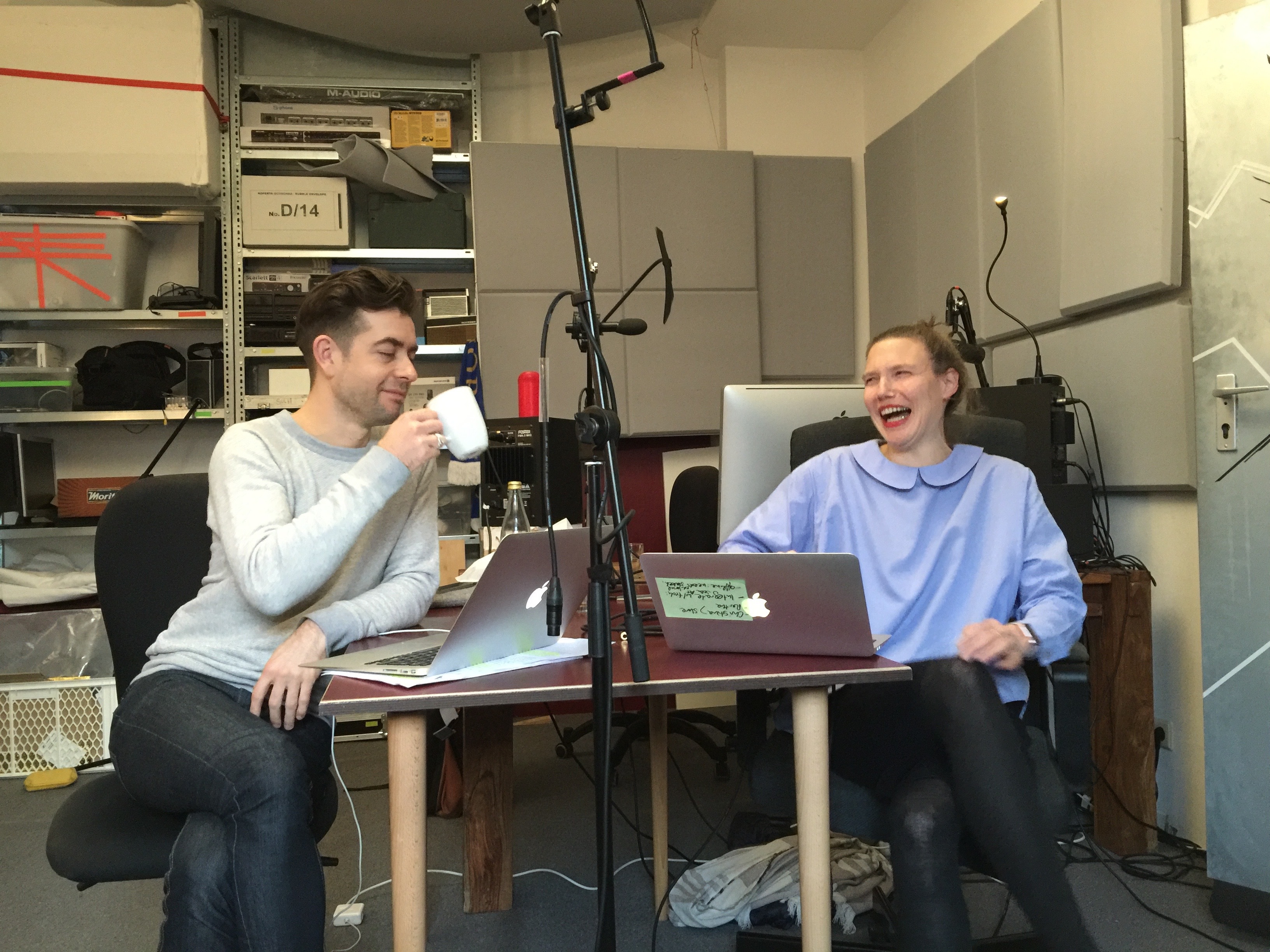
In this episode, Mina Seetharaman talks with Ed about two specific tools he uses to keep AI in an editor's seat: a "roasting agent" prompted to critique his drafts without any sugarcoating, and a simulated audience he rehearses pitches on before the real thing. They also get into what Ed is hearing from design leaders at Anthropic, Lovable, Shopify, and Google Creative Lab about how creative work is changing, and why he thinks the friction of writing something yourself is worth protecting rather than automating away.

Building a personal AI for the messiness of life: Sida Li
Becca Carroll talks with Cue co-founder Sida Li about designing a personal AI for the messiness of everyday life—not just work. They explore how Sida stays anchored to human needs while navigating fast-changing technology, product tradeoffs, business-model experimentation, and the realities of building an AI company today.
Most AI products today are built for work—a space with clear problems and established systems. One founder noticed a gap: personal life is messier, harder to systematize, and mostly left behind by the AI boom. So she built Cue, a personal AI that lives inside iMessage and group chats, to go where the other tools haven't.
In this episode, Becca Carroll, IDEO's Chief Strategy Officer, talks with Sida Li, co-founder and CEO of Shared Context Lab, about staying anchored to a human need while the technology around her keeps changing shape, why she treats her business model with the same rigor she'd bring to a product, and what it feels like to build a company at this particular, disorienting moment in AI.
The conversation also gets into how Sida makes design decisions: the language Cue uses to describe itself, the tradeoffs behind building inside iMessage instead of a new app, and a real story about a business idea that didn’t pan out.
This is the second in a two-part series profiling founders from IDEO's Startups-in-Residence program. The first conversation is with Johannes Seemann, founder of Sooner, on designing GenAI for the emotional side of money.

Designing GenAI for the emotional side of money: Johannes Seemann
Designing financial tools around the feelings that shape money decisions.
Most personal financial tools are built to run the numbers and optimize towards a budget. While that works for some, most people experience money as a lived relationship that does not neatly fit into a spreadsheet. Johannes Seemann and Becca Carroll discuss why money is emotional before it is mathematical, and what a human-centered approach to building a generative AI financial product looks like in practice.

The curious leader's edge in uncertainty: Scott Shigeoka
How genuine curiosity helps leaders navigate uncertainty with greater confidence.
Mina Seetharaman talks with Scott Shigeoka, author of Seek and Head of Curiosity Cultivation at the Eames Institute, about what distinguishes genuinely curious leadership from performative curiosity, how power dynamics shape curiosity, and why practicing curiosity can restore energy rather than drain it.
Looks like you might be in search of something very specific?
Or reset the filters above and try another angle.
Here’s some random inspiration

Podcasts about creative leadership

Articles about the power of prototyping