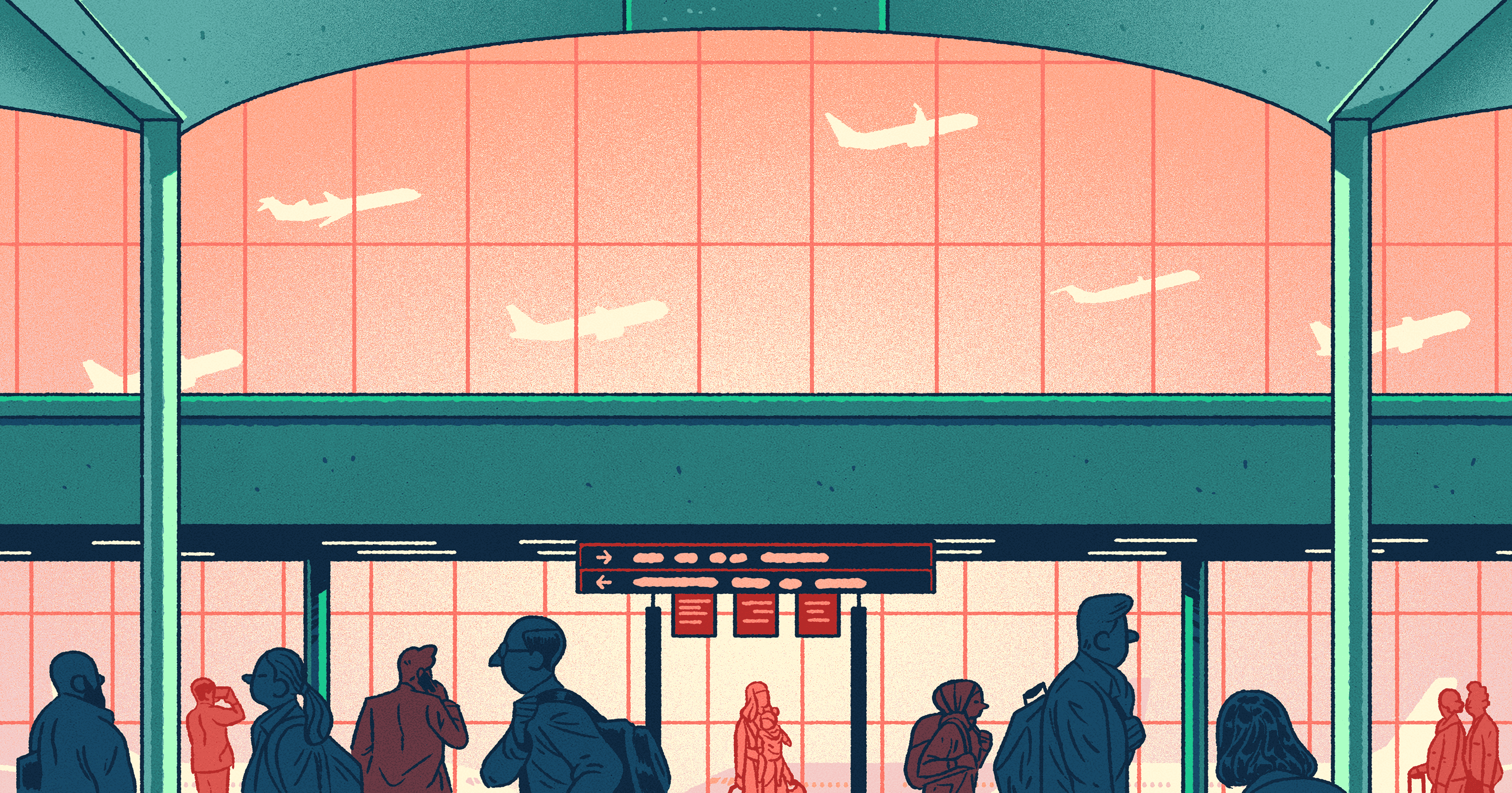
.svg)



Teaching robots to dance
What if technology were designed to make our lives more poetic?
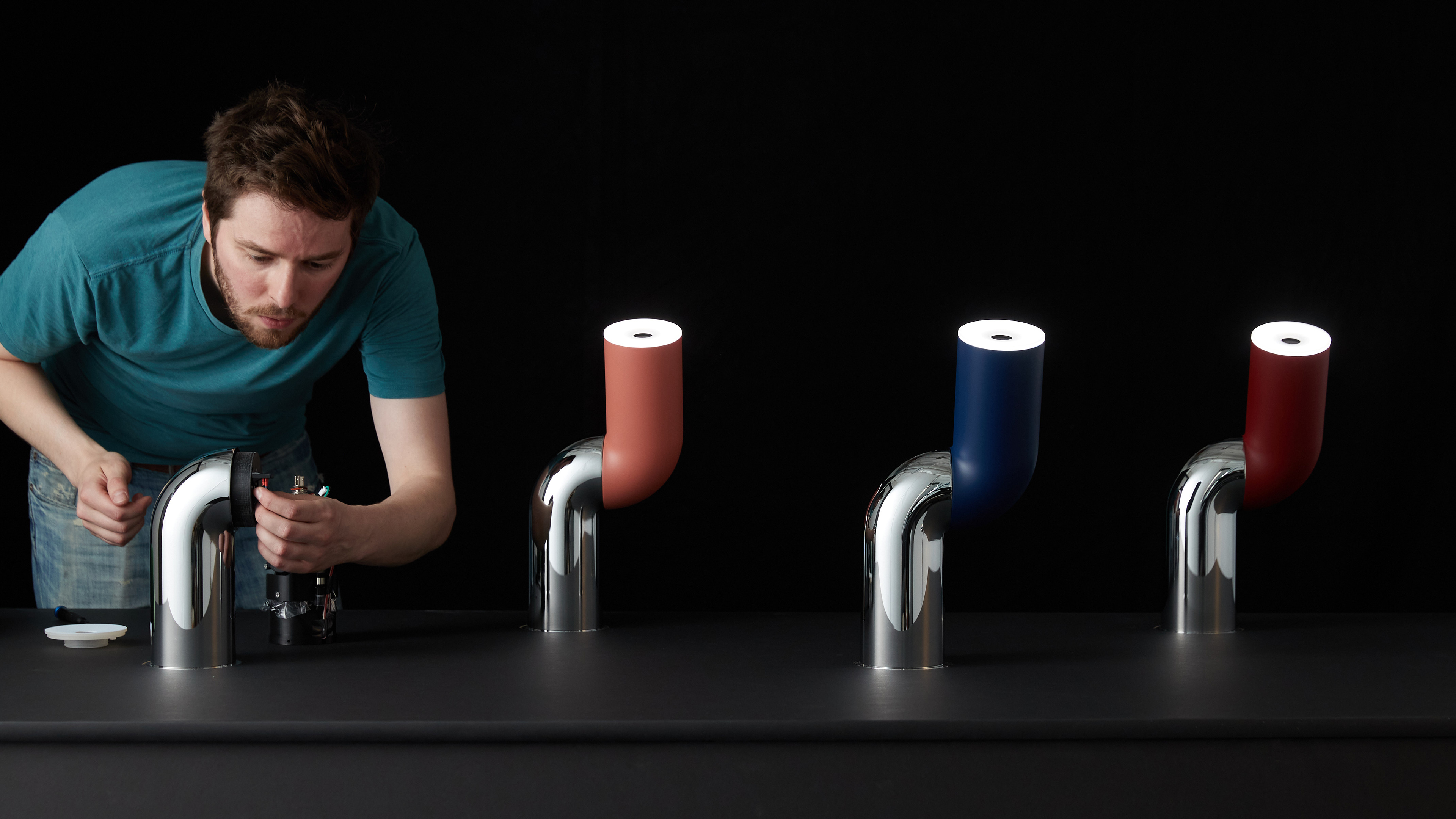
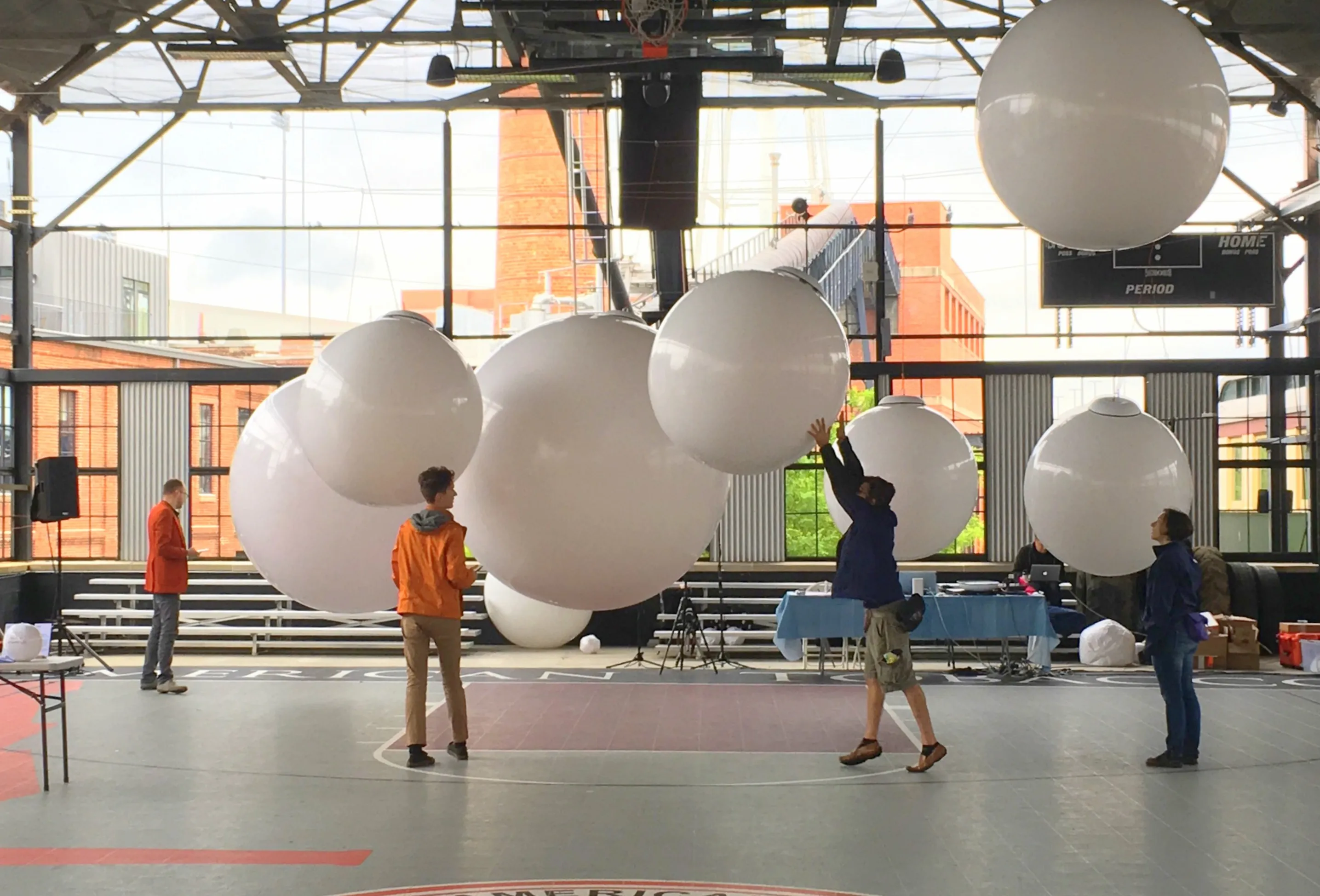
As the curtain parted on moooi’s 2022 exhibit, the audience was treated to a multi-sensory performance unlike any other: four synchronized robot scent diffusers telling a story through dance. As the robots—called Piro—swayed and dipped to the beats of a custom-designed soundscape, it was easy to forget the performers were made by a team of industrial designers and engineers in San Francisco.
The work expressed a future vision for what it means to humanize technology. Rather than design technology to make our lives more efficient, what if instead we designed technology to make life more beautiful?
For twenty years, moooi has seduced the world with bold, imaginative design. The firm, named after the Dutch word for beautiful, made its name by designing furniture and home goods that appeal to an interest in pushing the edges of form as much as function. Moooi came to IDEO looking to create an exhibit for the largest furniture fair in the world that might provoke the audience to imagine a world where design’s primary function was to inspire joy.

“Defy Gravity”: one of several experiential “worlds” moooi created for the 2022 Salone del Mobile. Each room had its own scent, soundscape, color, and digital experience.
Our process started by going wide. We presented 20 potential conceptual designs to the team, one of which moooi founder Marcel Wanders lovingly referred to as the “farting pet,” a robot scent diffuser that could walk around the home.
A scented smoke ring lingers in the air after Piro’s final crescendo.
From there, a team of IDEO designers enlisted the support of Catie Cuan, a choreographer who specializes in human-robot interaction, and Dutch sound design firm KLOAQ, to refine the concept into a four-minute performance piece.
Piro learned to mimic balletic human gestures.
The final result was technically involved: four robots moved independently, controlled by custom electronics and software designed to mimic the movements and grace of ballerinas. But in the performance itself, the complex mechanics disappeared, allowing the audience to experience not just what technology can do, but how it can make us feel.
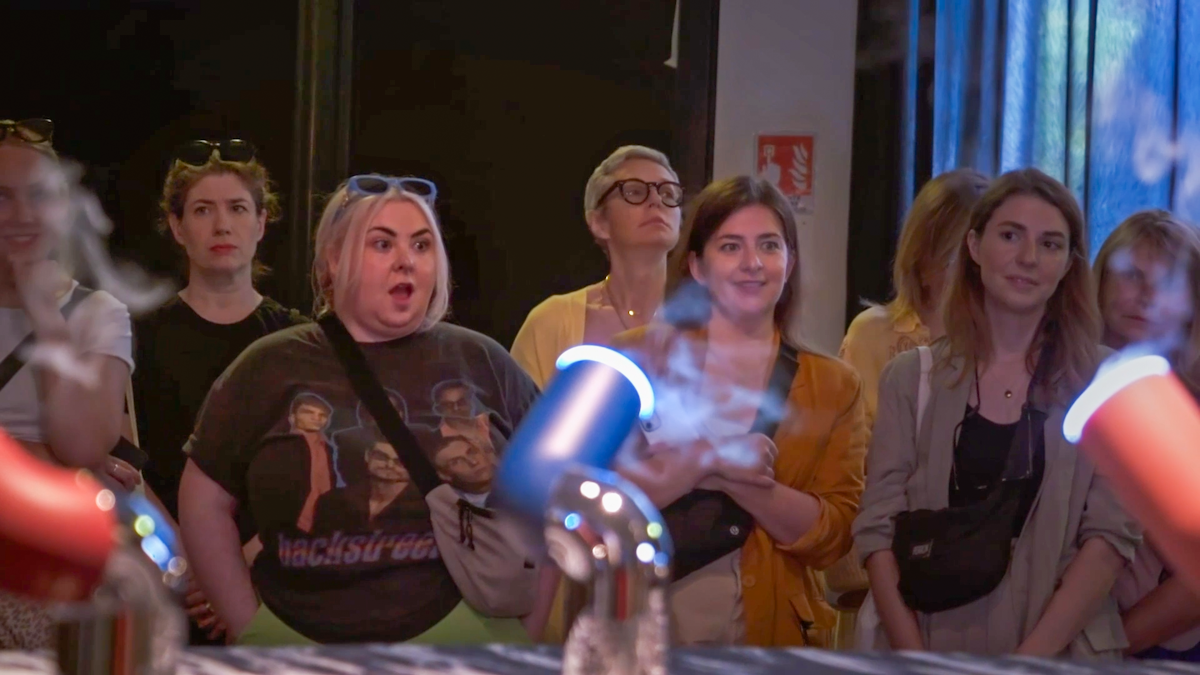
What happens when a designer and a classically-trained choreographer collaborate? Attendees of Salone del Mobile.Milano, the largest furniture fair in the world, got to see for themselves.

Empowering frontline communities
CSAA Insurance Group leads a global call for climate resiliency solutions.
To build a climate-resilient future, we need an all-hands-on-deck approach across industries and organizations, as well as the leadership and collaboration of frontline communities themselves.
To that end, IDEO and CSAA Insurance Group worked together to unite nine partner organizations, including Aon and the Environmental Defense Fund, to launch an open call for solutions to help communities prevent, prepare for, and recover from climate-related disasters. The goal of the Challenge was to surface actionable and scalable ideas that experiment with new technologies, models, and partnerships, then provide innovators with the support and funding they need to get their ideas off the ground and into the hands of frontline communities.
IDEO set these entrepreneurs up for success throughout the submission process, holding one-on-one conversations with participants, sharing constructive feedback on potential solutions, and developing their ideas and skill sets. The team also hosted workshop and panel sessions to grow community bonds and provide expertise on critical topics, including assessing climate risk and storytelling for impact. Hundreds of ideas came in from around the world, ranging from harnessing the power of AI, to building resilient infrastructures, to democratizing access to climate data, and more.
Once all of the ideas were in, a cohort of judges with a wide diversity of work and lived experience screened for concepts that were relevant, impactful, novel, community-informed, and equitable. At the end of the Challenge, the team chose 13 winning concepts with high potential for impact and partnerships, including Reef Rocket, which seeks to fabricate natural biocement reefs that reduce coastal flooding and erosion, and BurnBot, which is working to prevent wildfires by conducting controlled burns at scale.
For these winning entrepreneurs, the end of the Challenge is just the beginning. Now, they are equipped with critical early funding, as well as a cohort of climate entrepreneurs, along with mentorship from IDEO, CSAA, and the other organizations. It’s a big step forward as they introduce new forms of equitable and transparent data, promote the voices of BIPOC communities, and bring to market new technologies that will protect and support frontline communities through this ongoing crisis.
In the US alone, climate-related disasters cause $120 billion in damages annually. That figure is five times greater than 50 years ago, and projections are $2 trillion by the end of the century.
Nearly 90% of counties in the US declared a natural disaster over the last decade.
418
submissions
13
winners
$1M
in prizes
Faster science
How the NSF leveraged design to unite multidisciplinary teams.
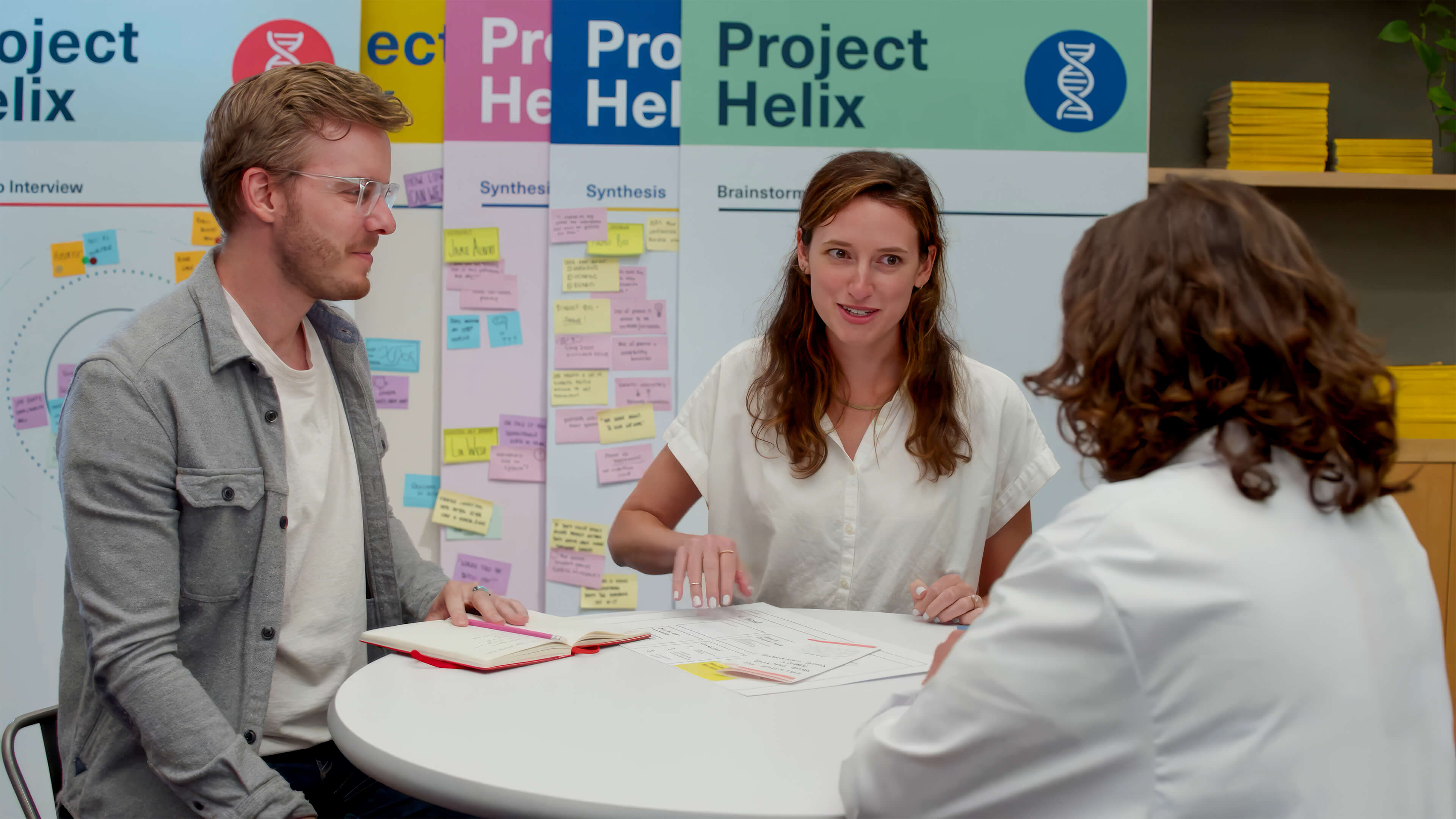
Every year, the NSF provides around 30 teams with up to $750,000 and a year’s worth of coaching, training, and collaboration to develop solutions for research areas like sustainable ocean use or combating fake news. Over the course of nine months, the teams learn how to uncover insights about human needs and design durable solutions for end users. But many of the scientists and experts in the program felt stretched by the idea of putting the needs of end users in the mix with their scientific testing—something few of them have been trained to do in their previous work.
To make that process feel more achievable, the teams built out prototypes and received guidance on refining and pitching their ideas along the way. IDEO joined the project as an innovation partner, facilitating hands-on workshops and creating “Science TV” episodes that could help the program reach a broader audience, deepening its impact now and in the future.

To help grantees get vulnerable, and evolve their ways of working, IDEO sent grantees to improv training so that they could learn to build off each other. The team also took them to magic shows and on ghost tours in downtown San Francisco to learn the value of compelling storytelling in their work. The fun was part of the plan—gelling as a team and building relationships meant participants could make mistakes in front of one another. Being wrong doesn’t come naturally to academics, but it’s a key part of the design process, and a crucial part of solving complex problems .
Each year, a select group of teams move onto the next phase of the “coop-etition,” receiving up to $5 million in additional funding. And all of the participants leave with valuable new skills they can use to break out of their own silos and create human-centered, ground-breaking solutions for the rest of their careers.
When the NSF launched the Convergence Accelerator and made the radical move of bringing together teams from different disciplines, these academics, scientists, and industry partners didn’t have a shared language to move their ideas forward, and needed a structured approach to coming up with new solutions.
164
trained research teams
$200M
in federal support granted to AI-driven innovation, quantum technology, food security, sustainable materials, opportunities for people with disabilities, and more
Climate captains
An innovation accelerator bolsters the impact of climate startups.
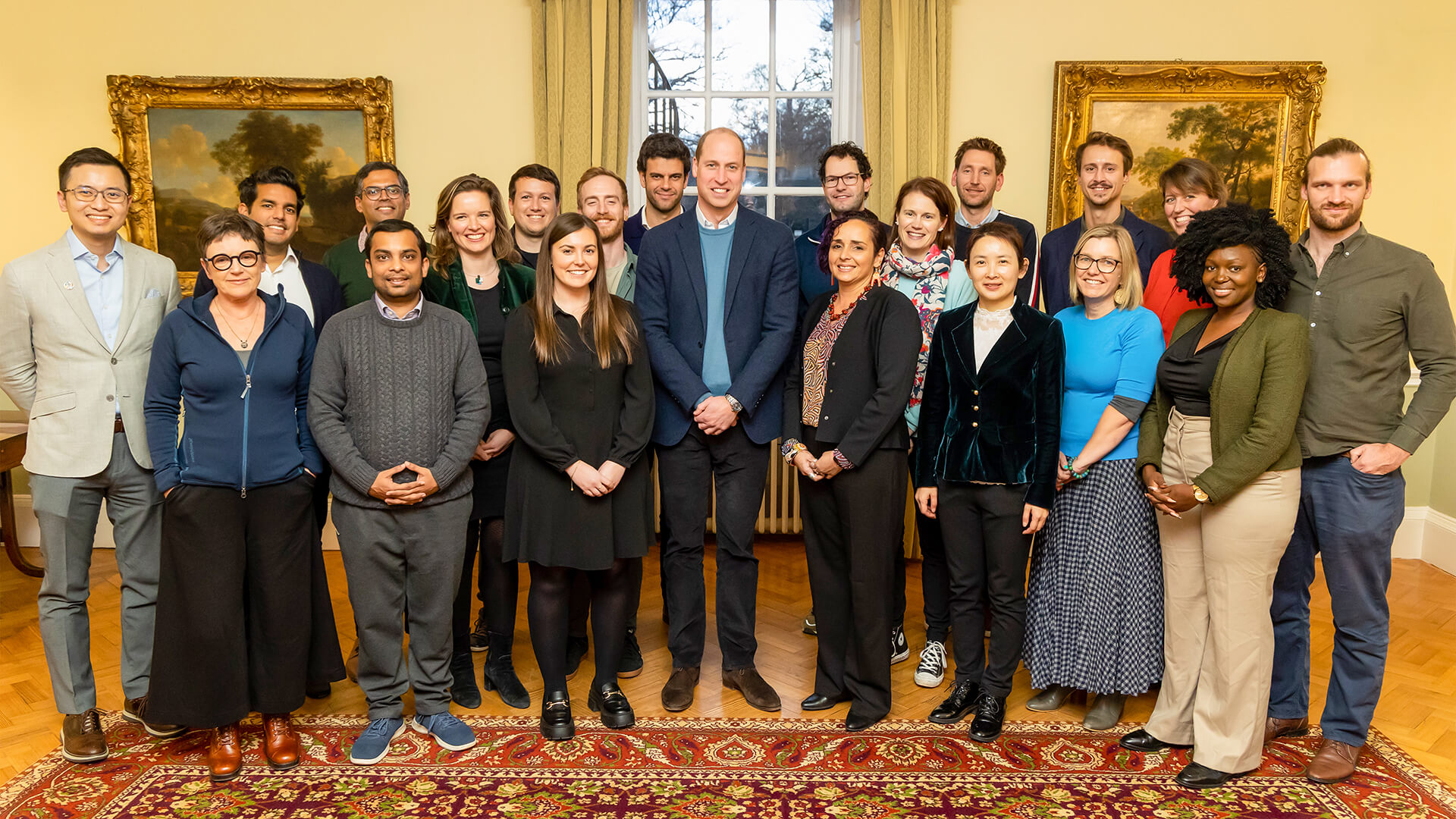
IDEO and The Earthshot Prize built a nine-month Fellowship program and a five-day, in-person retreat to give Finalists the best shot at reaching the Prize’s ultimate goal: to scale the solutions that will repair our planet this decade.
To build out the new Fellowship, IDEO took a deep dive with the previous year’s Finalists to uncover where they needed critical support. This research revealed that the Finalists needed more ways to leverage the Earthshot platform, connect with potential partners to help scale their ideas, and build community with each other. The IDEO team then used those insights to create a set of recommendations The Earthshot Prize team could implement to create a more supportive and structured experience. Ideas they took forward included assigning a designated “Leap Advisor” who could provide guidance and assistance for each Finalist, as well as an advisor from the Prize’s Global Alliance Network who could partner on specific growth initiatives, like scaling product design, or policy change.
Next up: the design of the retreat itself. Together, IDEO and the Earthshot team had three goals for the cohort’s week together in Windsor: focus on new forms of leadership and movement building, spur action through storytelling, and foster community.
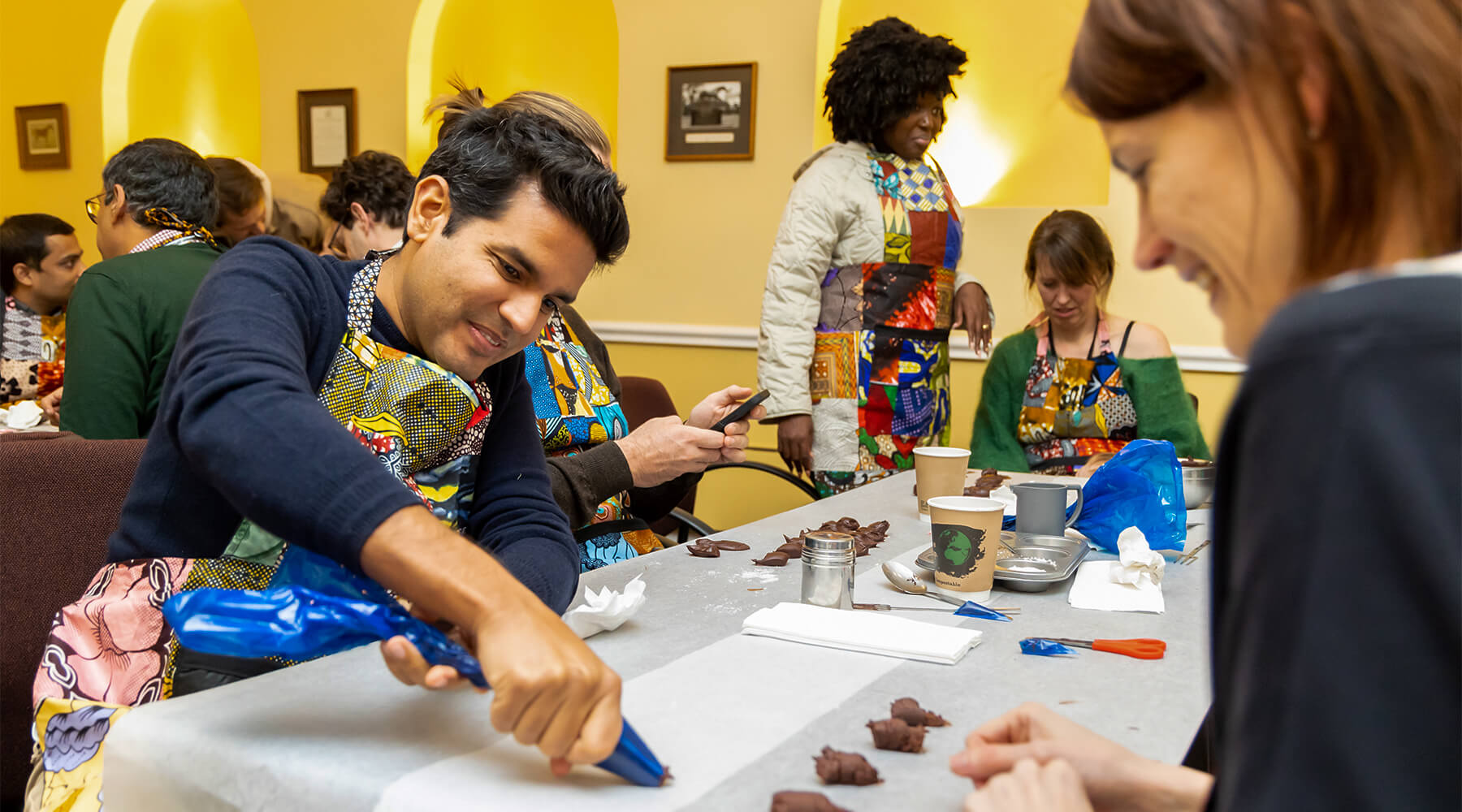
The team developed the curriculum with leaders from Google X and Speed & Scale, alongside startups like UPSIDE Foods. They designed moments to build community, like paired walks and a chocolate-making workshop where Finalists could get to know each other away from the noise of meetings.
Photographers captured the event to create assets for Finalists to use when pitching their ideas, and Finalists honed their storytelling skills. But what most remember is the magical moments of coming together as a cohort of next generation climate leaders who will help each other make an impact on the problems facing our planet, long after The Earthshot Prize has concluded.
The problems facing our planet are enormous, spanning industries, borders, currencies, and regulatory environments. Meaningful solutions will require leaders who can work across those lines.
30
climate solutions accelerated in first two years

How one human-centered insight led to $4 billion in growth for American Express
The straight story of organizational transformation, from leaders on the inside.
They were in search of a feature that would excite Card Members, especially millennials coming of age financially. Everything was in place, but their project whiteboard had one last empty box.
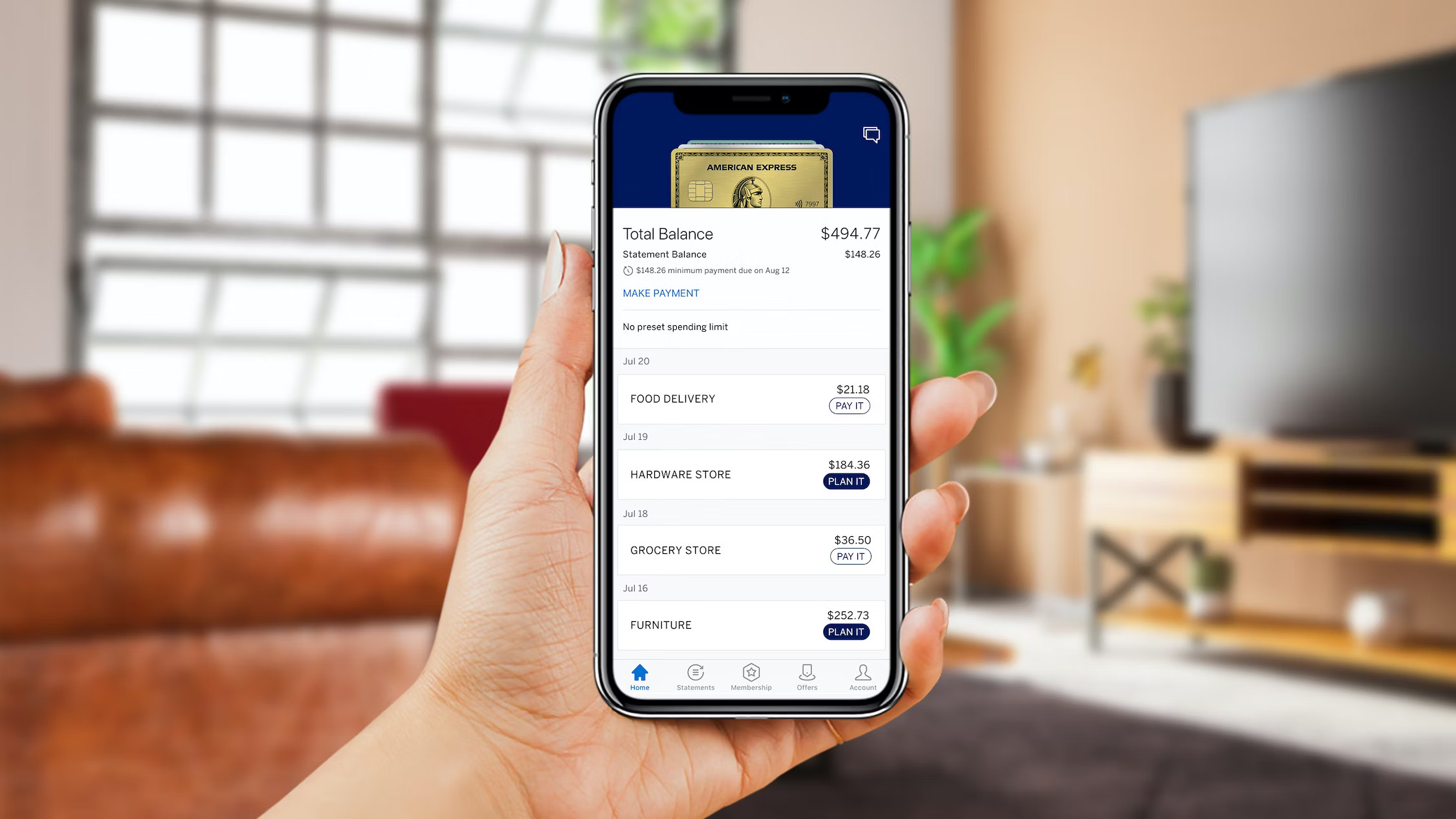
The IDEO and American Express teams paired up for a design sprint, and in the first few weeks of research, after extensive qualitative interviews, an idea emerged: a new, transparent and easy-to-use way to split large purchases into equal monthly payments, with a fixed fee and no interest. The feature, called Pay It Plan It, launched in the market in 2017. Since then, it has been used to create five million payment plans, totaling nearly $4 billion in lending. It represents a notable, widespread behavior change. Card Members are spending differently, by design.
But getting here took more than just a bright idea. At a large organization like American Express, in a complicated and highly regulated industry, and in a smartphone-first environment, transforming an insight about consumer behavior into a beloved tool for Card Members required a particular flavor of corporate agility. At the time, there was nothing like Pay It Plan It—at American Express, or elsewhere. Bringing it to Card Members would require a substantial technical and financial investment, affecting everything from payment terms to the way the smartphone app handled swipes. All of that was doable, but leaders still had to do it—they had to make the heavy lift to usher a concept sketch into becoming a meaningful part of customers’ lives. The success of Pay It Plan It as a feature driven by emotional insights—while driving the bottom line—has made it a beacon inside American Express. For many, it marked a new way of working within the company, a transformational shift in the way ideas are conceived and implemented.
The following story recounts the development of Pay It Plan It, told through the voices of the IDEO and American Express team members who worked on it.

1. Plus, and...
In 2015, Amex was looking for something new to engage consumers—particularly younger professionals who wanted to avoid the pitfalls of credit card debt. Innovation within the consumer lending space had traditionally been all about rewards and cash back perks, but Amex was committed to finding something different that empowered their Card Members. Was there something else? And if so, what?
Kyoko King is currently VP, Global Commercial Services at American Express; at the time of Pay It Plan It, she worked on consumer products, focused on new product innovation.
“It felt like a race to the bottom. We kept throwing more rewards at the customer, so they win out, but there's no actual edge. That was the challenge we set out to solve.”
Leigh Cohen is a Design Lead at IDEO, and a team member on the original design sprint.
“I remember we wrote on the white board, plus, and, next to an empty box. The reward structure of this new card was already defined—but then what? What goes in the box? What is this thing? It can be very daunting to come up with something that not only makes sense to Card Members, but also makes sense to American Express, and is also a smart way to help people spend appropriately and confidently.”
Jenny Shum is currently VP, Head of US Small & Mid Market B2B Marketing at American Express; at the time of Pay It Plan It, she was VP of Consumer Lending Products.
“We had aspirations to reinvent what a credit card could be, and the role it plays in a consumer’s life. But this is a very regulated industry, and we were afraid that we would come up with a brilliant idea we couldn’t deliver. And yet we didn’t want to be constrained by that.”

2. An emotional insight
Over a series of consumer interviews conducted across the country, the team honed in on a key set of desires: credit card users wanted more flexibility and transparency in how they paid for big purchases, and they wanted to feel like they had autonomy in how they pay for the things they buy.
Kyoko King, Amex: “We had done the side-by-side comparison of Amex versus other cards, we had done task forces looking at debit versus credit. We always had the knowledge that customers don't like our credit cards, but I don't think we ever went so far as to say, ‘They just emotionally don't like it.’ I remember IDEO saying to us, ‘It makes them feel bad. You guys make them feel bad. Customers have no control, no transparency.’ But here IDEO just said, ‘It's an emotional problem, therefore, the solution has to be emotional.’”
Travis Lee is Managing Director and Partner at IDEO, and guided the initial sprint.
“American Express is a service company. They think of themselves as trying to serve their customers as human beings—and the card is a means through which they provide service. It’s not their product. And that’s very different from a lot of companies. So what if we can think of lending as a service?”
Kyoko King, Amex: “Our team at Amex was all about growing lending—lending, lending, lending. That was even what it said on my business card. And then IDEO came in and said, ‘Well, it's all about paying. No one is thinking that Amex is lending them money. It's all about when they can pay.’”

3. We could really break things!
As clear as it was that credit card users wanted more flexibility and control—not just more rewards and perks—so too was the realization that the Amex/IDEO team had let the genie out of the bottle: implementing this wouldn’t be easy. This wasn’t just another lending feature, but would require a fundamental rethinking of how Card Members paid their bills.
Dory Butler is VP, Digital Product Management; she led the digital team that implemented Pay It Plan It.
“People were nervous. We could really break things! It involved significant changes to our payment hierarchy, our accounts receivable systems, how we calculated what customers owed to us, and so on.”
Jenny Shum, Amex: “We were certainly aware of the potential this product could have—and we’d sized the financial benefits—but what was different here was the process of understanding true customer needs.”
Kyoko King, Amex: “You know when you sign a car lease or a mortgage, and there’s a stack of papers that you have to sign with ten different signatures, every couple pages? That's what we were trying to put onto our credit card. I remember our compliance person sitting me down and saying, ‘You're trying to put a closed loan into an open credit product.’ That was the first time I realized we were creating something so complicated—even if to a consumer it made complete sense and felt so simple.”
Dory Butler, Amex: “As a company, we've identified opportunities and gone after them in the past. But many times those opportunities are highly driven by business outcomes, and not as highly driven by customer outcomes. Pay It Plan It was all because of a customer need, but we could see that the business benefit of that would flow and follow.”
Kyoko King, Amex: “After that initial sprint it was kind of a no-brainer. If we could do this, we should do this. But it was very clear that we should do it only if the experience stays as simple as what we’re proposing. If it becomes a series of terms and conditions and things you have to click and fill out, then we’ll lose the essence of what it is we're delivering.”

4. Buy-in for the buy-in
Given the complexity of the implementation—and the simplicity of the desired result—the Amex/IDEO team planned an unusual internal communications strategy, rooted in the emotional insight at the heart of Pay It Plan It.
Leigh Cohen, IDEO: “Executives across American Express had to understand the value this product was going to bring—the emotional value to Card Members, and the financial value to its business. We wanted them to see the overlap between the financial confidence Pay It Plan It could bring, and their brand values of trust and security. And they had to see how it was delivering upon their internal objective as an organization to be thinking about smart lending, and what lending looks like for their current members.”
Kyoko King, Amex: “We couldn't pitch this in a PowerPoint deck. We had to translate that consumer insight to the pricing team, the technology team; we had to change minimum due, payment hierarchy, grace—three different components that are extremely difficult to touch. It was like a house of cards: everything could fall down. Usually if you touch any one of them, all those teams are like, ‘No, no, no, it's not worth it!’ It just wasn't something you could understand in a really rational format; there was so much emotion to it, there was a customer need we were solving for. Usually we had bullet points and boxes with words, and a P&L or business case that’s about the numbers. But here we began with sketches and drawings of what this could look like. That was very different than how we operated before. It was new. And it incited interest.”
Kelly Bjork is a Senior Design Director at IDEO; she helped lead the team that designed and implemented Pay It Plan It.
“These are rational people! You were talking to C-suite level folks who have their bill on AutoPay. They don't think about these things. So our work was putting them in the shoes, if you will, of the Card Member who this was targeted for. It's kind of that simple.”
Jenny Shum, Amex: “The magic of Pay It Plan It is that it gives consumers the confidence that they have a lending solution if they need it. I don’t think we necessarily went in with this intention, but that directly aligned to Amex’s brand heritage, of giving consumers control. The brand team saw how exciting this was, even before the business unit decided to invest in making it real.”
Dory Butler, Amex: “You have to continuously sell-in these ideas internally to have the level of investment that you need to do them right.”
Travis Lee, IDEO: “Innovation at this scale can't happen purely grassroots. You can't just get a single team leader excited about it, and expect it to happen. You have to get everyone’s buy-in, you have to get everyone’s excitement, you have to make sure they understand why it matters to do it, even if it's gonna be hard. And you also have to get the CMO pumped. All of these people have to greenlight it in their own way.”

5. How it spurred organizational change
In 2017, Pay It Plan It launched under a strategy nicknamed “Big Bang,” rolling out to 21 million customers in 30 days. As of August 2020, it is available to almost all US consumer Card Members, who have collectively created nearly five million Plans, totaling nearly $4 billion in purchases, with an average Plan size of $789. But as much as they have embraced Pay It Plan It, so too did Amex executives. The unique story of its implementation became company lore: here was an emotional insight that unlocked significant business outcomes.
Kyoko King, Amex: “The internal teams could see it: this was reflective of all the data and information we have seen and heard for years and years. But this is a new way to approach the problem! I often talk about it in terms of learning a new language. Amex internally thinks of itself as a rational company based on CBAs and models. The breakthrough—and the thing I'm most proud of—was bringing that customer emotion into internal decision-making, seeing Amex become emotional rather than purely rational.”
Jenny Shum, Amex: “Kyoko and I joke that we feel like we walked through a doorway to an alternate universe that we can’t turn back from. This is a long-term strategic investment that would have been hard to write the business case for—but that was also the exciting part, because it is transforming a business, versus delivering an incremental product. The challenge now is whether we will be able to galvanize the organization in a similar way, towards solutions for our customers.”
Leigh Cohen, IDEO: “The pieces came together in this perfect storm: the Amex leadership focusing our IDEO team on the opportunities that were strategic within their organization; our team's ability to unpack and uncover an emotional resonance with the Card Member, that really spoke to them wanting to be a more confident spender on credit; and then the internal buy-in and belief that this not only resonated internally, but also could convert externally.“
Kyoko King, Amex: “To be honest, this began as an eight-week engagement of just asking, ‘Okay, let's see what you guys can think of: a slap-on feature to our credit card.’ So for it to then result in something that was implemented across all of our cards—that is a big, big deal.”
Kelly Bjork, IDEO: “Getting something like this to market feels like sort of a small miracle to me.”
Jenny Shum, Amex: What has followed me from this project is really understanding the emotion of the customer—not just the words they tell us, but what worries them and why.
Illustrations by FagoStudio.
In 2015, American Express (Amex) came to IDEO for help putting the finishing touches on a new consumer credit card. Its reward structure was fixed—but what else might it be?
Eliminating hunger isn’t just about food, it’s about people
Food security means changing how we think about wages, quality, and access.
They worried about how they’d feed themselves or their families. Or felt the physical and emotional stresses of want and hunger. Of that number, 11 million were children.
Today, the picture has worsened. This year, a year in which American lives have been ravaged by disease or economic crisis or both, more than 50 million people will have faced the reality of food insecurity; almost half of them will have sought help from food banks and other sources of support.
This pandemic of hunger continues to unfold, year-on-year, across the United States—one of the richest nations on earth.
It is a crisis that moves inexorably forward, but also one that’s rooted in inequities stretching back into our collective history. Our food system, like many of our society’s most foundational systems, is racist by design. The labor of Black and Indigenous workers and people of color (BIPOC) forms the backbone of the industry’s essential workforce—specifically women of color. They serve or cook in restaurants; they perform dangerous, exhausting work in food plants; they labor on farms; and they bring deliveries to others’ homes and apartments. And they have been disproportionately impacted by the knock-on effects of the pandemic, including decreased food security. Additionally, racism—in the form of food systems that are effectively separate from and unequal to those afforded to white communities—has historically denied BIPOC access to preventative nutrition. The result? Disproportionate incidence of chronic health conditions and weakened immune systems, both of which are now further intensifying the devastating impact of COVID.
It is a story of injustice and inaction. And it demands we step up and help create change.
How might food leaders work to dismantle the systemic inequity in our industry and in the communities we operate? And how might we improve the lives of those most unjustly affected? We see three paths where design can drive efforts towards solutions.
Prioritize food workers’ livelihoods
The most straightforward way to reduce food insecurity among food workers? Pay them more money.
The food industry employs roughly 14 percent of the U.S. workforce, with the lowest median wage of any industry. In many states, it’s legal to offer restaurant workers a sub-minimum wage of less than $5 an hour—sometimes as low as $2.13. Black servers are typically not tipped as well as their white coworkers: A recent study revealed that for tipped restaurant workers in New York, white men made almost an $8 an hour more than black women.
Food manufacturers, quick-service restaurants (QSRs), and retailers are largely responsible for producing, serving, and distributing food; but the cruel irony is that their own employees—along with those growing and harvesting the food that they sell—are often food insecure and hungry. One out of six restaurant workers live below the poverty line.
Following the example of brands like Shake Shack and In-n-Out Burger, others must rethink their business models to offer their workers more than the minimum wage. Similarly, they can design competitive benefits, as Starbucks does, offering healthcare and tuition reimbursement to full- and part-time employees.
Improve the quality of mass-produced food
Many low-cost foods are intentionally designed to be sold in mass quantities to people who can’t afford higher quality items. This perpetuates a supply chain that values long shelf-life and cost-efficiency over nutrition. A complete overhaul of existing product formulations is required to maintain the convenience and comfort that people seek, but eliminate ingredients proven to contribute to higher rates of heart disease and diabetes, such as high-fructose corn syrup or processed or refined carbohydrates.
A June 2020 study revealed that as households stock up on shelf-stable foods, they appear to purchase products with less nutrient-dense ingredients—often ultra-processed, calorie-dense comfort foods. This is setting the stage for an increase in childhood obesity, particularly for economically vulnerable families.
Convenient and nourishing comfort foods are rare. Designing them and putting them on shelves across the nation is an excellent challenge for the food industry’s formidable R&D capabilities.
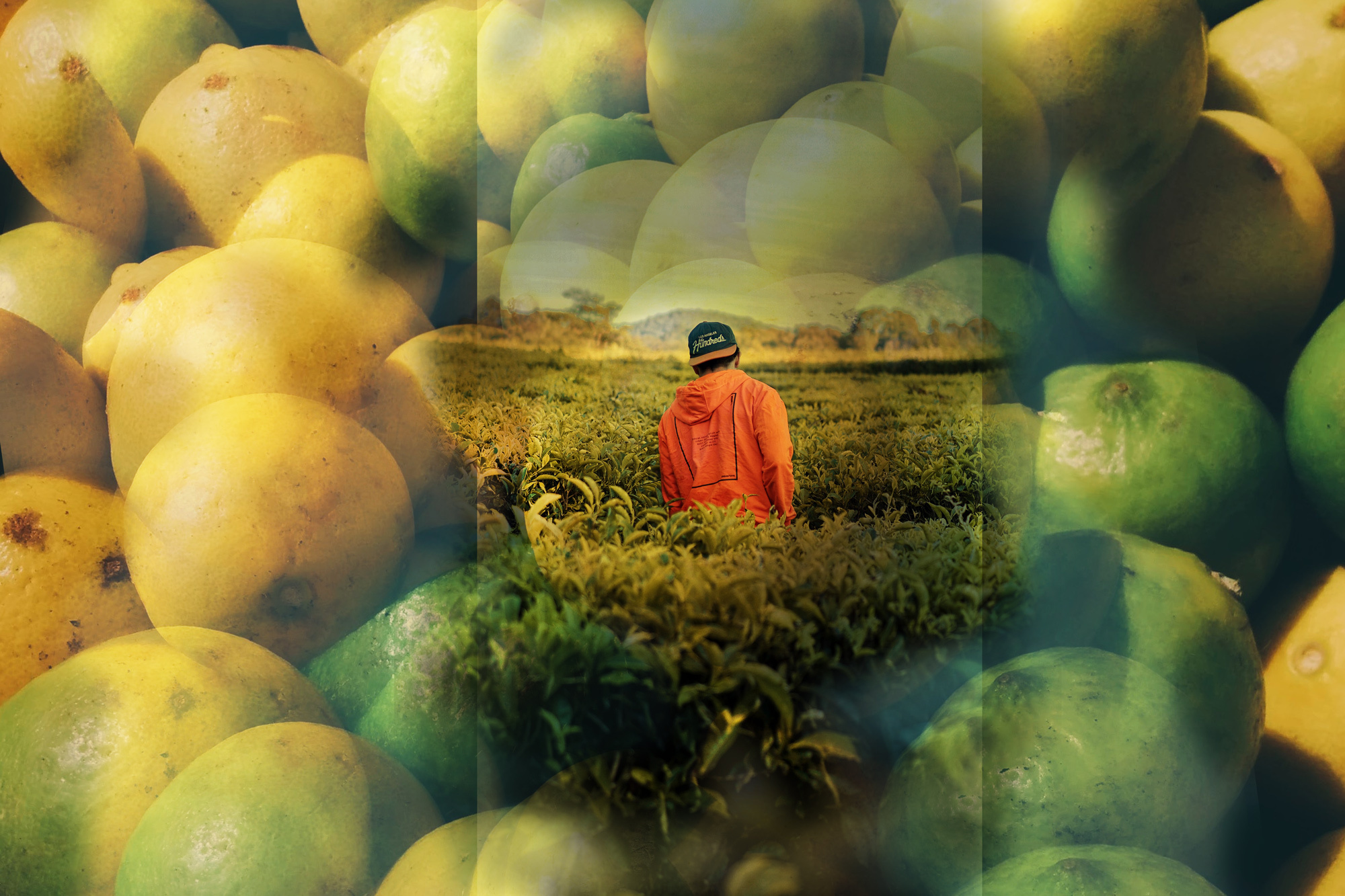
There are examples to be inspired by, however. Pierre Thiam, a celebrated Senegalese chef and leading authority on African foods, founded Yolélé Foods to bring fonio, a West African grain, to a global audience. Fonio is a versatile ingredient with a nutty flavor; it’s included in the Future 50 Foods List, an effort from the World Wildlife Fund (WWF) and Knorr to highlight foods that support human and environmental health. One of Thiam’s vehicles for fonio is pilaf, and Yolélé Foods’ affordable, microwavable bags of seasoned pilaf are sold online and at brick-and-mortar stores nationally. This product innovation unites what is not only feasible, viable, and desirable; but also more sustainable and nutritious.
If it works for fonio, why not for brown rice? It’s one of the most familiar, nutritious, and affordable food staples in the United States, yet few have attempted to make it desirable and easy to cook. It’s an enormous opportunity. And design is a way to reconceive brown rice into products that are as simple and convenient as the more ubiquitous ramen and macaroni and cheese filling pantries nationwide.
Give more people access to nutritious food
That separate and unequal food system? Karen Washington, a food justice activist, calls it food apartheid. And the evidence to support that frame is all around us. Poorer neighborhoods have fewer grocery stores with nutritious food options; fast food chains dominate instead. There is a need for quick service restaurants (QSRs), retailers, food banks, and federal food assistance programs (SNAP)—all players that influence food access—to design new ways for healthy food to be available to everyone.
Free food is a critical support for hungry people. But there is a stigma attached to accepting it, and it can be a deeply demoralizing experience to stand in long lines and receive a bag of food you don’t like or can’t eat. During COVID-19, we’ve witnessed heroic efforts by food banks and pantries to increase their services. Food banks originally created drive-thrus to overcome the stigma of free food, but now, even more have added this feature to facilitate contactless service.
Northern Illinois Food Bank (NIFB) partnered with IDEO to improve their My Pantry Express program, a digital food pantry service that refers to their customers as “neighbors.” The program offers their neighbors a choice of what food they receive. Typically, food banks determine their success based on pounds of food or “meals” distributed, but NIFB wanted to use more human-centered metrics to determine if their service offers food that people actually want and will eat. The team discovered that offering choice in food selection, even in a limited way, created higher neighbor satisfaction and more referrals—94 percent said they would recommend the program to a friend. We can use design to identify what people value most, then use these findings to improve services, meet more people’s needs, and in this instance, get more nutritious food into more hands and homes.
Learn more about IDEO's partnership with NIFB.
Looking ahead
Given the number of cracks the pandemic has revealed in many of our national and global systems, it can be hard to know where to begin reimagining better solutions. But food is fundamental—and improving the food system is achievable. As we look to the coming year and the post-pandemic recovery period, let’s ask ourselves:
- How might we ensure that the people producing and serving our food have equal access to food for themselves and their families?
- How might we rethink our success metrics to be more human-centered?
- How might we create products and services that are not only profitable, but nutritious and sustainable?
- How might we put our R&D efforts towards creating beloved food products that are convenient and nourishing?
- As a leader in the food industry, how might we look first to the ways we can support our own employees before directing community support efforts beyond our organization?
By prioritizing people’s needs and developing human-centered innovations for business, nutrition, and food access, we can move leaps and bounds toward more food security and access and health for all.
Photos by Rizki Prayugo and Aniketh Kanukurthi
In 2018, according to the United States Department of Agriculture, 37 million Americans didn’t have enough to eat. At one point or another that year, in other words, they struggled to put food on the table.

This designer created a digital zine to explore culture through cooking
How an IDEOer is exploring gastrodiplomacy through zine-making.
But if you were to ask someone in China, they’d laugh amiably and follow up with another question: “What part of China are we talking about?” And it’s a good question—whether the food you crave is sweet or spicy, hearty or healing, you can find it in the Chinese kitchen.
Even growing up in a Chinese family, the diversity of Chinese food came as a surprise. I thought there were two types: Panda Express and the Cantonese food that my parents cooked. It wasn’t until I traveled through China, tasting everything from spice-laden cumin lamb to tropical coconut soup, that I realized how much I was missing. With thousands of years of history, 55 racial minorities, and 9.6 million square kilometers of land, China’s food culture is incredibly diverse. I learned to embrace my heritage by learning how to stir-fry, braise, and steam.
And yet the dominant view of Chinese food in the West is not only narrow, but tinged with prejudice. Growing up in a homogenous community in suburban New York, I was no stranger to words like “oily,” “cheap,” and “gross” being applied to the food of my heritage. On the surface, this might not seem like a big deal, but it reflects a deeper judgement about which cultures hold inherent value.
I always saw this as normal—just the way things were. But as COVID-19 has spread across the globe, so has anti-Chinese xenophobia. Across the world, businesses have banned customers of Chinese descent. Racial slurs fly freely. In March, an acquaintance of mine woke up in the hospital after being attacked by strangers for no reason other than his East Asian features.
I wanted to do something to help. But what?
I’m no politician. I’m not an Instagram influencer. But I do have a few skills that turn out to be surprisingly relevant. The first, which I practice on a day-to-day basis here at IDEO, is storytelling. The second is cooking, eating, and writing about food. It turns out, the combination of the two is a powerful thing.

I’m talking about gastrodiplomacy, the promotion of cultural awareness through food. As ingredients like kimchi, harissa, and turmeric have made their way into the mainstream, they’ve become a starting point for people to take an interest in other cultures. But while I’m encouraged to see signs of that trend with Chinese food, it’s nascent at best. And I want to help it grow.
And thus Journey East, a digital zine about Chinese food culture, was born. The name is an play on the classical Chinese novel Journey to the West (西遊記), which tells the story of a Buddhist monk venturing west from China along the Silk Road. It serves both as a nod to my personal journey from America to Asia, and a reminder of my core goal of shedding light on the beauty and diversity of Chinese cuisine.

I have so much to say on the topic of Chinese food that I could easily ramble on forever. To stay focused on my core goal, I wrote a set of design principles for Journey East:
- Tell a human story. Food tastes better when you know the story behind it (I’ve always believed this, and researchers seem to think so, too). That’s why I start each issue with a history of the region and the reason I find it personally meaningful.
- Make it a conversation. There are plenty of places that will hand you a list of ingredients and tell you how to cook them. There are fewer that invite you to ask “how” and “why”. Though I don’t claim to be an expert, I always encourage readers to reach out to me personally about the recipes I publish. The resulting conversations have been my favorite part about Journey East. (In particular, one of the highlights has been seeing a friend’s vegetarian takes on the recipes.)
- Accessibility over authenticity. When it comes to food, it’s easy to get hung up on what's "authentic" or not. But much like design, some of the most innovative home cooking comes from constraints, which are visible in the incredible variety of food from the Chinese diaspora (did you know that you can stir-fry watermelon peel as a substitute for winter melon?) By starting each issue with an illustration rather than a photo, I encourage readers to think of my recipes as inspiration rather than instructions.
Launching Journey East has been rewarding in many ways. I’ve learned to pivot quickly, grown as an illustrator and writer, and expanded my culinary repertoire. After falling in love with the sambal-laden Malaysian oyster omelette and ketchup-infused Hong Kong pork chop rice, I’ve thrown out all my preconceptions about what ingredients “belong” in Chinese food. But the best part has been hearing from readers who learned something new. Opening hearts and minds won’t happen overnight, but if I can do even a little bit to help people see Chinese food and culture in a fresh light, I’ll consider it time well spent.
You can read previous issues of Journey East (and subscribe, if you’d like!) here.
Lo mein. Orange chicken. Honey walnut shrimp. If you ask the average American to name some Chinese food, they might go with some of these. Where I live now, in Japan, the answer could be ramen or gyoza.
The intimacy and complexity of shooting portraits during a pandemic
One designer has found virtual photoshoots just as meaningful as shooting IRL.
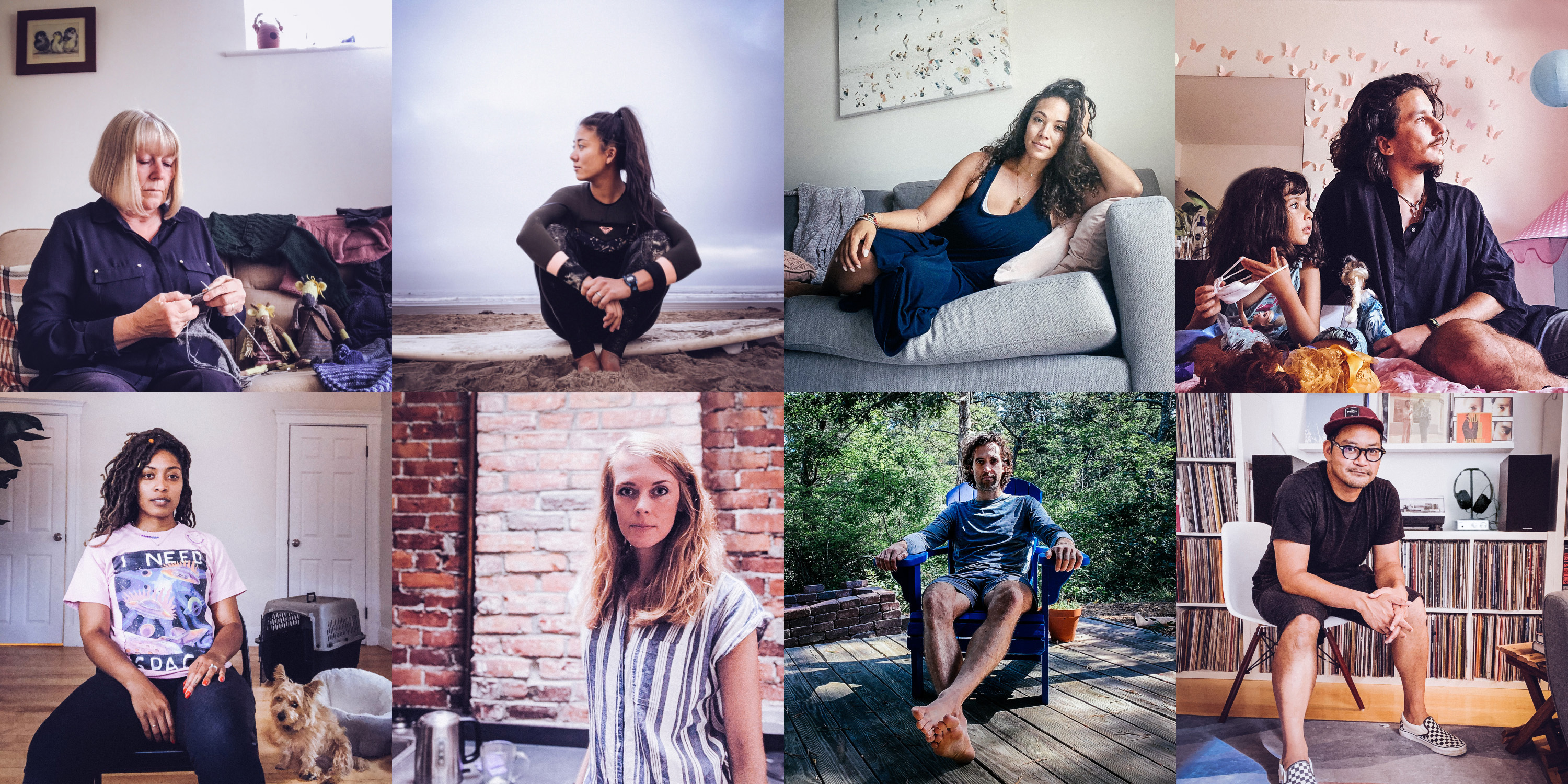
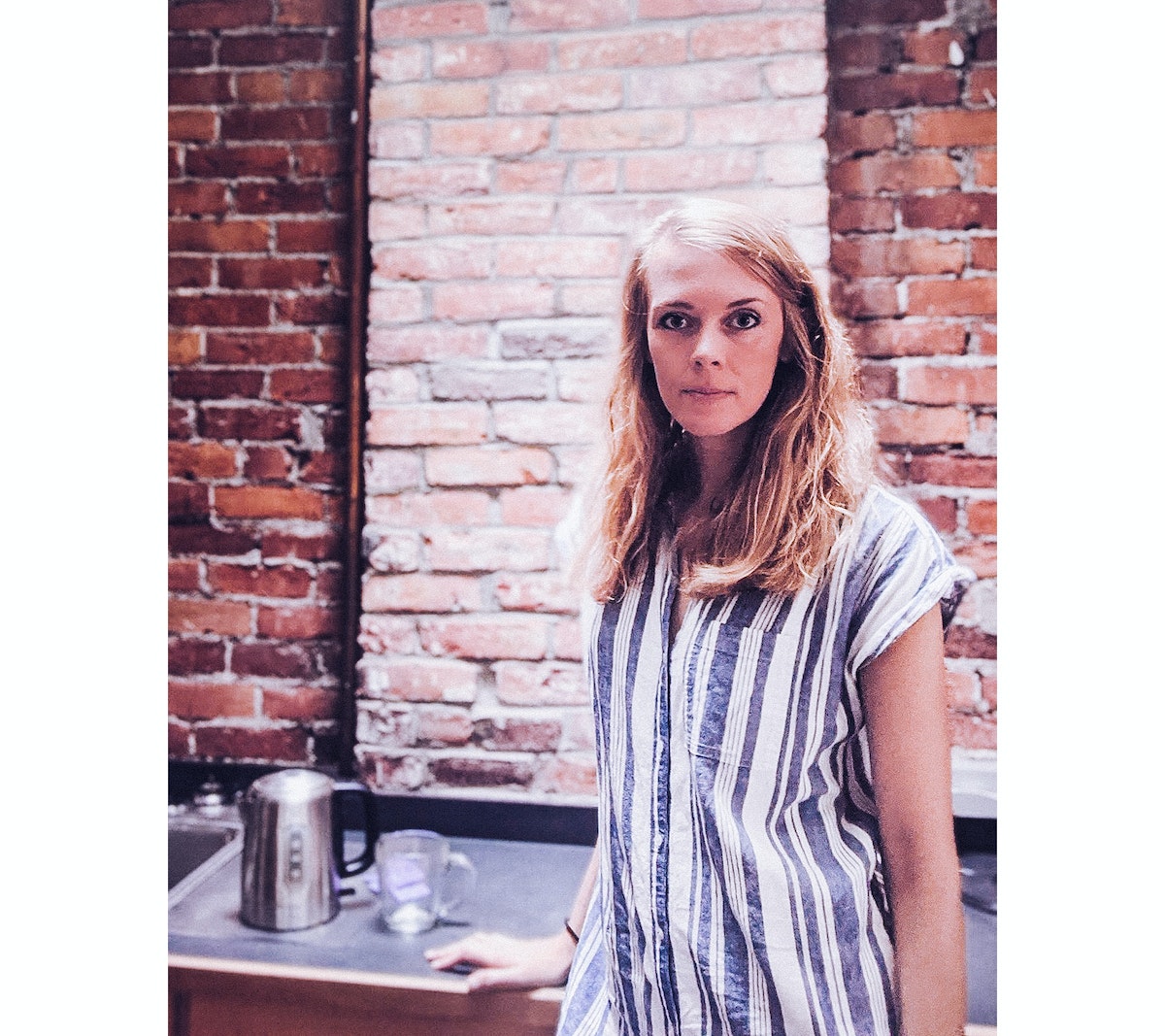
Her face, sitting in front of a beautiful brick wall, had been on my screen for weeks as we worked on our current project. Before COVID-19 sent us off to work from home, we used to work together on projects at the IDEO Cambridge studio. Now she was living in yet another window on my desktop.
I’m an interaction designer by trade, but I’m also a photographer. I’ve managed to bring those two passions together in my work at IDEO. Now, with all the available software, I can do the former from my house, but I had pressed pause on much of my photography work—and I missed it.
From my couch, I realized I wasn’t missing the weight of my camera or meticulously packing my camera bag—I missed people. Could I recapture the magic of an in-person portrait session from my living room? And could I make all these video calls feel less soul-sucking in the process?
Given the constraints of a global pandemic, I asked myself a how might we: How might we photograph people in a socially-distanced way while still preserving a sense of intimacy?
That’s where Tamara comes back in. I’d seen one or two photographers shoot “virtual portraits” online and I was inspired to give it a go. I was nervous, but experimenting with somebody I knew from “real life” prevented the process from feeling too daunting.
It went like this: During (yes, you guessed it) a video call, I asked Tamara to choose a few well-lit places in her home where she’d been spending a lot of time during lockdown. As she showed me her apartment through the laptop’s camera, it was like the world suddenly expanded.
We decided on a spot in the kitchen where she had been making a lot of tea. In order to frame the shot, Tamara created an improvised laptop stand using a chair. I asked her to open the camera on her phone and set it to selfie mode with a 10 second timer. She positioned the phone next to her laptop and we worked together to match the angle of the phone to what I was seeing on my screen as closely as possible.
Then Tamara pressed the button on her phone to begin taking photos and I gave direction on positioning and lighting. Waiting for the countdown on the timer was a little awkward, but not awful, especially since we knew each other well. Then I would review the photos as she sent them via text.
The final result was pretty good. Tamara looked relaxed, almost joyful. I was inspired to continue.
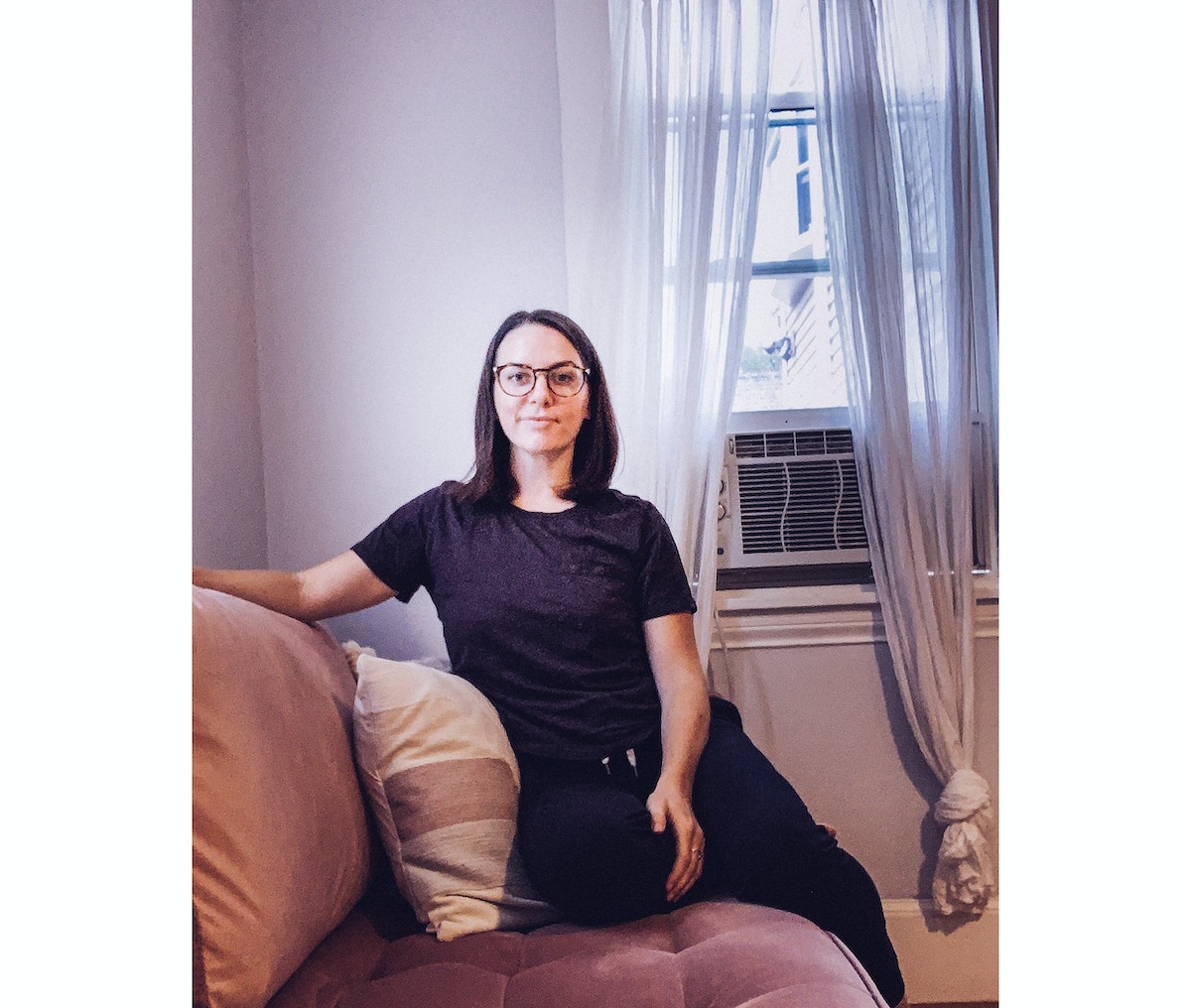
I reached out to a few more IDEOers and continued to refine the process. Next I shot Natalie. She’d recently (and begrudgingly) acquired an air conditioner to make working from home more comfortable. This had become a hot topic of conversation during our many calls. When I asked her to take me somewhere she’d been spending a lot of time during the pandemic, we naturally ended up in the coolest corner of the house: in front of the AC.
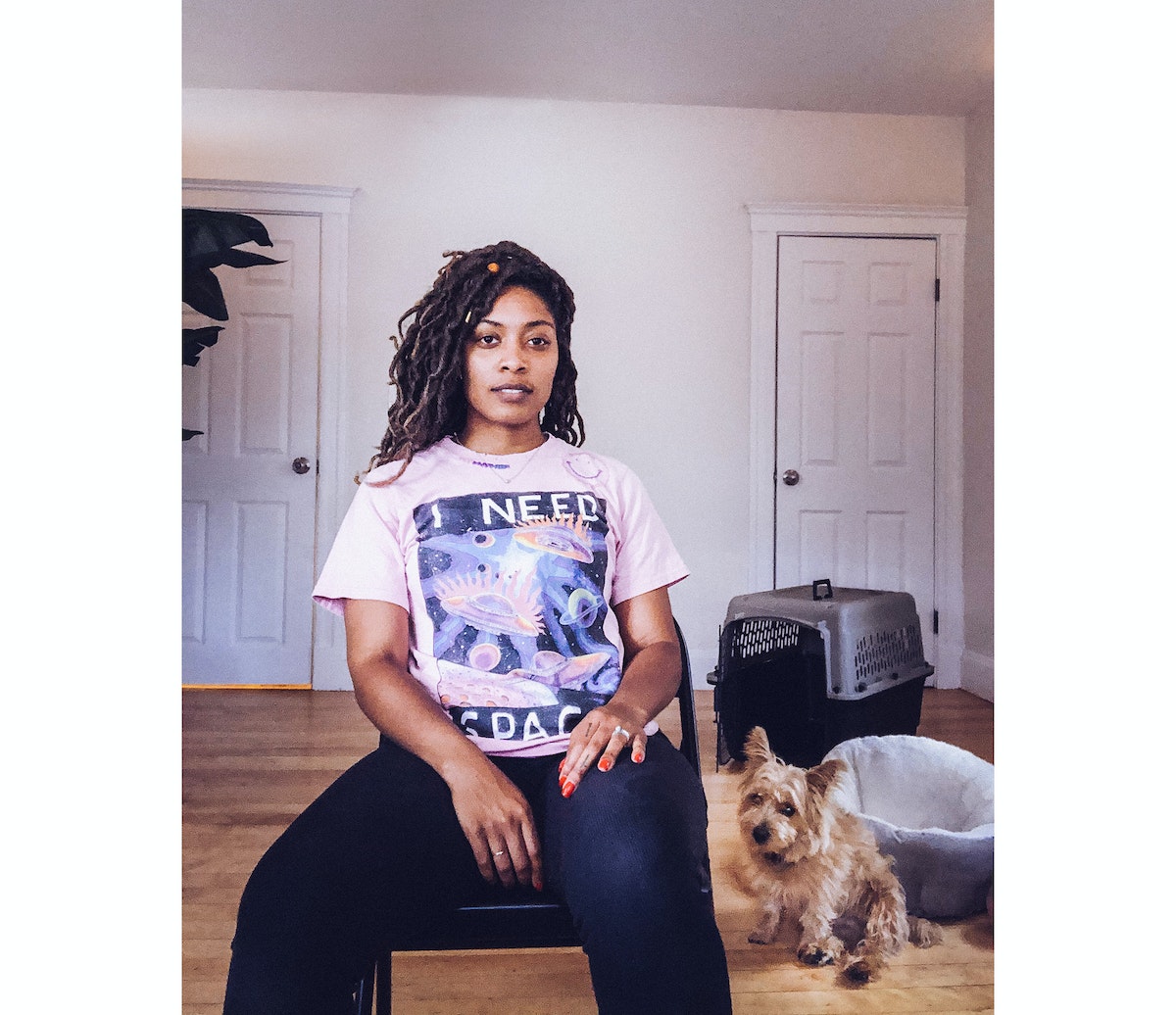
A few days later, Shavon showed me around her new apartment. We brought her dog Oliver’s bed into the frame to try to lure him into the background. We snapped a few shots when he showed up.
Todd also moved during the pandemic. When I dropped into his new home in Wellfleet, Massachusetts, he took me outside to his deck where he has coffee every morning. I love how the trees seem to absorb him into the picture.

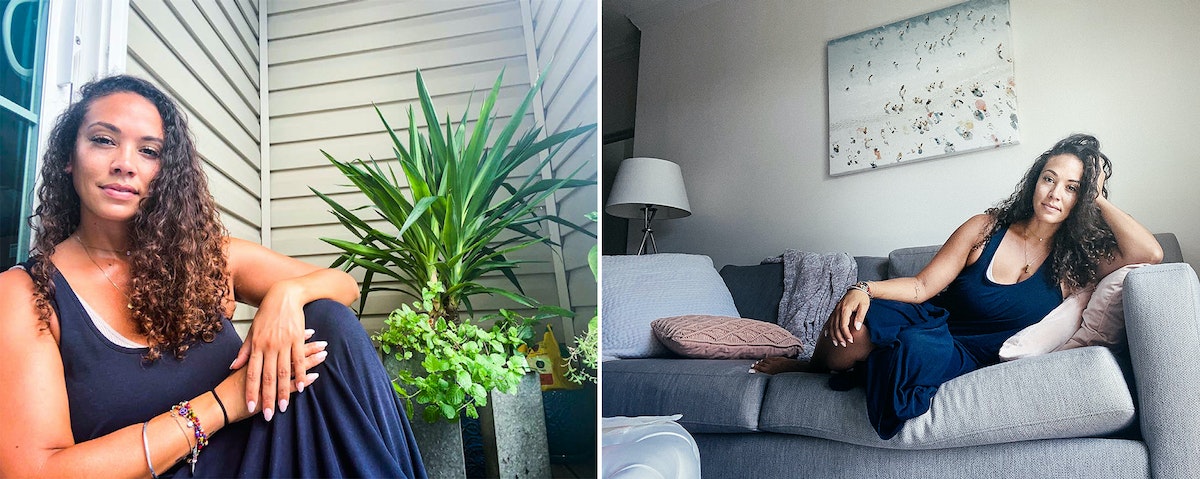
Next I "went" to Virginia to shoot my friend Favin. The first location we scouted was outside in the blazing summer heat. After sweating through a few shots that felt a little too staged (like the one on the left below), we moved inside. Favin picked a new, more comfortable spot: the couch she'd been spending time on during quarantine. We ended up with the shot on the right, which we both liked better.
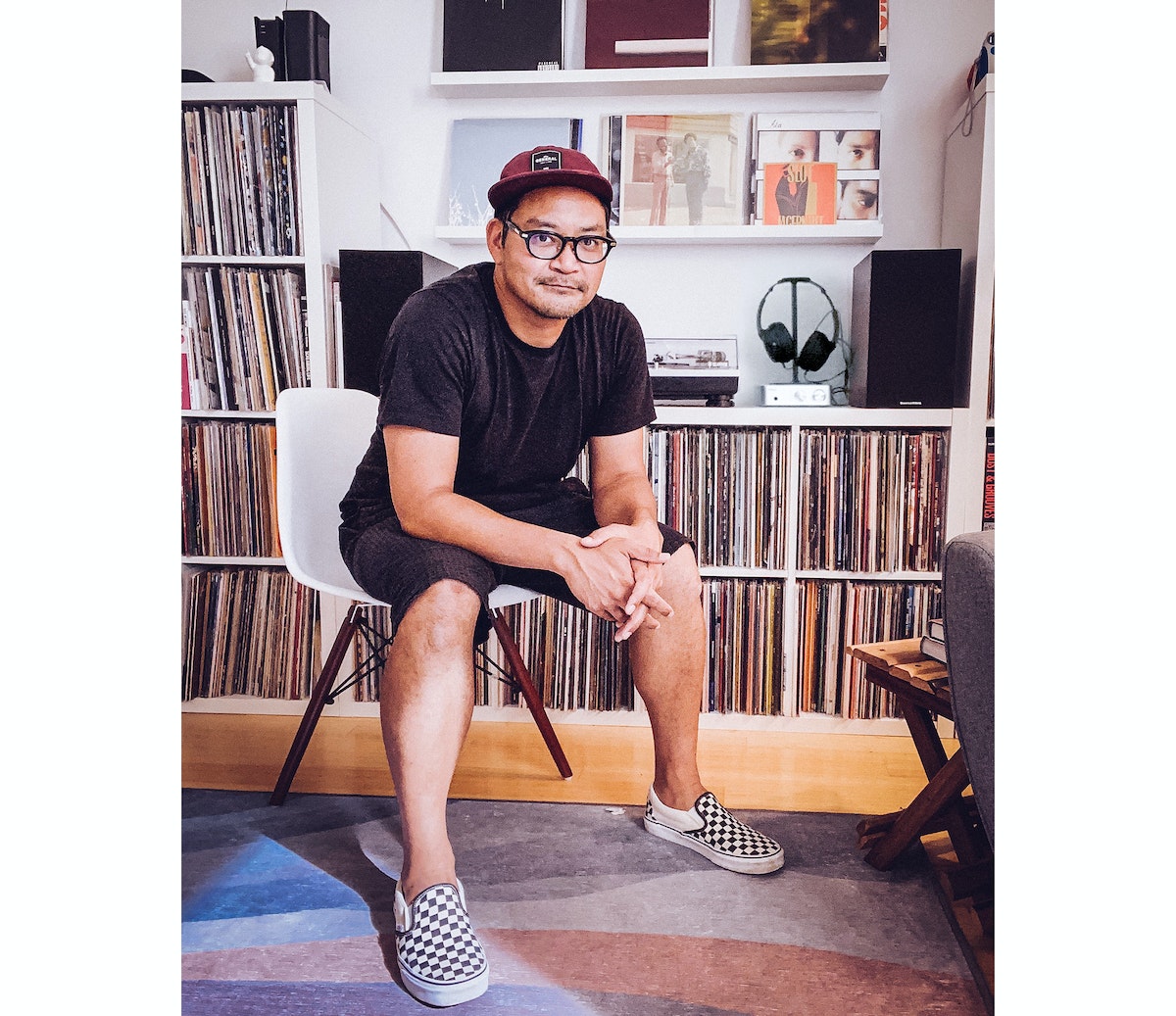
My colleague Greg uses his Instagram account to chronicle the records he listens to every Sunday. I asked if he might let me photograph him where the magic happens: in front of his record collection.
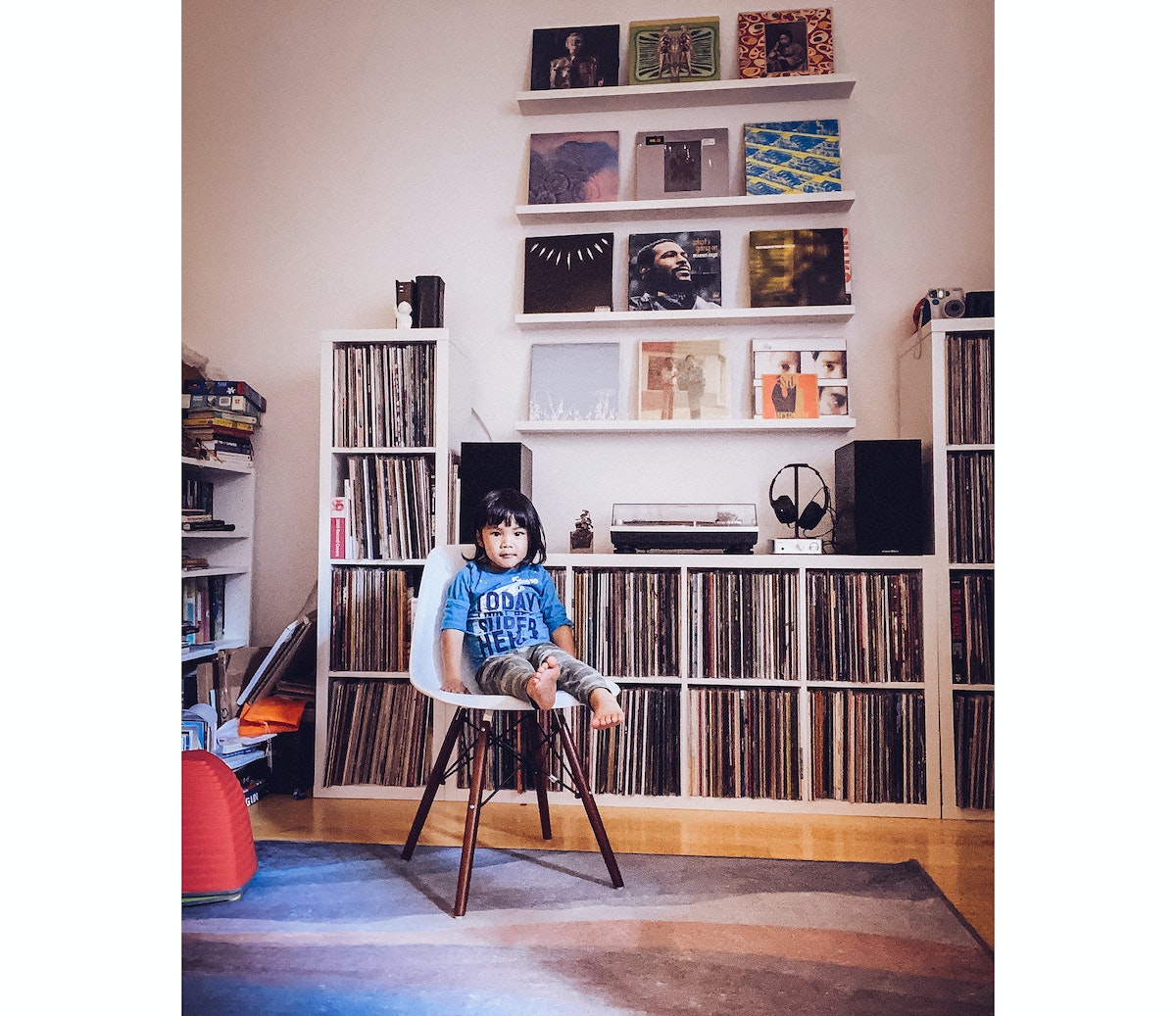
After we finished, he sent me this shot of Oscar, his three year old.
Seeing my colleagues and shooting photos again were both a relief. As far as new hobbies go, maybe this one was a bit strange, but it gave me back what I was missing: my community. Here are three things I learned by stepping outside my comfort zone and doing virtual portraits.
#1. Everything is different now, so we're all adapting
The unexpected constraints of a pandemic have revealed a completely new way of working. I no longer go on long walks to scout locations; instead I get walked around virtually. Photos are framed by leaning an iPhone up against a pile of books or a toaster, and everything shot is from a phone. And now I can time travel—I can shoot in the UK in the morning, Massachusetts in the afternoon, and California at night.
I wouldn’t have dreamed up these strategies in the past, but given the constraints, it works.
#2. These remote sessions are a collaboration between photographer and subject
In traditional photography, the person holding the camera is in control. Now that my hands are empty, who’s in charge?
I asked Alyson, a former IDEOer, if she’d take me to the beach where she surfs every morning. I had a shot in mind: Alyson from below, holding her board with the line of waves behind her.
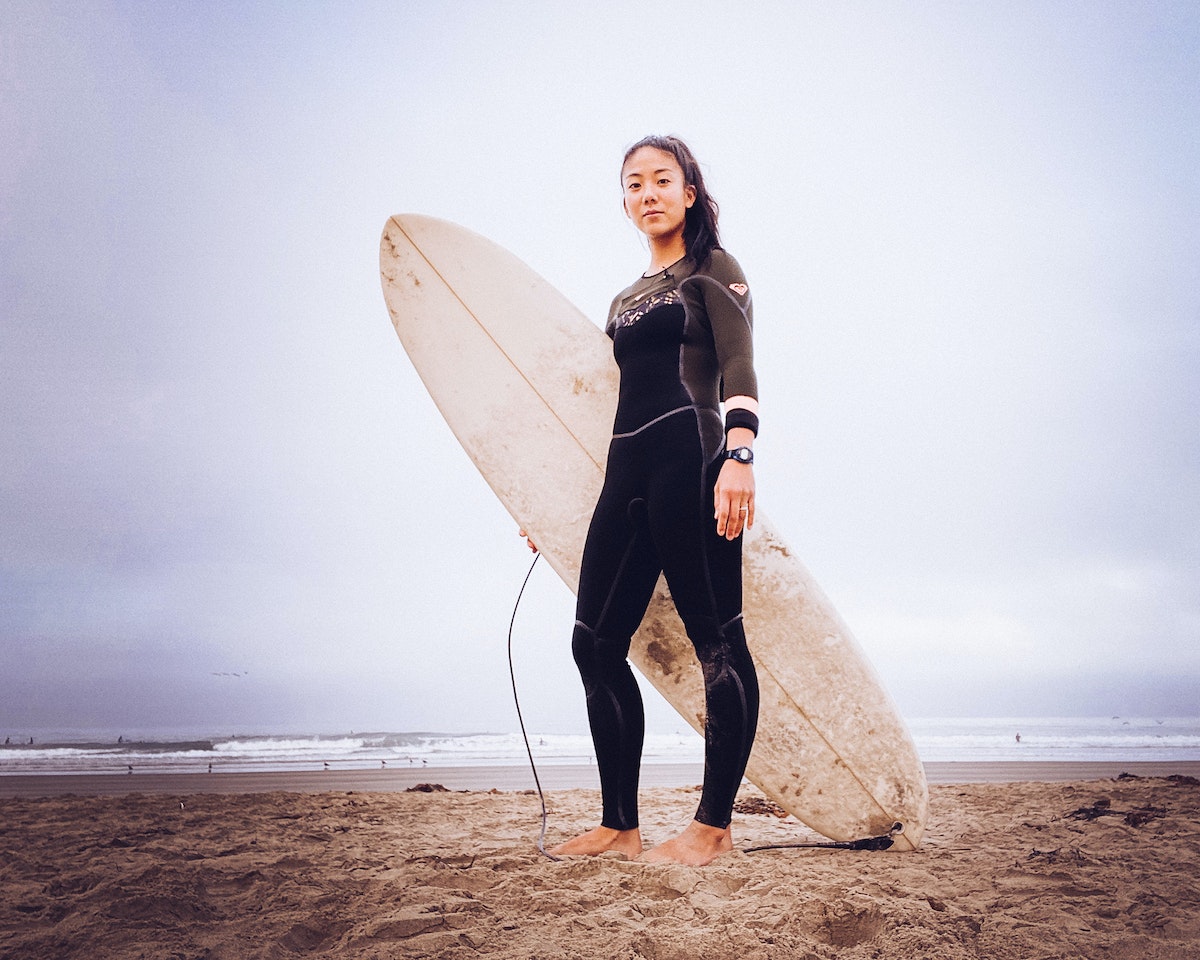
We nailed it. A few minutes later, a man walking by started talking to Alyson, asking her what she was doing with a tripod and two phones on the beach (understandable). We ended up taking this second shot mid-conversation. We both liked it better.
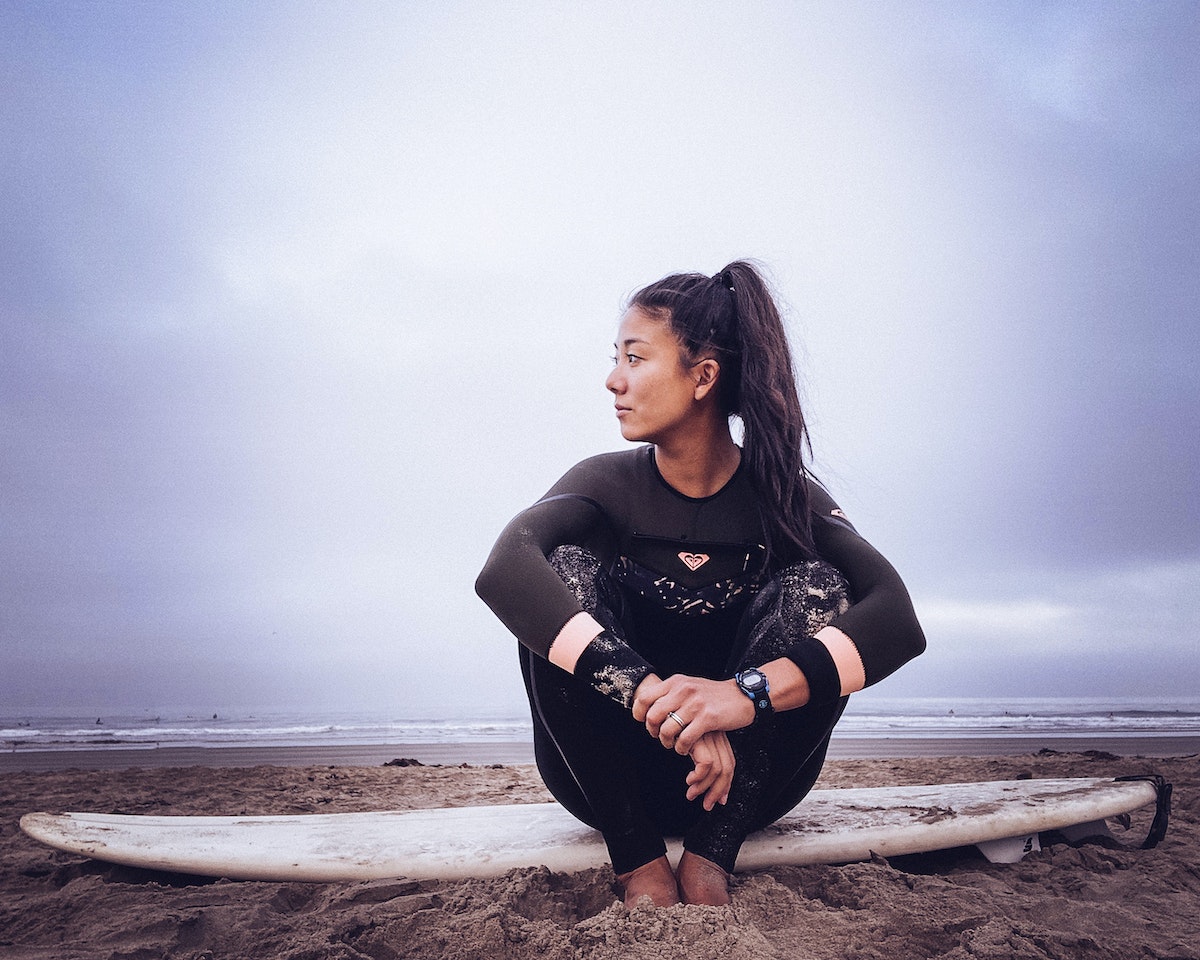
From behind my screen, I didn’t have the opportunity to adjust the angle of the board or tweak the lighting—I had very little control about what was actually happening and the portrait still came out great. Here’s how I see this remote photography experience compared to other modes:
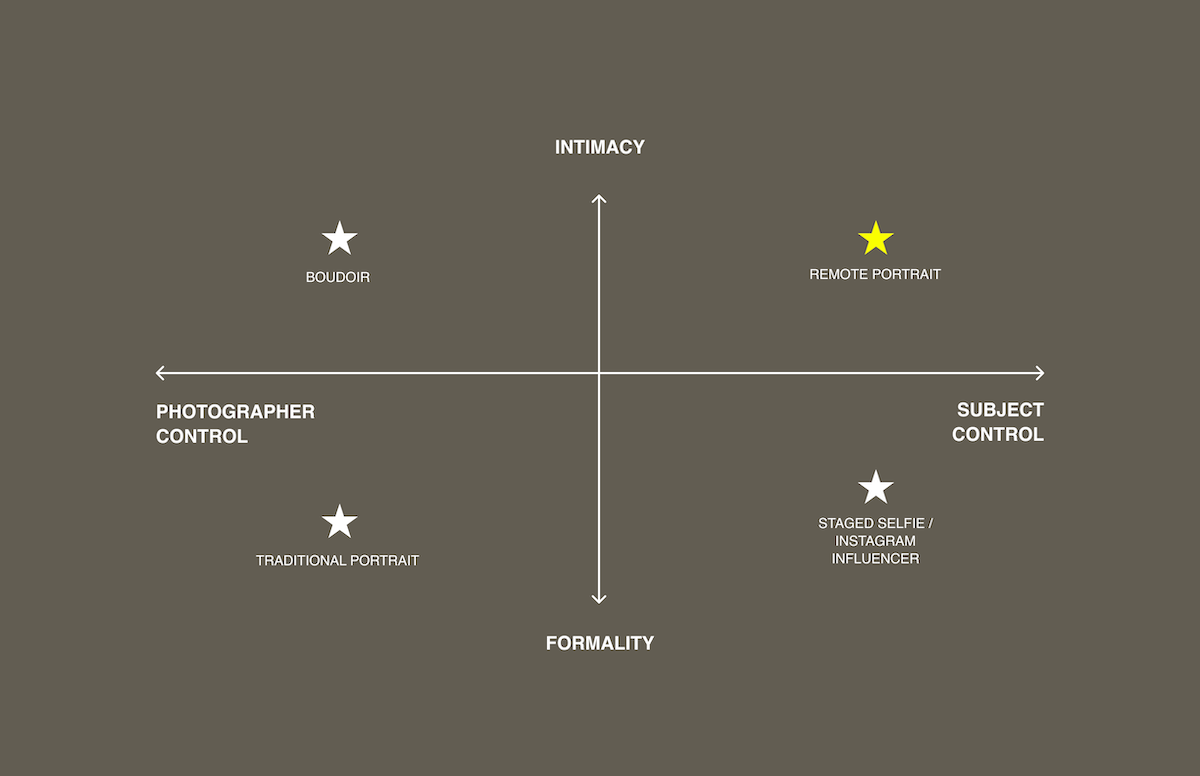
When I shared this project with Jane Fulton Suri, IDEO's first design researcher, she told me, “You are unlocking something in both yourself and the subject—it’s a negotiated process.” I can’t help but agree.
#3. Distance can feel intimate too
Today, video calls can be work meetings, birthday parties, therapy sessions, weddings, murder mystery games, and everything in between. It’s not necessarily intimate by nature, but during a pandemic, the definition of intimacy has changed.
My dear colleague Bruno traveled to Miami to be with his family this past summer. During our portrait session, he told me he’d never lived at home with his little sister, Rafa, who’s four. The setting he chose for his photo was her room. At one point, they were both holding toys as they looked out the window. We captured a quiet, beautiful moment that may have never happened if it weren’t for the pandemic.

I also got my family in on the gig. When I texted my mum to ask her to participate in this project, she was less than enthusiastic.
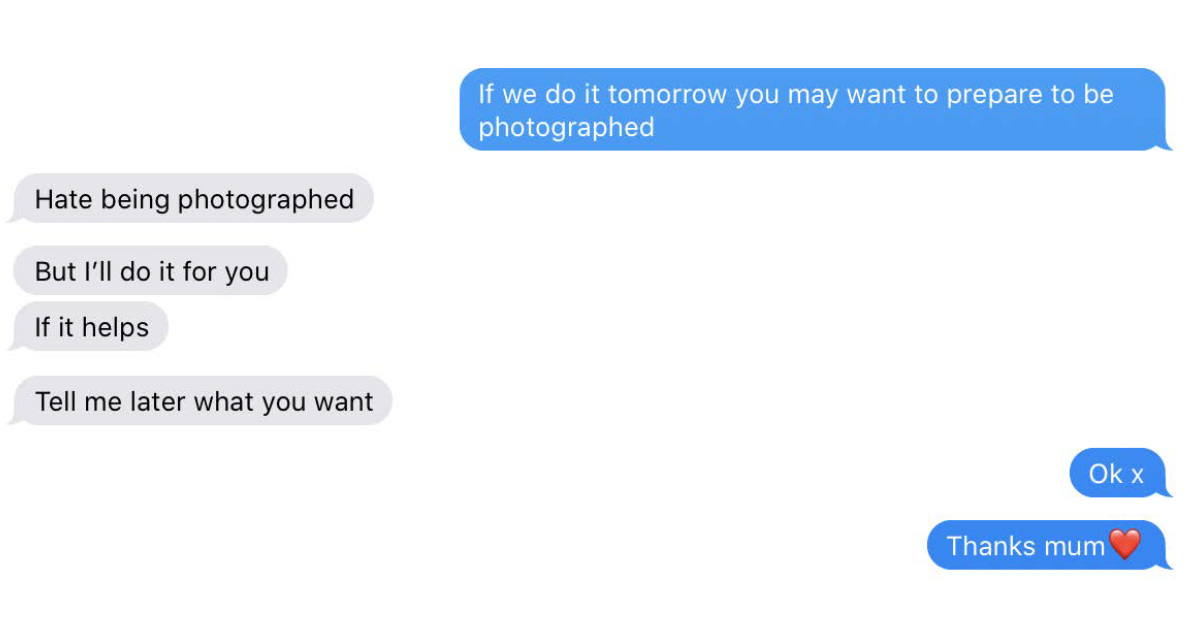
With her in northern England and me in Massachusetts, I hadn’t seen her in person since September 2019. She had been knitting up a storm—everything from cardigans to giraffes—for my daughter. I explained what I was hoping to do, and when I called, she and my dad had set everything up perfectly. I speak to my mum often, but this was the first time I involved her in a project.
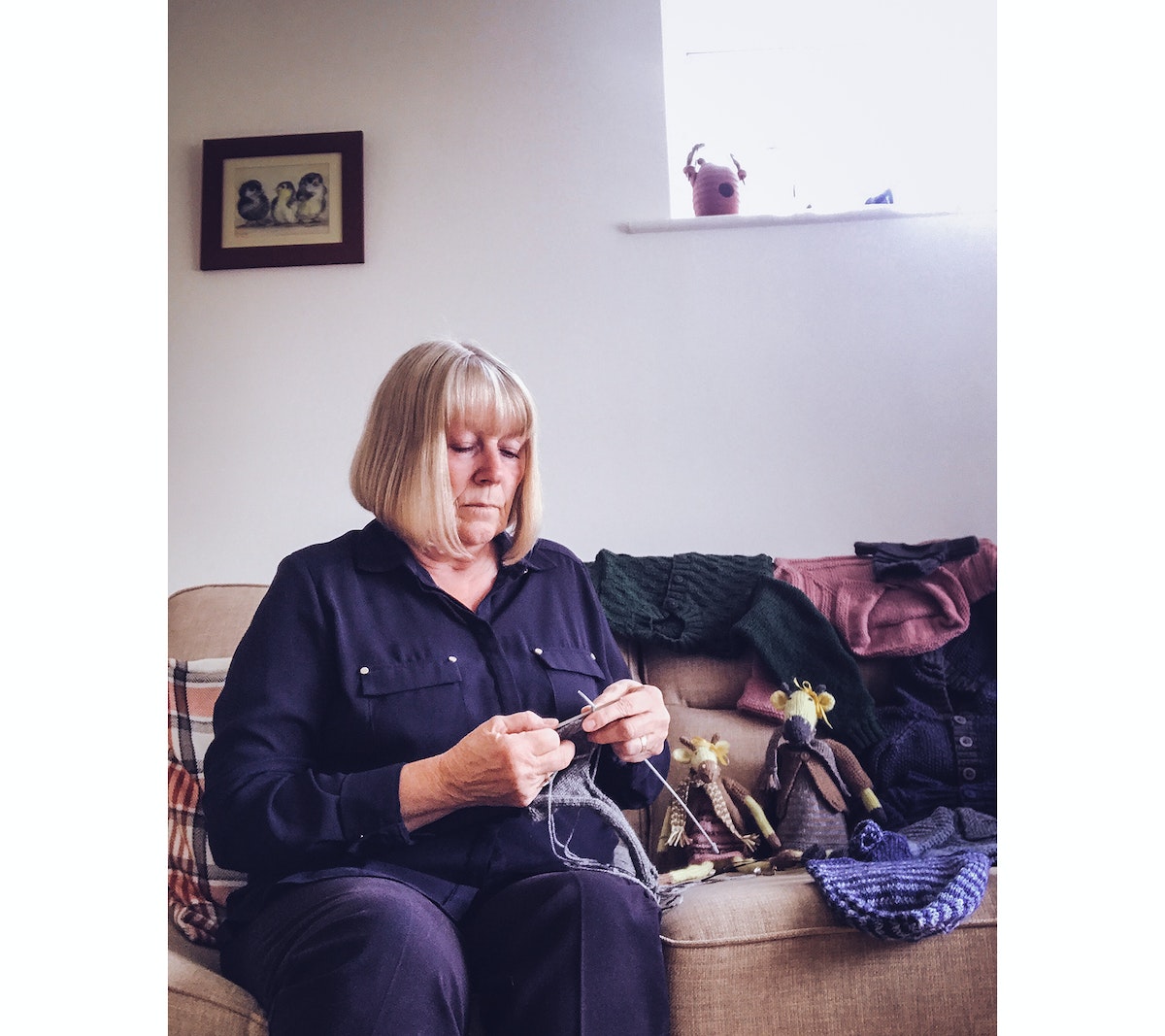
This isn’t the 2020 I dreamed up; I’m sure that’s true for you too. But this experiment has re-inspired me as a photographer. I’ve come to realize that I don’t always need to be fully in control, or even physically present to get interesting, intimate results. In fact, I can be anywhere…even in my living room.
It was during my 800,000th video call of 2020 when I started to wonder about what the rest of my colleague Tamara’s apartment looked like.

Lindsey Turner
I’m passionate about building brands, products, and experiences that help organizations show up with meaning and momentum.
I help organizations cut through complexity by shaping how they show up, through brand strategy, identity, and storytelling.
Working at the intersection of brand and business, I bring an editorial eye and a bias toward making—turning ideas into tangible experiences that people can understand, trust, and believe in.
My work spans government, healthcare, financial services, media, and consumer goods, from launching Gen Z-focused ventures to building innovation labs and reimagining legacy brands. I relish moments of ambiguity and enjoy translating across teams, perspectives, and priorities to move ideas forward.
I started my career in editorial and digital design, shaping cross-platform experiences and identity systems in publishing and agency environments. That foundation still shapes how I work today: I’m detail-oriented, collaborative, and overreliant on the Oxford comma. I hold a BFA in Visual Communication from the School of the Art Institute of Chicago.

Rachel Young
My work helps organizations see who their products aren't working for—and build the will and the tools to do something about it
For 25 years, I've asked the same question: Who does this design exclude—and what are we going to do about it?
My work spans human-centered strategy, inclusive design, and qualitative research, with clients ranging from Microsoft, Google, and Verizon to the National Science Foundation, and San Francisco Unified School District.
Before IDEO, I taught elementary school in East Palo Alto and spent a decade doing design work with social service organizations—where I learned firsthand what it costs people when systems are built without them in mind.
I am currently writing User Error, a nonfiction book about digital access and the design decisions behind it. I live in Oakland, California.

Brian Pelsoh
I lead with craft, ensuring our work is creatively excellent: rooted in deep human insight and imagination, while also grounded in the realities of business and technology.
My expertise spans brand, communication, and product design across tech, education, the arts, and social impact.
I believe great work demands both high-level vision and obsessive attention to detail, and only happens through collaboration.
I bring an inclusive, hands-on approach and a deep understanding of business, which enables me to consistently deliver excellence while always asking why.
Before joining IDEO, I worked at the brand firms Pentagram and VSA Partners. I began my career as a designer, leading teams at the School of the Art Institute of Chicago and the Milwaukee Art Museum. I hold an MFA in graphic design from Maryland Institute College of Art and a BFA in communication design from the Milwaukee Institute of Art & Design, and have taught at some of the best design schools in the US.

Tony Wong
I am responsible for IDEO’s long-term success in China and working with clients to use design as a tool to enable growth.
I am responsible for IDEO’s long-term success in China and working with clients to use design as a tool to enable growth. Specifically, I have helped Chinese companies design holistic brand solutions through the development of their products, communication, services, and innovation teams, and I have helped multinationals expand their presence and influence in China.
I advise global leaders on developing China-led innovation and capabilities.
In over 15 years in IDEO Shanghai, I have worked on projects that use design to elevate the quality of the experience of healthcare products and services, streamline processes that increase productivity, create spaces and programs that promote and enable inclusive communities, and build next generation mobility solutions that are planet-positive.
Before joining IDEO, I worked at Philips Electronics and the Electrolux Group in Italy, the Netherlands, and Singapore on a number of breakthrough commercial products. I am a member of the Young President Organization in Shanghai.

How to use AI as an editor, not a writer
Ed White shares how he uses AI as an editor—not a writer—to sharpen storytelling, rehearse ideas, and preserve the productive friction that makes creative work better.
Ed White has a rule he's tested on his own writing: hold yourself as the writer, and let AI be your editor. Ed is a Senior Design Director at IDEO's London studio, where he co-leads the firm's AI portfolio across Europe. Before IDEO, he spent 12 years as a writer and editor at the Financial Times, Wired, and Contagious. So when he talks about when to use AI for storytelling and when not to, it comes from two decades of crafting his storytelling skills.
In this episode, Mina Seetharaman talks with Ed about two specific tools he uses to keep AI in an editor's seat: a "roasting agent" prompted to critique his drafts without any sugarcoating, and a simulated audience he rehearses pitches on before the real thing. They also get into what Ed is hearing from design leaders at Anthropic, Lovable, Shopify, and Google Creative Lab about how creative work is changing, and why he thinks the friction of writing something yourself is worth protecting rather than automating away.

Building a personal AI for the messiness of life: Sida Li
Becca Carroll talks with Cue co-founder Sida Li about designing a personal AI for the messiness of everyday life—not just work. They explore how Sida stays anchored to human needs while navigating fast-changing technology, product tradeoffs, business-model experimentation, and the realities of building an AI company today.
Most AI products today are built for work—a space with clear problems and established systems. One founder noticed a gap: personal life is messier, harder to systematize, and mostly left behind by the AI boom. So she built Cue, a personal AI that lives inside iMessage and group chats, to go where the other tools haven't.
In this episode, Becca Carroll, IDEO's Chief Strategy Officer, talks with Sida Li, co-founder and CEO of Shared Context Lab, about staying anchored to a human need while the technology around her keeps changing shape, why she treats her business model with the same rigor she'd bring to a product, and what it feels like to build a company at this particular, disorienting moment in AI.
The conversation also gets into how Sida makes design decisions: the language Cue uses to describe itself, the tradeoffs behind building inside iMessage instead of a new app, and a real story about a business idea that didn’t pan out.
This is the second in a two-part series profiling founders from IDEO's Startups-in-Residence program. The first conversation is with Johannes Seemann, founder of Sooner, on designing GenAI for the emotional side of money.

Designing GenAI for the emotional side of money: Johannes Seemann
Designing financial tools around the feelings that shape money decisions.
Most personal financial tools are built to run the numbers and optimize towards a budget. While that works for some, most people experience money as a lived relationship that does not neatly fit into a spreadsheet. Johannes Seemann and Becca Carroll discuss why money is emotional before it is mathematical, and what a human-centered approach to building a generative AI financial product looks like in practice.

The curious leader's edge in uncertainty: Scott Shigeoka
How genuine curiosity helps leaders navigate uncertainty with greater confidence.
Mina Seetharaman talks with Scott Shigeoka, author of Seek and Head of Curiosity Cultivation at the Eames Institute, about what distinguishes genuinely curious leadership from performative curiosity, how power dynamics shape curiosity, and why practicing curiosity can restore energy rather than drain it.
Looks like you might be in search of something very specific?
Or reset the filters above and try another angle.
Here’s some random inspiration

Podcasts about creative leadership

Articles about the power of prototyping

.webp)




.webp)




.webp)




.webp)





.webp)
.webp)