Home / Design services / Case studies
Planes, supply chains, and automobiles
Vice President of Global EV Programs, Ford Motor Company
Featured work


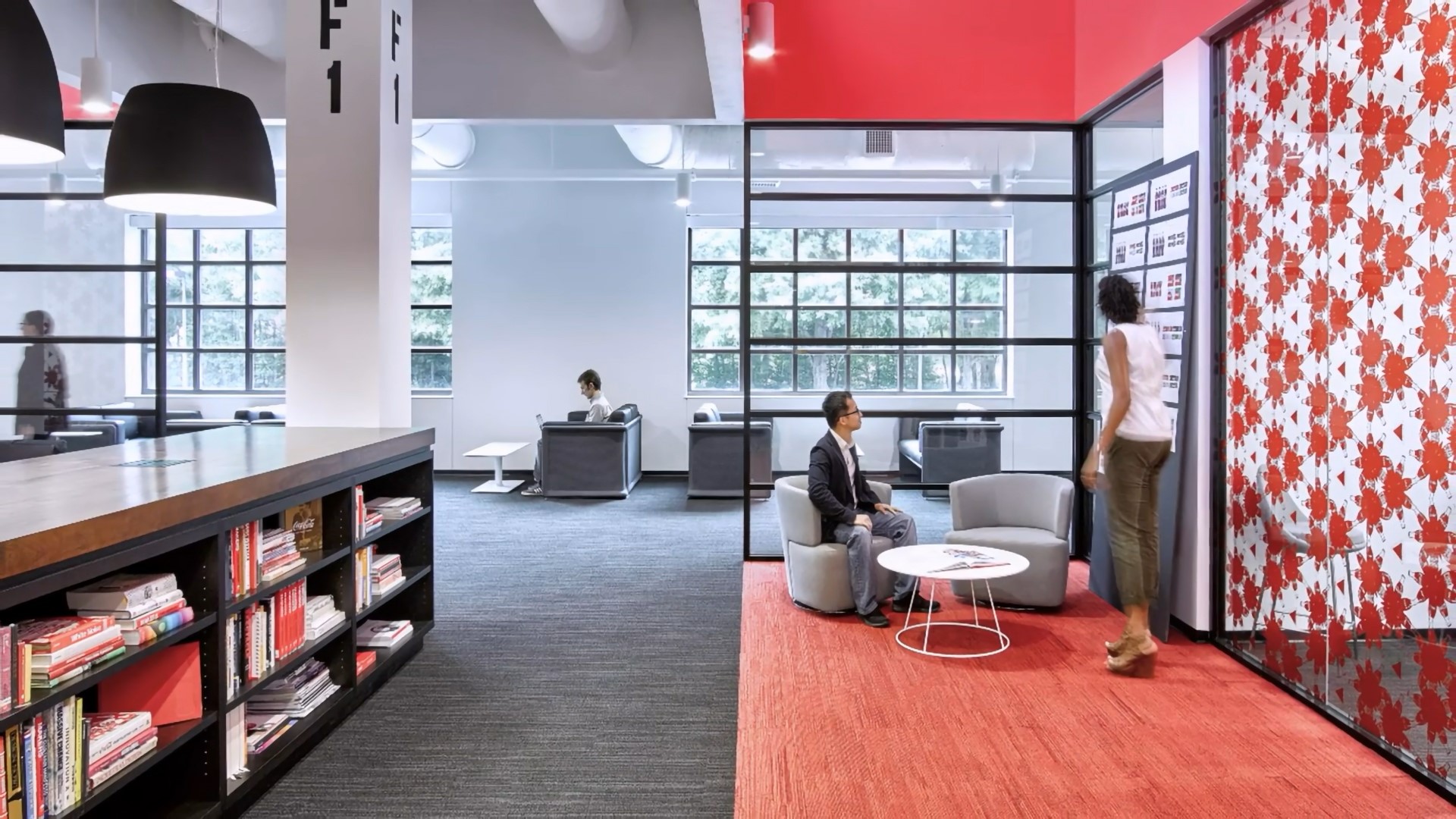

Redesigning how Coca-Cola works, plays, and profits
Designing for Coca-Cola’s 2020 vision strategy.
Coca-Cola is one of the world's most iconic brands. More than 5,000 people work at its global headquarters in Atlanta.
Back in 2010, Coca-Cola found itself at a major crossroads. As the company grew, it became clear that in order to stay competitive, any kind of campus renovation would have to take into account a vision of the future of how people work at Coca-Cola. Before the company hired architects, they came to IDEO to help design this important part of their 2020 vision strategy; ultimately the redesign would change the way the company works, plays, and profits.
Imagery courtesy of Coca-Cola, Gensler, and IDEO
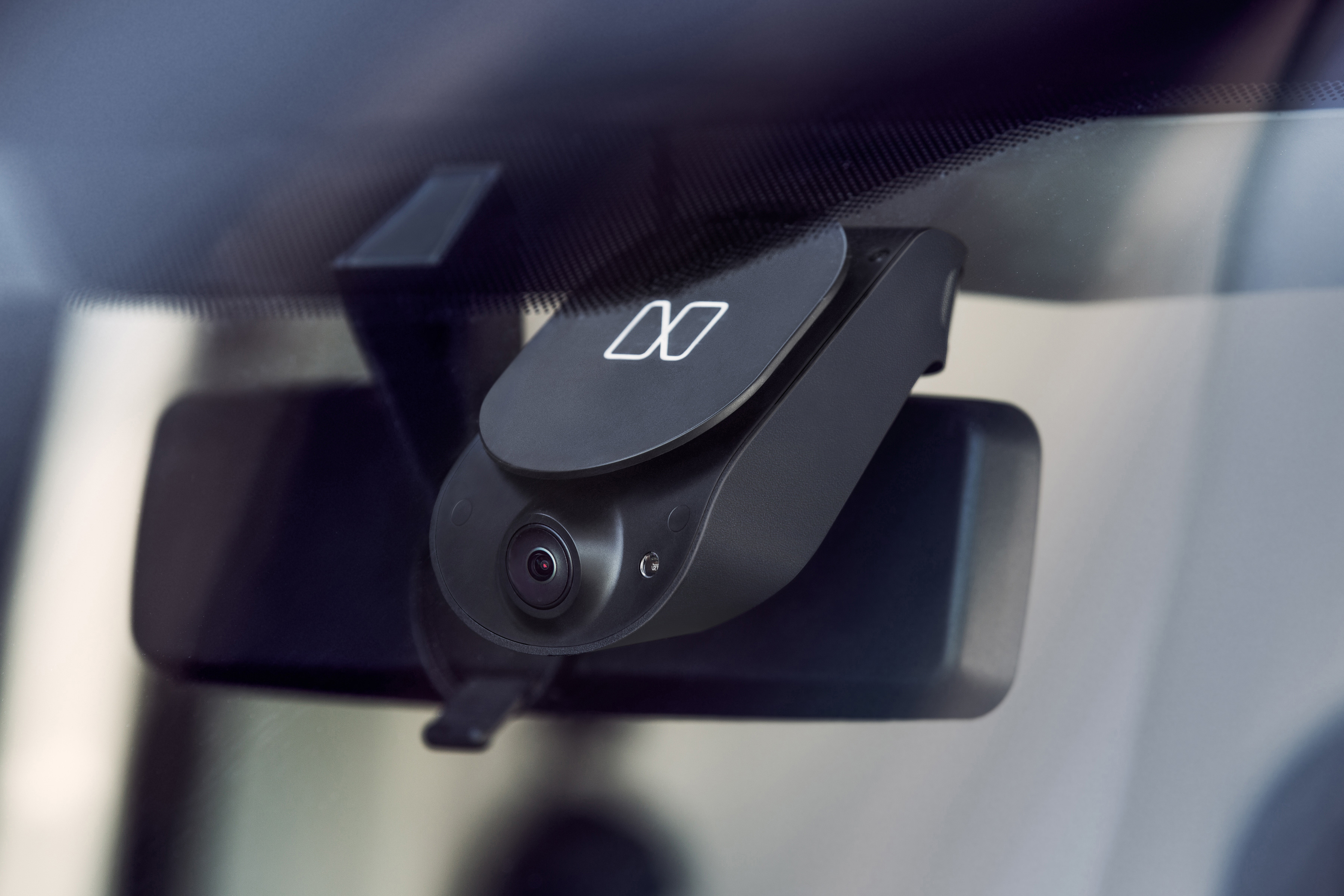
Smarter, safer, data-driven driving
Designing an AI-powered dash cam system.
Nauto, a startup in the automotive industry that’s building a system to help make driving safer and smarter, approached IDEO to collaborate on the design of their latest device. It includes a proprietary dual-camera system that can be directly installed in just about any vehicle to enable safety features. Through real-time data analysis, high-definition recording, and LTE connectivity, Nauto’s device records and analyzes activity inside and outside the car, and automatically uploads information to a smart cloud.
The device can detect if drivers are distracted based on their eye and head movements, risky maneuvers such as tailgating or swerving, and dangerous environmental conditions such as unexpected obstacles. In these scenarios, the product alerts the driver through audio feedback inside the vehicle.
Over time, the data collected by Nauto reveals bigger insights and trends in driving behavior, ranging from causes of collisions to patterns in driver distraction. These insights are stored in a secure cloud platform and made accessible to both drivers and fleet managers. Drivers can benefit from Nauto’s VERA score—personalized feedback based on their driving performance—and fleet managers can gain access to a complete picture of how each of their drivers are performing across locations. Through these data-driven insights, Nauto gives drivers and fleet managers the tools to stay safe on the road.
To help launch Nauto’s device, IDEO prototyped several iterations of the product’s housing, cabling, and ergonomics, resulting in a clean aesthetic and an easy installation process for users. The engineering team also prioritized materials that would protect against extreme temperatures and sunlight exposure. Most importantly, IDEO helped design a camera device that can be seamlessly integrated into almost any model of any vehicle, greatly expanding its potential in the market.
Nauto’s latest system began rolling out to commercial fleets and strategic OEM and Insurance partners in late 2016.
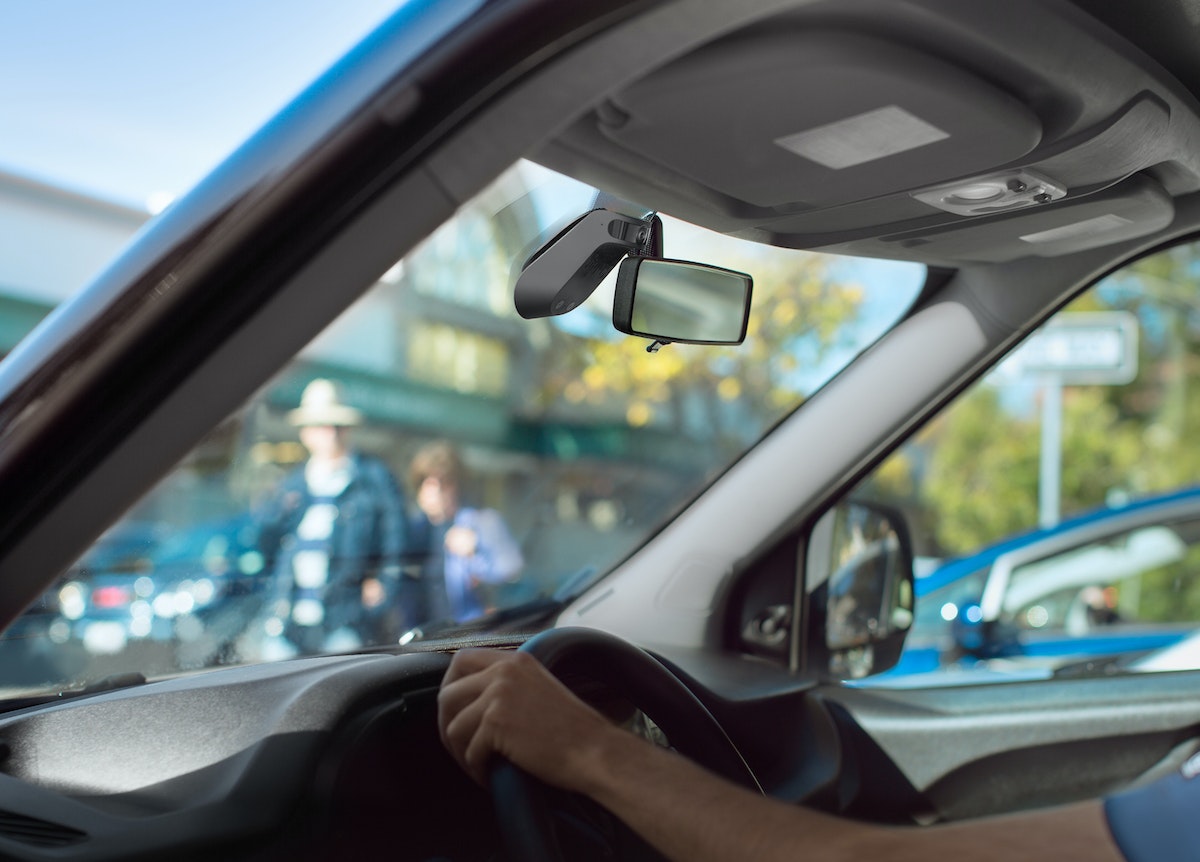
Photos by Nauto.
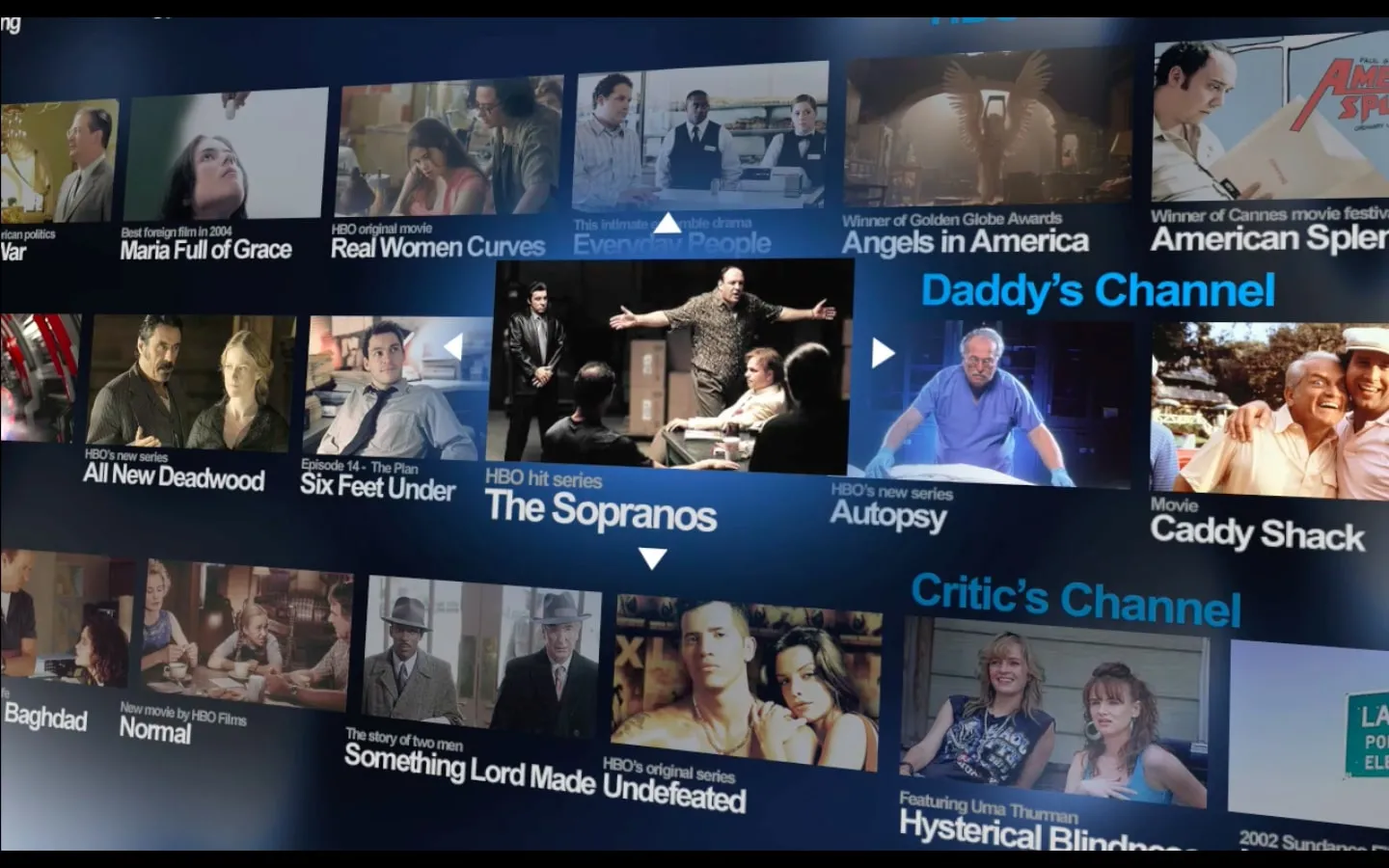
Designing the future vision for HBO
Navigating an uncharted media landscape.
Most people are used to watching their favorite shows whenever and wherever they want these days. But 10 years ago, that wasn’t the case. Far ahead of the curve, HBO realized the potential for carving out its own audience, and created one of the first original on-demand offerings that allowed viewers to cut the cord from cable and satellite providers. HBO came to IDEO for help in navigating the future of its audience experience that would be distinguished from cable, and would put full control in the hands of the viewer.
With special emphasis on HBO’s Video On Demand offering, IDEO began early-phase research to explore people’s experience with the media brand and found that it centered largely on the viewing of HBO shows, the most critical part of the media experience. But other important media-related activities—learning about new shows, planning to watch new shows, creating the right viewing environment, saving and sharing viewing experiences—were either underserved or controlled by HBO’s cable and satellite partners. IDEO concluded that HBO’s challenge would be to develop a media service that holistically addressed the media consumer’s entire journey and allowed subscribers to experience HBO wherever and whenever they wanted.
To demonstrate the value of the entire media consumption journey, IDEO created a comprehensive product development and user experience vision. This vision was delivered in the form of an immersive environment, built on-site at HBO, which conveyed key customer values and behaviors and presented a roadmap for building the appropriate products and services. Included in this roadmap were future scenarios and tools that invited prototyping and exploration.
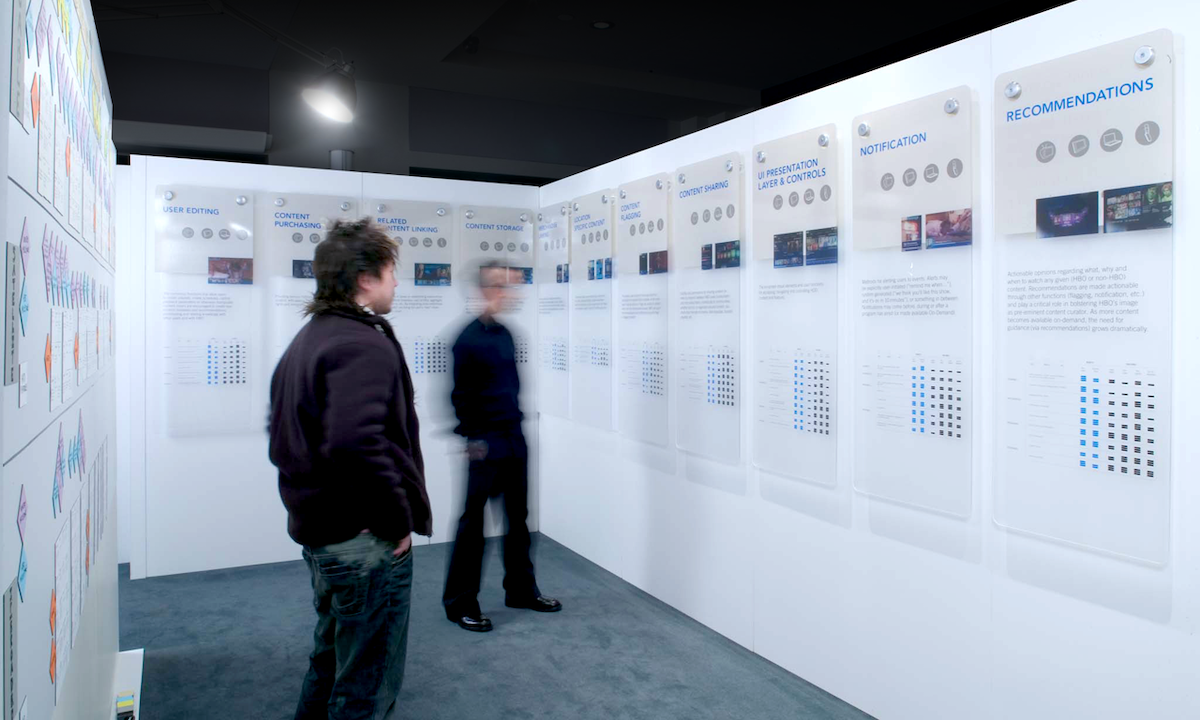
"The collaboration was foundational for us, serving as our guidepost for creating more personalized on-demand and online viewer experiences. This early work influenced what would become our streaming presence—from categorization to how the products rolled out—and ultimately led us to design the next generation of user-inspired products for a more highly engaged audience," said Bernadette Aulestia, Executive Vice President of Global Distribution at HBO.
In the 10 years since the original collaboration with IDEO, HBO has pioneered the path forward for media brands by setting the standard for a world-class array of content and accompanying viewer experience model.
Sleek tools for everyday use
Designing a new family of multi-tools that fits every lifestyle.
While the designs of most cutting tools have evolved significantly over the years, multi-tools have remained largely the same. Recognizing this gap, SOG, an established leader in the specialty knife industry, collaborated with IDEO to identify new opportunities for innovation in the multi-tool space. The teams specifically aimed to expand SOG’s offerings into a more general lifestyle category and position them as adaptable tools for people’s everyday needs.
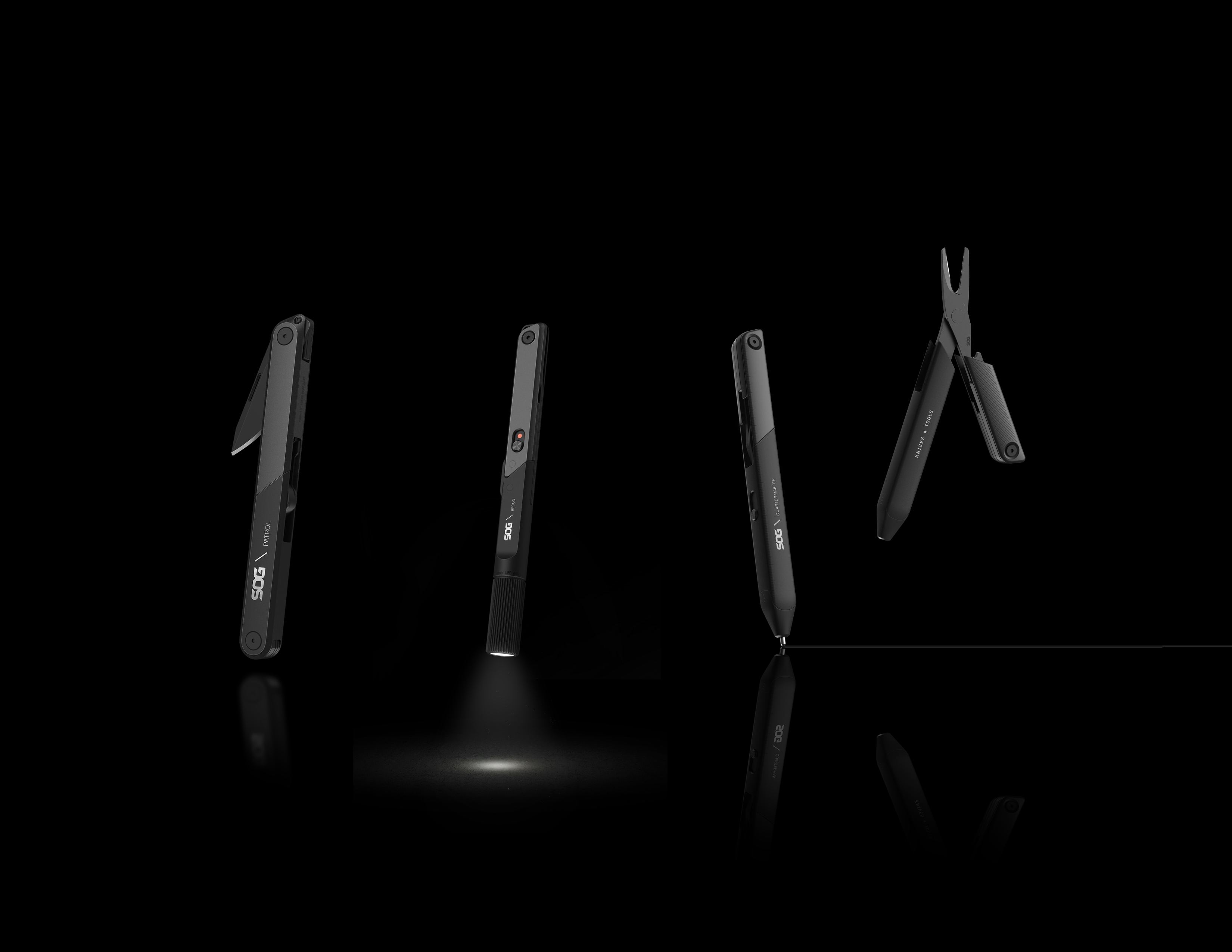
IDEO's research and industrial design work resulted in a family of four new multi-tools known as Baton. A sleek, black, minimal design ties together the complete set of tools, whose features vary to include bottle-openers, flashlights, scissors, pens, and pliers.
Each multi-tool’s range of capabilities, combined with its slim, compact structure that looks like a pen, makes it a travel-friendly companion for the office or the great outdoors. And its intuitive design makes it easy to use for anyone, regardless of their experience with multi-tools.
SOG’s new family of multi-tools launched in January 2017.


Reimagining career colleges for the 21st century
Redesigning for-profit career colleges into models for student success.
Every year, millions of students attend career colleges with hopes of landing jobs after graduation, but many end up unemployed and in debt, evidence of a significant disconnect between the goals of the students, educators, and institutions. Administrators are tasked with getting students in the door, but not getting them to graduation and students are focused on getting a degree to secure their future employment, while employers are looking for graduates who have professional skills beyond their new degrees.
In an effort to change this failing model, the ECMC Foundation engaged IDEO to help design a radical new vision for the future of career colleges. IDEO and the ECMC Foundation sought to develop a vision that could be used as a benchmark for the sector, showcasing a student-centered educational experience with a business model that aligns students, employers, and institutions as partners in advancement.
At the heart of the student experience is extended support along the learning journey, from path-finding and job placement to ongoing career support for alumni, helping students mindfully navigate their education from matriculation through employment.
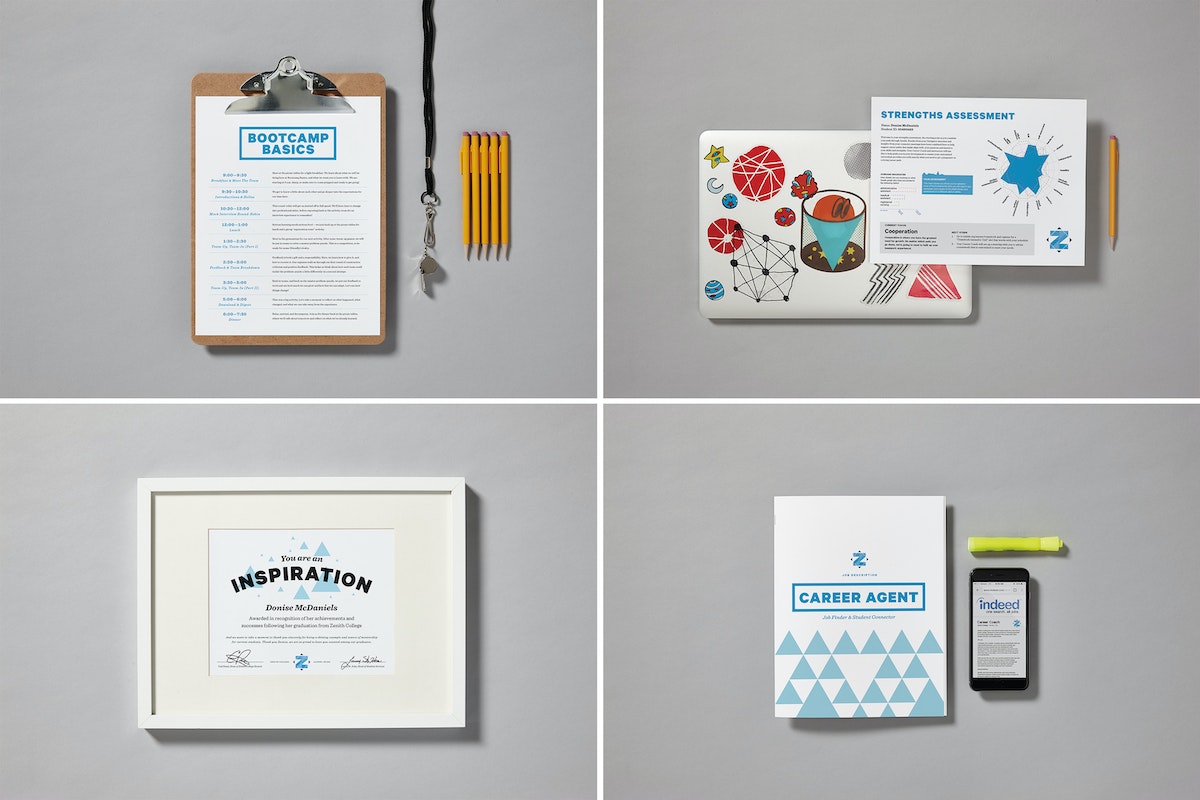
A key insight on the employer side was the need to prioritize the parallel development of students’ soft skills—like collaboration and communication styles—and hard skills, ensuring graduates are not only properly trained in the unique skills of their chosen career path, but also prepared to adapt to professional environments.
Institutional accountability became a core factor in the vision, directly linking the college system’s success to the student experience: as job placement improves, so do the school’s earnings and future enrollment rates. The final result is a student-centered educational experience and business model that aligns students and schools as true partners in a better life.
Key elements of IDEO’s recommendations are being implemented as pilot projects at Zenith Education Group—a nonprofit provider of career school training, funded by the ECMC Foundation.
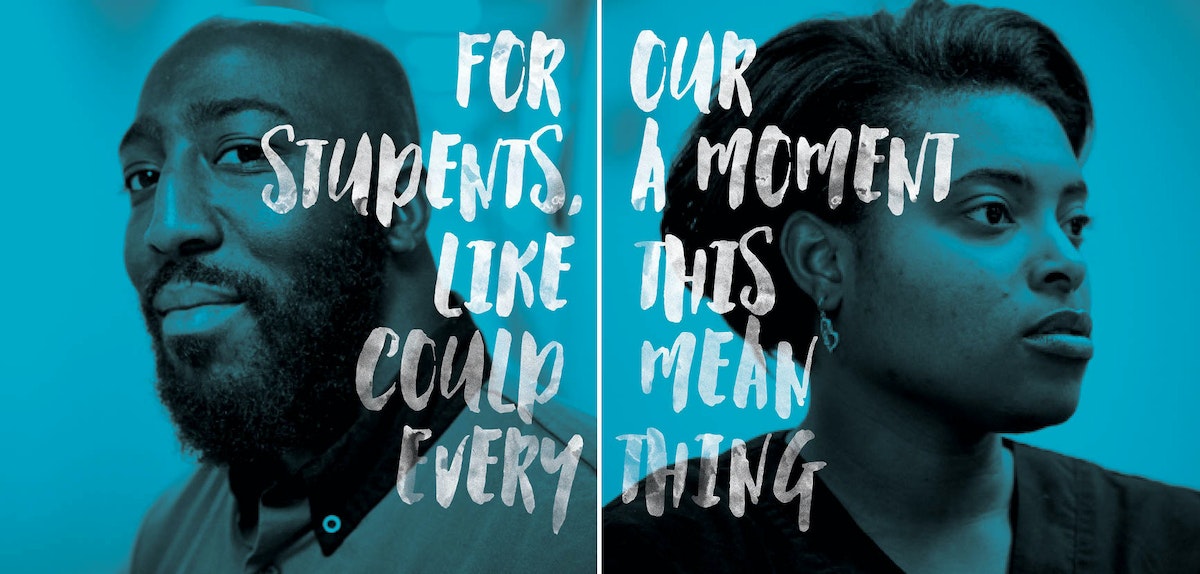
Many students have the motivation to pursue higher education, but are dealing with external pressures and realities that make completion challenging.

Empowering school leaders to create change through design
How small actions can lead to big shifts in schools.
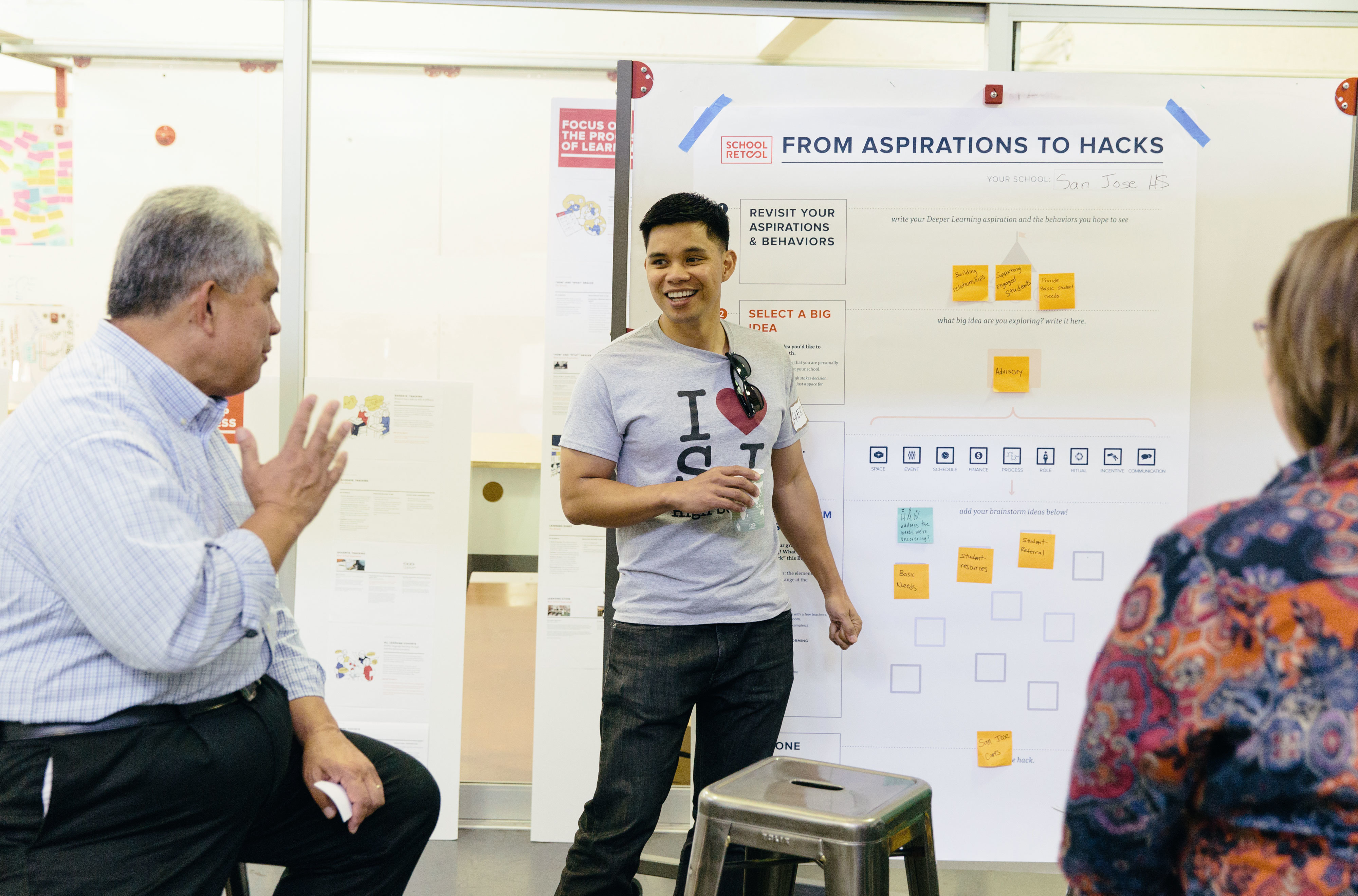
There’s a lot of excitement in the education sector about the need to equip students with skills like critical thinking, collaboration, and communication, to prepare them for a global, innovation-driven economy. But that’s easier said than done. Major changes are needed to move from a decades-old model towards creating new ways to educate students. Schools and their leaders, particularly in low-income contexts, often lack the necessary resources and support.
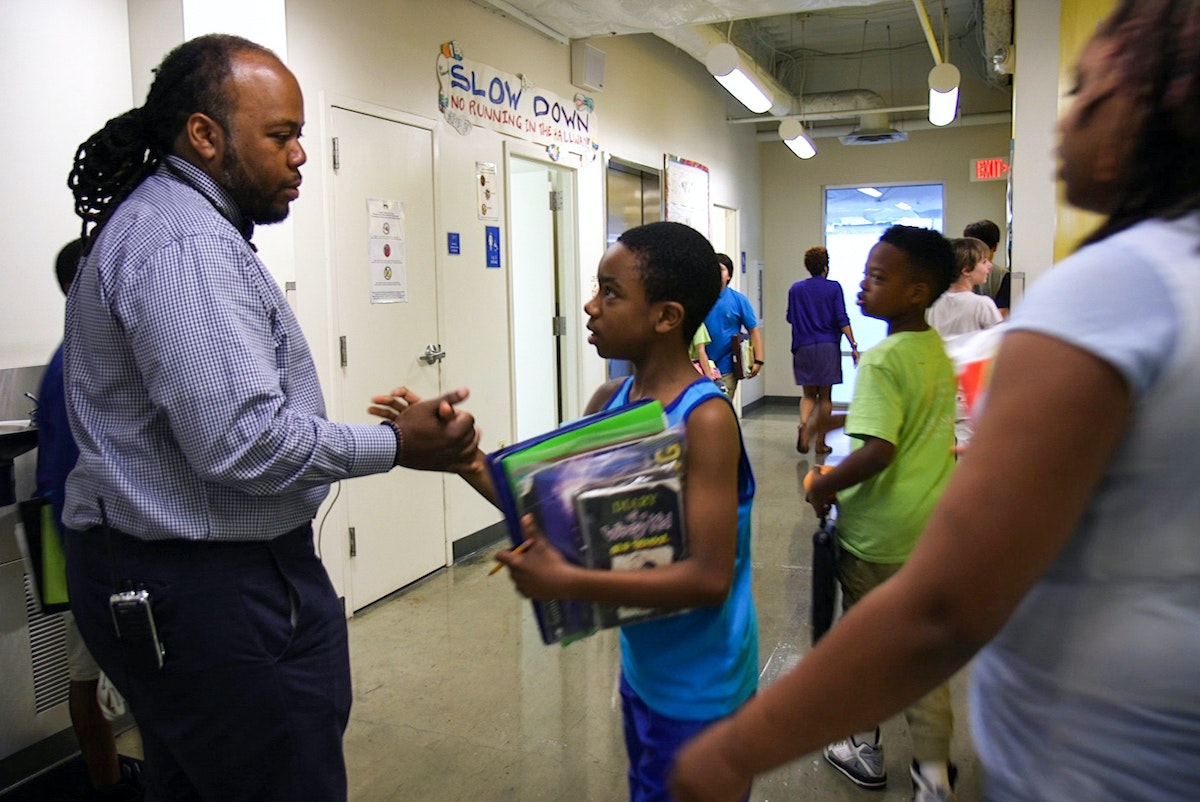
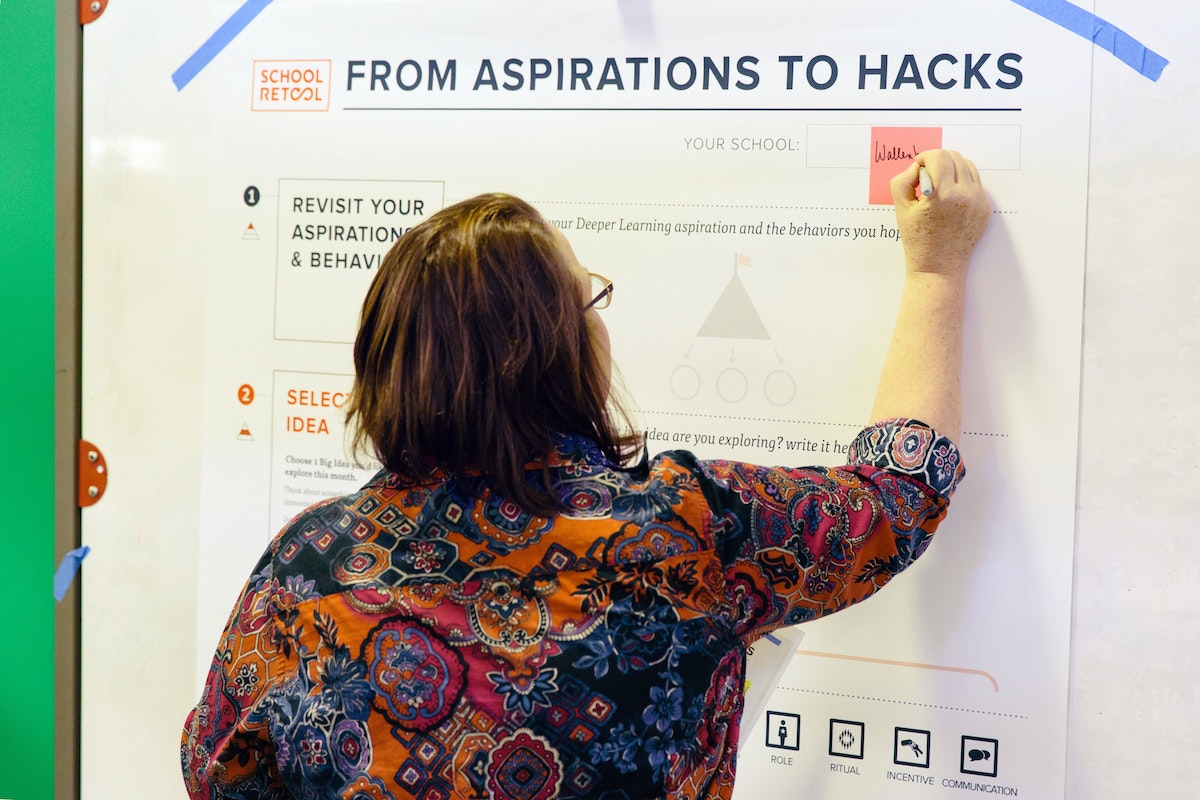
But given the right tools, school leaders can be the key to bringing this much-needed change to their schools. Knowing this, The William and Flora Hewlett Foundation partnered with IDEO and the Stanford d.school to create School Retool, a four-month-long professional development fellowship that trains principals to take a do-it-yourself approach to school change by conducting small, scrappy experiments called “hacks.”
The best part: They use the resources they already have available to address their schools’ needs now, without waiting for external funding or assistance. School Retool is available to principals at public schools where 60 percent or more of students qualify for free and reduced lunch, which is a common measure of poverty. The School Retool program provides research-based strategies for improving student outcomes, as well as training and one-on-one coaching on how to redesign school culture through easily achievable changes.
A Scaled Approach
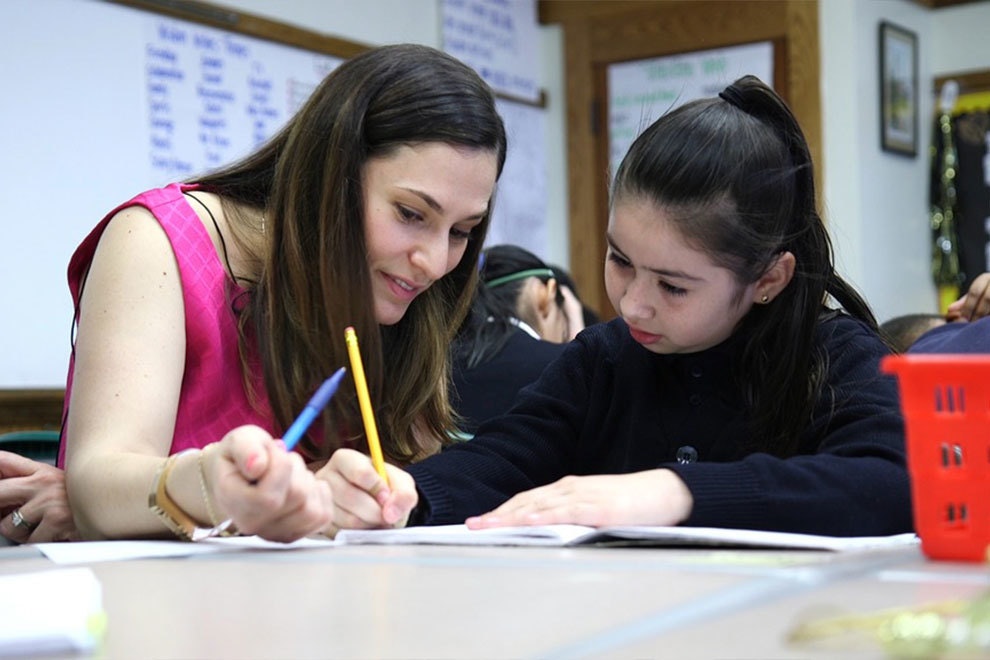
School Retool addresses a common challenge in creating change across schools: Each school has its own people, culture, and needs, so programs need to be flexible. The fellowship helps school leaders define their aspirations, and provides them with inspiration through “Big Ideas” that have proven to be successful in different contexts in education. It then supports them to start small with hacks that help them learn how to implement these ideas in their own school. The program scales through regional cohorts of principals who learn from each other as they go through a process of setting goals, designing hacks, reflecting on the learning and progress, and making improvements to the next iteration.
Small Steps Toward Big Change
As School Retool has rolled out at schools across the country over the past two years, it’s becoming evident that small changes are adding up to major progress, and that the small hacks approach is helping leaders go from planning to doing. Take, for example, Marthaa Torres, the principal of a low-income San Francisco high school who started with a small experiment with one struggling student, trying to create a more personalized learning plan for him. “The hacking approach is a framework that will help me eventually get to the kind of school that I’m trying to create,” Torres said. To build on the learnings of her “hack,” she created and expanded a personalized coaching program for the student’s peer group of older Latino boys. Her goal is to roll out additional advisory support in the next school year. What started as a “hack” to give agency to a single student is beginning to affect the school-wide culture by incorporating student voice into decision making.
Creating a Movement
The School Retool fellowship launched in 2015 with a pilot for 16 principals from seven San Francisco Bay Area school districts, reaching more than 12,000 students. School Retool has since hosted cohorts for school leaders in Washington D.C., Detroit, Virginia, Idaho, and Colorado. By the end of 2016, 164 school leaders of over 114,000 students had participated in the fellowship program.
In addition to the in-depth work with school leaders, School Retool is creating a national dialogue around change in schools. Its first national effort drew more than 1,500 principals in the Shadow A Student Challenge, who spent a day walking in students’ shoes to build empathy and gain insight into their students’ school lives.
Learn more about how more school leaders are enacting change: bringing a sense of true belonging to a school’s culture; engaging students as active learners; hacking towards literacy; retooling for equity; and more.
WATCH: Marthaa Torres: Adopting a Hacking Mindset on Vimeo.
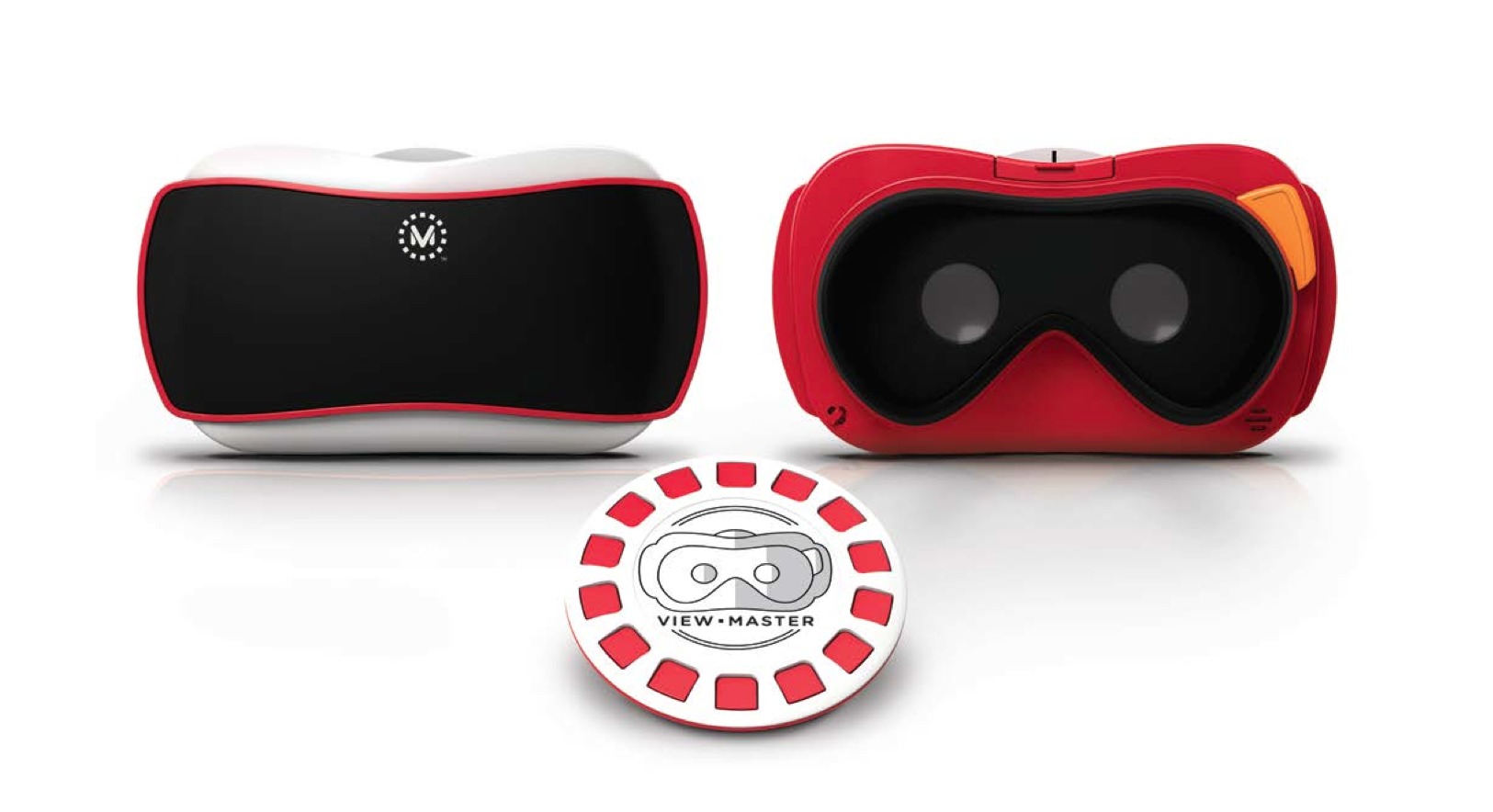
Modernizing the next-generation View-Master
Designing a new virtual reality case for an iconic toy.
Remember your first View-Master? The sound and feel of that iconic camera-snapping motion, the excitement of seeing those vivid images in the form of your own personal slideshow? Introduced in 1939, this stereoscopic toy brought beautiful landscapes and famous attractions to the eyes of kids around the world.
Flash-forward more than 75 years, and the View-Master has been reincarnated to spark that same sense of wonder for the digital age. The redesigned model, the result of a project collaboration between IDEO and Mattel, is a modern case that bridges technology with play. The new View-Master preserves the classic features of the original toy, such as the original lever and wheel, but offers a much more immersive, 360-degree virtual experience.
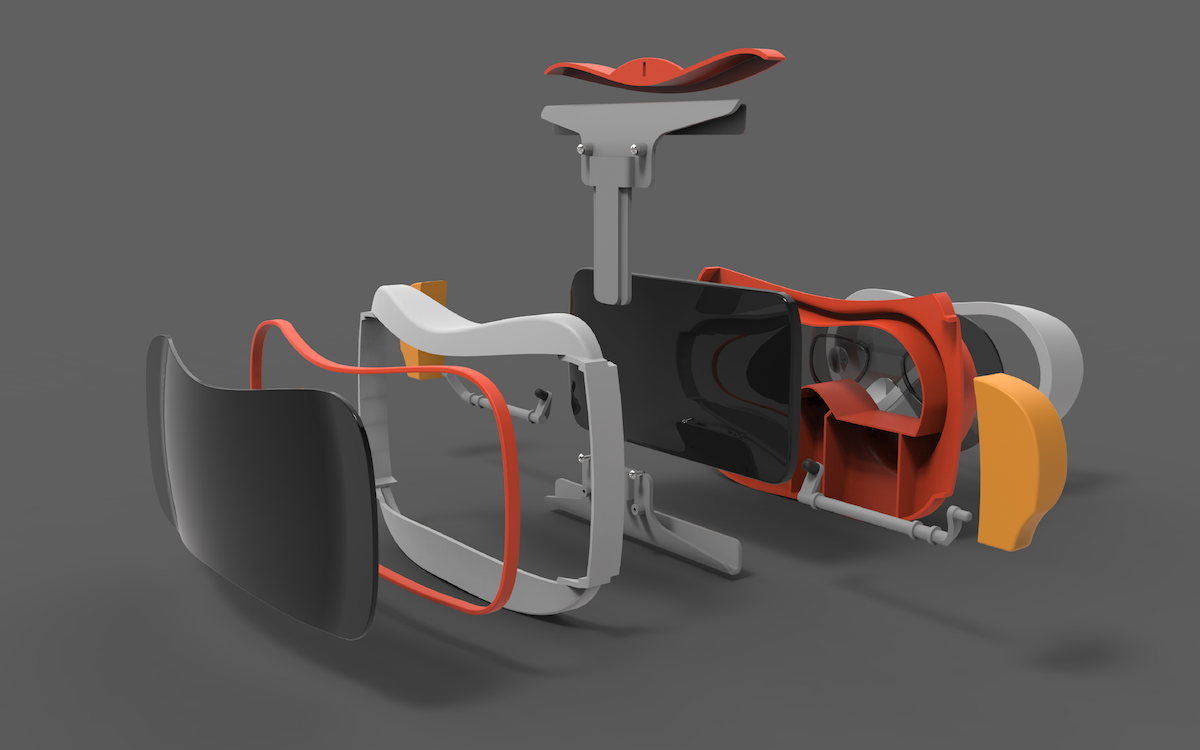
Here’s how it works: Download the View-Master app and slide a smartphone into the sleek new red-and-white headset. From there, the phone’s camera will scan the QR codes on the reels to view a wide variety of images, such as wildlife, outer space, and a dinosaur landscape. Two slightly different images are displayed side by side on the device's screen. As each of your eyes looks at just the image directly in front of it and tries to reconcile it with what the other eye is seeing, a 3D effect is created. By moving your head around with the viewer over your eyes and taking advantage of the sensors within your phone to sense direction and position, you can travel through each of the scenes, exploring each of the different settings.
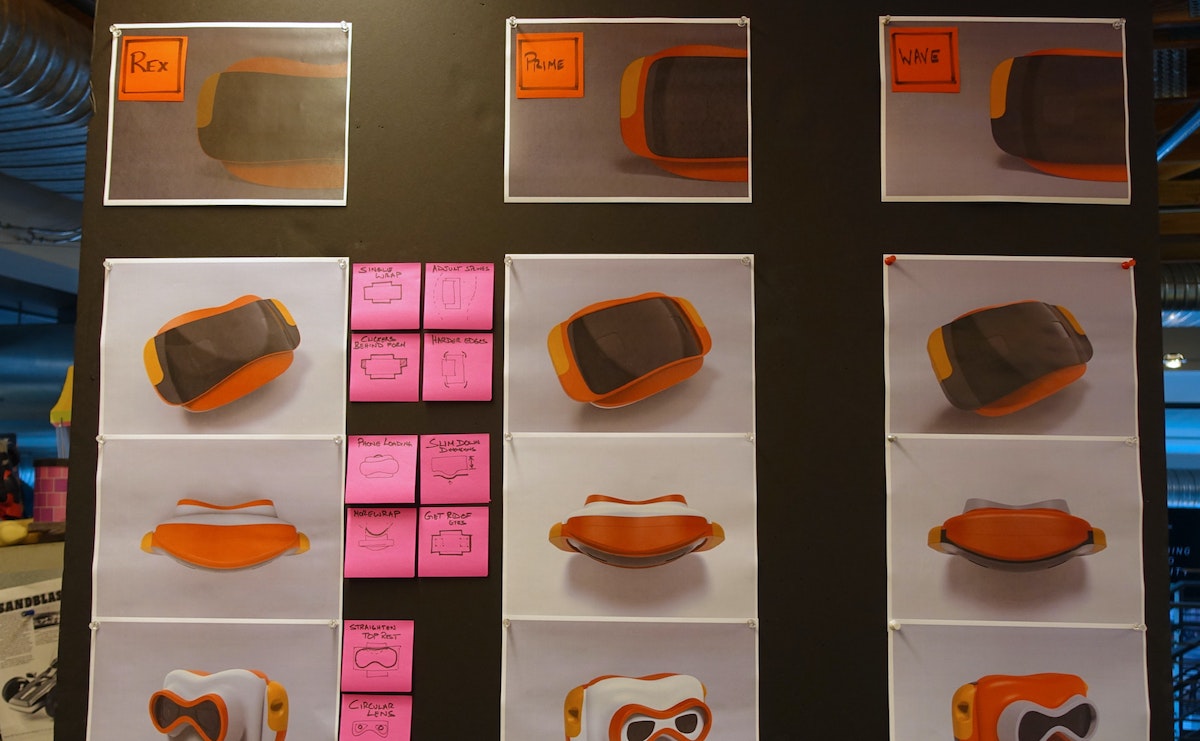
After working alongside Mattel to understand the heritage of the View-Master brand, researching the potential for VR and play, and exploring a variety of materials for the new device, designers created several prototypes that they tested with their core market: kids. As a result, the final design accounted for things like whether it could pass a drop-test or fit into kids’ hands.
Beyond the joy of pure play, the technology that powers the new View-Master also opens up a new world of possibilities for learning. Imagine turning a page in a textbook and seeing dinosaurs come to life. Or a virtual tour of an art museum through a set of View-Masters.
"We view this as just the beginning," said Doug Wadleigh, a Mattel executive, in an interview with CNET. "Obviously, we're getting in this space pretty early. The goal is to create the View-Master brand for the next 75 years."
Orchestrating a genetic symphony
An interactive TED exhibit that turns genes into music to spark conversation about personalized medicine.
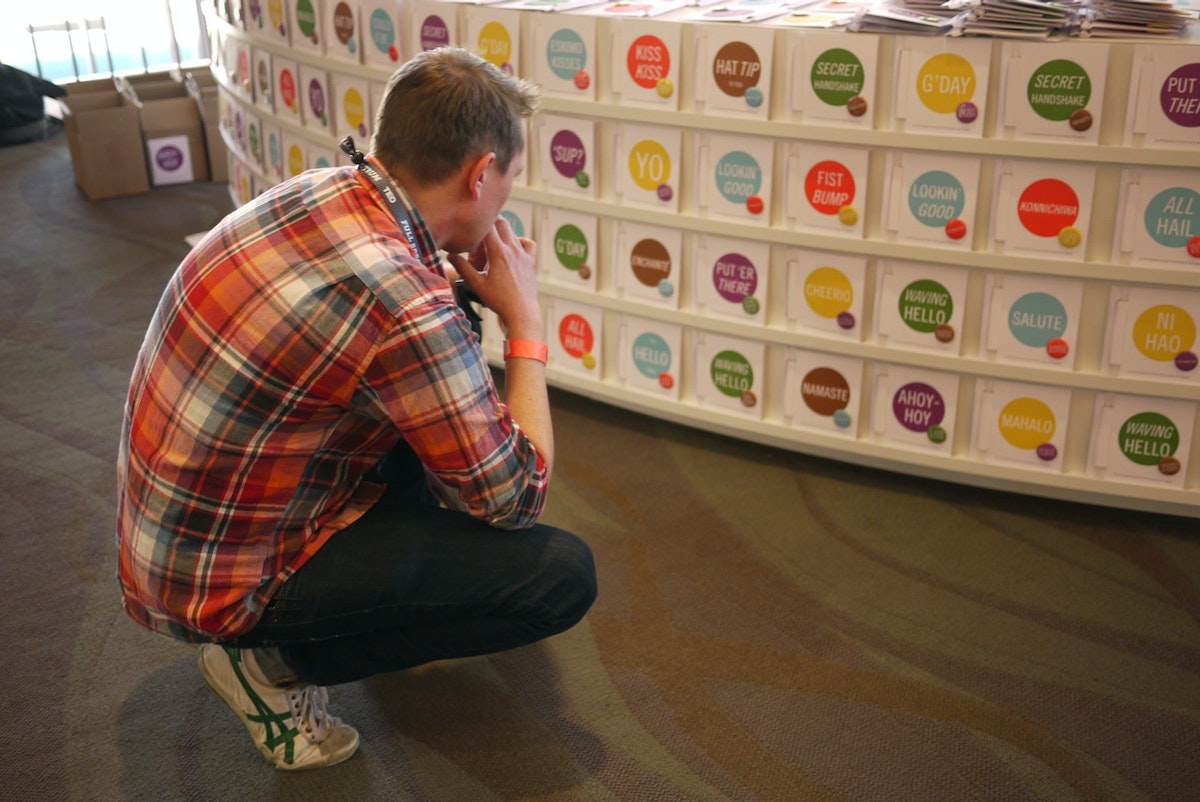
Genentech is a biotech company that tackles difficult-to-treat medical conditions across the globe by creating innovative treatments. As a sponsor of the TED2012 conference, Genentech approached IDEO to partner in creating a “social space” for the TED exhibit hall that would captivate participants in an interactive brand experience and garner excitement around the future of personalized medicine.
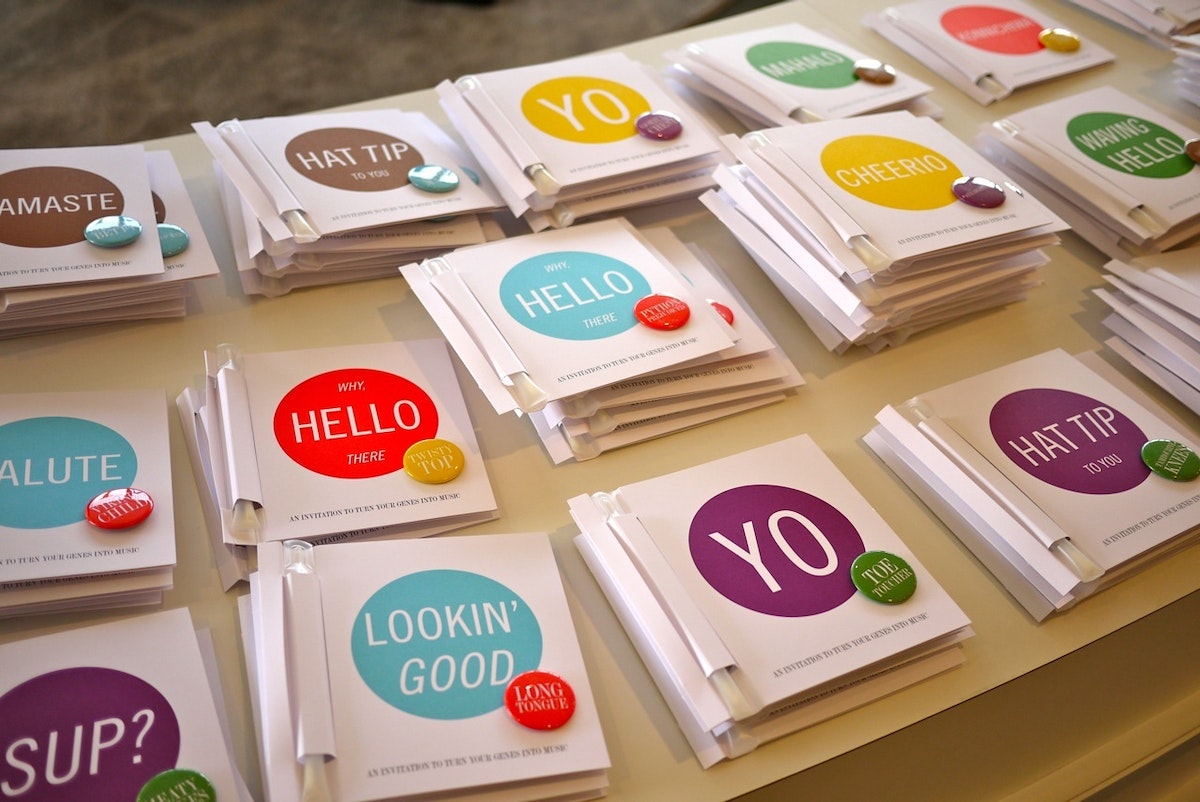
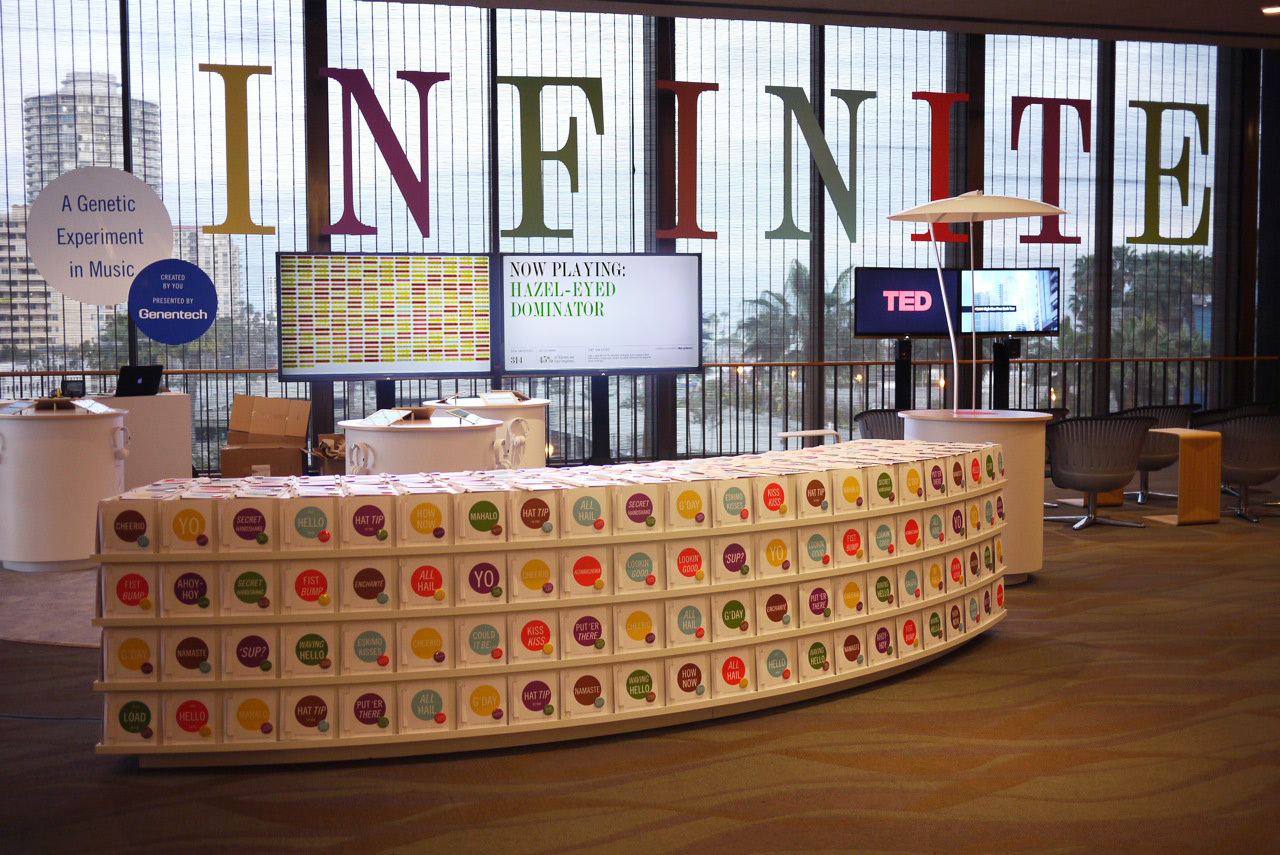
To make leading-edge science more accessible to the masses, the team landed on an exciting new provocation: What if we could turn genes into music? IDEO worked closely with Genentech to develop an immersive genetic experiment that could incorporate traits of the TED community, using the company’s brand new technology for overnight gene analysis. A TED participant would choose a colorful trait pin packaged with a cheek swab kit and corresponding barcode, allowing them to leave a genetic sample one day and return the next day to discover that four SNPs of DNA had been analyzed overnight and translated into a unique musical track.
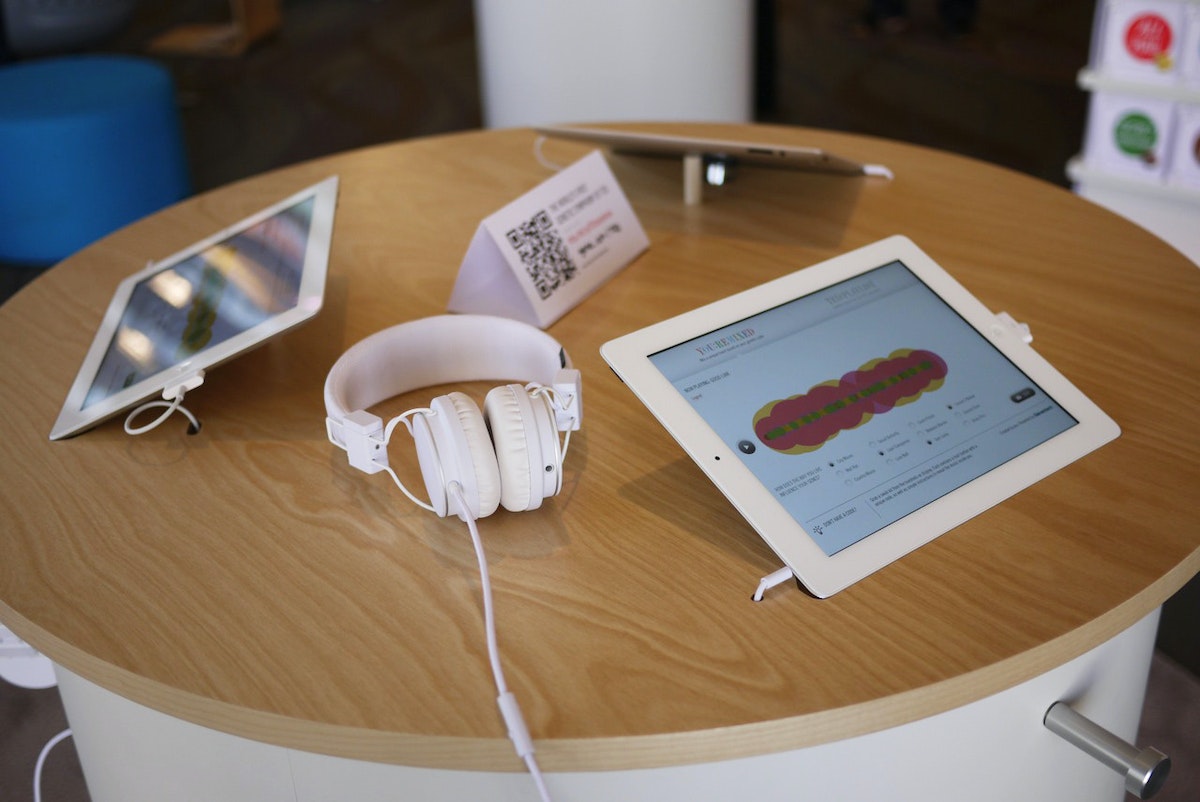
The IDEO team developed the concept, prototyped it with scientists, musicians, and sound engineers, and designed every element of the physical and digital experience—from the swab kit and packaging, to the built space and listening stations, iPad app, and other digital touchpoints. At the heart of the experience was music, including an algorithm that could generate 6500 unique musical combinations to reflect the genetic diversity of the TED participants.
Genentech’s “Infinite Variations” exhibit at TED2012 created the world’s first genetic symphony, an innovative and colorful blend of science and music. With the exhibit, Genentech sparked novel, approachable conversations about the role of genetics in medicine.
Of the 1850 attendees, over 1100 joined the genetic experiment in music and walked away with a new understanding of personalized science—and of their own genetic makeup.