.svg)



From incremental change to breakthrough innovation
How Master Kong reinvented the instant noodle, from the inside out.
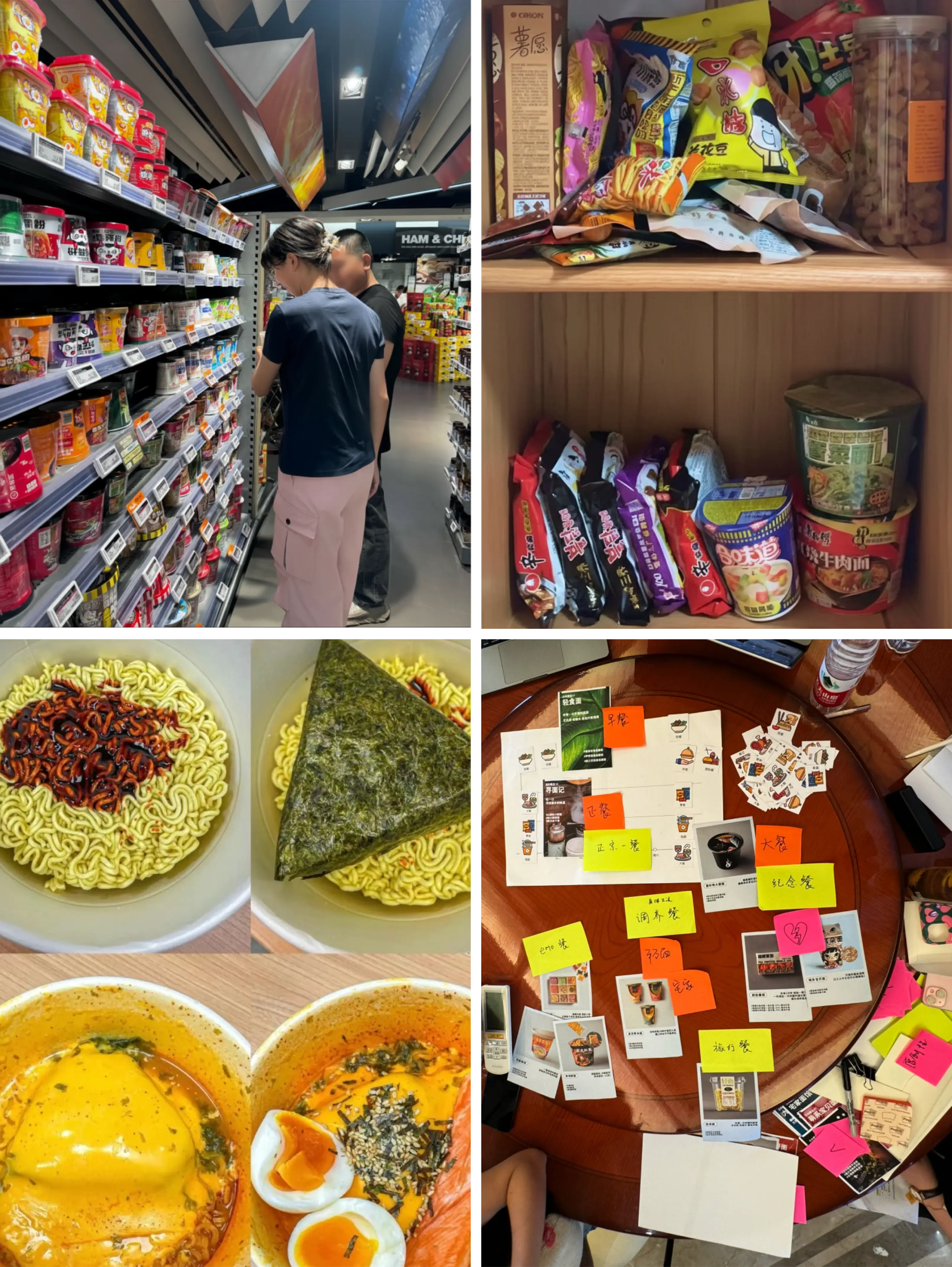
Looking to understand the role of instant noodles in middle-class Chinese life, the IDEO team conducted in-home research with consumers across a range of life stages and levels of attachment to noodle culture and convenience foods. The first finding was reassuring: Everyone kept instant noodles at home. The category still had a place in middle-class kitchens. But beneath that was a more complicated, emotional story—and an unmet need for convenience and quality to coexist in a single product.
The team discovered that instant noodles are more than just a quick, on-the-go meal; they are a nostalgic comfort food that evokes fond memories. But since their heyday, their role in daily life has evolved. Once a complete meal in itself, instant noodles now often function as a versatile flavor base or culinary accent in other dishes. Because they don’t align with the healthier, higher-quality, and more novel food choices that middle-class consumers aspire to, noodle shops, delivery noodles, or fresh-cooked instant options often win out. Yet, even these alternatives come with trade-offs. Delivered noodles lose texture during transport. Sit-down noodle shops preserve quality but offer limited flavors. Cooking from scratch meets the bar for both texture and flavor, but requires a significant time investment. As one young mother said, “If I could get the texture of fresh-cooked noodles without turning on the stove, I’d buy that instant noodle for sure.”
The research inspired the creation of a new category, which the team termed “fresh-brewed noodles.” More than just a noodle or broth upgrade, Master Kong’s fresh-brewed noodles would offer the speed of instant noodles with the quality of freshly cooked options, plus flavors not found in traditional noodle shops. The strategic positioning was clear. Executing it by making fresh-brewed noodles mass-producible, affordable, and eventually profitable presented a category-innovation challenge. To get there, IDEO designed a series of dual-track co-creation workshops with the Master Kong team and consumers.
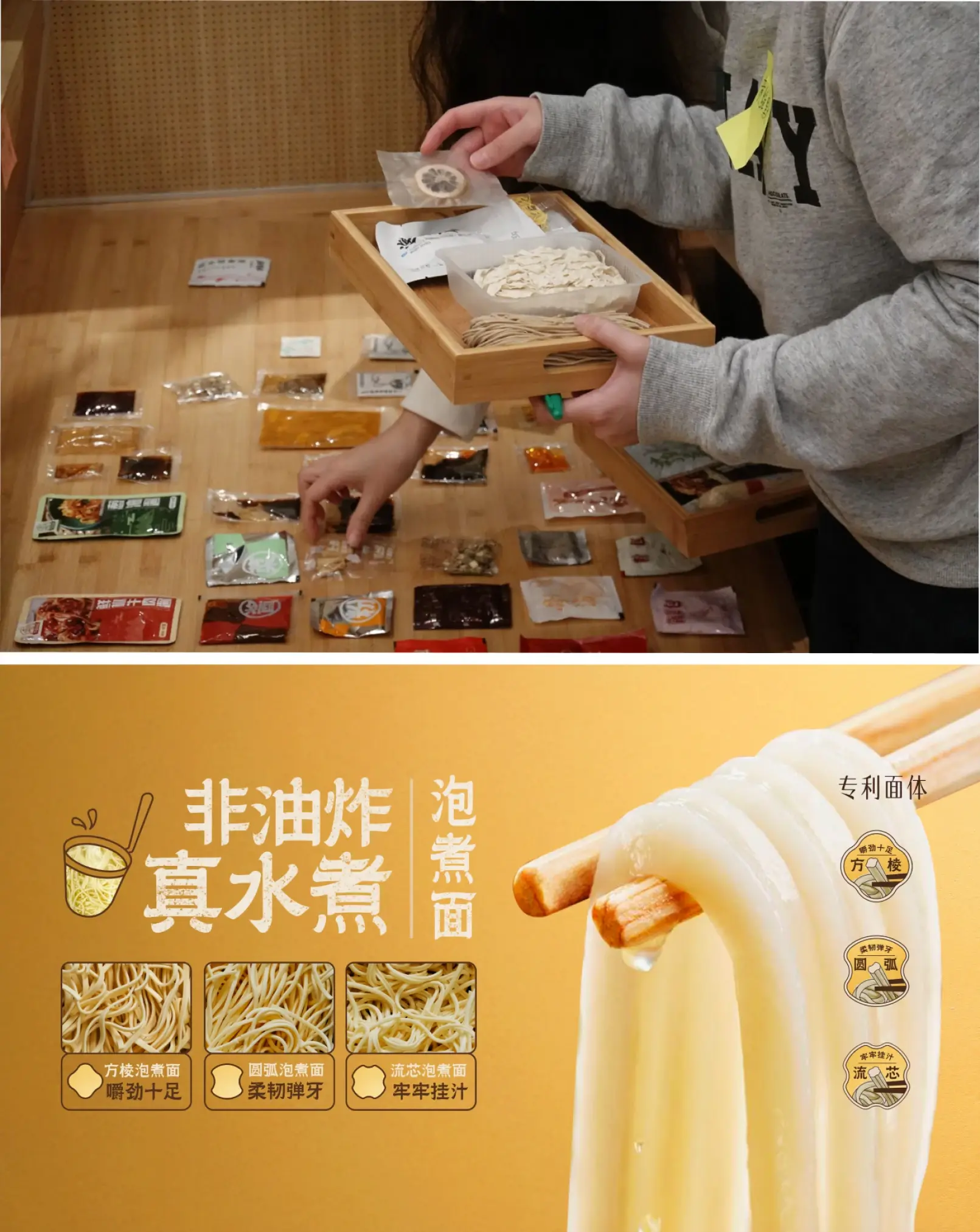
One track focused on prototyping the core product experience: noodles, broth, and toppings. IDEO and Master Kong’s R&D team began by studying the traditional craft of Chinese noodle-making, starting in Shanxi, a region renowned for its noodles. Through successive rounds of prototyping and consumer tasting, the team identified a critical insight: for “fresh-brewed noodles” to be convincing, the innovation had to be centered on the noodles themselves.
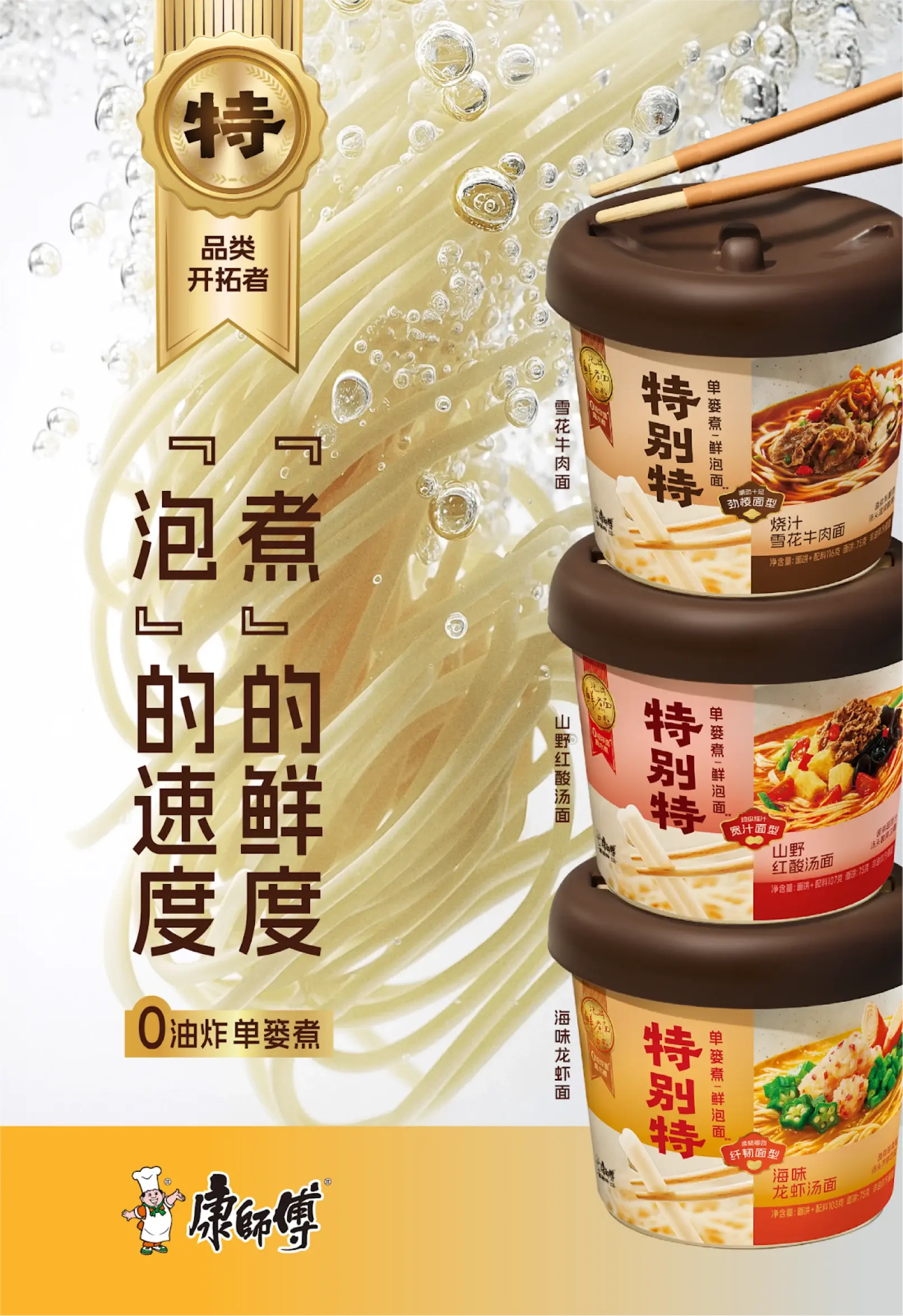
Texture alone was not enough. Consumers needed to see a meaningful difference before they tasted the product. IDEO translated this insight into a distinctive noodle profile: irregular, dimensional shapes designed to remain springy, hold sauce and broth, and mimic the resilience of freshly cooked noodles using only hot water. Because this visible shape represented the product’s core value proposition, it became a hero feature on the packaging. The graphic design made a bold visual statement about the noodle form, turning a technical R&D breakthrough into an immediately legible consumer promise: these are not ordinary instant noodles.
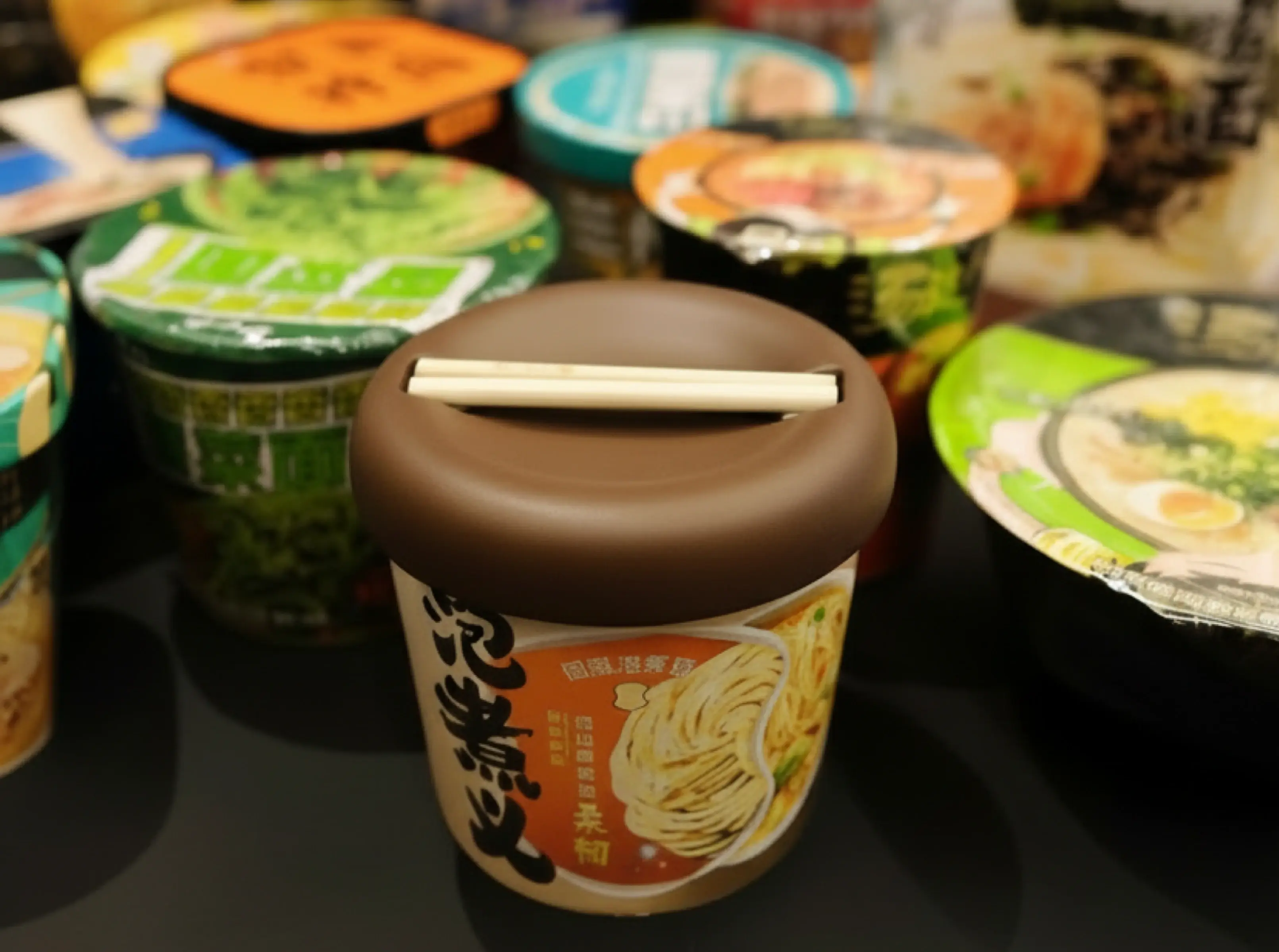
A parallel track explored the broader commercial experience: trend-forward and reimagined classic flavor profiles, light yet deeply satisfying broths, carefully selected toppings, and packaging that signals a new level of quality on store shelves. One key insight was that utensils carry meaning. Conventional instant noodles are often associated with disposable plastic forks, while higher-quality noodles are eaten with chopsticks. IDEO translated this cultural cue into the design of the bowl’s lid.
Instead of treating utensils as an afterthought, the team designed a solid, rounded, heat-retaining lid that embeds a pair of small wooden chopsticks. The gesture creates a small ritual of anticipation and reframes the product—not just a convenient instant meal, but a more considered noodle experience. Once opened, the product fulfills that promise with satisfyingly bouncy noodles, a rich liquid broth pouch that replaces the traditional oil-and-powder packet, and a vegetable packet reformulated with more premium whole ingredients.
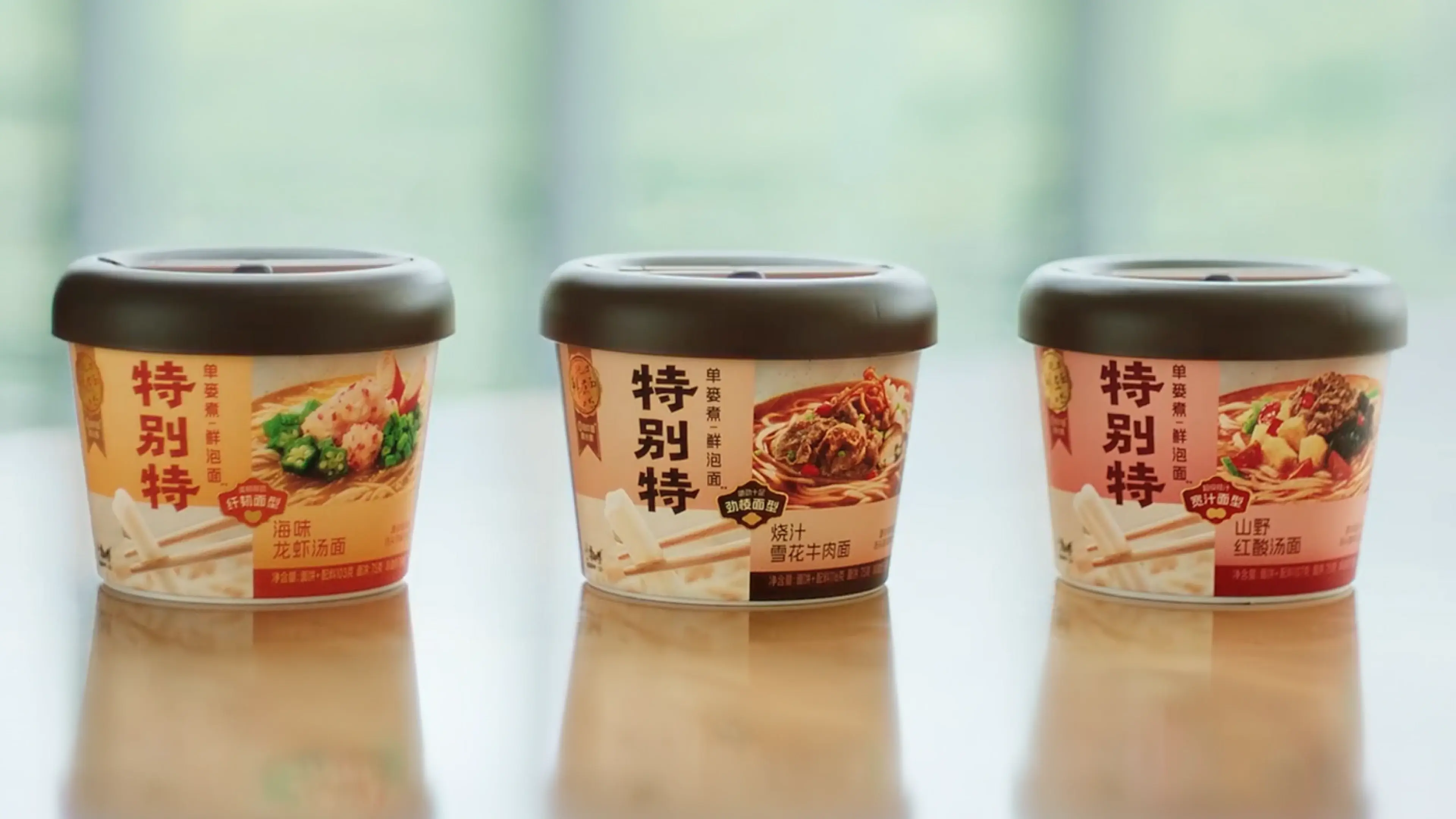
The first batch of “Te Bie Te” Fresh-Brewed Noodles—Chinese wordplay that emphasizes “special”—launched in August 2025 with three trendy and tried-and-true flavors. Within just three days, sales exceeded 100,000 bowls. Within a week, “Te Bie Te” topped the instant noodle category sales ranking on Douyin, China’s domestic counterpart to TikTok. The outcome was bigger than a product launch—it served as proof that a mature, declining category could be fundamentally reinvented to meet consumers’ real needs. For Master Kong, the project became a North Star and a model for internal category innovation in beverages, ready-to-eat foods, and beyond.
Once a popular, affordable staple, the instant noodle category in China has been declining rapidly due to shifting demographics, rising food delivery options, and increasing customer demand for healthier, more nutritious meals.
According to the World Instant Noodles Association, between 2020 and 2023, China’s instant noodle consumption fell by 4 billion packs.
100,000+
“Te Bie Te” bowls sold in the first 3 days on the market
#1
on Douyin’s instant noodle category ranking within one week of launch
Making international education future-fit & affordable
Lexel brings world-class learning to Malaysia’s middle class.
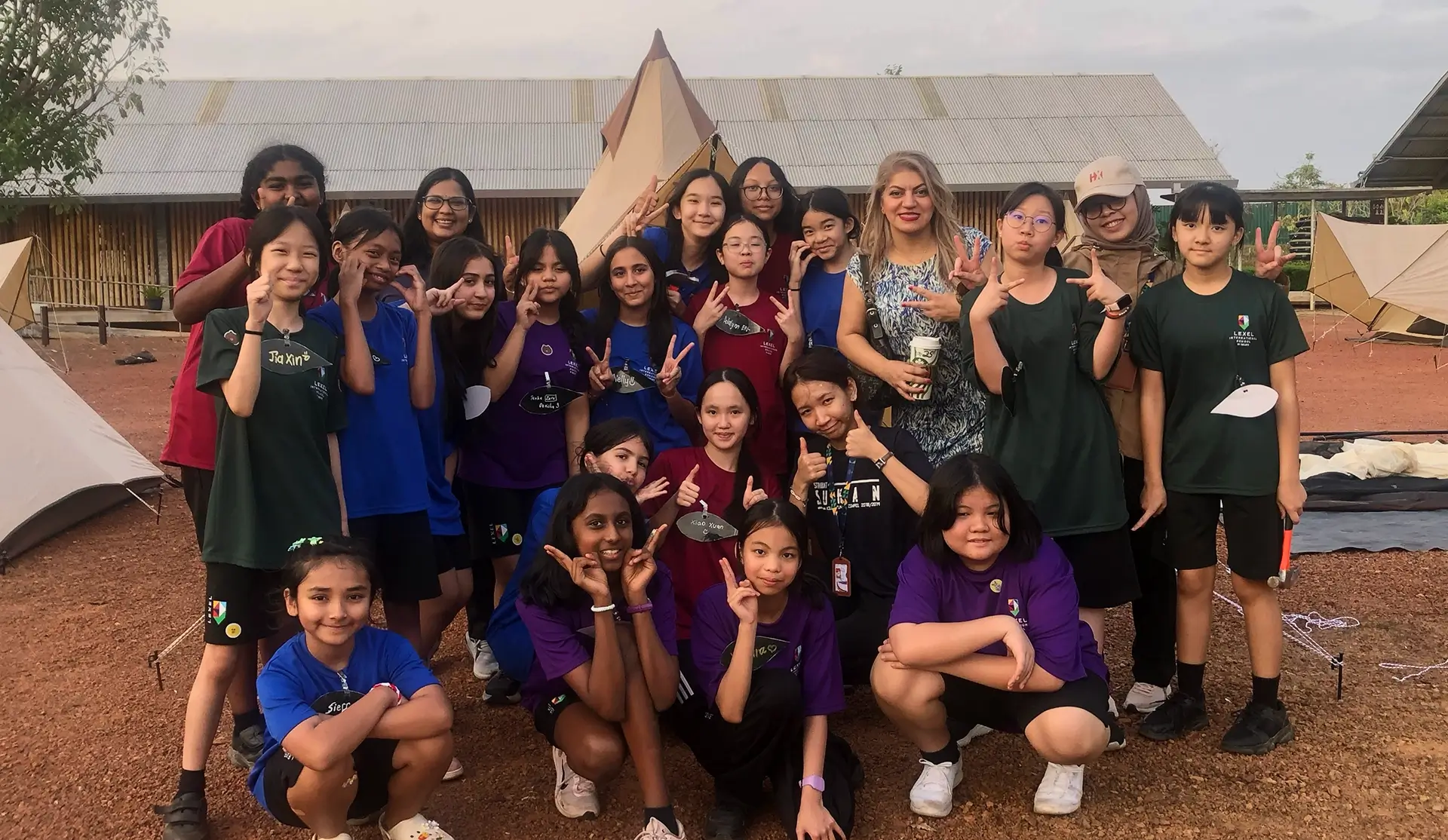
Taylor’s legacy began in 1969 with the founding of Taylor’s College and soon expanded to include Taylor’s University, one of Southeast Asia’s top private universities, as well as many other institutions that serve 35,000 students per year. The family-owned group also operates Taylor’s International Schools, Garden International School, and Nexus International School for students ages 4 to 18. In Kuala Lumpur, Malaysia’s capital city, annual tuition at premium private schools like these ranges from about $10,000 to $25,000 USD. Taylor’s wanted to do something different: provide the same level of academic rigor and immersive learning experiences at one-third the cost.
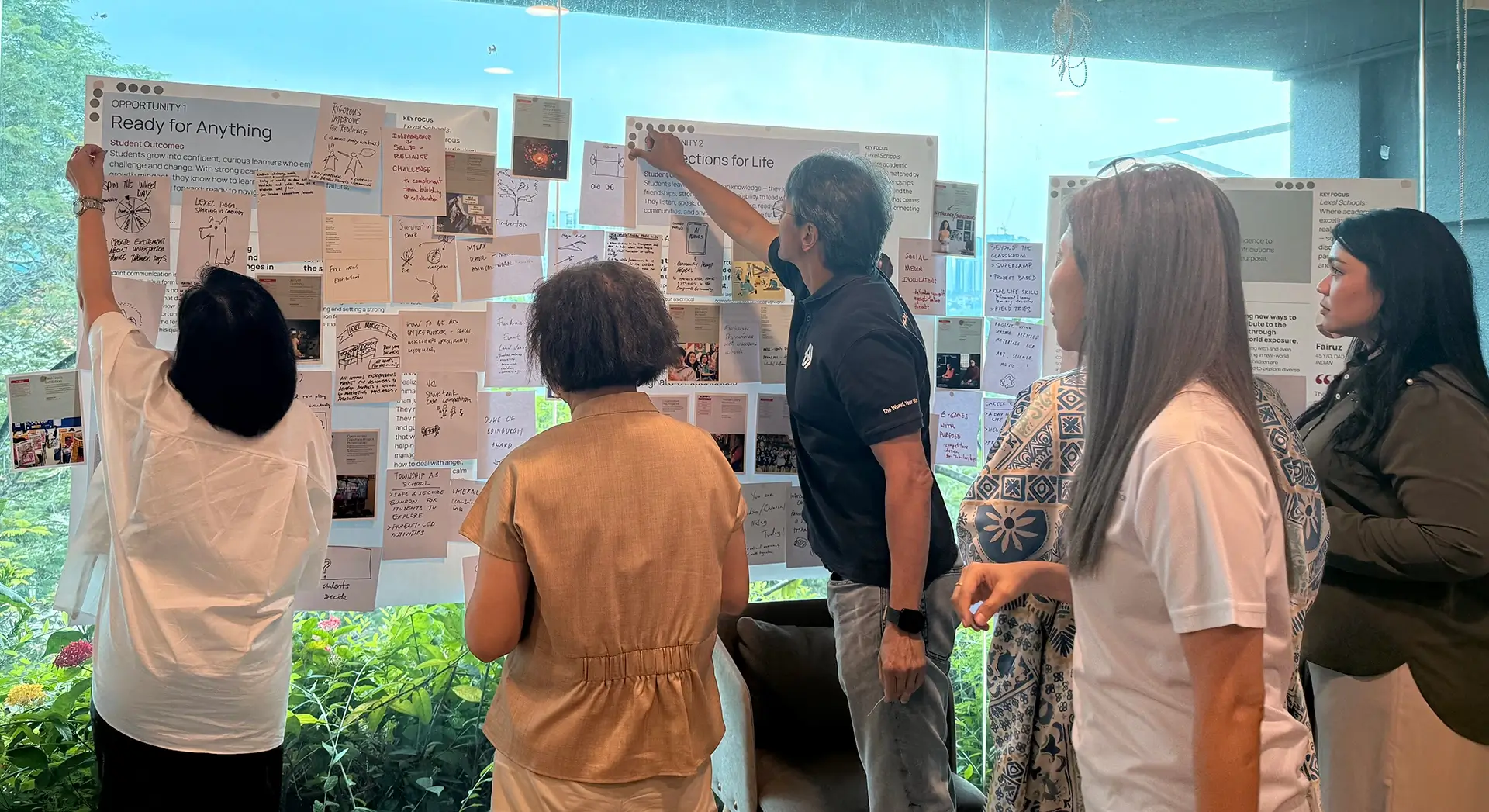
IDEO began by speaking with over three dozen students, parents, teachers, and experts across the capital to understand what was working, what wasn’t, and what was missing from such moderately priced international schools.
A few themes quickly emerged. Families, students, and teachers were worried about the stability of these new private schools, which tended to have higher-than-normal teacher turnover rates and were plagued by financial instability, negatively impacting talent attraction and retention, as well as student learning. Parents appreciated that the schools offered holistic learning experiences, such as field trips to rural areas, including jungles, but wished they were more consistently part of the curriculum. And now, the looming challenge of AI—how to use it, how to teach it, and how to teach with it—was in the background, a persistent cause for concern. The big unmet need? Reassurance that Taylor’s was thinking long-term and systematically about developing the skills, knowledge, and mindsets that would prepare students for an ever-changing world. Parents wanted a school that measured growth in academic, social, and character terms over generations, not just school semesters.
With these insights in hand, IDEO began developing a design Playbook for Taylor’s new brand—Lexel International Schools. A combination of “lexicon” and “excellence,” Lexel’s mission is “building what lasts, learning for life.”

The schools are centered around three key differentiators:
- Always Ahead: Lexel schools commit to staying current with the topics and subject matter they teach, as well as the tools they provide to students, parents, and teachers.s.
- Learning That Builds for Life: The schools ensure programmatic, systemic, and consistent learning experiences from Pre-K to Year 11. Interested students can even continue their post-secondary journey in partnership with Taylor’s University and other higher education institutions within the Taylor’s ecosystem.
- Educators for the Long Run: These schools commit to ongoing investments in professional growth opportunities for teachers and stable learning environments for students.
Four Lexel Literacies—AI, Digital, Financial, and Nutrition—integrated into the Cambridge Curriculum bring the school’s vision and mission to life.
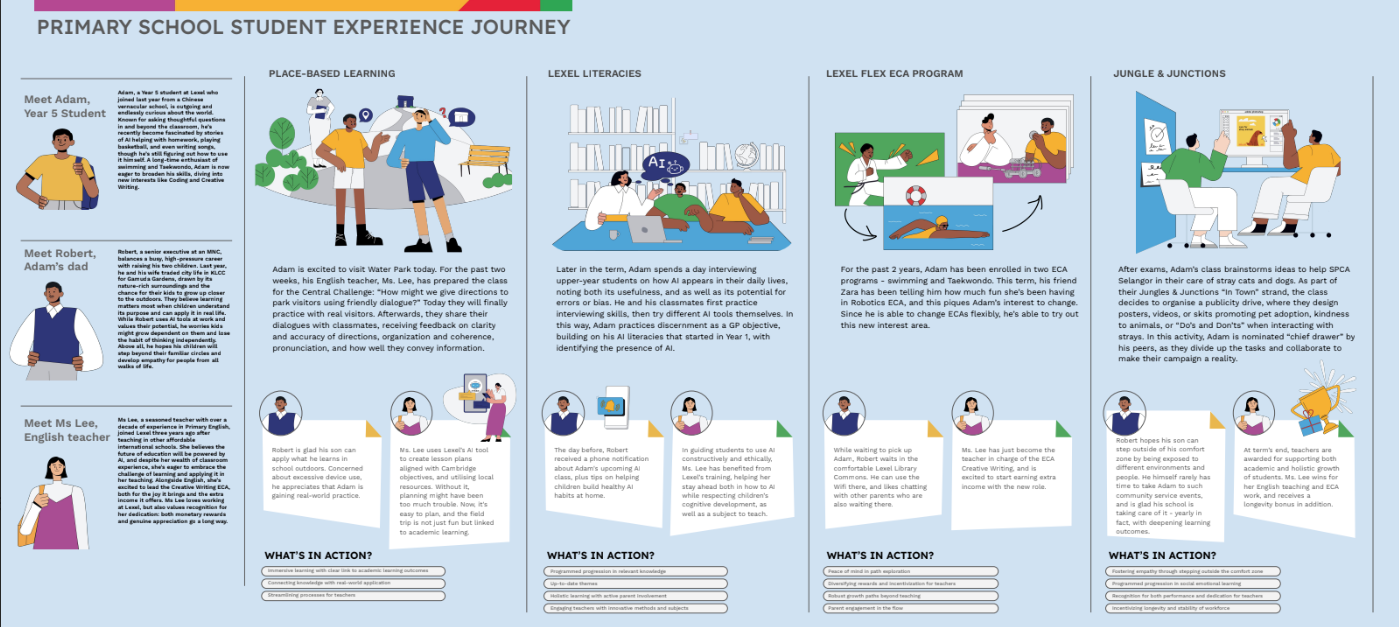
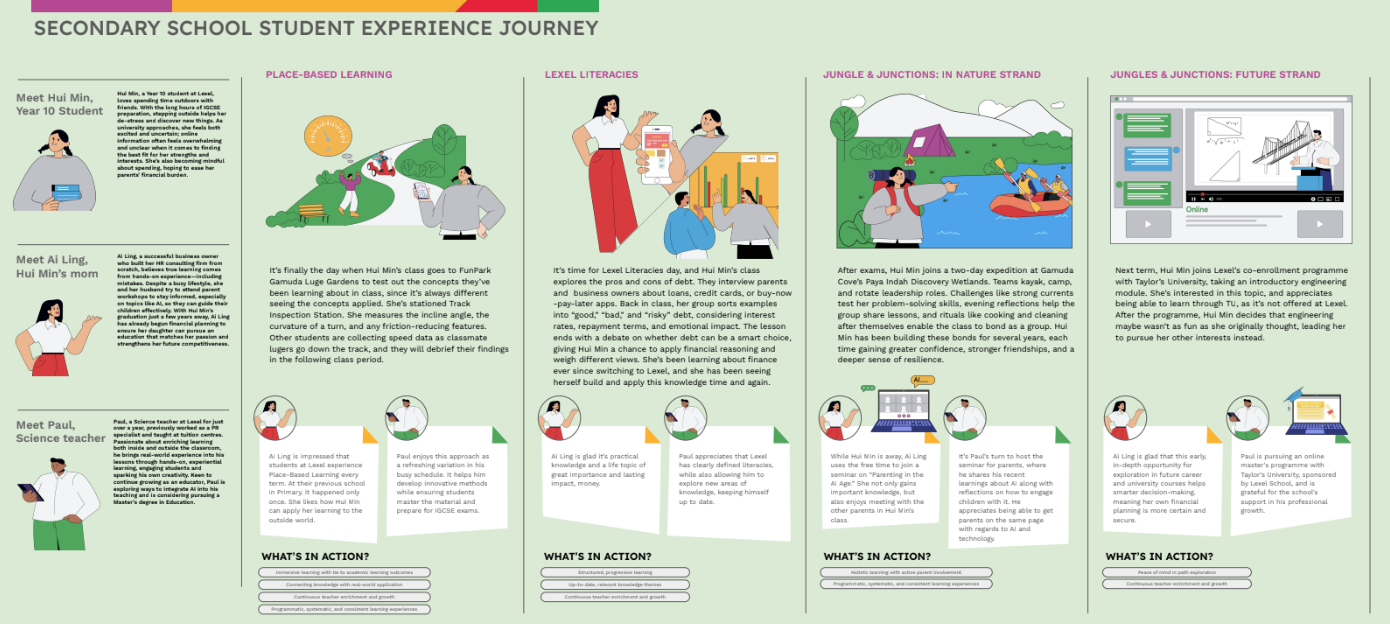
By systematically integrating AI literacy into its spiral education framework, in particular, an approach where major topics are revisited multiple times through a curriculum to build fluency over time, Lexel ensures parents that the school is thinking a decade ahead from Day One, setting the school apart. In addition to enhancing AI fluency, Lexel offers unique end-of-term experiences called Jungles & Junctions.
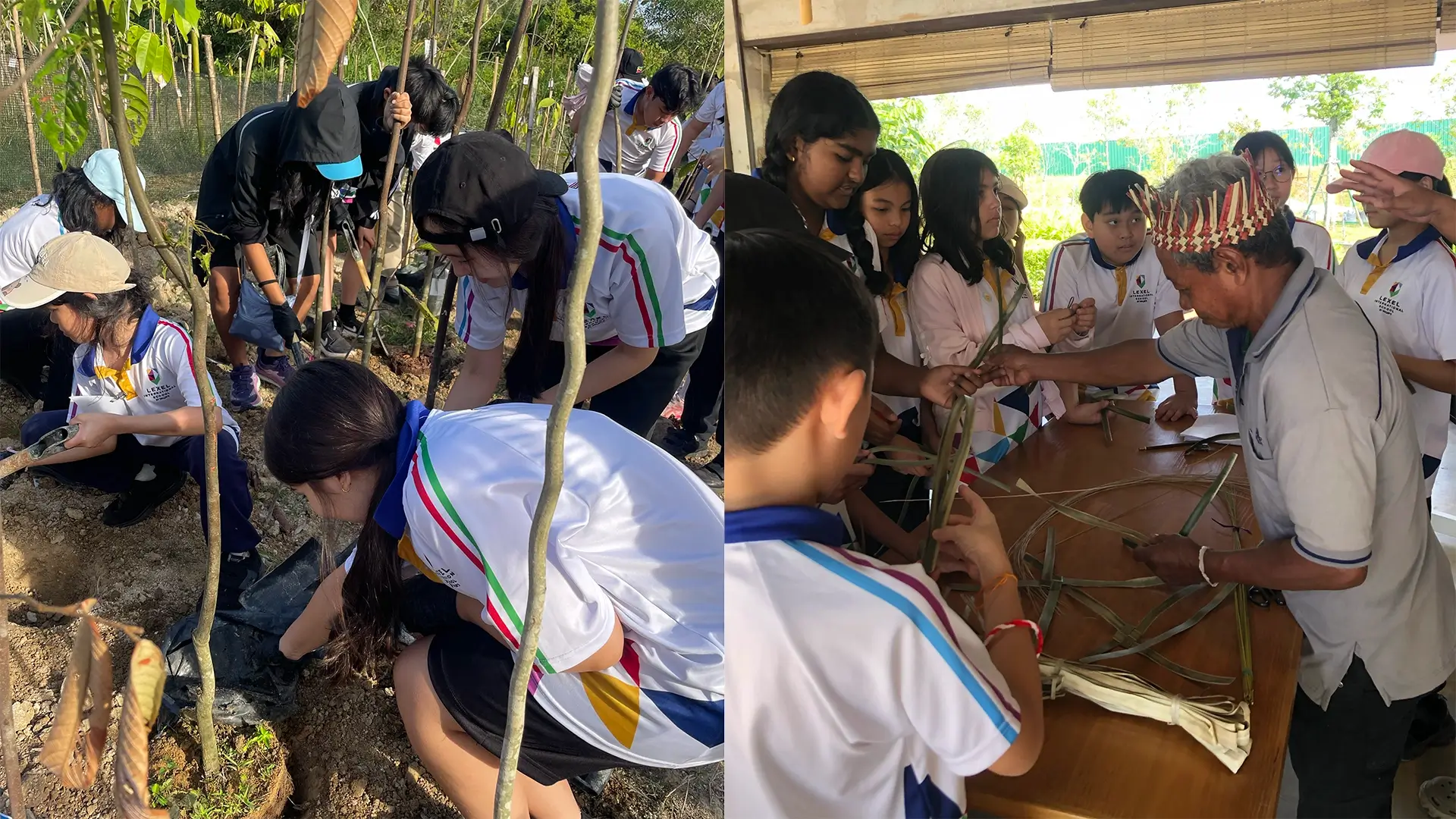
Combining three important strands of learning—community engagement, nature-based personal and interpersonal development, and career and university exploration—Jungles & Junctions leverages Taylor’s extended educational network and Lexel’s strategic founding campus within the Gamuda Gardens development in Selangor. Surrounded by tropical rainforests, the township’s residential neighborhoods, theme park, and various sports facilities, including an Olympic-length swimming pool, are transformed into an extended Lexel campus, with a GenAI-driven planner to help teachers streamline the organization of class outings. “The Township is Your Campus” became the tagline for this approach.
In September 2025, just months after IDEO’s collaboration ended, Taylor’s began classes at its first Lexel International School. By mid-year, the new school had achieved 115% of its year-one student enrollment target, with significant inbound demand for Year 2 already demonstrating the school’s market resonance.
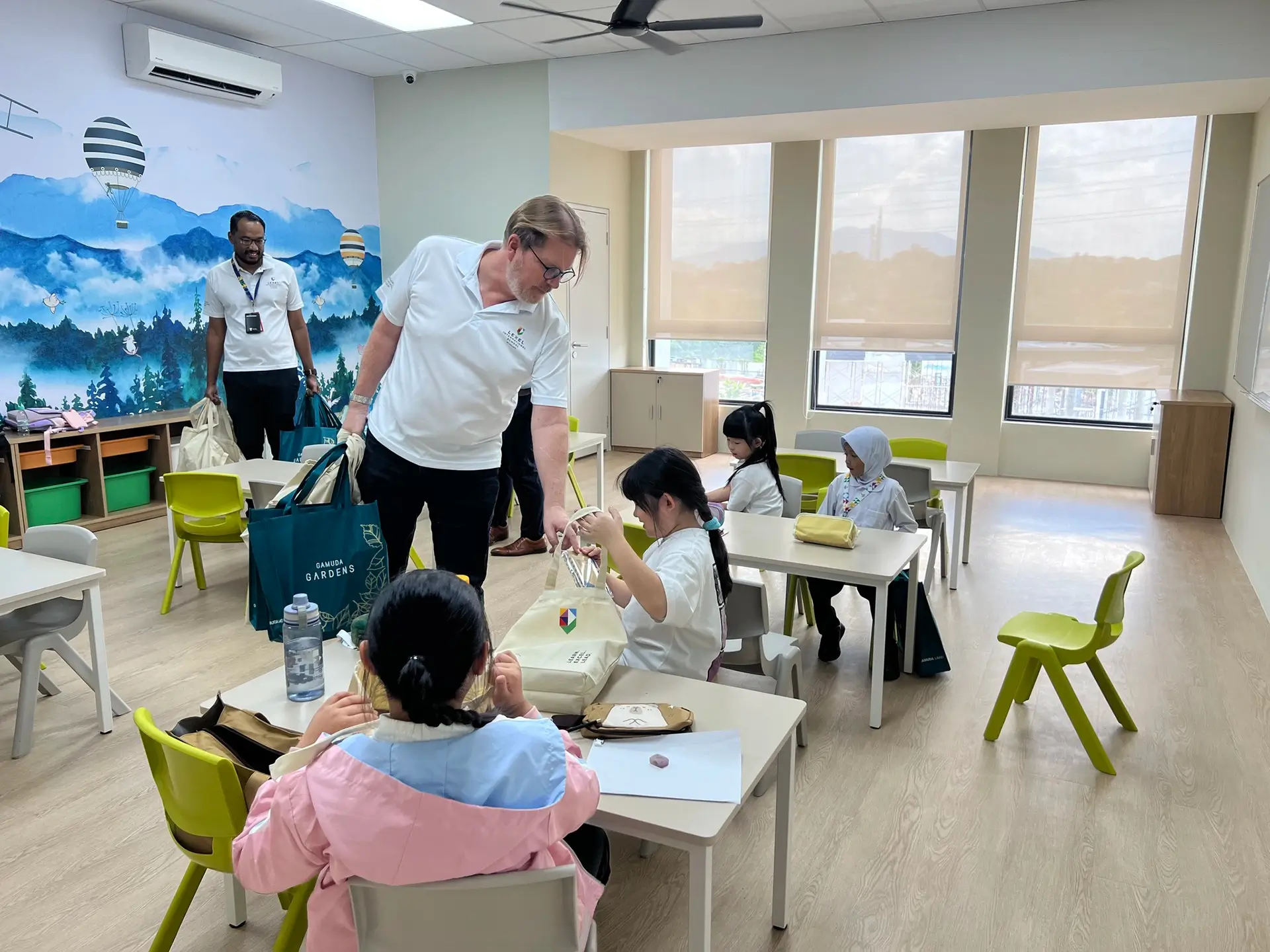
The modern campus features spacious classrooms, science and technology labs, a library, a multipurpose hall, and a canteen. Annual tuition ranges from about $2,800 USD for pre-K students to about $6,100 USD for secondary students.

Most importantly, by combining Taylor’s deep academic expertise, Gamuda Land’s development prowess, and IDEO’s innovative design Playbook, Lexel brings quality, affordable international education closer to home for Malaysian families. According to one parent, “My daughter looks forward to going to school every day … and has a lot of opportunities to express herself. On a scale of 1 to 10, I give [Lexel] an 11.” Based on the IDEO Playbook, a second flagship campus in the Southern Klang Valley, which is scheduled to open in September 2026, has already exceeded its year-one target enrollment expectations, with plans to continue extending the Lexel network to other parts of Malaysia and the wider Southeast Asian region in the near future.
Malaysia’s private international school sector has grown significantly as parents seek quality English-language education. However, high tuition fees and limited access to reputable schools are continual challenges for those in the emerging middle class.
115%
of Lexel’s student enrollment target reached during the launch year of its first campus
Year 1 enrollment target exceeded
at Lexel's second campus several months ahead of classes commencing
Delivering an unbiased news experience
Straight Arrow News transforms fact-based news consumption.
The American news industry has long been a competitive and saturated market. This has only intensified with the emergence of social media outlets and AI-generated news. Even so, SAN’s rigorously unbiased, fact-based reporting style and rich video storytelling had enabled the ambitious startup to rise above the media fray in just three short years.
With a strong foundation to build on, IDEO sought to further differentiate SAN’s cutting-edge news product and build deeper engagement with a wider audience through a new user experience.
.webp)
Collaborating closely, IDEO and SAN began by delving deeply into media consumption habits. They met with early SAN superfans, news consumers who spent hours a day absorbing content from traditional outlets like Fox and USA Today, and those who looked to their Ring doorbell app or Reddit for news. The takeaways? People were tired of clickbait and clunky interfaces. They sought clear, factual news that was easily accessible, with additional context to help them interpret events and understand their significance. They craved more than one perspective on important topics, so stories felt balanced rather than polarized. They also valued having control over how they consumed news, so making it easy to switch between text, video, and audio formats was crucial.
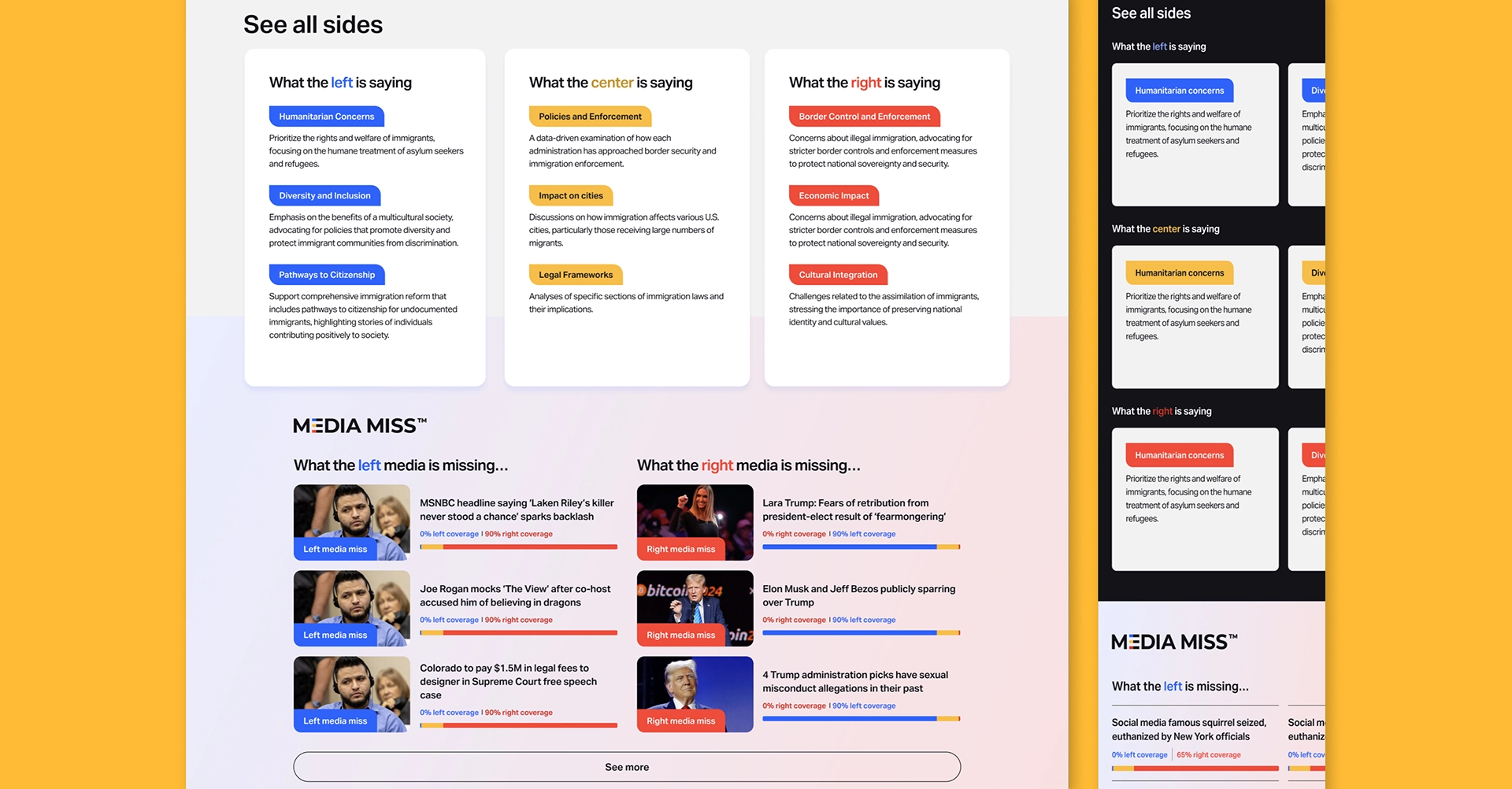
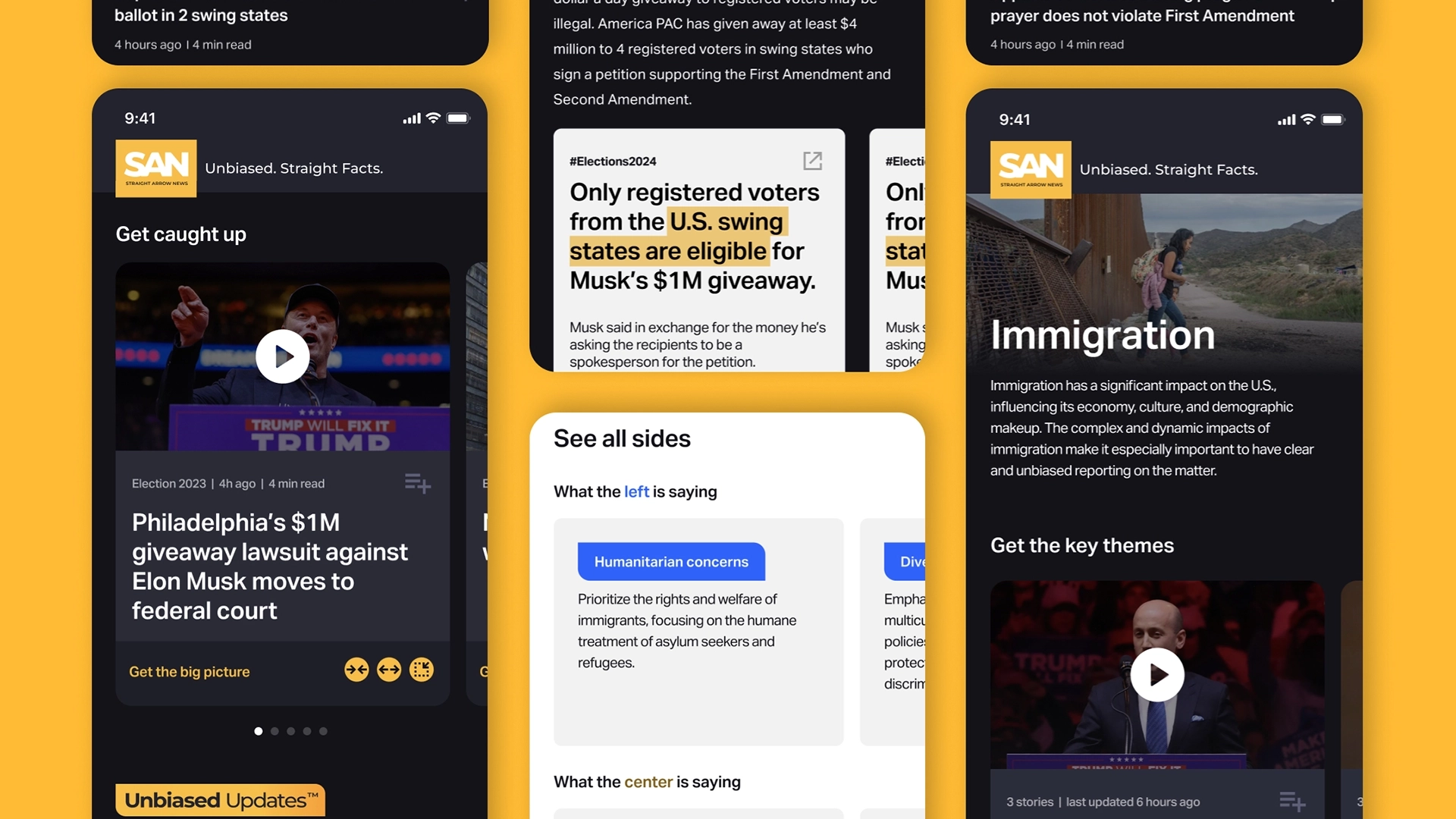
Together, IDEO and SAN created features across SAN’s website and app that put facts, trust, and transparency at the core of the product experience. Fact Cards distill key data points into clear, shareable units, while the Sources feature allows readers to trace information directly back to its original source. To make complex stories easier to grasp, Big Picture insights drill down into why events matter, surfacing underlying themes, historical parallels, differences in reporting, and common ground. The Why This Story Matters section provides readers with clear framing and sets the story within a broader context, while the Timeline illustrates how events unfold over days, months, or even years. An antidote to news polarization, See All Sides presents left, right, and center narratives for key topics side-by-side, and Media Landscape visualizations reveal how coverage varies across outlets. Finally, to ensure SAN fits seamlessly into readers’ daily lives, the redesigned Today Page is organized into three highly scannable sections: Latest News, Top Stories, and SAN Originals. The combined features create a balanced, clear, and non-polarizing news experience, making it easy for readers to delve deeper into the sources of their news.
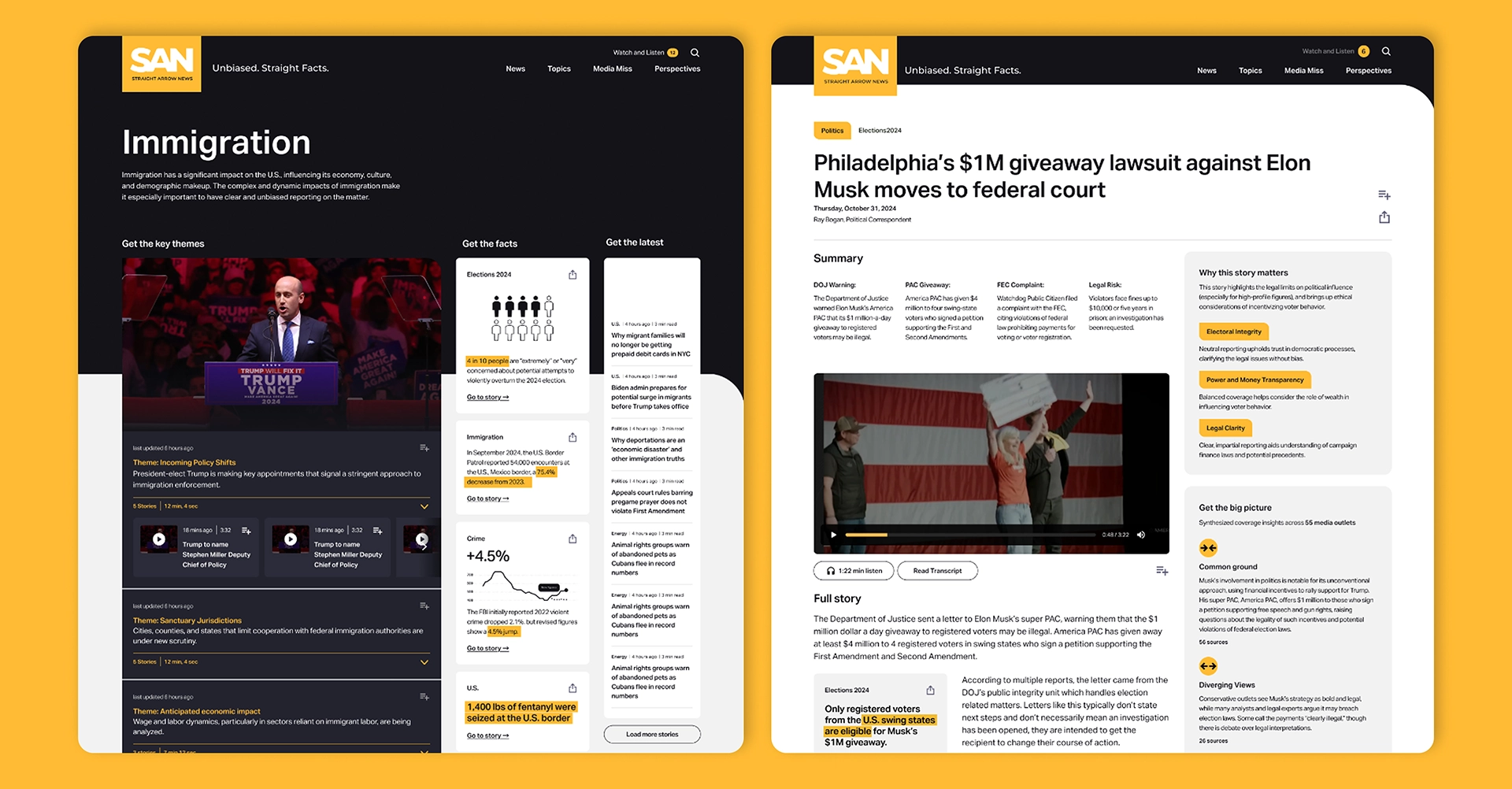
SAN now delivers a news experience as modern, dynamic, and trustworthy as its journalism. A month after its debut, the SAN app’s page views increased 1,170 percent year over year compared to June 2024, while active users rose 700 percent. Readers also give the updated mobile experience a 4.8 rating on the Apple App Store. “Our team is delivering reporting that’s both deeply factual and accessible,” said Derek Mead, SAN’s Chief Content Officer. “This redesign is pivotal to the direction journalism needs to take and the leadership role Straight Arrow News is taking on as we help guide the news industry into a brighter future.”
SAN built a loyal readership and gained recognition for its unbiased reporting. To expand and stand out from legacy media, SAN wanted a redesigned user experience that reflected its commitment to fact-based journalism.
1,170%
increase in app page views YoY
700%
increase in active users
4.8 rating
on the Apple App Store
Preventing newborn RSV
A toolkit to increase global adoption of Beyfortus, the world’s first RSV immunization for babies.
Sanofi was the first company to supply the polio vaccine worldwide. Because of the global fight against the disease, endemic wild poliovirus transmission is now limited to just two countries. However, attitudes toward vaccines and immunizations have shifted significantly. To ensure a smooth launch of Beyfortus in a time of increased vaccine hesitancy, Sanofi asked IDEO to conduct research across four important and very different healthcare markets: Germany, Spain, China, and the US.
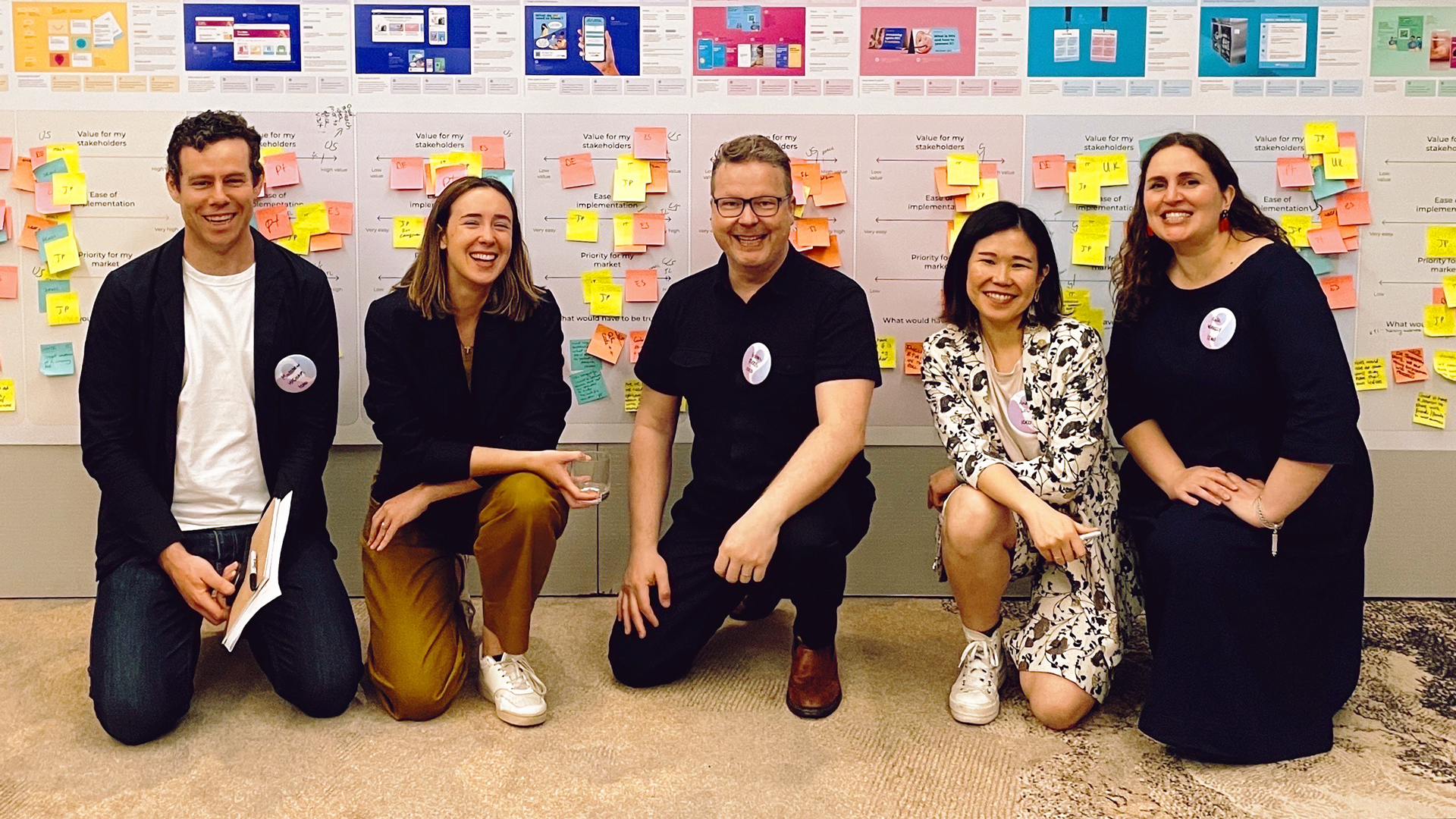
IDEO worked with parents, caregivers, healthcare professionals, and healthcare administrators to identify potential barriers to vaccine adoption and understand the emotional needs of all stakeholders involved in the immunization process. Navigating cultural differences and diverse healthcare environments, the team uncovered a set of insights.
For healthcare professionals, the team discovered there was no one-size-fits-all approach to immunization training across Sanofi’s 20-plus global markets. While consistency of key information was important, trainings needed to be flexible and customizable. This way, regardless of whether the vaccine was administered by midwives, OB-GYNs, nurses, or doctors, they could confidently discuss the pros and cons across cultural contexts and administer the drug correctly.
For new parents, receiving information about a new immunization immediately after giving birth could be too stressful. But simply leaving pamphlets about Beyfortus in waiting rooms didn't address their real concerns, either. Caregivers needed to engage in conversations earlier in their pregnancies and continue them after leaving the hospital, when they might have additional questions.

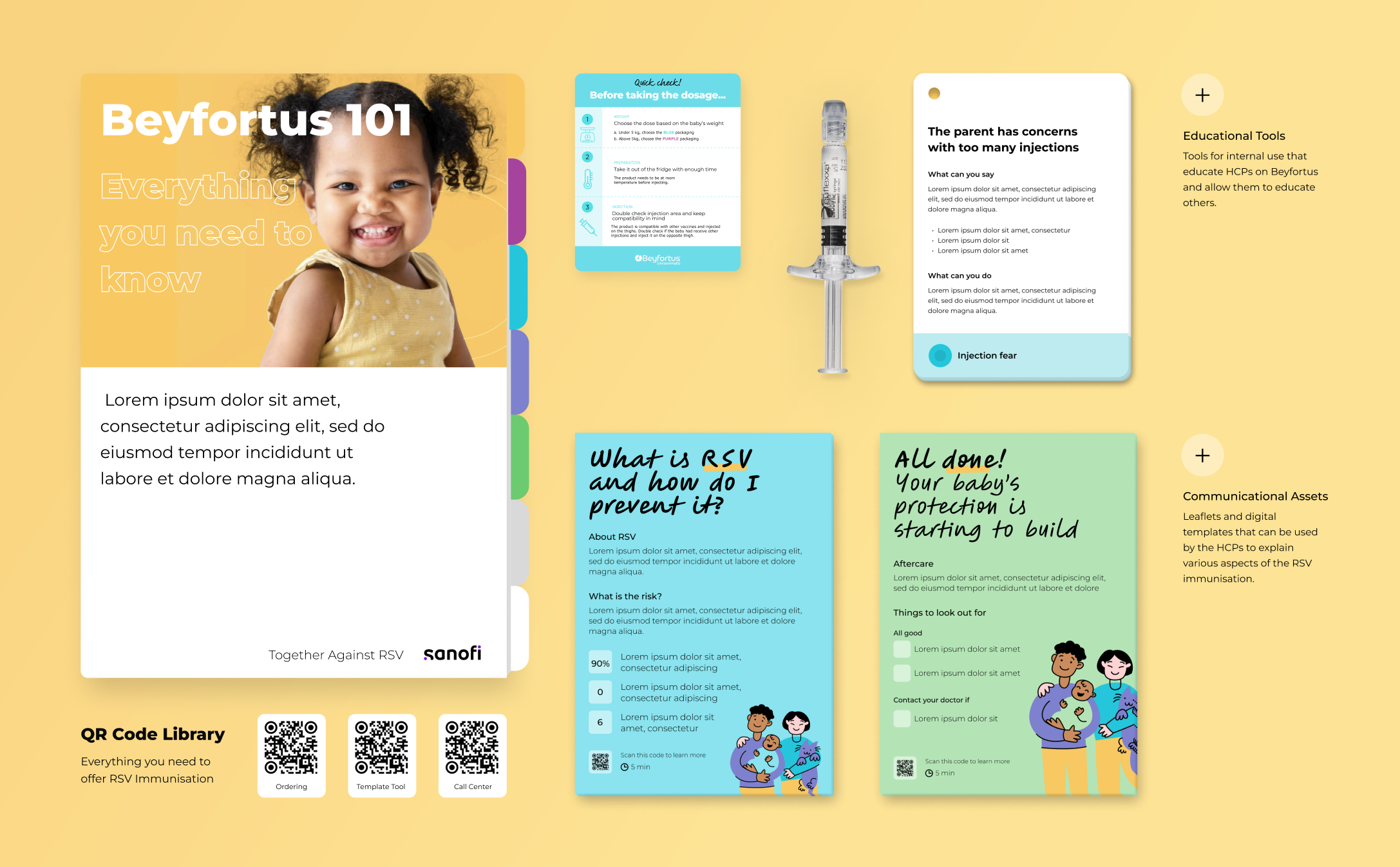
IDEO translated these research insights into a highly accessible global communication toolkit that uses simple, straightforward language, metaphors, and illustrations to support informed conversations between healthcare providers and parents before, during, and after a child is born. IDEO then conducted a series of market-fit co-design workshops with representatives of Sanofi’s global immunization business to iterate on the print and digital tools, make them more resonant with regional customers, and ensure compliance with local regulations. IDEO handed the toolkits over for development to support the launch of Beyfortus in January 2024, just in time for RSV season.
Beyfortus saw enormous demand in its first year, demonstrating strong efficacy in real-world applications and achieving blockbuster status as a $1.8 billion therapy. Sanofi’s global launch team credits the patient-centric toolkit with increased requests for communication materials from its regional markets as well as from healthcare and government organizations that have typically been hard to reach, key goals of its global-local launch strategy.
Since its development, Beyfortus has received swift regulatory approval from the US, EU, China, and Japan, with patient demand causing Sanofi to triple its worldwide manufacturing capacity to meet the needs of the 2024-25 RSV season. Ahead of the larger global distribution of Beyfortus, IDEO and Sanofi partnered with equity expert consultants, Fearless Futures, to conduct a DEI review and worked with doctors and nurses who participated in the initial drug launch to make the materials even more accessible, relevant, and successful for 2025 and beyond. To date, six million babies—and counting—have been immunized with Beyfortus.
Worldwide, childhood vaccination hesitancy among parents fluctuates between 25-45%, according to the World Health Organization (WHO), a trend it considers one of the biggest global threats to public health.
85.9%
reduction in hospitalizations for infants who received Beyfortus compared to those who did not (2023–24 RSV season)
$1.8B
in first-year sales of Beyfortus

Preparing students for the careers of the future
Salesforce’s Dr. Ron C. Smith on closing the AI education gap.
At IDEO’s Play Lab, Dreamforce serves as a reminder of how quickly technology evolves and shapes the world our kids are living in. It prompts us to consider what’s next for people, especially young learners growing up in an AI-shaped world, and how play can serve as a powerful tool for tackling complex, often intimidating challenges with curiosity and creativity.
So, when I learned that IDEO was partnering with Salesforce on a student-focused event ahead of this year’s Dreamforce, I jumped at the chance to speak with Dr. Ron C. Smith, Vice President of Philanthropy at Salesforce. The lifelong educator and Bay Area native leads Salesforce’s global education philanthropy team, directing millions of dollars in strategic philanthropic investments to build AI literacy through public school education around the US. While some worry that AI will replace jobs, Smith is an optimist; he sees AI’s potential to unlock new interests and career opportunities. His team’s role? Preparing today’s young people to be educated and ethical AI consumers and creators so they can step into their still-being-imagined future careers—and training the adults who teach them along the way. I spoke with Dr. Smith about how to help young people thrive in a future that’s still taking shape, and why optimism, access, and play will matter more than ever.
Keren Ruth Wong: You were a former Network Superintendent at Oakland Unified School District and a classroom teacher, and now you’re leading philanthropic giving at one of the world’s largest tech companies. With your background, I imagine you have an interesting perspective on what a valuable partnership with public schools looks like.
Dr. Ron C. Smith: For 20 years, I worked as a teacher, then principal, and then led schools and managed school transformations. Then, eight years ago, I joined Salesforce. At the heart of everything we do at Salesforce are the young people we serve, ages 13 to 22, and the teachers, counselors, principals, and superintendents who work with them.
Technologically speaking, the world we live in has changed so much. And I know it continues to change. We used to have a sense of what tech jobs are out there, but that’s all changing so quickly. I know some students feel discouraged because I often hear, “There aren’t any jobs,” but that’s actually not true. A lot of new and diverse industries are seeking tech talent, including gaming and medical and education technology, among others. On top of that, there’s what AI can offer. These types of jobs are perfect for the young people we work with. They’re not afraid of technology. They understand the concept of working across different learning modalities. People tell kids, “Oh, you have to be a doctor or lawyer,” which are great professions, but there are other paths; they’re just not recognized as careers yet.
For far too long, there has been a strange disconnect. There’s been education on one side, and the workforce on the other. But actually, there’s a through-line from education to training and skill development to a career. When you think about it like that, you can ask how to get the right resources to support that continuum. Our goal at Salesforce is to identify and support nonprofits and educational institutions that serve young people who are furthest from success, empower them, provide career counseling and mentoring, and enable them to navigate society’s uncertainties. Salesforce is not going to solve every problem, but by working with great partners like IDEO and Formula One, among others, who engage and inspire students, we can be stepping stones to change and be part of the overall solution.

Keren Ruth Wong: Salesforce made a very specific choice to focus on AI education grants and AI fluency. What was behind that decision?
Dr. Ron C. Smith: AI has been around for a while, but it has only become a mainstream topic in the last two years. At that time, my team and I took a step back and embarked on a listening tour with our nonprofits and partners. We asked them, “Where do you see your work intersecting with AI now and in the future? What are your needs, and where can we support?” We discovered three things.
One: The nonprofits that focus on work and skills training said, “We need to start training young people earlier.” Two: Our partners in the education system said, “We need more support, more training, and more access for educators helping our young people dream about their future careers.” And three: everyone is preparing our young people for unknown careers. Because at the time—and even now—no one says, “I got an AI job!” What is an AI job, anyway? They’re still being created. So, we were intentional about considering partners that focus on AI literacy and fluency, specifically. That means knowing how to use AI safely and ethically, as well as being able to be an AI creator. Having that concrete baseline gives everyone a fairer starting point.
What we also knew was that we couldn’t wait. Now’s the time to invest, especially for the young people we serve, because if we waited until everybody’s ready and felt great about AI, we’d already be behind the eight ball. The education system works notoriously slowly. It just is what it is. We’re saying: let’s take a chance. What we don’t want is for our partners to wait and stay stagnant, potentially pushing those young people who are already behind further behind as they prepare for their futures. We cannot afford to miss this opportunity to engage, invest, and partner with school systems, nonprofits, and all stakeholders involved in public education.
Keren Ruth Wong: It sounds like co-creation between you, the nonprofits, and the students. You’re deciding and preparing together for whatever the jobs might be, five, 10, or 15 years from now.
Dr. Ron C. Smith: One hundred percent. It’s also about working with school leadership. During our listening tour, we invited superintendents from our partner districts, Oakland and San Francisco, as well as superintendents, CEOs, chancellors, and executive directors from across the country, to share their initial thoughts on the role they saw AI playing in their school systems. Our goal was twofold. We wanted to learn what types of training and skills they needed, so we could find partners that could provide that. Then, we wanted to know how they, as leaders, were building AI into their overall infrastructure. Because it’s one thing for leaders to say they want to do something. It’s another if they make AI part of their overall goal, mission, and strategic plan.

Keren Ruth Wong: As a former teacher, you were in the classroom when laptops, smart boards, and other technologies were introduced. What makes AI feel different—if it does—than any other wave of classroom technology?
Dr. Ron C. Smith: I mean, I started in the classroom with chalk. There are young people who’ve never touched chalk!
Computers, the internet, interactive smart boards: they’re all tools. They’re about accessing information. The thing that’s different about AI is that it’s interactive and personalized. You can ask deep questions, have a conversation, and get information about something that’s specifically for you, not just “What’s the capital of Montana?” When you’re talking to Claude, Perplexity, or Gemini, it’s as if you’re talking to a friend. It feels more personal and intimate—less like a tool and more like a partner or assistant. And it’s just getting stronger and wiser because it has more information. The better the questions asked of it, the more meaningful the partnership that can be developed between the AI and the human, which is key. I keep hearing this phrase, “It’s not AI leading humans to an answer, it’s humans leading AI to an answer.” We need to help young people develop the skills to ask better, deeper questions.
Keren Ruth Wong: What role does critical thinking play in helping students have intelligible, meaningful conversations with AI?
Dr. Ron C. Smith: When you think about reading and writing, you’re using critical skills like inference, drawing conclusions, and summarizing. Those same skills are needed when working with AI. Asking AI a simple question can get you basic information. That’s level one. What you can get by Googling. If you want to go to level three, four, or five—really go deep—you have to be able to summarize, draw an inference from the answer, rephrase, and ask it to try it another way.
I recall writing my dissertation. My editor said, “Ron, remember, it goes: good, crap, good, crap, good, crap. The second you realize every other sentence or thought is not good, you’re going to get better.” It’s the same with asking AI questions. The more you engage, the better questions you learn to ask, and the more you start to process what your own ideas are. The young people in the future who can ask the right questions will get ahead faster, and likely stay ahead of those who simply tell AI, “Find me the best restaurant.”
Keren Ruth Wong: Tech is moving so quickly. It feels like the conversation is more technology-led and technology-driven, rather than human-centered. What keeps you optimistic these days?
Dr. Ron C. Smith: For me, it’s humans and technology working together. It’s not a war game! It’s the next evolution of a technology that’s been around for a while. We can’t be afraid of change.
At the same time—and this is the part we must take to heart—if those who are furthest from success don’t have access to the same tools of change, the gaps that already exist will become chasms. These kids will be left behind and never catch up. And that’s something that we, as a society, should not let happen. We should be pushing everyone forward.
Keren Ruth Wong: It’s heartening to hear that the conversations you’re having with different stakeholders in the education system are informing where Salesforce grant dollars go, eventually impacting what jobs are created and what the future looks like.
Dr. Ron C. Smith: Look, my team is amazing. We all come to our work with deep knowledge and experience. Despite this, we believe we should never tell those who are part of the education system what to do. They should tell us what they want, and then we need to agree on how to support that. If we go in with an idea, saying, “This is what’s gonna work,” most nonprofits or education systems that are starving for resources will say yes to the money, then change the idea to meet their needs. A better, more effective path is to say, “Let’s partner. Come up with an idea that aligns with both our strategies and goals.” Now, you’re building together.
Keren Ruth Wong: Are there any programs or grantees that you’re particularly excited about?
Dr. Ron C. Smith: Yes! aiEDU will be leading one of the AI sessions for the students we’ll be hosting at IDEO. They’re an amazing group. Not only do they offer AI literacy training for young people, but they also train and empower educators and school leaders to use AI tools. They understand that having a strong pedagogy to dive deep into the tools is different than using them. Having that back and forth is awesome.
Another group that will be part of our IDEO event is the Hidden Genius Project, based in Oakland. What we like about them is that they engage in a lot of hands-on learning with computers, 3D printing, and other technologies. They’re trying to infuse AI into all of their work.
Those are just two of our high-quality partners. There are so many more.
Keren Ruth Wong: It’s been such a pleasure speaking with you. Any final thoughts?
Dr. Ron C. Smith: This sounds like the start of a Star Trek episode, but we cannot be afraid of the future. Let’s play together, work together, and figure out how to drive change for those who are in greatest need.
Looking to use AI to shape the future of work and learning? Get in touch. We'd love to help.
If you live in San Francisco, like I do, October is synonymous with Dreamforce, Salesforce’s annual mega conference that gathers hundreds of thousands of technology professionals—both in-person and online—to hear about the latest advances in AI.
.webp)
Inside Hydefy’s microbe-based future of fashion
A conversation on sustainable luxury, desirable circularity, and designing for scale.
By creating microbe and bio-based materials that are both durable and beautiful, it’s proving that circularity and innovation can go hand in hand, and that the future of materials can be one of abundance and delight.
Hydefy’s model is in line with IDEO’s thinking—that we can make a far bigger impact on climate if our products are sustainable, yes, but more importantly, more desirable. I’m inspired by the way Hydefy is reshaping what’s possible, not just in fashion but in how we think about the everyday things we touch and use.
Recently, I sat down with Rachel Lee, Hydefy’s General Manager, to hear more of the story behind the work. From her career spanning BCG and the Gates Foundation, to her leadership guiding Hydefy from scrappy experiments to a Paris runway debut with Stella McCartney, Lee has unlocked a method for building breakthrough solutions.
We chatted just before Climate Week NYC 2025, where Stella McCartney was honored with a “Fashion Steward” award at the first-ever NAT Gala for her pioneering role in fashion sustainability, including the use of more eco-friendly materials such as Hydefy in her collections.
Keren Ruth Wong: I’ve admired your work for a long time, both as someone who also works in the innovation space and as a dear friend, so this is a really cool opportunity. Would you mind starting by telling us a little more about Hydefy, and how it’s different?
Rachel Lee: At Hydefy, we create high-performing, planet-friendly biomaterials. We utilize nature-derived inputs to produce textiles and leather alternatives that minimize our reliance on animals and fossil fuels. The materials we are initially commercializing—the ones featured this year in Stella McCartney’s Paris Fashion Show Spring/Summer collection—use fermentation of sugarcane inputs and a microbe from Yellowstone National Park. That’s the connective tissue to Nature’s Fynd, the parent company that utilizes the same microbe, called “Fy,” to create alternative meat and dairy protein products. Both Hydefy and Nature’s Fynd are part of the Fynder Group. We’re both interested in creating new solutions for consumers that have a lower environmental footprint.
.webp)
Keren Ruth Wong: So there’s this microbe-based alternative material. And now you’re looking at many different applications, whether it’s across both food and consumer products, is that right?
Rachel Lee: Yes. We started with Nature’s Fynd, where we created meat and dairy alternatives that we commercialized nationwide, mostly through Whole Foods Market. Those initial offerings truly represent the ethos of what we’re working on: delicious and nutritious products with lower environmental footprints. I joined the company to work specifically on biomaterials because there was a rising interest on the retail side around these new types of sustainable innovations and textiles. There were no other commercial options available, actually, when we started working on it.
Keren Ruth Wong: When we look at other products or materials on the market that are alternatives to leather, what are those typically made of? How are they different from the material you’re working on and the material that ended up being used in the Stella McCartney bag?
Rachel Lee: Most of the vegan leathers that you see in the market are made from polyurethane or polyvinyl chloride, so they’re essentially plastic, which means, in addition to using fossil fuel resources, there are also potential health implications, depending on what type of inputs went into it. We’re trying to give consumers a third category of options that don’t rely on animals or petroleum.
Keren Ruth Wong: Let’s go back to you and your rich career journey. You didn’t start out focused on sustainable products. You’ve gone from BCG to Gates to biotech entrepreneurship with Hydefy and Nature’s Fynd. What’s the throughline that connects these experiences for you?
Rachel Lee: The connecting theme throughout has always been the mission of the organization, or a particular passion or problem that I want to contribute to. This has served as my North Star, particularly in relation to natural resources and equity.
I became interested in the innovation and biomaterial space, in particular, because while my work at the Gates Foundation allocating resources was extremely important, I also wanted to be a part of creating new solutions. I believe that’s what’s needed for meaningful change for the next generation. So my desire to create more options for consumers led me to Nature’s Fynd and Hydefy. I definitely do not have a formal materials science background, but I think it shows that sheer enthusiasm and passion can really go a long way!
.webp)
Keren Ruth Wong: Can you tell me a bit about what’s gone on behind the scenes at Hydefy? What were some unexpected changes in direction or pivots that ended up being really interesting or beneficial for the company?
Rachel Lee: The sustainability landscape is constantly changing. Initially, we responded to brand requests because we wanted to make our customers happy. Eventually, we decided that we can’t just be swayed by whatever the new flavor of sustainability is that year. We needed to be intentional, take a stand based on our principles, do something that we feel good about, and build a business around that.
One big decision: we fundamentally changed the process and formulation halfway through. We started with a more traditional, tanning-like process, similar to the one used for animal hides. We would grow these sheets of microbe and bio-based materials and use different chemistries to achieve what tanning traditionally does: making the raw material stable, durable, and giving it a nice hand feel, among other benefits. However, we realized we were trying to play the game that a traditional industry is based on. Ultimately, we needed to leapfrog that.
To truly have an impact, we also needed to be able to handle volume. So when we took a step back and thought about what would enable that, and also play to our competitive advantage and strength of being based in the US (a lot of the best tanneries and equipment are in Europe), we decided to redesign the whole process so it actually doesn’t look anything like leather processing. Thanks to the brilliant scientists on our team, who have cross-functional backgrounds in other industries, we now utilize plastics industry equipment used to produce materials such as flooring and laminates.
So, that was the big pivot. There were trade-offs because some properties that high-end luxury companies valued were more feasible with the older process. It was an intentional decision to adopt a more scalable process that would enable us to serve a broader audience and, ultimately, relocate anywhere, as the equipment we use is widely used globally in manufacturing.
Keren Ruth Wong: I would love to hear more about the early days at Hydefy. What it was like just to lead your team through trying to produce a breakthrough, both in terms of product and process. I’m sure there were a few moments of scrappiness.
Rachel Lee: “Scrappy” is the greatest compliment. With any early-stage startup, it’s critical to prototype quickly, de-risk at each stage in an iterative manner, generate proof of concepts that will convince investors to provide additional funding, and be able to hire talented people. In hindsight, scrappiness went beyond extending our runway and increasing ROI. I think the biggest lesson we took away from those early, scrappy days was the importance of team culture and mindset. The positive, compounding effect of a “can-do” spirit has propelled us forward, even as the stakes and our lab continue to grow and become more professional. To this day, it’s our greatest asset.
Another effective practice at Hydefy was creating a flat hierarchy. We have a culture that encourages every person to contribute—and contribute beyond what their role might traditionally allow. Because when you’re navigating new scientific breakthroughs, you can’t just follow an existing playbook and have a former fermentation engineer and a former F35 fighter jet scientist do the same things they did at their last jobs. Everyone has to think a little out of the box. I don’t think traditional manager-led team meetings and processes would have gotten us there.
People often discuss team culture, but I think the reason it’s been a superpower is beyond making it fun to go to work every day, which is special in a hybrid work world. It’s also a smart business decision. A solid team culture means you have good retention, low to minimal turnover, and very few HR issues. Because, at the end of the day, every company issue is essentially a people issue.
.webp)
Keren Ruth Wong: I want to get a little bit more into the product itself, particularly because it made such a big splash earlier this year on the Paris runway. Can you tell us, in a few sentences, about the bag you created in collaboration with Stella McCartney?
Rachel Lee: The crossbody bag is part of Stella McCartney’s newest Ryder collection. She unveiled it at her Spring/Summer 2025 runway show in Paris. Stella McCartney is a vegan brand, so they already use a lot of vegan materials—predominantly polyurethane leathers. We’re one of their few suppliers of next-gen materials. The brand has been an innovative leader, consistently showcasing as many natural and sustainable materials as possible. We created a custom color for them: silver metallic. It was a very interesting collaboration—a new design, featuring a new material, in a new color.
Keren Ruth Wong: I want to do some myth-busting here. I think that we often view vegan leathers as being somewhat inferior to luxury animal leathers. To me, as an outsider, it’s remarkable that you were able to collaborate with such a renowned fashion and luxury brand as Stella McCartney. Yes, it’s a vegan brand, but how did you convince them that a mushroom-based material could be aspirational, desirable, and luxurious?
Rachel Lee: Our strategy of working with luxury partners and brands is very attractive for a number of reasons. It creates a feeling that these materials are aspirational, rather than inferior. In this case, there was synergy because many European luxury brands have incentives to adopt these types of materials due to the upcoming 2030 emissions targets. From a business perspective, it makes sense. Luxury brands also have the highest standards, because their items are expected to last much longer than typical fast-fashion purchases. This means the development timeline may actually be longer if innovators were to target the luxury brands, which is a bit of a risk.
When Hydefy got started, there were maybe three other companies tackling alternative leather. Now, there are over 70. Novelty will only get you so far. For a product to endure, it needs to have a unique feature, value, performance, or something that goes beyond. In our case, we anchored on performance attributes and durability. With other products in our pipeline, we offer not only performance and durability but also customized aesthetics and optical effects, providing designers with something new. When the economy is strong, sustainability may be of interest on its own. When the economy’s not doing well, some of the first things to go are R&D, sustainability, or other nice-to-haves that don’t directly contribute to the company’s P&L and performance in the short term. It becomes even more important to have product features that go beyond traditional options.
Environmental regulation is really interesting because it changes the baseline. At a certain point, the base materials that manufacturers work with may no longer be viable, in which case they might have to scramble to find other options sooner rather than later. Personally, I would not build a whole business that relies on a specific regulation being passed within a certain time frame, because we have seen how unpredictable that can be. However, if new innovators are considering which materials to pursue within the biomaterial space, regulation is worth examining, as it can completely alter the rules of the business overnight.
.webp)
Keren Ruth Wong: Ultimately, the breakthrough product isn’t just going to last because it’s shiny and new. It has to be attractive enough to sustain a business.
Rachel Lee: Totally. And it needs to align with the metrics that your customers care about. In our case, there are multiple “nested” customers. There are designers who value a material’s novelty, aesthetics, performance, and so on. Then, there are the strategy and sustainability teams, which focus on risk mitigation and carbon emissions. A material needs to be able to compete on all the factors. It’s a complex ecosystem of decisions.
Keren Ruth Wong: So, Climate Week NYC is underway, and Stella McCartney is being honored for her sustainability leadership. What does it mean to you to see a brand you work with be recognized this way?
Rachel Lee: Stella McCartney is not only at the forefront of publicly advocating for more sustainable practices and influencing key decision-makers, but also acts on her words by collaborating with numerous companies, such as Hydefy, as well as with some of our peers, who are working on equally exciting, bio-based, next-generation materials. It underscores the crucial importance of partnerships among like-minded individuals and groups in driving change forward.
Keren Ruth Wong: Looking ahead, what does success look like for Hydefy, whether it’s in fashion or any other categories? Where might Hydefy be making headlines next?
Rachel Lee: There’s, of course, the typical business success around other collaborations we’re working on, which, hopefully, we can talk about soon. And then there’s thinking about our next wave of products. We’re continually striving to enhance our materials, making them stronger, softer, and more sustainable.
But success is not just about our bottom line. For me, success would be if we encourage new innovators to enter this space. Or, if more brands adopt some of these materials. Or, more importantly, if we can shift traditional companies, such as large tanneries or chemical companies that produce plastic to develop more sustainable products. If some of the major manufacturers adopt greener chemistry, that will truly have an impact. Hopefully, Hydefy and other innovators in this space will demonstrate that there’s demand for creating more nature-friendly alternatives to the mostly petroleum-based ones, and move everyone forward.
Keren Ruth Wong: If you could wave a magic wand and change how the world thinks about materials, what would you wish for?
Rachel Lee: First and foremost, I would want us to think about materials more. Whether it’s the laptop that we’re working on or the clothes we’re wearing, where are these materials coming from, and where are they going in their afterlife? Once we start thinking through these questions, I want us to evolve in how we think about the cost and value of these materials. The true value of a material should encompass its lifetime value, durability, circularity, carbon footprint, and impact on human well-being throughout the supply chain. My hope is that we can start moving away from a system that views materials as commodities and begin to appreciate them for their true value, which I believe is the precursor to any meaningful change.
Looking to create desirable sustainable products or businesses? Get in touch. We’d love to help.
In a world where buying “sustainable” products can often feel like a compromise (too expensive, not well designed, not the right aesthetic), the Chicago-based materials company Hydefy is taking a radically different approach.
IKEA’s “Kitchen of the Future,” 10 years later
What we got right—and wrong—about our culinary vision for 2025.
Way back in 2015, we collaborated with IKEA and students from Lund University and Eindhoven University of Technology on Concept Kitchen 2025, an exploration of how we might cook, eat, and socialize in our homes in the future. Our focus was on behaviors rather than specific technologies or devices. The intent was twofold. One, inspire IKEA’s product development teams to look far beyond normal product development timelines; and two, inspire suppliers, manufacturers—even food companies—to design for future ways of living that IKEA hoped to support. We unveiled the full-scale prototype kitchen for 250,000 visitors to explore during the 2015 Salone Del Mobile and EXPO Milano that spring and summer.
Fast forward a decade. Now that the future is here, we thought it would be fun to look back at a few of our predictions to see whether the 2025 we envisioned has come to pass.
👍 Cities are denser. Living spaces are smaller.
In 2015, we envisioned a future where cities would be more crowded and apartments more compact. Today, that’s more than an assumption—it’s a lived reality. Even in the US, a market not historically known for small living spaces, the average apartment size has decreased over the last decade.
Around the world, micro-apartments and co-living arrangements have gained traction, and most of us think twice before bringing home large, single-function, bulky appliances that crowd precious real estate (think countertop ice makers or one-trick bread makers).

In our design, we explored how the kitchen might blend into other spaces of the home. What if cooktops could completely disappear when not in use? What would happen if we stored and celebrated our food like we do our most important mementos?
Now, the need to do more with less space is here. Not only do many IKEA products, such as mini kitchenettes and portable, hangable induction cookers, address this need, but modular kitchens, on the whole, are increasingly popular choices for their practicality, affordability, and instant nomadic style.
👍 Food waste remains a pressing issue.
During in-home research with consumers and interviews with chefs, we observed how small oversights—a bag of forgotten spinach in the back of the fridge or confusion over expiration dates—could quickly add up to mountains of wasted food. In 2015, an estimated 31 percent of the US’s total food supply was thrown away. Food waste was one of the key areas we wanted to address in Concept Kitchen 2025.
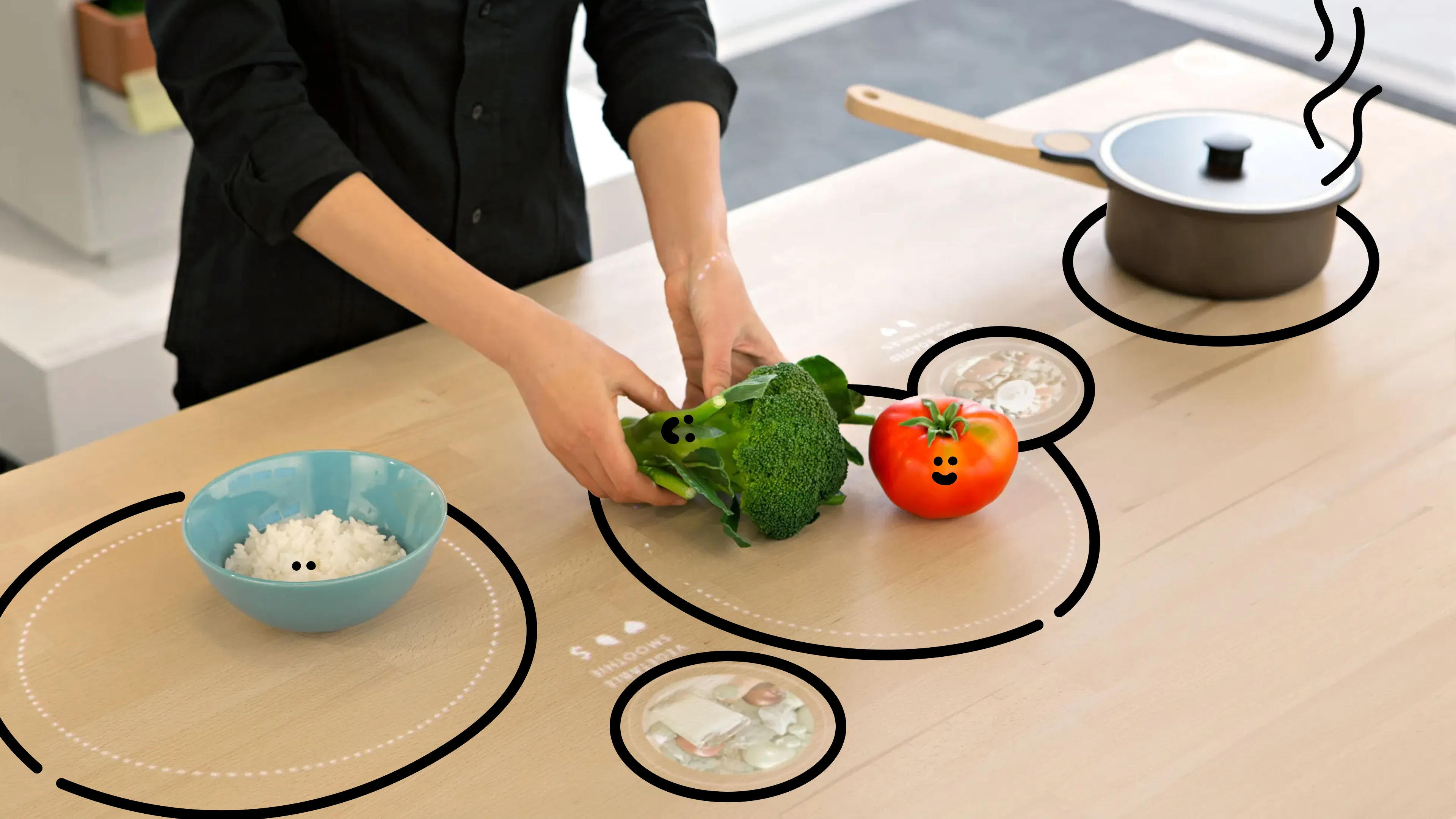
Back then, we designed a kitchen that keeps food visible and trackable, making it easy to use before it spoils. Open shelving with transparent containers put ingredients in plain sight, and a smart table recognized foods placed on its surface and suggested recipes to use them up. Another system tracked the freshness of foods, prompting timely action, while a compact composter turned unavoidable scraps into clean, odorless “pucks”—helping keep more food on plates and out of landfills.

Fast forward to today. Despite growing awareness and efforts to reduce food spoilage, households around the world still discard a significant amount of groceries. According to the FDA, US food waste is now estimated to be between 30 and 40 percent, resulting in more spoiled food reaching landfills than any other waste product.
👎 People still use fridges—not induction-powered cooled pantries—to keep food fresh.
One of our more radical concepts? Eliminating bulky, energy-inefficient fridges from kitchens entirely, replacing them, instead, with induction-powered cooling technology embedded into pantry shelves. Food placed on these shelves in RFID-tagged transparent storage containers would automatically keep individual food items at just the right temperature. While this innovative concept didn’t make the journey to our current reality, more consumers today are buying glass-door refrigerators for their homes, which allow them to quickly see what food they already have on hand—a step in the right direction.
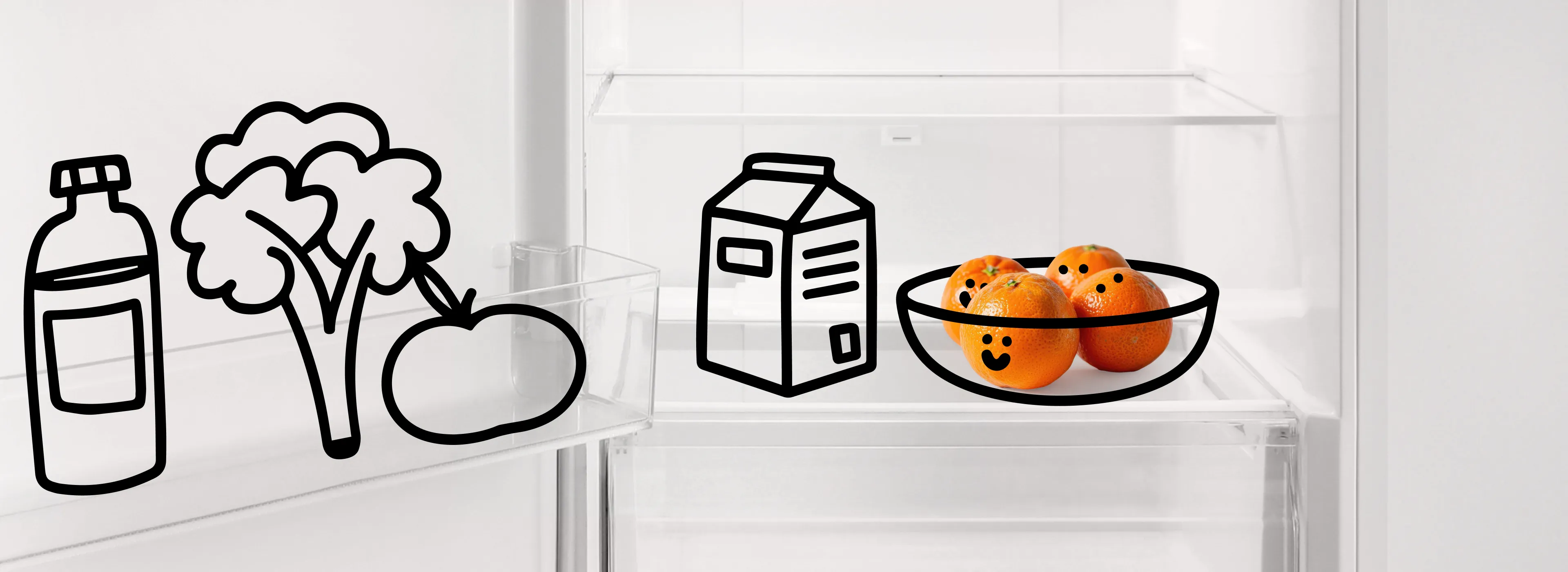
👎👍 Pivoting sinks, compost pucks, and gamified recycling stations haven’t exactly taken hold, but mindful waste reduction strategies are more commonplace.
In 2015, the European Commission adopted a new Circular Economy Package, and the Ellen MacArthur Foundation released its “Towards the Circular Economy” report, both of which encouraged the transition from a “take-make-dispose” economic model to one where resources are kept in use for as long as possible. They encouraged us to consider how the kitchen might help recycle and keep materials in closed loops—or even turn waste into value.
Our prototype kitchen’s thoughtful water disposal system (a pivoting sink basin that tipped to one side to drain off toxic “black” water and to the other to siphon off undrinkable, but otherwise safe “gray” water that could be used to wash dishes or water plants) pointed to a future where resourcefulness is second nature. A built-in grinder beneath the sink squeezed water from organic scraps to form tiny compost pucks, eliminating the mess (and odors) associated with traditional compost bins and providing fertilizer for indoor herb gardens. A sensor-driven recycling station even tallied how well (or poorly) recyclables were sorted, rewarding responsible behavior with energy credits.

While teeter-totter sinks, compostable discs, and recycling bins that keep score aren’t commonly found in today’s homes, there is a larger societal push to reduce single-use plastics, and the concept of mindful disposal is more mainstream, thanks to companies like IKEA, Ridwell, and others. Many municipalities now offer compost bins alongside recycling bins, and several brands, including Patagonia and Kiehl’s, run take-back programs. Reusing gray water has become more commonplace, and zero-waste advocates on TikTok share tips to minimize waste. Additionally, there are compost solutions that aren’t too far off from our puck concept. With food prices rising in many places due to inflation, tariffs, and climate change, our initial focus on reducing food waste has become even more urgent.
👎👍 We’re not all cooking on AI-enabled induction tables—yet—but our kitchens are “smarter,” and we still crave coziness.
Our biggest challenge with Concept Kitchen 2025 was blending futuristic technology with the timeless, tactile pleasure of cooking. Our smart table concept—where you could place leftover vegetables under a camera that would then project recipes and cooking tips—predicted how multimodal large language models (LMMs) could radically simplify cooking routines. Today, AI can interpret images and text simultaneously, so the idea of a camera scanning your broccoli and instantly serving up recipe ideas is more realistic than ever. These new LLMs make visual interactions more intuitive, allowing you to rely on a single seamless system rather than juggling multiple apps or devices.
Today’s everyday home chef may not be chopping broccoli on a full induction cooktop table like we envisioned—even though they do exist!—but discreet smart speakers, subtle sensors, and AI-driven apps that suggest recipes based on what’s in your fridge are everywhere. While kitchens have indeed become smarter, the technology we continue to choose for them feels more like a thoughtful helper than a sci-fi intrusion, enabling our kitchens to stay cozy and comfortable. Ultimately, it’s about harnessing technology to enrich our culinary experiences, rather than overshadowing the human joys of cooking and connecting over good food.
👍 The kitchen continues to be the home’s social hub.
IKEA’s Concept Kitchen 2025 emphasized the kitchen as a communal, creative space—where a leftover tomato might spark a conversation, or a table’s camera might amuse and inspire friends who gather around it. A decade later, the kitchen endures as the heart of the home.

As part of our design investigations, the team also explored community kitchens for entire neighborhoods, ways to encourage kids to “play with their food,” and live-streaming cooking sessions via countertop cameras, indicating broader social, home-like experiences surrounding cooking. Today, cooking has indeed expanded its community dimension—from co-cooking apps to shared commercial kitchens—reinforcing the kitchen as a central gathering place, regardless of the level of technology involved.
👍 Prototyping remains a powerful way to explore future possibilities.
The future moves in spirals. Sometimes we adopt expected changes in unexpected ways, and sometimes we revert to old habits. What remains true, looking back at Concept Kitchen 2025, is the power of prototyping to make the future real.
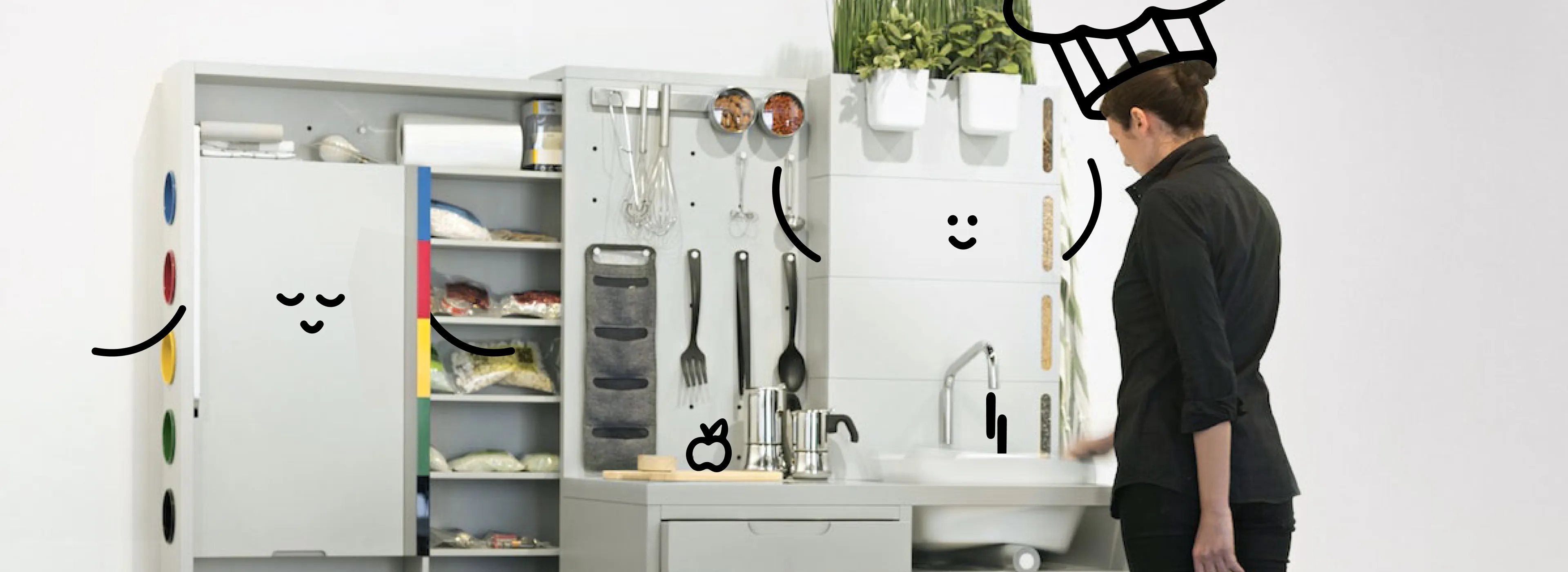
A decade on, the project remains a fascinating blueprint for the kinds of everyday cooking and eating moments we’d see in our homes. Sure, not all details, such as shelves with RFID temperature tags or transparent cooling containers, may have become a reality, but that’s not the point. When we envision a decade or more in the future, we’re looking to identify the trajectory of desirable behaviors, rather than specific objects or technologies (as they are bound to change and evolve). By transforming the behaviors we hoped to see into an experiential prototype that 250,000 people could physically explore in Milan—and millions more online—we brought the optimistic reality of 2025 one step closer to the lived reality of 2015.
And that's the real takeaway: prototyping’s tangibility enables us to step into the future. It provokes conversations. Inspires us to make better decisions every day. And helps steer us toward a collectively brighter tomorrow.
Looking to do some futuring at your org? Get in touch. We'd love to help.
“Det er svært at spå, især om fremtiden.” —Danish proverb
(“It is difficult to make predictions, especially about the future.”)

Strategy only works if it sticks
3 tips for embedding it in your company’s DNA.
Strategy can’t just exist in a three-ring binder. It’s the culmination of choices leaders and employees make across companies, brands, and organizations every day. It influences how employees communicate, how leaders make decisions, which opportunities they choose to pursue, and which ones they decide to leave behind. For any new strategy to succeed, it must be embedded across an entire organization, with choices, mindsets, and behaviors that are supported by workplace culture.
That’s why the art of activating strategy is just as important as the art of crafting it. It takes creative thinking to get buy-in across organizations and make it easy for folks to take action. And then, when employees are living the strategy in their daily work, their efforts must be supported by the systems and people around them. As the legendary management theorist Peter Drucker reportedly once said, “Culture eats strategy for breakfast.”
We’ve found that involving employees in the strategy creation process, telling simple stories that stick with them, and fostering a culture that supports new ways of working can help pave the way for successful activation. Here’s how to do it.

1. Distribute ownership
“Socialization” is often tacked on to the end of strategy work, but simply publishing a framework can feel like the “Powers That Be” are dictating the “Grand Path Ahead.” Organizations can spend countless hours and significant resources on initiatives such as town halls, emails, and presentations, only for them to fall flat. This is not just a poor use of time and money; it’s a missed opportunity.
Instead, investing upfront in co-designing with a diverse group of stakeholders fosters a sense of ownership across all levels of the organization. When employees see their input in the strategy—or at least know someone who contributed—they are far more likely to engage, champion, and activate it. Beyond buy-in, this approach often leads to a stronger strategy, with a better understanding of its opportunities and risks, improving adaptability as the future unfolds.
In a recent engagement with KQED, a non-profit public media outlet in California, KQED leadership and IDEO took a deliberate and inclusive approach to designing a vision and strategy with the larger organization, not for them. We ensured that a broad cross-section of KQED employees, from on-the-ground reporters to board members, were involved throughout the process, not just at the end. We also created an interactive installation that showcased the work in progress, providing employees with a preview of the framework, an opportunity to give feedback, and a chance to connect with the KQED team members who were working shoulder-to-shoulder with IDEO. This approach gave everyone in the organization a sense of ownership over the strategy, while inspiring the core team to pursue new possibilities. “We did not want to just drop a new strategy on the organization,” says Michael Isip, President and CEO of KQED. “Quite the opposite. We wanted the organization to know that it was our shared responsibility to figure this out. We didn’t just need their buy-in, but their expertise and passion.”

2. Make the story stick
Human-centered design isn’t just about the end customer; it’s also about the people inside your company who do the day-to-day work to make things happen. These people are the lynchpins of change; the success or failure of your strategy lies squarely on their shoulders. That’s why it’s so important to help them understand their role in it and what it will take to bring it to life.
This is where storytelling comes in. A good story doesn’t just paint a picture of aspiration. A simple, tangible narrative—with a clear call to action—can inspire the entire organization to get excited about the future and clearly define the behaviors, changes, and decisions that will make it real.
On a project helping American Express expand its customer base, an IDEO team created a series of short, internal videos about a new product called “Pay It, Plan It.” These videos helped employees develop empathy for new types of customers, understand their needs, and, of course, demonstrate how this product could positively impact their lives. “I often talk about it in terms of learning a new language,” says Kyoko King, VP, Global Commercial Services at American Express. “Amex internally thinks of itself as a rational company based on CBAs and models. The breakthrough—and the thing I’m most proud of—was bringing that customer emotion into internal decision-making, seeing Amex become emotional rather than purely rational.”
Video can be an excellent medium for these kinds of stories, but it’s not the only way to create emotional resonance in your organization. When we worked with a large midwestern corporation, their leadership viewed strategy as a deeply complex and weighty concept rather than a series of collective choices. To help the organization embrace the concept—and details—of its strategy, we designed an interactive museum-style exhibit to help connect the choices their founders made to the choices leaders were currently making and the company’s aspirations for the future. This pairing of artifacts and memorabilia with forward-looking brainstorm moments helped make the strategy more tangible, approachable, and less abstract for shareholders.

3. Enable new ways of working
A new strategy often means fresh mindsets and new ways of working. It takes time to create new behaviors, and even more time for those behaviors to become ingrained in the culture. It all starts with leaders. They must demonstrate them through their actions—in meetings, the questions they ask, and the decisions they make. By visibly embracing these behaviors, they give others permission to do the same.
In a collaboration with a leading media and entertainment company, we developed and implemented an innovation strategy that necessitated a deliberate shift in priorities, working methods, and company culture. We hosted interactive sessions and panels to equip leaders with firsthand insights, tools, and mindsets that help foster innovation and identify behaviors that might be holding them back. To reach employees, we developed a communications strategy—including podcasts and videos—to celebrate small wins and new behaviors, and collaborated with their HR team to refine job descriptions and hiring strategies that aligned with the new direction. This is just the beginning of their efforts to support cultural change at scale, but already, they’re finding success and witnessing people change their behaviors and norms to align with the new strategy.
Bringing strategy to life can sound simple on paper: Engage with stakeholders early and often. Share stories, simply and widely. Foster new ways of working, from the top down and bottom up. And then, live happily ever after! The end!
But it’s never that simple. People have been hired and rewarded for driving the previous strategy, so shifting priorities and rethinking daily choices isn’t just a task—it’s a fundamental change that takes time to ingrain. It’s important to be patient, stay focused on the vision, and create space for initiatives that enable activation of the strategy. Because the most successful strategies aren’t just launched—they’re lived, every day, by the people who bring them to life.
Need help embedding strategy in your org's culture? Get in touch.
(The original version of this story attributed this quote to Peter Drucker. While it is often credited to him, the true source remains uncertain.)
This piece is part of a series. Check out the first two installments, focused on methods for defining your organization's purpose, and moving from purpose to strategy.
Here’s a riddle: If a company chooses to spend time and money creating a new strategy, but employees aren’t clear on how to implement it, will it ever guide company decisions or drive progress?

Lindsey Turner
I’m passionate about building brands, products, and experiences that help organizations show up with meaning and momentum.
I help organizations cut through complexity by shaping how they show up, through brand strategy, identity, and storytelling.
Working at the intersection of brand and business, I bring an editorial eye and a bias toward making—turning ideas into tangible experiences that people can understand, trust, and believe in.
My work spans government, healthcare, financial services, media, and consumer goods, from launching Gen Z-focused ventures to building innovation labs and reimagining legacy brands. I relish moments of ambiguity and enjoy translating across teams, perspectives, and priorities to move ideas forward.
I started my career in editorial and digital design, shaping cross-platform experiences and identity systems in publishing and agency environments. That foundation still shapes how I work today: I’m detail-oriented, collaborative, and overreliant on the Oxford comma. I hold a BFA in Visual Communication from the School of the Art Institute of Chicago.

Rachel Young
My work helps organizations see who their products aren't working for—and build the will and the tools to do something about it
For 25 years, I've asked the same question: Who does this design exclude—and what are we going to do about it?
My work spans human-centered strategy, inclusive design, and qualitative research, with clients ranging from Microsoft, Google, and Verizon to the National Science Foundation, and San Francisco Unified School District.
Before IDEO, I taught elementary school in East Palo Alto and spent a decade doing design work with social service organizations—where I learned firsthand what it costs people when systems are built without them in mind.
I am currently writing User Error, a nonfiction book about digital access and the design decisions behind it. I live in Oakland, California.

Brian Pelsoh
I lead with craft, ensuring our work is creatively excellent: rooted in deep human insight and imagination, while also grounded in the realities of business and technology.
My expertise spans brand, communication, and product design across tech, education, the arts, and social impact.
I believe great work demands both high-level vision and obsessive attention to detail, and only happens through collaboration.
I bring an inclusive, hands-on approach and a deep understanding of business, which enables me to consistently deliver excellence while always asking why.
Before joining IDEO, I worked at the brand firms Pentagram and VSA Partners. I began my career as a designer, leading teams at the School of the Art Institute of Chicago and the Milwaukee Art Museum. I hold an MFA in graphic design from Maryland Institute College of Art and a BFA in communication design from the Milwaukee Institute of Art & Design, and have taught at some of the best design schools in the US.

Tony Wong
I am responsible for IDEO’s long-term success in China and working with clients to use design as a tool to enable growth.
I am responsible for IDEO’s long-term success in China and working with clients to use design as a tool to enable growth. Specifically, I have helped Chinese companies design holistic brand solutions through the development of their products, communication, services, and innovation teams, and I have helped multinationals expand their presence and influence in China.
I advise global leaders on developing China-led innovation and capabilities.
In over 15 years in IDEO Shanghai, I have worked on projects that use design to elevate the quality of the experience of healthcare products and services, streamline processes that increase productivity, create spaces and programs that promote and enable inclusive communities, and build next generation mobility solutions that are planet-positive.
Before joining IDEO, I worked at Philips Electronics and the Electrolux Group in Italy, the Netherlands, and Singapore on a number of breakthrough commercial products. I am a member of the Young President Organization in Shanghai.
How to use AI for more human-centered research: Hannah Rosenfeld
Using AI to deepen research while keeping people at the center.
IDEO Executive Design Researcher Hannah Rosenfeld shares a framework for using AI intentionally across the research process—not only to work faster, but to widen the aperture, notice nuance, challenge assumptions, and create new ways to engage with research data.
6 Patterns for building organizational agility: Clay Parker Jones
Six practical patterns for helping organizations adapt without losing direction.
Mina Seetharaman speaks with Clay Parker Jones, Director of Organizational Design at Airbnb and author of Hidden Patterns, about six practical patterns for building a more agile, adaptable, and human-centered organization.

How great teams leverage tension as a source of innovation: Daniel Coyle (Replay)
Turning productive tension into stronger collaboration and more original ideas.
In this replay, bestselling author Daniel Coyle explains how high-performing teams channel friction into forward motion, why vulnerability builds trust, and how leaders can turn tension into energy, learning, and innovation.
What gets in the way of trust on teams: Q&A with Ben Swire
The everyday behaviors that quietly weaken trust—and how to repair it.
Mina Seetharaman sits down with Ben Swire, co-founder of Make Believe Works and author of Safe Danger, for a practical Q&A about hidden barriers to trust, why feedback can feel risky, and what leaders can do when trust begins to erode.
Looks like you might be in search of something very specific?
Or reset the filters above and try another angle.
Here’s some random inspiration

Podcasts about creative leadership

Articles about the power of prototyping