
Balancing work and sleep
Somni’s personalized sleep program helps workers maintain their health.
Sleep is a critical resource for shift workers—and their employers, too. Together, IDEO and Somni worked directly with people with acute and chronic sleep challenges to create concepts that could support their sleep goals, and provide employers with the means to improve employee health.
When IDEO and Somni first partnered, the startup was an early-stage company, so the team started small, with focused sprints and workshops to redesign the core aspects of the company and product offerings. The team interviewed shift workers about their sleep patterns, which can vary quite a bit. Even when people keep to a specific schedule on work days, they often have to change their patterns on days off to spend time with family and friends, leading to a very disruptive sleep cycle. Research revealed that many third shift workers were dealing with sleep and health issues, but also a pervasive “machismo” culture, pressure to “tough it out,” and a reliance on energy drinks to deal with lack of sleep.
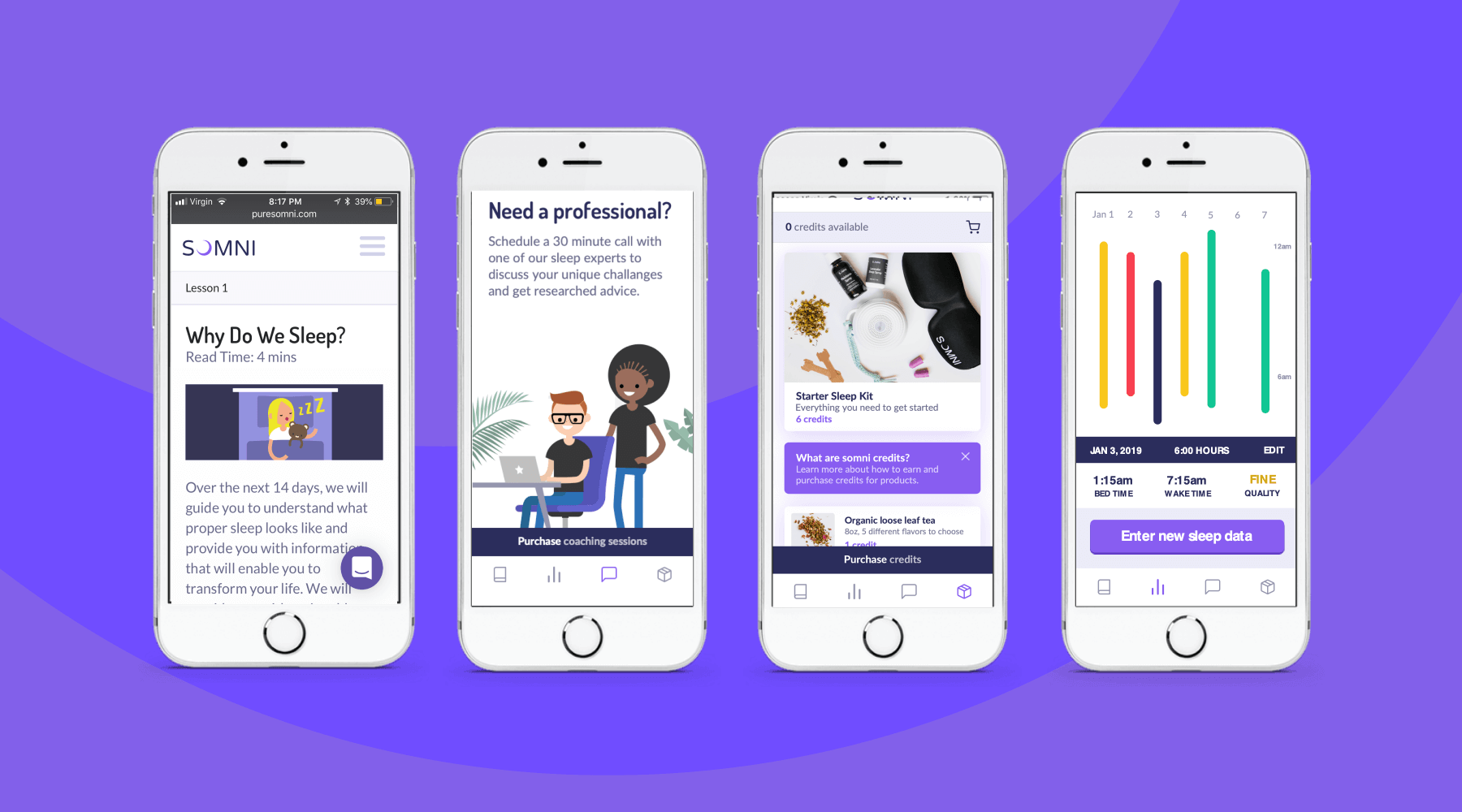
To address those issues, the team designed a digital experience for sleep cohorts, support groups where members could share their experiences and sleep strategies, and work with a coach and sponsor who already had been through the program. The platform analyzed workers’ data, and provided AI-enabled recommendations for improving their sleep. The big takeaway? Data by itself wasn’t necessarily helpful, and could be confusing for folks who were less digitally-fluent. Providing context, like a calendar that displayed sleep experiments at a glance, was crucial.
The IDEO team also created a new user experience for a genetic testing program that could uncover factors associated with sleep issues. Somni aims to use a saliva-based genetic test to monitor for DNA damage caused by circadian disruption, then leverage its sleep improvement program to prevent further damage. Because biomarker testing is a differentiating offer for Somni, it was extremely important that the team get it right, both to make sure that users could understand its utility, and for Somni to provide real value. The design challenge was unique—and not just because of data privacy concerns. Presenting data about DNA damage in a non-human-centered way could increase the anxiety workers had around their sleep.
At the end of the project, Somni leveraged the insights the IDEO team surfaced to improve products like its sleep coaching service, and to refine its biomarker testing offering. Based on this work, Somni has also created a pilot with a Fortune 100 company, which is currently in progress, as it works to mitigate the ill effects of disrupted sleep for employees and the companies they work for.
In the short-term, circadian rhythm disruption leads to an array of jet-lag-like symptoms, and in the long-run, it may contribute to weight gain, obesity, metabolic syndrome, type 2 diabetes, and cardiovascular disease.
It also impairs people’s ability to work, affecting productivity, creativity, and the overall work environment. Productivity loss can lead to employer baseline healthcare costs that are 26% higher, and over time, insomnia can result in an average cost of $4,267 more per employee per year.
In June 2019, the International Agency for Research on Cancer classified shift work as a probable carcinogen.
75%
user retention in Somni's sleep program
$2,450
savings per year per employee for users who complete the program
33%
improvement in sleep quality, and 41 more minutes per night

Nourishing the future
Eat Real helps redefine school lunch by advocating for nutritious, sustainable foods.
Before Eat Real can advocate for better school meals, it has to connect with school leaders—and donors. As the organization expanded its work beyond school certification, it needed an updated soup-to-nuts branding redesign that represents its purpose.
To get started on the five-week sprint, the IDEO team conducted a brand audit and interviews with Eat Real staff, board members, and donors. The team learned that Eat Real’s brand messaging and voice showed up inconsistently, and that board members wanted greater clarity around communication to prospective donors. Several people expressed a desire to change the original logo centered on a fork to a more culturally-inclusive symbol, and for the logo to be separated from the Eat Real Certified stamp, since the organization had evolved to do much more than just certification.
The IDEO team worked in close collaboration with Eat Real to deliver comprehensive brand guidelines, including Eat Real’s brand purpose and core values, positioning and personality, logo and wordmark, visual expression, verbal expression, and brand showcase. The brand’s new tagline, Nourish the Future, speaks directly to how real food access unleashes the possibility for a healthier society and a healthier planet. A new mark combines three elements that signify much more: a welcoming bowl (joy and ritual), the serving spoon (generosity and nourishment), and a sprouting leaf (a future where children and the planet flourish). The team also landed on an unapologetically vibrant color palette, to bring surprise and energy to the brand. From this foundation, Eat Real created a new website, completed a photo shoot with IDEO's art direction, and launched the brand with new messaging and collateral within a year. Now, Eat Real has the tools it needs to scale its operations and affect real change.
To scale its program and be at the center of sustainable food systems change, Eat Real needed branding and messaging to reach a new set of philanthropists.
Almost 30 million US kids depend on public school lunches for more than 50% of their daily calories. These meals are frequently made up of ultra-processed, unsustainable foods that contribute to type 2 diabetes and obesity.
2023 funding goals reached
with its new branding, beating its end-of-year fundraising goals, and putting the nonprofit on track to serve more schools in 2024
129M
meals served to 360,000 students every year at schools that have gone through the certification program

Preparing students to innovate
How Yungu School is building the next generation of changemakers.
Most end-of-high-school experiences, like the Chinese gaokao exam, the global IB Extended Essay, or the US-based AP Capstone program, are focused on testing and academic, classroom-based activities. Yungu School, a private K–12 school in Hangzhou, China, founded in 2017 by Jack Ma of Alibaba and funded by Alibaba partners, wanted to take a different approach. Yungu’s vision: combine the renowned Chinese National Curriculum with an international, competency-based learning mindset.
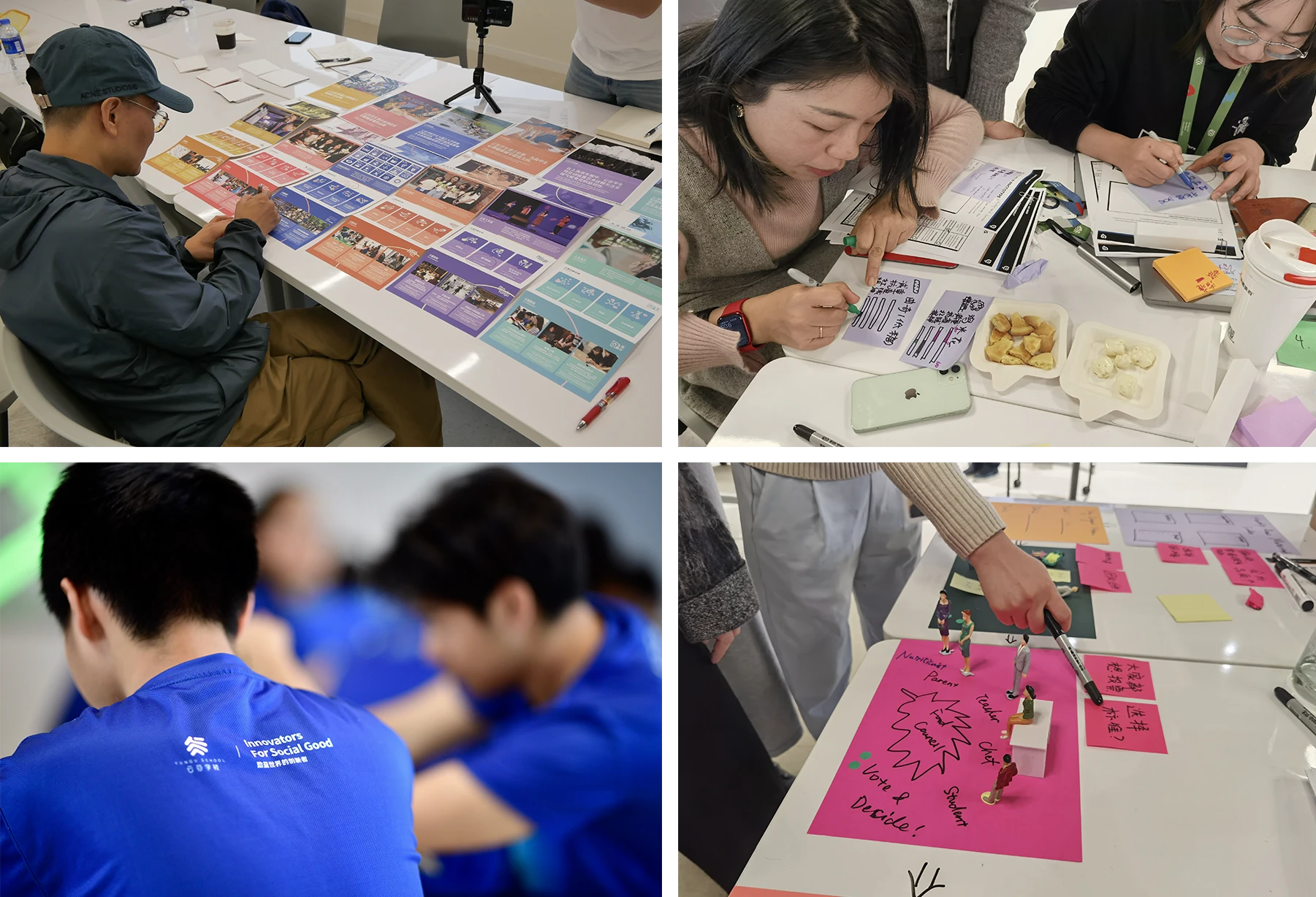
Designing a new capstone course that brought together the perspectives of Yungu School’s many stakeholders was a complex challenge. The solution? IDEO formed a “co-creation council” composed of eight Yungu School middle- and high-school educators who held different positions within the school, spanned tenures, and came from diverse educational and cultural backgrounds, including Chinese, European, and American. Bringing together educators from a range of backgrounds and points of view fostered alignment and sparked new ideas. In addition to the council, IDEO and Yungu educators gathered additional input from students and parents and crafted the objectives, design principles, and blueprint for the change-making 18-month capstone program.
The collaboration resulted in a tailored, insight-driven capstone course that progressively builds learners’ confidence and agency via five modules: “Get Inspired,” “Find Yourself,” “Dive Deep,” “Go Big,” and “Give Back.” The learning cycles, which range from one week to half a year in length, teach students how to move from ideas to impact in topic areas they are passionate about and which have a bearing on pressing issues like climate change, digital privacy, and reducing food waste, among other global challenges. The goal of this iterative approach is twofold. Equip students for “global citizenship” by identifying personal ways to make a positive impact. And foster “entrepreneurship” by learning to be critical, creative, and optimistic systems thinkers who embrace a growth mindset.
To ensure a solid foundation for the new course, IDEO also created a week-long design-thinking training program for Yungu’s teachers. The professional development experience boosted their creative problem-solving and taught them how to move from being “expert instructors of curricula” to “encouraging guides” of capstone students who would need to demonstrate their proficiency through a final product, presentation, or performance rather than a final exam. The collaboration concluded with an immersive exhibition that allowed all stakeholders—educators, students, and parents—to experience the content modules and transformative course for themselves. Since launching its capstone program in 2022, Yungu High School has added lectures from social entrepreneurs and workshops that teach communication skills to the innovative course, garnering awards from media outlets like Fast Company. Most importantly, the signature program has enabled The Yungu School to embody its noble and audacious mission—empowering students to become future innovators for social good.

Today’s high-school seniors learn how to memorize academic content and pass tests but aren’t prepared to make a real-world impact after graduation.
196 college offers
and $1.442 million in scholarships received by over 40 graduates from Yungu High School’s class of 2023
2023 Finalist
Fast Company Innovation by Design Awards, Learning category
Lifelong health by design
Omada Health grows from an IDEO research project to a $1 billion company fighting chronic disease.
Design thinking was embedded in the creation of Omada Health from the earliest phases, and Omada has taken that forward as a strategy for success.
Over the past decade, the digital health company has grown from a couple of early career IDEOers testing concepts at the very frontier of digital health, to a company with nearly 2000 employers on its customer roster and more than one million users of its healthcare products.
Omada’s origin story began at IDEO in 2011, when its now CEO, Sean Duffy, an MD/MBA student at Harvard, joined IDEO as an intern, after a partner found his resume on the copy room floor. What was supposed to be a summer internship led to an exploration of the potential impact of digital tools on chronic health problems. IDEO partner Dennis Boyle gave Duffy and his co-founder and fellow IDEOer, Adrian James, the time and funding to do human factors research, meeting with people with prediabetes and metabolic disease in their homes to learn more about the care they were getting. What they heard was that no product or service was meeting the realities of their daily lives.
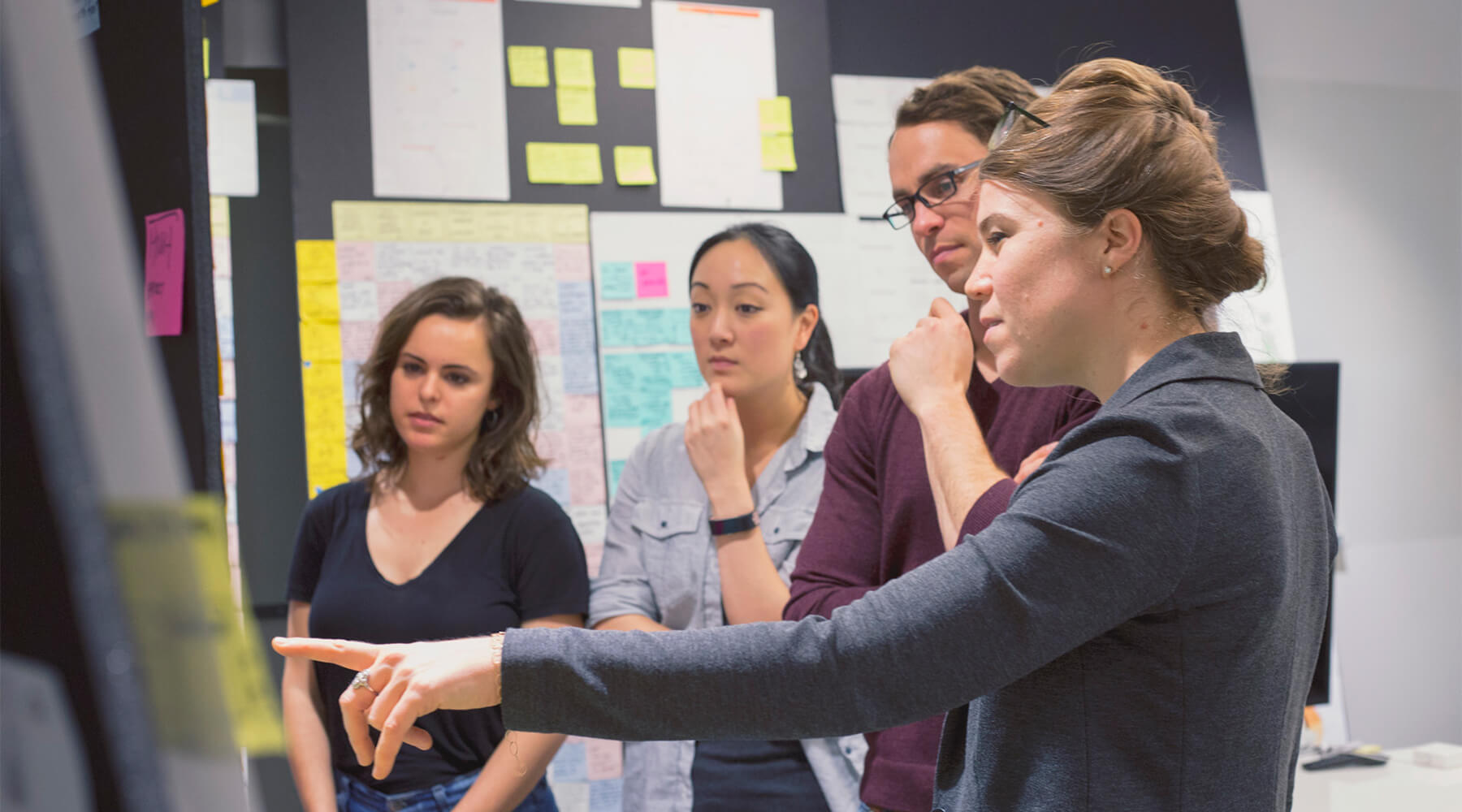
Five months after he landed his internship, and with the company’s blessing, Duffy and James spun Omada Health out of IDEO. Together, they raised a seed round, and continued to lean on design thinking methods, prototyping early versions of their product, then testing it with real patients. Duffy himself even served as the company’s first health coach. By sticking with the mindsets they had learned at IDEO, they avoided the pitfall of falling in love with the popular approaches to digital health of the era—like detailed food tracking or bluetooth enabled pill bottle tops. Instead, they stayed focused on creating what patients were asking for: a digital product that provided support, accountability, and evidence-based solutions.
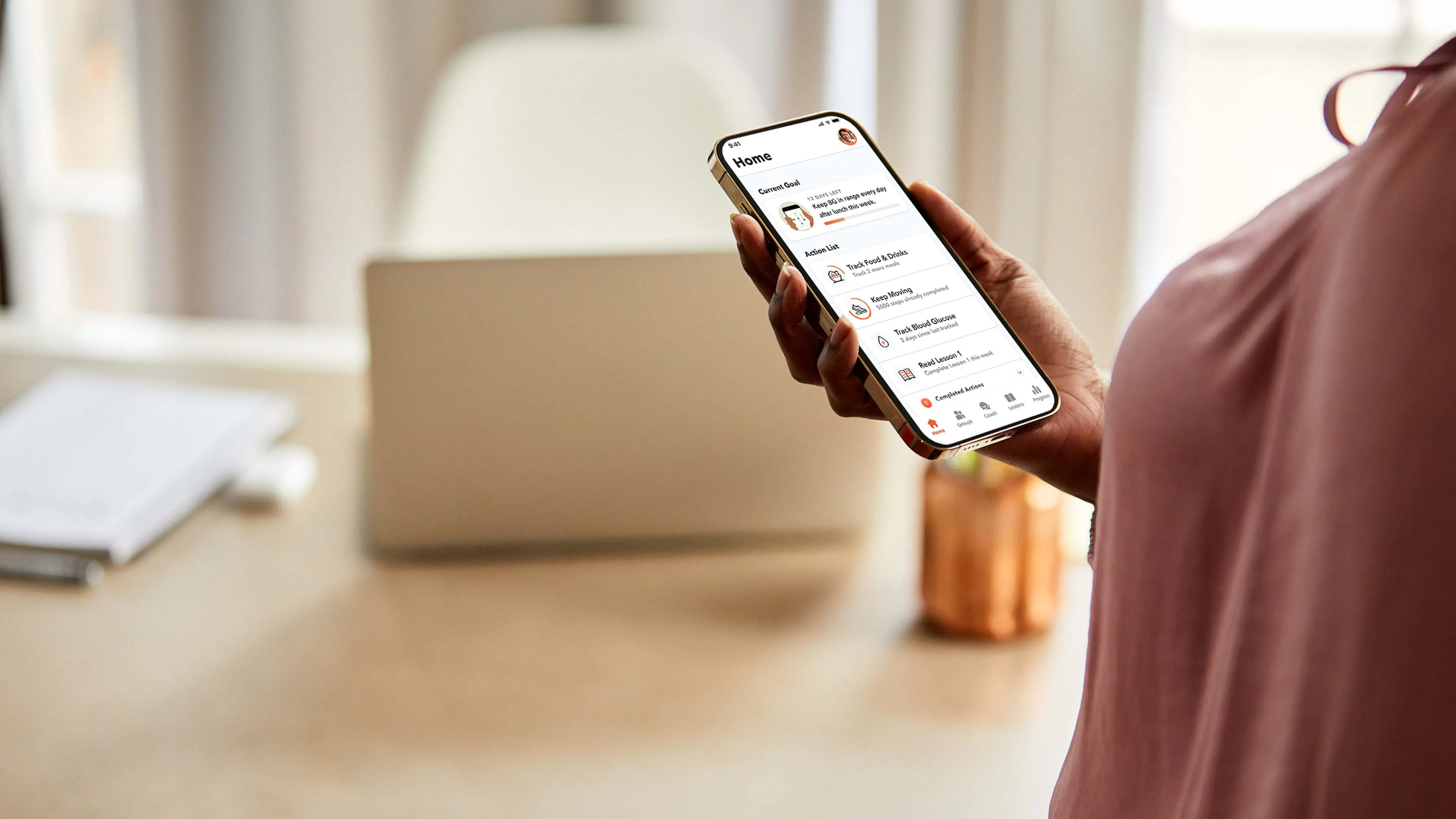
Today, Omada Health is a virtual-first, integrated care solution that provides patients with clinical care plans using digital tools and one-on-one, personalized coaching. It helps users manage chronic conditions including pre-diabetes, diabetes, hypertension, joint and muscle health, and behavioral health. More than a decade after its founding, it counts nearly 2000 employers as customers, has more than one million users of its products, and has published 24 peer-reviewed studies on its outcomes. Not to mention a $1.3 billion IPO in June of 2025. But it’s still going after its North Star: to bend the curve on preventable chronic diseases nationwide.
About 60% of adults in the US live with a chronic disease. According to the CDC, 90% of the nation’s $4.1 trillion annual healthcare expenditures are for people with chronic and mental health conditions.
Diabetes is the country’s seventh leading cause of death—and the most expensive. Diabetes accounts for $1 out of every $4 in US healthcare costs. In addition to the cost of care, diabetes costs employers $90 billion annually in lost productivity.
Nearly 2,000
employers now partner with Omada
1 in 10
commercially-insured Americans have access to Omada through their health plan or employer coverage
$1.3 billion
valuation at Omada's IPO

4 Ways Hip-Hop Changed the Way I Work
I wanted to try something new this year. Something that scared me a little bit. So I signed up for a hip-hop class.
1. Get out of your head
When the music comes on, I let go of what’s in my head and let my body take over. Learning the steps mechanically will never get me into the groove—I have to connect to the music to find my flow.
Design work is no different. Exploring the future of the credit card (yes, that’s part of “design” work here at IDEO) probably won’t have you jumping out of bed; you have to find something in the challenge that moves you. In this case, it was understanding that the card could be about access—to that trip you often dream of taking, to the most amazing cup of coffee in a little-known cafe, to that stunning bag that is clearly missing from your collection. This shift, from payment to access, unlocks a whole new way of thinking about the opportunity. When you move beyond executing the mechanics and find a way connect to the opportunity on a deeper, more personal level, you will be able to bring your best creative energy to it.
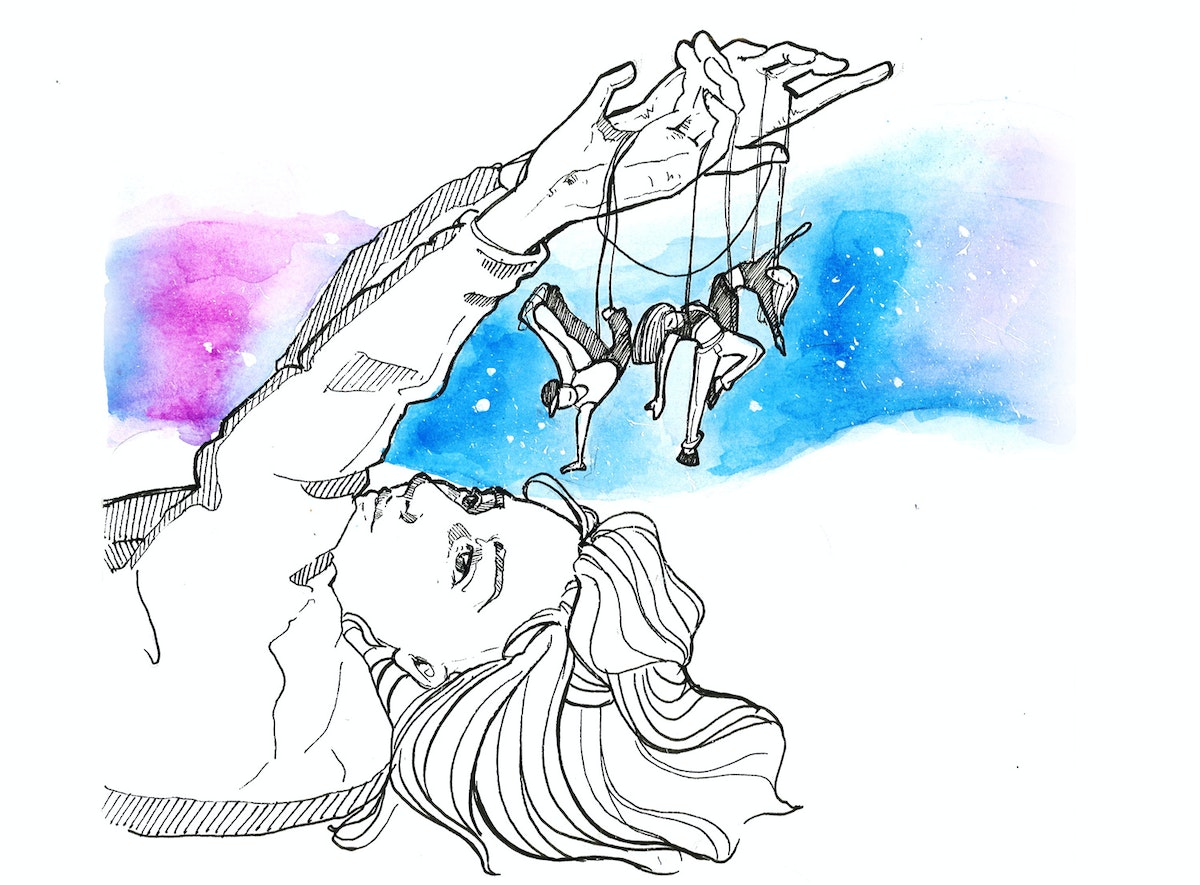
2. Learn as you go
In class, we don’t see the full routine at the beginning. We learn it in parts and build as we go. This requires trust and patience: trust that the parts will add up to something bigger, and the patience to go through a process of trial, error, and repetition.
This runs counter to how I (and many people) work. Designers like to move fast—to begin with a vision and quickly start building it out. For example, imagine a smart, voice-activated delivery service for an older adult. You can probably already envision a prototype in your mind. But how will the service interact in a way that feels appropriately human? If the user asks the same question again and again, how will it respond to her? How might it share relevant information with her family and caregivers? Designing these details is critical to getting the service right. Even when the vision comes easily, following through requires is an exploratory process that requires patience. Putting in the time and effort to learn something new is sure to pay off when some unexpected revelation emerges.
3. Add your flare
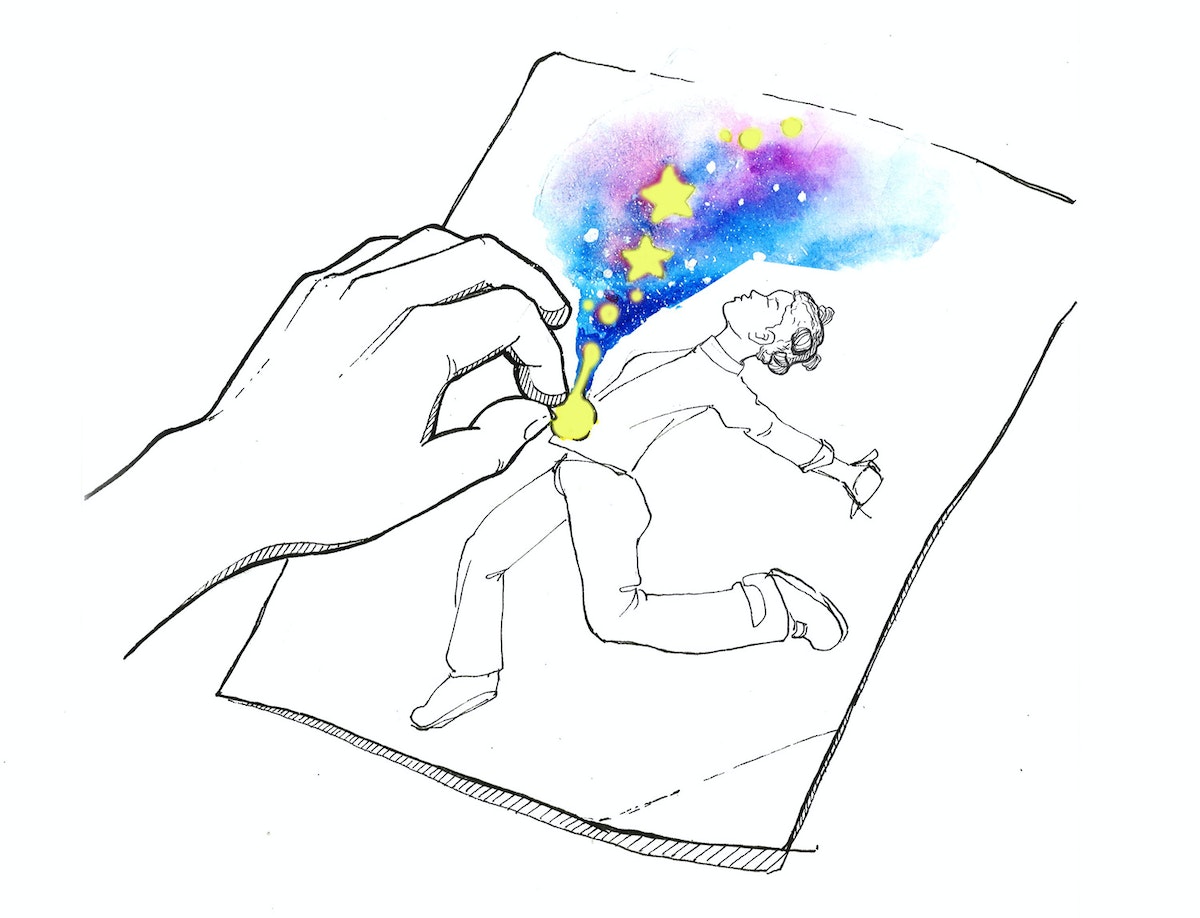
Once I know the mechanics of the dance, the real work starts: a subtle swing of my hips, the way I hold my hands, adding my flare to a key transition. This is where I make what I’ve learned my own.
It can be scary to take something that’s been expertly designed and change it. When working through a new digital ecosystem for a retailer, a visually compelling user interface could stop you from questioning possible disconnects in the customer experience or retailer mechanics. But being part of a design team is about looking for places where your unique perspective adds depth and insight to what you collectively create. So don’t be afraid to put your post-it sketch on top of a beautiful screen. Sharing your point of view gets you to an even better design.
4. Get inspired, not competitive
During class I seek out the people in the room who pick up the moves quickly and execute them perfectly. When I start comparing myself to them, I always lose. But when I shift my perspective and instead draw energy and take pointers from those dancers, it opens up a world of possibilities. My moves improve and so does my confidence.
We all have high expectations for our work. But when you look at other people as reference points for how you’re failing, self-doubt invariably creeps in, preventing you from doing your best work. What if the next time you start to judge yourself, you pair up with a designer who inspires you to explore the challenge side-by-side? Your design jam session may not get you as sweaty as a hip-hop jam session, but you'll likely still find yourself smiling—and doling out a few high-fives along the way.
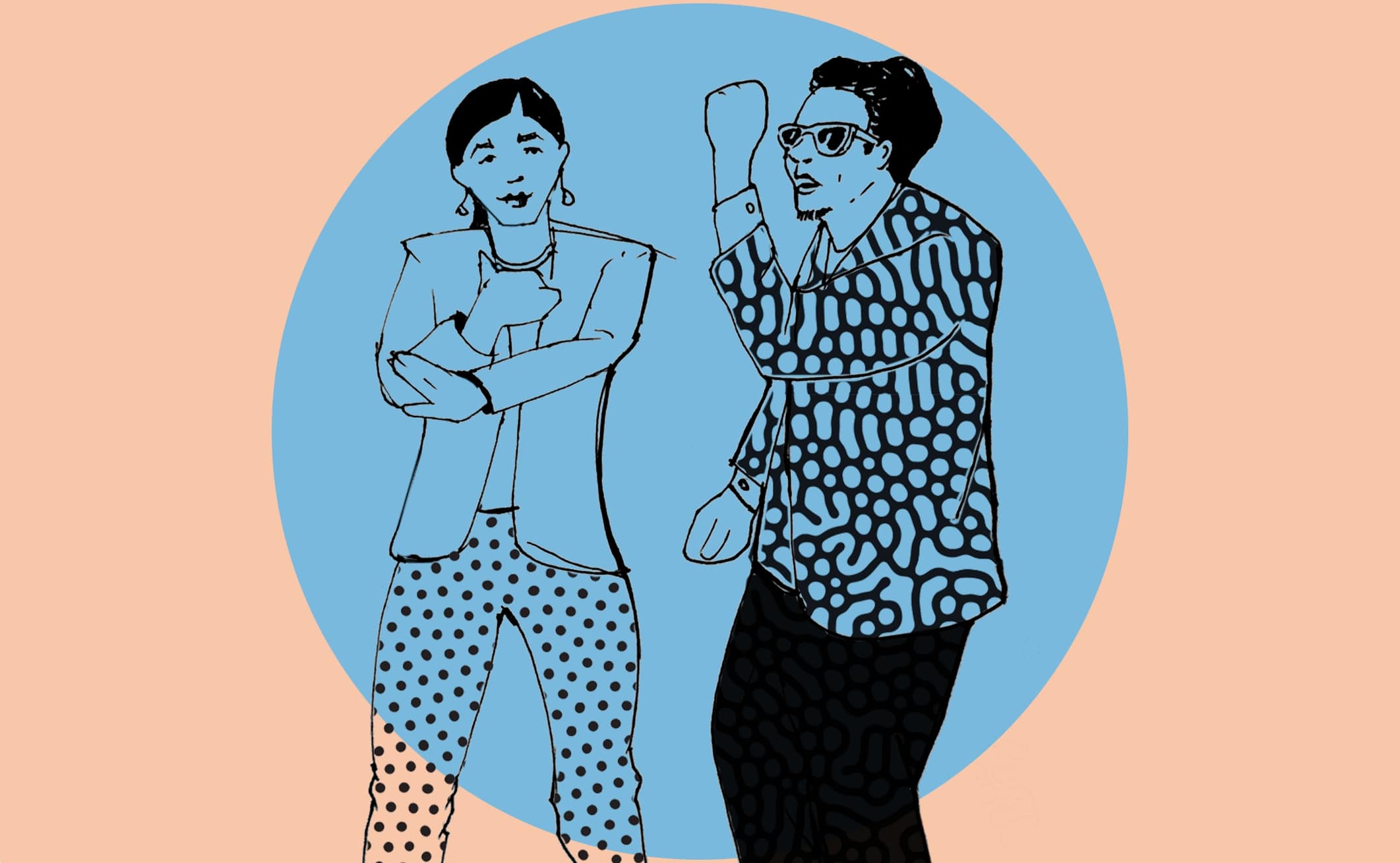
Illustrations by Yue Yuan.
I wanted to try something new this year. Something that scared me a little bit. (Okay, a lot.) So I signed up for a hip-hop class. On the first day I almost didn’t go, but an hour into class I was covered in sweat, smiling from ear to ear, and high-fiving my fellow classmates. On Monday morning I found that what I learned in class had followed me to work. It was more than just the music in my head—there were other lessons to take from that class. Here’s what I discovered about how hip-hop can make you a better designer:
Smart Things That Will Save the World
Today's products were designed for the industrial era. It's time to rethink that model.
Today’s products were designed for the industrial era of browsing store aisles and making choices based on packaging. But now that we’re largely buying stuff online, it’s time to rethink that model.
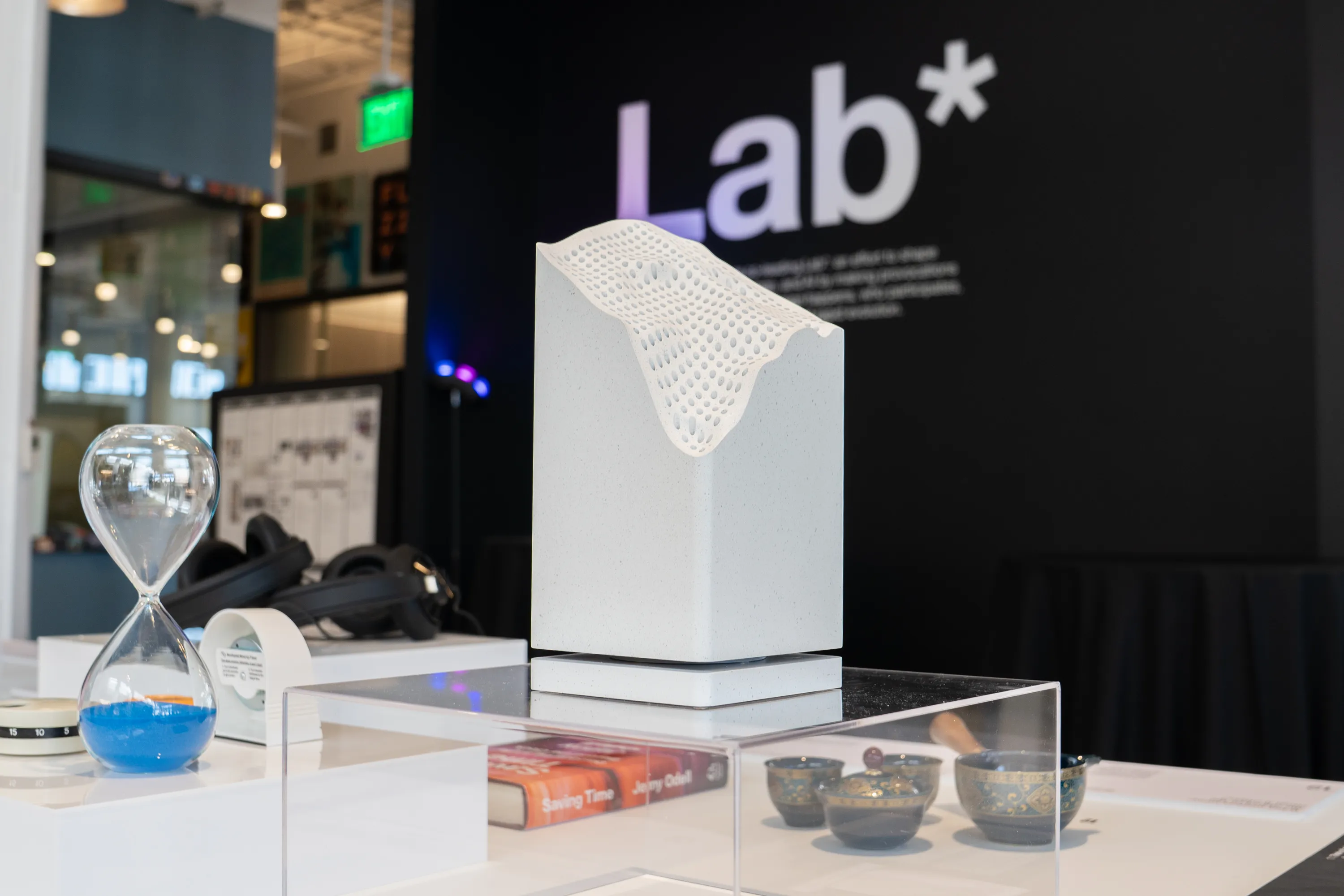
So, IDEO’s London and Munich studios teamed up to create an exhibition of six circular design fictions called Never Finished. (We also worked on a design guide with the Ellen MacArthur Foundation, which you can find here.)
Circular products and the materials they’re made of are designed to be kept in use, to be regenerative, and not to be thrown away. Tomorrow’s things will also be smart—with sensors and software built into them—which will allow us to improve their usefulness over time. Circular products promise to save both money and the planet. (You’ve heard about the great Garbage Patch in the Pacific Ocean, right?)
Take a peek at the potential future of product design:
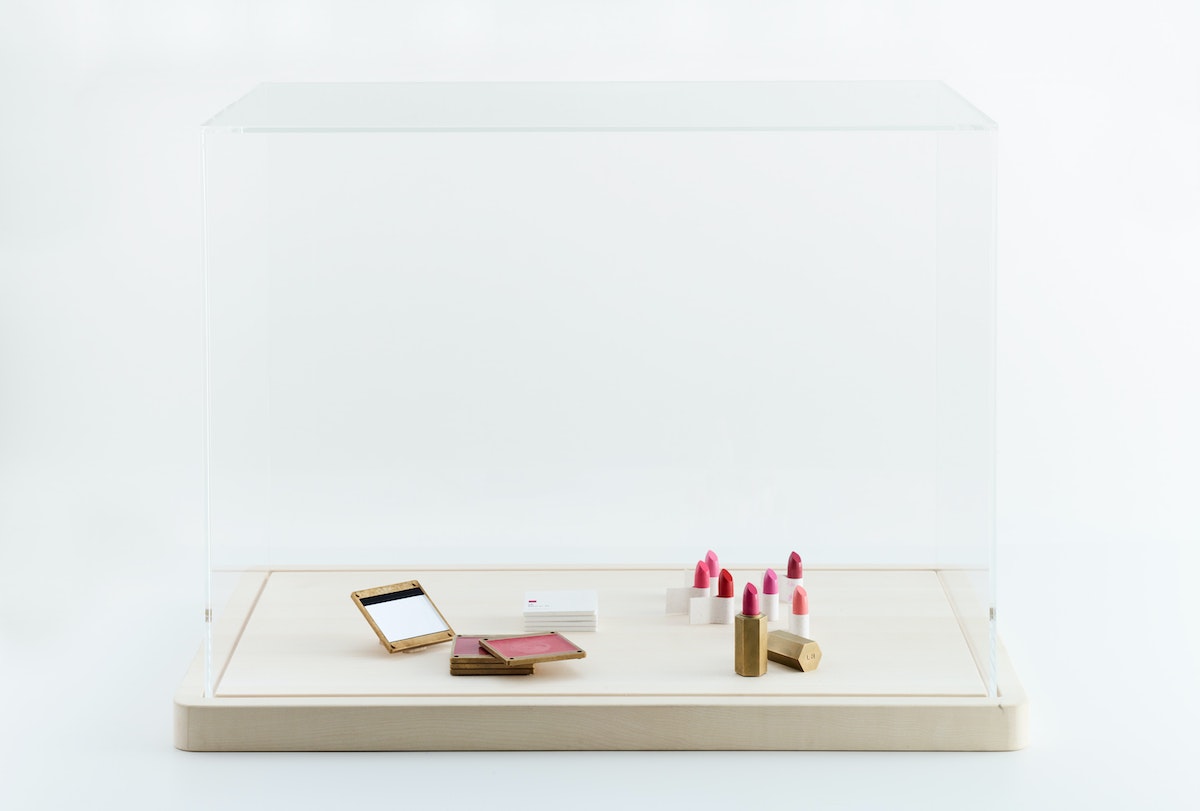
What if your makeup got better with age?
Infinity is a makeup service with packaging that is designed to get more beautiful, more useful, and more valuable as you use it. Housed in luxurious, long-lasting brass, Infinity’s lipstick holder and blusher case are designed to grow old with you. A built-in scanner (sensor) also captures skin health data, and orders (customized) refills when empty.
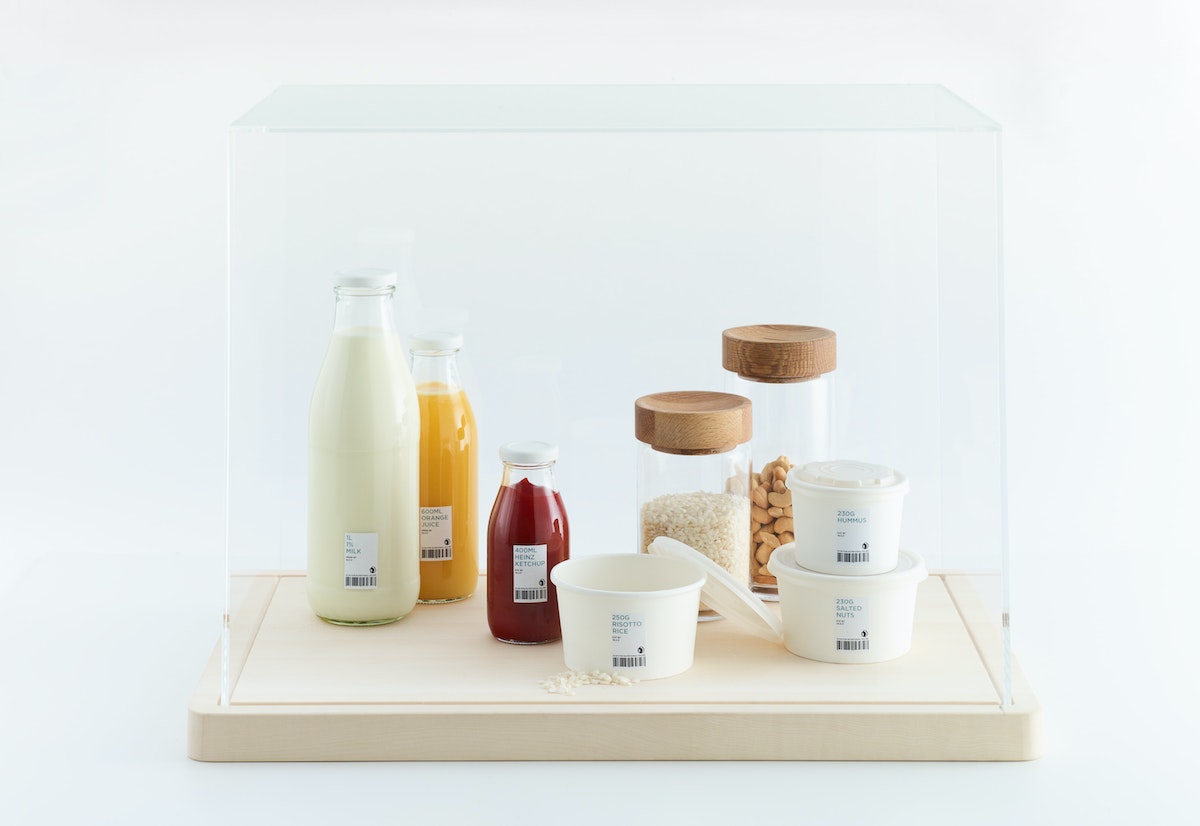
What if food packaging was redesigned for online shopping?
Food packaging is designed to attract people’s eye on a supermarket shelf, extend the lifespan of the product, and protect what’s inside from damage. But it’s over-engineered for online delivery, and it's hard to recycle. Clean is a new food packaging system designed for online delivery services. It’s refillable and easily decanted, recycled, or composted.
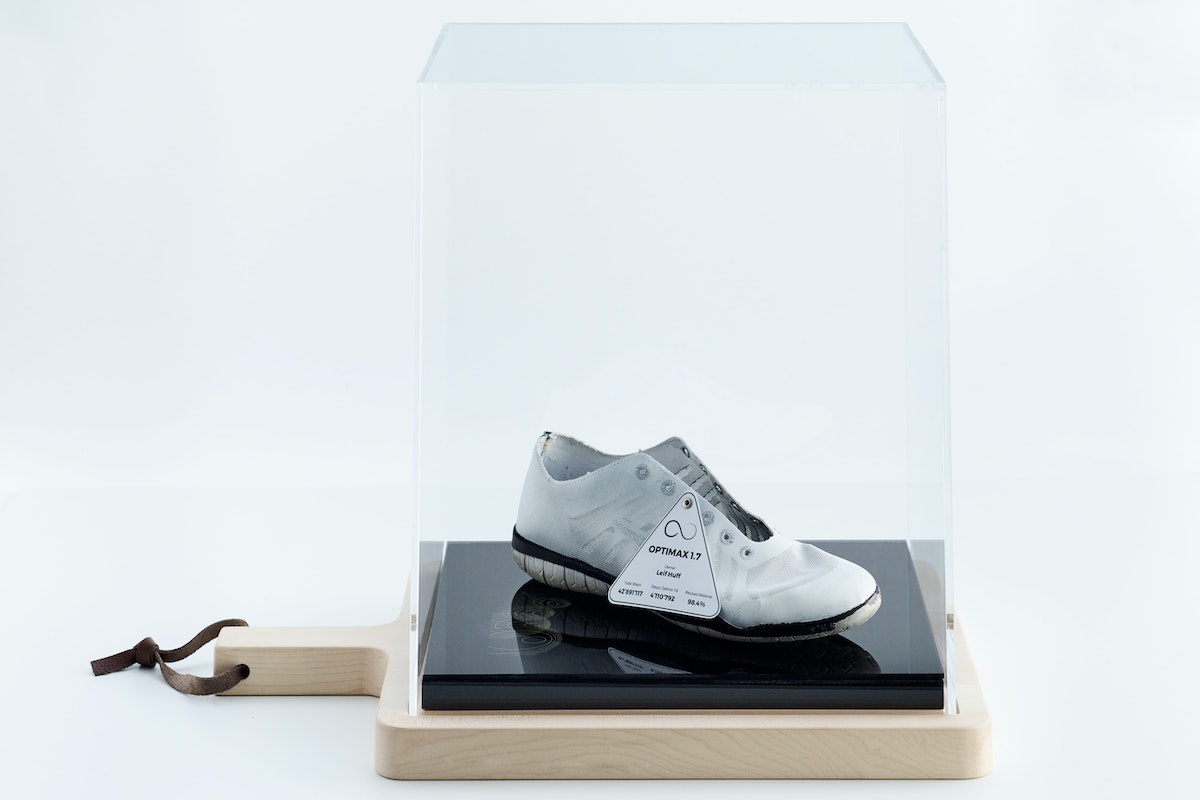
What if sneakers could be made better than new?
Once these sneakers are worn out, the owner simply bags them up in a pre-paid shipping pack and sends them back to the factory, where the sole is scanned and the materials are disassembled and processed for reuse. The factory then uses the scan of the sole to print a new shoe using the reclaimed materials—perfectly tailored to the user.
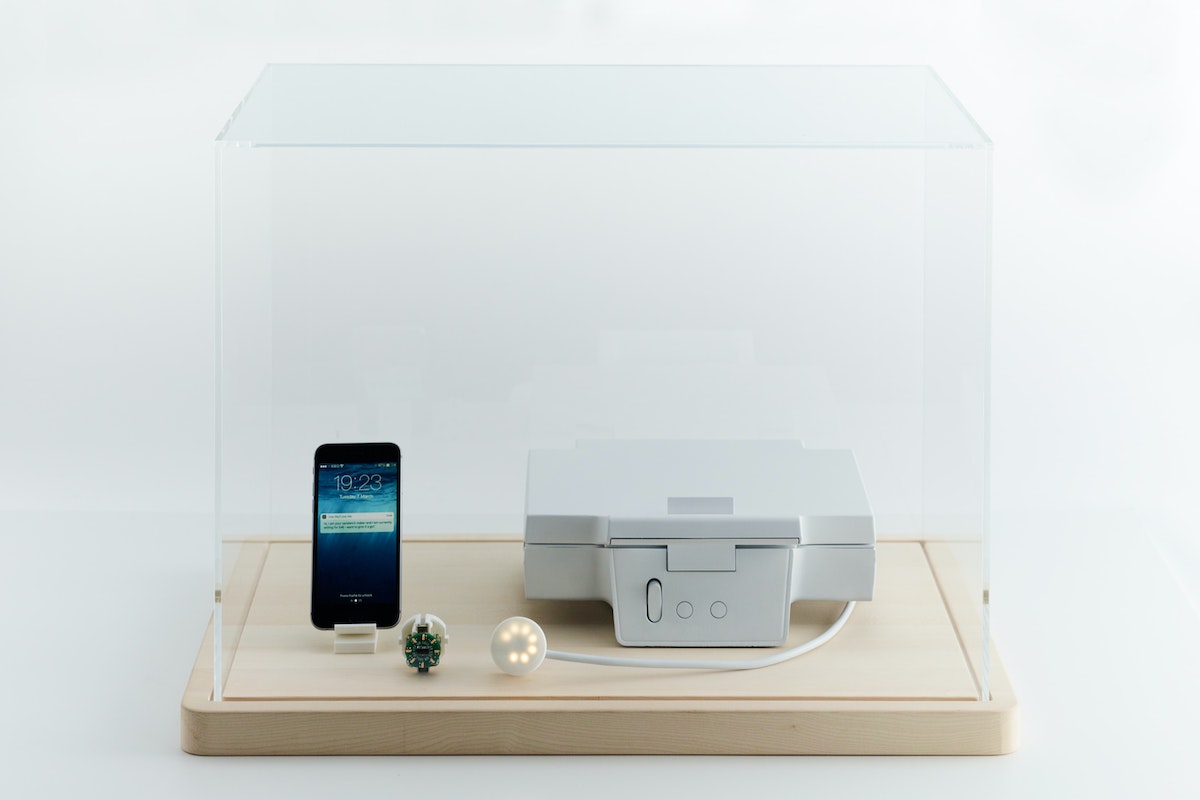
What if your household gadget sold itself?
Use Me/Lose Me is a usage-monitoring service that aims to get the most out of household appliances—even if that means changing owners. Using a web-connected chip, Use Me/Lose Me sends a text message to a gadget's owner quoting the latest price they could get for selling it. If the user wishes to sell, they can simply reply to the text message, which automatically uploads the item to an online auction site, arranging the entire sale, payment, and shipping.
We had a lot of fun pairing circular design principles with user needs. By exploring “what if” scenarios, we believe we have found more elegant solutions to the traditional linear path of make, use, dispose.
Of course, moving to a Circular Economy won’t be easy. Consumerism is a huge, gnarly, systemic problem, driven by shifting business models. But change will be driven by people who choose to buy products and services not because they’re circular, but because they are better.
We hope Never Finished feels like a gauntlet thrown down to you designers out there. Let’s make things that are better for the user, better for business, and better for the planet.
Already working on something circular? Tell us more!
What do you do with your stinky, worn out sneakers? How about that empty lipstick case? If you answered, “Toss it in the trash, of course!” you’d be completely normal. What other choice do we have?
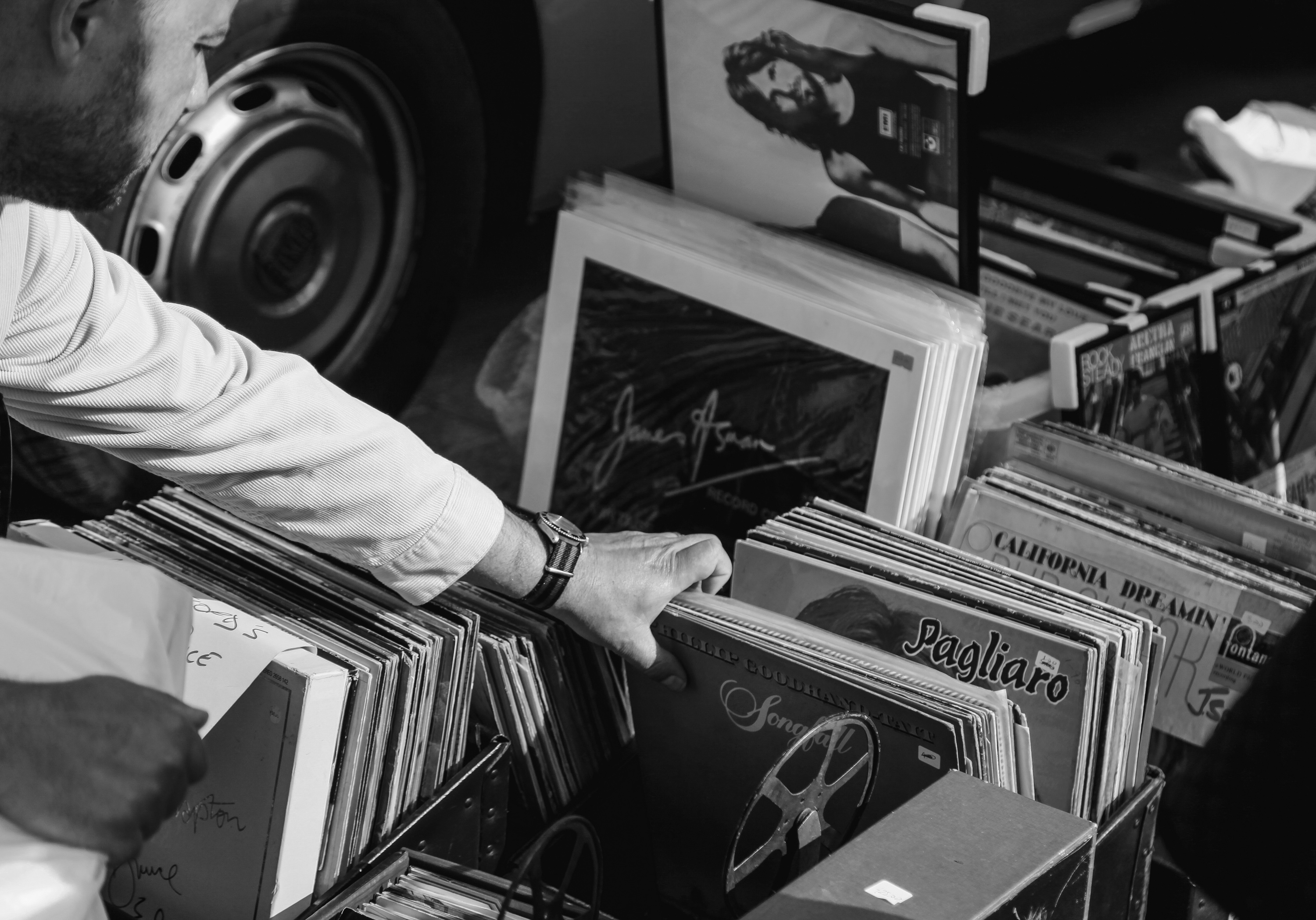
Designer’s Playlist #8
A few things IDEO SF's Katie Clark is digging right now
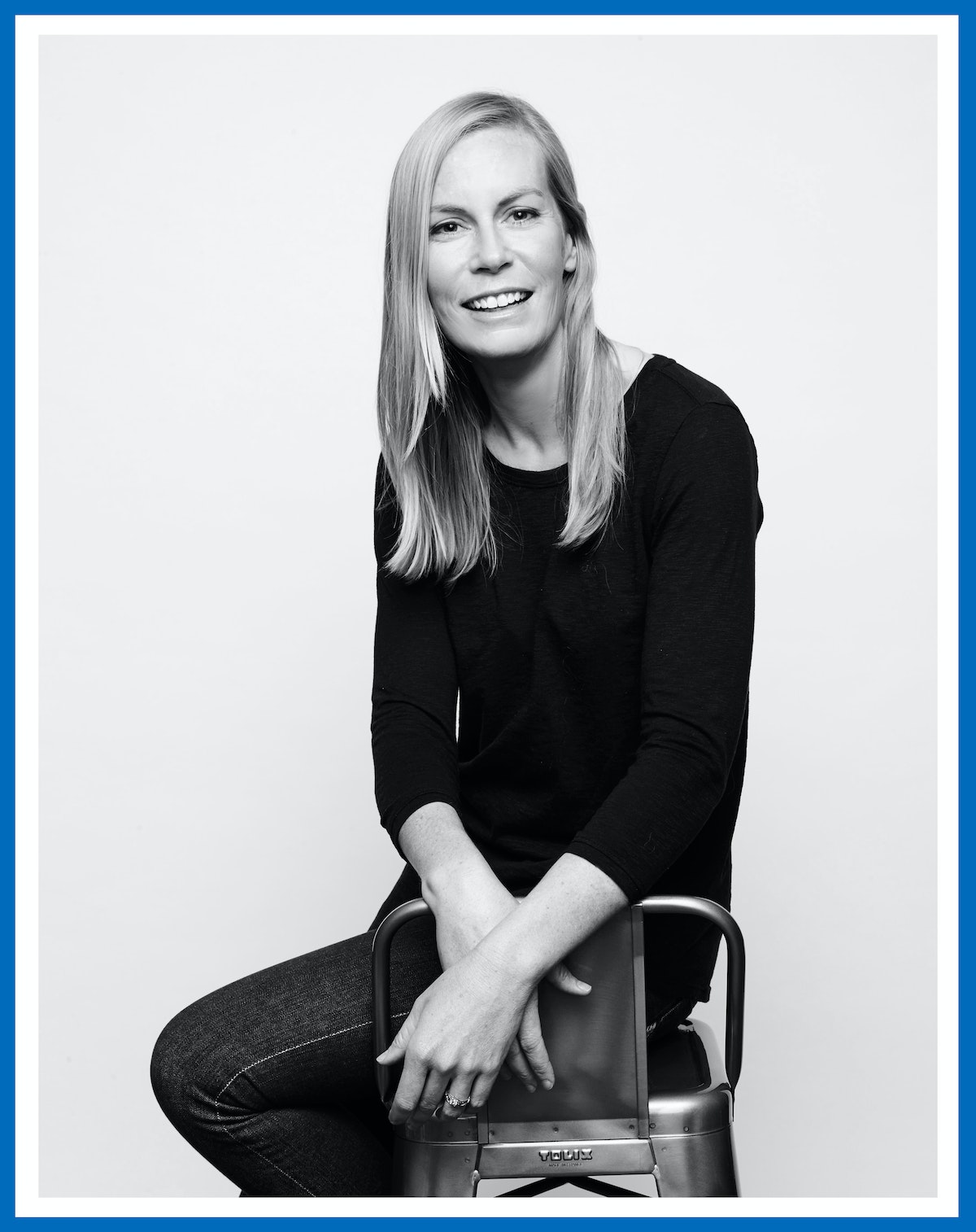
Name: Katie Clark
Location: San Francisco
Role at IDEO: Digital Marketing Director
Joined IDEO: 2003
Twitter: @katieclark
Instagram: @katieclark
Titillating Fact: I once ran a marathon on what turned out to be half a functioning heart. I had heart surgery one month later—good as new!

1. NASA Social
I grew up in Central Florida watching more space shuttle and satellite launches from Kennedy Space Center than I can count. We had astronauts and astrophysicists as neighbors, and I had some pretty great show-and-tells in my day. I can still remember watching the Challenger explode and knowing instantly, even at age 6, that something was wrong.
Needless to say, I’ve had a lifelong obsession with NASA and became involved with NASA Social events a few years ago. The event series is NASA’s way of emboldening and educating social media-savvy citizens around events, launches, and the incredible work NASA does. The ripple effect means more and more networks learn about the variety of things happening throughout the space nerd universe.
Here’s how it works: You apply for specific events and, if approved, you receive press-equivalent access—a.k.a. “social media credentials”—to briefings, tours, NASA personnel, etc. I even got to meet Charles Bolden at the last one I attended in Lompoc, California!
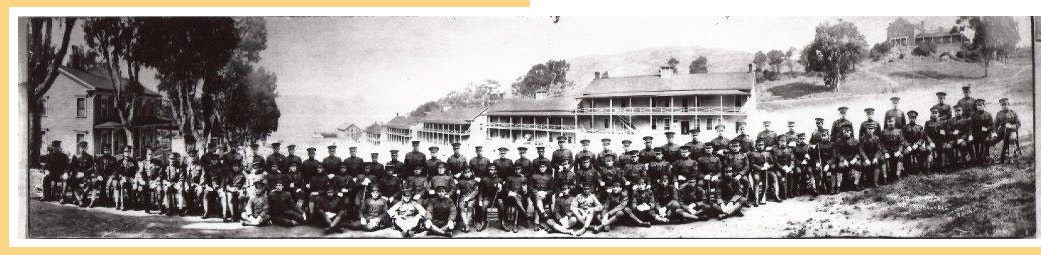
2. Angel Island
Growing up in the U.S., kids are steeped in the history of Ellis Island, but Angel Island seems to be its unknown little sister. This is one of my favorite places to visit in the San Francisco Bay Area for a number of reasons, and yet, many Bay Areans have never even heard of it, even though it’s right next to Alcatraz. I recently became an Angel Island Conservancy board member, so I like to evangelize its awesomeness every chance I get.
The history of this island is incredibly fascinating (and at times fraught), from its time as an Immigration Station carved with Chinese poetry to its service as the Cold War-era Nike Missile launch site. Angel Island even has an endemic mole, found nowhere else in the world, aptly named the Angel Island Mole. You can camp there overnight or just come for a day and finish your hike with a beer, a cheese plate, and live music at the Angel Island Cafe. Get on the boat!
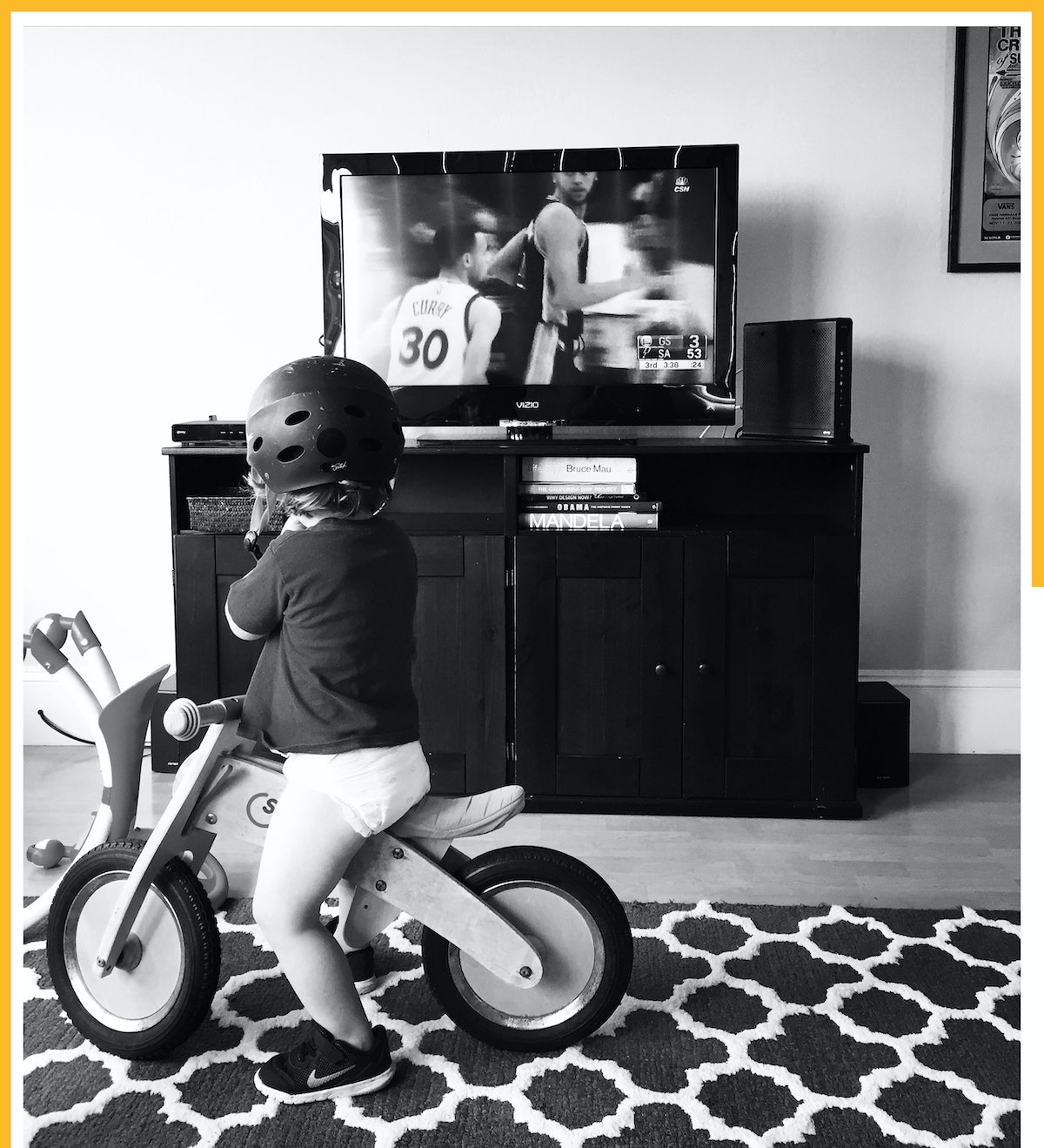
3. Dub Nation
If you've heard of the NBA, you’ve heard of the Golden State Warriors. I know that loving the Warriors doesn't make me special, but my husband and I have been fans since long before they were considered a good team. (Read: we could actually afford tickets back then). Here are a few things that make this team inspiring:
- Head Coach Steve Kerr. This man has been through some of the most earth-shattering events anyone can imagine, and is still one of the most inspiring leaders in professional sports. To boot, he and his family are active in several sport-related nonprofits including Peace Players International. As I write this, he’s suffering from major post-surgical complications and his team’s response has been nothing short of tear-jerking.
- Point Guard Stephen Curry. If calm and collected had a name, it would be Steph Curry. His pregame tunnel shots alone are worthy of a few paragraphs, but I’ll just let you watch this (he does this before every game). You can catch a young Steph and his former-NBA dad in these clairvoyant 1990's Burger King commercials.
- Dub Nation. I'm a former college athlete who grew up in the football-crazed American south, so I thought I knew something about intense sports fans. Nope. Warriors fans (we call ourselves “Dub Nation”) are among the coolest humans I’ve ever met. I still love this 2013 article about jumping on the Warriors bandwagon. Some of it is still applicable today, particularly Steph Curry’s mouthpiece chewing, so it's not too late to jump on yourself.
Header image by Clem Onojeghuo.
In this series, we ask IDEO designers to share the stuff they're digging right now—tools, books, music, sites, people, places—so you, too, can drink from the fount of inspiration bubbling up here. This week's guest star: Katie Clark.
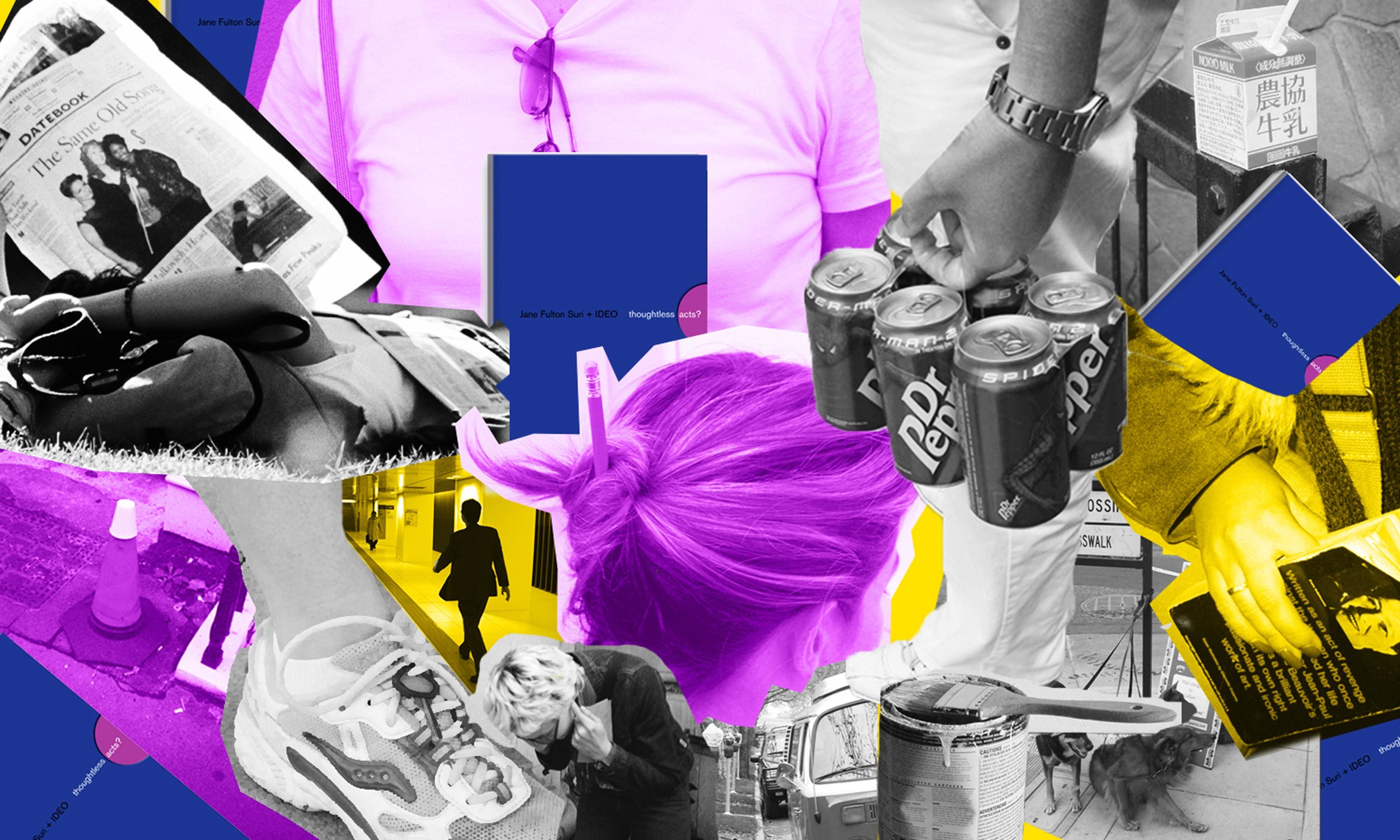
Thoughtless Acts: Urban Summer
Thoughtless Acts: Urban Summer. The intuitive ways we adapt and react to things in our environments

I took this picture last summer while I was back home in Istanbul. Summer in Istanbul is very, very hot. Sometimes the mercury in the city gets up to 113F. It’s pretty unbearable.
On toasty afternoon, I took this picture of a bunch of people capitalizing on the shade in a park to avoid the sun. At that time of day and year, the shadows defined the usable space within the park.
From a design researcher’s perspective, this picture says so much about how the sun and shade affect how we interact with cities and spaces. Sometimes design is all about constraints.
It’s a great reminder of all the factors to consider when we design for urban environments. Or a great reminder that nature is a designer, too.
Human-centered design requires us to observe human behavior with beginner's eyes, so that we can spot the innate ways people interact with the world around them. We call these intuitive and unconscious reactions thoughtless acts, and IDEO designers collect photos of them to inspire the invention of new products, services, and experiences.

Lindsey Turner
I’m passionate about building brands, products, and experiences that help organizations show up with meaning and momentum.
I help organizations cut through complexity by shaping how they show up, through brand strategy, identity, and storytelling.
Working at the intersection of brand and business, I bring an editorial eye and a bias toward making—turning ideas into tangible experiences that people can understand, trust, and believe in.
My work spans government, healthcare, financial services, media, and consumer goods, from launching Gen Z-focused ventures to building innovation labs and reimagining legacy brands. I relish moments of ambiguity and enjoy translating across teams, perspectives, and priorities to move ideas forward.
I started my career in editorial and digital design, shaping cross-platform experiences and identity systems in publishing and agency environments. That foundation still shapes how I work today: I’m detail-oriented, collaborative, and overreliant on the Oxford comma. I hold a BFA in Visual Communication from the School of the Art Institute of Chicago.

Rachel Young
My work helps organizations see who their products aren't working for—and build the will and the tools to do something about it
For 25 years, I've asked the same question: Who does this design exclude—and what are we going to do about it?
My work spans human-centered strategy, inclusive design, and qualitative research, with clients ranging from Microsoft, Google, and Verizon to the National Science Foundation, and San Francisco Unified School District.
Before IDEO, I taught elementary school in East Palo Alto and spent a decade doing design work with social service organizations—where I learned firsthand what it costs people when systems are built without them in mind.
I am currently writing User Error, a nonfiction book about digital access and the design decisions behind it. I live in Oakland, California.

Brian Pelsoh
I lead with craft, ensuring our work is creatively excellent: rooted in deep human insight and imagination, while also grounded in the realities of business and technology.
My expertise spans brand, communication, and product design across tech, education, the arts, and social impact.
I believe great work demands both high-level vision and obsessive attention to detail, and only happens through collaboration.
I bring an inclusive, hands-on approach and a deep understanding of business, which enables me to consistently deliver excellence while always asking why.
Before joining IDEO, I worked at the brand firms Pentagram and VSA Partners. I began my career as a designer, leading teams at the School of the Art Institute of Chicago and the Milwaukee Art Museum. I hold an MFA in graphic design from Maryland Institute College of Art and a BFA in communication design from the Milwaukee Institute of Art & Design, and have taught at some of the best design schools in the US.

Tony Wong
I am responsible for IDEO’s long-term success in China and working with clients to use design as a tool to enable growth.
I am responsible for IDEO’s long-term success in China and working with clients to use design as a tool to enable growth. Specifically, I have helped Chinese companies design holistic brand solutions through the development of their products, communication, services, and innovation teams, and I have helped multinationals expand their presence and influence in China.
I advise global leaders on developing China-led innovation and capabilities.
In over 15 years in IDEO Shanghai, I have worked on projects that use design to elevate the quality of the experience of healthcare products and services, streamline processes that increase productivity, create spaces and programs that promote and enable inclusive communities, and build next generation mobility solutions that are planet-positive.
Before joining IDEO, I worked at Philips Electronics and the Electrolux Group in Italy, the Netherlands, and Singapore on a number of breakthrough commercial products. I am a member of the Young President Organization in Shanghai.

How to use AI as an editor, not a writer
Ed White shares how he uses AI as an editor—not a writer—to sharpen storytelling, rehearse ideas, and preserve the productive friction that makes creative work better.
Ed White has a rule he's tested on his own writing: hold yourself as the writer, and let AI be your editor. Ed is a Senior Design Director at IDEO's London studio, where he co-leads the firm's AI portfolio across Europe. Before IDEO, he spent 12 years as a writer and editor at the Financial Times, Wired, and Contagious. So when he talks about when to use AI for storytelling and when not to, it comes from two decades of crafting his storytelling skills.
In this episode, Mina Seetharaman talks with Ed about two specific tools he uses to keep AI in an editor's seat: a "roasting agent" prompted to critique his drafts without any sugarcoating, and a simulated audience he rehearses pitches on before the real thing. They also get into what Ed is hearing from design leaders at Anthropic, Lovable, Shopify, and Google Creative Lab about how creative work is changing, and why he thinks the friction of writing something yourself is worth protecting rather than automating away.

Building a personal AI for the messiness of life: Sida Li
Becca Carroll talks with Cue co-founder Sida Li about designing a personal AI for the messiness of everyday life—not just work. They explore how Sida stays anchored to human needs while navigating fast-changing technology, product tradeoffs, business-model experimentation, and the realities of building an AI company today.
Most AI products today are built for work—a space with clear problems and established systems. One founder noticed a gap: personal life is messier, harder to systematize, and mostly left behind by the AI boom. So she built Cue, a personal AI that lives inside iMessage and group chats, to go where the other tools haven't.
In this episode, Becca Carroll, IDEO's Chief Strategy Officer, talks with Sida Li, co-founder and CEO of Shared Context Lab, about staying anchored to a human need while the technology around her keeps changing shape, why she treats her business model with the same rigor she'd bring to a product, and what it feels like to build a company at this particular, disorienting moment in AI.
The conversation also gets into how Sida makes design decisions: the language Cue uses to describe itself, the tradeoffs behind building inside iMessage instead of a new app, and a real story about a business idea that didn’t pan out.
This is the second in a two-part series profiling founders from IDEO's Startups-in-Residence program. The first conversation is with Johannes Seemann, founder of Sooner, on designing GenAI for the emotional side of money.

Designing GenAI for the emotional side of money: Johannes Seemann
Designing financial tools around the feelings that shape money decisions.
Most personal financial tools are built to run the numbers and optimize towards a budget. While that works for some, most people experience money as a lived relationship that does not neatly fit into a spreadsheet. Johannes Seemann and Becca Carroll discuss why money is emotional before it is mathematical, and what a human-centered approach to building a generative AI financial product looks like in practice.

The curious leader's edge in uncertainty: Scott Shigeoka
How genuine curiosity helps leaders navigate uncertainty with greater confidence.
Mina Seetharaman talks with Scott Shigeoka, author of Seek and Head of Curiosity Cultivation at the Eames Institute, about what distinguishes genuinely curious leadership from performative curiosity, how power dynamics shape curiosity, and why practicing curiosity can restore energy rather than drain it.
Looks like you might be in search of something very specific?
Or reset the filters above and try another angle.
Here’s some random inspiration

Podcasts about creative leadership

Articles about the power of prototyping