
Culture as catalyst
Moderna defines its Mindsets to preserve its future.
Many companies view culture-building initiatives as nice-to-haves. At Moderna, Mindsets are a business imperative, crucial to its plans to develop breakthrough products quickly.
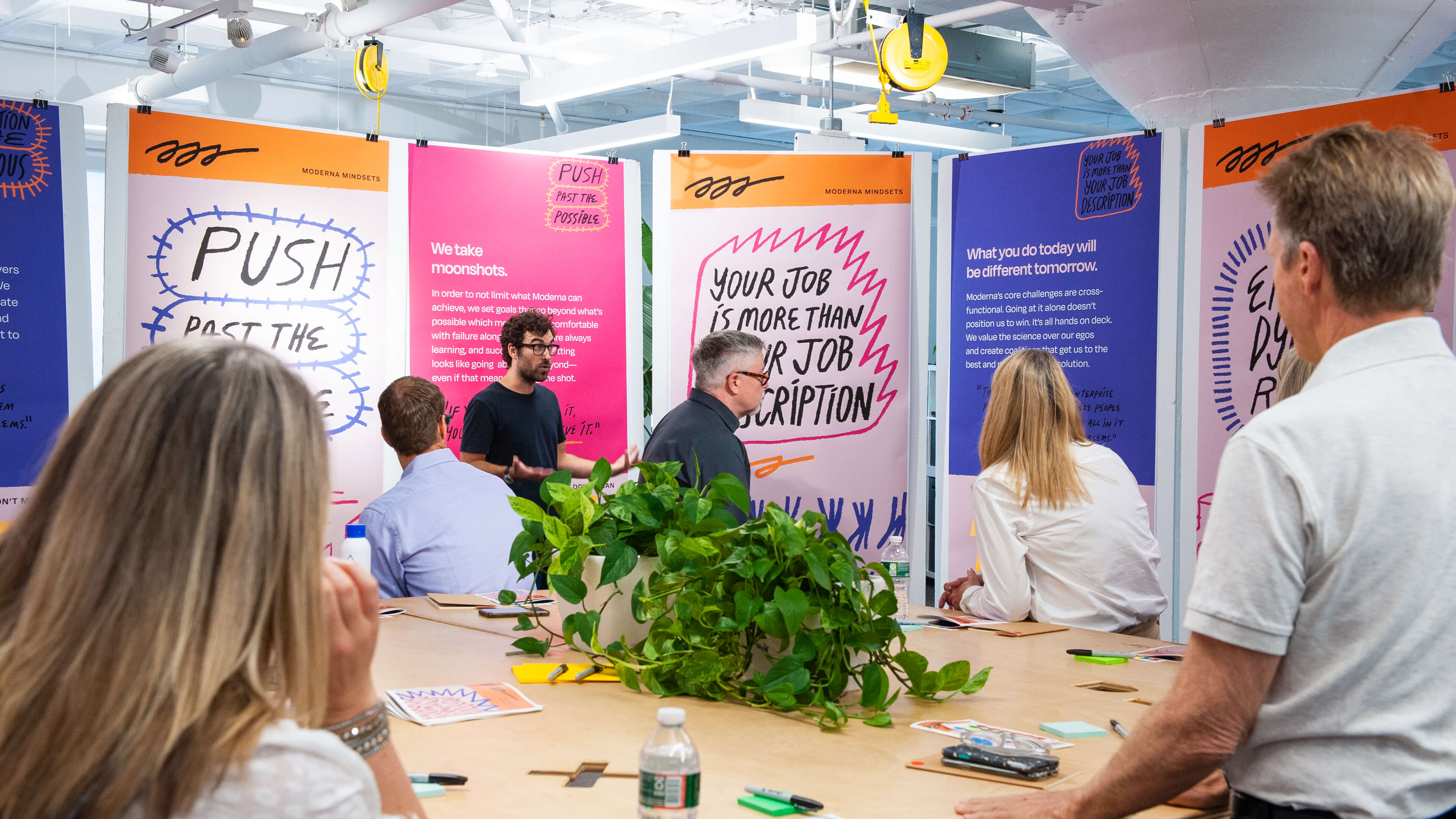
For companies working on solutions as vital as a COVID-19 vaccine, delays and mistakes don’t just mean missing a product launch date—they’re life-or-death, and on a large scale. Moderna had to ensure that its employees knew how to make the right decisions, evaluate risk, and move quickly—even if they came from organizations with more bureaucracy and less risk tolerance. In 2021, IDEO sat down with longtime Moderna veterans to hear stories about moments that exemplify the company's culture, like the day a critical piece of equipment arrived but was too big to fit through the door. Taking it apart would have added days to their timeline. So employees took sledgehammers to a wall instead. Stories like this one fed into the crafting of the list of Mindsets, such as “Act with urgency: Action today compounds the lives saved tomorrow” and “We behave like owners: The solutions we’re building go beyond any job description.”

To gather feedback, the team shared the draft Mindsets with a diverse set of employees—new hires, veterans, folks already closely aligned with the culture, folks for whom it wasn’t the most natural fit, and a plethora of employee resource groups. CEO Stéphane Bancel and the leadership team took crafting and iterating on the Mindsets very seriously, wordsmithing and tweaking them with the team until they were ready to share them officially. Now, new hires learn about the company’s Mindsets in Moderna ONE, an onboarding process that IDEO helped revamp, while existing employees attend a workshop to ensure everyone at the company knows not only what to do but also how to do it effectively. In a matter of weeks, IDEO helped Moderna codify its culture for employees and set the company up for continued success. Moderna continues to embed these Mindsets across the entire employee lifecycle to systematically scale its culture.
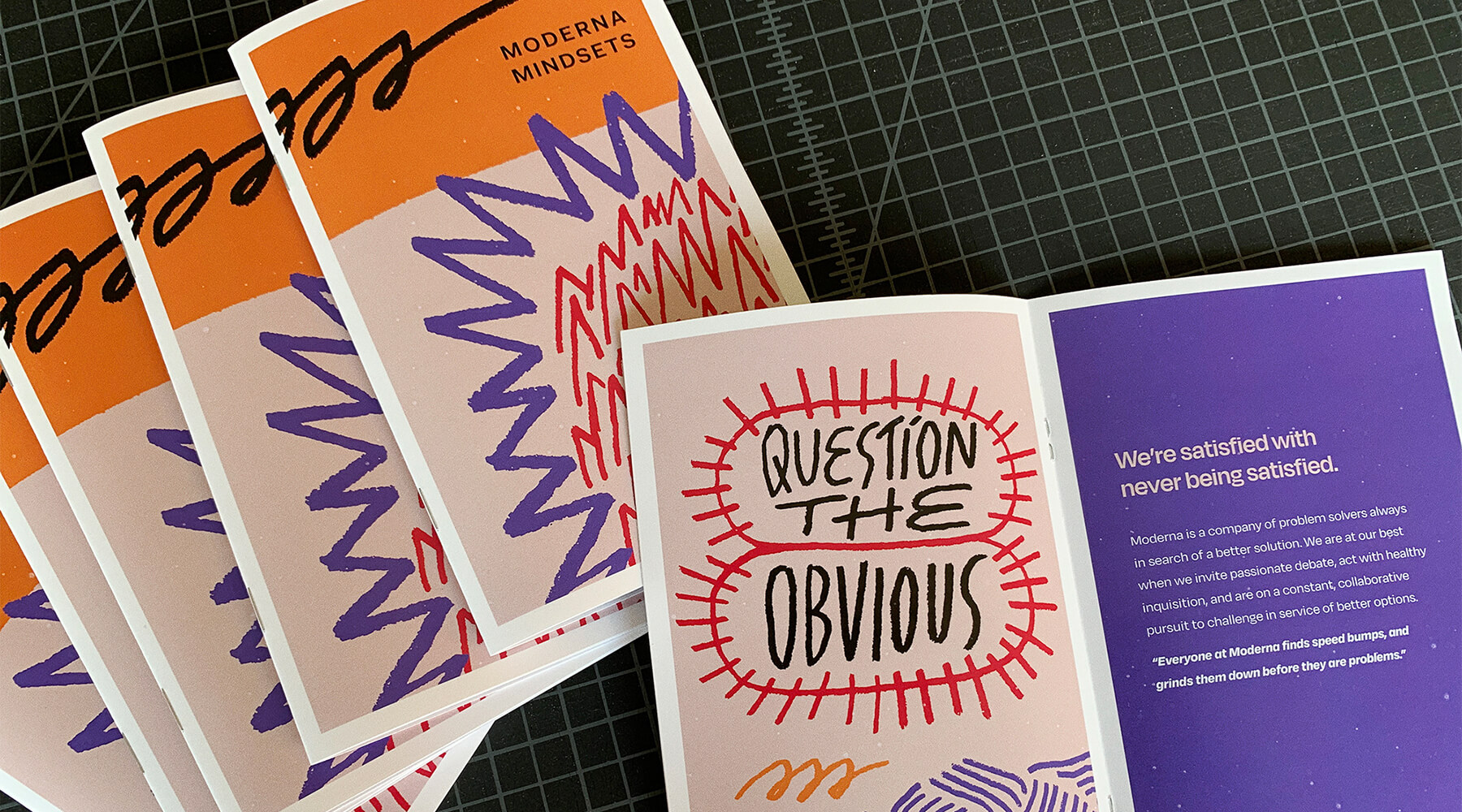
For employees new and old, the clarity of the Mindsets has made it easier to understand expectations and to understand the company itself. Long-term veterans responded with comments like, "These really help explain why we're working this way,” while one newbie said, "It feels like a homecoming to hear the culture that we’re trying to bring through.” But more than just solving a cultural issue, the new Mindsets have fulfilled a business imperative: Holding on to the secret sauce that made Moderna successful to begin with, setting the stage for its next five years of breakthroughs.
When the World Health Organization (WHO) declared the COVID-19 health crisis a pandemic in March of 2020, Moderna had fewer than 1,000 employees. Four years later, it’s more than five times the size.
Ranked #1
BioSpace Best Place to Work, large company in 2024
Ranked #6
Boston Consulting Group’s 50 Most Innovative Report in 2023
Ranked #4
Deloitte’s Technology Fast 500 List in 2023
Mental health, co-designed
Kooth partners with young people to create Soluna, a mental health resource for California youth.
Increasingly, digital spaces are proving detrimental to youth mental health. By co-designing with youth, Kooth and IDEO set out to flip the script, creating a positive digital space for young people to safely explore their mental wellbeing.
When Kooth, IDEO, and Blackbird, IDEO’s longtime development partner, first started working on the project, the window of opportunity was narrow, and the stakes were high. The group was up against a nine-week deadline to create a working proof of concept app. Also on the line: a $188 million contract with the Department of Health Care Services (DHCS)—one that would open an entirely new line of business for Kooth.
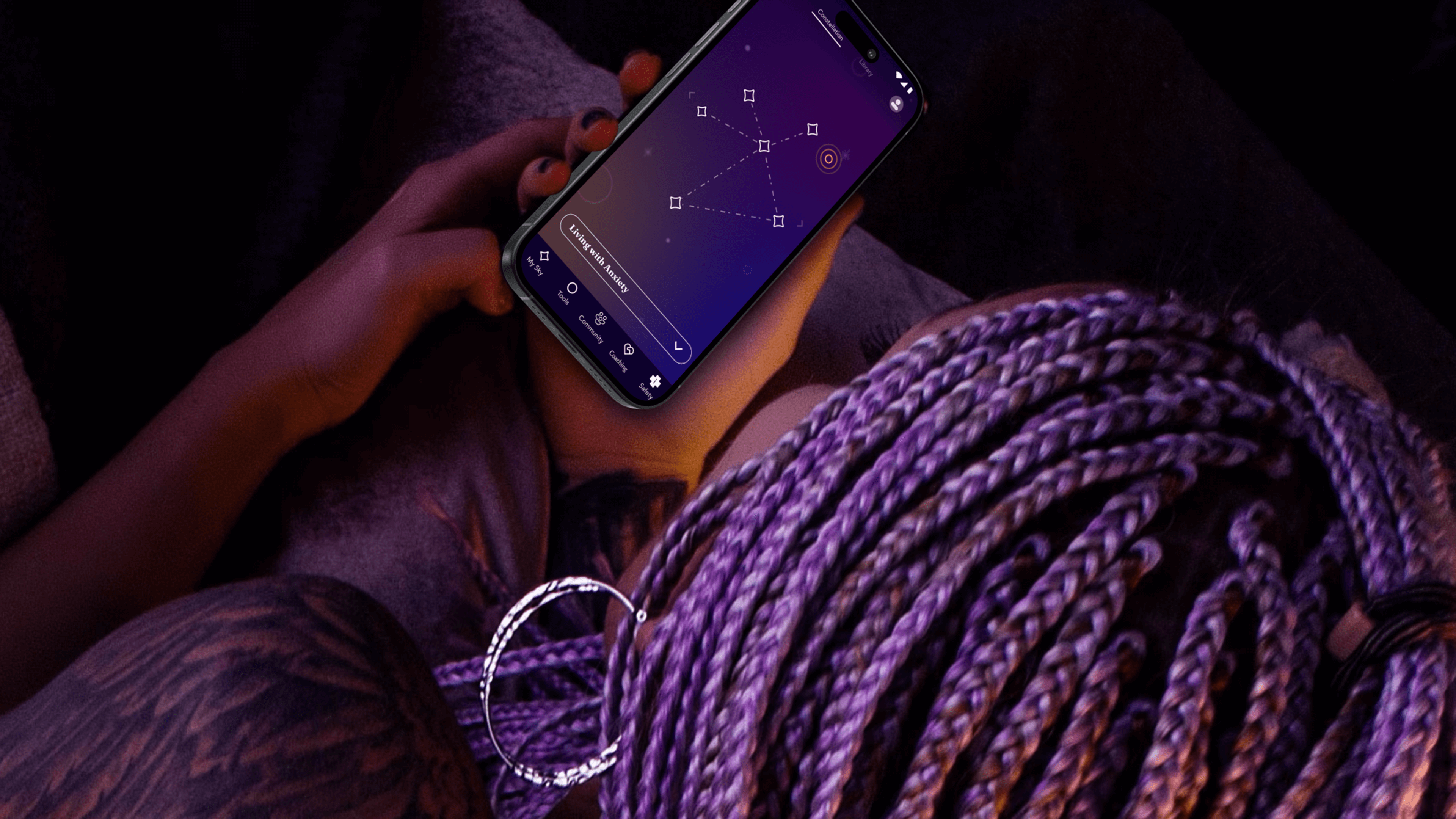
The app needed to do more than demonstrate functionality—it needed to prove its value. To ensure that they were creating an asset that truly fit the needs of young people, the team turned to an initial cohort of 13-25 year-old co-designers who explored early features, created video diaries, and shared their questions about and experiences with mental health. These young people often gravitated toward self-service tools that helped them take action based on their feelings. With their feedback, the team created new expressions of clinically-validated behavioral health tools like journaling, breathwork and white noise—and built novel tools, such as Starboard, an expressive drawing tool and a nod to art therapy.
The team took inspiration from content the co-designers liked to consume, such as story-driven video games that enable freedom of exploration, deepened by a unifying mythology. That led them to a constellation theme, which made the experience more intriguing and playful. The co-designers also recommended a dark color palette, because they preferred exploring the app at night.
With these insights, the team refined the proof of concept, and then conducted a one-week pilot with another 50 young people across California. Their positive feedback gave the State the confidence to invest in a $188 million, four-year contract for Kooth to bring the app to a platform at scale.
Over the next year, the team engaged another 150 young people to help design, shape, and test the app. At the same time, Kooth and IDEO created a clinical oversight group, which included a pediatrician, therapists, and other clinical specialists. This group anchored the platform in the practices of Acceptance and Commitment Therapy (ACT), cultivating psychological flexibility—the mindful acceptance of positive and negative emotions. Young people are invited to complete short reflections and surveys throughout their journey with the app, which includes rigorous, science-backed measurements to assess the therapeutic benefits.
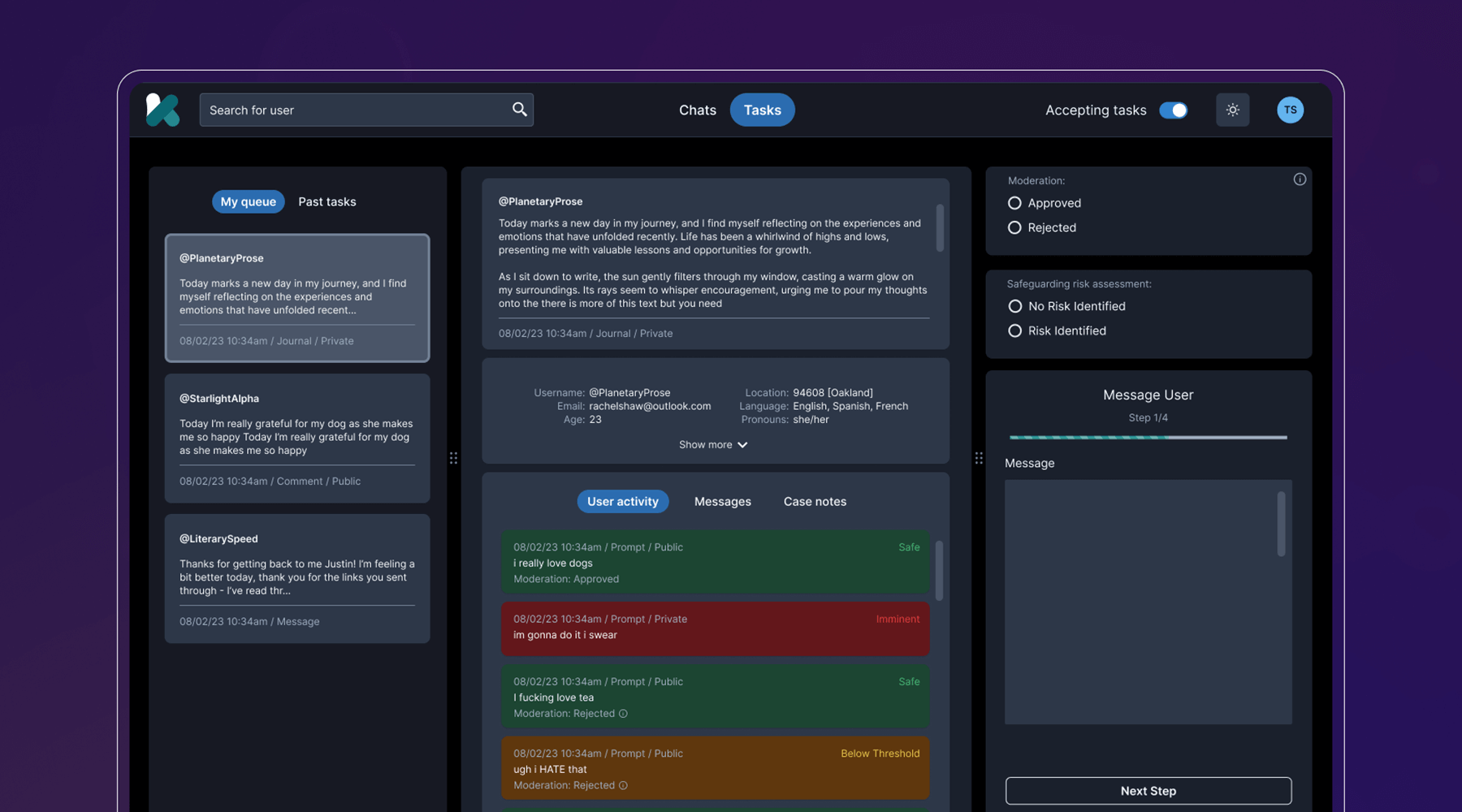
Behind the scenes, the team developed a clinical-facing service and digital platform that empowers Kooth’s peer specialists, social workers, community curators, and clinicians to support the youth experience, all while protecting privacy and confidentiality. They also navigated a complex landscape of state requirements and government legislation, ensuring that the platform could cover topics like substance abuse and gender identity, and that users could access coaching within 24 hours, and choose from a diverse set of experts.
The last step was to select a name that worked across multiple languages, trademarks, and competitor branding, and didn’t come off as a mental health service, something the youth co-designers believed was critical. IDEO and Kooth landed on Soluna, a name that alludes to the app’s presence in both the bright (“sol” for sun) and the dark times (“luna” for moon).
Now, Soluna is available for free to all youth in California, and the state has set ambitious targets for reaching all young people at scale. Soluna is a living platform that will continue to receive product and design updates for years to come, all deeply rooted in youth co-design.
The US Surgeon General named mental health “the defining public health crisis of our time,” and cited social media, online bullying, and the isolation exacerbated by the COVID-19 pandemic as major drivers that have significant negative outcomes for youth.
In California alone, more than 284,000 youth cope with major depression. 66% of kids with depression do not receive treatment. Between 2019-2020, the suicide rate for kids ages 10-18 increased by 20%.
In 2022, California Governor Gavin Newsom’s Master Plan for Kids’ Mental Health set aside $4.6 billion to increase access to mental health and substance abuse support, the largest commitment to youth mental health ever made by a state.
94%
of proof-of-concept app users would recommend the Soluna app to a friend, and believe that engaging with the app would be a positive addition to their daily/weekly routine
6 million
young people in California had access to Soluna at launch in January 2024
A more comfortable Pap smear
Teal Health creates a system for at-home cervical cancer screening.
Creating a better cervical cancer screening experience is an important mission, but also a challenging one. Not only would Teal have to address the regulations that face healthcare device companies, it would also need to build a comprehensive telehealth platform and a physical product—a wand that could easily collect an adequate cell sample, even in the hands of an untrained person.
The first challenge was to create the wand. The device would need to do a lot: It’s impossible for a person to see their own cervix, so the user would have to be able to find the cervix blind, collect the sample themselves, and remove the wand from their bodies without contaminating it on other parts of their anatomy. Because this is something users are likely to do in their bathrooms, where there is no space to lie down, they would need to be able to use the device while standing—and with one hand. From the beginning, the IDEO team set out to design functional, testable prototypes to make sure the idea was viable, and incorporate diverse voices into the research process, including trans, minority, and disabled women.
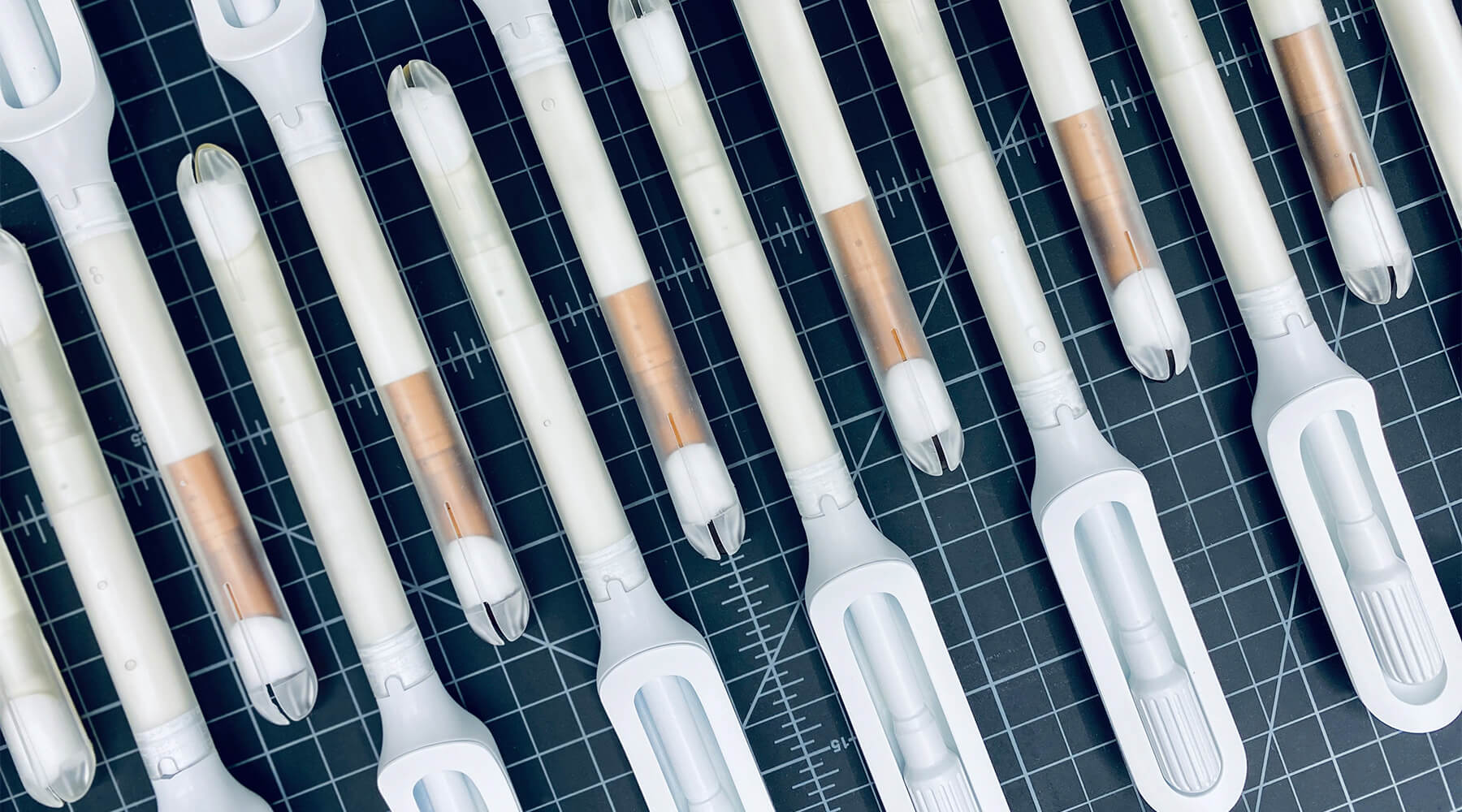
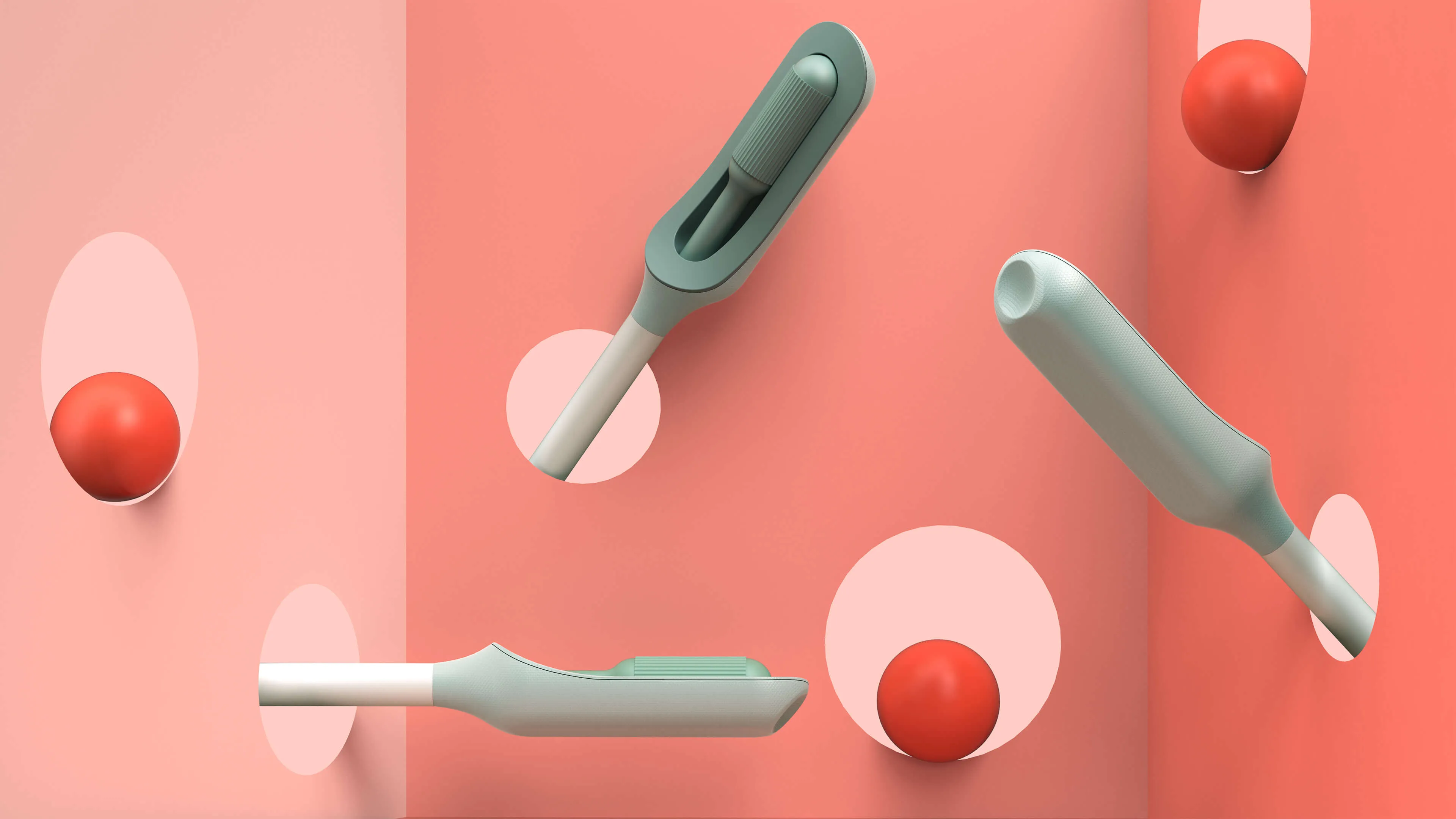
Because the product is meant for people who aren’t medical professionals, the team worked to design something as simple, intuitive, and unintimidating as possible. They used a 3-D printer to create multiples of every prototype, autoclaves to make sure that the designs they were creating were sterile, and leaned into shapes women are already used to, like the cylindrical shape of a tampon. The wand they created has that same basic form, but with a soft sponge that the user can deploy with the turn of a dial to collect the sample, then close to protect it from contamination on the way out of the body.
With working prototypes in hand, Teal set out to test their efficacy. In an initial study with 220 participants varying in age, race, socioeconomic status, and geography, Teal found that not only were participants able to successfully self-collect samples, they also preferred them over the speculum, the device doctors typically use during a screening. Some 92 percent said if they knew the results were equal they would prefer self-collection, while 87 percent reported they would stay current with screening if Teal Wand was an option. Self-collection took the vast majority under two minutes to complete, and 97% of study participants reported it was very easy or easy to use. The Teal Wand recently received a patent for its unique design.
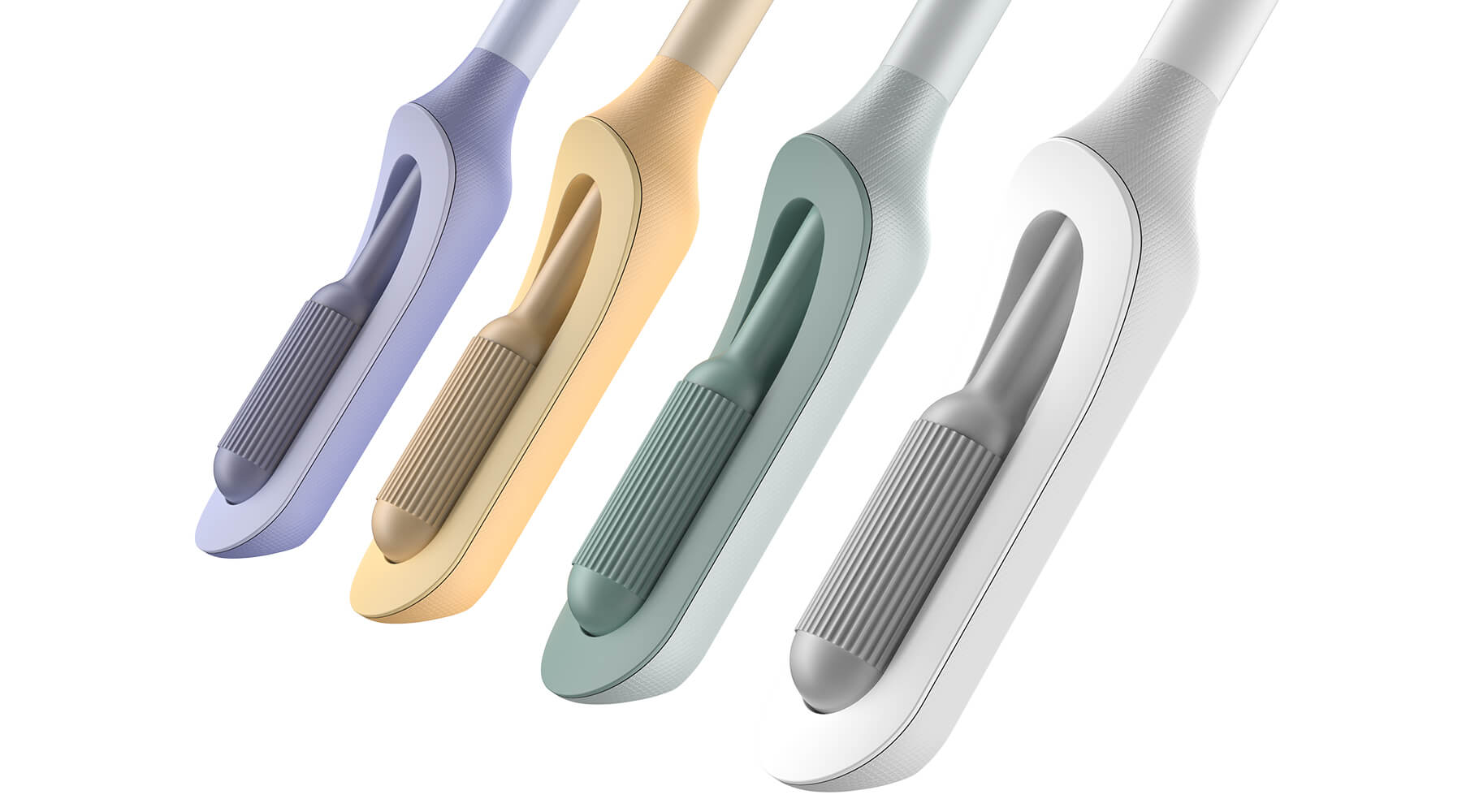
The IDEO team also worked on the packaging and unboxing experience, which plays an important role in supporting the user through the self-screening process. The team built in thoughtful design cues to give users reassurance that they are using the wand correctly, and to provide the same level of confidence they would have in the results of an in-clinic screening.
In January 2023, Teal raised $8.8 million in a seed funding round from Serena Ventures, Emerson Collective, and Metrodora. Later that year, the company launched a nationwide clinical trial with leading health organizations including Johns Hopkins University, Yale University, the University of Colorado, and Washington University, among others. In 2025, the Teal Wand became the first FDA-authorized device for at-home cervical cancer screening, with virtual medical provider support, and became available in all 50 states. Due to soaring consumer demand and increased insurance coverage starting in January 2027, Teal Health secured $22 million in Series A funding to expand access to the Teal Wand. It’s an enormous step toward the company’s North Star: catching cervical cancer earlier and saving lives.
Cervical cancer is nearly 100% preventable when it’s caught early, yet one in four women in the US are not up to date on their screenings.
More than 12,000 people in the US are being diagnosed with cervical cancer every year, and more than 4,000 people die of the disease, which disproportionately impacts Black, Asian, and Hispanic women.
More than half of cervical cancer cases are found in women that are not up-to-date on their screenings.
$22M
raised in a Series A round to expand access to the most accurate FDA-authorized at-home HPV cervical cancer screening
97%
of clinical study participants said the Teal Wand was very easy or easy to use.
87%
of participants said they would be more likely to stay current with screening guidelines if Teal Wand was an option.
94%
of participants said they would choose to collect their own sample from home rather than the current standard of care where a clinician collects it in-office.
Amplifying a movement
Cities United rebrands to create safe, healthy, hopeful communities for Black men and boys.
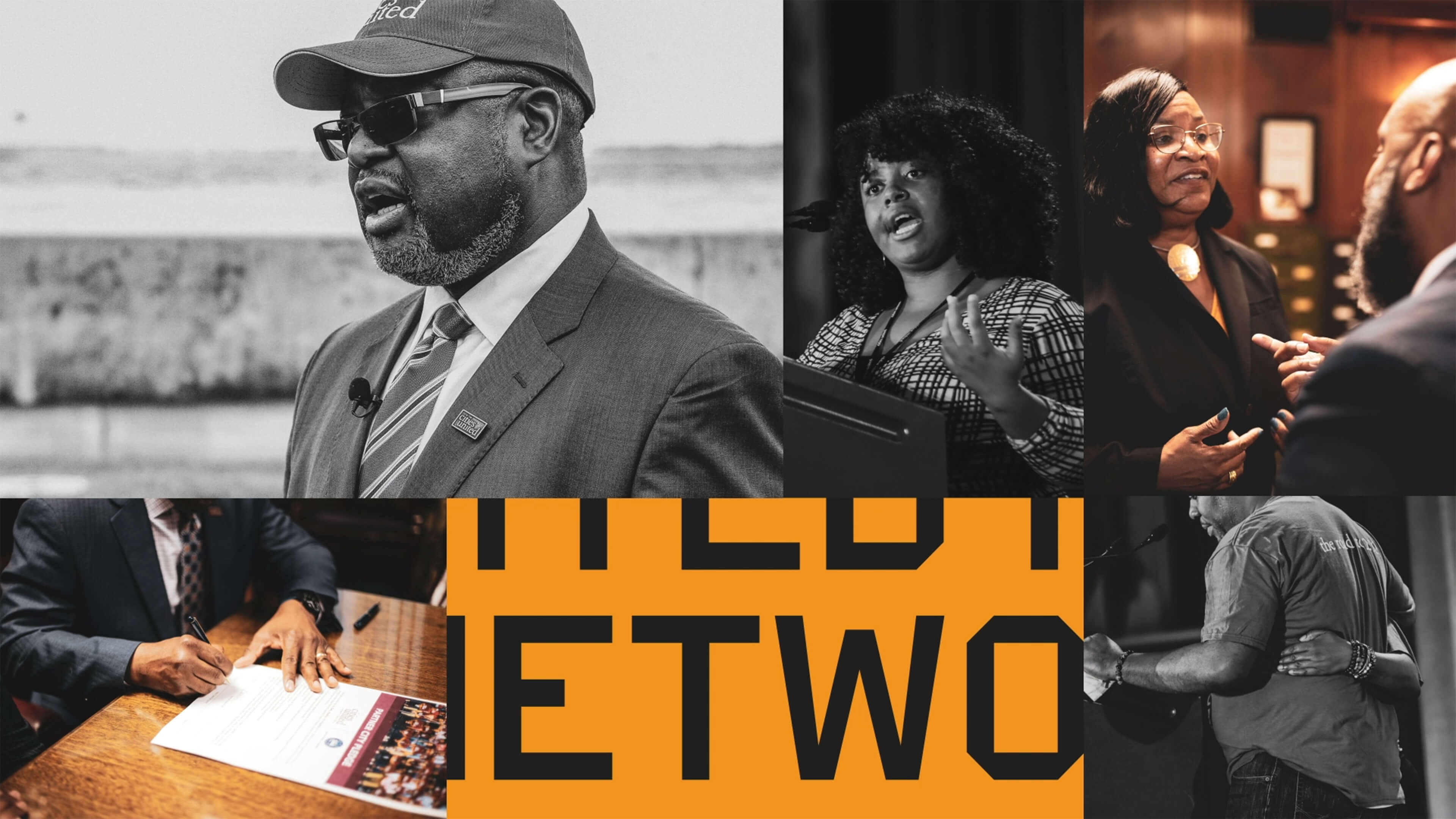
Cities United already had a strong foundation with its stated mission, vision, and values. IDEO brought those to life with a new visual and verbal brand identity system that celebrates Cities United’s inclusive approach to building relationships and reimagining public safety.
To help Cities United with its verbal identity, the IDEO team defined the organization's voice, tone, and key messages, making it easier to tell its story more consistently and clearly, a crucial step toward engaging stakeholders.
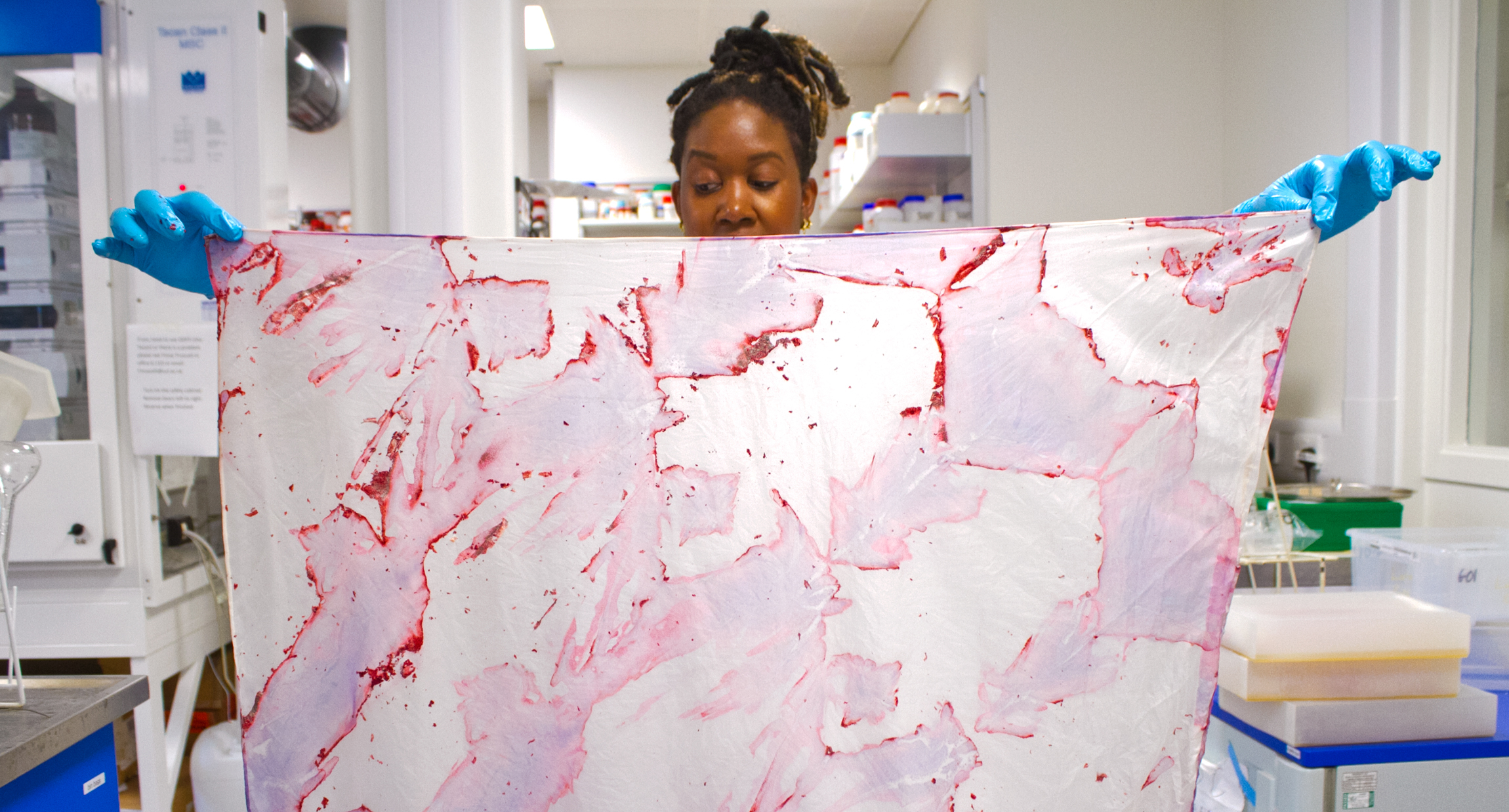
To define the new visual identity, the team created a new logo, a letter C composed of interwoven shapes that represent the three tenets of their vision—“safe, happy, and hopeful;” a new design language that references city grids; and a typographic system anchored by the typeface VTC DuBois, inspired by W.E.B. DuBois’s own custom lettering and designed by the Black-owned Vocal Type Co. The team also designed a color palette that embodies the textures of city life with hues reminiscent of asphalt, sunrise, and brick.
To amplify the refreshed branding, the team designed a new responsive website, citiesunited.org. The intuitive site shares the organization’s mission, resources, ongoing projects, and partner network, inviting stakeholders to join in their transformative work. IDEO also created a video to humanize Cities United’s mission and showcase its nationwide impact. It underscores the unity, resilience, and hope embodied by the organization through a chorus of voices.
This comprehensive rebranding widens Cities United’s reach and impact, helping the organization share its goal of creating safe, healthy, hopeful communities for young Black men, boys, and their families, and reintroduces the organization to a national audience.
The Cities United work was supported by IDEO’s Racial Justice Impact Fund, part of a commitment IDEO made in 2020 to address systemic racism and advance equity within our own organization, our client work, and beyond.
Cities United is committed to reducing the epidemic of homicides and shootings among young Black men and boys ages 14-to-24 by 50%.
Between 2009 and 2019, the number of Black children who “did not go to school at least one day in the past month because they felt unsafe at school or on their way to or from school” increased by 84%, according to Cities United.
Homicide is the leading cause of death for Black men and boys from birth to age 44, according to the Centers for Disease Control and Prevention.
2023 SF Design Week Award
In recognition of IDEO’s brand work with Citizens United
Creating a Customized VR Experience
Our experiments with lights, heart rate sensors, and the uncanny
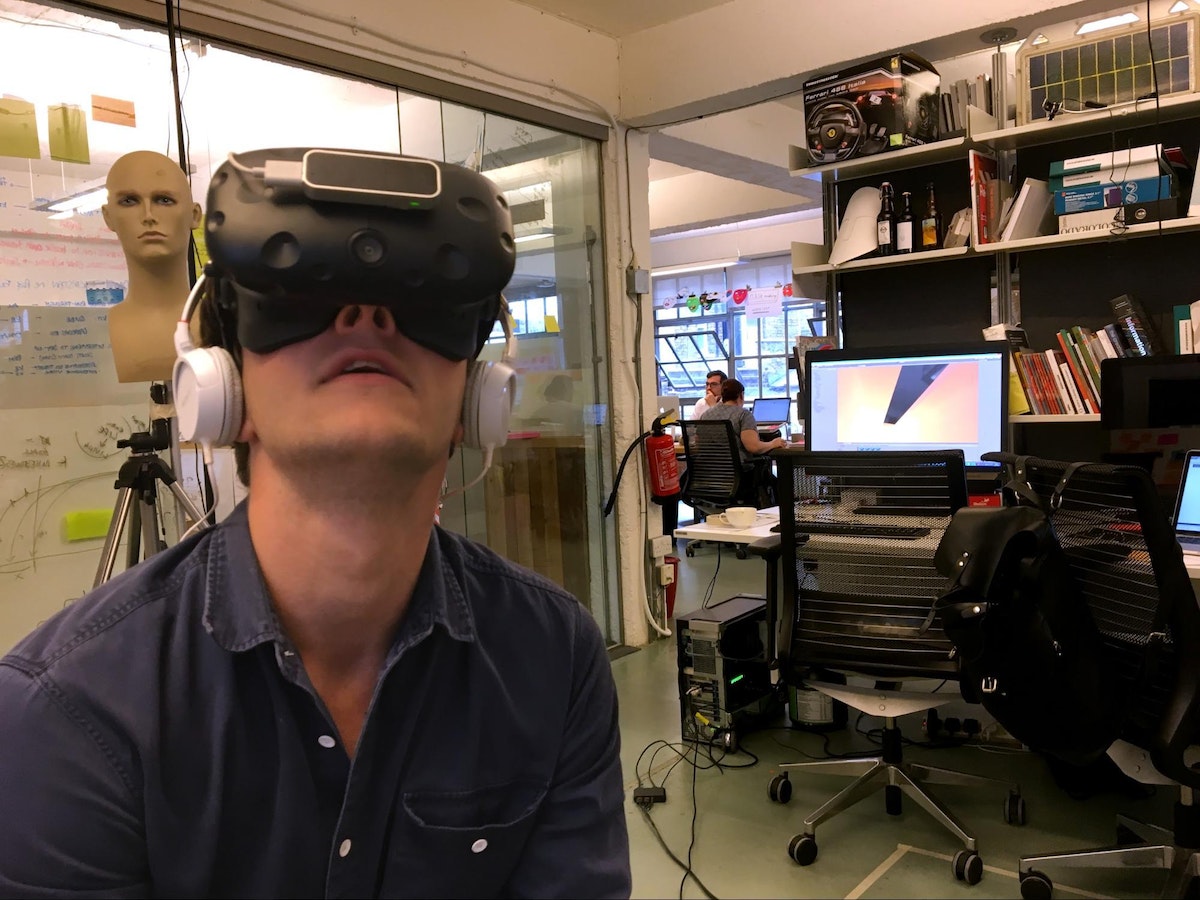
My main objective is to influence a user’s mood through automatic customization of virtual worlds—a tool that could, for example, help improve existing VR treatments for problems like phobias and anxiety disorders by automatizing the intensity of the experience. If the system were able to gauge an emotional reaction, it could ease participants into facing their fears. The same capability could be used to test different environments for mindfulness exercises, or even as a design tool, to help determine which designs elicit desired reactions.
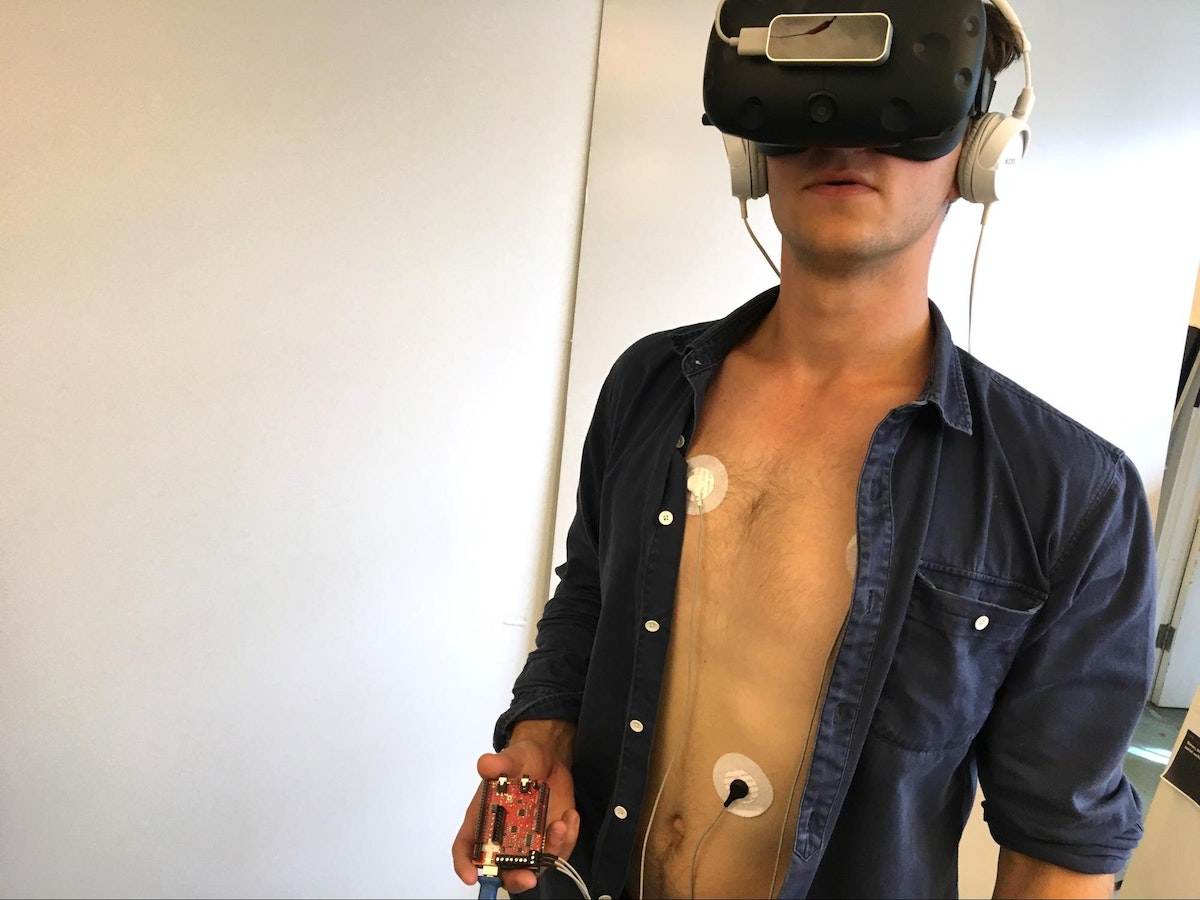
So far, most of the innovation we’ve seen in this space has come via proprietary systems like the HTC Vive controllers. But those kind of systems are very standardized and don’t allow users to experiment much with sensors. With that in mind, I built a platform with Unity and Arduino that would enable me to explore new interactions within VR environments, and allow other makers to test their ideas, too. I’m a big believer that as hardware and other tools become more accessible, makers will dig in and uncover even more immersive VR experiences.
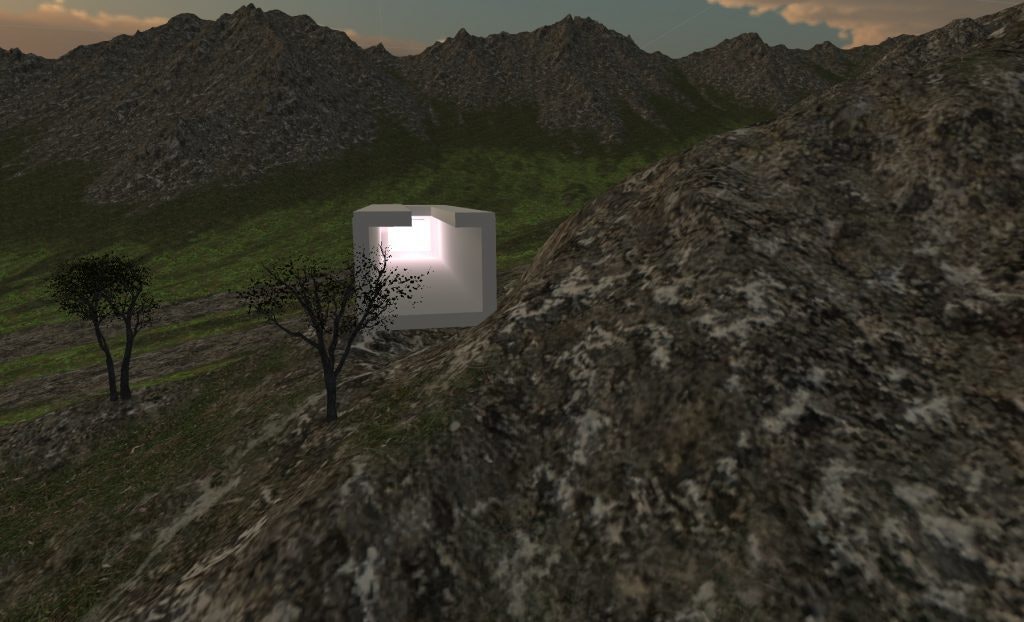
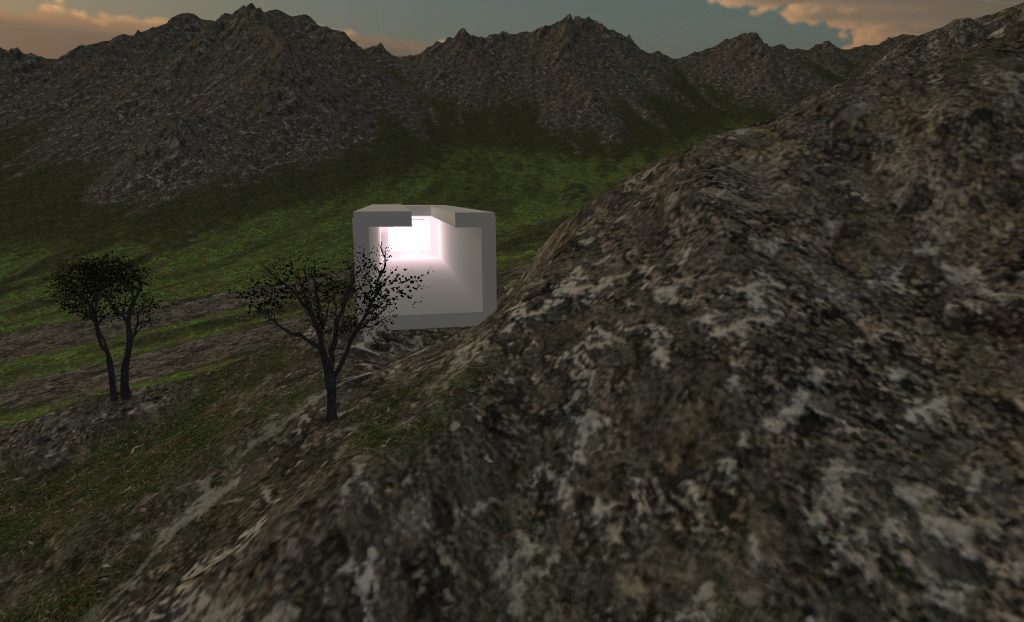
Using Unity and open source development hardware, I created an atmospheric space that can change depending on the user’s biosignals, as well as the amount of pressure they apply to sensors. To build it, I used Arduino and the eHealth platform, which can process the signal from a user’s heart rate, electrodermal activity, or breathing. In this case, I used the ECG sensor reader and developed a little piece of code that would translate the voltage signals into beats per minute, which were then sent directly to Unity via Serial. In Unity, I wrote a script based on Dyadica’s open code that constantly reads the input from the sensors and updates the scenario in each frame. For example, when the heartbeat goes up, the light in the virtual reality world changes to a more soothing blue; when it goes down, the illumination flashes and changes to red. The idea behind this particular interaction is to test whether changing color or lighting patterns will affect the user’s mood, either calming him down, or further agitating him.
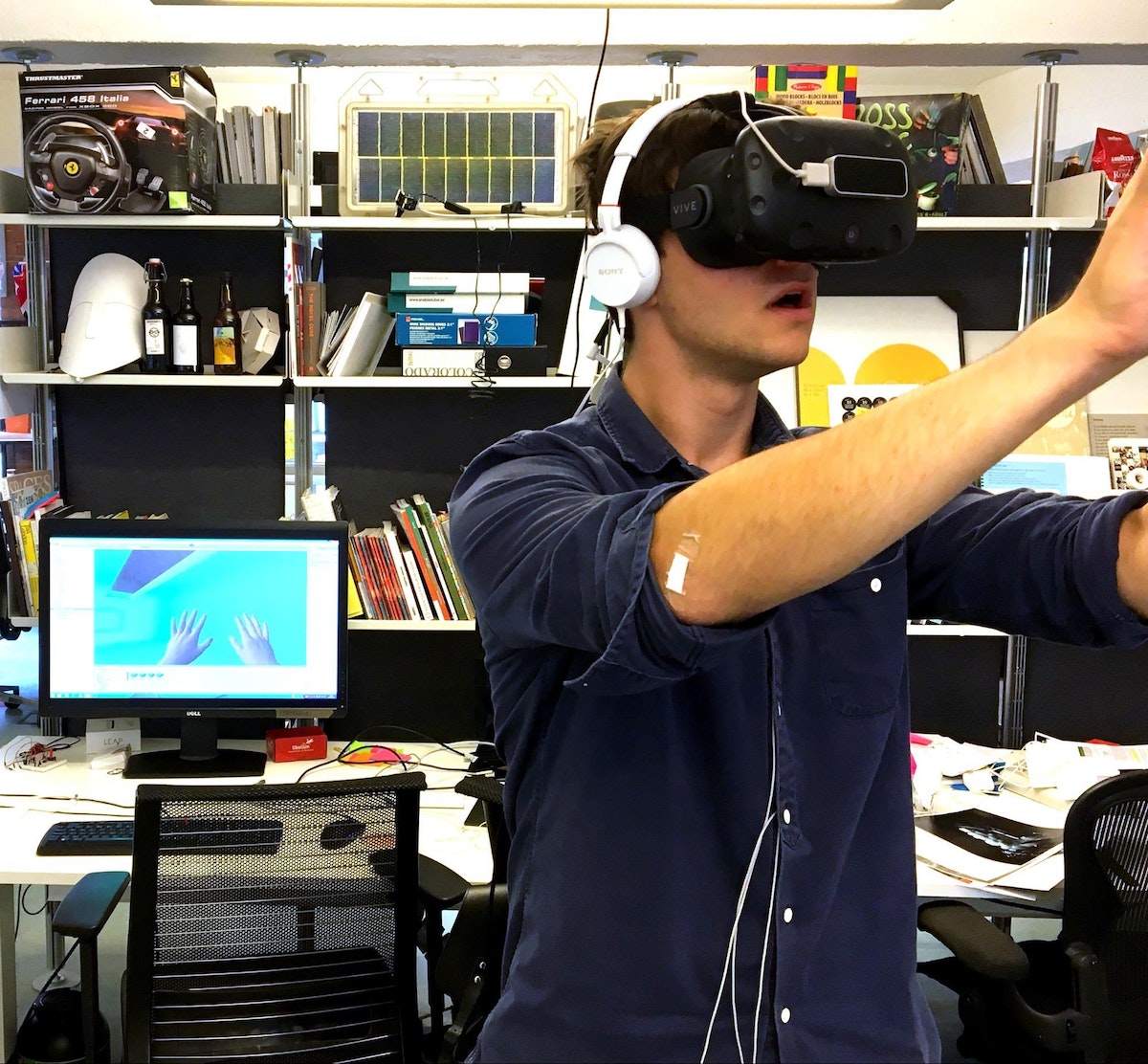
The results from these experiments were not completely satisfactory. Our users did acknowledge that changing the colors in the virtual world influenced their state of mind, but the changes in their biorhythms were small. One of the limitations of the system is the fact that heart rate is not an ideal indicator for mild changes in physiological activity. Electrodermal activity could provide a more accurate measure of comfort or distress, and we may turn to that in in future iterations.

In another set of experiments, we used light and pressure sensors to change environments. In one virtual environment set on the coast, the light changes based on the light detected by a sensor set in the real world. Meanwhile, the size of the virtual space changes depending on the amount of pressure a participant applies to a sensor that is set in the same place on a wall in both the real and virtual worlds. The harder the user presses the wall, the smaller and more claustrophobic the virtual space will become.
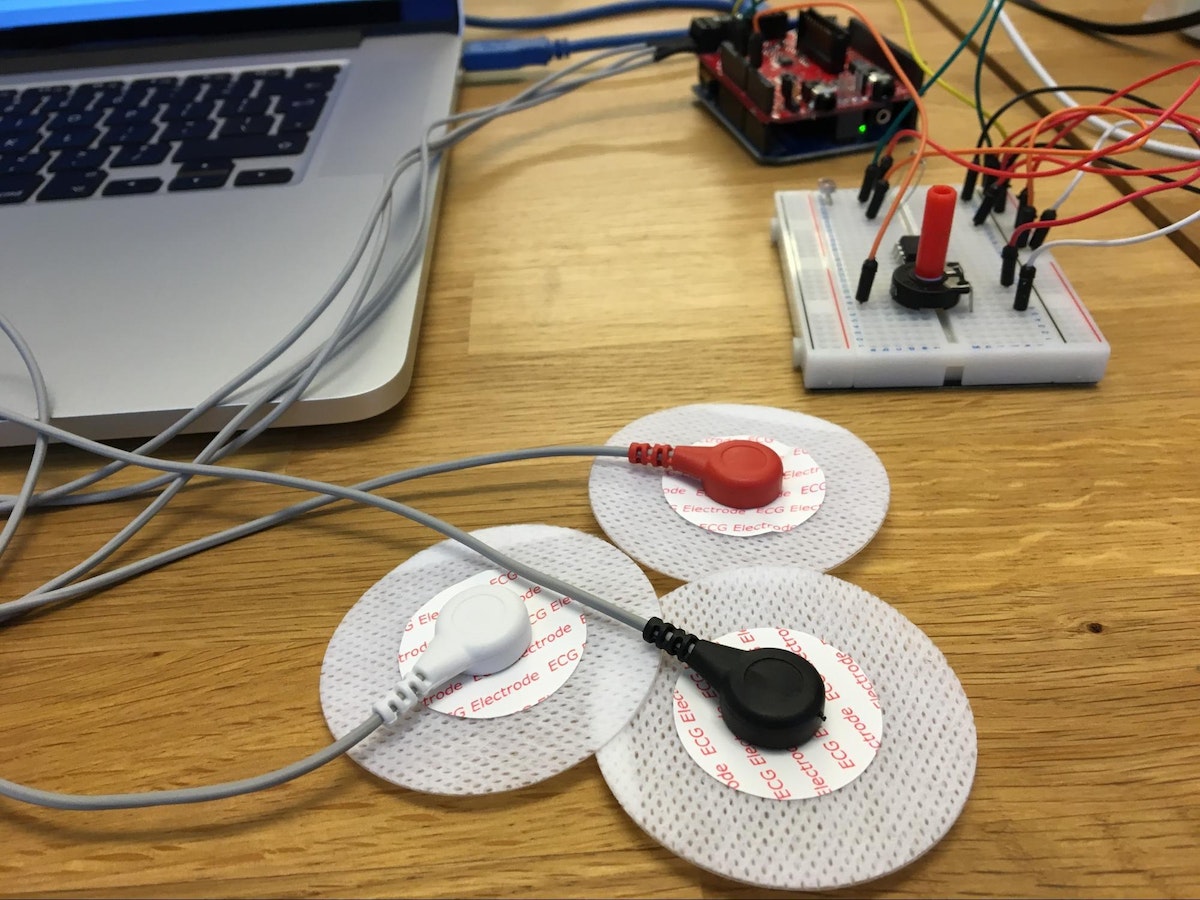
We’ve also been playing around with creating uncanny experiences. I started by 3D-scanning Rich Cahill, our newest interaction designer, then placed his 3D persona inside a virtual world. We then used a Leap Motion attached to the Vive headset to increase the immersive experience by allowing users to see their own hands in the virtual world. Then, we had Rich stand in the same place as his 3D model. When Rich raised his hand to touch his (virtual) face, he felt the warmth of his (real) skin under his fingers. Every single person who agreed to do the experiment found it unsettling. It was also really fun to make, and I learned a lot about how to replicate real objects and people in the virtual environment.
Right now, these enhanced interactions are just small steps towards a richer, and more immersive virtual experience. But I’m hoping this platform can be a template for other people to build their own interactive VR experiences. As more and more people dig into the technology, I'm sure we’ll see an explosion of creativity mixing the real and the virtual worlds—and maybe even creating new valuable hardware and platforms. Soon, instead of being passive characters in a prescribed world, we will be able to change our virtual environments to fit the state of mind that we would like to be in, and help ourselves relax, or even find inspiration. That’s when things will really start to become mind-blowing.
As a designer, I am fascinated by exploring new ways to interact with virtual reality. Technology is able to trick our senses like never before, and we’re starting to see VR hardware like HoloLens and the HTC Vive really push things forward by allowing meaningful interaction between the real and the virtual worlds. One possibility I’ve been experimenting with is how we can create environments that can adapt to our emotional and psychological state.

15 Podcasts that Inspire Creativity
We asked IDEO designers to nominate the podcasts that they find most inspiring

1. Myths & Legends
“This podcast tells original stories that have become myths, in cultures ranging from the Romans and Greeks through to Disney princesses. Understanding how common themes have turned up in stories through the ages helps me think about fundamental human needs and behaviors that stay unchanged over time.” Listen here.
2. On Being
“This podcast considers the ‘big questions of life’ through interviews with creatives like Yo-Yo Ma, Paulo Coelho, and Sarah Kay. It reminds me that our human condition is so much more vast than we could ever fathom, and that the answers to the secrets of our existence are mere approximations, at best.” Listen here.
3. a16z
“This is an in-house podcast from the venture capital firm Andreessen Horowitz, which is famous for the phrase ‘software is eating the world.’ It’s not a ‘creative’ podcast per se, but it covers bleeding edge technology and indicates emerging fields and mediums for creative expression, new experiences, and potential effects on society at large.” Listen here.

4. Meet the Composer
“I find this podcast incredibly inspiring because it asks the listener to really engage with contemporary classical music. It's both exploration and art criticism, a prompt to get out there and listen more deeply, and a glimpse into a small and vibrant world that really only exists in New York and LA.” Listen here.
5. The Moment with Brian Koppelman
“Koppelman talks to creative folks about their creative process, how they do what they do, and the ‘moment’ that changed things for them. He's able to be very vulnerable, so his guests open up as well. This podcast always makes me feel more sane. Or at least like I belong to some really awesome club of weirdos.” Listen here.
6. Radiolab
“I’m inspired by the fascinating science and the polished stories, but most of all by the sound design. The way the show experiments with sound to tell better stories inspires me to think about how to make the experiences I create more engaging.” Listen here.
7. The Allusionist
“Linguistic adventures with the very funny Helen Zaltzman. This show reminds me that language is so mutable and fungible. And that when we humans talk with each other, it is a miracle that we know what the other person is saying.” Listen here.
8. Death, Sex and Money
“This is a podcast about the big questions in life. It reminds me of how to talk to people about sensitive topics and get deep insights from individual stories that speak to both the commonality and the variety of the human experience.” Listen here.
9. Magic Lessons
“Elizabeth Gilbert's creativity podcast features her interviewing people about how they overcome the fears that are inherent in the creative process, and calling up famous creatives to get their input. I like the fact that she actually provides advice to her guests, and acknowledges the challenges we all face in being creative.” Listen here.

10. Song Exploder
“Musicians and artists break down a track and talk about their process. A lovely parallel to any designer’s process. We hosted the creator of the podcast at IDEO earlier this year and he talked about his background as a graphic designer and how that’s influenced his approach to the show.” Listen here.
11. Becoming SuperHuman
“This show interviews people who have achieved ‘superhuman’ performance in their field in order to understand their strategies. The podcast provides insights into the lives of people who live at extremes, which provides inspiration for designing ways to meet more conventional human needs.” Listen here.
12. Imaginary Worlds
“This a is podcast about science fiction and fantasy worlds, both about how they are created and why audiences are able to suspend their disbelief. Of all forms of creativity, I figure that creating a fictional universe is the most expansive, and get inspired by such a broad-brush imaginative exercise.” Listen here.
13. 99 Percent Invisible
“This podcast reminds me that pretty much everything in the world has been designed, and that there are so many opportunities to improve things. I also love to hear the backstories behind things that have been designed and are now part of our everyday existence. It reminds me that so many things could easily have turned out differently.” Listen here.
14. Sampler
“Like the name suggests, this show features samples of other podcasts. I love it because it introduces me to other podcasts that I would never have known about or thought to try. And it's the unexpected or different stuff that turns out to be most inspiring.” Listen here.
15. TED Radio Hour
“This podcast repackages TED Talks into an accessible radio format. The way the show focuses on shared human themes, such as ‘growing up’ and ‘becoming wise,’ helps me zoom out my perspective and realize how the things I look at in life and in my work can be connected.” Listen here.
Honorable mentions: Surprisingly Awesome, The Memory Palace, Invisibilia, The Moth, WTF, Theory Of Everything, Planet Money, This American Life.
Check out the Creative Confidence podcast by IDEO U, our school to empower creative problem solving, here.
Thanks to Chris, Magen, Andrea, Grace, Maggie, Geoff, Jayant, Deirdre, Piper and everyone else who suggested podcasts.
Header illustration by Jane Ha.
We're living in a golden age of audio. Whatever your interest, passion, or taste, there's a podcast out there that will cater to it, available free of charge. These podcasts don't just provide entertainment while commuting or walking the dog, they also provide fuel for creativity, by opening doors into unfamiliar cultures or scenarios. We asked IDEO designers to nominate the podcasts that they find most inspiring.
How To Tackle Obesity In Your Spare Time
What one Xbox-loving interaction designer did to lose weight
Alex was a self-described gaming addict in his college days, but hadn’t touched his console in years. He knew his old habit would be the strongest incentive for working out. At the same time, he recognized that a simple post-workout reward wasn't gonna cut it, not to mention the temptation to skip the workout altogether with a perfectly functioning Xbox so close at hand.
Time to wield his ninja hacking skills.
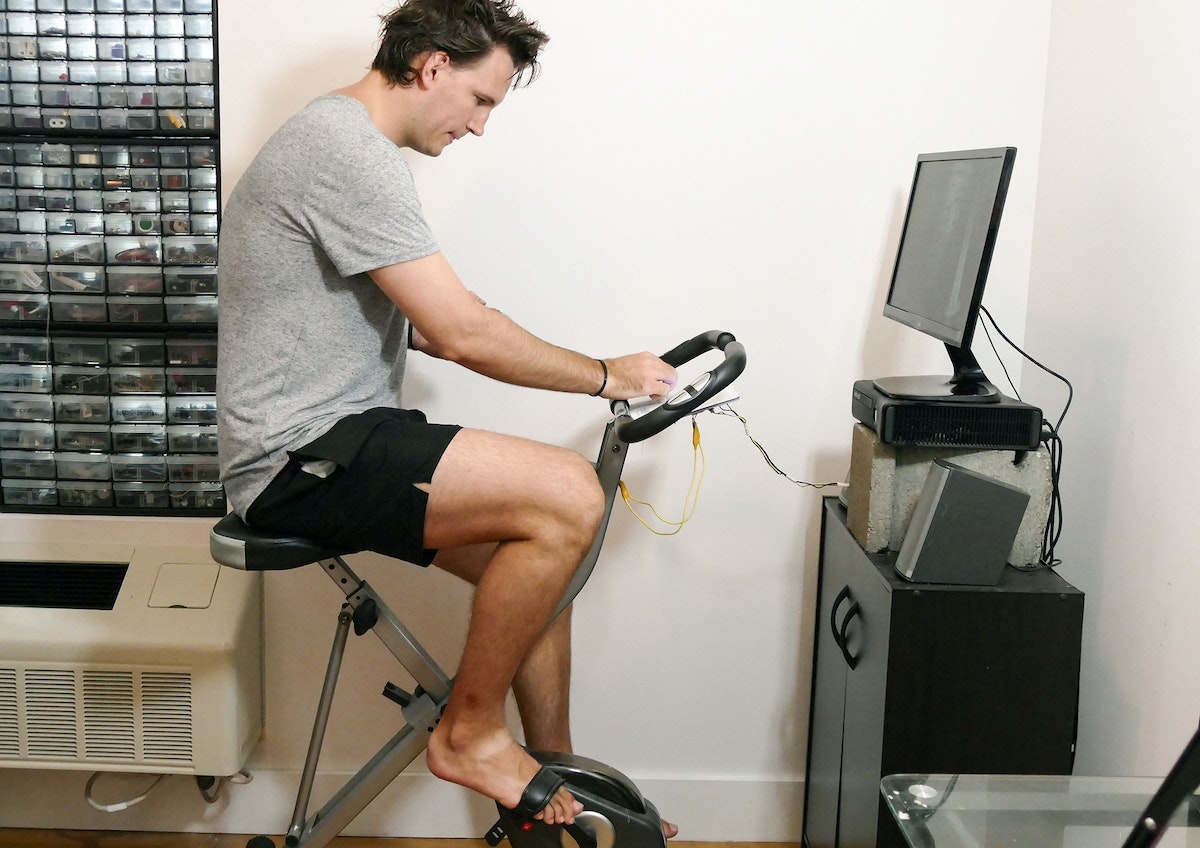
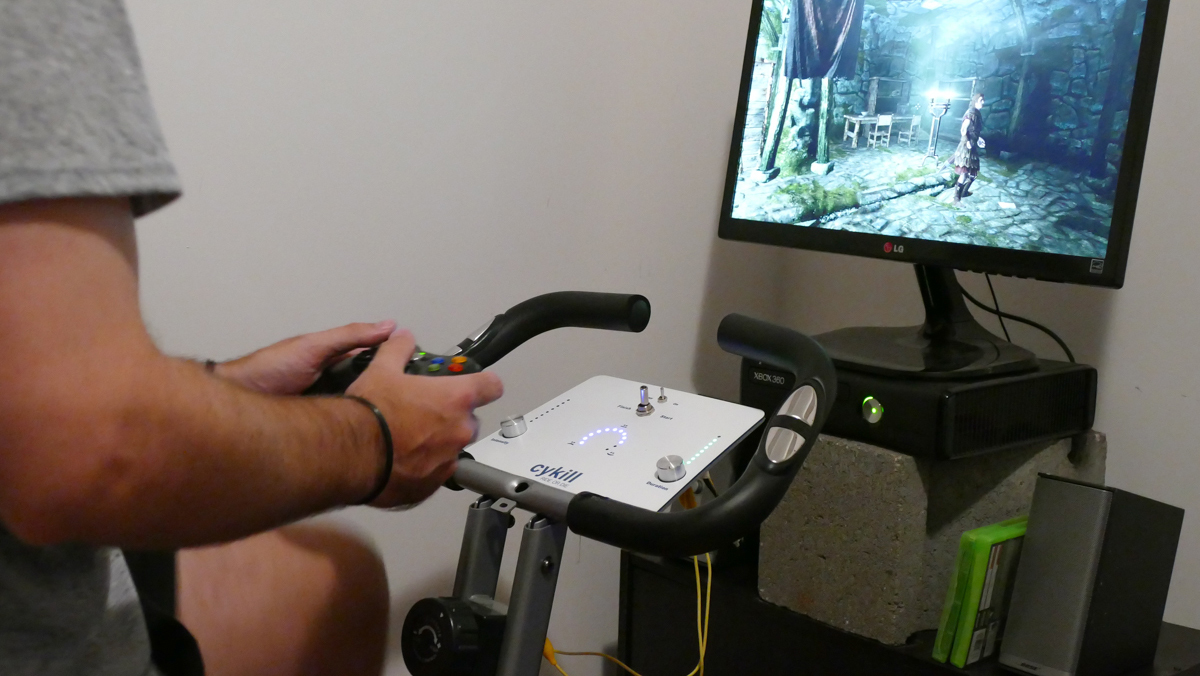
Alex adjusting duration and intensity on his new (addictive) weight-loss machine.
The result is Cykill, a simple tweak that connects your gaming console’s power source to an exercise bike. The only way to start the console is by riding the bike. Fail to pedal fast enough and Cykill will cut the power using a “kill switch”—a disaster for serious gamers—which not only erases game progress, but can also corrupt the console’s hard drive. “After a big scene in the game you will see the Cykill LED meter appear," he said. It gets dangerously close to power-off, which forces you to pedal like mad in order to stabilize it. "What a silly but effective invention this is!”
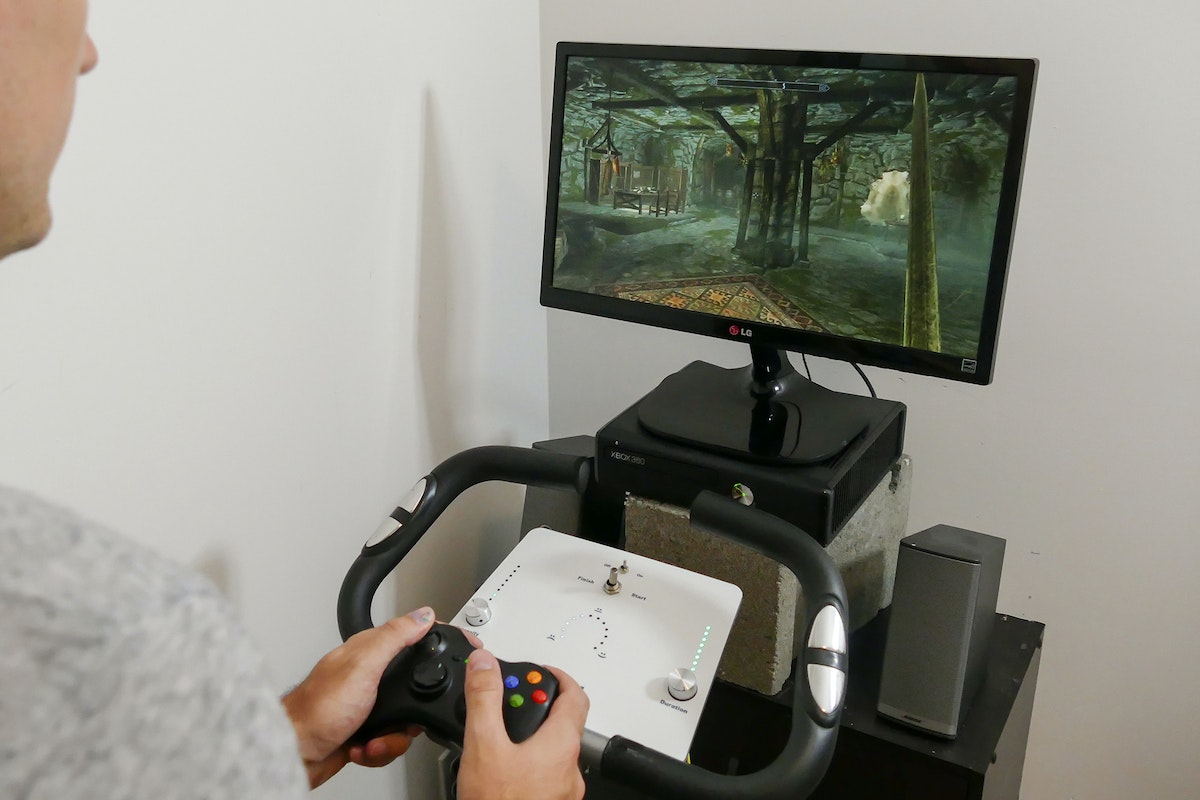
Alex on the Cykill, an exercise-bike-gaming-console that interrupts your game if you stop pedaling.
After using his invention for three months to impressive results, Alex was ready to share it with the world. He made the project open source and submitted it to Hackaday. “I never intended this to be shared online. But then I realized, there are millions of Americans who are challenged with excessive gaming and weight gain—many of them kids and teens." Is Cykill is the answer to obesity for game-obsessed kids of America? "I feel it is definitely worth a shot,” he said.
Learn more about how Alex made Cykill here, at his website Fuzzy Wobble, and on his project page at Hackaday.
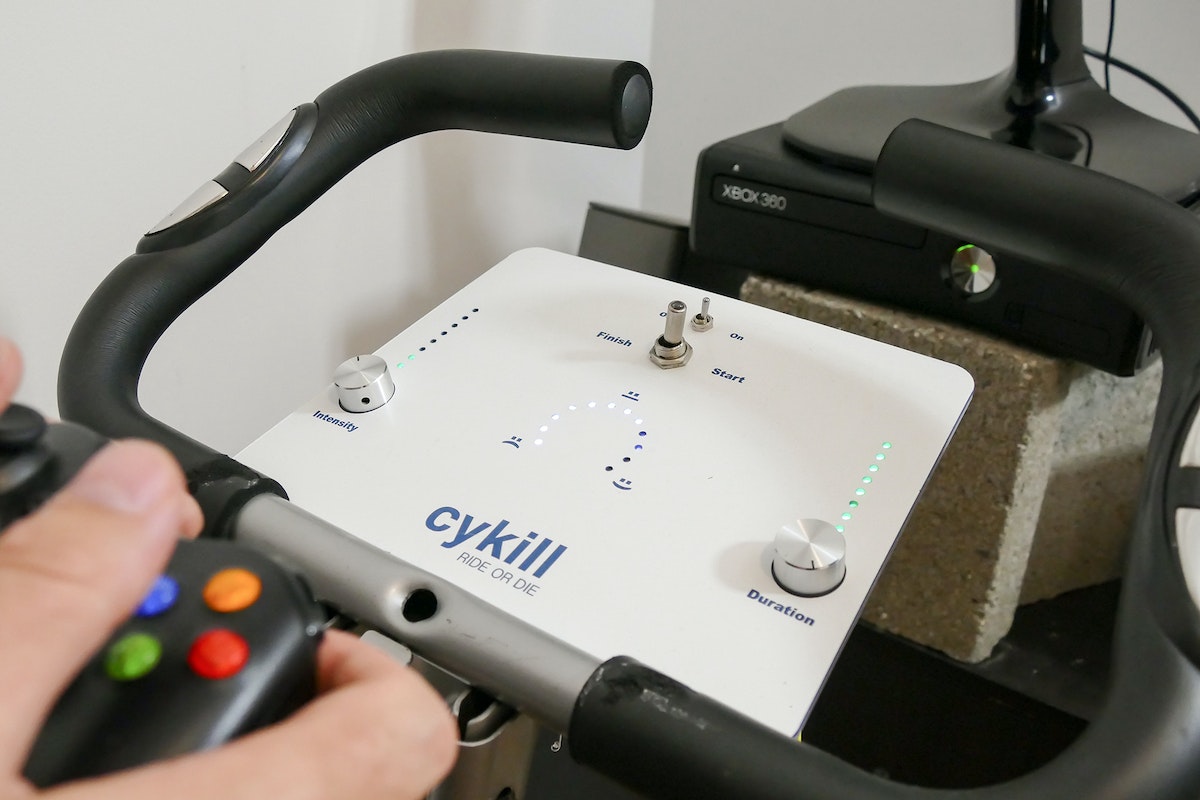
The Cykill dashboard.
When interaction designer Alex S. finally decided to get serious about exercise, he knew exactly what to do. He bought a cheap stationary bike on Amazon and dusted off his old Xbox.
7 Mindblowing Things We Saw at Ars
We went to Ars Electronica, Linz's annual celebration of art and tech, and here’s what we saw

1. Inferno, by Louis-Philippe Demers, Bill Vorn
How does it feel to have an exoskeleton move your arms and make you dance? Pretty weird. Inferno, one of the single most talked-about pieces at Ars, offered visitors the curious sensation of being remote-controlled by a machine.

2. RoBoHoN, by Tomotaka Takahashi with Sharp
Half robot, half smartphone, RoBoHoN runs, dances, talks, takes pictures and projects them. Plus, it’s cute. Like a mini butler. We came away asking: Will future smart devices be gadgety, or sleek and designy a la Apple?
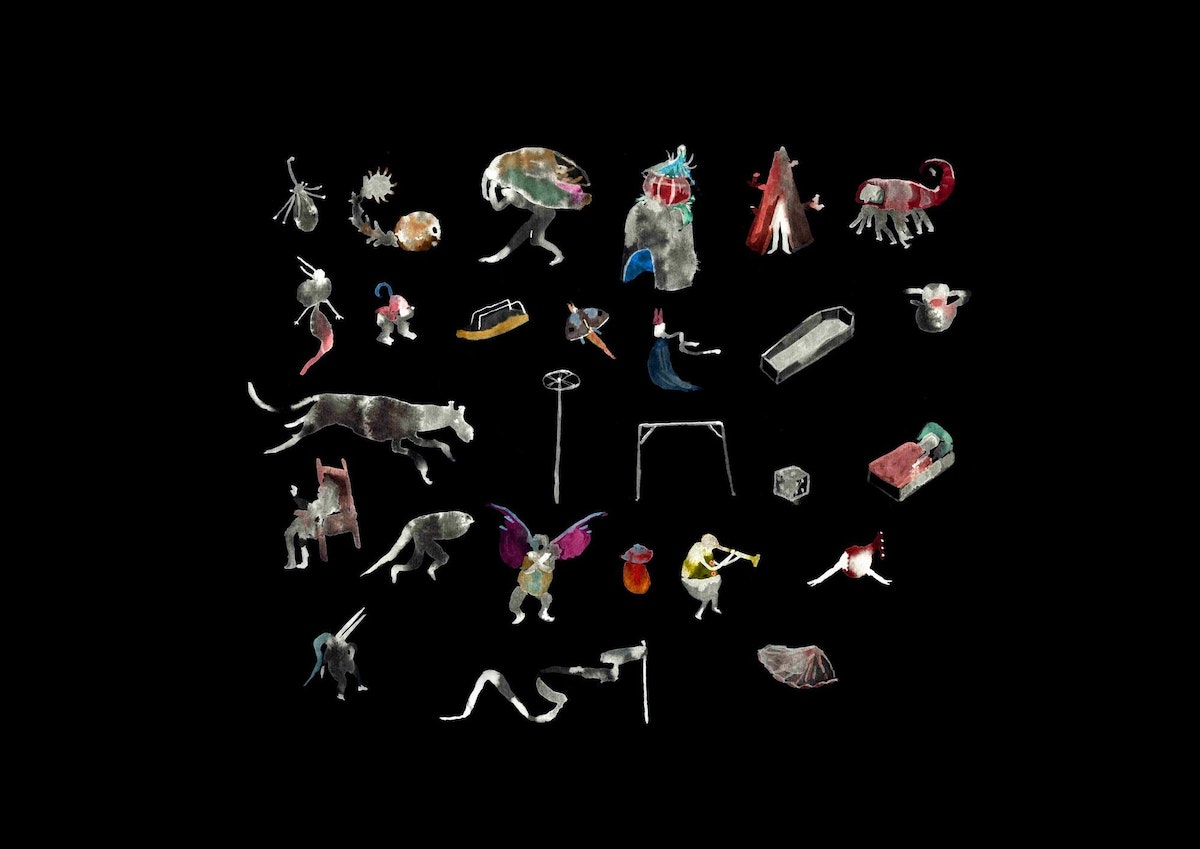
3. Rhizome Animation, by Boris Labbé
A hypnotising story about life on earth, and a good reminder of the power of mixing handdrawn images with computer-generated visuals. Designer Boris Labbé’s short film Rhizome is worth a watch.
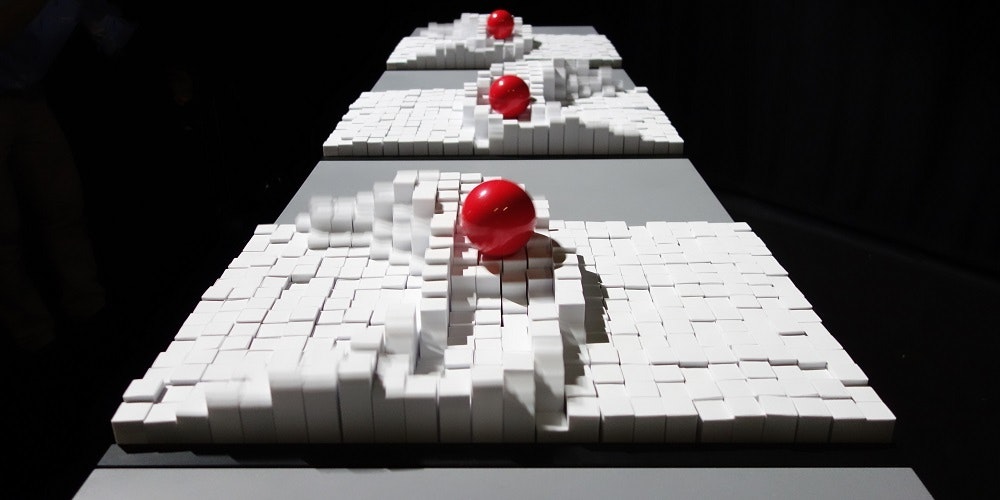
4. Radical Atoms Exhibition
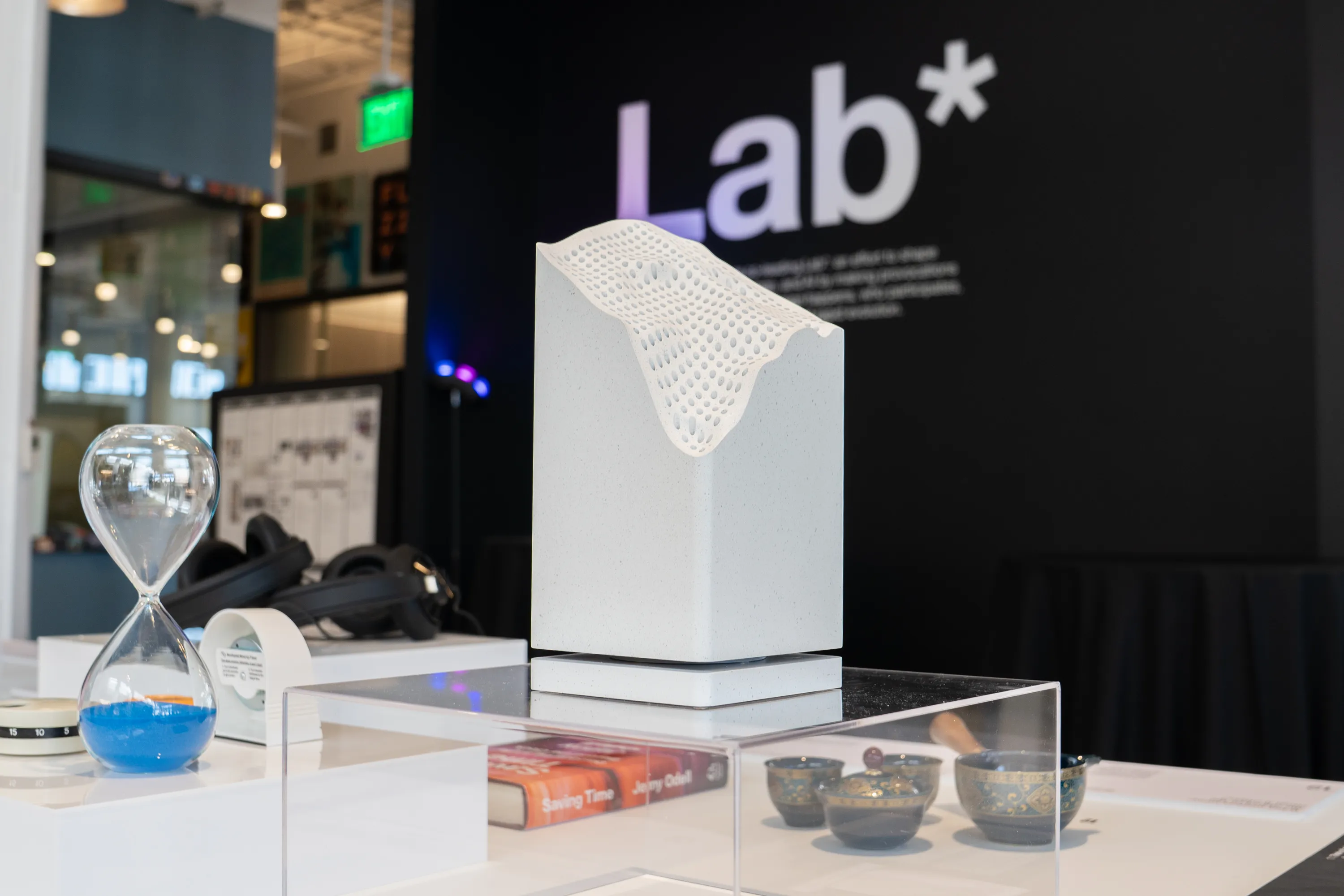
If the MIT Media Lab has its way, we’ll control the physical world of atoms in the same way that we control the digital world of pixels. This exhibit hewed closest to the theme of the Ars festival: “Radical Atoms: the alchemists of our time,” including provocations around biology as a responsive, “second skin” interface; a physical shape display that can be manipulated from near or far; and wearable miniature robots that rove around your body. Take a trip down the rabbit hole.
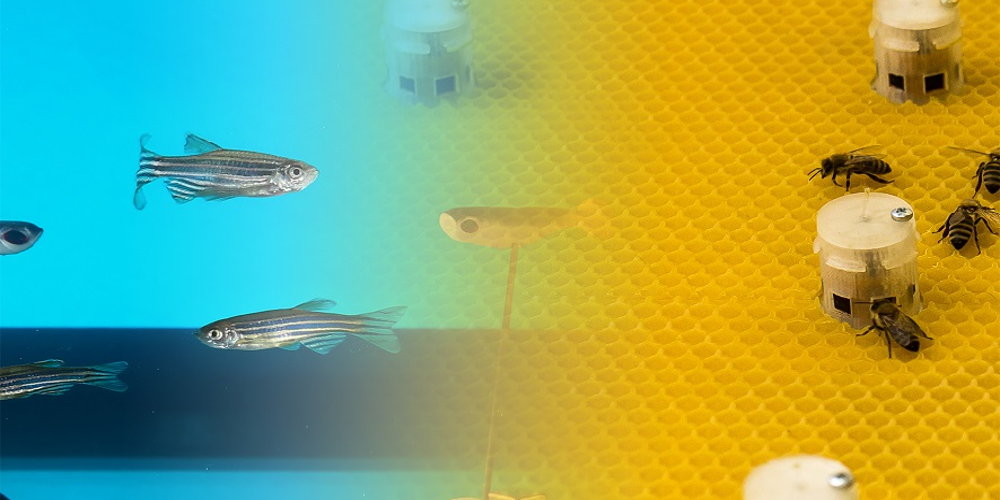
5. ASSISI, by Thomas Schmickl, Professor of Zoology at University of Graz
Tiny robots, placed among a society of fish and of bees, enabled the two to communicate and influence the actions of the other. Begged the question: how might we use robots to design and evolve swarm behavior in natural ecosystems?
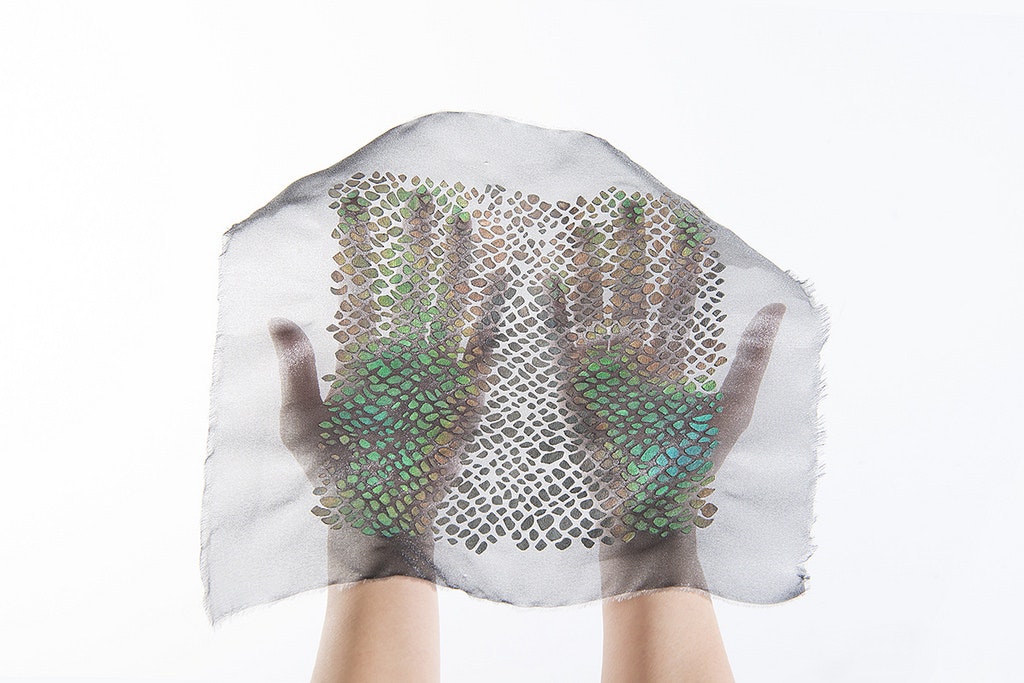
6. Artificial Skins and Bones, by Weißensee Kunsthochschule Berlin
We loved the variety of thinking from this group of students, who are exploring the design of artificial bodies. Ideas included everything from regaining physical ability through smart prosthetics; to enhancing an experience through haptic feedback; to the inevitable evolution toward augmentation, like color- and pattern-changing skin (above), inspired by the octopus.
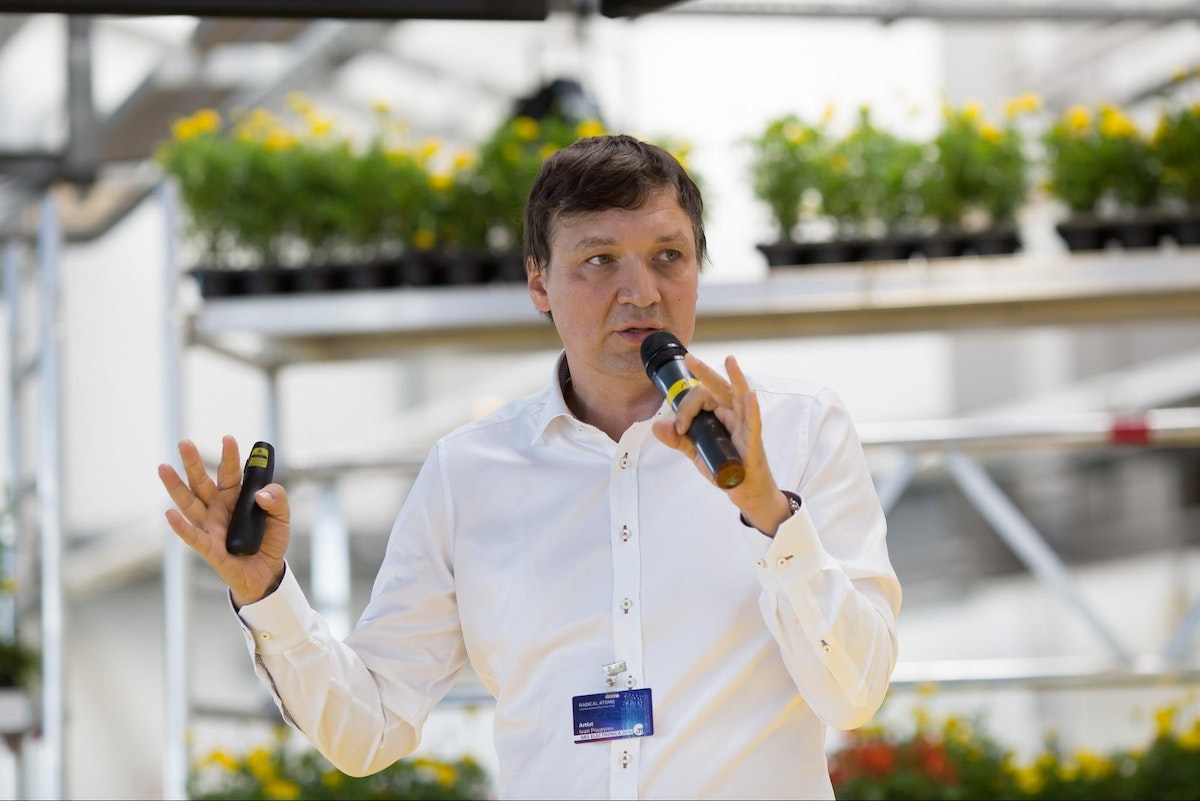
7. Innovation and Creativity on a Very Large Scale, by Ivan Poupyrev, Google ATAP
Poupyrev, head of Google’s Advanced Technology and Projects group, argued that constantly introducing new gadgets does not scale. What does scale is creating technologies enabling industries that manufacture basic goods, like jeans, to transform themselves. For Project Jacquard, ATAP invented a new type of conductive thread that can be woven into clothing (like a Levi’s jean jacket—the project was a collaboration between the two companies) giving it an invisible interface. These kinds of mutations are unpredictable, Poupyrev said, and driven by serendipity, emphasising the role of the artist in technological research.
For more about Ars Electronica, or to watch all the talks and presentations mentioned, check out their website: http://www.aec.at/
Header image by Martin Hieslmair. All images sourced from the official Ars Electronica Flickr.
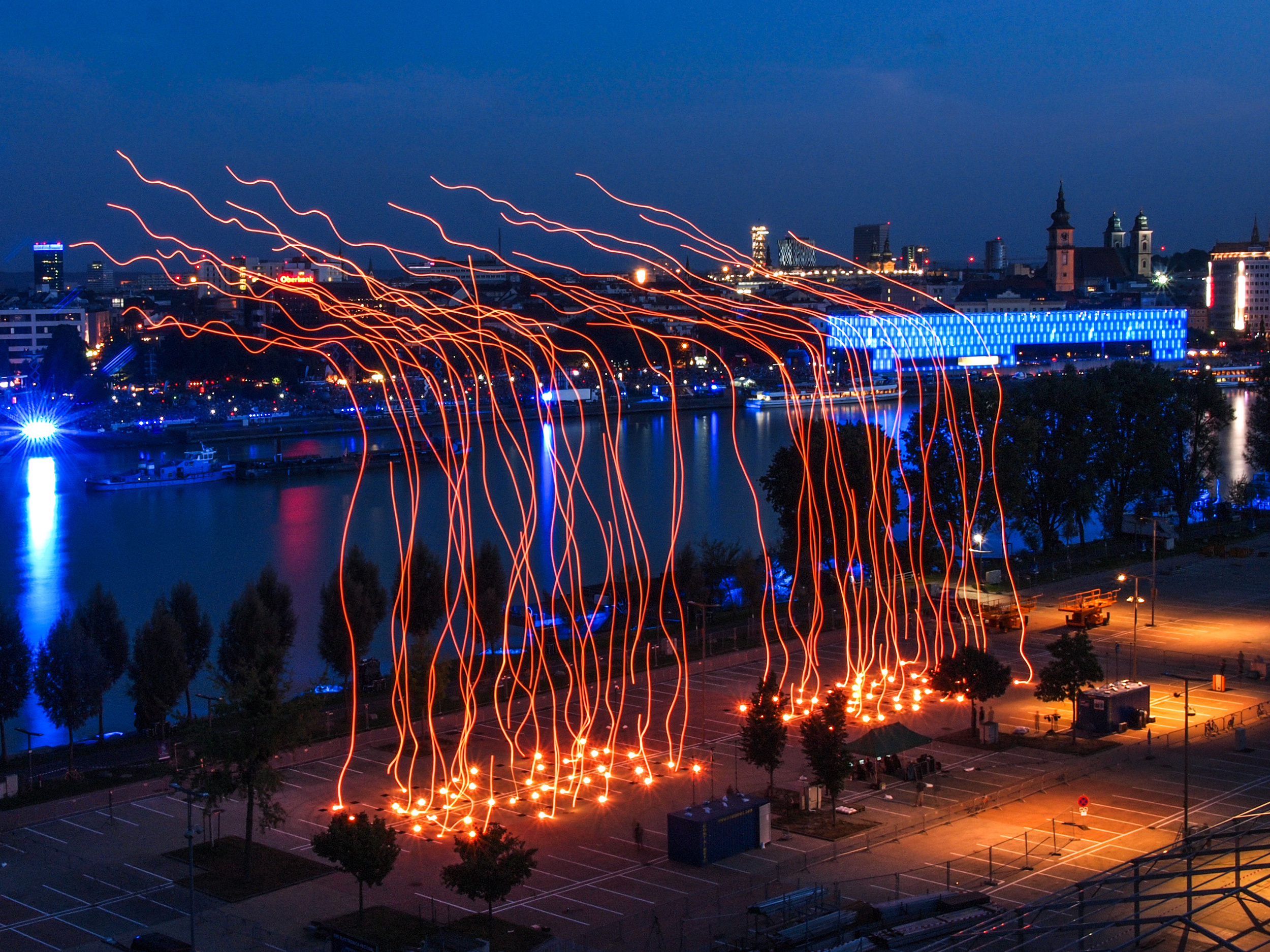
We went to Ars Electronica, Linz's annual celebration of art and tech, and here’s what we saw: Exoskeletons. Dancing robots. Shape-shifting materials. Swarms of fish and bees. Skin. Just your average day in the surrealverse. Here are seven projects to watch:

Lindsey Turner
I’m passionate about building brands, products, and experiences that help organizations show up with meaning and momentum.
I help organizations cut through complexity by shaping how they show up, through brand strategy, identity, and storytelling.
Working at the intersection of brand and business, I bring an editorial eye and a bias toward making—turning ideas into tangible experiences that people can understand, trust, and believe in.
My work spans government, healthcare, financial services, media, and consumer goods, from launching Gen Z-focused ventures to building innovation labs and reimagining legacy brands. I relish moments of ambiguity and enjoy translating across teams, perspectives, and priorities to move ideas forward.
I started my career in editorial and digital design, shaping cross-platform experiences and identity systems in publishing and agency environments. That foundation still shapes how I work today: I’m detail-oriented, collaborative, and overreliant on the Oxford comma. I hold a BFA in Visual Communication from the School of the Art Institute of Chicago.

Rachel Young
My work helps organizations see who their products aren't working for—and build the will and the tools to do something about it
For 25 years, I've asked the same question: Who does this design exclude—and what are we going to do about it?
My work spans human-centered strategy, inclusive design, and qualitative research, with clients ranging from Microsoft, Google, and Verizon to the National Science Foundation, and San Francisco Unified School District.
Before IDEO, I taught elementary school in East Palo Alto and spent a decade doing design work with social service organizations—where I learned firsthand what it costs people when systems are built without them in mind.
I am currently writing User Error, a nonfiction book about digital access and the design decisions behind it. I live in Oakland, California.

Brian Pelsoh
I lead with craft, ensuring our work is creatively excellent: rooted in deep human insight and imagination, while also grounded in the realities of business and technology.
My expertise spans brand, communication, and product design across tech, education, the arts, and social impact.
I believe great work demands both high-level vision and obsessive attention to detail, and only happens through collaboration.
I bring an inclusive, hands-on approach and a deep understanding of business, which enables me to consistently deliver excellence while always asking why.
Before joining IDEO, I worked at the brand firms Pentagram and VSA Partners. I began my career as a designer, leading teams at the School of the Art Institute of Chicago and the Milwaukee Art Museum. I hold an MFA in graphic design from Maryland Institute College of Art and a BFA in communication design from the Milwaukee Institute of Art & Design, and have taught at some of the best design schools in the US.

Tony Wong
I am responsible for IDEO’s long-term success in China and working with clients to use design as a tool to enable growth.
I am responsible for IDEO’s long-term success in China and working with clients to use design as a tool to enable growth. Specifically, I have helped Chinese companies design holistic brand solutions through the development of their products, communication, services, and innovation teams, and I have helped multinationals expand their presence and influence in China.
I advise global leaders on developing China-led innovation and capabilities.
In over 15 years in IDEO Shanghai, I have worked on projects that use design to elevate the quality of the experience of healthcare products and services, streamline processes that increase productivity, create spaces and programs that promote and enable inclusive communities, and build next generation mobility solutions that are planet-positive.
Before joining IDEO, I worked at Philips Electronics and the Electrolux Group in Italy, the Netherlands, and Singapore on a number of breakthrough commercial products. I am a member of the Young President Organization in Shanghai.

How to use AI as an editor, not a writer
Ed White shares how he uses AI as an editor—not a writer—to sharpen storytelling, rehearse ideas, and preserve the productive friction that makes creative work better.
Ed White has a rule he's tested on his own writing: hold yourself as the writer, and let AI be your editor. Ed is a Senior Design Director at IDEO's London studio, where he co-leads the firm's AI portfolio across Europe. Before IDEO, he spent 12 years as a writer and editor at the Financial Times, Wired, and Contagious. So when he talks about when to use AI for storytelling and when not to, it comes from two decades of crafting his storytelling skills.
In this episode, Mina Seetharaman talks with Ed about two specific tools he uses to keep AI in an editor's seat: a "roasting agent" prompted to critique his drafts without any sugarcoating, and a simulated audience he rehearses pitches on before the real thing. They also get into what Ed is hearing from design leaders at Anthropic, Lovable, Shopify, and Google Creative Lab about how creative work is changing, and why he thinks the friction of writing something yourself is worth protecting rather than automating away.

Building a personal AI for the messiness of life: Sida Li
Becca Carroll talks with Cue co-founder Sida Li about designing a personal AI for the messiness of everyday life—not just work. They explore how Sida stays anchored to human needs while navigating fast-changing technology, product tradeoffs, business-model experimentation, and the realities of building an AI company today.
Most AI products today are built for work—a space with clear problems and established systems. One founder noticed a gap: personal life is messier, harder to systematize, and mostly left behind by the AI boom. So she built Cue, a personal AI that lives inside iMessage and group chats, to go where the other tools haven't.
In this episode, Becca Carroll, IDEO's Chief Strategy Officer, talks with Sida Li, co-founder and CEO of Shared Context Lab, about staying anchored to a human need while the technology around her keeps changing shape, why she treats her business model with the same rigor she'd bring to a product, and what it feels like to build a company at this particular, disorienting moment in AI.
The conversation also gets into how Sida makes design decisions: the language Cue uses to describe itself, the tradeoffs behind building inside iMessage instead of a new app, and a real story about a business idea that didn’t pan out.
This is the second in a two-part series profiling founders from IDEO's Startups-in-Residence program. The first conversation is with Johannes Seemann, founder of Sooner, on designing GenAI for the emotional side of money.

Designing GenAI for the emotional side of money: Johannes Seemann
Designing financial tools around the feelings that shape money decisions.
Most personal financial tools are built to run the numbers and optimize towards a budget. While that works for some, most people experience money as a lived relationship that does not neatly fit into a spreadsheet. Johannes Seemann and Becca Carroll discuss why money is emotional before it is mathematical, and what a human-centered approach to building a generative AI financial product looks like in practice.

The curious leader's edge in uncertainty: Scott Shigeoka
How genuine curiosity helps leaders navigate uncertainty with greater confidence.
Mina Seetharaman talks with Scott Shigeoka, author of Seek and Head of Curiosity Cultivation at the Eames Institute, about what distinguishes genuinely curious leadership from performative curiosity, how power dynamics shape curiosity, and why practicing curiosity can restore energy rather than drain it.
Looks like you might be in search of something very specific?
Or reset the filters above and try another angle.
Here’s some random inspiration

Podcasts about creative leadership

Articles about the power of prototyping