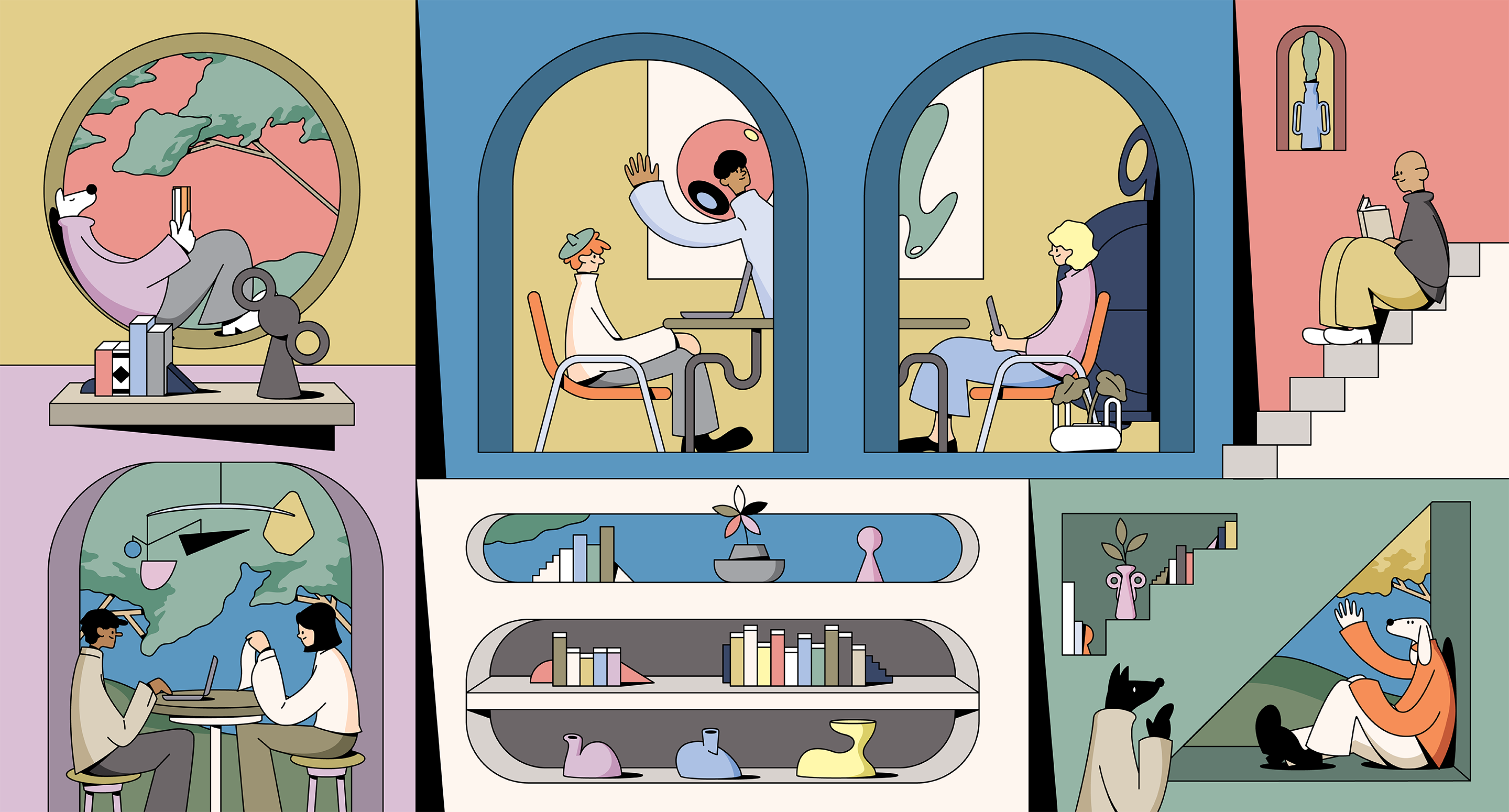

Store of the future
Sephora reinvents the in-store experience for digital-first shoppers.
Finding the right beauty product online isn’t easy, as shoppers are deluged with choices.
On top of information overload, our research unearthed varying emotional and functional needs when exploring beauty products. When looking for makeup, for example, shoppers are interested in self-expression and open to exploration. But when buying skincare products to fix an acne problem, say, people feel a bit more vulnerable. That insight led to rethinking the retail environment as a space that offers both free range exploration and trial spaces along with engagements that address the individualized needs of customers at different life stages.
Acknowledging that entering a new phase of life can make people feel insecure about their looks, we asked research participants, What does “beauty power” mean to you? Responses suggested a lack of trust in unbiased voices online about how to look and feel powerful. Digital shoppers are continuously bombarded by ads and influencers who are incentivized to push brands who hire them. Shoppers love Sephora for being a neutral space that showcases multiple brands, so we leaned into that strength, designing displays that offer product reviews and details that enable consumers to make informed decisions.
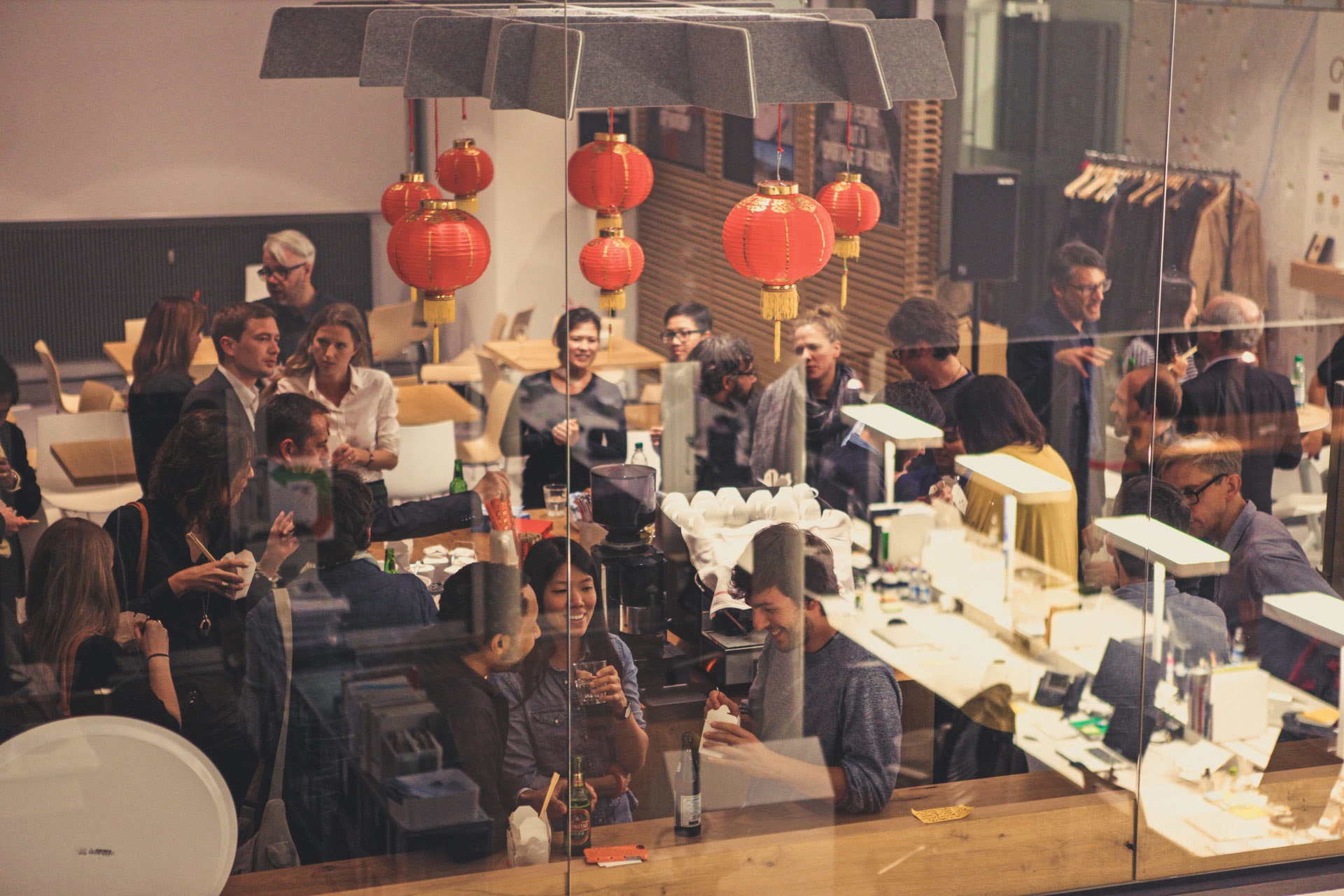
Those displays started as prototypes in a Sephora concept store that filled an entire floor of IDEO’s Shanghai office. In our bright, modern space, consumers of all demographics explored a self-led experience designed to delight. A “Play Table” allowed visitors to freely explore products, using digital platforms to access product details and reviews. Beauty consultants were close at hand to offer assistance. At another pitstop, the “Sephora Beauty School,” offered a spectrum of classes and community activities, providing hands-on guidance and enabling participants to test out beauty bloggers’ techniques. The “Care Table” addressed more personal skincare needs, providing a semi-private setting for individuals to remove makeup, try out products, and consult with experts. Here, digital tools helped consumers understand their skin type, facilitating personalized consultations akin to professional medical care. These innovative features aimed to create a unique, exploratory experience, blending digital convenience with concierge in-store service.
The feedback garnered from that prototype helped the team iterate quickly and gave Sephora the confidence to launch its first “Asia Store of the Future” in Singapore in 2022, followed by a second store in Shanghai in 2023. The Singapore store, situated in Raffles City, offered consumers a free-flowing, interactive beauty playground with a blend of digital and personal services, much like our early prototype.
The success of these two shops validated Sephora’s “Store of the Future” strategy. But experiences must evolve to stay fresh, so the team set up an “engagement indicator” tracking customers’ interaction with digital touchpoints to provide Sephora with valuable insights. Based on those insights, Sephora can continue to iterate its in-store experience and foster loyalty as its customers’ preferences shift.
As hoped, Sephora’s revitalized storefront blends digital and physical experiences in a way that gives every person who enters the store the feeling that they are stepping into their own “beauty power”. By getting close to its customers, building early prototypes, and learning as it goes, Sephora has redefined the in-store experience, ensuring its relevance and appeal in a rapidly transforming retail landscape.
E-commerce has created tremendous challenges to companies whose core business revolves around retail stores.
Online consumers struggle to make informed decisions with the deluge of choices online.
2
“Stores of the Future” launched
107%
traffic increase within four months of Shanghai store launch
Teaching robots to dance
What if technology were designed to make our lives more poetic?
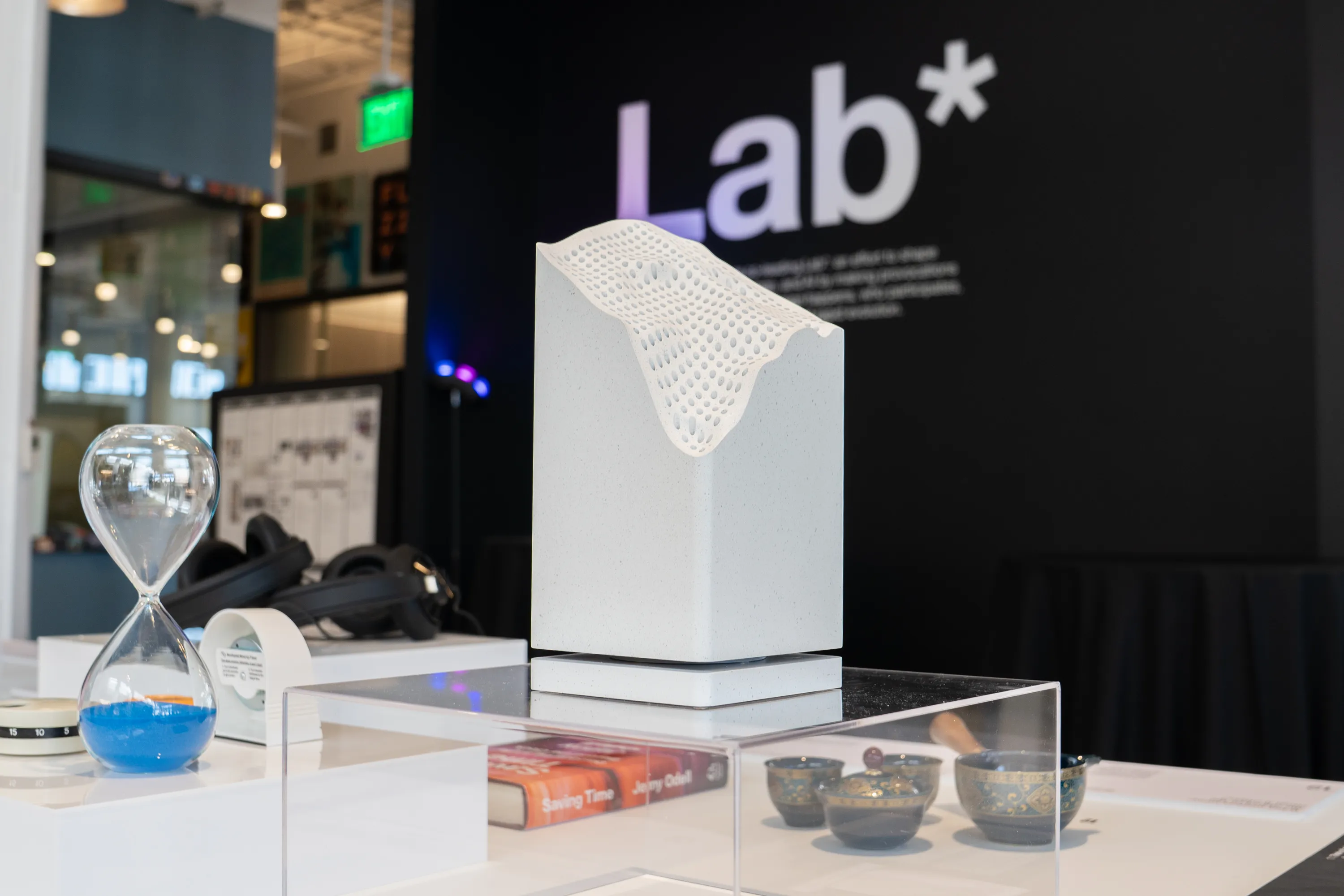
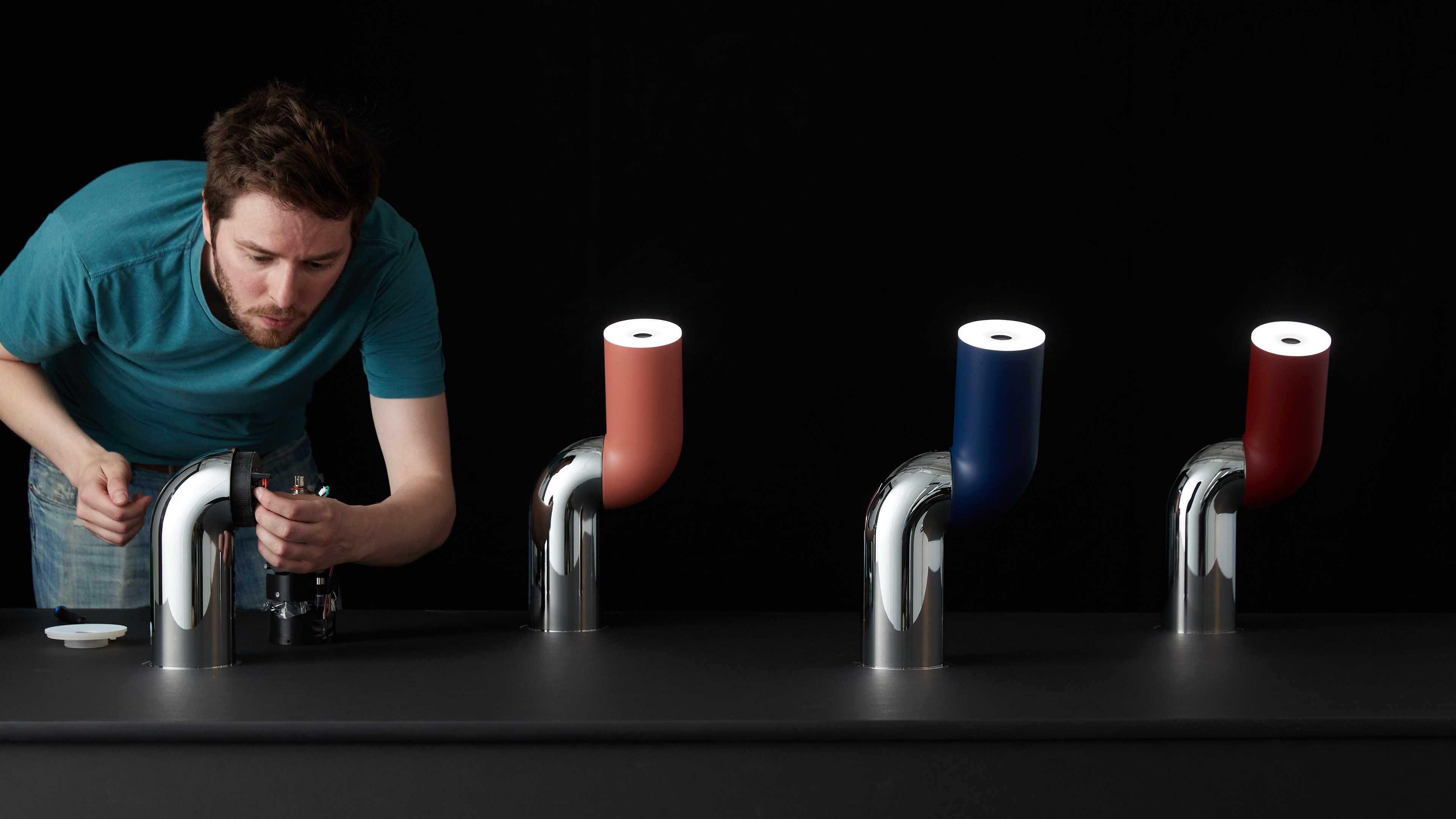
As the curtain parted on moooi’s 2022 exhibit, the audience was treated to a multi-sensory performance unlike any other: four synchronized robot scent diffusers telling a story through dance. As the robots—called Piro—swayed and dipped to the beats of a custom-designed soundscape, it was easy to forget the performers were made by a team of industrial designers and engineers in San Francisco.
The work expressed a future vision for what it means to humanize technology. Rather than design technology to make our lives more efficient, what if instead we designed technology to make life more beautiful?
For twenty years, moooi has seduced the world with bold, imaginative design. The firm, named after the Dutch word for beautiful, made its name by designing furniture and home goods that appeal to an interest in pushing the edges of form as much as function. Moooi came to IDEO looking to create an exhibit for the largest furniture fair in the world that might provoke the audience to imagine a world where design’s primary function was to inspire joy.
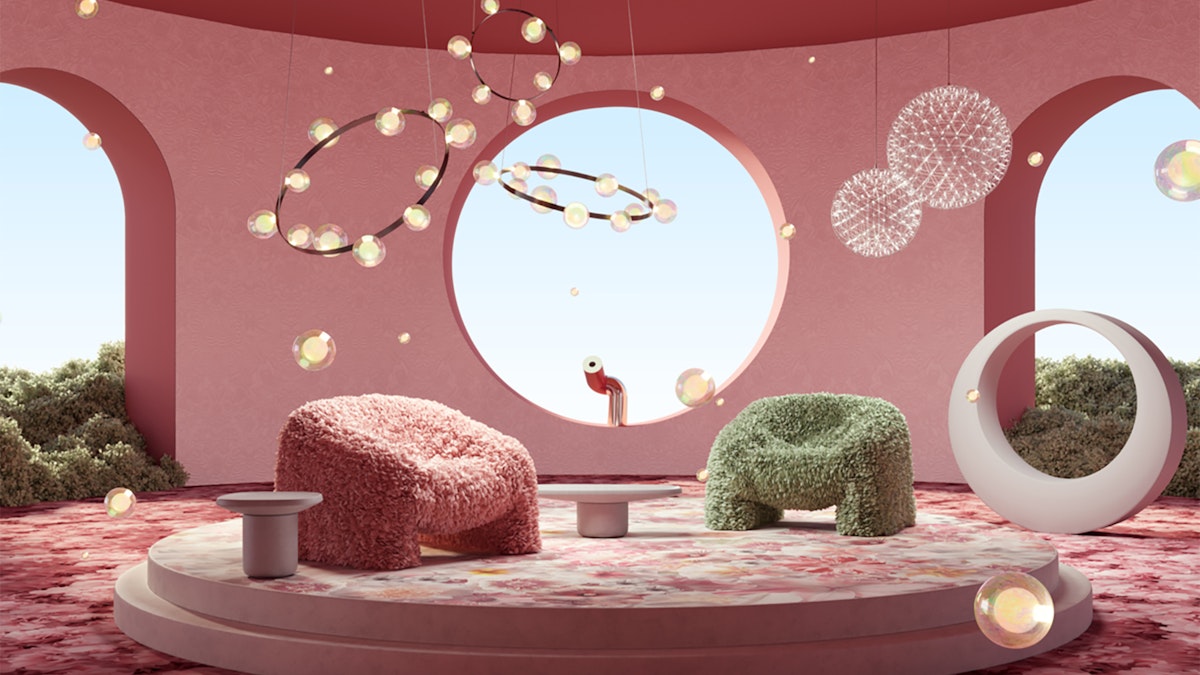
“Defy Gravity”: one of several experiential “worlds” moooi created for the 2022 Salone del Mobile. Each room had its own scent, soundscape, color, and digital experience.
Our process started by going wide. We presented 20 potential conceptual designs to the team, one of which moooi founder Marcel Wanders lovingly referred to as the “farting pet,” a robot scent diffuser that could walk around the home.
A scented smoke ring lingers in the air after Piro’s final crescendo.
From there, a team of IDEO designers enlisted the support of Catie Cuan, a choreographer who specializes in human-robot interaction, and Dutch sound design firm KLOAQ, to refine the concept into a four-minute performance piece.
Piro learned to mimic balletic human gestures.
The final result was technically involved: four robots moved independently, controlled by custom electronics and software designed to mimic the movements and grace of ballerinas. But in the performance itself, the complex mechanics disappeared, allowing the audience to experience not just what technology can do, but how it can make us feel.
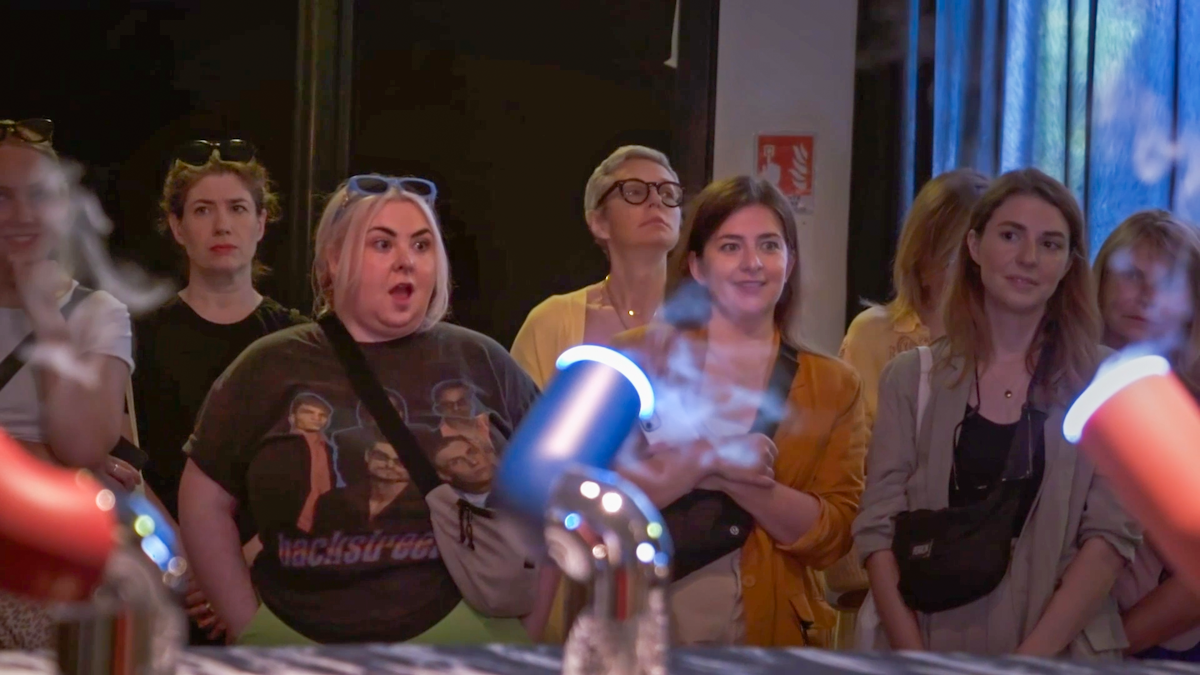
What happens when a designer and a classically-trained choreographer collaborate? Attendees of Salone del Mobile.Milano, the largest furniture fair in the world, got to see for themselves.
Empowering frontline communities
CSAA Insurance Group leads a global call for climate resiliency solutions.
To build a climate-resilient future, we need an all-hands-on-deck approach across industries and organizations, as well as the leadership and collaboration of frontline communities themselves.
To that end, IDEO and CSAA Insurance Group worked together to unite nine partner organizations, including Aon and the Environmental Defense Fund, to launch an open call for solutions to help communities prevent, prepare for, and recover from climate-related disasters. The goal of the Challenge was to surface actionable and scalable ideas that experiment with new technologies, models, and partnerships, then provide innovators with the support and funding they need to get their ideas off the ground and into the hands of frontline communities.
IDEO set these entrepreneurs up for success throughout the submission process, holding one-on-one conversations with participants, sharing constructive feedback on potential solutions, and developing their ideas and skill sets. The team also hosted workshop and panel sessions to grow community bonds and provide expertise on critical topics, including assessing climate risk and storytelling for impact. Hundreds of ideas came in from around the world, ranging from harnessing the power of AI, to building resilient infrastructures, to democratizing access to climate data, and more.
Once all of the ideas were in, a cohort of judges with a wide diversity of work and lived experience screened for concepts that were relevant, impactful, novel, community-informed, and equitable. At the end of the Challenge, the team chose 13 winning concepts with high potential for impact and partnerships, including Reef Rocket, which seeks to fabricate natural biocement reefs that reduce coastal flooding and erosion, and BurnBot, which is working to prevent wildfires by conducting controlled burns at scale.
For these winning entrepreneurs, the end of the Challenge is just the beginning. Now, they are equipped with critical early funding, as well as a cohort of climate entrepreneurs, along with mentorship from IDEO, CSAA, and the other organizations. It’s a big step forward as they introduce new forms of equitable and transparent data, promote the voices of BIPOC communities, and bring to market new technologies that will protect and support frontline communities through this ongoing crisis.
In the US alone, climate-related disasters cause $120 billion in damages annually. That figure is five times greater than 50 years ago, and projections are $2 trillion by the end of the century.
Nearly 90% of counties in the US declared a natural disaster over the last decade.
418
submissions
13
winners
$1M
in prizes
Faster science
How the NSF leveraged design to unite multidisciplinary teams.
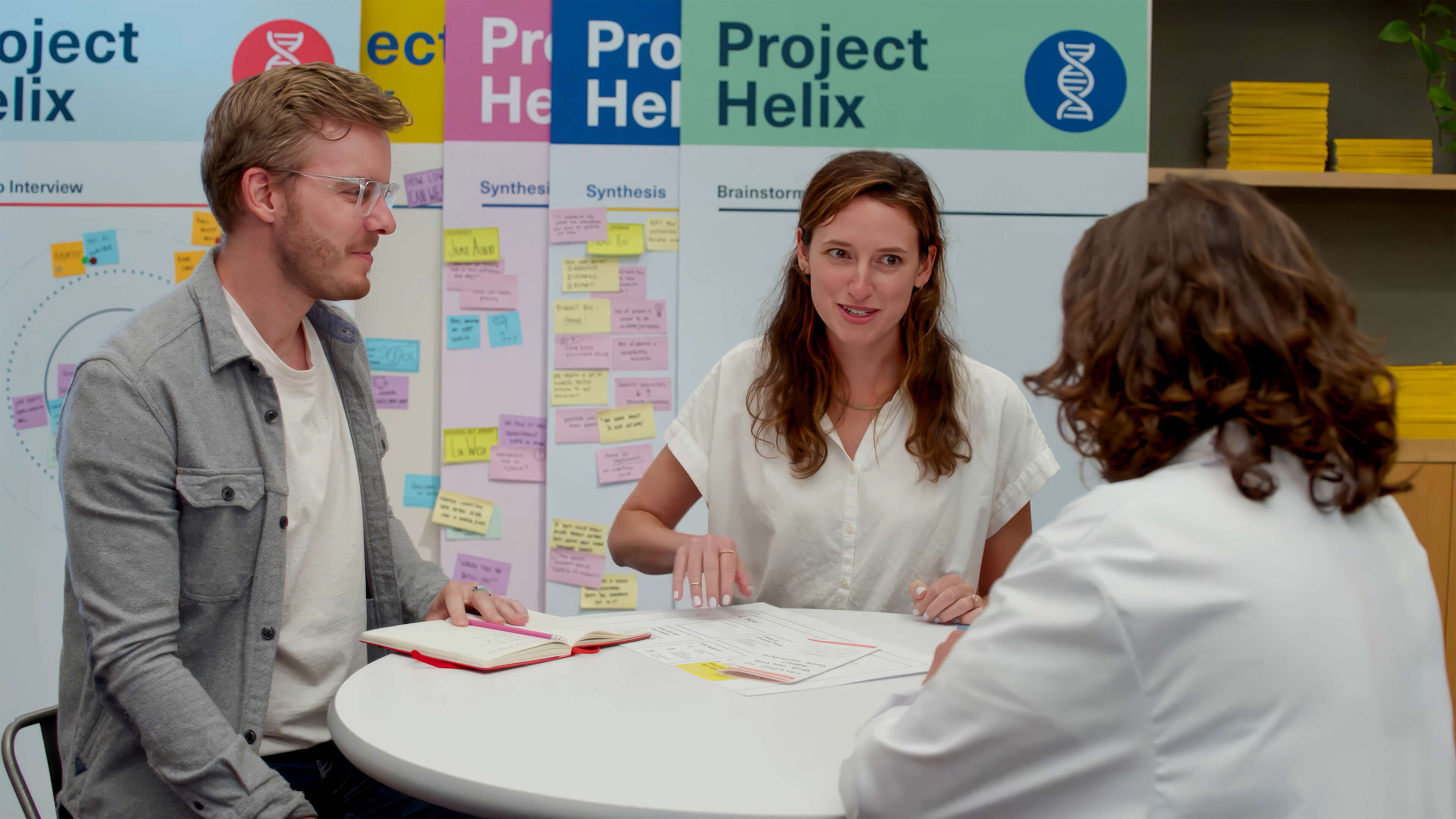
Every year, the NSF provides around 30 teams with up to $750,000 and a year’s worth of coaching, training, and collaboration to develop solutions for research areas like sustainable ocean use or combating fake news. Over the course of nine months, the teams learn how to uncover insights about human needs and design durable solutions for end users. But many of the scientists and experts in the program felt stretched by the idea of putting the needs of end users in the mix with their scientific testing—something few of them have been trained to do in their previous work.
To make that process feel more achievable, the teams built out prototypes and received guidance on refining and pitching their ideas along the way. IDEO joined the project as an innovation partner, facilitating hands-on workshops and creating “Science TV” episodes that could help the program reach a broader audience, deepening its impact now and in the future.

To help grantees get vulnerable, and evolve their ways of working, IDEO sent grantees to improv training so that they could learn to build off each other. The team also took them to magic shows and on ghost tours in downtown San Francisco to learn the value of compelling storytelling in their work. The fun was part of the plan—gelling as a team and building relationships meant participants could make mistakes in front of one another. Being wrong doesn’t come naturally to academics, but it’s a key part of the design process, and a crucial part of solving complex problems .
Each year, a select group of teams move onto the next phase of the “coop-etition,” receiving up to $5 million in additional funding. And all of the participants leave with valuable new skills they can use to break out of their own silos and create human-centered, ground-breaking solutions for the rest of their careers.
When the NSF launched the Convergence Accelerator and made the radical move of bringing together teams from different disciplines, these academics, scientists, and industry partners didn’t have a shared language to move their ideas forward, and needed a structured approach to coming up with new solutions.
164
trained research teams
$200M
in federal support granted to AI-driven innovation, quantum technology, food security, sustainable materials, opportunities for people with disabilities, and more
Why Coding Needs to be a Conversation, Not a List of Commands
4 tips for integrating your software developers into the design process
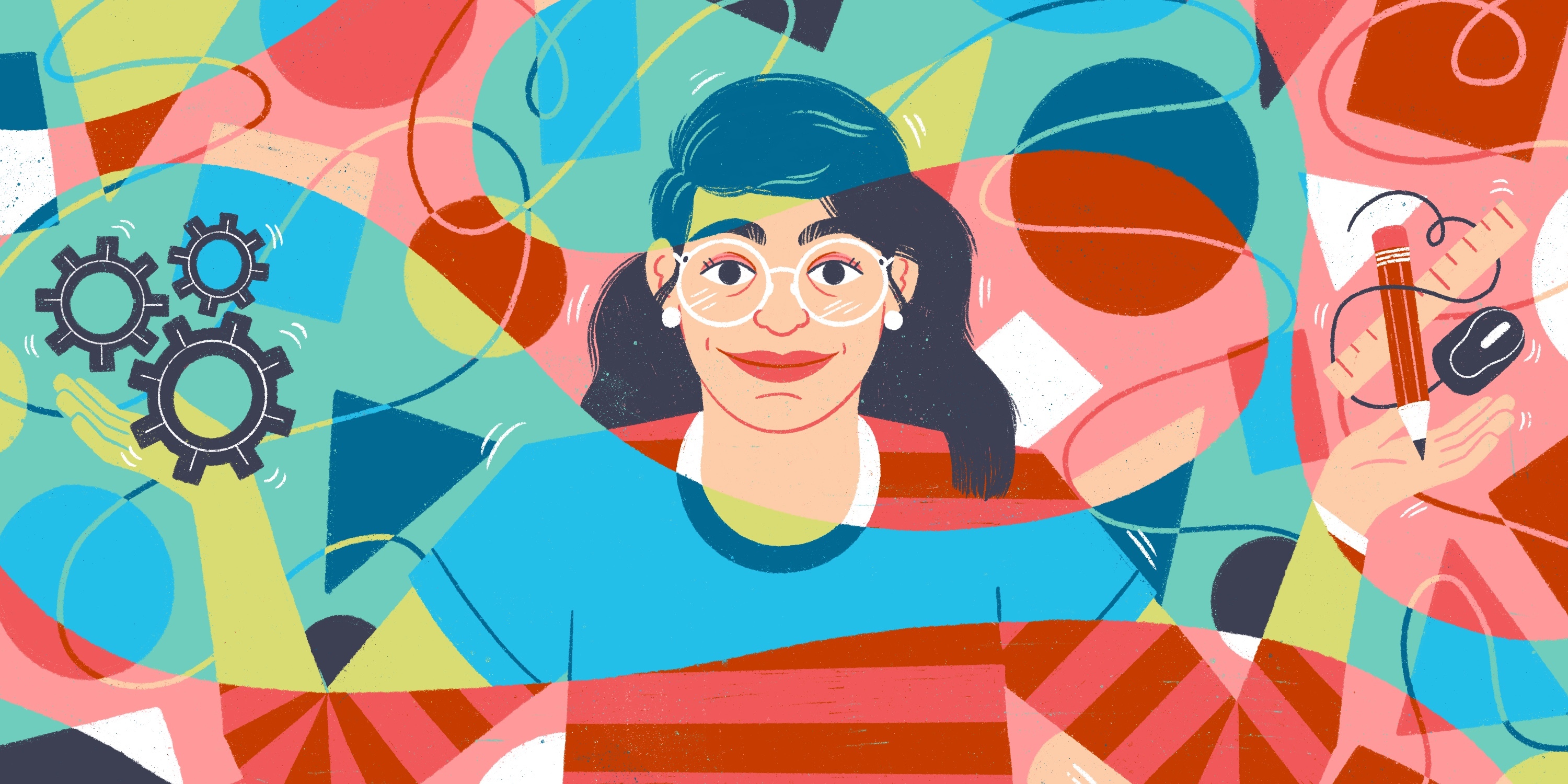
The role of an engineer on a product team may not exactly involve saving the world, but the scene has some origin in reality: Engineers and other team members often have to come together creatively to solve a problem, and they each have their own language and jargon for describing solutions. As teams practice leaner and leaner development cycles, the process of defining and agreeing on requirements, challenges, and solutions needs to be an ongoing conversation, where everyone comes away with a shared understanding and a feeling that their role’s needs have been met.
So how do you start that conversation, and keep it going successfully throughout the life of a product? Here’s a roadmap to get you started.
Start by developing a common language
Do some level-setting at the beginning of the project to agree on general terminology that everyone can understand. Sometimes, this piece can even be as small as defining your individual product’s features in a way that allows you to speak clearly about your product roadmap.
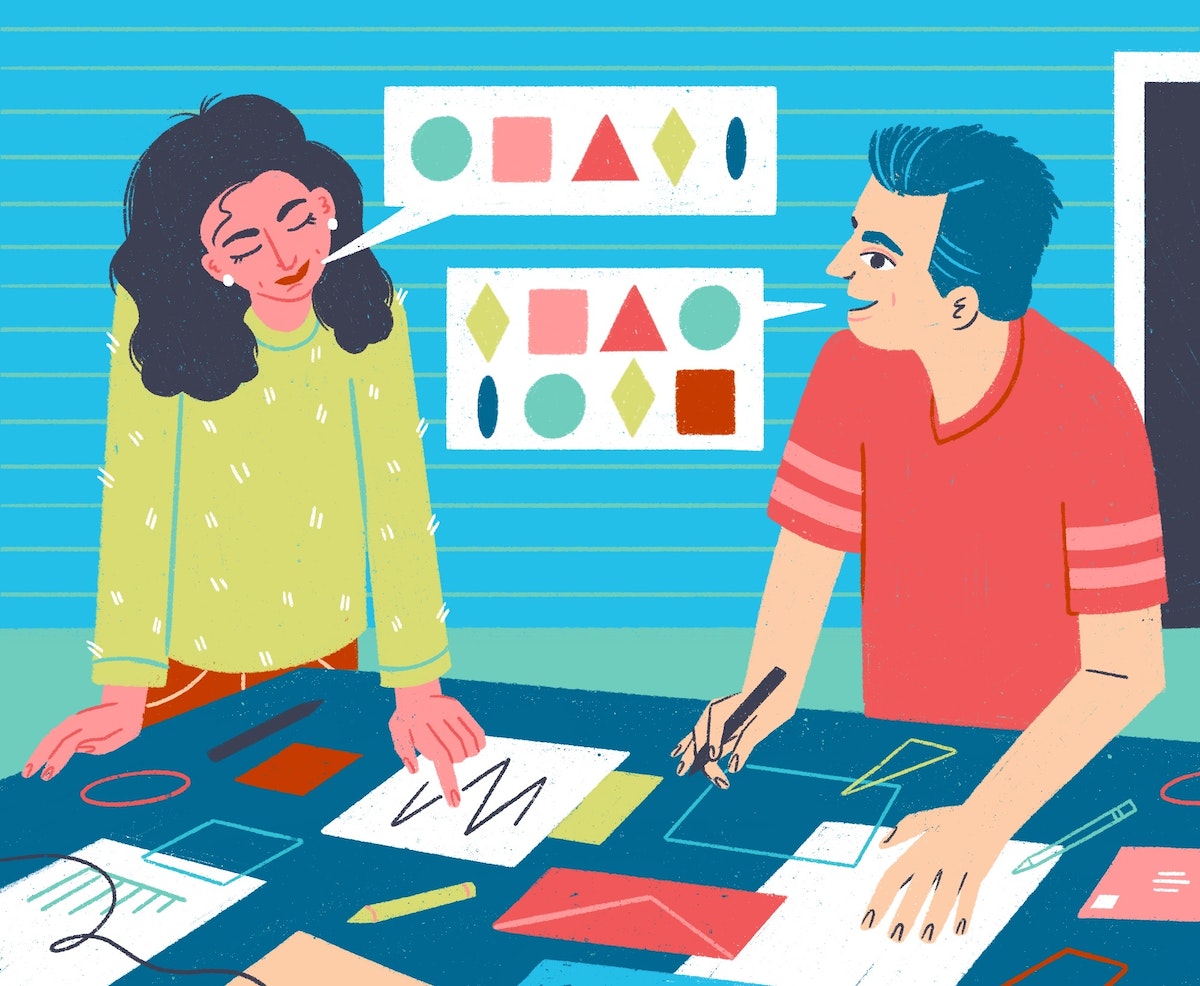
Early in a recent project, when we were going over wireframes, people were throwing around a lot of terms that referred to the same thing: Was a “folder” the same as a “collection”? What differentiated an “item” from an “object?” By coming together in the product’s infancy and agreeing upon these terms, we were able to define our system architecture and have meaningful database model names that we still use.
Share your vision for the product
Build in time to ask your team members how they feel about the product, and share your vision as well. Try to think outside the smaller details of what everyone’s currently working on, and find opportunities to share thoughts and feelings about the product at large. You might be surprised to hear that an engineer is anxious because they’re worried that the latest feature build is getting way more complicated than they originally planned, or that a designer is excited because users have been clamoring for the feature you’re working on. These small, casual interactions build a sense of trust and shared knowledge about the larger vision that each functional team has for the product as a whole.
Leverage disagreement to come together
It can often feel like product managers, designers, and engineers are at odds with each other. Between wanting to meet deadlines and stakeholder needs, pushing for a joyful and user-centric interface, and working toward robust and uncomplicated code, things can get tricky. The key is to take this source of potential conflict and turn it into a shared learning opportunity. Make sure that every side is not just arguing for a solution, but actually communicating the “why” of a solution. If an engineer understands the user research and decision-making that went into a proposed feature, it will help them communicate all the possible solutions that can meet that particular user need, and then the team can prioritize and make better decisions.
Find opportunities to translate for each other
This opportunity often presents itself when you’re integrating new members onto the team. For example, new engineers with fresh eyes often want to jump in and optimize and uncomplicate things. While that can be a good thing, there may be situations where the more experienced team member needs to explain the design decisions that led to certain features being a certain way—and suddenly the engineer is empowered to speak for the UX designer because they understand the shared vision.
Once you find your conversational rhythm, you’ll find that team members begin to understand each other’s roles better. Because the designer now understands why the engineer pushed back on a certain complicated feature, and the engineer understands why users have been wanting a different feature, both roles on the team are now better equipped to advocate for each other and push toward a common goal—whether that’s defusing the bomb on the bus, or building a successful product.
Illustrations by Cassandra Fountaine
We’ve all seen the action movie trope where our hero needs to defeat a ridiculously complicated doomsday device, and the plucky engineer has to explain how to reverse the polarity or engage the spatio-temporal hyperlink. The hero inevitably responds, “In English, please?”
Why You Should Invest in Real Friendships at Work
The benefits go far beyond coffee breaks
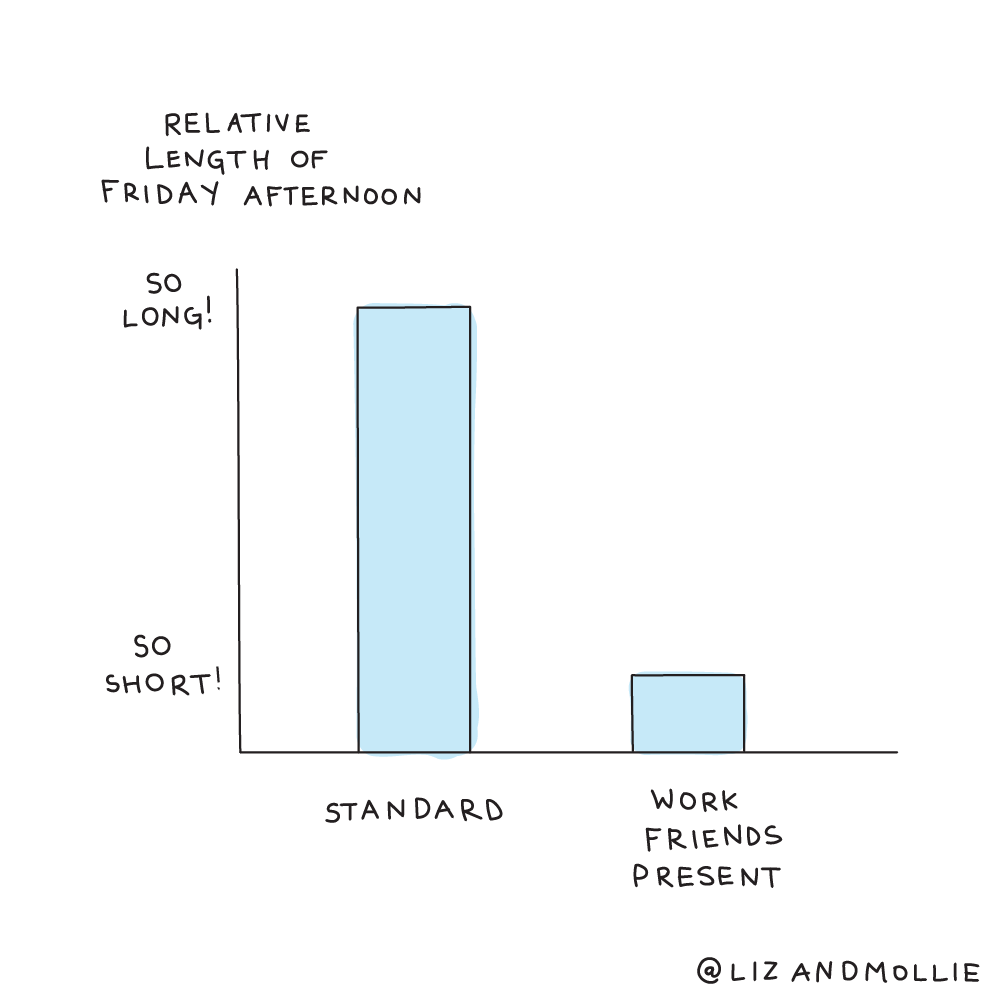
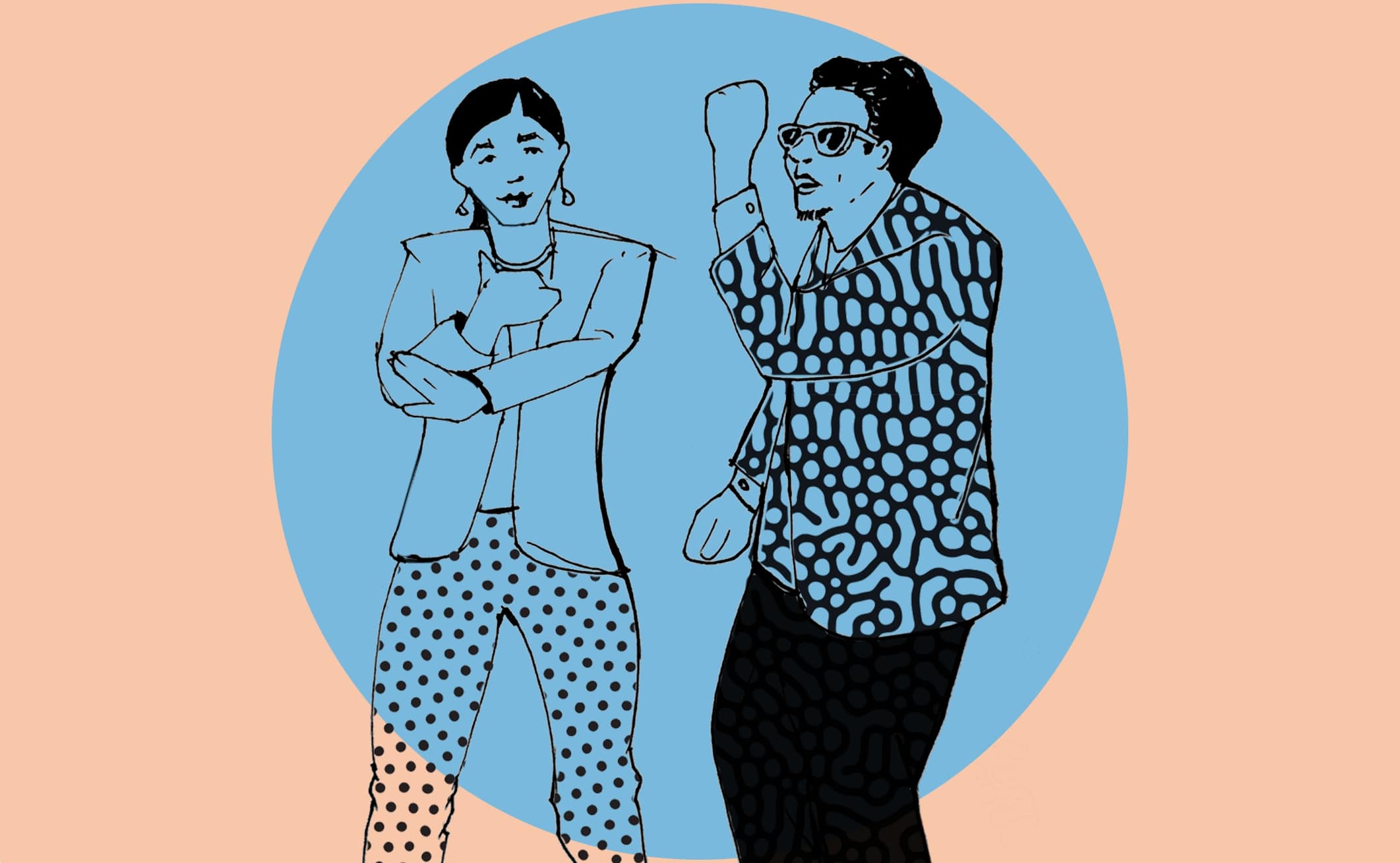
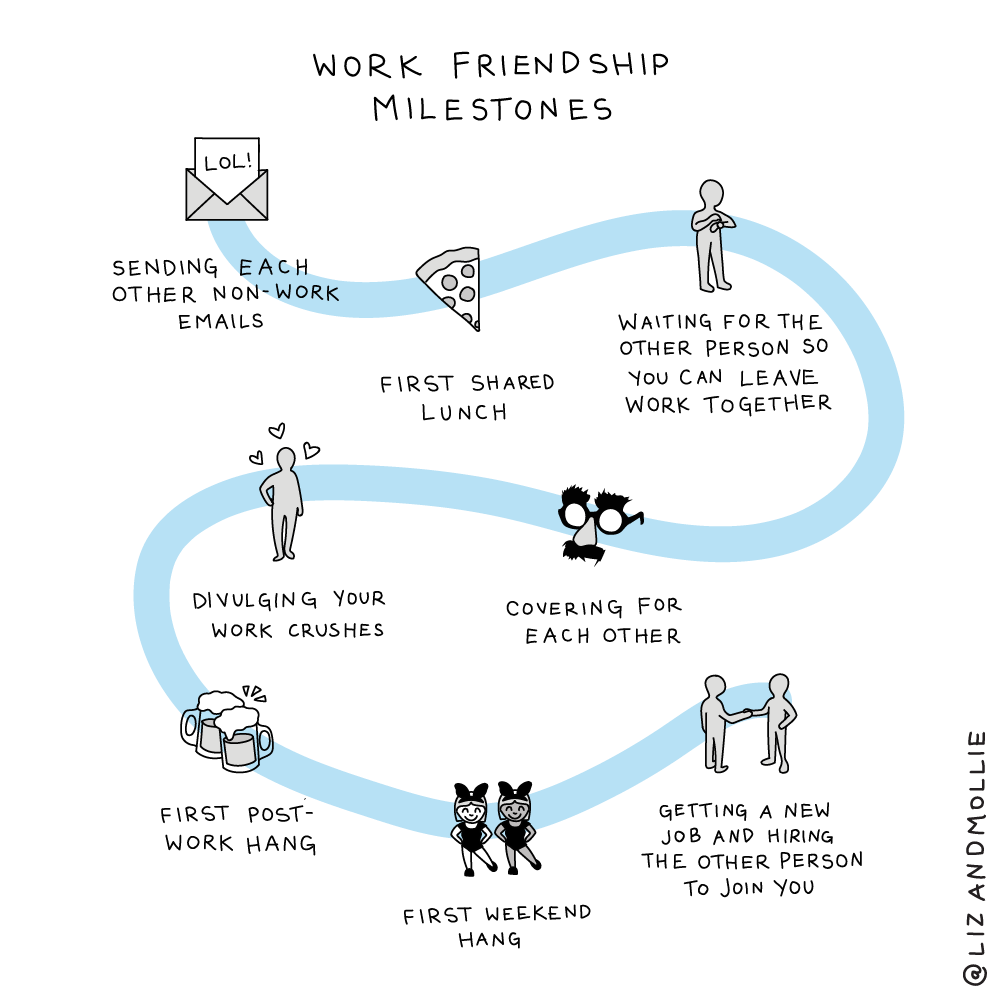
Work friends are very important, and different types of work friends can fill different needs. We’ll cover three: the confidante, the inspiration, and the frenemy. Understanding how and why you relate to these people will help you commit appropriate mental resources to developing workplace relationships that can bolster your motivation (and maybe even help get you out of bed on that Friday morning).
1. The confidante
This is the work friend who will commiserate when you’ve had a rough conversation with your boss, rush you to the bathroom when you’re about to cry, and give you honest feedback when you need it most. Confidantes make us feel like we can conquer the world—or at least ace a presentation and finally ask for that raise.
But these days, it can be tough to find a confidante at work. Because we tend to switch jobs more frequently, it can be hard to invest as heavily in workplace relationships. To counter that and find your confidente, start by building trust and sharing stories with a coworker you gravitate toward. Or initiate a get-together: People who provide social support to others—by organizing an office event or inviting colleagues to lunch—are ten times as likely to feel engaged at work than people who keep to themselves, says Shawn Achor, author of Before Happiness.
2. The inspiration
The inspiration is your platonic work crush: you don’t want to be with them, you simply want to be them.
This person can either be a colleague you deeply admire or a formal mentor. You probably could've guessed this, but mentors can help improve job satisfaction, teach us how to be effective leaders, and steer us towards the right career moves.
“They’ll bring a field to life for you. They’ll teach you how to find quality material in that field,” advises economist and author Tyler Cowen.
Pro tip: The best way to find a mentor isn't to ask, “Will you be my mentor?” but to start by asking someone for specific advice, then slowly work toward building a relationship.
3. The frenemy
We tend to choose friends who are similar to us, especially at work. But the more we have in common with someone, the more likely we are to compare ourselves to them. The frenemy is both our friend and our benchmark within the organization.
Another pro tip: Don’t feel guilty about experiencing the occasional twinge of envy! Frenemies account for almost half of all important members of our networks.

While frenemy relationships are linked to greater stress, they also motivate us to work harder. In a survey of consultants, those who had a frenemy made more of an effort to succeed and network. Leverage the positives of a tricky relationship by partnering on an important project; you’ll try harder to prove yourself and might end up with a real friendship.
But even the best work friendships have a dark side. Sometimes being close with our colleagues can leave us emotionally exhausted. Managing relationships we care deeply about while giving critical feedback or rushing to meet deadlines takes effort. Talk to anyone who has worked at a startup where coworkers describe themselves as a family, and you’ll inevitably hear how tiring it can be.
And for every friendship, there is also someone outside the friendship. The closer the relationship between two colleagues, the more others might feel left out, even if the friends aren’t actively excluding anyone.
Here are some concrete ways that you can engage with people at work to reap the rewards of having solid work-friends:
- Go for quality instead of quantity. High-quality connections don’t necessarily require deep or vulnerable relationships. Small moments of connection full of trust and engagement can be the beginning of something larger.
- Prevent silos from forming. IDEO structures all of its teams to include designers from different disciplines so each team is cross-functional. Our San Francisco office also has a ritual called tea time, in which people are invited to take a break from their work and mingle with people they don’t work with directly.
- Don’t rely on social events. Studies show that work parties aren’t always effective at helping people make friends. “People don’t mix much at mixers, and at company parties, they mostly bond with similar colleagues,” says Adam Grant.
- Spend casual time together. Google and Facebook plan times for employees to play games and eat meals together. At LinkedIn, the whole family can get in on the fun during Bring Your Parents to work day.
This post was adapted from Mollie and Liz's book No Hard Feelings: The Secret Power of Embracing Emotions at Work.
Choice, meaning, and opportunities for learning all make work more enjoyable. But on rainy Friday mornings when we’re low on sleep and irritated with our managers, research suggests our real motivation isn’t a what—it’s a who. People with friends at work find their jobs more satisfying, and are less affected by stress.
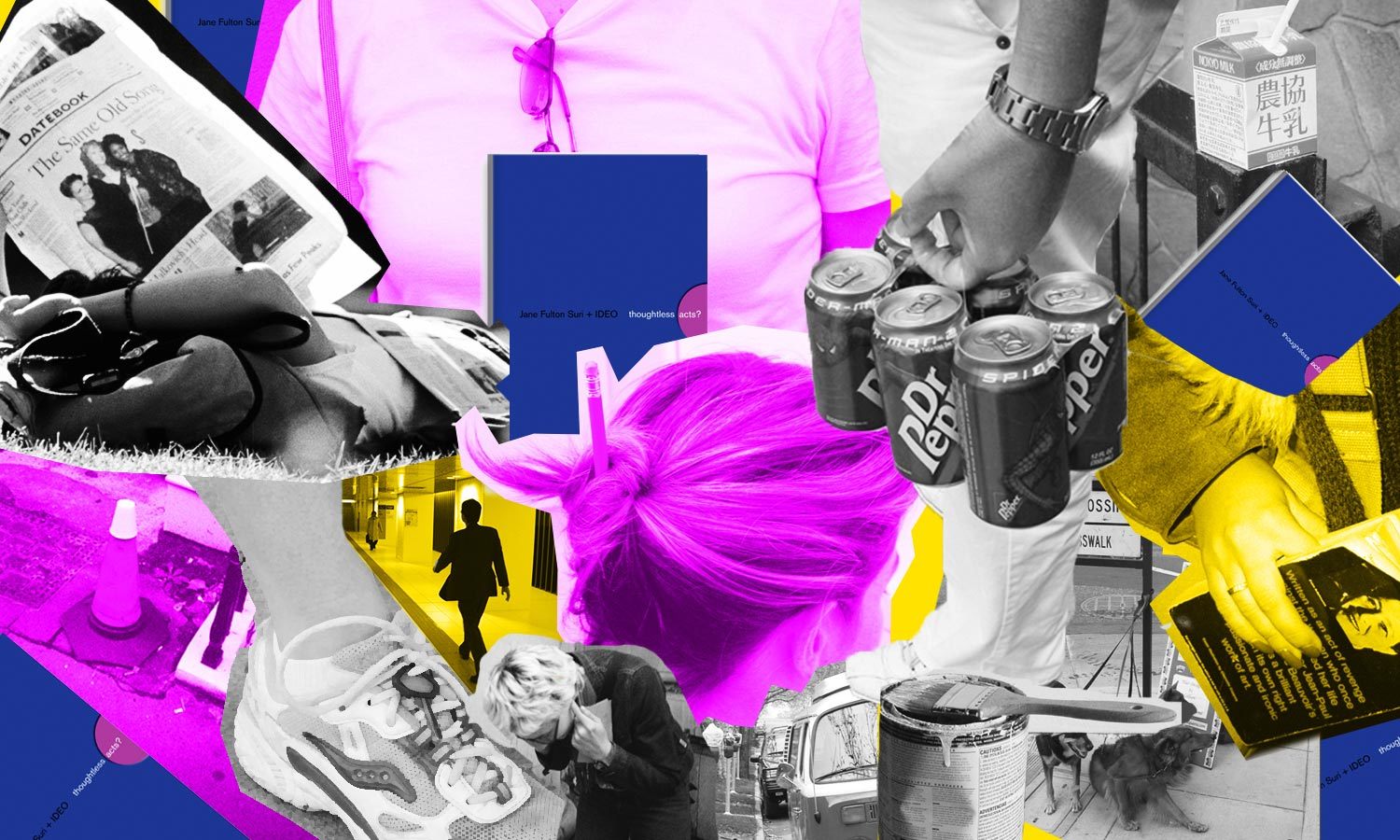
Thoughtless Acts: Monsoon Season
Thoughtless Acts: Monsoon Season. The intuitive ways we adapt and react to things in our environments

It's my first few hours in Bangkok, and by looking around the train, I can tell it's rainy season. Thin raincoats cover suits, and young mothers juggle both sunglasses and umbrellas.
As I exit the train, I look up, count to three and speed through a very thick rainstorm toward my Airbnb. After a much-needed nap, I open my eyes to a completely different climate. I peek through the shutters of my room and see an indigo sky, birds flying, and I am feeling the heat.
I pick up my fanny pack and leave the Airbnb immediately to explore the neighborhood. On a quiet side road, beside the fence of a wood craftsman shop, a thick black piece of tarp covers a corrugated fence. It’s held in place by a clever set of weights—filled plastic water bottles.
It strikes me that such an old trick can be found everywhere across the world. I start to wonder how can these four small bottles make it through such heavy, rainy days.
I stop to stare at a man approaching me. The woodchips on his shirt make it seem like he must be heading out from the shop nearby. He whispers something, unties a couple of bottles, and brings them to the shop's outdoor sink. These short bursts of sunlight heat must dry the water in them pretty quickly, I thought to myself. Regardless of the one million square meters of water falling over Bangkok each September, nothing beats the strength of a tropical sun, and the dedication of an old craftsman to keep his work tools dry.
Human-centered design requires us to observe human behavior with beginner's eyes, so that we can spot the innate ways people interact with the world around them. We call these intuitive and unconscious reactions Thoughtless Acts, and IDEO designers collect photos of them to inspire their work.

This Woodworker Puts a Modern Twist on an Age-Old Trade
Katie Gong's art is full of loops, curves, and elegant bends
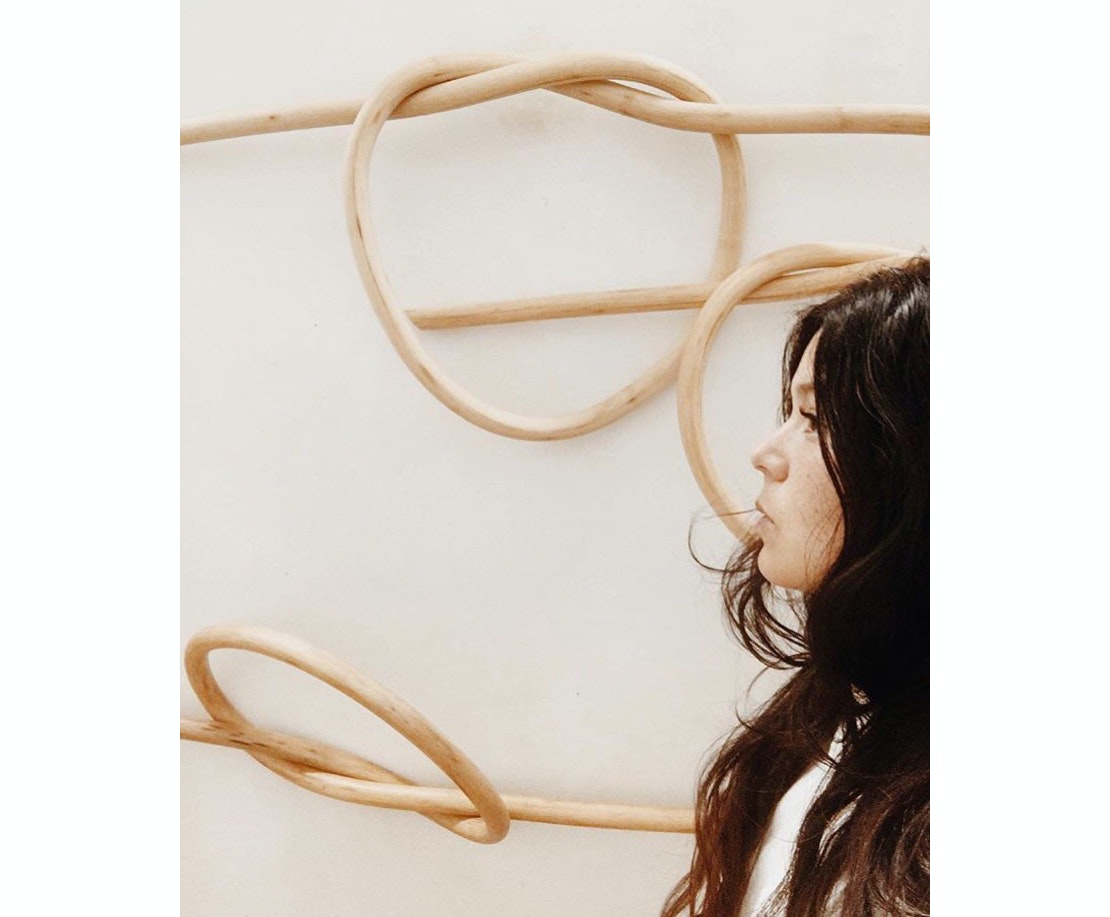
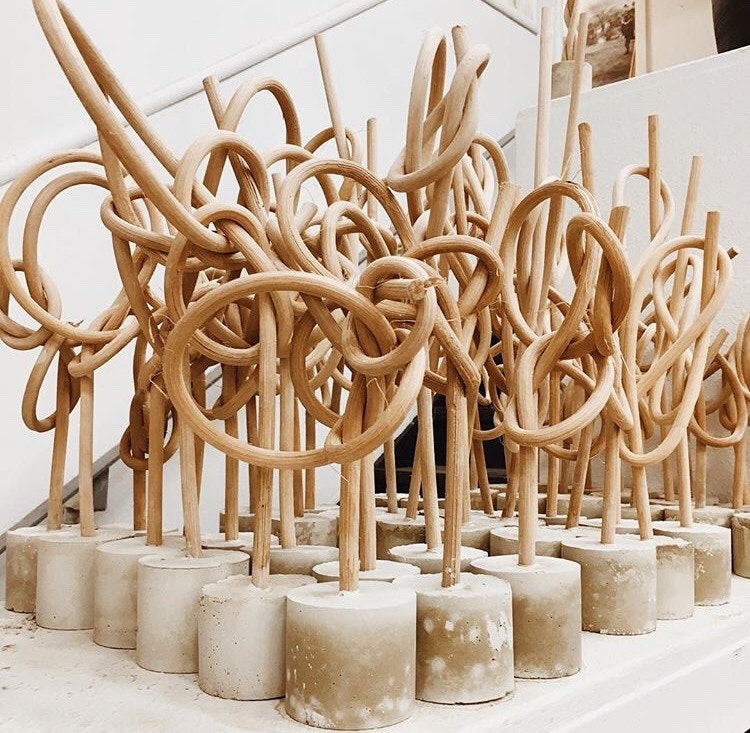
After steaming smooth, straight pieces of wood, Katie sculpts them into loose knots, braids, and squiggles, inherently fluid shapes that defy the medium’s natural rigidity.
To me, Katie’s work represents open-mindedness, possibility, and the means to evolve beyond appearance, expectation, or past. Her sculpture that sits in our living room—a wooden braid that bends upwards in an elegant arc, like a ballerina’s arm extending over the bar—reminds me to be unafraid to challenge the seemingly accepted, even when it comes to myself.
Katie sat down with me to share more about her craft, plus her fondness for classic 80s movies and finding freedom in chaos.
In one sentence, who are you?
I am many things: an artist, mother, wife, designer, and powerhouse.
What do you do? How did you learn it?
I’m an artist specializing in wood. I bend wood by steaming it, which is a unique and pioneering technique that challenges classic woodworking practices. I learned the craft from a young age. Growing up, my grandfather and father were both carpenters and taught me how to work with wood.

3 favorite possessions?
1. My father's Old Timer pocket knife. 2. My wedding rings and grandmother’s jewelry. 3. My adventure hat.
What does a typical work session look like?
I like to have a lot of projects going at once, so there are typically a couple things in the works at any one time. I tend to work a bit on each project all at once. Sometimes it can be a bit hectic, but there’s something in this chaos that allows me to move freely from project to project.
How do you get over creative block?
I try to take a step back. I change my surroundings and not think about the project. I find that once I zoom out, I find the solution I was searching for.
What was the last item on your to do list?
Getting a pedicure. Sometimes making time for myself can be tricky.
How do you see the world in 2078?
Hopefully I'll still be around then. Let’s see... I hope to be telling my grandchildren about growing up in the 80s, and blowing their minds by showing them ET and The Goonies. I hope that the world still holds on to the classics, like going for road trips, camping in cars, or reading books snuggled under a blanket while its raining outside. I hope that the world is similar to today and yesterday. Mostly, I just hope it’s not uninhabitable because of global warming or something crazy like a nuclear explosion.
What’s your number one bucket list item?
I’d like to have a solo exhibition in Japan.
Who are you creative crushin’ on lately?
My number one creative crush is always Aleksandra Zee. She's my creative sister. Windy Chein’s ombre knots are killing me, and Meryl Pataky is truly pushing the boundaries of neon art.
With a dose of hot moisture and a little imagination, San Francisco-based woodworker Katie Gong makes the seemingly stiff become supple. Kind of like my attitude after a bath.

Lindsey Turner
I’m passionate about building brands, products, and experiences that help organizations show up with meaning and momentum.
I help organizations cut through complexity by shaping how they show up, through brand strategy, identity, and storytelling.
Working at the intersection of brand and business, I bring an editorial eye and a bias toward making—turning ideas into tangible experiences that people can understand, trust, and believe in.
My work spans government, healthcare, financial services, media, and consumer goods, from launching Gen Z-focused ventures to building innovation labs and reimagining legacy brands. I relish moments of ambiguity and enjoy translating across teams, perspectives, and priorities to move ideas forward.
I started my career in editorial and digital design, shaping cross-platform experiences and identity systems in publishing and agency environments. That foundation still shapes how I work today: I’m detail-oriented, collaborative, and overreliant on the Oxford comma. I hold a BFA in Visual Communication from the School of the Art Institute of Chicago.

Rachel Young
My work helps organizations see who their products aren't working for—and build the will and the tools to do something about it
For 25 years, I've asked the same question: Who does this design exclude—and what are we going to do about it?
My work spans human-centered strategy, inclusive design, and qualitative research, with clients ranging from Microsoft, Google, and Verizon to the National Science Foundation, and San Francisco Unified School District.
Before IDEO, I taught elementary school in East Palo Alto and spent a decade doing design work with social service organizations—where I learned firsthand what it costs people when systems are built without them in mind.
I am currently writing User Error, a nonfiction book about digital access and the design decisions behind it. I live in Oakland, California.

Brian Pelsoh
I lead with craft, ensuring our work is creatively excellent: rooted in deep human insight and imagination, while also grounded in the realities of business and technology.
My expertise spans brand, communication, and product design across tech, education, the arts, and social impact.
I believe great work demands both high-level vision and obsessive attention to detail, and only happens through collaboration.
I bring an inclusive, hands-on approach and a deep understanding of business, which enables me to consistently deliver excellence while always asking why.
Before joining IDEO, I worked at the brand firms Pentagram and VSA Partners. I began my career as a designer, leading teams at the School of the Art Institute of Chicago and the Milwaukee Art Museum. I hold an MFA in graphic design from Maryland Institute College of Art and a BFA in communication design from the Milwaukee Institute of Art & Design, and have taught at some of the best design schools in the US.

Tony Wong
I am responsible for IDEO’s long-term success in China and working with clients to use design as a tool to enable growth.
I am responsible for IDEO’s long-term success in China and working with clients to use design as a tool to enable growth. Specifically, I have helped Chinese companies design holistic brand solutions through the development of their products, communication, services, and innovation teams, and I have helped multinationals expand their presence and influence in China.
I advise global leaders on developing China-led innovation and capabilities.
In over 15 years in IDEO Shanghai, I have worked on projects that use design to elevate the quality of the experience of healthcare products and services, streamline processes that increase productivity, create spaces and programs that promote and enable inclusive communities, and build next generation mobility solutions that are planet-positive.
Before joining IDEO, I worked at Philips Electronics and the Electrolux Group in Italy, the Netherlands, and Singapore on a number of breakthrough commercial products. I am a member of the Young President Organization in Shanghai.

How to use AI as an editor, not a writer
Ed White shares how he uses AI as an editor—not a writer—to sharpen storytelling, rehearse ideas, and preserve the productive friction that makes creative work better.
Ed White has a rule he's tested on his own writing: hold yourself as the writer, and let AI be your editor. Ed is a Senior Design Director at IDEO's London studio, where he co-leads the firm's AI portfolio across Europe. Before IDEO, he spent 12 years as a writer and editor at the Financial Times, Wired, and Contagious. So when he talks about when to use AI for storytelling and when not to, it comes from two decades of crafting his storytelling skills.
In this episode, Mina Seetharaman talks with Ed about two specific tools he uses to keep AI in an editor's seat: a "roasting agent" prompted to critique his drafts without any sugarcoating, and a simulated audience he rehearses pitches on before the real thing. They also get into what Ed is hearing from design leaders at Anthropic, Lovable, Shopify, and Google Creative Lab about how creative work is changing, and why he thinks the friction of writing something yourself is worth protecting rather than automating away.

Building a personal AI for the messiness of life: Sida Li
Becca Carroll talks with Cue co-founder Sida Li about designing a personal AI for the messiness of everyday life—not just work. They explore how Sida stays anchored to human needs while navigating fast-changing technology, product tradeoffs, business-model experimentation, and the realities of building an AI company today.
Most AI products today are built for work—a space with clear problems and established systems. One founder noticed a gap: personal life is messier, harder to systematize, and mostly left behind by the AI boom. So she built Cue, a personal AI that lives inside iMessage and group chats, to go where the other tools haven't.
In this episode, Becca Carroll, IDEO's Chief Strategy Officer, talks with Sida Li, co-founder and CEO of Shared Context Lab, about staying anchored to a human need while the technology around her keeps changing shape, why she treats her business model with the same rigor she'd bring to a product, and what it feels like to build a company at this particular, disorienting moment in AI.
The conversation also gets into how Sida makes design decisions: the language Cue uses to describe itself, the tradeoffs behind building inside iMessage instead of a new app, and a real story about a business idea that didn’t pan out.
This is the second in a two-part series profiling founders from IDEO's Startups-in-Residence program. The first conversation is with Johannes Seemann, founder of Sooner, on designing GenAI for the emotional side of money.

Designing GenAI for the emotional side of money: Johannes Seemann
Designing financial tools around the feelings that shape money decisions.
Most personal financial tools are built to run the numbers and optimize towards a budget. While that works for some, most people experience money as a lived relationship that does not neatly fit into a spreadsheet. Johannes Seemann and Becca Carroll discuss why money is emotional before it is mathematical, and what a human-centered approach to building a generative AI financial product looks like in practice.

The curious leader's edge in uncertainty: Scott Shigeoka
How genuine curiosity helps leaders navigate uncertainty with greater confidence.
Mina Seetharaman talks with Scott Shigeoka, author of Seek and Head of Curiosity Cultivation at the Eames Institute, about what distinguishes genuinely curious leadership from performative curiosity, how power dynamics shape curiosity, and why practicing curiosity can restore energy rather than drain it.
Looks like you might be in search of something very specific?
Or reset the filters above and try another angle.
Here’s some random inspiration

Podcasts about creative leadership

Articles about the power of prototyping