
.svg)


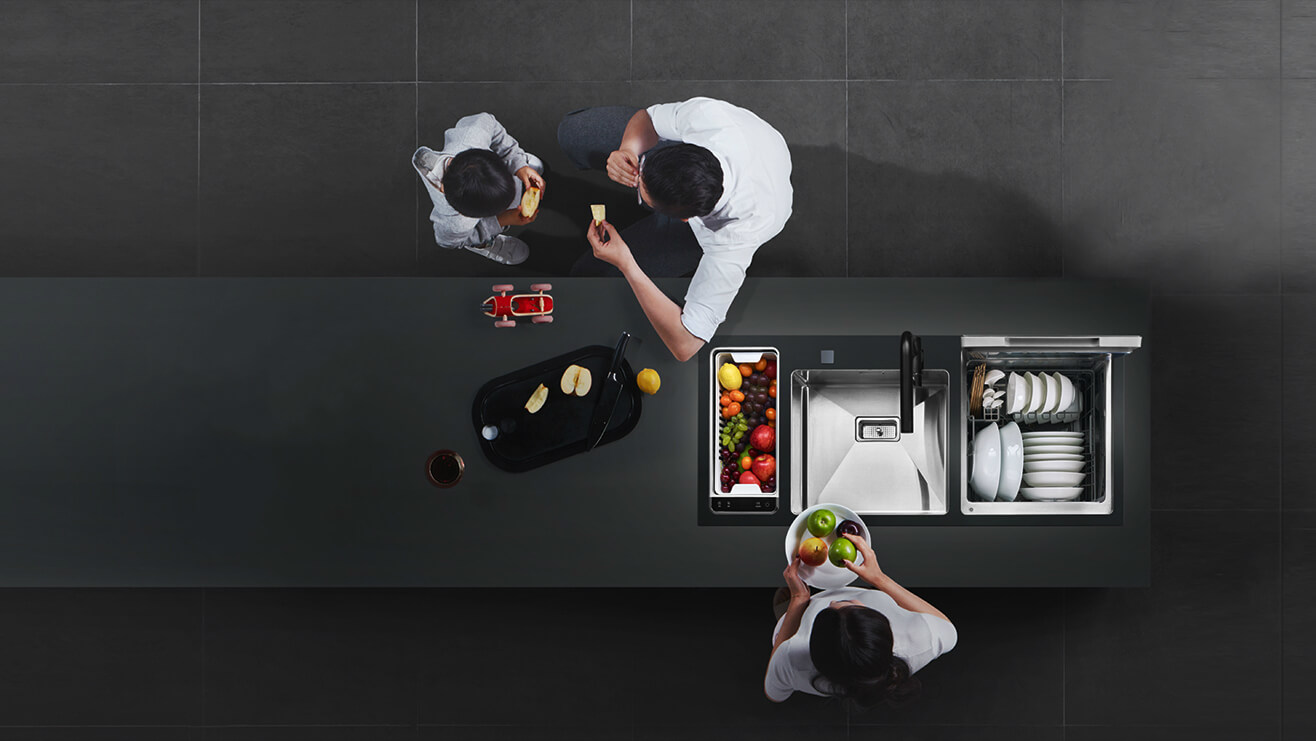

Introducing China’s first sink dishwasher
Fotile, the country’s top kitchen brand, unlocks a new category.
IDEO and Fotile have had a relationship since 2009, working together on projects including a unified design language for product offerings, retail environments, and IoT strategy. For the dishwasher, IDEO and the Fotile research team came together for design research, shadowing Chinese families in different cities as they prepared meals from start to finish. Together they discovered that unlike in Western cooking, where several kinds of cookware are used for different dishes, Chinese cooks tend to use the same cookware to prepare all of their dishes.
That meant that the cookware needed to be cleaned several times during a single meal preparation, rather than once at the end. In this context, the sink serves different purposes over the course of cooking—it’s a place to wash and store prepped ingredients, rinse the cookware, and deep clean the dishes used in food prep and during the meal.
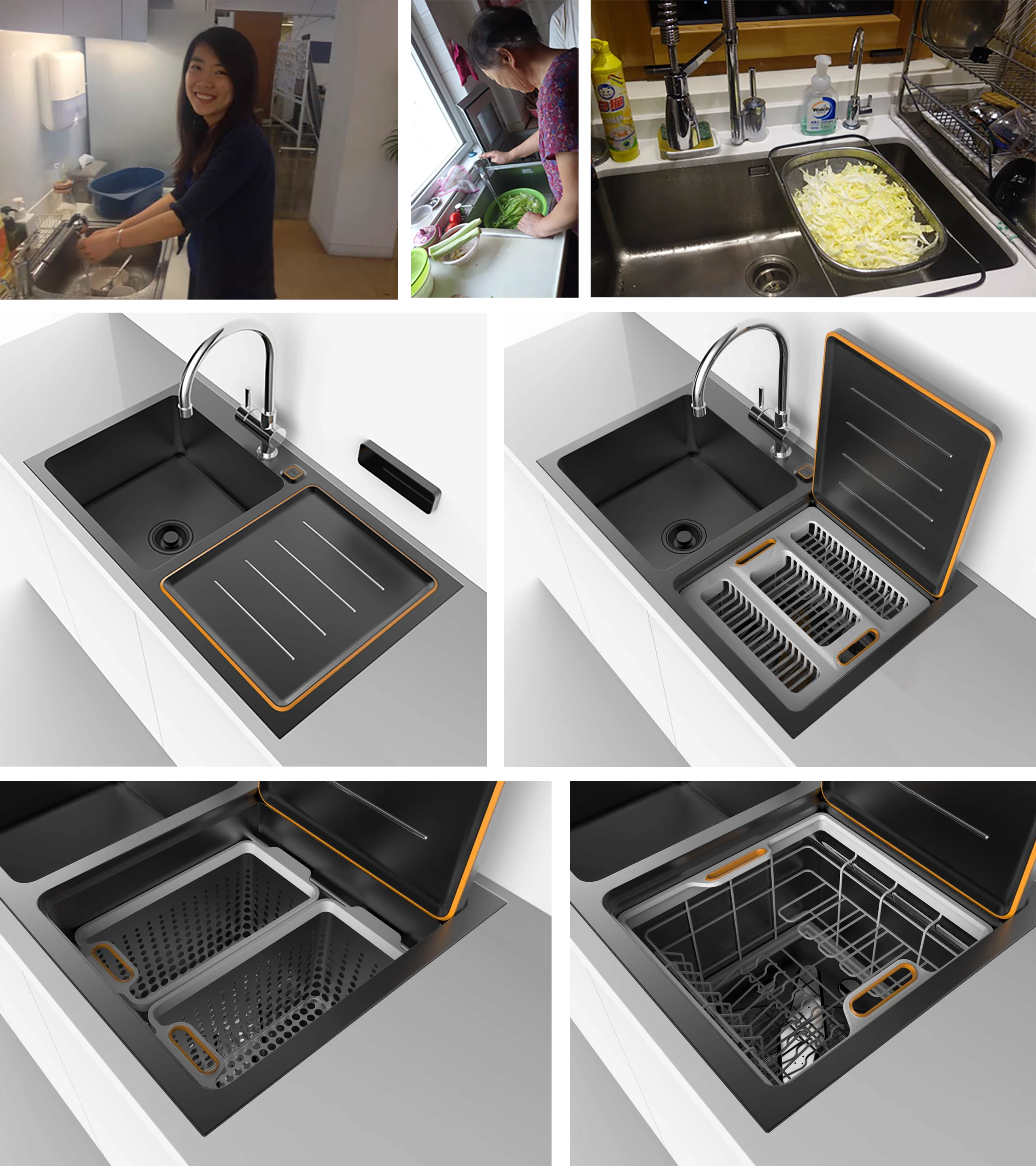
Based on this insight, IDEO made a list of product design recommendations that became Fotile’s Sink Dishwasher—a counter-level, multi-purpose appliance that specifically suits Chinese cooking habits. IDEO’s design guidance gave Fotile the confidence it needed to launch its product into the market, and served as a blueprint for the future iteration of Fotile’s Sink Dishwasher.
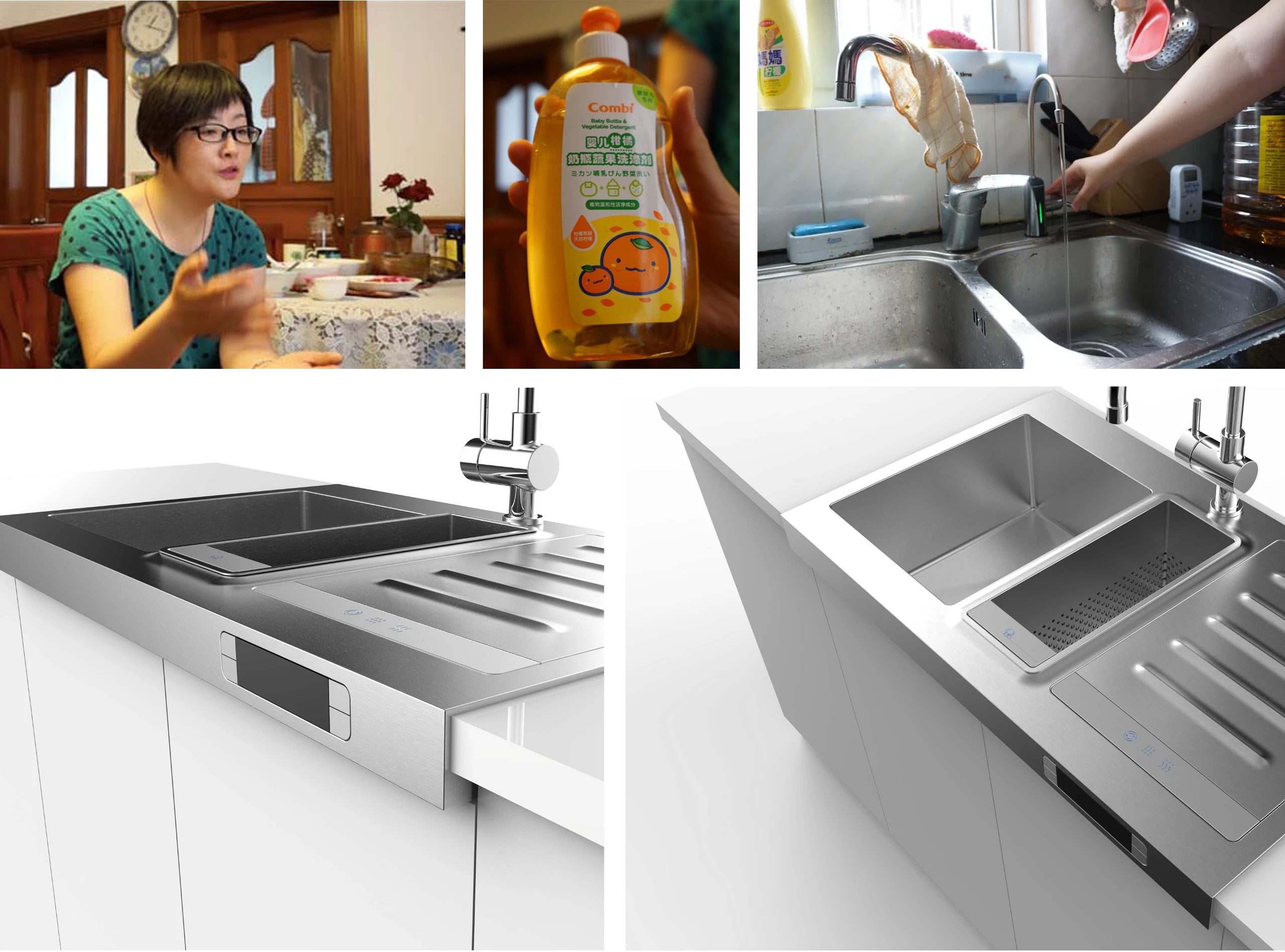
On March 25, 2015, six months after the project ended, Fotile launched the world's first sink dishwasher designed for Chinese families. Eight months later, its market share exceeded 30 percent, setting off a wave of innovation in the Chinese dishwasher category.
In 2016, Fotile introduced a three-slot dishwasher with an added compartment for cleaning fruit and vegetables—a direct response to a research finding that Chinese families are concerned about food safety. When this new model hit the market, Fotile’s dishwasher market share jumped to 41.1%. In China, Fotile is now synonymous with “sink dishwasher,” and the company has a widespread reputation among consumers as a symbol of a safe and healthy Chinese family kitchen.

Since its founding in 1994, Fotile’s Chairman, Mao Zhongqun, has made it his goal to “do nothing but build a high-end Chinese family brand.”
30%
Fotile Sink Dishwasher’s share of the market in China, just eight months after launch
41%
Fotile’s dishwasher market share after it launched a three-slot version in 2016
#1 selling brand
in the mainstream price segment of the Chinese dishwasher market as of August 2023

Growing a brand for modern Chinese parents
China’s BoAo Group expands from an auto industry manufacturer to a lifestyle brand for modern families.
BoAo Group’s idea to design a new baby car seat was fueled by a newly revised minor protection law, which made using child safety seats mandatory beginning June 1st, 2021. As ZUOWE and IDEO looked around China’s emerging car seat market, the team noticed a singular focus on safety and safety features across most international and domestic brands. There was a clear opportunity for a new product that could meaningfully differentiate itself by not only providing safety features but also meeting the needs of modern Chinese parents.
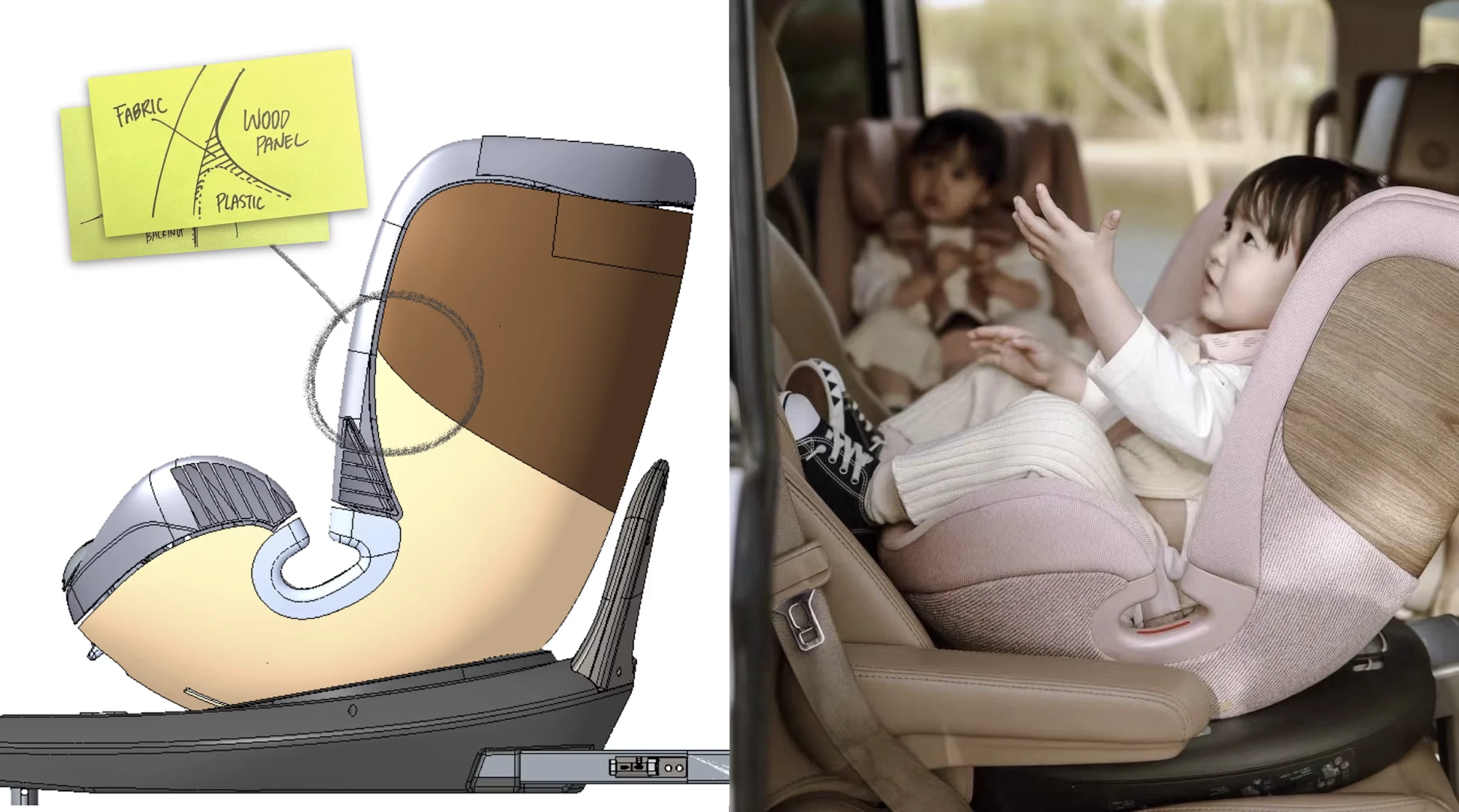
To kick off the project, the IDEO team needed to answer two questions: What matters to the new generation of parents in China? And how will their style and approach to parenting affect their expectations for baby car seats? Taking into account the potentially different consumer needs in different geographies, the IDEO team headed to Shanghai, a city with more than 25 million people, and the city of Taizhou in Zhejiang province, which has a population of 2 million. They conducted in-depth home visits to local families, visited many brick-and-mortar mom-and-baby shops, and interviewed people like specialized nurses, parenting experts, and child psychologists.
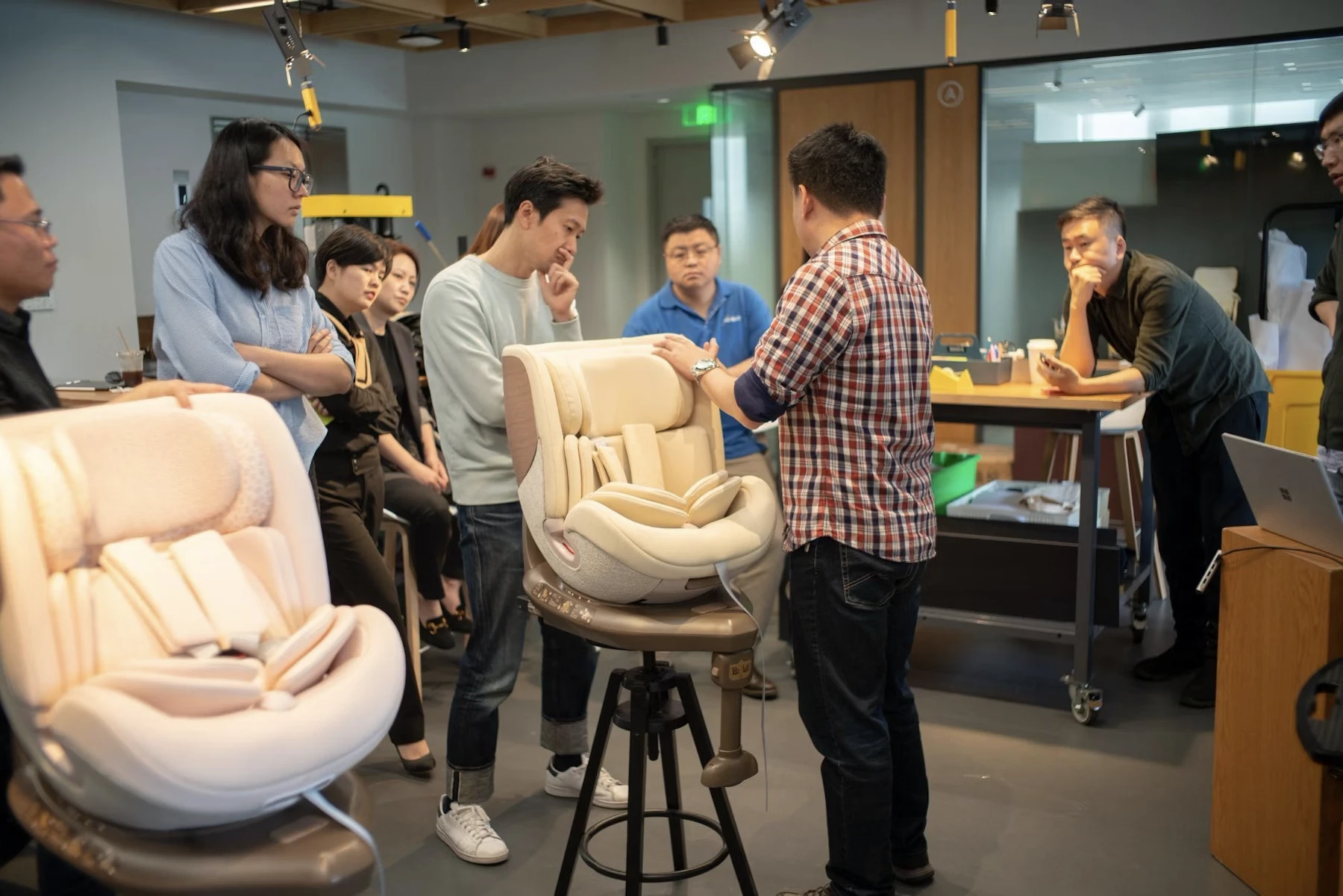
Despite the differences between the two cities, IDEO discovered commonalities during consumer conversations. Young Chinese parents were experiencing a perceived identity gap. As individuals, they felt they had distinct personalities and a clear sense of self. They actively expressed themselves through their clothes and belongings. But when they became parents, this sense of self weakened or disappeared completely. Their identities shifted to being someone’s mom or dad overnight. This new generation was eager to show their unique approach to parenthood as they used to express their sense of self. But many products were designed for children, with little regard for parents.
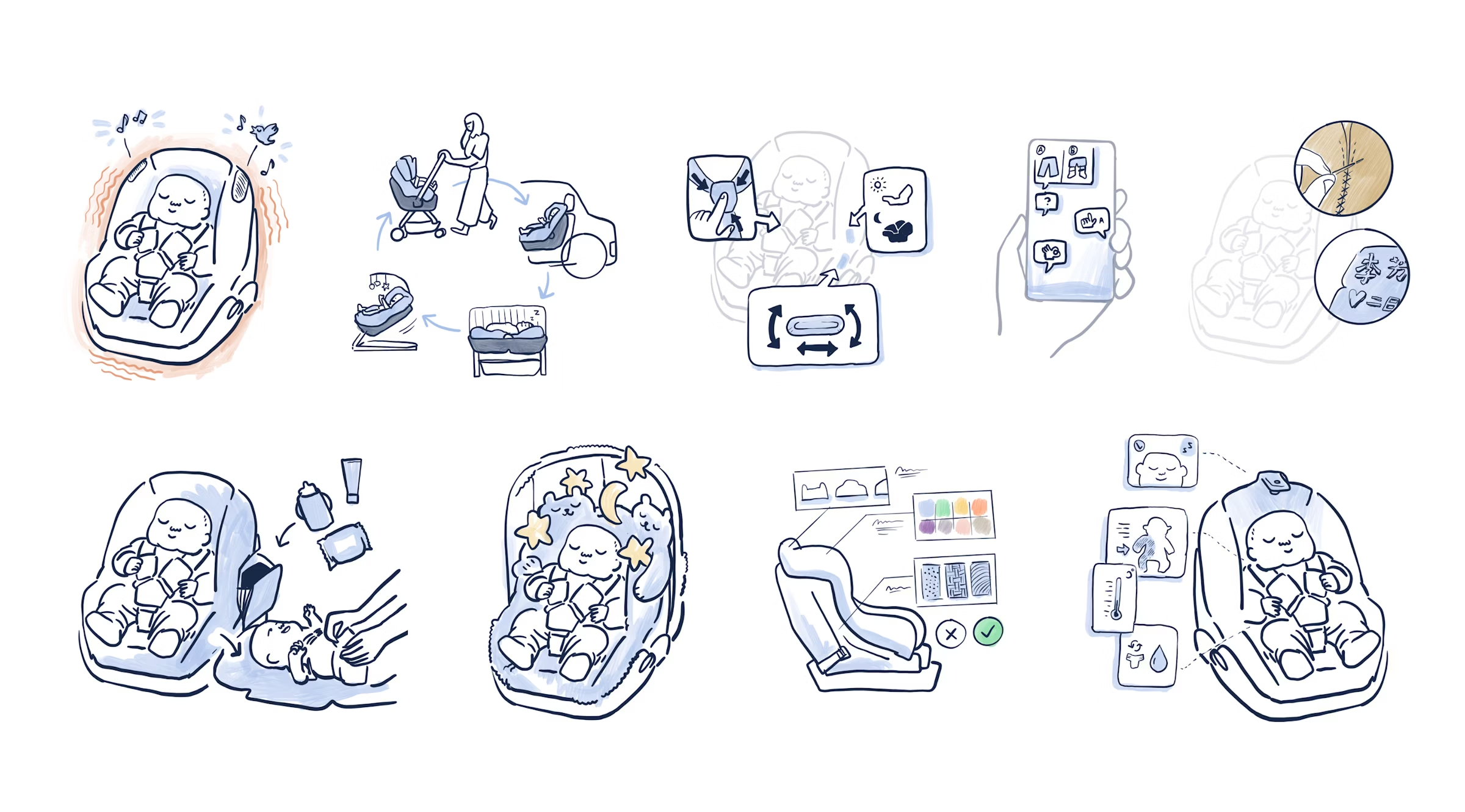
This core finding helped set the direction for the new baby car seat design and brand Maple&Co. However, there were still two significant challenges to overcome. One, IDEO needed to design a product with stringent technical regulations and standards on a tight timeline—ZUOWE wanted to launch the new car seat at an important industry trade show within the year. And two, the team had to help the organization transform its thinking and ways of working to be more consumer-centric.
BoAo’s strength lies in its 20 years of experience developing and manufacturing car seats for major domestic and international automotive brands. This gave the company an edge in overcoming technical barriers and driving mass production. But its engineering and manufacturing mindset had become a barrier to transforming into a D2C brand. With such ingrained ways of working, pivoting to a more creative process can be hard.
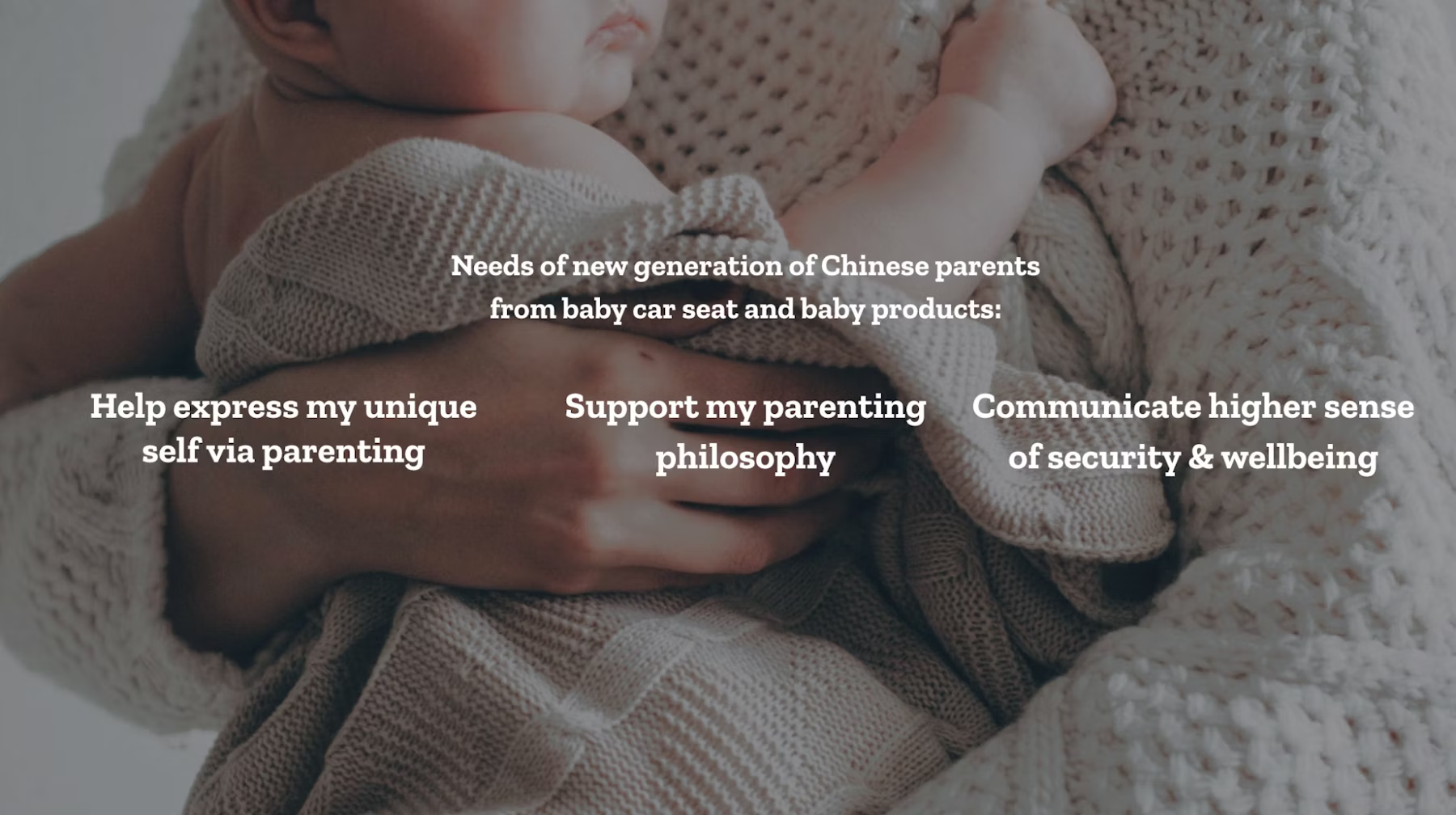
To address this hurdle, IDEO set up co-creation workshops, bringing together ZUOWE’s newly formed baby car seat team and manufacturing experts from their factories to discuss design direction and details early on. The benefits of the collaboration were clear: It was easy to share feedback in a timely manner and make product design decisions very quickly. When IDEO presented a design that emphasized natural textures during a workshop on brand positioning, a member from Bo Ao’s manufacturing team said, “This feels very different. This could become a major selling point,” and that they had “never seen” anything like it done by other baby car seat brands.
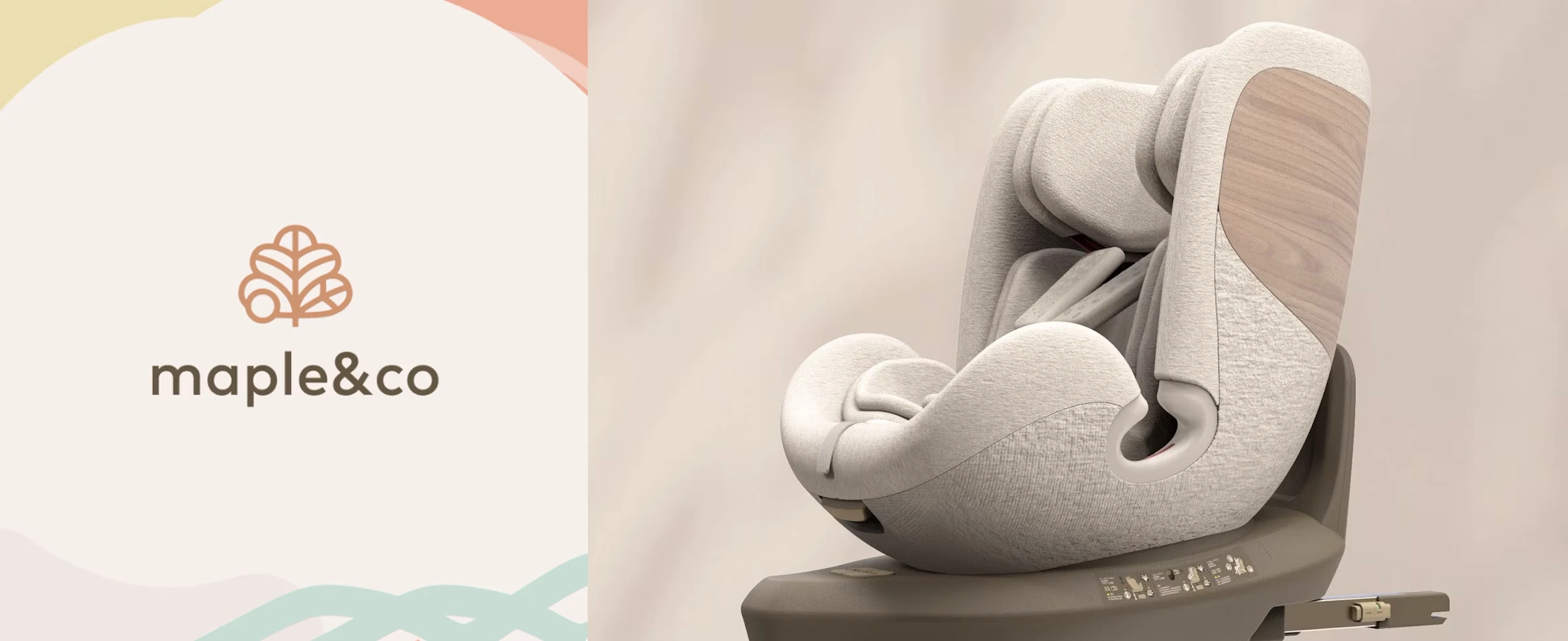
A year after working together, ZUOWE Technology launched Maple&Co and the new Maple baby car seat across its main e-commerce channels. Modern and minimalist in soft natural colors and wooden veneers, Maple appeals to the aesthetics of young parents in China. Despite a series of micro COVID outbreaks in China, within three months, Maple had already achieved better-than-predicted sales and received favorable comments about the look and quality of the car seat from parents. Fast forward two years, additional collaborations with IDEO have enabled the young startup to grow its child travel portfolio from a signature car seat into a more holistic offering that includes highly functional, fashionable, and adaptable car booster seats and strollers that thoughtfully address the needs of modern Chinese families across various life stages at home—and on the go.

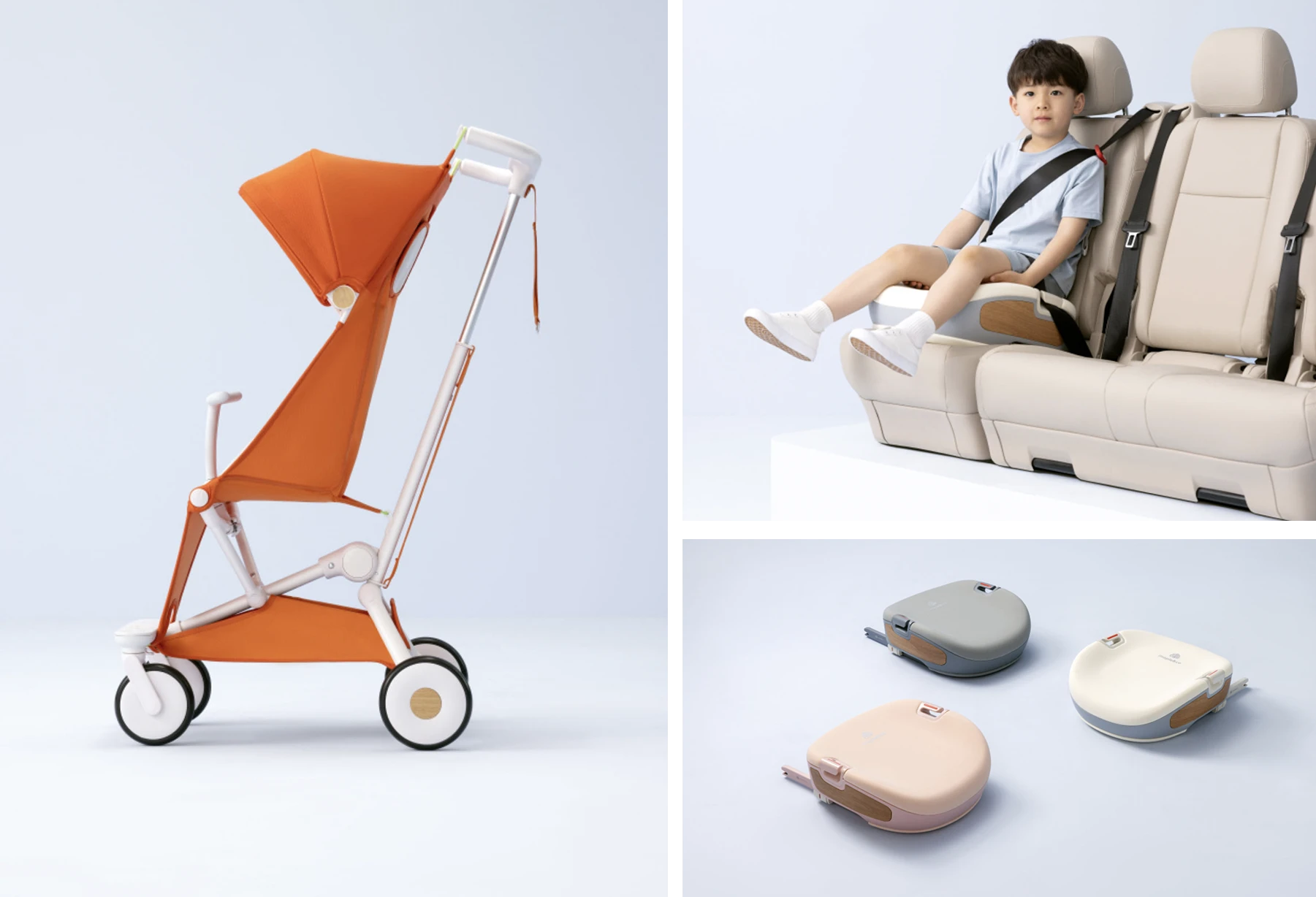
China's minor protection law mandated the use of child safety seats beginning June 1, 2021.
Despite incoming regulations fueling a surge in purchases, car seats on the market rightly prioritized safety but did not consider the emotional needs and lifestyle preferences of a new generation of Chinese parents.
1 year
after the project ended, a new, differentiated baby seat product and brand, Maple&Co, launched
Top 6
during the 2023 “Double 11” shopping festival, Maple&CO secured the 6th spot on Tmall's new brand pre-sale list
How a $4000 vet bill sparked innovation at American Express
American Express and IDEO teamed up to design features that offer Card Members more payment control and flexibility.
“Over a year ago, I had to take my cat to the vet for an unexpected and expensive surgery,” says one Card Member. “To be honest, I still don’t know if I’ve paid the bill off.”
Many crave the flexibility to pay for large purchases over time, but also want to avoid the pitfalls of debt. Others rely on debit or cash for small items—no one wants to accumulate interest on a cup of coffee, lunch with a friend, or box of Kleenex—but then miss out on valuable rewards.
American Express worked with IDEO to help them attract new customers by understanding what financially stable young adults wanted in a credit card. The team began by interviewing more than 120 millennials to understand their payment behaviors around debit and credit, and how they think about borrowing and spending.
One person described the monthly panic of receiving his bill—described as “statement shock”—and his habit of making multiple payments before his billing cycle closed to ease this anxiety. Others were wary of credit because of a large veterinarian bill or financial mistakes made in their 20s, and relied on debit because it felt safer than accruing a balance to pay off. Overall, the team learned that many consumers experience anxiety about paying their bills. And while financial products that offer more flexibility and control have been needed for years, they are especially valuable in times of economic uncertainty like today.
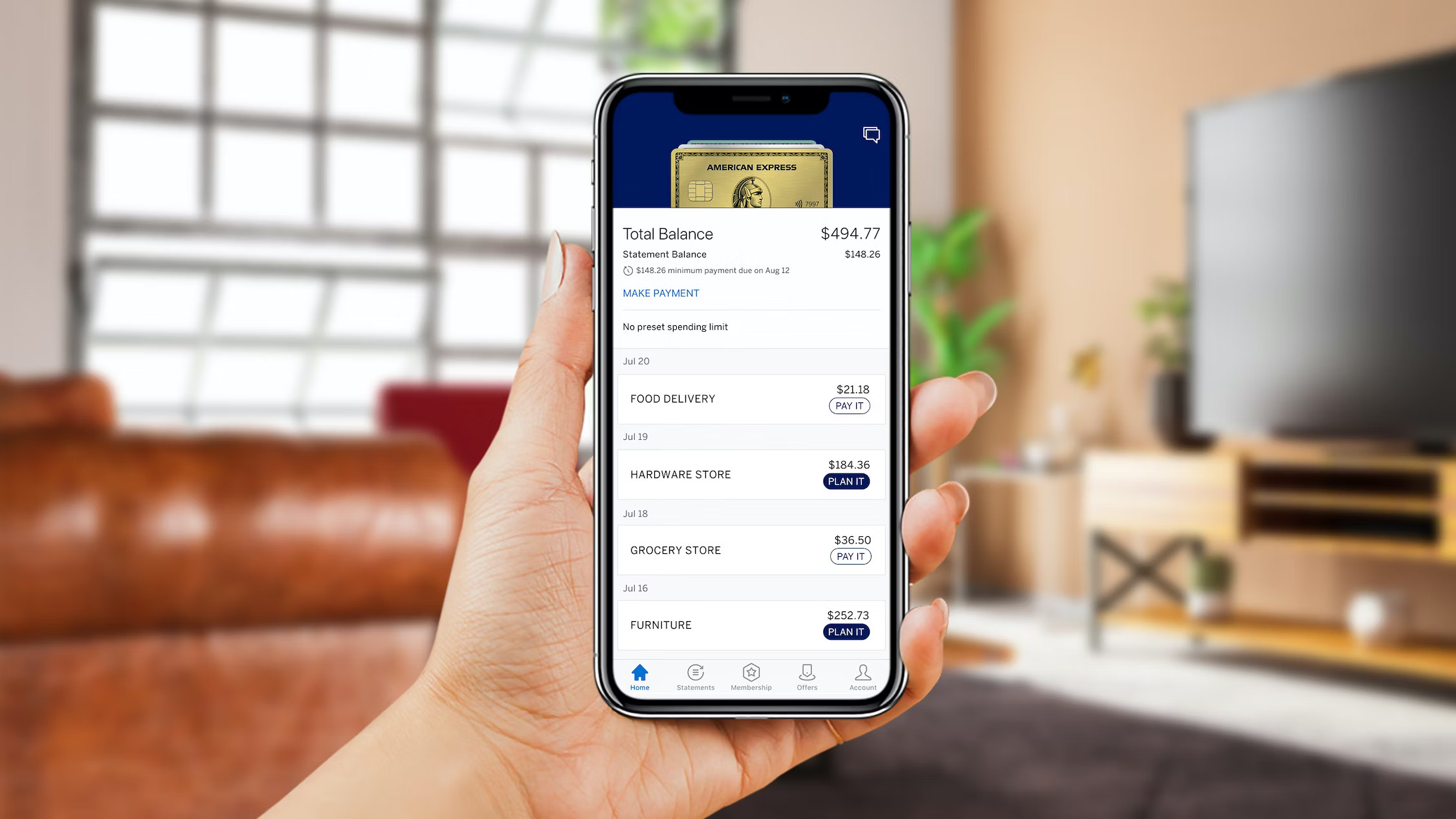
Based on this research, IDEO prototyped, iterated, and refined two concepts, with frequent feedback from users and the client. Called Pay It Plan It, this feature offers financially responsible consumers more transparency, confidence, and control.
Pay It allows Card Members to quickly pay for small purchase amounts under $100 with a few taps in the American Express mobile app. When that purchase shows up on their account, they can choose “Pay It” and still earn rewards on the purchase. This ensures Card Members can take advantage of rewards while lowering their monthly bill by paying for smaller items throughout the month.
With Plan It, Card Members can split up larger purchases of $100 or more—like an emergency trip to the vet or a new sofa—into equal monthly payments, with a fixed fee and no interest. When the purchase appears in their account, they can select “Plan It,” and will be offered up to three monthly payment plans, ranging from three to 24 months. Each plan comes with a fixed monthly fee and no interest. Card Members know exactly how much they have to pay each month, so there are no surprises. And if they pay the purchase off early, they no longer have to pay any future plan fees.
The design of Pay It Plan It did not come without challenges: Bill pay is critical, complex, and highly regulated. Pay It Plan It required a significant internal financial and technical investment, which was achieved after IDEO shared many of the emotional, compelling stories from credit card users with leaders at American Express.
The team worked closely with the American Express regulatory and digital teams to ensure compliance and seamless integration into the mobile app and website’s user experiences and interfaces. To heighten the sense of competence, control, and transparency for users, the designers focused on small interactions like status animations, proactive suggestions, and straightforward language. These interactions help Card Members anticipate upcoming payments and clearly understand Pay It Plan It.
Plan It was designed with transparency, control, and accessibility in mind: The payment plan fee is displayed in dollars to give the customer certainty over their total costs.
Initially, the team set out to create a new credit card with the needs of young adults in mind. But IDEO and American Express realized that Pay It Plan It could be scaled across existing credit card products to ultimately benefit and attract more Card Members. Now, almost all U.S. American Express Consumer Card Members have access to Pay It Plan It through credit cards, co-branded cards, and the well-known Green, Gold, and Platinum Cards. Since launching in 2017, Card Members have created nearly 5 million Plans, totaling nearly $4 billion in purchases, with an average Plan size of $789. Millennial and Generation Z Card Members have created approximately 44 percent of these Plans.
The flexibility and control offered through Pay It Plan have earned American Express positive press, including a call-out in The New York Times for being among solutions that “make it easier for their customers to borrow money, and to manage their monthly cash flow.”
At first glance, design-led innovation may seem difficult to achieve in large, established organizations like American Express, operating in a highly regulated and deeply rational industry. But the IDEO and American Express team successfully found ways to introduce new behaviors like rapid prototyping, cross-discipline collaboration, and leading with emotional customer stories within the existing organizational culture and structure. American Express has since established a permanent Pay It Plan It team dedicated to evolving the feature. Made up of employees across departments, this points to a new and collaborative team structure for the company.
By seeking to understand the human behind the Card Member, American Express has transformed credit and financial services for the better, helping both to be defined by empathy, utility, and transparency.

The bold publishing strategy that turned a traditional newspaper Into a digital leader
How bucking the trend of round-the-clock digital publishing led to an enormous payoff for The Times and The Sunday Times
For more than two centuries, The Times held a strong reputation as a storied British newspaper. Then came the digital deluge. Publication after publication began adopting a relentless online publishing schedule aimed at capturing eyeballs and subscribers, and guarding against waning advertising sales and print readership. But The Times and its sister publication The Sunday Times thought there might be a different way forward.
As Editor John Witherow explains, “the power of an edition” had long endured at The Times, but began to erode amid a round-the-clock breaking news cycle. Witherow didn’t want to do away with editions, but rather to update the model for the digital age. Times owner News UK approached IDEO in 2014 to explore exactly that: what the edition of the future might look like and how its design could drive revenue and subscribers.
IDEO’s research and design phase included interviews with readers, journalists, editors, and marketers at News UK. The team found that people’s reading modes vary—some reflecting new digital behaviors and others adhering more closely to paper-reading styles.
Readers, the team learned, chose The Times for its editorial opinion: a perspective that cuts through the overwhelming flood of information. They viewed the daily Times and weekend Sunday Times as one paper, despite the organizational distinction. And they were proud of their choice, valuing the papers’ consistency, trustworthiness, balance, and authoritativeness. Readers wanted these qualities distilled in a digital edition, whether on a smartphone, tablet, or on the web.
Those insights led to strategic recommendations spanning digital products, editorial, advertising integration, online membership offers, and social sharing. But the boldest among those was a publishing strategy that seemed to run counter to media trends: abandoning a real-time approach in favor of publishing separate digital editions.
The Times in March 2016 introduced an editions-based publishing schedule, with new editions available across all platforms four times each weekday: overnight, 9am, noon and 5pm; the weekend schedule shrank to three editions. A year in, they had broken that schedule fewer than a dozen times—making exceptions for major moments like the terror attack in central London and David Bowie’s death—but even in those cases, The Times refrained from incessant updates, instead resuming its regular pacing.

“The way we’re publishing now, taking our time over news...taking a more considered view of the world, it’s helped us offer something different from everything else,” digital news head Alan Hunter told Digiday in 2018. Readers demonstrated that this different approach was something they’d been wanting.
In the first half of 2016, new paying-subscriber sales were up 200% as compared to the same period in 2015. At the end of June 2016, there were 413,600 subscribers to The Times and The Sunday Times, up 3.4% from a year prior. Of those, 182,500 were digital-only subscriptions—a 6% rise and a notable figure given how much online news can be obtained for free.
Through collaboration with IDEO, News UK's own digital teams capabilities grew, enabling them to implement and evolve their new digital strategy. The capabilities of the newsroom grew, too: “The decision to move to four editions a day has freed up tremendous resources to focus on big stories,” says Emma Tucker, Editor of The Sunday Times—the kind of stories that "supercharge engagement." The approach is working: By August 2019 digital subscriptions had increased 19% year-on-year to 300,000, showing the progress the legacy publisher has made in attracting readers to its online proposition. Total subscribers for the two titles' print and digital products now stand at 539,000, and their websites total five million registered users.
More than 230 years after its first edition was published, the new Times has established solid footing in the digital age and designed its own future—one based not on the habits of its competitors but on its legacy and the reading behaviors of its audience.

Trust is earned, not machine learned
AI needs to earn our trust, just like any human relationship
Direct feedback that teaches rather than chides requires trust, and trust takes time.
Unlike humans, AI craves to know when it’s wrong. The entire premise behind machine learning is that it learns from failure or success. For example, we may feel that weather algorithms always get it wrong, but they can only improve by comparing their forecast to what actually happened. It’s therefore our job to tell the system when it’s wrong and acknowledge when it gets it right—but that requires a level of trust.
We can often tell if our friends or partners are unhappy with our actions, even if they don’t directly tell us. We can read their facial expressions, subtle changes in their tone of voice, and body language. Machines, however, don’t have that kind of intuition. Until we’re all walking around with some kind of lightweight EEG machine strapped to our head, machines will need to find proxies for how to sense human emotions, desires, and preferences. The obvious way to do this is to just to ask us, but that is manufacturing a transactional relationship, not a trusting one.
All I’m asking AI is for a little respect
A good example of an AI asking for trust rather than earning it can be found in the personal styling services that are popping up. They are doing some amazing things in integrating data science into every component of their business to drive growth. But my experience put me in the awkward position of feeling like I needed to explain myself and share sensitive personal details with someone I’d just met.
Signing up for the subscription service begins with a long and detailed survey about body type and style preferences. I spent a good 30 minutes thoughtfully answering myriad questions to create my style profile, and yet I returned everything that they sent me in the first box. None of it jived with my personal style, and only one thing fit.
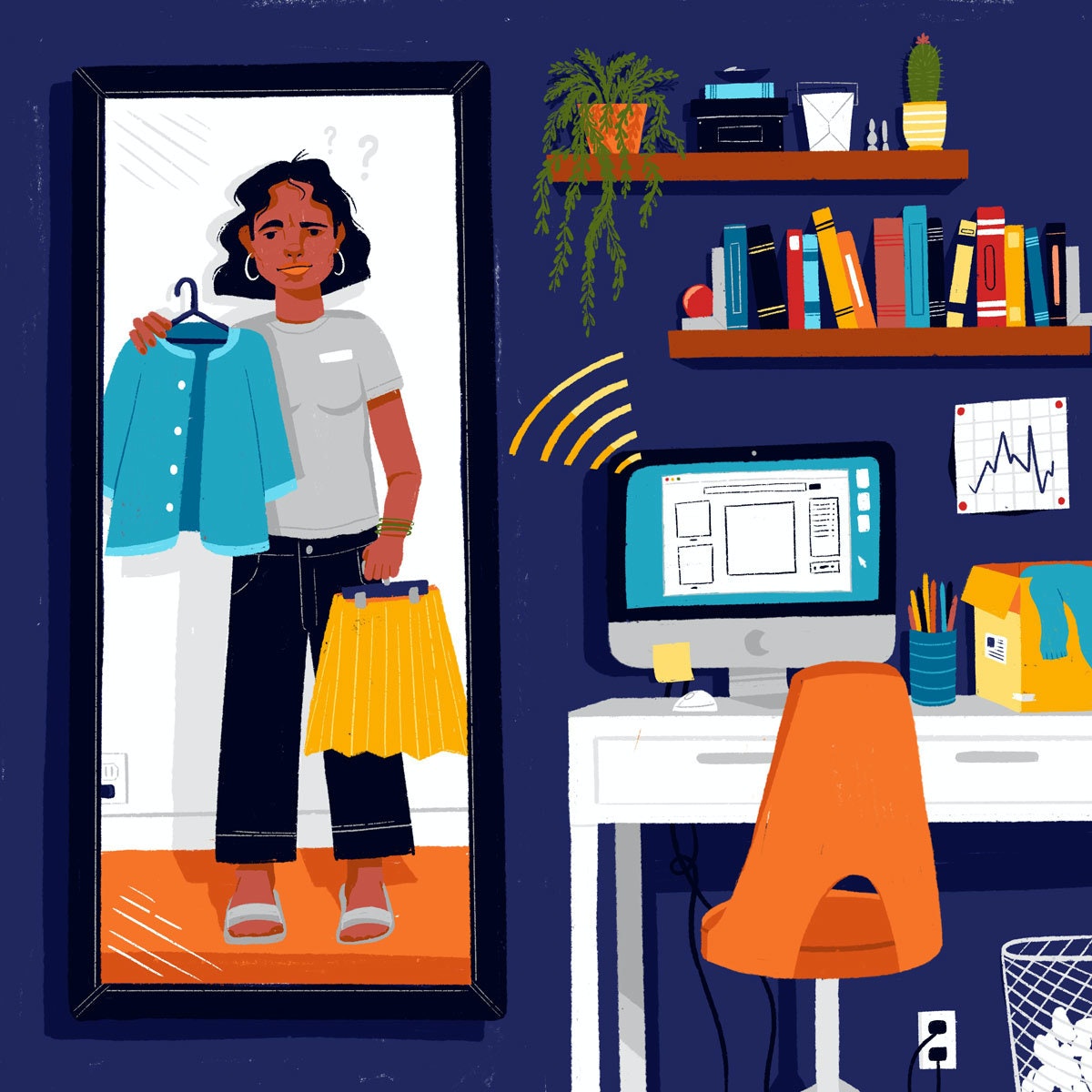
I had put the time into creating a relationship with the AI—training it with my intimate information, such as how my body was shaped—and that process had given me a false sense of mutual understanding. If it had just taken a look at my Instagram profile and sent me a box, I would have given it permission to get it all wrong. But its surprisingly clunky and unnatural way of “sensing” my preferences for clothes set an unrealistically high expectation of what was to follow. Questions about slightly nuanced styles of plaid let me to believe that it could understand I like simple patterns—and then it sent me a shirt better fit for my grandfather.
By asking me to train a system before we had established a relationship of trust, the AI had breached it before it had even formed. When I’m in a trusting relationship, I can forgive someone for an error. But this felt different—like I’d been duped into a false sense of intimacy. I’m going to try one more box, but I have a strong hunch I’ll be cancelling my subscription soon.
AI is a relationship
While rare, there are a few AI with whom I’m in a trusting relationship of mutual respect. I relish my moments of training them because they respect my time and provide me with value as I train them—even when the AI is mostly wrong. I’ve come to truly value those moments when they tell me I’m wrong, because they do so in a way that deeply respects my position as a human and their position as a machine.
The format of the playlist is likewise brilliant: I don’t need to rate the songs but simply listen to them or skip them after I’ve heard a bit, and songs that I love get added to my own playlists or saved to my phone. Over time, it learns my preferences and can dish me up even better tunes. There’s no artificiality to training Spotify, and each and every time I train it, there’s value back to me as the user. Most importantly, Spotify has earned my trust through helping me discover a slew of new artists and, in doing so, earned its right to be wrong. (I don’t really love St. Vincent, but I understand why Spotify thinks I would.)

But we’re not the only one doing the teaching. When it comes to “training” humans, Waze and Google Maps are setting the standard. Their features are clearly based on a deep understanding of the common human emotional conditions that we endure during traffic: stress, anxiety, impatience, and a deep temptation to bail on our algorithmically recommended route in favor of our own “shortcuts” (which are almost never shorter).
Maybe the most brilliant bit of human-centered design inside of these navigation apps is how they highlight alternative routes and how much longer they’d take. Instead of having to blindly trust the route the AI has chosen, it considers its own possible fallibility and assures us by showing us the other routes we might be considering. Thinking of bypassing the highway? That’ll take another four minutes. Want to cut through that residential area? Here’s some construction of which you might not be aware.
In this way, Waze and Google Maps serve as a sort of angel on our shoulder, counseling us away from our inner traffic-hating demons. They’re not “AI-splaining” or chiding us for considering alternate routes, but rather giving us the necessary information to make the right decision. They’re rooted in a deep respect of human agency.
At IDEO, we prefer to think of AI as Augmented Intelligence rather than Artificial Intelligence. Taking a human-centered approach to building relationships between AI and humans compels us to meet humans on their terms, building relationships of trust and respect, and always remembering that intelligent systems must exist in service of humanity, not the other way around.
Beautiful, human-centered, human-AI relationships are about understanding human beings and our wonderful, weird intricacies and inconsistencies. They’re about designing the experience of AI around humanity, rather than the other way around. AI can only function well if it learns from its mistakes, and that means establishing trusting relationships with humans so they’ll feel comfortable saying when it’s wrong.
This article was originally published in Quartz Ideas.
Illustrations by Cassandra Fountaine.
It’s awkward to correct a stranger when they’re wrong. How did you feel when Miguel from IT, whom you’ve only met once, told you that “learnings” wasn’t a real word? Or when Robin lectured you about the correct pronunciation of “macaron” at the office holiday party?

Teaching AI to see our best side
Teaching machines to respond to our most personal preferences
But, for the most part, that relationship is passive. And that begs the question, what if we could teach our machines more actively? Could we school them on very specific things that are important to us? That thought became the perfect setup to build a little experiment involving selfies.
A self-portrait or a selfie is actually more than just one picture. It’s one picture out of endless tries which all look pretty much the same ... except that they don’t. At least not to the person taking the self-portrait. That person’s individual aesthetic, packed with subtle and subjective nuances, must be captured at exactly the right moment. Adding to the challenge, it's hard to explain to someone else the way you squint your eyes when you nail your smile or how you purse your lips to look roguish.
Enter Brainchild: a machine learning–based camera that can be taught individual preferences and make them accessible as a function. You can train the camera to understand how you like to see yourself without going through 100 iterations. And most importantly, it allows you to share your sensibility with somebody else.
Brainchild is just a prototype for now, but I'm hoping others will be inspired to build on the idea.


Beautiful, baby, beautiful
Machines are a billion times faster in quantitative tasks than we are. For a long time, the problem was one of not understanding quality. But that has changed with the improvement of so-called deep learning techniques—a subset of AI or machine learning.
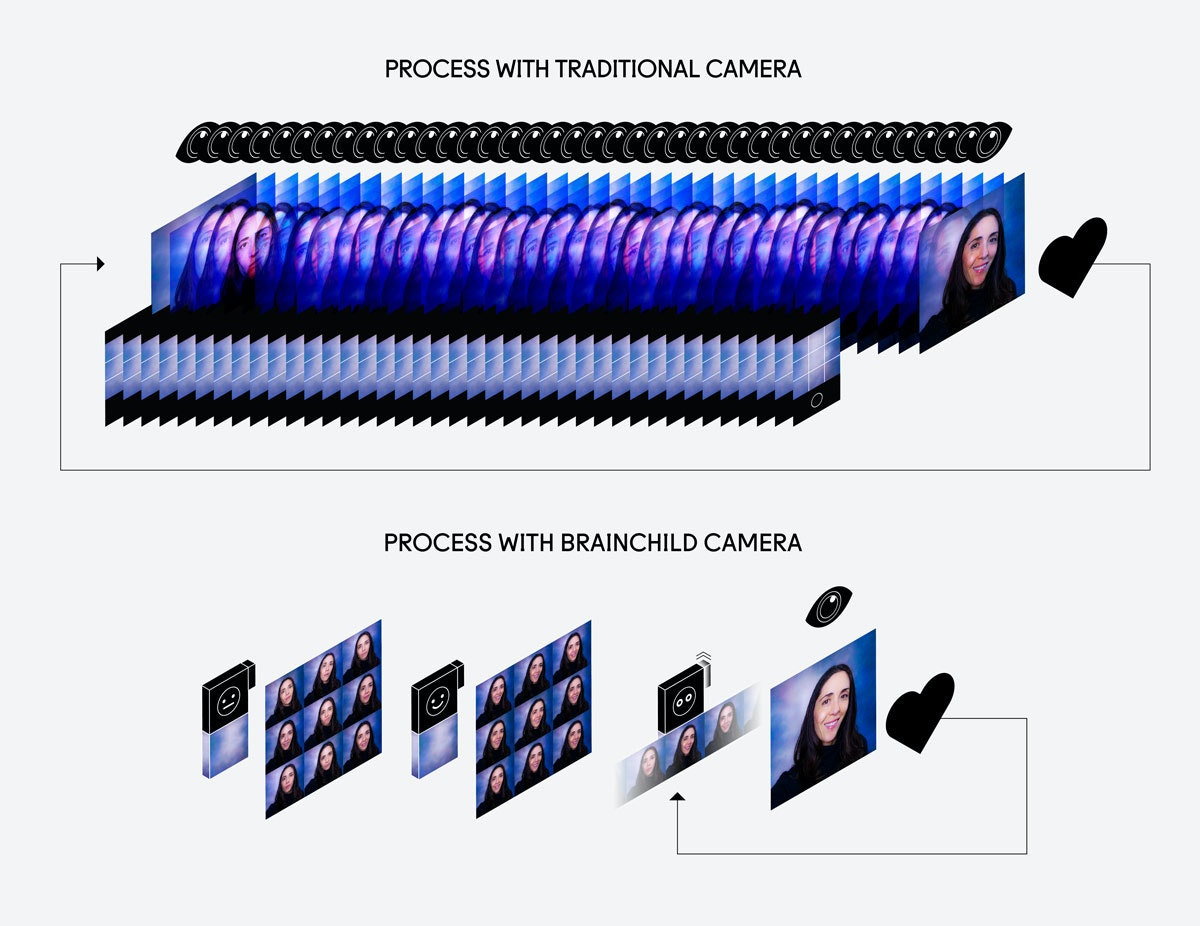
By teaching Brainchild how you would like to be portrayed, it can assess the quality of what it sees in real time, and give you haptic feedback when it perceives you looking your best, so you can simply take that one picture.
It also allows others taking a snapshot of you to see you as if through your own eyes. Taking portraits is a very intimate art. Rather than taking the human out of the loop, Brainchild augments this human-to-human interaction by making it more collaborative.
A feel-good feedback loop
The intervals between interacting with machine-learning products and experiencing their learnings are often very long. There are many technical challenges, but more accessibility and immediate feedback would help us teach more actively and develop a better intuition for them. In return, machines could learn better and become more personal.
Brainchild is designed to provide immediate feedback. You teach it how you like to be portrayed, instead of letting it guess, and every picture you take based on its haptic recommendation serves as feedback on how well it learned and how well you taught it. (Plus, it's private. Brainchild works offline and stores all of your information locally, so there's no danger of it being shared.)
Smile!
How does the Brainchild prototype work? There are countless technical parameters we could talk about, but in the most simple terms, it makes use of a so-called transfer learning process based on a fine-tuned convolutional neural network—a technique frequently used in computer vision.
Brainchild needs to be taught five fundamentals:
- What a human face looks like
- How to learn about new faces
- How to isolate the face in a picture
- The way the portrait subject looks normally
- The way the portrait subject looks when they deem themselves looking their best
The first two points require huge amounts of coding, data, number crunching, and time. That’s what consumed most of my time (next to working on the wrong file for a day!).
The third point addresses the fact that when you take a portrait there is always something behind you. To focus only on you without distraction, Brainchild extrudes your face from the background. That is something it learns before you use it.
Then you become the teacher. In order to learn how you look your best, it needs to know how you look normally. So, you feed it a few examples of both, either by taking new snapshots, or by using pictures stored on your phone.
To help Brainchild differentiate between the two picture sets you simply twist the front plate, switching between two learning modes. The serious smiley means every picture you take will teach Brainchild how you look “normally”. Switching to the happy smiley means every picture you take will teach it what it looks like when you look your best. This is how you get to know each other.
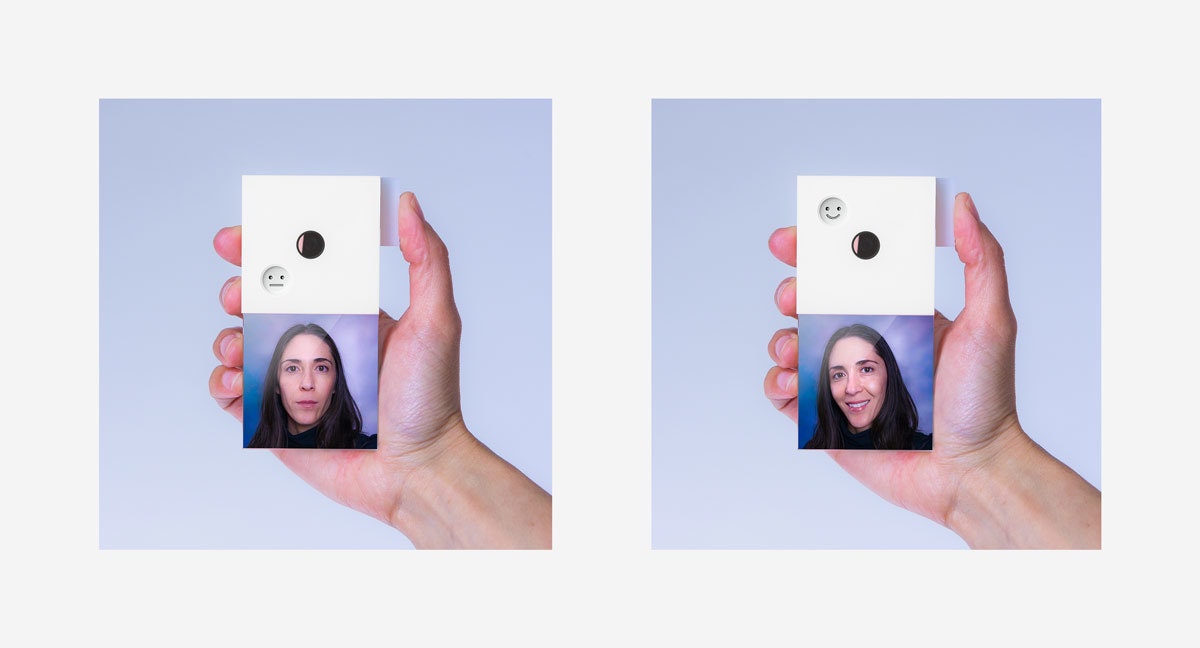
As soon as the camera spots you in a way that matches what you taught it about looking good, it will gently vibrate and light up the camera’s trigger button. The vibration and brightness increase the closer your match with your own ideal.
Brainchild doesn’t snap the photo for you, it just signals you at the optimal moment to do so. You can also hand the camera to someone else to capture you in the way you like to be captured. And the more you teach it, the more accurate it becomes.
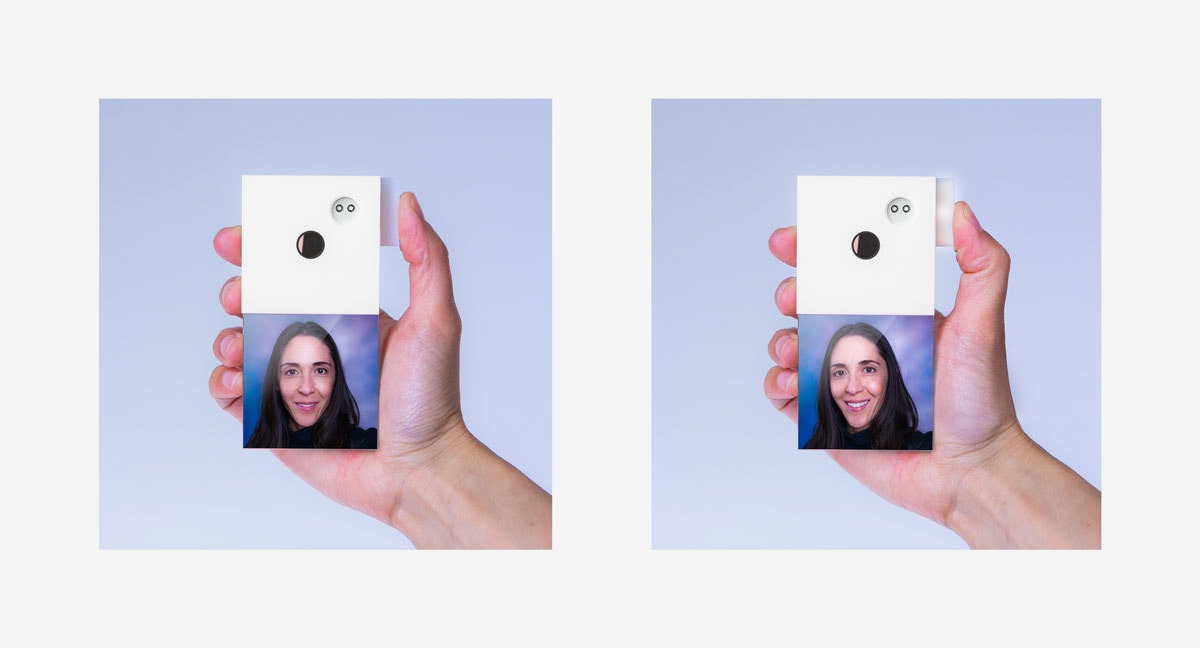

It might seem mundane to teach a camera how to take a better selfie, but the technology has already inspired one of our clients to rethink parts of a high precision medical device that could dramatically reduce treatment costs for patients, and another software engineer to work on a playful version of FaceID.
I myself am now working on a body pose add-on for fashion photography, and am curious to see all of the other ways we might actively teach our machines and help them augment us in more personal ways.
Instagram: @brain_children
Concept and Technology: Jochen Maria Weber
Visual Design: Tiffany Yuan
Industrial Design: Leo Marzolf
Special thanks: Tobias Toft
We teach our machines every day. Voice assistants learn how to talk to us based on what we say to them. Navigation apps guide us based on the routes we take. Without millions of teachers like you, our machines would be much dumber.
7 ways to design an unforgettable event
How to engage your guests beyond the panel
What do you do when a panel is truly the star of the show? Can you still design meaningful participation from your guests beyond the Q&A?
This was our challenge when IDEO CEO Tim Brown, pioneering social entrepreneur Jacqueline Novogratz (Founder of Acumen), and visionary CEO Carlos Rodriguez-Pastor (CEO of Intercorp and Founder of Innova Schools) sat down for a conversation about design and bravery in our New York office. We knew these three would inspire guests with heroic stories of using design to create change at scale and challenging orthodoxies. But could we keep the crowd inspired after the conversation ended?
Our best bet, we decided, was to design a series of activities that would send guests on a heroic journey of their own—from hearing the call to adventure to facing fears to celebrating triumph over adversity. The result? A happy swirl of exploration and discovery, with guests staying late to gather around the hands-on exhibits like family in the kitchen at the holidays.
Here are seven ways to leverage a panel discussion and design an event they’ll never forget.
1. A moment to unwind
Create a ritual to help guests wash away the baggage of the day and be present for all that follows. We invited guests to partake in a sonic shower, an immersion in music that stretches the ears and awakens the senses.
Try this: An aromatherapy bar for deep breaths of invigorating or relaxing scents.
2. Active imagining
Even the most thought-provoking panels amount to a type of passive contemplation for listeners. Follow a panel with a prompt to actively imagine. We asked guests to hear the call of service, by imagining they were a person they serve and writing in that person’s voice in response to questions like, “What would it take for you to feel confident about the future?”
Try this: A finish-the-doodle mural wall or a listening booth with a guided meditation.
3. Space to be vulnerable
Offer your guests the surprising jolt of inspiration that comes from being vulnerable and naming your fears. We designed an anonymous confessional, tricked out with blacklight and digital wizardry, where guests wrote their fears on a private screen, then watched their words magically appear on a monitor in type for party guests to see.
Try this: Pair strangers up using matching name tags and asking them to find each other and swap secrets.
We designed an anonymous confessional to help guests embrace vulnerability.
4. Fast-tracked inspiration
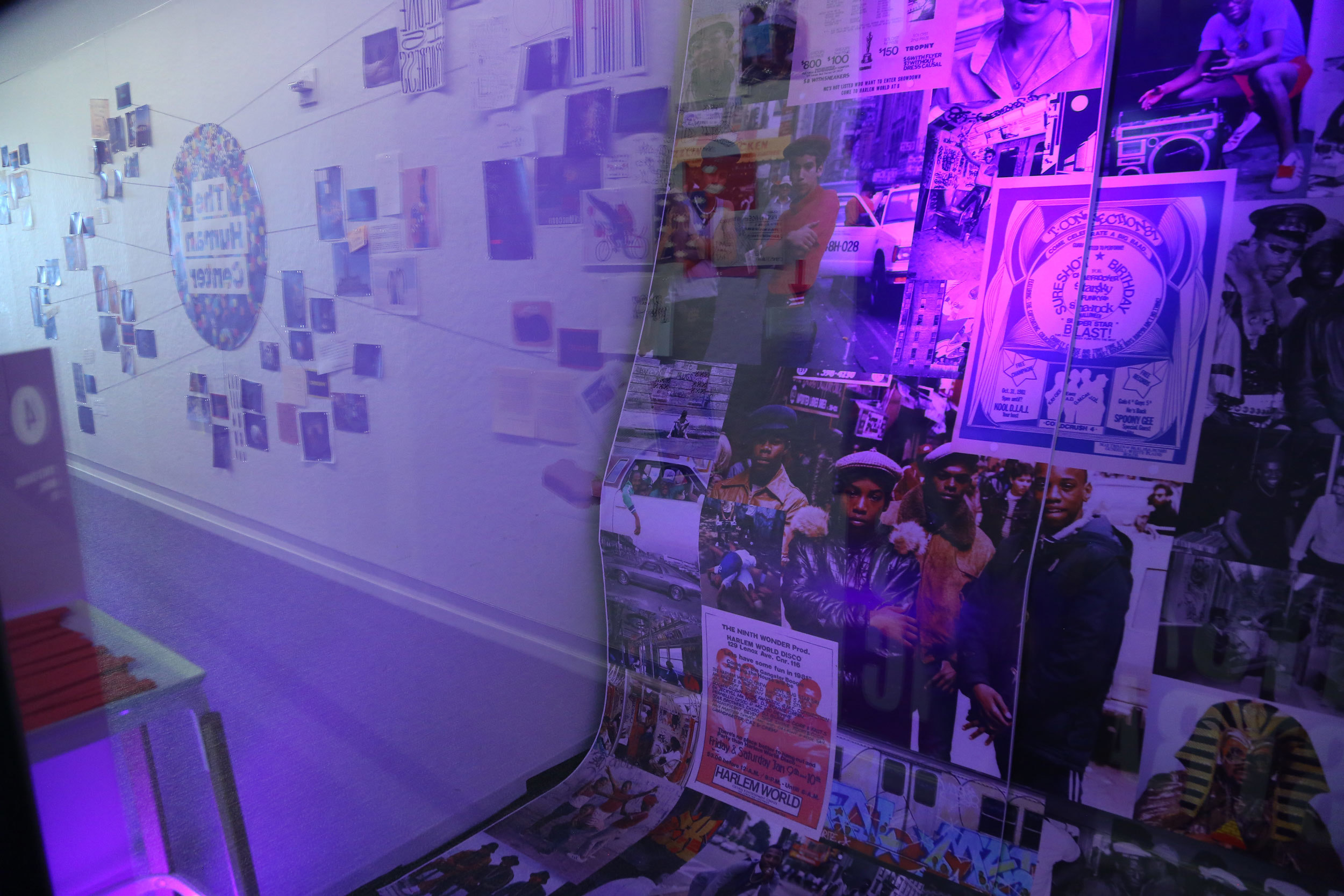
Inspiration can also be fast and light. We sent guests on a tour of themed rooms devoted to New York’s legendary cultural movements—Punk, BeBop, Hip Hop, the Beats, and the Harlem Renaissance. Each room was chock-a-block with images, sound, and strips of paper bearing anthemic words from the movement. It was a blast of culture felt through the senses.
Try this: Give guests a deck of cards created from your favorite inspirational Instagram memes.
Guests were invited to tour the most iconic cultural movements in New York history.
5. Skin in the game
Putting one’s body on the line—through movement, physical sensation, or embodied action—is the ultimate form of engagement. For our biggest test of bravery, we dared guests to stick their arm through a hole in a black screen to blindly receive a semi-permanent Jagua-ink tattoo from an artist on the other side. No requests or restrictions permitted.
Try this: Ask guests to enter a space through one of two thresholds marked by declarations of identity, like “I’m an artist” or “I’m an activist.”
The ultimate trust exercise—blindly allowing a stranger to draw on your skin with semi-permanent ink.
6. Making
Who doesn’t like to roll up their sleeves and craft something fun? Making gives your guests an outlet for any new, creative ideas your event has inspired. We handed guests shortbread cookies, pipette bags full of icing, and examples of exquisite cookie decoration to emulate.
Try this: A collage-making table with old magazines, construction paper, scissors, and glue sticks.
7. Silly celebration
Even the most buttoned-up among us appreciate the chance to let their hair down. We gave permission to get silly with an IDEO designer’s GIF Dance Party, accompanied by another designing spinning live music. Guests grooved in front of a camera for a few seconds, then watched their avatar populate a digital dance floor on monitors throughout the space.
Try this: A box of masks and capes and the promise of a free drink for anyone who orders as a superhero.
We asked guests to get jiggy with it, and they obliged.
To summarize: Get creative. Get physical. Get weird. Your guests will thank you for it.
Got an idea for an out-of-the-box event activity? Share it with us on Twitter using the hashtag #DisruptThePanel.
Ever attend a conference? Then it won’t surprise you to know that every event planner out there wants to disrupt the panel conversation. (We’ve been experimenting with the format for years and sometimes a panel is still the best choice.)
5 quick org design tips
Lessons in organization design (from a product designer!)
There was a lot to celebrate. We’d launched an innovation lab and piloted new products as part of a larger, multi-year collaboration to expand the organization’s human-centered design capabilities and enable culture change.
And our collaboration had revealed something crucial: In order for the product to be successful we also needed to support the underlying organization, which meant looking more holistically at strategy, process, tools, and incentives.
That became an opportunity for me, an interaction and product designer by training, to apply my trade through an organizational lens. It turned out that the prototyping methods that I had learned could also be applied to people and processes. By experimenting, responding to feedback, and iterating, we could help nudge behavior change within the organization.
Here are the five big lessons I took away:
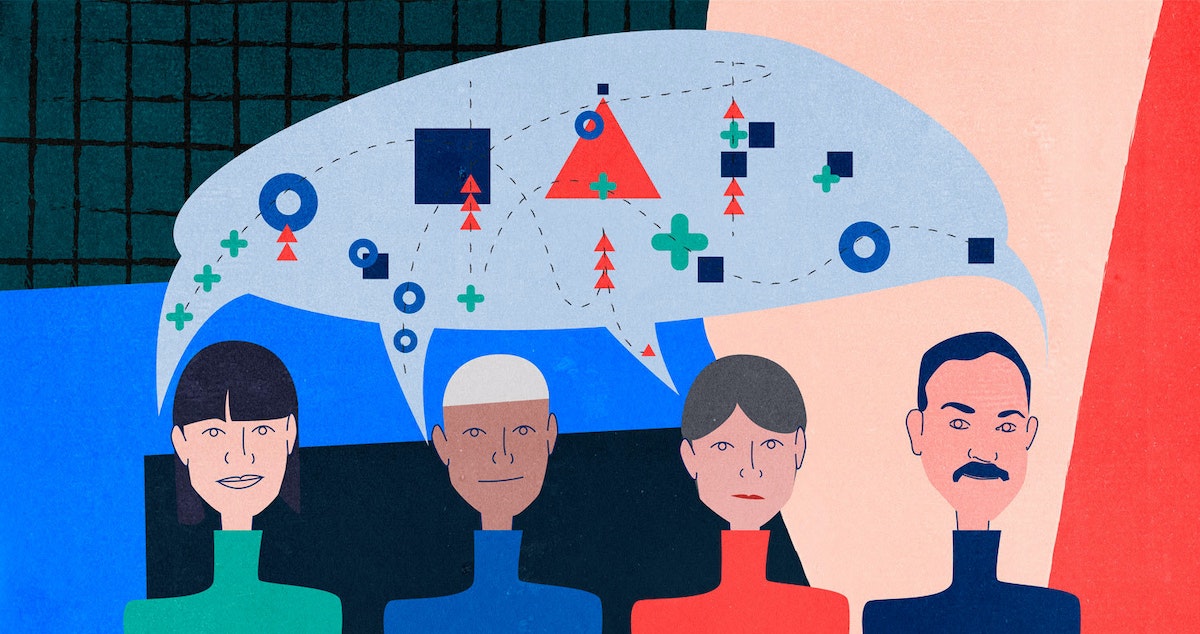
1. Speak their language
We were working with product managers, engineers, and designers, so instead of explaining what we planned to change with academic research and abstract frameworks, we used language they already understood. We were going to run scrappy experiments, learn quickly, and iterate. If the ideas didn’t work, we’d pivot and try something new. But instead of prototyping products, we were experimenting with people and processes.
Big insight: Meet people where they are. Ground organizational design in a familiar context, and make it tangible in order to build trust.

2. When facing big change, start small
Behavior change is hard. So, we started with small experiments. What was the least that we needed to design in order to learn—the minimum viable product (or MVP)—and to help nudge new behaviors? In one instance, to test our hypothesis on the need for a company-wide training program, we started by creating a workshop for one multi-disciplinary team of 10. Its success soon paved the way for a broader rollout.
Big insight: Organizational change doesn’t have to begin with big initiatives. Starting small with prototypes can lead to big learnings and start to shift behavior.
3. Measure impact in creative ways
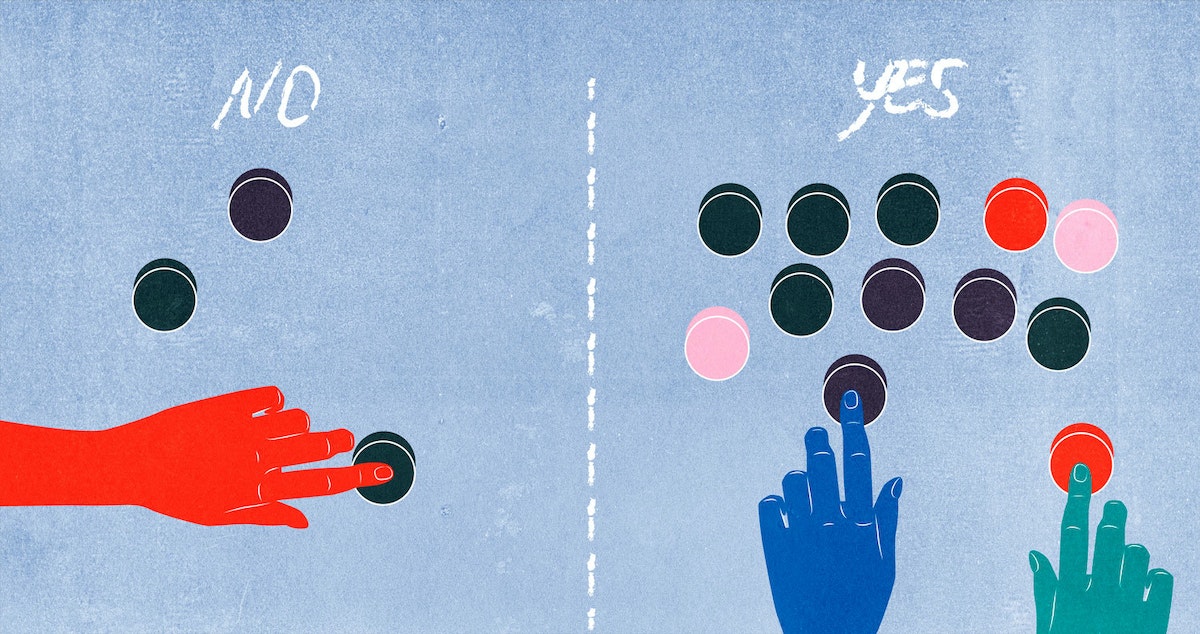
Email surveys are an obvious way to take the pulse and determine whether experiments are resonating with individuals, but they can easily fall to the bottom of a priority list. We tested more lightweight, in-the-moment feedback methods. After prototyping a beer and knowledge-sharing gathering, we asked attendees to place a magnet on a board to indicate their responses to a few questions, like: “Would you come again?” and “Did you learn something?” It was an easy and immediate way to figure out if the idea was worth evolving.
Big insight: Simple and in-the-moment measurement tools can be enough proof of concept to move forward quickly.
4. Find the right ambassadors
Early on, I was determined to get all of the senior executives involved in our prototypes. What was I thinking? Their understandably divided attention and packed calendars made that next to impossible. In the end, some young, energetic community managers were the ones who embraced our ideas and helped push them forward. Not only did they have the time and passion for the projects, but they were also trusted leaders within the company. Community managers helped us organize an informal gathering of product people to share methods over beers. (Yes, beer again. When in Germany!) We asked a VP to simply show up. When he saw the overwhelming attendance and impact on the community, he became one of our biggest advocates. Teams that had been working in silos started to meet regularly. The more we demonstrated quick wins, the more senior leaders got on board to encourage new behaviors throughout the organization.
Big insight: The best agents of change may not be the most senior folks. Look for individuals with passion and social capital.
5. Make it stick
There are two things that we did that helped ensure that our ideas lived on after we were gone. First, we found owners within the organization who would commit to moving our ideas forward. Second, we helped create an internal group dedicated to maintaining momentum. This group provides leadership training and coaches teams to ensure both a top-down and bottom-up approach to behavior change.
Big insight: Prototypes are just the beginning. Organizational transformation requires dedicated owners and a multi-layered strategy.
It all adds up to a set of behaviors: Get scrappy, get tangible, find your people, and learn by doing. It never hurts to do some reflection from a rooftop, too.
Not long ago, a coworker and I found ourselves contemplating the eclectic Berlin skyline. We were on the rooftop of our client’s office—a leading European brand in online retail—and thinking back on what we’d learned from embedding with them for a year.

Lindsey Turner
I’m passionate about building brands, products, and experiences that help organizations show up with meaning and momentum.
I help organizations cut through complexity by shaping how they show up, through brand strategy, identity, and storytelling.
Working at the intersection of brand and business, I bring an editorial eye and a bias toward making—turning ideas into tangible experiences that people can understand, trust, and believe in.
My work spans government, healthcare, financial services, media, and consumer goods, from launching Gen Z-focused ventures to building innovation labs and reimagining legacy brands. I relish moments of ambiguity and enjoy translating across teams, perspectives, and priorities to move ideas forward.
I started my career in editorial and digital design, shaping cross-platform experiences and identity systems in publishing and agency environments. That foundation still shapes how I work today: I’m detail-oriented, collaborative, and overreliant on the Oxford comma. I hold a BFA in Visual Communication from the School of the Art Institute of Chicago.

Rachel Young
My work helps organizations see who their products aren't working for—and build the will and the tools to do something about it
For 25 years, I've asked the same question: Who does this design exclude—and what are we going to do about it?
My work spans human-centered strategy, inclusive design, and qualitative research, with clients ranging from Microsoft, Google, and Verizon to the National Science Foundation, and San Francisco Unified School District.
Before IDEO, I taught elementary school in East Palo Alto and spent a decade doing design work with social service organizations—where I learned firsthand what it costs people when systems are built without them in mind.
I am currently writing User Error, a nonfiction book about digital access and the design decisions behind it. I live in Oakland, California.

Brian Pelsoh
I lead with craft, ensuring our work is creatively excellent: rooted in deep human insight and imagination, while also grounded in the realities of business and technology.
My expertise spans brand, communication, and product design across tech, education, the arts, and social impact.
I believe great work demands both high-level vision and obsessive attention to detail, and only happens through collaboration.
I bring an inclusive, hands-on approach and a deep understanding of business, which enables me to consistently deliver excellence while always asking why.
Before joining IDEO, I worked at the brand firms Pentagram and VSA Partners. I began my career as a designer, leading teams at the School of the Art Institute of Chicago and the Milwaukee Art Museum. I hold an MFA in graphic design from Maryland Institute College of Art and a BFA in communication design from the Milwaukee Institute of Art & Design, and have taught at some of the best design schools in the US.

Tony Wong
I am responsible for IDEO’s long-term success in China and working with clients to use design as a tool to enable growth.
I am responsible for IDEO’s long-term success in China and working with clients to use design as a tool to enable growth. Specifically, I have helped Chinese companies design holistic brand solutions through the development of their products, communication, services, and innovation teams, and I have helped multinationals expand their presence and influence in China.
I advise global leaders on developing China-led innovation and capabilities.
In over 15 years in IDEO Shanghai, I have worked on projects that use design to elevate the quality of the experience of healthcare products and services, streamline processes that increase productivity, create spaces and programs that promote and enable inclusive communities, and build next generation mobility solutions that are planet-positive.
Before joining IDEO, I worked at Philips Electronics and the Electrolux Group in Italy, the Netherlands, and Singapore on a number of breakthrough commercial products. I am a member of the Young President Organization in Shanghai.

Building a personal AI for the messiness of life: Sida Li
Most AI products today are built for work—a space with clear problems and established systems. One founder noticed a gap: personal life is messier, harder to systematize, and mostly left behind by the AI boom. So she built Cue, a personal AI that lives inside iMessage and group chats, to go where the other tools haven't.
In this episode, Becca Carroll, IDEO's Chief Strategy Officer, talks with Sida Li, co-founder and CEO of Shared Context Lab, about staying anchored to a human need while the technology around her keeps changing shape, why she treats her business model with the same rigor she'd bring to a product, and what it feels like to build a company at this particular, disorienting moment in AI.
The conversation also gets into how Sida makes design decisions: the language Cue uses to describe itself, the tradeoffs behind building inside iMessage instead of a new app, and a real story about a business idea that didn’t pan out.
This is the second in a two-part series profiling founders from IDEO's Startups-in-Residence program. The first conversation is with Johannes Seemann, founder of Sooner, on designing GenAI for the emotional side of money.

Designing GenAI for the emotional side of money: Johannes Seemann
Most personal financial tools are built to run the numbers and optimize towards a budget. While that works for some, most people experience money as a lived relationship that does not neatly fit into a spreadsheet. Johannes Seemann and Becca Carroll discuss why money is emotional before it is mathematical, and what a human-centered approach to building a generative AI financial product looks like in practice.

The curious leader's edge in uncertainty: Scott Shigeoka
Mina Seetharaman talks with Scott Shigeoka, author of Seek and Head of Curiosity Cultivation at the Eames Institute, about what distinguishes genuinely curious leadership from performative curiosity, how power dynamics shape curiosity, and why practicing curiosity can restore energy rather than drain it.

How constraints make us more creative: David Epstein
Mina Seetharaman talks with David Epstein, author of Inside the Box and Range, about why total freedom often produces average work, how leaders can design useful limits on purpose, and what organizations such as General Magic and Pixar reveal about the relationship between boundaries and creativity.
Looks like you might be in search of something very specific?
Or reset the filters above and try another angle.
Here’s some random inspiration

Podcasts about creative leadership

Articles about the power of prototyping
