


Home / Design services / Case studies
Planes, supply chains, and automobiles
Vice President of Global EV Programs, Ford Motor Company
Featured work



Human-centered hospitality via a tech-forward app
Huazhu Hotels Group translates its renowned hospitality brand into a seamless digital ecosystem for guests.
Young travelers in China expect the first touchpoint with a hotel brand to be digital.
China’s digital landscape is dominated by highly integrated mobile apps like WeChat and Alipay that seamlessly combine messaging, shopping, bill payment, and finance management. This shift toward digital-first interactions that are hyper-convenient, personalized, and intuitive has significantly shaped consumer expectations for experiences like finding, booking, and staying in a hotel. To stay competitive and meet—or exceed—young guests’ expectations, Huazhu needed to redesign its Membership App 3.0 to prioritize guest needs across all touchpoints of the hotel journey.
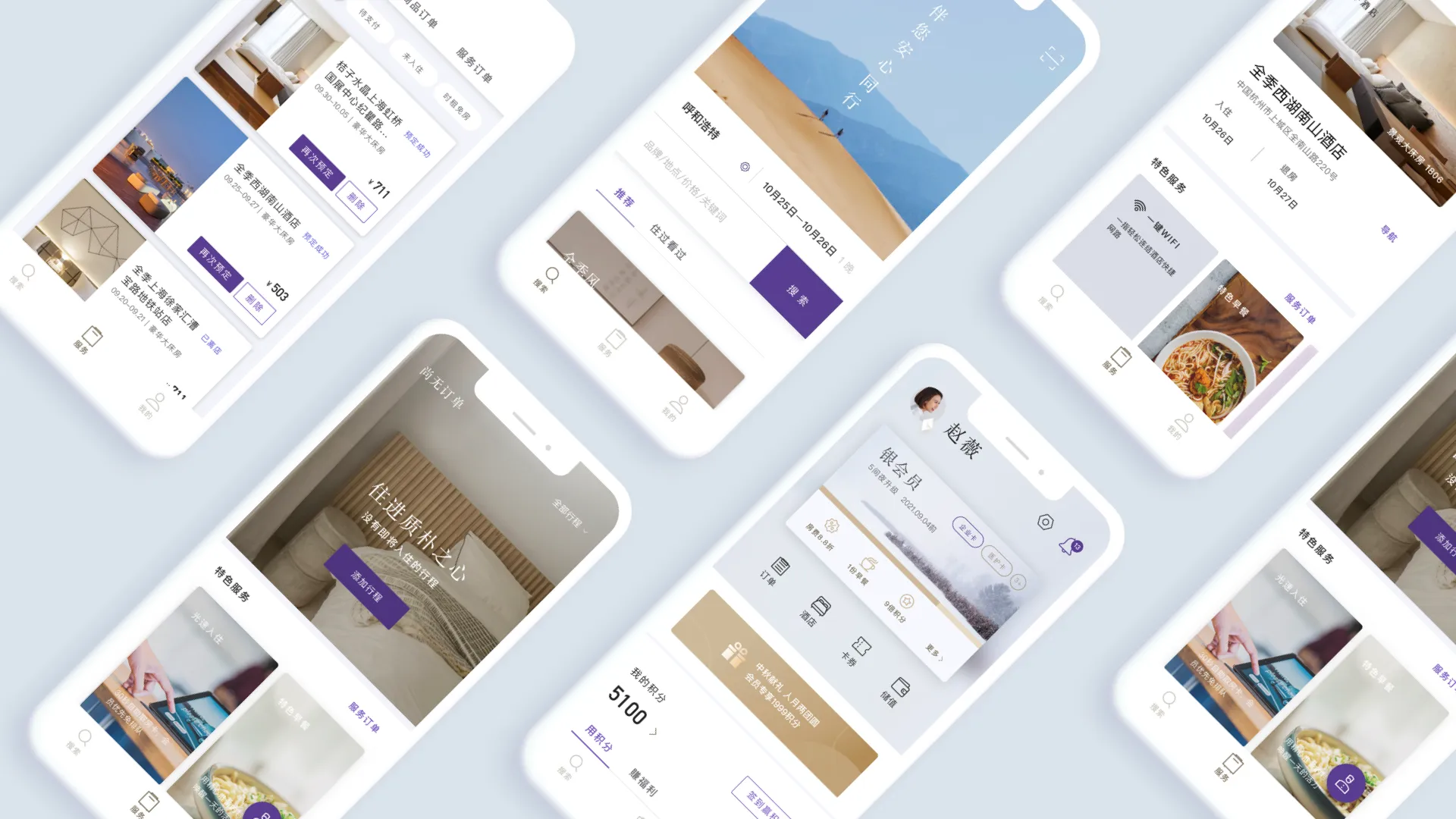
Through in-depth research and member feedback, IDEO discovered the true pain point the Huazhu membership app needed to address: seamlessly integrating the hotel brand’s online and offline experiences. The Huazhu Membership App 3.0 adopted “simple, stable, and real” design principles, simplifying user operations, optimizing the interface, fixing lingering experience issues, maximizing page load speed, and reducing crash rates.

The IDEO team discovered users have different functional needs. Sometimes, users want to search for hotel information quickly. Other times, they prefer to explore and browse content slowly. To meet both needs, the app needed to be optimized for efficiency and exploration. So, the IDEO team upgraded the interface of the Huazhu Membership App, adding quick operation modules and information blocks on the main page, as well as a downward scrolling interface that gradually slows the experience, offering channels for detailed exploration.
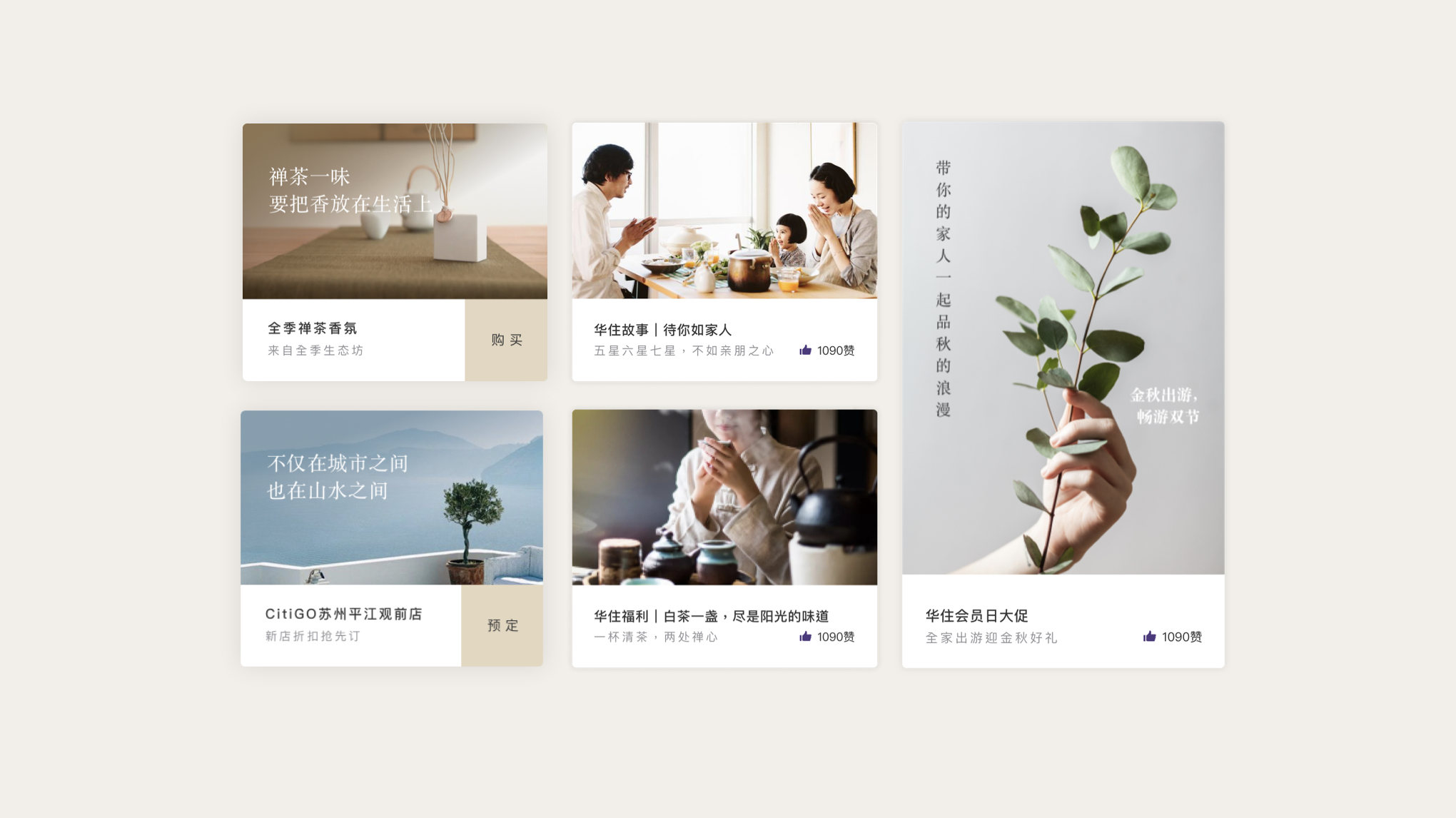
Customers also had different needs at different points in their travel journey: before, during, and after their stays. IDEO designed the language and user interface to provide personalized service information for each stage, from booking to post-stay. The app’s content adapts to the user’s travel phase, showing the most relevant service experiences at each point. The content displayed on the app also changes based on user habits, helping the app flex to meet their needs. The design aligns with the Huazhu Hotels Group’s mission to provide personalized service to a diverse clientele.

The team also worked to inject Huazhu’s brand characteristics by offering an upgraded experience in booking, stay, dining, and member benefits and adding features like a 30-second, automatic check-in experience. These thoughtful, personalized updates integrate Huazhu Hotels Group’s meticulous service philosophy, providing customers with a welcoming, human-centered hospitality experience. The updated Huazhu Membership App 3.0 is now available in major app stores, shaping a new generation of user experiences for Huazhu Hotels Group.
5% increase
in monthly active users after the launch of the App's 2.0 version in 2021
Introducing China’s first sink dishwasher
Fotile, the country’s top kitchen brand, unlocks a new category.
Since its founding in 1994, Fotile’s Chairman, Mao Zhongqun, has made it his goal to “do nothing but build a high-end Chinese family brand.”
IDEO and Fotile have had a relationship since 2009, working together on projects including a unified design language for product offerings, retail environments, and IoT strategy. For the dishwasher, IDEO and the Fotile research team came together for design research, shadowing Chinese families in different cities as they prepared meals from start to finish. Together they discovered that unlike in Western cooking, where several kinds of cookware are used for different dishes, Chinese cooks tend to use the same cookware to prepare all of their dishes.
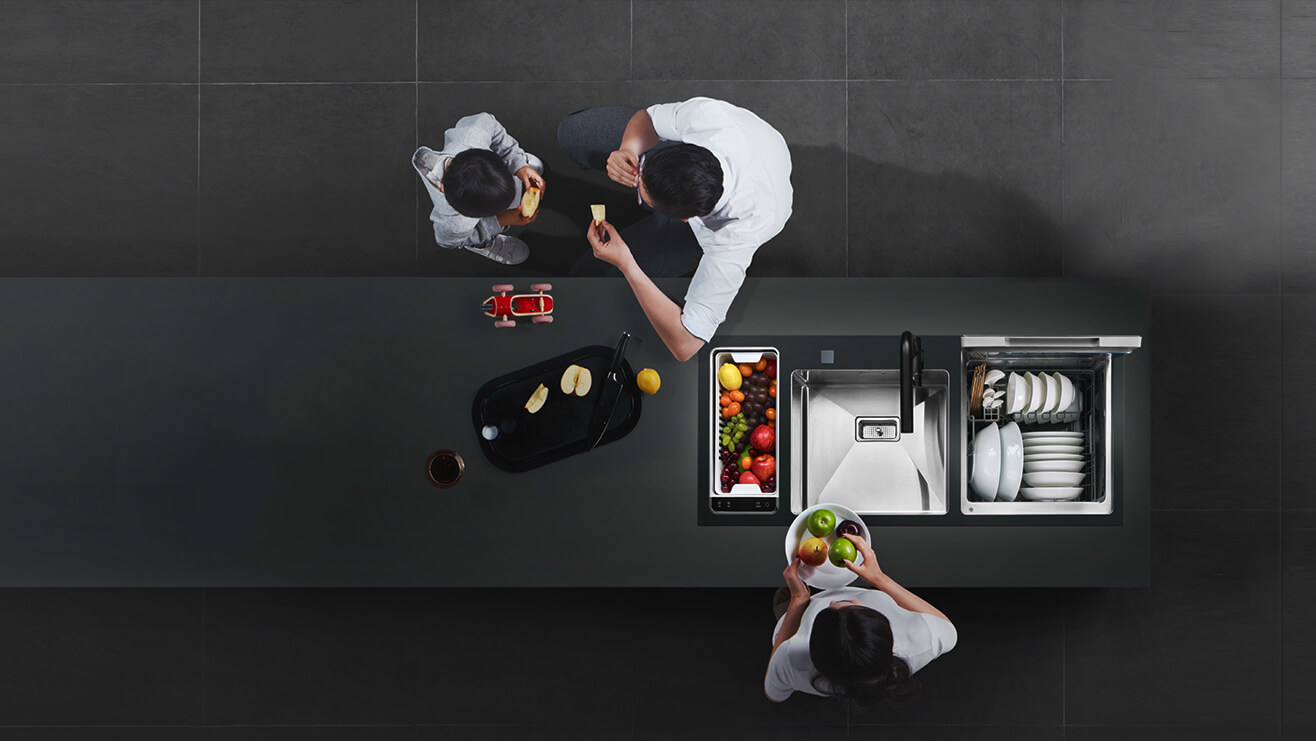
That meant that the cookware needed to be cleaned several times during a single meal preparation, rather than once at the end. In this context, the sink serves different purposes over the course of cooking—it’s a place to wash and store prepped ingredients, rinse the cookware, and deep clean the dishes used in food prep and during the meal.
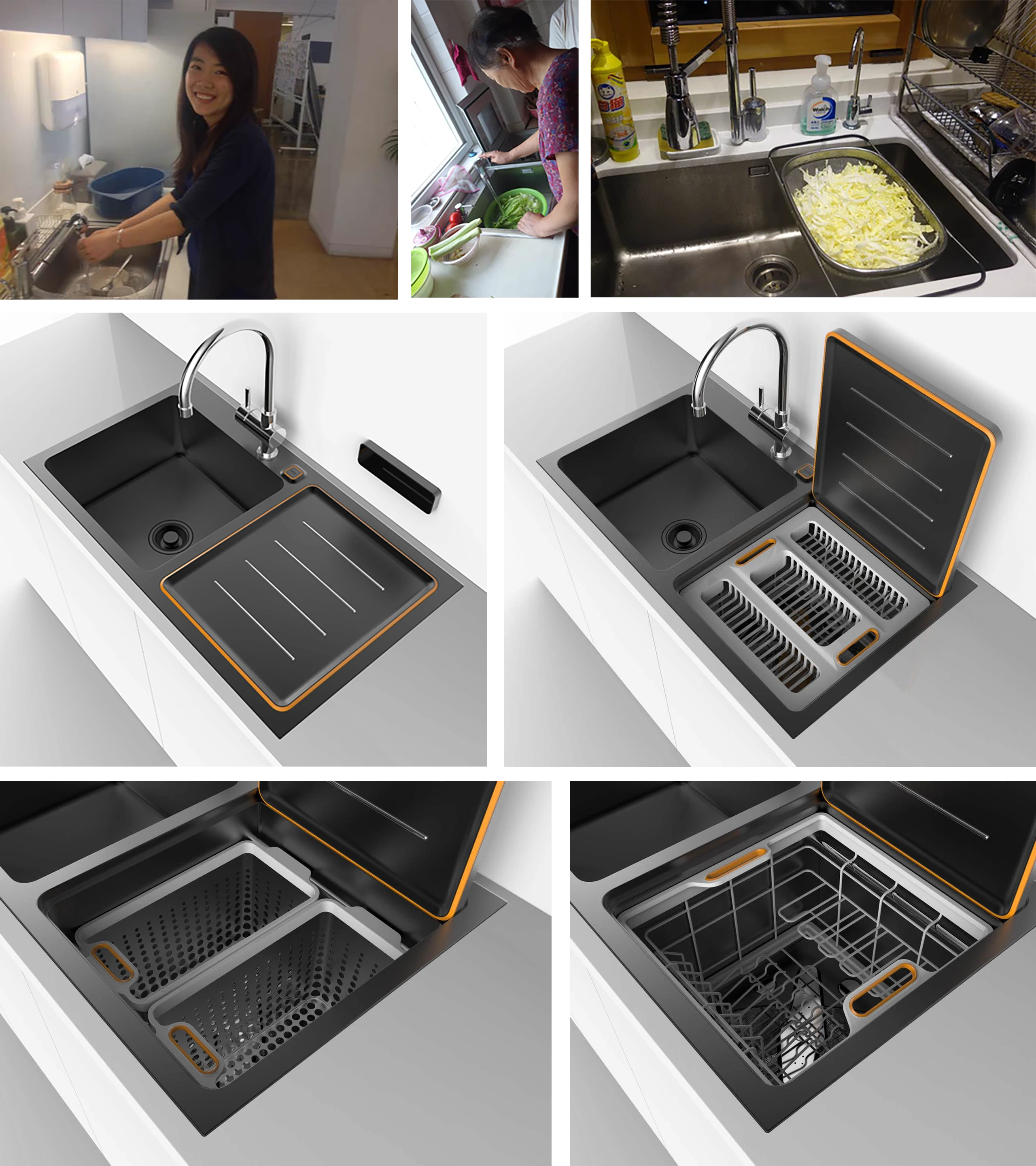
Based on this insight, IDEO made a list of product design recommendations that became Fotile’s Sink Dishwasher—a counter-level, multi-purpose appliance that specifically suits Chinese cooking habits. IDEO’s design guidance gave Fotile the confidence it needed to launch its product into the market, and served as a blueprint for the future iteration of Fotile’s Sink Dishwasher.
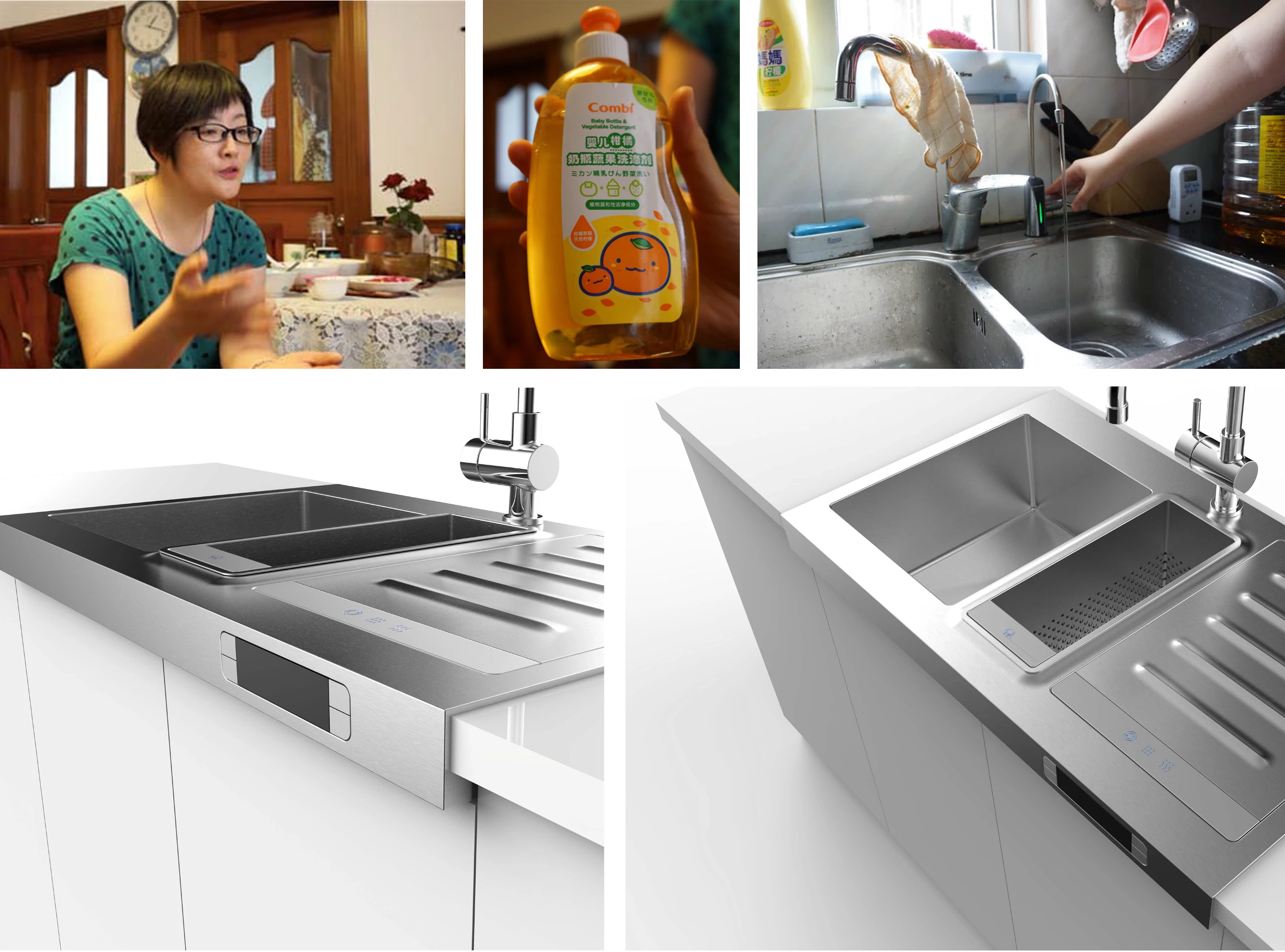
On March 25, 2015, six months after the project ended, Fotile launched the world's first sink dishwasher designed for Chinese families. Eight months later, its market share exceeded 30 percent, setting off a wave of innovation in the Chinese dishwasher category.
In 2016, Fotile introduced a three-slot dishwasher with an added compartment for cleaning fruit and vegetables—a direct response to a research finding that Chinese families are concerned about food safety. When this new model hit the market, Fotile’s dishwasher market share jumped to 41.1%. In China, Fotile is now synonymous with “sink dishwasher,” and the company has a widespread reputation among consumers as a symbol of a safe and healthy Chinese family kitchen.

30%
Fotile Sink Dishwasher’s share of the market in China, just eight months after launch
41%
Fotile’s dishwasher market share after it launched a three-slot version in 2016
#1 selling brand
in the mainstream price segment of the Chinese dishwasher market as of August 2023

Growing a brand for modern Chinese parents
China’s BoAo Group expands from an auto industry manufacturer to a lifestyle brand for modern families.
China's minor protection law mandated the use of child safety seats beginning June 1, 2021.
Despite incoming regulations fueling a surge in purchases, car seats on the market rightly prioritized safety but did not consider the emotional needs and lifestyle preferences of a new generation of Chinese parents.
BoAo Group’s idea to design a new baby car seat was fueled by a newly revised minor protection law, which made using child safety seats mandatory beginning June 1st, 2021. As ZUOWE and IDEO looked around China’s emerging car seat market, the team noticed a singular focus on safety and safety features across most international and domestic brands. There was a clear opportunity for a new product that could meaningfully differentiate itself by not only providing safety features but also meeting the needs of modern Chinese parents.
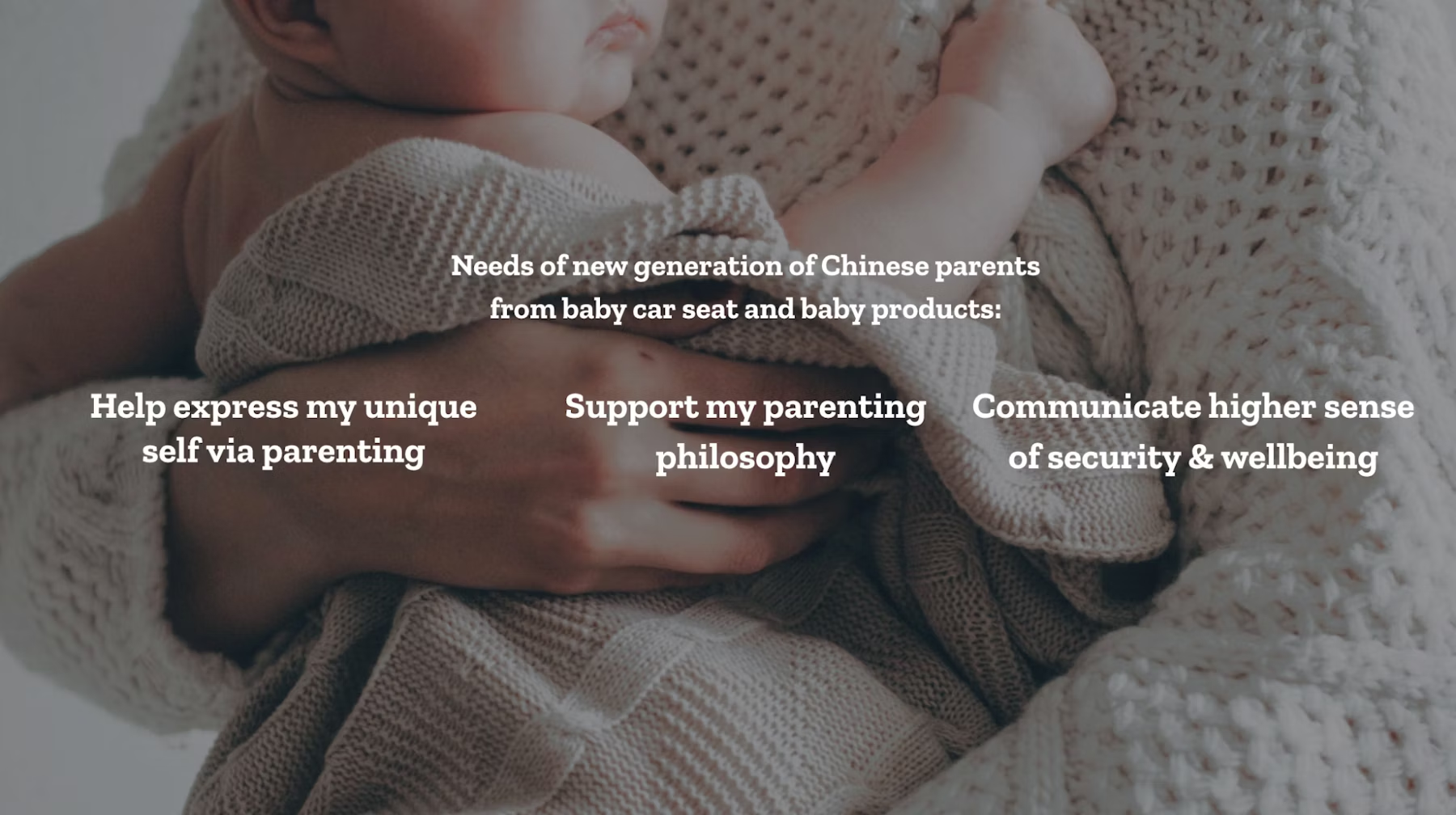
To kick off the project, the IDEO team needed to answer two questions: What matters to the new generation of parents in China? And how will their style and approach to parenting affect their expectations for baby car seats? Taking into account the potentially different consumer needs in different geographies, the IDEO team headed to Shanghai, a city with more than 25 million people, and the city of Taizhou in Zhejiang province, which has a population of 2 million. They conducted in-depth home visits to local families, visited many brick-and-mortar mom-and-baby shops, and interviewed people like specialized nurses, parenting experts, and child psychologists.
Despite the differences between the two cities, IDEO discovered commonalities during consumer conversations. Young Chinese parents were experiencing a perceived identity gap. As individuals, they felt they had distinct personalities and a clear sense of self. They actively expressed themselves through their clothes and belongings. But when they became parents, this sense of self weakened or disappeared completely. Their identities shifted to being someone’s mom or dad overnight. This new generation was eager to show their unique approach to parenthood as they used to express their sense of self. But many products were designed for children, with little regard for parents.
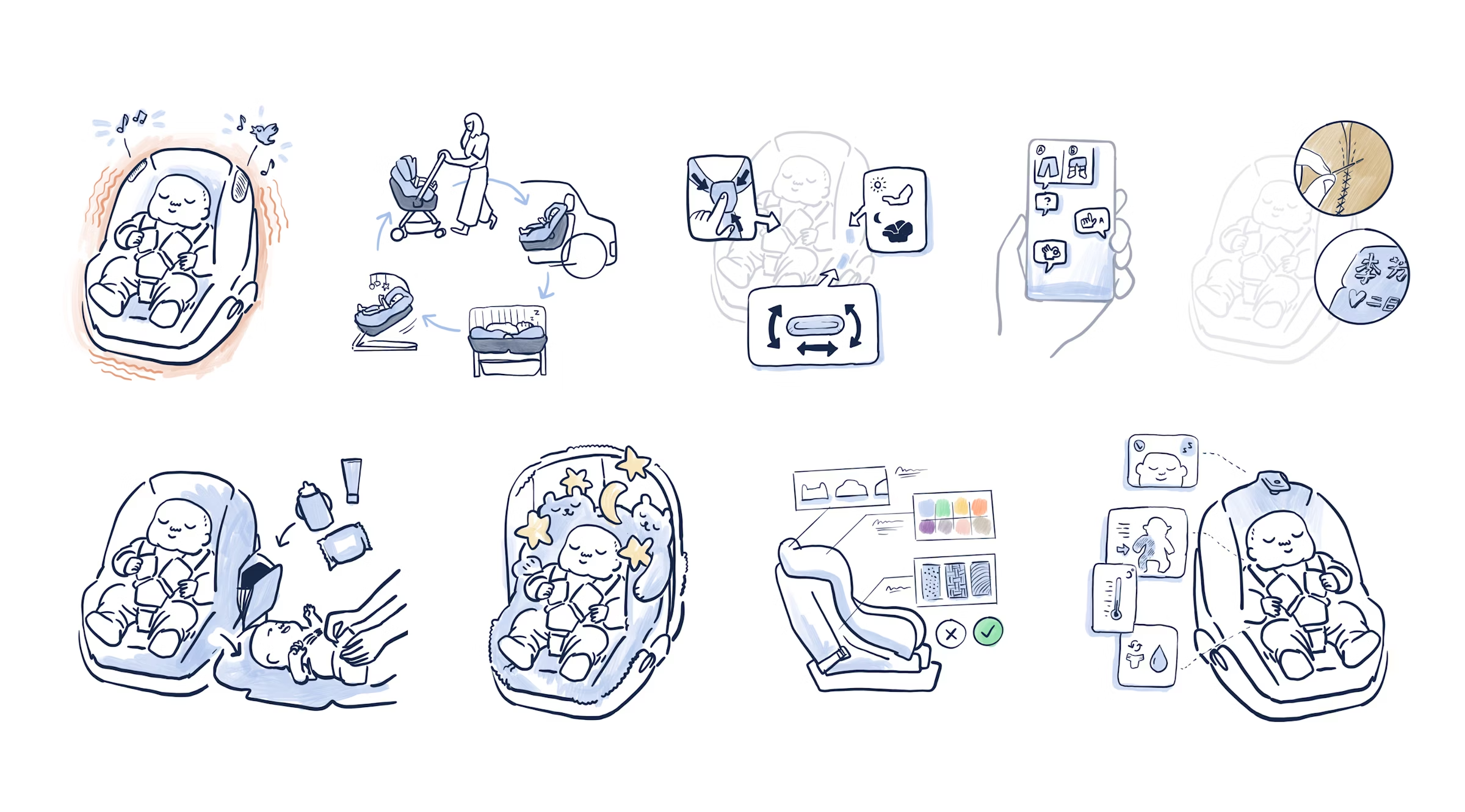
This core finding helped set the direction for the new baby car seat design and brand Maple&Co. However, there were still two significant challenges to overcome. One, IDEO needed to design a product with stringent technical regulations and standards on a tight timeline—ZUOWE wanted to launch the new car seat at an important industry trade show within the year. And two, the team had to help the organization transform its thinking and ways of working to be more consumer-centric.
BoAo’s strength lies in its 20 years of experience developing and manufacturing car seats for major domestic and international automotive brands. This gave the company an edge in overcoming technical barriers and driving mass production. But its engineering and manufacturing mindset had become a barrier to transforming into a D2C brand. With such ingrained ways of working, pivoting to a more creative process can be hard.
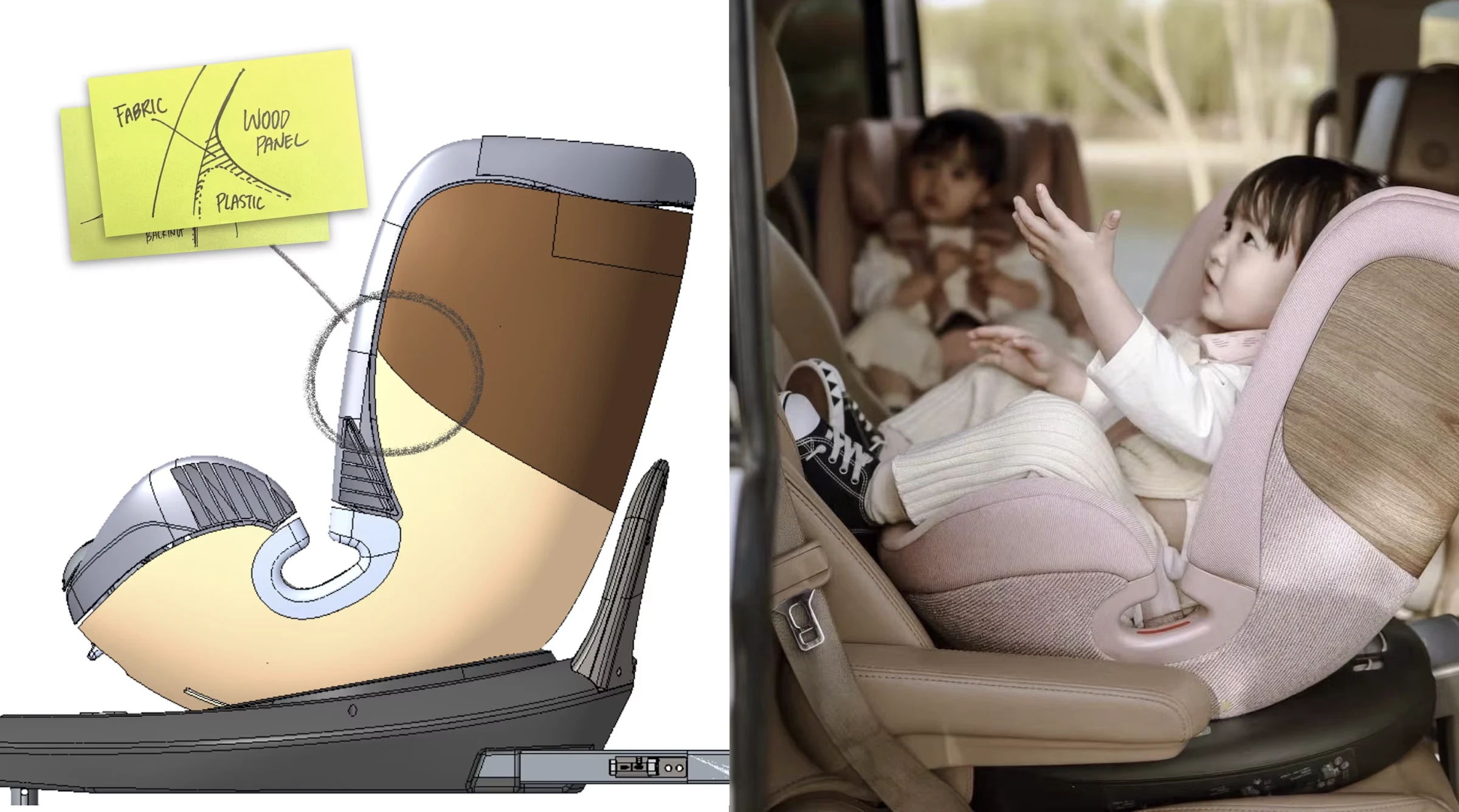
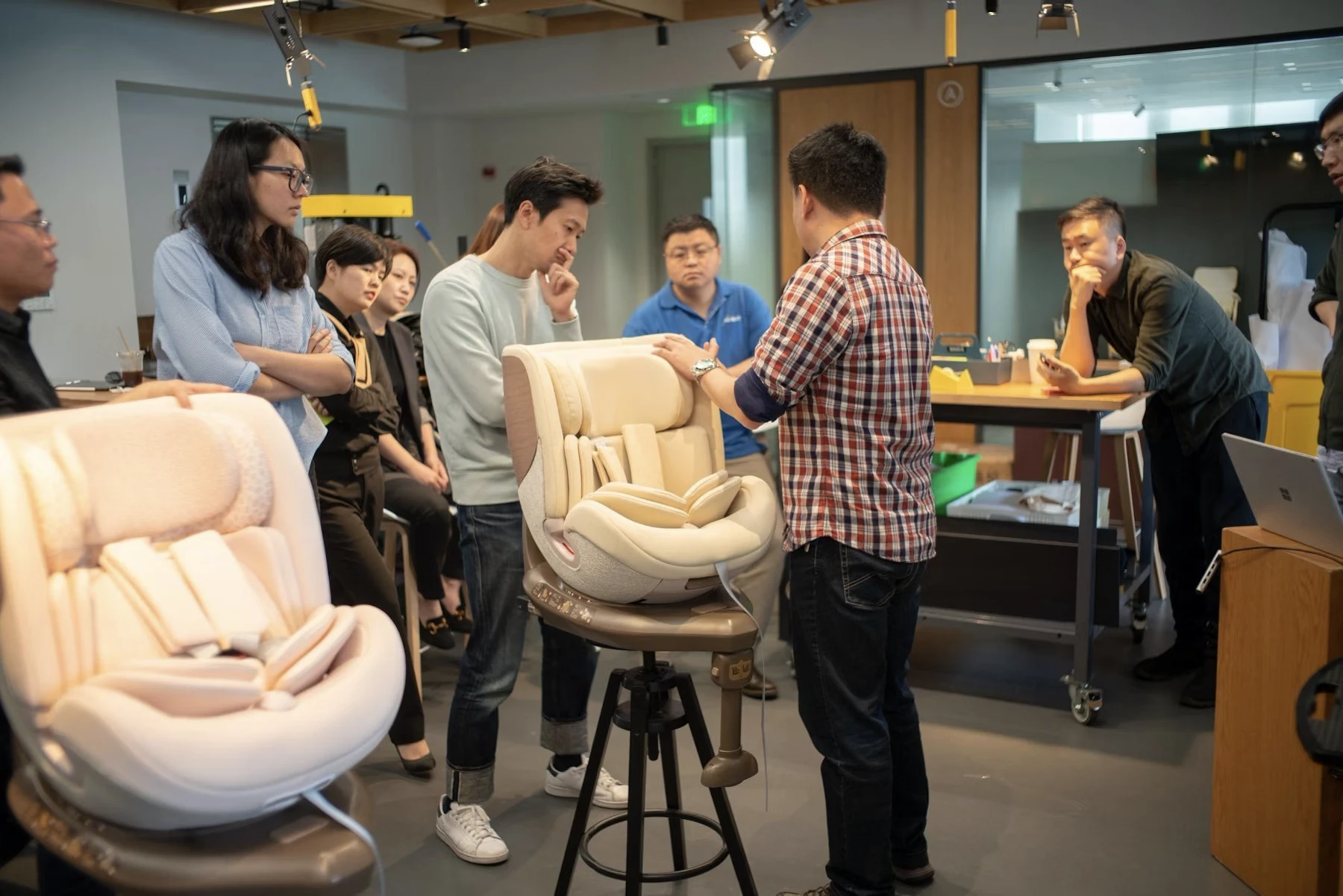
To address this hurdle, IDEO set up co-creation workshops, bringing together ZUOWE’s newly formed baby car seat team and manufacturing experts from their factories to discuss design direction and details early on. The benefits of the collaboration were clear: It was easy to share feedback in a timely manner and make product design decisions very quickly. When IDEO presented a design that emphasized natural textures during a workshop on brand positioning, a member from Bo Ao’s manufacturing team said, “This feels very different. This could become a major selling point,” and that they had “never seen” anything like it done by other baby car seat brands.
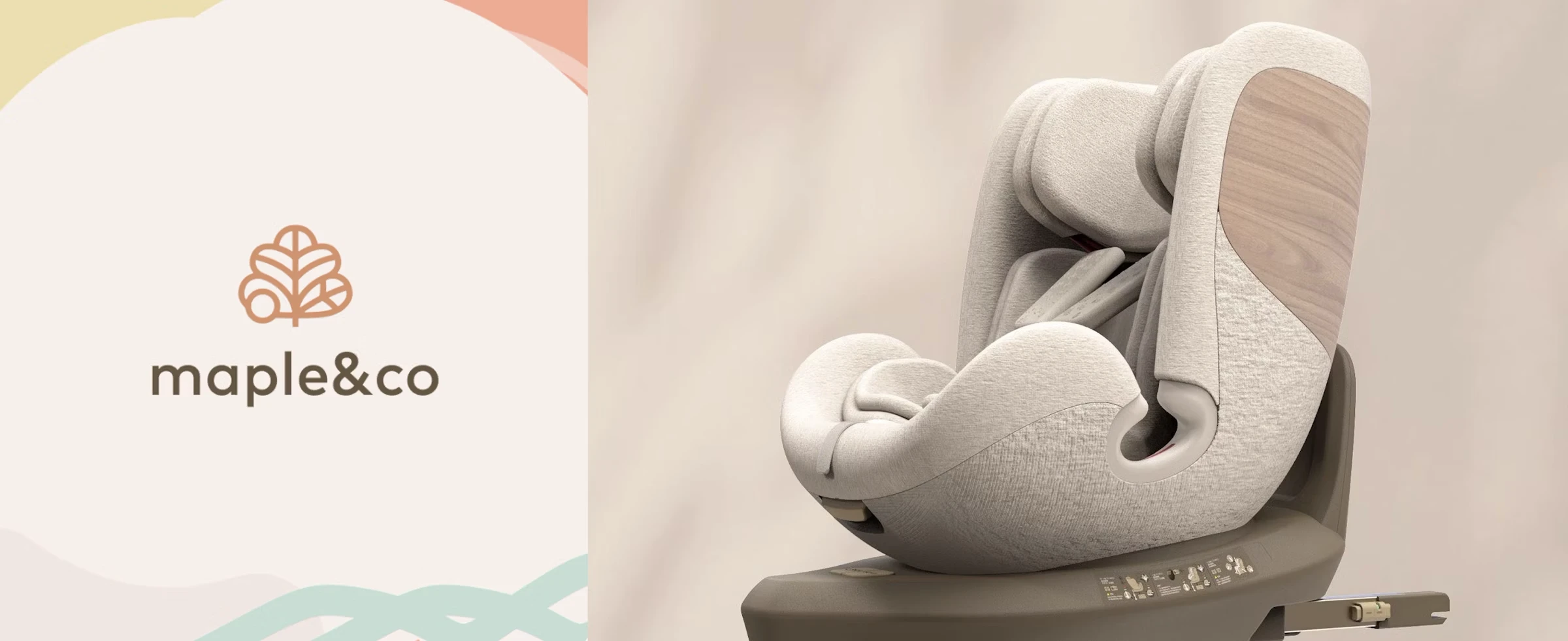
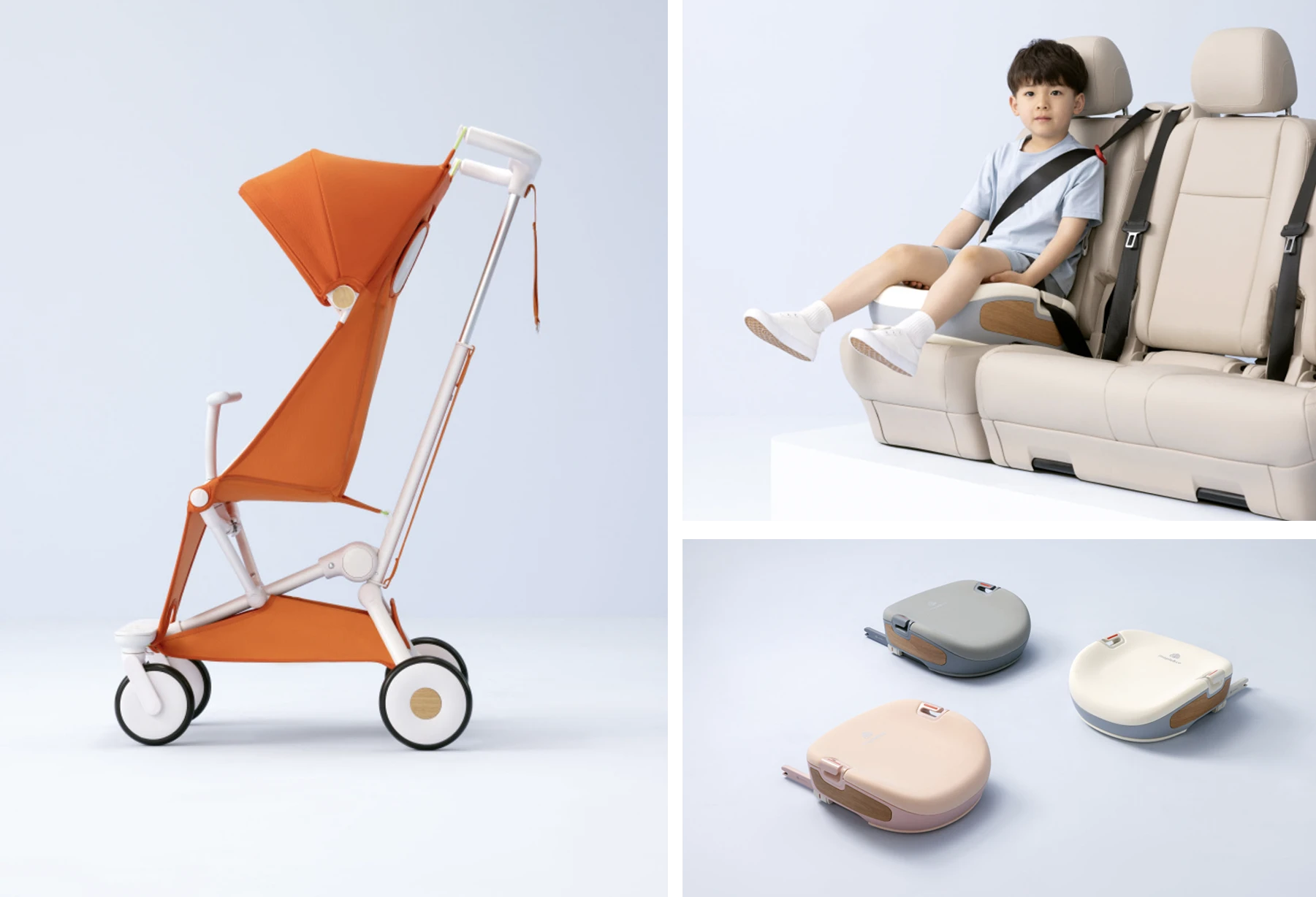
A year after working together, ZUOWE Technology launched Maple&Co and the new Maple baby car seat across its main e-commerce channels. Modern and minimalist in soft natural colors and wooden veneers, Maple appeals to the aesthetics of young parents in China. Despite a series of micro COVID outbreaks in China, within three months, Maple had already achieved better-than-predicted sales and received favorable comments about the look and quality of the car seat from parents. Fast forward two years, additional collaborations with IDEO have enabled the young startup to grow its child travel portfolio from a signature car seat into a more holistic offering that includes highly functional, fashionable, and adaptable car booster seats and strollers that thoughtfully address the needs of modern Chinese families across various life stages at home—and on the go.

1 year
after the project ended, a new, differentiated baby seat product and brand, Maple&Co, launched
Top 6
during the 2023 “Double 11” shopping festival, Maple&CO secured the 6th spot on Tmall's new brand pre-sale list
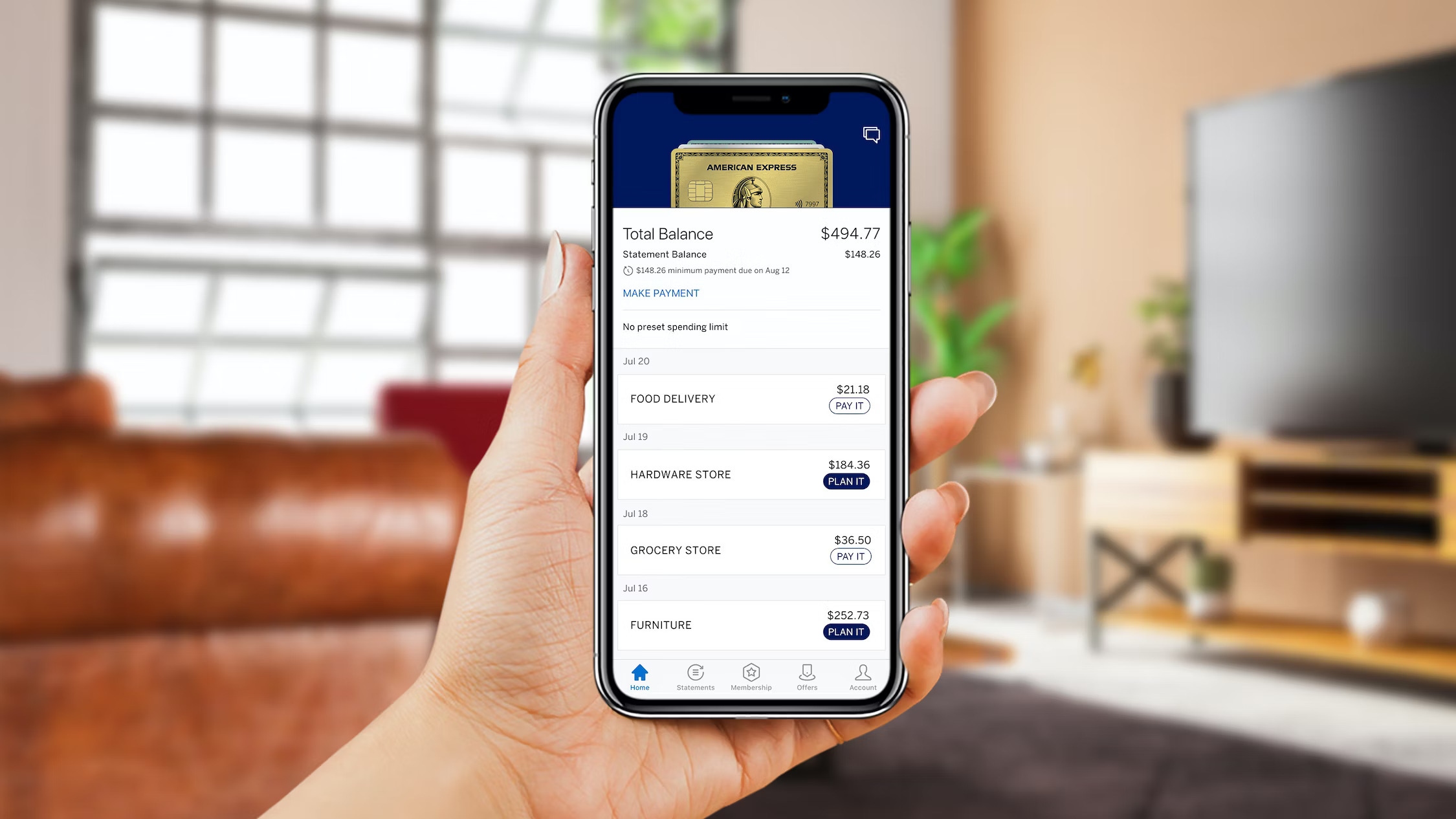
How a $4000 vet bill sparked innovation at American Express
American Express and IDEO teamed up to design features that offer Card Members more payment control and flexibility.
“Over a year ago, I had to take my cat to the vet for an unexpected and expensive surgery,” says one Card Member. “To be honest, I still don’t know if I’ve paid the bill off.”
Many crave the flexibility to pay for large purchases over time, but also want to avoid the pitfalls of debt. Others rely on debit or cash for small items—no one wants to accumulate interest on a cup of coffee, lunch with a friend, or box of Kleenex—but then miss out on valuable rewards.
American Express worked with IDEO to help them attract new customers by understanding what financially stable young adults wanted in a credit card. The team began by interviewing more than 120 millennials to understand their payment behaviors around debit and credit, and how they think about borrowing and spending.
One person described the monthly panic of receiving his bill—described as “statement shock”—and his habit of making multiple payments before his billing cycle closed to ease this anxiety. Others were wary of credit because of a large veterinarian bill or financial mistakes made in their 20s, and relied on debit because it felt safer than accruing a balance to pay off. Overall, the team learned that many consumers experience anxiety about paying their bills. And while financial products that offer more flexibility and control have been needed for years, they are especially valuable in times of economic uncertainty like today.
Based on this research, IDEO prototyped, iterated, and refined two concepts, with frequent feedback from users and the client. Called Pay It Plan It, this feature offers financially responsible consumers more transparency, confidence, and control.
Pay It allows Card Members to quickly pay for small purchase amounts under $100 with a few taps in the American Express mobile app. When that purchase shows up on their account, they can choose “Pay It” and still earn rewards on the purchase. This ensures Card Members can take advantage of rewards while lowering their monthly bill by paying for smaller items throughout the month.
With Plan It, Card Members can split up larger purchases of $100 or more—like an emergency trip to the vet or a new sofa—into equal monthly payments, with a fixed fee and no interest. When the purchase appears in their account, they can select “Plan It,” and will be offered up to three monthly payment plans, ranging from three to 24 months. Each plan comes with a fixed monthly fee and no interest. Card Members know exactly how much they have to pay each month, so there are no surprises. And if they pay the purchase off early, they no longer have to pay any future plan fees.
The design of Pay It Plan It did not come without challenges: Bill pay is critical, complex, and highly regulated. Pay It Plan It required a significant internal financial and technical investment, which was achieved after IDEO shared many of the emotional, compelling stories from credit card users with leaders at American Express.
The team worked closely with the American Express regulatory and digital teams to ensure compliance and seamless integration into the mobile app and website’s user experiences and interfaces. To heighten the sense of competence, control, and transparency for users, the designers focused on small interactions like status animations, proactive suggestions, and straightforward language. These interactions help Card Members anticipate upcoming payments and clearly understand Pay It Plan It.
Plan It was designed with transparency, control, and accessibility in mind: The payment plan fee is displayed in dollars to give the customer certainty over their total costs.
Initially, the team set out to create a new credit card with the needs of young adults in mind. But IDEO and American Express realized that Pay It Plan It could be scaled across existing credit card products to ultimately benefit and attract more Card Members. Now, almost all U.S. American Express Consumer Card Members have access to Pay It Plan It through credit cards, co-branded cards, and the well-known Green, Gold, and Platinum Cards. Since launching in 2017, Card Members have created nearly 5 million Plans, totaling nearly $4 billion in purchases, with an average Plan size of $789. Millennial and Generation Z Card Members have created approximately 44 percent of these Plans.
The flexibility and control offered through Pay It Plan have earned American Express positive press, including a call-out in The New York Times for being among solutions that “make it easier for their customers to borrow money, and to manage their monthly cash flow.”
At first glance, design-led innovation may seem difficult to achieve in large, established organizations like American Express, operating in a highly regulated and deeply rational industry. But the IDEO and American Express team successfully found ways to introduce new behaviors like rapid prototyping, cross-discipline collaboration, and leading with emotional customer stories within the existing organizational culture and structure. American Express has since established a permanent Pay It Plan It team dedicated to evolving the feature. Made up of employees across departments, this points to a new and collaborative team structure for the company.
By seeking to understand the human behind the Card Member, American Express has transformed credit and financial services for the better, helping both to be defined by empathy, utility, and transparency.
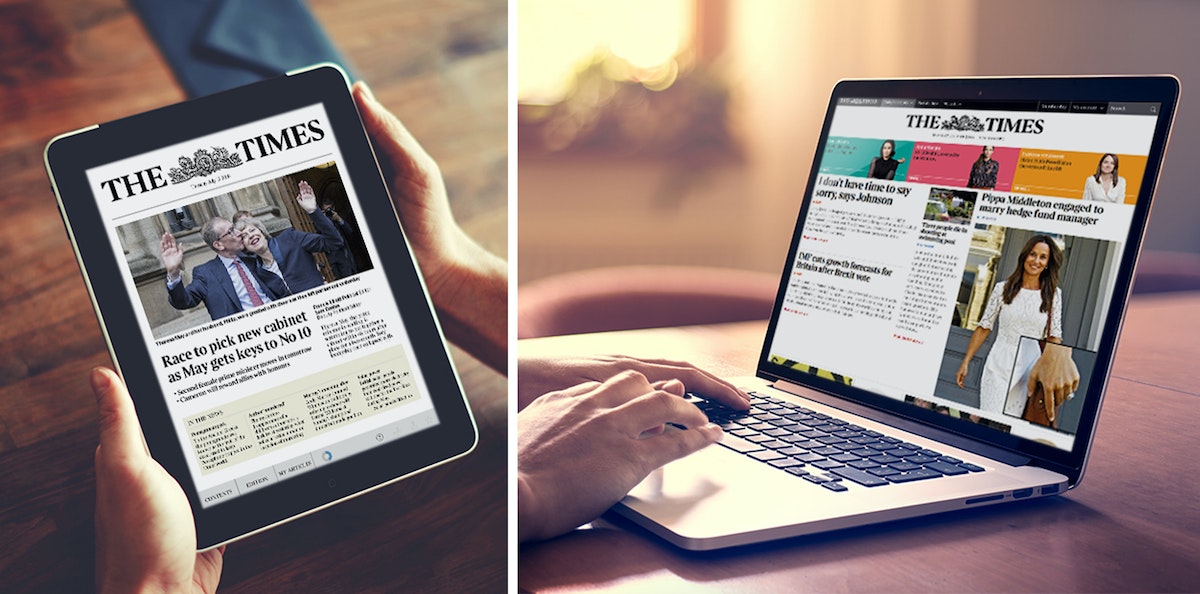
The bold publishing strategy that turned a traditional newspaper Into a digital leader
How bucking the trend of round-the-clock digital publishing led to an enormous payoff for The Times and The Sunday Times
For more than two centuries, The Times held a strong reputation as a storied British newspaper. Then came the digital deluge. Publication after publication began adopting a relentless online publishing schedule aimed at capturing eyeballs and subscribers, and guarding against waning advertising sales and print readership. But The Times and its sister publication The Sunday Times thought there might be a different way forward.
As Editor John Witherow explains, “the power of an edition” had long endured at The Times, but began to erode amid a round-the-clock breaking news cycle. Witherow didn’t want to do away with editions, but rather to update the model for the digital age. Times owner News UK approached IDEO in 2014 to explore exactly that: what the edition of the future might look like and how its design could drive revenue and subscribers.
IDEO’s research and design phase included interviews with readers, journalists, editors, and marketers at News UK. The team found that people’s reading modes vary—some reflecting new digital behaviors and others adhering more closely to paper-reading styles.
Readers, the team learned, chose The Times for its editorial opinion: a perspective that cuts through the overwhelming flood of information. They viewed the daily Times and weekend Sunday Times as one paper, despite the organizational distinction. And they were proud of their choice, valuing the papers’ consistency, trustworthiness, balance, and authoritativeness. Readers wanted these qualities distilled in a digital edition, whether on a smartphone, tablet, or on the web.
Those insights led to strategic recommendations spanning digital products, editorial, advertising integration, online membership offers, and social sharing. But the boldest among those was a publishing strategy that seemed to run counter to media trends: abandoning a real-time approach in favor of publishing separate digital editions.
The Times in March 2016 introduced an editions-based publishing schedule, with new editions available across all platforms four times each weekday: overnight, 9am, noon and 5pm; the weekend schedule shrank to three editions. A year in, they had broken that schedule fewer than a dozen times—making exceptions for major moments like the terror attack in central London and David Bowie’s death—but even in those cases, The Times refrained from incessant updates, instead resuming its regular pacing.

“The way we’re publishing now, taking our time over news...taking a more considered view of the world, it’s helped us offer something different from everything else,” digital news head Alan Hunter told Digiday in 2018. Readers demonstrated that this different approach was something they’d been wanting.
In the first half of 2016, new paying-subscriber sales were up 200% as compared to the same period in 2015. At the end of June 2016, there were 413,600 subscribers to The Times and The Sunday Times, up 3.4% from a year prior. Of those, 182,500 were digital-only subscriptions—a 6% rise and a notable figure given how much online news can be obtained for free.
Through collaboration with IDEO, News UK's own digital teams capabilities grew, enabling them to implement and evolve their new digital strategy. The capabilities of the newsroom grew, too: “The decision to move to four editions a day has freed up tremendous resources to focus on big stories,” says Emma Tucker, Editor of The Sunday Times—the kind of stories that "supercharge engagement." The approach is working: By August 2019 digital subscriptions had increased 19% year-on-year to 300,000, showing the progress the legacy publisher has made in attracting readers to its online proposition. Total subscribers for the two titles' print and digital products now stand at 539,000, and their websites total five million registered users.
More than 230 years after its first edition was published, the new Times has established solid footing in the digital age and designed its own future—one based not on the habits of its competitors but on its legacy and the reading behaviors of its audience.
Designing a better onboarding experience for an AI symptom checker at clinics
Enabling doctors to spend less time on paperwork and more on patient care.
D4V is a Tokyo-based early stage Venture Capital in partnership with IDEO. Two years ago, D4V invested in healthcare startup Ubie, which develops a service called AI Monshin Ubie. The digital service was created with the goal of reducing the burden on healthcare professionals working long hours, under harsh conditions. AI Monshin Ubie automates a number of patient registration and documentation processes through digital tools, enabling doctors to spend less of their time on manual paperwork, and to dedicate their valuable skills and attention to the patients themselves. Currently, the service is installed in 200 medical institutions in 41 prefectures across Japan.
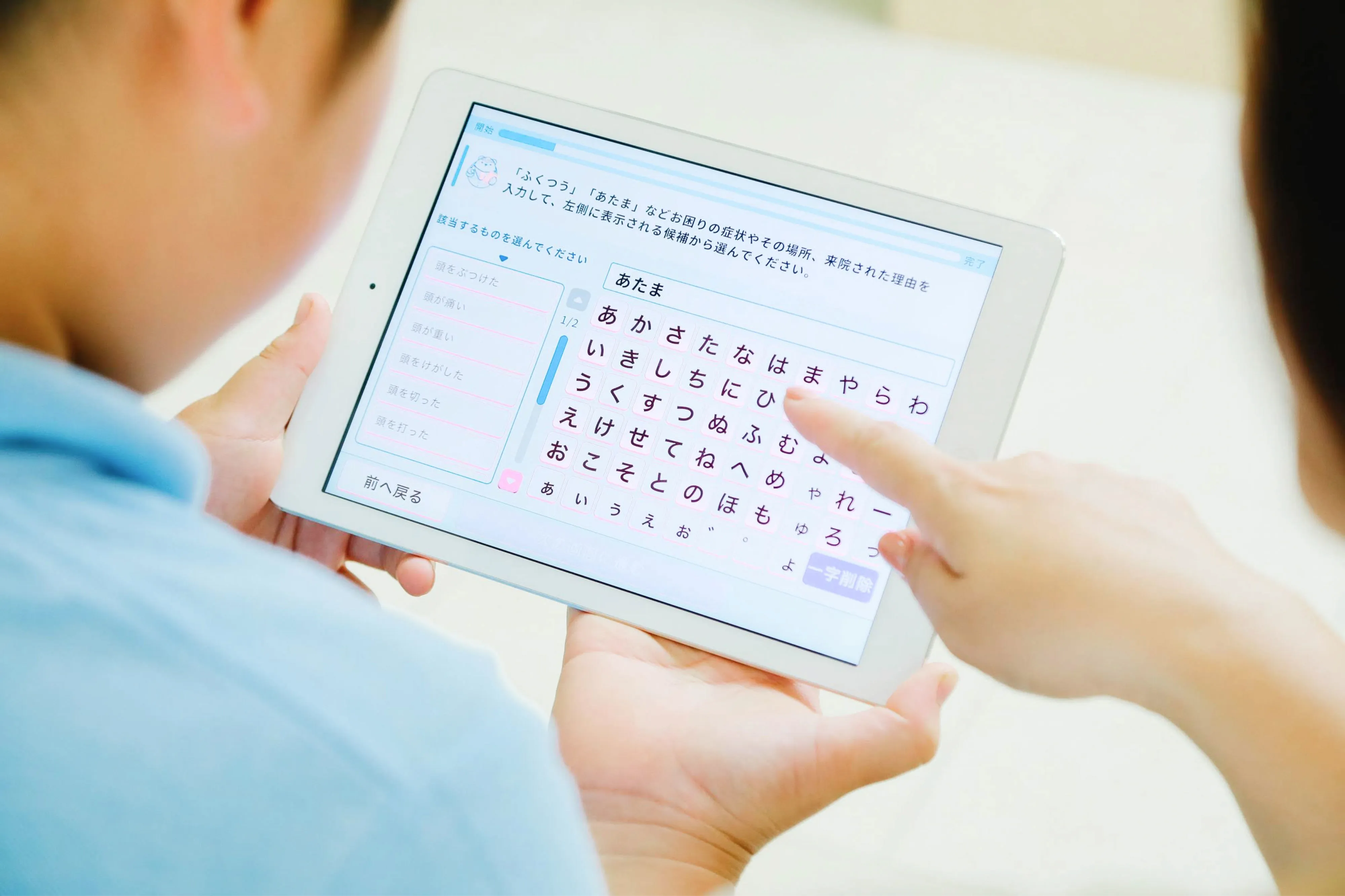
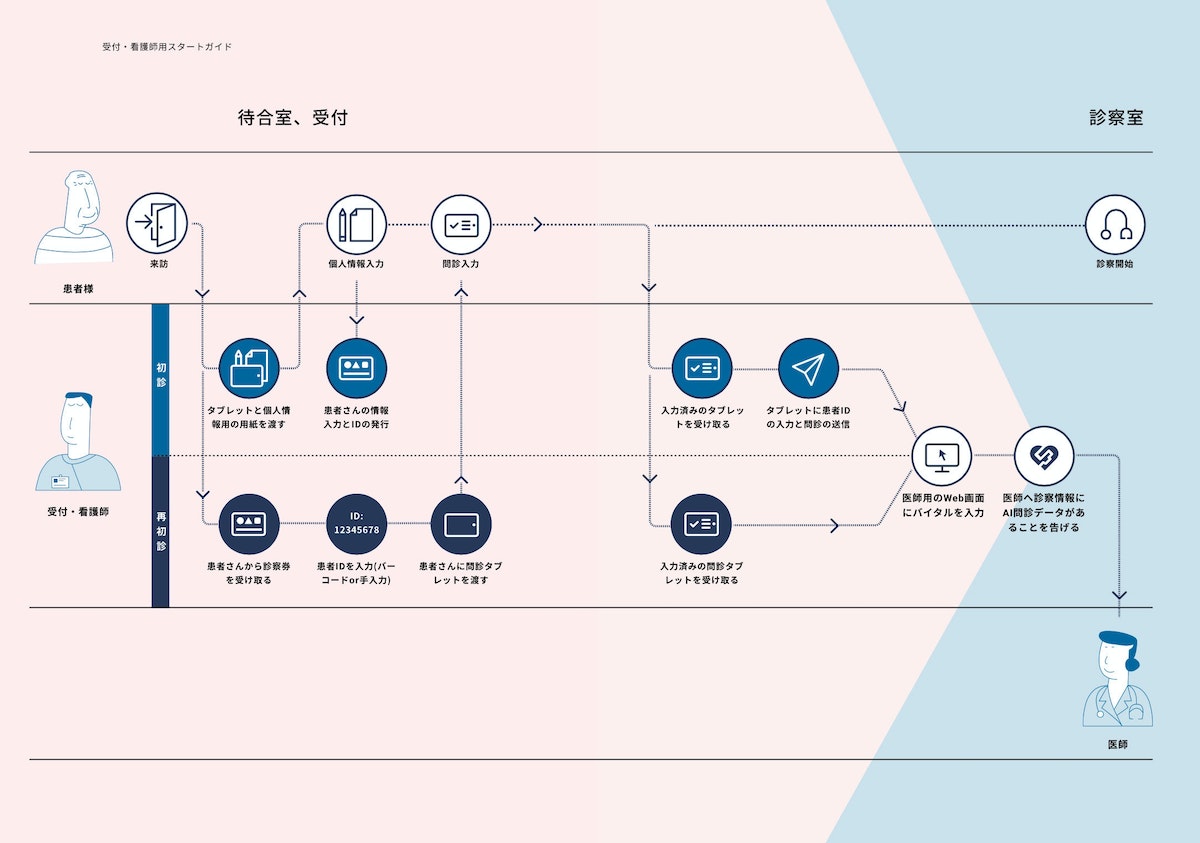
With AI Monshin Ubie, patients fill out preliminary forms on a tablet, rather than paper, entering information about their health history and current symptoms directly into their digital medical record. As patients fill out the questionnaire, the Ubie AI generates questions in real-time according to patients’ responses, which results in more appropriate and accurate data. The patient’s responses are automatically formatted for the doctor to review prior to and during the consultation. As a result, doctor consultation times and facility operation times are drastically reduced.
With the Coronavirus raising fears of a possible health system breakdown, Ubie has made improvements to anticipate and possibly prevent in-hospital infections. Until recently, Ubie’s services have been primarily used by large hospitals; but in light of the global health crisis, Ubie approached D4V—who partners with IDEO—to help rethink the onboarding experience and quickly facilitate the introduction of AI Monshin Ubie in regional clinics across Japan. D4V and IDEO have been working with Ubie for many years to collaborate in various areas, including UX, rebranding, international research, and more. Therefore, they had a foundation of knowledge from which to build these new features.
Typically, AI Monshin Ubie has been introduced to new hospital clients through direct, in-depth instructional visits from Ubie sales staff. This approach has worked well for rolling out the product to Japan’s 8,000 large hospitals; but for the 100,000 smaller clinics, Ubie needed a more efficient onboarding method to enable staff to get set up smoothly and independently.
During research, D4V and IDEO team members engaged with many different clinic staff members, including full-time doctors, part-time doctors, nurses and receptionists. The researchers found that staff tend to react skeptically to new tools and services, with a common preconception that they will add to their workload. One clinic director’s first impression of AI Monshin Ubie was, “It looks complicated.” But once he actually used the service, he realized that it was very user-friendly.
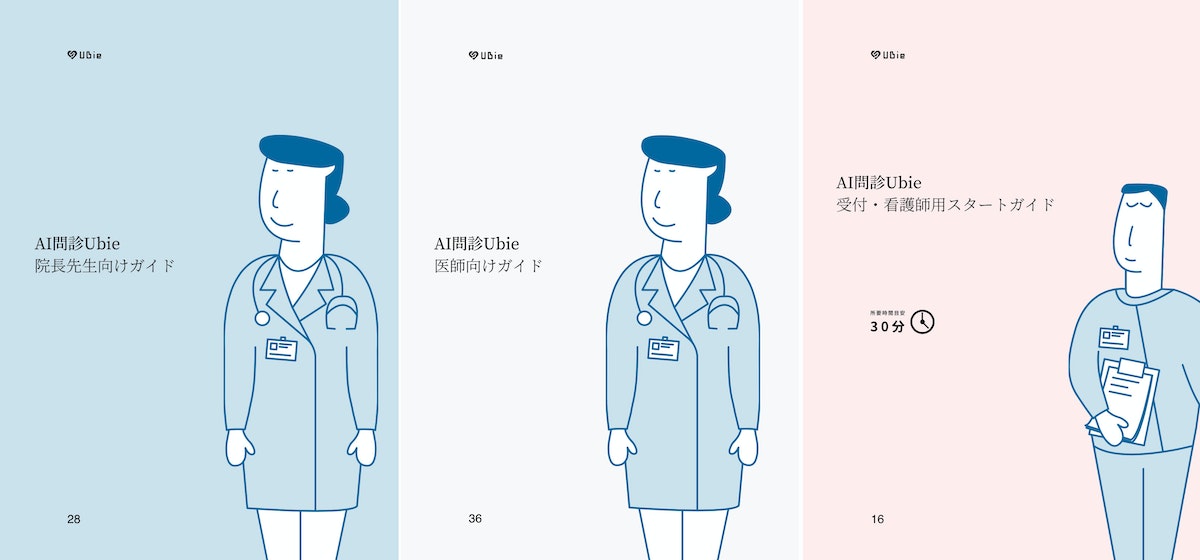
The team quickly understood that it was important to remove preconceptions by clearly communicating Ubie’s benefits and ease of use. They created a two-minute animation and designed three separate guidebooks. The animation adopted a friendly tone and expressed empathy for doctors, staff members and patients, highlighting how Ubie can bring benefits to each of them. The animation showed how Ubie fits into the existing workflow and explained complex systems in a straightforward and accessible way.
WATCH: A short video clip explains the benefit of their product and service to avoid the users’ concerns in advance.
The guidebook for doctors and directors explains how Ubie’s AI smooths the patient consultation experience and greatly improves the quality of medical care. It also introduces concrete how-tos around set-up, implementation, and ideal workflow. FAQs were also included, addressing concerns about whether or not elderly people would be able to use it.
Ubie business development leader Kenji Yamada says, “D4V and IDEO have a deep understanding not only of design, but of our entire business. They provide inspiration by bringing experience and knowledge that comes from working with other industries and clients outside of healthcare. We appreciate that they can share the knowledge that they’ve obtained with our business.”
Read the Japanese-language version of the Ubie case study here.
When You Feel Unwell, Ask Ubie: Check your symptoms for free
Learn more about Ubie: Global Company Website
An improved airway intubation system that helps physicians save more lives
The GlideScope Core offers elevated visibility and a seamless workflow for intubation, allowing doctors to better conduct routine procedures and respond to health crises.
In the emergency room, an intervention that’s administered too slowly could cost a patient their life. With COVID-19 fueling a surge in acute respiratory conditions, intubation—a procedure that involves inserting a tube through the mouth or nose and into the airway—is more common than ever. For patients struggling to breathe, the tube can be connected to a ventilator that pumps oxygen to the lungs, keeping them alive.
While a laser-focus on the present is critical for successful patient outcomes, hospitals and physicians often don’t have time to look ahead and anticipate the future of the operating room experience. As technology rapidly improves, there is a ripe opportunity and pressing need to evolve medical equipment to be more innovative and intuitive. Verathon Medical, a global medical device manufacturer, is supporting health care providers at the cutting-edge of care.
Verathon approached IDEO to redesign the existing product system for laryngoscopies and bronchoscopies—procedures that examine parts of the throat through intubation. During these examinations, a tube with a camera embedded in the tip is inserted through the patient’s nose or mouth. The doctor can then see inside the throat on a video monitor, and therefore more easily and quickly intubate and perform the exam.
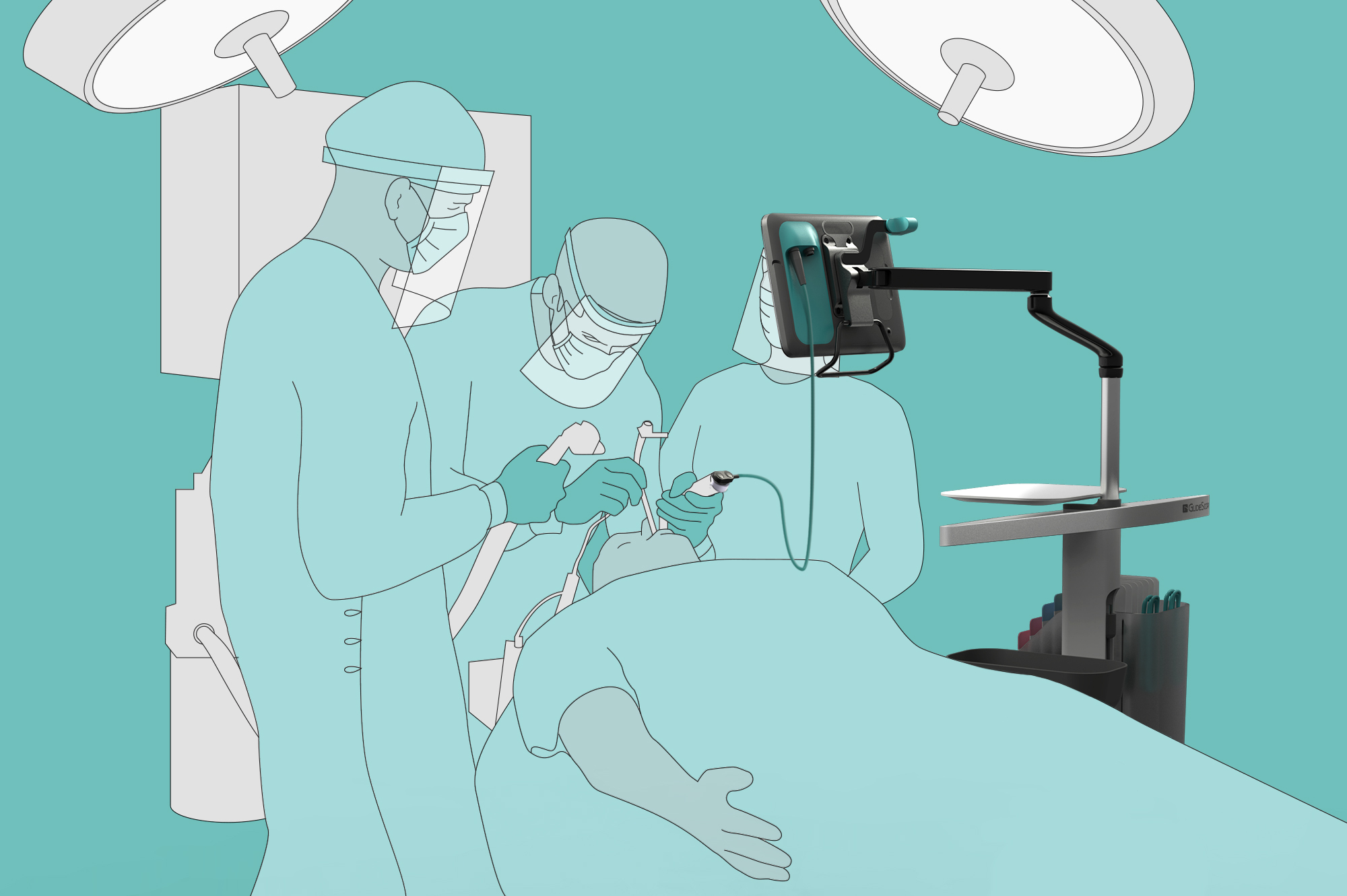
To create a groundbreaking device, the team observed over a dozen laryngoscopies, bronchoscopies, and intubations. They noticed that many anesthesiologists relied on fixed equipment during the procedures. For example, some had grown accustomed to looking over their shoulder—away from the patient—to view the monitor.
During interviews, physicians and residents expressed difficulties with the current technology, sharing that the small screens aren’t conducive to team viewing or student instruction, and they must often use a separate computer to record patient notes. Others reported frustrating workflows, needing to constantly divert their attention and move their hands between the patient, prep tray, monitor, sterile bin, and disposal bin. These inconveniences and inefficiencies are not only cumbersome, but can increase the risk of infection and fatality.
The team relied on these insights to start designing a next-generation product. Through sketching, storyboarding, and building in real-time alongside doctors and clinic staff, designers quickly teased out additional findings and validated concepts.
This work led to the creation of the GlideScope Core: an all-in-one, portable product system that supports both video laryngoscopies and bronchoscopies. The base of the device—a wheeled cart—has built-in storage units for tools and a disposal bin, offering more mobility and accessibility for medical professionals.
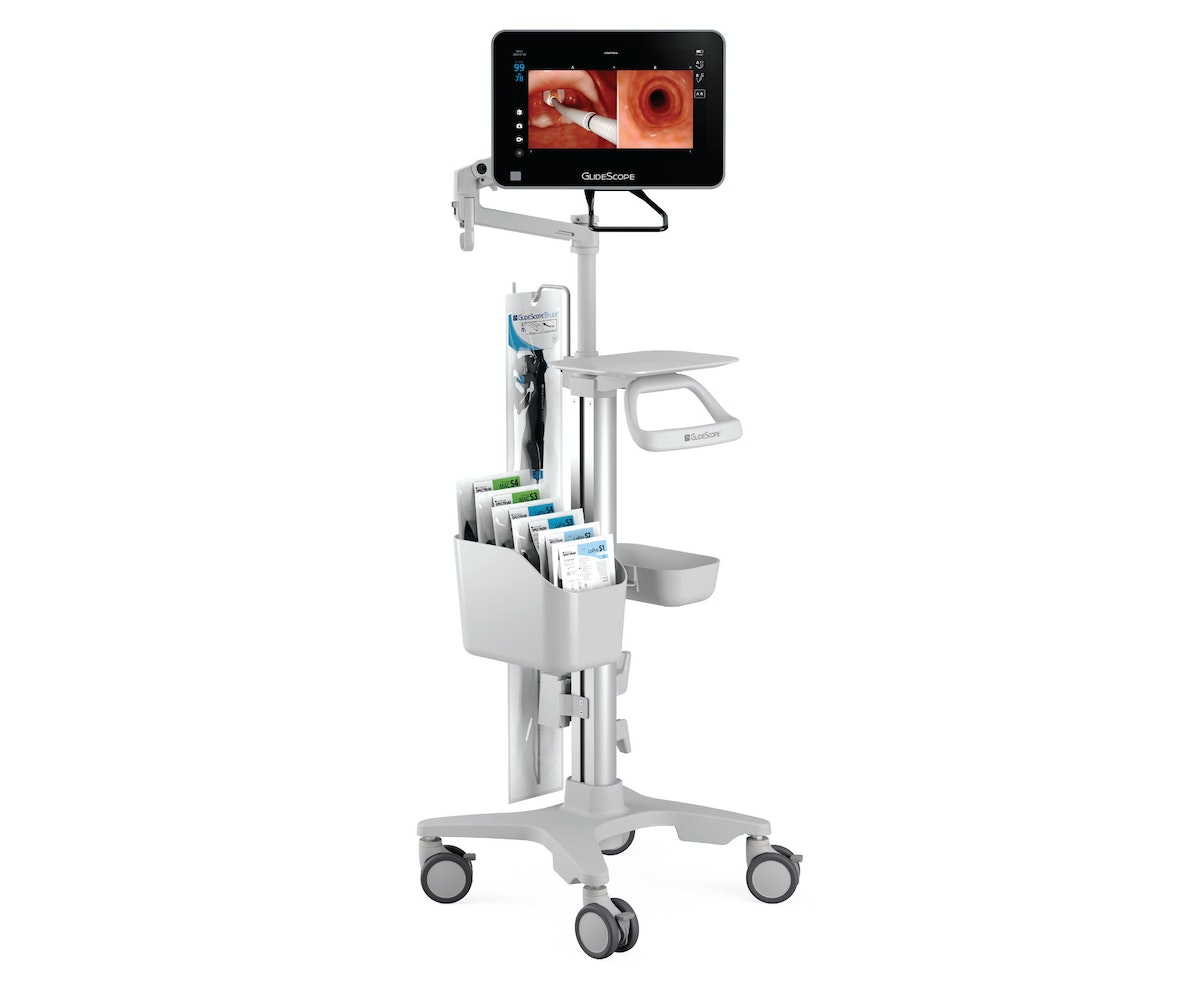
The product’s tagline, “see more, do more,” points to the improvements made to the video system, including a large 10- or 15-inch high-definition touch screen monitor. Displayed images can be enlarged and rotated 180 degrees for improved visualization, team viewing, resident training, and classroom demonstration. To help doctors keep both the patient and monitor in their line of sight, the detachable screen can be secured to an adjustable arm that can be positioned directly over the patient. Additionally, the monitor’s patient annotation feature gives staff access to more of what they need in one device.
The product has been especially valuable for providers and patients during the coronavirus pandemic, when it’s imperative for doctors to keep their distance from patients’ mouths and noses. The GlideScope Core’s movable, detachable, and large, high-definition monitor makes it easier to take this precaution and intubate more quickly. This usefulness is reflected in the 5-fold increase in cart-based device orders for Verathon. While most providers typically order anywhere from 1 to 20 devices for airway procedures, one hospital system requested 600 GlideScope Core systems to meet current intubation demands.
Through modern technology and a focus on human needs, the GlideScope Core supports improved patient outcomes and creates a more seamless operating experience for medical professionals. The product underlines the key but often overlooked fact that often, in order to ensure the healthcare industry is patient-centered, medical device manufacturers and hospitals must also focus on improving the experience of providers.

Transforming a community hospital from the inside out
Designing for caregivers to create world-class care for patients.
Healthcare is notoriously difficult to change. Rules and regulations present complex barriers; health practitioners and organizations often have entrenched ways of working; and lives are literally on the line. Despite these significant barriers, the leaders at Newton-Wellesley Hospital (NWH) boldly committed to improving patient care through a new approach.
NWH is a community teaching medical center in Newton, Massachusetts. Because of its proximity to Boston—a city known for world-class healthcare institutions—NWH needed to differentiate itself. The hospital's new president, Dr. Michael R. Jaff, reached out to IDEO for help: "I knew that providing an unparalleled patient experience would set us apart from our competitors." But, Dr. Jaff’s particular approach was unique. He and Dr. Jodi Larson, Chief Quality and Experience Offer (CQXO), saw an opportunity to drive better patient outcomes through cultural and organizational change.
"You cannot learn any more than when you get to listen to your potential patients say why they would never walk into your place." —Dr. Michael R. Jaff
IDEO partnered with NWH for a year of work together, kicked off by defining the vision for NWH and ramping up to in-hospital prototyping and the launch of several new initiatives. A pilot project with the Women's Imaging Center (WIC) focused on solving departmental and employee challenges to provide a better experience for women getting mammograms.
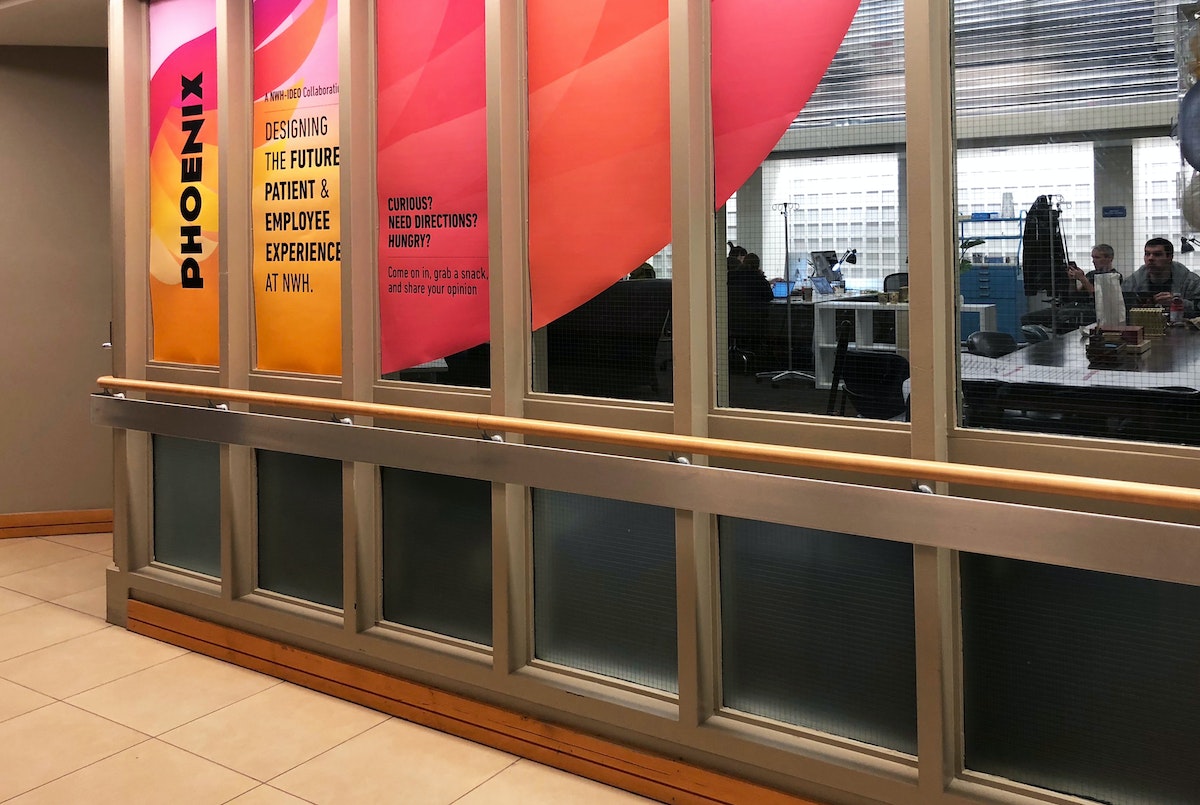
Fueled by this potential, the WIC team redesigned key work processes and created a set of experience principles that inspired new service prototypes. Guided by principles like "Express mutual gratitude" and "Honor every voice," the WIC team tested ways for patients to acknowledge outstanding caregivers and created tools to gather better feedback from patients and adjust quickly. The experience of designing better services inspired the WIC staff to become ambassadors for the power of design thinking across other departments inside NWH and they continue to build on the work through new prototypes and experiments.
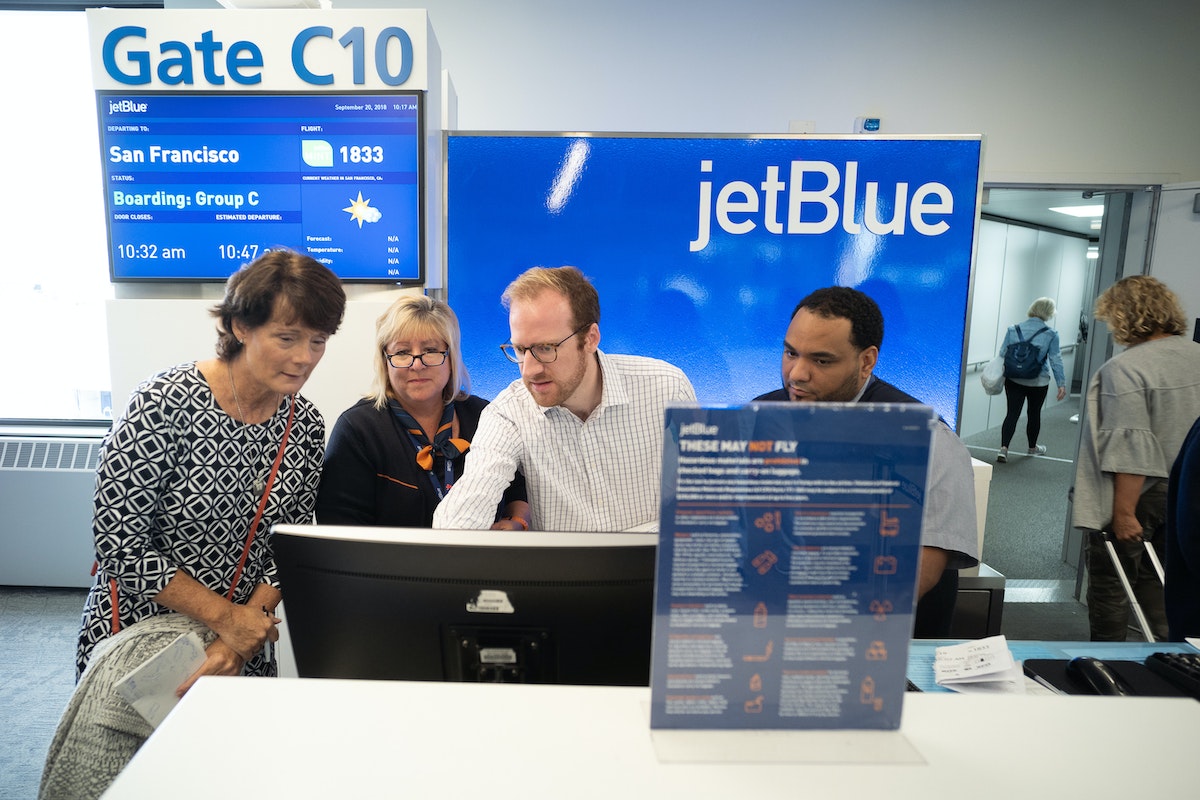
Next, IDEO partnered with NWH’s ambulatory surgery group. They took an analogous research trip to Boston’s Logan airport to see with fresh eyes how other high-touch customer service organizations provide customer value in a complex setting. Insights from the trip were applied through live prototyping of several new experiences inside the hospital, including a pre-surgery visit summary and pre-operation care carts.
Analogous research helped us realize that we can learn from other industries and incorporate some (cool) best practices if we allow ourselves to get over the ‘that would never work in the hospital’ mentality. - Dr. Jodi Larson
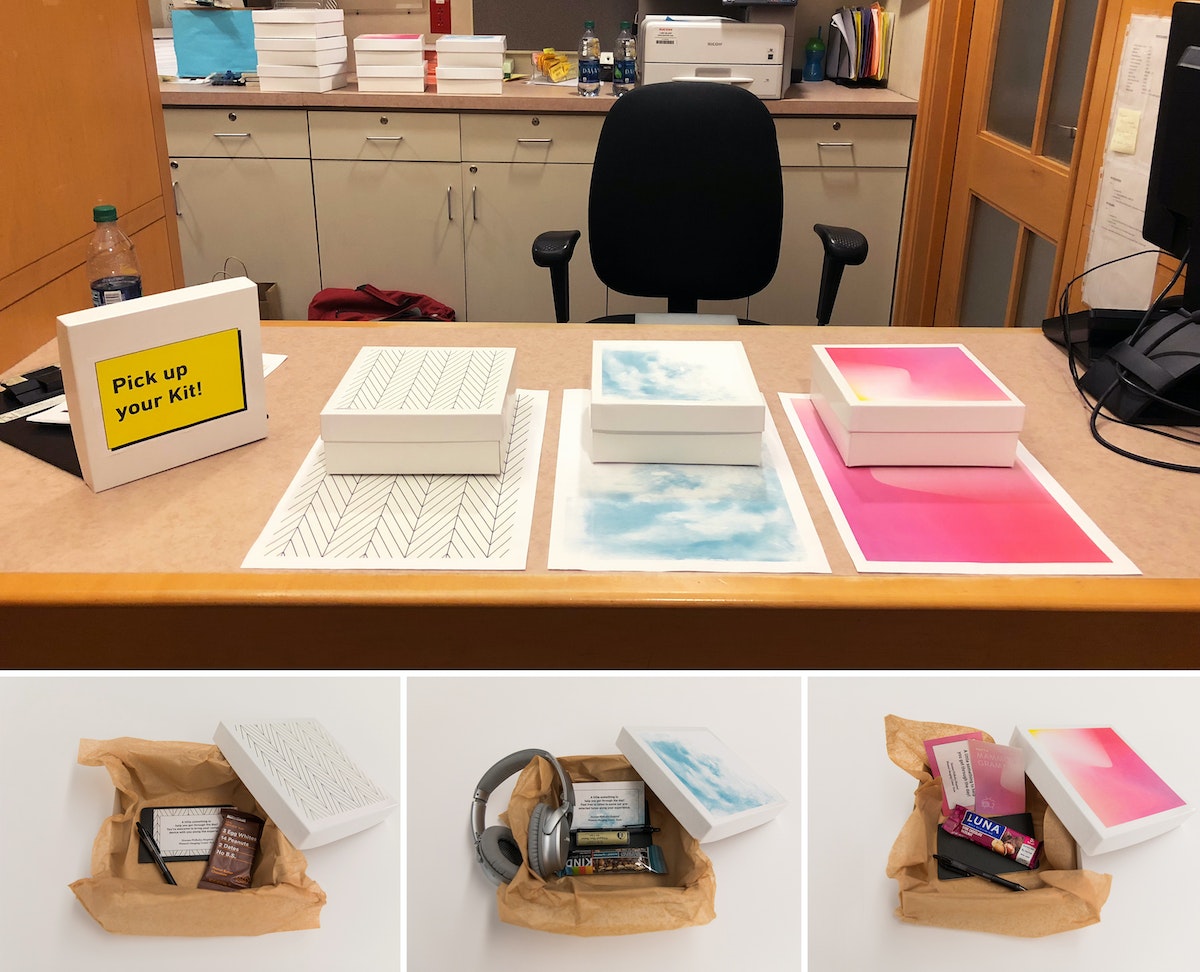
One of the most impactful prototypes was Care Modes, a tool to empower the NWH care teams to tailor their approach and interaction with patients based on the patients’ unique needs, beyond simply their clinical requirements. Four distinct approaches were identified for engaging a patient before surgery—Explain, Partner, Embrace, and Encourage. The Care Mode is determined based on the provider's understanding of a patient's degree of self-advocacy and their confidence that surgery is the best solution to their issue.
Historically, care providers have been trained to deliver consistent care above all else. However, Care Modes powerfully acknowledge that patients respond differently to different types of care. The Care Modes empower the team—from surgeon to nurse to anesthesiologist—with a clear framework for how to interact with and provide care for patients so they feel most comfortable. Based on the prototype's success with patients and impact on the staff culture, NWH has incorporated Care Modes into EPIC, the hospital's electronic medical record.
The importance of being patient-centered has been central to the healthcare conversation over the past thirty years; but new explorations reveal that there’s far more potential for innovation and improvement when the provider experience is considered in tandem with the patient’s. Each enables the other, and design for both together yields stronger solutions and better outcomes. IDEO's work with NWH demonstrates this vital shift in user-centered healthcare—one can't design services and experiences for patients without designing for their providers’ culture as well. When these go hand-in-hand, meaningful institutional change in healthcare is more than possible.