


Home / Design services / Case studies
Planes, supply chains, and automobiles
Vice President of Global EV Programs, Ford Motor Company
Featured work



Faster, more accurate spinal surgery
High-powered instruments for spinal surgeries ease doctors' burden.
While reconstructive spinal surgeries can be life-changing, even minimally invasive spinal procedures can require hours under anesthesia for patients, and be physically demanding for surgeons and staff. Over time, the repetitive physical strain can limit the ability of highly skilled orthopedic surgeons to perform these surgeries.
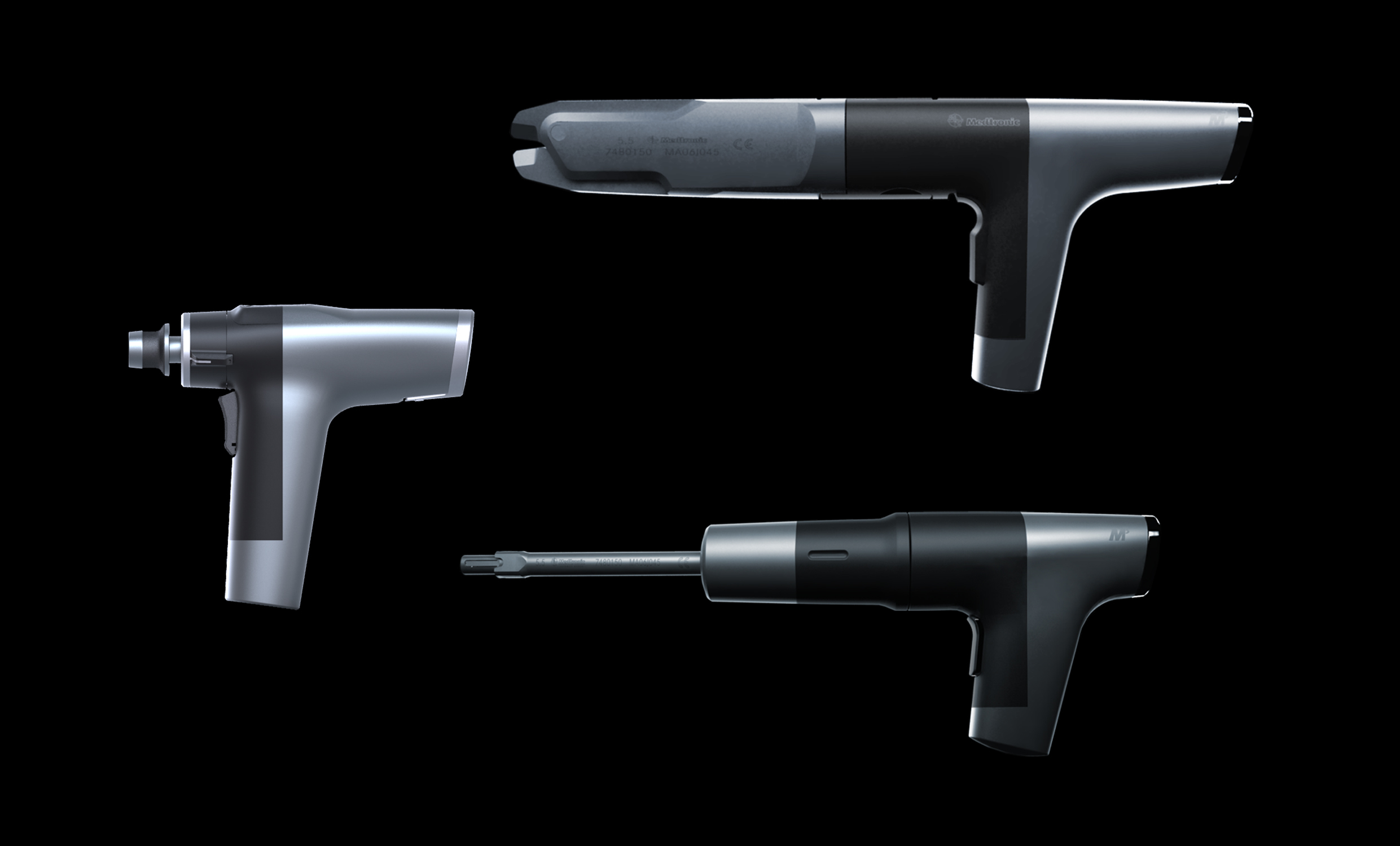
Spinal-surgery company Medtronic partnered with IDEO to design, engineer, and build POWEREASE, a next-generation surgical instrument system that revolutionizes the techniques used to perform spinal surgeries. The result is a system of powered medical tools created specifically to meet the needs of surgeons during reconstructive procedures.
By integrating cutting-edge industrial design, human-centered research findings, and boundary-pushing engineering work, the team was able to solve some highly technical challenges, like efficiently breaking off set screws while imparting minimal torque on the surgical construct in the patient, and seamlessly integrating nerve monitoring and image navigation capabilities into the instruments.
Medtronic’s initial tests show that when compared to manual instruments, the new powered instrument system significantly reduces the time and improves the accuracy of reconstructive spinal surgery procedures.
Elevating business class travel with personal connection
Redesigning the long-haul travel experience through the relationship between attendant and passenger.
The key to winning the competition in high-end business class air travel lies in the level of service. Legacy European carrier Lufthansa approached IDEO to help redesign its long-haul, business-class service experience into one that’s thoroughly modern, distinctly Lufthansa, and centered on the new needs of today’s discerning passengers.
After putting themselves in the shoes of both travelers and flight attendants on a variety of different airlines, the IDEO design team found that what matters, above champagne and fancy food, is a personal connection between crew and passenger. They used this insight to focus on a new goal: Flight crew consider themselves to be travelers’ trusted, knowing hosts.
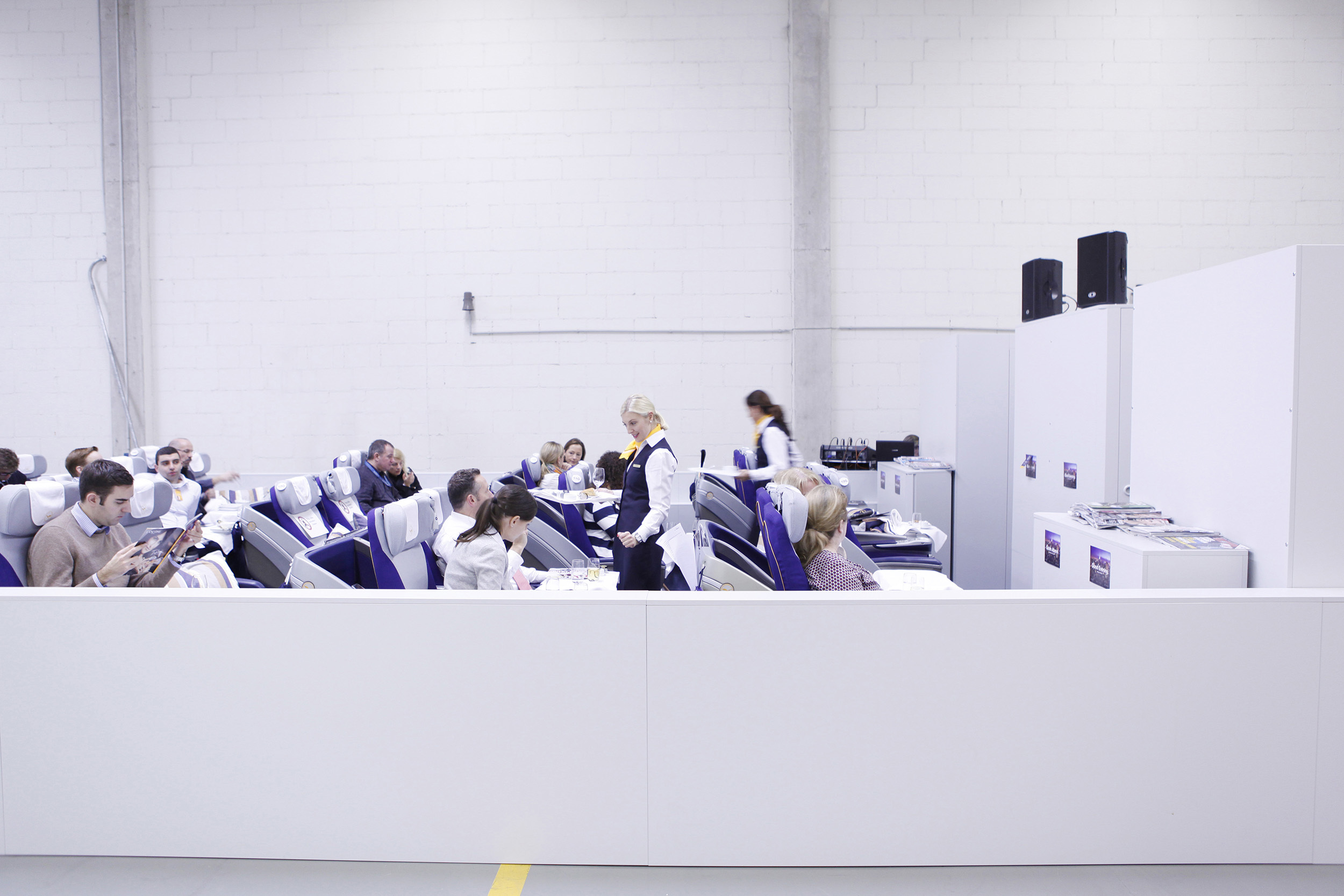
To achieve the goal, the design team focused on improving service in six key travel moments, then built a cardboard 1:1 scale mockup of different parts of an airplane to see what they’d need. Designers tested the service in a full section of an Airbus A380 at the airline’s Raunheim, Germany, facility, with real passengers and crew. This prototyping process was crucial, as executives witnessed firsthand how big an impact the new service would have across the organization, which includes 18,000 flight attendants.
Rolling out across the fleet, Lufthansa’s hospitable new service is already getting a good reception among crew. “Pampering passengers like this—individually and personally—was the reason why I started flying for Lufthansa 25 years ago,” said Sabine Schwarz-Odewald, senior flight attendant.
Designing the future kitchen
How we will cook, eat, and socialize at home.
Of all the rooms in our homes, the kitchen is the center of energy, activity, comfort, and creativity—the beating heart of any dwelling. In the coming decade, as our environments and habits change, the kitchen as we know it will evolve drastically. More people will move into cities, and our living spaces will become smaller. Natural resources will become more scarce, food more expensive, and waste an increasingly urgent issue. Near-instant grocery delivery will alter how we shop for and store food, and technology will be embedded in every part of our homes.
What will the kitchen of the future look like, and, more important, what will it feel like to cook, eat, and socialize there?
For IKEA, the world’s biggest furniture store, the time to start designing the kitchen of 2025 is now. So IKEA asked IDEO London and a group of students from Lund and Eindhoven universities to explore the social, technological, and demographic forces that will impact how we behave around food in 2025. The students spent months researching people’s attitudes and ideas about cooking and eating, and IDEO designers guided them as they built concept kitchen products.
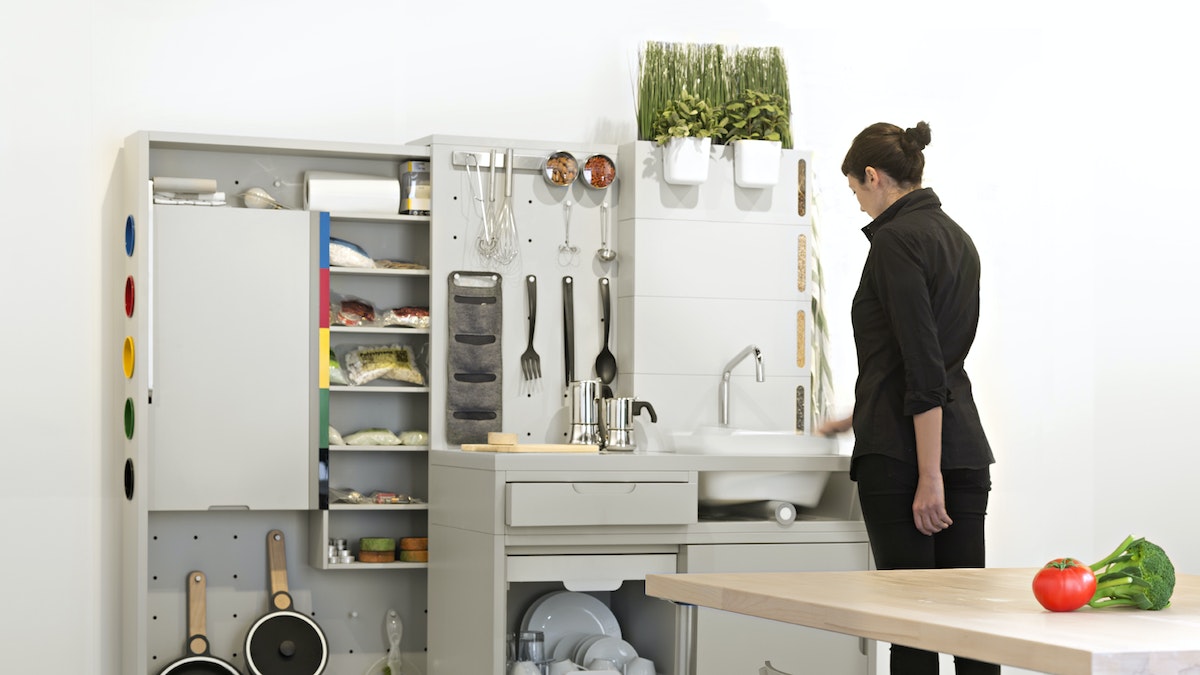
To bring these future concepts to the present day, IKEA asked IDEO to design and build a full-size concept kitchen for 250,000 visitors to test out during the Salone Del Mobile in Milan and a six-month stint at EXPO Milano.
Mindful design
Crucial to the success of the project was preserving the tactile creative pleasure of the kitchen. Technology could easily make the space feel robotic and sterile, but this project was guided by the need to use tech to enhance the kitchen’s warmth.
The Concept Kitchen 2025 doesn’t automate away personal choices, but rather facilitates mindfulness with embedded cues throughout the kitchen that subtly guide people toward being conscious of their actions and making informed decisions. In designing the prototypes, the following few concepts emerged.
The Modern Pantry encourages us to have a closer relationship with what we eat by storing food in transparent individual containers on open shelves rather than hiding it at the back of the fridge. The design makes it easy to be inspired by what’s on hand rather than going out to buy more, and it also saves energy: Induction-cooling technology embedded into the shelves responds to RFID stickers on the food’s packaging in order to keep the containers at just the right temperature.
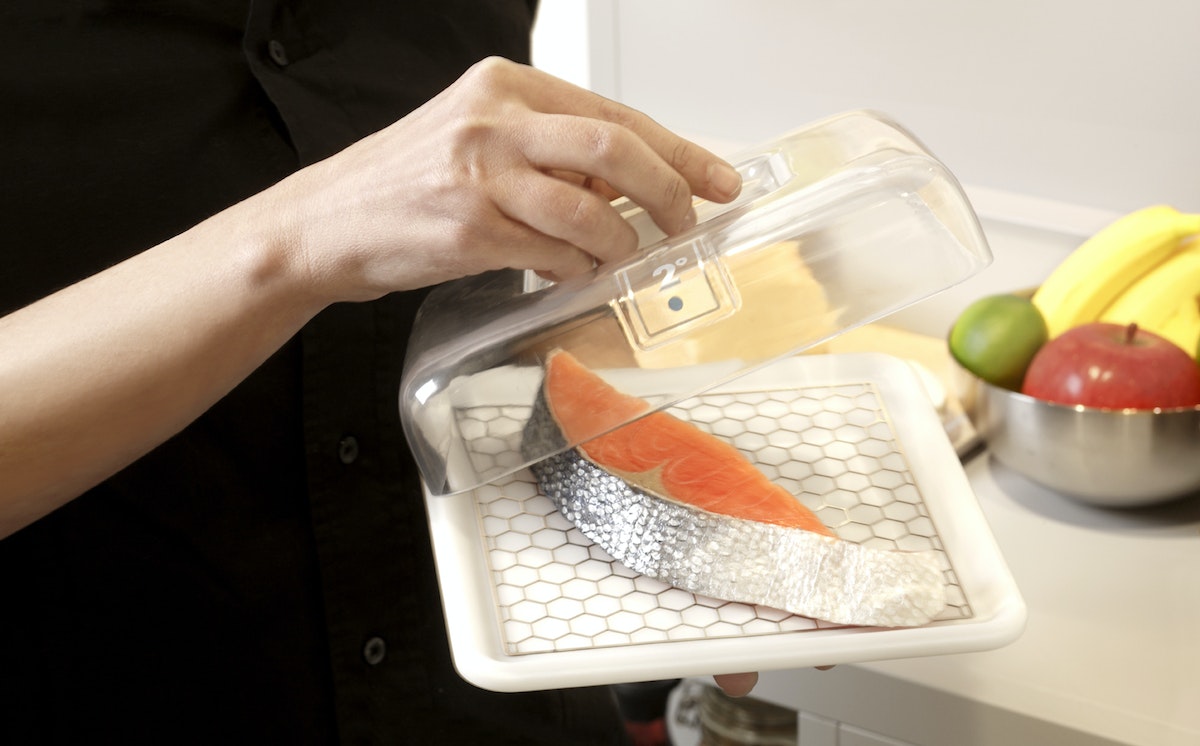
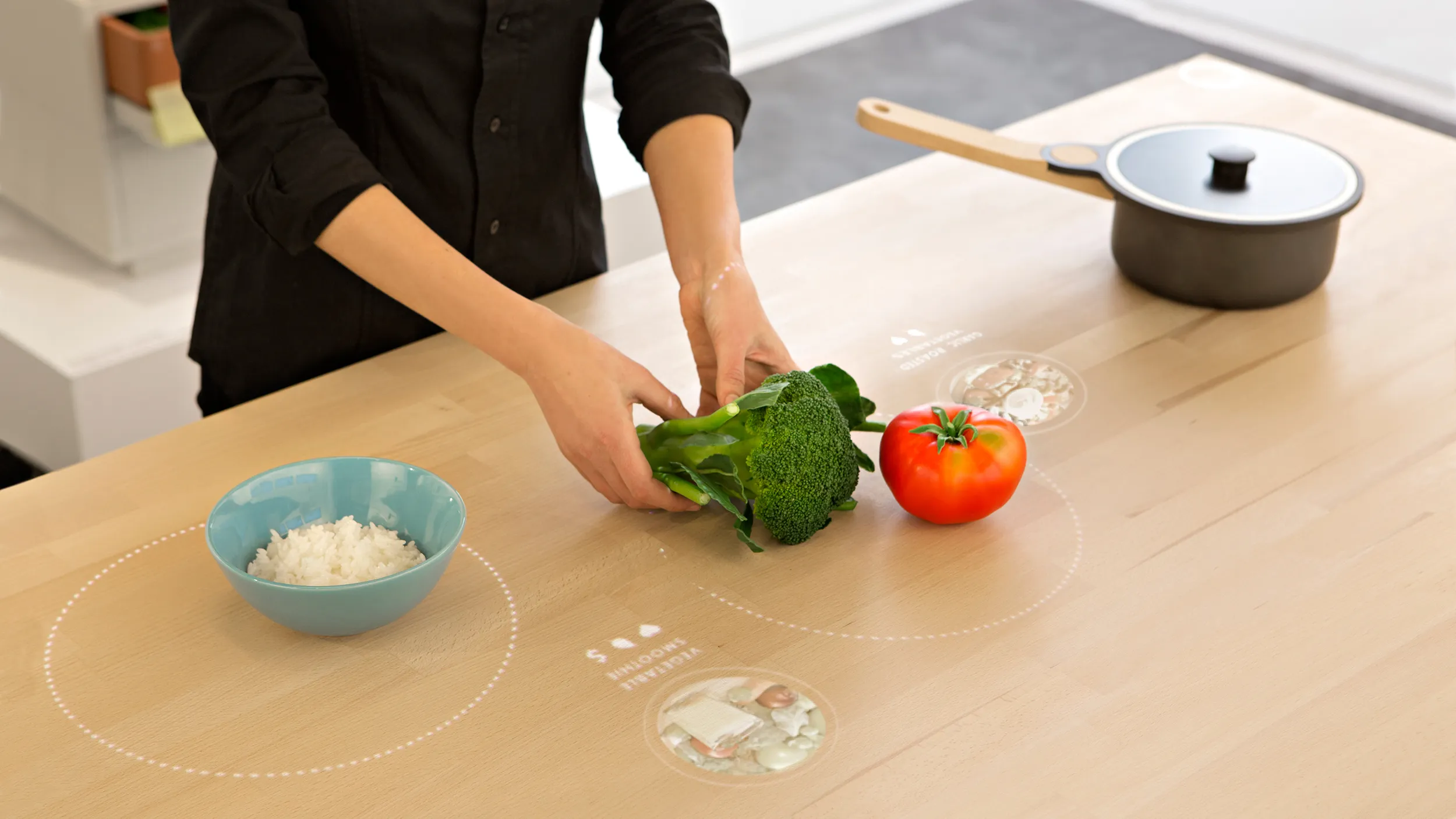
The Table for Living is designed to inspire people to be more creative with food and throw away less. At a loss for what to do with that leftover broccoli? Just place it on the table and a camera recognizes it and projects recipes, cooking instructions, and a timer directly onto the table's surface. Set the timer for how long you want to spend preparing the meal, and the table suggests recipes that can be completed in the window you have available. The table is a nifty solution for a smaller urban dwelling because it’s multimodal: Hidden induction coils instantly cool the surface when not in use, so it’s adjustable for working, cooking, or eating.
The Modern Sink pushes us to be more conscious of our water consumption with a pivoting basin. It must be tipped to one side to drain toxic, or “black,” water, and to the other for safe “gray” water, which is not drinkable but can be filtered and used in a dishwasher or as nourishment for the cooking herbs that grow above the sink.
The Thoughtful Disposal system is a response to the overuse of landfills, and reminds us of exactly what we’re throwing away. Users manually sort recycling from rubbish, and recyclables are then crushed, vacuum-packed, and labeled for pick-up, earning credits for the conscientious (and debits for the wasteful).
IKEA’s kitchen and dining range manager, Gerry Dufresne, explained that the Concept Kitchen 2025 is not really a functional kitchen, but rather “a tangible communication of what the behaviors of the future will be.” It’s just the start of IKEA’s journey toward understanding how those behaviors will shape the company’s future, and Dufresne says the findings will be carried forward into future product development.
Designing the audience experience
At NBC's TODAY Show, visiting audiences benefit from a welcoming place to cheer.
Long before Tina Fey’s hit show 30 Rock made it a household name, Rockefeller Center was among Manhattan’s most popular destinations. Not least because NBC’s TODAY show starts every morning by filming its gaggle of fans gathered at Rockefeller Plaza.
When TODAY asked IDEO to help design the experience of their guest audiences before, during, and after the show, IDEO's team joined the fray—standing behind the barricades from 7 to 9 a.m. alongside the show’s visitors.
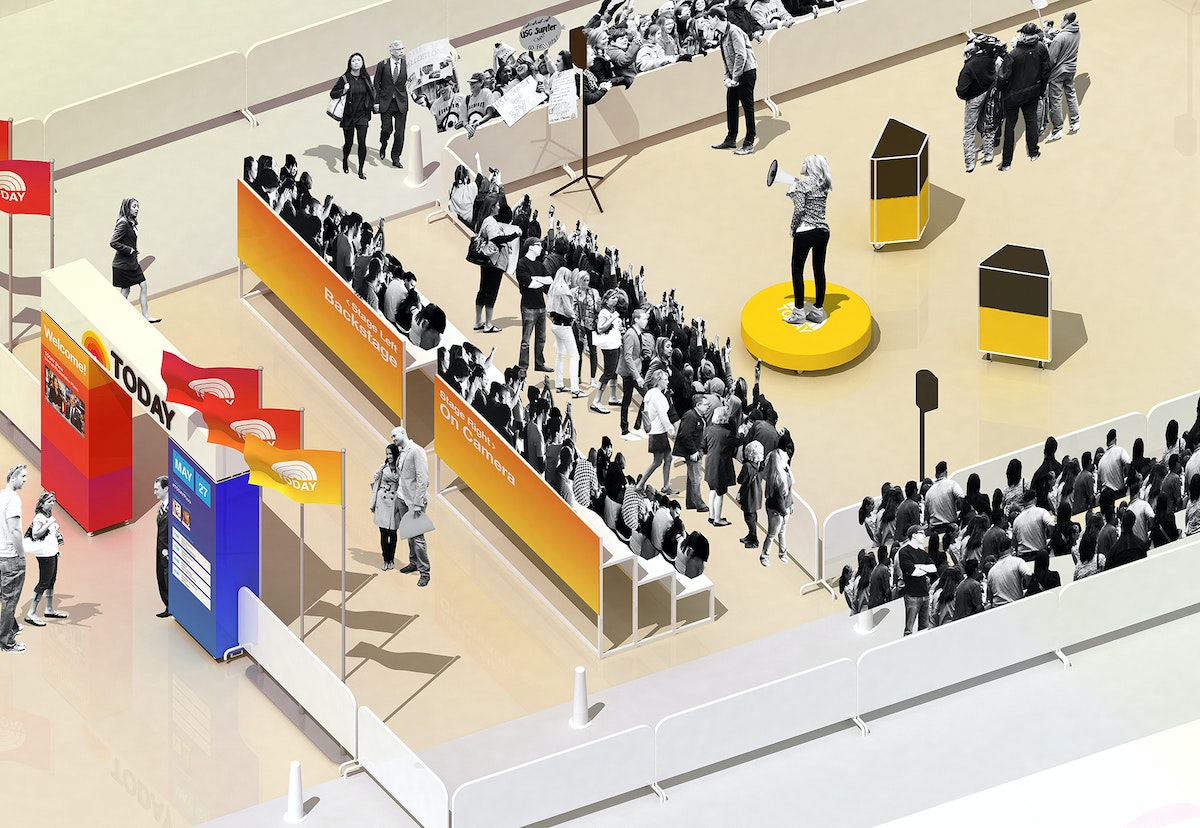
We gathered feedback and learned what was most important to this dedicated audience: to feel a human connection to the people they had shared their mornings with—every day, for years, sometimes for decades. Visitors wanted a celebration, an event they could document and remember, and of course a clear sense of where to go and what to expect once they arrived.
TODAY’s morning time slot offered an additional challenge: The visitor experience would need to be assembled and fully dismantled every morning, leaving Rockefeller Center in its pristine historic state immediately after the cameras stopped rolling.
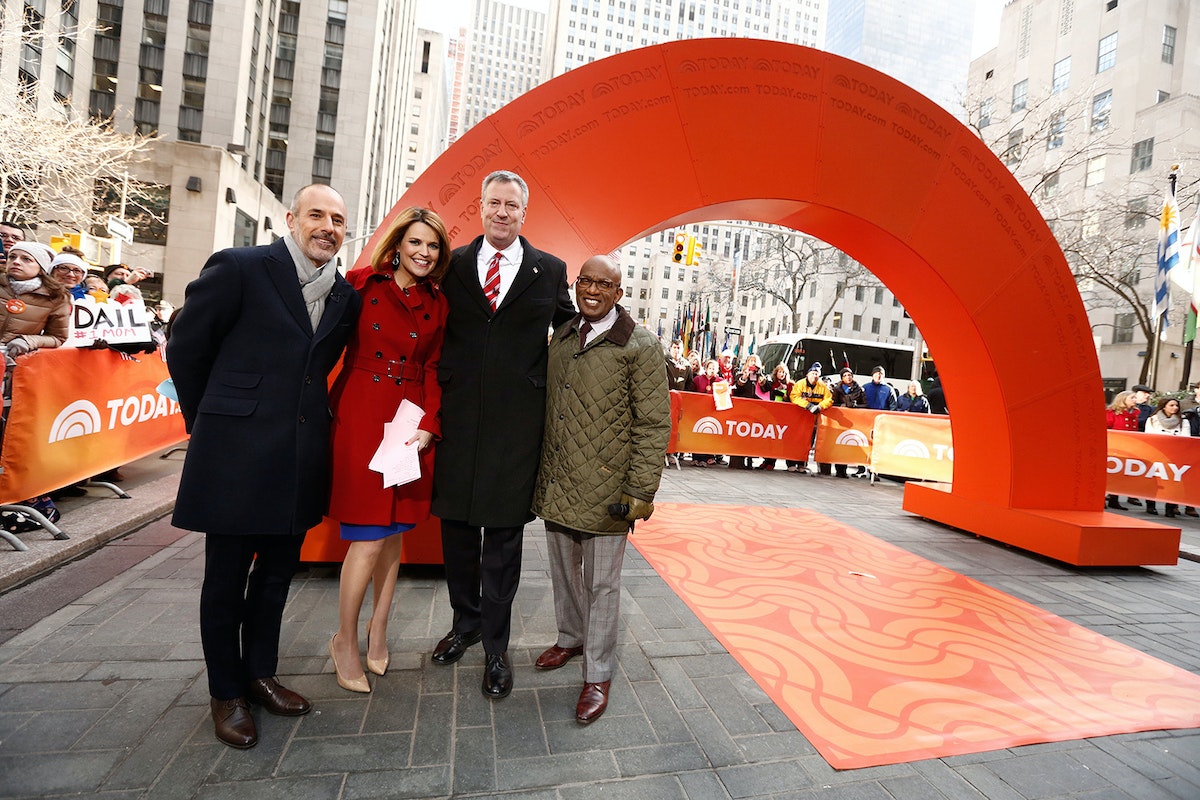
To ensure a solution that would be both satisfying to visitors and viable for the show, IDEO engaged audiences, anchors, and crew in a series of live prototypes that incorporated feedback from all sides and designed a warmer, more human-centered experience for everyone involved.
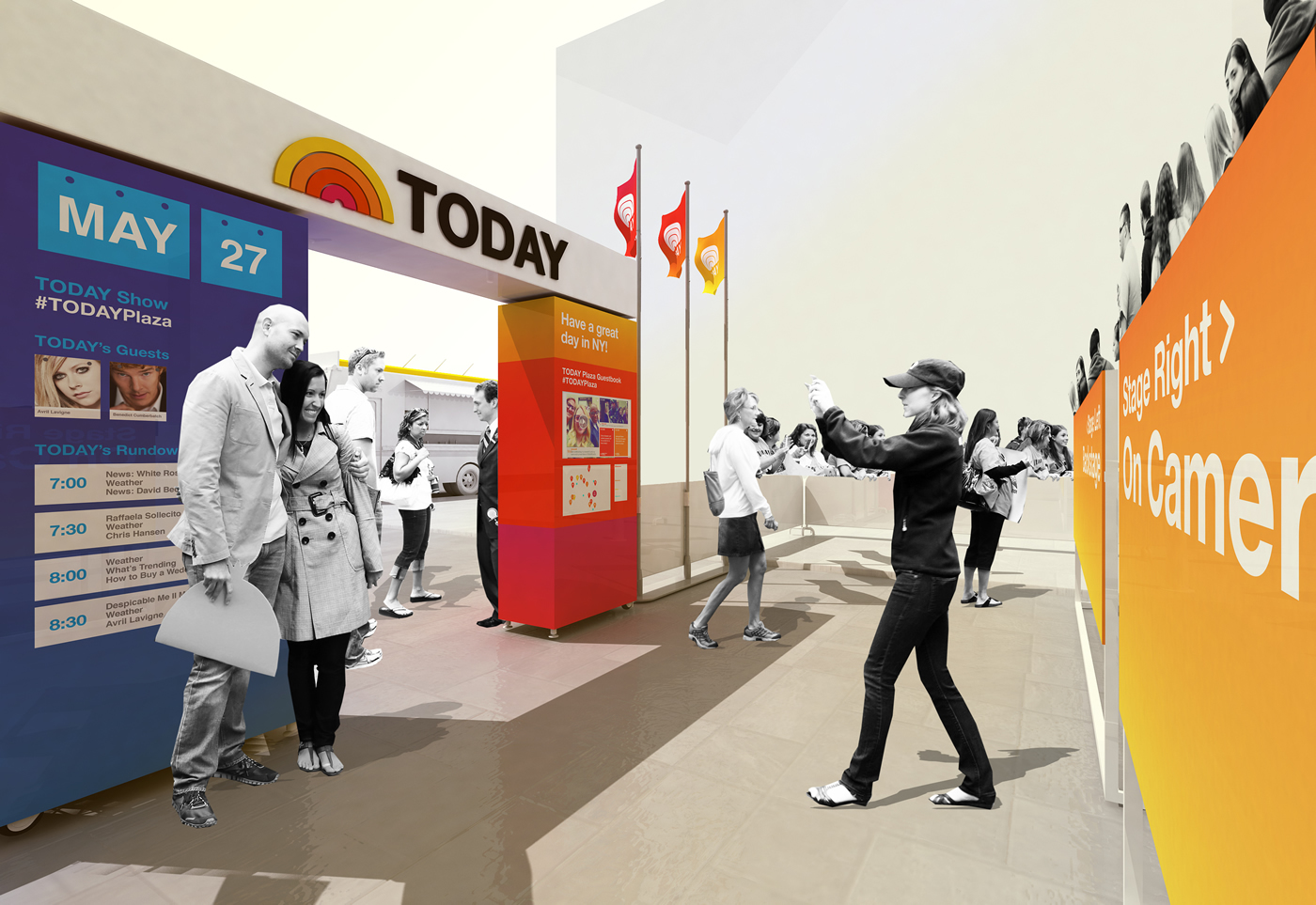
Visitors to the show can now RSVP at TODAY.com/visit beforehand. When they arrive at the new iconic archway on 49th Street, they are given clear directions by dedicated plaza staff on what to expect during their visit. The audience can also craft posters to display in the crowd, receive commemorative Birthday, Bucket List, or Super Fan buttons that recognize special occasions during their visit, and watch live video and audio feeds to build excitement and momentum when the anchors head into the studio.
From the moment visitors decide to visit TODAY at Rockefeller Center to the weeks after when they share memories with friends, the revamped plaza experience ensures visitors feel cared for and appreciated. They now leave feeling that they’re more than just spectators—they’re the heartbeat of TODAY.
Designing a workspace that inspires
Headquarters that reflect a brand's warmth and transparency.
Brands don’t take bank holidays. A successful company doesn’t just find solutions during strict nine-to-five office hours—the strength of its relationship with its customers is based on openness to good ideas and flexibility around the unpredictable ways that real people live and work.
Over a five-year relationship with GS Shop, a multichannel commerce company based in Korea, IDEO helped the company develop a brand that reflected an emphasis on openness, transparency, enthusiasm, participation, personalization, and distinction.
When it was time for GS Shop to build a new headquarters, it wanted these ideals to be baked right into the structure of the new building, inspiring the interactions and work styles that would define the company’s future. The team started by looking at one of the most fundamental factors in their employees’ day-to-day experience, the physical spaces where they did their work.
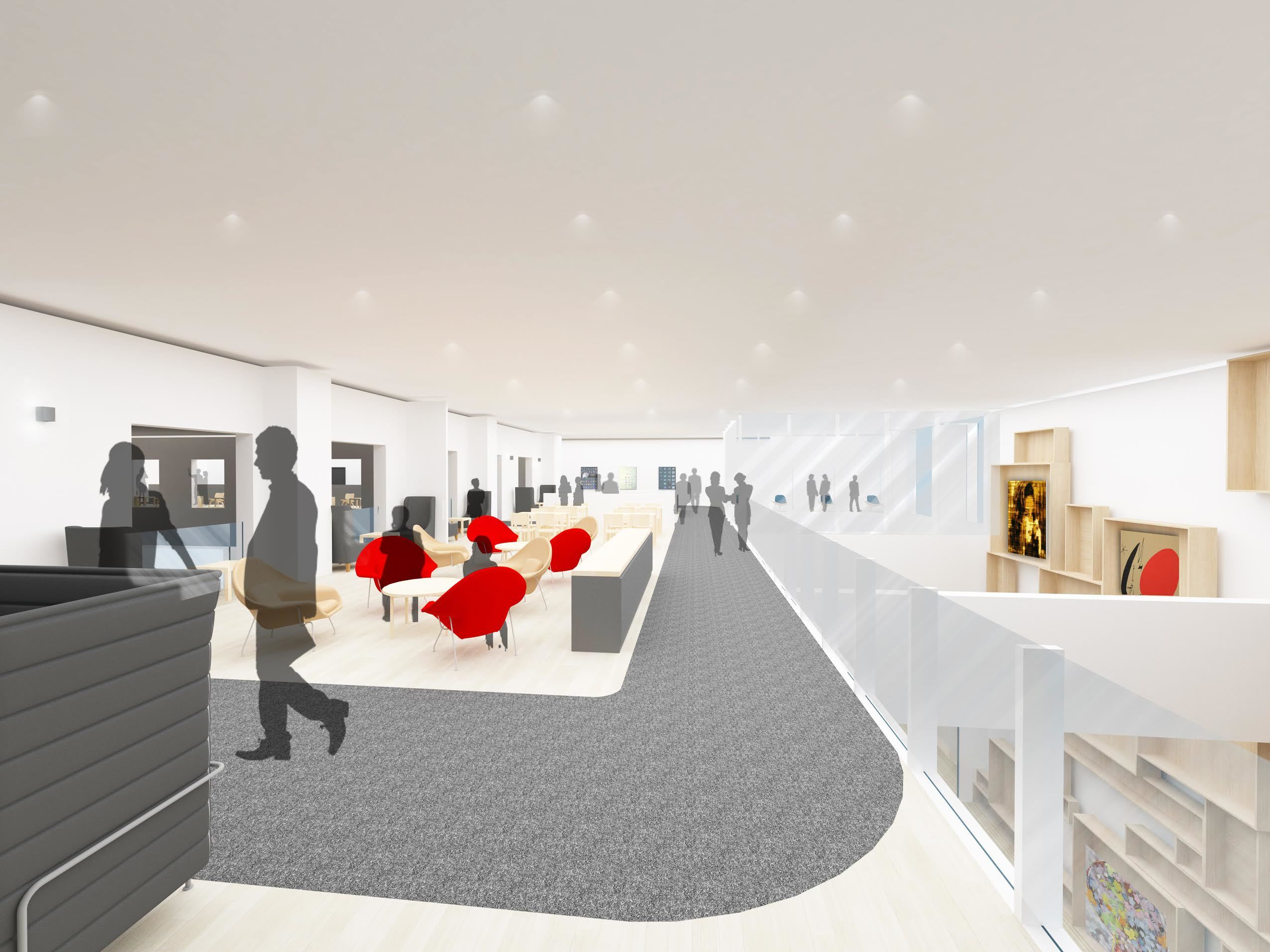
The designers broke down all the elements of the space, including everything from flexible wall configurations to nature-inspired fabric choices that brought the outside in. At the core of their decision-making was the intersection of environment and behavior: How could a certain configuration of desks help new ideas to bubble up? How might the transparency of the boardroom walls encourage executives to make more collaborative decisions?
Traditional Korean business culture places a strong emphasis on hierarchy, but IDEO found that teams worked better when they arranged seating areas in ways that decentralized the boss. Coworkers had felt isolated from those in other business units, so the designers created room for impromptu gatherings outside common meeting spaces. Everything from functional needs, like toothbrush storage, to features that encouraged cross-pollination of ideas, like a set of shelves where departments could share examples of their work with other units, was taken into account.
The result was both an entirely new headquarters and a reimagining of the company’s existing building, each closely mirroring the renderings and recommendations provided by IDEO. GS Shop employees are now working in the new spaces, ready to field new ideas wherever—and whenever—inspiration strikes.

Designing a school system from the ground up
Scaling an entire network of schools for the growing Peruvian middle class.
How do you lift up the middle class in a developing country?
That was the challenge facing Peruvian entrepreneur Carlos Rodriguez-Pastor, who hired IDEO to build an entire network of schools powered by a progressive new learning model. IDEO’s mandate: to redesign Innova’s entire K–12 learning experience, from the curriculum to the teacher training to the school buildings, with an eye toward expansion and a goal to provide international-quality education at an affordable price—about $100 a month.
Innova Schools is a part of Intercorp, a family of 35 businesses that span everything from banks to retail stores and added schools to its portfolio. In 2010, the company had five existing schools but realized that its existing model could not grow. The shortage of well-trained, high-quality teachers in Peru, combined with rising land costs, meant the schools would need to radically change course to succeed.
To learn about scalable school models around the world, IDEO researchers visited inspirational schools and learning programs, and looked to analogous systems like retail, hospitality, and health care to understand their approaches to scale. Throughout the project, they collaborated with teachers, students, and the Innova Schools team in co-designing the work itself.
Together, Innova Schools and IDEO developed the curriculum, teaching strategies, buildings, operational plans, and underlying financial model to run the network of schools.
"I was blown away by Innova Schools," said Salman Khan, founder of Khan Academy. "It's inspiring to see such an affordable school deliver a quality of education that would rival schools in the richest countries."
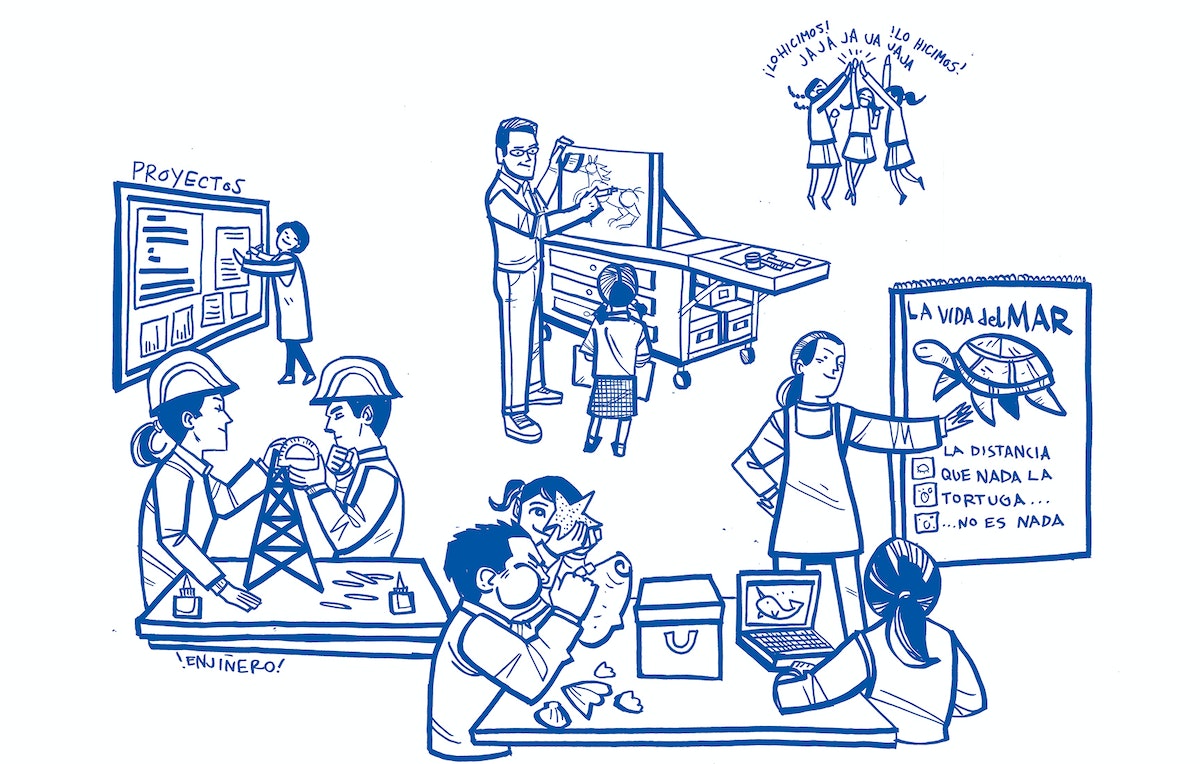
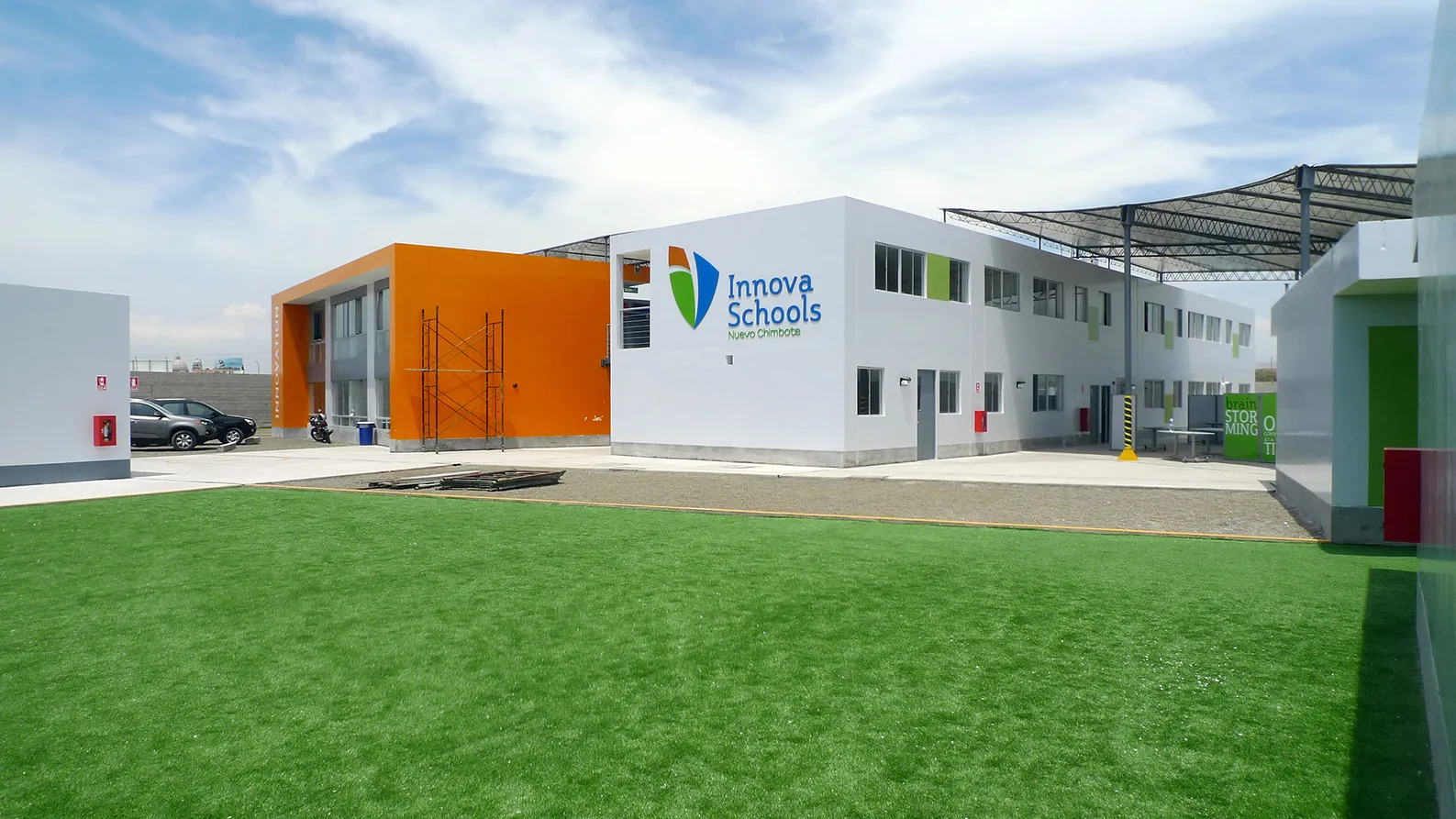
The new Innova Schools combine teacher-led, project-based learning in small groups with self-directed time using digital learning tools. Teachers monitor students’ work online and offer personalized guidance. Parents can view their children’s progress online as well.
Dynamic learning environments include community spaces, media labs, rooftop study areas, amphitheaters, and cafés that are optimized for flexibility: furniture on wheels, movable walls, and efficient uses of space to allow for different modes of learning.
An online Teacher Resource Center includes a database of more than 18,000 custom lesson plans based on a progressive new teaching approach. The center helps teachers learn their craft and gives them a chance to connect across the network.
The business model of Innova Schools was developed at the same time as the school experience. Designers leveraged the economies of scale that come from building a network of schools and centralized tools, such as data systems that allow all the schools to learn together.
The project has allowed Innova to open more schools at an affordable cost to families, ultimately giving more of Peru’s youth the chance to compete in the global economy. This comprehensive approach to system design ranks as one of Latin America’s most ambitious privately funded educational projects, and is on track to become the largest private school network in the region. To date, Innova has opened 63 schools in Peru that are serving more than 50,000 students.
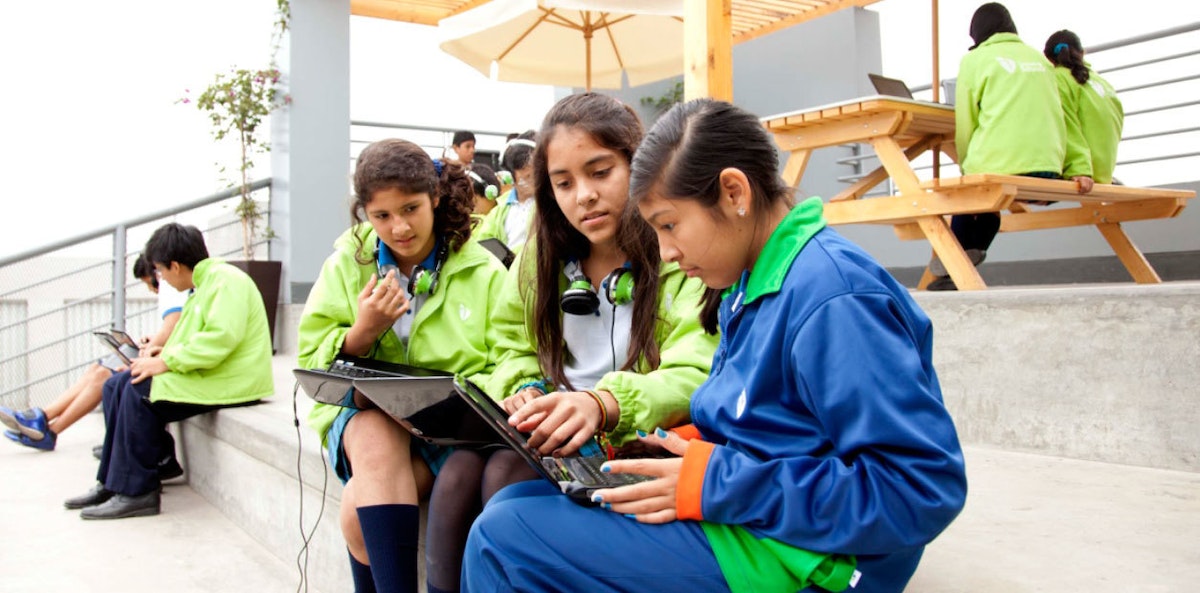
A good system design doesn’t end with strategy. The work on Innova Schools also had a huge influence on the company, according to Rodriguez-Pastor. Through the creation of new roles and an aligned set of values, Innova’s central office has become a much more nimble and creative organization. They’re constantly scanning the world for inspiration in how to best educate their students, while building out the new innovations. They realize that design thinking can become an integrated part of their daily management of this growing network of schools.
Designing a top-selling hard drive
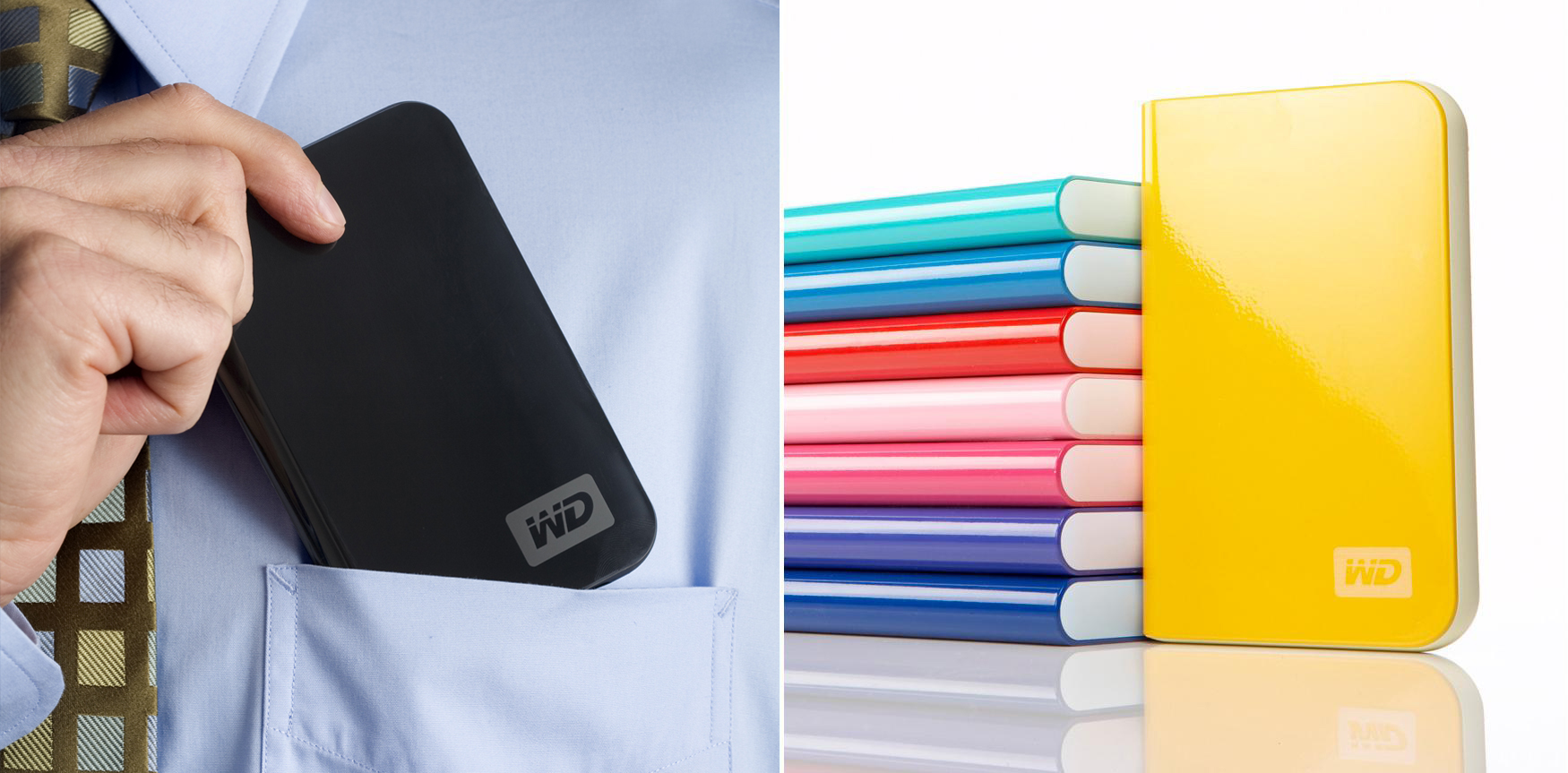
Through a long-term collaboration, Western Digital and IDEO have created one of the world’s best-selling hard drives.
Western Digital, the leading provider of external digital-storage solutions and a pioneer in the field, and IDEO collaborated on a number of products that produced reliable, secure, high-performance hard drives for personal and professional use and have won numerous design awards.
The projects include:
- MyBook external hard drive: IDEO and Western collaborated to find a new design language for their external hard drive MyBook. In just six months, MyBook became the number-one hard drive in the Americas, and grew US market share by more than 50 percent.
- MyBook II: Looking to regain MyBook’s original number-one position in the hard drive market, IDEO and Western came together again to refresh the original design, finding ways to further differentiate the product and the brand, and winning a 2008 Spark Bronze Award.
- MyPassport: Western and IDEO designed the 320GB, ultra-portable USB-powered hard drive that appeals to the mobile user, which won both the 2008 IDEA Bronze Award from IDSA and BusinessWeek, and the 2009 iF Award.
- MyBook and MyPassport 3.0: Again, IDEO and Western collaborated on bringing the popular MyBook external hard drive to the next level in the hardware, the software, and the packaging. IDEO also created in-store merchandising, the graphics and information featured on product packaging (and the “out-of-box experience”).
Designing a city emergency plan
Helping cities prepare for emergencies with a resourceful toolkit.
The city of San Francisco wanted to help its people become better prepared in case of emergency. While no one feels totally prepared for a natural disaster, people who are most connected within a local network fare better in an emergency.
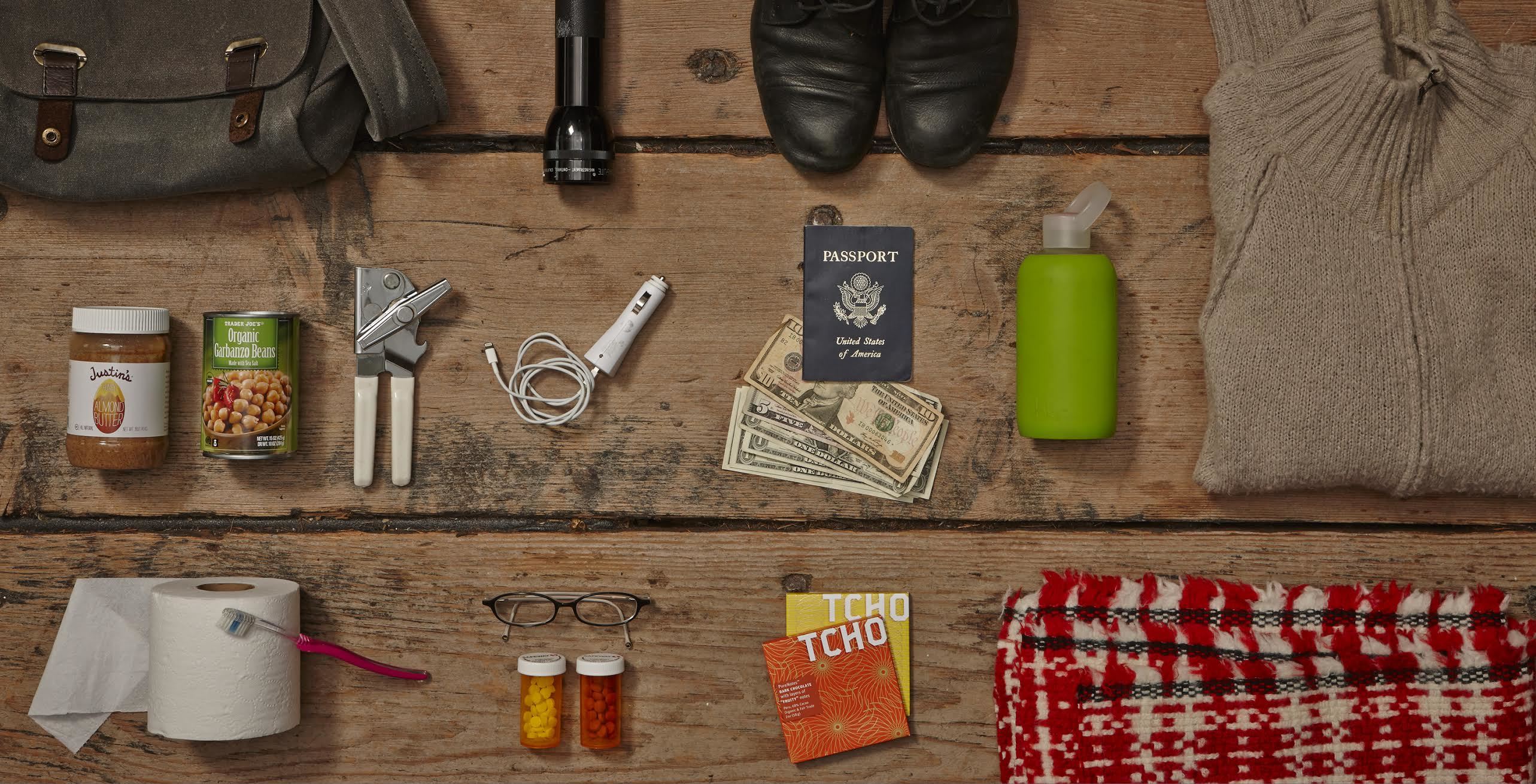
So the San Francisco Department of Emergency Management (SF DEM) and IDEO teamed up to create SF72, a revolutionary platform that helps to reach people where they are. In times of emergency, the city will need citizens to be self-supporting for 72 hours (or longer) before local services or outside help kicks in. With that in mind, IDEO developed an accessible platform to help people prepare for those 72 hours in simple ways that fit into their daily lives.
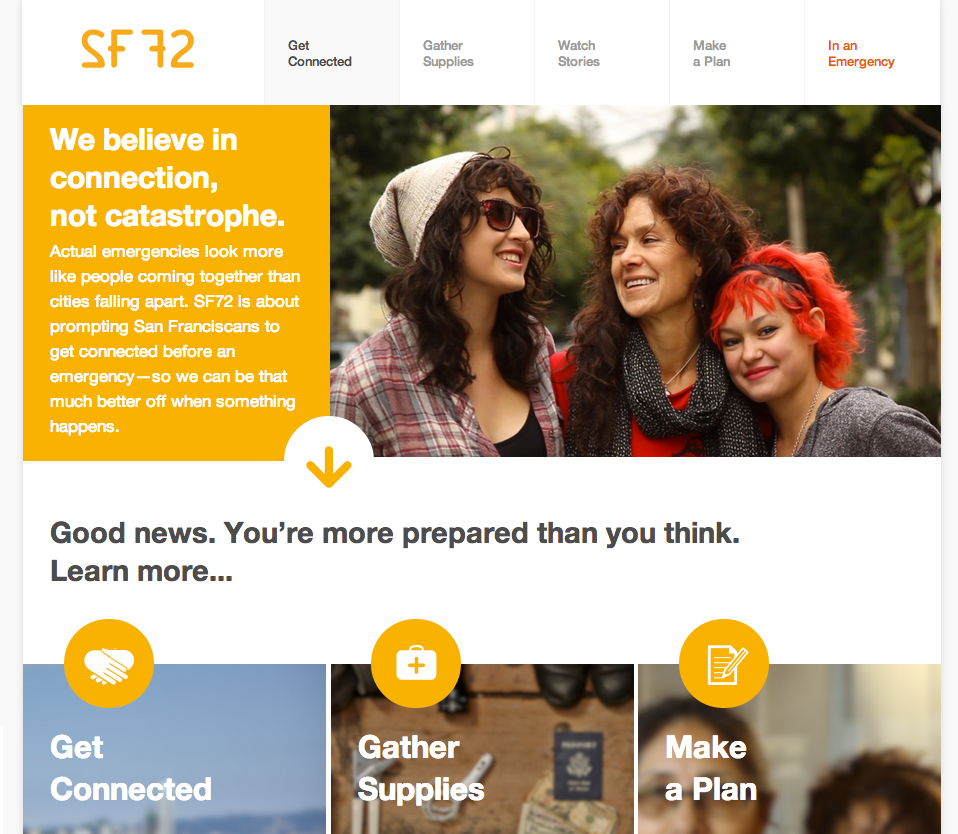
The SF72 website helps people with five important tasks: Get connected, gather supplies, watch stories, make a plan, and have access to an updated Google map. SF72’s content is hyperlocal, but IDEO and SF DEM also created an open-source toolkit for cities worldwide. From San Jose to Denver, other locales are using the simple toolkit to create a City72 platform of their own. Most recently, the city of Oakland collaborated with Code for America to develop its own platform. The City72 Toolkit enables SF72’s ethos of social connection for resilience to scale and grow—city by city.