
.svg)



Elevating business class travel with personal connection
Redesigning the long-haul travel experience through the relationship between attendant and passenger.
The key to winning the competition in high-end business class air travel lies in the level of service. Legacy European carrier Lufthansa approached IDEO to help redesign its long-haul, business-class service experience into one that’s thoroughly modern, distinctly Lufthansa, and centered on the new needs of today’s discerning passengers.
After putting themselves in the shoes of both travelers and flight attendants on a variety of different airlines, the IDEO design team found that what matters, above champagne and fancy food, is a personal connection between crew and passenger. They used this insight to focus on a new goal: Flight crew consider themselves to be travelers’ trusted, knowing hosts.
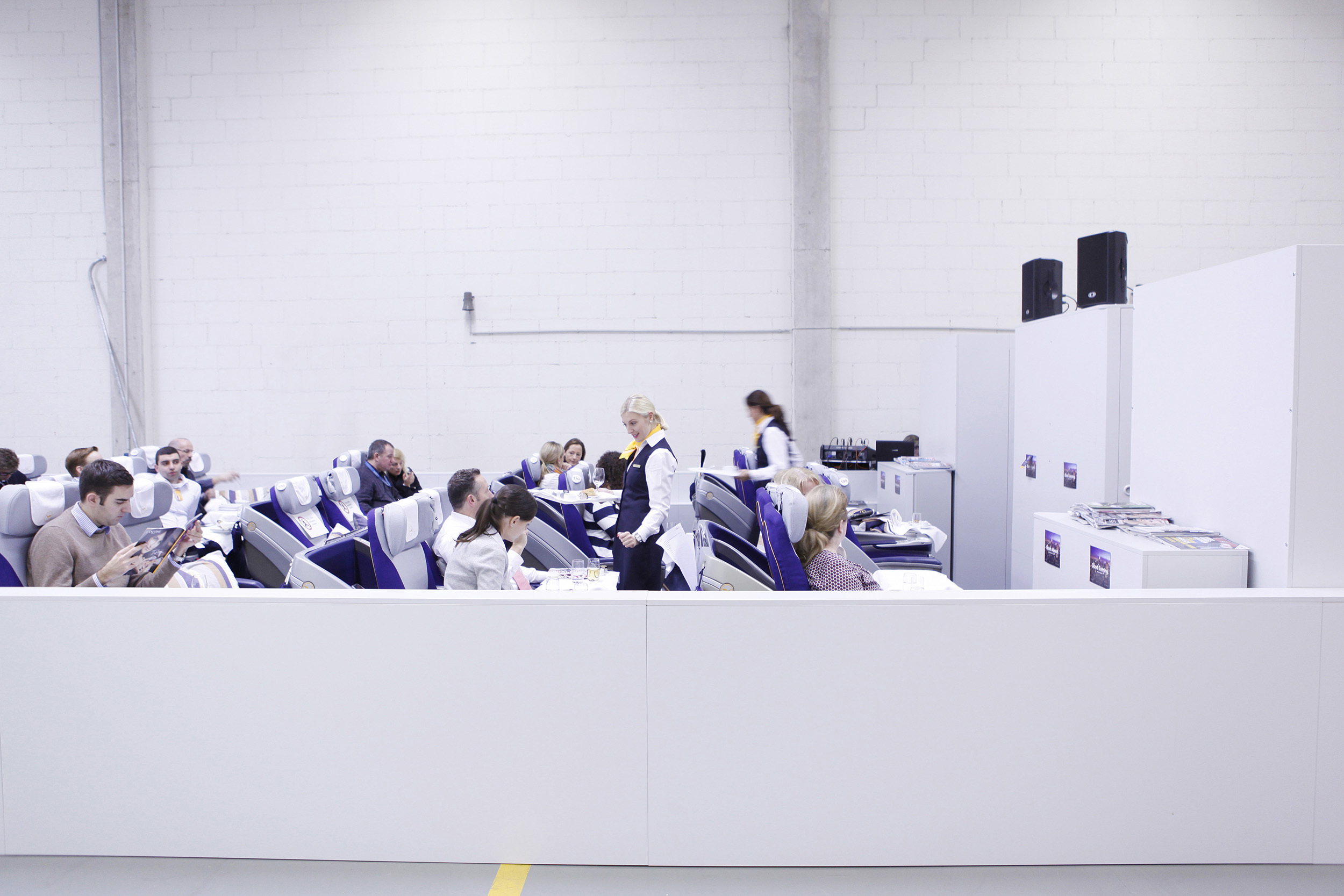
To achieve the goal, the design team focused on improving service in six key travel moments, then built a cardboard 1:1 scale mockup of different parts of an airplane to see what they’d need. Designers tested the service in a full section of an Airbus A380 at the airline’s Raunheim, Germany, facility, with real passengers and crew. This prototyping process was crucial, as executives witnessed firsthand how big an impact the new service would have across the organization, which includes 18,000 flight attendants.
Rolling out across the fleet, Lufthansa’s hospitable new service is already getting a good reception among crew. “Pampering passengers like this—individually and personally—was the reason why I started flying for Lufthansa 25 years ago,” said Sabine Schwarz-Odewald, senior flight attendant.
Designing the future kitchen
How we will cook, eat, and socialize at home.
Of all the rooms in our homes, the kitchen is the center of energy, activity, comfort, and creativity—the beating heart of any dwelling. In the coming decade, as our environments and habits change, the kitchen as we know it will evolve drastically. More people will move into cities, and our living spaces will become smaller. Natural resources will become more scarce, food more expensive, and waste an increasingly urgent issue. Near-instant grocery delivery will alter how we shop for and store food, and technology will be embedded in every part of our homes.
What will the kitchen of the future look like, and, more important, what will it feel like to cook, eat, and socialize there?
For IKEA, the world’s biggest furniture store, the time to start designing the kitchen of 2025 is now. So IKEA asked IDEO London and a group of students from Lund and Eindhoven universities to explore the social, technological, and demographic forces that will impact how we behave around food in 2025. The students spent months researching people’s attitudes and ideas about cooking and eating, and IDEO designers guided them as they built concept kitchen products.
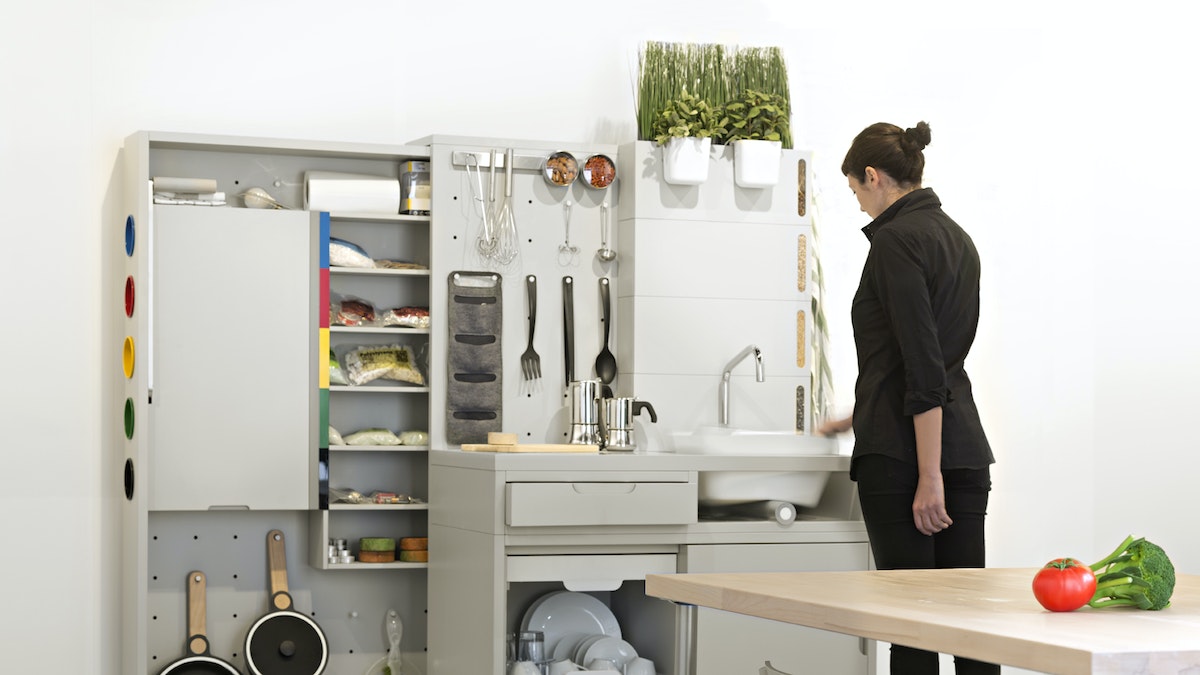
To bring these future concepts to the present day, IKEA asked IDEO to design and build a full-size concept kitchen for 250,000 visitors to test out during the Salone Del Mobile in Milan and a six-month stint at EXPO Milano.
Mindful design
Crucial to the success of the project was preserving the tactile creative pleasure of the kitchen. Technology could easily make the space feel robotic and sterile, but this project was guided by the need to use tech to enhance the kitchen’s warmth.
The Concept Kitchen 2025 doesn’t automate away personal choices, but rather facilitates mindfulness with embedded cues throughout the kitchen that subtly guide people toward being conscious of their actions and making informed decisions. In designing the prototypes, the following few concepts emerged.
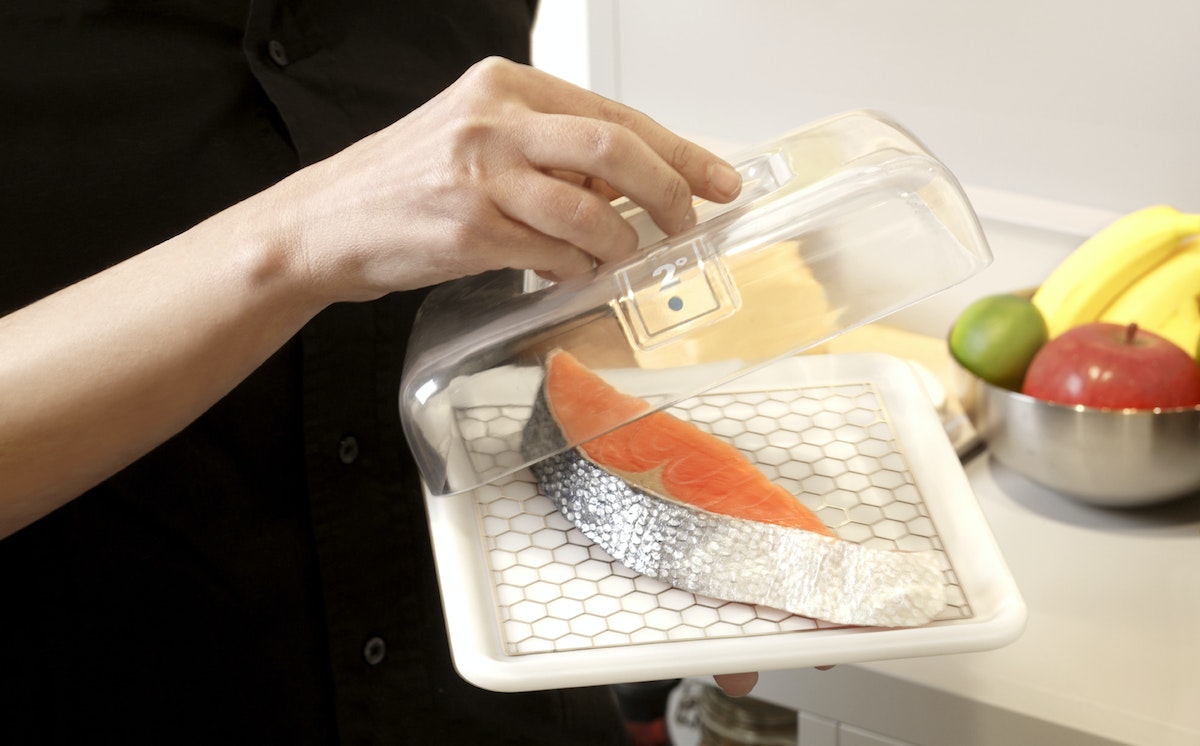
The Modern Pantry encourages us to have a closer relationship with what we eat by storing food in transparent individual containers on open shelves rather than hiding it at the back of the fridge. The design makes it easy to be inspired by what’s on hand rather than going out to buy more, and it also saves energy: Induction-cooling technology embedded into the shelves responds to RFID stickers on the food’s packaging in order to keep the containers at just the right temperature.
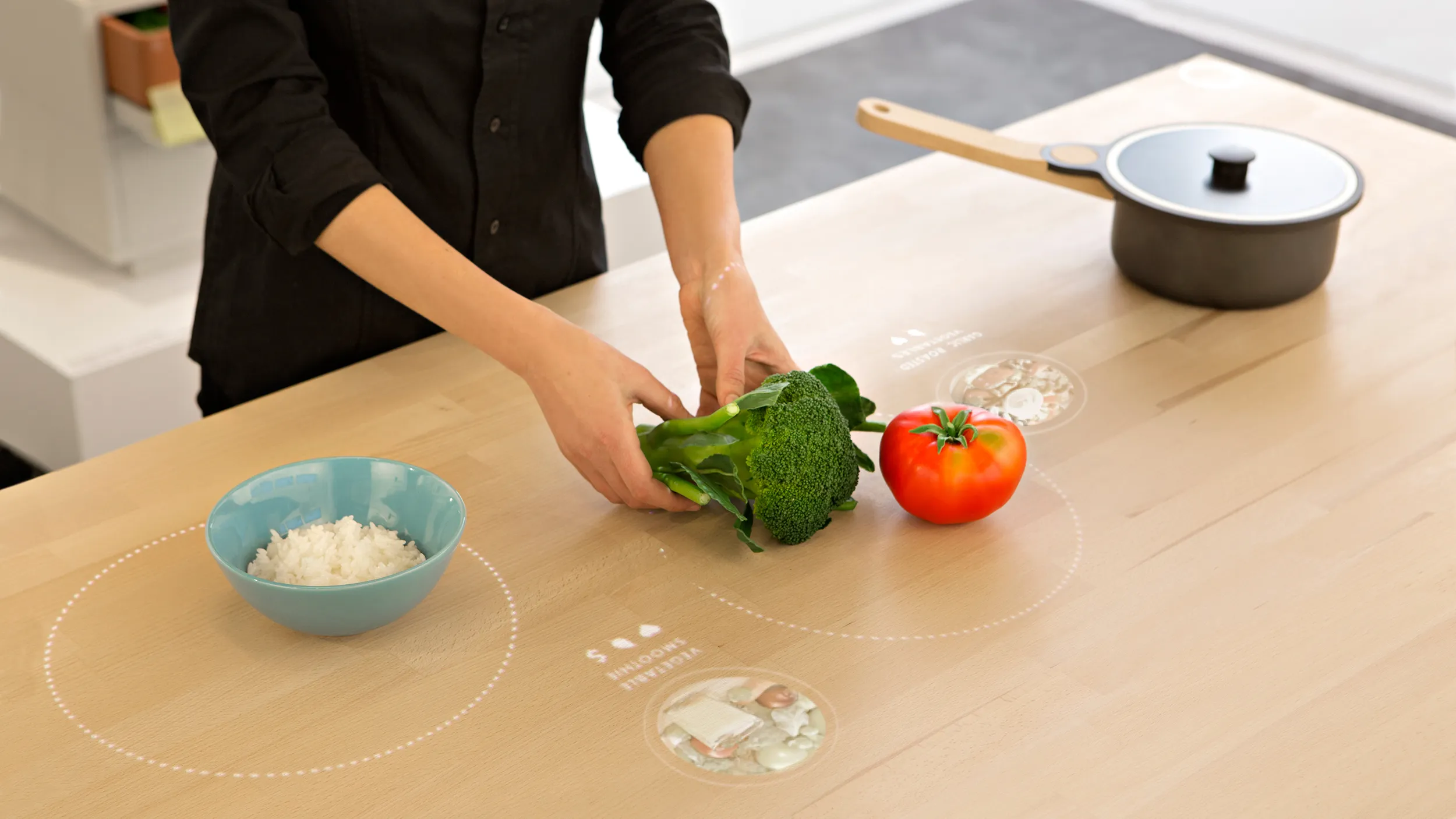
The Table for Living is designed to inspire people to be more creative with food and throw away less. At a loss for what to do with that leftover broccoli? Just place it on the table and a camera recognizes it and projects recipes, cooking instructions, and a timer directly onto the table's surface. Set the timer for how long you want to spend preparing the meal, and the table suggests recipes that can be completed in the window you have available. The table is a nifty solution for a smaller urban dwelling because it’s multimodal: Hidden induction coils instantly cool the surface when not in use, so it’s adjustable for working, cooking, or eating.
The Modern Sink pushes us to be more conscious of our water consumption with a pivoting basin. It must be tipped to one side to drain toxic, or “black,” water, and to the other for safe “gray” water, which is not drinkable but can be filtered and used in a dishwasher or as nourishment for the cooking herbs that grow above the sink.
The Thoughtful Disposal system is a response to the overuse of landfills, and reminds us of exactly what we’re throwing away. Users manually sort recycling from rubbish, and recyclables are then crushed, vacuum-packed, and labeled for pick-up, earning credits for the conscientious (and debits for the wasteful).
IKEA’s kitchen and dining range manager, Gerry Dufresne, explained that the Concept Kitchen 2025 is not really a functional kitchen, but rather “a tangible communication of what the behaviors of the future will be.” It’s just the start of IKEA’s journey toward understanding how those behaviors will shape the company’s future, and Dufresne says the findings will be carried forward into future product development.
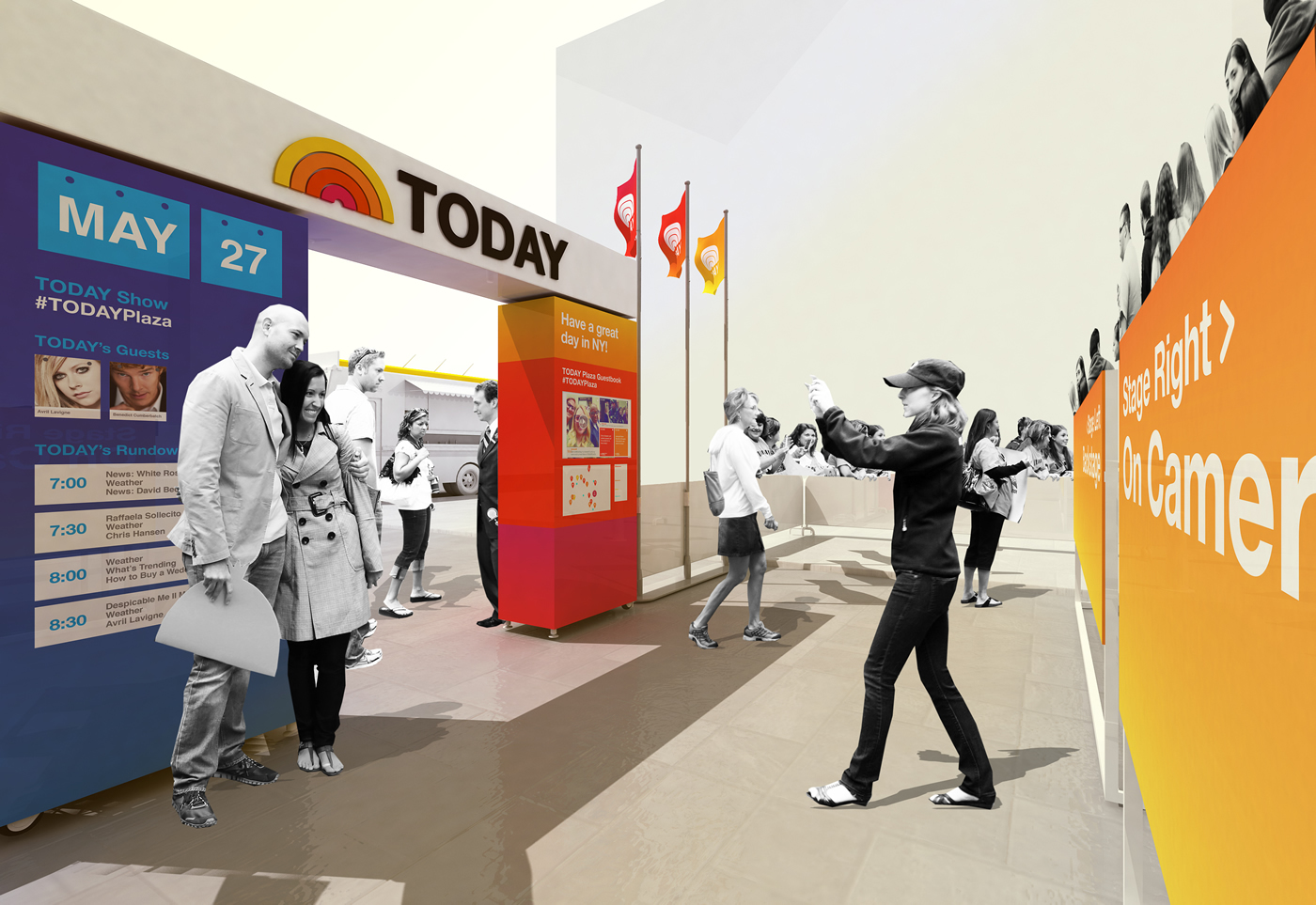
Designing the audience experience
At NBC's TODAY Show, visiting audiences benefit from a welcoming place to cheer.
Long before Tina Fey’s hit show 30 Rock made it a household name, Rockefeller Center was among Manhattan’s most popular destinations. Not least because NBC’s TODAY show starts every morning by filming its gaggle of fans gathered at Rockefeller Plaza.
When TODAY asked IDEO to help design the experience of their guest audiences before, during, and after the show, IDEO's team joined the fray—standing behind the barricades from 7 to 9 a.m. alongside the show’s visitors.
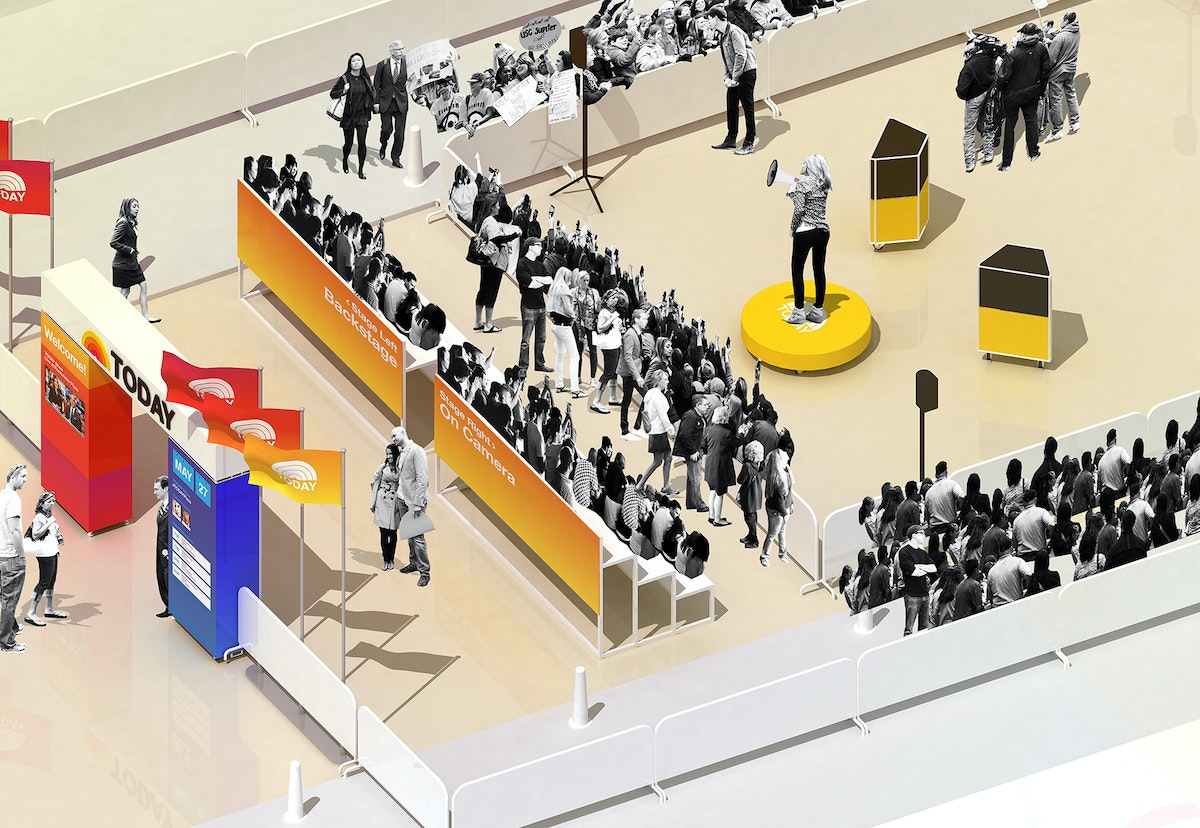
We gathered feedback and learned what was most important to this dedicated audience: to feel a human connection to the people they had shared their mornings with—every day, for years, sometimes for decades. Visitors wanted a celebration, an event they could document and remember, and of course a clear sense of where to go and what to expect once they arrived.
TODAY’s morning time slot offered an additional challenge: The visitor experience would need to be assembled and fully dismantled every morning, leaving Rockefeller Center in its pristine historic state immediately after the cameras stopped rolling.
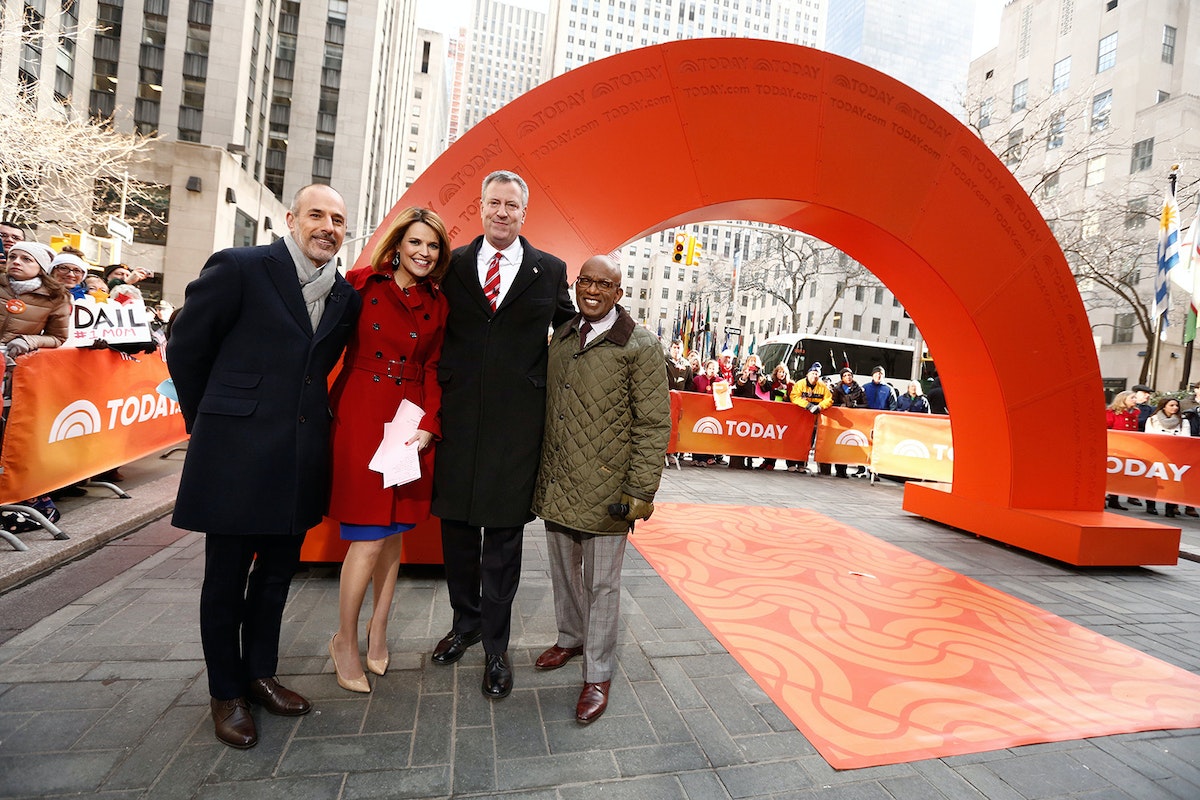
To ensure a solution that would be both satisfying to visitors and viable for the show, IDEO engaged audiences, anchors, and crew in a series of live prototypes that incorporated feedback from all sides and designed a warmer, more human-centered experience for everyone involved.
Visitors to the show can now RSVP at TODAY.com/visit beforehand. When they arrive at the new iconic archway on 49th Street, they are given clear directions by dedicated plaza staff on what to expect during their visit. The audience can also craft posters to display in the crowd, receive commemorative Birthday, Bucket List, or Super Fan buttons that recognize special occasions during their visit, and watch live video and audio feeds to build excitement and momentum when the anchors head into the studio.
From the moment visitors decide to visit TODAY at Rockefeller Center to the weeks after when they share memories with friends, the revamped plaza experience ensures visitors feel cared for and appreciated. They now leave feeling that they’re more than just spectators—they’re the heartbeat of TODAY.
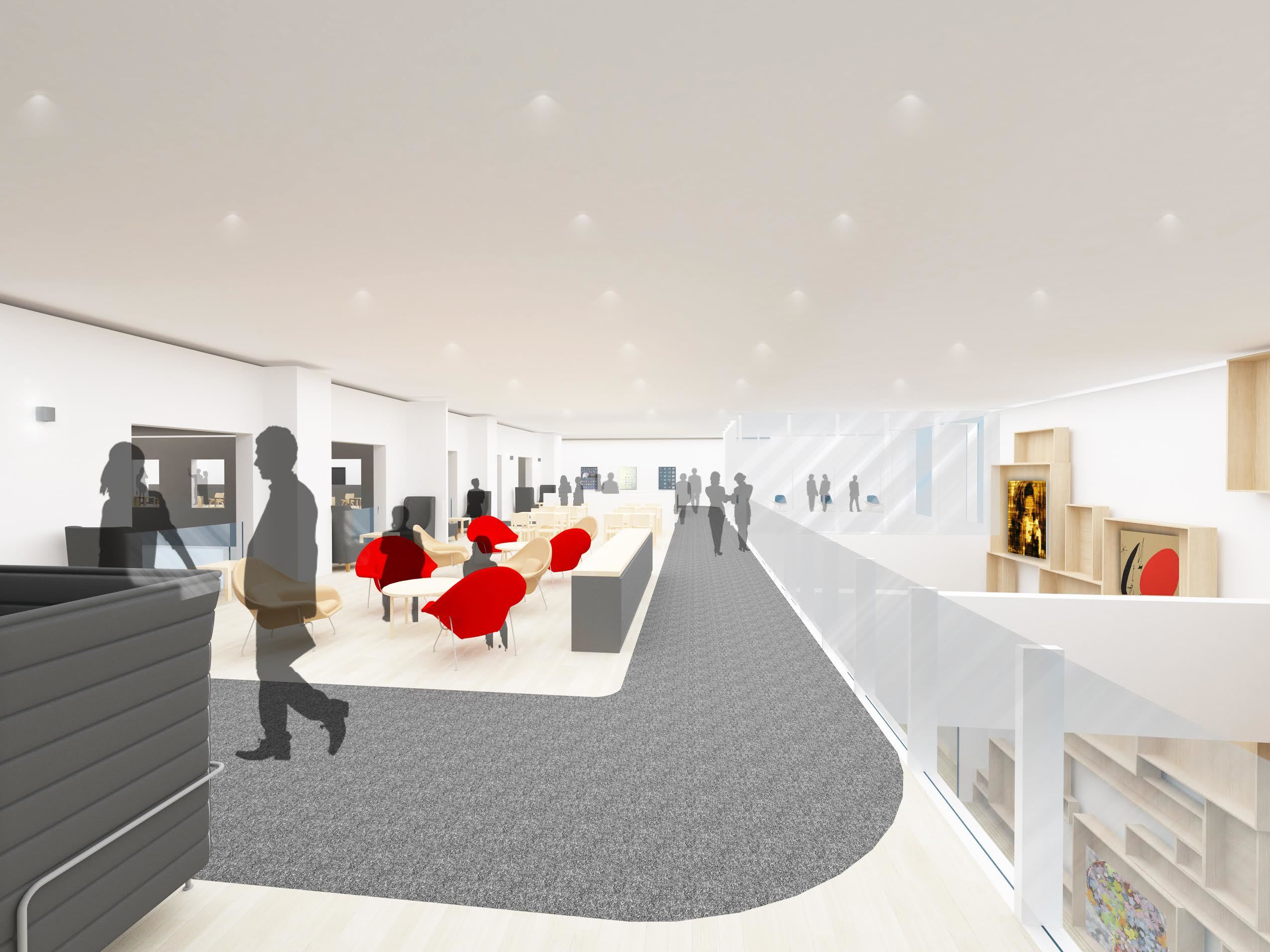
Designing a workspace that inspires
Headquarters that reflect a brand's warmth and transparency.
Brands don’t take bank holidays. A successful company doesn’t just find solutions during strict nine-to-five office hours—the strength of its relationship with its customers is based on openness to good ideas and flexibility around the unpredictable ways that real people live and work.
Over a five-year relationship with GS Shop, a multichannel commerce company based in Korea, IDEO helped the company develop a brand that reflected an emphasis on openness, transparency, enthusiasm, participation, personalization, and distinction.
When it was time for GS Shop to build a new headquarters, it wanted these ideals to be baked right into the structure of the new building, inspiring the interactions and work styles that would define the company’s future. The team started by looking at one of the most fundamental factors in their employees’ day-to-day experience, the physical spaces where they did their work.
The designers broke down all the elements of the space, including everything from flexible wall configurations to nature-inspired fabric choices that brought the outside in. At the core of their decision-making was the intersection of environment and behavior: How could a certain configuration of desks help new ideas to bubble up? How might the transparency of the boardroom walls encourage executives to make more collaborative decisions?
Traditional Korean business culture places a strong emphasis on hierarchy, but IDEO found that teams worked better when they arranged seating areas in ways that decentralized the boss. Coworkers had felt isolated from those in other business units, so the designers created room for impromptu gatherings outside common meeting spaces. Everything from functional needs, like toothbrush storage, to features that encouraged cross-pollination of ideas, like a set of shelves where departments could share examples of their work with other units, was taken into account.
The result was both an entirely new headquarters and a reimagining of the company’s existing building, each closely mirroring the renderings and recommendations provided by IDEO. GS Shop employees are now working in the new spaces, ready to field new ideas wherever—and whenever—inspiration strikes.

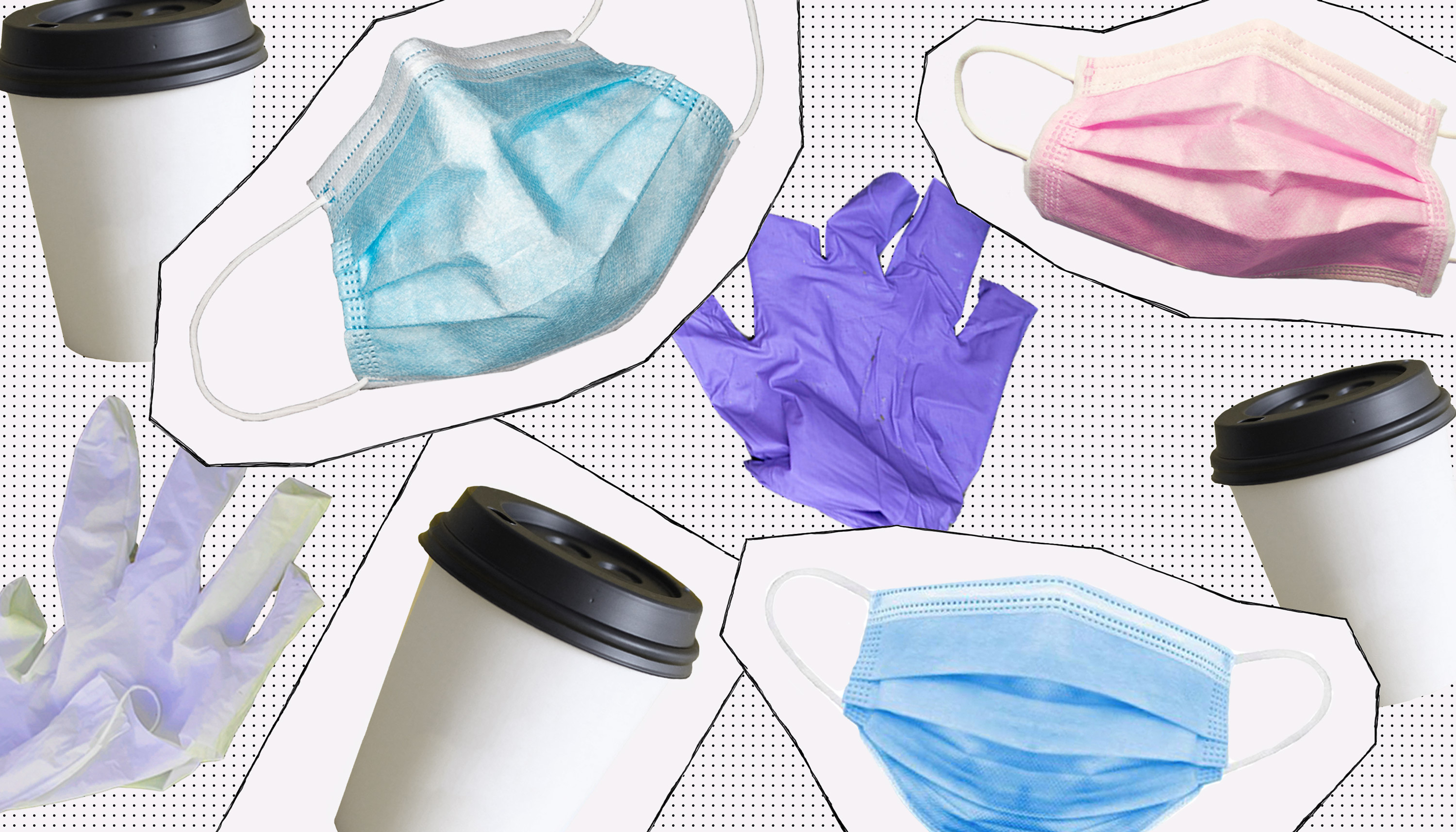
What disposable coffee cups can teach us about COVID-19 waste
We don’t have to sacrifice safety to meet our sustainability goals.
COVID-19 has fueled a whole new waste stream, putting additional plastics and other material into the environment and harming ecosystems, animals, and human communities as a result.
At the same time, those masks and gloves and other personal protective equipment (PPE) are critical to slowing the progression of the pandemic and keeping our front-line workers safe. They’re disposable, yet they’re indispensable—presenting us with a difficult tension between our immediate public health needs and the long-term repercussions of this massive waste problem. Gloves floating in the ocean like seaweed threaten already endangered marine species and pollute the world’s tap water, in time delivering new risks to human health.
But an apparent lose-lose situation like this can also become a rich opportunity area for human-centered design. How might we design PPE that is effective at keeping people safe without polluting the environment?
One source for models and inspiration lies in another realm entirely: coffee shops. By exploring other industries—a design tactic known as analogous research—leaders can get inspired by how others have addressed similar questions. Looking to analogs allows designers to move beyond their expertise to see issues with fresh eyes, building new levels of understanding to their present design challenge.
The to-go cup has a lot to teach about disposability, desirability, hygiene and convenience; and as a consumer product, it’s seen more sustainability-minded innovation than medical disposables. By looking at the ways the coffee cup has evolved, we can gain new insight for understanding what is possible in the heavily regulated, fast-paced, and high-pressure world of medical supplies, where safety and sustainability are both paramount.
Next-generation solutions for the humble to-go cup
As a product, the disposable cup has gone through several eras of change relative to design and behavior. Initially, to-go cups enabled convenience and efficiency. But nearly all of the to-go cups that exist today are made of a combination of materials that make them next to impossible to recycle or compost. They were designed without any thought to where they would end up after being used, aside from the landfill or incinerator.
Environmental concerns then sparked a movement encouraging consumers to bring their own reusable cup. Committed environmentalists were willing to do this, despite the personal compromise on convenience, but the trend failed to scale and meaningfully reduce waste. Some cups are now made of materials that can biodegrade or be composted, but both processes are difficult to achieve at a global scale due to cost and lack of access and infrastructure.
In 2018, OpenIDEO launched a design challenge to invite new ideas for material and processes that could lead us into a more sustainable era for to-go beverage containers. The NextGen Cup Challenge represented a new horizon for sustainability that goes beyond the product to offer a vision for a system and business model where circularity is the driving principle. Contrary to the linear “take-make-waste” model of manufacturing that has characterized industrial products for centuries, a circular economy designs waste and pollution out of the value chain, keeping products and materials in repeated use, and regenerating our natural systems.
The NextGen Cup Challenge asked the question: How might we design the next generation fiber cup to be recoverable on a global scale, while maintaining the performance standards we know and trust? The Challenge, managed by OpenIDEO, was part of the NextGen Consortium, a global initiative convened by Closed Loop Partners and founding partners Starbucks and McDonald’s. The 12 winning solutions—categorized into innovative cup liners, new materials, and reusable cup service models—have the potential to turn the 250 billion fiber to-go cups used annually from waste into a valuable material in the recovery system.
When we see masks and gloves in the gutter, we can imagine a similar trajectory for innovation. But there’s a different set of barriers—psychological, regulatory, supply chain, and safety—to contend with. The question becomes: How can we apply circular design principles in the healthcare industry to enable a more robust and resilient supply chain of PPE, which can be safely reused to become regenerative rather than wasteful? Based on the learnings from the NextGen Cup Challenge, we see two rich areas for design: redesigning PPE products to be sustainable and adopting a systems-level perspective.
Redesign or repurpose the product itself
The NextGen Cup Challenge sought manufacturing and material innovations and technologies that improved the existing to-go cup, making it more valuable at the end-of-life, whether through recycling, composting, or biodegrading. For consumers, baristas, and retailers, these new ideas would require little behavior change—they offered the same convenience of the single-use cup, just made of something new and more sustainable. SoluBlue, for example, is a winning NextGen Cup Challenge solution that produces plant-based, food-grade, and non-toxic materials that quickly biodegrade after use, and can replace some forms of single-use plastics.
The same concept is hopefully being applied to PPE: Recently, the Canadian government announced two business challenges for the private sector that offer funding for PPE that won’t end up in landfills. One calls for businesses to develop compostable surgical masks and respirators that can be mass-produced for healthcare workers. The second challenge seeks technologies for "efficient and cost-effective" PPE recycling, which can transform potentially contaminated PPE into "valuable materials that can further be used in manufactured products.”
If Solublue can make a cup that biodegrades after one use, why couldn't we do the same with a face mask or a pair of gloves? Furthermore, as we consider redesigning PPE to be safe and environmentally-friendly, there is not only an opportunity to redesign the product, but to extend its value to other products. Binish Desai, for example, is an entrepreneur and environmental activist based in New Delhi who is transforming used PPE into bricks for homes and factories. Desai installs bins outside of apartment buildings and retail shops to collect used masks and gloves, then leaves them untouched for 72 hours. The gear is then sanitized, shredded, and sanitized again. Lastly, the sanitized scraps are mixed with paper sludge and a binding agent to form various brick molds.
Good intentions must be coupled with systems thinking
Sometimes the product alone—or a byproduct of it—can’t solve the problem. We’ve had the technology to produce a compostable cup or mask since long before COVID-19. But as demand for PPE outstrips supply, it becomes critical to consider the system surrounding the product to enable recoverability and reusability. In neglecting to design for how a product fits into the larger ecosystem, we risk exacerbating the issue. When items are improperly disposed of (for example, when a compostable cup is recycled, which is common) it can contaminate the entire bin, dumpster, and truckload with byproducts that devalue the actual recyclable material. This sometimes results in full batches of recycled materials being removed from the recycling line and sent to landfills due to a single incompatible cup, as it has potentially contaminated the entire collection.
New solutions need to be designed in tandem with new infrastructure, or designed to work within the existing system. Muuse, a NextGen Cup Challenge winning idea, created a platform for reusable cups that works within restaurant networks with the goal of eliminating single-use waste. Before the pandemic, consumers could “borrow” a cup from one of Muuse’s cafe partners, such as Equator Cafe in San Francisco, by scanning the QR code on the cup. Within the designated time period, the customer returned it to any of Muuse’s 40 cafe partners in San Francisco. Muuse inspected and cleaned the cups, and collected late fees through tracking technology, seamlessly integrating into the way the restaurant system operates.
Muuse can offer inspiration for redesigning PPE to be both safe and regenerative. Most people know that doctors wear sterile gloves during surgery. But fewer realize that surgeons can be particular about the gloves they use (e.g. latex, non-latex, nitrile, vinyl). In design research, we’ve noticed that some physicians prefer specific layered combinations of gloves, such as latex over non-latex or vice versa. When we look at other trades, many professionals have their own pair of reusable, personalized gloves, like welders, chefs, and athletes, that are sustainable, help them excel in their craft, and keep them safe.
How might we enable this for doctors? What new innovations—in reusable design but also in the washing and sanitation procedures that already exist in hospitals for bedding or scrubs —might achieve safety and waste elimination, while also enhancing physician desirability and performance? To support frontline workers during the coronavirus pandemic, Ford pivoted to produce face masks, shields, and ventilators using the same air filtration technology the automaker uses to produce the ventilated car seats found in F-150 trucks, putting their existing materials towards an urgent global need. Taking a cue from Muuse, what if a new system was designed to enable frontline workers to return these masks to hospitals, and hospitals to then return them to Ford? This reusable system would be keeping key materials in use in both the auto and medical world.
A future that is designed for both sustainability and safety
Alarming photos of masks and gloves scattered on sidewalks and washed up on beaches are a reminder that COVID-19’s impact spreads far wider and deeper than we yet realize. The virus and its reverberations have touched every aspect of life on the planet. But human safety does not have to come at the expense of environmental damage and climate change.

Design encourages us to look to unlikely analogs, like the unassuming and ubiquitous to-go cup, to be inspired to create a world in which safety and sustainability can co-exist, offering protection to all.
The landscape of litter has shifted over the past year. The pandemic has made disposable masks and gloves as commonplace as plastic bottles and cigarette butts on city streets.
Our top 10 stories of 2020
The top stories you read and shared most this year.
In between refreshing our local COVID-19 dashboards and the U.S. election map, we’re proud to have produced another year’s worth of Octopus stories. Thank you for stopping by to read our design blog. Below are the 10 stories you loved the most in 2020. And here’s to a calmer, kinder 2021.
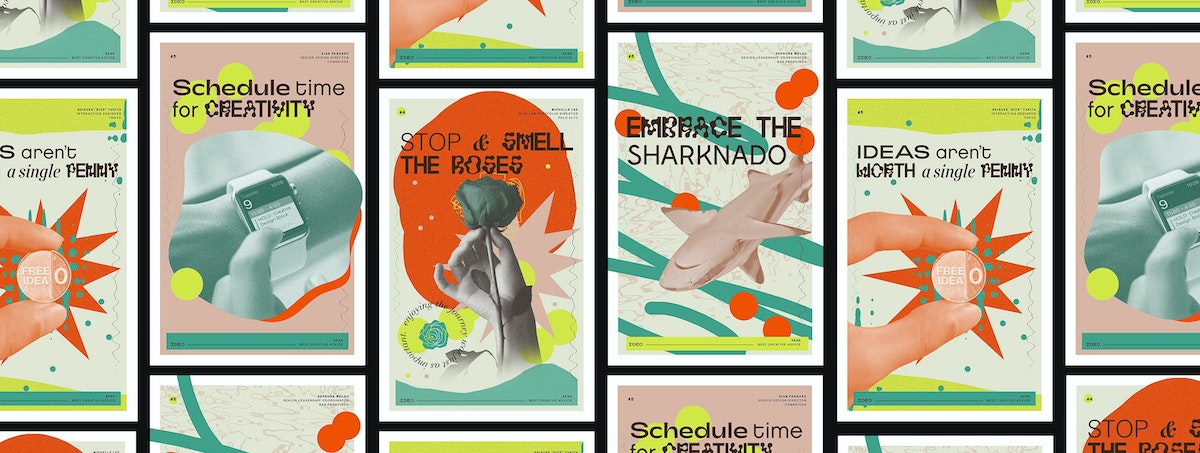
IDEO Designers Share the Best Creative Advice They've Ever Received
There’s no shortage of inspirational quotes, but meaningful, personal advice can change a career and a life. A preview of some of the creative advice IDEOers shared in this piece: “A bad movie is better than an unfinished movie,” and, "When you feel stuck, draw a card and do whatever it says."

4 Ways to Work Together When We Can’t Be Together
Sometimes while watching TV episodes filmed before the pandemic, I get pangs of fear when people shake hands or stand less than six feet apart. Everything has changed in the last 10 months or so. This story contains early ideas on how to navigate design work during a pandemic. A question we’re still asking from this piece: “As designers, how do we design our way through this?"
24 More Things We Want to Redesign
Applying for a job. The news. Hot dogs. IDEOers want to redesign those, plus 21 other things.

How a Kid's Perspective Improves Design Research
Whether your design research is happening in a boardroom or at an amusement park, author Ben Swire argues that adding a kid’s perspective can produce better design outcomes. Although this piece is about his daughter, he is not biased at all.
4 Reasons Warm-Ups Will Fundamentally Change Your Work
Olivia Vagelos is IDEO U’s resident warm-up expert. Not only does she have an entire database of exercises, but she also designs them on the spot. Her firm belief is that every meeting deserves a warm-up—read the piece to learn why.

How Would You Reimagine Learning? 5 Visions for Our Post-COVID Future
The coronavirus pandemic has pushed an estimated 1.6 billion students out of the classroom. As teachers adjust to this remote reality, OpenIDEO asked a question: “How might we adapt to remote learning while also using this moment to radically reimagine what we need our education systems to be?” This story shares five ideas to shape this future.
10 More Documentaries That Will Spark Your Creativity
Devin Peek is a visual connoisseur, so you can trust her documentary recommendations are well-vetted. (She even saw one of these at its premiere!) This post shares 10 more documentaries to spark creativity; her first post, from way back in 2016, is one of the Octopus’ most popular of all time.
4 Exercises That Prove Listening Matters
It’s noisy out there. Drawing from Krista Tippett’s work, author Allison Press designed and adapted four exercises that dive deep into the transformative power of listening.

How Quitting Plastic Got One Designer Thrown in Mall Jail
There are some surprising benefits to quitting plastic: IDEOer Shuya Gong saved money and produced less trash. On the flip side, she almost got thrown in mall jail, so take on the no-plastic challenge at your own risk.

5 Tools to Design for Digital Confidence
Every single day, one million people use the internet for the first time. IDEO’s Jason Fund and George Joseph share a set of tools, created alongside Google and the Bill & Melinda Gates Foundation, to help designers build digital services that work for everyone—even if your user is touching a smartphone for the first time.
In last year’s top 10 stories post, my colleague Saige wrote, “We can’t wait to see what 2020 has in store.” Upon reflection, I probably could’ve used more time to prepare for what the last 12 months delivered.
How to get free and feel inspired when workshops are remote
Four ways to make your virtual workshops more effective.
While those can be useful tools, the true beauty and power of workshops is in being pushed out of your comfort zone: a group of adults struggling to share opinions openly, dive into group activities, and ultimately enjoy the mindset change that comes through participation.
Since the pandemic began, we’ve been forced to bring workshops online—and fundamentally rethink the way we conduct them. Hosting online workshops is not about bringing what we used to do in the physical space to the online world: it’s something new, and we should create completely new tools to adapt to the online world.
Over the past several months I’ve started to prototype new tools for remote workshops. They’re still experiments rather than tools, but that’s okay: designing workshop tools is the same as designing anything else—it’s about prototyping quickly, and iterating for improvement over and over again. Here are four insights we’ve gained in the process.
1. Let the unexpected overflow from the screen
Creating an atmosphere that is strange, weird, and slightly unusual is key to achieving impact through workshops: it gets people out of their comfort zones and opens their minds to new ways of doing business. In the digital realm, most participants will be calling in from home (i.e., their #1 comfort zone), and you need to intentionally haul them out of their day-to-day.
Virtual backgrounds are an easy win: they can create visual interest and curiosity while also functioning as a tool for individual expression. One great ice breaker is to start by asking participants to create their own virtual backgrounds in teams, using Google Slides.
Throwing in a custom-made Snap Camera filter is also a great idea, because it offers participants a chance to hide a part of their face if they feel uncomfortable with experimentation. Instead, they can addd something new like donkey heads or puppy ears. As a facilitator, these tools allow you to get in on the fun with participants. It allows the group to feel that you are on the same team as you explore new territory together, rather than a facilitator insisting they do something uncomfortable.
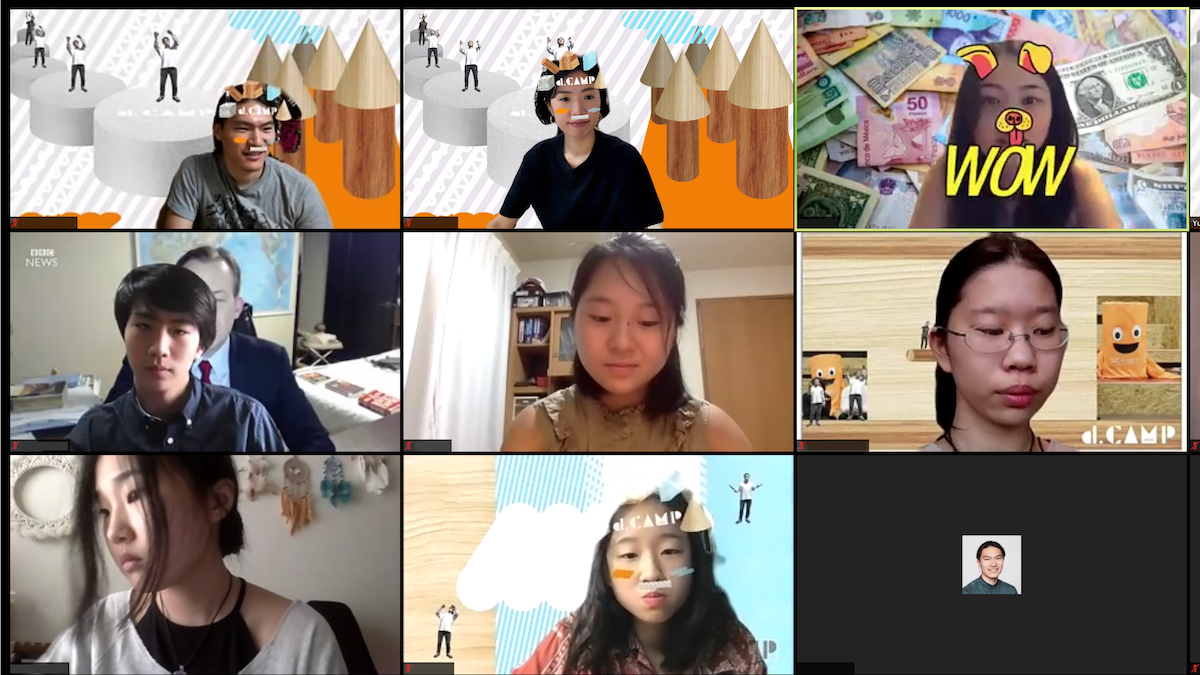
2. Pick up non-verbal cues from participants
In a physical workshop, one of the key roles of the facilitator is to “read the room.” This is one of the hardest things to do online—all you can see is a participant’s torso with facial expressions, which may not be truly reflecting their emotions. Another way of looking at this, though, is that the online environment can create psychological safety, allowing for more open and honest communication.
To capitalize on this, I created a tool called the Mood Checker, which allows participants to rate their mood on a scale of 1-5, anonymously and in real time. Their responses are constantly aggregated on the facilitator view, allowing the facilitator to always keep track of how the participants are feeling. Initially I wanted the participants to use the slider throughout the day at any time, but after a few trials, we quickly learned that we should designate a few moments in the workshop where we ask the participants to reflect their thoughts on the Mood Checker.
A tool like Mood Checkers lets the facilitator read the digital room. Think about other ways you can utilize the anonymity of the online space to get honest, real-time feedback from your participants and to make your workshop the best it can be.
3. Incorporate physicality
One of the things that I watch out for most during online workshops is making time for everyone to move their bodies. Getting up and moving away from the computer makes everyone feel much more connected and has a positive effect on their wellbeing. Since I tend to do a design-themed workshop, it also helps us remember that good design can not be achieved without the notion of physicality.
An easy way to achieve this is to have the participants go for a walk, either by themselves or by staying in the call through their phones. We can leverage the fact that they are dialing in from different locations: with the phone’s camera, we can have the participants hunt for creative inspiration in their neighborhood. For example: “Take 3 pictures of new behaviors you see in the neighborhood,” or “Find and share your favorite typography that you can see from where you are.”
I also created a Remote High Five system, which, as you may have guessed, tracks the participants’ hand positions through the computer’s camera and plays clap sounds when your onscreen hand “high fives” someone else’s. While this was initially made as a fun experiment, it became an end-of-workshop ritual thanks to its physicality and joyfulness. It quickly became one of the iconic moments of the workshop.
4. There are always ways to realize ideas. Just start small.
Some of these examples may seem too wild or unfeasible depending on your technical know-how. But the important point here is to start small, prototyping ideas quickly and with the least risk. It doesn't have to be perfect on the first go; in fact, it will never be perfect on the first go. Just remember that there are always ways to make an idea happen: give it a shot, and iterate with small tests to improve your idea. It’s actually much easier to try out new ideas online because there’s really nothing to shy away from when, at the end of the day, all you’re facing is a computer screen.
Ultimately, the goal of a good workshop is to get participants to step out of their comfort zones and adopt a new mindset. It’s a shame that many people underestimate the creative potential of workshops and often opt for a generic format: when you tackle a workshop just like you would tackle any other design challenge, the outcomes can be quite transformative and magical.
Workshops are everywhere, from training programs at big corporations to urban planning sessions at local town halls. Given how formulaic many workshops have become, you’d be forgiven for thinking they’re all about colorful Post-its and saying “yes, and...”
How one human-centered insight led to $4 billion in growth for American Express
The straight story of organizational transformation, from leaders on the inside.
They were in search of a feature that would excite Card Members, especially millennials coming of age financially. Everything was in place, but their project whiteboard had one last empty box.
The IDEO and American Express teams paired up for a design sprint, and in the first few weeks of research, after extensive qualitative interviews, an idea emerged: a new, transparent and easy-to-use way to split large purchases into equal monthly payments, with a fixed fee and no interest. The feature, called Pay It Plan It, launched in the market in 2017. Since then, it has been used to create five million payment plans, totaling nearly $4 billion in lending. It represents a notable, widespread behavior change. Card Members are spending differently, by design.
But getting here took more than just a bright idea. At a large organization like American Express, in a complicated and highly regulated industry, and in a smartphone-first environment, transforming an insight about consumer behavior into a beloved tool for Card Members required a particular flavor of corporate agility. At the time, there was nothing like Pay It Plan It—at American Express, or elsewhere. Bringing it to Card Members would require a substantial technical and financial investment, affecting everything from payment terms to the way the smartphone app handled swipes. All of that was doable, but leaders still had to do it—they had to make the heavy lift to usher a concept sketch into becoming a meaningful part of customers’ lives. The success of Pay It Plan It as a feature driven by emotional insights—while driving the bottom line—has made it a beacon inside American Express. For many, it marked a new way of working within the company, a transformational shift in the way ideas are conceived and implemented.
The following story recounts the development of Pay It Plan It, told through the voices of the IDEO and American Express team members who worked on it.

1. Plus, and...
In 2015, Amex was looking for something new to engage consumers—particularly younger professionals who wanted to avoid the pitfalls of credit card debt. Innovation within the consumer lending space had traditionally been all about rewards and cash back perks, but Amex was committed to finding something different that empowered their Card Members. Was there something else? And if so, what?
Kyoko King is currently VP, Global Commercial Services at American Express; at the time of Pay It Plan It, she worked on consumer products, focused on new product innovation.
“It felt like a race to the bottom. We kept throwing more rewards at the customer, so they win out, but there's no actual edge. That was the challenge we set out to solve.”
Leigh Cohen is a Design Lead at IDEO, and a team member on the original design sprint.
“I remember we wrote on the white board, plus, and, next to an empty box. The reward structure of this new card was already defined—but then what? What goes in the box? What is this thing? It can be very daunting to come up with something that not only makes sense to Card Members, but also makes sense to American Express, and is also a smart way to help people spend appropriately and confidently.”
Jenny Shum is currently VP, Head of US Small & Mid Market B2B Marketing at American Express; at the time of Pay It Plan It, she was VP of Consumer Lending Products.
“We had aspirations to reinvent what a credit card could be, and the role it plays in a consumer’s life. But this is a very regulated industry, and we were afraid that we would come up with a brilliant idea we couldn’t deliver. And yet we didn’t want to be constrained by that.”

2. An emotional insight
Over a series of consumer interviews conducted across the country, the team honed in on a key set of desires: credit card users wanted more flexibility and transparency in how they paid for big purchases, and they wanted to feel like they had autonomy in how they pay for the things they buy.
Kyoko King, Amex: “We had done the side-by-side comparison of Amex versus other cards, we had done task forces looking at debit versus credit. We always had the knowledge that customers don't like our credit cards, but I don't think we ever went so far as to say, ‘They just emotionally don't like it.’ I remember IDEO saying to us, ‘It makes them feel bad. You guys make them feel bad. Customers have no control, no transparency.’ But here IDEO just said, ‘It's an emotional problem, therefore, the solution has to be emotional.’”
Travis Lee is Managing Director and Partner at IDEO, and guided the initial sprint.
“American Express is a service company. They think of themselves as trying to serve their customers as human beings—and the card is a means through which they provide service. It’s not their product. And that’s very different from a lot of companies. So what if we can think of lending as a service?”
Kyoko King, Amex: “Our team at Amex was all about growing lending—lending, lending, lending. That was even what it said on my business card. And then IDEO came in and said, ‘Well, it's all about paying. No one is thinking that Amex is lending them money. It's all about when they can pay.’”

3. We could really break things!
As clear as it was that credit card users wanted more flexibility and control—not just more rewards and perks—so too was the realization that the Amex/IDEO team had let the genie out of the bottle: implementing this wouldn’t be easy. This wasn’t just another lending feature, but would require a fundamental rethinking of how Card Members paid their bills.
Dory Butler is VP, Digital Product Management; she led the digital team that implemented Pay It Plan It.
“People were nervous. We could really break things! It involved significant changes to our payment hierarchy, our accounts receivable systems, how we calculated what customers owed to us, and so on.”
Jenny Shum, Amex: “We were certainly aware of the potential this product could have—and we’d sized the financial benefits—but what was different here was the process of understanding true customer needs.”
Kyoko King, Amex: “You know when you sign a car lease or a mortgage, and there’s a stack of papers that you have to sign with ten different signatures, every couple pages? That's what we were trying to put onto our credit card. I remember our compliance person sitting me down and saying, ‘You're trying to put a closed loan into an open credit product.’ That was the first time I realized we were creating something so complicated—even if to a consumer it made complete sense and felt so simple.”
Dory Butler, Amex: “As a company, we've identified opportunities and gone after them in the past. But many times those opportunities are highly driven by business outcomes, and not as highly driven by customer outcomes. Pay It Plan It was all because of a customer need, but we could see that the business benefit of that would flow and follow.”
Kyoko King, Amex: “After that initial sprint it was kind of a no-brainer. If we could do this, we should do this. But it was very clear that we should do it only if the experience stays as simple as what we’re proposing. If it becomes a series of terms and conditions and things you have to click and fill out, then we’ll lose the essence of what it is we're delivering.”

4. Buy-in for the buy-in
Given the complexity of the implementation—and the simplicity of the desired result—the Amex/IDEO team planned an unusual internal communications strategy, rooted in the emotional insight at the heart of Pay It Plan It.
Leigh Cohen, IDEO: “Executives across American Express had to understand the value this product was going to bring—the emotional value to Card Members, and the financial value to its business. We wanted them to see the overlap between the financial confidence Pay It Plan It could bring, and their brand values of trust and security. And they had to see how it was delivering upon their internal objective as an organization to be thinking about smart lending, and what lending looks like for their current members.”
Kyoko King, Amex: “We couldn't pitch this in a PowerPoint deck. We had to translate that consumer insight to the pricing team, the technology team; we had to change minimum due, payment hierarchy, grace—three different components that are extremely difficult to touch. It was like a house of cards: everything could fall down. Usually if you touch any one of them, all those teams are like, ‘No, no, no, it's not worth it!’ It just wasn't something you could understand in a really rational format; there was so much emotion to it, there was a customer need we were solving for. Usually we had bullet points and boxes with words, and a P&L or business case that’s about the numbers. But here we began with sketches and drawings of what this could look like. That was very different than how we operated before. It was new. And it incited interest.”
Kelly Bjork is a Senior Design Director at IDEO; she helped lead the team that designed and implemented Pay It Plan It.
“These are rational people! You were talking to C-suite level folks who have their bill on AutoPay. They don't think about these things. So our work was putting them in the shoes, if you will, of the Card Member who this was targeted for. It's kind of that simple.”
Jenny Shum, Amex: “The magic of Pay It Plan It is that it gives consumers the confidence that they have a lending solution if they need it. I don’t think we necessarily went in with this intention, but that directly aligned to Amex’s brand heritage, of giving consumers control. The brand team saw how exciting this was, even before the business unit decided to invest in making it real.”
Dory Butler, Amex: “You have to continuously sell-in these ideas internally to have the level of investment that you need to do them right.”
Travis Lee, IDEO: “Innovation at this scale can't happen purely grassroots. You can't just get a single team leader excited about it, and expect it to happen. You have to get everyone’s buy-in, you have to get everyone’s excitement, you have to make sure they understand why it matters to do it, even if it's gonna be hard. And you also have to get the CMO pumped. All of these people have to greenlight it in their own way.”

5. How it spurred organizational change
In 2017, Pay It Plan It launched under a strategy nicknamed “Big Bang,” rolling out to 21 million customers in 30 days. As of August 2020, it is available to almost all US consumer Card Members, who have collectively created nearly five million Plans, totaling nearly $4 billion in purchases, with an average Plan size of $789. But as much as they have embraced Pay It Plan It, so too did Amex executives. The unique story of its implementation became company lore: here was an emotional insight that unlocked significant business outcomes.
Kyoko King, Amex: “The internal teams could see it: this was reflective of all the data and information we have seen and heard for years and years. But this is a new way to approach the problem! I often talk about it in terms of learning a new language. Amex internally thinks of itself as a rational company based on CBAs and models. The breakthrough—and the thing I'm most proud of—was bringing that customer emotion into internal decision-making, seeing Amex become emotional rather than purely rational.”
Jenny Shum, Amex: “Kyoko and I joke that we feel like we walked through a doorway to an alternate universe that we can’t turn back from. This is a long-term strategic investment that would have been hard to write the business case for—but that was also the exciting part, because it is transforming a business, versus delivering an incremental product. The challenge now is whether we will be able to galvanize the organization in a similar way, towards solutions for our customers.”
Leigh Cohen, IDEO: “The pieces came together in this perfect storm: the Amex leadership focusing our IDEO team on the opportunities that were strategic within their organization; our team's ability to unpack and uncover an emotional resonance with the Card Member, that really spoke to them wanting to be a more confident spender on credit; and then the internal buy-in and belief that this not only resonated internally, but also could convert externally.“
Kyoko King, Amex: “To be honest, this began as an eight-week engagement of just asking, ‘Okay, let's see what you guys can think of: a slap-on feature to our credit card.’ So for it to then result in something that was implemented across all of our cards—that is a big, big deal.”
Kelly Bjork, IDEO: “Getting something like this to market feels like sort of a small miracle to me.”
Jenny Shum, Amex: What has followed me from this project is really understanding the emotion of the customer—not just the words they tell us, but what worries them and why.
Illustrations by FagoStudio.
In 2015, American Express (Amex) came to IDEO for help putting the finishing touches on a new consumer credit card. Its reward structure was fixed—but what else might it be?

Lindsey Turner
I’m passionate about building brands, products, and experiences that help organizations show up with meaning and momentum.
I help organizations cut through complexity by shaping how they show up, through brand strategy, identity, and storytelling.
Working at the intersection of brand and business, I bring an editorial eye and a bias toward making—turning ideas into tangible experiences that people can understand, trust, and believe in.
My work spans government, healthcare, financial services, media, and consumer goods, from launching Gen Z-focused ventures to building innovation labs and reimagining legacy brands. I relish moments of ambiguity and enjoy translating across teams, perspectives, and priorities to move ideas forward.
I started my career in editorial and digital design, shaping cross-platform experiences and identity systems in publishing and agency environments. That foundation still shapes how I work today: I’m detail-oriented, collaborative, and overreliant on the Oxford comma. I hold a BFA in Visual Communication from the School of the Art Institute of Chicago.

Rachel Young
My work helps organizations see who their products aren't working for—and build the will and the tools to do something about it
For 25 years, I've asked the same question: Who does this design exclude—and what are we going to do about it?
My work spans human-centered strategy, inclusive design, and qualitative research, with clients ranging from Microsoft, Google, and Verizon to the National Science Foundation, and San Francisco Unified School District.
Before IDEO, I taught elementary school in East Palo Alto and spent a decade doing design work with social service organizations—where I learned firsthand what it costs people when systems are built without them in mind.
I am currently writing User Error, a nonfiction book about digital access and the design decisions behind it. I live in Oakland, California.

Brian Pelsoh
I lead with craft, ensuring our work is creatively excellent: rooted in deep human insight and imagination, while also grounded in the realities of business and technology.
My expertise spans brand, communication, and product design across tech, education, the arts, and social impact.
I believe great work demands both high-level vision and obsessive attention to detail, and only happens through collaboration.
I bring an inclusive, hands-on approach and a deep understanding of business, which enables me to consistently deliver excellence while always asking why.
Before joining IDEO, I worked at the brand firms Pentagram and VSA Partners. I began my career as a designer, leading teams at the School of the Art Institute of Chicago and the Milwaukee Art Museum. I hold an MFA in graphic design from Maryland Institute College of Art and a BFA in communication design from the Milwaukee Institute of Art & Design, and have taught at some of the best design schools in the US.

Tony Wong
I am responsible for IDEO’s long-term success in China and working with clients to use design as a tool to enable growth.
I am responsible for IDEO’s long-term success in China and working with clients to use design as a tool to enable growth. Specifically, I have helped Chinese companies design holistic brand solutions through the development of their products, communication, services, and innovation teams, and I have helped multinationals expand their presence and influence in China.
I advise global leaders on developing China-led innovation and capabilities.
In over 15 years in IDEO Shanghai, I have worked on projects that use design to elevate the quality of the experience of healthcare products and services, streamline processes that increase productivity, create spaces and programs that promote and enable inclusive communities, and build next generation mobility solutions that are planet-positive.
Before joining IDEO, I worked at Philips Electronics and the Electrolux Group in Italy, the Netherlands, and Singapore on a number of breakthrough commercial products. I am a member of the Young President Organization in Shanghai.

How to use AI as an editor, not a writer
Ed White shares how he uses AI as an editor—not a writer—to sharpen storytelling, rehearse ideas, and preserve the productive friction that makes creative work better.
Ed White has a rule he's tested on his own writing: hold yourself as the writer, and let AI be your editor. Ed is a Senior Design Director at IDEO's London studio, where he co-leads the firm's AI portfolio across Europe. Before IDEO, he spent 12 years as a writer and editor at the Financial Times, Wired, and Contagious. So when he talks about when to use AI for storytelling and when not to, it comes from two decades of crafting his storytelling skills.
In this episode, Mina Seetharaman talks with Ed about two specific tools he uses to keep AI in an editor's seat: a "roasting agent" prompted to critique his drafts without any sugarcoating, and a simulated audience he rehearses pitches on before the real thing. They also get into what Ed is hearing from design leaders at Anthropic, Lovable, Shopify, and Google Creative Lab about how creative work is changing, and why he thinks the friction of writing something yourself is worth protecting rather than automating away.

Building a personal AI for the messiness of life: Sida Li
Becca Carroll talks with Cue co-founder Sida Li about designing a personal AI for the messiness of everyday life—not just work. They explore how Sida stays anchored to human needs while navigating fast-changing technology, product tradeoffs, business-model experimentation, and the realities of building an AI company today.
Most AI products today are built for work—a space with clear problems and established systems. One founder noticed a gap: personal life is messier, harder to systematize, and mostly left behind by the AI boom. So she built Cue, a personal AI that lives inside iMessage and group chats, to go where the other tools haven't.
In this episode, Becca Carroll, IDEO's Chief Strategy Officer, talks with Sida Li, co-founder and CEO of Shared Context Lab, about staying anchored to a human need while the technology around her keeps changing shape, why she treats her business model with the same rigor she'd bring to a product, and what it feels like to build a company at this particular, disorienting moment in AI.
The conversation also gets into how Sida makes design decisions: the language Cue uses to describe itself, the tradeoffs behind building inside iMessage instead of a new app, and a real story about a business idea that didn’t pan out.
This is the second in a two-part series profiling founders from IDEO's Startups-in-Residence program. The first conversation is with Johannes Seemann, founder of Sooner, on designing GenAI for the emotional side of money.

Designing GenAI for the emotional side of money: Johannes Seemann
Designing financial tools around the feelings that shape money decisions.
Most personal financial tools are built to run the numbers and optimize towards a budget. While that works for some, most people experience money as a lived relationship that does not neatly fit into a spreadsheet. Johannes Seemann and Becca Carroll discuss why money is emotional before it is mathematical, and what a human-centered approach to building a generative AI financial product looks like in practice.

The curious leader's edge in uncertainty: Scott Shigeoka
How genuine curiosity helps leaders navigate uncertainty with greater confidence.
Mina Seetharaman talks with Scott Shigeoka, author of Seek and Head of Curiosity Cultivation at the Eames Institute, about what distinguishes genuinely curious leadership from performative curiosity, how power dynamics shape curiosity, and why practicing curiosity can restore energy rather than drain it.
Looks like you might be in search of something very specific?
Or reset the filters above and try another angle.
Here’s some random inspiration

Podcasts about creative leadership

Articles about the power of prototyping
