
.svg)


Giving ed tech entrepreneurs a window into the classroom
Designing tools that students like and teachers need.
The Bill & Melinda Gates Foundation partnered with IDEO to explore how to harness the potential of technology to support teachers in delivering high-quality education at scale.
By talking to the people on the front lines—teachers, students, entrepreneurs, and technologists—IDEO discovered a dual challenge: Teachers need a broader array of quality tools to use in the classroom, and the ed tech entrepreneurs need a window into the classroom to create the most effective technology products.

With this insight in hand, IDEO worked with the Gates Foundation to design, build, and launch Teachers Know Best, a digital platform aimed at connecting those creating new tools and technologies with the people who ultimately use them. Powered by the results of a large-scale survey of 3,000 educators and 1,200 students, the interactive resource acts as the bridge to connect entrepreneurs to classrooms. The site provides invaluable insight to help startups focus, refine, and scale their work, and provides essential information on how schools find and select products to use in the classroom, as well as a forum for teachers and students to rate and respond to more than 500 existing resources.
The resulting platform is a boon for tech entrepreneurs, educators, and students alike—giving entrepreneurs a clearer understanding of what's needed, and giving teachers and students a voice. Teachers Know Best launched in May, 2015 for entrepreneurs and educators at the New School Ventures Fund Summit.

From libraries to learning labs
Librarians use design thinking to create new services for patrons.
What’s the future of libraries? As information goes digital and reading rooms become a thing of the past, what’s the best use and function of libraries going forward?
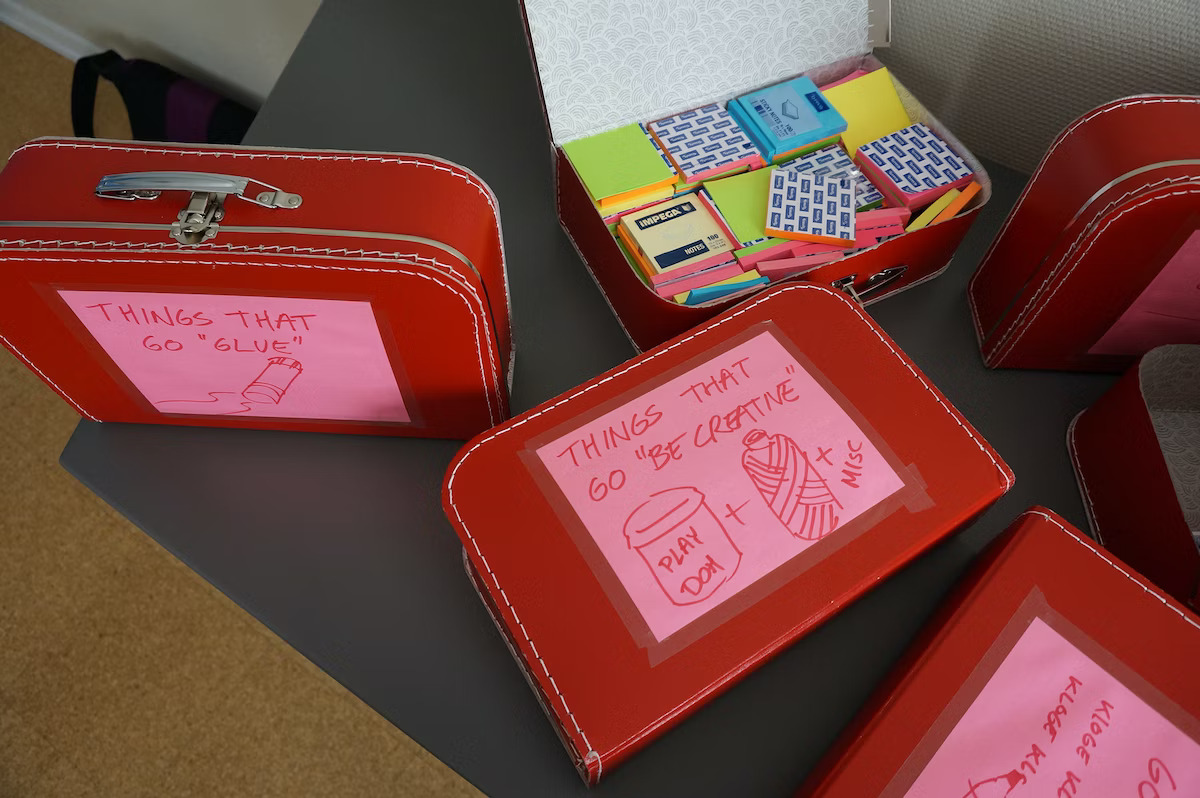
Chicago Public Library and Denmark’s Aarhus Public Libraries, together with IDEO, wanted to find out. With a grant from the Bill & Melinda Gates Foundation, they created the Design Thinking Toolkit for Libraries: reading and workshop materials that can be used by any front-line library staffer to adapt to library users’ changing needs.
Using the Toolkit, library staffers engaged with patrons to test out brave new ideas that change our perception of the typical library: an anything-but-quiet teen expression lab with music- and art-making tools, a “tech spa” for users looking for how-to information, and a series of narrative storytelling workshops for kids that use play as a springboard for learning. In Chicago, these experiments spurred the implementation of a new play space in the children’s library section of the Albany Park branch, and the creation of new roles for librarians that focus specifically on teens’ needs.
You can download the toolkit, and find more resources, at designthinkingforlibraries.com.

Firing up a new pro soccer experience
Defining the Chicago Fire brand in order to win over new fans.
Major League Soccer champions the Chicago Fire wanted to convince new fans to come to its stadium, but knew that competition for fans’ attention—and wallets—in Chicago was fierce. The Fire partnered with IDEO to create memorable marketing campaigns and fan experiences to get more Chicagoans fired up and filling its seats.
Inspired by Section 8 fans and fervent Club supporters, IDEO homed in on six defining brand personality traits: human, gritty, irreverent, indie, Chicago pride, and globally curious, then used them to design game-day experiences to match. In addition, knowing the Fire’s marketing pockets weren’t as deep as its competitors, IDEO zagged and took a different approach to messaging: Eye-catching billboards featured headlines lifted directly from Section 8 fan chants, edgy posters showed soccer players as superheroes, and anything-but-traditional scarves and t-shirts sported bold wording and graphics of players’ faces.
Faster, more accurate spinal surgery
High-powered instruments for spinal surgeries ease doctors' burden.
While reconstructive spinal surgeries can be life-changing, even minimally invasive spinal procedures can require hours under anesthesia for patients, and be physically demanding for surgeons and staff. Over time, the repetitive physical strain can limit the ability of highly skilled orthopedic surgeons to perform these surgeries.
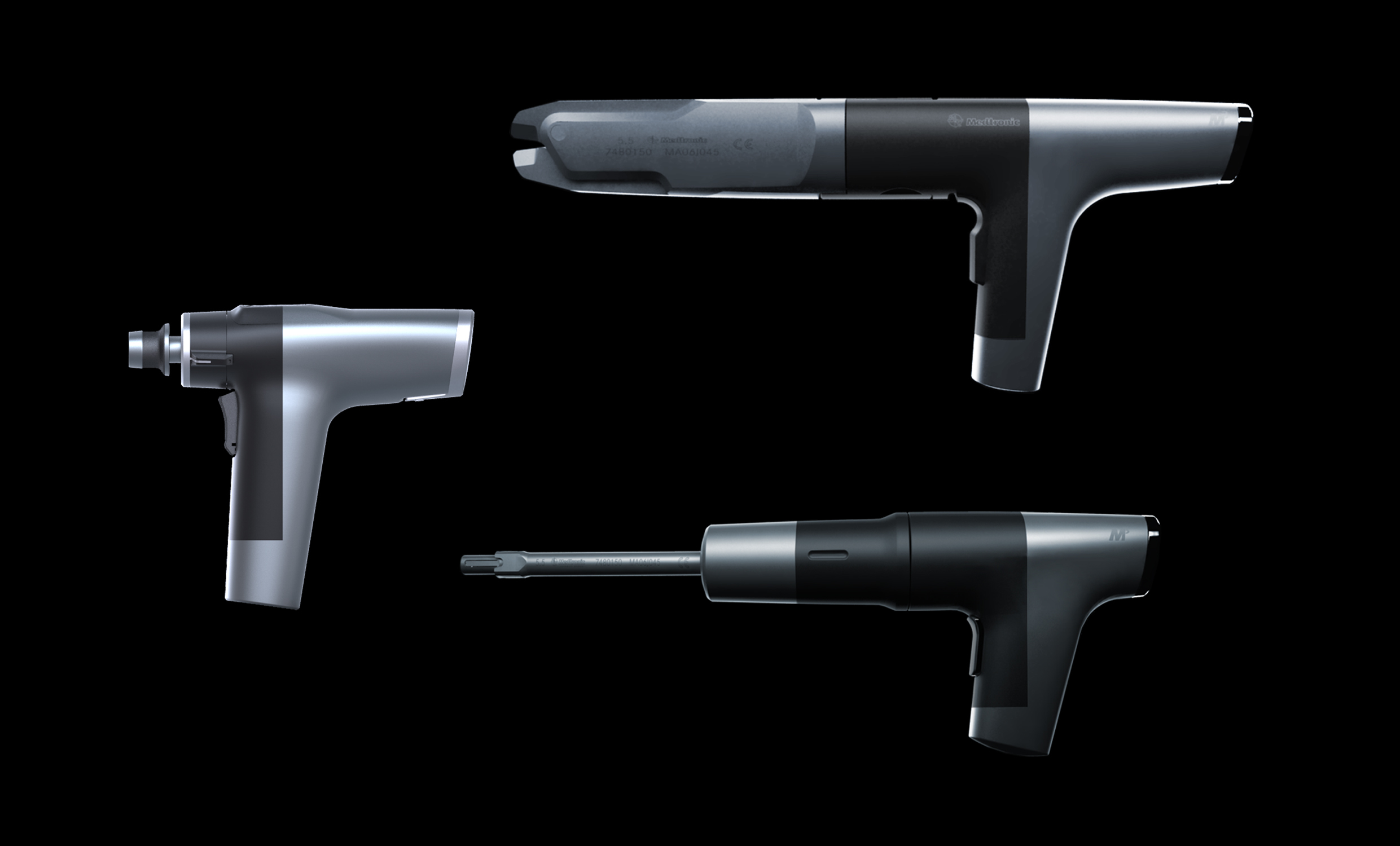
Spinal-surgery company Medtronic partnered with IDEO to design, engineer, and build POWEREASE, a next-generation surgical instrument system that revolutionizes the techniques used to perform spinal surgeries. The result is a system of powered medical tools created specifically to meet the needs of surgeons during reconstructive procedures.
By integrating cutting-edge industrial design, human-centered research findings, and boundary-pushing engineering work, the team was able to solve some highly technical challenges, like efficiently breaking off set screws while imparting minimal torque on the surgical construct in the patient, and seamlessly integrating nerve monitoring and image navigation capabilities into the instruments.
Medtronic’s initial tests show that when compared to manual instruments, the new powered instrument system significantly reduces the time and improves the accuracy of reconstructive spinal surgery procedures.

Thoughtless Acts: Going With Gravity
Thoughtless Acts: Going With Gravity. The intuitive ways we adapt and react to things in our environments

It’s yet another summer at our seaside house, and my nonna is heading to the gardens to pick up some herbs for her pesce al forno. She says that freshly picked lemongrass adds a completely new flavor to her signature dish.
At 12 p.m., she walks down the rocky stairs and heads to the herb bush she carefully planted 33 years ago, the same year she bought the villa and restored it to host our ever growing family tree. As I watch her, I witness something unusual that I have never seen her doing before.
She is literally hanging from the muretto, or wall. Nonna is 94 and not really a geriatric athlete, so I run towards her. “Tutto bene, Luca!” she says as she bends back up. She tells me that this is ‘her new way’ of picking herbs in the garden.
With age, small actions become a big effort, so leaning down or bending started to become an obstacle to her recipes. The dwarf wall serves the purpose of protecting her back from injuries and keeping her from falling. As she nicely puts it, “I use gravity to my advantage. At my age, you have to find ways around things, to keep feeding your family the way they deserve.”
Human-centered design requires us to observe human behavior with beginner's eyes, so that we can spot the innate ways people interact with the world around them. We call these intuitive and unconscious reactions Thoughtless Acts, and IDEO designers collect photos of them to inspire their work.
A Designer’s Daily Diary of Learning to Draw in VR
Practice may not always make perfection, but it definitely builds proficiency, as this new IDEOer discovered.
Drawing in VR is a whole new world—one that feels as challenging and daunting as drawing once felt. Luckily, having progressed through hard work in one artistic field, I now trust that the same steady pursuit can get me to a new level in VR.
I recently joined IDEO’s New York office, and part of my job is to keep current on emerging technologies. So I took advantage of our studio’s newly-mounted VR station and spent a week drawing in Tilt Brush, Google’s 3D painting VR app. Together with IDEO’s creative technologist, known as Fuzzy Wobble, I came up with a goal: to draw a 3D portrait of IDEO’s David Kelley.
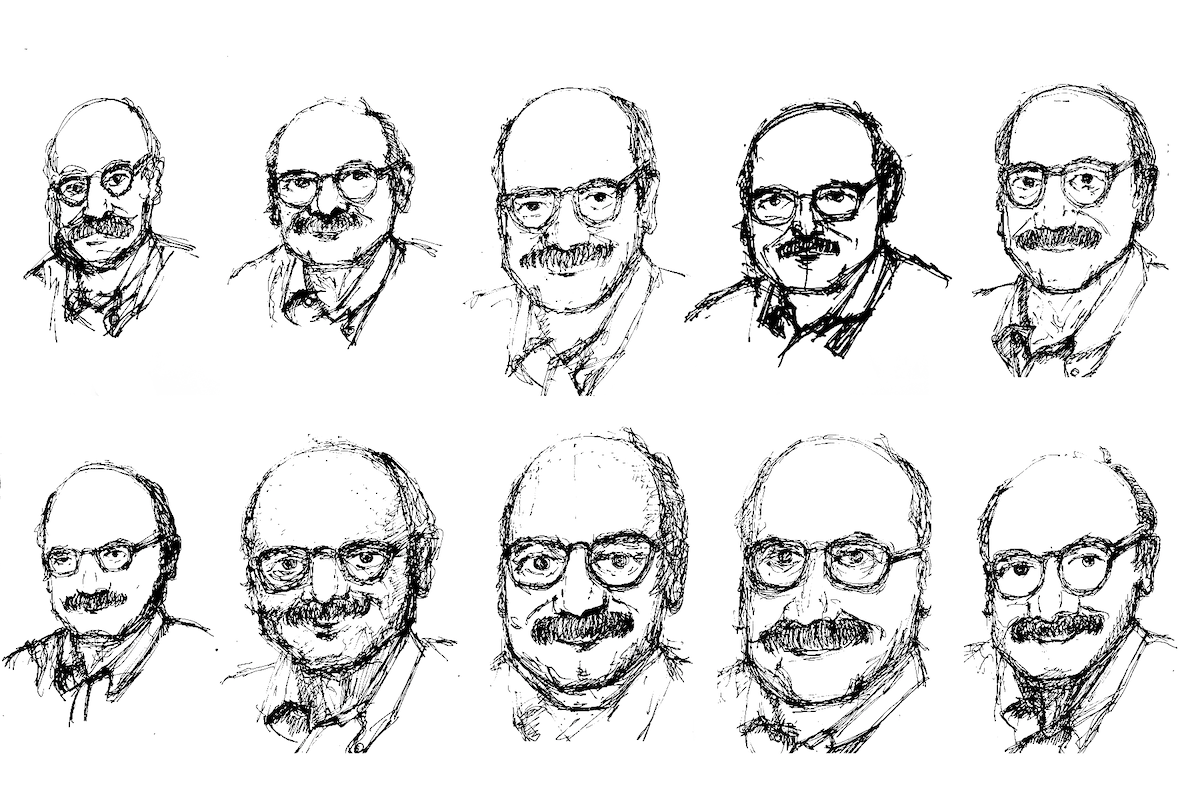
For anyone curious about making things in VR, this post will give you a sense of what to expect, the hurdles you may encounter, and the fun you can have.
Day 1: Getting started
Okay, it’s hard. And it’s almost nothing like drawing with a real brush (no matter what the ad says). The definitive difference is that there’s a whole dimension added to your brush strokes, so you are constantly falling into open space while trying to make what used to be a simple line on a paper. This poses a technical challenge, but as you figure it out, it opens the opportunity to instantly create lots of cool “dimensional” animations using different brushes.
Let’s review some of the fundamentals:
Uploading a reference image
My first step was to figure out how to put a photo of David Kelley into my VR bubble for use as a reference image. This can be done pretty easily within the Settings panel (gear icon) / Labs panel (flask icon) / Reference Images. That would be the first fundamental thing for bringing any graphical reference into your personal VR drawing lab.
Choosing a brush
After trying them all, I settled on a simple wire brush. I recommend it as a first step on the ladder of your immersive experience because in comparison to calligraphic and wide-angle brushes (not to mention special effect and animation brushes), it offers even sides and predictable behavior.
Using three-dimensional guides
As I mentioned before (and as you can see from the portrait progress so far), it’s quite unusual to think within the 3D space while drawing, so the first handy tool I discovered was guides. If you came from a graphic or web design background, as I did, you’ll instantly notice that nasty extra dimension added to them as well. A good way to start here would be to compose your portrait (or whatever you want to draw) as a set of shapes, similar to how you’d be taught in a classical art class, and then adjust them until it feels done.
Day 2: Getting better
The second day started with an attempt to combine multiple shapes (using guides) into what would resemble a human silhouette. I decided to get away from Kelley portraits for a moment and gain general confidence in drawing in VR by fooling around and building “robots.”
Simply put, you stack a couple of 3D guides on top of each other and paint over them, like I explained above. It was easier than I’d thought it would be, so after spending about an hour assembling those statues, I switched back to Kelley and here’s what I’ve got.
Day 3: Drawing without guides
Day 3 started with an attempt to break free from floating yellow bubbles and get a little bit more real. I browsed Google Poly Gallery for some inspiration and came back with the above. It still looked far from good, but I finally felt some progress in terms of confidence and drawing without guides. The next challenge was to learn how to properly fill my surfaces without creating a total mess.
I hope the following sequence of GIFs shows some progress:
Day 4: Finding new applications
Since there was only one day left before the conclusion of my little experiment, I decided to try out more brushes than just the “wired” one, and I must say, renderings of those were executed really well within Tilt Brush. My doodles instantly got more texture, depth, and light reflections without any additional settings on my side.
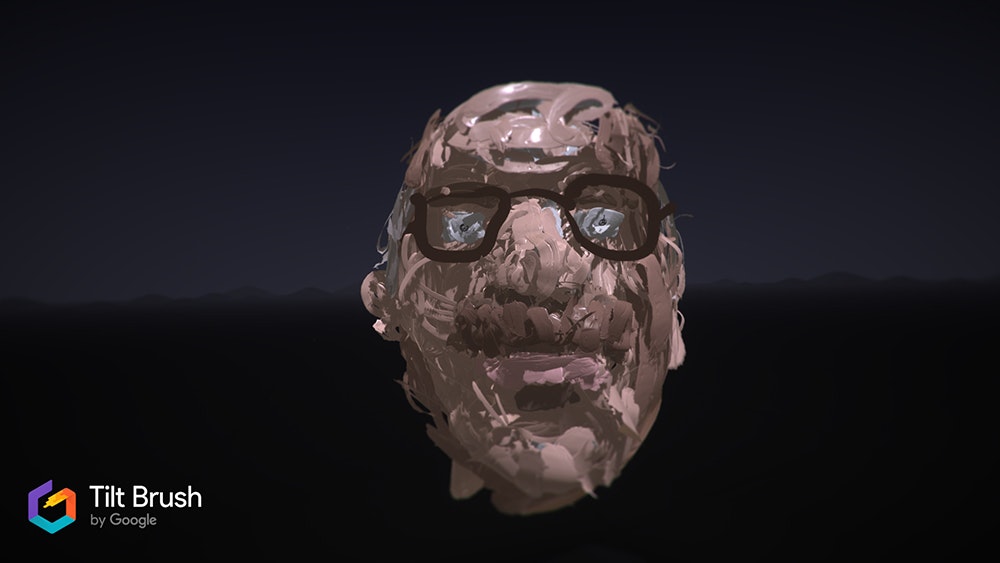
My takeaway
Disregarding the fact that my drawings didn’t get anywhere close to perfect in the first week, I’ve had lots of fun drawing in space—an experience that was practically unavailable to anyone without a spacious drawing studio and a Matisse-like drawing setup prior to VR headsets. To build on top of that, I can’t help but to mention that VR drawing quite effectively stripped the 3D creation experience from its clumsy and complex environment, switching its engineering component into a purely artistic one, and making an entry point that’s surprisingly easy for everyone. That may sound optimistic but that’s exactly the path that graphic design or photography made through the last century—from being an exclusive skill that only few could master to being something that everyone can try and start getting better at.
I used to think drawing was hard. Maybe because I was bad at it. But it’s my personality to court challenge, so at some point I decided to commit to improving my skills. I attended drawing classes and worked with a personal tutor to develop a daily drawing habit, and while I wouldn't say I think drawing is easy now, I'm more comfortable with it than I was. So I've decided to reset my learning curve to zero and try mastering a new medium: drawing in virtual reality.
If You Can’t Have Fewer Meetings, Have Better Ones
Our best tips to help you design a non-boring meeting (yes, it's possible)
At IDEO, we like to breathe new life into the mundane with design. In an effort to shape a new paradigm of meeting-dom, here are some of our best resources on making your next conference-room gathering stand out—in a good way.
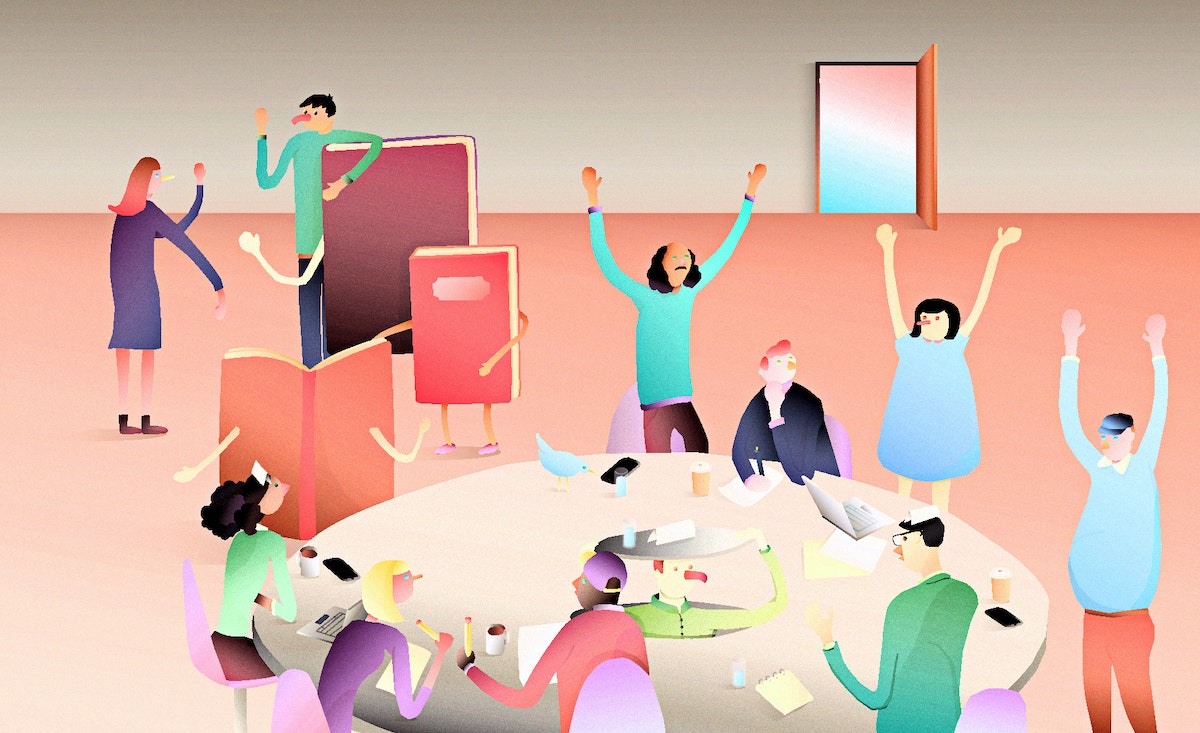
1. When you want to kick things off with a bang
Stretch! Sketch! Dance! Build in a few minutes for a new opening exercise and you’ll have a team that’s fully present and ready to get down to business.
READ: 6 Ways to Kick Off Creative Meetings
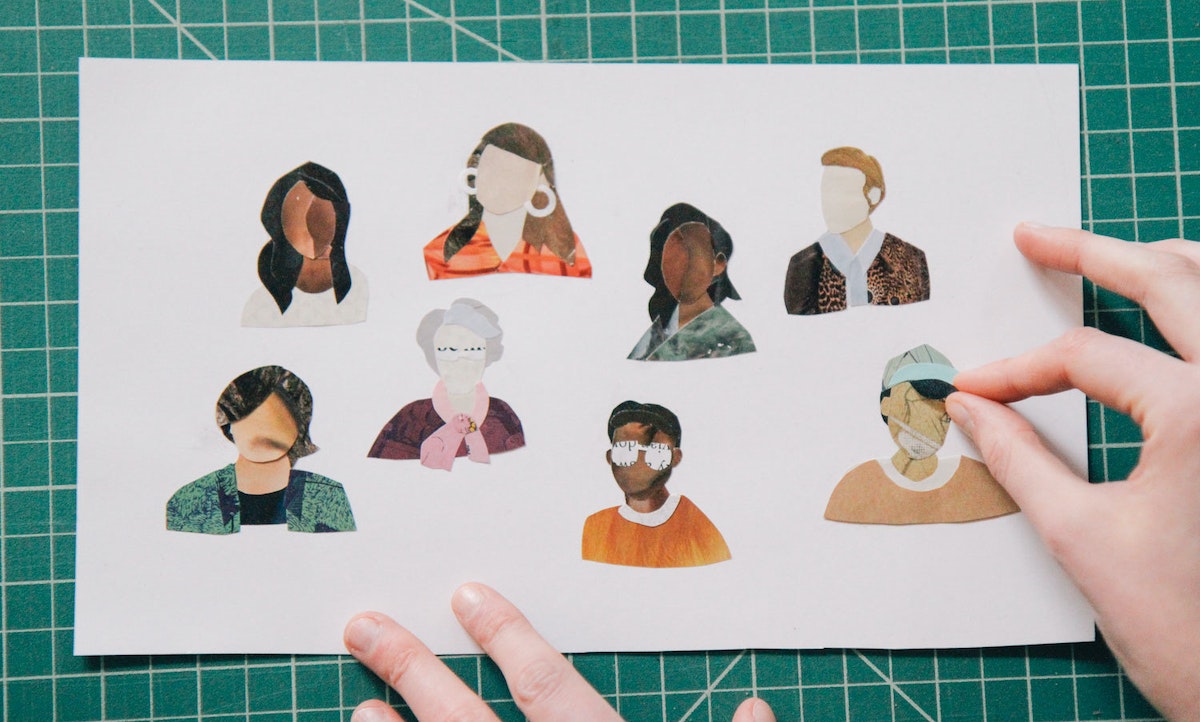
2. When you have a mixed bag of introverts and extroverts
An IDEOer once called the San Francisco space an “extroverted office full of introverts.” If you have a team of folks all across that spectrum, these exercises will strike a balance between team-together-time and solitude.
READ: 5 Brainstorming Exercises for Introverts
3. When you want people to really get to know each other
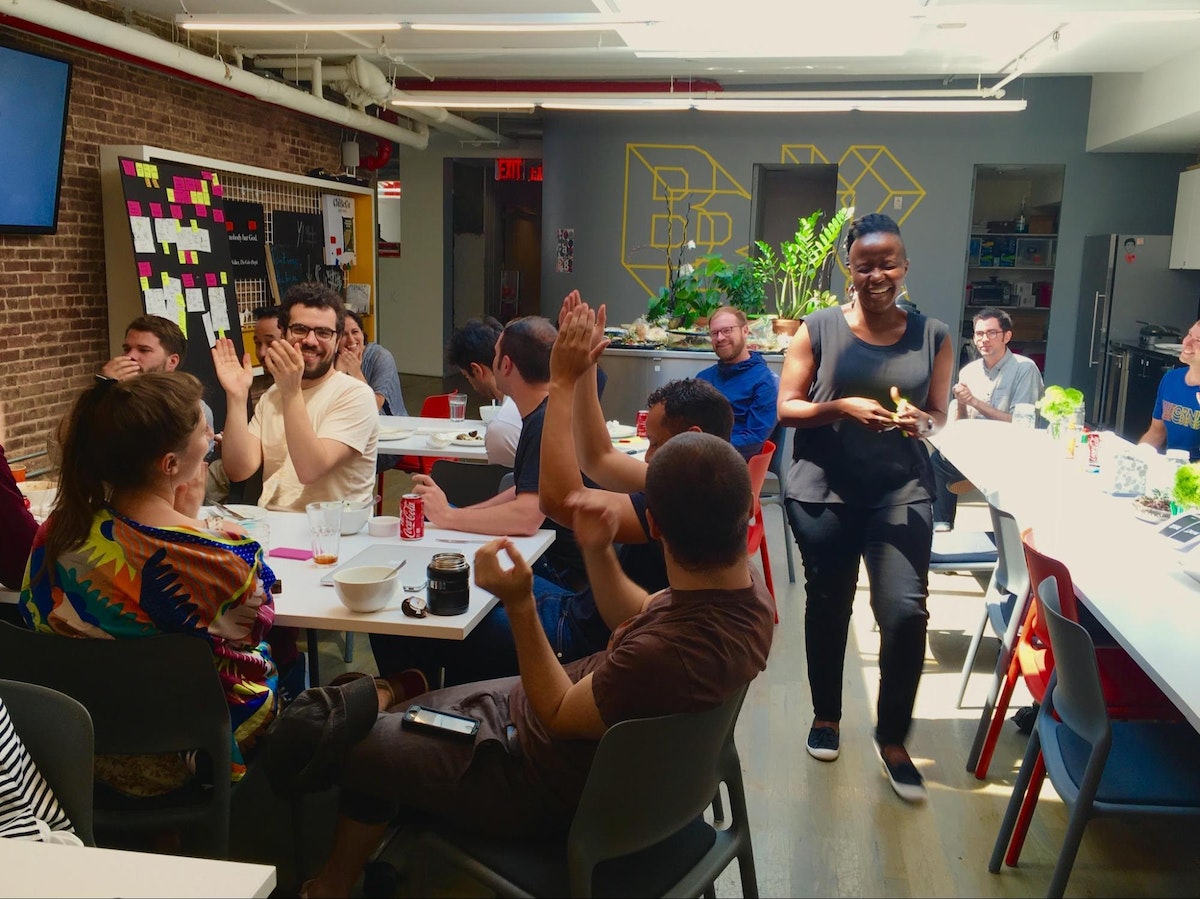
Whether bringing together a brand new team or sitting down with old colleagues, a jam-packed room can make for an overwhelming and impersonal experience. Ditch the canned icebreakers and try one of these instead—any of these exercises will help reveal your group’s commonalities.
READ: 5 Exercises for Breaking Down Barriers
4. When morale needs a boost
Do any of your meetings have a jingle? Didn’t think so. Reset your whole meeting philosophy with some out-of-the-box tips.
READ: How to Design a Meeting That Doesn’t Suck
Meetings. Maybe you’re in one right now. (Are you paying attention?) Maybe you have one in ten minutes. (Are you prepared?) We know them well—and we know they’re not usually the highlight of your day. In fact, they can be quite the opposite.
What a Computer Learns From Watching Hours of Cartoons
Exploring how an AI’s output is shaped by the data we provide it
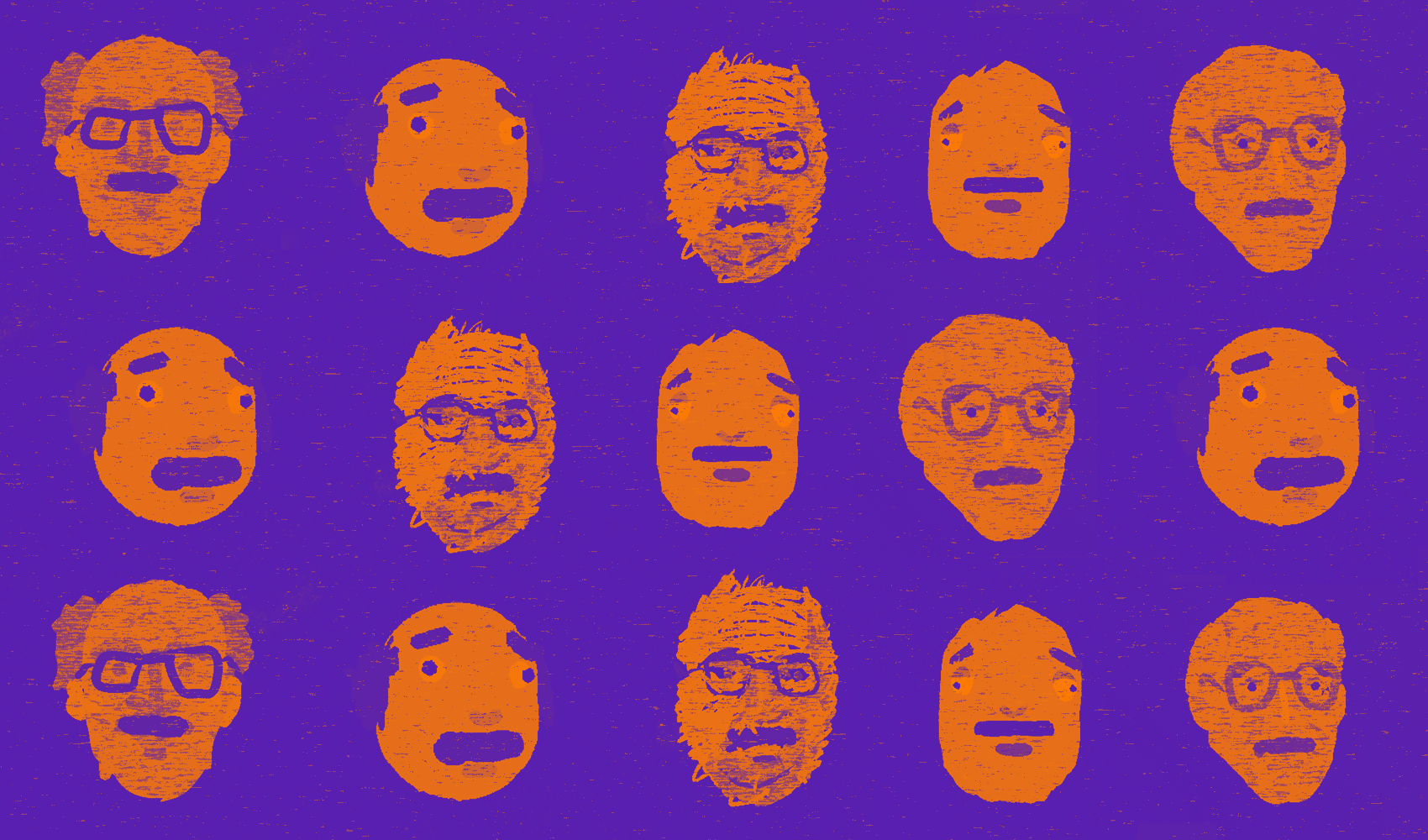
A GAN (Generative Adversarial Network) is a type of AI that pits two neural networks against each other, each one training the other to improve its ability. Unlike other types of AI, GANs don’t just recognize objects—they can create them. GANs borrow a feature from biology and pit two competing neural networks against each other. One network, the “generator,” produces synthetic images, while another network, the “discriminator,” tries to guess whether the images are synthetic or real. The discriminator learns from both synthetic and real images, getting better over time. As it improves, it challenges the generator to produce ever more realistic synthetic images.
During a bite-sized sabbatical from my day job at IDEO CoLab, I dove head first into building and exploring the visual potential of GANs. I learned a lot about the differences between how humans and computers see the world, and how an AI’s output is shaped by the data we provide it. As designers, it’s important for us to understand the limitations of emerging technologies likes GANs—or else we risk creating products that harm, rather than help, humans. Here’s what I created, and what I learned. (Want to learn how to set up your own GAN? Read more here.)
1. Choosing a dataset
GANs can generate convincing fake pictures of almost anything—faces, cats, and even anime characters. How do they do it? It all depends on the dataset. GANs need to be fed a large set of images (think tens of thousands or more) so they can learn patterns. For example, GANs that produce faces learn that they tend to be roughly round, have two eyes, one nose, one mouth, and possibly hair on top. They learn pixel-level patterns, too—the textures that make up skin, eyes, and hair.
The trick with GANs is finding sets of images large enough and diverse enough for a network to pick out patterns. There are plenty out there—like CelebA (hundreds of thousands of celebrity faces) or LSUN (images of scenes like rooms and buildings)—but these are all meant for this kind of research, and training with them tends to illustrate how successful GANs can be.I wanted to do the opposite. What if we try to stretch GANs to their limit, so that we can get a better understanding of how they work? In this case, we’re using images from The Simpsons.

2. Training the GAN
Once I had my dataset of images from the show, it was time to train the GAN. For those familiar with machine learning, read my step-by-step process here. For everyone else, here’s the gist of it: I installed an open-sourced machine learning software called TensorFlow on my computer, which I souped up with a hefty graphics card originally bought for virtual reality and gaming. I then used a series of tools to reformat and resize images from my Simpsons dataset.
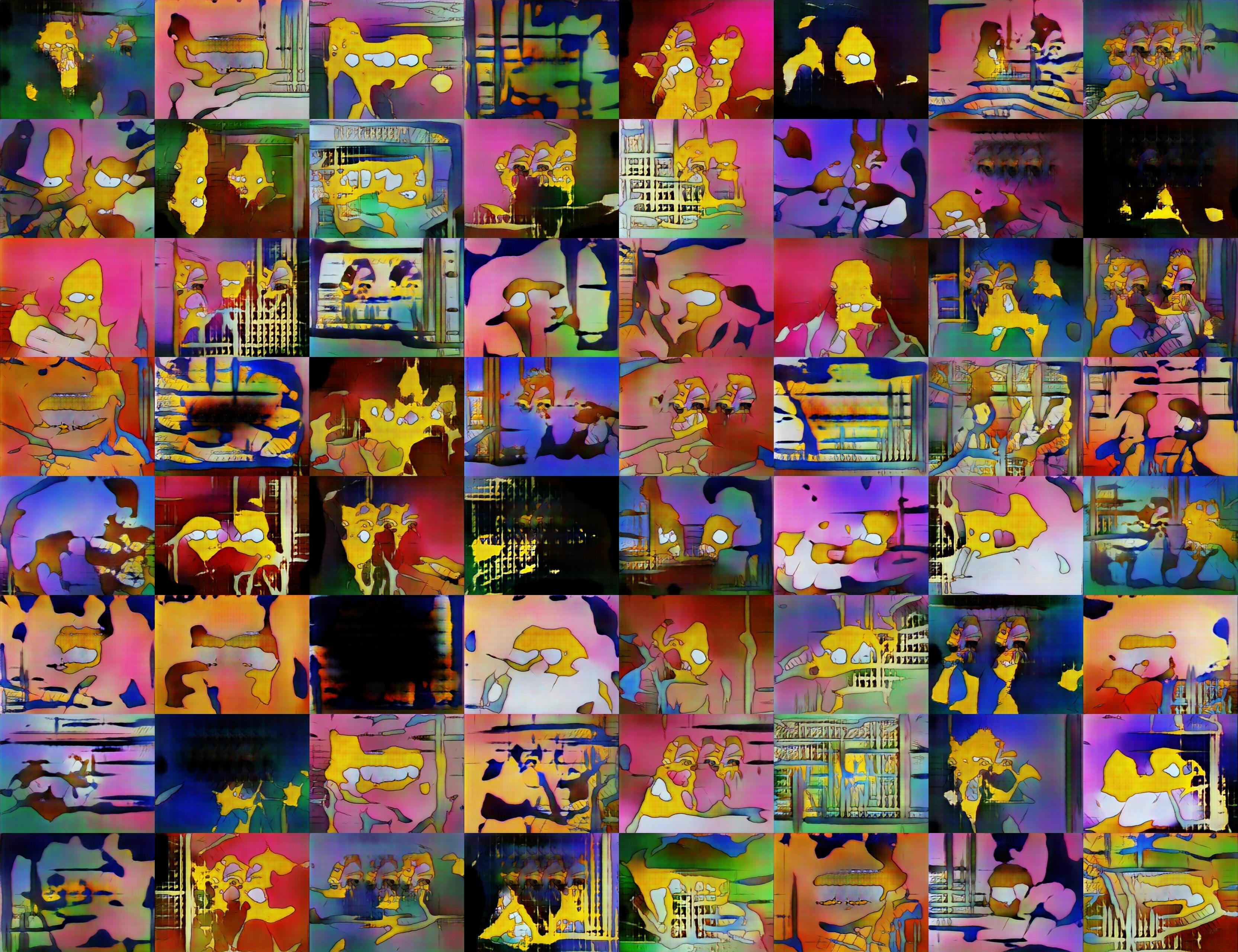
I trained the network overnight (sometimes over multiple days) and saved examples of images created by the generator network. The video below documents the learning process of the generator. With time, the images began look more and more like the actual Simpsons.
Scrub through the video to see the network’s progress. At 1:10 (about 13 hours of training), the first outlines of Simpsons eyes appear. At 2:00 (about 23 hours), the color scheme becomes noticeably brighter and figures start to emerge. At 3:00 (about 34 hours), there is less variation as shapes start to solidify and the networks reach some stabilization on what is classified as “real.” At 5:00 (about 57 hours) and beyond, the shapes start to vaguely resemble Simpsons characters, though the result is still too psychedelic and abstract for us to truly classify the images as real Simpsons frames.
3. Making sense of the output
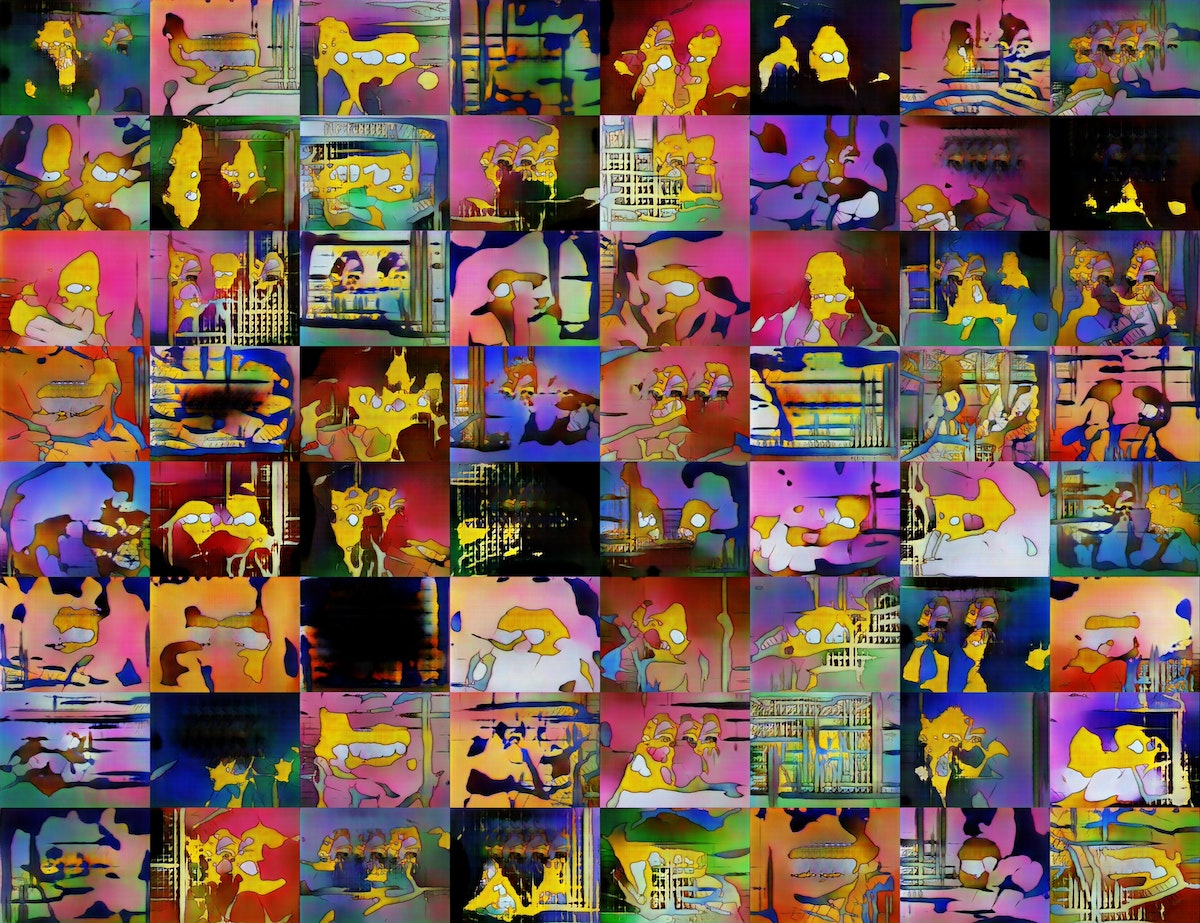
The GAN manages to generate very Simpsons-esque images, but they’re definitely not going to fool the human eye. What’s going on? GANs (and any neural network or machine learning method, for that matter) only learn patterns that are in the training data. As humans, we have a deep and complex understanding of what people and objects should look like, including Simpsons characters and scenes in the show. The GAN, however, doesn’t bring any preexisting knowledge. It has to learn everything from the raw pixel values of the images it sees, and more complex patterns take more examples to learn.
In this case, the GAN easily learns the color palette of The Simpsons and its simple, flat illustration style, and starts to learn the features of each character. With enough training data, it may learn more complex patterns, like complete images of characters, or which characters show up in which settings (like the Simpson family at home, or Mr. Burns at the power plant).
What’s it all mean?
The varied and strange outputs of these networks are a succinct example of both the promise and risks of building products, services, or systems with machine learning inside. They’re seemingly magical, learning from patterns in data without being told what to look for, but they’re also limited by that data. Imagine you came into this world yesterday and had to make sense of it all just from still frames of The Simpsons—how would that inform your thinking?
Biases in training data, intended or not, will be reflected in the output of the network, which, if embedded into a product or service, can codify the bias at an unprecedented scale. As designers, we are uniquely positioned to help with this problem. As Kate Crawford, cofounder of the AI Now Institute has said, the problem is neither a specifically social nor technical problem: It’s a socio-technical problem. Designers have a responsibility to understand the unique role data plays in machine learning, so that we can create networks that equitably serve human needs.
Learn more about training GANs on IDEO Labs. Special thanks to CoLab’s Adam Lukasik for his help wrangling GANs for this post.
Pop quiz: What the heck is a GAN? You might not have heard the term, but you’ve likely seen one in action. From generating images of fake celebrities, to creating training data for self-driving cars, and even recreating suggestive (and weird) nude portraits, GANs are everywhere these days. But what exactly is this bleeding-edge technology, and what can we do with it?

Lindsey Turner
I’m passionate about building brands, products, and experiences that help organizations show up with meaning and momentum.
I help organizations cut through complexity by shaping how they show up, through brand strategy, identity, and storytelling.
Working at the intersection of brand and business, I bring an editorial eye and a bias toward making—turning ideas into tangible experiences that people can understand, trust, and believe in.
My work spans government, healthcare, financial services, media, and consumer goods, from launching Gen Z-focused ventures to building innovation labs and reimagining legacy brands. I relish moments of ambiguity and enjoy translating across teams, perspectives, and priorities to move ideas forward.
I started my career in editorial and digital design, shaping cross-platform experiences and identity systems in publishing and agency environments. That foundation still shapes how I work today: I’m detail-oriented, collaborative, and overreliant on the Oxford comma. I hold a BFA in Visual Communication from the School of the Art Institute of Chicago.

Rachel Young
My work helps organizations see who their products aren't working for—and build the will and the tools to do something about it
For 25 years, I've asked the same question: Who does this design exclude—and what are we going to do about it?
My work spans human-centered strategy, inclusive design, and qualitative research, with clients ranging from Microsoft, Google, and Verizon to the National Science Foundation, and San Francisco Unified School District.
Before IDEO, I taught elementary school in East Palo Alto and spent a decade doing design work with social service organizations—where I learned firsthand what it costs people when systems are built without them in mind.
I am currently writing User Error, a nonfiction book about digital access and the design decisions behind it. I live in Oakland, California.

Brian Pelsoh
I lead with craft, ensuring our work is creatively excellent: rooted in deep human insight and imagination, while also grounded in the realities of business and technology.
My expertise spans brand, communication, and product design across tech, education, the arts, and social impact.
I believe great work demands both high-level vision and obsessive attention to detail, and only happens through collaboration.
I bring an inclusive, hands-on approach and a deep understanding of business, which enables me to consistently deliver excellence while always asking why.
Before joining IDEO, I worked at the brand firms Pentagram and VSA Partners. I began my career as a designer, leading teams at the School of the Art Institute of Chicago and the Milwaukee Art Museum. I hold an MFA in graphic design from Maryland Institute College of Art and a BFA in communication design from the Milwaukee Institute of Art & Design, and have taught at some of the best design schools in the US.

Tony Wong
I am responsible for IDEO’s long-term success in China and working with clients to use design as a tool to enable growth.
I am responsible for IDEO’s long-term success in China and working with clients to use design as a tool to enable growth. Specifically, I have helped Chinese companies design holistic brand solutions through the development of their products, communication, services, and innovation teams, and I have helped multinationals expand their presence and influence in China.
I advise global leaders on developing China-led innovation and capabilities.
In over 15 years in IDEO Shanghai, I have worked on projects that use design to elevate the quality of the experience of healthcare products and services, streamline processes that increase productivity, create spaces and programs that promote and enable inclusive communities, and build next generation mobility solutions that are planet-positive.
Before joining IDEO, I worked at Philips Electronics and the Electrolux Group in Italy, the Netherlands, and Singapore on a number of breakthrough commercial products. I am a member of the Young President Organization in Shanghai.

How to use AI as an editor, not a writer
Ed White shares how he uses AI as an editor—not a writer—to sharpen storytelling, rehearse ideas, and preserve the productive friction that makes creative work better.
Ed White has a rule he's tested on his own writing: hold yourself as the writer, and let AI be your editor. Ed is a Senior Design Director at IDEO's London studio, where he co-leads the firm's AI portfolio across Europe. Before IDEO, he spent 12 years as a writer and editor at the Financial Times, Wired, and Contagious. So when he talks about when to use AI for storytelling and when not to, it comes from two decades of crafting his storytelling skills.
In this episode, Mina Seetharaman talks with Ed about two specific tools he uses to keep AI in an editor's seat: a "roasting agent" prompted to critique his drafts without any sugarcoating, and a simulated audience he rehearses pitches on before the real thing. They also get into what Ed is hearing from design leaders at Anthropic, Lovable, Shopify, and Google Creative Lab about how creative work is changing, and why he thinks the friction of writing something yourself is worth protecting rather than automating away.

Building a personal AI for the messiness of life: Sida Li
Becca Carroll talks with Cue co-founder Sida Li about designing a personal AI for the messiness of everyday life—not just work. They explore how Sida stays anchored to human needs while navigating fast-changing technology, product tradeoffs, business-model experimentation, and the realities of building an AI company today.
Most AI products today are built for work—a space with clear problems and established systems. One founder noticed a gap: personal life is messier, harder to systematize, and mostly left behind by the AI boom. So she built Cue, a personal AI that lives inside iMessage and group chats, to go where the other tools haven't.
In this episode, Becca Carroll, IDEO's Chief Strategy Officer, talks with Sida Li, co-founder and CEO of Shared Context Lab, about staying anchored to a human need while the technology around her keeps changing shape, why she treats her business model with the same rigor she'd bring to a product, and what it feels like to build a company at this particular, disorienting moment in AI.
The conversation also gets into how Sida makes design decisions: the language Cue uses to describe itself, the tradeoffs behind building inside iMessage instead of a new app, and a real story about a business idea that didn’t pan out.
This is the second in a two-part series profiling founders from IDEO's Startups-in-Residence program. The first conversation is with Johannes Seemann, founder of Sooner, on designing GenAI for the emotional side of money.

Designing GenAI for the emotional side of money: Johannes Seemann
Designing financial tools around the feelings that shape money decisions.
Most personal financial tools are built to run the numbers and optimize towards a budget. While that works for some, most people experience money as a lived relationship that does not neatly fit into a spreadsheet. Johannes Seemann and Becca Carroll discuss why money is emotional before it is mathematical, and what a human-centered approach to building a generative AI financial product looks like in practice.

The curious leader's edge in uncertainty: Scott Shigeoka
How genuine curiosity helps leaders navigate uncertainty with greater confidence.
Mina Seetharaman talks with Scott Shigeoka, author of Seek and Head of Curiosity Cultivation at the Eames Institute, about what distinguishes genuinely curious leadership from performative curiosity, how power dynamics shape curiosity, and why practicing curiosity can restore energy rather than drain it.
Looks like you might be in search of something very specific?
Or reset the filters above and try another angle.
Here’s some random inspiration

Podcasts about creative leadership

Articles about the power of prototyping
