
.svg)



New digital ways to pay
A flexible, functional form of payment.
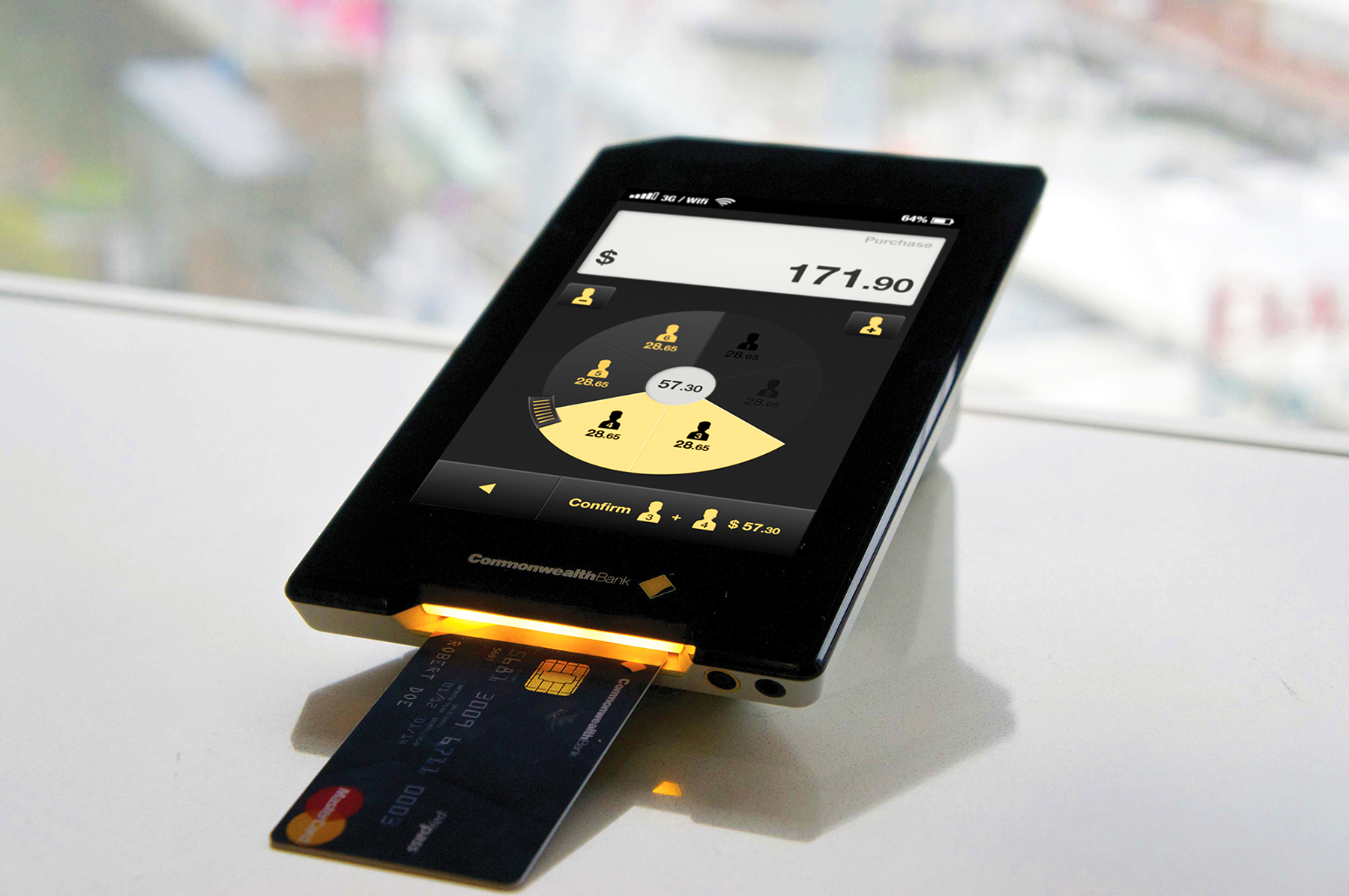
Commonwealth Bank of Australia was interested in helping customers and businesses build close connections. They believed the way to do this would be by creating richer interactions around different forms of payment. The bank approached IDEO to explore these opportunities, and the result is a new retail business platform—Pi—and a portable payment device—Albert.
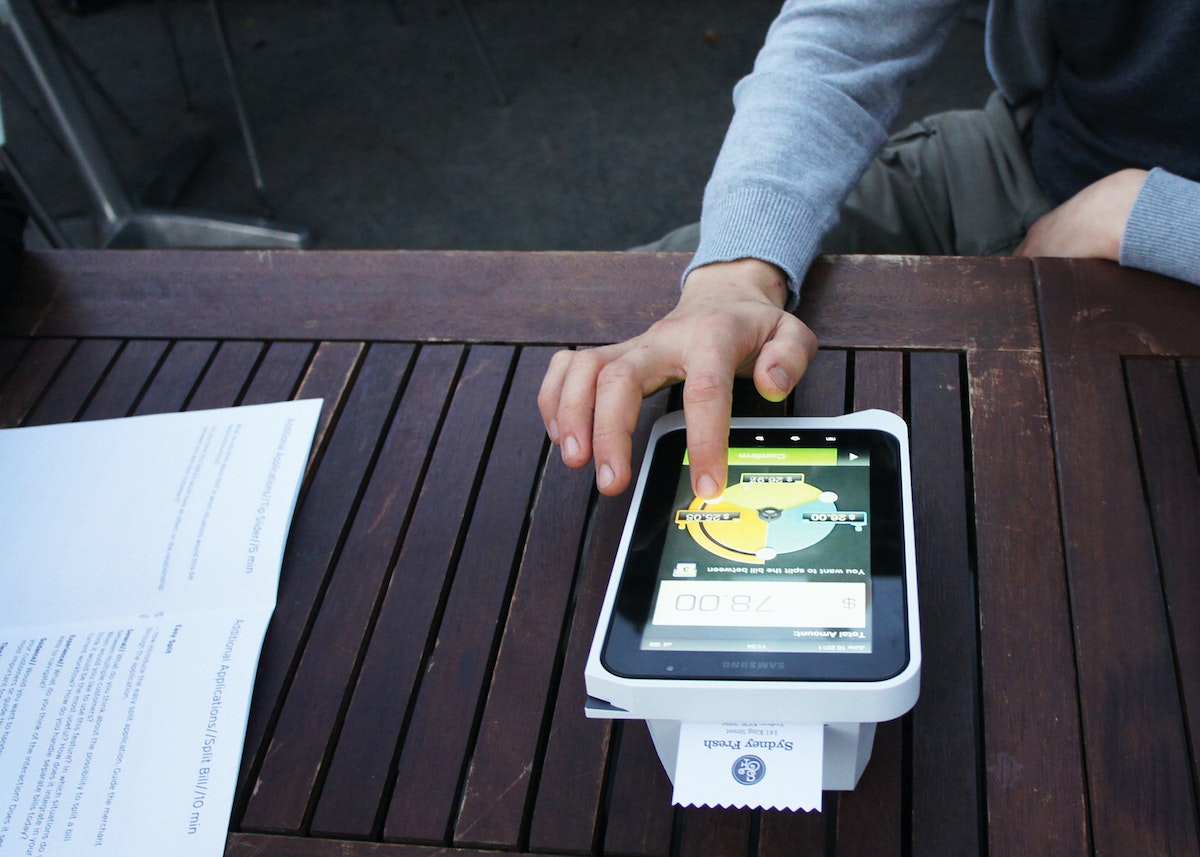
Pi brings a new level of flexibility, functionality, and customization to the face-to-face interaction between a cashier and a customer, improving everything from the process of splitting the bill in a restaurant to helping a guest find more personalized experiences at a hotel.
Insights
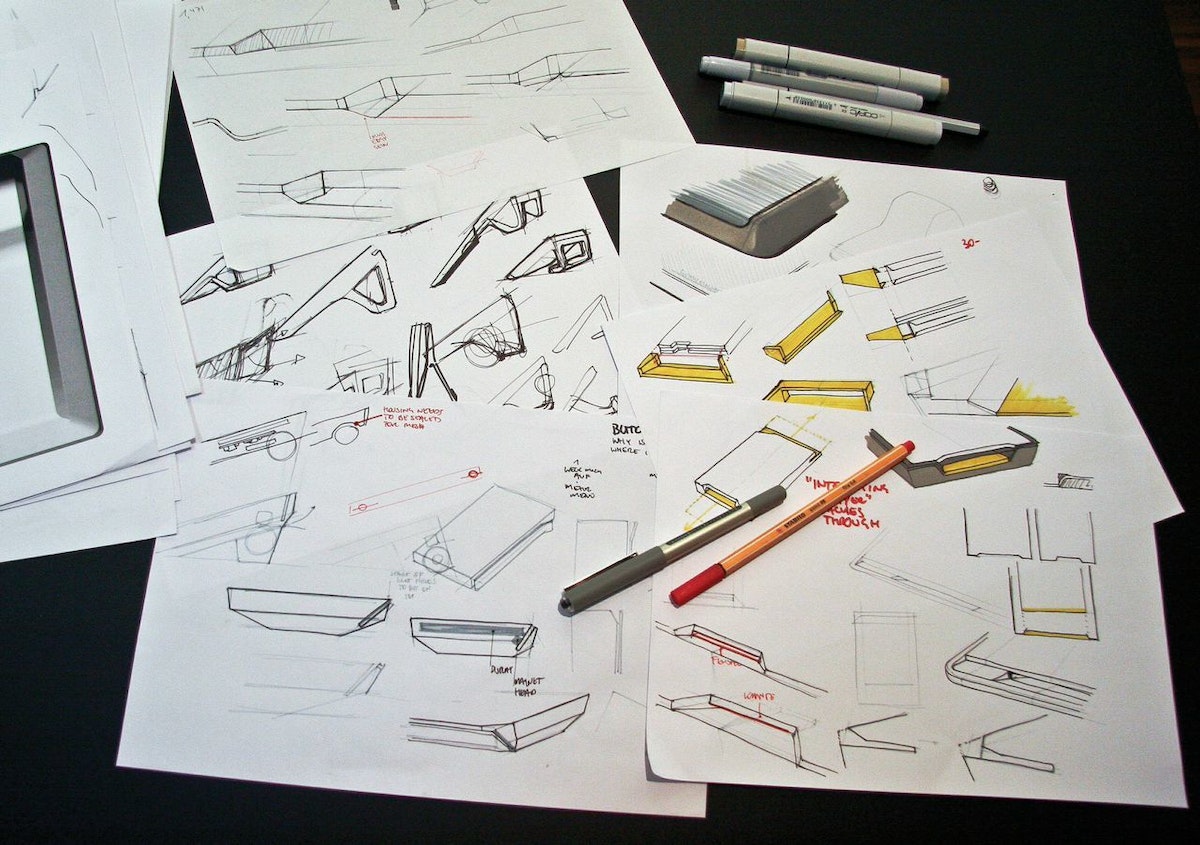
In the team’s research in Australia, the UK, and Germany, they found a few key insights that informed the design. First, they saw that an ideal platform should support the full spectrum of human behaviors around payment. Second, platforms can add value by improving the relationships among banks, merchants, and customers. And third, the payment experience should be customized to fit a specific setting, working one way in a luxury boutique and another in a gas station.
IDEO, CBA, and Wincor Nixdorf worked together closely to steward the design of Pi And Albert through product development and implementation, and to gather feedback from merchants during rapid, iterative cycles.
Results
The platform is flexible enough to benefit organizations of all sizes: Larger merchants can incorporate Pi as part of their existing network, while smaller merchants can grow their business using powerful business tools. And customers of all kinds can easily access a variety of payment methods and helpful applications.
Albert offers a large touchscreen that’s intuitive to use, the safety of virtually encrypted PIN entry, and a variety of ways to access data connections. A large battery provides power when retailers are on the go, and a modular housing means that Albert can be used in all kinds of situations. The device is built to handle current card payment methods but can also adapt to how cards might be accepted in the future, and even eliminates the need to swivel a screen from cashier to customer during the payment process.
Making health insurance enrollment easy
Designing a digital platform prototype for Californians to sign up for health insurance.
Forty million Americans became newly eligible for health coverage when the Patient Protection and Affordable Care Act (ACA) was fully implemented in 2014. Some enrolled in health insurance for the first time, while others were able to get better access to affordable health coverage.
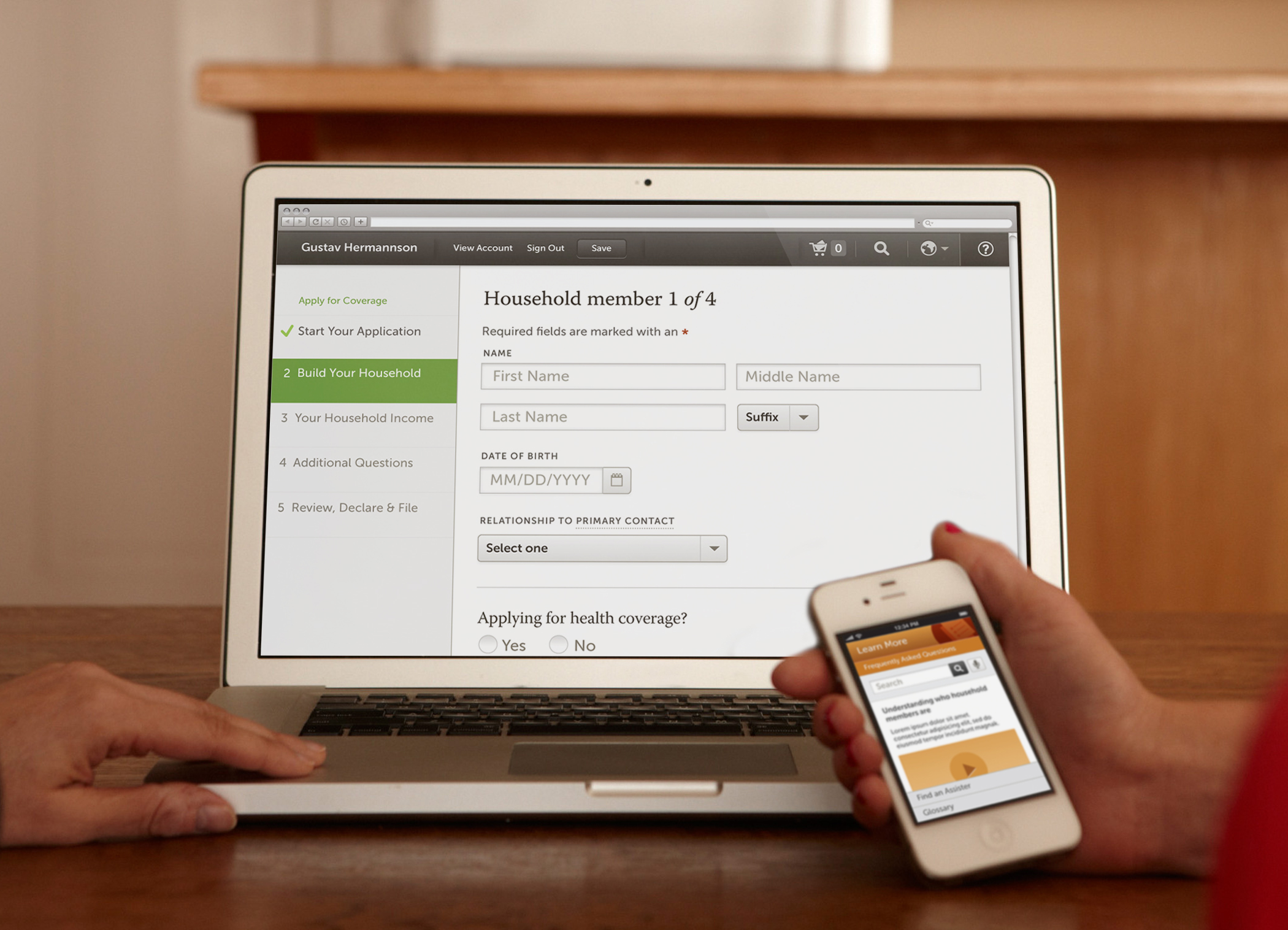
In preparation for the millions of applications, states were required to develop ways for people to sign up for health insurance online for plans that were operated by state and federal governments under the ACA. To help public and private agencies to meet the requirements, a coalition of nine national and state-based foundations, led by the California Health Care Foundation (CHCF) developed a digital enrollment prototype, and hired IDEO to lead the consumer research and design effort.
After a yearlong collaborative process, the resulting 300-page design manual and design reference prototype illustrates a customizable approach to public and private health insurance enrollment.
The flexible set of design standards developed for Enroll UX 2014 aims to make online health insurance enrollment simple, intuitive, and easy to navigate at scale.
Inspiring scientists in their research
Encouraging experts from different fields to collaborate on big ideas.
To encourage PhD candidates to think differently about how they tackle tough science problems, the University of California, San Francisco (UCSF) and IDEO embarked on a fruitful collaboration.
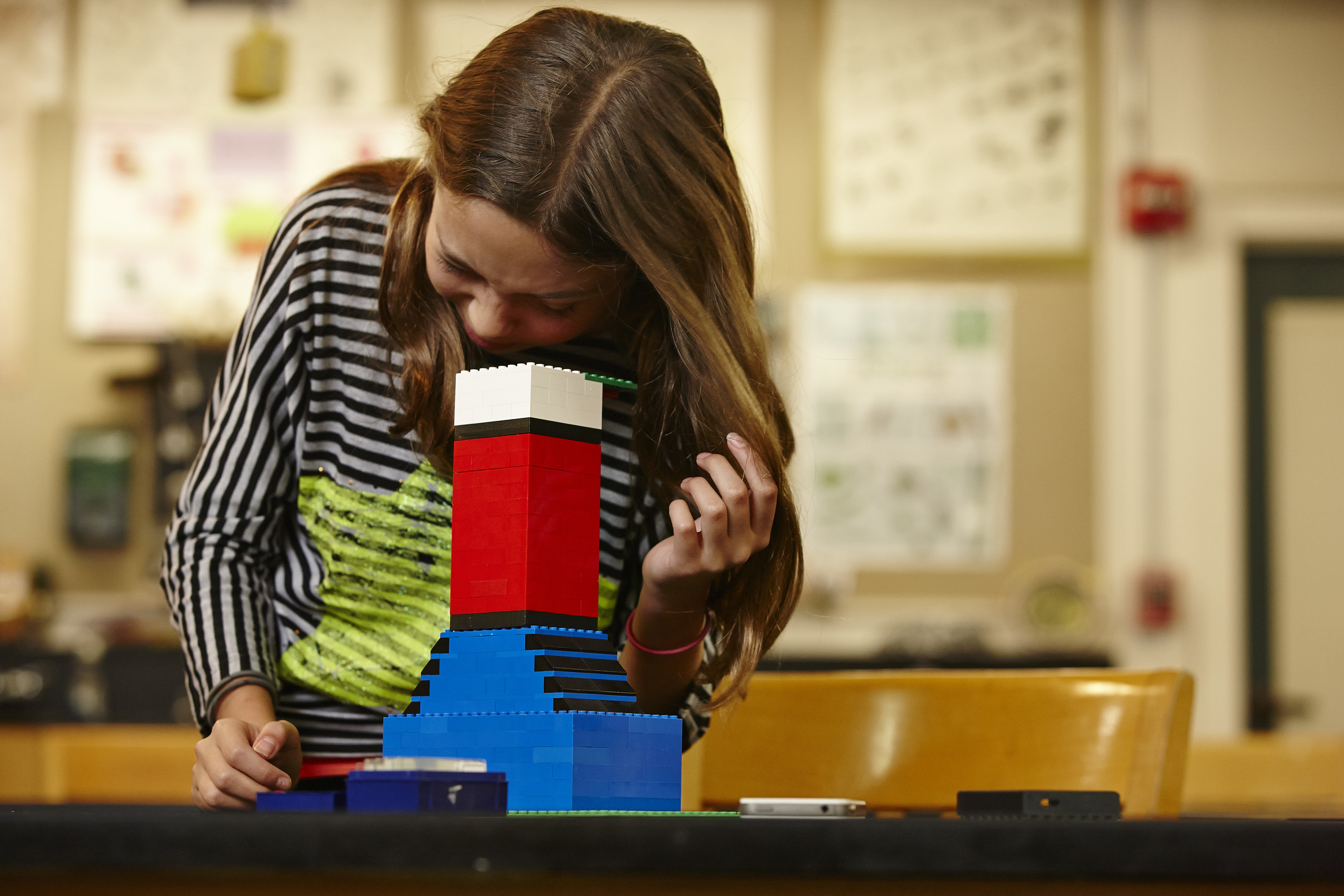
Three PhD candidates were tasked with the following challenge: Cultivate new audiences and uses for a microscope. Drawing inspiration from cell phone microscope CellScope, the trio arrived at a prototype that was less reliant on technology and easily disassembled and reassembled. How? By using the most basic building blocks: Legos.
Made of custom 3-D-printed parts and standard toy building blocks, the LegoScope, which functions as a microscope, can easily snap pieces in and out to hold different components. Both the device and the team-based process are now being used in various other campus projects to change how researchers think about conducting and advancing scientific research.
“The best work in the future is going to be done by teams of people with very different expertise, who know different things and think about things in different ways, who come together to focus on one big problem,” said Keith Yamamoto, vice chancellor of research at UCSF, who led the initiative.
Helping a tech product find its footing
A wearable device that measures concentration and focus gets a brand reboot.
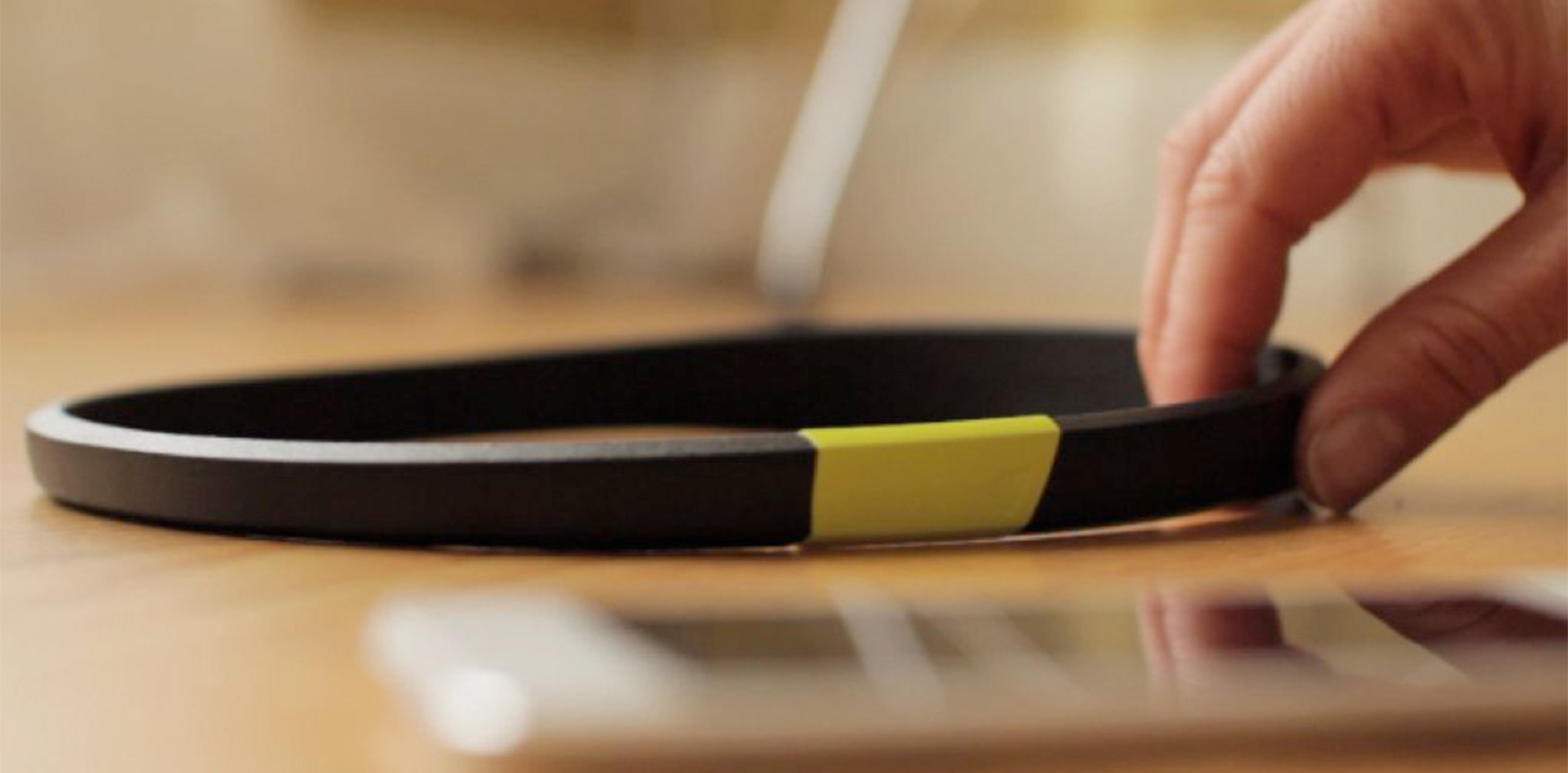
Arye Barnehama and Laura Michelle Berman wanted to take their invention—a headband that measures brain wave activity, focus, and concentration—to the next level. As a part of IDEO’s startup-in-residence program, Barnehama and Berman collaborated with IDEO on the product’s rebranding, hoping to refine and emphasize the product’s promise: When people improve their focus, they feel more mindful, confident, and productive.
With IDEO’s help, the company changed its name from Axio to Melon, delineated their brand, refined its product, developed its user experience, and prepared a Kickstarter campaign that garnered considerable press coverage. The new name, Melon, reflected the friendly, scalable character of the company. The name also suggested the intent of the product—using neuroscience data to inform a personal activity.
To distinguish Melon as a standout in the crowded quantified-self category, IDEO designers made the logo a faceted orb that references the gear-shifting mind, with “Melon” written in a distinctive font born from that same logo. The team went with fruit colors—cantaloupe, honeydew, watermelon—to evoke the sweet, refreshing experience the Melon headband promises.
Together, the Melon and IDEO teams also developed an app that shows increases in concentration after performing certain tasks and features a game in which you “fold” origami through mental focus to hone concentration.
Melon’s new brand strategy and UI set it apart from your typical fitness tracker, engaging the user in an elegant, joyful, and customized experience with every interaction.
Melon: a headband and mobile app to help you measure focus.
Our Top 10 Stories of 2017
The stories our readers loved this year
And while we're at it: The holidays are a time for gratitude, so from the entire Octopus team, a heartfelt thanks for stopping by. We can't wait to bring you more stories about the design of everyday life.
Help us help you! Got a burning question that you'd like an IDEO designer to answer in the new year? Hit me up via email (octopus@ideo.com) or Twitter.
Miss some of the posts on this list? Sign up for our weekly newsletter to stay up to date with The Octopus in 2018.

1. 19 Things We're Dying to Redesign
Call it an occupational hazard: IDEO designers are always thinking about how to make things better. Here are 19 projects we'd love to get our Sharpies on. Read the story!
2. 5 Exercises That Break Down Barriers
Walking into a room full of strangers can be daunting. Try these exercises to move beyond the small talk. Read the story!
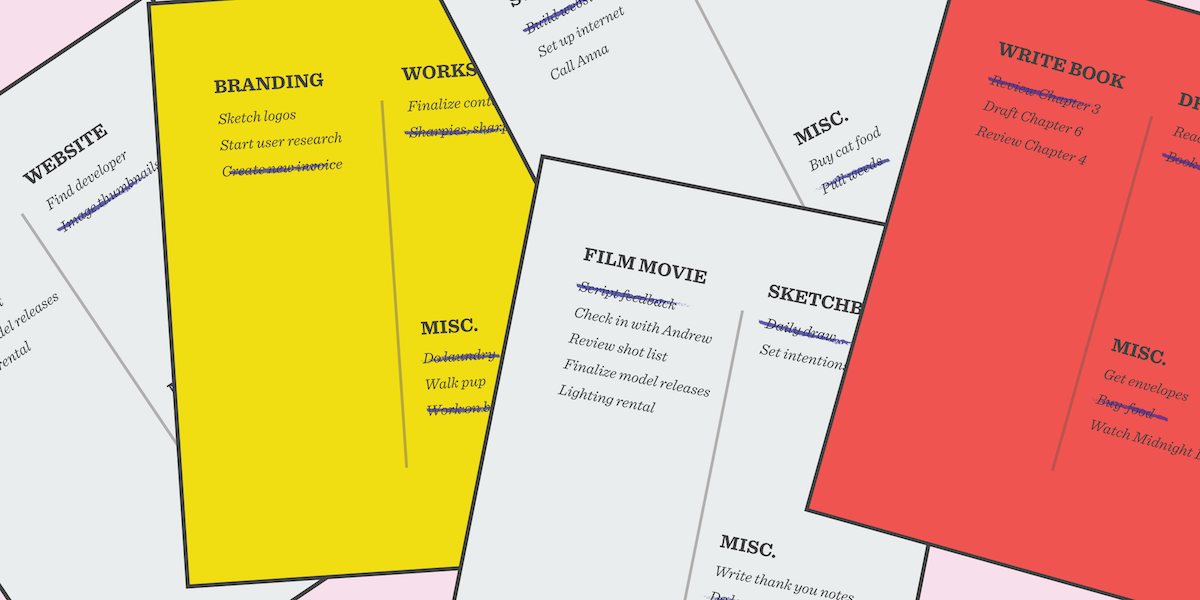
3. 'Sprint' Author Jake Knapp Built You a New To-Do List
For many, to-do lists are a necessary evil. So Jake Knapp, IDEO Fellow and author of Sprint, built a new one that you'll actually want to use. Read the story!
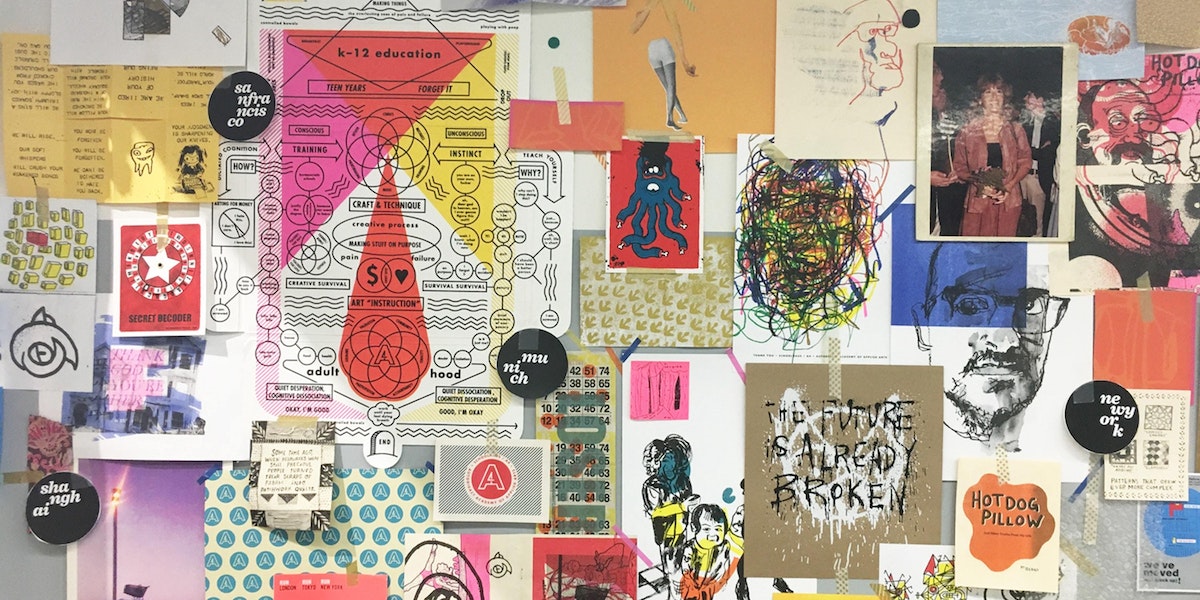
4. 13 Ways to Make Your Workspace More Creative
Businesses are finally catching on: Cubicles are out. But what do we replace them with? IDEO designers share tips to supercharge your space for creativity. Read the story!
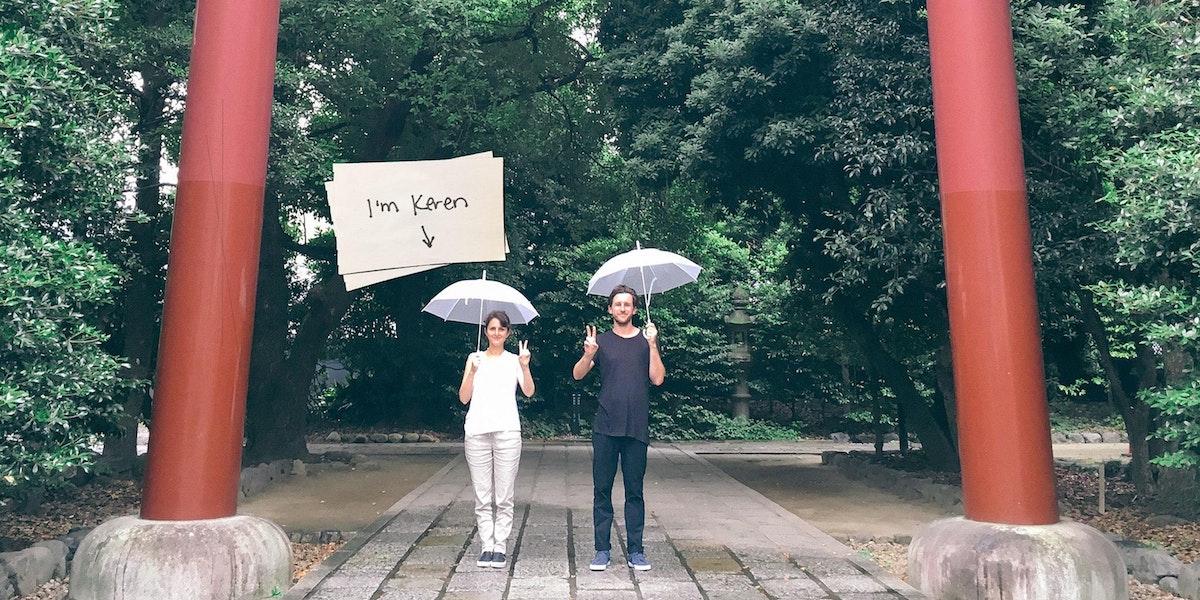
5. A Day in the Life of a Design Researcher
At IDEO, design researchers do more than just ask people questions. Follow one of our own through a day of field research in Tokyo. Read the story!
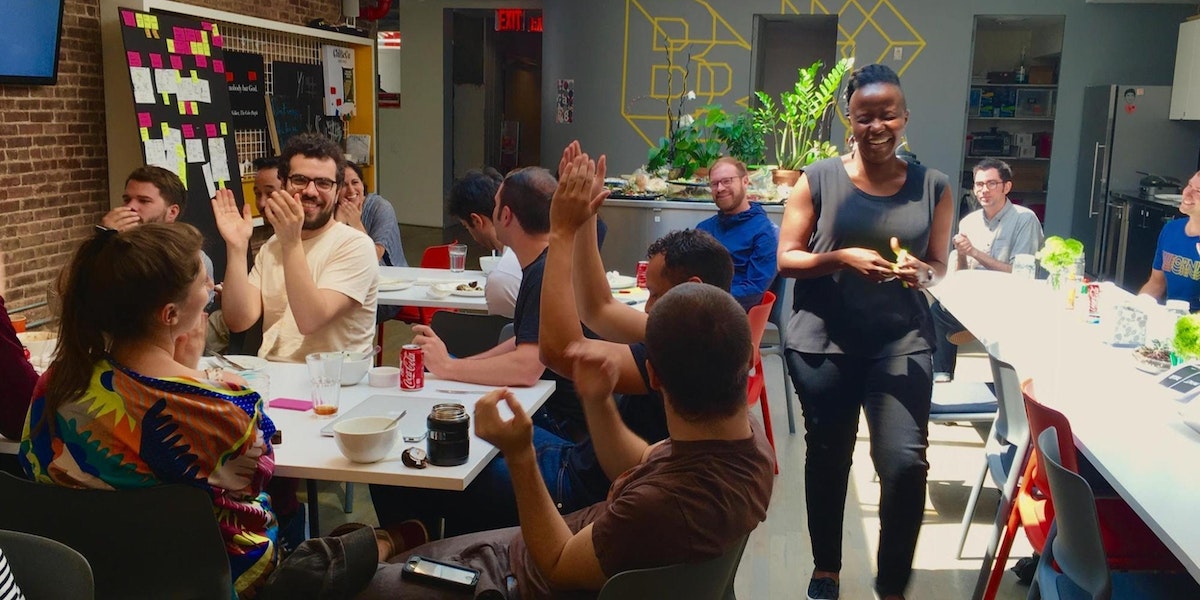
6. How to Design a Meeting That Doesn't Suck
We admit it: Meetings can end up feeling more like black holes in your calendar. But how do you design a meeting that truly inspires? Try these three tips. Read the story!
7. Why You Should Start Prototyping—Right Now
It's never too early to start prototyping. Learn how starting day one of a new project can inspire and excite your team. Read the story!
8. 3 Ways to Make Your OOO More Human
How might we take one of the most automated voices we still offer to the world—the email auto-responder—and make it more human? Read the story!
9. Why You Should Keep Making Stuff By Hand
In between tech projects at IDEO CoLab, Jacob Waites likes to turn off the computer and focus on using his hands—and you should, too. Read the story!
10. Smart Things That Will Save the World
Today's products were designed for the industrial era of browsing store aisles. If we want to create a more sustainable future, it's time to rethink that model. Read the story!
What a year! Inky the Octopus has wrapped her tentacles around some big topics, from creative meetings to sexy typography to blockchain to hip-hop. As we wave goodbye to 2017, we wanted to share Inky's greatest hits—the top 10 stories you read and shared most this year.

8 Ways to Redesign the Workplace
We asked IDEO designers how they’d improve work life
Here are a few of the many ways IDEOers want to help reinvigorate the modern workplace:
1. Increase employee feedback
Research in education shows that the best way to help students grow is to give them constant feedback on their performance. How can professionals be expected to grow if they only get feedback once every three, six, or twelve months?
Research by Harvard psychologist Teresa Amabile shows that a sense of progress at work stokes joy, creativity, and engagement. How could we adjust our meetings, our daily routines, and our cultures to make feedback an everyday activity? How much more trust could we create and conflict could we resolve if we created safe ways to help one another grow? It seems pollyannaish to say it, but I’d love to redesign feedback mechanisms to make us all better at what we do. —Joe Brown, IDEO San Francisco
2. Rebrand maternity leave
I want to redesign maternity leave—the brand, the experience, and the expectations.
Maternity leave is viewed as a pause or a step back in a woman's career, but I experienced it as a time of greater perspective and personal growth. I largely credit my mom, who asked me before my leave, "What are you going to do with your sabbatical?" Rather than correct her, I embraced the idea that this was time for me, too. As a result, I’m coming out of it more energized and inspired to lead, which is better for me and for IDEO. —Ashlea Powell Sommer, IDEO New York

3. Rethink retirement
I'd love to redesign the way the financial system, employers, and society think about retirement. Most of us know that retirement in its traditional, as-seen-in-a-401k-brochure form is either undesirable or unfeasible.
Instead of continuing to think and talk about retirement as a phase of life, what if we thought about retirement and the money we set aside for it as a modality that we dip into and out of as we change careers, take care of loved ones, take time off to travel, or work part-time? Instead of worrying about building up our net worth in order to have enough, we could all focus on something much more enriching—designing creative ways to amplify our net freedom throughout life. —Hailey Brewer, IDEO New York
4. Explode the org chart
Organizations are comprised of relatively mobile individuals with multidimensional capabilities who are responding to constantly changing contexts. But the prevailing “boxes and lines” org charts tell the stories of specialized, formal, and static machines. They really don't reflect the fluid way people work today. Let’s redesign the org chart to represent the modern worker who wants to learn, grow, and flex new muscles. —Mathew Chow, IDEO San Francisco
5. Make company cultures transparent
Company cultures can be opaque from the outside, and yet anybody who has experienced a good vs. mediocre vs. bad culture can tell you that it makes all the difference. How might we help more people understand the cultures of the companies they’re joining?
I’ve resorted to asking for one day to one week with the company, working side-by-side, before making a decision to join, which helps a ton but is not always an option. Trial runs like these can also sometimes be discriminatory; for instance, Harvard Business School used to require all potential professors to spend a year teaching, but found that this policy accidentally discriminated against women, who had more trouble spending a year away from family than men. There must be better ways. —Wendy Lin, IDEO Palo Alto
6. Bring UX design to enterprise tools
The tools that so many people use everyday to get things done are ugly and unfriendly and make them miserable—particularly in B2B settings, where employees have to deal with systems that are outdated, painful, and frustrating. I’ve noticed this in particular during work IDEO has done with diplomats at the Department of State—brilliant minds who have to spend a substantial amount of their time dealing with these tools and figuring out workarounds to trick the software. —David Boardman, IDEO New York
7. Flip sales incentives
We know that when sales is about the push, instead of the pull, it can have disastrous long-term effects on customers, communities, and sometimes the business itself. Too many folks in sales and account management positions work in conditions that encourage transactional, short-term, and business-centric behaviors and outcomes.
How might we move all sales—particularly in industries where there's an information and confidence asymmetry between buyers and sellers—away from a “fee for service” model and toward a “fee for value” setup? —Hailey Brewer, IDEO New York
8. Create 21st-century unions
Fred Wilson of Union Square Ventures recently wrote what I thought was a provocative piece asking, “What is the union of today?” Especially with so many gig economy workers and the rise of freelancing in Gen Z, how do individuals balance the power of the large organizations that pay them?
There are a lot of both positive and negative opinions—all strong and politicized, it seems!—about unions, but I think taking a closer look at the fundamental goal of unions, which is to give labor an equal seat at the table, can open up new opportunities in today’s labor context, maybe with the help of blockchain and other emerging technologies. —Wendy Lin, IDEO Palo Alto
Want to rework the workplace with us? Contact Maggie Howekamp (mhowekamp@ideo.com) at IDEO’s San Francisco studio.
Our dream for the future of work that companies become more flexible, human-centered, and purpose-driven—in other words, better places to work. But rethinking accepted ways of doing business isn’t easy (BTW, we’ve got some help on hand if you’re interested in learning the tools of organizational change). Our designers have a long wish list and some ideas for how to get started: What if we could reframe maternity leave as a time for personal enrichment? Or make navigating enterprise software less miserable?
Why Designers Need to Start Thinking About Blockchain
Bringing human-centeredness to a technology that is going to radically alter how we live, work, and play
Blockchain is a relatively new technology that will soon replace the underlying structure for a lot of the applications and services we use today, including systems for managing our finances, tracking our health, and determining how we connect, transact, and communicate with each other.
So, while it’s tempting to write off blockchains as something to leave to the coders, the potential human impact is too big to ignore. There will be user experiences, communications, and other completely new elements that will need to be carefully designed.
At IDEO CoLab, we explore the potential of emerging technologies like artificial intelligence and the Distributed Web by building prototypes in quarterly sprints. A crucial part of our mission is considering human-centered values in the process of building for the future—creating things the world actually needs, not just more technology.
Here are three reasons why designers need to start thinking about blockchain technology today:

1. It’s bigger than just cryptocurrency
Many people are familiar with cryptocurrencies like Bitcoin and Ethereum. (And for those who aren’t, here’s a quick video that explains the basics.) Blockchain is the technology that forms the underlying structure for these digital currencies, and gives them the unique qualities that make them different from conventional lucre like the US Dollar. That structure includes the ability to exchange funds directly with anybody, anywhere in the world, without the need for an intermediary like PayPal, Visa, or Citibank.
But what most people don’t understand yet is that blockchain technology is about so much more than digital coins. At its essence, a blockchain is a new type of digital ledger which records information in a publicly-verified, traceable way across a decentralized network of devices. What this means is information for, say, an app isn’t just stored on a privately-owned server somewhere—it’s stored across multiple devices that communicate with each other to verify user activity, rather than referencing one central authority, like a Wells Fargo or Google.
Blockchains offer a new way of tracking information, and their applications are broad. Not only are they expected to pervade the financial industry, they’re also being integrated into global shipping, parts tracking, digital identity, healthcare, and other systems. In fact, it’s hard to think of an industry that relies on technology that wouldn’t benefit from using a blockchain.
With a potential to reach millions—even billions!—of people, designers need to start thinking about how they can use their skills to improve the user experience for all of the products and services that will be built on top of this new infrastructure.
2. It will change how humans interact with one another
Blockchain isn’t just a technology, it’s also a state of mind. Well, okay, that might just be the Californian in me talking, but all exaggeration and hype aside, blockchains are going to have a big impact on our culture too.
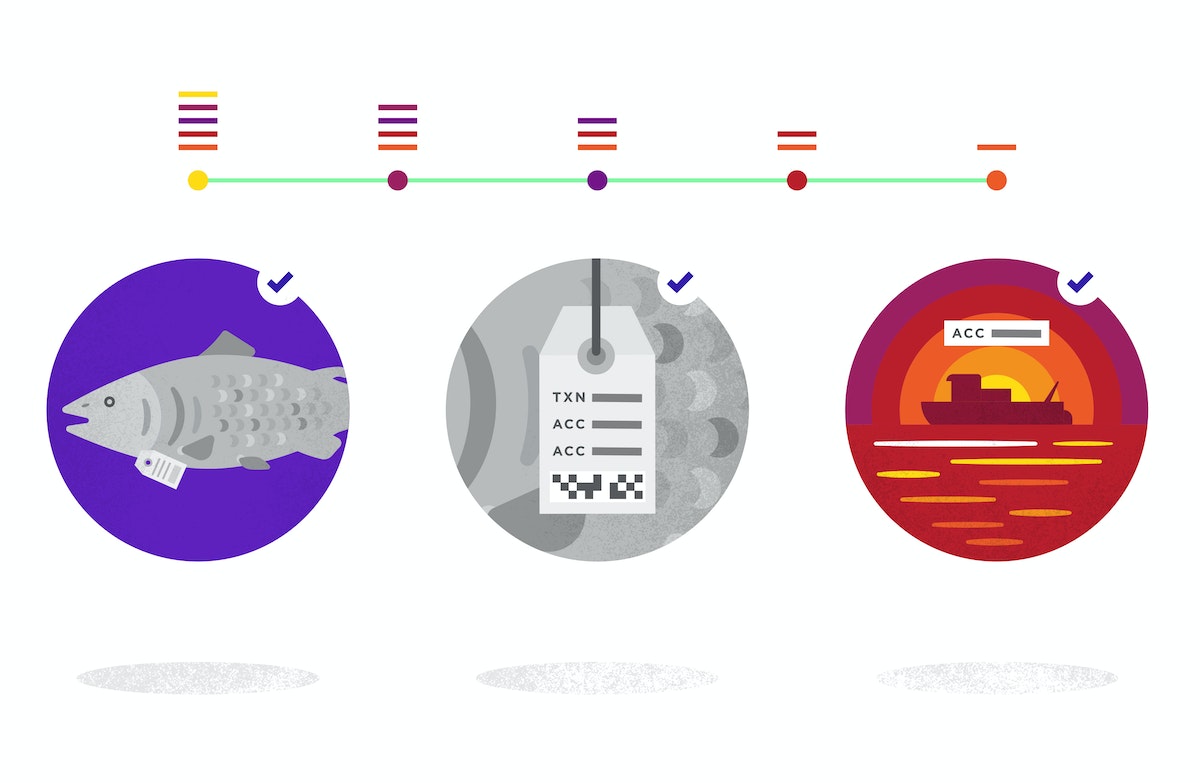
We’ll come to expect new things from our relationships with other people and parties, based on how blockchains manage our digital interactions. Mirroring the open, accessible code structure, people will expect the companies they do business with are open and accessible as well.
Consumers will demand more information about the goods and services they purchase. Companies will be held to a higher standard of data security.
Trust will become perhaps the most important design element in any system.
Imagine a world where all interactions are more egalitarian, transparent, and traceable—what would that look like? How might we design for this new world view?
(Check out this talk from CoLab’s Gavin McDermott to learn more about the 10 key landmarks of the decentralized web movement.)
3. Technology needs design more than ever
Our world is changing at lightspeed. As new technologies and tools are released daily, it’s easy to get caught up in the rapid pace without stopping to think about the human impact of what we’re creating.
We have a tendency to think of code and algorithms as neutral tools, but they’re not. Technology is neither good nor bad, it's how we apply it that matters. Everything we create has a human imprint on it—our assumptions, hopes, and fears are built into the systems we design (the bias in algorithms has been getting a lot of ink lately).
That’s why, moving forward, we’re going to need a group of people that advocate for the human experience—and human rights—as we develop these technologies. Especially right now, as emerging technologies like blockchain begin to take form, it’s important for designers to have a voice in that process from the very beginning.
How do you envision the designer's role evolving alongside blockchain developers? Let us know on Twitter or Instagram #blockchaindesign
Looking for ways to get started designing for blockchains? Check out this list of quick prototyping tools for emerging technologies from IDEO CoLab.
Blockchain. You’ve heard the word. Perhaps you’ve invested in a digital currency or two. But do you really know what the technology is and why it matters? It all sounds deeply technical—and it is. But it's important to understand this new tool, as it will have a big impact on our lives—radically altering how we live, work, and play.
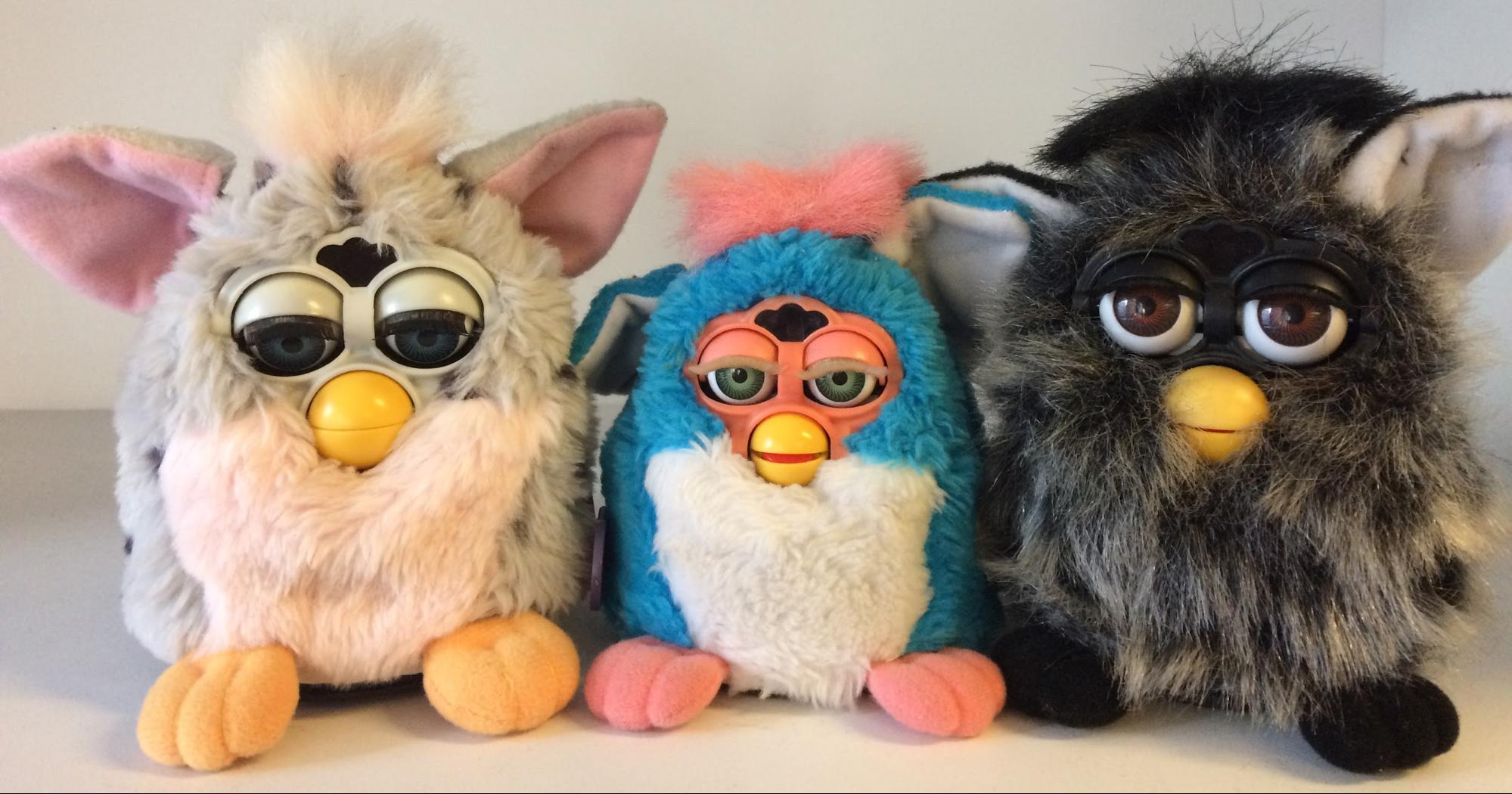
How to Hack a Furby
Turns out, with some small modifications, you can do more than teach the creatures English
We were joking about how Aaron's last name is pretty similar to Furby, the interactive Gremlin look-a-like toy from the late 90s. Someone suggested it would be funny if we modified a Furby so that instead of speaking Furbish (I think that's what people call the language Furbys speak?), it would repeat phrases in Aaron's voice. At first, it was just a joke, but then I mentioned I had a couple Furbys at home I'd been meaning to hack…
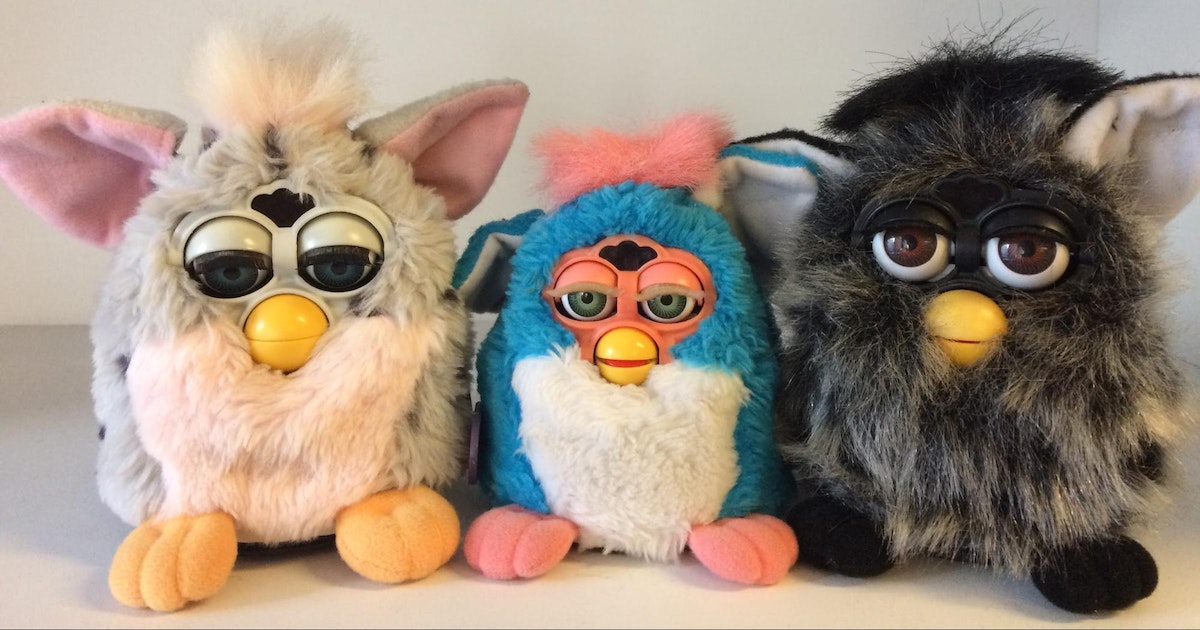
What’s a Furby?
For the unfamiliar, Furby was a coveted toy when it hit the market in 1998. Seriously. More than 40 million of the hamster-esque creature were sold in its first three years of production. Kids fell in love with it because of its child-like nature and the fact that it required feeding, nurturing, and constant attention. It also only spoke Furbish out of the box, developing an English vocabulary over time as kids talked to it.
Because the Furby was one of the first widely-marketed toy robots, it also appealed to the hacking community. In the early years, there were some news stories about whether the microphone inside Furby was listening in on private conversations, but thankfully, Furby does not use the microphone to record audio. Because of the ruckus over the microphone, there is a wealth of information on the internet about how to properly deconstruct a Furby, and how the Furby's insides function.
How I did it
The first step was to take Furby apart. Unfortunately, due to Furby's realistic personality, the process of deconstructing the Furby felt more like field dressing an animal. I had to delicately skin the toy so that I would be able to resurrect it later.
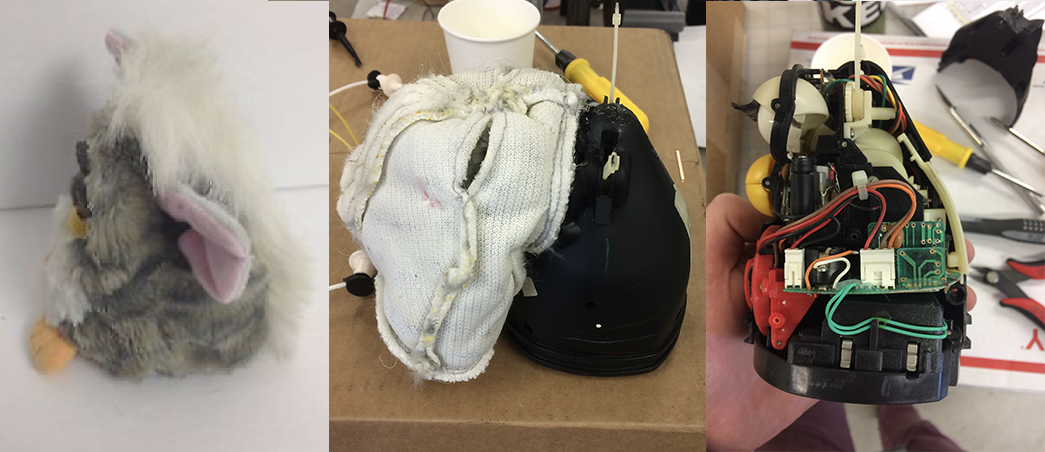
Once the Furby was dissembled I put together a vice to clamp down its skeleton; it almost looked like I was torturing it until it would talk...and in a way, I kind of was. With the Furby in place, I was able to access its inner circuitry and check out its voice box. After some initial probing, I turned back to the internet again and was able to find a full schematic of Furby’s insides, which meant I no longer had to guess and check what each part was used for and how they were connected. I could also disconnect the voice box.
After some reading, I decided that the best option for triggering voice playback would be to use the motors. Furby always moves and talks at the same time, so any time the motors are working, he should be talking. If I used any of its switches (belly, mouth/tongue, gyroscope, etc.) as an audio trigger, I would miss Furby’s unprovoked audio actions, the ones it does without user input. (Sometimes the Furby will start singing or fall asleep on its own.) Those actions are triggered internally, and I didn't have the time or resources to begin understanding how a Furby's brain works.
To build the the audio playback, I used a circuit board I created a few years ago that's a variation of Adafruit's wav/ogg audio fx board. My audio playback board is very similar, but it also includes the necessary circuitry for charging a connected lithium-ion battery. With this addition (and a voltage booster), I was able to power the Furby from a rechargeable source, rather than four AA batteries.
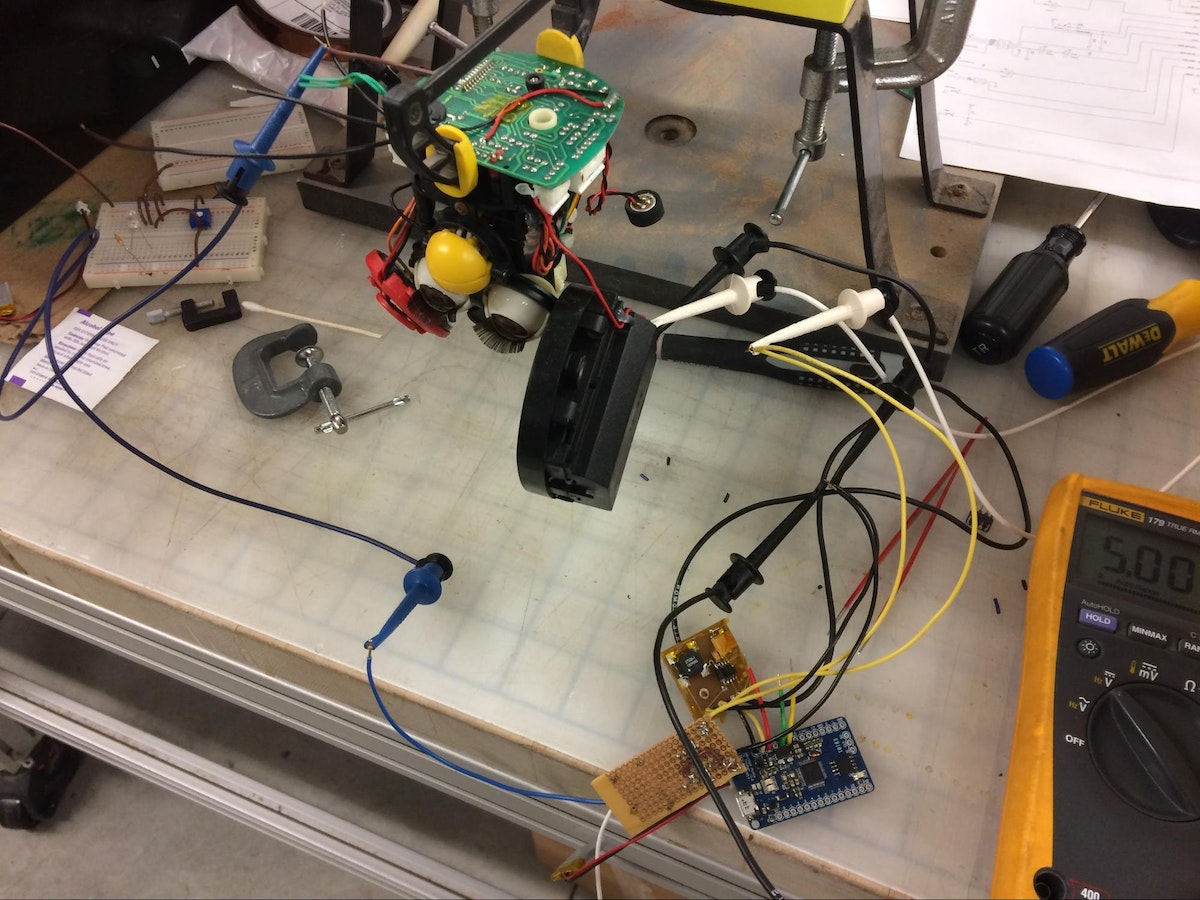
Now that most of the individual pieces were developed, it was time to play Dr. Frankenstein and connect the parts together to give Franken-Furby life.
I used the newly vacant battery holder space to store the Furby’s new guts...err circuitry. This was an ideal location because there were already holes to run new wiring up to the Furby’s body. I added a wire to break out the motor trigger line for monitoring. I was able to monitor the motor with a basic analog comparator (LM311), and use the output to trigger audio playback. I then amplified the audio output with a class D amp, before connecting to the Furby’s speaker with two more wires.
Last, but not least, I added a few clips of Aaron speaking at various events to the audio playback board. We may or may not have have played around with loading some more inappropriate vocals (i.e. creepy laughing and other Halloween-themed sounds) first for kicks, but things got a little too creepy, so that didn’t last long.
The result
We presented the Franken-Furby to Aaron at his goodbye party, and it was a hit! Unfortunately, because it was a goodbye gift, it's no longer possible to work on that Furby anymore. But I’m game to hack more Furbys. My next goal is to create a new version, perhaps integrating all the circuitry onto a single circuit board, and hopefully dig a little deeper into understanding how Furbys operate.
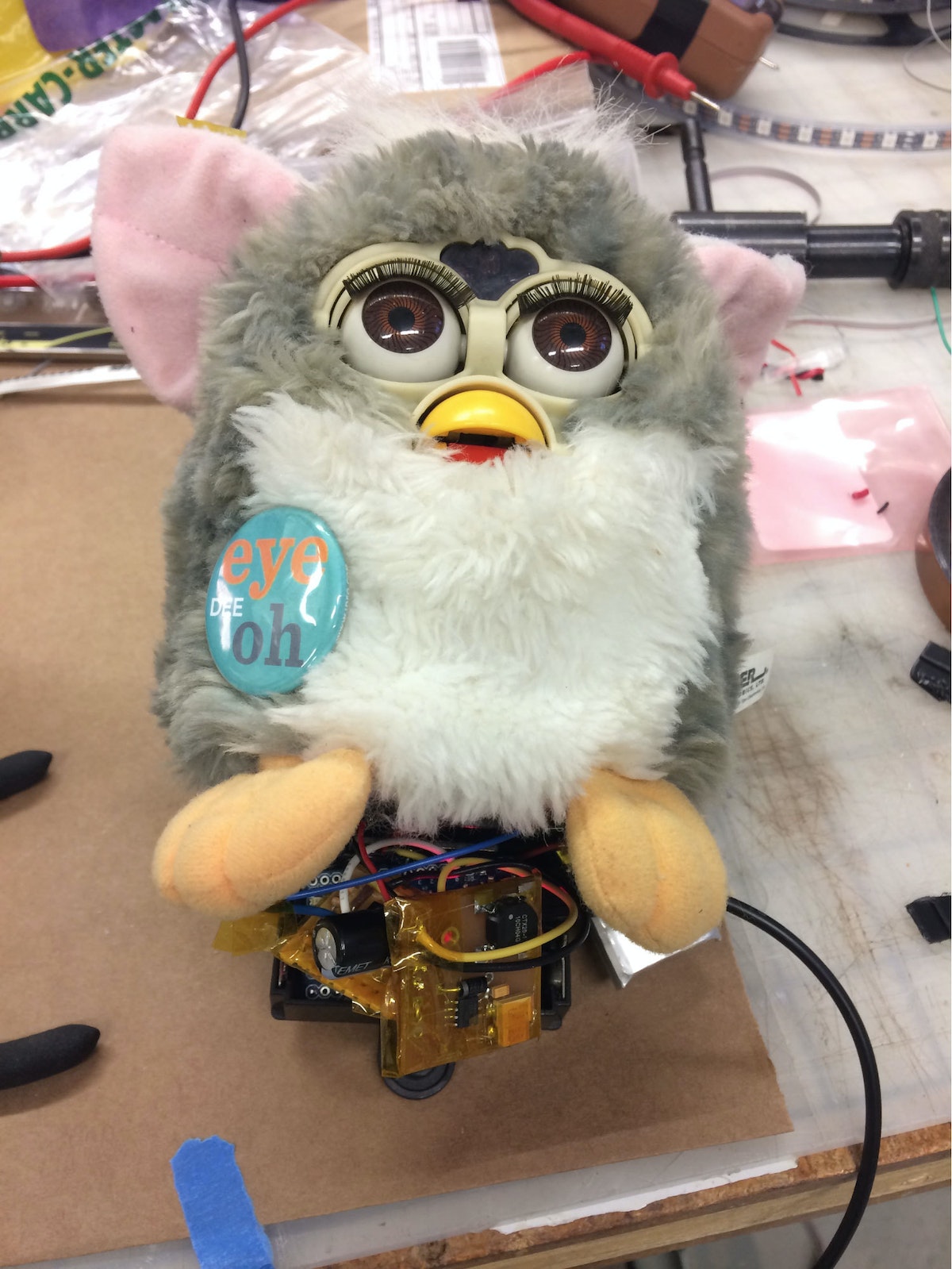
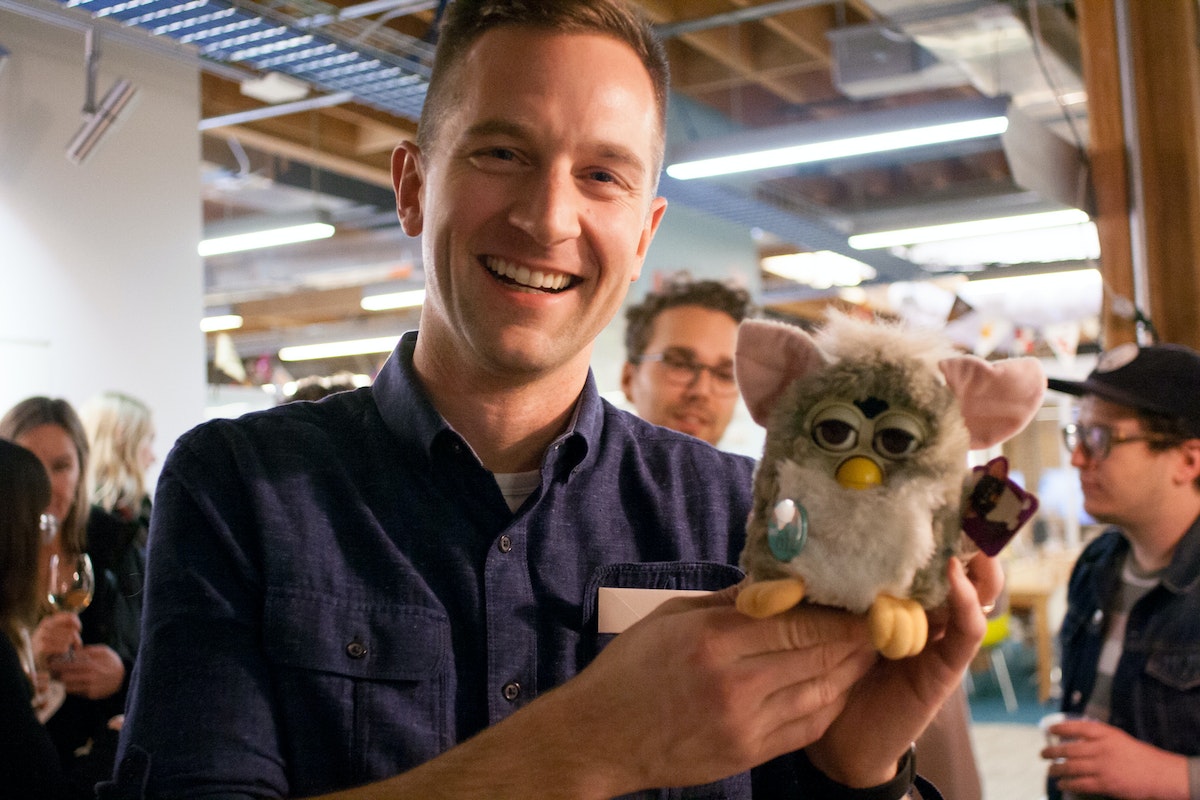
Our Chicago office has a tradition of giving silly but relevant goodbye gifts to departing colleagues. The goal is to make their exit a little more light-hearted for everyone, as well as give our erstwhile colleagues a sort of inside joke to take with them. When a friend and colleague of mine, Aaron Ferber, was leaving to pursue another passion in St. Louis, we started ginning up ideas for his send-off.

Lindsey Turner
I’m passionate about building brands, products, and experiences that help organizations show up with meaning and momentum.
I help organizations cut through complexity by shaping how they show up, through brand strategy, identity, and storytelling.
Working at the intersection of brand and business, I bring an editorial eye and a bias toward making—turning ideas into tangible experiences that people can understand, trust, and believe in.
My work spans government, healthcare, financial services, media, and consumer goods, from launching Gen Z-focused ventures to building innovation labs and reimagining legacy brands. I relish moments of ambiguity and enjoy translating across teams, perspectives, and priorities to move ideas forward.
I started my career in editorial and digital design, shaping cross-platform experiences and identity systems in publishing and agency environments. That foundation still shapes how I work today: I’m detail-oriented, collaborative, and overreliant on the Oxford comma. I hold a BFA in Visual Communication from the School of the Art Institute of Chicago.

Rachel Young
My work helps organizations see who their products aren't working for—and build the will and the tools to do something about it
For 25 years, I've asked the same question: Who does this design exclude—and what are we going to do about it?
My work spans human-centered strategy, inclusive design, and qualitative research, with clients ranging from Microsoft, Google, and Verizon to the National Science Foundation, and San Francisco Unified School District.
Before IDEO, I taught elementary school in East Palo Alto and spent a decade doing design work with social service organizations—where I learned firsthand what it costs people when systems are built without them in mind.
I am currently writing User Error, a nonfiction book about digital access and the design decisions behind it. I live in Oakland, California.

Brian Pelsoh
I lead with craft, ensuring our work is creatively excellent: rooted in deep human insight and imagination, while also grounded in the realities of business and technology.
My expertise spans brand, communication, and product design across tech, education, the arts, and social impact.
I believe great work demands both high-level vision and obsessive attention to detail, and only happens through collaboration.
I bring an inclusive, hands-on approach and a deep understanding of business, which enables me to consistently deliver excellence while always asking why.
Before joining IDEO, I worked at the brand firms Pentagram and VSA Partners. I began my career as a designer, leading teams at the School of the Art Institute of Chicago and the Milwaukee Art Museum. I hold an MFA in graphic design from Maryland Institute College of Art and a BFA in communication design from the Milwaukee Institute of Art & Design, and have taught at some of the best design schools in the US.

Tony Wong
I am responsible for IDEO’s long-term success in China and working with clients to use design as a tool to enable growth.
I am responsible for IDEO’s long-term success in China and working with clients to use design as a tool to enable growth. Specifically, I have helped Chinese companies design holistic brand solutions through the development of their products, communication, services, and innovation teams, and I have helped multinationals expand their presence and influence in China.
I advise global leaders on developing China-led innovation and capabilities.
In over 15 years in IDEO Shanghai, I have worked on projects that use design to elevate the quality of the experience of healthcare products and services, streamline processes that increase productivity, create spaces and programs that promote and enable inclusive communities, and build next generation mobility solutions that are planet-positive.
Before joining IDEO, I worked at Philips Electronics and the Electrolux Group in Italy, the Netherlands, and Singapore on a number of breakthrough commercial products. I am a member of the Young President Organization in Shanghai.

How to use AI as an editor, not a writer
Ed White shares how he uses AI as an editor—not a writer—to sharpen storytelling, rehearse ideas, and preserve the productive friction that makes creative work better.
Ed White has a rule he's tested on his own writing: hold yourself as the writer, and let AI be your editor. Ed is a Senior Design Director at IDEO's London studio, where he co-leads the firm's AI portfolio across Europe. Before IDEO, he spent 12 years as a writer and editor at the Financial Times, Wired, and Contagious. So when he talks about when to use AI for storytelling and when not to, it comes from two decades of crafting his storytelling skills.
In this episode, Mina Seetharaman talks with Ed about two specific tools he uses to keep AI in an editor's seat: a "roasting agent" prompted to critique his drafts without any sugarcoating, and a simulated audience he rehearses pitches on before the real thing. They also get into what Ed is hearing from design leaders at Anthropic, Lovable, Shopify, and Google Creative Lab about how creative work is changing, and why he thinks the friction of writing something yourself is worth protecting rather than automating away.

Building a personal AI for the messiness of life: Sida Li
Becca Carroll talks with Cue co-founder Sida Li about designing a personal AI for the messiness of everyday life—not just work. They explore how Sida stays anchored to human needs while navigating fast-changing technology, product tradeoffs, business-model experimentation, and the realities of building an AI company today.
Most AI products today are built for work—a space with clear problems and established systems. One founder noticed a gap: personal life is messier, harder to systematize, and mostly left behind by the AI boom. So she built Cue, a personal AI that lives inside iMessage and group chats, to go where the other tools haven't.
In this episode, Becca Carroll, IDEO's Chief Strategy Officer, talks with Sida Li, co-founder and CEO of Shared Context Lab, about staying anchored to a human need while the technology around her keeps changing shape, why she treats her business model with the same rigor she'd bring to a product, and what it feels like to build a company at this particular, disorienting moment in AI.
The conversation also gets into how Sida makes design decisions: the language Cue uses to describe itself, the tradeoffs behind building inside iMessage instead of a new app, and a real story about a business idea that didn’t pan out.
This is the second in a two-part series profiling founders from IDEO's Startups-in-Residence program. The first conversation is with Johannes Seemann, founder of Sooner, on designing GenAI for the emotional side of money.

Designing GenAI for the emotional side of money: Johannes Seemann
Designing financial tools around the feelings that shape money decisions.
Most personal financial tools are built to run the numbers and optimize towards a budget. While that works for some, most people experience money as a lived relationship that does not neatly fit into a spreadsheet. Johannes Seemann and Becca Carroll discuss why money is emotional before it is mathematical, and what a human-centered approach to building a generative AI financial product looks like in practice.

The curious leader's edge in uncertainty: Scott Shigeoka
How genuine curiosity helps leaders navigate uncertainty with greater confidence.
Mina Seetharaman talks with Scott Shigeoka, author of Seek and Head of Curiosity Cultivation at the Eames Institute, about what distinguishes genuinely curious leadership from performative curiosity, how power dynamics shape curiosity, and why practicing curiosity can restore energy rather than drain it.
Looks like you might be in search of something very specific?
Or reset the filters above and try another angle.
Here’s some random inspiration

Podcasts about creative leadership

Articles about the power of prototyping
