

Helping a startup design video games to build kids’ emotional strength
A one-month sprint to develop new products—and a new way of working.
For 6-year-old Dave Jr., a long line at Disneyland triggered a massive meltdown. His parents were concerned and a little embarrassed, but not surprised; Dave Jr. struggled to keep his emotions in check.
Hoping to help, Dave Jr.'s uncle, entrepreneur Craig Lund, joined forces with researchers at Harvard Medical School and Boston Children’s Hospital, along with a video game designer who had worked on Quick Hit and NBA 2K. Together, they set out to design something that could teach coping skills to kids like Dave Jr. who need to manage “big emotions,” as well as children suffering from anxiety, ADHD, and other behavior issues, which are on the rise.
Their collaboration resulted in a video game called Mightier and a startup called Neuromotion Labs—a 10-person team of psychologists, game designers, and engineers who embedded at IDEO Cambridge for a one-month sprint to improve the game and get ready for launch.
To play Neuromotion's game, kids are first taught simple, calming breathing exercises. During gameplay, kids wear heart-rate monitors on a wrist or arm that detect spikes caused by stress or anger; as their heart rates go up, the game's difficulty increases. Kids have opportunities to pause and try deep breathing to counter the ramped up challenge. As it turns out, "gamifying" restraint builds strong incentives for kids to take charge of their emotions—they have to if they want to win.
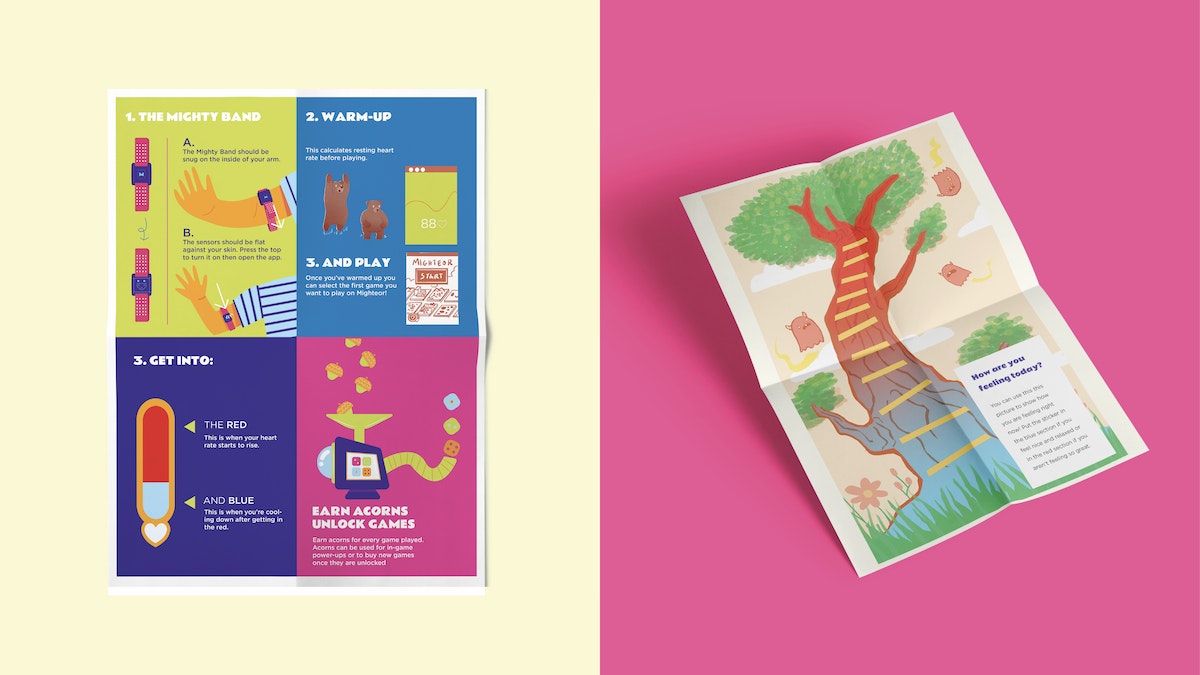
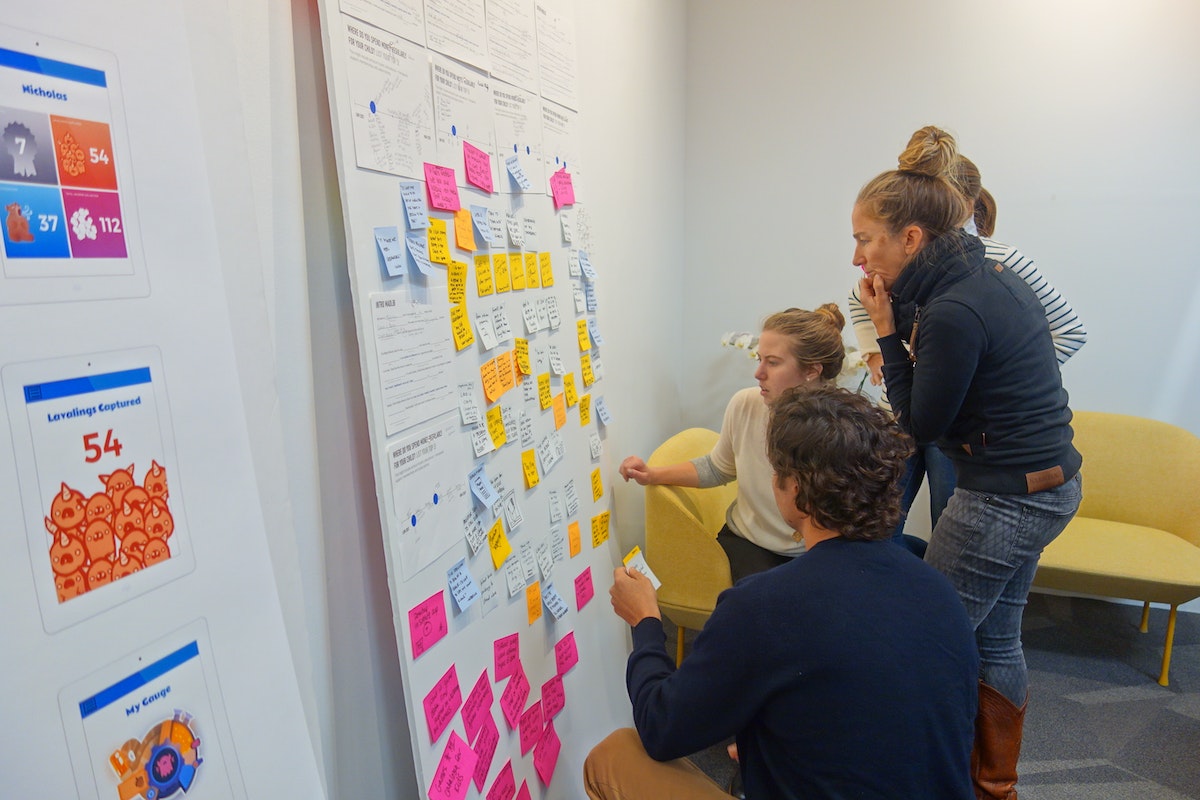
Already activated around boosting mental and emotional health, IDEO's design team worked side-by-side with Neuromotion to study how parents and children experience Mightier. From home visits to group interviews to a summer camp-style design session with kid players, live feedback fueled the next iteration of the gaming platform and better product-market fit.
IDEO helped Neuromotion hone the visual design and mechanics of Mightier and expand it's suite of games. The team observed that the Mightier program was more successful the more involved parents of players became, which revealed a need for additional resources for adults. So they created new supports, including a more detailed orientation and a personalized coaching service for parents staffed by trained therapists.
But can a video game actually help kids cope? Early peer-reviewed studies showed that playing Mightier reduced outbursts by 62 percent, oppositional behaviors by 40 percent, and parental stress by 19 percent. After 12 weeks of using Mightier, a survey of kids and parents showed that 96 percent of parents saw positive behavior changes in their children, while 92 percent of kids learned new coping skills.
Shortly after the design sprint, Neuromotion secured its next round of funding and officially launched Mightier’s array of “bioresponsive games.” The games have already been played more than a million times, and Neuromotion has measured more than a 100 million heartbeats. Mightier games are helping kids and families across the country.
What about Dave Jr.? Recently, his sister told Lund she "accidentally" bumped Dave Jr.’s bike off a pier and into the ocean. She was expecting an outburst of anger, but after eight months of playing Mightier, Dave Jr. stayed cool. His uncle couldn’t be prouder.
Designing waste out of the food system
IDEO partnered with hotels, food banks, foundations, and entrepreneurs to combat food waste.
Many of us have let vegetables wither in the crisper drawer, or thrown out a child’s half-eaten restaurant meal, but the sheer scale of food waste around the globe is hard to grasp. According to the United Nations, about a third of the food the world produces every year—1.3 billion tons—is lost during production or tossed by consumers, with North Americans throwing out the most food per capita. The average American wastes enough food each month to feed another person for 19 days.
IDEO received a series of grants from The Rockefeller Foundation to find solutions, given the power of IDEO’s human-centered design approach to address systemic challenges. Through a number of projects with The Rockefeller Foundation and other organizations, IDEO designers from across the U.S. devised novel ways to tackle food waste.
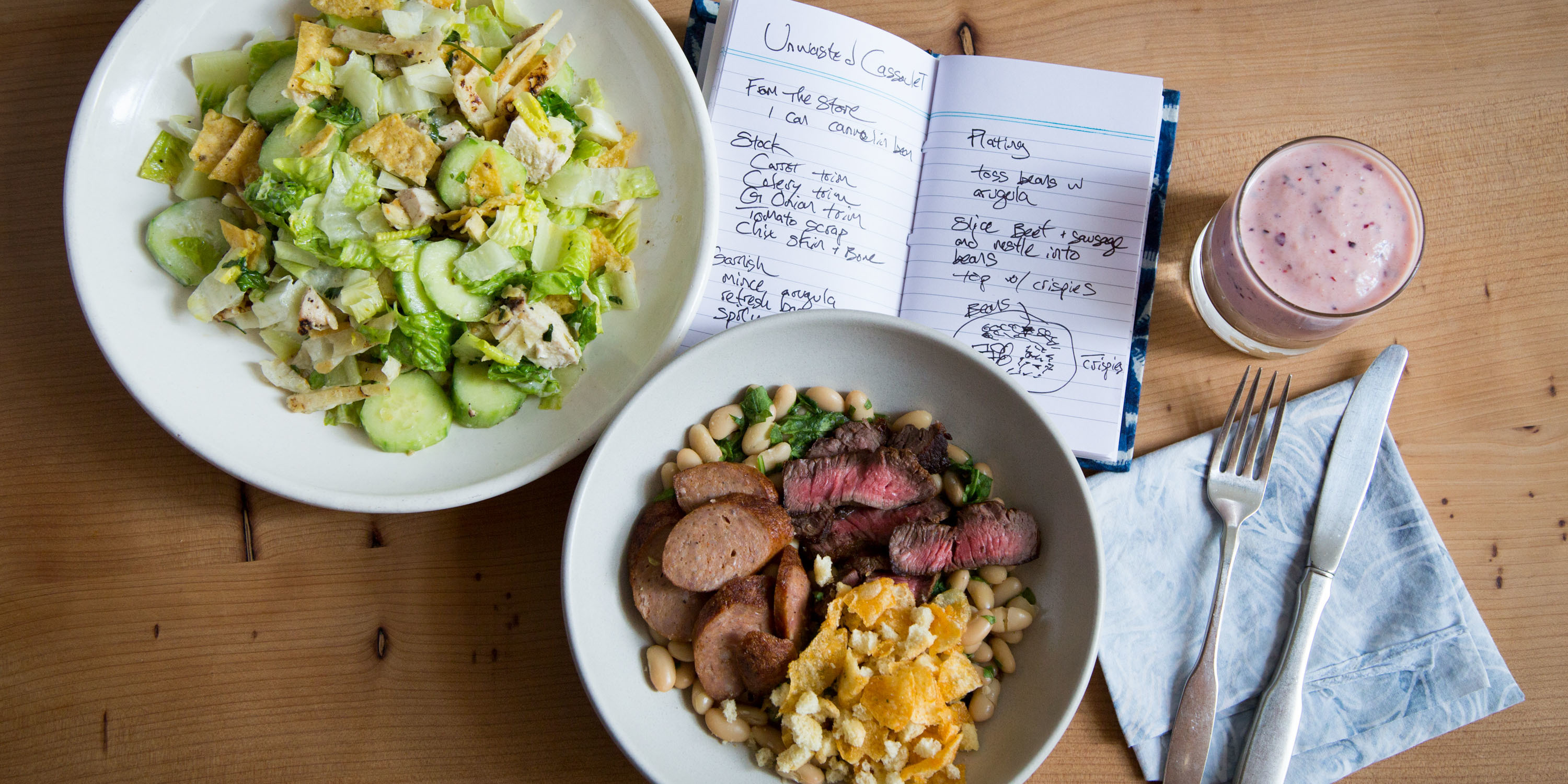
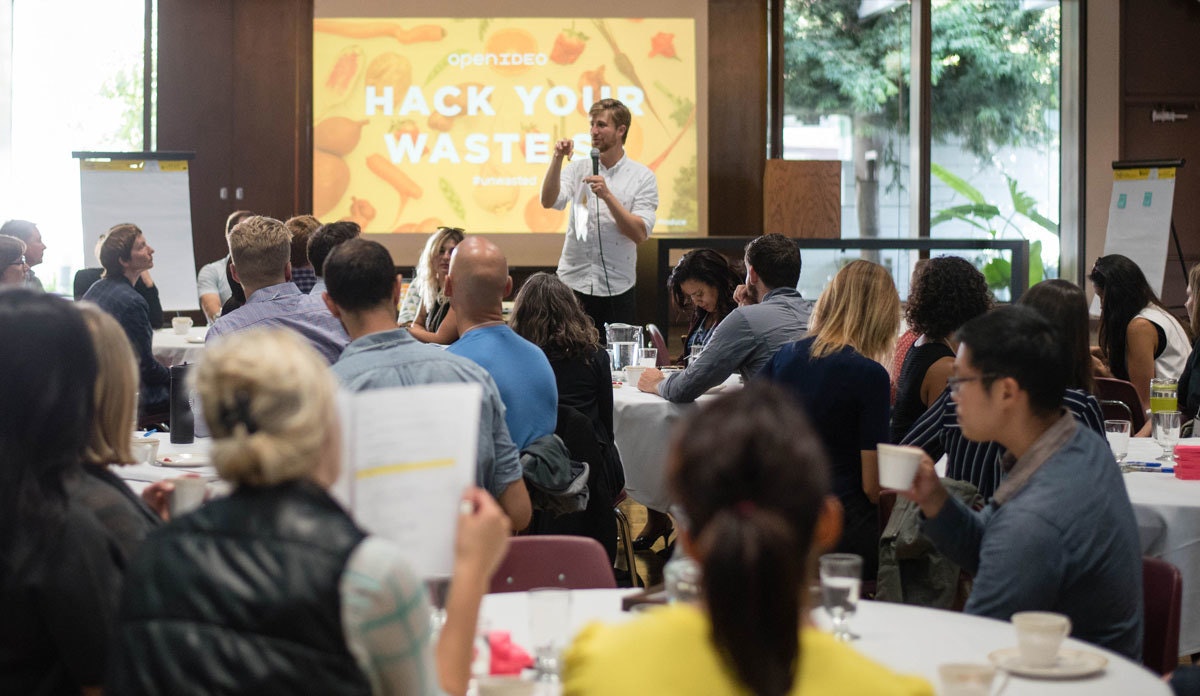
For IDEO’s first initiative, designers tapped into the enthusiasm of the broader creative community, in partnership with The Rockefeller Foundation, the City of San Francisco’s Department of Environment, the Closed Loop Foundation, ReFED, and other groups. In the summer of 2016, OpenIDEO—IDEO’s open innovation practice—launched the Food Waste Challenge, asking how people might curtail waste by rethinking our relationship with food. Between June and October, more than 20,000 people from 113 countries took part in the challenge, tracking their personal waste and brainstorming solutions.

Challenge participants submitted more than 450 ideas. A team of food industry experts helped select the 12 top proposals, which included software to help people buy food collectively from wholesalers and a service that delivers extra meals from corporate events to those in need. Ultimately, the Closed Loop Foundation chose to award Full Cycle Bioplastics a $50,000 grant to scale up its idea to convert inedible food and paper waste into a fully compostable alternative to oil-based plastic.
At the conclusion of the Food Waste Challenge, OpenIDEO launched the Food Waste Alliance, a platform for participants and experts to stay engaged with the most promising ideas and innovators. The alliance helped entrepreneurs share resources, prototype new concepts, secure funding, hire staff, and form partnerships. OpenIDEO invited hundreds to join the alliance, and 92 percent of members told IDEO they made progress in their work as a result. One member company, RISE, received funding from another participant who discovered RISE through the alliance. This investment let RISE prototype its concept for milling spent grain from beer brewing into flour for baked goods and ultimately join the prestigious Food-X accelerator.
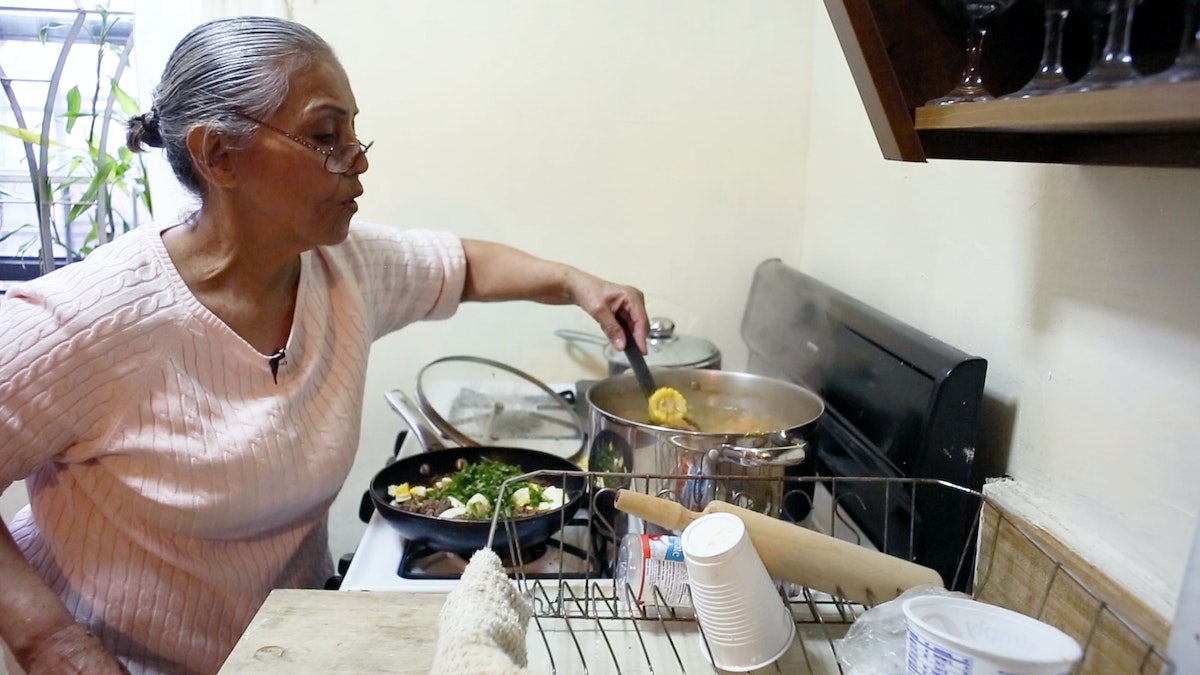
The Rockefeller Foundation also supported IDEO’s work with City Harvest, a New York organization that collects 160,000 pounds of unused food each day and delivers it to soup kitchens and food pantries. City Harvest wanted to understand the habits of local families who visit food banks in an effort to ensure all the food the group distributes gets eaten. To get a peek into these families’ kitchens, in January 2017, IDEO researchers conducted observations and interviews across New York City’s five boroughs. Pantry customers cooked for the researchers, giving them an inside look at how the families engaged with the food they had available and what food meant to each of them: tradition, stability, even adventure. Based on insights from pantry visitors, IDEO made recommendations for City Harvest, including community-run cooking classes and a way for families to request specific foods or reserve pick-up times by text message. IDEO also created three video vignettes to help build even greater empathy between City Harvest and the people it serves.
In spring 2017, capping IDEO’s work with The Rockefeller Foundation, the organizations teamed up with World Wildlife Fund and Hyatt hotels in Florida, New York, and New Jersey to rethink all-you-can-eat buffets. IDEO studied diners and staff at Hyatt buffets and found that employees—from event planners to kitchen staff—each add a cushion of extra food to cover their bases, while guests overfill their plates to avoid missing out. In the end, diners eat just half the food organizers serve, while the rest goes to waste. This and other data-driven insights gleaned about diners’ habits led to subtle substitutions, including smaller plates of meats and cheeses that can be ordered from servers and individual pastries rather than whole cakes. These alternatives have not only built on Hyatt’s existing food waste management strategies, but have also helped reduce buffet costs at Hyatt Regency Orlando and continued to receive support from guests.
The problem of food waste is too enormous to ignore. Wasted food means squandered resources, lost money, and ultimately, hungry people—more than 15 million in the United States alone. Designers and innovators from coast to coast have helped find solutions to the crisis that fulfill a variety of needs, from preserving produce sent to food pantries to keeping plastic packaging out of the oceans. The Rockefeller Foundation and other IDEO partners are leveraging powerful design techniques to pave the way for a waste-free future.
Launching a bootcamp for data scientists
Designing a rigorous program that prepares students for a career in the data-driven economy.
In 2017, IDEO acquired longtime partner Datascope and integrated the company’s data scientists and engineers. Datascope team members aren’t just passionate data scientists; they’re human-centered designers who happen to work with data, as illustrated by successful collaborations like this one:
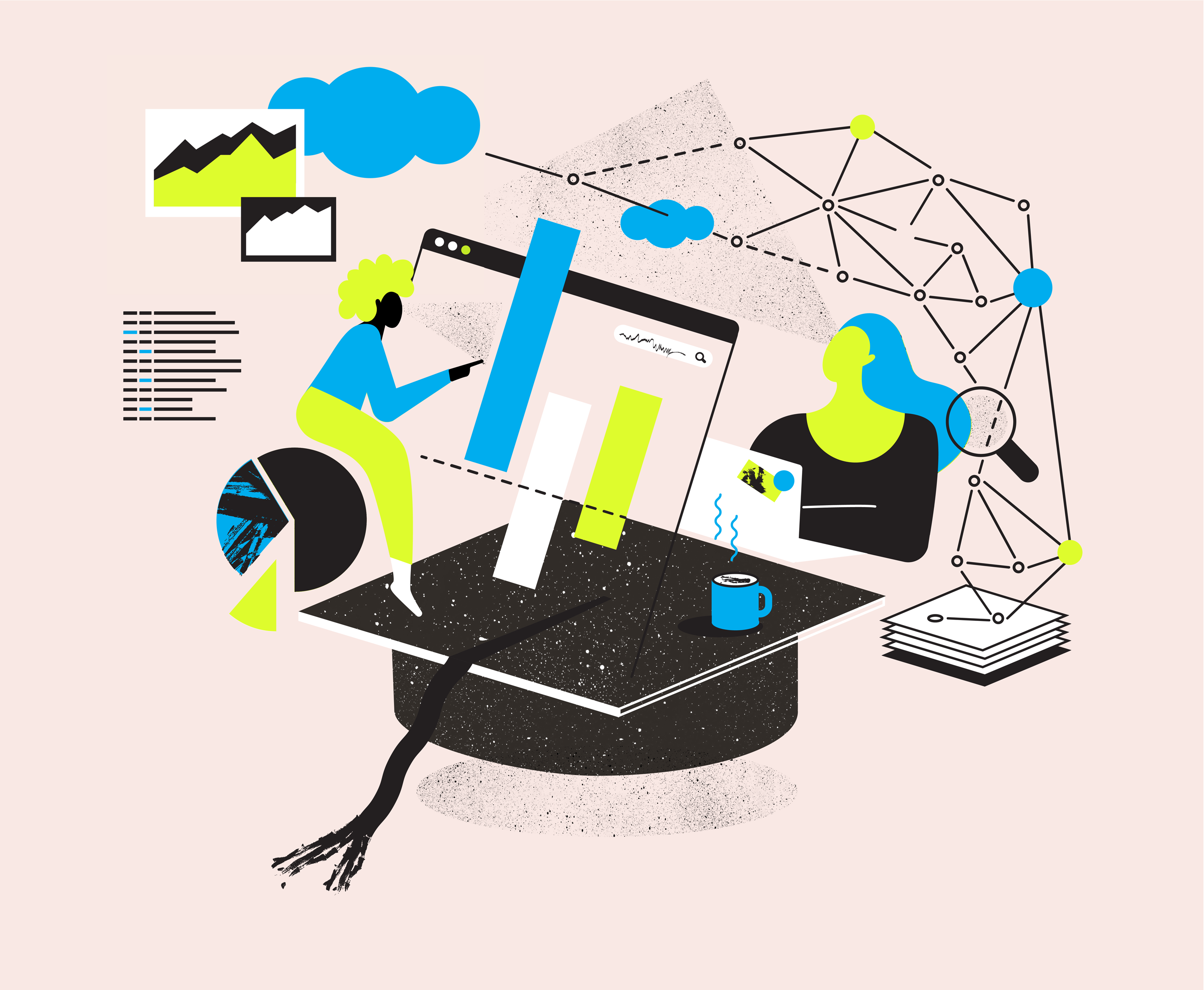
In today’s job market, there’s no such thing as being "done" with your education. This is particularly true in the fields of data science, machine learning, and AI, where significant advances are made on a monthly basis. To meet this need for more in-depth training, Metis—part of Kaplan—wanted to create a comprehensive data science program for students from all backgrounds. Metis asked Datascope to design the curriculum from scratch, drawing on the company’s deep expertise in the field.
Datascope spoke with practitioners across industries to identify the key skill sets that make them successful: a grasp of design; fluency with data management, coding, and algorithms; and effective communication with coworkers and the wider world. The team crafted a 12-week bootcamp that develops these specific abilities.
In order to prepare students for the work world, the bootcamp is structured less like a class and more like a company, where students are “hired” as data scientists—with projects to complete—starting on day one.
Students collaborate on group projects and presentations in a way that mirrors real workflows, and practice pair programming to learn from one another. Using techniques drawn from design, students are invited to refine their project briefs and continually reevaluate their approach.
Instead of a final exam, at the end of the course, students tackle five real-world, open-ended data science projects inspired by Datascope’s client work. One project involves using data from subway turnstiles to detect patterns in the volume of street traffic; another asks students to use data they scrape from the web to predict a movie’s box office profits using regression analysis.
After students complete the bootcamp, they receive an additional three months of career support, from mock interviews to site visits with potential employers. In addition to designing the curriculum, Datascope taught the first three student cohorts and helped Metis build its teaching team as it expanded the program from New York to San Francisco, Chicago, and Seattle. Metis now offers online courses, evening classes, and corporate trainings in data science.
If you’re going to take a data science bootcamp, it’s best to take one designed by data scientists.

Designing the Levi’s Commuter Trucker Jacket with Jacquard by Google
When Google teamed up with Levi’s to craft a jacket with technology woven in, the company turned to IDEO to help make the experience of wearing the garment feel seamless, intuitive, and familiar.
You’re whizzing along on your bike, en route to a new restaurant for a client meeting. You reach an unfamiliar intersection; which way to go now?
Instead of dismounting and digging for a phone, you brush your hand along your jacket sleeve for directions, then double-tap the denim to re-start your music. Without taking your eyes off the road, you’ve taken care of the problem.
This intuitive interface for connected apparel began with Levi's, makers of durable workwear for 140 years, and Google, creators of forward-looking technology, which joined forces to fashion the first item of clothing with touch-sensitive, copper-core threads woven directly into the fabric. Once it was established that the first connected garment from the partnership would be a jacket within Levi’s Commuter line, with interaction on the sleeve, Google worked with IDEO, leaders in designing for human needs, to develop the gesture language of the jacket and industrial design of the technology within.
This is the first connected garment that helps us break free from devices. It seamlessly incorporates Jacquard by Google technology to perform digital tasks, such as navigation, communication, and music playing with a few swipes or taps on the sleeve.
Jacquard by Google—a platform that makes it possible to integrate touch and gesture interactivity into fabrics using conductive yarn and standard, industrial looms—was inspired by a curious twist of history. The Jacquard loom, invented in France in 1804, used punch cards to automate the process of weaving complex patterns into fabric. In the 1940s and ’50s, engineers employed a similar punch-card technique to program the first computers.

IDEO spent time on the project early on, collaborating with Google engineers and Levi’s clothiers on the jacket’s development, helping craft an experience that would make the intelligent threads intuitive to wearers.
Working alongside Google and Levi’s, IDEO’s work included:
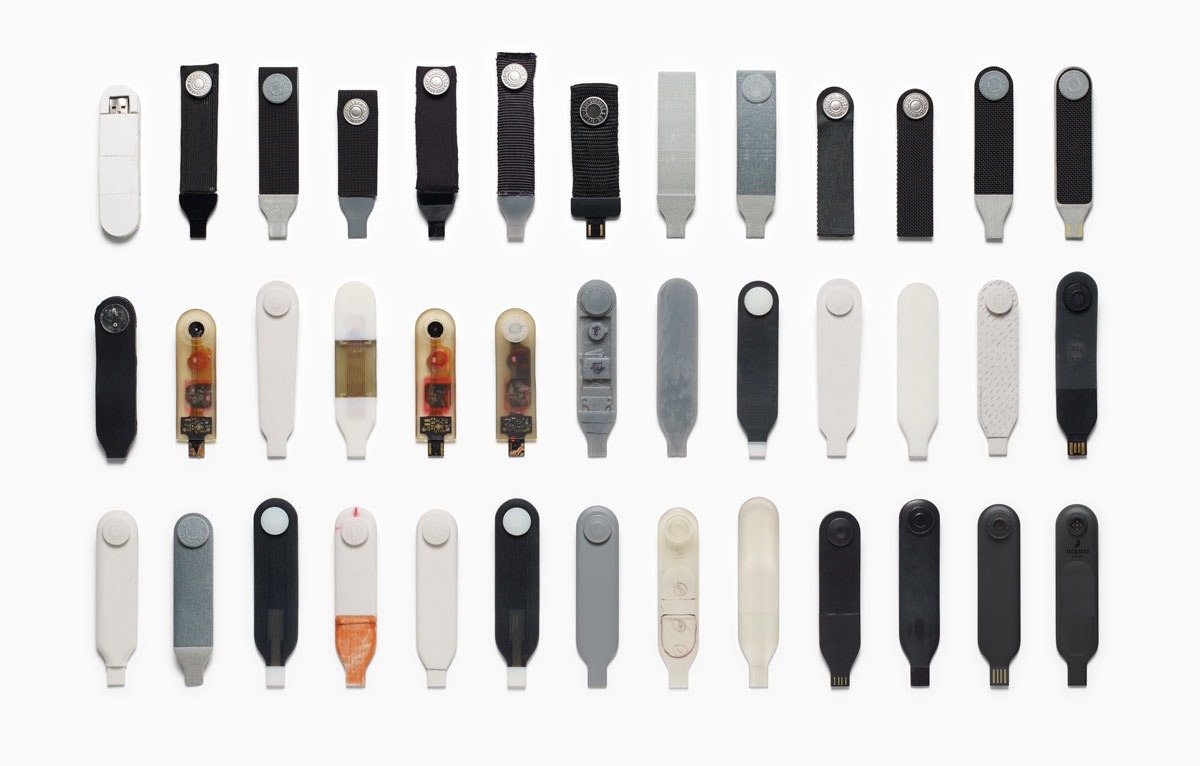
- The industrial design of the electronics integrated into the snap tag and connector (the tag snaps onto the jacket’s cuff and connects to your phone via Bluetooth)
- A vocabulary of gestures on the cuff of the jacket that lets you interact with the jacket’s technology
- Early exploration of the basic design philosophy and conceptual design for the interaction model of a corresponding smartphone app that ties it all together (works with both iOS and Android phones)

The IDEO team’s first task was to validate what commuters of all stripes wanted from the garment, in addition to the work Levi’s did in researching with its consumers. In interviews, group exercises, and wear tests with urban cyclists and other workers on the go, the team learned that cyclists needed a way to stay connected, while still living in the moment. That meant being able to answer calls, hear text messages, get the next direction, and control their music without using a screen.
Levi’s, Google, and IDEO developed a language of movement for Jacquard-enabled fabric that feels familiar and human and builds on the ways people would naturally interact with a garment (a whole-hand brush along the sleeve, as opposed to a one-finger tap on a touch screen, for instance).
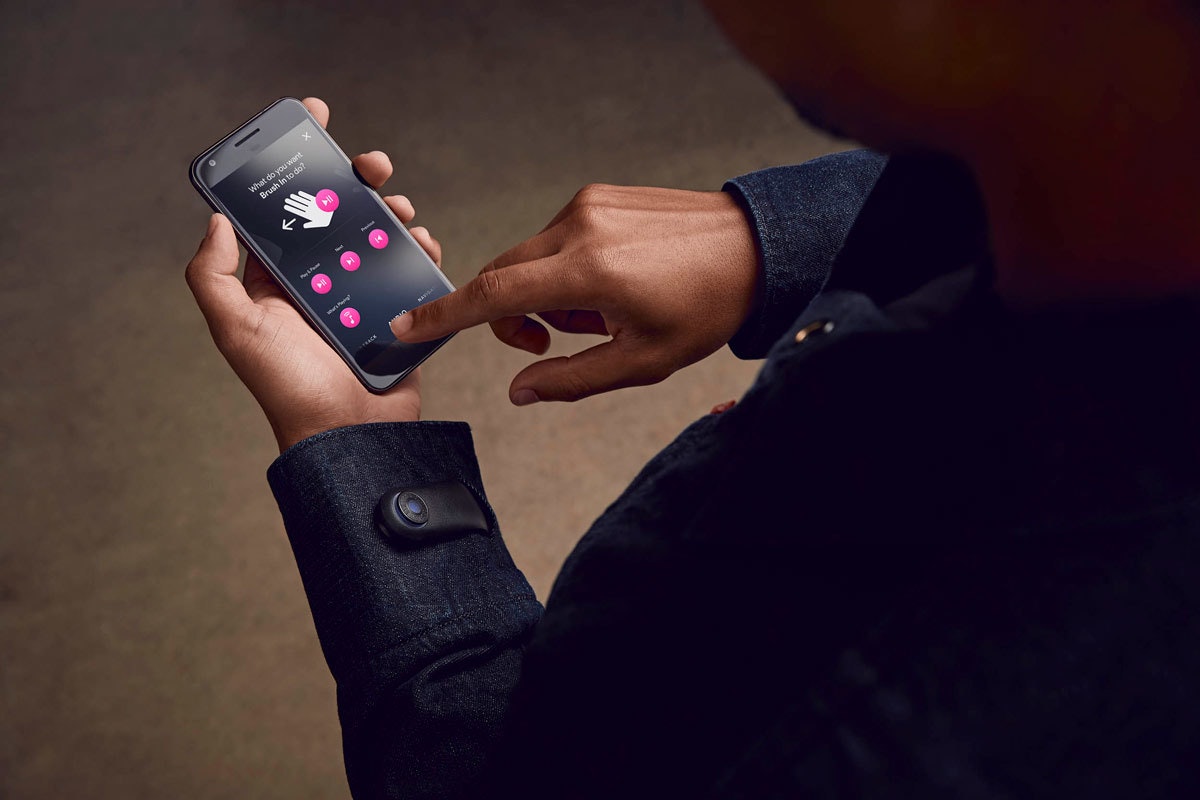
Then came the design and engineering of the snap tag on the jacket’s cuff, which gently notifies you of calls, texts, and other jacket interactions with light and vibration feedback. The flexible, lightweight strap incorporates the look and feel of a Levi’s jean button, while housing advanced electronics that capture touch data. The tag is removable, charges via USB connection, and works in conjunction with a mobile app that lets you configure settings for the garment, set notifications, and customize gestures and interactions.
The Levi’s Commuter Jacket with Jacquard by Google changes the game because it’s simply that—a jacket—with technology that adds new utility and value, allowing us to wear our everyday interactions on our sleeves.
The Levi’s Commuter Trucker Jacket with Jacquard by Google hit stores in October 2017.
IDEO and Google have a long history of collaboration. Learn more about our work on Google Bloks here.

AI is changing women’s health
Let’s work together to make sure it’s for the better.
For decades, women’s health has been underfunded, overlooked, and too often reduced to reproductive care. Medical research has been built around male bodies, while the complexity of women’s biology and lived experiences has been treated as a problem to simplify rather than an opportunity to understand.
Now, AI could change that. Designed intentionally, AI could unlock new kinds of evidence that close historical data gaps and inform better care. But if we aren’t careful, we could be scaling systems that were never designed for women and build the next generation of healthcare on the same broken foundations as the past.
The stakes are high. The opportunity is massive. This is where design matters most.

Introducing the Women’s Health × AI Exchange
We believe design can help us embrace AI’s healthcare possibilities while recognizing and mitigating its risks. And we believe the most promising futures are shaped collaboratively, by bringing different perspectives into conversation and making those possibilities tangible.
That’s why we’ve launched the Women’s Health * AI Exchange, an open, design-led exploration of one important question: How might AI meaningfully transform women’s health, and what would it take to ensure that it does?
To frame this exploration, we crafted six provocations about possible futures at the intersection of women’s health and AI. Futures where AI could:
- Reframe women’s biological complexity from a healthcare liability to a scientific asset and create new pathways for better care.
- Transform the relationship between healthcare professionals and patients, translating qualitative data into clinically actionable evidence.
- Connect the dots across a woman’s health journey to enable more proactive, preventive, and life-stage-specific care.
- Drive innovation in women’s longevity, helping researchers understand what most influences how women age.
- Flip the economics of clinical research, incentivizing exploration at the deprioritized edges and intersections.
- Put data back in women’s hands to help them find their own insights around issues where institutional research has not been prioritized.
Imagining what AI could do is only half the work. We also need to consider the shifts required to make these futures possible. And so, each of these provocations ends with the same challenge: What would it take to make them real?
We’re inviting you into this conversation to help us collectively sharpen a point of view and co-design a landscape of opportunities. Here’s how to join.
Go to the Women’s Health x AI Exchange and choose a provocation that resonates with you. An AI facilitator will ask thoughtful follow-up questions to help you frame your point of view and articulate what you believe needs to change. Your thoughts will be posted anonymously. As more people participate, their contributions will help reveal where perspectives align, where tensions remain, and what new opportunities are emerging.

Turning tension into possibility
This conversation is just the beginning. We’ll synthesize themes and share emergent opportunities. We’ll bring together people across healthcare, research, technology, investment, and design to help us prioritize opportunities for further exploration. And we’ll translate the most compelling ideas into tangible prototypes that help people see, experience, and shape what desirable, viable, feasible, and responsible AI-enabled healthcare could look like.
We’re approaching this as an investigation in motion, not a finished thesis. Our intention is to work openly so the perspectives, provocations, and possibilities we generate can inspire and inform the people already working to move women’s health forward.
And while women’s health is at the center of this exploration, the conversation we want to have is even bigger. It is a conversation about the future of healthcare data and power. A conversation about how AI might help close the gaps that decades of underfunding have left behind, and what we can all do to ensure it does.
Whether you’re a clinician, researcher, technologist, entrepreneur, investor, designer, or simply someone who cares about the future of healthcare, we invite you to help us reimagine what healthcare could be, for everyone.
Explore the Women’s Health * AI Exchange and add your perspective.
AI is transforming healthcare at a remarkable pace. But our understanding of women’s health has a lot of catching up to do.
Patient expectations are evolving faster than ever
Four ways pharma companies can adapt as GLP-1s reshape experiences.
During a recent meeting with a pharma client, we played a YouTube video of GLP-1 users that left the team slack-jawed. Sitting around a conference table, they watched people crack open an auto-injector and pour the contents into a vial so they could titrate out a more precise dose of the drug themselves. They heard several patients admit to using a family member’s prescription because they didn’t have their own. Others lamented that they weren’t in range for their preferred direct-to-consumer delivery platform. The realization was stark: patients knew what they wanted from their GLP-1s, and if the manufacturer didn’t provide it, they would find a way to make it themselves. In that moment, this particular pharma company understood it was not at all prepared for a future where patient expectations would remake the drug market.
The introduction of Ozempic and new access models for GLP-1s like Lilly Direct and Hims & Hers have fundamentally shifted the pharmaceutical industry in the last five years, unleashing more self-directed therapy journeys and a new kind of healthcare consumer. Patient expectations about what pharma companies can do—and the experiences available to them in a healthcare setting—have been completely rewritten. This revolution is making traditional pharma commercialization processes that push patients and providers through a few preferred channels a thing of the past. Especially as consumer-facing startups come for their market share—and create an even larger pie.
If pharma companies are going to meet this new wave of consumer expectations for everything from GLP-1s to hair loss and erectile dysfunction medicines, supplements to fertility drugs, they need to prioritize designing exceptional experiences that come along with their therapies. That requires building an entirely new set of skills and behaviors that can support product pipelines. Here are four crucial steps to get there.
1. Uncover the needs patients want pharmaceuticals to meet
Pharma companies need to do research with real patients to get a clear view of the full therapy journey—from diagnosis to long-term use. In that process, they can identify the highest-risk moments, like confusion over instructions, frustration over delivery methods, and potential misuse, and prioritize opportunities to improve real-world adoption and adherence.
Lilly understood this early on. In the 1990s and early 2000s, the pharma company had several new, life-changing medications and two big challenges: Its primary drug—insulin—had to be self-injected, which patients were hesitant to do. And its drug-delivery device platform lagged behind the needs of insulin users.
Lilly approached us to design the next-generation auto-injector platform. Early in the partnership, a team of IDEO designers and Lilly leaders met with diabetes patients around the globe to better understand how they lived with the disease. They quickly realized there was a need for a device that met the needs of a broad range of dexterity-challenged and injection site-specific patient populations (including rheumatoid arthritis and psoriasis patients). As the development of multiple candidate molecules was still underway, the team focused on creating an injection experience that would work for these more challenging patient populations, knowing that a design that worked for them would also deliver a better experience for a broader swath of future users.
While we carefully considered every feature of the autoinjector itself (from grippy labels and a stable, twist-off base to large, clear unlock tabs and injection buttons), we also designed packaging that fit in a standard-sized refrigerator, created a set of highly visual instructions, and took into account the involvement and support of family members and caregivers.
Fast forward to 2026, and Lilly is still leveraging the design we made together to not only support pre-diabetes treatments like Trulicity, but also psoriasis therapies like Taltz, migraine therapies like Emgaility, and GLP-1 molecules like Mounjaro and Zepbound. The latter accounted for the majority of the company’s annual revenue in 2025. Taking the time to create a comprehensive drug delivery experience has yielded an invaluable delivery toolkit that Lilly and the patients they serve still benefit from today.
2. Design the experience around the therapy
As more and more pharma companies create consumer-style experiences, it’s crucial they build services and tools that support onboarding, adherence, and ongoing use. Standing out is no longer just about drug efficacy. It’s about how well patients with all kinds of needs and circumstances can access and adhere to the therapy—and how well pharma companies can deliver against their competitors.
When Sanofi launched Beyfortus, the first-ever RSV immunization for newborns, in 2024, it was a milestone in the fight against the virus, which had resulted in the death of 445,000 babies worldwide in 2019 alone. But the company knew that growing anti-vaccine sentiment might prevent parents from giving their children the potentially life-saving immunization.
Together, we conducted research with parents, caregivers, healthcare professionals, and healthcare administrators in Germany, Spain, China, and the US to identify barriers to adoption across cultures. The team quickly discovered that no single approach would work across Sanofi’s 20-plus international markets. Training for medical professionals needed to be flexible and customizable. They also discovered that discussing immunizations right after a baby was born was too stressful for new parents.
Ultimately, the team created an accessible global communication toolkit with straightforward language, metaphors, and illustrations to support informed conversations between providers and parents before and after a child is born. Then they held a series of market-fit co-design workshops to make the tools more resonant with regional customers and ensure compliance with local regulations.
In its first year on the market, Beyfortus became a $1.8 billion therapy, and more than six million babies have been immunized.
With a growing funnel of information about drugs, therapies, and even supplements, pharma companies must cut through the noise to support patient understanding and adherence.
3. Define how you show up beyond the drug
To have an even greater impact on patient outcomes, pharmaceutical companies should explore new roles, partnerships, and models. That could mean creating new offerings that combine a given therapy with support and services, building partnerships with payers, employers, or platforms to extend reach, or creating models that tie therapies to long-term outcomes and value.
Japanese pharmaceutical company Otsuka is perhaps one of the most diversified pharma organizations in the industry, focusing on above-molecule interventions including companion diagnostics, digital technologies, and other tools that enhance the effectiveness of chemical or biological treatments. With a business that spans traditional drug development and manufacturing, digital solutions, and even consumer products such as Pocari Sweat, an electrolyte drink, Otsuka has bet that diversity and go-to-market pathways will lead to better experiences for patients. Not to mention these touchpoints also provide deep insights into the needs of the people Otsuka serves.
In 2018, Otsuka joined forces with Click Therapeutics to develop digital health services to accompany one of its leading medications, aripiprazole. The antipsychotic is used to treat schizophrenia, bipolar disorder, and major depressive disorder (MDD). By 2024, the company had developed an app featuring activities aimed at treating MDD. The partners chose a challenging but potentially impactful area for their pilot program: four primary care sites within the National Health Service (NHS) in the UK with a high caseload of MDD patients, where a digital solution combined with antidepressants could significantly reduce the burden on these sites.
Depression is widespread across the UK, and the treatment demands on the NHS are considerable. However, the system lacks the resources to provide every patient with the necessary services to treat their conditions. This digital companion to antidepressant medication aims to improve treatment effectiveness, and if the pilot is successful, it could significantly ease strain on the NHS while helping patients achieve better outcomes.
4. Create a human-centered R&D pipeline
Creating more human-centered packaging or instructions to help people better understand a drug is an effective step forward, but exploring new internal capabilities that make your innovation pipeline more future-fit and human-centered can be transformative.
That work can take many forms: building a beacon project that upskills product and team leadership on methods to better understand the decisions consumers are making today and in the future, introducing futures-thinking to help your team look beyond the next five years, or reinforcing purpose and culture to empower employees to make patient-centered decisions.
In 2020, as Moderna raced to deliver a COVID-19 vaccine during the pandemic, the company needed to grow exponentially—and rapidly. However, by hiring employees from traditional pharma giants, it risked losing the unique entrepreneurial culture that made it successful in the first place—one that embraced speed and accepted risk. This shift could have limited its future ambitions of developing breakthrough products to combat other viruses and diseases, and even cancer.
Together, we worked to codify the company’s culture and values into a set of Mindsets that would empower employees to move quickly, evaluate risk, and make the right decisions. The team met with Moderna veterans to gather stories about key cultural moments, like when a crucial piece of equipment didn’t fit in the door, and employees knocked down the wall to keep vaccine production moving. Insights from these stories became Mindsets, like “Act with urgency: Action today compounds the lives saved tomorrow” and “We behave like owners: The solutions we’re building go beyond any job description,” that were then tested with new hires, employee resource groups, and others across the company.
The Mindsets were more than a tagline: they set the stage for continued progress and future breakthroughs. Today, Moderna is working with Merck on a cancer vaccine that just completed a successful Phase 3 clinical trial.
This sea change in consumer expectations for medicines and therapies can feel disorienting for traditional pharma companies—but it also offers enormous opportunities for those that think outside tried-and-true drug delivery channels and embrace human-centered design. By truly understanding patient needs, finding new and inventive ways to support them, and building the capabilities to empower your people to create a human-centered R&D pipeline, organizations can distinguish themselves in the market. These behaviors can not only drive the market, but more importantly, radically improve patient outcomes.
“This sea change in consumer expectations for medicines and therapies can feel disorienting for traditional pharma companies—but it also offers enormous opportunities for those that think outside tried-and-true drug delivery channels and embrace human-centered design."
What real insights feel like, and other notes from a design legend
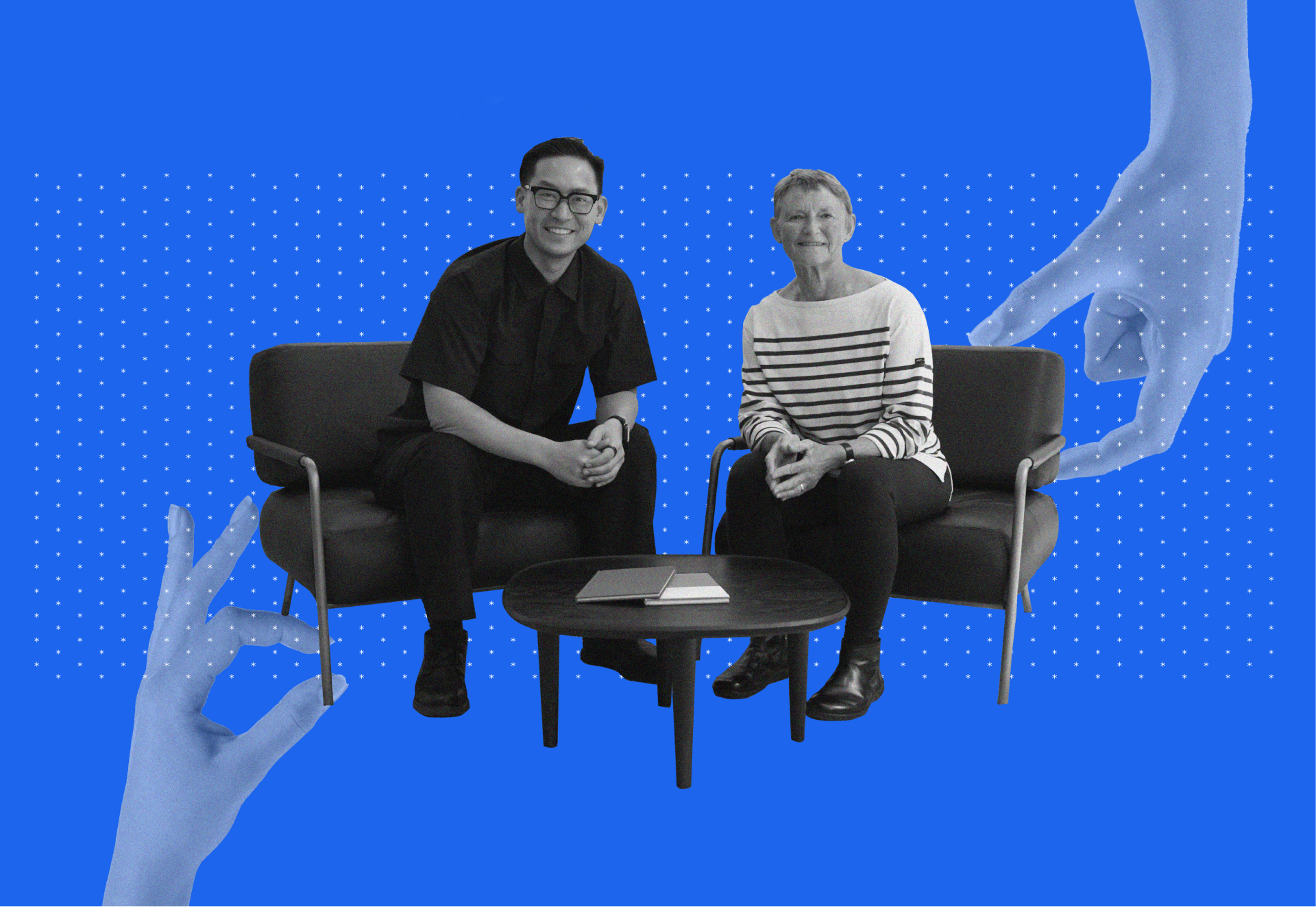
A Q&A between CEO Mike Peng and Jane Fulton Suri, former CCO.
A pioneer of human-centered design at IDEO, Jane Fulton Suri joined one of IDEO's predecessor firms, ID Two, in 1987. With a background in psychology and architecture, she gained early experience as a researcher at the renowned former Institute for Consumer Ergonomics at Loughborough University of Technology. At ID Two, and later at IDEO, Suri introduced social science principles to the design industry, which had not yet fully embraced them. Her contributions would go on to reshape the field.
Suri’s influential 2005 book, Thoughtless Acts?: Observations on Intuitive Design, features a collection of snapshots that highlight the subtle, instinctual ways people interact with the everyday world. It’s a love letter to observation as a design discipline with real-world impact. Her work in human factors at IDEO has influenced products people use every day, from rubber grips on Oral-B toothbrushes to redesigned Evenflo strollers. In recent years, she’s expanded her focus beyond human-centered design to explore how patterns found in nature and living systems can inspire more sustainable solutions—what she calls life-centered design.
Now a Partner Emerita, we were so glad to welcome Jane back to IDEO earlier this year for a conversation with our design community.
Mike Peng (MP): If you don’t mind, Jane, tell us about your origin story and how you came to IDEO.
Jane Fulton Suri (JFS): I started out in psychology because I was really interested in people. And then I got really interested in people in the everyday world. I brought that mindset into design: Let’s get out there and see what people really do.
I found myself working with manufacturers to help them understand why people didn’t do what they expected them to with power tools, motorcycles, and other dangerous things. A lot of my work was mitigating disaster. And I thought, this is crazy. Why aren’t these conversations happening while things are being designed? Problems are easier to remedy at the design stage than when they’re on the market.
Then I met Bill Moggridge, one of IDEO’s three cofounders, because a friend of mine was his client. He was a myth and a legend. After our conversation, he asked me, “What do you want to do now?” And I said, “I’d like you to offer me a job!”—which was very, very uncharacteristic of me. I had no clue what I was getting into.
I quickly realized I needed to understand what my teammates were doing and value that, then add ideas about going out, meeting people, and watching what they do.
So instead of having the answer, I realized the point was about discovering together how to make the design brief better. That became the practice—getting away from the desk. And now that means teams getting away from their screens and going into the world together.
MP: Now user research and ethnography are common practice in design. What were the early days like?
JFS: When we started out, we had no budget for anything I wanted to do. I had to convince my colleagues it would be exciting and interesting, and that we’d have good stories to tell our clients. Then it became a bit of a sales story about why it might take an extra week or two, or even a month, to do the project.
What we were doing was more like exploration; we didn’t know what we'd find, and afterward, we would probably want to do something different from what we’d promised when we wrote our proposal.
MP: If you had to sum up a few of your most memorable projects while you were at IDEO, what are some of the ones that really stood out to you?
JFS: Early on, Supercuts invited us to bid on an innovation-focused job. At the time, we were essentially a product design company. David Kelley, Tom Kelley, and others weren’t sure what we might do for a company like Supercuts.
So with one of the other early human factors researchers, we went out and got haircuts. Then we went around the city just looking at different hair stylists’ establishments. We started putting together a story of how customers make decisions from the moment they think about wanting a haircut to deciding where to go, making their first appointment, then all the behaviors that follow, like primping a bit before you leave the shop.
We had a lot of fun engineering this great crazy clipper. But I always believed our best ideas were these little moments throughout the experience, like getting a cape that made you look good, or a mirror that said “Supercuts” so you’d remember where you were. That was our first customer journey map.
MP: Are there other memorable moments that really stick out to you?
JFS: One of the most moving ones for me was at IDEO Chicago, years and years and years ago, when colleagues of mine were working on the LifePort Kidney Transporter. The project was all about how precious a kidney is. The team described their experience in the operating theater, seeing the surgeon take this living element and cup it so gently, like a baby bird, as he transferred it to where he needed to place it. That recalibrated the team’s thinking about designing the carrying system, because we’d just been thinking about it functionally and mechanically. But it also let them tap into what it really means to design for a living passenger.

MP: Let’s dive into the craft of design research. How do you know when a research insight is truly great?
JFS: Insight, for me, is a change of state in our understanding. There's an epiphany of sorts, a new recognition. You get an insight by being a sensory human being, observant and absorbent through all your senses…and then discovering you are excited about something new. Design and innovation take a lot of personal energy. That human emotion has to come from you.
And that’s what happens when clients get really drawn into ideas, too—they feel you’re changing the way they see things.
MP: What fundamentals do we need to continue to embrace to do research well?
JFS: Nothing beats being an aware, sensory human being who is curious about other people, places, and things. Research doesn’t have to be expensive. Even a conversation with one interesting person, or exposure to an unfamiliar place, will do.
Sometimes we're reluctant to put something in front of the client that we think is a really cool idea, but nobody has said they wanted it. Perhaps the research didn’t show that it was a really good idea yet. But sometimes we have to have conviction about our own perspectives and the confidence to share innovative ideas, even without hard evidence. I’ve always felt that.
MP: One of the most important phases of IDEO’s design-thinking process is synthesis—taking the messy materials we’ve gathered during research and making sense of them. How do you approach synthesis?
JFS: I once wrote a piece about how what happens in the design process isn't the same as how we formally describe it. One story stands out. I call it “the black shoes.”
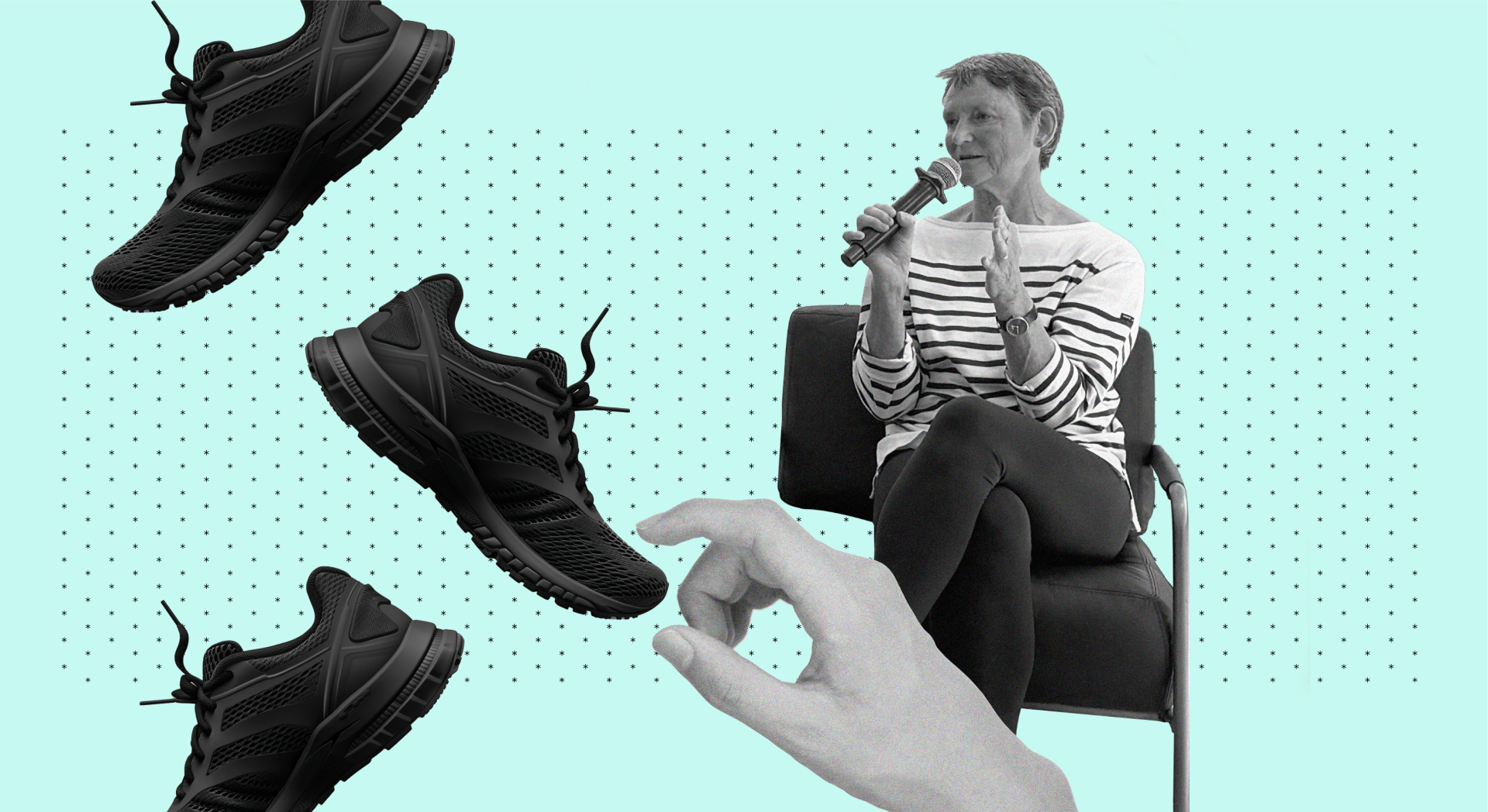
Annette Diefenthaler, now Professor and Executive Director of the Munich Design Institute, was an IDEO researcher working with a global bank trying to set up a presence in Russia. The team had done loads and loads of interviews with people about banks. Late one night, on the way back to their hotel, Annette saw a big shopping center. She asked the driver to stop, because she realized they'd had no time, other than doing their interviews, to absorb much about the culture.
So she went into this big mall, and Annette was stunned by how simply the department store had arranged its products. One wall was just black shoes all lined up, all the different kinds of black shoes you could have. It was all really obvious and not very exciting because there were only black shoes—no glitz at all.
What she took from that was: this is a culture where trust is built by showing what there is. It was so honest and direct. And here we were, talking to all these people about banks and trying to understand how to build trust in an alien brand. She had a flash of insight that suddenly made sense of what the team had been hearing. The bank needed to be so much more straightforward and transparent about its services. “Black shoes” became a mantra for that project and shaped how they designed the bank’s interior and described its offer.
This insight came from a moment that was completely off script. I love that. You can’t always get to an insight by staring at your interview notes. You get it because it’s somehow gotten into your viscera.
MP: Are there any moments where you found creative ways to present research to clients to help them make decisions?
JFS: Instead of personas and customer descriptions, a team once created a series of packed suitcases that represented the different types of travelers they interviewed. The client loved that one.
MP: How do you find the courage to decide to deliver an installation of suitcases instead of a more traditional research deliverable, like a presentation?
JFS: You need to tune in to what your client needs to absorb and what you want to communicate, and be ready to experiment with how you do that. You need to get good at failing. You try things, fail, and learn how to gauge what might work better the next time.
MP: You’re an incredible artist—I’ve seen your woodblock prints. You’re also an amazing rock climber and swimmer. I’m curious how these activities helped you develop your craft as a researcher and a designer.
JFS: There’s something very elemental about all of them—they’re direct experiences of the world. You give your weight over to the rock. You trust the water. Even with woodblock printing, what I love is how material it is. I use sharp knives and gouges to carve the wood, then I learn how much water and ink to use and how the brushes work.
That’s the thing I find really exciting. The fact that human beings have evolved to make beautiful things, that connection of making and place is a crucial motivator.
MP: You are one of the authors of the first edition of The Little Book of Design Research Ethics. I’d love to hear your perspective on the ethics of the discipline, and what we should keep in mind as we increasingly rely on technology.
JFS: I have a problem with the term research, partly because I think it connotes things like clipboards and taking notes—that we’re documenting other people’s lives. I’m happier when it all feels more like co-discovery, exploring together. We are together, engaged in this space, noticing things about your behavior as well as what I’m thinking about your behavior. And it's more collaborative.
Co-discovering with other humans is a much nicer place to be.
MP: Looking back, knowing what you know, what advice would you give young Jane?
JFS: I think I had imposter syndrome for about five years or so. I could have moved along a lot faster if I’d had a little bit more confidence and maybe a few more people telling me that it was okay.
MP: Are there any insights from your human factors work that you apply to the broader scope of life-centered design, and how we can learn from that?
JFS: A human being is a living thing in a living system of other living things. Observation and curiosity are key—we should keep asking the same kinds of questions about the inherent behavior of those systems, as we would ask about people: what they really do, what motivates them, and how we can gain insights from them. This goes back to your question about how rock climbing, swimming, and art come into it, in the sense that we can think more broadly about the elements that matter to people. There’s a whole living world out there with great examples of elegant systems we can learn from.
This Q&A has been edited for length and clarity.
“Insight, for me, is a change of state in our understanding. There's an epiphany of sorts, a new recognition. You get an insight by being a sensory human being, observant and absorbent through all your senses."
Building confidence for 2027
Create a plan for impact in three steps.
When category-defining challenges like disruption, the accelerating pace of change, and the need to rethink how organizations work are on the table, looking back on the current year and fighting for the same budget won't work. That's why many of the leaders we partner with are massively rethinking their priorities and where to best focus their resources.
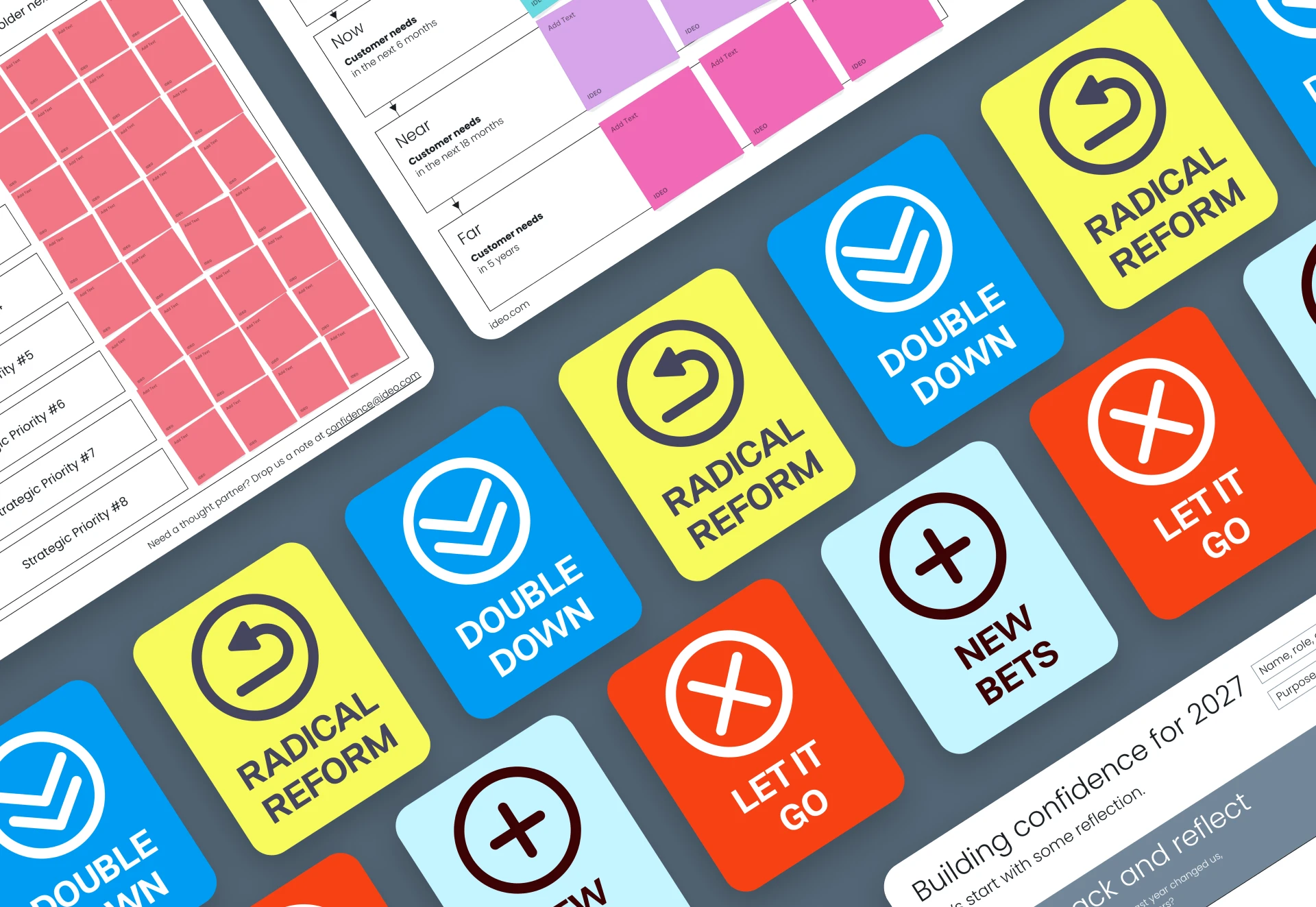
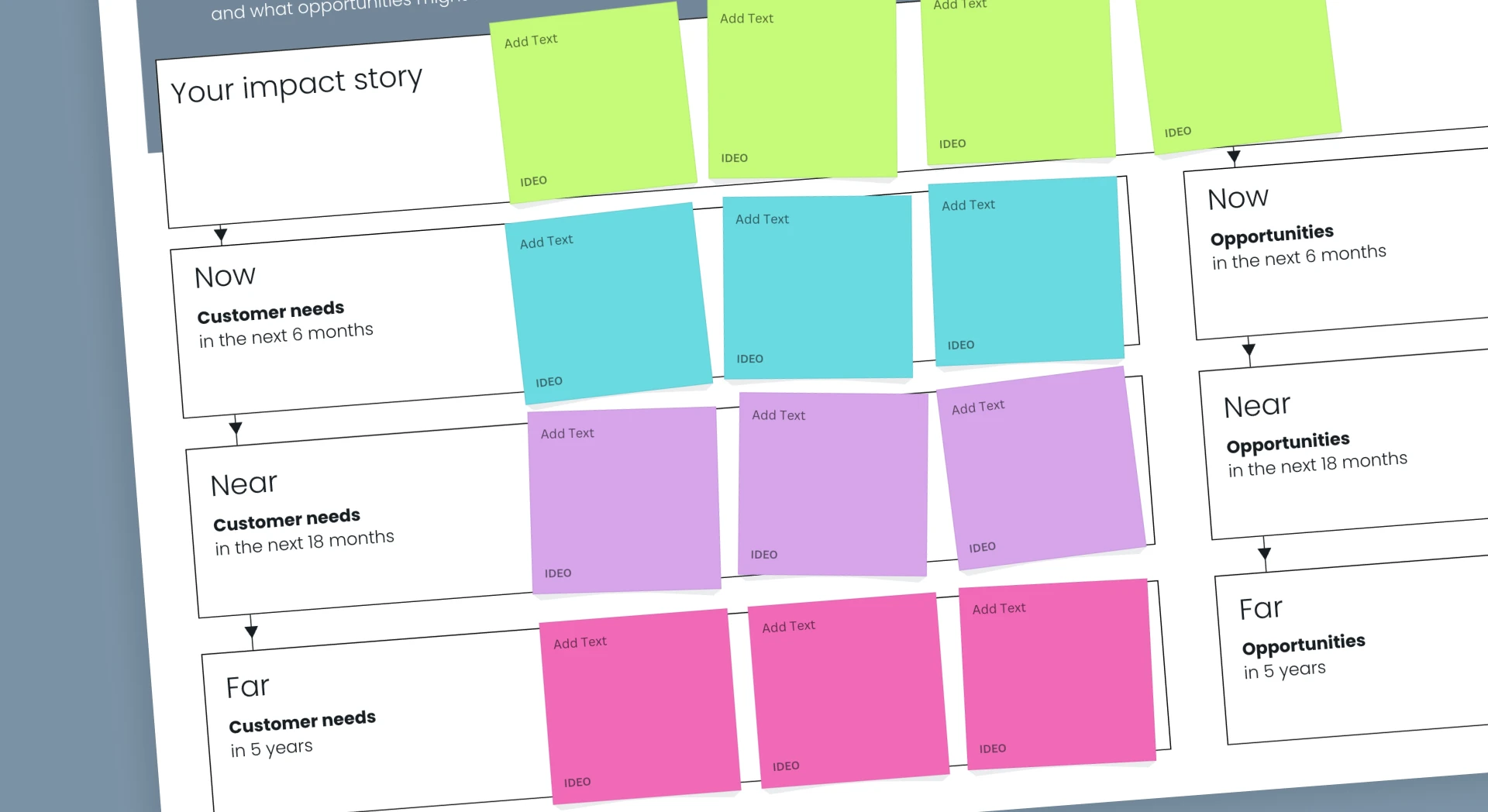
It’s a lot to balance, but the process doesn’t have to feel like guesswork. For several years, we’ve been using a tool we call the Planning Canvas, which provides a clear, strategic, and uncomplicated way to reflect on what has changed, what you’ve learned, and what matters now before planning for the coming year. It’s a simple way to help you evaluate where you are, and what levers you might pull to get your organization where you want it to be.
Download the Canvas
Our 2027 Planning Canvas walks you through three effective steps:
1. Reflect on what’s changed
2. Imagine the impact you want to have in the near future
3. Decide what to double down on, reform, let go of or pursue as a new bet

We recommend using it for individual reflection ahead of annual planning, before team sessions and leadership decision meetings begin. It will help you arrive with a clear point of view on what has changed, what matters now, and the choices worth putting on the table. At the same time, don’t hesitate to adapt it to your needs. If facilitating a collaborative conversation across your team aligns better with your organization's culture, this tool can help with that, too.
The goal isn’t to predict the year ahead perfectly. It’s to enter planning conversations with a sharper point of view and the confidence to make impactful choices together. We hope you find it useful.
Looking for more help with strategic challenges? Get in touch. We’d love to connect.
At a time when uncertainty feels like a constant, leaders across categories can find it tough to make confident planning decisions for the year ahead.

Matthew Higham
I work with leaders and their teams to design new strategies and experiences that enable people to live healthier lives.
As part of the London Leadership team, I head-up IDEO’s Health Portfolio for Europe, working with leaders and their teams to design new strategies and experiences that enable people to live healthier lives and enjoy better futures.
I have had the great privilege of working with some of the most influential companies in the world—Novartis, Sanofi, Roche, NHS, CalMHSA, HP, and Amazon to name a few.
Over the last 15 years, my journey through consulting and venture leadership has been rooted in a deep commitment to human-centered design.
I believe in design as a powerful tool for change, allowing us to create groundbreaking experiences that address the biggest, most complex challenges of today.
Originally from England, I began my journey at IDEO in California, which expanded my worldview, emphasizing the importance of diversity and cross-cultural perspectives in driving innovation.

Margo Husted
My passion for helping creative companies thrive led me to IDEO, where I oversee financial planning, strategy, and operational efficiency.
My passion for helping creative companies thrive led me to IDEO, where I oversee financial planning, strategy, and operational efficiency.
In this role, collaboration is at the heart of what I do—building strong partnerships between finance and client teams to drive results and strengthen relationships.
Before joining IDEO, I served as CFO/COO at Sylvain, Sub Rosa, Aruliden, Redscout, and ?What If! Innovation Partners. Earlier in my career, I held senior finance and operations roles at New Line Cinema, Napster, and Universal Music Group/PolyGram Records. I’m a CPA and based in New York City, where I live with my family.

Lorenz Korder
I lead change and strategy programmes at the heart of large organisations, helping leaders cultivate teams that transform their businesses at scale.
As Managing Director of IDEO London, I lead a creative powerhouse fueled by the collective energy of our diverse makers, visionary client partners, and extensive local network.
IDEO’s human-centred approach to innovation is more crucial than ever. Today’s defining business challenges—climate change, inequality, emerging technologies—all have human behaviour at heart. Addressing them requires profound understanding of people’s needs and radically redesigning the systems and services shaping our world.
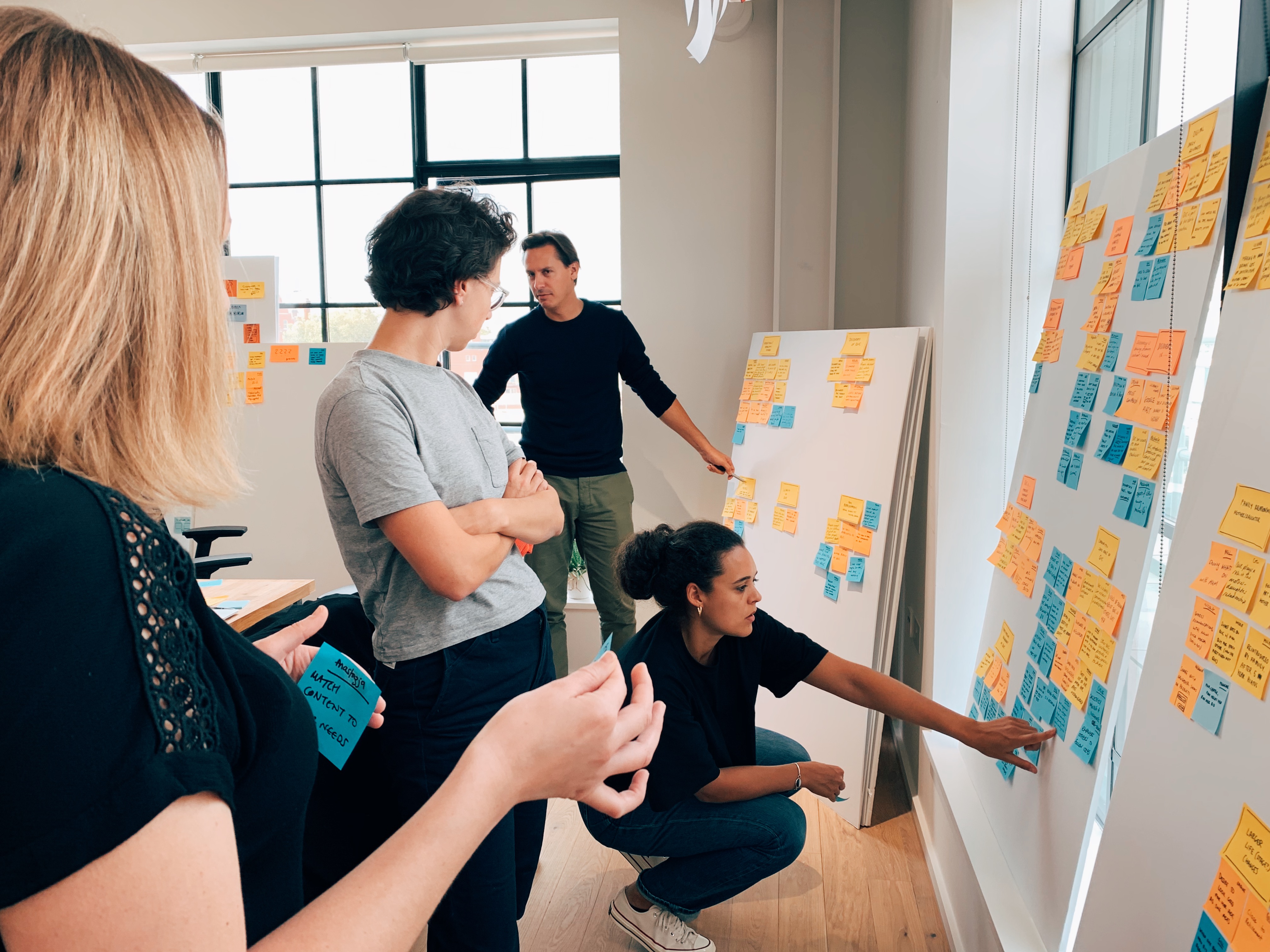
I remain in the work, leading change and strategy programmes, and helping leaders set inspiring visions, make confident choices, and cultivate teams delivering transformational human-centric solutions at scale. This hands-on, iterative approach makes big ideas tangible for customers and clients through real-world prototyping and testing, setting the stage for growth.
My work has focused on hospitality, retail, and technology. Prior to joining IDEO, I founded a sportswear brand and was a brand strategy consultant in consumer goods. I hold an MBA from INSEAD.

Kelly Bjork
I bring a deep understanding of brand strategy, identity, expression, user experience, and communications to my work.
With more than two decades of experience in brand and communication design, I bring a deep understanding of brand strategy, identity, expression, user experience, and communications to my work. As a pragmatic aesthete, I combine creativity with problem-solving, mentoring, and leading multi-disciplinary teams to create human-centered designs.
Throughout my career, I have played a key role in shaping, strengthening, and transforming some of the world's leading brands across a range of industries, including tech, CPG, health, food, and financial services. I have worked with small businesses, cultural institutions, and Fortune 100 corporations, using my broad set of design skills to develop brands and consumer experiences that resonate with audiences.
I help companies articulate their purpose, vision, and values through strategic development and organizational transformation, and I thrive solving complex problems and mentoring teams through the creative process.
In addition to my work at IDEO, I have served on the boards of AIGA Chicago and AIGA Minnesota. My award-winning work has been recognized by The One Show, AIGA 365, Communication Arts, Print, Graphis, Rebrand 100, and was featured in Rick Valicenti's CHGO DSGN exhibition at the Chicago Cultural Center.

How to use AI as an editor, not a writer
Ed White shares how he uses AI as an editor—not a writer—to sharpen storytelling, rehearse ideas, and preserve the productive friction that makes creative work better.
Ed White has a rule he's tested on his own writing: hold yourself as the writer, and let AI be your editor. Ed is a Senior Design Director at IDEO's London studio, where he co-leads the firm's AI portfolio across Europe. Before IDEO, he spent 12 years as a writer and editor at the Financial Times, Wired, and Contagious. So when he talks about when to use AI for storytelling and when not to, it comes from two decades of crafting his storytelling skills.
In this episode, Mina Seetharaman talks with Ed about two specific tools he uses to keep AI in an editor's seat: a "roasting agent" prompted to critique his drafts without any sugarcoating, and a simulated audience he rehearses pitches on before the real thing. They also get into what Ed is hearing from design leaders at Anthropic, Lovable, Shopify, and Google Creative Lab about how creative work is changing, and why he thinks the friction of writing something yourself is worth protecting rather than automating away.

Building a personal AI for the messiness of life: Sida Li
Becca Carroll talks with Cue co-founder Sida Li about designing a personal AI for the messiness of everyday life—not just work. They explore how Sida stays anchored to human needs while navigating fast-changing technology, product tradeoffs, business-model experimentation, and the realities of building an AI company today.
Most AI products today are built for work—a space with clear problems and established systems. One founder noticed a gap: personal life is messier, harder to systematize, and mostly left behind by the AI boom. So she built Cue, a personal AI that lives inside iMessage and group chats, to go where the other tools haven't.
In this episode, Becca Carroll, IDEO's Chief Strategy Officer, talks with Sida Li, co-founder and CEO of Shared Context Lab, about staying anchored to a human need while the technology around her keeps changing shape, why she treats her business model with the same rigor she'd bring to a product, and what it feels like to build a company at this particular, disorienting moment in AI.
The conversation also gets into how Sida makes design decisions: the language Cue uses to describe itself, the tradeoffs behind building inside iMessage instead of a new app, and a real story about a business idea that didn’t pan out.
This is the second in a two-part series profiling founders from IDEO's Startups-in-Residence program. The first conversation is with Johannes Seemann, founder of Sooner, on designing GenAI for the emotional side of money.

Designing GenAI for the emotional side of money: Johannes Seemann
Designing financial tools around the feelings that shape money decisions.
Most personal financial tools are built to run the numbers and optimize towards a budget. While that works for some, most people experience money as a lived relationship that does not neatly fit into a spreadsheet. Johannes Seemann and Becca Carroll discuss why money is emotional before it is mathematical, and what a human-centered approach to building a generative AI financial product looks like in practice.

The curious leader's edge in uncertainty: Scott Shigeoka
How genuine curiosity helps leaders navigate uncertainty with greater confidence.
Mina Seetharaman talks with Scott Shigeoka, author of Seek and Head of Curiosity Cultivation at the Eames Institute, about what distinguishes genuinely curious leadership from performative curiosity, how power dynamics shape curiosity, and why practicing curiosity can restore energy rather than drain it.
Looks like you might be in search of something very specific?
Or reset the filters above and try another angle.
Here’s some random inspiration
Podcasts about creative leadership
Articles about the power of prototyping