
.svg)



Better sales, less waste
H&M transforms its operations to cut excess inventory.
Globally, the European Commission reports, a truckload of textiles heads to landfills or is incinerated every single second.
The fashion industry accounts for some 10 percent of greenhouse gas emissions worldwide.
Less than 1 percent of the materials used to make clothing is recycled, according to a report by the Ellen MacArthur Foundation.
The best way to keep clothes out of a landfill? Don’t make them.
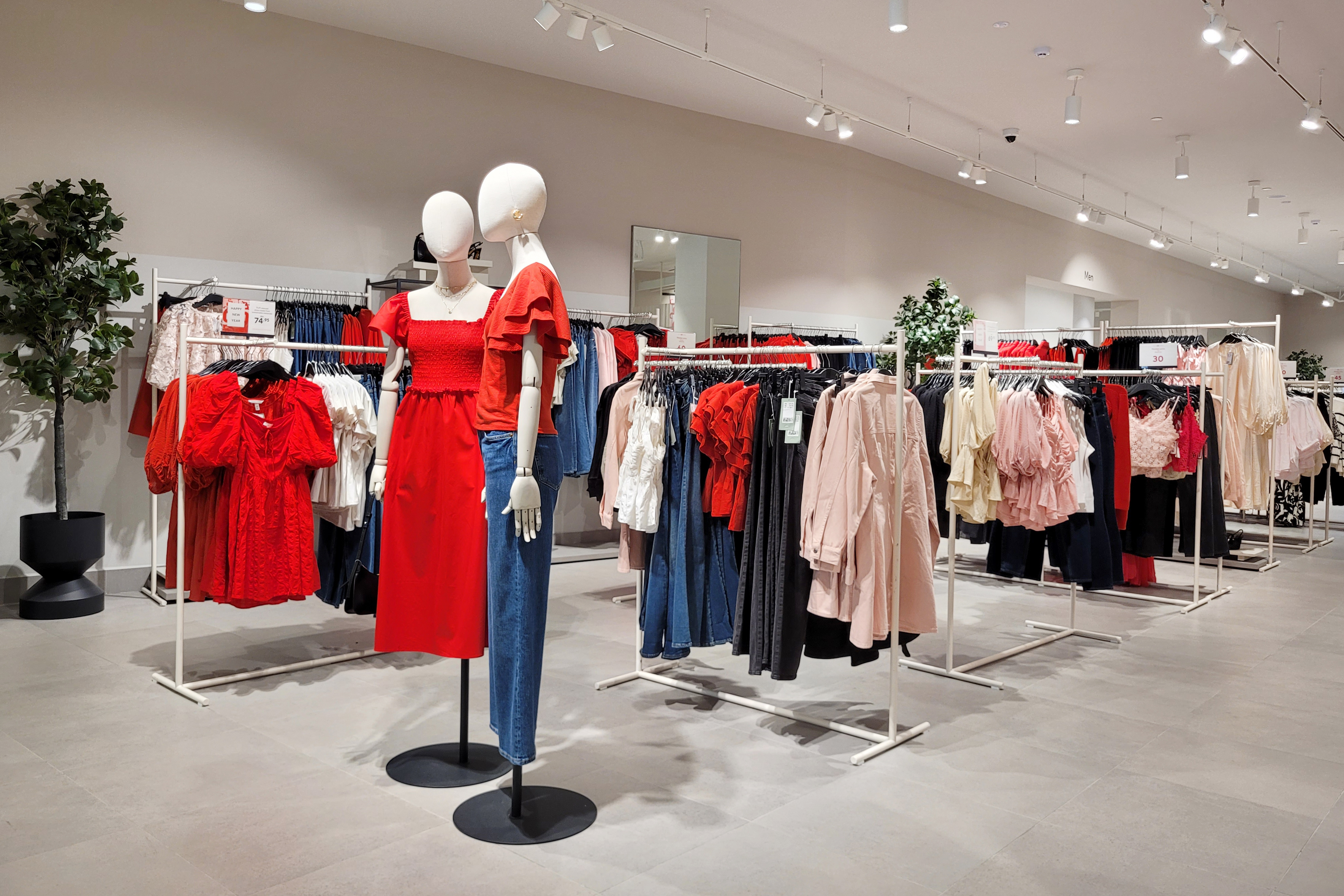
Picture this: Not long ago, it wasn’t unusual for a customer to walk into an H&M store and not be able to find a basic white t-shirt in their size. Why? Like most long-established retail operations, H&M was operating with a push model—placing seasonal bets on what the demand for a given item of clothing might be, locking orders far in advance, and hoping that they were able to sell out. Make a mistake in that kind of model, though, and you can end up with customers unable to find the basics they rely on, or excess inventory you can’t sell. That’s a problem for the business, but for the environment as well—and one that doesn’t fit H&M’s aggressive sustainability goals.
Though H&M had tried to tackle the problem before, the launch of the H&M Group Design Studio, co-created with IDEO, gave the retailer the confidence to go after it again. The team started out by mapping out the complex network of people that make up its supply chain across the globe, meeting with everyone from designers to garment suppliers, logistics managers, and even folks selling the final product in H&M stores.
They then created an algorithm for more precise ordering, as well as a tool that provides a shared view of information. Instead of placing orders, the new automated flow—dubbed “Cruise Control"—allows staff to work with a demand forecast that gives them more time to focus on customer-centric operations, like providing guidance and inspiration. It also makes it easier for H&M to follow the demands of the market, and place much more accurate bets on what consumers will want, when. Already, H&M has significantly increased sales while cutting excess inventory—a result that improves its bottom line, as well as its environmental impact.
Estimates project that by 2030, global apparel consumption will hit 102 million tons.
22%
reduction in stock during a pilot program
34%
increase in sales during a pilot program
Fueling innovation in Boston
How the Boston Society for Architecture is leveraging member expertise to increase its impact.
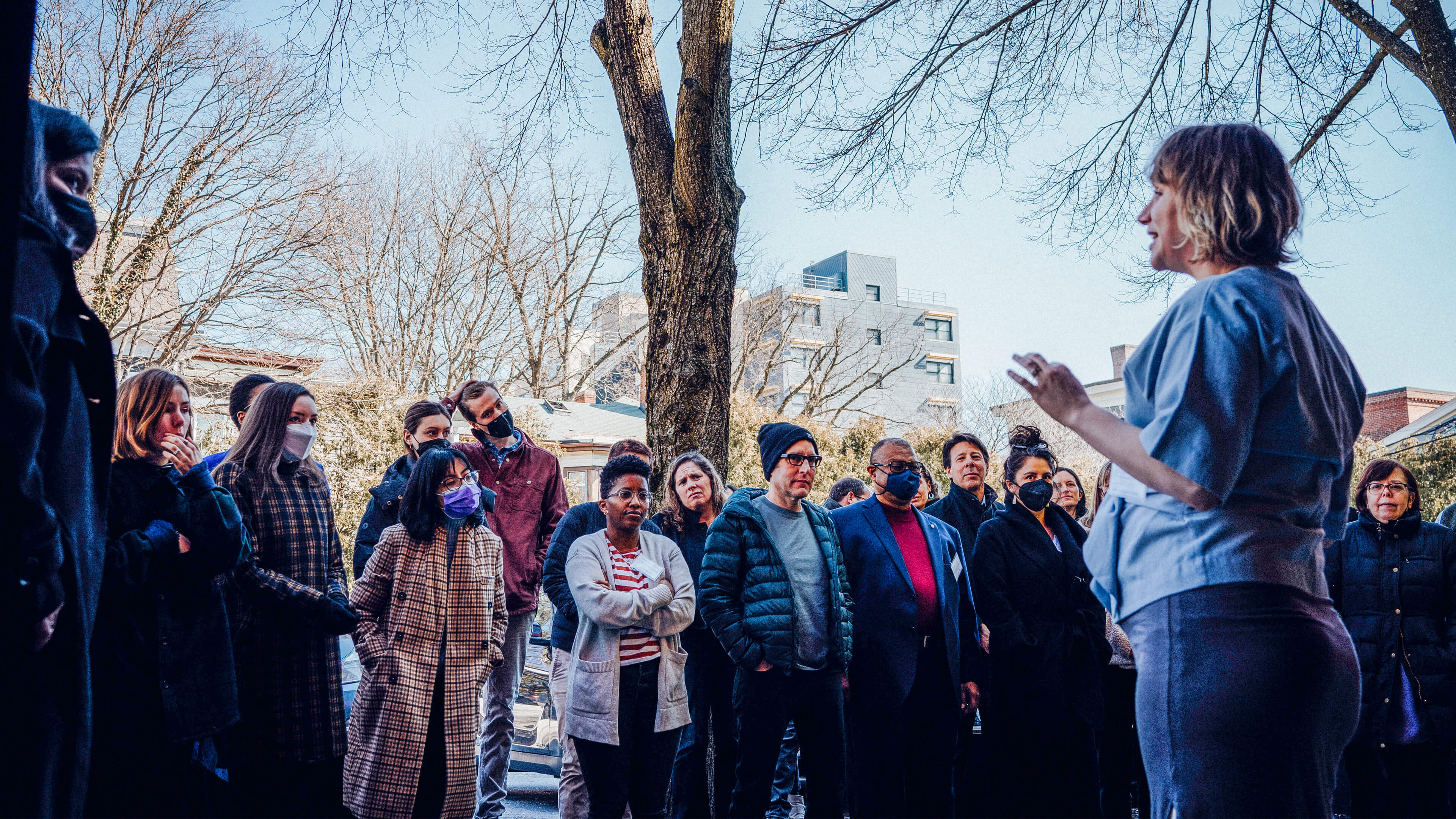
To foster creative projects that spoke to the needs of local communities and environments, the BSA began to engage its members in collaborative, user-led design. The organization launched its first-ever innovation challenge, putting out a call for all members to pitch their ideas for projects in the built environment.
The BSA expected those pitches to have dollar signs attached. To the organizer’s surprise, only one asked for funding. The rest requested less tangible, but equally meaningful support: advice, connections, specific expertise. Those are resources that the BSA has aplenty, but hadn’t learned how to leverage well.
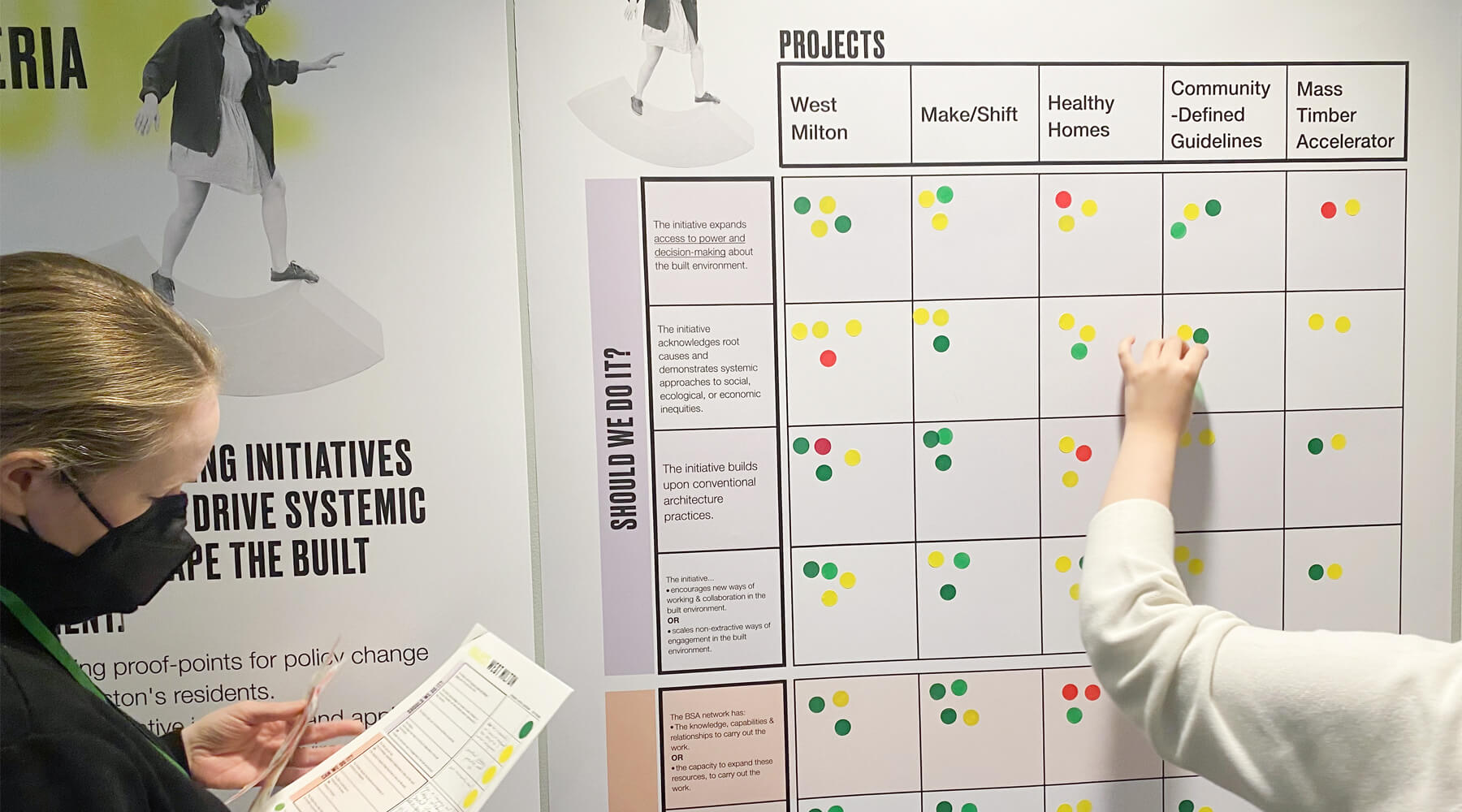
From that first go at an innovation challenge, the BSA learned how to better support its members. It also learned that to lead with purpose and make strategic choices, one must develop the confidence to say no. Instead of spreading itself thin across many projects, the organization decided to take small steps, focusing on one initiative at a time, so that it can deliver focused impact and stay true to its evolving mission.
With 36% of global energy going to buildings and 8% of global emissions caused by cement alone, the architectural community is inextricably intertwined with both the causes and solutions related to climate change.
According to a survey conducted by the AIA, the architecture profession in the US is less diverse than the population as a whole. This lack of diversity can contribute to a disconnect between architects and the communities they serve.
31
submissions received from innovators in the Boston region working on equity and sustainability challenges
5
innovation teams invited to pitch ideas
Student-centered solutions
How an organizational culture change is helping newbies at NYU navigate campus life.
The resources that NYU students needed were organized by administrative department, and buried on disparate websites and calendars. But students don’t think in terms of departments—they just need to know where their classes are.
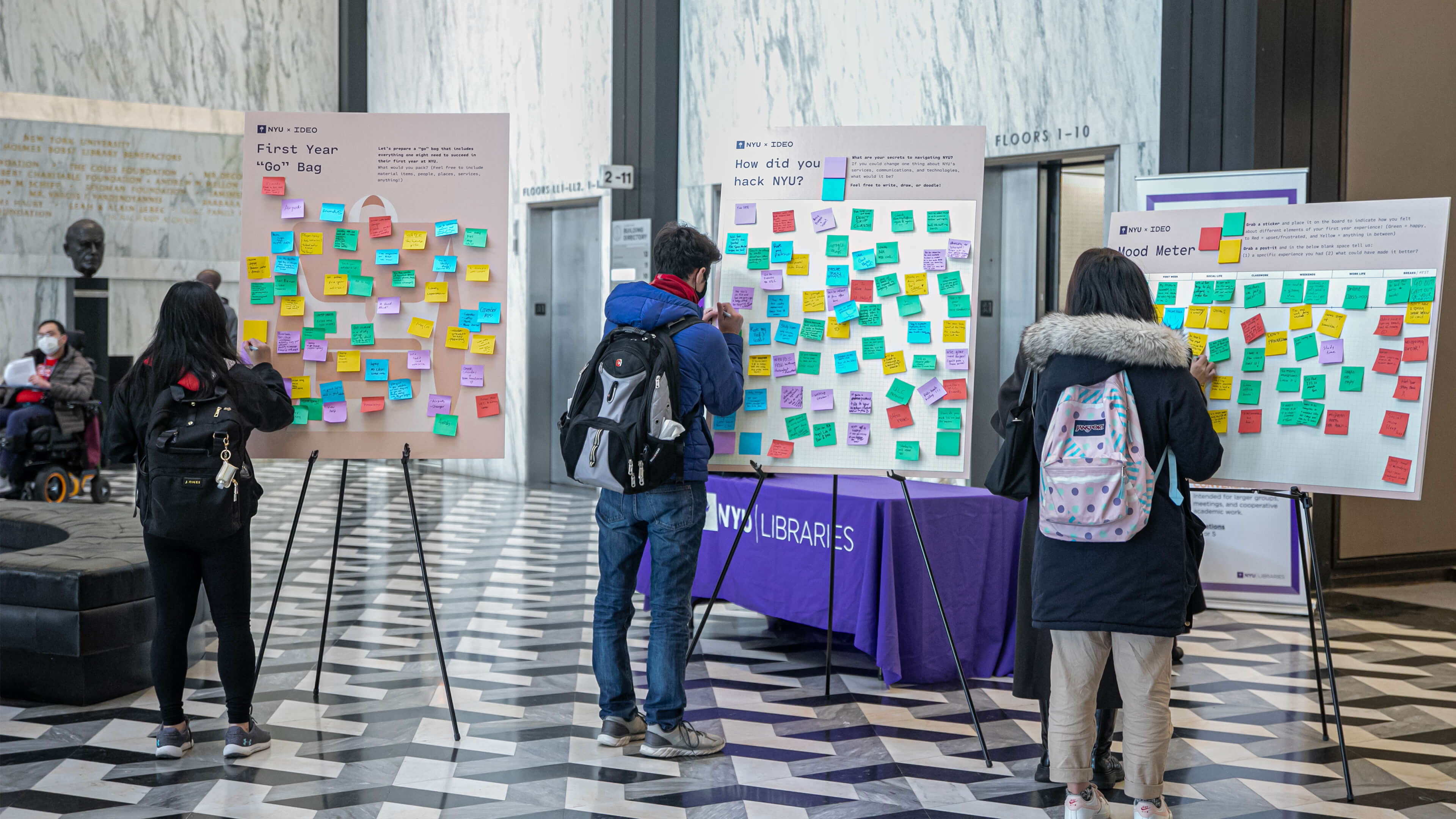
All of this became patently clear as IDEO shadowed students. Team members visited classrooms, walked with them through their days, and hosted pop-ups in highly trafficked areas to get ideas from passersby. That helped the team develop a common understanding of the overall student journey and grounded employees in the key moments that can either make or break a student’s experience. Visualizing their journey helped departments gain a shared understanding of the fractured communications challenge and develop possible solutions.
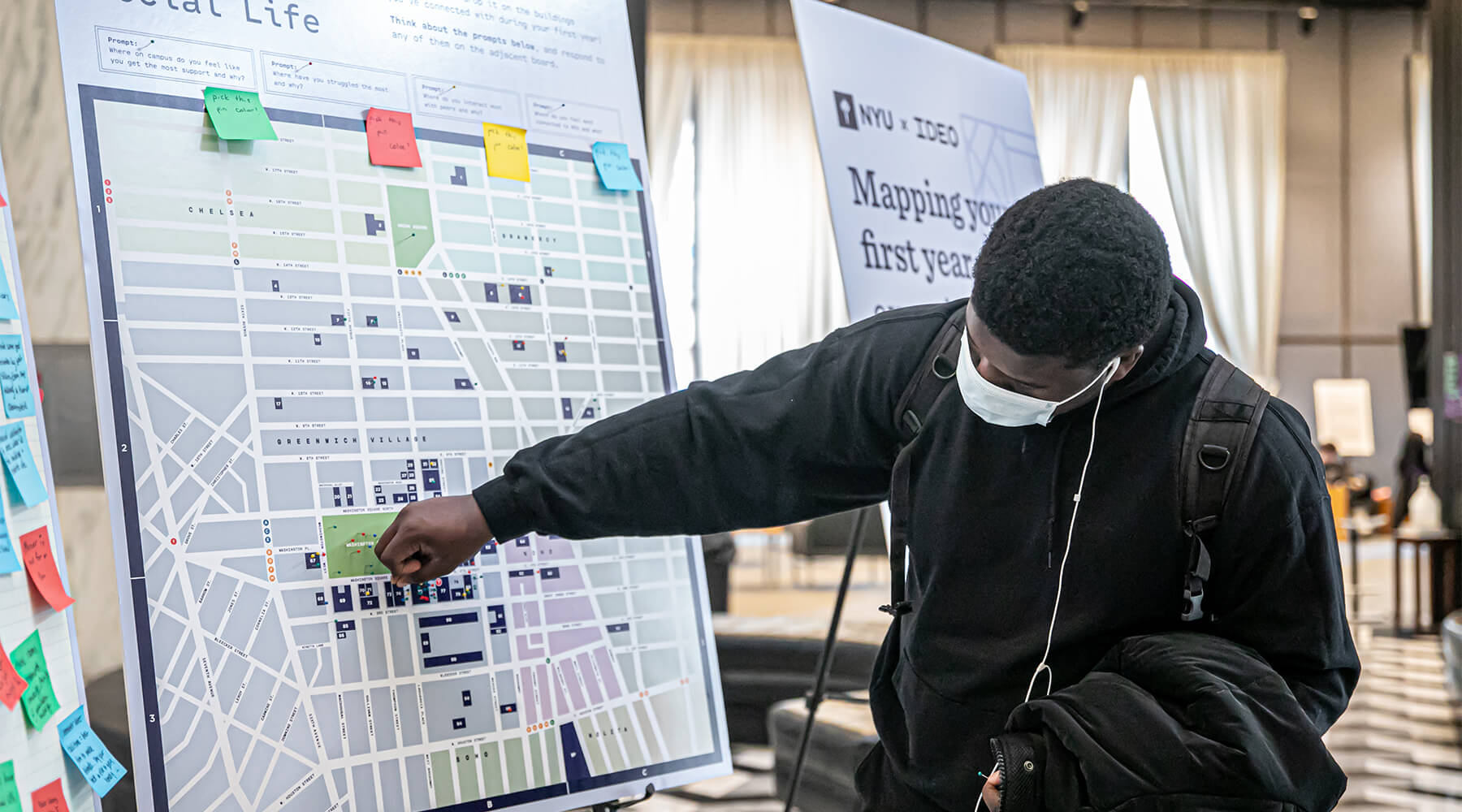
To synthesize those insights, we formed cross-functional action learning groups, challenging existing practices at the university and coming up with new ways of working. Participants came from a diverse set of departments, including enrollment management, student affairs, marketing and communications, IT, global inclusion, student services, the provost’s office, digital communications, and more. The cohorts sketched early hypotheses and got feedback from faculty, administrators, and students from all of NYU's undergraduate schools to refine initial concepts.
Collaborating with students gave staff a first-hand look at what students were struggling with and a way to engage students directly in addressing those challenges. Just as importantly, there was an overall culture shift at NYU: Administrators started with questions instead of agendas, came together around a table, and reached beyond their job descriptions to meet the needs of students.
First-year students reported receiving hundreds of paper forms, and email from more than 70 unique senders.
NYU needed to offer students the right resources at the right time—and collaborate to serve them as a unified administration.
New services
in-production include centralized calendars, dynamic campus mapping, and customized notifications
Design-thinking cohorts
now support the student experience
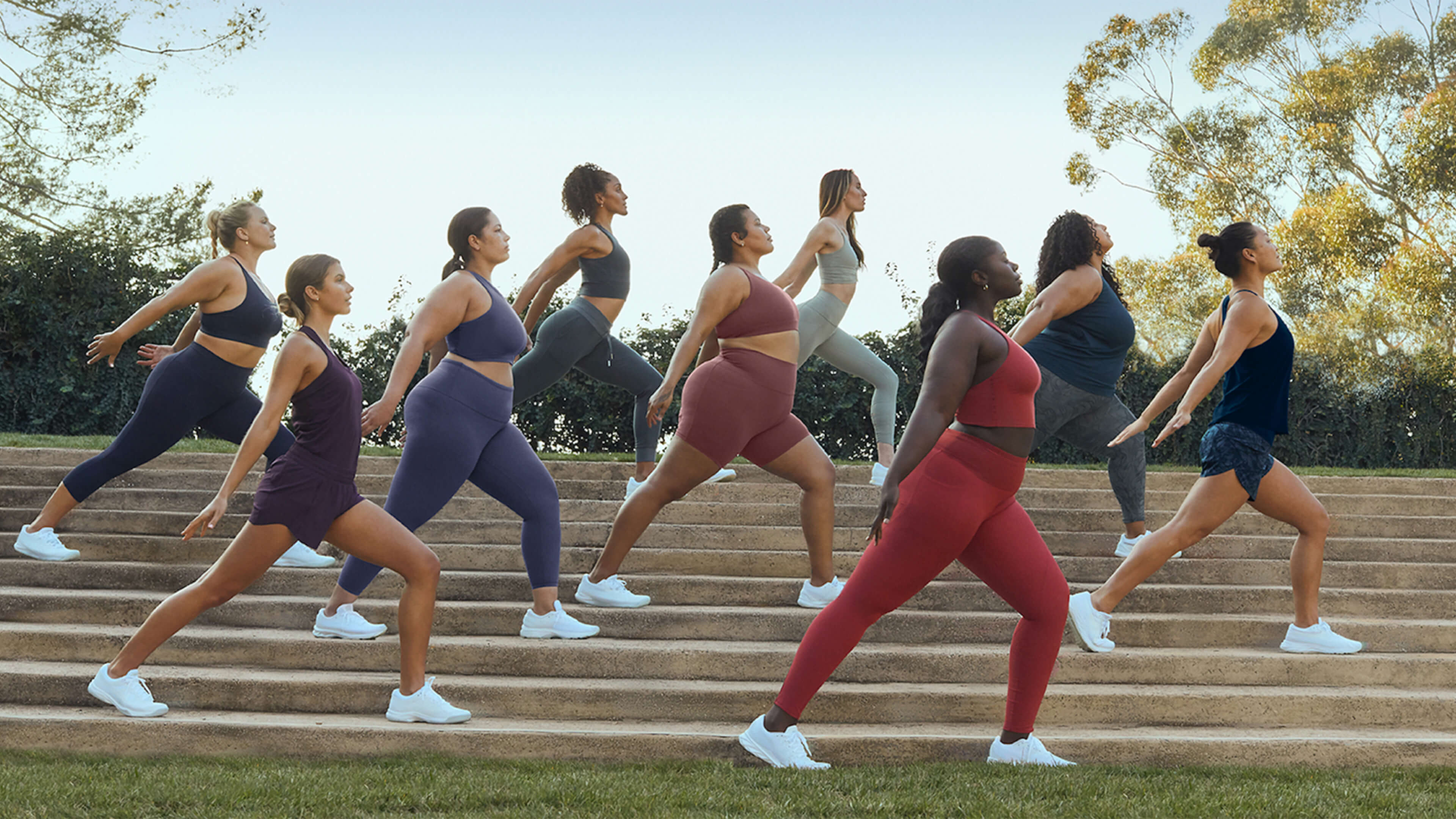
She knows best
A major athleisure brand passes the mic so women can define community for themselves.
Diversity alone isn’t enough—in marketing or any other facet of business. Today’s brands must authentically engage with and create the conditions for co-design with existing communities.
That sort of deep, meaningful engagement with customers doesn’t happen over Instagram. It requires a playbook, a prototype, and a healthy amount of trust. So, IDEO worked with Athleta and Gap to tap into the wisdom of a council of women who represent intersectional identities and lived experiences. The council surfaced powerful insights for the brand, like the fact that active women don’t need a brand to empower them—they already feel powerful.

After only a few weeks, Athleta experienced the difference between research and a truly reciprocal relationship. The way their brand engages with communities is adding depth, understanding, and authenticity to Athleta’s content, products, and experiences. And women can feel the difference.
76% of US adults say that the media promotes an unattainable body image for women.
Fewer than 1 in 10 businesses review for inclusion as part of product design and marketing campaigns.
>2X
user growth in 2022
13,000+
Athleta WellPro well-being providers active on the platform
進化し続ける組織へ 〜個と個をつなぎ、創造性を解放する〜
「なぜ日本の組織では個の創造性を発揮することが難しいのか?」という問題意識のもと、さまざまな調査研究を実施。年代、専門性、性別などに多様性を持たせた「個と組織の創造性」に関する研究会を発足し、ディスカッションを重ねながら、同時にアーティストやスポーツ選手、デザイナーの方々へのインタビューを実施、そして国内外の中小企業、大企業に勤める様々な役職の方へのインタビューも行いました。文献や海外の事例に学ぶだけでなく、多様な方々と、とことん日本の組織に向き合ったのが、今回の調査の特徴です。
こうしたプロセスの中で浮かび上がってきたのは、日本社会における創造性に対する思いこみ。創造性は、一部の個に宿るものではなく、さまざまな人・モノ・コトの掛け合わせで生まれる。だからこそ、個の創造性を求める前にまず、どのように創造性が開きやすい環境を作ることができるのか。ここから、「どのようにして、固定観念を覆し、個々が問い続けられる土壌を作ることができるか?」という問いが生まれ、個と組織の創造性を高めるための考え方を「提案」として整理しました。
社会はVUCAの時代を迎え、日本企業は「創造性」を発揮することがこれまで以上に求められています。一方、個人に目を向けると、これらの複雑な社会や環境にどのように対処したらよいのかが分からず、次の一歩が踏み出せない「モヤモヤとした閉塞感」に囚われています。どのように組織や部署・グループの創造性を引き出したらいいのか悩んでいる方、どのようにまず第一歩を作ったらいいのか考えている方にぜひ触れていただきたいと願っています。
→レポートPDF:「進化し続ける組織へ 〜個と個をつなぎ、創造性を解放する〜」
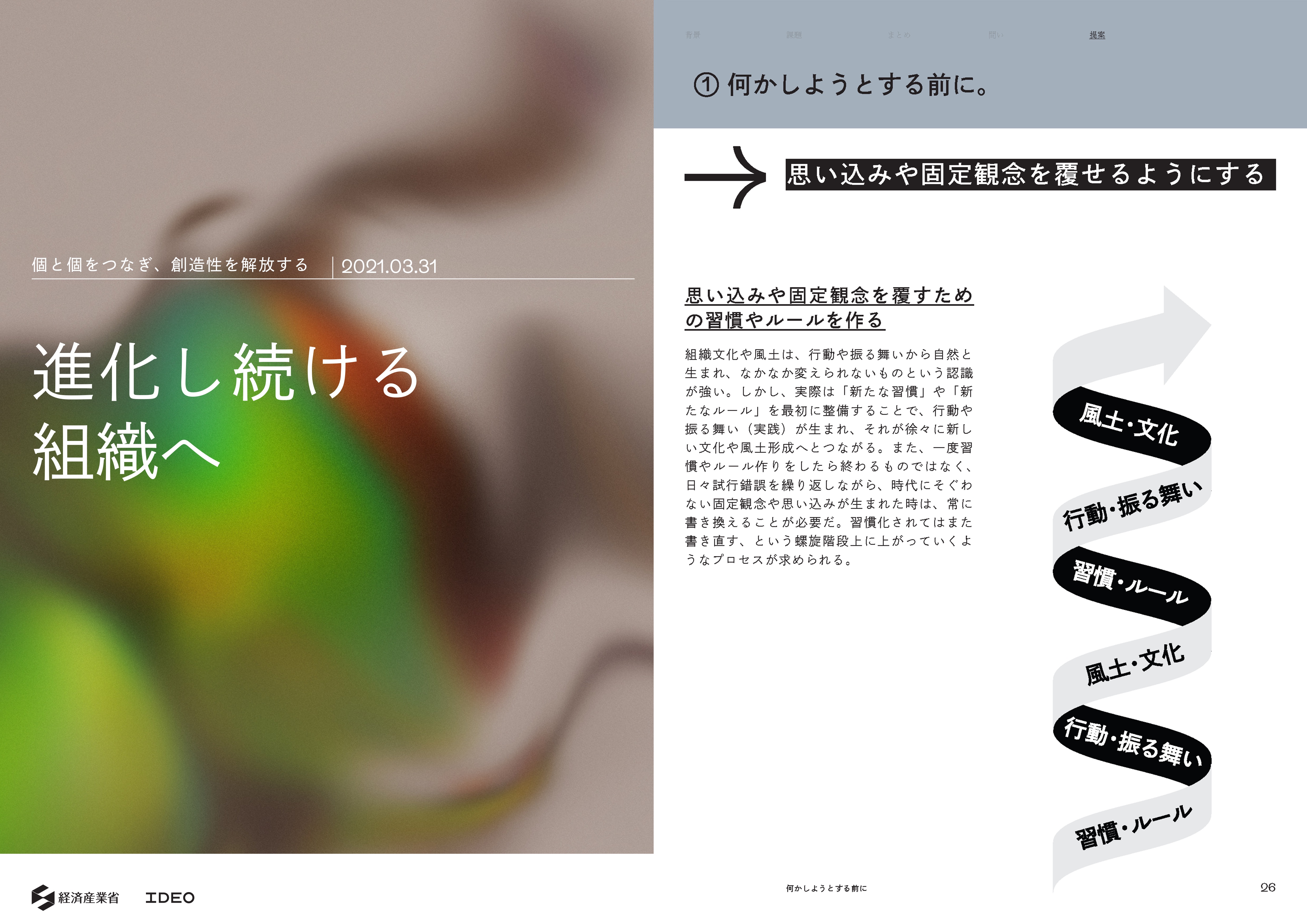
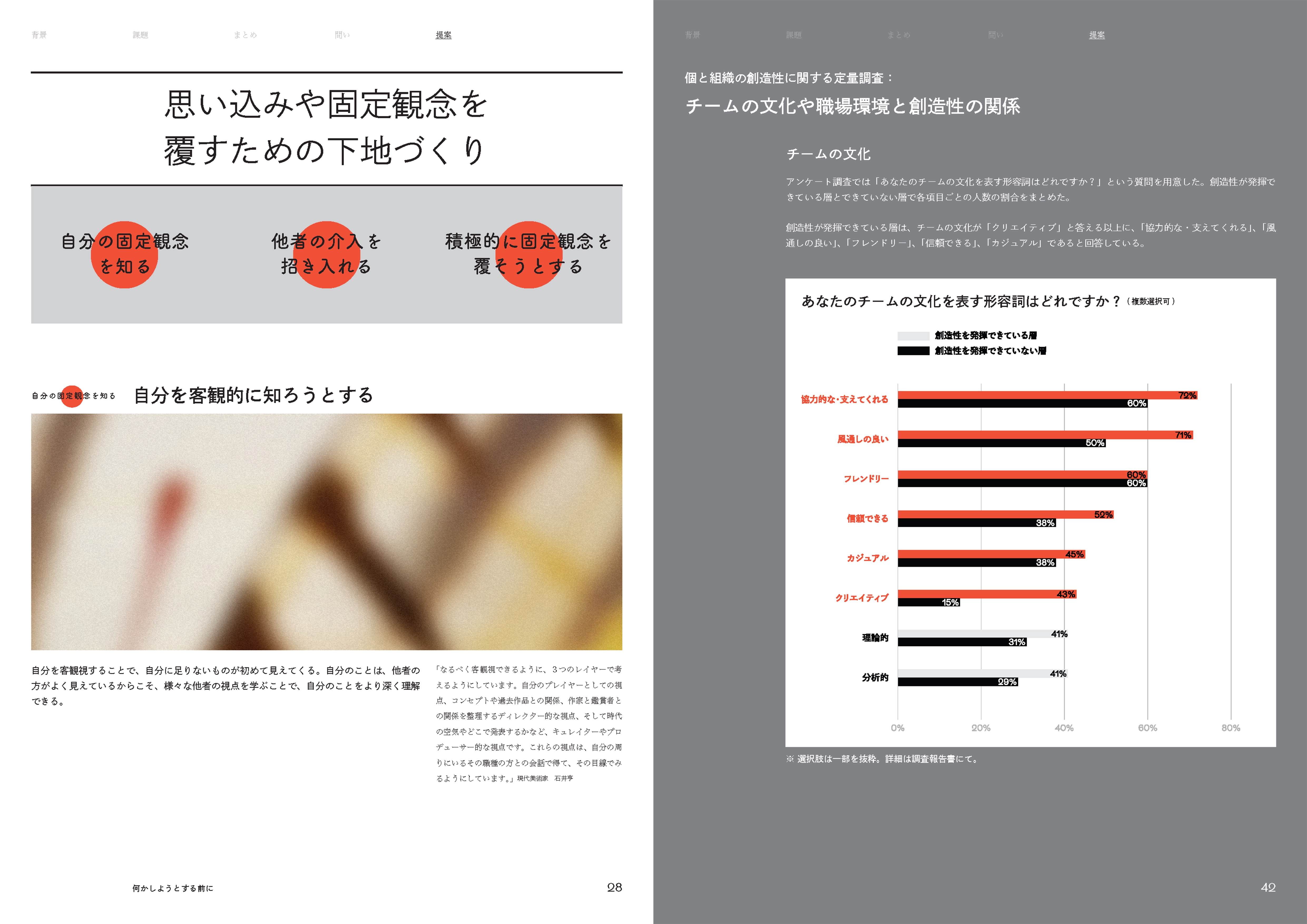
提案
レポート内でまとめている提案のいくつかを例としてご紹介します。個々が創造性を発揮できる環境を作りたいが、まず何をしたらいいか悩んでいる方が、具体的に何かを始められるきっかけになればと考えています。
ヒエラルキーが逆転する場を作る

年齢、役職、性別、職種など、組織に根強く存在するヒエラルキーには、あえてそれが逆転するような場を作ることで、新しい考え方を取り入れる余白を生むことができる。
"階層やサイロ化が強い組織構造では、相互理解、相互の尊重が生まれるような環境づくりが必須だと思います。そのためにあえて、既存のヒエラルキーをひっくり返すというのも手。一番若い人が上司にリバースメンターシップをするとか。会議では発言しにくい人から発言してもらうとか。"
-Michael Peng, Moon Creative Lab, Chief Creative Officer
自主練できる場をつくる

現状に問いかけ、自分なりのアイデアを考えることにハードルを感じる人が多いため、まずは安心できる場(いわば自主練できる場)で試行錯誤し、自分なりに考えるきっかけを作ることが必要である。自分のアイデアに自信を持つことで初めて、それを周囲に共有することができる。
"クリエイティビティは、敷居の低い場所でないと発揮しにくい。新たにチャレンジする人が、簡単な実験をまずキッチンのようなパーソナルな場所で始めることが多いのも、まさにそういうこと。キッチンで練習して大丈夫だと思ったら、初めて外に出て試すことができる。"
-デザイン教育者(米国)
個人の任務の目的・役割を明確化する

「なぜ何のためにこの仕事をやっているのか分からない」といった、主人公がいない仕事が多い。仕事の任務やそれぞれに期待される役割を明確にすることで、仕事が自分ごと化される。それなくして、人々は自分なりの問いを持ち続けることはできない。
“個人に任されている任務、役割を明確化することで、より自分ごと化された問いをたてやすくする。何のためにやっているのかがクリアになると、どんな創造性を発揮する必要があるのかも明確化される。”
-株式会社NTT ドコモ イノベーション統括部 グロース・デザイン 担当部長 笹原 優子
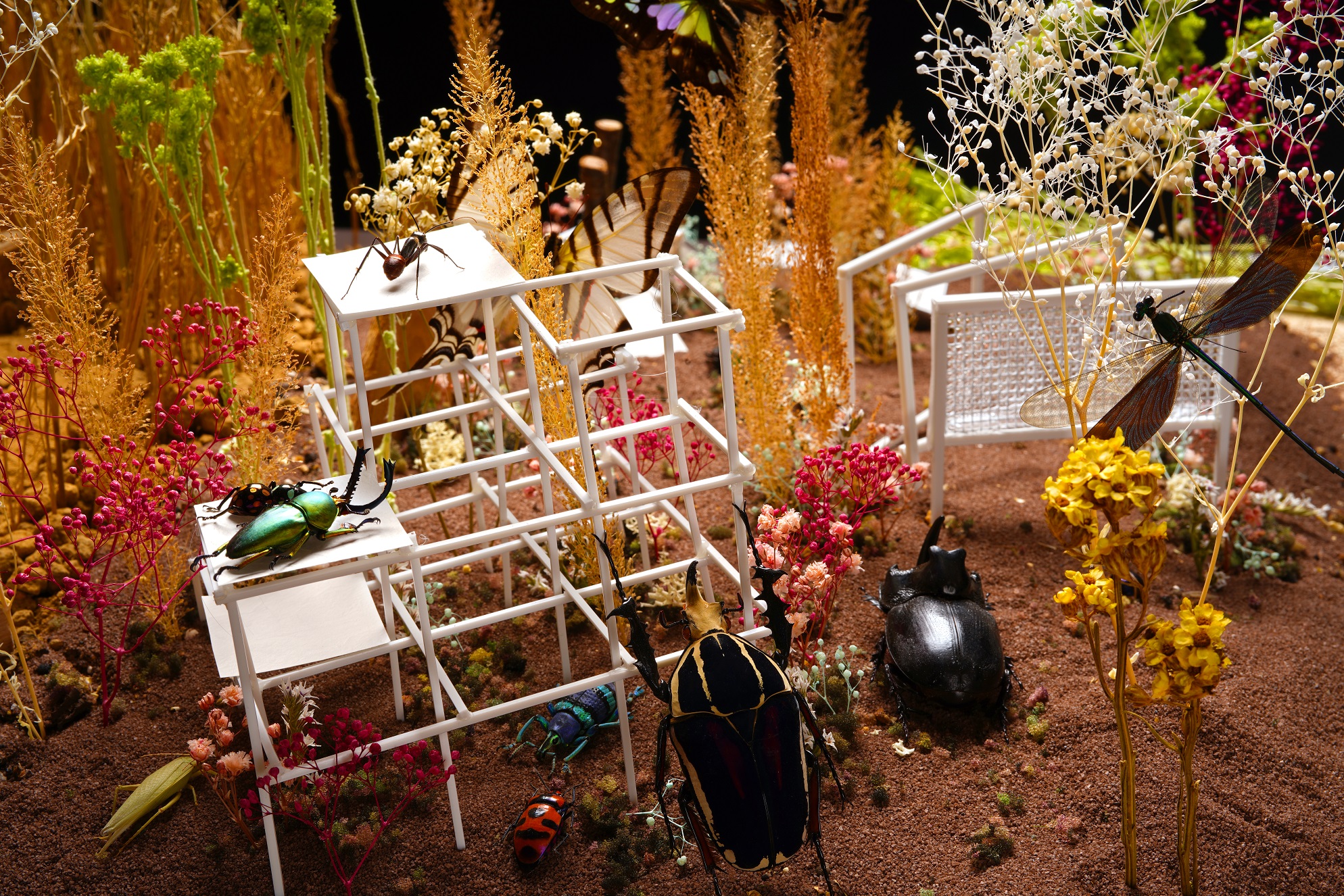
「水」を探し求める虫たちの物語
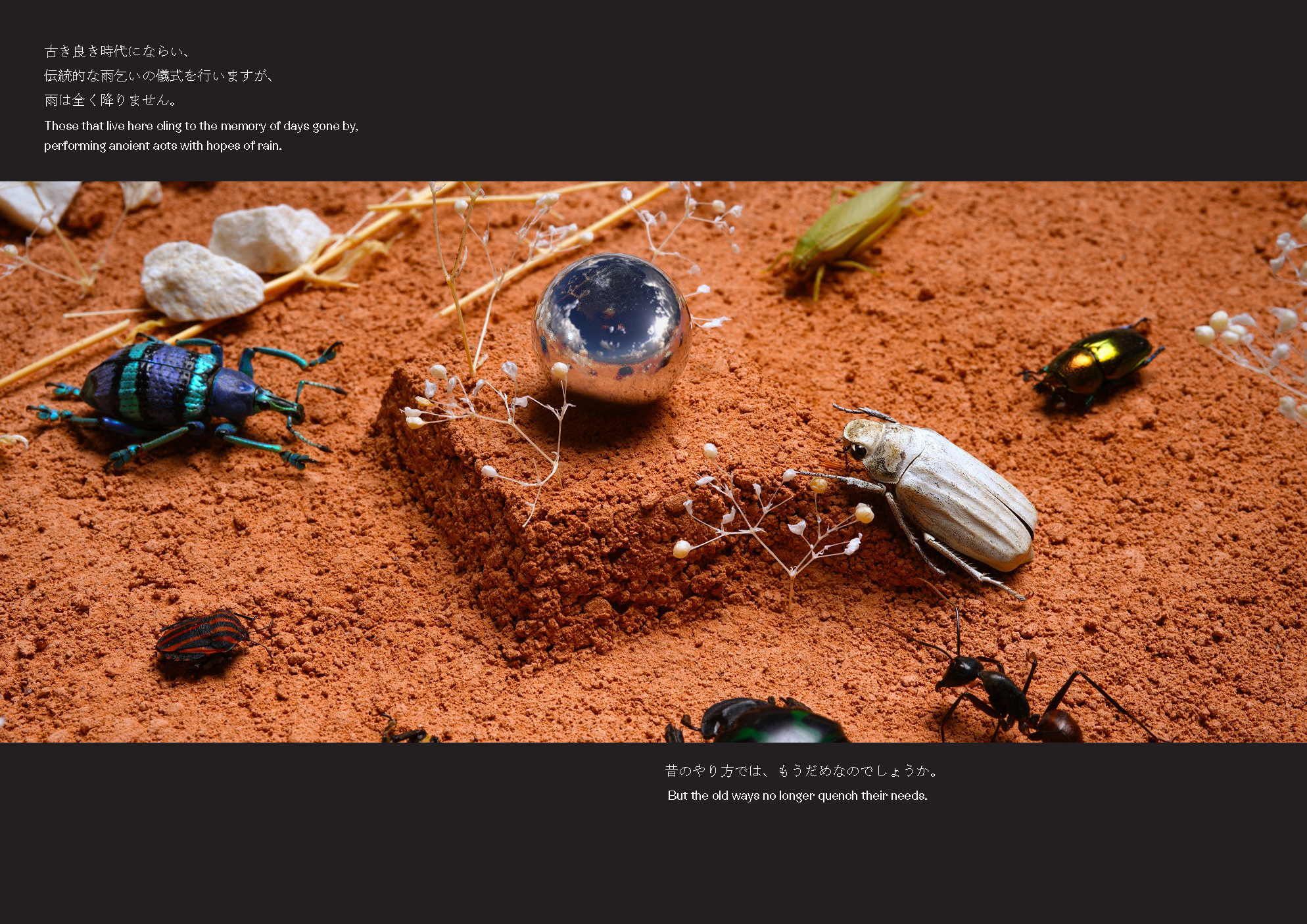
調査の結果浮かび上がってきた問題意識や提案を、ストーリーを通じてより年代を超えてわかりやすく伝えるため、ピクチャーブック「新たなはじまり: Between Water and Insects」も作成しました。
日照りに悩まされ、枯れ果てたとある虫たちの村。豊かだった頃の時代を思いながら、伝統的な雨乞いの儀式を行いますが、雨は降りません。そこで、ある冒険家が外の世界に「水」を探す旅に出ます。果たして冒険家は水を見つけることができたのでしょうか?
日本の組織をとある虫の村に、組織風土を村の土壌になぞらえて作成したストーリー。レポートと合わせてぜひご覧ください。
→ピクチャーブック「新たなはじまり: Between Water and Insects」
個の創造性が発揮される日本社会を目指して
IDEO Tokyoは、日本の変化・進化の触媒となり、クリエイティビティを開花させることで、新たな価値を創造していくことを志しています。どのように個の創造性を解放する環境づくりに取り組むべきか悩んでいる方々をはじめ、さまざまな方に読んでいただきたいです。このレポートを一つのきっかけとして、皆さんからフィードバックをもらいながら本書をアップデートし、日本の「創造性」に関する議論を加速させ、個々の創造性が発揮される社会となるための具体的な活動に結実させることを願っています。
またレポートの内容を踏まえ、組織の中で対話を促すツール「創造性の土壌を作る問いかけ」も公開しました。このツールには、下地作りと仕組みづくりの計20項目について、チームでの対話を始めるための3つの問いかけがそれぞれ用意されています。ぜひご自身の所属するチームで取り組んでみてください。

詳しい調査の概要については、経済産業省のホームページをご覧ください。
→創造性人材の育成支援
IDEO Tokyoは、経済産業省と協業し、創造的組織の開発及び創造性人材のキャリア形成に関する調査研究を実施しました。その結果をレポート「進化し続ける組織へ 〜個と個をつなぎ、創造性を解放する〜」として公開しています。
Dear future, we made this for you
Looking back at 40 years of looking ahead.
But we'd be fools to claim that we can always see what's coming around the bend. Never trust anyone who says they can predict the future.
Nevertheless, we have launched ourselves into the unknown for decades. Joining a long history of science fiction, this is an exercise in speculative design, where we build on early signals we're picking up and ask, “What if?” At times, our speculation about the future has come across as a little too naive and niche, like when we proposed stamping fruit with the full FDA nutrition label or suggested a fixie-inspired walker for senior hipsters. But when we’ve set our sights on what tomorrow’s humans might want from our clients, our portfolio of the future has been startlingly prescient.
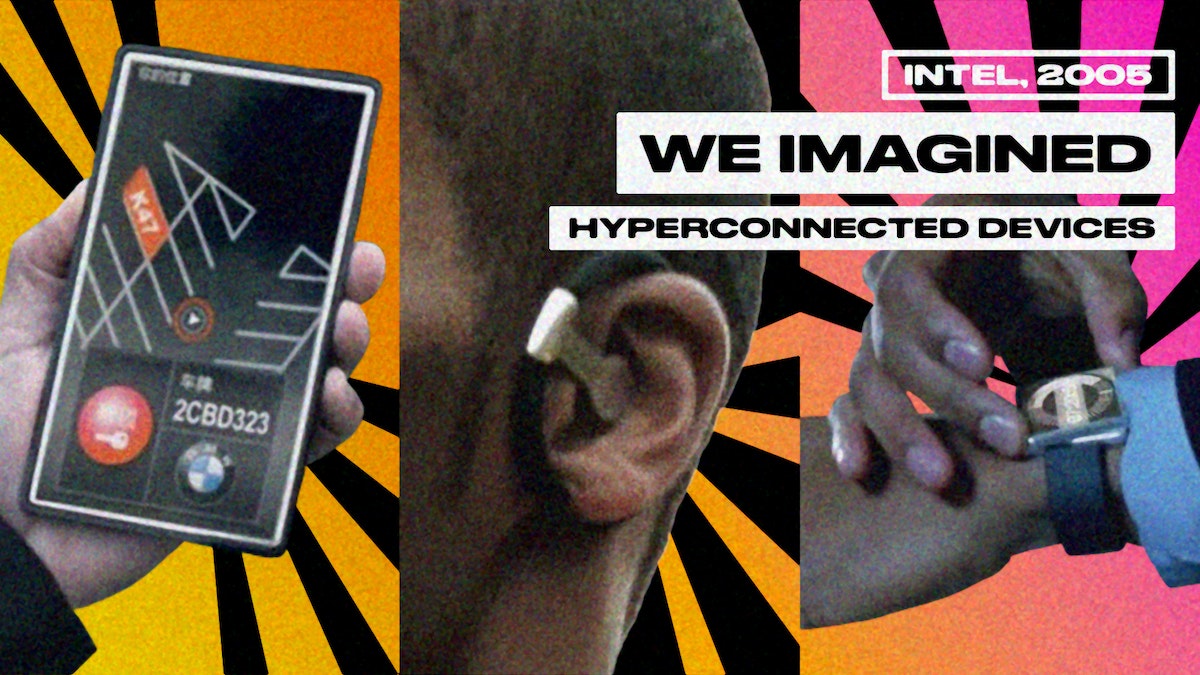
In 2005, two years before Steve Jobs announced the iPhone, a short film we made with Intel showcased the hyperconnected, hypermobile, on-demand lifestyle we all know now.
That same year, we created a series of shorts for HBO foretelling a world of personalized streaming content—well over a decade before binging our favorite shows became standard fare.
In 2010, our exploration of the future of the book anticipated the need to verify the legitimacy of sources on social media platforms such as Facebook and Twitter.

These predictions may seem easy to come up with in hindsight, and in one sense that is true. When you pair the exponential power of technology (Moore’s Law) with evergreen human needs, it leads to logical conclusions. The harder part is making such foresight tangible.
That’s where design becomes a valuable tool.
IKEA, which has its own future-facing research and design lab, Space10, understands the power of tangibility. We partnered with the company in 2015 to imagine the future kitchen. The final exhibit, staged at EXPO Milano, anticipated an augmented reality in which screens and data are no longer confined to devices. More than an exhibition, the prototype served as a strategic roadmap for integrating multi-sensory digital content into a built environment and helped IKEA build an organizational belief in, and understanding of, this technological shift.
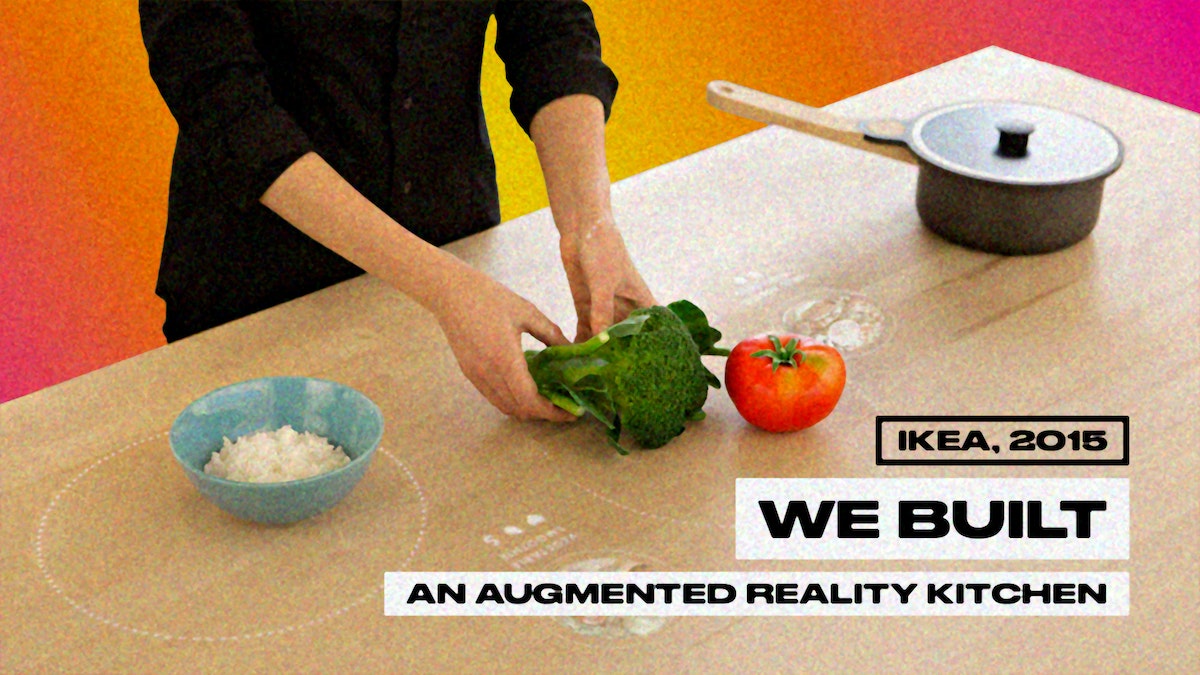
We’ve delved into the future of automobility, manufacturing, connected intimacy, the workplace, blockchain, and artificial intelligence. We’ve also used design fiction to explore complex human experiences like aging, citizenship, and time. These “What-Ifs” aren't an art school indulgence. Rather, they are queries about what world we want to inhabit and what choices we need to make today in order to get there.
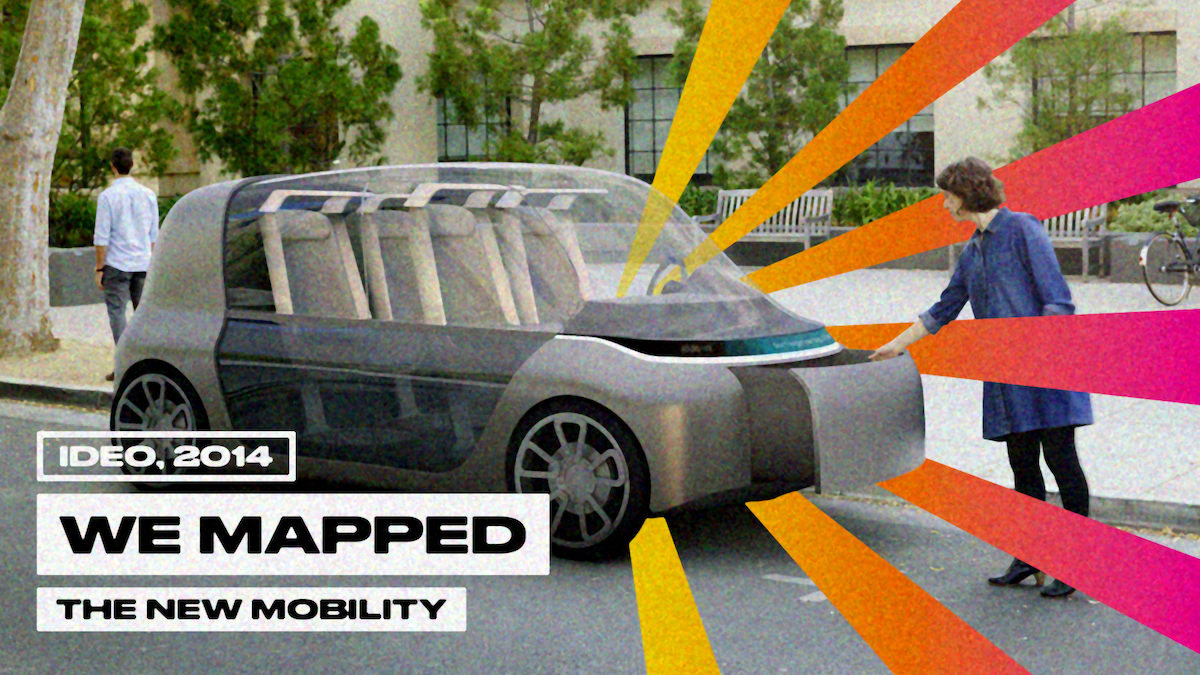
While we don’t believe our era is any more exceptional than the next, the choices we are making today feel more consequential. We are facing global economic contraction, the explosion of artificial intelligence, and a developing climate crisis that scientists say could cross an irreversible threshold by the end of this decade.
The urgency to ready our clients, ourselves, and everyone for the Climate Era has been a longtime obsession. In 2017 we designed an exhibition called “Never Finished” to illustrate the principles of a circular economy. We reimagined makeup, food packaging, sneakers, and electronic devices as part of regenerative systems. A few years later, this fiction became a beacon for global fashion leader H&M, whose pursuit of a circular future has involved eliminating plastics from its consumer packaging.

But even the most on-the-nose prediction about what the future will bring can go sideways. In 1997, Kodak asked us to create a consumer experience for digital photography. Using that era’s available technology, we built a fully working digital camera with an integrated screen menu. The working prototype was nearly twice the size of what cameras would become, but it established the fundamental experience of digital photography that we use today.
While the team at Kodak hoped to design a pioneering new product, they ultimately didn’t have the internal alignment to move forward. Instead, they continued investing in film, a choice that ultimately proved to be a losing bet.

The takeaway: Even the most beautiful speculative design won’t sway hearts if the leaders of an organization don’t have the ambition or desire to invest in a better future—and we don’t mean just a profitable one. “What if?” is the beginning of a design-driven process to understand what choices we need to make today in order to create the future we want.
While the contracting economy, climate change, and systemic bias can feel insurmountable, we remain optimistic. Over the coming year, we will be sharing a series of design fictions that portray a world in which we got things right.
The questions we are asking—“What if everything is electrified and we have abundant energy?” and “What is the future of ordinary data?” and “How do we unleash the creative capacity of the next generation?”—are shorthand for deeper investigations into how we redesign consumer goods, healthcare, AI, and education.
Turning these questions into experiences so that others can visualize, feel, and participate in a better world is an essential practice of design and, for businesses that want to be here in 2033, the only way to stay relevant.

We will begin each of these design fictions, which will roll out over the coming year, with a letter:
“Dear Future, we designed this for you…”
We may never meet those born 10 or 20 or 30 years from now who will live out these visions (or something that looks quite different), but that doesn’t mean we’re off the hook. We are accountable to one another and stewards of a fragile planet. In 10 years, every business will have become a design business because every business will have had to change. And every person will have a hand in designing our future.
*One sentence in this article was written by ChatGPT after giving it the prompt “Slogan for a campaign about designing the future.” Can you guess which line?
—
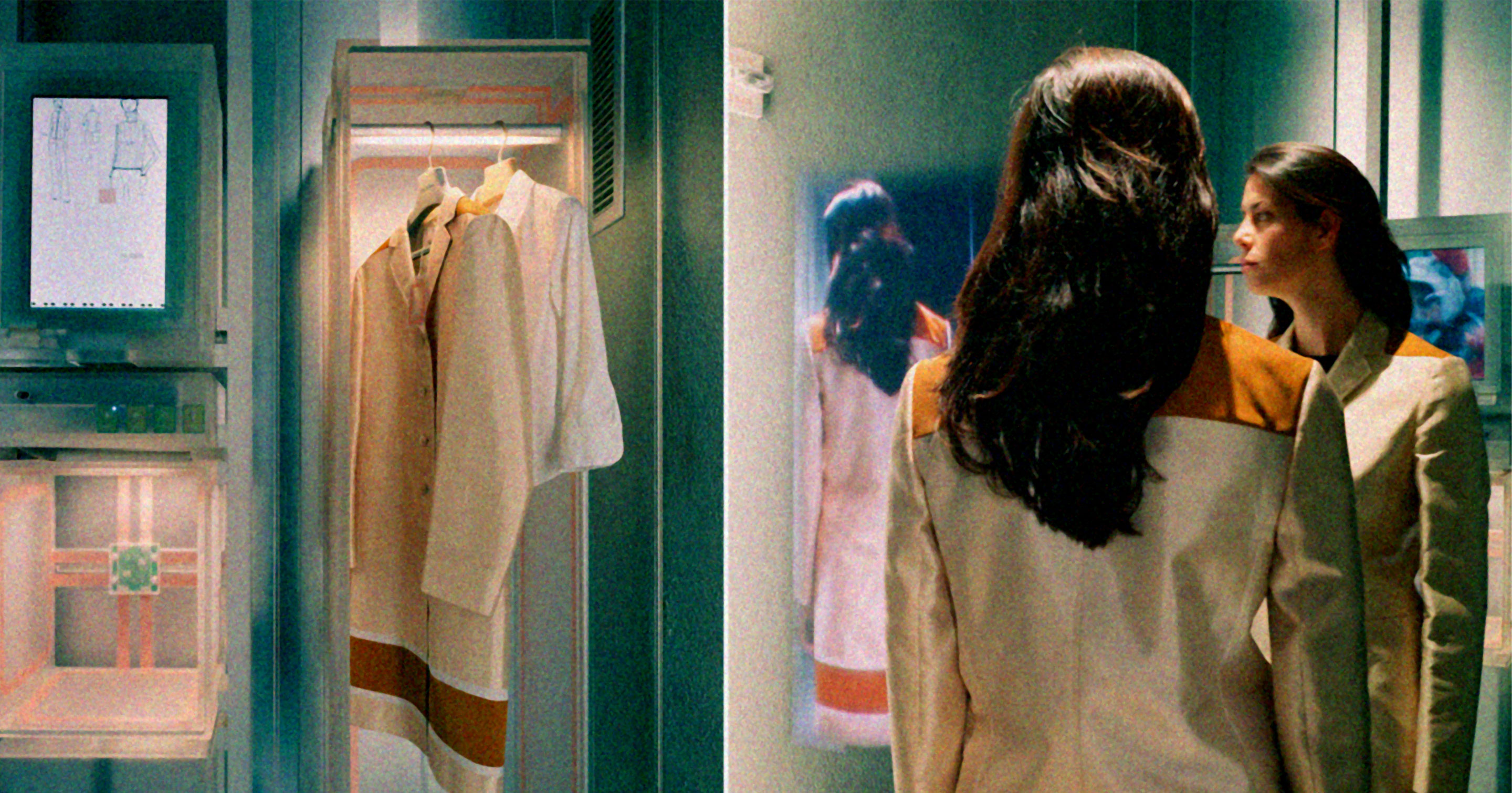
Hero image: Magic Mirror, an augmented reality dressing room designed for Prada in 2003 in partnership with OMA.
We designers are optimistic to a fault. We believe we can build something better and will take great leaps of faith to prove it.

Big things we can learn from small nations
How small countries, often led by women, are driving change with incredible results.
I grew up in Singapore, the ultimate small-but-mighty island at the tip of the Malaysian Peninsula. As I grew up, I watched it transform from jungle kampongs and a river so dirty that it glowed neon green, into the ultimate modern metropolis.
Singaporeans now enjoy some of the best quality of life in an integrated society. It is home to the world's best airport and has become a sophisticated financial hub, and even made history in the universe of gastronomy, receiving the first ever Michelin star for street food. The river itself is now so clean that dolphins and fish have returned in droves.

Fast forward 50 or so years. My partner and I have found ourselves living in Iceland for the last three years, the literal polar opposite of Singapore, but equally impressive. You need only pick up any quality-of-life index to find Iceland near the top of the safest, most egalitarian, most tolerant civil societies in the world. The country has taken a leading-edge approach to climate science, with bold plans for its domestic geothermal energy and the electrification of its transport system.
To be sure, it’s a rather isolated island with a population under 400,000 in the middle of the Arctic Sea. Nonetheless, Iceland was led with a calm and steady hand through the COVID-19 pandemic, achieving a 91% vaccination rate in record time. It’s a society that is well read, well informed, and one in which citizens revere nature, considering themselves guardians of the wild environs they've inherited.
A word I often use to describe life here is “sane”. Icelanders are pragmatic, do not hyperbolize or dramatize, and work together to achieve collective goals. Icelandic businesses feel it is important to do their part, too. The national flagship airline, Icelandair, recently announced that they will decarbonize all internal flights by the end of the decade, the first national carrier in the world to do so.

In the years between inhabiting these two islands, I have lived, studied and worked around the world, spending considerable time in Norway, Denmark, Finland, New Zealand and the UAE, all of which play at a much more significant scale on the world stage than their geographic mass would suggest. It helps that all of these nations are well led, with crisp, long-term plans and goals. And it is no coincidence to me that in many cases they are led by women.
Other small nations that I watch from a distance, like Estonia, are digital pioneers, transforming an antiquated governmental system into an e-Residency – their human-centred, digital citizenship program. Way back in 2014, Estonians described themselves as a “start-up country”. Rwanda has followed suit with similar initiatives: one-stop digital services designed to incentivize small commercial enterprises and entrepreneurs to launch businesses there. Finally, we must shine a light on Ukraine which, whilst in the midst of war, are making plans to regenerate themselves, building a greener, more modern society out of the ashes and carnage.
So, what do these Small Awesome Nations (SANs for short) have in common, and what do they have to teach us all?

SANs act faster: COVID-19 taught us all, especially governments, that cumbersome bureaucracy and endless consensus-building wasn’t just unnecessary, it was life-threatening. To be able to quickly assemble task forces as information came in and cut through red tape was critical. Smaller countries mobilized at record pace, and in many cases got essential supplies to the frontlines faster. Taiwan, China, for example, immediately activated contact tracing and phone tracking to make sure that those in quarantine were actually fulfilling their end of the deal. The fact that Taiwan's vice president is an epidemiologist didn’t hurt.
SANs talk like people, not governments: To me, this is critical. Early in the crisis, the Norwegian prime minister, Erna Solberg, broadcasted a specific COVID-19 address to the children of Norway, saying: “Many children are finding this scary. I can understand that. It’s quite OK to be a bit scared when so many big things are happening at once.” Taking a direct, matter-of-fact tone, she assured them that their parents would likely be fine, but acknowledged that they might miss birthday parties and life at home would be “a bit boring.” New Zealand Prime Minister Jacinda Arden declared on national TV that the Tooth Fairy and the Easter Bunny were both considered “essential workers” in New Zealand, but that they might also be at home, “tending to their own baby bunnies.”

SANs value the perspectives of the next generation: The human-first, sure-handed leadership of both Solberg and Arden is especially compelling in a time when so many young people express apathy about politicians who “don’t speak to us.” Addressing that lack of engagement, the UAE government hired 23-year-old Shamma bint Suhail Faris Mazrui as its first minister of state for youth affairs in 2016. At the time, she was the youngest serving minister in the world. She is now one of the most outspoken advocates for youth voices and perspectives, ensuring her generation and the next are shaping government programs and policies. When asked at Davos why the ideas of Emirati youth were so important to her government, she said: “Hopelessness results when youth are not seen as resources, and apathy results when they’re not seen as assets.”
Then there is Sophie Howe, Wales’s first future generations commissioner. Described by The Guardian as the world’s first “Minister for the Unborn”, Sophie’s role is to provide independent advice to the government and other public bodies on delivering social, economic, environmental, and cultural wellbeing for current and future generations. She’s a committed champion of the next generation and, in particular, for tapping into youth culture as a resource for creating societal change. I was part of an event she created at COP26 in Glasgow where they brought together youth with poetry, music, conversation and politics. It was a potent mix, more akin to a Taylor Swift concert than a governmental think tank, and I watched the young audience members' eyes glow with pride at the end, feeling both spoken to and heard.
What's become clear (and really exciting) to me is that these Small Awesome Nations are gathering momentum and growing in influence. These nimble countries have, in many ways, responded to the conditions of the larger world with its attendant chaos by reinventing traditional ways of doing things. And in the process of disrupting themselves, they’ve learned valuable lessons that their bigger cousins would do well to follow as they look toward the future.
If there was to be an actual League of SANs, what would you want its mandate to be? Which country would get your vote as a founding member and why? We'd love to hear from you in the comments.
Republished from the World Economic Forum's Agenda
For as long as I can remember, I’ve been obsessed with small countries. Specifically, small nations with superpowers that larger nations covet.
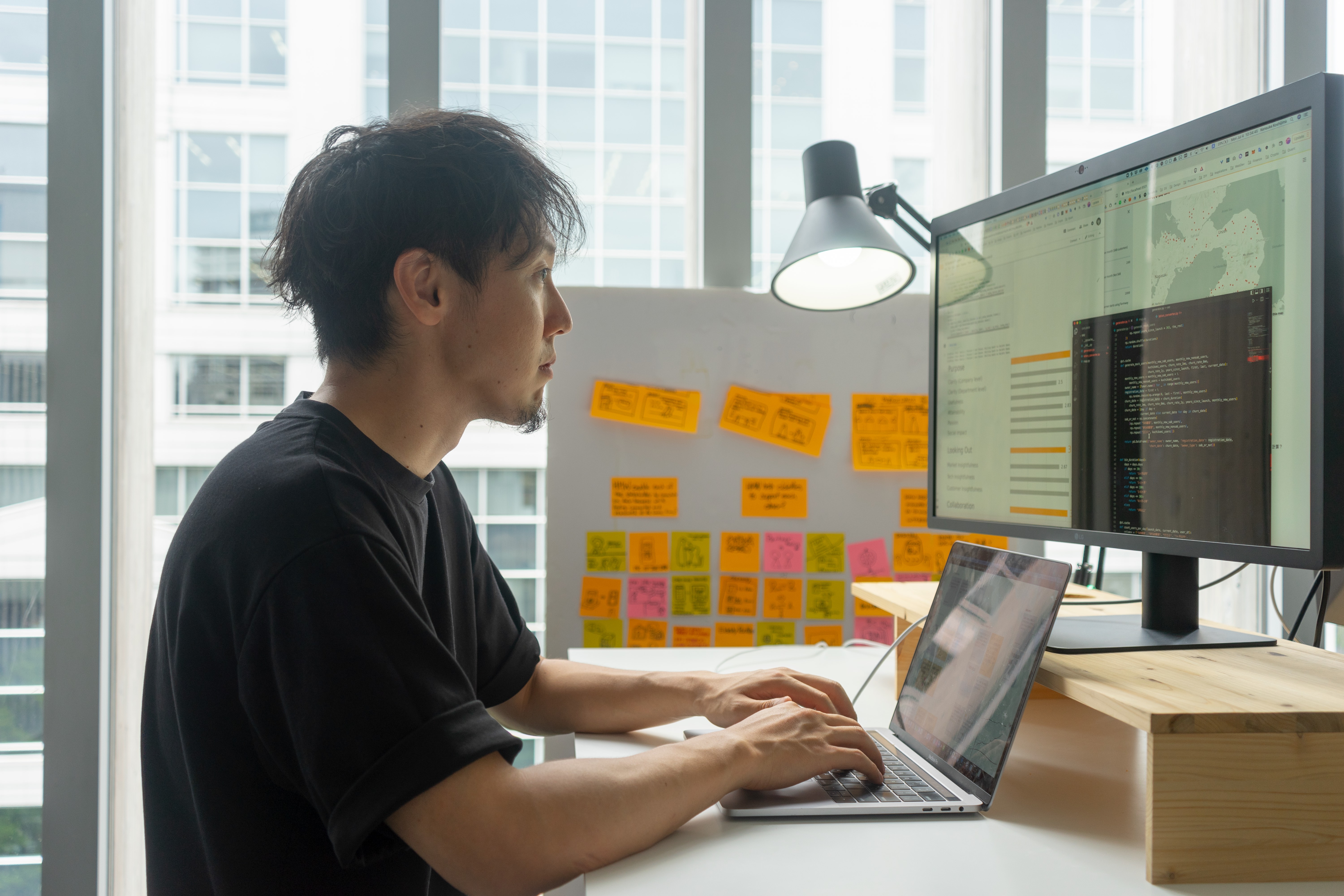
IDEO流 新しいアイデアを生むための3つの“変な”データ活用
一般的に「新しいものを生み出す」仕事は、いわゆる企画職、デザイナー職などの職種の人が行い、データアナリストやデータサイエンティストと呼ばれる人たちは、事業が回り始めデータが溜まってきた「今あるものをより良くする」タイミングで価値を発揮することが多いのではないだろうか。新しいものを生み出そうとしている段階ではまだデータもなく、そこでのデータ活用はイメージしにくいだろう。
しかし、実は、このフェーズにおいても、データを分析し活用することに知見を持つ人と協業することで、よりよいモノを生むことにつながる場合がある。IDEOでデータサイエンティストとして働く私の経験も踏まえ、新しいものを生み出す仕事におけるデータ活用の可能性について紹介したい。
データを通して人のニーズを理解する
IDEOのプロジェクトでは、デザインリサーチという手法を用い、人にとって高い価値や有用性を持つアイデアを探るのが一般的である。インタビューやシャドーイング(ユーザーの生活環境に身を置き、存在を意識させないように観察すること)など、定性的なアプローチを通して、「狭く深く」人やその人が生活している環境と向き合い、インサイトを見つけ出す。元来、このプロセスにおいてデータを活用することは、今までIDEOでもあまり取り組んでこなかったことであった。しかし、実はデザインリサーチのプロセスにおいてもデータは有効な使い方があることがわかってきており、近年データサイエンスも手法として取り入れる例が増えている。
データの使い所の1つ目は、定性的なアプローチに、データによる定量的な観点を取り入れることだ。例えば、過去にIDEOで乳がん患者と医療従事者両者向けのサービスのコンセプトを作るプロジェクトに取り組んだ際、定性リサーチを通して患者さんと医療従事者双方にとってどういったコンセプトにニーズがありそうか、いくつかの方向性が見えてきていた。しかし、どのコンセプトも、医療従事者に現在の業務の流れを少し変更してもらう必要があるものであった。日々忙しい医療従事者に業務の流れの変更を強いるのはハードルが高い。そこで、コンセプトごとのハードルはどのくらい高いのか、そしてそのハードルを超える工夫としてどんなものが考えられるか、ということが次の焦点になった。ここで、チームは定量的なリサーチを組み込むことにした。アンケート調査を行い、医師、看護師、薬剤師の三者が、我々が考えていたそれぞれのコンセプトを導入するとした際にどれだけ負担を感じるかを調査したのだ。
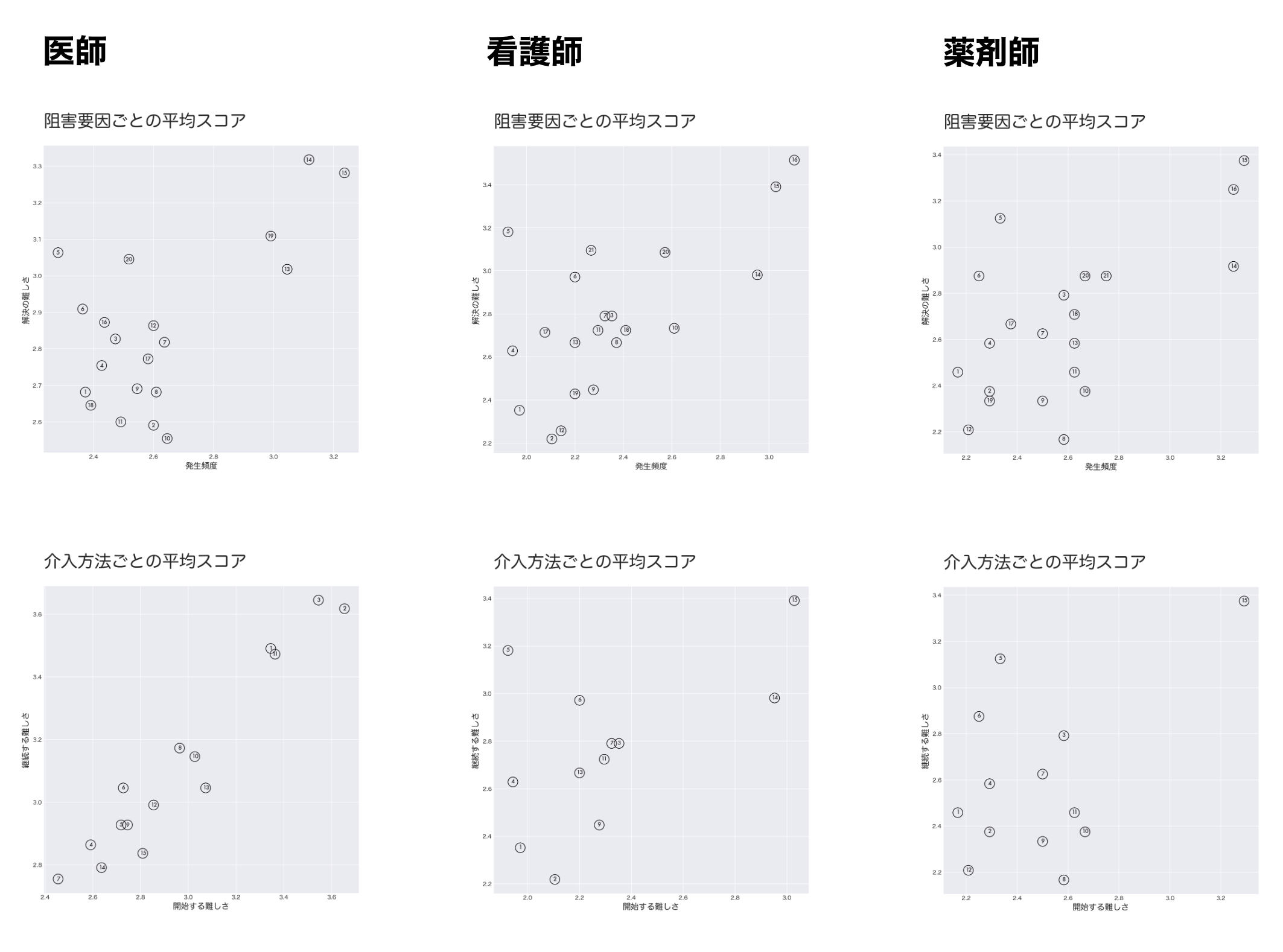
その結果、「コンセプトAを進めるときには看護師の協力を得ることが鍵になる。看護師の協力を得るためにはどのような仕立てが必要か?」、「コンセプトBは、導入をスタートすること自体の負荷は低いが、継続的に運用していくとなると負荷が高い。継続の負荷を減らすためにはどのようにしたらよいか?」といった形で、定性調査での学びに加えて、また別の角度から理解を深めることができたと同時に、新たな仮説や問いを立て、そこからまた次の定性調査でリサーチすべきことを練ることができた。一般的には、定性リサーチで得られた知見や仮説を定量的に裏付ける一方通行の進め方が多いと思うが、重要なのは、振り子のように定性と定量を行ったり来たりしながらアイデアや仮説をどんどん発展させていくことだ。
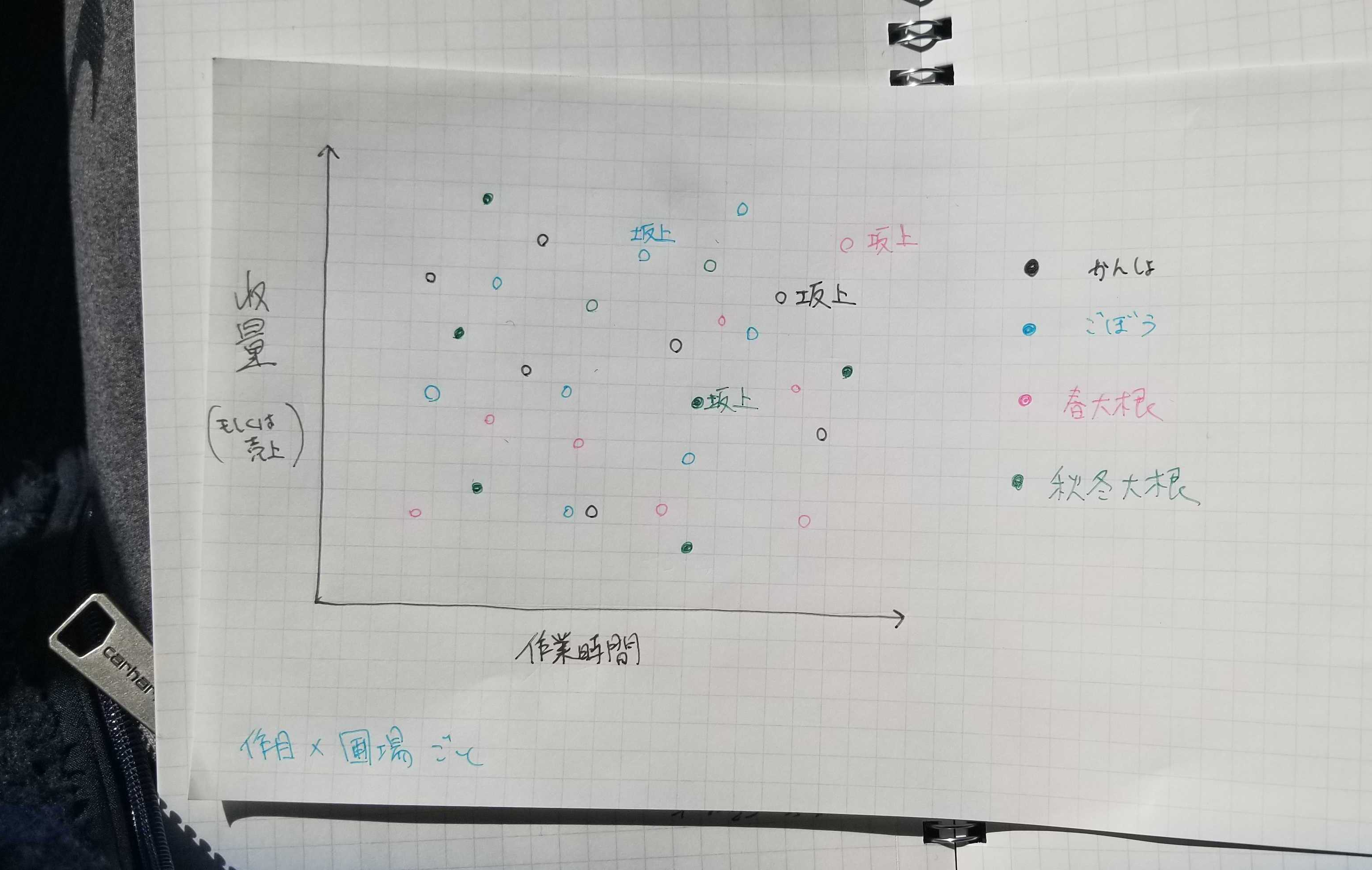
2つ目は、データは定性リサーチに赴く際の一つの武器にできるということ。IDEOで、農家に向けた経営支援サービスを開発していた際、畑で得られたデータを、農家の経営をサポートする形に変換し、可視化するサービスの企画・デザインを行っていた。農家にデータを入力してもらう部分のUXについては概ね固まってきていた一方、どのようにそのデータを農家さんにとって有用な形で見せることができるかが定まっていなかった。そこで用いたのが、紙とペンを使ったデータビジュアライゼーションである。取得したデータを可視化する方法のアイデアを考えられるだけ考え、それらのグラフをすべて紙に描き、農家さんのところに持っていった。一枚一枚グラフを見せながら話を聞くと、どれが有益でどれがそうでもないかを教えてもらえたとともに、なぜそうなのかを深堀りして聞くことができた。サービスがまだ存在していなければデータも存在しない。分析するデータがなければデータ活用などできない、と思うかもしれないが、このように想像をもとに可視化されたデータを見せるだけでも、人はいろいろな反応を見せてくれる。
サービスの体験にデータの蓄積と活用を埋め込む
前節でも紹介したデザインリサーチの過程を通じて人のニーズや人が抱える問題の理解が深まったあと、そのソリューションを考えるフェーズに入る。このときに、大きなテーマとして比較的頻繁に登場するのが、「感覚的に物事を判断することが常態化していて、それにより様々な機会を逸している」ということだ。細かいニュアンスはその時々や業界によって違えど、特にtoBのビジネスアイデアを考えているときに、この問題はよく発生する。
例えば、以前IDEOで飲食チェーン向けの経営支援SaaSのデザインを手掛けるプロジェクトがあった。リサーチを通して浮かび上がってきたのは、本部と店舗のコミュニケーションと連携の問題。現場では短期的な売上達成を目指すためにその場の勘と経験の判断でオペレーションが回っている一方、本部ではその実態を正確に把握できずに売上と日報を確認する程度のことしかできず、組織として過去を振り返りながら次の施策に活かしていくということができていなかった。連絡方法も、FAX、メール、電話、LINEなどいろいろな手段がバラバラに使われている状況だった。
ここでIDEOチームはさまざまなアイデアのスケッチやプロトタイプを作り飲食業界で働く人々に見てもらいながらアイデアを練っていったが、最終的なコンセプトは、飲食店で発生するさまざまなデータの蓄積と分析を自動的に行い、インサイトを抽出し、それをもとに店舗で行う施策の発案、実行、振り返りを本部と店舗間で行いやすくするプラットフォームだった。コミュニケーションの問題をそのまま解消しようとするコミュニケーションツールではなく、データを軸にしたコンセプトになっていったのは、データにいくつかのポテンシャルが秘められていることがわかったからだ。それは、人間が感覚的にやっていて気づかない部分を可視化して気付かせてあげる力、関係者間で同じものを見させて認識の差を埋める力、過去を自信をもって振り返ることで次なる施策に向け背中を押してくれる力、などだ。これに限らず、データはうまく使えば、あらゆる形で人の行動を変える力を持っている。いかに自然な形で人にデータの記録や蓄積をしてもらうか、そしていかに自然な形でそれを使ってアクションをとってもらうかをうまくデザインするのは難しいが、成功すればそのサービスを非常にユニークで魅力的なものにしてくれる。
データを通じて未来のシナリオを想像する
リサーチを通して人々のニーズがわかり、それらをコンセプトの形に昇華し、さらにプロトタイプを通して具体的なサービスの形やUXが固まっていくと、次第に議論の焦点はビジネスの持続性の観点に移っていくことが多い。新しいサービスやプロダクトの開発とその市場投入には大きなコストがかかるため、決裁者に投資判断を仰ぐ際には、マーケット規模はどれくらいか、ターゲットは誰か、収益性はどれくらい見込めるのかなど、いろいろなことを問われる。こうした場合、担当者はネット上の記事やシンクタンクなどの調査レポートを参照しながら、仮定に仮定を重ねてそれらしい数字を作って説得を試みることが多いのではないだろうか。ここでもデータをうまく使うことで、事業の持続性に関して考えを深めることが可能だ。
IDEOが以前、別の農業系のプロジェクトを手掛けていたときだ。サービスのデザインが大枠固まってきた段階で議論の焦点になったのは、「ユーザ数、売上の推移はどうなるのか」「いつ頃から利益が出てくるのか」「データはどれくらい溜まっていくのか。それを使ってビジネスを新たに考えるに足る量はいつごろ溜まるのか」「カスタマーサポートにはどれくらいのコストがかかるのか」などといったビジネス方面のものだった。誰もやったことがないので正確にはわかるはずもなく、なんとかそれらしい仮定を置きながらもっともらしい数字を出そうとしたが、どうしても根拠が弱く、空中戦の議論に陥ってしまっていた。
そこで、私はいくつかのイメージしやすいパラメータをもとに、ユーザ数の推移をシミュレートし、可視化するものを作った。ここでいうパラメータとは例えば、「営業による月間新規顧客獲得数」「口コミがどれくらい発生するか(一月あたり何人のユーザにつき一人の新規ユーザが獲得できるか)」「サービス利用開始1ヶ月の間で何%の確率で解約するか」といったようなものである(実際にはもっと多数のパラメータが用意してある)。こういったパラメータの値に応じて、擬似的にユーザを生成して、ユーザごとにいつからいつまでどれくらいサービスを利用していたかを確率的に決定し、それを集計することで数年後の未来でそのサービスがどの程度の規模で使われているかをイメージしやすくした。
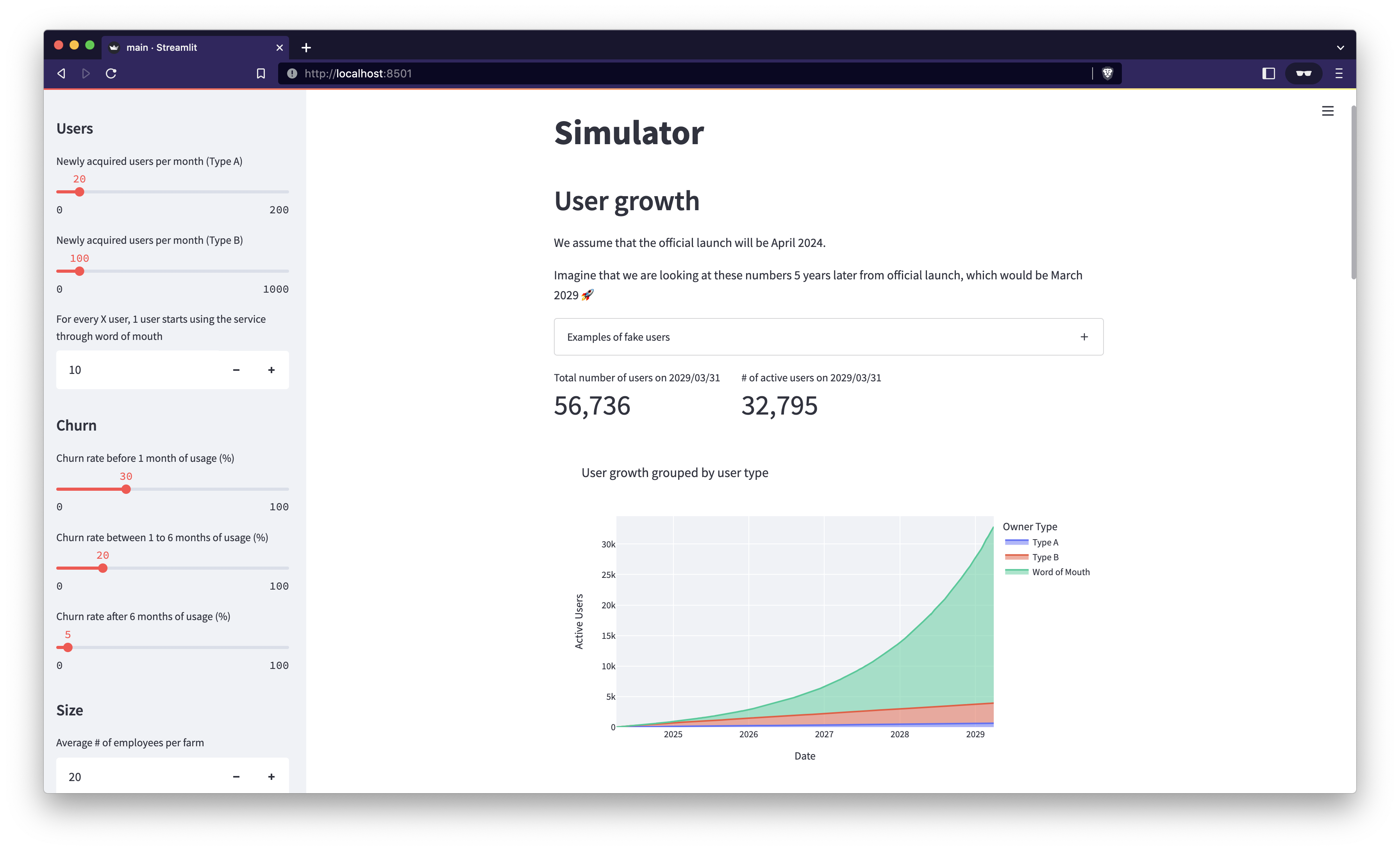
これにより決裁者に向けて、より説得力をもって事業計画を伝えられるという効果はあったが、最終的に算出された値が正しいかどうかは実は重要ではない。それよりも興味深かったのは、この取り組みにより事業計画に対するチームの考えと議論が一段深まったことだった。ユーザ数や売上を直接考えるよりも、それらをイメージしやすいパラメータに分解し、それらの積み上げで数字を作ると、よりリアルに感じられる数字になる。この「リアルに感じられる」というのが大事で、これが人の想像力を刺激し、未来をより具体的にイメージするきっかけになる。そこから、例えば「口コミを生むにはUXのどの部分が大事なのか」「カスタマーサポートに電話がかかりすぎないようにする工夫はどのようなものが考えられるか」など、より具体的な問いが次々と生まれ、ビジネスの観点での検討がぐっと前に進んだ。フェイクなデータを作ってそれでビジネスの議論をする、というのは普通の「データサイエンティスト」だったらやらないことだが、目的を「問いと仮説の精度を上げて思考を前に進めること」とおけば、こういうのもアリなのである。
過去を分析するデータ活用から、未来を作るデータ活用へ
IDEOでは、まず人にとっての価値・有用性を軸にアイデアの方向性を探求し、方向が定まったらその後コンセプトをより具体化していきながら、同時に技術的な実現可能性とビジネスとしての持続可能性も満たすような設計を模索していく。
「新しいものを生み出す」フェーズにおけるデータ活用というのは、データ分析を生業にしている人からすれば邪道的で“変”かもしれないが、大事なのは、なるべく短期間・低コストで問いと仮説の精度を高めていきながら、効果的に有用性、実現可能性、持続可能性についての解像度を高めていき、よりよい結果に繋げることだ。クリエイティビティをもって臨めば、データ活用にはいろいろなアプローチが有り得るのである。
今回紹介した事例がすべてではないし、状況によって全く異なるアプローチの仕方があるだろうが、可能性はまだまだ広い。実データを分析することももちろん大事だが、データがまだ存在しない「新しいものを生み出す」フェーズにおいても、工夫次第でデータからいろいろな示唆が得られる。データがまだ存在しないからと、そこで思考停止になってこのチャンスを逃してしまってはもったいない。少しの想像力と柔軟な姿勢を持ってデータを活用することで、新しい未来の可能性が切り拓かれる。
世の中の変化のスピードが速くなり、いつどこから自社の事業を脅かす存在が出現するか読めない昨今の状況において、企業はますます「イノベーション」を求めている。その中で、新商品の開発や新規事業の創出を仕事にしている方も多いだろう。こうした仕事はつまり、「新しいものを生み出す」仕事だ。近年トレンドになっているDXと呼ばれる取り組みも、その一つといえるだろう。こうした仕事は、どれも不確実性が高く、前例がないことも多い。
一方で、仕事の中には「今あるものをより良くする」仕事もある。つまり既存のビジネスやサービスに改善を重ねあげて大きく育てていく仕事だ。こうしたフェーズにおいては、データ活用の重要性が高まっている。既存のビジネスを運用していく中で生まれるデータを蓄積し、そのデータを分析、活用することで、意思決定の質を高めたり、新たなソリューションを作ったりすることは、すでに多くの企業が導入しているし、今後も拡がっていくと思われる。こうした取り組みの延長にあるAIも、日々普及度が高まっている。

Lindsey Turner
I’m passionate about building brands, products, and experiences that help organizations show up with meaning and momentum.
I help organizations cut through complexity by shaping how they show up, through brand strategy, identity, and storytelling.
Working at the intersection of brand and business, I bring an editorial eye and a bias toward making—turning ideas into tangible experiences that people can understand, trust, and believe in.
My work spans government, healthcare, financial services, media, and consumer goods, from launching Gen Z-focused ventures to building innovation labs and reimagining legacy brands. I relish moments of ambiguity and enjoy translating across teams, perspectives, and priorities to move ideas forward.
I started my career in editorial and digital design, shaping cross-platform experiences and identity systems in publishing and agency environments. That foundation still shapes how I work today: I’m detail-oriented, collaborative, and overreliant on the Oxford comma. I hold a BFA in Visual Communication from the School of the Art Institute of Chicago.

Rachel Young
My work helps organizations see who their products aren't working for—and build the will and the tools to do something about it
For 25 years, I've asked the same question: Who does this design exclude—and what are we going to do about it?
My work spans human-centered strategy, inclusive design, and qualitative research, with clients ranging from Microsoft, Google, and Verizon to the National Science Foundation, and San Francisco Unified School District.
Before IDEO, I taught elementary school in East Palo Alto and spent a decade doing design work with social service organizations—where I learned firsthand what it costs people when systems are built without them in mind.
I am currently writing User Error, a nonfiction book about digital access and the design decisions behind it. I live in Oakland, California.

Brian Pelsoh
I lead with craft, ensuring our work is creatively excellent: rooted in deep human insight and imagination, while also grounded in the realities of business and technology.
My expertise spans brand, communication, and product design across tech, education, the arts, and social impact.
I believe great work demands both high-level vision and obsessive attention to detail, and only happens through collaboration.
I bring an inclusive, hands-on approach and a deep understanding of business, which enables me to consistently deliver excellence while always asking why.
Before joining IDEO, I worked at the brand firms Pentagram and VSA Partners. I began my career as a designer, leading teams at the School of the Art Institute of Chicago and the Milwaukee Art Museum. I hold an MFA in graphic design from Maryland Institute College of Art and a BFA in communication design from the Milwaukee Institute of Art & Design, and have taught at some of the best design schools in the US.

Tony Wong
I am responsible for IDEO’s long-term success in China and working with clients to use design as a tool to enable growth.
I am responsible for IDEO’s long-term success in China and working with clients to use design as a tool to enable growth. Specifically, I have helped Chinese companies design holistic brand solutions through the development of their products, communication, services, and innovation teams, and I have helped multinationals expand their presence and influence in China.
I advise global leaders on developing China-led innovation and capabilities.
In over 15 years in IDEO Shanghai, I have worked on projects that use design to elevate the quality of the experience of healthcare products and services, streamline processes that increase productivity, create spaces and programs that promote and enable inclusive communities, and build next generation mobility solutions that are planet-positive.
Before joining IDEO, I worked at Philips Electronics and the Electrolux Group in Italy, the Netherlands, and Singapore on a number of breakthrough commercial products. I am a member of the Young President Organization in Shanghai.

How to use AI as an editor, not a writer
Ed White shares how he uses AI as an editor—not a writer—to sharpen storytelling, rehearse ideas, and preserve the productive friction that makes creative work better.
Ed White has a rule he's tested on his own writing: hold yourself as the writer, and let AI be your editor. Ed is a Senior Design Director at IDEO's London studio, where he co-leads the firm's AI portfolio across Europe. Before IDEO, he spent 12 years as a writer and editor at the Financial Times, Wired, and Contagious. So when he talks about when to use AI for storytelling and when not to, it comes from two decades of crafting his storytelling skills.
In this episode, Mina Seetharaman talks with Ed about two specific tools he uses to keep AI in an editor's seat: a "roasting agent" prompted to critique his drafts without any sugarcoating, and a simulated audience he rehearses pitches on before the real thing. They also get into what Ed is hearing from design leaders at Anthropic, Lovable, Shopify, and Google Creative Lab about how creative work is changing, and why he thinks the friction of writing something yourself is worth protecting rather than automating away.

Building a personal AI for the messiness of life: Sida Li
Becca Carroll talks with Cue co-founder Sida Li about designing a personal AI for the messiness of everyday life—not just work. They explore how Sida stays anchored to human needs while navigating fast-changing technology, product tradeoffs, business-model experimentation, and the realities of building an AI company today.
Most AI products today are built for work—a space with clear problems and established systems. One founder noticed a gap: personal life is messier, harder to systematize, and mostly left behind by the AI boom. So she built Cue, a personal AI that lives inside iMessage and group chats, to go where the other tools haven't.
In this episode, Becca Carroll, IDEO's Chief Strategy Officer, talks with Sida Li, co-founder and CEO of Shared Context Lab, about staying anchored to a human need while the technology around her keeps changing shape, why she treats her business model with the same rigor she'd bring to a product, and what it feels like to build a company at this particular, disorienting moment in AI.
The conversation also gets into how Sida makes design decisions: the language Cue uses to describe itself, the tradeoffs behind building inside iMessage instead of a new app, and a real story about a business idea that didn’t pan out.
This is the second in a two-part series profiling founders from IDEO's Startups-in-Residence program. The first conversation is with Johannes Seemann, founder of Sooner, on designing GenAI for the emotional side of money.

Designing GenAI for the emotional side of money: Johannes Seemann
Designing financial tools around the feelings that shape money decisions.
Most personal financial tools are built to run the numbers and optimize towards a budget. While that works for some, most people experience money as a lived relationship that does not neatly fit into a spreadsheet. Johannes Seemann and Becca Carroll discuss why money is emotional before it is mathematical, and what a human-centered approach to building a generative AI financial product looks like in practice.

The curious leader's edge in uncertainty: Scott Shigeoka
How genuine curiosity helps leaders navigate uncertainty with greater confidence.
Mina Seetharaman talks with Scott Shigeoka, author of Seek and Head of Curiosity Cultivation at the Eames Institute, about what distinguishes genuinely curious leadership from performative curiosity, how power dynamics shape curiosity, and why practicing curiosity can restore energy rather than drain it.
Looks like you might be in search of something very specific?
Or reset the filters above and try another angle.
Here’s some random inspiration

Podcasts about creative leadership

Articles about the power of prototyping
