
.svg)



From incremental change to breakthrough innovation
How Master Kong reinvented the instant noodle, from the inside out.
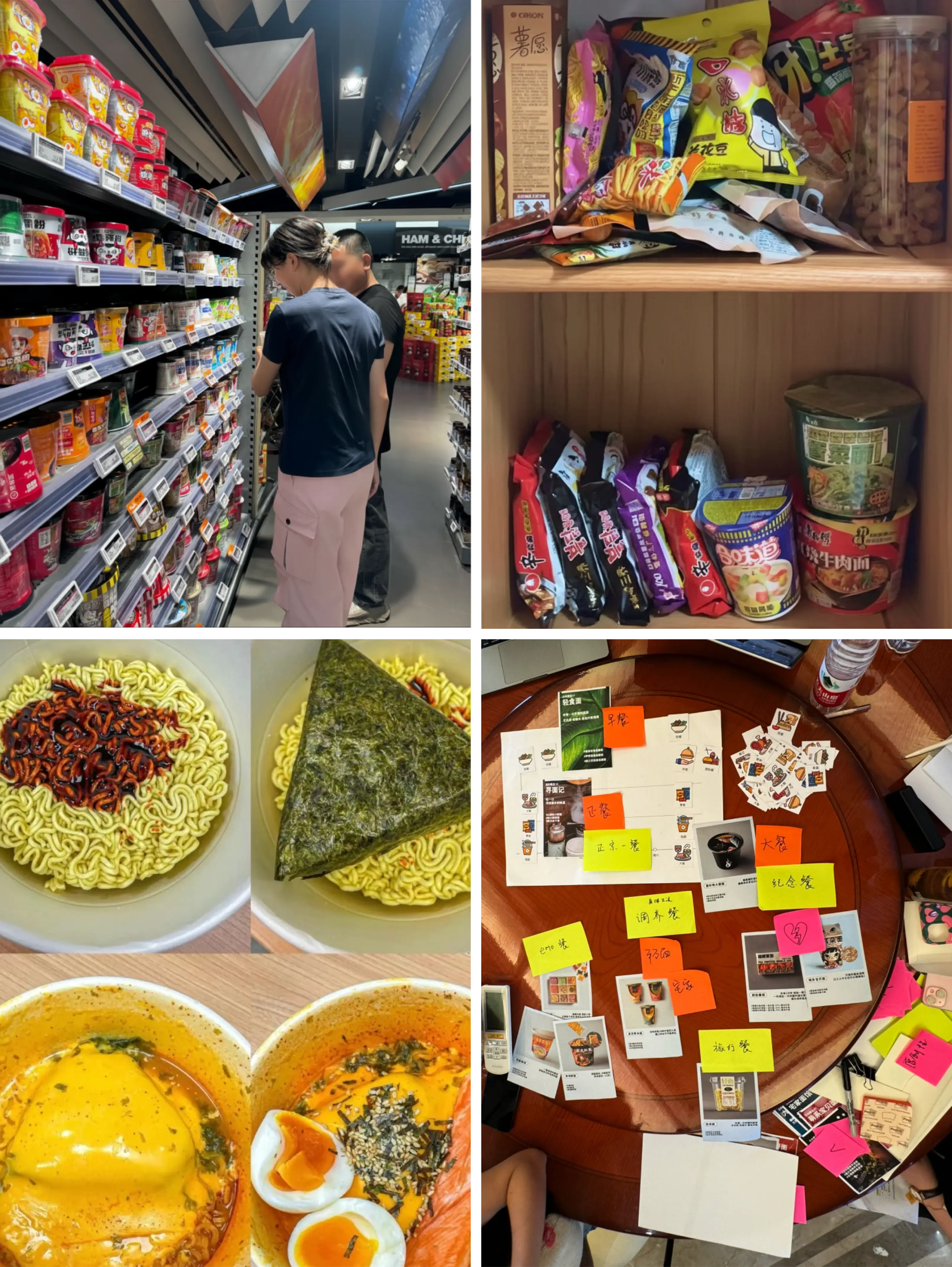
Looking to understand the role of instant noodles in middle-class Chinese life, the IDEO team conducted in-home research with consumers across a range of life stages and levels of attachment to noodle culture and convenience foods. The first finding was reassuring: Everyone kept instant noodles at home. The category still had a place in middle-class kitchens. But beneath that was a more complicated, emotional story—and an unmet need for convenience and quality to coexist in a single product.
The team discovered that instant noodles are more than just a quick, on-the-go meal; they are a nostalgic comfort food that evokes fond memories. But since their heyday, their role in daily life has evolved. Once a complete meal in itself, instant noodles now often function as a versatile flavor base or culinary accent in other dishes. Because they don’t align with the healthier, higher-quality, and more novel food choices that middle-class consumers aspire to, noodle shops, delivery noodles, or fresh-cooked instant options often win out. Yet, even these alternatives come with trade-offs. Delivered noodles lose texture during transport. Sit-down noodle shops preserve quality but offer limited flavors. Cooking from scratch meets the bar for both texture and flavor, but requires a significant time investment. As one young mother said, “If I could get the texture of fresh-cooked noodles without turning on the stove, I’d buy that instant noodle for sure.”
The research inspired the creation of a new category, which the team termed “fresh-brewed noodles.” More than just a noodle or broth upgrade, Master Kong’s fresh-brewed noodles would offer the speed of instant noodles with the quality of freshly cooked options, plus flavors not found in traditional noodle shops. The strategic positioning was clear. Executing it by making fresh-brewed noodles mass-producible, affordable, and eventually profitable presented a category-innovation challenge. To get there, IDEO designed a series of dual-track co-creation workshops with the Master Kong team and consumers.
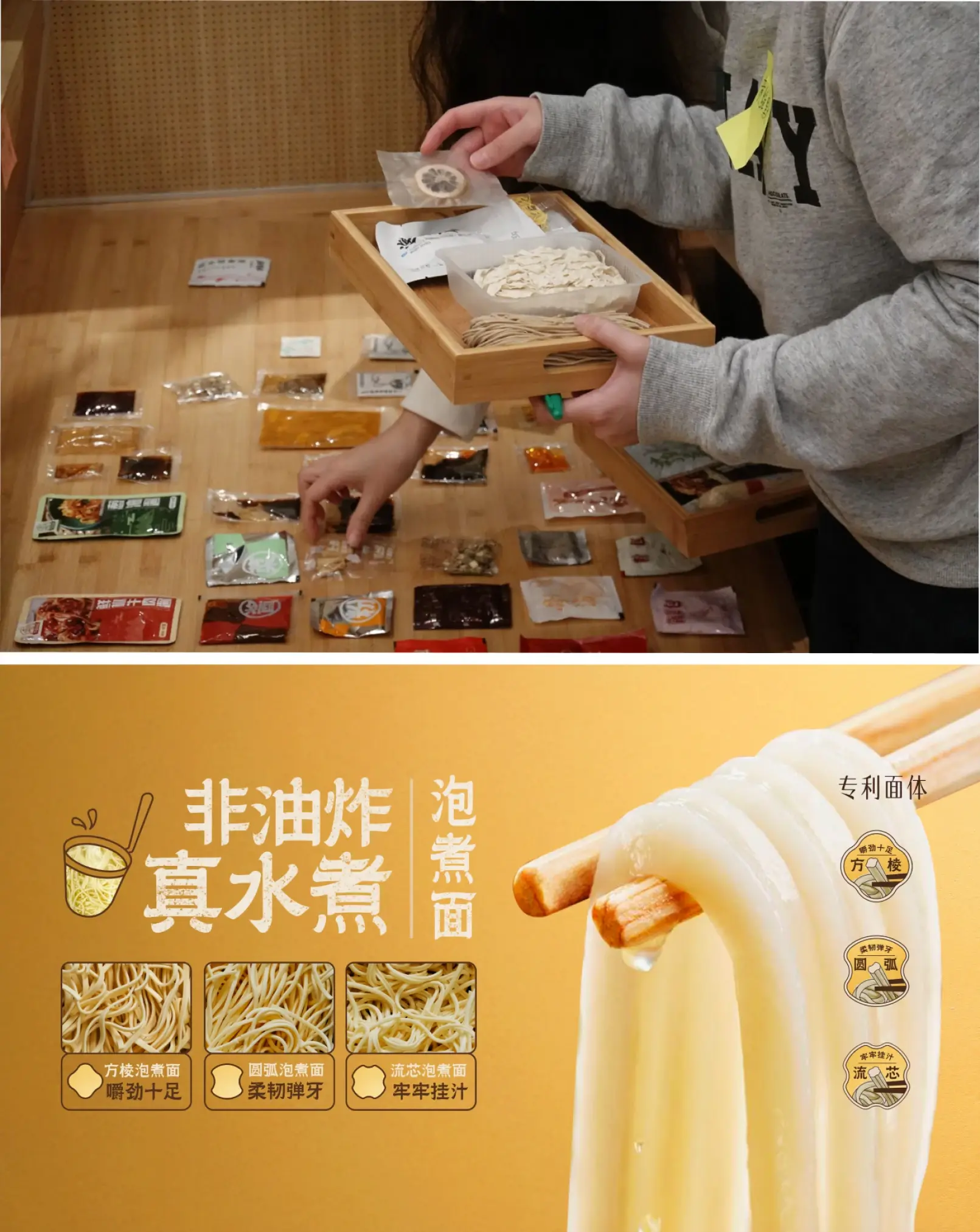
One track focused on prototyping the core product experience: noodles, broth, and toppings. IDEO and Master Kong’s R&D team began by studying the traditional craft of Chinese noodle-making, starting in Shanxi, a region renowned for its noodles. Through successive rounds of prototyping and consumer tasting, the team identified a critical insight: for “fresh-brewed noodles” to be convincing, the innovation had to be centered on the noodles themselves.
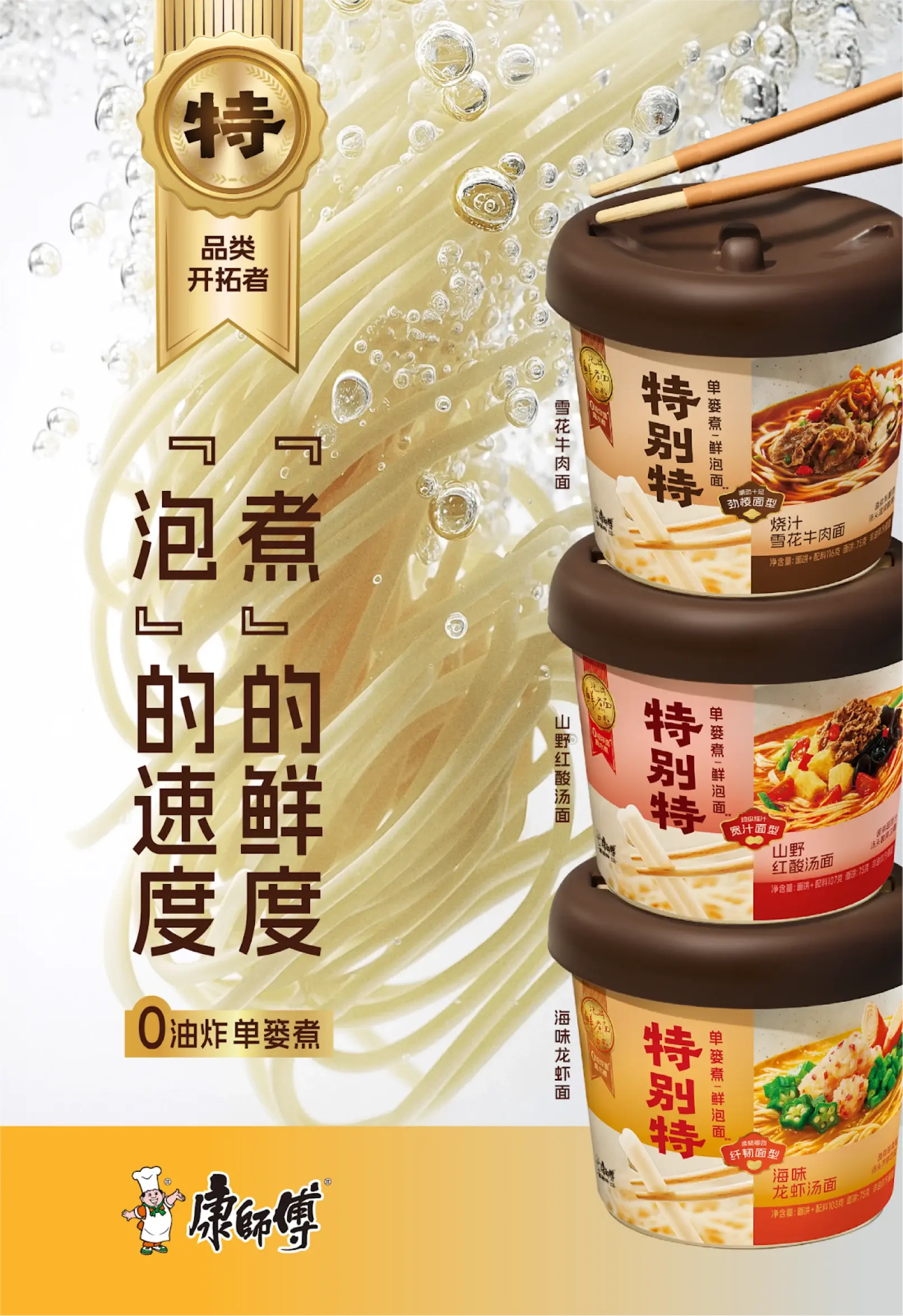
Texture alone was not enough. Consumers needed to see a meaningful difference before they tasted the product. IDEO translated this insight into a distinctive noodle profile: irregular, dimensional shapes designed to remain springy, hold sauce and broth, and mimic the resilience of freshly cooked noodles using only hot water. Because this visible shape represented the product’s core value proposition, it became a hero feature on the packaging. The graphic design made a bold visual statement about the noodle form, turning a technical R&D breakthrough into an immediately legible consumer promise: these are not ordinary instant noodles.
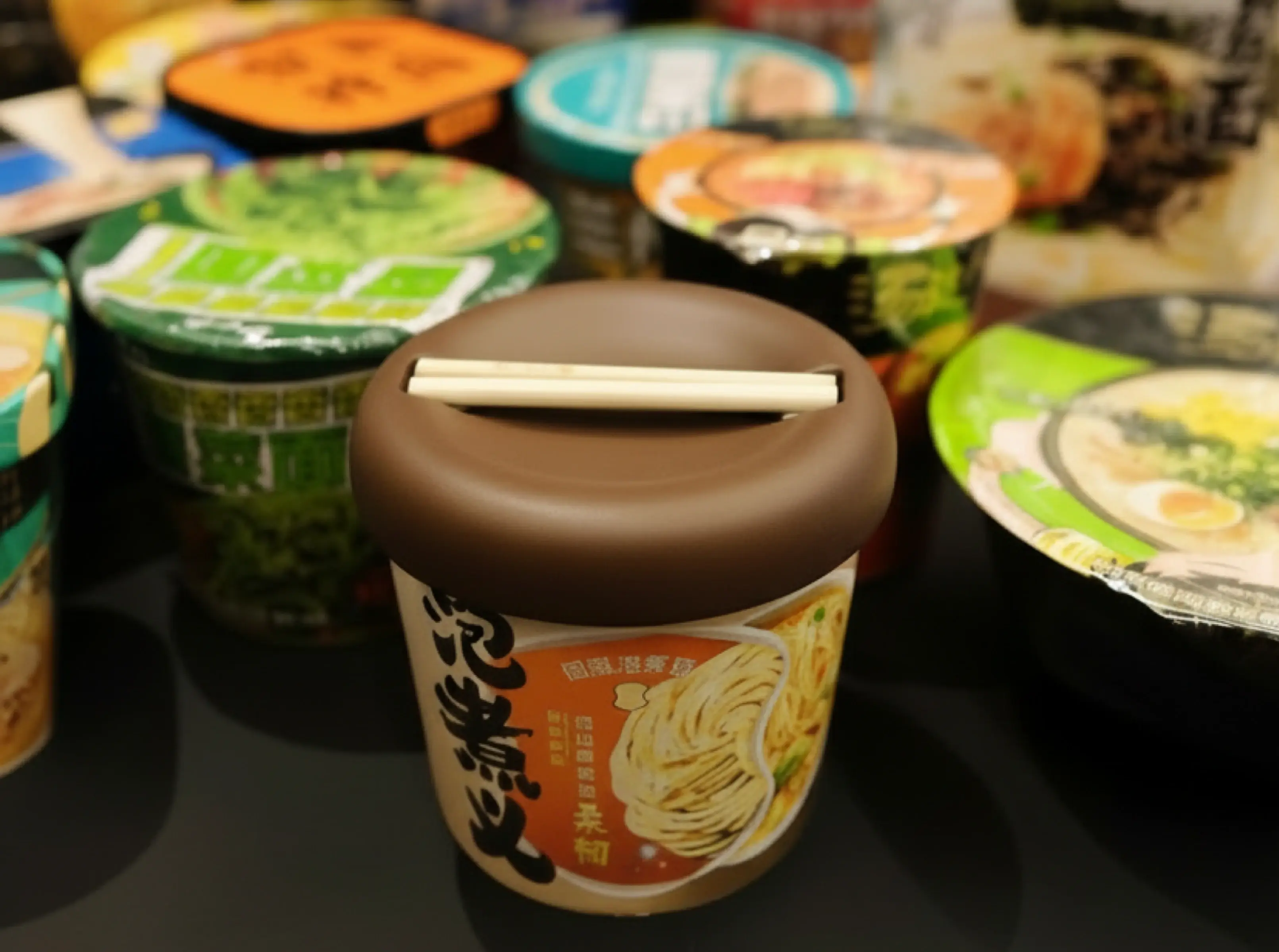
A parallel track explored the broader commercial experience: trend-forward and reimagined classic flavor profiles, light yet deeply satisfying broths, carefully selected toppings, and packaging that signals a new level of quality on store shelves. One key insight was that utensils carry meaning. Conventional instant noodles are often associated with disposable plastic forks, while higher-quality noodles are eaten with chopsticks. IDEO translated this cultural cue into the design of the bowl’s lid.
Instead of treating utensils as an afterthought, the team designed a solid, rounded, heat-retaining lid that embeds a pair of small wooden chopsticks. The gesture creates a small ritual of anticipation and reframes the product—not just a convenient instant meal, but a more considered noodle experience. Once opened, the product fulfills that promise with satisfyingly bouncy noodles, a rich liquid broth pouch that replaces the traditional oil-and-powder packet, and a vegetable packet reformulated with more premium whole ingredients.
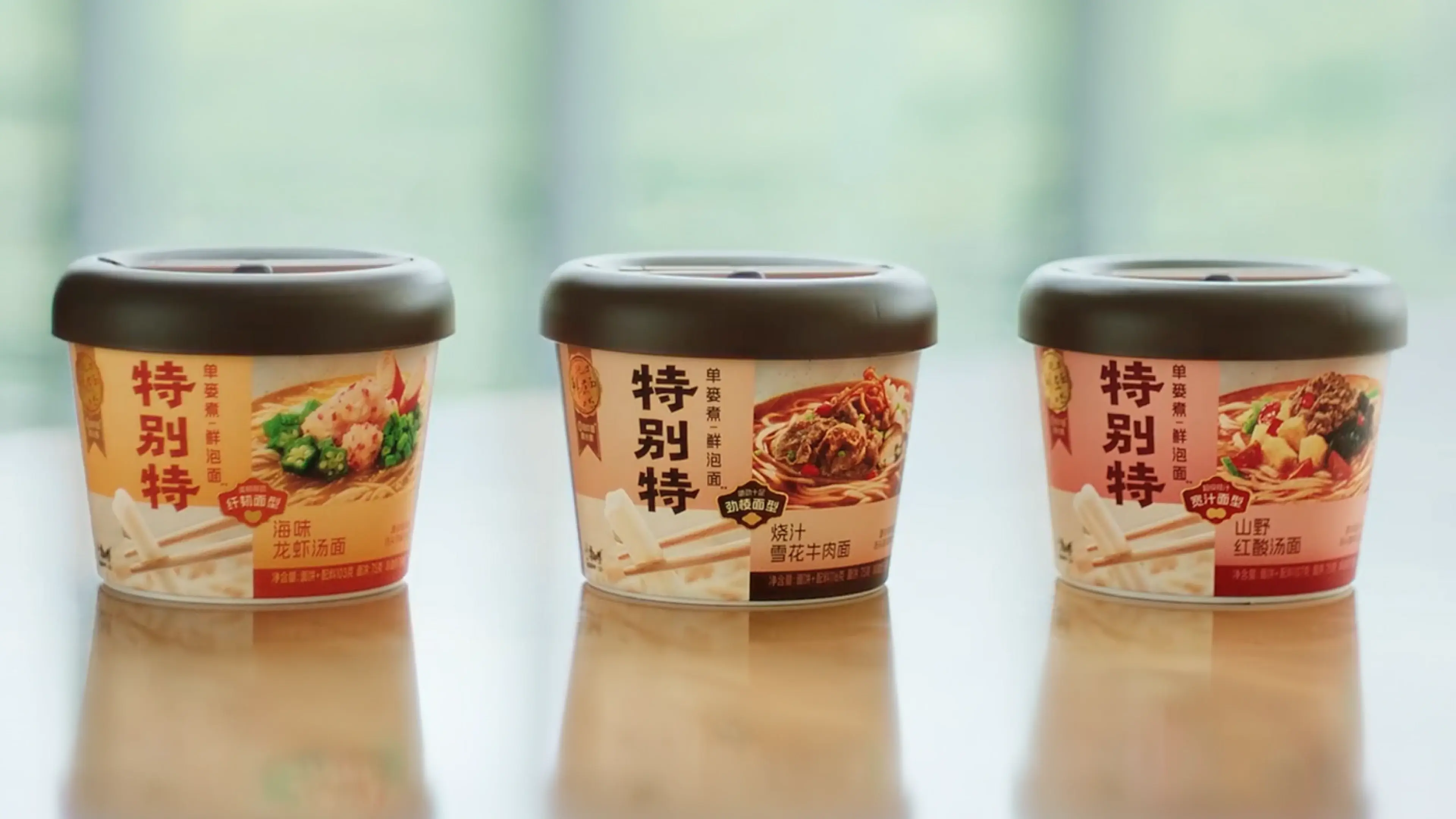
The first batch of “Te Bie Te” Fresh-Brewed Noodles—Chinese wordplay that emphasizes “special”—launched in August 2025 with three trendy and tried-and-true flavors. Within just three days, sales exceeded 100,000 bowls. Within a week, “Te Bie Te” topped the instant noodle category sales ranking on Douyin, China’s domestic counterpart to TikTok. The outcome was bigger than a product launch—it served as proof that a mature, declining category could be fundamentally reinvented to meet consumers’ real needs. For Master Kong, the project became a North Star and a model for internal category innovation in beverages, ready-to-eat foods, and beyond.
Once a popular, affordable staple, the instant noodle category in China has been declining rapidly due to shifting demographics, rising food delivery options, and increasing customer demand for healthier, more nutritious meals.
According to the World Instant Noodles Association, between 2020 and 2023, China’s instant noodle consumption fell by 4 billion packs.
100,000+
“Te Bie Te” bowls sold in the first 3 days on the market
#1
on Douyin’s instant noodle category ranking within one week of launch
Making international education future-fit & affordable
Lexel brings world-class learning to Malaysia’s middle class.
Taylor’s legacy began in 1969 with the founding of Taylor’s College and soon expanded to include Taylor’s University, one of Southeast Asia’s top private universities, as well as many other institutions that serve 35,000 students per year. The family-owned group also operates Taylor’s International Schools, Garden International School, and Nexus International School for students ages 4 to 18. In Kuala Lumpur, Malaysia’s capital city, annual tuition at premium private schools like these ranges from about $10,000 to $25,000 USD. Taylor’s wanted to do something different: provide the same level of academic rigor and immersive learning experiences at one-third the cost.
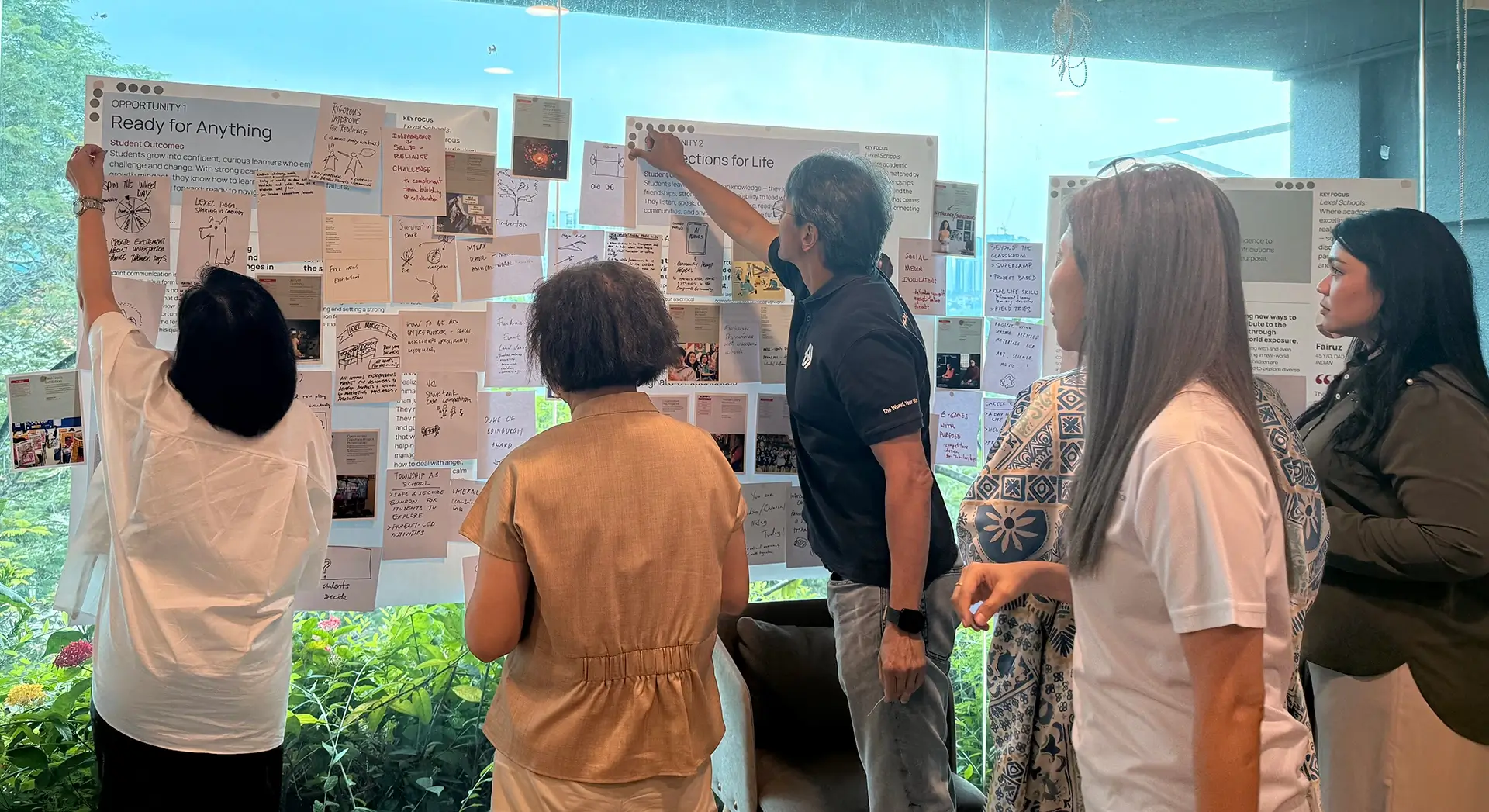
IDEO began by speaking with over three dozen students, parents, teachers, and experts across the capital to understand what was working, what wasn’t, and what was missing from such moderately priced international schools.
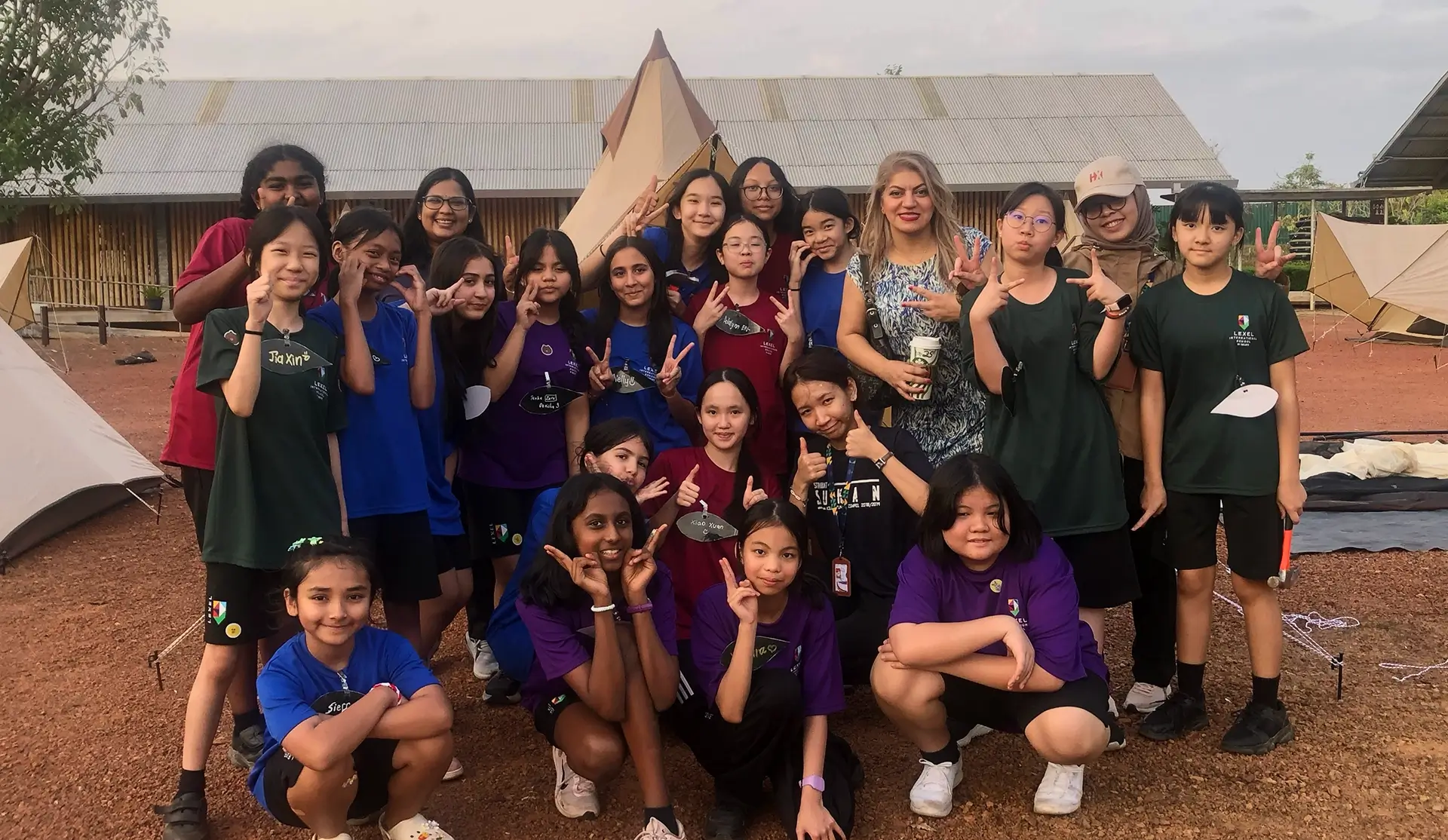
A few themes quickly emerged. Families, students, and teachers were worried about the stability of these new private schools, which tended to have higher-than-normal teacher turnover rates and were plagued by financial instability, negatively impacting talent attraction and retention, as well as student learning. Parents appreciated that the schools offered holistic learning experiences, such as field trips to rural areas, including jungles, but wished they were more consistently part of the curriculum. And now, the looming challenge of AI—how to use it, how to teach it, and how to teach with it—was in the background, a persistent cause for concern. The big unmet need? Reassurance that Taylor’s was thinking long-term and systematically about developing the skills, knowledge, and mindsets that would prepare students for an ever-changing world. Parents wanted a school that measured growth in academic, social, and character terms over generations, not just school semesters.
With these insights in hand, IDEO began developing a design Playbook for Taylor’s new brand—Lexel International Schools. A combination of “lexicon” and “excellence,” Lexel’s mission is “building what lasts, learning for life.”

The schools are centered around three key differentiators:
- Always Ahead: Lexel schools commit to staying current with the topics and subject matter they teach, as well as the tools they provide to students, parents, and teachers.s.
- Learning That Builds for Life: The schools ensure programmatic, systemic, and consistent learning experiences from Pre-K to Year 11. Interested students can even continue their post-secondary journey in partnership with Taylor’s University and other higher education institutions within the Taylor’s ecosystem.
- Educators for the Long Run: These schools commit to ongoing investments in professional growth opportunities for teachers and stable learning environments for students.
Four Lexel Literacies—AI, Digital, Financial, and Nutrition—integrated into the Cambridge Curriculum bring the school’s vision and mission to life.
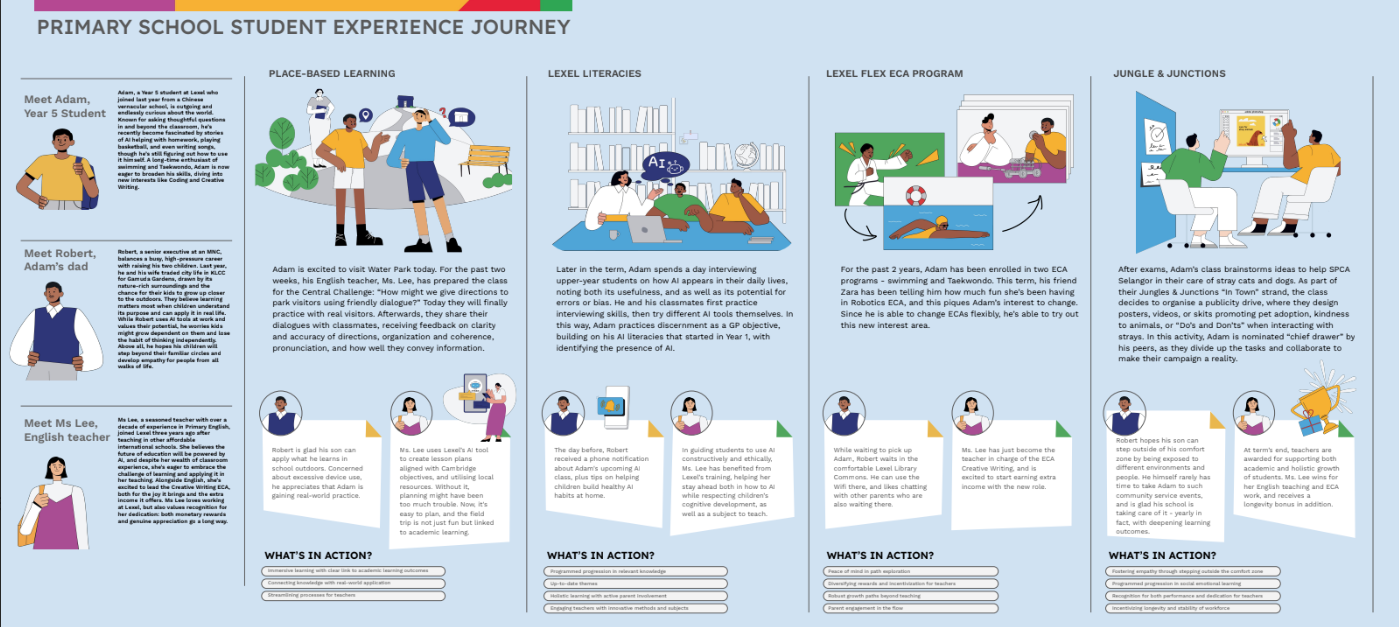
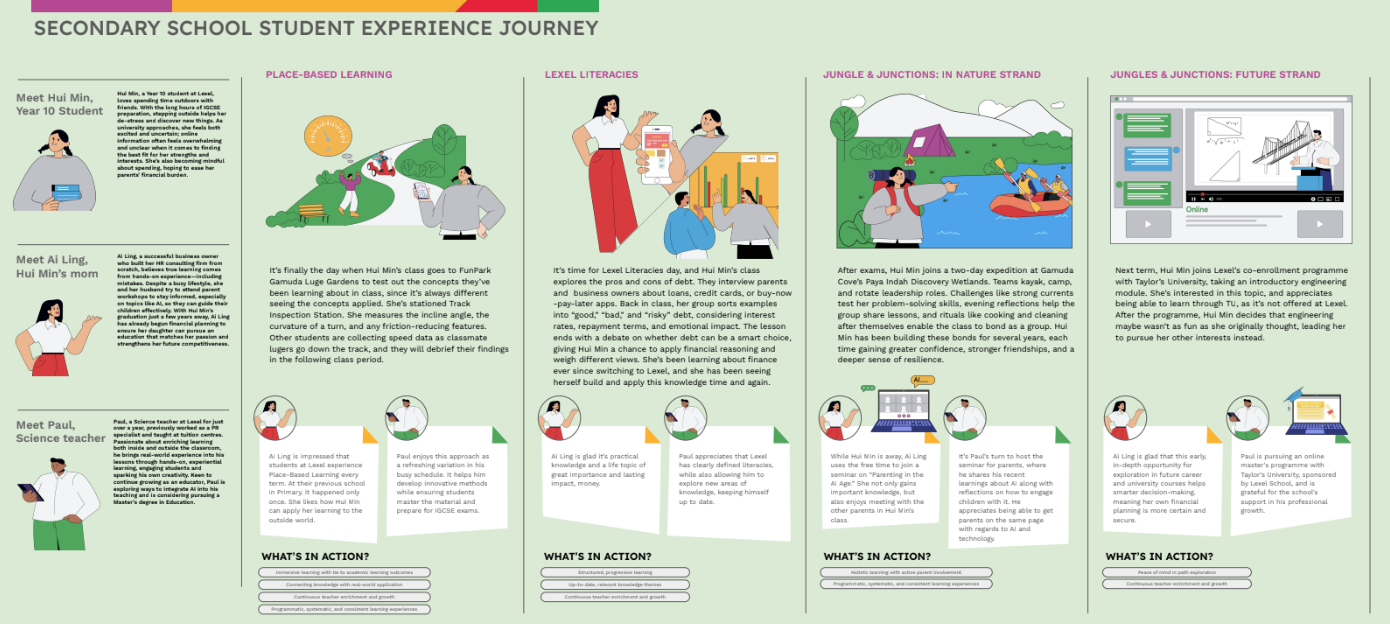
By systematically integrating AI literacy into its spiral education framework, in particular, an approach where major topics are revisited multiple times through a curriculum to build fluency over time, Lexel ensures parents that the school is thinking a decade ahead from Day One, setting the school apart. In addition to enhancing AI fluency, Lexel offers unique end-of-term experiences called Jungles & Junctions.
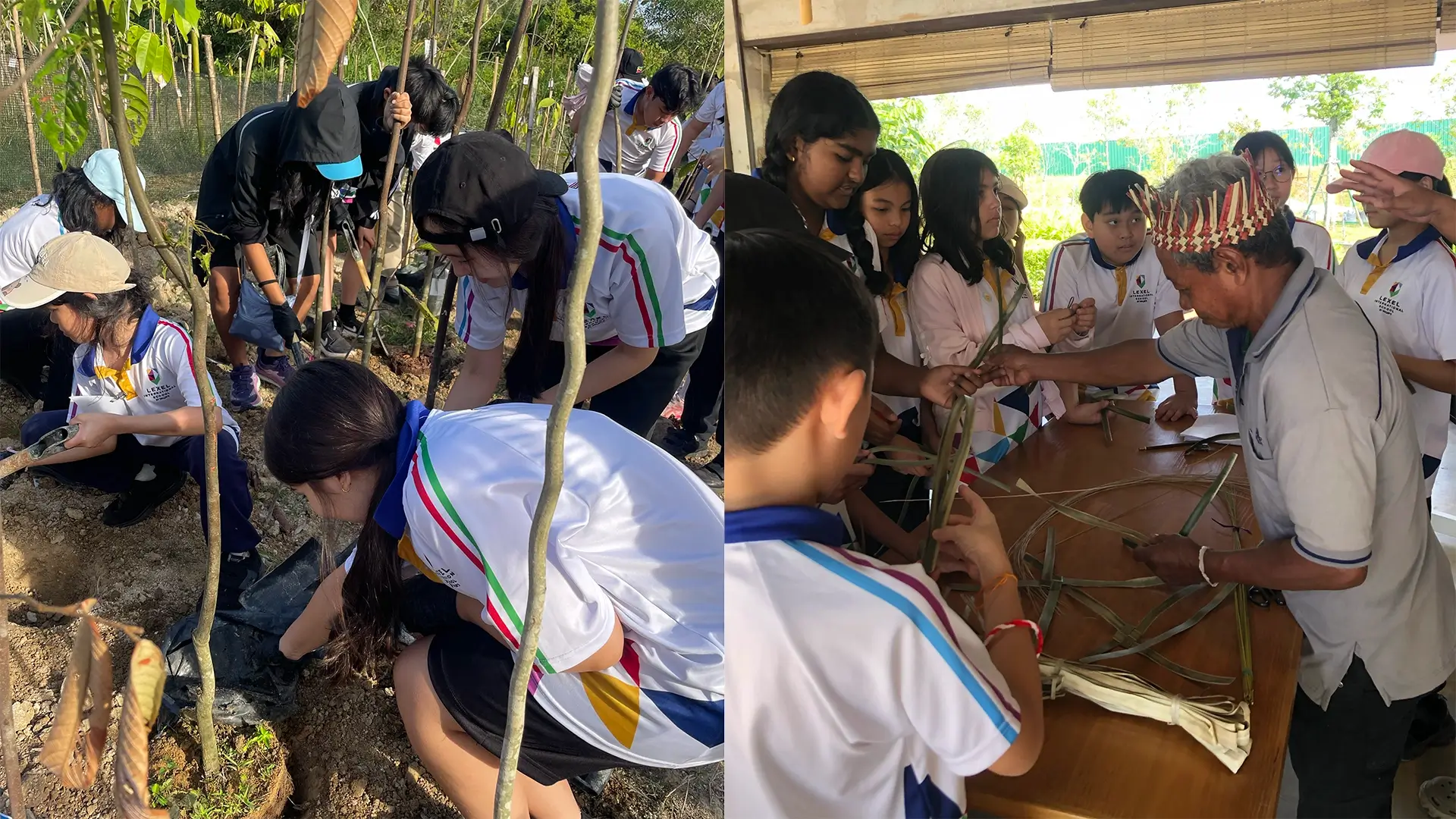
Combining three important strands of learning—community engagement, nature-based personal and interpersonal development, and career and university exploration—Jungles & Junctions leverages Taylor’s extended educational network and Lexel’s strategic founding campus within the Gamuda Gardens development in Selangor. Surrounded by tropical rainforests, the township’s residential neighborhoods, theme park, and various sports facilities, including an Olympic-length swimming pool, are transformed into an extended Lexel campus, with a GenAI-driven planner to help teachers streamline the organization of class outings. “The Township is Your Campus” became the tagline for this approach.
In September 2025, just months after IDEO’s collaboration ended, Taylor’s began classes at its first Lexel International School. By mid-year, the new school had achieved 115% of its year-one student enrollment target, with significant inbound demand for Year 2 already demonstrating the school’s market resonance.
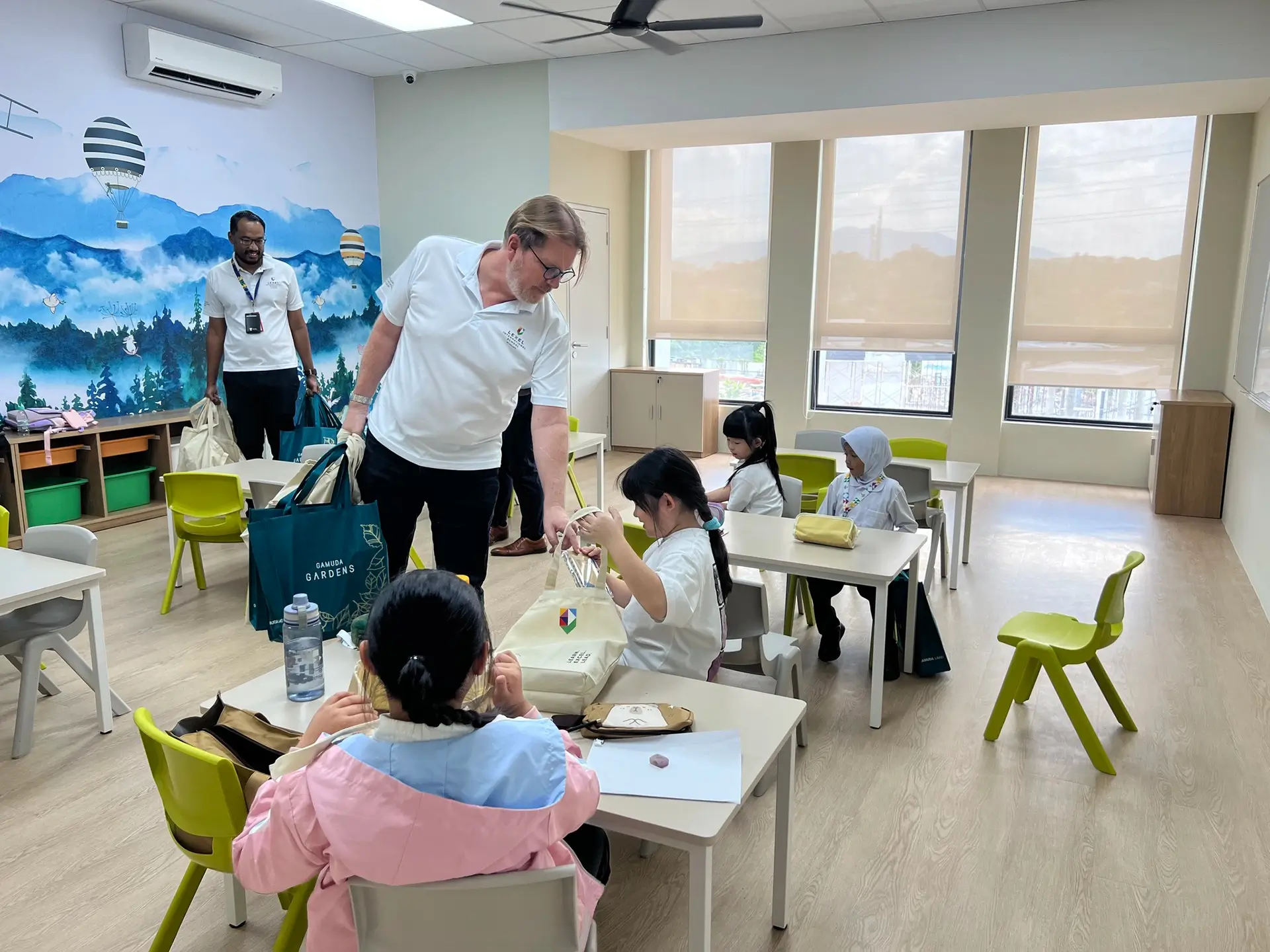
The modern campus features spacious classrooms, science and technology labs, a library, a multipurpose hall, and a canteen. Annual tuition ranges from about $2,800 USD for pre-K students to about $6,100 USD for secondary students.

Most importantly, by combining Taylor’s deep academic expertise, Gamuda Land’s development prowess, and IDEO’s innovative design Playbook, Lexel brings quality, affordable international education closer to home for Malaysian families. According to one parent, “My daughter looks forward to going to school every day … and has a lot of opportunities to express herself. On a scale of 1 to 10, I give [Lexel] an 11.” Based on the IDEO Playbook, a second flagship campus in the Southern Klang Valley, which is scheduled to open in September 2026, has already exceeded its year-one target enrollment expectations, with plans to continue extending the Lexel network to other parts of Malaysia and the wider Southeast Asian region in the near future.
Malaysia’s private international school sector has grown significantly as parents seek quality English-language education. However, high tuition fees and limited access to reputable schools are continual challenges for those in the emerging middle class.
115%
of Lexel’s student enrollment target reached during the launch year of its first campus
Year 1 enrollment target exceeded
at Lexel's second campus several months ahead of classes commencing
Delivering an unbiased news experience
Straight Arrow News transforms fact-based news consumption.
The American news industry has long been a competitive and saturated market. This has only intensified with the emergence of social media outlets and AI-generated news. Even so, SAN’s rigorously unbiased, fact-based reporting style and rich video storytelling had enabled the ambitious startup to rise above the media fray in just three short years.
With a strong foundation to build on, IDEO sought to further differentiate SAN’s cutting-edge news product and build deeper engagement with a wider audience through a new user experience.
.webp)
Collaborating closely, IDEO and SAN began by delving deeply into media consumption habits. They met with early SAN superfans, news consumers who spent hours a day absorbing content from traditional outlets like Fox and USA Today, and those who looked to their Ring doorbell app or Reddit for news. The takeaways? People were tired of clickbait and clunky interfaces. They sought clear, factual news that was easily accessible, with additional context to help them interpret events and understand their significance. They craved more than one perspective on important topics, so stories felt balanced rather than polarized. They also valued having control over how they consumed news, so making it easy to switch between text, video, and audio formats was crucial.
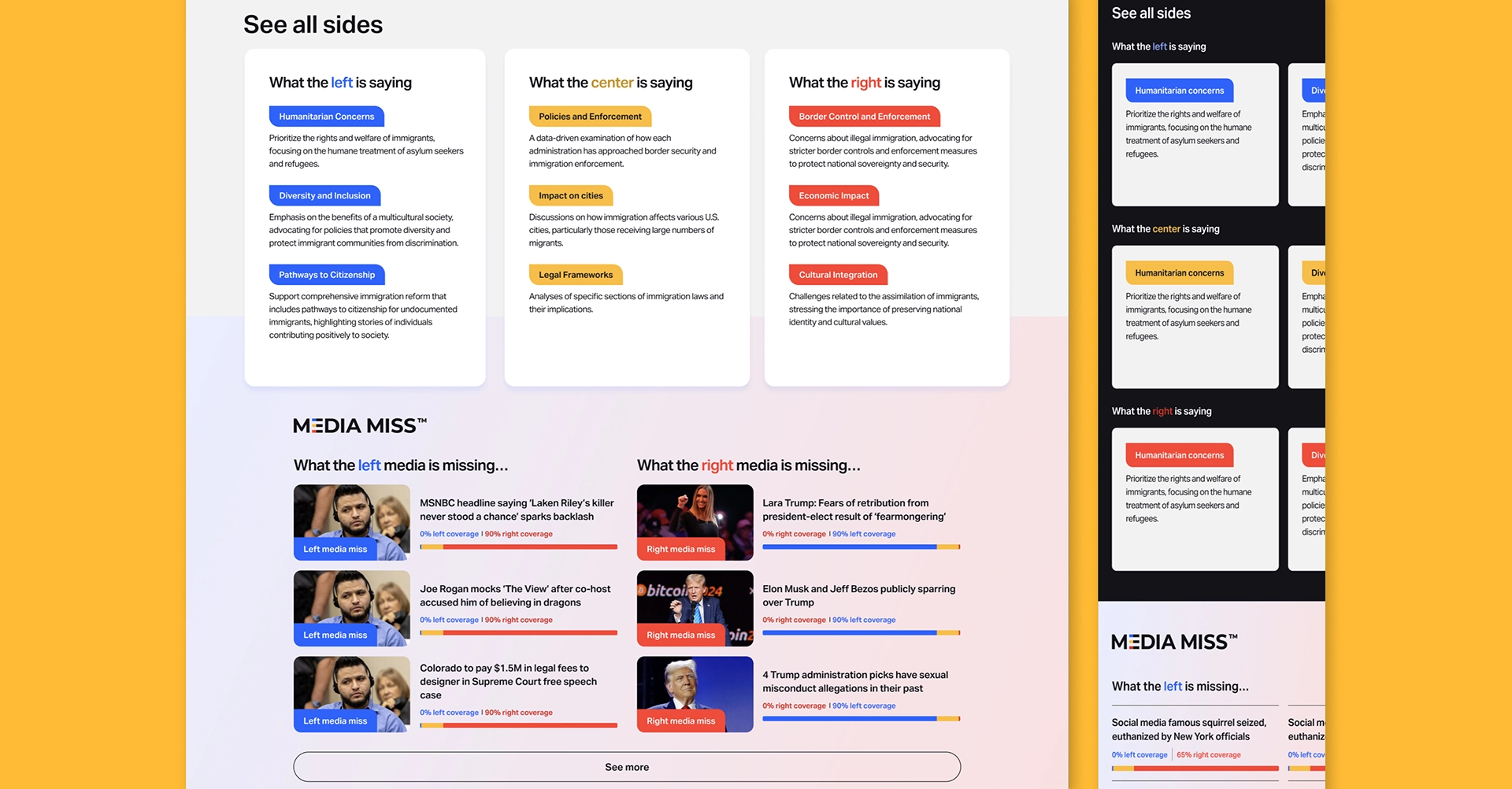
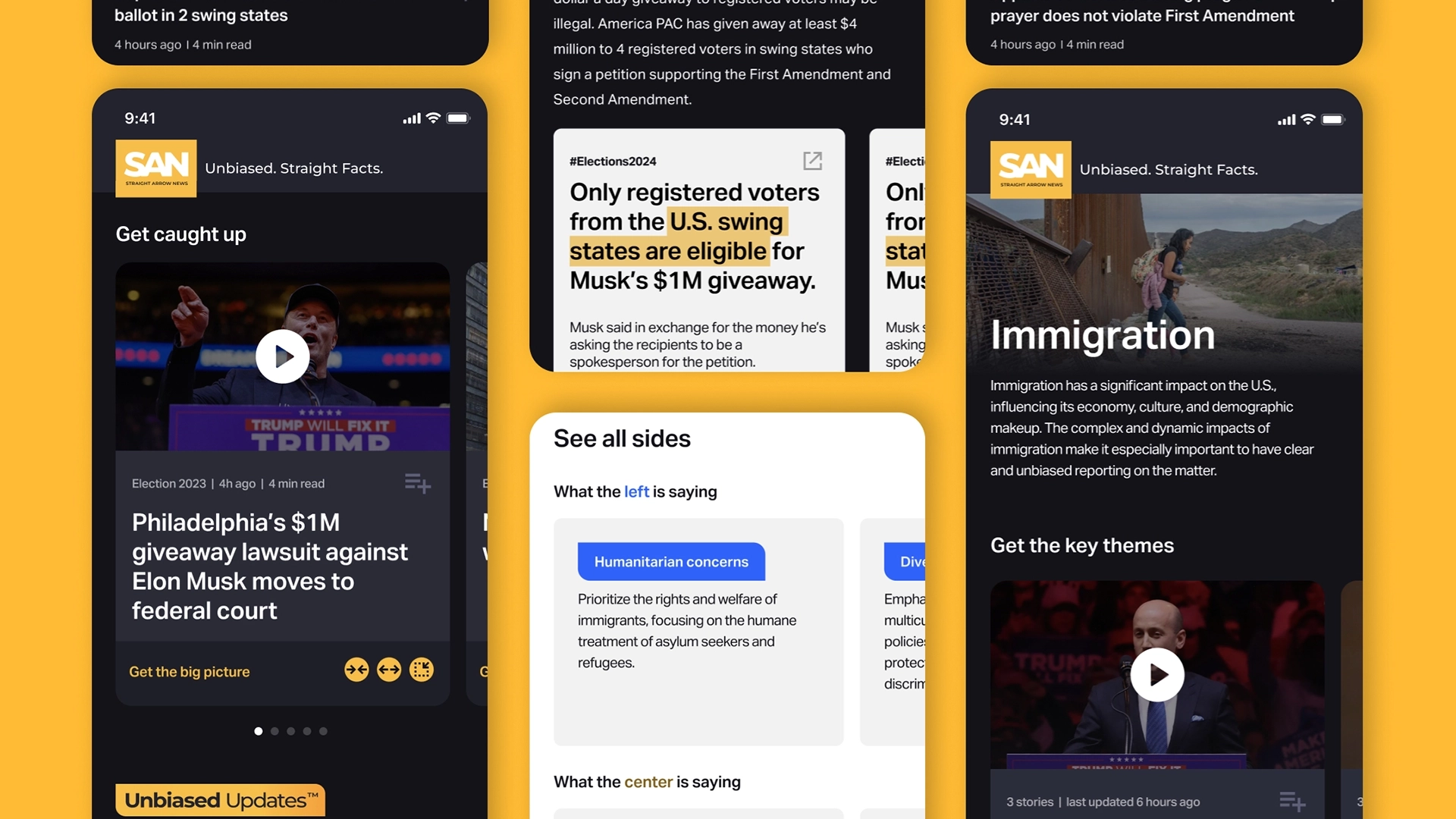
Together, IDEO and SAN created features across SAN’s website and app that put facts, trust, and transparency at the core of the product experience. Fact Cards distill key data points into clear, shareable units, while the Sources feature allows readers to trace information directly back to its original source. To make complex stories easier to grasp, Big Picture insights drill down into why events matter, surfacing underlying themes, historical parallels, differences in reporting, and common ground. The Why This Story Matters section provides readers with clear framing and sets the story within a broader context, while the Timeline illustrates how events unfold over days, months, or even years. An antidote to news polarization, See All Sides presents left, right, and center narratives for key topics side-by-side, and Media Landscape visualizations reveal how coverage varies across outlets. Finally, to ensure SAN fits seamlessly into readers’ daily lives, the redesigned Today Page is organized into three highly scannable sections: Latest News, Top Stories, and SAN Originals. The combined features create a balanced, clear, and non-polarizing news experience, making it easy for readers to delve deeper into the sources of their news.
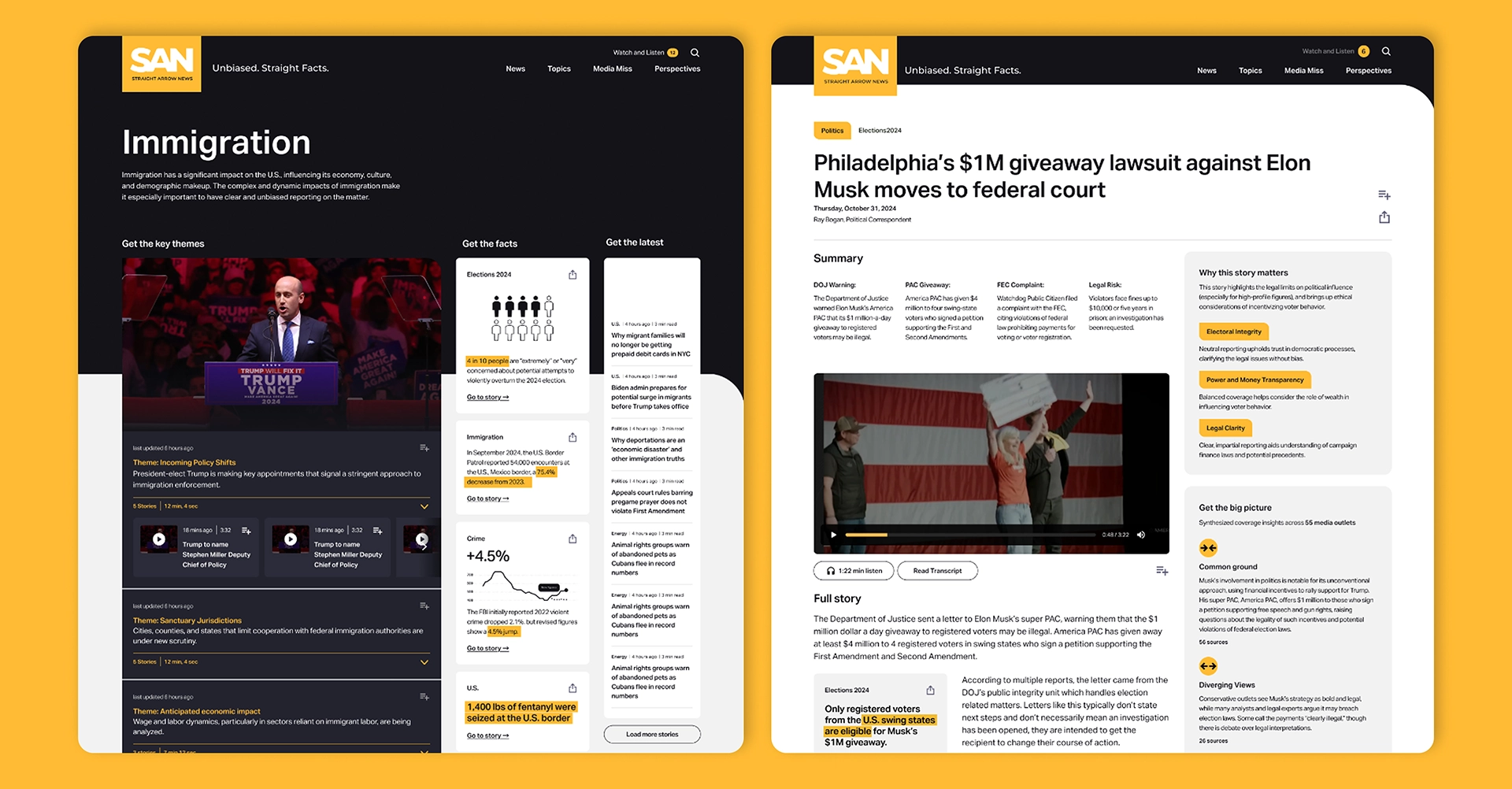
SAN now delivers a news experience as modern, dynamic, and trustworthy as its journalism. A month after its debut, the SAN app’s page views increased 1,170 percent year over year compared to June 2024, while active users rose 700 percent. Readers also give the updated mobile experience a 4.8 rating on the Apple App Store. “Our team is delivering reporting that’s both deeply factual and accessible,” said Derek Mead, SAN’s Chief Content Officer. “This redesign is pivotal to the direction journalism needs to take and the leadership role Straight Arrow News is taking on as we help guide the news industry into a brighter future.”
SAN built a loyal readership and gained recognition for its unbiased reporting. To expand and stand out from legacy media, SAN wanted a redesigned user experience that reflected its commitment to fact-based journalism.
1,170%
increase in app page views YoY
700%
increase in active users
4.8 rating
on the Apple App Store
Preventing newborn RSV
A toolkit to increase global adoption of Beyfortus, the world’s first RSV immunization for babies.
Sanofi was the first company to supply the polio vaccine worldwide. Because of the global fight against the disease, endemic wild poliovirus transmission is now limited to just two countries. However, attitudes toward vaccines and immunizations have shifted significantly. To ensure a smooth launch of Beyfortus in a time of increased vaccine hesitancy, Sanofi asked IDEO to conduct research across four important and very different healthcare markets: Germany, Spain, China, and the US.
IDEO worked with parents, caregivers, healthcare professionals, and healthcare administrators to identify potential barriers to vaccine adoption and understand the emotional needs of all stakeholders involved in the immunization process. Navigating cultural differences and diverse healthcare environments, the team uncovered a set of insights.
For healthcare professionals, the team discovered there was no one-size-fits-all approach to immunization training across Sanofi’s 20-plus global markets. While consistency of key information was important, trainings needed to be flexible and customizable. This way, regardless of whether the vaccine was administered by midwives, OB-GYNs, nurses, or doctors, they could confidently discuss the pros and cons across cultural contexts and administer the drug correctly.
For new parents, receiving information about a new immunization immediately after giving birth could be too stressful. But simply leaving pamphlets about Beyfortus in waiting rooms didn't address their real concerns, either. Caregivers needed to engage in conversations earlier in their pregnancies and continue them after leaving the hospital, when they might have additional questions.

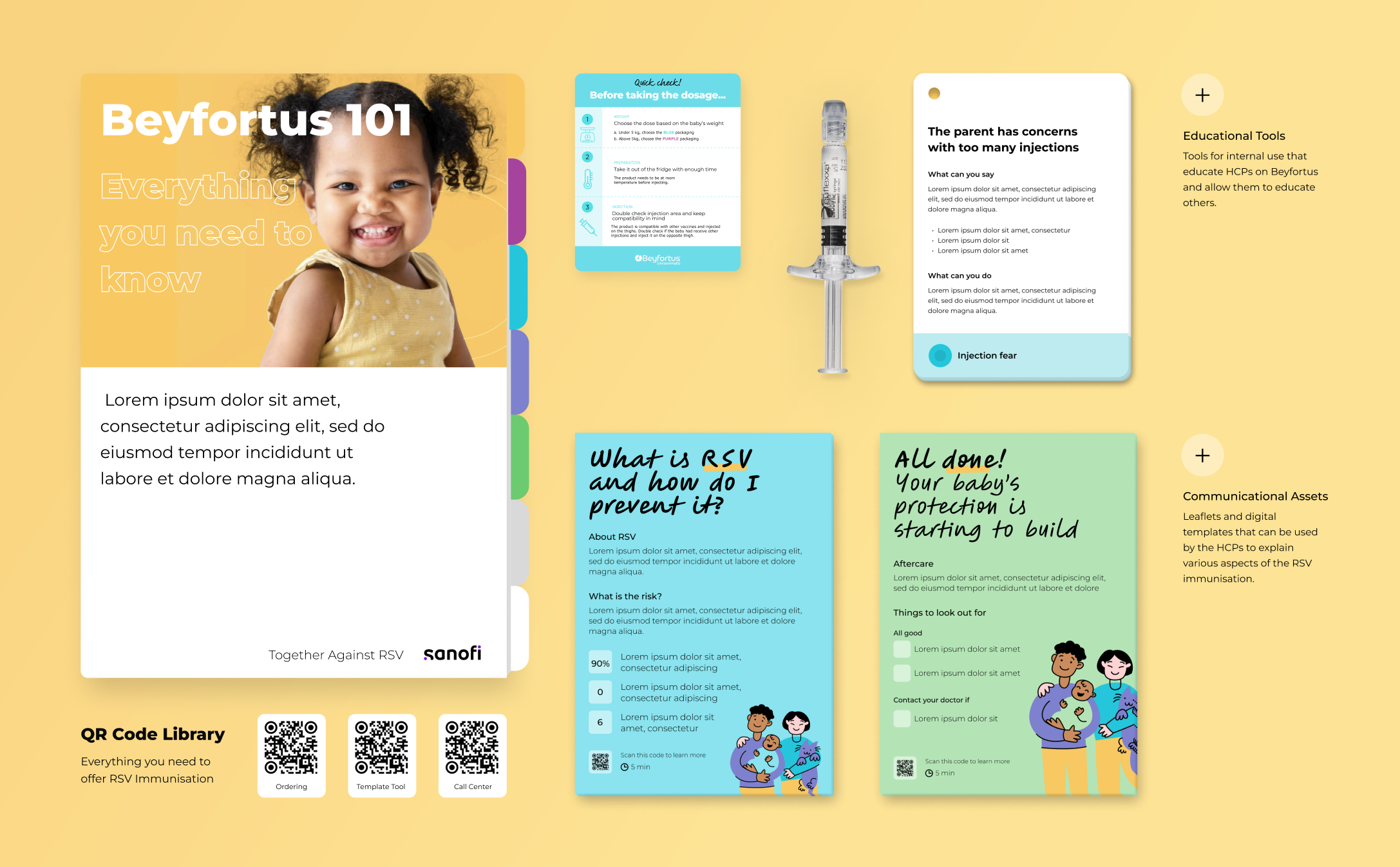
IDEO translated these research insights into a highly accessible global communication toolkit that uses simple, straightforward language, metaphors, and illustrations to support informed conversations between healthcare providers and parents before, during, and after a child is born. IDEO then conducted a series of market-fit co-design workshops with representatives of Sanofi’s global immunization business to iterate on the print and digital tools, make them more resonant with regional customers, and ensure compliance with local regulations. IDEO handed the toolkits over for development to support the launch of Beyfortus in January 2024, just in time for RSV season.
Beyfortus saw enormous demand in its first year, demonstrating strong efficacy in real-world applications and achieving blockbuster status as a $1.8 billion therapy. Sanofi’s global launch team credits the patient-centric toolkit with increased requests for communication materials from its regional markets as well as from healthcare and government organizations that have typically been hard to reach, key goals of its global-local launch strategy.
Since its development, Beyfortus has received swift regulatory approval from the US, EU, China, and Japan, with patient demand causing Sanofi to triple its worldwide manufacturing capacity to meet the needs of the 2024-25 RSV season. Ahead of the larger global distribution of Beyfortus, IDEO and Sanofi partnered with equity expert consultants, Fearless Futures, to conduct a DEI review and worked with doctors and nurses who participated in the initial drug launch to make the materials even more accessible, relevant, and successful for 2025 and beyond. To date, six million babies—and counting—have been immunized with Beyfortus.
Worldwide, childhood vaccination hesitancy among parents fluctuates between 25-45%, according to the World Health Organization (WHO), a trend it considers one of the biggest global threats to public health.
85.9%
reduction in hospitalizations for infants who received Beyfortus compared to those who did not (2023–24 RSV season)
$1.8B
in first-year sales of Beyfortus
Why Joy is the Best Protest
Inspiration came from an unlikely place. A defiant nun.

Eltono coincidently was on our inspiration mood board so we knew we must connect. At the same time our studio was revisiting work by an artist-nun named Corita Kent. We found her work and process deeply inspiring to our culture.
There's a backstory worthy of telling here: In 1971, Boston Gas Company commissioned Kent to paint a mural on a gas tank in her new hometown of Boston.
The work, known as Rainbow Swash, is a simple commentary on the nature of painting and minimalist joy, a six-color combover on the bald head of a stout roadside tank.
Kent was an unlikely candidate. For nearly two decades, as a nun in the Sisters of the Immaculate Heart in Los Angeles, she had pushed the edges of acceptability as an artist, teacher, and activist.
Her work, now recognized in the Pop canon alongside Andy Warhol and Roy Lichtenstein, challenged cultural norms by reappropriating common packaging and advertising slogans and setting them alongside passages from the Bible, pop music, and classic literature.
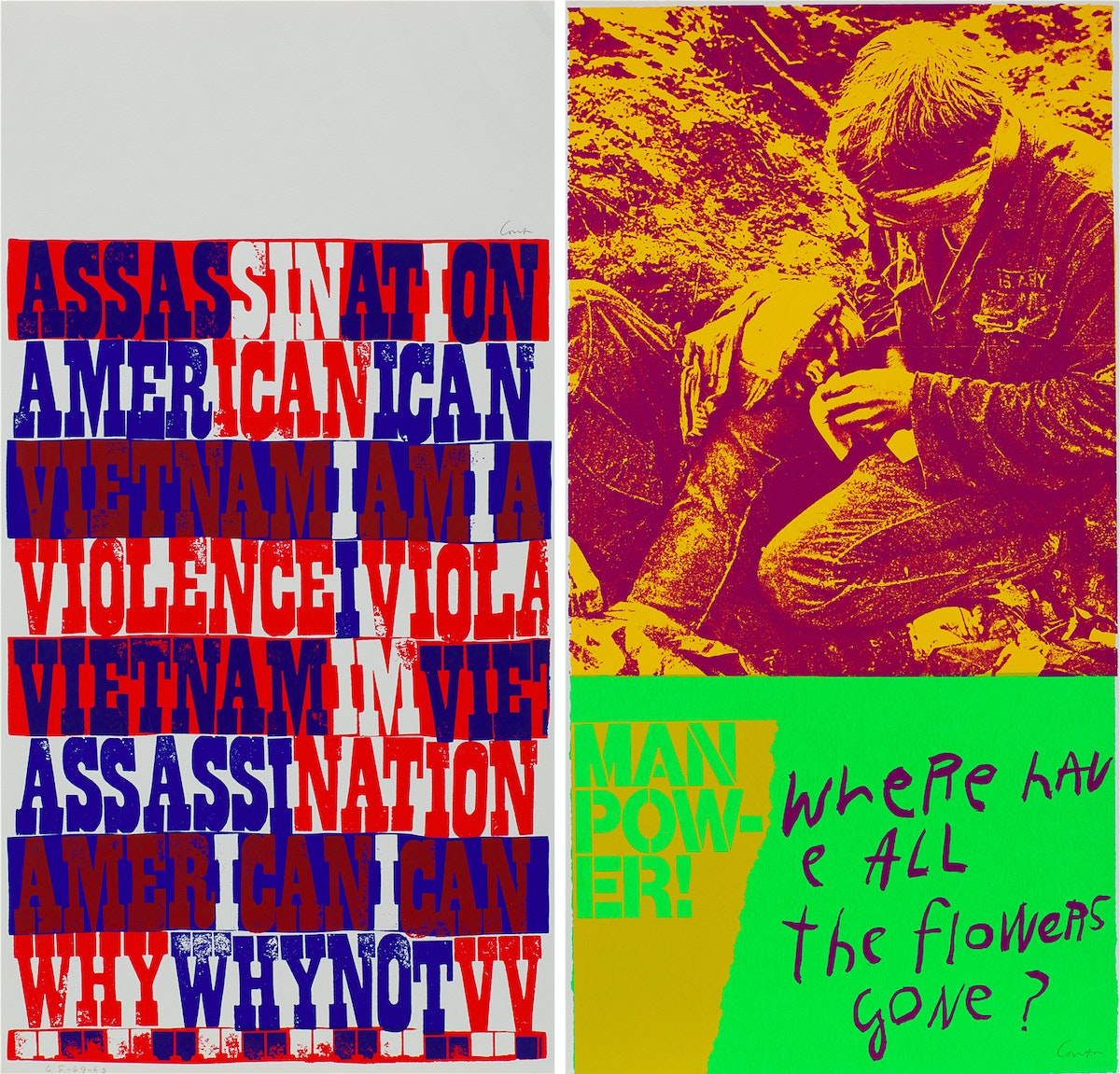
As counterculture gained momentum, and Kent used her art to advocate for justice and peace, her profile grew and her messages sharpened. Eventually her protest was too much for the Church to handle, and they mutually separated, leading Kent to make a move to Boston and continue her art.
But something changed in 1970. While her activism persisted, a new body of work arrived, with simple brushstrokes and appeals to love each other.

It was this moment that, 15 years later, culminated in her iconic USPS Love stamp, and also led to the commission from the Boston Gas Company.
Today’s headlines are a 1960s deja vu: culture wars, social injustice, sexual harassment, mass shootings, covert ops, media corruption, political failure. It’s easy to draw parallels to Kent’s day, and to find artistic expressions in response (Shepard Fairey comes to mind). But I’ve personally wondered how Kent made the shift to rainbows and love, and I mean that with no irony.
Maybe it comes down to this simple truth: Love wins. While Kent was popular in her time at Immaculate Heart, even landng on the cover of Newsweek, she didn’t achieve true household status until her 1980s USPS Love stamp. It’s the message we all needed, and it’s still the message we want today.
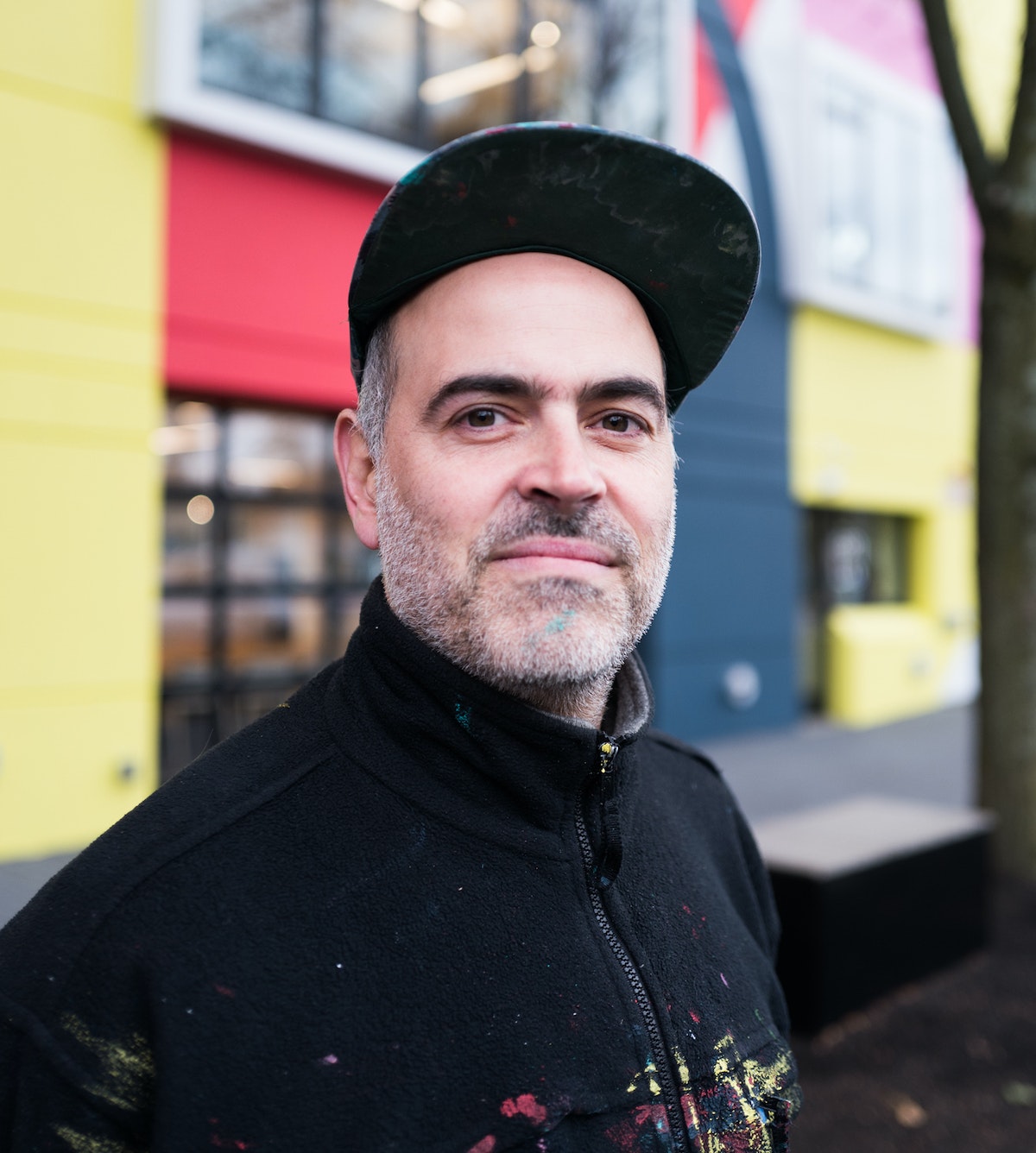
Eltono has done installations in more than 90 cities around the globe; each unique, but connected by a calculated joy. His work is made from randomly placed forms inspired by the architectural elements of the site. Though we had yet to meet, his work felt right—a cosmic alignment of our values. And once we did share ideas, we were stoked, except about one thing—color.
Eltono’s choices were exuberant and bright. Colors inspired by Mediterranean sun, French countrysides, and European sensibilities. They are radical for hidebound New England, an area known for its pilgrim stoicism, and not native to a region that is white and gray for five months of the year. We quietly fretted about what to do, how to discuss the issue with him. Then I was reminded of Kent. Of her joy in the face of adversity—love and rainbows. We didn’t change a thing.
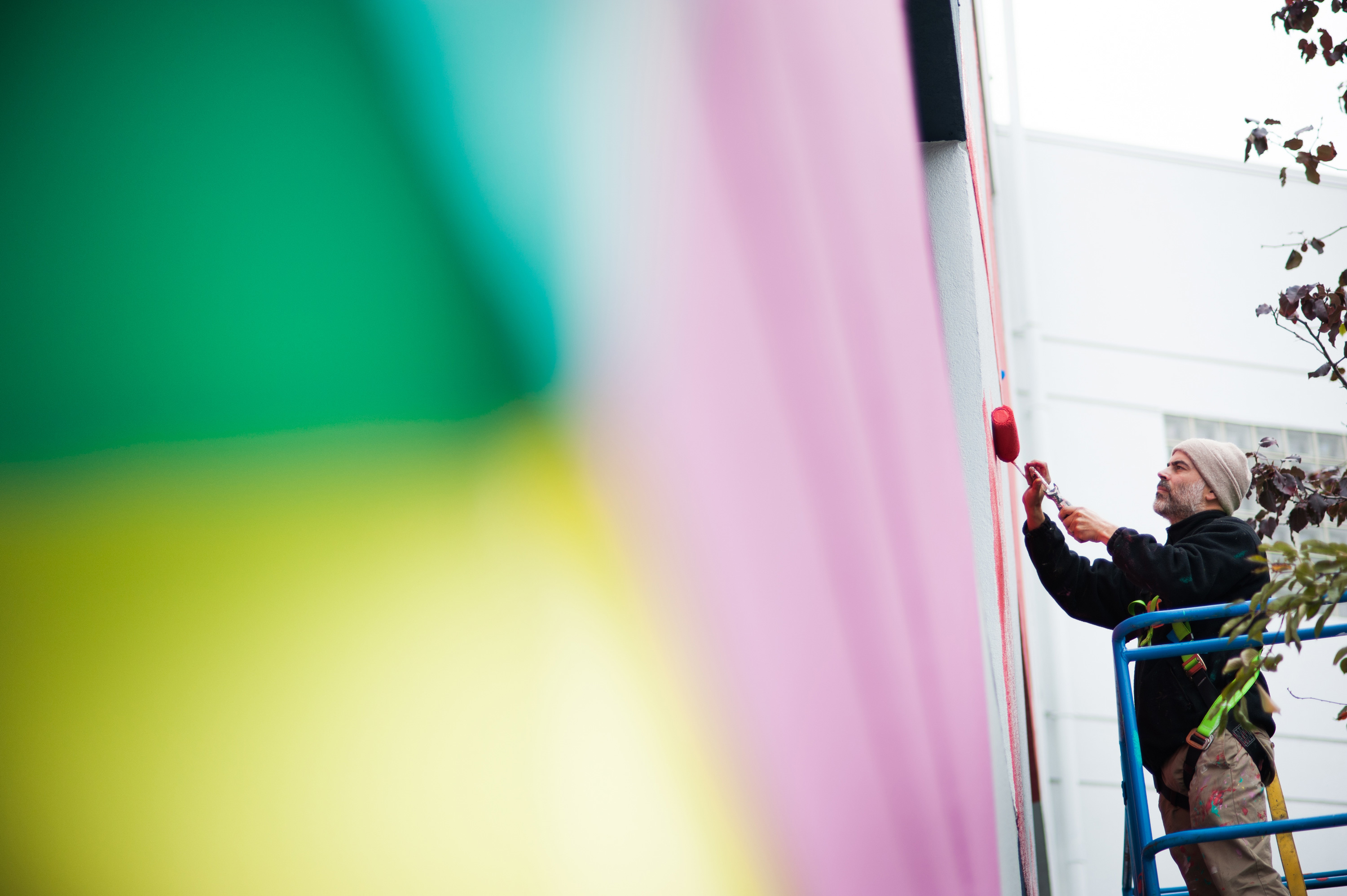
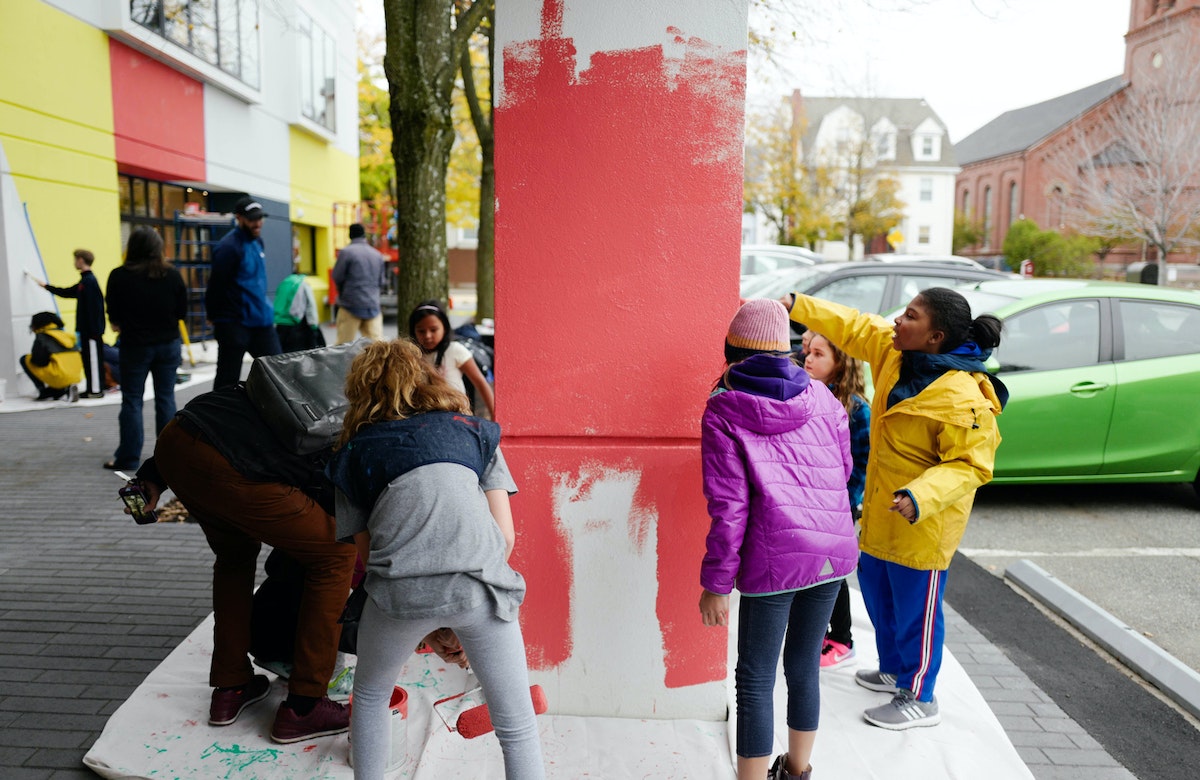
In fact, we wore the colors—in the form of paint splatters on our faces—with pride! Eltono invited help not only from other muralists, but also from IDEO families and neighborhood kids. His colors greet each passerby’s smile with their own. Each defies the gray sky of the coming winter and the equally gray social climate.
When Boston Gas sold to Keyspan in 1992, the original tank was torn down. But, due to its popularity, Kent’s mural was immediately repainted on a accompanying tank.
Eltono’s art continues making the case for defiant joy, standing in solidarity just a few miles from Kent’s Rainbow Swash. In this season of anxiety and division, there is no greater protest than to stand proud and bright with joy and love.
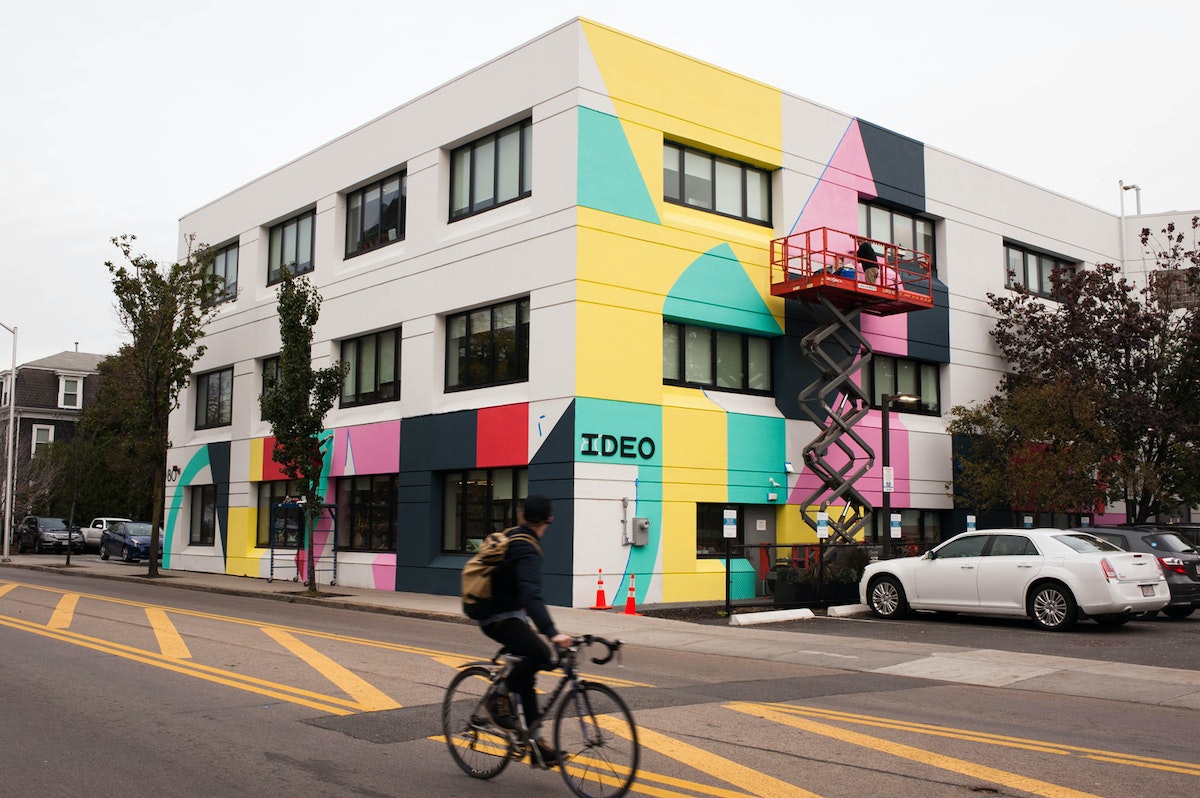
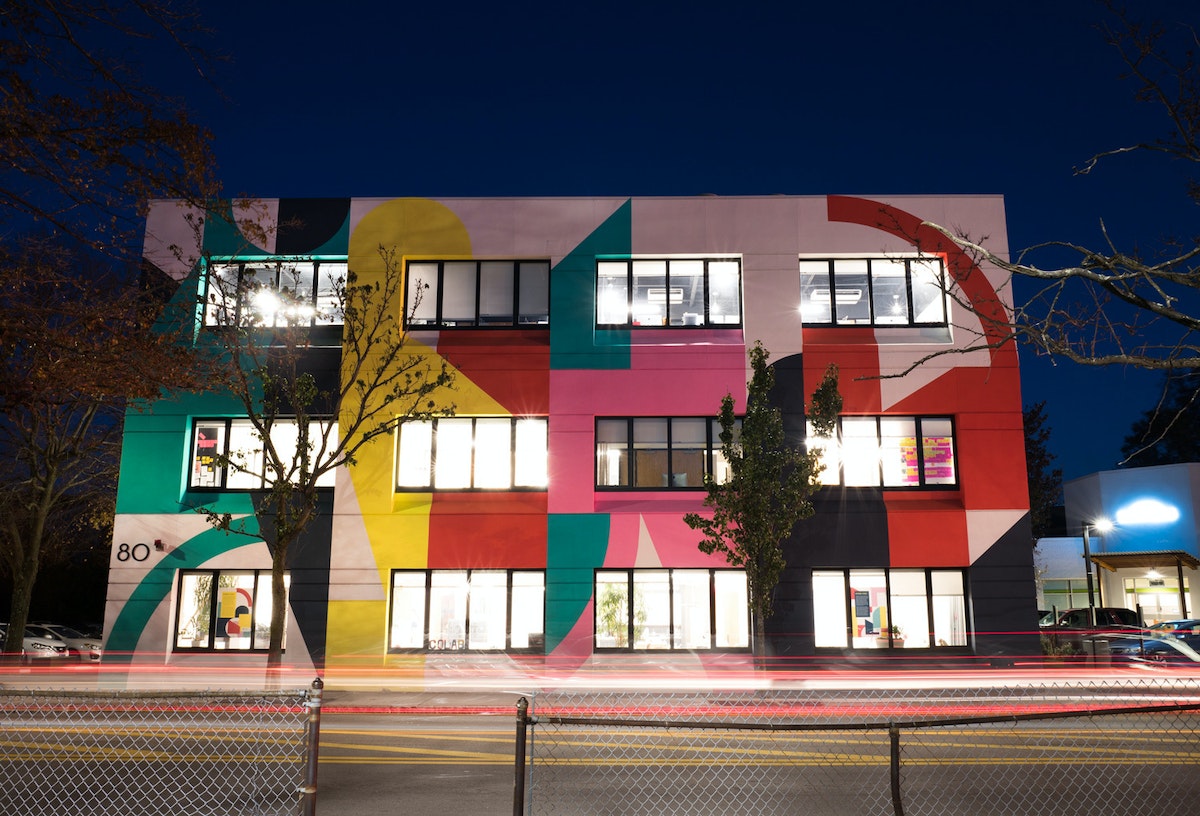
*Deepest gratitude to the many that helped us make this possible: Geoff Hargadon and Gary Strack at Central Walls; Michael Monestine from the Central Square Business Association; Amanda Hill, Pedro Soto and Al Wilson from Beyond Walls; Jason Weeks from the City of Cambridge; our artist assistants Lena McCarthy, Brian Denahy, Laura Menucci, Meghana Srinivasan, and Julia Roth; the many at IDEO that helped coordinate, paint and photograph, especially Christina Abele, Tiffany Knight, and Dirk Ahlgrim; and the architecture and interiors teams at Hacin + Associates.
Earlier this year, we moved our Cambridge-based studio into a building in Central Square. We wanted to personalize our new home with some public art, but were uncertain about what final expression it should take, so we got started by slapping on a new coat of paint—transforming it from an oppressive gray brutalism to a welcoming white canvas. Then, a local connection, who shared our desire for more street art in Cambridge, suggested we look up Eltono.
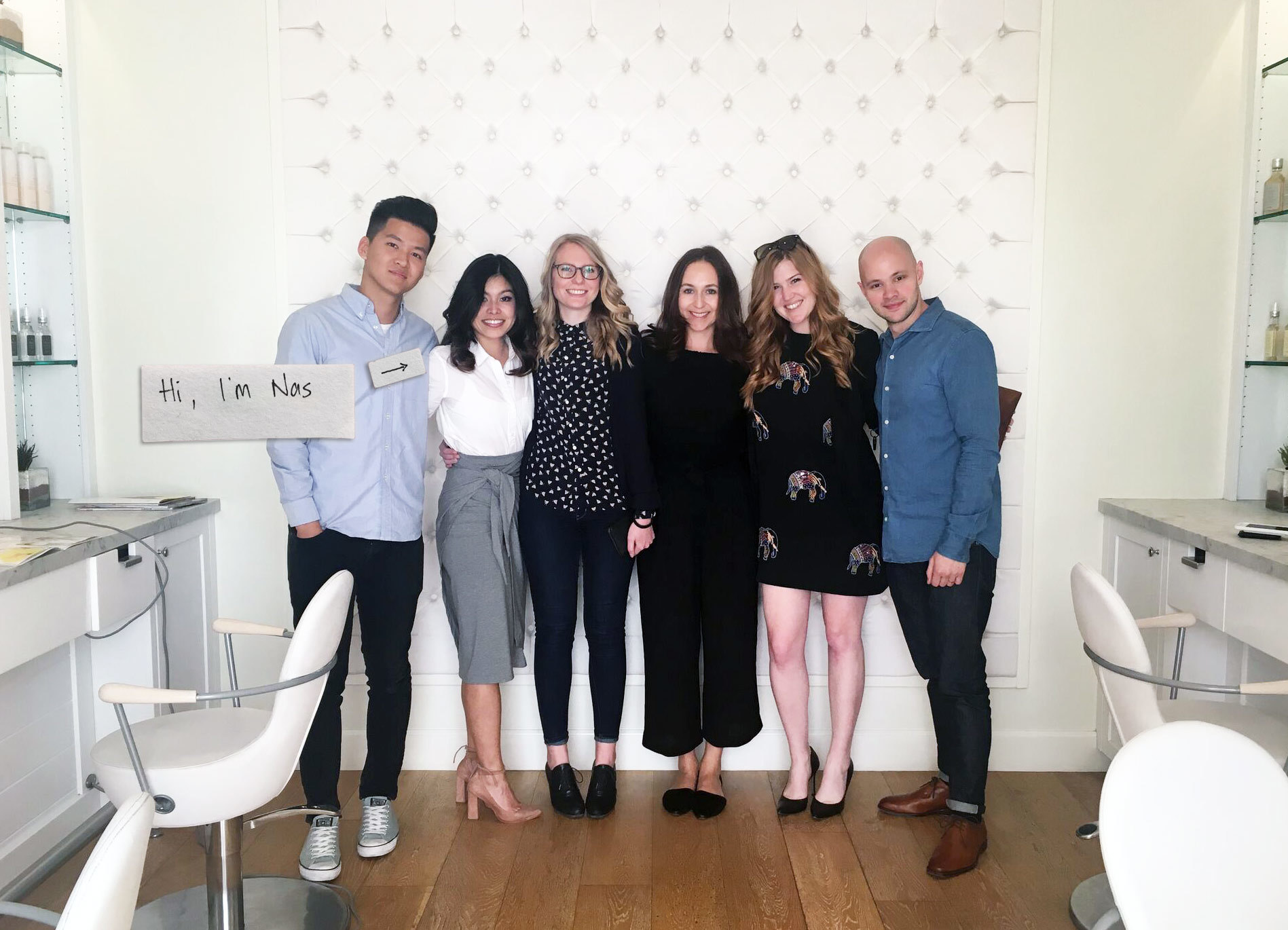
A Day in the Life of an Interaction Designer
No biggie, just creating the experiences of tomorrow
So, in addition to designing the thing, I spend 50 percent of my time crafting the story of the thing—showing people how the interaction will influence new behaviors, new futures, new ways to live. The story has to be good enough for the user to picture the experience for themselves. Here’s a sneak peek at a typical day:
6:00 AM: Warming up at SoulCycle
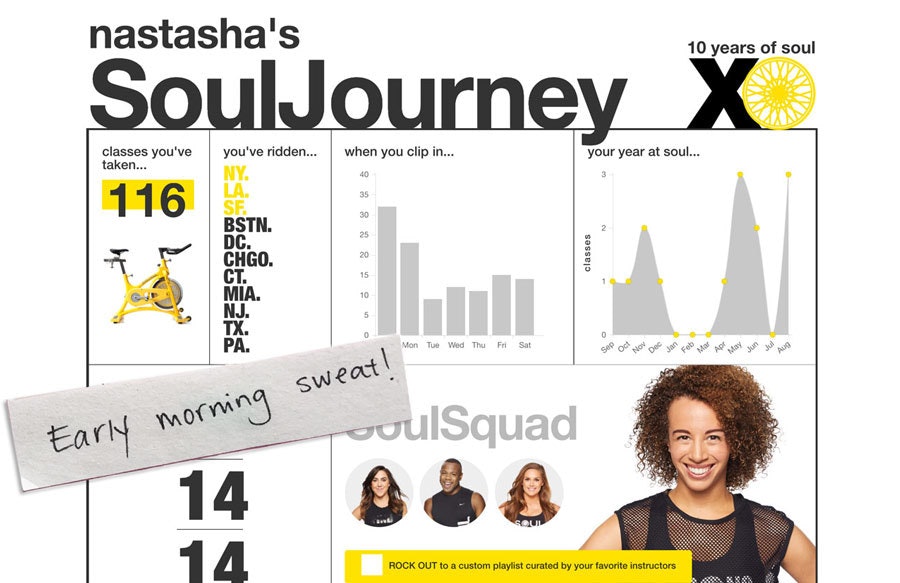
It's not always easy rolling out of bed this early, but sweating my heart out on a stationary bike is my favorite way to start the day. To me, design is like a sport—you have to be intentional about the routines that you do everyday to help you be at your best mentally and physically. Spinning gets my brain revved up for the eight hours of creativity that lie ahead.
9:00 AM: 👋 Project Space!
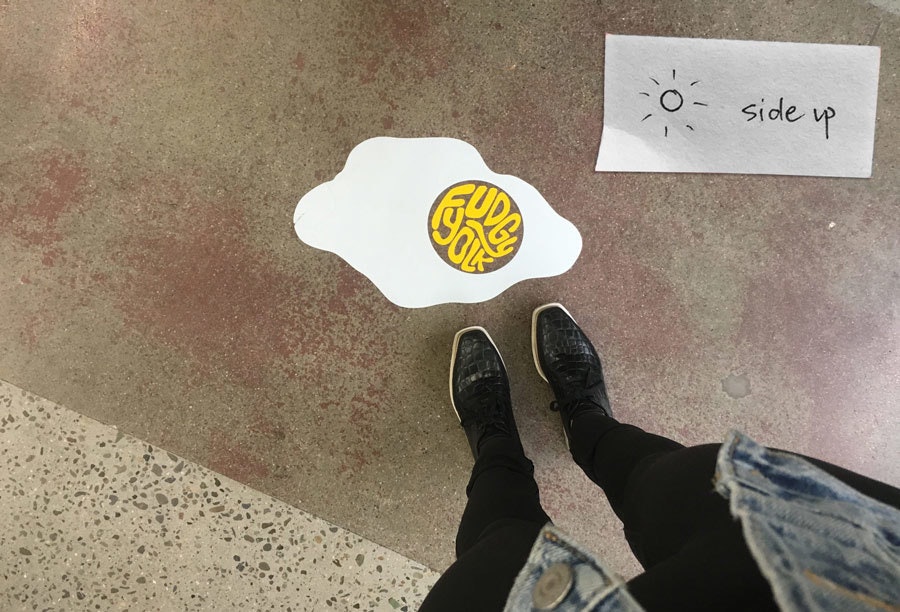
“Fudgyolk” is my project team's code name (we always keep the client confidential), but it is also a fun identity. The name was inspired by a blended sous vide soft poached egg sauce we had at our first team dinner (here)—yum! Shoutout to my talented teammate Brooke Thyng who designed our team identity!
10:00 AM: Post-Synthesis Cleanup
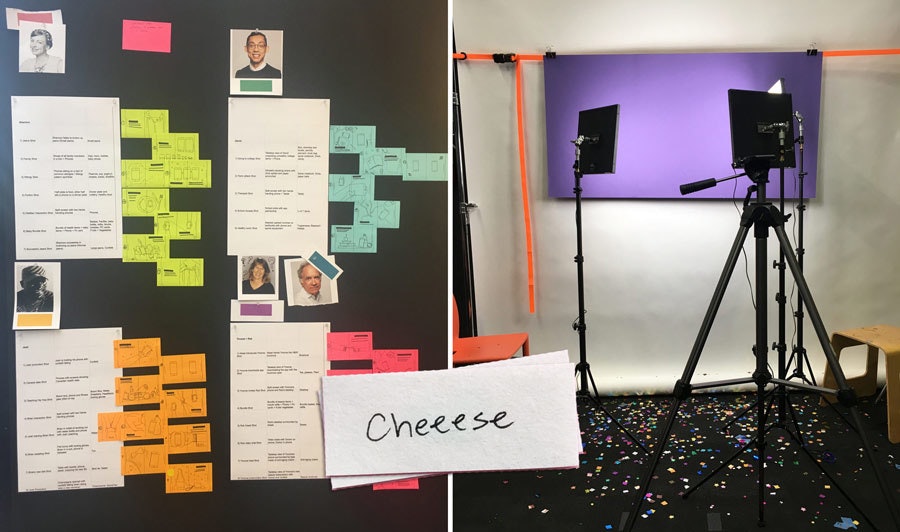
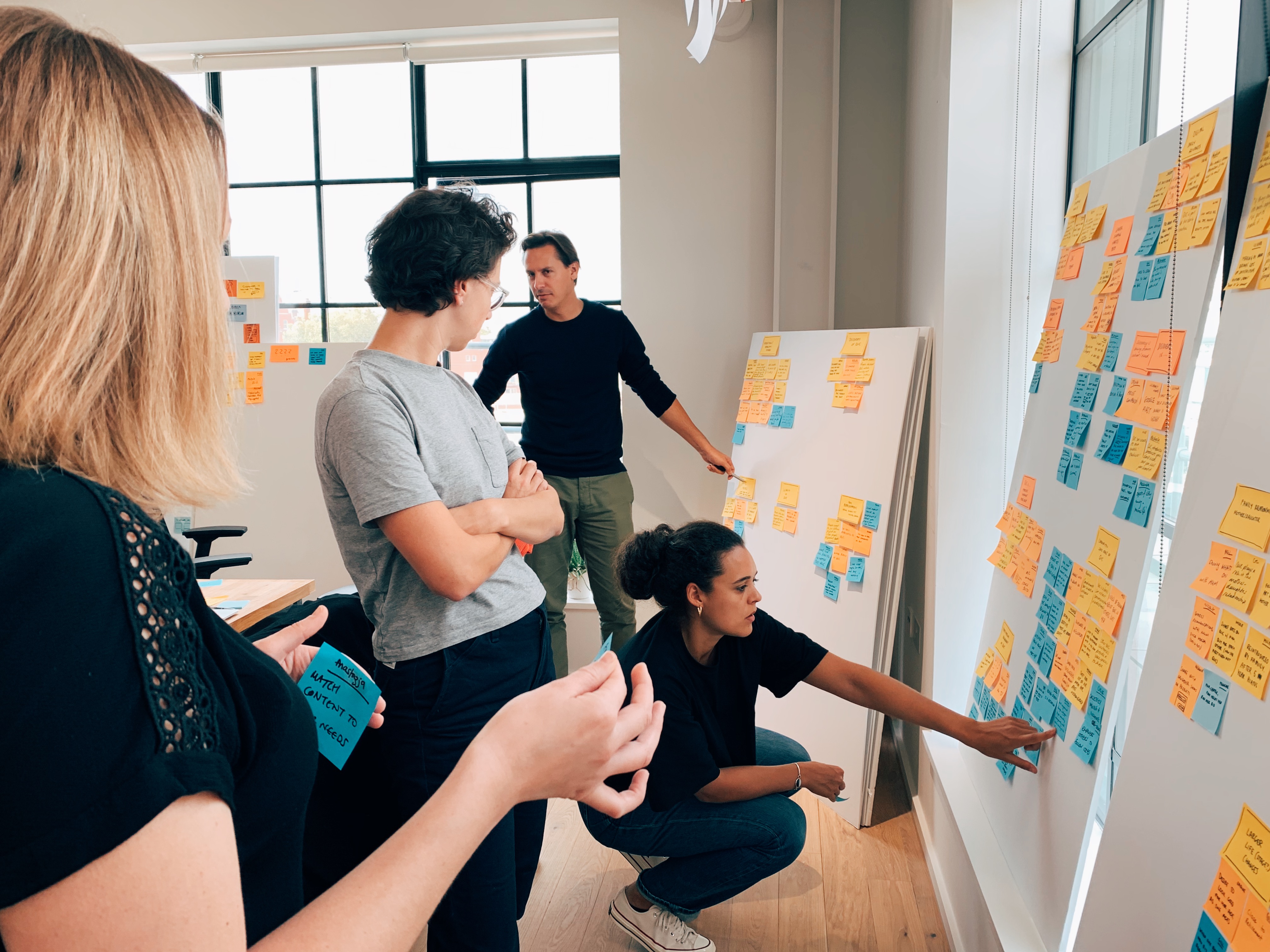
Our project just completed the "synthesis" phase. What does that mean? About a week ago, we were in a room full of Post-Its with 10 more of these boards, moving ideas around, interpreting what they meant, and sharing our initial hypotheses as a team.
Synthesis helps us discover important themes and patterns that point to opportunities for design, and a story to share with our clients about the needs we uncovered. This process typically takes about a week and it's mind-bending work as you try to make sense of lots of data!
To celebrate a successful completion of this phase (and finally clean up our project space) we challenge each other to a race for who can strip their board the fastest. We try to design some fun into everything, even our chores! We're especially excited because post-synthesis we move into pixels—the interaction designers dream world.
11:00 AM: Analogous Inspiration
My team rocks out to our "Hair" after we've all had an indulgent blowout. Though seemingly unrelated to our health and wellness project, Dry Bar's ability to make people feel confident and at their best inspired us to integrate some of that experience into our own project's design solution.
Analogous inspiration is one of my favorite moments in a project. It allows you to design in a less cognitive, more intuitive and experiential way.
12:00 PM: Interaction Design Kraftwerks
Every Friday, the interaction design community gathers over lunch to build on our craft, and inspire one another. We call it Kraftwerks. Today, led by our Design Director, Tobias Toft, we're geeking out on making autonomous toothbrush-headed robots.
Interaction design is a very diverse community made up of visual designers, systems designers, motion designers, and software designers and these craft sessions give us a chance to teach each other new skills and evolve our digital fluency as a community.
1:00 PM: Gathering Inspiration for the Final Experience
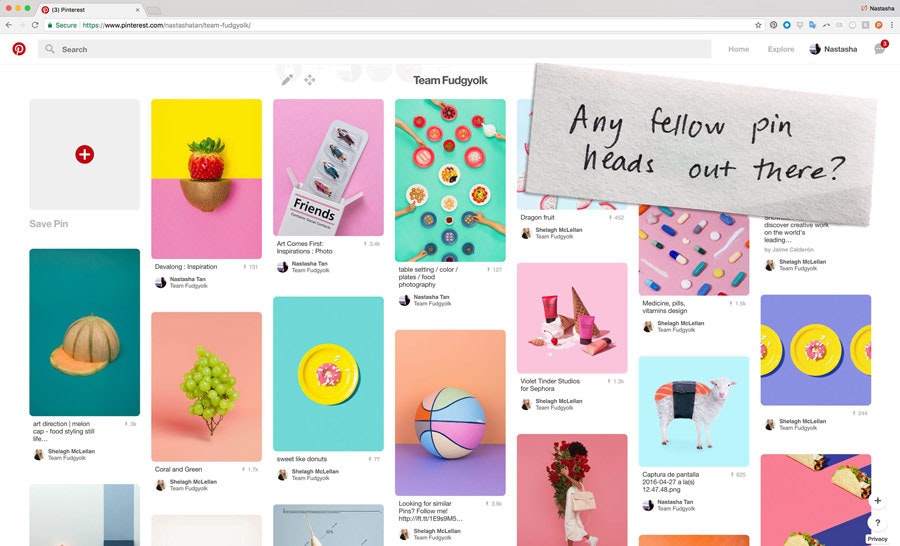
Collaboration is so important across every phase of the design process. I like using Pinterest to engage everyone on the team to collectively gather inspiration and create alignment on a visual direction before we start making.
Here, we're collecting images for an exhibit we plan to build to display the key moments of our final app.
2:00 PM: Designing the Final App and Story
When it's time to design, I use two screens: One running Sketch to design the screens of our app, and one showing a Google Doc that provides a work-in-progress narrative. (Use your imagination—this work is confidential!)
We write user narratives that act as a framework for us to share the signature moments of the app. This produces a to-do list of screens we need to design. When we present the final app to the client, the story makes it feel less like a screen walkthrough and more like a compelling story that portrays how the app benefits the user's life.
3:00 PM: Photoshoot
When we're designing new experiences, stock image/video sites don't cut it, so we create them from scratch. Here's our B-roll where we're planning who will be playing the role of the user in our narrative, and sketches of what the scene will look like. We included confetti in one of our photos ;)
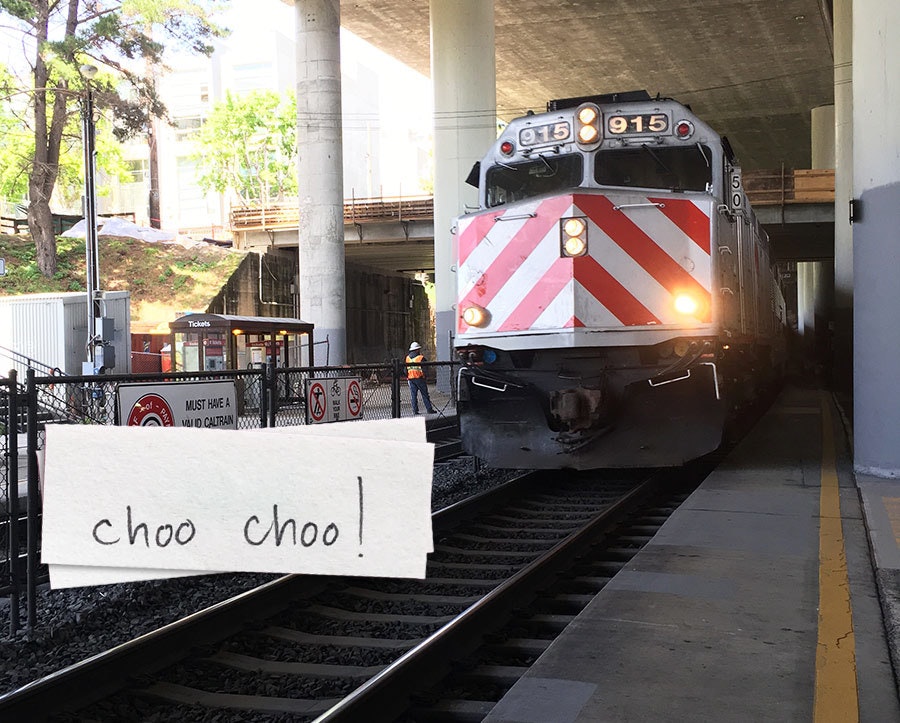
6:00 PM: Caltrain
I catch up on my jamz on my ride home from Palo Alto to San Francisco. Currently streaming SZA's Love Galore.
Finally home and ready for an interaction with my couch. Thanks for spending the day with me!
When people ask me what I do for a living, I say, “I design things that make the invisible, visible.” Sounds super vague. Let me explain: While the role of an interaction designer is usually associated with building apps, websites, and VR environments, my role at IDEO also includes thinking about how to bring digital-physical interactions that have never before existed to life.
5 Design Research Lessons I Learned From My Mom
Hint: Look for the unexpected, in unexpected places.
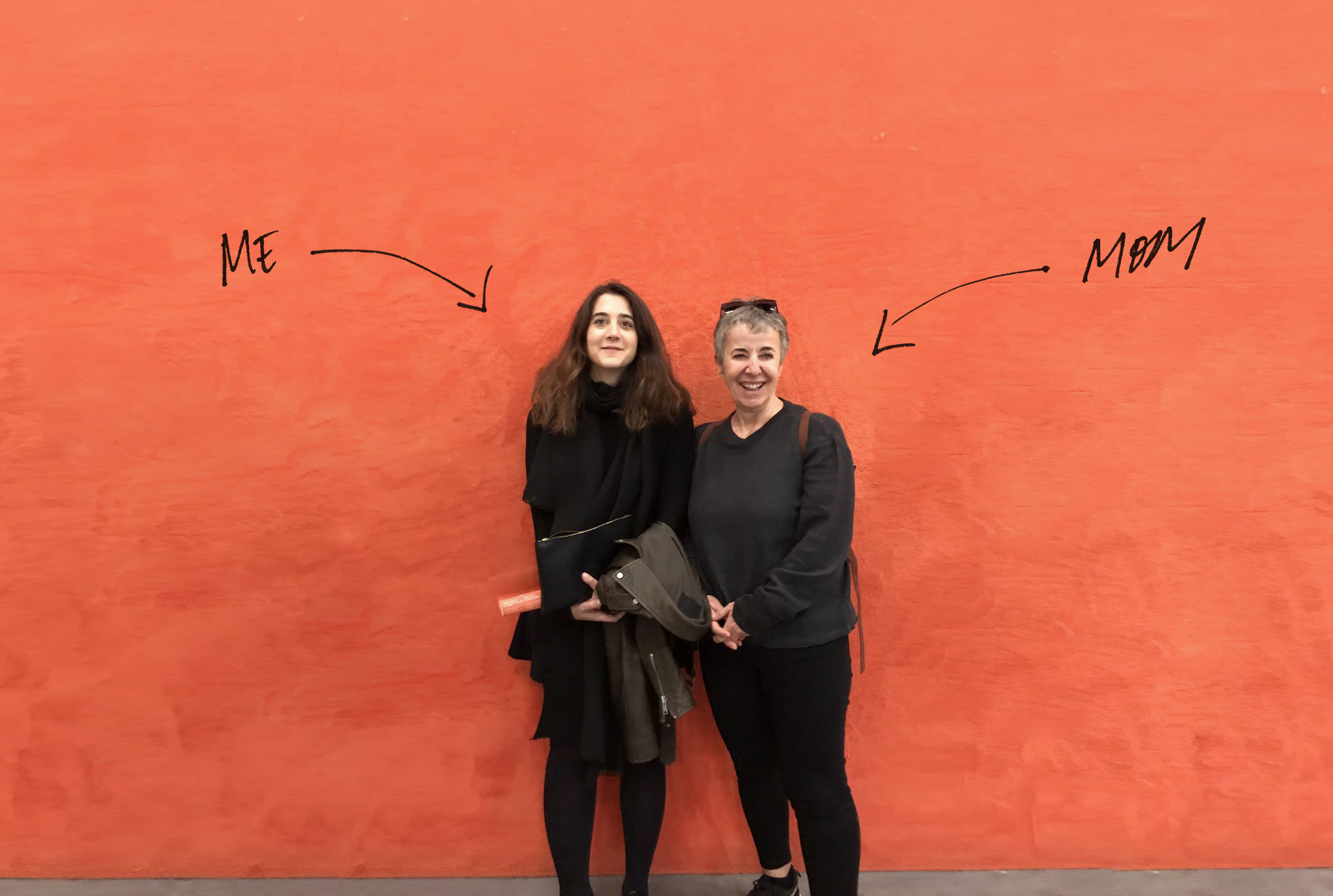
My mom and I have a lot in common. We think problem solving is fun. We love people watching. We both only wear black. But our most striking similarity is that we both ask questions for living. I am a design researcher, focused on helping organizations build innovation capabilities and evolve their culture, and my mom is a political journalist in Turkey. The influence of her profession on my personality has been enormous, and so much of the way that I work comes from watching her. Here are five design lessons she’s taught me.
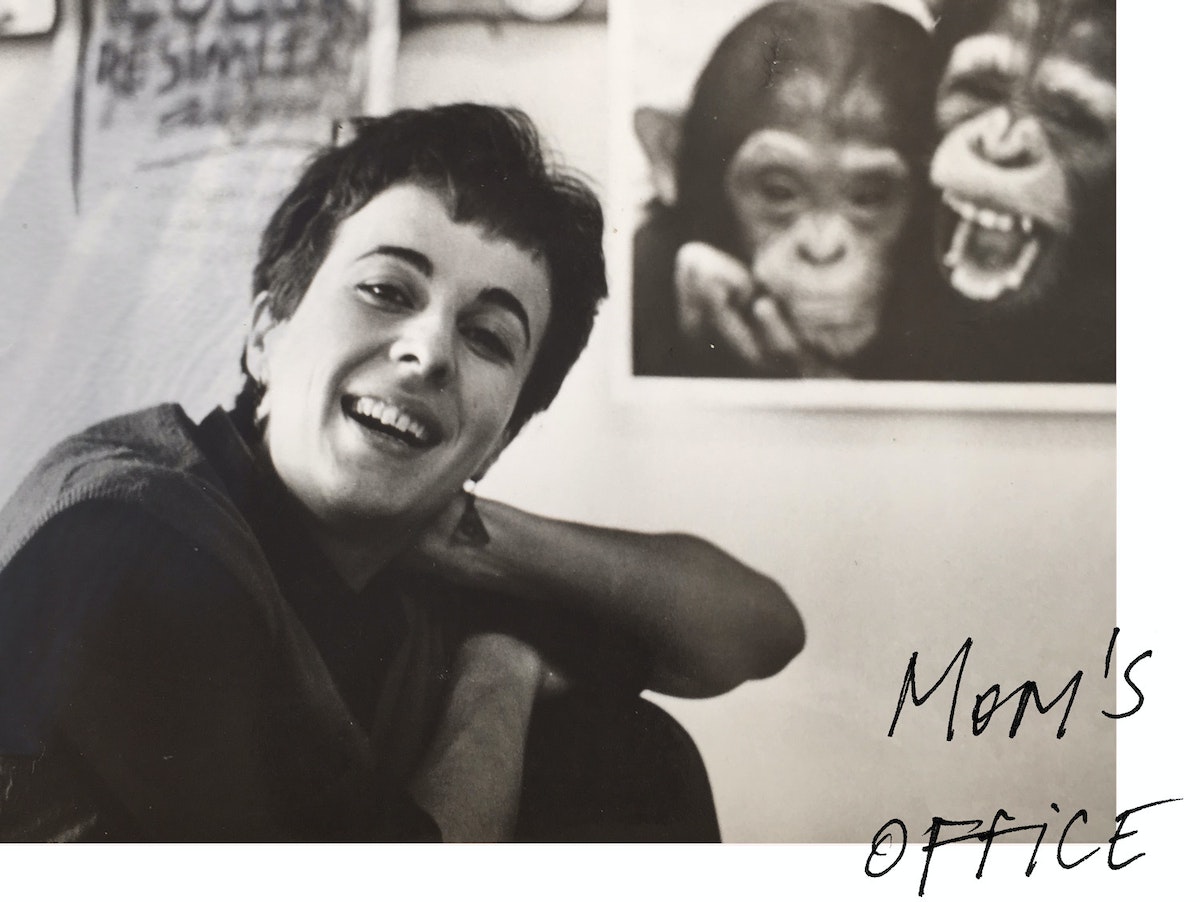
1. Plan the research through role playing.
My mom's favorite way of understanding the truth and planning her story is to put herself in others' shoes and go through the experience herself. For instance, when covering a policy change affecting a local community, she wouldn't just interview people from her desk, she would spend days embedded in the neighborhood, waiting in the same lines, sitting in the same overcrowded offices, eating at the same spots. That immersion helped her connect the dots of how the policy was actually playing out on the ground, and allowed her to focus on the details that mattered most to the people living through it.
Walking in someone else's shoes before you even meet them can also inform how you plan your research. On a recent project, we needed to understand what physicians experience when they do rounds in clinical contexts, so we went speed dating. We captured the pain points of quickly talking to a lot of people at once and trying to remember the essence of the conversation. This experience helped us to focus on asking the right questions during our interviews with physicians.
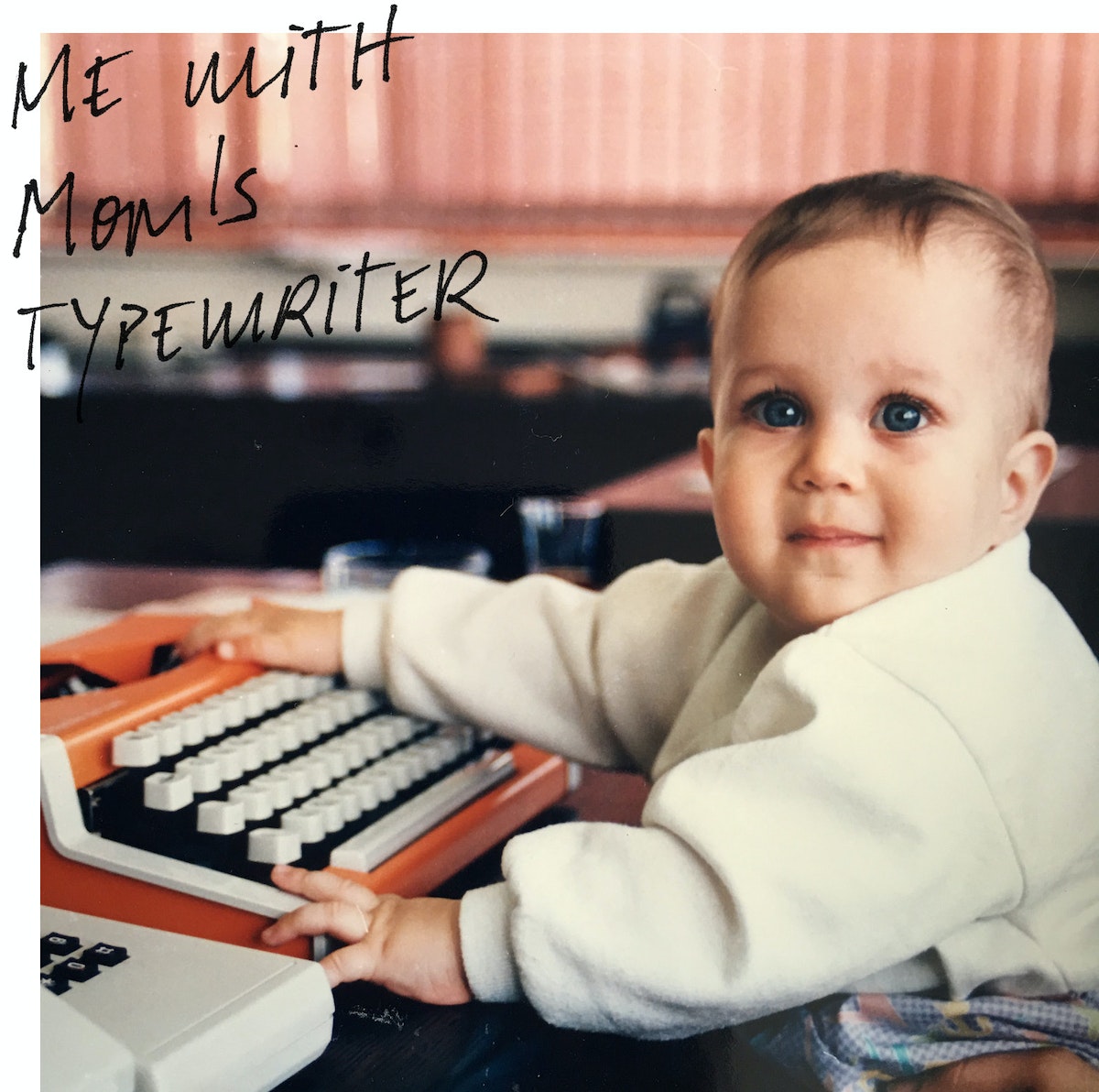
2. Lean-in the right moment.
She was great at tracking the questions politicians refused to answer, keeping a running list of what they sidestepped, deflected, or went silent on. She always said you learn more from what politicians decide not to say than from what they actually do.
As designers, we prioritize empathy in our interviews, but my mom’s approach always inspired me to keep going to discover better insights. Finding eloquent (and ethical) ways of asking more about an uncomfortable topic might require a bit of pre-work—creating the right environment to make a person feel at ease, or sharing a bit about yourself. I once worked on a project about bathroom hygiene— one of the most intimate topics a stranger can talk to you about—and instead of asking people about their own behaviors, I talked to them about their roommates or friends. Turns out, people are way more comfortable talking about someone else's bathroom ritual.
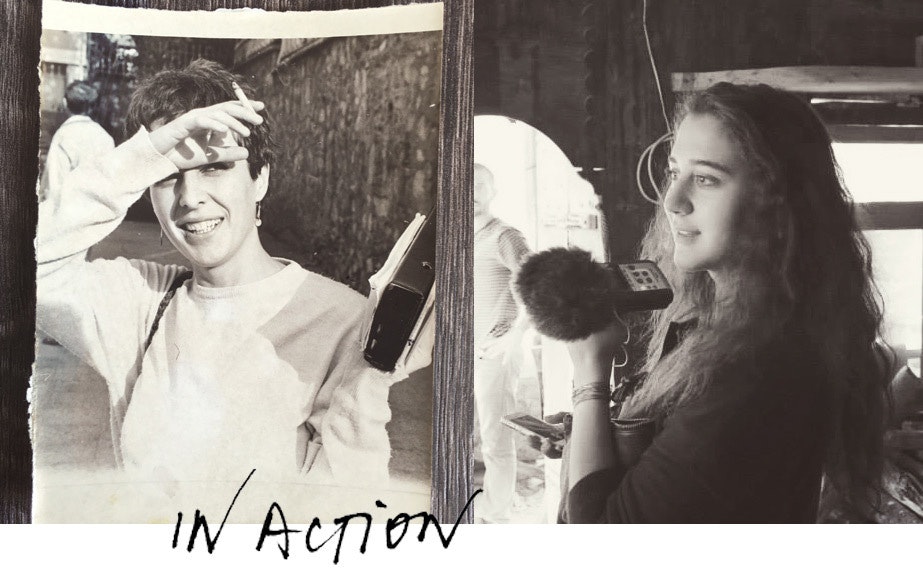
3. If you can’t ask, experiment.
As a journalist in Turkey in the 1980s, my mom covered many presidential elections and other world-changing events. Though occasionally her young age was to her advantage, from time to time, she had to come up with her own hacks to get the information she needed. One of her favorite tricks was to ask herself: how would a completely different journalist cover this story? She'd pick someone with an opposite beat — a sports writer, a foreign correspondent, a food critic — and imagine their approach. Even if she didn't follow their approach, it forced her out of the obvious angle and almost always pointed her toward the story she actually needed to tell.
My colleagues Sean Hewens and Mat Chow did something equally creative. To understand the influential layers in a major international law firm, they created what they call The Blue Hat experiment. They picked a blue hat and brought it to the leaders of the law firm and asked, “What would you do to convince everyone in your organization to wear this blue hat?” Some said a raise. Others said a friendly competition. And some said, get the “cool” lawyers to do it first, then the others will follow. These answers helped the team figure out how influence actually happens at the firm, and shaped how they thought about rolling out a new change initiative.
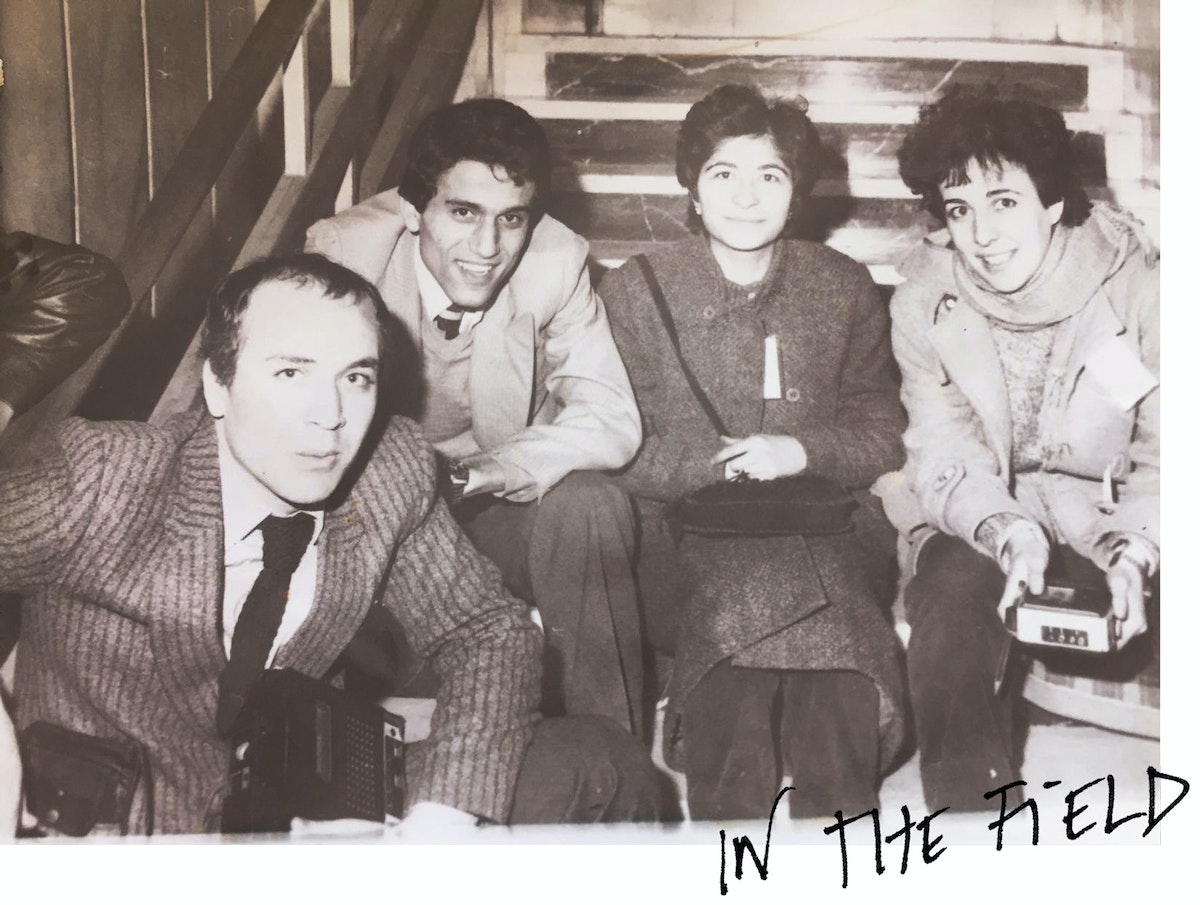
4. Look outside the mainstream.
My mom would always push me to think in extremes. She always says, “To avoid ready-made answers, don’t talk to expected people. Talk to the extremes. Gather witnesses from all walks of life and listen to stories that others didn’t cover.”
At IDEO one of our biggest source of inspiration in design research is talking to extreme users, or what we sometimes call “super users.” Those who are at the edge of the bell curve of the challenge help us capture workarounds and interesting behaviors. For instance, when we are designing for change inside an organization, we don’t just talk to people in the C-suite; we also focus on people who recently joined or quit the organization, who might have a fresher take or more honest feedback.
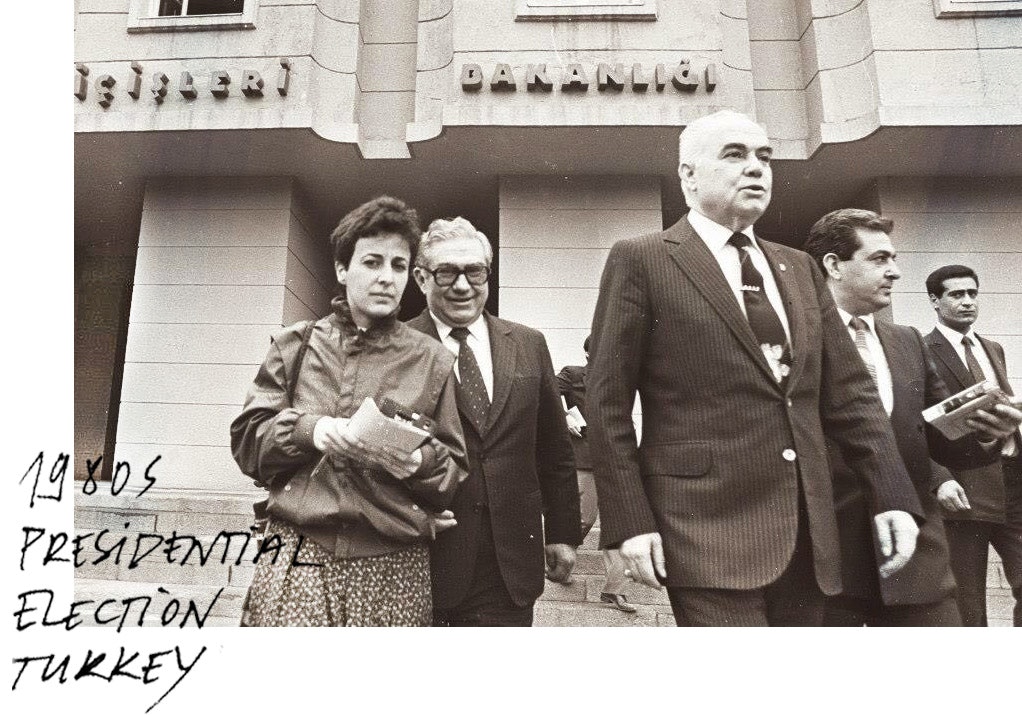
5. Don’t just research the people, research the system.
One of the most important parts of being a journalist is understanding the ecosystem you’re reporting in. Otherwise, you can’t make sense of what you find. For my mom, that meant making sure she understood who all the power players were, and how the system worked before she started crafting her stories. This is also true in our design process.
At IDEO, we believe that if you want to create the conditions that change behavior, you have to have a deep understanding of the landscape you are in. When my colleague Divya Viswanathan and her team took on a project to help unify a massive, 20,000-employee generic medicine manufacturer with operations in 27 countries, they didn’t just focus on talking to executives; they talked to everyone. When they chatted with a worker on the shop floor of one of their factories, he read them a poem he had written for the founder of the company. This conversation helped the team realize how much people care about the company’s purpose, and it changed the course and outcome of their project.
When I was a kid, my mom made up what she called “The Journalism Game” to keep me entertained while we were grocery shopping. She would give me a hypothetical scenario and ask me to think like a journalist, to tell her who I would talk to first to create the story.

Why Drawing Matters, Even When Your Hands Shake
How I learned to draw—again
Before that happened, I spent a lot of time doodling my favorite characters—almost exclusively The Looney Tunes. My classmates and teachers liked my sketches. Some kids even paid me for them. I was good at it. But when the tremors started suddenly, after a series of unexplained episodes where I lost consciousness, I couldn’t make my simple lines simple anymore. Coloring was so hard and messy that pencil gray became my favorite color.
I dropped the pencil for more than a decade, did some clay work, played sports, and even started teaching Spanish. But when I got into the design school, I had to face up to challenge again. I ended up learning how to work with other media like 3-D modeling and animation to express my ideas. It was effective, but I still missed using the pen.
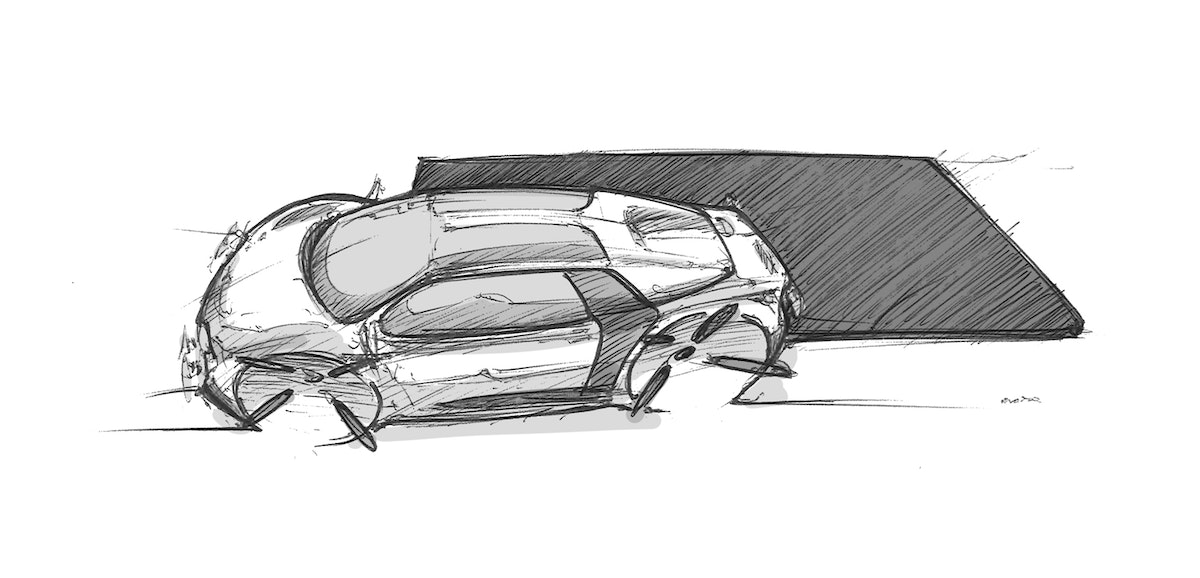
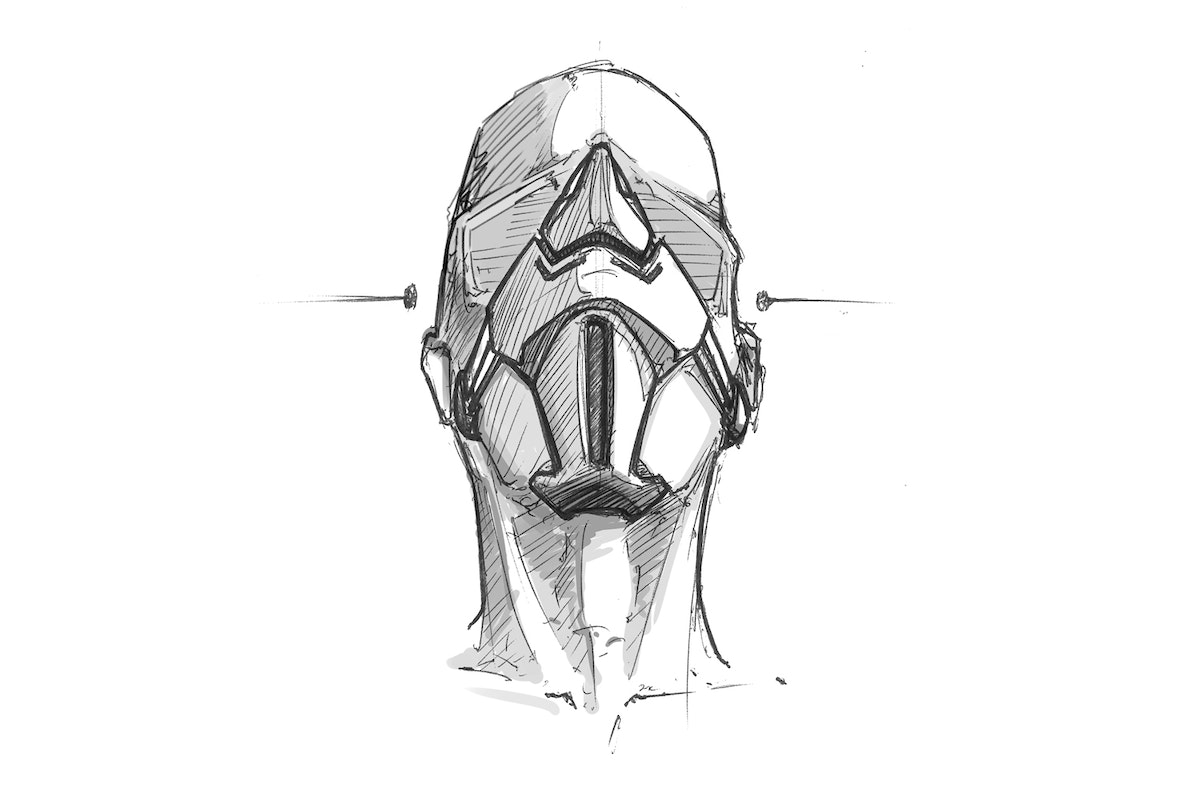
For me, nothing can really replace sketching. I learned during these years that drawing is not just a media; it is a way of thinking. So I embraced the shaking in my hands by thinking of every sketch I was doing as an idea, not a product. Just as every idea can be refined, so can every drawing. That was freeing. It meant that no matter how bad it was, over time, it could become something decent that expressed something. I start with my shaky sketch, and if I like it, I start adding shadows and details that are still shaky, but once it’s finished, it’s a single sketch; it is an idea.
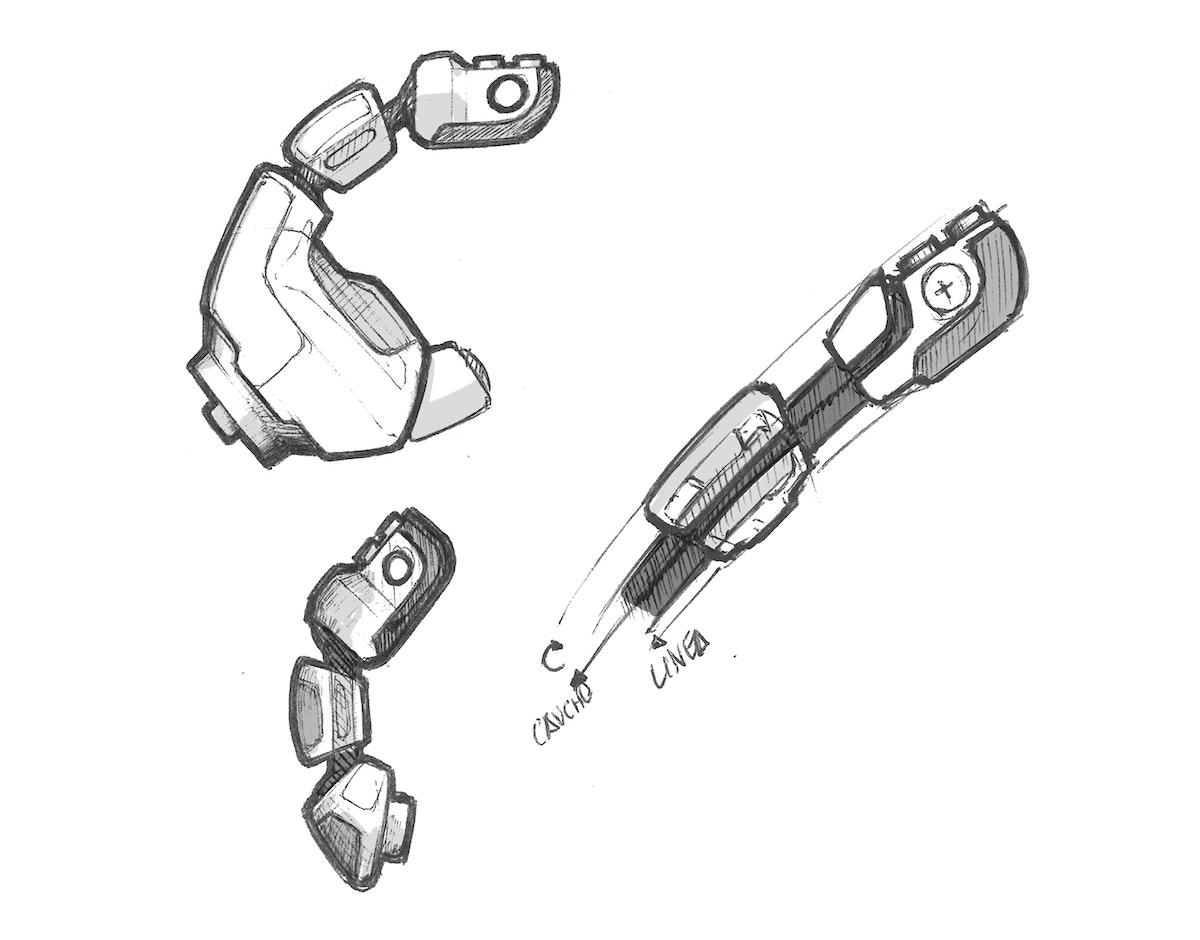
One of the things I like to do when I’m traveling is to take the time to sketch the city I’m in. It’s an exercise for getting my tremor down; it helps me breathe slowly and focus on contemplating the moment, the people, the water, the sky, the birds, the glass. My shaky hands help me to draw silly lines in a fast enough way that I can capture the general picture. Then, it’s just a matter of letting my tremors go free until they become part of the landscape.

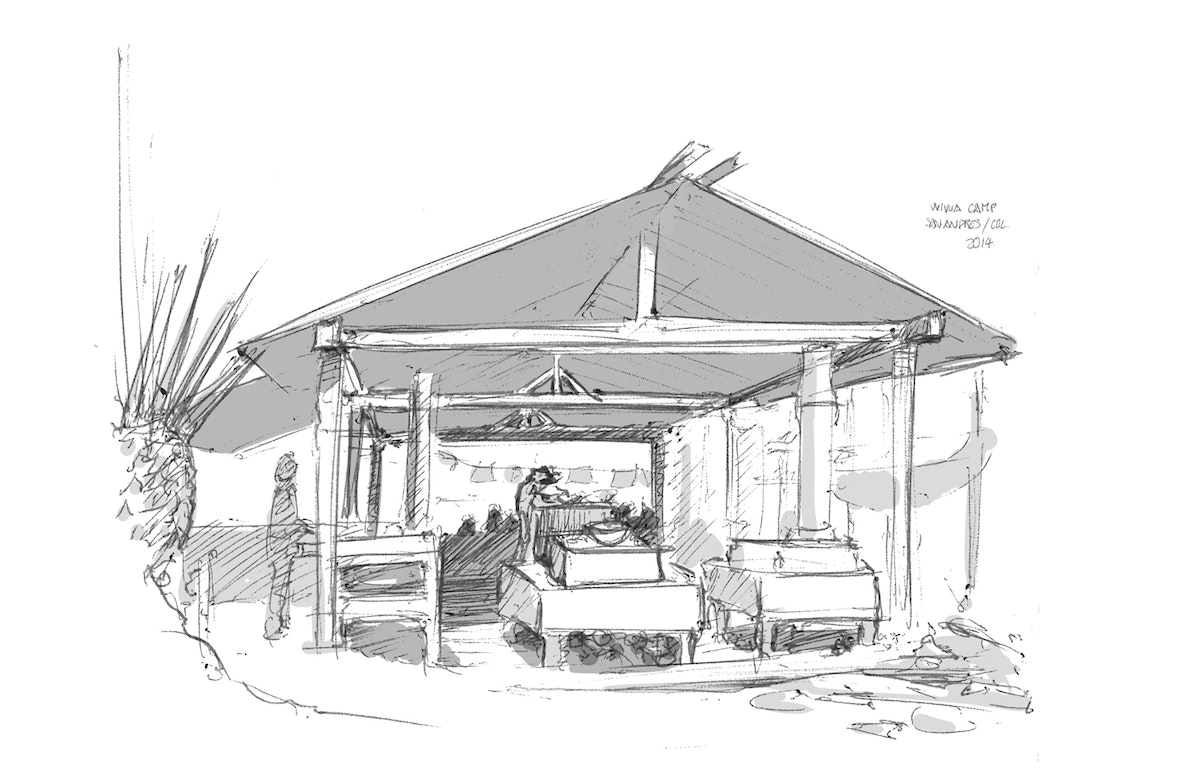
My hands shake. They literally shake. I’ve had a slight tremor since I was 12 years old, and it hasn’t been easy to adjust. For a while it was just too hard, and I stopped drawing altogether.

Matthew Higham
I work with leaders and their teams to design new strategies and experiences that enable people to live healthier lives.
As part of the London Leadership team, I head-up IDEO’s Health Portfolio for Europe, working with leaders and their teams to design new strategies and experiences that enable people to live healthier lives and enjoy better futures.
I have had the great privilege of working with some of the most influential companies in the world—Novartis, Sanofi, Roche, NHS, CalMHSA, HP, and Amazon to name a few.
Over the last 15 years, my journey through consulting and venture leadership has been rooted in a deep commitment to human-centered design.
I believe in design as a powerful tool for change, allowing us to create groundbreaking experiences that address the biggest, most complex challenges of today.
Originally from England, I began my journey at IDEO in California, which expanded my worldview, emphasizing the importance of diversity and cross-cultural perspectives in driving innovation.
Margo Husted
My passion for helping creative companies thrive led me to IDEO, where I oversee financial planning, strategy, and operational efficiency.
My passion for helping creative companies thrive led me to IDEO, where I oversee financial planning, strategy, and operational efficiency.
In this role, collaboration is at the heart of what I do—building strong partnerships between finance and client teams to drive results and strengthen relationships.
Before joining IDEO, I served as CFO/COO at Sylvain, Sub Rosa, Aruliden, Redscout, and ?What If! Innovation Partners. Earlier in my career, I held senior finance and operations roles at New Line Cinema, Napster, and Universal Music Group/PolyGram Records. I’m a CPA and based in New York City, where I live with my family.

Lorenz Korder
I lead change and strategy programmes at the heart of large organisations, helping leaders cultivate teams that transform their businesses at scale.
As Managing Director of IDEO London, I lead a creative powerhouse fueled by the collective energy of our diverse makers, visionary client partners, and extensive local network.
IDEO’s human-centred approach to innovation is more crucial than ever. Today’s defining business challenges—climate change, inequality, emerging technologies—all have human behaviour at heart. Addressing them requires profound understanding of people’s needs and radically redesigning the systems and services shaping our world.
I remain in the work, leading change and strategy programmes, and helping leaders set inspiring visions, make confident choices, and cultivate teams delivering transformational human-centric solutions at scale. This hands-on, iterative approach makes big ideas tangible for customers and clients through real-world prototyping and testing, setting the stage for growth.
My work has focused on hospitality, retail, and technology. Prior to joining IDEO, I founded a sportswear brand and was a brand strategy consultant in consumer goods. I hold an MBA from INSEAD.
Kelly Bjork
I bring a deep understanding of brand strategy, identity, expression, user experience, and communications to my work.
With more than two decades of experience in brand and communication design, I bring a deep understanding of brand strategy, identity, expression, user experience, and communications to my work. As a pragmatic aesthete, I combine creativity with problem-solving, mentoring, and leading multi-disciplinary teams to create human-centered designs.
Throughout my career, I have played a key role in shaping, strengthening, and transforming some of the world's leading brands across a range of industries, including tech, CPG, health, food, and financial services. I have worked with small businesses, cultural institutions, and Fortune 100 corporations, using my broad set of design skills to develop brands and consumer experiences that resonate with audiences.
I help companies articulate their purpose, vision, and values through strategic development and organizational transformation, and I thrive solving complex problems and mentoring teams through the creative process.
In addition to my work at IDEO, I have served on the boards of AIGA Chicago and AIGA Minnesota. My award-winning work has been recognized by The One Show, AIGA 365, Communication Arts, Print, Graphis, Rebrand 100, and was featured in Rick Valicenti's CHGO DSGN exhibition at the Chicago Cultural Center.

Building a personal AI for the messiness of life: Sida Li
Most AI products today are built for work—a space with clear problems and established systems. One founder noticed a gap: personal life is messier, harder to systematize, and mostly left behind by the AI boom. So she built Cue, a personal AI that lives inside iMessage and group chats, to go where the other tools haven't.
In this episode, Becca Carroll, IDEO's Chief Strategy Officer, talks with Sida Li, co-founder and CEO of Shared Context Lab, about staying anchored to a human need while the technology around her keeps changing shape, why she treats her business model with the same rigor she'd bring to a product, and what it feels like to build a company at this particular, disorienting moment in AI.
The conversation also gets into how Sida makes design decisions: the language Cue uses to describe itself, the tradeoffs behind building inside iMessage instead of a new app, and a real story about a business idea that didn’t pan out.
This is the second in a two-part series profiling founders from IDEO's Startups-in-Residence program. The first conversation is with Johannes Seemann, founder of Sooner, on designing GenAI for the emotional side of money.

Designing GenAI for the emotional side of money: Johannes Seemann
Most personal financial tools are built to run the numbers and optimize towards a budget. While that works for some, most people experience money as a lived relationship that does not neatly fit into a spreadsheet. Johannes Seemann and Becca Carroll discuss why money is emotional before it is mathematical, and what a human-centered approach to building a generative AI financial product looks like in practice.

The curious leader's edge in uncertainty: Scott Shigeoka
Mina Seetharaman talks with Scott Shigeoka, author of Seek and Head of Curiosity Cultivation at the Eames Institute, about what distinguishes genuinely curious leadership from performative curiosity, how power dynamics shape curiosity, and why practicing curiosity can restore energy rather than drain it.

How constraints make us more creative: David Epstein
Mina Seetharaman talks with David Epstein, author of Inside the Box and Range, about why total freedom often produces average work, how leaders can design useful limits on purpose, and what organizations such as General Magic and Pixar reveal about the relationship between boundaries and creativity.
Looks like you might be in search of something very specific?
Or reset the filters above and try another angle.
Here’s some random inspiration

Podcasts about creative leadership

Articles about the power of prototyping
