
.svg)


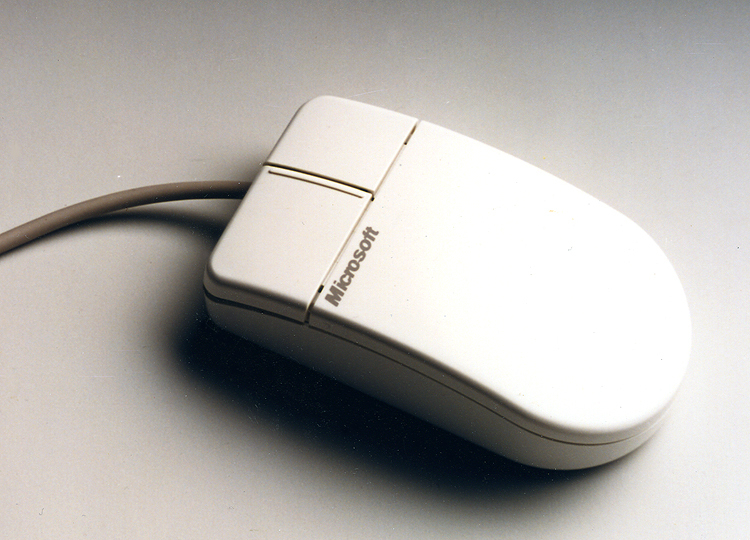

A hand-friendly, precisely controlled mouse
Ergonomic mouse design for better control and performance.
In 1987, the three companies that would later form IDEO worked together with Microsoft to create the world’s first ergonomically designed mouse. IDEO’s human factors research suggested a small but significant change: Moving the location of the mouse ball forward, from under the palm to under the fingertips, enabled more precise control and resulted in measurable performance differences compared with earlier models.
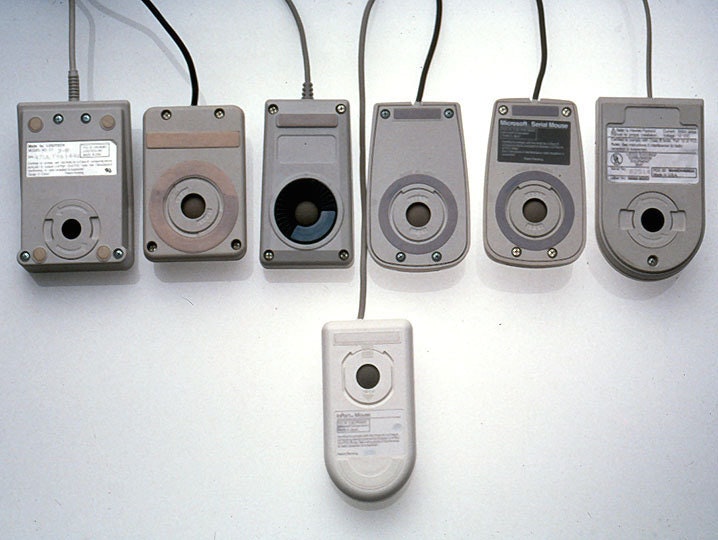
The industrial design effort examined and tested dozens of shapes in comfort and aesthetic studies that led to the famous “Dove Bar” form, a significant advance over the boxy mouses prevalent at the time. The resulting clean appearance, enhanced control, and improved reliability created enormous consumer appeal that replaced all earlier versions, and Microsoft sold more than 2 million units in its first two years.
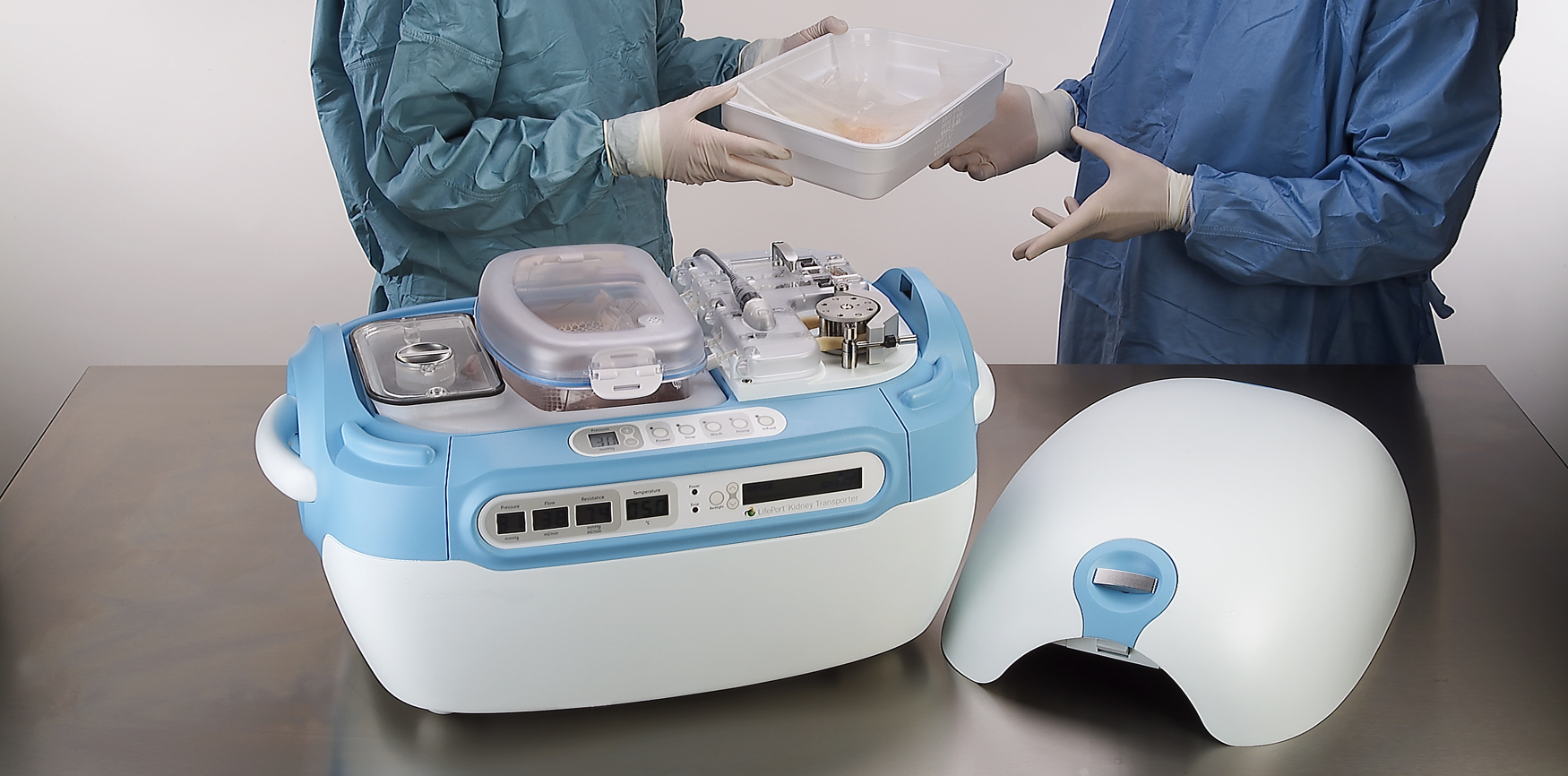
A high-tech kidney delivery system
A new standard in organ transport systems delivers kidneys in improved condition.
With approximately 55,000 Americans waiting to receive kidneys and a list that could double in the next 10 years, there is an acute and urgent need for new technology to increase the quality and number of organs available for transplant. Using the conventional method of organ storage and transportation—a cooler filled with ice—doctors and nurses needed to accompany the organ to ensure proper handling.
IDEO and Organ Recovery Systems created the LifePort Kidney Transporter to provide a new high-tech alternative. The LifePort gently perfuses, or pumps, the kidney with a cold liquid solution to improve its condition before transplantation, which can nearly double storage time and may increase the number of usable kidneys and improve patient outcomes. The device also provides critical data to monitor and evaluate kidneys during transport.
Organ Recovery Systems believes that perfusion has the potential to remove tens of thousands of patients from the waiting list and dialysis, and save the healthcare system more than $1 billion annually. In 2006, the LifePort Kidney Transporter was used to transport 350 kidneys per month in 12 countries, and was included in the permanent architecture and design collection at the Museum of Modern Art in New York City.
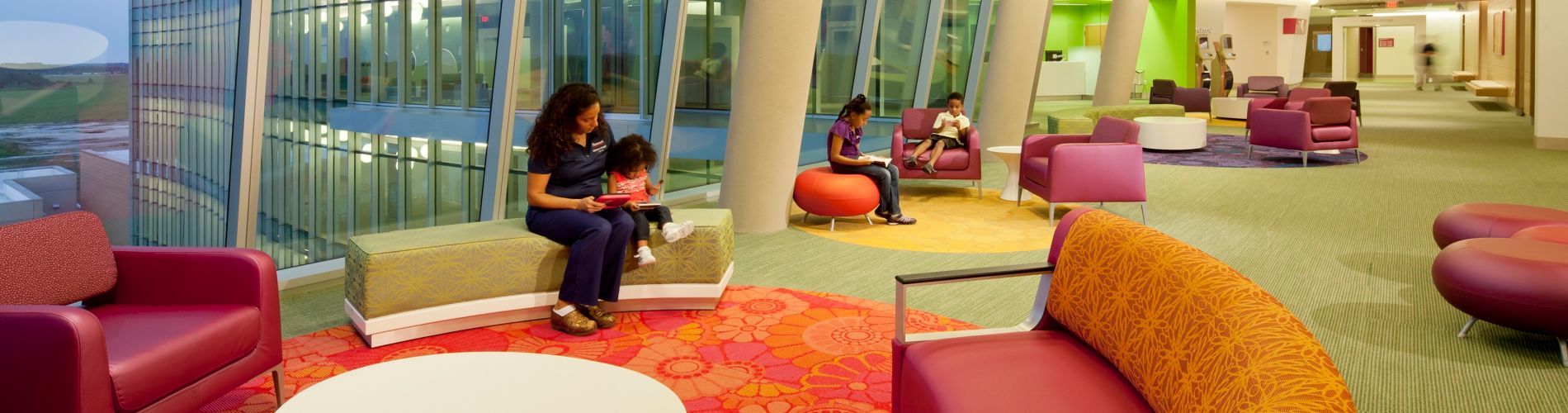
A hospital centered on the patient experience
Designing a pediatric hospital for children and parents.
Pediatric healthcare system Nemours provides primary, hospital, and clinic-based specialty care, prevention and health information services, and medical education programs in Delaware, Florida, New Jersey, and Pennsylvania. When Nemours wanted to strengthen its brand, it faced two challenges: Empowered patients had more access to information and choice than ever before, and new players—alternative-care centers, retail-based care clinics, and urgent-care centers—were entering the marketplace, diverting market share.
Nemours approached IDEO for help in creating an innovative, differentiated, and patient-centric experience for a new hospital in Orlando, with the goal of establishing Nemours as a destination care provider and industry leader. Together, they identified and clarified both family needs and key experience touchpoints in the patient journey, resulting in the state-of-the-art-designed, 60-acre, $400 million Nemours Children’s Hospital in Lake Nona Medical City, Florida. “The design team’s approach to defining key moments in the patient journey was highly instructive,” said Dr. David Milov, chief of clinical informatics at Nemours. “They captured insights otherwise unavailable to us.”
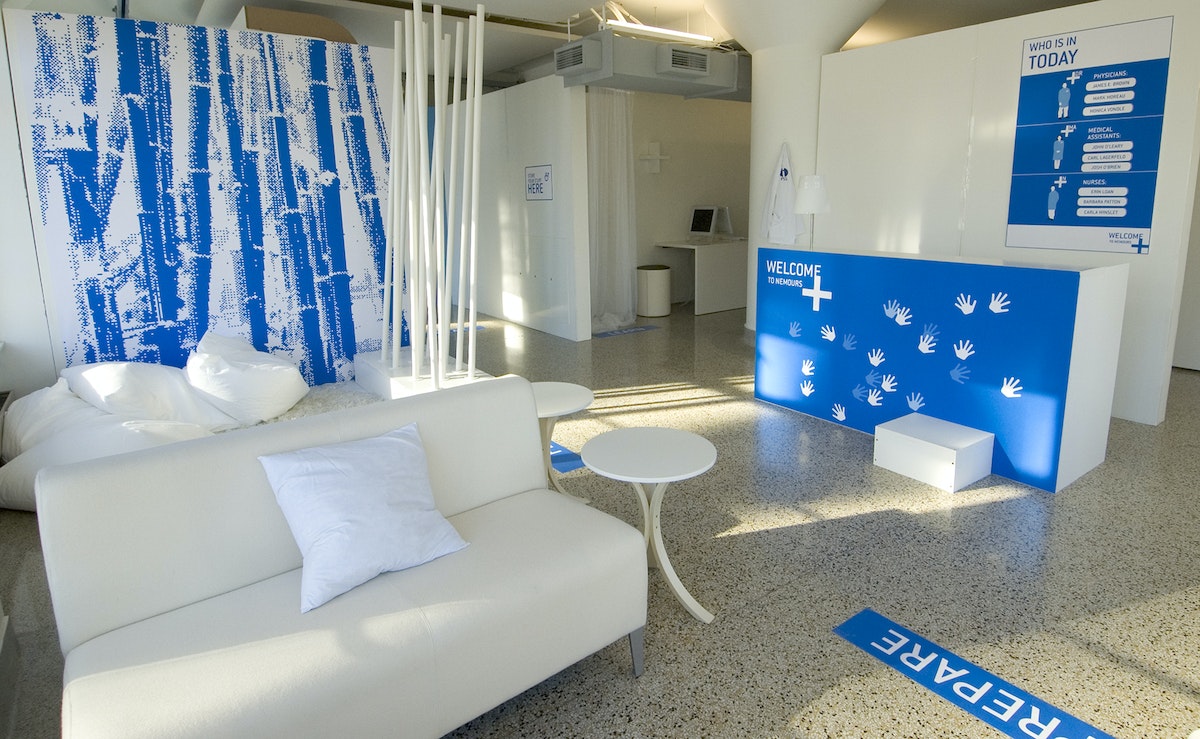
Concepts that were realized in the hospital’s final design include:
- Care Team Room ID: Patients and families are introduced to each member of their care team to ensure continuity of care.
- Floor Greeters: Concierge-like greeters welcome and orient families and answer questions.
- Family Lounges: Private dining rooms have kitchenettes, so families can cook and eat together.
- Emergency Department: Patients are greeted, sorted by medical condition, and immediately checked into rooms.
- Patient Information Screens: Doctors and nurses can access patient information prior to entering an exam room to enable informed conversations and build trust.
- Smart Bracelets: Personalized RFID-enabled bracelets keep track of the care team.
- Smart Rooms: Triggered by the Smart Bracelet, Smart Rooms “welcome” the patient upon entry.
To arrive at these designs, IDEO sought inspiration via analogous kid-friendly environments, such as museums, schools, toy stores, and zoos. Designers also conducted in-context interviews with patients, parents, families, doctors, nurses, support staff, and outside physicians. One key insight that led to the final design: Patients and families came to Nemours with varied levels of experience—first-timers, occasional visitors, and those who were chronically ill—but the hospital treated them all the same.
To address these needs, the team created an experience blueprint focused on welcoming, guiding, and supporting patients and families through unique environments, integrated service moments, and market-differentiating spaces and tools. To test the look, feel, and value of the designs, designers built full-scale foam core prototypes of welcome stations, waiting lounges, and exam rooms.

The results appeal to patients, families, and caregivers. According to Dr. Lane Donnelly, Nemours chief medical officer, “all the amenities at Nemours focus not only on the child but their parents and families as well.”
The hospital won two awards at the International Interior Design Association’s 2013 Best of the Best Gala (Georgia Chapter), one for the Healthcare Design category and one for best overall out of all 11 categories. Parenting.com writer Shawn Bean noted, “Set amidst a wooded expanse of central Florida, with theme park roller coasters peppering the horizon, Nemours Children’s Hospital is arguably the new high water mark for pediatric care in the United States.”

A global design movement led by children
A contest that teaches design-thinking skills to millions of kids across the globe.
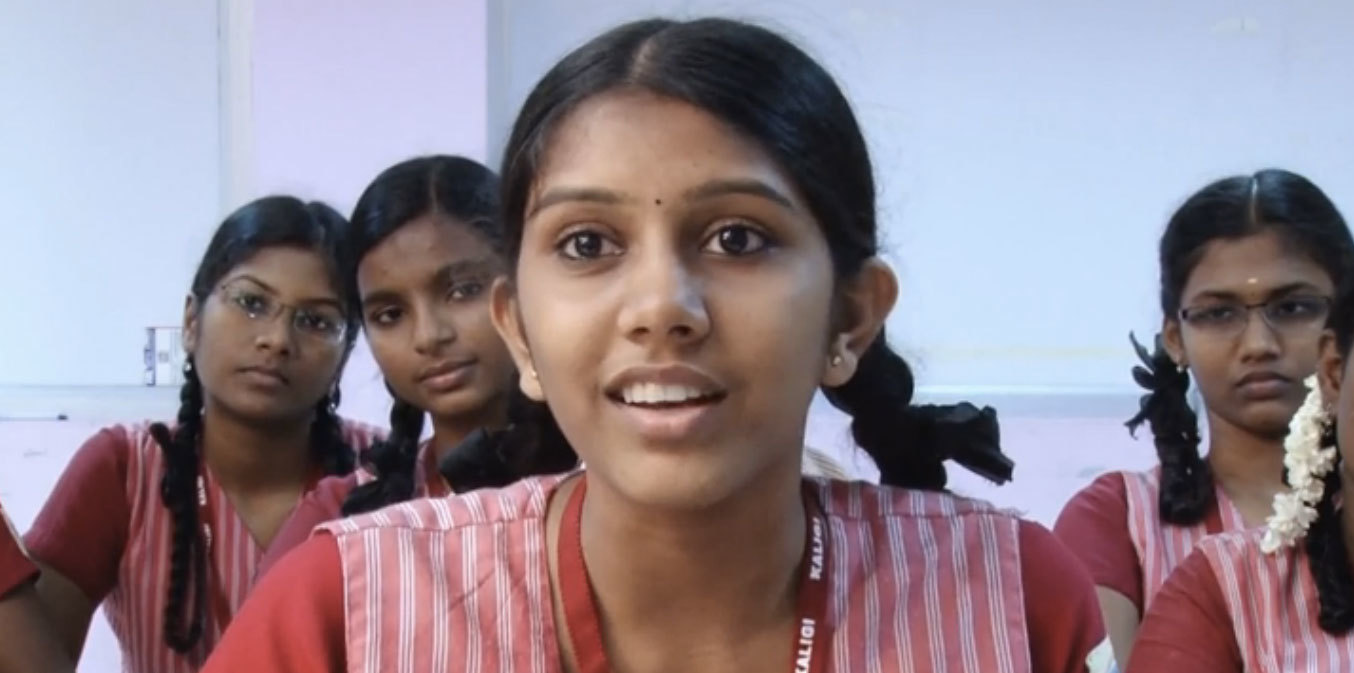
Designer turned educator Kiran Bir Sethi wanted to blur the boundaries between school and life to help young students become aware, enabled, and empowered to effect change in the world. In aiming to spread her message to millions of children across India , Sethi tapped IDEO and the d.school at Stanford to help create a design contest for youth that would show them that they could make a difference in their community.
Together with the d.school, IDEO designed a competition for middle school students called the Design for Change Contest. Adapting the human-centered design approach into a simple process that 10- to 13-year-old kids could follow on their own, the contest included rules, tools, and platforms that would be accessible to children and teachers throughout India regardless of their previous exposure to design.
The team shaped the rules so that students could learn core design-thinking skills such as empathy, brainstorming, collaboration, and reflection through the process of participating in the contest. And together, the group developed a toolkit to walk students through the simple four-step process.
The biggest challenges to the contest were overcoming the lack of infrastructure, language barriers, and a discrepancy in school resources. There was no national database of schools for easy outreach, so Riverside built relationships with NGOs across India to distribute the contest toolkit to more than 30,000 schools.
The contest receives about 2,000 entries from groups of youth in India each year. They have been addressing challenges such as illiteracy, pollution, traffic safety, care for the elderly, alcoholism, and the environment.
As of 2015, the Design for Change Contest has scaled far beyond India, and is being run in 30-plus countries, with millions of children participating. Each contest entry shows that kids really can make a big difference in the world.
3 Ways Boredom Can Unlock Your Creativity
Ideas come to the prepared mind
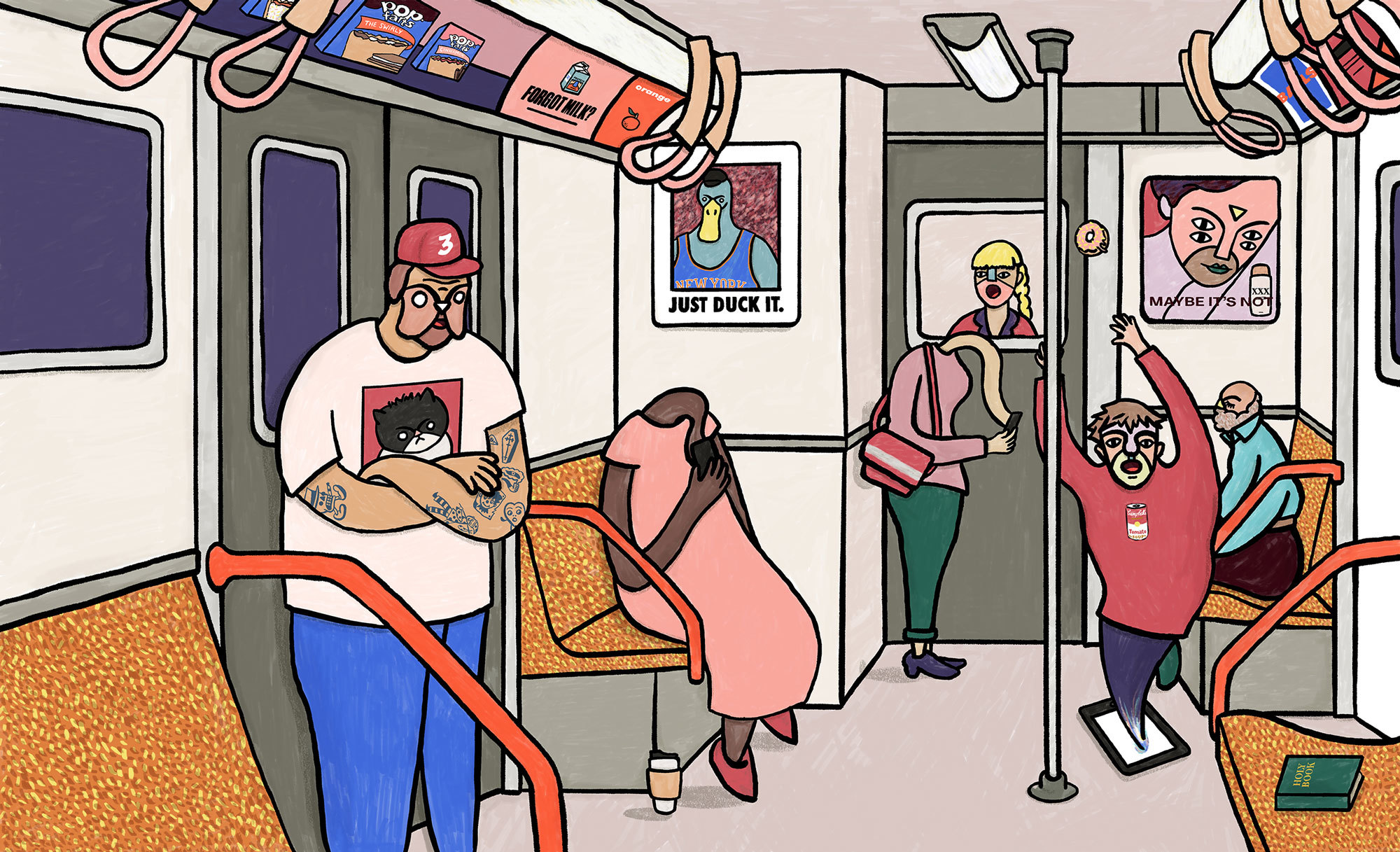
I recently tested myself and found I was averaging four hours per day on my phone, with most of that time lost to Instagram and Facebook. This mindless scrolling was primarily happening in the day’s in-between moments—while waiting in line for a coffee, sitting on the train, and even in the bathroom.
A recent talk by Manoush Zomorodi got me thinking: When was the last time I put away my devices and chose to do nothing instead? When was the last time we all let ourselves experience pure, unadulterated boredom? And is it possible that replacing time sitting around checking email with time just sitting could help us be more creative in both the short- and long-term?
I dug into some research and found that moments of boredom often allow us to take our biggest imaginative leaps. Here are three ways to get yourself there:
1. Schedule time to let your mind wander
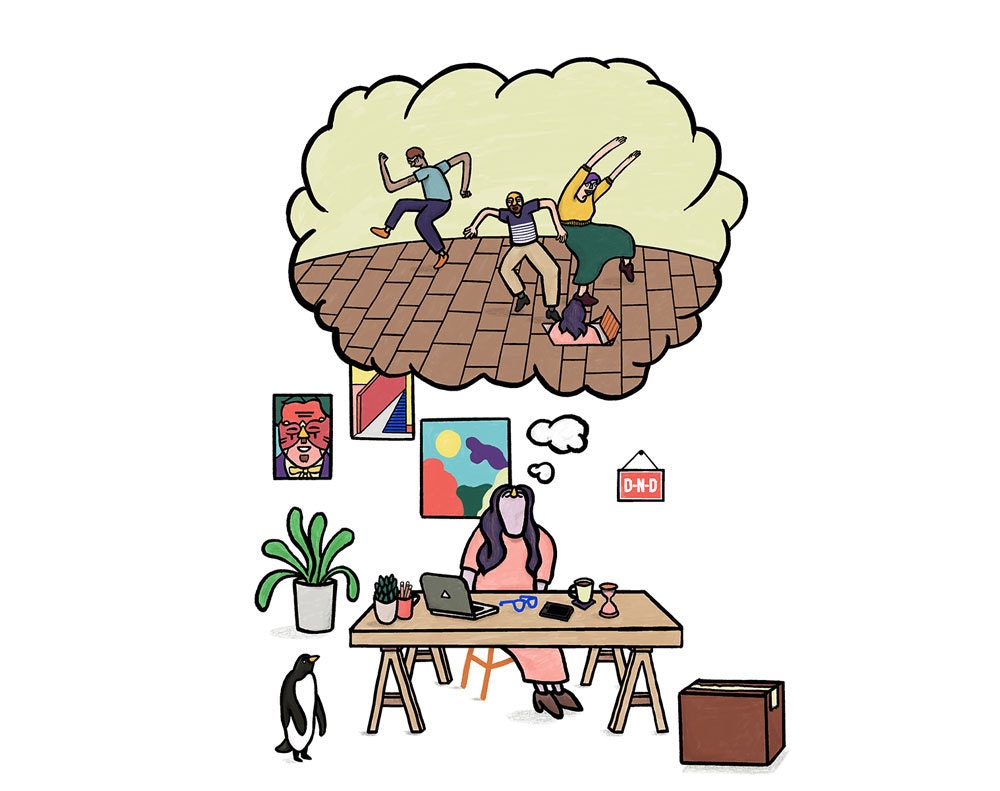
Research shows that daydreaming ignites a collection of brain regions known as the default mode network. According to psychologist Dr. Sandi Mann, as our minds wander, our thinking stretches beyond the conscious and dips into the subconscious. It’s in this zone that we’re often able to connect disparate ideas, solve some of our most nagging problems, and do autobiographical planning—reflecting on our lives and setting goals. It’s no wonder that so many of us come up with our best ideas in the shower.
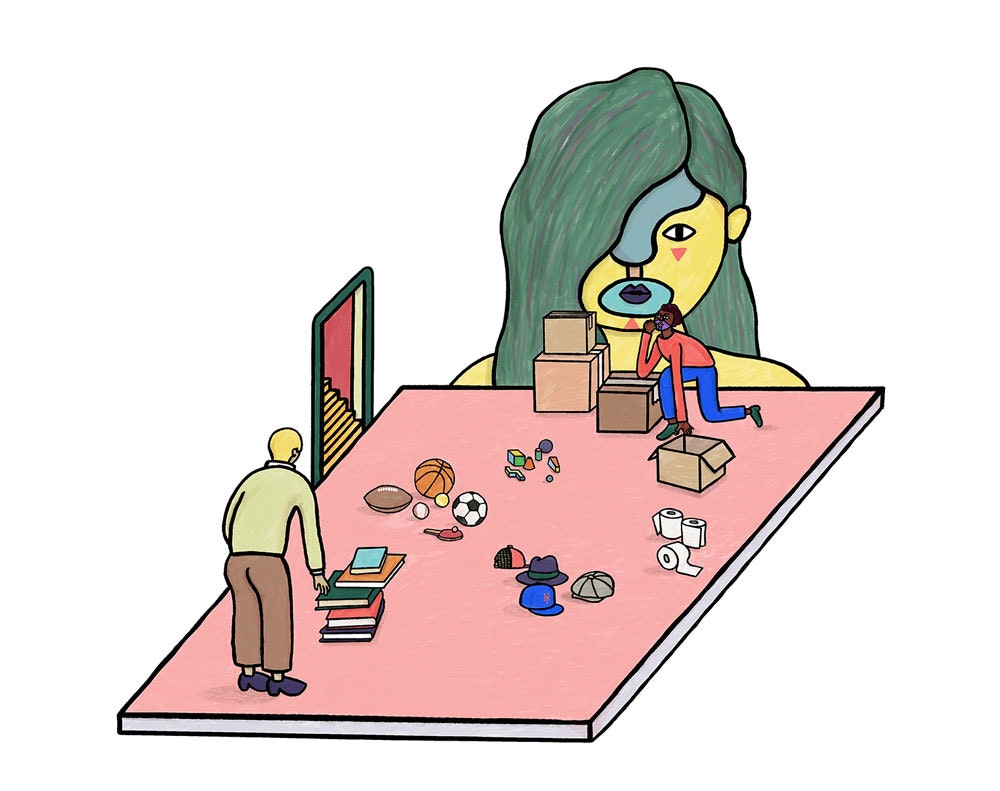
Where and when do you daydream? Allow time in your calendar to stretch those moments out. Skip the express for a slower train. Try designing new routines into your day, like walking around the block during lunch, to help spark new thoughts.
2. Do something mind-numbing before your next brainstorm
To test the creative-boosting powers of boredom, a group of researchers from the University of Central Lancashire conducted a study where half of the 80 participants were instructed to copy numbers from a phone book (experimental group), and the other half were not (control group). They were then asked to brainstorm as many uses as they could for a pair of plastic cups. The phone book group came up with significantly more ideas.
The researchers ran the same test again, but added a third group tasked with something even duller—reading the phone book. These participants came up with even more ideas.
Before your next creative meeting, try tackling those boring-but-necessary tasks that clog up your to-do list. You just might unlock your next big idea.
3. Tap into your childhood self
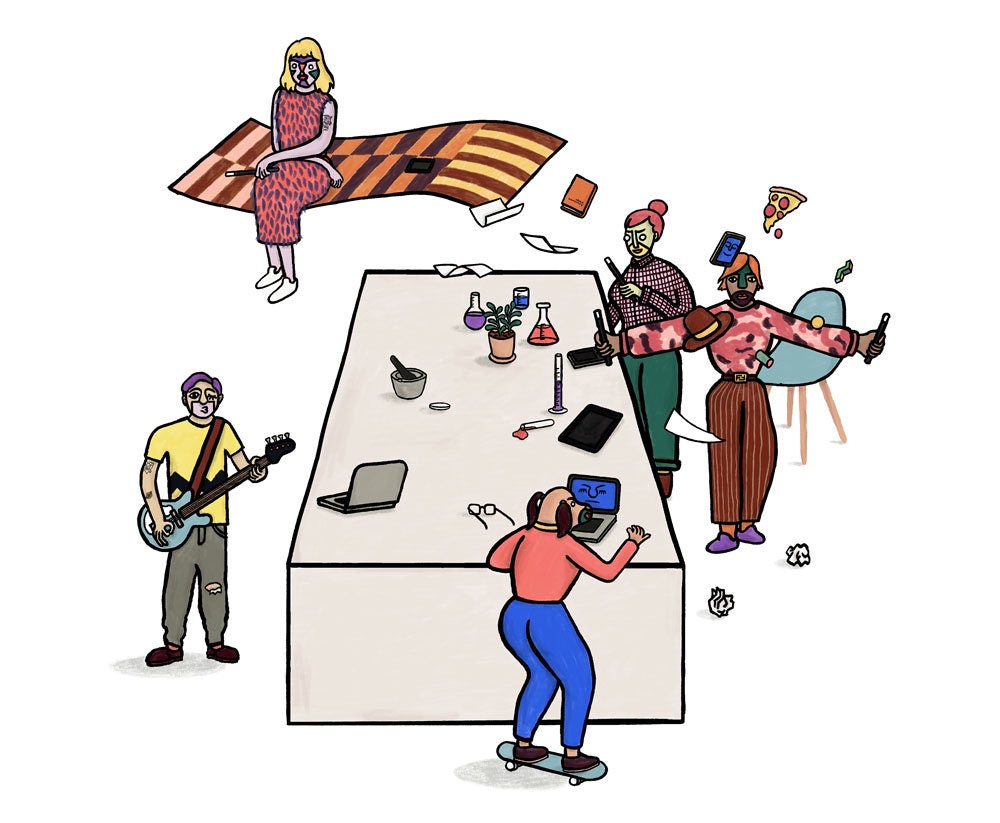
According to psychoanalyst Adam Phillips, the capacity to be bored can actually be a developmental achievement for children. Unstructured time motivates kids to invent their own entertainment from scratch, and gives them the freedom to explore what truly interests them.
When I was younger, I would pretend to teach a Harry Potter-style “Intro to Spells,” complete with paper wands. Today, teaching design classes at Stanford and leadership workshops for girls brings me the same joy and inspiration. And when I get bored, my mind still races around new design curriculum.
Need a reminder of the things that used to inspire you? Call your parents, siblings, or old friends to help playback stories from times past.
There will always be another something to check, update, or scroll through on our devices, but if we let our minds run free instead, who knows what brilliance our boredom might lead to?
In our always-connected world, it’s easy to fill every spare moment with another feed to scroll through, notification to check, or calendar to update. Each activity may feel productive in the moment, but at the end of the day we have nothing to show for it.
Why This Illustrator Makes Her Own Tools
An interview with picture book author and illustrator Cindy Derby
In one sentence, who are you?
Cindy [sin-dee]: a quirky, creatively neurotic, unapologetic creature who has paintbrushes for fingers and toes—with a laugh that rumbles the ground.
What do you do? How did you get into it?
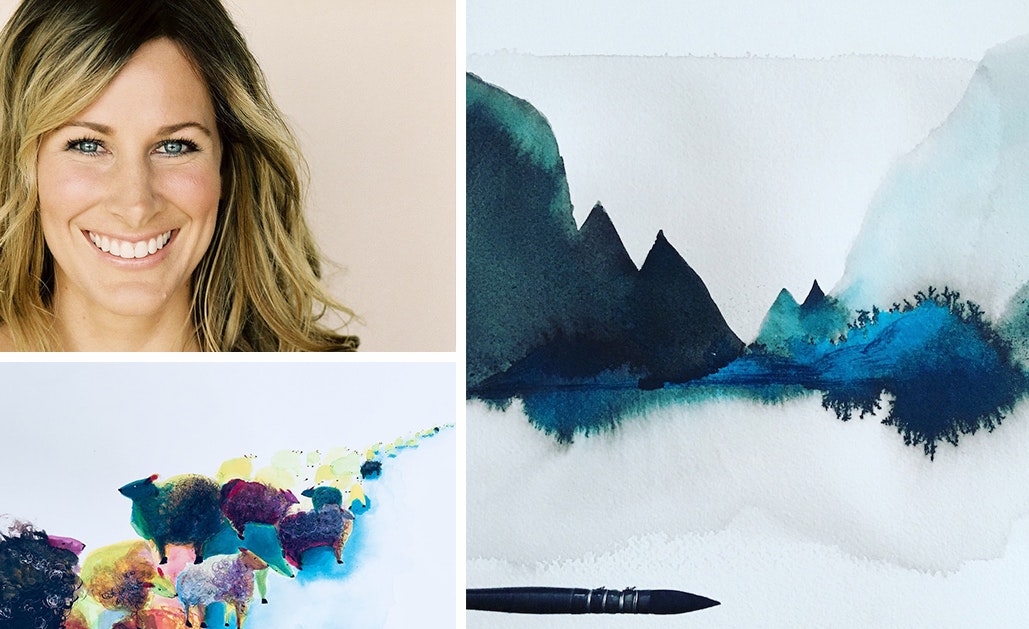
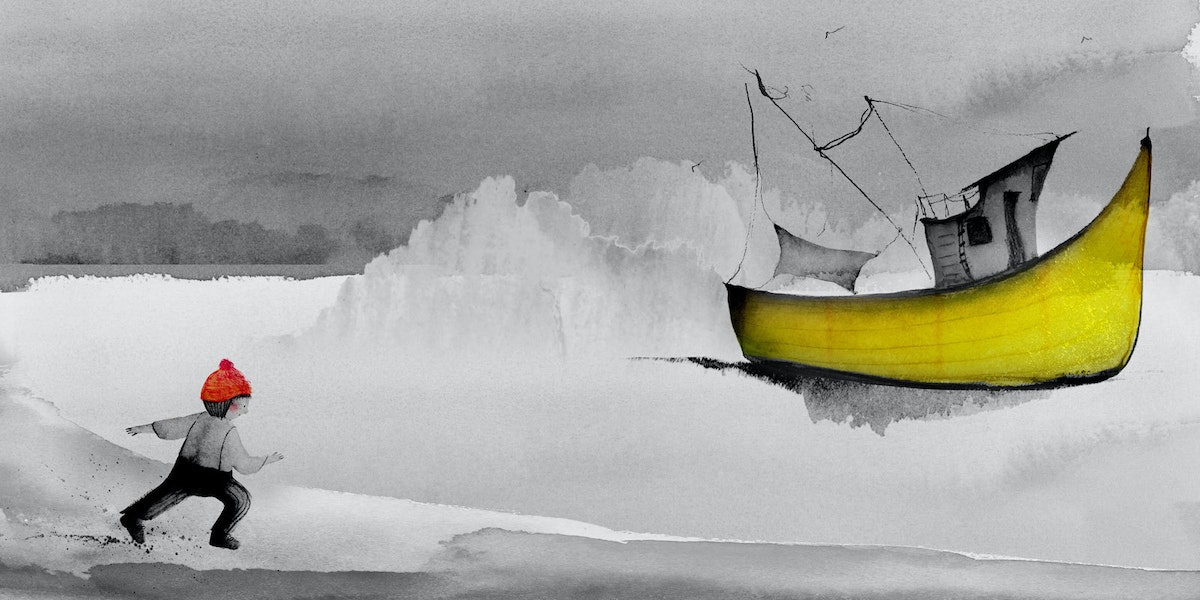
I am a picture book author and illustrator. Ever since I was a little, I had narratives running through my head for just about anything. My path as a teenager led me to theater and The Royal Conservatoire of Scotland, where I got involved in puppetry—building puppets and touring my own one-woman shows. In the back of my mind was a dream I couldn’t let go of: I wanted to write and illustrate children’s picture books.
After I moved back to California, I began painting with acrylic on gigantic canvases, but eventually transitioned to working a bit smaller. That’s when I discovered the unpredictable beauty of using watercolor and ink. From there, I spent years diligently working on my illustration skills and developing characters, and I have been working on my craft of storytelling ever since.
As an adult, picture books are a way to collaborate with my little self. And together, we create weird books for weird kids. My debut book as an author and illustrator is How to Walk an Ant (Roaring Brook Press, 2019).
What are your three most beloved possessions?
1) A tiny armadillo sculpture with a broken tail
2) A collection of letters from my grandmother
3) An embarrassing diary from my middle school years—with creepy drawings of all my crushes
What are your favorite tools of the trade?
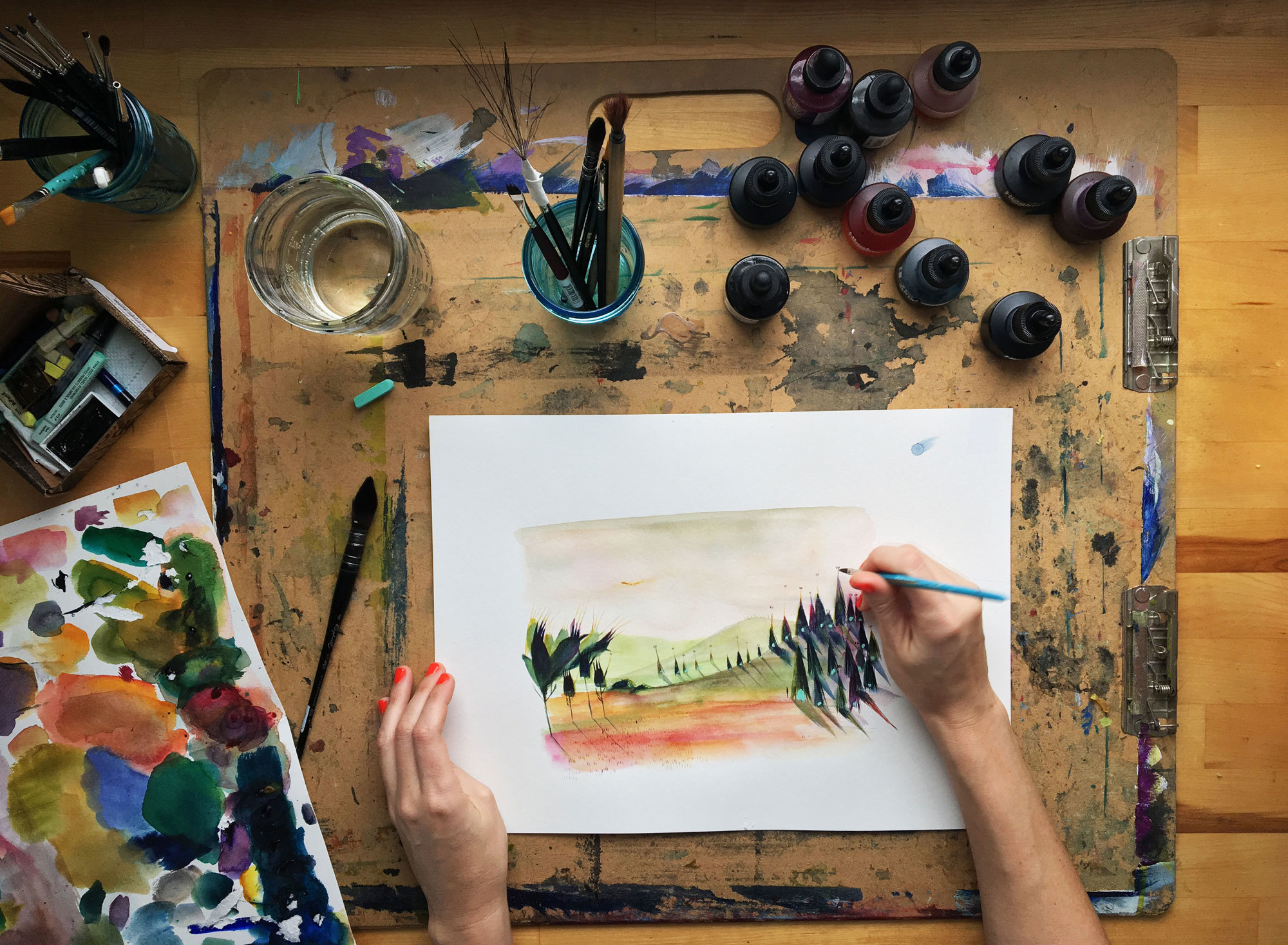
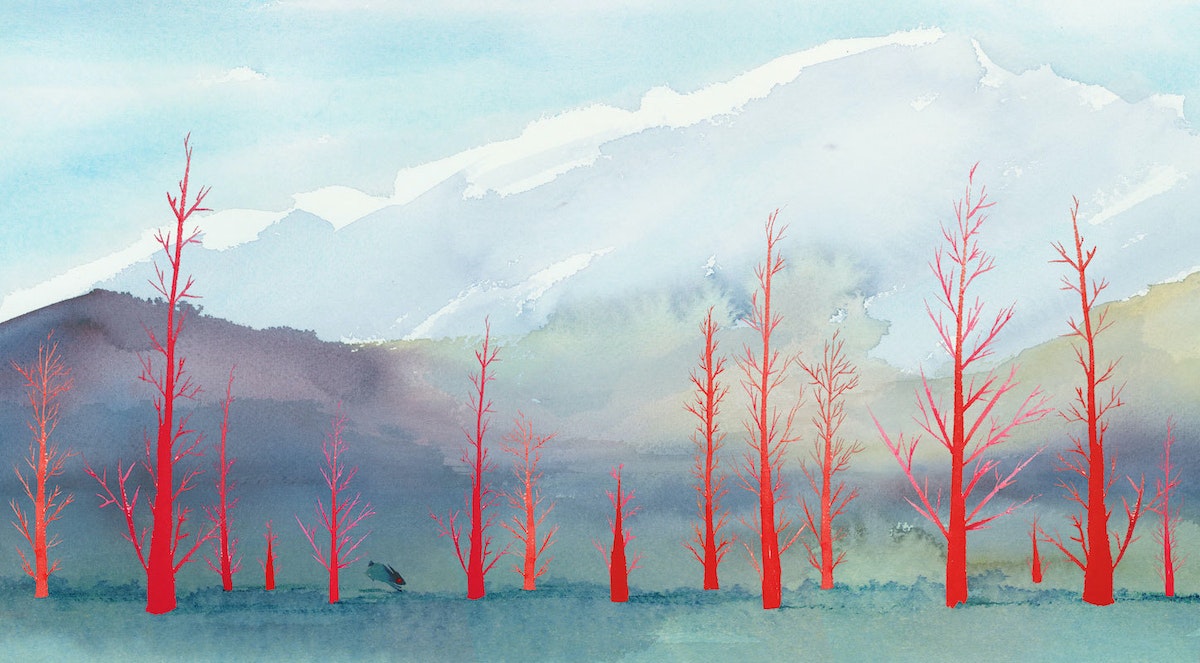
I make my own paint brushes. I pluck the hairs out of old, scraggly brushes and bind them together to create new brushes. I also use sticks, wires, and clay shapers when I paint. They make imperfect, expressive lines. And I like that.
What does a typical work session look like?
Before I begin any work, I obsessively wipe down all surfaces, organize my materials, and even make my bed. This helps my mind become a blank canvas. This also helps me rediscover things in my studio I may have forgotten about—like that piece of Styrofoam pool noodle I cut out into shapes to make stamps, or that tiny drawing of a bug with a coy expression.
When I finally sit down at my art table, I start by making some spots on paper. The result is not supposed to be good, nor do I want it to look like anything. This is just a way to warm up my hand. It also helps to whisper: “Good morning, hand...Good morning, brush...Good morning, inkblot!”
After a healthy session of experimenting, I transition into working on one of my current picture book projects, which involves a happy balance of planning and spontaneity.

How do you get over creative block?
I intentionally make very ugly art for a few days. That means putting wrong colors together until they are muddied, ripping up paper to make monsters, and pouring a whole bottle of black ink on top of a pretty landscape. Afterwards, I eat too much chocolate and melt into the floor. If I can make myself laugh—really, truly have a good ol’ laugh at myself—that block will get smaller.
How do you see the world in 2078?
If a drone can deliver a rainbow sprinkled donut to me while I’m lying on my death bed...I’m happy.
What’s your number one bucket list item?
I would like to retrace the steps that my late grandmother Marian Mountain took on her journey while creating her book The Zen Environment: The Impact of Zen Meditation. She had a fascinating life. She was a student of Shunryū Suzuki for many years, and helped record and transcribe all his lectures.
She traveled around in a RV with her typewriter most of her life. And she used to be a puppeteer! Before she died, she was working on a follow-up book titled Snail Zen. I’d like to help complete that book.

Who are you creative crushin’ on lately?
Leonard Baskin. I recently discovered his work while doing research at The Letterform Archive in San Francisco. His lines are haunting, expressive, and honest.
I have been stalking illustrator Cindy Derby’s work on Instagram for longer than I care to admit. She creates worlds for children’s books, but her unique characters and experimental style capture the imagination of adults just as easily. For this installment of our Creative Crush series, I set out to learn more about Derby and her process.

Thoughtless Acts: Urban Surfing
Human-centered design requires us to observe human behavior with beginner's eyes, so that we can spot the innate ways people interact with the world around them. We call these intuitive and unconscious reactions Thoughtless Acts, and IDEO designers collect photos of them to inspire their work.

If you think about my hometown of Munich, surfing is probably not the first thing that comes to mind. So what do you do if you love surfing but live deep down in Bavaria? You just have to make it happen. Take a bunch of crazy surf dudes, add the freezing cold "Eisbach"—a small man-made river located at the English Garden in downtown Munich that provides the perfect "standing wave"—and there you go. There is always someone taking a ride—early in the morning, when the city is still asleep and you are on your way to the office, at noon during a quick lunch break, in the afternoon for a sunset session, or even at night or in the snow. (The Eisbach has even lured professional surfers like Kelly Slater, Gabriel Medina, and Mick Fanning.) Hang loose can be found everywhere around the world—you just have be creative.
Human-centered design requires us to observe human behavior with beginner's eyes, so that we can spot the innate ways people interact with the world around them. We call these intuitive and unconscious reactions Thoughtless Acts, and IDEO designers collect photos of them to inspire their work.

Love Notes to Our Design Heroes
In which we give our hearts away to Maira, Bucky, Syd, Marcel, and more
Dear Maira Kalman,
I have to admit, it was Tibor who brought us together. Him and his flair, and boldness, passion and humor. But you—YOU! You were the words and the drawings and the insights. A creative mess of things I found in contrast to my young orderly graphic design mind, yet loved and admired and wanted every bit of.
In 1999, I saw you at the SFMoMA talking about your beloved husband when Tiborcity was on exhibit. I was sitting next to the person I didn't know would become my own beloved husband. You became part of our lives together—extending to our children. When our 3-year-old daughter recited the full story of Sayonara, Mrs. Kackleman from memory as we flipped through each page, we knew we had done something right.
Yours in missing our beloveds,
Jen Panasik
Portraits in Creativity: Maira Kalman
Dear Buckminster Fuller,
From the moment I first read you, I fell under the spell of a man who couldn’t be contained by a dictionary. Livingry. Tensegrity. Dymaxion. Big ideas packed into beautiful words. Then again, you said to never think about beauty whilst working on a problem. I'd simply know the solution is wrong if its not beautiful in some way.
Oh Bucky, Spaceship Earth needs you now more than ever.
P.S. Can I leave my toothbrush at your geodesic dome?
—Chris Nyffeler
Dear Janet Champ,
I was just a few years out of college when your "If You Let Me Play" Nike campaign came out, and it rocked my world. Here was this gorgeous feminist rallying cry: It wasn't on a flyer at the natural foods store, and it wasn't on a poster at a protest march. It was on national TV, with a big ol' Nike swoosh at the end. I remember thinking, "Whoa. You can have a paying job AND change the world. That's badass." And I promptly became a writer.
With great affection and respect,
Jenn Maer
Dear Syd Mead,
I'm writing to thank your for the countless hours I spent in my youth immersed in the details and possibilities of your future visions. Your inspirational and sometimes cautionary depiction of future artifacts, cities, and cultures inspired me to design optimistically towards a better tomorrow. Thank you for helping enrich and enlarge our dreams of what lies beyond the horizon and for pulling humanity forward.
Best,
Danny Stillion
Visual Futurist: Syd Mead
Dear David Kelley,
You taught me that even the most simple acts can communicate thought, intention, and creativity. Who knew gift wrapping could be an act of self-expression and creativity, or that you could say "no" to someone and still leave them feeling good about the exchange?
You taught me it's all about the nuance, and the details. That with as much care and thought applied to the moments in between, that you can have a lasting impact on someone's day.
In an world of design full of black and grey, you encouraged me to bring the color.
Dear Vaughan Oliver,
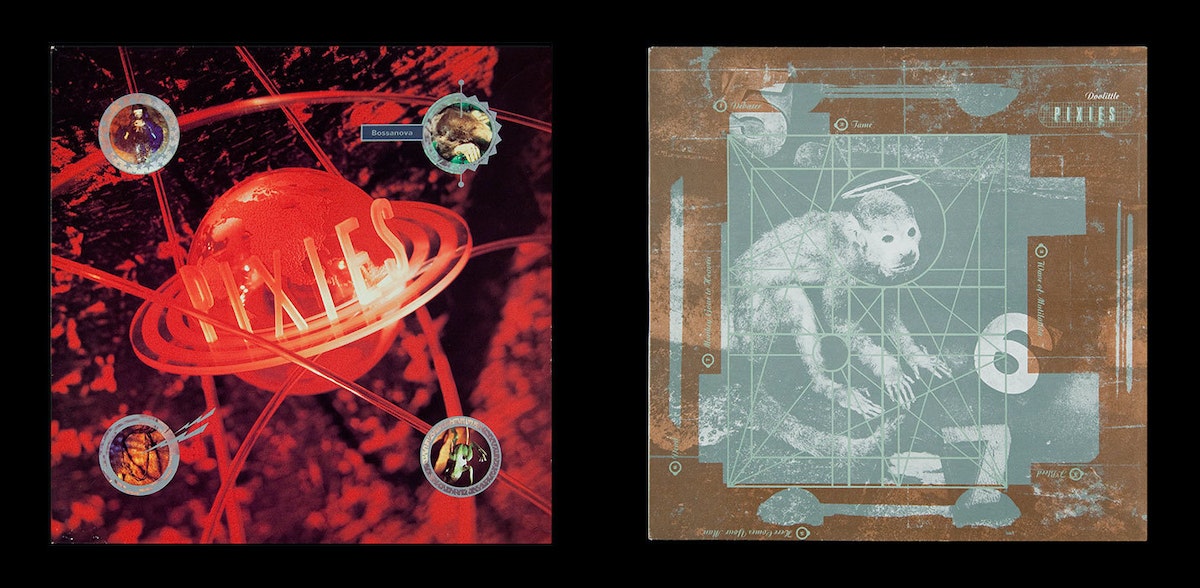
I first met you through the Pixies. I don’t know if it was the big hairy back, geometrically augmented monkey, or the bowl of sheep eyes, but you had me hooked. And who uses script type like that!?!! When I first met you, I expected a severe, dark personality in an equally severe, dark dress. But who I met was a clever, happy, normal guy with an incredible eye for the unusual and a penchant for good stories. Because of you, I still own an unusual number of 4AD CDs, whether I like the music or not. And I usually do.
—Michael Hendrix
Dear Aleksandr Rodchenko,
Thank you for teaching me that typography matters. That, with the right size and placement, words on a page can punch you in the face. That might be the most powerful design lesson I ever learned, and something I’ll never be done learning.
Still stunned,
Joe Brown
Dear Jackie and Lloyd,
It was summer of 2007, London Design Week, and my feet were pounding from covering miles and miles of "best of the best design."
Everything is starting to look the same. My eyes glazed over. "Get me out of here!"
On my way to exiting this hell I stumble across a sanctuary. "Take a deep breath..."
Actually, it took my breath away.
Organic sinuous lines, the color so elegant, I still remember that egg-shell blue on the Malvern sofa. But what made the most lasting impression was the two women designers standing before me—as if I was looking at a future self.
Flash forward 11 years, you two continue to inspire me by pushing the craft in furniture design, to bridge the gap between design cultures at We Present, and to help others be successful.
Thank you for showing me the way.
I still dream of an internship, maybe one day...
Dear Marcel Wanders,
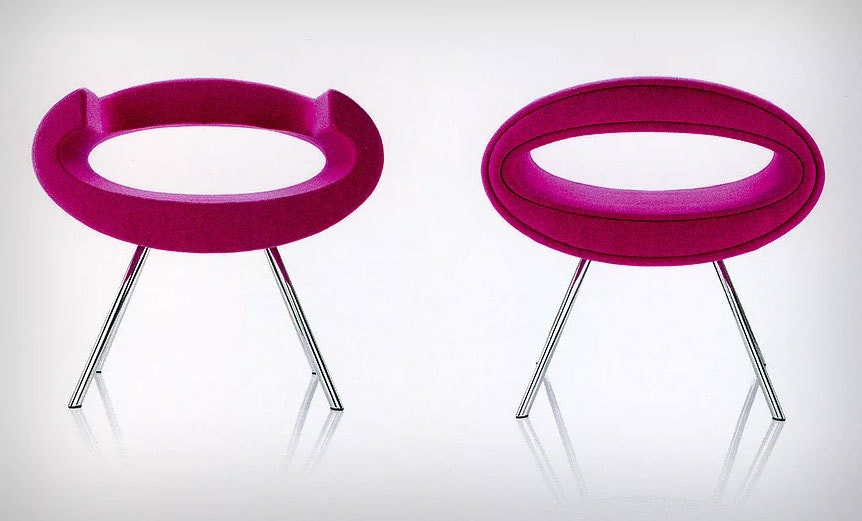
You were the designer that I literally wanted to be when I was in school. From your early work with Droog to your radical experiments with materials, to the fantastic stories you create through spaces and objects today. Your work couldn't be more different from what I do as a designer—and I relish that you live way out there on the edge of art and design to remind me of the limits of sound strategy and argued rationales, and to remind us all of the importance of beauty and love and intuition. More recently, we've had the chance to meet, work together, and become friends. I am better at what I do by being challenged by what you do.
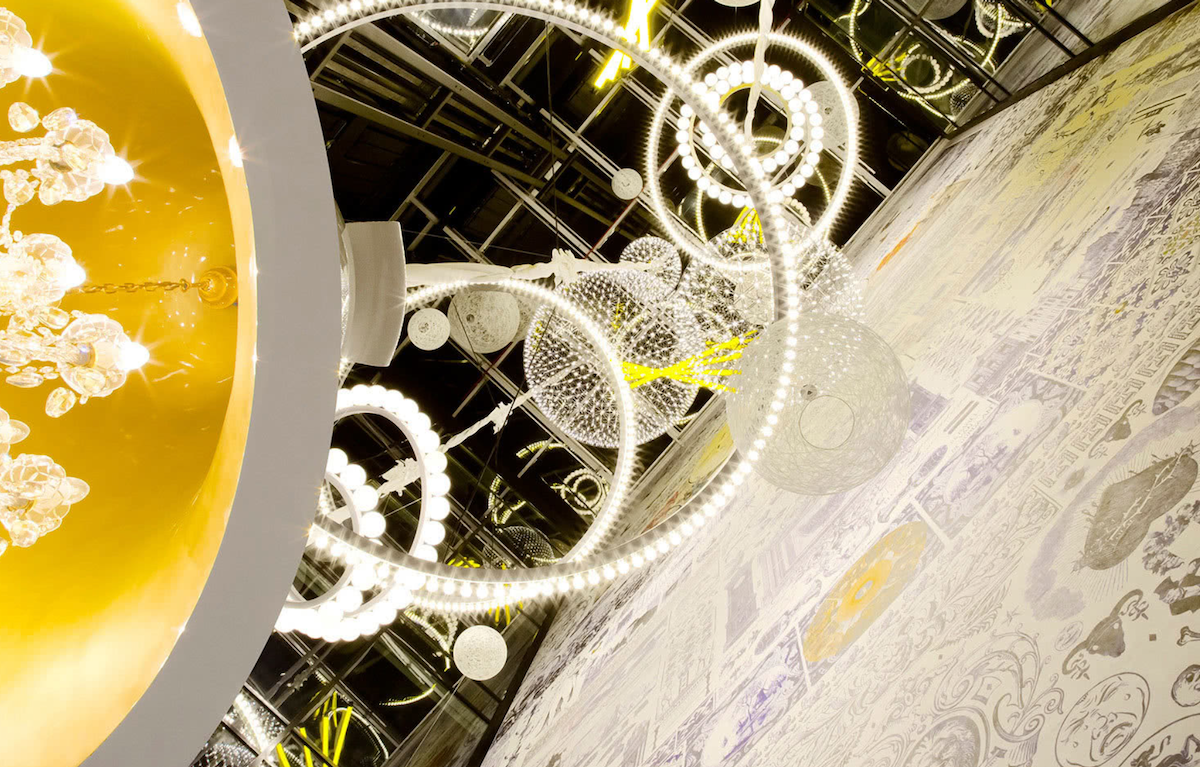
Do you remember when you first fell for design? The moment you discovered someone whose work sang to you, moved you, sent you skipping down a creative path? In these love notes, the bleeding-hearts of IDEO declare their love for the artists, writers, and designers who showed them the way.

Lindsey Turner
I’m passionate about building brands, products, and experiences that help organizations show up with meaning and momentum.
I help organizations cut through complexity by shaping how they show up, through brand strategy, identity, and storytelling.
Working at the intersection of brand and business, I bring an editorial eye and a bias toward making—turning ideas into tangible experiences that people can understand, trust, and believe in.
My work spans government, healthcare, financial services, media, and consumer goods, from launching Gen Z-focused ventures to building innovation labs and reimagining legacy brands. I relish moments of ambiguity and enjoy translating across teams, perspectives, and priorities to move ideas forward.
I started my career in editorial and digital design, shaping cross-platform experiences and identity systems in publishing and agency environments. That foundation still shapes how I work today: I’m detail-oriented, collaborative, and overreliant on the Oxford comma. I hold a BFA in Visual Communication from the School of the Art Institute of Chicago.

Rachel Young
My work helps organizations see who their products aren't working for—and build the will and the tools to do something about it
For 25 years, I've asked the same question: Who does this design exclude—and what are we going to do about it?
My work spans human-centered strategy, inclusive design, and qualitative research, with clients ranging from Microsoft, Google, and Verizon to the National Science Foundation, and San Francisco Unified School District.
Before IDEO, I taught elementary school in East Palo Alto and spent a decade doing design work with social service organizations—where I learned firsthand what it costs people when systems are built without them in mind.
I am currently writing User Error, a nonfiction book about digital access and the design decisions behind it. I live in Oakland, California.

Brian Pelsoh
I lead with craft, ensuring our work is creatively excellent: rooted in deep human insight and imagination, while also grounded in the realities of business and technology.
My expertise spans brand, communication, and product design across tech, education, the arts, and social impact.
I believe great work demands both high-level vision and obsessive attention to detail, and only happens through collaboration.
I bring an inclusive, hands-on approach and a deep understanding of business, which enables me to consistently deliver excellence while always asking why.
Before joining IDEO, I worked at the brand firms Pentagram and VSA Partners. I began my career as a designer, leading teams at the School of the Art Institute of Chicago and the Milwaukee Art Museum. I hold an MFA in graphic design from Maryland Institute College of Art and a BFA in communication design from the Milwaukee Institute of Art & Design, and have taught at some of the best design schools in the US.

Tony Wong
I am responsible for IDEO’s long-term success in China and working with clients to use design as a tool to enable growth.
I am responsible for IDEO’s long-term success in China and working with clients to use design as a tool to enable growth. Specifically, I have helped Chinese companies design holistic brand solutions through the development of their products, communication, services, and innovation teams, and I have helped multinationals expand their presence and influence in China.
I advise global leaders on developing China-led innovation and capabilities.
In over 15 years in IDEO Shanghai, I have worked on projects that use design to elevate the quality of the experience of healthcare products and services, streamline processes that increase productivity, create spaces and programs that promote and enable inclusive communities, and build next generation mobility solutions that are planet-positive.
Before joining IDEO, I worked at Philips Electronics and the Electrolux Group in Italy, the Netherlands, and Singapore on a number of breakthrough commercial products. I am a member of the Young President Organization in Shanghai.

Building a personal AI for the messiness of life: Sida Li
Most AI products today are built for work—a space with clear problems and established systems. One founder noticed a gap: personal life is messier, harder to systematize, and mostly left behind by the AI boom. So she built Cue, a personal AI that lives inside iMessage and group chats, to go where the other tools haven't.
In this episode, Becca Carroll, IDEO's Chief Strategy Officer, talks with Sida Li, co-founder and CEO of Shared Context Lab, about staying anchored to a human need while the technology around her keeps changing shape, why she treats her business model with the same rigor she'd bring to a product, and what it feels like to build a company at this particular, disorienting moment in AI.
The conversation also gets into how Sida makes design decisions: the language Cue uses to describe itself, the tradeoffs behind building inside iMessage instead of a new app, and a real story about a business idea that didn’t pan out.
This is the second in a two-part series profiling founders from IDEO's Startups-in-Residence program. The first conversation is with Johannes Seemann, founder of Sooner, on designing GenAI for the emotional side of money.

Designing GenAI for the emotional side of money: Johannes Seemann
Most personal financial tools are built to run the numbers and optimize towards a budget. While that works for some, most people experience money as a lived relationship that does not neatly fit into a spreadsheet. Johannes Seemann and Becca Carroll discuss why money is emotional before it is mathematical, and what a human-centered approach to building a generative AI financial product looks like in practice.

The curious leader's edge in uncertainty: Scott Shigeoka
Mina Seetharaman talks with Scott Shigeoka, author of Seek and Head of Curiosity Cultivation at the Eames Institute, about what distinguishes genuinely curious leadership from performative curiosity, how power dynamics shape curiosity, and why practicing curiosity can restore energy rather than drain it.

How constraints make us more creative: David Epstein
Mina Seetharaman talks with David Epstein, author of Inside the Box and Range, about why total freedom often produces average work, how leaders can design useful limits on purpose, and what organizations such as General Magic and Pixar reveal about the relationship between boundaries and creativity.
Looks like you might be in search of something very specific?
Or reset the filters above and try another angle.
Here’s some random inspiration

Podcasts about creative leadership

Articles about the power of prototyping
