
.svg)




Bringing tourists to a hidden coastal gem
An open-air pavilion to entice visitors to one of Boston’s best-kept recreational secrets.
Once considered one of Boston’s best-kept secrets, Boston Harbor Islands National Park was looking to increase visibility and entice visitors to its network of 34 islands, a Civil War–era fort, historic lighthouses, and more than 50 square miles of bays, harbors, and rivers within the Boston Harbor basin.
Together with the National Park Service, Boston Harbor Alliance, architecture firm Utile, and landscape architecture firm Reed Hilderbrand, IDEO and the National Park Service came up with a plan to design a pavilion on the Rose F. Kennedy Greenway, which reconnects the city’s historic waterfront to the downtown area. The team believed a successful pavilion would sell boat tickets, attract passers-by, and enable a positive encounter with the islands. Today, the structure serves as the primary gateway linking Boston to the Harbor Islands, equipping the city with an experiential anchor to better connect visitors with Boston’s coastal gems.
The Boston Harbor Islands Pavilion was officially unveiled on June 2, 2011, and honored with an Honor Award for Design Excellence from the Boston Society of Architects, the 2011 Grand Honor Award from the Associated General Contractors of New England, and a Silver Award from the 2012 ACEC/MA Engineering Excellence Awards.
The Boston Harbor Island Alliance, which acts as a steward for the 34 islands, anticipates that the pavilion will positively impact the number of visitors this year.
Bringing back the neighborhood pharmacy
Helping a retail chain build healthier relationships with customers.
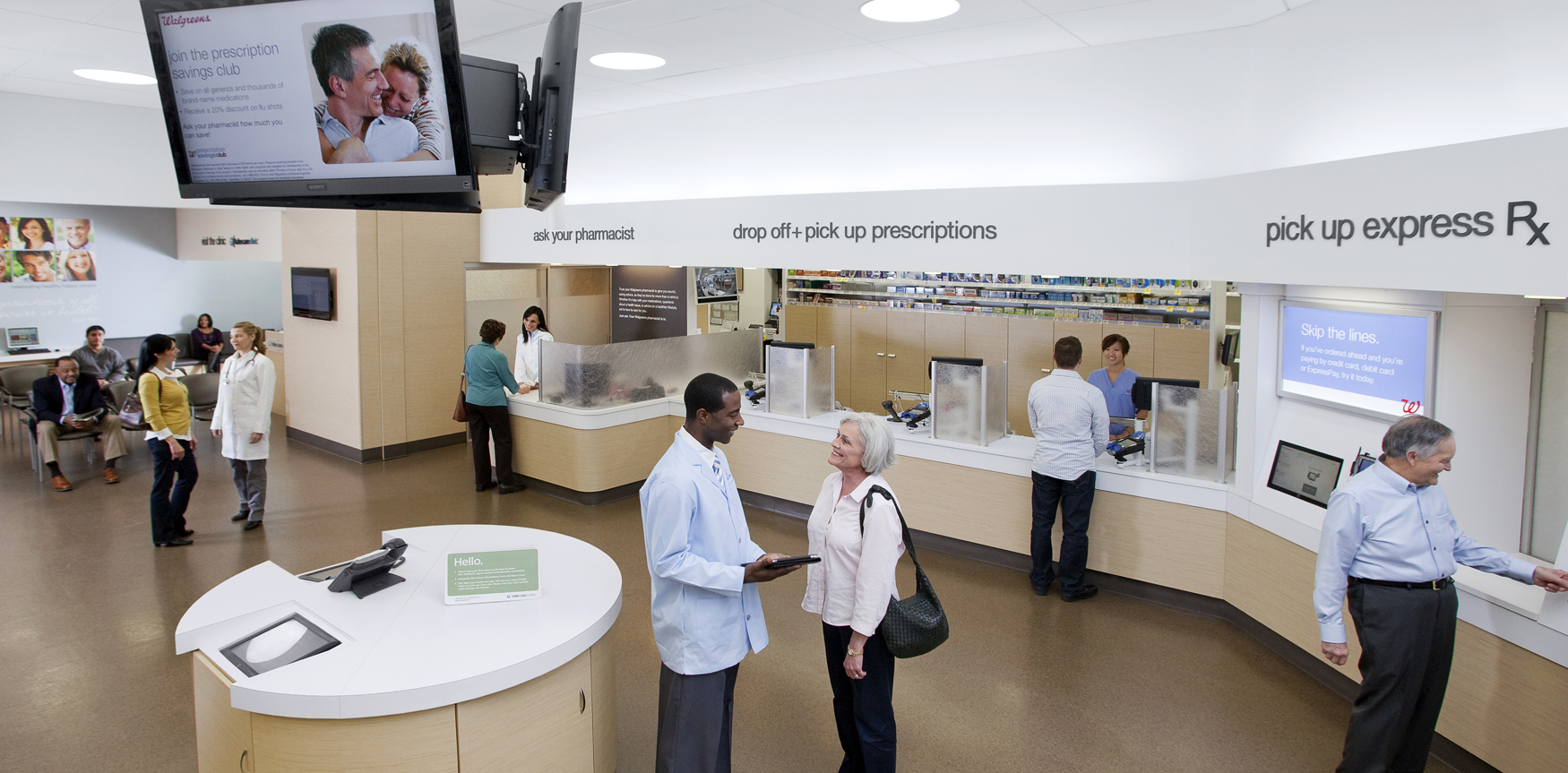
In 1901, Charles R. Walgreen, Sr., opened up a small neighborhood pharmacy on Chicago’s South Side. Today, Walgreens is the largest drug retail chain in the US with more than 8,200 locations in all 50 states. As healthcare reform has become top of mind in the US and patient-centered care increasingly the norm, Walgreens sees its scale as an opportunity to rethink the role of the community pharmacy in the 21st century. The company collaborated with IDEO to redesign its pharmacy experience in order to foster rich, trust-based relationships between customers and the most highly trained medical professionals on staff—pharmacists.
Most Americans—75 percent—live within five miles of a Walgreens. With the Affordable Care Act bringing millions more Americans into the healthcare system, Walgreens’ proximity and reach provided a big opportunity to become a convenient and trusted touchpoint for patients outside of hospitals and doctors’ offices, especially those suffering from chronic conditions such as diabetes and heart disease. The challenge: Use design to shift customer perception of Walgreens from just another convenience store to a local place at “the corner of happy and healthy,” where customers could receive everyday health and wellness advice. In other words, bring Charles R. Walgreen’s vision of a community pharmacy to unprecedented scale.
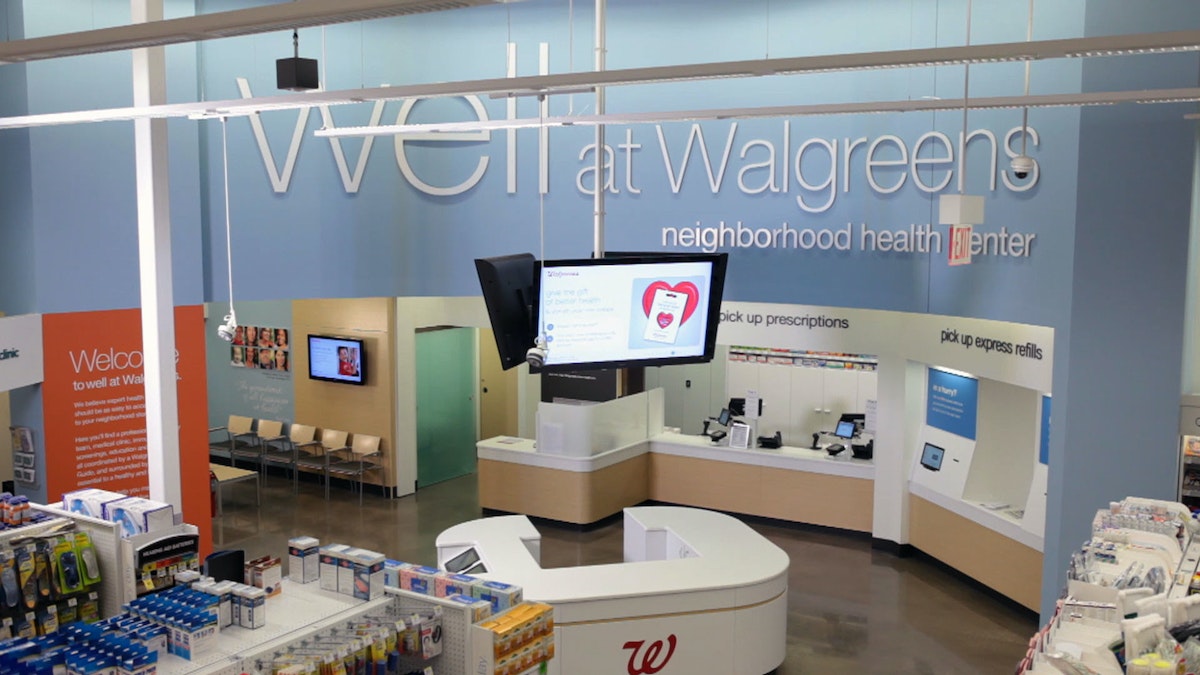
IDEO built out two full-size prototypes of a reimagined Walgreens pharmacy designed to cultivate better relationships between customers and pharmacists. Key to building good relationships were private consultation rooms that allowed for close conversations, and friendly health guides that helped customers browse over-the-counter medications or schedule “take care” appointments. Pharmacists, usually barricaded behind their high counter at the rear of the store, were now positioned out on the pharmacy floor, ready to listen and—most important—ensure continuity of care.
"Patients are engaging with pharmacists even more often to ask about everything—including their medication, health conditions, and prescription regimens," said Nimest Jhaveri, Divisional Vice President, Pharmacy Transformation.
The new Well Experience format was launched in two pilot locations in Chicago just a few months after the prototypes were built. Combining IDEO’s pharmacy work with Walgreens’ new approaches to beauty products, fresh food, and online shopping, 750 Well Experience locations have opened in the US and Puerto Rico—including 14 flagship stores in major cities—and an additional 1,000 are planned for the coming years.
Walgreens is also expanding the scope of its Take Care Clinics, which are usually staffed by nurses or physician’s assistants, to include the diagnosis, treatment, and monitoring of chronic diseases such as diabetes that are typically handled by doctors. The company considers its Well Experience pharmacies a work in progress and plans to keep evolving the design based on customer feedback.
An ingenious way to preserve wine
A double-duty bottle opener that's an industry game-changer.
Opening a bottle of wine is typically a moment of no return, because what remains after the first pour almost immediately begins to oxidize.
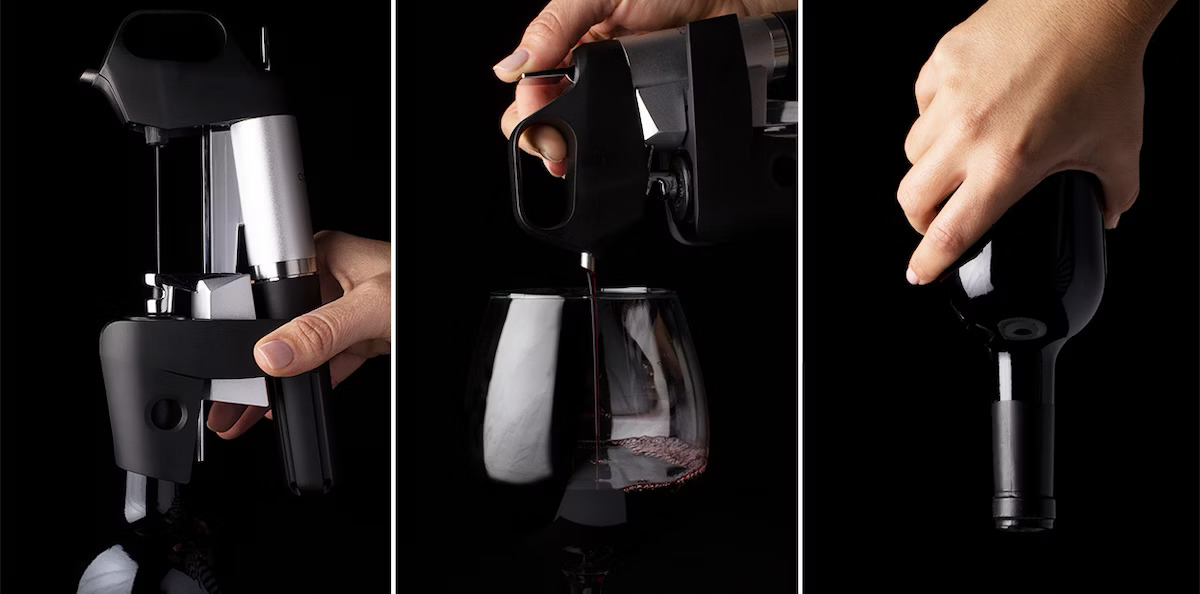
But Greg Lambrecht knew there was a better way. He came up with an idea to pour the wine without opening the bottle. With a new device, a slender needle is inserted into the cork, and argon, an inert gas, pressurizes the bottle to pour a single glass. Remove the needle, and the tiny puncture in the cork naturally reseals, maintaining the integrity of the wine in the bottle.
Working with Lambrecht, IDEO refined the look, feel, and user experience of his device, designing and building a prototype that captured the expression of his eureka moment. Using this prototype, Lambrecht raised significant seed funding for his startup, and launched the Coravin System in July 2013. The company continues to grow year after year.
Lambrecht introduced the only product of its kind sold in the global market, and preliminary sales have far exceeded expectations. What’s more, for wine lovers everywhere, there’s finally a solution to savor and preserve every last drop.
An ATM designed for you
Making customer interactions fast and easy—without requiring any new hardware.
Wells Fargo, one of the United States’ largest banks, wanted to enable customers get to the ATM functions they wanted faster. The updated interface needed to be different enough to have a tangible impact, and had to appeal to an extremely broad audience. What’s more, any changes made to the interface had to be compatible with the existing hardware of all of the ATMs in operation nationwide.
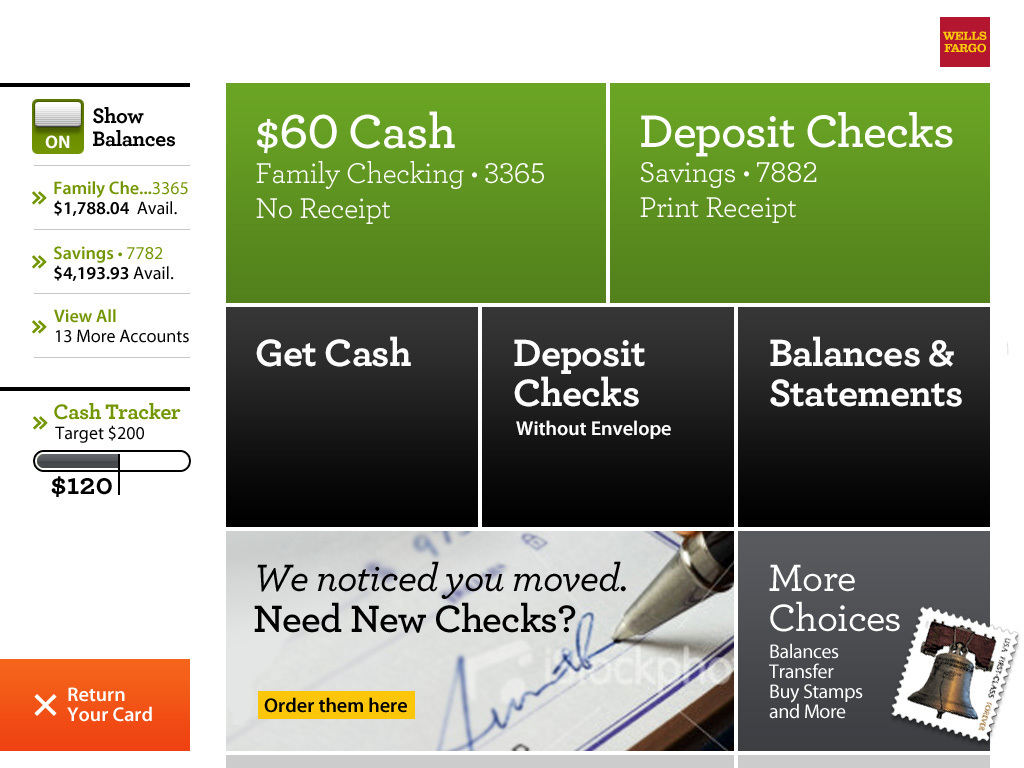
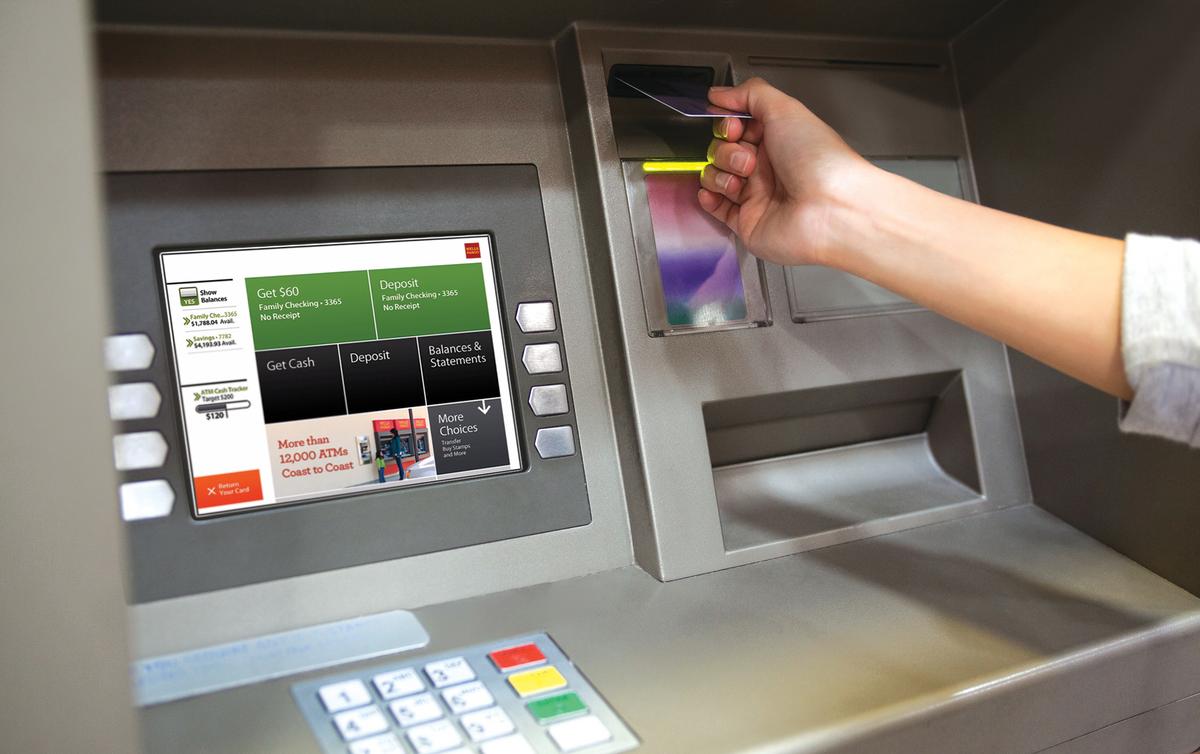
Wells Fargo and IDEO worked to enhance and customize the ATM user experience by making it innovative, fast, and easy—without requiring any new hardware. The interface’s entire layout is personalized, based on what a user does most at the ATM. It gives users an immediate glance at their account balances (which they can also hide) and highlights the touch screen 'buttons' that they use most (by putting them at the top of the screen in green). New data hierarchy also facilitates skimming for fast decision-making and provides messages and notifications based on a customer’s priorities. “[The design] shows an intense attention to detail,” noted American Banker.
PHOTO ILLUSTRATION BY MAGGIE LYNN, IMAGE COURTESY OF BIZJOURNALS.COM

4 Ways to Get Smarter About Money
Resources for clueless designers
1. Daily Worth (website & newsletter): A daily dose of financial news offering advice tailored specifically to women. It separates your financial life into four major buckets: Plan, Earn, Spend, and Live. Articles are easily digestible and engaging. Topics range from “Running your business like Beyonce” to “Increasing your willpower.”
2. Smart Couples Finish Rich by David Bach: Reading this changed how my husband and I manage our money. It intends to get you and your partner on the same page financially and moving forward as a team. Which can be good for your bank account, and your relationship.
3. How to Worry Less About Money by John Armstrong: Taking a unique approach, this book addresses our relationship with money rather than advising us on how to make more or spend less. It asks you to define your “money worries” and their origins as opposed to, say, dithering over “money troubles.” It made me realize that all relationships take introspection, nurturing, and work. Including my relationship with money.
4. Society of Grownups (Boston-based brick & mortar and online platform): Our friends at the Society of Grownups are a vast resource for fiscal education and advice. They are helping to normalize financial planning as a component of our daily conversations. In fact, my conversation with the young woman that kicked off this whole affair was one of many that inspired the creation of the Society of Grownups—a project that deeply inspired each individual team member to make fundamental shifts in their relationship with money.
Smart designers really do finish rich.
Two years ago, I interviewed a young woman about money. Sitting in her living room in Southern California, I was struck by two things: One, I realized she was completely clueless about the role finances played in her life, and two, I realized that I was, too. So I set out to school myself. Here is a selection of my go-to money resources:
When Chickens Tweet and Nerds Rule the Earth!
Musings on the future of the Midwest
Detroit's auto industry is slowly speeding toward recovery. Kansas City's fierce foodie culture is helping it reclaim its status as "Paris of the Plains." And inspiring Chicago artists/urban-renewal impresarios like Theaster Gates are breathing new life into long-neglected neighborhoods.
As IDEO's official Midwest outpost, designers in our Chicago studio wanted to mark this "it moment" in the region's history with a series of talks exploring its past, present, and—as we see it—very bright future. We humbly call these prognostications about automobility, food, urban infrastructure, agri-tech, water, data, and more, "The Future of the Midwest."
As Midwesterners, we're said to be plainspoken pragmatists. But as designers, we can't help but be outspoken optimists.
But don't just take my word for it, hear what my fellow "ChIDEO" designers have to say.
WATCH: A series of provocations and prognostications on our beloved Midwest by IDEO Chicago.
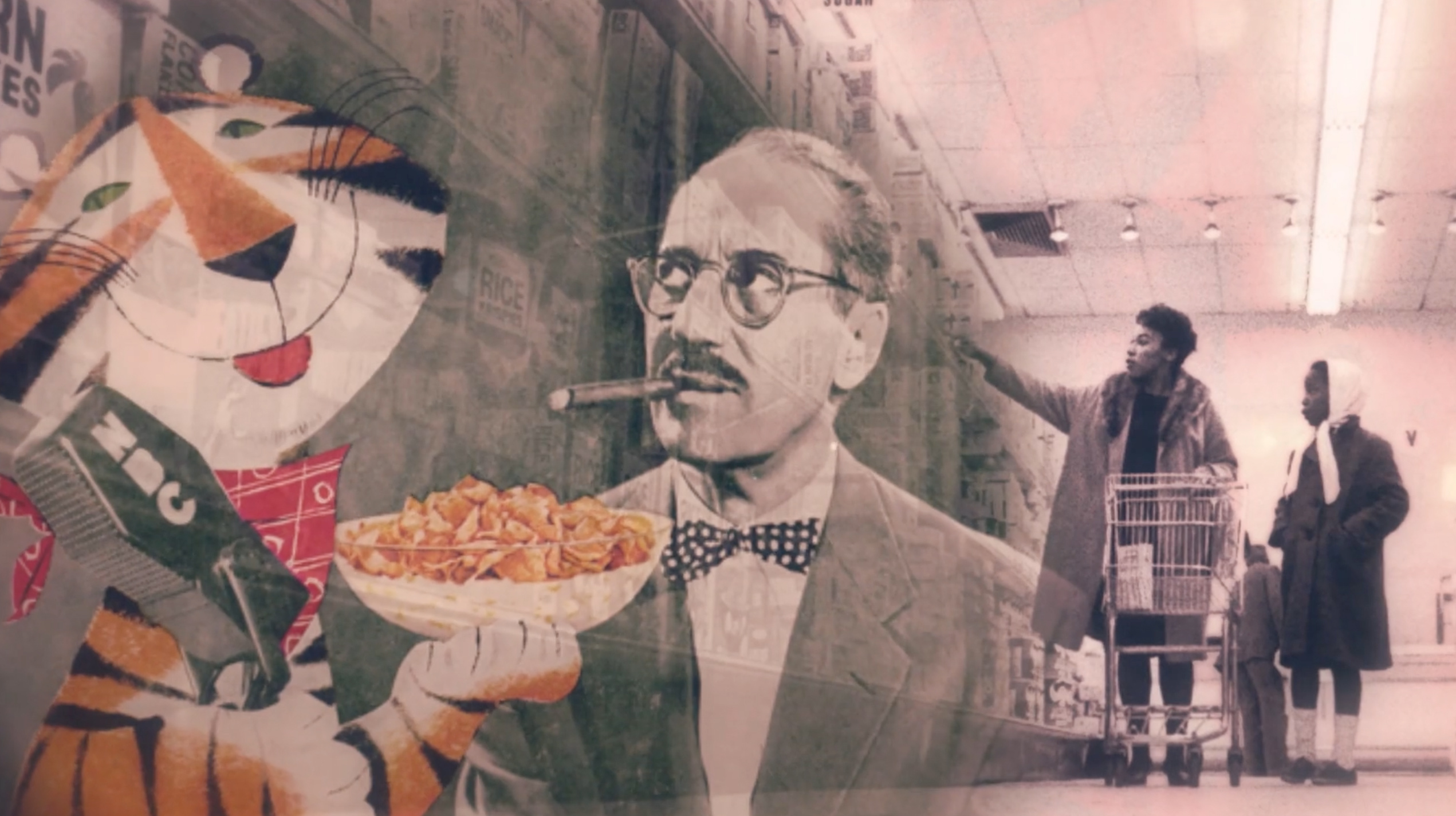
What do Twinkies, skyscrapers, House music, and the Model T have in common? These (in)famous cultural phenomena all hail from the Midwest. At one time, the region was disregarded as "flyover country" by jetting-setting East and West Coast-types, but these days, the nation's Heartland is regarding itself with a new sense of pride.
Putting a Dent in the Universe
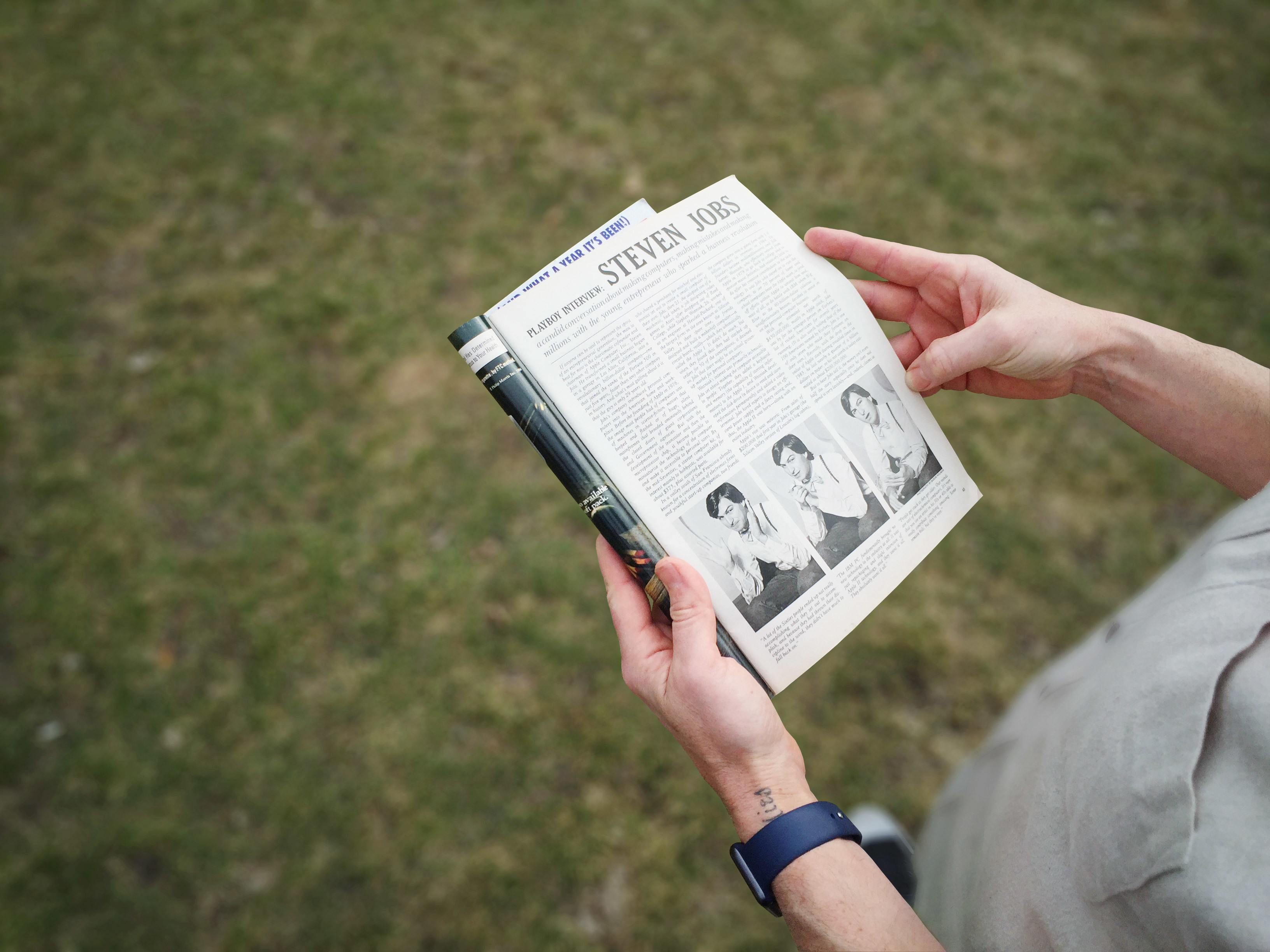
Steve Jobs, creativity & death
It’s not just the squirrel that is looking at me. A cemetery employee purrs past in a golf cart, giving me the once-over. I am an intruder. The etiquette of cemeteries is strange. You come here for funerals, at which you’re allowed to be sad and to contemplate mortality. The rest of the time, you’re supposed to be getting on with your life.
I look up at the oak trees again. I recognize them from a video posted on YouTube by an Italian man. Like me, he was here looking for the grave of Steve Jobs.
Steve Jobs died in 2011, of complications arising from pancreatic cancer. Now he’s somewhere around here, just a couple of miles from his house, in an unmarked grave in the Alta Mesa cemetery.
I remember watching The Daily Show on the day his death was announced.
“For him to die young seems so strange,” said Jon Stewart. “With other people of his magnitude, like Henry Ford and Thomas Edison, you feel like we wrung everything out of them. They were old when they died. With Steve Jobs, you really got the sense… we’re not done with you yet.”
Looking at Alta Mesa’s barren grassy field, broken only by tarnished plaques and a couple of windswept bouquets, I wonder if Jobs would have ever got around to redesigning the death experience...
Looking for the rest of Neil's post? Please continue reading on Medium.
I’m in a graveyard in Palo Alto, California. The sky overhead is cornflower blue. Wind rustles through surrounding oak trees. A squirrel trots out onto a tree branch and squints at me. It’s like nature is doing everything it can to emphasize the contrast between its own glorious aliveness and the utter deadness of the humans underfoot.
Quantifying Nemo
FishBit's connected aquarium is off the hook
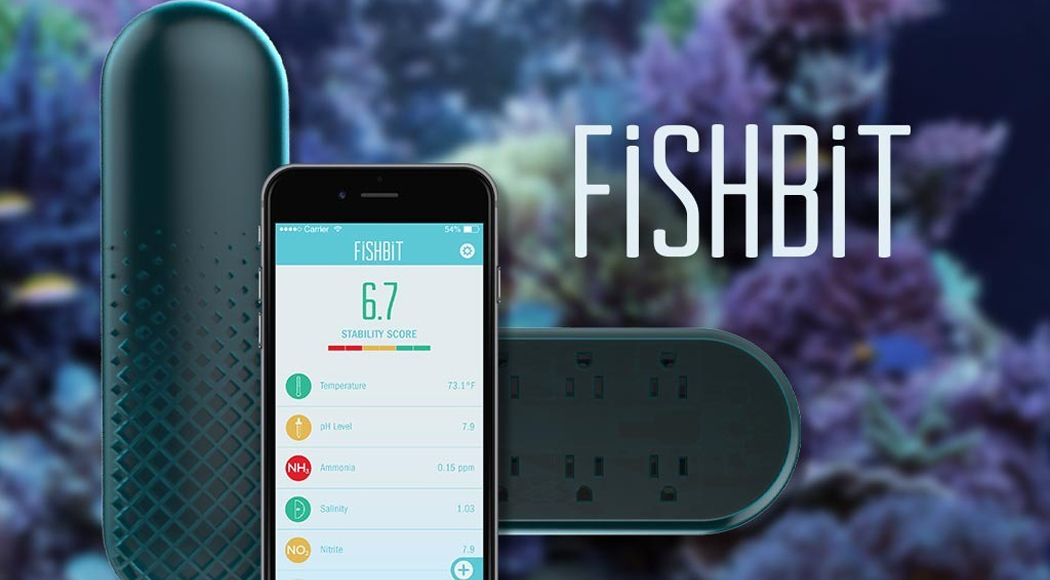
This clever new app and connected device allows aquarium owners to remotely check the health of their tanks. Recently, we spoke with Garrett Winther, an IDEO Chicago engineer by day and FishBit co-founder by night, about how he got involved in the scrappy seven-person startup and how they plan to win over the aquarium market—hook, line, and sinker.
What’s FishBit?
FishBit is the connected aquarium. Owning a large tank, especially a saltwater one, is notoriously difficult and expensive. Fish can die if the water’s pH levels change .1 percent up or down, so there are both emotional and financial stresses that come with owning a tank. FishBit allows owners to remotely control their tank’s chemical balance and keep maintenance activities on schedule.
How did FishBit start?
One of our cofounders, Nathan Levine, grew up with a fish tank. Then, he left for college and asked his dad to take care of it. When he came home for a visit, his whole tank was dead. It was one of those events where he asked himself, “There’s got to be a better way...”
Years later, when the Internet of Things became a reality, Nathan decided to do something about his remote-aquarium-monitoring idea. He’s an iOS developer. He knew how to build software, but he needed someone who could build physical electronic and mechanical prototypes. That’s where I came in.
What’s the development process been like?
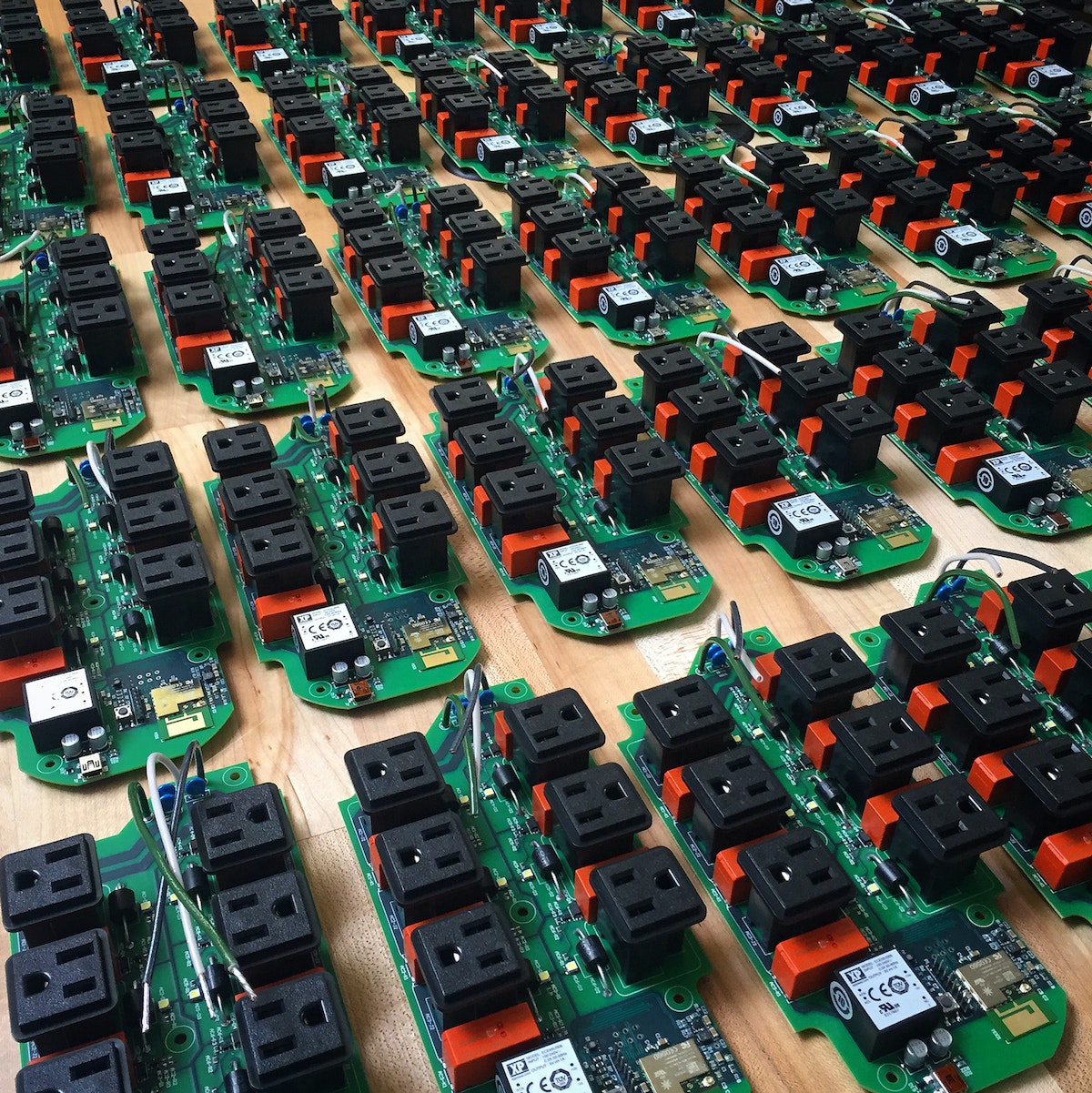
My role has been less about final engineering and more about using human-centered prototyping methods to build FishBit the right way. We created the first working FishBit prototype with full sensors and an iOS app in just a weekend. Then, we showed the prototypes to aquarium owners in Chicago, got feedback, and iterated on the design—much like we’d do at IDEO.

What are you learning from being a startup?
How to nimbly prototype hardware and how to launch a product quickly into market. With FishBit, we launched on Kickstarter in a very limited fashion (just 30 Beta units) so we could put it into users' hands and start testing it in real-life situations. We hand-built those 30 units with CNC machines and some interesting molding technologies. Instead of waiting three weeks to have something professionally manufactured, we had something tangible in a few hours and learned something along the way.
What’s next?
We've fulfilled our initial Kickstarter backers' orders and made sure those Beta units lived in people's tanks safely and did everything they were supposed to. This February, we launched another Kickstarter campaign to sell our core product—the device and app—to the masses.
Do you own a fish tank?
I currently have a 30-gallon freshwater tank with three tiny fish in it. It’s challenging. Maybe when FishBit exists, I can upgrade to salt water.
Owning a saltwater aquarium can feel like opening a can of worms, especially for nervous newbies. Tiny imbalances in pH, temperature, and salinity levels can mean the difference between life and death for Nemo and friends.
Thankfully, there's FishBit.

Lindsey Turner
I’m passionate about building brands, products, and experiences that help organizations show up with meaning and momentum.
I help organizations cut through complexity by shaping how they show up, through brand strategy, identity, and storytelling.
Working at the intersection of brand and business, I bring an editorial eye and a bias toward making—turning ideas into tangible experiences that people can understand, trust, and believe in.
My work spans government, healthcare, financial services, media, and consumer goods, from launching Gen Z-focused ventures to building innovation labs and reimagining legacy brands. I relish moments of ambiguity and enjoy translating across teams, perspectives, and priorities to move ideas forward.
I started my career in editorial and digital design, shaping cross-platform experiences and identity systems in publishing and agency environments. That foundation still shapes how I work today: I’m detail-oriented, collaborative, and overreliant on the Oxford comma. I hold a BFA in Visual Communication from the School of the Art Institute of Chicago.

Rachel Young
My work helps organizations see who their products aren't working for—and build the will and the tools to do something about it
For 25 years, I've asked the same question: Who does this design exclude—and what are we going to do about it?
My work spans human-centered strategy, inclusive design, and qualitative research, with clients ranging from Microsoft, Google, and Verizon to the National Science Foundation, and San Francisco Unified School District.
Before IDEO, I taught elementary school in East Palo Alto and spent a decade doing design work with social service organizations—where I learned firsthand what it costs people when systems are built without them in mind.
I am currently writing User Error, a nonfiction book about digital access and the design decisions behind it. I live in Oakland, California.

Brian Pelsoh
I lead with craft, ensuring our work is creatively excellent: rooted in deep human insight and imagination, while also grounded in the realities of business and technology.
My expertise spans brand, communication, and product design across tech, education, the arts, and social impact.
I believe great work demands both high-level vision and obsessive attention to detail, and only happens through collaboration.
I bring an inclusive, hands-on approach and a deep understanding of business, which enables me to consistently deliver excellence while always asking why.
Before joining IDEO, I worked at the brand firms Pentagram and VSA Partners. I began my career as a designer, leading teams at the School of the Art Institute of Chicago and the Milwaukee Art Museum. I hold an MFA in graphic design from Maryland Institute College of Art and a BFA in communication design from the Milwaukee Institute of Art & Design, and have taught at some of the best design schools in the US.

Tony Wong
I am responsible for IDEO’s long-term success in China and working with clients to use design as a tool to enable growth.
I am responsible for IDEO’s long-term success in China and working with clients to use design as a tool to enable growth. Specifically, I have helped Chinese companies design holistic brand solutions through the development of their products, communication, services, and innovation teams, and I have helped multinationals expand their presence and influence in China.
I advise global leaders on developing China-led innovation and capabilities.
In over 15 years in IDEO Shanghai, I have worked on projects that use design to elevate the quality of the experience of healthcare products and services, streamline processes that increase productivity, create spaces and programs that promote and enable inclusive communities, and build next generation mobility solutions that are planet-positive.
Before joining IDEO, I worked at Philips Electronics and the Electrolux Group in Italy, the Netherlands, and Singapore on a number of breakthrough commercial products. I am a member of the Young President Organization in Shanghai.

Building a personal AI for the messiness of life: Sida Li
Most AI products today are built for work—a space with clear problems and established systems. One founder noticed a gap: personal life is messier, harder to systematize, and mostly left behind by the AI boom. So she built Cue, a personal AI that lives inside iMessage and group chats, to go where the other tools haven't.
In this episode, Becca Carroll, IDEO's Chief Strategy Officer, talks with Sida Li, co-founder and CEO of Shared Context Lab, about staying anchored to a human need while the technology around her keeps changing shape, why she treats her business model with the same rigor she'd bring to a product, and what it feels like to build a company at this particular, disorienting moment in AI.
The conversation also gets into how Sida makes design decisions: the language Cue uses to describe itself, the tradeoffs behind building inside iMessage instead of a new app, and a real story about a business idea that didn’t pan out.
This is the second in a two-part series profiling founders from IDEO's Startups-in-Residence program. The first conversation is with Johannes Seemann, founder of Sooner, on designing GenAI for the emotional side of money.

Designing GenAI for the emotional side of money: Johannes Seemann
Most personal financial tools are built to run the numbers and optimize towards a budget. While that works for some, most people experience money as a lived relationship that does not neatly fit into a spreadsheet. Johannes Seemann and Becca Carroll discuss why money is emotional before it is mathematical, and what a human-centered approach to building a generative AI financial product looks like in practice.

The curious leader's edge in uncertainty: Scott Shigeoka
Mina Seetharaman talks with Scott Shigeoka, author of Seek and Head of Curiosity Cultivation at the Eames Institute, about what distinguishes genuinely curious leadership from performative curiosity, how power dynamics shape curiosity, and why practicing curiosity can restore energy rather than drain it.

How constraints make us more creative: David Epstein
Mina Seetharaman talks with David Epstein, author of Inside the Box and Range, about why total freedom often produces average work, how leaders can design useful limits on purpose, and what organizations such as General Magic and Pixar reveal about the relationship between boundaries and creativity.
Looks like you might be in search of something very specific?
Or reset the filters above and try another angle.
Here’s some random inspiration

Podcasts about creative leadership

Articles about the power of prototyping
