
.svg)



Elevating business class travel with personal connection
Redesigning the long-haul travel experience through the relationship between attendant and passenger.
The key to winning the competition in high-end business class air travel lies in the level of service. Legacy European carrier Lufthansa approached IDEO to help redesign its long-haul, business-class service experience into one that’s thoroughly modern, distinctly Lufthansa, and centered on the new needs of today’s discerning passengers.
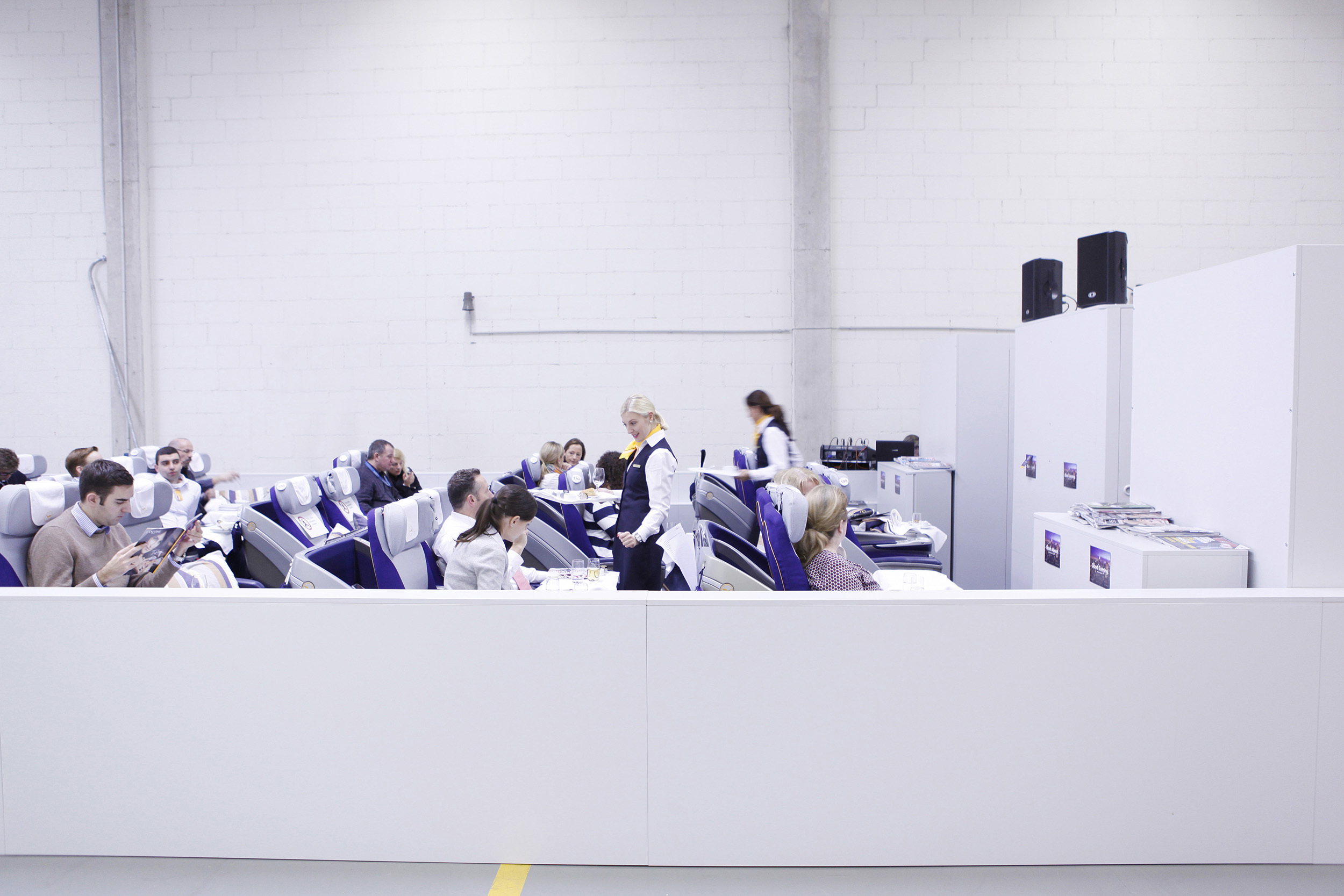
After putting themselves in the shoes of both travelers and flight attendants on a variety of different airlines, the IDEO design team found that what matters, above champagne and fancy food, is a personal connection between crew and passenger. They used this insight to focus on a new goal: Flight crew consider themselves to be travelers’ trusted, knowing hosts.
To achieve the goal, the design team focused on improving service in six key travel moments, then built a cardboard 1:1 scale mockup of different parts of an airplane to see what they’d need. Designers tested the service in a full section of an Airbus A380 at the airline’s Raunheim, Germany, facility, with real passengers and crew. This prototyping process was crucial, as executives witnessed firsthand how big an impact the new service would have across the organization, which includes 18,000 flight attendants.
Rolling out across the fleet, Lufthansa’s hospitable new service is already getting a good reception among crew. “Pampering passengers like this—individually and personally—was the reason why I started flying for Lufthansa 25 years ago,” said Sabine Schwarz-Odewald, senior flight attendant.
Designing the future kitchen
How we will cook, eat, and socialize at home.
Of all the rooms in our homes, the kitchen is the center of energy, activity, comfort, and creativity—the beating heart of any dwelling. In the coming decade, as our environments and habits change, the kitchen as we know it will evolve drastically. More people will move into cities, and our living spaces will become smaller. Natural resources will become more scarce, food more expensive, and waste an increasingly urgent issue. Near-instant grocery delivery will alter how we shop for and store food, and technology will be embedded in every part of our homes.
What will the kitchen of the future look like, and, more important, what will it feel like to cook, eat, and socialize there?
For IKEA, the world’s biggest furniture store, the time to start designing the kitchen of 2025 is now. So IKEA asked IDEO London and a group of students from Lund and Eindhoven universities to explore the social, technological, and demographic forces that will impact how we behave around food in 2025. The students spent months researching people’s attitudes and ideas about cooking and eating, and IDEO designers guided them as they built concept kitchen products.
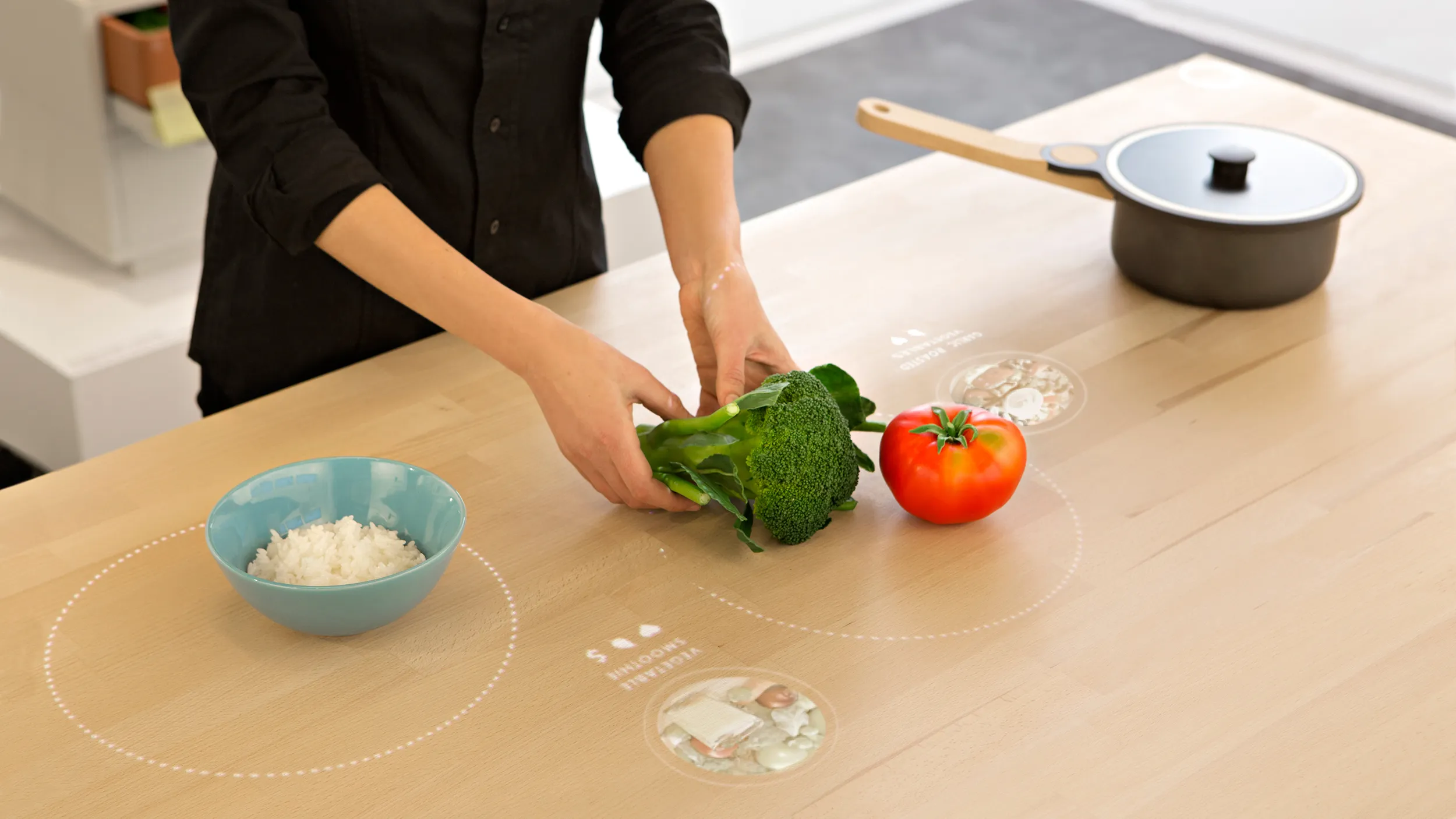
To bring these future concepts to the present day, IKEA asked IDEO to design and build a full-size concept kitchen for 250,000 visitors to test out during the Salone Del Mobile in Milan and a six-month stint at EXPO Milano.
Mindful design
Crucial to the success of the project was preserving the tactile creative pleasure of the kitchen. Technology could easily make the space feel robotic and sterile, but this project was guided by the need to use tech to enhance the kitchen’s warmth.
The Concept Kitchen 2025 doesn’t automate away personal choices, but rather facilitates mindfulness with embedded cues throughout the kitchen that subtly guide people toward being conscious of their actions and making informed decisions. In designing the prototypes, the following few concepts emerged.
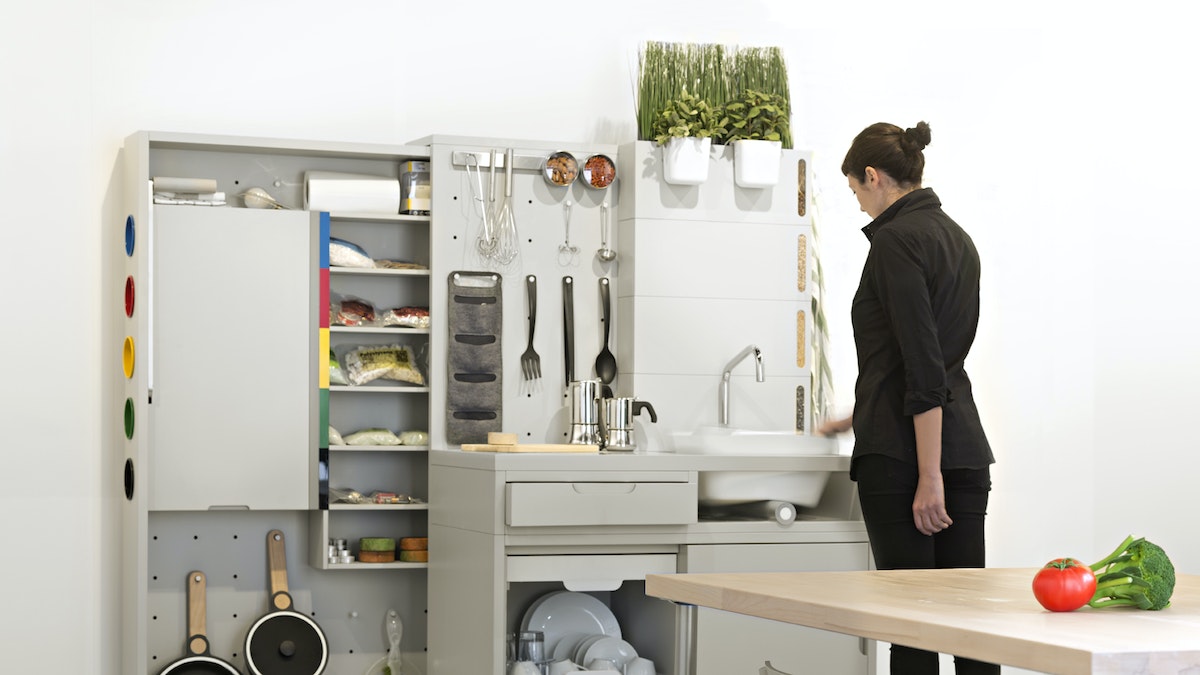
The Modern Pantry encourages us to have a closer relationship with what we eat by storing food in transparent individual containers on open shelves rather than hiding it at the back of the fridge. The design makes it easy to be inspired by what’s on hand rather than going out to buy more, and it also saves energy: Induction-cooling technology embedded into the shelves responds to RFID stickers on the food’s packaging in order to keep the containers at just the right temperature.
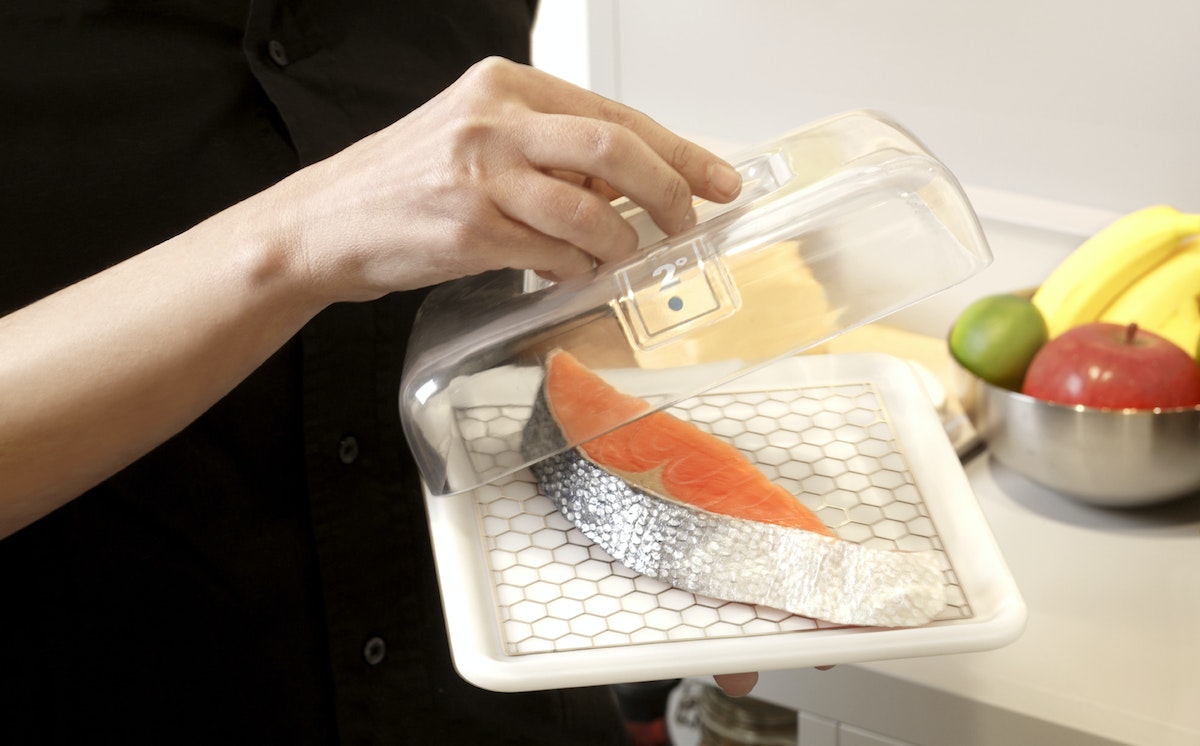
The Table for Living is designed to inspire people to be more creative with food and throw away less. At a loss for what to do with that leftover broccoli? Just place it on the table and a camera recognizes it and projects recipes, cooking instructions, and a timer directly onto the table's surface. Set the timer for how long you want to spend preparing the meal, and the table suggests recipes that can be completed in the window you have available. The table is a nifty solution for a smaller urban dwelling because it’s multimodal: Hidden induction coils instantly cool the surface when not in use, so it’s adjustable for working, cooking, or eating.
The Modern Sink pushes us to be more conscious of our water consumption with a pivoting basin. It must be tipped to one side to drain toxic, or “black,” water, and to the other for safe “gray” water, which is not drinkable but can be filtered and used in a dishwasher or as nourishment for the cooking herbs that grow above the sink.
The Thoughtful Disposal system is a response to the overuse of landfills, and reminds us of exactly what we’re throwing away. Users manually sort recycling from rubbish, and recyclables are then crushed, vacuum-packed, and labeled for pick-up, earning credits for the conscientious (and debits for the wasteful).
IKEA’s kitchen and dining range manager, Gerry Dufresne, explained that the Concept Kitchen 2025 is not really a functional kitchen, but rather “a tangible communication of what the behaviors of the future will be.” It’s just the start of IKEA’s journey toward understanding how those behaviors will shape the company’s future, and Dufresne says the findings will be carried forward into future product development.
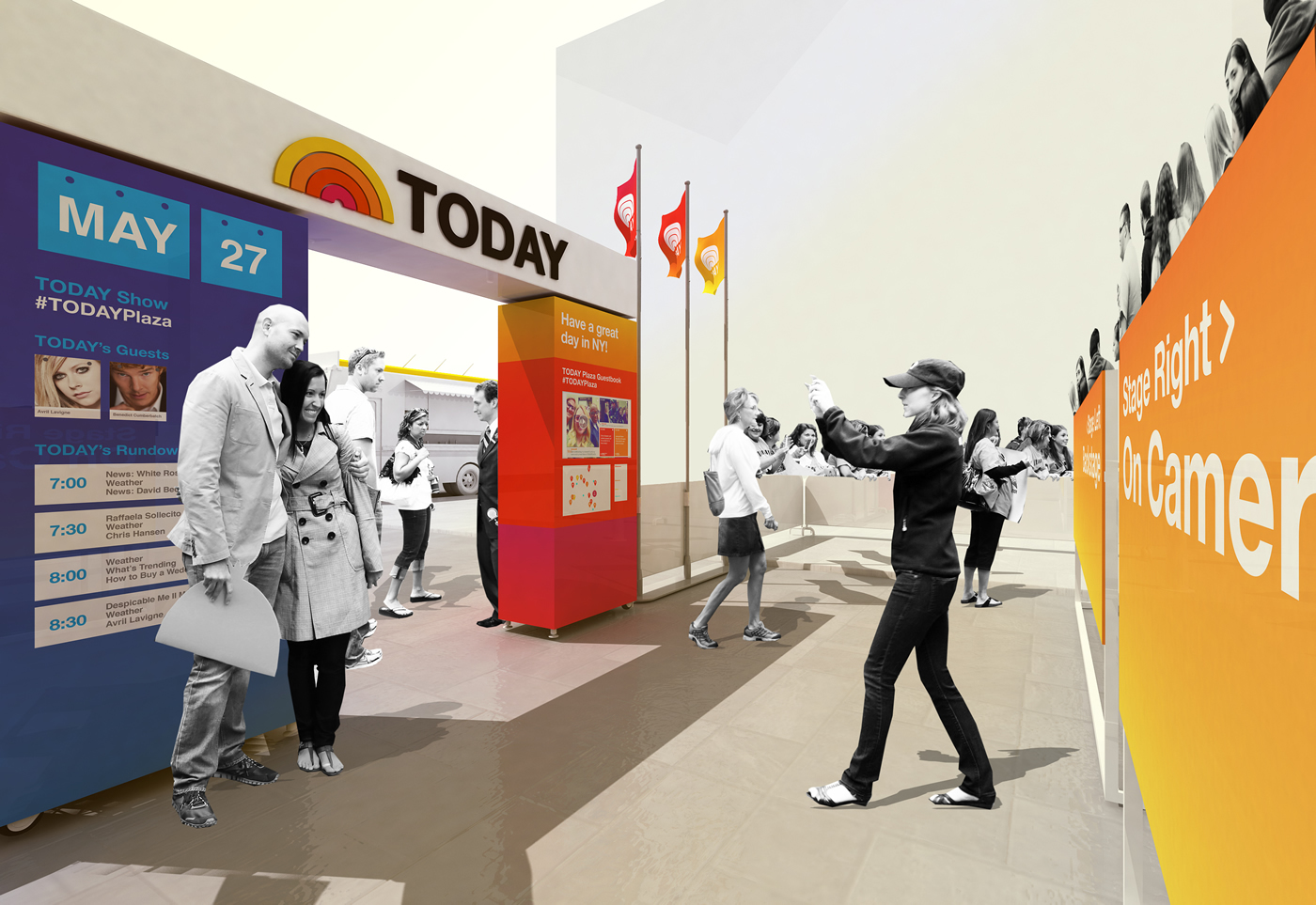
Designing the audience experience
At NBC's TODAY Show, visiting audiences benefit from a welcoming place to cheer.
Long before Tina Fey’s hit show 30 Rock made it a household name, Rockefeller Center was among Manhattan’s most popular destinations. Not least because NBC’s TODAY show starts every morning by filming its gaggle of fans gathered at Rockefeller Plaza.
When TODAY asked IDEO to help design the experience of their guest audiences before, during, and after the show, IDEO's team joined the fray—standing behind the barricades from 7 to 9 a.m. alongside the show’s visitors.
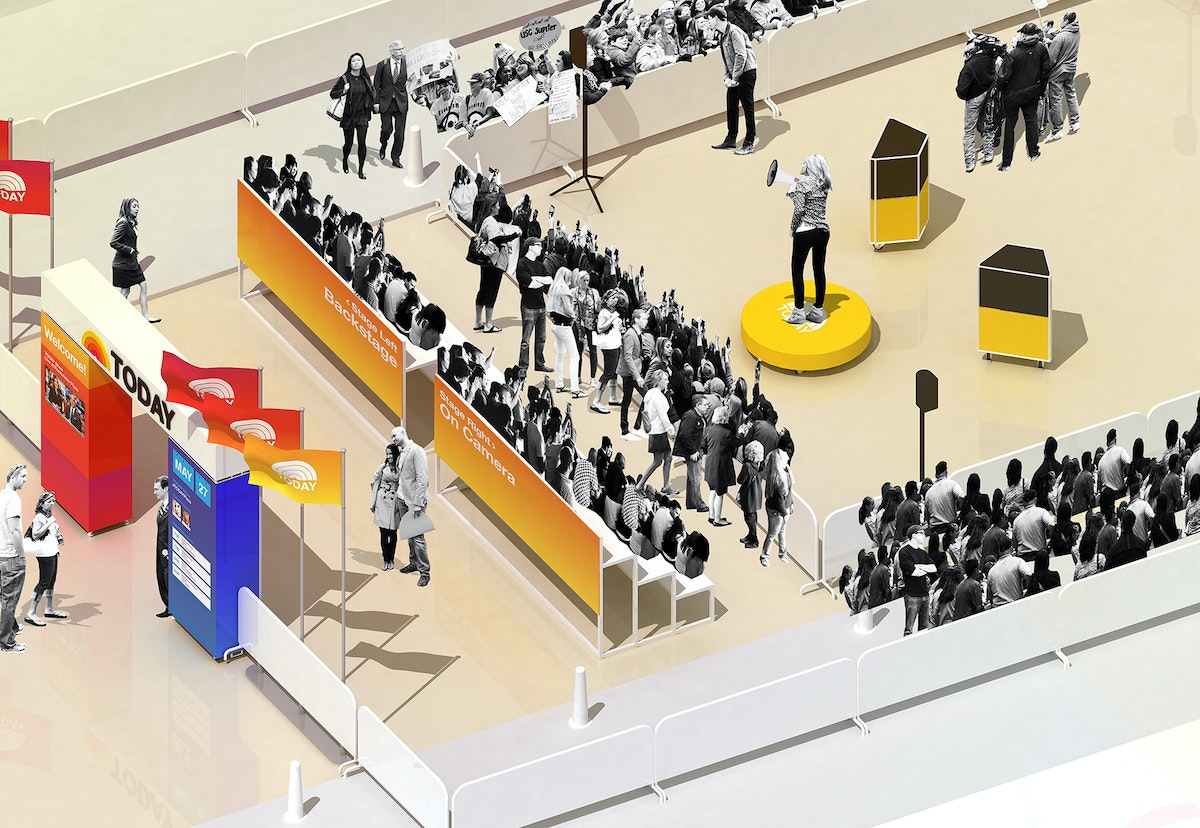
We gathered feedback and learned what was most important to this dedicated audience: to feel a human connection to the people they had shared their mornings with—every day, for years, sometimes for decades. Visitors wanted a celebration, an event they could document and remember, and of course a clear sense of where to go and what to expect once they arrived.
TODAY’s morning time slot offered an additional challenge: The visitor experience would need to be assembled and fully dismantled every morning, leaving Rockefeller Center in its pristine historic state immediately after the cameras stopped rolling.
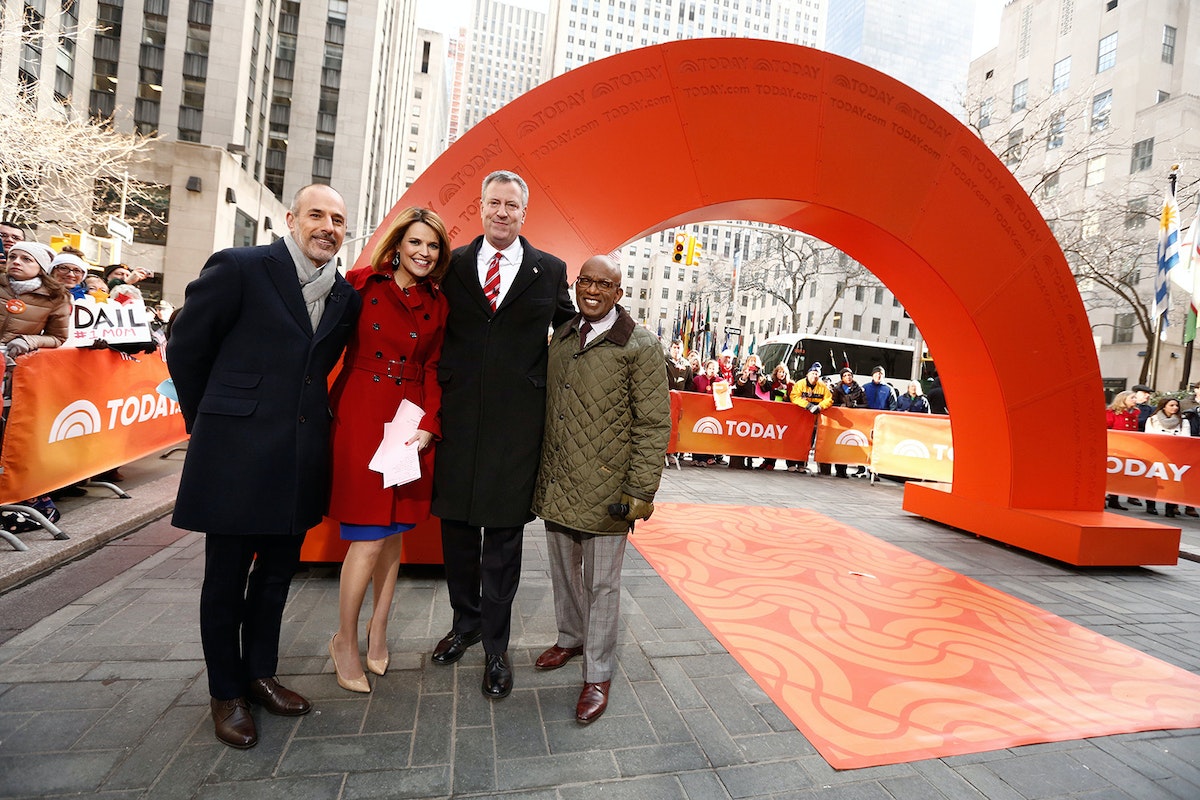
To ensure a solution that would be both satisfying to visitors and viable for the show, IDEO engaged audiences, anchors, and crew in a series of live prototypes that incorporated feedback from all sides and designed a warmer, more human-centered experience for everyone involved.
Visitors to the show can now RSVP at TODAY.com/visit beforehand. When they arrive at the new iconic archway on 49th Street, they are given clear directions by dedicated plaza staff on what to expect during their visit. The audience can also craft posters to display in the crowd, receive commemorative Birthday, Bucket List, or Super Fan buttons that recognize special occasions during their visit, and watch live video and audio feeds to build excitement and momentum when the anchors head into the studio.
From the moment visitors decide to visit TODAY at Rockefeller Center to the weeks after when they share memories with friends, the revamped plaza experience ensures visitors feel cared for and appreciated. They now leave feeling that they’re more than just spectators—they’re the heartbeat of TODAY.
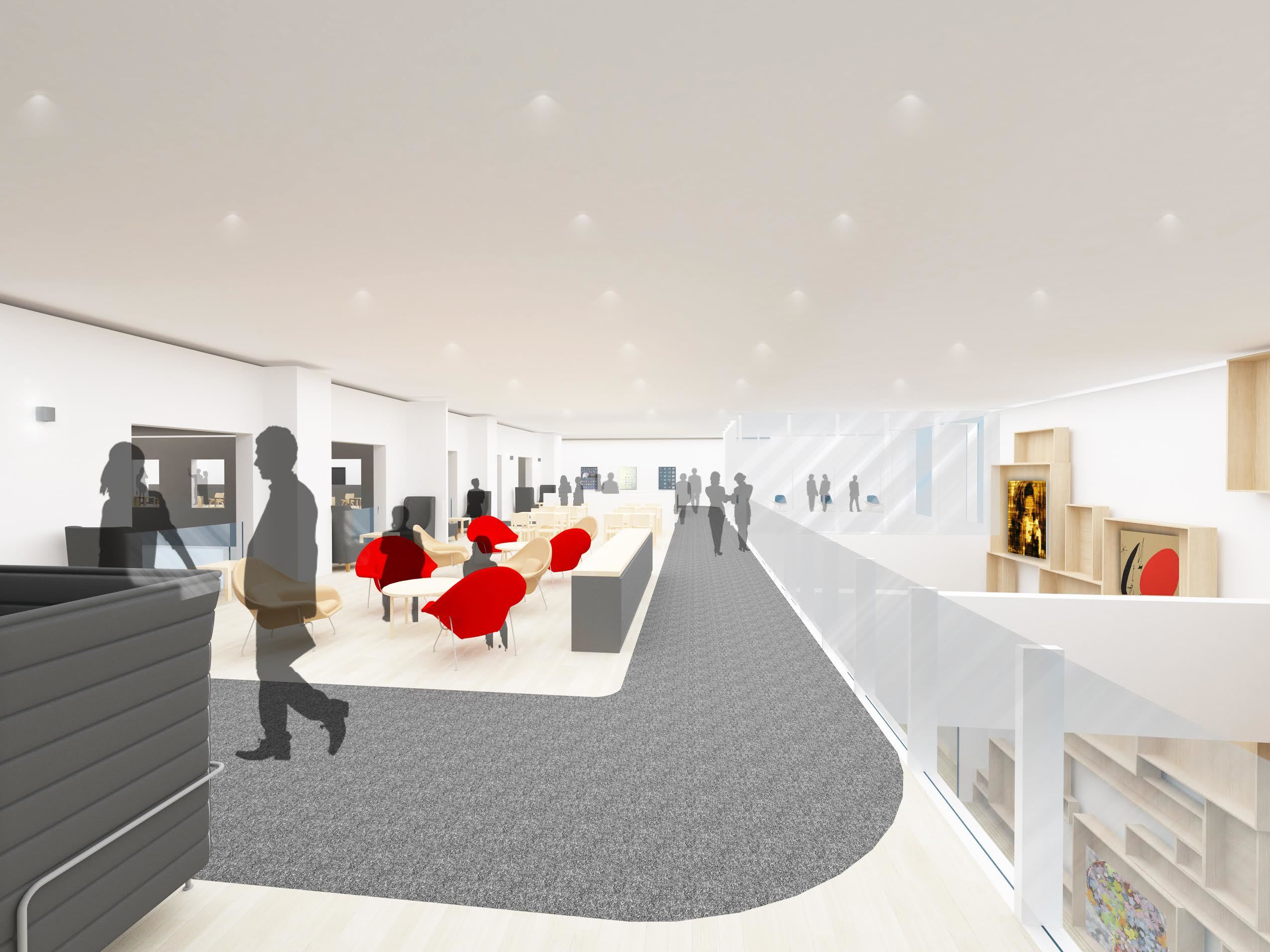
Designing a workspace that inspires
Headquarters that reflect a brand's warmth and transparency.
Brands don’t take bank holidays. A successful company doesn’t just find solutions during strict nine-to-five office hours—the strength of its relationship with its customers is based on openness to good ideas and flexibility around the unpredictable ways that real people live and work.
Over a five-year relationship with GS Shop, a multichannel commerce company based in Korea, IDEO helped the company develop a brand that reflected an emphasis on openness, transparency, enthusiasm, participation, personalization, and distinction.
When it was time for GS Shop to build a new headquarters, it wanted these ideals to be baked right into the structure of the new building, inspiring the interactions and work styles that would define the company’s future. The team started by looking at one of the most fundamental factors in their employees’ day-to-day experience, the physical spaces where they did their work.
The designers broke down all the elements of the space, including everything from flexible wall configurations to nature-inspired fabric choices that brought the outside in. At the core of their decision-making was the intersection of environment and behavior: How could a certain configuration of desks help new ideas to bubble up? How might the transparency of the boardroom walls encourage executives to make more collaborative decisions?
Traditional Korean business culture places a strong emphasis on hierarchy, but IDEO found that teams worked better when they arranged seating areas in ways that decentralized the boss. Coworkers had felt isolated from those in other business units, so the designers created room for impromptu gatherings outside common meeting spaces. Everything from functional needs, like toothbrush storage, to features that encouraged cross-pollination of ideas, like a set of shelves where departments could share examples of their work with other units, was taken into account.
The result was both an entirely new headquarters and a reimagining of the company’s existing building, each closely mirroring the renderings and recommendations provided by IDEO. GS Shop employees are now working in the new spaces, ready to field new ideas wherever—and whenever—inspiration strikes.

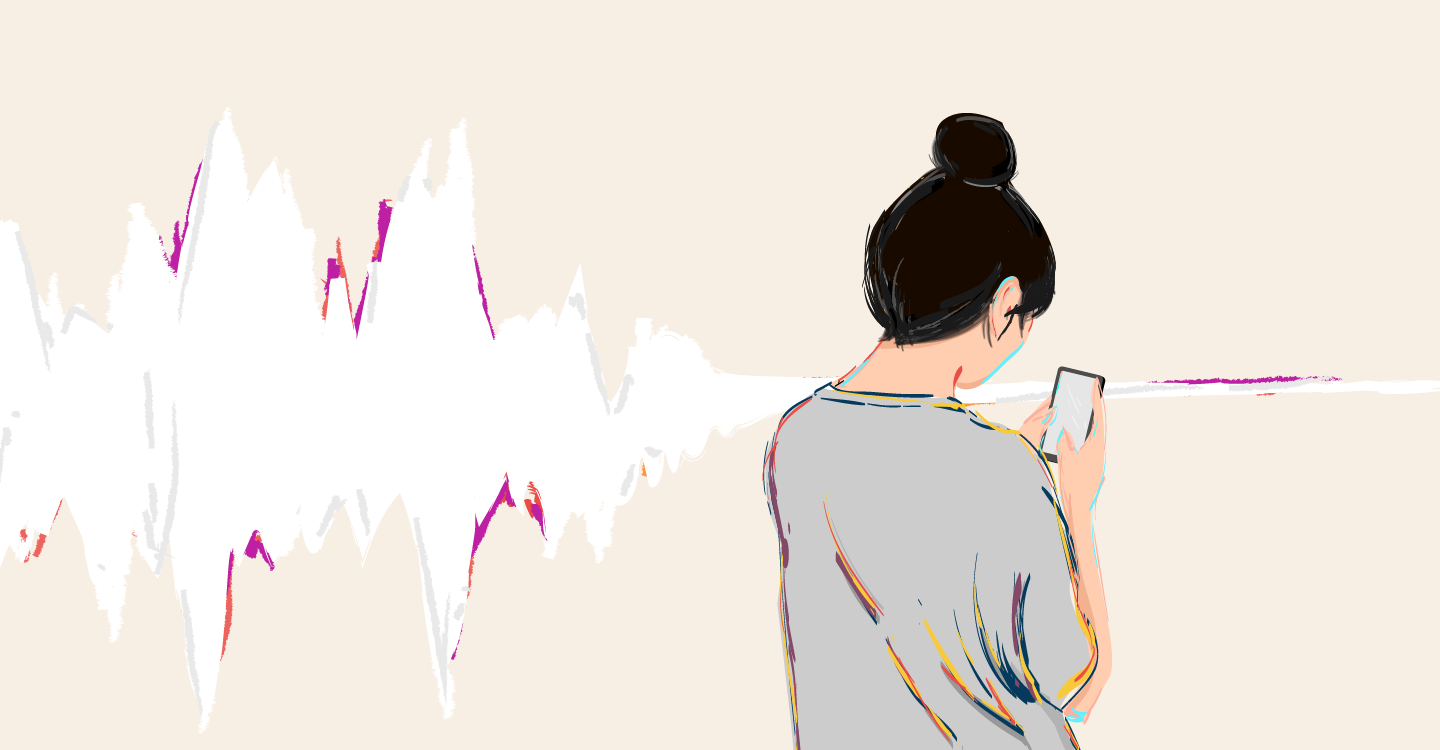
Can an Interaction Designer Survive Without a Smartphone?
What I learned during a month unplugged
First came the jolt of panic, followed by furious digging through my bag, and slapping my pockets, the whole time chanting, “Please say I didn’t forget my phone!” There I was, standing just past the airport security checkpoint on my way to catch my connecting flight home from Japan, totally empty-handed. Bye, phone.
Once I stopped hyperventilating, I had a few hours strapped to an airplane seat to consider the following: What would it feel like to live without a smartphone?
Since I was already stuck without one, I decided to turn my predicament into a personal experiment: one month, no smart devices of any kind. Here’s what those 30 days taught me—and how the experiment made me rethink the way I approach design.
Less might be more
My first observation was that I was suddenly fully engaged with everything—my surroundings, the people around me, even that TV show that I thought I liked, but really just glanced at between text messages. I was pleased to find that conversations suddenly became much more meaningful. When I had my phone in hand, I was always subconsciously waiting for a buzz, and partially disengaged from the people in front of me. And when the buzz happened, I stopped listening to them completely. Without the added distraction, interactions became much more fulfilling.
As an interaction designer, I spend a lot of time creating user-friendly interfaces, but this experience made me wonder exactly how accessible things should be. Now I ask myself, are there elements that are competing with instead of enhancing an experience? Would a user benefit from something just a little less sticky?
Lose the escape hatch
Some of you may remember a time when you couldn’t just text your friend to say that you’re running late or *cough*cough* aren’t feeling well and can’t make it. We’re all guilty of it. The beauty of not having a phone was that it forced me and my flaky friends and family to pre-plan and be on time*. By removing the option to be late or back out, there’s much less to think about besides showing up and enjoying each other’s company.
When we’re designing technology, do we always need a back or undo button? How does that affect outcome and behavior, and can we use it to our advantage? For instance, with questionnaires, how do answers vary if there’s no way to change them?
*side note: Do look up where you are going ahead of time, because no phone = no maps.

It really, truly can wait
At the beginning of the experiment, I had a few phantom limb moments where I went to grab my phone to check tomorrow’s weather, or look up the definition of apocryphal, or text that random gif to a friend. In most situations, my first instinct was to whip out my phone. Not having access to everything forced me to slow my pace, and made my world feel a whole lot smaller, and, in some ways, less overwhelming.
In an era where you can shop for a pair of pants online and have it delivered to you within the hour, are there moments that can be enhanced by building in pause? What can a little friendly friction do to help slow things down to enhance and experience?
Automation isn't always rewarding
There’s no question that the smartphone affords us many conveniences—I’ve undoubtedly plundered every mobile subscription, delivery, and transaction possible. But streamlining every aspect of my life left me longing for those small moments of accomplishment that I used to get from figuring it out on my own. For instance, without access to ridesharing services, I found myself walking or taking public transit everywhere. Great for my lungs, the environment, and my wallet. The same goes for social sharing: Much of the reason we share online, is for the reactions we get in return. And by moving from an asynchronous share to a synchronous share, you’re rewarded by actually seeing someone laugh instead of an emoji reply posted 34 minutes later. Mic drop.
Just because we can automate, doesn’t always mean we should. The unpredictability of human behaviors is what makes the mundane more interesting, after all. How can we integrate these real life moments into the designs we create?
Since the big experiment, I’ve rejoined the flock and am now wielding a shiny, new phone with a notch in it. But I haven’t forgotten the lessons I learned—or how important it is for designers to get out of their comfort zone. And next time I need a little inspiration, I may just leave it at home.
As an interaction designer, I have a love-hate relationship with my phone. On one hand, my job requires instant access to apps, prototypes, Slack... the list goes on. On the other, tech addiction is real. Even if I might try to ignore the invisible handcuffs that tie me to my phone, I was always reaching for it.
Until, of course, I lost it.

Thoughtless Acts: Driving in Style
Thoughtless Acts: Driving in Style. The intuitive ways we adapt and react to things in our environments
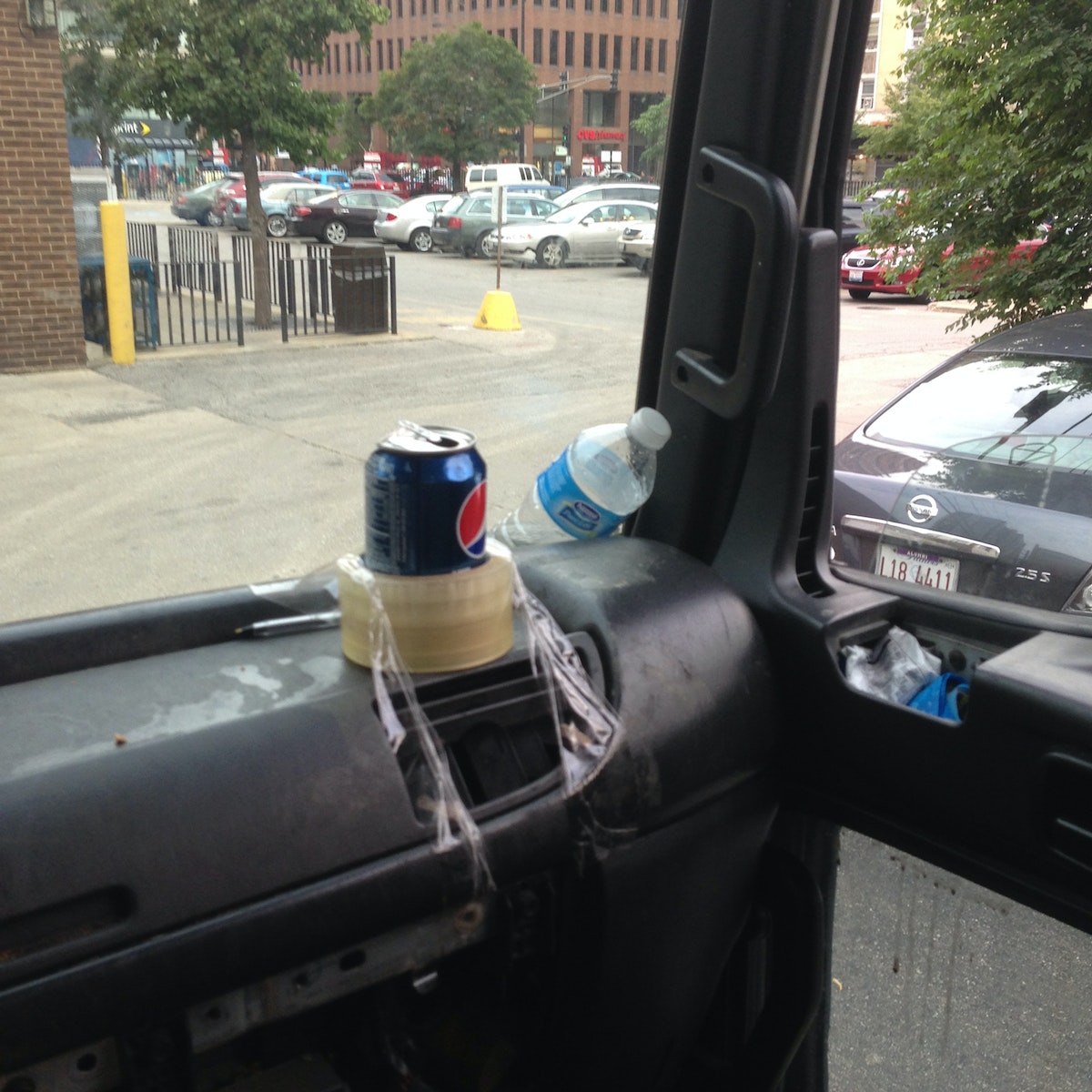
Moving trucks aren’t always built for convenience. After all, they’re meant for hauling cargo, not a luxurious drive. But they are chock full of packing tape. When I hopped in the front of our mover’s truck to pick up some furniture at the storage unit, I smiled to see this ingenious workaround. A cup holder for your soda pop using a roll of packing tape, secured with—what else—packing tape.
Human-centered design requires us to observe human behavior with beginner's eyes, so that we can spot the innate ways people interact with the world around them. We call these intuitive and unconscious reactions Thoughtless Acts, and IDEO designers collect photos of them to inspire their work.

Why I’m Building a TV For My Baby
I am making a TV for my future son. It’s nearly finished, though I’m still working out a few kinks in the scheduling API, and I need to solder the hardware channel switcher. It’s a side project that’s been simmering for several months now that I plan to release soon—not unlike my baby.
The idea came to me on a Saturday in June, before I had told anyone I was pregnant. I was flopped out on a sandy couch with my niece and nephew after a day at the beach, their level of post-sun exhaustion matching my first trimester fatigue. Their mom, my sister-in-law, recognized an opportunity to steal away for a shower, and put on an early 80s episode of Mr. Rogers’ Neighborhood. Both of these kids have been raised mostly screen-free, and their mom was just starting to let them watch what she called “slow TV”: mostly nature documentaries, the occasional Aquanauts episode, and of course, Mr. Rogers.
This particular episode began with Fred Rogers trying to fix a leaky faucet with a new rubber washer. But he didn’t have the right size washer, so he goes to visit a local handyman. Rogers asks some questions about a shovel the handyman is fixing, and then is shown a wide selection of washers, and takes his time picking out one of the correct size. This takes place over the course of roughly 10 minutes, in real time. It’s a prime example of “slow.”
My niece and nephew were transfixed, mouths open. Seeing Mr. Rogers select a piece of kitchen hardware appeared to be the most incredible thing they had ever witnessed.
I want the same thing for my son.
I’m a software designer with a background in web development and computer science. I grew up loving computers and the internet. We had an Apple IIE for as long as I can remember, and my engineer dad taught me BASIC as soon as I could read. My first introduction to the internet was when our family got a CompuServe subscription in 1994. I couldn’t do a whole lot on it, but I’d jump into chat rooms and talk about the X-Files and Monty Python. Technology was always a part of my life.
But when I look back on all this, I realize how lucky it was that I got to grow up in this particular moment of technological disruption. I wasn’t plopped into a world governed by technology—the internet’s control over the world grew right along with my own.
Now, though, I keep reading articles about the ways the internet is changing our brains. Social networking is making us more isolated and risk-averse. The current generation of teens growing up, digital natives all, are the safest and the most depressed yet. And I worry about what it will mean for my child, born into a world moving at the speed of Twitter. This anxiety has become more real and intense every week of the 39 I’ve been pregnant. I assume it will let up sometime in the next three or four decades.
Lately, I’ve been thinking a lot about calm technology—a term coined by Mark Weiser and John Seely Brown of Xerox PARC in a 1995 white paper, researched further and developed into a book by Amber Case. Here are the Cliffs Notes: Calm technology should require the smallest amount of attention possible from the user; it stays at the periphery rather than being center stage; and it should “amplify the best of technology and the best of humanity.” It’s that last one that stuck with me.
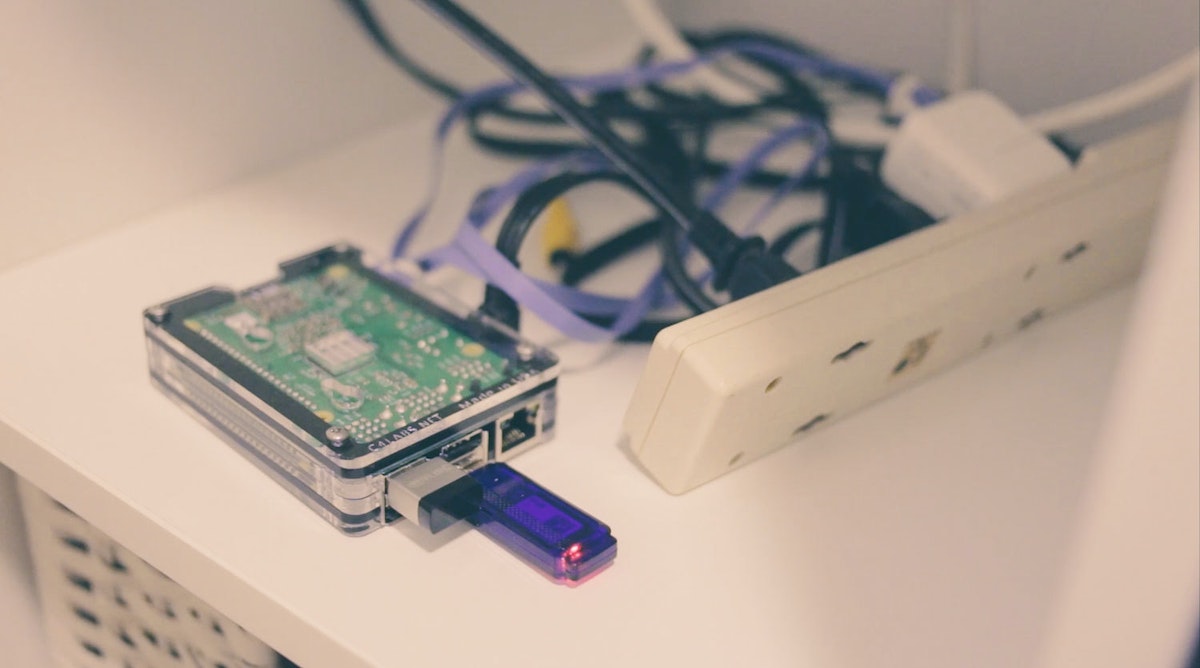
I don’t have to be a luddite to protect my child—I can use my skills as a technologist, including basic hardware hacking, to moderate the world I want my child to live in. By creating this TV, I can give him the calm environment I was lucky to grow up in. While he’s small, his TV will be a 30-pound, wood-paneled monster that I found the on the street, with a dial and 12 channels he can flip between—no more, no less—all programmed by me. So far, none of the content goes above a PG-rating, and one channel is all Mr. Rogers, pleasantly chatting with his handyman neighbor, carefully choosing just the right washer.
Eventually, my son will know about Netflix and binge-watching. He will know about YouTube and those bizarre AI-generated children’s shows. He will know about games that have been designed by the best minds of our generation to be more addictive than the cigarettes I hope he’ll avoid when he’s older. He will know about so much more that I can’t begin to predict. But for a while, he’ll be blissfully unaware, able to grow and think and develop at a child’s pace.
I am making a TV for my future son. It’s nearly finished, though I’m still working out a few kinks in the scheduling API, and I need to solder the hardware channel switcher. It’s a side project that’s been simmering for several months now that I plan to release soon—not unlike my baby.
Tools and Insights for Enhancing the Lives of Older Adults
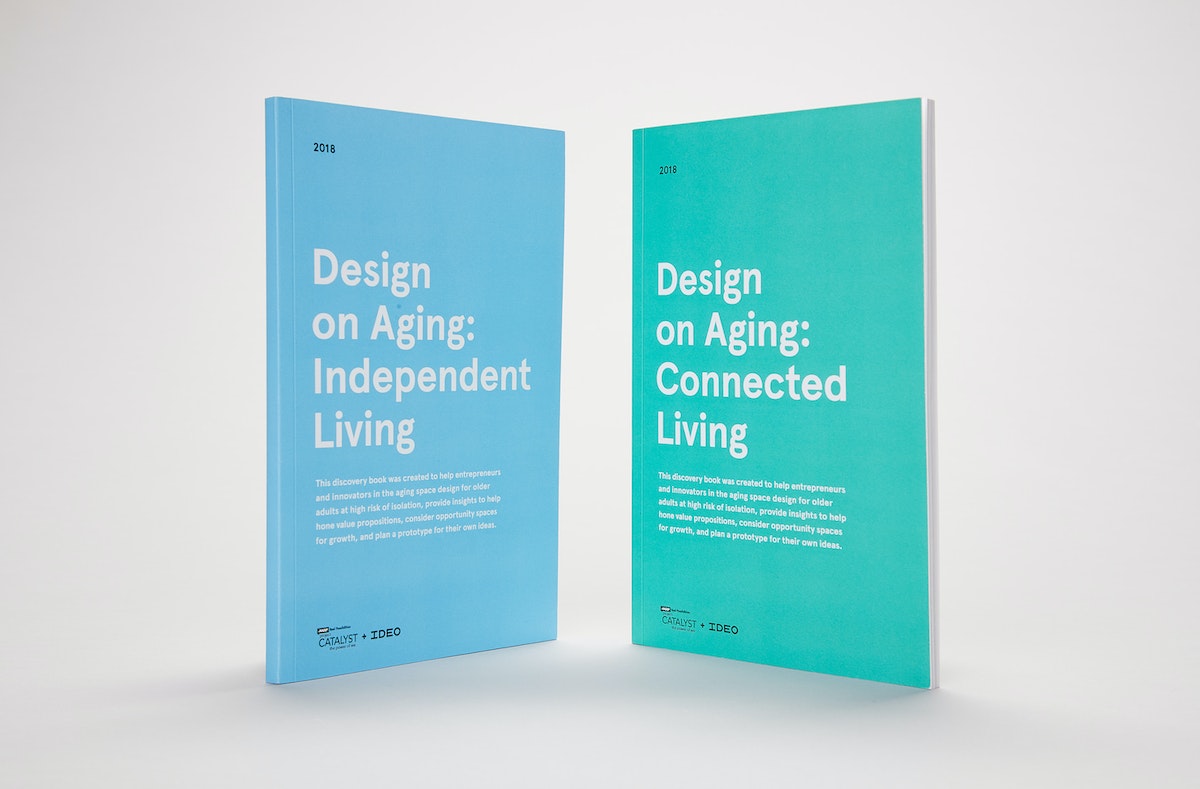
The Design on Aging booklets give entrepreneurs and organizations tools for designing human-centered products and services for older adults.
The Design on Aging booklets give entrepreneurs and organizations tools for designing human-centered products and services for older adults. The two publications, Connected Living and Independent Living, explore how design can help older adults stay socially connected and physically mobile as they age. Presented alongside 4 distinct profiles representing the behaviors and mindsets of people over 50 years old at high risk of isolation, the booklets provide practical frameworks and design exercises to help organizations generate impactful solutions.
IDEO developed the Design on Aging booklets with Project Catalyst—a pioneering research collaboration between AARP, UnitedHealthcare, Pfizer, and MedStar Health.
Download the books on Independent Living and Connected Living.

Lindsey Turner
I’m passionate about building brands, products, and experiences that help organizations show up with meaning and momentum.
I help organizations cut through complexity by shaping how they show up, through brand strategy, identity, and storytelling.
Working at the intersection of brand and business, I bring an editorial eye and a bias toward making—turning ideas into tangible experiences that people can understand, trust, and believe in.
My work spans government, healthcare, financial services, media, and consumer goods, from launching Gen Z-focused ventures to building innovation labs and reimagining legacy brands. I relish moments of ambiguity and enjoy translating across teams, perspectives, and priorities to move ideas forward.
I started my career in editorial and digital design, shaping cross-platform experiences and identity systems in publishing and agency environments. That foundation still shapes how I work today: I’m detail-oriented, collaborative, and overreliant on the Oxford comma. I hold a BFA in Visual Communication from the School of the Art Institute of Chicago.

Rachel Young
My work helps organizations see who their products aren't working for—and build the will and the tools to do something about it
For 25 years, I've asked the same question: Who does this design exclude—and what are we going to do about it?
My work spans human-centered strategy, inclusive design, and qualitative research, with clients ranging from Microsoft, Google, and Verizon to the National Science Foundation, and San Francisco Unified School District.
Before IDEO, I taught elementary school in East Palo Alto and spent a decade doing design work with social service organizations—where I learned firsthand what it costs people when systems are built without them in mind.
I am currently writing User Error, a nonfiction book about digital access and the design decisions behind it. I live in Oakland, California.

Brian Pelsoh
I lead with craft, ensuring our work is creatively excellent: rooted in deep human insight and imagination, while also grounded in the realities of business and technology.
My expertise spans brand, communication, and product design across tech, education, the arts, and social impact.
I believe great work demands both high-level vision and obsessive attention to detail, and only happens through collaboration.
I bring an inclusive, hands-on approach and a deep understanding of business, which enables me to consistently deliver excellence while always asking why.
Before joining IDEO, I worked at the brand firms Pentagram and VSA Partners. I began my career as a designer, leading teams at the School of the Art Institute of Chicago and the Milwaukee Art Museum. I hold an MFA in graphic design from Maryland Institute College of Art and a BFA in communication design from the Milwaukee Institute of Art & Design, and have taught at some of the best design schools in the US.

Tony Wong
I am responsible for IDEO’s long-term success in China and working with clients to use design as a tool to enable growth.
I am responsible for IDEO’s long-term success in China and working with clients to use design as a tool to enable growth. Specifically, I have helped Chinese companies design holistic brand solutions through the development of their products, communication, services, and innovation teams, and I have helped multinationals expand their presence and influence in China.
I advise global leaders on developing China-led innovation and capabilities.
In over 15 years in IDEO Shanghai, I have worked on projects that use design to elevate the quality of the experience of healthcare products and services, streamline processes that increase productivity, create spaces and programs that promote and enable inclusive communities, and build next generation mobility solutions that are planet-positive.
Before joining IDEO, I worked at Philips Electronics and the Electrolux Group in Italy, the Netherlands, and Singapore on a number of breakthrough commercial products. I am a member of the Young President Organization in Shanghai.

Building a personal AI for the messiness of life: Sida Li
Most AI products today are built for work—a space with clear problems and established systems. One founder noticed a gap: personal life is messier, harder to systematize, and mostly left behind by the AI boom. So she built Cue, a personal AI that lives inside iMessage and group chats, to go where the other tools haven't.
In this episode, Becca Carroll, IDEO's Chief Strategy Officer, talks with Sida Li, co-founder and CEO of Shared Context Lab, about staying anchored to a human need while the technology around her keeps changing shape, why she treats her business model with the same rigor she'd bring to a product, and what it feels like to build a company at this particular, disorienting moment in AI.
The conversation also gets into how Sida makes design decisions: the language Cue uses to describe itself, the tradeoffs behind building inside iMessage instead of a new app, and a real story about a business idea that didn’t pan out.
This is the second in a two-part series profiling founders from IDEO's Startups-in-Residence program. The first conversation is with Johannes Seemann, founder of Sooner, on designing GenAI for the emotional side of money.

Designing GenAI for the emotional side of money: Johannes Seemann
Most personal financial tools are built to run the numbers and optimize towards a budget. While that works for some, most people experience money as a lived relationship that does not neatly fit into a spreadsheet. Johannes Seemann and Becca Carroll discuss why money is emotional before it is mathematical, and what a human-centered approach to building a generative AI financial product looks like in practice.

The curious leader's edge in uncertainty: Scott Shigeoka
Mina Seetharaman talks with Scott Shigeoka, author of Seek and Head of Curiosity Cultivation at the Eames Institute, about what distinguishes genuinely curious leadership from performative curiosity, how power dynamics shape curiosity, and why practicing curiosity can restore energy rather than drain it.

How constraints make us more creative: David Epstein
Mina Seetharaman talks with David Epstein, author of Inside the Box and Range, about why total freedom often produces average work, how leaders can design useful limits on purpose, and what organizations such as General Magic and Pixar reveal about the relationship between boundaries and creativity.
Looks like you might be in search of something very specific?
Or reset the filters above and try another angle.
Here’s some random inspiration

Podcasts about creative leadership

Articles about the power of prototyping
