
.svg)


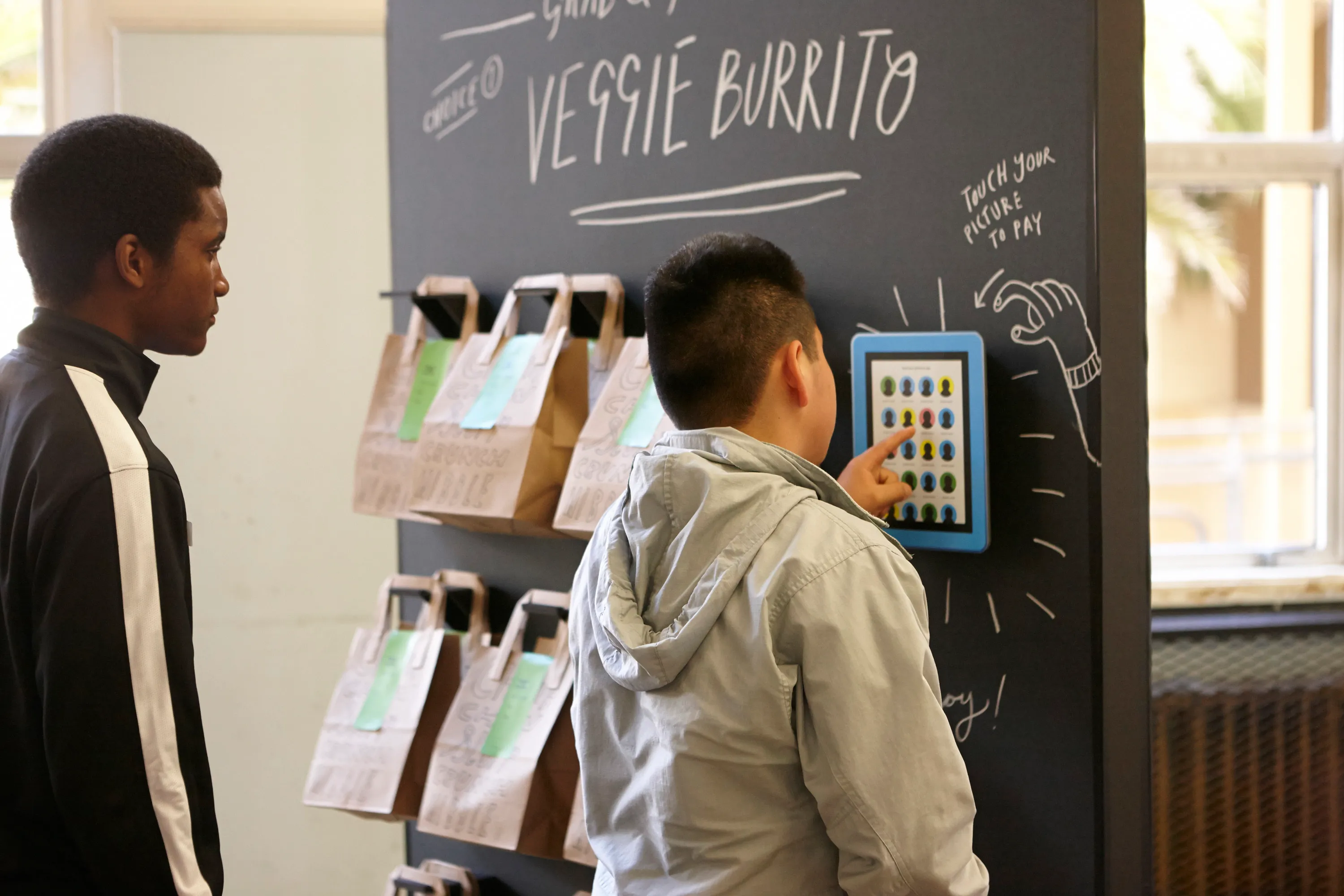

A student-centered cafeteria experience
Reimagining the food system in a large district.
To bring students healthy food at school, San Francisco Unified School District had already hired Revolution Foods, a caterer that serves some of the highest-nutrition meals in the nation. But when the lunch bell rang, 72 percent of those who could afford lunch weren’t showing up; students didn’t want to wait in the long lines or rush to finish, so they headed off-campus to eat.
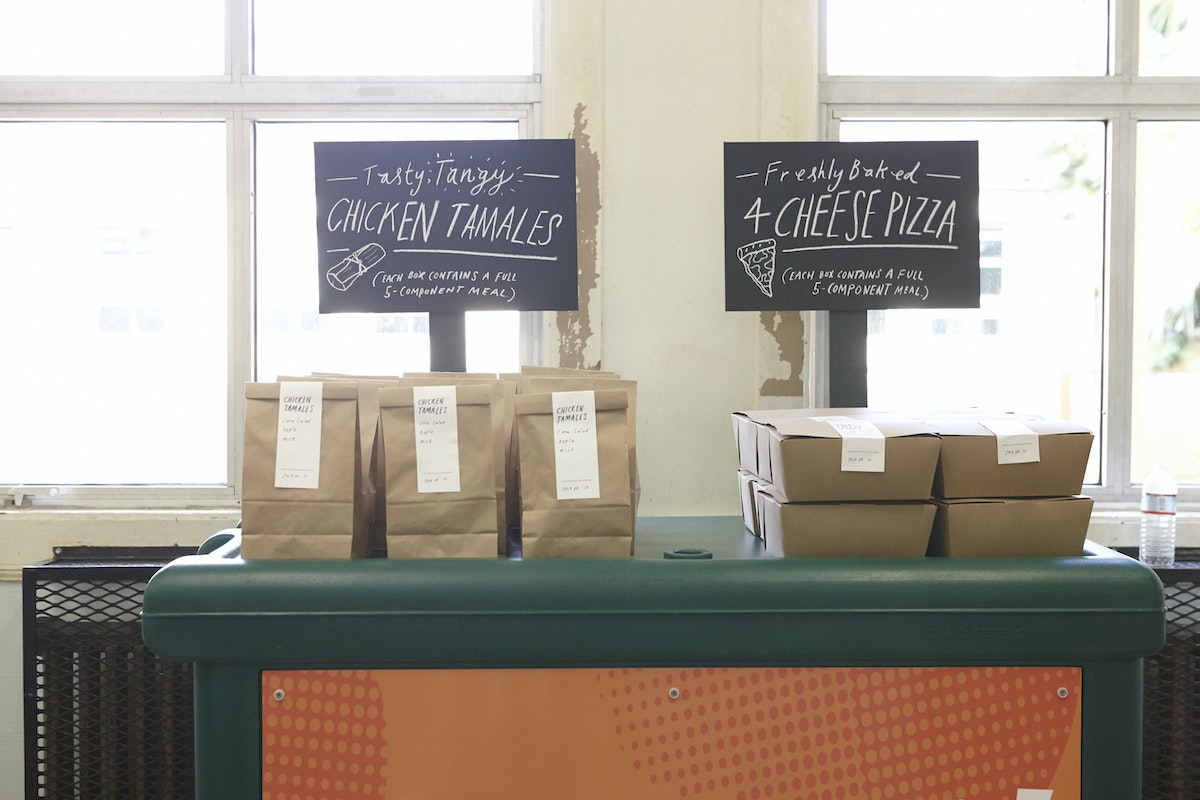
Working alongside more than 1,300 students, parents, union leaders, nutrition staff, board commissioners, principals, teachers, and community groups, IDEO and SFUSD redesigned school lunch. Together, they developed recommendations for three age-appropriate dining experiences, from communal eating to student-designed spaces to new technology platforms, and worked to develop a robust business model.
In September 2013, the San Francisco Unified School Board expressed unanimous enthusiasm for IDEO’s work, clearing the path for this new vision of student-centered lunch to take root.
You can learn more about the cafeteria, and hear firsthand from the students, in this immersive, interactive story.
Redesigning where we work and learn
An evolving relationship between Steelcase and IDEO that positions the company as a leader in shaping our work environment.
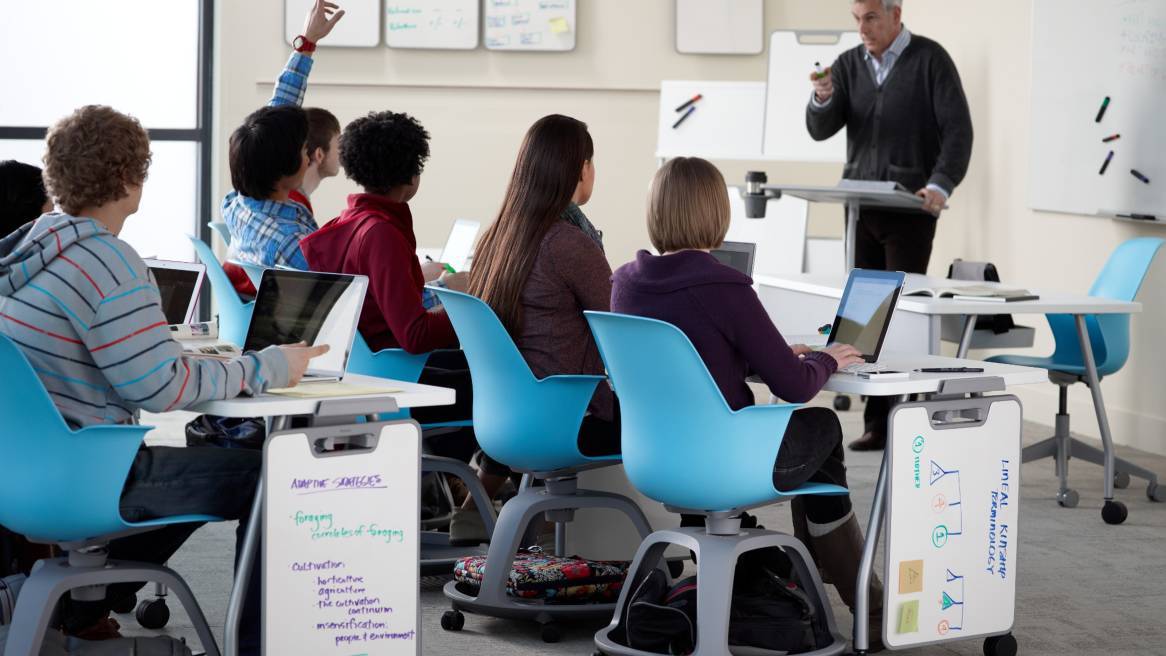
Steelcase and IDEO have been collaborating for more than 25 years. The relationship has influenced furniture design across a range of environments, from work spaces to hospitals to schools, and has resulted in numerous design awards for iconic pieces like the Node Chair for classrooms and the innovative modern office chair Leap WorkLounge.
At the heart of the relationship lie trust and a spirit of collaboration, said IDEO founder David Kelley, allowing the space for innovation. “It has to be the collaboration between our inherent innovation capabilities and their extraordinary internal knowledge about the market and what they do best,” Kelley said. The way IDEO began working with Steelcase decades ago has influenced the way they continue to work today, involved in all areas of the business, from design and engineering to strategy and marketing.
The first collaboration in 1989 was for a new Steelcase division called Details, and featured desktop products to go along with its already successful line of office furniture. From the beginning, IDEO founder David Kelley and a group of designers were involved in helping Steelcase with decision-making on every level of the new division, from product strategy to hiring and everything in between. The particular blend of strategy, design, and engineering used to help Details become successful actually became the prototype project for the future IDEO, and is the blueprint for how IDEO works today.
What followed were a series of projects in which Steelcase and IDEO explored moving away from the traditional office cubicle toward furniture that was more architectural and open. More than 10 years ago, Steelcase noticed that the way people worked was changing from static work in offices to more fluid environments that were technology-enabled with laptops and mobile phones. This insight led to two collaborations, Room Wizard and media:scape, design efforts that captured this changing landscape by extending intelligent work to be supported by digital products, not just physical ones.
Jim Hackett, former CEO of Steelcase, said that an early brainstorming exercise in IDEO’s Palo Alto studio made him realize the power of a human-centered design approach. “They asked me to come to Palo Alto for a brainstorming exercise, so I went through the literal exercise that IDEO was having clients do at the time,” Hackett said. “As I was cutting foam core on the floor of one of the studios, I was thinking: I would never work the same way again after doing this. Not just designers should work like this, but anybody who is a knowledge worker should work like this.”
The collaboration’s many successes had a profound impact on Steelcase, and on Hackett personally: “I’m so humbled, I can’t even express it. I can’t tell you how many waves of joy come over me when I’m at IDEO. It’s just an extraordinary part of my life.”
Over the years, the two companies have been in nearly daily communication, a practice that has informed the work of both. While Hackett brought Steelcase’s perspective of corporate boardrooms and running a global company, Kelley and IDEO were working in the most innovative place in the world, saturated in design. Both companies agree that neither would be the same today without the experience gleaned from the other.

Some of the projects include:
RoomWizard
Aiming to connect the convenience of digital technology to physical spaces, the teams designed RoomWizard, a web-accessible touch-screen display that provides the real-time status of shared meeting rooms, simplifying the process of reserving and managing those spaces.
Leap WorkLounge and Ottoman
Building on their earlier work on the Leap Chair, the teams created a work chair with the comfort and style of a classic club chair, a luxury Leap Chair that takes work away from the desk.
i2i Chair
In researching the needs of a growing number of collaborative settings, Steelcase identified an opportunity to combine task and lounge seating. Named for the collaboration it enables, the i2i chair supports a variety of postures, including sideways, reclining, perching, and leaning. Winner of the Spark Gold Award, 2010, and the IDEA Silver Award, 2009.
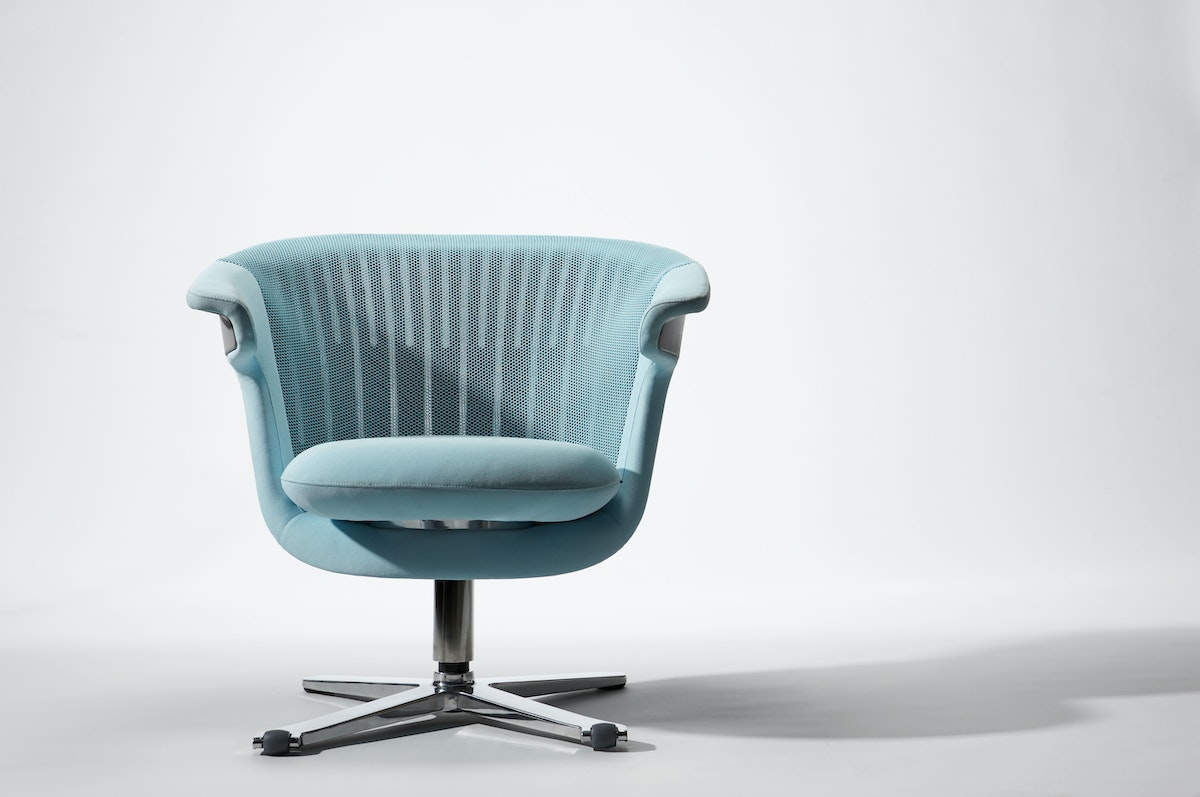
Amia Chair
Steelcase and IDEO designed a task chair with modern ergonomic capabilities that accommodated a wide range of body types at a lower price point. Winner of the IDEA Bronze Award from IDSA and BusinessWeek, 2009.
media:scape
Steelcase asked IDEO to help evaluate and design a “walk up and connect” experience that merged furniture and technology to help teams access and share information. Designed to look light, open, and inviting, media:scape used a pedestal table with cleverly embedded hardware and interactive technology to foster group work. Winner of the IDEA Bronze award for Office & Productivity, 2011.
Node Chair
IDEO collaborated with Steelcase to design a platform for improving the classroom experience. The final product, dubbed the Node chair, has received praise for promoting student collaboration, allowing educators to reconfigure classrooms to fit different teaching styles, and enabling institutions to save money by making spaces more flexible and accommodating for varied uses. Winner of five design awards.
Watch: A love letter to Node.

Planned Parenthood's new way forward
Designing innovative, patient-centered experiences for a healthcare pioneer.
A great healthcare experience shouldn’t be a luxury. It should be available to everyone, regardless of who they are, where they live, or what they need.
Planned Parenthood health centers have opened their doors to every woman and man for 100 years with this core conviction, offering services ranging from pap tests, cancer screenings, and breast exams to contraception, treatment for sexually transmitted infections, counseling, and education.
As the healthcare landscape continues to shift, Planned Parenthood is evolving to lead the progress. For the past year, the organization worked side by side with IDEO to rethink and prototype a patient and employee experience that elevates individuals and their health and well-being.
Together, the teams designed a number of patient and employee interactions and corresponding prototypes that address different patient needs: education, personalization, connection, and support for any decision.
Concepts in Development
These concepts are being rolled out across health centers around the country:
Welcoming Waiting Areas
To help set the right tone for patients from the time they enter the door, the teams designed waiting rooms that offer different types of environments for different needs. The Hub is an area that transforms the passive waiting room experience to a greeting area that’s staffed by knowledgeable guides who help orient patients, and quiet nesting spaces for reflection and privacy. Patients can spend time with friends and family in a social, kid-friendly common area, and those who want to get involved to support Planned Parenthood’s mission can learn about health and advocacy information. This modular design toolkit can adapt to the individual buildings, budgets, and community needs of any existing Planned Parenthood health center.
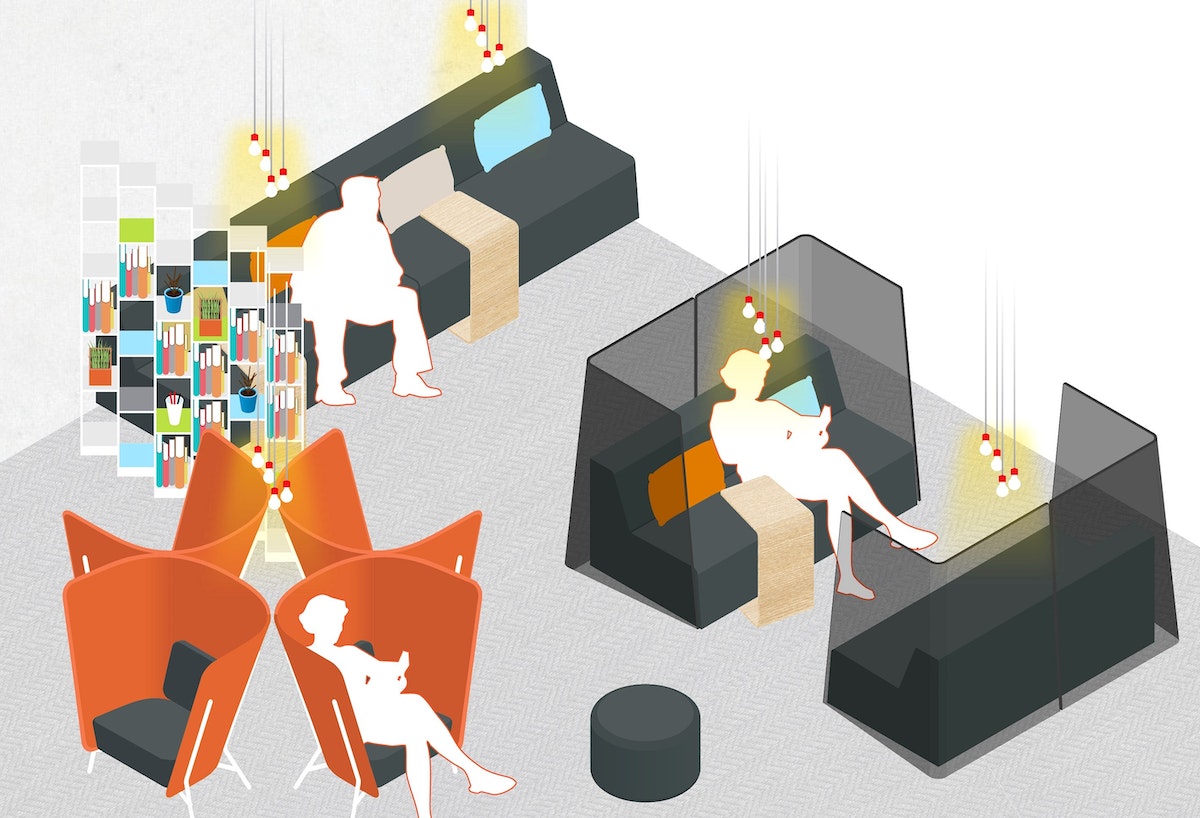
Restorative Recovery Rooms
For women who are recovering from surgical procedures, small thoughtful details have a magnified positive impact. Redesigned recovery rooms have been separated into semi-private spaces, accommodating loved ones who want to join patients after a procedure. Soothing colors and soft, warm fabrics create a comforting environment, and service gestures including cards with words of support and encouragement from staff reinforce Planned Parenthood’s promise. A take-home kit provides clear information about what to expect during recovery and recommendations for follow-up care.
Unifying Employees
Because the heart of Planned Parenthood is its dedicated employees, we developed and launched an engagement and training program that provides staff with the tools and support they need to do their best work. In This Together, an employee engagement training, prepares staff to work with a vastly diverse community, reduce stigma around health choices, and empower patients to take control of their care. It’s based on a clearly defined set of workplace values and service standards, common goals that help employees across the global organization work together to provide top-notch experiences at every location.
Vision for the Future
These concepts are in varying stages of development, with plans to launch coming soon.
Patient-Physician Tool and Educational App
Visit Companion is a prototype for a suite of digital tools that help patients learn about their reproductive health choices and create personalized plans with their clinicians. While they wait, or anytime before a visit, patients can learn the answers to common questions related to their appointment and see side-by-side comparisons of their care options. The app uses familiar language and symbols to describe symptoms and side effects, and it provides a record of what was discussed during the visit as well as reminders for follow-up appointments.
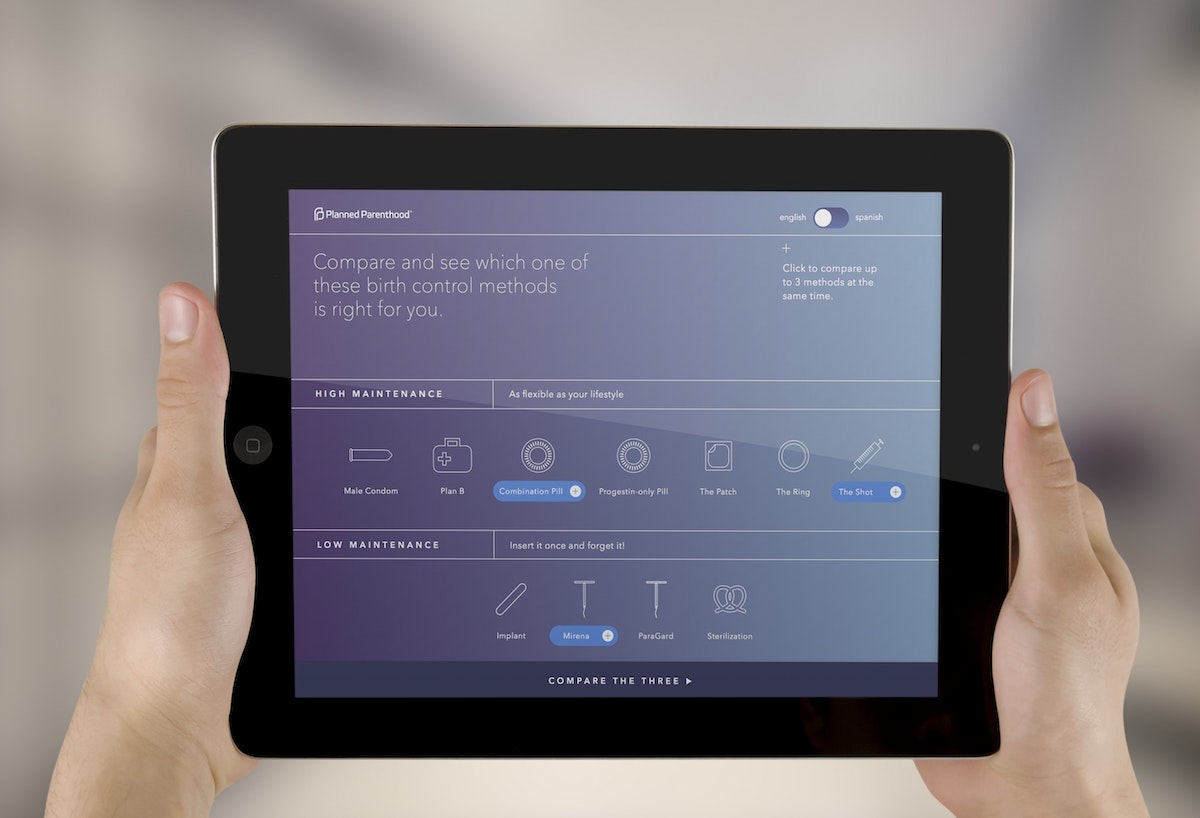
Simplified Medical Forms
For the 2 million-plus patients who visit Planned Parenthood health centers, there’s an opportunity to make appointments more convenient and straightforward. Currently in prototyping stages, Friendly Forms is an easy-to-understand, interactive digital questionnaire written in simple, conversational language that was designed by replicating how Planned Parenthood clinicians speak to their patients. The forms adapt as patients answer questions, giving only the prompts that are relevant. Patients will be able to complete Friendly Forms any time before their appointment, so it’s easier to complete the forms accurately.
Holistic Women’s Health Care
Women who rely on Planned Parenthood for their sexual and reproductive healthcare can benefit from having trusted clinicians guide their care throughout their lifetime. Through the Well Woman Plus program, Planned Parenthood will connect women to trusted providers for care beyond physical exams and birth control consultation. Clinicians will use interactive digital and physical tools to map out lifelong health care milestones and help patients think proactively about their future, from family planning to preventive screenings.
To learn more, go to PlannedParenthoodExperience.org.
Find out more about Planned Parenthood's approach to creativity in this Q&A with executive vice president and chief brand officer Dawn Laguens.
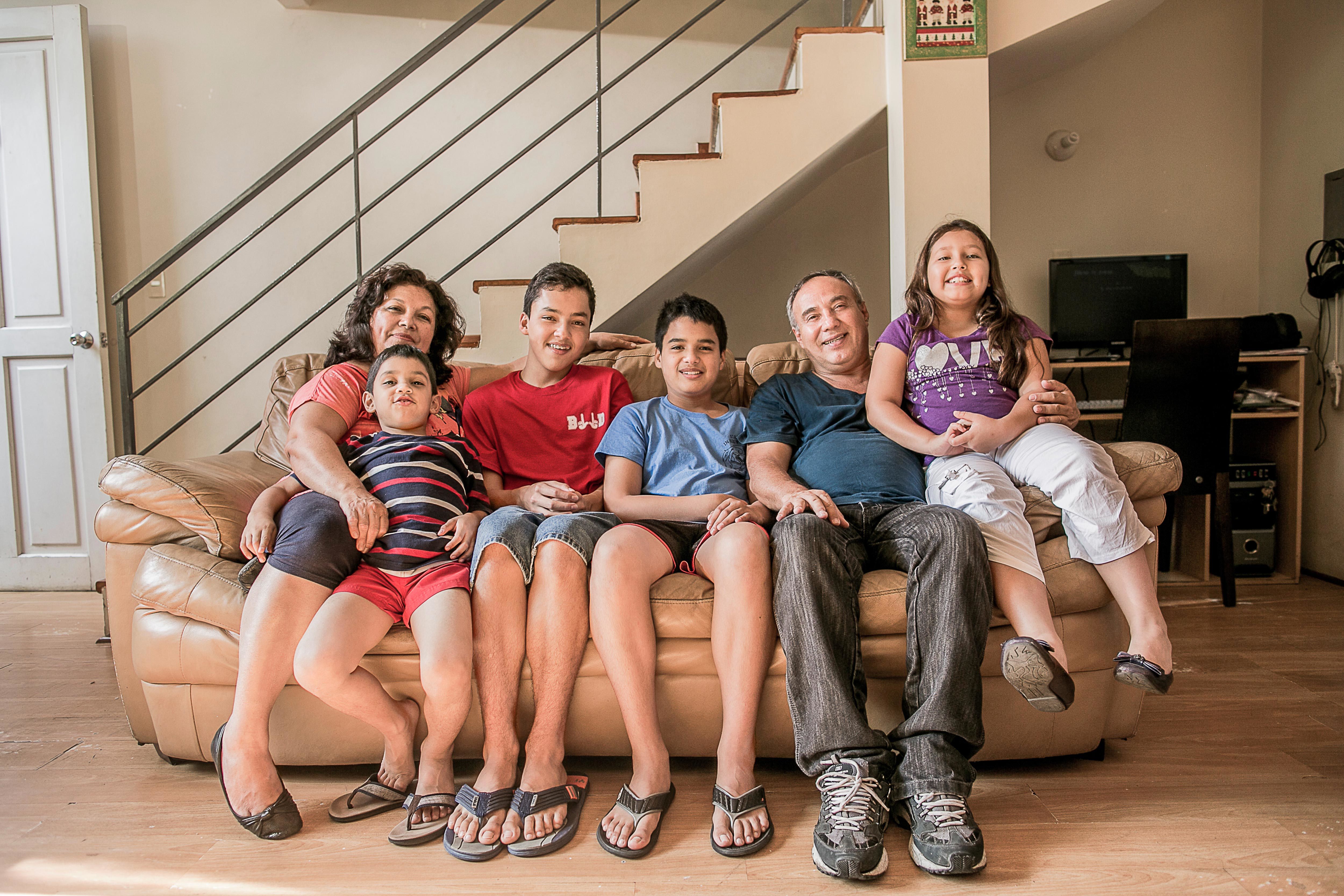
Launching an innovation lab to benefit Peruvians
Catalyzing rapid growth and transformation within a broad portfolio of businesses, including retail ventures, healthcare services, insurance, and banking.
La Victoria Lab (LVL) is a group of designers, anthropologists, architects, and entrepreneurs working on improving the lives of the Peruvian middle class. Founded in 2014, LVL is the Innovation Lab of Intercorp, an economic group of 35 companies spanning banks, malls, cinemas, schools, health care clinics, and more. Intercorp was founded by Carlos Rodríguez-Pastor, one of Peru’s most successful entrepreneurs, employs more than 90,000 people, and accounts for almost 4 percent of the country’s gross domestic product.
Peru is one of South America’s fastest growing economies, with a healthy 6 percent year-on-year growth from 2007 to 2017, on average. That rising economic tide, along with government policy, has created extraordinary social mobility: Between 2005 and 2017, the share of poverty fell from 55% to 22%, of a population of 32 million.
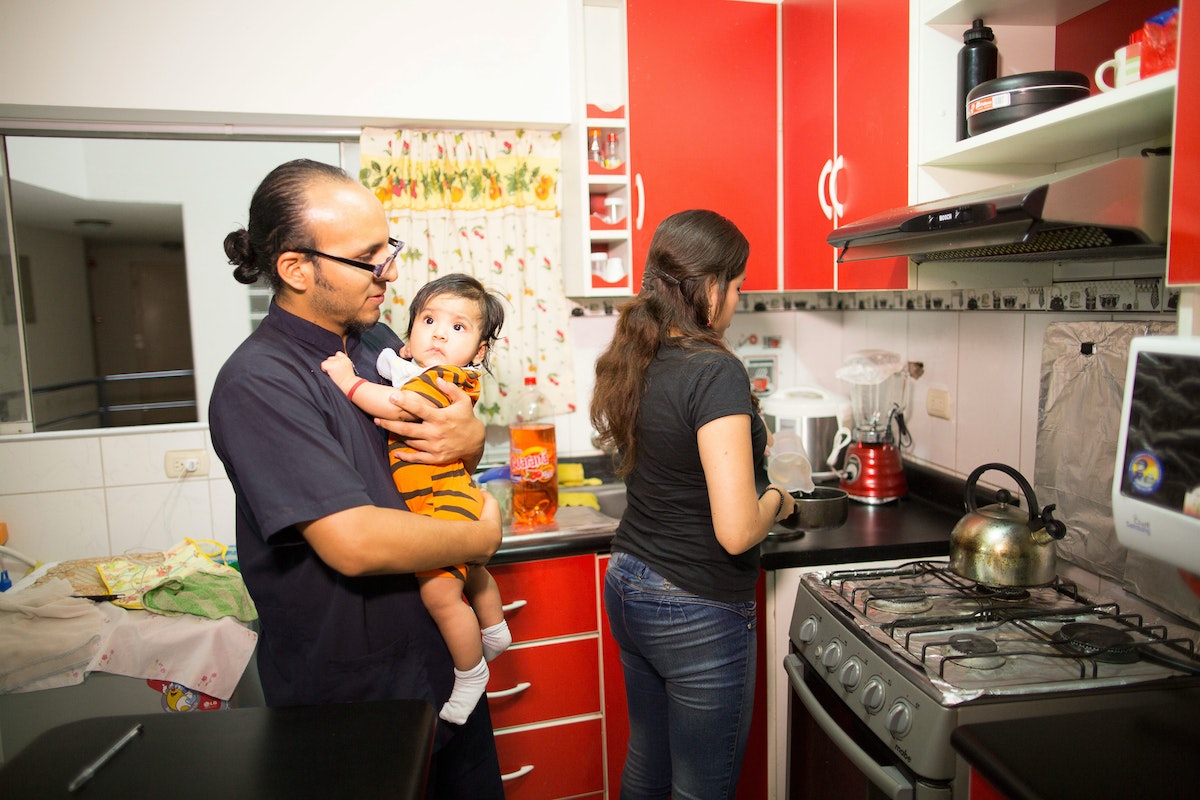
Know The Customer
As Peruvians’ lives have improved, the new middle class's needs and aspirations have changed: They’re entrepreneurial, expect great services, and want the best for their children. That challenge and opportunity led Rodríguez-Pastor to enlist IDEO to bring our empathic approach to the construction of Innova Schools, a new school system, and to redesign Interbank's customer experience"
Success in these two projects bred ambition. Intercorp, Rodríguez-Pastor realized, needed to build two capabilities: a deep, bedrock understanding of the new middle class, and an innovation capability with which his companies could create new products, services, and experiences. “I want a little IDEO,” Rodriguez-Pastor said, and the germ of LVL took root.
A Lab Takes Shape
In early 2014, as contractors broke ground on the Lab, its founders set about hiring an eclectic team from across the globe and undertook their first project: to deeply understand the needs, desires, hopes, and dreams of the emerging middle class.
Three months of ethnographic research was followed by three months of bringing their insights to life. LVL’s team surrounded themselves with mementos of people’s lives: toys, products, ads, as well as video interviews with families, to help Intercorp’s executives literally step into the lives of their prospective customers.

Solutions and Skills
Powered by those insights, La Victoria Lab has brought human-centered problem-solving to a variety of Intercorp’s companies, including new retail ventures, and improving the cinema-going and banking experience.
In 2015, the Lab began scaling its efforts to build innovation capabilities across all of the portfolio companies by using IDEO’s innovation readiness assessment, Creative Difference. Each company received a report of their strengths and improvement areas, and as a result, LVL facilitated workshops and community groups focused on building essential capabilities.
"Creative Difference is the first tool that has allowed my team and the organization to have a precise picture of where we are in the spectrum of doing truly innovative work. Now, we can identify our strengths and areas of improvement, we can develop work plans and actions based on data, and can start to really dig deep into innovation,” says Aurelia Alvarado, Director of Innovation, Innova Schools.
La Victoria Lab’s experiments are catalyzed by Intercorp’s scale, reach, and national ambition. Innova Schools, for example, is now Peru’s biggest private school network (read more about Innova here). And Interbank’s new retail experience rolled out to more than 180 branches nationally.
As LVL matures, its focus is changing, says Hernan Carranza, Chief Innovation Officer, Intercorp. “There's a transition taking place at La Victoria Lab, from a studio undertaking typical design projects, to a platform for impact-led journeys that start at pipeline discovery, defining key performance indicators, all the way to implementation and stewardship."
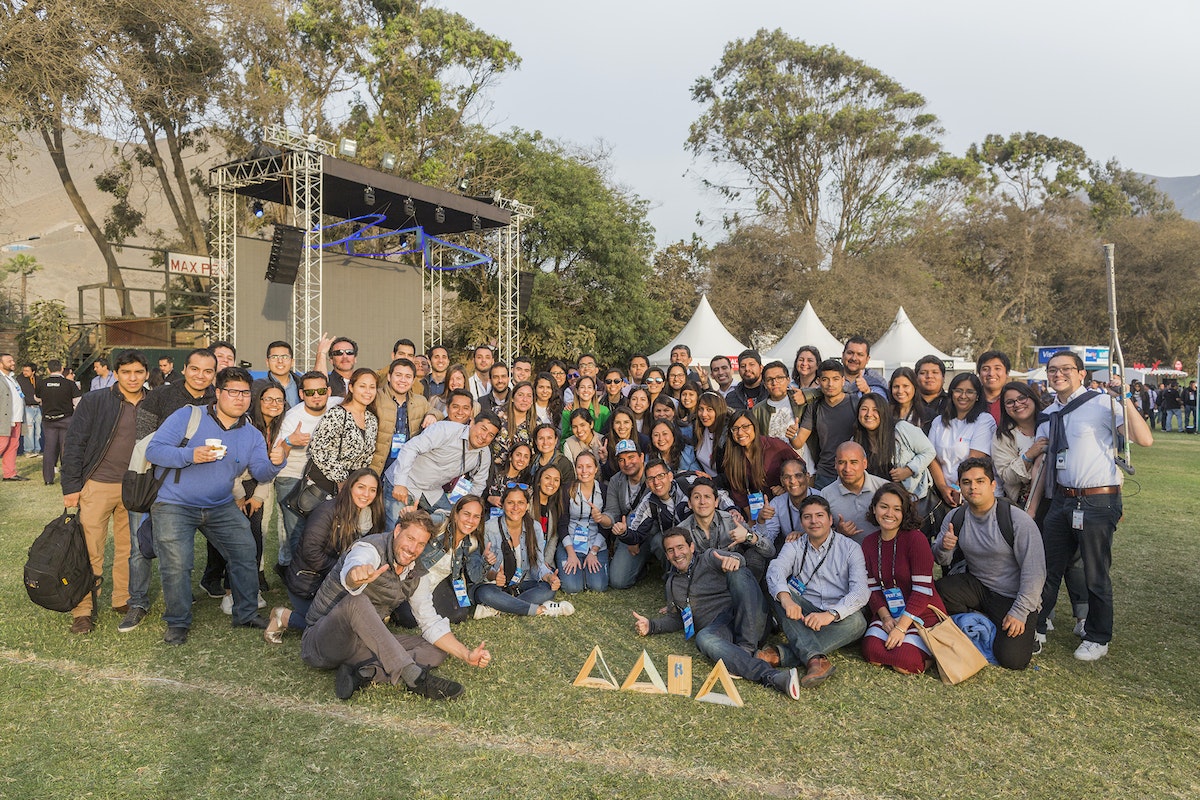
Just as important as the projects it delivers is the wider intent of LVL. The aim is for IDEO’s role within La Victoria Lab to wane, as Intercorp’s waxes, and the company’s internal Innovation capability and culture strengthen. LVL’s ventures range from mindset-changing initiatives, such as curating Peru's largest innovation festival, to deeply transformative endeavors targeted at reinventing the core value propositions of Intercorp's insurance, drugstores, and medical services. It envisions massive cross-organizational transformation.
“Innovation,” said Rodríguez-Pastor, “is too important to be outsourced.”
Keep up to date with the latest projects from La Victoria Lab: lavictoria.pe
"For the latest developments on our work with Intercorp, head to "The Possibilities Business: An Oral History of Organization Transformation"

Prototyping at the speed of AI
Methods for testing product value with Gen Z.
To monitor how use cases have shifted over time, we developed a social listening tool to scrape AI hashtags on TikTok, creating a visualization of conversations and communities.
In the spring of 2023, much of the positive sentiment around AI was associated with productivity-related hashtags—activities like homework and writing. By October, AI music became its own distinct community, and hashtags for AI fanfiction, AI anime, and memes grew. Our most recent scrape in early 2024 showed us that AI is shifting from a predominantly solo activity to one centered on community. Hashtags like #aiart and #aiartcommunity are growing in size and in connections, suggesting that AI-generated art isn’t created in a silo—people are sharing their experiences.
In just a matter of months, Gen Zs have evolved their use cases to align with their priorities—sharing their passions and connecting with communities in playful and imaginative ways.
AI companies are also moving fast. The race to create the most impressive and jaw-dropping AI products is adding frenetic urgency, and companies are spending millions of dollars on development resources, then quick-launching new products with the hopes that they will be well received. Often, launch is the first time companies are able to test out their products in the real world.
We are seeing rapid technological progress, but also backlash against irresponsible designs and technologies that have real potential to clash with human values and cause harm. We believe AI has potential for revolutionary experiences and capabilities that improve the ways we live, connect, and play. But we also believe this future requires a foundation of trust and responsible design.
To that end, we are experimenting with a different way of developing AI products—one that doesn’t compromise speed but also aligns with human values. By designing experiential prototypes that mimic real-world scenarios, we can create tight feedback loops that get us better user feedback, sooner. These prototypes are run in contained settings where we can look for unintended consequences. (Picture two people with paper scripts, role-playing what it feels like to interact with AI in a particular scenario.) We don't need to build the technology needed for the experience to work—our first step is to test for emotional value. That way, we focus our development resources on building the most impactful and responsible products and experiences possible.
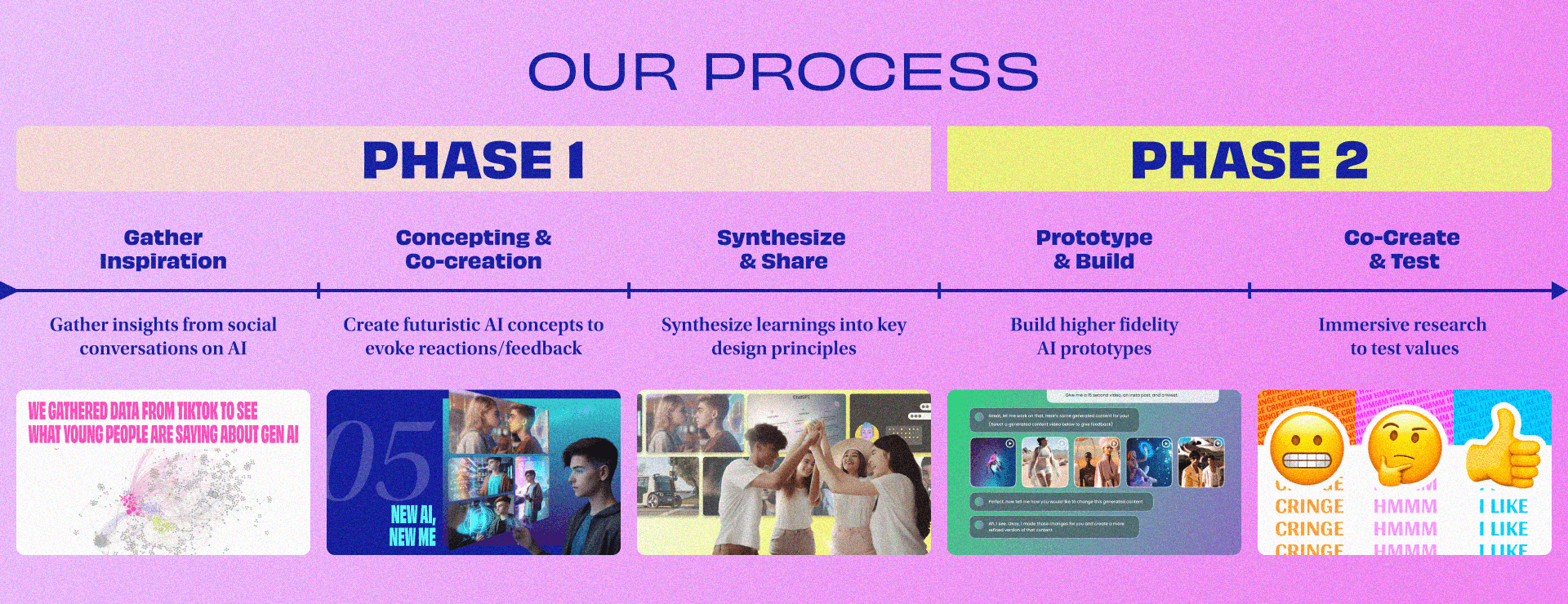
In an earlier phase of our research, we used the results of our social listening experiments to work directly with members of Gen Z between the age of 13-24, talking through potential product concepts and gathering their reactions. This time, we’re going deeper, prototyping products that have AI taking on different personalities and roles with a group of Gen Zs who are coming of age, gaining life skills, and forming their sense of identity as AI is also taking shape in our society. With their help, we’re learning how to build future AI experiences that center their values and needs.
Growing up with social media, members of this generation have already felt the potential impact irresponsible technologies can have on their mental health and relationships, and they have a critical eye for both opportunity and responsibility. While they are strong proponents of the products and brands that they believe in, they're also not shy about making their voices heard when products clash with their values systems.
In this series, we will put eight AI prototypes to the test. By leaning into immersive research tools like experiential testing and imaginative playtesting, we are focusing our learning objective on measuring how these young people feel when they are using AI products, and how the products would impact their perception of themselves and their relationships. For us, understanding the value of the product in the context of the user’s life, their value systems, and relationships is a crucial step that helps us identify the features and technical capabilities that are worth investing in. Join us as we dive into new prototyping methods for designing and testing the edges of what future users really want from AI.
Parts of the images in this article were created/altered using generative AI.
The ways Gen Z is using AI are evolving almost as fast as the technology itself.

AI can make our climate work more human
Why we’re focused on desirability.
It’s a way to optimise and improve inefficient and wasteful processes and accelerate emissions compliance—and it’s a great one. But when we leverage AI to shape demand for sustainable solutions, it's also an incredible collaborator.
After all, design is about integrating perspectives, and doing it in a systemic, inclusive way. AI can give us the ability to make our eyes and ears go further while managing exponential complexity. Paradoxically, it can even make us more human centred by making it feasible to access and include more user, employee, and community perspectives.
At Economist Impact’s recent Sustainability Week in London, we discussed how this approach can succeed, but only when CEOs see sustainability and innovation as one interrelated competitive advantage—and bring them together with a shared remit, adequate bandwidth, and complementary skills. AI can then act as a powerful accelerator, helping to create solutions that meet climate commitments and business objectives.
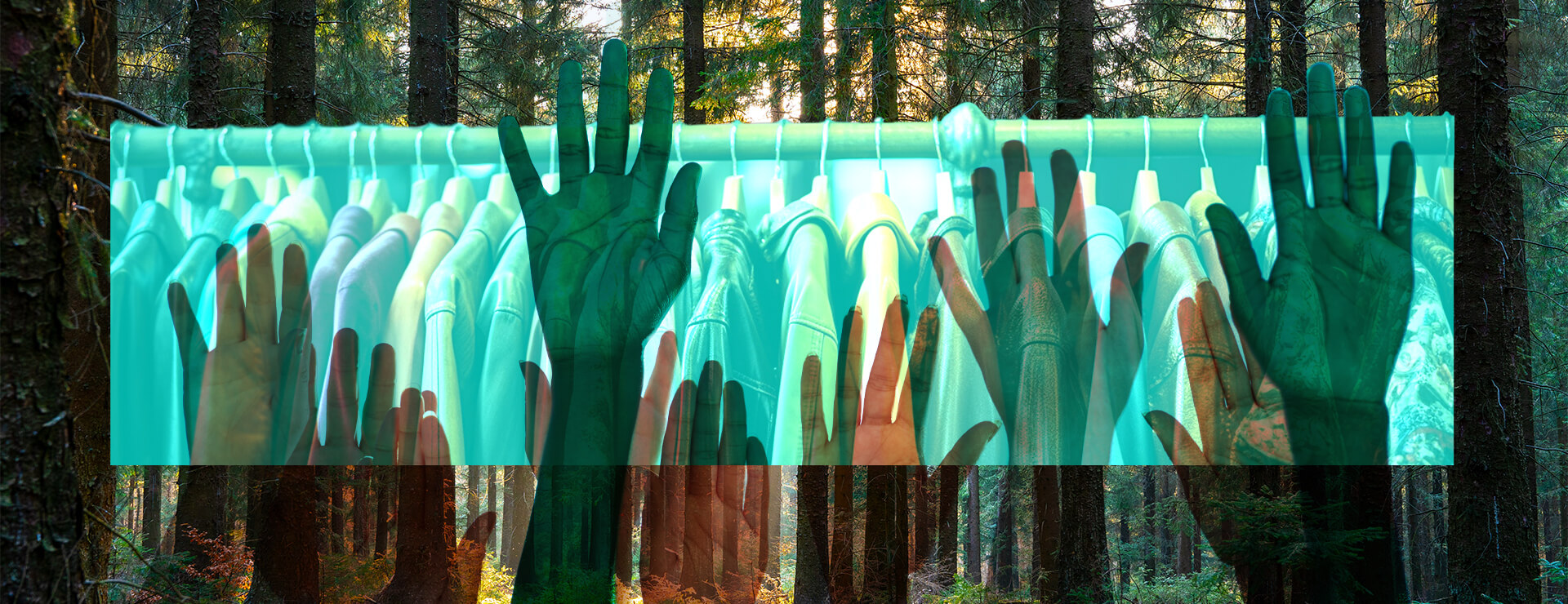
Unlocking nature’s perspective with data
This was the case in our work with H&M, which allowed us to delve into its data warehouse as part of its aggressive pursuit to be climate positive by 2030. The fashion giant was dealing with a problem that so many clothing manufacturers face: Traditional supply chain models make it very hard to predict the demand for a specific item of clothing several months in the future. Siloed teams along a supply chain made solving that problem even more complex.
By leveraging machine learning, we were able to incorporate the perspectives and needs of those teams and create an algorithm that could better predict demand and shorten the interval between sales and production. H&M didn’t just reduce excess inventory (and therefore waste), but also better anticipated which products might sell out. The result: In a pilot programme, which has since been scaled more widely, the company improved sales of specific lines by a third while reducing stock by a fifth, a change that was better for its bottom line, and the environment.
Nature doesn’t appear on balance sheets, and yet most businesses depend on it.
With advances in AI, gains like these can come faster and be more complete—particularly if we take that kind of approach a step further and use nature metrics to train AI models. One of the best ways to approach this is to think of nature as a critical part of your infrastructure and start measuring it as you would any other element. Nature doesn’t appear on balance sheets, and yet most businesses depend on it. In most cases, that data—metrics around land use, water regeneration, forestation, net biodiversity gain, etc.—is available, but simply isn’t being collected and put to use. That means one of the chief perspectives we should consider, that of nature, isn’t being voiced. AI can provide the vocal cords.
Tequila companies, for instance, don't include information about the health of bat populations in their investor reports. But as bat conservationists will tell you, without bats to pollinate agave, there's no tequila. Imagine how bat conservation and food security would improve if tequila manufacturers started tracking bats’ habitat loss and used AI to spot trends, monitor for diseases, or determine effective and cost-efficient conservation strategies.
Solve for desirability down the chain
The data that powers AI is crucial, but it’s just part of the equation. The quality of the output depends just as much on the quality of the prompt. AI can act as a growth engine if we ask it to do so: to behave as a collaborator and surface the needs of more stakeholders in order to help designers create innovative, desirable products with better user experiences. And amid the race to net zero, desirability is key.
Mature technologies like electric vehicles (EVs) and photovoltaics (PVs) can help us curb emissions, but their “hockey sticks” are already showing signs of fatigue very early on in the race. The European EV market was almost flat in 2023, and PVs’ growth is forecasted to slow in 2024. What is going on?
We have been pushing the supply side—tech and regulation—without paying enough attention to the desirability side. PVs are still more expensive at the moment of purchase and cumbersome to install and use. It remains much easier to just pay your monthly electric bill and let the energy company worry about powering your home.
Ease was a major consideration in our work with Sage, a multinational accounting and business software company. Its visionary Chief Sustainability Officer and innovation team knew that the small and medium enterprises (SMEs) it serves often don’t know how they’re going to reach net zero, and lack the resources to do so. Yet, in the UK alone, they account for about 50 percent of business emissions. Together, we developed Sage Earth, an AI-powered platform that uses Sage’s deep accounting insights to calculate its customers’ emissions, both direct and indirect, easing their transition to net zero.
To achieve scale, we need people to adopt green products because they are better, easier, and more exciting, not because they are green.
To achieve scale, we need people to buy green products because they are better, easier, and more exciting, not because they are green. We need to be more demanding about the quality of the sustainable products and submit them to the same standards as any other product. AI can help us on that journey.
Recently, a fashion retailer described to us the challenges of using recycled cotton, which has a rougher texture. Trying to make T-shirts that maintain the same level of softness as those made from first-use cotton is impossible. Gen AI can use data about existing materials to formulate new ones, consider how to make them more regenerative, determine their best applications, and explore which users those products will most resonate with.
And there are many more users to design for in a regenerative world. To make our world more circular, we must consider all the humans that follow the first user: the second user, the person who will repair the item, the person who will redistribute it, the third user. Everyone has to desire the resulting product; otherwise, it ends up in a landfill. Thankfully, AI can help us empathise more systemically, not just with the first customer of a product and the subsequent ones, but also with the communities that will be at the receiving end of those products.
AI can help us empathise more systemically, not just with the first customer of a product and the subsequent ones, but also with the communities that will be at the receiving end of those products.
Think about the design for a new circular appliance, for instance. You aren’t always able to factor in the representation of local repair shops, local recyclers, and the whole ecosystem that will have to deal with the consequences of a new product landing in their community.
Now we can train GPTs that amplify previously-overlooked viewpoints, ask questions, and offer critique to the designers in ways that wouldn't be available otherwise. It provides us with more valuable real-world views and constraints and reduces the number of assumptions we have to make.
AI shouldn’t substitute for human intelligence but it can do some of the heavy lifting: giving us artificial patience, artificial thoroughness, artificial persistence, and artificial long perspective.
AI can help us capture more of what it is to be human by feeding all the nuances, needs, desires, and concerns that different communities have back to us. It can help us find insights in more of the data nature holds. It can bust through our limitations and complement our shortcomings. AI shouldn’t substitute for human intelligence, but it can do some of the heavy lifting: giving us artificial patience, artificial thoroughness, artificial persistence, and artificial long perspective. It can help us ensure the best choice is the easiest one to make, helping us navigate to a crucial, often overlooked lever in the climate fight: desirability.
We discussed “How Organisations Can Use Artificial Intelligence to Boost Sustainability” as part of a panel at Economist Impact’s 9th annual Sustainability Week in London. This piece captures some of what was discussed and our broader thoughts on the subject.
Parts of the images in this article were created/altered using generative AI.
Often, when we think about how AI can help us solve problems, we think of it as an efficiency driver.
Emerging tech can promote creativity and expand culture
More than ever, global voices can find scale and influence.
Think back: Starting from the camaraderie of chat rooms in the '90s which created space for gay men to safely build community, to the social media boom of the mid-’00s that redefined global interactions, we've witnessed seismic shifts in how we connect with others and explore our identities. The proliferation of smartphones further catalyzed this transformation, embedding digital interactions into the fabric of our daily lives and birthing the attention economy that dominates today's tech landscape. Influencer culture cemented larger narratives that shape trends, fashion, and societal norms.The 2020s have centered Web3, XR, and AI in the global techno-sphere, creating new mediums for us to convene with others, rethink the design patterns of the past, and creatively express ourselves.
As designers, we are often tasked with navigating the complex interplay between individuality and collectivity. The question becomes: How can we leverage technology to enhance personal expression while fostering a rich, diverse cultural landscape premised on care, understanding, and communal values? This challenge is not just about creating functional designs, but about understanding the broader implications of our work on the cultural ecosystem.
The good news? Technology is entirely made up, by humans, and all of it can be evolved.
When it’s done well
The positive aspects of this convergence are manifold. The spread of digital tools and platforms has led to an unprecedented explosion of creativity. Now, more than ever, global voices can find and scale messages, meshing our shared cultural fabric.
Projects like Carne y Arena, a virtual reality installation that immerses participants in the harrowing journey of refugees crossing the US-Mexico border, exemplify the power of technologies like XR to foster understanding, transcending physical and cultural boundaries to tap into the human condition. In the installation, you take off your shoes, feel wind blowing against your skin, and then find yourself in the 360 sight, sound, and touch of the experience, thanks to VR and a body pack.
As the director, Alejandro Iñárritu, explains, "My intention was to experiment with VR technology to explore the human condition in an attempt to break the dictatorship of the frame—within which things are just observed—and claim the space to allow the visitor to go through a direct experience walking in the immigrants' feet, under their skin, and into their hearts.”
4D experiences like Carne y Arena offer new, visceral ways of activating senses and emotional tones that we are far less able to access in 2D. VR is an incredible storytelling mechanism, and it can be an incredible tool anywhere we are designing for human experiences—like policy implications in government, or caregving in hospitals. Projects like this underscore the potential for design to bridge individual and collective experiences in meaningful ways.
Similarly, during Goliath: Playing With Reality, I immediately felt like every school curriculum should be filled with VR experiences. Through this VR-enabled, animated storyline, we delve into the life of Goliath, a person experiencing schizophrenia. Goliath's narrative highlights years of seclusion in psychiatric facilities and his journey toward finding community in online multiplayer games. The experience invites viewers into his mental world, showcasing the significant role digital communities play in fostering friendships and support, often beyond their initial design intent.
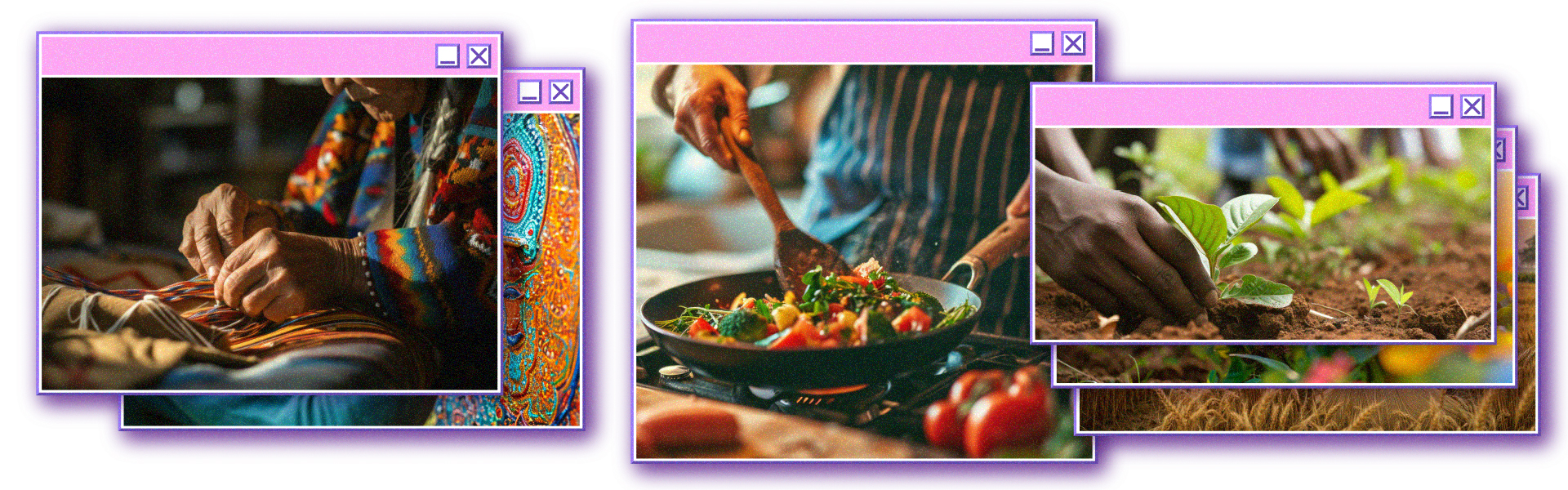
Project Common Voice by Mozilla stands as a beacon of how AI can be harnessed for cultural preservation. At its core, this project is a crowd-sourced database that gathers voice recordings from people around the world, aiming to share voice recognition technologies widely. By encouraging contributions in a multitude of languages, dialects, and accents, Common Voice plays a crucial role in safeguarding linguistic diversity. This effort not only supports the development of more inclusive voice recognition systems that can understand and respond to a broad spectrum of human voices, but also illustrates the capability of technology to support preservation of languages and dialects. In the broader context of design and technology's impact on culture, Project Common Voice exemplifies a commitment to using AI to respect cultural and linguistic diversity, thereby enriching the collective cultural landscape.
As a design tool, Common Voice pushed me to reconsider how AI can be used to design for inclusion at scale. The ability to plug in a service like this means that products can rapidly support more users in more contexts, removing some of the barriers and gatekeeping in many of our existing design paradigms for technology.
And as a final example: Someone close to me has long-term depression and anxiety. She found major collaborative iPhone games, like Clash of Clans, are a way to playfully connect with new people. For her, those friendships moved from online to real life, for life. She and her friends started to travel together—she even dated one for a while. Previously isolated, she ended up moving across the world, from the US to Europe, to live near her new friends. Her life has shifted for the better. She’s healthier, happier, and more connected in real life, as well as online.
As designers, we need to remember that the platforms that we design will be used in many ways outside of our intentions–for better and for worse. In my work at IDEO, I pay attention to how people make what we design their own; often, I fold those use cases in as the real value propositions, even if they are outside of the vision we start with as designers.
The flip side
The rapid integration of individual contributions into the collective domain has also caused irreparable damage. The accelerated pace at which personal expressions become part of the cultural lexicon compromises the depth and authenticity of cultural evolution. The risk of a homogenized, polarized, and defaulted monoculture, shaped by trends, algorithms, and the endless dopamine loops they feed, rather than organic self-understanding and cultural diversity, means that design needs to take on new values. The potential of powerful technologies to be used as surveillance arms means we need to put extra care and intention in how and what we build. The spectrum of ethical issues and social needs invite us to consider how we might use the mediums that come next–AI, XR, robotics, etc.–to preserve the richness of our personal, cultural, and social perspectives in a fast-paced digital world. That’s an opportunity for design.
As designers, we have a broader responsibility to the cultural zeitgeist. We need to advocate for designs that not only resonate on a personal level, but also contribute positively to the collective narrative. We are shaping the levers that culture will build and flow upon, and that’s a major responsibility. This dual focus on the individual and the collective calls for a nuanced approach to design, one that balances innovation with care, and personal expression with cultural nuance.
Parts of the images in this article were created/altered using generative AI.
Over the past 30 years, technology has converged individual creativity with our collective cultural experience, reshaping our personal realms and redefining the broader cultural tapestry in which we all participate.
Skip the head strap
How we think about healthier toy design.
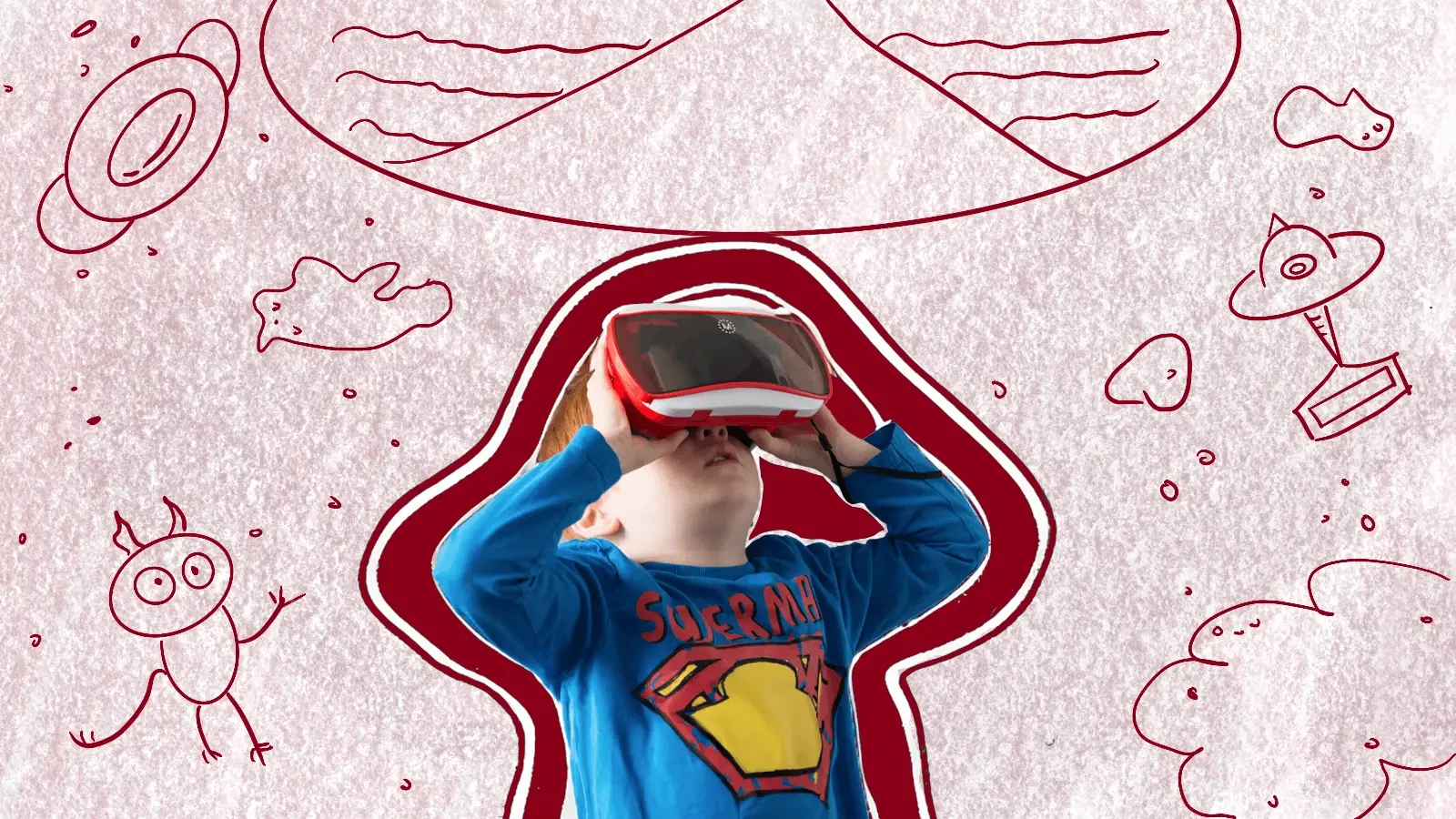
The toymaker came to us to figure out how to make the device safe and fun. We started thinking not just in terms of physical usability (though designing for tiny hands and making sure products can survive a drop on the ground is our bread and butter), but also about how we encourage healthy engagement patterns.
A lot of VR headsets are designed to be super sticky—so engaging that users don’t want to take them off. But when we design for kids, we spend a lot of time thinking about how we can create healthy interactions. We wanted the design of the View-Master to help children intuit when it was time to put the toy down. So, we decided not to include a head strap—or any other means of attaching the headset to little bodies. When kids felt their arms get tired or their eyes start to cross, they would know it was time to take a break.
Over the past four decades, the IDEO Play Lab has designed and licensed more than 250 toys and games, from classics like the Barbie Camper to the first set of Sesame Workshop smartphone apps for kids.
With every product, we think about how to design fun and engaging experiences that delight parents, entertain kids, and lead to success for our partners. But we also put a lot of thought into making design decisions that support healthy habits, and help kids—and their families—thrive.
Here are a few examples of how we’ve navigated those design choices.

Designing for movement: Dusty Wing Control
Most of us have learned to use a joystick or a set of arrows to drive a remote-controlled toy or move a character around a screen. But when we set out to help bring the character “Dusty” from the popular Disney movie Planes to life in an action-oriented vehicle toy, we took a step back to rethink how littler kids would engage with it.
As we tested designs, we saw that small children not only struggled with small buttons and the spatial skills necessary to operate the typical remote control joystick, but also that there was no fun in sitting still and tapping buttons. Instead, during our design research sessions, kids pretended to be the characters: They went full airplane mode, hands stretched out, zooming around the living room, dodging furniture.
Taking a cue from their play patterns, we put Dusty’s remote control mechanism in toy wing tips that fit on little hands, enabling them to interact in a way that is not only more fun, but also instinctive, better mirroring how they naturally play. Players drive Dusty forward by pressing and holding a controller button, enabling his propellers to spin. When they bank left and right, Dusty matches their every move. Dusty even calls out flying commands that they can perform together. The toy is not just easy for them to operate; it also gets them off the couch and moving, playing the main character in their own stories.
Designing for confidence: Pictionary Air
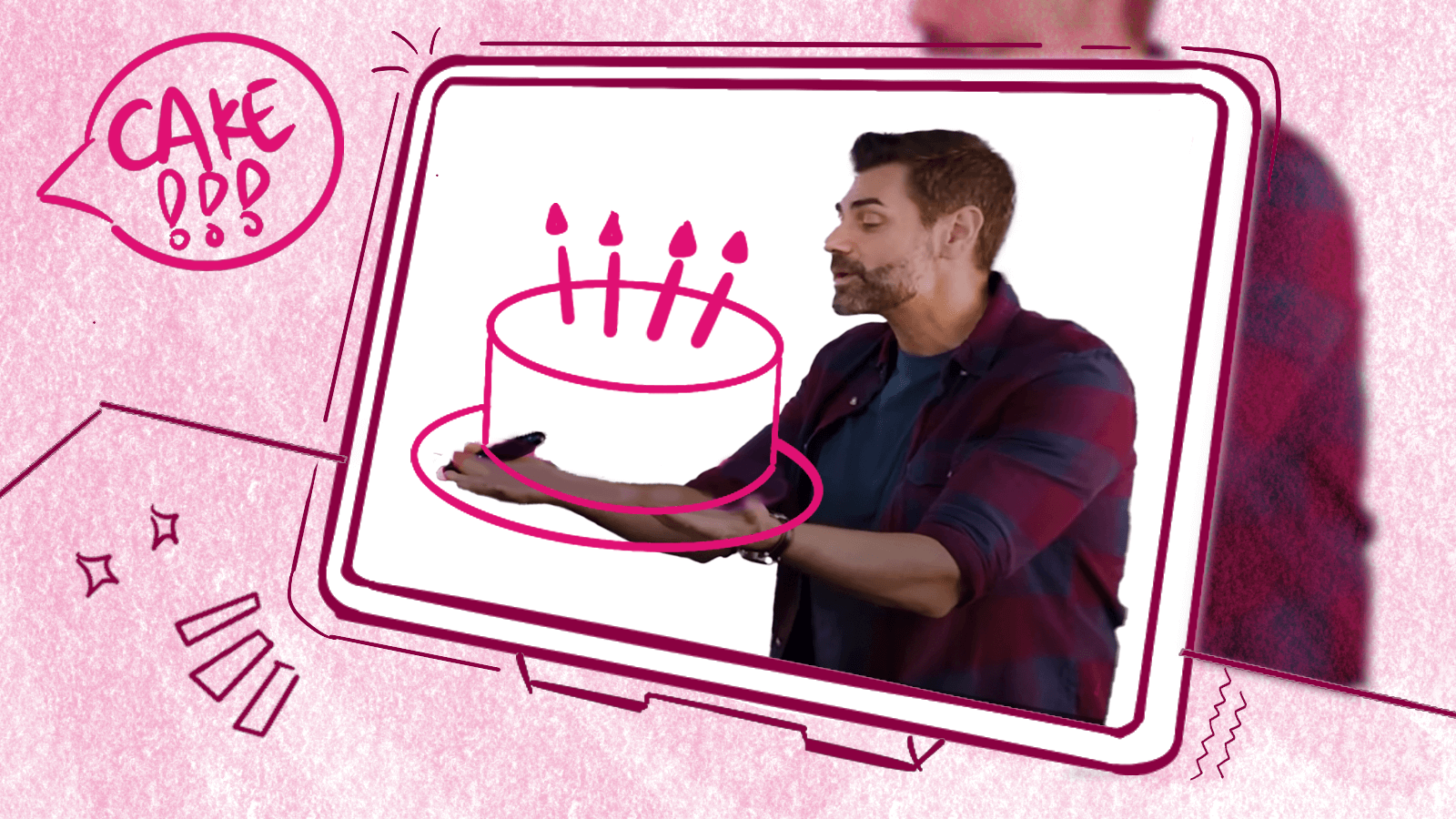
When we set out to re-invent the classic drawing game for the digital age, we had to figure out how to bring the core interaction to life in a new way. During ethnographic research, we noticed that when players were under pressure, they would often stare at their drawings looking embarrassed, and hesitate to keep drawing. To get people out of their heads and back in the game, we designed a new interaction that keeps participants looking up and laughing with each other. We combined a light pen and a smart device’s camera to allow picturists to create life-size illustrations in the air in front of them, an early foray into AR for classic games. For another layer of fun—and another option for those with less confidence in their drawing skills—players could interact with their sketches to provide more clues, much like in charades. We also decided to make drawings disappear quickly after each round was finished, to lower the stakes for self-conscious players.

Designing for all ages: Twister Air
In classic Twister, the fun hits when players are frozen in contortionist poses, hovering and balancing over each other. Our challenge from Hasbro: What does Twister look like in the TikTok era? And how do we make it fun for everyone? As we tested out potential interactions, we observed that for younger kids and older adults (basically everyone but the teenagers), the choreography on most popular dances was a bit much to learn or to even attempt. While kids found it hilarious when parents messed up (you’ll see lots of dance flops posted online!), we also wanted to find a way to create a sense of achievement for all ages. We started looking for the sweet spot between silly fun and accessibility, stretching players just enough to make them feel challenged, but not too overwhelmed to keep trying. In our prototypes, we preserved the classic Twister interaction while building in opportunities for rockstar moments where players can flop or shine. The footage made for viral family group chat nuggets, helping everyone feel part of the fun.
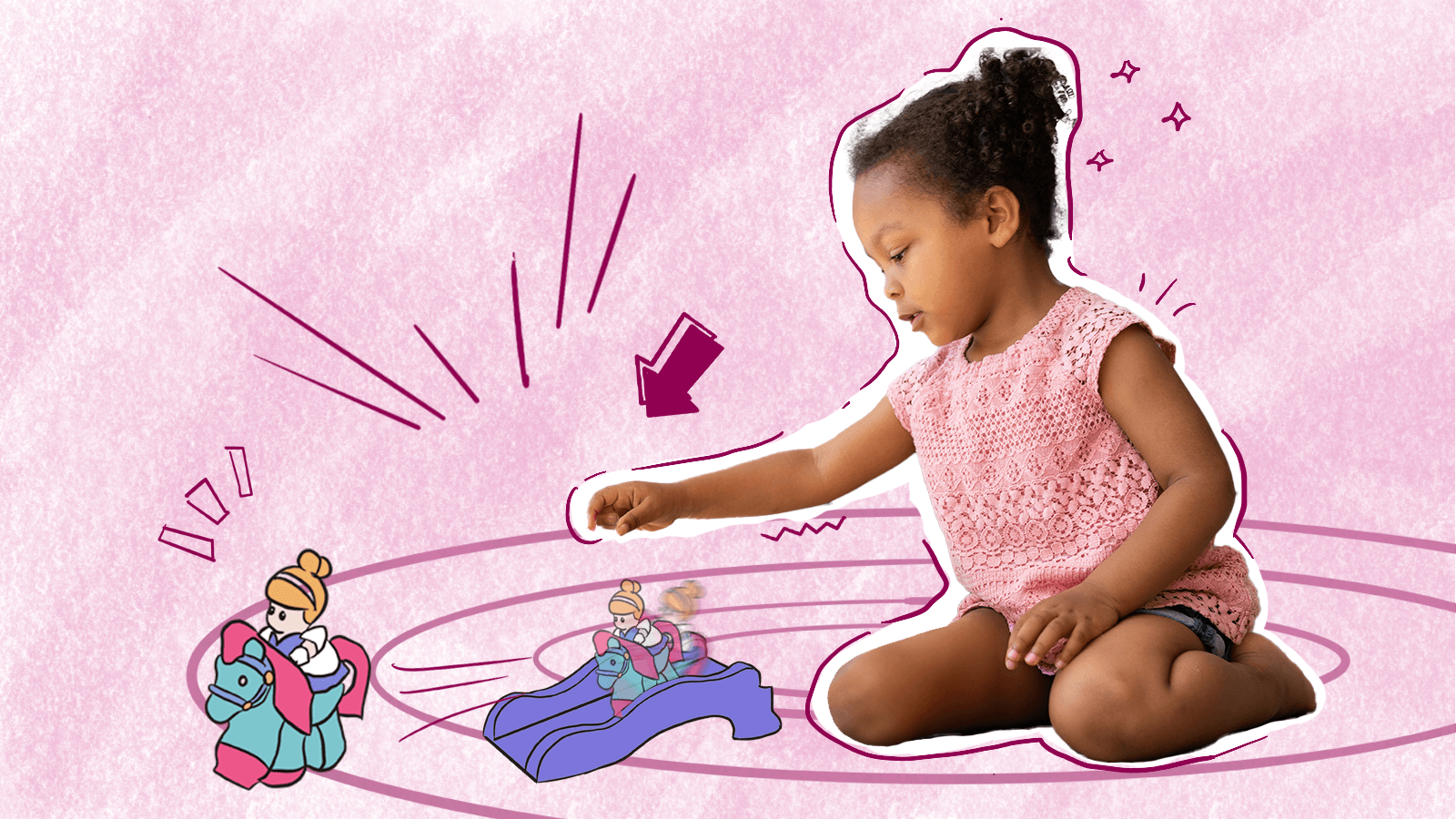
Designing for development: Little People Klip Klops
Preschoolers love the action of cars zipping down racetracks. But typical matchbox cars move too quickly for their little hands and slow reaction times. When we set out to create a similar action-oriented—but also character-driven—toy for Little People, we needed to figure out how to slow down the experience, without sacrificing the action. Through several rounds of prototyping, we built out Klip Klops, leveraging a very simple mechanism that allowed princesses on ponies to teeter back and forth down a ridged downward track. By centering the “clip clop” sounds of the hooves and building out a multi-story castle setting where the princesses and their steeds would live, we created opportunities for kids to enjoy the intentionality of the movement and built in the space for layered storytelling, allowing little kids to practice multiple development skills at once.
Navigating your own toy design journey, or trying to get your team at work to stretch its imagination? Get in touch at helloplaylab@ideo.com. We’d love to collaborate.
Almost a decade ago, when we were all exploring VR of the early aughts, Mattel set out to redesign its classic View-Master as an affordable VR headset for a new generation of kids.

Lindsey Turner
I’m passionate about building brands, products, and experiences that help organizations show up with meaning and momentum.
I help organizations cut through complexity by shaping how they show up, through brand strategy, identity, and storytelling.
Working at the intersection of brand and business, I bring an editorial eye and a bias toward making—turning ideas into tangible experiences that people can understand, trust, and believe in.
My work spans government, healthcare, financial services, media, and consumer goods, from launching Gen Z-focused ventures to building innovation labs and reimagining legacy brands. I relish moments of ambiguity and enjoy translating across teams, perspectives, and priorities to move ideas forward.
I started my career in editorial and digital design, shaping cross-platform experiences and identity systems in publishing and agency environments. That foundation still shapes how I work today: I’m detail-oriented, collaborative, and overreliant on the Oxford comma. I hold a BFA in Visual Communication from the School of the Art Institute of Chicago.

Rachel Young
My work helps organizations see who their products aren't working for—and build the will and the tools to do something about it
For 25 years, I've asked the same question: Who does this design exclude—and what are we going to do about it?
My work spans human-centered strategy, inclusive design, and qualitative research, with clients ranging from Microsoft, Google, and Verizon to the National Science Foundation, and San Francisco Unified School District.
Before IDEO, I taught elementary school in East Palo Alto and spent a decade doing design work with social service organizations—where I learned firsthand what it costs people when systems are built without them in mind.
I am currently writing User Error, a nonfiction book about digital access and the design decisions behind it. I live in Oakland, California.

Brian Pelsoh
I lead with craft, ensuring our work is creatively excellent: rooted in deep human insight and imagination, while also grounded in the realities of business and technology.
My expertise spans brand, communication, and product design across tech, education, the arts, and social impact.
I believe great work demands both high-level vision and obsessive attention to detail, and only happens through collaboration.
I bring an inclusive, hands-on approach and a deep understanding of business, which enables me to consistently deliver excellence while always asking why.
Before joining IDEO, I worked at the brand firms Pentagram and VSA Partners. I began my career as a designer, leading teams at the School of the Art Institute of Chicago and the Milwaukee Art Museum. I hold an MFA in graphic design from Maryland Institute College of Art and a BFA in communication design from the Milwaukee Institute of Art & Design, and have taught at some of the best design schools in the US.

Tony Wong
I am responsible for IDEO’s long-term success in China and working with clients to use design as a tool to enable growth.
I am responsible for IDEO’s long-term success in China and working with clients to use design as a tool to enable growth. Specifically, I have helped Chinese companies design holistic brand solutions through the development of their products, communication, services, and innovation teams, and I have helped multinationals expand their presence and influence in China.
I advise global leaders on developing China-led innovation and capabilities.
In over 15 years in IDEO Shanghai, I have worked on projects that use design to elevate the quality of the experience of healthcare products and services, streamline processes that increase productivity, create spaces and programs that promote and enable inclusive communities, and build next generation mobility solutions that are planet-positive.
Before joining IDEO, I worked at Philips Electronics and the Electrolux Group in Italy, the Netherlands, and Singapore on a number of breakthrough commercial products. I am a member of the Young President Organization in Shanghai.

Building a personal AI for the messiness of life: Sida Li
Most AI products today are built for work—a space with clear problems and established systems. One founder noticed a gap: personal life is messier, harder to systematize, and mostly left behind by the AI boom. So she built Cue, a personal AI that lives inside iMessage and group chats, to go where the other tools haven't.
In this episode, Becca Carroll, IDEO's Chief Strategy Officer, talks with Sida Li, co-founder and CEO of Shared Context Lab, about staying anchored to a human need while the technology around her keeps changing shape, why she treats her business model with the same rigor she'd bring to a product, and what it feels like to build a company at this particular, disorienting moment in AI.
The conversation also gets into how Sida makes design decisions: the language Cue uses to describe itself, the tradeoffs behind building inside iMessage instead of a new app, and a real story about a business idea that didn’t pan out.
This is the second in a two-part series profiling founders from IDEO's Startups-in-Residence program. The first conversation is with Johannes Seemann, founder of Sooner, on designing GenAI for the emotional side of money.

Designing GenAI for the emotional side of money: Johannes Seemann
Most personal financial tools are built to run the numbers and optimize towards a budget. While that works for some, most people experience money as a lived relationship that does not neatly fit into a spreadsheet. Johannes Seemann and Becca Carroll discuss why money is emotional before it is mathematical, and what a human-centered approach to building a generative AI financial product looks like in practice.

The curious leader's edge in uncertainty: Scott Shigeoka
Mina Seetharaman talks with Scott Shigeoka, author of Seek and Head of Curiosity Cultivation at the Eames Institute, about what distinguishes genuinely curious leadership from performative curiosity, how power dynamics shape curiosity, and why practicing curiosity can restore energy rather than drain it.

How constraints make us more creative: David Epstein
Mina Seetharaman talks with David Epstein, author of Inside the Box and Range, about why total freedom often produces average work, how leaders can design useful limits on purpose, and what organizations such as General Magic and Pixar reveal about the relationship between boundaries and creativity.
Looks like you might be in search of something very specific?
Or reset the filters above and try another angle.
Here’s some random inspiration

Podcasts about creative leadership

Articles about the power of prototyping
