
.svg)


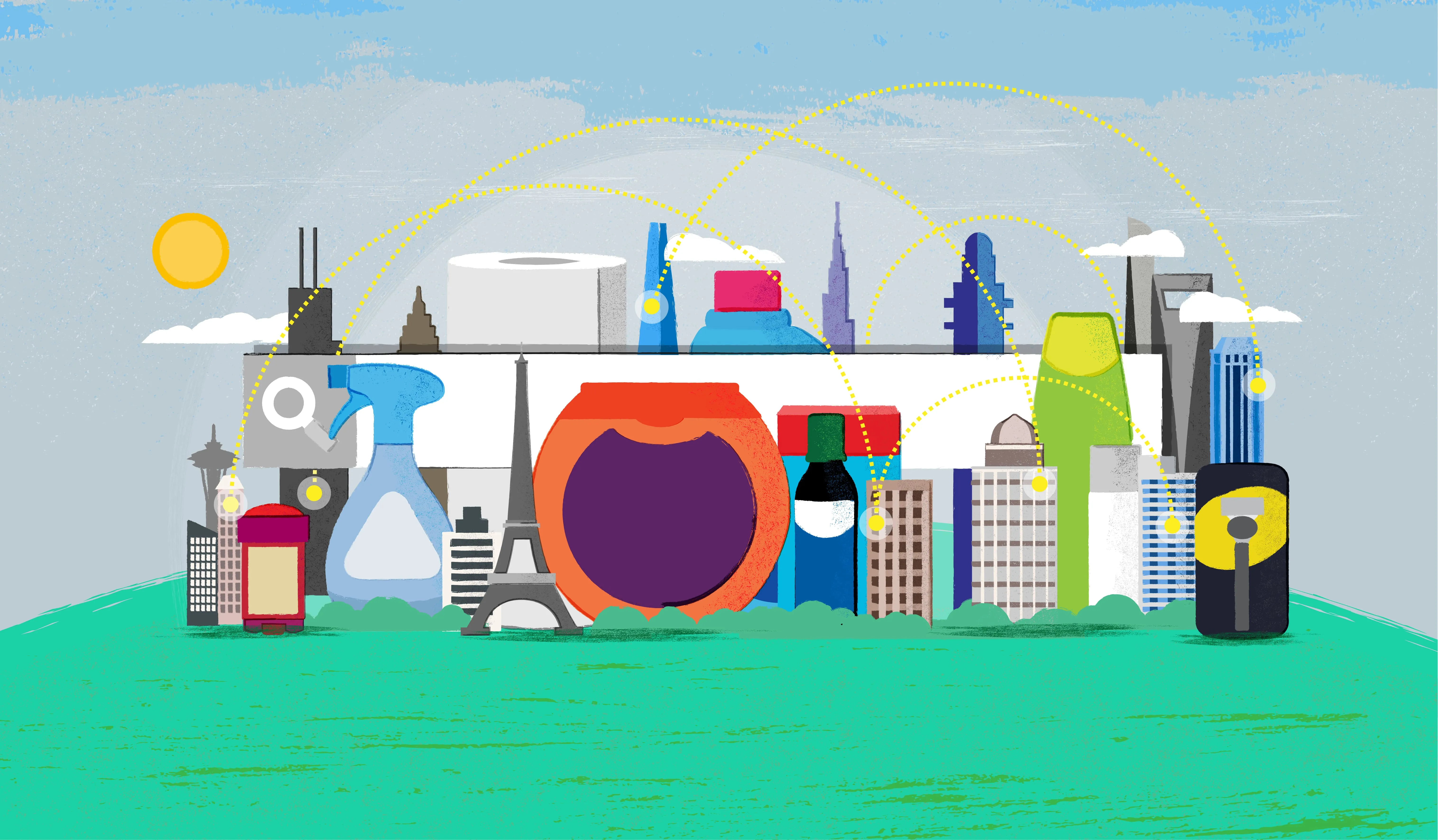

Using data to connect global teams
Helping a multinational company connect staff members across locations and identify new areas for growth.
In 2017, IDEO acquired longtime partner Datascope and integrated the company’s data scientists and engineers. Datascope team members aren’t just passionate data scientists; they’re human-centered designers who happen to work with data, as illustrated by successful collaborations like this one:
If Procter and Gamble (P&G) were a city, it would be the size of Boulder, Colorado. The company employs more than 100,000 people in 70 countries. Its research and development team is made up of more than 20,000 specialists working across locations, languages, and areas of expertise, from cleaning chemicals to paper products to over-the-counter medications.
P&G approached Datascope to help the company connect these researchers to one another and the rest of the organization. In working with P&G leaders, Datascope found that the company needed a better way to access and leverage employee expertise. Managers routinely got requests from researchers looking to work with others in their subject areas, but didn’t know how to identify the right partners or set them up for fruitful collaboration.
Datascope gathered internal data, including unstructured research data on the scientists’ interests and who they partner with most often. The team used that information to develop two new systems that bridge the gap for P&G researchers and managers. The first is an internal search engine that lets managers quickly find and connect the right experts across P&G offices worldwide. The second is a data visualization tool that highlights subject areas ripe for more collaboration among experts and research teams, who may already be asking similar questions. This intelligent tool can surface relevant, timely information managers need to connect their teams.
P&G already had a practice of collecting information for product research, but it wasn’t until Datascope came on the scene that the company took advantage of large, multi-layered data sets and made them more intelligent, so leaders could expand P&G’s expertise through new global partnerships.

Crunching customer data to deliver better smartphones
Helping a big tech firm turn mountains of customer feedback into product improvements in real time.
In 2017, IDEO acquired longtime partner Datascope and integrated the company’s data scientists and engineers. Datascope team members aren’t just passionate data scientists; they’re human-centered designers who happen to work with data, as illustrated by successful collaborations like this one:
The second a smartphone debuts, buyers, bloggers, and journalists begin writing comments and reviews—and users start troubleshooting. Motorola Mobility wanted to tap into this river of data, but didn’t have the right tools to collect and respond to it.
Motorola’s design, engineering, and service teams hoped to identify product problems early, address them quickly through customer support, and ultimately fix them in future releases.
So Datascope built a custom engine that aggregates and analyzes feedback from hundreds of millions of phrases and internet references, drawn from consumer sites, user forums, news coverage, social media feeds, and product reviews. The tool parses key, product-specific information and routes it to the right Motorola teams: hardware, software, connectivity, and interface design, to name a few.
The analytics and visualization engine not only studies product performance in real time, but it also uses algorithms to gauge customers’ emotional reactions: Do they like the phone or hate it? Do they have complaints? Are they recommending it to friends?
Datascope’s tool translates all this data into simplified to-dos that are sent to the correct service and repair staff before user issues can mar a product launch or even the company’s reputation. And as engineers discover more about how a phone performs in the real world, they learn how to avoid making similar mistakes in the future.
The tool proved valuable as soon as it launched in 2012: When Motorola released the RAZR M smartphone, customers had a hard time figuring out how to use wifi and voice features at the same time and lodged complaints online. The engine recognized the pattern of complaints and alerted Motorola's customer support team, which was able to post responses with clear instructions in every relevant forum, turning a potential customer satisfaction problem into a positive interaction.
Motorola continued to use the engine to address issues in later releases of the RAZR M. The advance warning made engineers’ lives easier, while better handsets and software made for a more seamless customer experience. Improvements were also evident in the RAZR M’s well-reviewed next generation, the RAZR MAXX.
Based on the tool’s success, Motorola used it to improve the company’s supply chain and product development process. And beginning in 2014, with the Moto 360 smartwatch, Datascope’s analytics engine has been used to gauge performance and public sentiment not just for new smartphones, but for Motorola Mobility’s entire line of products.
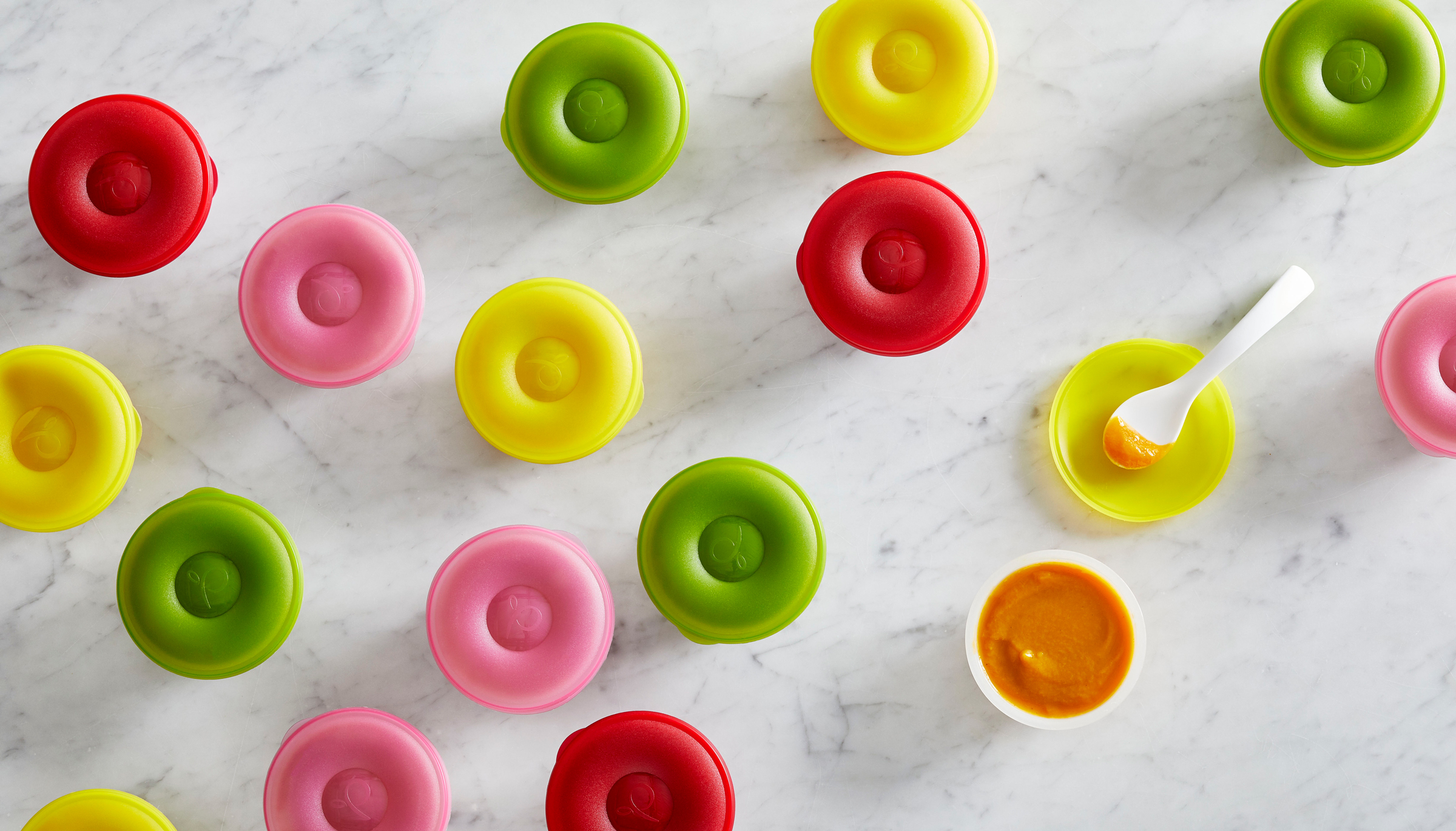
Rethinking baby food packaging
Collaborating with Plum to create a new, wholesome experience for new parents and babies.
For most parents, ensuring their child’s proper nourishment is a top priority. But that’s not always easy, especially for parents on the go. Plum Organics, an organic baby food company, set out to solve that problem by providing families with pureed fruits and veggies in pouches, making it easy for them to feed their babies. Plum approached IDEO for help designing a non-pouch package that could showcase the vibrancy of the ingredients within.
By conducting research and in-person interviews with families, Plum set out to ensure that the new product was both desirable and functional for parents and their babies. By joining families in their homes, IDEO was able to gather essential insights that helped inform prototypes and the final design, like the fact that nothing can replace the feeling of making an intimate connection with a child through spoon feeding; that baby food is often wasted if a parent can’t remember how long a product has been in the fridge; that families struggle with how to spoon-feed their children on the go without making a mess, and that both parents and retailers were concerned that baby food jars don’t stack securely on shelves.
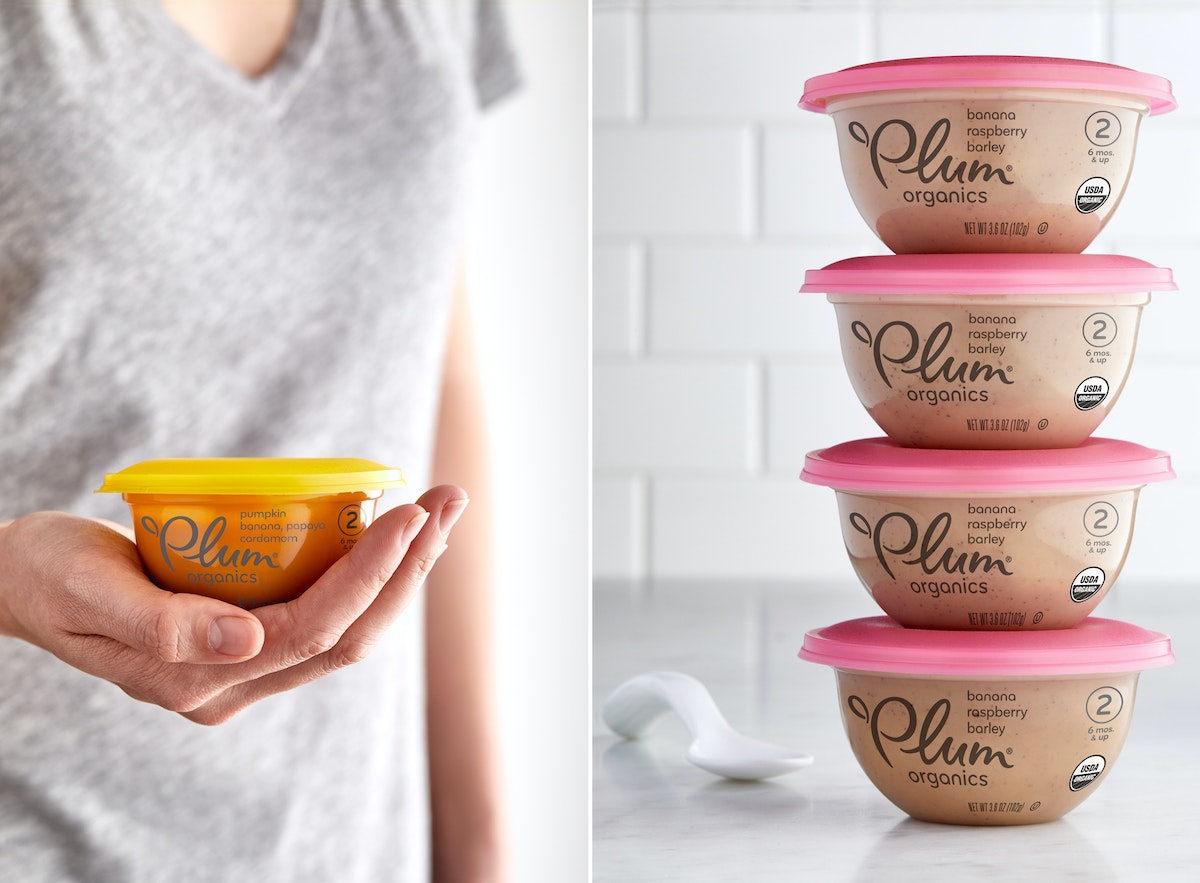
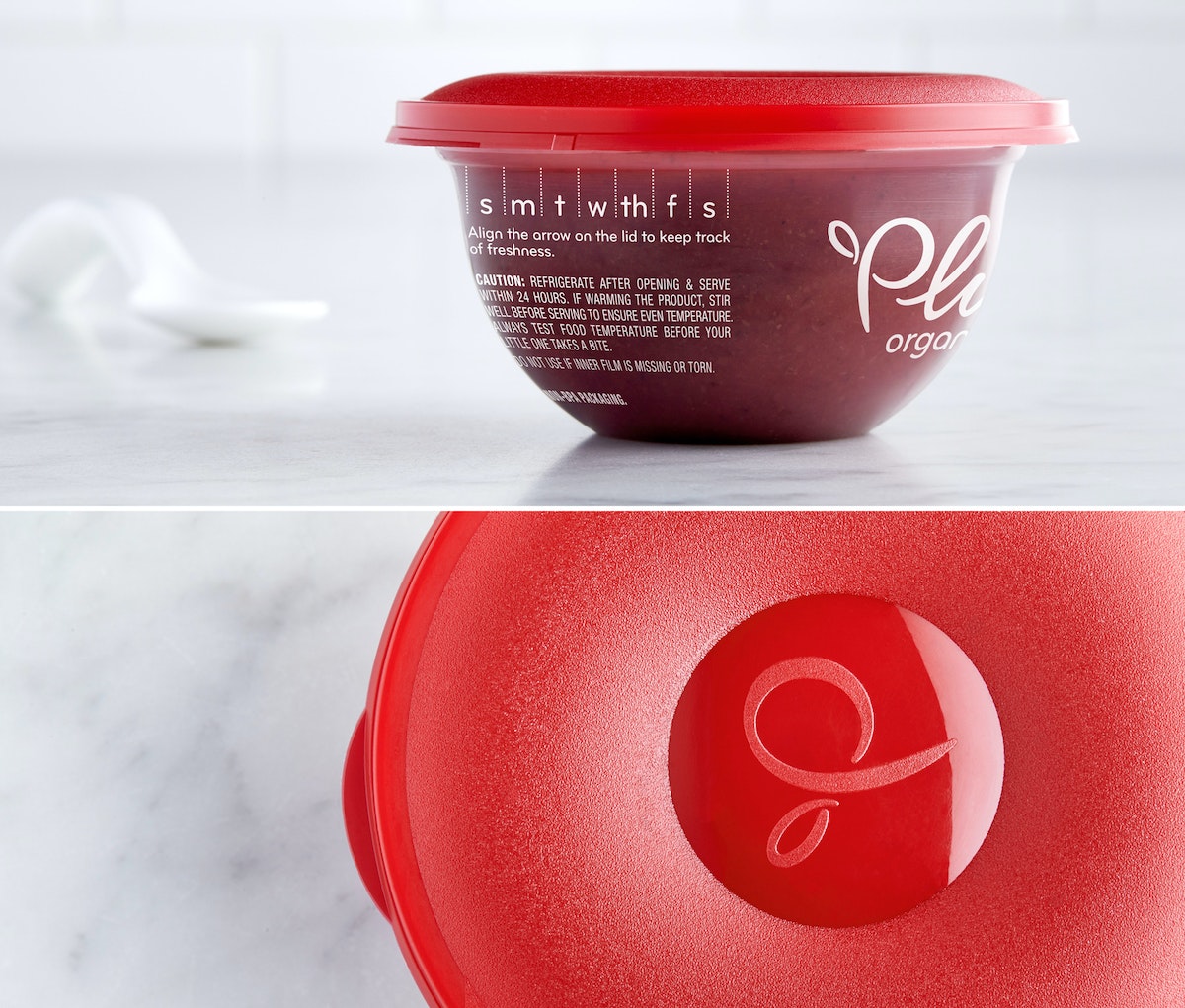
With those insights in mind, the team designed a transparent bowl that allows consumers to see the natural color of Plum’s vibrant, organic food. A resealable lid makes it easy for parents to store food between feedings, and the container includes a feature that allows them to track the day that they opened the pack to ensure that they don’t end up throwing away perfectly good food. Lastly, the new package is easily and safely stackable and includes a divot in the lid for parents to rest a spoon on, making for a much cleaner and more sanitary feeding experience.
Baby Bowls for Plum are now available at retailers nationwide and are a natural evolution for the brand, helping Plum continue to provide high-quality, organic baby food for consumers and their children, even if they’re eating on the go.
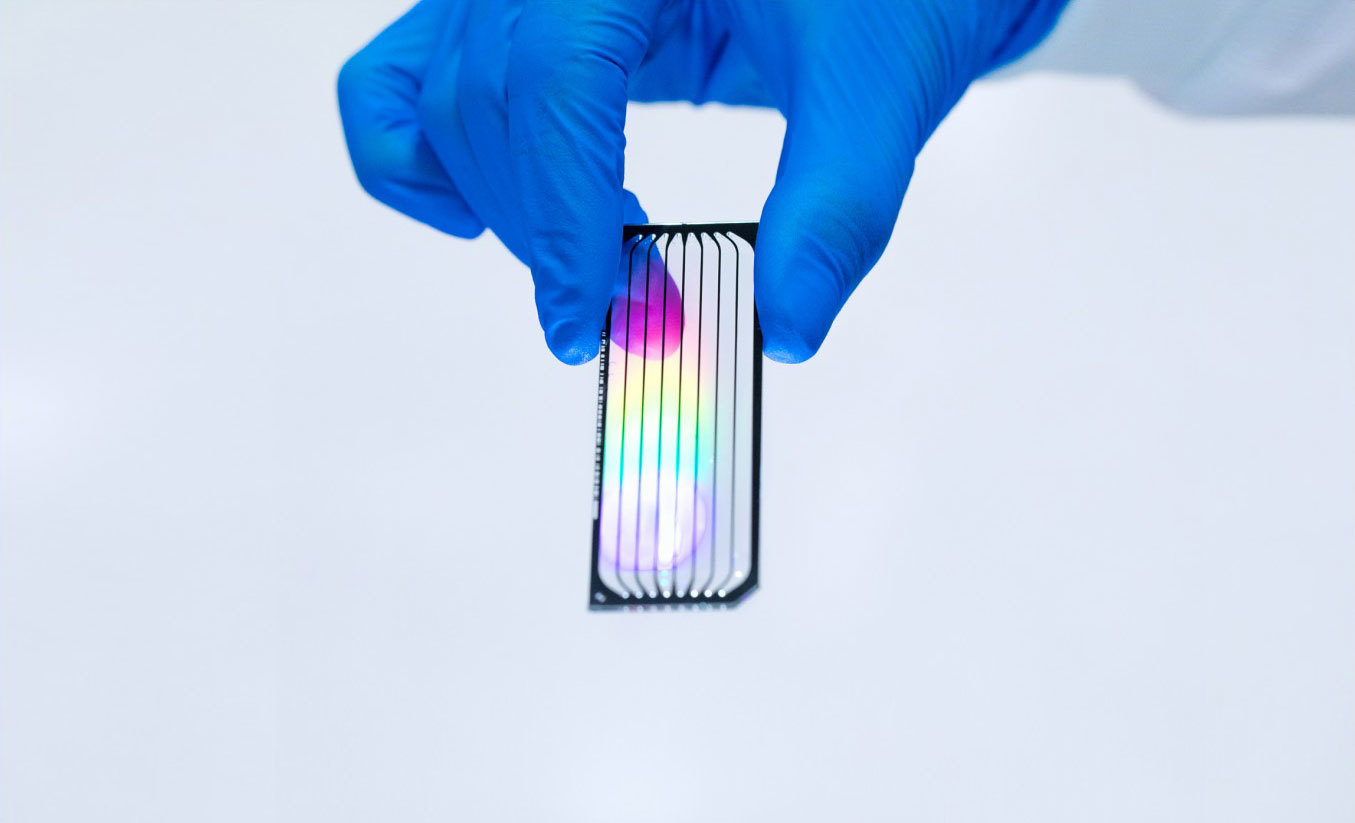
Transforming the way you learn about your DNA with a genomics startup
Helping people harness their genetic information by launching the first store for products powered by DNA.
Accessing our genetic code is as easy as spitting in a tube, but how can we benefit from all that DNA data? IDEO surveyed more than 1,000 Americans about the gene sequencing services they want. "Give me things I can act on,” one respondent said. “Give me advice, action plans, apps, and tools. Information is just air until I can put it to use." As it turns out, tools that can translate our genetic information into better life choices—to improve our health, chart our family history, or even find an effective exercise routine—are hard to come by.
Inspired to organize and apply the wealth of genetic data in all of us, Helix envisioned the first online platform for products that offer insights based on a person’s unique DNA sequence. The startup’s founders approached IDEO to help them get to launch by identifying their future market segments and designing their brand and product offering.
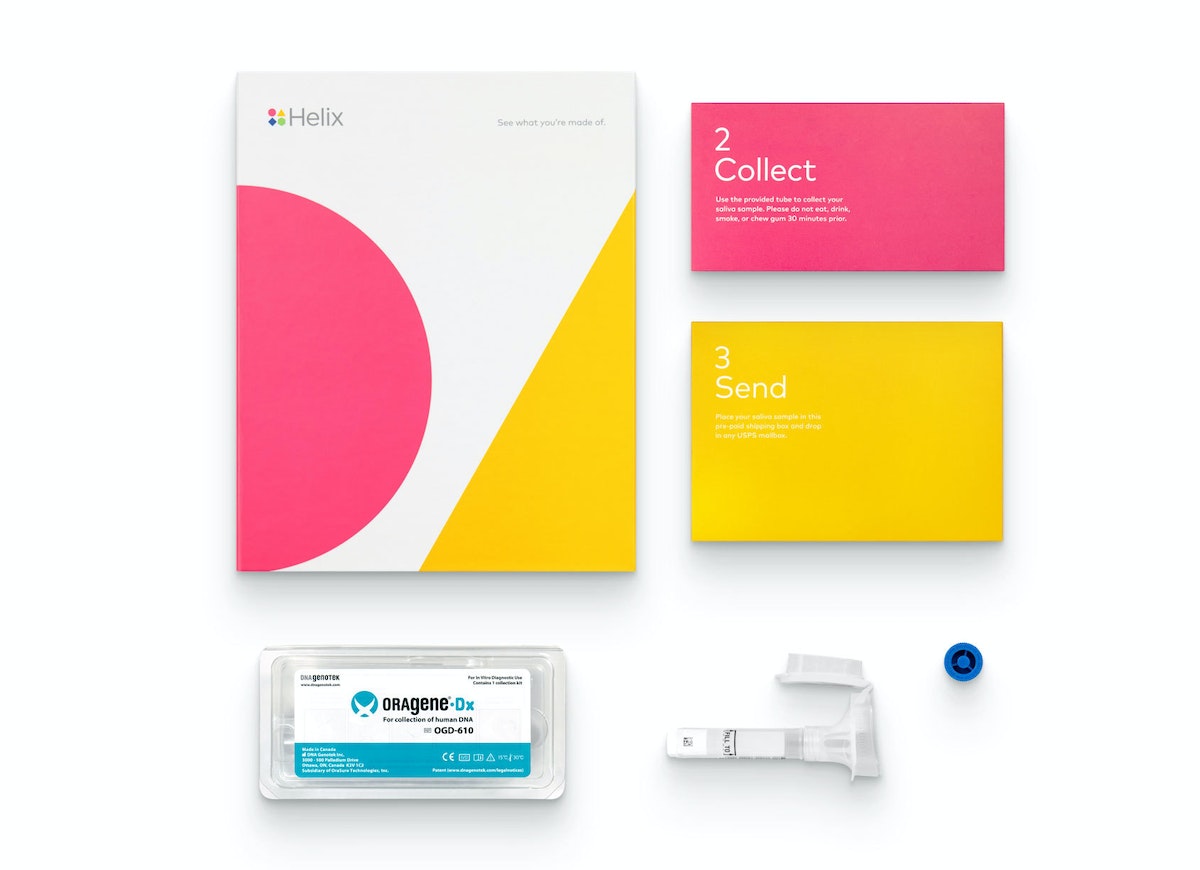
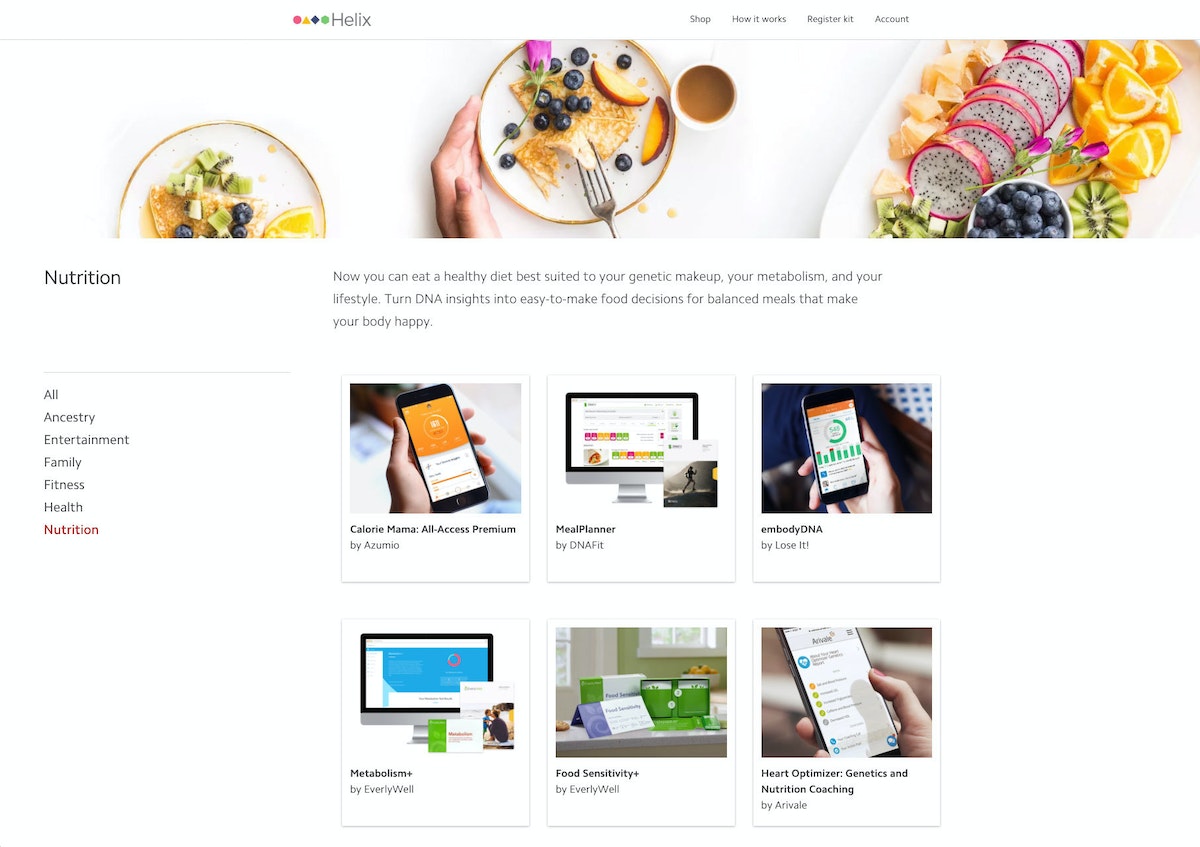
Helix sequences all 22,000 of your genes from one saliva sample—sent in a mail-in kit—and hosts a marketplace of products developed by trusted brands and innovative developers that explore your health, ancestry, entertainment, family, fitness, and nutrition. Similar to the Apple app store, Helix lets you pay individually for the products you want and is a platform for developers to launch new offerings over time. After you've provided a DNA sample once, every product in the Helix store is made available to you on-demand. So, as new products are launched and new discoveries are made in the field of genomics, the data from your original sample is all you’ll need to keep exploring your personal genetic insights.
IDEO engaged a range of users, including early adopters of at-home genetic tests and “quantified self” enthusiasts, and surveyed potential Helix customers across the country. That qualitative and quantitative research validated Helix’s “app store” business model and provided key insights into the products people were most interested in.
Through the partnership, Helix uncovered what users need most from a genomics company:
- to prioritize the accuracy and privacy of DNA test results
- to encourage a sense of discovery and exploration of our genes
- to celebrate each individual’s unique qualities
A team of ethnographers, data scientists, and designers at IDEO helped direct the startup’s brand approach (including its name, Helix) and crafted a blueprint for how the company connects with customers and presents its product. The Helix store launched in July 2017.
Our DNA used to be a mystery—something we guessed at by observing our parents. Now, easy access to our genetic code—and the tools to truly understand it—arrives on our doorstep.

3 Ways to Make Your OOO More Human
The art of Out-of-Office messages

When we get an auto-responder, the feeling is generally one of mild disappointment, indifference, or doom, depending on how urgent your request was.
If I took the time to compose something better, I wondered, would anyone take the time to read it? Was there a way—an opportunity, even—to shift the entire auto-responder interaction from one of scarcity (nobody’s home) to abundance (well that just made my day)?
The question became:
"How might we take one of the most automated voices we still offer to the world and make it more human?"

I started to experiment:
"I will be in a workshop this week rendering response time erratic and unpredictable. I apologize for any inconvenience this may cause and invite you to celebrate this moment by testing the varied edges and new limits of patience this may evoke. Who knows where it may lead? I will be back to you as soon as possible. I promise. Thank you!"
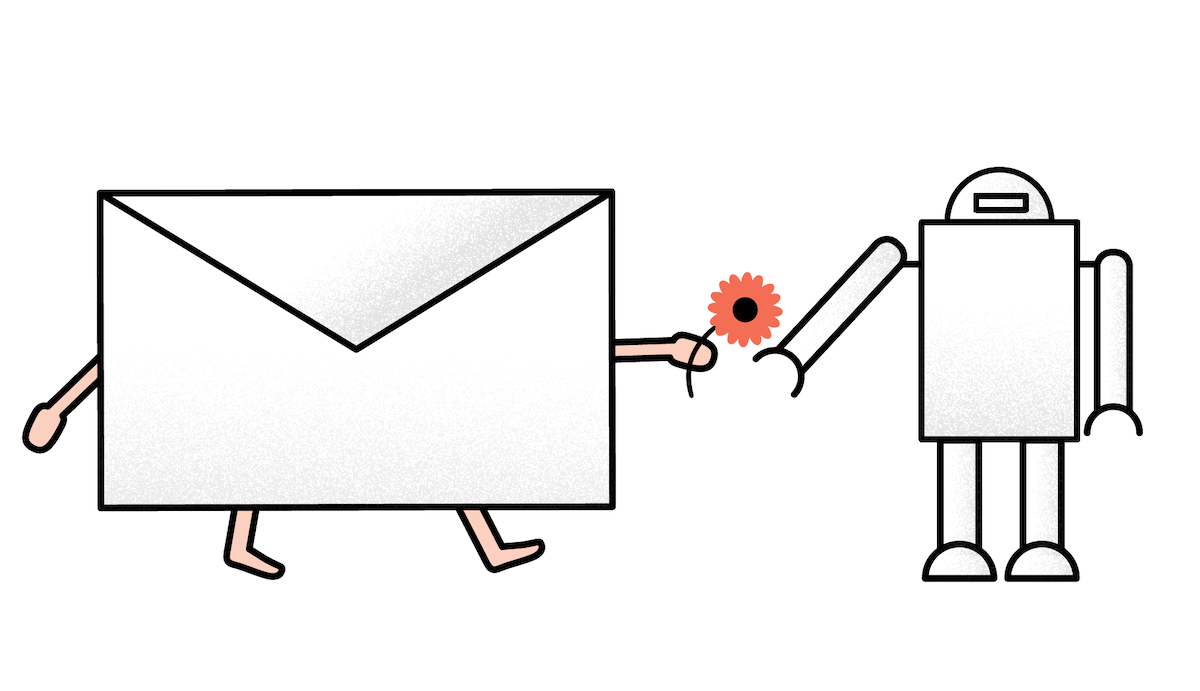
Then got a little bolder:
"I will be impossibly slow to respond today as I am currently seated deep within the bowels of our criminal justice system doing my bit as potential juror #xxxxx for Kings County. I urge patience and self management, and that's just for myself.... I apologize for any inconvenience this may cause."

Today you will most likely receive:
"I am abroad with the most inconsistent wifi I have ever experienced. It's the substantiation of mindfulness, the invitation to a million moments paused in the belligerent now. I will pick up with you again on July 10th when I am back in New York where the data flows like a subterranean stream and the hours are neither here nor there. Thank you for your patience in the meantime."

People responded. They read them. They liked them! And the fact that they got a momentary zing out of these absurdist missives did much to relieve my guilt over dodging people's requests. I also learned a few things along the way.

3 design principles for how to write a better OOO:
- Insert an element of surprise
Moments of surprise in the mundane matter exponentially. I have received many many bemused responses. From close colleagues to clients to absolute strangers. It instantaneously bonds us and shifts the exchange from “I have a request or need” to “I see and hear you.” When I eventually return and execute on that request, there are new connections, filamenty kinship has grown between us through humor and surprise. From that foundation we accomplish more, usually with speed, which is ironic when you think that the communication started with a stunting. Not particularly auspicious. This creates space for possibility. - Do not concede to the bot!
Bots are helpful, available, and dare I say it, adorable at times. But to compete with them we must use our all too human, weird, silly, grammatically inconsistent voices. Besides, if they are learning from us anyway we may as well give them some good material to work with. - Upend expectations by being yourself
I work in leading talent for IDEO. I'm proud of that craft. But I’m also an MFA, a poet, and you may be able to tell, a bit of a weirdo. The moment I gave myself permission to be myself in all of my communications with people—even the dryest most official ones—people started responding in kind. Free yourself and the rest will follow.

We all operate in a world where we bump up against other’s expectations or assumptions of who we are on a daily basis. Those assumptions don't change on their own—that's your job! And it's as easy as writing a good OOO email! I am not HR, I’m HCH. Hello.
The dreaded OOO. You've probably already gotten one today. The tone is usually perfunctory, most likely generated by a bot, or a bot-like impulse on behalf of the sender, who is hastily trying to sign off before that vacation, workshop, excuse to get away for five minutes of uninterrupted peace.

Thoughtless Acts: DIY Rain Gutter
Thoughtless Acts: DIY Rain Gutter. The intuitive ways we adapt and react to things in our environments
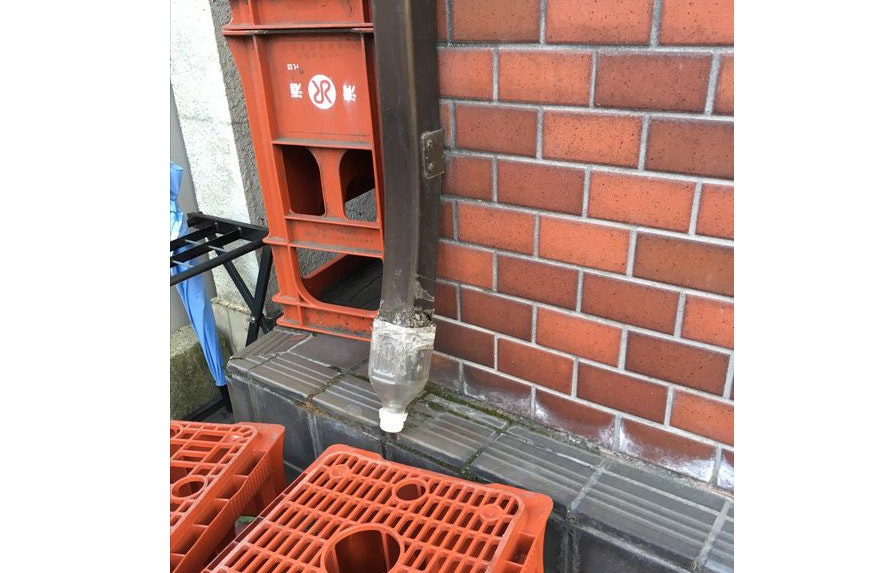
I found this outside of a grocery shop in Tokyo. Someone used the plastic bottle to replace the broken rain gutter. You can tell from the scratches on the plastic that the water bottle has been there a while, outlasting countless rainstorms. Who knew a water bottle could be so strong!
Human-centered design requires us to observe human behavior with beginner's eyes, so that we can spot the innate ways people interact with the world around them. We call these intuitive and unconscious reactions Thoughtless Acts, and IDEO designers collect photos of them to inspire their work.
Being Indiana Jones (for Three Weeks a Year)
Being a part-time archaeologist makes me a better full-time editor
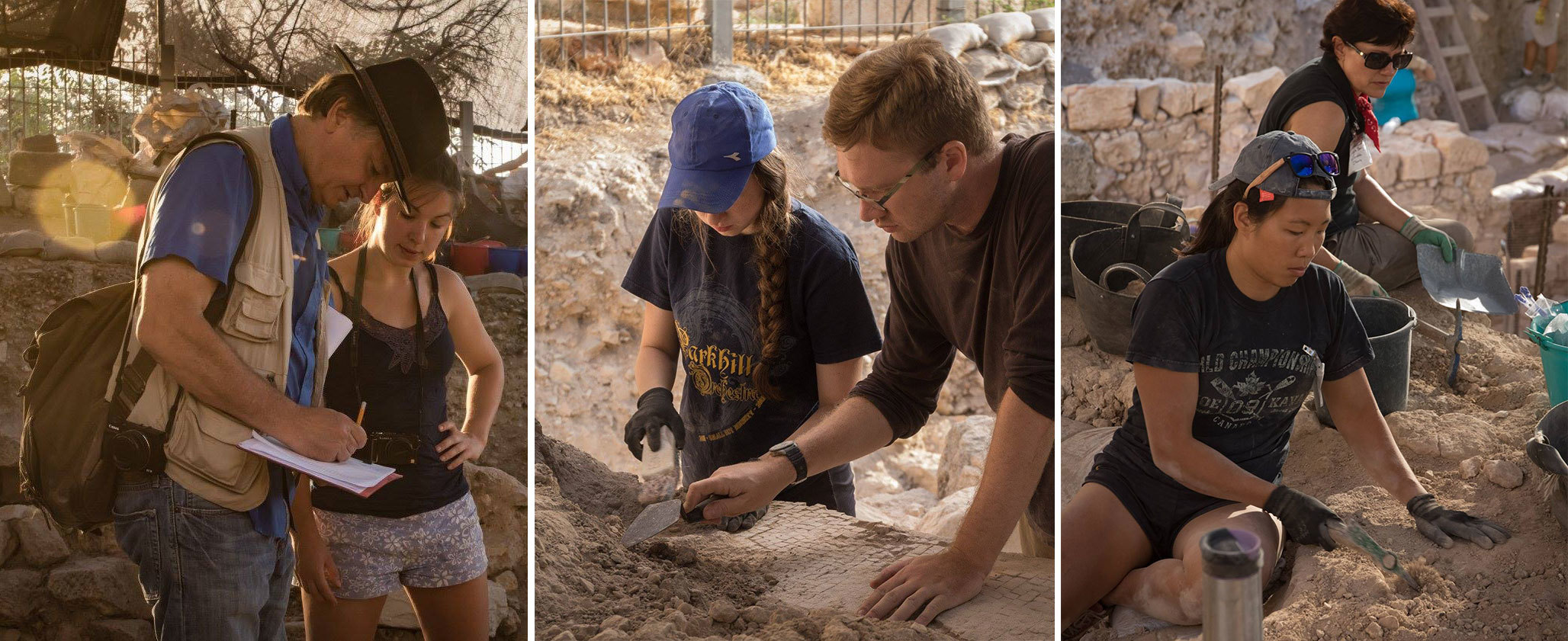
In 2016, with only a college internship in archaeology under my belt, I stumbled on a social media post calling for volunteers to dig in Jerusalem. Before I knew it, I was winging my way to Israel with knee pads, sweat bands, and plenty of SPF 50. I spent two to three weeks of each of the following summers in Jerusalem with Dig Mount Zion, helping excavate priestly homes from the time of Jesus, Roman mosaics and frescos, and hints of bloody Crusader battles.
I returned from my latest session in a dusty Jerusalem pit in July to start my new gig as an editor at IDEO. Believe it or not, being a part-time Dirt Hound has really helped my work. How?

1. Archaeology sparks curiosity
I knew nothing about design when I started at IDEO. Likewise, before college I knew zilch about archaeology beyond what I’d seen on TV. The aggressive learning curve kicked me out of my comfort zone and forced me to ask questions of everyone, all the time. What’s a sherd, or for that matter a fill, a balk, or a locus? How did people live in the time of King David or King Herod, and how do we know?
Constantly asking questions can make you feel a bit naive, but I’ve found this sort of curiosity is a great way to learn fast, shake up stagnant systems, and radically expand my view of what’s possible.
Designers know this well. They start with questions: How might we incorporate VR into online experiences? Why are schools bound by four walls? Could play help prisoners? This inquisitive, unbiased approach is what allows them to identify fundamental needs and find creative solutions.
In the same way, I try to broach new concepts I come across, such as designing for social change, with no preconceived ideas, and keep poking and prodding until I unearth the story.

2. Hard labor can be good for you
In pop culture, archaeologists find perfectly preserved, fully excavated structures (I’m looking at you, Indy). But in reality, someone has to remove tons of dirt and rock; sweep the area with a metal detector; sketch and photograph the features of the site; wash, sort, and catalogue finds—and then begin again the next day, on the next layer of earth. Slowly, a complete picture is revealed. It’s meticulous, backbreaking work.
At the Jerusalem dig site, the physical challenges and my lack of formal training helped me understand my limits and accept guidance from the seasoned archaeologists in charge. At the same time, the digs showed me that I’m capable of withstanding heat, stress, language barriers, and lots of pickaxing. These experiences have given me confidence that I can master a new language—design—and tackle stories about IDEO’s most complex, cross-cultural projects.
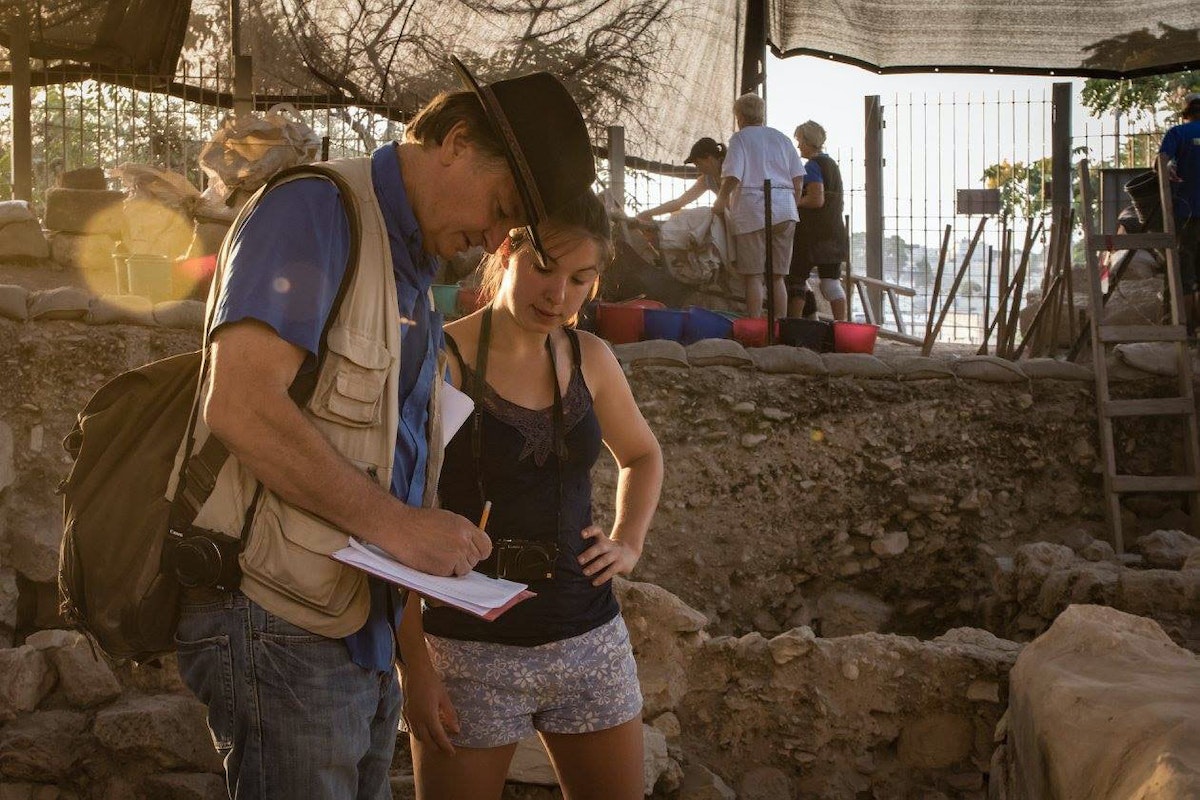
3. Digs build trust & teamwork
In a given year, Dig Mount Zion includes about 15 staff, 20 students, and 60 wide-eyed volunteers. Participants range from 18 to 86 and hail from Germany, Russia, the Philippines, Canada, New Zealand, and beyond. Being tossed into a pit in 95-degree heat and told to move a mountain of dirt has bonded complete strangers into fast friends.
Working in a place so steeped in history, alongside people from all walks of life—from an Ohio school bus driver to a Messianic Jewish missionary to a particle physicist—helped me build trust and tolerance and let me glean wisdom from people with radically different points of view.
Likewise, diversity of experience and perspective on a single project is IDEO's secret sauce. Our designers have created everything from apps to amps to appliances and I'm charged with capturing those inventions in a way that's easy to understand. Archaeology has prepared me well to incorporate new modes of thinking and work with colleagues from Silicon Valley to Shanghai.
Hopefully, they won’t mind all the dirt under my fingernails.

Photos courtesy of Rachel Ward. For more, please contact rwardphotoclt@gmail.com.
When I was eight, I defected from a high-stakes game of summer camp capture-the-flag to hunt for fossils in a nearby creekbed. Twenty years later, I still obsess about all things ancient—the first civilizations, the evolution of religious thought, and the latest dinosaur find. If this is a phase, I never grew out of it. In fact, I’ve become something of an amateur archaeologist, with surprising benefits for my work life.
5 Ways to Think Like a Designer, from an IDEO Partner
What I've learned from teaching design
Here are the top 5 things I tell my students about nourishing creativity and thinking like a designer:

Be curious
Without curiosity we do not learn and we won't grow. The same holds true for organizations. An organization that is not curious and not willing to learn will not be able to grow in today's business environment.

Challenge assumptions
In 2015, a group of students at Lund university challenged the IKEA purpose “design for many” and added a new perspective to it. What if IKEA was not the provider of solutions (the assumption) but the provider of a framework to foster people's creativity (the challenge)? The IKEA Hacka modular kitchen design is a beautiful example of how new ideas can spring from challenging assumptions.

Get lost in dreams
I don't want to accept that we have lost a whole generation to screens and devices. Creativity happens when we stop and let go. When we don’t know where to go, when we daydream and let our thoughts flow.
And research limited to what you can find online won't cut it. Insight comes from observing real people in real life. Students should have that luxury, and we should provide permission and space for that in organizations.

Get into a question-framing mindset
Design students often start their creative process by translating insights into problem statements. But you can't identify a problem without asking a bigger question first. So how do we get there? When we find the right opportunity space for a team to tackle, creativity flows.

Collaborate
I believe that all of us are better together. We've reached a time when collaboration is not just about individual work patterns, but also about what happens across systems, organizations, and governments.
Unfortunately, too many leaders seem to fall back on trying to solve things themselves, then ask those around them to do their bidding—often with rather unfortunate results.
But today's students—the next generation of leaders—have grown up in a sharing economy where not just goods, but also values are exchanged. And that keeps me optimistic about the future.
Taking this approach, my students and I have produced hundreds of design concepts, many of which have been published and exhibited. Spectrum, a project I co-led with designer Stefan Diez, was recently shown at the Salone di Mobili in Milan. And a workshop at the University of Lund produced the IKEA concept kitchen. As the school year approaches, I look forward to watching young designers come up with more bright ideas.
For more than 10 years, I've taught design in places like the University of Lund in Sweden, the HfG Offenbach in Germany, and Parsons School of Design. Teaching inspires me, challenges me, helps me question my point of view on design, and keeps me connected to the next generation. My students often start out with a problem-solver mindset and want to rely on technology. I encourage them, instead, to start with a question, large or small, that puts humans at the center.

Lindsey Turner
I’m passionate about building brands, products, and experiences that help organizations show up with meaning and momentum.
I help organizations cut through complexity by shaping how they show up, through brand strategy, identity, and storytelling.
Working at the intersection of brand and business, I bring an editorial eye and a bias toward making—turning ideas into tangible experiences that people can understand, trust, and believe in.
My work spans government, healthcare, financial services, media, and consumer goods, from launching Gen Z-focused ventures to building innovation labs and reimagining legacy brands. I relish moments of ambiguity and enjoy translating across teams, perspectives, and priorities to move ideas forward.
I started my career in editorial and digital design, shaping cross-platform experiences and identity systems in publishing and agency environments. That foundation still shapes how I work today: I’m detail-oriented, collaborative, and overreliant on the Oxford comma. I hold a BFA in Visual Communication from the School of the Art Institute of Chicago.

Rachel Young
My work helps organizations see who their products aren't working for—and build the will and the tools to do something about it
For 25 years, I've asked the same question: Who does this design exclude—and what are we going to do about it?
My work spans human-centered strategy, inclusive design, and qualitative research, with clients ranging from Microsoft, Google, and Verizon to the National Science Foundation, and San Francisco Unified School District.
Before IDEO, I taught elementary school in East Palo Alto and spent a decade doing design work with social service organizations—where I learned firsthand what it costs people when systems are built without them in mind.
I am currently writing User Error, a nonfiction book about digital access and the design decisions behind it. I live in Oakland, California.

Brian Pelsoh
I lead with craft, ensuring our work is creatively excellent: rooted in deep human insight and imagination, while also grounded in the realities of business and technology.
My expertise spans brand, communication, and product design across tech, education, the arts, and social impact.
I believe great work demands both high-level vision and obsessive attention to detail, and only happens through collaboration.
I bring an inclusive, hands-on approach and a deep understanding of business, which enables me to consistently deliver excellence while always asking why.
Before joining IDEO, I worked at the brand firms Pentagram and VSA Partners. I began my career as a designer, leading teams at the School of the Art Institute of Chicago and the Milwaukee Art Museum. I hold an MFA in graphic design from Maryland Institute College of Art and a BFA in communication design from the Milwaukee Institute of Art & Design, and have taught at some of the best design schools in the US.

Tony Wong
I am responsible for IDEO’s long-term success in China and working with clients to use design as a tool to enable growth.
I am responsible for IDEO’s long-term success in China and working with clients to use design as a tool to enable growth. Specifically, I have helped Chinese companies design holistic brand solutions through the development of their products, communication, services, and innovation teams, and I have helped multinationals expand their presence and influence in China.
I advise global leaders on developing China-led innovation and capabilities.
In over 15 years in IDEO Shanghai, I have worked on projects that use design to elevate the quality of the experience of healthcare products and services, streamline processes that increase productivity, create spaces and programs that promote and enable inclusive communities, and build next generation mobility solutions that are planet-positive.
Before joining IDEO, I worked at Philips Electronics and the Electrolux Group in Italy, the Netherlands, and Singapore on a number of breakthrough commercial products. I am a member of the Young President Organization in Shanghai.

Building a personal AI for the messiness of life: Sida Li
Most AI products today are built for work—a space with clear problems and established systems. One founder noticed a gap: personal life is messier, harder to systematize, and mostly left behind by the AI boom. So she built Cue, a personal AI that lives inside iMessage and group chats, to go where the other tools haven't.
In this episode, Becca Carroll, IDEO's Chief Strategy Officer, talks with Sida Li, co-founder and CEO of Shared Context Lab, about staying anchored to a human need while the technology around her keeps changing shape, why she treats her business model with the same rigor she'd bring to a product, and what it feels like to build a company at this particular, disorienting moment in AI.
The conversation also gets into how Sida makes design decisions: the language Cue uses to describe itself, the tradeoffs behind building inside iMessage instead of a new app, and a real story about a business idea that didn’t pan out.
This is the second in a two-part series profiling founders from IDEO's Startups-in-Residence program. The first conversation is with Johannes Seemann, founder of Sooner, on designing GenAI for the emotional side of money.

Designing GenAI for the emotional side of money: Johannes Seemann
Most personal financial tools are built to run the numbers and optimize towards a budget. While that works for some, most people experience money as a lived relationship that does not neatly fit into a spreadsheet. Johannes Seemann and Becca Carroll discuss why money is emotional before it is mathematical, and what a human-centered approach to building a generative AI financial product looks like in practice.

The curious leader's edge in uncertainty: Scott Shigeoka
Mina Seetharaman talks with Scott Shigeoka, author of Seek and Head of Curiosity Cultivation at the Eames Institute, about what distinguishes genuinely curious leadership from performative curiosity, how power dynamics shape curiosity, and why practicing curiosity can restore energy rather than drain it.

How constraints make us more creative: David Epstein
Mina Seetharaman talks with David Epstein, author of Inside the Box and Range, about why total freedom often produces average work, how leaders can design useful limits on purpose, and what organizations such as General Magic and Pixar reveal about the relationship between boundaries and creativity.
Looks like you might be in search of something very specific?
Or reset the filters above and try another angle.
Here’s some random inspiration

Podcasts about creative leadership

Articles about the power of prototyping
