
.svg)



A leading food company’s human-centered transformation spurs rapid growth
How The J.M. Smucker Company embraced customer centricity to build a culture of innovation.
Over more than a century of leadership in the food and beverage industry, The J.M Smucker Company has expanded its range of products to maintain its relevance and address market demand. Today, the company leads numerous categories, with beloved products like Jif, Milk-Bone, and Folgers, which are the top choices of millions of Americans. By growing and diversifying their brands over the decades, Smucker has successfully weathered major shifts in consumer habits and technology. Today, though, CPG companies are experiencing unprecedented disruption, and leaders at Smucker understand that the escalating pace of change will require more than just new products.
Geoff Tanner, Senior Vice President, Growth & Consumer Engagement at The J.M. Smucker Company recognized the need to identify new market opportunities and establish practices that put innovation and growth at the heart of their business. And he saw the potential to bring those goals to life through his relationship with IDEO.
WATCH: Balancing innovation and efficiency through design has helped Geoff Tanner, Senior Vice President, Growth & Consumer Engagement at The J.M. Smucker Company, brave the unfamiliar, transform organizations, and ultimately bring game-changing ideas to market faster.
Geoff has stewarded a close partnership with IDEO for over a decade and throughout roles at numerous organizations. Together, Geoff and IDEO have worked on 25 projects, beginning while Geoff was VP of Marketing at Big Heart Pet Brands, and continuing on throughout his career at The J.M. Smucker Company. By working with IDEO to adopt a design thinking approach, Geoff has enabled collaboration across teams and empowered his organizations to find new ways of working that result in measurable business impact. For The J.M. Smucker Company, the partnership has brought creativity and human-centered design to the forefront of its operations, strengthening its ability to bring new products and brands to market and create a pipeline of growth.
WATCH: The J.M. Smucker Company has shifted to embrace growth and innovation as a mindset throughout the organization to bring more consistency to the innovation process.
Looking to the past to creatively connect with the future
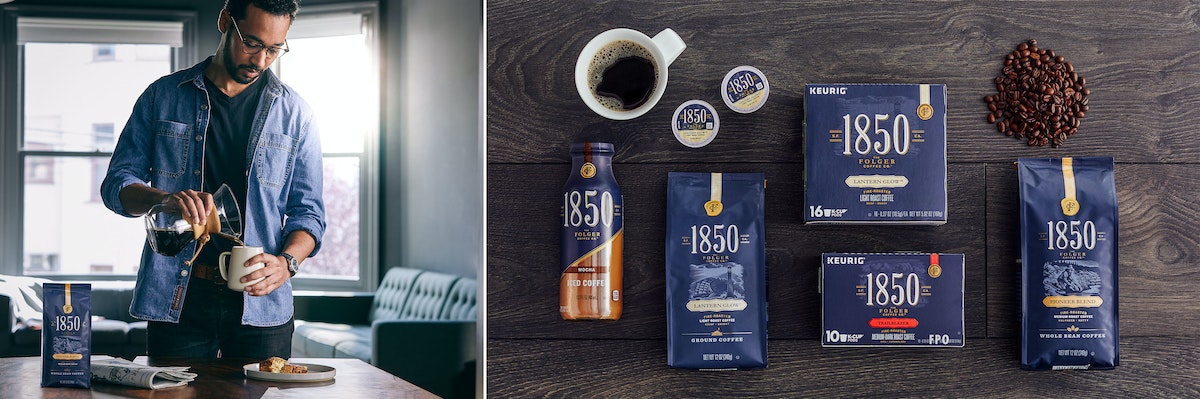
As an example of this, Geoff and The J.M. Smucker Company suggested to IDEO that they explore how Folgers, America’s leading at-home coffee brand, might resonate more deeply with a millennial audience. Design research revealed that the mindset of today’s millennial coffee drinkers aligned with Folgers entrepreneurial brand roots. The teams collaborated to create a new concept: a brand called 1850 and an end-to-end, go-to-market product experience, including packaging, retail, and merchandise. 1850 hit shelves in 2018 and has since been reported by IRI Advantage as the top launch in the Coffee Category for 2019.
Frankly, I don’t think innovation gets any easier. You just get a little more comfortable with the discomfort, and that’s when the work starts to get consistently better.
Geoff Tanner, Senior Vice President, Growth & Consumer Engagement, The J.M. Smucker Company
Creating an innovation pipeline that’s inspired by consumers’ needs
With 1850 underway, Geoff and The J.M. Smucker Company continued to invest in human-centered design to drive new offerings. The next collaboration with IDEO explored how Jif, the iconic peanut butter brand, could extend beyond the jar and become more readily accessible and appealing to busy parents who want to feel confident about the snacks they give their kids.
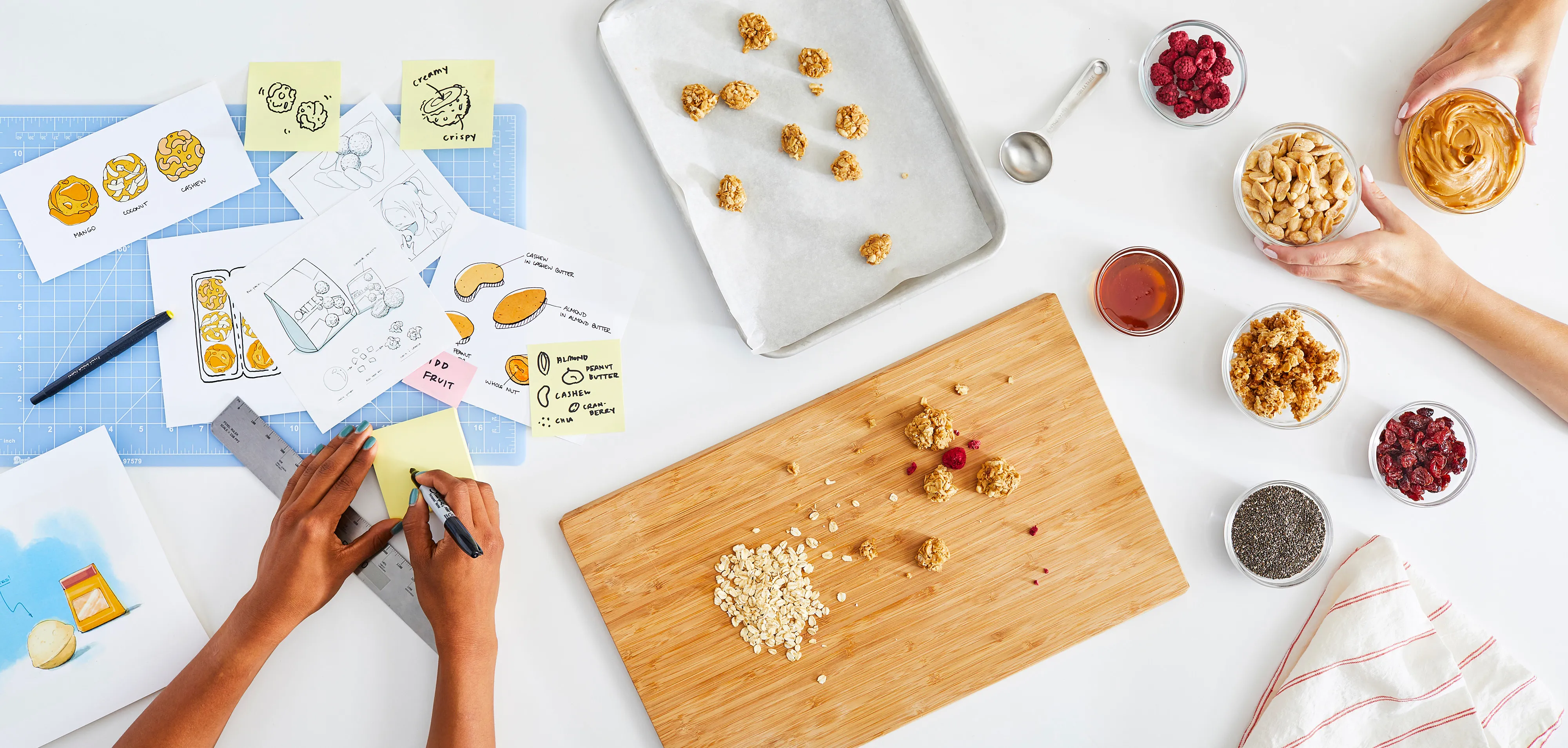
The design team was moved by the challenges that parents face: They want the best for their kids, but struggle to choose between what’s wholesome and what’s convenient on a daily basis. The ideal foods are filling, nutritious, and energizing, but often take more time to prepare and aren’t backpack or carpool-friendly. On the other hand, more convenient options tend to be full of empty carbs. Based on this insight, IDEO and Jif decided to tackle the snack-time parenting struggle. The IDEO and Jif teams worked side-by-side to prototype multiple product ideas and formats and tested them with on-the-go families to ultimately create Power Ups.
Available at over 200 retailers worldwide and online at Amazon, Jif Power Ups make wholesome, delicious grab-and-go snacking possible for kids and parents alike, across products ranging from Soft Baked Bars to Creamy Clusters, which are filled with peanut butter and rolled in whole grain oats. All are made with peanuts as the first ingredient and contain no high fructose corn syrup. Since going to market in 2018, Jif Power Ups has been named the top innovation launch in the Snack Bars category by IRI Market Advantage.

Design thinking underpins everything we do.
Geoff Tanner, Senior Vice President & Corporate Officer, Growth & Consumer Engagement, The J.M. Smucker Company
WATCH: The J.M. Smucker Company is on a transformational journey, committed to three pillars of growth: Lead in the best categories, build brands consumers love, and be everywhere.
The J.M. Smucker Company has experienced accelerated growth and speed to market by testing bold new ideas and evolving the role of innovation at the company. Design thinking and consumer empathy have permeated the organization’s new product development process, making it easier to uncover sharp, human-centered insights that lead to thoughtful and uniquely differentiated brands in a competitive, ever-shifting, and overcrowded industry. The work has fueled Geoff’s vision to inspire a culture of innovation at the company so that it can move at the speed of consumers and remain a best-in-class family of brands for future generations.
Creating a fresh, modern take on the Indian culinary experience
Designing a scalable restaurant, retail, and packaging experience that highlights the diversity of regional Indian foods.
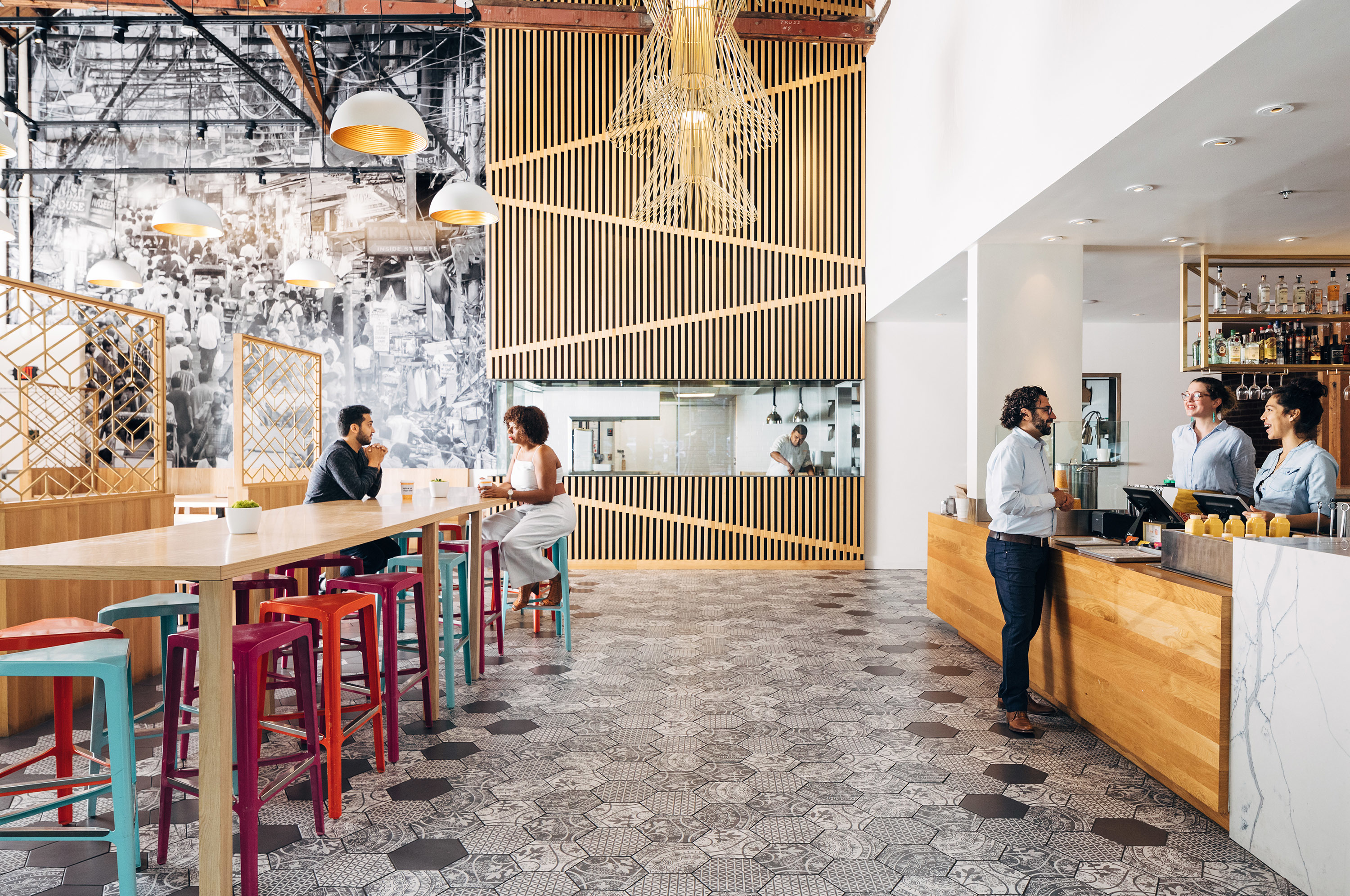
It’s a Thursday afternoon in Oakland, California. A line of lunchtime diners snakes out the door of dosa by DOSA. Upon entering, eaters are greeted by the smell of tangy dosa—a large paper-thin crepe made from a fermented batter of rice and lentils—and sweet, spicy chai. Turquoise chairs pop against a floor-to-ceiling mural by Oakland artist Namita Kapoor that transports diners to Chandni Chowk, one of the busiest markets in Old Delhi, as if enjoying their food at a local vendor.
In 2003, Emily and Anjan Mitra spent their honeymoon in India, savoring the street food of Anjan’s childhood in Mumbai (often still called Bombay). After returning to San Francisco, they found themselves longing for those distinctive flavors and dishes. Realizing that most Bay Area diners had never seen nor tasted these foods, Emily and Anjan founded DOSA, an upscale, full-service restaurant that introduced the Bay Area to Southern Indian cuisine. Locals came to try the unique, plant-forward dishes, and left with satisfied bellies and a broader understanding of Indian culture.
The entrepreneurs envisioned a brand extension of DOSA: a counter-service restaurant that could scale nationally. The hospitality venture, called dosa by DOSA, would offer healthful Indian street food made from local and seasonal ingredients. Emily and Anjan also set out to expand their existing product line-up—including cold lassi beverages, simmering sauces, and grab-and-go-meals—to national grocers and retailers and needed launch-ready packaging that was convenient, eye-catching, and environmentally-friendly. The new expression would enable consumers to experience dosa by DOSA and Southern India in a variety of forms and places. Emily and Anjan partnered with IDEO to establish a cohesive and consistent brand experience, from the restaurant and to-go meals to retail stores and mobile delivery.
In close partnership with the founders, their staff, Feldman Architecture and MPADA, IDEO set out to bring dosa by DOSA to life and help it scale through brand, environment, and experience design. This included creating everything from the logo and packaging to the menu and operations strategy, with each element tying back to the founders’ vision of sharing Indian heritage and traditions through cuisine.
The group began by seeking cultural inspiration for dosa by DOSA’s brand identity system—the logo, colors, values, fonts, and messaging—to guide future designs. They were inspired by Indian truck drivers who decorate their trucks with garlands, signs, or flags that engage other drivers or bring luck. The dosa by DOSA logo design and its wood-cut typeface are inspired by the dimensionality of this homespun art form, while the vibrant, eclectic colors reflect the streets and textures of urban Mumbai.
The goal of opening people’s minds to Indian cooking and culture extends to the packaging, which meets customers’ needs and playfully educates them. The food containers—made from recycled and compostable material—feature brightly patterned labels reminiscent of the trucks. Some have built-in compartments suited to multiple dipping chutneys, making it convenient to sample a variety of Indian flavors. Paper tray covers resembling Mumbai newspapers offer eating tips like “Be civilized. Eat with your hands,” encouraging diners to experience an Indian custom.
The vibrant brand comes to life across an array of packaging, including cold cups printed with the phrase “thanda thanda pani”—meaning “cold cold water”—which comes from a popular Indian parody of the Vanilla Ice song "Ice Ice Baby."
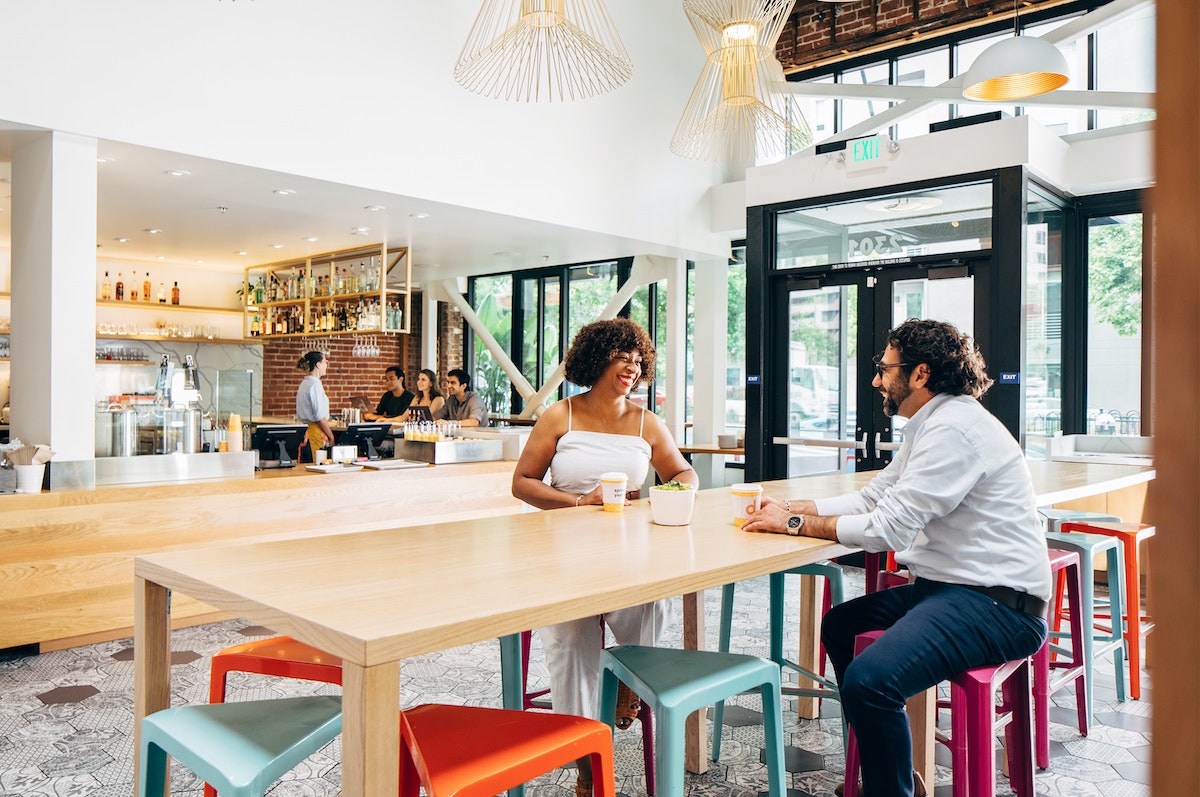
To design the diner experience and restaurant environment in a way that invites curiosity about the culture and cuisine, the team started with diners: They identified key moments in their experience like entering, waiting in line, and paying. The floor plan, furniture, lighting, signage, and menu were designed around these touchpoints. For example, while customers wait in line, they can watch dosa being prepared, as if they’re eager and hungry travelers awaiting street food.
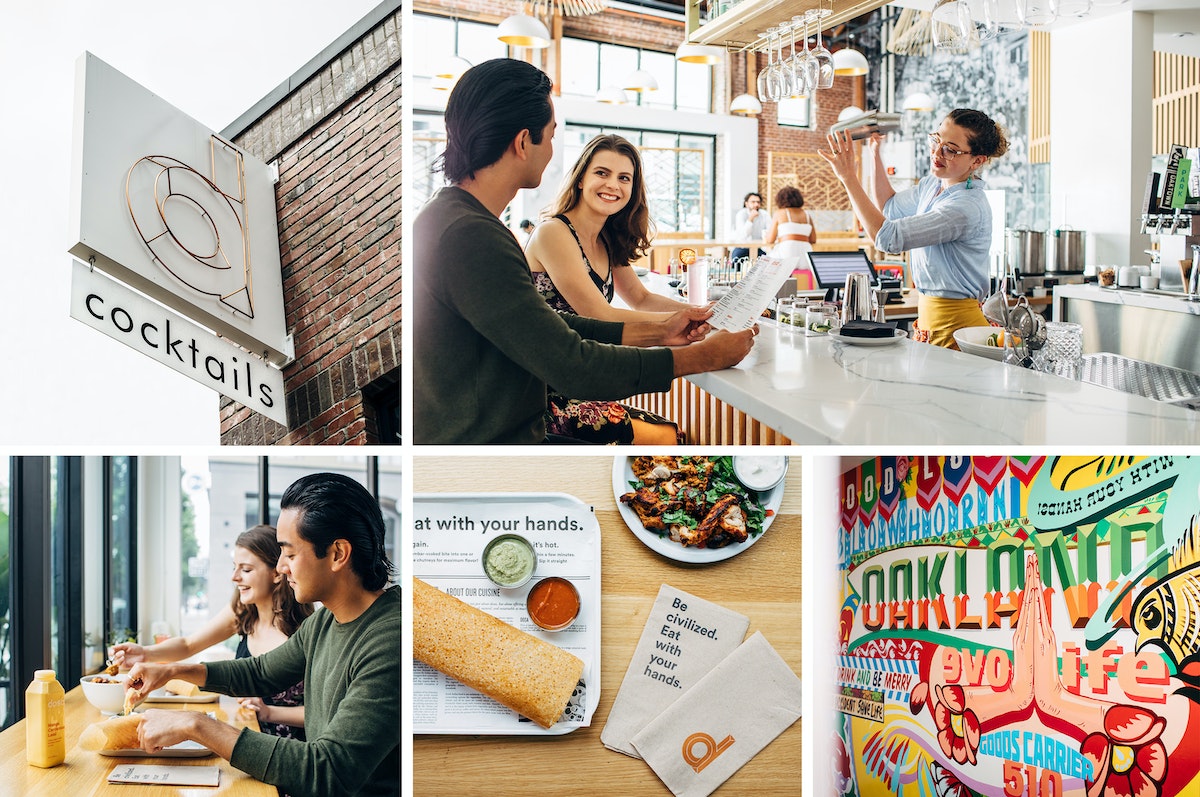
The dosa by DOSA menu includes distinctive items like coconut kale mung bean salad and hot masala chai made with caramelized milk—the way Anjan’s mother prepared it. To help the restaurant scale, the team created a preliminary furniture, fixtures, and equipment (FF&E) budget, 3D renderings of the space, and an operations strategy for the founders and their employees.
The dosa by DOSA flagship launched in January 2018 in Oakland, California. The IDEO brand guidelines have enabled the dosa by DOSA team to independently and easily shepherd new product lines to market, including salads, wraps, curry bowls, samosas, and simmer sauces. The brand’s packaged food launched in over 200 natural food stores in 24 months—including over 100 Whole Foods locations—as well as online retailers and delivery services like Good Eggs and Caviar. These items and the restaurant have helped Emily and Anjan realize their vision of bringing the flavor and spirit of Southern Indian cuisine to new communities around the world.
Revitalizing Japan’s food industry through design and software
Redefining the “middleman” role of produce wholesalers in Japan.
In recent years, due to shifts in Japan’s demographics, the food industry has faced challenges such as a decrease in market size and a shrinking number of producers. As a result, social impact opportunities abound in this field.
When Japanese software company NJC (Nippon Jimuki Co. Ltd.) approached IDEO seeking to identify new business opportunities that would build on the company’s core strengths, the food and agriculture industry rose up as a promising area of focus.
NJC is a well-established software company that has spent over 50 years helping to build backend business systems for small to medium enterprises. NJC works across healthcare, retail, and food and beverage, computerizing core processes to support and improve operations.
In partnership with IDEO, NJC explored its strengths and potential as an organization, as well as the ideas and visions of the employees, and emerged with the goal of using their capabilities to address large-scale issues facing regional farmers.
During research across Japan, local growers described challenges with multi-layered supply chains and analog systems, which led to “overwork for minimal profit,” as well as a gap between supply and demand. Because agricultural wholesalers lacked clear information in advance on the status of crops or the volume to be harvested, they struggled to negotiate with buyers, which led to wasted food On the other hand, the farmers who grow the crops are engaged in manual labor, and do not always have the energy to focus on business aspects such as efficiency or the pursuit of increased profitability, which leads to a diminished interest in farming among young people.
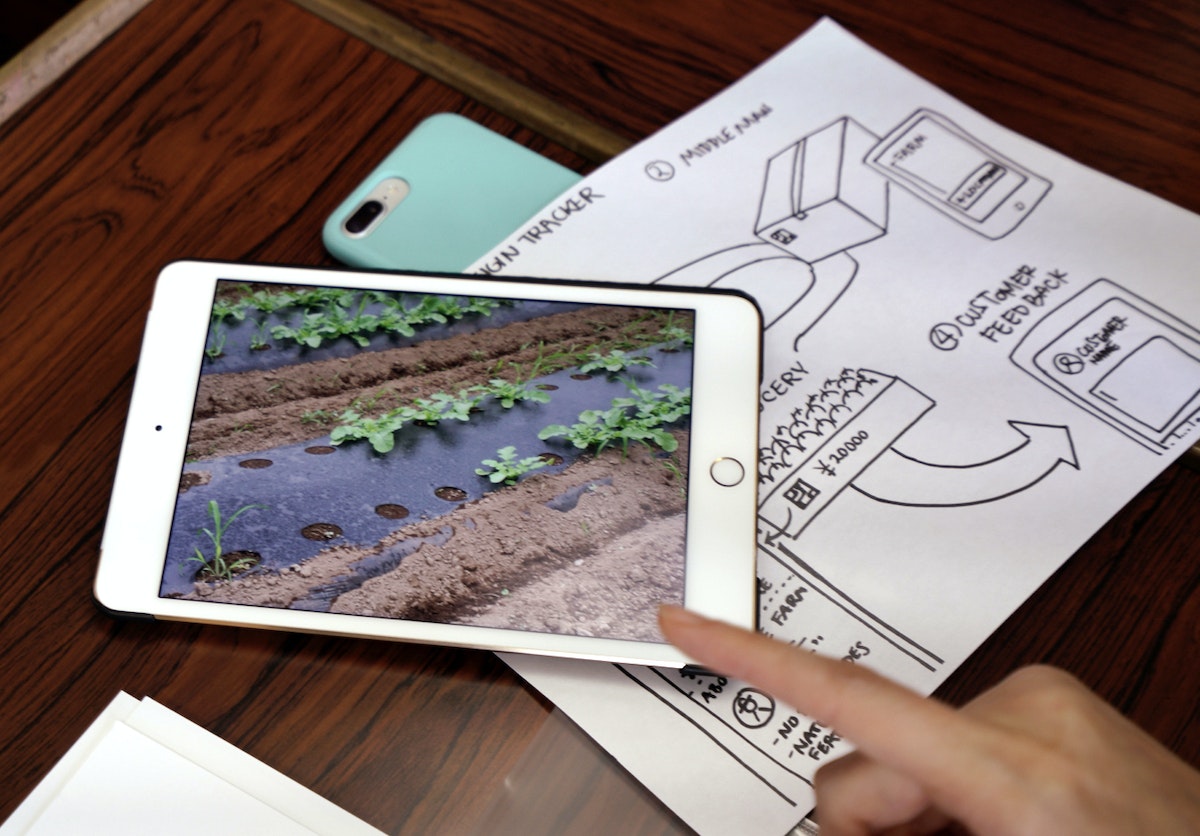
One question that emerged through research was why agricultural producers weren’t utilizing IT. This evolved into “How can profitability be improved for all stakeholders?” and, “How might we create a system that will provide useful data without creating a burden for either farmers or agricultural wholesalers?”
The result was fudoloop.
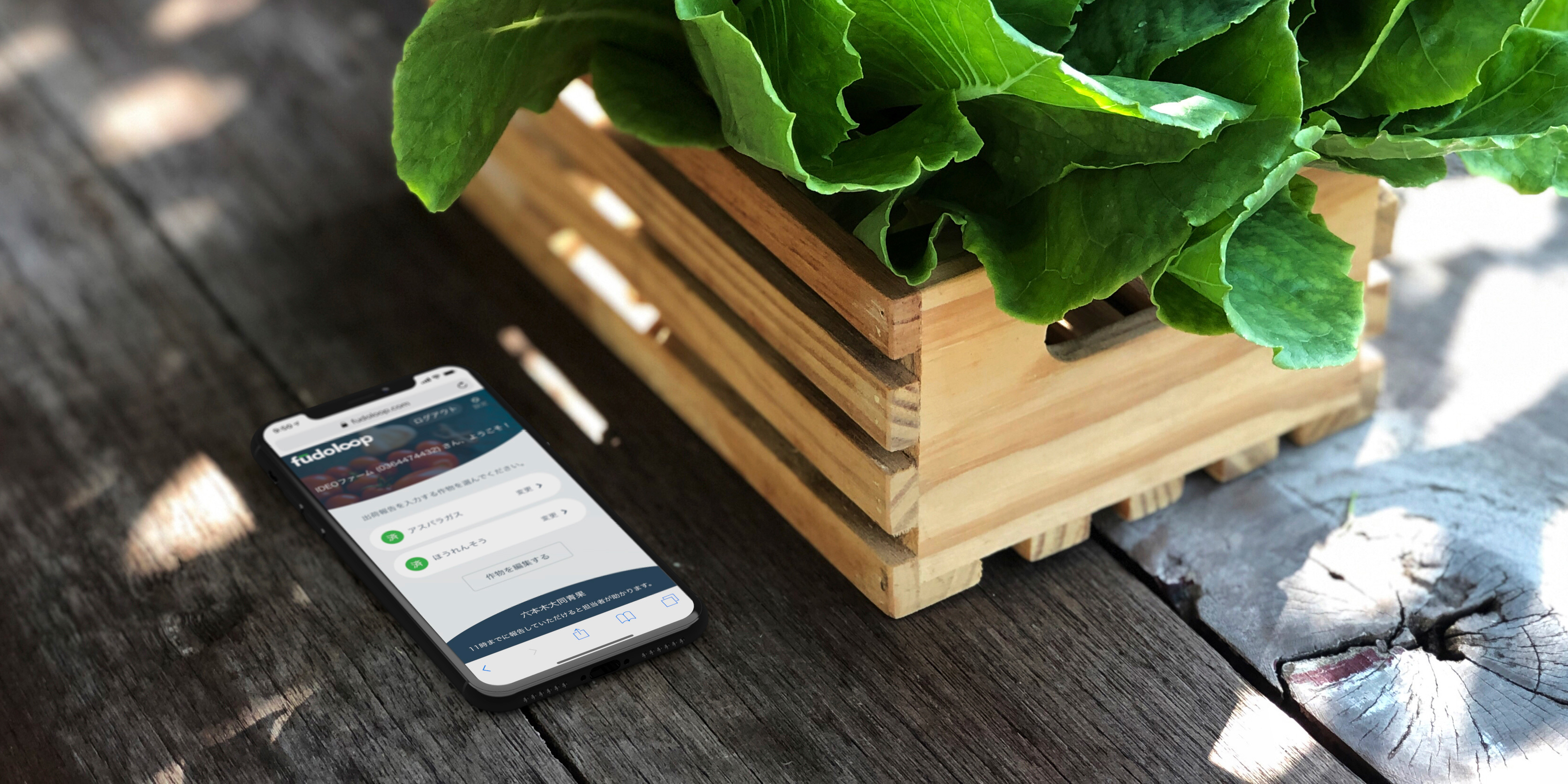
fudoloop is an app that enables farmers and wholesalers to conduct business more profitably by bringing transparency to the fluctuating produce market. Through fudoloop, wholesalers receive information from farmers a day in advance, and can coordinate the various requests of buyers, such as order size, production location and other special requests. As a result, wholesalers can function as “community managers,” doing business with both producers and buyers at a more appropriate price point.
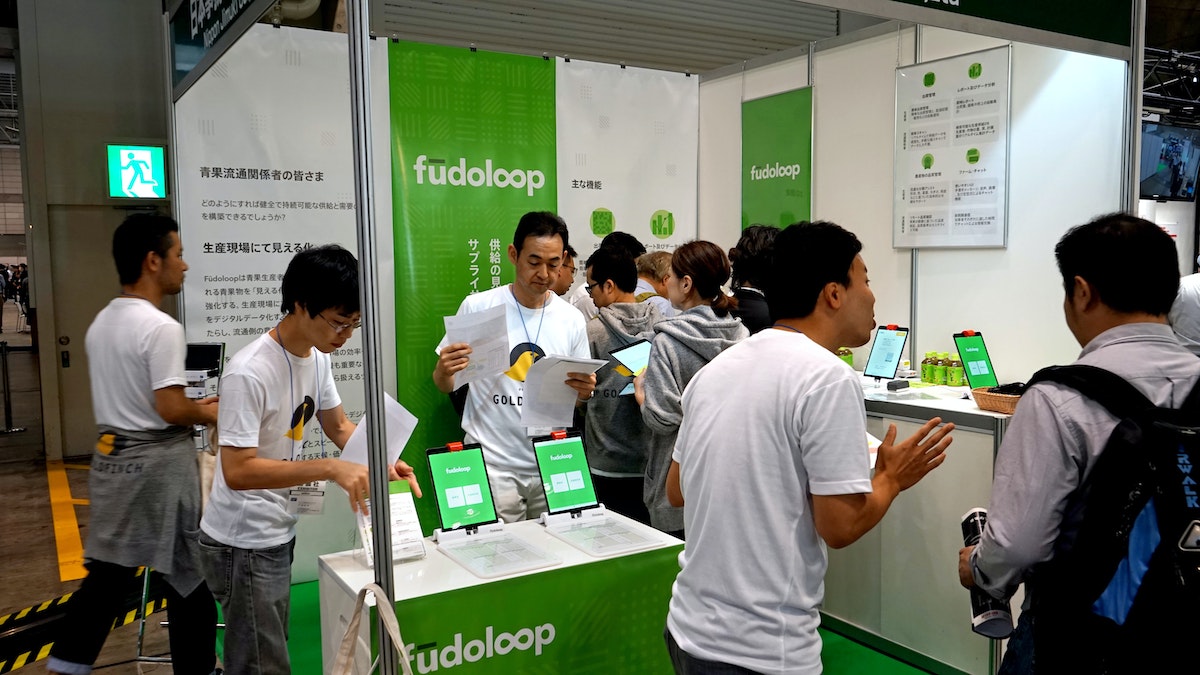
NJC aims for fudoloop to be the first step in a cycle that brings value to all stakeholders, from farmers to wholesalers, retailers and even customers, by redefining the “middleman” role of produce wholesalers.
Designing a new digital experience for a world-renowned Japanese railway
A new, human-centered wayfinding app for one of Japan's biggest railways.
The population of Tokyo’s metropolitan area is twice as big as New York, and the daily influx of workers from the suburbs increases that number sixfold. Congestion on trains traveling through the center of Tokyo during commuting hours is said to reach somewhere close to 200 percent of the trains’ capacity.
East Japan Railway Company (known as JR East) is the world’s largest railway company by revenue, operating 12,000 trains daily and serving 6.4 billion passengers per year.
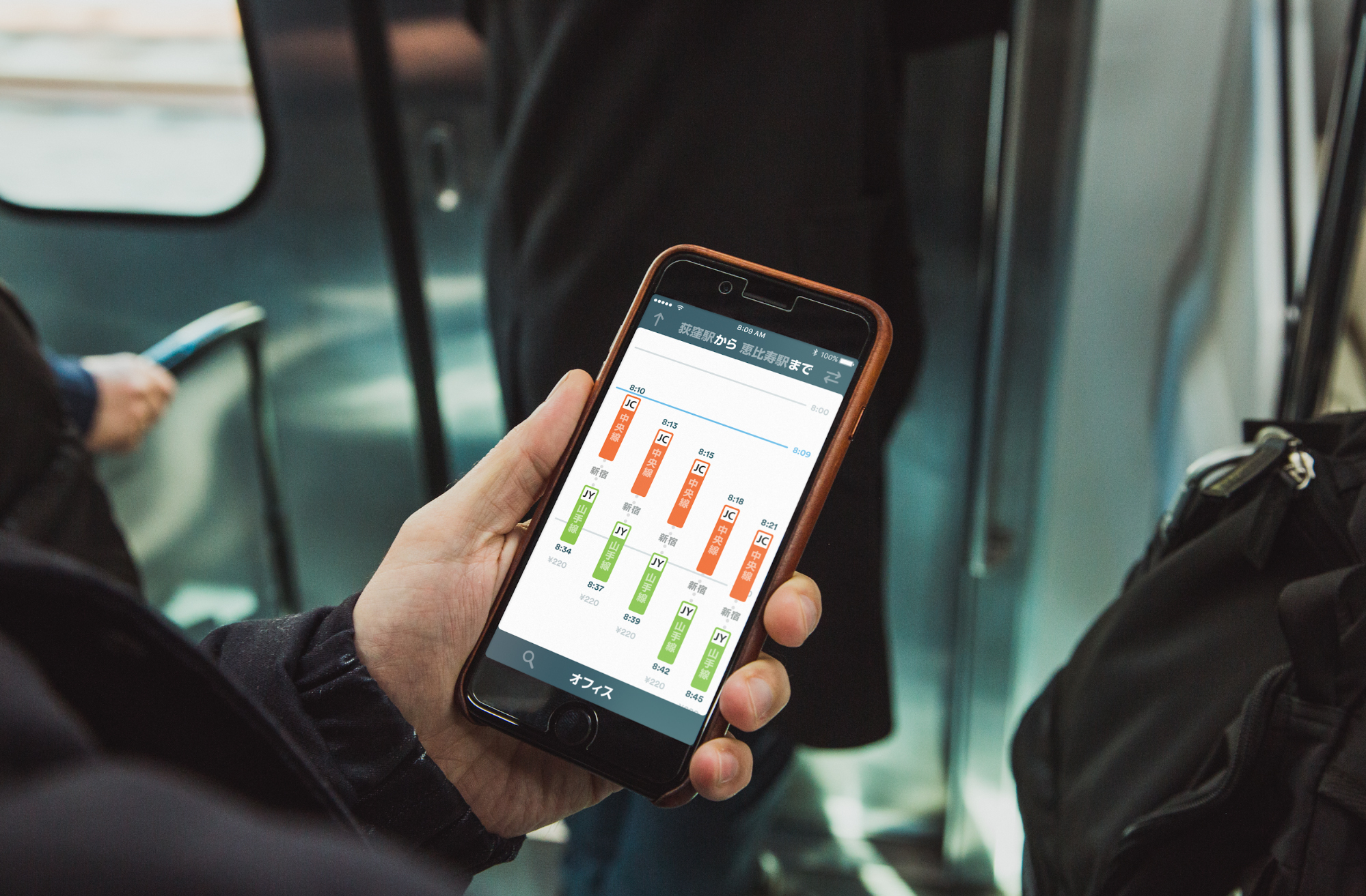
In March 2014, JR East leveraged their extensive operations and passenger data to publish a consumer app that provided train location information, congestion status, air conditioning temperature, and wayfinding tools.
The app was downloaded more than 3.8 million times; however, its features and usability proved unsatisfactory to users. In an attempt to be comprehensive in addressing passenger needs, the app was weighed down with data and worked sluggishly. Competitors’ apps were named above JR East in customer satisfaction surveys, highlighting the company’s need to address the tool’s usability.
JR East’s Technical Division approached IDEO to help design an attractive and consistent user-centered experience through its digital ecosystem. With a team of interaction designers, they launched a project to create a new version of their app.
During the research phase, the IDEO team observed passengers’ behaviors and decision-making processes and noticed that people were using several apps at once to get more personalized and complete information.
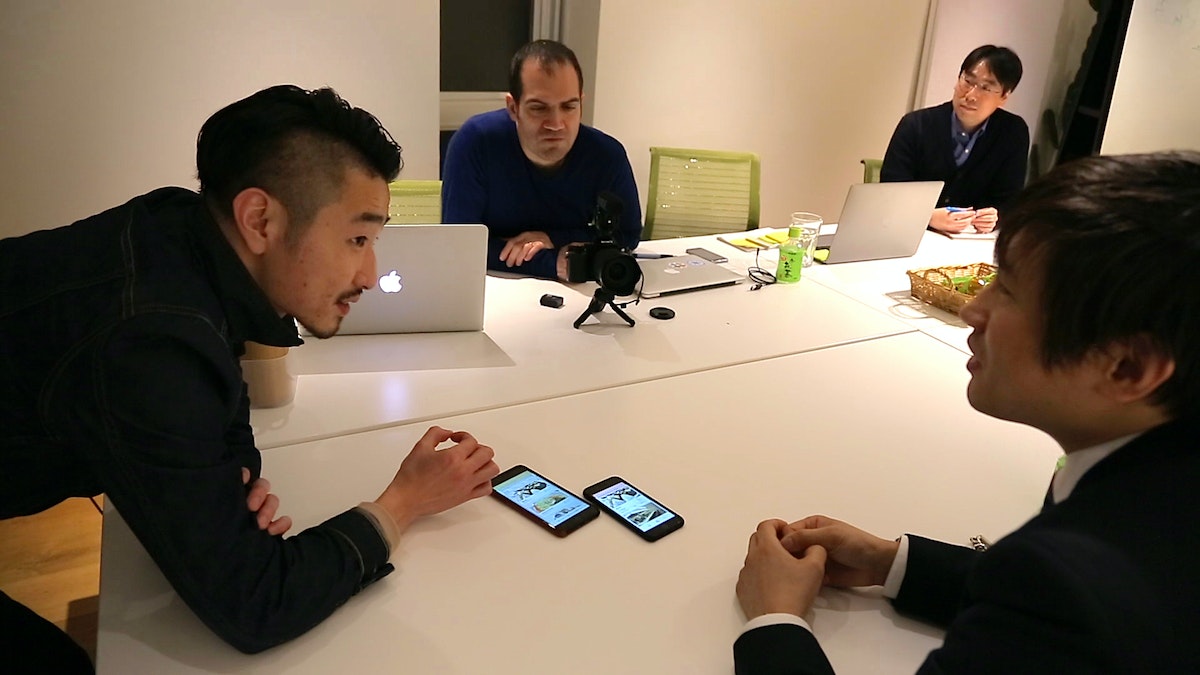
The team created a set of paper-based prototypes to test how users would react to various functionalities. Surprisingly, users ranked versions with limited functionalities higher than those with a broad range of features.
This insight informed a new prototype that enabled a customized user experience based on traveler needs. Wayfinding proved to be the most frequently selected feature, so the new app was designed around helping passenger navigate during their trips.
Although JR East had traditionally outsourced their app development, IDEO encouraged them to organize their own internal team. In cooperation with Pivotal—a frequent IDEO partner familiar with human-centered approaches—the internal team was trained in agile development and built the new app themselves. A prototype was released in November 2017 as “Go! by Train.” It was so successful in the market that the earlier JR East app was replaced entirely with the content of the new design.
JR East's internal development team was recognized by the company for their exceptional output, and will be integral to the company's human-centered digital transformation going forward.
The messy business of coming up with new ideas
Every opportunity starts with a prototype.
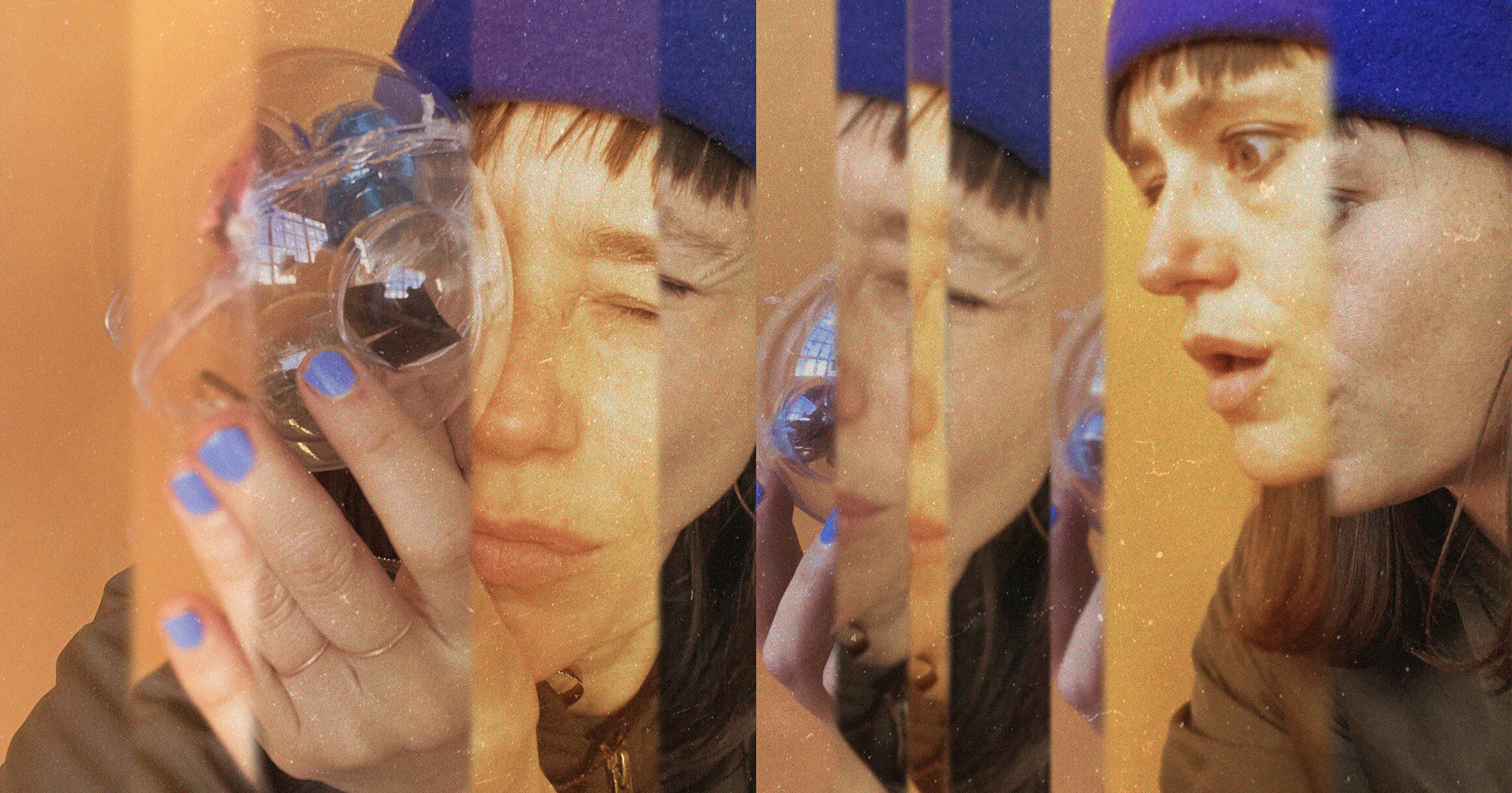
There’s also a hint of our Chief Creative Officer’s perfume wafting in the air, “no.1173, the Last Almonds of November,” and “no. 79, Crisp Snow on Granite,” diplomatic offerings intended to remind politicians of scents that we may lose due to climate change—and what they still might protect.
To my left, a business strategist and industrial designer heatedly debate the financial and social benefits of a “hand-me-down, doodle-me-up” backpack program to enable creative reuse in key lifestage moments across childhood. At the other end of the table, a designer prototypes an underground music genre using sound libraries sampled from hybrid species. This moment is so very weird, so very thoughtful, and so very much where dreaming up new and disruptive ideas begins.
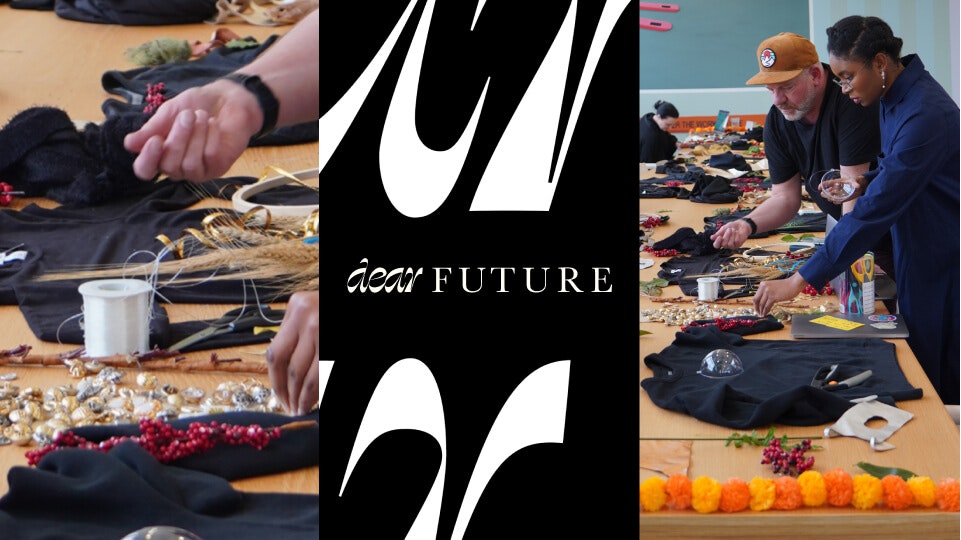
When IDEO speculates about the future, we often start by gathering around a table and giving ourselves the creative oxygen and open space to explore the questions of tomorrow—What will we need to thrive in the climate era? How can we humanize technology?—with gluesticks and glitter, not just whiteboards and whitepapers. It is a practice of imagining with our hands, building to think, and blending strategic hunches with wild cognitive leaps. We’re following the wisdom of our PlayLab, who have long argued that intentional play helps liberate thinking, slipping past the rational mind and inviting all the senses to be part of the conversation. This afternoon’s makeathon was only the beginning of IDEO's larger efforts to reimagine tomorrow. Tomorrow we diagram. But tonight we dance.
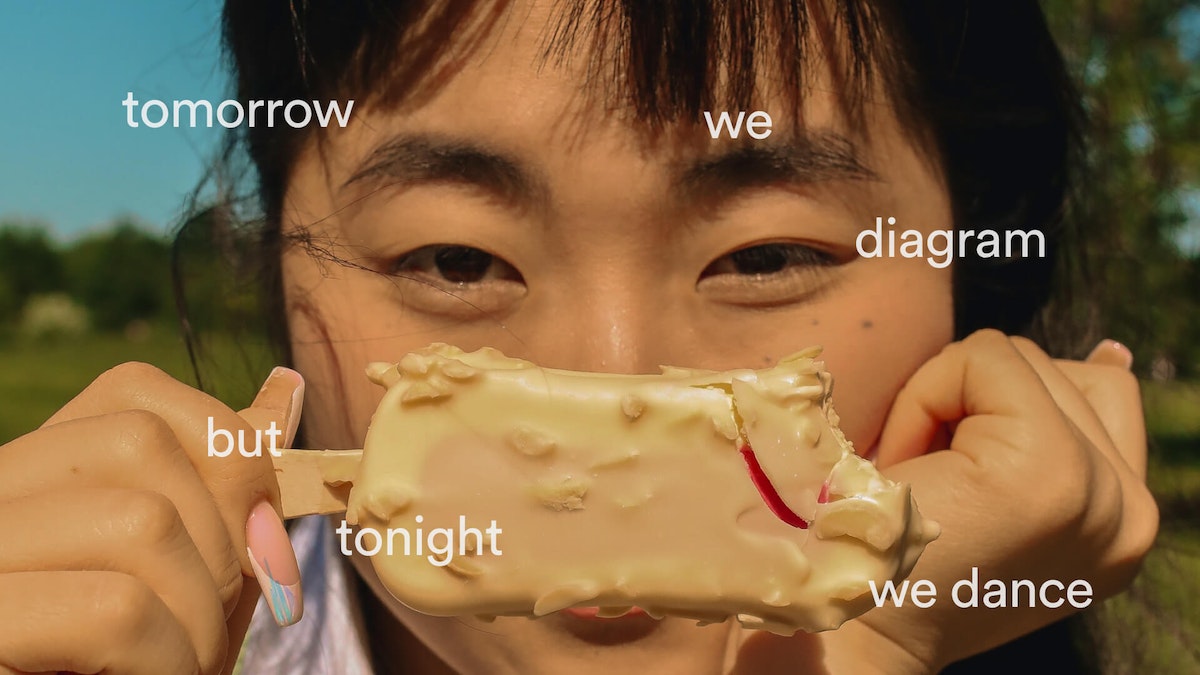
Some call it ideation. I call it rebellion. A re-wilding of imagination. As a pink-haired hacker kid in the 90s, squirreled behind my CRT in the early days of digital, I was intoxicated by the electricity of possibility crackling in the air. Digital was going to change everything. Cut to today, and it’s easy to feel that same kinetic energy all around us.
Design invites us to escape the gravity of the present in pursuit of the possible.
As we move through the Climate Era, organizations and individuals are beginning to recognize that, as the French writer and filmmaker Chris Marker put it, “Rarely has reality needed so much to be reimagined.” Design helps conjure new possibilities from the air, bringing them down from the cloud of heady theory, up from the soil of day-to-day aspirations, and into the hands of people. When done well, design fundamentally redistributes the balance of power, changing both who is at the table, and what is created. It connects the street to the skyscrapers, the mothers to the policymakers, the ethically opinionated 12-year-old to the corporation, the makers to the strategists. When we shake off these divisions and imagine together, we all become magicians, conjurers, rebels. Together, we refuse to simply accept the world as is, and instead help collectively reimagine it as it could be.
For decades, IDEO has imagined what it would feel like to inhabit the future. As our timeline for implementing climate solutions and contending with emergent technologies grows shorter, we are recommitting to that practice—creating compelling, tangible visions for how we will live, work, create, and relate to one another, the planet, and to the world around us.
Dear future, we’ve got your back. Biodegradable glitter and all.
The Day’s Agenda
Our speculation about what opportunities will arise as we do business in the Climate Era kicked off with an in-person makeathon.
To set the scene, we hosted a conversation in our San Francisco office between Alexander Rose, Executive Director of the Long Now Foundation, and IDEOer Tanja Dzambazova. Since 1997, Rose, Danny Hillis and The Long Now team have led a range of efforts encouraging imagination at the timescale of civilization—the next and last 10000 years—including a monumental, all mechanical 10,000 Year Clock. It was an excellent primer on long-term thinking.
Flush with inspiration, we gathered around a long table littered with raw materials: leather and felt scraps, leaves and twigs, markers, and glue guns. We gave each team a brief and an hour to rapidly prototype speculative products, services, and experiences for a potential client. The point in a makeathon isn’t to come up with a perfectly viable concept, it’s to slip beyond a rigid, legacy mindset and enter a more flexible, generative mode where you can come up with new-to-the-world ideas.
OUR BRIEFS
- Electrify Everything
How might we live differently in a world that is running off of renewable energy? What is unlocked in a world where all industrial machines, homes, neighborhoods, and appliances are intelligent, efficient, connected, and powered by renewables? - Waste-Less Living
What might everyday life look like if the products we use, clothes we wear, and industry standards and systems are waste-less, adaptable, and regenerative? What could more intentional “design for immortality” look like? - Frontline Futures
How might we design new experiences, products, and services for those on the frontline of climate impacts? What new mitigation, prevention, and adaptation opportunities can we surface through a human-centered lens rooted in the experience of those most at risk? - Carbon Transparency
How might we live differently in a world where carbon transparency (scope 1,2 & particularly 3) is fully complete? What is unlocked in a world where consistent measurement and blockchain logging produces a live carbon score for any object or activity on earth? - New Nature Rites
How might a globally viral belief system responsive to climate change create new rituals, symbols, events, holidays, and social narratives?
With those prompts in hand, teams split off and started making. Here’s some of the output.
Remember, these aren’t meant to be realizable ideas. They are jumping off points—kernels of business opportunities that we’d like to explore further:
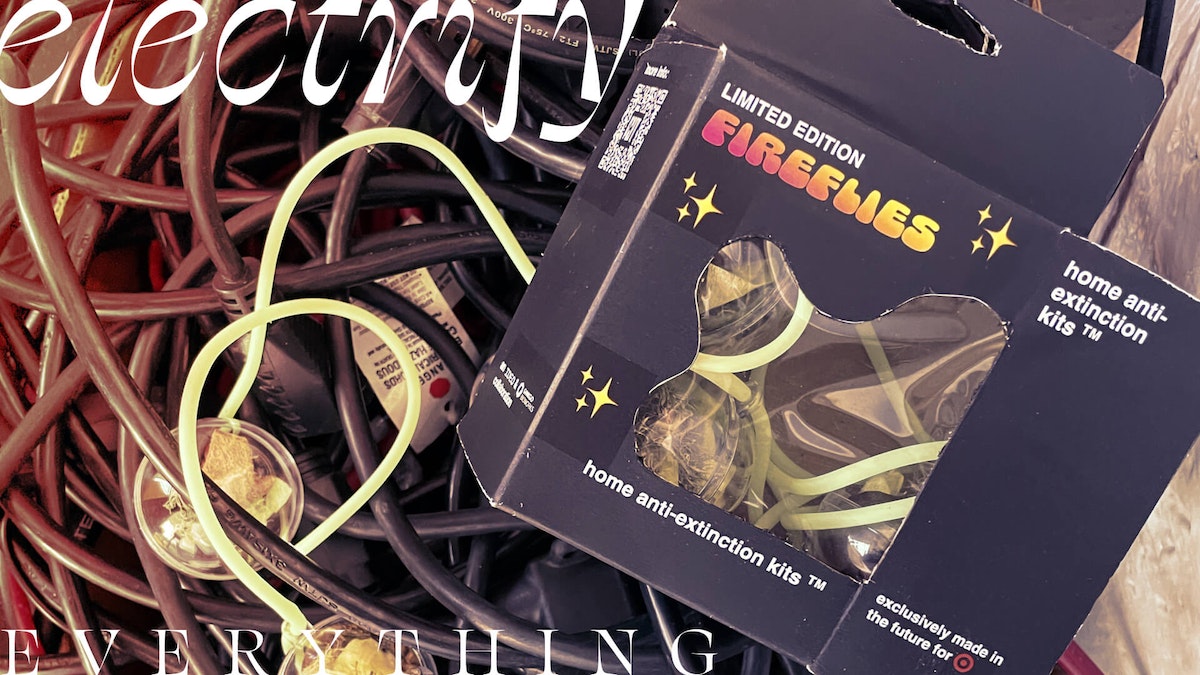
Client: Target
Theme: Electrify Everything
Design Concept: “Anti-Extinction Kit: Fireflies Edition”
A set of globe lights powered by fireflies is one in a series of kits to help re-nature our backyards and cultivate anti-extinction habitats. As climate change starts to affect food sources and safe places for firefly larvae dwindle, these backyard accessories are safe havens for fireflies to fuel up, lay their eggs, and lend their glow to light up a backyard. Also comes in glowing fungal and pond editions.
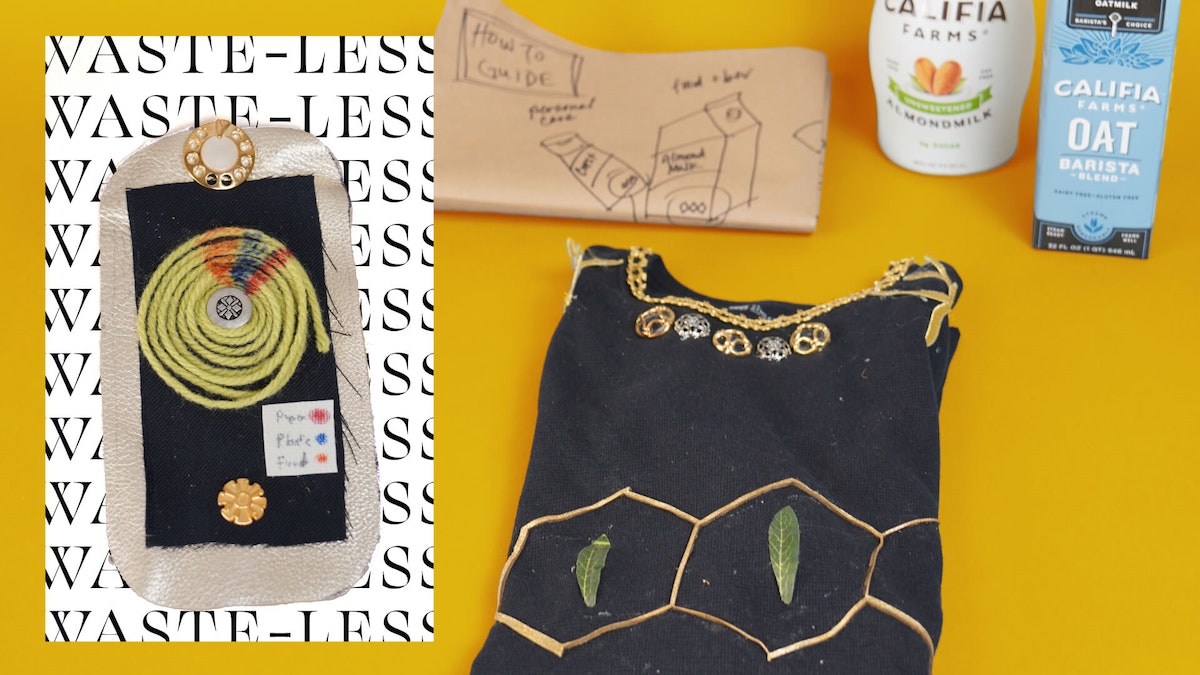
Client: Amazon
Theme: Waste-less Living
Design Concept: “Trash Rabbit: A rewards based packaging system”
An on-demand service that comes to your home and breaks down your trash—preserving valuable metals and other raw materials, disposing toxic elements, and processing recyclable elements. Users earn rewards and cash back when they purchase simpler, mono-material products.
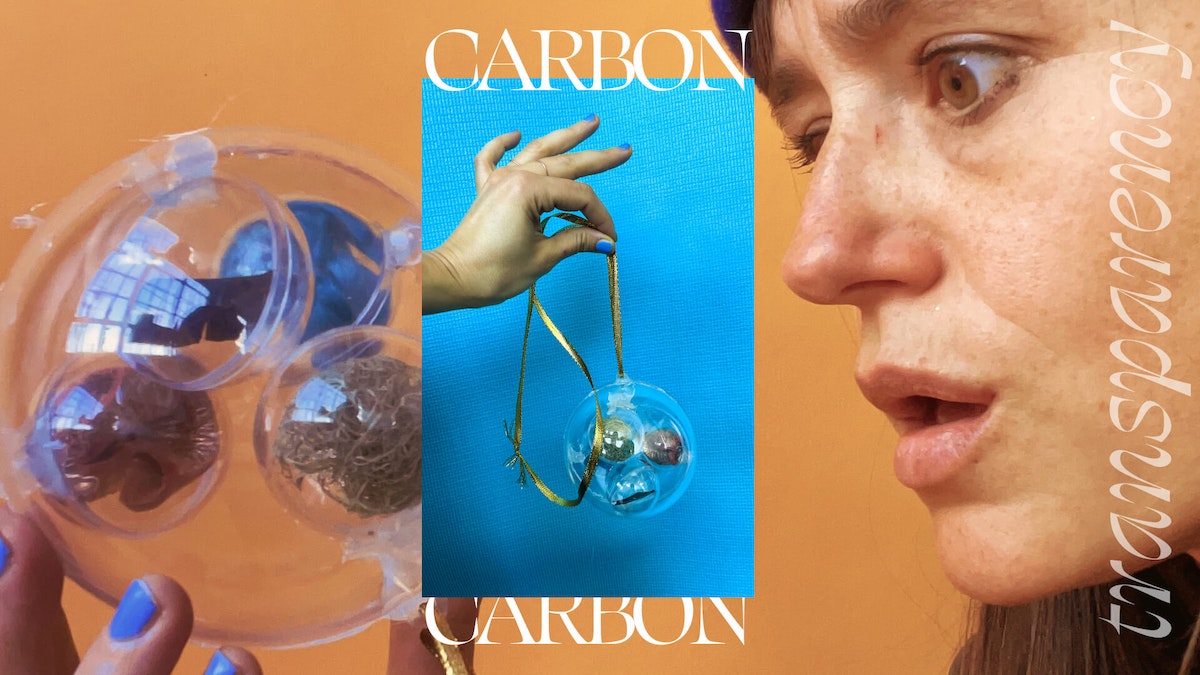
Client: Ford
Theme: Carbon Transparency
Design Concept:
A globe you wear as a necklace, like a Magic 8 ball. When shaken, it displays the most efficient, carbon-neutral way to get from point A to B, offering options that require tradeoffs and offsets. An intuitive sensory companion helps you make hard choices.
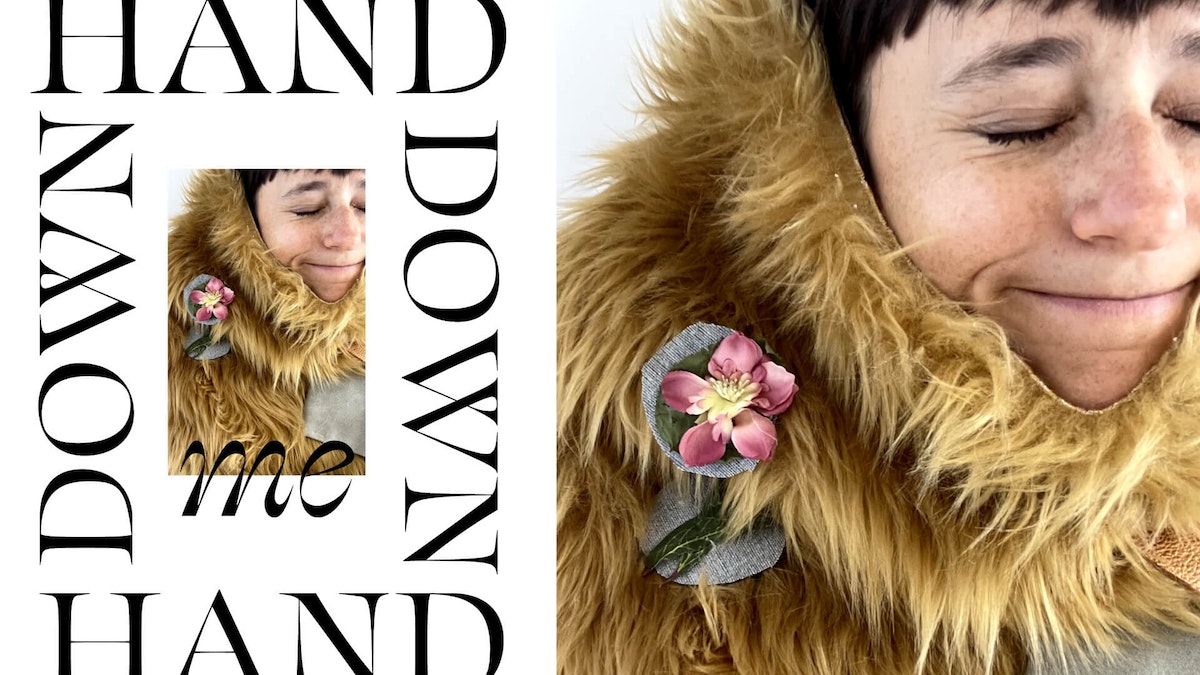
Client: REI, Patagonia
Theme: Nature Rites
Design Concept: “Intergenerational rites of passage”
A program in which gear is intentionally designed as a blank canvas to be passed down from generation to generation with a hand-me-down or yearbook element: You customize the backpack, sleeping bag, jacket, and other products with badges and add-ons to celebrate rites of passage like a first camping trip.
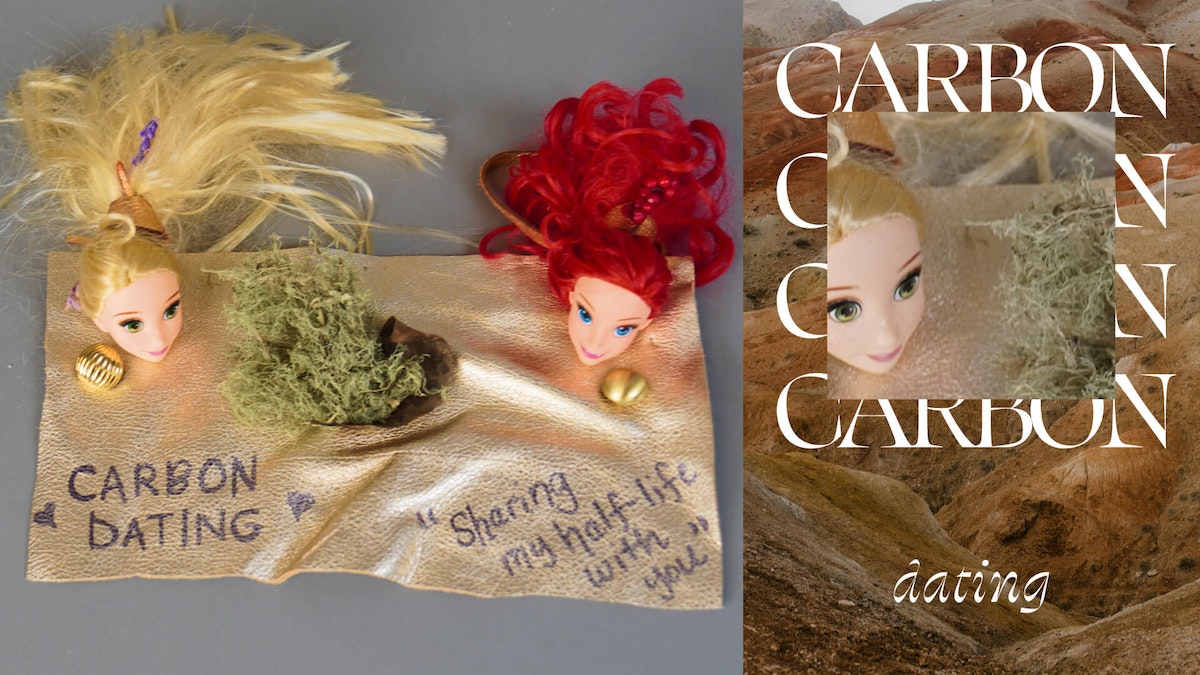
Client: Dating apps
Theme: Carbon Transparency
Design Concept: “Carbon Dating”
Matchmaking service based on shared environmental goals and behaviors. This is a time in which your carbon score makes you more desirable. Benefits include having similar habits and values—making moving in together a lot easier. Unintended consequences include creating an elitist competitive set where having the lowest score becomes more important than other human qualities.
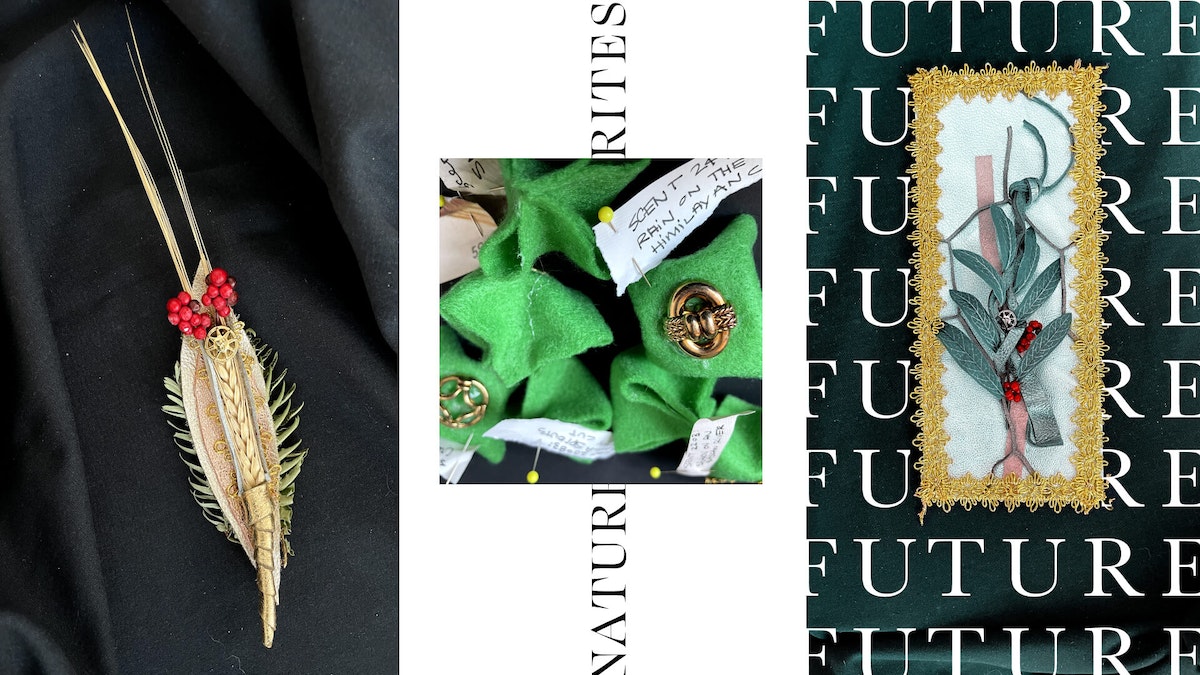
Client: United Nations
Theme: New Nature Rites
Wheat Pins Alliance
Made with the last piece of non-GMO wheat on earth, it’s our new cross-national symbolic pic worn to show allegiance to the earth. Due to monoculture farming practices, a future fungus wiped out the world’s wheat supply including GMO and non-GMO strains that weren’t strong enough to fight it
Lingering Scent Library
Last of their kind scents that were collected and stored in anticipation of climate change—the smell of snow on granite, an aroma of crushed almonds—that are offered to diplomats to remind them of what has been lost and what is still to be protected.
The New Earth Flag
Emblazoned with the shapes and colors of our last remaining shrubs, it represents Earth’s ecotone as it becomes increasingly desertified.
Will we see these ideas come to fruition? Probably not. But like any thought experiment that asks “what if…” they can lead to new ways of thinking and future business opportunities. The organizations that can anticipate what people will want and need in the next 10 years are the ones who will thrive in the Climate Era. What will technology make possible? What will dwindling resources make scarce? What will it take for humans to adopt planet-friendly solutions at scale?
Design’s role is to consider all of those factors and lovingly break, shape, and remake. To escape the gravity of the present in pursuit of the possible. And that starts by making a giant mess.
Dear future,
Can you smell this? It’s the scent of a melting doll’s head being gently pressed into a dayglo flowerbed.
.jpeg)
5 ways we're using AI at work
Artificial Intelligence is our new office mate. Here’s how we're teaming up.
For anyone whose day job involves creating things—proposals or presentations that require fact-finding, writing, imagery, and video—it's changing how we make stuff. Love it or fear it, generative AI may be our new co-worker. And to ensure this co-worker is ethical, friendly, and aligned with our intentions, we must first explore it.
This phase of the AI revolution feels personal. Many IDEO designers are artists or writers—crafts that generative AI is uniquely suited to disrupt. So, we’re getting ahead of it and embracing these tools to explore how our creative process might coevolve with AI.
As we would do with any new colleague, we hope to learn how to have constructive relationships with these technologies, understand them better, and collaborate.
Way back in 2019—before generative AI was everywhere—we created a deck of AI Ethics cards, which you can download here. It was a good start, but there is much work yet to be done on creating an ethical human-AI ecosystem that endures long after the hype cycle ends.
Here are a few of the ways we’ve been experimenting so far:
1. Research Synthesis
The classic image of design thinking is people huddled around a Post-It–littered foam core board. During the pandemic, this process shifted to digital tools like Miro, Reduct, and Figjam.
Interaction Designer Takashi Wickes is using generative AI to further streamline the synthesis process—a method of organizing and interpreting research data in order to identify patterns, themes, and insights that can be used to inform the design of a product or service or experience. Using Reduct to transcribe his interviews, he highlights stand-out quotes. He then runs the quotes through Notion AI with a prompt like “What are the top 10 key takeaways from this conversation?”
Knowing that the AI doesn’t have the larger context of the project at hand, Takashi and his teammates use Notion AI’s output as supplemental input. Treating Notion AI’s output as a base to build on, they combine AI and human intelligence to go deeper, faster.
And, we’re already seeing startups form around this type of process: check out Vowel.
2. Concepting & Ideation
Designers come up with a lot of ideas. A typical ideation session begins with a prompt, something like: In a world oversaturated with screens, how might we support parents and children in connecting over the dinner table through games? We scratch our heads, think it over, and begin sketching out sacrificial concepts.
Recently, we’ve been experimenting with flipping this process on its head. Rather than coming up with an idea straight away, we use AI-based image generators like DALL-E or Midjourney for inspiration.
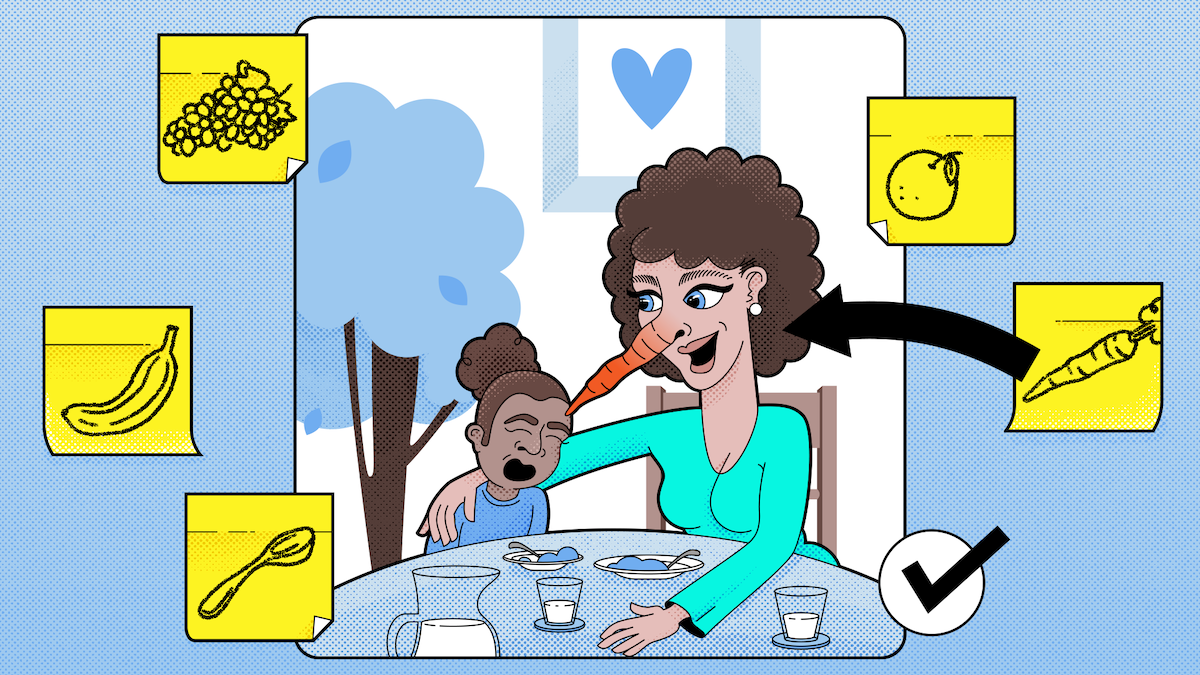
For a project on new dinnertime games, we fed DALL-E the prompt: “a family playing with their food during dinner.” The images rendered spark new directions that we might not have come to on our own. Mom with a carrot as a nose? Why didn’t we think of that? When you’re all at the table, why not use food as costumes in gameplay? Magical game design is all about turning expectations on their head. Now, we start to wonder… What other foods would make fun play pieces?
And of course, there are a cohort of new companies who are formalizing this process into a consumer tool: check out Fermat.
3. Critique
One thing we’re always exploring in our very riffy culture is how to get better at critique. There’s always this one thing to pick on: Weak insights. Insights at IDEO are concise statements that reflect our understanding about the current state of affairs in a given challenge and the way they are framed can be foundational to how we design solutions.
A few years back, before AI tools were everywhere, we made an insight analyzer chatbot. It looked for overused terms and poor word choice and would essentially chew you out. It was just an NLP bot that used natural language processing to match user chats with a set of known statements. The interface was a physical telephone (hotline). A funny gimmick with a simple learning: bots can get away with being mean.
Late last year, a team of brand and interaction designers started packaging up our favorite simple methods of critique and revisited the old insights hotline. Anne Graziano and I fed simple prompts such as “Give a brutally honest critique of the following insight: Meet people where they are at” to ChatGPT, and as might be expected, if you talk to an AI modeled after what’s said on the internet it’s going to be very good at criticizing things.
We tried the OpenAI api (GPT3_davinci-003) and got decent results, so we wired it up to an emoji reaction in a Slack channel. When you add a “crit” emoji to an insight, it replies with a critique. The original prompt was harsh and getting a bit obstinate, so our group adjusted to the prompt “Give constructive feedback on the following insight:” which changed the tone and made it more creative and fun.
Our colleague Takashi figured out that the AI was pleased to critique quotes from classic movies and romcoms, which Takashi sourced from ChatGPT (prompt: “Give me the 10 cheesiest famous lines from movies”). He then fed the AI old chestnuts like, "Life is not measured by the number of breaths we take, but by the moments that take our breath away." (Hitch, 2005).
4. Marketing Copy
As community builders at IDEO, we host a lot of events. Recently, when writing up the copy for an internal informational session about the fundamentals and history of generative AI, I turned to ChatGPT to write the marketing copy. The output was pretty spot-on, and ended up informing both the content of the event and the copy we used to pitch it. We built on it, of course—inserting things that we thought were especially important for our community to learn—but it was a true collaboration.
5. Slide Decks
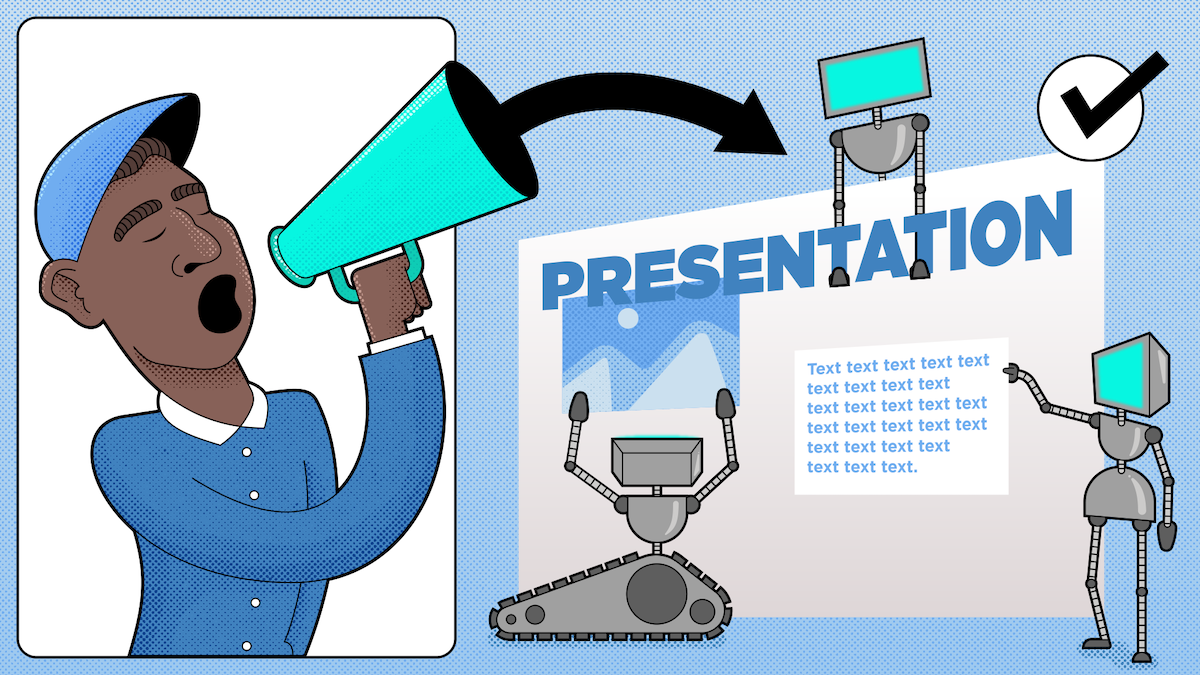
Google Slides are a staple of IDEO’s creative process. We use slides for project deliverables, ideation, business proposals, and internal events. We've found Tome.app, which creates AI-generated slides, to be a helpful springboard. Business designers are experimenting with the technology to refine their communications, interaction designers use it to think through how a new product might look, act, and feel, and our Play Lab is using it to explore new rules and play styles for games that do not yet exist.
Companies are forming around key parts of our creative process—capabilities which humans (and a few animals) once claimed as their sole domain.
In a 1948 documentary about U.S. agriculture called "The Land" the disruptive force of large-scale mechanization is described in a way that feels like it could be about this AI moment:
"These miraculous machines!
Do we shape them
Or do they shape us?
Or reshape us from our decent, far designs?
But we are learning.
We are learning to build for the future
From the ground up."
We’re curious: How are you using generative AI tools at work? We’d love to hear from you! Send us a note: Savannah Kunovsky & Danny Deruntz
Are you using ChatGPT yet? If the answer is no, keep reading.
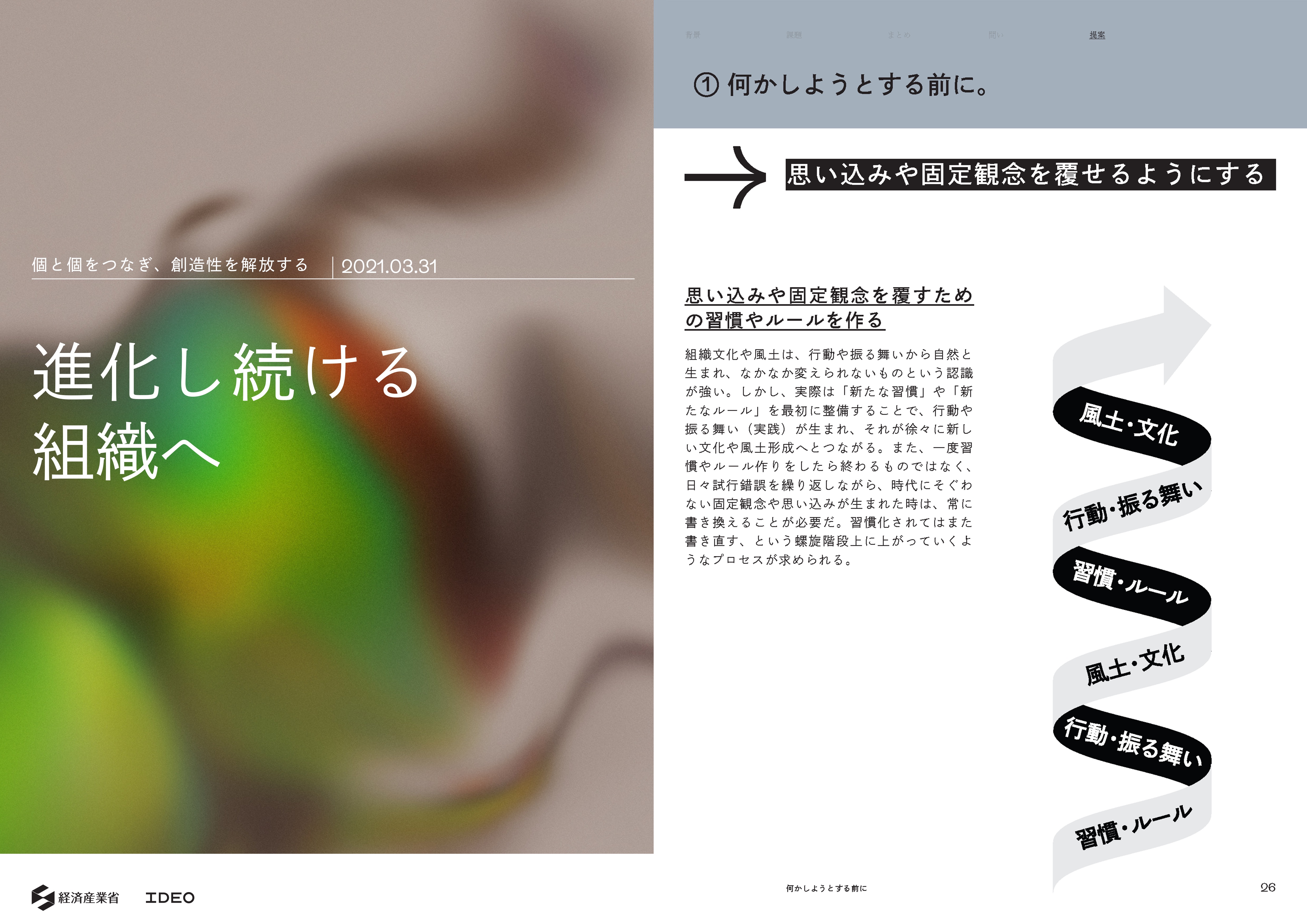
進化し続ける組織へ 〜個と個をつなぎ、創造性を解放する〜
「なぜ日本の組織では個の創造性を発揮することが難しいのか?」という問題意識のもと、さまざまな調査研究を実施。年代、専門性、性別などに多様性を持たせた「個と組織の創造性」に関する研究会を発足し、ディスカッションを重ねながら、同時にアーティストやスポーツ選手、デザイナーの方々へのインタビューを実施、そして国内外の中小企業、大企業に勤める様々な役職の方へのインタビューも行いました。文献や海外の事例に学ぶだけでなく、多様な方々と、とことん日本の組織に向き合ったのが、今回の調査の特徴です。
こうしたプロセスの中で浮かび上がってきたのは、日本社会における創造性に対する思いこみ。創造性は、一部の個に宿るものではなく、さまざまな人・モノ・コトの掛け合わせで生まれる。だからこそ、個の創造性を求める前にまず、どのように創造性が開きやすい環境を作ることができるのか。ここから、「どのようにして、固定観念を覆し、個々が問い続けられる土壌を作ることができるか?」という問いが生まれ、個と組織の創造性を高めるための考え方を「提案」として整理しました。
社会はVUCAの時代を迎え、日本企業は「創造性」を発揮することがこれまで以上に求められています。一方、個人に目を向けると、これらの複雑な社会や環境にどのように対処したらよいのかが分からず、次の一歩が踏み出せない「モヤモヤとした閉塞感」に囚われています。どのように組織や部署・グループの創造性を引き出したらいいのか悩んでいる方、どのようにまず第一歩を作ったらいいのか考えている方にぜひ触れていただきたいと願っています。
→レポートPDF:「進化し続ける組織へ 〜個と個をつなぎ、創造性を解放する〜」
提案
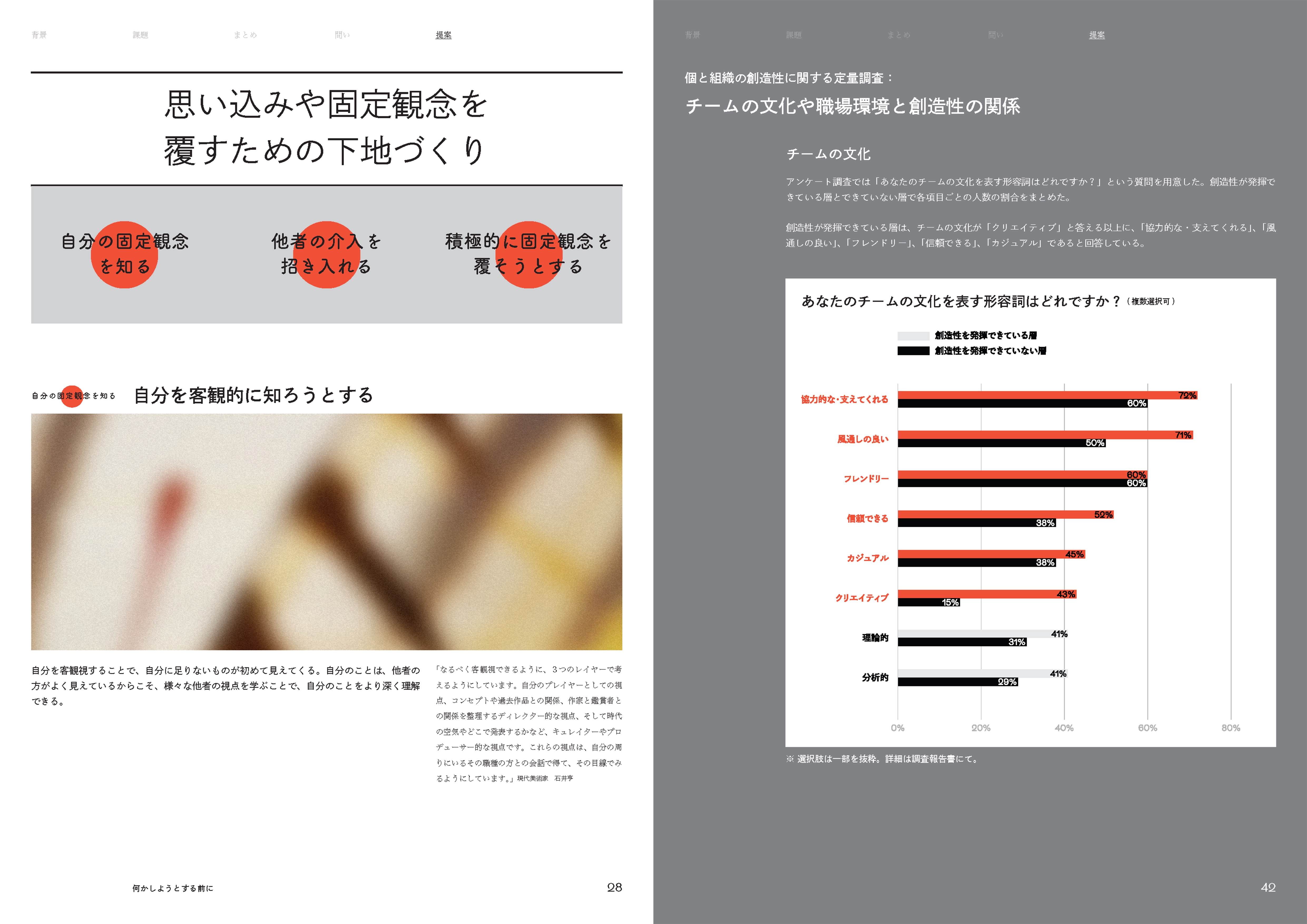
レポート内でまとめている提案のいくつかを例としてご紹介します。個々が創造性を発揮できる環境を作りたいが、まず何をしたらいいか悩んでいる方が、具体的に何かを始められるきっかけになればと考えています。
ヒエラルキーが逆転する場を作る

年齢、役職、性別、職種など、組織に根強く存在するヒエラルキーには、あえてそれが逆転するような場を作ることで、新しい考え方を取り入れる余白を生むことができる。
"階層やサイロ化が強い組織構造では、相互理解、相互の尊重が生まれるような環境づくりが必須だと思います。そのためにあえて、既存のヒエラルキーをひっくり返すというのも手。一番若い人が上司にリバースメンターシップをするとか。会議では発言しにくい人から発言してもらうとか。"
-Michael Peng, Moon Creative Lab, Chief Creative Officer
自主練できる場をつくる

現状に問いかけ、自分なりのアイデアを考えることにハードルを感じる人が多いため、まずは安心できる場(いわば自主練できる場)で試行錯誤し、自分なりに考えるきっかけを作ることが必要である。自分のアイデアに自信を持つことで初めて、それを周囲に共有することができる。
"クリエイティビティは、敷居の低い場所でないと発揮しにくい。新たにチャレンジする人が、簡単な実験をまずキッチンのようなパーソナルな場所で始めることが多いのも、まさにそういうこと。キッチンで練習して大丈夫だと思ったら、初めて外に出て試すことができる。"
-デザイン教育者(米国)
個人の任務の目的・役割を明確化する

「なぜ何のためにこの仕事をやっているのか分からない」といった、主人公がいない仕事が多い。仕事の任務やそれぞれに期待される役割を明確にすることで、仕事が自分ごと化される。それなくして、人々は自分なりの問いを持ち続けることはできない。
“個人に任されている任務、役割を明確化することで、より自分ごと化された問いをたてやすくする。何のためにやっているのかがクリアになると、どんな創造性を発揮する必要があるのかも明確化される。”
-株式会社NTT ドコモ イノベーション統括部 グロース・デザイン 担当部長 笹原 優子
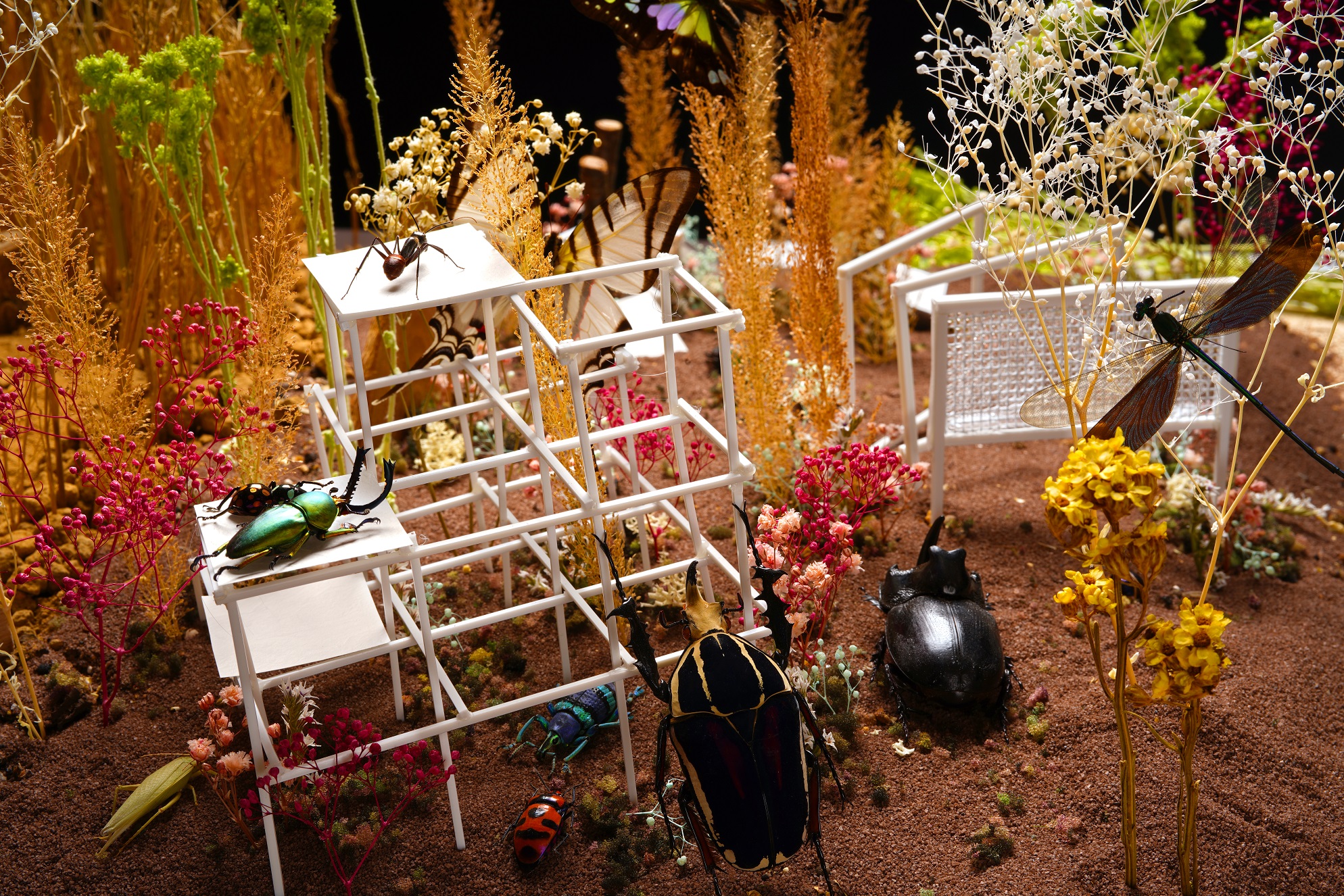
「水」を探し求める虫たちの物語
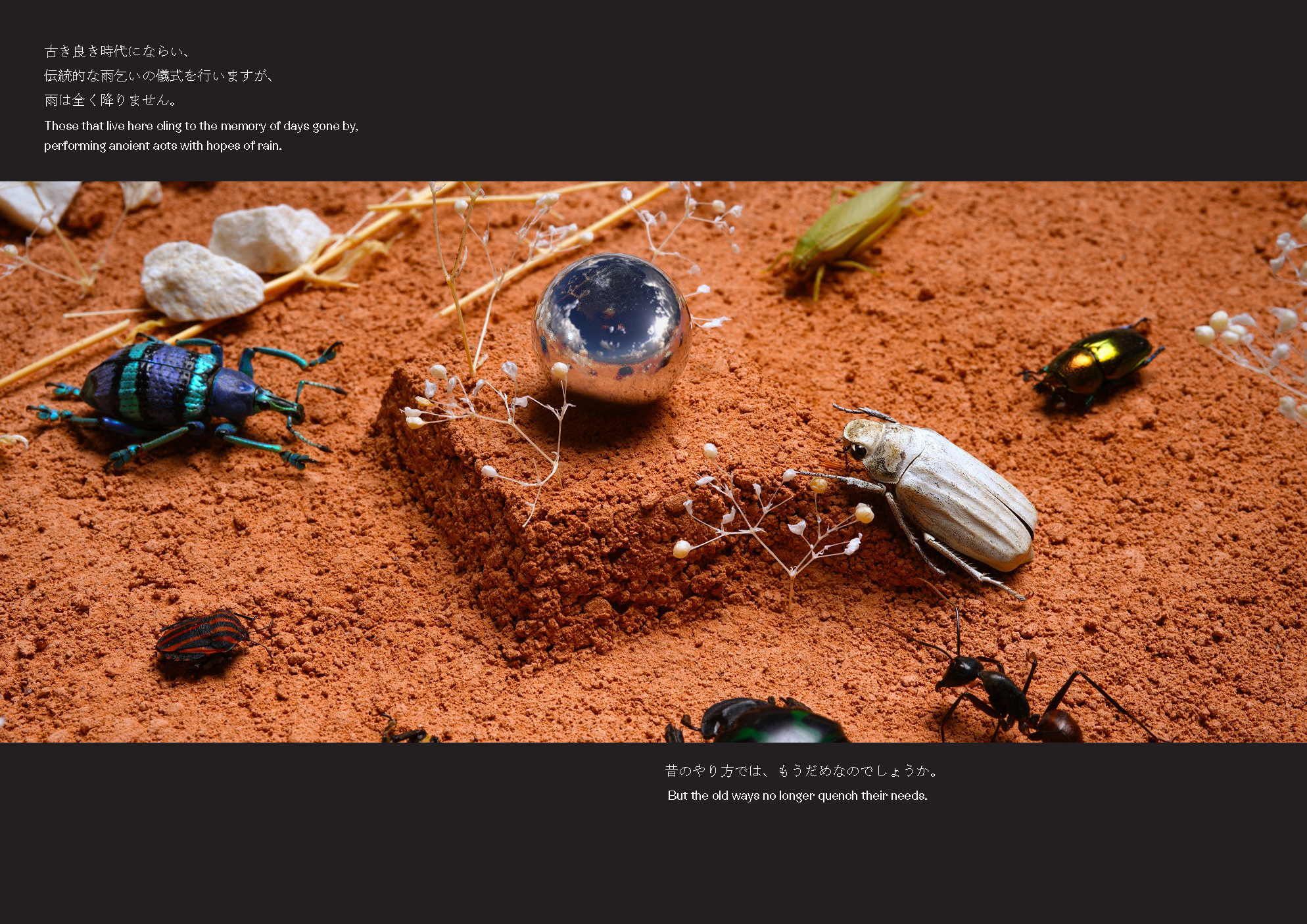
調査の結果浮かび上がってきた問題意識や提案を、ストーリーを通じてより年代を超えてわかりやすく伝えるため、ピクチャーブック「新たなはじまり: Between Water and Insects」も作成しました。
日照りに悩まされ、枯れ果てたとある虫たちの村。豊かだった頃の時代を思いながら、伝統的な雨乞いの儀式を行いますが、雨は降りません。そこで、ある冒険家が外の世界に「水」を探す旅に出ます。果たして冒険家は水を見つけることができたのでしょうか?
日本の組織をとある虫の村に、組織風土を村の土壌になぞらえて作成したストーリー。レポートと合わせてぜひご覧ください。
→ピクチャーブック「新たなはじまり: Between Water and Insects」
個の創造性が発揮される日本社会を目指して
IDEO Tokyoは、日本の変化・進化の触媒となり、クリエイティビティを開花させることで、新たな価値を創造していくことを志しています。どのように個の創造性を解放する環境づくりに取り組むべきか悩んでいる方々をはじめ、さまざまな方に読んでいただきたいです。このレポートを一つのきっかけとして、皆さんからフィードバックをもらいながら本書をアップデートし、日本の「創造性」に関する議論を加速させ、個々の創造性が発揮される社会となるための具体的な活動に結実させることを願っています。
またレポートの内容を踏まえ、組織の中で対話を促すツール「創造性の土壌を作る問いかけ」も公開しました。このツールには、下地作りと仕組みづくりの計20項目について、チームでの対話を始めるための3つの問いかけがそれぞれ用意されています。ぜひご自身の所属するチームで取り組んでみてください。

詳しい調査の概要については、経済産業省のホームページをご覧ください。
→創造性人材の育成支援
IDEO Tokyoは、経済産業省と協業し、創造的組織の開発及び創造性人材のキャリア形成に関する調査研究を実施しました。その結果をレポート「進化し続ける組織へ 〜個と個をつなぎ、創造性を解放する〜」として公開しています。
Dear future, we made this for you
Looking back at 40 years of looking ahead.
But we'd be fools to claim that we can always see what's coming around the bend. Never trust anyone who says they can predict the future.
Nevertheless, we have launched ourselves into the unknown for decades. Joining a long history of science fiction, this is an exercise in speculative design, where we build on early signals we're picking up and ask, “What if?” At times, our speculation about the future has come across as a little too naive and niche, like when we proposed stamping fruit with the full FDA nutrition label or suggested a fixie-inspired walker for senior hipsters. But when we’ve set our sights on what tomorrow’s humans might want from our clients, our portfolio of the future has been startlingly prescient.
In 2005, two years before Steve Jobs announced the iPhone, a short film we made with Intel showcased the hyperconnected, hypermobile, on-demand lifestyle we all know now.
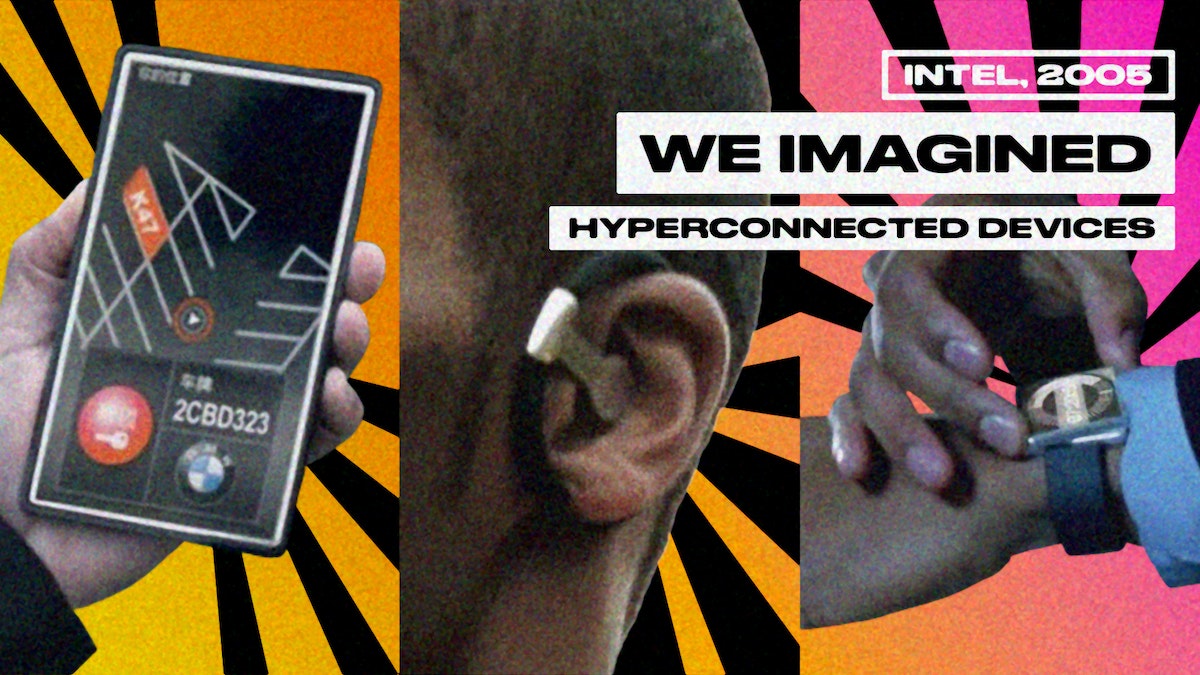
That same year, we created a series of shorts for HBO foretelling a world of personalized streaming content—well over a decade before binging our favorite shows became standard fare.
In 2010, our exploration of the future of the book anticipated the need to verify the legitimacy of sources on social media platforms such as Facebook and Twitter.

These predictions may seem easy to come up with in hindsight, and in one sense that is true. When you pair the exponential power of technology (Moore’s Law) with evergreen human needs, it leads to logical conclusions. The harder part is making such foresight tangible.
That’s where design becomes a valuable tool.
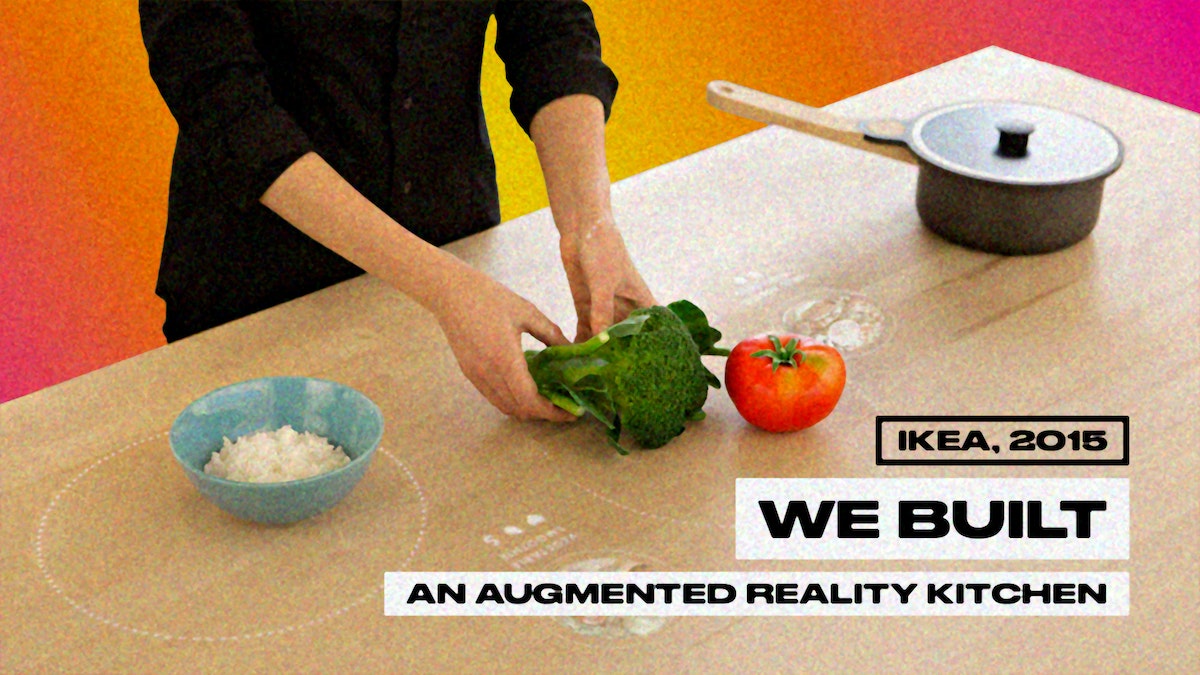
IKEA, which has its own future-facing research and design lab, Space10, understands the power of tangibility. We partnered with the company in 2015 to imagine the future kitchen. The final exhibit, staged at EXPO Milano, anticipated an augmented reality in which screens and data are no longer confined to devices. More than an exhibition, the prototype served as a strategic roadmap for integrating multi-sensory digital content into a built environment and helped IKEA build an organizational belief in, and understanding of, this technological shift.
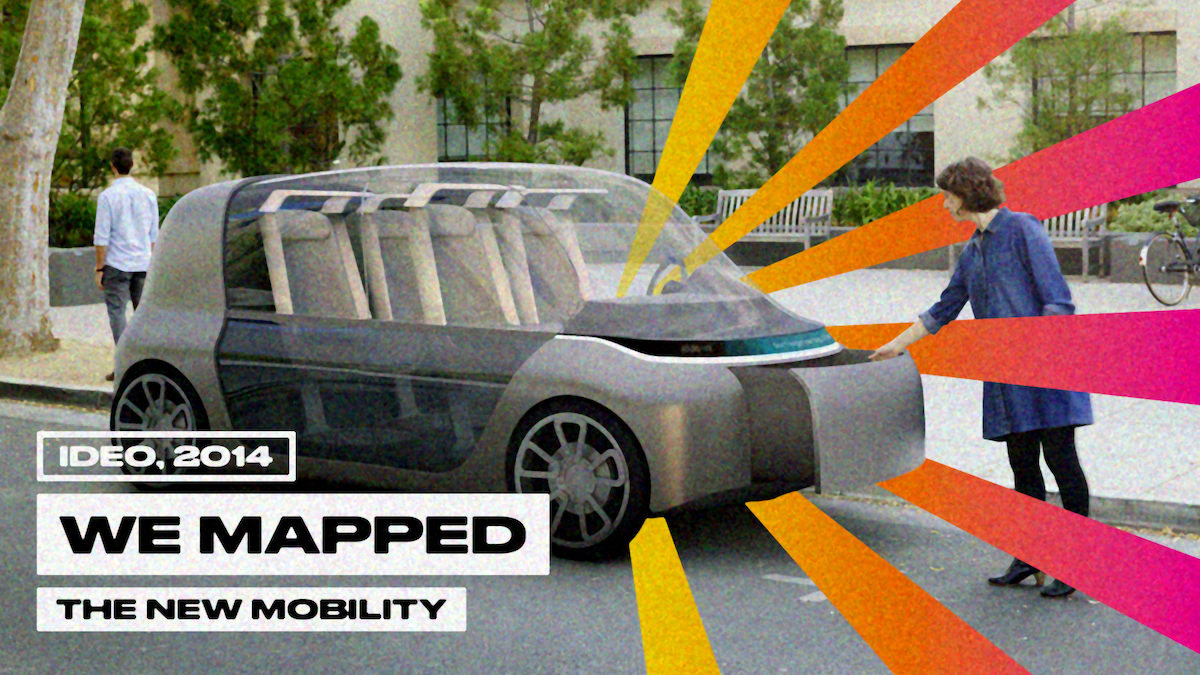
We’ve delved into the future of automobility, manufacturing, connected intimacy, the workplace, blockchain, and artificial intelligence. We’ve also used design fiction to explore complex human experiences like aging, citizenship, and time. These “What-Ifs” aren't an art school indulgence. Rather, they are queries about what world we want to inhabit and what choices we need to make today in order to get there.
While we don’t believe our era is any more exceptional than the next, the choices we are making today feel more consequential. We are facing global economic contraction, the explosion of artificial intelligence, and a developing climate crisis that scientists say could cross an irreversible threshold by the end of this decade.
The urgency to ready our clients, ourselves, and everyone for the Climate Era has been a longtime obsession. In 2017 we designed an exhibition called “Never Finished” to illustrate the principles of a circular economy. We reimagined makeup, food packaging, sneakers, and electronic devices as part of regenerative systems. A few years later, this fiction became a beacon for global fashion leader H&M, whose pursuit of a circular future has involved eliminating plastics from its consumer packaging.

But even the most on-the-nose prediction about what the future will bring can go sideways. In 1997, Kodak asked us to create a consumer experience for digital photography. Using that era’s available technology, we built a fully working digital camera with an integrated screen menu. The working prototype was nearly twice the size of what cameras would become, but it established the fundamental experience of digital photography that we use today.
While the team at Kodak hoped to design a pioneering new product, they ultimately didn’t have the internal alignment to move forward. Instead, they continued investing in film, a choice that ultimately proved to be a losing bet.

The takeaway: Even the most beautiful speculative design won’t sway hearts if the leaders of an organization don’t have the ambition or desire to invest in a better future—and we don’t mean just a profitable one. “What if?” is the beginning of a design-driven process to understand what choices we need to make today in order to create the future we want.
While the contracting economy, climate change, and systemic bias can feel insurmountable, we remain optimistic. Over the coming year, we will be sharing a series of design fictions that portray a world in which we got things right.
The questions we are asking—“What if everything is electrified and we have abundant energy?” and “What is the future of ordinary data?” and “How do we unleash the creative capacity of the next generation?”—are shorthand for deeper investigations into how we redesign consumer goods, healthcare, AI, and education.
Turning these questions into experiences so that others can visualize, feel, and participate in a better world is an essential practice of design and, for businesses that want to be here in 2033, the only way to stay relevant.

We will begin each of these design fictions, which will roll out over the coming year, with a letter:
“Dear Future, we designed this for you…”
We may never meet those born 10 or 20 or 30 years from now who will live out these visions (or something that looks quite different), but that doesn’t mean we’re off the hook. We are accountable to one another and stewards of a fragile planet. In 10 years, every business will have become a design business because every business will have had to change. And every person will have a hand in designing our future.
*One sentence in this article was written by ChatGPT after giving it the prompt “Slogan for a campaign about designing the future.” Can you guess which line?
—
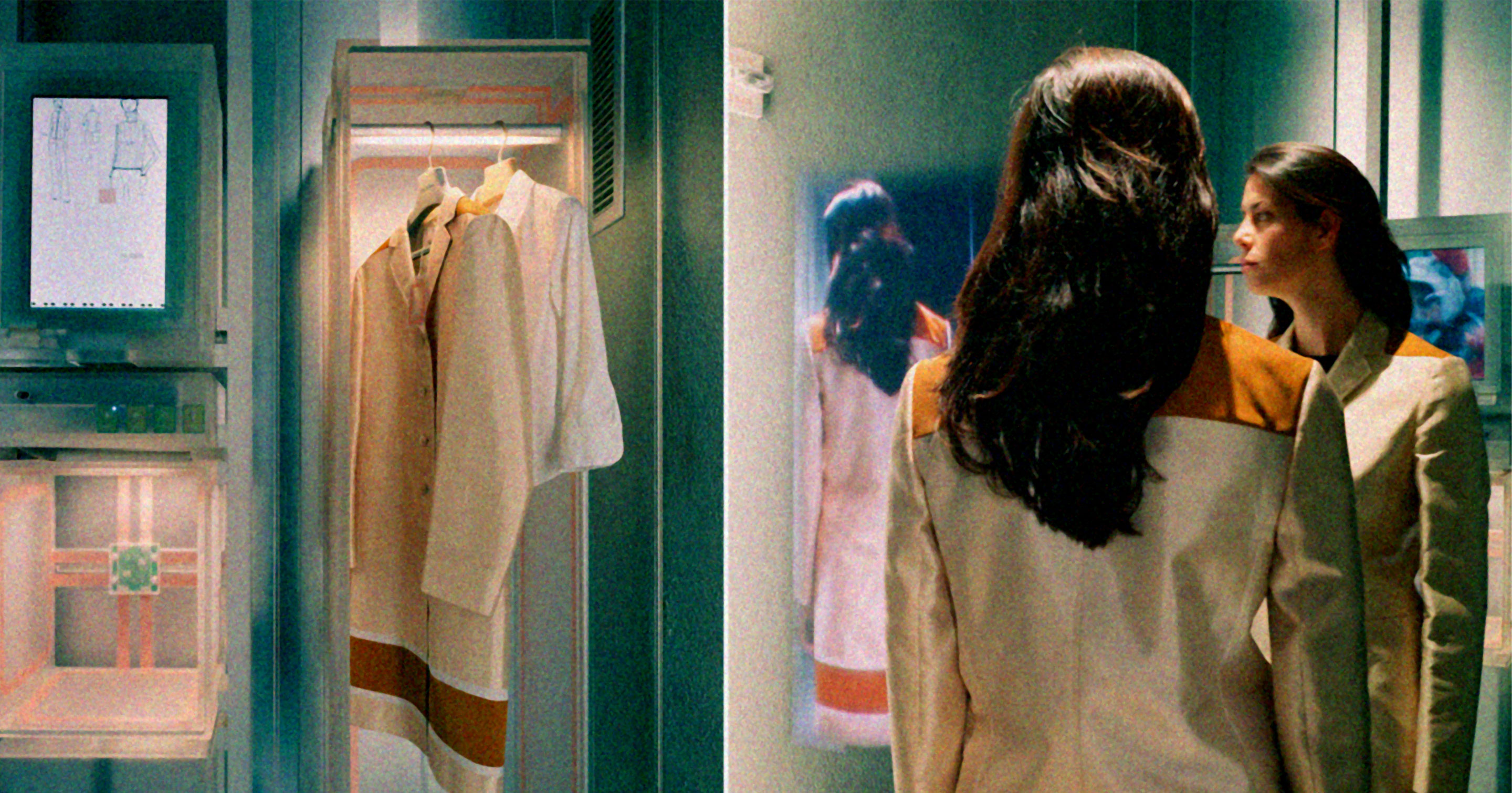
Hero image: Magic Mirror, an augmented reality dressing room designed for Prada in 2003 in partnership with OMA.
We designers are optimistic to a fault. We believe we can build something better and will take great leaps of faith to prove it.

Lindsey Turner
I’m passionate about building brands, products, and experiences that help organizations show up with meaning and momentum.
I help organizations cut through complexity by shaping how they show up, through brand strategy, identity, and storytelling.
Working at the intersection of brand and business, I bring an editorial eye and a bias toward making—turning ideas into tangible experiences that people can understand, trust, and believe in.
My work spans government, healthcare, financial services, media, and consumer goods, from launching Gen Z-focused ventures to building innovation labs and reimagining legacy brands. I relish moments of ambiguity and enjoy translating across teams, perspectives, and priorities to move ideas forward.
I started my career in editorial and digital design, shaping cross-platform experiences and identity systems in publishing and agency environments. That foundation still shapes how I work today: I’m detail-oriented, collaborative, and overreliant on the Oxford comma. I hold a BFA in Visual Communication from the School of the Art Institute of Chicago.

Rachel Young
My work helps organizations see who their products aren't working for—and build the will and the tools to do something about it
For 25 years, I've asked the same question: Who does this design exclude—and what are we going to do about it?
My work spans human-centered strategy, inclusive design, and qualitative research, with clients ranging from Microsoft, Google, and Verizon to the National Science Foundation, and San Francisco Unified School District.
Before IDEO, I taught elementary school in East Palo Alto and spent a decade doing design work with social service organizations—where I learned firsthand what it costs people when systems are built without them in mind.
I am currently writing User Error, a nonfiction book about digital access and the design decisions behind it. I live in Oakland, California.

Brian Pelsoh
I lead with craft, ensuring our work is creatively excellent: rooted in deep human insight and imagination, while also grounded in the realities of business and technology.
My expertise spans brand, communication, and product design across tech, education, the arts, and social impact.
I believe great work demands both high-level vision and obsessive attention to detail, and only happens through collaboration.
I bring an inclusive, hands-on approach and a deep understanding of business, which enables me to consistently deliver excellence while always asking why.
Before joining IDEO, I worked at the brand firms Pentagram and VSA Partners. I began my career as a designer, leading teams at the School of the Art Institute of Chicago and the Milwaukee Art Museum. I hold an MFA in graphic design from Maryland Institute College of Art and a BFA in communication design from the Milwaukee Institute of Art & Design, and have taught at some of the best design schools in the US.

Tony Wong
I am responsible for IDEO’s long-term success in China and working with clients to use design as a tool to enable growth.
I am responsible for IDEO’s long-term success in China and working with clients to use design as a tool to enable growth. Specifically, I have helped Chinese companies design holistic brand solutions through the development of their products, communication, services, and innovation teams, and I have helped multinationals expand their presence and influence in China.
I advise global leaders on developing China-led innovation and capabilities.
In over 15 years in IDEO Shanghai, I have worked on projects that use design to elevate the quality of the experience of healthcare products and services, streamline processes that increase productivity, create spaces and programs that promote and enable inclusive communities, and build next generation mobility solutions that are planet-positive.
Before joining IDEO, I worked at Philips Electronics and the Electrolux Group in Italy, the Netherlands, and Singapore on a number of breakthrough commercial products. I am a member of the Young President Organization in Shanghai.

Building a personal AI for the messiness of life: Sida Li
Most AI products today are built for work—a space with clear problems and established systems. One founder noticed a gap: personal life is messier, harder to systematize, and mostly left behind by the AI boom. So she built Cue, a personal AI that lives inside iMessage and group chats, to go where the other tools haven't.
In this episode, Becca Carroll, IDEO's Chief Strategy Officer, talks with Sida Li, co-founder and CEO of Shared Context Lab, about staying anchored to a human need while the technology around her keeps changing shape, why she treats her business model with the same rigor she'd bring to a product, and what it feels like to build a company at this particular, disorienting moment in AI.
The conversation also gets into how Sida makes design decisions: the language Cue uses to describe itself, the tradeoffs behind building inside iMessage instead of a new app, and a real story about a business idea that didn’t pan out.
This is the second in a two-part series profiling founders from IDEO's Startups-in-Residence program. The first conversation is with Johannes Seemann, founder of Sooner, on designing GenAI for the emotional side of money.

Designing GenAI for the emotional side of money: Johannes Seemann
Most personal financial tools are built to run the numbers and optimize towards a budget. While that works for some, most people experience money as a lived relationship that does not neatly fit into a spreadsheet. Johannes Seemann and Becca Carroll discuss why money is emotional before it is mathematical, and what a human-centered approach to building a generative AI financial product looks like in practice.

The curious leader's edge in uncertainty: Scott Shigeoka
Mina Seetharaman talks with Scott Shigeoka, author of Seek and Head of Curiosity Cultivation at the Eames Institute, about what distinguishes genuinely curious leadership from performative curiosity, how power dynamics shape curiosity, and why practicing curiosity can restore energy rather than drain it.

How constraints make us more creative: David Epstein
Mina Seetharaman talks with David Epstein, author of Inside the Box and Range, about why total freedom often produces average work, how leaders can design useful limits on purpose, and what organizations such as General Magic and Pixar reveal about the relationship between boundaries and creativity.
Looks like you might be in search of something very specific?
Or reset the filters above and try another angle.
Here’s some random inspiration

Podcasts about creative leadership

Articles about the power of prototyping
