
.svg)


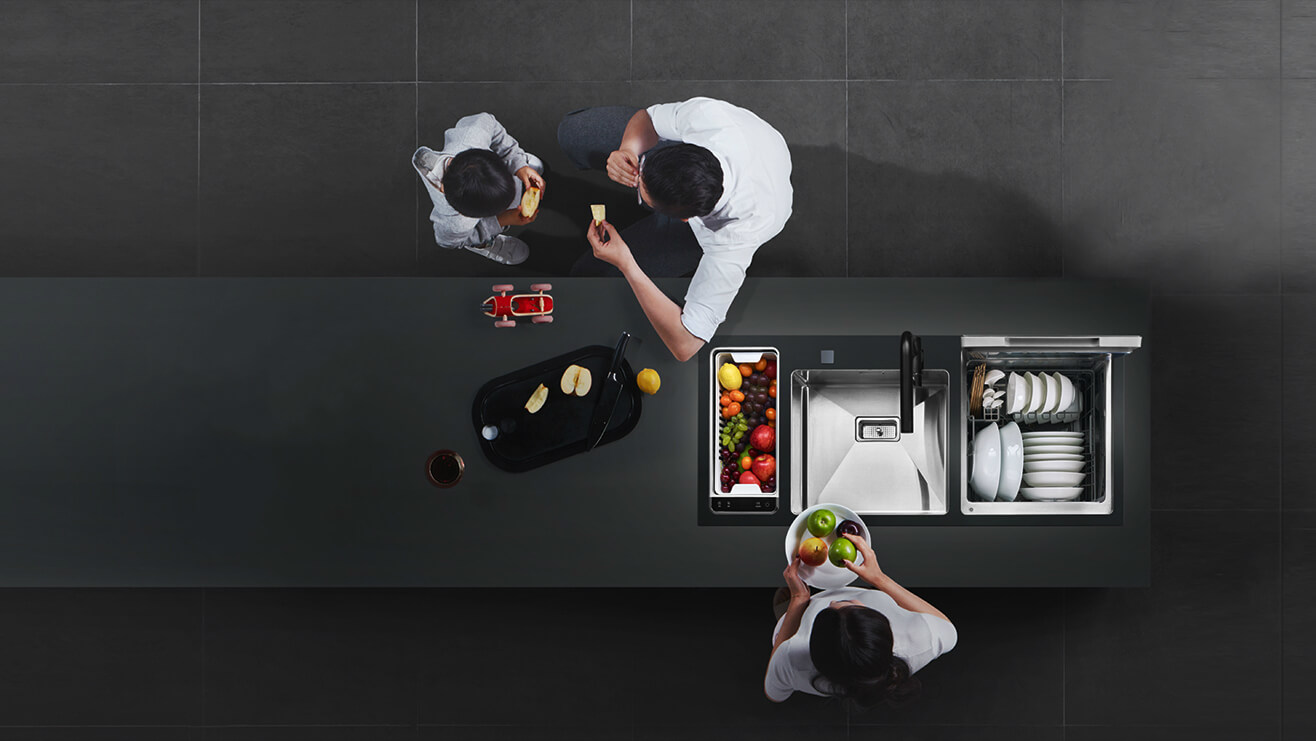

Introducing China’s first sink dishwasher
Fotile, the country’s top kitchen brand, unlocks a new category.
IDEO and Fotile have had a relationship since 2009, working together on projects including a unified design language for product offerings, retail environments, and IoT strategy. For the dishwasher, IDEO and the Fotile research team came together for design research, shadowing Chinese families in different cities as they prepared meals from start to finish. Together they discovered that unlike in Western cooking, where several kinds of cookware are used for different dishes, Chinese cooks tend to use the same cookware to prepare all of their dishes.
That meant that the cookware needed to be cleaned several times during a single meal preparation, rather than once at the end. In this context, the sink serves different purposes over the course of cooking—it’s a place to wash and store prepped ingredients, rinse the cookware, and deep clean the dishes used in food prep and during the meal.
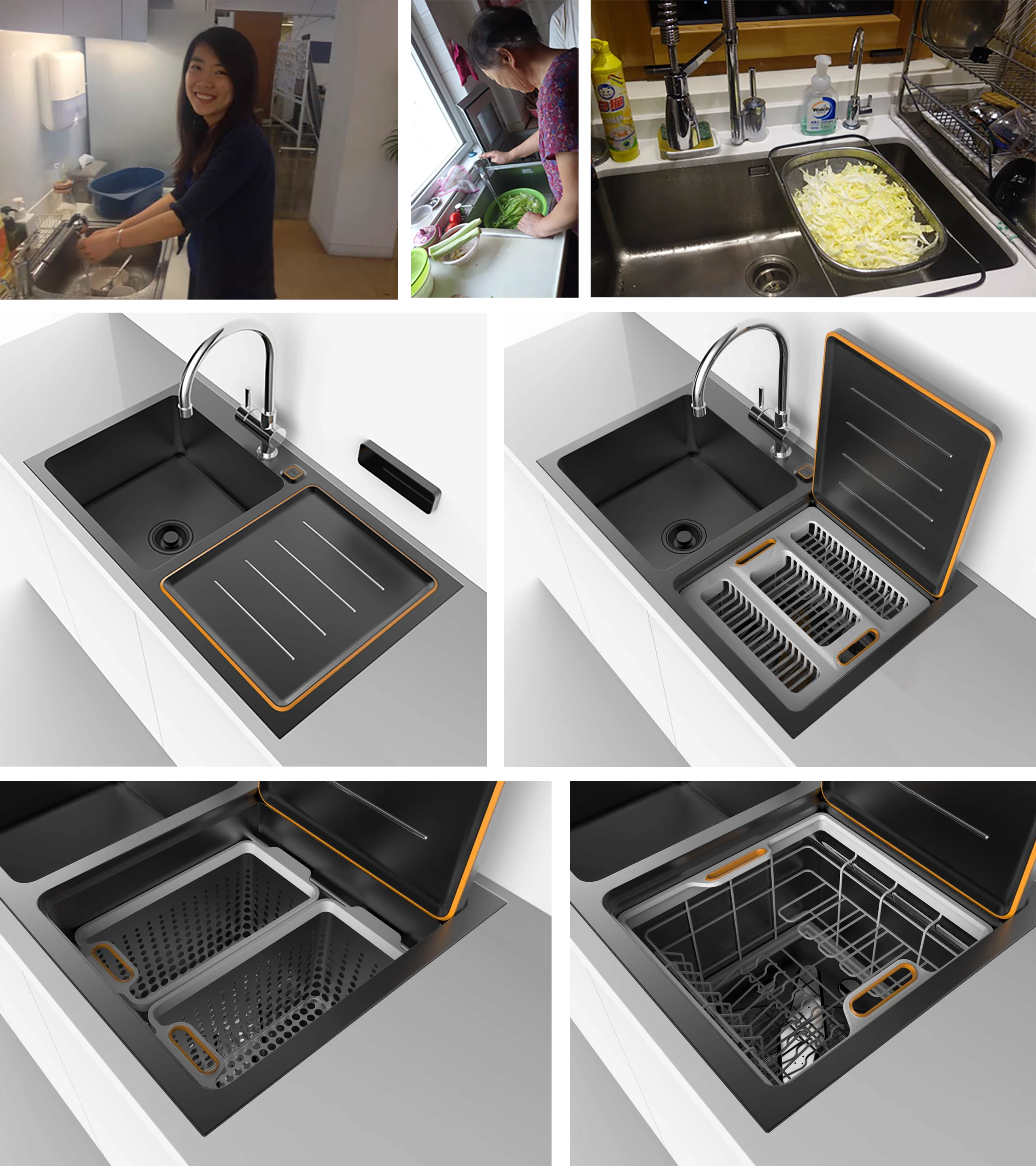
Based on this insight, IDEO made a list of product design recommendations that became Fotile’s Sink Dishwasher—a counter-level, multi-purpose appliance that specifically suits Chinese cooking habits. IDEO’s design guidance gave Fotile the confidence it needed to launch its product into the market, and served as a blueprint for the future iteration of Fotile’s Sink Dishwasher.
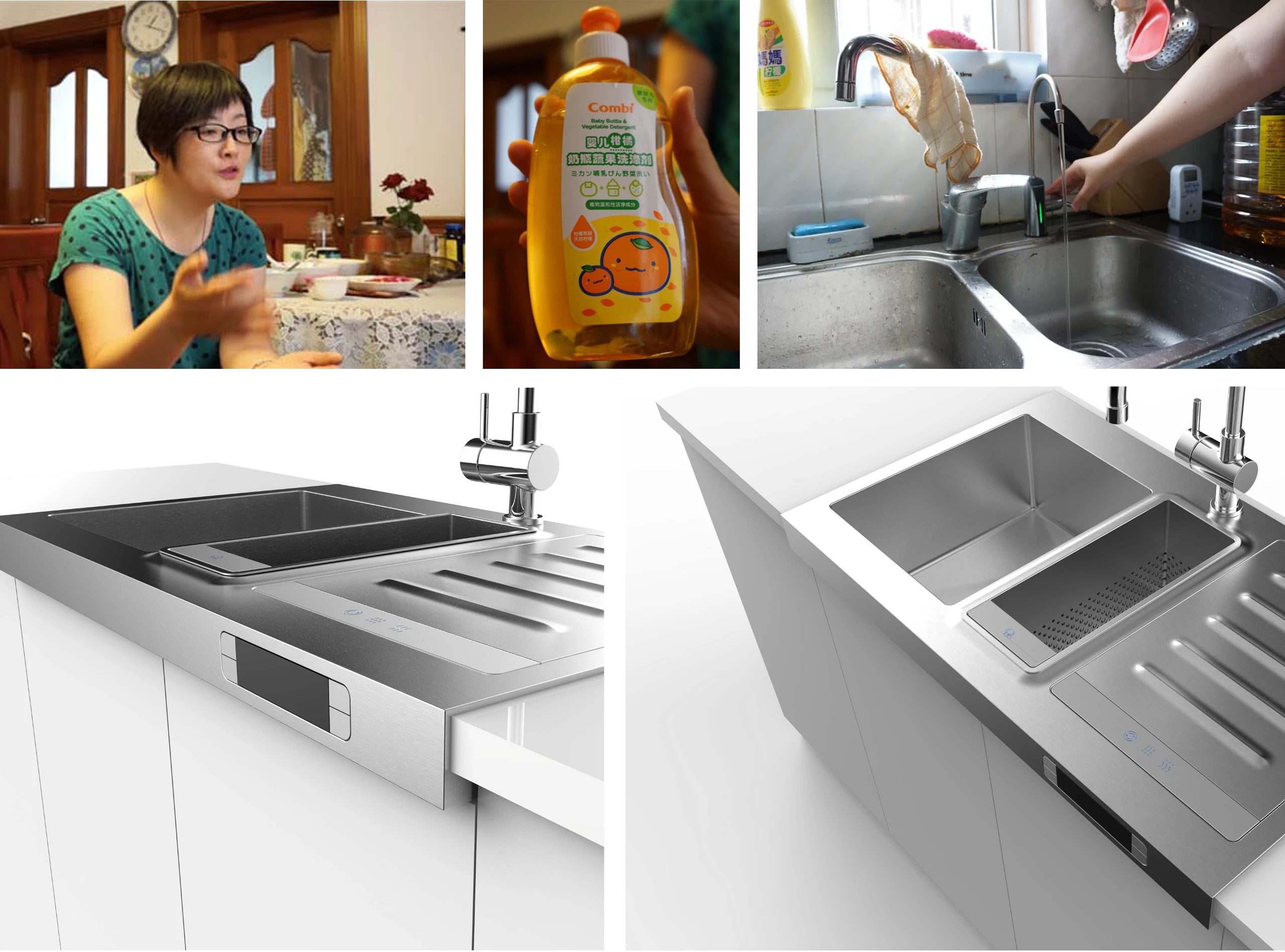
On March 25, 2015, six months after the project ended, Fotile launched the world's first sink dishwasher designed for Chinese families. Eight months later, its market share exceeded 30 percent, setting off a wave of innovation in the Chinese dishwasher category.
In 2016, Fotile introduced a three-slot dishwasher with an added compartment for cleaning fruit and vegetables—a direct response to a research finding that Chinese families are concerned about food safety. When this new model hit the market, Fotile’s dishwasher market share jumped to 41.1%. In China, Fotile is now synonymous with “sink dishwasher,” and the company has a widespread reputation among consumers as a symbol of a safe and healthy Chinese family kitchen.

Since its founding in 1994, Fotile’s Chairman, Mao Zhongqun, has made it his goal to “do nothing but build a high-end Chinese family brand.”
30%
Fotile Sink Dishwasher’s share of the market in China, just eight months after launch
41%
Fotile’s dishwasher market share after it launched a three-slot version in 2016
#1 selling brand
in the mainstream price segment of the Chinese dishwasher market as of August 2023

Growing a brand for modern Chinese parents
China’s BoAo Group expands from an auto industry manufacturer to a lifestyle brand for modern families.
BoAo Group’s idea to design a new baby car seat was fueled by a newly revised minor protection law, which made using child safety seats mandatory beginning June 1st, 2021. As ZUOWE and IDEO looked around China’s emerging car seat market, the team noticed a singular focus on safety and safety features across most international and domestic brands. There was a clear opportunity for a new product that could meaningfully differentiate itself by not only providing safety features but also meeting the needs of modern Chinese parents.
To kick off the project, the IDEO team needed to answer two questions: What matters to the new generation of parents in China? And how will their style and approach to parenting affect their expectations for baby car seats? Taking into account the potentially different consumer needs in different geographies, the IDEO team headed to Shanghai, a city with more than 25 million people, and the city of Taizhou in Zhejiang province, which has a population of 2 million. They conducted in-depth home visits to local families, visited many brick-and-mortar mom-and-baby shops, and interviewed people like specialized nurses, parenting experts, and child psychologists.
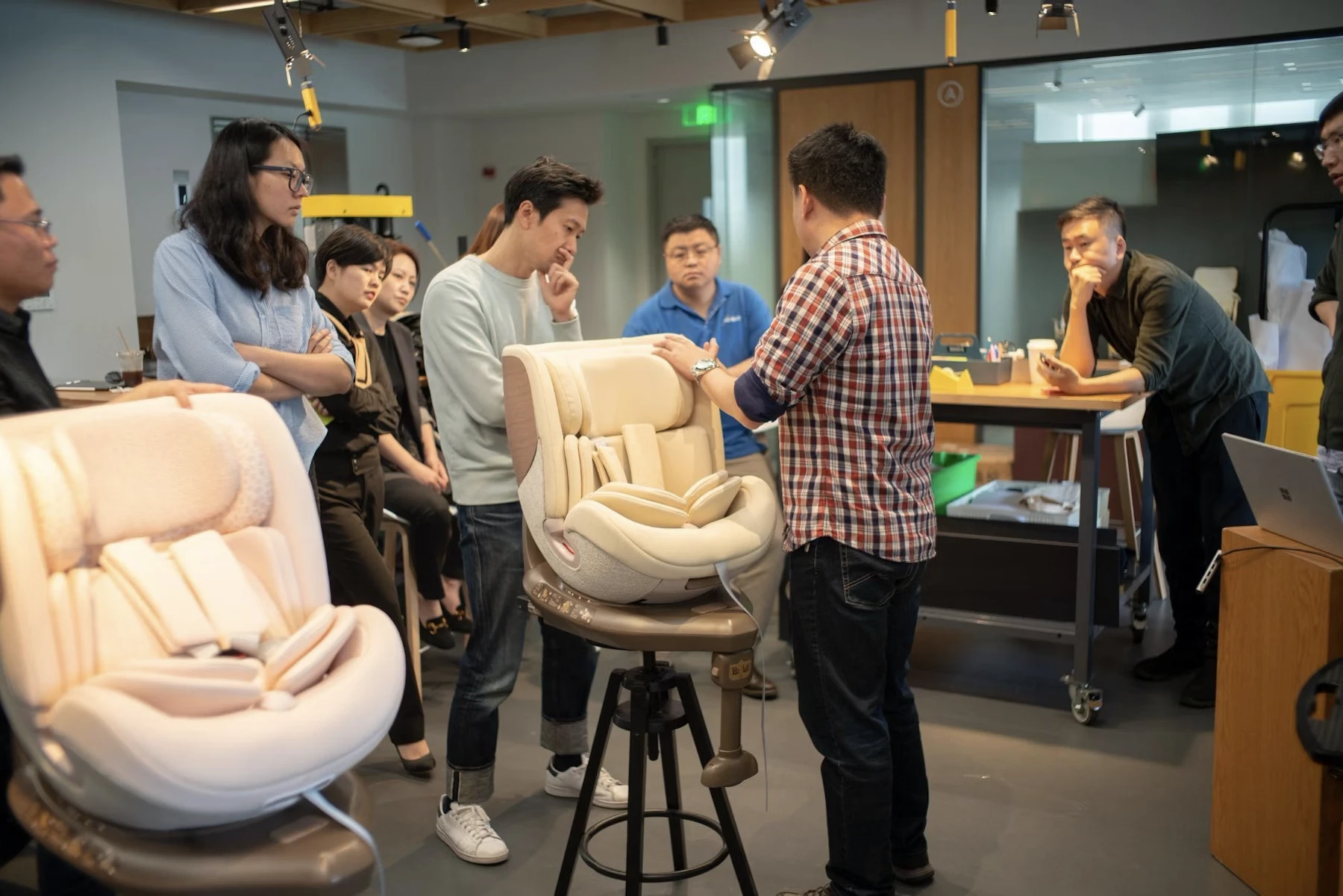
Despite the differences between the two cities, IDEO discovered commonalities during consumer conversations. Young Chinese parents were experiencing a perceived identity gap. As individuals, they felt they had distinct personalities and a clear sense of self. They actively expressed themselves through their clothes and belongings. But when they became parents, this sense of self weakened or disappeared completely. Their identities shifted to being someone’s mom or dad overnight. This new generation was eager to show their unique approach to parenthood as they used to express their sense of self. But many products were designed for children, with little regard for parents.
This core finding helped set the direction for the new baby car seat design and brand Maple&Co. However, there were still two significant challenges to overcome. One, IDEO needed to design a product with stringent technical regulations and standards on a tight timeline—ZUOWE wanted to launch the new car seat at an important industry trade show within the year. And two, the team had to help the organization transform its thinking and ways of working to be more consumer-centric.
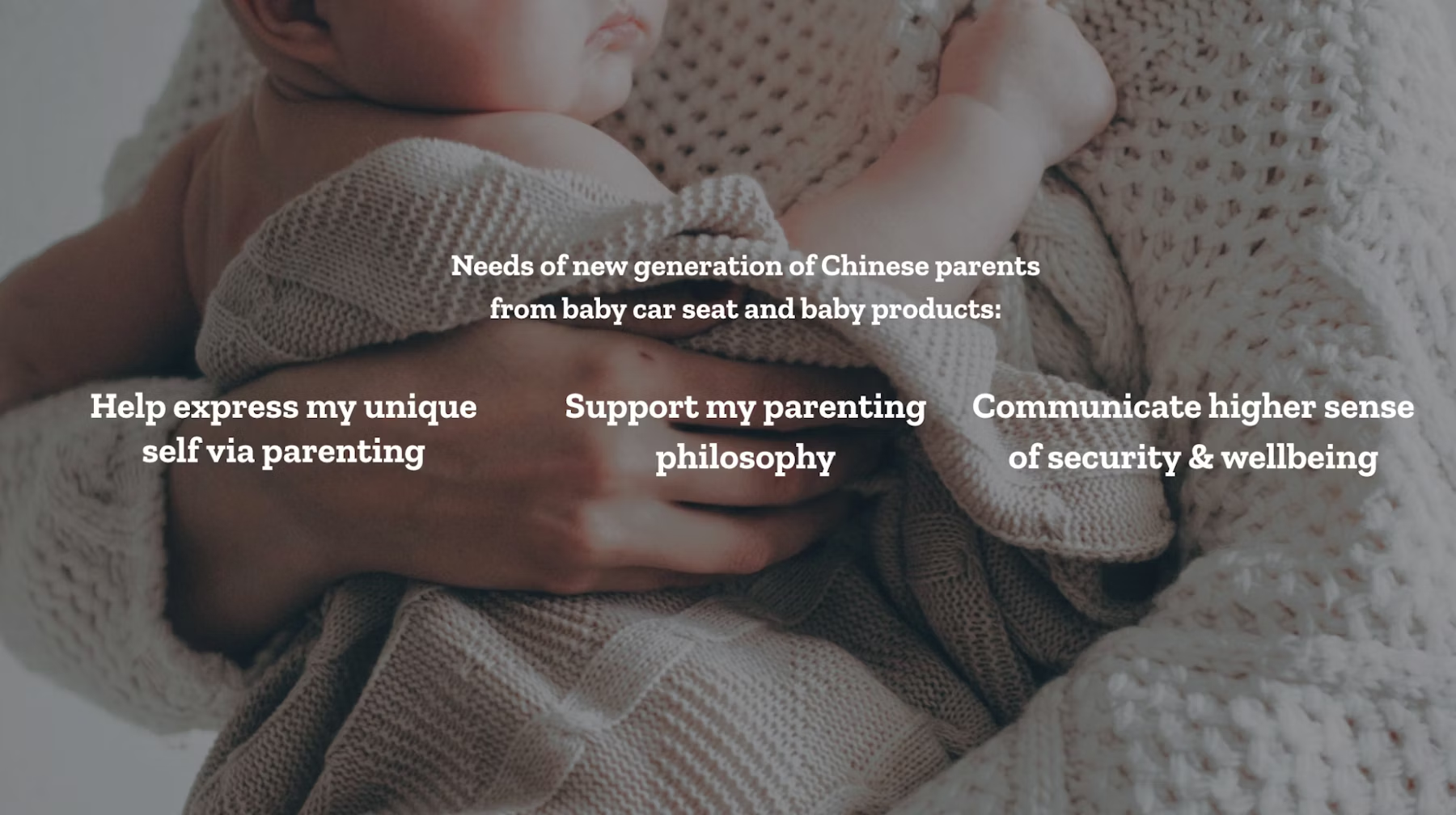
BoAo’s strength lies in its 20 years of experience developing and manufacturing car seats for major domestic and international automotive brands. This gave the company an edge in overcoming technical barriers and driving mass production. But its engineering and manufacturing mindset had become a barrier to transforming into a D2C brand. With such ingrained ways of working, pivoting to a more creative process can be hard.
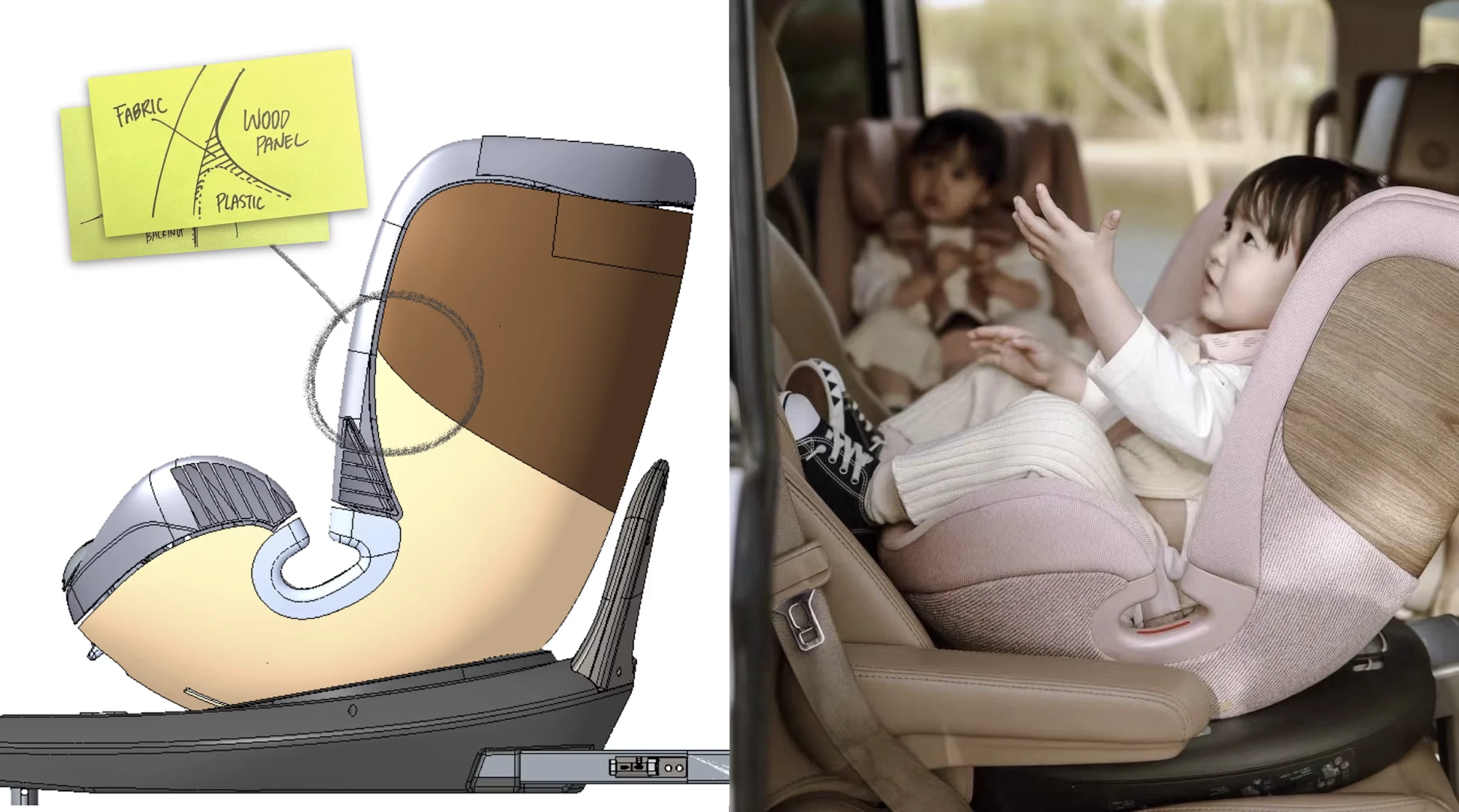
To address this hurdle, IDEO set up co-creation workshops, bringing together ZUOWE’s newly formed baby car seat team and manufacturing experts from their factories to discuss design direction and details early on. The benefits of the collaboration were clear: It was easy to share feedback in a timely manner and make product design decisions very quickly. When IDEO presented a design that emphasized natural textures during a workshop on brand positioning, a member from Bo Ao’s manufacturing team said, “This feels very different. This could become a major selling point,” and that they had “never seen” anything like it done by other baby car seat brands.
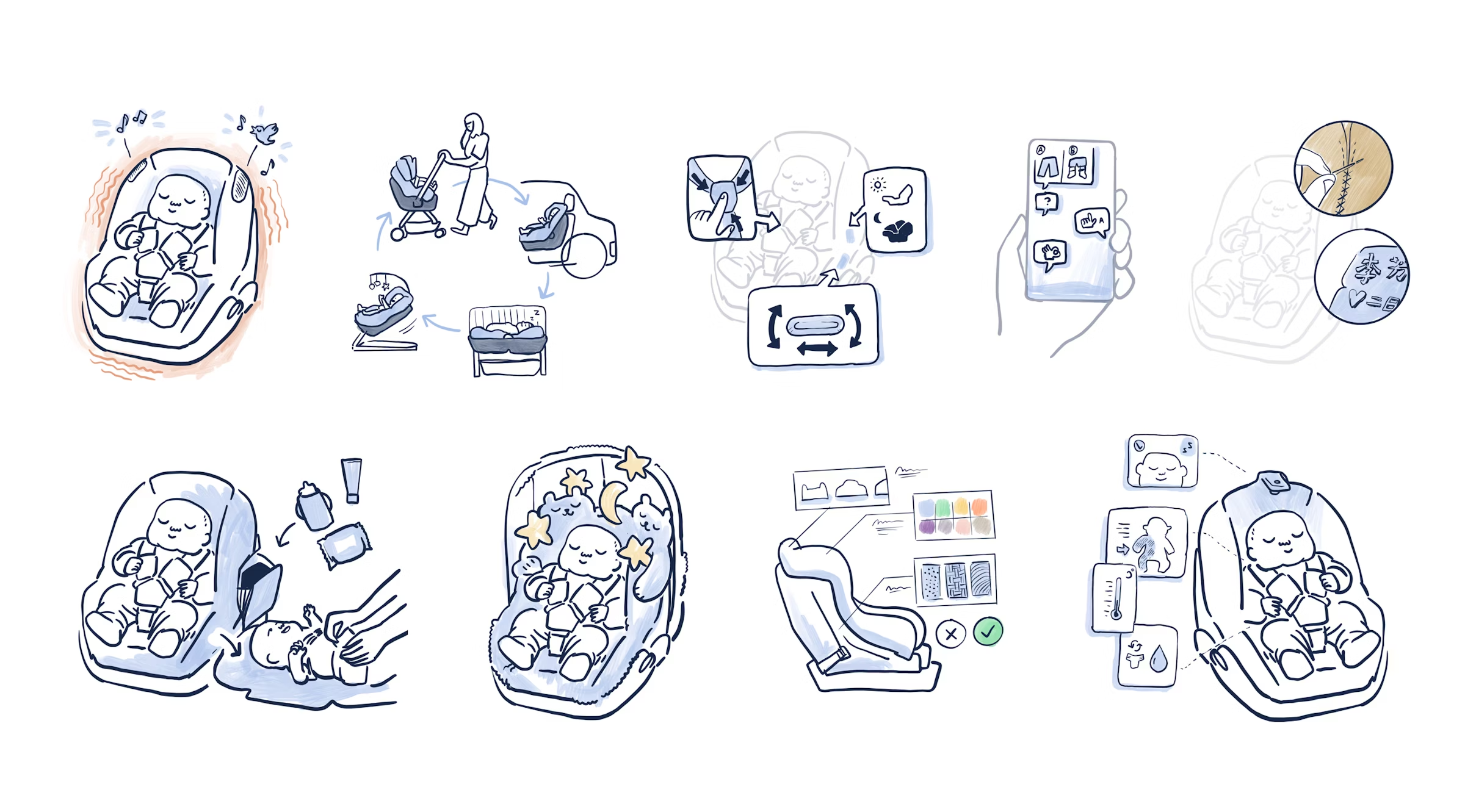
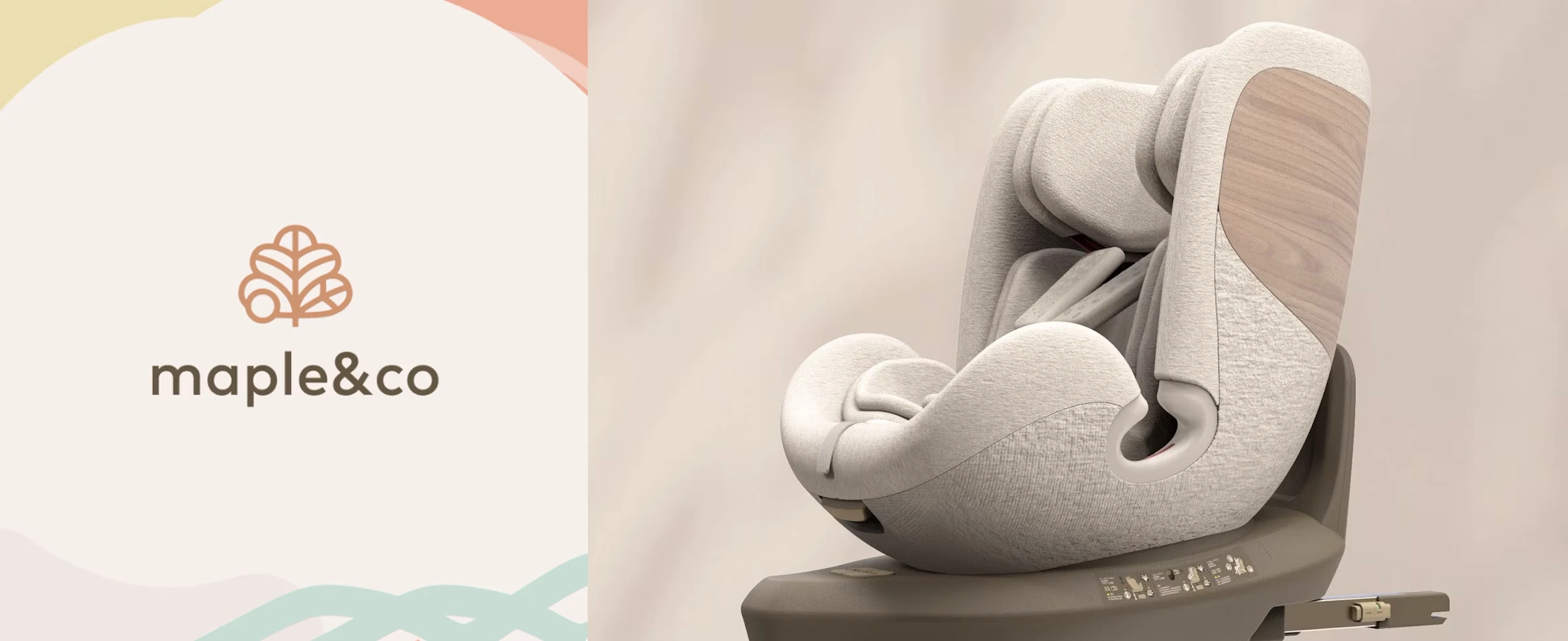
A year after working together, ZUOWE Technology launched Maple&Co and the new Maple baby car seat across its main e-commerce channels. Modern and minimalist in soft natural colors and wooden veneers, Maple appeals to the aesthetics of young parents in China. Despite a series of micro COVID outbreaks in China, within three months, Maple had already achieved better-than-predicted sales and received favorable comments about the look and quality of the car seat from parents. Fast forward two years, additional collaborations with IDEO have enabled the young startup to grow its child travel portfolio from a signature car seat into a more holistic offering that includes highly functional, fashionable, and adaptable car booster seats and strollers that thoughtfully address the needs of modern Chinese families across various life stages at home—and on the go.
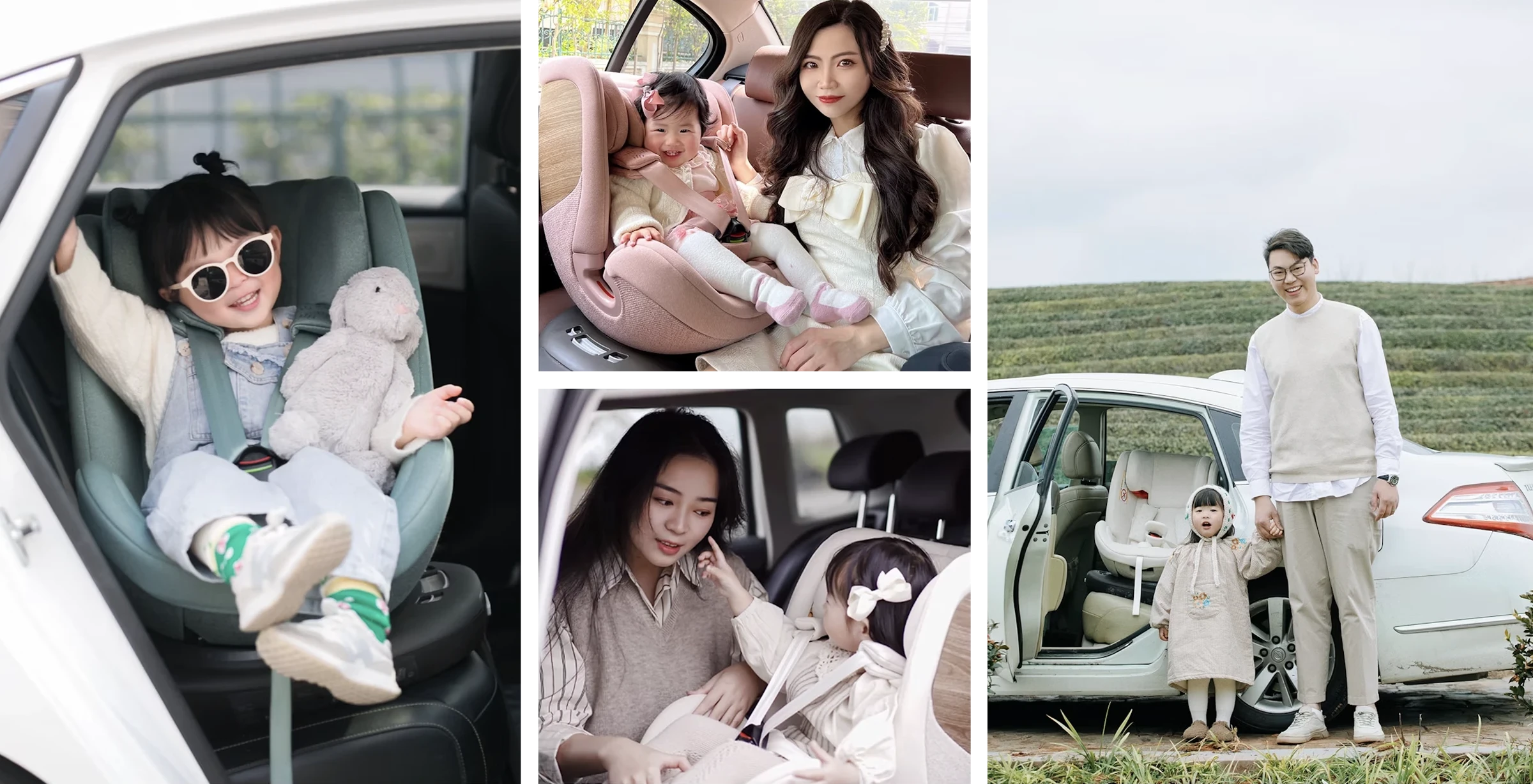
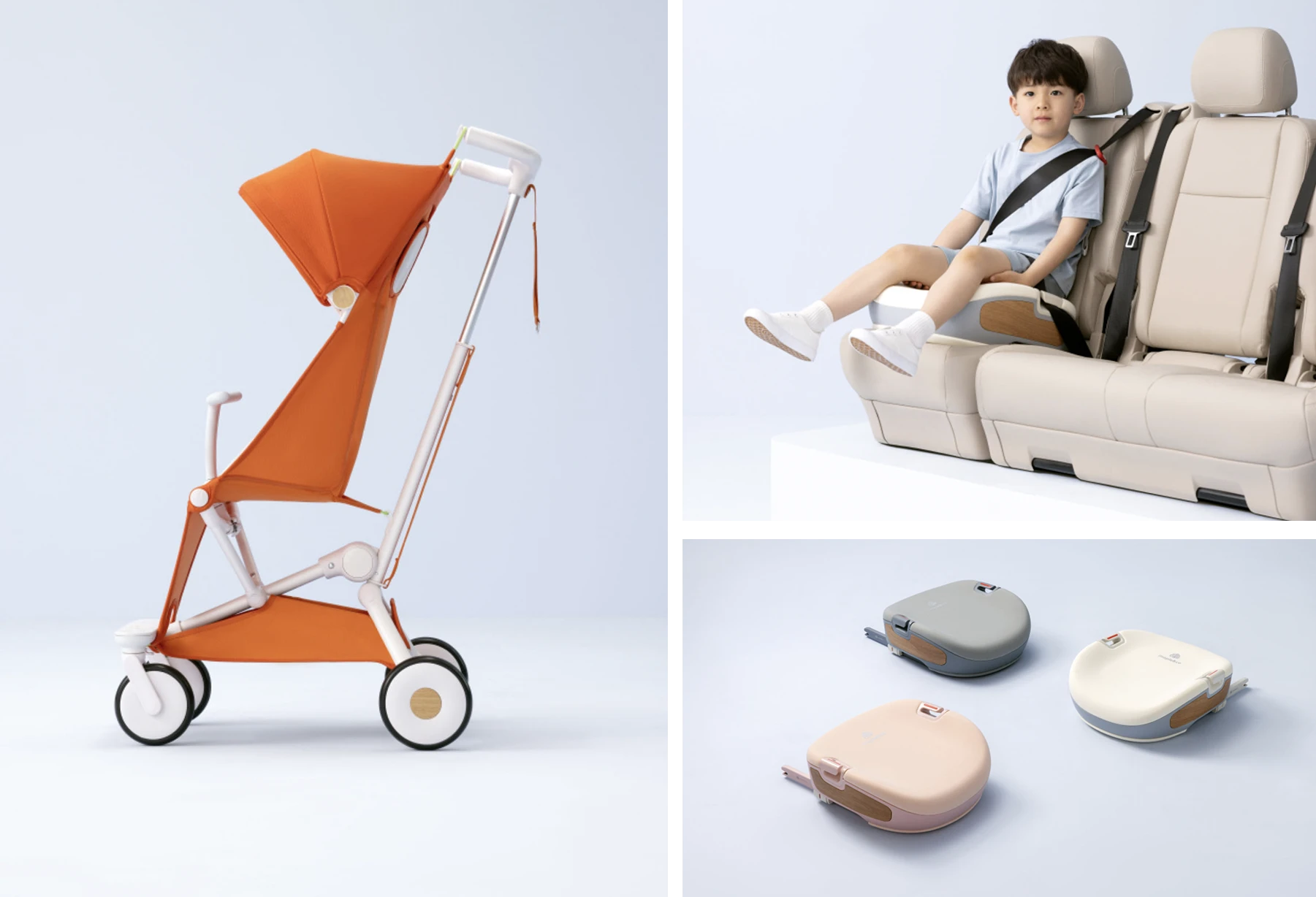
China's minor protection law mandated the use of child safety seats beginning June 1, 2021.
Despite incoming regulations fueling a surge in purchases, car seats on the market rightly prioritized safety but did not consider the emotional needs and lifestyle preferences of a new generation of Chinese parents.
1 year
after the project ended, a new, differentiated baby seat product and brand, Maple&Co, launched
Top 6
during the 2023 “Double 11” shopping festival, Maple&CO secured the 6th spot on Tmall's new brand pre-sale list
How a $4000 vet bill sparked innovation at American Express
American Express and IDEO teamed up to design features that offer Card Members more payment control and flexibility.
“Over a year ago, I had to take my cat to the vet for an unexpected and expensive surgery,” says one Card Member. “To be honest, I still don’t know if I’ve paid the bill off.”
Many crave the flexibility to pay for large purchases over time, but also want to avoid the pitfalls of debt. Others rely on debit or cash for small items—no one wants to accumulate interest on a cup of coffee, lunch with a friend, or box of Kleenex—but then miss out on valuable rewards.
American Express worked with IDEO to help them attract new customers by understanding what financially stable young adults wanted in a credit card. The team began by interviewing more than 120 millennials to understand their payment behaviors around debit and credit, and how they think about borrowing and spending.
One person described the monthly panic of receiving his bill—described as “statement shock”—and his habit of making multiple payments before his billing cycle closed to ease this anxiety. Others were wary of credit because of a large veterinarian bill or financial mistakes made in their 20s, and relied on debit because it felt safer than accruing a balance to pay off. Overall, the team learned that many consumers experience anxiety about paying their bills. And while financial products that offer more flexibility and control have been needed for years, they are especially valuable in times of economic uncertainty like today.
Based on this research, IDEO prototyped, iterated, and refined two concepts, with frequent feedback from users and the client. Called Pay It Plan It, this feature offers financially responsible consumers more transparency, confidence, and control.
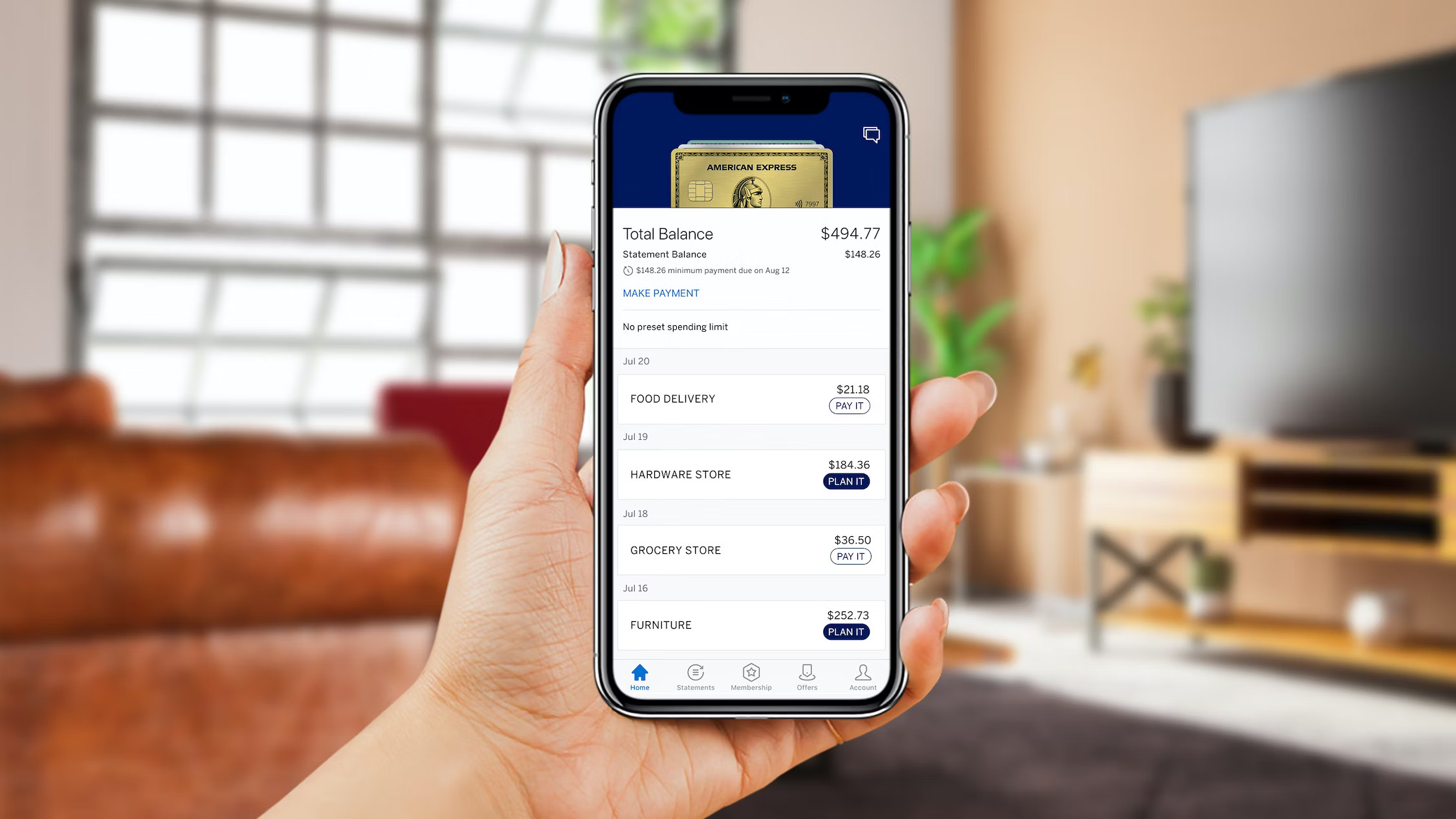
Pay It allows Card Members to quickly pay for small purchase amounts under $100 with a few taps in the American Express mobile app. When that purchase shows up on their account, they can choose “Pay It” and still earn rewards on the purchase. This ensures Card Members can take advantage of rewards while lowering their monthly bill by paying for smaller items throughout the month.
With Plan It, Card Members can split up larger purchases of $100 or more—like an emergency trip to the vet or a new sofa—into equal monthly payments, with a fixed fee and no interest. When the purchase appears in their account, they can select “Plan It,” and will be offered up to three monthly payment plans, ranging from three to 24 months. Each plan comes with a fixed monthly fee and no interest. Card Members know exactly how much they have to pay each month, so there are no surprises. And if they pay the purchase off early, they no longer have to pay any future plan fees.
The design of Pay It Plan It did not come without challenges: Bill pay is critical, complex, and highly regulated. Pay It Plan It required a significant internal financial and technical investment, which was achieved after IDEO shared many of the emotional, compelling stories from credit card users with leaders at American Express.
The team worked closely with the American Express regulatory and digital teams to ensure compliance and seamless integration into the mobile app and website’s user experiences and interfaces. To heighten the sense of competence, control, and transparency for users, the designers focused on small interactions like status animations, proactive suggestions, and straightforward language. These interactions help Card Members anticipate upcoming payments and clearly understand Pay It Plan It.
Plan It was designed with transparency, control, and accessibility in mind: The payment plan fee is displayed in dollars to give the customer certainty over their total costs.
Initially, the team set out to create a new credit card with the needs of young adults in mind. But IDEO and American Express realized that Pay It Plan It could be scaled across existing credit card products to ultimately benefit and attract more Card Members. Now, almost all U.S. American Express Consumer Card Members have access to Pay It Plan It through credit cards, co-branded cards, and the well-known Green, Gold, and Platinum Cards. Since launching in 2017, Card Members have created nearly 5 million Plans, totaling nearly $4 billion in purchases, with an average Plan size of $789. Millennial and Generation Z Card Members have created approximately 44 percent of these Plans.
The flexibility and control offered through Pay It Plan have earned American Express positive press, including a call-out in The New York Times for being among solutions that “make it easier for their customers to borrow money, and to manage their monthly cash flow.”
At first glance, design-led innovation may seem difficult to achieve in large, established organizations like American Express, operating in a highly regulated and deeply rational industry. But the IDEO and American Express team successfully found ways to introduce new behaviors like rapid prototyping, cross-discipline collaboration, and leading with emotional customer stories within the existing organizational culture and structure. American Express has since established a permanent Pay It Plan It team dedicated to evolving the feature. Made up of employees across departments, this points to a new and collaborative team structure for the company.
By seeking to understand the human behind the Card Member, American Express has transformed credit and financial services for the better, helping both to be defined by empathy, utility, and transparency.
The bold publishing strategy that turned a traditional newspaper Into a digital leader
How bucking the trend of round-the-clock digital publishing led to an enormous payoff for The Times and The Sunday Times
For more than two centuries, The Times held a strong reputation as a storied British newspaper. Then came the digital deluge. Publication after publication began adopting a relentless online publishing schedule aimed at capturing eyeballs and subscribers, and guarding against waning advertising sales and print readership. But The Times and its sister publication The Sunday Times thought there might be a different way forward.
As Editor John Witherow explains, “the power of an edition” had long endured at The Times, but began to erode amid a round-the-clock breaking news cycle. Witherow didn’t want to do away with editions, but rather to update the model for the digital age. Times owner News UK approached IDEO in 2014 to explore exactly that: what the edition of the future might look like and how its design could drive revenue and subscribers.
IDEO’s research and design phase included interviews with readers, journalists, editors, and marketers at News UK. The team found that people’s reading modes vary—some reflecting new digital behaviors and others adhering more closely to paper-reading styles.
Readers, the team learned, chose The Times for its editorial opinion: a perspective that cuts through the overwhelming flood of information. They viewed the daily Times and weekend Sunday Times as one paper, despite the organizational distinction. And they were proud of their choice, valuing the papers’ consistency, trustworthiness, balance, and authoritativeness. Readers wanted these qualities distilled in a digital edition, whether on a smartphone, tablet, or on the web.
Those insights led to strategic recommendations spanning digital products, editorial, advertising integration, online membership offers, and social sharing. But the boldest among those was a publishing strategy that seemed to run counter to media trends: abandoning a real-time approach in favor of publishing separate digital editions.
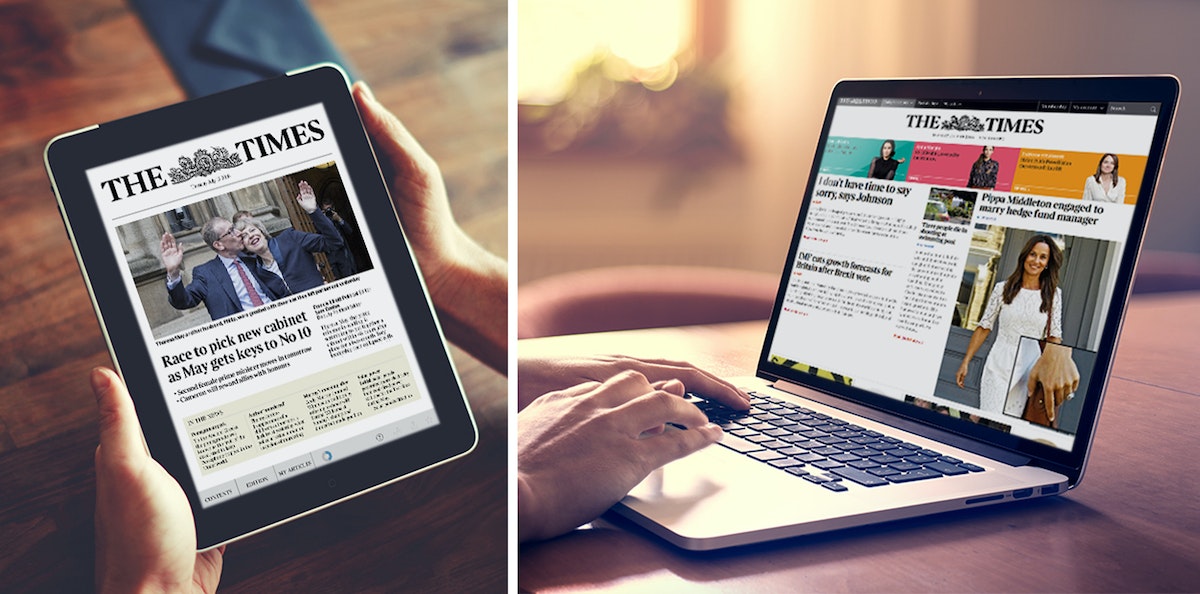
The Times in March 2016 introduced an editions-based publishing schedule, with new editions available across all platforms four times each weekday: overnight, 9am, noon and 5pm; the weekend schedule shrank to three editions. A year in, they had broken that schedule fewer than a dozen times—making exceptions for major moments like the terror attack in central London and David Bowie’s death—but even in those cases, The Times refrained from incessant updates, instead resuming its regular pacing.

“The way we’re publishing now, taking our time over news...taking a more considered view of the world, it’s helped us offer something different from everything else,” digital news head Alan Hunter told Digiday in 2018. Readers demonstrated that this different approach was something they’d been wanting.
In the first half of 2016, new paying-subscriber sales were up 200% as compared to the same period in 2015. At the end of June 2016, there were 413,600 subscribers to The Times and The Sunday Times, up 3.4% from a year prior. Of those, 182,500 were digital-only subscriptions—a 6% rise and a notable figure given how much online news can be obtained for free.
Through collaboration with IDEO, News UK's own digital teams capabilities grew, enabling them to implement and evolve their new digital strategy. The capabilities of the newsroom grew, too: “The decision to move to four editions a day has freed up tremendous resources to focus on big stories,” says Emma Tucker, Editor of The Sunday Times—the kind of stories that "supercharge engagement." The approach is working: By August 2019 digital subscriptions had increased 19% year-on-year to 300,000, showing the progress the legacy publisher has made in attracting readers to its online proposition. Total subscribers for the two titles' print and digital products now stand at 539,000, and their websites total five million registered users.
More than 230 years after its first edition was published, the new Times has established solid footing in the digital age and designed its own future—one based not on the habits of its competitors but on its legacy and the reading behaviors of its audience.
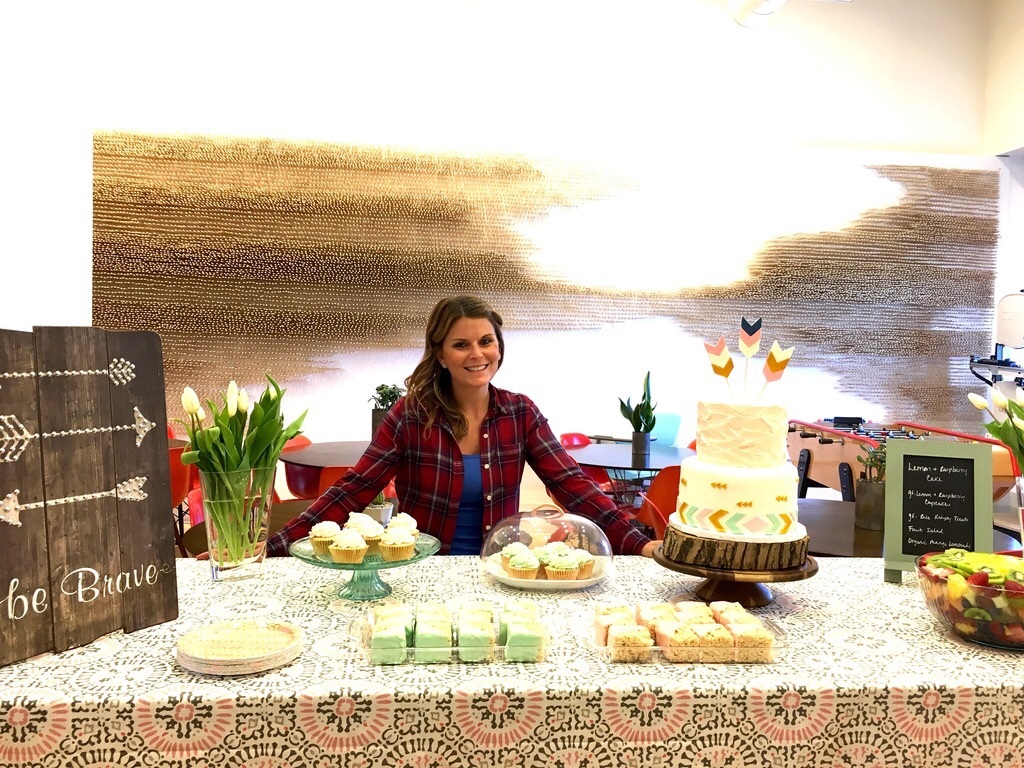
What Would Rhonda Do?
How do you build community? An homage to our colleague who did it best.
Knowing how to design community is a rare skill, and Rhonda did it better than anyone. She didn’t bring people together because it was her job. She did it because that’s who she was. Rhonda turned our studio into a home and coworkers into a family. Her creative acts of community-building were expressed through a million everyday things she did for us in the 10 years she worked at IDEO.
Over the last three weeks, we have been sharing stories of how we might be a little more Rhonda. Below are just a few:
Treat your coworkers as friends, not colleagues.
Jennifer Sarich-Harvey said that the moment she knew she was dealing with a special human being was when she received a care package from Rhonda while writing her thesis. Jenn had left IDEO as an intern the year before (not knowing that she would return a few years later).
Lindsey Turner told us of Rhonda’s detailed catering spreadsheet and how you could find little personalized notes therein: Graciella likes the Green Goddess with extra cashews, Noreen loves the almond cake, and no one ate the chicken tenders. Her thoughtfulness extended well beyond the confines of her job.
Treat everyone with dignity and respect.
Rhonda worked extraordinarily hard. She was always on her toes or running to tick something off her mental “to do” list. She even ate standing up. But no matter how busy she was, Michael Hendrix reminded us of how she never treated anyone as an inconvenience. Whatever she was doing, she would drop it in an instant to be truly present with you.
Make it special so people feel special.
Christina Abele chuckled warmly as she related the story of how Rhonda would always, always, re-plate the food—no matter if the caterer had already done so or she didn’t have the time. Rhonda knew that the way you made people feel special was through focusing on the smallest of moments, taking great care, and making them beautiful. This was her craft and how she showed her love in her own humble way. She would put “a little powdered sugar” on everything.
Make others successful.
No one brought this central IDEO value to life like Rhonda did. She was hospitality made manifest. She’d spend countless hours helping our design teams create an extraordinary experience for clients, of course, but she went above and beyond on a personal level too. Noreen Arora shared how Rhonda would sneak some food for her to take back to her new husband to make him fall even more in love with her.
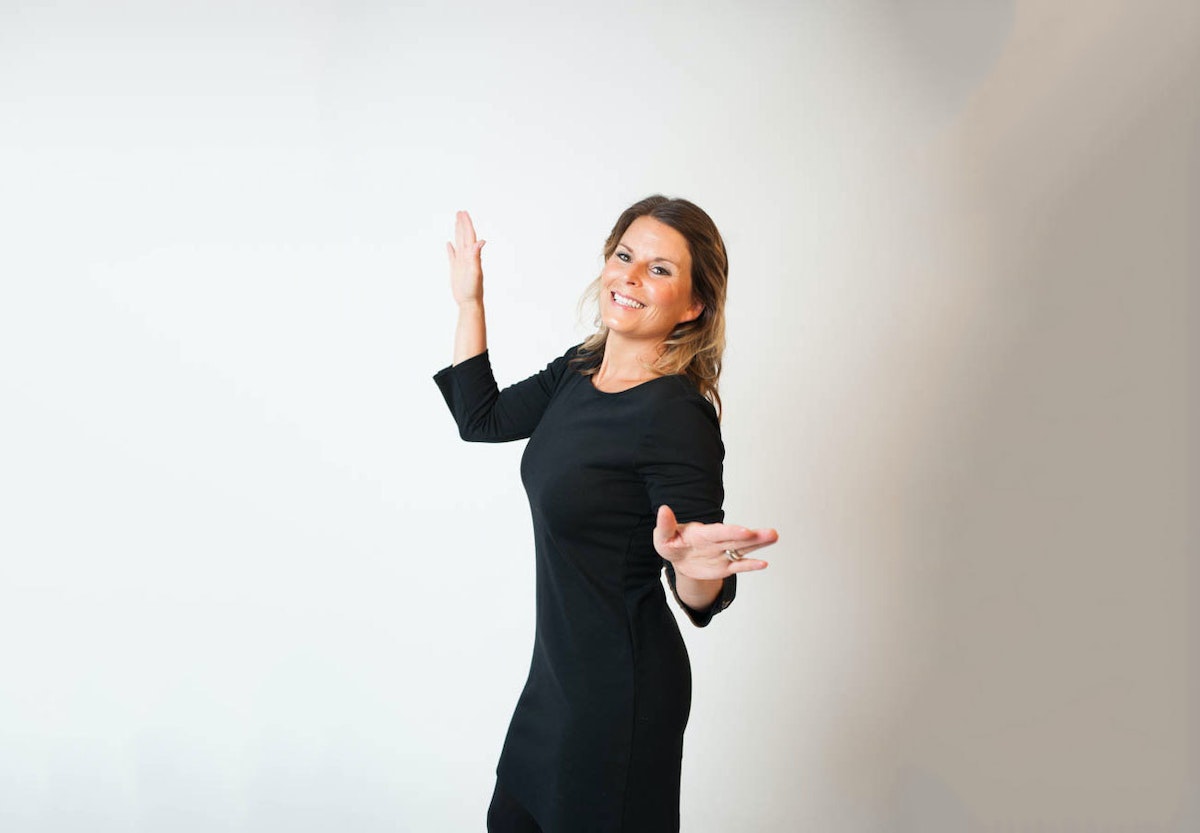
Be the Rhocque.
“The Rhocque” was a nickname her best friends in the studio called her: Rhonda was unflappable, forever poised, and always put others well-being before her own. Nicole Howard recounted the time she was literally running through the studio, stressed before an event, holding paper in one hand and a binder in the other, with Rhonda right behind her. With a quick turn of the heel, they crashed into one another and, in a heroic move, Rhonda grabbed Niki and rubbed some calming lavender oil into her temples before scuttling off to stock the bar. Niki was dumbstruck. To this day, Niki keeps some lavender oil in her bag, just in case.
John Feole tells us how Rhonda once dropped a glass in the kitchen and, even though it broke, it didn’t shatter—it simply held itself together. And that, he remarked, was who Rhonda was: “You could be a little cracked, a little broken, but Rhonda helped you keep your form.”
Make memories, don't wait for them to make themselves.
Nicole Woods told us that Rhonda would intentionally create special moments between her and her daughter so that Ali would have memories for years to come—like recreating a scene from Frozen during the first snowfall. She did the same for us: Like that time she stood smiling as we “oohed” and “aahed” over how she had turned our studio into a woodland forest for an event.
Design random acts of kindness.
Rhonda had a gift. Design came naturally to her. She could anticipate our needs before we could, worked alongside us with our clients top of mind, and always made sure we left feeling better for it. From snow cones for an overworked team designing for snowboarders, rolling trolleys of hot chocolate on a chilly day with toppings only a child would dream of, cake pops in the hues of proposed brand identities and, Tom Kershaw confirmed, baby showers to rival the very best of weddings, she was “biologically incapable of not making things beautiful,” (thank you John Feole). She did so much for all of us and made it look effortless.
Many companies have their values plastered on the wall or policies on creating culture. We confess we have that, too. But, more importantly, we had the irreplaceable Rhonda.
Rhonda, we love you and we will miss you always. We hope to do you proud.
We collected a few suggestion from her friends and colleagues on how we can all be a little more like Rhonda. See their comments here.
You feel it the moment you walk into our studio—a sense of community. People come before deadlines. When someone makes a request, you drop everything, no questions asked, and lend a hand. Ask anyone here to identify the source of that feeling and they would have immediately pointed at the front desk, where every day, Rhonda LeRocque welcomed you in with a smile that could melt a glacier. Rhonda was one of the concertgoers in Las Vegas who never made it back home. This post is a tribute to her and how she brought us together.

A Toy Designer Shares His Secrets for Killer Halloween Costumes
8 tips for creating a jaw-dropping getup
I have always loved the sense of escape that dressing up allows. Ever since I transformed into a cardboard robot at a primary school fair as an 8-year-old (my brother is the blackbird), I have been fascinated by how differently people interact with me when I’m in a seemingly alien state.
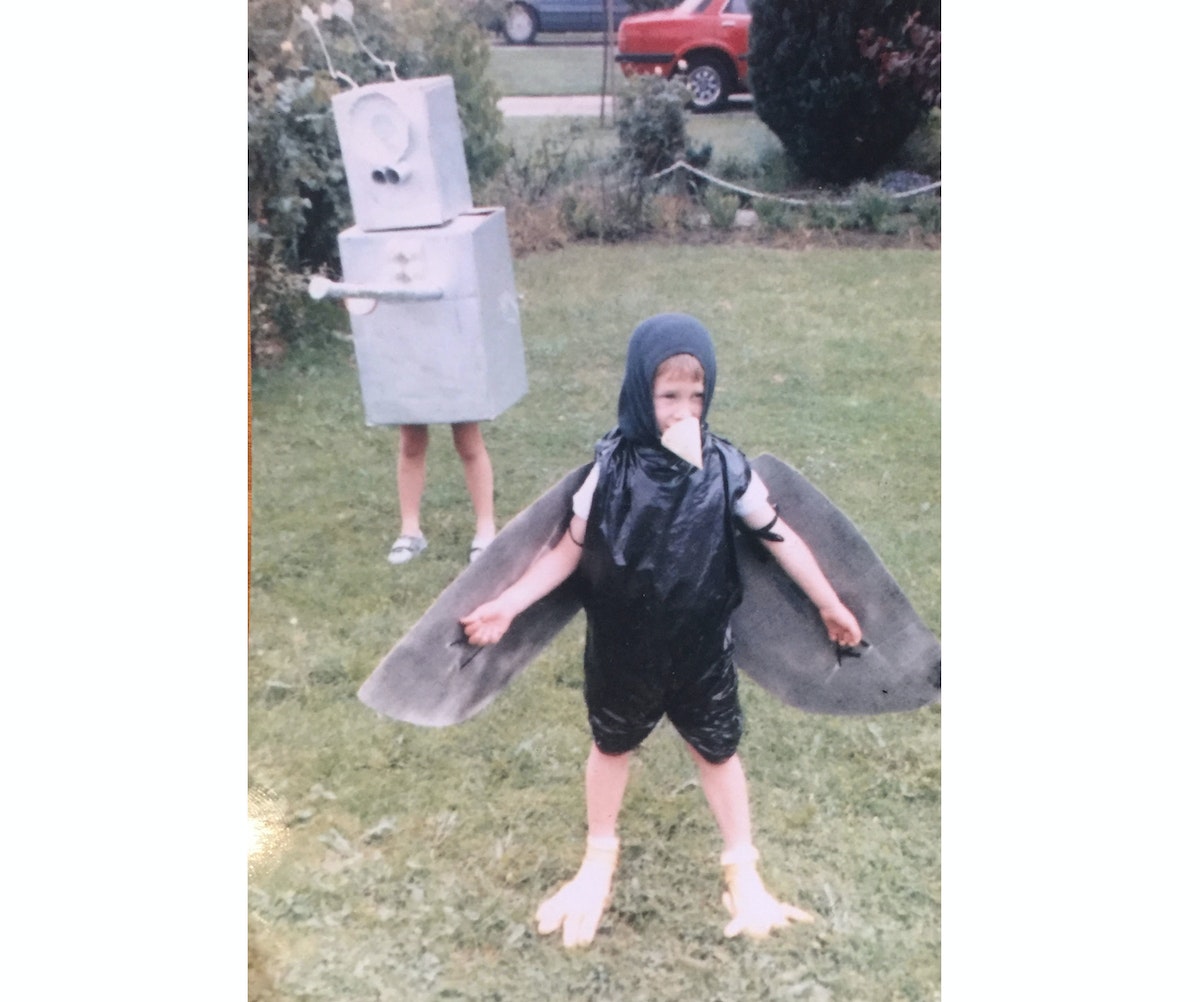
That early fascination, coupled with my love of building things, has led me to create elaborate costumes based on Ghostbusters, Edward Scissor hands, and LEGO men, to name a few. And since working in the Play Lab, my costume obsession has truly bloomed. IDEO has a long tradition of extreme costume building, especially for our annual holiday party. Themes over the last few years have included Surrealism, County Fair, and Magical Forest.
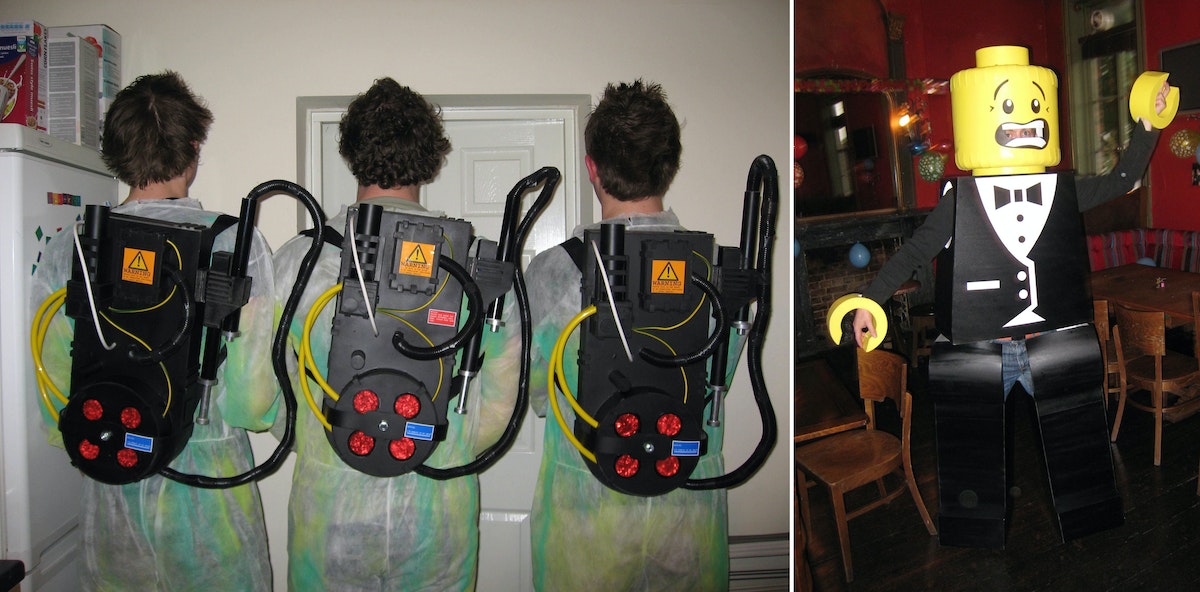
Over the years many people have asked me how I approach costume creation. Here are 8 ways to channel your inner designer:
1. Stretch the theme
When it comes to themed events, I look for something on the fringe so there’s no chance I’ll be dressed the same as anyone else. For the surrealism party, Salvador Dali, whose paintings invite the viewer to interpret the work in more than one way, inspired me. I wanted to create a costume morphed two things into each other in black and white to achieve a striking contrast. After listing dozens of possibilities, I chose a zebra and a piano! I was pretty sure no one else would be thinking about mashing those together.
2. Plan, sketch, and simplify
When planning out a costume, I create an inspiration board of potential elements. Then, I explore compositions through quick sketches (often on bumpy commuter trains, forgive the roughness) to get a feel of what they might look like and how to construct them. Below are a couple of early sketches of my Zebra-piano and grasshopper costumes:
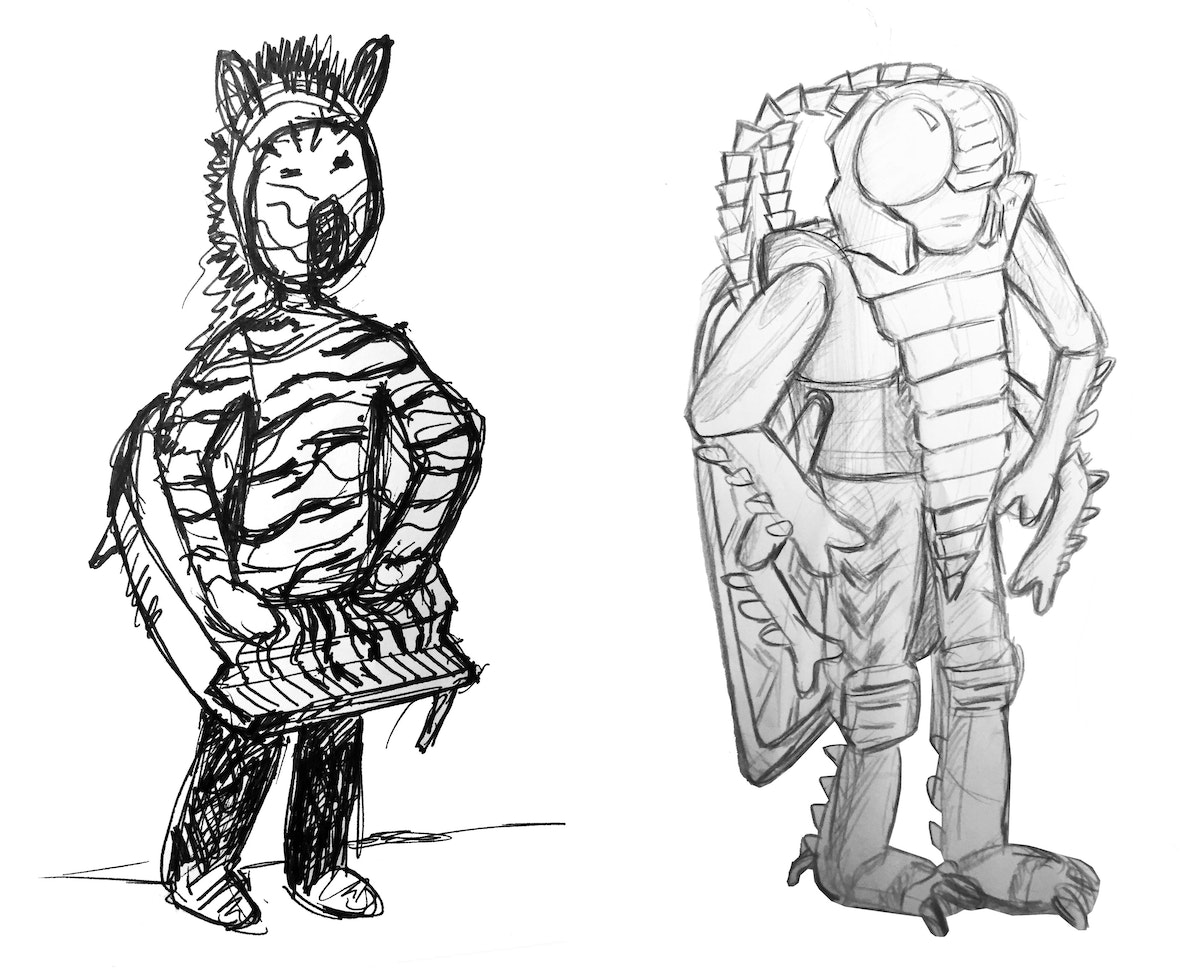
I try to simplify the execution as much as possible. Costumes do not need to imitate your reference exactly to create impact; just capture the essence of your theme/character in as simple and bold a way as possible.
3. Go wide with materials
Sourcing as many different material options as possible helps you be more creative with combinations and allows unexpected “discoveries” to happen. Don’t forget the fur and fairy dust!
4. Experiment and play beforehand
Try not to be too precious or precise as you start building. Try out different methods and do multiple tests. In painting my face to become a zebra I failed many times before I found a good quality paint and method of application. Here’s a picture to prove it!
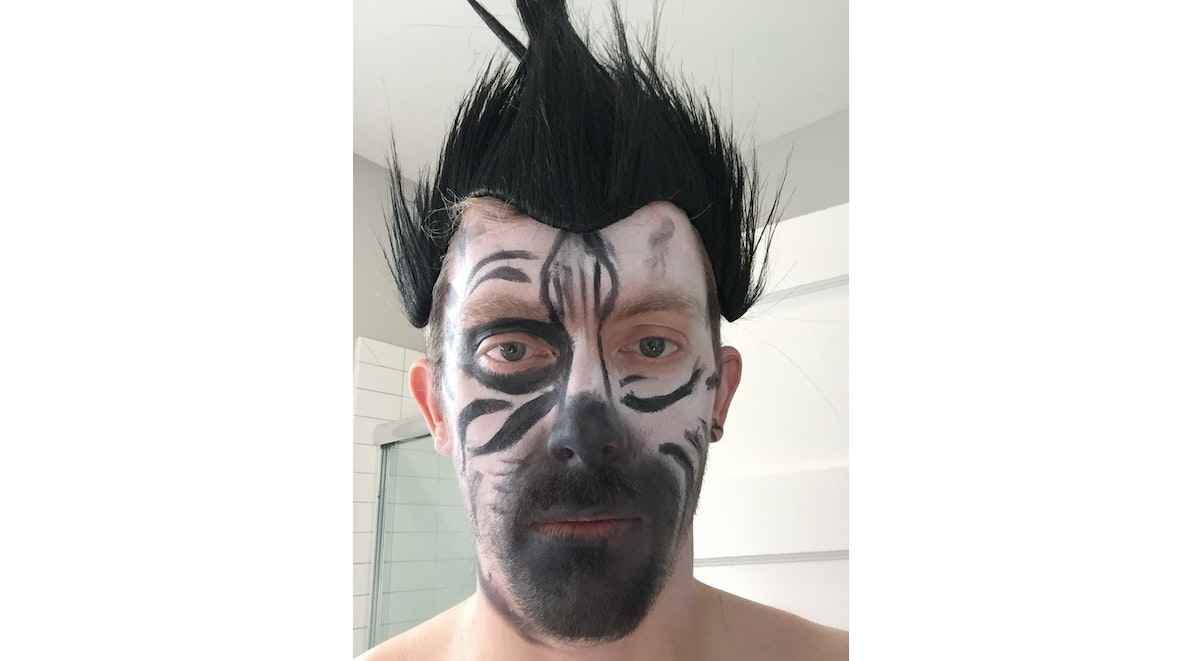
Snazaroo paints are the best when applied with clean fingers, Q-tips, sharp-edged sponges and cereal-box cardboard. Dabbing a layer of powder or, with eyes closed, hairspray onto the paint helps it stay in place for the duration of the night.
5. Break the human silhouette
Costumes that break the usual form factor of the human body are the most striking and unexpected. For the County Fair event I built a Zoltar fortune-teller machine using laser-cut foam core decorated with acrylic spray paint. Don't have a laser cutter in the garage? Check out a local techshop or other makerspace, ask a friend who's got access to a shop to help out, or do a quick search for local vendors.
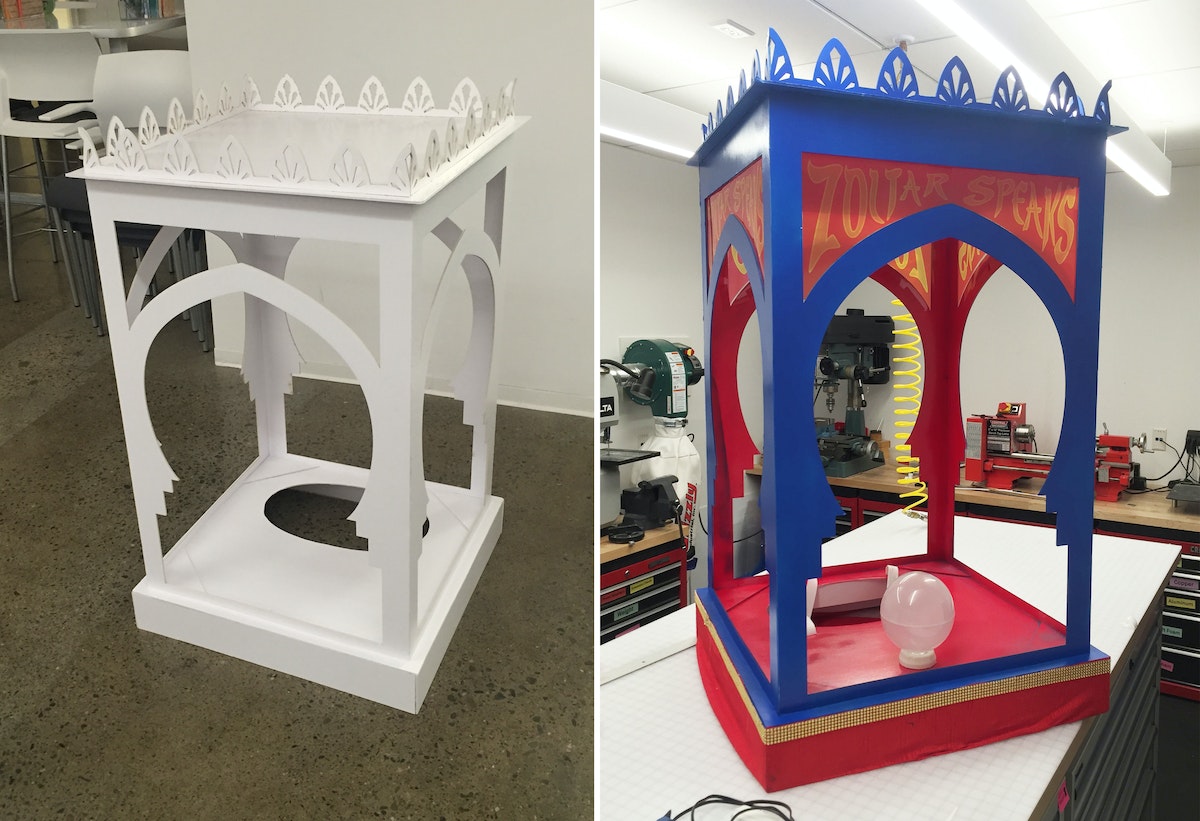
6. Be human-centered
Make sure you can easily drink and go to the toilet! I’ve made too many costumes that have made both difficult, which admittedly adds a layer of hilarity when you have to rely on complete strangers to help you use the facilities.
7. Light it up
Parties are often held in darkened rooms. Adding any level of lighting really helps your costume pop. When building the grasshopper costumes, I found cheap battery-powered LED strip lights on Amazon that brought them to life.
8. Multiples for the win
Team up with someone (as I did with my fellow grasshopper) to add clout to your costume. Two is always better—and more fun—than one.
Check out this gallery of some of my finished costumes:
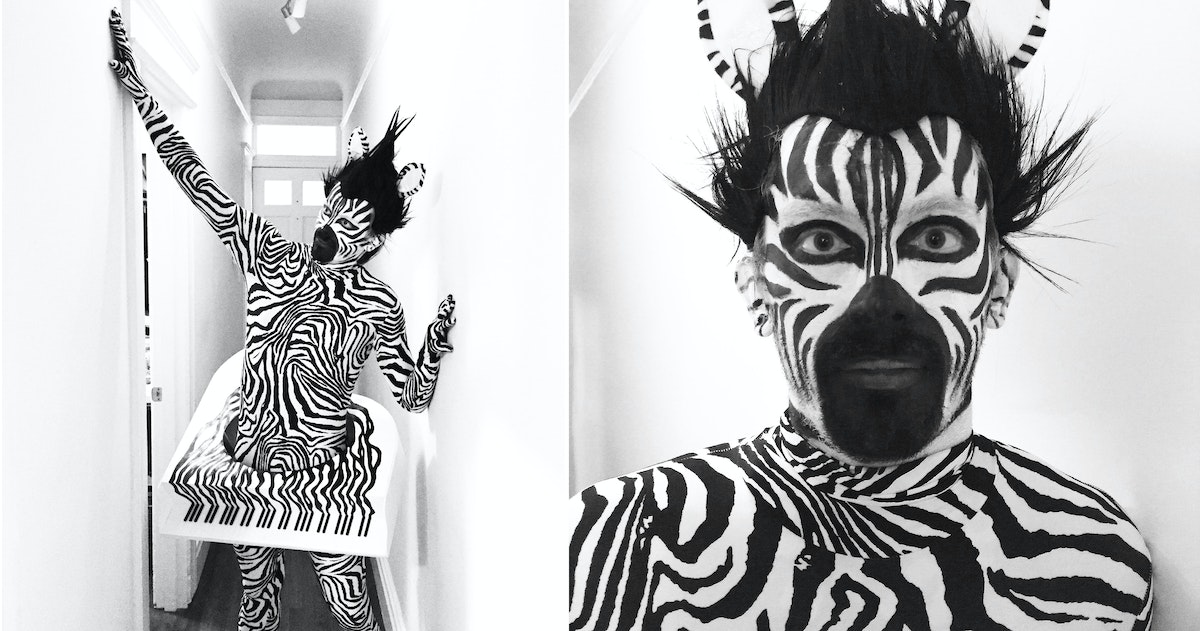
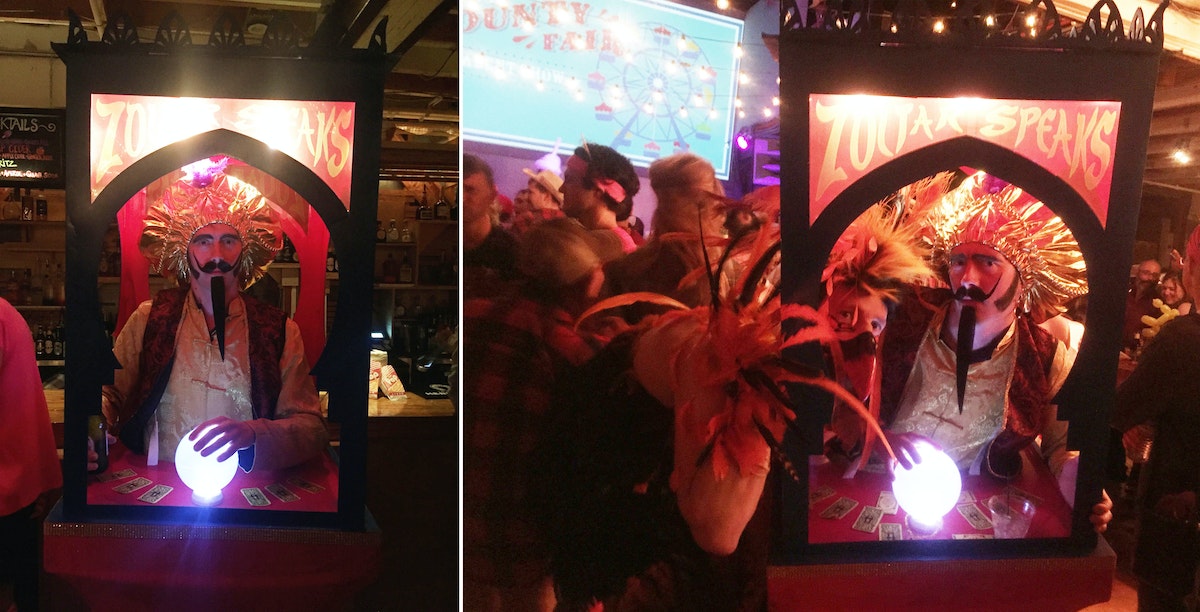
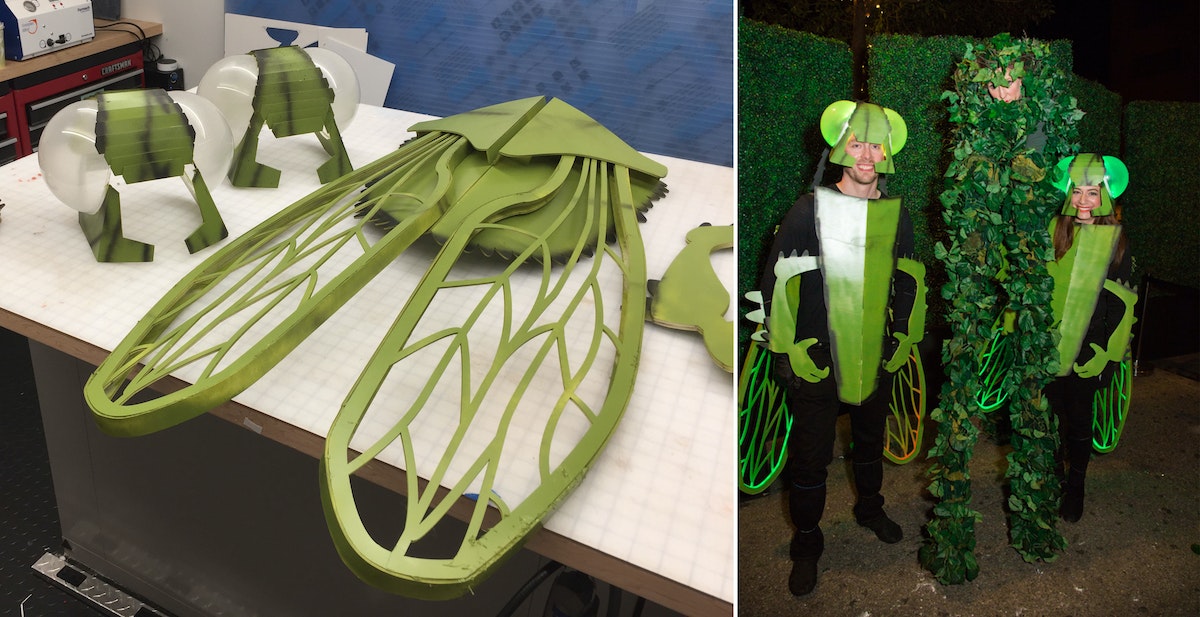
Happy escapism! Share your costume idea with us on Twitter, Instagram, or Facebook with #IDEOcostumedesign.
It’s spooky season, and we’re feeling that familiar dread of what to wear, what to make, or even where to find inspiration flood in. At a company where design is close to a religion, coming up with an eye-popping costume is the Holy Grail.
5 Tips for Nailing the Narrative at Your Next Speaking Gig
5 go-to speaking tips from the best presenters at IDEO
Far from the client presentations I had previously known, here, the emotional stakes were much higher. This was my personal story, and I was learning the hard way—in front of an audience of my new peers, no less—that I was clueless as to how I might frame a compelling narrative.
In other words, I had no idea how to tell a story.
Feeling awkward as can be, with a bruised ego to boot, I knew I had to improve my public speaking ability. Luckily, I fast became aware that I was surrounded by the best storytellers I had ever known. I began observing, writing down, and absorbing all of the knowledge, coaching, and feedback that was offered up.
It has been nearly seven years since I shut my laptop in shame. In this time, I have compiled a list of my five favorite, go-to tips from the best presenters at IDEO:
1. Make it personal
Your audience wants to see more than just a portfolio of work or a few case studies they could read on their phones. They want to hear your story. Who are you, how did you get here, and, most importantly, what are you passionate about and why? This latter idea should tie to the work you present.
2. Create a narrative arc
Your talk should have a fully realized narrative, complete with dramatic tension and resolution. The tension in my personal story arrived when I haphazardly fell into the agency world, where the ideologies that drive me were completely at odds with the work I was doing. Resolution came when I left and made a major change in my career and my work.
3. Provide historical context
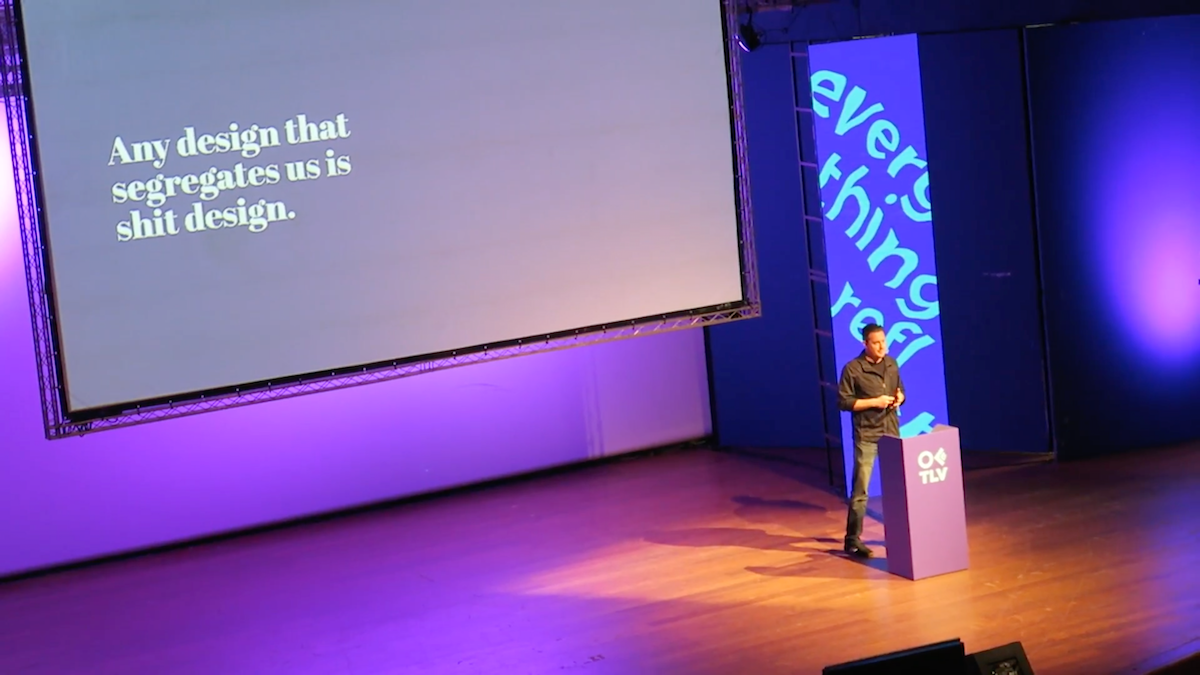
A bit of history provides a compelling backdrop for the story of your work. When I talk about IDEO’s efforts in the automotive sector, I first tell the story of Thomas Midgley Jr., a chemist and mechanical engineer who invented leaded gasoline (and CFCs) while working for General Motors in the 1920s and '30s. Understanding the disproportionate, planetary-scale impact of Midgley's work sets up the formidable challenge that designers must now overcome.
4. The bar exam
Ask yourself, is your story interesting enough that you would tell it to a friend over drinks at a bar? Bonus points: Conduct your bar exam with a friend who works outside of your industry, making it all the more challenging to capture their attention.
5. Stick the landing
Always end on a punchline. Your punchline does not have to be funny, but it will be the overarching idea that people take home with them. In the context of an event with multiple speakers, your audience is endlessly bombarded with competing ideas and inspiration. When you stick your landing, they remember—perhaps even share—precisely what it is you aimed to communicate.
I have now employed the above tips from friends and colleagues at nearly 30 events over five years on four continents. I assure you, they work.
Special thanks to Annette Ferrara, Neil Stevenson, Shoshana Berger, Paul Bennett, Jenn Maer, Tim Brown, and Katie Clark. I owe you each a lifetime’s worth of experiences and airline miles.
Nothing makes me want to master a new skill like falling on my face when I first attempt it. Halfway through my new hire presentation—a get-to-know-the-new-kid-over-beers tradition at IDEO Chicago—I cut my talk short and shamefully closed my laptop.
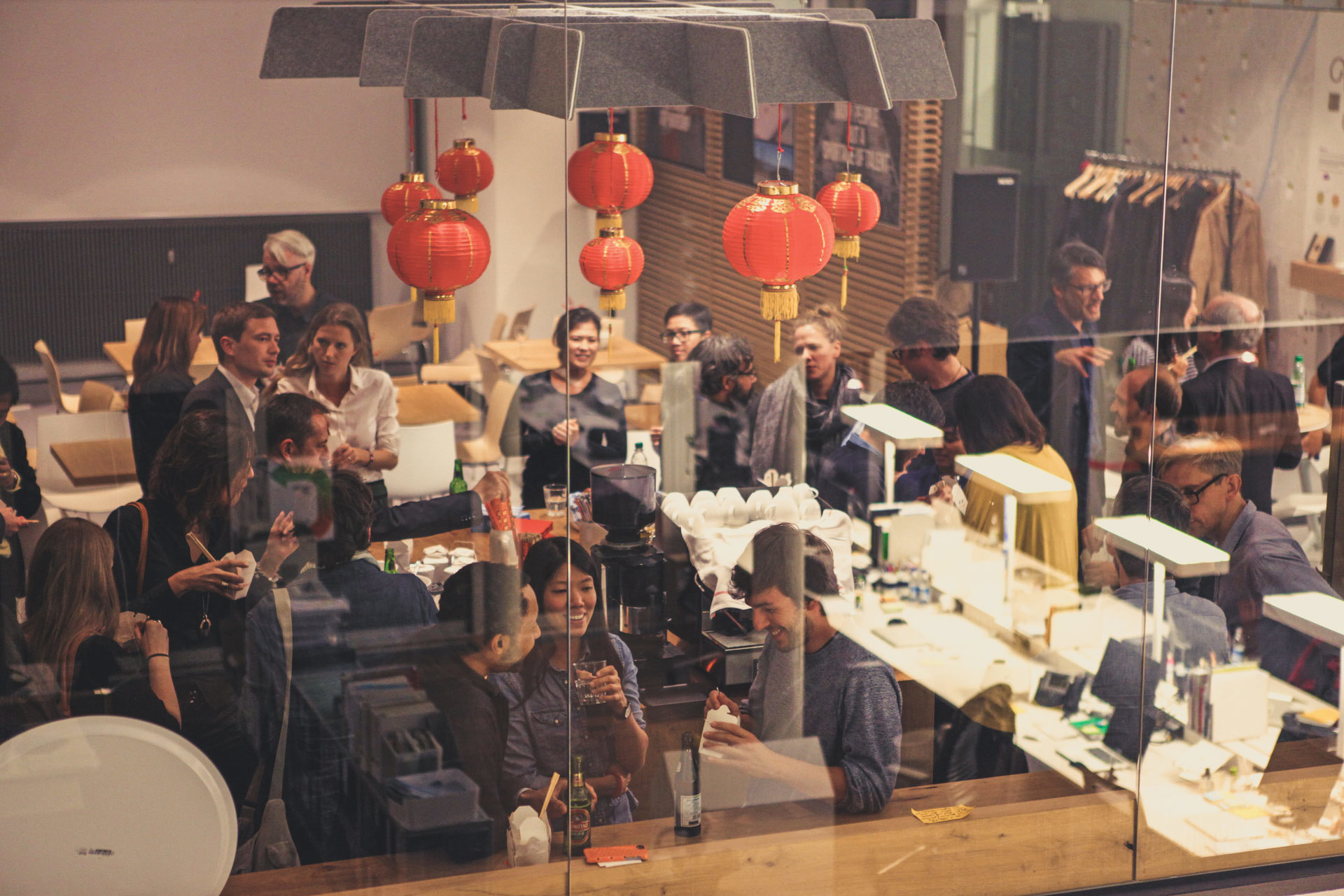
4 Tricks for Getting Better Feedback
An IDEO designer shares her tips to gather great feedback from events
But first, here are a few things to think about before you begin:
Consider what you’re trying to learn. Do you want feedback on the event format, content, experience, or outcomes? Whatever that may be, it helps to tell your audience that they’re participating in a prototype right from the get-go. In our experience, being up front that you're trying to build something better encourages participants to respond. You might offer some incentive for their input, too. Even a small gesture of thanks signals that you value their thoughts. And remember to use the data you get back to understand what happened, and conversation to understand why. Data alone is only half the story.
With all that in mind, here are some techniques we’ve designed to help us understand what worked, what didn’t, and why.
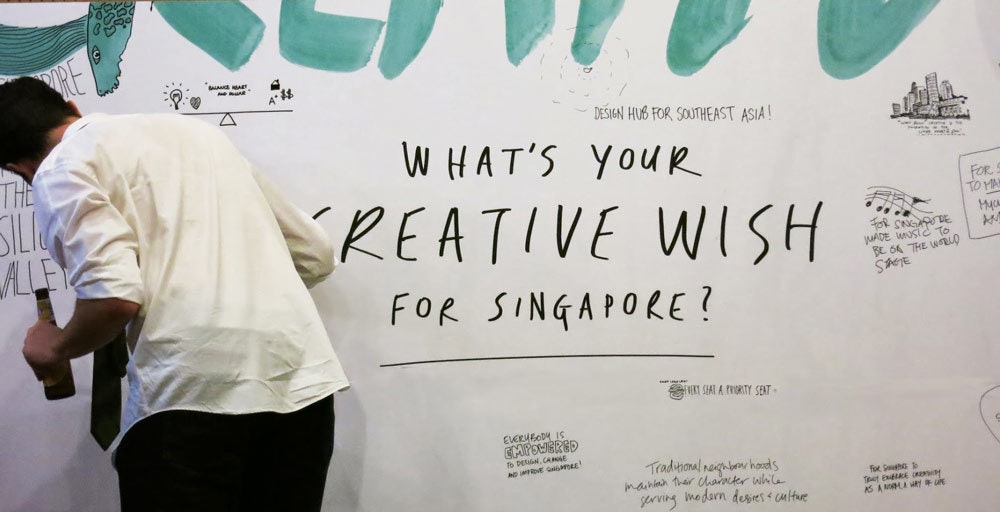
1. Do Live Polling
Collect information during the event, while it’s freshest in people’s minds:
- Pass out comment cards with a simple feedback prompt, “I like/I wish”.
- Leave prompts on a board like, “What did you learn today?” and Post-Its for guests to use.
- Digital tools like Meetmaps or polleverywhere.com do live polling, and you can choose to show the audience the real-time results to encourage participation.
- Biometric measurement can tell you what selected people are feeling in real-time, Megvii and XOX are two systems. You can also show the audience this data.
- Have your team create a list of the most common sentiments or attitudes you expect to get ("I'm Confused" or "I'm Learning"). Then work the crowd, giving people simple feedback prompts. Tally results in a Google survey form, capturing any notable quotes or outliers.
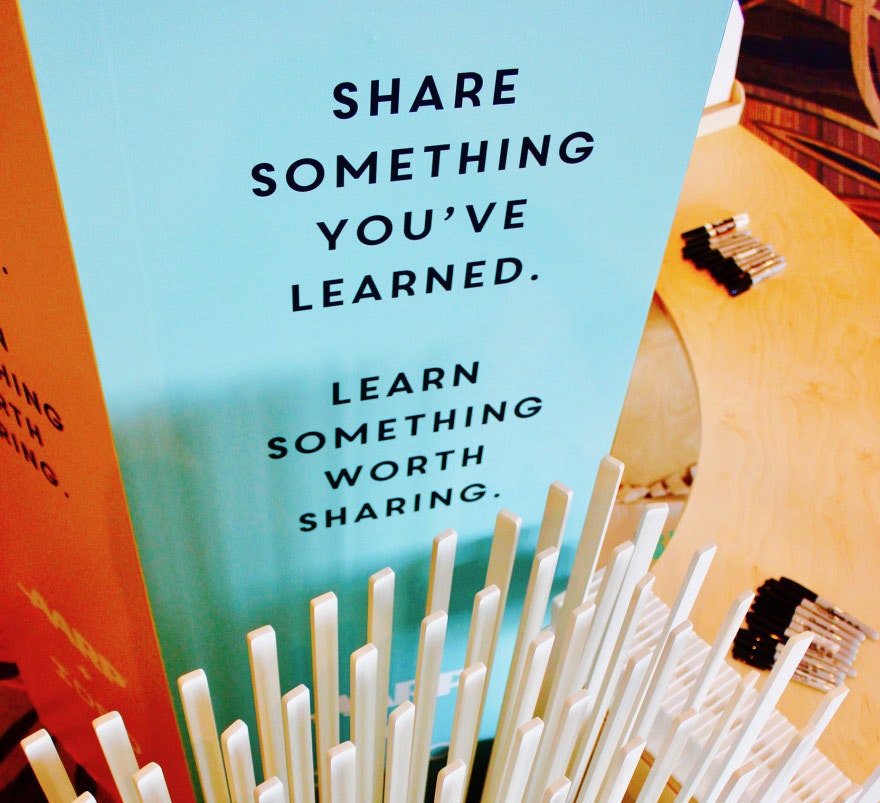
2. Make Data Viz Physical
Sometimes seeing evidence that people are really engaged gets others to participate. Bonus: these methods are fun, and social.
- Have people use a green door to show a “like” and a red door to show a “dislike”. You can also do this by asking people to move to certain places within a space.
- From the stage, ask the crowd before/after speaker: “Stand up if this is the first event you’ve been to….”
- Have people choose a button/pin with a word that describes what people value. For instance, if you’re talking about community, one button might say, “finding my people” and another might say, “building diversity”. Count the ones that are left over.
- Place dots on a spectrum or balls in a bin to vote what you think. The voting objects can be themed too, like fake coins for business investing.
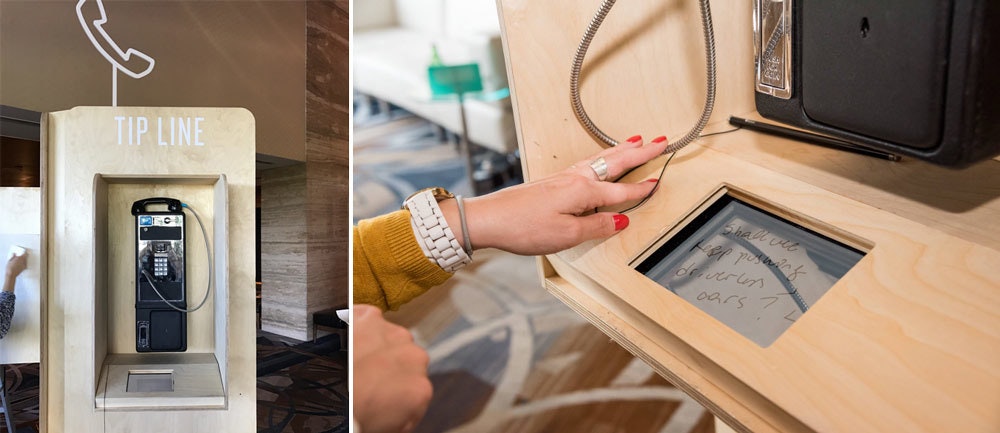
3. Observe Cues
People don’t always accurately report how they feel. Take note of what they do, too.
- Count how many people download the presentation or video after the event, if there is one.
- Provide a hashtag for people to use on social media, then track both the number of shares/tweets, and the sentiment of them. Tools like Tint can help with this.
- Collect names and email addresses for future events (if no one signs up, that’s feedback, too).
- Measure sound volume hourly throughout the event to get a better picture of traffic and engagement timing. Compare different events in full swing in the same physical space to quantify the energy in the room.
- Watch people showing signs of comfort and belonging in their body language—are they loosening their ties or kicking up their heels, do they feel comfortable enough to move chairs into a circle?—all are signs they’re engaged. Sitting alone, checking phones or watches, falling asleep, leaving the room—you know what those cues means.
4. Take the Long View
In addition to immediate learnings, you may want to aggregate insights over time or across events.
- Ask people if they want to be on a feedback panel going forward. Offer exclusive access or information in exchange for helping you shape the program.
- Provide a platform for ongoing conversation about the themes that are important to both you and your guests. This helps you keep the pulse in an ongoing way, and reminds people to associate you with things you care about.
Got any ideas of your own to add to our list? We’d love to hear about them. Hit us on Twitter, Facebook, or Instagram with the hashtag #feedbackdesign.
You put weeks of work into designing a great event. You think it went well, and people seemed happy, but how do you find out what truly worked and what didn’t? Instead of circulating a survey that makes people's eyes glaze over (if they glance it at all) we've applied our design chops to the task. Here's how to get quality feedback that will help you up your game.

Lindsey Turner
I’m passionate about building brands, products, and experiences that help organizations show up with meaning and momentum.
I help organizations cut through complexity by shaping how they show up, through brand strategy, identity, and storytelling.
Working at the intersection of brand and business, I bring an editorial eye and a bias toward making—turning ideas into tangible experiences that people can understand, trust, and believe in.
My work spans government, healthcare, financial services, media, and consumer goods, from launching Gen Z-focused ventures to building innovation labs and reimagining legacy brands. I relish moments of ambiguity and enjoy translating across teams, perspectives, and priorities to move ideas forward.
I started my career in editorial and digital design, shaping cross-platform experiences and identity systems in publishing and agency environments. That foundation still shapes how I work today: I’m detail-oriented, collaborative, and overreliant on the Oxford comma. I hold a BFA in Visual Communication from the School of the Art Institute of Chicago.

Rachel Young
My work helps organizations see who their products aren't working for—and build the will and the tools to do something about it
For 25 years, I've asked the same question: Who does this design exclude—and what are we going to do about it?
My work spans human-centered strategy, inclusive design, and qualitative research, with clients ranging from Microsoft, Google, and Verizon to the National Science Foundation, and San Francisco Unified School District.
Before IDEO, I taught elementary school in East Palo Alto and spent a decade doing design work with social service organizations—where I learned firsthand what it costs people when systems are built without them in mind.
I am currently writing User Error, a nonfiction book about digital access and the design decisions behind it. I live in Oakland, California.

Brian Pelsoh
I lead with craft, ensuring our work is creatively excellent: rooted in deep human insight and imagination, while also grounded in the realities of business and technology.
My expertise spans brand, communication, and product design across tech, education, the arts, and social impact.
I believe great work demands both high-level vision and obsessive attention to detail, and only happens through collaboration.
I bring an inclusive, hands-on approach and a deep understanding of business, which enables me to consistently deliver excellence while always asking why.
Before joining IDEO, I worked at the brand firms Pentagram and VSA Partners. I began my career as a designer, leading teams at the School of the Art Institute of Chicago and the Milwaukee Art Museum. I hold an MFA in graphic design from Maryland Institute College of Art and a BFA in communication design from the Milwaukee Institute of Art & Design, and have taught at some of the best design schools in the US.

Tony Wong
I am responsible for IDEO’s long-term success in China and working with clients to use design as a tool to enable growth.
I am responsible for IDEO’s long-term success in China and working with clients to use design as a tool to enable growth. Specifically, I have helped Chinese companies design holistic brand solutions through the development of their products, communication, services, and innovation teams, and I have helped multinationals expand their presence and influence in China.
I advise global leaders on developing China-led innovation and capabilities.
In over 15 years in IDEO Shanghai, I have worked on projects that use design to elevate the quality of the experience of healthcare products and services, streamline processes that increase productivity, create spaces and programs that promote and enable inclusive communities, and build next generation mobility solutions that are planet-positive.
Before joining IDEO, I worked at Philips Electronics and the Electrolux Group in Italy, the Netherlands, and Singapore on a number of breakthrough commercial products. I am a member of the Young President Organization in Shanghai.

Building a personal AI for the messiness of life: Sida Li
Most AI products today are built for work—a space with clear problems and established systems. One founder noticed a gap: personal life is messier, harder to systematize, and mostly left behind by the AI boom. So she built Cue, a personal AI that lives inside iMessage and group chats, to go where the other tools haven't.
In this episode, Becca Carroll, IDEO's Chief Strategy Officer, talks with Sida Li, co-founder and CEO of Shared Context Lab, about staying anchored to a human need while the technology around her keeps changing shape, why she treats her business model with the same rigor she'd bring to a product, and what it feels like to build a company at this particular, disorienting moment in AI.
The conversation also gets into how Sida makes design decisions: the language Cue uses to describe itself, the tradeoffs behind building inside iMessage instead of a new app, and a real story about a business idea that didn’t pan out.
This is the second in a two-part series profiling founders from IDEO's Startups-in-Residence program. The first conversation is with Johannes Seemann, founder of Sooner, on designing GenAI for the emotional side of money.

Designing GenAI for the emotional side of money: Johannes Seemann
Most personal financial tools are built to run the numbers and optimize towards a budget. While that works for some, most people experience money as a lived relationship that does not neatly fit into a spreadsheet. Johannes Seemann and Becca Carroll discuss why money is emotional before it is mathematical, and what a human-centered approach to building a generative AI financial product looks like in practice.

The curious leader's edge in uncertainty: Scott Shigeoka
Mina Seetharaman talks with Scott Shigeoka, author of Seek and Head of Curiosity Cultivation at the Eames Institute, about what distinguishes genuinely curious leadership from performative curiosity, how power dynamics shape curiosity, and why practicing curiosity can restore energy rather than drain it.

How constraints make us more creative: David Epstein
Mina Seetharaman talks with David Epstein, author of Inside the Box and Range, about why total freedom often produces average work, how leaders can design useful limits on purpose, and what organizations such as General Magic and Pixar reveal about the relationship between boundaries and creativity.
Looks like you might be in search of something very specific?
Or reset the filters above and try another angle.
Here’s some random inspiration

Podcasts about creative leadership

Articles about the power of prototyping
