
.svg)


Peripheral vision
A consumer electronics giant becomes a climate-era leader.
IDEO’s partnership with Logitech is a case study in bringing together the power of imagination and the rigor of business.
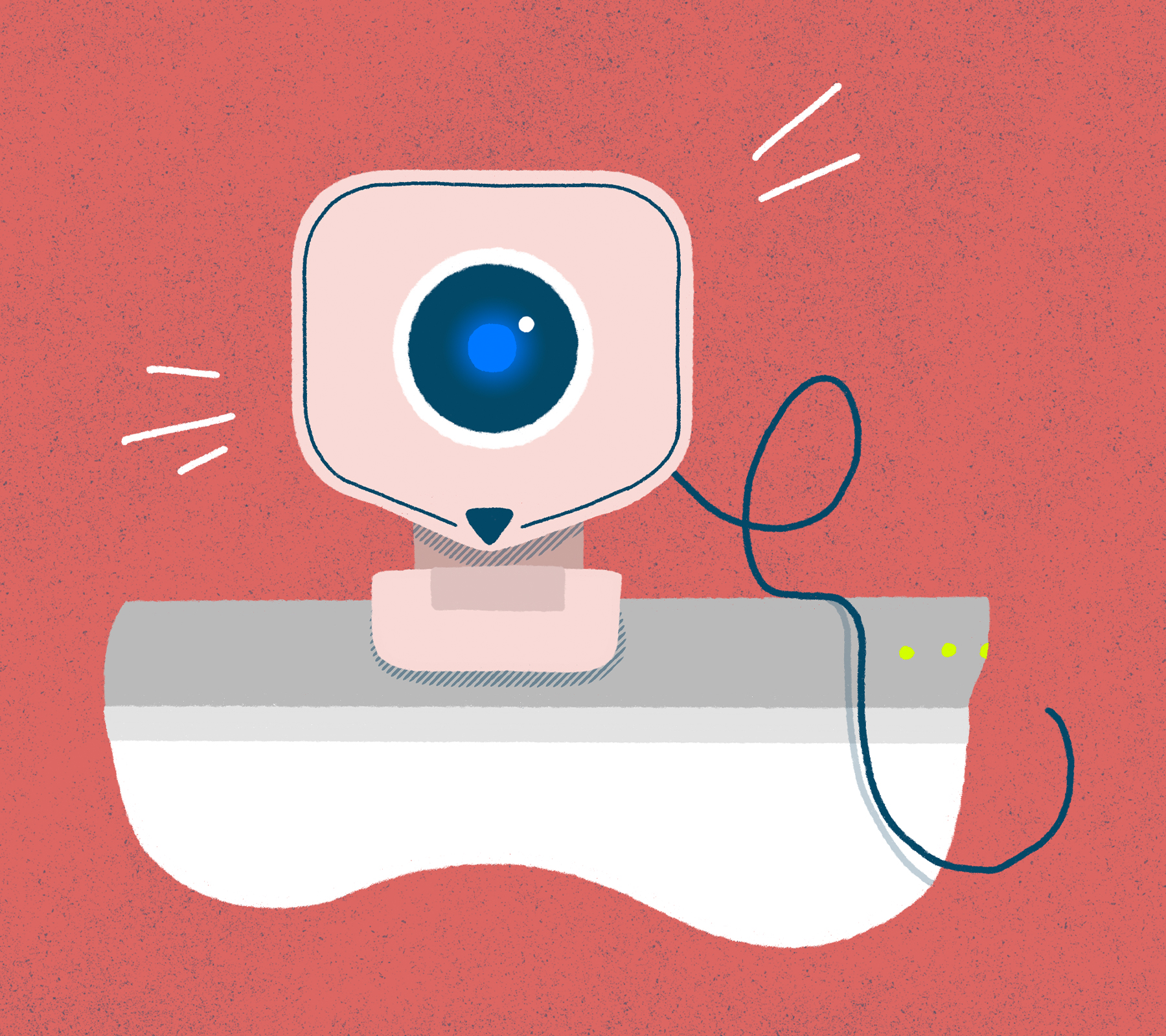
As much as we love to lead with creativity, it’s difficult to develop a business plan off ideas alone. So when Logitech asked the IDEO team to investigate a broad array of possible futures and report back, we brought our findings to life by inventing a board game. Instead of a dry presentation on circular solutions, our designers created a story about a mouse that turned into a webcam.
That imagination mattered. It fueled an exploration into expertise we collected from researching with people already living in futures destined to expand. And our rigor helped us hold more possibilities, and identify intersectionalities. Combined, they redefined what it means for ideas to be viable in business; they focused us on long-term sustainability; and they pushed us past immediate technical feasibility to ask if new ideas would be feasible for entire systems.
Our partnership with Logitech revealed that imaginative dreaming and business rigor aren’t opposing forces, but rather complementary tools in opening up new directions into a future demanding bold decisions.
As of 2019, e-waste was the fastest-growing waste stream globally, and only 20% of the 48.5+ million tonnes is disposed of properly.
Global emissions must be cut in half by 2030 to avert the worst impacts of climate change.
By 2030
Logitech has committed to becoming climate positive and removing more carbon than they create
The whole package
A global fashion brand pairs sustainability and growth.
Fast fashion keeps getting faster. But if the industry is to meet its climate commitments, its use of plastics has to slow down.
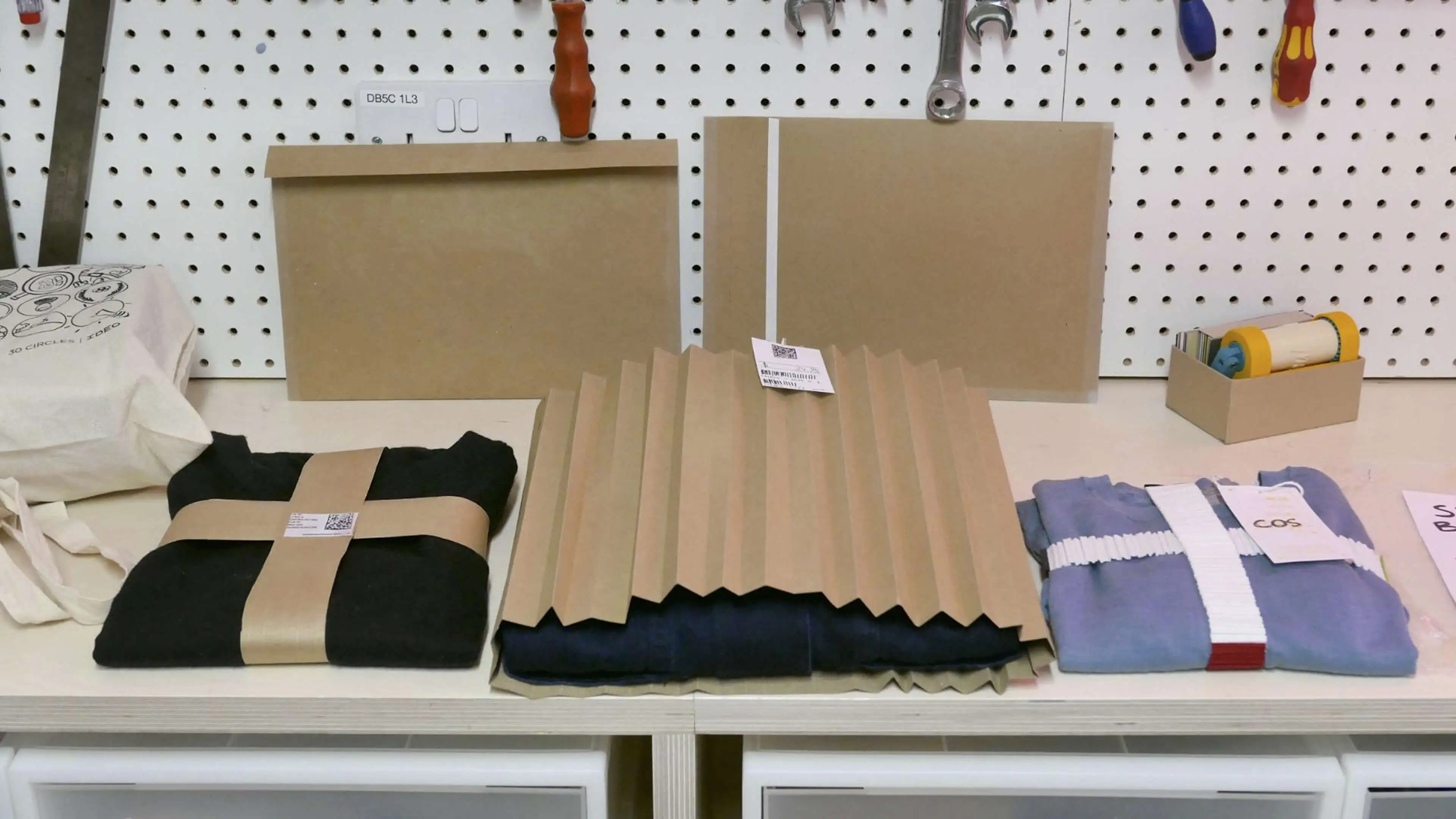
H&M chief executive Helena Helmersson set ambitious sustainability goals when she stepped into her role. She wanted to reduce the fashion giant’s impact on the environment and enable meaningful growth. But change is tough for any company, let alone one with eight brands operating across 74 markets. Together IDEO and the H&M Group created new plastic-free packaging, rallying around a more sustainable packaging solution that’s easily customizable.
By applying a design-led approach that went far beyond hiring a sustainability consultant, the H&M Group managed to reduce its use of plastic. But it didn’t stop there. A small team called Design Studio took what it learned and grew into an established strategic capability that pioneers new ways of working in the organization, tackling complex challenges in circularity, inclusion, supply chain, and customer experience. Sustainability isn’t a passing trend for H&M. It’s moving fashion forward.
Packaging accounts for 26% of plastics produced globally every year.
Fashion e-commerce is estimated to grow by 10% annually through 2024, requiring even more packaging.
100M
plastic-free packages shipped in 2022
2,000 tons
of plastic eliminated from H&M operations
The everywhere chair
In Japan, a mother works to build an inclusive child seat that closes the gap between children with and without disabilities.
For children with physical disabilities and their families, mobility is freedom. But in Japan, there are barriers to that freedom of movement.
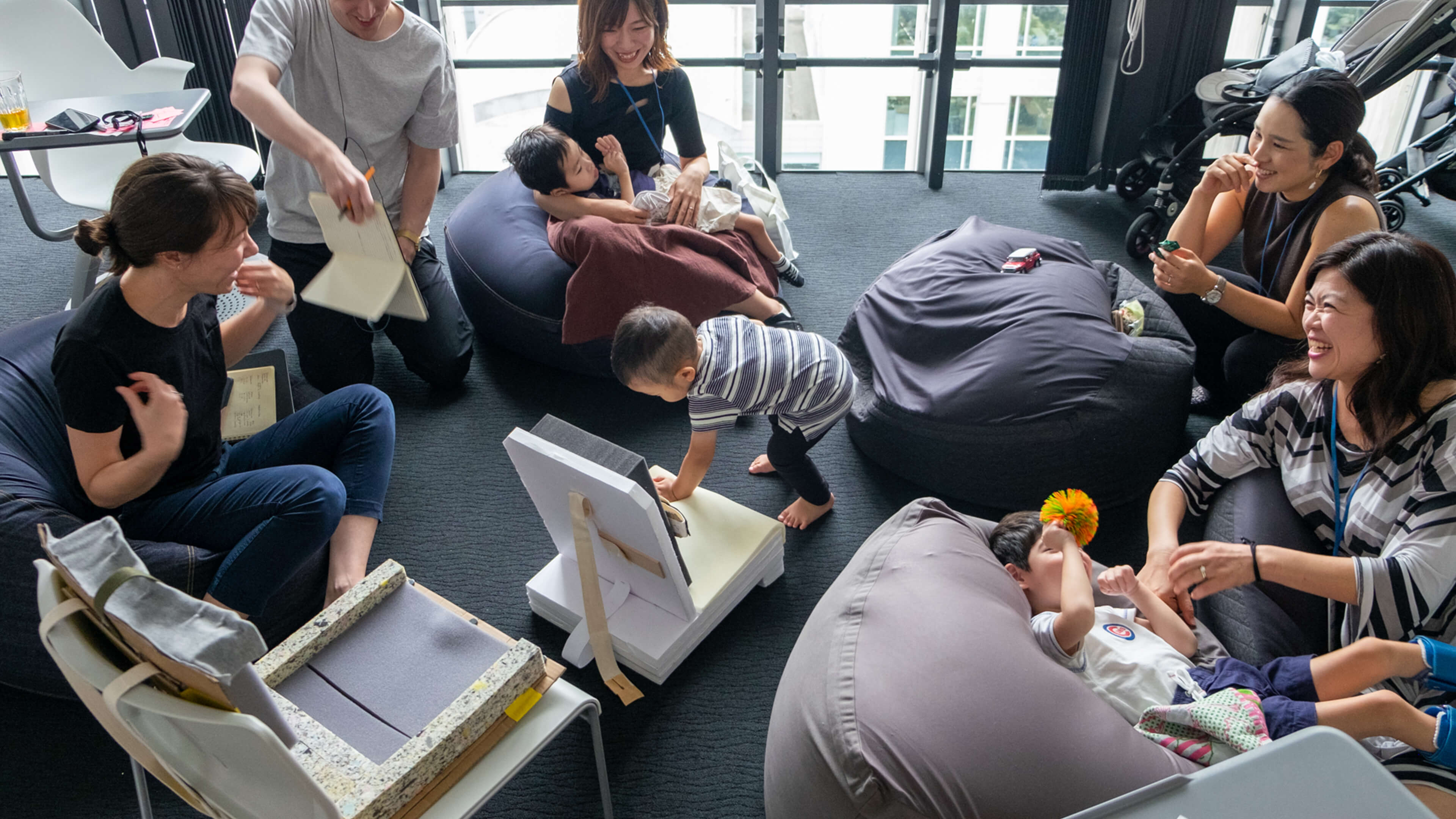
In raising a child with cerebral palsy, Yuri Matsumoto found that her son was separated from other kids during everyday activities. In Japan, children’s products are divided into two categories: those for children with disabilities and those for children without. Matsumoto aspired to close this gap with a product that would allow children of all abilities to use the same chair and be included in the same activities. To realize her idea, Matsumoto needed a strategic design company to refine the chair design, create a compelling visual identity, and arrive at a product road map to help set the business up for long-term success.
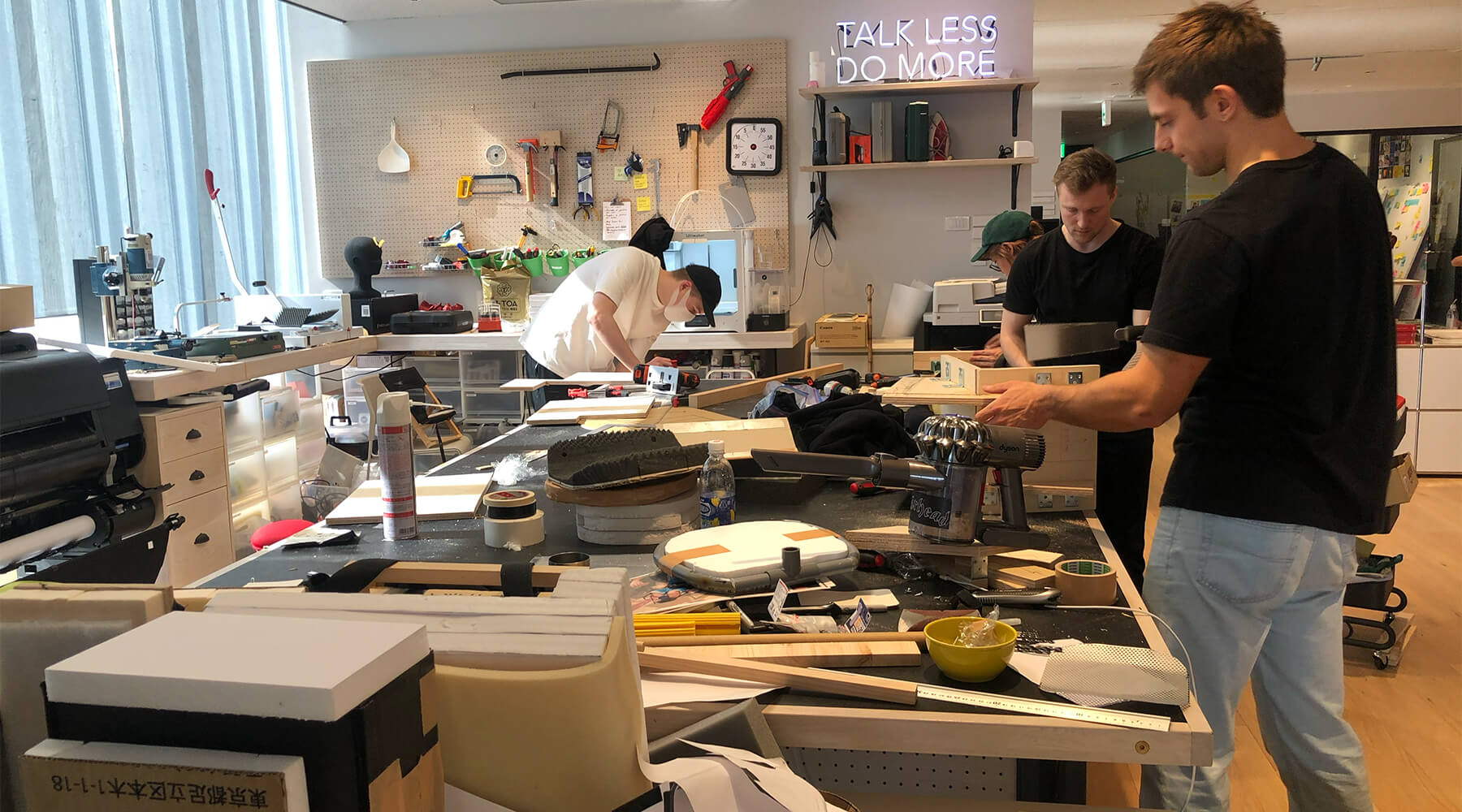
The result: a breakthrough product and supporting business that provides access for all kids, both for at-home activities like studying and eating, and also for family outings to restaurants, to the park, and to play with friends. Around the world, there are people like Matsumoto who see the need for better products in a very personal way. IDEO’s role is to help them realize their vision for a more inclusive future.
The Japanese health ministry categorizes 9.6 million people as disabled.
In Japan, children with disabilities are largely excluded from mainstream classrooms. Government subsidized support chairs are designed for posture and stability. Their bulk and rigidity make venturing out with them challenging.
Japanese children have fewer opportunities to learn about what it’s like to live with a disability than in the US.
Launched
officially in April 2022
5
restaurants and cafés in Tokyo are currently piloting the chair
Serving families first
One organization transforms health care, education, finance, retail, and itself to meet the expectations of the people it serves.
There can be no growth for business if peoples’ basic needs aren’t met.
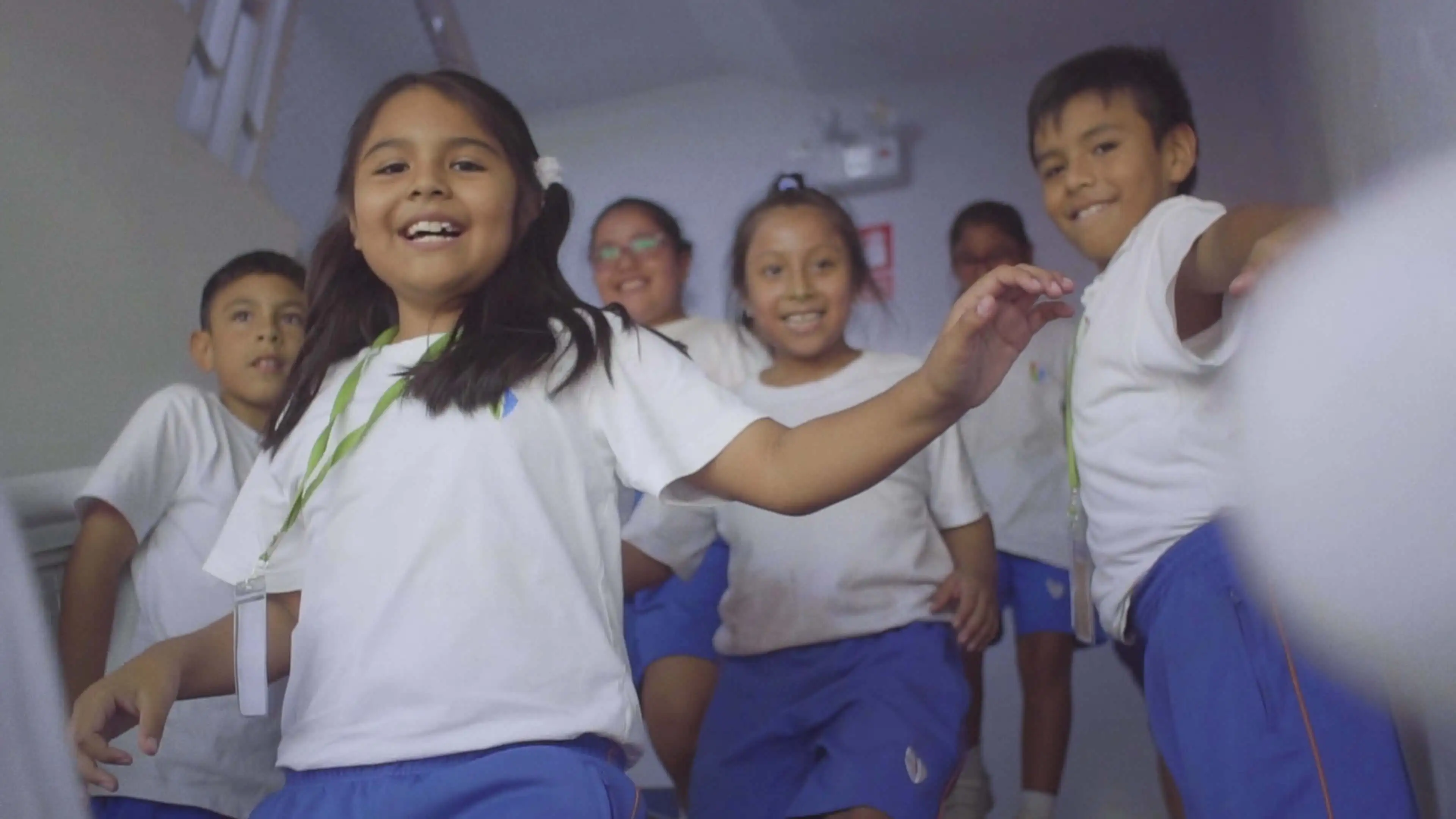
Carlos Rodríguez-Pastor, CEO of Intercorp, came to IDEO with an audacious goal: to address the most fundamental needs of his country’s people and grow his business at the same time. He’d been introduced to IDEO while attending business school in the U.S. and explained that he waited until he had a challenge that felt big enough to knock on our door. Together we built a high-quality school system that would cost just $100 per month—affordable for the middle class. That project convinced Rodríguez-Pastor and his colleagues of the power of human-centered design. Our blended teams launched an innovation hub to introduce new ways of working with the conglomerate’s 90,000 employees. And as we collaborated with Intercorp’s businesses in finance, retail, health care, and education, we learned more about how to serve the everyday needs of Peruvian families. Somewhere along the way, the ultimate design project became the organization itself.
And while Rodríguez-Pastor’s company has grown dramatically, he’s not one to rest on laurels. Instead, the company is becoming more ambitious: upskilling the country’s workforce through an online platform, and fulfilling its climate strategy by investing in Peru’s green economy. (The coastal nation is the world’s third most vulnerable to the effects of climate change.) While the pandemic dealt a blow to Peru’s economy, Intercorp remains steadfast in its commitment to supporting businesses that help the middle class thrive.
Peru’s PISA score of educational quality has grown by 10% in the past decade but still ranks in the bottom 10 worldwide.
In 2020, approximately 68% of the total employed population was in some form of informal employment—jobs that offered no protection and in which workers paid no taxes. Although that percentage decreased over the previous decade, Peru has one of the highest levels of informal employment in Latin America.
55,000
students enrolled across 68 locations in Peru, Mexico, and Colombia
2.5x
increase in revenue from $2.9 billion in 2011 to $8.5 billion in revenue in 2021

10 Resolutions for a Creative, Inclusive New Year
We asked the design community—inside and outside IDEO—for their New Year’s resolutions
Here are just a few of our resolutions for 2018:
1. I want to start using my calendar to evaluate whether or not I’m spending my energy on my priorities. All too often, calendars get hijacked by old habits, process without purpose, and trying to please others. I want to start holding myself accountable. —Scott Belsky, founder of Behance
2. My resolutions this year are the same as they were last year: to use the complexity and swirl in the world as a source of inspiration, not just frustration. To look for light, joy, and optimism. To trust the inherent good in people. To be part of the renaissance that always follows the revolution. I’m keen for design to step up to the plate and take on topics such as inclusion, tolerance, equality, and masculinity. 2018 is a year of making change, not just wishing for it to happen. —Paul Bennett, Chief Creative Officer, IDEO
3. I plan to do more design with my kids. My four-year-old is a self-proclaimed artist who draws in every spare minute; my two-year-old is beginning to spend more than one minute on art at a time. I want get both of them involved in coming up with their own "design challenges" and to surround both of them with the materials and space to get inspired. —Sally Madsen, IDEO
4. One of my goals is to bring new technologies to the forefront of the social impact work we're doing at IDEO.org. With short design sprints, it’s hard to bring new, wild inspiration into the solutions we create, but I'm trying to adopt this perspective as much as possible. For example, I have an idea to use blockchain and mobile money to create a credit-rating system in countries where unbanked people struggle to apply for loans. —Angie Fu, IDEO.org
5. In 2018, I will continue doing "fewer things better." One way that shows up for me is reducing social media. I placed all my social apps in a folder titled "AM/PM" on the last screen of my phone. Unless it's work related, I stick to opening the folder only in the morning or evening. Additionally, I moved the iBooks app to the front screen, so whenever I get the itch to tap, I'll distract myself with a book instead of a blog. —Joe Gebbia, Co-Founder and CPO, Airbnb
6. My New Year’s resolution from four years ago was to post a sketch on my Tumblr for every day of the year, and it’s continued. It’s the only resolution I’ve ever kept. I’m doing it again this year, by hook or crook! —Lisa Brown, illustrator

7. I'm getting close to finishing my fifth sketchbook. I've done 57 full-page illustrations so far! I would love to make it into a coffee table art book through a Kickstarter next year. I also want to get back into 3D work in my free time (woodworking, sculpting, etc.). I find that making things in my free time fuels work in other areas of my life and helps boost and maintain my creative energy. —Felicia Chiao, IDEO
8. I'm working on allowing the entire design process to yield reward, joy, and satisfaction, rather than just the end result. This is necessary when working on major house projects with a finish line dangling from an impossibly long stick that seems too far away to reach. I can spend the next year (or three) wishing it were done, or enjoy the process as much as possible and suffer less. —Sally Sosa, IDEO
9. My New Year's resolution is to focus on women as users of design. The #MeToo movement has shown that women experience so many things in common, but don't have a voice or community of support during difficult professional moments. I care so much about advancing this cause, and yet I realize that in my work as a business designer I almost never think about users’ genders; instead, I think about their physical, emotional, and psychological needs.
I believe women are worthy of being addressed as a user group (with the understanding that there’s a ton of nuance within such a huge population). For 2018, let's look for all the ways women are not seen or heard and give them a better, more equal stage through design. —Kerry O’Connor, IDEO
10. I’ve been making a conscious effort to travel to at least three new cities or countries throughout the year. (This year’s cities: Malaga in Spain, Lisbon and Peniche in Portugal, and Trieste in Italy.) This resolution helps me step out of my comfort zone by removing any bearings I have and forcing me to look at simple things, such as getting around town, eating, and exercising, through the lens of the place I find myself in.
Just sitting in a cafe in the town square gives me interesting insights into a local culture and can easily trigger a new way of thinking about a problem I’m currently mulling over. Don’t just travel—explore. —Irene Novicelli, IDEO
The start of a new year offers us the chance to both reflect on the past and look ahead to a more fulfilling, generous, and hopeful future. What are your aspirations for the next trip around the Sun? We asked our designers and some of their creative friends, including the founders of Behance and Airbnb.

The Tool Every UX Designer Needs
Sometimes digital design is best done by hand
Why?
Modern UX design software is incredibly powerful. We can iterate and refine faster than ever, and conceivably go from wireframes to polish within hours. But it’s also a largely solo experience, and promotes iterative design rather than starting with a clean slate with each new artboard. I come from an industrial design background, where sketching is taught as a professional skill, and I’ve seen this skillset help move designs, teams, and clients forward countless times.
Most of the benefit is in group dynamics—if someone can put pen to paper and make an idea tangible in the moment, the group can have an informed opinion, react, and iterate on the fly. The alternative of hopping on a computer and coming back to the group in five or 20 minute often isn’t appropriate—it’s slower, and not everyone can contribute.
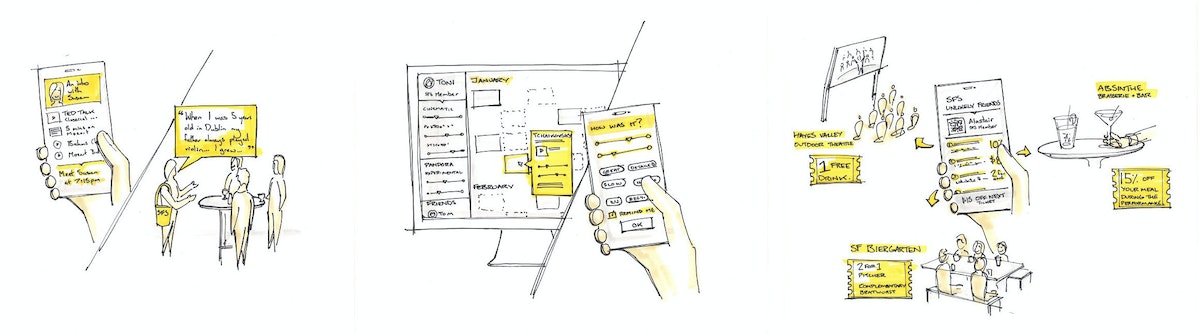
Here are five scenarios where you should skip Sketch in favor of felt-tip markers:
1. When there are too many cooks in the kitchen.
You’re in a group workshop talking through design decisions and the conversation is starting to go around in circles. The first thought that comes to my mind is, Can we create something, so that people can react to it and inform the discussion? That something could be acting out a scenario, or building something physical, but often it’s simply a set of sketches of various options. It’s also a low barrier to entry, so anyone can pitch in or respond.
2. When your users need more guidance.
You’re out in the field and talking to users. You’ve just shown them a prototype and it’s not working for the user. Sketch out another solution and gauge their reaction. (I’m a big believer in designing on-the-fly during research.)
3. When you need to simplify a complex idea.
Your client/team member/boss is explaining a point, and you’re not sure you understand. Sketch it and find out—it’s the visual version of, What I’m hearing you say is… It’s also the literal meaning of getting on the same page.
4. When the experience depends on the context.
If you’re working on an app, it may be used in very specific scenarios. Sketch out a prototype to help your team understand the social context, the surrounding environment, attention demands, and the journey a user might go on.
5. When you're feeling stuck in a rut.
Sometimes the move from screen to paper might be all you need to figure out a new angle or solution. For me the feel of the pen, the smell of the ink, and the looseness of the design helps. It’s fast, it’s free flowing, and it’s time away from the screen, where you can annotate and re-do sections at will. I find doing so together with a team member solves many hard problems.
As designers, it can tempting to reach for the brand-new, shiny, powerful tools. But, sometimes, lo-fi really is the best way to go.
I carry an unlikely tool for an interaction designer: a set of felt tip markers. We all know most UX design today is done in Sketch and a handful of other programs, perhaps with a few Post-It scribbles to kick things off. I’m an avid Sketch user myself. But I won’t be giving up my markers anytime soon—I wouldn’t be as good a designer without them.
Our Top 10 Stories of 2017
The stories our readers loved this year
And while we're at it: The holidays are a time for gratitude, so from the entire Octopus team, a heartfelt thanks for stopping by. We can't wait to bring you more stories about the design of everyday life.
Help us help you! Got a burning question that you'd like an IDEO designer to answer in the new year? Hit me up via email (octopus@ideo.com) or Twitter.
Miss some of the posts on this list? Sign up for our weekly newsletter to stay up to date with The Octopus in 2018.

1. 19 Things We're Dying to Redesign
Call it an occupational hazard: IDEO designers are always thinking about how to make things better. Here are 19 projects we'd love to get our Sharpies on. Read the story!
2. 5 Exercises That Break Down Barriers
Walking into a room full of strangers can be daunting. Try these exercises to move beyond the small talk. Read the story!
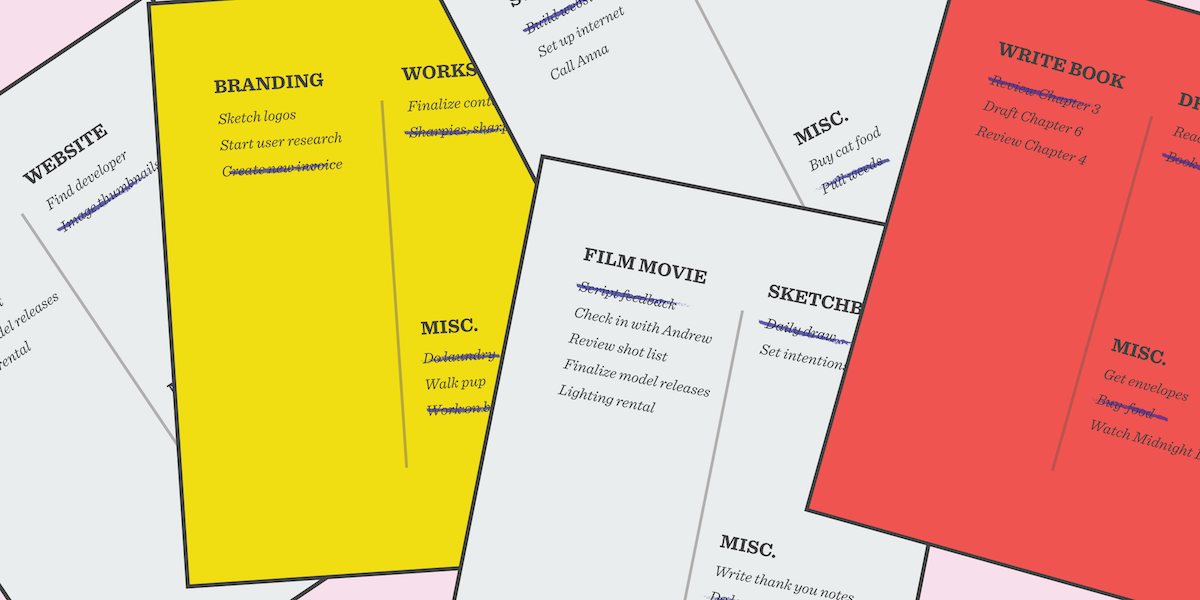
3. 'Sprint' Author Jake Knapp Built You a New To-Do List
For many, to-do lists are a necessary evil. So Jake Knapp, IDEO Fellow and author of Sprint, built a new one that you'll actually want to use. Read the story!
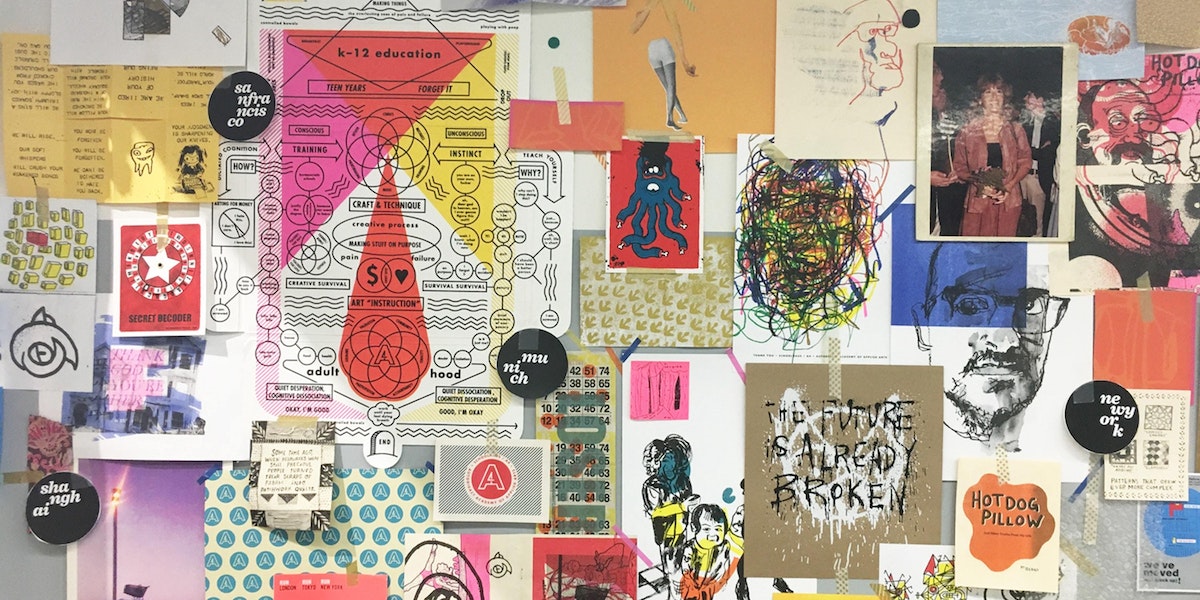
4. 13 Ways to Make Your Workspace More Creative
Businesses are finally catching on: Cubicles are out. But what do we replace them with? IDEO designers share tips to supercharge your space for creativity. Read the story!
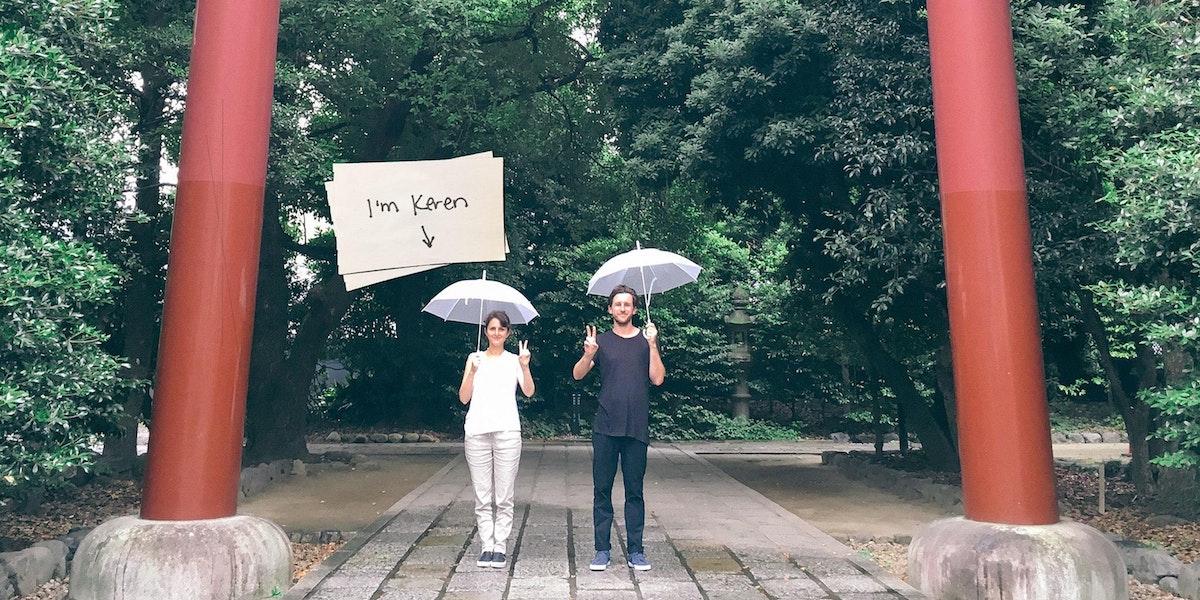
5. A Day in the Life of a Design Researcher
At IDEO, design researchers do more than just ask people questions. Follow one of our own through a day of field research in Tokyo. Read the story!
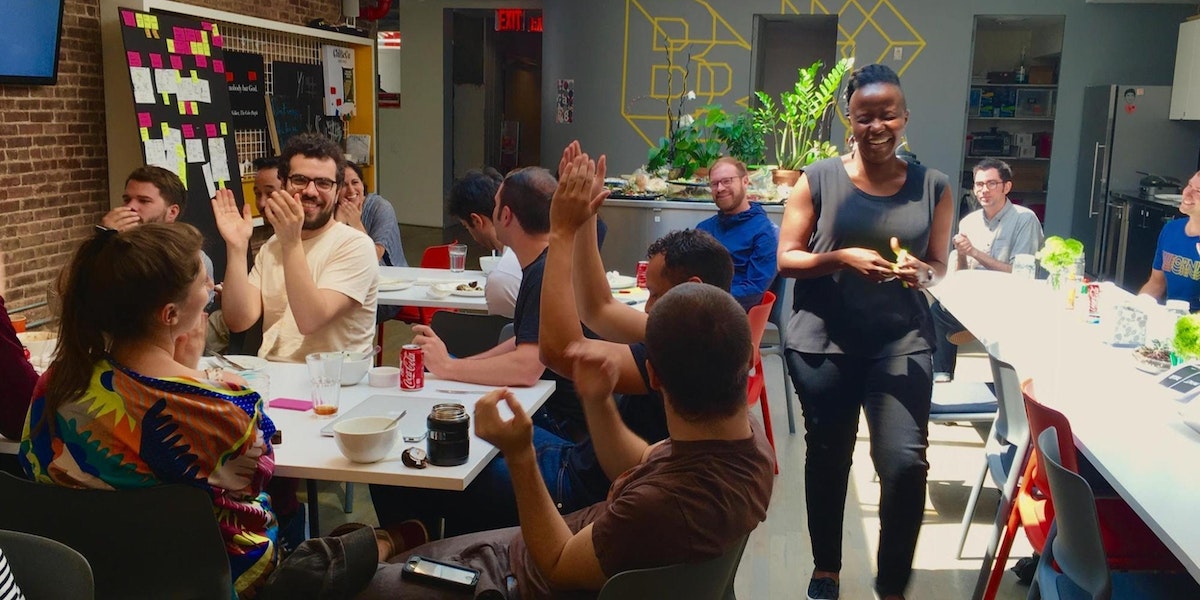
6. How to Design a Meeting That Doesn't Suck
We admit it: Meetings can end up feeling more like black holes in your calendar. But how do you design a meeting that truly inspires? Try these three tips. Read the story!
7. Why You Should Start Prototyping—Right Now
It's never too early to start prototyping. Learn how starting day one of a new project can inspire and excite your team. Read the story!
8. 3 Ways to Make Your OOO More Human
How might we take one of the most automated voices we still offer to the world—the email auto-responder—and make it more human? Read the story!
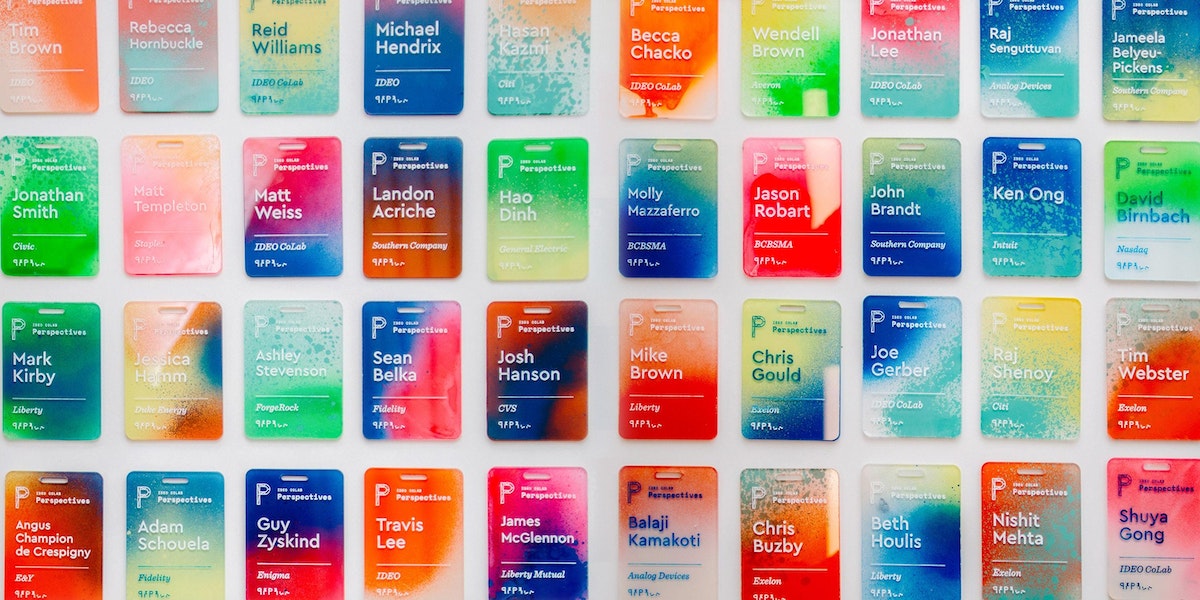
9. Why You Should Keep Making Stuff By Hand
In between tech projects at IDEO CoLab, Jacob Waites likes to turn off the computer and focus on using his hands—and you should, too. Read the story!
10. Smart Things That Will Save the World
Today's products were designed for the industrial era of browsing store aisles. If we want to create a more sustainable future, it's time to rethink that model. Read the story!
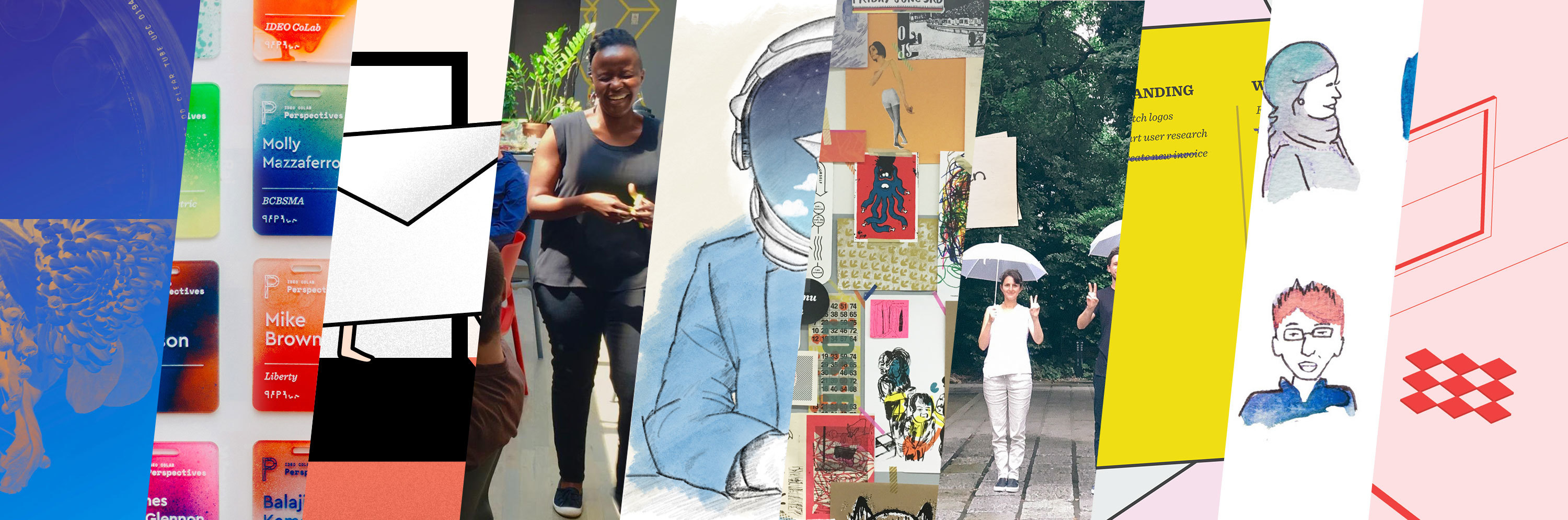
What a year! Inky the Octopus has wrapped her tentacles around some big topics, from creative meetings to sexy typography to blockchain to hip-hop. As we wave goodbye to 2017, we wanted to share Inky's greatest hits—the top 10 stories you read and shared most this year.
8 Ways to Redesign the Workplace
We asked IDEO designers how they’d improve work life
Here are a few of the many ways IDEOers want to help reinvigorate the modern workplace:
1. Increase employee feedback
Research in education shows that the best way to help students grow is to give them constant feedback on their performance. How can professionals be expected to grow if they only get feedback once every three, six, or twelve months?
Research by Harvard psychologist Teresa Amabile shows that a sense of progress at work stokes joy, creativity, and engagement. How could we adjust our meetings, our daily routines, and our cultures to make feedback an everyday activity? How much more trust could we create and conflict could we resolve if we created safe ways to help one another grow? It seems pollyannaish to say it, but I’d love to redesign feedback mechanisms to make us all better at what we do. —Joe Brown, IDEO San Francisco
2. Rebrand maternity leave
I want to redesign maternity leave—the brand, the experience, and the expectations.
Maternity leave is viewed as a pause or a step back in a woman's career, but I experienced it as a time of greater perspective and personal growth. I largely credit my mom, who asked me before my leave, "What are you going to do with your sabbatical?" Rather than correct her, I embraced the idea that this was time for me, too. As a result, I’m coming out of it more energized and inspired to lead, which is better for me and for IDEO. —Ashlea Powell Sommer, IDEO New York

3. Rethink retirement
I'd love to redesign the way the financial system, employers, and society think about retirement. Most of us know that retirement in its traditional, as-seen-in-a-401k-brochure form is either undesirable or unfeasible.
Instead of continuing to think and talk about retirement as a phase of life, what if we thought about retirement and the money we set aside for it as a modality that we dip into and out of as we change careers, take care of loved ones, take time off to travel, or work part-time? Instead of worrying about building up our net worth in order to have enough, we could all focus on something much more enriching—designing creative ways to amplify our net freedom throughout life. —Hailey Brewer, IDEO New York
4. Explode the org chart
Organizations are comprised of relatively mobile individuals with multidimensional capabilities who are responding to constantly changing contexts. But the prevailing “boxes and lines” org charts tell the stories of specialized, formal, and static machines. They really don't reflect the fluid way people work today. Let’s redesign the org chart to represent the modern worker who wants to learn, grow, and flex new muscles. —Mathew Chow, IDEO San Francisco
5. Make company cultures transparent
Company cultures can be opaque from the outside, and yet anybody who has experienced a good vs. mediocre vs. bad culture can tell you that it makes all the difference. How might we help more people understand the cultures of the companies they’re joining?
I’ve resorted to asking for one day to one week with the company, working side-by-side, before making a decision to join, which helps a ton but is not always an option. Trial runs like these can also sometimes be discriminatory; for instance, Harvard Business School used to require all potential professors to spend a year teaching, but found that this policy accidentally discriminated against women, who had more trouble spending a year away from family than men. There must be better ways. —Wendy Lin, IDEO Palo Alto
6. Bring UX design to enterprise tools
The tools that so many people use everyday to get things done are ugly and unfriendly and make them miserable—particularly in B2B settings, where employees have to deal with systems that are outdated, painful, and frustrating. I’ve noticed this in particular during work IDEO has done with diplomats at the Department of State—brilliant minds who have to spend a substantial amount of their time dealing with these tools and figuring out workarounds to trick the software. —David Boardman, IDEO New York
7. Flip sales incentives
We know that when sales is about the push, instead of the pull, it can have disastrous long-term effects on customers, communities, and sometimes the business itself. Too many folks in sales and account management positions work in conditions that encourage transactional, short-term, and business-centric behaviors and outcomes.
How might we move all sales—particularly in industries where there's an information and confidence asymmetry between buyers and sellers—away from a “fee for service” model and toward a “fee for value” setup? —Hailey Brewer, IDEO New York
8. Create 21st-century unions
Fred Wilson of Union Square Ventures recently wrote what I thought was a provocative piece asking, “What is the union of today?” Especially with so many gig economy workers and the rise of freelancing in Gen Z, how do individuals balance the power of the large organizations that pay them?
There are a lot of both positive and negative opinions—all strong and politicized, it seems!—about unions, but I think taking a closer look at the fundamental goal of unions, which is to give labor an equal seat at the table, can open up new opportunities in today’s labor context, maybe with the help of blockchain and other emerging technologies. —Wendy Lin, IDEO Palo Alto
Want to rework the workplace with us? Contact Maggie Howekamp (mhowekamp@ideo.com) at IDEO’s San Francisco studio.
Our dream for the future of work that companies become more flexible, human-centered, and purpose-driven—in other words, better places to work. But rethinking accepted ways of doing business isn’t easy (BTW, we’ve got some help on hand if you’re interested in learning the tools of organizational change). Our designers have a long wish list and some ideas for how to get started: What if we could reframe maternity leave as a time for personal enrichment? Or make navigating enterprise software less miserable?

Lindsey Turner
I’m passionate about building brands, products, and experiences that help organizations show up with meaning and momentum.
I help organizations cut through complexity by shaping how they show up, through brand strategy, identity, and storytelling.
Working at the intersection of brand and business, I bring an editorial eye and a bias toward making—turning ideas into tangible experiences that people can understand, trust, and believe in.
My work spans government, healthcare, financial services, media, and consumer goods, from launching Gen Z-focused ventures to building innovation labs and reimagining legacy brands. I relish moments of ambiguity and enjoy translating across teams, perspectives, and priorities to move ideas forward.
I started my career in editorial and digital design, shaping cross-platform experiences and identity systems in publishing and agency environments. That foundation still shapes how I work today: I’m detail-oriented, collaborative, and overreliant on the Oxford comma. I hold a BFA in Visual Communication from the School of the Art Institute of Chicago.

Rachel Young
My work helps organizations see who their products aren't working for—and build the will and the tools to do something about it
For 25 years, I've asked the same question: Who does this design exclude—and what are we going to do about it?
My work spans human-centered strategy, inclusive design, and qualitative research, with clients ranging from Microsoft, Google, and Verizon to the National Science Foundation, and San Francisco Unified School District.
Before IDEO, I taught elementary school in East Palo Alto and spent a decade doing design work with social service organizations—where I learned firsthand what it costs people when systems are built without them in mind.
I am currently writing User Error, a nonfiction book about digital access and the design decisions behind it. I live in Oakland, California.

Brian Pelsoh
I lead with craft, ensuring our work is creatively excellent: rooted in deep human insight and imagination, while also grounded in the realities of business and technology.
My expertise spans brand, communication, and product design across tech, education, the arts, and social impact.
I believe great work demands both high-level vision and obsessive attention to detail, and only happens through collaboration.
I bring an inclusive, hands-on approach and a deep understanding of business, which enables me to consistently deliver excellence while always asking why.
Before joining IDEO, I worked at the brand firms Pentagram and VSA Partners. I began my career as a designer, leading teams at the School of the Art Institute of Chicago and the Milwaukee Art Museum. I hold an MFA in graphic design from Maryland Institute College of Art and a BFA in communication design from the Milwaukee Institute of Art & Design, and have taught at some of the best design schools in the US.

Tony Wong
I am responsible for IDEO’s long-term success in China and working with clients to use design as a tool to enable growth.
I am responsible for IDEO’s long-term success in China and working with clients to use design as a tool to enable growth. Specifically, I have helped Chinese companies design holistic brand solutions through the development of their products, communication, services, and innovation teams, and I have helped multinationals expand their presence and influence in China.
I advise global leaders on developing China-led innovation and capabilities.
In over 15 years in IDEO Shanghai, I have worked on projects that use design to elevate the quality of the experience of healthcare products and services, streamline processes that increase productivity, create spaces and programs that promote and enable inclusive communities, and build next generation mobility solutions that are planet-positive.
Before joining IDEO, I worked at Philips Electronics and the Electrolux Group in Italy, the Netherlands, and Singapore on a number of breakthrough commercial products. I am a member of the Young President Organization in Shanghai.

Building a personal AI for the messiness of life: Sida Li
Most AI products today are built for work—a space with clear problems and established systems. One founder noticed a gap: personal life is messier, harder to systematize, and mostly left behind by the AI boom. So she built Cue, a personal AI that lives inside iMessage and group chats, to go where the other tools haven't.
In this episode, Becca Carroll, IDEO's Chief Strategy Officer, talks with Sida Li, co-founder and CEO of Shared Context Lab, about staying anchored to a human need while the technology around her keeps changing shape, why she treats her business model with the same rigor she'd bring to a product, and what it feels like to build a company at this particular, disorienting moment in AI.
The conversation also gets into how Sida makes design decisions: the language Cue uses to describe itself, the tradeoffs behind building inside iMessage instead of a new app, and a real story about a business idea that didn’t pan out.
This is the second in a two-part series profiling founders from IDEO's Startups-in-Residence program. The first conversation is with Johannes Seemann, founder of Sooner, on designing GenAI for the emotional side of money.

Designing GenAI for the emotional side of money: Johannes Seemann
Most personal financial tools are built to run the numbers and optimize towards a budget. While that works for some, most people experience money as a lived relationship that does not neatly fit into a spreadsheet. Johannes Seemann and Becca Carroll discuss why money is emotional before it is mathematical, and what a human-centered approach to building a generative AI financial product looks like in practice.

The curious leader's edge in uncertainty: Scott Shigeoka
Mina Seetharaman talks with Scott Shigeoka, author of Seek and Head of Curiosity Cultivation at the Eames Institute, about what distinguishes genuinely curious leadership from performative curiosity, how power dynamics shape curiosity, and why practicing curiosity can restore energy rather than drain it.

How constraints make us more creative: David Epstein
Mina Seetharaman talks with David Epstein, author of Inside the Box and Range, about why total freedom often produces average work, how leaders can design useful limits on purpose, and what organizations such as General Magic and Pixar reveal about the relationship between boundaries and creativity.
Looks like you might be in search of something very specific?
Or reset the filters above and try another angle.
Here’s some random inspiration

Podcasts about creative leadership

Articles about the power of prototyping
