
.svg)



Mental health, co-designed
Kooth partners with young people to create Soluna, a mental health resource for California youth.
Increasingly, digital spaces are proving detrimental to youth mental health. By co-designing with youth, Kooth and IDEO set out to flip the script, creating a positive digital space for young people to safely explore their mental wellbeing.
When Kooth, IDEO, and Blackbird, IDEO’s longtime development partner, first started working on the project, the window of opportunity was narrow, and the stakes were high. The group was up against a nine-week deadline to create a working proof of concept app. Also on the line: a $188 million contract with the Department of Health Care Services (DHCS)—one that would open an entirely new line of business for Kooth.
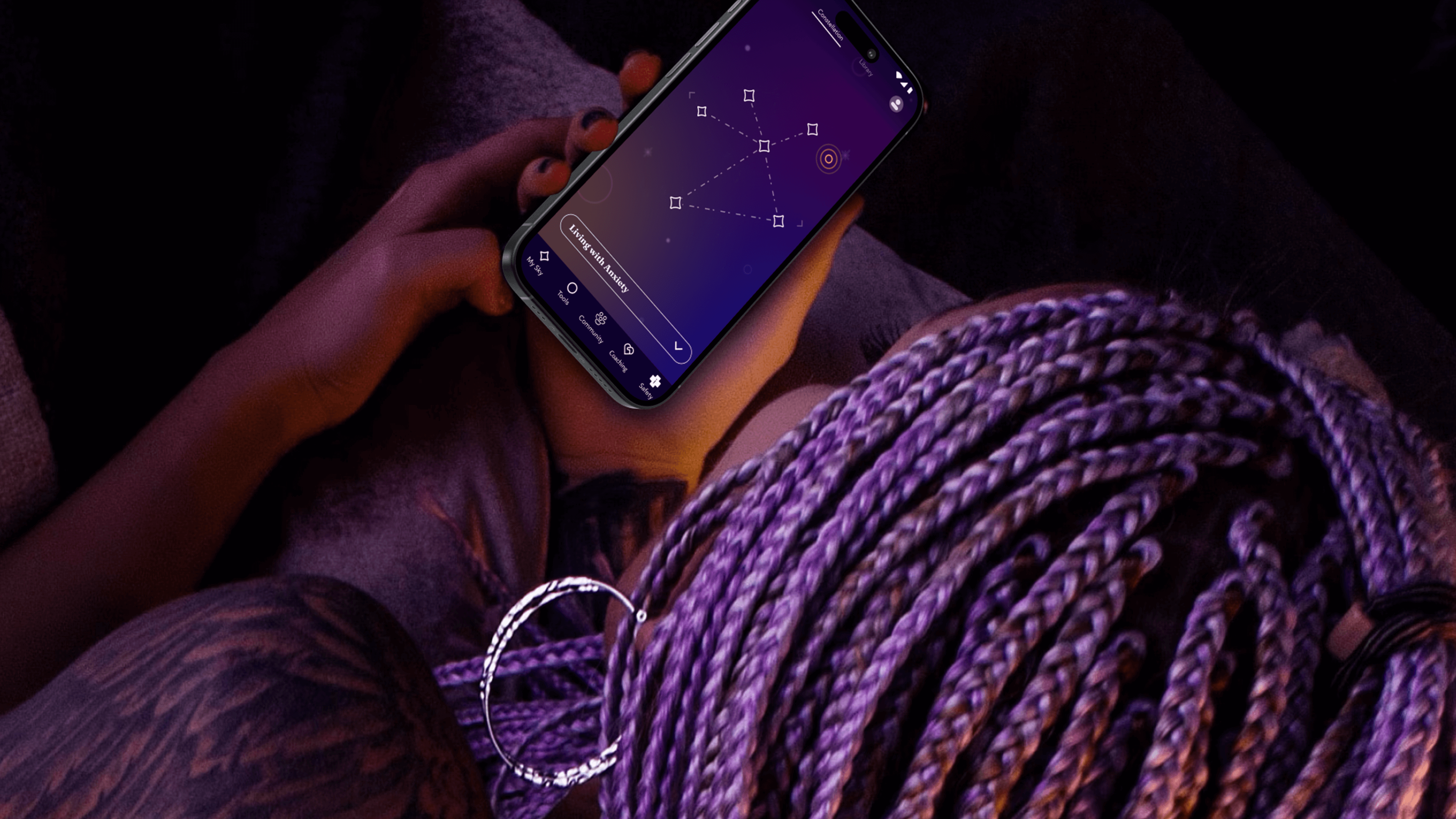
The app needed to do more than demonstrate functionality—it needed to prove its value. To ensure that they were creating an asset that truly fit the needs of young people, the team turned to an initial cohort of 13-25 year-old co-designers who explored early features, created video diaries, and shared their questions about and experiences with mental health. These young people often gravitated toward self-service tools that helped them take action based on their feelings. With their feedback, the team created new expressions of clinically-validated behavioral health tools like journaling, breathwork and white noise—and built novel tools, such as Starboard, an expressive drawing tool and a nod to art therapy.
The team took inspiration from content the co-designers liked to consume, such as story-driven video games that enable freedom of exploration, deepened by a unifying mythology. That led them to a constellation theme, which made the experience more intriguing and playful. The co-designers also recommended a dark color palette, because they preferred exploring the app at night.
With these insights, the team refined the proof of concept, and then conducted a one-week pilot with another 50 young people across California. Their positive feedback gave the State the confidence to invest in a $188 million, four-year contract for Kooth to bring the app to a platform at scale.
Over the next year, the team engaged another 150 young people to help design, shape, and test the app. At the same time, Kooth and IDEO created a clinical oversight group, which included a pediatrician, therapists, and other clinical specialists. This group anchored the platform in the practices of Acceptance and Commitment Therapy (ACT), cultivating psychological flexibility—the mindful acceptance of positive and negative emotions. Young people are invited to complete short reflections and surveys throughout their journey with the app, which includes rigorous, science-backed measurements to assess the therapeutic benefits.
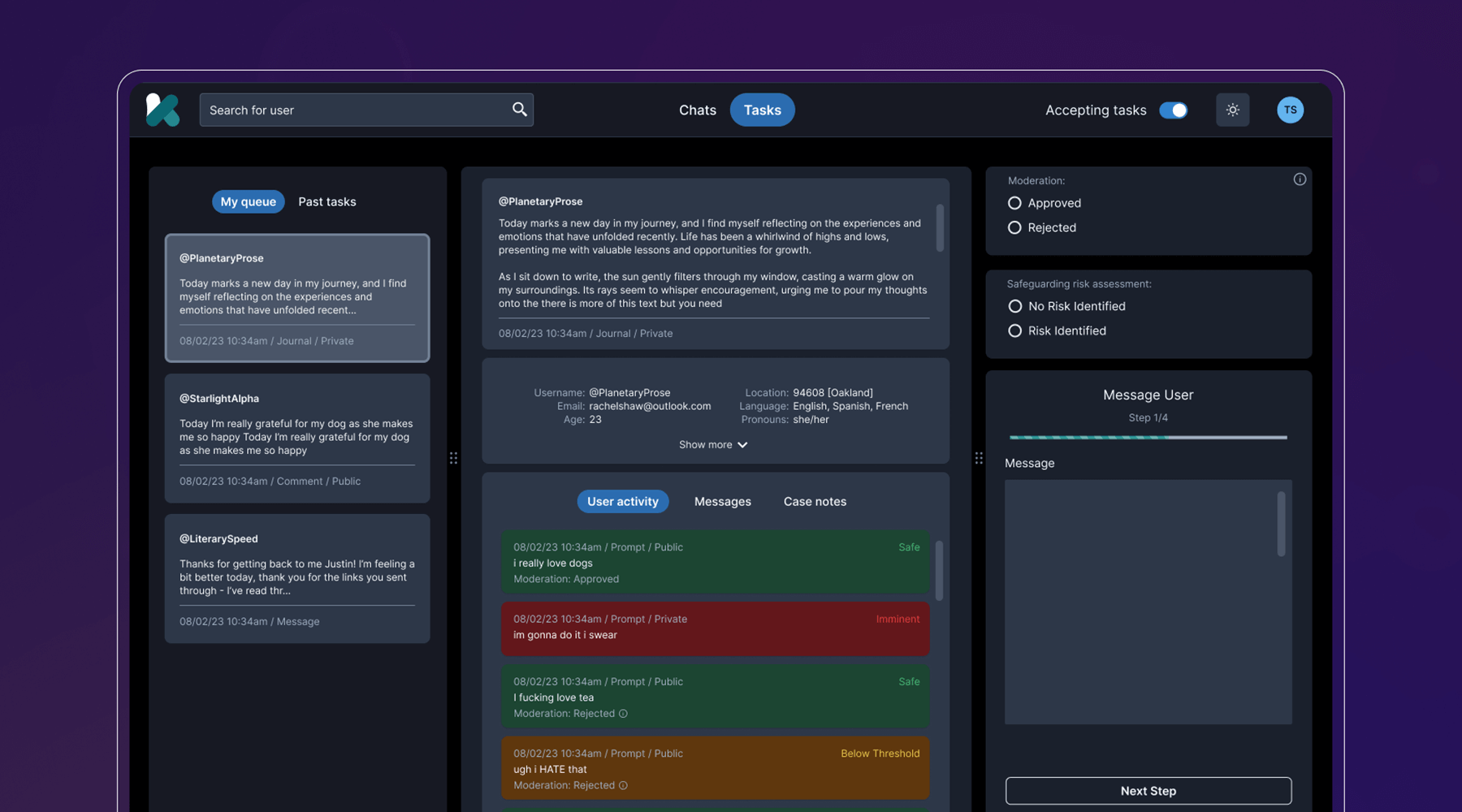
Behind the scenes, the team developed a clinical-facing service and digital platform that empowers Kooth’s peer specialists, social workers, community curators, and clinicians to support the youth experience, all while protecting privacy and confidentiality. They also navigated a complex landscape of state requirements and government legislation, ensuring that the platform could cover topics like substance abuse and gender identity, and that users could access coaching within 24 hours, and choose from a diverse set of experts.
The last step was to select a name that worked across multiple languages, trademarks, and competitor branding, and didn’t come off as a mental health service, something the youth co-designers believed was critical. IDEO and Kooth landed on Soluna, a name that alludes to the app’s presence in both the bright (“sol” for sun) and the dark times (“luna” for moon).
Now, Soluna is available for free to all youth in California, and the state has set ambitious targets for reaching all young people at scale. Soluna is a living platform that will continue to receive product and design updates for years to come, all deeply rooted in youth co-design.
The US Surgeon General named mental health “the defining public health crisis of our time,” and cited social media, online bullying, and the isolation exacerbated by the COVID-19 pandemic as major drivers that have significant negative outcomes for youth.
In California alone, more than 284,000 youth cope with major depression. 66% of kids with depression do not receive treatment. Between 2019-2020, the suicide rate for kids ages 10-18 increased by 20%.
In 2022, California Governor Gavin Newsom’s Master Plan for Kids’ Mental Health set aside $4.6 billion to increase access to mental health and substance abuse support, the largest commitment to youth mental health ever made by a state.
94%
of proof-of-concept app users would recommend the Soluna app to a friend, and believe that engaging with the app would be a positive addition to their daily/weekly routine
6 million
young people in California had access to Soluna at launch in January 2024
A more comfortable Pap smear
Teal Health creates a system for at-home cervical cancer screening.
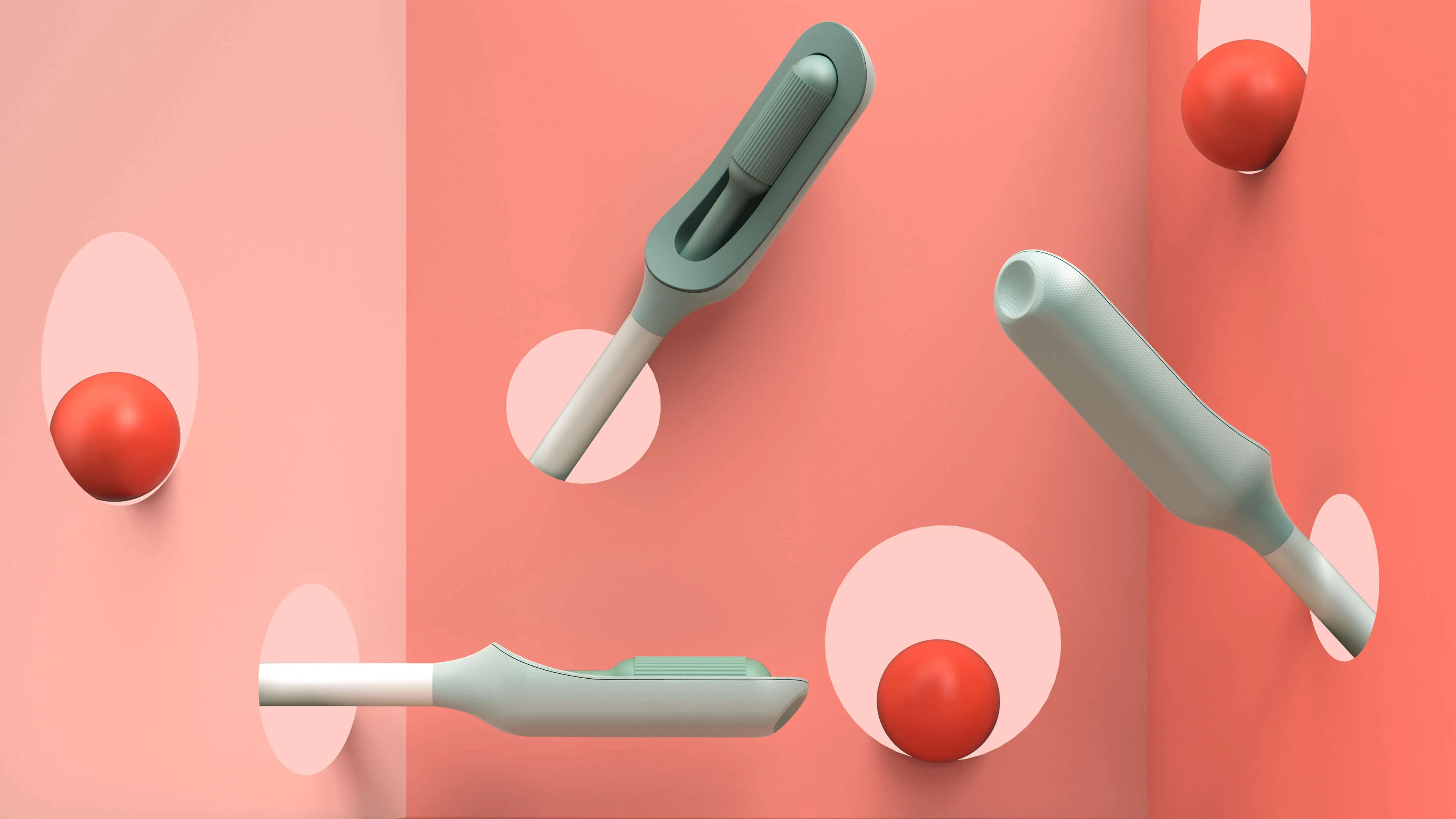
Creating a better cervical cancer screening experience is an important mission, but also a challenging one. Not only would Teal have to address the regulations that face healthcare device companies, it would also need to build a comprehensive telehealth platform and a physical product—a wand that could easily collect an adequate cell sample, even in the hands of an untrained person.
The first challenge was to create the wand. The device would need to do a lot: It’s impossible for a person to see their own cervix, so the user would have to be able to find the cervix blind, collect the sample themselves, and remove the wand from their bodies without contaminating it on other parts of their anatomy. Because this is something users are likely to do in their bathrooms, where there is no space to lie down, they would need to be able to use the device while standing—and with one hand. From the beginning, the IDEO team set out to design functional, testable prototypes to make sure the idea was viable, and incorporate diverse voices into the research process, including trans, minority, and disabled women.
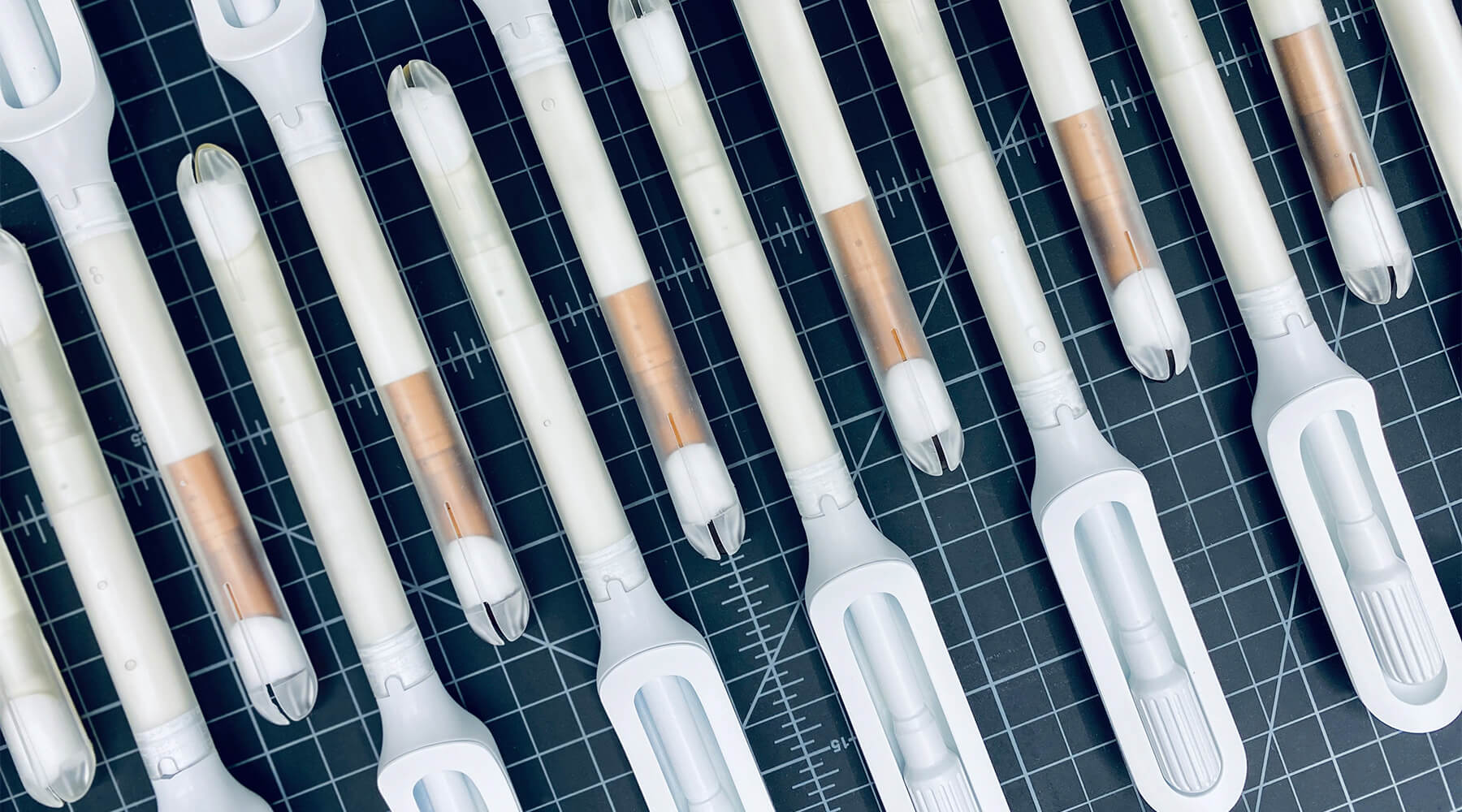
Because the product is meant for people who aren’t medical professionals, the team worked to design something as simple, intuitive, and unintimidating as possible. They used a 3-D printer to create multiples of every prototype, autoclaves to make sure that the designs they were creating were sterile, and leaned into shapes women are already used to, like the cylindrical shape of a tampon. The wand they created has that same basic form, but with a soft sponge that the user can deploy with the turn of a dial to collect the sample, then close to protect it from contamination on the way out of the body.
With working prototypes in hand, Teal set out to test their efficacy. In an initial study with 220 participants varying in age, race, socioeconomic status, and geography, Teal found that not only were participants able to successfully self-collect samples, they also preferred them over the speculum, the device doctors typically use during a screening. Some 92 percent said if they knew the results were equal they would prefer self-collection, while 87 percent reported they would stay current with screening if Teal Wand was an option. Self-collection took the vast majority under two minutes to complete, and 97% of study participants reported it was very easy or easy to use. The Teal Wand recently received a patent for its unique design.
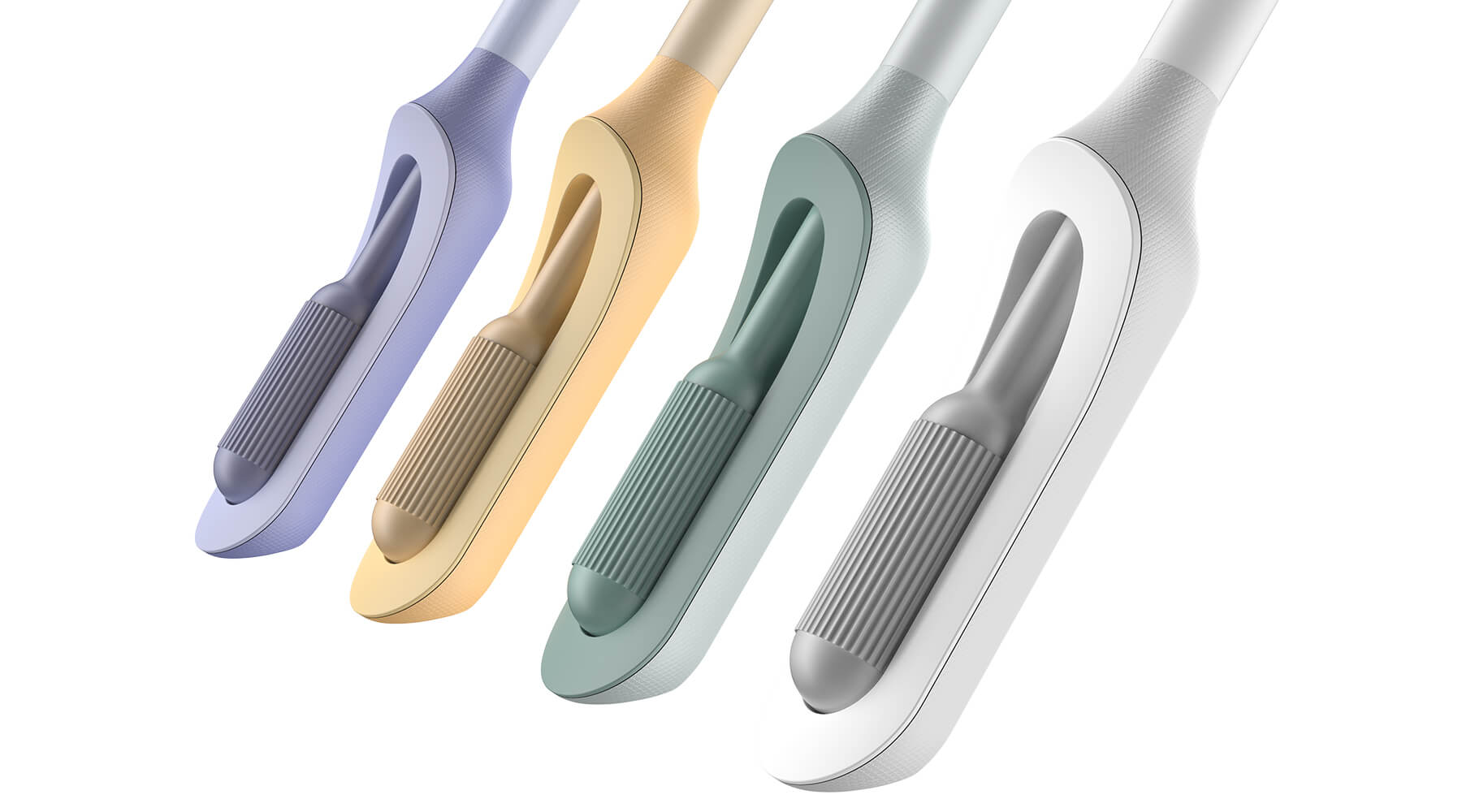
The IDEO team also worked on the packaging and unboxing experience, which plays an important role in supporting the user through the self-screening process. The team built in thoughtful design cues to give users reassurance that they are using the wand correctly, and to provide the same level of confidence they would have in the results of an in-clinic screening.
In January 2023, Teal raised $8.8 million in a seed funding round from Serena Ventures, Emerson Collective, and Metrodora. Later that year, the company launched a nationwide clinical trial with leading health organizations including Johns Hopkins University, Yale University, the University of Colorado, and Washington University, among others. In 2025, the Teal Wand became the first FDA-authorized device for at-home cervical cancer screening, with virtual medical provider support, and became available in all 50 states. Due to soaring consumer demand and increased insurance coverage starting in January 2027, Teal Health secured $22 million in Series A funding to expand access to the Teal Wand. It’s an enormous step toward the company’s North Star: catching cervical cancer earlier and saving lives.
Cervical cancer is nearly 100% preventable when it’s caught early, yet one in four women in the US are not up to date on their screenings.
More than 12,000 people in the US are being diagnosed with cervical cancer every year, and more than 4,000 people die of the disease, which disproportionately impacts Black, Asian, and Hispanic women.
More than half of cervical cancer cases are found in women that are not up-to-date on their screenings.
$22M
raised in a Series A round to expand access to the most accurate FDA-authorized at-home HPV cervical cancer screening
97%
of clinical study participants said the Teal Wand was very easy or easy to use.
87%
of participants said they would be more likely to stay current with screening guidelines if Teal Wand was an option.
94%
of participants said they would choose to collect their own sample from home rather than the current standard of care where a clinician collects it in-office.
Amplifying a movement
Cities United rebrands to create safe, healthy, hopeful communities for Black men and boys.
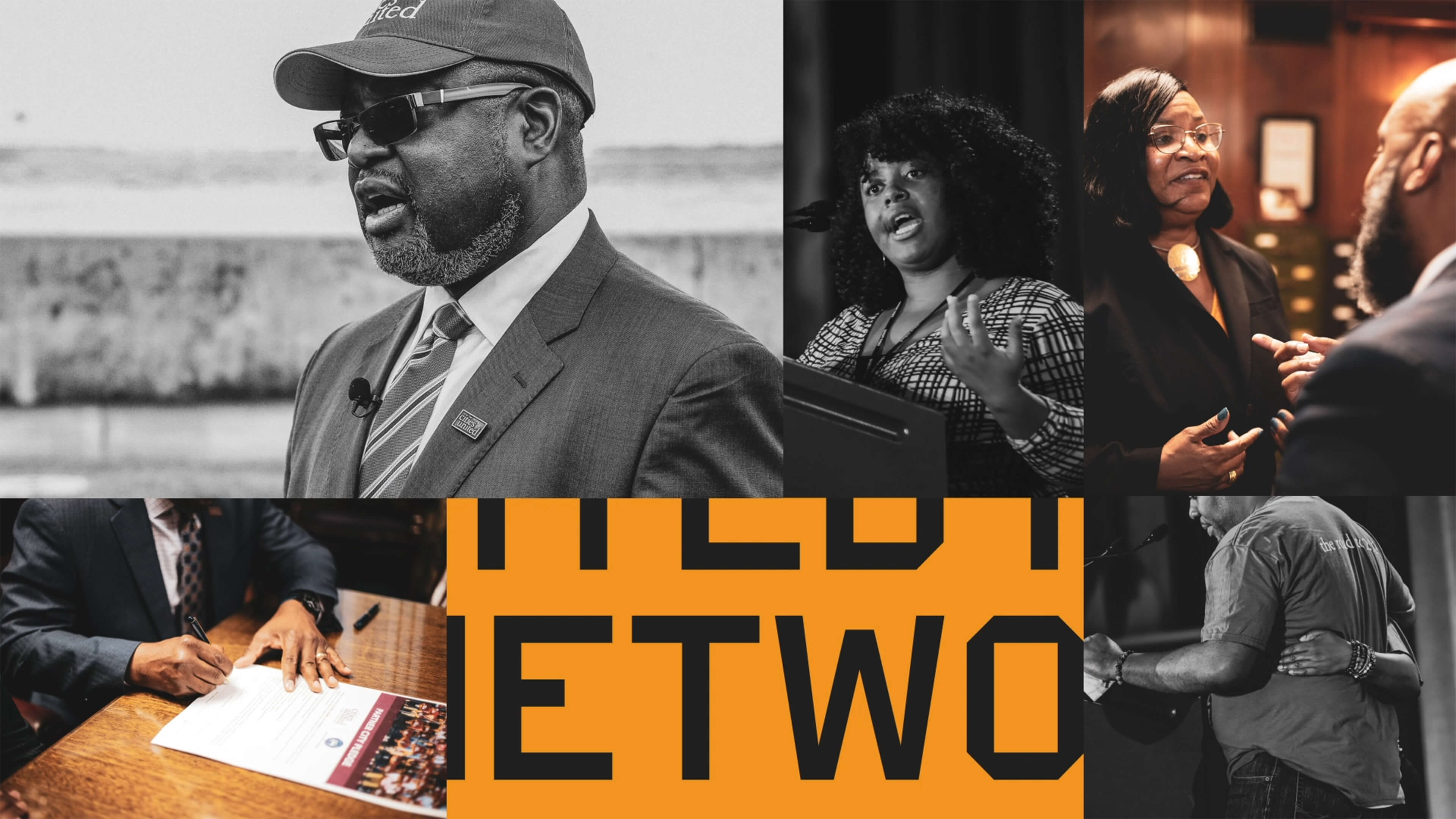
Cities United already had a strong foundation with its stated mission, vision, and values. IDEO brought those to life with a new visual and verbal brand identity system that celebrates Cities United’s inclusive approach to building relationships and reimagining public safety.
To help Cities United with its verbal identity, the IDEO team defined the organization's voice, tone, and key messages, making it easier to tell its story more consistently and clearly, a crucial step toward engaging stakeholders.
To define the new visual identity, the team created a new logo, a letter C composed of interwoven shapes that represent the three tenets of their vision—“safe, happy, and hopeful;” a new design language that references city grids; and a typographic system anchored by the typeface VTC DuBois, inspired by W.E.B. DuBois’s own custom lettering and designed by the Black-owned Vocal Type Co. The team also designed a color palette that embodies the textures of city life with hues reminiscent of asphalt, sunrise, and brick.
To amplify the refreshed branding, the team designed a new responsive website, citiesunited.org. The intuitive site shares the organization’s mission, resources, ongoing projects, and partner network, inviting stakeholders to join in their transformative work. IDEO also created a video to humanize Cities United’s mission and showcase its nationwide impact. It underscores the unity, resilience, and hope embodied by the organization through a chorus of voices.
This comprehensive rebranding widens Cities United’s reach and impact, helping the organization share its goal of creating safe, healthy, hopeful communities for young Black men, boys, and their families, and reintroduces the organization to a national audience.
The Cities United work was supported by IDEO’s Racial Justice Impact Fund, part of a commitment IDEO made in 2020 to address systemic racism and advance equity within our own organization, our client work, and beyond.
Cities United is committed to reducing the epidemic of homicides and shootings among young Black men and boys ages 14-to-24 by 50%.
Between 2009 and 2019, the number of Black children who “did not go to school at least one day in the past month because they felt unsafe at school or on their way to or from school” increased by 84%, according to Cities United.
Homicide is the leading cause of death for Black men and boys from birth to age 44, according to the Centers for Disease Control and Prevention.
2023 SF Design Week Award
In recognition of IDEO’s brand work with Citizens United

Balancing work and sleep
Somni’s personalized sleep program helps workers maintain their health.
Sleep is a critical resource for shift workers—and their employers, too. Together, IDEO and Somni worked directly with people with acute and chronic sleep challenges to create concepts that could support their sleep goals, and provide employers with the means to improve employee health.
When IDEO and Somni first partnered, the startup was an early-stage company, so the team started small, with focused sprints and workshops to redesign the core aspects of the company and product offerings. The team interviewed shift workers about their sleep patterns, which can vary quite a bit. Even when people keep to a specific schedule on work days, they often have to change their patterns on days off to spend time with family and friends, leading to a very disruptive sleep cycle. Research revealed that many third shift workers were dealing with sleep and health issues, but also a pervasive “machismo” culture, pressure to “tough it out,” and a reliance on energy drinks to deal with lack of sleep.
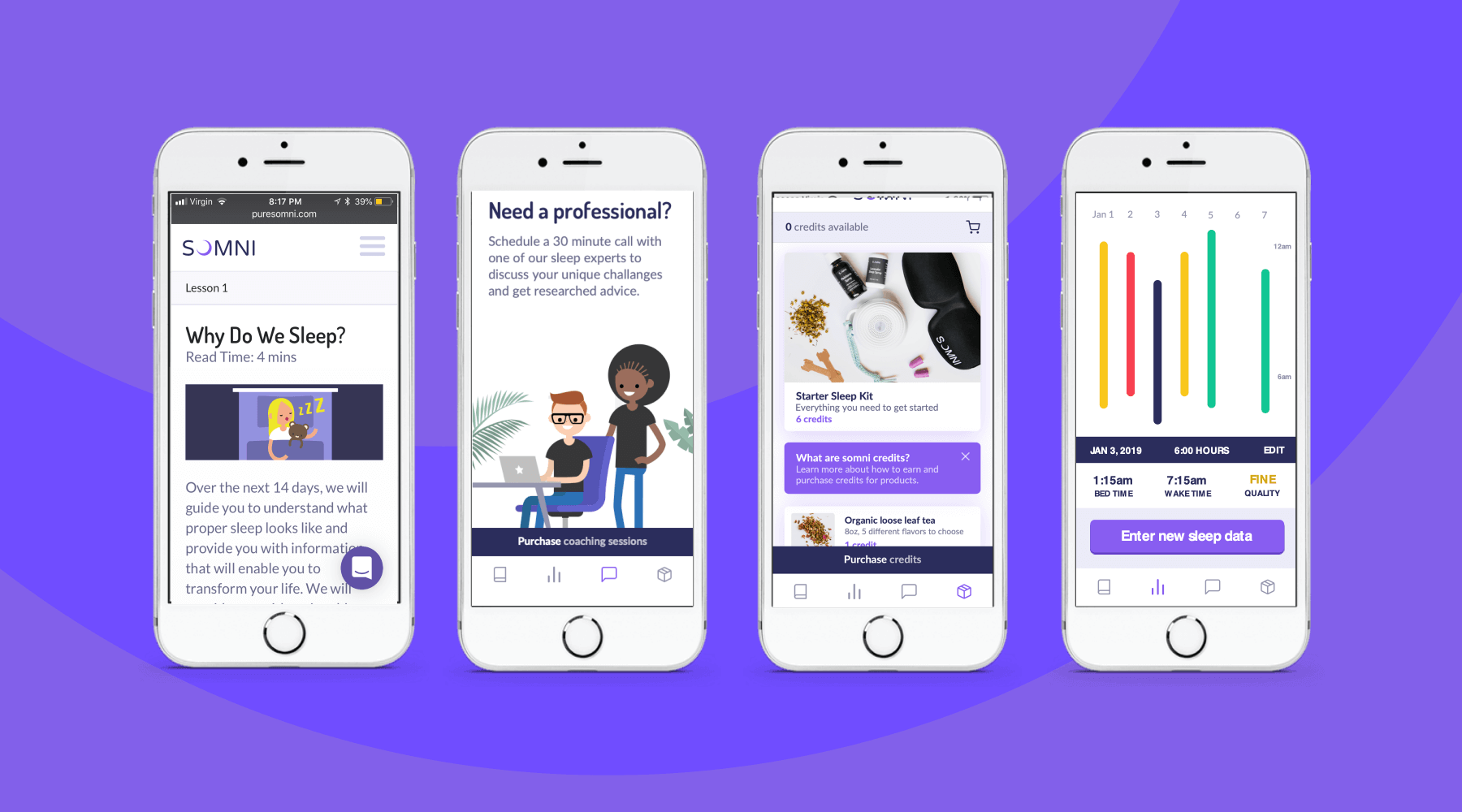
To address those issues, the team designed a digital experience for sleep cohorts, support groups where members could share their experiences and sleep strategies, and work with a coach and sponsor who already had been through the program. The platform analyzed workers’ data, and provided AI-enabled recommendations for improving their sleep. The big takeaway? Data by itself wasn’t necessarily helpful, and could be confusing for folks who were less digitally-fluent. Providing context, like a calendar that displayed sleep experiments at a glance, was crucial.
The IDEO team also created a new user experience for a genetic testing program that could uncover factors associated with sleep issues. Somni aims to use a saliva-based genetic test to monitor for DNA damage caused by circadian disruption, then leverage its sleep improvement program to prevent further damage. Because biomarker testing is a differentiating offer for Somni, it was extremely important that the team get it right, both to make sure that users could understand its utility, and for Somni to provide real value. The design challenge was unique—and not just because of data privacy concerns. Presenting data about DNA damage in a non-human-centered way could increase the anxiety workers had around their sleep.
At the end of the project, Somni leveraged the insights the IDEO team surfaced to improve products like its sleep coaching service, and to refine its biomarker testing offering. Based on this work, Somni has also created a pilot with a Fortune 100 company, which is currently in progress, as it works to mitigate the ill effects of disrupted sleep for employees and the companies they work for.
In the short-term, circadian rhythm disruption leads to an array of jet-lag-like symptoms, and in the long-run, it may contribute to weight gain, obesity, metabolic syndrome, type 2 diabetes, and cardiovascular disease.
It also impairs people’s ability to work, affecting productivity, creativity, and the overall work environment. Productivity loss can lead to employer baseline healthcare costs that are 26% higher, and over time, insomnia can result in an average cost of $4,267 more per employee per year.
In June 2019, the International Agency for Research on Cancer classified shift work as a probable carcinogen.
75%
user retention in Somni's sleep program
$2,450
savings per year per employee for users who complete the program
33%
improvement in sleep quality, and 41 more minutes per night

AI is changing women’s health
Let’s work together to make sure it’s for the better.
For decades, women’s health has been underfunded, overlooked, and too often reduced to reproductive care. Medical research has been built around male bodies, while the complexity of women’s biology and lived experiences has been treated as a problem to simplify rather than an opportunity to understand.
Now, AI could change that. Designed intentionally, AI could unlock new kinds of evidence that close historical data gaps and inform better care. But if we aren’t careful, we could be scaling systems that were never designed for women and build the next generation of healthcare on the same broken foundations as the past.
The stakes are high. The opportunity is massive. This is where design matters most.
Introducing the Women’s Health × AI Exchange
We believe design can help us embrace AI’s healthcare possibilities while recognizing and mitigating its risks. And we believe the most promising futures are shaped collaboratively, by bringing different perspectives into conversation and making those possibilities tangible.
That’s why we’ve launched the Women’s Health * AI Exchange, an open, design-led exploration of one important question: How might AI meaningfully transform women’s health, and what would it take to ensure that it does?
To frame this exploration, we crafted six provocations about possible futures at the intersection of women’s health and AI. Futures where AI could:
- Reframe women’s biological complexity from a healthcare liability to a scientific asset and create new pathways for better care.
- Transform the relationship between healthcare professionals and patients, translating qualitative data into clinically actionable evidence.
- Connect the dots across a woman’s health journey to enable more proactive, preventive, and life-stage-specific care.
- Drive innovation in women’s longevity, helping researchers understand what most influences how women age.
- Flip the economics of clinical research, incentivizing exploration at the deprioritized edges and intersections.
- Put data back in women’s hands to help them find their own insights around issues where institutional research has not been prioritized.
Imagining what AI could do is only half the work. We also need to consider the shifts required to make these futures possible. And so, each of these provocations ends with the same challenge: What would it take to make them real?
We’re inviting you into this conversation to help us collectively sharpen a point of view and co-design a landscape of opportunities. Here’s how to join.
Go to the Women’s Health x AI Exchange and choose a provocation that resonates with you. An AI facilitator will ask thoughtful follow-up questions to help you frame your point of view and articulate what you believe needs to change. Your thoughts will be posted anonymously. As more people participate, their contributions will help reveal where perspectives align, where tensions remain, and what new opportunities are emerging.

Turning tension into possibility
This conversation is just the beginning. We’ll synthesize themes and share emergent opportunities. We’ll bring together people across healthcare, research, technology, investment, and design to help us prioritize opportunities for further exploration. And we’ll translate the most compelling ideas into tangible prototypes that help people see, experience, and shape what desirable, viable, feasible, and responsible AI-enabled healthcare could look like.
We’re approaching this as an investigation in motion, not a finished thesis. Our intention is to work openly so the perspectives, provocations, and possibilities we generate can inspire and inform the people already working to move women’s health forward.
And while women’s health is at the center of this exploration, the conversation we want to have is even bigger. It is a conversation about the future of healthcare data and power. A conversation about how AI might help close the gaps that decades of underfunding have left behind, and what we can all do to ensure it does.
Whether you’re a clinician, researcher, technologist, entrepreneur, investor, designer, or simply someone who cares about the future of healthcare, we invite you to help us reimagine what healthcare could be, for everyone.
Explore the Women’s Health * AI Exchange and add your perspective.
AI is transforming healthcare at a remarkable pace. But our understanding of women’s health has a lot of catching up to do.
Patient expectations are evolving faster than ever
Four ways pharma companies can adapt as GLP-1s reshape experiences.
During a recent meeting with a pharma client, we played a YouTube video of GLP-1 users that left the team slack-jawed. Sitting around a conference table, they watched people crack open an auto-injector and pour the contents into a vial so they could titrate out a more precise dose of the drug themselves. They heard several patients admit to using a family member’s prescription because they didn’t have their own. Others lamented that they weren’t in range for their preferred direct-to-consumer delivery platform. The realization was stark: patients knew what they wanted from their GLP-1s, and if the manufacturer didn’t provide it, they would find a way to make it themselves. In that moment, this particular pharma company understood it was not at all prepared for a future where patient expectations would remake the drug market.
The introduction of Ozempic and new access models for GLP-1s like Lilly Direct and Hims & Hers have fundamentally shifted the pharmaceutical industry in the last five years, unleashing more self-directed therapy journeys and a new kind of healthcare consumer. Patient expectations about what pharma companies can do—and the experiences available to them in a healthcare setting—have been completely rewritten. This revolution is making traditional pharma commercialization processes that push patients and providers through a few preferred channels a thing of the past. Especially as consumer-facing startups come for their market share—and create an even larger pie.
If pharma companies are going to meet this new wave of consumer expectations for everything from GLP-1s to hair loss and erectile dysfunction medicines, supplements to fertility drugs, they need to prioritize designing exceptional experiences that come along with their therapies. That requires building an entirely new set of skills and behaviors that can support product pipelines. Here are four crucial steps to get there.
1. Uncover the needs patients want pharmaceuticals to meet
Pharma companies need to do research with real patients to get a clear view of the full therapy journey—from diagnosis to long-term use. In that process, they can identify the highest-risk moments, like confusion over instructions, frustration over delivery methods, and potential misuse, and prioritize opportunities to improve real-world adoption and adherence.
Lilly understood this early on. In the 1990s and early 2000s, the pharma company had several new, life-changing medications and two big challenges: Its primary drug—insulin—had to be self-injected, which patients were hesitant to do. And its drug-delivery device platform lagged behind the needs of insulin users.
Lilly approached us to design the next-generation auto-injector platform. Early in the partnership, a team of IDEO designers and Lilly leaders met with diabetes patients around the globe to better understand how they lived with the disease. They quickly realized there was a need for a device that met the needs of a broad range of dexterity-challenged and injection site-specific patient populations (including rheumatoid arthritis and psoriasis patients). As the development of multiple candidate molecules was still underway, the team focused on creating an injection experience that would work for these more challenging patient populations, knowing that a design that worked for them would also deliver a better experience for a broader swath of future users.
While we carefully considered every feature of the autoinjector itself (from grippy labels and a stable, twist-off base to large, clear unlock tabs and injection buttons), we also designed packaging that fit in a standard-sized refrigerator, created a set of highly visual instructions, and took into account the involvement and support of family members and caregivers.
Fast forward to 2026, and Lilly is still leveraging the design we made together to not only support pre-diabetes treatments like Trulicity, but also psoriasis therapies like Taltz, migraine therapies like Emgaility, and GLP-1 molecules like Mounjaro and Zepbound. The latter accounted for the majority of the company’s annual revenue in 2025. Taking the time to create a comprehensive drug delivery experience has yielded an invaluable delivery toolkit that Lilly and the patients they serve still benefit from today.
2. Design the experience around the therapy
As more and more pharma companies create consumer-style experiences, it’s crucial they build services and tools that support onboarding, adherence, and ongoing use. Standing out is no longer just about drug efficacy. It’s about how well patients with all kinds of needs and circumstances can access and adhere to the therapy—and how well pharma companies can deliver against their competitors.
When Sanofi launched Beyfortus, the first-ever RSV immunization for newborns, in 2024, it was a milestone in the fight against the virus, which had resulted in the death of 445,000 babies worldwide in 2019 alone. But the company knew that growing anti-vaccine sentiment might prevent parents from giving their children the potentially life-saving immunization.
Together, we conducted research with parents, caregivers, healthcare professionals, and healthcare administrators in Germany, Spain, China, and the US to identify barriers to adoption across cultures. The team quickly discovered that no single approach would work across Sanofi’s 20-plus international markets. Training for medical professionals needed to be flexible and customizable. They also discovered that discussing immunizations right after a baby was born was too stressful for new parents.
Ultimately, the team created an accessible global communication toolkit with straightforward language, metaphors, and illustrations to support informed conversations between providers and parents before and after a child is born. Then they held a series of market-fit co-design workshops to make the tools more resonant with regional customers and ensure compliance with local regulations.
In its first year on the market, Beyfortus became a $1.8 billion therapy, and more than six million babies have been immunized.
With a growing funnel of information about drugs, therapies, and even supplements, pharma companies must cut through the noise to support patient understanding and adherence.
3. Define how you show up beyond the drug
To have an even greater impact on patient outcomes, pharmaceutical companies should explore new roles, partnerships, and models. That could mean creating new offerings that combine a given therapy with support and services, building partnerships with payers, employers, or platforms to extend reach, or creating models that tie therapies to long-term outcomes and value.
Japanese pharmaceutical company Otsuka is perhaps one of the most diversified pharma organizations in the industry, focusing on above-molecule interventions including companion diagnostics, digital technologies, and other tools that enhance the effectiveness of chemical or biological treatments. With a business that spans traditional drug development and manufacturing, digital solutions, and even consumer products such as Pocari Sweat, an electrolyte drink, Otsuka has bet that diversity and go-to-market pathways will lead to better experiences for patients. Not to mention these touchpoints also provide deep insights into the needs of the people Otsuka serves.
In 2018, Otsuka joined forces with Click Therapeutics to develop digital health services to accompany one of its leading medications, aripiprazole. The antipsychotic is used to treat schizophrenia, bipolar disorder, and major depressive disorder (MDD). By 2024, the company had developed an app featuring activities aimed at treating MDD. The partners chose a challenging but potentially impactful area for their pilot program: four primary care sites within the National Health Service (NHS) in the UK with a high caseload of MDD patients, where a digital solution combined with antidepressants could significantly reduce the burden on these sites.
Depression is widespread across the UK, and the treatment demands on the NHS are considerable. However, the system lacks the resources to provide every patient with the necessary services to treat their conditions. This digital companion to antidepressant medication aims to improve treatment effectiveness, and if the pilot is successful, it could significantly ease strain on the NHS while helping patients achieve better outcomes.
4. Create a human-centered R&D pipeline
Creating more human-centered packaging or instructions to help people better understand a drug is an effective step forward, but exploring new internal capabilities that make your innovation pipeline more future-fit and human-centered can be transformative.
That work can take many forms: building a beacon project that upskills product and team leadership on methods to better understand the decisions consumers are making today and in the future, introducing futures-thinking to help your team look beyond the next five years, or reinforcing purpose and culture to empower employees to make patient-centered decisions.
In 2020, as Moderna raced to deliver a COVID-19 vaccine during the pandemic, the company needed to grow exponentially—and rapidly. However, by hiring employees from traditional pharma giants, it risked losing the unique entrepreneurial culture that made it successful in the first place—one that embraced speed and accepted risk. This shift could have limited its future ambitions of developing breakthrough products to combat other viruses and diseases, and even cancer.
Together, we worked to codify the company’s culture and values into a set of Mindsets that would empower employees to move quickly, evaluate risk, and make the right decisions. The team met with Moderna veterans to gather stories about key cultural moments, like when a crucial piece of equipment didn’t fit in the door, and employees knocked down the wall to keep vaccine production moving. Insights from these stories became Mindsets, like “Act with urgency: Action today compounds the lives saved tomorrow” and “We behave like owners: The solutions we’re building go beyond any job description,” that were then tested with new hires, employee resource groups, and others across the company.
The Mindsets were more than a tagline: they set the stage for continued progress and future breakthroughs. Today, Moderna is working with Merck on a cancer vaccine that just completed a successful Phase 3 clinical trial.
This sea change in consumer expectations for medicines and therapies can feel disorienting for traditional pharma companies—but it also offers enormous opportunities for those that think outside tried-and-true drug delivery channels and embrace human-centered design. By truly understanding patient needs, finding new and inventive ways to support them, and building the capabilities to empower your people to create a human-centered R&D pipeline, organizations can distinguish themselves in the market. These behaviors can not only drive the market, but more importantly, radically improve patient outcomes.
“This sea change in consumer expectations for medicines and therapies can feel disorienting for traditional pharma companies—but it also offers enormous opportunities for those that think outside tried-and-true drug delivery channels and embrace human-centered design."
What real insights feel like, and other notes from a design legend
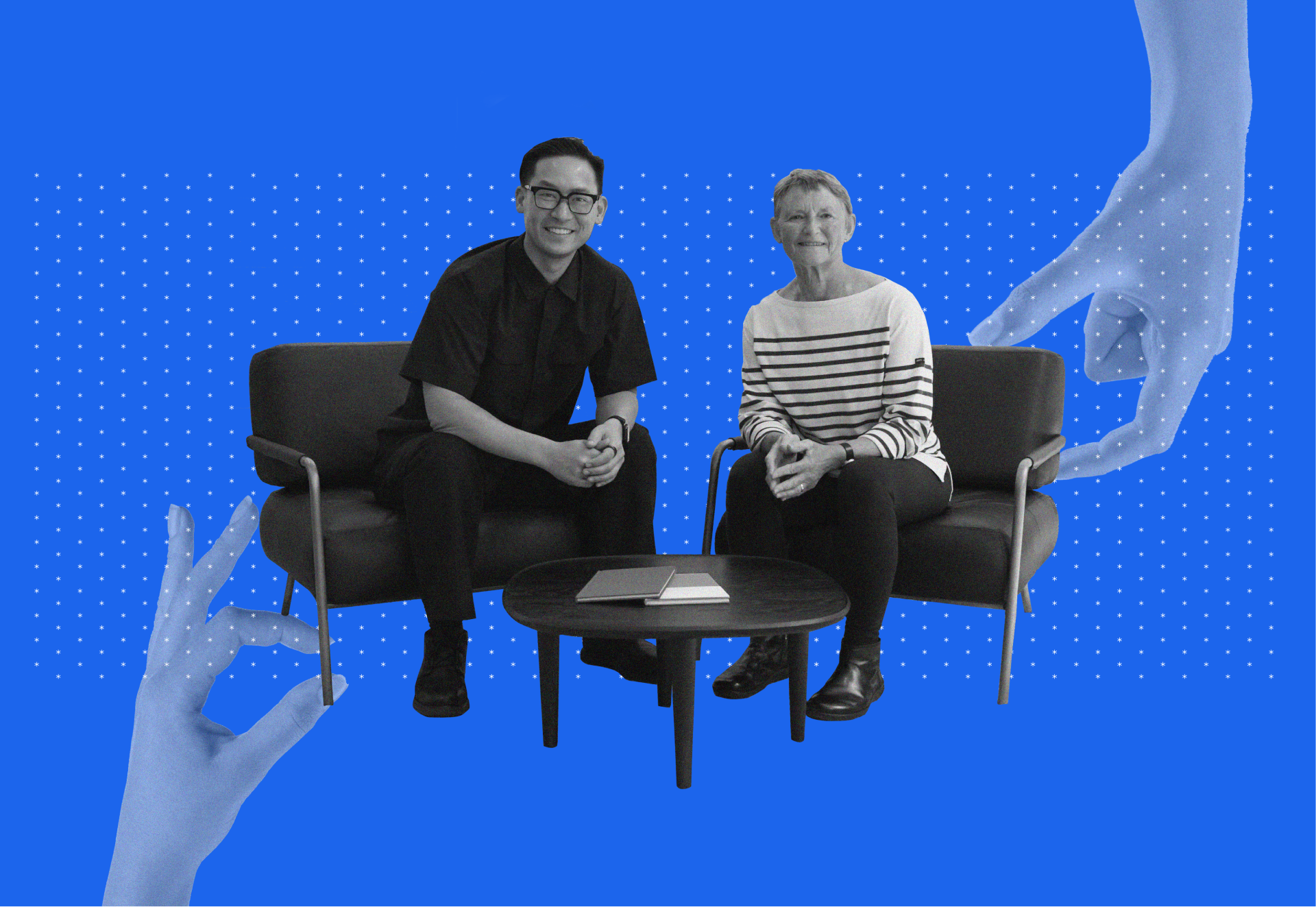
A Q&A between CEO Mike Peng and Jane Fulton Suri, former CCO.
A pioneer of human-centered design at IDEO, Jane Fulton Suri joined one of IDEO's predecessor firms, ID Two, in 1987. With a background in psychology and architecture, she gained early experience as a researcher at the renowned former Institute for Consumer Ergonomics at Loughborough University of Technology. At ID Two, and later at IDEO, Suri introduced social science principles to the design industry, which had not yet fully embraced them. Her contributions would go on to reshape the field.
Suri’s influential 2005 book, Thoughtless Acts?: Observations on Intuitive Design, features a collection of snapshots that highlight the subtle, instinctual ways people interact with the everyday world. It’s a love letter to observation as a design discipline with real-world impact. Her work in human factors at IDEO has influenced products people use every day, from rubber grips on Oral-B toothbrushes to redesigned Evenflo strollers. In recent years, she’s expanded her focus beyond human-centered design to explore how patterns found in nature and living systems can inspire more sustainable solutions—what she calls life-centered design.
Now a Partner Emerita, we were so glad to welcome Jane back to IDEO earlier this year for a conversation with our design community.
Mike Peng (MP): If you don’t mind, Jane, tell us about your origin story and how you came to IDEO.
Jane Fulton Suri (JFS): I started out in psychology because I was really interested in people. And then I got really interested in people in the everyday world. I brought that mindset into design: Let’s get out there and see what people really do.
I found myself working with manufacturers to help them understand why people didn’t do what they expected them to with power tools, motorcycles, and other dangerous things. A lot of my work was mitigating disaster. And I thought, this is crazy. Why aren’t these conversations happening while things are being designed? Problems are easier to remedy at the design stage than when they’re on the market.
Then I met Bill Moggridge, one of IDEO’s three cofounders, because a friend of mine was his client. He was a myth and a legend. After our conversation, he asked me, “What do you want to do now?” And I said, “I’d like you to offer me a job!”—which was very, very uncharacteristic of me. I had no clue what I was getting into.
I quickly realized I needed to understand what my teammates were doing and value that, then add ideas about going out, meeting people, and watching what they do.
So instead of having the answer, I realized the point was about discovering together how to make the design brief better. That became the practice—getting away from the desk. And now that means teams getting away from their screens and going into the world together.
MP: Now user research and ethnography are common practice in design. What were the early days like?
JFS: When we started out, we had no budget for anything I wanted to do. I had to convince my colleagues it would be exciting and interesting, and that we’d have good stories to tell our clients. Then it became a bit of a sales story about why it might take an extra week or two, or even a month, to do the project.
What we were doing was more like exploration; we didn’t know what we'd find, and afterward, we would probably want to do something different from what we’d promised when we wrote our proposal.
MP: If you had to sum up a few of your most memorable projects while you were at IDEO, what are some of the ones that really stood out to you?
JFS: Early on, Supercuts invited us to bid on an innovation-focused job. At the time, we were essentially a product design company. David Kelley, Tom Kelley, and others weren’t sure what we might do for a company like Supercuts.
So with one of the other early human factors researchers, we went out and got haircuts. Then we went around the city just looking at different hair stylists’ establishments. We started putting together a story of how customers make decisions from the moment they think about wanting a haircut to deciding where to go, making their first appointment, then all the behaviors that follow, like primping a bit before you leave the shop.
We had a lot of fun engineering this great crazy clipper. But I always believed our best ideas were these little moments throughout the experience, like getting a cape that made you look good, or a mirror that said “Supercuts” so you’d remember where you were. That was our first customer journey map.
MP: Are there other memorable moments that really stick out to you?
JFS: One of the most moving ones for me was at IDEO Chicago, years and years and years ago, when colleagues of mine were working on the LifePort Kidney Transporter. The project was all about how precious a kidney is. The team described their experience in the operating theater, seeing the surgeon take this living element and cup it so gently, like a baby bird, as he transferred it to where he needed to place it. That recalibrated the team’s thinking about designing the carrying system, because we’d just been thinking about it functionally and mechanically. But it also let them tap into what it really means to design for a living passenger.
MP: Let’s dive into the craft of design research. How do you know when a research insight is truly great?
JFS: Insight, for me, is a change of state in our understanding. There's an epiphany of sorts, a new recognition. You get an insight by being a sensory human being, observant and absorbent through all your senses…and then discovering you are excited about something new. Design and innovation take a lot of personal energy. That human emotion has to come from you.
And that’s what happens when clients get really drawn into ideas, too—they feel you’re changing the way they see things.
MP: What fundamentals do we need to continue to embrace to do research well?
JFS: Nothing beats being an aware, sensory human being who is curious about other people, places, and things. Research doesn’t have to be expensive. Even a conversation with one interesting person, or exposure to an unfamiliar place, will do.
Sometimes we're reluctant to put something in front of the client that we think is a really cool idea, but nobody has said they wanted it. Perhaps the research didn’t show that it was a really good idea yet. But sometimes we have to have conviction about our own perspectives and the confidence to share innovative ideas, even without hard evidence. I’ve always felt that.
MP: One of the most important phases of IDEO’s design-thinking process is synthesis—taking the messy materials we’ve gathered during research and making sense of them. How do you approach synthesis?
JFS: I once wrote a piece about how what happens in the design process isn't the same as how we formally describe it. One story stands out. I call it “the black shoes.”
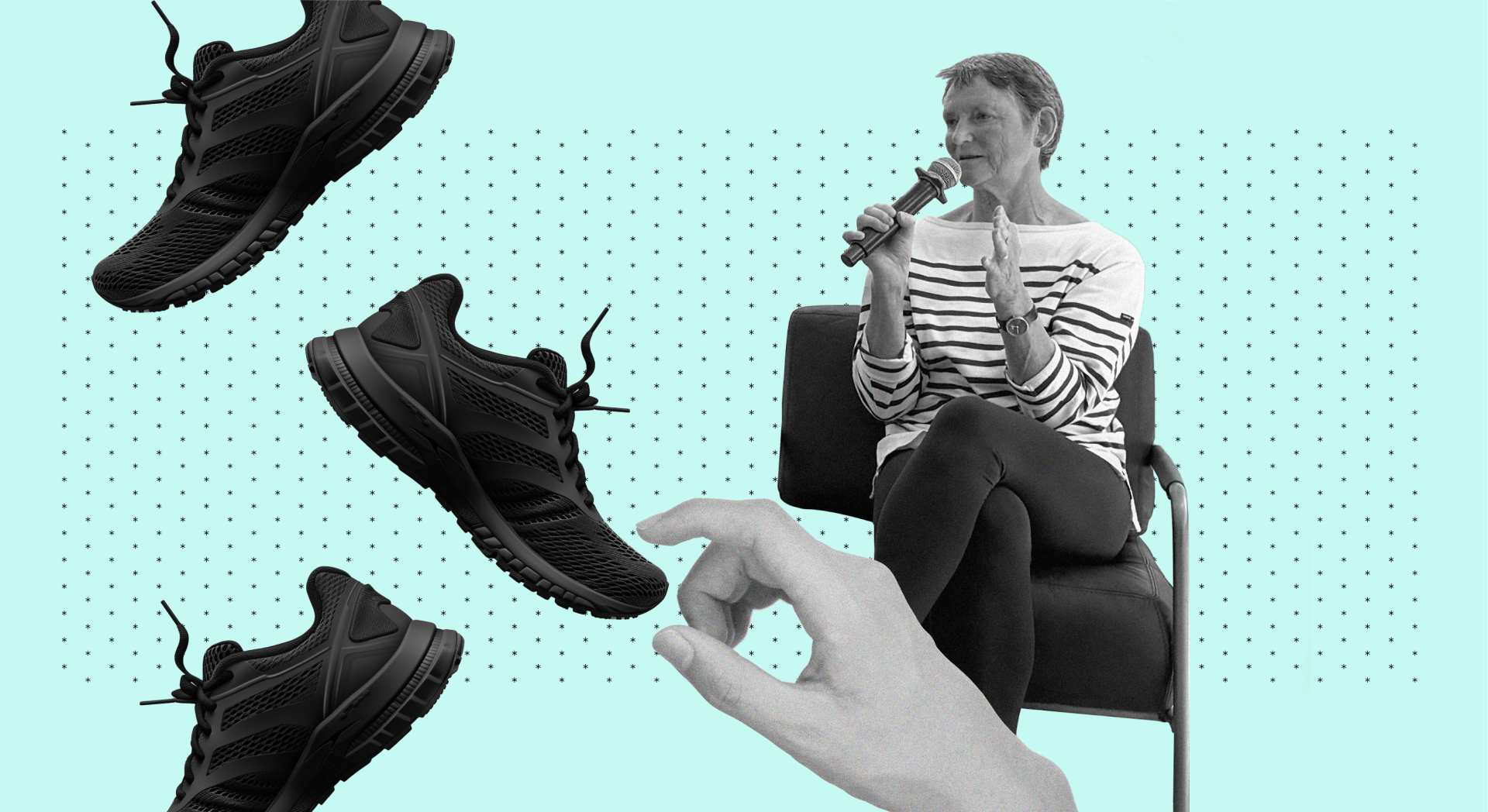
Annette Diefenthaler, now Professor and Executive Director of the Munich Design Institute, was an IDEO researcher working with a global bank trying to set up a presence in Russia. The team had done loads and loads of interviews with people about banks. Late one night, on the way back to their hotel, Annette saw a big shopping center. She asked the driver to stop, because she realized they'd had no time, other than doing their interviews, to absorb much about the culture.
So she went into this big mall, and Annette was stunned by how simply the department store had arranged its products. One wall was just black shoes all lined up, all the different kinds of black shoes you could have. It was all really obvious and not very exciting because there were only black shoes—no glitz at all.
What she took from that was: this is a culture where trust is built by showing what there is. It was so honest and direct. And here we were, talking to all these people about banks and trying to understand how to build trust in an alien brand. She had a flash of insight that suddenly made sense of what the team had been hearing. The bank needed to be so much more straightforward and transparent about its services. “Black shoes” became a mantra for that project and shaped how they designed the bank’s interior and described its offer.
This insight came from a moment that was completely off script. I love that. You can’t always get to an insight by staring at your interview notes. You get it because it’s somehow gotten into your viscera.
MP: Are there any moments where you found creative ways to present research to clients to help them make decisions?
JFS: Instead of personas and customer descriptions, a team once created a series of packed suitcases that represented the different types of travelers they interviewed. The client loved that one.
MP: How do you find the courage to decide to deliver an installation of suitcases instead of a more traditional research deliverable, like a presentation?
JFS: You need to tune in to what your client needs to absorb and what you want to communicate, and be ready to experiment with how you do that. You need to get good at failing. You try things, fail, and learn how to gauge what might work better the next time.
MP: You’re an incredible artist—I’ve seen your woodblock prints. You’re also an amazing rock climber and swimmer. I’m curious how these activities helped you develop your craft as a researcher and a designer.
JFS: There’s something very elemental about all of them—they’re direct experiences of the world. You give your weight over to the rock. You trust the water. Even with woodblock printing, what I love is how material it is. I use sharp knives and gouges to carve the wood, then I learn how much water and ink to use and how the brushes work.
That’s the thing I find really exciting. The fact that human beings have evolved to make beautiful things, that connection of making and place is a crucial motivator.
MP: You are one of the authors of the first edition of The Little Book of Design Research Ethics. I’d love to hear your perspective on the ethics of the discipline, and what we should keep in mind as we increasingly rely on technology.
JFS: I have a problem with the term research, partly because I think it connotes things like clipboards and taking notes—that we’re documenting other people’s lives. I’m happier when it all feels more like co-discovery, exploring together. We are together, engaged in this space, noticing things about your behavior as well as what I’m thinking about your behavior. And it's more collaborative.
Co-discovering with other humans is a much nicer place to be.
MP: Looking back, knowing what you know, what advice would you give young Jane?
JFS: I think I had imposter syndrome for about five years or so. I could have moved along a lot faster if I’d had a little bit more confidence and maybe a few more people telling me that it was okay.
MP: Are there any insights from your human factors work that you apply to the broader scope of life-centered design, and how we can learn from that?
JFS: A human being is a living thing in a living system of other living things. Observation and curiosity are key—we should keep asking the same kinds of questions about the inherent behavior of those systems, as we would ask about people: what they really do, what motivates them, and how we can gain insights from them. This goes back to your question about how rock climbing, swimming, and art come into it, in the sense that we can think more broadly about the elements that matter to people. There’s a whole living world out there with great examples of elegant systems we can learn from.
This Q&A has been edited for length and clarity.
“Insight, for me, is a change of state in our understanding. There's an epiphany of sorts, a new recognition. You get an insight by being a sensory human being, observant and absorbent through all your senses."
Building confidence for 2027
Create a plan for impact in three steps.
When category-defining challenges like disruption, the accelerating pace of change, and the need to rethink how organizations work are on the table, looking back on the current year and fighting for the same budget won't work. That's why many of the leaders we partner with are massively rethinking their priorities and where to best focus their resources.
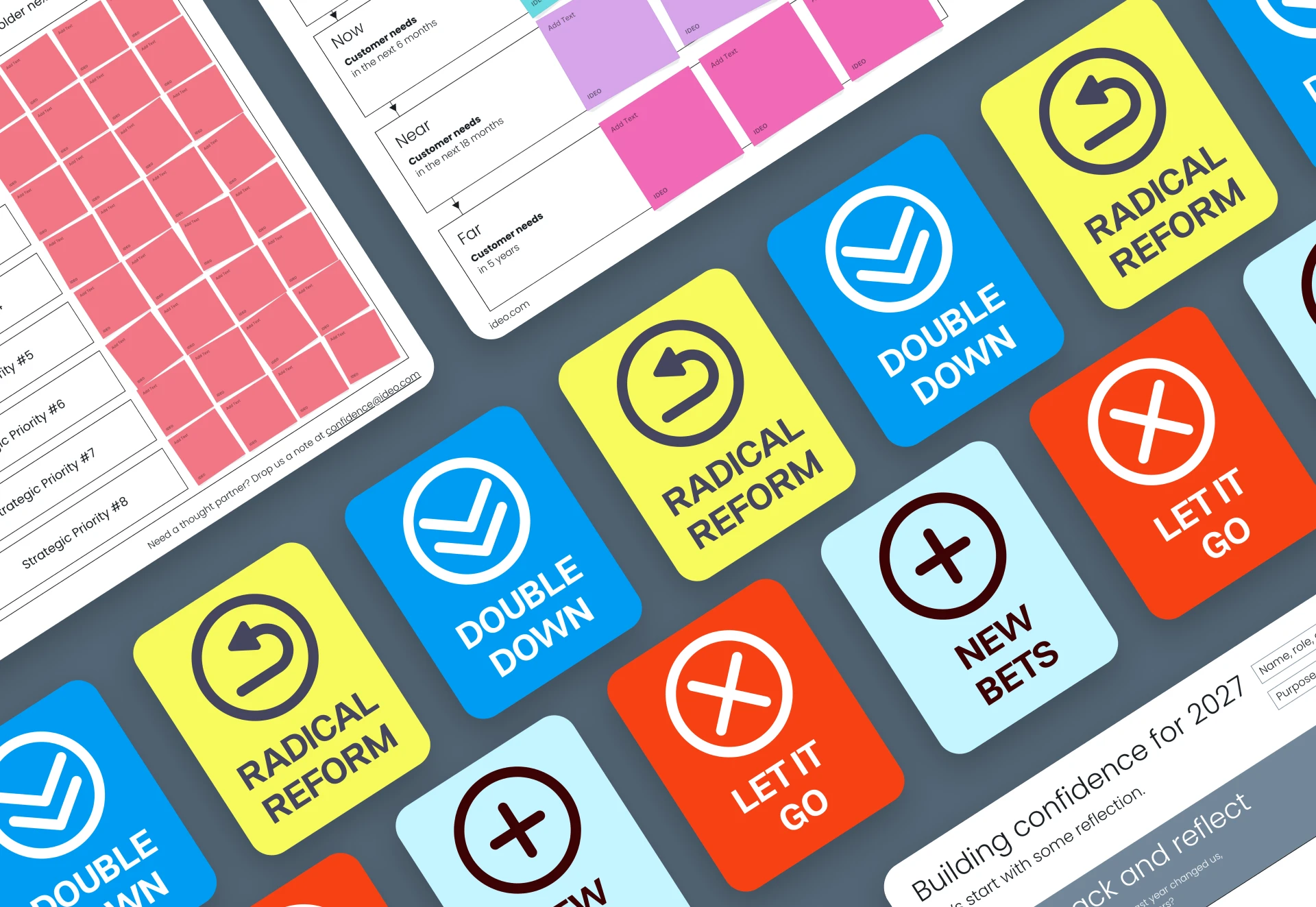
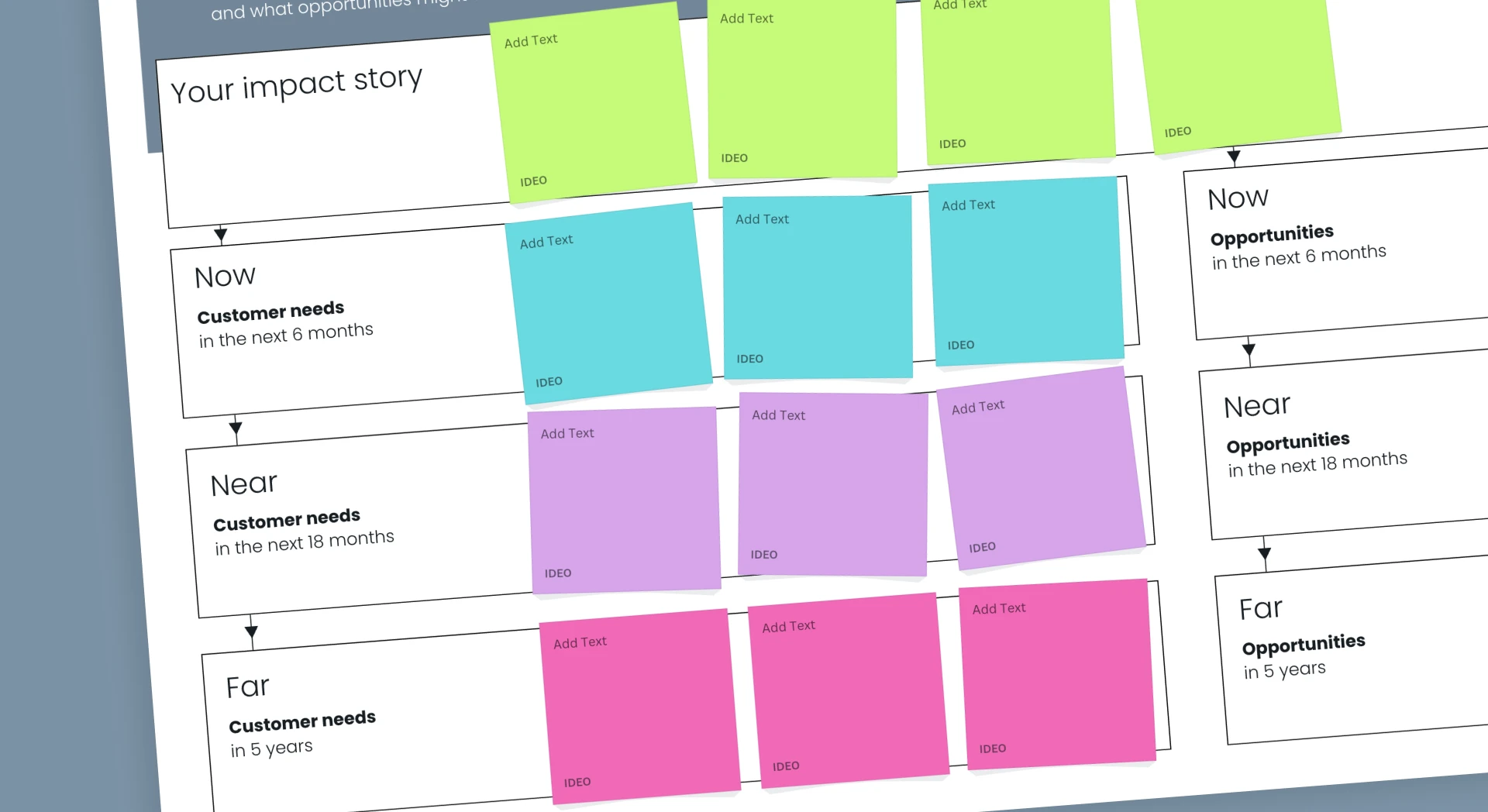
It’s a lot to balance, but the process doesn’t have to feel like guesswork. For several years, we’ve been using a tool we call the Planning Canvas, which provides a clear, strategic, and uncomplicated way to reflect on what has changed, what you’ve learned, and what matters now before planning for the coming year. It’s a simple way to help you evaluate where you are, and what levers you might pull to get your organization where you want it to be.
Download the Canvas
Our 2027 Planning Canvas walks you through three effective steps:
1. Reflect on what’s changed
2. Imagine the impact you want to have in the near future
3. Decide what to double down on, reform, let go of or pursue as a new bet

We recommend using it for individual reflection ahead of annual planning, before team sessions and leadership decision meetings begin. It will help you arrive with a clear point of view on what has changed, what matters now, and the choices worth putting on the table. At the same time, don’t hesitate to adapt it to your needs. If facilitating a collaborative conversation across your team aligns better with your organization's culture, this tool can help with that, too.
The goal isn’t to predict the year ahead perfectly. It’s to enter planning conversations with a sharper point of view and the confidence to make impactful choices together. We hope you find it useful.
Looking for more help with strategic challenges? Get in touch. We’d love to connect.
At a time when uncertainty feels like a constant, leaders across categories can find it tough to make confident planning decisions for the year ahead.

Lindsey Turner
I’m passionate about building brands, products, and experiences that help organizations show up with meaning and momentum.
I help organizations cut through complexity by shaping how they show up, through brand strategy, identity, and storytelling.
Working at the intersection of brand and business, I bring an editorial eye and a bias toward making—turning ideas into tangible experiences that people can understand, trust, and believe in.
My work spans government, healthcare, financial services, media, and consumer goods, from launching Gen Z-focused ventures to building innovation labs and reimagining legacy brands. I relish moments of ambiguity and enjoy translating across teams, perspectives, and priorities to move ideas forward.
I started my career in editorial and digital design, shaping cross-platform experiences and identity systems in publishing and agency environments. That foundation still shapes how I work today: I’m detail-oriented, collaborative, and overreliant on the Oxford comma. I hold a BFA in Visual Communication from the School of the Art Institute of Chicago.

Rachel Young
My work helps organizations see who their products aren't working for—and build the will and the tools to do something about it
For 25 years, I've asked the same question: Who does this design exclude—and what are we going to do about it?
My work spans human-centered strategy, inclusive design, and qualitative research, with clients ranging from Microsoft, Google, and Verizon to the National Science Foundation, and San Francisco Unified School District.
Before IDEO, I taught elementary school in East Palo Alto and spent a decade doing design work with social service organizations—where I learned firsthand what it costs people when systems are built without them in mind.
I am currently writing User Error, a nonfiction book about digital access and the design decisions behind it. I live in Oakland, California.

Brian Pelsoh
I lead with craft, ensuring our work is creatively excellent: rooted in deep human insight and imagination, while also grounded in the realities of business and technology.
My expertise spans brand, communication, and product design across tech, education, the arts, and social impact.
I believe great work demands both high-level vision and obsessive attention to detail, and only happens through collaboration.
I bring an inclusive, hands-on approach and a deep understanding of business, which enables me to consistently deliver excellence while always asking why.
Before joining IDEO, I worked at the brand firms Pentagram and VSA Partners. I began my career as a designer, leading teams at the School of the Art Institute of Chicago and the Milwaukee Art Museum. I hold an MFA in graphic design from Maryland Institute College of Art and a BFA in communication design from the Milwaukee Institute of Art & Design, and have taught at some of the best design schools in the US.

Tony Wong
I am responsible for IDEO’s long-term success in China and working with clients to use design as a tool to enable growth.
I am responsible for IDEO’s long-term success in China and working with clients to use design as a tool to enable growth. Specifically, I have helped Chinese companies design holistic brand solutions through the development of their products, communication, services, and innovation teams, and I have helped multinationals expand their presence and influence in China.
I advise global leaders on developing China-led innovation and capabilities.
In over 15 years in IDEO Shanghai, I have worked on projects that use design to elevate the quality of the experience of healthcare products and services, streamline processes that increase productivity, create spaces and programs that promote and enable inclusive communities, and build next generation mobility solutions that are planet-positive.
Before joining IDEO, I worked at Philips Electronics and the Electrolux Group in Italy, the Netherlands, and Singapore on a number of breakthrough commercial products. I am a member of the Young President Organization in Shanghai.

What leaders should know about leading through change: Melanie Bell-Mayeda
Helping people move through change with clarity, empathy, and momentum.
Learn how to lead through change and uncertainty with a human-centered approach. Discover three key leadership levers to help your team navigate uncertainty with clarity and confidence.

How to improve your leadership mindset for greater growth: Bonnie Wan
Shifting the beliefs and habits that limit your leadership growth.
Explore how overcoming limiting beliefs and enhancing your leadership mindset, with guidance from Bonnie Wan, can propel your growth as a leader.

How to take action and shape your future today: Frederik Pferdt
Turning future possibilities into practical choices you can make now.
Discover how small actions today can shape the future you want. Learn key strategies for taking control of your future with empathy, experimentation, and your unique superpower.
Unlock the power of systems thinking: Deirdre Cerminaro
Seeing connections, patterns, and leverage points in complex challenges.
Learn the core mindsets of systems thinking to tackle complex problems. Our beginner's guide helps you zoom in and out, shift perspectives, and reframe challenges for lasting solutions.
Looks like you might be in search of something very specific?
Or reset the filters above and try another angle.
Here’s some random inspiration

Podcasts about creative leadership

Articles about the power of prototyping
