
.svg)


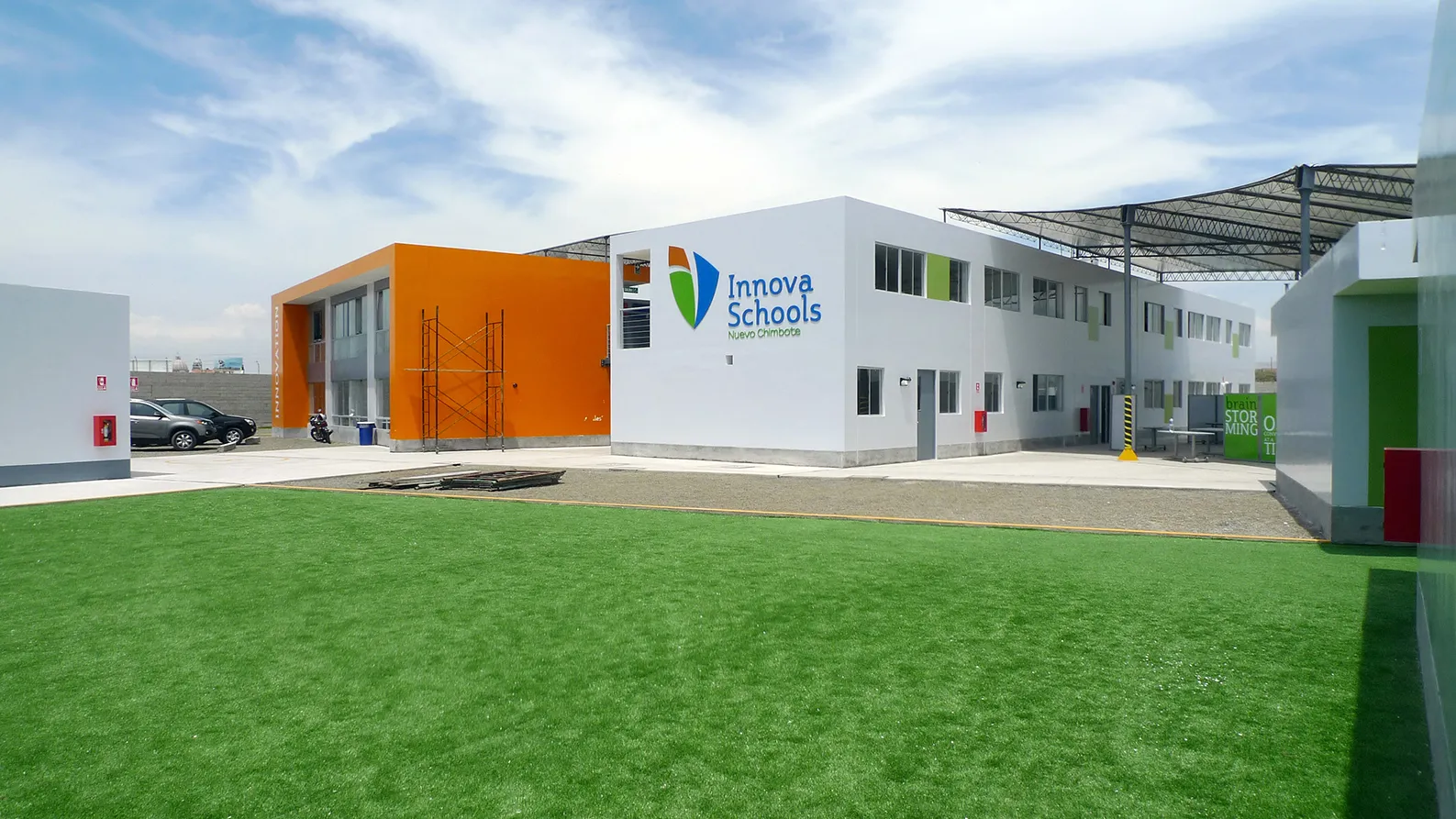

Designing a school system from the ground up
Scaling an entire network of schools for the growing Peruvian middle class.
How do you lift up the middle class in a developing country?
That was the challenge facing Peruvian entrepreneur Carlos Rodriguez-Pastor, who hired IDEO to build an entire network of schools powered by a progressive new learning model. IDEO’s mandate: to redesign Innova’s entire K–12 learning experience, from the curriculum to the teacher training to the school buildings, with an eye toward expansion and a goal to provide international-quality education at an affordable price—about $100 a month.
Innova Schools is a part of Intercorp, a family of 35 businesses that span everything from banks to retail stores and added schools to its portfolio. In 2010, the company had five existing schools but realized that its existing model could not grow. The shortage of well-trained, high-quality teachers in Peru, combined with rising land costs, meant the schools would need to radically change course to succeed.
To learn about scalable school models around the world, IDEO researchers visited inspirational schools and learning programs, and looked to analogous systems like retail, hospitality, and health care to understand their approaches to scale. Throughout the project, they collaborated with teachers, students, and the Innova Schools team in co-designing the work itself.
Together, Innova Schools and IDEO developed the curriculum, teaching strategies, buildings, operational plans, and underlying financial model to run the network of schools.
"I was blown away by Innova Schools," said Salman Khan, founder of Khan Academy. "It's inspiring to see such an affordable school deliver a quality of education that would rival schools in the richest countries."
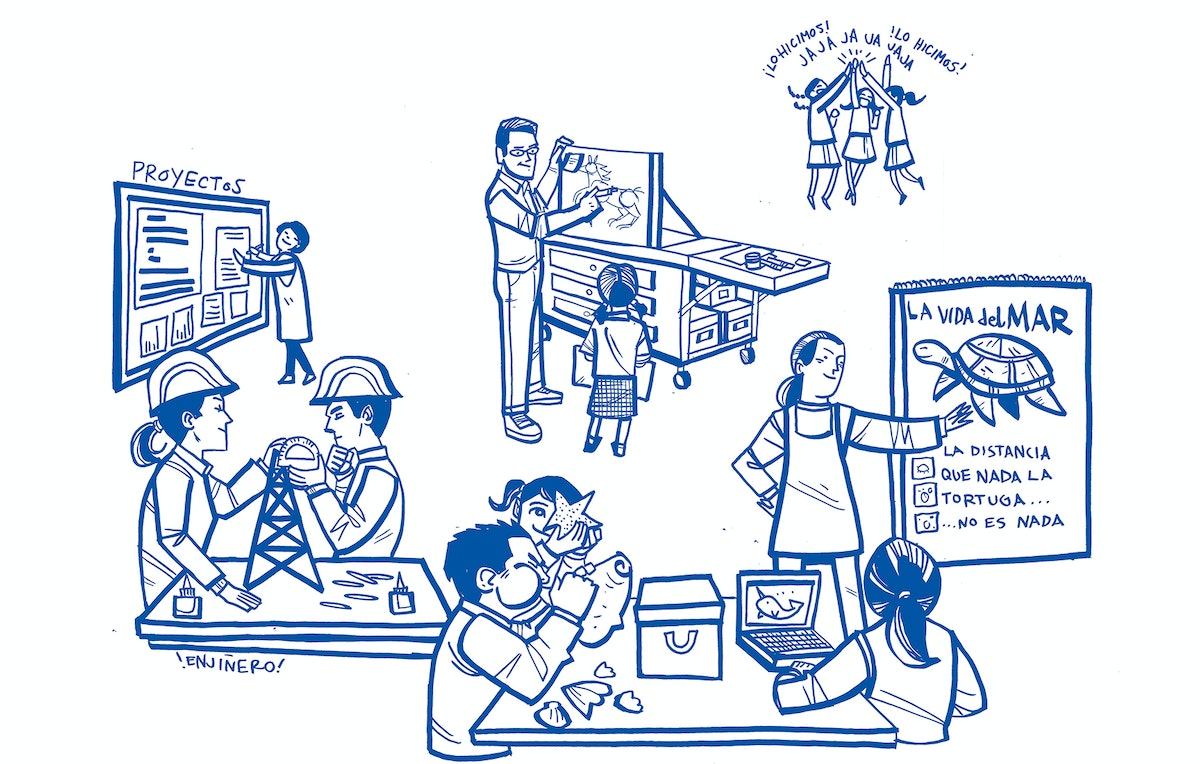
The new Innova Schools combine teacher-led, project-based learning in small groups with self-directed time using digital learning tools. Teachers monitor students’ work online and offer personalized guidance. Parents can view their children’s progress online as well.
Dynamic learning environments include community spaces, media labs, rooftop study areas, amphitheaters, and cafés that are optimized for flexibility: furniture on wheels, movable walls, and efficient uses of space to allow for different modes of learning.
An online Teacher Resource Center includes a database of more than 18,000 custom lesson plans based on a progressive new teaching approach. The center helps teachers learn their craft and gives them a chance to connect across the network.
The business model of Innova Schools was developed at the same time as the school experience. Designers leveraged the economies of scale that come from building a network of schools and centralized tools, such as data systems that allow all the schools to learn together.
The project has allowed Innova to open more schools at an affordable cost to families, ultimately giving more of Peru’s youth the chance to compete in the global economy. This comprehensive approach to system design ranks as one of Latin America’s most ambitious privately funded educational projects, and is on track to become the largest private school network in the region. To date, Innova has opened 63 schools in Peru that are serving more than 50,000 students.

A good system design doesn’t end with strategy. The work on Innova Schools also had a huge influence on the company, according to Rodriguez-Pastor. Through the creation of new roles and an aligned set of values, Innova’s central office has become a much more nimble and creative organization. They’re constantly scanning the world for inspiration in how to best educate their students, while building out the new innovations. They realize that design thinking can become an integrated part of their daily management of this growing network of schools.
Designing a top-selling hard drive
Through a long-term collaboration, Western Digital and IDEO have created one of the world’s best-selling hard drives.
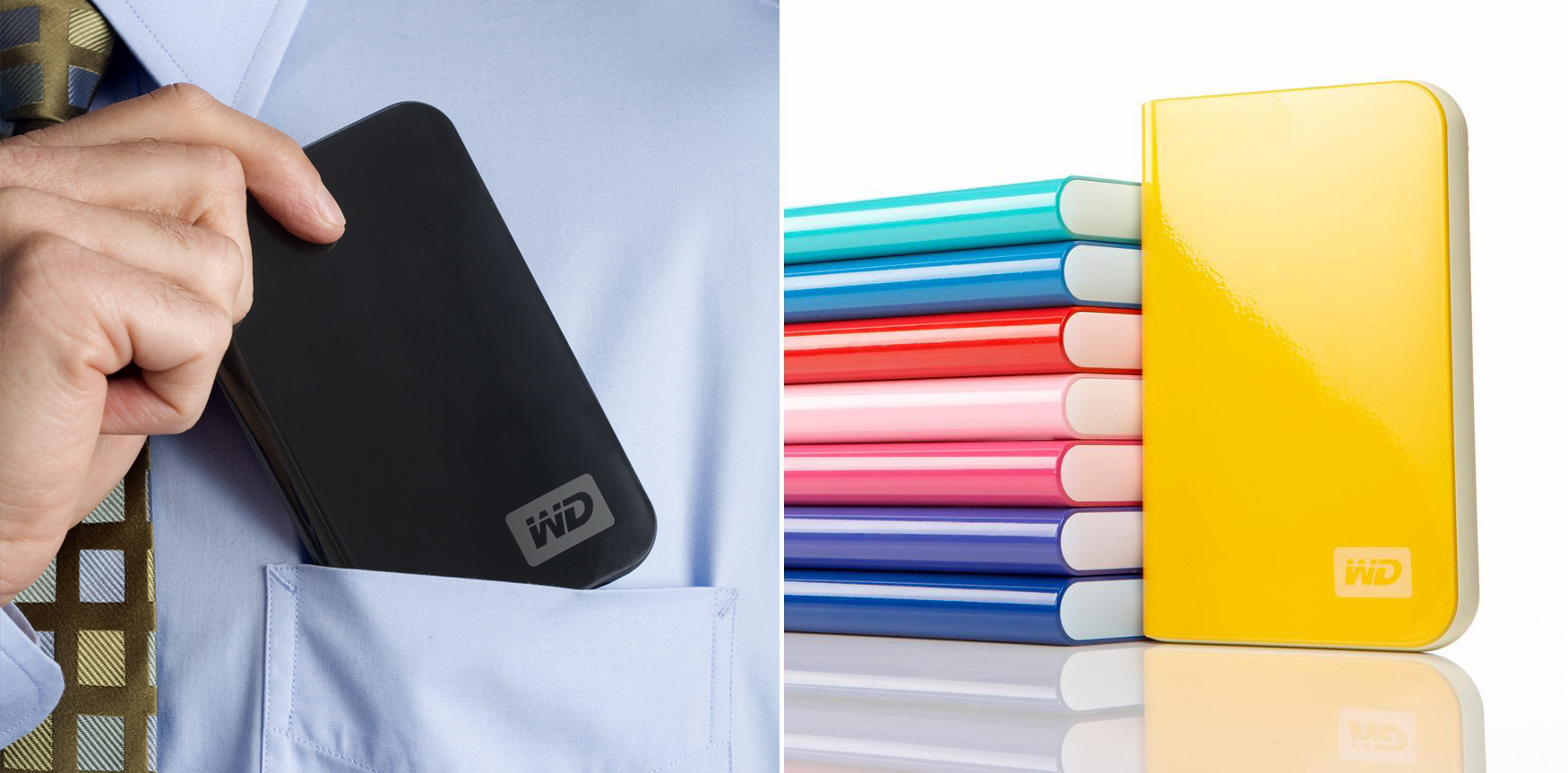
Western Digital, the leading provider of external digital-storage solutions and a pioneer in the field, and IDEO collaborated on a number of products that produced reliable, secure, high-performance hard drives for personal and professional use and have won numerous design awards.
The projects include:
- MyBook external hard drive: IDEO and Western collaborated to find a new design language for their external hard drive MyBook. In just six months, MyBook became the number-one hard drive in the Americas, and grew US market share by more than 50 percent.
- MyBook II: Looking to regain MyBook’s original number-one position in the hard drive market, IDEO and Western came together again to refresh the original design, finding ways to further differentiate the product and the brand, and winning a 2008 Spark Bronze Award.
- MyPassport: Western and IDEO designed the 320GB, ultra-portable USB-powered hard drive that appeals to the mobile user, which won both the 2008 IDEA Bronze Award from IDSA and BusinessWeek, and the 2009 iF Award.
- MyBook and MyPassport 3.0: Again, IDEO and Western collaborated on bringing the popular MyBook external hard drive to the next level in the hardware, the software, and the packaging. IDEO also created in-store merchandising, the graphics and information featured on product packaging (and the “out-of-box experience”).

Designing a city emergency plan
Helping cities prepare for emergencies with a resourceful toolkit.
The city of San Francisco wanted to help its people become better prepared in case of emergency. While no one feels totally prepared for a natural disaster, people who are most connected within a local network fare better in an emergency.
So the San Francisco Department of Emergency Management (SF DEM) and IDEO teamed up to create SF72, a revolutionary platform that helps to reach people where they are. In times of emergency, the city will need citizens to be self-supporting for 72 hours (or longer) before local services or outside help kicks in. With that in mind, IDEO developed an accessible platform to help people prepare for those 72 hours in simple ways that fit into their daily lives.
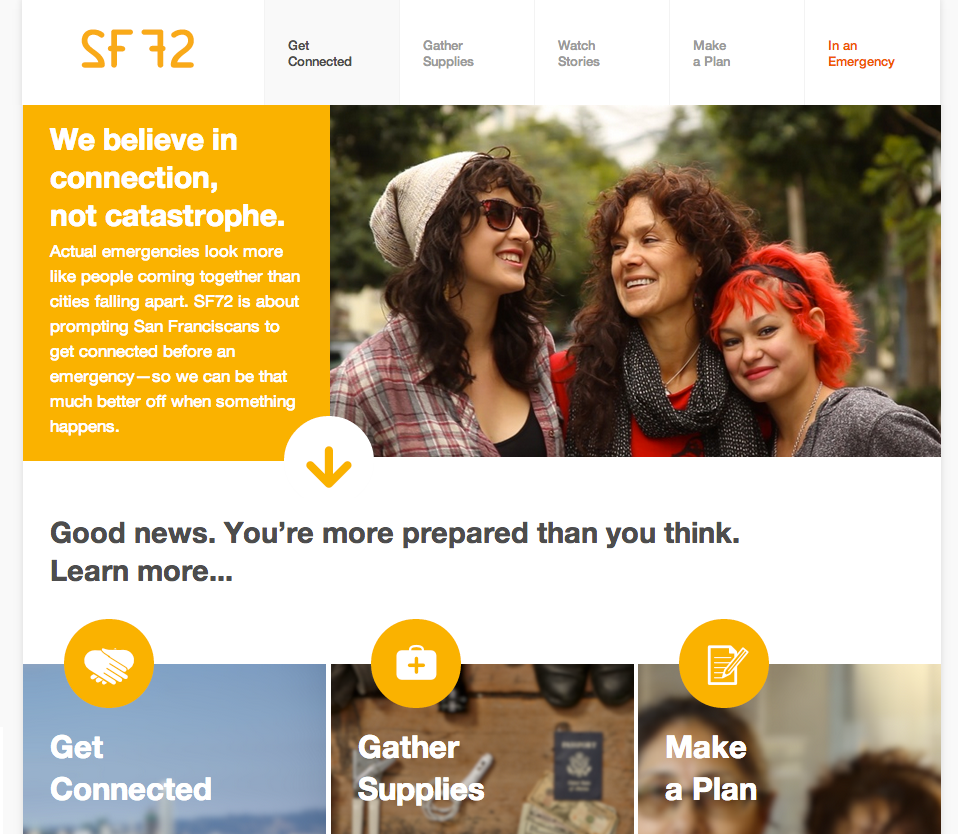
The SF72 website helps people with five important tasks: Get connected, gather supplies, watch stories, make a plan, and have access to an updated Google map. SF72’s content is hyperlocal, but IDEO and SF DEM also created an open-source toolkit for cities worldwide. From San Jose to Denver, other locales are using the simple toolkit to create a City72 platform of their own. Most recently, the city of Oakland collaborated with Code for America to develop its own platform. The City72 Toolkit enables SF72’s ethos of social connection for resilience to scale and grow—city by city.

Designing a global plan for disaster response
Creating a network that connects veterans across continents.
Team Rubicon, formed in 2010 as a response to the devastating earthquake in Haiti, is made up of former military veterans who swoop into help in times of disaster. The organization started with six vets in the US who were eager to transfer their battlefield readiness in to frontline relief efforts, and has grown to more than 28,000 volunteers across the world.
To explore its growing global effort and to shape the future of the organization’s venture, Team Rubicon approached IDEO for help. After an 11-week collaboration with government, military, and veteran groups, a vision for Team Rubicon Global emerged. Inspired by sources as diverse as TED and The Hell’s Angels, the three-tier model consisted of an anchor network to share best practices across the organization and two supporting platforms designed to help countries with varying capacity and needs.
Team Rubicon Global coordinated its first deployment in April 2015, when a quake struck Nepal, sending US and UK teams to double down on the rescue effort. According to Vince Moffit, Team Rubicon USA Incident Commander, that incident alone validated the network effect of IDEO’s work. “We couldn’t have done this without Team Rubicon UK,” he said.
And for the veterans who are part of Team Rubicon, the shared desire to serve—applying skills ideally suited for disaster response—creates a renewed sense of purpose, community, and leadership that helps reintegration to civilian life.
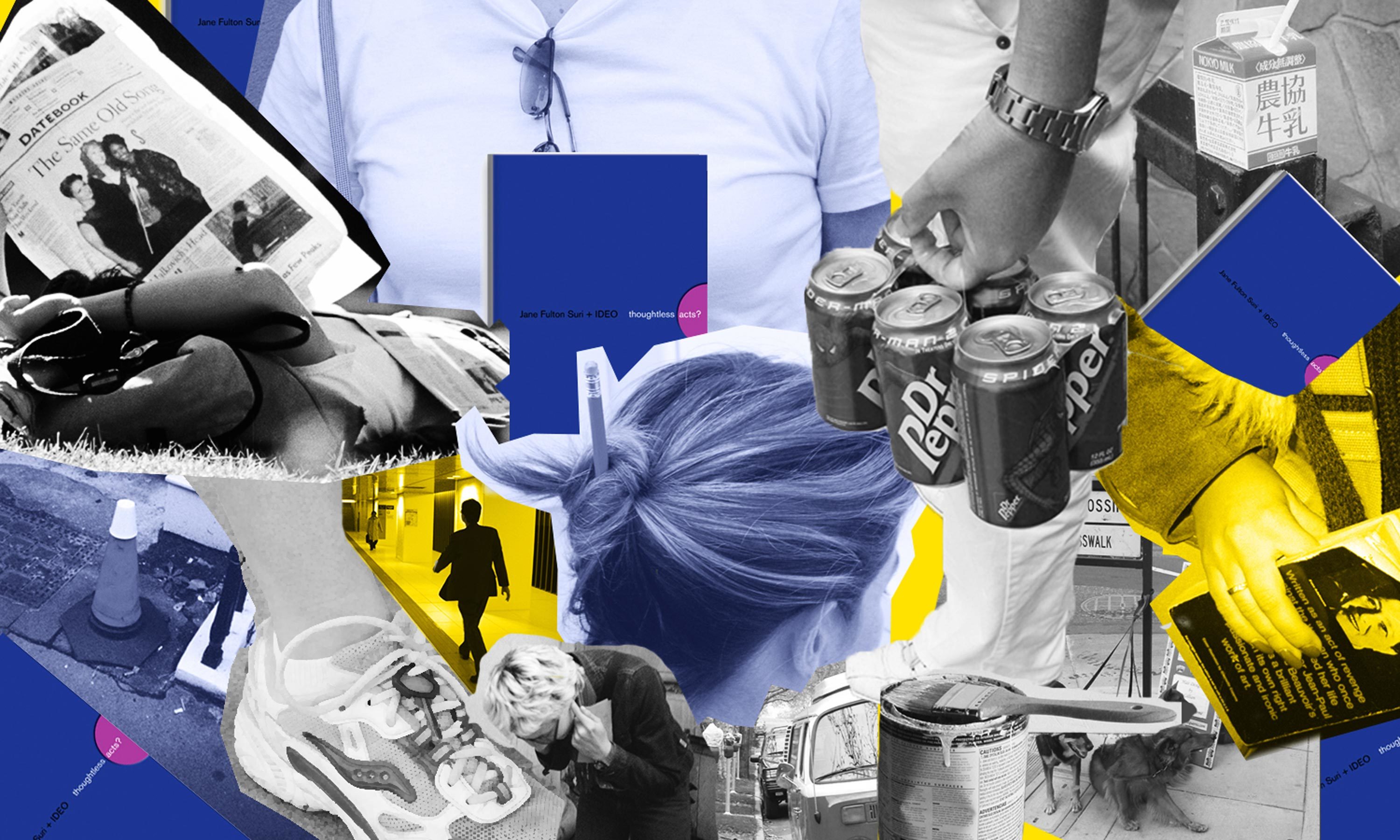
Thoughtless Acts: For a Rainy Day
Thoughtless Acts: For a Rainy Day. The intuitive ways we adapt and react to things in our environment

I took this picture during my morning ferry commute along the Thames. As you can see, it's raining. (It rains in London a lot.)
I'm standing where the passengers get off the boat. The ferry was designed with a drainpipe to funnel rainwater off of the boat, but the water lands on passengers as they disembark. I guess the designers were thinking more about the boat than the people on it.
Conveniently, there is also a Costa coffee shop on the boat. So someone removed the base of a paper coffee cup, and stuck the cup on the pipe. This small fix extended the drainpipe, keeping the passengers dry. Brilliant.
Human-centered design requires us to observe human behavior with beginner's eyes, so that we can spot the innate ways people interact with the world around them. We call these intuitive and unconscious reactions thoughtless acts, and IDEO designers collect photos of them to inspire the invention of new products, services, and experiences.
Can Cartoons Cure Cancer?
An interview with cartoonist and cancer killer Laura Park
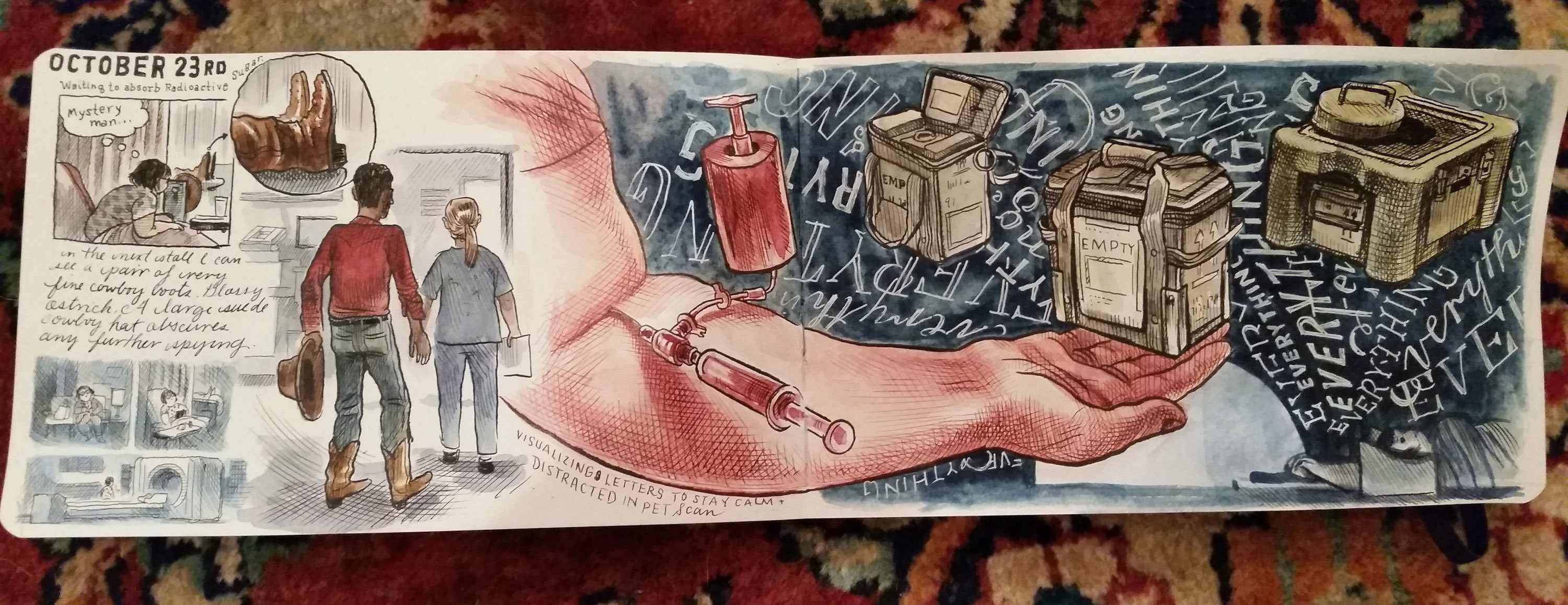
But this afternoon, we're not here to talk about all things Frenchie, we’re here to talk about the “c-word”—cancer—but, also, comics and catharsis. See, in a few weeks, Laura is having surgery to repair her tear ducts, collateral damage from aggressive thyroid cancer treatment four years ago, when she was in her early 30s. The cartoons she drew during that nerve-wracking time are just like her: quirky, brave, weirdly hilarious, and unapologetically honest. They’re the equivalent of indie-rock visual therapy.
Wearing her trademark black-and-white French sailor shirt and vintage cat-eye glasses, Laura takes a few quick, surreptitious puffs off her e-cigarette and we start chatting.
IDEO: What were you like as a child? Did you always make art?
Laura Park: My family moved around a lot as a child. My mom immigrated from Korea to Southern California and raised my brother and me by herself. I always drew as a kid. As the perpetual new kid, I wasn’t very popular, but the fact that I could draw meant I had some value. I’d sell kids greeting cards or drawings of their moms for Mother’s Day. I hung out at the food court at the mall where my mom worked and drew portraits of strangers. I’d go up to them, show them my drawing, and try to sell them to them. It was my side hustle. I was a very under-supervised, under-parented child. I had a lot of freedom. I eventually got a scholarship to the Art Institute of Chicago and fell into the illustration/comic book community here.
What was your first big break?
I was working as an illustrator for educational software company when I started doing drawings for indie record label Asthmatic Kitty Records on the side.

I also drew magazine ads for Sufjan Stevens’ 2005 Illinois record, plus did some t-shirts and posters for his record label and illustrated an issue of Vice magazine. My other big break was illustrating two big book series for author James Patterson—Middle School and I Funny. They were #1 New York Times Bestsellers. I illustrated two a year until last year. They gave me enough money to do other projects and gave my mom something to brag about.

You mainly do autobiographical comics, why is that?
They’re how I process information. They’re my second stomach, how I “Rumpelstiltskin” my depression and sickness. I draw about things that cause me both extreme stress and extreme joy because both are distortions of time. I’m either locked in an anxiety-ridden hellscape or I’m celebrating the awesomeness of my dog.

In high school, I loved the Riot Grrrl movement and made my own zines because I didn’t see myself reflected in other comics. It’s a very powerful thing to make your own media and not wait for others to validate your experience.
I love it when other weirdos say to me, “I recognize myself in your comics!” Everyone thinks they’re singular and alone. It’s comforting to know that’s not true.
Can you tell me what happened when you were diagnosed with cancer?
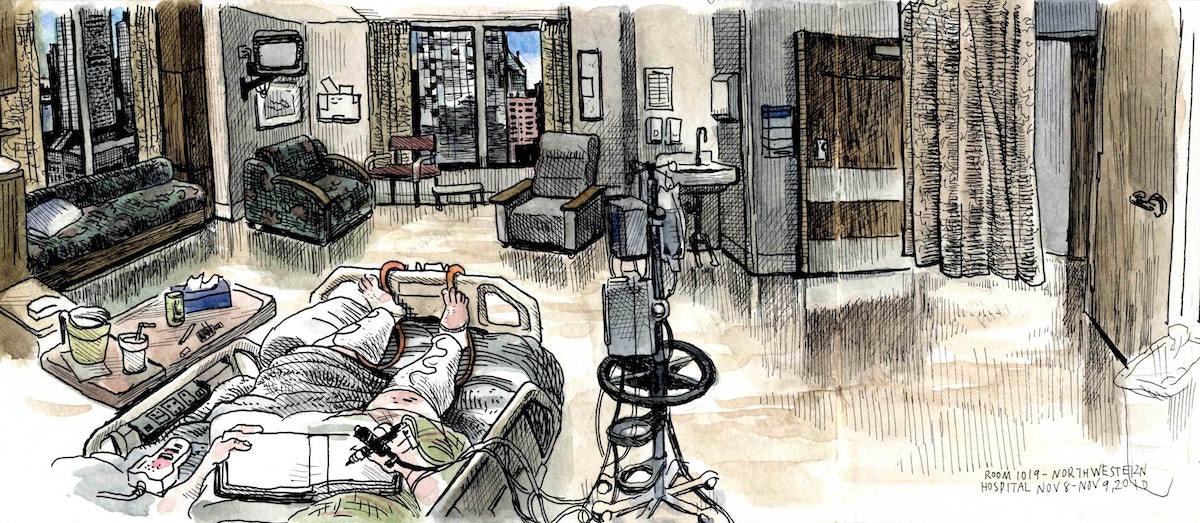
It was 2012 and I was 32 and uninsured at the time. I lived for six months with a big lump on my neck. I avoided it. I knew it was bad when my doctor didn’t make me wait after getting the results back. It was thyroid cancer and it had spread to lymph nodes in my neck. I had a nine-hour surgery to take everything out, but the tumor had grown around my vocal nerve. The next day in hospital room, I woke up with a paralyzed vocal nerve. I went from someone who was always very loud, to someone who didn’t have a voice. It was very weird. I had to drink radioactive iodine as part of my therapy, which is nasty and why I’m having surgery to repair my tear ducts.

Comics are how I process information. They’re my second stomach, how I 'Rumpelstiltskin' my depression and sickness.
I processed my cancer in terms of narrative. I asked, Who is my character? What is her arc? I did a better job of telling the story of my cancer in my comics than I did telling people in person. What really resonated with my fans was how expensive my medical bills are. They were hundreds of thousands of dollars and destroyed my savings.
Enough of this depressing cancer stuff! What are some things you’re excited about?
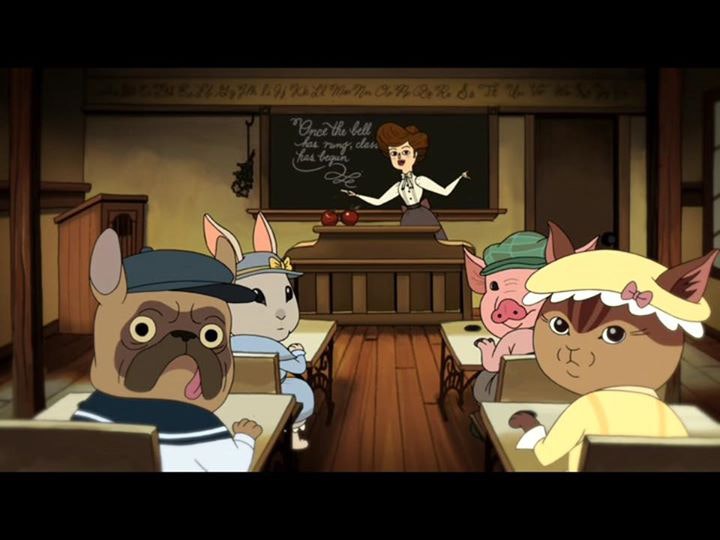
I just won an Emmy for some storyboarding work on the Cartoon Network miniseries Over the Garden Wall! I have the certificate on my fridge. I also just signed a contract to do a graphic novel adaptation of immigrant stories for StoryCorps and have a collection of early work and new stories for Drawn & Quarterly that's forthcoming. My biggest accomplishment, though, was figuring out a way to have Walt appear in as a cameo character in Over the Garden Wall. I’m pretty proud of that.
*Post script: A few weeks after our interview, Laura did, indeed, have surgery to repair her tear ducts. She’s recovering well and, of course, fearlessly documenting the entire process along the way.

A ridiculously photogenic French bulldog is why I'm sitting across from Laura Park, a humbly prolific Chicago cartoonist, in a trendy Wicker Park cafe one grey November Sunday. I started stalking Walter Wallet on social media a couple years ago. Turns out, his owner was pretty cool, too. Laura's the author and main character of the darkly funny comic series, Do Not Disturb My Waking Dream, among many, many, many other noteworthy, cool things that she hates to talk about. Lucky for me, soon we—and our dogs—were friends in real life.
Why We Make What We Make
In praise of white space time
For the better part of my career, I had been conditioned to believe that employees are either adding value to an organization by working in immediate service of its bottom line, or they are not, and should subsequently be disciplined. I was terrified I was in the latter camp. Over time, though, I began to take more deliberate notice of how my IDEO colleagues spent their “white space” time between projects.
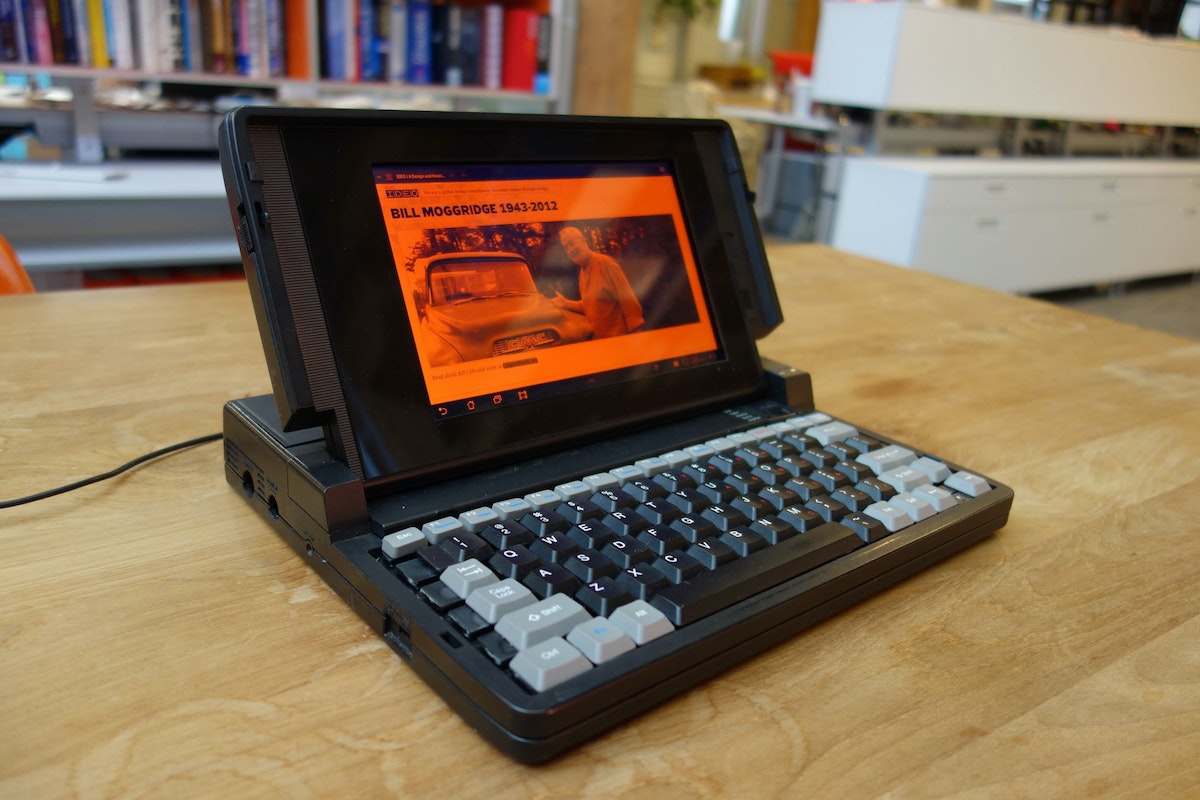
My friend, Dave hacked an Android tablet into the housing of a 1980s GRiD laptop to celebrate the life of IDEO cofounder Bill Moggridge. Three IDEO Chicago colleagues made an LED-powered, floating cloud installation that communicates current weather conditions by changing color. And a pair of engineers created an automated, Arduino-powered, steampunk-themed shandy machine to keep colleagues hydrated during summer parties on the Chicago studio's roof deck.
With my Pavlovian conditioning coming undone, I dove head first into the fray. During a few hours of project downtime, a teammate and I outfitted an old Mac Classic with an iPad for its screen. Was I reprimanded for using company equipment for a side project during work hours? Quite the opposite. I was told to post an image of our creation to the IDEO Instagram account.
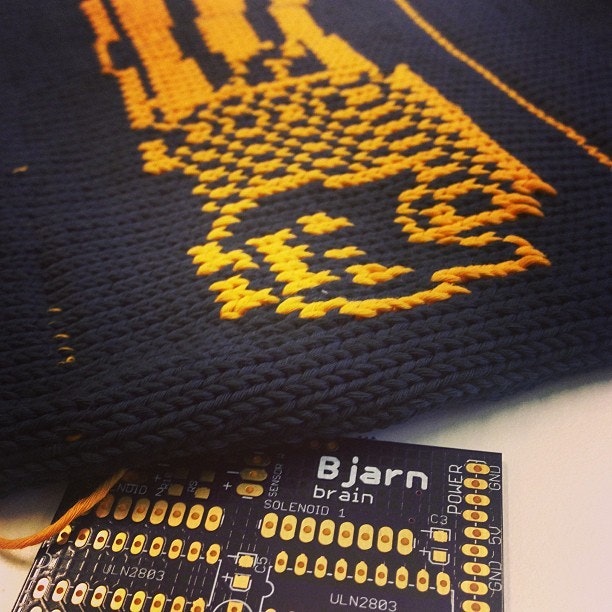
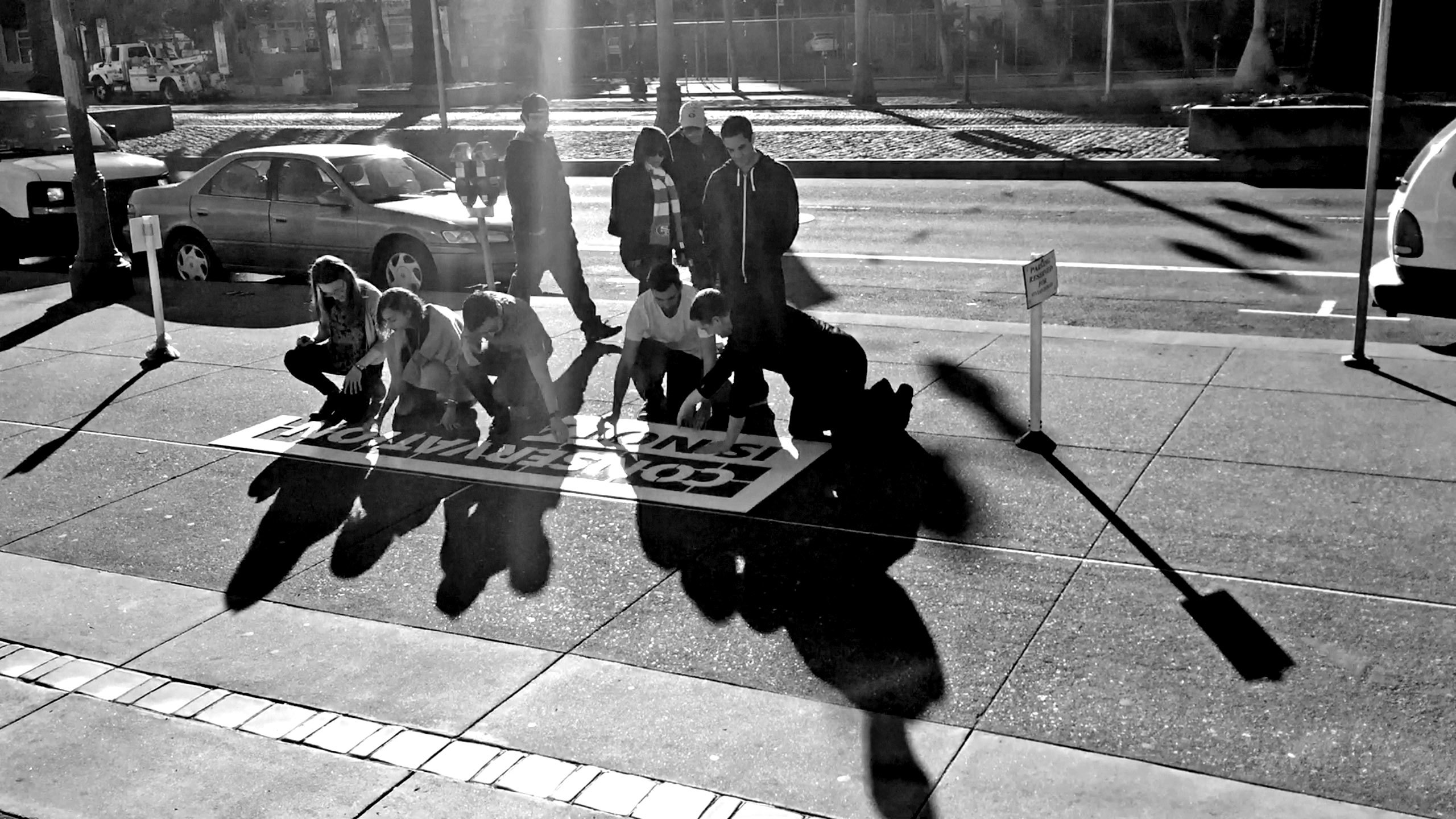
Since then, I have experimented with pumpkin carving via laser cutter; flown toy cars from rooftop ramps into frothy mugs of beer; teamed up with a friend to explore and film fluid dynamics studies using a syringe and typewriter ink; 'printed' Nyan Cat out of yarn via a hacked, decades-old electronic knitting machine; and twice stencil-graffitied IDEO’s San Francisco headquarters—once with moss and once with superhydrophobic solution.
So, why do we create these things? Because even before we’re designers, we’re makers. And taking a few moments away from our day-to-day work for unorthodox and inspiring creations often fulfills our need to make. When we bring this energy back to our teammates, we work better together, and we do better work.
Creating stuff makes us happy. And doing it together makes us better designers. This is why we make.
There is little more terrifying than having non-billable time at work. The first few weeks of my employment at IDEO were a nervous time for me. I was intermittently assisting a few project teams, but it would be an excruciating few weeks before I was staffed full time to a client project.

Design Lover’s Gift Guide
Something for the Helvetican on your list
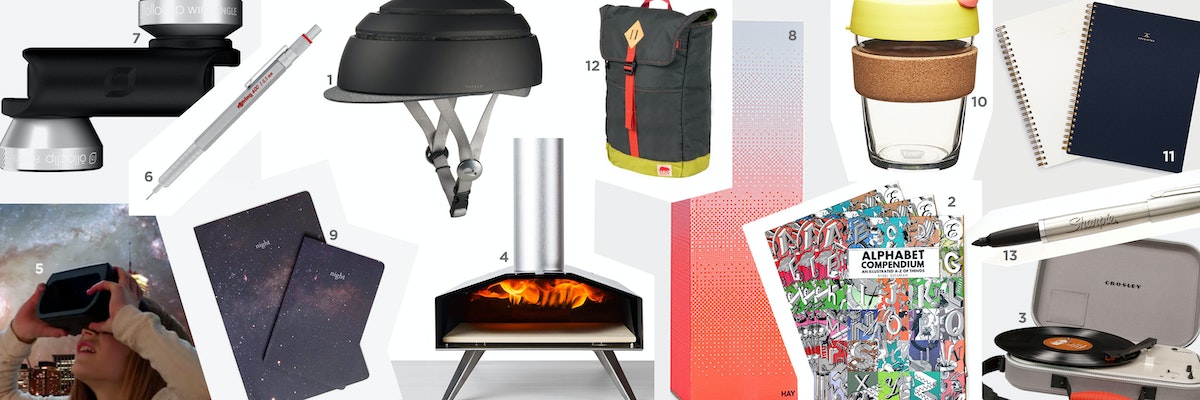
1. Closca Fuga Foldable Helmet, 2. Alphabet Compendium, 3. Crosley Messenger Turntable, 4. Uuni 2s Portable Pizza Oven, 5. Universe2go, 6. Roting 600 Drafting Pencil, 7. Olloclip 4-IN-1 Lens, 8. HAY Tower Block Notepad, 9. Night Notebook, 10. Keep Cup, 11. Appointed Workbook, 12. Alite West Bluff Pack, 13. Sharpie Stainless Steel Permanent Marker
Closca Fuga Foldable Helmet
Helmets are a total necessity, but carrying them around is a pain. The Closca foldable bike helmet solves that problem, collapsing down to half of its size (about 2.4 inches tall), making it possible to hide away in a backpack or purse. The 2015 Red Dot award winner is also certified to global safety standards, so all you have to worry about is picking the right color.
$140

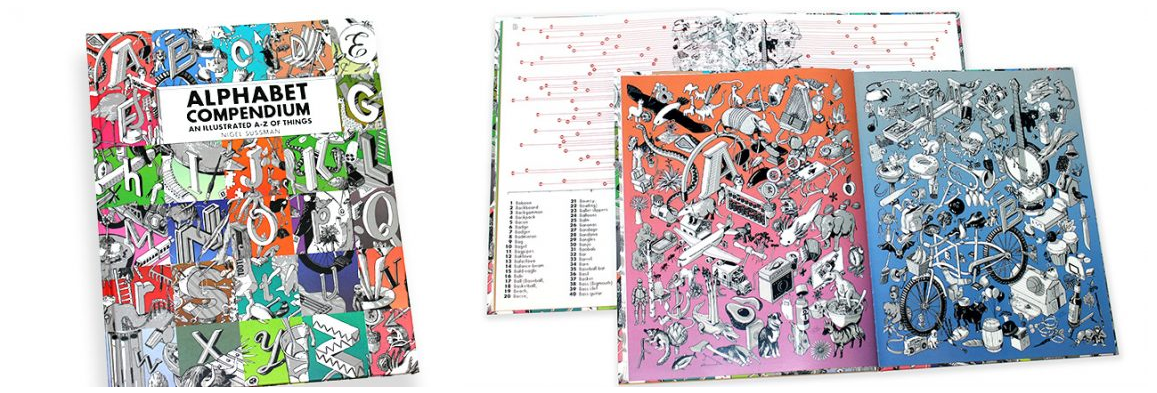
Alphabet Compendium: An Illustrated A-Z of Things
Isometric mural illustrator Nigel Sussman has poured the same style he's used to decorate the walls of tech companies like Google and eBay into his first book, Alphabet Compendium. His hyper-detailed drawings cover everything from the aardvarks to the zucchinis.
$29.95
http://alphabetcompendium.com/
Crosley Messenger Turntable
The Crosley Messenger Turntable lets you spin records anytime, anywhere, thanks to its messenger-bag style design. With built-in speakers and a headphone jack, you can share the music, or go it solo.
$90
crosleyradio.com/
Uuni 2s Portable Pizza Oven
Have a pizza lover in your life? This wood-burning oven goes from ambient temp to 932˚F in just ten minutes. Stainless steel construction means it can handle life in the great outdoors, and Uuni's wood pellets are sustainably sourced, so you don't have to feel guilty. They'll even plant a tree for every bag of pellets sold.
$299

Universe2go: My Personal Planetarium
This star viewer and app combo give you a closer look at the real night sky, not the dome of a planetarium. Take a guided tour of the stars above you—it will illustrate constellations, help you discover planets, and even point out moving objects like comets and satellites.
$99
Roting 600 Drafting Pencil
This is one serious pencil. The iconic, metal design has a comforting heft to it, and its hexagonal base makes it easier to hold in your hand. Better yet, it won't roll off your table. Choose between .5 or .7 lead.
$37
4-IN-1 Lens
Help your loved ones kick up their iPhone photography game with four quick-change lenses (fisheye, wide-angle, macro 10x and 15x) that fit right on top of the iPhone. Panoramas and extreme close ups are made easy with the 4-IN-1 Lens, which is small enough to fit in a pocket. It's a selfie-lovers' dream.
$80
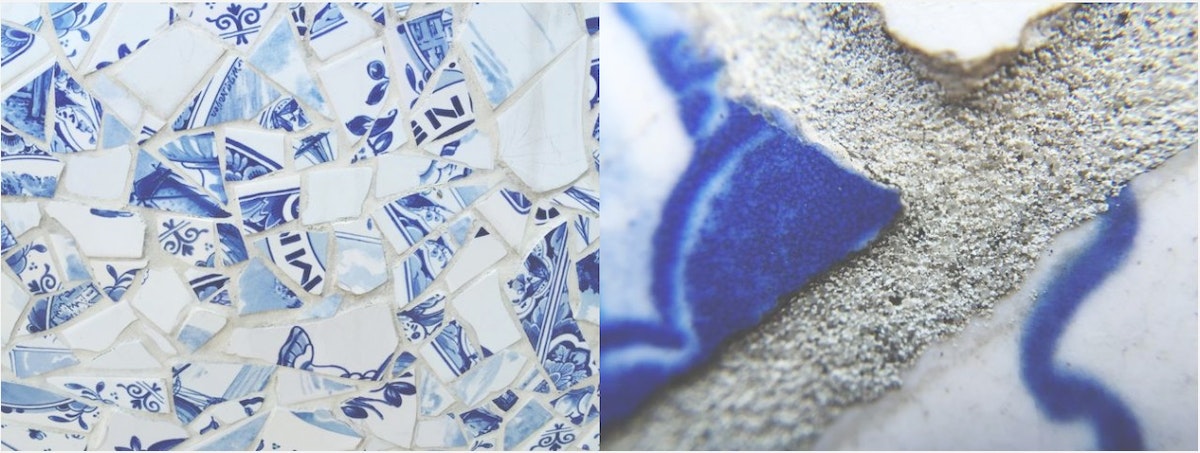
With the Macro 15x lens on the right. Without on the left.
HAY Tower Block Notepad
A beautiful, ombré tower of notes just waiting to be sketched on. Available in fade coral and fade orange. Drool.
$25.00
Night Notebook
Spare, beautiful, and conveniently on sale, this blank Poketo notebook is perfect for capturing your thoughts. And thanks to Smyth Sewn binding, it lies totally flat, making doodling in your notebook easier than ever.
$6

Morning, Day, Evening, and Night Notebooks
Keep Cup
These eco-friendly cups out of Australia are made using waste product from the manufacture of wine corks. Their designs include everything from basic colors to characters from the Star Wars universe. Now you just have to decide between the resistance and the evil empire.
$24
Appointed Workbook
A spare, utilitarian design with a durable cover, this notebook can handle the abuse of every day. Choose between classic navy or white.
$24
Alite West Bluff Pack
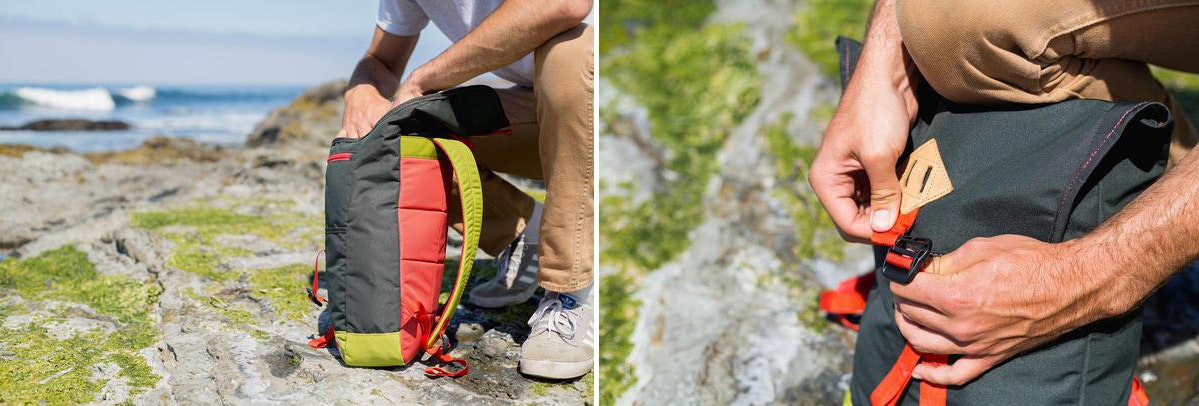
A backpack rugged enough for the outdoors, but designed with commuters in mind, the West Bluff pack has an interior laptop sleeve and a padded back built for comfort. It's perfect for the urban explorer in your life.
$48.99
Stainless Steel Permanent Marker
Add some cred to your brainstorms with this stainless steel Sharpie.
$9.50
Struggling to find ideas for the designers on your list? Browse our most coveted tools and trinkets, from notebooks to fine nibs to the perfect traveler's mug for your fixie pannier sidebag. Just beware: it's pretty tempting to pick up something for yourself.

Lindsey Turner
I’m passionate about building brands, products, and experiences that help organizations show up with meaning and momentum.
I help organizations cut through complexity by shaping how they show up, through brand strategy, identity, and storytelling.
Working at the intersection of brand and business, I bring an editorial eye and a bias toward making—turning ideas into tangible experiences that people can understand, trust, and believe in.
My work spans government, healthcare, financial services, media, and consumer goods, from launching Gen Z-focused ventures to building innovation labs and reimagining legacy brands. I relish moments of ambiguity and enjoy translating across teams, perspectives, and priorities to move ideas forward.
I started my career in editorial and digital design, shaping cross-platform experiences and identity systems in publishing and agency environments. That foundation still shapes how I work today: I’m detail-oriented, collaborative, and overreliant on the Oxford comma. I hold a BFA in Visual Communication from the School of the Art Institute of Chicago.

Rachel Young
My work helps organizations see who their products aren't working for—and build the will and the tools to do something about it
For 25 years, I've asked the same question: Who does this design exclude—and what are we going to do about it?
My work spans human-centered strategy, inclusive design, and qualitative research, with clients ranging from Microsoft, Google, and Verizon to the National Science Foundation, and San Francisco Unified School District.
Before IDEO, I taught elementary school in East Palo Alto and spent a decade doing design work with social service organizations—where I learned firsthand what it costs people when systems are built without them in mind.
I am currently writing User Error, a nonfiction book about digital access and the design decisions behind it. I live in Oakland, California.

Brian Pelsoh
I lead with craft, ensuring our work is creatively excellent: rooted in deep human insight and imagination, while also grounded in the realities of business and technology.
My expertise spans brand, communication, and product design across tech, education, the arts, and social impact.
I believe great work demands both high-level vision and obsessive attention to detail, and only happens through collaboration.
I bring an inclusive, hands-on approach and a deep understanding of business, which enables me to consistently deliver excellence while always asking why.
Before joining IDEO, I worked at the brand firms Pentagram and VSA Partners. I began my career as a designer, leading teams at the School of the Art Institute of Chicago and the Milwaukee Art Museum. I hold an MFA in graphic design from Maryland Institute College of Art and a BFA in communication design from the Milwaukee Institute of Art & Design, and have taught at some of the best design schools in the US.

Tony Wong
I am responsible for IDEO’s long-term success in China and working with clients to use design as a tool to enable growth.
I am responsible for IDEO’s long-term success in China and working with clients to use design as a tool to enable growth. Specifically, I have helped Chinese companies design holistic brand solutions through the development of their products, communication, services, and innovation teams, and I have helped multinationals expand their presence and influence in China.
I advise global leaders on developing China-led innovation and capabilities.
In over 15 years in IDEO Shanghai, I have worked on projects that use design to elevate the quality of the experience of healthcare products and services, streamline processes that increase productivity, create spaces and programs that promote and enable inclusive communities, and build next generation mobility solutions that are planet-positive.
Before joining IDEO, I worked at Philips Electronics and the Electrolux Group in Italy, the Netherlands, and Singapore on a number of breakthrough commercial products. I am a member of the Young President Organization in Shanghai.

How to use AI as an editor, not a writer
Ed White shares how he uses AI as an editor—not a writer—to sharpen storytelling, rehearse ideas, and preserve the productive friction that makes creative work better.
Ed White has a rule he's tested on his own writing: hold yourself as the writer, and let AI be your editor. Ed is a Senior Design Director at IDEO's London studio, where he co-leads the firm's AI portfolio across Europe. Before IDEO, he spent 12 years as a writer and editor at the Financial Times, Wired, and Contagious. So when he talks about when to use AI for storytelling and when not to, it comes from two decades of crafting his storytelling skills.
In this episode, Mina Seetharaman talks with Ed about two specific tools he uses to keep AI in an editor's seat: a "roasting agent" prompted to critique his drafts without any sugarcoating, and a simulated audience he rehearses pitches on before the real thing. They also get into what Ed is hearing from design leaders at Anthropic, Lovable, Shopify, and Google Creative Lab about how creative work is changing, and why he thinks the friction of writing something yourself is worth protecting rather than automating away.

Building a personal AI for the messiness of life: Sida Li
Becca Carroll talks with Cue co-founder Sida Li about designing a personal AI for the messiness of everyday life—not just work. They explore how Sida stays anchored to human needs while navigating fast-changing technology, product tradeoffs, business-model experimentation, and the realities of building an AI company today.
Most AI products today are built for work—a space with clear problems and established systems. One founder noticed a gap: personal life is messier, harder to systematize, and mostly left behind by the AI boom. So she built Cue, a personal AI that lives inside iMessage and group chats, to go where the other tools haven't.
In this episode, Becca Carroll, IDEO's Chief Strategy Officer, talks with Sida Li, co-founder and CEO of Shared Context Lab, about staying anchored to a human need while the technology around her keeps changing shape, why she treats her business model with the same rigor she'd bring to a product, and what it feels like to build a company at this particular, disorienting moment in AI.
The conversation also gets into how Sida makes design decisions: the language Cue uses to describe itself, the tradeoffs behind building inside iMessage instead of a new app, and a real story about a business idea that didn’t pan out.
This is the second in a two-part series profiling founders from IDEO's Startups-in-Residence program. The first conversation is with Johannes Seemann, founder of Sooner, on designing GenAI for the emotional side of money.

Designing GenAI for the emotional side of money: Johannes Seemann
Designing financial tools around the feelings that shape money decisions.
Most personal financial tools are built to run the numbers and optimize towards a budget. While that works for some, most people experience money as a lived relationship that does not neatly fit into a spreadsheet. Johannes Seemann and Becca Carroll discuss why money is emotional before it is mathematical, and what a human-centered approach to building a generative AI financial product looks like in practice.

The curious leader's edge in uncertainty: Scott Shigeoka
How genuine curiosity helps leaders navigate uncertainty with greater confidence.
Mina Seetharaman talks with Scott Shigeoka, author of Seek and Head of Curiosity Cultivation at the Eames Institute, about what distinguishes genuinely curious leadership from performative curiosity, how power dynamics shape curiosity, and why practicing curiosity can restore energy rather than drain it.
Looks like you might be in search of something very specific?
Or reset the filters above and try another angle.
Here’s some random inspiration

Podcasts about creative leadership

Articles about the power of prototyping
