
.svg)



Empowering school leaders to create change through design
How small actions can lead to big shifts in schools.
There’s a lot of excitement in the education sector about the need to equip students with skills like critical thinking, collaboration, and communication, to prepare them for a global, innovation-driven economy. But that’s easier said than done. Major changes are needed to move from a decades-old model towards creating new ways to educate students. Schools and their leaders, particularly in low-income contexts, often lack the necessary resources and support.

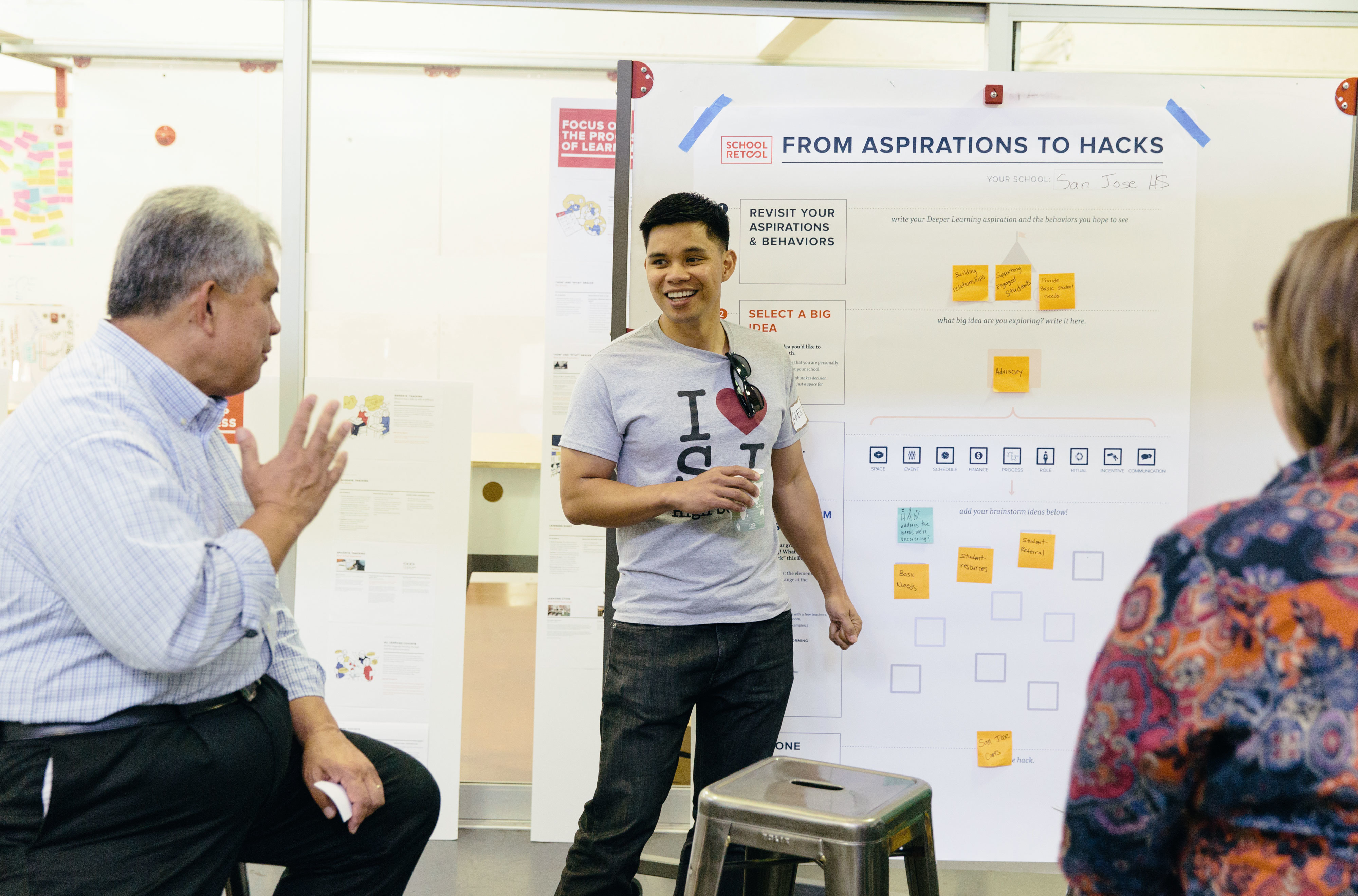
But given the right tools, school leaders can be the key to bringing this much-needed change to their schools. Knowing this, The William and Flora Hewlett Foundation partnered with IDEO and the Stanford d.school to create School Retool, a four-month-long professional development fellowship that trains principals to take a do-it-yourself approach to school change by conducting small, scrappy experiments called “hacks.”
The best part: They use the resources they already have available to address their schools’ needs now, without waiting for external funding or assistance. School Retool is available to principals at public schools where 60 percent or more of students qualify for free and reduced lunch, which is a common measure of poverty. The School Retool program provides research-based strategies for improving student outcomes, as well as training and one-on-one coaching on how to redesign school culture through easily achievable changes.
A Scaled Approach
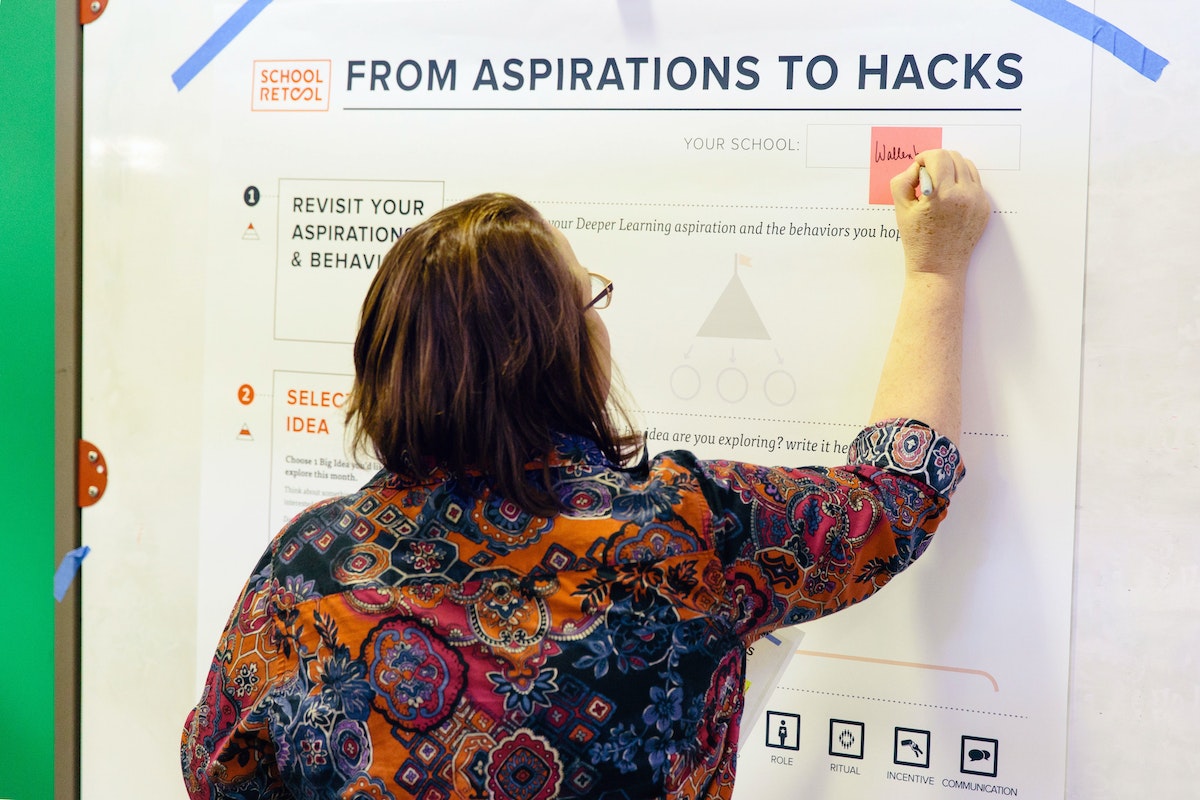
School Retool addresses a common challenge in creating change across schools: Each school has its own people, culture, and needs, so programs need to be flexible. The fellowship helps school leaders define their aspirations, and provides them with inspiration through “Big Ideas” that have proven to be successful in different contexts in education. It then supports them to start small with hacks that help them learn how to implement these ideas in their own school. The program scales through regional cohorts of principals who learn from each other as they go through a process of setting goals, designing hacks, reflecting on the learning and progress, and making improvements to the next iteration.
Small Steps Toward Big Change
As School Retool has rolled out at schools across the country over the past two years, it’s becoming evident that small changes are adding up to major progress, and that the small hacks approach is helping leaders go from planning to doing. Take, for example, Marthaa Torres, the principal of a low-income San Francisco high school who started with a small experiment with one struggling student, trying to create a more personalized learning plan for him. “The hacking approach is a framework that will help me eventually get to the kind of school that I’m trying to create,” Torres said. To build on the learnings of her “hack,” she created and expanded a personalized coaching program for the student’s peer group of older Latino boys. Her goal is to roll out additional advisory support in the next school year. What started as a “hack” to give agency to a single student is beginning to affect the school-wide culture by incorporating student voice into decision making.
Creating a Movement
The School Retool fellowship launched in 2015 with a pilot for 16 principals from seven San Francisco Bay Area school districts, reaching more than 12,000 students. School Retool has since hosted cohorts for school leaders in Washington D.C., Detroit, Virginia, Idaho, and Colorado. By the end of 2016, 164 school leaders of over 114,000 students had participated in the fellowship program.
In addition to the in-depth work with school leaders, School Retool is creating a national dialogue around change in schools. Its first national effort drew more than 1,500 principals in the Shadow A Student Challenge, who spent a day walking in students’ shoes to build empathy and gain insight into their students’ school lives.
Learn more about how more school leaders are enacting change: bringing a sense of true belonging to a school’s culture; engaging students as active learners; hacking towards literacy; retooling for equity; and more.
WATCH: Marthaa Torres: Adopting a Hacking Mindset on Vimeo.
Modernizing the next-generation View-Master
Designing a new virtual reality case for an iconic toy.
Remember your first View-Master? The sound and feel of that iconic camera-snapping motion, the excitement of seeing those vivid images in the form of your own personal slideshow? Introduced in 1939, this stereoscopic toy brought beautiful landscapes and famous attractions to the eyes of kids around the world.
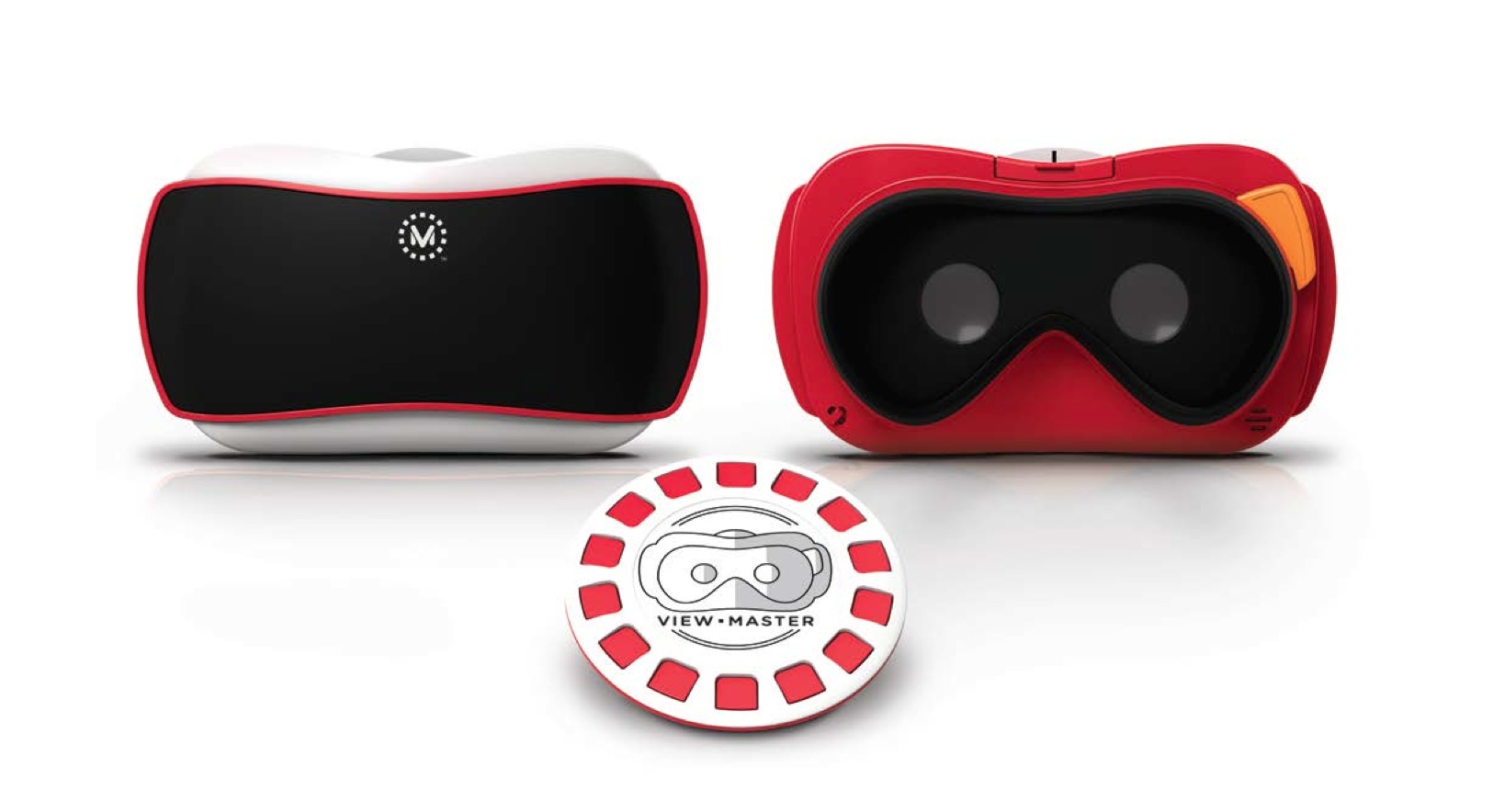
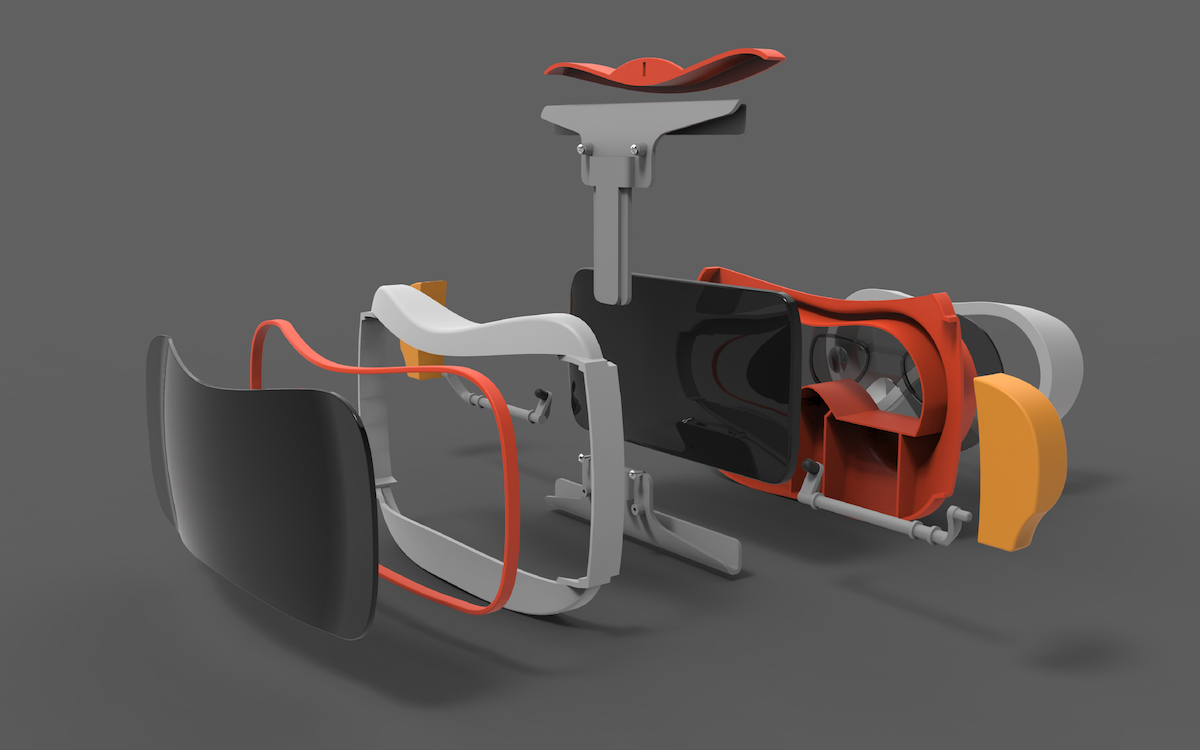
Flash-forward more than 75 years, and the View-Master has been reincarnated to spark that same sense of wonder for the digital age. The redesigned model, the result of a project collaboration between IDEO and Mattel, is a modern case that bridges technology with play. The new View-Master preserves the classic features of the original toy, such as the original lever and wheel, but offers a much more immersive, 360-degree virtual experience.
Here’s how it works: Download the View-Master app and slide a smartphone into the sleek new red-and-white headset. From there, the phone’s camera will scan the QR codes on the reels to view a wide variety of images, such as wildlife, outer space, and a dinosaur landscape. Two slightly different images are displayed side by side on the device's screen. As each of your eyes looks at just the image directly in front of it and tries to reconcile it with what the other eye is seeing, a 3D effect is created. By moving your head around with the viewer over your eyes and taking advantage of the sensors within your phone to sense direction and position, you can travel through each of the scenes, exploring each of the different settings.
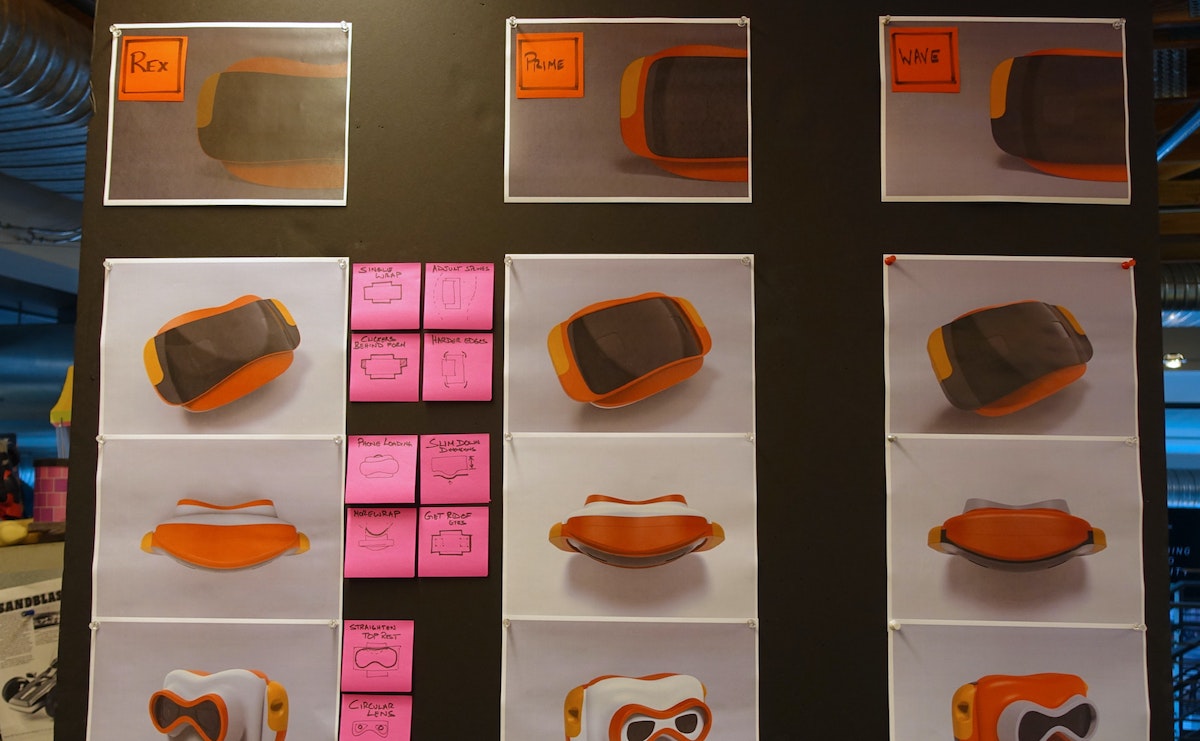
After working alongside Mattel to understand the heritage of the View-Master brand, researching the potential for VR and play, and exploring a variety of materials for the new device, designers created several prototypes that they tested with their core market: kids. As a result, the final design accounted for things like whether it could pass a drop-test or fit into kids’ hands.
Beyond the joy of pure play, the technology that powers the new View-Master also opens up a new world of possibilities for learning. Imagine turning a page in a textbook and seeing dinosaurs come to life. Or a virtual tour of an art museum through a set of View-Masters.
"We view this as just the beginning," said Doug Wadleigh, a Mattel executive, in an interview with CNET. "Obviously, we're getting in this space pretty early. The goal is to create the View-Master brand for the next 75 years."
Orchestrating a genetic symphony
An interactive TED exhibit that turns genes into music to spark conversation about personalized medicine.
Genentech is a biotech company that tackles difficult-to-treat medical conditions across the globe by creating innovative treatments. As a sponsor of the TED2012 conference, Genentech approached IDEO to partner in creating a “social space” for the TED exhibit hall that would captivate participants in an interactive brand experience and garner excitement around the future of personalized medicine.
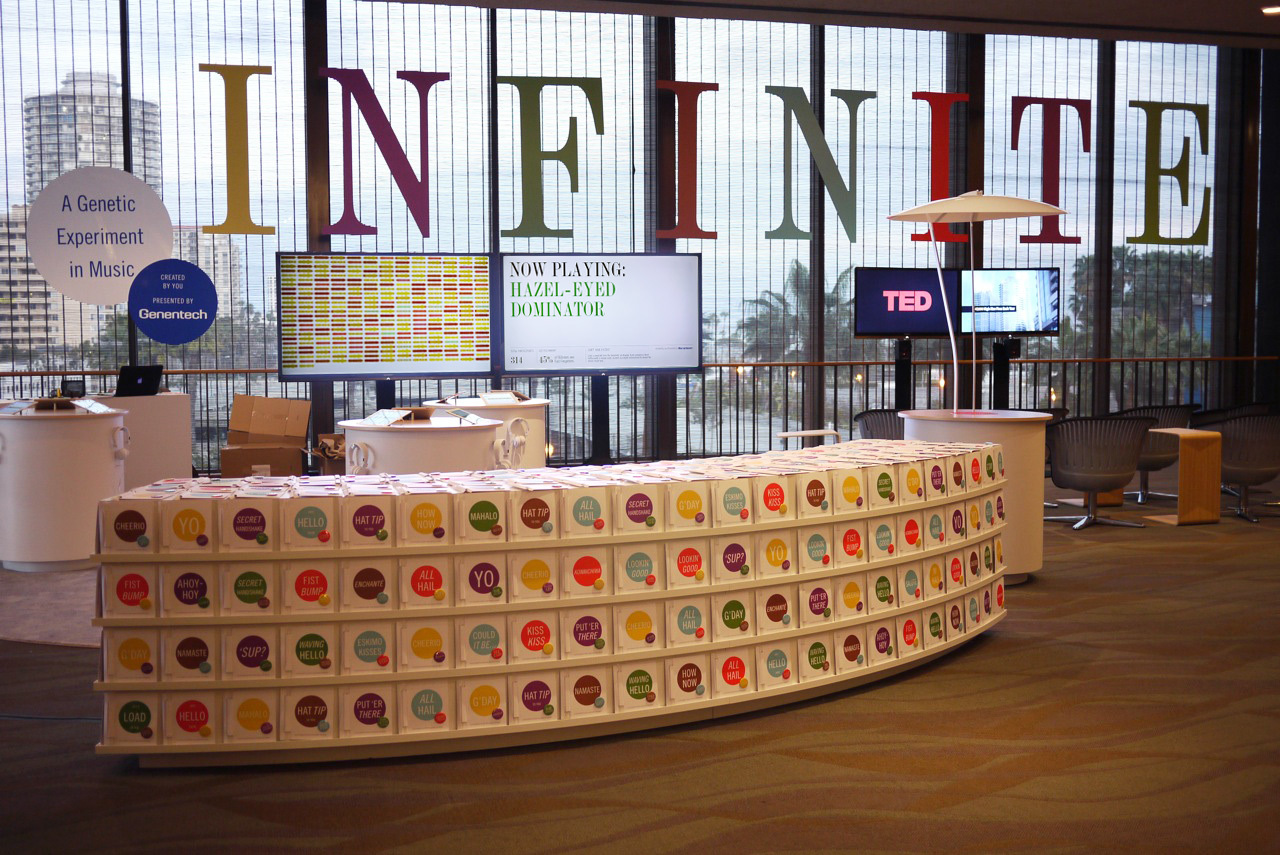
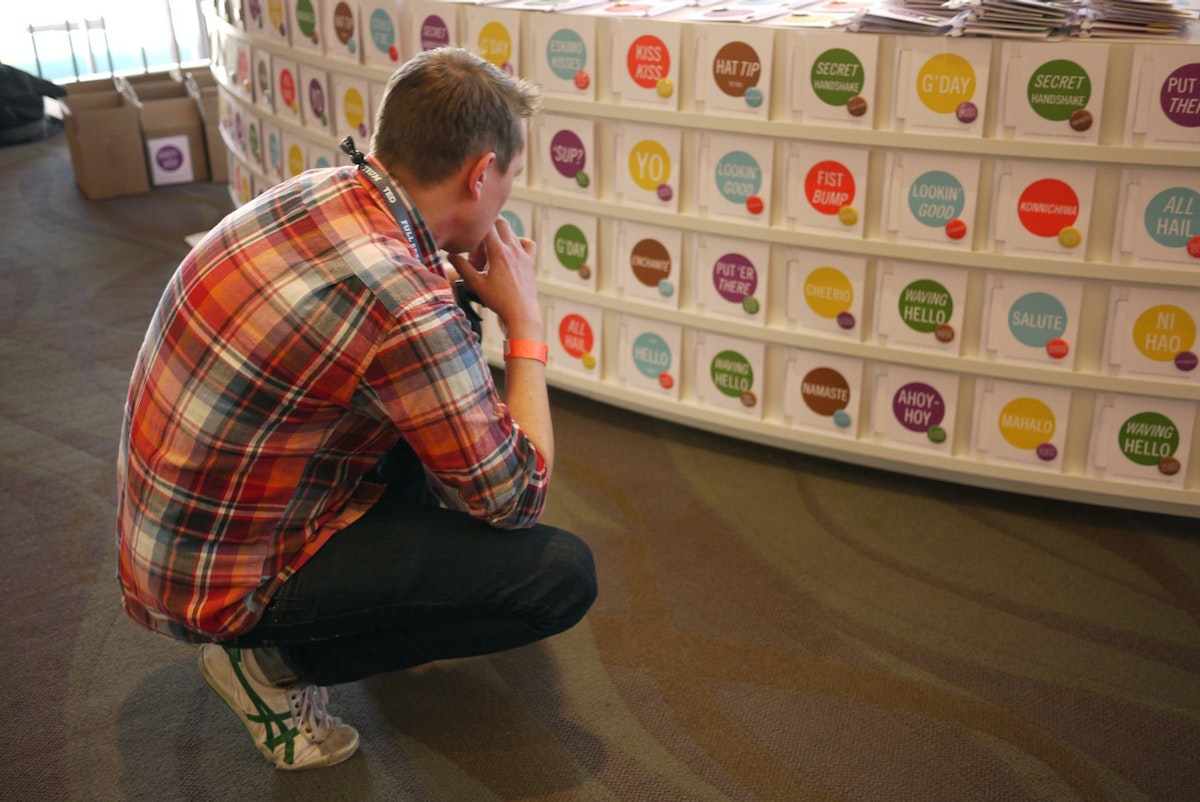
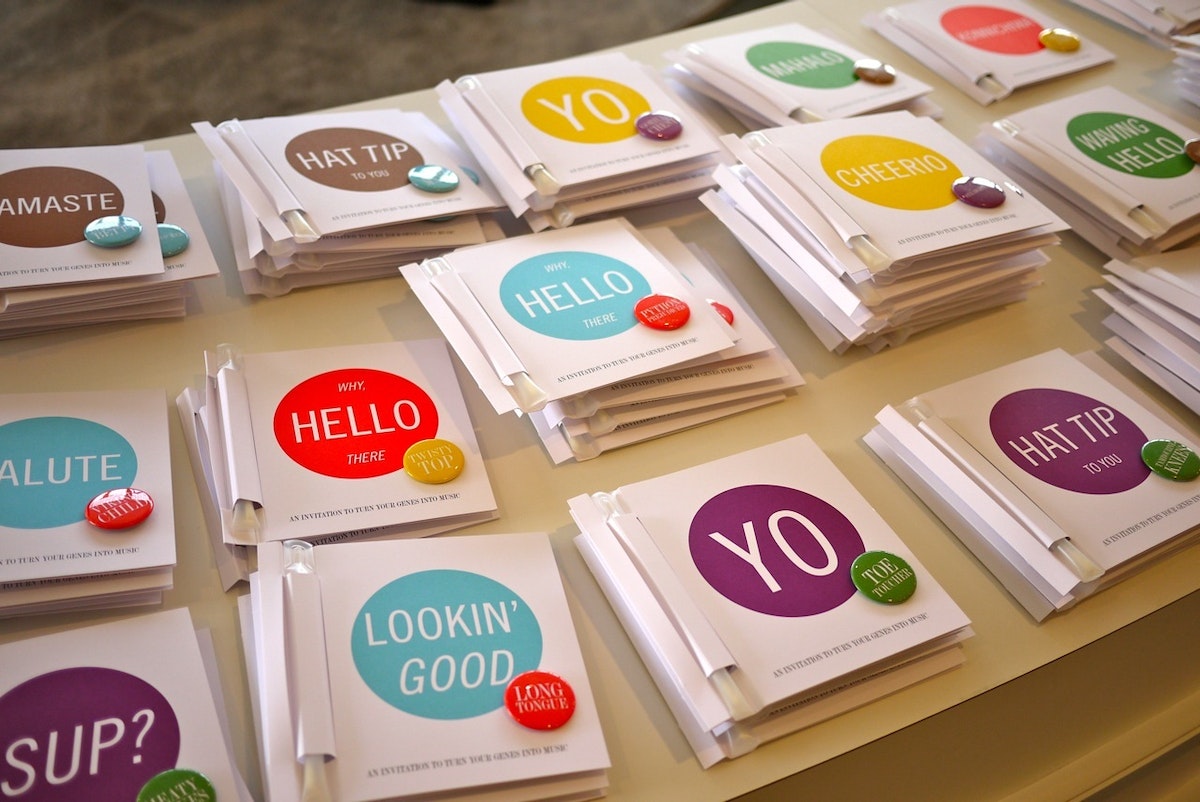
To make leading-edge science more accessible to the masses, the team landed on an exciting new provocation: What if we could turn genes into music? IDEO worked closely with Genentech to develop an immersive genetic experiment that could incorporate traits of the TED community, using the company’s brand new technology for overnight gene analysis. A TED participant would choose a colorful trait pin packaged with a cheek swab kit and corresponding barcode, allowing them to leave a genetic sample one day and return the next day to discover that four SNPs of DNA had been analyzed overnight and translated into a unique musical track.
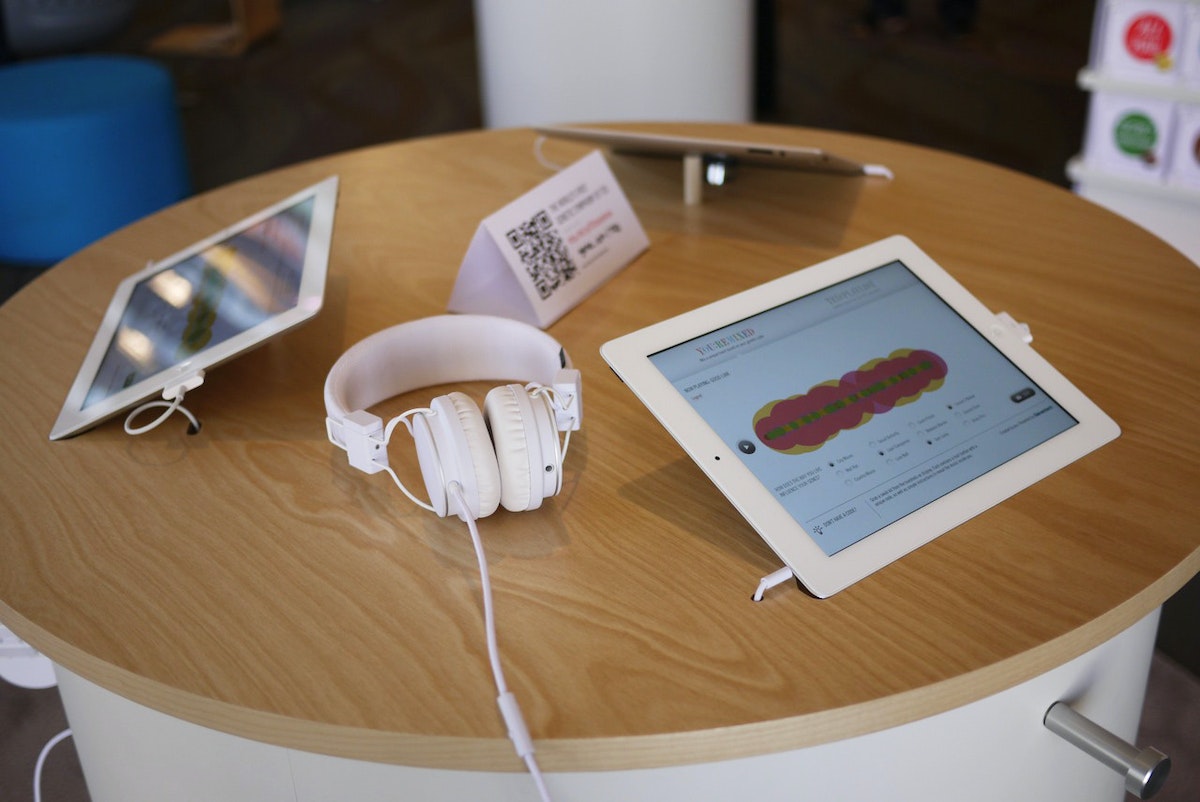
The IDEO team developed the concept, prototyped it with scientists, musicians, and sound engineers, and designed every element of the physical and digital experience—from the swab kit and packaging, to the built space and listening stations, iPad app, and other digital touchpoints. At the heart of the experience was music, including an algorithm that could generate 6500 unique musical combinations to reflect the genetic diversity of the TED participants.
Genentech’s “Infinite Variations” exhibit at TED2012 created the world’s first genetic symphony, an innovative and colorful blend of science and music. With the exhibit, Genentech sparked novel, approachable conversations about the role of genetics in medicine.
Of the 1850 attendees, over 1100 joined the genetic experiment in music and walked away with a new understanding of personalized science—and of their own genetic makeup.
Healthy lunchbox foods that are good for the planet
A conversation with Megan Miller, cofounder of Bitty Foods.
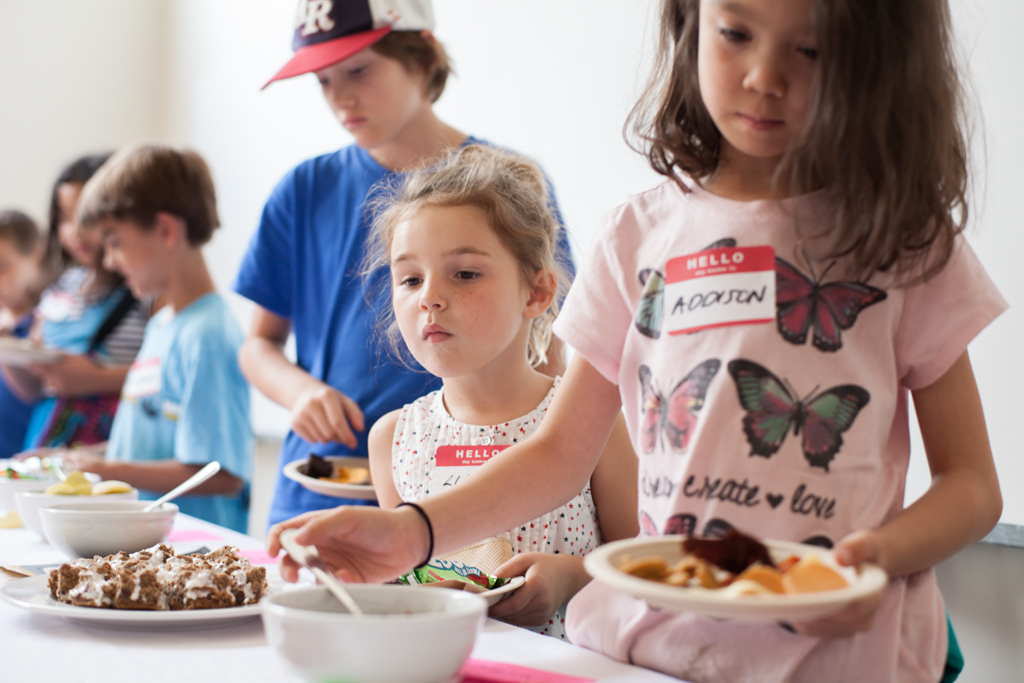
What happens when you serve kids food made with cricket flour? And what do parents think? That’s what IDEO and Bitty Foods sought to learn during a collaboration to explore new kinds of lunchbox foods as a means to discover opportunities for alternative sources of protein.
We talked to Megan Miller, cofounder of Bitty, the Bay Area startup that makes delicious foods with cricket flour, about the collaboration.
Listen to the full audio story below, or go to Soundcloud.
Why You Should Start Prototyping—Right Now
How early prototypes can kickstart your project
With this in mind, we selected key interaction moments from our client's current product. Then we prototyped three distinct new directions—usability experiences we were excited to bring to their industry. These experiments, we hoped, would spark an early conversation that was less about “we need to do this” and more about “what if we do that?”
Kickoff day arrived and we shared the prototypes with the client.
Cue uncomfortable silence.
Then, finally, one of the executives exclaimed, “This is mind blowing! This could be the future of our product.” He was not applauding the user interface or visual style we used to illustrate our idea, but the essence of what the experience did for him. An excited conversation followed and he wanted to share his own design ideas.
It doesn't always go this way. Early prototyping entails plenty of risk, too. What if you've been blind to user needs? What if the client just doesn't see the magic?
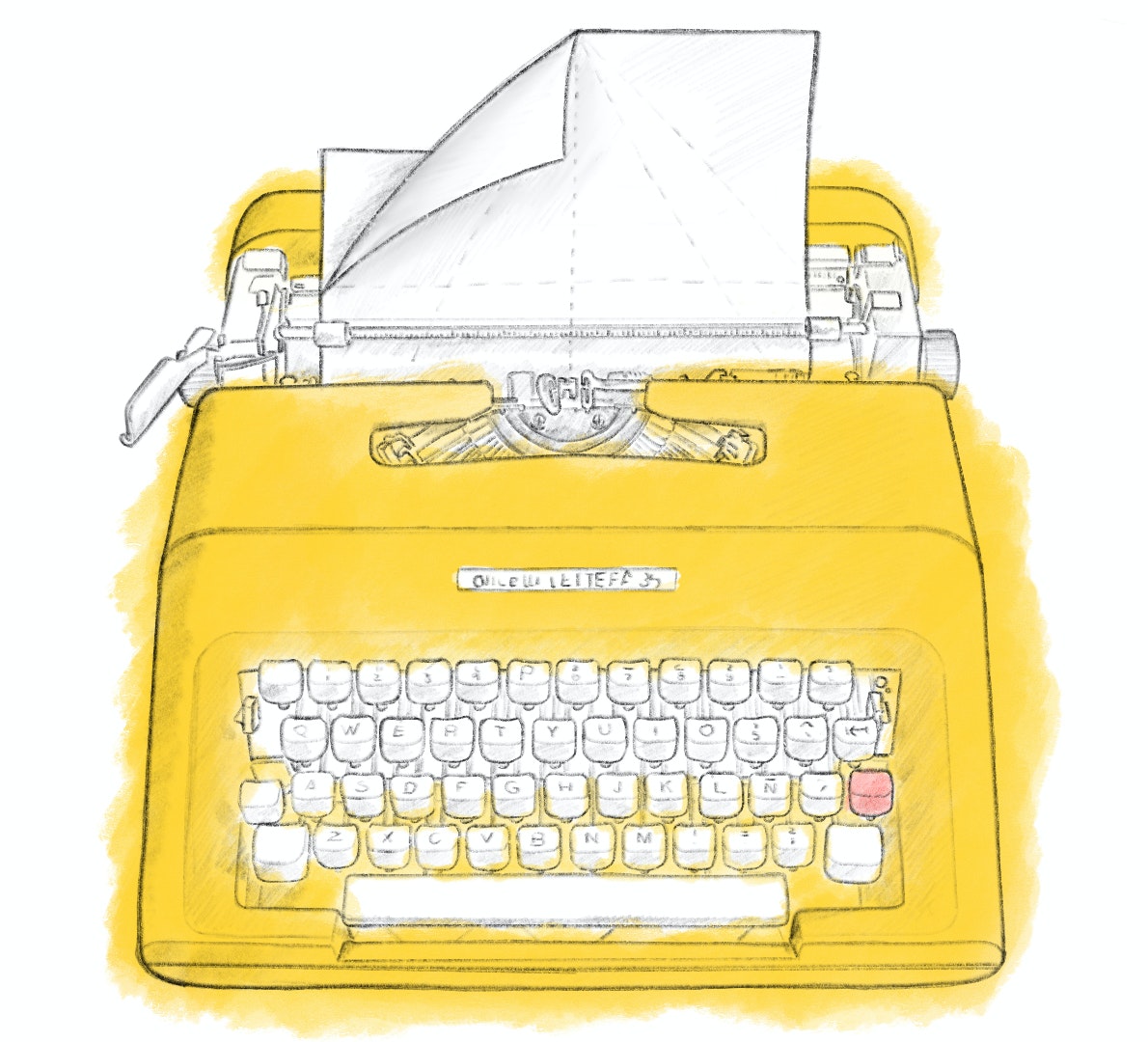
Here are 4 steps you should consider when creating early prototypes:
1. Take advantage of your fresh perspective
Before diving into industry or product constraints, take a step back and imagine if there were no limits to what you could design. What would that look like?
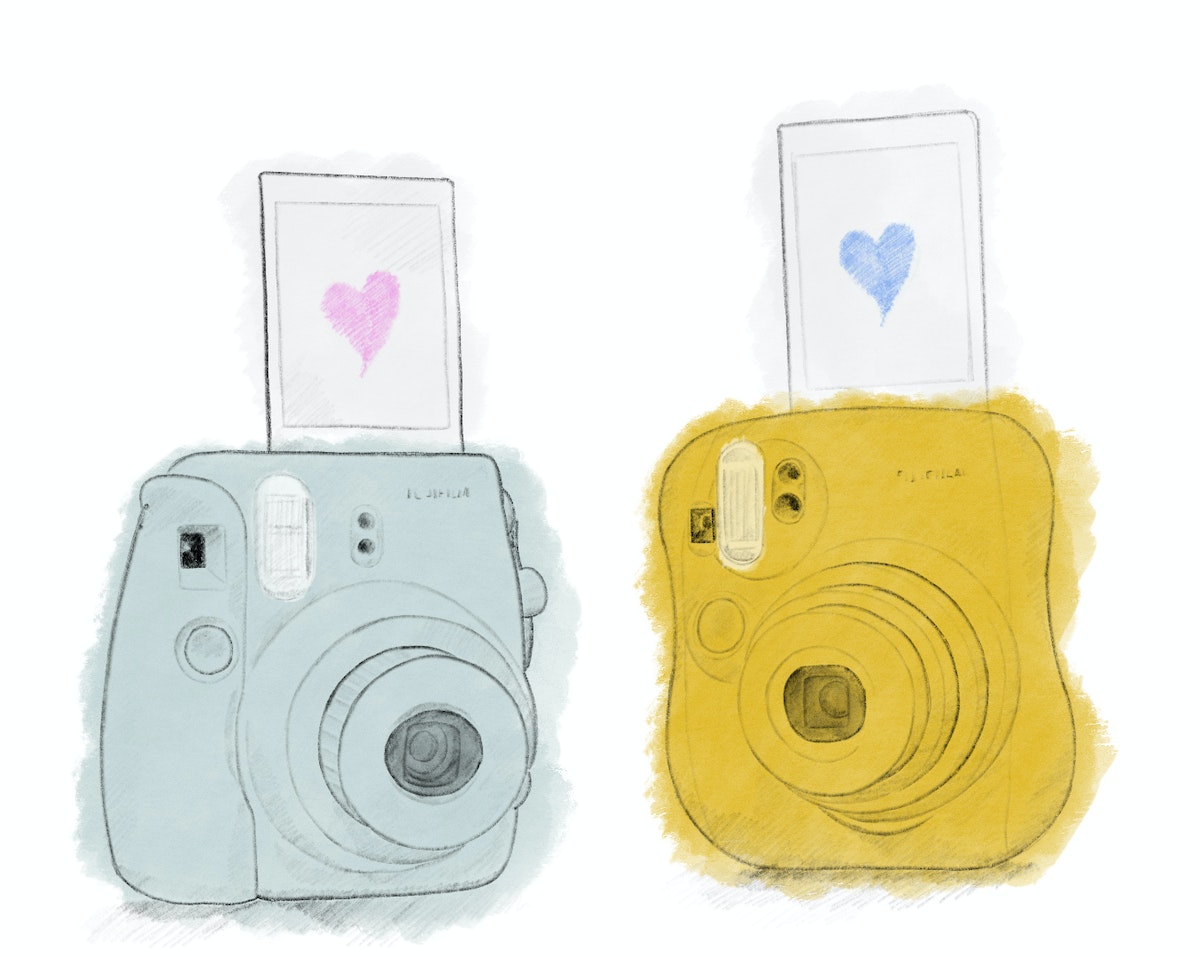
2. Identify what excites you and the team
What personally inspires you to be on this project and how can that be translated into the experience? Don't over think it. Take one key interaction from the current experience and add something unexpected to it. This is an opportunity to test initial assumptions with a beginner’s mind and generate radically new ideas.
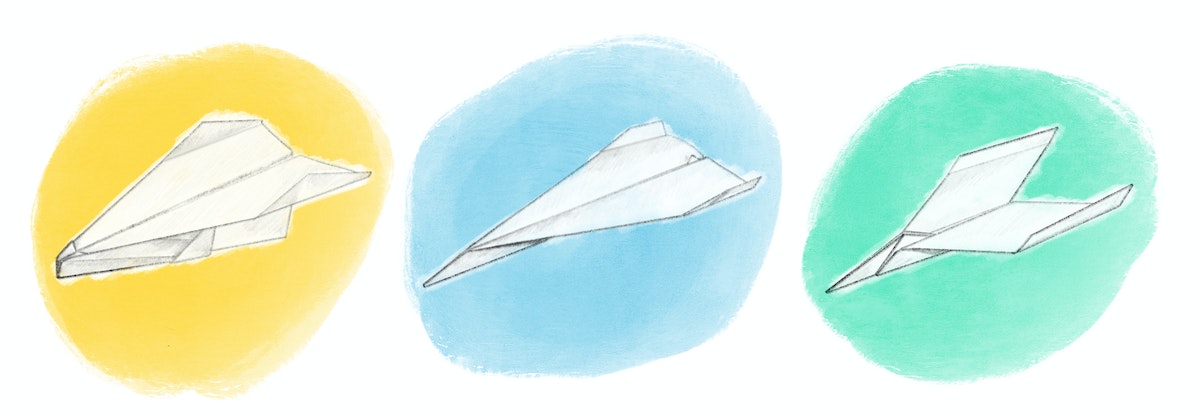
3. Translate your excitement into prototypes (with content your client understands)
Use your client's current product content as a starting point. Having something they can easily recognize and understand is a great way to bring them into a design conversation. Don't think about creating long flows at this early stage. Imagine your prototype as a teaser to a product that is about to come to life and focus on key interaction moments.
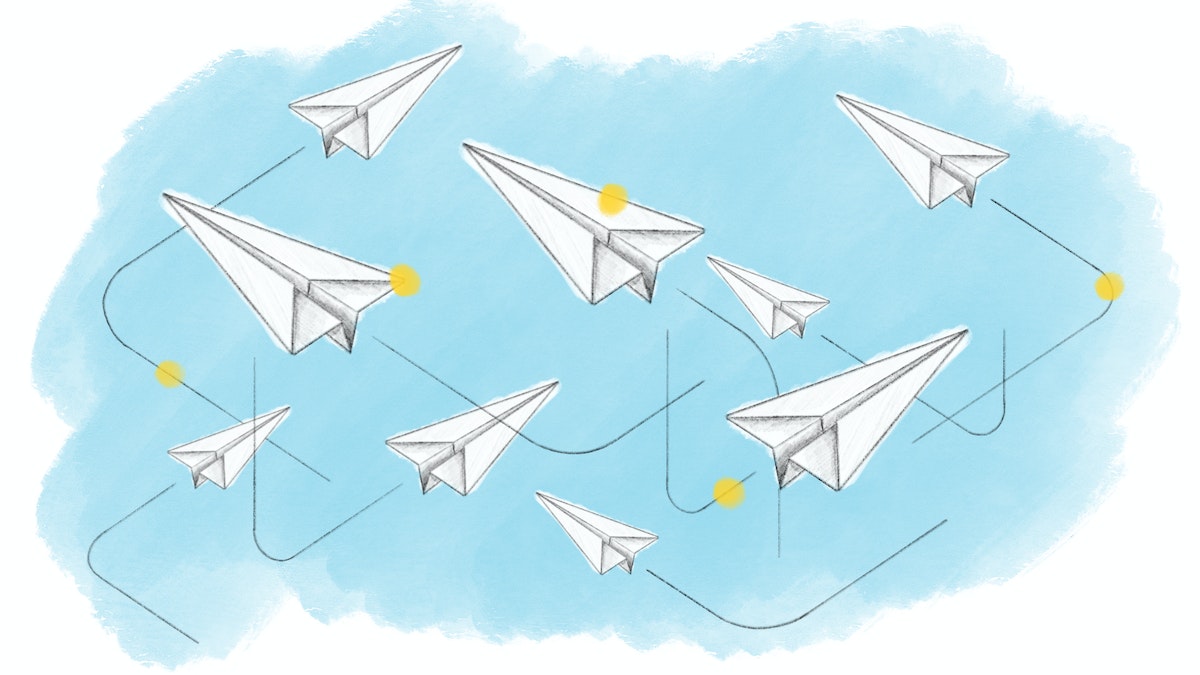
4. Highlight where your client sees design opportunities
Quick prototypes are a great way to tackle hopes and fears and learn, from a usability point of view, where your client sees design opportunities at a very early stage of the project—so you don't head off in the wrong direction.
And above all, remember: A sense of excitement and momentum shared by you and the client on the very first day gives your team an important confidence boost. It helps set expectations, and gets everyone inspired to push to a new level.
For a recent design project, we decided to try something new. We were tasked with rebuilding a product experience, but instead of starting with our usual process where we gather inspiration, we thought: What if we share a prototype we are really excited about with the client right away? Just jump in.
Meet the Sisters Behind Block Shop
There are creative crushes, and then there are girl crushes. This qualifies as both.
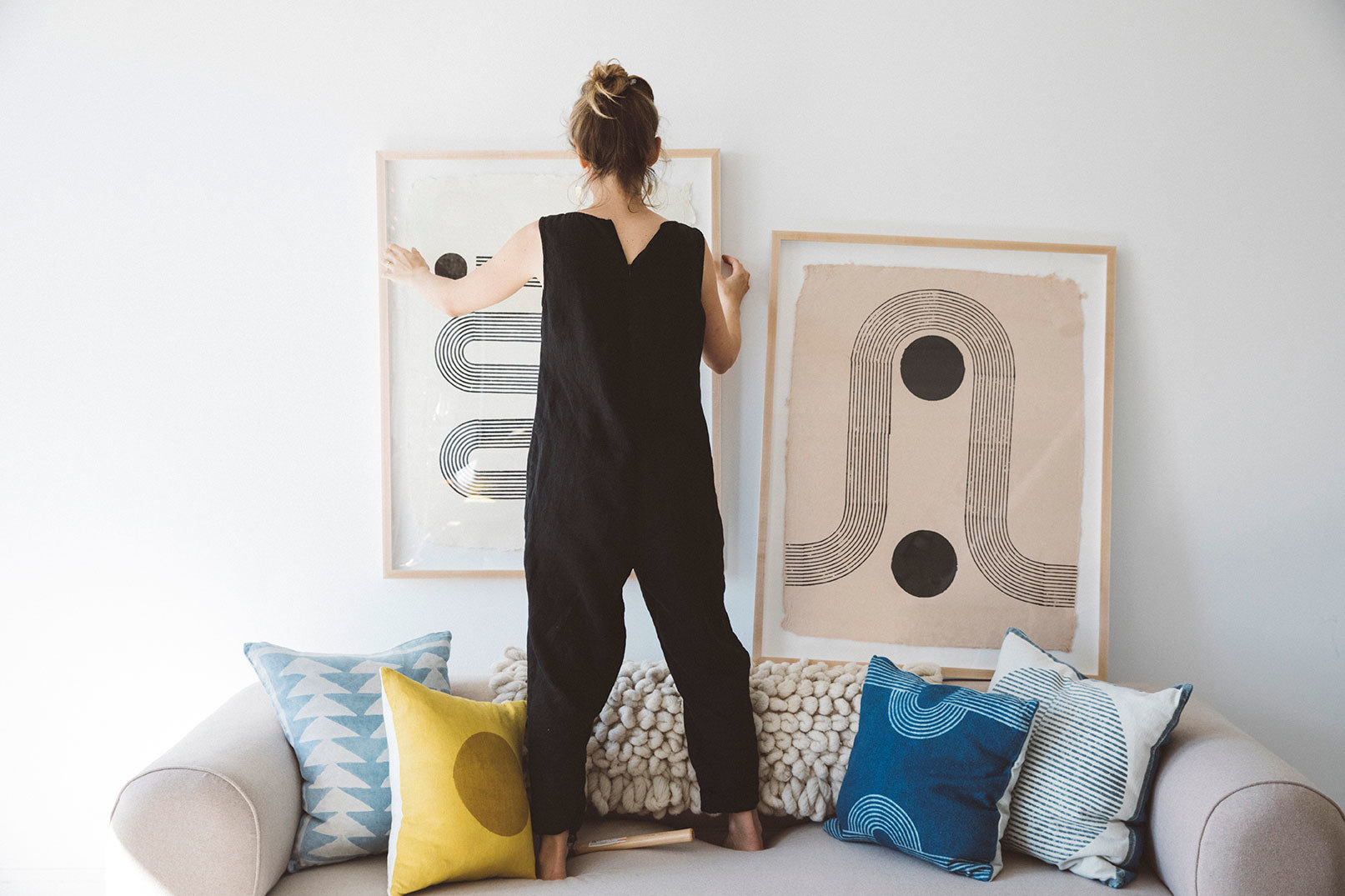
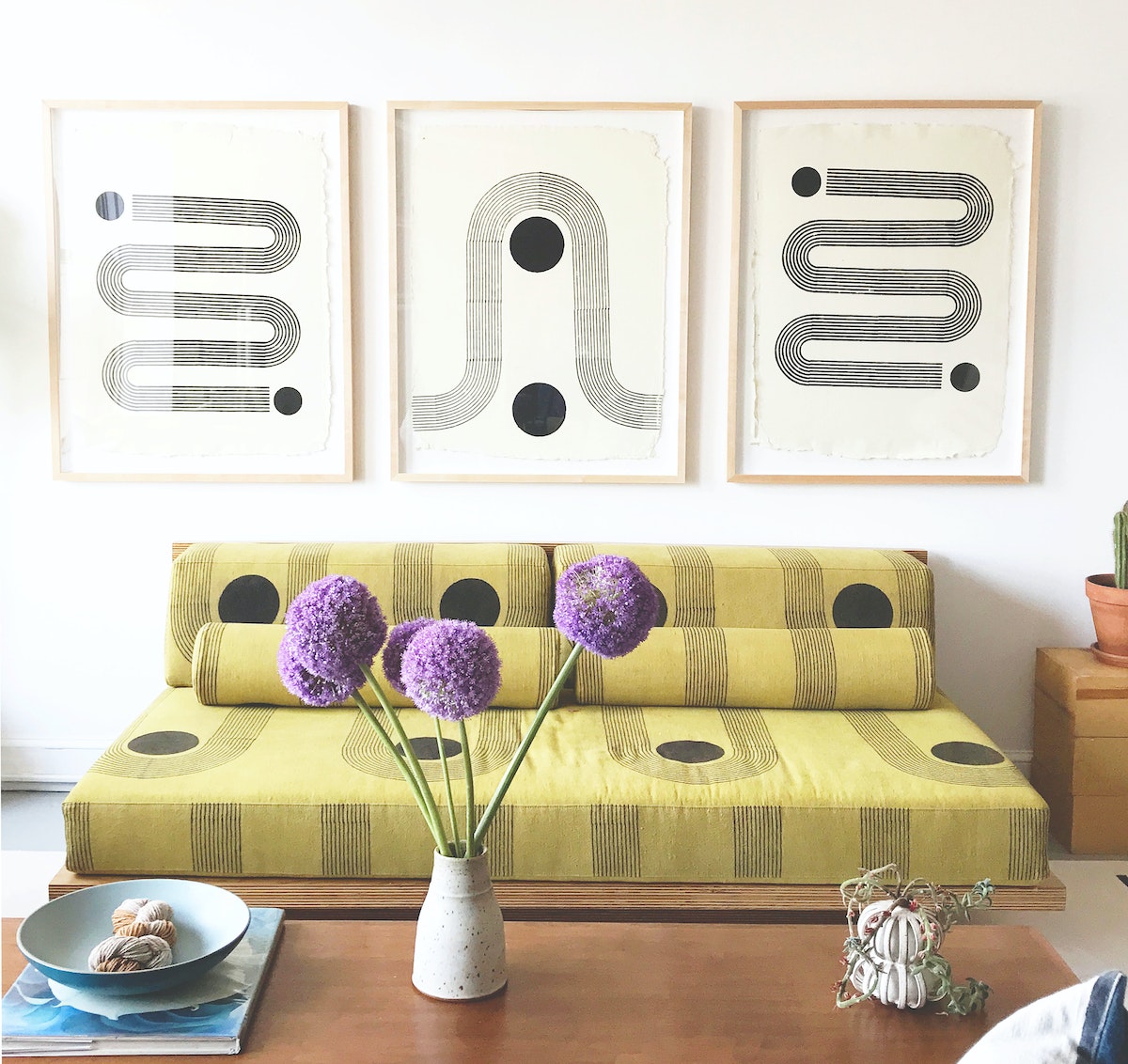
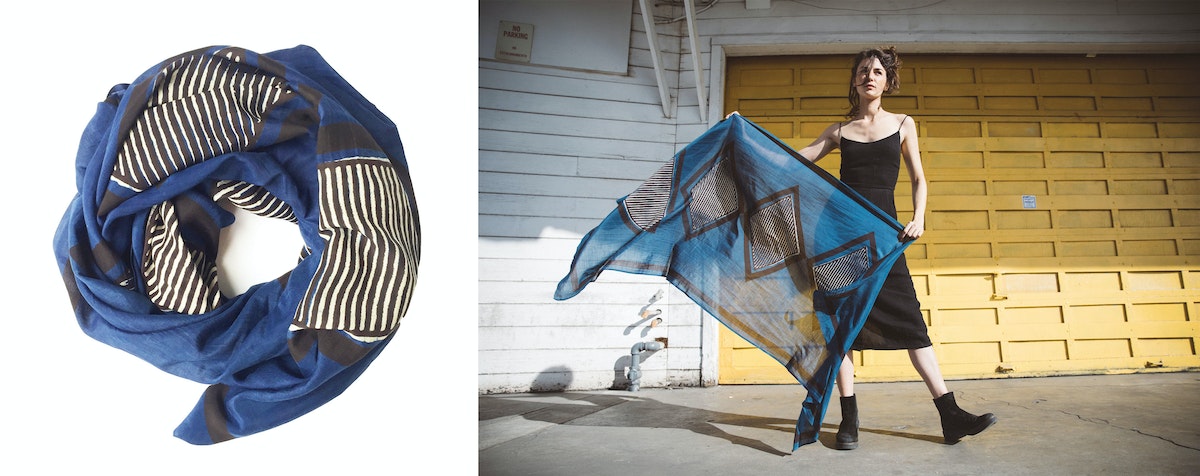
While beautiful textiles (and now prints!) are Block Shop’s most recognizable output, there’s a good deal more going on behind the scenes. The duo created Block Shop in partnership with a family of printers and dyers in Bagru, Rajasthan to keep the artistry and craft of Indian block printing alive. (They donate five percent of their profits each year to building and implementing community healthcare programs.) If their reverence for craft and respect for humanity isn’t enough to make you weak in the knees, this interview should do it.
In one sentence, who are you?
Hopie Stockman: Josephine March with an MBA.
Lily Stockman: Gertrude Bell on a camel after too much coffee.
What do you do? How did you learn it?
HS: I run Block Shop—a textile and design studio—with my sister, Lily. In reality, I work seven days a week, but five of them take place in our 11th floor downtown Los Angeles studio. I design everything from rugs to public murals to business strategy and Grand Central Market lunch orders for Block Shop.
We both went to grad school; I went for for business and Lily for painting. Rather than dividing our work rigidly between business and creative, we’ve found that it works best when we share responsibilities.
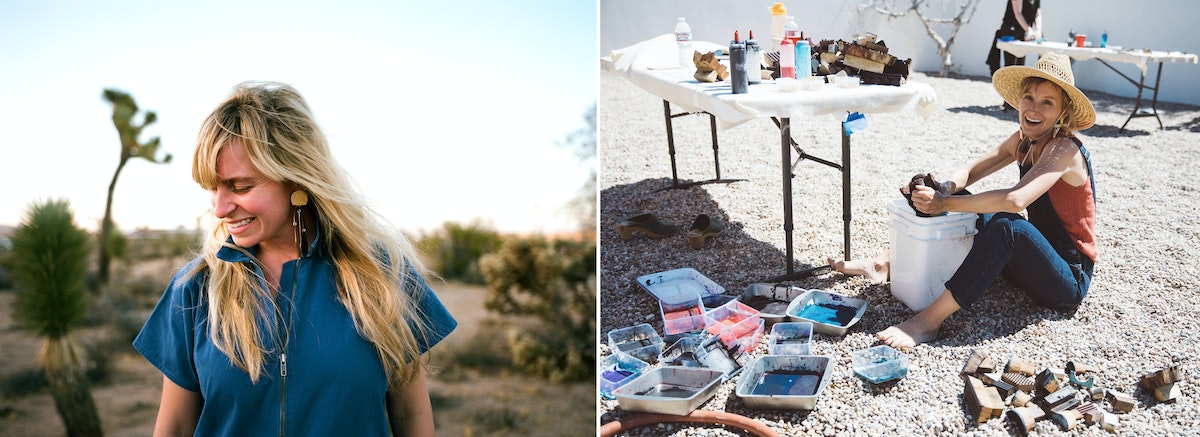
A lot of our education happens in Jaipur, India. In 2010, Lily was living in there and apprenticing under master Indian miniature painter Ajay Sharma when she first met our printers. Since then, we've gone back to Jaipur twice to year to work with them on new designs and products. Everything we know about wood block printing we've learned on the ground while prototyping with our team, lending a hand in all aspects of the process, from dye-mixing to block registration on the fabric.
On the business side, the most valuable advice has all come from the (mostly) women running their own small and successful businesses here in LA. For example, our friend who runs a candle company helped us build our wholesale strategy. When we started out, we thought we wanted just a few huge department store-style accounts to streamline our operations and provide reliable cash flow. She helped us to understand the marketing power of wholesale: that smaller, well-aligned shops could be better storytellers and champions of our brand, and likely wouldn't discount as aggressively.
Another friend who has an independent furniture line shared invaluable advice on how to collaborate with large companies, emphasizing the importance of control over the design and fabrication process. Megaretailers actually need the cool factor of small, independent brands in order to be relevant. The question for small brands is whether the paycheck and promise of exposure is worth the potential chargebacks, brand dilution, and even customer alienation. For us, we've learned that it doesn't work unless we're making the products ourselves and have control over the storytelling.
What are your 3 favorite possessions?
HS:
- Otto, our bearded mutt.
- A painting of a rabbit that my great grandfather painted 60 years ago.
- The Kishore Kumar Bollywood poster that my now-husband and I bought together at the Chor Bazaar in Mumbai, when we had only been dating a few months. It sort of signified that leap into a shared life—jointly owning things.
LS:
- My baby Olympia.
- My dog, who I bought from the pound for $85.
- My gold bangle bracelets given to me by our surrogate grandmother, collected from her travels around the world.
What does a typical work session look like?
LS: On design days, we hide our laptops and put the screens away. No phones, no nothing! Out come the old art books on Anni Albers, Arp, Matisse, and Sheila Hicks. We put some Grateful Dead on, get the watercolors out, and swap sketches back and forth across the table. The result is so much better when we do it together. We’re always improving each other’s work. We try to design like this for two-to-three hours once a week, which is pitiful, but that’s the reality of running a small company; the actual drawing sessions take up only a small percentage of our time.
When it comes to our work, we have a simple design rule: Everything Block Shop touches must hold up as a holistic composition. That means it needs to have balance and a sense of quiet. My favorite painting teacher said, "You know a painting is done when it's quiet. Nothing on the canvas is yelling at you." And if it doesn’t look good hanging on the wall, then it doesn’t go into production.
How do you get over creative block?
HS: Take Otto for a walk past the old movie palaces in downtown L.A. to remember that inspiring design lives everywhere in architecture. On a recent prototyping trip to India, I started panicking that we’d exhausted all geometric patterns—THAT’S IT, WE’RE FINISHED! WE’VE USED EVERY ITERATION OF CIRCLES AND TRIANGLES! Then we went for a walk to get chai with our sketchbooks in hand, and boom! All sorts of ideas emerged from the marble latticework and archways in the old city. We simply needed to look.

What was the last item on your to-do list?
LS: Plan a Texas road trip starting in Marfa, where our friends run the El Cosmico.
How do you see the world in 2078?
HS: A degree or two warmer. Governed by data and manufactured by robots, with no boundaries between advertising, entertainment, and politics. Hopefully, I’ll be with the people who’ve returned to hands-on, empathy-based, slow living….off with my grandkids somewhere outside making pinch pots.
What's your number one bucket list item?
HS & LS: Design a boutique hotel.
Who are you creative crushin’ on lately?
HS: Katja Blichfeld, co-creator of High Maintenance. (If you’re out there, hey.)
There are creative crushes and then there are girl crushes. This qualifies as both—squared. Sisters Lily and Hopie Stockman are the founders of Block Shop, a textile company based in Los Angeles and Joshua Tree. I discovered Lily and Hopie a few years ago through an online web of women makers, and have been feverishly following their work ever since.
Your Daily Creative Challenge
A few snaps can catalyze a chain reaction of curiosity
As a Third Culture Kid, I took pictures to trace my changing worlds. These days, capturing and reflecting on images is how I feed my sense of wonder. This creativity challenge uses a dash of intention to keep your curiosity engaged throughout the day.
1. Morning Capture
In the morning, take a picture of something or someone around you.
Make a mental note of why you photographed the subject. What caught your attention? Then, examine the image. Identify one element or aspect of that image that strikes you. It can be anything—an object in the frame, a color, a texture, a mood. What sparks your curiosity? This is the kernel of inspiration for the next picture you’ll take in this short series.
Write down and complete this sentence: In my next picture, I’m curious about exploring ______.
2. Midday Capture
In the afternoon, take a picture inspired by the kernel of inspiration you wrote down earlier and reflect on what you appreciate about this new capture. Then, look at the image, studying it to identify a new kernel for the next picture you’ll take.
Write down and complete this sentence: In my next picture, I’m curious about exploring ______.
3. Evening Capture
In the evening, take a picture inspired by the kernel of inspiration you jotted down in the afternoon.
Then, look back at the first and last images you captured. Compare them. What’s their relationship to one another? What do you make of their juxtaposition?
Did your curiosity take you far from where you started? Did you circle around a single idea? What does that say about you in this moment of your life? Even if the setting didn’t change much, noticing details in your everyday environment can be a worthwhile exercise—especially in an era of selfies.
I hope this challenge was an easy way to observe what's around you. It can also be compelling if done over a week or month. Instead of taking multiple pictures in one day, take one picture per day and identify a kernel of inspiration to steer your focus for the photo you snap the next day, and repeat. Compare your first image with your very last, and reflect on the journey.
One last provocation: Pass this creative challenge to someone you know. Just copy and paste the instructions and, in the spirit of generosity, give them your last image to help inspire the first image they might take—like a visual chain letter.
Creativity isn’t a state of being—it’s a practice. So Fast Company created a 14-day challenge, tapping some of the most intriguing and productive minds in their community to provide exercises to help their readers reach their creative potential. One of their contributors is our own Roshi Givechi, partner and executive design director at IDEO New York. Here’s her recipe for discovering inspiration in the every day.

5 Things My Startup Taught Me About Design
What I learned from developing my own product
I came up with the concept years ago, when I realized that I had grown up so dependent on Google maps in London that I could barely recognize a street two blocks from my house. I’ve always liked to do mental exercises, pinpointing different places in the world I wanted to visit, or figuring out which direction I would need to go to get home.
IDEO projects rely on a brief and constraints. But I decided this project would be boundless. I wasn't going to rely on it financially, so I could take risks and experiment without worrying about money. It would also put me in the shoes of the very people for whom I often design. We work with startups a lot, so building my own to learn the struggles and nuances of a project like this would give me insight into what founders go through.
Over the last couple of years, our team has had many failures and successes. We’ve learned that it’s tough to keep a team motivated to work on a side project. We managed to build the prototype and the campaign in a very short time, but when the harder, darker part of the development began, momentum slowed and problems took longer to solve, causing delays.
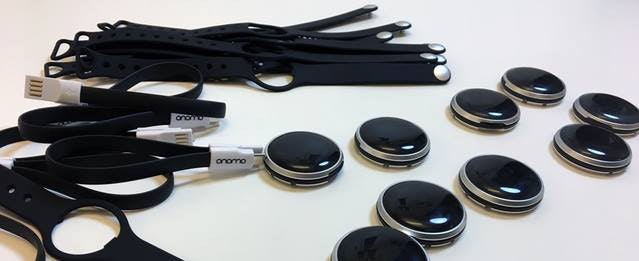
Today, we are four weeks away from shipping the first units, and have around 2,000 people waiting for Haize to arrive, so I answer a ton of questions by email every day. No matter how good your intentions, there will be both positive and negative feedback.
Here’s what I have learned—and relearned—from this startup phase:
- It is all about the team, and users are part of that team. Make sure to consider them as you make decisions for your company and your product.
- Coming up with an idea is fun, but actually figuring out how to make it work is longer, harder, and darker. Get ready for it.
- Show your face. Revealing the people behind the work gives the project and services a deeper dimension.
- Storytelling can be as important as the product itself. It keeps the team excited, leading to better and more efficient work. It also helps users feel more personally involved in the process and the product.
- Mike Tyson said, "Everyone has a strategy until they get punched in the nose." Many of your strategies will probably fail. It’s a very humbling experience. But it helps you grow and learn.
Above all, though, this project has let me do something that is really important to me as an interaction designer: empower people with technology without substituting their own skills. Haize doesn’t tell people where to go—it just helps them find their way. To me, it’s a great metaphor for the work designers do everyday.
What have you learned from your side project or startup? Reach out to IDEO on Twitter.
When I learned that I would have to wait for a visa before starting my job as an interaction designer at IDEO, it felt like the perfect moment to do something I’d always wanted to do: develop a product from initial concept to final production and delivery. I went after an idea I’d had for a long time: A smart compass for bikes that points you to your destination, without giving you full-on directions. I named it Haize.

Lindsey Turner
I’m passionate about building brands, products, and experiences that help organizations show up with meaning and momentum.
I help organizations cut through complexity by shaping how they show up, through brand strategy, identity, and storytelling.
Working at the intersection of brand and business, I bring an editorial eye and a bias toward making—turning ideas into tangible experiences that people can understand, trust, and believe in.
My work spans government, healthcare, financial services, media, and consumer goods, from launching Gen Z-focused ventures to building innovation labs and reimagining legacy brands. I relish moments of ambiguity and enjoy translating across teams, perspectives, and priorities to move ideas forward.
I started my career in editorial and digital design, shaping cross-platform experiences and identity systems in publishing and agency environments. That foundation still shapes how I work today: I’m detail-oriented, collaborative, and overreliant on the Oxford comma. I hold a BFA in Visual Communication from the School of the Art Institute of Chicago.

Rachel Young
My work helps organizations see who their products aren't working for—and build the will and the tools to do something about it
For 25 years, I've asked the same question: Who does this design exclude—and what are we going to do about it?
My work spans human-centered strategy, inclusive design, and qualitative research, with clients ranging from Microsoft, Google, and Verizon to the National Science Foundation, and San Francisco Unified School District.
Before IDEO, I taught elementary school in East Palo Alto and spent a decade doing design work with social service organizations—where I learned firsthand what it costs people when systems are built without them in mind.
I am currently writing User Error, a nonfiction book about digital access and the design decisions behind it. I live in Oakland, California.

Brian Pelsoh
I lead with craft, ensuring our work is creatively excellent: rooted in deep human insight and imagination, while also grounded in the realities of business and technology.
My expertise spans brand, communication, and product design across tech, education, the arts, and social impact.
I believe great work demands both high-level vision and obsessive attention to detail, and only happens through collaboration.
I bring an inclusive, hands-on approach and a deep understanding of business, which enables me to consistently deliver excellence while always asking why.
Before joining IDEO, I worked at the brand firms Pentagram and VSA Partners. I began my career as a designer, leading teams at the School of the Art Institute of Chicago and the Milwaukee Art Museum. I hold an MFA in graphic design from Maryland Institute College of Art and a BFA in communication design from the Milwaukee Institute of Art & Design, and have taught at some of the best design schools in the US.

Tony Wong
I am responsible for IDEO’s long-term success in China and working with clients to use design as a tool to enable growth.
I am responsible for IDEO’s long-term success in China and working with clients to use design as a tool to enable growth. Specifically, I have helped Chinese companies design holistic brand solutions through the development of their products, communication, services, and innovation teams, and I have helped multinationals expand their presence and influence in China.
I advise global leaders on developing China-led innovation and capabilities.
In over 15 years in IDEO Shanghai, I have worked on projects that use design to elevate the quality of the experience of healthcare products and services, streamline processes that increase productivity, create spaces and programs that promote and enable inclusive communities, and build next generation mobility solutions that are planet-positive.
Before joining IDEO, I worked at Philips Electronics and the Electrolux Group in Italy, the Netherlands, and Singapore on a number of breakthrough commercial products. I am a member of the Young President Organization in Shanghai.

How to use AI as an editor, not a writer
Ed White shares how he uses AI as an editor—not a writer—to sharpen storytelling, rehearse ideas, and preserve the productive friction that makes creative work better.
Ed White has a rule he's tested on his own writing: hold yourself as the writer, and let AI be your editor. Ed is a Senior Design Director at IDEO's London studio, where he co-leads the firm's AI portfolio across Europe. Before IDEO, he spent 12 years as a writer and editor at the Financial Times, Wired, and Contagious. So when he talks about when to use AI for storytelling and when not to, it comes from two decades of crafting his storytelling skills.
In this episode, Mina Seetharaman talks with Ed about two specific tools he uses to keep AI in an editor's seat: a "roasting agent" prompted to critique his drafts without any sugarcoating, and a simulated audience he rehearses pitches on before the real thing. They also get into what Ed is hearing from design leaders at Anthropic, Lovable, Shopify, and Google Creative Lab about how creative work is changing, and why he thinks the friction of writing something yourself is worth protecting rather than automating away.

Building a personal AI for the messiness of life: Sida Li
Becca Carroll talks with Cue co-founder Sida Li about designing a personal AI for the messiness of everyday life—not just work. They explore how Sida stays anchored to human needs while navigating fast-changing technology, product tradeoffs, business-model experimentation, and the realities of building an AI company today.
Most AI products today are built for work—a space with clear problems and established systems. One founder noticed a gap: personal life is messier, harder to systematize, and mostly left behind by the AI boom. So she built Cue, a personal AI that lives inside iMessage and group chats, to go where the other tools haven't.
In this episode, Becca Carroll, IDEO's Chief Strategy Officer, talks with Sida Li, co-founder and CEO of Shared Context Lab, about staying anchored to a human need while the technology around her keeps changing shape, why she treats her business model with the same rigor she'd bring to a product, and what it feels like to build a company at this particular, disorienting moment in AI.
The conversation also gets into how Sida makes design decisions: the language Cue uses to describe itself, the tradeoffs behind building inside iMessage instead of a new app, and a real story about a business idea that didn’t pan out.
This is the second in a two-part series profiling founders from IDEO's Startups-in-Residence program. The first conversation is with Johannes Seemann, founder of Sooner, on designing GenAI for the emotional side of money.

Designing GenAI for the emotional side of money: Johannes Seemann
Designing financial tools around the feelings that shape money decisions.
Most personal financial tools are built to run the numbers and optimize towards a budget. While that works for some, most people experience money as a lived relationship that does not neatly fit into a spreadsheet. Johannes Seemann and Becca Carroll discuss why money is emotional before it is mathematical, and what a human-centered approach to building a generative AI financial product looks like in practice.

The curious leader's edge in uncertainty: Scott Shigeoka
How genuine curiosity helps leaders navigate uncertainty with greater confidence.
Mina Seetharaman talks with Scott Shigeoka, author of Seek and Head of Curiosity Cultivation at the Eames Institute, about what distinguishes genuinely curious leadership from performative curiosity, how power dynamics shape curiosity, and why practicing curiosity can restore energy rather than drain it.
Looks like you might be in search of something very specific?
Or reset the filters above and try another angle.
Here’s some random inspiration

Podcasts about creative leadership

Articles about the power of prototyping
