
.svg)



Smarter, safer, data-driven driving
Designing an AI-powered dash cam system.
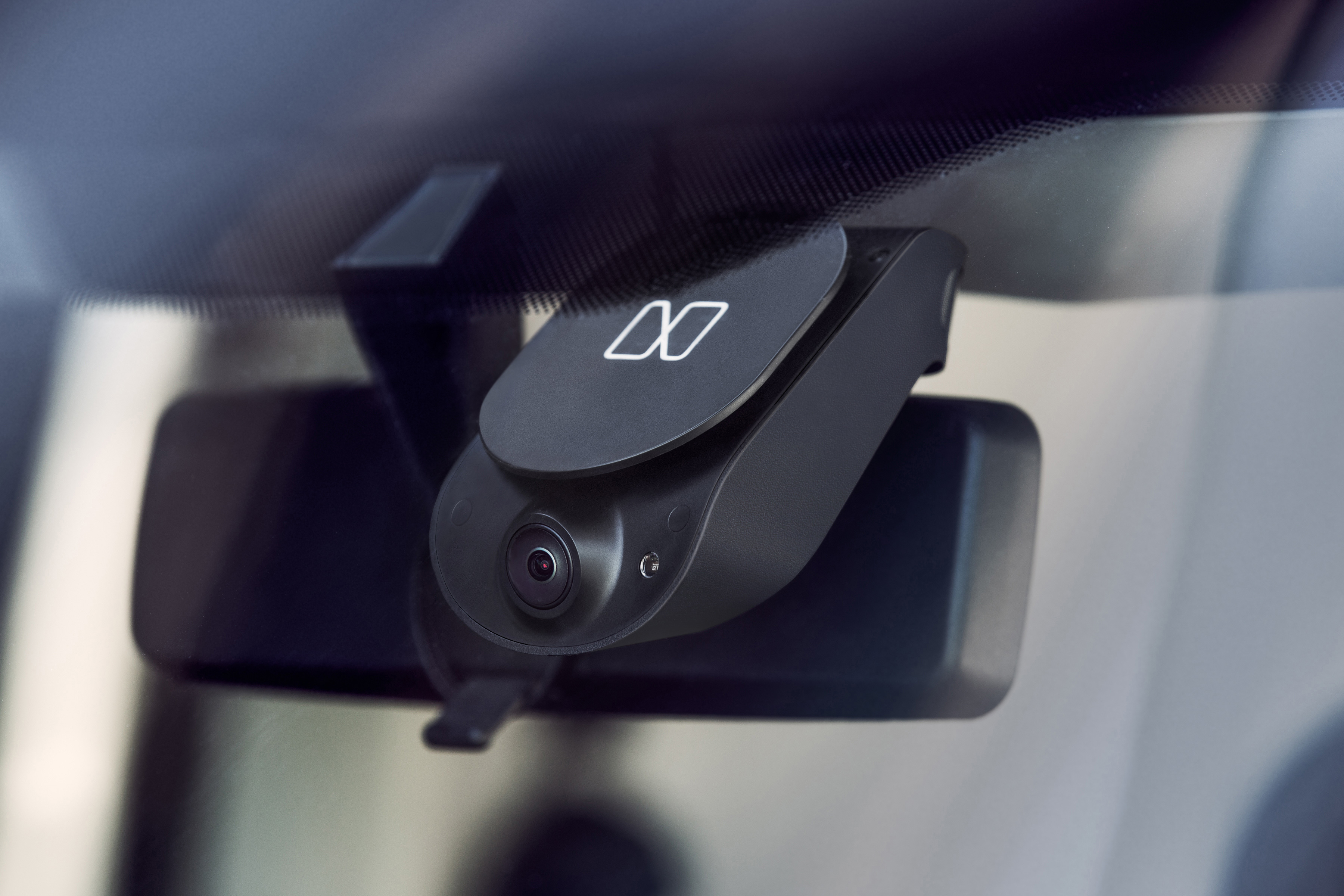
Nauto, a startup in the automotive industry that’s building a system to help make driving safer and smarter, approached IDEO to collaborate on the design of their latest device. It includes a proprietary dual-camera system that can be directly installed in just about any vehicle to enable safety features. Through real-time data analysis, high-definition recording, and LTE connectivity, Nauto’s device records and analyzes activity inside and outside the car, and automatically uploads information to a smart cloud.
The device can detect if drivers are distracted based on their eye and head movements, risky maneuvers such as tailgating or swerving, and dangerous environmental conditions such as unexpected obstacles. In these scenarios, the product alerts the driver through audio feedback inside the vehicle.
Over time, the data collected by Nauto reveals bigger insights and trends in driving behavior, ranging from causes of collisions to patterns in driver distraction. These insights are stored in a secure cloud platform and made accessible to both drivers and fleet managers. Drivers can benefit from Nauto’s VERA score—personalized feedback based on their driving performance—and fleet managers can gain access to a complete picture of how each of their drivers are performing across locations. Through these data-driven insights, Nauto gives drivers and fleet managers the tools to stay safe on the road.
To help launch Nauto’s device, IDEO prototyped several iterations of the product’s housing, cabling, and ergonomics, resulting in a clean aesthetic and an easy installation process for users. The engineering team also prioritized materials that would protect against extreme temperatures and sunlight exposure. Most importantly, IDEO helped design a camera device that can be seamlessly integrated into almost any model of any vehicle, greatly expanding its potential in the market.
Nauto’s latest system began rolling out to commercial fleets and strategic OEM and Insurance partners in late 2016.

Photos by Nauto.
Designing the future vision for HBO
Navigating an uncharted media landscape.
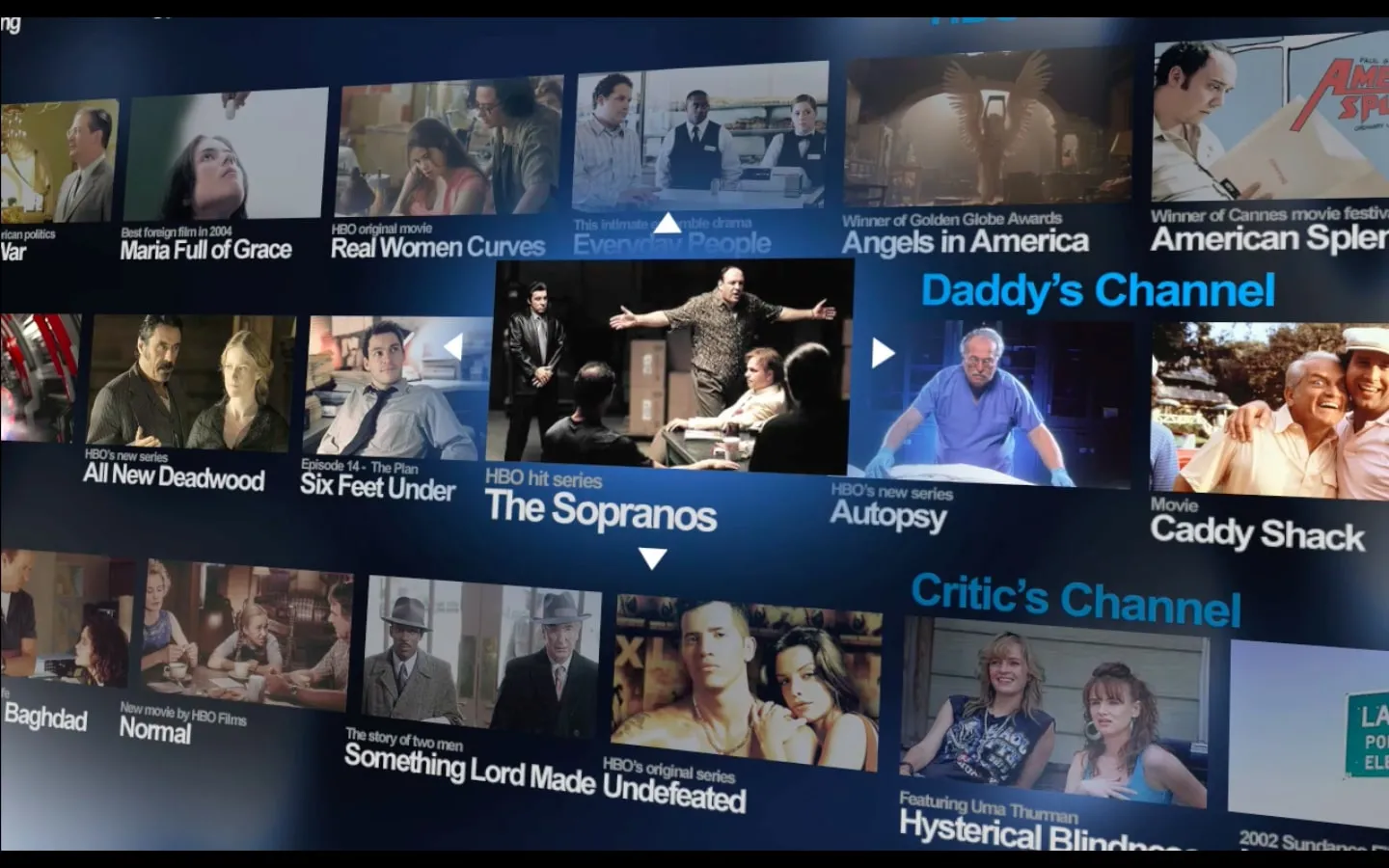
Most people are used to watching their favorite shows whenever and wherever they want these days. But 10 years ago, that wasn’t the case. Far ahead of the curve, HBO realized the potential for carving out its own audience, and created one of the first original on-demand offerings that allowed viewers to cut the cord from cable and satellite providers. HBO came to IDEO for help in navigating the future of its audience experience that would be distinguished from cable, and would put full control in the hands of the viewer.
With special emphasis on HBO’s Video On Demand offering, IDEO began early-phase research to explore people’s experience with the media brand and found that it centered largely on the viewing of HBO shows, the most critical part of the media experience. But other important media-related activities—learning about new shows, planning to watch new shows, creating the right viewing environment, saving and sharing viewing experiences—were either underserved or controlled by HBO’s cable and satellite partners. IDEO concluded that HBO’s challenge would be to develop a media service that holistically addressed the media consumer’s entire journey and allowed subscribers to experience HBO wherever and whenever they wanted.
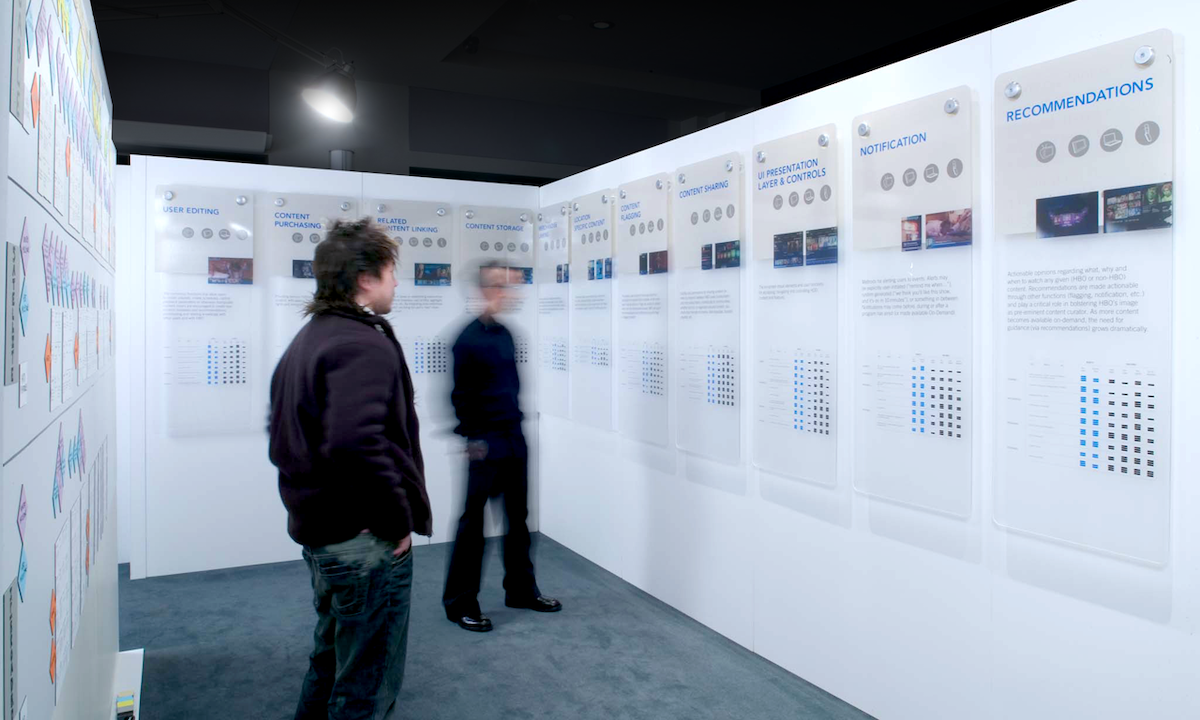
To demonstrate the value of the entire media consumption journey, IDEO created a comprehensive product development and user experience vision. This vision was delivered in the form of an immersive environment, built on-site at HBO, which conveyed key customer values and behaviors and presented a roadmap for building the appropriate products and services. Included in this roadmap were future scenarios and tools that invited prototyping and exploration.
"The collaboration was foundational for us, serving as our guidepost for creating more personalized on-demand and online viewer experiences. This early work influenced what would become our streaming presence—from categorization to how the products rolled out—and ultimately led us to design the next generation of user-inspired products for a more highly engaged audience," said Bernadette Aulestia, Executive Vice President of Global Distribution at HBO.
In the 10 years since the original collaboration with IDEO, HBO has pioneered the path forward for media brands by setting the standard for a world-class array of content and accompanying viewer experience model.
Sleek tools for everyday use
Designing a new family of multi-tools that fits every lifestyle.
While the designs of most cutting tools have evolved significantly over the years, multi-tools have remained largely the same. Recognizing this gap, SOG, an established leader in the specialty knife industry, collaborated with IDEO to identify new opportunities for innovation in the multi-tool space. The teams specifically aimed to expand SOG’s offerings into a more general lifestyle category and position them as adaptable tools for people’s everyday needs.
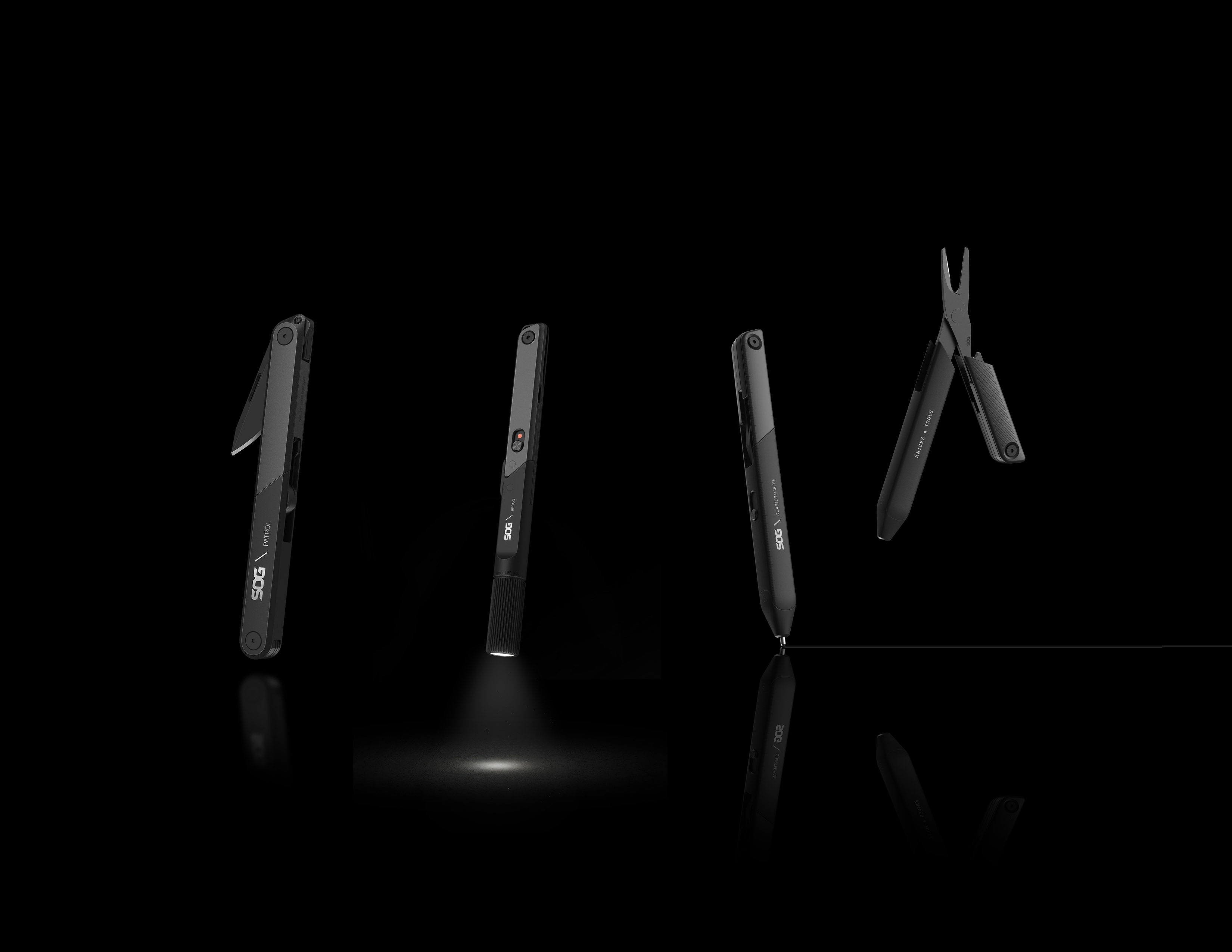
IDEO's research and industrial design work resulted in a family of four new multi-tools known as Baton. A sleek, black, minimal design ties together the complete set of tools, whose features vary to include bottle-openers, flashlights, scissors, pens, and pliers.
Each multi-tool’s range of capabilities, combined with its slim, compact structure that looks like a pen, makes it a travel-friendly companion for the office or the great outdoors. And its intuitive design makes it easy to use for anyone, regardless of their experience with multi-tools.
SOG’s new family of multi-tools launched in January 2017.


Reimagining career colleges for the 21st century
Redesigning for-profit career colleges into models for student success.
Every year, millions of students attend career colleges with hopes of landing jobs after graduation, but many end up unemployed and in debt, evidence of a significant disconnect between the goals of the students, educators, and institutions. Administrators are tasked with getting students in the door, but not getting them to graduation and students are focused on getting a degree to secure their future employment, while employers are looking for graduates who have professional skills beyond their new degrees.
In an effort to change this failing model, the ECMC Foundation engaged IDEO to help design a radical new vision for the future of career colleges. IDEO and the ECMC Foundation sought to develop a vision that could be used as a benchmark for the sector, showcasing a student-centered educational experience with a business model that aligns students, employers, and institutions as partners in advancement.
At the heart of the student experience is extended support along the learning journey, from path-finding and job placement to ongoing career support for alumni, helping students mindfully navigate their education from matriculation through employment.
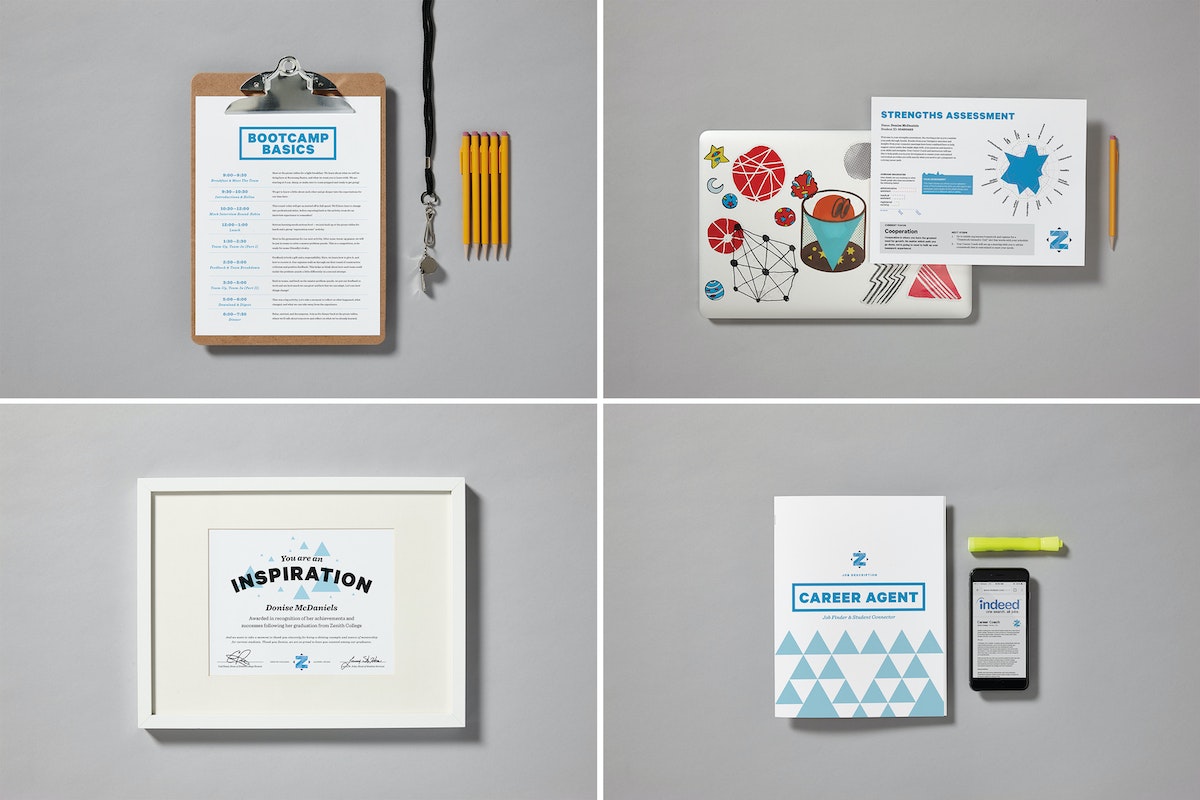
A key insight on the employer side was the need to prioritize the parallel development of students’ soft skills—like collaboration and communication styles—and hard skills, ensuring graduates are not only properly trained in the unique skills of their chosen career path, but also prepared to adapt to professional environments.
Institutional accountability became a core factor in the vision, directly linking the college system’s success to the student experience: as job placement improves, so do the school’s earnings and future enrollment rates. The final result is a student-centered educational experience and business model that aligns students and schools as true partners in a better life.
Key elements of IDEO’s recommendations are being implemented as pilot projects at Zenith Education Group—a nonprofit provider of career school training, funded by the ECMC Foundation.
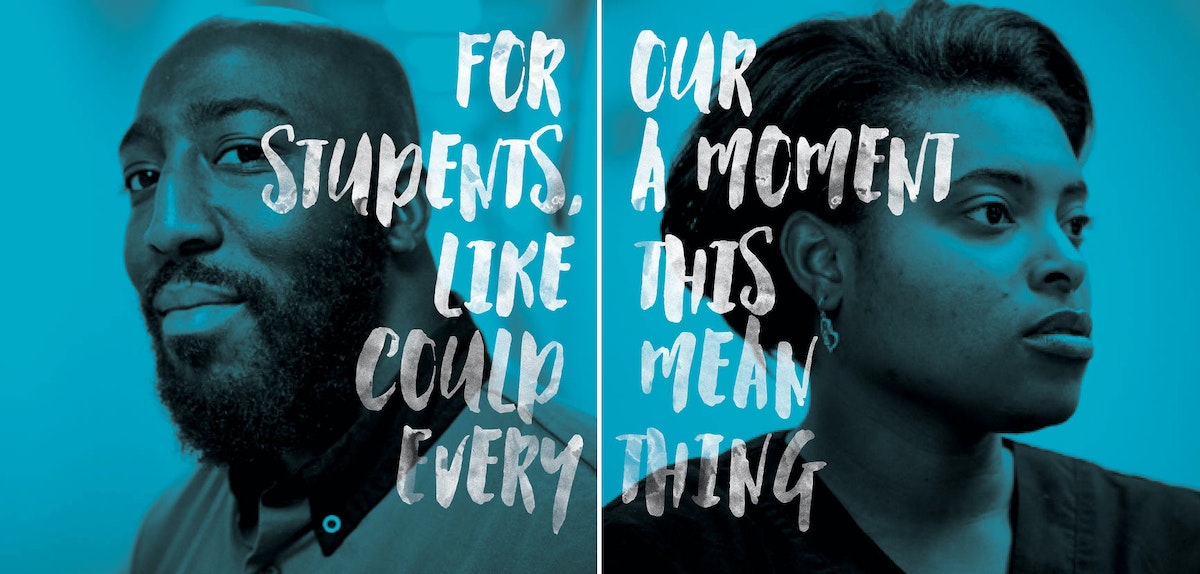
Many students have the motivation to pursue higher education, but are dealing with external pressures and realities that make completion challenging.

The Power of Oops
Making art out of mistakes
Two weeks ago, I was witness to such a moment myself. A colleague and friend, the imaginative Mr. Brown, was doodling a mob of amiable monsters and charming creatures with ink, a brush, and some paper.
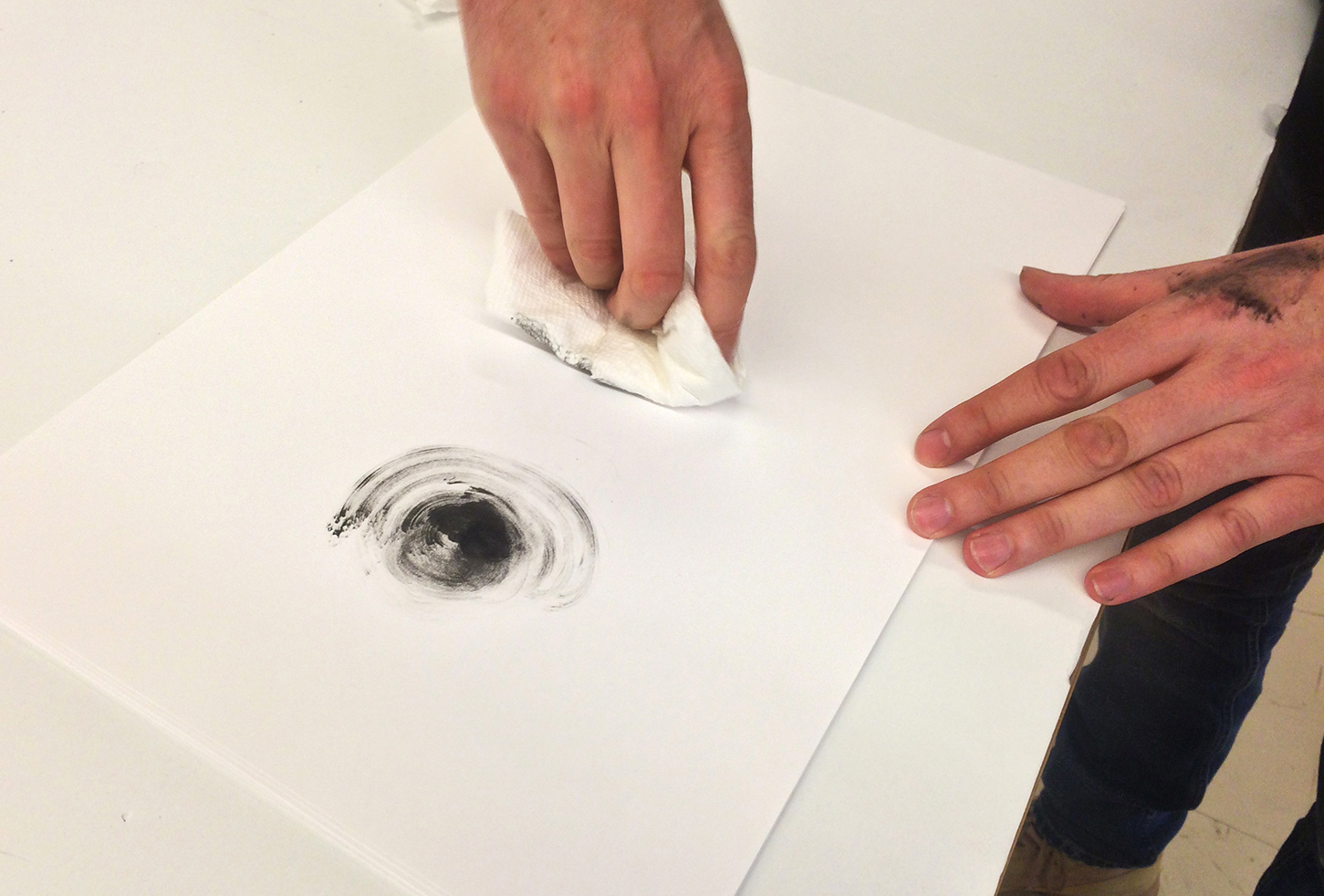
Pretty, yes. Cute, maybe. But it was when he was cleaning up that he came across a real gem: With ink-stained hands, he scrunched some paper towel to mop up the inky mess. He dabbed the offensive blob, gave a little twist and twirl with the paper towel, and lifted his hand away.
Underneath shone a ravishing vortex which drew one’s imagination into its depths. Not one to shy away from allowing his imagination to wander, he kept twirling, twisting, and whirling.
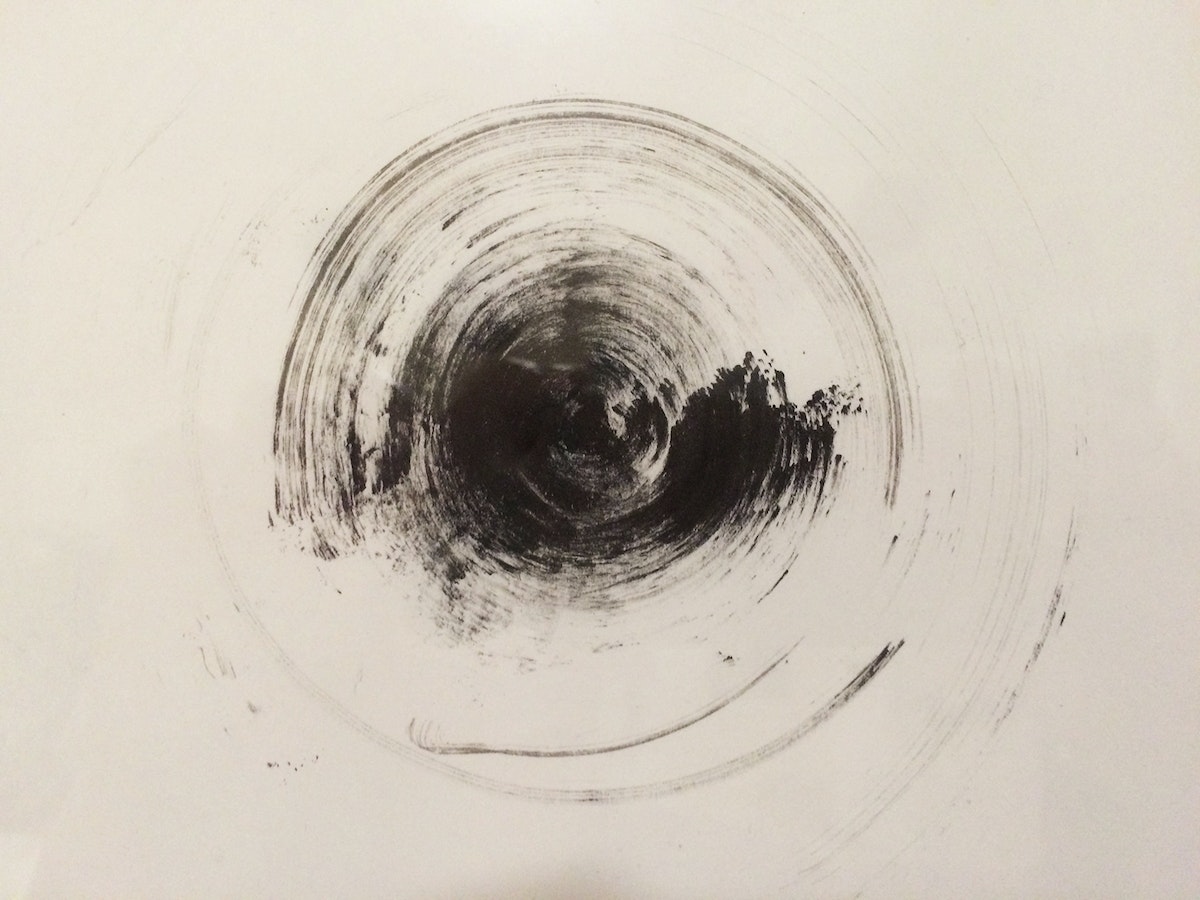
Being the cheap bugger that I am, and living in a home filled with empty walls, when I spied these beauties I immediately requested if I could have one once he was done.
His inky booboos are now hanging at home—a prized possession.
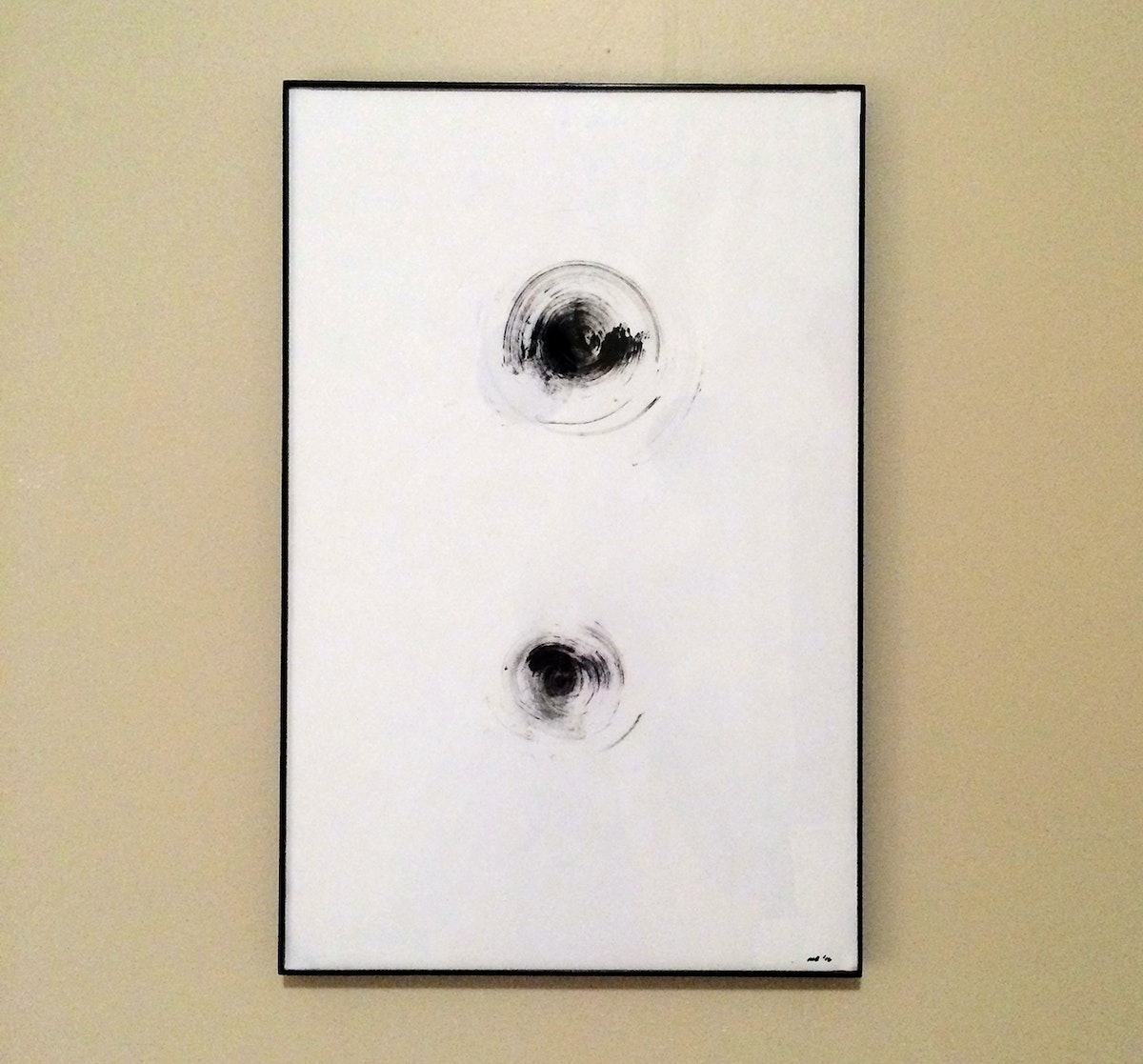
It goes without saying that some of the best ideas were borne from a fortuitous mistake: Alexander Fleming had his mold, Archimedes submerged himself in a bath, and Spencer Silver accidently created the perfect adhesive for Post-it notes (IDEO thanks you, Mr Silver).
Need Feedback? Here’s 5 Ways to Reinvent the Focus Group.
Think dinner party, not two-way mirror
To better understand the madness of the focus group, I decided to do a bit of research on how it came to be.
The story begins in 1938, when a psychoanalyst named Ernest Dichter left Vienna to escape the Nazis and headed for the US. When he arrived in New York, he made an interesting career decision. Instead of helping individuals understand their problems, he decided to offer his psychoanalytic services to corporations.
One of Dichter's first clients was General Mills, which had a problem with its Betty Crocker cake mix. Its food scientists had formulated a dry mix that required only the addition of water. Once placed in the oven, it miraculously blossomed into instant cake. But after a good start, sales flattened. The executives were baffled: The product was more convenient. Why weren’t the housewives buying it?
Dichter gathered groups of women and put them through exercises derived from Freud’s methods of probing the unconscious, including free association and Rorschach tests. He explored their feelings about relationships and their role in the family. And then he started asking them about cake.
What he took away from these sessions was that cake was more than just a sweet baked product. It was loaded with sexual symbolism. He was particularly fascinated by the ritual of the wedding cake, which featured the husband taking a long knife and plunging it into the white cake.
His conclusions, like a good cake, were multilayered. First, the cake was symbolic of the wife’s relationship to the husband, and so she felt guilty making it by just adding some water to powder. Second, the sexually charged nature of the cake meant that it had associations with fertility, even childbirth.
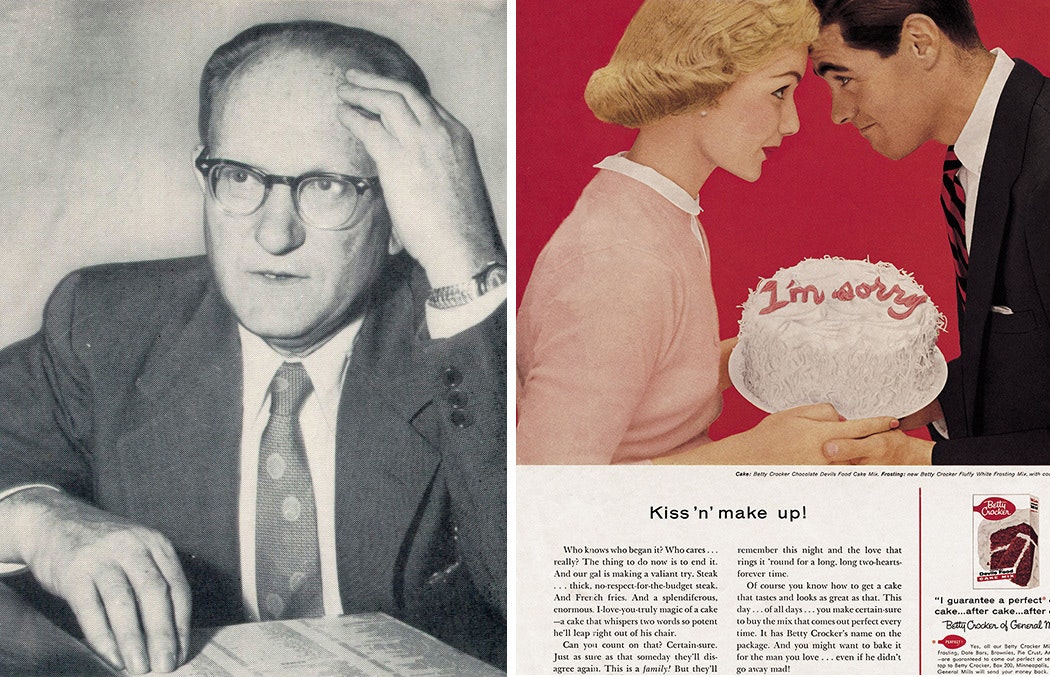
Ernest Dichter and a Betty Crocker ad from the 1950s that anoints cake as the great unifier—almost as good as make-up sex.
His solution to these complex issues was simple: General Mills should remove the powdered egg from the formulation, and instead require housewives to add their own fresh eggs.
It’s hard to know whether the executives were swayed by Dichter’s Sexual Theory of Cake, or whether they liked the fact that removing the eggs would save money. Either way, they took his advice. And, sure enough, sales soared.
In the following decades, Dichter imitators turned his methodology into a hackneyed formula, and the focus group lost its way. We wondered if we could bring emotion and surprise back with a 21st-century reboot of the technique. Here are the five principles we followed:
1. Break the mirror
Hiding in a dark room behind a two-way mirror distances you from the consumer. If you want to find out what makes people tick, get eye to eye with them in the room. If you find this uncomfortable, suck it up: Discomfort is a sign that you’re learning something.
2. Lose the clipboard
The dynamic of “moderator and participant” creates an authority relationship in the room, which can lead to participants saying what they think they are “supposed” to say. Try having the questions served up differently—such as pulling them at random out of a jar. People will share more when they feel they’re having a natural conversation.
3. Think dinner party, not jury service
The original idea of focus groups was to create an environment in which people encouraged each other to share their feelings. Today’s sessions are often stiff and with the same amount of social interaction you’d expect from people doing jury service. So, do whatever you can to create a warm social environment. In our recent experiment, we started the session with 30 minutes of improv exercises, run by a trainer from Second City.
4. Record video confessionals
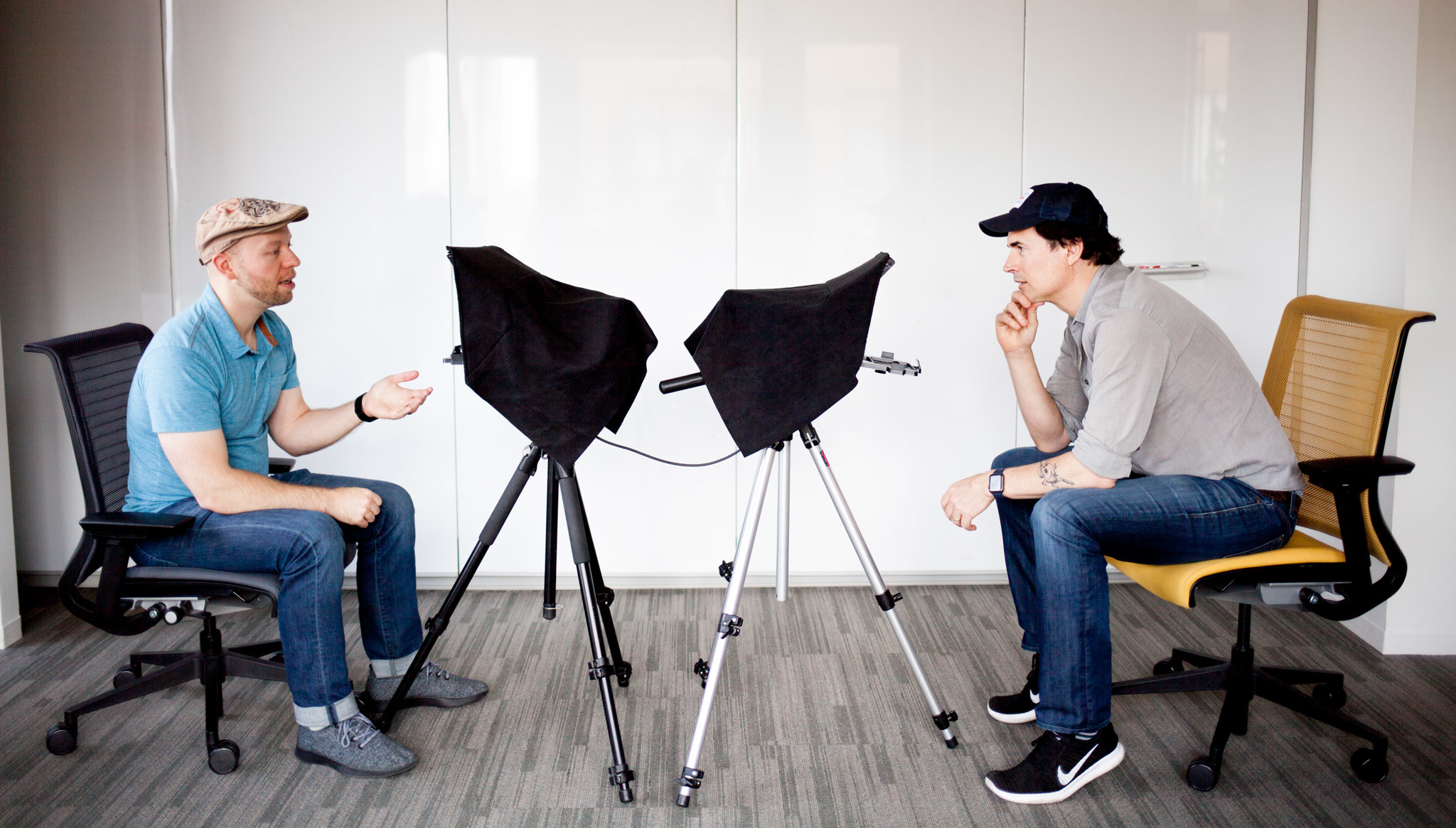
When Dichter ran focus groups, he would make all the interpretations and deliver a report to the client. These days, the client needs to feel some empathy themselves. The best way to achieve this is video, but an intrusive camera lens can cause people to clam up. We solved this by running interviews using a hidden-camera technique pioneered by the documentary filmmaker Errol Morris (see below).
5. Talk about the why
All the clever methods in the world won’t help if you don’t have the core goal in mind: understanding the motivations behind human behavior. We live in an age of data: We have more information than ever before that will tell us what people are up to. But the greatest inspiration comes when you can form theories about the why. Despite being more than a half century old, the focus group is still one of the best techniques for achieving this.
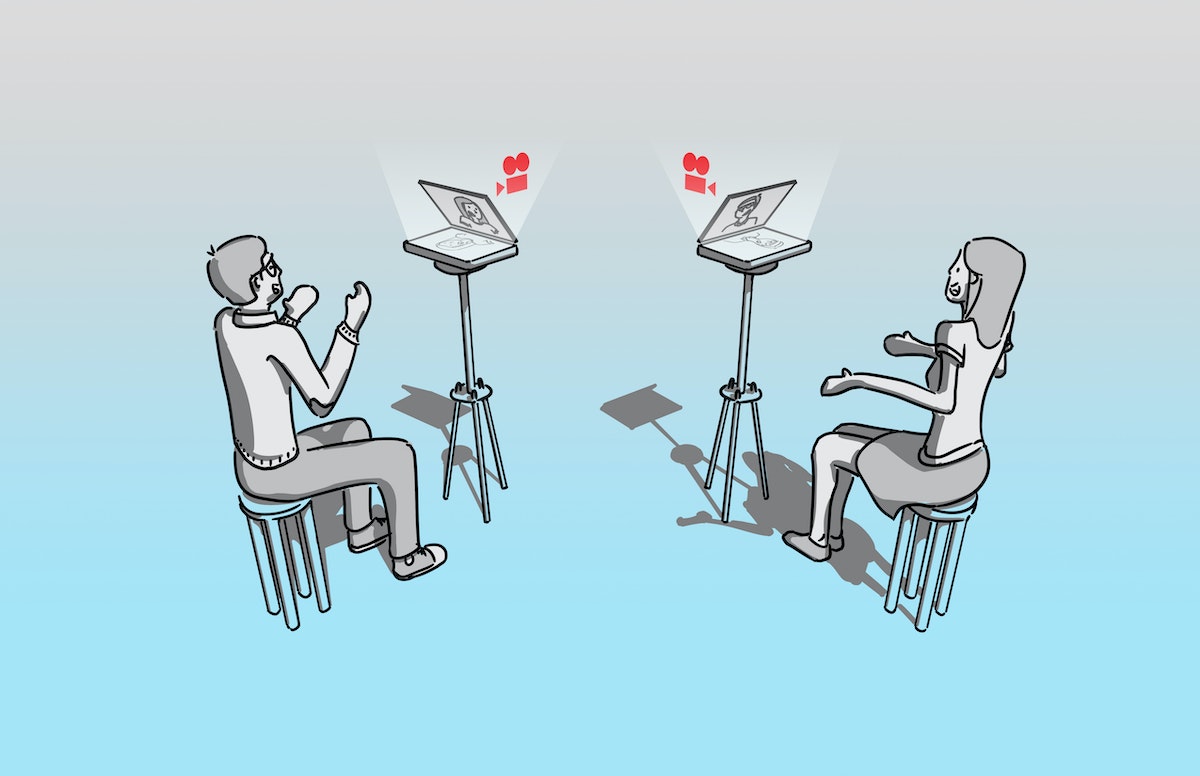
The Errol Morris–pioneered "Interrotron" puts interviewees at ease by giving them the impression they're speaking to another human, not a camera lens.
Focus groups suck, right? Bored people sitting in front of a mirror, delivering canned opinions on demand. Everyone from Silicon Valley to Amy Schumer pokes fun at them. But it wasn’t always this way: When focus groups started in the 1950s, they represented an exciting new way to probe the emotions and motivations underpinning human behavior. How did they get so staid and safe?
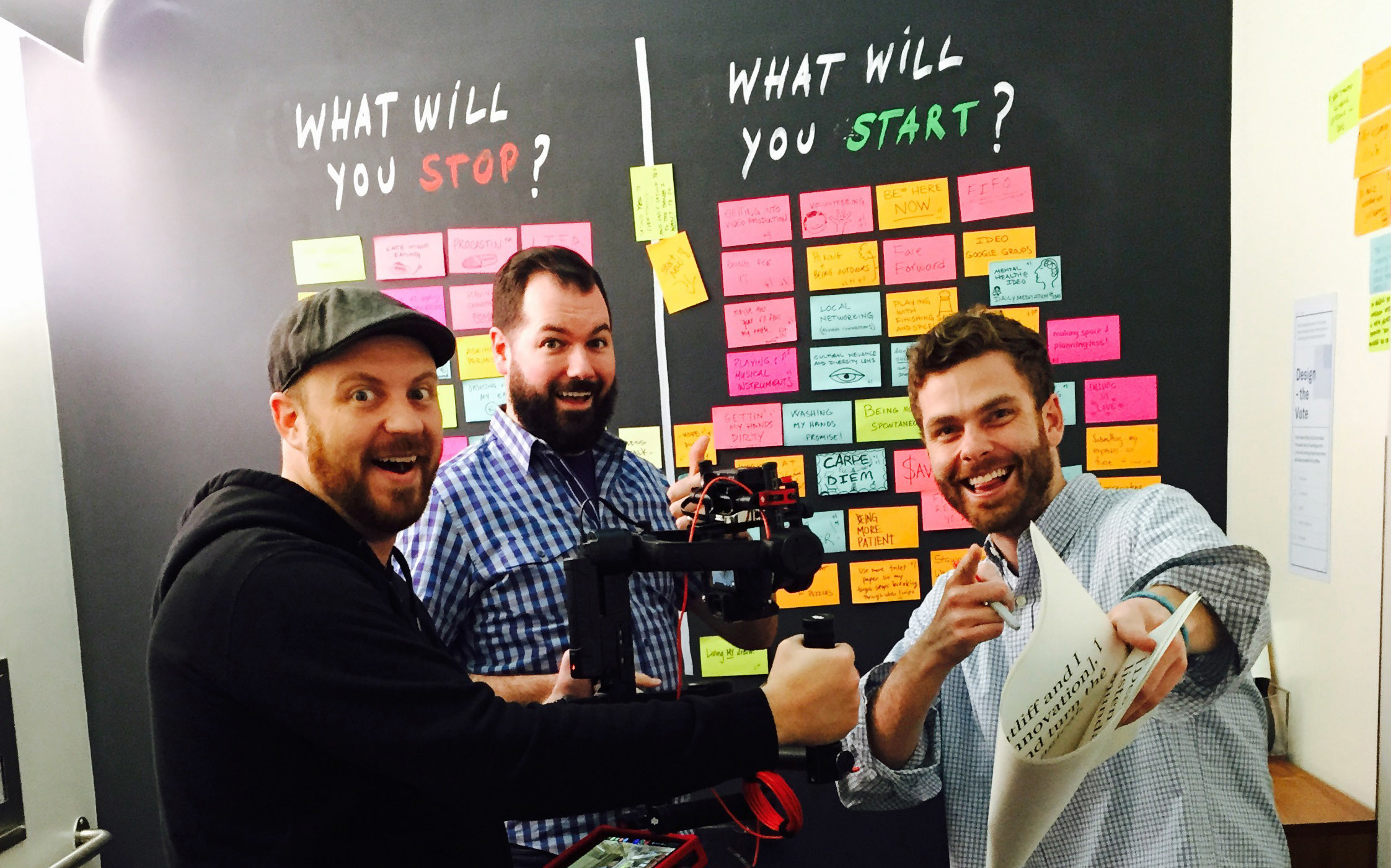
The Room That'll Make You More Creative
Hint: There's a throne
How did it all begin, you ask?
Long-time IDEOer Alan Ratliff was using the loo in Santa Cruz a few years back and took note of the graffiti on stall walls. He was struck by how openly and honestly strangers could share their most heartfelt feelings—in a public space. Combining this insight with the pause for thought that often strikes while seated on the throne, we thought we'd try inviting the same behavior on our own walls.
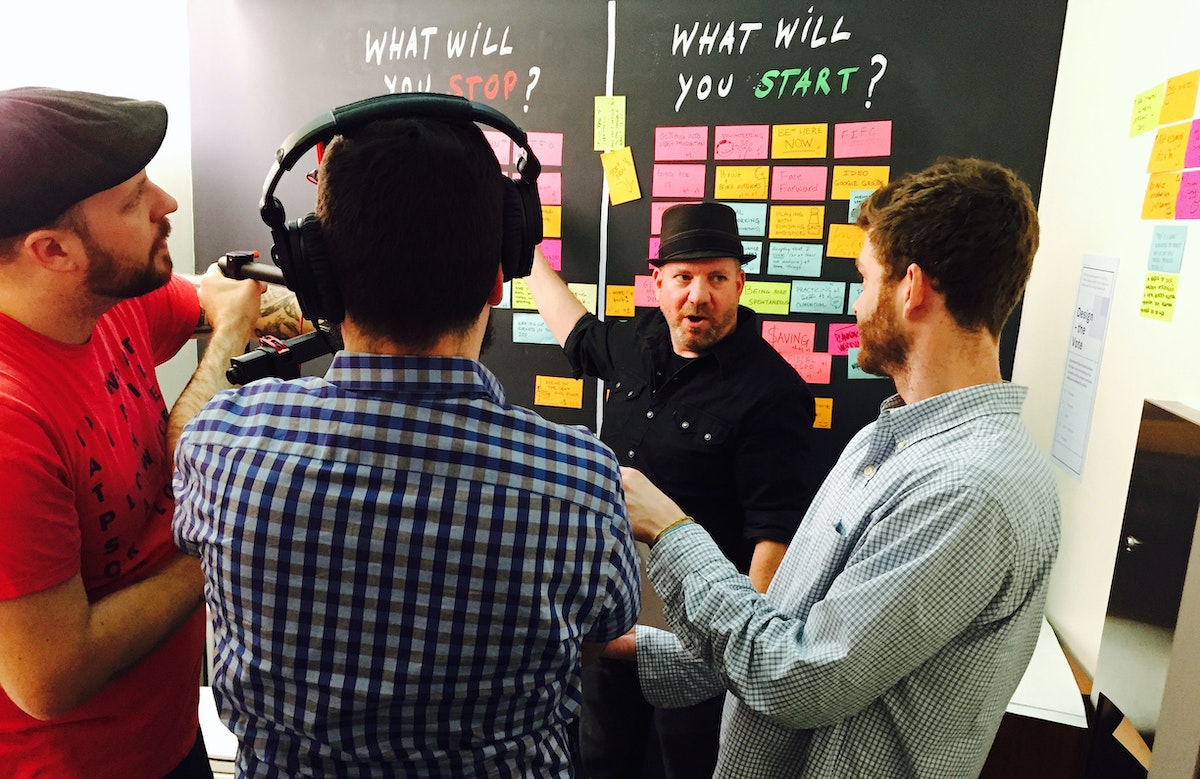
And how have people at IDEO responded?
Though the wait has admittedly increased, which brings no one joy, designing the bathroom as a place to intentionally linger and gin up ideas has become a point of pride.
Curious to learn more about how we nurture a culture of creativity? We tell the whole bathroom story, and many more, in Leading for Creativity, a new course taught by Tim Brown at IDEOU.com.

There's one stop we always make on our office tour: the john. Walls blackened by chalkboard-paint, every month presents a new opportunity to pose a controversial question and weigh in with controversial answers. Indeed, our bathroom has become one of the most—forgive us—productive places on the premises.
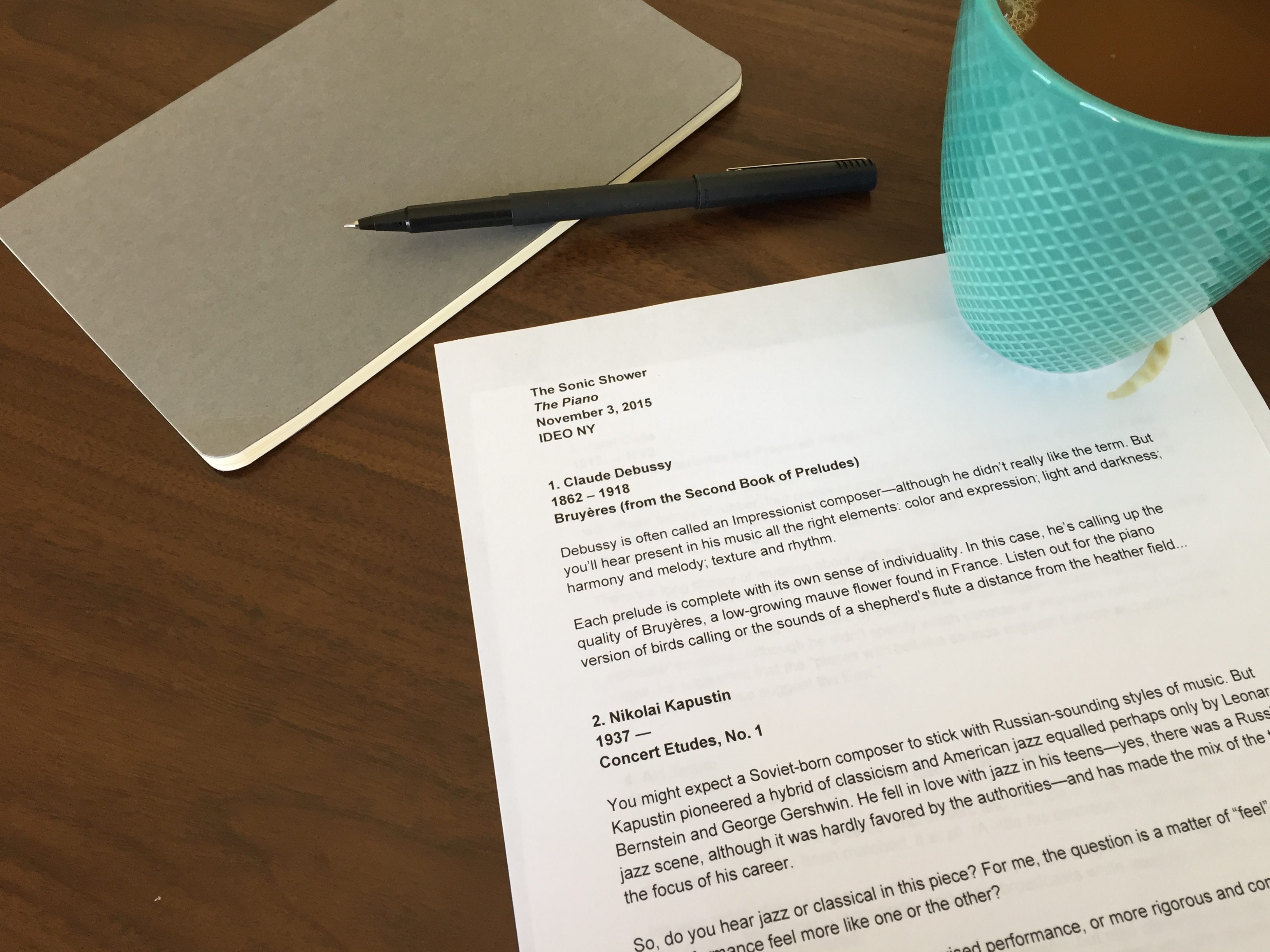
Take a Sonic Shower
Some mornings, we sit in a conference room together and just listen to music
Unless I’m at a gig or a concert, it’s rare that I listen to music in the presence of other people. There’s background music, sure, but that feels different—I’m not really listening. Here in New York, there’s always live music on subway platforms, but we don’t listen by choice (and while it’s often great, it can also grate).
Listening to music with others need not be limited to experiences of live music, though. Deliberately listening to recorded music with other people can be a magical experience. That’s especially true if you’re hearing it in a context that's a little unexpected, such as a conference room.
It’s a luxury to be in the same space as others and not need to talk—to just be present.
In our New York studio, we’ve been gathering for a series of shared listening sessions, called the Sonic Shower. It’s a really simple format:
• every month or so
• we spend 15 minutes
• first thing in the morning
• listening to 3 to 5 pieces of recorded music
• from around the world
• that are selected and ordered around a theme
• and played on speakers in a room
• while people listen over coffee
• and glance at light program notes, if they so choose
Three things we like about the Sonic Shower
1. IT SUPPORTS OUR COMMUNITY
It’s just a lovely thing to start the day with music. And it’s lovely to be in the company of colleagues without the pressures of drumming up conversation. Listening together creates a delicate, light experience of community that works for everyone, even if you don’t feel much like chatting first thing in the morning.
2. IT’S A SOURCE OF INSPIRATION
At IDEO, it’s our job to seek inspiration wherever we can find it. It fuels great design by keeping our teams engaged. We’re great at hunting down visual inspiration in art, type, and digital experiments. But it’s easy to forget to open our ears up in the same way—to expose our brains and hearts to sounds we’ve never encountered before. Music is sonic storytelling—it opens up imaginative doors that we’d be crazy not to go through. Each Sonic Shower is a mix of songs that are somewhat easy (or familiar) and somewhat challenging (or likely different to what you might normally hear).
3. IT ENGENDERS GRATITUDE
In so much of our work, we’re interrogating experiences—figuring out what underpins them and picking out aspects that we can replicate or evolve. But during a Sonic Shower we just listen to the music. We don’t feel an obligation to discuss it or derive meaning from it there and then. It’s a luxury to be in the same space as others and not need to talk—to just be present. And, while it does help our work, we don’t treat the Sonic Shower like work. That gives us permission to receive the music as a precious gift. And gratitude feels good.

Sample a Sonic Shower
Here’s what we listened to at a winter-themed session in December. You can find the music on Spotify here.
Hvild (2009) by Hugi Gudmundsson
Now based in Denmark, Gudmundsson is one of the bright lights of contemporary Icelandic composition. A few years ago, in a neat nod to IDEO, he was awarded one of the country’s most prestigious arts prizes: the Optimism Award.
Hvild means "rest." It was written for a friend’s funeral and includes text about carrying water over a mountain...
Snow (1954) by Irving Berlin; performed by Rosemary Clooney and The Mellomen
This is one of the stand-out songs from Bing Crosby’s White Christmas. The movie version features the four leads—Clooney, Crosby, Danny Kaye, and Vera-Ellen—singing the song together on a train. As you do.
Der Leiermann (1828) music by Franz Schubert; poem by Wilhelm Müller; performed by Jonas Kaufmann (tenor) and Helmut Deutsch (piano)
This is the final song of Winterreise (Winter Journey), Schubert’s monumental song cycle for voice and piano. Grab a whisky and listen to the whole thing sometime—it’s an intimate, crystalline marvel.
Der Leiermann translates as "The Hurdy-Gurdy Man." The hurdy-gurdy is an instrument where, to produce notes, you crank a handle that turns a greased wheel against its strings. Here’s the text of the song:
Behind the village stands a hurdy-gurdy man, cranking his instrument with frozen fingers. His begging bowl is always empty; no one listens to his music, and the dogs growl at him. But his playing never stops. “Strange old man. Shall I come with you? Will you play your hurdy-gurdy to accompany my songs?”
The piano does so much more than simply accompany the voice. Elsewhere in the cycle, it becomes a powerful storm, the rush of water beneath ice, a creaking weathervane, and much more. Listen for how, in this song, it conjures up the sparse drone of the hurdy-gurdy.
Winter Darkness (2014) performed by Nils Økland (Hardanger fiddle) and Georg Buljo (voice)
The Hardanger fiddle is a traditional stringed instrument from Norway. Contemporary players such as Økland have coaxed the fiddle into modern music, working with collaborators near and far.
Buljo has done much the same with joik (pronounced ‘yoyk’), one of the oldest vocal traditions in Europe. A joik is both a style and a song form, deeply rooted in the Sami culture of Sweden, Norway, and northern Finland.
All that said, this is a pretty traditional piece—but modern, close recording lets us hear every crack in Buljo’s voice and every bow across the strings.
Does it sound like "winter darkness" to you?
It’s never been easier to share music with each other: Here’s a link, there’s a playlist, and off you go. At the same time, my experience of music has become more and more private, more and more mediated by headphones.

Lindsey Turner
I’m passionate about building brands, products, and experiences that help organizations show up with meaning and momentum.
I help organizations cut through complexity by shaping how they show up, through brand strategy, identity, and storytelling.
Working at the intersection of brand and business, I bring an editorial eye and a bias toward making—turning ideas into tangible experiences that people can understand, trust, and believe in.
My work spans government, healthcare, financial services, media, and consumer goods, from launching Gen Z-focused ventures to building innovation labs and reimagining legacy brands. I relish moments of ambiguity and enjoy translating across teams, perspectives, and priorities to move ideas forward.
I started my career in editorial and digital design, shaping cross-platform experiences and identity systems in publishing and agency environments. That foundation still shapes how I work today: I’m detail-oriented, collaborative, and overreliant on the Oxford comma. I hold a BFA in Visual Communication from the School of the Art Institute of Chicago.

Rachel Young
My work helps organizations see who their products aren't working for—and build the will and the tools to do something about it
For 25 years, I've asked the same question: Who does this design exclude—and what are we going to do about it?
My work spans human-centered strategy, inclusive design, and qualitative research, with clients ranging from Microsoft, Google, and Verizon to the National Science Foundation, and San Francisco Unified School District.
Before IDEO, I taught elementary school in East Palo Alto and spent a decade doing design work with social service organizations—where I learned firsthand what it costs people when systems are built without them in mind.
I am currently writing User Error, a nonfiction book about digital access and the design decisions behind it. I live in Oakland, California.

Brian Pelsoh
I lead with craft, ensuring our work is creatively excellent: rooted in deep human insight and imagination, while also grounded in the realities of business and technology.
My expertise spans brand, communication, and product design across tech, education, the arts, and social impact.
I believe great work demands both high-level vision and obsessive attention to detail, and only happens through collaboration.
I bring an inclusive, hands-on approach and a deep understanding of business, which enables me to consistently deliver excellence while always asking why.
Before joining IDEO, I worked at the brand firms Pentagram and VSA Partners. I began my career as a designer, leading teams at the School of the Art Institute of Chicago and the Milwaukee Art Museum. I hold an MFA in graphic design from Maryland Institute College of Art and a BFA in communication design from the Milwaukee Institute of Art & Design, and have taught at some of the best design schools in the US.

Tony Wong
I am responsible for IDEO’s long-term success in China and working with clients to use design as a tool to enable growth.
I am responsible for IDEO’s long-term success in China and working with clients to use design as a tool to enable growth. Specifically, I have helped Chinese companies design holistic brand solutions through the development of their products, communication, services, and innovation teams, and I have helped multinationals expand their presence and influence in China.
I advise global leaders on developing China-led innovation and capabilities.
In over 15 years in IDEO Shanghai, I have worked on projects that use design to elevate the quality of the experience of healthcare products and services, streamline processes that increase productivity, create spaces and programs that promote and enable inclusive communities, and build next generation mobility solutions that are planet-positive.
Before joining IDEO, I worked at Philips Electronics and the Electrolux Group in Italy, the Netherlands, and Singapore on a number of breakthrough commercial products. I am a member of the Young President Organization in Shanghai.

How to use AI as an editor, not a writer
Ed White shares how he uses AI as an editor—not a writer—to sharpen storytelling, rehearse ideas, and preserve the productive friction that makes creative work better.
Ed White has a rule he's tested on his own writing: hold yourself as the writer, and let AI be your editor. Ed is a Senior Design Director at IDEO's London studio, where he co-leads the firm's AI portfolio across Europe. Before IDEO, he spent 12 years as a writer and editor at the Financial Times, Wired, and Contagious. So when he talks about when to use AI for storytelling and when not to, it comes from two decades of crafting his storytelling skills.
In this episode, Mina Seetharaman talks with Ed about two specific tools he uses to keep AI in an editor's seat: a "roasting agent" prompted to critique his drafts without any sugarcoating, and a simulated audience he rehearses pitches on before the real thing. They also get into what Ed is hearing from design leaders at Anthropic, Lovable, Shopify, and Google Creative Lab about how creative work is changing, and why he thinks the friction of writing something yourself is worth protecting rather than automating away.

Building a personal AI for the messiness of life: Sida Li
Becca Carroll talks with Cue co-founder Sida Li about designing a personal AI for the messiness of everyday life—not just work. They explore how Sida stays anchored to human needs while navigating fast-changing technology, product tradeoffs, business-model experimentation, and the realities of building an AI company today.
Most AI products today are built for work—a space with clear problems and established systems. One founder noticed a gap: personal life is messier, harder to systematize, and mostly left behind by the AI boom. So she built Cue, a personal AI that lives inside iMessage and group chats, to go where the other tools haven't.
In this episode, Becca Carroll, IDEO's Chief Strategy Officer, talks with Sida Li, co-founder and CEO of Shared Context Lab, about staying anchored to a human need while the technology around her keeps changing shape, why she treats her business model with the same rigor she'd bring to a product, and what it feels like to build a company at this particular, disorienting moment in AI.
The conversation also gets into how Sida makes design decisions: the language Cue uses to describe itself, the tradeoffs behind building inside iMessage instead of a new app, and a real story about a business idea that didn’t pan out.
This is the second in a two-part series profiling founders from IDEO's Startups-in-Residence program. The first conversation is with Johannes Seemann, founder of Sooner, on designing GenAI for the emotional side of money.

Designing GenAI for the emotional side of money: Johannes Seemann
Designing financial tools around the feelings that shape money decisions.
Most personal financial tools are built to run the numbers and optimize towards a budget. While that works for some, most people experience money as a lived relationship that does not neatly fit into a spreadsheet. Johannes Seemann and Becca Carroll discuss why money is emotional before it is mathematical, and what a human-centered approach to building a generative AI financial product looks like in practice.

The curious leader's edge in uncertainty: Scott Shigeoka
How genuine curiosity helps leaders navigate uncertainty with greater confidence.
Mina Seetharaman talks with Scott Shigeoka, author of Seek and Head of Curiosity Cultivation at the Eames Institute, about what distinguishes genuinely curious leadership from performative curiosity, how power dynamics shape curiosity, and why practicing curiosity can restore energy rather than drain it.
Looks like you might be in search of something very specific?
Or reset the filters above and try another angle.
Here’s some random inspiration

Podcasts about creative leadership

Articles about the power of prototyping
