
.svg)




Finding hidden talent
A social enterprise rewires America’s labor market through inclusive design.
American businesses are on notice: To be competitive in today’s market, you must diversify your workforce.
One way to widen the talent pool is to pay closer attention to people who have acquired their skills through alternative routes. Millions of Americans learn on the job, in community colleges, at boot camps, or through life experience. According to Opportunity@Work, more than 70 million Americans are overlooked because of degree requirements. Despite their abilities, these “STARs” (those who are skilled through alternative routes) find themselves stuck in jobs for which they’re overqualified and underpaid.
Opportunity@Work, an innovative social enterprise, reached out to IDEO to help collaborate with companies, talent developers, and STARs seeking career growth. To make this overlooked talent pool more visible, we created a campaign and video to rally companies. We also designed a data dashboard to help regional employer networks identify qualified talent and potential partnerships with skill-building programs. And to provide STARs with direct support, we scaffolded the job-seeking experience, focusing on key moments like the interview process.
It’s time for businesses searching for talent to open their eyes, look to the STARs, and see what they’re missing.
83% of HR professionals said they had difficulty finding suitable candidates in the past 12 months.
62% of Black people, 55% of Hispanic people, and 50% of non-Hispanic white people have become skilled through alternative routes, such as community college, workforce training, boot camps, certification programs, military service, or job experience.
Over the past 40 years, inflation-adjusted wages have increased 8% for college graduates with a bachelor’s degree while decreasing by 15% for people with only a high school degree.
Thousands
of state jobs in Maryland no longer require a four-year college degree
skills-based
The White House is adjusting educational requirements for I.T. professionals in favor of a skills-based approach
Experts on the front lines
Recognizing the power and creativity of essential workers.
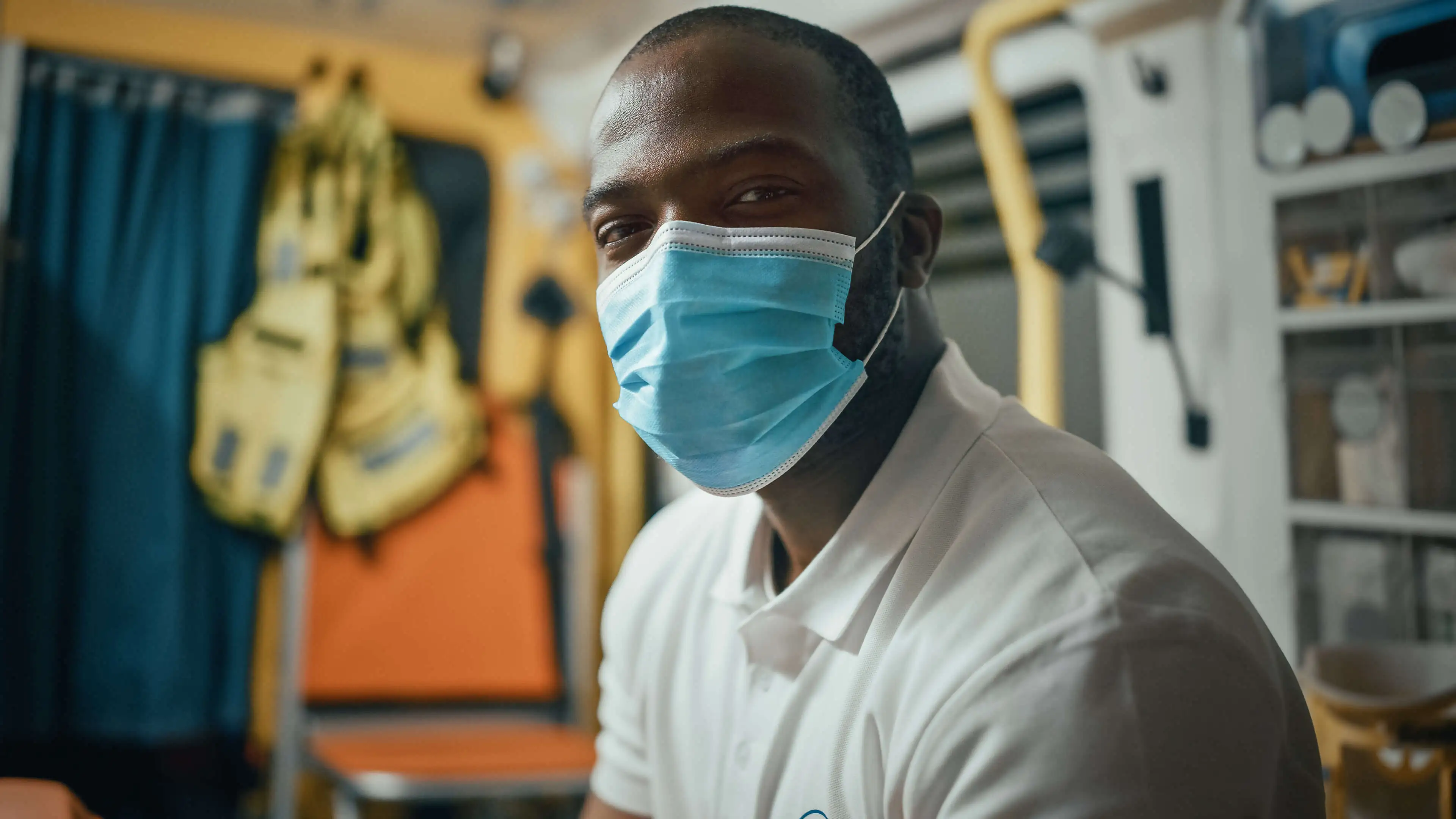
For many organizations, frontline workers like grocery store clerks, nurses, hospitality workers, and transit employees are an essential part of doing business.
So much so that they continued to show up at the office throughout the COVID-19 pandemic even as everyone else went remote. As the point of contact with customers and key systems, these workers often know exactly when, where, and why things don’t work, and they come up with powerful hacks and workarounds to make things better. Yet these insights and innovations rarely make it to the corporate office. And that’s a problem: large organizations often hire design and innovation consulting firms while not taking advantage of a latent source of deep, in-house expertise. It’s equally discouraging to workers who would gladly share their ideas if they were only asked. No surprise, then, that frontline workers are quitting their jobs in droves.
What could companies learn by listening?
IDEO partnered with the Ford Foundation to create the Worker Voice Design Lab, where leaders from a port authority, an airline, and a health care provider worked alongside frontline workers. That led to the planting of a seed of innovation in each organization, with interventions designed with and by workers implemented operationally at the core of the business. In one case, a group of workers zeroed in on specific problems with such clarity that they were quickly able to develop a digital prototype for testing. No one was less surprised than the workers themselves, who simply said: Well, nobody ever asked us before. Sometimes the most innovative idea a leader can have is to listen, learn, and act on their employee’s smart ideas.
A large portion of the job churn since March 2020 has been concentrated in frontline services such as accommodation, food services, and retail.
Lack of career growth is the number one reason people leave their jobs according to more than 18,000 frontline workers across 150 companies.
2 pilot initiatives
being led by frontline workers in 2022
Customer powered
How Ford transformed itself to take on the future of mobility.
The climate era demands new offers and new ways of working.
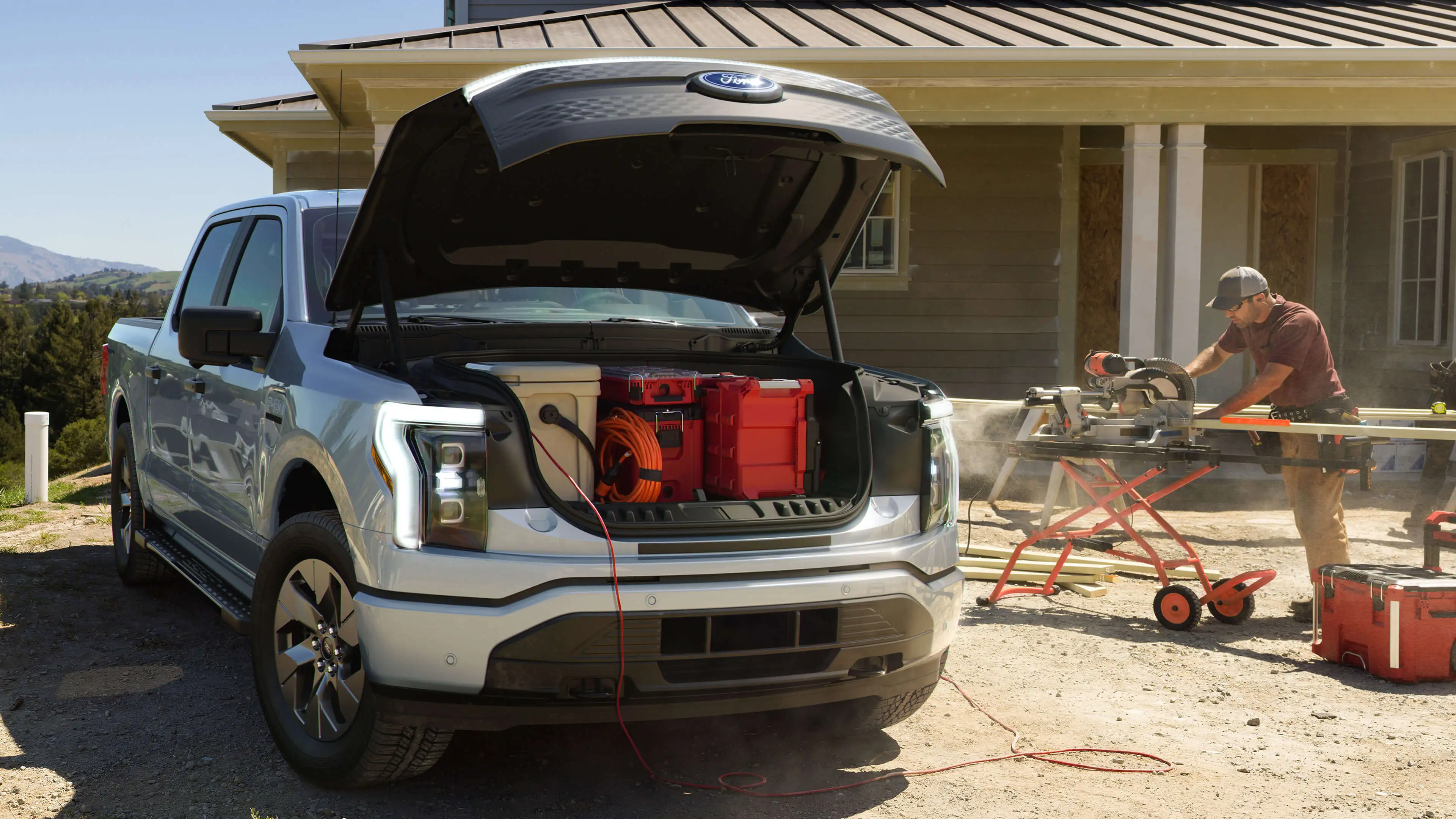
Would you like to be able to plug your jigsaw into your truck? How about taking a fully reclined snooze after a long day of fishing? Questions like these led to quick prototypes that ended up in Ford’s new, electrified F-150 truck, which has more outlets than the average apartment and can power your entire home. This was no small update. The way Ford reimagined the truck experience from powertrain to power nap is emblematic of how much customer-centricity is now embedded in Ford’s culture.
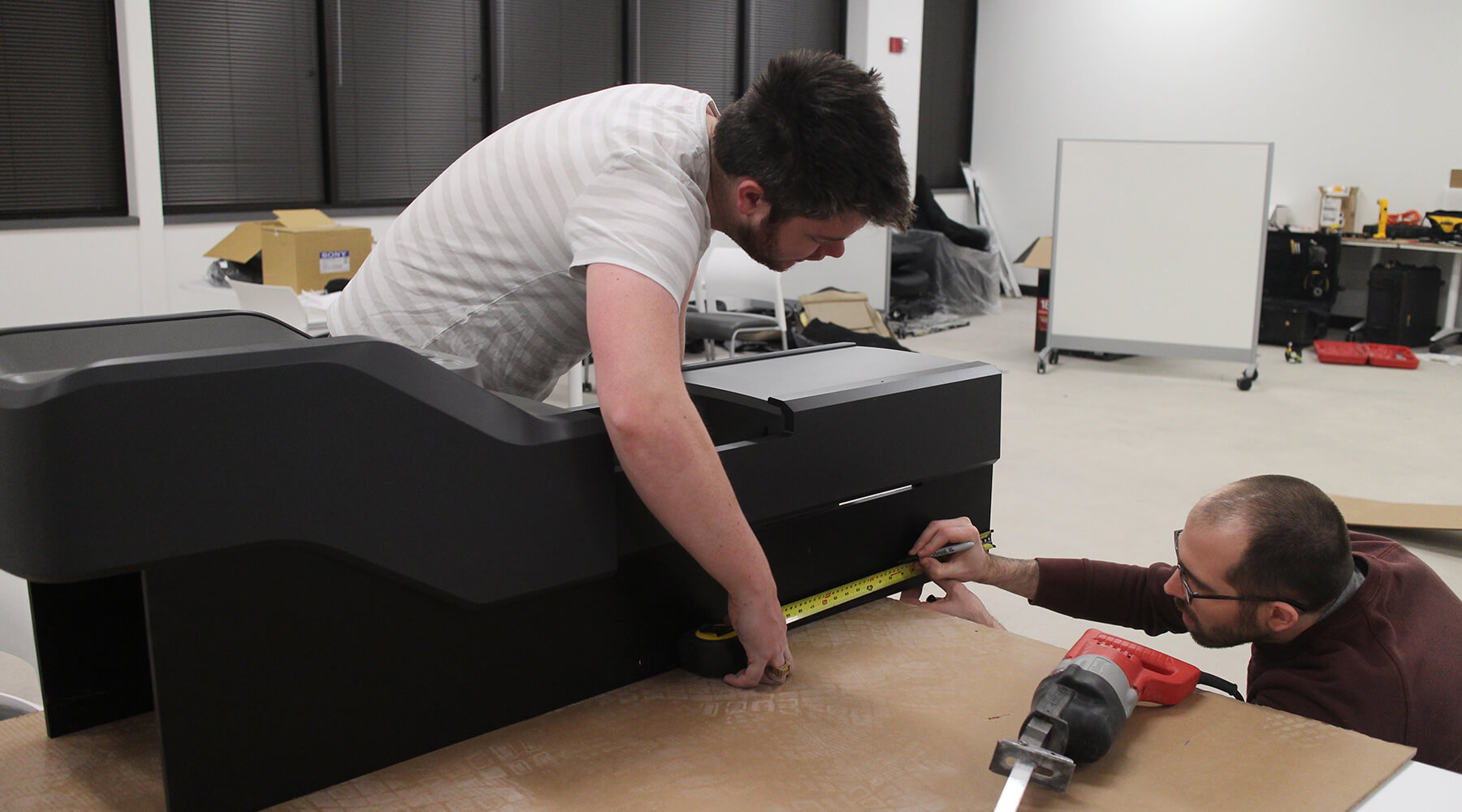
For well over a decade, we’ve partnered with Ford in the U.S., the EU, and China to help the organization bring to life a shared vision of the future of mobility. Together we scaled new capabilities throughout the company by running proof-of-concept “beacon” projects and, to embed this new customer-centric mindset, built a human-centered-design hub called D-Ford. This organization within the organization has become a magnet for talent and is spread across six global locations: London, Shanghai, Melbourne, São Paulo, Palo Alto, and Detroit. Ford’s commitment to serving the needs of people and the planet is what propelled the rethink of the F-150, the best-selling vehicle in the U.S. for over 40 years. It was a high-stakes move, and one that represents a major turning point for the automaker: For the first time, its primary profit source would be electric. The new Lightning is still built Ford tough, but also built for the future.
Passenger vehicles produced 41% of carbon dioxide emissions worldwide in 2020.
One in every 20 passenger vehicles sold in the United States is a Ford F-150.
Before going electric, the Ford F-150 emitted about 100 tons of CO2 over a 200,000-mile lifespan.
200,000
pre-orders of the electric F-150 truck, named one of Time's Best Inventions of 2021
Most Innovative Design Company of 2022
according to Fast Company
Beyond the bag
A coalition of retail leaders join forces to address single-use plastic-bag waste.
America’s leading retailers share a common goal—doing less harm to the planet.
The systemic challenges standing in the way require a bold new approach, and no single company can solve them alone. So Closed Loop Partners convened a group consisting of founding partners CVS Health, Target, and Walmart, along with 12 other leading retailers. As the innovation partner, IDEO helped launch a global search for breakthrough sustainable ideas that yielded more than 450 submissions from startups and entrepreneurs to reinvent the single-use plastic retail bag, with nine finalists entering a six-month accelerator.
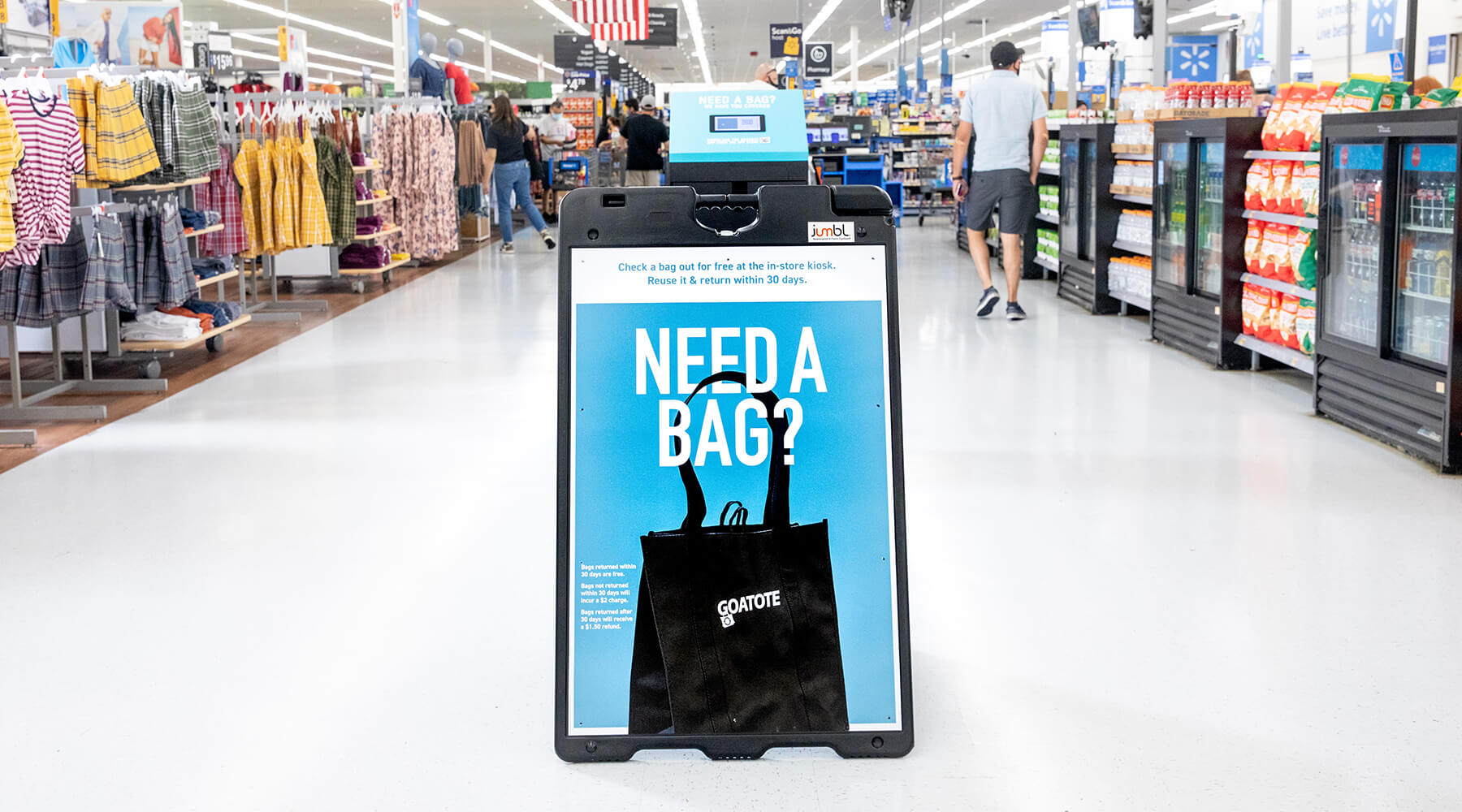
New alternatives ranged from biodegradable solutions to systems that kept reusable bags in rotation. IDEO teams not only facilitated collaboration between startups and sustainability leads from partner retailers, but also provided a boost of additional expertise from industrial, data, and business designers. In a matter of months, teams were able to launch prototypes in select CVS Health, Target, and Walmart stores in California and New Jersey.
Everyone involved in the consortium knew that replacing single-use plastic retail bags is a problem that won’t be solved quickly or easily. But the Beyond the Bag challenge helped them learn that designing for the policy and infrastructure of tomorrow requires tangible steps, taken together, today.
A hundred billion plastic bags are used in the US every year, and less than 10% of them are recycled.
Every year, plastic retail bags are among the top ten items found on beaches and waterways worldwide.
9
stores tested solutions across Northern California
Millions of dollars
raised by two startups
2
startups acknowledged by Fast Company's World Changing Ideas Awards
5 Ways to Design a Great Effing Meeting
Hint: Confiscate the phones
We thought about the physical context: If looking at a screen put viewers into a mode of judgment, what environment might lead them into a state of openness and wonder? After a few false starts—and ruling out marijuana—we settled on a campfire. Everyone has experienced the magnetism of a flickering flame and its power to open you up to a good story.
Burning wood was going to be a challenge indoors. But then another part of our talk occurred to us, in which we identify iPhone addiction as a scourge that prevents people from engaging in creative daydreaming. What if we took away the audience's phones and used them to stoke up the flames rather than dowse them?
Here’s how the experience played out. We gathered everyone in a conventional classroom setting and ran them through a calendar review exercise (“Look at your last week and count the hours of creative imagination”). Then we shared some recent brain science studies that point to the power of daydreaming to cultivate creativity. Diving deep into the intricacies of neuroanatomy, we could tell we were losing people.
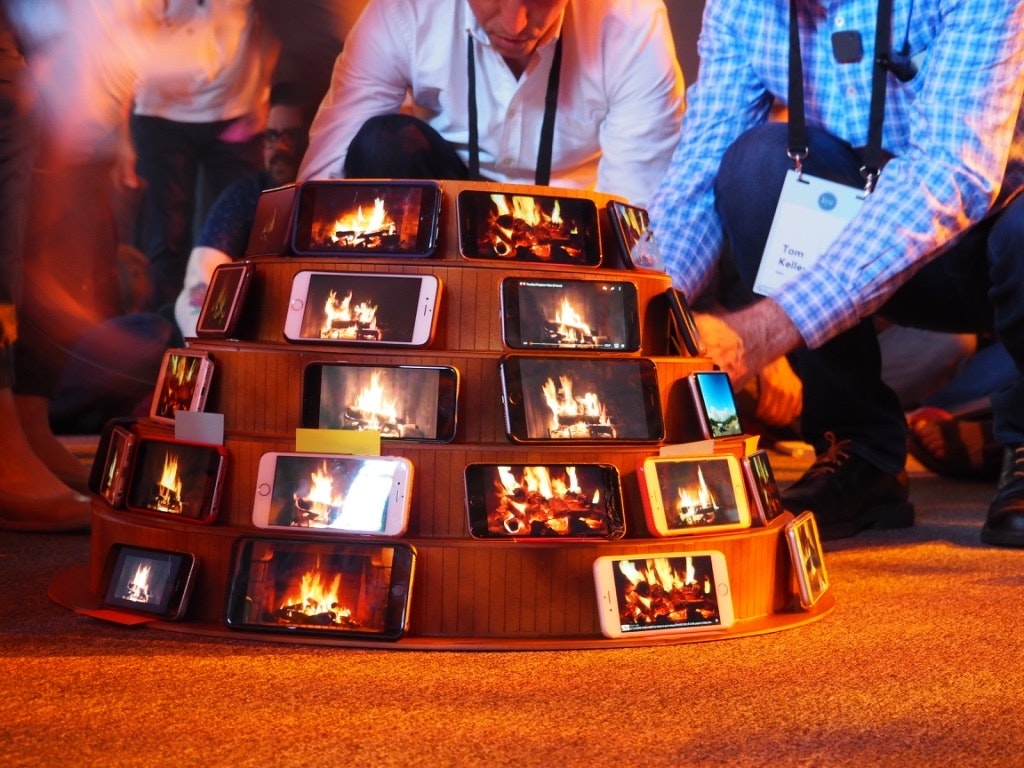
Just before everyone fell asleep, we herded them through a back door to another part of the building. Here, in dimmed light, we had each person load a YouTube video of a campfire and set it on top of a foam-core structure made by our designers in the Chicago office. Soon we had a raging digital bonfire of iPhones, with additional sound effects from having our audience gently crinkle Post-It notes in their hands.
No campfire would be complete without taking turns strumming a guitar and telling stories of things we’d done to rediscover our creativity, so that's exactly what we did. The previously restless audience sat on the floor, gazing at the virtual fire, curious and relaxed.
Look at your last week's calendar and count the hours of creative imagination.
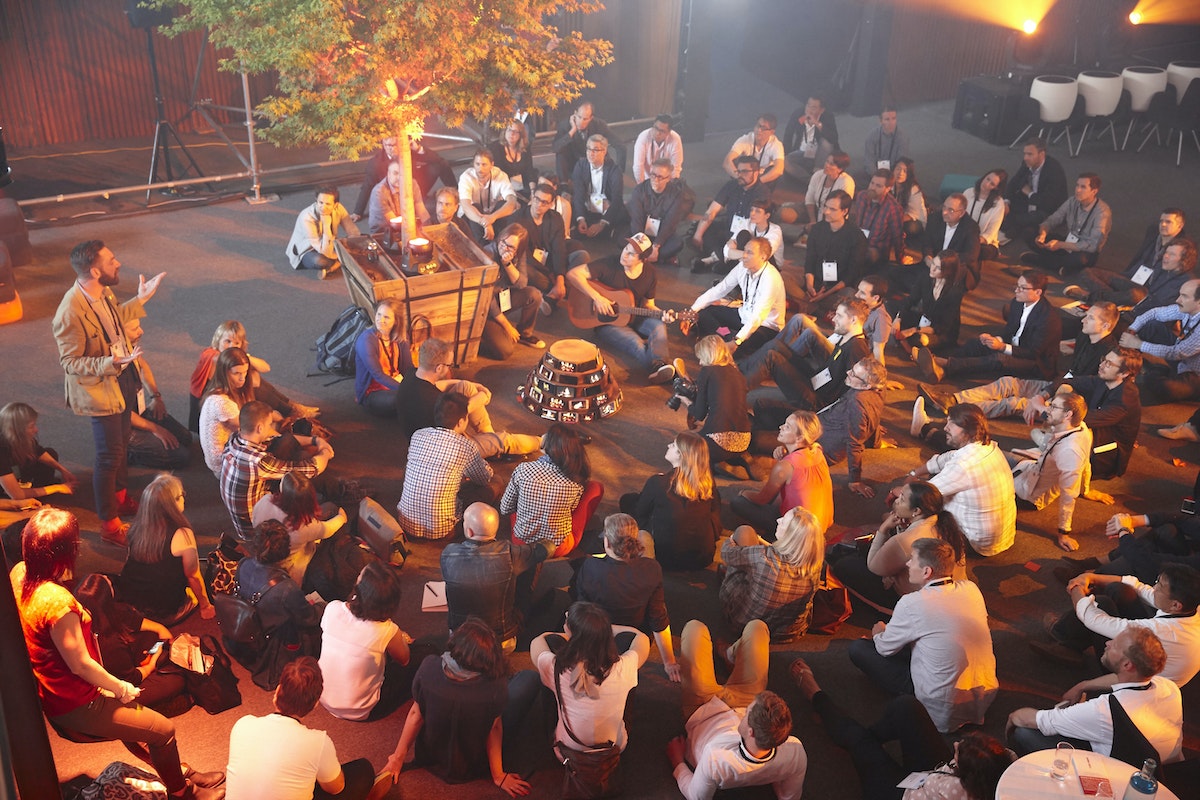
We turned the floor over to the attendees. What strategies did they use in their own practice?
One colleague shared a story of hanging a lamp above his desk to serve as a beacon. When the lamp was on, it let others in the studio know he was available to talk. Another shared her technique of running away from distractions—literally, on foot—until her head was clear. A third announced he would try to change his mindset by drawing for a few minutes each morning when he got out of bed. As the session ended, we asked everyone to write down something they would try in the future to spark their own creativity. Commitments were made and notes were tossed into “flames” as attendees drifted away, dreaming of a new way to work.
In sum, here are 5 ways to design a non-boring meeting:
- Start conventionally, then lead attendees to an unknown frontier
- Confiscate phones
- Commit to a gimmick so they don't complain that you've taken their phones
- Play music
- Ask people to share personal stories
*Only one iPhone was lost during the making of this session… but seriously, who took it?
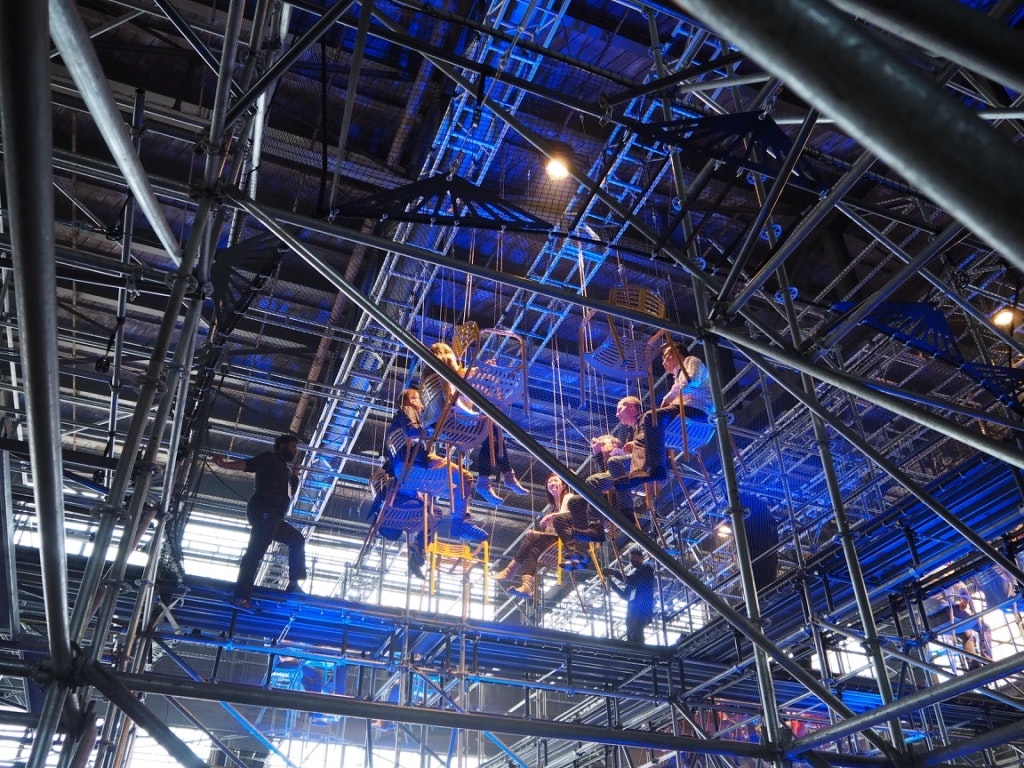
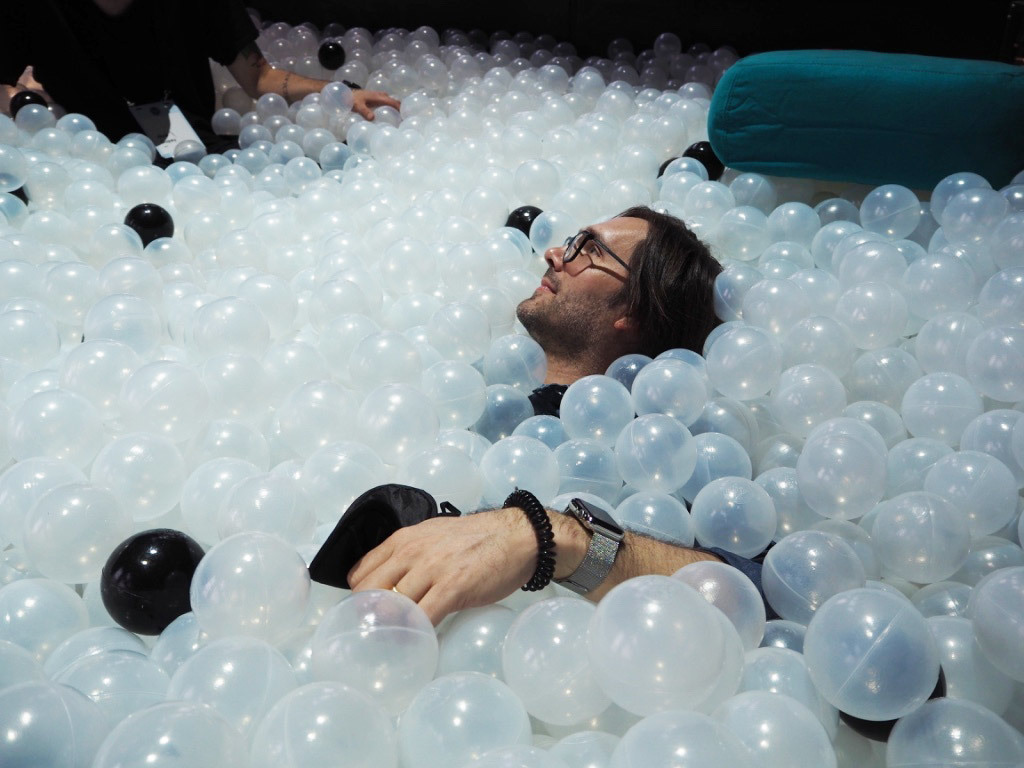
Our quest: to invent an un-boring meeting. My colleague Michael Hendrix (above, immersed in one experiment—a bubble-bath-based brainstorm) and I were preparing a conference session about the importance of putting yourself in a creative mindset. But the way we were delivering it—two dudes standing at the front of a room with a PowerPoint deck—was about as inspiring as the DMV. We needed the audience to experience the thing we wanted to teach.
Why VR Will Revolutionize How We Do Research
Using immersive video as an empathy builder
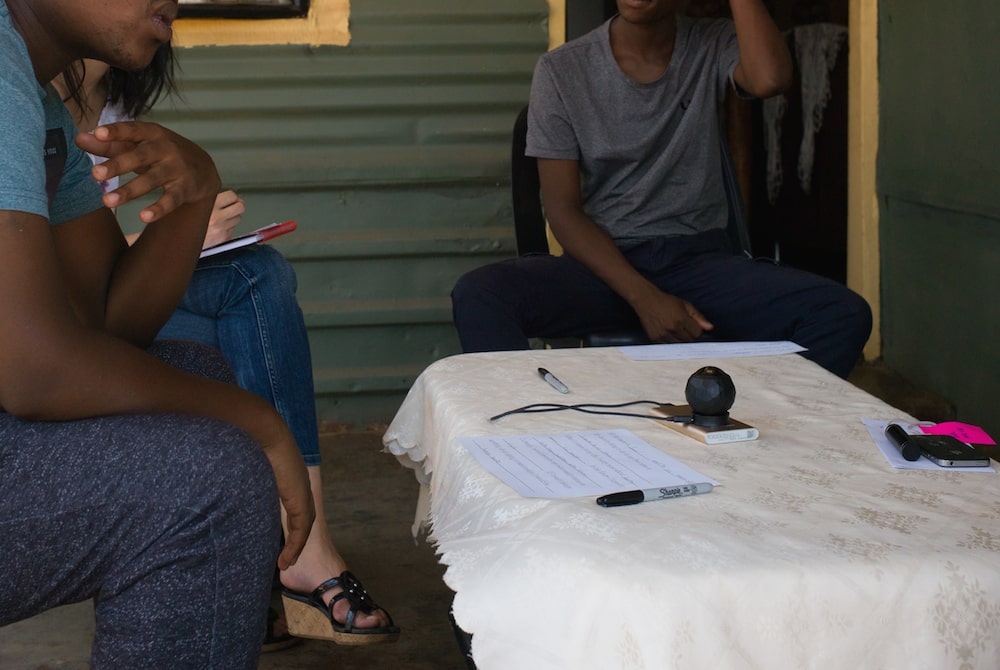
Last November, three IDEOers and I set off to South Africa for a project focused on women's health. With so many others back in Cambridge eager to stay involved, we wanted to create a way to share our experiences from 8,000 miles away.
So we transformed our project room back at IDEO into an immersive, womb-like experiential space. Inside: a single chair and VR viewer. Every day over the course of the trip, we sent virtual reality videos that teleported our colleagues from Cambridge to our happenings in the field.
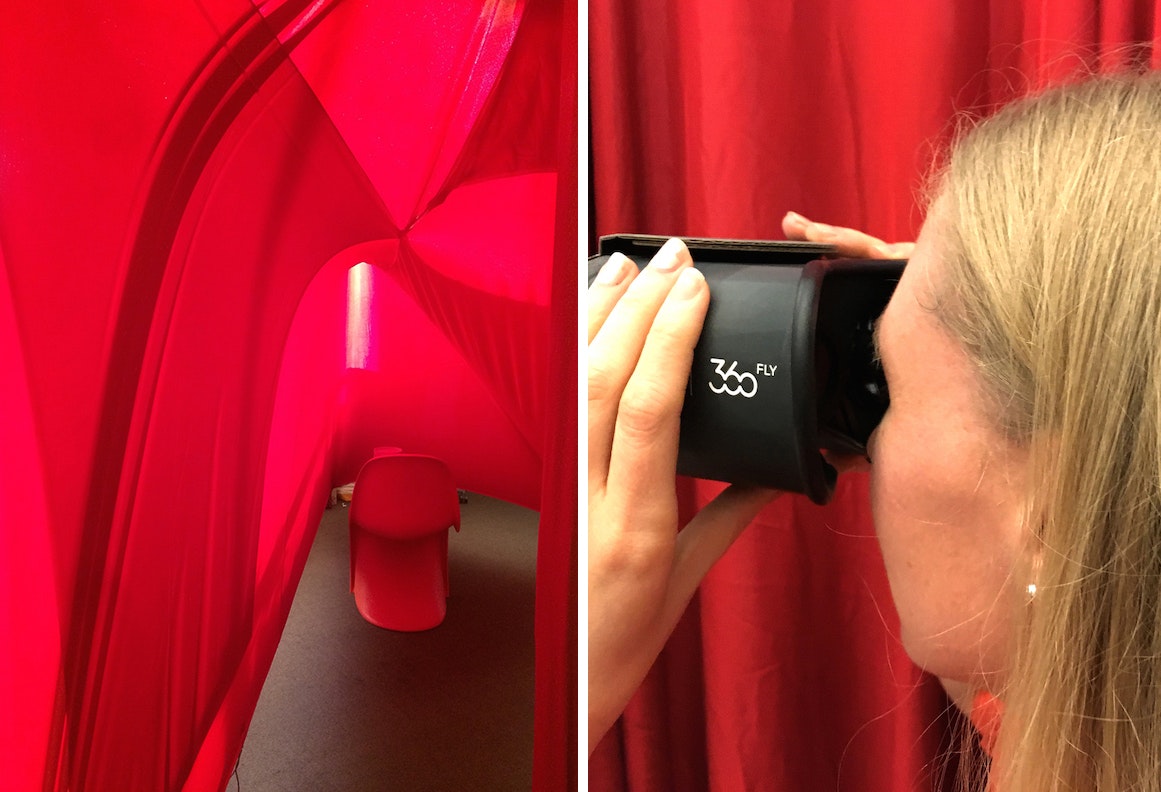
From this experiment, we got a glimpse into the impressive potential of this technology to radically change our industry. Here are five reasons to consider using VR for your next design research adventure:
1. Being invisible is super powerful
The VR camera we used was pocket-sized—hardly intrusive. Its 360-degree lens also breaks users’ mental model of a camera, no longer conveying that it's staring at them, or you, or anything, really. It puts participants at ease as it quickly fades into the background.
2. You can capture background noise
Our research environments are rich and beautifully complex. But during a typical interview, we're so focused on what the participant is saying or what question we’re going to ask next, it’s hard to take it all in, and much gets lost in translation when recounting the details later on. VR gives you a way to capture the background environment, and lets you elegantly weave it into the full narrative.
3. You gain empathy from those far away
The IDEOers back home felt like they were a part of the experience—as if they were with us, in the moment, and not just hearing the story secondhand. They said the videos felt active and immersive, allowing their senses to be fully engaged. Photos and traditional video are useful, but it’s just not the same.
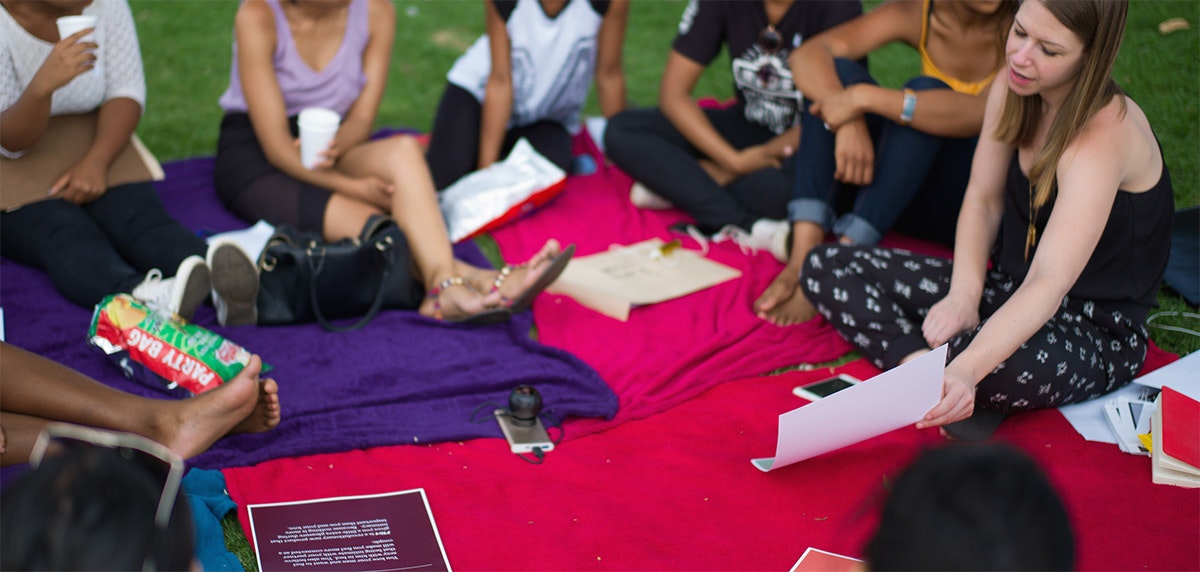
4. You’ll be part of the scene (like it or not).
Filming in 360 degrees means there are no degrees to hide in! And while some may argue that this is more an obstacle than a benefit, to me, it feels more honest. It captures the reality that our research is not a one-sided investigation but rather a two-way conversation and collaborative experience.
5. You’ll want to watch it again. And again.
With VR, each viewing opportunity is unique. The viewer decides where to look and what little detail to pay attention to. It’s like getting to relive a moment in a thousand different ways, without ever getting called out for staring at anyone or anything. Even more compelling: Because the experience feels so vividly real, one is left with an almost visceral sense of nostalgia that’s powerful and addictive.
I'm excited to see how design researchers continue to experiment with VR. Will we embed insights directly into the video? Will research participants be able to "walk" into virtual environments we create? The possibilities are limitless, so strap on your seatbelt (and headset).
Thanks to my project team: Ann Kim, Lauren Kim, and Greg Wolos
Today, everyone’s buzzing about virtual reality and its potential to revolutionize the gaming, news, and film industries. But there’s one application that you rarely hear about: research.

Only in Japan
Mike Peng of IDEO Tokyo should really be a tour guide
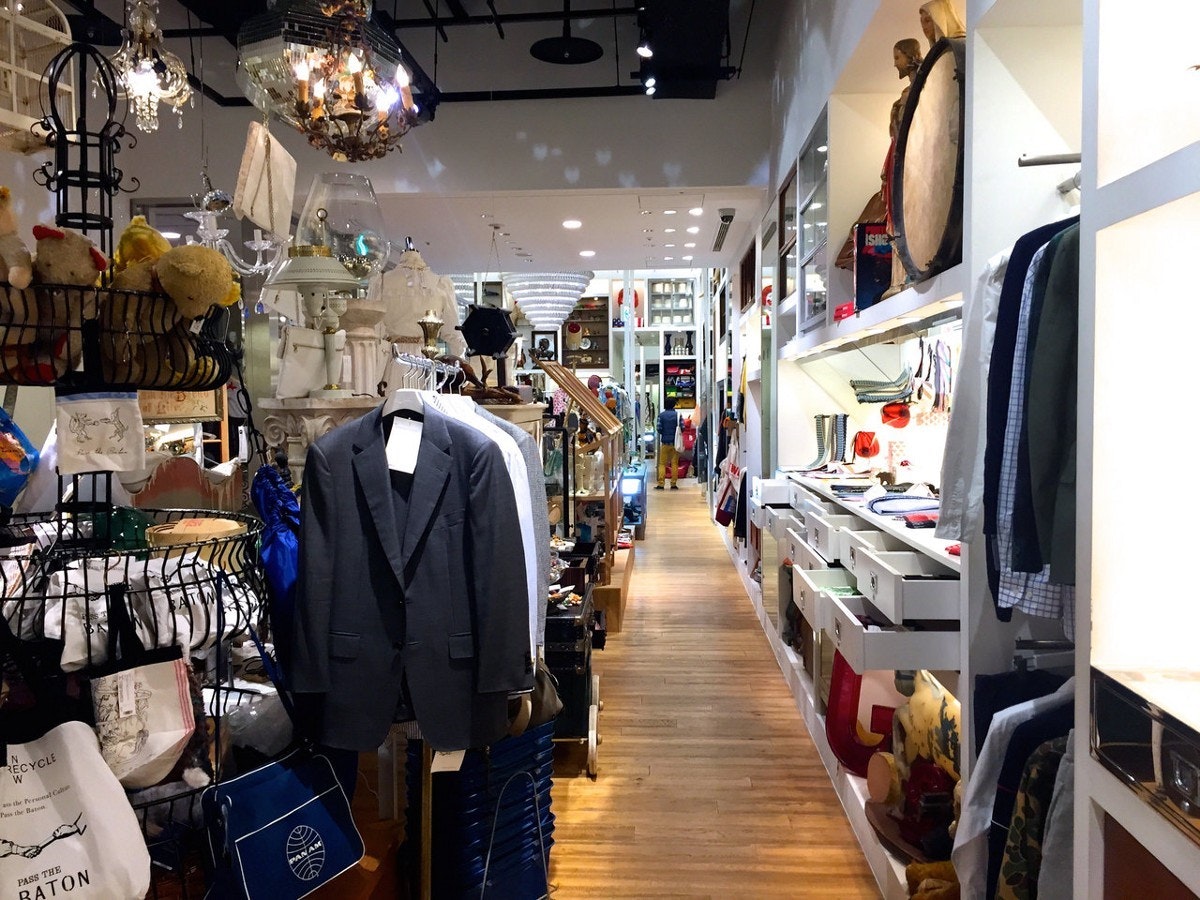
1. Pass the Baton: where stories are currency
At secondhand store Pass the Baton, recycled goods are nestled in carefully curated rows. But what's really for purchase are stories—one for every item. Pick something up and turn the price tag around. You’ll find a photo of the previous owner, along with a short anecdote about the experience of owning the item. Even in just a few sentences, these stories give me an instant connection to the product on-hand, making it more valuable than if it were displayed as a new item in an on-trend collection.
My experience at Pass the Baton reminded me that the currency of stories can be more valuable than the currency of yen. Reading the stories, I was surrounded by not just the things for sale, but the people who once owned them: their relationships, their hopes, their memories. It was a powerful experience and a good reminder to look beyond face value in evaluating the worth of things.
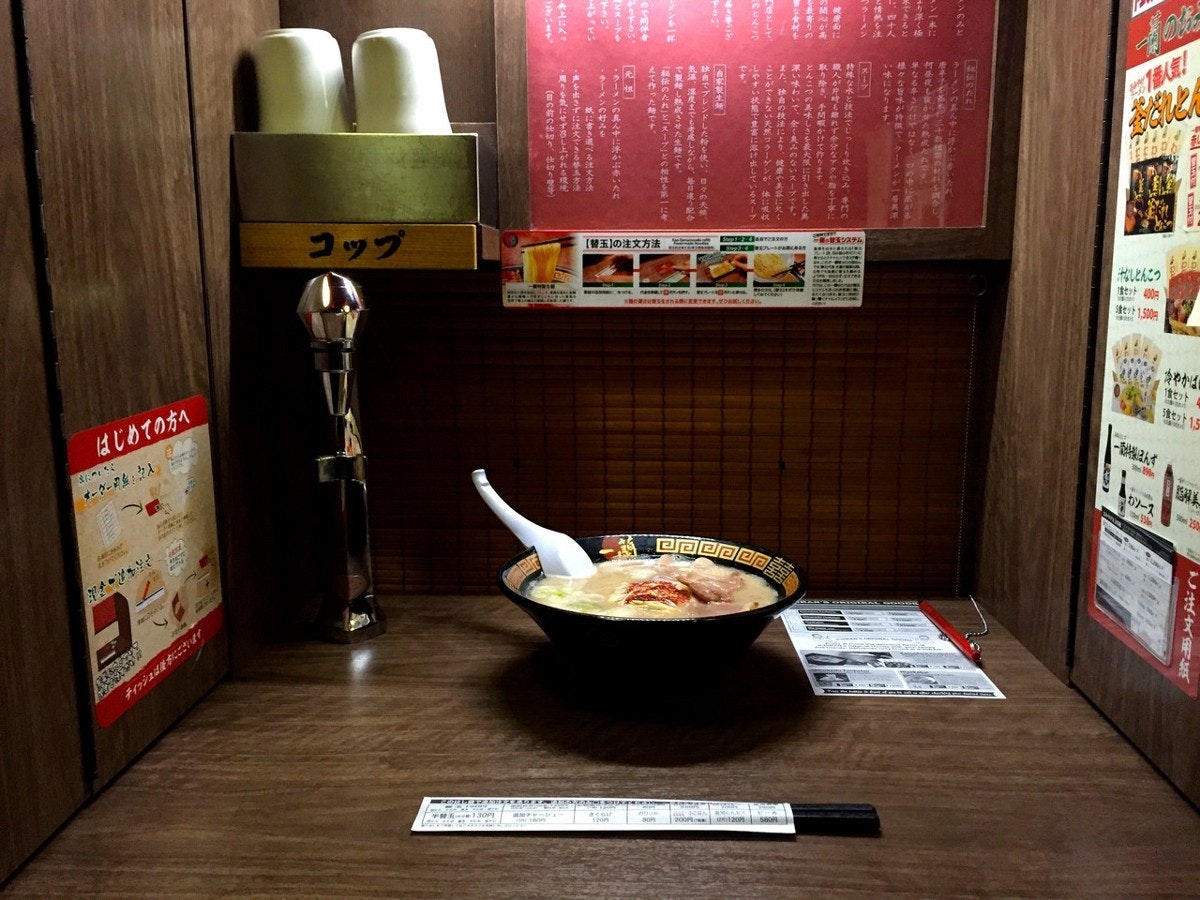
2. Ichiran Ramen: where senses are heightened
Where do you find the best ramen in Tokyo? For me, there’s one standout in the best-designed ramen-experience category: Ichiran. Out of the thousands of noodle shops in Japan, this one has choreographed the perfect environment to fully savor the flavors, tastes, and textures of ramen.
Ichiran is not a social affair: Each booth is designed for one person, and it’s filled with everything needed to savor the experience solo, including an individual water dispenser, chopsticks, and cups. Diners are served when a pair of hands emerge with the perfect bowl of ramen. The curtain closes, and then it’s just you, the bowl, and full-on sensory pleasure.
Ichiran is about the ramen and the ramen only. And what a bowl of ramen it is.
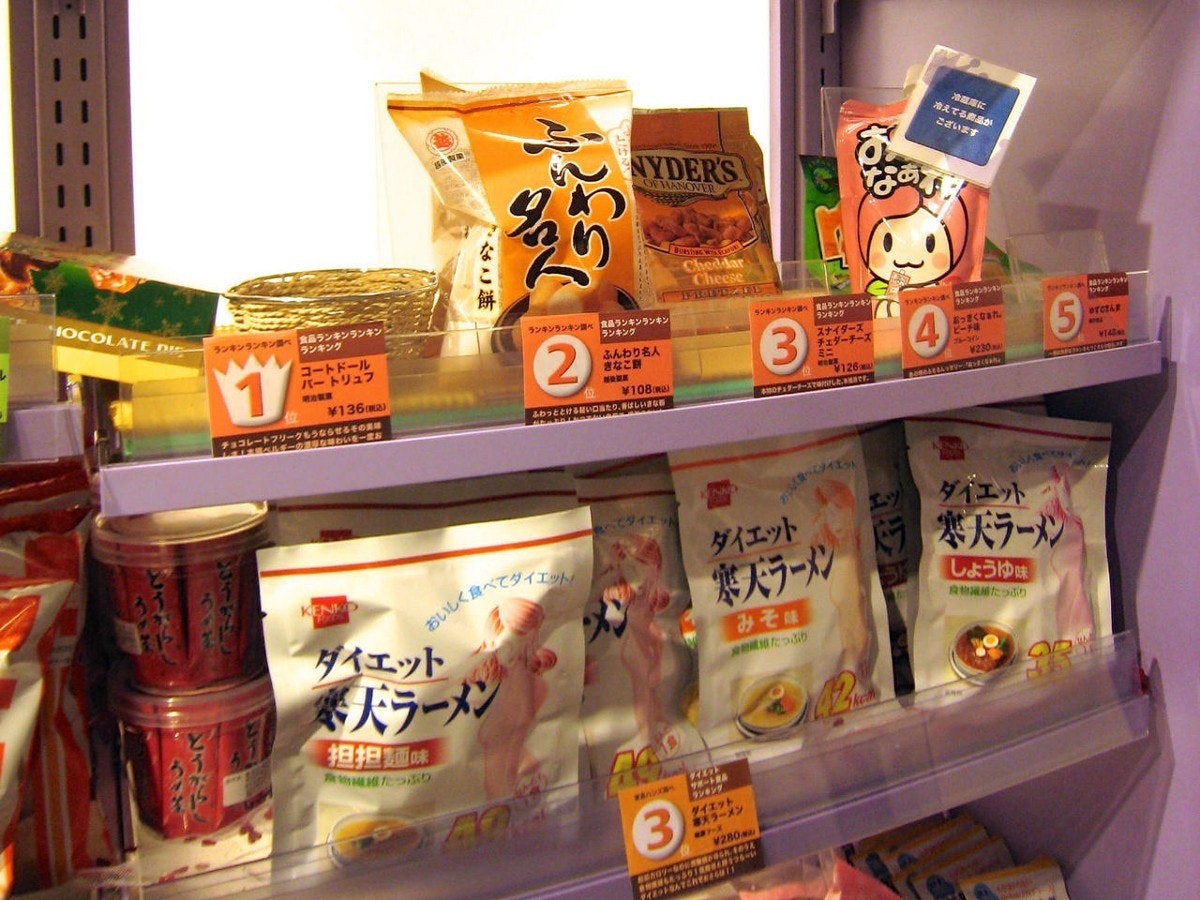
3. Ranking Ranqueen: Where the crowd decides
Here's the concept: Assemble the most popular or top-selling products in each category—peach-flavored candy, facial wipes, gift envelopes—and put them all in one store. Ranking makes it easy to breeze by the brightly lit, clearly ranked items, pick up the most highly recommended toothpaste or most popular J-pop album, and be on your way. The easy-to-understand system helps make sense of the myriad categories of Japanese consumer goods.
I began to realize that in Japan, people don’t just want to suspect they’re making a good purchasing decision, they need to know. Ranking Ranqueen taps into this innate cultural behavior by validating the shopper's choice as one that everyone else is making, too.
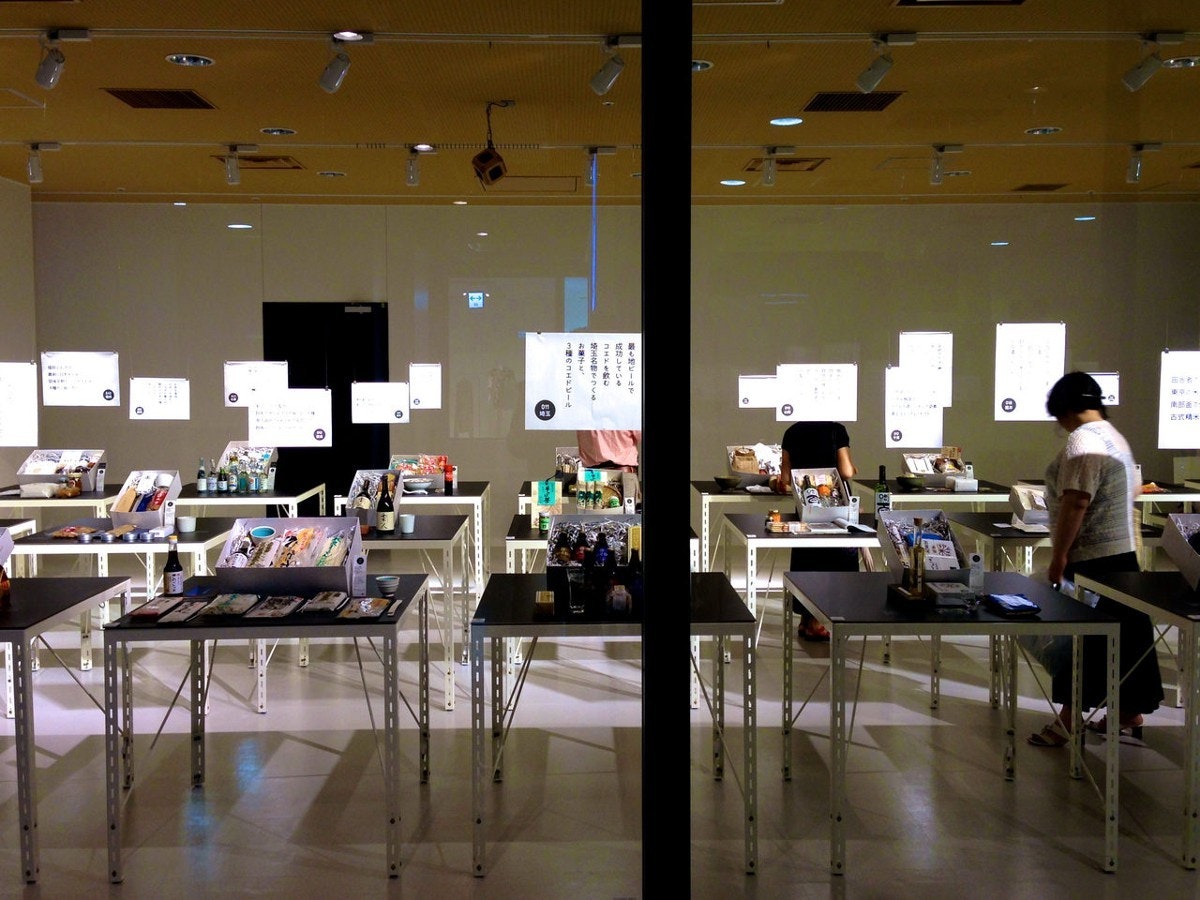
4. D47: Where provenance is put on display
For first-time travelers to Japan, it's all about Tokyo and Kyoto—most don’t realize that the country is woven together with a collection of prefectures, each with its own signature tools, crafts, and food. As a restaurant, museum, and design travel store, the D47 concept puts the spotlight on lesser-known cities.
At the restaurant, patrons are asked to choose where their food comes from, instead of selecting items they’d like to eat. The museum offers rotating exhibits. One of my favorites asked each prefecture to put together the "perfect gift box"—allowing visitors to experience the best from each region.
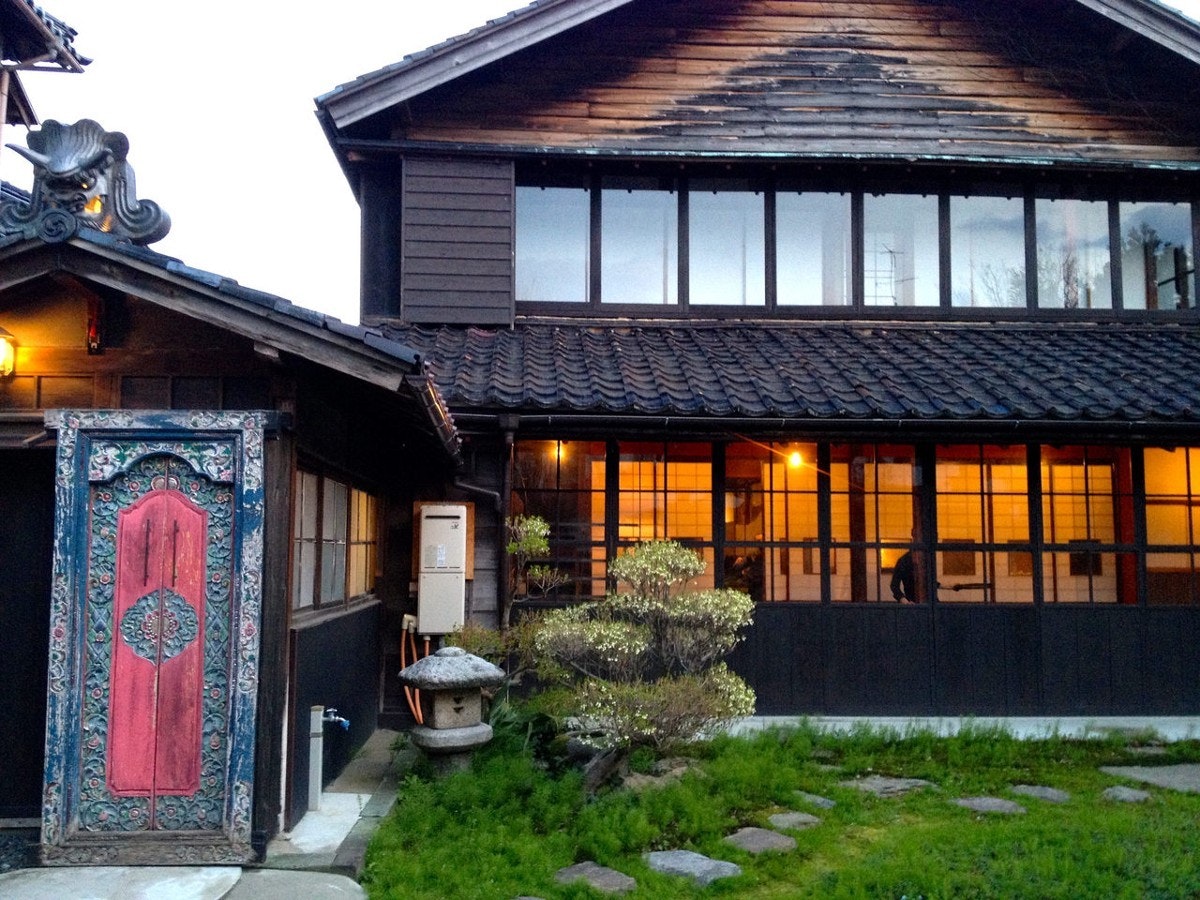
5. Kurage ga kumoni naru hi: Where loyalty is earned
Every year, our IDEO Tokyo studio goes on an off-site to immerse ourselves in a new part of Japan and set our goals for the upcoming year. Kanazawa was one destination, and dinner at Kurage ga kumoni naru hi was our last meal.
The menu comprised of just five items, all handwritten on a sheet. Confused by the lack of choice, we ended up ordering multiples of everything and were incredibly satisfied with the beautiful food. Just before the bill came, our server presented a tray of 10 blank wooden tokens, which she proceeded to pass out to each of us, one by one, saying, “The next time you come here, bring this token, and you will unlock a new set of dishes on the menu.” It was as if we’d uncovered a secret new level in a video game. We were definitely coming back to unlock it.
Kanazawa is hours from Tokyo, but we can't wait to see what the next part of this culinary adventure holds in store.
This article first appeared in digital magazine Ignition: ignition.co
In 2011, I moved here to help start the IDEO Tokyo studio and immediately started collecting a list of places that push us to think of the everyday in new ways. As designers, we thrive on inspiration, and this country is overflowing with it, from carefully curated hospitality to sculpted food to the incredible assortment of subcultures. As with everything in Japan, each experience compels a look beneath the surface to truly grasp its meaning and intention.
Made in Chicago: Method Soap
The people against dirty come clean
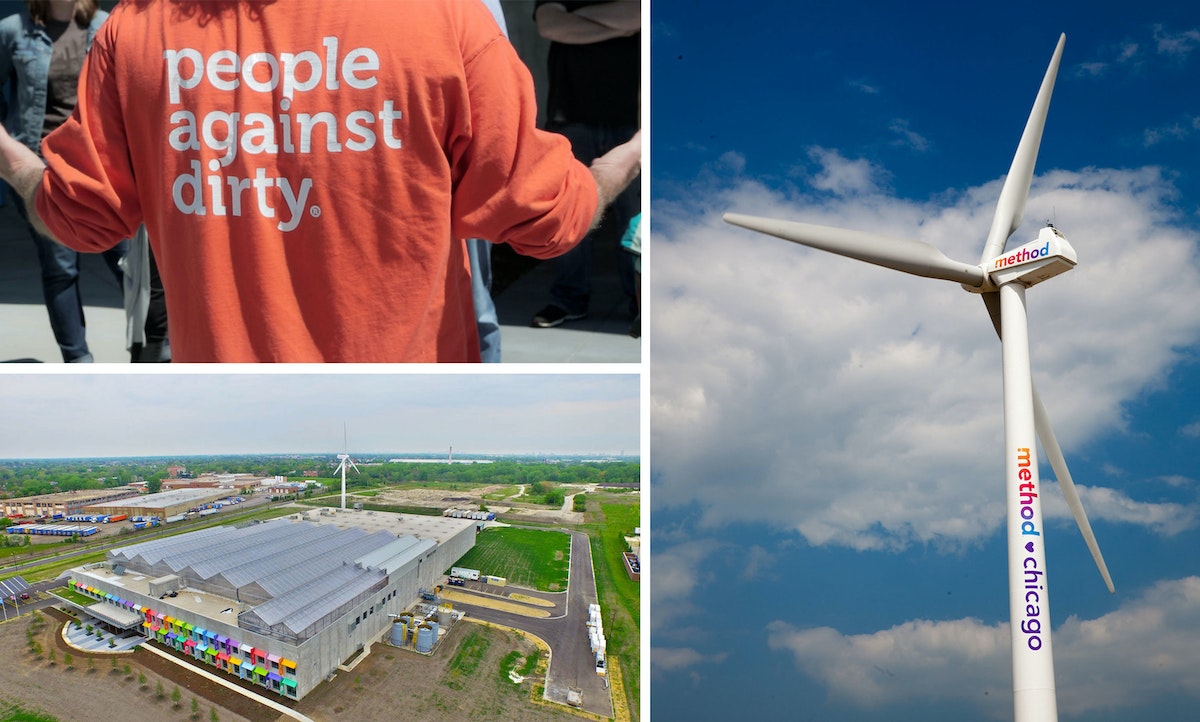
We took a trip to the factory to see how far they’d come. The building looks more Willy Wonka than gritty Chicago. It features colorful banners on the front, greenhouses on the roof, and sun-tracking solar panels in the parking lot. A wind turbine spins in the back and the property even keeps its own colony of bees. Yet, as we explored inside, I found the most compelling part of their story was how human they decided to be along the way.
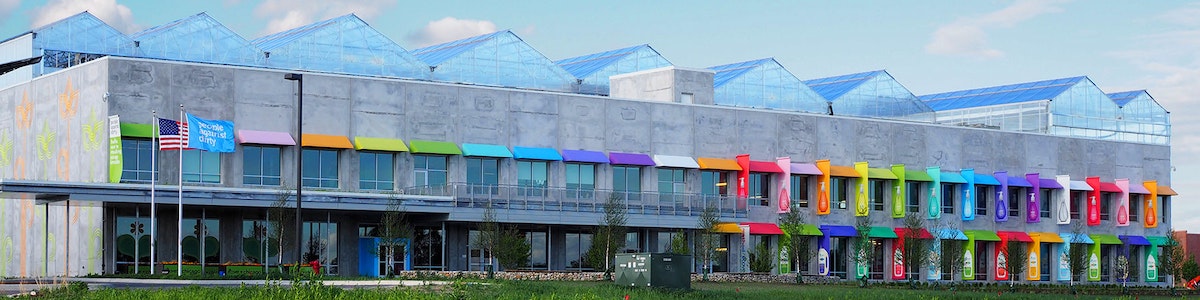
These folks are seriously clean.
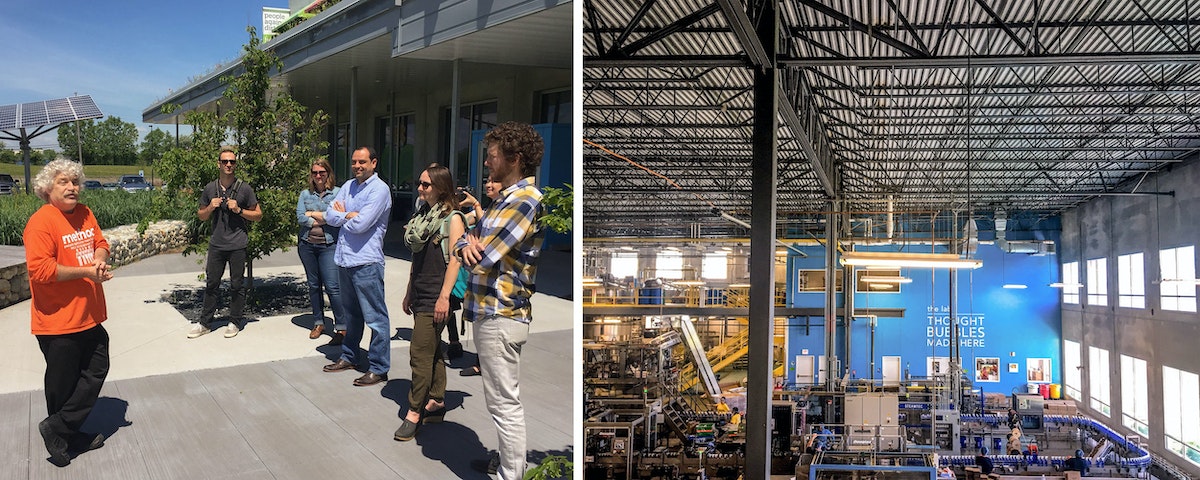
Method is a B Corporation, which means they are a mission-driven company that follows certain environmental and social standards. Our tour guide Shannon, an old soap industry vet, helped us understand what this means at Method. We learned that each employee receives two paid volunteer days per year to help an organization of their choice. All ingredients used are sustainably sourced and packaged, mostly in recycled containers, and the energy surplus from their wind turbine and solar cells goes back into the grid. They even chose to forego factory fences and built a sidewalk through their property so their neighbors can more easily access nearby shops.
Method takes bottle service to the next level.
One of Method’s biggest inefficiencies was bottling, as the company they work with had bottles traveling nearly 1,000 miles before being filled and packaged. They built this new factory with enough space to bring the bottling company in-house, taking 1,000 miles down to 1,000 feet. Add to that a fleet of bio-diesel semi trucks used for delivery and you have a pretty efficient system.
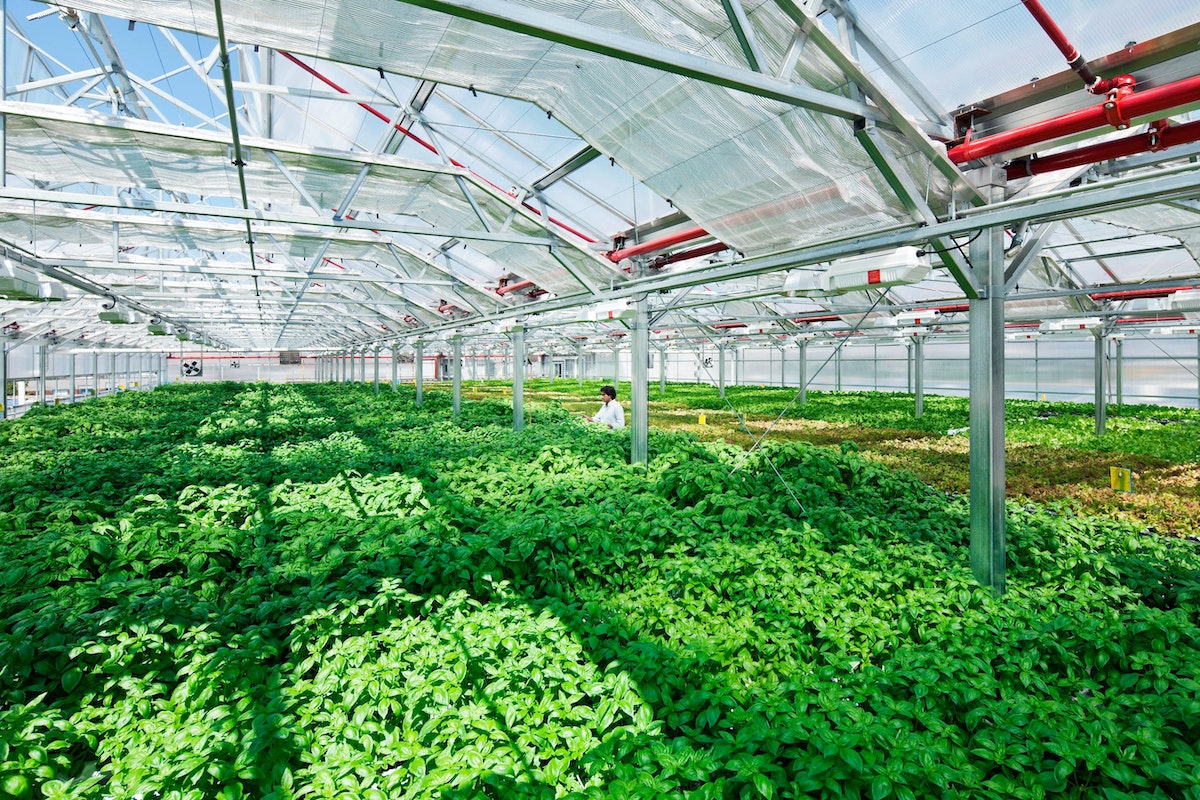
Soap and salad, anyone?
Method rents their 75,000 square foot rooftop to Gotham Greens, a New York-based urban agriculture company, making it one of the largest rooftop greenhouses in the world. The fully automated setup has seeds entering one end and fresh, ready-to-buy produce exiting the other. (Hot tip for Chicago veggie lovers: Check out Gotham Greens' Windy City Crunch lettuce. It’s so fresh it hits shelves in just two days, compared to the average two weeks!)
As our tour wrapped up, Shannon told us a story about the biggest criticism lobbed at Method. In the world of eco-friendly soap making, Method is frowned upon for using color dyes and fragrances in their soaps, prompting some to claim Method isn’t even a “green” soap company. However, Shannon helped us understand this decision. It turns out, it takes more energy to dye the plastic in each soap bottle than it does to dye the soap. So, given that consumers want to pick brightly colored things from shelves, dyeing the soap is a better solution.
The story illustrates the fact that being eco-friendly is never simple. Instead, it involves many decisions, involving all facets of an organization. Having seen inside the factory, we emerged believing that Method was truly committed to making the planet—and our homes—a little bit cleaner.
Photos courtesy of Method, Sophie Feng, and Magen McAfee.
Method Soap began in a grungy San Francisco flat, where roommates Eric Ryan and Adam Lowry started mixing eco-friendly soap recipes in beer pitchers. Now, 15 years later, they've opened the industry’s first LEED Platinum certified factory in Chicago’s Historic Pullman District.

Lindsey Turner
I’m passionate about building brands, products, and experiences that help organizations show up with meaning and momentum.
I help organizations cut through complexity by shaping how they show up, through brand strategy, identity, and storytelling.
Working at the intersection of brand and business, I bring an editorial eye and a bias toward making—turning ideas into tangible experiences that people can understand, trust, and believe in.
My work spans government, healthcare, financial services, media, and consumer goods, from launching Gen Z-focused ventures to building innovation labs and reimagining legacy brands. I relish moments of ambiguity and enjoy translating across teams, perspectives, and priorities to move ideas forward.
I started my career in editorial and digital design, shaping cross-platform experiences and identity systems in publishing and agency environments. That foundation still shapes how I work today: I’m detail-oriented, collaborative, and overreliant on the Oxford comma. I hold a BFA in Visual Communication from the School of the Art Institute of Chicago.

Rachel Young
My work helps organizations see who their products aren't working for—and build the will and the tools to do something about it
For 25 years, I've asked the same question: Who does this design exclude—and what are we going to do about it?
My work spans human-centered strategy, inclusive design, and qualitative research, with clients ranging from Microsoft, Google, and Verizon to the National Science Foundation, and San Francisco Unified School District.
Before IDEO, I taught elementary school in East Palo Alto and spent a decade doing design work with social service organizations—where I learned firsthand what it costs people when systems are built without them in mind.
I am currently writing User Error, a nonfiction book about digital access and the design decisions behind it. I live in Oakland, California.

Brian Pelsoh
I lead with craft, ensuring our work is creatively excellent: rooted in deep human insight and imagination, while also grounded in the realities of business and technology.
My expertise spans brand, communication, and product design across tech, education, the arts, and social impact.
I believe great work demands both high-level vision and obsessive attention to detail, and only happens through collaboration.
I bring an inclusive, hands-on approach and a deep understanding of business, which enables me to consistently deliver excellence while always asking why.
Before joining IDEO, I worked at the brand firms Pentagram and VSA Partners. I began my career as a designer, leading teams at the School of the Art Institute of Chicago and the Milwaukee Art Museum. I hold an MFA in graphic design from Maryland Institute College of Art and a BFA in communication design from the Milwaukee Institute of Art & Design, and have taught at some of the best design schools in the US.

Tony Wong
I am responsible for IDEO’s long-term success in China and working with clients to use design as a tool to enable growth.
I am responsible for IDEO’s long-term success in China and working with clients to use design as a tool to enable growth. Specifically, I have helped Chinese companies design holistic brand solutions through the development of their products, communication, services, and innovation teams, and I have helped multinationals expand their presence and influence in China.
I advise global leaders on developing China-led innovation and capabilities.
In over 15 years in IDEO Shanghai, I have worked on projects that use design to elevate the quality of the experience of healthcare products and services, streamline processes that increase productivity, create spaces and programs that promote and enable inclusive communities, and build next generation mobility solutions that are planet-positive.
Before joining IDEO, I worked at Philips Electronics and the Electrolux Group in Italy, the Netherlands, and Singapore on a number of breakthrough commercial products. I am a member of the Young President Organization in Shanghai.

How to use AI as an editor, not a writer
Ed White shares how he uses AI as an editor—not a writer—to sharpen storytelling, rehearse ideas, and preserve the productive friction that makes creative work better.
Ed White has a rule he's tested on his own writing: hold yourself as the writer, and let AI be your editor. Ed is a Senior Design Director at IDEO's London studio, where he co-leads the firm's AI portfolio across Europe. Before IDEO, he spent 12 years as a writer and editor at the Financial Times, Wired, and Contagious. So when he talks about when to use AI for storytelling and when not to, it comes from two decades of crafting his storytelling skills.
In this episode, Mina Seetharaman talks with Ed about two specific tools he uses to keep AI in an editor's seat: a "roasting agent" prompted to critique his drafts without any sugarcoating, and a simulated audience he rehearses pitches on before the real thing. They also get into what Ed is hearing from design leaders at Anthropic, Lovable, Shopify, and Google Creative Lab about how creative work is changing, and why he thinks the friction of writing something yourself is worth protecting rather than automating away.

Building a personal AI for the messiness of life: Sida Li
Becca Carroll talks with Cue co-founder Sida Li about designing a personal AI for the messiness of everyday life—not just work. They explore how Sida stays anchored to human needs while navigating fast-changing technology, product tradeoffs, business-model experimentation, and the realities of building an AI company today.
Most AI products today are built for work—a space with clear problems and established systems. One founder noticed a gap: personal life is messier, harder to systematize, and mostly left behind by the AI boom. So she built Cue, a personal AI that lives inside iMessage and group chats, to go where the other tools haven't.
In this episode, Becca Carroll, IDEO's Chief Strategy Officer, talks with Sida Li, co-founder and CEO of Shared Context Lab, about staying anchored to a human need while the technology around her keeps changing shape, why she treats her business model with the same rigor she'd bring to a product, and what it feels like to build a company at this particular, disorienting moment in AI.
The conversation also gets into how Sida makes design decisions: the language Cue uses to describe itself, the tradeoffs behind building inside iMessage instead of a new app, and a real story about a business idea that didn’t pan out.
This is the second in a two-part series profiling founders from IDEO's Startups-in-Residence program. The first conversation is with Johannes Seemann, founder of Sooner, on designing GenAI for the emotional side of money.

Designing GenAI for the emotional side of money: Johannes Seemann
Designing financial tools around the feelings that shape money decisions.
Most personal financial tools are built to run the numbers and optimize towards a budget. While that works for some, most people experience money as a lived relationship that does not neatly fit into a spreadsheet. Johannes Seemann and Becca Carroll discuss why money is emotional before it is mathematical, and what a human-centered approach to building a generative AI financial product looks like in practice.

The curious leader's edge in uncertainty: Scott Shigeoka
How genuine curiosity helps leaders navigate uncertainty with greater confidence.
Mina Seetharaman talks with Scott Shigeoka, author of Seek and Head of Curiosity Cultivation at the Eames Institute, about what distinguishes genuinely curious leadership from performative curiosity, how power dynamics shape curiosity, and why practicing curiosity can restore energy rather than drain it.
Looks like you might be in search of something very specific?
Or reset the filters above and try another angle.
Here’s some random inspiration

Podcasts about creative leadership

Articles about the power of prototyping
