
.svg)




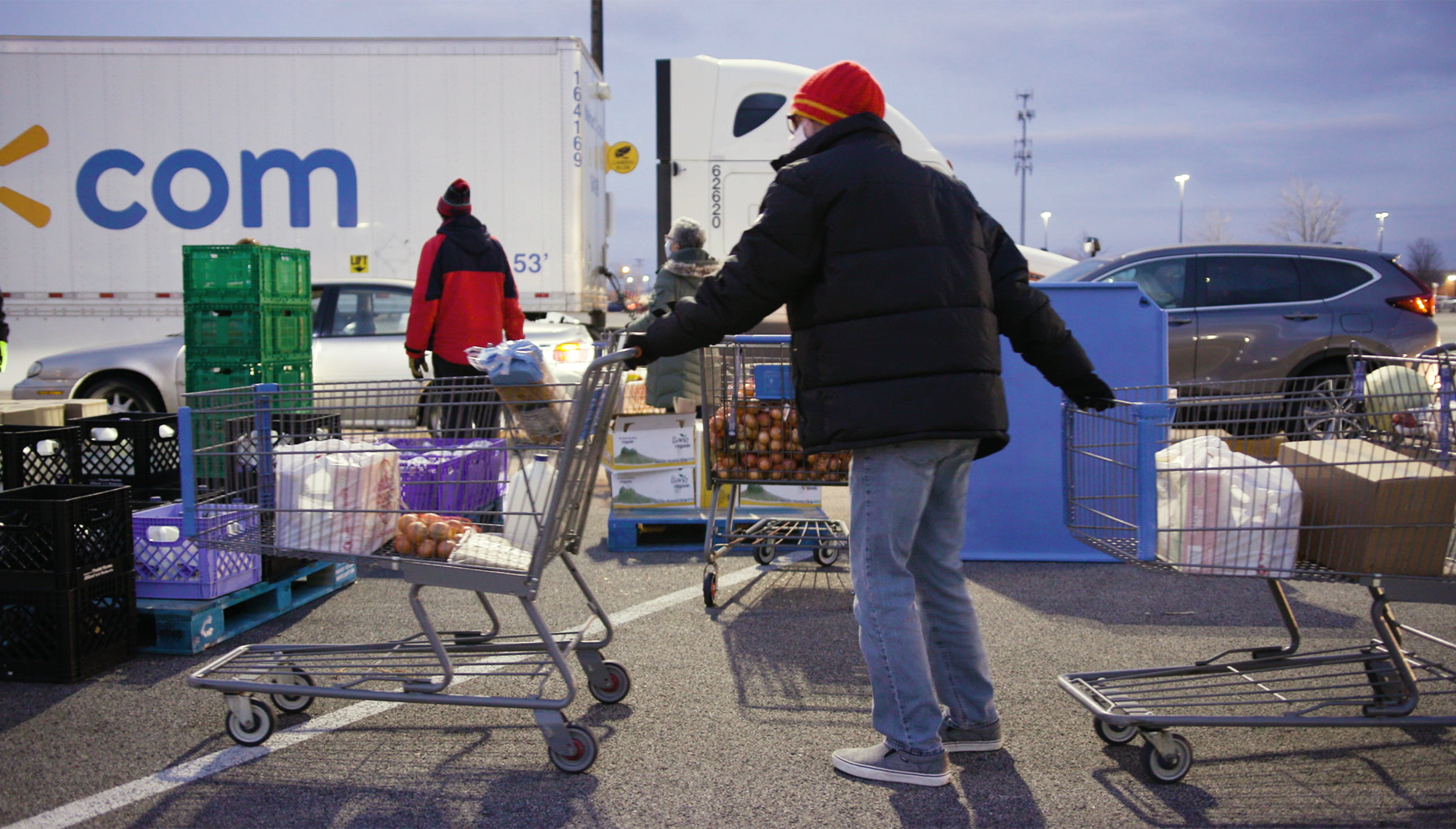
Rethinking the food bank
A crucial resource reconsiders everything to design more dignity into its digital tools.
Giving food assistance is about more than handing over a box of groceries. It’s about allowing people to make their own choices.
But the pandemic only narrowed people’s choices. Undeterred, Northern Illinois Food Bank (NIFB) put people’s needs above everything else, leading to innovations that could improve food banks everywhere. IDEO recruited neighbors to co-design a new digital tool intended to improve people’s access to food. Local residents provided more than insights—they steered design decisions and helped transform the relationship between NIFB and the community.
Northern Illinois Food Bank’s My Pantry Express app allows people to browse and order groceries online and to choose a pickup time and location that works for their schedule. We designed the app to provide useful information on dietary preferences and to be inclusive of cultural differences. The result allows choice and flexibility, helps prevent food waste, and preserves the dignity of shoppers throughout the process by making My Pantry Express feel like any other grocery site.
Ultimately, Northern Illinois Food Bank and IDEO’s strategy for success relied on new metrics. In addition to measuring effectiveness in pounds of food distributed, we found new ways to measure shoppers’ satisfaction—a solution that works better for all parties involved because it was designed by all parties involved.
An estimated 1 in 8 Americans experience food insecurity.
The food insecurity rate is 2-3x higher for persons of color than for white households.
60% of food insecure households do not use food pantries.
1.9M
meals distributed through My Pantry Express in 2021
50%
increase in distribution from prior year
New skill city
The people of South Bend, IN, have the power to design a lifelong learning platform for themselves.
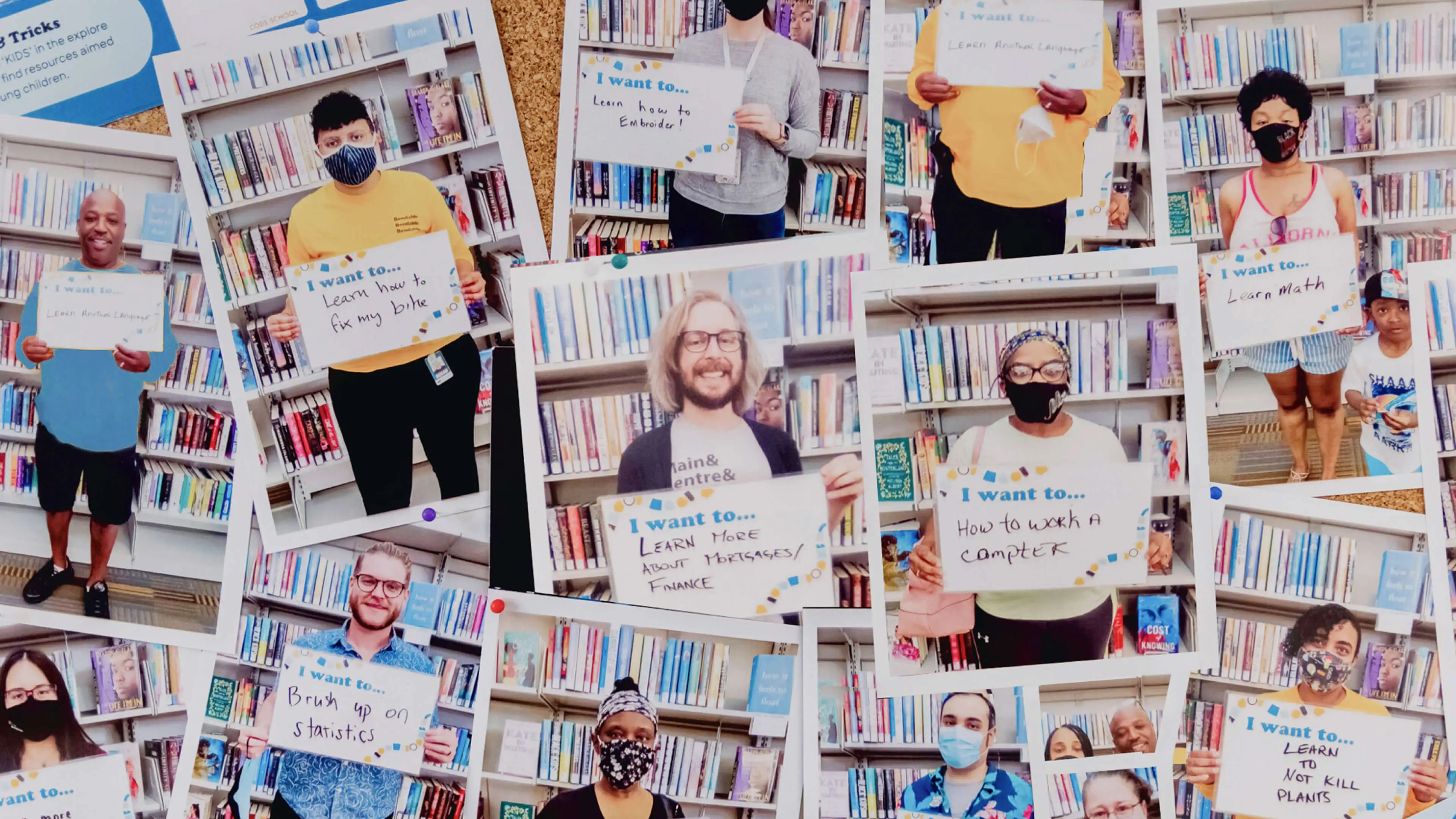
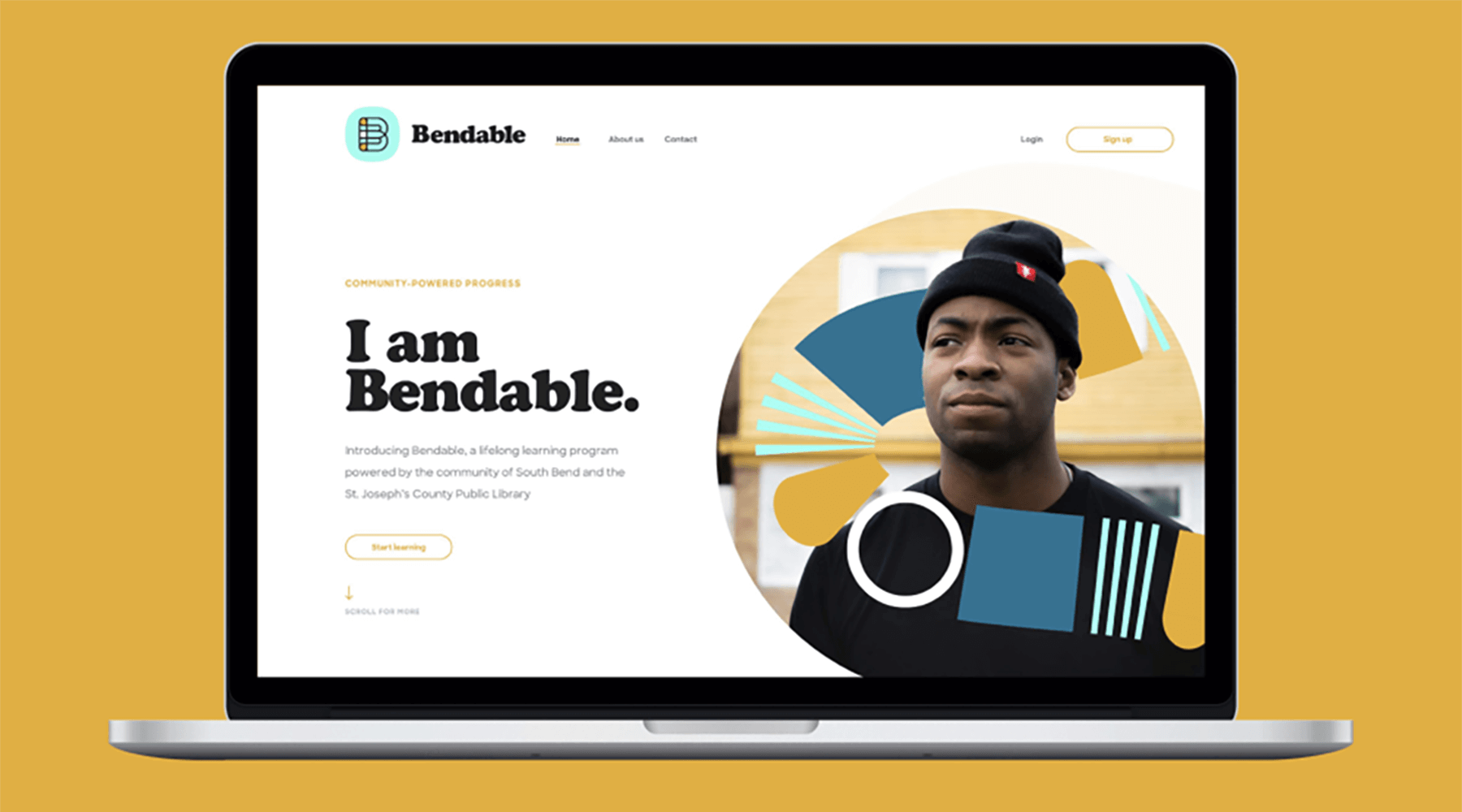
To create Bendable, IDEO worked alongside the people closest to the problem, so every important decision grew out of their experience.
IDEO and the Drucker Institute aligned with the library system and city leaders in South Bend, Indiana, on a single objective: build a learning platform that offered education opportunities to people affected by the decline of manufacturing in the region. But even the earliest phases of research revealed that there’s no common profile that matched the diversity of learners. There are innumerable reasons why people seek to learn and as many barriers holding them back.
Knowing this, South Bend residents were the acknowledged authority for this work, and a design consultancy all their own. This radically simplified crucial decisions. Negative associations around traditional education led people to seek knowledge from those they already trusted. And they often lacked awareness about or the ability to access the many free resources already available.
The residents of South Bend helped the entire consortium see that the city wasn’t under-resourced but under-connected. That insight, and the power the community and the library system held to rectify it, made Bendable into the people-driven, connection-based learning platform it is today.
By 2025, as many as 85 million jobs will be displaced by automation, yet 97 million new ones could emerge.
More than a third of adults pursuing postsecondary education before the COVID-19 pandemic were forced to abandon those plans.
25
programs and other resources offerings are now available to residents of South bend
4
states have begun to integrate Bendable into library systems
Making voting easier
The country’s largest jurisdiction creates a more accessible voting experience.
Protecting the right to vote means ensuring that all citizens can cast their ballots privately, independently, and easily.
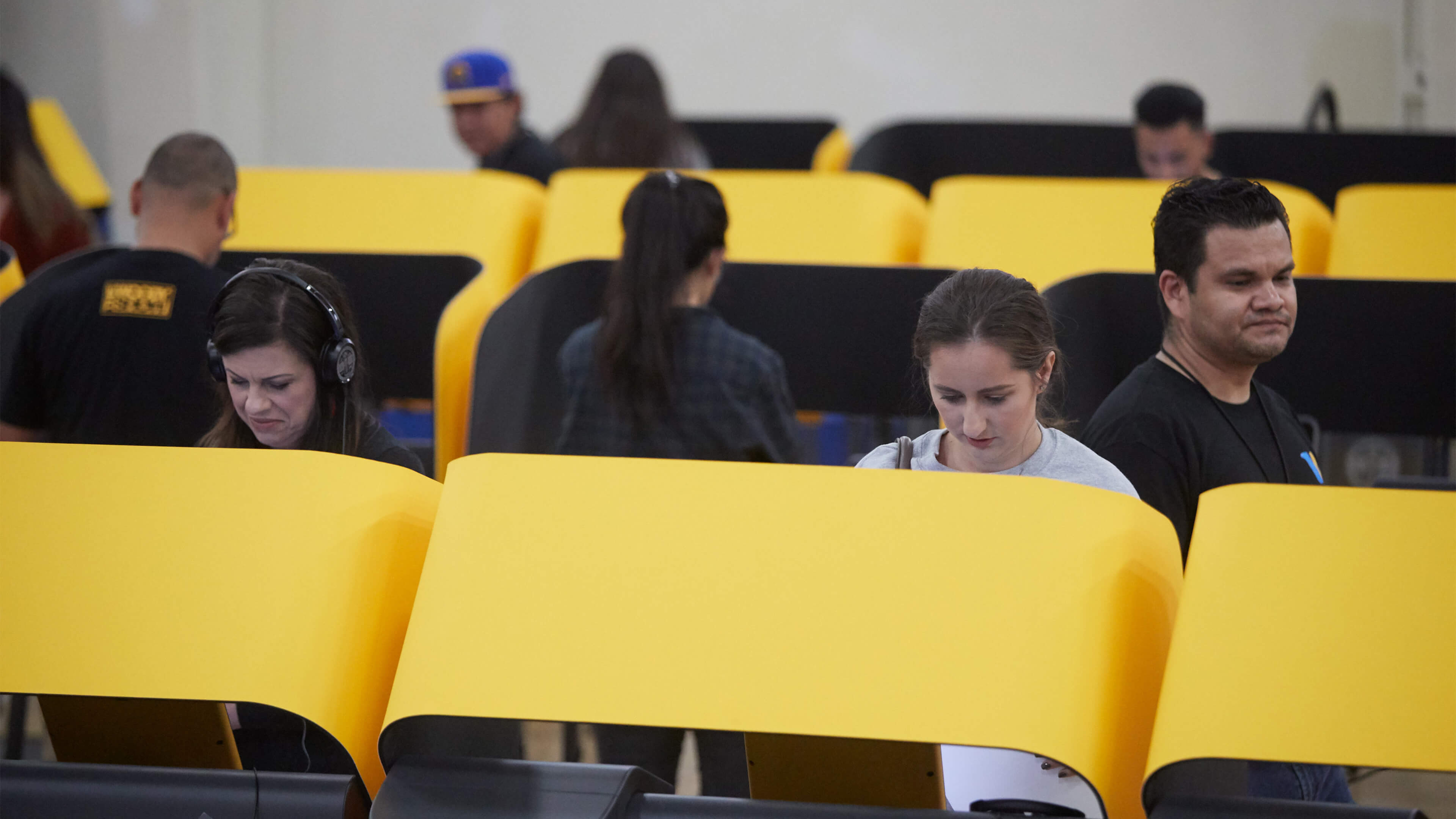
With that principle in mind, Los Angeles County sought out a design strategy firm to create a next-generation, customizable system that would meet the needs of its large and diverse voter population while satisfying myriad voting regulations. The result: an accessible, self-enclosed ballot-marking device with a touchscreen that allows any voter to easily navigate, mark, verify, and submit a paper ballot. We also worked to improve the entire voting experience, including vote-by-mail ballots, interactive sample ballots, and the tally process.
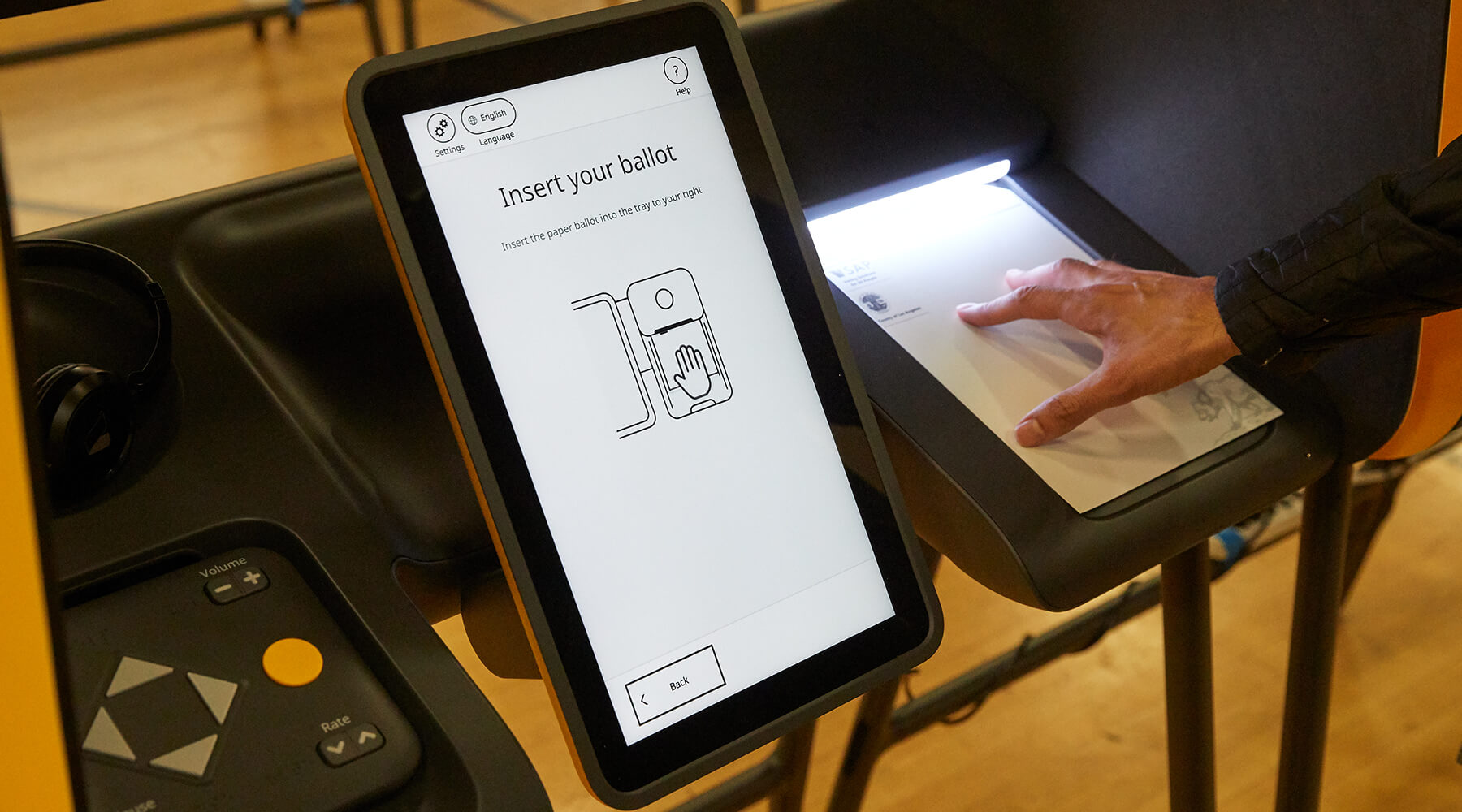
As with any inclusive design, details matter. Voters with vision impairment or reading disabilities can opt for audio and tactile experiences with the push of a few simple buttons. And for voters who prefer to read the ballot in their native language—Spanish, Chinese, Korean, or any one of the 11 others supported by the county—the device lets them select their preference.
After extensive research and testing with constituents, we designed a solution that makes voting easier for anyone. And knowing that the only constant is change, we made the system flexible enough to adapt to emerging needs and technologies, protecting voters’ rights now and in the future. Read the full case study here.
26% of American adults have some type of disability. In the 2020 election, 18% of disabled voters nationally reported difficulty voting, about twice as many as non-disabled voters.
In 2020, national voter turnout among disabled people was 7% lower than among non-disabled people in the same age group.
"Intuitive & secure"
was the sentiment most Los Angeles County voters expressed about the new voting system after the 2020 primary election

Human problems, human solutions
A conservation leader rewrites the role humans play in the narrative of climate change.
Conservation International is made up of conservation experts. To bolster its work, we bring a focus on scale, speed, and the human element to every project.
How does that look in the field? To restore the forest of Fiji, Conservation International paid a cash incentive to the community to buy, plant, and care for new trees and foliage. But once those cash incentives stopped flowing, the work ground to a halt. Taking a human-centered-design approach, one employee uncovered an insight: Fijians are more motivated to help in exchange for longer-term, noncash incentives like building infrastructure in villages. Small projects such as footpaths, repairs to communal trucks, beehives, or sports programs for youth continually reminded the community that the environment is a provider for their families, imparting a feeling of shared ownership in its conservation.
Stories like this, repeated around the globe, are how we hope to help Conservation International find sustainable outcomes. Our work together, including a six-month fellowship to help emerging leaders develop new capabilities, and a series of strategic, future-focused events for executives, has brought more tangibility and deeper collaboration to the organization.
Together we hope to create businesses, food solutions, and energy alternatives that conserve nature, and improve human health—because humans are a part of nature, too.
The scientific community overwhelmingly agrees that we have ten years to drastically cut greenhouse gas emissions or humanity will suffer devastating consequences.
We need to conserve one third of the global ocean using area-based measures and ensure at least 75% of seafood is harvested using socially responsible, environmentally sustainable methods by 2030.
75% of the world’s poor rely on agriculture for their livelihoods, which in turn depends on nature for pollination, irrigation, and soil replenishment.
20
leaders integrated human-centered design into annual goals, project pipelines, and fundraising efforts
20%
of the organization is now involved in design-thinking projects

Escape Your Filter Bubble and Enhance Your Creativity
Filter bubbles are a problem for democracy. We believe they’re a problem for creativity, too.
How so? A classic rookie mistakes in design work is “me-search”—doing research on yourself and creating something tailor-made for your needs, rather than seeking broader inspiration from the outside world. So, in service of greater creativity—and maybe a more clear-eyed body politic—here are four ways to escape your bubble.
1. Talk to Strangers
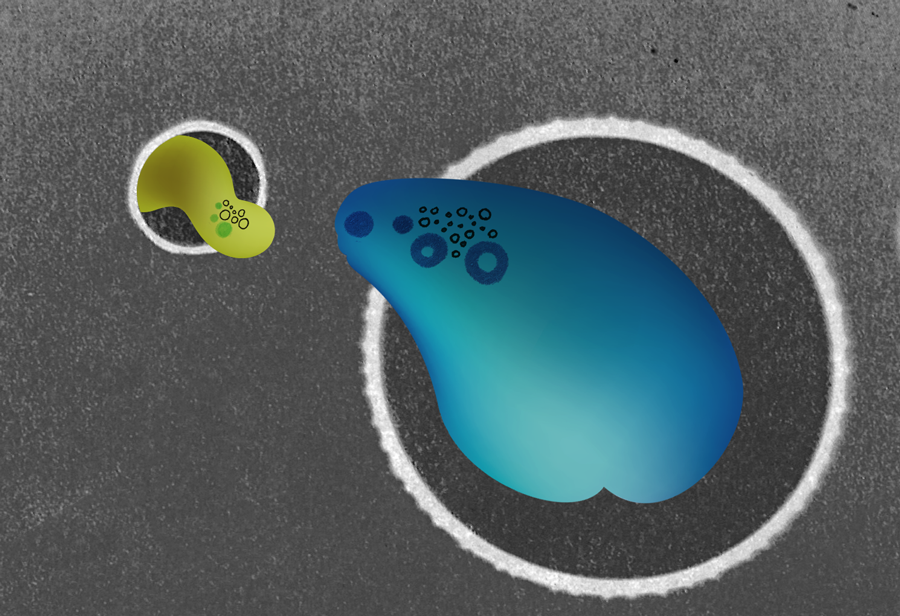
Now that the time and directions are available on every smartphone, it's amazing how little we need to talk to strangers. But think about what is lost when you never have a serendipitous encounter. To reignite this habit, seek out contexts that are naturally social: bars, book clubs, craft circles. Go alone, so you're required to interact with someone new. Going solo not your bag? Here's another approach: Follow Bill Murray’s advice and strike up a conversation with every taxi driver you ride with. Ask them plenty of questions beginning with the word “why.” Maybe you’ll figure out, as Murray did, what’s preventing them from doing what they love.

2. Unfollow People Like You
If you're choosing to hear from people who think exactly like you, you're going to get sucker punched every time public opinion swings the other way. Are you a bleeding-heart liberal? Try following conservative pundits, think tanks, and some of the average Joes who tune into them. Lean to the right? Look to the left! Hat tip to Harper Reed, CTO of the 2008 Obama campaign, for this one. Reed recently unfollowed most of the white men in his Twitter feed, instead directing his attention to women, people of color, and people with disabilities. Just to be clear, this was not an act of political correctness—his motivation was to expose himself to different points of view, in service of inspiring his personal creativity.
3. Join a Different Demographic
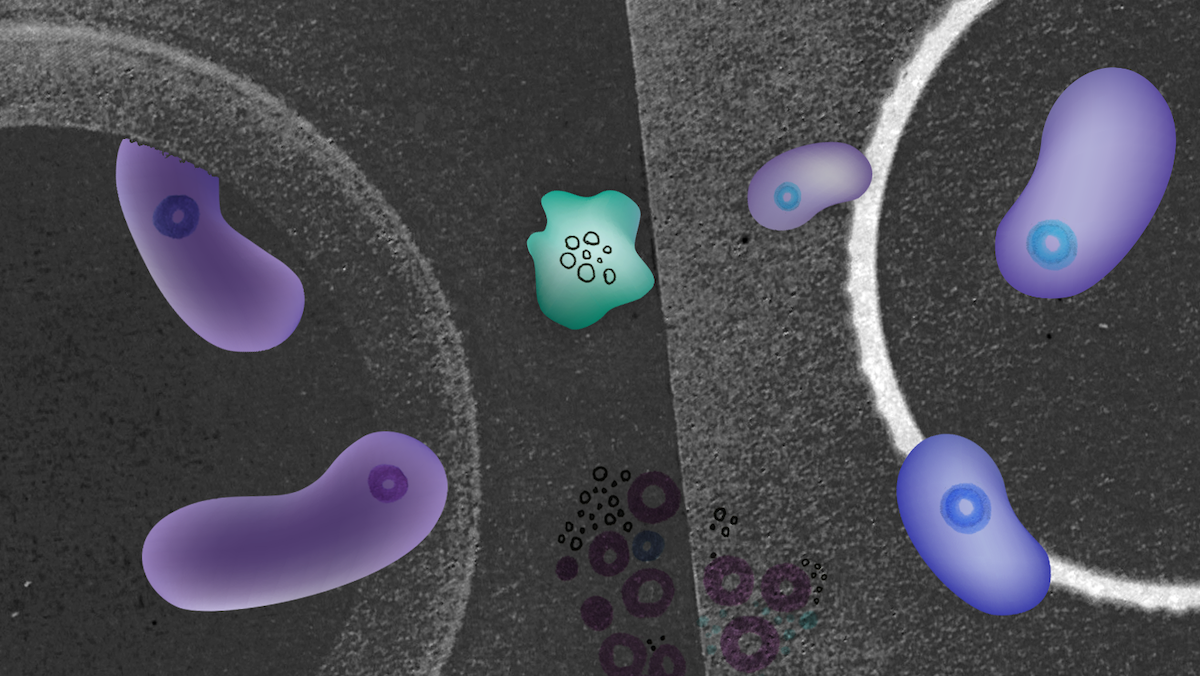
When it comes to picking a night out, most of us choose something that we know we're going to enjoy. And chances are, we’ll be surrounded by people just like us. As an alternative, go for an evening activity in which you're immersed in a completely different demographic. If you're a millennial, hit up bingo night with seniors. If you're a Boomer, grit your teeth and shake it off at a concert full of teenagers. If you're visiting a new city, seek out a comedy open mic and see what people are talking about. Yes, there's every chance that this evening’s experiment won't be as comfy as your usual fare... but we bet that it will help you understand people’s needs in a different way, making you better suited to creating new things for them.
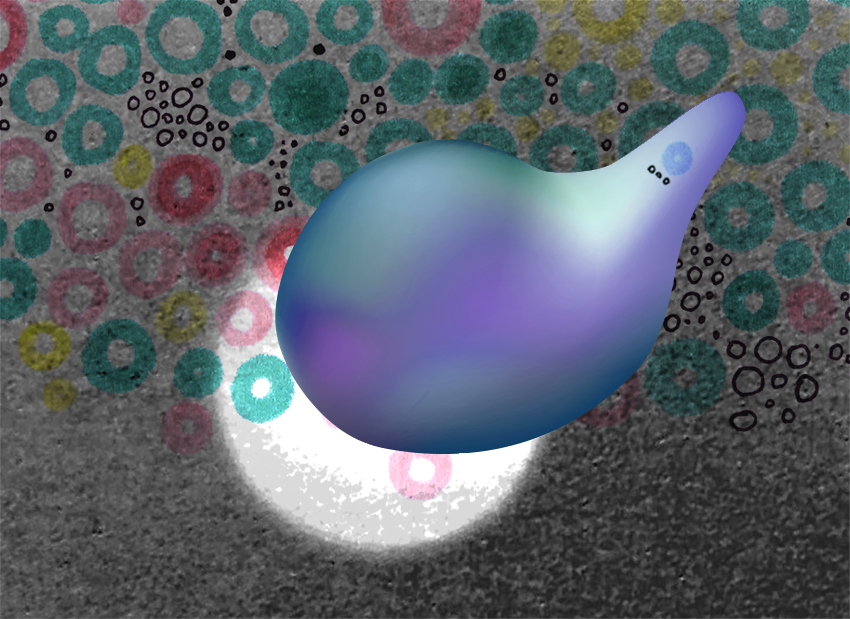
4. Volunteer
Giving back is always the right thing to do, and it has the seldom-mentioned added benefit of easing you out of your filter bubble. Whether you're helping the homeless, people with disabilities, or any other group, you will be eye-to-eye with people you rarely encounter on your Facebook feed. The fact that you're serving others is a bonus. The person you may be helping most is yourself.
Illustrations by Ashley Holtgraver.
In the aftermath of the 2016 election, there has been a new focus on the “filter bubble”: the phenomenon of being fed news and social media that is tuned to your existing point of view, rather than challenging it.
Filter bubbles are a problem for democracy. We believe they’re a problem for creativity, too.

10 Graphic Novels to Read Right Now
Visual books help us understand complex issues, here are some of the best out there
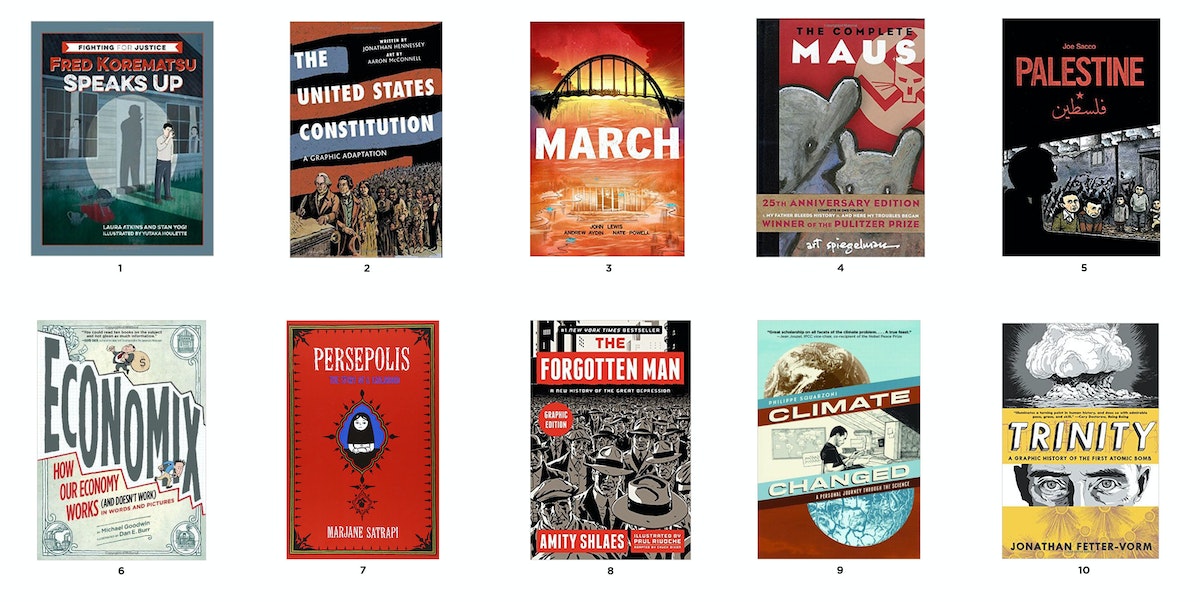
10 graphic novels to read right now:
1. Fred Korematsu Speaks Up (Fighting for Justice) by Laura Atkins (Author), Stan Yogi (Author), Yutaka Houlette (Illustrator) profiles a Japanese-American man who went into hiding to avoid being relocated into an internment camp, and was later arrested and put in a camp until 1945. (For 10 - 13-year-olds)
2. The United States Constitution: A Graphic Adaptation by Jonathan Hennessey (Author), Aaron McConnell (Illustrator) breathes life into our nation's central document of values and principles.
3. March by John Lewis (Author), Andrew Aydin (Author), Nate Powell (Illustrator) chronicles the life of the Congressman and civil rights leader John Lewis as he fought to end segregation.
4. The Complete Maus, 25th Anniversary Edition by Art Spiegelman tells the tale of a Holocaust survivor and his son and how they grapple with the past.
5. Palestine by Joe Sacco is an eyewitness account of the Israeli occupation of the West Bank and Gaza Strip in the early 1990s.
6. Economix: How Our Economy Works (and Doesn't Work) by Michael Goodwin (Author), David Bach (Author), Joel Bakan (Author), Dan Burr (Illustrator) is an accessible, eye-popping guide to understanding the economy.
7. Persepolis: The Story of a Childhood by Marjane Satrapi is a memoir of growing up in Iran during the Islamic Revolution.
8. The Forgotten Man: A New History of the Great Depression by Amity Shlaes (Author), Chuck Dixon (Adapter), Paul Rivoche (Illustrator) is the graphic version of Amity Shlaes's nonfiction book. It highlights the struggles of the men and women of the Great Depression, and argues that the New Deal actually prolonged it.
9. Climate Changed: A Personal Journey through the Science Paperback, by Philippe Squarzoni is a stark, black and white depiction of our dependence on fossil fuels and how that's affecting our planet. French author Squarzoni sweeps through the science, economics, international policies, and politics that influence our climate.
10. Trinity: A Graphic History of the First Atomic Bomb by Jonathan Fetter-Vorm is a historical glance back at the race to build and decision to drop the first atomic bomb during WWII. (For young adults)
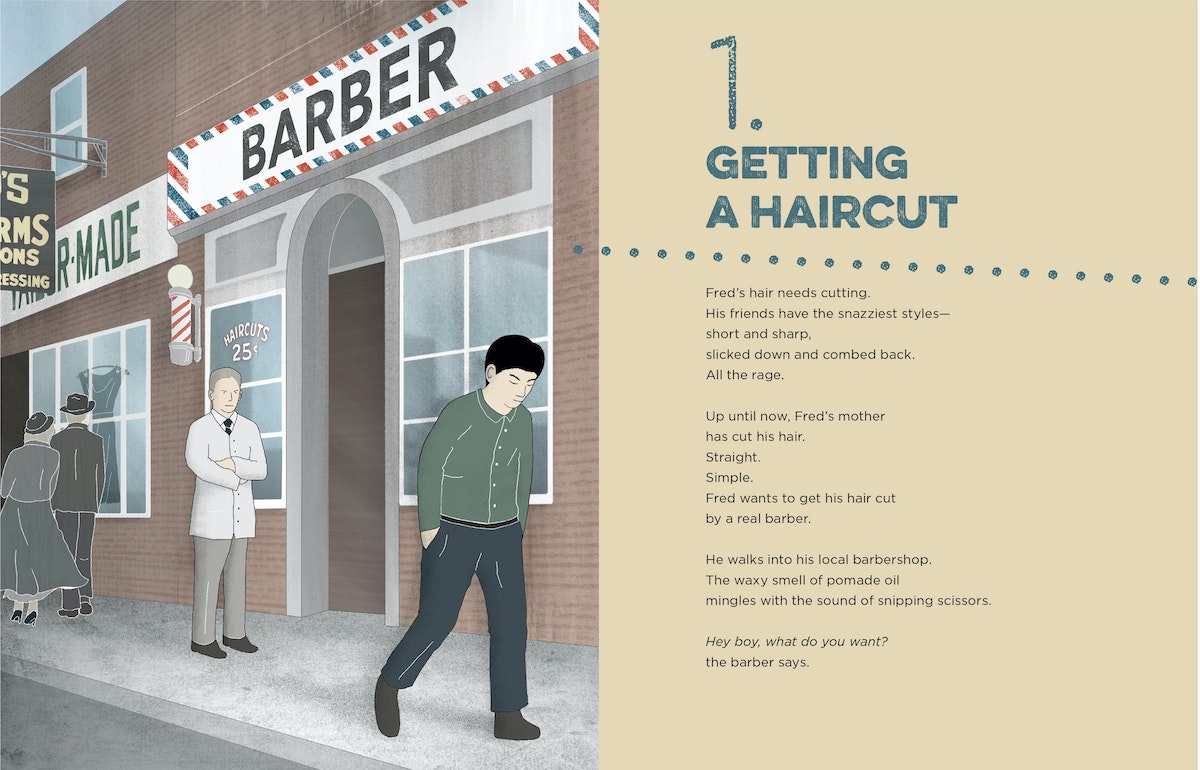
A spread from Fred Korematsu Stands Up about the daily grind of discrimination.
We spoke to Laura Atkins, coauthor of the new graphic novel for 4th-6th graders, Fred Korematsu Stands Up (#1 in our list, above). Google put Korematsu, the Japanese-American civil rights figure who went into hiding to avoid being relocated into an internment camp, and was later arrested, on its U.S. homepage yesterday to commemorate what would have been his 98th birthday (he died in 2005).
IDEO: Why were you drawn to the topic?
Laura Atkins: It’s such an important theme for us to pass along to kids today. I was an activist growing up, arrested twice in high school protesting against apartheid and nuclear weapons. We are entering a renewed period of activism and protest. I feel honored to have been part of a creating a book that introduces young people to a remarkable man who stood up when it was so hard to do so.
I’ve worked in the children’s book world for over twenty years on the editorial side, and with a focus on multicultural children’s books. So a book, and series, focused on people who fought for their rights, was a perfect project for me. Fred Korematsu stood up against Japanese American incarceration when very few people did. He was ostracized within his own community and rejected by his family at the time. He shows the courage needed to stand up for your beliefs. But people did rally around him over time, and he was not the only person to fight.
Why are graphic novels good ways to deal with complicated historical, cultural, and political subjects?
This isn’t quite a graphic novel, though we were definitely influenced by the graphic novel look. We did want to create a book that used visuals in a predominant way, in an effort to make the book attractive and inviting for young readers. My nine-year-old daughter will always choose a graphic novel first. And I’ve found some graphic novels that introduced me to socio-historical contexts better than just fiction (Persepolis by Marjane Satrapi and Palestine by Joe Sacco come to mind). John Lewis just received multiple awards from librarians for his March graphic novel.
I actually wrote my MA thesis on graphic novels that depicted personal memory and collective history, focusing on WWII (coincidentally). Drawing from Understanding Comics by Scott McCloud, I looked at how the interaction between text and visual elements can create a deep and complex reading experience. This is true for readers of all ages. I think graphic novels offer some of the most innovative and exciting reading opportunities today.

What did you look at for inspiration? Are there other great examples of graphic novels or other graphic treatments of historic figures/movements that you could point us to?
I read a lot of children’s book depicting history, especially in terms of our diverse country. Voice of Freedom, a picture book biography about Fanny Lou Hamer, a civil rights activist, was a big influence. I love how the author, Carole Boston Weatherford, wrote in a first person present tense voice to bring us deeply into Hamer’s experience. Marilyn Nelson writes powerful poetry to introduce us to historical figures and events. Her biography, Carver, is one of my favorite books of all time. She uses photos and a variety of voices to introduce readers to George Washington Carver, going way beyond just inventing peanut butter. Her picture book, A Wreath for Emmett Till, shows how deep and complex picture books can be. Ashley Bryan just won awards for his gorgeous and moving book, Freedom Over Me. He deals with the lack of primary source records from slave times to create and give voice to several enslaves characters, along with transcendent artwork. Freedom in Congo Square by Carole Boston Weatherford and illustrated by Gregory Christie, Javaka Steptoe’s recent biography of Basquiat, Radiant Child—so many great books out there. Kids can learn about Josephine Baker and the Shackleton expedition. I could go on and on…
When trying to gain empathy for people unlike you, panels can be more powerful than headlines. Some of the best books published in recent years have used comics to crack open sensitive political, cultural, and historical topics. You'll note that this list isn't without bias. Graphic nonfiction is a tool more frequently used by the left, and it's hard to find many examples with a more conservative outlook—trust us, we tried. But we believe that all of the books on this list have a different perspective to offer, and can help us look at the world in a new way. Did we miss any others? Tweet us. We'd love to hear what you think.
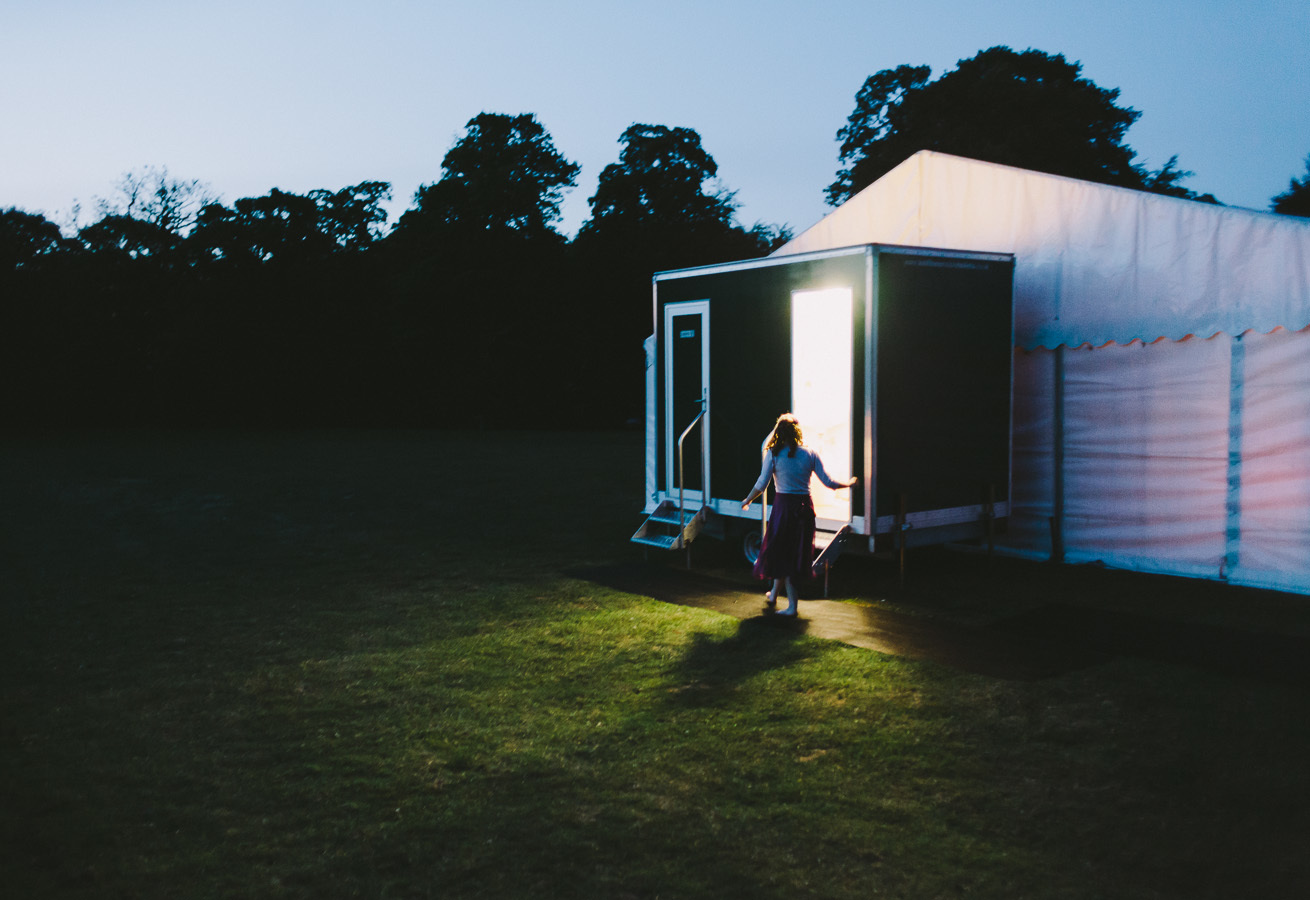
How Learning Photography Will Make You Better At Everything Else
How taking up a photography hobby can influence your design
Fifteen years have now passed, and in that time, I’ve developed a sincere passion for the medium. I’ve worked with many photographers both in the studio and on location, and also have shot my own work, both at IDEO and personally. Though I consider myself a designer first and a photographer second, I realize now just how much this art form has influenced the way I work. The overlapping values in each discipline have sharpened my focus and demanded a constant reassessment of line, color, and composition.
Here’s how photography can help you become a better...
1. ART DIRECTOR
Being able to identify not only the subject but also the photographic styles that will work with your concept adds richness to the message. For example, is the experience that you are creating intended for families or teenage fashionistas? Should the audience feel like they’re part of the story, or like they’re being challenged by the subject? Does the graphic design feature geometric lines or organic shapes? Try answering questions like these and choose appropriate imagery with consideration for lighting, color, tone and camera perspective to help define the experience.
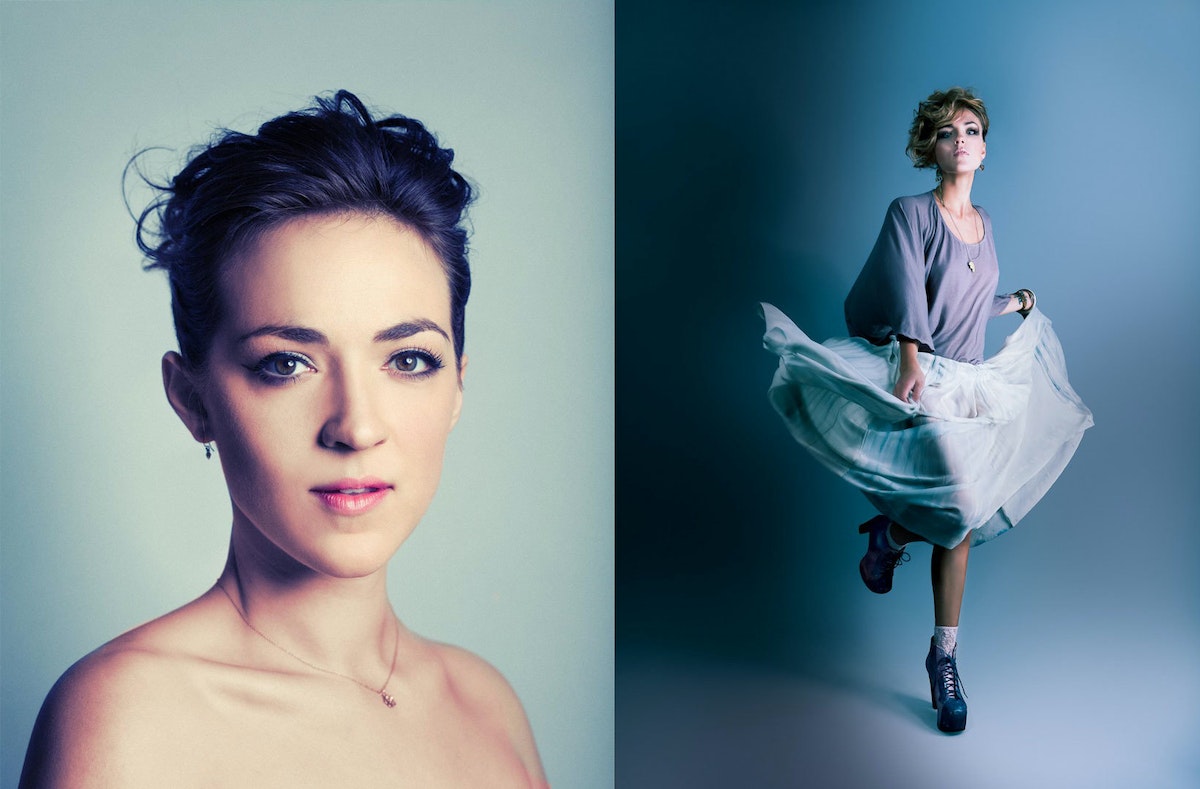
2. UI & UX DESIGNER
Photographic composition translates well to design composition. In photography there are many ways to draw the viewer’s eye to the intended subject or to communicate a message. In UI/UX, it is often beneficial to limit your color palette and reduce visual noise. In photography, creating an image with areas of equal tonal values or color helps to simplify and focus. You are making conscious decisions to help the viewer (or user) make choices. Interestingly, when photography is used in conjunction with UI elements, designers often have to figure out how to maintain the legibility of text, important links, and buttons. You can sometimes get away with using a dark tint (usually an opacity of black) over the image, although this can appear dark and muddy. Use a gradient overlay rather than a full tint. It will look less heavy. Video tends to be more forgiving as your eye can distinguish the type more easily against the moving content.

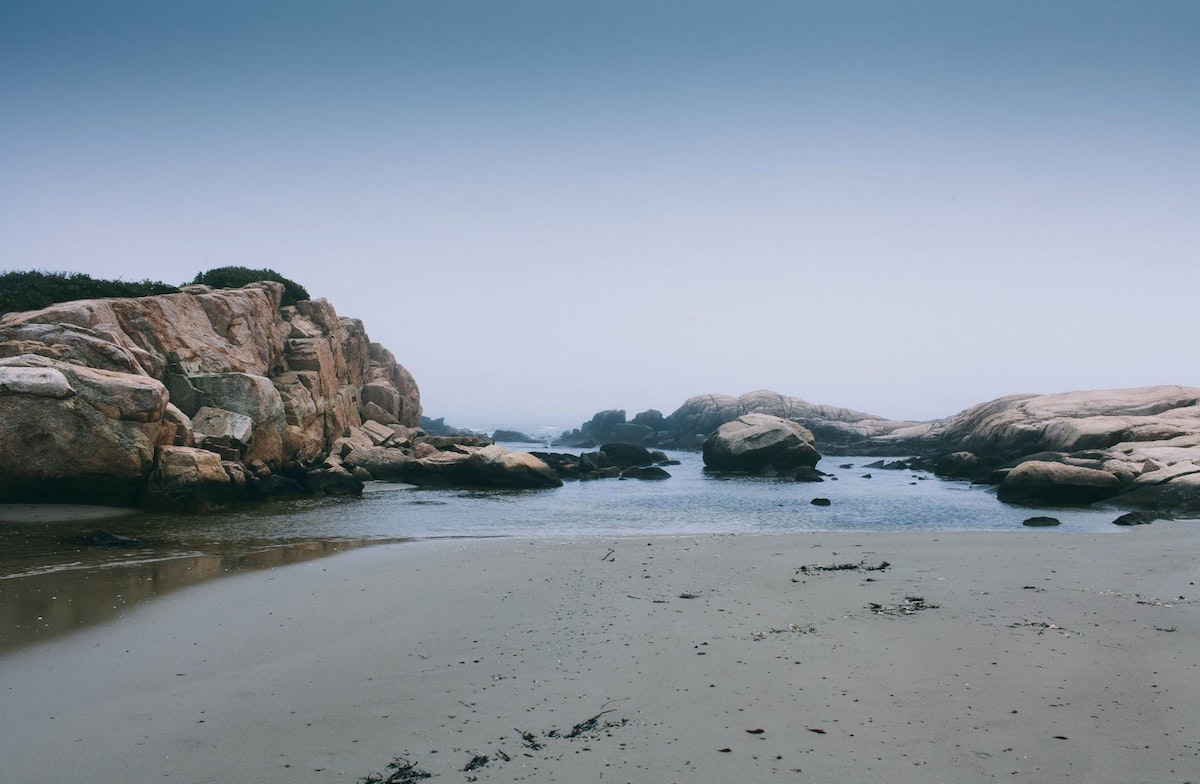
3. DESIGN RESEARCHER
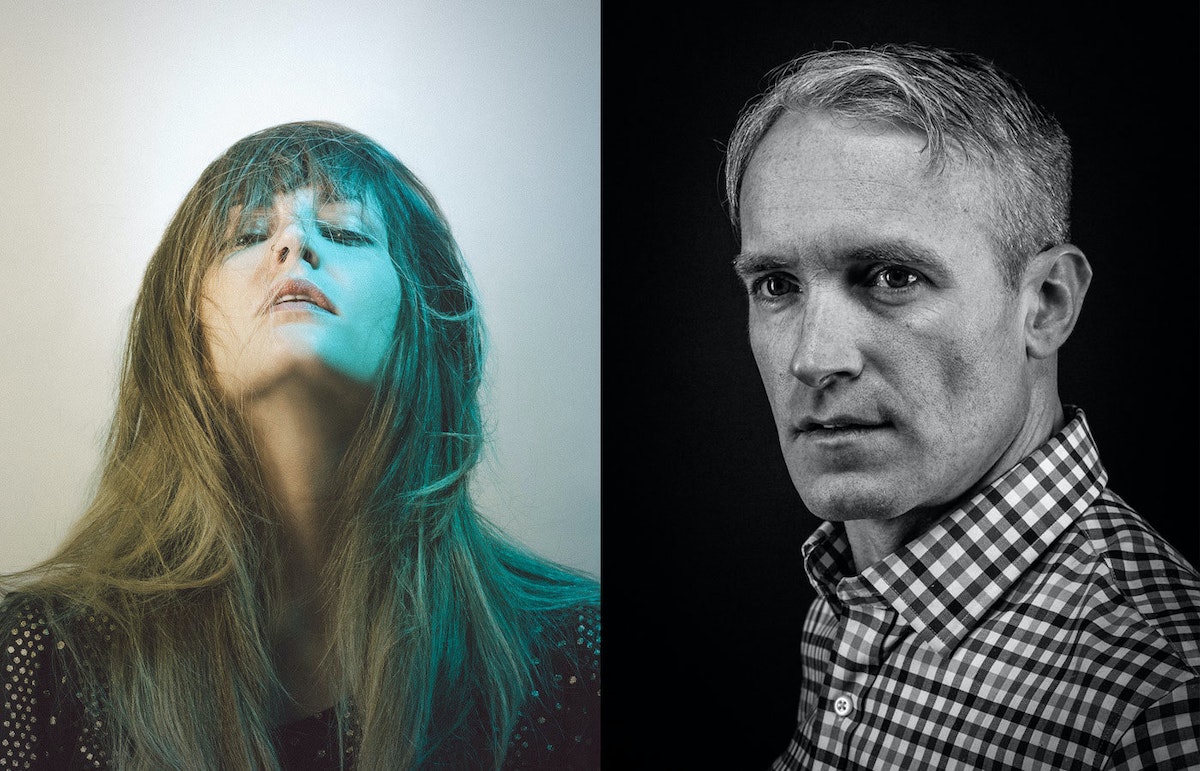
Most people aren’t comfortable in front of the camera, and I don’t blame them — it can feel awkward and vulnerable. Creating a good rapport with a subject can ease their stress, and is essential to capturing their true character. This is my favorite aspect of portrait photography — connecting with people — and it can be hard to do in a limited period of time.
Getting to know a person before you just start shooting away is a lot like breaking the ice before diving into an interview . As Ann Kim, a design researcher at IDEO, says, “Building trust is essential to successful design research.”
As an exercise, try photographing a colleague or acquaintance. Spend time getting to know your subject before shooting their portrait. Share your final image with a few people. Ask them who they think your subject is, and what they are like. It will be interesting to compare their feedback to the experience you had with your subject.
4. STORYTELLER
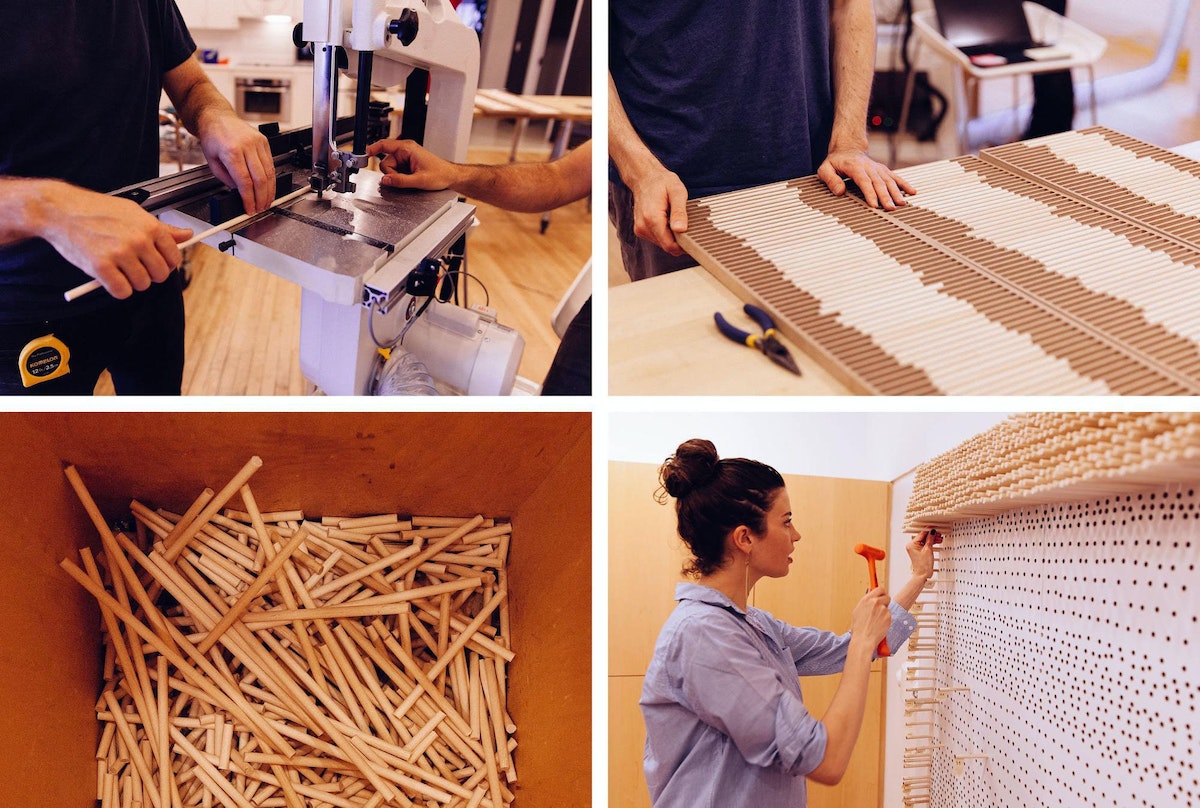
Use photographs to document each stage of a design project to visually enhance your story. Capture images of your experiences during research and inspiration trips. Record user interactions through video and photography. These tools build trust by placing the user front and center, bringing focus back to the intended audience. Build your narrative by introducing the components of your design first. For the big finale, show the human response to the product or prototype as a holistic system or journey.
Photographing your process also ensures that you have assets for sharing work with colleagues or collaborators which helps to inform and inspire.
I would love to hear how other designers and creators connect with photography — both the process and the perspective it gives. How has it influenced your work? What has it helped you to see more clearly? What hurdles has it helped you to clear? Direct message me your responses on Twitter.
Have fun shooting!
Many moons ago, when I was a couple of years out of college working at a digital agency in London, they handed me the responsibility of directing my first photo shoot. Cue anxiety. As a junior designer, I had limited experience with professional photography. I didn’t understand enough about the medium to give adequate direction to a photographer. On the day of our shoot, it seemed like magic watching the photographer and his assistants make it happen — the combination of their technical knowledge and efficient process was fascinating.
Non-Boring Podcast with Futurist Kevin Kelly
Kevin Kelly's "The Inevitable" will have you peeling back layers
Kelly masterfully weaves together what he calls the 12 forces, tech trends driving us into the future. In Kelly’s view, the forces—Becoming, Flowing, Filtering, Remixing, etc—lean on and reinforce each other. Each is a combination of technologies and societal factors that give us a preview of what the future will look like. In the Cognifying chapter, Kelly details the ways artificial intelligence is already catalyzing technological disruption, and imagines the infinite ways it will continue to change our experience. What happens when physical objects aren’t just smart, but also constantly learning? Like many of the chapters in the book, Cognifying is both entirely relatable and totally mind bending; you unpeel layer after layer, occasionally pausing to savor the individual seeds.
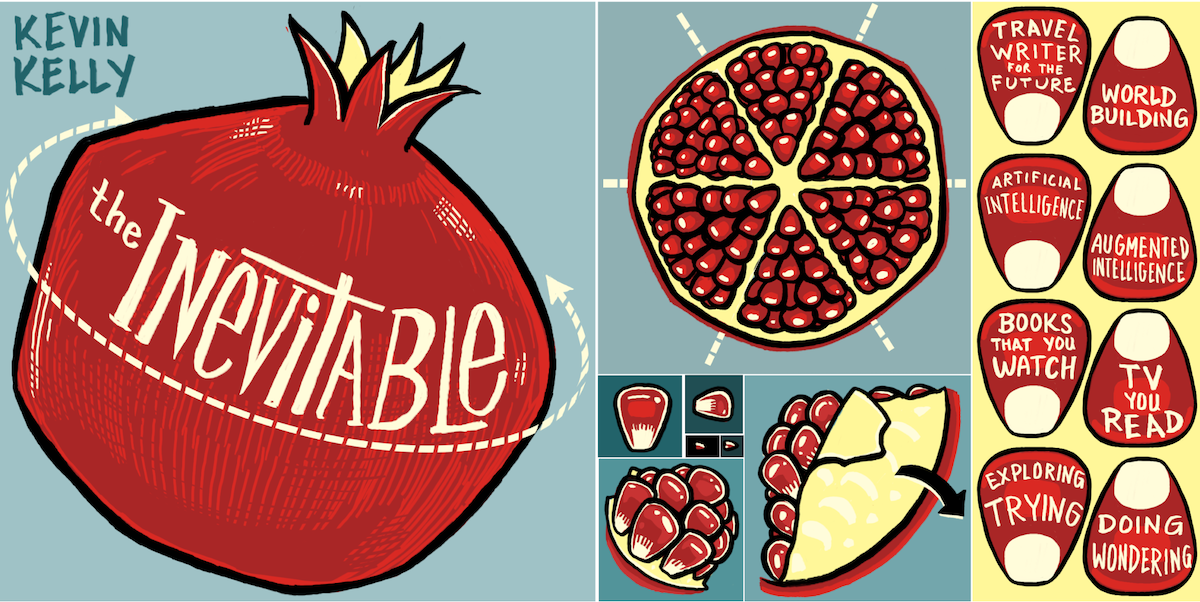
As Rodriguez notes in the episode, each chapter almost seems like a book unto itself. “It feels like what we get here at IDEO with a group of people in a project space for six months.” It turns out, some of these chapters started 10 years ago as blog posts, then went through ruthless revisions by magazine editors, and were rewritten again over the years, eventually ripening into this multifaceted fruit.
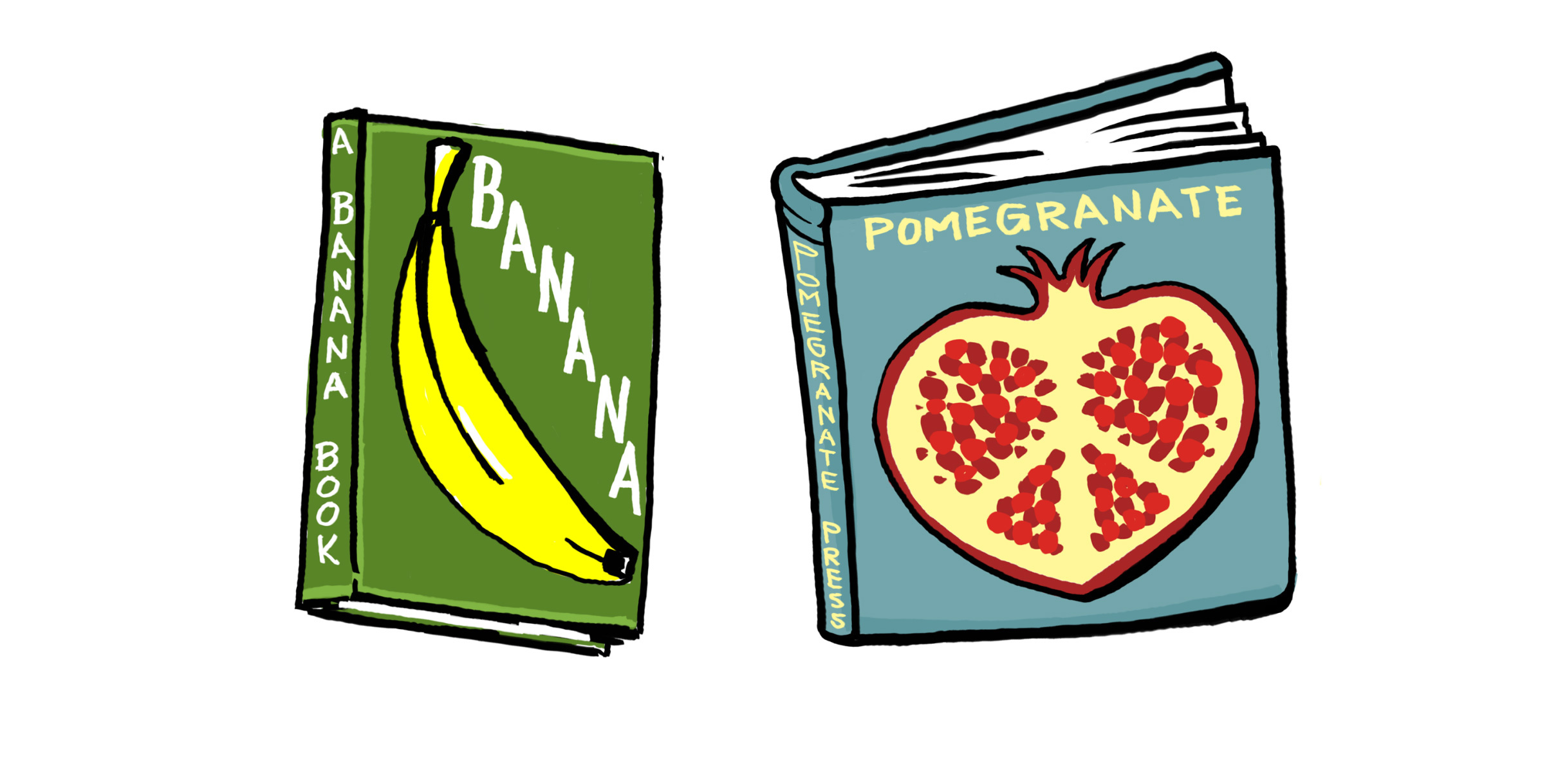
Some business books are like bananas: easy to consume, bland, too mushy. But when IDEO Futures host Diego Rodriguez dug into podcast guest Kevin Kelly’s latest book, The Inevitable, it felt like something entirely different. Kelly’s book outlines the technological trends that will drive every aspect of business going forward. It’s no banana. It’s more like a pomegranate—layered and fractal. Peeling back the layers requires work, but the rewards are juicy.

Lindsey Turner
I’m passionate about building brands, products, and experiences that help organizations show up with meaning and momentum.
I help organizations cut through complexity by shaping how they show up, through brand strategy, identity, and storytelling.
Working at the intersection of brand and business, I bring an editorial eye and a bias toward making—turning ideas into tangible experiences that people can understand, trust, and believe in.
My work spans government, healthcare, financial services, media, and consumer goods, from launching Gen Z-focused ventures to building innovation labs and reimagining legacy brands. I relish moments of ambiguity and enjoy translating across teams, perspectives, and priorities to move ideas forward.
I started my career in editorial and digital design, shaping cross-platform experiences and identity systems in publishing and agency environments. That foundation still shapes how I work today: I’m detail-oriented, collaborative, and overreliant on the Oxford comma. I hold a BFA in Visual Communication from the School of the Art Institute of Chicago.

Rachel Young
My work helps organizations see who their products aren't working for—and build the will and the tools to do something about it
For 25 years, I've asked the same question: Who does this design exclude—and what are we going to do about it?
My work spans human-centered strategy, inclusive design, and qualitative research, with clients ranging from Microsoft, Google, and Verizon to the National Science Foundation, and San Francisco Unified School District.
Before IDEO, I taught elementary school in East Palo Alto and spent a decade doing design work with social service organizations—where I learned firsthand what it costs people when systems are built without them in mind.
I am currently writing User Error, a nonfiction book about digital access and the design decisions behind it. I live in Oakland, California.

Brian Pelsoh
I lead with craft, ensuring our work is creatively excellent: rooted in deep human insight and imagination, while also grounded in the realities of business and technology.
My expertise spans brand, communication, and product design across tech, education, the arts, and social impact.
I believe great work demands both high-level vision and obsessive attention to detail, and only happens through collaboration.
I bring an inclusive, hands-on approach and a deep understanding of business, which enables me to consistently deliver excellence while always asking why.
Before joining IDEO, I worked at the brand firms Pentagram and VSA Partners. I began my career as a designer, leading teams at the School of the Art Institute of Chicago and the Milwaukee Art Museum. I hold an MFA in graphic design from Maryland Institute College of Art and a BFA in communication design from the Milwaukee Institute of Art & Design, and have taught at some of the best design schools in the US.

Tony Wong
I am responsible for IDEO’s long-term success in China and working with clients to use design as a tool to enable growth.
I am responsible for IDEO’s long-term success in China and working with clients to use design as a tool to enable growth. Specifically, I have helped Chinese companies design holistic brand solutions through the development of their products, communication, services, and innovation teams, and I have helped multinationals expand their presence and influence in China.
I advise global leaders on developing China-led innovation and capabilities.
In over 15 years in IDEO Shanghai, I have worked on projects that use design to elevate the quality of the experience of healthcare products and services, streamline processes that increase productivity, create spaces and programs that promote and enable inclusive communities, and build next generation mobility solutions that are planet-positive.
Before joining IDEO, I worked at Philips Electronics and the Electrolux Group in Italy, the Netherlands, and Singapore on a number of breakthrough commercial products. I am a member of the Young President Organization in Shanghai.

How to use AI as an editor, not a writer
Ed White shares how he uses AI as an editor—not a writer—to sharpen storytelling, rehearse ideas, and preserve the productive friction that makes creative work better.
Ed White has a rule he's tested on his own writing: hold yourself as the writer, and let AI be your editor. Ed is a Senior Design Director at IDEO's London studio, where he co-leads the firm's AI portfolio across Europe. Before IDEO, he spent 12 years as a writer and editor at the Financial Times, Wired, and Contagious. So when he talks about when to use AI for storytelling and when not to, it comes from two decades of crafting his storytelling skills.
In this episode, Mina Seetharaman talks with Ed about two specific tools he uses to keep AI in an editor's seat: a "roasting agent" prompted to critique his drafts without any sugarcoating, and a simulated audience he rehearses pitches on before the real thing. They also get into what Ed is hearing from design leaders at Anthropic, Lovable, Shopify, and Google Creative Lab about how creative work is changing, and why he thinks the friction of writing something yourself is worth protecting rather than automating away.

Building a personal AI for the messiness of life: Sida Li
Becca Carroll talks with Cue co-founder Sida Li about designing a personal AI for the messiness of everyday life—not just work. They explore how Sida stays anchored to human needs while navigating fast-changing technology, product tradeoffs, business-model experimentation, and the realities of building an AI company today.
Most AI products today are built for work—a space with clear problems and established systems. One founder noticed a gap: personal life is messier, harder to systematize, and mostly left behind by the AI boom. So she built Cue, a personal AI that lives inside iMessage and group chats, to go where the other tools haven't.
In this episode, Becca Carroll, IDEO's Chief Strategy Officer, talks with Sida Li, co-founder and CEO of Shared Context Lab, about staying anchored to a human need while the technology around her keeps changing shape, why she treats her business model with the same rigor she'd bring to a product, and what it feels like to build a company at this particular, disorienting moment in AI.
The conversation also gets into how Sida makes design decisions: the language Cue uses to describe itself, the tradeoffs behind building inside iMessage instead of a new app, and a real story about a business idea that didn’t pan out.
This is the second in a two-part series profiling founders from IDEO's Startups-in-Residence program. The first conversation is with Johannes Seemann, founder of Sooner, on designing GenAI for the emotional side of money.

Designing GenAI for the emotional side of money: Johannes Seemann
Designing financial tools around the feelings that shape money decisions.
Most personal financial tools are built to run the numbers and optimize towards a budget. While that works for some, most people experience money as a lived relationship that does not neatly fit into a spreadsheet. Johannes Seemann and Becca Carroll discuss why money is emotional before it is mathematical, and what a human-centered approach to building a generative AI financial product looks like in practice.

The curious leader's edge in uncertainty: Scott Shigeoka
How genuine curiosity helps leaders navigate uncertainty with greater confidence.
Mina Seetharaman talks with Scott Shigeoka, author of Seek and Head of Curiosity Cultivation at the Eames Institute, about what distinguishes genuinely curious leadership from performative curiosity, how power dynamics shape curiosity, and why practicing curiosity can restore energy rather than drain it.
Looks like you might be in search of something very specific?
Or reset the filters above and try another angle.
Here’s some random inspiration

Podcasts about creative leadership

Articles about the power of prototyping
