
.svg)




Better sales, less waste
H&M transforms its operations to cut excess inventory.
Globally, the European Commission reports, a truckload of textiles heads to landfills or is incinerated every single second.
The fashion industry accounts for some 10 percent of greenhouse gas emissions worldwide.
Less than 1 percent of the materials used to make clothing is recycled, according to a report by the Ellen MacArthur Foundation.
The best way to keep clothes out of a landfill? Don’t make them.
Picture this: Not long ago, it wasn’t unusual for a customer to walk into an H&M store and not be able to find a basic white t-shirt in their size. Why? Like most long-established retail operations, H&M was operating with a push model—placing seasonal bets on what the demand for a given item of clothing might be, locking orders far in advance, and hoping that they were able to sell out. Make a mistake in that kind of model, though, and you can end up with customers unable to find the basics they rely on, or excess inventory you can’t sell. That’s a problem for the business, but for the environment as well—and one that doesn’t fit H&M’s aggressive sustainability goals.
Though H&M had tried to tackle the problem before, the launch of the H&M Group Design Studio, co-created with IDEO, gave the retailer the confidence to go after it again. The team started out by mapping out the complex network of people that make up its supply chain across the globe, meeting with everyone from designers to garment suppliers, logistics managers, and even folks selling the final product in H&M stores.
They then created an algorithm for more precise ordering, as well as a tool that provides a shared view of information. Instead of placing orders, the new automated flow—dubbed “Cruise Control"—allows staff to work with a demand forecast that gives them more time to focus on customer-centric operations, like providing guidance and inspiration. It also makes it easier for H&M to follow the demands of the market, and place much more accurate bets on what consumers will want, when. Already, H&M has significantly increased sales while cutting excess inventory—a result that improves its bottom line, as well as its environmental impact.
Estimates project that by 2030, global apparel consumption will hit 102 million tons.
22%
reduction in stock during a pilot program
34%
increase in sales during a pilot program
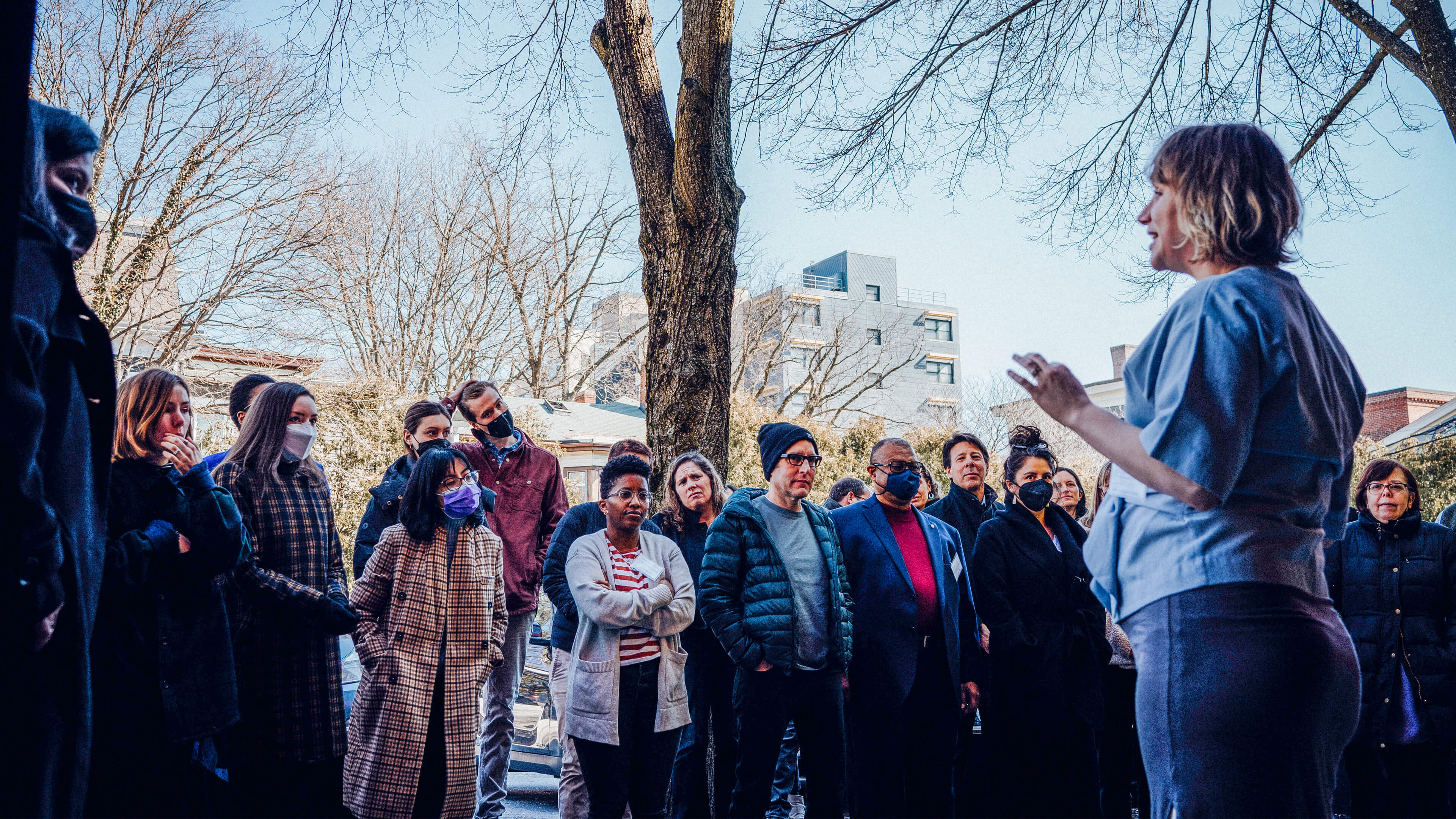
Fueling innovation in Boston
How the Boston Society for Architecture is leveraging member expertise to increase its impact.
To foster creative projects that spoke to the needs of local communities and environments, the BSA began to engage its members in collaborative, user-led design. The organization launched its first-ever innovation challenge, putting out a call for all members to pitch their ideas for projects in the built environment.
The BSA expected those pitches to have dollar signs attached. To the organizer’s surprise, only one asked for funding. The rest requested less tangible, but equally meaningful support: advice, connections, specific expertise. Those are resources that the BSA has aplenty, but hadn’t learned how to leverage well.
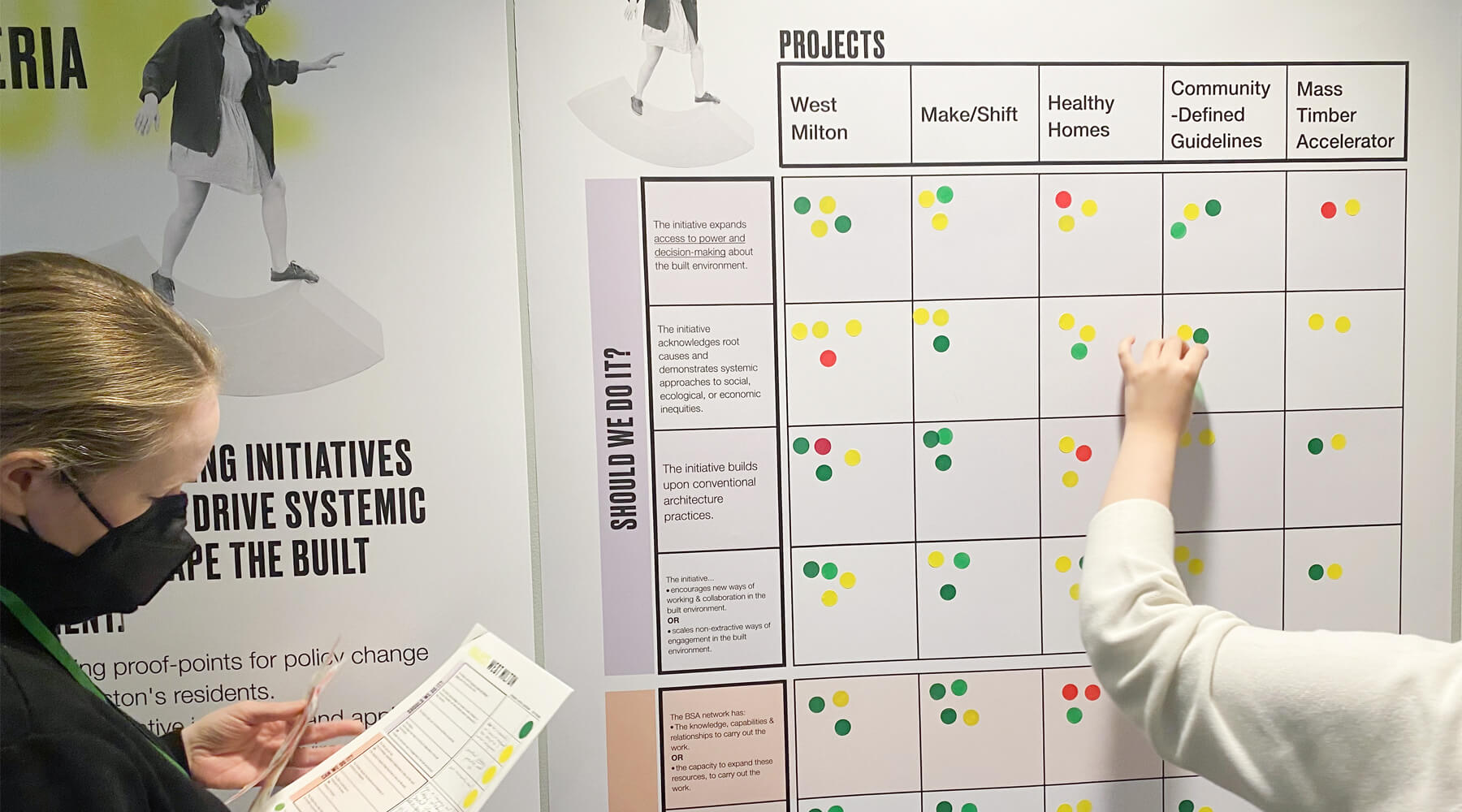
From that first go at an innovation challenge, the BSA learned how to better support its members. It also learned that to lead with purpose and make strategic choices, one must develop the confidence to say no. Instead of spreading itself thin across many projects, the organization decided to take small steps, focusing on one initiative at a time, so that it can deliver focused impact and stay true to its evolving mission.
With 36% of global energy going to buildings and 8% of global emissions caused by cement alone, the architectural community is inextricably intertwined with both the causes and solutions related to climate change.
According to a survey conducted by the AIA, the architecture profession in the US is less diverse than the population as a whole. This lack of diversity can contribute to a disconnect between architects and the communities they serve.
31
submissions received from innovators in the Boston region working on equity and sustainability challenges
5
innovation teams invited to pitch ideas
Student-centered solutions
How an organizational culture change is helping newbies at NYU navigate campus life.
The resources that NYU students needed were organized by administrative department, and buried on disparate websites and calendars. But students don’t think in terms of departments—they just need to know where their classes are.
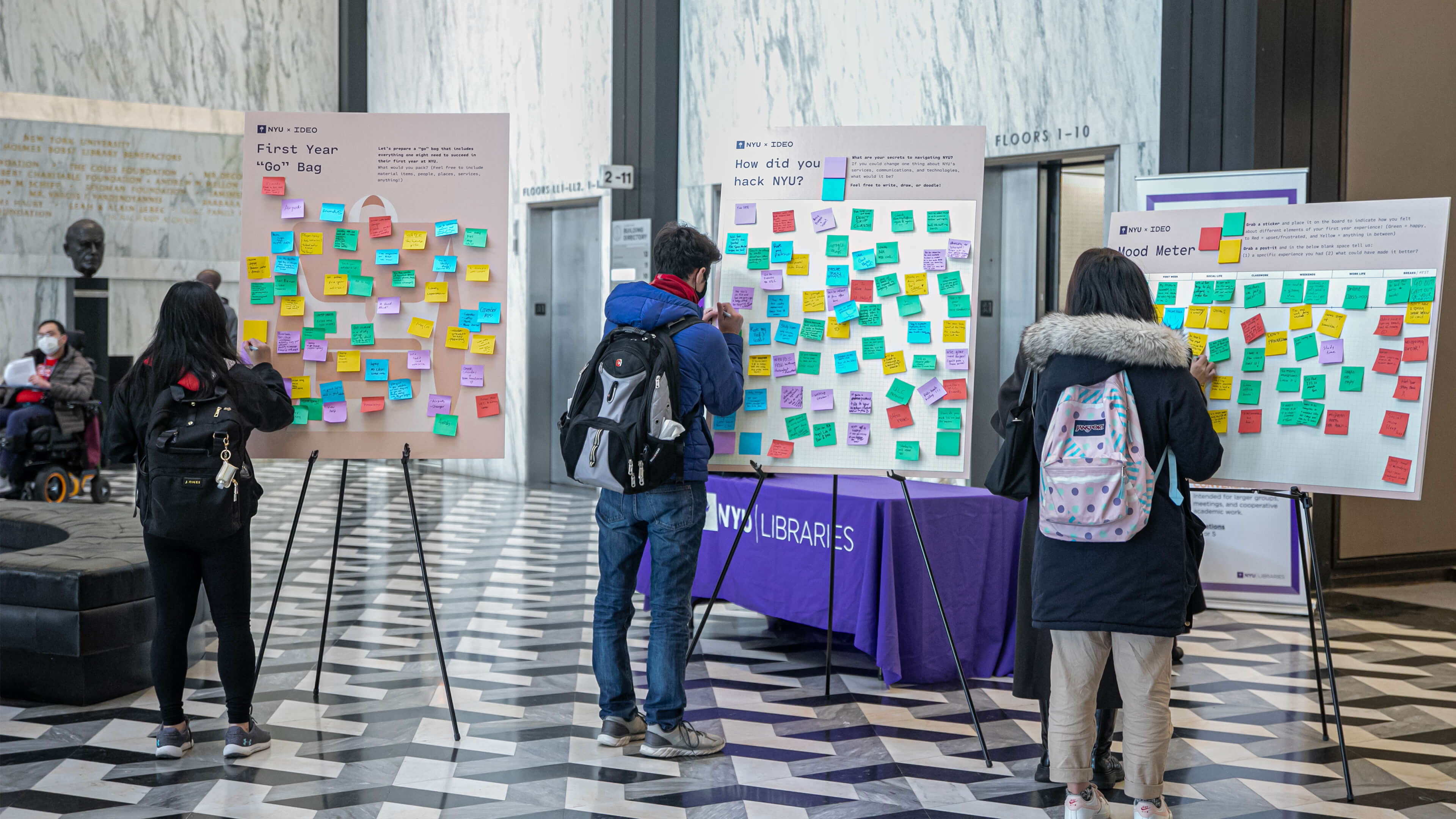
All of this became patently clear as IDEO shadowed students. Team members visited classrooms, walked with them through their days, and hosted pop-ups in highly trafficked areas to get ideas from passersby. That helped the team develop a common understanding of the overall student journey and grounded employees in the key moments that can either make or break a student’s experience. Visualizing their journey helped departments gain a shared understanding of the fractured communications challenge and develop possible solutions.
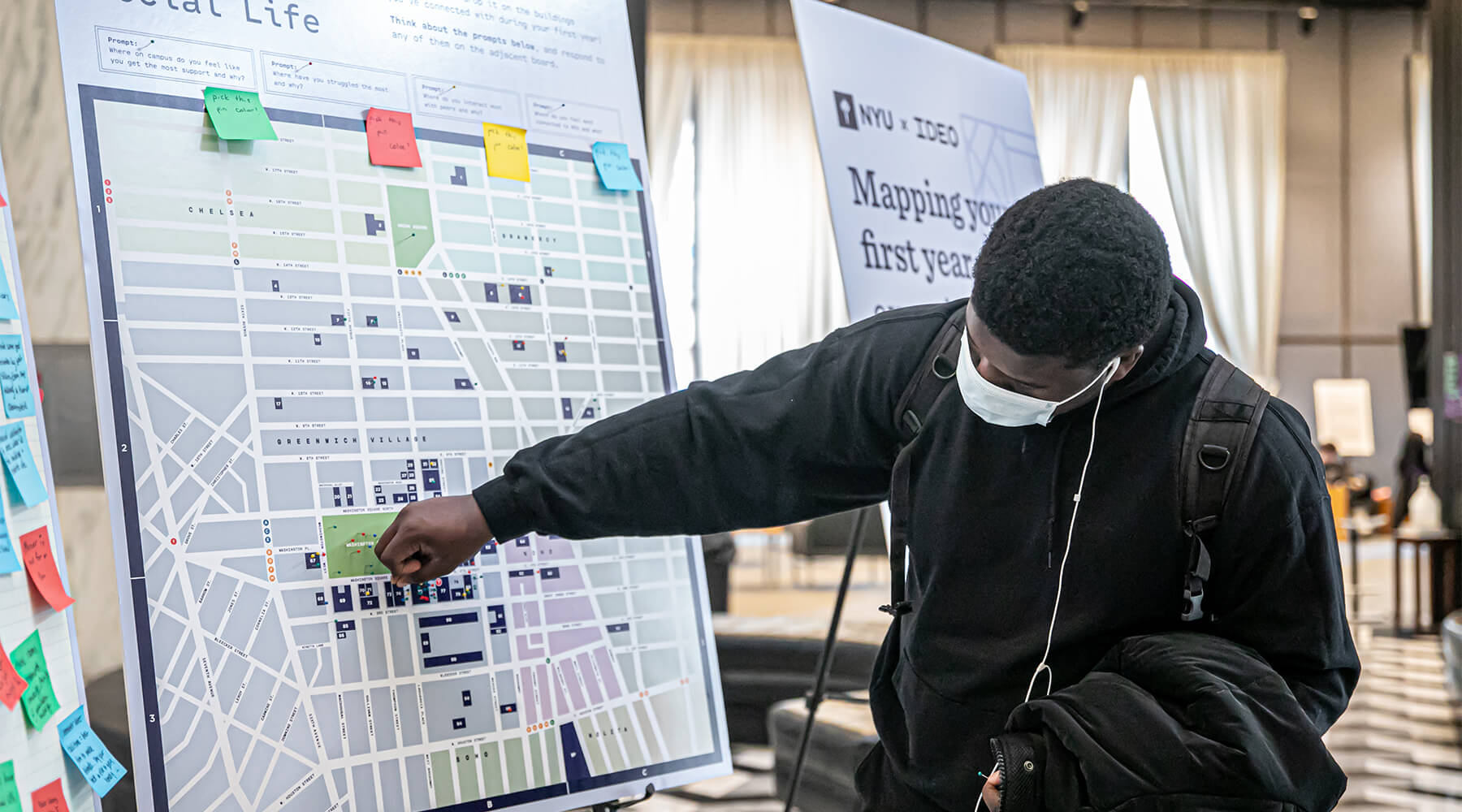
To synthesize those insights, we formed cross-functional action learning groups, challenging existing practices at the university and coming up with new ways of working. Participants came from a diverse set of departments, including enrollment management, student affairs, marketing and communications, IT, global inclusion, student services, the provost’s office, digital communications, and more. The cohorts sketched early hypotheses and got feedback from faculty, administrators, and students from all of NYU's undergraduate schools to refine initial concepts.
Collaborating with students gave staff a first-hand look at what students were struggling with and a way to engage students directly in addressing those challenges. Just as importantly, there was an overall culture shift at NYU: Administrators started with questions instead of agendas, came together around a table, and reached beyond their job descriptions to meet the needs of students.
First-year students reported receiving hundreds of paper forms, and email from more than 70 unique senders.
NYU needed to offer students the right resources at the right time—and collaborate to serve them as a unified administration.
New services
in-production include centralized calendars, dynamic campus mapping, and customized notifications
Design-thinking cohorts
now support the student experience
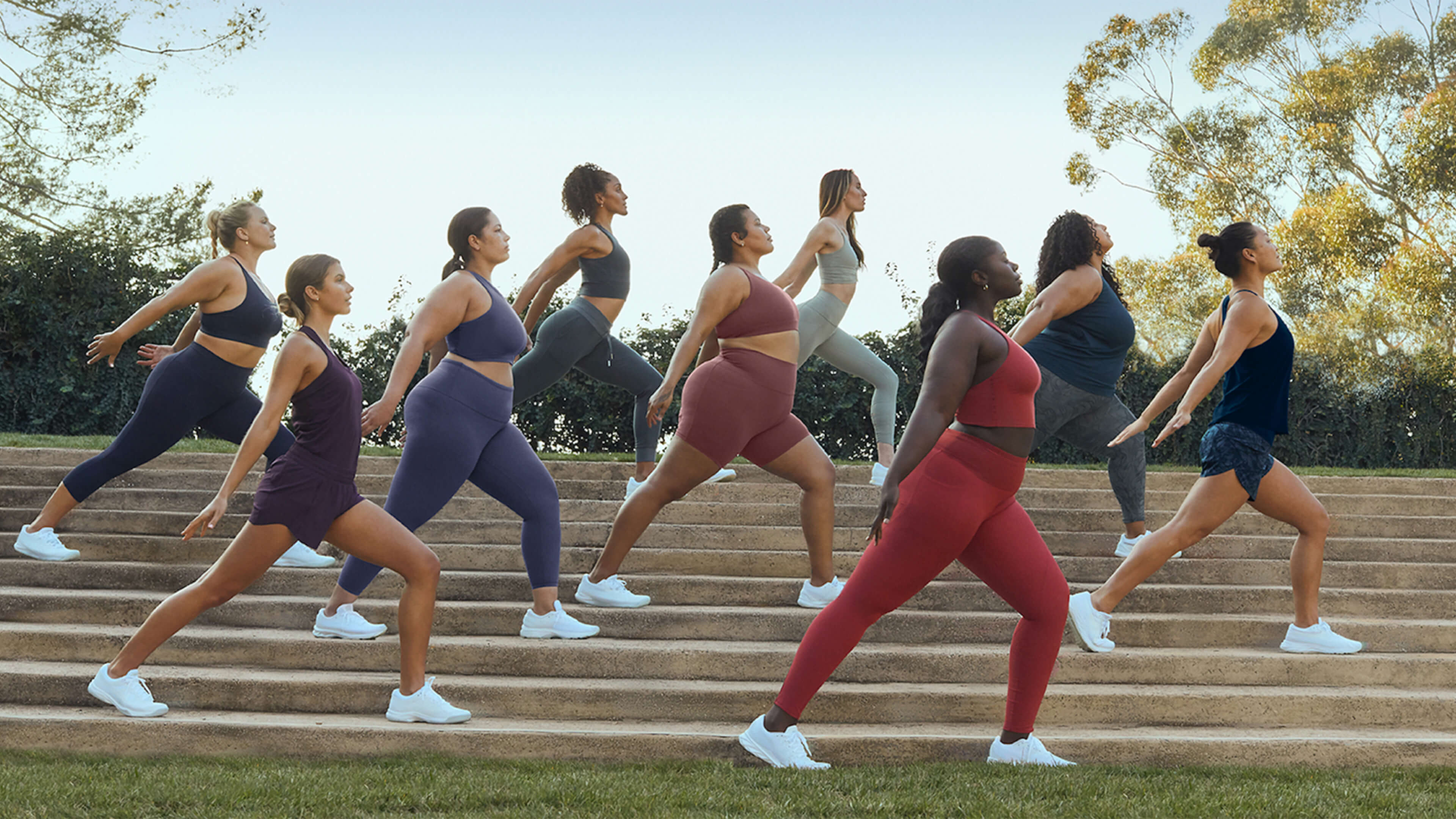
She knows best
A major athleisure brand passes the mic so women can define community for themselves.
Diversity alone isn’t enough—in marketing or any other facet of business. Today’s brands must authentically engage with and create the conditions for co-design with existing communities.
That sort of deep, meaningful engagement with customers doesn’t happen over Instagram. It requires a playbook, a prototype, and a healthy amount of trust. So, IDEO worked with Athleta and Gap to tap into the wisdom of a council of women who represent intersectional identities and lived experiences. The council surfaced powerful insights for the brand, like the fact that active women don’t need a brand to empower them—they already feel powerful.

After only a few weeks, Athleta experienced the difference between research and a truly reciprocal relationship. The way their brand engages with communities is adding depth, understanding, and authenticity to Athleta’s content, products, and experiences. And women can feel the difference.
76% of US adults say that the media promotes an unattainable body image for women.
Fewer than 1 in 10 businesses review for inclusion as part of product design and marketing campaigns.
>2X
user growth in 2022
13,000+
Athleta WellPro well-being providers active on the platform

Three key interventions to reduce IDEO’s greenhouse gas emissions
Emission reduction efforts require change at every level.
The report outlined that over the next decade, we need to reduce global emissions by 7.6% annually, a daunting reality that has been reiterated in recent IPCC updates. That means reducing our emissions by over half in less than 8 years. This is one of the most critical challenges of our decade, if not century.
As part of IDEO’s Net Zero strategy, we knew we couldn’t just invest in carbon offsets, we also had to do our part in removing emissions from the atmosphere. In many ways, the pandemic accelerated us toward that path. From 2019 to 2020, our emissions were slashed from ~14,500 t CO2e to ~6,400 t CO2e respectively. But we knew we needed to do more, especially with IDEO’s shift to embracing hybrid working models and their unknown travel-based emissions implications.
In 2021, we implemented three interventions to further reduce our carbon footprint. We switched to renewable energy, incentivized reductions in project-based emissions, and made improvements to our responsible retirement portfolio. Some of these efforts were successful, others less so. We’re eager to share what worked and what didn’t.

Intervention 1: Switching to renewable energy
There are several options for switching to renewable energy, including purchasing rooftop solar grids, participating in community solar programs, purchasing renewable energy credits (RECs), and more.
In evaluating these approaches, we ran into a few setbacks. Since IDEO doesn’t own any of its buildings and each of our studios consume about as much electricity as a couple of big houses, we optimistically hoped that we might be able to sign up for community solar programs across the board. But we quickly learned that community solar wasn’t available for all of our locations. To make matters more complicated, many of our locations didn’t even have the ability to choose their electricity suppliers.
Our next best bet was to either purchase RECs for our global energy consumption, or opt for location-specific solutions. In pursuit of progress over perfection, we purchased 750 MWhr’s of RECs from Bonneville Environmental Foundation to cover energy consumption across all of IDEO’s locations. This not only reduced our carbon footprint by 360 t CO2e, but also meant that effective January 1, 2021, IDEO switched to renewable energy globally.
Looking ahead to 2022 and beyond, we will continue to evaluate and implement the best renewable energy solutions on a local level. To date, we have switched to renewable energy in two locations:
- Chicago: We switched our energy supplier from ComEd and enrolled in community solar through Solstice. Solstice also offers a renewable energy program for employees to mitigate energy impacts from working from home. For every employee that signs up for Solstice’s community solar program, Solstice donates $100 toward their nonprofit arm, Solstice Initiative, to make renewable energy accessible for underserved communities.
- Munich: We switched our energy supply from Stadtwerke München (SWM), Munich's municipal utilities company, to renewable hydropower from Polarstern, a Munich-based renewable energy pioneer and social business promoting the energy transformation in Germany and worldwide.
While it took more time and resources to explore local renewable energy solutions than to purchase RECs, we felt it was important to switch to local alternatives wherever possible.

Intervention 2: Incentivizing reductions in project-based emissions
“But what about the emissions from our project operations?”
In our journey to Net Zero, this question came up time after time. It turns out, over a third of IDEO’s non-wage-based expenses come from project-based expenses like flights, food, prototyping materials, and research incentives. When we estimated IDEO’s carbon footprint, we saw that a significant fraction of our emissions came from everyday decisions made by project teams.
After some digging, we saw that consulting firms similar to IDEO approach emission-reduction incentives differently. Some impose strict travel guidelines, while others set a steep internal price on carbon. The concept of a carbon tax as an incentive was appealing, but would clients go for it? We decided to find out.
Inspired by 1% for the Planet, we started a pilot that added new language about emissions reductions in all of our statements of work. In addition to our standard language about project-based expenses, we added:
Expense invoices will include an additional 1% of all billable expenses to offset greenhouse gas emissions arising from this work.
For a project with $100,000 in expenses, we would add a $1,000 fee to fund carbon offsets. From our preliminary estimates, this would sufficiently cover the emissions from our projects and allow us to purchase ever higher quality emissions over time.
While promising in theory, the execution has been difficult. Of the 33 statements of work signed over the past 6 months, only 4 of them included the 1% fee. In some cases, clients objected to paying for IDEO’s carbon offsets and the language was negotiated out of the contract. In other cases, the language was never included to begin with. Many IDEOers were apprehensive about broaching the topic with clients.
Despite the slow start, we are continuing this pilot so that we can gather more data and design an informed approach to reducing project-based emissions.

Intervention 3: Improving our responsible retirement portfolio
While IDEO will continue to vote with its dollars to reduce our emissions, many of those dollars have their own environmental and social implications. With ESG frameworks and ratings agencies scrambling to answer calls to action from BlackRock and beyond, there are a dizzying number of ways to evaluate responsible investments.
Our third intervention involved scrutinizing our existing 401(k) portfolio. Alongside Fossil Free Funds, a non-profit that grades investments using a variety of social and environmental considerations, we evaluated IDEO’s existing 401(k) and came up with a system—or score—for each of the available funds in our portfolio. We then supplemented this analysis with data from Morningstar Sustainability Rating to provide another perspective on how our investments were, or were not, meeting environmental, social, and governance challenges.
Perhaps not surprisingly, many funds in IDEO’s 401(k) were poorly rated. Our portfolio, like most, is dominated by index and mutual funds that track the market. Since the Fortune 500 account for over a quarter of global greenhouse gas emissions, and only 11% of these organizations are hitting their emissions goals, our portfolio wasn’t tracking in accordance with the climate commitments we’d set.
Our Talent team sprung into action. Together with our Empower Retirement administrators, they identified new funds that we could add to our investment mix. In addition to the Vanguard Social Index Fund that was already in our portfolio, we added two new funds: Calvert Balanced Fund (R6) and Calvert Short Duration Income Fund (R6).
A year later, about 1% of IDEO’s $140m 401(k) assets are in these ESG funds. While this is certainly a move in the right direction, we are continuing to explore how we can improve our responsible retirement portfolio even further.
---
More than anything, these three interventions have highlighted an intrinsic dilemma of reducing emissions at scale: distributed behavior change is challenging and incremental. We’re still grappling with questions like: Are we focused on the right things? How might we design better incentives that accelerate emission reduction? How might we incentivize our partners to change alongside us?
But this is a design challenge that cannot wait to be solved. We’d love to learn alongside others and hear how others are tackling behavior change within their firms. Please share your reflections, questions, and insights by getting in touch here!
This article is part of a series detailing IDEO’s journey to becoming Net Zero, the lessons we’ve learned, and our continued commitments to addressing climate change.
In 2019, the UN Environment Programme (UNEP) released an updated climate report reiterating how critical the 2020s will be in curbing wide-ranging and destructive climate impacts.

Removing IDEO’s emissions with voluntary carbon offsets
The tradeoffs of offsets.
That was the question that we woke up to from our colleague, EJ Baker, on IDEO’s #climate Slack channel in mid-September. For months, Anna Varnai, Jenny Gottstein, Mike Sakowski, and I had been evaluating potential providers and projects to offset IDEO’s carbon footprint in our journey to becoming Net Zero.
EJ’s inquiry brought us back to a question we had been debating for months: Is it better to invest in voluntary offsets or invest more deeply in reducing emissions? While there are legitimate arguments to be made for each path, we felt that emissions reductions weren’t enough. We urgently need to remove greenhouse gasses from the atmosphere. And since we are driven to design the world we want to live in, we chose to meet in the middle—both reduce our emissions and offset what we are unable to reduce. Despite its limitations, offsetting offers a way to strengthen our climate commitments as we ramp up our emissions reduction efforts.
In principle, voluntary carbon offsets appear simple; in reality, they become complicated very quickly. We reached out to offset providers and offset purchasers to learn about their approach and experiences, but instead of walking away with clarity, we realized that no one had really figured it out yet. Even the experts were still grappling with questions like what types of offsets should be used and when, or whether offsetting is even a credible means of achieving Net Zero.
In search of answers, we set out on a quest—diving into academic literature, researching industry best practices, and following countless startups in the space. We learned about the permanence, additionality, and vintage of an offset and how each relates to the quality of an offset project. We learned about the potential social benefits—from community employment to energy access—that come from different projects. We learned about the entities that verify and certify offset efforts. And, we learned that the more we uncovered, the more questions we had.
Should IDEO invest in high-quality and expensive carbon sequestration solutions aligned with our ambitions for the future? Or should we invest in readily available and affordable nature-based solutions? How much geographical representation should we have? How do we know that our investments won’t go up in smoke? How should we think about the intersection between our offsets, climate justice, and IDEO’s DE&I commitments?
The considerations for what to invest in went on, and the dilemma was paralyzing. On the one hand, we wanted to do it all. On the other hand, we had a finite budget and the clock was ticking. What was the right way to get started?
We contemplated having employees vote and help us pick offset projects. While this approach empowered employees to directly shape our company investments, in an area as complex and opaque as the voluntary carbon market, it would be hard for all participants to have an informed perspective in voting.
We contemplated creating a committee that would select projects based on a set of established needs and values. While simple in practice, we weren’t confident an internal team could navigate the magnitude of the task in a manner that fully represented IDEO, and the inevitable scrutiny that comes from decisions like this.
We contemplated seeking advice from third-party experts, but found that many of them sold offsets themselves, raising all kinds of questions about their motives and whether there was a conflict of interest (even though they were extremely generous with their perspective—thank you!).
We needed to get reasonably smart about this space to make informed decisions.
Enter the Oxford Offsetting Principles, a series of guidelines put together by Eli Mitchell-Larson et al., that outline how offsetting should be approached to achieve Net Zero. Informed by these principles, we were drawn to two start-up offset providers, Lune and Patch. These providers stood apart for several reasons. First, they allowed us to select a broad portfolio of high-quality carbon offset projects. Second, their projects had an international reach. From the get go, we knew we wanted our carbon offsetting efforts to reflect IDEO’s global presence, impact, and responsibility. Both Lune and Patch offered a way for us to do so.
From there, having estimated our carbon footprint at around 4,950 t CO2e for 2021, we intentionally over-offset our emissions by purchasing 5,500 t CO2e.
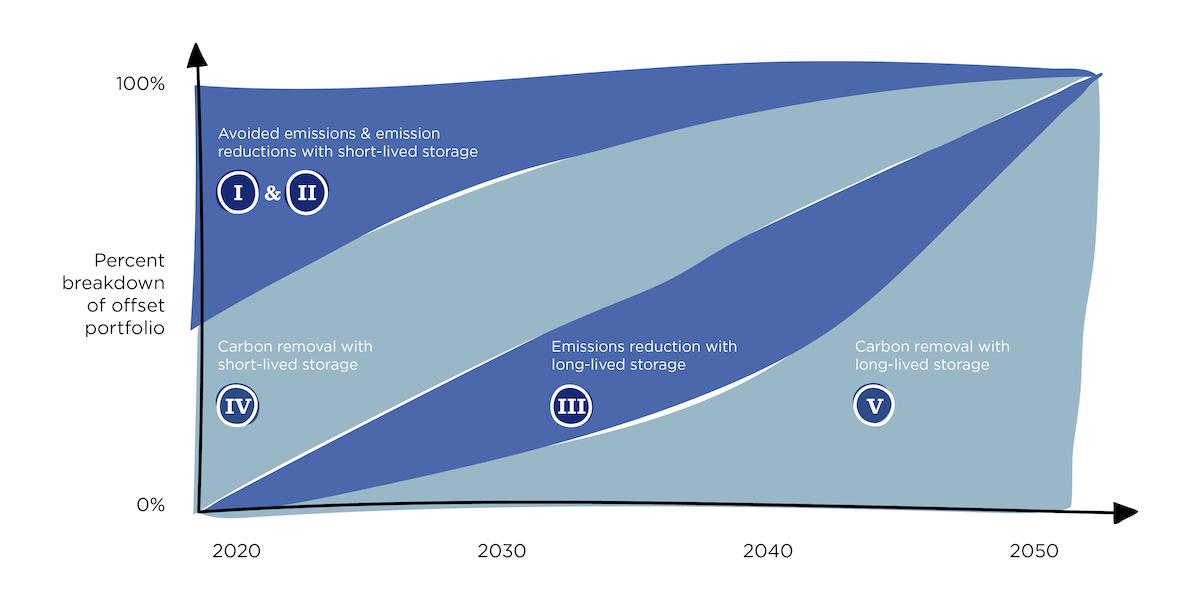
Based on the Oxford Offsetting Principles, we spread those offsets across:
- Global renewable energy projects for Type I (22.5%)
- Forestry protection projects in Asia and Latin America for Type II (22.5%)
- Methane capture at landfills in the United States for Type III (5%)
- Reforestation projects in Africa and North America and regenerative agriculture projects in the US for Type IV (45%)
- Enhanced weathering projects in Europe for Type V (5%)
Overall, we spent a little over $20 per tonne of CO2e with about 92% of those fees going toward the projects themselves. (You can see a visual breakdown of our project bundles with Lune, here.)
Are we confident that our offset strategy is the gold standard? Not quite. But we do feel confident in our approach, and as the voluntary carbon market matures, we will continue to iterate alongside it. We’ve learned that climate action, like design, requires us to get started with curiosity and humility. It demands a learning mindset that seeks progress over perfection.
To those who have purchased or are considering purchasing offsets of your own, we’d love to hear about your approach and what you’re learning.
This article is part of a series detailing IDEO’s journey to becoming Net Zero, the lessons we’ve learned, and our continued commitments to addressing climate change.
“Genuine question: are offsets a useful thing?”

What the sustainable food future we’re working toward looks like
Over the last decade, we have been working with people, companies, governments, and organizations across the food industry.
When it comes to sustainability and the food system, looking ahead five or ten years and making eventual environmental commitments are not enough. There is a limited time to act if we want to head off the worst of what’s to come, from major supply chain disruptions to even higher levels of agriculture-related carbon emissions. That’s a challenging reality in the face of a climate crisis that can feel overwhelmingly abstract and a business environment that has long prioritized what is happening in the next quarter, not the next decade.
IDEO is a future-oriented firm, and over the last decade, we have been working with people, companies, governments, and organizations across the food industry who share our exploratory mindset and growing sense of urgency around addressing climate change. We have partnered with global nonprofits seeking to reduce food loss on farms, helped food brands launch products with better and healthier ingredients, are examining corporate procurement’s role in mainstreaming regenerative agriculture, and are working with food companies to help them achieve their environmental, social, and governance (ESG) commitments. It has left us sure of the food future we’re aiming for: one in which the extractive, linear model is replaced by a circular economy that regenerates the environment, builds thriving communities, and develops more nourishing food and beverage products that everyone can access. Design is a vital tool in getting us there.
Circular design recognizes that each individual, from farmers to food workers to consumers, factors into an interconnected and constantly changing system. It allows us to position the human perspective alongside technological and economic constraints and arrive at ways to make food truly equitable, regenerative, and nourishing for both people and the planet.
As we work toward that climate-positive future using the tools of design, here are three things that are on our mind and directing our actions:

The system has made headway in reducing food waste, but there’s more to be done
Globally, about one-third of food is lost or wasted each year. The loss and waste account for 8% of global greenhouse gas emissions and are occurring at the same time that 1 in 9 people are undernourished. “Preventing food waste is ... the food sector’s single most important direct climate action,” is how Sodexo CEO Denis Machuel put it.
Within the US, some 40% of food waste is tied to businesses that serve consumers, like hotels and restaurants. That point was driven home when we partnered with The Rockefeller Foundation and Hyatt Hotels to develop novel ways to tackle food waste at the hotel buffet. We found nearly half of the food put out for guests wasn’t eaten, and at most only 15% of that could be donated or repurposed.
The fear of shortage was a driver, with the hotel kitchen overproducing to ensure they would have ample food for guests, and guests overloading plates so as not to miss out. Knowing that allowed us to introduce simple but effective solutions like displaying small sample plates of meat and cheeses that guests can order, rather than laying out extensive platters.
But a third of global food waste occurs upstream, at the agricultural harvest and production stage. Our work with Japanese growers while developing the fudoloop app highlighted one reason why: a disconnect between supply and demand. Agricultural wholesalers were generally in the dark about coming crop volumes and details, which made it harder to negotiate with buyers—resulting in food waste—while the labor-intensive nature of the harvest left farmers without the time and energy to pursue a solution. The app gets crop information from farmers to wholesalers one day in advance to allow for much more effective coordination.
Similarly, when the World Wildlife Foundation asked us to help minimize food loss on farms in the United States, labor availability emerged as one of the main reasons crops are not fully harvested and packed. Together we prototyped a model that connects farms and local people in need of part-time paid work to harvest surplus produce otherwise left in the fields, and tested the concept on a California tomato farm. Under this model, the harvested fruits and vegetables would then be made accessible to those who need them through a virtual platform that matches a grower’s surplus with a food bank’s demand.
Downstream, food banks and pantries serve as a way to mitigate both food waste and hunger, but challenges abound there too. According to the USDA's Household Food Insecurity in the United States in 2020 report, 61% of food insecure Americans do not use them.
In some cases, schedules and transportation are deterrents, which inspired our work with the Northern Illinois Food Bank. We helped them launch a first-of-its-kind digital pantry that allows individuals to order groceries and select a pick-up time and location in advance. The approach gives food bank users agency and choice, eliminating food waste that can occur when individuals are given foods they dislike or that don’t align with their dietary restrictions. It also allows the food bank to track data—a key element to understanding waste—in order to have better supply and demand signaling.

Food companies need to reimagine their product portfolios with biodiversity in mind
For more than a decade IDEO has worked with CPG clients to create food that is healthier. Biodiversity is the next step in the journey, and it’s a particularly exciting one because of the dual impacts to the planet and human health. In a little more than a century the planet has lost 75% of the genetic plant diversity in agriculture, and per a 2020 report, some 20% of countries risk seeing their ecosystems collapse due to the decline in biodiversity.
The linear economy got us here. Prioritizing efficiency and profit brought us to a place where 75% of the global food supply is sourced from just 12 plant and five animal species. Rice, maize, and wheat account for almost 60% of calories all of humanity gets from plants, curtailing consumption of vital nutrients. The monoculture farming responsible for that shortlist of crops makes the food supply more vulnerable. Monocultures are less able to withstand climate extremes and pests. Diversifying these farms is a way of building resilience.
Transforming dietary diversity at scale requires efforts on production, procurement, manufacturing, product design, and consumption levels. In a recent WBCSD & One Planet Business for Biodiversity report, product design is the most commonly cited area of opportunity when it comes to “staple crop diversification along the value chain.” As designers we believe that individual product design decisions about formulation, sourcing, packaging, and branding collectively shape the food system—and have the ability to send positive ripple effects across it.
We have helped CPG clients advance on their path towards using more biodiverse ingredients through product launches that emphasize healthier and alternative ingredients. That has included working with Betterer Foods to design their RightRice brand, based on an ingredient they developed that tastes and looks like rice but is made from rice and vegetables and has more than twice the protein of regular rice; partnering with Green Onyx, an Israeli company that developed an in-home growing method to produce a tiny aquatic vegetable called khai nam; and working with Bitty Foods to find new product innovation for products made with their high-protein cricket flour.
Through our work, we’ve learned that sustainability is often not the driver when it comes to food choices—yet flavor often is. Biodiversity expands the palate for a food R&D team to think about flavors, textures, and ingredients. It also has the potential to make us healthier. The 2020 WHO report on biodiversity noted one risk factor associated with the loss of biodiversity is “increased consumption of ultra-processed foods high in energy, saturated and trans fats, sugars and salts.” Biodiversity won’t inherently make us healthier if we diversify ingredients but continue to put them into highly processed foods. It's important that R&D teams still consider nutrition as they explore a wider variety of ingredients for their products.

Product design alone isn’t enough. Companies must transform their supply chains
A 2019 study of the 50 largest food and beverage companies in the US found that, of those who disclose the data, scope 3 emissions constituted on average 89% of total reported company emissions. Failure to monitor, disclose, and transform operations to lessen these emissions poses “substantial material risk” for the industry—risk that will only increase. The IPCC Report on Climate Change and Land found that without intervention, emissions from agriculture are likely to increase 30% to 40% by 2050.
We understand the heaviness of this challenge for food companies: How do they design an entirely new system while still operating their businesses in the current system? How can they encourage regenerative farming among different stakeholders along the supply chain to reduce their carbon footprint overall?
With the Circular Economy of Food CoLab, we have been able to use collaboration and rapid prototyping to make those questions less daunting and quickly surface potential solutions. The Food CoLab is anchored by member companies Danone, Kroger, and Electrolux and builds on a network of farmers, food companies, startups, NGOs, and experts.
Since 2018, the Food CoLab has built over 30 prototypes that promote a circular food system: where waste becomes a resource, natural systems and farming communities are uplifted, and all materials realize their highest value. A major focus is reimagining how retailers and food and beverage companies source ingredients and products. Today’s commodity-centric model leads to overproduction on farms, reinforces intensive farming approaches, and shifts the risk of diversifying operations to growers. Yet supporting regenerative production and choosing lower impact, upcycled, and biodiverse ingredients has the potential to realize significant emissions reduction and greater profitability for farmers.
Together we are prototyping new procurement models that support regenerative agriculture, with input from farmers and experts in soil health, ecosystem services measurement, and agriculture innovation. We’re exploring ways that design can help food and beverage companies partner with growers to build soil health and biodiversity, equitably collect and share data, and collaborate across industries and supply chains.
While there are new business models and technologies that might help achieve goals around nature-positive food production, it’s important to acknowledge that regenerative farming is not new. The quest for efficiency and the consolidation of power in global supply chains undermines resilient farming models in the United States and many other places around the world. Many people and communities who hold this agricultural expertise have been denied access to land, capital, research, and other support—and now they face the brunt of food insecurity and climate change impacts. It's imperative to help right these wrongs as we seek to design a more climate-positive food system.
**
Addressing these food- and climate-related challenges requires we consider and involve all the players. The cost of reducing food waste, restoring biodiversity, and transforming the supply chain may impact one segment of the food value chain while another segment reaps the benefit. Indeed, one of the biggest challenges to overcome is to realign who makes decisions and who bears the cost. Figuring out how to share both the risk and the reward requires collaboration. Design is a powerful and effective tool to leverage. Human-centered design surfaces the role each player has individually, how they relate to each other, and the amount of influence and power that each has.
The design process enables us to zoom in and out between a potential solution to the challenge at hand and the larger system. It highlights the leverage points, the places where a successful intervention could touch several aspects of the problem, and allows us to quickly start prototyping. We iterate, we learn, we refine the question.
Design is relentlessly optimistic, but it’s also grounded in reality. The climate crisis has gotten where it is because we’ve taken from the earth with little concern for any consequence beyond profit. That’s by design, which means we can also fix it. The redesign can’t wait.
In 2015, we helped IKEA envision the kitchen of 2025. Thinking that far into the future was a visionary move on IKEA’s part. Now, that kind of perspective and action are a requisite.

Our first step toward Net Zero
Estimating IDEO's carbon footprint.
We quickly realized the complexity of the challenge. There are hundreds of people across IDEO, and each of them make purchases on behalf of the firm in the running of our business—from video conference subscriptions to user research project expenses. With at least 80-90% of any organization’s carbon footprint coming from Scope 3 emissions (including upstream suppliers), calculating one’s carbon footprint is a significantly distributed issue.
But we knew we had to get started. We began by exploring a wide variety of emissions accounting solutions, from countless start-ups in the space to corporations like Salesforce repurposing their internal tools for emissions accounting. In our view, the ideal carbon accounting solution possessed several qualities. It would be accessible and intuitive enough for IDEOers to understand the tradeoffs they are making during everyday purchases. It would be shareable with our clients who are increasingly invested in our sustainability efforts. It would be reasonably priced for a small-to-medium sized business that intends to spend in the low six figures on carbon offsets and hopes to reduce its emissions by 7-8% per year. Most importantly, it would track emissions down to the company level to make it possible for us to vote with our dollars when considering prospective suppliers.
Unfortunately, most of the existing carbon accounting solutions haven’t met our particular set of needs. They often involve cumbersome, manual data entry. The carbon footprint is often estimated at an industry, not company, level. And when you’re hoping to use such a tool to save 7-8% of low six figures per year off your carbon offset budget, emissions accounting solutions can be disproportionately expensive. These are early days for the greenhouse gas accounting industry and, as momentum builds, so will the quality of accounting options available.
After exploring the many solutions in the market, we ultimately embraced a carbon accounting technique shared by Jane Yang, former Head of Data & Senior Policy Analyst at Basecamp, who used academic literature to convert dollars spent in a particular category into the equivalent greenhouse gas emissions. This method gave us a framework to pull data from our Enterprise Resource Planning (ERP) systems and estimate the carbon footprint of emissions-intensive categories like energy consumption, travel, and food. While this technique is not perfect, it was a critical step in better understanding which areas of our business contribute most to our global carbon footprint.
Of these areas, airline travel was having the most detrimental environmental impact. As a consulting firm with offices, clients, and research across the world, we will need to be very thoughtful in how we balance the benefits, and environmental costs, of travel. More on this in a subsequent post.
Estimating IDEO’s carbon footprint also revealed another dilemma: our ERP systems had no data on the downstream impact of our work with our clients. In speaking with experts, we received mixed messages on how to properly account for emissions outcomes from consulting firms like IDEO. On the one hand, our deliverables are often digital assets that have a negligible carbon footprint. But on the other hand, these deliverables represent strategic recommendations or new products and services that could have significant environmental implications. It’s complicated. While we have a clear ethical responsibility to set our clients and the planet up for success, we have chosen not to include the downstream impact of our client work at this time. This is a decision that we will continue to assess going forward.
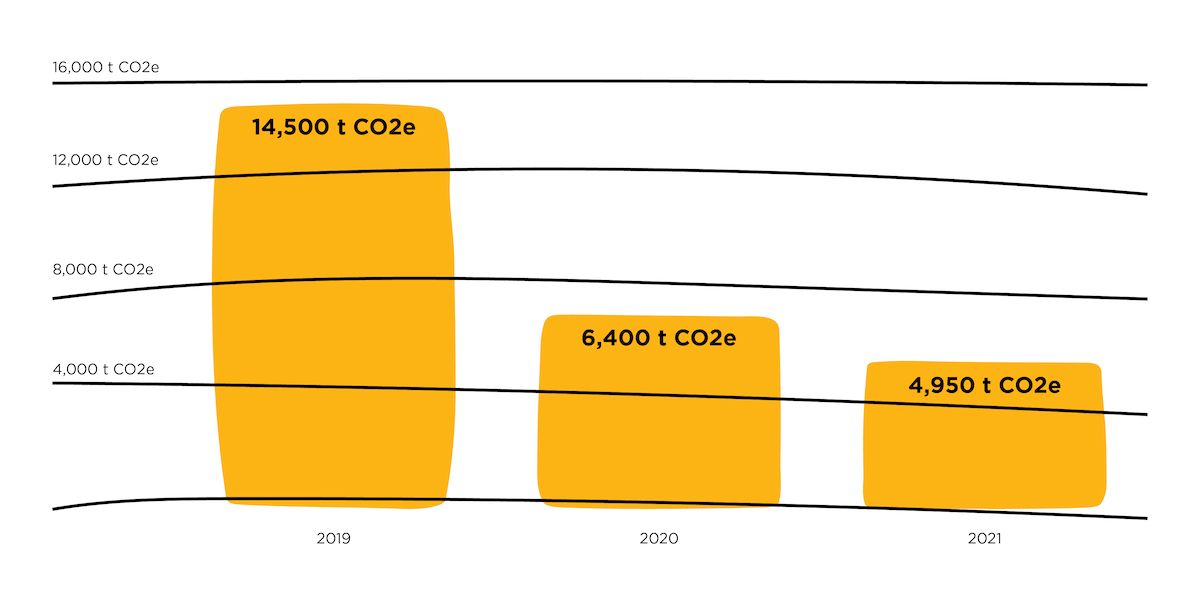
With that, we turned our attention to the data on hand. Our team’s background in scientific research gave us enough familiarity with the academic literature to find relevant conversion factors for the emissions per dollar spent on different categories of expenses like travel, for example. Using this methodology, we estimated IDEO’s carbon footprint at around ~14,500 t CO2e in 2019, ~6,400 t CO2e in 2020, and ~4,950 t CO2e in 2021. The good news is that these numbers are trending in the right direction, although these improvements were largely side effects of the pandemic (as with many companies). As we plan ahead, we intend to take another look at third-party products to see if any have started to gain an edge, and we’d enjoy the opportunity to learn alongside others that are going through a similar process. Any takers?
This article is part of a series detailing IDEO’s journey to becoming Net Zero, the lessons we’ve learned, and our continued commitments to addressing climate change.
For IDEO to commit to Net Zero or to prioritize emissions reductions initiatives, we first needed to understand the magnitude of our global carbon footprint and which factors were the greatest contributors.

Lindsey Turner
I’m passionate about building brands, products, and experiences that help organizations show up with meaning and momentum.
I help organizations cut through complexity by shaping how they show up, through brand strategy, identity, and storytelling.
Working at the intersection of brand and business, I bring an editorial eye and a bias toward making—turning ideas into tangible experiences that people can understand, trust, and believe in.
My work spans government, healthcare, financial services, media, and consumer goods, from launching Gen Z-focused ventures to building innovation labs and reimagining legacy brands. I relish moments of ambiguity and enjoy translating across teams, perspectives, and priorities to move ideas forward.
I started my career in editorial and digital design, shaping cross-platform experiences and identity systems in publishing and agency environments. That foundation still shapes how I work today: I’m detail-oriented, collaborative, and overreliant on the Oxford comma. I hold a BFA in Visual Communication from the School of the Art Institute of Chicago.

Rachel Young
My work helps organizations see who their products aren't working for—and build the will and the tools to do something about it
For 25 years, I've asked the same question: Who does this design exclude—and what are we going to do about it?
My work spans human-centered strategy, inclusive design, and qualitative research, with clients ranging from Microsoft, Google, and Verizon to the National Science Foundation, and San Francisco Unified School District.
Before IDEO, I taught elementary school in East Palo Alto and spent a decade doing design work with social service organizations—where I learned firsthand what it costs people when systems are built without them in mind.
I am currently writing User Error, a nonfiction book about digital access and the design decisions behind it. I live in Oakland, California.

Brian Pelsoh
I lead with craft, ensuring our work is creatively excellent: rooted in deep human insight and imagination, while also grounded in the realities of business and technology.
My expertise spans brand, communication, and product design across tech, education, the arts, and social impact.
I believe great work demands both high-level vision and obsessive attention to detail, and only happens through collaboration.
I bring an inclusive, hands-on approach and a deep understanding of business, which enables me to consistently deliver excellence while always asking why.
Before joining IDEO, I worked at the brand firms Pentagram and VSA Partners. I began my career as a designer, leading teams at the School of the Art Institute of Chicago and the Milwaukee Art Museum. I hold an MFA in graphic design from Maryland Institute College of Art and a BFA in communication design from the Milwaukee Institute of Art & Design, and have taught at some of the best design schools in the US.

Tony Wong
I am responsible for IDEO’s long-term success in China and working with clients to use design as a tool to enable growth.
I am responsible for IDEO’s long-term success in China and working with clients to use design as a tool to enable growth. Specifically, I have helped Chinese companies design holistic brand solutions through the development of their products, communication, services, and innovation teams, and I have helped multinationals expand their presence and influence in China.
I advise global leaders on developing China-led innovation and capabilities.
In over 15 years in IDEO Shanghai, I have worked on projects that use design to elevate the quality of the experience of healthcare products and services, streamline processes that increase productivity, create spaces and programs that promote and enable inclusive communities, and build next generation mobility solutions that are planet-positive.
Before joining IDEO, I worked at Philips Electronics and the Electrolux Group in Italy, the Netherlands, and Singapore on a number of breakthrough commercial products. I am a member of the Young President Organization in Shanghai.

How to use AI as an editor, not a writer
Ed White shares how he uses AI as an editor—not a writer—to sharpen storytelling, rehearse ideas, and preserve the productive friction that makes creative work better.
Ed White has a rule he's tested on his own writing: hold yourself as the writer, and let AI be your editor. Ed is a Senior Design Director at IDEO's London studio, where he co-leads the firm's AI portfolio across Europe. Before IDEO, he spent 12 years as a writer and editor at the Financial Times, Wired, and Contagious. So when he talks about when to use AI for storytelling and when not to, it comes from two decades of crafting his storytelling skills.
In this episode, Mina Seetharaman talks with Ed about two specific tools he uses to keep AI in an editor's seat: a "roasting agent" prompted to critique his drafts without any sugarcoating, and a simulated audience he rehearses pitches on before the real thing. They also get into what Ed is hearing from design leaders at Anthropic, Lovable, Shopify, and Google Creative Lab about how creative work is changing, and why he thinks the friction of writing something yourself is worth protecting rather than automating away.

Building a personal AI for the messiness of life: Sida Li
Becca Carroll talks with Cue co-founder Sida Li about designing a personal AI for the messiness of everyday life—not just work. They explore how Sida stays anchored to human needs while navigating fast-changing technology, product tradeoffs, business-model experimentation, and the realities of building an AI company today.
Most AI products today are built for work—a space with clear problems and established systems. One founder noticed a gap: personal life is messier, harder to systematize, and mostly left behind by the AI boom. So she built Cue, a personal AI that lives inside iMessage and group chats, to go where the other tools haven't.
In this episode, Becca Carroll, IDEO's Chief Strategy Officer, talks with Sida Li, co-founder and CEO of Shared Context Lab, about staying anchored to a human need while the technology around her keeps changing shape, why she treats her business model with the same rigor she'd bring to a product, and what it feels like to build a company at this particular, disorienting moment in AI.
The conversation also gets into how Sida makes design decisions: the language Cue uses to describe itself, the tradeoffs behind building inside iMessage instead of a new app, and a real story about a business idea that didn’t pan out.
This is the second in a two-part series profiling founders from IDEO's Startups-in-Residence program. The first conversation is with Johannes Seemann, founder of Sooner, on designing GenAI for the emotional side of money.

Designing GenAI for the emotional side of money: Johannes Seemann
Designing financial tools around the feelings that shape money decisions.
Most personal financial tools are built to run the numbers and optimize towards a budget. While that works for some, most people experience money as a lived relationship that does not neatly fit into a spreadsheet. Johannes Seemann and Becca Carroll discuss why money is emotional before it is mathematical, and what a human-centered approach to building a generative AI financial product looks like in practice.

The curious leader's edge in uncertainty: Scott Shigeoka
How genuine curiosity helps leaders navigate uncertainty with greater confidence.
Mina Seetharaman talks with Scott Shigeoka, author of Seek and Head of Curiosity Cultivation at the Eames Institute, about what distinguishes genuinely curious leadership from performative curiosity, how power dynamics shape curiosity, and why practicing curiosity can restore energy rather than drain it.
Looks like you might be in search of something very specific?
Or reset the filters above and try another angle.
Here’s some random inspiration

Podcasts about creative leadership

Articles about the power of prototyping
