
.svg)




From incremental change to breakthrough innovation
How Master Kong reinvented the instant noodle, from the inside out.
Looking to understand the role of instant noodles in middle-class Chinese life, the IDEO team conducted in-home research with consumers across a range of life stages and levels of attachment to noodle culture and convenience foods. The first finding was reassuring: Everyone kept instant noodles at home. The category still had a place in middle-class kitchens. But beneath that was a more complicated, emotional story—and an unmet need for convenience and quality to coexist in a single product.
The team discovered that instant noodles are more than just a quick, on-the-go meal; they are a nostalgic comfort food that evokes fond memories. But since their heyday, their role in daily life has evolved. Once a complete meal in itself, instant noodles now often function as a versatile flavor base or culinary accent in other dishes. Because they don’t align with the healthier, higher-quality, and more novel food choices that middle-class consumers aspire to, noodle shops, delivery noodles, or fresh-cooked instant options often win out. Yet, even these alternatives come with trade-offs. Delivered noodles lose texture during transport. Sit-down noodle shops preserve quality but offer limited flavors. Cooking from scratch meets the bar for both texture and flavor, but requires a significant time investment. As one young mother said, “If I could get the texture of fresh-cooked noodles without turning on the stove, I’d buy that instant noodle for sure.”
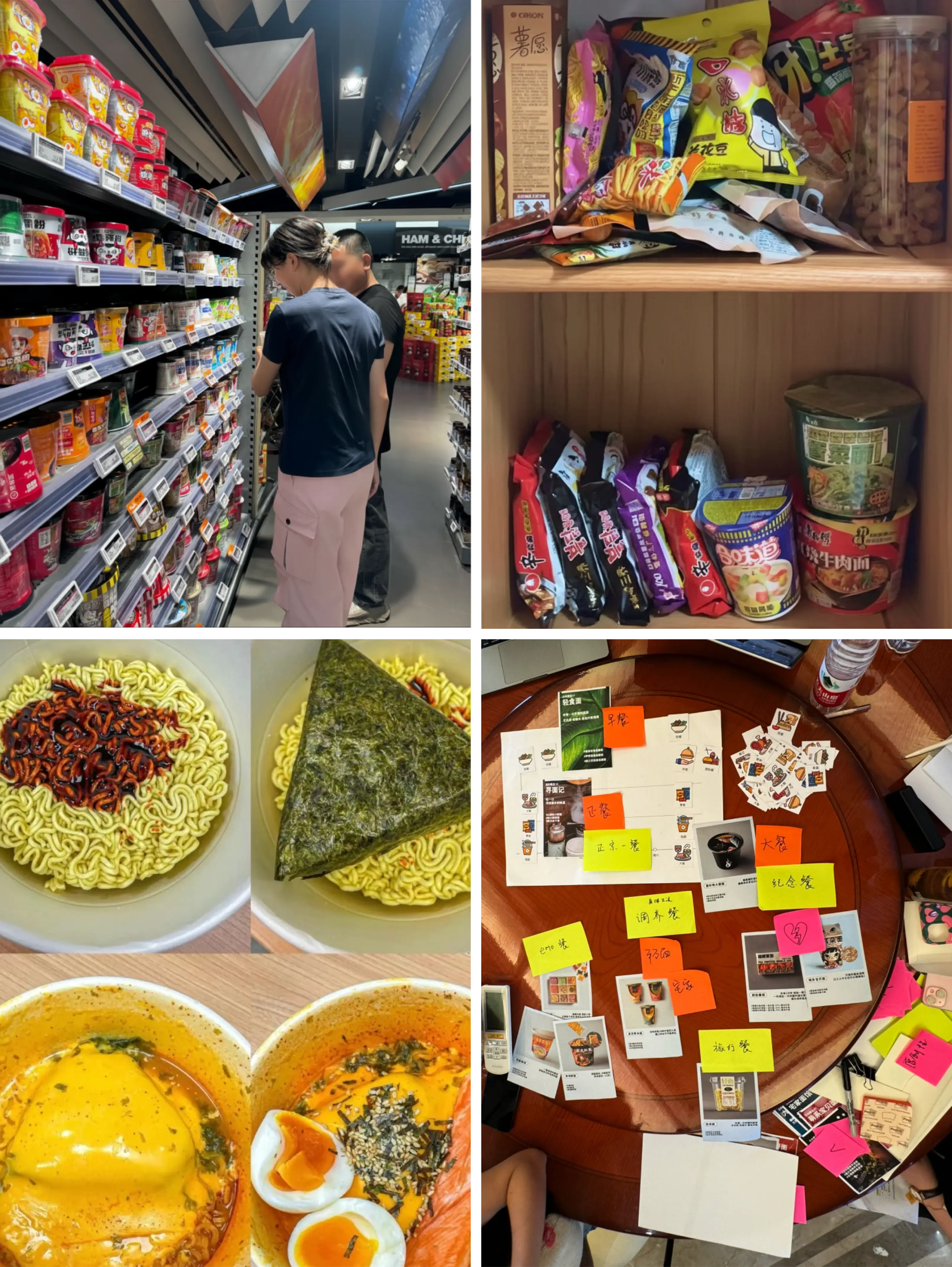
The research inspired the creation of a new category, which the team termed “fresh-brewed noodles.” More than just a noodle or broth upgrade, Master Kong’s fresh-brewed noodles would offer the speed of instant noodles with the quality of freshly cooked options, plus flavors not found in traditional noodle shops. The strategic positioning was clear. Executing it by making fresh-brewed noodles mass-producible, affordable, and eventually profitable presented a category-innovation challenge. To get there, IDEO designed a series of dual-track co-creation workshops with the Master Kong team and consumers.
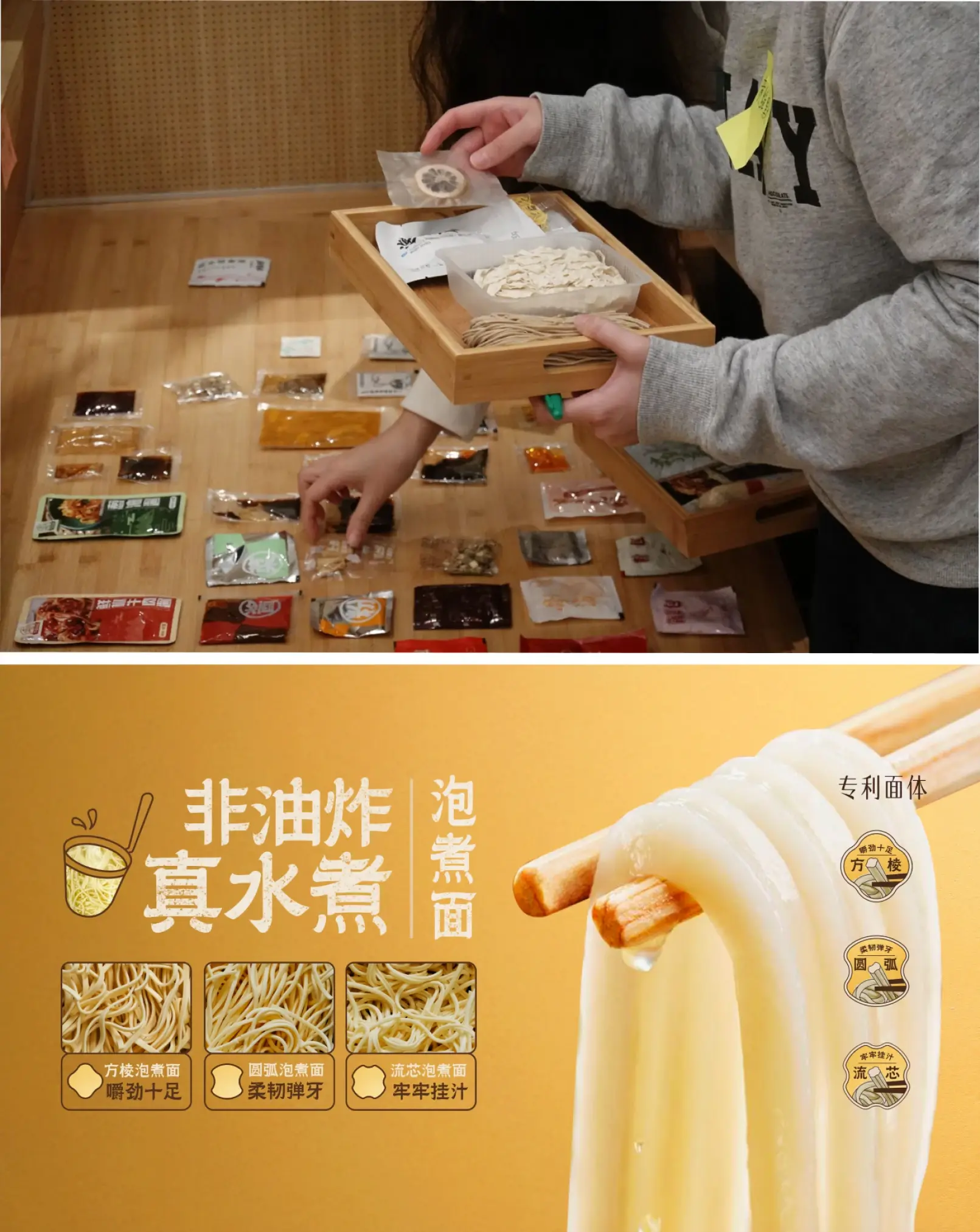
One track focused on prototyping the core product experience: noodles, broth, and toppings. IDEO and Master Kong’s R&D team began by studying the traditional craft of Chinese noodle-making, starting in Shanxi, a region renowned for its noodles. Through successive rounds of prototyping and consumer tasting, the team identified a critical insight: for “fresh-brewed noodles” to be convincing, the innovation had to be centered on the noodles themselves.
Texture alone was not enough. Consumers needed to see a meaningful difference before they tasted the product. IDEO translated this insight into a distinctive noodle profile: irregular, dimensional shapes designed to remain springy, hold sauce and broth, and mimic the resilience of freshly cooked noodles using only hot water. Because this visible shape represented the product’s core value proposition, it became a hero feature on the packaging. The graphic design made a bold visual statement about the noodle form, turning a technical R&D breakthrough into an immediately legible consumer promise: these are not ordinary instant noodles.
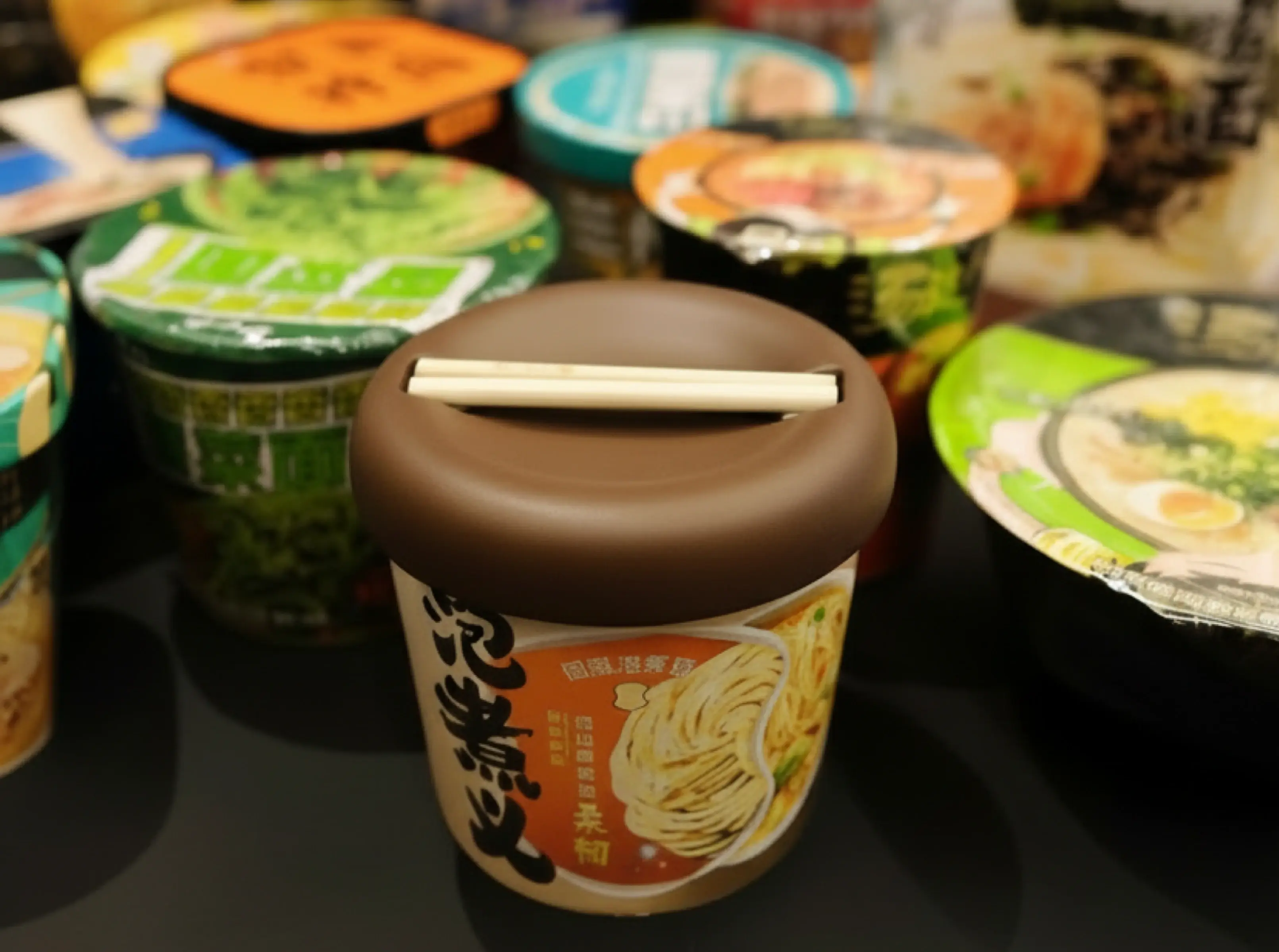
A parallel track explored the broader commercial experience: trend-forward and reimagined classic flavor profiles, light yet deeply satisfying broths, carefully selected toppings, and packaging that signals a new level of quality on store shelves. One key insight was that utensils carry meaning. Conventional instant noodles are often associated with disposable plastic forks, while higher-quality noodles are eaten with chopsticks. IDEO translated this cultural cue into the design of the bowl’s lid.
Instead of treating utensils as an afterthought, the team designed a solid, rounded, heat-retaining lid that embeds a pair of small wooden chopsticks. The gesture creates a small ritual of anticipation and reframes the product—not just a convenient instant meal, but a more considered noodle experience. Once opened, the product fulfills that promise with satisfyingly bouncy noodles, a rich liquid broth pouch that replaces the traditional oil-and-powder packet, and a vegetable packet reformulated with more premium whole ingredients.
The first batch of “Te Bie Te” Fresh-Brewed Noodles—Chinese wordplay that emphasizes “special”—launched in August 2025 with three trendy and tried-and-true flavors. Within just three days, sales exceeded 100,000 bowls. Within a week, “Te Bie Te” topped the instant noodle category sales ranking on Douyin, China’s domestic counterpart to TikTok. The outcome was bigger than a product launch—it served as proof that a mature, declining category could be fundamentally reinvented to meet consumers’ real needs. For Master Kong, the project became a North Star and a model for internal category innovation in beverages, ready-to-eat foods, and beyond.

Once a popular, affordable staple, the instant noodle category in China has been declining rapidly due to shifting demographics, rising food delivery options, and increasing customer demand for healthier, more nutritious meals.
According to the World Instant Noodles Association, between 2020 and 2023, China’s instant noodle consumption fell by 4 billion packs.
100,000+
“Te Bie Te” bowls sold in the first 3 days on the market
#1
on Douyin’s instant noodle category ranking within one week of launch
Making international education future-fit & affordable
Lexel brings world-class learning to Malaysia’s middle class.
Taylor’s legacy began in 1969 with the founding of Taylor’s College and soon expanded to include Taylor’s University, one of Southeast Asia’s top private universities, as well as many other institutions that serve 35,000 students per year. The family-owned group also operates Taylor’s International Schools, Garden International School, and Nexus International School for students ages 4 to 18. In Kuala Lumpur, Malaysia’s capital city, annual tuition at premium private schools like these ranges from about $10,000 to $25,000 USD. Taylor’s wanted to do something different: provide the same level of academic rigor and immersive learning experiences at one-third the cost.
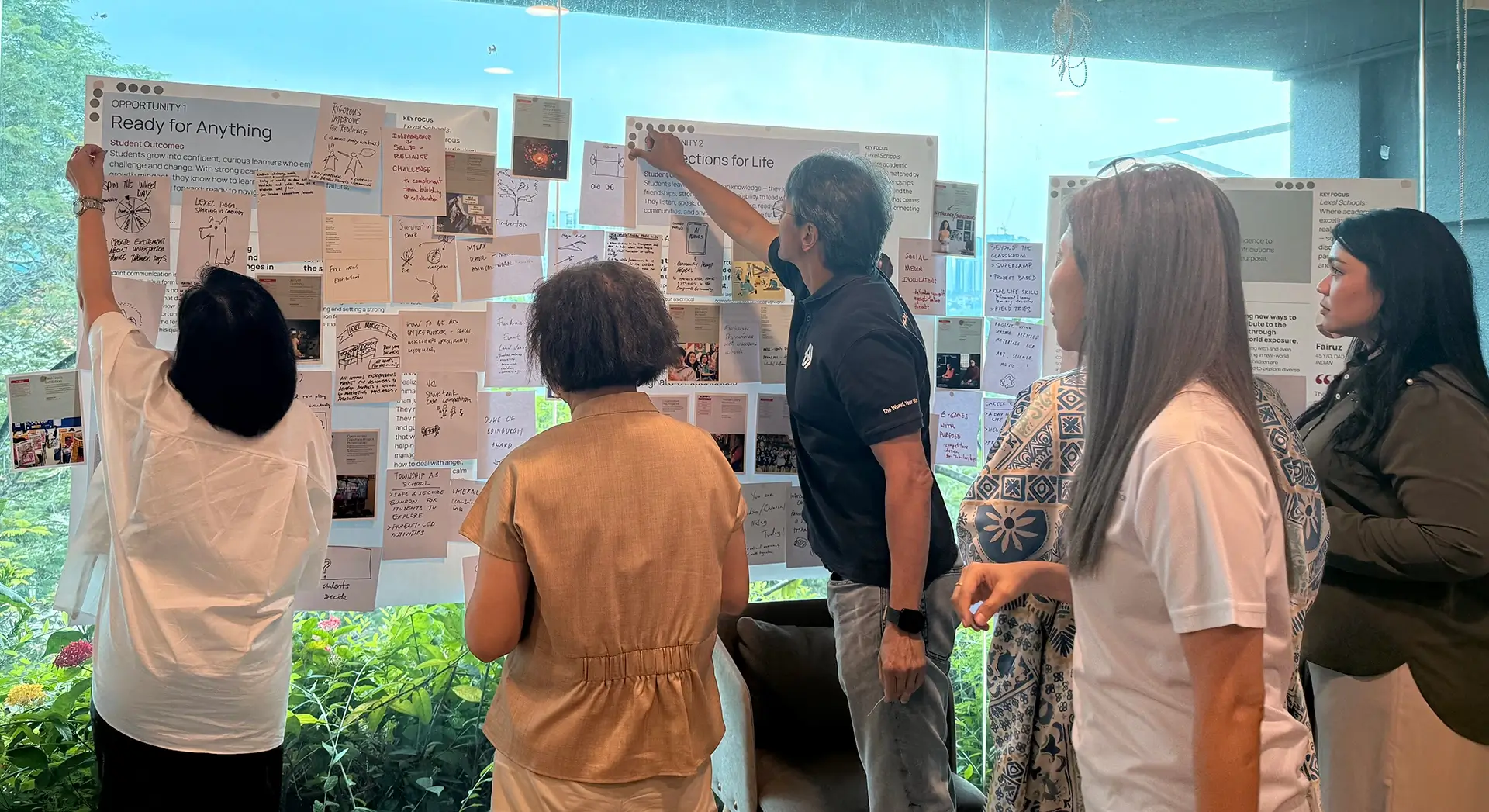
IDEO began by speaking with over three dozen students, parents, teachers, and experts across the capital to understand what was working, what wasn’t, and what was missing from such moderately priced international schools.
A few themes quickly emerged. Families, students, and teachers were worried about the stability of these new private schools, which tended to have higher-than-normal teacher turnover rates and were plagued by financial instability, negatively impacting talent attraction and retention, as well as student learning. Parents appreciated that the schools offered holistic learning experiences, such as field trips to rural areas, including jungles, but wished they were more consistently part of the curriculum. And now, the looming challenge of AI—how to use it, how to teach it, and how to teach with it—was in the background, a persistent cause for concern. The big unmet need? Reassurance that Taylor’s was thinking long-term and systematically about developing the skills, knowledge, and mindsets that would prepare students for an ever-changing world. Parents wanted a school that measured growth in academic, social, and character terms over generations, not just school semesters.
With these insights in hand, IDEO began developing a design Playbook for Taylor’s new brand—Lexel International Schools. A combination of “lexicon” and “excellence,” Lexel’s mission is “building what lasts, learning for life.”

The schools are centered around three key differentiators:
- Always Ahead: Lexel schools commit to staying current with the topics and subject matter they teach, as well as the tools they provide to students, parents, and teachers.s.
- Learning That Builds for Life: The schools ensure programmatic, systemic, and consistent learning experiences from Pre-K to Year 11. Interested students can even continue their post-secondary journey in partnership with Taylor’s University and other higher education institutions within the Taylor’s ecosystem.
- Educators for the Long Run: These schools commit to ongoing investments in professional growth opportunities for teachers and stable learning environments for students.
Four Lexel Literacies—AI, Digital, Financial, and Nutrition—integrated into the Cambridge Curriculum bring the school’s vision and mission to life.
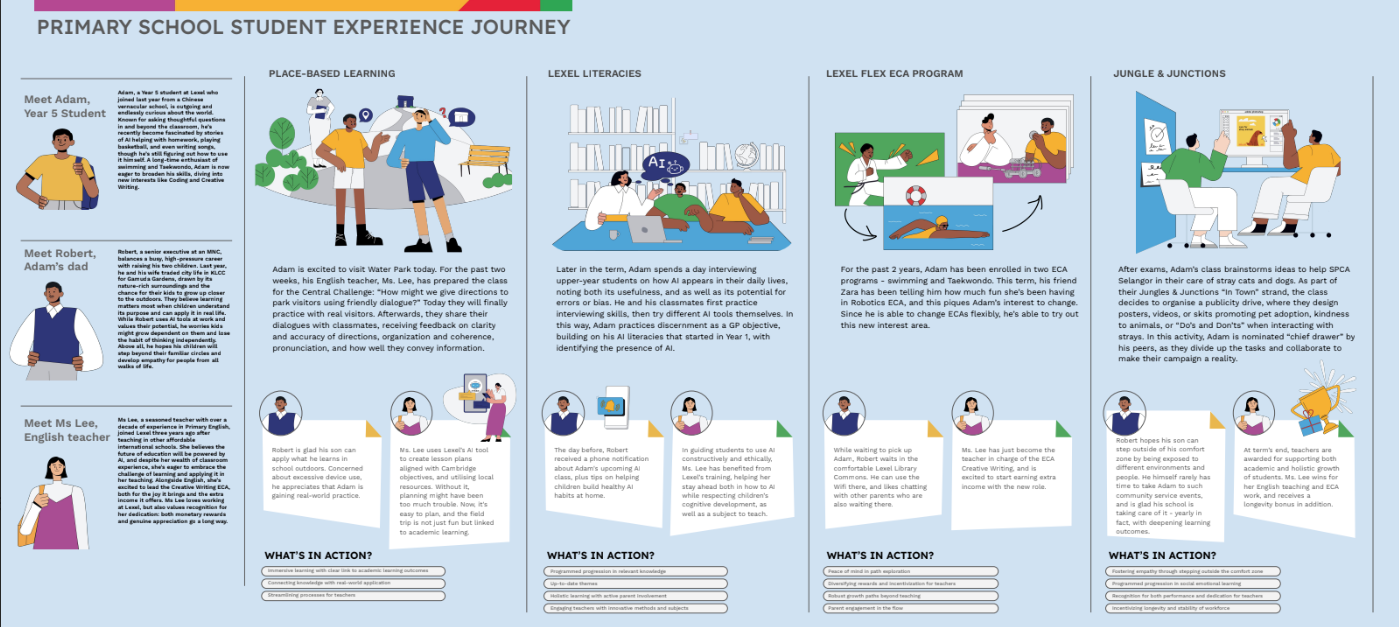
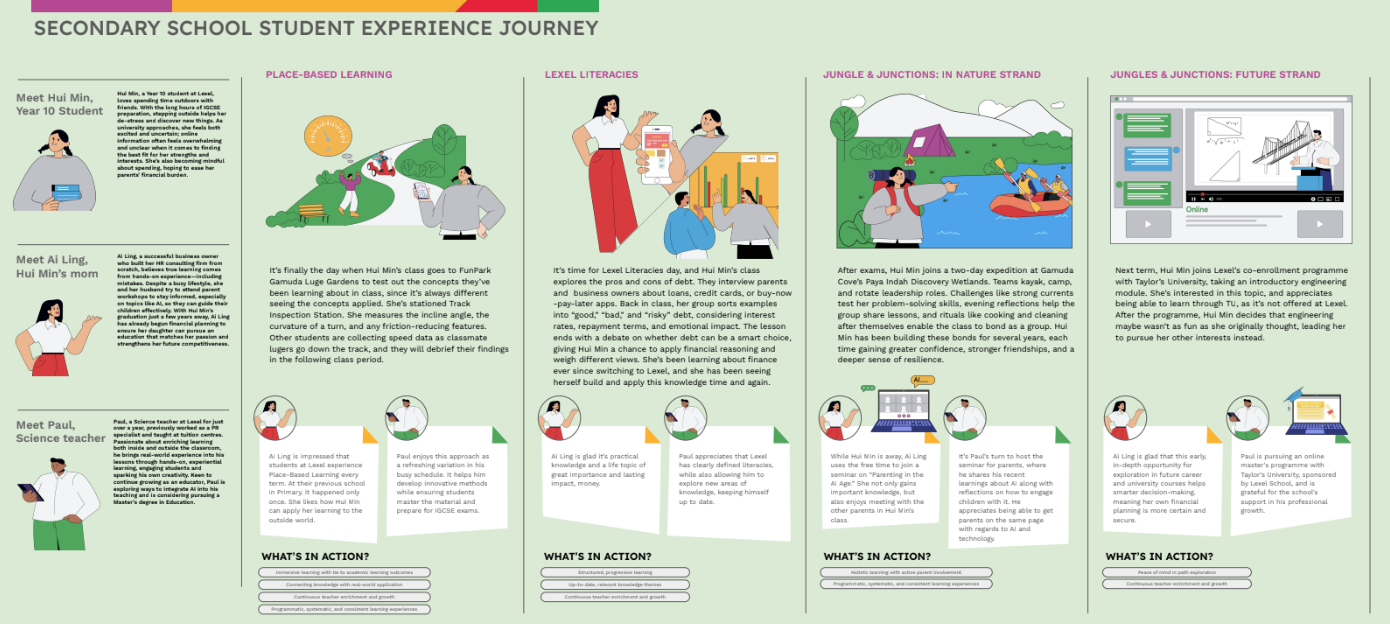
By systematically integrating AI literacy into its spiral education framework, in particular, an approach where major topics are revisited multiple times through a curriculum to build fluency over time, Lexel ensures parents that the school is thinking a decade ahead from Day One, setting the school apart. In addition to enhancing AI fluency, Lexel offers unique end-of-term experiences called Jungles & Junctions.
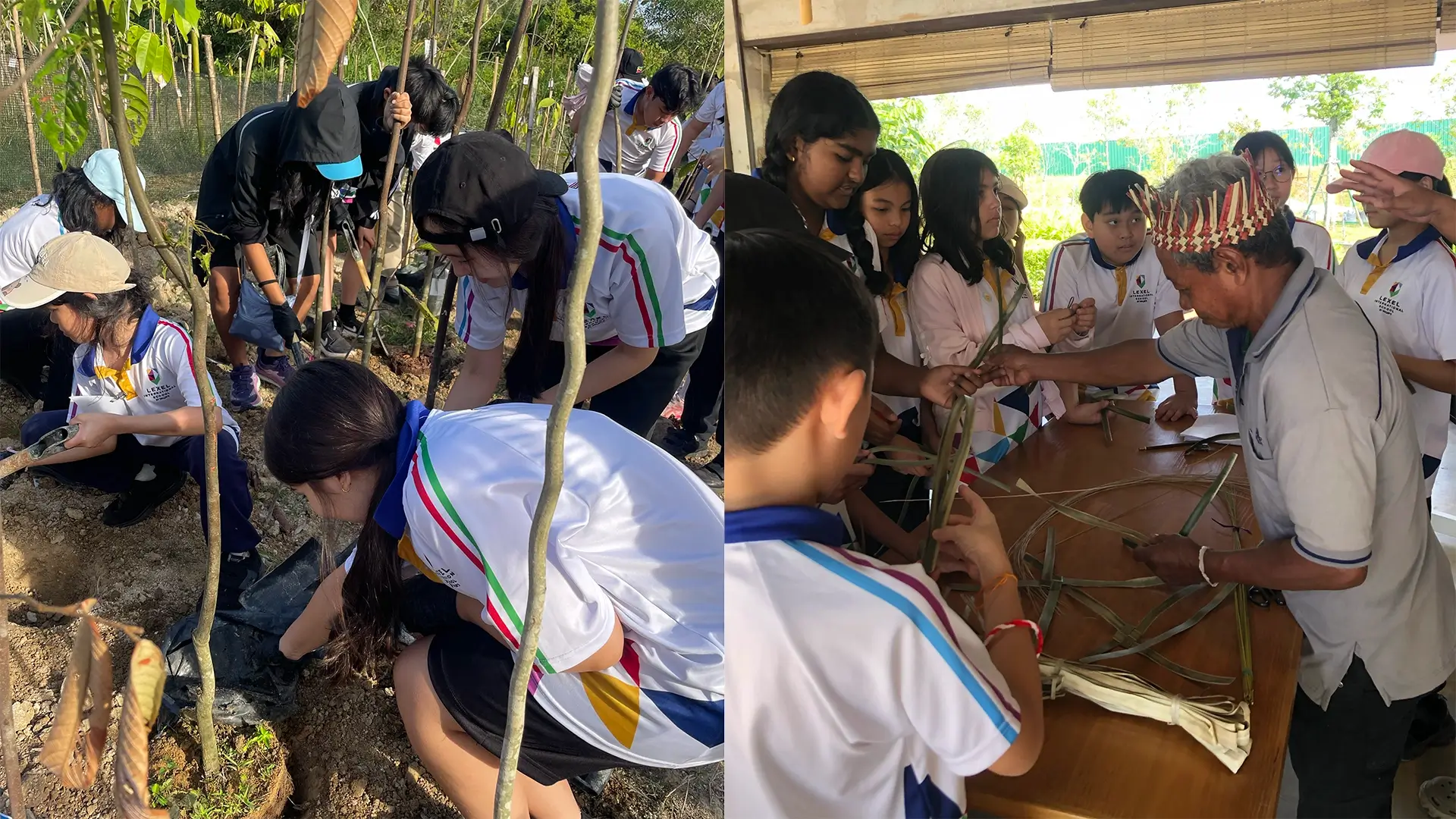
Combining three important strands of learning—community engagement, nature-based personal and interpersonal development, and career and university exploration—Jungles & Junctions leverages Taylor’s extended educational network and Lexel’s strategic founding campus within the Gamuda Gardens development in Selangor. Surrounded by tropical rainforests, the township’s residential neighborhoods, theme park, and various sports facilities, including an Olympic-length swimming pool, are transformed into an extended Lexel campus, with a GenAI-driven planner to help teachers streamline the organization of class outings. “The Township is Your Campus” became the tagline for this approach.
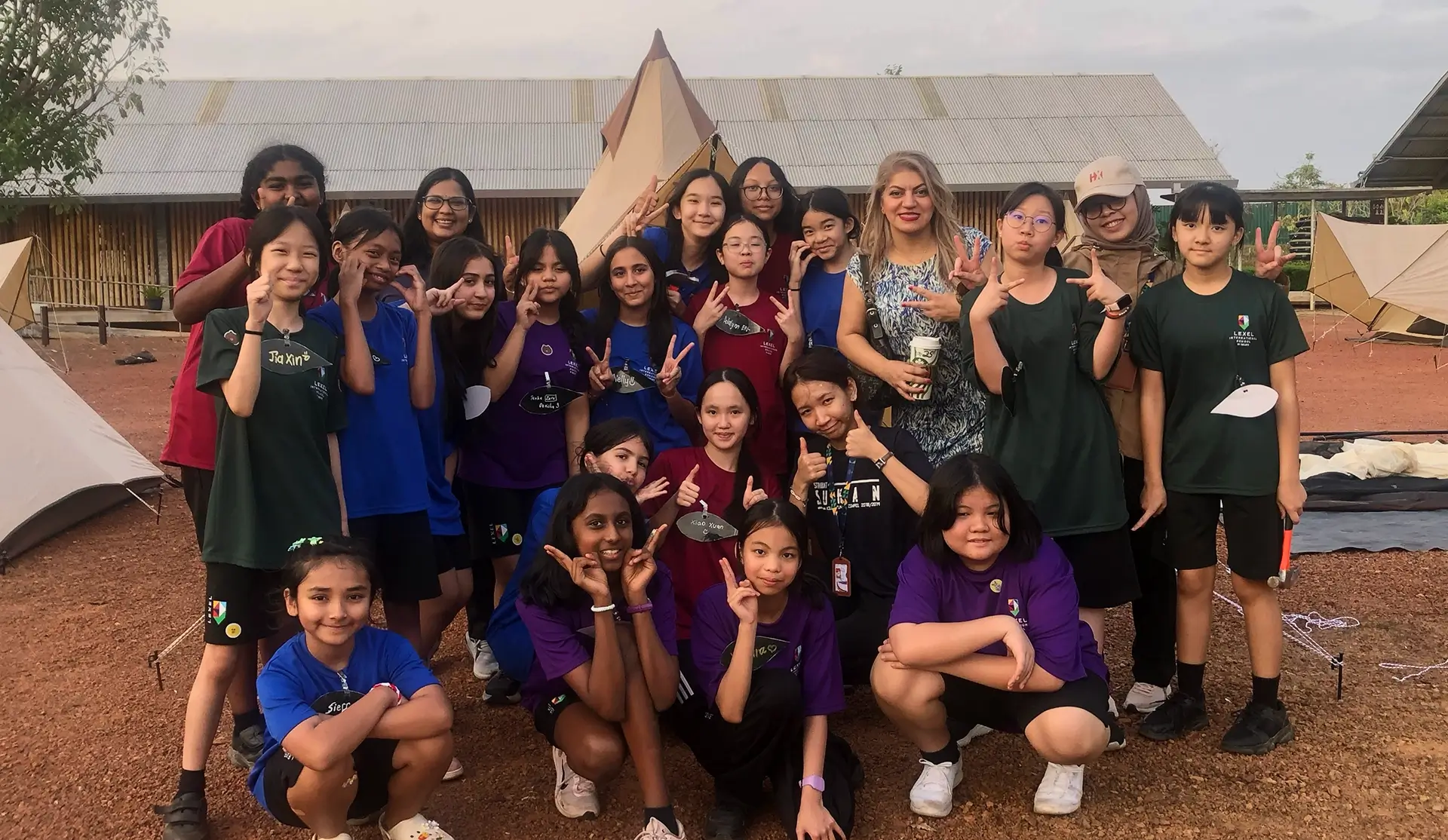
In September 2025, just months after IDEO’s collaboration ended, Taylor’s began classes at its first Lexel International School. By mid-year, the new school had achieved 115% of its year-one student enrollment target, with significant inbound demand for Year 2 already demonstrating the school’s market resonance.
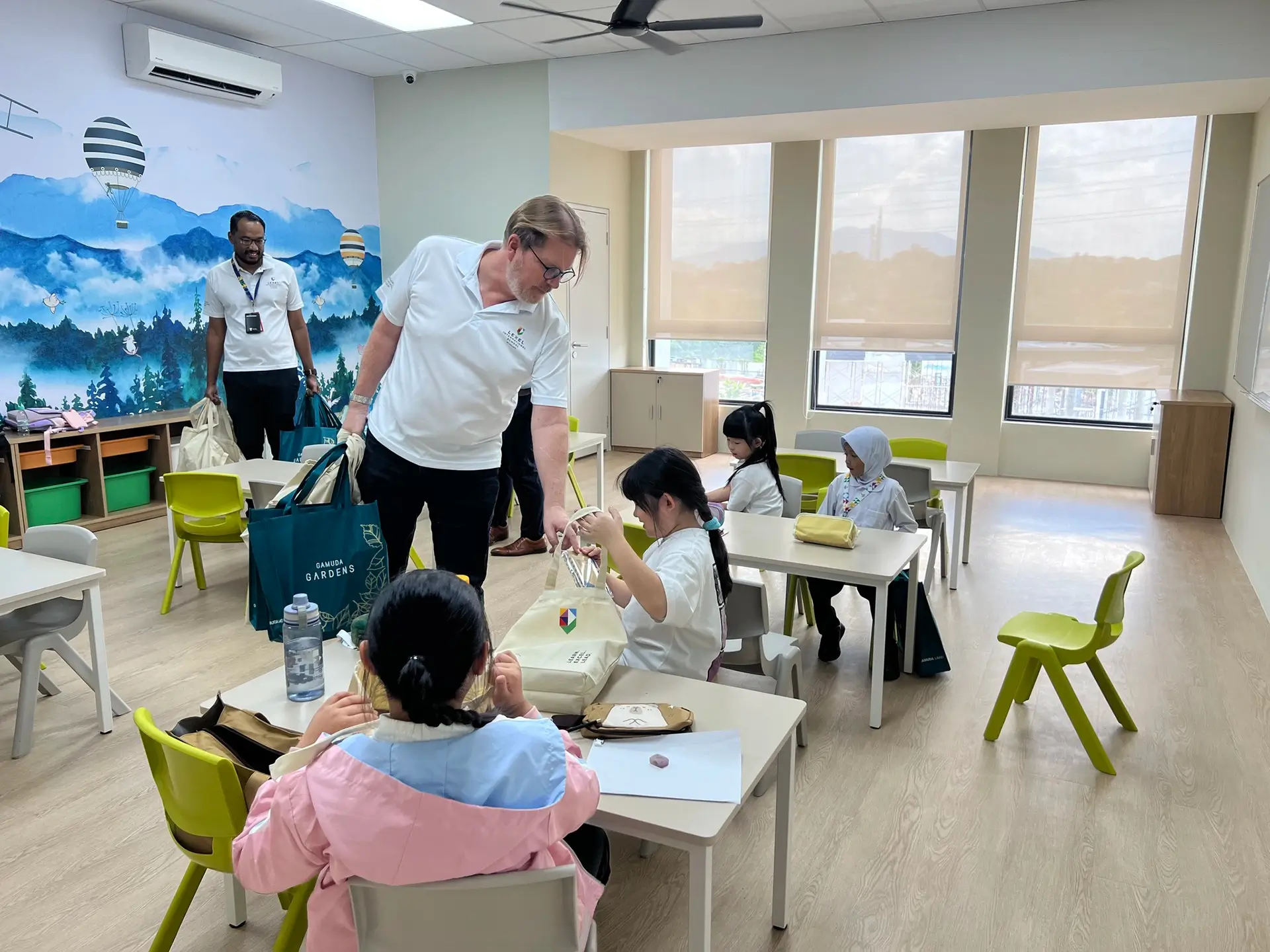
The modern campus features spacious classrooms, science and technology labs, a library, a multipurpose hall, and a canteen. Annual tuition ranges from about $2,800 USD for pre-K students to about $6,100 USD for secondary students.

Most importantly, by combining Taylor’s deep academic expertise, Gamuda Land’s development prowess, and IDEO’s innovative design Playbook, Lexel brings quality, affordable international education closer to home for Malaysian families. According to one parent, “My daughter looks forward to going to school every day … and has a lot of opportunities to express herself. On a scale of 1 to 10, I give [Lexel] an 11.” Based on the IDEO Playbook, a second flagship campus in the Southern Klang Valley, which is scheduled to open in September 2026, has already exceeded its year-one target enrollment expectations, with plans to continue extending the Lexel network to other parts of Malaysia and the wider Southeast Asian region in the near future.
Malaysia’s private international school sector has grown significantly as parents seek quality English-language education. However, high tuition fees and limited access to reputable schools are continual challenges for those in the emerging middle class.
115%
of Lexel’s student enrollment target reached during the launch year of its first campus
Year 1 enrollment target exceeded
at Lexel's second campus several months ahead of classes commencing
Delivering an unbiased news experience
Straight Arrow News transforms fact-based news consumption.
The American news industry has long been a competitive and saturated market. This has only intensified with the emergence of social media outlets and AI-generated news. Even so, SAN’s rigorously unbiased, fact-based reporting style and rich video storytelling had enabled the ambitious startup to rise above the media fray in just three short years.
With a strong foundation to build on, IDEO sought to further differentiate SAN’s cutting-edge news product and build deeper engagement with a wider audience through a new user experience.
.webp)
Collaborating closely, IDEO and SAN began by delving deeply into media consumption habits. They met with early SAN superfans, news consumers who spent hours a day absorbing content from traditional outlets like Fox and USA Today, and those who looked to their Ring doorbell app or Reddit for news. The takeaways? People were tired of clickbait and clunky interfaces. They sought clear, factual news that was easily accessible, with additional context to help them interpret events and understand their significance. They craved more than one perspective on important topics, so stories felt balanced rather than polarized. They also valued having control over how they consumed news, so making it easy to switch between text, video, and audio formats was crucial.
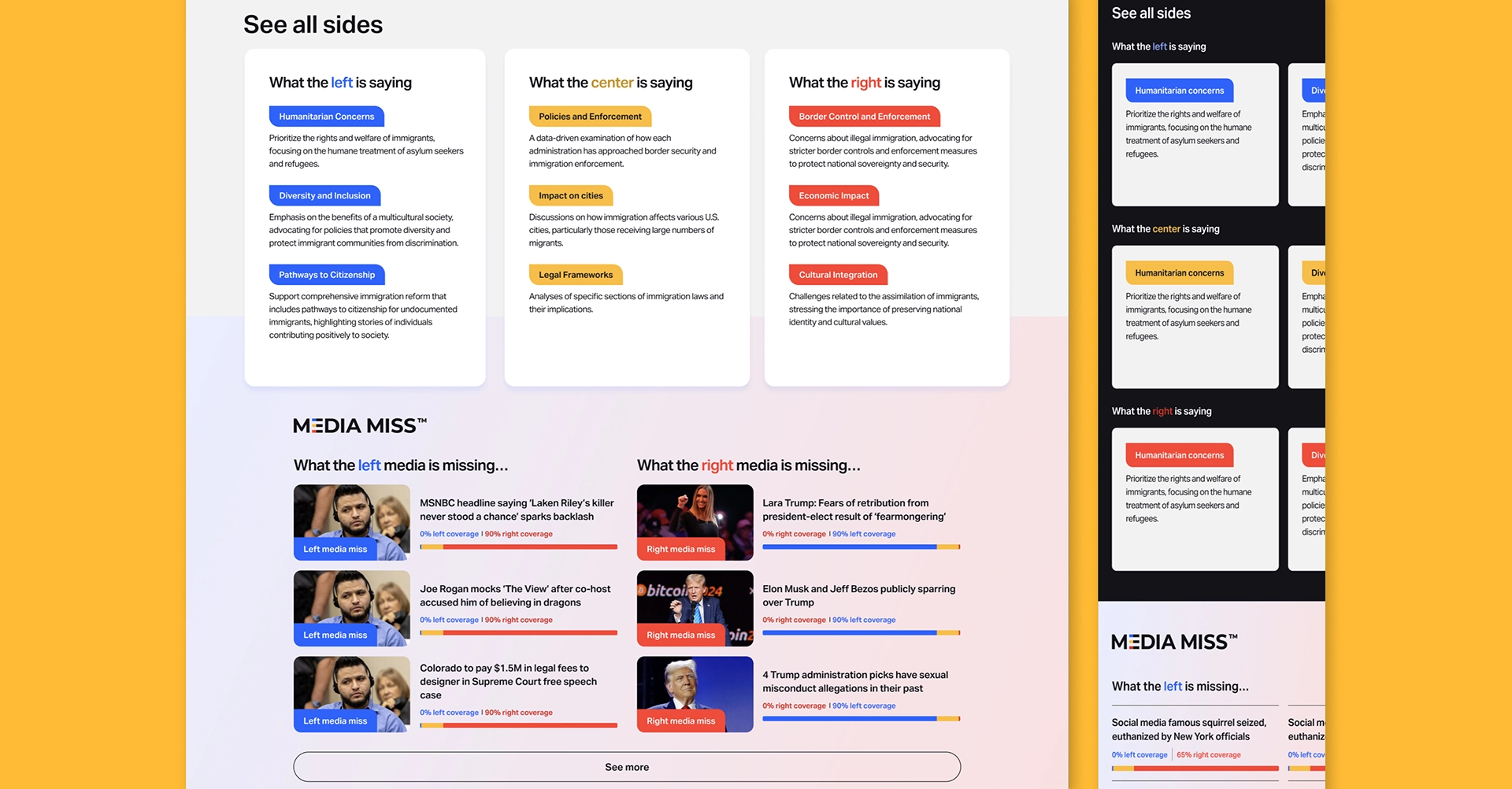
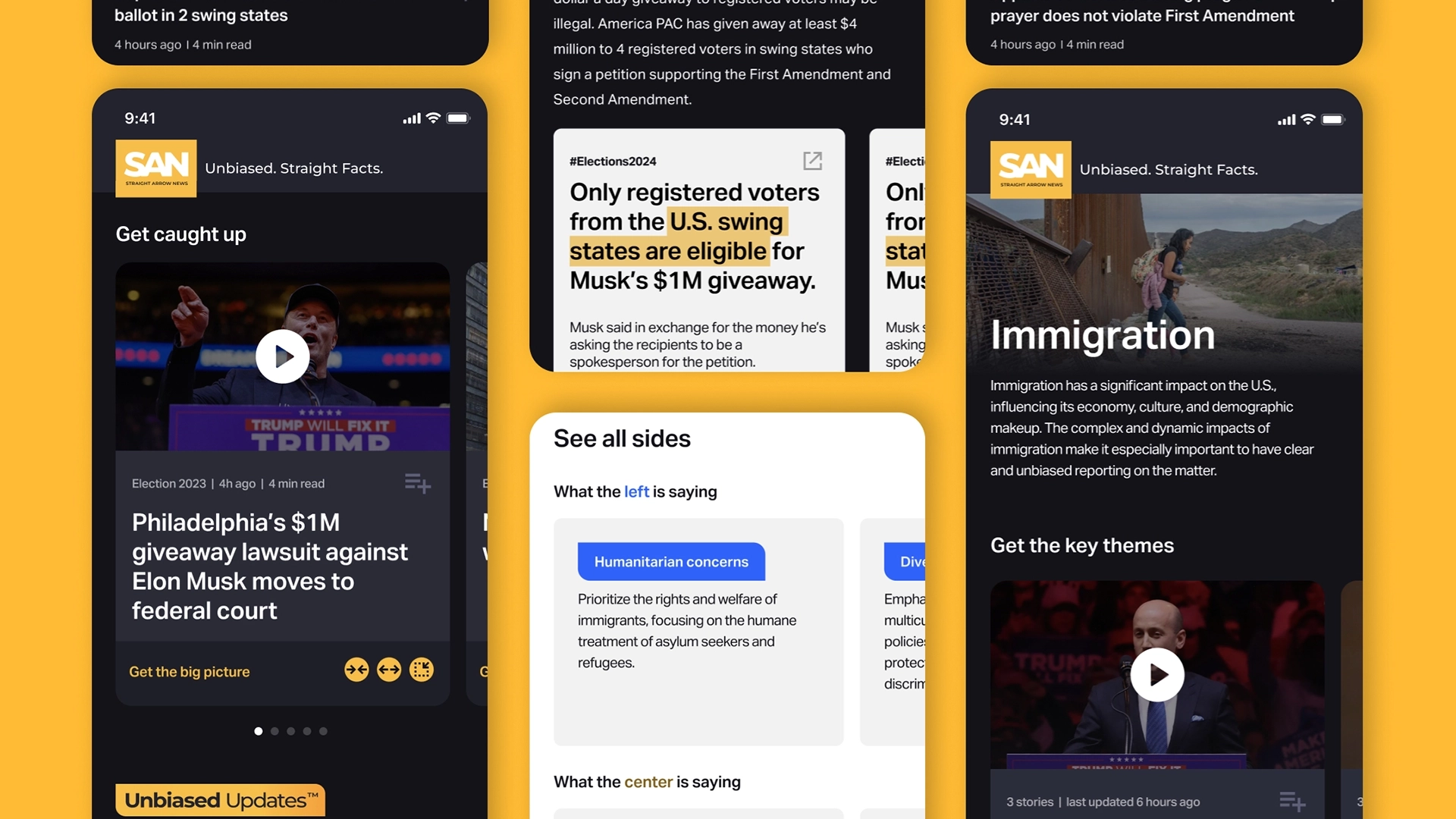
Together, IDEO and SAN created features across SAN’s website and app that put facts, trust, and transparency at the core of the product experience. Fact Cards distill key data points into clear, shareable units, while the Sources feature allows readers to trace information directly back to its original source. To make complex stories easier to grasp, Big Picture insights drill down into why events matter, surfacing underlying themes, historical parallels, differences in reporting, and common ground. The Why This Story Matters section provides readers with clear framing and sets the story within a broader context, while the Timeline illustrates how events unfold over days, months, or even years. An antidote to news polarization, See All Sides presents left, right, and center narratives for key topics side-by-side, and Media Landscape visualizations reveal how coverage varies across outlets. Finally, to ensure SAN fits seamlessly into readers’ daily lives, the redesigned Today Page is organized into three highly scannable sections: Latest News, Top Stories, and SAN Originals. The combined features create a balanced, clear, and non-polarizing news experience, making it easy for readers to delve deeper into the sources of their news.
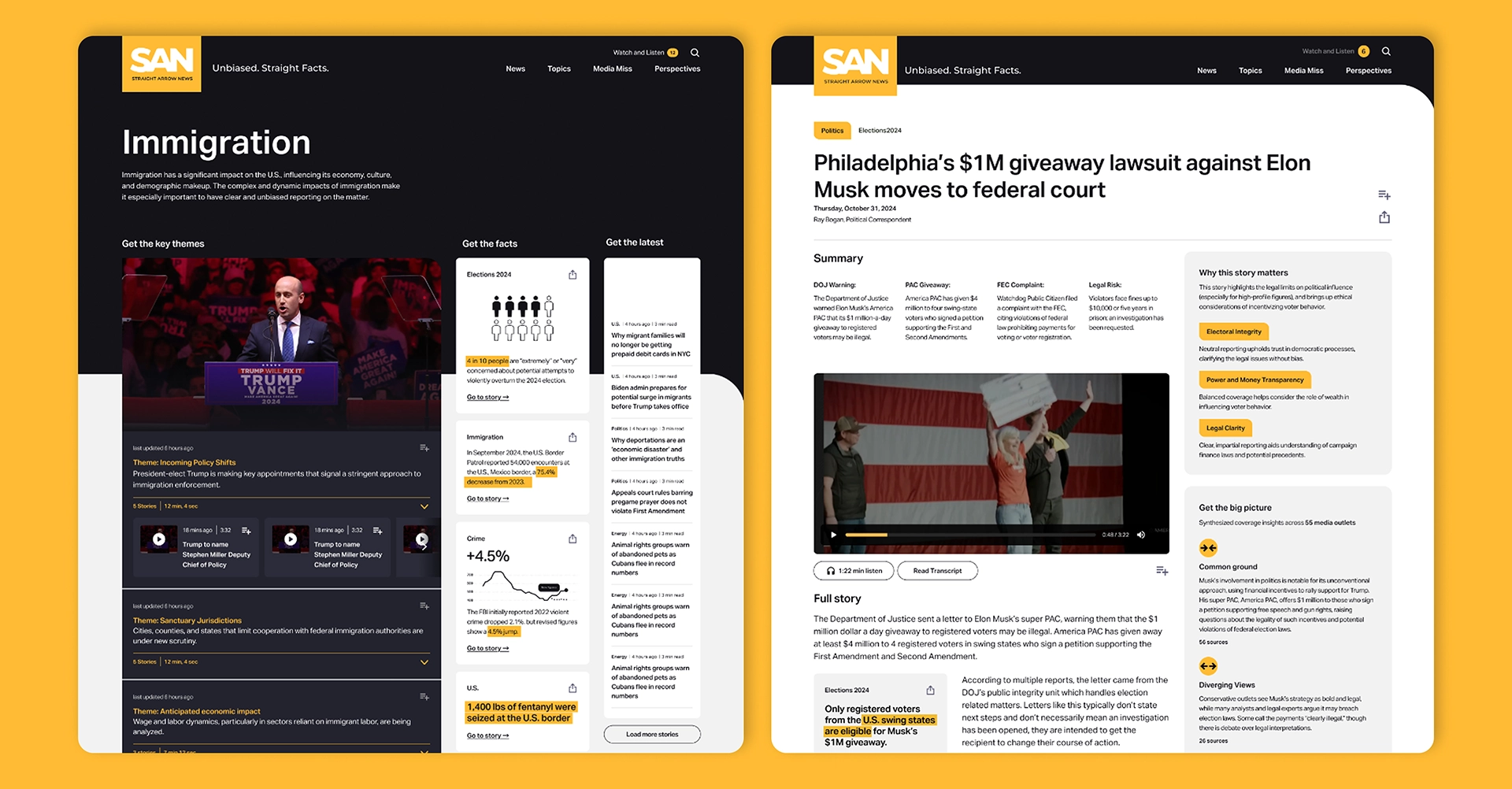
SAN now delivers a news experience as modern, dynamic, and trustworthy as its journalism. A month after its debut, the SAN app’s page views increased 1,170 percent year over year compared to June 2024, while active users rose 700 percent. Readers also give the updated mobile experience a 4.8 rating on the Apple App Store. “Our team is delivering reporting that’s both deeply factual and accessible,” said Derek Mead, SAN’s Chief Content Officer. “This redesign is pivotal to the direction journalism needs to take and the leadership role Straight Arrow News is taking on as we help guide the news industry into a brighter future.”
SAN built a loyal readership and gained recognition for its unbiased reporting. To expand and stand out from legacy media, SAN wanted a redesigned user experience that reflected its commitment to fact-based journalism.
1,170%
increase in app page views YoY
700%
increase in active users
4.8 rating
on the Apple App Store
Preventing newborn RSV
A toolkit to increase global adoption of Beyfortus, the world’s first RSV immunization for babies.
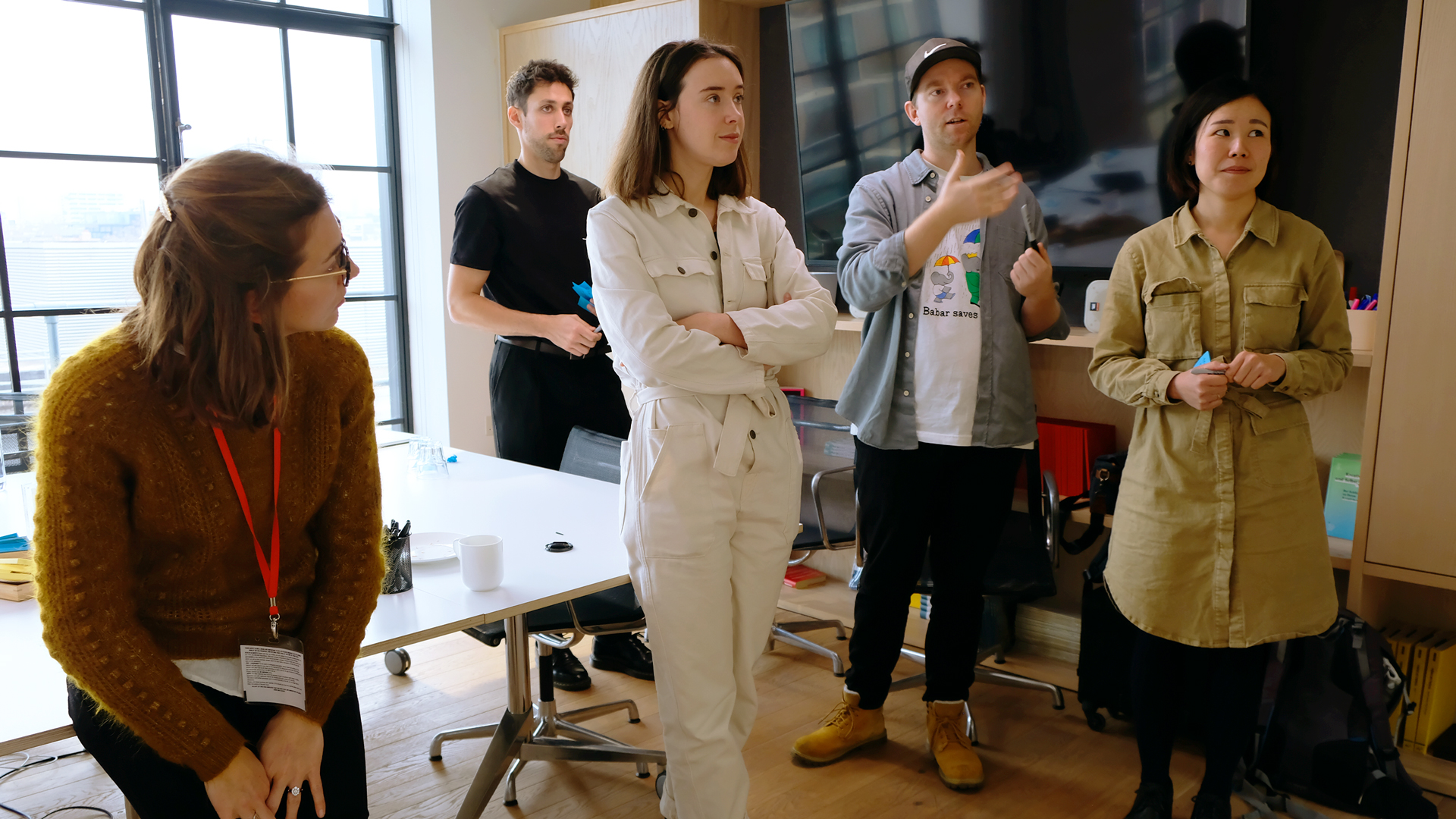
Sanofi was the first company to supply the polio vaccine worldwide. Because of the global fight against the disease, endemic wild poliovirus transmission is now limited to just two countries. However, attitudes toward vaccines and immunizations have shifted significantly. To ensure a smooth launch of Beyfortus in a time of increased vaccine hesitancy, Sanofi asked IDEO to conduct research across four important and very different healthcare markets: Germany, Spain, China, and the US.
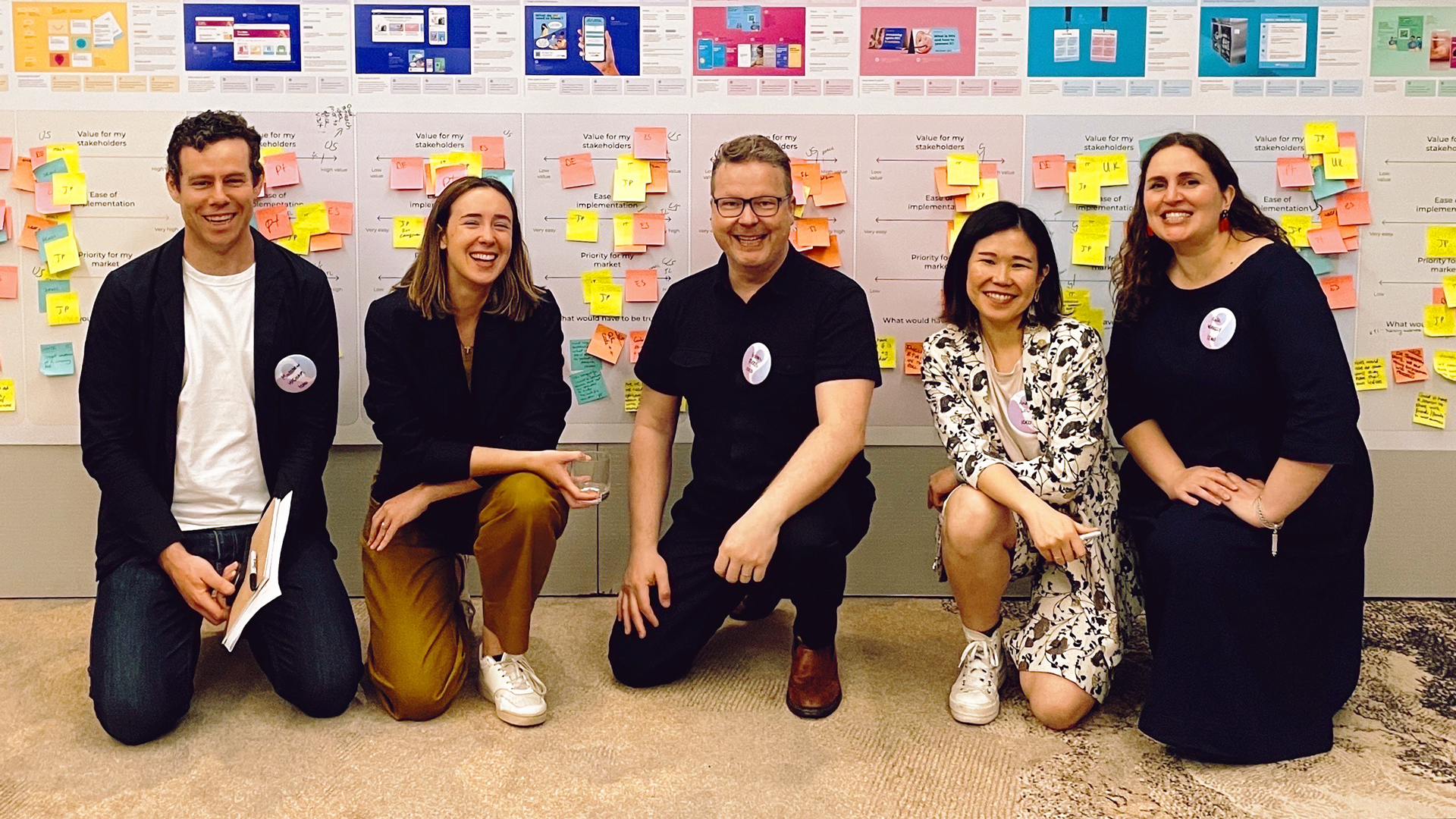
IDEO worked with parents, caregivers, healthcare professionals, and healthcare administrators to identify potential barriers to vaccine adoption and understand the emotional needs of all stakeholders involved in the immunization process. Navigating cultural differences and diverse healthcare environments, the team uncovered a set of insights.
For healthcare professionals, the team discovered there was no one-size-fits-all approach to immunization training across Sanofi’s 20-plus global markets. While consistency of key information was important, trainings needed to be flexible and customizable. This way, regardless of whether the vaccine was administered by midwives, OB-GYNs, nurses, or doctors, they could confidently discuss the pros and cons across cultural contexts and administer the drug correctly.
For new parents, receiving information about a new immunization immediately after giving birth could be too stressful. But simply leaving pamphlets about Beyfortus in waiting rooms didn't address their real concerns, either. Caregivers needed to engage in conversations earlier in their pregnancies and continue them after leaving the hospital, when they might have additional questions.

IDEO translated these research insights into a highly accessible global communication toolkit that uses simple, straightforward language, metaphors, and illustrations to support informed conversations between healthcare providers and parents before, during, and after a child is born. IDEO then conducted a series of market-fit co-design workshops with representatives of Sanofi’s global immunization business to iterate on the print and digital tools, make them more resonant with regional customers, and ensure compliance with local regulations. IDEO handed the toolkits over for development to support the launch of Beyfortus in January 2024, just in time for RSV season.
Beyfortus saw enormous demand in its first year, demonstrating strong efficacy in real-world applications and achieving blockbuster status as a $1.8 billion therapy. Sanofi’s global launch team credits the patient-centric toolkit with increased requests for communication materials from its regional markets as well as from healthcare and government organizations that have typically been hard to reach, key goals of its global-local launch strategy.
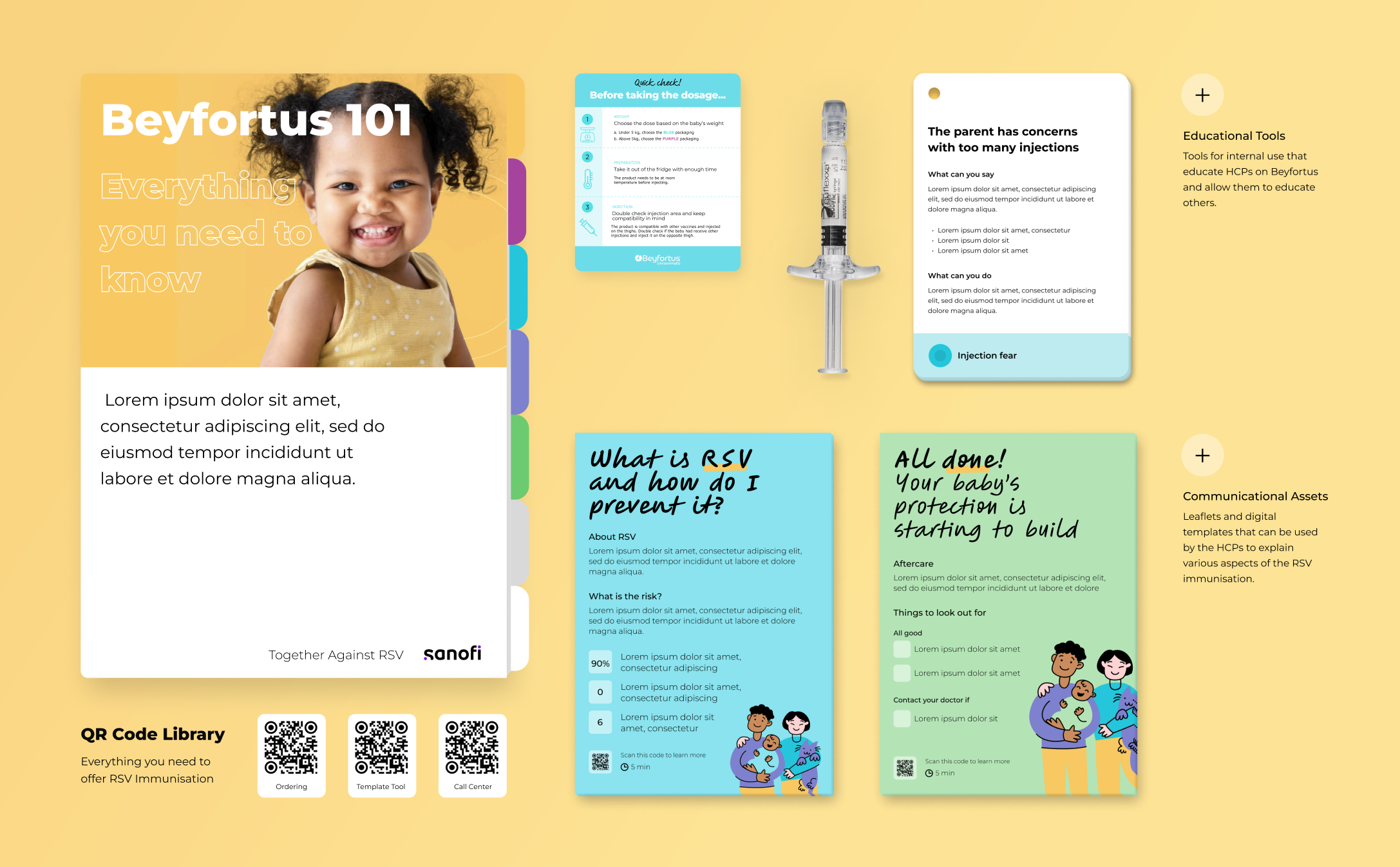
Since its development, Beyfortus has received swift regulatory approval from the US, EU, China, and Japan, with patient demand causing Sanofi to triple its worldwide manufacturing capacity to meet the needs of the 2024-25 RSV season. Ahead of the larger global distribution of Beyfortus, IDEO and Sanofi partnered with equity expert consultants, Fearless Futures, to conduct a DEI review and worked with doctors and nurses who participated in the initial drug launch to make the materials even more accessible, relevant, and successful for 2025 and beyond. To date, six million babies—and counting—have been immunized with Beyfortus.
Worldwide, childhood vaccination hesitancy among parents fluctuates between 25-45%, according to the World Health Organization (WHO), a trend it considers one of the biggest global threats to public health.
85.9%
reduction in hospitalizations for infants who received Beyfortus compared to those who did not (2023–24 RSV season)
$1.8B
in first-year sales of Beyfortus

What drinking coffee can teach us about designing the future of space travel
Even those considered able-bodied on Earth should expect to experience their abilities differently during space travel.
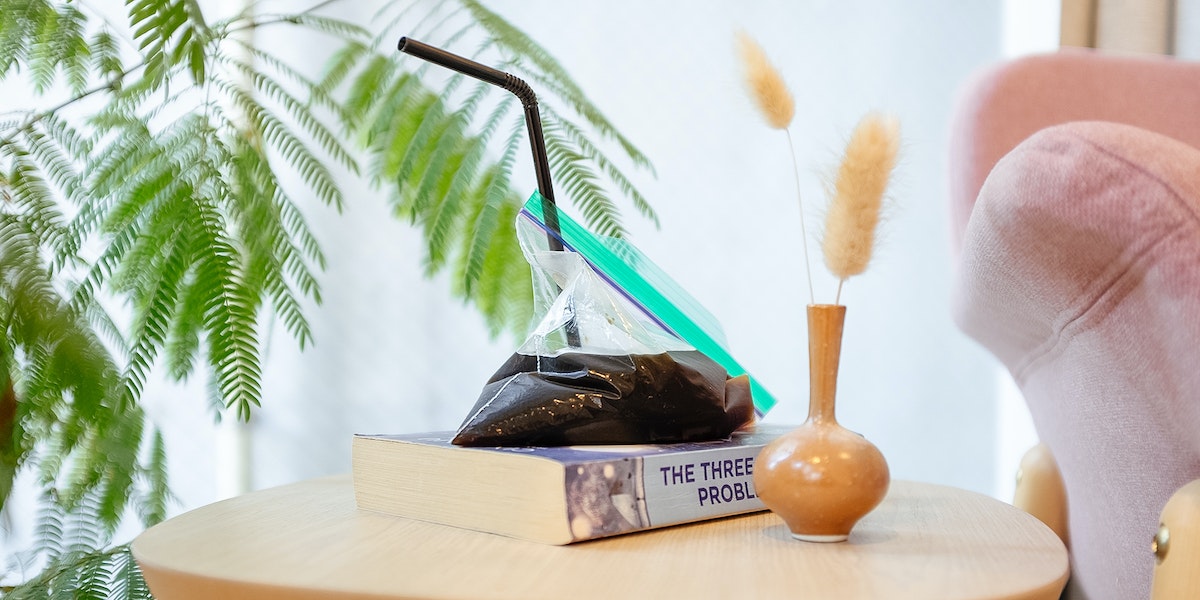
This is what it’s like to drink liquids in space. Ugh, right?
In space, a pouched drink is a simple and functional solution that prevents liquid from spilling and floating around the station. However, drinking coffee isn’t just a means to hydrate—it’s an experience. And for some astronauts, that experience has been lacking.
In 2008, Don Pettit, a NASA astronaut on his second mission aboard the International Space Station (ISS), casually prototyped a cup by folding an overhead transparency film he found aboard. Taking advantage of the behavior of liquid in zero gravity, he calculated the folding angle so that the coffee climbed up the transparency to the edge of the cup. The result was a teardrop-shaped Zero Gravity Cup that provided a familiar drinking experience, this time with a magnificent view of Earth.
Until now, space agencies have worked to maximize safety and minimize the cost of crewed missions. But as private companies begin to send civilians to space, they’ll need to provide a better experience for their customers and double down on adding curiosity and delight to our explorations into the unknown.
Designing a space travel experience
Imagine that you’ve just won a ticket for a three-day trip to the ISS. Once aboard, you feel thrilled to float around in zero gravity and gasp at the majestic view of Earth beneath you. But after a few days of bumping into walls and your fellow travellers, eating packaged meals, and using tube toilets, your precious out-of-this-world vacation starts to feel like an ordeal.
Inspired by Don’s playful curiosity, a team of colleagues at IDEO decided to tackle the zero gravity environment through some out-of-this-world design exercises to explore the untapped potential of the burgeoning space travel market. Here are some of the guiding principles we’ve come up with to create unforgettable experiences that elevate the everyday in space.
1. Lead the way through play

Zero gravity—technically microgravity— is a stressful and even harmful environment for earthlings. Simple movements require you to use your body in a completely different way. To enable a truly delightful visitor experience, visitors need to acclimate and relearn how to use their bodies. By helping people navigate this new environment through the lens of play, they can get creative about hacking their bodies to befriend zero gravity.
As children, we all learned through play. Creatively confident, we embodied a curious mindset that empowered us to explore and push the edges of what we were capable of. Remember when we played lava in our living rooms and decided that the floor would burn our feet? Imagine what the emotional foundation for space travel would look like if we returned to these playful mindsets.
2. Elevate the whole journey

The climactic moment of space travel might well be the very first moment you reach orbit. But that also implies that the excitement can diminish over the course of your stay.
As we grow older, we learn to optimize the path between places and forget to enjoy the journey itself. However, many other unforgettable moments await you on your journey around Earth. Moments such as watching the sunrise every 90 minutes, soaring over different continents at an incredible speed, or witnessing the Aurora Borealis from above. Let’s take a nod from game design and storytelling crafts, which skillfully utilize pacing to create a sense of adventure and build narratives that stick with visitors. Or from experience design, by proactively asking how visitors might be emotionally transformed by their journey. There are opportunities to build continuous excitement over the course of the journey, gracefully transitioning from each experience into the next, from launch to landing.
3. Default to designing inclusive experiences

The world’s first all-commercial astronaut mission to Earth’s orbit aboard SpaceX’s Crew Dragon includes passenger Hayley Arceneaux, a childhood cancer survivor with a prosthesis in her leg. While traditional astronaut exams preclude her, private spaceflight allows more flexible requirements. Soon, people with different physical and mental abilities will visit space, and some conditions might even be advantageous, such as deafness, which typically makes people immune to motion sickness.
Even those considered able-bodied on Earth should expect to experience their abilities differently during space travel. We are not made for zero gravity environments. As Miriam Kramer aptly put it in her article for Axios, “Designing spacecraft for people with disabilities would make life easier for all astronauts, even those considered able-bodied.” Through designing from the lens of human experience, we have a chance to reset expectations and intentionally create moments where more of us feel welcome into the experience.
Our increasing ability to travel in outer space is already changing people’s mindsets around stewardship of the Earth, and we need to design travel experiences to align with and spotlight this paradigm shift. While initial access to space may be limited to wealthy people, designing an enjoyable and impactful experience ensures long-term prosperity of the space tourism industry, and paves the way for more of us to bring world-changing learnings back to Earth.
In space, our earthly common sense no longer holds true. As the music band OK GO elegantly put it, “Gravity is just a habit.” Up there, we must fundamentally change our approach to design. Up there, the lack of gravity exposes the true human value of an experience and every experience is now ours to reimagine.
Before you start reading, make yourself a cup of coffee. Got it? Great. Now dump it in a plastic bag, and try to drink it with a straw.

Business needs better listeners
Inspire your team with an immersive experience about active listening.
But Damian Thompson, then a cashier, approached the man without thinking twice. Thirty years ago, Thompson was the first Black teller at the bank where he worked, and sensed that certain customers did not want to be served by him. That experience taught him the value of ensuring that everyone was included and given the same service.
Over time, by listening to that customer’s needs and gaining trust, Thompson managed to secure a major investment for the bank. This habit is something that he carries with him today as the Group Managing Director of Retail at UK-based Aldermore. He is always looking for ways to improve the bank's service.
Thompson’s practice of listening is an art, and one of the most undervalued skills in business. Soft skills may seem inessential when compared to tangible ones, like product development. But when organizations actively listen, they gain insights about customer needs that can make the difference between a resilient, future-fit organization and one that withers on the vine.
To heroize employees who listened well and went the extra mile with customers, Thompson launched an “Experts with Empathy” campaign at Aldermore, asking teammates to nominate each other to win prizes. He regularly picks up the phone to heap praise on high performing representatives. The bank has become known for lending to those with less than perfect credit, earning it high NPS scores and loyal customers. Understanding how stressful owing money can be and listening with compassion, Thompson argued, must always come before slapping someone with an overdue penalty.
Carlos Rodridguez Pastor, President of the Peruvian conglomerate Intercorp, admires Thompson’s style of leadership. Pastor has long encouraged all ranks of his organization, from top executives to front-line workers, to stay close to customers. He, too, models active listening tactics, like welcoming and serving customers, and walking the aisles of stores. So, when the time came to send Intercorp’s top brass on an annual inspiration trip—which, until COVID, took executives to faraway locales—Intercorp asked IDEO to create a remote experience on the theme of Escucha Activa, or Active Listening.
In May, 2021, 30 CEOs, 12 board members, and 130 other leaders signed onto Zoom for a four-day global “tour” to learn from some of the best listeners in business. Damian Thompson was our first speaker.
As the future of work becomes increasingly remote, putting employees at a greater distance from customers, active listening will become increasingly important. Here’s how to design your own remote learning experience on active listening:
1. Never waste a crisis
While COVID prevented us from climbing aboard tour buses and trying new foods in distant locations , the remote learning experience removed other constraints, allowing us to bring Active Listening luminaries from around the world to Peru. We tapped our networks to bring in guests from Nigeria, China, the UK, Brazil, and Denmark, as well as the US. C-suite speakers joined from Pillpack (Amazon), Lloyds and Aldermore banks, African fintech startup Piggyvest, and established retailers like IKEA and LEGO. Our IDEO team was distributed as well: based in New York, San Francisco, Chicago, London, and Munich. It was simultaneously the most ambitious and least expensive business trip the two companies had ever put together in their 10 years of collaboration.

2. Over-prepare
To make the experience of learning how to listen better feel like traveling to visit distant oracles, we prepared each leader for the main event with several pre-session interviews to fine-tune the stories and wisdom they imparted. The prep work paid off: zeroing in on a clear message for each session helped participants follow each step of the learning journey.
3. Design for immersion
No matter how good a listener you are, a two-and-a-half hour Zoom call can feel like an eternity. Knowing that, we tried to strike a balance between learning and entertainment—quick exercises that focused on employee listening and longer, immersive talks. We used travel metaphors to keep the pep in our step and kept the experience to two consecutive weeks, on Thursday and Friday mornings (Peru time). The time limit allowed executives to put aside their phones and truly take in the content, knowing they’d have the balance of the day to get work done.
4. LEGO the learning
Our sessions were set up to build on each other like LEGO sets. Each day kicked off with leaders sharing stories. They explained what it takes to “Commit to Active Listening,” like asking high performing employees about their listening methods and sharing with others at the company. Day 2 was about “Scaling Active Listening,” from individual initiatives to company-wide movements, like a weekly survey that gathers feedback about how close you feel to customers at any given time. Day 3 was spent on “Expanding your Toolkit for Active Listening,” by adding new tactics to the mix, like listening to customers on social media and responding quickly. The 4th day concluded with a lessons on how to “Use Listening to Drive Decisions,” or to act on what you hear in a continuous cycle of improving business offers, like allowing customers more flexible payment plans during financial distress.
5. Create a meal out of bite-size chunks
Sending participants into breakout rooms of 5-10 people allowed us to design activities that brought home the day’s lessons. One favorite was to write and collage a “Postcard From the Future” about a new product or service your business might launch based on an insight gleaned from active listening.
6. Make the stage bigger
Here’s one thing you could never do in person: travel from China to Nigeria to Peru within minutes. It was morning in Lima, evening in Lagos, and 11 p.m. in Shanghai, but we were all listening and learning from each other as if we were sitting side by side.
When we stood up this learning experience, Peru was in the midst of a political crisis and had suffered the largest dip in GDP in the world the previous year. It was a very tense moment that had stretched out for months. After the tour wrapped, feedback from participants suggested that it had an enormous positive emotional impact, giving leaders the injection of inspiration and optimism they needed to overcome burnout and mental distress. It came just in time.
Beyond the morale boost, we learned a lot about how to listen better ourselves. One of the best bits of wisdom came from a lovable bear who has never worked a day in his life. “If the person you’re talking to doesn’t appear to be listening, be patient,” said Winnie the Pooh. “It may simply be that he has a small piece of fluff in his ear.”
If the person you’re talking to doesn’t appear to be listening, be patient. It may simply be that he has a small piece of fluff in his ear.
- Winnie the Pooh
To make sure we’re listening for how we can make our work better, we must continuously remove fluff—not only to close the gap between companies and customers, but also to allow for the free flow of listening-based insights inside organizations.
Why? Because insights are only powerful if put to use. When employees feel empowered to act on what they hear, marshalling resources and prototyping new ways to deliver great service, you can be sure no one will be left alone in the lobby.
The bank reps had seen the man lingering in the lobby more than a few times. No one ever thought to ask if he needed help. He looked a bit rough, honestly. The seams of his jacket hung low. His hair was an angry cloud.
Fortify your digital platform’s early success
How Bendable fosters lifelong learning with meaningful metrics.
For more than two years, with the help of a group of designers from IDEO, we and our colleagues from the Drucker Institute had been planning and developing Bendable, a lifelong learning system that would allow the 100,000 residents of South Bend, Indiana—regardless of their age or background—to acquire new knowledge and skills through online courses as well as in-person classes. The goal was to foster a significant increase in better jobs, civic participation, and overall well-being for the community.
In June 2020, we finally unveiled the system. And month by month, backed by an aggressive marketing campaign, we watched the tally of unique local visitors to the Bendable digital platform steadily climb: from 2,161 to 5,160 to 8,040. Our plan to tackle the first order of business—bringing eyeballs to Bendable—was working. By mid-November, we’d crossed the 10,000 mark.
But as we headed into 2021, we began to notice a different trend taking hold: Growth was slowing.
This wasn’t totally surprising. We’d launched Bendable in the midst of the Coronavirus pandemic, rendering a nonstarter our elaborate plans to supplement the online learning with a slew of face-to-face events. But Covid-19 couldn’t explain everything. In this way, we found ourselves in the same situation that many organizations do when they bring a new digital product into the world: a meteoric start that quickly fades. To try to reverse the slide, we needed to look in the mirror. And that meant getting more serious about how we’d leverage the metrics we were collecting.
Over the past nine months, we have implemented what we call a 4-D approach to continuous improvement: data → decision-making → design → deployment. Now, our team from the Drucker Institute and the St. Joseph County Public Library—our key partner in South Bend and the home of Bendable in the community—gets together every four weeks or so to dig into the metrics, discuss what they mean, figure out what we should do about it, and assign a champion to be accountable and follow through.
To be sure, the numbers alone can’t give us a fully rounded picture; we always temper the quantitative data with what we are observing and hearing from Bendable stakeholders on the ground across the city. But the stats have become the place to start, giving our team a common way to frame whatever situation we are sizing up. We have used the data to shape our strategy for attracting new users, as well as for making Bendable stickier for those who've checked out the platform—goals that every digital product team can relate to.
Tracking the right data
Before we could take full advantage of the data, we had to make sure we were scrutinizing the right stuff.
Our first instinct—and likely the one many teams lean into—was to pull in all of the data that we could from Google Analytics and our own platform. What we ended up with was a mountain of metrics, but not a lot of meaning.
It didn’t take long before we realized that a better place to start was to sharpen our objectives for the program and then find the specific metrics that would shed light on whether we were getting there. We eventually landed on four overarching goals for Bendable in South Bend: to activate learning, drive a depth of learning, cultivate in people a habit of learning, and ensure that Bendable is inclusive of the whole community.
Today, we track statistics across 13 different areas (through Google, along with a few add-ons put together by our own software developer and key performance indicators passed on by our content providers). Each is organized under one of our four main goals.
These include things like the number of South Bend residents coming to Bendable both for the first time (activating learning) and returning (cultivating the habit of learning). We pay close attention to how much progress they are making through content providers’ courses, as well as through Bendable Career Collections—employer-backed learning pathways intended to prepare people for some of the most in-demand jobs in South Bend.
We also analyze the range of resources that people are clicking on. One of our theories is that if people are able to rely on Bendable to unearth all sorts of content, it will help instill in them the habit of learning. And so we assess how many South Bend residents want new work skills and how many are looking to enhance other aspects of their lives (by finding a class on, say, personal finance) or fulfilling a passion (like music or art).
We also pull information from our account sign-ups and parse which zip codes Bendable learners are from, which helps us make sure we’re reaching traditionally underserved areas.
Turning insight into action
From the data, we’ve learned that marketing matters—a lot. When the library lets up on its social media posts about Bendable, traffic to the platform falls, sometimes precipitously. When it leans into social media, traffic swells.
This is a crucial lesson: You have to sell a social innovation not unlike the way you would sell toothpaste; just because something meets a genuine need doesn’t mean that interest in it will magically materialize. It takes a real push.
As we delved into the data with the library, we discovered that to have the greatest impact, Bendable must be timely, which caused us to adjust our plans. One way we do this is by highlighting various Community Collections—personal learning playlists put together by local residents on a wide variety of topics. For instance, in the wake of the January 6 insurrection at the Capitol in Washington, the library promoted a Community Collection titled “Discerning fact from misinformation online.” More than 100 residents clicked on it that week, nearly nine times more than the next-most-opened Collection. As the weather started to warm this spring in South Bend, the library put the spotlight on a Community Collection called “Getting started as a gardener,” and it became the most popular.
Thanks in part to this insight, we have started to see our unique visitor growth pick back up, rising from its nadir of 481 in March.
“It’s the combination of pushing trusted learning content along with its relevance to our community's day-to-day life that brings more value to our patrons and translates to more engagement," says Norah Alwalan, who oversees the library’s Bendable outreach.
Turning visitors into regular users
The data also turned our attention to another challenge: getting people to sign up for a Bendable account. To date, about 1,500 have done so—just 10 percent of the nearly 15,300 unique local visitors who have now come to the platform.
Account sign-ups are tricky terrain for many digital products. You want to give a certain amount of freedom so that users can get a taste without potentially alienating them by coming on too strong and asking for their personal information. But you need that information to follow up with them and maximize their experience.
In the case of Bendable, this tension is especially pronounced. We want people to have friction-free access to much of the content on the platform so they can jump right in and begin learning. And yet if they don’t sign up for an account, we can’t communicate with them through email or text, making it difficult for us to support their efforts. What’s more, without an account, Bendable users can’t obtain course seats that have been pre-paid with philanthropic dollars, including a lot of the meatiest content that can help them advance in their careers.
So, how can we inspire more people to sign up for a Bendable account?
Thus far, we’ve tried several tactics, including an email blast to library patrons, urging them to make an account. In March, we added a welcome video to the top of the Bendable homepage, helping onboard new users to the platform and encouraging them to create an account from the get-go.
The pace of account sign-ups has shot up since April. But we know that we need to do much more.
Getting out into the community
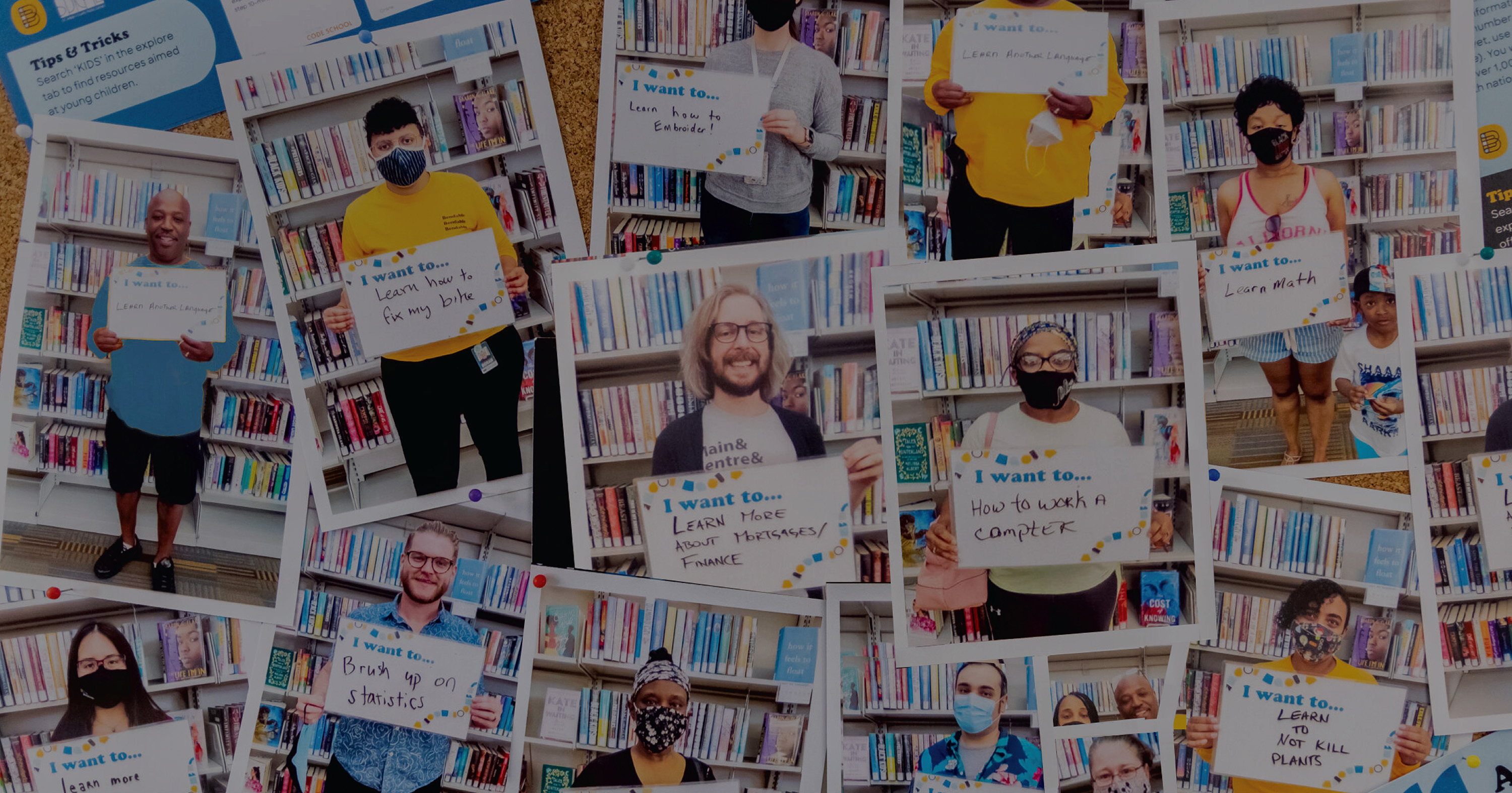
As South Bend residents have gotten vaccinated and things have started to open back up, we have been working with librarians to get those walking into the 10 branches around the city excited about Bendable. We ask these people about their learning dreams, and then put their aspirations up on the branch wall, along with each person’s photo. (At the LaSalle Branch recently, we heard from men and women who were eager to re-learn math, become proficient in Photoshop, start a business, see their houseplants flourish, and more.) We then ask them to sign up for a Bendable account and give them guidance on how they can use the system.
Of course, we know that the toughest thing for many of these learners and any others who use Bendable will be persistence.
It’s not that Bendable users aren’t committed to learning. According to several of our content providers, including GCFGlobal and LRNG, those coming from Bendable.com consistently spend about twice as much time on their sites as do those who find their way there through a general search engine.
But it’s a different story for the courses that require hours of dedication to get all the way through, including those offered by Penn Foster, edX, and others that can lead to industry-recognized credentials or college credit. Of the 340 or so of these classes that have been started, fewer than 20 percent have been completed.
If the data has proven one thing above all, it’s that learning is hard.
On some level, we knew this going in. Adult learners face myriad barriers, including juggling work and family responsibilities; anxiety about being back in “school,” even if they are now in an alternative learning environment; and struggling with childcare and transportation.
But seeing the numbers has reinforced the fact that to drive a depth of learning—one of our four strategic goals—we need to get beyond the digital platform and equip the community to support Bendable learners. It’s a good reminder that the most important thing that a piece of technology can do is connect people in a meaningful way.
And so, we are now collaborating with stakeholders across South Bend—employers such as Beacon Health, the big hospital system in town; nonprofit organizations like Goodwill; government agencies, including a summer youth jobs program run by the city parks department; educational institutions, including the public schools; and others.
With our help, these partners are weaving Bendable into their everyday activities, seeking to further their own missions by assigning specific courses on the platform to their employees, clients, students, and so forth. To help these cohorts of learners get through the material successfully, we are now running a bunch of experiments that have been designed with input from a social science researcher. Among them: sending out text messages to nudge learning along; making available online coaching; using local university students as in-person coaches; and sharing data so that organizational leaders have visibility into learner progress.
In the end, building a better Bendable—as with any initiative trying to have a deep social impact—will be neither fast nor easy. We anticipate that it will take five years or more before we have a good sense of whether we’re getting anywhere toward our paramount goal: making South Bend more resilient by building a true community of lifelong learning.
Meanwhile, we will also be expanding Bendable through a partnership with the Maine State Library. Although Bendable will be hyper-localized for the people of Maine, with content and features that meet their particular wants and needs, our long-term aim remains the same: boosting the resilience of residents throughout the state.
Which is why we will, once again, rigorously track the most pertinent data. “The idea of resilience can be nebulous,” says Lex Dennis, the Drucker Institute’s director of lifelong learning. “That’s why focusing on the metrics as we go along is so critical.”
From the outset we monitored the numbers—and, at least at first, it was hard not to feel kind of giddy.
.jpeg)
What wandering can teach us about designing new spaces
5 design lessons from studying the intentional unpredictability of wandering.
The winding streets in the medieval city fabric, the long lunches with wine followed by a nap, and all the built-in transitional time and spaces choreograph a unique quality and pace of life that defy our usual sense of urgency. The city forces its inhabitants to slow down, creating opportunities for the unplanned to unfold.
It’s this intangible quality that has drawn and inspired generations of artists and scholars, and what motivated my partner and I to apply for fellowships to study the act of wandering in Rome early in 2020. Curious about the truth behind the city’s lore, and believing it’s only possible to study wandering by wandering ourselves, we spent three months thinking not too hard about the things that make a place great for wandering and conducive to moments of serendipity.
Our days of wandering concluded when Rome locked down for the pandemic, and our lives shifted from the physical city to virtual space. Most of us have discovered benefits to this new way of working and living, and many elements are likely to remain. But in the rush to replicate the functional aspect of daily life online, we’ve also lost a bit of the spontaneity and chances of encountering the unexpected. Through this project, we want to champion the irreplaceability of physical spaces, and articulate a few design principles that take us beyond the typical pursuit of productivity and efficiency, and toward making environments that encourage and reward wandering.
1. Meta orientation
Rome is built on seven hills. Each day, we would wander from our apartment at the British School on the eastern edge of the city, up and down a hill, across a river, and up another hill to our studio at the American Academy on the west side. Setting out in the morning, we would often arrive just in time for lunch, and take the whole afternoon getting back just in time for dinner.
Curiously, after only a cursory glance at the map upon arrival, we were able to make the trip every day via constantly evolving routes. In the medieval city, the slight inclination of streets offered a meta sense of direction, allowing us to know roughly which way to go even when venturing into previously unexplored areas. In fact, many streets follow old streams; a local rule-of-thumb for when you’re lost is to pour water on the street and follow it down to the banks of the River Tiber.
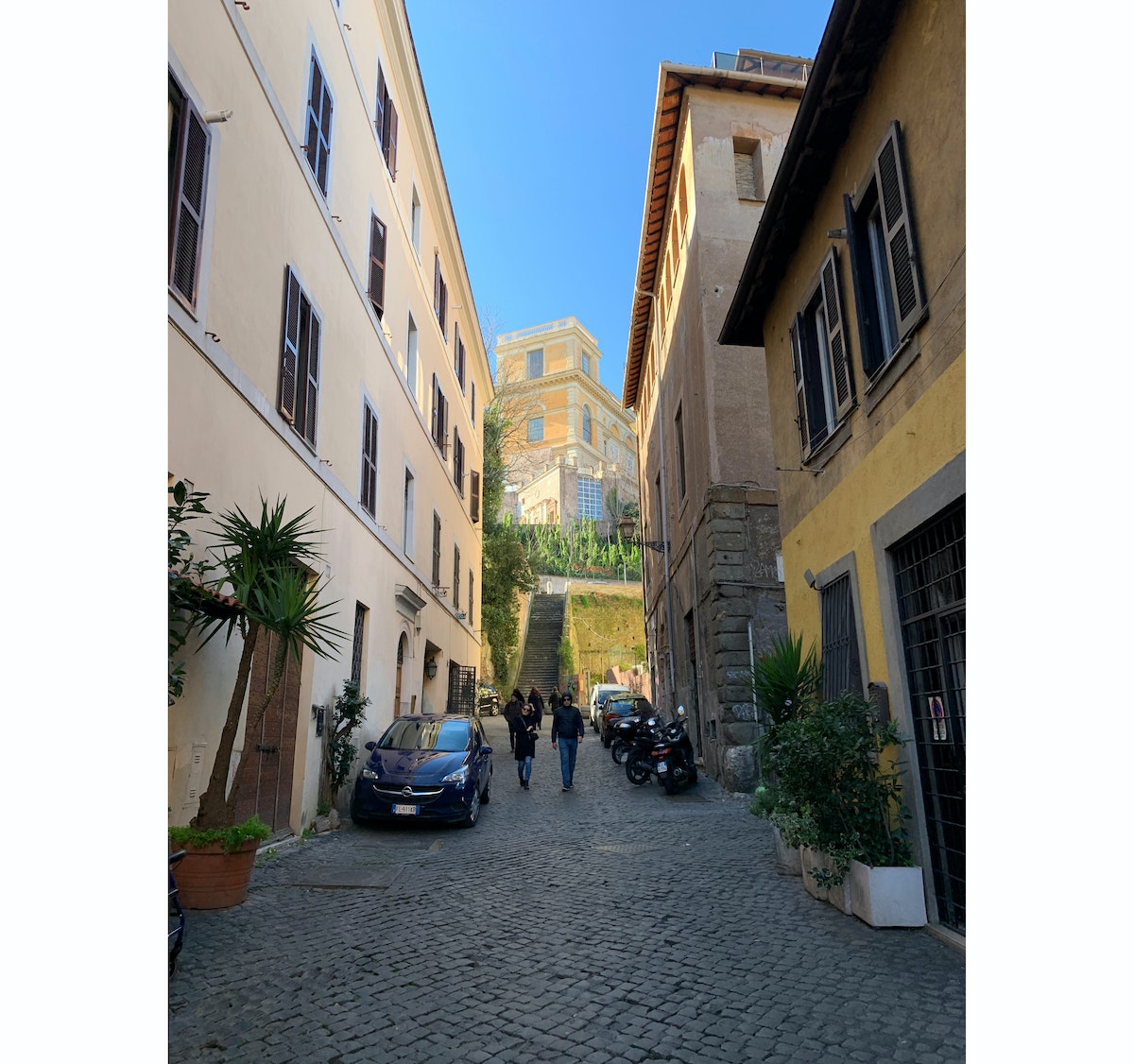
The joy of wandering comes from its unpredictability, which is always delicately balanced against the fear of being completely lost. Subtle spatial cues such as the street sloping up or down, or glimpses of a monument when you’re crossing an axial boulevard, can offer a meta sense of orientation while preserving the excitement of choosing different paths to explore.
2. Built-in intermissions
At the risk of perpetuating stereotypes (both about Rome and about designers), our days were often strung together by coffee breaks, whether a quick pick-me-up before an appointment or to while away an afternoon. To our surprise, the same cup of coffee in a Roman cafe has two different prices depending on whether you are drinking it standing at the bar (about one Euro), or sitting down at a table (about six Euros). It’s perhaps the clearest evidence that coffee is not only a drink, but also a duration of time—the cheaper option gets you a short respite standing at the counter, while the more expensive option gets you an afternoon watching passers-by sitting at a street-side table.
The caffeinated intermissions provide in-between time to remember what we have just seen, and anticipate what we are about to see. It shifts our experience from distinctive blocks of activity to a gradated spectrum that fades in and out, creating opportunities for different ideas to overlap. The bitterness and heat of the coffee, pleasurable to sip but difficult to gulp, establishes a minimum amount of time between things, allowing our thoughts to wander without the need to be somewhere.
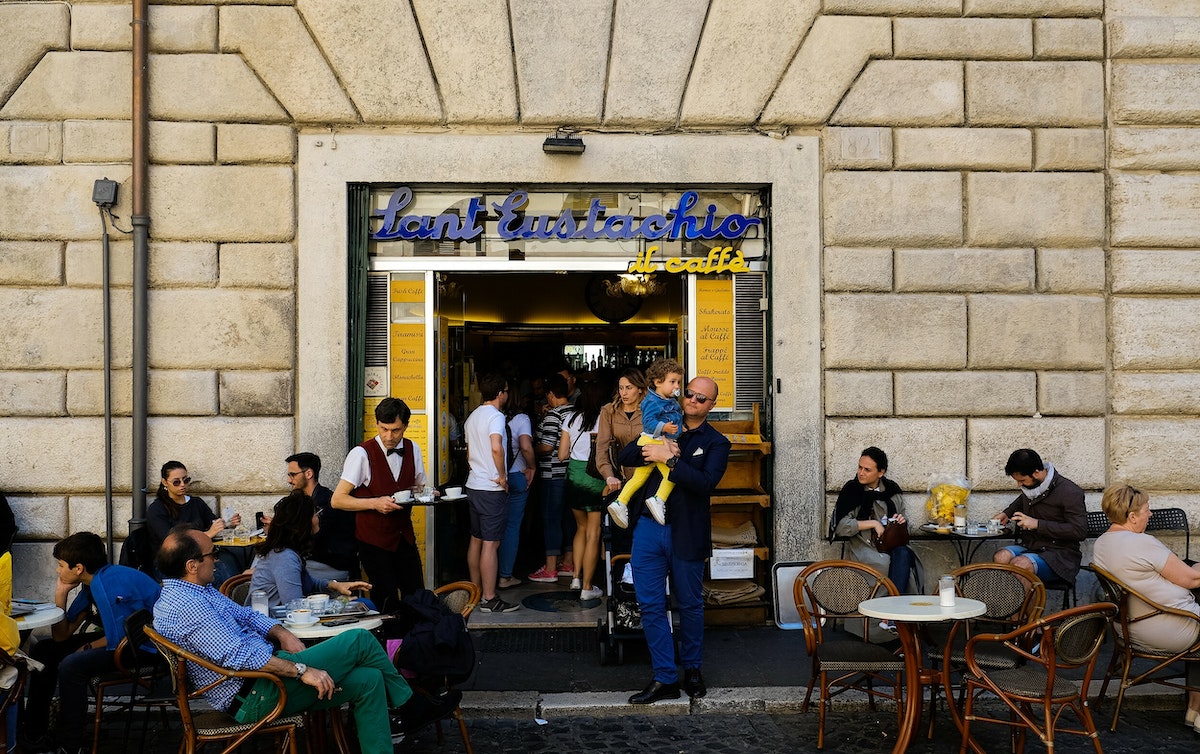
Perhaps what the physical environment can better offer and should be designed for is the gentle spacing between things: a short walk to lunch, a stroll from home to work, or some distance between the desk and fridge. That’s often when inspiration strikes.
3. Anchoring ambiance
Visitors to Rome often note the distinctive quality of the city’s light. With its dry and arid Mediterranean climate, the bright and sharp light plays off the solid architecture of stone and concrete to create deep contrasts and shadows. It dictates and changes what we can and cannot see at different times, often revealing only a small fragment of the overall picture.
A quirk of the human mind is its tendency to sprawl. We are overwhelmed when exposed to too much information and bored with too little. What holds our attention best is a partially-revealed picture that anchors parts of our imagination while allowing the rest to hover freely to fill in the voids. The ambiance of a place is often defined by what is concealed—a noisy cafe shifts our focus to the sight and smell, while a dimly lit street might foreground the sound and chill.
The physical space can offer an anchoring ambiance. Instead of the floor-to-ceiling glass walls favored by luxury developments, perhaps a few well-placed windows may allow us to see the outside more closely. By editing what our mind can see and perceive, we leave space for our imagination to roam and wander.

4. Loosely-defined uses
For a city famous for its walkability and public spaces, Rome has an unusual lack of public benches. But there’s always a place to rest, whether you’re sharing a podium with a Roman God, or leaning against the inclination of a once-impenetrable fortress. People intuitively adapt, exploit, and react to the spaces around them as they navigate and occupy the city.
Most modern buildings and spaces are designed for specific functions—a meeting room for meetings and a classroom for classes. Some are even designed to discourage unintended uses, such as segmented benches that prevent people from lying down. In a historical city like Rome, with its accumulated layers of architecture, landscapes, and urban form, few things are used for their original functions, and nothing fits precisely.
While the dictum of form follows function has an alluring logical clarity, it’s also a self-fulfilling prophecy, with the function constrained by the tight-fitting form. When we design our spaces to loosely fit their intended uses, we naturally invite exploration and appropriation. As any parent knows, a snowy slope entertains a child for longer and in more ways than a purpose-designed playground slide.

5. Intentional collage
A Roman walks into a bar, holds up two fingers, and says “Five beers please!” The joke works by connecting two previously separate frames of reference: two fingers for two, and V for the Roman numeral five. Inspiration works in a similar way, by revealing a previously unnoticed relationship. We never quite know which two things will resonate, so one of the best ways to generate inspiration is to be constantly exposed to new collages of things and ideas.
Rome is in many ways the perfect collage-generating machine, where the ancient coexists nonchalantly inside, around, above, under, and next to the cutting-edge. Walk past a classical facade marked by graffiti, and you might notice the original Latin inscriptions under the latest tag, both created by the same human impulses. Experiences like these recalibrate our sense of perspective in the vastness of history, while at the same time affirms the universality of our human instincts.
Despite the urge to categorize and organize, we could allow some messiness of life to spill through. In our spaces, instead of insisting on a uniformed look where all the furniture must conform to a color or style, a diverse collection accumulated over time often inspires more stories.

My partner and I have always been drawn to certain spaces with a special spark—places where we feel relaxed, inspired, and curious, and can wander freely. While an anecdote from Rome or other exotic locations often serves as a shorthand for this spark, this project is our attempt to pin down this elusive and intangible quality, so that we may discuss and design for it more intentionally and precisely.
Now, as we emerge from the pandemic, we are presented with the rare opportunity to re-examine the value of our physical spaces. Perhaps we can draw on some of these principles to design future environments, not only as something to be optimized for productivity and efficiency, but as pleasant and inspiring spaces to be in, wander around, and maybe encounter the unexpected.
As a city, Rome is measurably inefficient; the concept of finding the quickest route between points A and B is almost non-existent.
Vivian Barad
I work with the food & beverage and CPG industry to find growth opportunities that create climate-positive impact in the world.
As an IDEO Partner and Executive Director, I work with the food & beverage and CPG industry to find growth opportunities that create climate-positive impact in the world. My work includes launching new offers, creating strategic visions, and building innovation capabilities. I leverage my industrial design training and creativity to find growth opportunities for clients like Suntory, Alicorp, San Francisco Unified School District, Northern Illinois Food Bank, and Plum Organics.
I am an expert in understanding people’s deeply-rooted food behaviors and food systems challenges like food insecurity and food waste.
I have spoken on these topics and more at TedX, SXSW, and Feeding America.
I am a graduate of California College of the Arts, with a BFA in Industrial Design. I received a BA in English from the University of Michigan, Ann Arbor, and worked as a New York-based print and online journalist. In my free time, I enjoy canning tomatoes and family hikes.
Tim Brown
Through writing, speaking and advising I try to champion the interdisciplinary, multi-faceted nature of design.
This is the question I have consistently asked throughout my design career. Today, that takes me to some edges of IDEO’s design practice that include Climate Era design, open and collective systems, designing strategy, and creative leadership.
Through writing, speaking, and advising, I try to champion the interdisciplinary, multi-faceted nature of design.
I am proud of our progress in applying design thinking to topics such as service design, system design and strategy, and across sectors such as education, health, government, technology, the social sector, and business. I frequently speak about the value of design thinking, creative leadership, and innovation to business leaders and designers around the world, and have participated in the World Economic Forum in Davos, Switzerland.
My talks "Serious Play" and "Change by Design" appear on TED.com. My book on how design thinking transforms organizations, Change by Design, was released by Harper Business in September 2009, and revised and updated in 2019.

Steve Schwall
I work with creative leaders and executives to design new offerings, drive business growth, and transform their culture through the power of design.
I work with creative leaders and executives to design new offerings, drive business growth, and transform their culture through the power of design. After almost two decades of working with clients like Ford, Samsung, and Walgreens, I believe that successful change doesn't come from a “big idea,” but rather teams looking at problems from new perspectives, challenging deeply held assumptions, and working together in new ways.
An engineer and designer at heart, I am passionate about designing tangible solutions that address critical challenges and change how people work, but my happiest times at IDEO are when I’m building a prototype in our shop.
Prior to joining IDEO, I played with little red wagons as a product design engineer at Radio Flyer. I hold a B.S. in Mechanical Engineering and a B.A. in Industrial Design from the University of Notre Dame.
Mina Seetharaman
I’m focused on finding new, customer-focused, tech-supported ways to deliver IDEO’s long-standing value proposition.
I lead strategy for IDEO’s learning and media and partnership initiatives, including IDEO U, the learning arm of IDEO where people can learn the skills of design thinking and mindsets of creative leadership. In my role, I’m focused on finding new, customer-focused, tech-supported ways to deliver IDEO’s long-standing value proposition to more people around the world.
My specialty is helping iconic brands undergo major transformations and become competitive market leaders.
Throughout my career, I’ve led strategy and operations at respected media and content companies, including The New York Times, The Economist, and OgilvyOne. I also have an extensive background in product management and innovation from my time at Gartner, Inc, where I served as Group Vice President in Global Product Management. I am experienced in launching new product offers, developing and leading teams, and driving cultural and operational change. I hold a master’s degree in Journalism from New York University and I speak six languages.

Building a personal AI for the messiness of life: Sida Li
Most AI products today are built for work—a space with clear problems and established systems. One founder noticed a gap: personal life is messier, harder to systematize, and mostly left behind by the AI boom. So she built Cue, a personal AI that lives inside iMessage and group chats, to go where the other tools haven't.
In this episode, Becca Carroll, IDEO's Chief Strategy Officer, talks with Sida Li, co-founder and CEO of Shared Context Lab, about staying anchored to a human need while the technology around her keeps changing shape, why she treats her business model with the same rigor she'd bring to a product, and what it feels like to build a company at this particular, disorienting moment in AI.
The conversation also gets into how Sida makes design decisions: the language Cue uses to describe itself, the tradeoffs behind building inside iMessage instead of a new app, and a real story about a business idea that didn’t pan out.
This is the second in a two-part series profiling founders from IDEO's Startups-in-Residence program. The first conversation is with Johannes Seemann, founder of Sooner, on designing GenAI for the emotional side of money.

Designing GenAI for the emotional side of money: Johannes Seemann
Most personal financial tools are built to run the numbers and optimize towards a budget. While that works for some, most people experience money as a lived relationship that does not neatly fit into a spreadsheet. Johannes Seemann and Becca Carroll discuss why money is emotional before it is mathematical, and what a human-centered approach to building a generative AI financial product looks like in practice.

The curious leader's edge in uncertainty: Scott Shigeoka
Mina Seetharaman talks with Scott Shigeoka, author of Seek and Head of Curiosity Cultivation at the Eames Institute, about what distinguishes genuinely curious leadership from performative curiosity, how power dynamics shape curiosity, and why practicing curiosity can restore energy rather than drain it.

How constraints make us more creative: David Epstein
Mina Seetharaman talks with David Epstein, author of Inside the Box and Range, about why total freedom often produces average work, how leaders can design useful limits on purpose, and what organizations such as General Magic and Pixar reveal about the relationship between boundaries and creativity.
Looks like you might be in search of something very specific?
Or reset the filters above and try another angle.
Here’s some random inspiration

Podcasts about creative leadership

Articles about the power of prototyping
