
.svg)


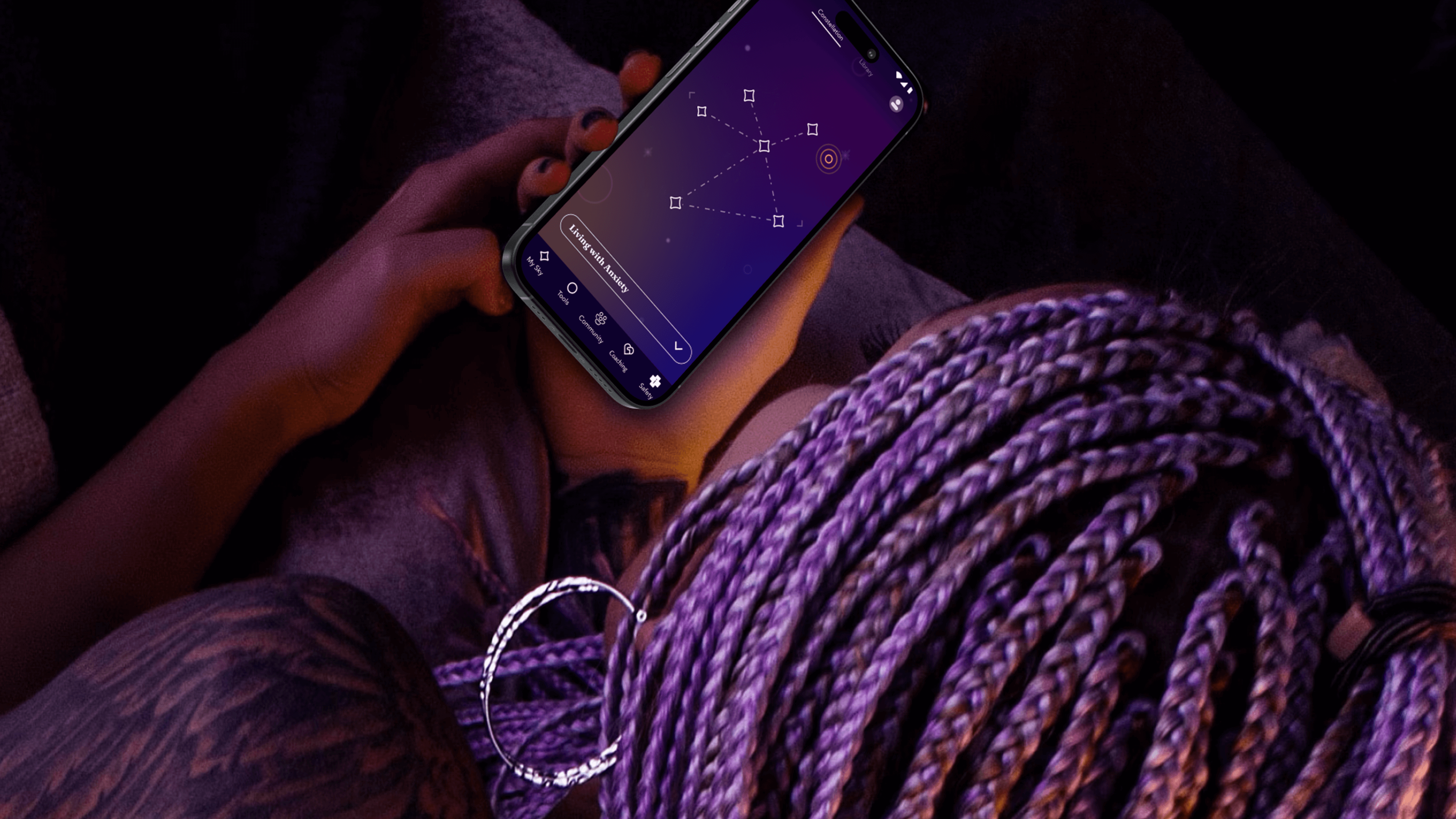

Mental health, co-designed
Kooth partners with young people to create Soluna, a mental health resource for California youth.
Increasingly, digital spaces are proving detrimental to youth mental health. By co-designing with youth, Kooth and IDEO set out to flip the script, creating a positive digital space for young people to safely explore their mental wellbeing.
When Kooth, IDEO, and Blackbird, IDEO’s longtime development partner, first started working on the project, the window of opportunity was narrow, and the stakes were high. The group was up against a nine-week deadline to create a working proof of concept app. Also on the line: a $188 million contract with the Department of Health Care Services (DHCS)—one that would open an entirely new line of business for Kooth.
The app needed to do more than demonstrate functionality—it needed to prove its value. To ensure that they were creating an asset that truly fit the needs of young people, the team turned to an initial cohort of 13-25 year-old co-designers who explored early features, created video diaries, and shared their questions about and experiences with mental health. These young people often gravitated toward self-service tools that helped them take action based on their feelings. With their feedback, the team created new expressions of clinically-validated behavioral health tools like journaling, breathwork and white noise—and built novel tools, such as Starboard, an expressive drawing tool and a nod to art therapy.
The team took inspiration from content the co-designers liked to consume, such as story-driven video games that enable freedom of exploration, deepened by a unifying mythology. That led them to a constellation theme, which made the experience more intriguing and playful. The co-designers also recommended a dark color palette, because they preferred exploring the app at night.
With these insights, the team refined the proof of concept, and then conducted a one-week pilot with another 50 young people across California. Their positive feedback gave the State the confidence to invest in a $188 million, four-year contract for Kooth to bring the app to a platform at scale.
Over the next year, the team engaged another 150 young people to help design, shape, and test the app. At the same time, Kooth and IDEO created a clinical oversight group, which included a pediatrician, therapists, and other clinical specialists. This group anchored the platform in the practices of Acceptance and Commitment Therapy (ACT), cultivating psychological flexibility—the mindful acceptance of positive and negative emotions. Young people are invited to complete short reflections and surveys throughout their journey with the app, which includes rigorous, science-backed measurements to assess the therapeutic benefits.
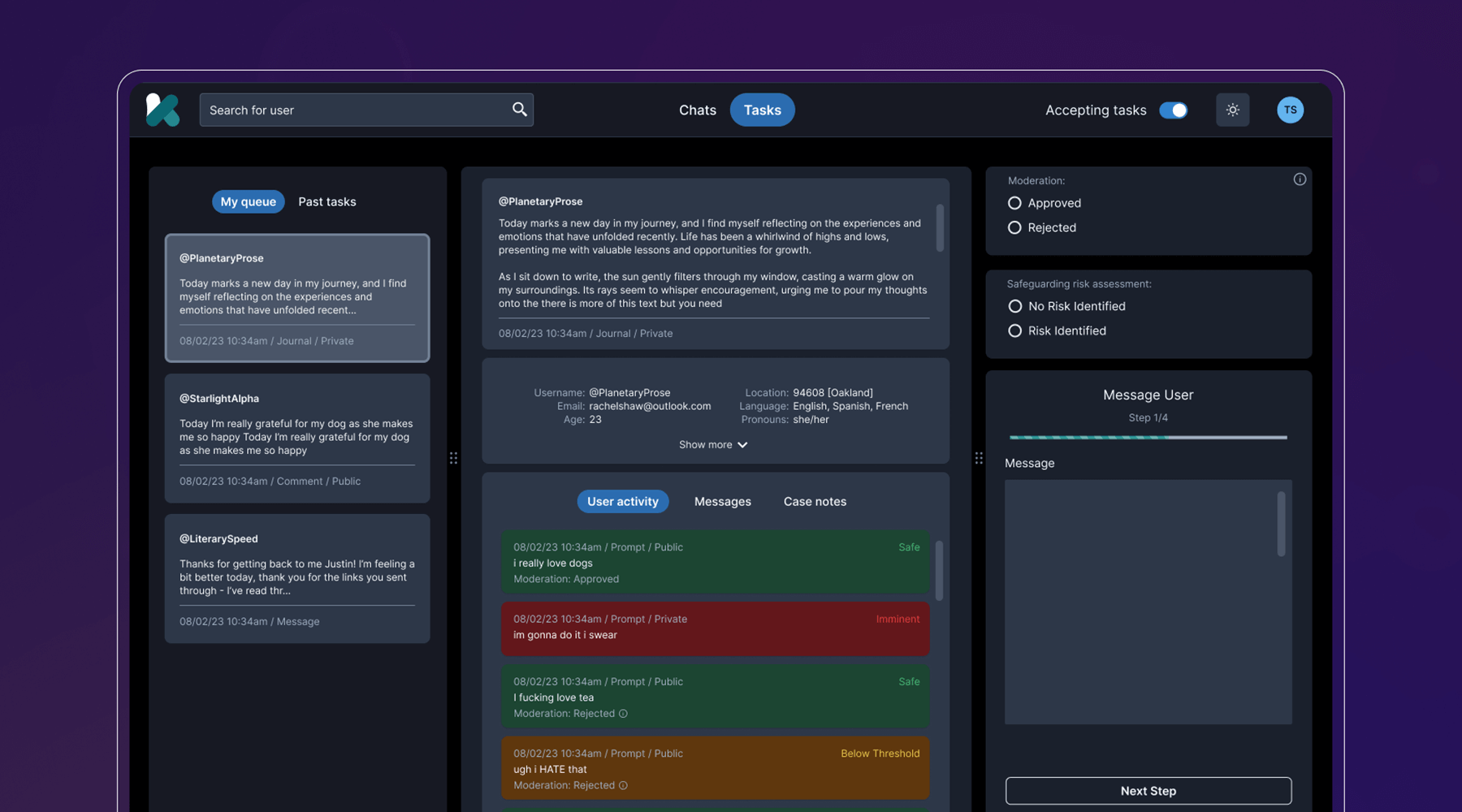
Behind the scenes, the team developed a clinical-facing service and digital platform that empowers Kooth’s peer specialists, social workers, community curators, and clinicians to support the youth experience, all while protecting privacy and confidentiality. They also navigated a complex landscape of state requirements and government legislation, ensuring that the platform could cover topics like substance abuse and gender identity, and that users could access coaching within 24 hours, and choose from a diverse set of experts.
The last step was to select a name that worked across multiple languages, trademarks, and competitor branding, and didn’t come off as a mental health service, something the youth co-designers believed was critical. IDEO and Kooth landed on Soluna, a name that alludes to the app’s presence in both the bright (“sol” for sun) and the dark times (“luna” for moon).
Now, Soluna is available for free to all youth in California, and the state has set ambitious targets for reaching all young people at scale. Soluna is a living platform that will continue to receive product and design updates for years to come, all deeply rooted in youth co-design.
The US Surgeon General named mental health “the defining public health crisis of our time,” and cited social media, online bullying, and the isolation exacerbated by the COVID-19 pandemic as major drivers that have significant negative outcomes for youth.
In California alone, more than 284,000 youth cope with major depression. 66% of kids with depression do not receive treatment. Between 2019-2020, the suicide rate for kids ages 10-18 increased by 20%.
In 2022, California Governor Gavin Newsom’s Master Plan for Kids’ Mental Health set aside $4.6 billion to increase access to mental health and substance abuse support, the largest commitment to youth mental health ever made by a state.
94%
of proof-of-concept app users would recommend the Soluna app to a friend, and believe that engaging with the app would be a positive addition to their daily/weekly routine
6 million
young people in California had access to Soluna at launch in January 2024
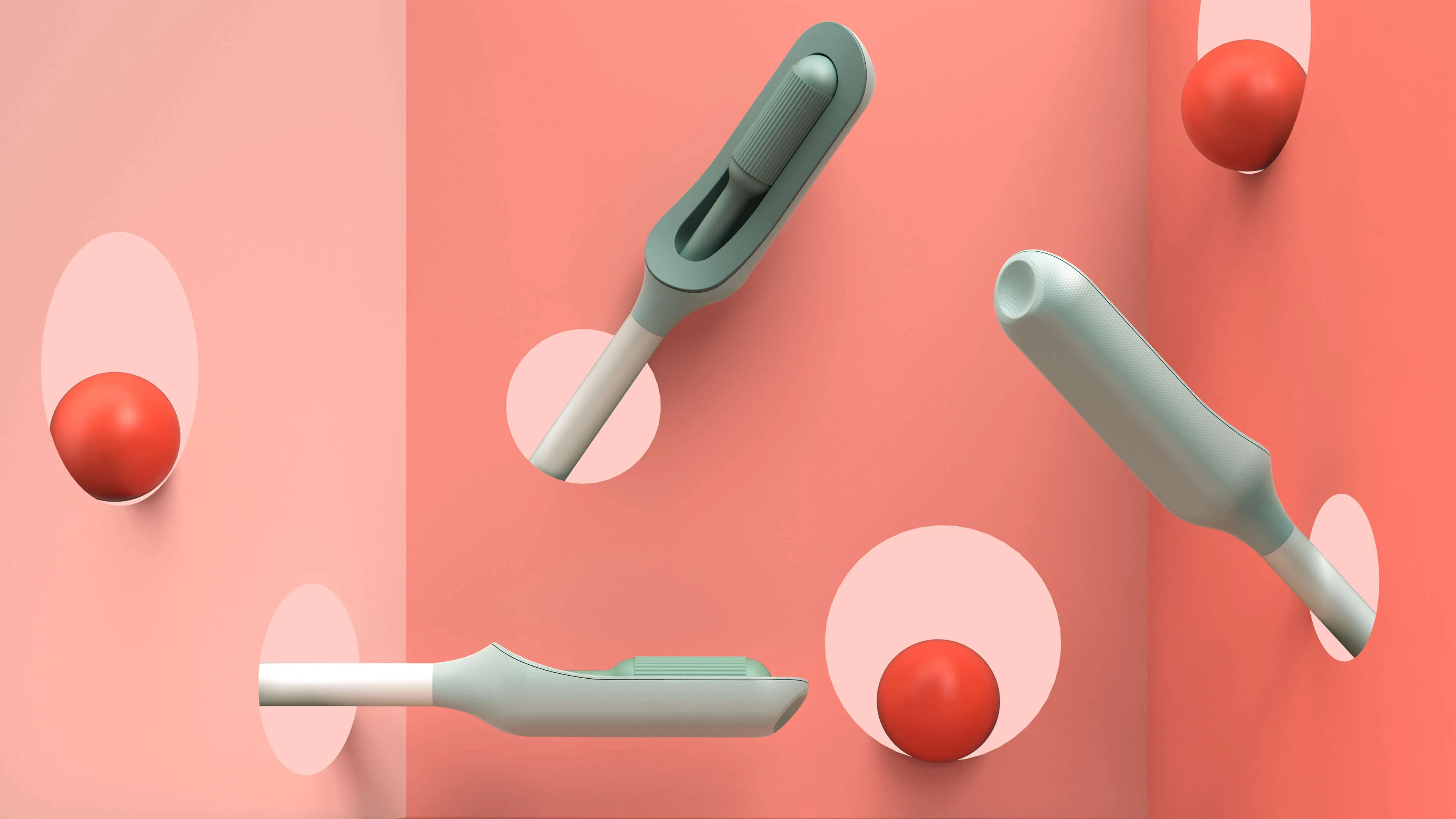
A more comfortable Pap smear
Teal Health creates a system for at-home cervical cancer screening.
Creating a better cervical cancer screening experience is an important mission, but also a challenging one. Not only would Teal have to address the regulations that face healthcare device companies, it would also need to build a comprehensive telehealth platform and a physical product—a wand that could easily collect an adequate cell sample, even in the hands of an untrained person.
The first challenge was to create the wand. The device would need to do a lot: It’s impossible for a person to see their own cervix, so the user would have to be able to find the cervix blind, collect the sample themselves, and remove the wand from their bodies without contaminating it on other parts of their anatomy. Because this is something users are likely to do in their bathrooms, where there is no space to lie down, they would need to be able to use the device while standing—and with one hand. From the beginning, the IDEO team set out to design functional, testable prototypes to make sure the idea was viable, and incorporate diverse voices into the research process, including trans, minority, and disabled women.

Because the product is meant for people who aren’t medical professionals, the team worked to design something as simple, intuitive, and unintimidating as possible. They used a 3-D printer to create multiples of every prototype, autoclaves to make sure that the designs they were creating were sterile, and leaned into shapes women are already used to, like the cylindrical shape of a tampon. The wand they created has that same basic form, but with a soft sponge that the user can deploy with the turn of a dial to collect the sample, then close to protect it from contamination on the way out of the body.
With working prototypes in hand, Teal set out to test their efficacy. In an initial study with 220 participants varying in age, race, socioeconomic status, and geography, Teal found that not only were participants able to successfully self-collect samples, they also preferred them over the speculum, the device doctors typically use during a screening. Some 92 percent said if they knew the results were equal they would prefer self-collection, while 87 percent reported they would stay current with screening if Teal Wand was an option. Self-collection took the vast majority under two minutes to complete, and 97% of study participants reported it was very easy or easy to use. The Teal Wand recently received a patent for its unique design.
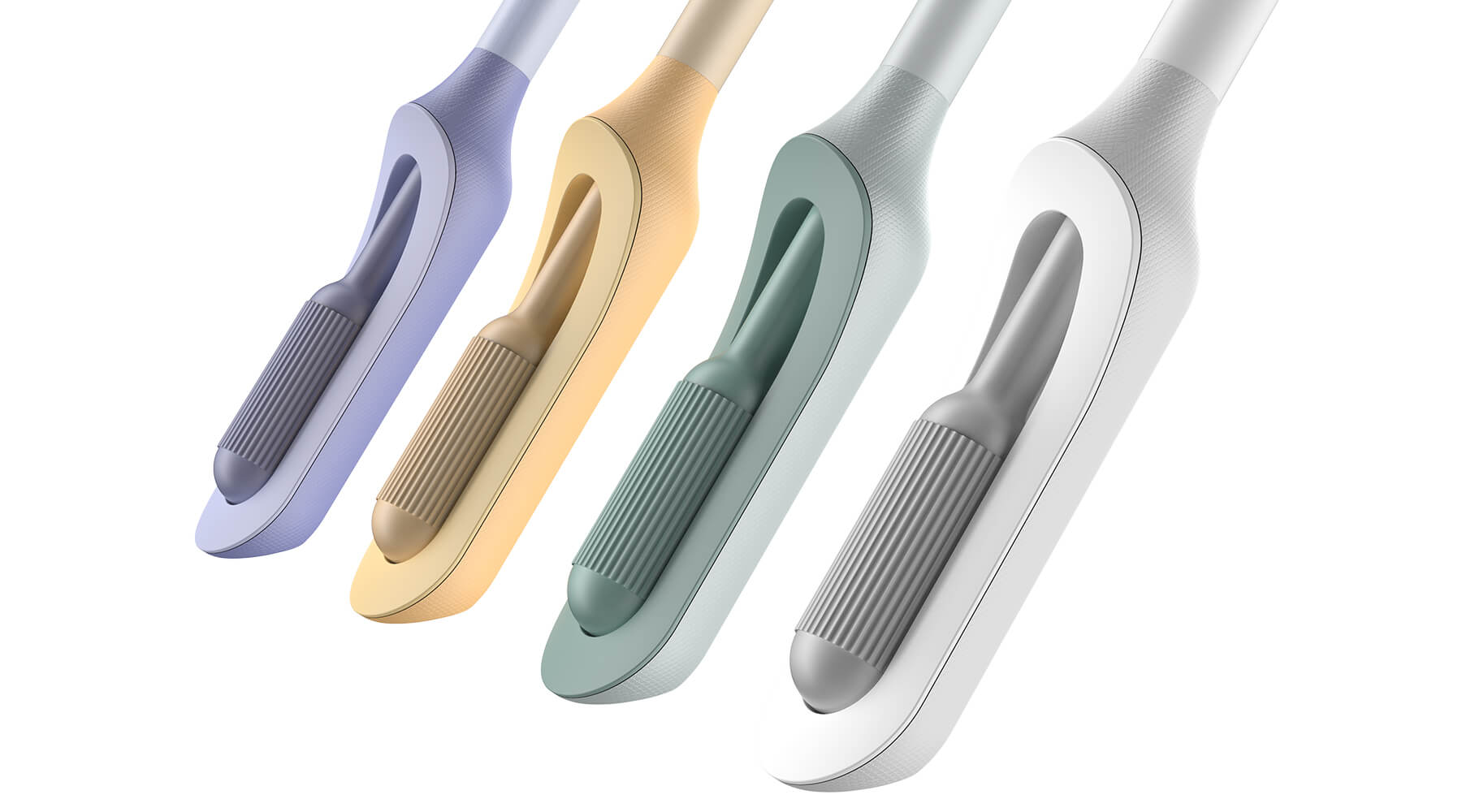
The IDEO team also worked on the packaging and unboxing experience, which plays an important role in supporting the user through the self-screening process. The team built in thoughtful design cues to give users reassurance that they are using the wand correctly, and to provide the same level of confidence they would have in the results of an in-clinic screening.
In January 2023, Teal raised an $8.8 million seed round from Serena Ventures, Emerson Collective, and Metrodora, and later that year, launched a nationwide clinical trial with leading health organizations including Johns Hopkins University, Yale University, the University of Colorado, Washington University, and others. In 2025, The Teal Wand became the first FDA-authorized device for at-home cervical cancer screening, with virtual medical provider support. Today, it's available in all 50 states. i’s an enormous step toward its North Star: catching cervical cancer earlier and saving lives.
Cervical cancer is nearly 100% preventable when it’s caught early, yet one in four women in the US are not up to date on their screenings.
More than 12,000 people in the US are being diagnosed with cervical cancer every year, and more than 4,000 people die of the disease, which disproportionately impacts Black, Asian, and Hispanic women.
More than half of cervical cancer cases are found in women that are not up-to-date on their screenings.
97%
of clinical study participants said the Teal Wand was very easy or easy to use.
87%
of participants said they would be more likely to stay current with screening guidelines if Teal Wand was an option.
94%
of participants said they would choose to collect their own sample from home rather than the current standard of care where a clinician collects it in-office.
2025
The Teal Wand becomes the first FDA authorized device for at-home cervical cancer screening, with virtual medical provider support.
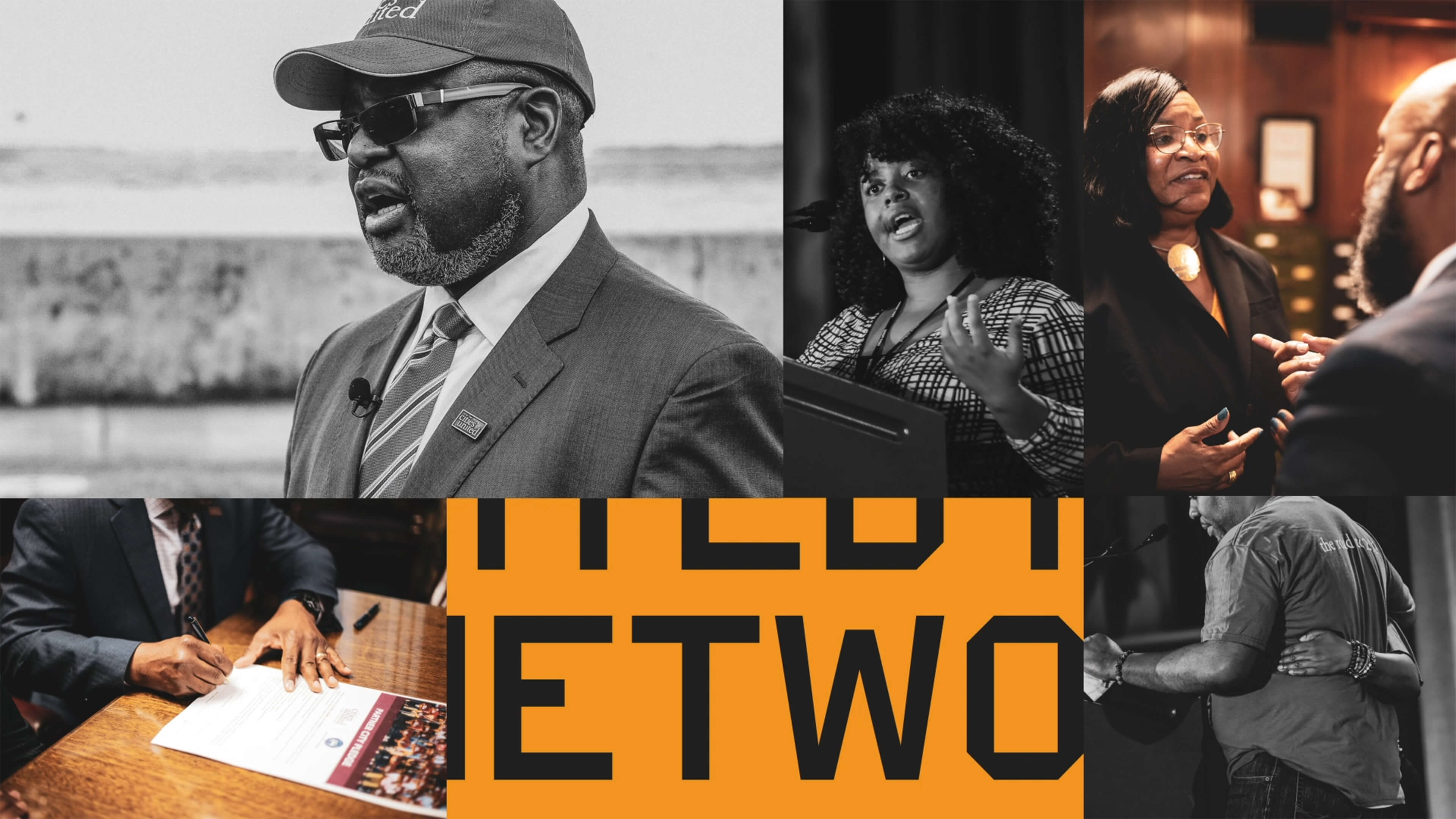
Amplifying a movement
Cities United rebrands to create safe, healthy, hopeful communities for Black men and boys.
Cities United already had a strong foundation with its stated mission, vision, and values. IDEO brought those to life with a new visual and verbal brand identity system that celebrates Cities United’s inclusive approach to building relationships and reimagining public safety.
To help Cities United with its verbal identity, the IDEO team defined the organization's voice, tone, and key messages, making it easier to tell its story more consistently and clearly, a crucial step toward engaging stakeholders.
To define the new visual identity, the team created a new logo, a letter C composed of interwoven shapes that represent the three tenets of their vision—“safe, happy, and hopeful;” a new design language that references city grids; and a typographic system anchored by the typeface VTC DuBois, inspired by W.E.B. DuBois’s own custom lettering and designed by the Black-owned Vocal Type Co. The team also designed a color palette that embodies the textures of city life with hues reminiscent of asphalt, sunrise, and brick.
To amplify the refreshed branding, the team designed a new responsive website, citiesunited.org. The intuitive site shares the organization’s mission, resources, ongoing projects, and partner network, inviting stakeholders to join in their transformative work. IDEO also created a video to humanize Cities United’s mission and showcase its nationwide impact. It underscores the unity, resilience, and hope embodied by the organization through a chorus of voices.
This comprehensive rebranding widens Cities United’s reach and impact, helping the organization share its goal of creating safe, healthy, hopeful communities for young Black men, boys, and their families, and reintroduces the organization to a national audience.
The Cities United work was supported by IDEO’s Racial Justice Impact Fund, part of a commitment IDEO made in 2020 to address systemic racism and advance equity within our own organization, our client work, and beyond.
Cities United is committed to reducing the epidemic of homicides and shootings among young Black men and boys ages 14-to-24 by 50%.
Between 2009 and 2019, the number of Black children who “did not go to school at least one day in the past month because they felt unsafe at school or on their way to or from school” increased by 84%, according to Cities United.
Homicide is the leading cause of death for Black men and boys from birth to age 44, according to the Centers for Disease Control and Prevention.
2023 SF Design Week Award
In recognition of IDEO’s brand work with Citizens United

Balancing work and sleep
Somni’s personalized sleep program helps workers maintain their health.
Sleep is a critical resource for shift workers—and their employers, too. Together, IDEO and Somni worked directly with people with acute and chronic sleep challenges to create concepts that could support their sleep goals, and provide employers with the means to improve employee health.
When IDEO and Somni first partnered, the startup was an early-stage company, so the team started small, with focused sprints and workshops to redesign the core aspects of the company and product offerings. The team interviewed shift workers about their sleep patterns, which can vary quite a bit. Even when people keep to a specific schedule on work days, they often have to change their patterns on days off to spend time with family and friends, leading to a very disruptive sleep cycle. Research revealed that many third shift workers were dealing with sleep and health issues, but also a pervasive “machismo” culture, pressure to “tough it out,” and a reliance on energy drinks to deal with lack of sleep.
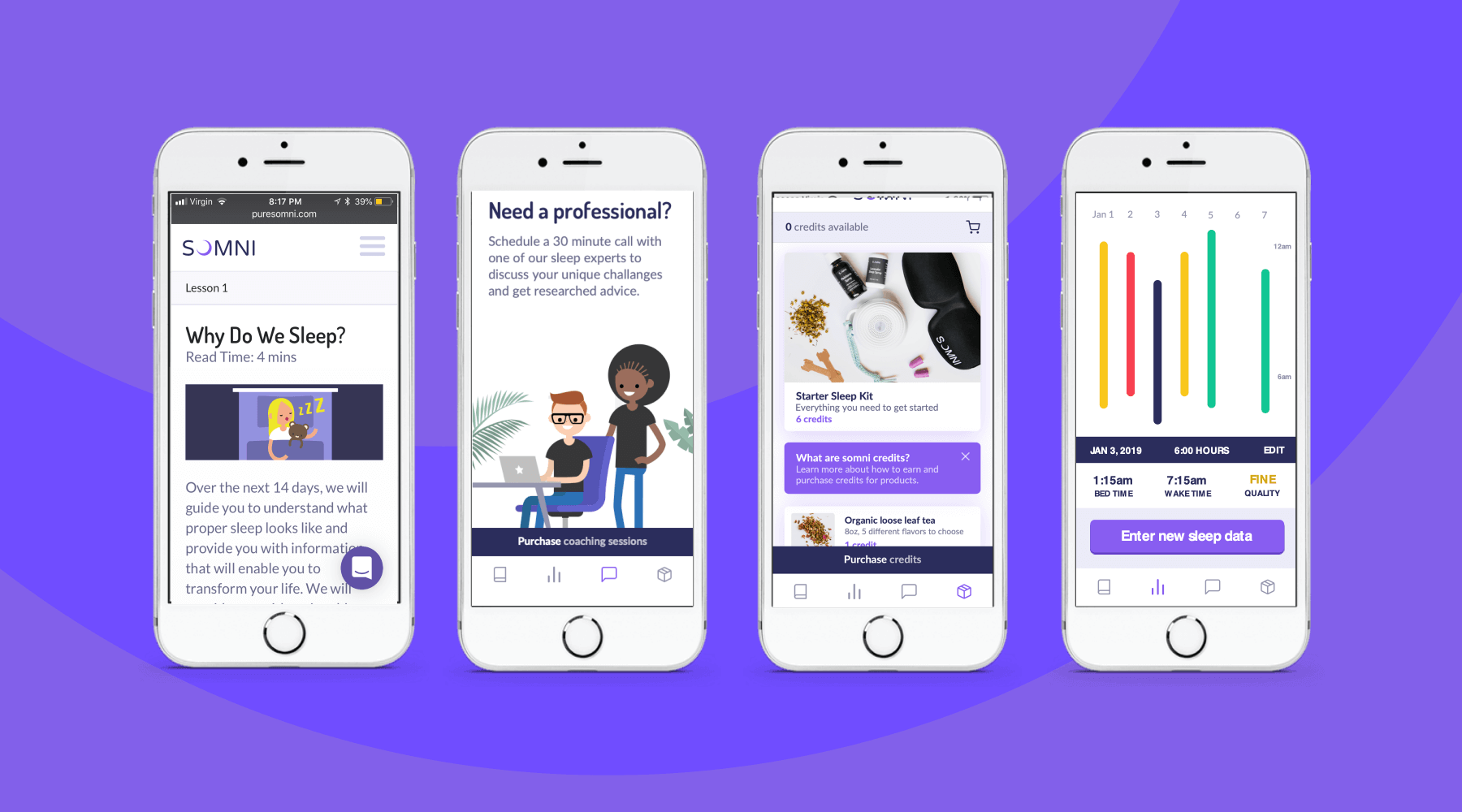
To address those issues, the team designed a digital experience for sleep cohorts, support groups where members could share their experiences and sleep strategies, and work with a coach and sponsor who already had been through the program. The platform analyzed workers’ data, and provided AI-enabled recommendations for improving their sleep. The big takeaway? Data by itself wasn’t necessarily helpful, and could be confusing for folks who were less digitally-fluent. Providing context, like a calendar that displayed sleep experiments at a glance, was crucial.
The IDEO team also created a new user experience for a genetic testing program that could uncover factors associated with sleep issues. Somni aims to use a saliva-based genetic test to monitor for DNA damage caused by circadian disruption, then leverage its sleep improvement program to prevent further damage. Because biomarker testing is a differentiating offer for Somni, it was extremely important that the team get it right, both to make sure that users could understand its utility, and for Somni to provide real value. The design challenge was unique—and not just because of data privacy concerns. Presenting data about DNA damage in a non-human-centered way could increase the anxiety workers had around their sleep.
At the end of the project, Somni leveraged the insights the IDEO team surfaced to improve products like its sleep coaching service, and to refine its biomarker testing offering. Based on this work, Somni has also created a pilot with a Fortune 100 company, which is currently in progress, as it works to mitigate the ill effects of disrupted sleep for employees and the companies they work for.
In the short-term, circadian rhythm disruption leads to an array of jet-lag-like symptoms, and in the long-run, it may contribute to weight gain, obesity, metabolic syndrome, type 2 diabetes, and cardiovascular disease.
It also impairs people’s ability to work, affecting productivity, creativity, and the overall work environment. Productivity loss can lead to employer baseline healthcare costs that are 26% higher, and over time, insomnia can result in an average cost of $4,267 more per employee per year.
In June 2019, the International Agency for Research on Cancer classified shift work as a probable carcinogen.
75%
user retention in Somni's sleep program
$2,450
savings per year per employee for users who complete the program
33%
improvement in sleep quality, and 41 more minutes per night

4 Warm-Ups to Prime Your Team for Decision-Making
Exercises to help your team creatively (and remotely) converge
But we recognize that convergence, too, is an opportunity for creativity. These moments can contain sensemaking—the finding of patterns or shifting of perspectives that brings your team to a new, shared understanding of what you have and what lies ahead. In making choices, you are collectively committing to a common vision of what the future could be. It can feel optimistic, unifying, and clarifying. And we know it can be extra challenging to converge when you’re not all in the same room.
I started writing this piece a few months ago, before COVID-19 forced a lot of folks to shift from working in offices to working at their kitchen tables. I’m of the mind that every meeting deserves a warm-up, and I believe it’s even more true today. If your team is working remotely, they’ll be (virtually) walking in from a greater diversity of physical and mental places (for example, perhaps they’ve only taken 72 steps today and their brains and bodies have turned to video-call-induced oatmeal), so creating the conditions for focused, convergent work is even more important.
Here are 4 warm-ups to help your team creatively and remotely converge:
1. Rank this
Instructions: Before your meeting, using a live collaboration tool, set up a spectrum (a simple horizontal line will do) in the virtual space. On the left, write “least”; on the right, write “most.” Pre-create 3-4 Post-its or colored squares per person. Place them off to the side.

To begin, have everyone type a noun in each of their stickies. Then have one person propose an adjective and add it to the top of the spectrum. (If your adjective is crunchy, your spectrum would be least crunchy on the left to most crunchy on the right.)
As a group, as fast as you can, collectively sort all the noun stickies along the spectrum of that adjective. (For example, sort all nouns according to where they fall on the scale of least to most hairy, grumpy, or miraculous). Attempting to do it all at once should feel like joyful chaos.
Pick out a new adjective and re-sort, reminding folks that anyone can move any Post-it, not just their own. Go through a few rounds until laughs abound.
Why it works: Prioritizing is a critical and challenging part of convergence. And it is made even harder when the options you are deciding between feel like they exist on diametrically different axes. This warm-up will help you get comfortable in the ambiguity that is comparing apples and oranges (or perhaps even apples and orange shoes).
2. Goodbye, hello
Instructions: Ask everyone to come prepared to the meeting with a pen and something to write on.
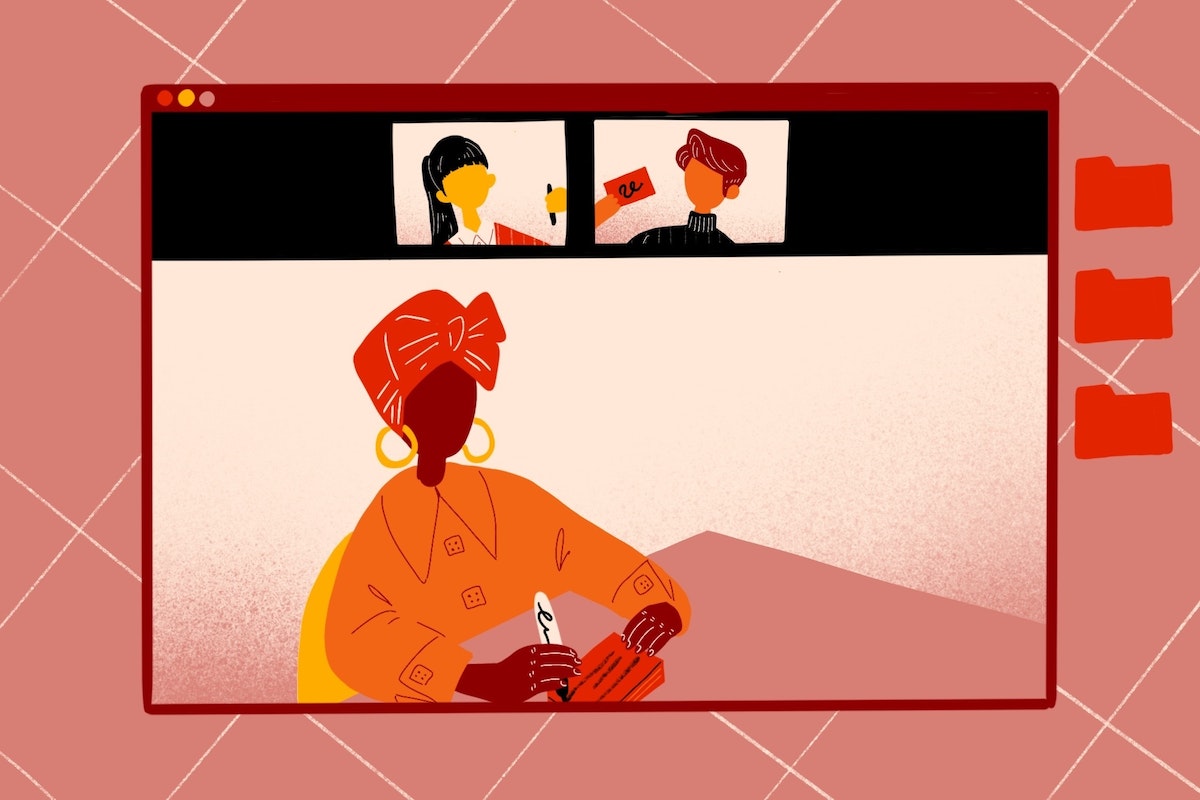
Before you dive into the content of your meeting, have everyone reflect on something they let go of last year and capture a quick sketch of it. Then, separately, have them draw something that was able to fill that newly open space. Have everyone go around and share their drawings by holding them up to the camera.
Why it works: Saying no can feel like the hardest part of convergence, especially when people feel ownership over or connection to the ideas on the table. This reflection exercise will help folks remember there’s power and opportunity in choosing what not to do—because it allows us to focus more energy on the things we do choose to do.
3. Object convergence
Instructions: Ask everyone to come prepared to the meeting with a pen and something to write on.
Have everyone sketch a noun—things like a stapler, a mother-in-law, a glass of water—then go around and share. Pair people up and give them 30 seconds to brainstorm and find a new noun that connects what each individual drew (for example, stapler + glass of water = anchor). Have them do this using the chat function on your video call platform. Multiple conversations will be happening in the chat. But don’t worry, that adds a laughable challenge. Once each pair finds their linking noun, have one person sketch it, then go around and share.

Pairs pairs into quads and have them repeat the process, finding what connects those new things (anchor + lemon = scurvy). Repeat until the collective group has arrived at a single object that has united them entirely. (Hint: like in a game of telephone, this will likely look nothing like any idea anyone started with.)
Why this works: The way forward may not look like choosing person A’s idea or person B’s. It may require finding a third way that draws from the best of both. This warm-up will help you avoid the Frankenstein compromise, where, rather than making decisions, the team mashes all of the ideas together, and dilutes them all to uselessness in the process. In this exercise, teams practice the skill of looking beyond individual ideas to a higher connecting goal or purpose, and collectively aligning on this new vision.
Convergence can feel heavy. This will bring a bit of levity to the process, allowing your team to find the optimism and energy to build on one another’s ideas moving forward.
4. Shake it out
Instructions: Have everyone stand up and close their eyes. Then give these directions, while doing it with them: Reaching out all around you with your hands, shake them vigorously to manifest into the space the multitude of what if’s, what could be’s, and fears of the future. Now, use a pushing motion, clear a bubble of safe, fresh air around you. All together, let’s take a deep breath in and ground ourselves in this space.

Having everyone close their eyes creates an important sense of safety. No one can look like an idiot if they can’t be looked at. Worried that people have stopped wearing pants to video calls, and won’t want to stand up in front of their camera? Have everyone turn off video first, then give the instructions.
Why this works: Our physical state is intricately connected to our mental state. So often at work we ignore our physical bodies, thinking them a distraction, nuisance, or simply irrelevant. In the world of working remotely many of us spend our working hours glued to a screen, ceasing to exist in the three-dimensional plane. Getting your body in the right place (and remembering it exists at all) will help get your mind right too.
It is not infrequent that a team gets to a point of convergence and all feels like a swirling mess of hypotheticals. This warm-up will help create the mental clarity and space to step back and find the broader picture.
Go forth and prototype
Decision-making can be hard and stressful. You’ll probably have to kill some darlings. But you don’t want your team to walk away feeling unheard because the phrase most commonly used in your meeting was “we can’t.”
If instead you can galvanize them—catalyze their creative, collaborative brains in finding and forging the path forward—you will leave with teammates bought into a future they want to build together.
Take these warm-ups and hack them, make them your own, and iterate on them. How can you prime your collaborators to optimistically say “no” to make way for “yes,” find a third way forward, and see past the chaos to clarity?
When I say “creative meeting,” what comes to mind? What’s the energy like? What are you and your colleagues doing? My bet is that you’re imagining a brainstorming session. Generating ideas. If you’re lucky, it’s joyful, full of potential, and exhilarating. What I’m guessing you’re not thinking of? Those moments where you have to make decisions. Prioritize, say no, and shut some doors. At IDEO, we call this part of the process convergence: the refining and focusing of options to move forward with a strategic set of choices.

The Food System Can’t Survive This Crisis, but a Better System Can Be Built
COVID-19 has magnified historic issues with our food system. Post-pandemic, we can create something new
Many say the food system is broken. But the problems that people, the economy, and the environment suffer as a consequence of the system aren’t so much a sign that it’s broken as that it wasn’t designed to generate good outcomes for the world we live in today. We shouldn’t try to fix the existing system but rather design new structures that nourish us.
Design unites what is necessary and desirable from a human point of view with what is technologically feasible, economically viable, and environmentally regenerative. We live in a world of intertwined, inequitable systems—food, education, health, and more—where the problems are dynamic, multifaceted, and inherently human.
By designing for adaptability, trust, dignity, and agency, we can build a more resilient food system.

Designing for Adaptability and Trust
Today’s system was designed for efficiency: We’ve built machines to harvest rows of a single crop, consolidated farms and processing facilities to achieve economies of scale, and established highly specialized supply chains.
COVID-19 has revealed that this efficient system is rigid—it can’t adapt to new conditions. People are trying to help: Grocers are buying produce from farmers and donating it to food banks, and restaurants are repackaging their bulk purchases into household meal kits. But it’s not sustainable to purchase extra food to donate or convert 50-pound bags of onions into smaller one-pound bags.
An adaptable system requires many changes, from digitization of operating systems, to more transparent data sharing, to improved distribution of food to where it’s most needed. Investment in processing and logistics infrastructure closer to farms is key, thus designing redundancy back into our highly consolidated system.
There’s also value in examining what makes the current system work and carrying these elements into a new structure. One positive enabler of today’s efficiencies is the network of trusting relationships that farmers have built over time.
Due to COVID-19 and other factors, it’s impossible to build new relationships in person. Farmers can’t travel to meet buyers. Instead, building on existing trust, farmers need innovative ways to establish new partnerships rapidly. Farm2People is helping farmers and fighting hunger by designing for adaptability and trust. The platform enables produce to be directed toward those who need it by connecting farmers to buyers and donation recipients.
- How might we design for trust in a contactless world?
- How might we look to circular economy models to rethink the supply chain?
- How might we apply technology to rapidly build relationships?

Designing for Dignity and Agency
The system’s resilience depends on the resiliency of those who power it. The essential workers who make the food system run are at the greatest risk of illness and the lowest paid. Many are people of color. Society’s racist systems—including the food system—have marginalized Black, Indigenous and people of color and left them more susceptible to the health and economic challenges of COVID-19.
The pandemic demonstrates how essential these individuals are and how tenuous their livelihoods are. Given the nature of their work, it’s impractical for farmers to maintain the social distance necessary to protect themselves, and for some employers, personal protective equipment is too expensive to provide.
Solutions have been swift and well-intentioned but short-term. Some restaurants created campaigns raising money to cover employee costs, and Portugal extended temporary residency to migrant farmers so they can access health care. Workers will need employment that can withstand advancing technologies, like automation, which will require training in a new set of skills. This is not just a food crisis but an education crisis. The interlinked nature of our systems means that solutions must have broad scopes and address multiple factors to be sustainable.
We have an opportunity to design for dignity and agency.
- How might leaders share the responsibility for worker livelihoods?
- How might we empower workers by having them design solutions for what they face?
- How might leaders help the industry become one of continuous learning to enable professional resilience?
No one knows what will happen. But as today’s system demonstrates, we know our actions will have impact for years to come. By designing for adaptability, trust, dignity, and agency, we can build a more resilient food system.
This essay first appeared in the Milken Institute’s Power of Ideas collection focused on building and rebuilding lives in the face of the COVID-19 pandemic. The essay series features insights from thought leaders across industries.
With hotels and schools closed, farmers are destroying millions of pounds of produce they can’t sell. Despite this waste, the number of people with food insecurity could rise from 130 million to nearly 300 million due to COVID-19. This estimate doesn’t address the millions whose means of making a living have evaporated. These challenges, while exacerbated by COVID-19, existed long before.

The Radical Power of Listening in Times of Crisis
How a community college’s proactive response set 1600 students up for a better future
Tobin Terry: Hi, this is Professor Terry from Lakeland. I’m just checking in to see if I can help you with anything. I hope you are well!
Erica: I’ve been fine staying safe & healthy. After this semester I was supposed to apply for the RNs program since I’m finishing up stats. Can’t reach out to counseling. So maybe you can tell me how to go about that.
Tobin: Counseling is still available! You can call 440-525-7200 or email counseling@lakelandcc.edu. They’ve been working remotely either by video chat or phone call. I can hel set you up! Sorry it’s taken me awhile to get back to you, my kids are pretty much sick of each other and fight like stray cats
Erica: Please schedule me a video chat or meeting with a counselor this coming Monday or any day next week please & thank you! 😊😊
Tobin: You got it! I’ll have the details in your email!
“My approach is to just be myself—typos and all—but I'm ready with the info when the student needs it,” says Professor Terry. “Mostly, it feels like the students are just glad to hear from someone. The way I see it, if we're helping at least one student get through this crisis, it's all worth it.”
This level of student support might seem unusual, but at Lakeland Community College, it underpins everything the leadership, staff, and faculty do. For the past four years, president Morris Beverage and his team have been working with IDEO to become radically student-centered. So far, this has resulted in a more timely financial aid process, dedicated maker space, collaborative community of teachers from across the district, and improved first-year experience courses. Their aspiration is to drive resilience both within the organization and local educational system.
Many organizations are currently navigating unprecedented levels of complexity, and can’t help but feel paralyzed or wish that things will return to normal in a few months. It’s natural, when circumstances are uncertain, to delay action or downplay the implications. But what if, instead of waiting or planning for the return of “business as usual,” we used this time to redesign our systems for the better? Rather than constantly making small tweaks, we rebuild comprehensively.
Lakeland Community College is leaning into this moment, not only meeting students’ needs in a proactive way, but also discovering opportunities to redesign their student experience altogether. The following design-led strategies from Lakeland Community College lend inspiration to leaders in a moment when we sorely need it.
When their family of six is sharing a single computer with spotty Internet access, is that student going to be able to finish an online assignment on time? Leaders at the College knew that their decisions could not be made in a vacuum when they began the transition to online learning. Student engagement is a strong predictor of student retention and success, just as customer and employee engagement drives retention in other industries. But to meaningfully engage with and support students, leaders first needed to understand how students were experiencing the crisis. In addition to meeting with employees who closely interact with students, the Lakeland team connected directly with students and looked to other industries to gain deeper understanding and empathy for varied individual experiences.
Years ago, Beverage stumbled across a study on the “Enlightened Witness” care provider approach developed by Kaiser Permanente of California. Rather than primarily asking patients about their current symptoms, “enlightened” providers also inquire about patients’ lives beyond their health condition, including their current situations, past experiences, and families. If a patient says that a parent struggled with alcoholism, for example, the provider seeks to understand how this affected the person later in life. Research revealed that this care model led to measurable positive outcomes, including a reduction in doctor office visits.
The approach inspired Beverage to send out an email and video message to all students, providing them with his personal email address and inviting them to reach out to him directly. Based on dozens of responses, the team prototyped a student support program modeled after the “Enlightened Witness” program over the course of just five days—an unprecedented pace for a sector notorious for regulation and bureaucracy.
We are building this as we go and there will be bumps, but good education can’t wait. MORRIS BEVERAGE, PRESIDENT OF LAKELAND COMMUNITY COLLEGE
Beverage and a small crisis response team made up of employees across Lakeland began prototyping what they called the “Enlightened Navigator” Program. (The term “navigator” originated from an existing role some Lakeland employees hold, which is dedicated to helping students navigate the college’s resources.) This core group hypothesized that by letting students know that they are cared for, Lakeland employees could gain empathy for their challenges, eliminate barriers, and better design how they serve them.
Hoping to enlist volunteers from Lakeland faculty and staff, Beverage sent out an email message and video asking them to participate in the program. This led to over 130 Lakeland employees signing up to be navigators and providing consistent personal outreach to a group of students. The program was designed to enable continuous feedback between students, navigators, and the crisis response team, so they could quickly respond and adapt as the student’s situation changed from week to week.
When Tracy Shook, Director of Marketing & Communications, reached out to one of her students, she discovered that the student was homeless. Somehow, despite everything, the student is keeping up with her online course load. Shook checks in with her regularly to see how she can offer help amid the student’s shifting and unusual circumstances, whether searching for shelter, trying to feed her family, or finding reliable Internet access. Shook recognizes that education remains critical, even in the midst of a life-or-death global crisis. For many students, reaching their goals and creating a better future for themselves is also key to survival.
The program’s design offers navigators like Shook the chance to interact with students for the first time, further facilitating an institutional shift towards student-centeredness. To support navigators, the crisis response team designed a playbook with sample questions to ask students, tactical FAQs, and other information navigators might need. Equipped with this resource and leadership support, navigators feel more empowered and confident to take action and provide meaningful care to students.
For other navigators like Gloria Lane who manages the women’s center, the program is an opportunity to develop even more empathy and admiration for Lakeland students. Lane is currently supporting a student who works as an aide at the nearby Cleveland Clinic. Through the early hours of the morning, the student sits with elderly, confused, or suicidal COVID-19 patients. After these demanding, emotional shifts, the student, with encouragement from Lane, pushes herself to flip the switch and study for an upcoming math exam.
Another navigator recently spent an hour on the phone with a student who said he felt lost without in-person classes and had been avoiding a big project on the stock market. “He had lost confidence and nearly shut down,” says Cindy Simerly, a navigator and business management professor. “But after helping him navigate the computer software and giving him appropriate tips for how to approach the project, he is back on track and believes he can do it. He kept apologizing for the time it took, but also kept thanking me.”
Like many organizations, colleges tend to delegate this type of outreach to one dedicated team. The Enlightened Navigator Program brought together employees from across the college—leadership, faculty, deans, financial aid associates, marketing team members, women’s center staff, and others—to achieve the shared goal of supporting students. This design enabled the collaboration, mobilization, and distributed leadership needed to spark a student-centered mindset throughout the college.
We’ve seen how this collaborative approach can benefit other organizations: At Ford, for example, teams from human resources, legal, and manufacturing are currently working together and focusing on people as they prioritize worker protection and safety when reopening their factories.
Every student should have a somebody, especially in the current state of the world. CHRISTINA CORSI, ASSOCIATE DIRECTOR OF STRATEGIC INITIATIVES AND CAMPUS ENGAGEMENT
So far, Lakeland has actively engaged and supported over 600 students. But their work doesn’t stop at graduation. “The core group realized that we should continue this [program] into the fall,” says Christina Corsi, Associate Director of Strategic Initiatives and Campus Engagement. Navigators are focused on supporting their students through the summer and into the fall, doing everything they can to help students make it to day one of fall semester classes. The program has been so successful that Lakeland is planning to integrate aspects of it into the new student orientation. For example, employees will now proactively reach out to new students with personalized messages of support as a part of orientation.
Lakeland’s four-year journey to becoming more student-centered has made them better able to listen, experiment, and quickly adapt to whatever comes their way. This is the type of flexibility and resiliency required to not only respond to a pandemic, but to inspire the redesign of a dated system that’s currently creating barriers for enrollment and degree completion.
“Through this program, we designed and lived in the kind of organization that we want to forever be: collaborative, empathetic, and experimental—all the things that student-centered higher education institutions should be,” says Leah Hartmann, Executive Assistant to the President and Special Projects Lead. “We saw a glimmer of what’s possible and now know it can be done.”
Illustration by Kim Salt
Texting a student who is not in his class just to ask how they’re doing was a first for Professor Tobin Terry. The English professor at Lakeland Community College is part of the Enlightened Navigator Program, a new effort to support students during the coronavirus crisis.

How Would You Reimagine Learning? 5 Visions for Our Post-COVID Future
The coronavirus pandemic has already reshaped education as we know it
From New York to Nairobi, educators, parents, and students have been finding ways to keep on learning. Many of the creative workarounds that have emerged in response to the pandemic are more than Band-Aid solutions; they are postcards from the future. Hidden within these adaptations are clues to how education might evolve.
The pandemic has both surfaced new needs and exposed the brokenness of our existing system. As designers who bend towards optimism, we view these needs as opportunities to build back better. We aren’t blindly optimistic, of course. Systems that work well for some and not for others didn’t get that way by accident—they were designed that way and could be reinforced if we aren’t purposeful.
We also know that there are many people out there who are already thinking about possible solutions, so we put out an ask to those doing the work to reform education: How might we adapt to remote learning while also using this moment to radically reimagine what we need our education systems to be?
In just three weeks, we received nearly 450 responses. We heard from parents and students, but also architects and entrepreneurs, whose insights you’ll read in the quotes below. A panel of high school students reviewed promising submissions, and top ideas will receive support from HundrED, Sesame Workshop, the Joan Ganz Cooney Center, TED-Ed, and IDEO to bring them to life. But in the meantime, we were too inspired not to share some of the early ideas with you.
1. Equity will no longer be an afterthought
“When learning from home, not all students have equal time or space to focus on their classwork.” —Kristen Myers, Communication Designer, Chicago, IL
The pandemic has amplified existing equity gaps and brought new ones into stark relief. Simply put: when students are less visible, it’s easier for them to simply disappear. And if a student’s house doesn’t have reliable internet, it doesn’t matter how much they show up ready to learn—the barrier to success is structural. Instead of trying to rectify inequities after they emerge, schools must proactively make decisions that serve students proportional to their needs.
We were particularly inspired by some ingenuity from countries where access to technology is less reliable. The country of Panama, for example, crowdsourced lessons from its best public school teachers and broadcast those classes on national TV. For the last five minutes of each lesson, a special ed instructor explains adaptive techniques for families whose kids have special needs.
By sharing lessons on television, over 6 million students across Panama had access to the country’s best teachers. Innovation doesn’t necessarily mean leveraging the latest technology. Panama’s approach meets students’ needs at scale. In the future, being radically inclusive will be the norm, not the exception.
2. The “classroom” will be everywhere
“Arts centres, museums, libraries, forest schools, universities, they could be used to accommodate small cluster groups (same children and teacher at all times) to help spread the school population across venues in communities.” —Nia Richards, Learning Experience Designer, Wales, UK
With no vaccine yet in sight, returning to a physical campus in the fall is a daunting challenge. But hidden within the challenge to adapt to this new normal hides a larger truth: Schools’ biggest constraints are their own walls.
What if we saw this not as a space constraint but a space opportunity? When you expand the boundaries of the classroom, there’s almost limitless untapped potential. In response to our ask, we received dozens of innovative uses of physical space. From garden classrooms where students can learn from their natural environment to virtual classrooms that connect students from around the world, expanding our perspective on where learning can happen broadens how and what we teach. And when students learn in the context of the real world, they’ll be better equipped to solve real-world problems.
3. Students will manage their own schedules
“The schedule ... It's archaic. It's inflexible. It no longer works in today's society.” —Kevin Varano, High School History Teacher, Lancaster, PA
For the past few months, we’ve all been living in a time warp. Days pass in blinks. Weeks last for months. The markers of time seem arbitrary. But the same was true for students before the pandemic—the school day, school year, and division of subjects are all constructs. The fact that the school day ends at 3pm and has a three-month summer holiday may work for families who can afford childcare and camp, but not for families who can’t. The rigidity of school schedules is a structural barrier to equity.
Then there’s the schedule of the school day. Josh Stern, a rising senior in high school from New York, believes a lot of his work was limited by the demands of the standard school day. During quarantine, he’s been able to do his work when he’s feeling most energized and take mid-day meetings with professionals in fields that he’s interested in pursuing.
During this crisis, students like Josh have been managing their own time while balancing school with hobbies, work, and family care. It will be hard to pull that flexibility back. It’s time for schools to adopt flexible schedules that better meet the needs of students.
4. Schools will support families rather than just the other way around
“Parents (such as myself) became involuntary Teaching Assistants overnight when schools closed. We had no preparation, no experience and, frankly, no clue as it came to teaching.” — Erik Mooij, Parent, Utrecht, Netherlands
If we have learned anything from the past few months, it’s just how hard teaching can be. Families are developing an intimate understanding of all that goes into helping their children learn—and schools are developing an intimate understanding of how ill-equipped they are to help families serve their children. In the future, schools will rethink how they can better support families.
Take Kidappolis, a bilingual learning app that helps families stay engaged in their children’s education through SMS-based updates. When parents are empowered to help their children, not only will families become more invested in their children’s success, but learning outcomes will improve too.

5. There will be new measures of success
“Using standardized tests to evaluate schools exacerbates inequity & distorts educational purpose.” — Hi Howard, Nonprofit Executive Director, Denver, CO
For years, test results have been the metric that matters for teachers, students, and schools. But during the pandemic, the outsized importance of grades, tests, and attendance has paled in the presence of greater needs—like whether a student has a computer to use or enough to eat. We’ve seen how, for students, school and life are not separate entities. It's hard to focus on finishing an assignment when you have to watch over your baby sister. That will hold true on the other side of this global pandemic.
For far too long, we’ve relied on proxies for what students know—courses completed, grade level, and test scores—rather than giving students an opportunity to show what they know. Moving forward, we’re encouraged by competency-based approaches to assessment that reward a broad definition of growth.
We’ve been blown away by the innovation borne out of the constraints of the pandemic. Schools around the world have tapped their communities to buy and distribute hundreds of thousands of laptops to students in need. Remote learning plans that could have taken districts years have been implemented in weeks. Teachers have found ways to bring creativity, joy, and levity to this heavy moment.
Though everyone is rapidly adapting, systemic change is far from guaranteed. Ensuring that student- and family-centered solutions stick will require following the lead of those doing the work. Educators, families, and students have ideas for how to reimagine the future of learning. Let’s use this time to listen to their voices.
Learn more about OpenIDEO’s Reimagine Learning Challenge here. You can also sign up for Challenge updates here.
In two months, the world of education has shifted faster than it has in the past 200 years. Seemingly overnight, nine out of every ten students in the world were sent home. Elementary school students missed their friends. High school seniors missed prom. College students missed graduation. Teachers lost their classrooms. Parents lost their childcare. One thing not missing, however, was innovation.

Lindsey Turner
I’m passionate about building brands, products, and experiences that help organizations show up with meaning and momentum.
I help organizations cut through complexity by shaping how they show up, through brand strategy, identity, and storytelling.
Working at the intersection of brand and business, I bring an editorial eye and a bias toward making—turning ideas into tangible experiences that people can understand, trust, and believe in.
My work spans government, healthcare, financial services, media, and consumer goods, from launching Gen Z-focused ventures to building innovation labs and reimagining legacy brands. I relish moments of ambiguity and enjoy translating across teams, perspectives, and priorities to move ideas forward.
I started my career in editorial and digital design, shaping cross-platform experiences and identity systems in publishing and agency environments. That foundation still shapes how I work today: I’m detail-oriented, collaborative, and overreliant on the Oxford comma. I hold a BFA in Visual Communication from the School of the Art Institute of Chicago.

Rachel Young
My work helps organizations see who their products aren't working for—and build the will and the tools to do something about it
For 25 years, I've asked the same question: Who does this design exclude—and what are we going to do about it?
My work spans human-centered strategy, inclusive design, and qualitative research, with clients ranging from Microsoft, Google, and Verizon to the National Science Foundation, and San Francisco Unified School District.
Before IDEO, I taught elementary school in East Palo Alto and spent a decade doing design work with social service organizations—where I learned firsthand what it costs people when systems are built without them in mind.
I am currently writing User Error, a nonfiction book about digital access and the design decisions behind it. I live in Oakland, California.

Brian Pelsoh
I lead with craft, ensuring our work is creatively excellent: rooted in deep human insight and imagination, while also grounded in the realities of business and technology.
My expertise spans brand, communication, and product design across tech, education, the arts, and social impact.
I believe great work demands both high-level vision and obsessive attention to detail, and only happens through collaboration.
I bring an inclusive, hands-on approach and a deep understanding of business, which enables me to consistently deliver excellence while always asking why.
Before joining IDEO, I worked at the brand firms Pentagram and VSA Partners. I began my career as a designer, leading teams at the School of the Art Institute of Chicago and the Milwaukee Art Museum. I hold an MFA in graphic design from Maryland Institute College of Art and a BFA in communication design from the Milwaukee Institute of Art & Design, and have taught at some of the best design schools in the US.

Tony Wong
I am responsible for IDEO’s long-term success in China and working with clients to use design as a tool to enable growth.
I am responsible for IDEO’s long-term success in China and working with clients to use design as a tool to enable growth. Specifically, I have helped Chinese companies design holistic brand solutions through the development of their products, communication, services, and innovation teams, and I have helped multinationals expand their presence and influence in China.
I advise global leaders on developing China-led innovation and capabilities.
In over 15 years in IDEO Shanghai, I have worked on projects that use design to elevate the quality of the experience of healthcare products and services, streamline processes that increase productivity, create spaces and programs that promote and enable inclusive communities, and build next generation mobility solutions that are planet-positive.
Before joining IDEO, I worked at Philips Electronics and the Electrolux Group in Italy, the Netherlands, and Singapore on a number of breakthrough commercial products. I am a member of the Young President Organization in Shanghai.

Building a personal AI for the messiness of life: Sida Li
Most AI products today are built for work—a space with clear problems and established systems. One founder noticed a gap: personal life is messier, harder to systematize, and mostly left behind by the AI boom. So she built Cue, a personal AI that lives inside iMessage and group chats, to go where the other tools haven't.
In this episode, Becca Carroll, IDEO's Chief Strategy Officer, talks with Sida Li, co-founder and CEO of Shared Context Lab, about staying anchored to a human need while the technology around her keeps changing shape, why she treats her business model with the same rigor she'd bring to a product, and what it feels like to build a company at this particular, disorienting moment in AI.
The conversation also gets into how Sida makes design decisions: the language Cue uses to describe itself, the tradeoffs behind building inside iMessage instead of a new app, and a real story about a business idea that didn’t pan out.
This is the second in a two-part series profiling founders from IDEO's Startups-in-Residence program. The first conversation is with Johannes Seemann, founder of Sooner, on designing GenAI for the emotional side of money.

Designing GenAI for the emotional side of money: Johannes Seemann
Most personal financial tools are built to run the numbers and optimize towards a budget. While that works for some, most people experience money as a lived relationship that does not neatly fit into a spreadsheet. Johannes Seemann and Becca Carroll discuss why money is emotional before it is mathematical, and what a human-centered approach to building a generative AI financial product looks like in practice.

The curious leader's edge in uncertainty: Scott Shigeoka
Mina Seetharaman talks with Scott Shigeoka, author of Seek and Head of Curiosity Cultivation at the Eames Institute, about what distinguishes genuinely curious leadership from performative curiosity, how power dynamics shape curiosity, and why practicing curiosity can restore energy rather than drain it.

How constraints make us more creative: David Epstein
Mina Seetharaman talks with David Epstein, author of Inside the Box and Range, about why total freedom often produces average work, how leaders can design useful limits on purpose, and what organizations such as General Magic and Pixar reveal about the relationship between boundaries and creativity.
Looks like you might be in search of something very specific?
Or reset the filters above and try another angle.
Here’s some random inspiration

Podcasts about creative leadership

Articles about the power of prototyping
