
.svg)




A blueprint for transforming pediatric obesity care
Charting a healthy path for children and families on Medicaid.
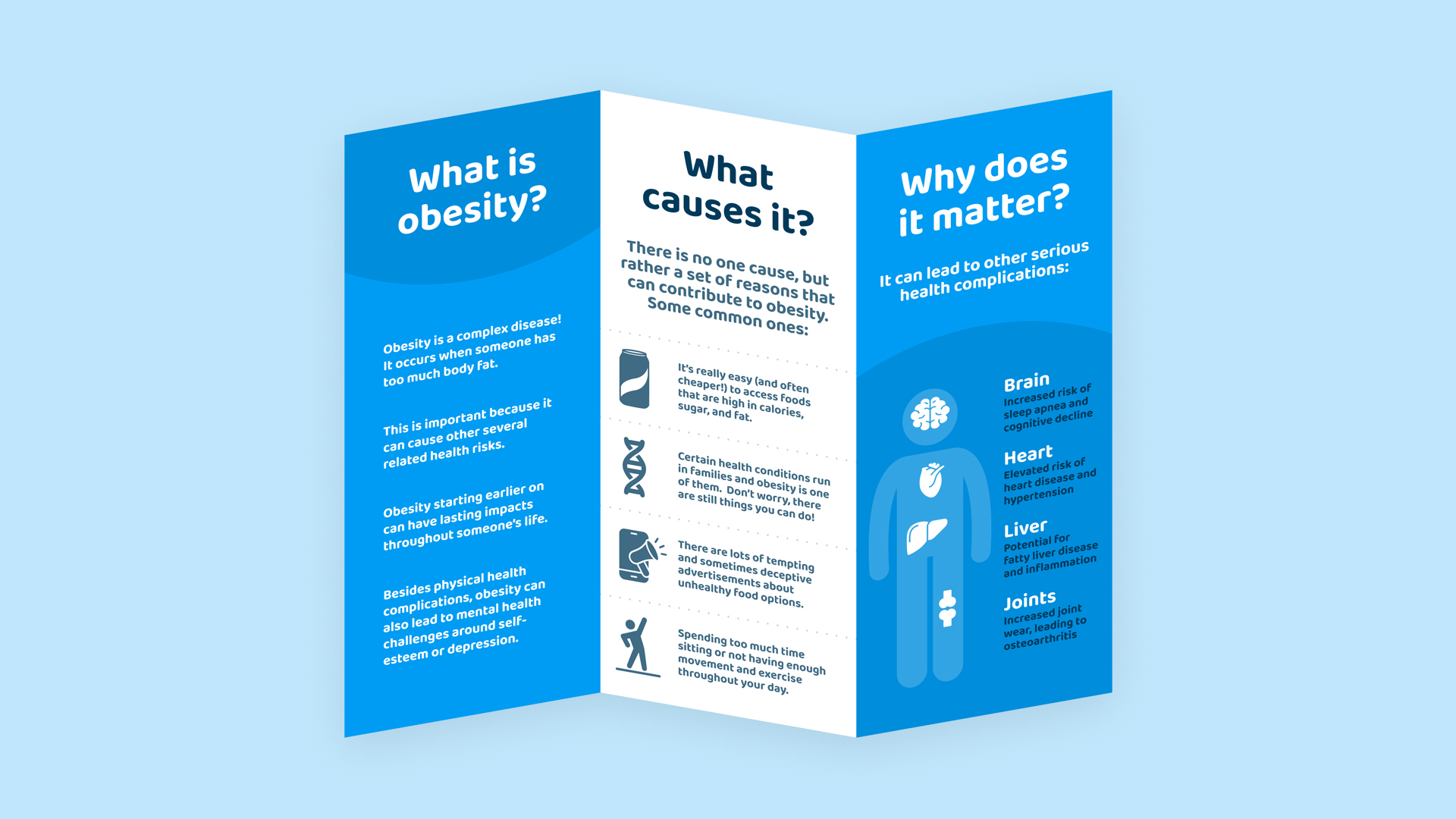
Obesity exists at the complex intersection of a clinical condition and a cultural force. Clinically, it comes with a diagnosis and treatment plan. Culturally, it is influenced by beliefs, identity, and self-worth, making it deeply personal and often taboo. Families, healthcare providers, and experts tend to avoid the fraught “o-word,” opting for euphemisms instead. For families on Medicaid, these challenges are even more pronounced. Award-winning health-tech startup Clarity Pediatrics, together with designers from IDEO, IDEO.org, and with support from Rise Together Ventures, sought to uncover the obstacles to healthier lifestyles and create a free report for US pediatricians who want to bend the curve on the childhood obesity epidemic.
Research with kids and parents on Medicaid in Dallas, Texas, and California’s Bay Area, along with interviews with healthcare providers and experts across the country, uncovered stories of stigma and frustration. Parents spoke of the daily challenges of balancing multiple jobs, sourcing affordable healthy food, and finding time to make necessary lifestyle changes. They described rushed pediatric visits that left them with unclear next steps and feelings of blame. Provider conversations echoed these struggles, noting time constraints and limited follow-up options.
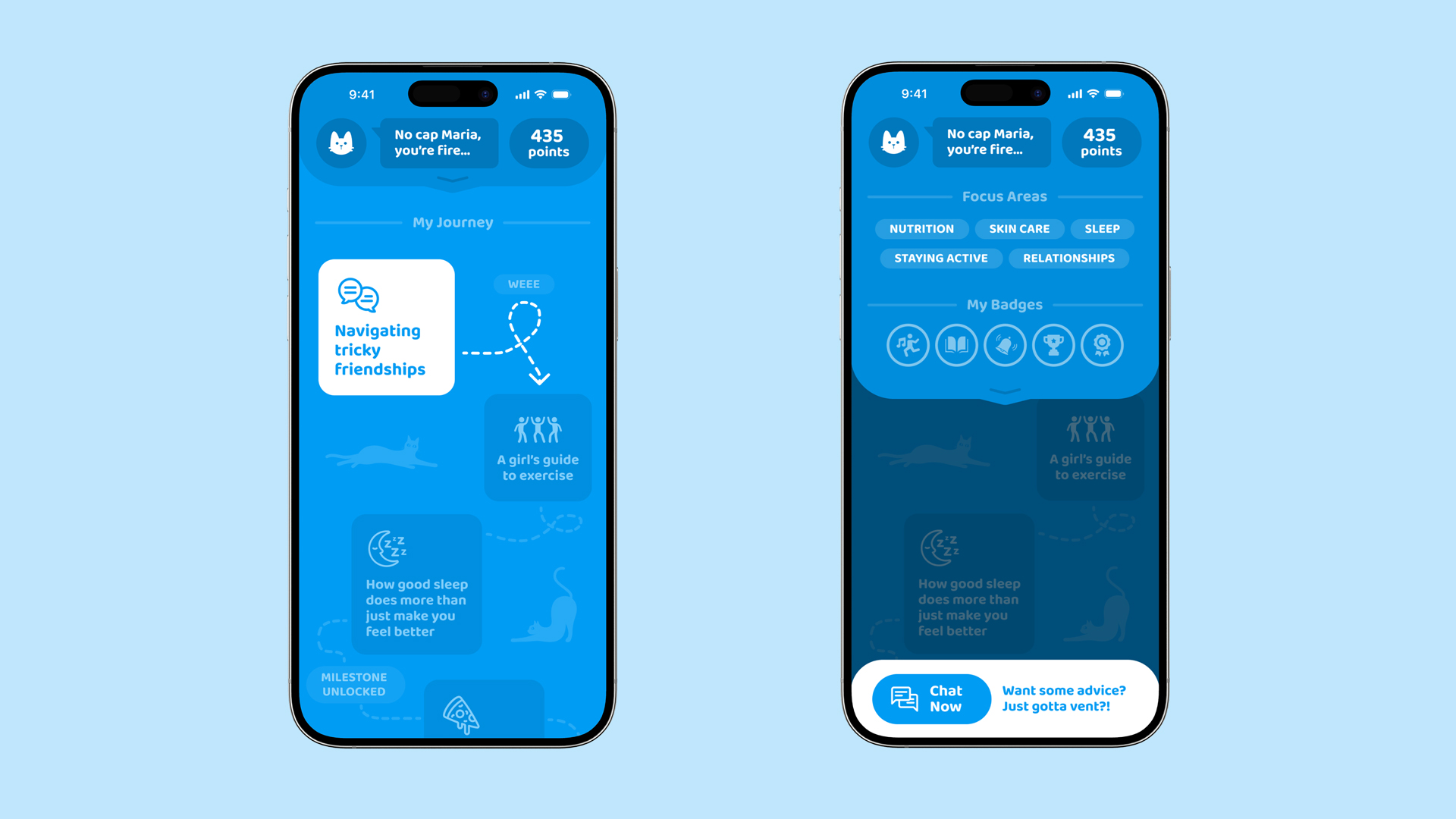
Ultimately, food had become a daily torment for these families. Eating was unavoidable and also one of the few affordable indulgences low-income parents were able to provide. Once kids left their own homes, they were surrounded by unhealthy temptations, making it feel impossible for parents to maintain control. The popularity of costly new weight-loss medications and surgical procedures added another layer of complexity for families who had been underserved by—and therefore distrustful of—America’s healthcare system. With so much of the responsibility placed on parents to self-direct care, inequities deepened, adding to the burden of families already at a breaking point.
To design a path forward, IDEO and IDEO.org mapped a family’s needs before, during, and after pediatric visits. This work revealed critical parts of the journey where families needed more support: recognizing early signs of obesity, navigating provider conversations, and sustaining healthier habits at home.
These insights informed a theory of change framework that provides actionable guidance for stakeholders involved in obesity care. Grounded in three opportunity areas along the patient journey—building awareness, confidence, and capacity—the framework highlights how trust, dignity, and systemic support can lead to lasting outcomes.
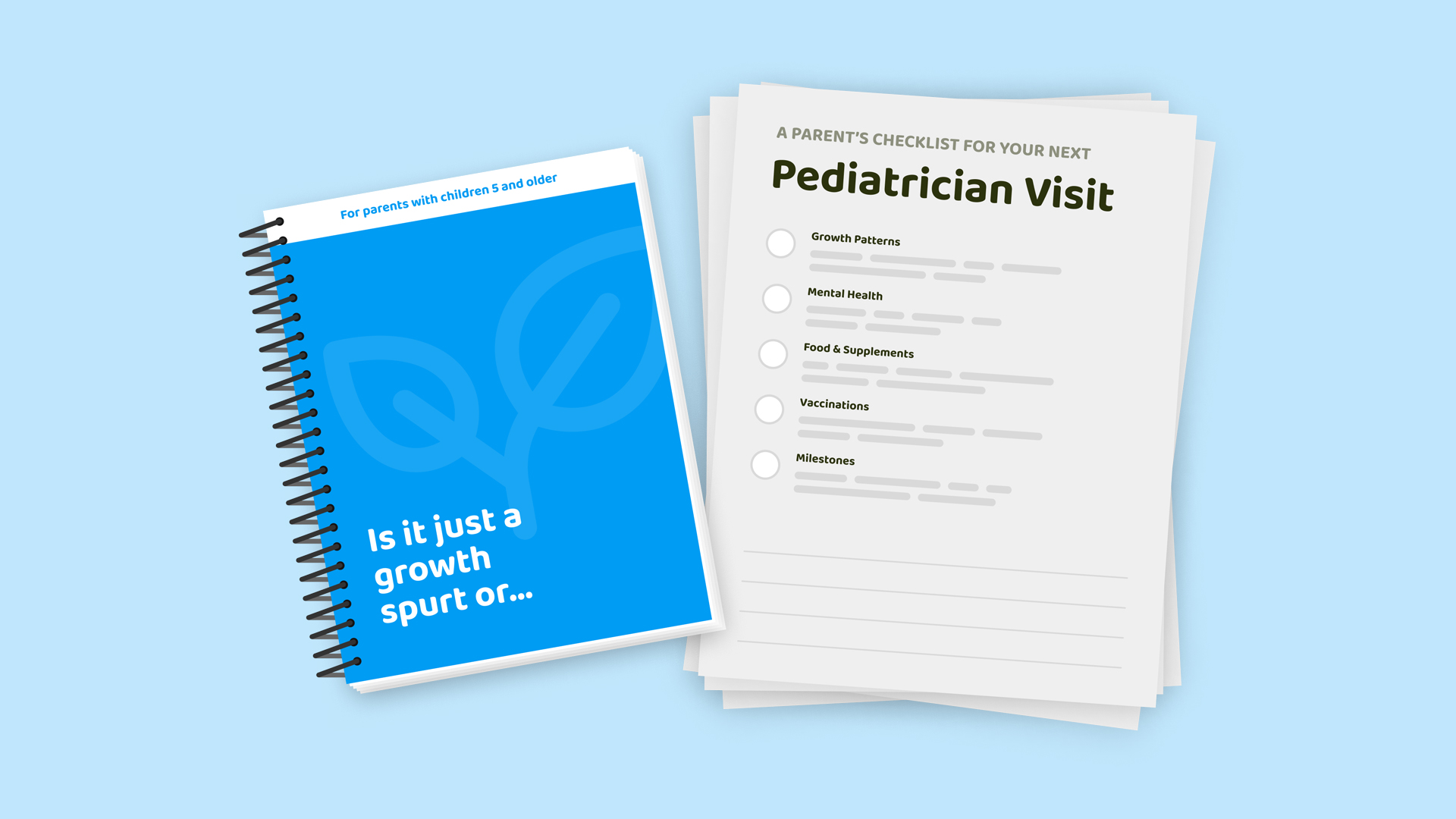
IDEO and IDEO.org also developed 10 user-centered concepts spanning digital, physical, and service offerings to reduce stigma and empower families to sustain healthier lives. These ideas address dignified diagnoses and structural inequities, among other pressing issues. Complementing these concepts, IDEO created a short documentary of a mother discussing her family’s experience navigating childhood obesity to help pediatric providers—many of whom have had very different lived experiences from the families and patients they serve—better understand the realities of the daily struggles of many families on Medicaid.
Designed for the public good, the interactive website and free downloadable report, Reimagining Childhood Obesity, contain research findings, design recommendations, and a theory of change framework. The goal: provide practical, actionable guidelines for pediatricians, educators, healthcare organizations, and innovators to meet families and kids where they are and support them as they move toward a healthier future.
21% of US children are obese. 40% of Latino youth are either overweight or obese.
26% of kids on Medicaid experience childhood obesity, compared with 11% on private insurance.
525,600 minutes: Total time per year parents spend caring for their children. 17 minutes: Average time a pediatrician spends with a child during their annual exam, a small window to address a complex chronic condition such as obesity.
10
user-centered ideas to help pediatricians reduce the stigma of childhood obesity in an accessible report
3
opportunity areas for building trust with young patients and providing family support
Building Acer’s Climate Lab
How a consumer electronics giant is turning sustainability into an engine for growth.
With its reach, Acer saw an opportunity to power positive choices in the billions.
But new products and services won’t succeed if consumers don’t want them, no matter how sustainable they are. A few years go, the Harvard Business Review’s report, "The Elusive Green Consumer," found that about two-thirds of those surveyed said they wanted to buy brands that advocated sustainability. But only a quarter actually did.
Meanwhile, the market for climate era products is only growing: In 2022, Forbes found that nearly 90 percent of the Gen X consumers they surveyed said they’d be willing to spend more on sustainable products, compared to just over a third two years before. The desire was only higher among Millennials and Gen Z; they just didn’t like what was on offer.
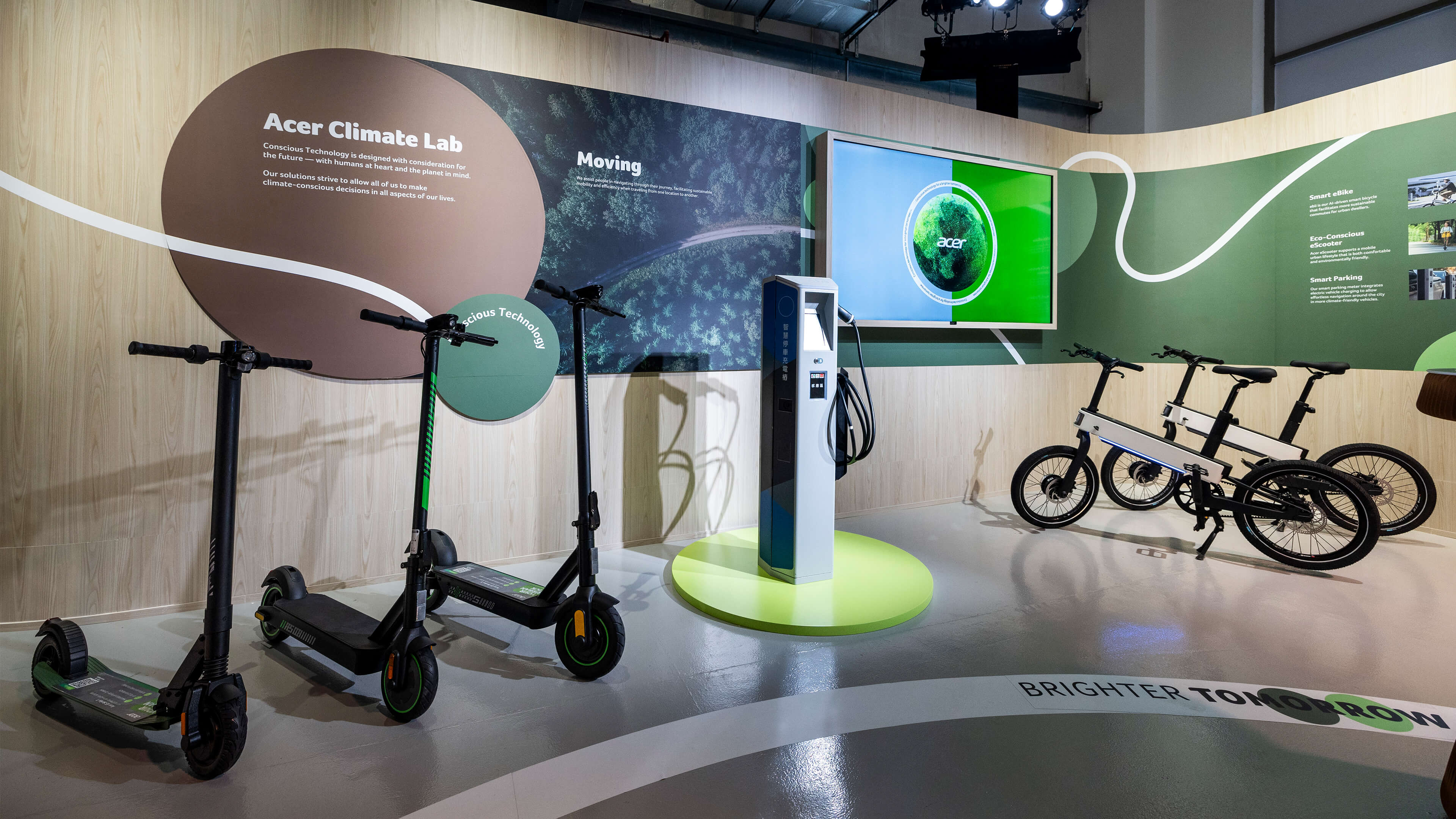
To drive sales and growth, and meet its sustainability commitments, Acer needed to capitalize on desirability, deepening the connection between Acer’s sustainable options and consumer needs, lowering the barrier to purchase. To that end, Acer and IDEO created the Acer Climate Lab, a cross-organizational team and initiative, to launch the company on a transformative journey to deepen the connection between Acer's conscious technology and the realities of people's lives and needs across four strategic areas.
Together, the combined team conducted extensive research to better understand consumer attitudes and behaviors toward sustainable products, and identified everyday areas where Acer’s conscious technology might be able to have the most significant impact: living, working, moving, and learning.
- Living: Envisions homes as hubs of energy efficiency and climate resilience, leveraging technology to optimize energy use, enhance air quality, and enable proactive climate management. These concepts include technologies like smart energy systems, adaptive air solutions, and integrated home management platforms explore how technology can support sustainable daily living.
- Working: Reimagines the workplace with flexible, sustainable technology solutions that prioritize resource optimization and circular practices. Concepts such as Acer Loop could provide a subscription-based model that ensures access to the latest technology, supports remote work, and reduces electronic waste through effective recycling and rehoming practices.
- Moving: Focuses on the transformation of urban mobility by integrating technology into systems that promote sustainable transportation. Concepts could include e-mobility hubs that highlight how urban spaces could offer seamless access to shared, low-emission travel options, reducing reliance on traditional carbon-heavy methods.
- Learning: Explores pathways to sustainable education by imagining environments where technology supports circularity and accessibility. This includes ideas like refurbished devices for students, repair and reuse programs, and educational spaces designed with climate-positive principles, nurturing eco-conscious habits in future generations.
Together with Red Peak and Sid Lee, the team launched the culmination of the work at COP28, the United Nations Climate Change Conference in Dubai, positioning Acer as a pioneer in climate positive technology. The exhibit included immersive experiences and interactive displays demonstrating how Acer's sustainable solutions seamlessly integrate into everyday life. Visitors could engage with scenarios depicting sustainable living, working, moving, and learning, emphasizing the practical benefits of Acer’s innovations.
Acer's journey through the Climate Lab project underscores a commitment to sustainability that goes beyond mere compliance. With this new cross-business team tackling the real-world barriers faced by consumers, Acer is paving the way for a more inclusive, sustainable future. This initiative not only aligns with global climate goals, but also sets a precedent for the tech industry, demonstrating that with the right approach, sustainability and innovation can go hand in hand.
In a survey, 65% of respondents said they want to buy brands that advocate sustainability, yet only about 26% actually do.
Nearly one in two consumers say they either don’t know what information to trust, or that nothing can influence how much they trust a business’s commitment to sustainability.
1 cohesive strategy
for climate era products across 6 different fields

A better way to teach writing, with AI
Ethiqly empowers time-strapped teachers to provide feedback at scale.
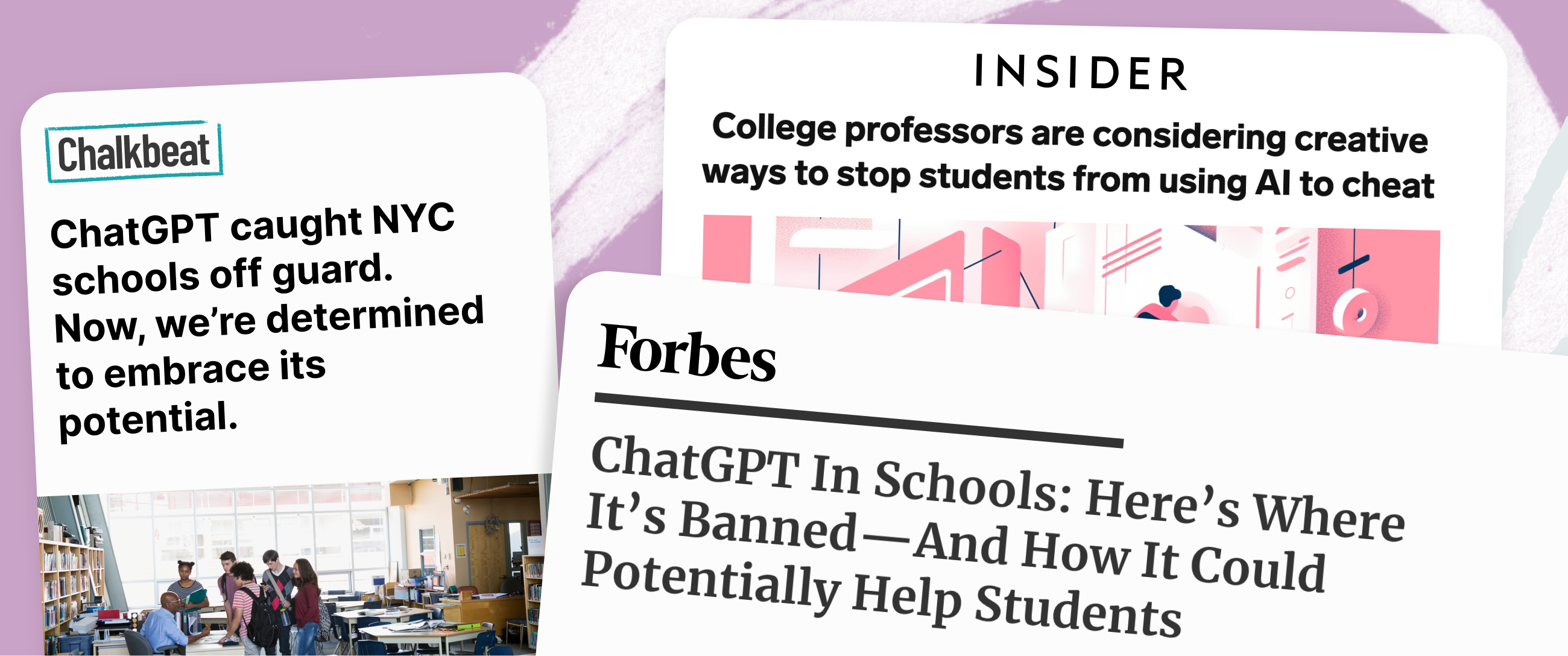
With the introduction of generative AI, Ethiqly and IDEO saw a unique opportunity to help teachers, by cutting down the time it takes to provide each student with feedback on their writing assignments. But to get there, they had to learn from the experts themselves. To kick off the project, the team headed into the classroom to co-design with students and teachers.
One of the first problems they discovered? Traditional methods of grading essays are laborious and inefficient for high school teachers, who are already notoriously busy and overworked. What teachers really wanted was to spend time giving each student the personalized feedback that helps them grow. Meanwhile, students really struggled to get started on their writing assignments, overwhelmed by looking at a blank page.
Together, the team started to think about how it could harness AI to make personalized instruction more accessible for all students, helping teachers provide better feedback at scale, and giving students the support they need to not only get started on their writing assignments, but improve their work.
With insights directly from students and teachers, the IDEO team built working prototypes, allowing them to beta test the product in schools, and demonstrate value to investors. They also developed a brand identity and style guide for launch, which came to life in a pitch deck, landing page, and other brand expressions.
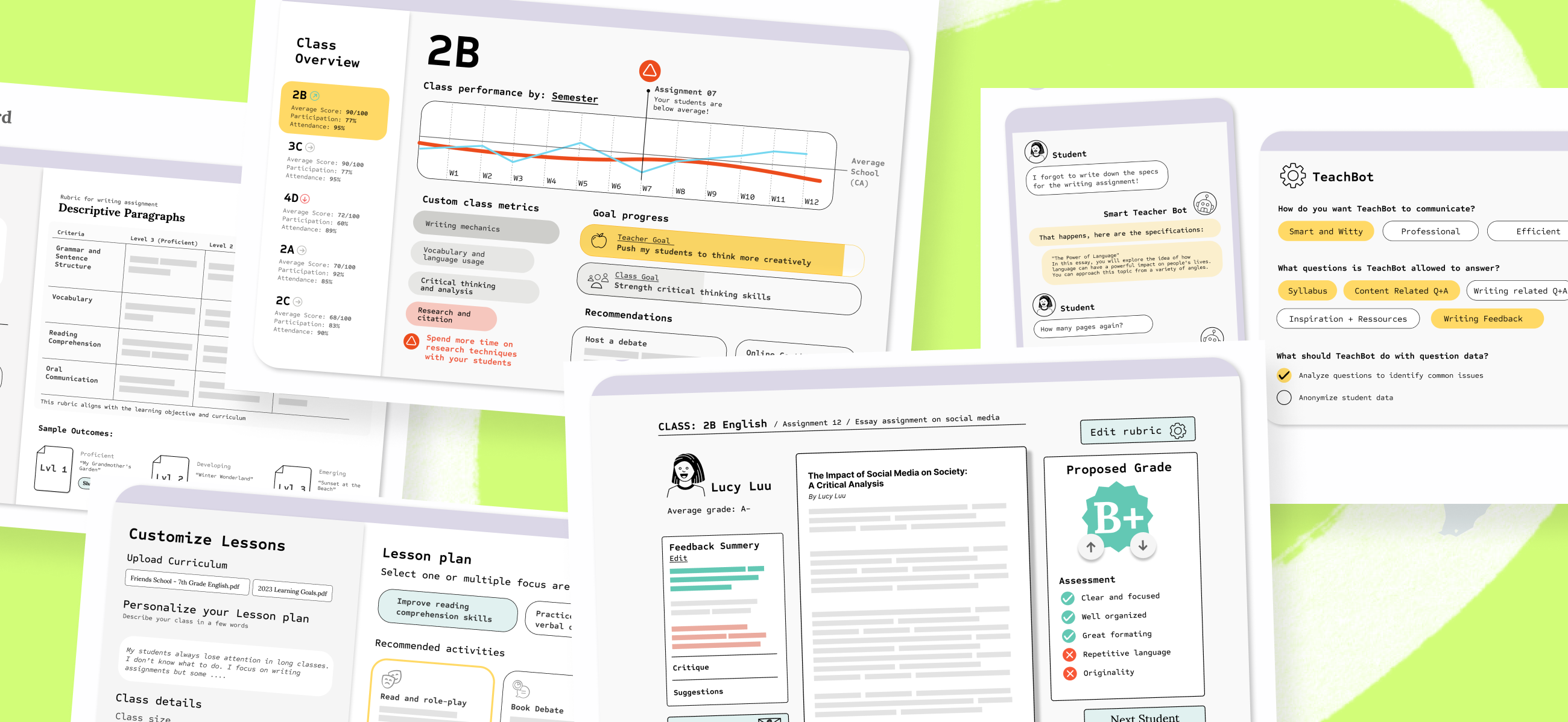
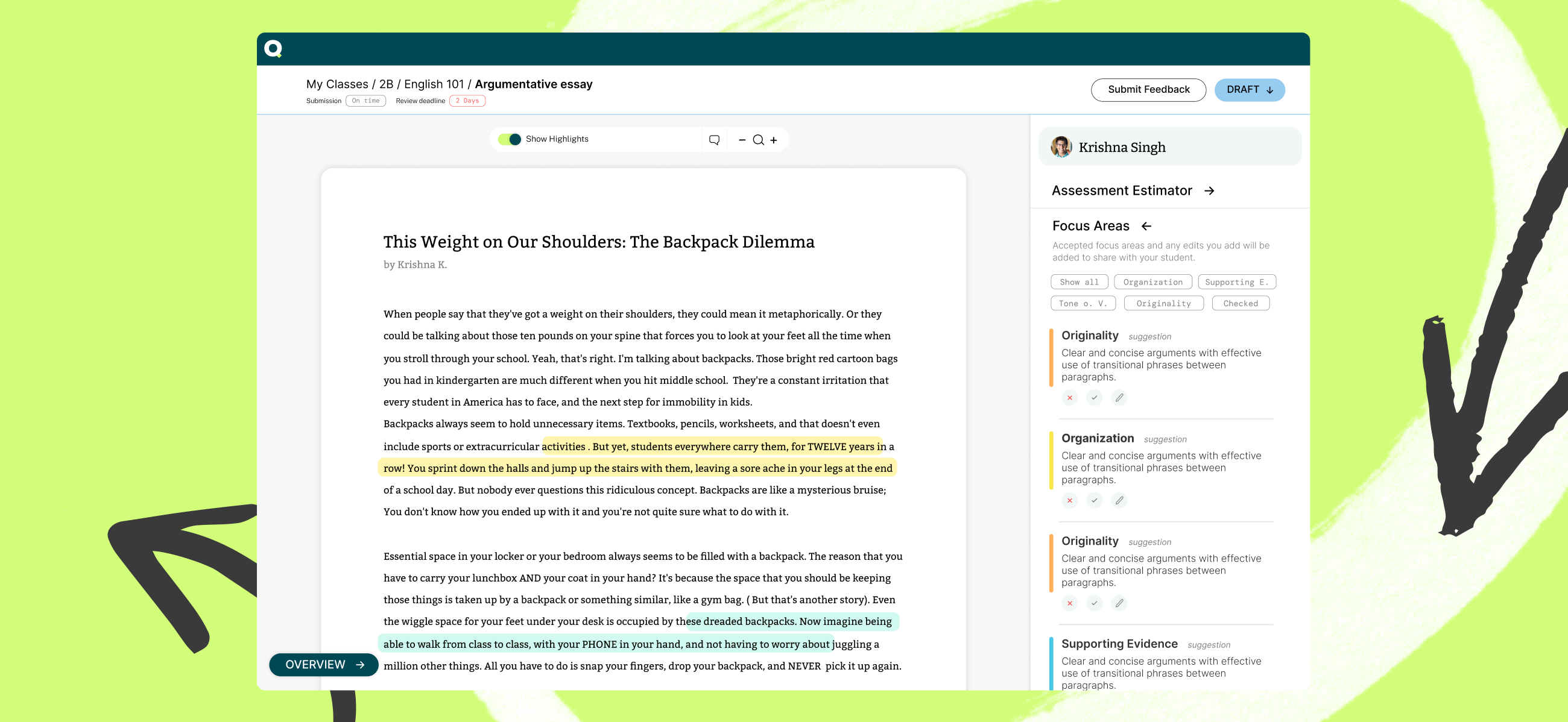
The resulting product is a sophisticated blend of AI technology and user-friendly interfaces that empower teachers and inspire students. The goal isn’t just to get to a finished essay, but to assist students in developing critical thinking skills. Ethiqly's tools help students organize their thoughts and get writing by providing contextual prompts and suggestions—without doing the work for them. And the AI assistant supports teachers by suggesting comments based on evaluation criteria they have set, and teachers choose which feedback is relevant for their individual students. Students never see it without teacher approval.
As one teacher told the team, “With leveraging AI more in education, there’s this fear that it’s deprofessionalizing the field or it’s a direct replacement of a teacher in a classroom. I think it gives us meaningful data, so that we can actually teach the way that we want to in order to support our students.” Now, Ethiqly is in use in classrooms in 25 countries, positively impacting students across the globe.
Teachers know 1:1 interaction is key to student success, but an EdWeek survey found only 46% of teachers’ time is spent teaching, while 25 hours/week goes to other tasks like grading and making lesson plans.
25 countries…and growing
Ethiqly’s reach in classrooms around the world
Designing a park for generations to come
Frisco, Texas, imagines an ambitious city park for an evolving community.
Designing a piece of a city, like a park, doesn’t start with a blank slate. There are always traces of the past and the present, and the lived history of its residents.
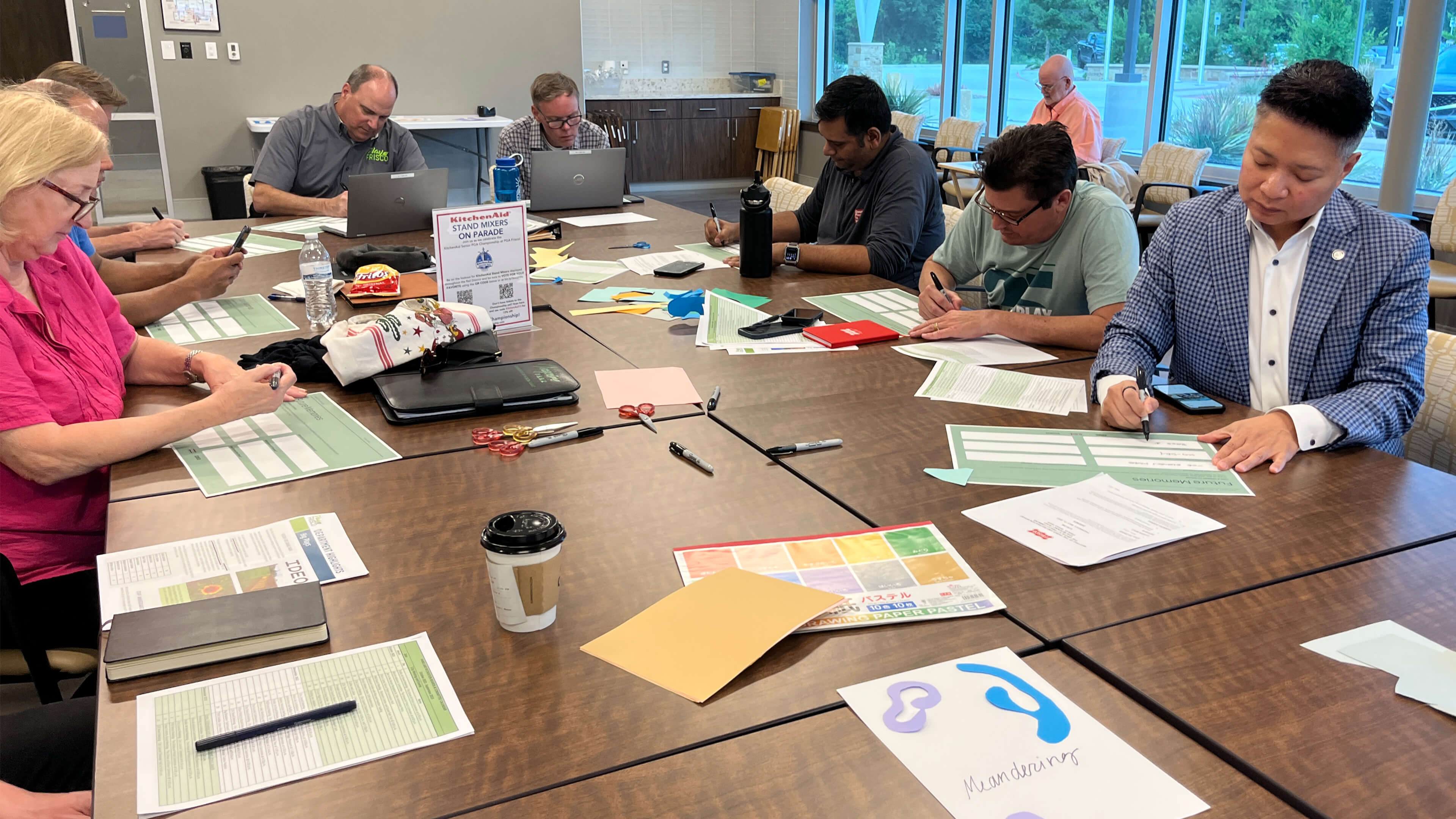
To create a full picture of that story, the IDEO team built workshops for the community centered around questions about the unique experiences of living in Frisco. They invited them to reflect on the communities they grew up in, the city of today, and the public spaces that have played formative roles for them.
From their answers, a common value emerged: heritage. Frisco is a rapidly growing city, with residents whose families have lived there for centuries living side-by-side with more recent neighbors from diverse cultures and ethnic groups. Participants shared a vision of Grand Park as a unifying, shared space, a backdrop where many families can form foundational memories in Frisco.
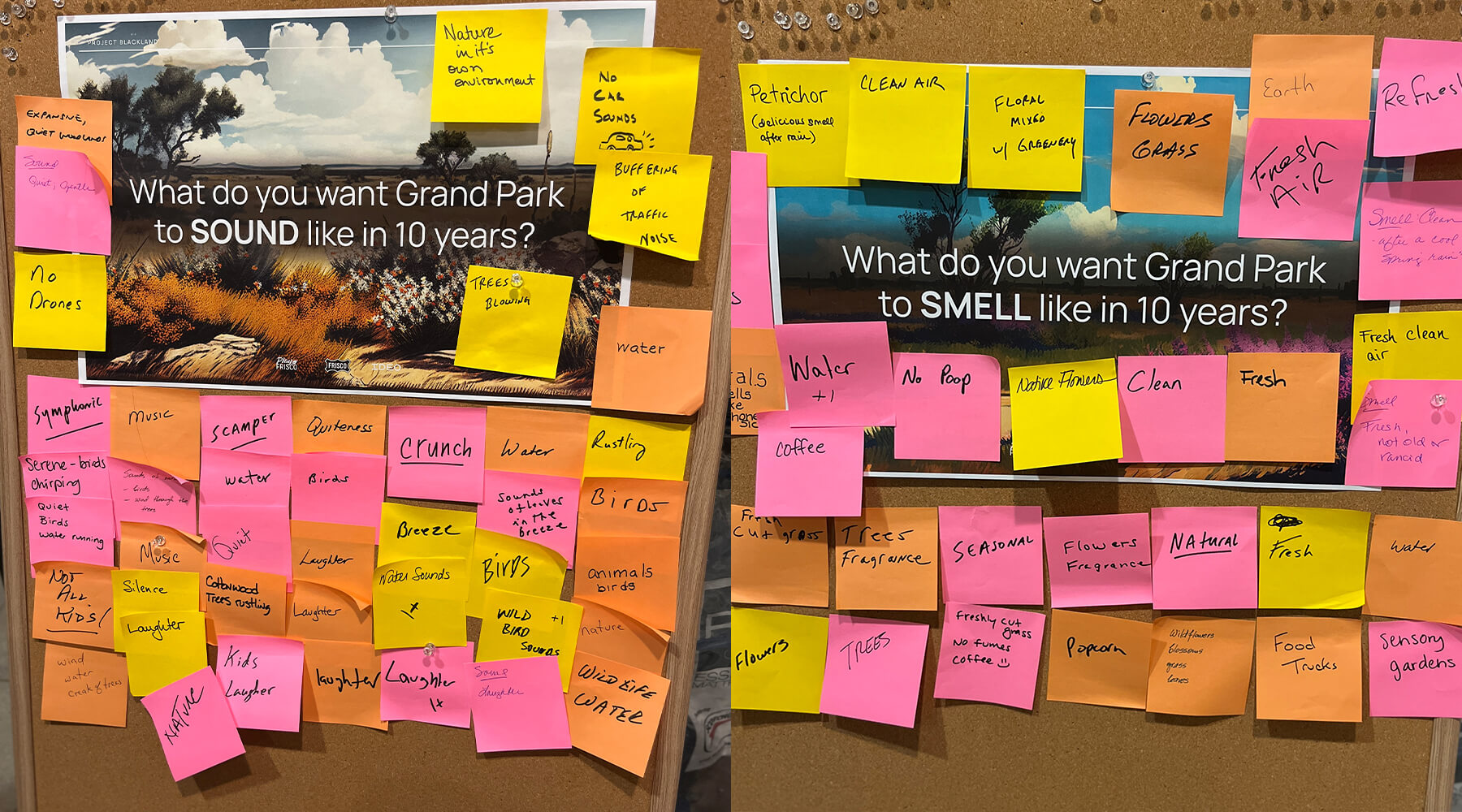
Next, IDEO brought in multisensory design prompts to help participants further conceptualize the park. How did they want it to feel, sound, and smell? In the built-up, suburban city of Frisco, residents imagined a space that was less planned, enabling guided wandering and exploration. They also hoped that the park would inspire loved ones and descendants to feel a sense of curiosity and wonder.
At the end of workshops and sessions with community groups, the IDEO team took Polaroids of participants, asking, “What’s one word you want to describe Grand Park in the future?” Those words informed the collective vision that IDEO delivered to the city of Frisco, which included spatial concepts, user journeys, and branding for the park, all designed to showcase its unique landscapes. In January 2024, Frisco City Council approved the vision statement, and officials expect to break ground in the second half of 2025.
The population of Frisco is growing rapidly; its population is up 516% since the year 2000.
At more than 1,000 acres, Grand Park in Frisco is even larger than Central Park in New York City.
Less than 1% of Blackland Prairie soil remains in the region, and some of it is in Grand Park.
94
Frisco residents were engaged in the process, from City Council members to high school students
200+
respondents shared anonymous feedback on what they imagined the park should be

What electric cars can tell us about redesigning the food system
Looking for inspiration in unexpected places can help us cut food waste and make products more appetizing
In an effort to be more conscious of our own health and the health of our planet, we’re being told to eat a plant-based diet, while, at the same time, lab-grown meat is gaining traction. How do we wrap our heads around all of it?
We think design can help. But a few things have to shift if we’re going to drive the global food system toward greater sustainability. At the consumer level, it’s about supporting people to make healthier decisions about how they eat. At the level of large companies or complex systems, it’s about helping organizations reinvent themselves, ask bigger questions, and make more thoughtful changes from within.
In either case, change isn’t easy. To help our clients in the food space get inspired and energized, we often recommend looking for insights in unexpected places—we call it “analogous inspiration.” It’s easy to get caught up in what you already know and mired in the same cyclical ways of thinking; to innovate, you have to break out.
Here are a few ways for folks to innovate in the food landscape (and beyond):
1. Design for emerging behaviors
During a recent project to help a global beverage company think beyond its current business, we set up interviews with people outside the industry, including one with a company that makes charging stations for electric vehicles. When the car charging company was just starting out, leaders assumed they would follow the model of gas stations by building stand-alone charging stations spread throughout a city. That’s how people had fueled cars for decades, right?

But it turns out consumers don’t want to stand around for 30 or 40 minutes while their cars charge; instead, they want to fold charging into another errand, such as a trip to the grocery store. Because their lives are increasingly complex, they want to streamline wherever they can. This insight prompted the charging company to completely rethink its approach.
Though the beverage businesses has nothing to do with cars, seeing the charging company’s abrupt change in tactics to address a human need inspired our client to think far beyond existing consumer behaviors and to advocate for big changes in the business model.
The takeaway: Instead of taking the established route, innovators should be on the lookout for new and emerging behaviors that indicate an alternative path to designing for the future.
2. Get up close and personal
A lot of living happens outside of conference rooms and surveys. In order to capture what’s really on folks’ minds, we often spend days or weeks shadowing people and looking for unconscious behaviors that can influence how we design for them.
Recently, we were working with a baby food company looking to expand its line of products. We met real customers and shadowed them for days—at home, on their commutes, while shopping, and when preparing food. By traveling on the subway with them during feeding time, watching them buy groceries, and sitting with them in their homes, we noticed how many workarounds they used when feeding their infants and a few common issues they faced with existing baby food.
These insights, while seemingly small, helped inform how we designed our client’s food packaging. It was the little observations we made by diving in head-first with parents that enabled us to create a feeding experience that feels a bit more parent-centered.
The take-away: Double down on real human interactions and don’t overlook the small stuff. Sometimes, subconscious behaviors and common workarounds indicate the need for a redesign.

3. Look beyond your industry
When you walk into a hotel room, you’re often greeted by signs encouraging you to save water by reusing your towels or foregoing a change of sheets. While no longer new to most of us, these reminders were fairly revolutionary when they first appeared and have helped to save millions of gallons of water since.
When we set out to help the Rockefeller Foundation find ways to reduce food waste, we looked for examples of waste reduction in other industries, including hospitality. Hotel signage cueing visitors to reuse towels is more than just a pesky reminder to save water; it’s a way for people to incrementally change their behavior while feeling like they’re a part of something bigger for the betterment of the planet. In this case, understanding what motivates people resulted in a drastic drop in water waste.
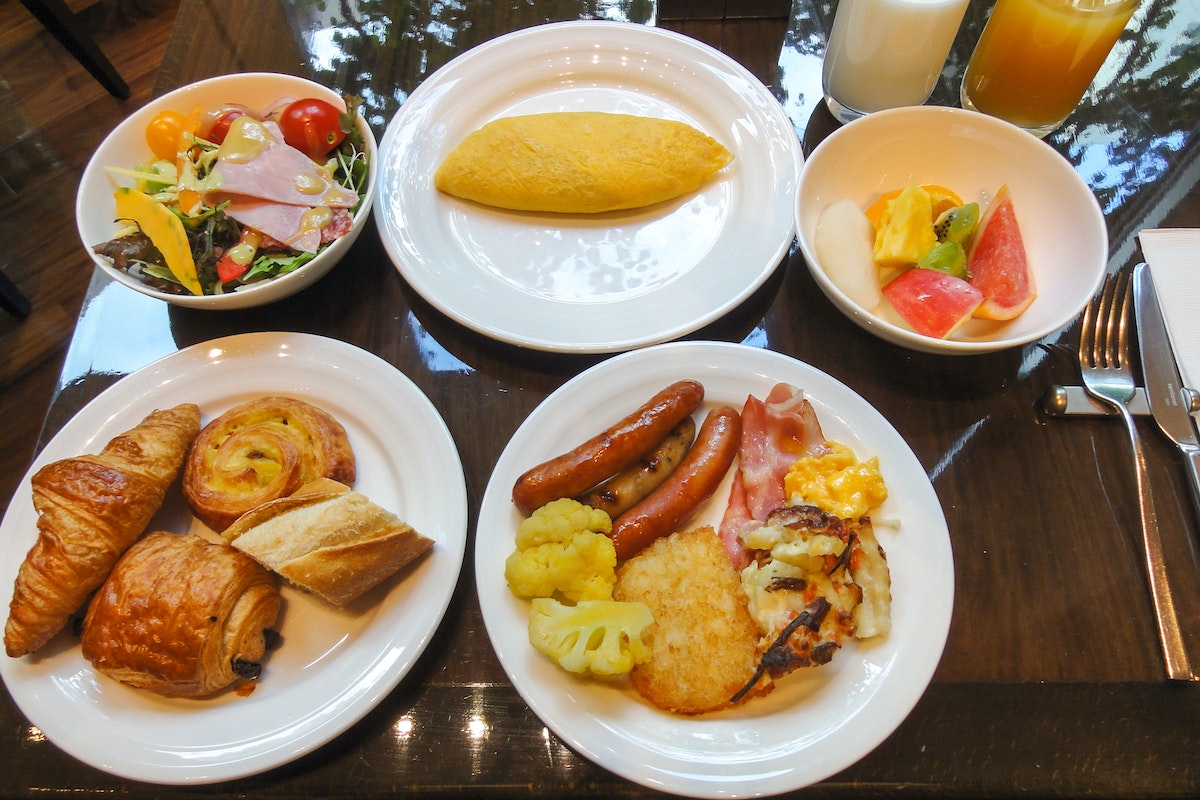
With the Rockefeller Foundation, we tapped into data around food waste and were able to use it to predict human behaviors and test subtle changes in a number of industries. Hyatt Hotels prototyped some of this thinking in their buffets—by switching from whole cakes to individual sweets, for example—resulting in a 10 percent cost savings for the company and an enormous reduction in food waste.
The take-away: Instead of looking within your own walls for inspiration, look outside to other industries and sectors to see how they’ve solved similar problems.
We've found these three design approaches useful. Have other ideas? We’d love to hear them! Tag @IDEO and use the hashtag #designforfood.
The world of food contains all kinds of internal tensions: On the one hand, we’re faced with hunger and food shortages, while on the other we’re fighting an obesity epidemic.
What the AI products of tomorrow might look like
With human needs in mind, we designed some speculative smart things
And as with any technology, AI can have a dark side, too. Whether it's Cambridge Analytica exploiting personal information for political gain or Northpointe developing prejudiced algorithms for bail and sentencing hearings, danger lurks.
This is a moment for design. A moment for us to imagine the kind of future we want to see. What might it feel like?
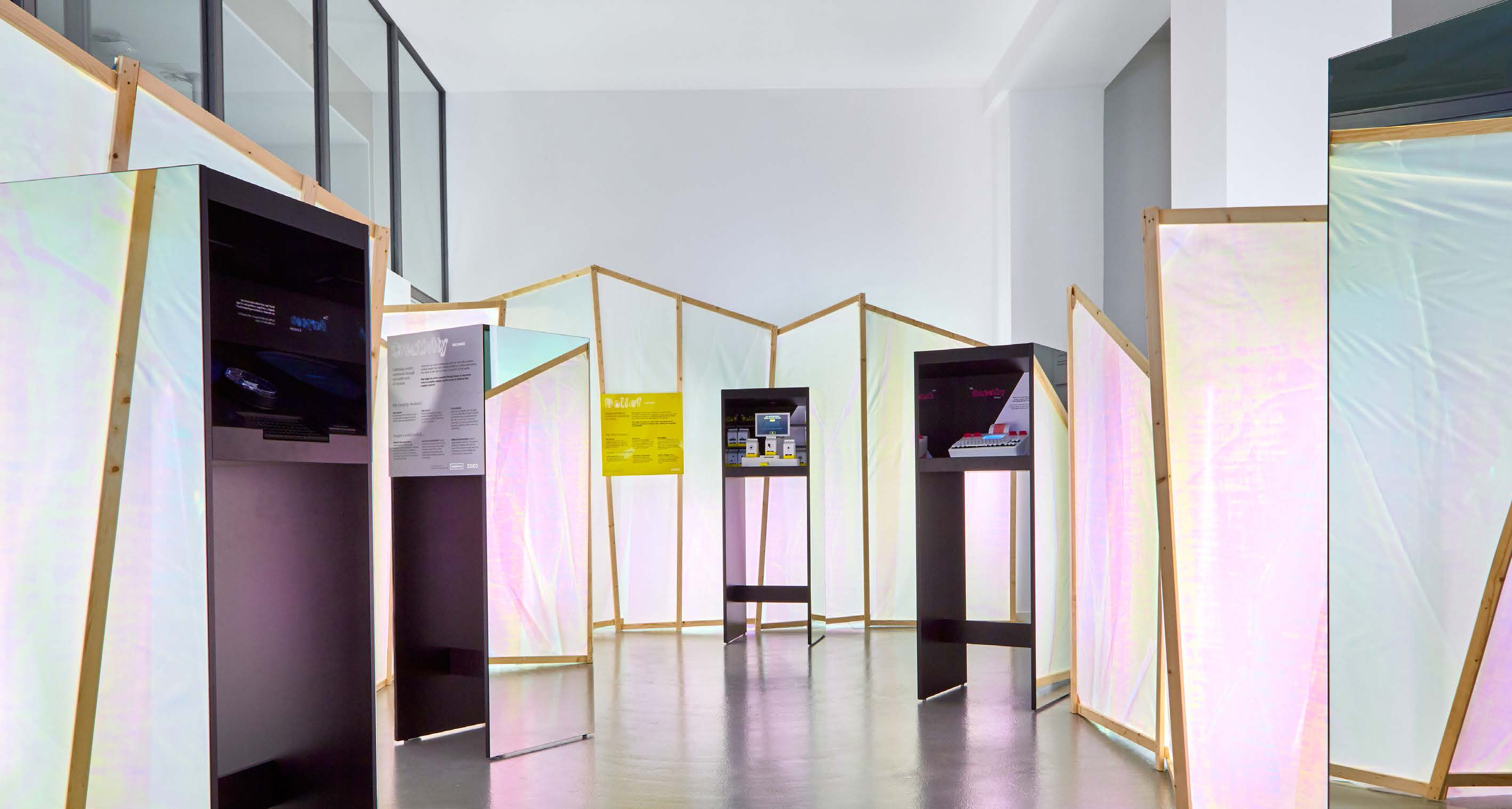
To explore those questions, and give shape to the immense benefits that intelligent machines can bring to our lives, work, and society as a whole, we created a speculative design exhibition for Munich Creative Business Week called Hyperhuman.
Here's a peek at the products:
The Purpose Compass
What if a machine could help you better understand your strengths? What if it could help you succeed in a machine-augmented future?
Armies of robots already populate the factory floor and digital lawyers write our contracts. As intelligent machines become a fixture in every aspect of our work and lives, they inevitably start challenging our contribution to society, begging the question, do humans still matter? What is our purpose?
The Purpose Compass helps you determine your unique worth in the future. It understands what you are good at and helps you decide what to focus on to stay relevant, productive, and happy in the long term. Turn towards larger purpose goals—teaching, leading, inventing, or caring—to set a course and learn which skills you'll need to pick up to get there. Over time, many skills will be automated, freeing you up to learn new ones.
Purpose is shaped, not given.
The Expertise TV
What if a machine could identify gaps within an organization’s knowledge and help you figure out how to fill them?
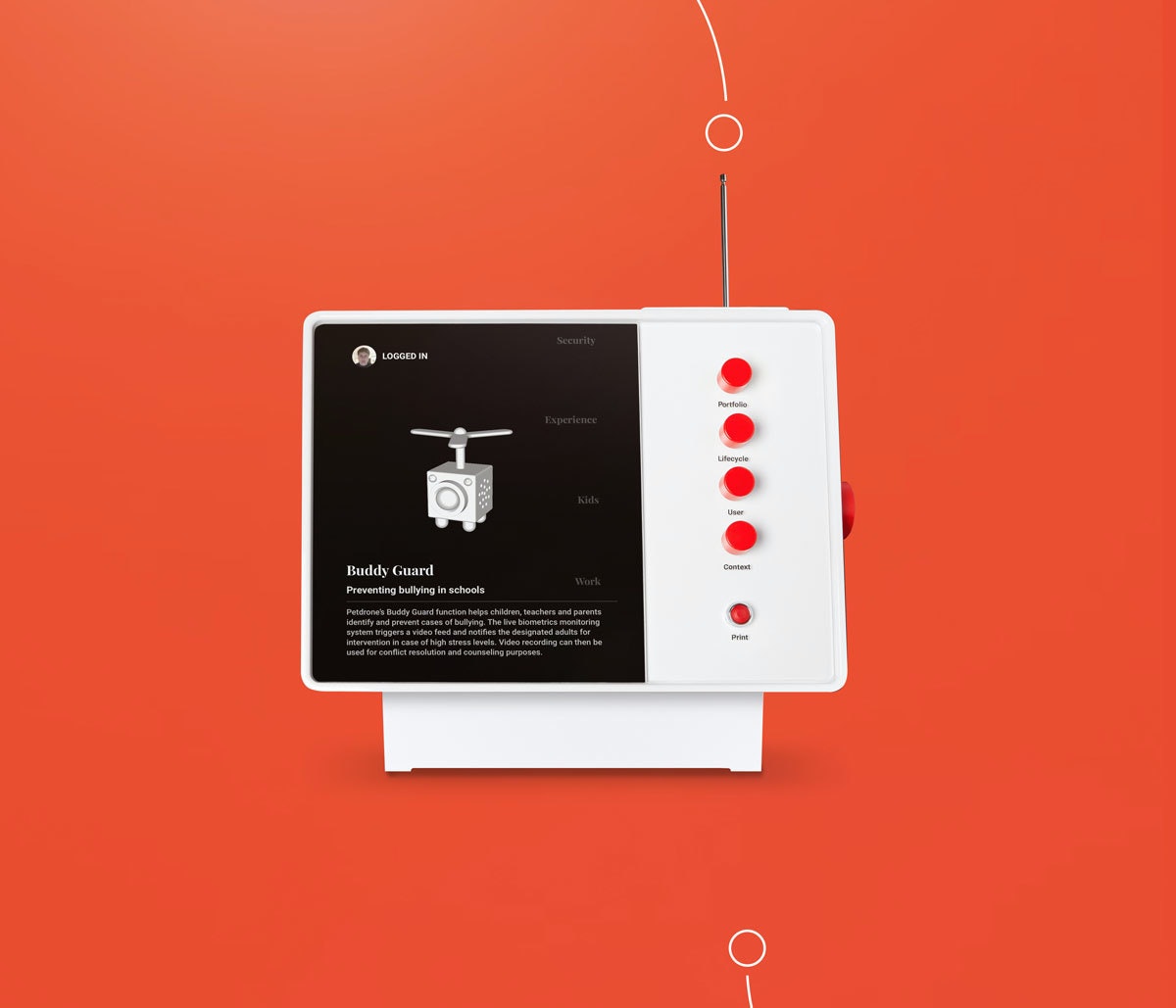
We have unprecedented access to information, but the sheer volume of it prevents us from gaining deep understanding of a wide range of topics. We either specialize in a specific field or become generalists, making assumptions to fill the gaps in our expertise.
Enter Expertise TV: Twist its knobs and it instantly directs you to experts whose knowledge sheds light on unanswered questions that are holding your organization back.
Knowledge resides in people, not machines.
The Creativity Mixer
What if you could describe your personality, and ‘mix’ a visual identity that expresses you?
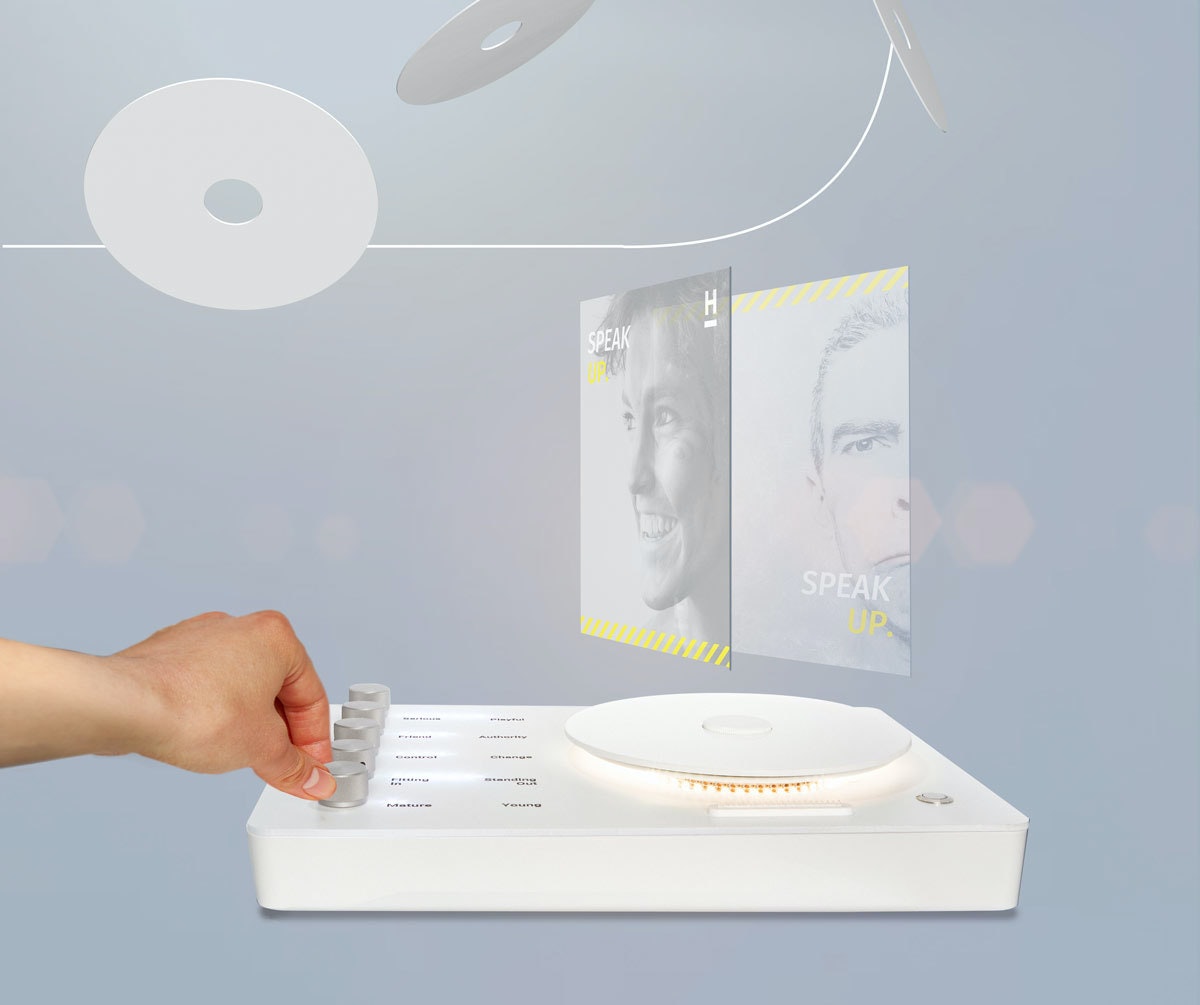
Even with a creative mindset, people often lack confidence and ability to shape and express their ideas at the highest level.
What does your brand look like? Turn the dials of the Creativity Mixer (produced in collaboration with creative.ai) to set your personality ("playful," "stubborn") and it calls up images, fonts, and colors for you to use when executing ideas. When settled with your choices, hit print for your very own brand style guide.
Creativity is latent, tools make it accessible.
The Empathy Writer
What if you could find the exact right words to express your feelings? And nothing got lost in translation?
Our globally connected lives mean we’re frequently brought into contact with people from different cultures and backgrounds.Despite the opportunities these networks present, we often struggle to communicate, as we are not equally fluent in the other’s language and don’t share the same cultural
mores.
What if you could find just the right words to express your feelings? And nothing got lost in translation?
The Empathy Writer helps you convey what you mean in a way that will be easily understood. Using the character trait tiles, I describe myself and you, then the machine helps me compose a message in a way that reflects who you are.
Empathy is amplified.
The Belief Checkout
What if tomorrow’s supermarkets considered your values and ethics when automatically buying products for you?
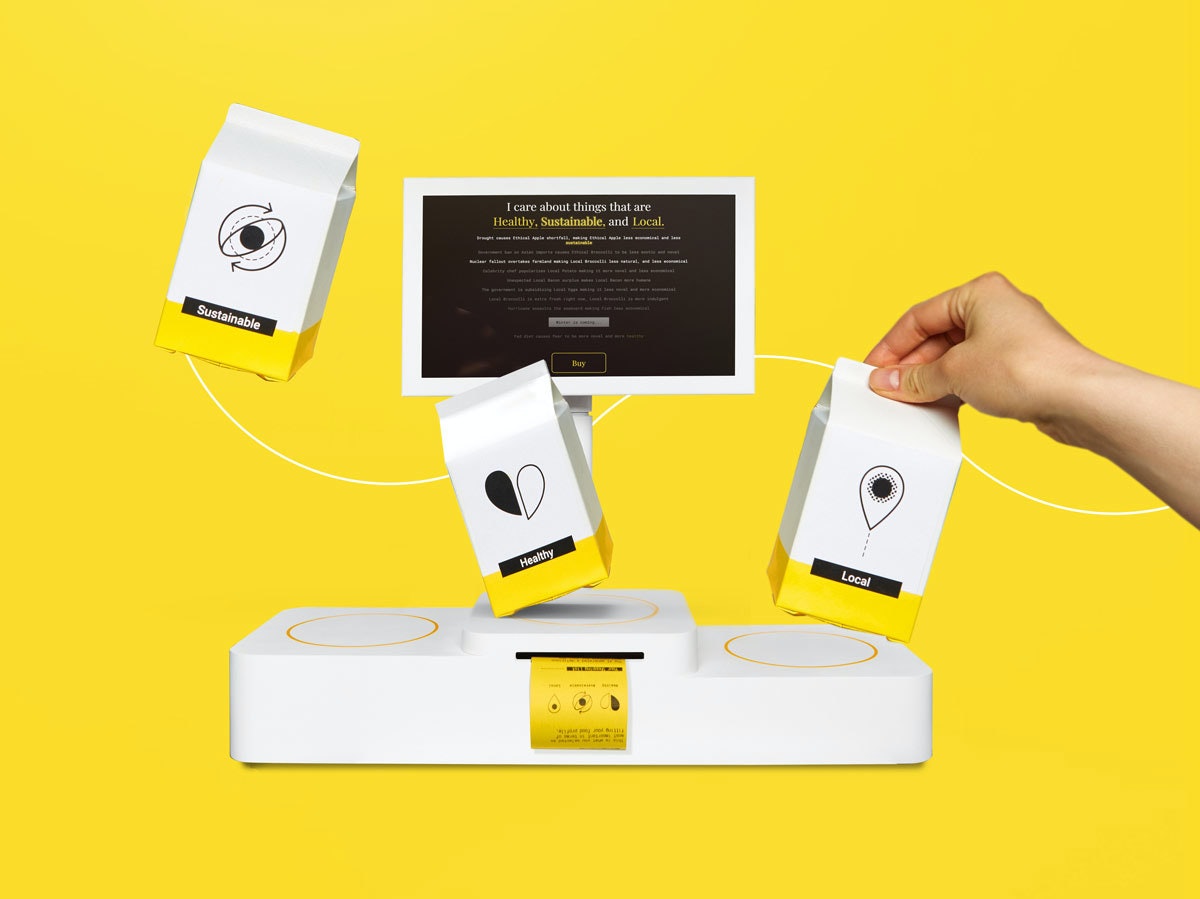
We outsource more and more tasks to AI. But how do we know that the decisions AI makes on our behalf are aligned with our beliefs and values? How do we impart them to the machine?
The Belief Checkout’s shelves are full of products that represent values. Pick the ones that reflect you to help steer the supermarket’s algorithm. Say you value sustainability. While eating red meat may not sound like a sustainable choice, eating an overstocked steak might be. The supermarket can help you make choices that square with your values.
We let go of control, but our beliefs stay in tact.
Hyperhuman was a collaboration between IDEO Munich, London, and Chicago. To find out more about our Protopian perspective on augmented intelligence email europe@ideo.com.
We’re in the midst of a revolution. Intelligent machines are able to augment our humanity in ways that seem lifted straight out of science fiction. Self-driving cars, bipedal and quadrupedal robots, even our thermostats learn from us and get smarter over time.

Thoughtless Acts: Hack your commute
Thoughtless Acts: Hack Your Commute. The intuitive ways we adapt and react to things in our environments
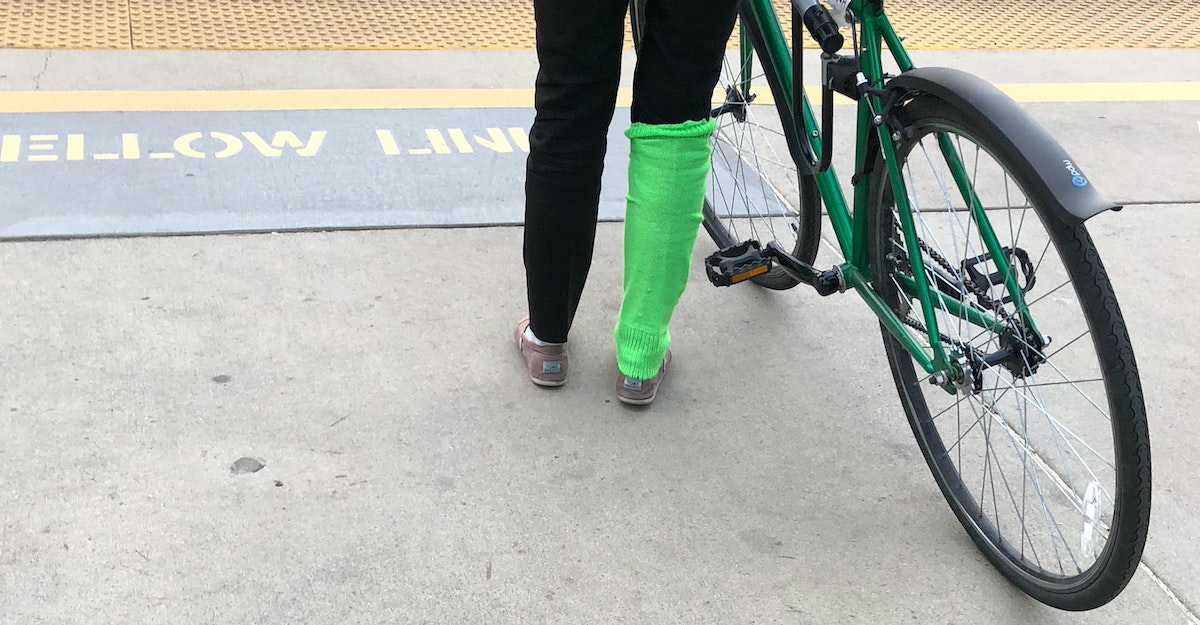
I took this picture at the train station right next to our Palo Alto office. At first glance, I thought it was an unusual fashion statement, but then I realized that the woman in the picture solved a common problem in an elegant way: When your bike lacks a chain guard, your pants can easily get stuck and you risk destroying them—or even causing an accident. By wearing a cut-off sock above her pants she kept them protected from the chain. By going with a chartreuse sock, she made sure she wouldn't be overlooked in the aggressive Bay Area traffic.
Unfortunately, I discovered this helpful little hack the day after I ruined my favorite yellow pants with chain oil. But don't pity me too much; in the end my dry cleaner saved my day, and from now on, I'll always carry a cut-off sock with me.
Human-centered design requires us to observe human behavior with beginner's eyes, so that we can spot the innate ways people interact with the world around them. We call these intuitive and unconscious reactions Thoughtless Acts, and IDEO designers collect photos of them to inspire their work.

The digital selves we leave behind
We detail so much of our lives online; what if the dead could whisper through technology?
In exploring the topic, I soon realized the issue was not the lack of stuff he would leave behind when he passed away, but rather quite the opposite. Today, a digital information overload is present for almost all of us.

As the techie of the family, I’ve taken on the role of digital archivist for two close loved ones we’ve lost over the years. My brother died in 2003, and 15 years is a very long time ago in technological terms. Nonetheless, I was able to build an archive of his photos, MP3s, school papers, personal documents, and other digital fragments. I felt closer to him because of this.

Today of course, we have social media, and it’s a cultural trope to say that we live out our lives publicly on it. But social data only represents a limited and curated self that we share with the world. Our digital footprint is vast. Beyond our social data, we have our emails and chat histories, the photos and videos we take, the photos and videos others take of us, and our web searches—all of which are rich with metadata, including time, date, and location.
IBM estimates that humanity is generating 250 billion gigabytes of data every single day, and that 90 percent of all the data ever created by mankind has been generated in the past two years alone. In just two years, we’ve surpassed the volume of the entire record of human knowledge from cave paintings up until the end of 2015.
Consider that we’ve only had photographs for a few generations. I can look back at this photo of my young grandfather and his rugby team in County Sligo, Ireland, but we have no photos of his grandfather. Until quite recently, most of humanity never had any record of how their ancestors looked—something we take for granted today. Even the written word was not always ubiquitous; just 200 years ago it’s estimated that only 12 percent of the world’s population was literate.
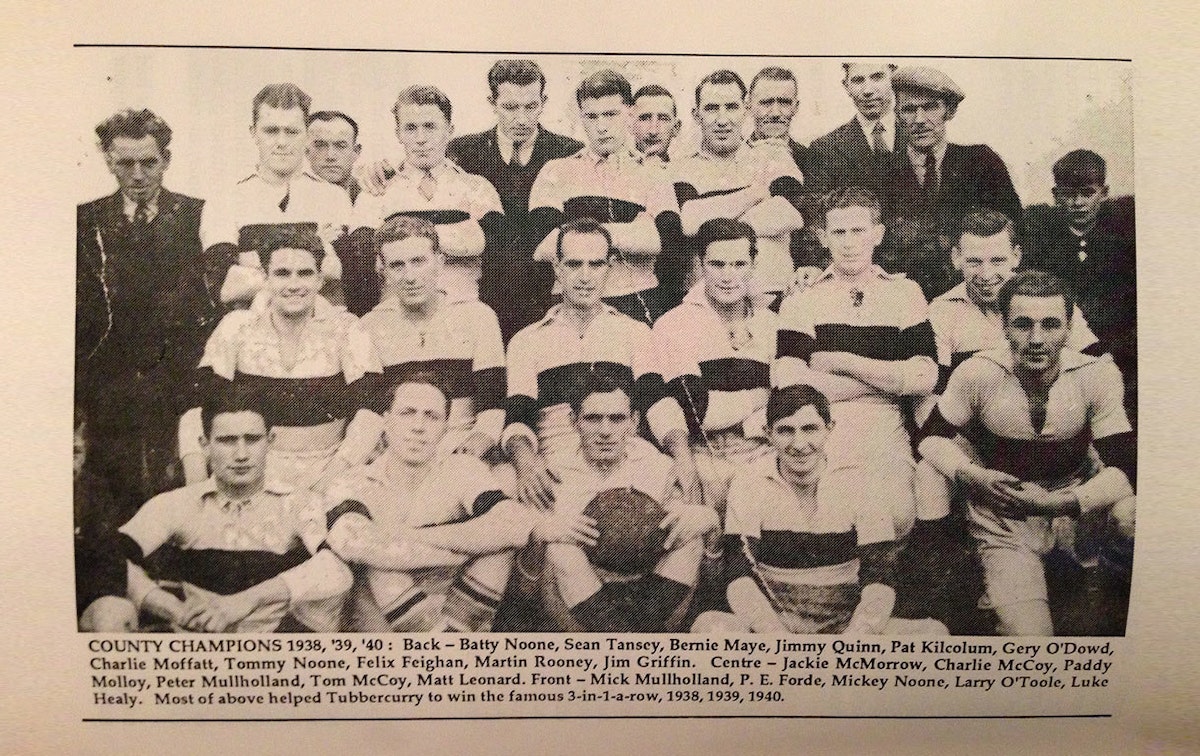
The digital records for people over a certain age are inherently incomplete, but the younger you are, the more complete your picture is, whether you created it yourself or it was captured by your parents as they documented your childhood to share with Grandma. In the historical blink of an eye, our digital footprints have gone from spotty to distinct—a complete picture of our online lives.
This begs the questions: What if we left our digital footprints behind intentionally? How might we curate, filter, or amend our digital records as we plan for our own end of life?
There are a number of emerging technologies and techniques that can help us design our digital afterlives. If you’re interested in training a chatbot to mimic you, you can begin today with Replika.ai, a bot that learns to be more like you the more you use it. The team behind it has even open-sourced their underlying chat tech on GitHub.
VocalID is a company that allows people to preserve their vocal legacy by recording a set of voice samples. Its primary customers are people who lose their voices—for example those with ALS or Parkinson’s. Could people give these voice samples to family members after their deaths, or request that their voices die with them?
Beyond text, researchers at the University of Washington have shown that with a broad enough set of video samples, we can train an AI to create entirely new video clips of the same subjects. And emerging technology called “deep fakes” can use machine learning to swap faces in online videos.
Synthesizing Obama: Learning Lip Syncing from Audio. University of Washington.
The collision of our immense datasets with rapidly advancing abilities in machine learning is not only inevitable, it’s happening now. Roman Mazurenko is a digital avatar of the real Roman built by one of his grieving friends after his death. Anyone can download it/him from the app store.
This is not about the singularity or transhumanism; I’m not talking about uploading my consciousness to the cloud to create Virtual Sean. But rather, how might our loved ones experience us differently after we pass?
In the future, we’ll have new ways to preserve more bits and pieces of ourselves— our voices, photos, texts, etc.—and new ways for our loved ones to experience this ephemera. There will be new challenges as well. Much of the data we create is invisible to us and is not under our direct control or ownership. When we pass, this data will live on, whether we like it or not.
I expect that you might be simultaneously intrigued and concerned by this topic; that’s to be expected. But just as we must one day face the end of our lives, we must also grapple with our digital identities and digital legacies.
Let’s get the dialogue started.
A few months ago, my cousin asked me about his digital legacy. He asked how his kids could explore his personal artifacts—his ephemera—in the digital age, when there are no vinyl records, physical photographs, or even MP3s to hand down.

Lindsey Turner
I’m passionate about building brands, products, and experiences that help organizations show up with meaning and momentum.
I help organizations cut through complexity by shaping how they show up, through brand strategy, identity, and storytelling.
Working at the intersection of brand and business, I bring an editorial eye and a bias toward making—turning ideas into tangible experiences that people can understand, trust, and believe in.
My work spans government, healthcare, financial services, media, and consumer goods, from launching Gen Z-focused ventures to building innovation labs and reimagining legacy brands. I relish moments of ambiguity and enjoy translating across teams, perspectives, and priorities to move ideas forward.
I started my career in editorial and digital design, shaping cross-platform experiences and identity systems in publishing and agency environments. That foundation still shapes how I work today: I’m detail-oriented, collaborative, and overreliant on the Oxford comma. I hold a BFA in Visual Communication from the School of the Art Institute of Chicago.

Rachel Young
My work helps organizations see who their products aren't working for—and build the will and the tools to do something about it
For 25 years, I've asked the same question: Who does this design exclude—and what are we going to do about it?
My work spans human-centered strategy, inclusive design, and qualitative research, with clients ranging from Microsoft, Google, and Verizon to the National Science Foundation, and San Francisco Unified School District.
Before IDEO, I taught elementary school in East Palo Alto and spent a decade doing design work with social service organizations—where I learned firsthand what it costs people when systems are built without them in mind.
I am currently writing User Error, a nonfiction book about digital access and the design decisions behind it. I live in Oakland, California.

Brian Pelsoh
I lead with craft, ensuring our work is creatively excellent: rooted in deep human insight and imagination, while also grounded in the realities of business and technology.
My expertise spans brand, communication, and product design across tech, education, the arts, and social impact.
I believe great work demands both high-level vision and obsessive attention to detail, and only happens through collaboration.
I bring an inclusive, hands-on approach and a deep understanding of business, which enables me to consistently deliver excellence while always asking why.
Before joining IDEO, I worked at the brand firms Pentagram and VSA Partners. I began my career as a designer, leading teams at the School of the Art Institute of Chicago and the Milwaukee Art Museum. I hold an MFA in graphic design from Maryland Institute College of Art and a BFA in communication design from the Milwaukee Institute of Art & Design, and have taught at some of the best design schools in the US.

Tony Wong
I am responsible for IDEO’s long-term success in China and working with clients to use design as a tool to enable growth.
I am responsible for IDEO’s long-term success in China and working with clients to use design as a tool to enable growth. Specifically, I have helped Chinese companies design holistic brand solutions through the development of their products, communication, services, and innovation teams, and I have helped multinationals expand their presence and influence in China.
I advise global leaders on developing China-led innovation and capabilities.
In over 15 years in IDEO Shanghai, I have worked on projects that use design to elevate the quality of the experience of healthcare products and services, streamline processes that increase productivity, create spaces and programs that promote and enable inclusive communities, and build next generation mobility solutions that are planet-positive.
Before joining IDEO, I worked at Philips Electronics and the Electrolux Group in Italy, the Netherlands, and Singapore on a number of breakthrough commercial products. I am a member of the Young President Organization in Shanghai.

Building a personal AI for the messiness of life: Sida Li
Most AI products today are built for work—a space with clear problems and established systems. One founder noticed a gap: personal life is messier, harder to systematize, and mostly left behind by the AI boom. So she built Cue, a personal AI that lives inside iMessage and group chats, to go where the other tools haven't.
In this episode, Becca Carroll, IDEO's Chief Strategy Officer, talks with Sida Li, co-founder and CEO of Shared Context Lab, about staying anchored to a human need while the technology around her keeps changing shape, why she treats her business model with the same rigor she'd bring to a product, and what it feels like to build a company at this particular, disorienting moment in AI.
The conversation also gets into how Sida makes design decisions: the language Cue uses to describe itself, the tradeoffs behind building inside iMessage instead of a new app, and a real story about a business idea that didn’t pan out.
This is the second in a two-part series profiling founders from IDEO's Startups-in-Residence program. The first conversation is with Johannes Seemann, founder of Sooner, on designing GenAI for the emotional side of money.

Designing GenAI for the emotional side of money: Johannes Seemann
Most personal financial tools are built to run the numbers and optimize towards a budget. While that works for some, most people experience money as a lived relationship that does not neatly fit into a spreadsheet. Johannes Seemann and Becca Carroll discuss why money is emotional before it is mathematical, and what a human-centered approach to building a generative AI financial product looks like in practice.

The curious leader's edge in uncertainty: Scott Shigeoka
Mina Seetharaman talks with Scott Shigeoka, author of Seek and Head of Curiosity Cultivation at the Eames Institute, about what distinguishes genuinely curious leadership from performative curiosity, how power dynamics shape curiosity, and why practicing curiosity can restore energy rather than drain it.

How constraints make us more creative: David Epstein
Mina Seetharaman talks with David Epstein, author of Inside the Box and Range, about why total freedom often produces average work, how leaders can design useful limits on purpose, and what organizations such as General Magic and Pixar reveal about the relationship between boundaries and creativity.
Looks like you might be in search of something very specific?
Or reset the filters above and try another angle.
Here’s some random inspiration

Podcasts about creative leadership

Articles about the power of prototyping
