
.svg)


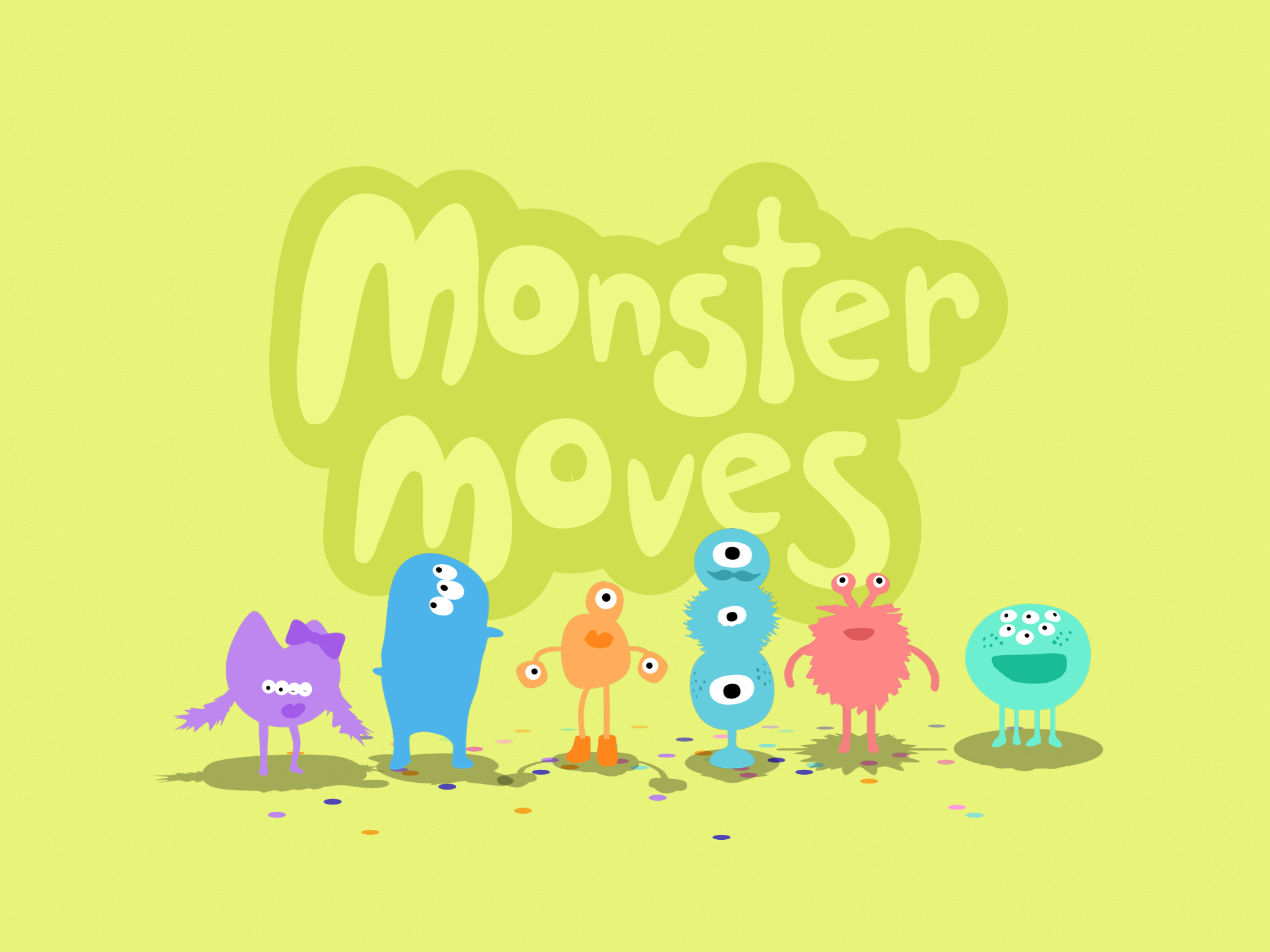

A creativity-building app for kids
Monster Moves teaches young kids dance choreography.
Monster Moves is an app that gives kids the ability to create their very own monster dance party. Kid-approved by a rambunctious team of tiny beta testers, the app encourages children 5 and younger to exercise their creativity as they choreograph dance moves for a troupe of monsters. Kids develop an awareness of their creative control by sequencing illustrated tiles that correspond to each monster’s unique set of dance moves.
Whether it’s a twirl, flap, swing, or sway, the app enables kids to cultivate decision-making skills by drawing connections between their choices and the monsters’ dance steps. Each monster has a full repertoire of dance moves and accompanying musical beats, so kids can compose an original soundtrack and dance along. To encourage kids around the world to create and design, the app is available in English, Simplified Chinese, Japanese, Korean, Spanish, Italian, French, and German.
Monster Moves—available on the App Store—joins a collection of apps, including Balloonimals and Balloonimal Babies, created by IDEO’s Play Lab, made up of a team of educators, designers and toy experts who foster kids’ curiosity, play, imagination, and creative confidence.
A drug-free alternative to chronic pain relief
Designing a revolutionary wearable device.
Chronic pain changes everything. Symptoms associated with chronic conditions can make activities that were a normal part of life—getting regular exercise or even a good night’s sleep—difficult to bear.
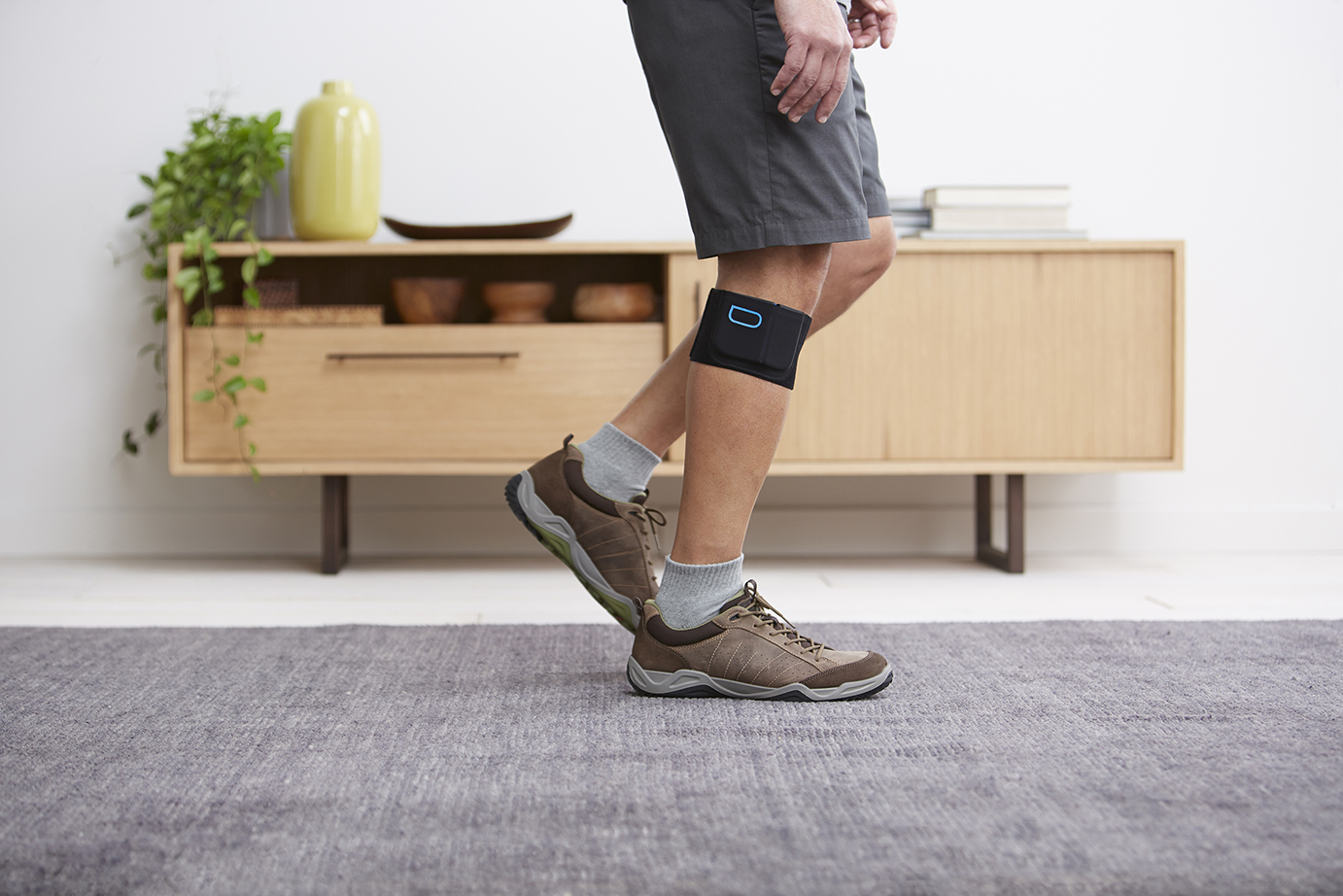
NeuroMetrix, an innovative health-care company based in Waltham, Massachusetts, developed Quell® to help treat chronic pain in people suffering from nerve, arthritic, back, leg, and foot conditions. Using a revolutionary technology called wearable intensive nerve stimulation (WINS), this device triggers widespread relief and, in a clinical study, reduced chronic pain and use of medication in thousands of users.
NeuroMetrix came to IDEO to help create the industrial design, interaction design, and mechanical engineering to bring Quell to the consumer market. Quell is a device that is placed in a sports band with a lightweight, slim design that fits comfortably on the upper calf and delivers therapy for chronic pain in the body. Its patented OptiTherapy™ technology is customized and automatically adjusts the therapy dose for optimal relief. An accompanying app, developed by Atomic Object, allows users to track treatment sessions, measure and understand the quality of their sleep as it relates to their pain, and personalize device settings.
IDEO’s work with Quell went beyond creating the product to something bigger—reframing chronic pain. For people who are in a constant state of suffering, the ability to take some measure of control allows them to feel more like active participants in their treatment plan, and to regain confidence.
A better scanning experience for patients and technicians
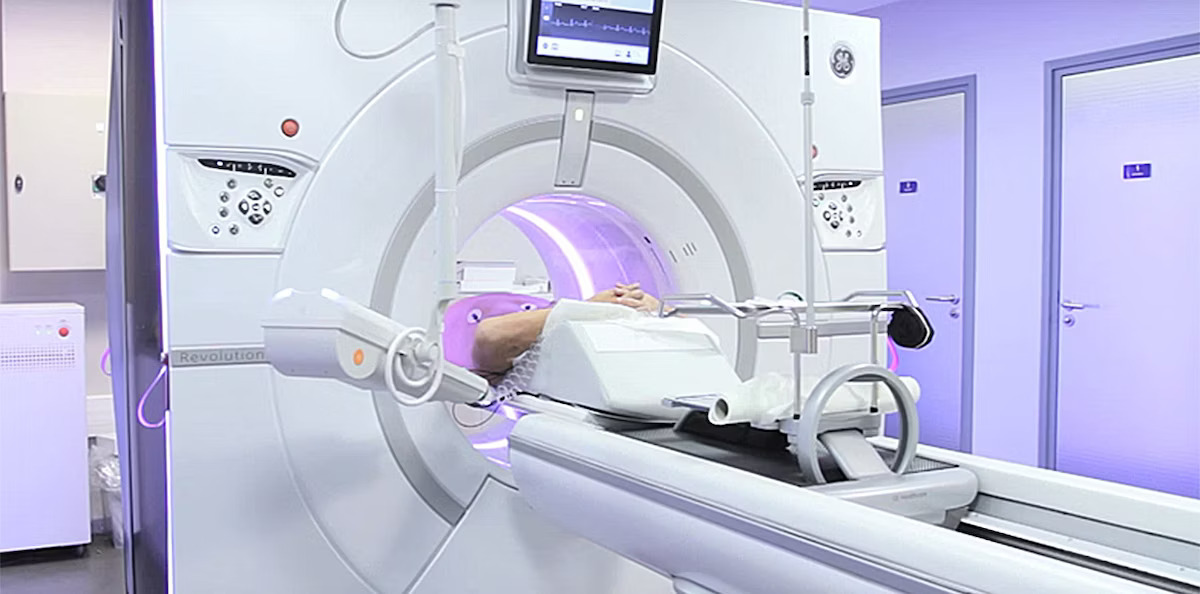
Creating a more streamlined user interface for CT scanners to maximize image quality, and minimize radiation.
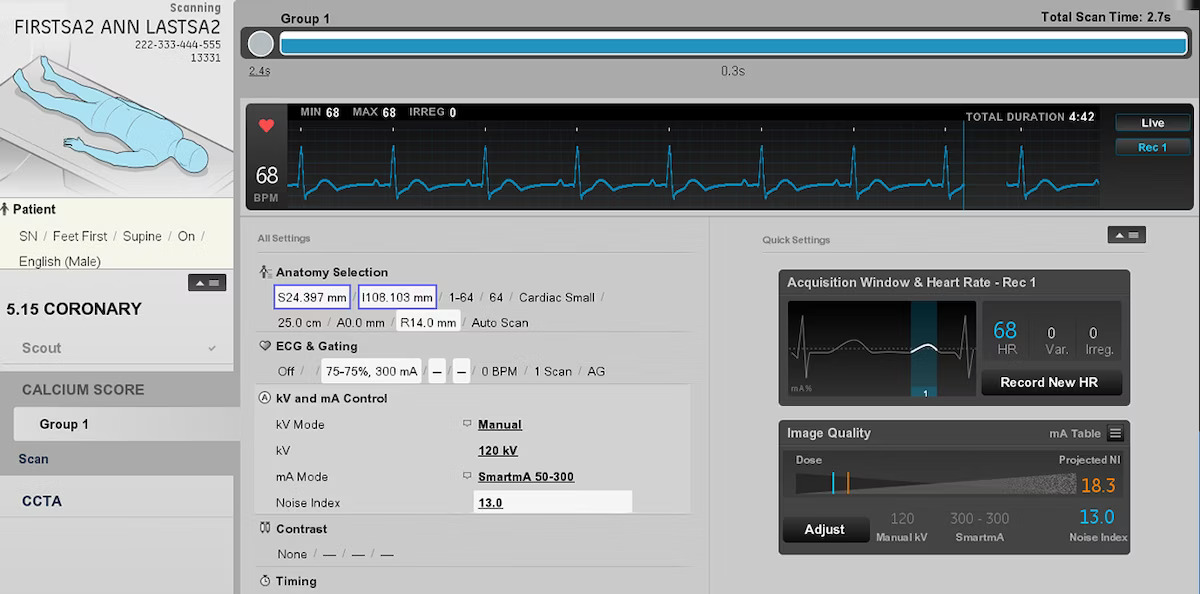
Operating a CT scanner is a delicate balancing act: The tech has to get a clear image for accurate diagnosis while reducing the patient’s overall radiation exposure. There are a lot of variables, and every second counts.
GE Healthcare, one of the country’s largest manufacturers of CT scanners, hired IDEO to redesign the console user interface to optimize the tech’s workflow, the patient experience, and the image quality. The key challenge was accommodating both junior and senior tech experience when designing a single interface, balancing support, flexibility and control. The final design allows techs to see their entire workflow up front, is optimized for “glanceability,” and draws technicians’ attention to important information. Threshold limits ensure the radiation dose never exceeds the determined amount. Ultimately, the streamlined design enables the tech to feel confident and focus on the patient’s physical and emotional well-being.
With several new hospitals using the new GE CT scanner, the impact has been evident. Within 24 hours, techs are up and running on the machines. The vision for the future looks bright and clear.
A blueprint for next-generation telecom
Helping a legacy telecom company stay relevant in the 21st century.
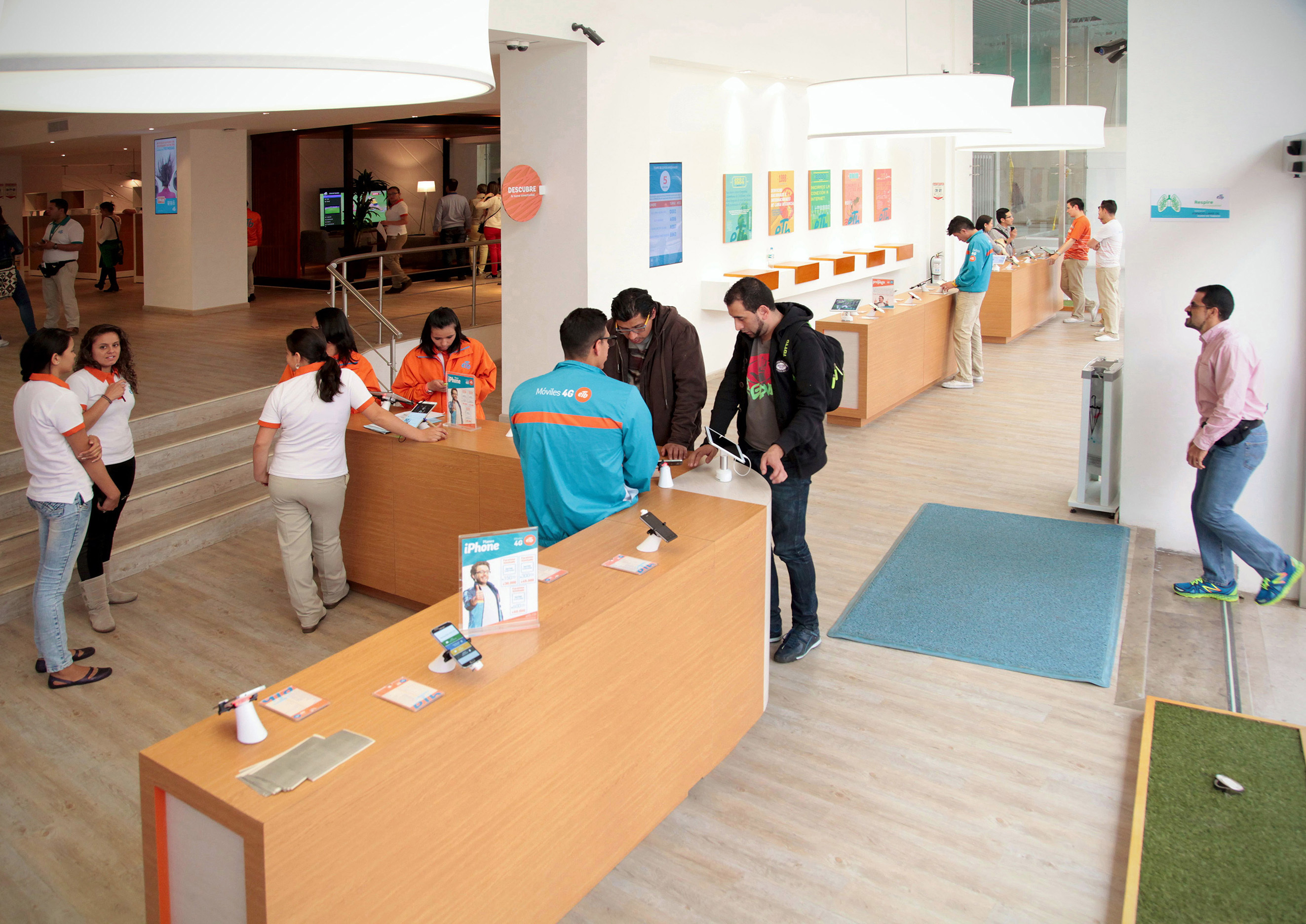
How does a 130-year-old telecom company in Bogotá appeal to a tech-savvy generation without alienating its most loyal customers? Faced with growing competition, ETB, Colombia’s oldest telecom business, wanted to modernize its entire retail shopping experience and update its branding.
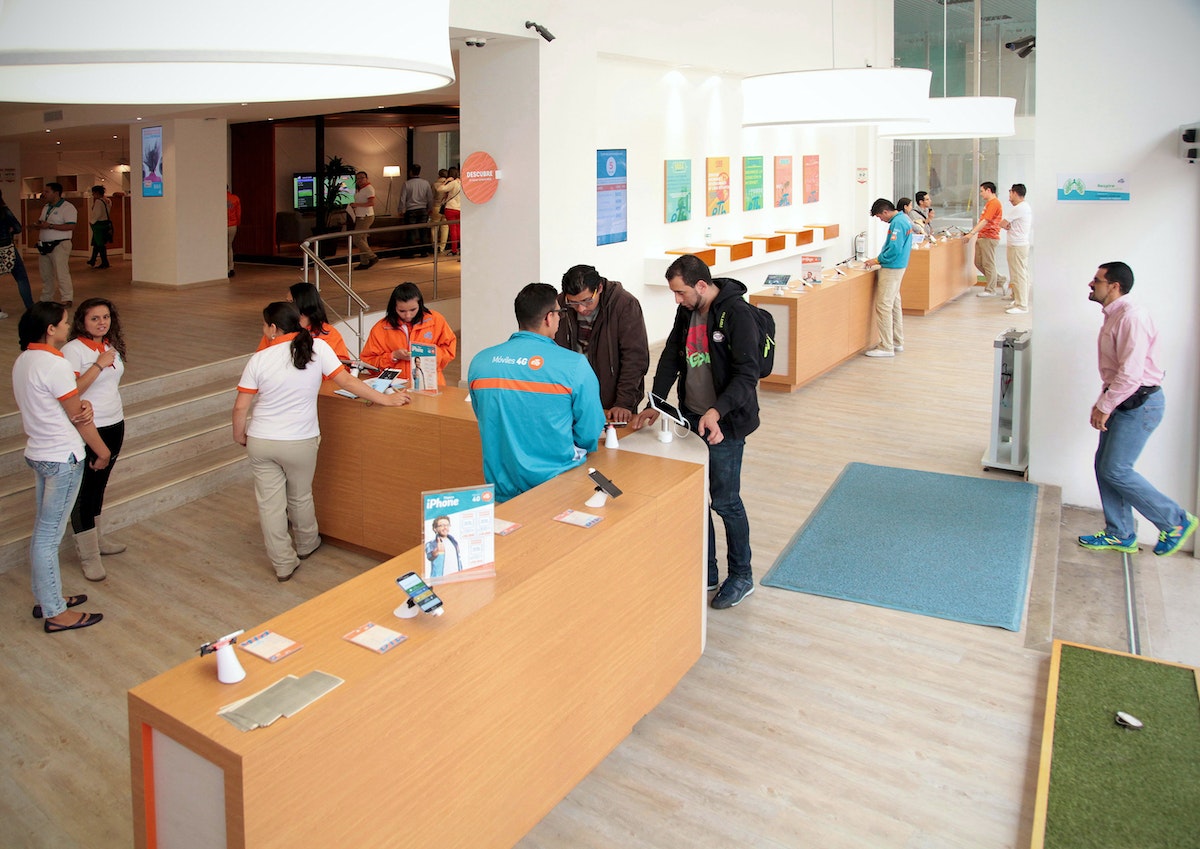
The company enlisted IDEO’s help in leveraging its already highly regarded brand. IDEO created a complete blueprint for the next generation of retail centers, including in-store spaces, digital services, and new personnel role descriptions. ETB’s new retail stores are warm and bright, and self-service kiosks eliminate the need for waiting in line. The company’s brand also got a face-lift with a new color palette and brand manual.
"Working closely with IDEO, we accomplished all of our goals,” said Vice President Carlos Alberto Gómez García, “from creating organizational change to reimagining interactions with our customers to evolving the brand identity of ETB."
The Magic Patio
Behind the curtain at a secret magic theater in San Francisco
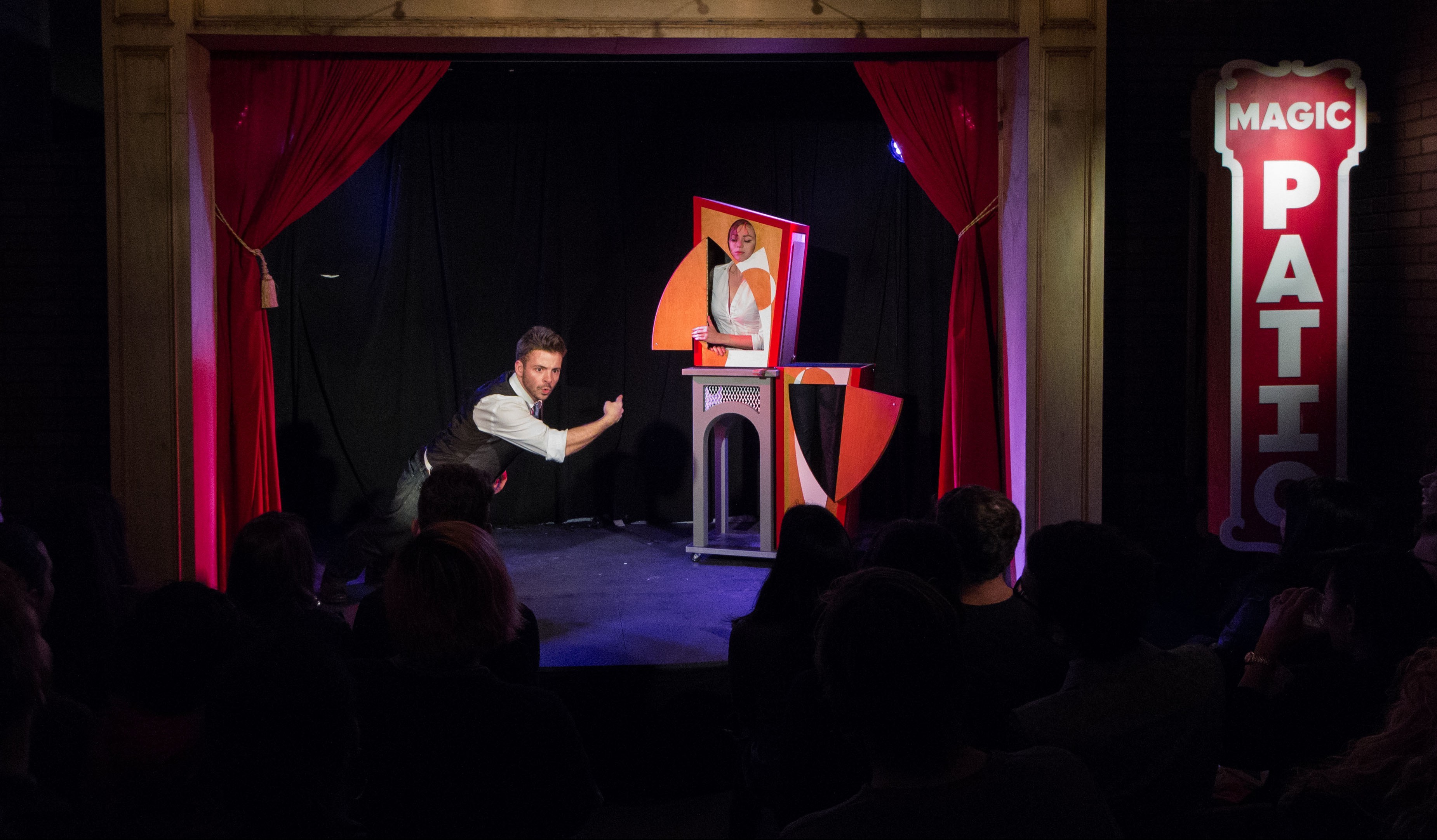
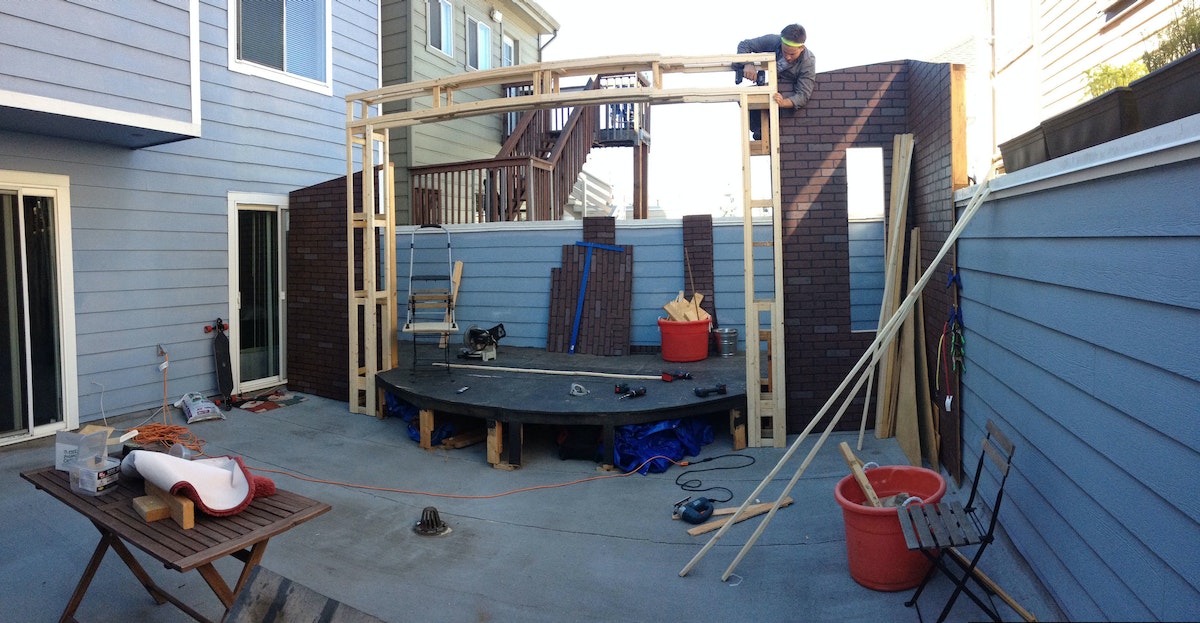
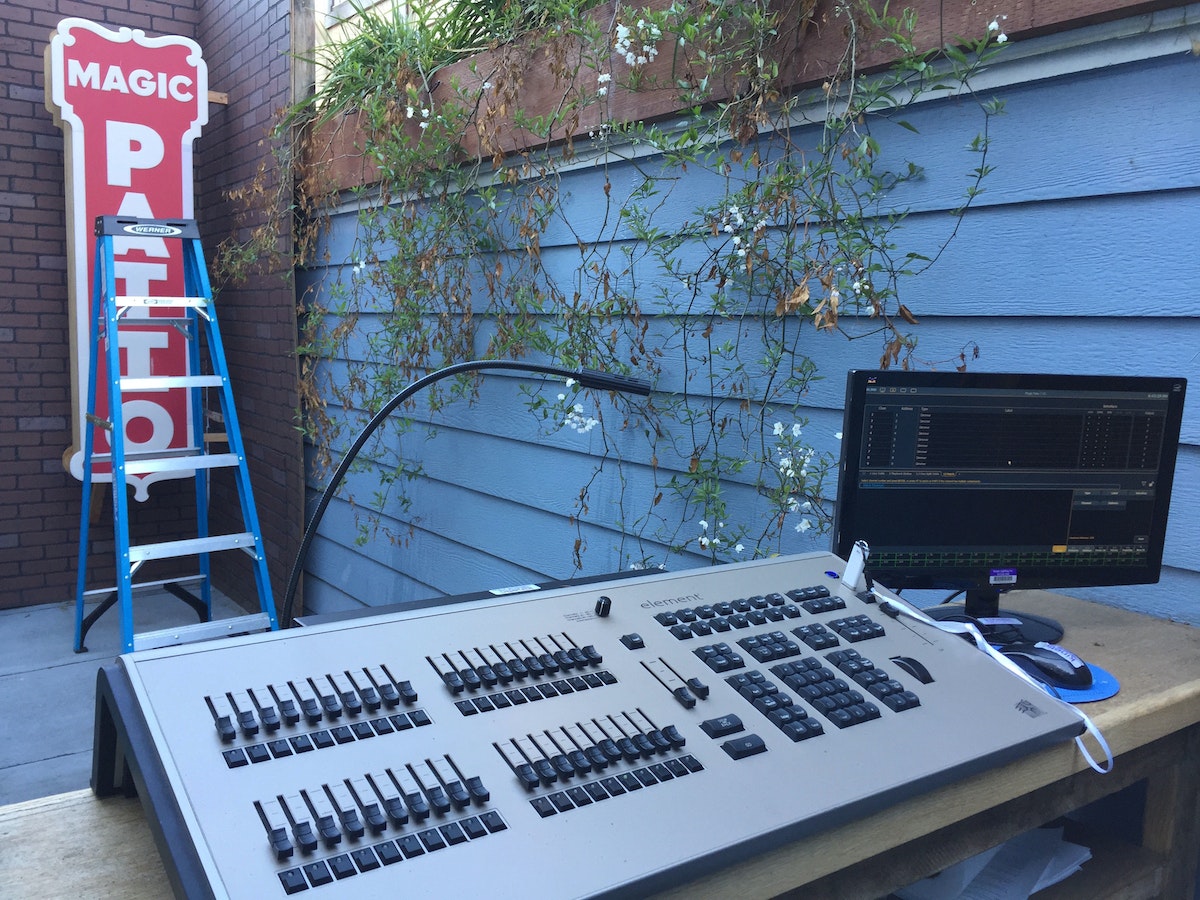
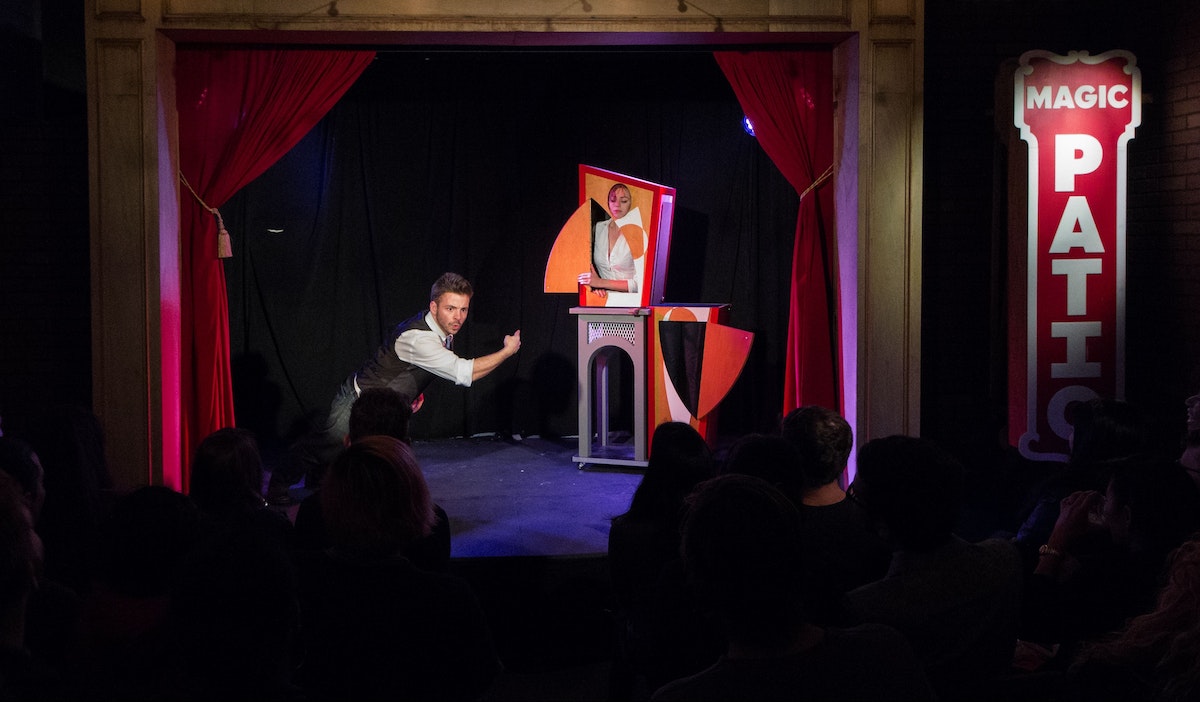
He created The Magic Patio, a custom-made stage and theater outside his building where he hosts invite-only, speakeasy-style events. The Magic Patio is specifically designed for a small, intimate experience of classic illusion, because Evans aims to recreate a bygone era of magic—specifically, 1890-1910—when the best illusions in the world were being performed at a tiny theater in London called Egyptian Hall, for an audience of about 100. I recently featured the Magic Patio for San Francisco magazine’s “Hidden City” issue (read the article online here). For Labs, Evans revealed some of the design and technical details hidden behind the curtain.
You built the box for your saw-the-lady-in-half illusion in IDEO’s shop. What did your fellow engineers bring to the project?
This is a design by illusion designer Jim Steinmeyer called Modern Art. It has slides that let the top half of the box slide over, and they create a sort of rail, like train tracks. But if you’re doing illusion design, the question is always how you can make it look like a piece of furniture as opposed to a magic prop. Not that the box actually looks like a piece of furniture, but if you actually have a rail sitting on top of it, it’s clearly a rig. I worked with Peter Bronk from the shop, and what he designed is genius. The slides are countersunk into the table, making them completely invisible. They’re milled on the CNC out of Delrin, which is a super low-friction material. The tolerance is to like one ten thousandth of an inch, and you can’t lift the top half up because it has T-slots that lock underneath. Magicians look at this prop and they’re like, “How did you get that?!” This is engineering, not a theater prop. When you’re doing tricks five feet away from the audience, it’s got to be super top notch, like product-design quality. There was no way I could have done this without IDEO.
How does your immersion in IDEO’s engineering community help you develop your craft as a magician?
This show, “Illusions of Grandeur,” is meant to be the first act of a two-act show, and the second show, “Vodvil,” which is going to premiere in May, will be all new tricks, three of which are the most complicated I’ve ever conceived of. By far the most complex trick is completely original, and it’s inspired by engineering, not magic. It’s based on a really cool technique, a visual principle, that doesn’t seem to be used very much anymore. Without giving anything away, I can say that it takes incredible control of audience and lighting, which you can have when you have your own theater.
You take advantage of total control to design surprisingly small details, such as scent. Why?
When I designed the experience, I was thinking about how many juxtapositions we could play with, which is key because it’s this show from 100 years ago that’s staged in 2015. There is a transition between entering from the street and arriving on the patio, in which you first walk up this super sketchy alleyway. It smells like pee, but we very purposefully didn’t change that. When you go through the door into the lobby, there is a specifically designed scent that we put into the room. A perfumery called Tigerlily on Valencia Street worked with me for a month trying to find the right scent. It plays with indoors and outdoors, so it’s got some woods notes to it, but then it’s also got a lot of warmth, something seductive and mysterious, a little musky. So you go from pee smell to that, and to complete the transition to outdoors, we have a different scent that we use on the patio. It’s very woodsy, and it’s also from a perfumer in San Francisco.
You’ve said that good designers and good magicians share the ability to create a sense of wonder. What does that mean you, and how did you express it with the Magic Patio?
Childlike wonder is a beautiful concept. Kids have not experienced half the world, so everything new they encounter changes the way they see the world around them. That’s the definition of wonder that I like—something that changes your perspective of the world. If you’ve been in this world for 30-plus years and then suddenly something you see makes you be like, “whoa, whoa, whoa… wait a second,” that’s a beautiful moment. But beyond that instant during a magic trick, I hope that when people leave the Patio, they think, “What else am I maybe not looking at closely enough?” I get emails after the show saying, “I just left there in this state of non-alcoholic buzz, and I was walking through San Francisco in awe, thinking, ‘I love this city! What else does it have to offer?’” Those are the responses that make me think we’re doing this right.
How do you balance your commitment to magic with your work as a designer?
I made my full living doing magic for two years. The reason I don’t do it full time is that it’s a very lonely pursuit—it’s me on my computer writing scripts, practicing magic in front of a mirror, taking video of myself, watching footage. When shows are coming up, sometimes I’ll spend a full 40 hours a week preparing, on top of IDEO work, but it fulfills me very personally and creatively. Simultaneously, IDEO gives me culture and people. It’s a beautiful pairing.
Keep a close eye on Andrew Evans—he might be an innocent-looking product designer in IDEO’s Palo Alto studio, but he’s also a professional magician and a master of sleight of hand. Evans travels around the world speaking about the intersection of design and magic, and now, he’s made his San Francisco apartment a nexus of the two.

How We Did It: GIF Dance Party
Coding the Internet's best party
Over the last three years I have been creating interactive experiences that bring some of these unexpected moments back to the Internet by putting emphasis on smiles and little else. No clients, no social media sharing, no analytics, no SEO, no log-in, no users, no brand, and no monetary objectives—smiles have become my motivation and my currency. Late at night, I stare intensely into my glowing rectangle, firing code into it, and imagining how I might turn the drab, emotionless faces of everyday, seen-it-all web surfers into expressions of delight.
While there are a number of projects on my site Fuzzy Wobble Dot Com that exist in the “smiles-as-currency” domain, I am going to share one of my favorites with you today: GIF DANCE PARTY. The name should give you a hint as to where this is headed…
The animated GIF was invented in the late '80s, but when GIF DANCE PARTY began back in 2012, they were still primarily used in blinking web banners for sleazy ad campaigns. Tumblr was the only mainstream site at the time with a GIF vernacular.
My fascination with both Tumblr and animated GIFs was surging at this time, and I could sense that there was an opportunity to bring animated GIFs out of the depths of Tumblr and into a more familiar context. This idea lead to an eight-hour coding session that resulted in the first release of the GIF DANCE PARTY website, which allowed visitors to create and share their own digital dance parties.
Despite my sub-mediocre coding skills at the time, the site was surprisingly functional. As with damn near everything in web dev, all the integral parts of the site had been executed thousands of times before, and with a little Googlin' and digital glue, the concept was realized. The code base was solid, although a serious problem remained: Transparent GIFs were extremely rare, never mind transparent dance GIFs, which were imperative to the concept. After many web searches, I found only four—not enough for a respectable digital dance party by any online standards.
So I asked my friends to help me with the tedious process of removing the backgrounds from GIF dancers, pixel by pixel, frame by frame, to generate the collection of transparent dancers featured in the first GIF DANCE PARTY release. Now, three years later, the GIF DANCE PARTY website has amassed an arsenal of more than 120 iconic dancers.
Over the years, GIF DANCE PARTY received millions of hits from around the world. The captivating nature of the animated GIF, injected into a familiar party context, touched the Internet in all the right places. I even had a collection of dancing cats in there for good measure. Today, GIF DANCE PARTY continues to make the rounds. On November 2, 2015 it made it to the front page of Reddit again, where one user commented:

The project was quite well received by my colleagues at IDEO, so we decided to set up a green screen and make our very own IDEO Boston (now IDEO Cambridge) GIF Dance Party.
It was extremely rewarding to maximize the smile-to-effort ratio with a project that could have so easily been discredited as "silly" had I not been surrounded by such creative and supportive people.
But the unfortunate outcome of this, a project that stemmed from a drive to create smiles, was that I could never see any of those smiles. At one point I considered turning on users’ webcams to use face detection and count the smiles, replacing the Facebook “like” widget with a smile counter (pretty sure this would have deterred a number of visitors). The only way to witness these smiles was to create an IRL experience—A GIF DANCE PARTY installation.
With the use of projectors, 3D cameras, and countless lines of code, we would be able to digitize partygoers into dance GIFs. These dance GIFs could become part of a wild and dynamic visual spectacle, projected for all to see. Together, the GIF DANCE PARTY VJ and partygoers would work together to create an otherworldly GIF DANCE PARTY digital dance floor.
There was no chance my Googlin’-and-digital-glue approach was going to work on a project of this scale. I put out a call for creative coders, which was answered by an exceptional team: Matt F., Wes T., Joe S., and Matt G. For many, many Saturdays, we met in hungover or otherwise compromised states and managed to stab away at the massive challenge of bringing GIF DANCE PARTY to an installation space with C++ and OpenFrameworks. Six months later:
We had a hit installation. We started booking frequent gigs. Jaws were dropping. What started off as not much more than a "cool art installation" evolved into a project that had a massive positive impact on partygoers. As we observed: This is the evolution of the photo booth. We have tapped into the selfie-lust habits of the modern day partygoer. But unlike the conventional photo booth experience, we went hyper dynamic, we went hyper visual, and for the first time in photo booth history, we introduced selflessness to the selfie. An experience for you, and an experience for all.

Partygoers were able to interact with the party environment in a way that was unprecedented. While traditional photo booths disconnect partygoers from the environment, our experience blasted them right into the center of it, no different than installing a Slip'N Slide down the middle of the dance floor.
As a team of artists, coders, and designers, we continue to experiment and evolve the experience. From website to installation, GIF DANCE PARTY has been a delightful project, not just for the users and participants but also for the creators. Smiles all around, and more to come.
I remember my first introduction to the web back in the mid '90s. It was a place of mad discovery. There was a great deal of uncertainty when clicking a link—where you would end and up and what you would see. The Internet was not a serious place. It was more of a playground, full of unexpected moments.
Kitchen Creative
A tasty testament to the London studio's communal, culinary adventures
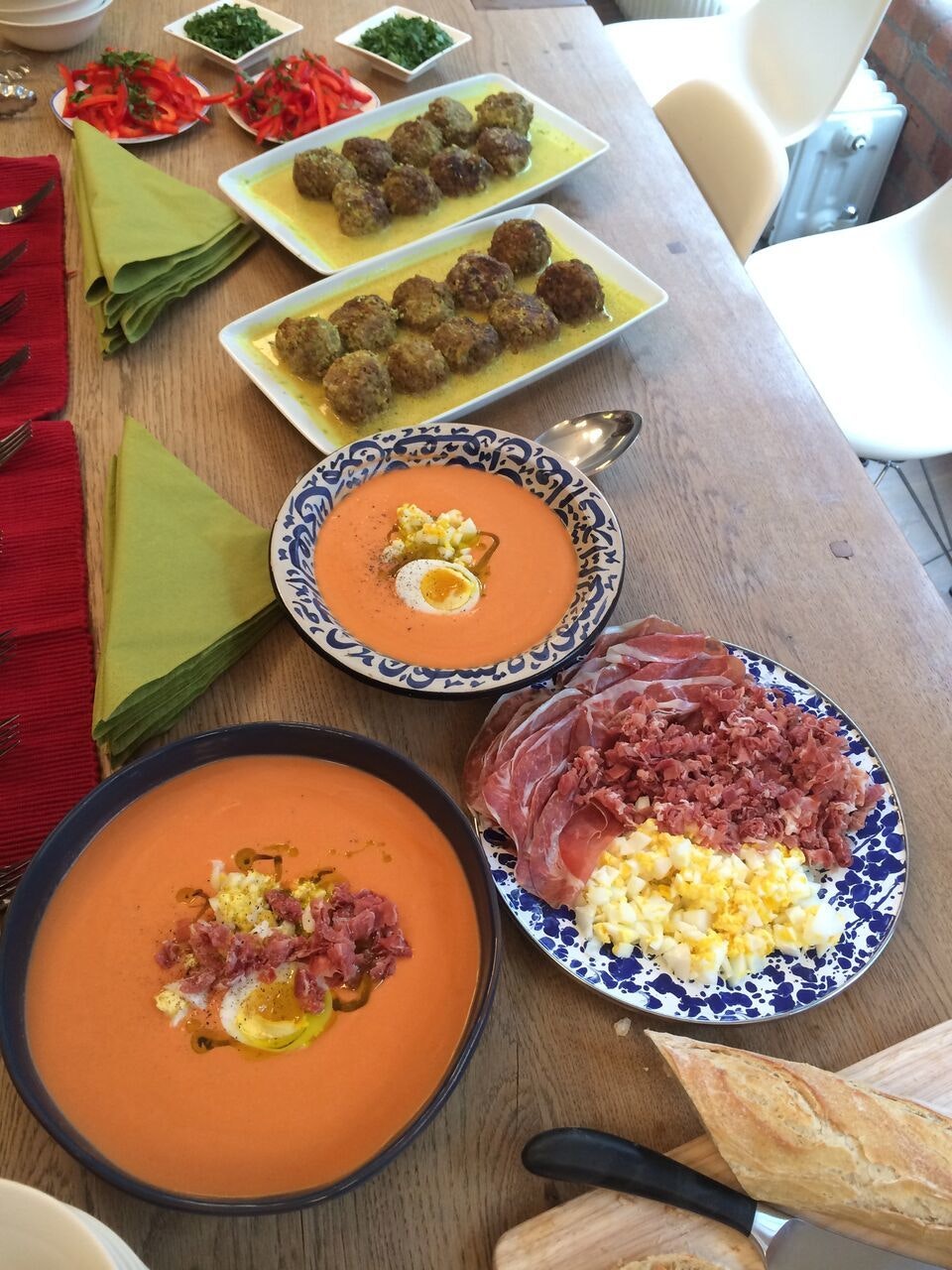
The Greek Shepherd’s Pie. Coconut Meatballs. The Mediterranean Yacht in Linen.
You won’t find these unlikely sounding recipes in any other cookbook, and you certainly can’t eat them anywhere. But last summer, these culinary creations graced the table and palates of our London studio.
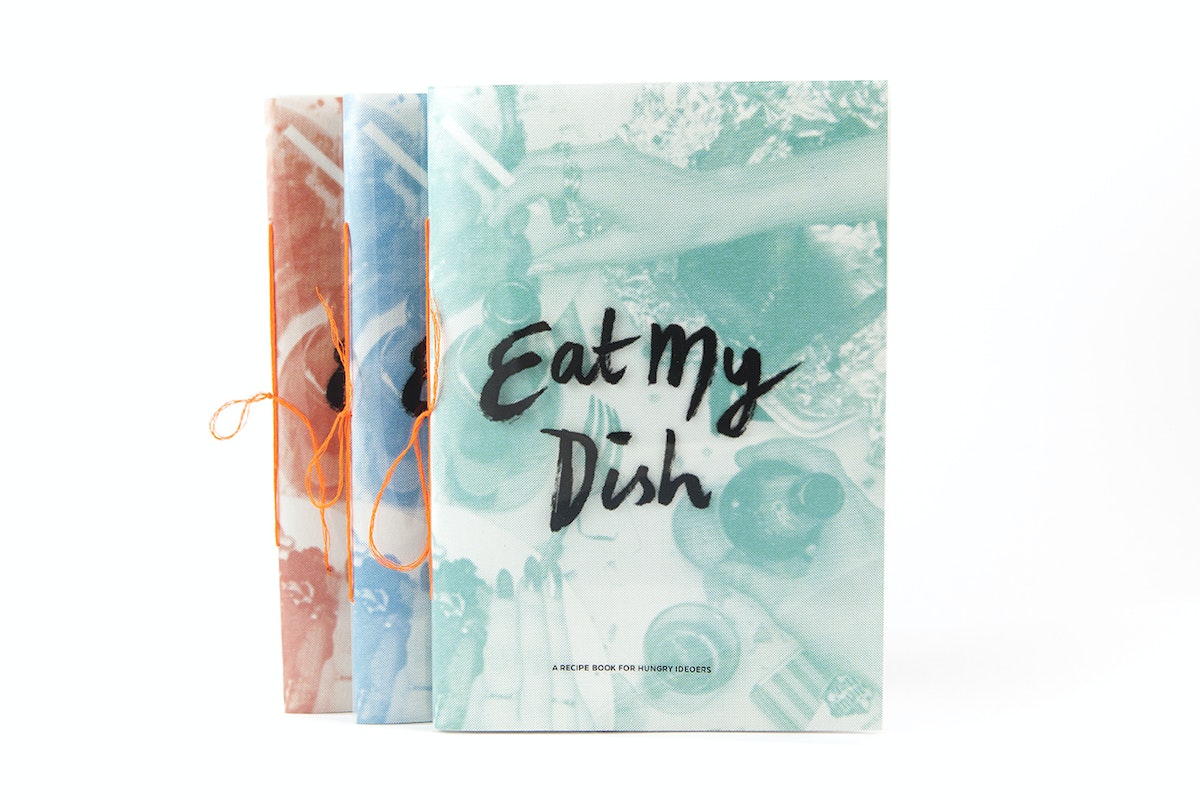
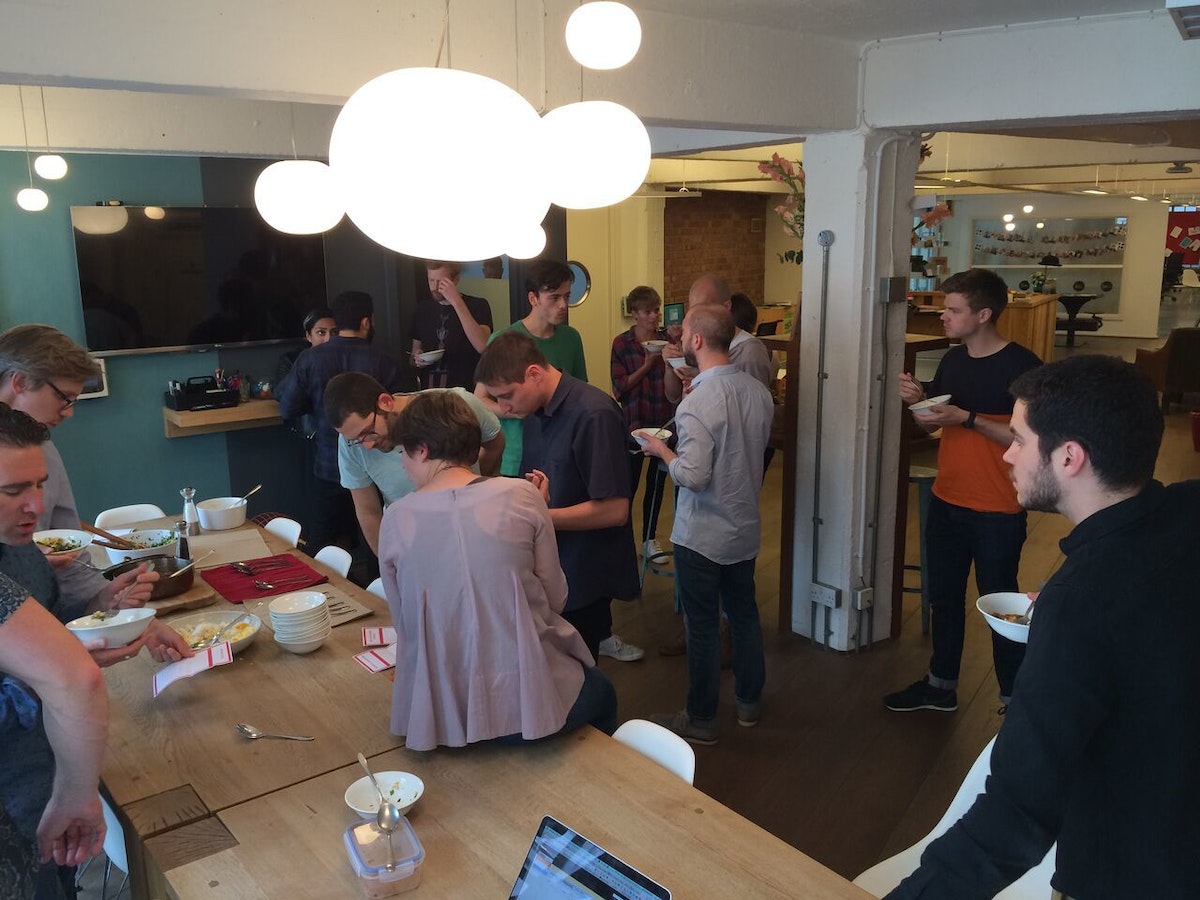
Eat My Dish came out of a desire to bring the studio together outside of our beloved social haunts (i.e, the pub). We wanted to do something that was hands on, creative and open to everyone.
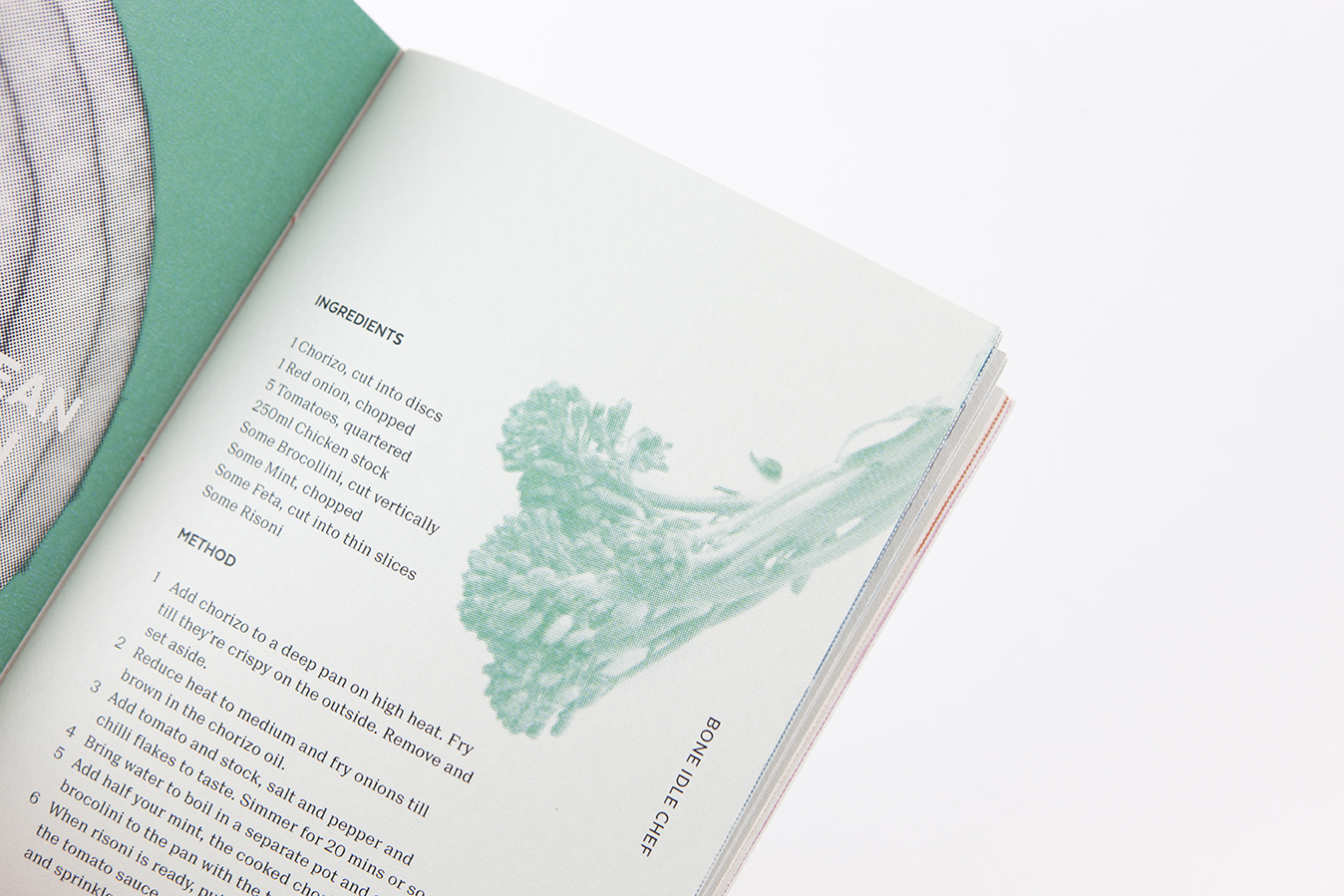
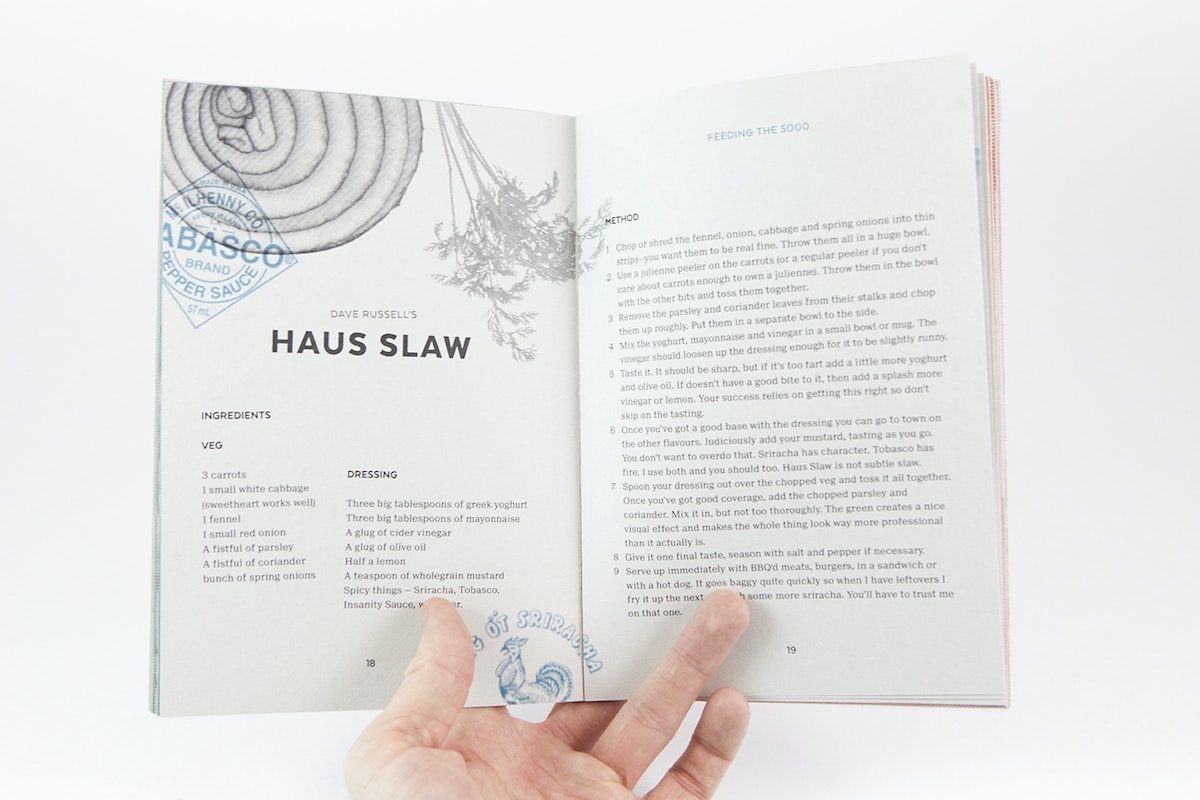
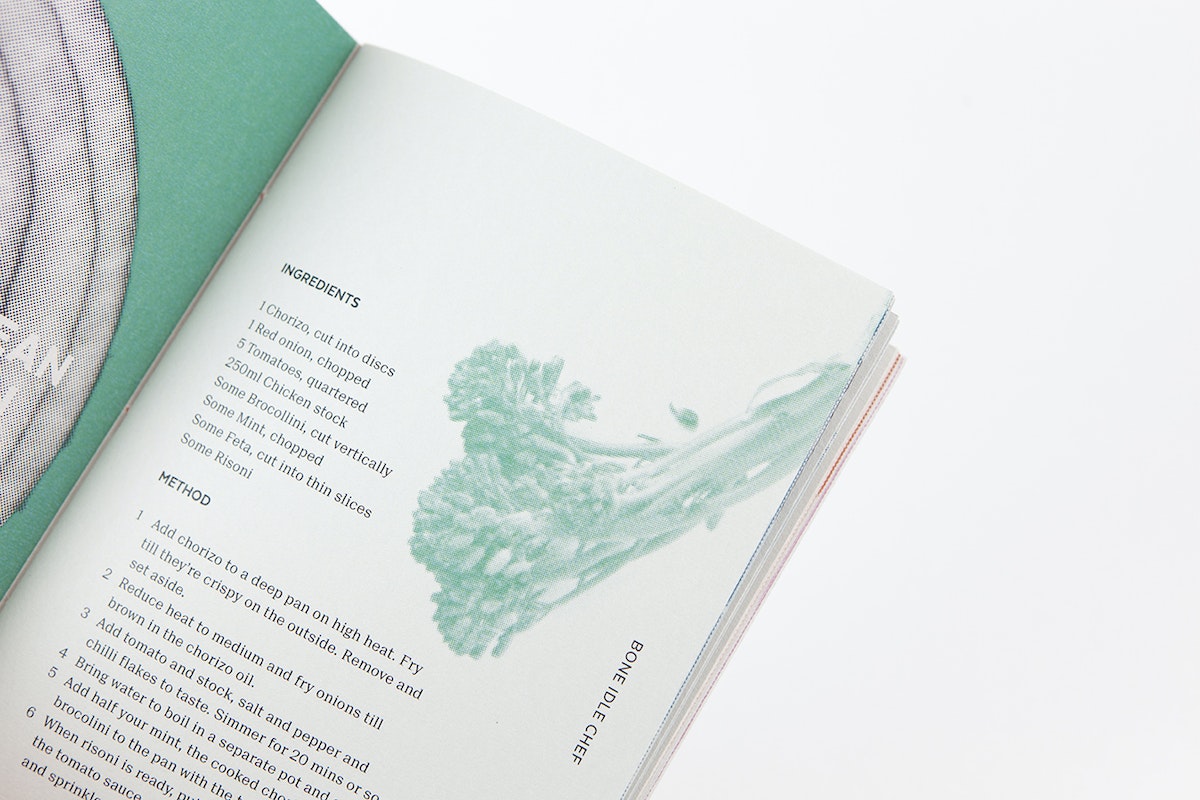
The rules were simple. Everyone was given a £10 budget for their dish. They had to cook offsite, and had to feed the studio. Entries were grouped in four categories: Culinary Peacock, Student Throwback, Feeding The 5,000, and the Bone Idle Chef.
It was a resounding success. Every Thursday afternoon, we summoned the whole studio to sample the recipes of the week. Our resident chefs would watch nervously as a crowd of designers descended on their dishes brandishing spoons and napkins. They devoured everything, every week, mumbling grateful compliments to the chef between mouthfuls. Things even got a bit competitive, with several dark horses impressing the studio against all odds (one participating chef claimed at the time to not even own a chopping board).
The UK has not historically been known for the quality of its food (unless your definition of quality includes jellied eels and deep-fried Mars bars) but things have started to shift in recent years. London in particular represents every style of food going, from late-night hole in the wall noodles to Nordic Michelin-starred blow-outs.
The studio’s recipes reflect the city’s culinary diversity, featuring dishes with roots in Brazil, Hungary, Iran and beyond, and catering to every occasion, from quick bites to dinner party extravaganzas.
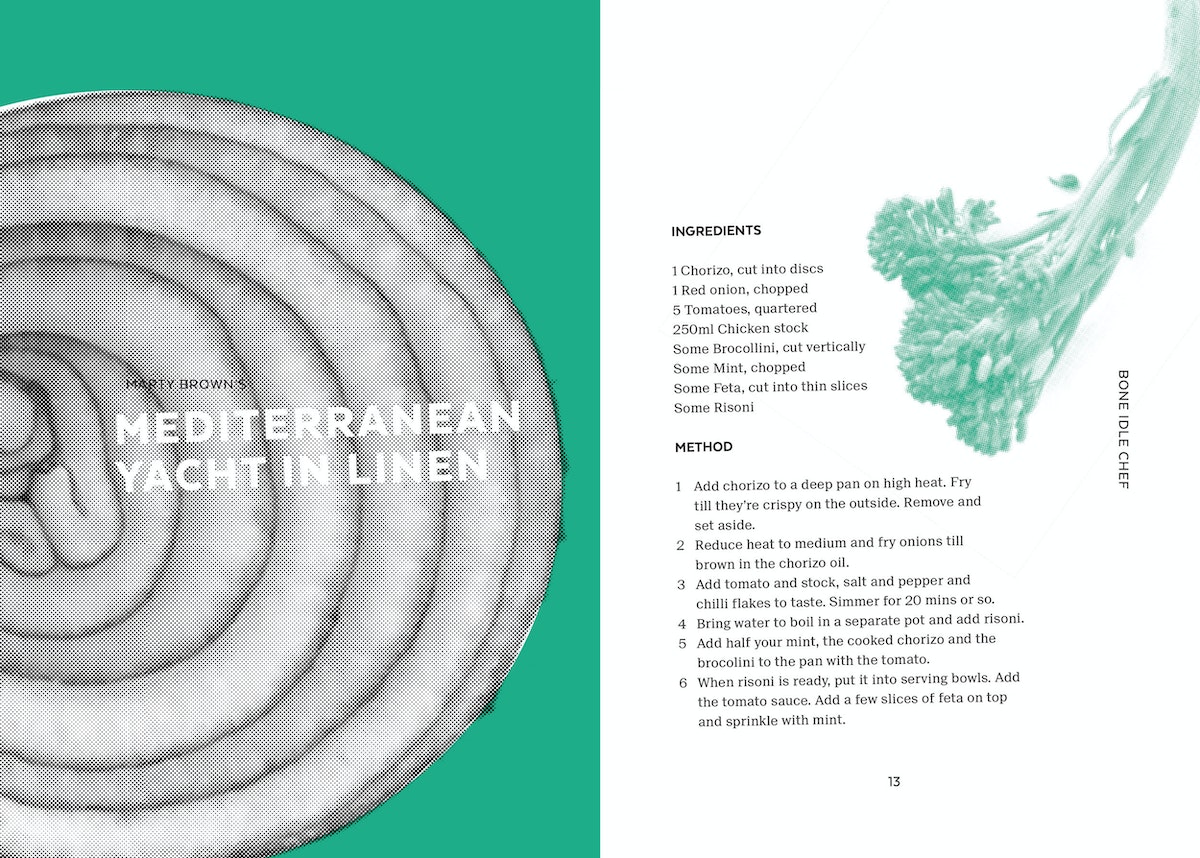
At the end of it all, we compiled the Eat My Dish recipe book. It’s been lovingly hand bound in four colours with neon thread and sent out to our studios around the world. We hope it inspires many a happy meal.
How to Hack Your Next Circuit Board Project
A toaster oven makes building circuits a piece of cake
A few of the microchips on my PCB had unexposed connections to the board that I couldn’t solder by hand. I thought I’d have to send it out to be assembled, which could take a couple of days.
The hack
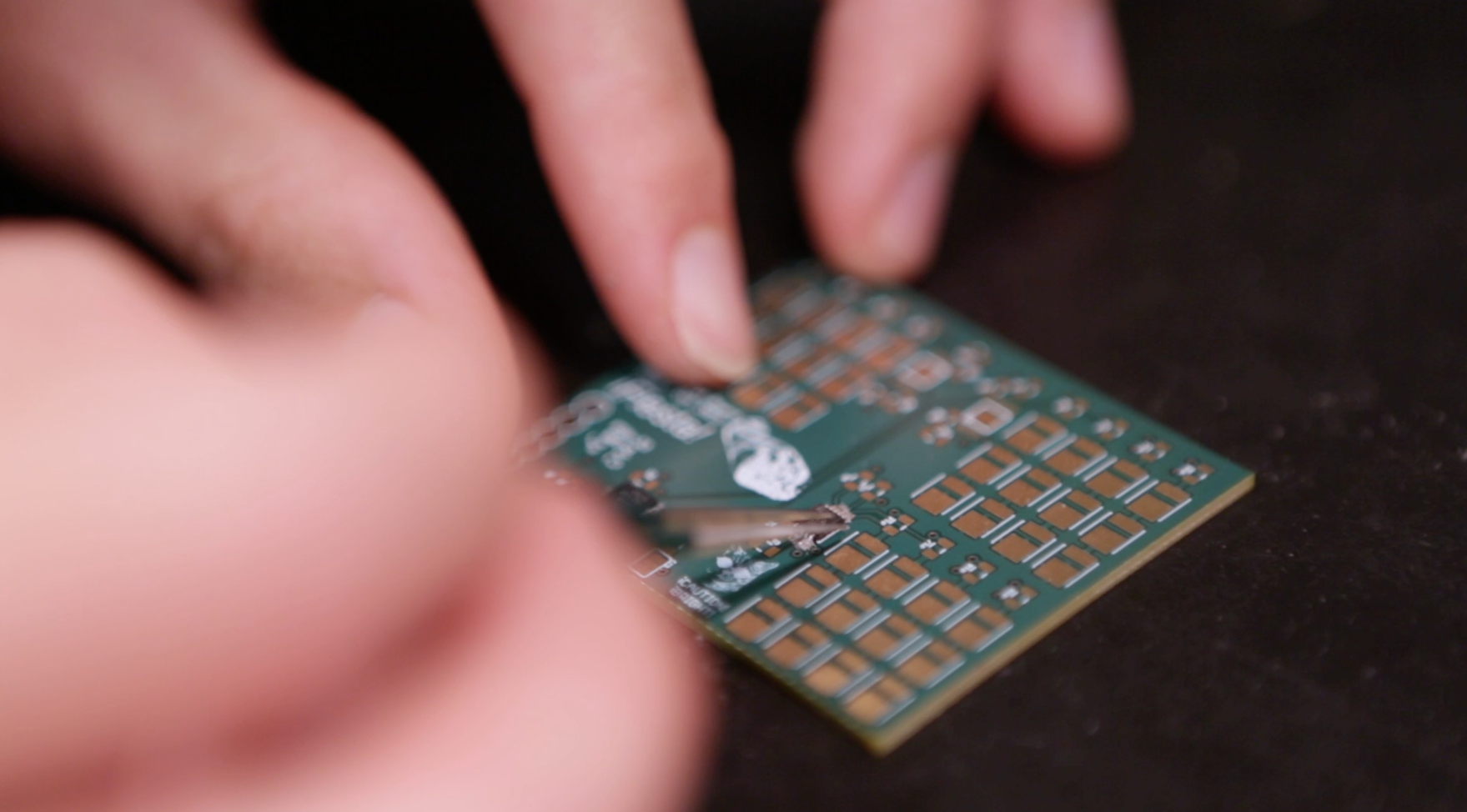
Instead of sending it out, I took a tip from my colleague and simply put some solder paste (small balls of solder in a sea of flux) under the microchips and popped the whole board in a toaster oven at 450° for a couple of minutes.
Safety first
Common sense may tell you that baking electrical components is a bad idea, but if you pay close attention and remove the board immediately after the solder liquefies, it’s a killer quick-and-dirty shortcut. Once the board has cooled, you can attach more sensitive components like LEDs and headers—the icing on the cake, so to speak.
The Easy-Bake Circuit Board Recipe
1. Apply solder paste to the PCB on all pads for parts with unexposed or hard-to-reach connections to the board. (Note: You don't need a whole lot of solder paste. Too much paste can result in bridging pins and will need to be cleaned up later.)
2. Carefully align the parts to be baked on the pads with solder paste.
3. Place the partially populated (or fully populated, if all your parts can be baked) PCB into the oven and set it to 450°.*
4. Watch for the moment when the solder balls liquefy (the solder will go from dull to shiny), about 1-2 minutes. The flux will help the solder hug tightly to any metal.
5. Carefully remove the PCB from the oven a few seconds after the solder liquifies. The extra couple seconds ensures all the solder has had time to liquefy.
6. Turn off the oven.
7. Let the PCB and solder connections cool down.
8. If possible, check solder connections under a microscope.
9. Clean up any bridging and test the connections.
10. Populate the rest of the board with parts you can solder by hand.
IMPORTANT: Always check the part's datasheet for temperature tolerances before putting it into the oven.
Pretty sure Charles Strite, inventor of the modern toaster, didn't see this coming.
Big thanks to Dave Vondle for the hackspiration and Sophie Feng for the awesome video!
I’m always on the lookout for shortcuts, especially when I’m on deadline for a project. Recently, another electrical engineer showed me a cool, time-saving trick that’s useful for all kinds of projects that involve a printed circuit board (PCB). I happened to be building up an LED test board for backlighting icons on a steering wheel prototype, a process similar to making a layer cake.

Lindsey Turner
I’m passionate about building brands, products, and experiences that help organizations show up with meaning and momentum.
I help organizations cut through complexity by shaping how they show up, through brand strategy, identity, and storytelling.
Working at the intersection of brand and business, I bring an editorial eye and a bias toward making—turning ideas into tangible experiences that people can understand, trust, and believe in.
My work spans government, healthcare, financial services, media, and consumer goods, from launching Gen Z-focused ventures to building innovation labs and reimagining legacy brands. I relish moments of ambiguity and enjoy translating across teams, perspectives, and priorities to move ideas forward.
I started my career in editorial and digital design, shaping cross-platform experiences and identity systems in publishing and agency environments. That foundation still shapes how I work today: I’m detail-oriented, collaborative, and overreliant on the Oxford comma. I hold a BFA in Visual Communication from the School of the Art Institute of Chicago.

Rachel Young
My work helps organizations see who their products aren't working for—and build the will and the tools to do something about it
For 25 years, I've asked the same question: Who does this design exclude—and what are we going to do about it?
My work spans human-centered strategy, inclusive design, and qualitative research, with clients ranging from Microsoft, Google, and Verizon to the National Science Foundation, and San Francisco Unified School District.
Before IDEO, I taught elementary school in East Palo Alto and spent a decade doing design work with social service organizations—where I learned firsthand what it costs people when systems are built without them in mind.
I am currently writing User Error, a nonfiction book about digital access and the design decisions behind it. I live in Oakland, California.

Brian Pelsoh
I lead with craft, ensuring our work is creatively excellent: rooted in deep human insight and imagination, while also grounded in the realities of business and technology.
My expertise spans brand, communication, and product design across tech, education, the arts, and social impact.
I believe great work demands both high-level vision and obsessive attention to detail, and only happens through collaboration.
I bring an inclusive, hands-on approach and a deep understanding of business, which enables me to consistently deliver excellence while always asking why.
Before joining IDEO, I worked at the brand firms Pentagram and VSA Partners. I began my career as a designer, leading teams at the School of the Art Institute of Chicago and the Milwaukee Art Museum. I hold an MFA in graphic design from Maryland Institute College of Art and a BFA in communication design from the Milwaukee Institute of Art & Design, and have taught at some of the best design schools in the US.

Tony Wong
I am responsible for IDEO’s long-term success in China and working with clients to use design as a tool to enable growth.
I am responsible for IDEO’s long-term success in China and working with clients to use design as a tool to enable growth. Specifically, I have helped Chinese companies design holistic brand solutions through the development of their products, communication, services, and innovation teams, and I have helped multinationals expand their presence and influence in China.
I advise global leaders on developing China-led innovation and capabilities.
In over 15 years in IDEO Shanghai, I have worked on projects that use design to elevate the quality of the experience of healthcare products and services, streamline processes that increase productivity, create spaces and programs that promote and enable inclusive communities, and build next generation mobility solutions that are planet-positive.
Before joining IDEO, I worked at Philips Electronics and the Electrolux Group in Italy, the Netherlands, and Singapore on a number of breakthrough commercial products. I am a member of the Young President Organization in Shanghai.

How to use AI as an editor, not a writer
Ed White has a rule he's tested on his own writing: hold yourself as the writer, and let AI be your editor. Ed is a Senior Design Director at IDEO's London studio, where he co-leads the firm's AI portfolio across Europe. Before IDEO, he spent 12 years as a writer and editor at the Financial Times, Wired, and Contagious. So when he talks about when to use AI for storytelling and when not to, it comes from two decades of crafting his storytelling skills.
In this episode, Mina Seetharaman talks with Ed about two specific tools he uses to keep AI in an editor's seat: a "roasting agent" prompted to critique his drafts without any sugarcoating, and a simulated audience he rehearses pitches on before the real thing. They also get into what Ed is hearing from design leaders at Anthropic, Lovable, Shopify, and Google Creative Lab about how creative work is changing, and why he thinks the friction of writing something yourself is worth protecting rather than automating away.

Building a personal AI for the messiness of life: Sida Li
Most AI products today are built for work—a space with clear problems and established systems. One founder noticed a gap: personal life is messier, harder to systematize, and mostly left behind by the AI boom. So she built Cue, a personal AI that lives inside iMessage and group chats, to go where the other tools haven't.
In this episode, Becca Carroll, IDEO's Chief Strategy Officer, talks with Sida Li, co-founder and CEO of Shared Context Lab, about staying anchored to a human need while the technology around her keeps changing shape, why she treats her business model with the same rigor she'd bring to a product, and what it feels like to build a company at this particular, disorienting moment in AI.
The conversation also gets into how Sida makes design decisions: the language Cue uses to describe itself, the tradeoffs behind building inside iMessage instead of a new app, and a real story about a business idea that didn’t pan out.
This is the second in a two-part series profiling founders from IDEO's Startups-in-Residence program. The first conversation is with Johannes Seemann, founder of Sooner, on designing GenAI for the emotional side of money.

Designing GenAI for the emotional side of money: Johannes Seemann
Most personal financial tools are built to run the numbers and optimize towards a budget. While that works for some, most people experience money as a lived relationship that does not neatly fit into a spreadsheet. Johannes Seemann and Becca Carroll discuss why money is emotional before it is mathematical, and what a human-centered approach to building a generative AI financial product looks like in practice.

The curious leader's edge in uncertainty: Scott Shigeoka
Mina Seetharaman talks with Scott Shigeoka, author of Seek and Head of Curiosity Cultivation at the Eames Institute, about what distinguishes genuinely curious leadership from performative curiosity, how power dynamics shape curiosity, and why practicing curiosity can restore energy rather than drain it.
Looks like you might be in search of something very specific?
Or reset the filters above and try another angle.
Here’s some random inspiration

Podcasts about creative leadership

Articles about the power of prototyping
