
.svg)



Reintroducing The Lawrence Hall of Science
A lively new brand reenergizes a STEM learning institution.
Named after Ernest O. Lawrence, UC Berkeley’s first Nobel Laureate, The Lawrence Hall of Science’s wide-ranging products, services, and tools developed organically over half a century. To begin to make sense of the breadth and depth of its offerings, IDEO asked leadership and staff to surface the myriad activities, audiences, and relationships with external partners, enabling the group to visualize—and make sense of—the totality of The Lawrence brand.
During in-depth research with parents and kids, educators, and experts, IDEO discovered that each of these audiences had distinct mindsets. Parents and kids engaged with The Lawrence to explore, have fun, and dive deeper into a specific topic. Educators utilized it for professional learning opportunities and to discover new, exciting classroom tools. While experts, including UC Berkeley faculty, STEM educators across the US, and funders, viewed the center as a resource for best-in-class STEM education research. The mindsets highlighted The Lawrence’s unique capabilities, but the complexity also created some opportunity areas, including ways to use storytelling to create emotional resonance around The Lawrence’s core values and how to design a unified narrative to connect the dots across audiences and offers.
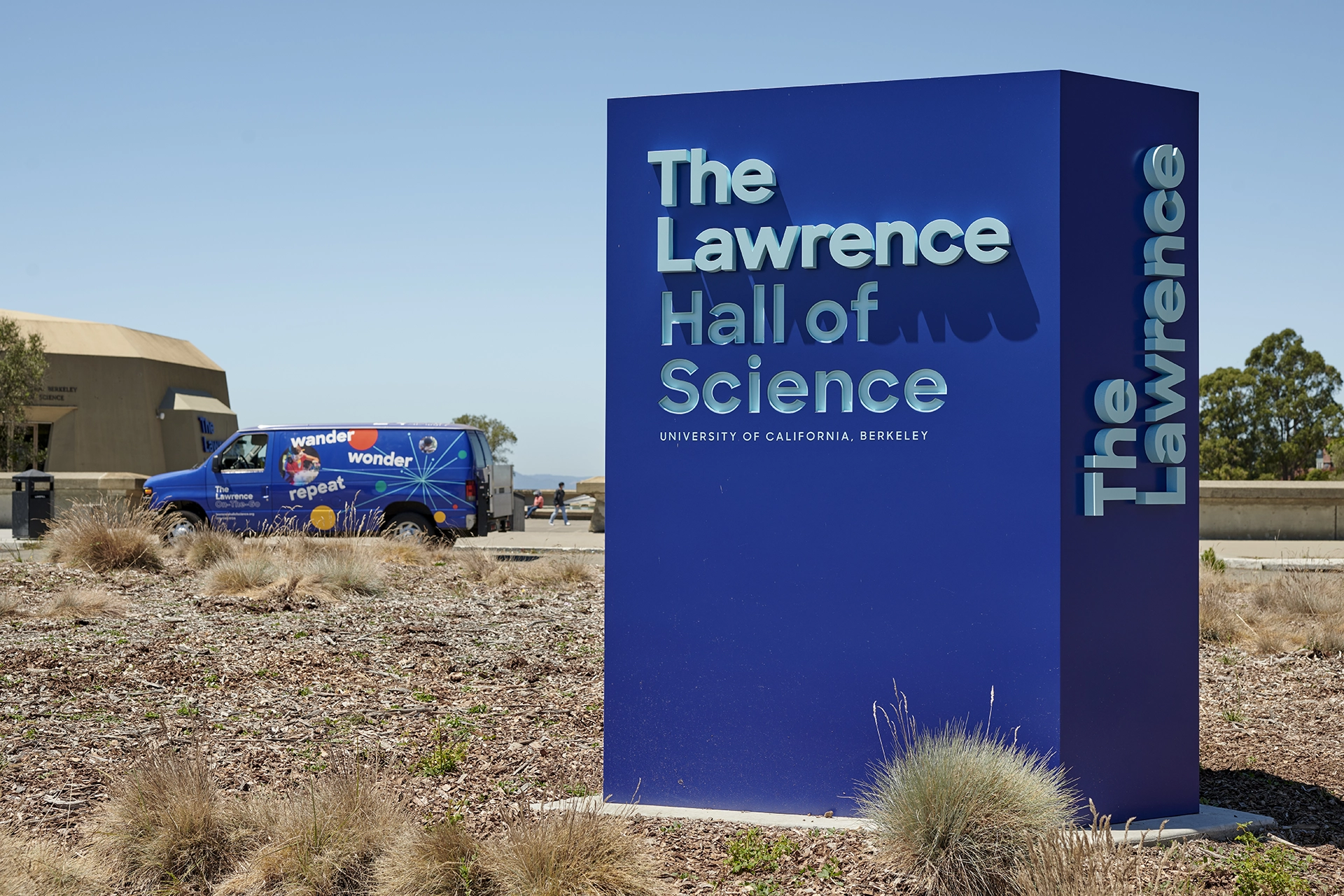
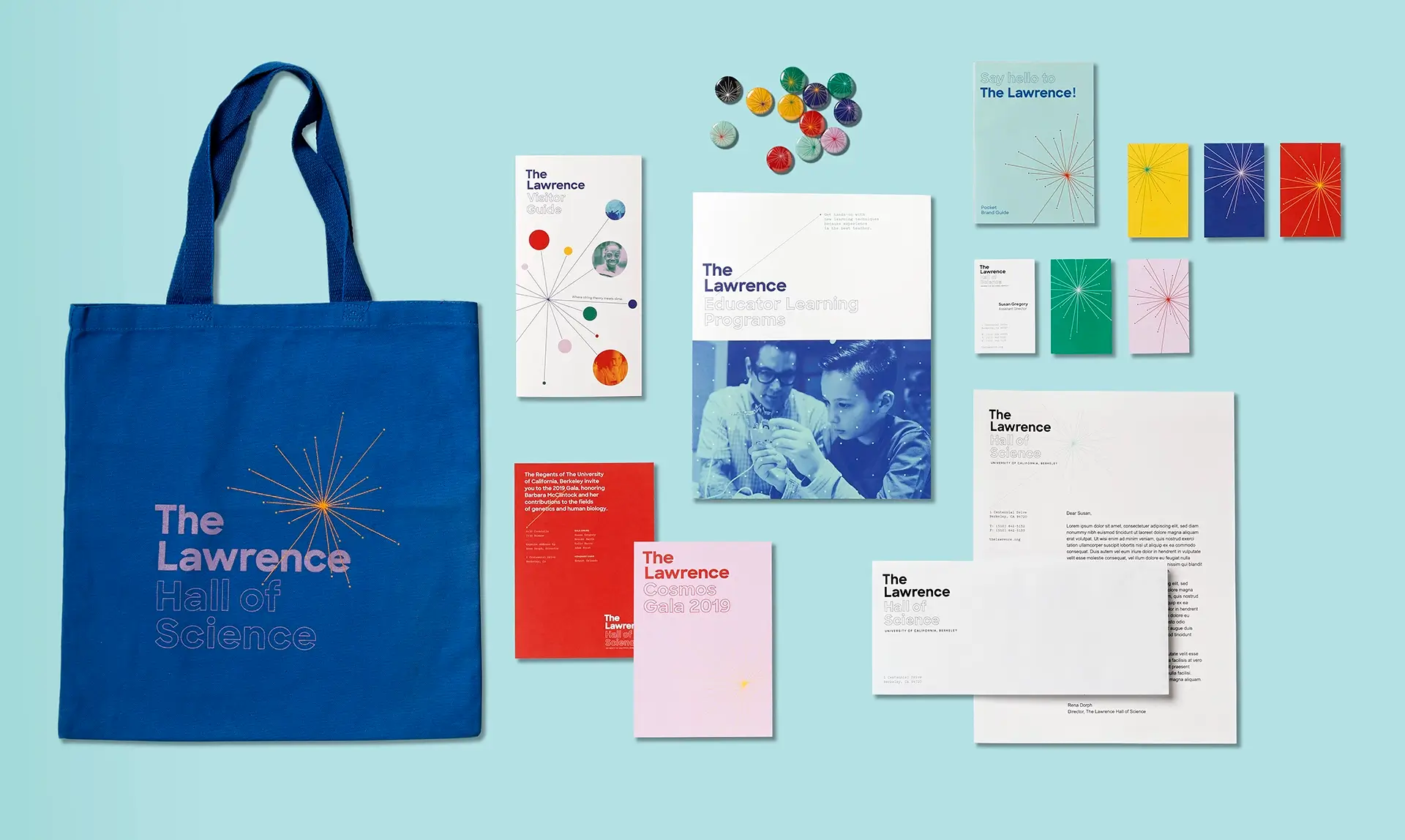
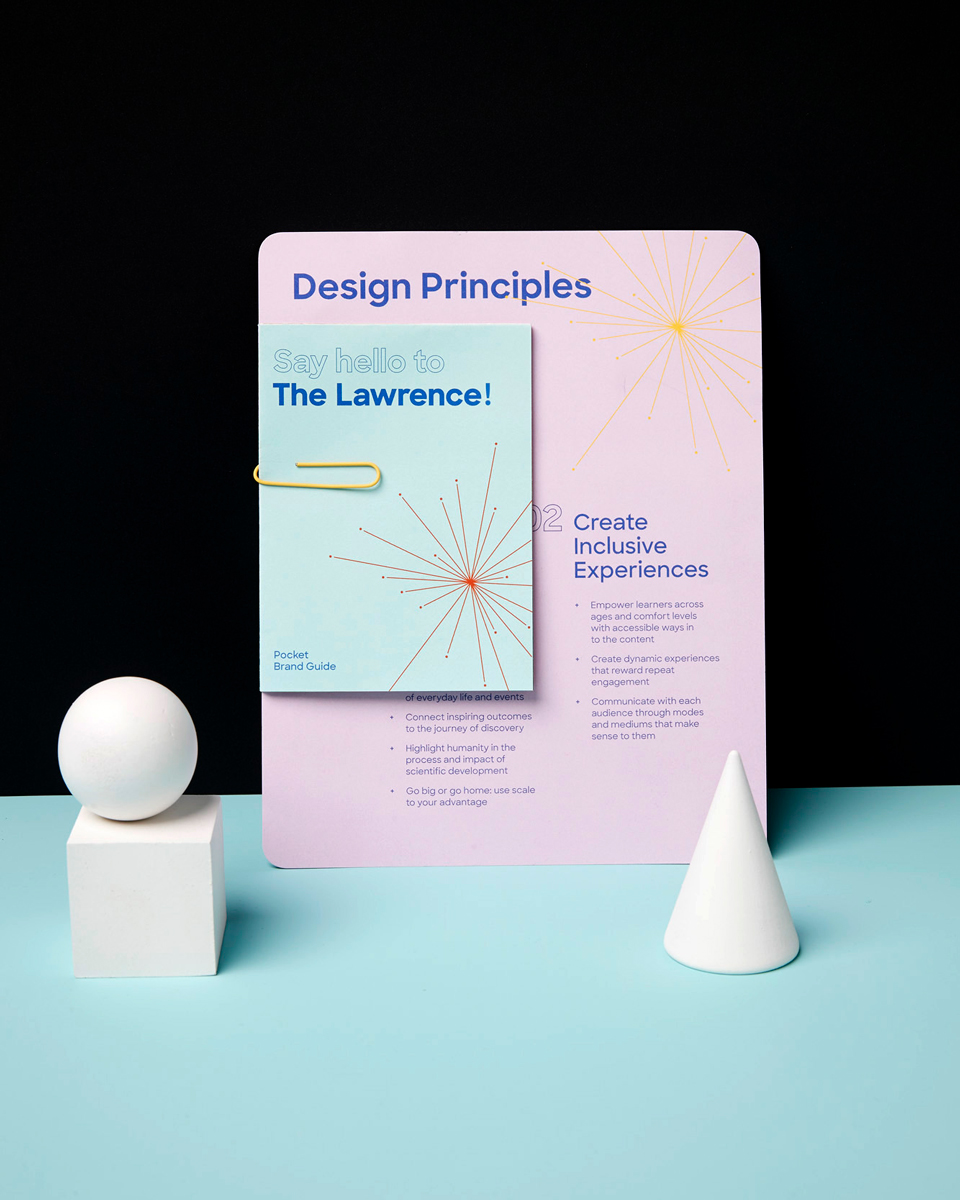
Building on its strengths as an institution and the identified opportunity areas, IDEO created a modern, vibrant, and flexible brand that strategically and visually unites all of The Lawrence’s offerings, working across digital and physical media. Grounded by a grid system, the updated brand identity is simultaneously rigorous and fun, featuring a bright color palette and signature retro-cool super-nova mark. Different offerings are bundled together based on different audience needs, preventing confusion and easing navigation. Even the name of the science museum, The Lawrence Hall of Science, was updated to a more contemporary and approachable, The Lawrence, inspired by The Met.
The Lawrence unveiled its new brand with much fanfare in late 2018 as part of its year-long 50th anniversary celebrations. Visitors can see the updated identity across all public-facing elements, including The Lawrence’s website, curriculum and educator materials, letterhead, collateral, and exhibition and wayfinding signage. The redesigned brand has been credited with bolstering the popularity of the science center among families and schools and causing ticket sales to return to—and exceed—pre-pandemic levels. Internally, the rebranding effort has helped generate excitement and energy across departments, helping solidify a collective future strategy and vision for its next 50 years.

The Lawrence Hall of Science’s diverse offerings had grown extensively over the decades, creating a confusing and disjointed experience for its various audiences. On the eve of its 50th anniversary, Lawrence leadership sought a brand refresh to better connect with its target audiences and differentiate itself in the STEM education ecosystem.
Over $6M in new funding
raised to transform and modernize The Lawrence, thanks to IDEO's rebranding effort
Reinventing classic British pubs and inns
Greene King’s upscale Everly Hotels Collection combines modern comfort with local impact.
When Greene King approached IDEO in early 2022, it was (and still is) one of the UK’s leading hospitality brands, with over 2,600 pubs, restaurants, and hotels. At that time, consumers in the UK and other parts of the world were beginning to rediscover the joys of travel after years of pandemic lockdowns. Greene King’s newly formed Venture Hotels Team wanted to understand how guest expectations had shifted during Covid-19 and how a new customer-centric hotel brand and signature service experience might meet—or exceed—their expectations.
To get inspired, the IDEO team interviewed a range of travelers of different ages and backgrounds, met with hospitality and luxury experts, and conducted immersion visits, including visiting high-end hotels. The research revealed modern travelers want unique hotel experiences that cater to their curiosity, support local communities, and are environmentally sustainable. Luxury, which once meant “exclusive,” was now about enabling one-of-a-kind cultural experiences. Today’s travelers value inclusivity, accessibility, and well-being; they want to feel welcome, do things at their own pace and have thoughtfully curated options to choose from. They also expect hospitality practices to be ethical and sustainable, contributing to the welfare of local communities and the planet.
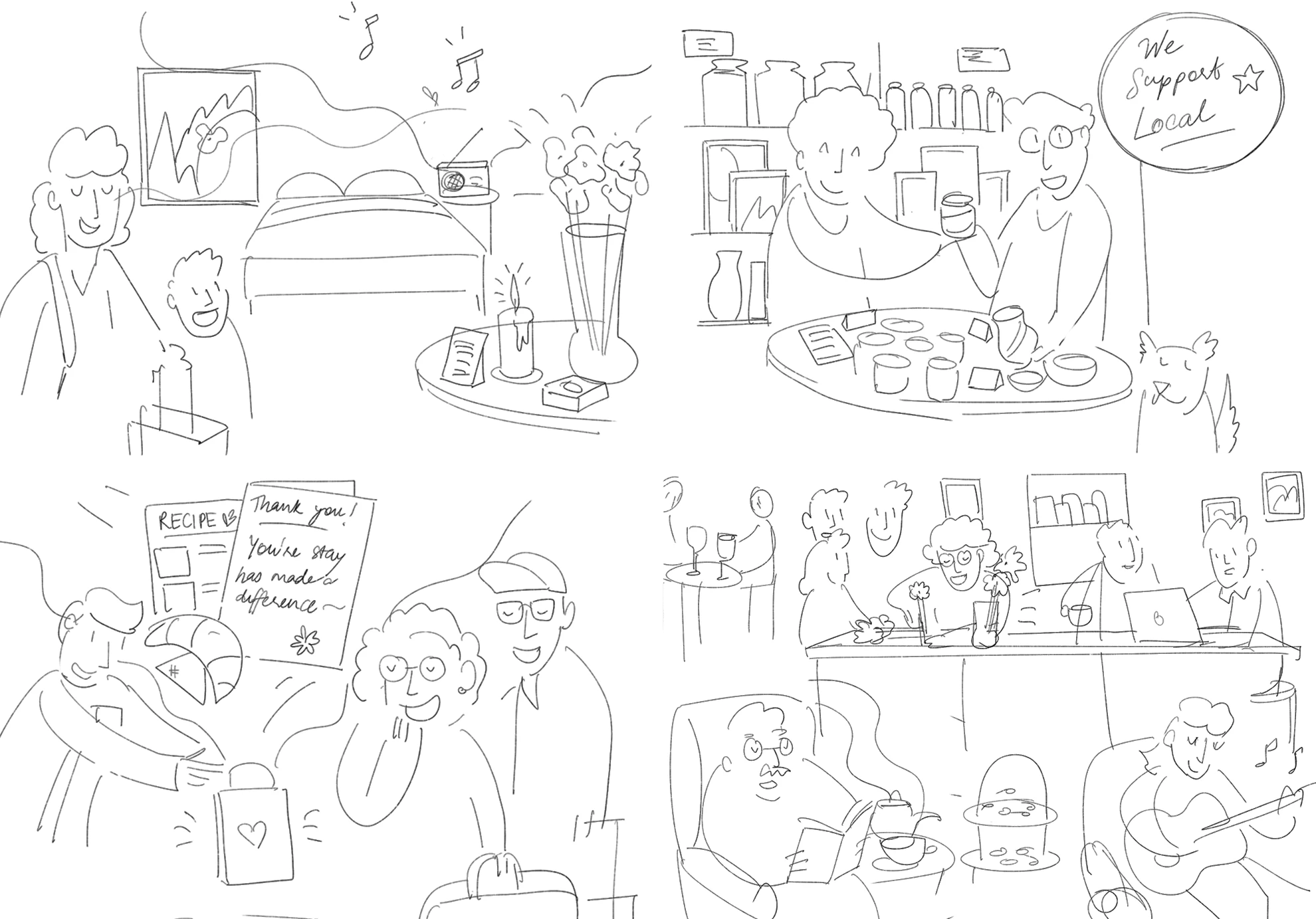
Building off this research, IDEO crafted a new entry proposition for Greene King’s new Everly Hotels Collection called “The Discover Collection,” which leverages the best parts of a classic British pub and inn—bespoke historic locations full of character, culture, and stories—while offering guests a modern experience from pre-arrival to departure, all grounded in supporting the communities they are in.
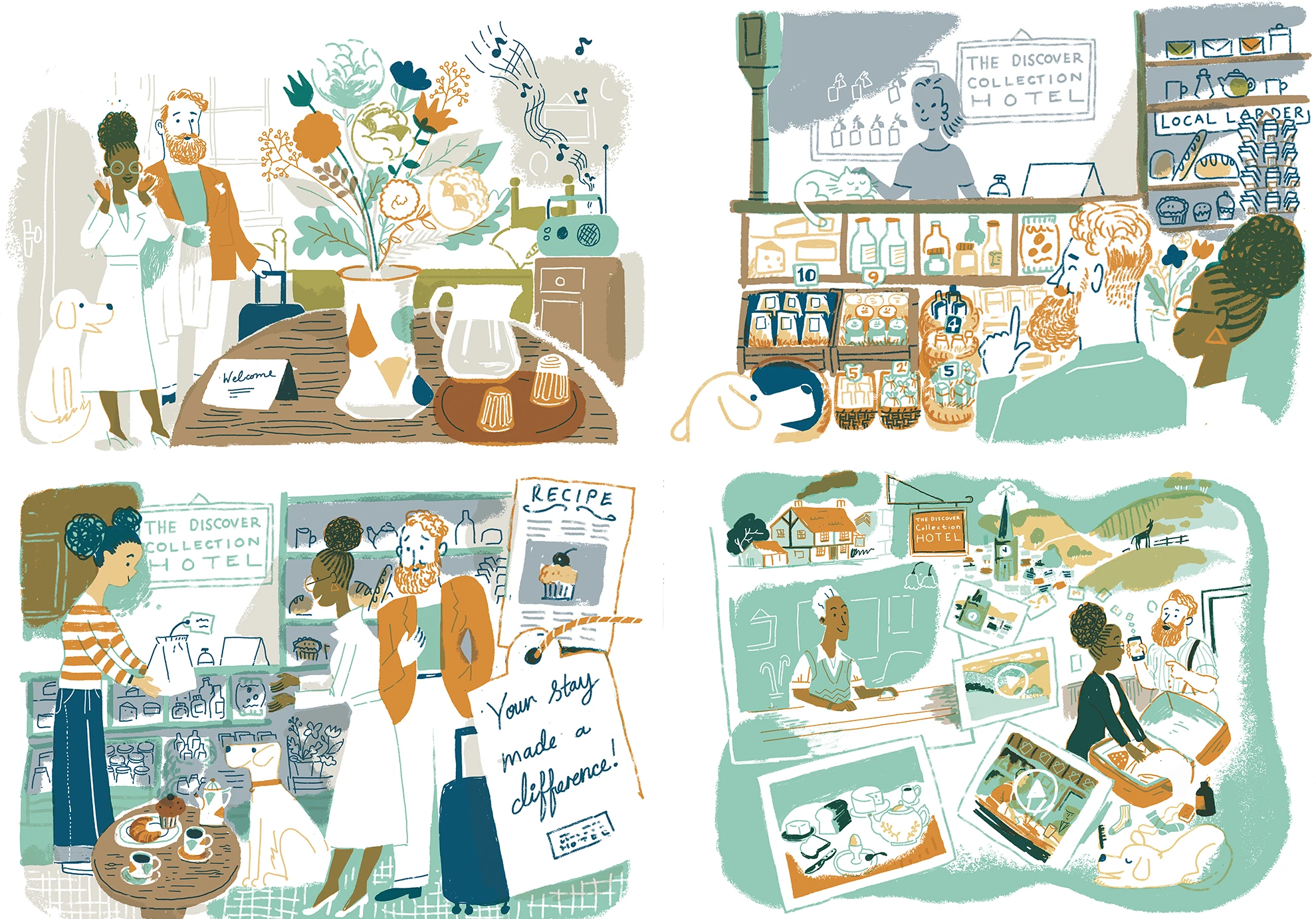
Signature moments include a warm welcome during check-in, as well as staff recommendations and local maps highlighting neighborhood gems. During their stay, guests enjoy expansive seasonal food menus, as well as a beverage menu that includes a wide variety of locally brewed, distilled, and crafted drinks by local suppliers. Rooms feature a smuggler's treasure chest with a surprise treat. Art and books from local talent are on display throughout the hotel, and local experts lead activities and events. Guests tangibly experience Greene King’s commitment to sustainability through its use of local materials, produce, talent, and partnerships, all designed to support the surrounding community. Upon departure, guests receive a personalized postcard.

In addition to the hotel experience moments, IDEO delivered branding recommendations for The Everly Hotels Collection, including visual identity and tone of voice that provide a cohesive look and feel for the collection of hotels while simultaneously showcasing each property's unique character. This was all packaged as an experience playbook, with design principles and briefs to help guide implementation decision-making across Greene King’s marketing, digital, interior design, and food and beverage teams.
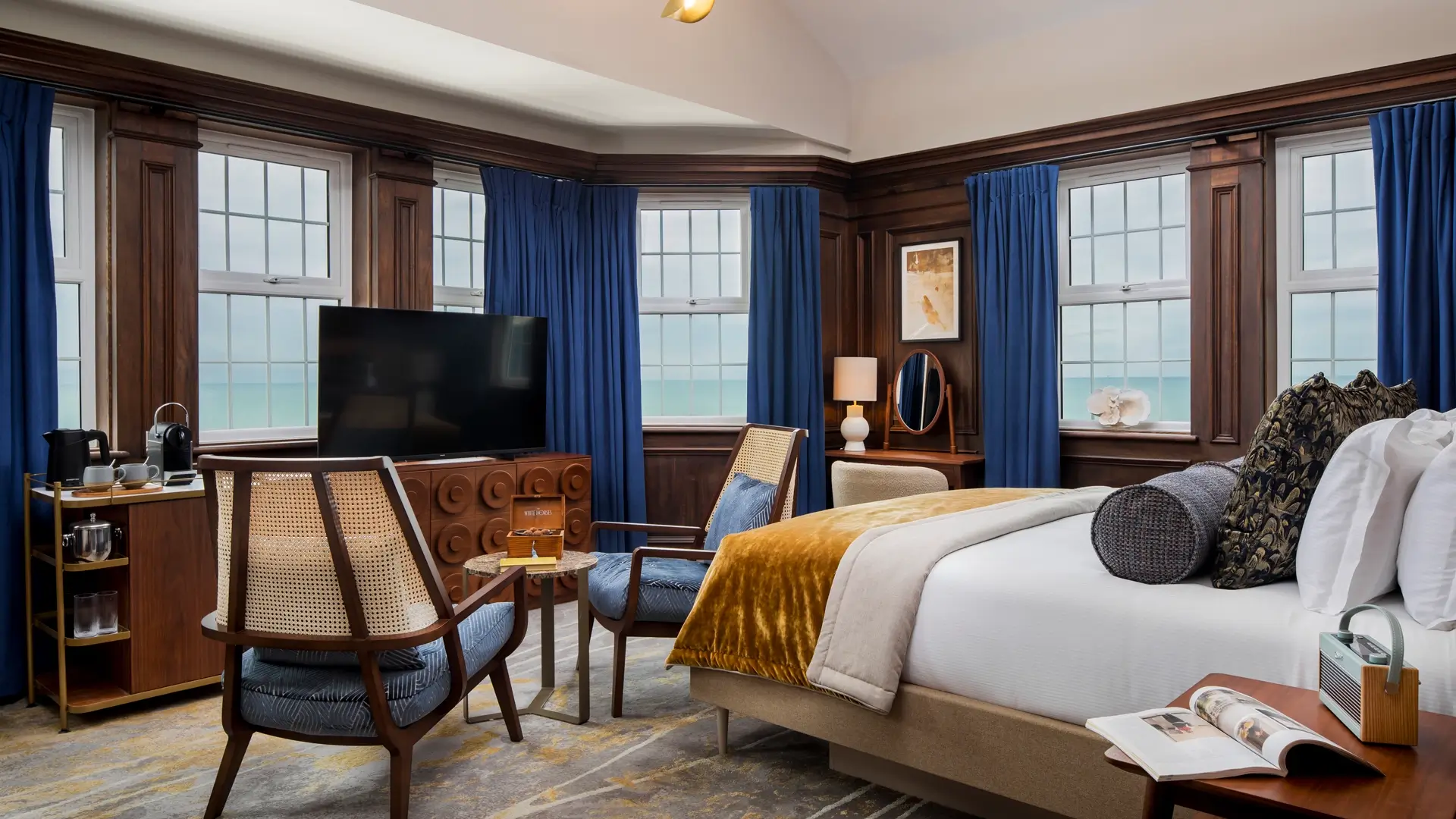
A few months after the project ended, Greene King launched The Everly Hotels Collection. Its pilot hotel, The White Horses in Rottingdean, East Sussex, opened within the year. The new brand and guest experience strengthened bonds with Greene King’s loyal customers and first-time guests, ensuring the brand's relevance and appeal in a competitive market. More hotels are planned in the future in other scenic UK locations.
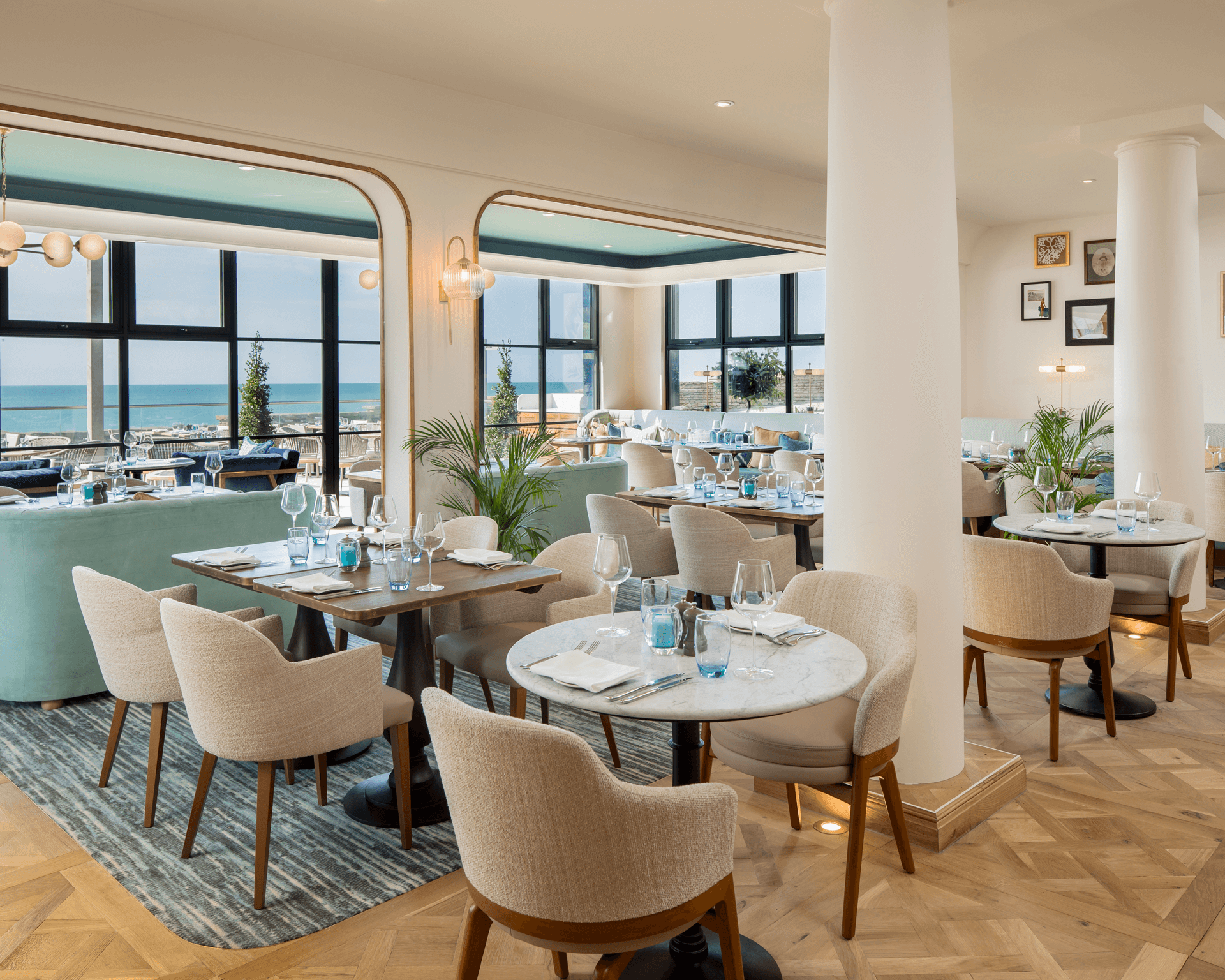
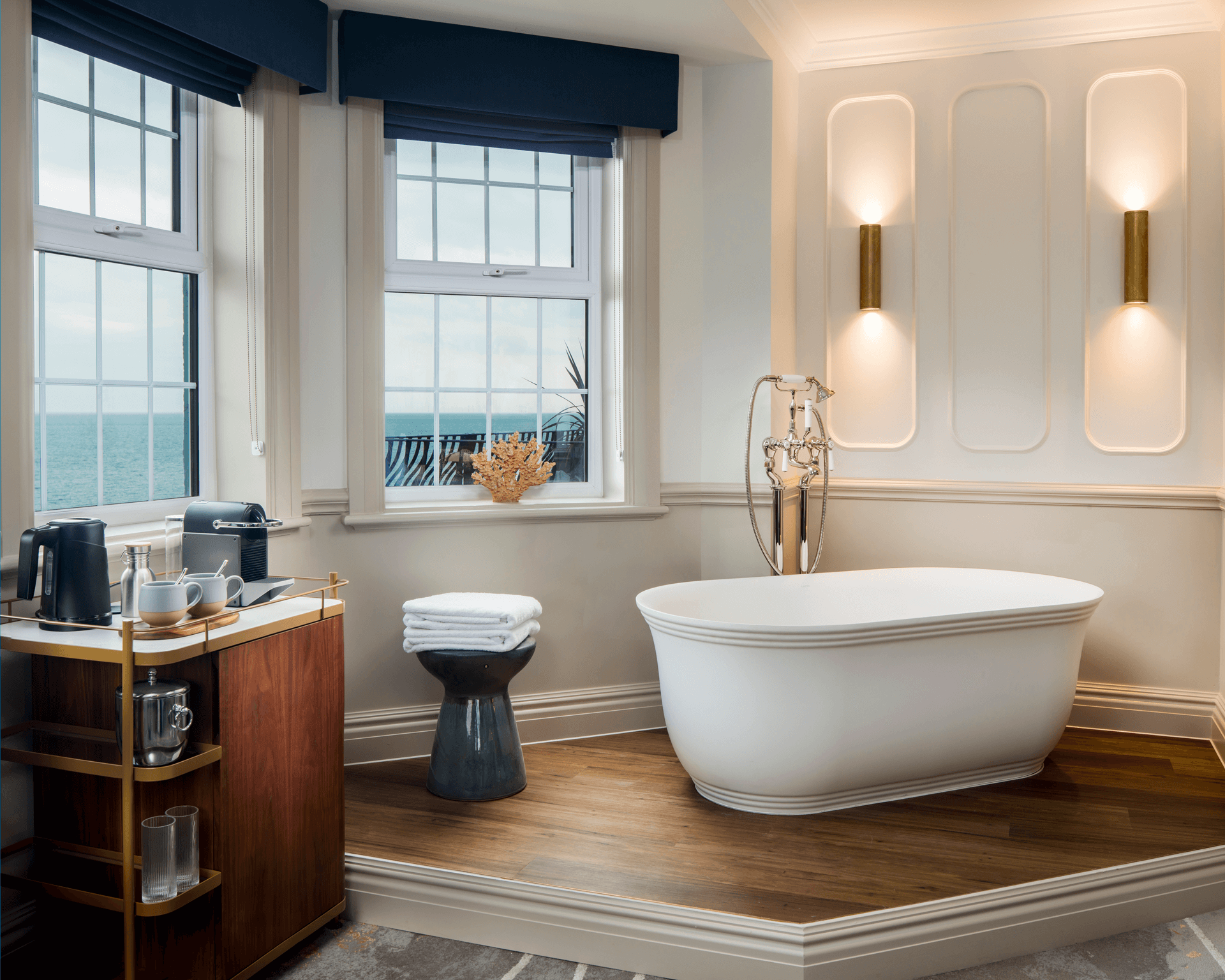
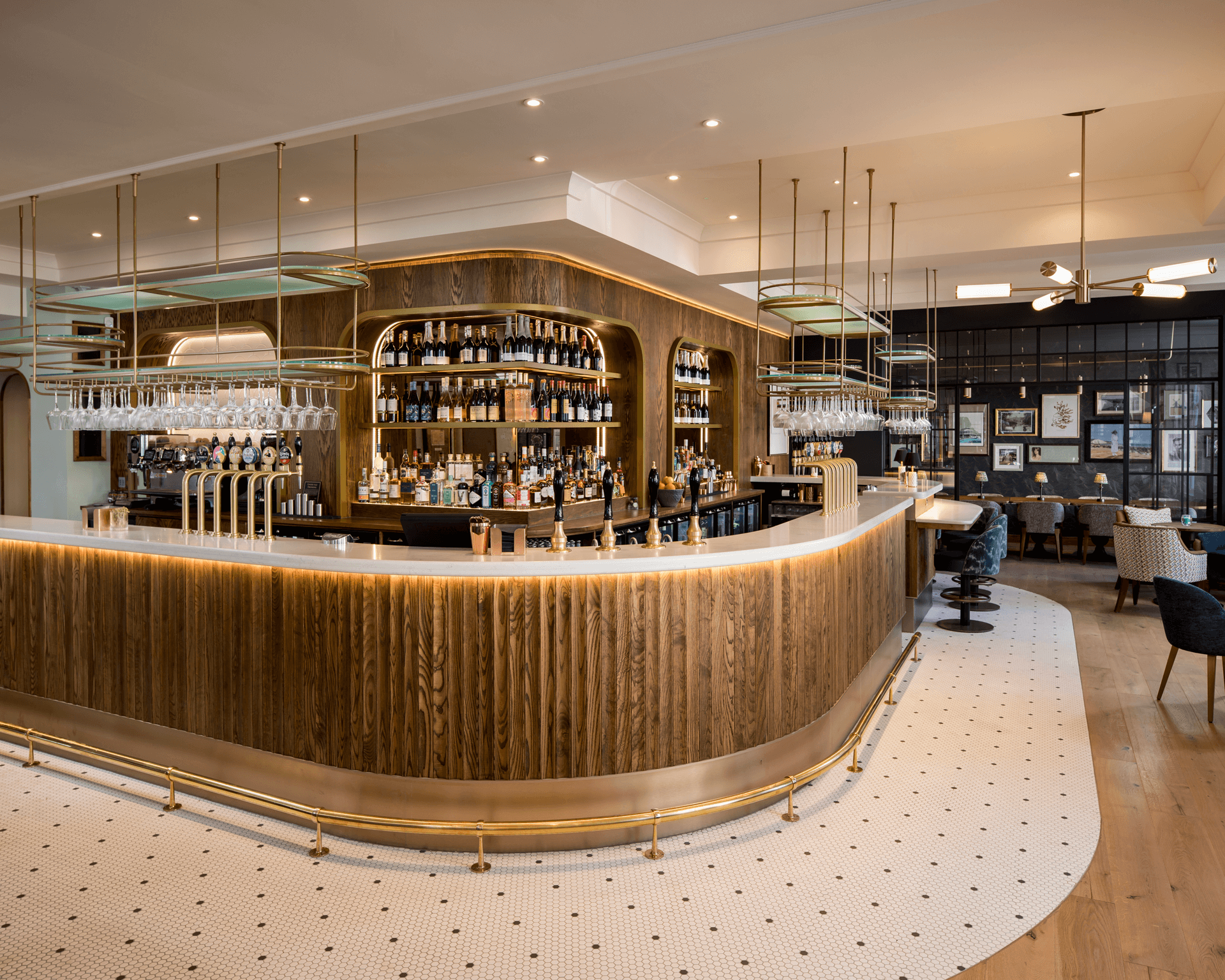
Greene King wanted guests to have a consistent brand experience while maintaining the storied charm that makes each property unique.
2 years
from concept to the launch of Greene King’s boutique Everly Hotels Collection
1 pilot hotel
The White Horses opened in Rottingdean in 2024

A new paradigm in data storage
Designing the iodyne Pro Data and Pro Mini hard drives.
The hard drive space is full of companies competing over technology and performance. But iodyne wanted to add another layer, focusing on user needs and product aesthetics to better position the company to meet the values of a broader audience and create compelling new entrants into this crowded market.
Together, IDEO and iodyne jumped into in-depth discovery research to learn more about the needs of their end users. The team sat down with photographers, videographers, and digital imaging technicians, asking questions about their file management systems, how they used hard drives in the field, and how they stored them for transport and at home. They also headed to the source, visiting studios and home office set-ups to understand the full range of potential use cases.
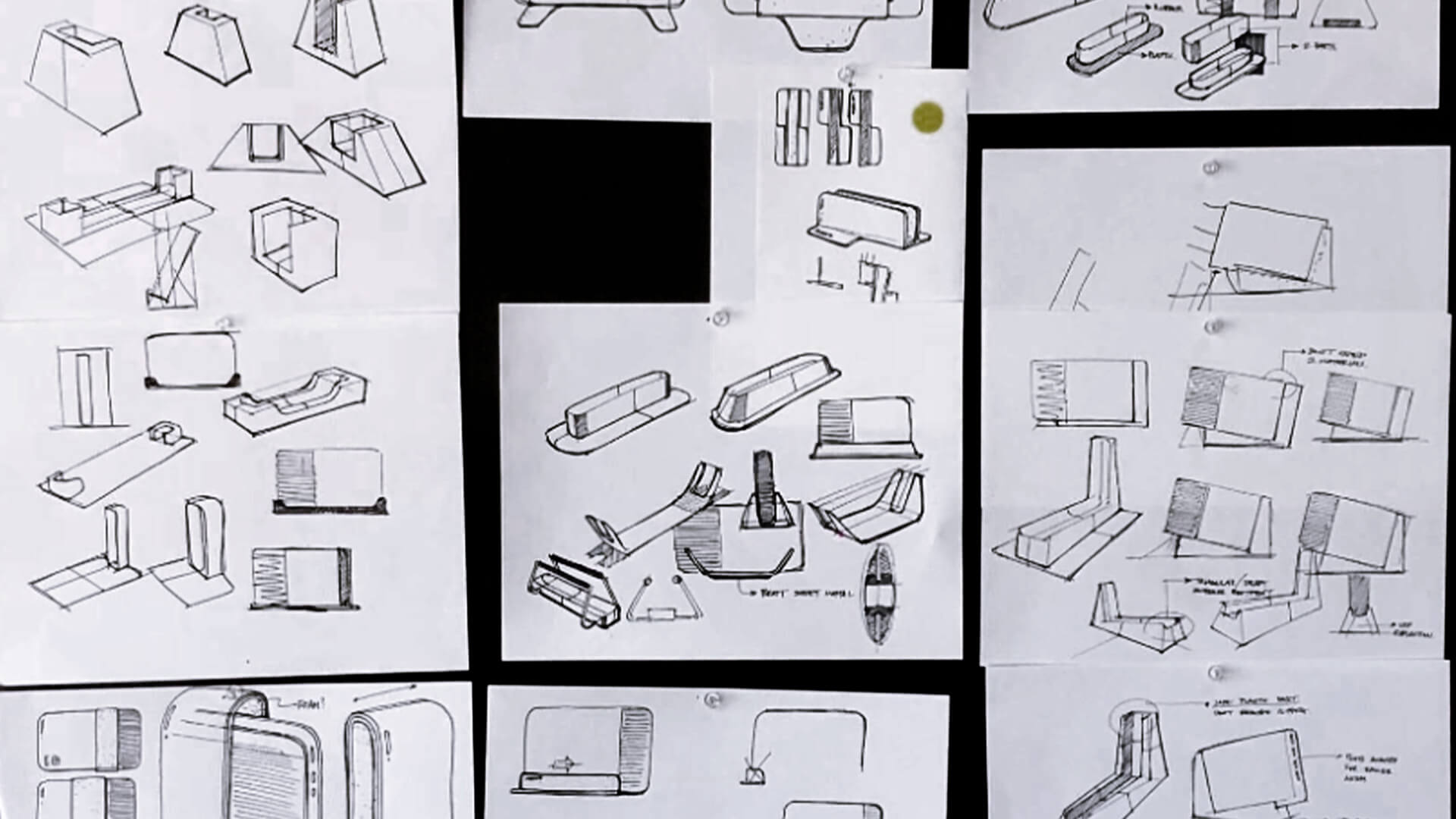
A few big discoveries leaped out. No one had a single storage solution to rely on. Users constantly transferred data from different hard drives designed for different purposes (in the field versus at home), accumulating hundreds of old hard drives over time. Traditional hard drives also don’t allow multiple users to work off them simultaneously or come with software systems that help keep projects and tasks organized, protected, and sharable. Meanwhile, the ever-shrinking size and weight of laptops—and people’s willingness to take them everywhere—set a new benchmark for portability, one that iodyne could lean into.
With these and other insights in hand, the team brought unrivaled performance and aesthetics together to create a far superior user experience. IDEO and iodyne developed Pro Data’s engineering architecture, collaborating on thermal performance analysis, material choice, inspection of sample parts, and even packaging design. By combining integrated venting, multiple laptop-quality fans, smart power management, and 20 thermal sensors, the team was able to minimize cooling fan loads and reduce noise and power consumption. A single, centralized, and consolidated storage space makes sharing data among teammates easy, too—up to four computers can connect to the Pro Data at the same time and access the same files. The redesigned Pro Data creates new value for consumers in a highly mobile, secure package that can go from desktop to backpack and back again.
The iodyne Pro Data hard drive launched in 2021 to overwhelmingly positive reviews. Storage Review wrote “Nothing else comes close to this level of performance in a package this size,” while Jemery Boros of StarGate Studios said “I don’t think I could have done the shoot without Pro Data. It was easy to use, fast, and kept all of our data safe on the other side of the world.” The drives have since been used in the making of major motion pictures from F1 to A Complete Unknown.
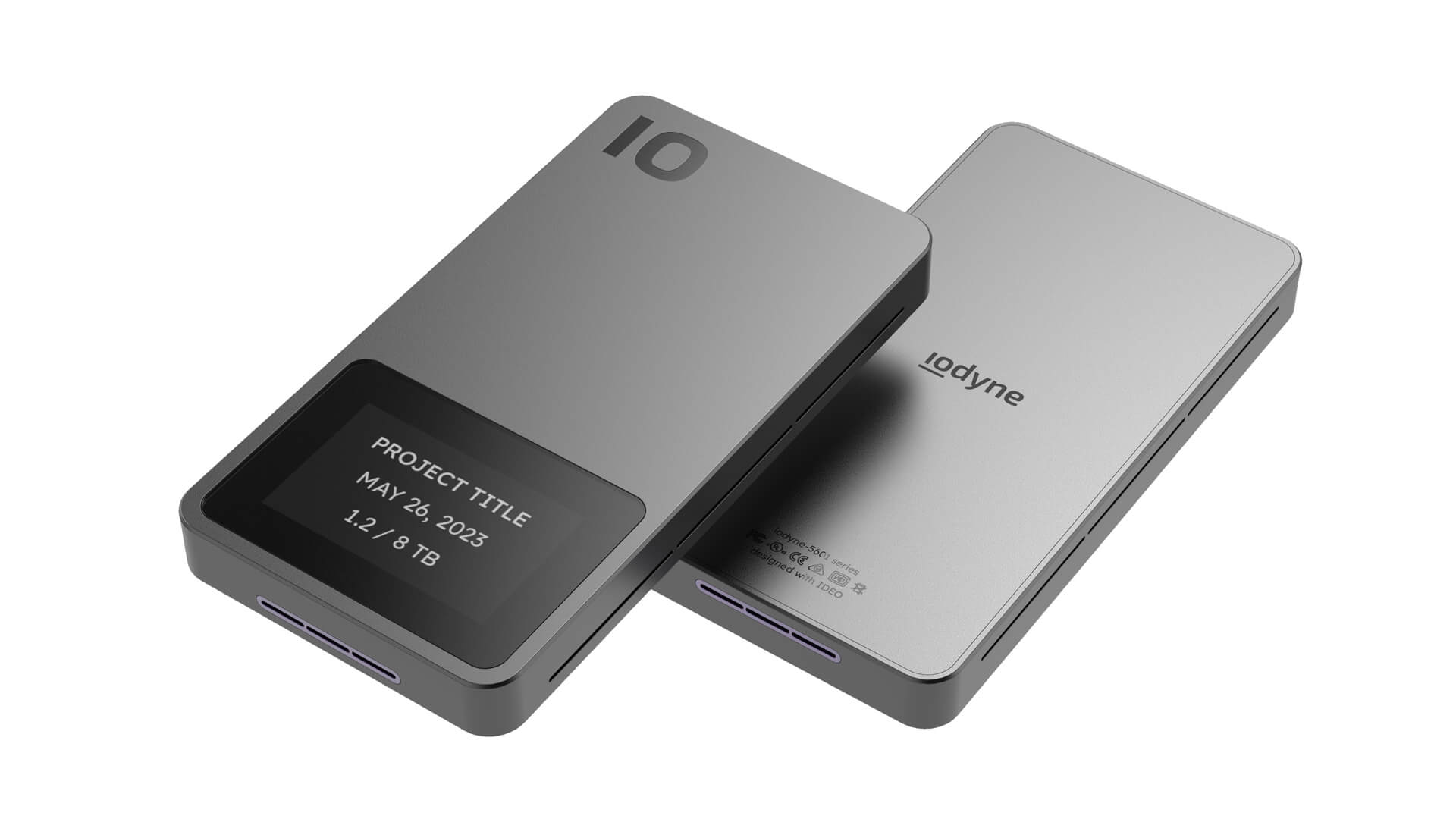
Spurred by Pro Data’s success, iodyne decided to create a second product with IDEO, a Pro Mini that could provide the same cutting-edge performance and sleek design but scaled down to fit the needs of customers who required less storage capacity in an even more portable package. Pairing Pro phone-quality industrial design with a unique internal solid-state cooling architecture that imposed key constraints on airflow was critical.
IDEO worked with iodyne to create the Pro Mini’s internal layout and collaborated with an emerging engineering company to incorporate novel solid-state cooling technology, positioning the vents to maximize airflow and optimizing how users physically interact with the device. The team also addressed users’ durability concerns, advising iodyne on part selection as samples came in from vendors. The new Pro Mini is set to ship in the second half of 2025.
Hard drives are essential tools of the trade for people with large troves of media to store and transfer, like photographers and videographers. But beyond rolls of masking tape and label makers, there isn’t an easy way to see what’s on each drive without literally going through them one by one.
Traditional hard drives generate a lot of heat and need fans to cool them, making them bulky, loud, and slowing transfer speeds.
Many external hard drives are treated like commodities. They’re designed for mass production rather than for durability and aesthetics.
2 cutting-edge hard drives
to market in 3 years
Introducing LA’s mental health crisis first responders
Helping a kinder, safer emergency support arrive first on the scene.
LACDMH is the nation’s largest public mental health department, serving over 10 million people. The agency provides critical support for the most vulnerable, including staffing a toll-free, 24/7 Help Line. Since late 2024, more than 70 Field Intervention Teams—comprised of mental health clinicians (social workers, psychologists, licensed psychiatric technicians, and registered nurses) and community health workers (trained peers or community members with lived experience)—have been dispatched around the county to help de-escalate mental health crises quickly, compassionately, and without force.
Because those experiencing a crisis are often too disoriented, confused, or otherwise unable to seek help for themselves, IDEO’s communication strategy targeted reaching “trusted messengers”—parents, spouses, siblings, and friends of people who have a mood or personality disorder like schizophrenia or bipolar disorder. The campaign aimed to define mental health crises, help people understand what to expect when they call, build trust in FITs, and divert mental health crisis calls away from 911.
To understand what drives these specially trained mental health professionals to do this type of work—and what sparks trusted messengers to call for help—IDEO met and interviewed former clients and loved ones who had reached out to the county for support during a mental health crisis. The team also interviewed multiple FIT staff to learn more about how they approach clients and families.
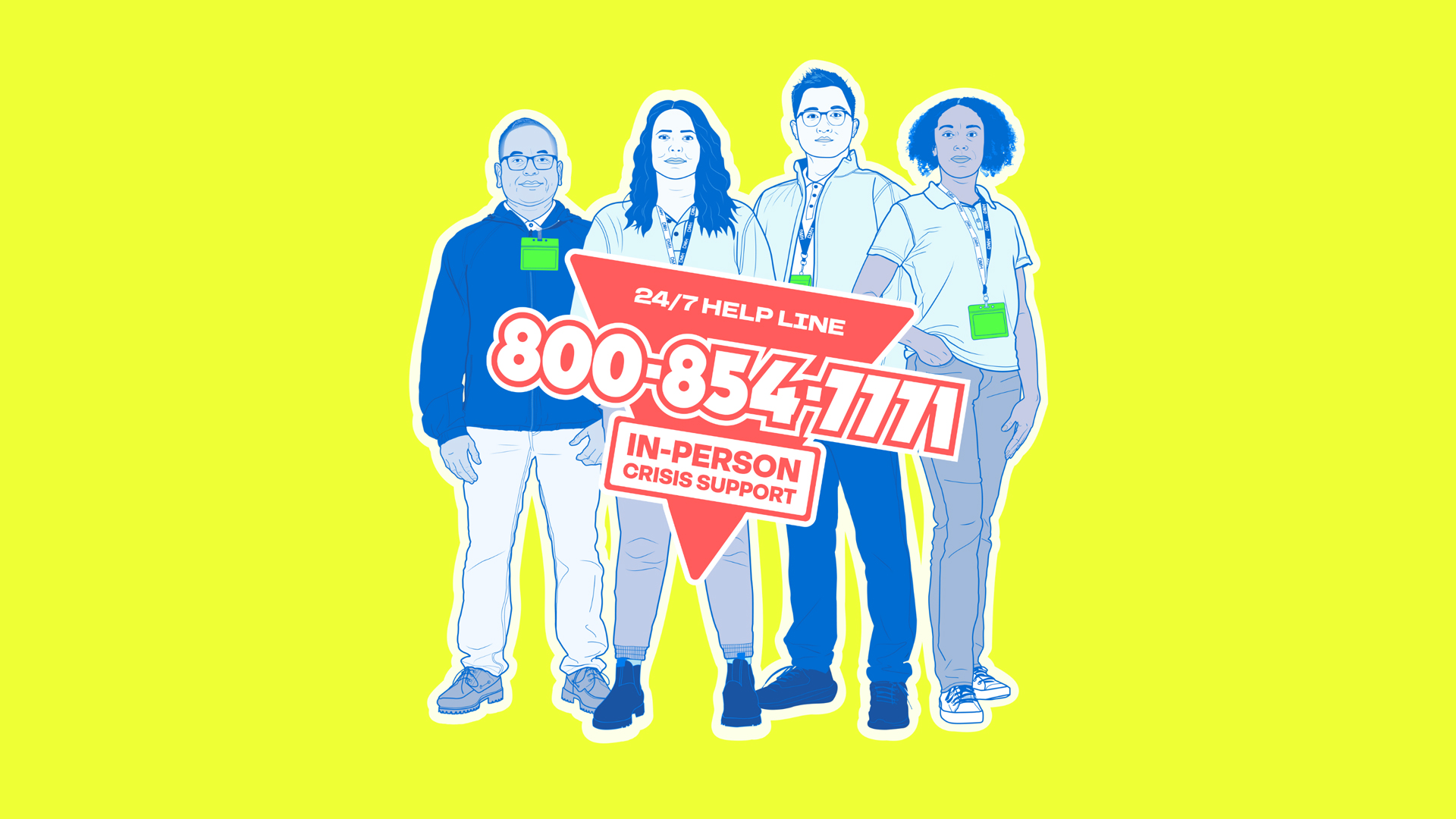
The research inspired the communication strategy’s central idea: position FIT members as real-life superheroes and first responders. By associating FITs with that term, the campaign changes the narrative and communicates their compassion and expertise to those in crisis. Custom illustrated portraits feature actual FIT staff in strong, action-figure-style poses, while a bright, eye-catching color palette and clear, direct language convey confidence and inspire trust.
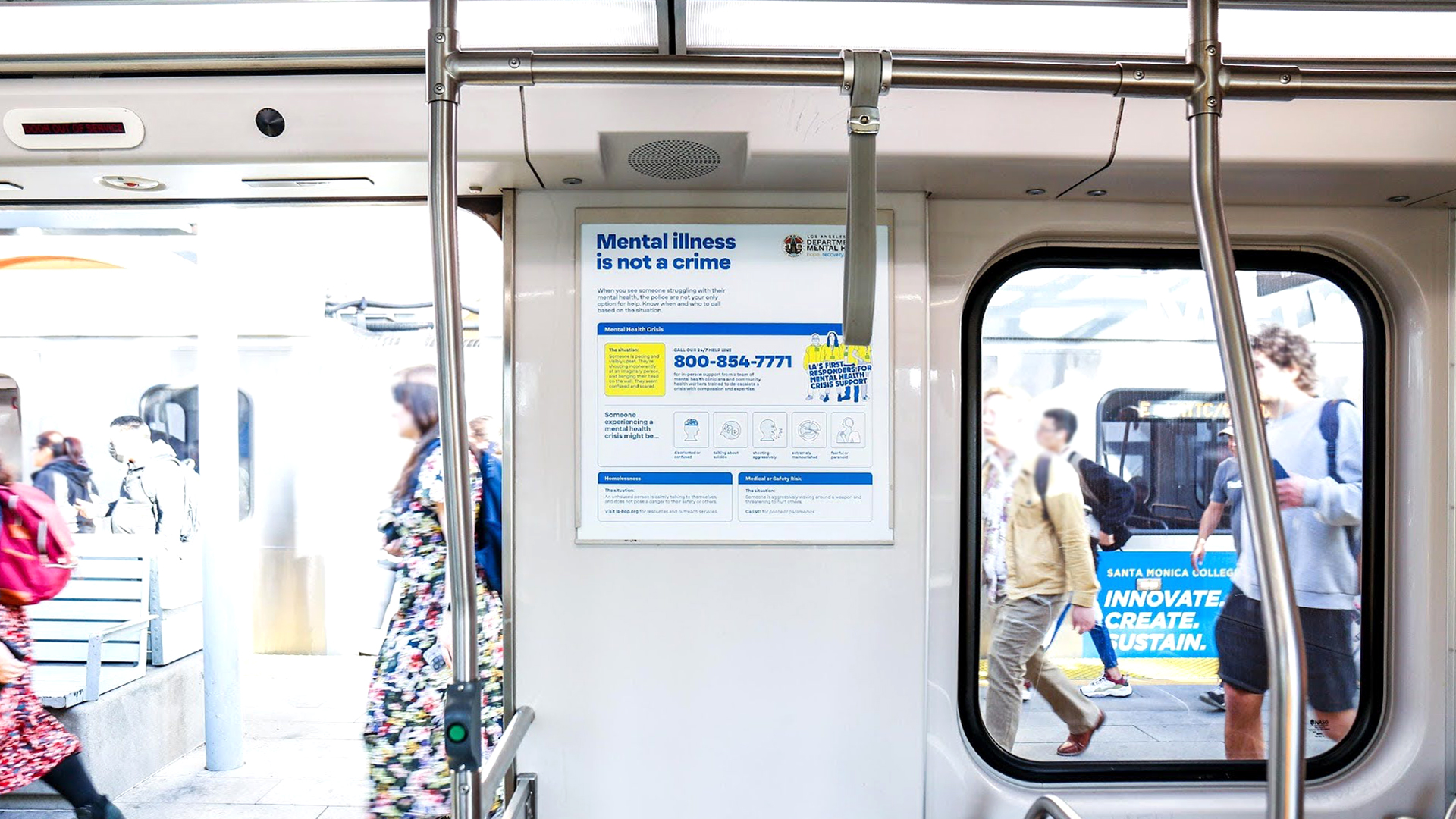
The team explored their initial design directions in a series of focus groups with LA residents, trusted messengers, and county and mental health workers to better understand the impact of the potential messaging and visuals. The research uncovered the importance of clarity, even in an inherently emotional situation. The IDEO team discovered that transparency—and real personal stories—would be the key to building public trust in ACR.
Between March and June of 2025, the robust awareness campaign will run across LA County in a number of languages on city buses, in Metro stations, on social media, streaming TV, radio, and more. An updated landing page on LACDMH’s website includes in-depth information and educational videos about mental health crises, as well as heartfelt testimonials from staff and former clients who have been helped by the service.
LA County Department of Mental Health created an innovative new program to provide urgent, compassionate care to Angelenos experiencing a mental health crisis but needed help driving awareness of its service across the region.
Calling 911 is an entrenched behavior in an emergency. However, dispatching police officers who are not trained in mental health can make a bad situation worse. In 2022, 39 percent of people shot by LA police officers were in the midst of a mental health crisis.
172 million impressions
delivered via digital and physical ads across LA
50% increase
in calls to the ACR helpline, year-over-year, attributed to IDEO’s awareness messaging
24%
of Angelenos now name LACDMH as the first to call in a mental health crisis, leapfrogging 911 or the police, which slipped 14.3 points
Big things we can learn from small nations
How small countries, often led by women, are driving change with incredible results.
I grew up in Singapore, the ultimate small-but-mighty island at the tip of the Malaysian Peninsula. As I grew up, I watched it transform from jungle kampongs and a river so dirty that it glowed neon green, into the ultimate modern metropolis.
Singaporeans now enjoy some of the best quality of life in an integrated society. It is home to the world's best airport and has become a sophisticated financial hub, and even made history in the universe of gastronomy, receiving the first ever Michelin star for street food. The river itself is now so clean that dolphins and fish have returned in droves.

Fast forward 50 or so years. My partner and I have found ourselves living in Iceland for the last three years, the literal polar opposite of Singapore, but equally impressive. You need only pick up any quality-of-life index to find Iceland near the top of the safest, most egalitarian, most tolerant civil societies in the world. The country has taken a leading-edge approach to climate science, with bold plans for its domestic geothermal energy and the electrification of its transport system.
To be sure, it’s a rather isolated island with a population under 400,000 in the middle of the Arctic Sea. Nonetheless, Iceland was led with a calm and steady hand through the COVID-19 pandemic, achieving a 91% vaccination rate in record time. It’s a society that is well read, well informed, and one in which citizens revere nature, considering themselves guardians of the wild environs they've inherited.
A word I often use to describe life here is “sane”. Icelanders are pragmatic, do not hyperbolize or dramatize, and work together to achieve collective goals. Icelandic businesses feel it is important to do their part, too. The national flagship airline, Icelandair, recently announced that they will decarbonize all internal flights by the end of the decade, the first national carrier in the world to do so.

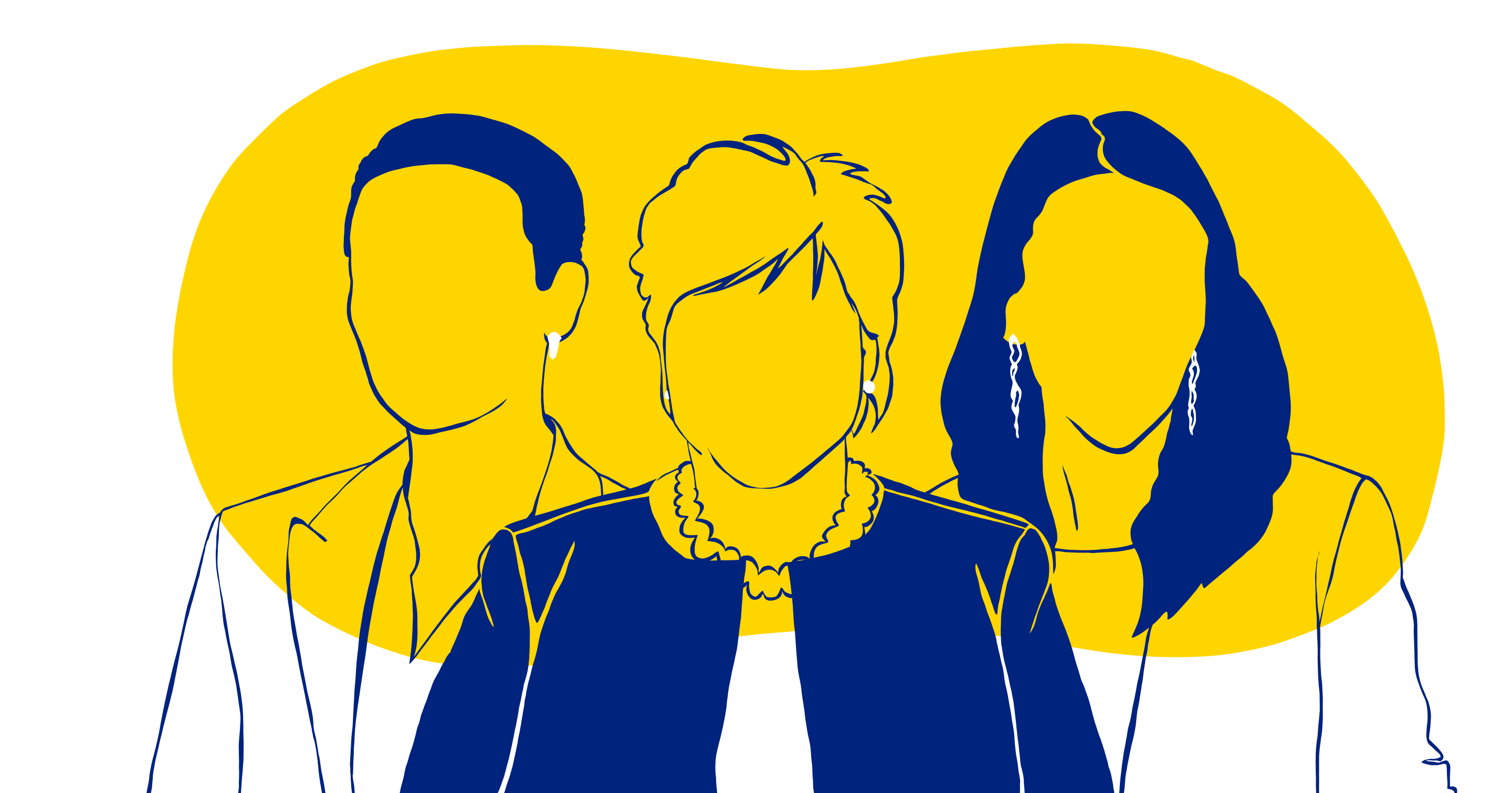
In the years between inhabiting these two islands, I have lived, studied and worked around the world, spending considerable time in Norway, Denmark, Finland, New Zealand and the UAE, all of which play at a much more significant scale on the world stage than their geographic mass would suggest. It helps that all of these nations are well led, with crisp, long-term plans and goals. And it is no coincidence to me that in many cases they are led by women.
Other small nations that I watch from a distance, like Estonia, are digital pioneers, transforming an antiquated governmental system into an e-Residency – their human-centred, digital citizenship program. Way back in 2014, Estonians described themselves as a “start-up country”. Rwanda has followed suit with similar initiatives: one-stop digital services designed to incentivize small commercial enterprises and entrepreneurs to launch businesses there. Finally, we must shine a light on Ukraine which, whilst in the midst of war, are making plans to regenerate themselves, building a greener, more modern society out of the ashes and carnage.
So, what do these Small Awesome Nations (SANs for short) have in common, and what do they have to teach us all?

SANs act faster: COVID-19 taught us all, especially governments, that cumbersome bureaucracy and endless consensus-building wasn’t just unnecessary, it was life-threatening. To be able to quickly assemble task forces as information came in and cut through red tape was critical. Smaller countries mobilized at record pace, and in many cases got essential supplies to the frontlines faster. Taiwan, China, for example, immediately activated contact tracing and phone tracking to make sure that those in quarantine were actually fulfilling their end of the deal. The fact that Taiwan's vice president is an epidemiologist didn’t hurt.
SANs talk like people, not governments: To me, this is critical. Early in the crisis, the Norwegian prime minister, Erna Solberg, broadcasted a specific COVID-19 address to the children of Norway, saying: “Many children are finding this scary. I can understand that. It’s quite OK to be a bit scared when so many big things are happening at once.” Taking a direct, matter-of-fact tone, she assured them that their parents would likely be fine, but acknowledged that they might miss birthday parties and life at home would be “a bit boring.” New Zealand Prime Minister Jacinda Arden declared on national TV that the Tooth Fairy and the Easter Bunny were both considered “essential workers” in New Zealand, but that they might also be at home, “tending to their own baby bunnies.”

SANs value the perspectives of the next generation: The human-first, sure-handed leadership of both Solberg and Arden is especially compelling in a time when so many young people express apathy about politicians who “don’t speak to us.” Addressing that lack of engagement, the UAE government hired 23-year-old Shamma bint Suhail Faris Mazrui as its first minister of state for youth affairs in 2016. At the time, she was the youngest serving minister in the world. She is now one of the most outspoken advocates for youth voices and perspectives, ensuring her generation and the next are shaping government programs and policies. When asked at Davos why the ideas of Emirati youth were so important to her government, she said: “Hopelessness results when youth are not seen as resources, and apathy results when they’re not seen as assets.”
Then there is Sophie Howe, Wales’s first future generations commissioner. Described by The Guardian as the world’s first “Minister for the Unborn”, Sophie’s role is to provide independent advice to the government and other public bodies on delivering social, economic, environmental, and cultural wellbeing for current and future generations. She’s a committed champion of the next generation and, in particular, for tapping into youth culture as a resource for creating societal change. I was part of an event she created at COP26 in Glasgow where they brought together youth with poetry, music, conversation and politics. It was a potent mix, more akin to a Taylor Swift concert than a governmental think tank, and I watched the young audience members' eyes glow with pride at the end, feeling both spoken to and heard.
What's become clear (and really exciting) to me is that these Small Awesome Nations are gathering momentum and growing in influence. These nimble countries have, in many ways, responded to the conditions of the larger world with its attendant chaos by reinventing traditional ways of doing things. And in the process of disrupting themselves, they’ve learned valuable lessons that their bigger cousins would do well to follow as they look toward the future.
If there was to be an actual League of SANs, what would you want its mandate to be? Which country would get your vote as a founding member and why? We'd love to hear from you in the comments.
Republished from the World Economic Forum's Agenda
For as long as I can remember, I’ve been obsessed with small countries. Specifically, small nations with superpowers that larger nations covet.

IDEO流 新しいアイデアを生むための3つの“変な”データ活用
一般的に「新しいものを生み出す」仕事は、いわゆる企画職、デザイナー職などの職種の人が行い、データアナリストやデータサイエンティストと呼ばれる人たちは、事業が回り始めデータが溜まってきた「今あるものをより良くする」タイミングで価値を発揮することが多いのではないだろうか。新しいものを生み出そうとしている段階ではまだデータもなく、そこでのデータ活用はイメージしにくいだろう。
しかし、実は、このフェーズにおいても、データを分析し活用することに知見を持つ人と協業することで、よりよいモノを生むことにつながる場合がある。IDEOでデータサイエンティストとして働く私の経験も踏まえ、新しいものを生み出す仕事におけるデータ活用の可能性について紹介したい。
データを通して人のニーズを理解する
IDEOのプロジェクトでは、デザインリサーチという手法を用い、人にとって高い価値や有用性を持つアイデアを探るのが一般的である。インタビューやシャドーイング(ユーザーの生活環境に身を置き、存在を意識させないように観察すること)など、定性的なアプローチを通して、「狭く深く」人やその人が生活している環境と向き合い、インサイトを見つけ出す。元来、このプロセスにおいてデータを活用することは、今までIDEOでもあまり取り組んでこなかったことであった。しかし、実はデザインリサーチのプロセスにおいてもデータは有効な使い方があることがわかってきており、近年データサイエンスも手法として取り入れる例が増えている。
データの使い所の1つ目は、定性的なアプローチに、データによる定量的な観点を取り入れることだ。例えば、過去にIDEOで乳がん患者と医療従事者両者向けのサービスのコンセプトを作るプロジェクトに取り組んだ際、定性リサーチを通して患者さんと医療従事者双方にとってどういったコンセプトにニーズがありそうか、いくつかの方向性が見えてきていた。しかし、どのコンセプトも、医療従事者に現在の業務の流れを少し変更してもらう必要があるものであった。日々忙しい医療従事者に業務の流れの変更を強いるのはハードルが高い。そこで、コンセプトごとのハードルはどのくらい高いのか、そしてそのハードルを超える工夫としてどんなものが考えられるか、ということが次の焦点になった。ここで、チームは定量的なリサーチを組み込むことにした。アンケート調査を行い、医師、看護師、薬剤師の三者が、我々が考えていたそれぞれのコンセプトを導入するとした際にどれだけ負担を感じるかを調査したのだ。
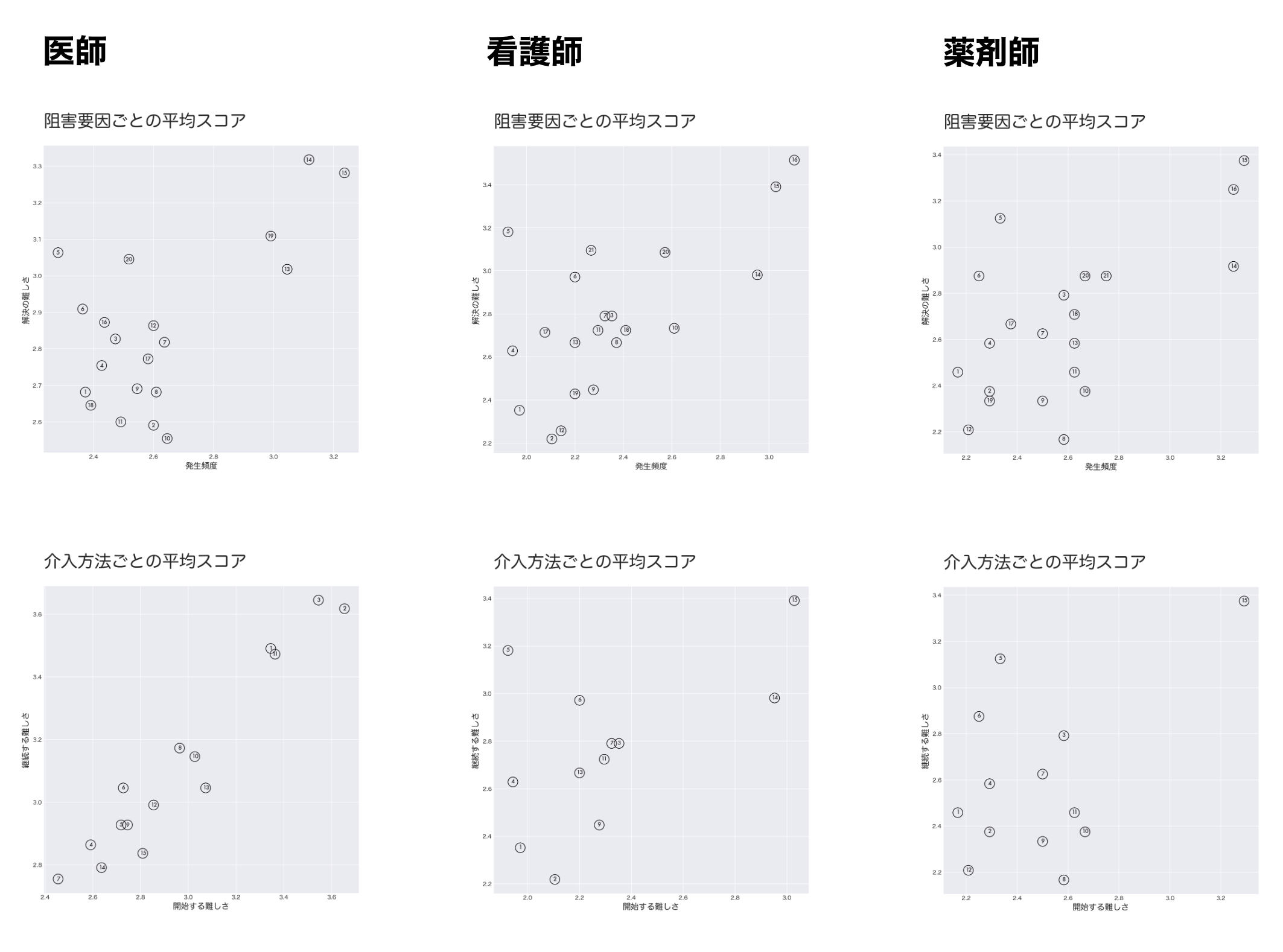
その結果、「コンセプトAを進めるときには看護師の協力を得ることが鍵になる。看護師の協力を得るためにはどのような仕立てが必要か?」、「コンセプトBは、導入をスタートすること自体の負荷は低いが、継続的に運用していくとなると負荷が高い。継続の負荷を減らすためにはどのようにしたらよいか?」といった形で、定性調査での学びに加えて、また別の角度から理解を深めることができたと同時に、新たな仮説や問いを立て、そこからまた次の定性調査でリサーチすべきことを練ることができた。一般的には、定性リサーチで得られた知見や仮説を定量的に裏付ける一方通行の進め方が多いと思うが、重要なのは、振り子のように定性と定量を行ったり来たりしながらアイデアや仮説をどんどん発展させていくことだ。
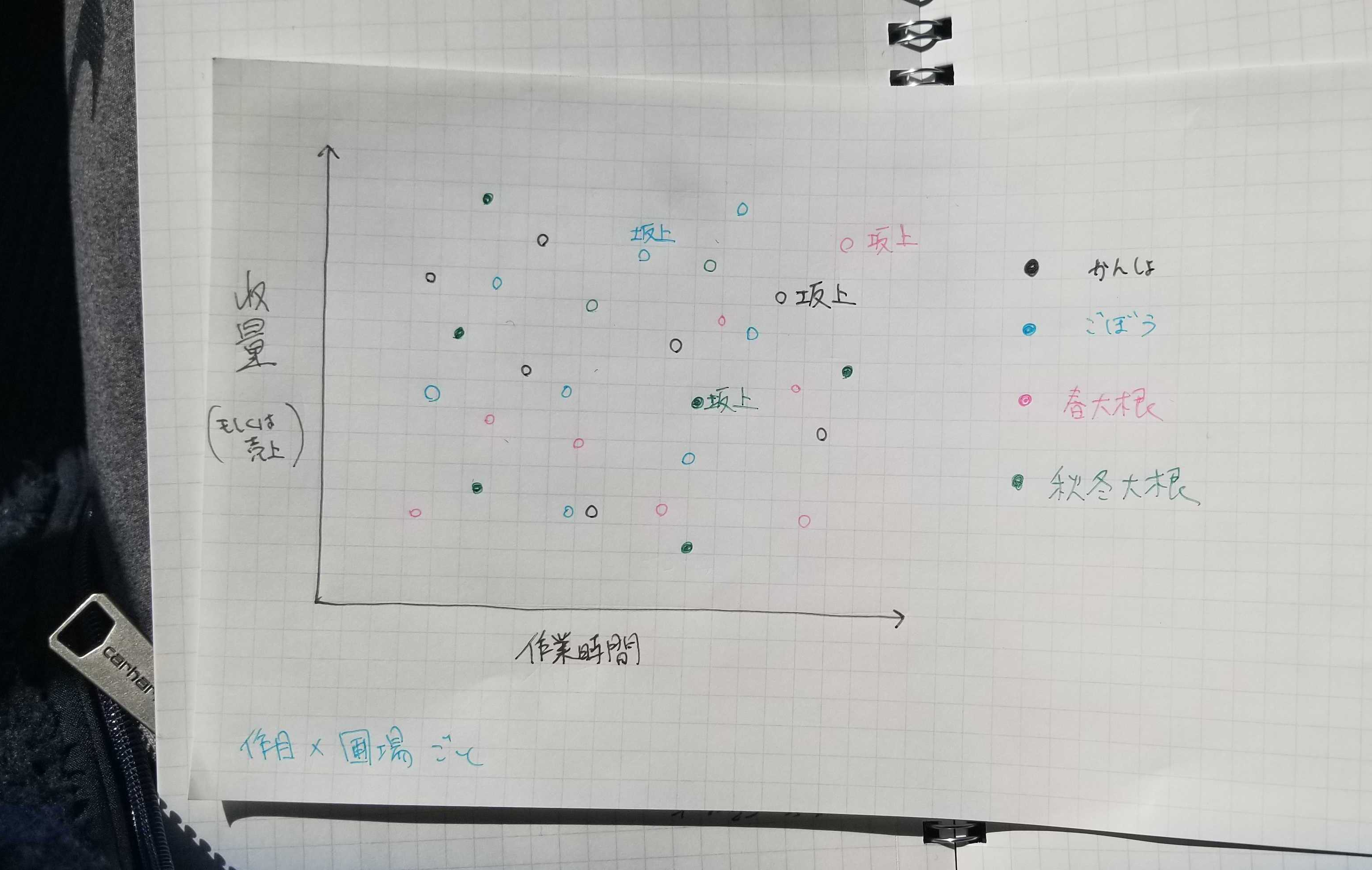
2つ目は、データは定性リサーチに赴く際の一つの武器にできるということ。IDEOで、農家に向けた経営支援サービスを開発していた際、畑で得られたデータを、農家の経営をサポートする形に変換し、可視化するサービスの企画・デザインを行っていた。農家にデータを入力してもらう部分のUXについては概ね固まってきていた一方、どのようにそのデータを農家さんにとって有用な形で見せることができるかが定まっていなかった。そこで用いたのが、紙とペンを使ったデータビジュアライゼーションである。取得したデータを可視化する方法のアイデアを考えられるだけ考え、それらのグラフをすべて紙に描き、農家さんのところに持っていった。一枚一枚グラフを見せながら話を聞くと、どれが有益でどれがそうでもないかを教えてもらえたとともに、なぜそうなのかを深堀りして聞くことができた。サービスがまだ存在していなければデータも存在しない。分析するデータがなければデータ活用などできない、と思うかもしれないが、このように想像をもとに可視化されたデータを見せるだけでも、人はいろいろな反応を見せてくれる。
サービスの体験にデータの蓄積と活用を埋め込む
前節でも紹介したデザインリサーチの過程を通じて人のニーズや人が抱える問題の理解が深まったあと、そのソリューションを考えるフェーズに入る。このときに、大きなテーマとして比較的頻繁に登場するのが、「感覚的に物事を判断することが常態化していて、それにより様々な機会を逸している」ということだ。細かいニュアンスはその時々や業界によって違えど、特にtoBのビジネスアイデアを考えているときに、この問題はよく発生する。
例えば、以前IDEOで飲食チェーン向けの経営支援SaaSのデザインを手掛けるプロジェクトがあった。リサーチを通して浮かび上がってきたのは、本部と店舗のコミュニケーションと連携の問題。現場では短期的な売上達成を目指すためにその場の勘と経験の判断でオペレーションが回っている一方、本部ではその実態を正確に把握できずに売上と日報を確認する程度のことしかできず、組織として過去を振り返りながら次の施策に活かしていくということができていなかった。連絡方法も、FAX、メール、電話、LINEなどいろいろな手段がバラバラに使われている状況だった。
ここでIDEOチームはさまざまなアイデアのスケッチやプロトタイプを作り飲食業界で働く人々に見てもらいながらアイデアを練っていったが、最終的なコンセプトは、飲食店で発生するさまざまなデータの蓄積と分析を自動的に行い、インサイトを抽出し、それをもとに店舗で行う施策の発案、実行、振り返りを本部と店舗間で行いやすくするプラットフォームだった。コミュニケーションの問題をそのまま解消しようとするコミュニケーションツールではなく、データを軸にしたコンセプトになっていったのは、データにいくつかのポテンシャルが秘められていることがわかったからだ。それは、人間が感覚的にやっていて気づかない部分を可視化して気付かせてあげる力、関係者間で同じものを見させて認識の差を埋める力、過去を自信をもって振り返ることで次なる施策に向け背中を押してくれる力、などだ。これに限らず、データはうまく使えば、あらゆる形で人の行動を変える力を持っている。いかに自然な形で人にデータの記録や蓄積をしてもらうか、そしていかに自然な形でそれを使ってアクションをとってもらうかをうまくデザインするのは難しいが、成功すればそのサービスを非常にユニークで魅力的なものにしてくれる。
データを通じて未来のシナリオを想像する
リサーチを通して人々のニーズがわかり、それらをコンセプトの形に昇華し、さらにプロトタイプを通して具体的なサービスの形やUXが固まっていくと、次第に議論の焦点はビジネスの持続性の観点に移っていくことが多い。新しいサービスやプロダクトの開発とその市場投入には大きなコストがかかるため、決裁者に投資判断を仰ぐ際には、マーケット規模はどれくらいか、ターゲットは誰か、収益性はどれくらい見込めるのかなど、いろいろなことを問われる。こうした場合、担当者はネット上の記事やシンクタンクなどの調査レポートを参照しながら、仮定に仮定を重ねてそれらしい数字を作って説得を試みることが多いのではないだろうか。ここでもデータをうまく使うことで、事業の持続性に関して考えを深めることが可能だ。
IDEOが以前、別の農業系のプロジェクトを手掛けていたときだ。サービスのデザインが大枠固まってきた段階で議論の焦点になったのは、「ユーザ数、売上の推移はどうなるのか」「いつ頃から利益が出てくるのか」「データはどれくらい溜まっていくのか。それを使ってビジネスを新たに考えるに足る量はいつごろ溜まるのか」「カスタマーサポートにはどれくらいのコストがかかるのか」などといったビジネス方面のものだった。誰もやったことがないので正確にはわかるはずもなく、なんとかそれらしい仮定を置きながらもっともらしい数字を出そうとしたが、どうしても根拠が弱く、空中戦の議論に陥ってしまっていた。
そこで、私はいくつかのイメージしやすいパラメータをもとに、ユーザ数の推移をシミュレートし、可視化するものを作った。ここでいうパラメータとは例えば、「営業による月間新規顧客獲得数」「口コミがどれくらい発生するか(一月あたり何人のユーザにつき一人の新規ユーザが獲得できるか)」「サービス利用開始1ヶ月の間で何%の確率で解約するか」といったようなものである(実際にはもっと多数のパラメータが用意してある)。こういったパラメータの値に応じて、擬似的にユーザを生成して、ユーザごとにいつからいつまでどれくらいサービスを利用していたかを確率的に決定し、それを集計することで数年後の未来でそのサービスがどの程度の規模で使われているかをイメージしやすくした。
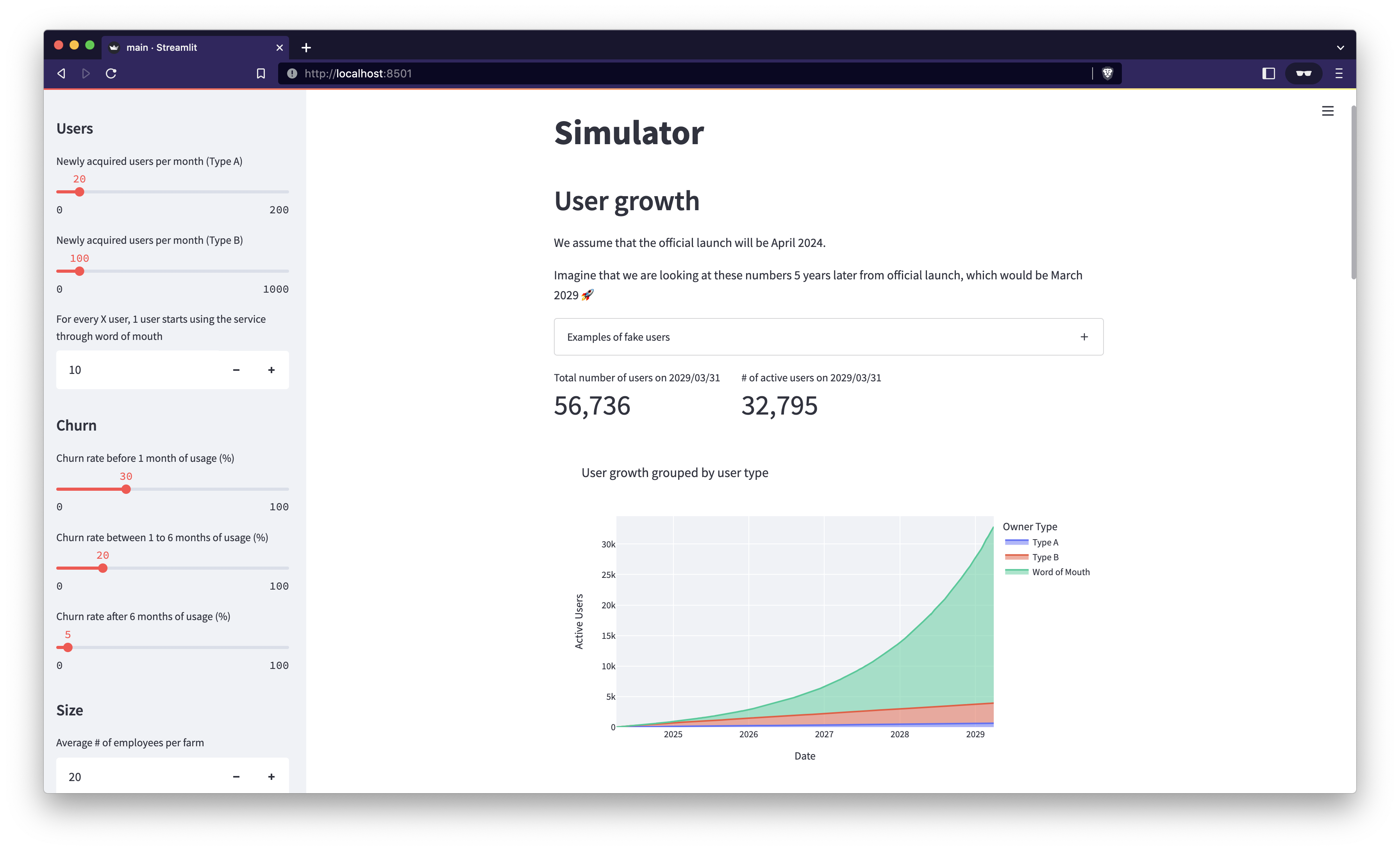
これにより決裁者に向けて、より説得力をもって事業計画を伝えられるという効果はあったが、最終的に算出された値が正しいかどうかは実は重要ではない。それよりも興味深かったのは、この取り組みにより事業計画に対するチームの考えと議論が一段深まったことだった。ユーザ数や売上を直接考えるよりも、それらをイメージしやすいパラメータに分解し、それらの積み上げで数字を作ると、よりリアルに感じられる数字になる。この「リアルに感じられる」というのが大事で、これが人の想像力を刺激し、未来をより具体的にイメージするきっかけになる。そこから、例えば「口コミを生むにはUXのどの部分が大事なのか」「カスタマーサポートに電話がかかりすぎないようにする工夫はどのようなものが考えられるか」など、より具体的な問いが次々と生まれ、ビジネスの観点での検討がぐっと前に進んだ。フェイクなデータを作ってそれでビジネスの議論をする、というのは普通の「データサイエンティスト」だったらやらないことだが、目的を「問いと仮説の精度を上げて思考を前に進めること」とおけば、こういうのもアリなのである。
過去を分析するデータ活用から、未来を作るデータ活用へ
IDEOでは、まず人にとっての価値・有用性を軸にアイデアの方向性を探求し、方向が定まったらその後コンセプトをより具体化していきながら、同時に技術的な実現可能性とビジネスとしての持続可能性も満たすような設計を模索していく。
「新しいものを生み出す」フェーズにおけるデータ活用というのは、データ分析を生業にしている人からすれば邪道的で“変”かもしれないが、大事なのは、なるべく短期間・低コストで問いと仮説の精度を高めていきながら、効果的に有用性、実現可能性、持続可能性についての解像度を高めていき、よりよい結果に繋げることだ。クリエイティビティをもって臨めば、データ活用にはいろいろなアプローチが有り得るのである。
今回紹介した事例がすべてではないし、状況によって全く異なるアプローチの仕方があるだろうが、可能性はまだまだ広い。実データを分析することももちろん大事だが、データがまだ存在しない「新しいものを生み出す」フェーズにおいても、工夫次第でデータからいろいろな示唆が得られる。データがまだ存在しないからと、そこで思考停止になってこのチャンスを逃してしまってはもったいない。少しの想像力と柔軟な姿勢を持ってデータを活用することで、新しい未来の可能性が切り拓かれる。
世の中の変化のスピードが速くなり、いつどこから自社の事業を脅かす存在が出現するか読めない昨今の状況において、企業はますます「イノベーション」を求めている。その中で、新商品の開発や新規事業の創出を仕事にしている方も多いだろう。こうした仕事はつまり、「新しいものを生み出す」仕事だ。近年トレンドになっているDXと呼ばれる取り組みも、その一つといえるだろう。こうした仕事は、どれも不確実性が高く、前例がないことも多い。
一方で、仕事の中には「今あるものをより良くする」仕事もある。つまり既存のビジネスやサービスに改善を重ねあげて大きく育てていく仕事だ。こうしたフェーズにおいては、データ活用の重要性が高まっている。既存のビジネスを運用していく中で生まれるデータを蓄積し、そのデータを分析、活用することで、意思決定の質を高めたり、新たなソリューションを作ったりすることは、すでに多くの企業が導入しているし、今後も拡がっていくと思われる。こうした取り組みの延長にあるAIも、日々普及度が高まっている。

The future is turquoise
Time to change the climate conversation.
One of those conversations was with the country of Wales, and in particular Sophie Howe, the Future Generations Commissioner for Wales, and her team. Described by the Guardian as the “world’s first Minister of the Unborn,” Sophie’s role is to provide independent advice to the government and other public bodies in Wales on delivering social, economic, environmental, and cultural wellbeing for current and future generations. She’s a committed advocate for the voices of young people and, in particular, for tapping into youth culture as a tool for creating societal change.
Sophie invited me to take part in an event she was hosting at (COP26), the UN Climate Change Conference in Glasgow late last year, and so off to Scotland I went. My mother, who passed away a few years ago, was from Glasgow, so returning there was bittersweet. I had not been back for over 50 years. I hardly recognized it.
To enter the conference itself, you were granted a pass to one of two “zones”—the Blue Zone or the Green Zone—loosely bundled as policy and culture. My role was to represent government and creativity in equal parts, so I was granted access to both. The contrast was startling.
The Blue Zone teemed with heads of government and policymakers. Everyone in skinny suits and pointy shoes. Cohorts walking with tremendous urgency, discussing their “key talking points.” I attended a few sessions—lots of clip art of globes, lots of numbers, lots of rhetoric, lots of the same old same old. Death by mathematics. I left the sessions thinking they were necessary, but overwhelmingly incremental, data-driven, and to be frank, massively unimaginative.
The Green Zone was the unplugged, acoustic version of the conference. Even outside, the energy was different. As I walked in, a lady dressed as Evita, sang“Don't feed the greed, Argentina. The truth is you give them nature. All through your wildlife, your green resilience. Just keep your glaciers. And save the planet!” This zone was full of color and life, installations of melting ice, and a whiteboard entitled, “What is The Feminist Future We Are Fighting For?” filled with wishes, poetry, and art. It had a kind of plaid-and-braids Taylor Swift “Evermore” vibe. I heard the participants of this zone referred to as “youth with claws.”
Back to Wales. I’d been invited by the Welsh team to moderate a conversation alongside their Poet-in-Residence for the Future Generations Commissioner of Wales, Taylor Edmonds. She was young and filled with heart and energy. They paid homage to a deep-rooted Welsh tradition called “Chairing of the Bard'' that dates back to an 1176 Welsh storytelling festival wherein the Chief Bard tells stories and reads poems about the future. Edmonds’ chair, made for the occasion, was carved with the future hopes of school children. We called the event “Climate, in the Visceral Sense.” Before she spoke, we screened a short film, “Ynys Blastig Blot-Euwedd,” made by Welsh school children, about a girl who befriends and then loses Mother Nature. Then Taylor composed and recited a poem on the spot, called “Riverbank Guardian.” It ended thusly:
Our town was built around the Oak Tree,
her underground map of roots,
her peeling bark, her curling branches.
Each day I walk to the riverbank,
standing guard, my still sanctuary
of ground where in Spring,
acorns will sprout green.
Ask yourself – will your great grandchildren
dip their feet to the low river of summers
and walk the streets you walk today?
As I walked around the Green Zone I was struck by the fact that so many businesses had a presence—IKEA, Sainsbury’s, many others. They’d built artful exhibits out of cardboard and other natural materials; there were posters inviting participation, seeds to be taken away and planted, pledges to sign, stories to carry with you. It felt hopeful, modern, joyful even.
I kept thinking to myself, why have we set up this polarity between the Blue and Green Zones? One math, the other poetry. To understand the complex systems challenge of climate change, and start a global movement to address it, don’t we need both?
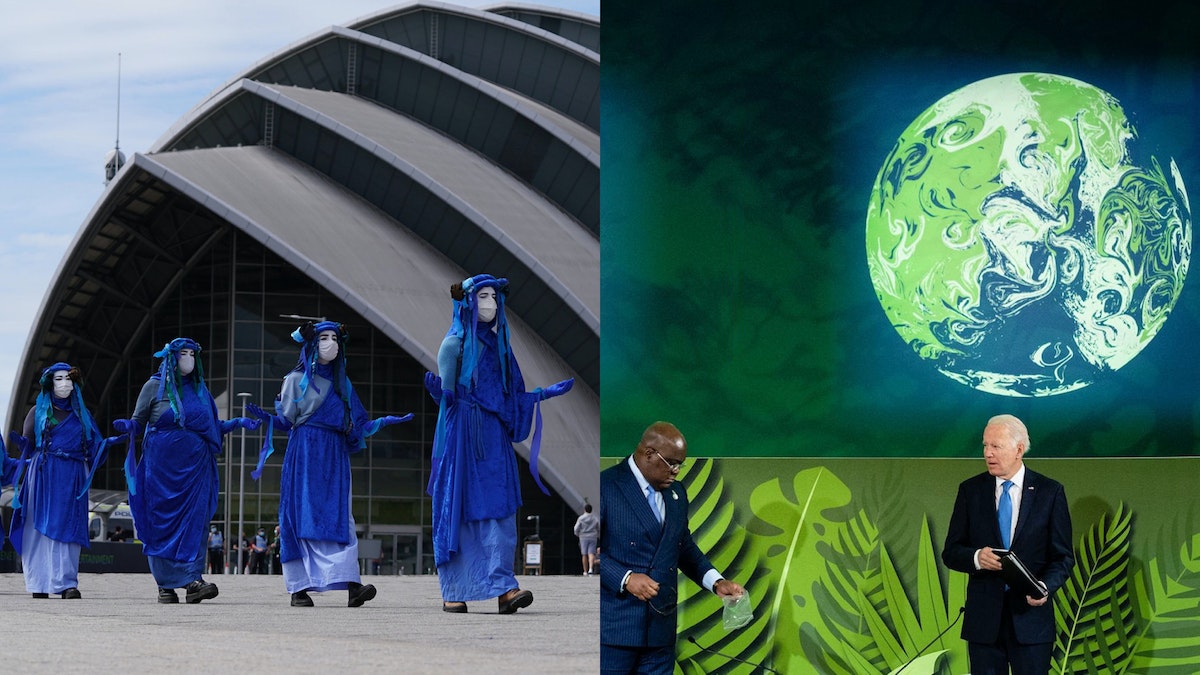
A New Zone. Let’s call this aspirational plane The Turquoise Zone—a place where the logic of blue meets the imagination of green. Looking toward COP27 in Egypt and COP28 in the U.A.E., I’m hoping for a more holistic, integrated approach: imbuing the science, rigor, and public and private sector leverage with what makes us feel alive—music, art, movement, poetry.
This new thinking will help us design events that address the climate crisis and the movement it is giving rise to. The language of this plane is dynamic, sometimes lashingly so. It contains a million colors. The Turquoise Zone turns the flatness of linear and binary thinking into something immersive and incandescent—azure, glinting, shimmering, alive in its depths—like the ocean itself.
As human-centered designers, our mathematicians and poets know that durable climate solutions must appeal to both the head and the heart. Would you join us in bringing the brightest blue and green thinking together to create a vibrant turquoise future? We’d love to hear from you.
After years of Covid darkness, I was fortunate enough to be able to spend the end of last year traveling around and talking to people about design and its role in the future of social welfare, business, and issues related to climate.
What’s your climate era strategy?
How companies are transforming to meet the future.
How can we shape our businesses to live up to the challenges of the climate era?
That’s a big question, but right-sized for this moment. Like the digital and industrial eras before it, the Climate Era will shift industry and enterprise. It will also change our day-to-day lives—the way we work, live, and relate to one another—in a profound way.
This era calls for us to think regeneratively. If we are to heal the human and environmental costs we’ve incurred over the past 250 years, we need to take the sum of what we’ve learned—from every era—to redesign energy, transport, finance, agriculture, retail, travel, fashion, construction, and yes, even sustainability itself.
We believe this is the biggest design challenge we face as a species. It’s work that simply can’t wait.
With that urgency in mind, we invited executives and sustainability leaders from across sectors to a series of events in our European outposts to talk about how businesses are thinking about sustainability.
Aside from the necessary efforts to decarbonize business operations, we drew our attention to how organizations must evolve if they are to boldly innovate their way into this new era. Here are five takeaways that emerged:

1. Bring sustainability to the design stage
What we heard from leaders is that the mindset around corporate sustainability efforts has shifted from "Why should we do this" to "How do we do this?".
That’s good news, as 80 percent of sustainability-related challenges go back to the design stage. Today, the majority of energy and investment is still spent cleaning up the mess downstream. That prevents businesses from seeing sustainability as a driver of regenerative growth.
What we know from our work with Ford and many other companies is that sustainable design choices are not at odds with growth. Producing an electric version of the best selling vehicle in America—the F-150—meant, first and foremost, designing a better truck. The point wasn’t to convince their customers to go electric. It was to design vehicles that drivers love that also happened to be better for the planet.
The F-150 Lightning was so popular, Ford had to shut down its preorders. By building Climate Era decision-making into its earliest design decisions, Ford was able to deliver upon their sustainability goals and deliver shareholder value.
Such success stories prove that we can do well in business by doing good for people and the planet. But only if climate-friendly decisions are made at the design stage. It’s time to think about making your chief sustainability officer your chief innovation officer. Or vice versa. All innovation going forward has to be fit for the Climate Era.
This raised the questions:
- “How might businesses invite sustainability teams to participate in their most strategic decisions? And what would have to change about those teams for them to be invited to sit at those tables?”
- “What skills are necessary in a Climate Era executive team and how might we build those capabilities?”

2. Start small and scale fast
Among the executives who felt their businesses were already making a positive impact, one theme emerged: start small.
Redesigning smaller brands or introducing smaller product lines is a low-risk way to challenge key assumptions without disrupting the core business—yet. Once you have a few small wins, it’s easier to persuade executives that Climate Era innovation pays off.
Catharina Frankander and Hanna Lumikero from the H&M design studio described how they started by testing out new sustainable packaging. Taking a customer-centric, iterative approach, they introduced paper packaging concepts to customers even before they understood whether or not the packaging was feasible at scale. The project’s overwhelming success helped clear a path to adopt the approach across the organization.
This raised the questions:
- “How might we select the right starting point to show the business value of sustainability?”
- “How might we translate smaller wins to platform- or system-wide innovation?”

3. Focus on human solutions
Humans caused this problem. We’re also the ones who need to fix it.
There was consensus amongst this group that climate change is not just an environmental crisis, but a crisis of human behavior. If we continue to promise short-term exponential growth to shareholders and unlimited consumption to customers, we’ll never be able to reign in extractive practices.
But aside from assigning a strict regimen of behavioral therapy, how can businesses break the perverse cycle of short-term gratification?
The circular economy offers a paradigm shift that, combined with regulation, can help us start uncoupling extraction from growth. That’s not just a technical challenge. To help organizations become more circular, we must look through a broader human lens—one that considers the collective and longer-term desires of customers, employees, and shareholders without ignoring short-term rewards.
Companies like On, a Swiss-based athletic apparel brand, are taking that approach with sub brands (starting small as advised!). They’ve introduced a running shoe made from beans. To make sure the sneakers don’t enter the waste stream, On offers a monthly magazine-like subscription model. Runners use the shoe until they’re worn out, send them back for recycling, and receive a replacement pair. Such circular models reward consumers with the short-term pleasure of enjoying something trendy and new, while upholding the longer-term shared value of a product that won’t end up in landfill.
Balancing long- and short-term thinking is a key behavior shift in the b-to-b world as well. A publishing executive shared the story of a client who would only sign a large contract to produce its books if the publisher could report on its environmental footprint at every stage of production, down to how paper scraps were recycled at the printer station. Requiring that level of accountability helped the publisher to examine its own behavior and invest in long-term change—even if it meant incurring a short-term cost.
This raised the questions:
- “How do we embrace collective, long-term thinking to become fitter for the Climate Era?”
- “How do we build sustainability into more of our workstreams, knowing they’re the most creative and exciting projects for our teams to work on?”

4. Collaborate or die alone
Connecting the right people to drive green solutions is already difficult. When we broached the idea of collaborating with competitors and regulatory bodies, there was a loud cry of almost impossible.
Companies that are built to compete for market share are not set up for collaboration, so when it happens it is often underfunded and clumsy. And yet, we know that systemic Climate Era problems can not be solved by any one business alone.
One recent partnership designed to break the paradigm is Beyond the Bag, an effort to address the problem of the millions of plastic shopping bags that end up in our streets and waterways.
Closed Loop Partners, a circular-economy-focused investment firm and innovation center, convened a Consortium with IDEO and a group of America’s largest chains including CVS Health, Target, and Walmart. The Consortium worked with a select group of startups who are taking an innovative approach to replacing plastic bags. Those teams were able to pilot in mass retail environments where our designers worked with them to iterate their ideas to get to market faster.
CVS Health, Target, and Walmart typically compete with one another. But to tackle a challenge as large-scale as plastic bag waste, they knew they’d have to join forces.
This raised the questions:
- “How do we incentivize and fund more cross-industry innovation? Could the public sector play a bigger role here?”
- “We have developed operational excellence in vertical, extractive processes. How do we develop operational excellence in cross-business collaboration?”

5. Attract talent who give a damn
Many senior leaders described a major crisis in retention, and without smart, passionate talent, no transformative work can be done. Everyone agreed: We must engage and retain the best and brightest.
A recent survey done by the Pew Research Center points out that students and young professionals are more sensitive to the climate crisis than previous generations.
One executive described how working on sustainability projects across functions has led to unseen levels of motivation amongst employees. Companies that can clearly show they have a purpose and a plan for climate action will find it easier to recruit and retain those who can help us address the challenges at hand.
This raised the questions:
- “Can sustainability teams partner with HR to attract top talent?”
- “How do we make climate challenges a platform to activate talent across the organization?”
This work can’t wait
These conversations, which felt less varnished than the typical business roundtable, were revealing. While leaders are committed to becoming more sustainable, they often feel stymied and unable to make substantial progress. My conclusion is that we need more of these forums to share progress and speak candidly about what’s holding us back.
How is your organization designing itself for the Climate Era? I’d love to hear from you.
We are living in the shrinking window of time when our awareness of climate change can still be matched by our ability to act.

Lindsey Turner
I’m passionate about building brands, products, and experiences that help organizations show up with meaning and momentum.
I help organizations cut through complexity by shaping how they show up, through brand strategy, identity, and storytelling.
Working at the intersection of brand and business, I bring an editorial eye and a bias toward making—turning ideas into tangible experiences that people can understand, trust, and believe in.
My work spans government, healthcare, financial services, media, and consumer goods, from launching Gen Z-focused ventures to building innovation labs and reimagining legacy brands. I relish moments of ambiguity and enjoy translating across teams, perspectives, and priorities to move ideas forward.
I started my career in editorial and digital design, shaping cross-platform experiences and identity systems in publishing and agency environments. That foundation still shapes how I work today: I’m detail-oriented, collaborative, and overreliant on the Oxford comma. I hold a BFA in Visual Communication from the School of the Art Institute of Chicago.

Rachel Young
My work helps organizations see who their products aren't working for—and build the will and the tools to do something about it
For 25 years, I've asked the same question: Who does this design exclude—and what are we going to do about it?
My work spans human-centered strategy, inclusive design, and qualitative research, with clients ranging from Microsoft, Google, and Verizon to the National Science Foundation, and San Francisco Unified School District.
Before IDEO, I taught elementary school in East Palo Alto and spent a decade doing design work with social service organizations—where I learned firsthand what it costs people when systems are built without them in mind.
I am currently writing User Error, a nonfiction book about digital access and the design decisions behind it. I live in Oakland, California.

Brian Pelsoh
I lead with craft, ensuring our work is creatively excellent: rooted in deep human insight and imagination, while also grounded in the realities of business and technology.
My expertise spans brand, communication, and product design across tech, education, the arts, and social impact.
I believe great work demands both high-level vision and obsessive attention to detail, and only happens through collaboration.
I bring an inclusive, hands-on approach and a deep understanding of business, which enables me to consistently deliver excellence while always asking why.
Before joining IDEO, I worked at the brand firms Pentagram and VSA Partners. I began my career as a designer, leading teams at the School of the Art Institute of Chicago and the Milwaukee Art Museum. I hold an MFA in graphic design from Maryland Institute College of Art and a BFA in communication design from the Milwaukee Institute of Art & Design, and have taught at some of the best design schools in the US.

Tony Wong
I am responsible for IDEO’s long-term success in China and working with clients to use design as a tool to enable growth.
I am responsible for IDEO’s long-term success in China and working with clients to use design as a tool to enable growth. Specifically, I have helped Chinese companies design holistic brand solutions through the development of their products, communication, services, and innovation teams, and I have helped multinationals expand their presence and influence in China.
I advise global leaders on developing China-led innovation and capabilities.
In over 15 years in IDEO Shanghai, I have worked on projects that use design to elevate the quality of the experience of healthcare products and services, streamline processes that increase productivity, create spaces and programs that promote and enable inclusive communities, and build next generation mobility solutions that are planet-positive.
Before joining IDEO, I worked at Philips Electronics and the Electrolux Group in Italy, the Netherlands, and Singapore on a number of breakthrough commercial products. I am a member of the Young President Organization in Shanghai.

Building a personal AI for the messiness of life: Sida Li
Most AI products today are built for work—a space with clear problems and established systems. One founder noticed a gap: personal life is messier, harder to systematize, and mostly left behind by the AI boom. So she built Cue, a personal AI that lives inside iMessage and group chats, to go where the other tools haven't.
In this episode, Becca Carroll, IDEO's Chief Strategy Officer, talks with Sida Li, co-founder and CEO of Shared Context Lab, about staying anchored to a human need while the technology around her keeps changing shape, why she treats her business model with the same rigor she'd bring to a product, and what it feels like to build a company at this particular, disorienting moment in AI.
The conversation also gets into how Sida makes design decisions: the language Cue uses to describe itself, the tradeoffs behind building inside iMessage instead of a new app, and a real story about a business idea that didn’t pan out.
This is the second in a two-part series profiling founders from IDEO's Startups-in-Residence program. The first conversation is with Johannes Seemann, founder of Sooner, on designing GenAI for the emotional side of money.

Designing GenAI for the emotional side of money: Johannes Seemann
Most personal financial tools are built to run the numbers and optimize towards a budget. While that works for some, most people experience money as a lived relationship that does not neatly fit into a spreadsheet. Johannes Seemann and Becca Carroll discuss why money is emotional before it is mathematical, and what a human-centered approach to building a generative AI financial product looks like in practice.

The curious leader's edge in uncertainty: Scott Shigeoka
Mina Seetharaman talks with Scott Shigeoka, author of Seek and Head of Curiosity Cultivation at the Eames Institute, about what distinguishes genuinely curious leadership from performative curiosity, how power dynamics shape curiosity, and why practicing curiosity can restore energy rather than drain it.

How constraints make us more creative: David Epstein
Mina Seetharaman talks with David Epstein, author of Inside the Box and Range, about why total freedom often produces average work, how leaders can design useful limits on purpose, and what organizations such as General Magic and Pixar reveal about the relationship between boundaries and creativity.
Looks like you might be in search of something very specific?
Or reset the filters above and try another angle.
Here’s some random inspiration

Podcasts about creative leadership

Articles about the power of prototyping
