
.svg)


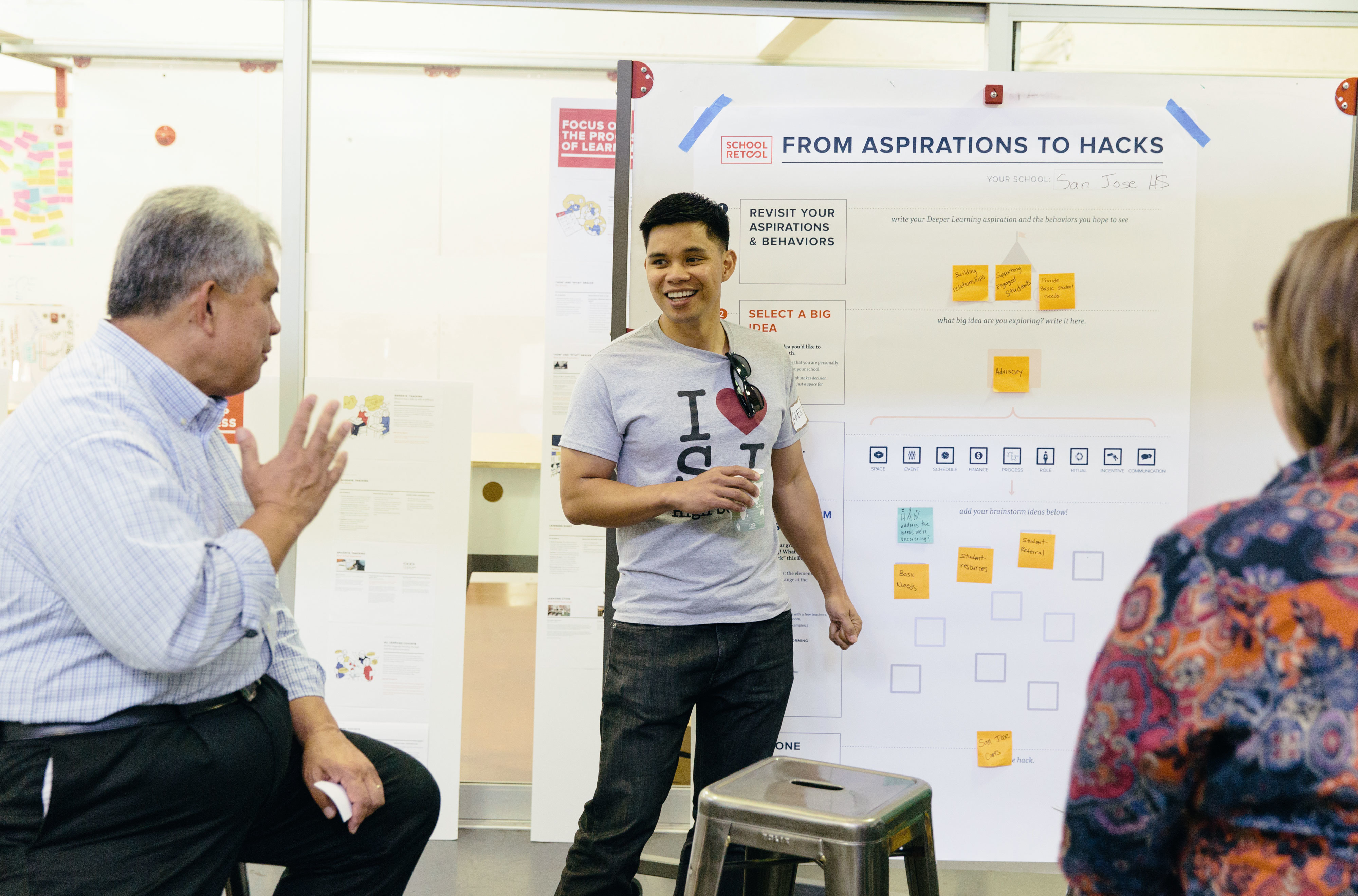

Empowering school leaders to create change through design
How small actions can lead to big shifts in schools.
There’s a lot of excitement in the education sector about the need to equip students with skills like critical thinking, collaboration, and communication, to prepare them for a global, innovation-driven economy. But that’s easier said than done. Major changes are needed to move from a decades-old model towards creating new ways to educate students. Schools and their leaders, particularly in low-income contexts, often lack the necessary resources and support.
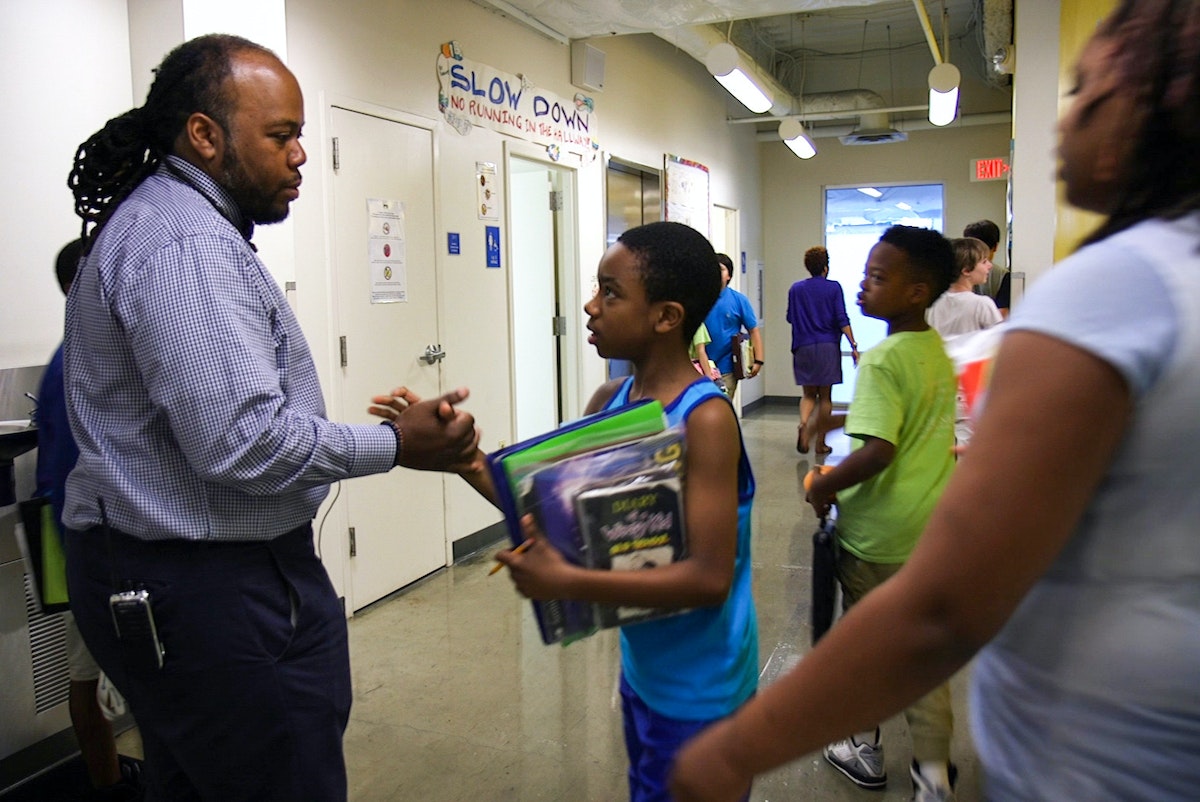
But given the right tools, school leaders can be the key to bringing this much-needed change to their schools. Knowing this, The William and Flora Hewlett Foundation partnered with IDEO and the Stanford d.school to create School Retool, a four-month-long professional development fellowship that trains principals to take a do-it-yourself approach to school change by conducting small, scrappy experiments called “hacks.”
The best part: They use the resources they already have available to address their schools’ needs now, without waiting for external funding or assistance. School Retool is available to principals at public schools where 60 percent or more of students qualify for free and reduced lunch, which is a common measure of poverty. The School Retool program provides research-based strategies for improving student outcomes, as well as training and one-on-one coaching on how to redesign school culture through easily achievable changes.
A Scaled Approach
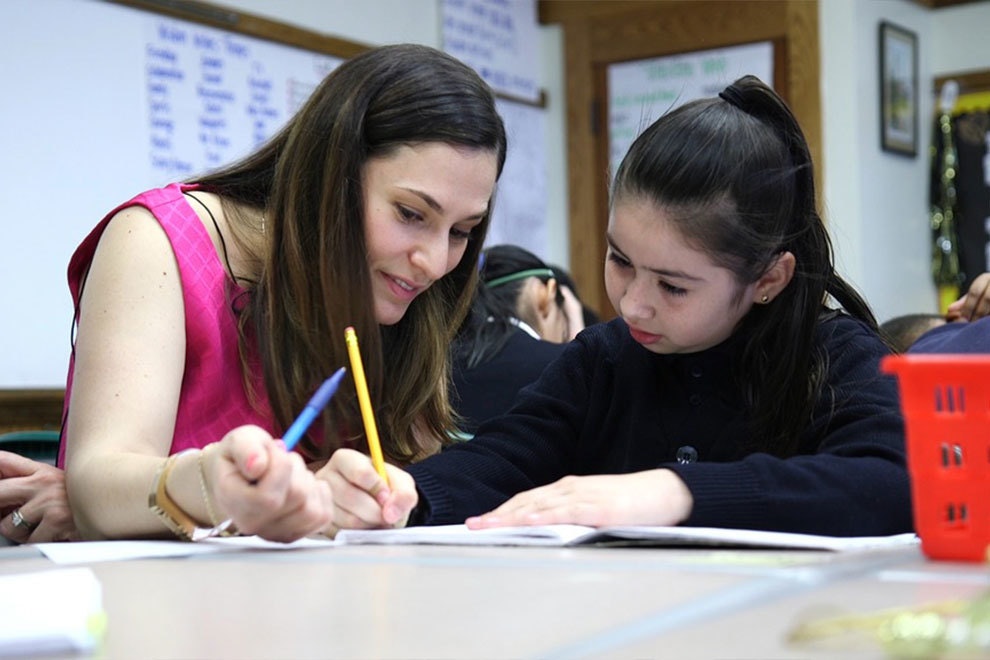
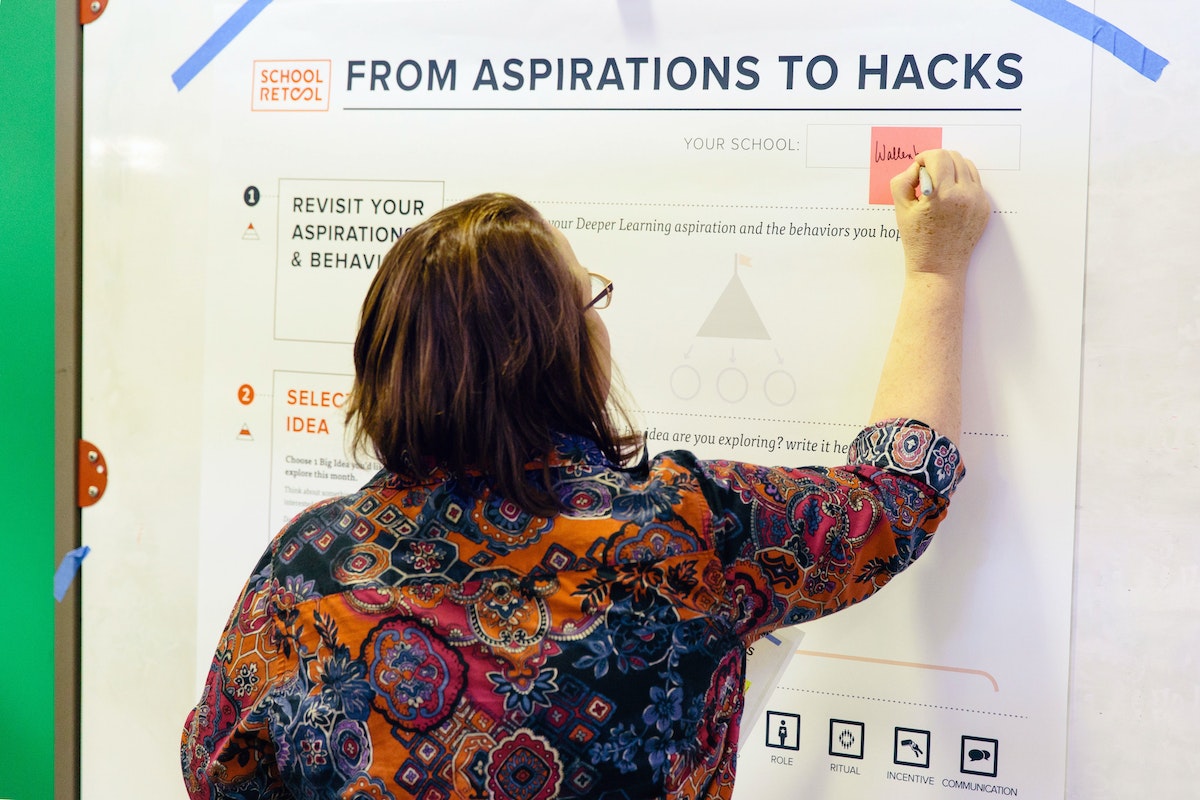
School Retool addresses a common challenge in creating change across schools: Each school has its own people, culture, and needs, so programs need to be flexible. The fellowship helps school leaders define their aspirations, and provides them with inspiration through “Big Ideas” that have proven to be successful in different contexts in education. It then supports them to start small with hacks that help them learn how to implement these ideas in their own school. The program scales through regional cohorts of principals who learn from each other as they go through a process of setting goals, designing hacks, reflecting on the learning and progress, and making improvements to the next iteration.
Small Steps Toward Big Change
As School Retool has rolled out at schools across the country over the past two years, it’s becoming evident that small changes are adding up to major progress, and that the small hacks approach is helping leaders go from planning to doing. Take, for example, Marthaa Torres, the principal of a low-income San Francisco high school who started with a small experiment with one struggling student, trying to create a more personalized learning plan for him. “The hacking approach is a framework that will help me eventually get to the kind of school that I’m trying to create,” Torres said. To build on the learnings of her “hack,” she created and expanded a personalized coaching program for the student’s peer group of older Latino boys. Her goal is to roll out additional advisory support in the next school year. What started as a “hack” to give agency to a single student is beginning to affect the school-wide culture by incorporating student voice into decision making.
Creating a Movement
The School Retool fellowship launched in 2015 with a pilot for 16 principals from seven San Francisco Bay Area school districts, reaching more than 12,000 students. School Retool has since hosted cohorts for school leaders in Washington D.C., Detroit, Virginia, Idaho, and Colorado. By the end of 2016, 164 school leaders of over 114,000 students had participated in the fellowship program.
In addition to the in-depth work with school leaders, School Retool is creating a national dialogue around change in schools. Its first national effort drew more than 1,500 principals in the Shadow A Student Challenge, who spent a day walking in students’ shoes to build empathy and gain insight into their students’ school lives.
Learn more about how more school leaders are enacting change: bringing a sense of true belonging to a school’s culture; engaging students as active learners; hacking towards literacy; retooling for equity; and more.
WATCH: Marthaa Torres: Adopting a Hacking Mindset on Vimeo.
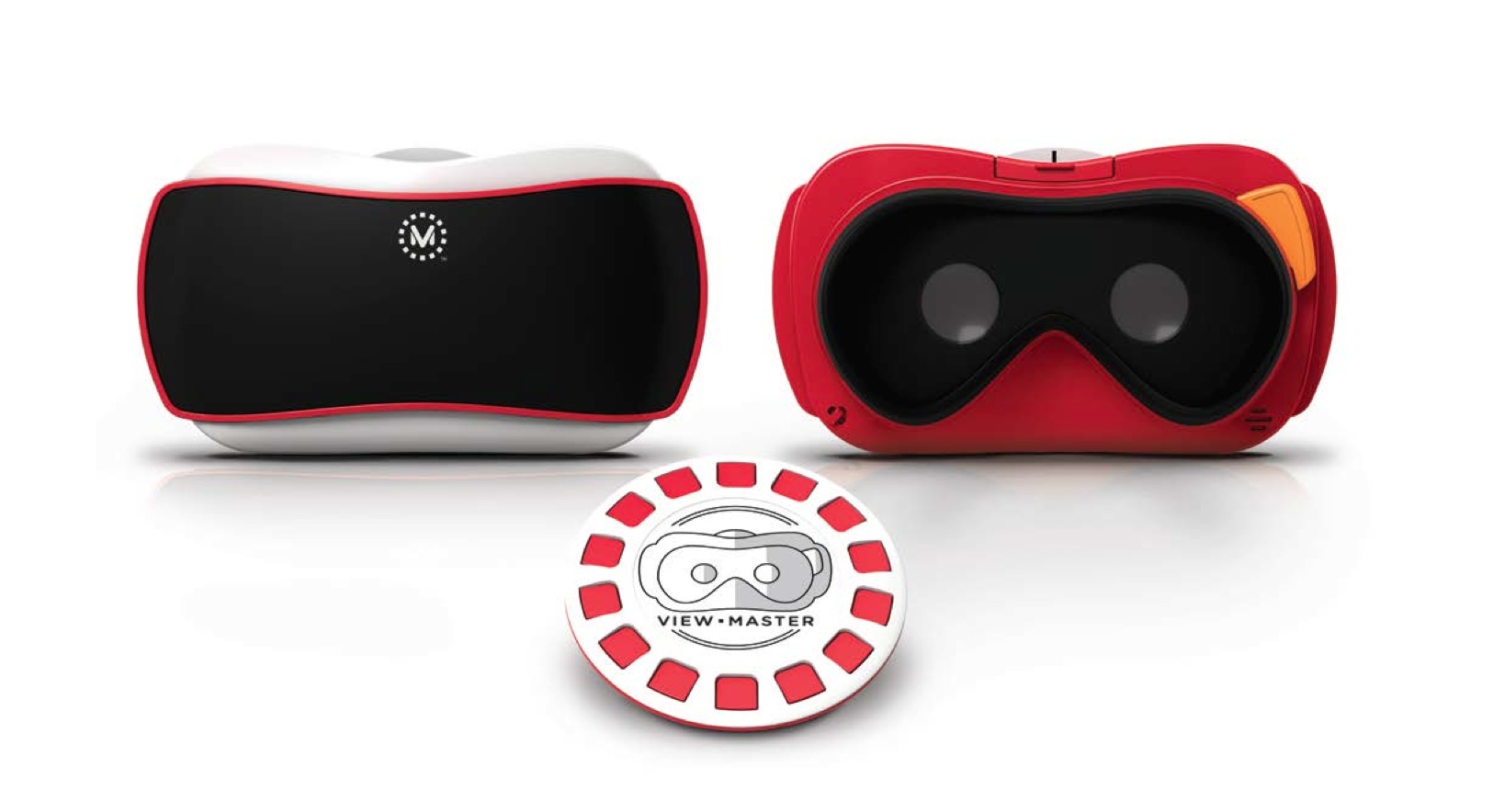
Modernizing the next-generation View-Master
Designing a new virtual reality case for an iconic toy.
Remember your first View-Master? The sound and feel of that iconic camera-snapping motion, the excitement of seeing those vivid images in the form of your own personal slideshow? Introduced in 1939, this stereoscopic toy brought beautiful landscapes and famous attractions to the eyes of kids around the world.
Flash-forward more than 75 years, and the View-Master has been reincarnated to spark that same sense of wonder for the digital age. The redesigned model, the result of a project collaboration between IDEO and Mattel, is a modern case that bridges technology with play. The new View-Master preserves the classic features of the original toy, such as the original lever and wheel, but offers a much more immersive, 360-degree virtual experience.
Here’s how it works: Download the View-Master app and slide a smartphone into the sleek new red-and-white headset. From there, the phone’s camera will scan the QR codes on the reels to view a wide variety of images, such as wildlife, outer space, and a dinosaur landscape. Two slightly different images are displayed side by side on the device's screen. As each of your eyes looks at just the image directly in front of it and tries to reconcile it with what the other eye is seeing, a 3D effect is created. By moving your head around with the viewer over your eyes and taking advantage of the sensors within your phone to sense direction and position, you can travel through each of the scenes, exploring each of the different settings.
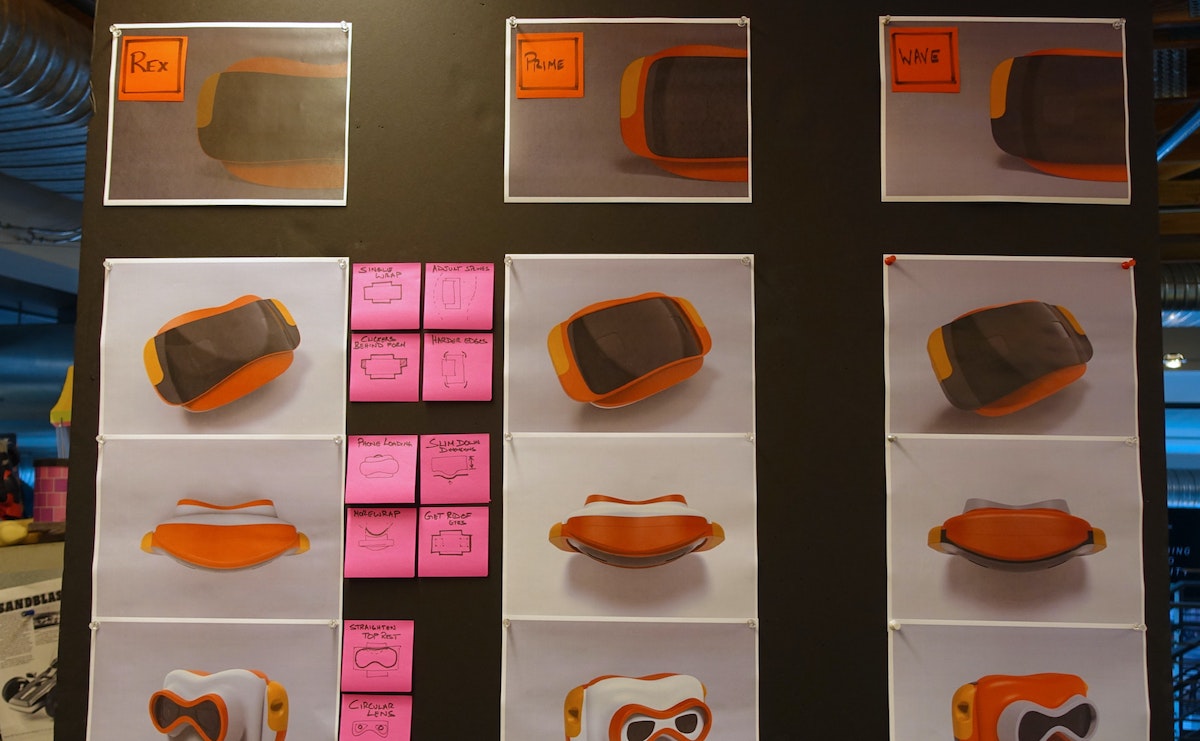
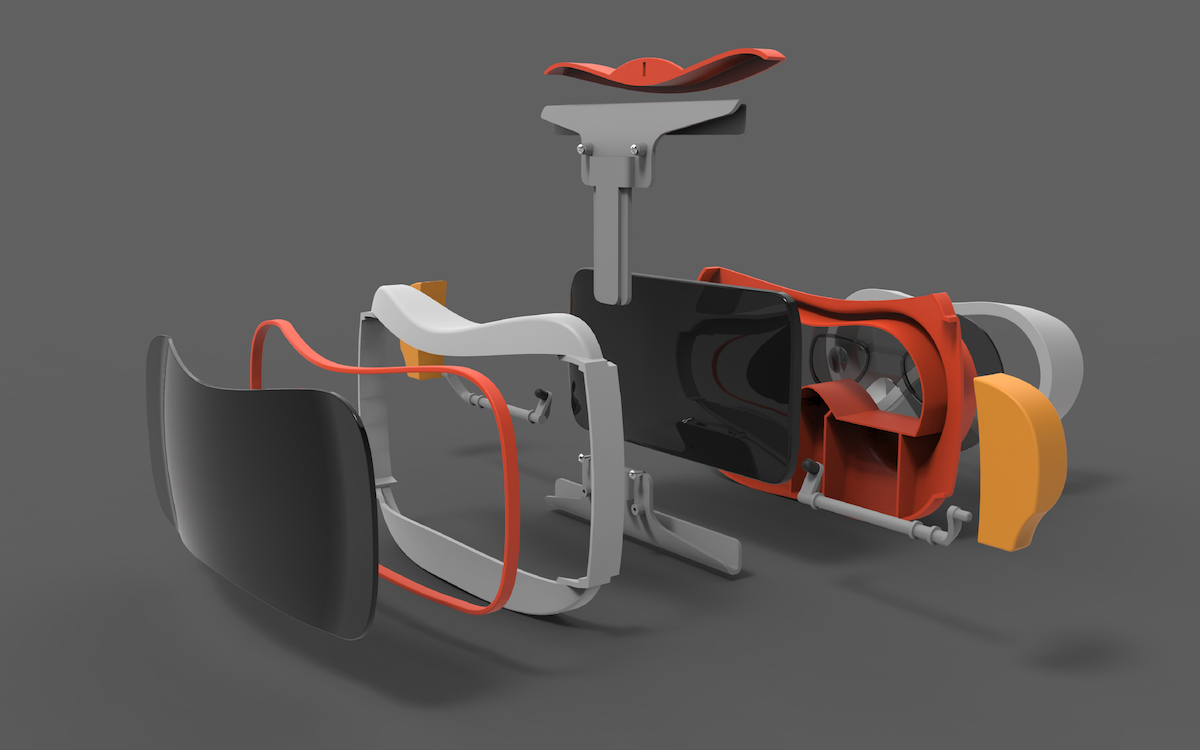
After working alongside Mattel to understand the heritage of the View-Master brand, researching the potential for VR and play, and exploring a variety of materials for the new device, designers created several prototypes that they tested with their core market: kids. As a result, the final design accounted for things like whether it could pass a drop-test or fit into kids’ hands.
Beyond the joy of pure play, the technology that powers the new View-Master also opens up a new world of possibilities for learning. Imagine turning a page in a textbook and seeing dinosaurs come to life. Or a virtual tour of an art museum through a set of View-Masters.
"We view this as just the beginning," said Doug Wadleigh, a Mattel executive, in an interview with CNET. "Obviously, we're getting in this space pretty early. The goal is to create the View-Master brand for the next 75 years."
Orchestrating a genetic symphony
An interactive TED exhibit that turns genes into music to spark conversation about personalized medicine.
Genentech is a biotech company that tackles difficult-to-treat medical conditions across the globe by creating innovative treatments. As a sponsor of the TED2012 conference, Genentech approached IDEO to partner in creating a “social space” for the TED exhibit hall that would captivate participants in an interactive brand experience and garner excitement around the future of personalized medicine.
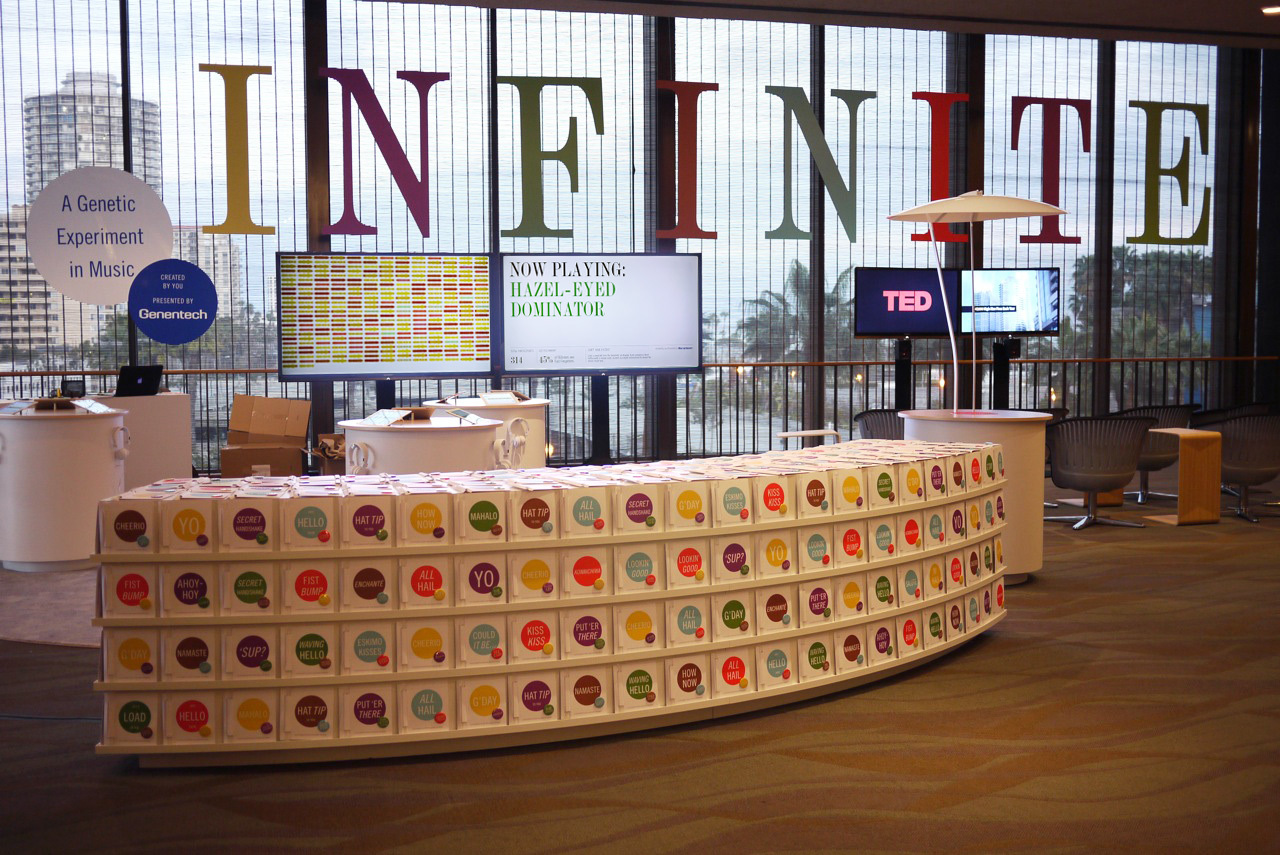
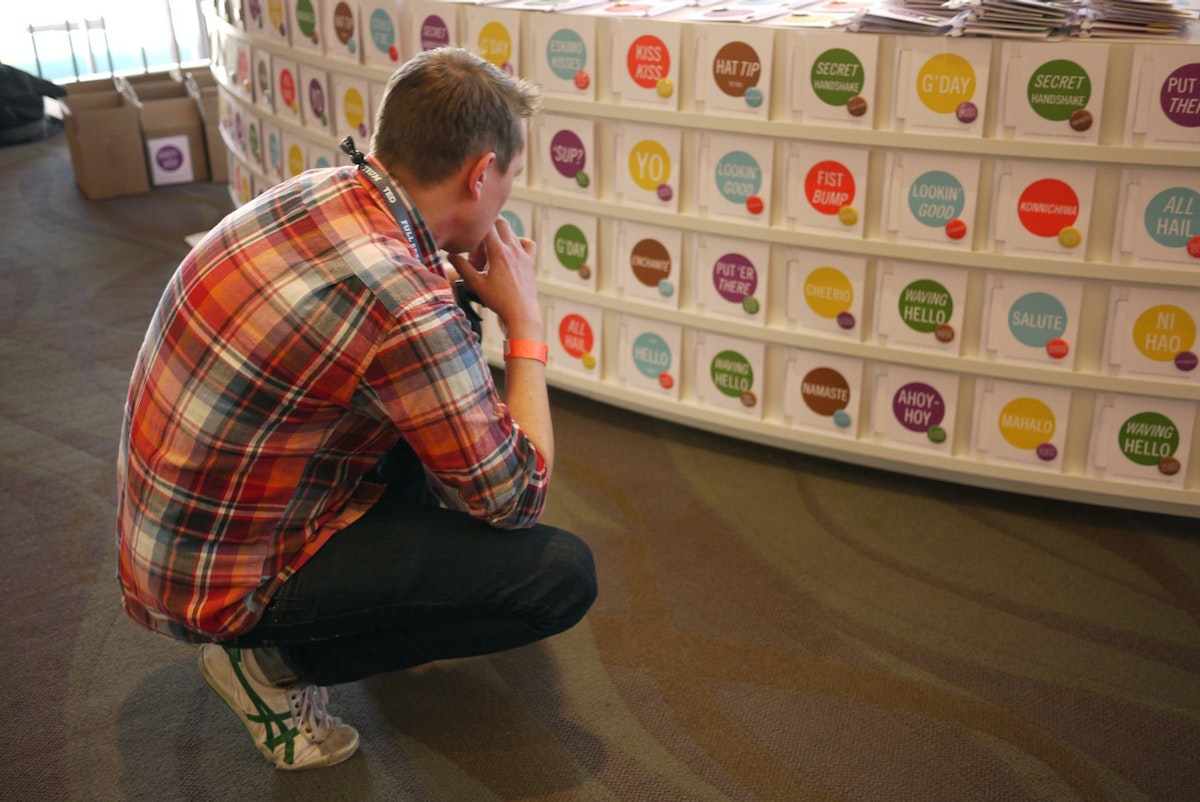
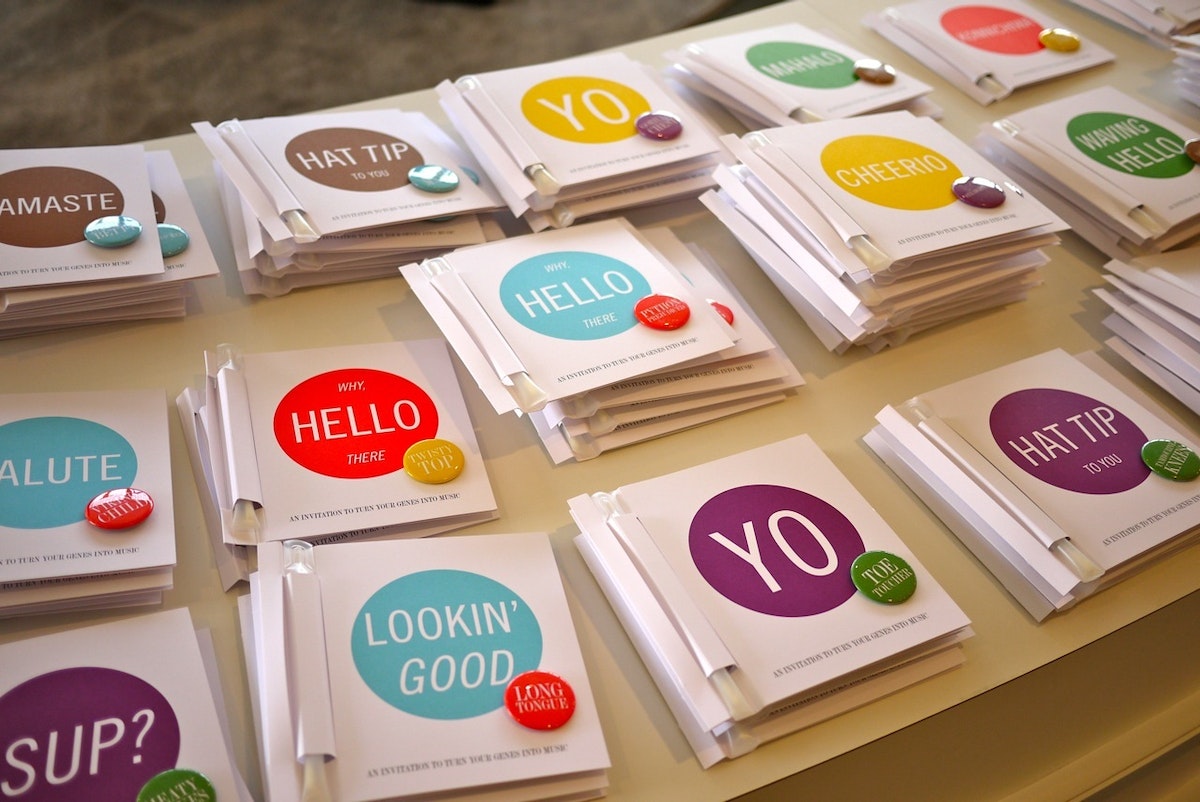
To make leading-edge science more accessible to the masses, the team landed on an exciting new provocation: What if we could turn genes into music? IDEO worked closely with Genentech to develop an immersive genetic experiment that could incorporate traits of the TED community, using the company’s brand new technology for overnight gene analysis. A TED participant would choose a colorful trait pin packaged with a cheek swab kit and corresponding barcode, allowing them to leave a genetic sample one day and return the next day to discover that four SNPs of DNA had been analyzed overnight and translated into a unique musical track.
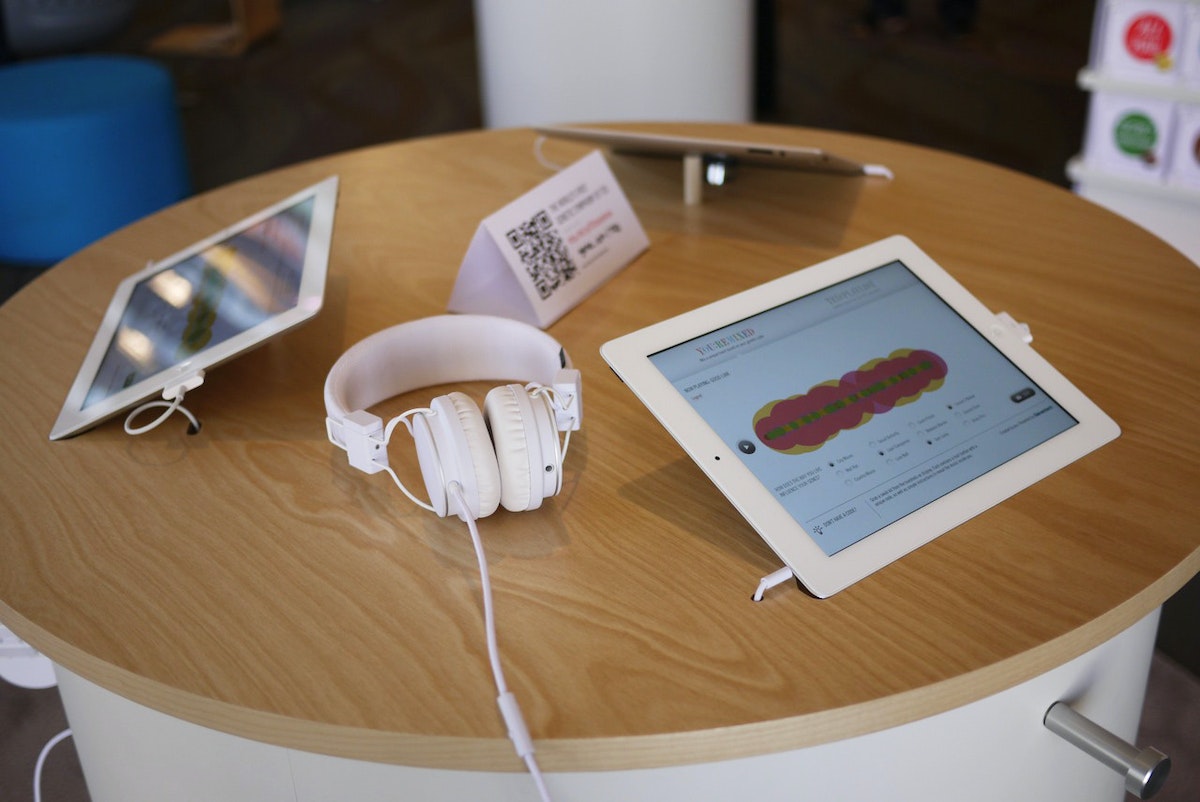
The IDEO team developed the concept, prototyped it with scientists, musicians, and sound engineers, and designed every element of the physical and digital experience—from the swab kit and packaging, to the built space and listening stations, iPad app, and other digital touchpoints. At the heart of the experience was music, including an algorithm that could generate 6500 unique musical combinations to reflect the genetic diversity of the TED participants.
Genentech’s “Infinite Variations” exhibit at TED2012 created the world’s first genetic symphony, an innovative and colorful blend of science and music. With the exhibit, Genentech sparked novel, approachable conversations about the role of genetics in medicine.
Of the 1850 attendees, over 1100 joined the genetic experiment in music and walked away with a new understanding of personalized science—and of their own genetic makeup.

Healthy lunchbox foods that are good for the planet
A conversation with Megan Miller, cofounder of Bitty Foods.
What happens when you serve kids food made with cricket flour? And what do parents think? That’s what IDEO and Bitty Foods sought to learn during a collaboration to explore new kinds of lunchbox foods as a means to discover opportunities for alternative sources of protein.
We talked to Megan Miller, cofounder of Bitty, the Bay Area startup that makes delicious foods with cricket flour, about the collaboration.
Listen to the full audio story below, or go to Soundcloud.
How to Use Your iPhone to Create Frameable Art
How a design constraint helped me make art
Fast forward to fall of last year. Adobe announces an update to its Lightroom iOS app that allows users to capture RAW photos using their smartphone camera. Slowly, I began experimenting with on-the-go editing techniques similar to those I’ve developed over time using Lightroom on desktop. Could the iPhone, with its tiny image sensor, actually be the magic gadget I craved?

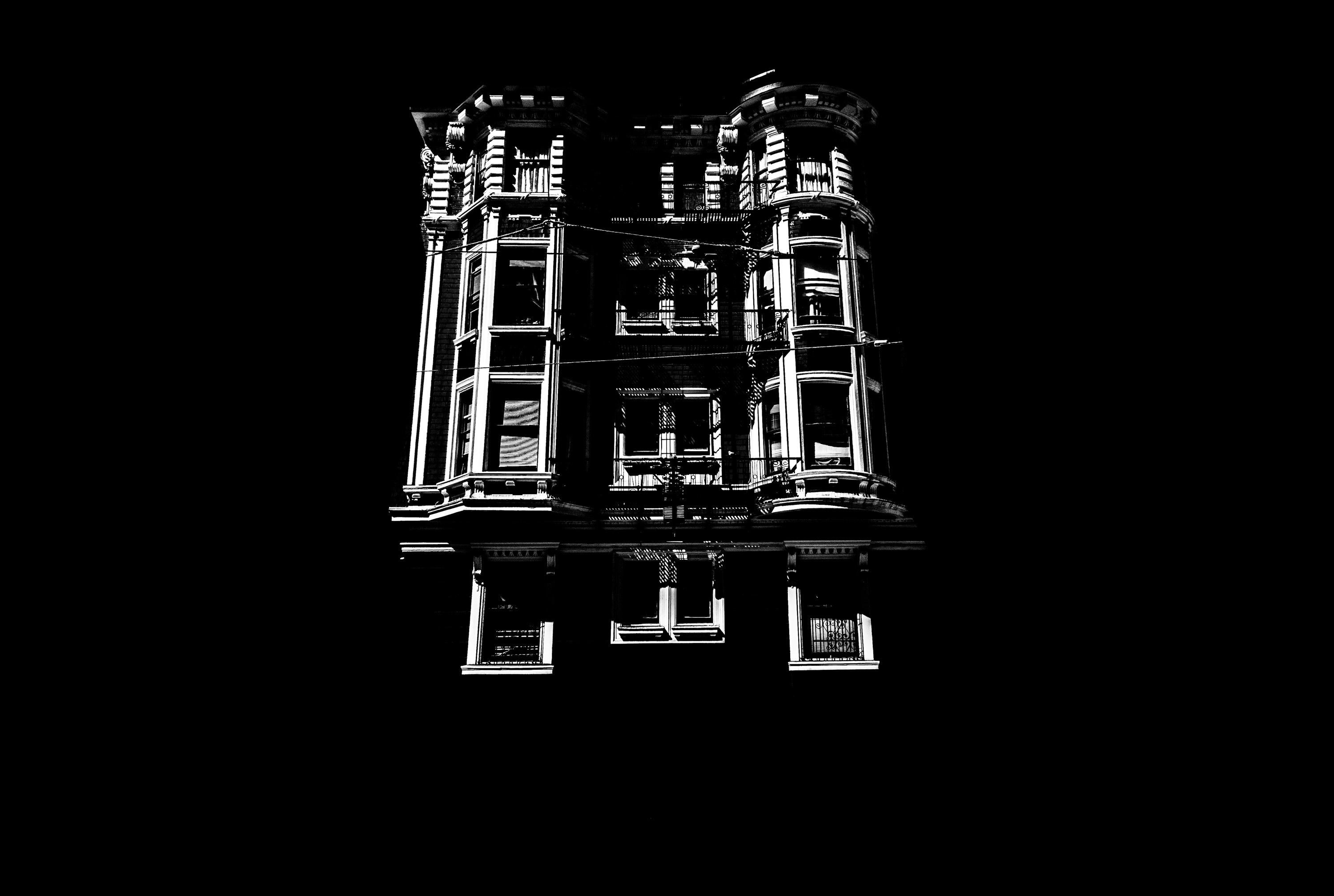
I’ve long wanted to do a project that celebrates the diverse architecture of my adoptive city, and my newly augmented smartphone camera provided just the opportunity. So, I set out to answer my own question with a specific aesthetic in mind and a simple design constraint in place: I would use my iPhone, alone, for both photos and edits.

I have now captured and shared more than 40 photos—one each day since April 1st—and will continue to do so until the series tops out at 100 images. The constraints I held myself to and the consistency of daily publishing have allowed me to quickly refine and iterate the technique—an accidental outcome as happy as it was unforeseen.
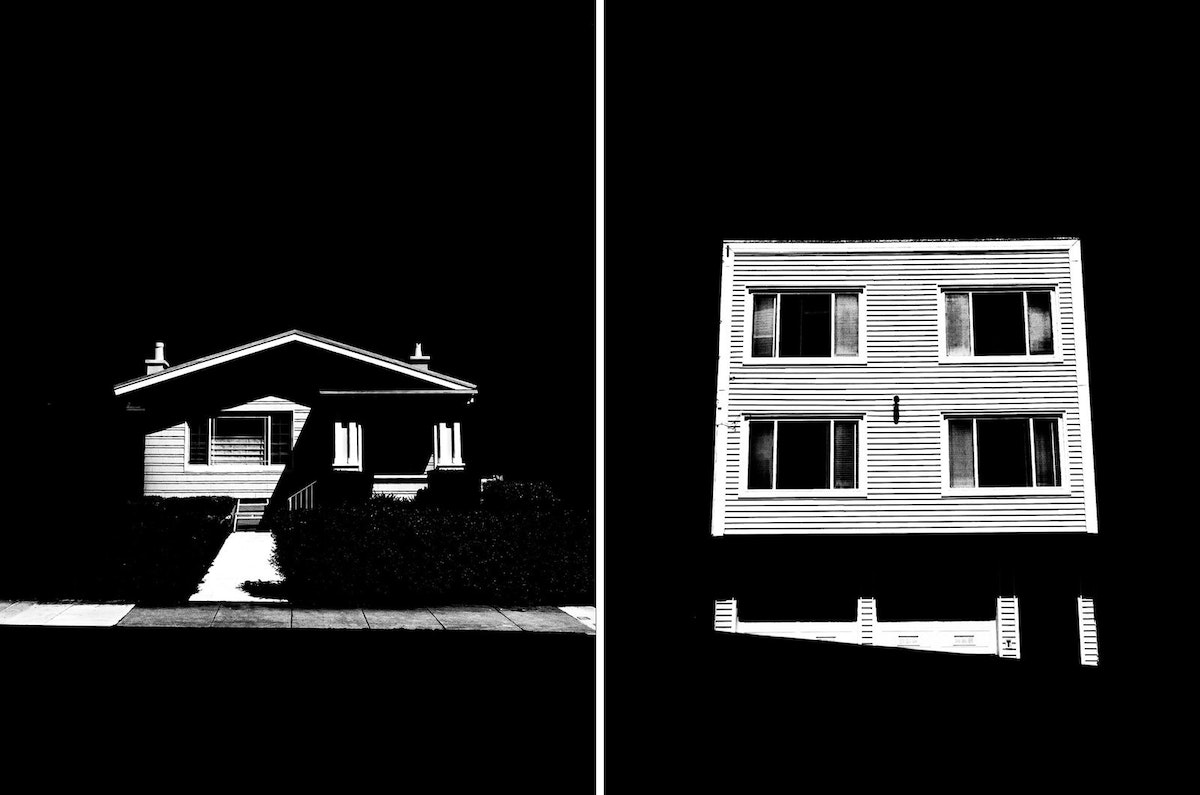
As designers, we often yearn for carte blanche freedom to explore and create as we see fit. What we forget is that our best solutions often come from imposing limits on that freedom, and seeing what comes of it.
How I did it: all photos in the series are captured using an iPhone 6S, and all edits were performed in roughly 60 seconds using some black and white alchemy in the Color tab of Adobe’s Lightroom Mobile app for iOS.

Want to see more of Burton’s work? Check out this, a NATO & G8 protest he attended in Chicago in May of 2012. And this, the stations of the Moscow Metro he captured during a visit in the fall of 2015.
When I first moved to San Francisco, I spent every free moment exploring my new locale, camera in hand, with a backpack full of lenses and a tripod. With time, however, the weight of my DSLR and pack felt more like an albatross than an accessory, and I adopted the usual photographer’s lament, yearning for a magical gadget that could output images of a quality inversely proportional to its bulk.
What’s in my Moleskine: Adam Cristobal
Take a peek into an interaction designer's sketchbook
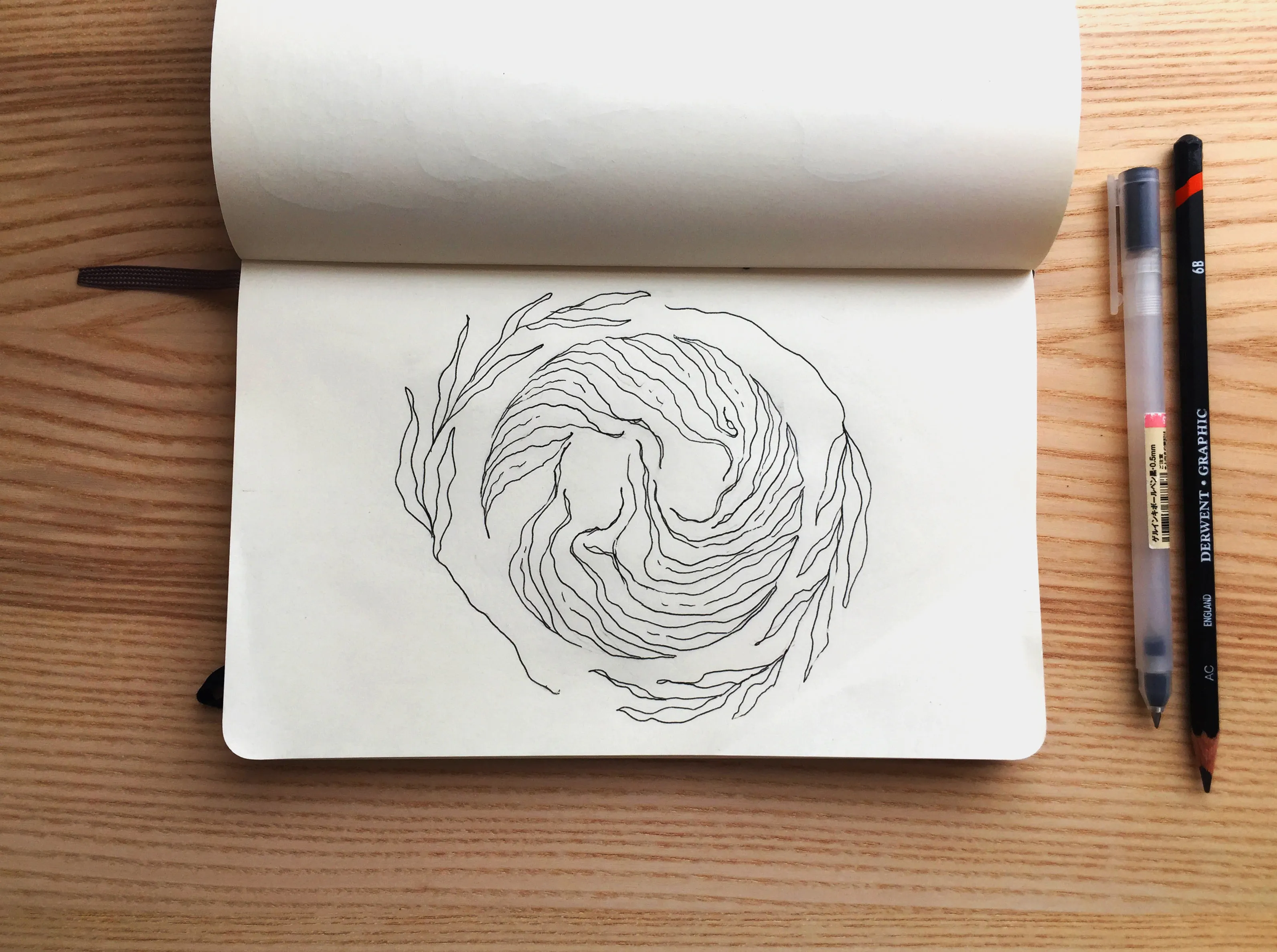
These days, I frame my life less as a sensible narrative with a rise and fall, and more as a series of small, densely packed moments that leave sweet and sour aftertastes. These moments are the ones I choose to draw in my sketchbooks, usually several months after they’ve actually occurred. The unimportant things, I forget. What’s left for me to draw is what matters: moments of wisdom, aged by feelings that have grown more complex and multi-dimensional over time.
Here are a few moments that have stuck with me:
Blame it on the Boba
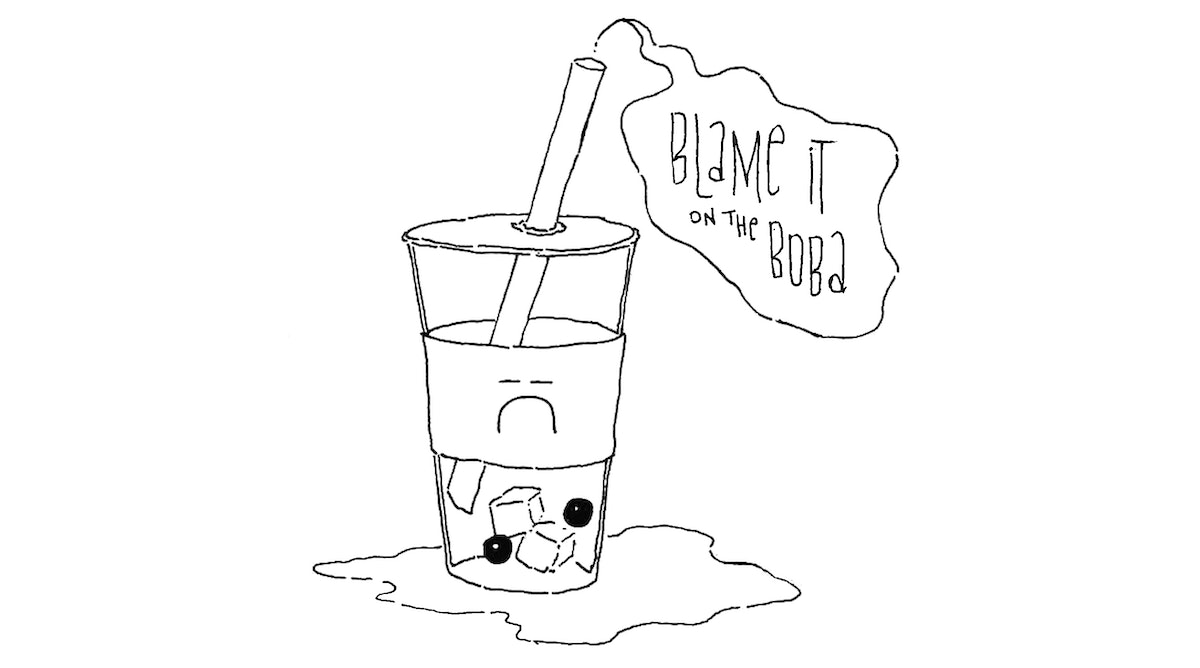
When I first moved to San Francisco, I started dating someone—less because it made sense to date him in particular, and more because I was enamored with the idea of christening my new city with a new relationship: new city, new boy, new me! Predictably, things didn’t work out, because that’s what happens when you rush into things for the wrong reasons.
Over a year after dumping me, however, he asked me out to boba. Somehow, we ended up seeing each other again. And again, predictably, things didn’t work out. Apparently, I saw things differently the second time around. I rarely drink alcohol, but that doesn’t stop me from attributing my poor life decisions to boys touting sweet beverages.
Most People are Terrible
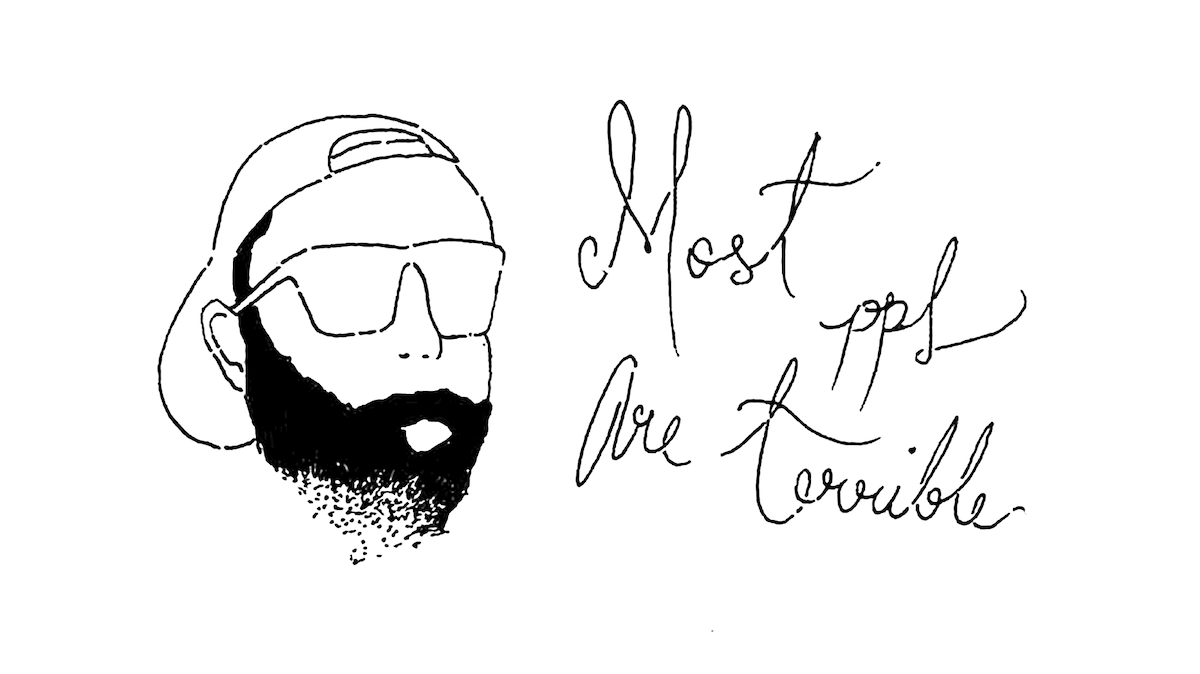
I met one of my best friends, Cory, over two years ago. Since meeting him, I’ve probably drawn him about ten times. A savvy reporter with a sharp tongue but a heart of gold, Cory has provided me with many invaluable nuggets of wisdom. One of the most memorable nuggets was a sobering reminder that I tend to assume the best in people too quickly.
In some cases, this just means that someone who I thought had excellent taste in clothes, music, books, or food actually doesn’t. In more serious cases, this means that I have a difficult time distinguishing charm from crazy. In any case, and particularly the latter, I keep this axiom close to my heart.
Not Assholes, Just Shibas
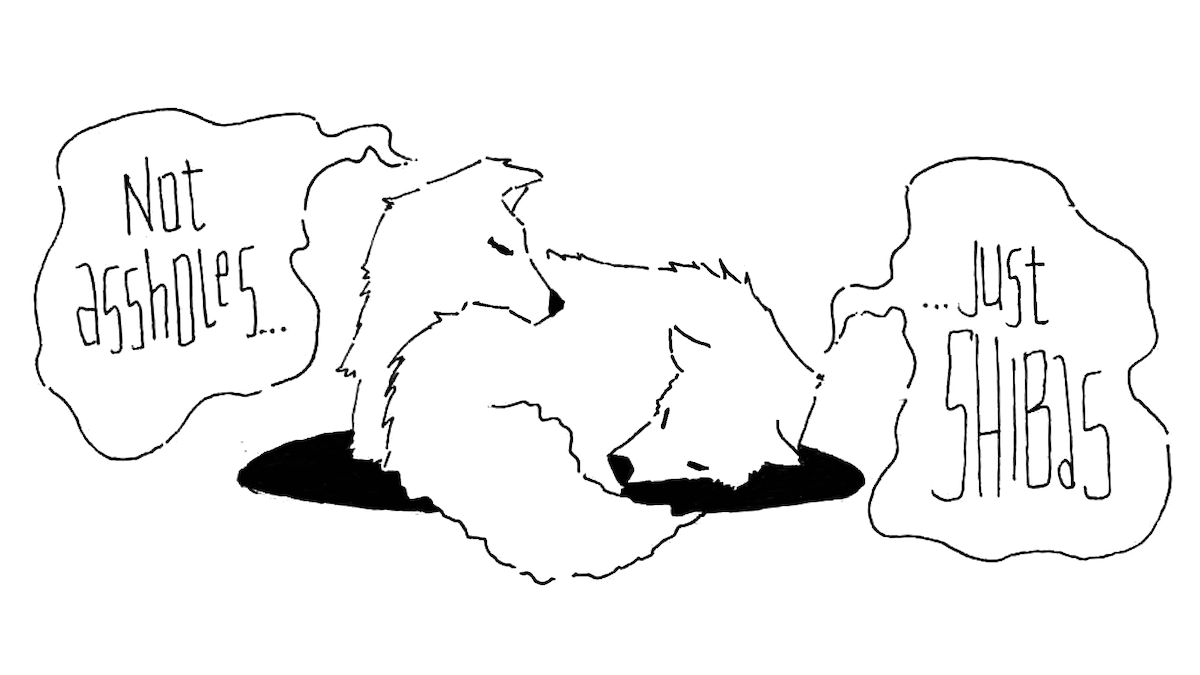
In 8th grade, I met a girl named Mira who is now one of my oldest and closest friends. Mira is much more charismatic and social than I am. During our younger years, I always thought were two sides of one coin: she was the outgoing and social one; I was the quiet and taciturn one.
However, a few years ago, she told me that she’s actually a total introvert. I realized two things: First, that our introversion was probably what brought us together in the first place. Second, that I had completely misunderstood one of my best friends. But that’s water under the bridge at this point. Lately, we’ve started characterizing ourselves as shiba inus, who aren’t exactly the cuddliest of dogs. But they’re not jerks, they’re just independent. Just like me and Mira.
At the end of the day, I use these moments to remind myself that I can always adapt when life doesn’t work out exactly as I expect. And if all else fails, finding humor in turbulent moments is the quickest solution for a bad day.
I’m a huge nerd. I grew up watching a lot of fantastical and post-apocalyptic anime, and I’m a former literary history student with a fondness for medieval poetry. Having spent enough time with Chaucer, Boccaccio, Satoshi Kon, and Hideaki Anno—most of whom tend to leave their audiences hanging or uncomfortable—I learned to appreciate stories with ambiguous endings. I’ve carried this same sentiment into my sketchbooks.
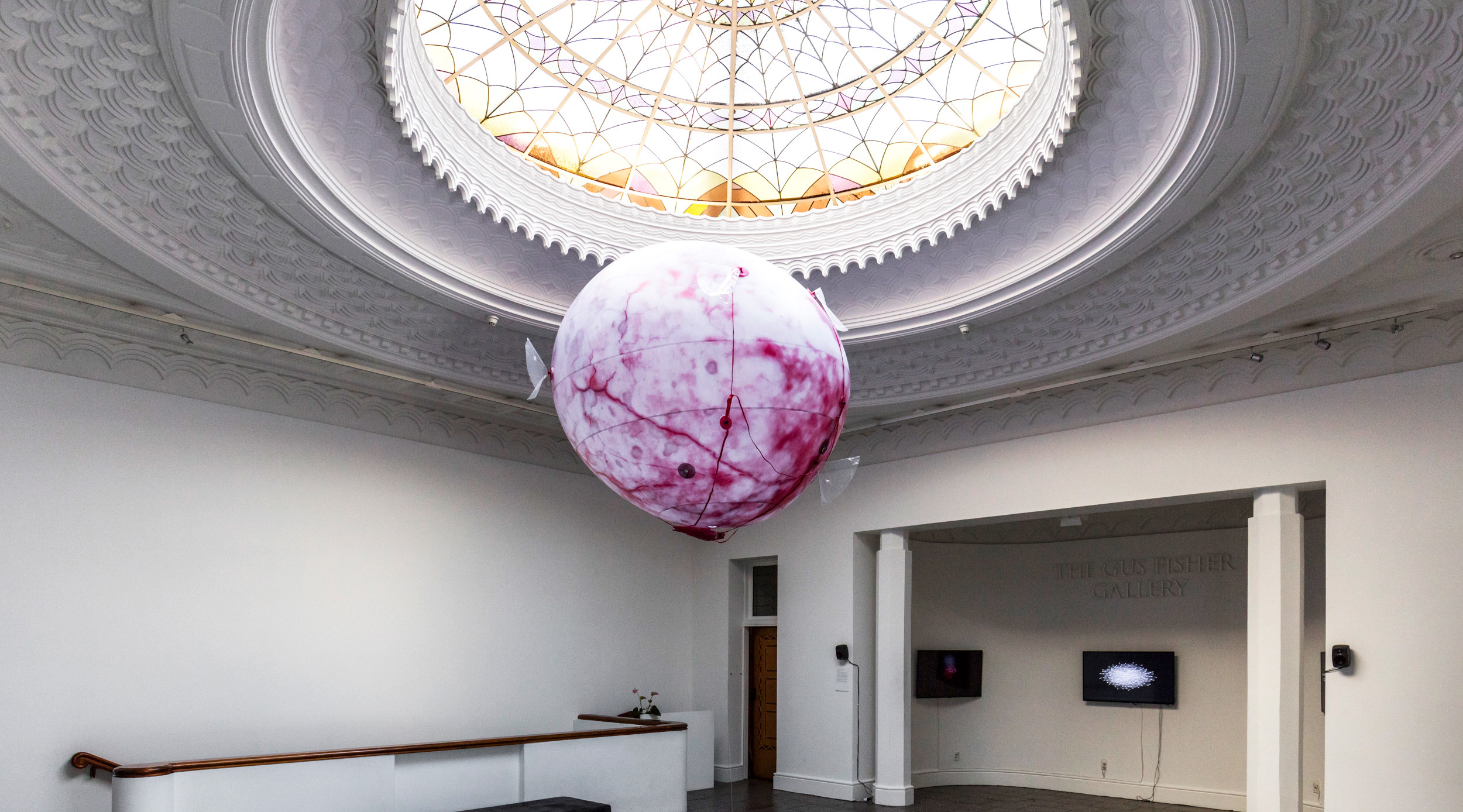
Your Body as An Art Project
How one young British artist is pushing the boundaries of bodily design
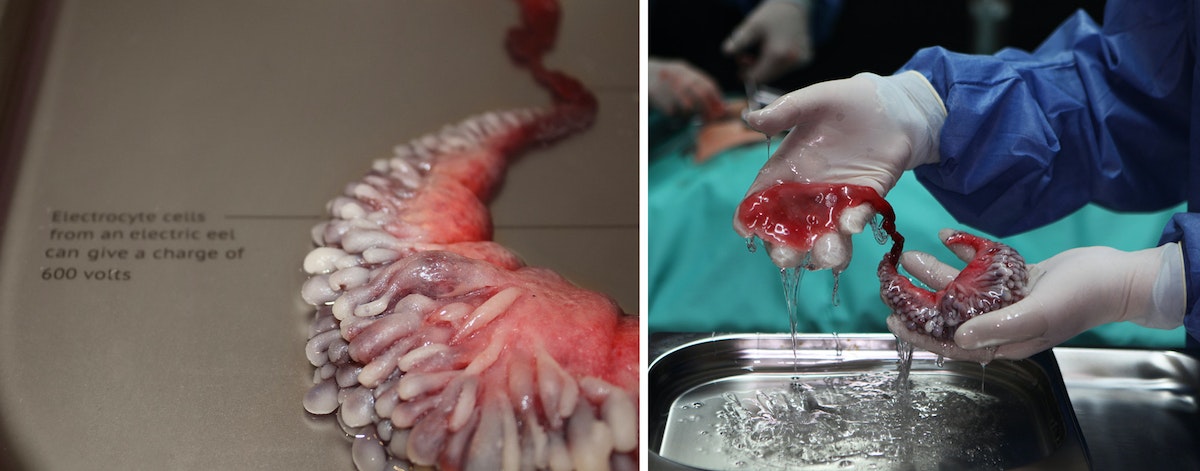
Imagine, for example, using parts from an eel to shock the human heart with current when it’s having a heart attack? In an exhibit called Domestic Futures at Nationalmuseum of design, Stockholm Haines showed exactly such a “product”. Goodbye defibrillating paddles, hello electric eel!
More recently, IDEO’s London studio collaborated with Haines for New Old, an exhibit at the Design Museum London. The result was “Spirit,” an AI assistant for the elderly. After working alongside Haines, we found ourselves intrigued, so we caught up with her to ask a few questions about what it means to be a budding biodesigner.
When did you first think about getting into design, and why?
When I was younger, I had many misconceptions about design that I think are still problematic today. You rarely get to see the messy, exhausting, and all-consuming guts of design work, but I think it is an incredibly engaging discipline. I got my masters in the Design Interactions department at the Royal College of Art, and am now undertaking PhD research at Transtechnology Research at Plymouth University.
Who are the designers, artists, writers, and thinkers that have influenced your work?
Noam Toran, my tutor on my MA course, offered many fascinating and unnerving threads of research, along with Tony Dunne and Fiona Raby, who promoted alternative ways of thinking. I also like Floris Kaayk (a bit of enjoyable grossness there!), who always seems to have something fascinating in progress; my close friend designer Soomi Park, who is highlighting sensitivity to emotion in artificially intelligent objects; and recently, I saw a great talk by Hyphen-labs, which probes some really important questions about design.
Tell us what you produced for the “New Old” Design Museum exhibit
For “Spirit,” I made some sculptures of potential body modifications—visualizing how a fictional company might improve sociability in the elderly. The IDEO team, including Ed White, Daniel Tauber, and Javier Soto Morras, had researched alterations that could be made to the body to send biological notifications. The work made me aware of the pressures and expectations on the elderly.
Tell us about three of your favorite projects
In 2013, I produced “Transfigurations”, which depicted babies with structural modifications. The work encouraged people to consider whether surgical procedures might offer solutions to future social and environmental problems. I think the cuteness of these sculptures made the work both disturbing and delightful. Another project, involved dissecting sculptures of anatomical parts, suggesting potential future procedures such as the removal of a cyst from a bionic eye implant. The tactile element helped this work to become a lightning rod for discussion regarding scientific research. Currently, I am developing “if you prick us do we not bleed?” about how we interact with humanoid robots by including bodily fluids. I was, of course, inspired by the famous Shylock monologue in the Merchant of Venice. “If you prick us, do we not bleed? If you tickle us, do we not laugh? If you poison us, do we not die? And if you wrong us, shall we not revenge?” .It's still a very powerful message about the mistreatment of those perceived as different.
What does it mean to use the body as a design medium?
All of my work is, of course, speculative. I don’t spend much time actually moving human material around, although I did once spend a very interesting day at a cadaver research laboratory! Instead I research the tools and materials that may have an impact on the body, or how we perceive the body. There are already disciplines that have to view the body as editable, and moving this way of thinking from a surgical or dental domain to a design or engineering one is where there is space for interesting interventions. There seems to be lots of interest in nanotechnology, and like many biotechnologies, this means there will be interactions with designs we can not see, but can perhaps feel, and maybe also artificial intelligence that may make design decisions for us.
Want to see more of Haines’ work? Find her current exhibits and talks here.
Agi Haines’ artwork isn’t easy on the eyes. But to her, it looks just like home. As the daughter of two South East London artists who met while working at Madame Tussauds wax museum, her childhood home was populated with wax heads, antique surgical tools, and sculpture scaffolds. Viewing the human body as raw material for design interventions wasn’t the stuff of some sci-fi future—it started as a family affair (her sister, Beatrice Haines caught the bug, too) and Haines has been working and speaking about it ever since.

Thoughtless Acts: Bespoke Belt Loop
Thoughtless Acts: Bespoke Belt Loop. The intuitive ways we adapt and react to things in our environments
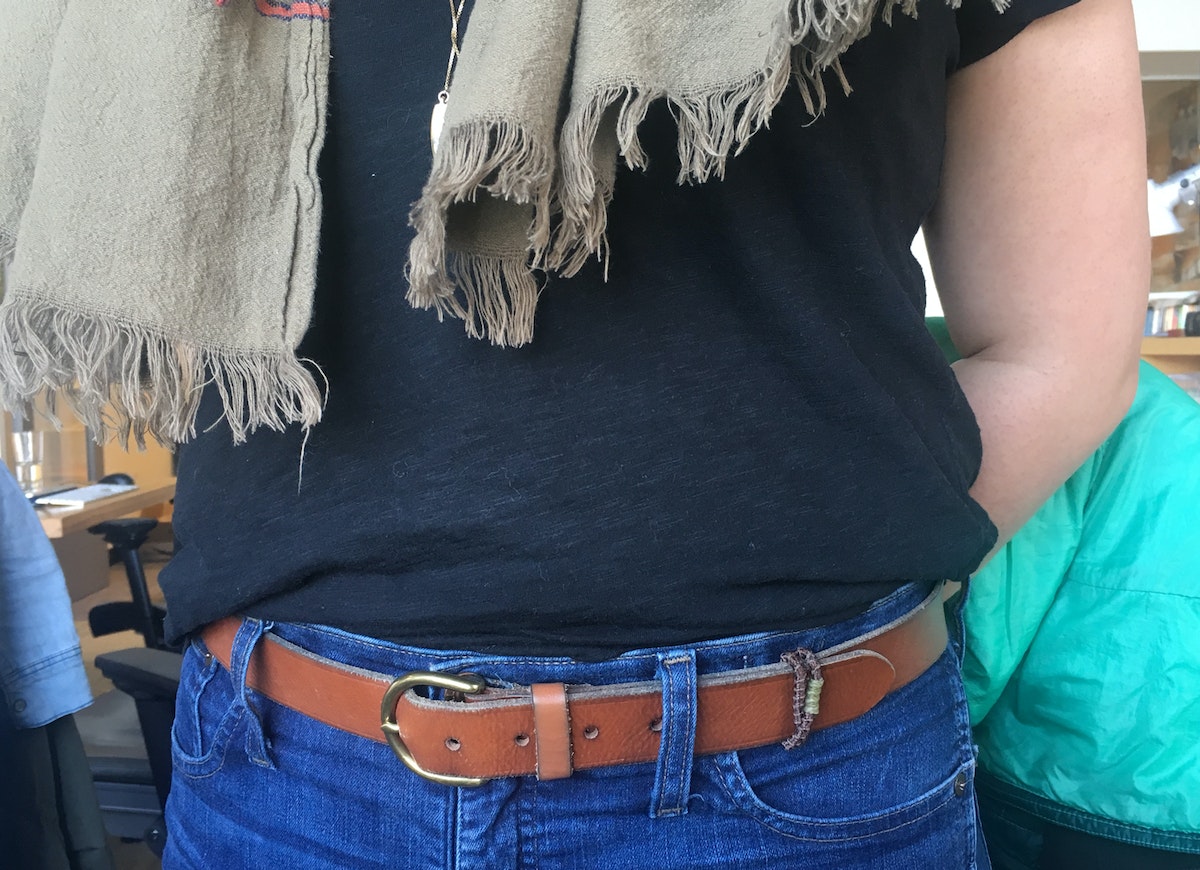
A few days ago, in the middle of an impromptu content brainstorm, I noticed that my colleague had her hair tie cleverly wrapped around her belt to keep the excess tail neatly in place.
Hair ties are something many of us wear on our wrists all the time. They’re inexpensive and, while essential for those of us with long hair, they're often under valued and under utilized. My colleague's back-up belt loop is by far the smartest and most delightful use of a hair tie I’ve ever seen.
I’m particularly inspired by this because I like to repurpose unloved objects in ways that exercise creativity and expand appreciation for junk. Recently, I took an old wine-stained summer dress and coiled it around my neck as a scarf. It now lives in the scarf section of my wardrobe.
Now, I'm thinking about ways I can repurpose all the brightly colored hair ties that I don’t like to wear against my black hair. Besides belt loop reinforcement, they might just be a new way to introduce a pop of color into an outfit.
Human-centered design requires us to observe human behavior with beginner's eyes, so that we can spot the innate ways people interact with the world around them. We call these intuitive and unconscious reactions thoughtless acts, and IDEO designers collect photos of them to inspire their work.

Lindsey Turner
I’m passionate about building brands, products, and experiences that help organizations show up with meaning and momentum.
I help organizations cut through complexity by shaping how they show up, through brand strategy, identity, and storytelling.
Working at the intersection of brand and business, I bring an editorial eye and a bias toward making—turning ideas into tangible experiences that people can understand, trust, and believe in.
My work spans government, healthcare, financial services, media, and consumer goods, from launching Gen Z-focused ventures to building innovation labs and reimagining legacy brands. I relish moments of ambiguity and enjoy translating across teams, perspectives, and priorities to move ideas forward.
I started my career in editorial and digital design, shaping cross-platform experiences and identity systems in publishing and agency environments. That foundation still shapes how I work today: I’m detail-oriented, collaborative, and overreliant on the Oxford comma. I hold a BFA in Visual Communication from the School of the Art Institute of Chicago.

Rachel Young
My work helps organizations see who their products aren't working for—and build the will and the tools to do something about it
For 25 years, I've asked the same question: Who does this design exclude—and what are we going to do about it?
My work spans human-centered strategy, inclusive design, and qualitative research, with clients ranging from Microsoft, Google, and Verizon to the National Science Foundation, and San Francisco Unified School District.
Before IDEO, I taught elementary school in East Palo Alto and spent a decade doing design work with social service organizations—where I learned firsthand what it costs people when systems are built without them in mind.
I am currently writing User Error, a nonfiction book about digital access and the design decisions behind it. I live in Oakland, California.

Brian Pelsoh
I lead with craft, ensuring our work is creatively excellent: rooted in deep human insight and imagination, while also grounded in the realities of business and technology.
My expertise spans brand, communication, and product design across tech, education, the arts, and social impact.
I believe great work demands both high-level vision and obsessive attention to detail, and only happens through collaboration.
I bring an inclusive, hands-on approach and a deep understanding of business, which enables me to consistently deliver excellence while always asking why.
Before joining IDEO, I worked at the brand firms Pentagram and VSA Partners. I began my career as a designer, leading teams at the School of the Art Institute of Chicago and the Milwaukee Art Museum. I hold an MFA in graphic design from Maryland Institute College of Art and a BFA in communication design from the Milwaukee Institute of Art & Design, and have taught at some of the best design schools in the US.

Tony Wong
I am responsible for IDEO’s long-term success in China and working with clients to use design as a tool to enable growth.
I am responsible for IDEO’s long-term success in China and working with clients to use design as a tool to enable growth. Specifically, I have helped Chinese companies design holistic brand solutions through the development of their products, communication, services, and innovation teams, and I have helped multinationals expand their presence and influence in China.
I advise global leaders on developing China-led innovation and capabilities.
In over 15 years in IDEO Shanghai, I have worked on projects that use design to elevate the quality of the experience of healthcare products and services, streamline processes that increase productivity, create spaces and programs that promote and enable inclusive communities, and build next generation mobility solutions that are planet-positive.
Before joining IDEO, I worked at Philips Electronics and the Electrolux Group in Italy, the Netherlands, and Singapore on a number of breakthrough commercial products. I am a member of the Young President Organization in Shanghai.

Building a personal AI for the messiness of life: Sida Li
Most AI products today are built for work—a space with clear problems and established systems. One founder noticed a gap: personal life is messier, harder to systematize, and mostly left behind by the AI boom. So she built Cue, a personal AI that lives inside iMessage and group chats, to go where the other tools haven't.
In this episode, Becca Carroll, IDEO's Chief Strategy Officer, talks with Sida Li, co-founder and CEO of Shared Context Lab, about staying anchored to a human need while the technology around her keeps changing shape, why she treats her business model with the same rigor she'd bring to a product, and what it feels like to build a company at this particular, disorienting moment in AI.
The conversation also gets into how Sida makes design decisions: the language Cue uses to describe itself, the tradeoffs behind building inside iMessage instead of a new app, and a real story about a business idea that didn’t pan out.
This is the second in a two-part series profiling founders from IDEO's Startups-in-Residence program. The first conversation is with Johannes Seemann, founder of Sooner, on designing GenAI for the emotional side of money.

Designing GenAI for the emotional side of money: Johannes Seemann
Most personal financial tools are built to run the numbers and optimize towards a budget. While that works for some, most people experience money as a lived relationship that does not neatly fit into a spreadsheet. Johannes Seemann and Becca Carroll discuss why money is emotional before it is mathematical, and what a human-centered approach to building a generative AI financial product looks like in practice.

The curious leader's edge in uncertainty: Scott Shigeoka
Mina Seetharaman talks with Scott Shigeoka, author of Seek and Head of Curiosity Cultivation at the Eames Institute, about what distinguishes genuinely curious leadership from performative curiosity, how power dynamics shape curiosity, and why practicing curiosity can restore energy rather than drain it.

How constraints make us more creative: David Epstein
Mina Seetharaman talks with David Epstein, author of Inside the Box and Range, about why total freedom often produces average work, how leaders can design useful limits on purpose, and what organizations such as General Magic and Pixar reveal about the relationship between boundaries and creativity.
Looks like you might be in search of something very specific?
Or reset the filters above and try another angle.
Here’s some random inspiration

Podcasts about creative leadership

Articles about the power of prototyping
