
.svg)


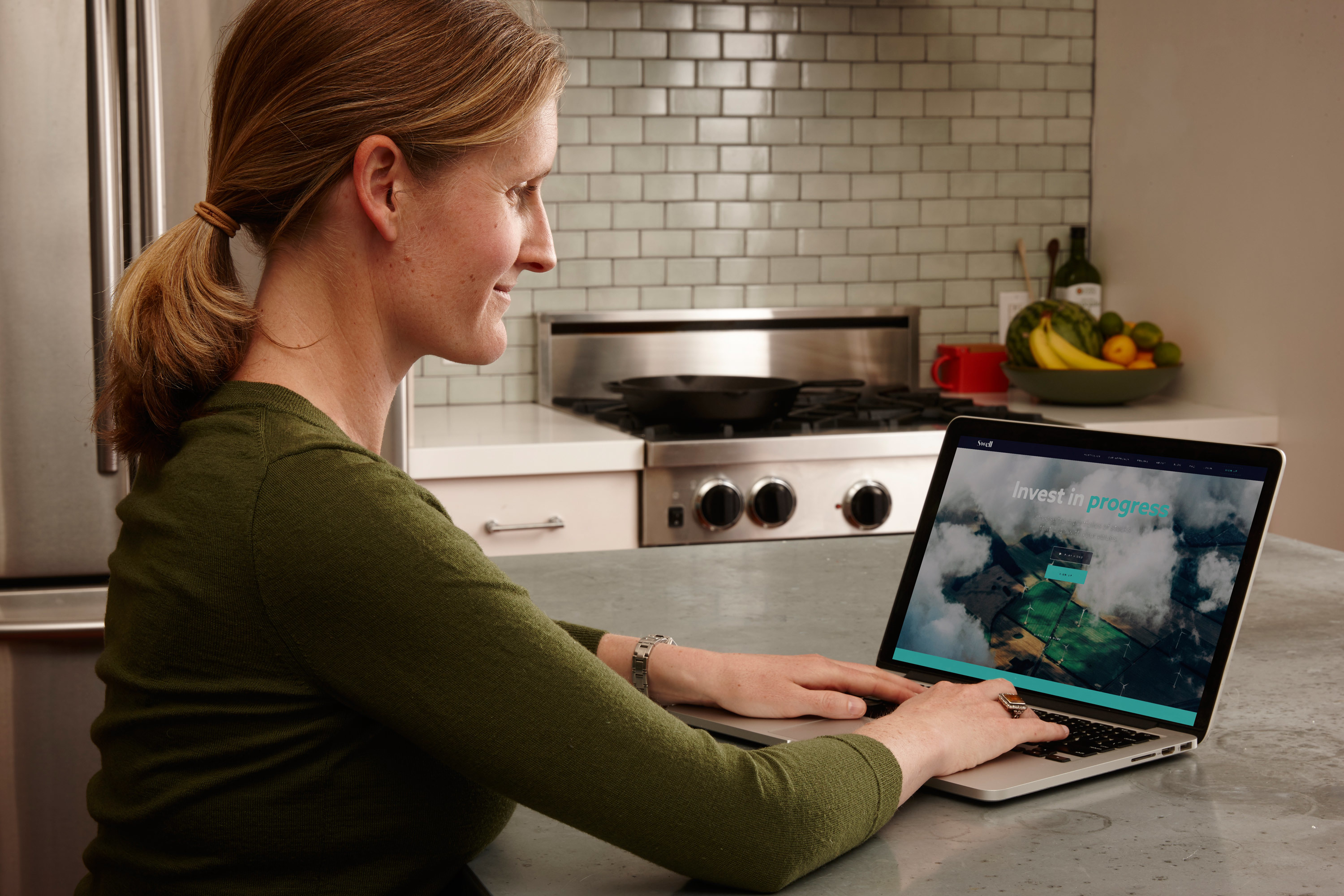

Arming a 19th-century company with a 21st-century digital venture
Swell enabled values-driven consumers to make informed investment decisions.
For the socially-conscious, investing can be a tricky proposition. The same people who wish to vote with their wallets may find that their options for investment funds and 401K plans are rife with companies that violate causes they believe in. So far, there have been few options in the marketplace that give consumers the opportunity to put their money in financial products that not only cut out environmental and social offenders, but actually contribute to the well-being of the environment and society.
Dave Fanger, a financial professional, was determined to design a solution. He approached IDEO to help create a startup venture for socially-conscious investors. Pacific Life, a Fortune 500 financial services company and Fanger’s employer at the time, offered the resources to develop and launch the idea. The online impact investment platform gave consumers the opportunity to invest in high-growth industries that are addressing global, environmental, and social challenges. Swell rigorously screened companies for both impact and performance, so consumers could be confident that their investments were in line with their values.
A holistic approach
Embedded as core team members, IDEO designers worked alongside Swell’s founder to shape the company. In just one year, they went from an initial concept and prototype to an SEC-registered investment adviser with a fully developed business model, a digital platform with initial investors, and well-defined branding that set the look and feel of the values-driven company. The IDEO team helped to hire the initial team of employees, working to ensure that the fintech startup would have the creative talent it needed to operate post-launch, as well as a defined culture that would help it grow.
A new investment platform
From the outset, it was important for the team to build an innovative, digitally-fluent, and customer-centered platform to make it easy for investors to back causes they care about. Working in close collaboration with software development partner Carbon Five, Swell and IDEO committed to act nimbly, take risks, move fast, and ditch decks for prototypes. Understanding the motivations of the investor—their values and what drives their investment decisions—was key, so the team leveraged IDEO’s network to form a consumer council, which helped to quickly iterate and refine prototypes throughout the duration of the product development process. Having that core group involved every step of the way made it easy for the team to keep consumers at the center of the design and validate key decisions quickly.
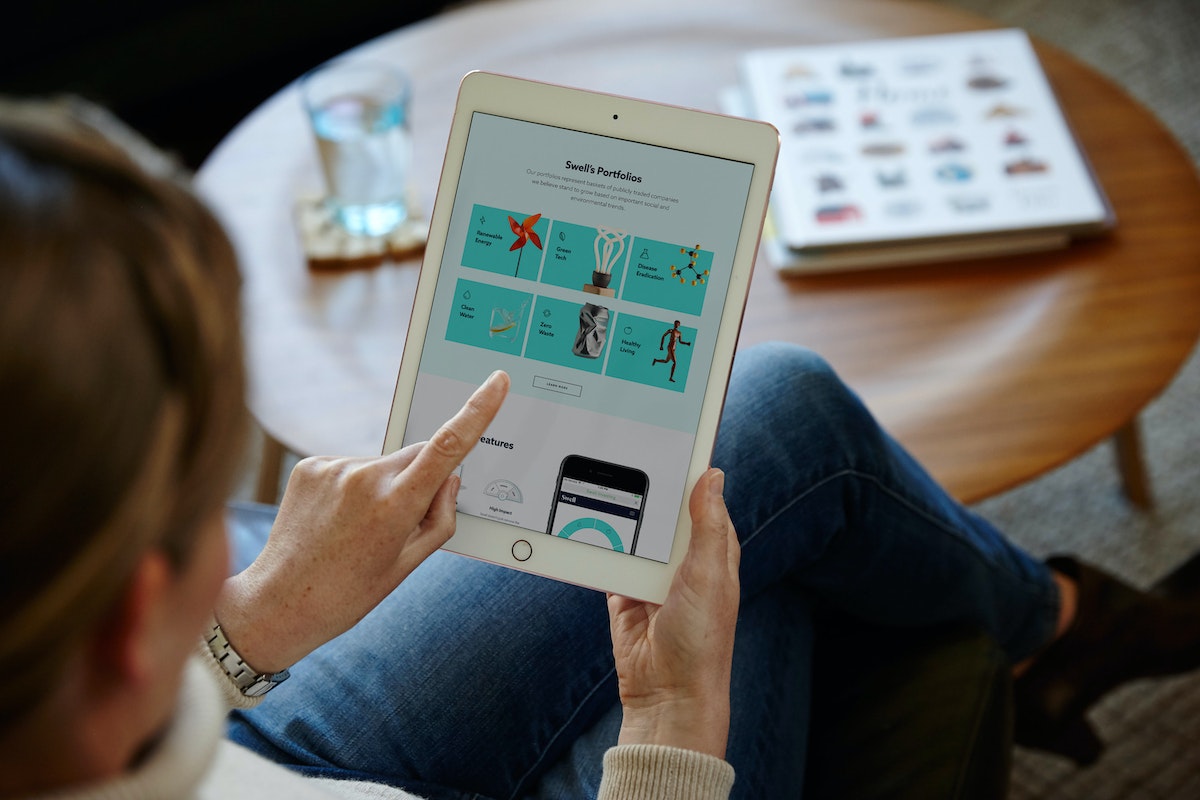
Swell offered consumers portfolios of companies that work to solve some of today's biggest challenges. The six impact portfolios offered were: green tech, renewable energy, zero waste, clean water, healthy living, and disease eradication.
As of June 2019, Swell had attracted over 15,000 investors—more than half under the age of 34—and $35 million AUM. Nearly 40 percent of investors were making investments on a recurring basis.

For kids, a new tactile way to learn coding
Helping Google design a set of blocks that can be arranged to code almost anything.
Learning to code isn’t just about knowing symbols and syntax—it can help unlock kids’ imagination by inspiring them to build new things and interact with everyday objects through discovery and play.
With that in mind, Google Creative Lab came to IDEO to help with user experience and product design on their new coding tool for children. The result of the collaboration, Project Bloks, is a simple and interactive experience that teaches kids how to code using physical blocks. This establishes a new paradigm for learning computer science: it takes a language typically only understood through screens and keyboards, and makes it tangible.
Project Bloks was also designed as an open hardware platform, enabling developers and educators to build tangible programming applications that are innovative, educational and fun.
Kid-centered design
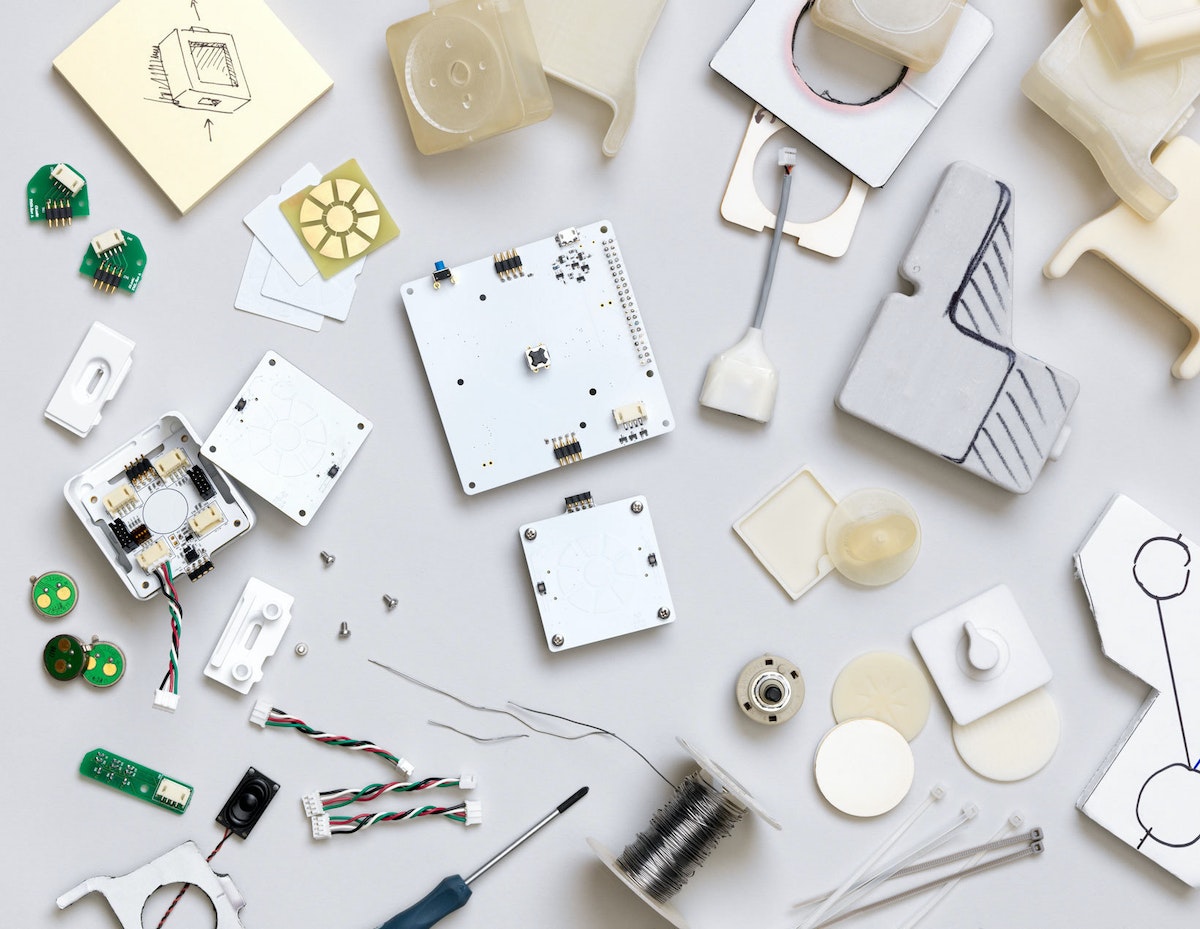
From the very beginning, how kids physically play and learn were at the center of the project. Designers quickly iterated using sketches, foam core, paper, Play-Doh, and 3D-printed models to see how slight changes informed children’s experiences. Understanding what deepened kids’ engagement, increased their curiosity and changed their behaviors drove the language, taxonomy, architecture, and physical form of Bloks.
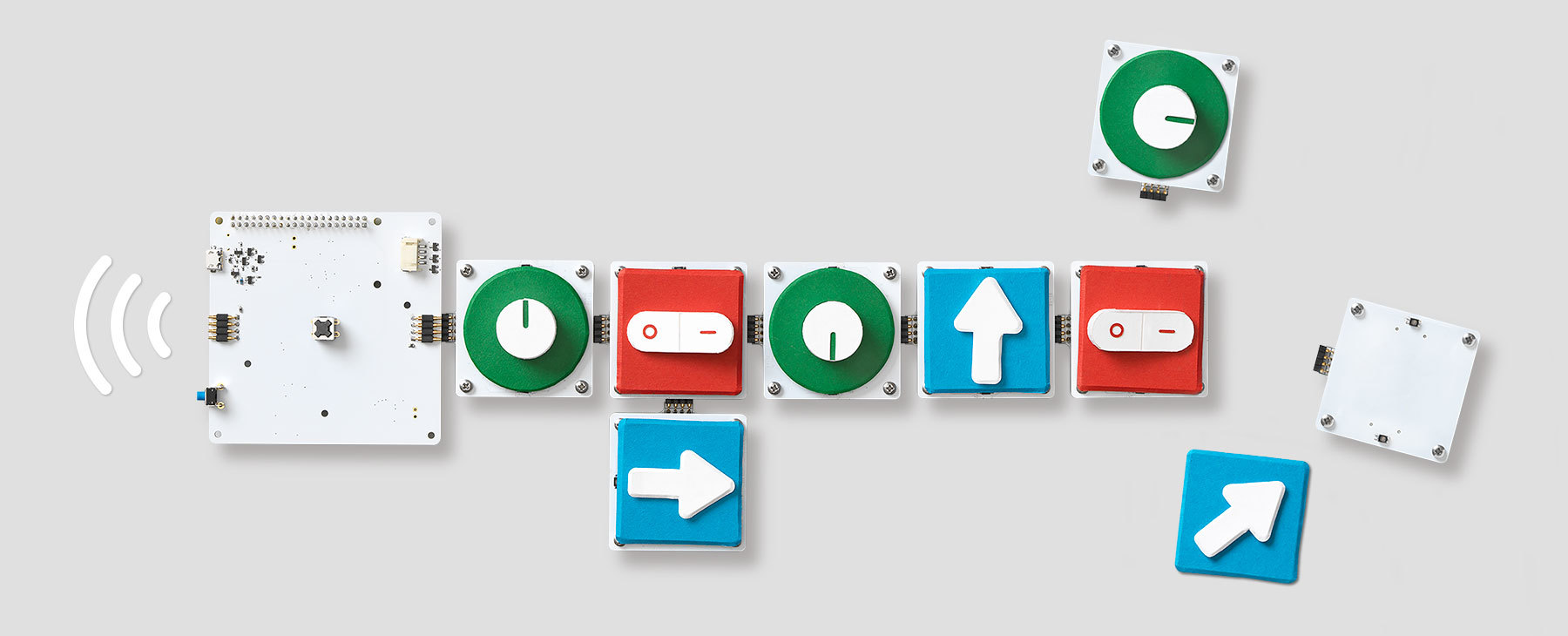
Because play and physical building is an important way in which many kids develop skills, designers began with a set of blocks and sought to help them discover coding through tangible objects. Each block was given a specific function and shape, guiding kids to arrange, combine, and rearrange the blocks to create commands and control things like robots or speakers in the real world. Children could also create block patterns together by physically building on each other’s ideas.
An inside look at the design process. Video by Google.
Designing for early learners also forced the team to rethink how a new language could be taught. An early version of the blocks was based on how programmers typically code, from top to bottom. However, the team quickly realized that the orientation had to be driven by the child’s natural instincts. Given young children are just learning to read from left to right, designers observed that the switch in directions was too confusing and changed the arrangement of Bloks commands to go left-right in addition to top-bottom.
The final outcome of Project Bloks was an interactive coding kit comprised of three key parts - pucks, baseboards and a brainboard. The puck is a critical component that controls a command, whether it’s an on/off switch or the ability to move in a particular direction. It’s the piece that enables children to move from words to the world of graphics and play. The puck is easy to produce and can take an unlimited range of forms and functions, enabling the Bloks system to scale.
The baseboard reads the puck’s instruction and is activated when a puck is placed on top. The brainboard provides the power and connectivity. When hooked up to a baseboard or a chain of baseboards, the brainboard sends the instructions—turn left, jump, get louder—to a connected object, like a rocket or a speaker.
The boards can be rearranged, sequenced, and packaged however kids like, opening up a vast realm of possibilities. Children can code anything from a toy robot drawing a shape on a piece of paper, to a sensor turning on a fan when the temperature gets too high.
Enabling innovation for education
Beyond a tangible coding kit, what makes Bloks unique is that it’s an open platform. Educators, developers, and designers can build on it to accelerate new ways of teaching and exploring tangible programming. The platform can fit into various curriculums around the world. The pucks can take on different shapes and graphics. The material used can be fabricated by 3D printing.
The Bloks platform is a new vernacular that allows kids to interact with the language of code in a way that’s less prescriptive and more open-form, like a sandbox. And the more kids play with Bloks, the more opportunities they discover for what they can create with a little bit of code.
Helping students navigate college and beyond
Creating a digital experience to support first-generation college students.
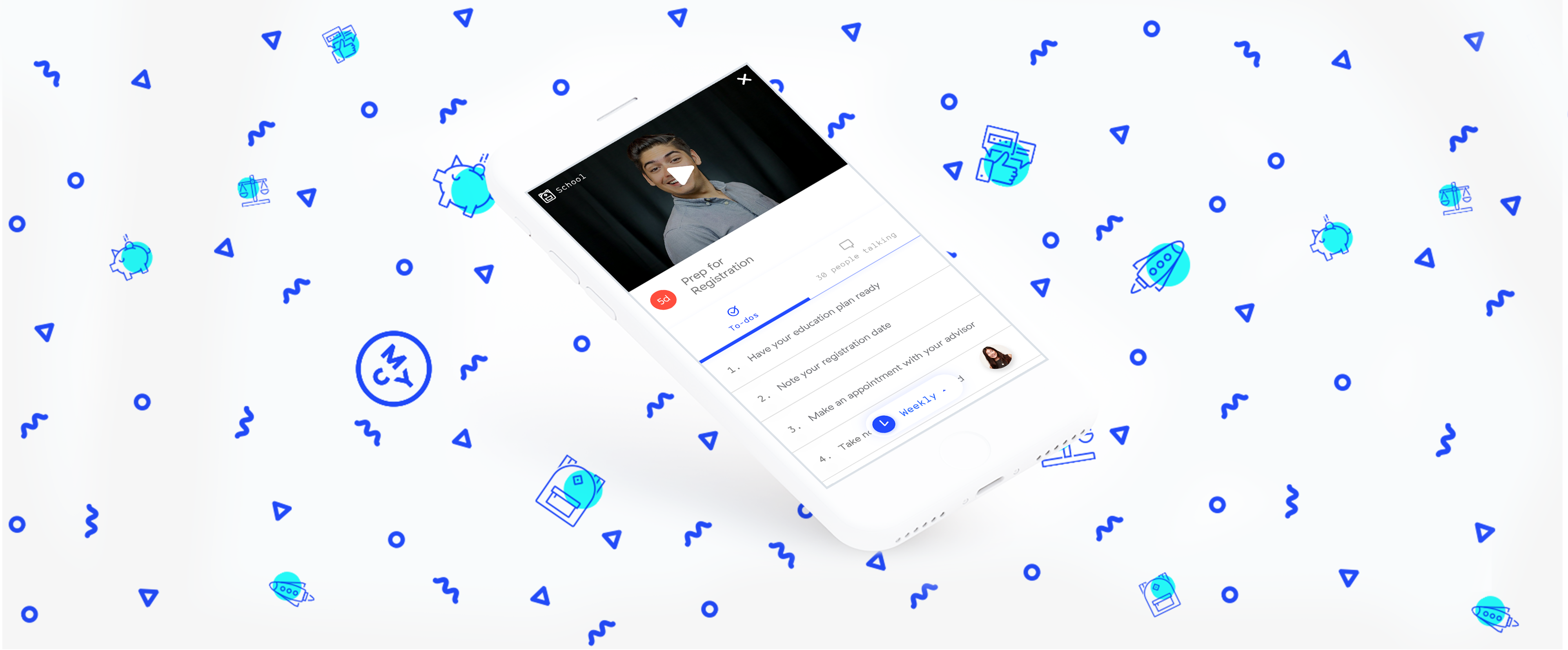
For students who are the first in their families to pursue higher education, navigating college can often feel like navigating a foreign country. Challenges like not having enough money or poor access to support services can make graduating an insurmountable hurdle. In fact, only 55% of these students in the United States end up completing their degrees.
To help change this statistic, IDEO partnered with Beyond 12, an organization that provides personalized, virtual coaching to first-generation college students to help them learn how to register for classes, apply for financial aid, and much more. The challenge was to scale Beyond 12’s successful coaching model using technology in order to benefit as many students as possible.
In 2014, IDEO designed the MyCoach app, with the goal of helping students take ownership of their education and feel in control of their future. After the early version of the app was named as a finalist in the prestigious Robin Hood Foundation College Success Prize, Beyond 12 piloted the product with 3,500 college students across the US. Following the pilot, Beyond 12 and IDEO went back to work, using the resulting insights and data to design the next evolution of MyCoach.
First and foremost, IDEO sought to develop a more flexible model for Beyond 12 to enable scalability of the offering. As some students need more support than others, a blended business model was envisioned to recognize the spectrum of students’ needs. Engaging in-app content forms a supportive layer that helps students get organized, stay on track, and learn the skills they need to stay in college, while students who need more hands-on assistance can connect directly with coaches. An invisible data layer works behind the scenes to assess student risk and dynamically tailor student support throughout the school year.
Once the app’s model was solidified, creating a user experience that compels students to use it became essential to its efficacy. Growing up with technology has reshaped how many students engage with the world, and tools like Snapchat have set a new dynamic for participation. Youth today are the masters of their own digital worlds, fluidly jumping between conversations, engaging with stimulating content and contributing their own perspectives. As a result, MyCoach needed to speak students’ language and to create content that was authentically youthful and effective in order to be effective. By drawing inspiration from popular social sites, digital experiences and games, the team designed a user experience that keeps pace with a digitally native state of mind.
IDEO Designer, Isabela Sá explains the approach that led to MyCoach’s design and content strategy, “We created an app that makes no distinction between content and utility. We borrowed the content-first approach of social apps like Snapchat and Instagram and used it to teach students the skills and strategies they need to graduate. With that, the digital experience became more human. The intricate system that we had designed to power the whole thing was hidden below the surface. For students, the app was just the means to learn how to help themselves and get in touch with a coach when they needed one.”
Development is underway for the next version of MyCoach, which will allow Beyond 12 to scale its offering to reach exponentially more students in need.
Redesigning how Coca-Cola works, plays, and profits
Designing for Coca-Cola’s 2020 vision strategy.
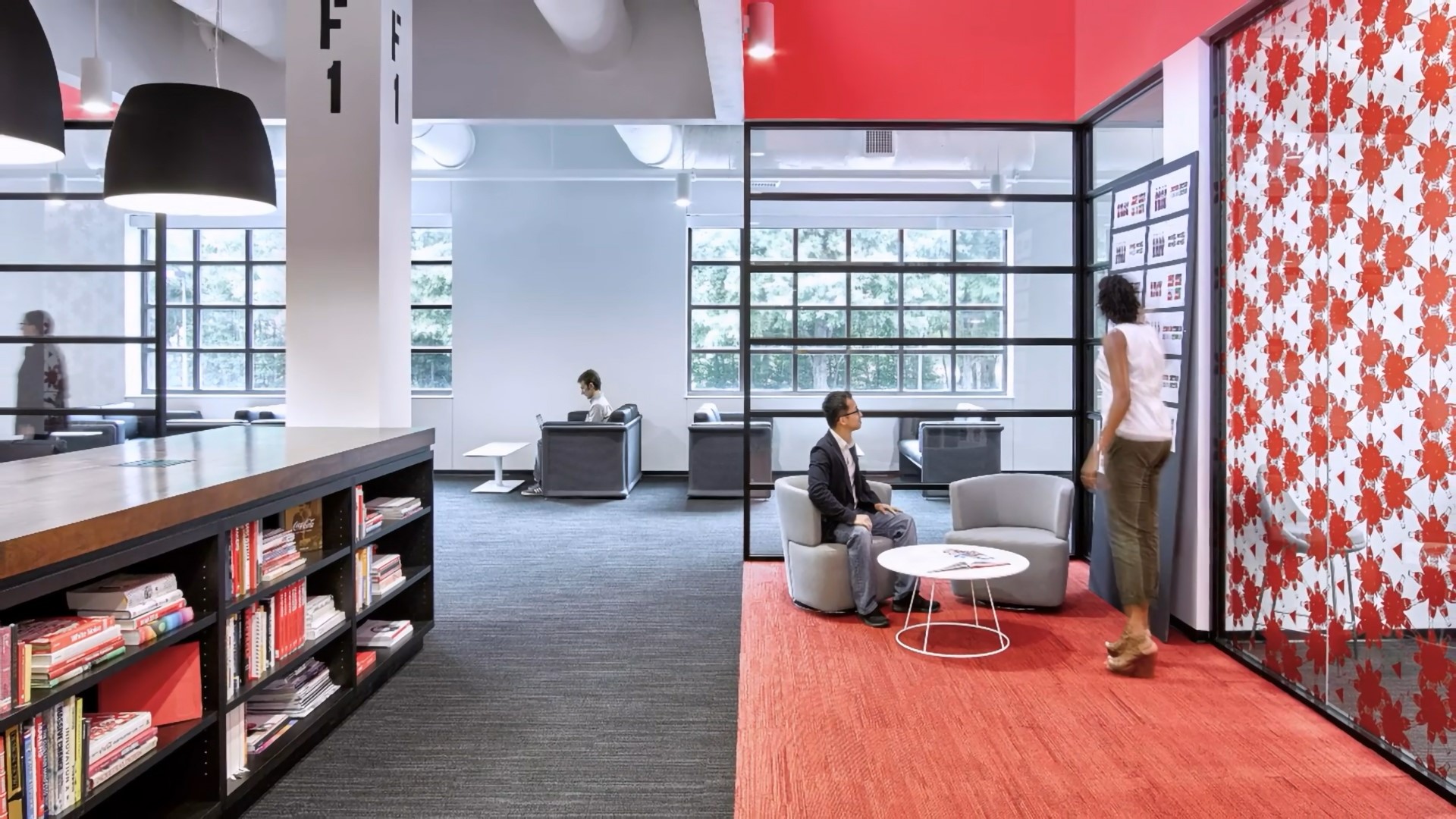
Coca-Cola is one of the world's most iconic brands. More than 5,000 people work at its global headquarters in Atlanta.
Back in 2010, Coca-Cola found itself at a major crossroads. As the company grew, it became clear that in order to stay competitive, any kind of campus renovation would have to take into account a vision of the future of how people work at Coca-Cola. Before the company hired architects, they came to IDEO to help design this important part of their 2020 vision strategy; ultimately the redesign would change the way the company works, plays, and profits.
Imagery courtesy of Coca-Cola, Gensler, and IDEO
Change By Design
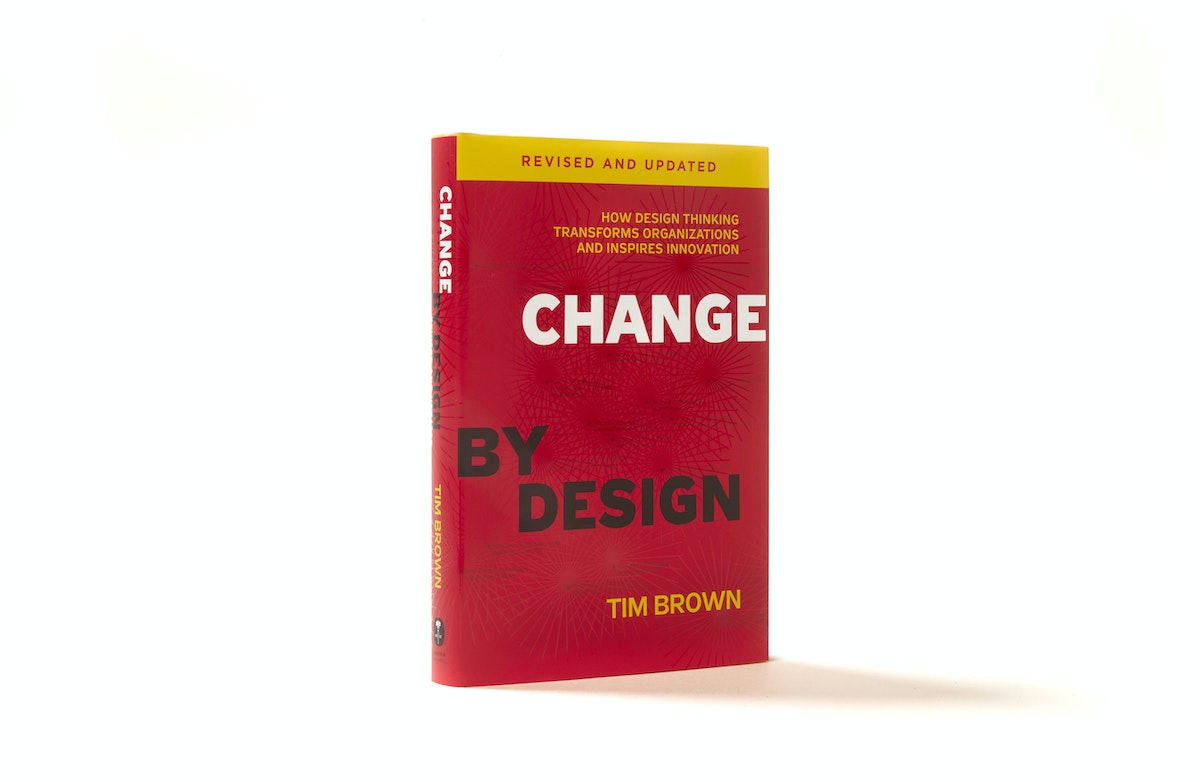
Tim Brown, CEO of IDEO, shows how the techniques and strategies of design belong at every level of business.
Tim Brown, CEO of IDEO, shows how the techniques and strategies of design belong at every level of business.
The myth of innovation is that brilliant ideas leap fully formed from the minds of geniuses. The reality is that most innovations come from a process of rigorous examination through which great ideas are identified and developed before being realized as new offerings and capabilities.
In this revised and updated edition of Change By Design, Tim Brown reintroduces design thinking, the collaborative process by which the designer’s sensibilities and methods are employed to match people’s needs with what is technically feasible and a viable business strategy. In short, design thinking converts need into demand. It’s a human-centered approach to problem-solving that helps people and organizations become more innovative and creative.
Change by Design is not a book by designers for designers; it is a book for creative leaders seeking to infuse design thinking into every level of an organization, product, or service to drive new alternatives for business and society.
Purchase
Know someone who might love this book? Purchase Change By Design here.
A 5-Point Checklist for Complex Challenges
Every time we board an airplane, we assume our pilots aren’t going on instinct alone. They’ve worked their way through a checklist—fuel levels reviewed, the flap setting confirmed—to ensure the plane is ready for takeoff. They may be pros, but they’re human, and the complexity of the job makes it easy to forget a step.
Our checklist made all the difference when the Wellcome Trust tasked us with designing a way to cut down on unnecessary antibiotics use in middle-income countries. The world’s antibiotic misuse has staggering implications: By 2050, antimicrobial resistance is expected to kill 10 million people every year. That’s more people than we lose annually to cancer.
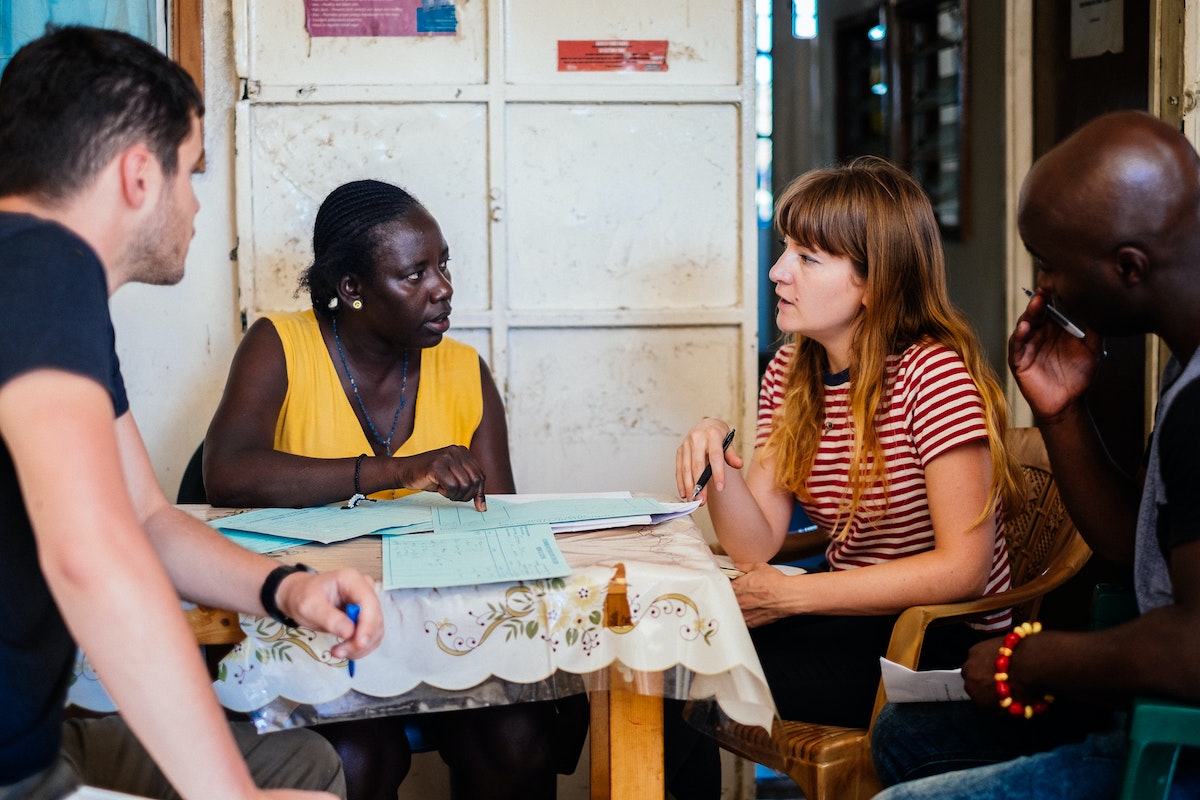
What became known as Project Marvelous took us to Kenya and India, where we encountered patients who self-diagnose and prescribe for themselves and their friends, community health workers with very little training, and pharmacies that dole out antibiotics without a prescription in order to make a sale.

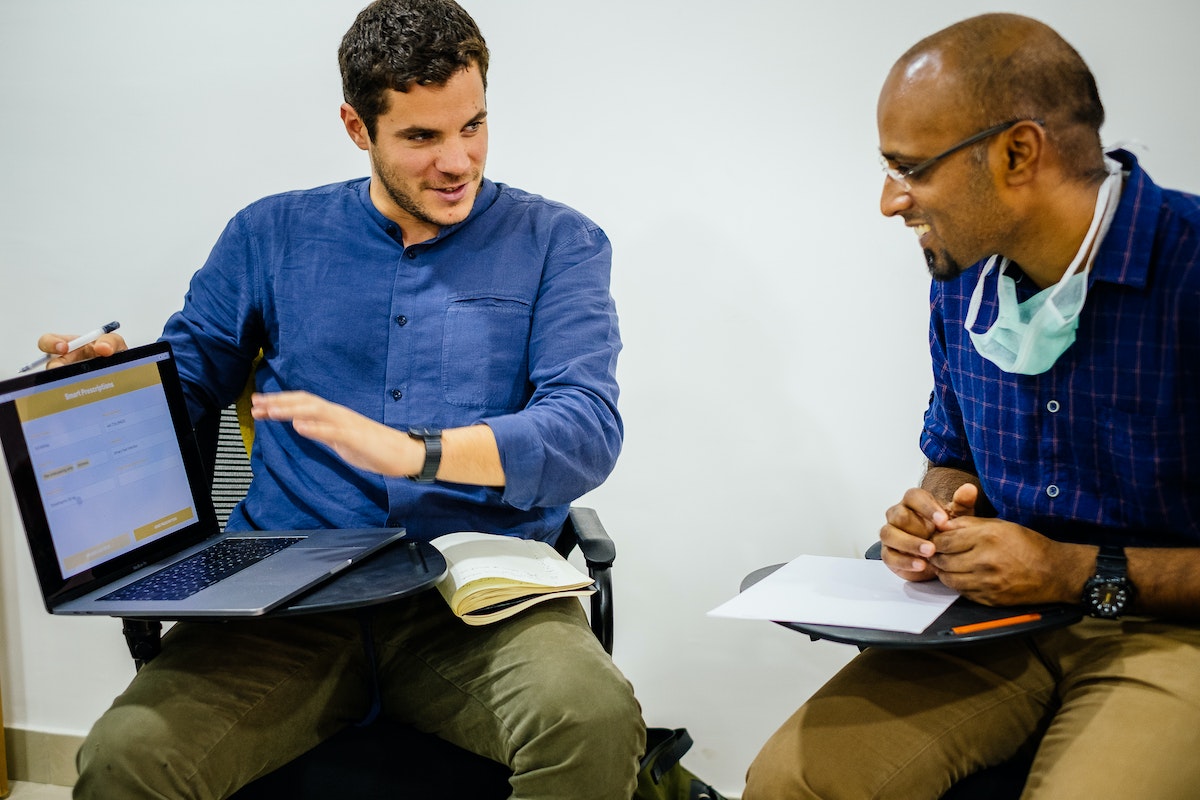
As far as complex systems challenges go, it was an extreme one, but after testing several rounds of concepts rooted in behavior change, we found an intervention with real potential. Smart Prescriptions, as we called it, was an endpoint that varied drastically from where we began. The original hypothesis was that the intervention should be designed for pharmacists. But after following the checklist, we found we had to start with doctors.
Here are the five steps we followed to address this complex systems challenge:
1. Define your ecosystem
We can’t claim to have reached an understanding of the whole ecosystem by a longshot—the sheer number of stakeholders involved is what makes it such a complex problem. So at the outset, we defined our ecosystem, drawing a line at pharmaceutical companies, which seemed beyond the scope of the design challenge Wellcome had set. We then set out to interview antibiotic users, doctors, and pharmacists. In doing so, we realized there was a category we had overlooked: India’s tens of thousands of registered medical practitioners (RMPs). They typically aren’t licensed to prescribe antibiotics but have studied Ayurvedic medicine. Being willing to pivot and expand (or contract) the ecosystem is key: We began interviewing RMPs after realizing the huge impact their population has on antibiotics consumption.
2. Adopt a beginner’s mindset
In interviews, we positioned ourselves as people who didn’t know much about the topic. We were there to learn about them as people—their motivations, their struggles, their day-to-day. We listened. We made sure our questions were free of judgement and left our assumptions at the door. What we came to understand is that a primary motivator for doctors is to succeed as a business. They depend on patients coming back.
This insight made it through to the final design. Smart Prescriptions is, at its core, a tool to improve the doctor-patient relationship. Features like automated advice for patients and medication reminders increase the personal interactions doctors have with patients. The antibiotics recommendation is a Trojan horse, tucked inside the features doctors were really clamoring for.
3. Lead with empathy
Continually put yourself in your user’s shoes and make sure you’re seeing the situation from their perspective. We quickly came to understand, for instance, that many people working in pharmacies aren’t actually pharmacists, and that their financial motivations eclipse any duty of care. They dole out antibiotics without a prescription because refraining from doing so means sacrificing a sale and possibly losing a customer to a rival. Rather than slapping a “bad” behavior label on this, we accepted it as their reality and used it as a design constraint.
4. Consider your language
Systems challenges are often as sensitive as they are complex (consider homelessness or mental illness). As designers we are outsiders, so in designing Smart Prescriptions, we needed to make sure doctors were upheld as the experts. We weren’t creating a diagnostic tool, but rather an intervention that offers a recommendation based on their diagnosis. The tool doesn’t actually change the way they prescribe, it just offers guidance. It’s tough to remember every antibiotics guideline, especially as they update. The language that was used was consciously designed to be light and supportive of their expertise.
5. Generate unlimited ideas, then co-create
Don’t fall in love with your first good idea. Every assumption we made was challenged in our first trip, which ended up being more exploratory than we expected. We made a point to talk to every stakeholder and actor about our sacrificial concepts—early ideas we put in front of people to spark reactions. We gauged whether they had a positive or negative response, then iterated accordingly. After the discovery phase, we came up with seven concepts to test with participants and gauged their reactions. Smart Prescriptions was the clear standout, generating the most interest and excitement. We refined the concept back home, then returned to India and Kenya to gather more feedback. This allowed us to design something that spoke to doctors’ primary motivation, and to add features that the doctors felt would make it even more useful.
Unlike pilots, we don’t have the benefit of a known destination. Our checklist doesn’t just guarantee a smoother ride, it plays a major role in mapping the route itself. When the ecosystem is unfamiliar and the complexity is vast, it is a must.
Every time we board an airplane, we assume our pilots aren’t going on instinct alone. They’ve worked their way through a checklist—fuel levels reviewed, the flap setting confirmed—to ensure the plane is ready for takeoff. They may be pros, but they’re human, and the complexity of the job makes it easy to forget a step.

A Day in the Life of a Business Designer
It starts with a walk in the park and ends with a design sprint
While I occasionally geek out over numbers, I spend most of my time going deep with clients, sketching business models, and building prototypes to test our ideas with real people.
I’m currently working on a project to create a new taxi experience for Japan. We’re working to help our client, a taxi equipment supplier, stay relevant when taxis themselves are being disrupted.
There’s really no typical day for me at IDEO, but here’s a little peek at what a recent one looked like.
8:30am: Commute

On nice days I walk to work through Yoyogi Park, one of Tokyo’s largest. It’s hard to believe that I live in a concrete jungle with views like this! Most days, though, I take the train. It’s exactly 16 minutes to get to work. (Perk of living in Tokyo: Trains run like clockwork.)
10:00am: Team stand-up
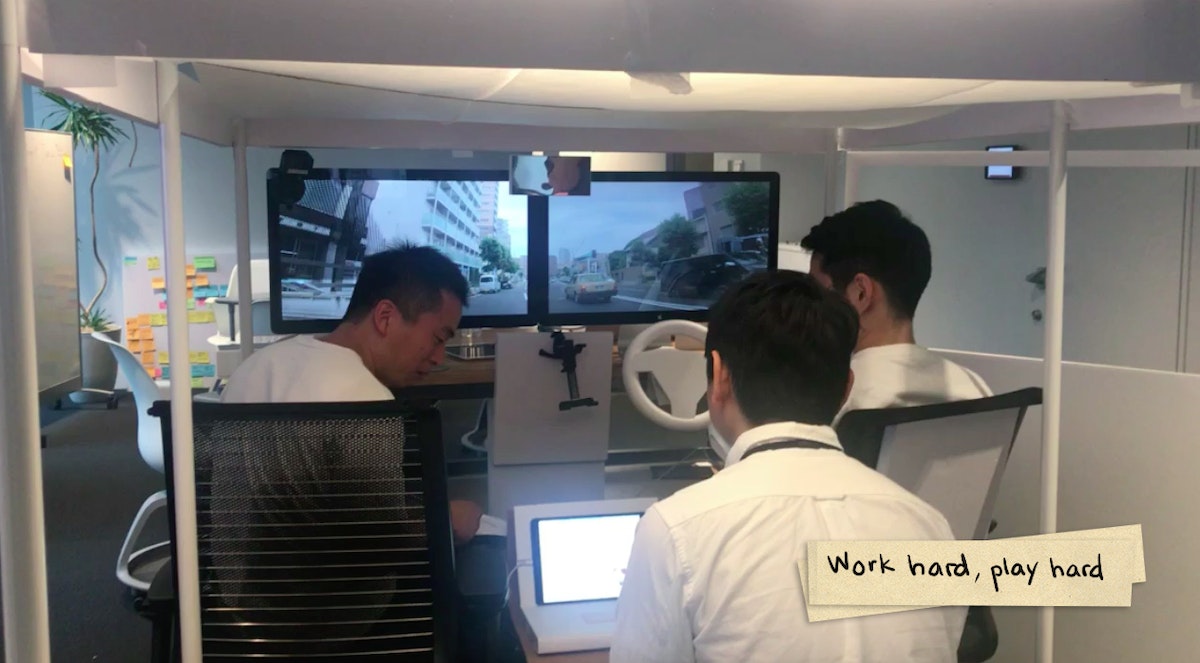
Our team has daily morning and evening stand-ups. We’re supposed to plan the day, but we get sidetracked and spend most of it playing with our taxi prototype.
10:30am: Business model review
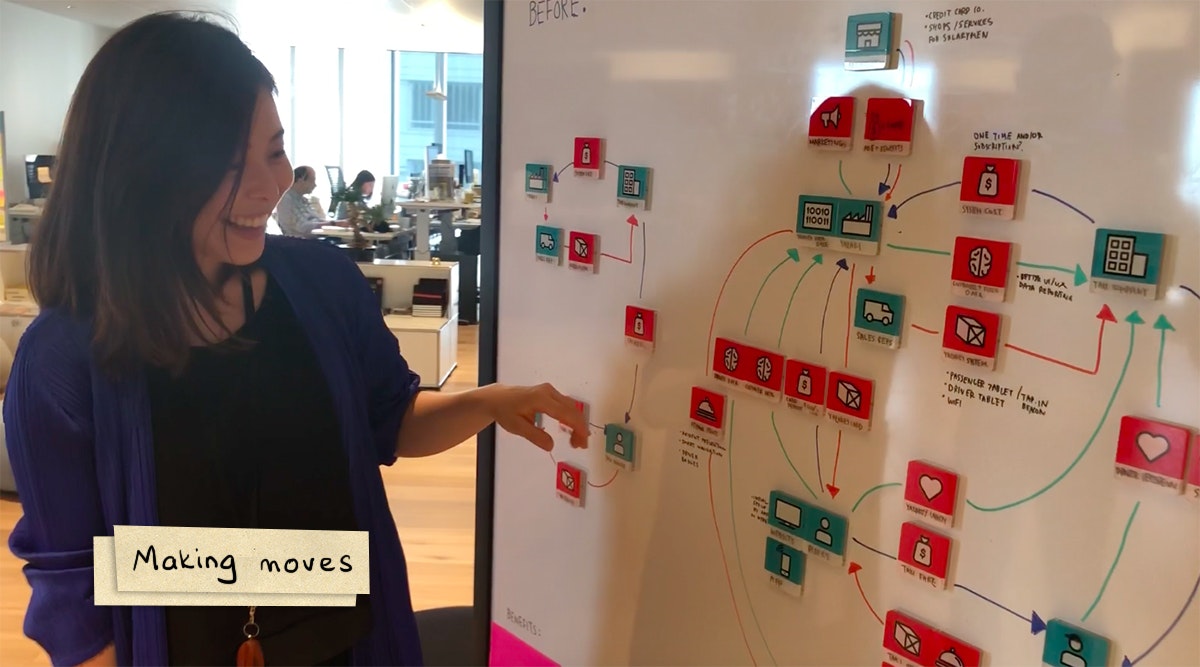
I sketch out our current idea using our Business Model Tiles. They’re a quick, visual way to bring our plan to life, and they make it easy enough for anybody to come in and iterate with me. (The team liked this version.)
12:00pm: Monday lunch meeting
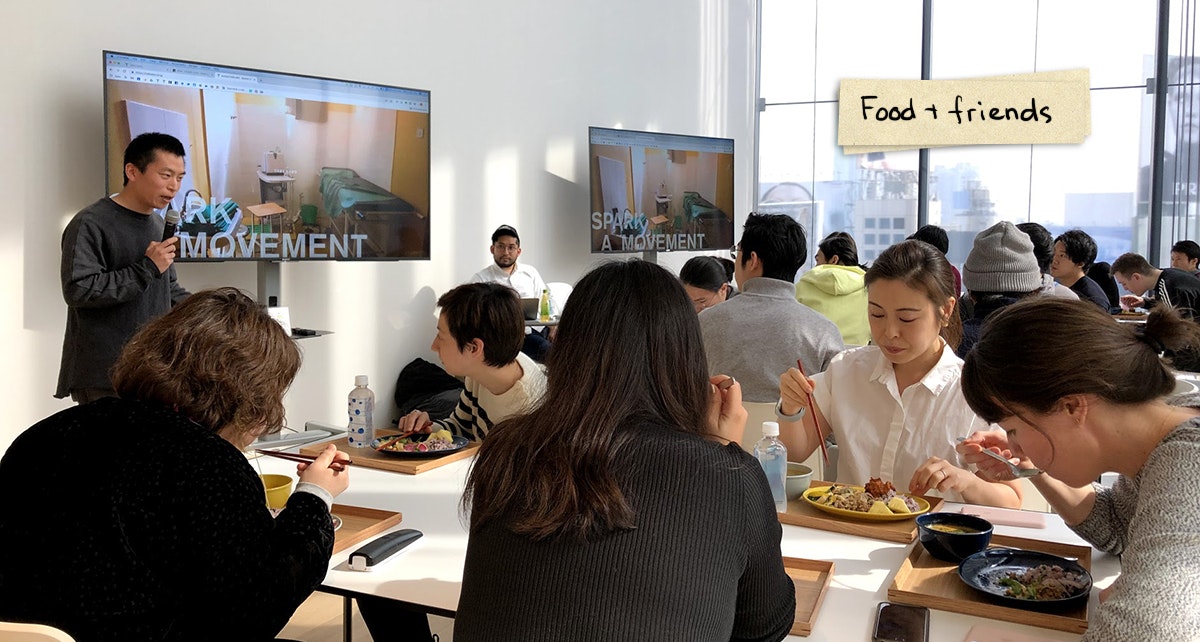
The entire studio gets together every Monday for lunch. The food is amazing—we have different caterers provide freshly cooked, seasonal dishes every week. Usually, we share silly photos from the previous week and studio/project updates. Everybody takes a turn as host, and shares personal inspiration. This week it's Ryo, introducing one of our new D4V (Design for Ventures) portfolio companies, Tabi Labo, to the studio. (More on that later!)
1:00pm: Crash course in graphic design
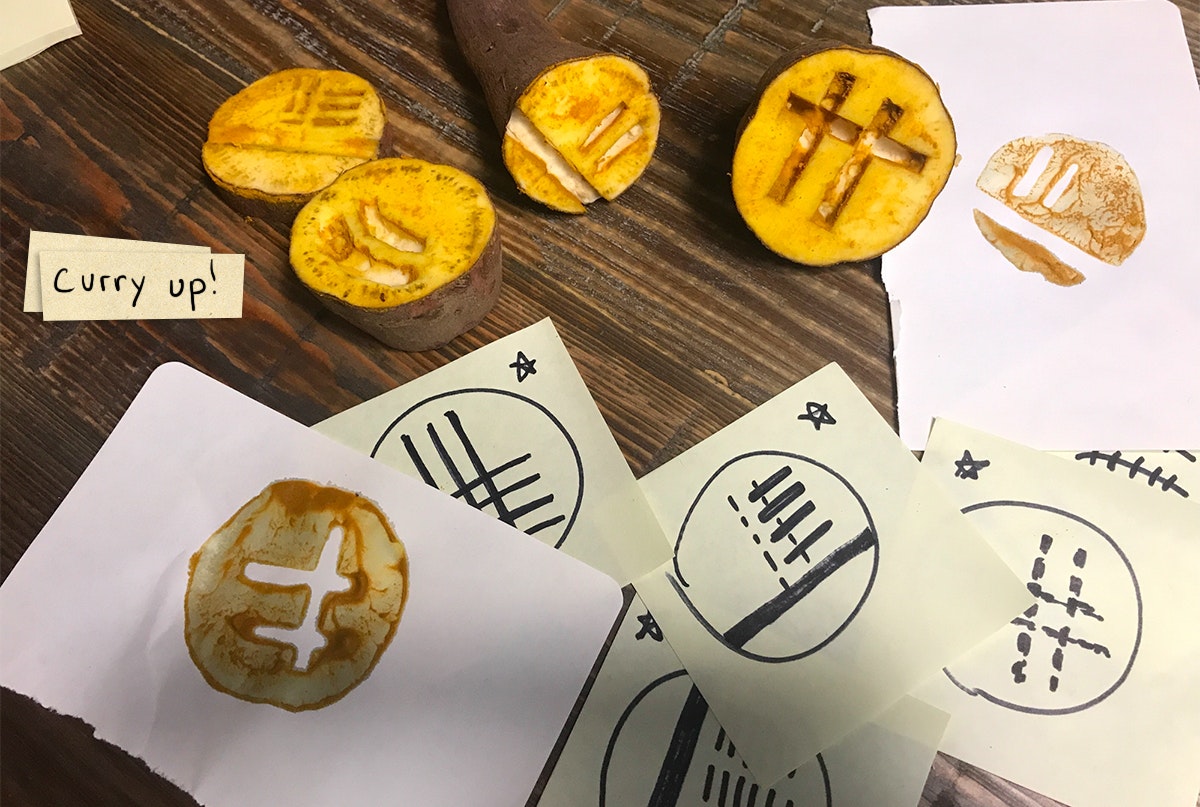
Outside of work, I run a pop-up curry shop with some friends. We make curry with a Japanese twist, using seasonal ingredients or flavoring that you might not usually find in curry. I’m lucky to be surrounded by talented graphic designers who helped me transform my very analogue potato stamp logo into a digital masterpiece.
2:00pm: Video shoot
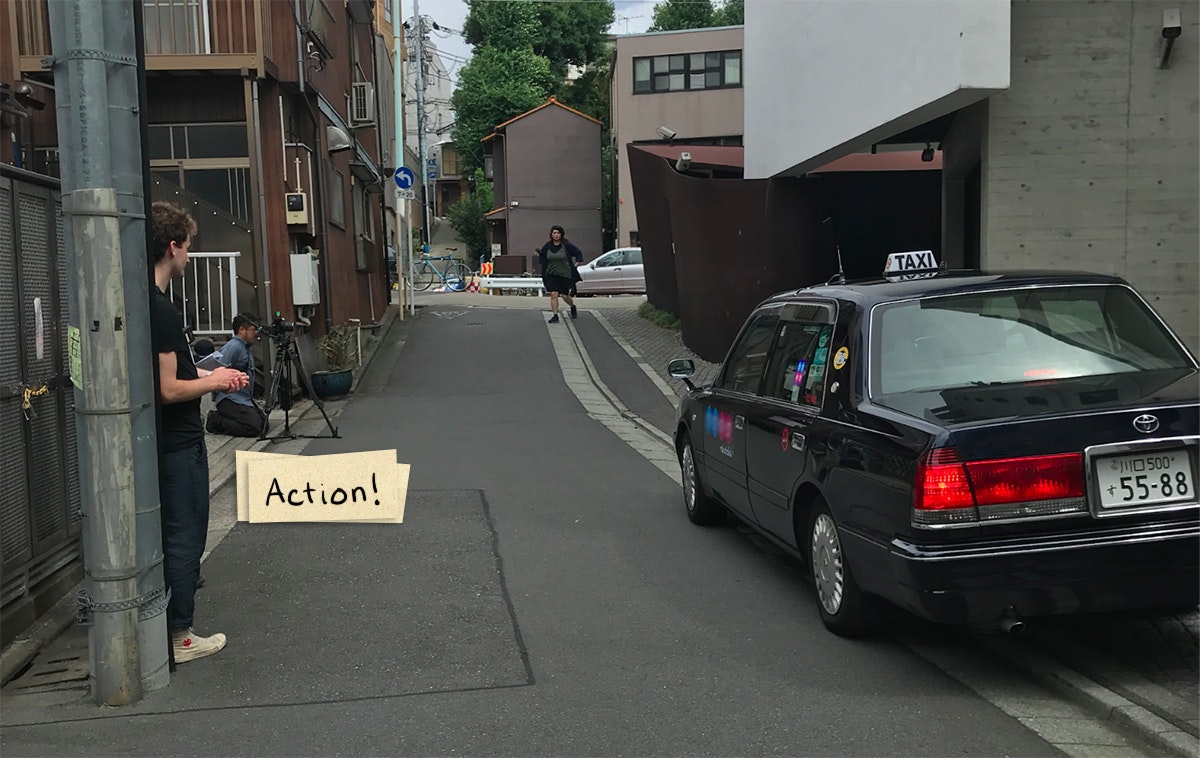
We’re making a short user journey video to showcase what our taxi service might look and feel like. As a business designer, making things tangible is important, because it makes the service feel real, and empowers clients to take risks and launch new businesses. Our client got really into it, and even starred in the video as the taxi driver!
5:00: Design sprint
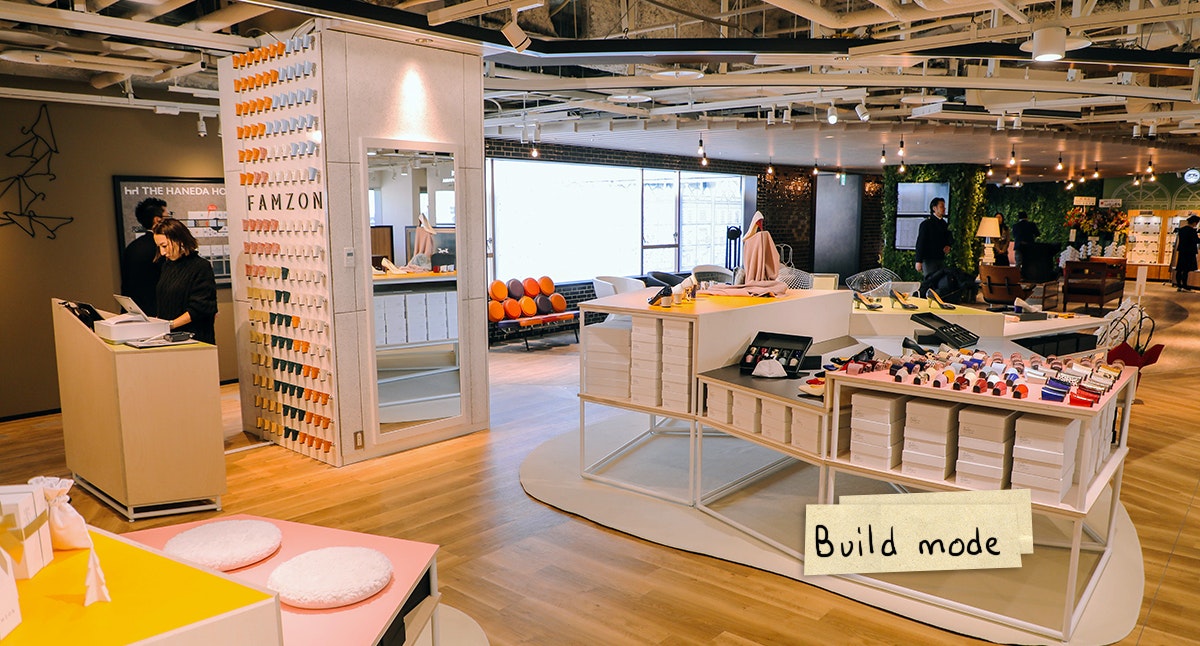
IDEO Tokyo is co-located with D4V (Design for Ventures), our in-house venture capital fund. I really enjoy working with the startups, which have different needs from our typical clients, and move really fast. Here, we’re helping Famzon (a company that makes shoes with interchangeable heels) create its first pop-up store in the Haneda Airport.
6:30pm: Heading home
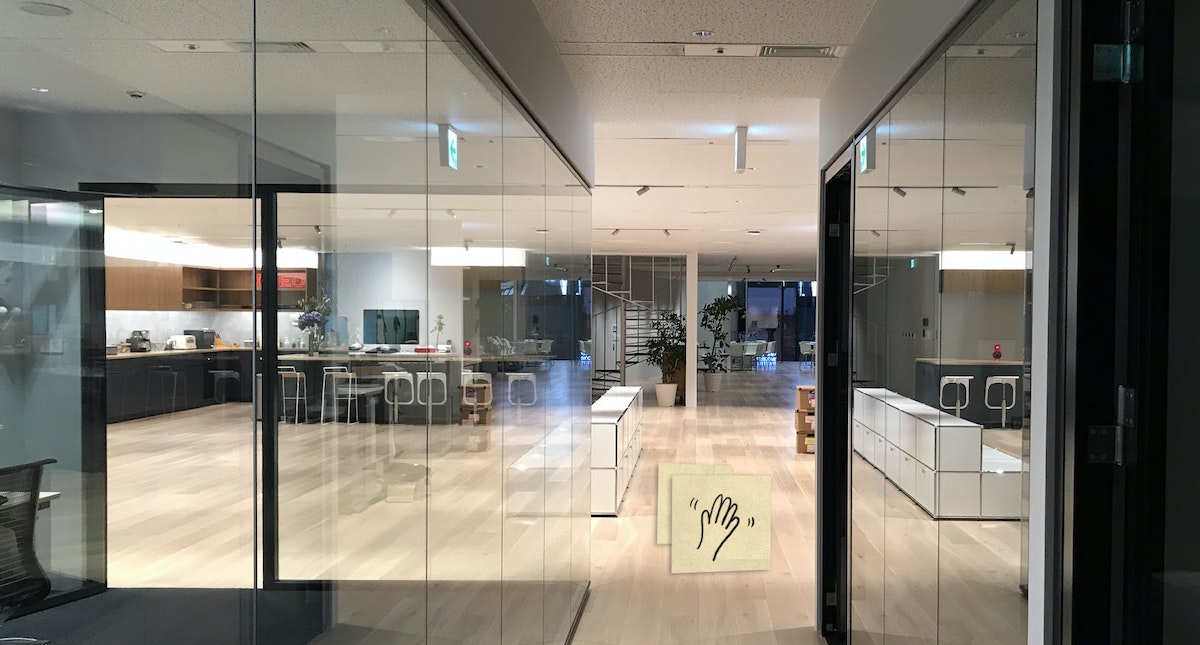
It’s been a long day. Can’t wait to go home, eat dinner, and recharge for tomorrow.
When people ask me what I do for a living, I say, “I find innovative ways for companies to transform and grow.” I think a lot about the intangible parts of creating a new service. How do we make money? Who do we partner with? What resources do we need to begin?
Turns Out Emotions Do Belong in the Workplace—Here’s Why
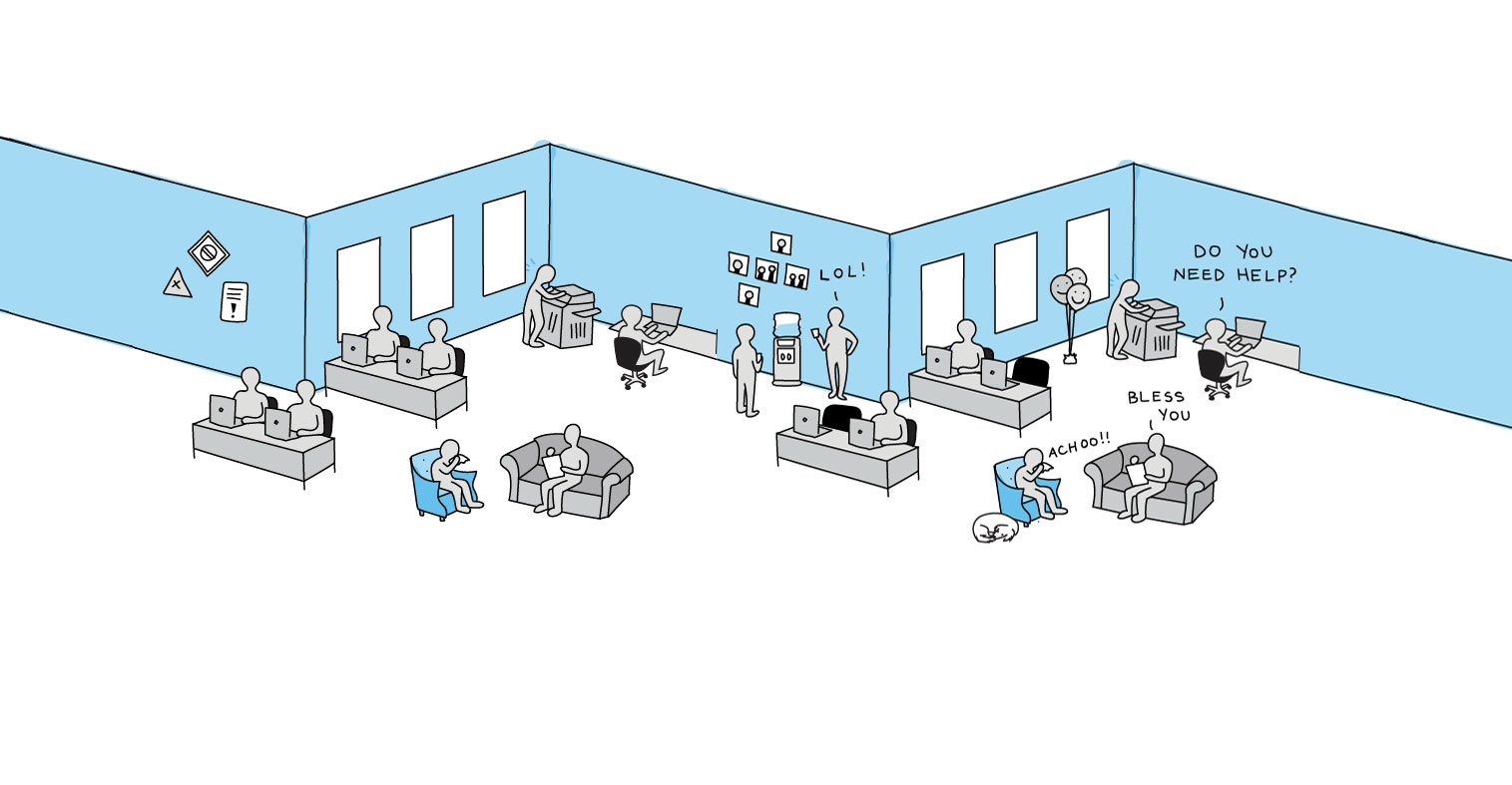
How and why feelings make a more functional, productive workplace
IDEO organizational designer Mollie West Duffy doesn’t buy it. “By ignoring our feelings at work, we overlook important data and risk preventable mistakes,” she says. “We send emails that cause unnecessary anxiety, we fail to make work meaningful, and we are more likely to burn out.”
Last month, West and her coauthor Liz Fosslien released No Hard Feelings: Emotions at Work and How They Help Us Succeed, which argues for harnessing emotions to push your career forward. “Most of us have never learned how to do this in our professional lives, let alone been allowed to admit how much feelings at work matter,” she says. IDEO’s Anna Moore Silverstein sat down with Mollie to learn more.
What inspired you to write this book?
The inspiration for this book came from the fact that when Liz and I started our first jobs, we thought professionals did not fail, did not fuss, and certainly did not feel. But we soon realized this view was not only unrealistic, it stood in the way of our sense of fulfillment—and of our success. Our goal as we began researching No Hard Feelings was to better understand our emotions—when are they useful and when are they just noise? Can we mold them to change how we experience work?
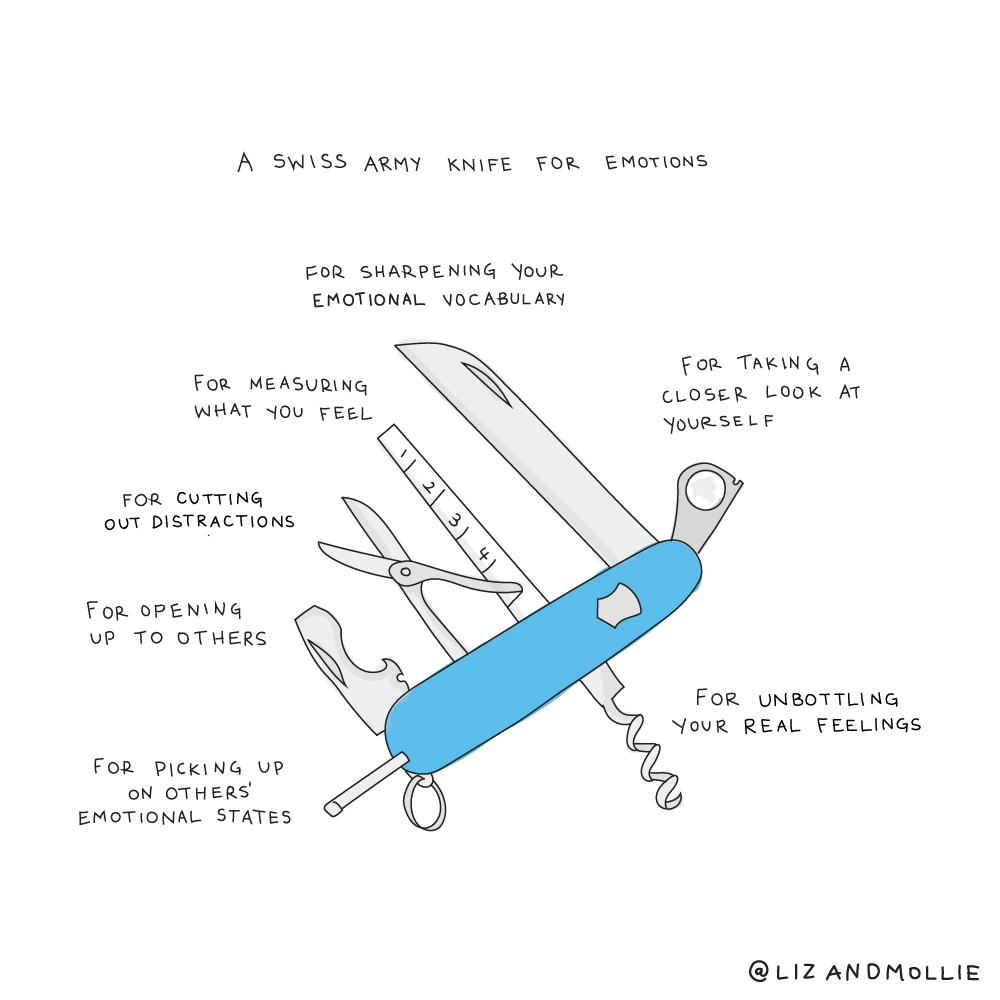
Can you explain the concept of an emotional work culture?
Emotional culture is how and to what extent employees of a company express feelings at work. Every office has one, though few companies talk about emotional norms. Emotional culture affects how much we enjoy our jobs, how stressed we might feel, and our ability to do work well and on time.
To instantly get a sense for a particular office’s emotional culture, Wharton professor Adam Grant suggests you say to an employee,“Tell me a story about something that would only happen here.” For example, at IDEO’s New York studio, Thursday lunches are dedicated to Make(believe) time. Creative activities like aromatic fingerpainting, writing group haiku poems, and blind contour drawing help employees get goofy. You can also look for more subtle cues that indicate what kind of emotions are acceptable in a work space. Do your coworkers seem more comfortable expressing frustration or joy? Are there tissues in meeting rooms (which might indicate it’s okay to cry)? Is it cool to respond to emails with a funny cat GIF?
Why does emotional culture matter so much?
When we feel supported and motivated by our colleagues, we are happier, more productive, and stick around longer. We’re also healthier and better able to cope with job stress. And when our bosses respond to our mistakes with patience instead of fury, we trust them more.
As an org designer, you help people design and scale change in their organizations, and change can be challenging. How do you account for emotions in client work?
Something we say a lot at IDEO is “Change is beautiful.” But change is also uncomfortable, and can be an emotional roller coaster
To help with this emotional journey, we try to set time for weekly check-ins. On my last project, we had a retrospective every Friday that included the client team. We asked everyone to go around and share one thing that went well, one thing they’d like to change, and their overall feelings about the week. This helped us all share our feelings in a dedicated time, so it felt less awkward.
I also have had to work on my own emotions with clients. I tend to be an under-emoter, which means I process my feelings inside. (You can take our emotional expression tendency assessment to see if you are an over-emoter or an under-emoter). So I’m working on trying to warm more quickly. I try to verbalize how excited I’m feeling about a project and a team, to help get our energy up. I also try to verbalize when I’m feeling overwhelmed and I need more help. It’s an ongoing process!
Are there other exercises you would recommend to help a company build a better emotional culture?
Awareness is a really powerful communication tool. Many of the CEOs interviewed by New York Times columnist Adam Bryant create “user manuals” or “how to work with me” guides to make collaboration easier. It’s one of the best ways to pre-empt potential misunderstandings—or hurt feelings. To achieve the same with your team, Adam recommends blocking off an hour to answer the questions below.
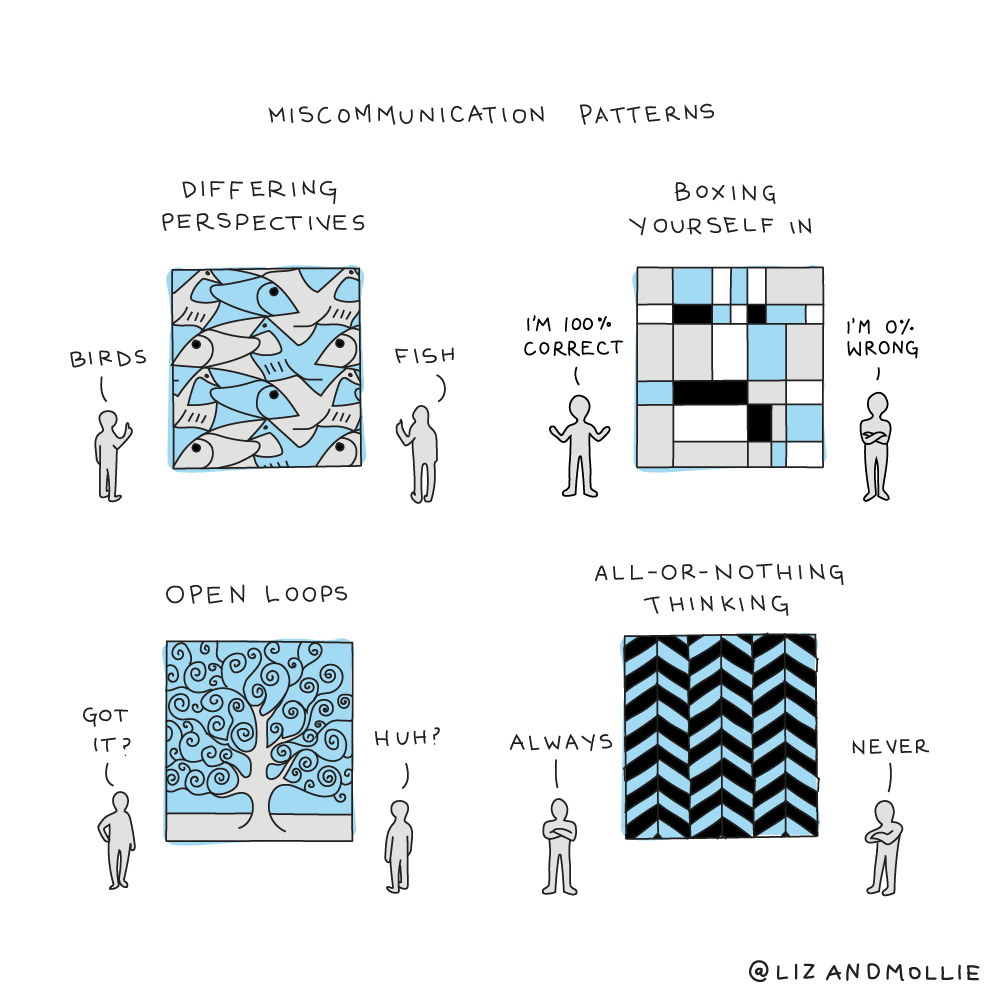
What everyone should know about you:
- What are some honest, unfiltered things about you?
- What drives you nuts?
- What are your quirks?
- What qualities do you particularly value in people who work with you?
- What are some things that people might misunderstand about you that you should clarify?
How to work with you:
- What’s the best way to communicate with you?
- What hours do we want to work together? Where and how do we want to work (same room, what kinds of meetings, what kinds of file sharing, etc)?
- What are our goals for this team? What are our concerns about this team?
- How will we make decisions? What types of decisions need consensus? How will we deal with conflict?
- How do we want to give and receive feedback (one-on-one, in a group, informally, or during a specified time each week)?
For me, answering these questions was about revealing that I warm up to people slowly. Once people get to know me, I think they find that I’m warm, generous, and even silly. But I can come across as more reserved and serious at first. For Liz, it was about showing people that she loves to be left alone when she works. For people who enjoy frequently emailing or messaging one another, her behavior could come across as antisocial, but she’s a person who needs to put her head down to work—cognitive switching is a productivity sinkhole.
Exercises like these make it easy for people to be honest up front, and set an emotional tone for your team or office. By sharing early, you can make it easier to meet people where they are, and set the stage for sharing of feelings and preferences throughout the process.
Emotions affect so many parts of work, from collaboration to decision-making, motivation, and communication between employees and managers. But in American work culture, “emotional” can be a dirty word. There’s a misconception that expressing feelings is unprofessional or out of place in the office.

Lindsey Turner
I’m passionate about building brands, products, and experiences that help organizations show up with meaning and momentum.
I help organizations cut through complexity by shaping how they show up, through brand strategy, identity, and storytelling.
Working at the intersection of brand and business, I bring an editorial eye and a bias toward making—turning ideas into tangible experiences that people can understand, trust, and believe in.
My work spans government, healthcare, financial services, media, and consumer goods, from launching Gen Z-focused ventures to building innovation labs and reimagining legacy brands. I relish moments of ambiguity and enjoy translating across teams, perspectives, and priorities to move ideas forward.
I started my career in editorial and digital design, shaping cross-platform experiences and identity systems in publishing and agency environments. That foundation still shapes how I work today: I’m detail-oriented, collaborative, and overreliant on the Oxford comma. I hold a BFA in Visual Communication from the School of the Art Institute of Chicago.

Rachel Young
My work helps organizations see who their products aren't working for—and build the will and the tools to do something about it
For 25 years, I've asked the same question: Who does this design exclude—and what are we going to do about it?
My work spans human-centered strategy, inclusive design, and qualitative research, with clients ranging from Microsoft, Google, and Verizon to the National Science Foundation, and San Francisco Unified School District.
Before IDEO, I taught elementary school in East Palo Alto and spent a decade doing design work with social service organizations—where I learned firsthand what it costs people when systems are built without them in mind.
I am currently writing User Error, a nonfiction book about digital access and the design decisions behind it. I live in Oakland, California.

Brian Pelsoh
I lead with craft, ensuring our work is creatively excellent: rooted in deep human insight and imagination, while also grounded in the realities of business and technology.
My expertise spans brand, communication, and product design across tech, education, the arts, and social impact.
I believe great work demands both high-level vision and obsessive attention to detail, and only happens through collaboration.
I bring an inclusive, hands-on approach and a deep understanding of business, which enables me to consistently deliver excellence while always asking why.
Before joining IDEO, I worked at the brand firms Pentagram and VSA Partners. I began my career as a designer, leading teams at the School of the Art Institute of Chicago and the Milwaukee Art Museum. I hold an MFA in graphic design from Maryland Institute College of Art and a BFA in communication design from the Milwaukee Institute of Art & Design, and have taught at some of the best design schools in the US.

Tony Wong
I am responsible for IDEO’s long-term success in China and working with clients to use design as a tool to enable growth.
I am responsible for IDEO’s long-term success in China and working with clients to use design as a tool to enable growth. Specifically, I have helped Chinese companies design holistic brand solutions through the development of their products, communication, services, and innovation teams, and I have helped multinationals expand their presence and influence in China.
I advise global leaders on developing China-led innovation and capabilities.
In over 15 years in IDEO Shanghai, I have worked on projects that use design to elevate the quality of the experience of healthcare products and services, streamline processes that increase productivity, create spaces and programs that promote and enable inclusive communities, and build next generation mobility solutions that are planet-positive.
Before joining IDEO, I worked at Philips Electronics and the Electrolux Group in Italy, the Netherlands, and Singapore on a number of breakthrough commercial products. I am a member of the Young President Organization in Shanghai.

Building a personal AI for the messiness of life: Sida Li
Most AI products today are built for work—a space with clear problems and established systems. One founder noticed a gap: personal life is messier, harder to systematize, and mostly left behind by the AI boom. So she built Cue, a personal AI that lives inside iMessage and group chats, to go where the other tools haven't.
In this episode, Becca Carroll, IDEO's Chief Strategy Officer, talks with Sida Li, co-founder and CEO of Shared Context Lab, about staying anchored to a human need while the technology around her keeps changing shape, why she treats her business model with the same rigor she'd bring to a product, and what it feels like to build a company at this particular, disorienting moment in AI.
The conversation also gets into how Sida makes design decisions: the language Cue uses to describe itself, the tradeoffs behind building inside iMessage instead of a new app, and a real story about a business idea that didn’t pan out.
This is the second in a two-part series profiling founders from IDEO's Startups-in-Residence program. The first conversation is with Johannes Seemann, founder of Sooner, on designing GenAI for the emotional side of money.

Designing GenAI for the emotional side of money: Johannes Seemann
Most personal financial tools are built to run the numbers and optimize towards a budget. While that works for some, most people experience money as a lived relationship that does not neatly fit into a spreadsheet. Johannes Seemann and Becca Carroll discuss why money is emotional before it is mathematical, and what a human-centered approach to building a generative AI financial product looks like in practice.

The curious leader's edge in uncertainty: Scott Shigeoka
Mina Seetharaman talks with Scott Shigeoka, author of Seek and Head of Curiosity Cultivation at the Eames Institute, about what distinguishes genuinely curious leadership from performative curiosity, how power dynamics shape curiosity, and why practicing curiosity can restore energy rather than drain it.

How constraints make us more creative: David Epstein
Mina Seetharaman talks with David Epstein, author of Inside the Box and Range, about why total freedom often produces average work, how leaders can design useful limits on purpose, and what organizations such as General Magic and Pixar reveal about the relationship between boundaries and creativity.
Looks like you might be in search of something very specific?
Or reset the filters above and try another angle.
Here’s some random inspiration

Podcasts about creative leadership

Articles about the power of prototyping
