
.svg)




Arming a 19th-century company with a 21st-century digital venture
Swell enabled values-driven consumers to make informed investment decisions.
For the socially-conscious, investing can be a tricky proposition. The same people who wish to vote with their wallets may find that their options for investment funds and 401K plans are rife with companies that violate causes they believe in. So far, there have been few options in the marketplace that give consumers the opportunity to put their money in financial products that not only cut out environmental and social offenders, but actually contribute to the well-being of the environment and society.
Dave Fanger, a financial professional, was determined to design a solution. He approached IDEO to help create a startup venture for socially-conscious investors. Pacific Life, a Fortune 500 financial services company and Fanger’s employer at the time, offered the resources to develop and launch the idea. The online impact investment platform gave consumers the opportunity to invest in high-growth industries that are addressing global, environmental, and social challenges. Swell rigorously screened companies for both impact and performance, so consumers could be confident that their investments were in line with their values.
A holistic approach
Embedded as core team members, IDEO designers worked alongside Swell’s founder to shape the company. In just one year, they went from an initial concept and prototype to an SEC-registered investment adviser with a fully developed business model, a digital platform with initial investors, and well-defined branding that set the look and feel of the values-driven company. The IDEO team helped to hire the initial team of employees, working to ensure that the fintech startup would have the creative talent it needed to operate post-launch, as well as a defined culture that would help it grow.
A new investment platform
From the outset, it was important for the team to build an innovative, digitally-fluent, and customer-centered platform to make it easy for investors to back causes they care about. Working in close collaboration with software development partner Carbon Five, Swell and IDEO committed to act nimbly, take risks, move fast, and ditch decks for prototypes. Understanding the motivations of the investor—their values and what drives their investment decisions—was key, so the team leveraged IDEO’s network to form a consumer council, which helped to quickly iterate and refine prototypes throughout the duration of the product development process. Having that core group involved every step of the way made it easy for the team to keep consumers at the center of the design and validate key decisions quickly.
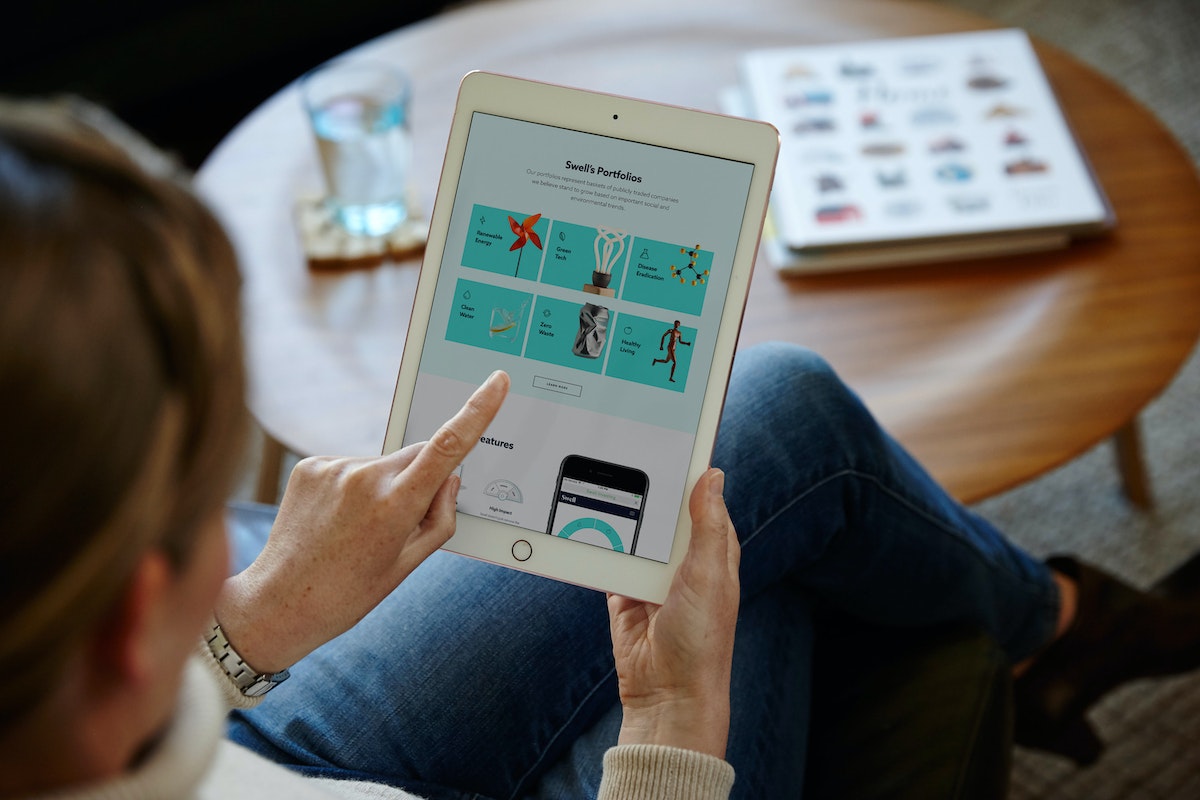
Swell offered consumers portfolios of companies that work to solve some of today's biggest challenges. The six impact portfolios offered were: green tech, renewable energy, zero waste, clean water, healthy living, and disease eradication.
As of June 2019, Swell had attracted over 15,000 investors—more than half under the age of 34—and $35 million AUM. Nearly 40 percent of investors were making investments on a recurring basis.

For kids, a new tactile way to learn coding
Helping Google design a set of blocks that can be arranged to code almost anything.
Learning to code isn’t just about knowing symbols and syntax—it can help unlock kids’ imagination by inspiring them to build new things and interact with everyday objects through discovery and play.
With that in mind, Google Creative Lab came to IDEO to help with user experience and product design on their new coding tool for children. The result of the collaboration, Project Bloks, is a simple and interactive experience that teaches kids how to code using physical blocks. This establishes a new paradigm for learning computer science: it takes a language typically only understood through screens and keyboards, and makes it tangible.
Project Bloks was also designed as an open hardware platform, enabling developers and educators to build tangible programming applications that are innovative, educational and fun.
Kid-centered design
From the very beginning, how kids physically play and learn were at the center of the project. Designers quickly iterated using sketches, foam core, paper, Play-Doh, and 3D-printed models to see how slight changes informed children’s experiences. Understanding what deepened kids’ engagement, increased their curiosity and changed their behaviors drove the language, taxonomy, architecture, and physical form of Bloks.
Because play and physical building is an important way in which many kids develop skills, designers began with a set of blocks and sought to help them discover coding through tangible objects. Each block was given a specific function and shape, guiding kids to arrange, combine, and rearrange the blocks to create commands and control things like robots or speakers in the real world. Children could also create block patterns together by physically building on each other’s ideas.
An inside look at the design process. Video by Google.
Designing for early learners also forced the team to rethink how a new language could be taught. An early version of the blocks was based on how programmers typically code, from top to bottom. However, the team quickly realized that the orientation had to be driven by the child’s natural instincts. Given young children are just learning to read from left to right, designers observed that the switch in directions was too confusing and changed the arrangement of Bloks commands to go left-right in addition to top-bottom.
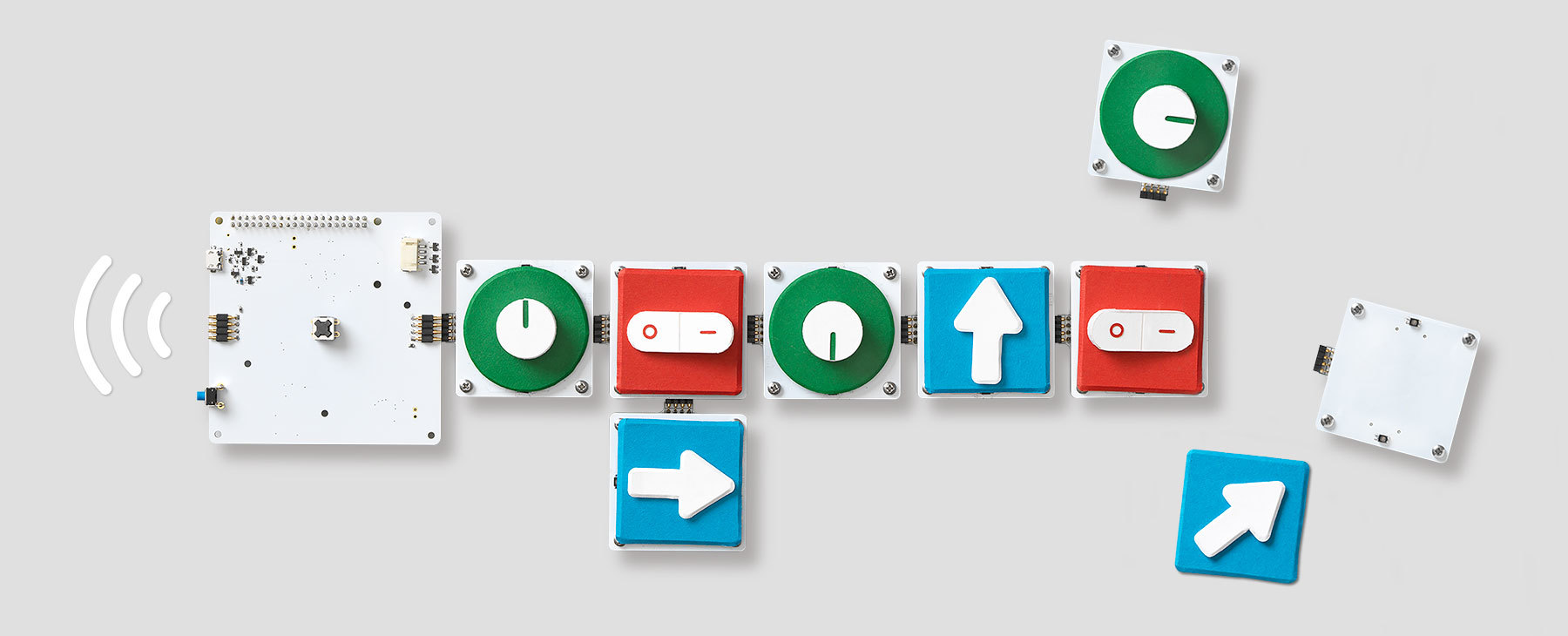
The final outcome of Project Bloks was an interactive coding kit comprised of three key parts - pucks, baseboards and a brainboard. The puck is a critical component that controls a command, whether it’s an on/off switch or the ability to move in a particular direction. It’s the piece that enables children to move from words to the world of graphics and play. The puck is easy to produce and can take an unlimited range of forms and functions, enabling the Bloks system to scale.
The baseboard reads the puck’s instruction and is activated when a puck is placed on top. The brainboard provides the power and connectivity. When hooked up to a baseboard or a chain of baseboards, the brainboard sends the instructions—turn left, jump, get louder—to a connected object, like a rocket or a speaker.
The boards can be rearranged, sequenced, and packaged however kids like, opening up a vast realm of possibilities. Children can code anything from a toy robot drawing a shape on a piece of paper, to a sensor turning on a fan when the temperature gets too high.

Enabling innovation for education
Beyond a tangible coding kit, what makes Bloks unique is that it’s an open platform. Educators, developers, and designers can build on it to accelerate new ways of teaching and exploring tangible programming. The platform can fit into various curriculums around the world. The pucks can take on different shapes and graphics. The material used can be fabricated by 3D printing.
The Bloks platform is a new vernacular that allows kids to interact with the language of code in a way that’s less prescriptive and more open-form, like a sandbox. And the more kids play with Bloks, the more opportunities they discover for what they can create with a little bit of code.

Helping students navigate college and beyond
Creating a digital experience to support first-generation college students.
For students who are the first in their families to pursue higher education, navigating college can often feel like navigating a foreign country. Challenges like not having enough money or poor access to support services can make graduating an insurmountable hurdle. In fact, only 55% of these students in the United States end up completing their degrees.
To help change this statistic, IDEO partnered with Beyond 12, an organization that provides personalized, virtual coaching to first-generation college students to help them learn how to register for classes, apply for financial aid, and much more. The challenge was to scale Beyond 12’s successful coaching model using technology in order to benefit as many students as possible.
In 2014, IDEO designed the MyCoach app, with the goal of helping students take ownership of their education and feel in control of their future. After the early version of the app was named as a finalist in the prestigious Robin Hood Foundation College Success Prize, Beyond 12 piloted the product with 3,500 college students across the US. Following the pilot, Beyond 12 and IDEO went back to work, using the resulting insights and data to design the next evolution of MyCoach.
First and foremost, IDEO sought to develop a more flexible model for Beyond 12 to enable scalability of the offering. As some students need more support than others, a blended business model was envisioned to recognize the spectrum of students’ needs. Engaging in-app content forms a supportive layer that helps students get organized, stay on track, and learn the skills they need to stay in college, while students who need more hands-on assistance can connect directly with coaches. An invisible data layer works behind the scenes to assess student risk and dynamically tailor student support throughout the school year.
Once the app’s model was solidified, creating a user experience that compels students to use it became essential to its efficacy. Growing up with technology has reshaped how many students engage with the world, and tools like Snapchat have set a new dynamic for participation. Youth today are the masters of their own digital worlds, fluidly jumping between conversations, engaging with stimulating content and contributing their own perspectives. As a result, MyCoach needed to speak students’ language and to create content that was authentically youthful and effective in order to be effective. By drawing inspiration from popular social sites, digital experiences and games, the team designed a user experience that keeps pace with a digitally native state of mind.
IDEO Designer, Isabela Sá explains the approach that led to MyCoach’s design and content strategy, “We created an app that makes no distinction between content and utility. We borrowed the content-first approach of social apps like Snapchat and Instagram and used it to teach students the skills and strategies they need to graduate. With that, the digital experience became more human. The intricate system that we had designed to power the whole thing was hidden below the surface. For students, the app was just the means to learn how to help themselves and get in touch with a coach when they needed one.”
Development is underway for the next version of MyCoach, which will allow Beyond 12 to scale its offering to reach exponentially more students in need.
Redesigning how Coca-Cola works, plays, and profits
Designing for Coca-Cola’s 2020 vision strategy.
Coca-Cola is one of the world's most iconic brands. More than 5,000 people work at its global headquarters in Atlanta.
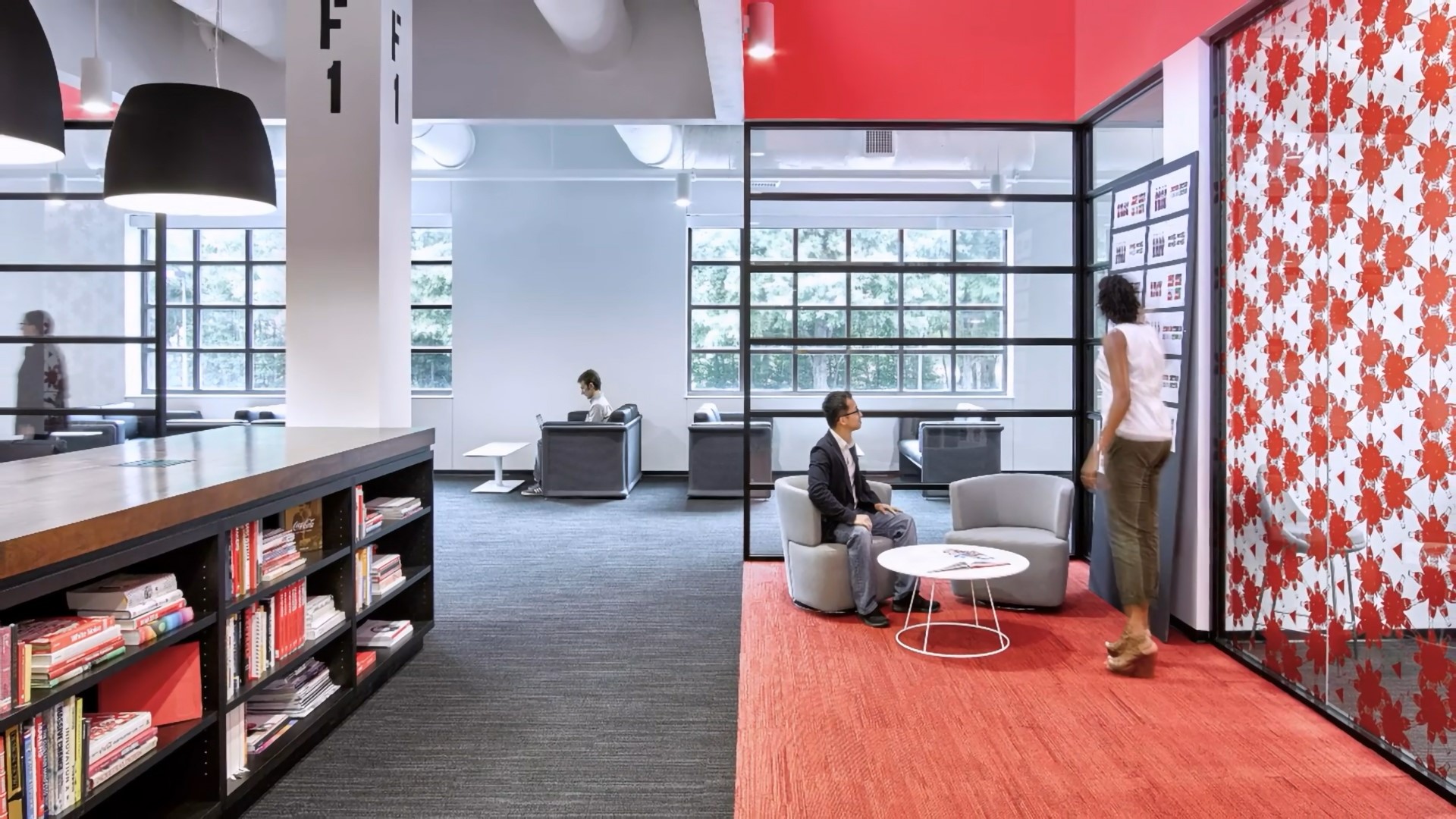
Back in 2010, Coca-Cola found itself at a major crossroads. As the company grew, it became clear that in order to stay competitive, any kind of campus renovation would have to take into account a vision of the future of how people work at Coca-Cola. Before the company hired architects, they came to IDEO to help design this important part of their 2020 vision strategy; ultimately the redesign would change the way the company works, plays, and profits.
Imagery courtesy of Coca-Cola, Gensler, and IDEO

Don’t Throw Away Your Innovation Budget
How to avoid the common missteps that kill good ideas
This lack of contextual thinking and foresight is why so many innovation investments fail—it’s not for lack of ingenuity, but because companies build innovation teams, then neglect to design a complete ecosystem to take promising ideas forward.
Here are the three most common traps that cause even the smartest business leaders to throw their innovation money away:
1. The Outcome Trap — If you don’t define a clear vision for how innovation is supposed to contribute to your company’s growth, don’t be surprised when innovation teams fail to make a contribution.
2. The Incentive Trap — No one wants to play Russian roulette with their career. If you don’t incentivize business units to make the right mix of bets, they’ll have no reason to invest in anything other than short term sure things.
3. The Metrics Trap — Success isn’t subjective. If you don’t create innovation metrics that the rest of the organization can understand, the rest of the business may view innovation as frivolous.
The Outcome Trap
About 10 years ago, a parcel courier (one of those companies that brings cardboard boxes to your door) built an innovation unit to help power their future. Senior executives had held inspiring conversations and decided that “innovation” would build the future of their company, so they built a new team and recruited a former startup guy to run it. Everyone had high hopes for the team’s success.
What happened next? The startup guy built them a startup. The team found some cool technology and a strong customer need. They used that to build, launch, and sell a profitable new solution to a small but growing pool of customers.
Was it a success? Well, only to some stakeholders. When the team began to share their results, they faced surprisingly hostile reception: One senior executive wanted to know when the innovation division was going to yield strategic insights for the core company. Another asked when it would start developing new technologies for the core business. A third wondered when it would train her teams in innovation. Despite some wins in the market, few stakeholders were happy with the results. Within 18 months of their launch, they were disbanded.
This company fell into a surprisingly common trap: Everyone thought that “innovation” was important, but nobody ever talked about why they wanted it. It was like the execs had asked a waiter for ice cream and then got upset when their server showed up with Rum Raisin.
So, how can you avoid the Outcome Trap?
Work backwards. First, define why innovation is important and why now. Once you define the outcomes needed from innovation, you can craft a portfolio of projects designed to meet those goals. That portfolio then suggests the talent, skills, and even the number of people or teams you’ll need to drive innovation. When we break them down, successful innovation portfolios consist of a mix of four activities.
In the graphic below, we’ve plotted businesses and teams based on our evaluation of their primary objective (even though many of these teams invest in more than one quadrant).
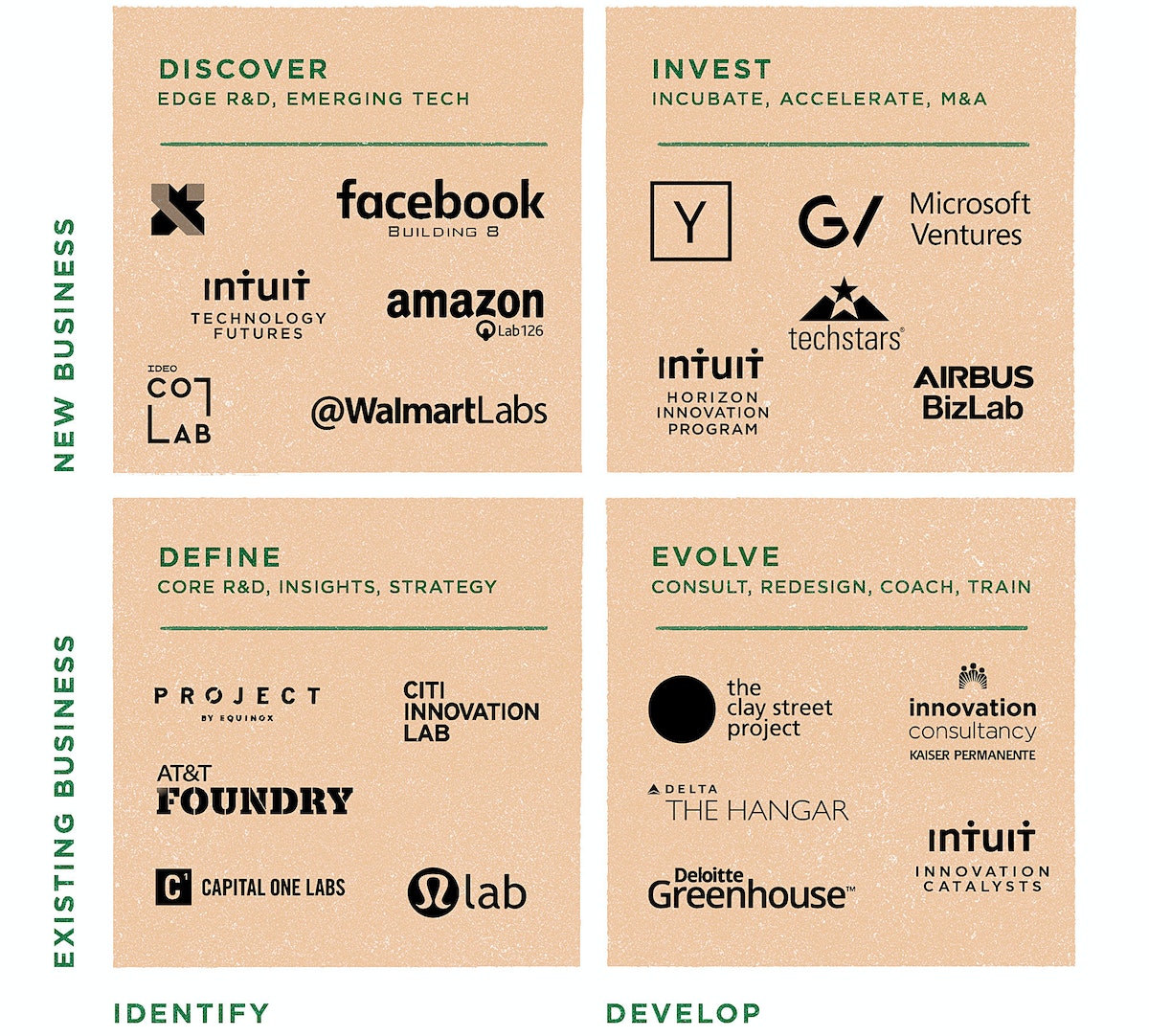
As shown in the above graphic, Discover teams focus on uncovering new insights or opportunities that could be developed into new businesses or offers. This long-term innovation work includes the efforts of R&D labs focused on emerging technology. Those in the Invest quadrant develop, launch, or acquire new businesses in the short term. This includes the work of M&A teams, accelerators, incubators, and corporate venture capital. Define teams initiate tangible strategic visions for how existing business units may need to evolve to succeed in the future, and reveal opportunities for how current offers can adapt to changing customer demands or new technologies. And lastly, Evolve teams differ in that they partner with existing business units to adapt to a changing environment—develop new offers, approaches, and skills to improve the business in the near- to mid-term. This includes the services offered by SWAT teams, internal agencies, and coaches.
By intentionally balancing the portfolio—say, by focusing sharply on incubating new digital ventures and adapting current offers—the innovation team can define their projects, align their stakeholders, and allocate their staff.
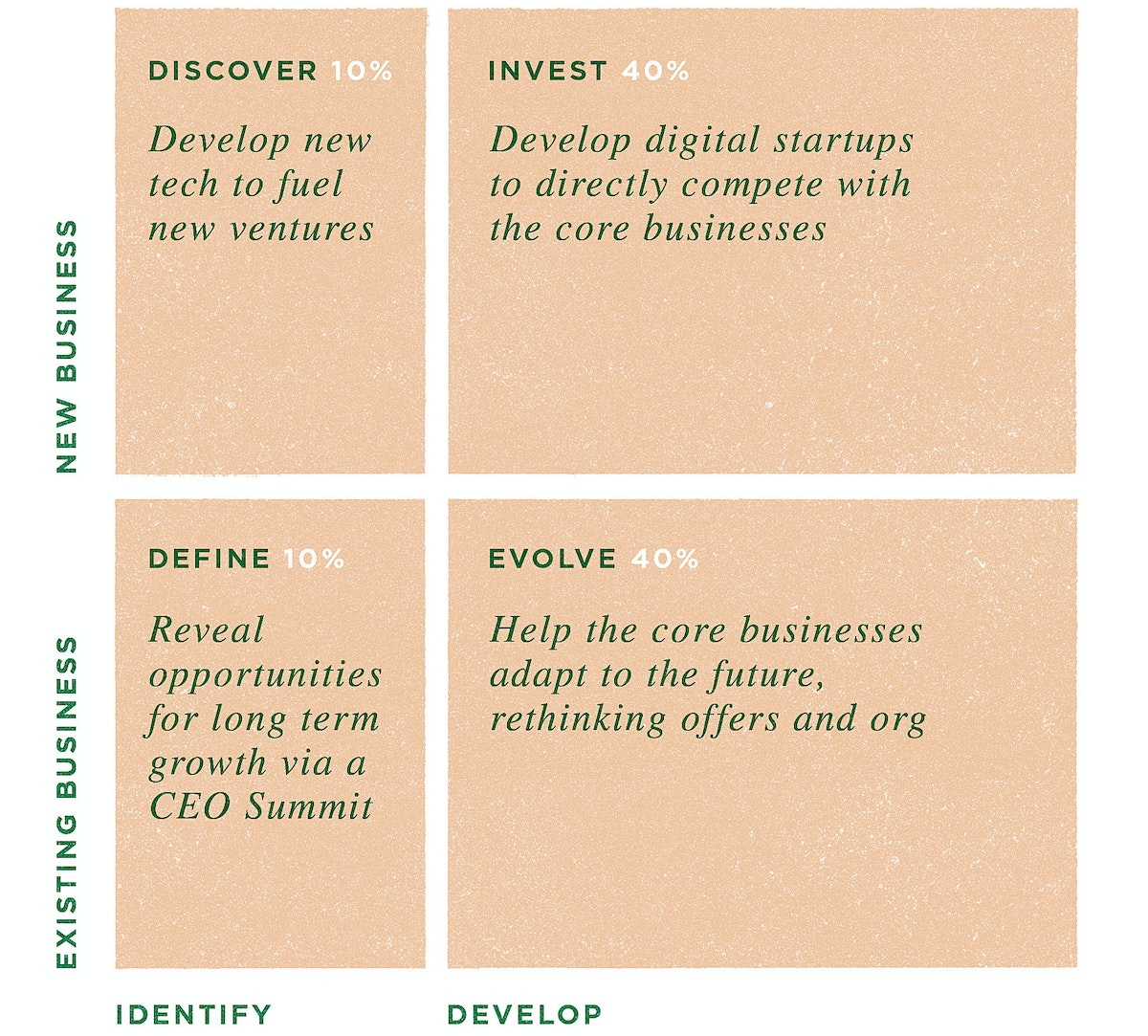
The above graphic highlights the shape of a lab portfolio at a successful retail conglomerate—80% of their efforts are focused on either evolving the current subsidiaries or helping those subsidiaries invest in new digital ventures. The remaining 20% of their effort goes into defining future strategy and discovering new tech to harness.
—
To avoid this trap, ask yourself: Why innovation, and why now? What does success look like? What’s the future vision for our company, and how should innovation contribute to that? Where are we facing the biggest market threats—in the short term or the long term? Will innovation provide services to core business units or will it build new subsidiaries? Your innovation portfolio and your teams will naturally evolve over time, but you can control that evolution by intentionally defining the purpose of the team and the outcomes that they need to deliver.
The Incentive Trap
Once you’ve defined the ideal innovation portfolio, you need to find the right sponsors willing to make the right bets on the right projects. The best strategy is doomed if no one has any incentive to make good bets. That’s the Incentive Trap.
Several years ago, a global home appliances company created a Lifestyle Research Lab to design new products that address consumers’ changing attitudes and behaviors. In isolation, the team conducted their own research and used it to develop new ideas that could transform their white goods businesses—creating radically new dishwashers, refrigerators, or washing machines. When they hit on a juicy idea, they would then try to sell it to a business unit for development.
Now, imagine yourself leading one of those businesses: One day, out of the blue, someone you’ve never met pitches you on a new product. Based on some research you’ve never seen and some shiny concept sketches, this team insists that you should change up your five-year product development roadmap. You didn’t ask for this idea, you didn’t pay for this work, and their analysis doesn’t match up with the numbers that you normally track. Your budget, your people, and your manufacturing are already committed. Even if you love their idea, you’d need to do a lot of heavy lifting to justify changing your plans. Few executives at the appliance company were willing to do that work.
Looking at the innovation portfolio and the purpose that’s been defined, what kind of bets should business units to make?
In a completely rational world, a decision between investing on a sure thing or a smart bet should be a toss up. However, to many executives, investing in riskier projects can feel like career Russian roulette. In your own company, how much of a balance do you have between sure things and smart bets?
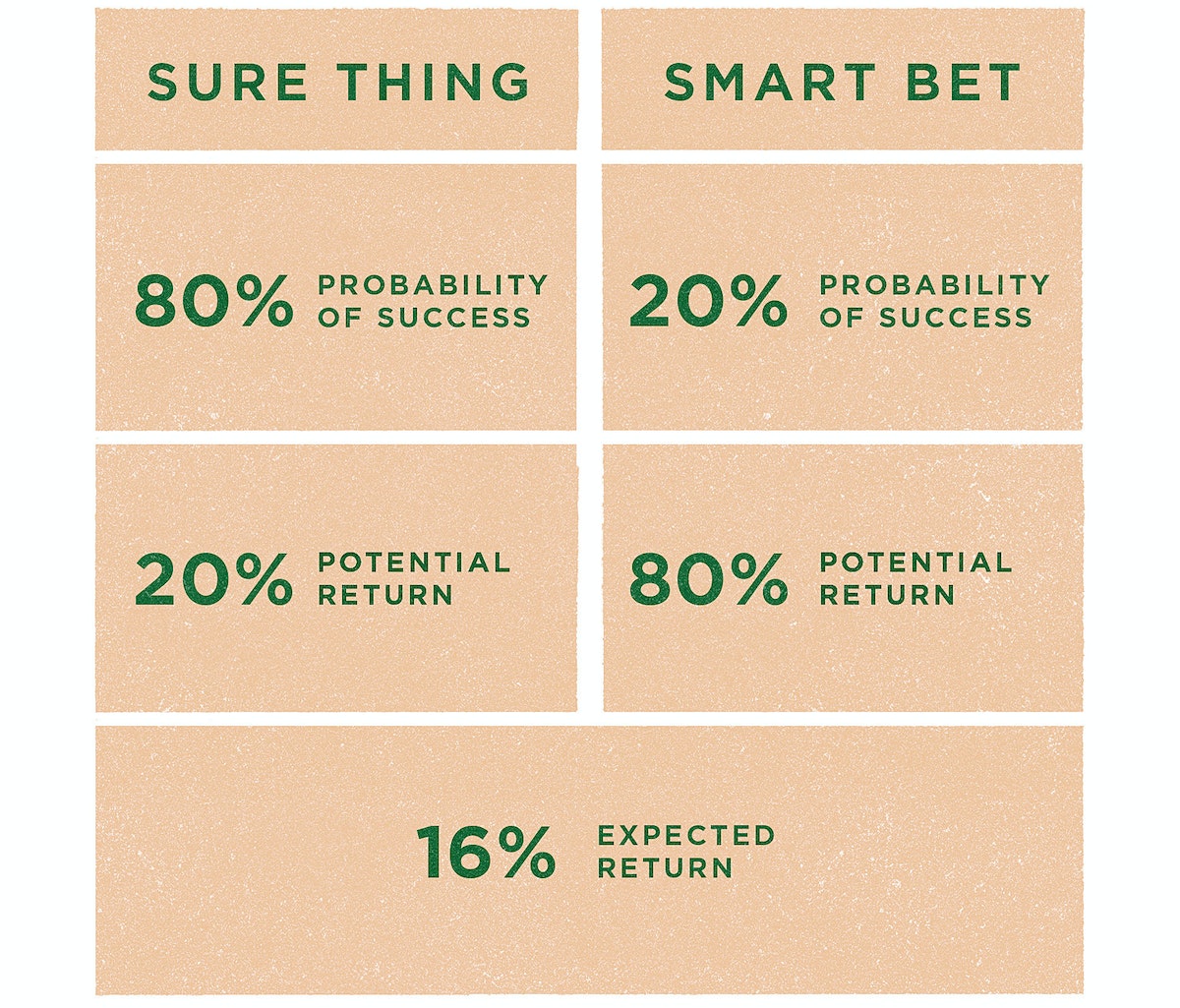
To create a more balanced mix of bets, many companies fund innovation from some central, corporate pool. This promotes riskier bets—it’s always easier to gamble someone else’s money. But there’s a catch: when the business units pay too little for innovation, they don’t value the work. Business leaders can see this kind of innovation as a sideshow. When the going gets tough, and those business leaders need to improve their metrics, they will kill any innovation projects that aren’t yet proven.
So, what happens when a business unit pays the tab? Although leaders are more invested in the outcomes (literally and figuratively), their demand for innovation is far lower. When betting their own money, most people prefer sure things—even when the expected returns are the same, they choose an option that’s easier to predict. So, how do you promote riskier bets? With corporate funds. We often see these corporate subsidies falling into three tiers. This model isn’t just true for how business units spend their money, it’s also true for how they assign their best people. They aren’t likely to put their best people on their riskiest projects.
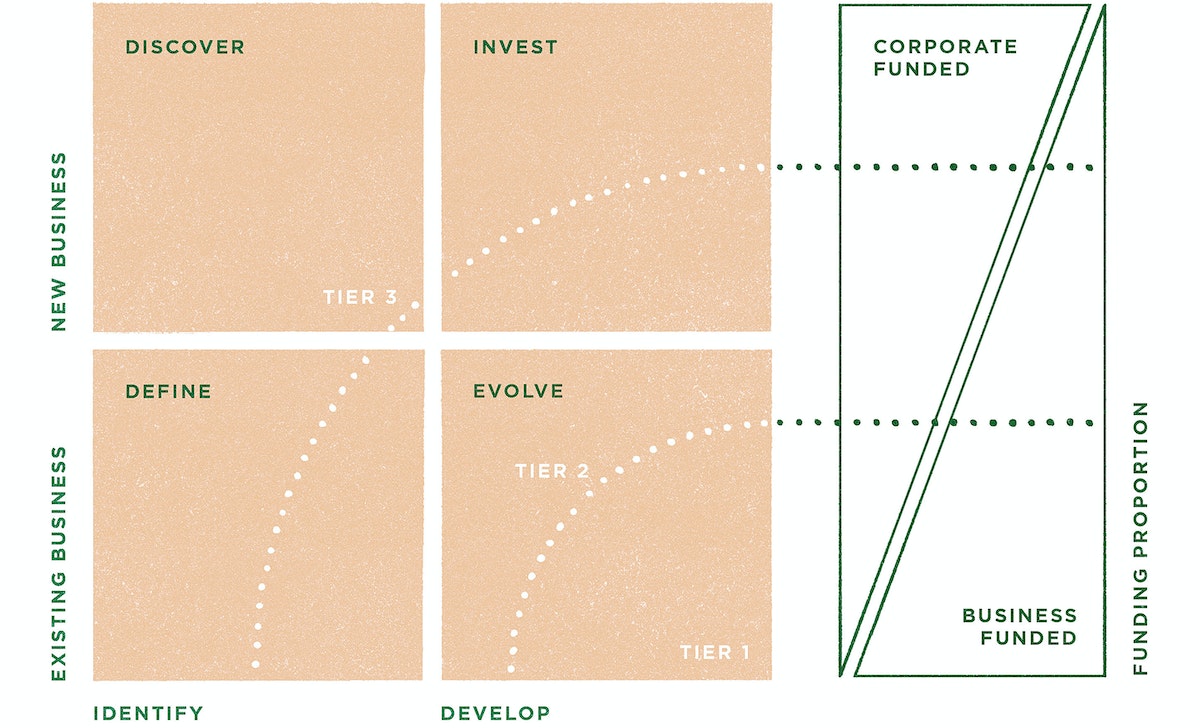
The above graphic illustrates that as you define your portfolio, you’ll also need to define a funding mix for the work that incentivizes the right bets. The incentives tend to fall into three tiers: Tier 1 investments feel more like sure things; tier 2 investments feel a little riskier, but still appealing; tier 3 investments feel too risky to make without senior executive support.
—
To avoid this trap, ask yourself: Looking at your ideal portfolio, what is a healthy mix between sure things and smart bets? How adventurous are your business units, and how much do you need to incentivize their investments? The more corporate pays, the more risk business units will take on.
The Metrics Trap
Once you make your bets, how do you know if they’re paying off? If innovation isn’t seen to create measurable value, it’s worthless. That’s the Metrics Trap.
One sneaky reason that so many companies throw away good money on bad innovation efforts is that innovation may take years to show impact on metrics that the business units typically track, like revenue, profit, lifetime value, or customer satisfaction. But that doesn’t mean that innovation teams can’t show value in the short term. By setting simple baselines, teams can measure progress over time, showing that their work improves outcomes, drives efficiency, or changes behavior. These progress measures demonstrate indisputable value, and can often satisfy skeptical stakeholders in the short term—until innovation’s portfolio of work hits the market and begins to generate real growth.
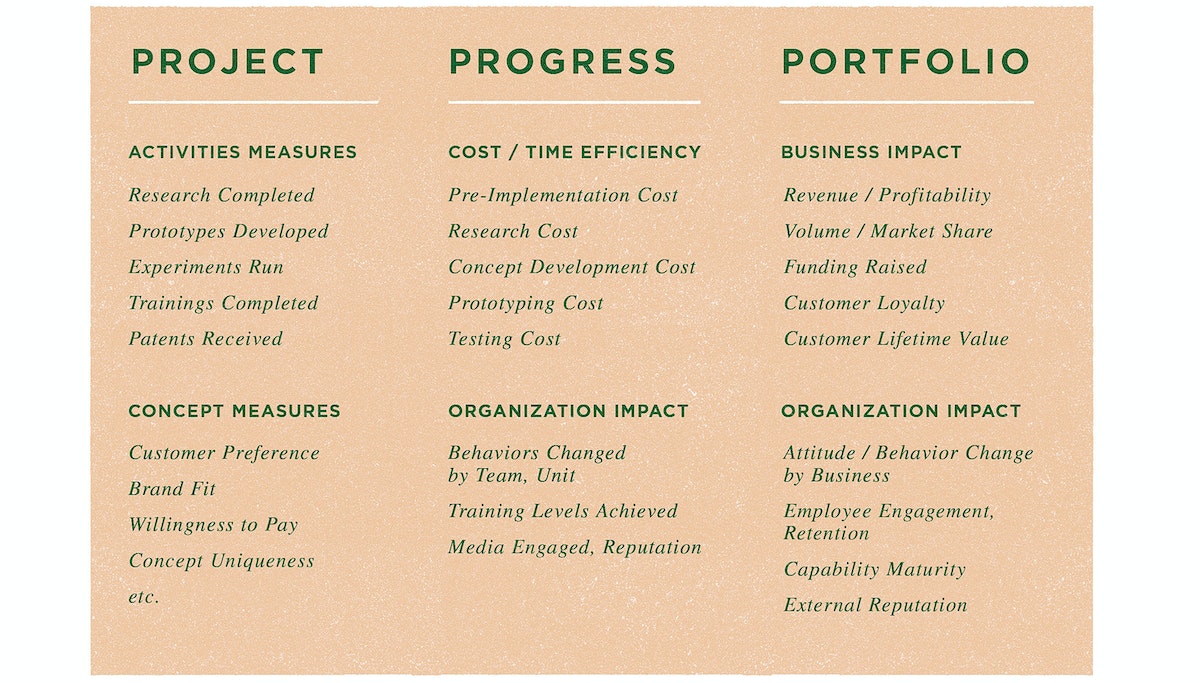
To properly measure both the productivity of individual projects and the performance of the overall investment strategy, many innovation units build a basket of metrics that they can track in various timescales, as captured in the diagram above.
One global financial services company has taken some smart steps to avoid the Metrics Trap. They built a Fintech Incubator to develop new digital offers on behalf of the bank’s business units. Before the Incubator will take on a project, a sponsoring business unit must make a business case for the product, put up a majority of the development costs, and define a series of success criteria for further investment. This aligns the innovation process with the business unit’s needs. On top of those project metrics, the incubator’s leaders also track a set of progress metrics across all of their work. These measures demonstrate how, over time, the incubator is moving down the cost curve. They’ve used progress measures as an argument for how the core business should rethink the way that they build and test new concepts.
—
To avoid this trap, ask yourself: Once you make your bets, what metrics will you use to calculate whether they’re paying off? What does your business value? What will you measure in various timescales to demonstrate the success of your projects, your progress, and your portfolio?
These aren’t the only innovation traps, but they are the deadliest. Innovation should not be a game of Russian roulette. By carefully considering and designing solutions to each trap, you can get that much closer to crafting an investment portfolio and innovation ecosystem that can nurture the future of your company.
Visuals by Gracia Lam.
With threats looming from every direction, it can be tempting to make precautionary investments in innovation. All too often, though, companies bet on new projects without thinking through how they will integrate with current offers and teams. That's like running a water main up to your house, then not connecting it to your plumbing. Yes, you’ll have water, but you won’t be able to channel it toward anything useful.
Why Everyone at the Office Should Care About Workplace Culture
Culture is more than snacks and perks—it impacts the bottom line
The office is an important place, and it’s one we believe should be designed with care. Culture matters—that means everything from the physical space to the values a company shares with new hires on their very first day.
Part of workplace culture is fun watercooler talk and good snacks, but it’s much more than that too. Solid culture lays the groundwork for the lightbulb moments that happen when people feel truly comfortable at work.
Good news: You don’t have to be an office manager to concern yourself with company culture. If you’re interested in building a positive, supportive office experience, check out the advice below from the Octopus archives.

1. When you’re curious about the folks that design the place where you work
How does a company agree on its values? What do truly authentic rituals look like? And how does that translate to business value? Follow one of IDEO New York’s organizational designers through a day to see what org design looks like in practice. (For more on what org designers do, read another piece from Mollie and her colleague, Mat Chow.)
READ: What Org Design Actually Looks Like
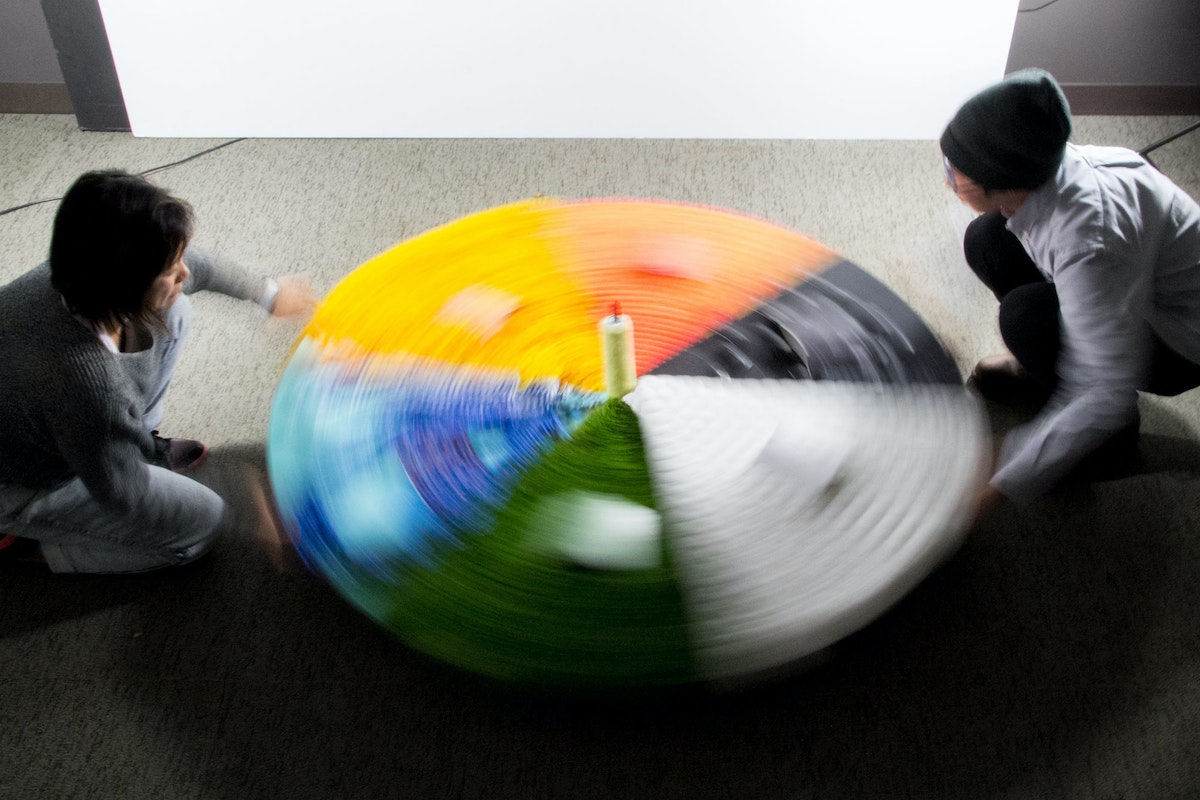
2. When you’re trying to convince your colleagues or your boss that culture matters
IDEO Chicago’s Annette Ferrera acknowledges that in some conversations, “culture” can mean “cool perks.” But culture is so much more than that: “It’s about creating an environment that makes it possible for people to work together to come up with innovative products and ideas—the same products and ideas that drive revenue.” Annette’s tips are both a blueprint for enacting your own cultural change and proof that a solid company culture can boost the bottom line.
READ: Why Workplace Culture Matters (And How to Build a Good One)

3. When you’re not quite ready to tackle that big project, but you want to make a small change
Designer, author, and IDEO alum Ingrid Fetell Lee runs Aesthetics of Joy, a blog about discovering joy in everyday life. If you’re not ready to tackle culture at an organizational level, use these bite-sized tips—like adding a plant to your desk—to create more joyful moments throughout the workplace.
READ: 6 Ways to Hack Your Workspace and Find More Joy at Work
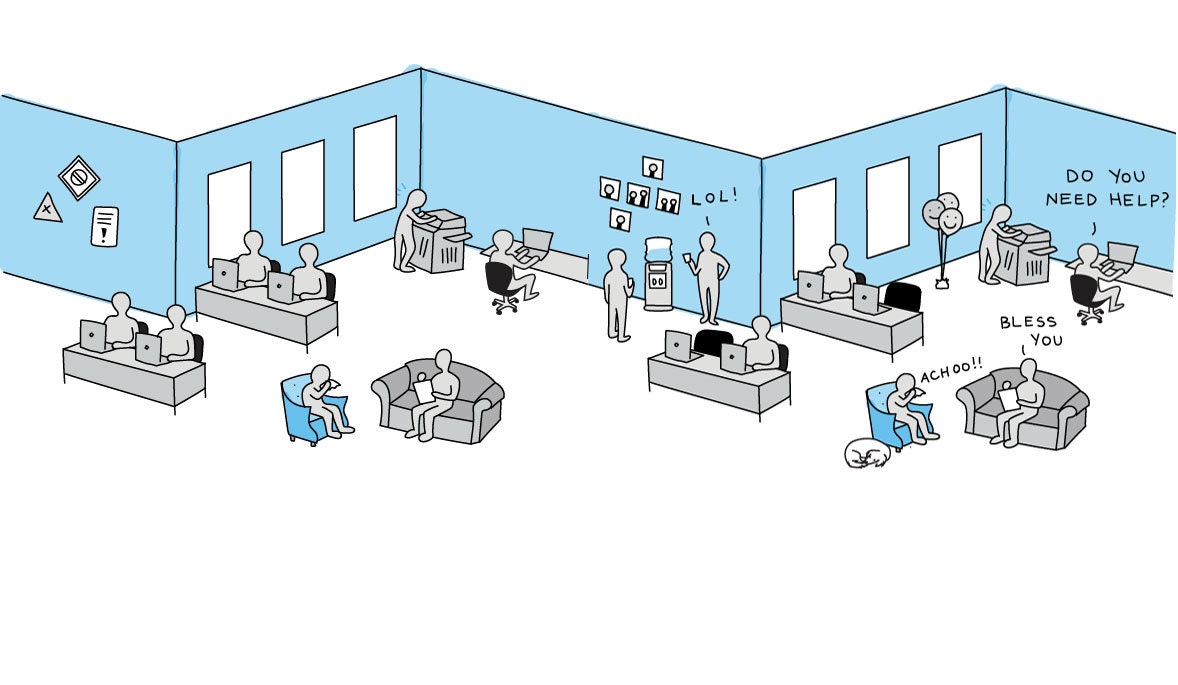
4. When you’re not sure how you’re “supposed to feel” at the office
American work culture tells us we shouldn’t feel, fail, or fuss in our place of business, but org designer Mollie West Duffy doesn’t agree—in fact, there’s evidence that a little emotion at work can actually help us connect with our colleagues and feel more confident in our work. Learn more about “emotional culture” (and the book Mollie co-wrote on the subject) in this Q&A.
READ: Turns Out Emotions Do Belong in the Workplace—Here’s Why
According to a survey, the average person spends 13 years and 2 months—that’s 4,821 days—of his or her life at work. For comparison, the survey says we spend 1,583 days eating and 1,146 days on vacation. The only place we spend more time than the office? Our beds (12,045 days, or 33-plus years—thank goodness).

Serverless Computing: the Instapot of Digital Problem Solving
How this technology is like making chili—sort of
At these conferences, attendees are split up into group sessions: some big, some small, some on specific topics, and some designed to create new connections. Though grouping folks together might seem like a straightforward task, there is actually a dizzying number of ways to put people together—for one recent conference, the number in the neighborhood of 14 duodecillion possible combinations. That’s 1.4 x 10 to the 40th, which is close to the number you would get if you were to multiply the number of grains of sand on Earth by the number of stars in the universe.
Fortunately, for data scientists, sifting through haystacks to find needles is our bread and butter. We looked at this dataset with one goal: to create groups of individuals that foster conversations and catalyze new cross-disciplinary research. Easy, right?
We built an optimization algorithm that scores combinations of people based on diversity, trying to create well-mixed groups. To make sure we had truly excellent combinations, we needed to run the algorithm more than 1,000 times, after which a human had to examine the top scoring combinations. A human ultimately judging the top few options is crucial to making sure we incorporate nuances that the algorithm does not get. But at more than four minutes per algorithm run, it took an average of three days to get results. Three days! Three days between prototypes wasn’t going to cut it.
To solve our time problem, we turned to serverless computing. While we typically use it to deploy microservices, we couldn’t resist using it to massively scale our computational ability on the cheap. After all, we love hacking and repurposing things for atypical use cases, and digital tools are no different.
In a way, putting these groups together is like making chili—there are many different ways to make it, and all are valid (and many are tasty!). But to have a truly great chili, it’s essential that the ingredients are balanced and cooked properly to produce a dish that is elevated beyond the sum of its parts.
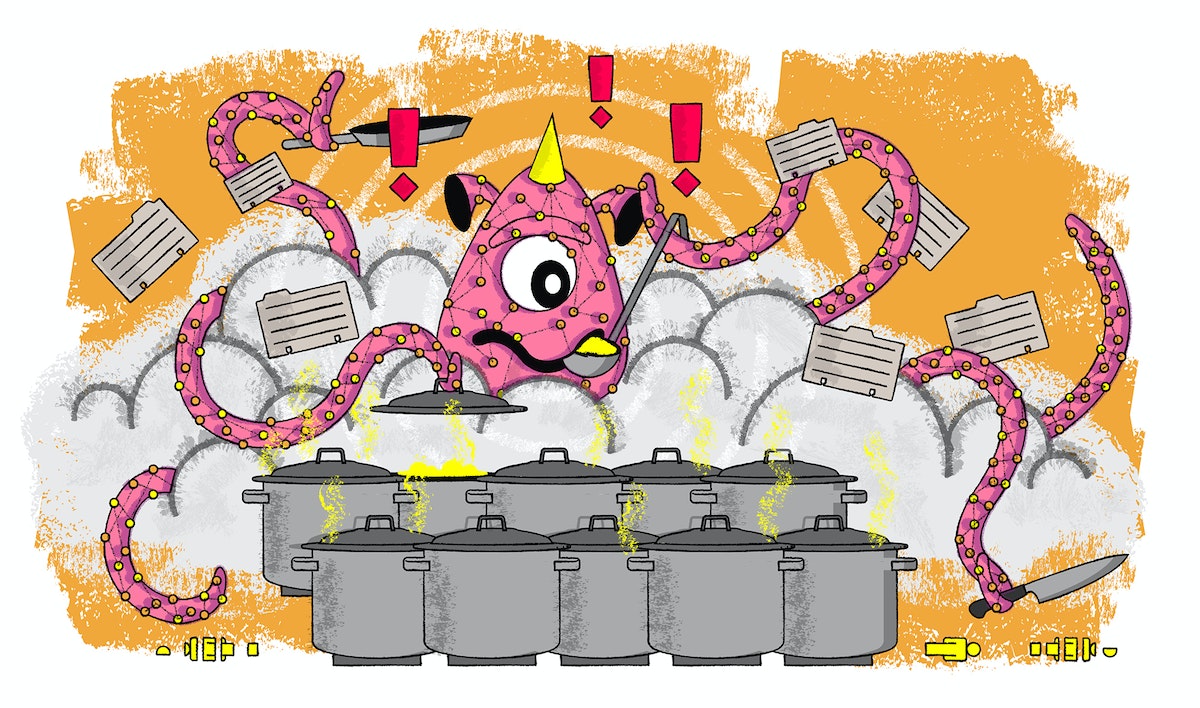
Think of each set of groups produced by the algorithm as a chili recipe. In the spirit of experimentation, you start putting together recipes that vary randomly in terms of ingredient amounts and cooking procedure. You’ve written down 1,000 recipes, and you’re going to cook and score them to find your ideal chili.
After a day of chopping, sautéing simmering, and tasting, you’ve only made 10 batches of chili. That's great, but in the grand scheme of things, that's nothing. So you think of ways you could cook and test your recipes more quickly. The most basic way is to make your cooking process (or code for your algorithm) more efficient: Chop faster and keep ingredients nearby. But this yields only a marginal gain. You would only crank out one or two more batches a day.
To really speed things up, you’re going to need some help. You could rent space in an industrial kitchen and hire chefs (servers on the cloud) who take a recipe, follow it exactly, and deliver the finished product to you. The downside: It takes a non-trivial amount of time and money to recruit and train chefs (much like setting up servers with the algorithm code).
But what if you had an army of 100 food trucks that are fully stocked, equipped, and happy to help you? That’s the equivalent of our serverless computing service. Serverless computing allows us to simply upload and then execute our algorithm code on cloud servers, taking away the hassle of setting up machines and allowing us to scale to hundreds or thousands of simultaneous runs effortlessly.

By using serverless tech, analyzing Scialog results goes from a process that runs in about three days to one that takes less than 10 minutes. With pricing schemes that only charge for the time the servers are being used, we can complete our thousand runs for less than $5.
This is great news, because it allows us to prototype our algorithms at scale much faster. What if, after looking at the results, we realize our scoring is missing a specific kind of input, like the balance of cat people vs. dog people? Previously that would necessitate another three-day wait for results. Now, we can tweak our algorithm, upload the new code, grab a cup of coffee (or chili), and come back to analyze the results.

We love the creative freedom that serverless computing enables (the ability to iterate on prototypes), and especially being able to get tons of computing power on demand—and cheaply.
If you’re interested in doing something similar, we’ve had great experiences using Zappa to deploy to AWS Lambda, but you can do the same kinds of things with other serverless services like Google Cloud Functions and Microsoft Azure Functions.
Now go forth and prototype at scale. And if you get hungry, you know what to do.
For almost 10 years, the Research Corporation for Science Advancement—or RSCA—has tapped IDEO for a little data science help. It's a good match, because RCSA shares our enthusiasm for helping people meet and collaborate. Every spring and fall, they organize conferences called Scialogs that bring together scientists of different disciplines to converse on important topics and inspire further collaboration through grants.

From Fail Never to Fail Fast
How a solutions-driven leader learned to experiment
Six months ago, Dawn announced she’d step down from Planned Parenthood, having successfully helped transition the organization from the leadership of long-time president, Cecile Richards. Instead of hurling herself straight into leading at another large organization, Dawn decided to dedicate a year to experimentation and discovery as expert-in-residence at IDEO.
Dawn is now working with teams across IDEO and IDEO.org to find new ways to catalyze change. In particular, she wants to uncover how best to use data and technology to improve service delivery and support movement-building. Coming to IDEO, she says, “I saw an opportunity to ask, How do we use human-centered design principles, entrepreneurship, and data and technology to transform how we are reaching people and working alongside them?”
Not one to be daunted by ambitious goals, the first official project Dawn is helping to launch is The Billion Girls CoLab—an initiative aimed at harnessing new coalitions and diverse expertise to develop innovative solutions that will support young women’s power and health worldwide. This joint effort between IDEO.org and IDEO CoLab will bring together cross-sector collaborators to think about reproductive health in new ways. Dawn sees this work as a chance to create impact at scale, but also as a means to continue empowering others to become leaders.
“I think established leaders are afraid to leave their roles and what they know,” Dawn reflected recently. “But if we're talking about diversity, equity, and inclusion, some of us who have been privileged to lead—especially as leaders of a certain age—have a real opportunity to move and make space and build up a cadre of new leaders. They need room to lead.” It can be scary, she acknowledges, “but you just have to say to yourself, ‘Well, I'm going to step off this diving board into the unknown, and what can I report back from the other side?’”
Dawn sat down with Whitney Mortimer, IDEO CMO and partner, to talk about what the other side is like, how her perspectives on creative leadership are evolving, and what she hopes to build in the near term to support a healthy, empowered generation of future leaders.
Whitney: Let’s begin with the work you’re doing with CoLab, where you’ve been deeply immersed. You’ve said that the CoLab model, which brings disparate groups and experts together to collaboratively solve problems, aligns well with your vision of how to work better on women’s health.
Dawn: We’re building a cohort that is not just people in the sexual and reproductive health field, but also others who are thinking about adolescent girls from very different perspectives and industries, including the for-profit corporations. The idea is a cohort that is domestic and global, which is something kind of new for the sexual and reproductive health ecosystem. We’re trying to catalyze a very different kind of conversation and output, researching and designing in close collaboration and asking what would it look like to build something that unlocks the power of a billion girls who are coming to adolescence around the globe over the coming decade? And what would that change for our world?
[When I was at Planned Parenthood], as much as we all tried to promote that kind of ‘fail-fast’ culture, we mostly lived in a fail-never culture, because the stakes were so high. And yet we know we’re going to have to experiment some to figure out what is going to catapult us to the next level.
Whitney: How is this approach to work different from how you were working before?
Dawn: I have to constantly remind myself, it's only been six months since I left [Planned Parenthood]. I really had to learn to live without a grenade as my metronome. Our days were so driven by constant distractions and firefights, even though I feel like we made real progress and built real things. So now [at IDEO] I’m gaining a different way to approach problems—to step back and have time to be more thoughtful. I'm more convinced than ever that this is not just a narrow fight. We now clearly have a global set of forces at play.
Whitney: You've always been clear with everybody that what got us here won't save us—we have to be looking ahead to the next thing. You're sitting on that horizon now, asking how does technology and everything we're learning about healthcare play out in a world that has such unequal access? As a creative leader, what do you need? What helps you shape something completely new, as opposed to just wanting to fall back into the matrix of an organization that already exists and will tell you what its priorities are every single minute of every day?
Dawn: Many people called me in the days after I announced and said, ‘Hey, do you want to apply for this job? Can we put you forward for that?’ They were all amazing opportunities, many in the progressive health and rights arena. It was hard to resist going to another similar operation, because of the urgency and the real difference that those organizations are making in this moment. But that urgency can get in the way of stepping back and thinking differently about how to work most effectively. [When I was at Planned Parenthood], as much as we all tried to promote that kind of ‘fail-fast’ culture, we mostly lived in a fail-never culture, because the stakes were so high. And yet we know we’re going to have to experiment some to figure out what is going to catapult us to the next level.
Whitney: Something that you do very naturally and fluidly, is you find analogous examples out in the world that makes sense inside your world. I'm wondering, as you look at scaling something new, what other kinds of methods or mindsets from the designer's toolkit are you able to tap into?
Dawn: There are just these amazing ways to step back and actually use a designer’s approach to think about how companies, organizations, movements could actually be building and thinking more about the early and upstream inputs to get the outputs we want to see later.
With a designer’s mindset, we would ask how to more thoughtfully shape the waves of cultural nurture that will carry these generations to the shores of the future.
Recently I’ve been thinking a lot about nature versus nurture. And then I jumped to this bigger idea with the folks at IDEO, thinking about the idea of cultural nurture: What larger cultural wave was I riding that I couldn't see then, but which shaped me—and not just me, but a generation of people?
For example, when I was in third grade, I started a student council because the playground rules were unfair to girls. Exactly around that same time was when Title IX passed. All of a sudden there was a mandate for equality in education—in sports in particular—for girls. I benefited from that immediately but I could not see the profound impact it would have. I would have been radically different had I not been told, “You get to play basketball. You get to run for whatever school office.”
I think about how powerful those forces are, and yet we don't respond to them and leverage them as well as we could. With a designer’s mindset, we would ask how to more thoughtfully shape the waves of cultural nurture that will carry these generations to the shores of the future.
Whitney: Can you see those moments now that are shaping the next generation?
Dawn: I'm thinking about it a lot around the climate and depletion of the planet, with younger people getting messages both of fear, and also of preciousness. We're also looking at stigma. There is a lot of exciting shame-busting going on in the culture right now, which of course is why I think there's so much pushback in our politics.
Whitney: How has your identity and orientation as a leader shifted? How does that alter your sense of your capacity and what you need in order to have the impact you want to see?
Dawn: As they say in IDEO fashion, I'm diverging before converging. What I have tried to do is not converge on a solution or direction too quickly, because by nature that would be what I’d do—solve the problem as quickly as possible. In my previous life you could not sit around and admire the problem for very long. But I’m learning to be in love with the problem for a bit longer. I’m asking, can data and technology unlock a different paradigm of care? Is it stigma or rights or both that are foundational to solving the problem of abortion access? And what is it that I’m best equipped to do and help lead people toward?
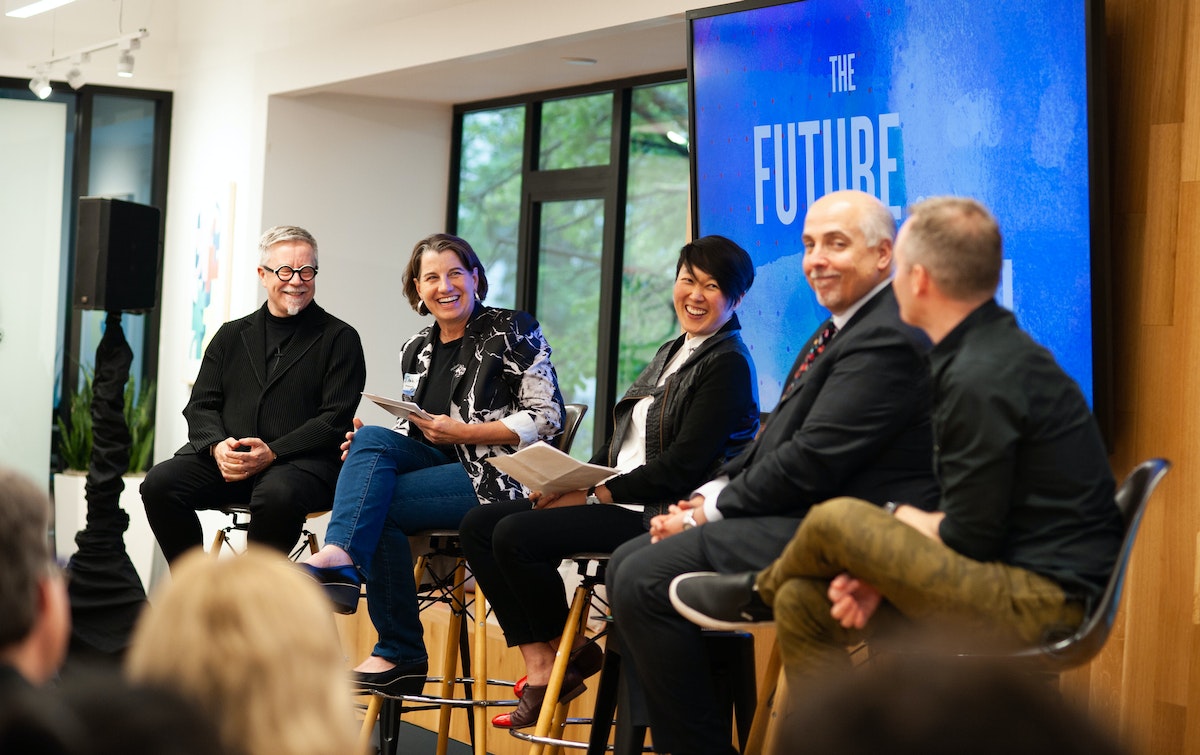
Whitney: When you were at Planned Parenthood, you were early to see the potential, say, to use VR as an engagement and empathy-building tool. What technologies are you seeing as most critical and exciting now, as you're exploring what will be the new paradigm for reproductive health and healthcare?
Dawn: Well, I know augmented intelligence is the phrase of the year, but it really does have amazing potential. For example, take the idea of personalized prescribing and apply that to contraception. We know contraception is a game-changer, a life-changer, a life-saver. But we also know that when people get hormonal contraception, some people are going to have side effects. That means they’re either not going to keep using it or they’re going to want to switch. And that’s when there is more risk of getting pregnant. Imagine if we could harness AI to look across all of the prescription data sets and provide doctors with the tools to better match individuals with the product or formulation that suits them best. What if you could, by orders of magnitude, improve the ability of women to get a prescription or method of their choice that works for them right from the get go? That’s one example of how we might use new capabilities to create impact at scale.
Whitney: With the political climate being what it is, and an election on the horizon with unknown outcomes, how do you think about the challenge of something like improving access to and adherence to contraception or of empowering a billion girls around the world, irrespective of what may happen politically in the US and elsewhere?
Dawn: The one thing I 100% believe is you can’t think of anything completely outside of politics. It's just so clear what a powerful shaping force politics and government policy are. At the same time, there is a narrowness to the political lens. And when you start to think of these other actors and other ecosystems, you realize there's a lot that is possible—there’s potential to organize, to employ tools we're not fully utilizing. Part of what I want to do now is build out the progressive toolbox so that we're able to better work over or under or around the political obstacles, even while we recognize they cannot be ignored. The CoLab model has a lot to offer in leveraging many sectors and approaches and drawing them together to power solutions.
Whitney: What is the role of brand in that scenario?
Dawn: I actually think it is very important—not to create a name or brand a product, not that kind of thing—but the idea that we could use the principles of brand to communicate the power of girls to change the world. The idea that we can impress upon people the importance of raising up generations of girls, giving them the tools and the freedom to make their mark. That, I think, is something we need to capture and tell to the world.
We have to do everything we can to connect girls and to empower them and to make room for them. We have to get over some of our false distinctions and start to help them see that there’s a kind of global sisterhood that’s powerful, and that they have the opportunity to save the planet. That’s the small task we're going to hand off to them.
When Dawn Laguens looks back on her eight years leading brand and public strategy at Planned Parenthood Federation of America, she describes a typical work day as “catch grenade, throw grenade back, run two steps forward.” To be sure, the years from 2010-2018 were eventful for everyone, and particularly for people like Dawn, who were on the front lines of vicious political conflicts, while simultaneously doing the daily work of advocating for accessible and effective healthcare solutions for women worldwide.

Lindsey Turner
I’m passionate about building brands, products, and experiences that help organizations show up with meaning and momentum.
I help organizations cut through complexity by shaping how they show up, through brand strategy, identity, and storytelling.
Working at the intersection of brand and business, I bring an editorial eye and a bias toward making—turning ideas into tangible experiences that people can understand, trust, and believe in.
My work spans government, healthcare, financial services, media, and consumer goods, from launching Gen Z-focused ventures to building innovation labs and reimagining legacy brands. I relish moments of ambiguity and enjoy translating across teams, perspectives, and priorities to move ideas forward.
I started my career in editorial and digital design, shaping cross-platform experiences and identity systems in publishing and agency environments. That foundation still shapes how I work today: I’m detail-oriented, collaborative, and overreliant on the Oxford comma. I hold a BFA in Visual Communication from the School of the Art Institute of Chicago.

Rachel Young
My work helps organizations see who their products aren't working for—and build the will and the tools to do something about it
For 25 years, I've asked the same question: Who does this design exclude—and what are we going to do about it?
My work spans human-centered strategy, inclusive design, and qualitative research, with clients ranging from Microsoft, Google, and Verizon to the National Science Foundation, and San Francisco Unified School District.
Before IDEO, I taught elementary school in East Palo Alto and spent a decade doing design work with social service organizations—where I learned firsthand what it costs people when systems are built without them in mind.
I am currently writing User Error, a nonfiction book about digital access and the design decisions behind it. I live in Oakland, California.

Brian Pelsoh
I lead with craft, ensuring our work is creatively excellent: rooted in deep human insight and imagination, while also grounded in the realities of business and technology.
My expertise spans brand, communication, and product design across tech, education, the arts, and social impact.
I believe great work demands both high-level vision and obsessive attention to detail, and only happens through collaboration.
I bring an inclusive, hands-on approach and a deep understanding of business, which enables me to consistently deliver excellence while always asking why.
Before joining IDEO, I worked at the brand firms Pentagram and VSA Partners. I began my career as a designer, leading teams at the School of the Art Institute of Chicago and the Milwaukee Art Museum. I hold an MFA in graphic design from Maryland Institute College of Art and a BFA in communication design from the Milwaukee Institute of Art & Design, and have taught at some of the best design schools in the US.

Tony Wong
I am responsible for IDEO’s long-term success in China and working with clients to use design as a tool to enable growth.
I am responsible for IDEO’s long-term success in China and working with clients to use design as a tool to enable growth. Specifically, I have helped Chinese companies design holistic brand solutions through the development of their products, communication, services, and innovation teams, and I have helped multinationals expand their presence and influence in China.
I advise global leaders on developing China-led innovation and capabilities.
In over 15 years in IDEO Shanghai, I have worked on projects that use design to elevate the quality of the experience of healthcare products and services, streamline processes that increase productivity, create spaces and programs that promote and enable inclusive communities, and build next generation mobility solutions that are planet-positive.
Before joining IDEO, I worked at Philips Electronics and the Electrolux Group in Italy, the Netherlands, and Singapore on a number of breakthrough commercial products. I am a member of the Young President Organization in Shanghai.

Building a personal AI for the messiness of life: Sida Li
Most AI products today are built for work—a space with clear problems and established systems. One founder noticed a gap: personal life is messier, harder to systematize, and mostly left behind by the AI boom. So she built Cue, a personal AI that lives inside iMessage and group chats, to go where the other tools haven't.
In this episode, Becca Carroll, IDEO's Chief Strategy Officer, talks with Sida Li, co-founder and CEO of Shared Context Lab, about staying anchored to a human need while the technology around her keeps changing shape, why she treats her business model with the same rigor she'd bring to a product, and what it feels like to build a company at this particular, disorienting moment in AI.
The conversation also gets into how Sida makes design decisions: the language Cue uses to describe itself, the tradeoffs behind building inside iMessage instead of a new app, and a real story about a business idea that didn’t pan out.
This is the second in a two-part series profiling founders from IDEO's Startups-in-Residence program. The first conversation is with Johannes Seemann, founder of Sooner, on designing GenAI for the emotional side of money.

Designing GenAI for the emotional side of money: Johannes Seemann
Most personal financial tools are built to run the numbers and optimize towards a budget. While that works for some, most people experience money as a lived relationship that does not neatly fit into a spreadsheet. Johannes Seemann and Becca Carroll discuss why money is emotional before it is mathematical, and what a human-centered approach to building a generative AI financial product looks like in practice.

The curious leader's edge in uncertainty: Scott Shigeoka
Mina Seetharaman talks with Scott Shigeoka, author of Seek and Head of Curiosity Cultivation at the Eames Institute, about what distinguishes genuinely curious leadership from performative curiosity, how power dynamics shape curiosity, and why practicing curiosity can restore energy rather than drain it.

How constraints make us more creative: David Epstein
Mina Seetharaman talks with David Epstein, author of Inside the Box and Range, about why total freedom often produces average work, how leaders can design useful limits on purpose, and what organizations such as General Magic and Pixar reveal about the relationship between boundaries and creativity.
Looks like you might be in search of something very specific?
Or reset the filters above and try another angle.
Here’s some random inspiration

Podcasts about creative leadership

Articles about the power of prototyping
