
.svg)


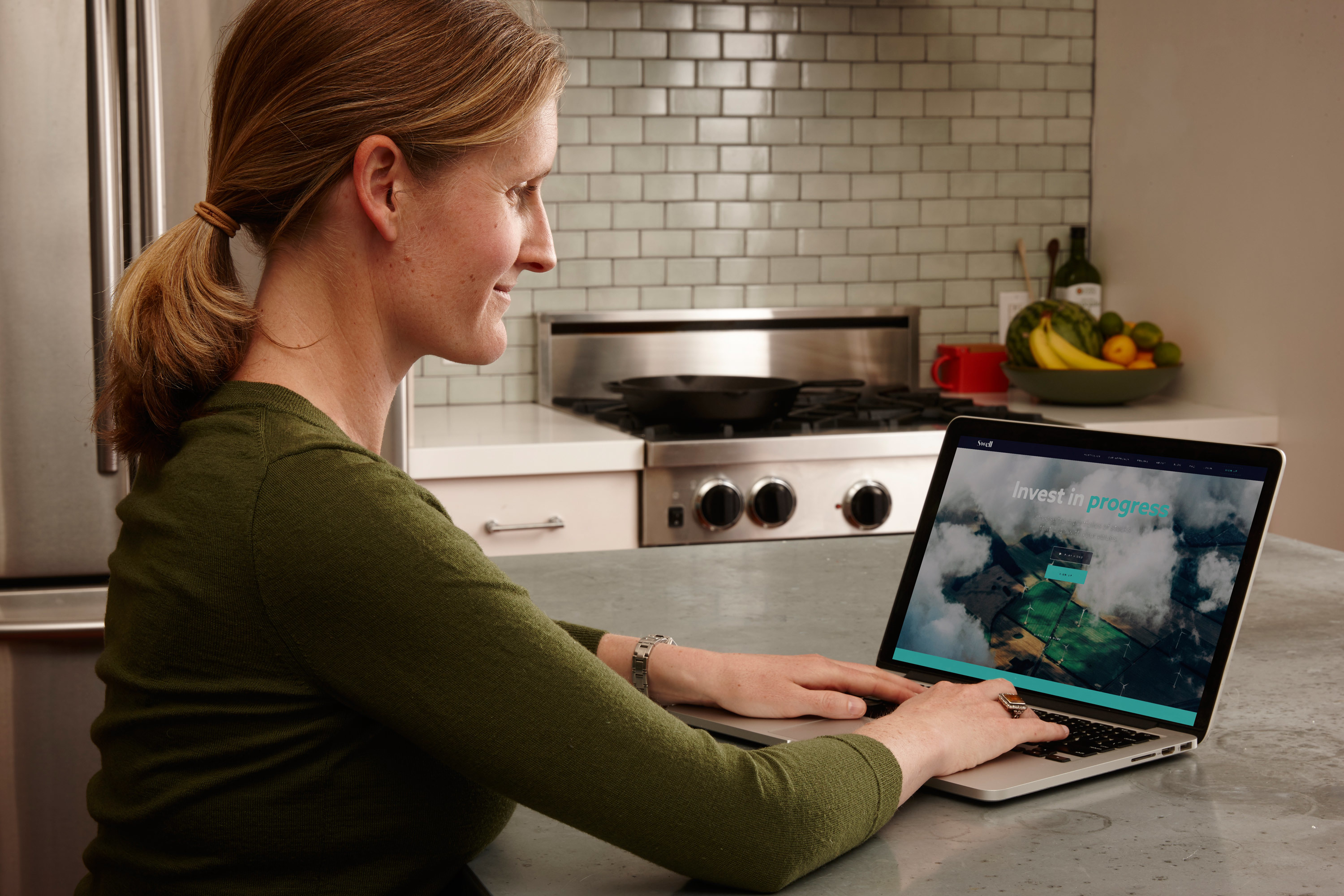

Arming a 19th-century company with a 21st-century digital venture
Swell enabled values-driven consumers to make informed investment decisions.
For the socially-conscious, investing can be a tricky proposition. The same people who wish to vote with their wallets may find that their options for investment funds and 401K plans are rife with companies that violate causes they believe in. So far, there have been few options in the marketplace that give consumers the opportunity to put their money in financial products that not only cut out environmental and social offenders, but actually contribute to the well-being of the environment and society.
Dave Fanger, a financial professional, was determined to design a solution. He approached IDEO to help create a startup venture for socially-conscious investors. Pacific Life, a Fortune 500 financial services company and Fanger’s employer at the time, offered the resources to develop and launch the idea. The online impact investment platform gave consumers the opportunity to invest in high-growth industries that are addressing global, environmental, and social challenges. Swell rigorously screened companies for both impact and performance, so consumers could be confident that their investments were in line with their values.
A holistic approach
Embedded as core team members, IDEO designers worked alongside Swell’s founder to shape the company. In just one year, they went from an initial concept and prototype to an SEC-registered investment adviser with a fully developed business model, a digital platform with initial investors, and well-defined branding that set the look and feel of the values-driven company. The IDEO team helped to hire the initial team of employees, working to ensure that the fintech startup would have the creative talent it needed to operate post-launch, as well as a defined culture that would help it grow.
A new investment platform
From the outset, it was important for the team to build an innovative, digitally-fluent, and customer-centered platform to make it easy for investors to back causes they care about. Working in close collaboration with software development partner Carbon Five, Swell and IDEO committed to act nimbly, take risks, move fast, and ditch decks for prototypes. Understanding the motivations of the investor—their values and what drives their investment decisions—was key, so the team leveraged IDEO’s network to form a consumer council, which helped to quickly iterate and refine prototypes throughout the duration of the product development process. Having that core group involved every step of the way made it easy for the team to keep consumers at the center of the design and validate key decisions quickly.
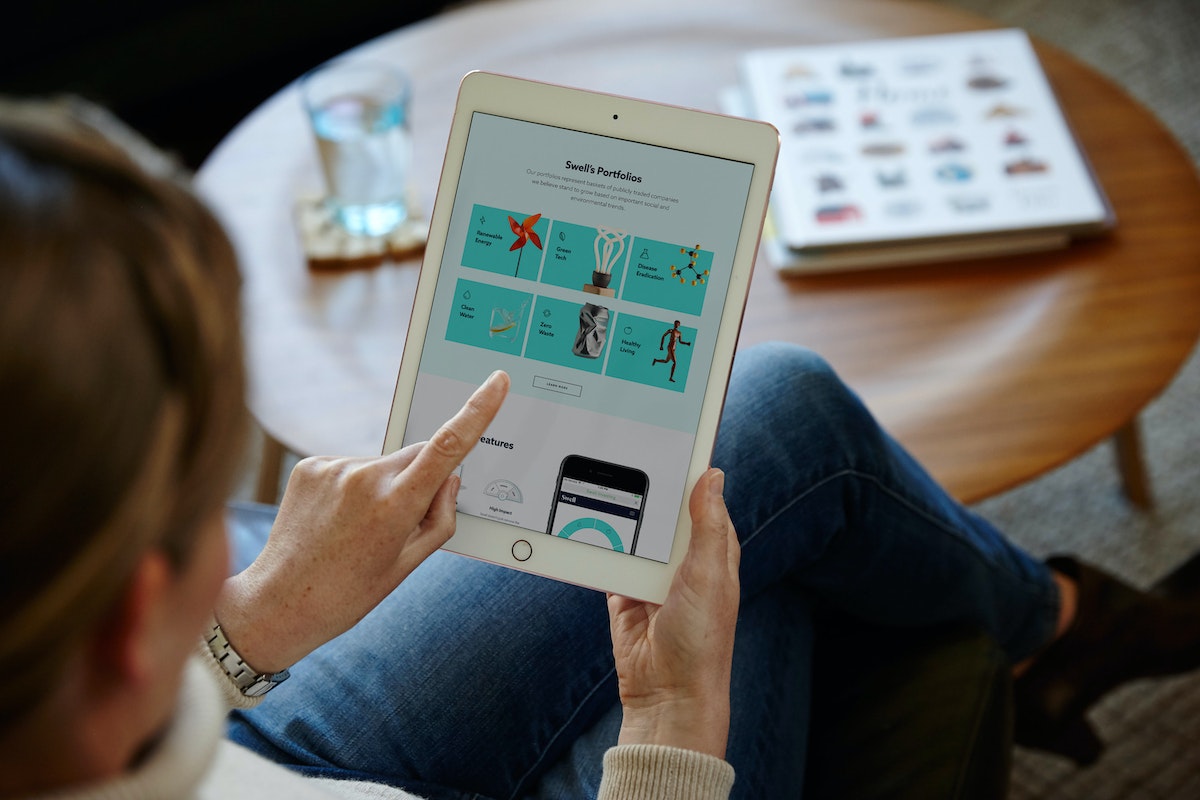
Swell offered consumers portfolios of companies that work to solve some of today's biggest challenges. The six impact portfolios offered were: green tech, renewable energy, zero waste, clean water, healthy living, and disease eradication.
As of June 2019, Swell had attracted over 15,000 investors—more than half under the age of 34—and $35 million AUM. Nearly 40 percent of investors were making investments on a recurring basis.

For kids, a new tactile way to learn coding
Helping Google design a set of blocks that can be arranged to code almost anything.
Learning to code isn’t just about knowing symbols and syntax—it can help unlock kids’ imagination by inspiring them to build new things and interact with everyday objects through discovery and play.
With that in mind, Google Creative Lab came to IDEO to help with user experience and product design on their new coding tool for children. The result of the collaboration, Project Bloks, is a simple and interactive experience that teaches kids how to code using physical blocks. This establishes a new paradigm for learning computer science: it takes a language typically only understood through screens and keyboards, and makes it tangible.
Project Bloks was also designed as an open hardware platform, enabling developers and educators to build tangible programming applications that are innovative, educational and fun.
Kid-centered design
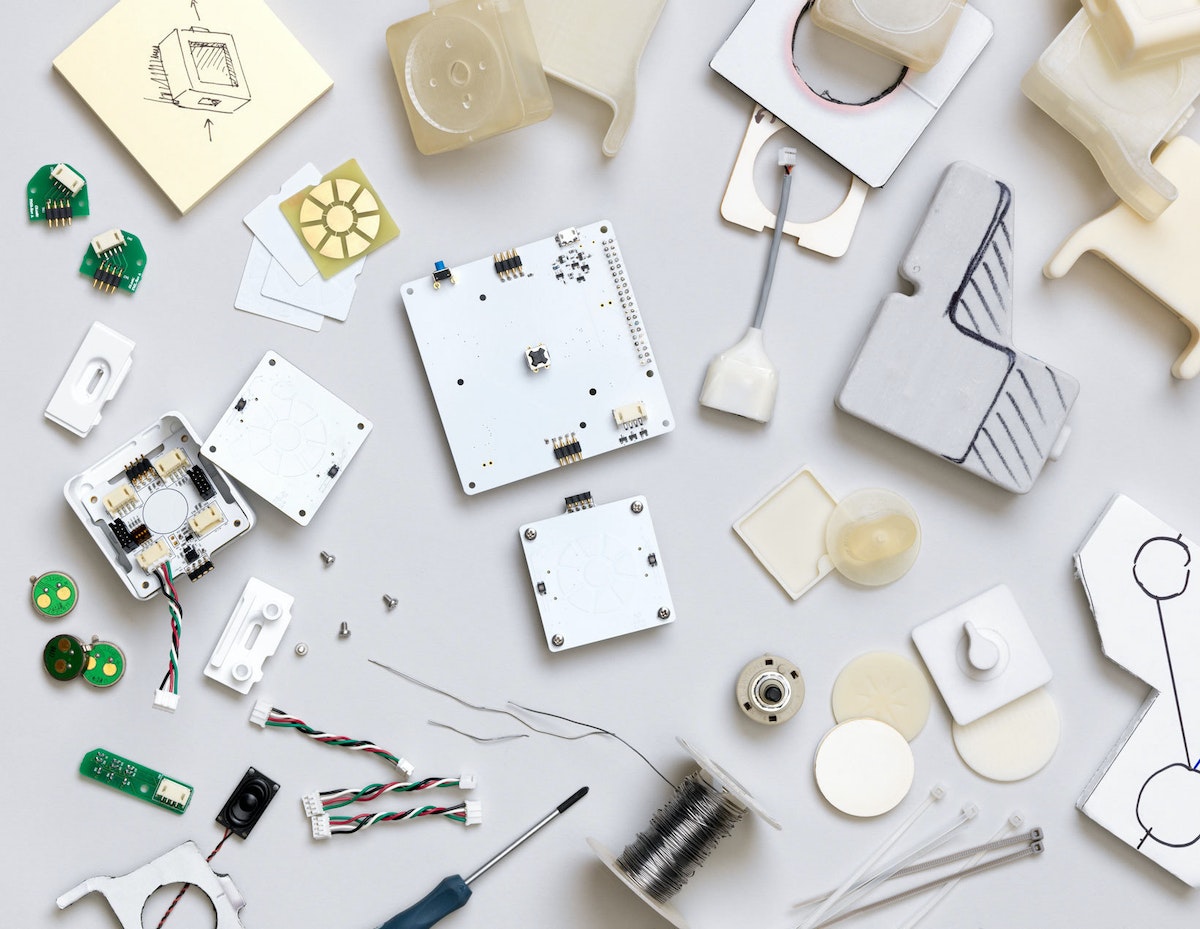
From the very beginning, how kids physically play and learn were at the center of the project. Designers quickly iterated using sketches, foam core, paper, Play-Doh, and 3D-printed models to see how slight changes informed children’s experiences. Understanding what deepened kids’ engagement, increased their curiosity and changed their behaviors drove the language, taxonomy, architecture, and physical form of Bloks.
Because play and physical building is an important way in which many kids develop skills, designers began with a set of blocks and sought to help them discover coding through tangible objects. Each block was given a specific function and shape, guiding kids to arrange, combine, and rearrange the blocks to create commands and control things like robots or speakers in the real world. Children could also create block patterns together by physically building on each other’s ideas.
An inside look at the design process. Video by Google.
Designing for early learners also forced the team to rethink how a new language could be taught. An early version of the blocks was based on how programmers typically code, from top to bottom. However, the team quickly realized that the orientation had to be driven by the child’s natural instincts. Given young children are just learning to read from left to right, designers observed that the switch in directions was too confusing and changed the arrangement of Bloks commands to go left-right in addition to top-bottom.
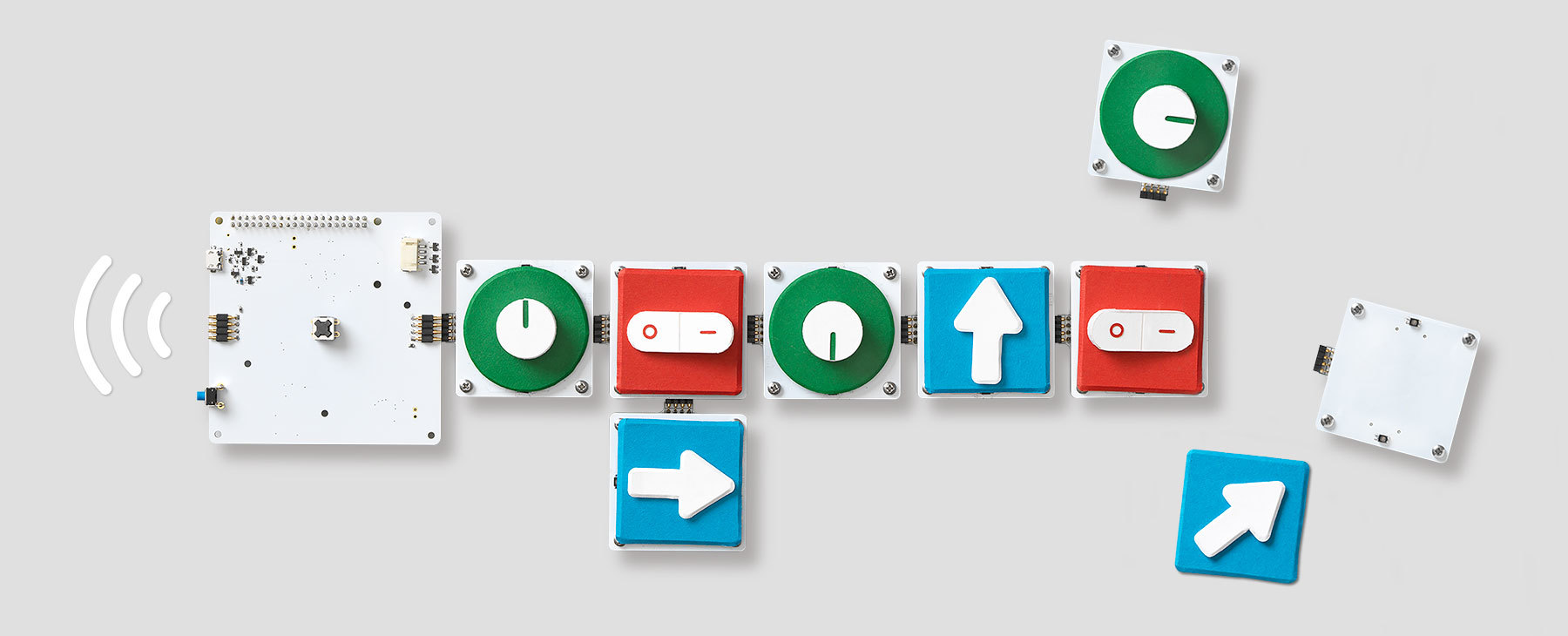
The final outcome of Project Bloks was an interactive coding kit comprised of three key parts - pucks, baseboards and a brainboard. The puck is a critical component that controls a command, whether it’s an on/off switch or the ability to move in a particular direction. It’s the piece that enables children to move from words to the world of graphics and play. The puck is easy to produce and can take an unlimited range of forms and functions, enabling the Bloks system to scale.
The baseboard reads the puck’s instruction and is activated when a puck is placed on top. The brainboard provides the power and connectivity. When hooked up to a baseboard or a chain of baseboards, the brainboard sends the instructions—turn left, jump, get louder—to a connected object, like a rocket or a speaker.
The boards can be rearranged, sequenced, and packaged however kids like, opening up a vast realm of possibilities. Children can code anything from a toy robot drawing a shape on a piece of paper, to a sensor turning on a fan when the temperature gets too high.
Enabling innovation for education
Beyond a tangible coding kit, what makes Bloks unique is that it’s an open platform. Educators, developers, and designers can build on it to accelerate new ways of teaching and exploring tangible programming. The platform can fit into various curriculums around the world. The pucks can take on different shapes and graphics. The material used can be fabricated by 3D printing.
The Bloks platform is a new vernacular that allows kids to interact with the language of code in a way that’s less prescriptive and more open-form, like a sandbox. And the more kids play with Bloks, the more opportunities they discover for what they can create with a little bit of code.
Helping students navigate college and beyond
Creating a digital experience to support first-generation college students.
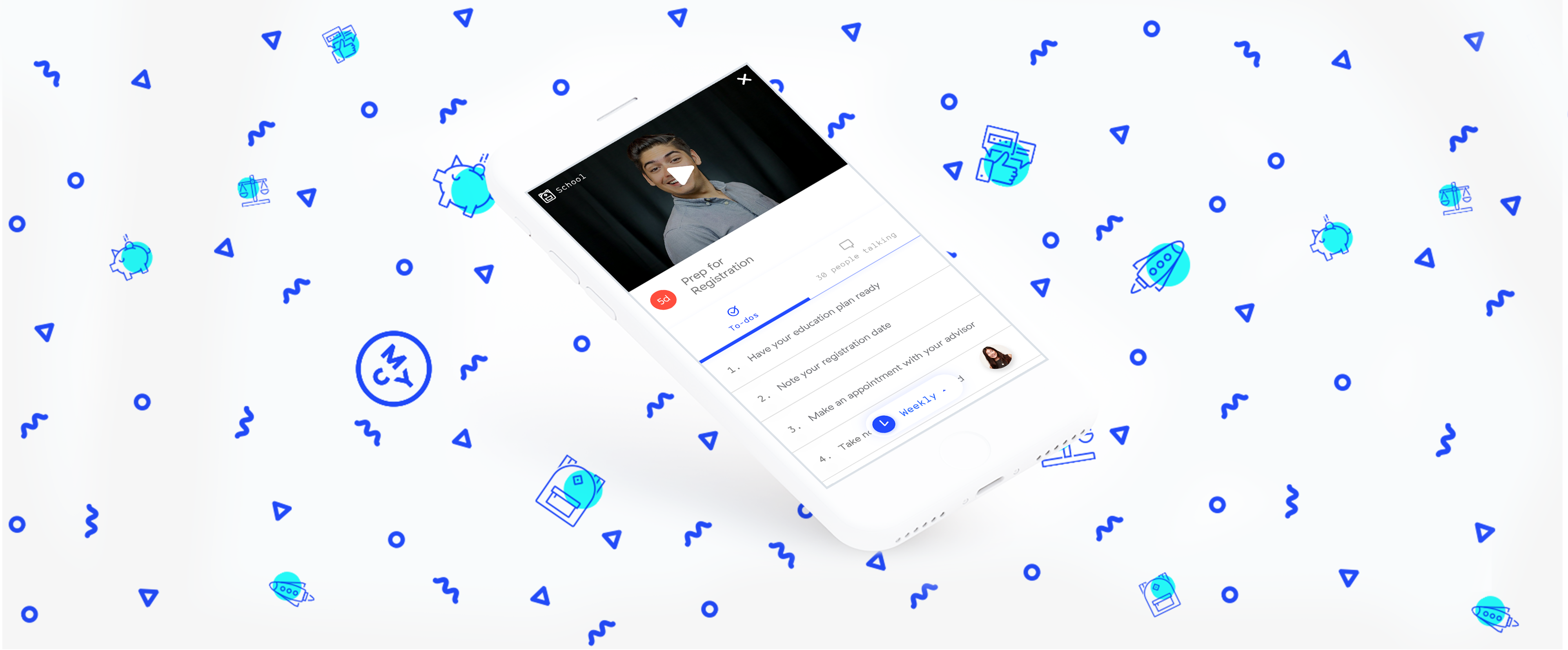
For students who are the first in their families to pursue higher education, navigating college can often feel like navigating a foreign country. Challenges like not having enough money or poor access to support services can make graduating an insurmountable hurdle. In fact, only 55% of these students in the United States end up completing their degrees.
To help change this statistic, IDEO partnered with Beyond 12, an organization that provides personalized, virtual coaching to first-generation college students to help them learn how to register for classes, apply for financial aid, and much more. The challenge was to scale Beyond 12’s successful coaching model using technology in order to benefit as many students as possible.
In 2014, IDEO designed the MyCoach app, with the goal of helping students take ownership of their education and feel in control of their future. After the early version of the app was named as a finalist in the prestigious Robin Hood Foundation College Success Prize, Beyond 12 piloted the product with 3,500 college students across the US. Following the pilot, Beyond 12 and IDEO went back to work, using the resulting insights and data to design the next evolution of MyCoach.
First and foremost, IDEO sought to develop a more flexible model for Beyond 12 to enable scalability of the offering. As some students need more support than others, a blended business model was envisioned to recognize the spectrum of students’ needs. Engaging in-app content forms a supportive layer that helps students get organized, stay on track, and learn the skills they need to stay in college, while students who need more hands-on assistance can connect directly with coaches. An invisible data layer works behind the scenes to assess student risk and dynamically tailor student support throughout the school year.
Once the app’s model was solidified, creating a user experience that compels students to use it became essential to its efficacy. Growing up with technology has reshaped how many students engage with the world, and tools like Snapchat have set a new dynamic for participation. Youth today are the masters of their own digital worlds, fluidly jumping between conversations, engaging with stimulating content and contributing their own perspectives. As a result, MyCoach needed to speak students’ language and to create content that was authentically youthful and effective in order to be effective. By drawing inspiration from popular social sites, digital experiences and games, the team designed a user experience that keeps pace with a digitally native state of mind.
IDEO Designer, Isabela Sá explains the approach that led to MyCoach’s design and content strategy, “We created an app that makes no distinction between content and utility. We borrowed the content-first approach of social apps like Snapchat and Instagram and used it to teach students the skills and strategies they need to graduate. With that, the digital experience became more human. The intricate system that we had designed to power the whole thing was hidden below the surface. For students, the app was just the means to learn how to help themselves and get in touch with a coach when they needed one.”
Development is underway for the next version of MyCoach, which will allow Beyond 12 to scale its offering to reach exponentially more students in need.
Redesigning how Coca-Cola works, plays, and profits
Designing for Coca-Cola’s 2020 vision strategy.
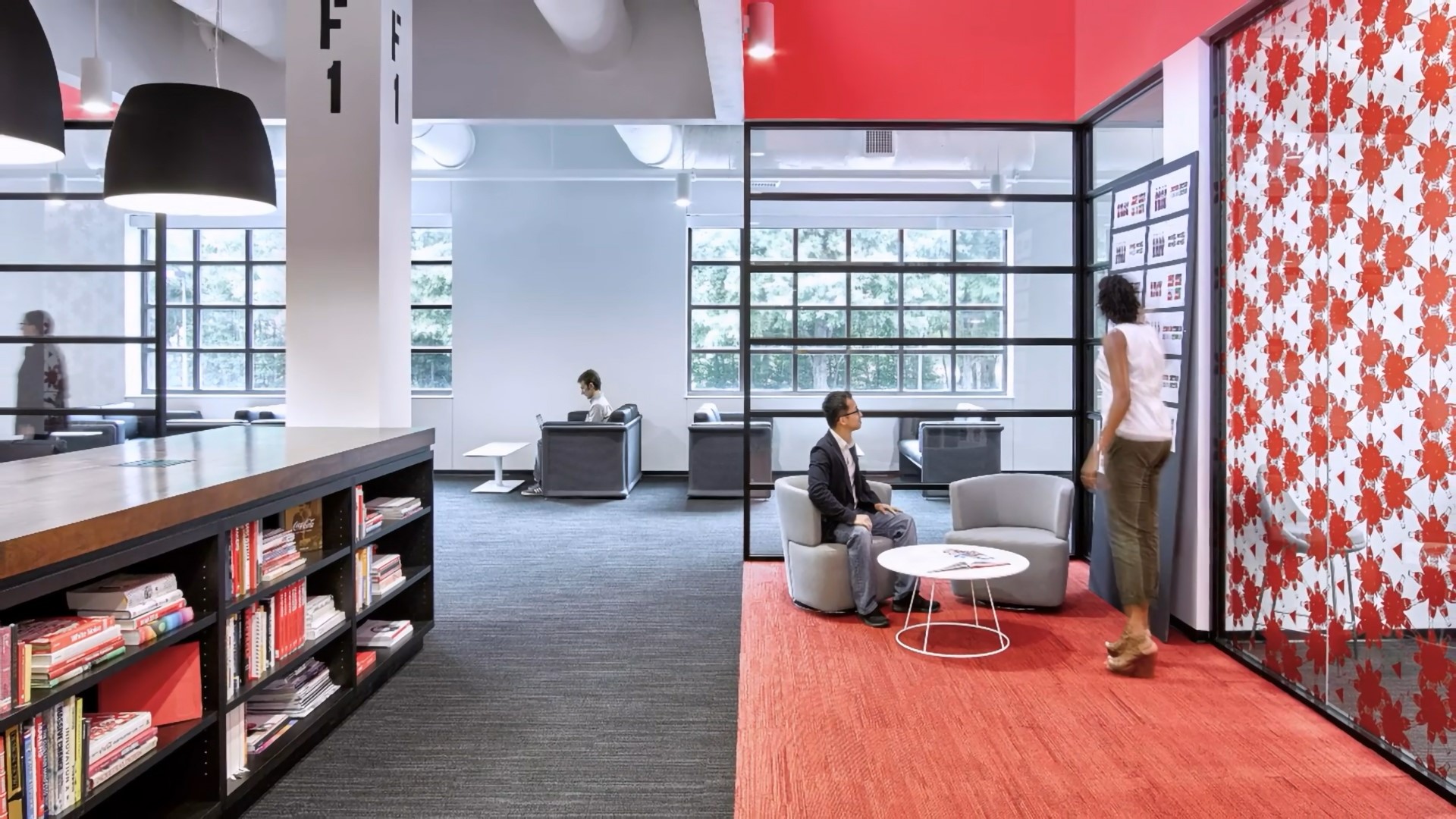
Coca-Cola is one of the world's most iconic brands. More than 5,000 people work at its global headquarters in Atlanta.
Back in 2010, Coca-Cola found itself at a major crossroads. As the company grew, it became clear that in order to stay competitive, any kind of campus renovation would have to take into account a vision of the future of how people work at Coca-Cola. Before the company hired architects, they came to IDEO to help design this important part of their 2020 vision strategy; ultimately the redesign would change the way the company works, plays, and profits.
Imagery courtesy of Coca-Cola, Gensler, and IDEO
Why you should treat your DEI data with rigor and care
How do you measure how diverse or inclusive your workforce is? And—perhaps even more importantly—what should you do with that DEI data once you have it?
As head of IDEO’s global change management team, which focuses on belonging and equity, I’ve seen the importance of being rigorous with and thoughtful about the information we collect and how we share it.
Telling someone to handle data with care might suggest that it’s fragile or in danger of breaking. That’s not the way I view it. I see a responsibility to keep the data whole. It’s about integrity.
That applies from the very start: gathering and understanding your DEI data. Do so with rigor. The system, process, tools, and analysis method you’re using should stay consistent. Looking at the same factors the same way every time allows you to measure progress, and the uniformity will help people trust the data.
When it comes to data related to DEI (Harvard Business School Professor Frances Frei puts it nicely as “achievement” and “sentiment” data), the achievement part is fairly straightforward. It’s what the organization looks like across different levels of the employee life cycle in a number of demographics. There are the core metrics around representation in terms of race and gender, and some organizations also track sexuality, disability, and education. These metrics help us answer questions like: How diverse is our senior-most leadership level? Which groups are leaving the organization the fastest? Are we over- or under-recruiting certain identities? Are we promoting men faster than women?
The sentiment data is about bringing in the employee voice and getting at what it feels like to work at the organization. If the achievement data is the what, the sentiment data is the why. These are the questions around culture, about whether employees can say “I can be my authentic self at work” or “I have easy access to information.” These are the questions that help you get at whether the culture is too transactional, too cautious, whether people feel they can innovate. The achievement markers are the same across the board, but the sentiment questions tend to change by organization and can be shaped based on places you might have concerns about based on early hunches or focus groups.

Once you have collected the data, transparency is important. But pause first. The way forward is to proceed with care. Data and information can be a burden to people, especially if they don’t have the power to impact it, so it’s important to understand who holds the accountability. If you were to go out to the broader organization and say, “Hey everyone, we have a lot of evidence we’re failing on these metrics,” people will immediately want to know what you’re going to do about it. Building trust requires that you have thoughtfully considered possible interventions and solutions. There is responsibility that comes with transparency.
Design can be a powerful way to arrive at those interventions. Let the data first sit inside the group that is accountable for designing ways to prototype and pilot initiatives that might help improve future metrics. For example, if the sentiment data shows your people don’t feel like they belong upon initially joining the organization and don’t know where to get the information they need to do their job well, you likely have an onboarding problem. Maybe you’re putting a disproportionate amount of energy into recruiting but not ensuring those employees succeed once they are inside the organization.

With that insight, you can prototype interventions: What would it look like if we paired every new employee with someone from the same background or interest who is thriving in the organization? What if there was a two-week support circle for new employees every 60 days?
Once you have your interventions, you’ll want to test the ideas with a few groups of people and get their feedback: in the onboarding example, perhaps the ones who have been at your company for less than a year and the ones who the intervention might put a burden on. It's best practice to invite the employees at the margins of the organization (typically from a race and gender lens) to get their input on your recommendations—if they are willing and it’s not a burden to them—before sharing with leadership. If you’re able to design interventions that work for those most marginalized in the organization, the solutions will work for everyone.
Onboarding is something we’re working on at IDEO based on our last Culture survey. When we dug into the data we realized that as a creative organization, new hires want to tangibly contribute from day one. Great onboarding gives the security and confidence to do that, and so we have been piloting initiatives ranging from having two leaders dedicated full-time to onboarding within our talent organization to having new hires shadow a designer of the same craft on a project so they can start to understand how to create value from day one.

Once you’ve identified some potential interventions and soft-tested them with the right stakeholders, you are ready to share the data company-wide: “Here’s what we heard and learned and here are three to five things we’re going to prioritize as next steps.” You aren’t restricted to sharing shortcomings. Accentuate positive findings too, things you’re trying that are working or successes that you’re going to amplify going forward.
Especially with DEI data, remember that internal audiences are more important than external. A lot of companies capture this data and put it on their website as a recruiting and tracking tool, and that’s a great way for organizations to hold themselves accountable. However, the fastest way to break trust is to make employees feel like the data is only being captured for external purposes. Keep the emphasis on collecting and sharing data internally in service of improving employees’ experiences at the company and the effort will feel genuine.
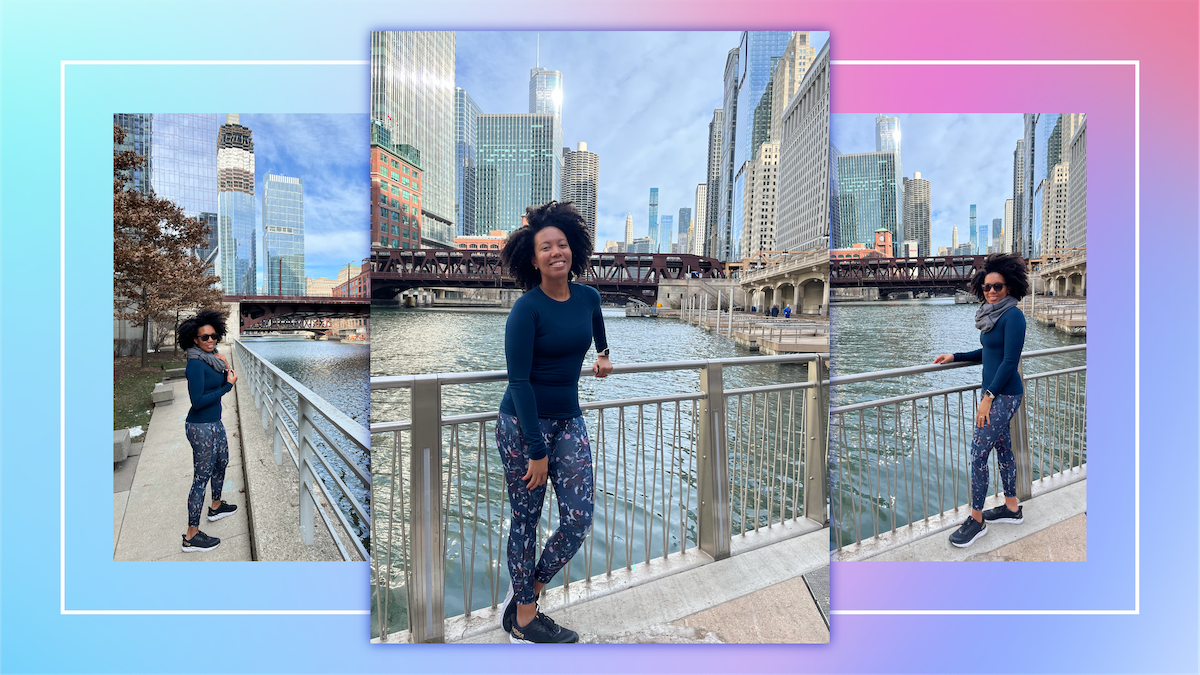
Regularly deep diving into achievement and sentiment data can be emotionally taxing. If you’re doing this work, be sure to give yourself a way to take a break from it. Last year I started walking every morning on Chicago’s riverwalk, because it grounds me and gives me perspective. It’s easy to get hyper-focused on the challenges or overwhelmed by the gaps we need to fix and inequalities we need to right. Taking a moment to get my body outside and walk around helps remind me there’s more beyond the problems I’m trying to solve and helps me be present for people while I am working. There’s something so inspiring and revitalizing about having fresh air hit my face every day. And even though I pretty much walk the same route, I notice something new every day, something I didn’t see the day before. I try to bring this same curiosity to my work. Even though the challenge may look the same from day to day, there’s always a new idea or potential solution just one step away.
Proceed with care. It’s some of the best advice I can give when it comes to diversity, equity, and inclusion data—how to best measure it and what to do with that data once you have it.
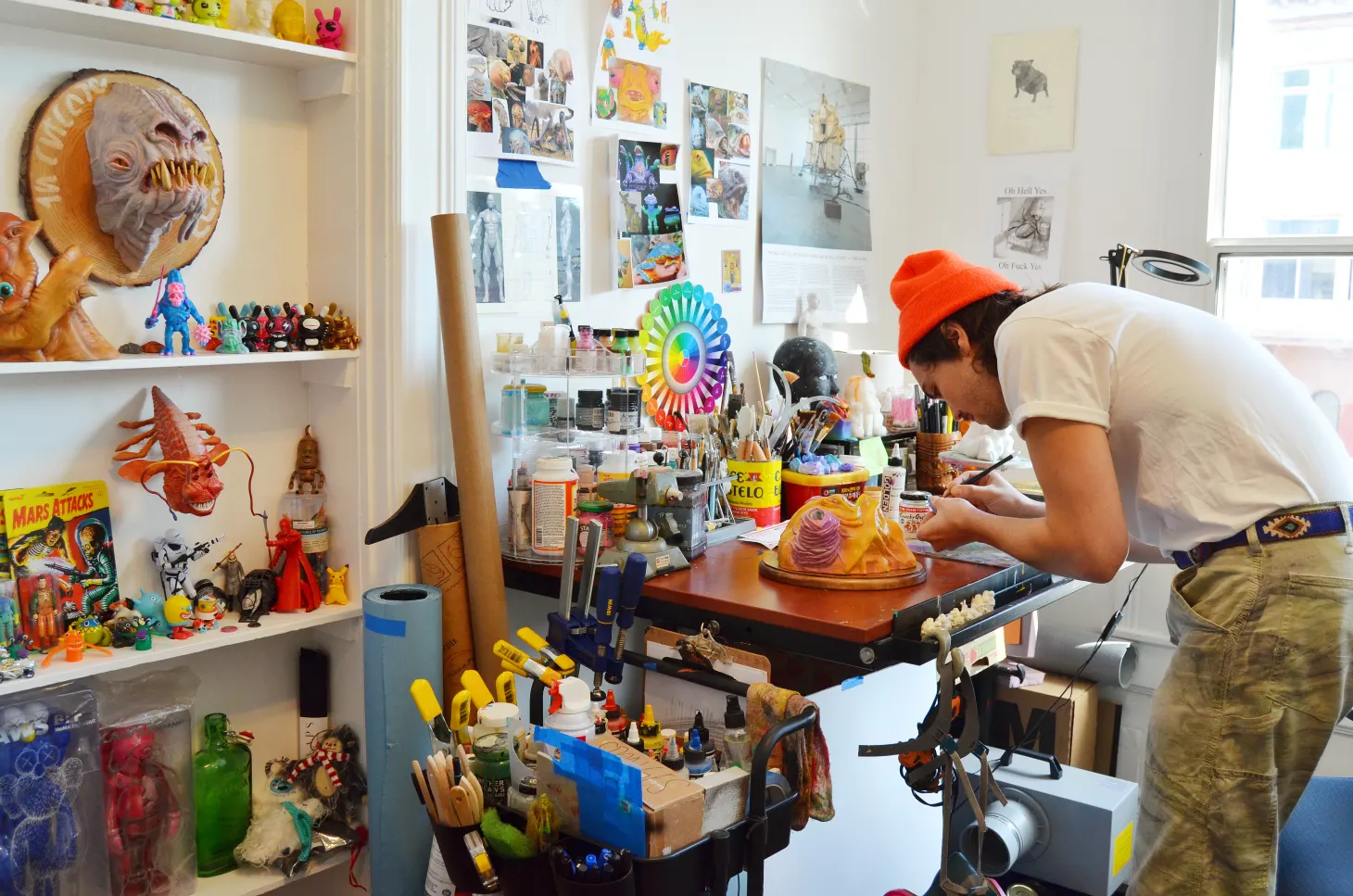
How curated clutter makes this designer’s home inspiring
In our work-from-home times, it’s a different way to think about your space.
Clutter has the opposite effect for me, but there’s a very specific twist. If the type of clutter that drags us down is disorganized clutter—stacks of papers, discarded shoes, and items with no home—I’ve cultivated the opposite: what I like to call “curated clutter.”
I’m an industrial designer who works as an IDEO Toy Inventor in the Play Lab. My job is exactly what it sounds like: I come up with new toy and game ideas based on market research and client asks and then design and prototype them.
Like so many of us, I have been exclusively working from home in San Francisco since March 2020, and the remote working space I’ve created for myself is different from what I’ve seen so many other designers create. Theirs tend to be sleek and very minimalist. That’s never been me, even dating back to design school, when I used a desk covered in astroturf.
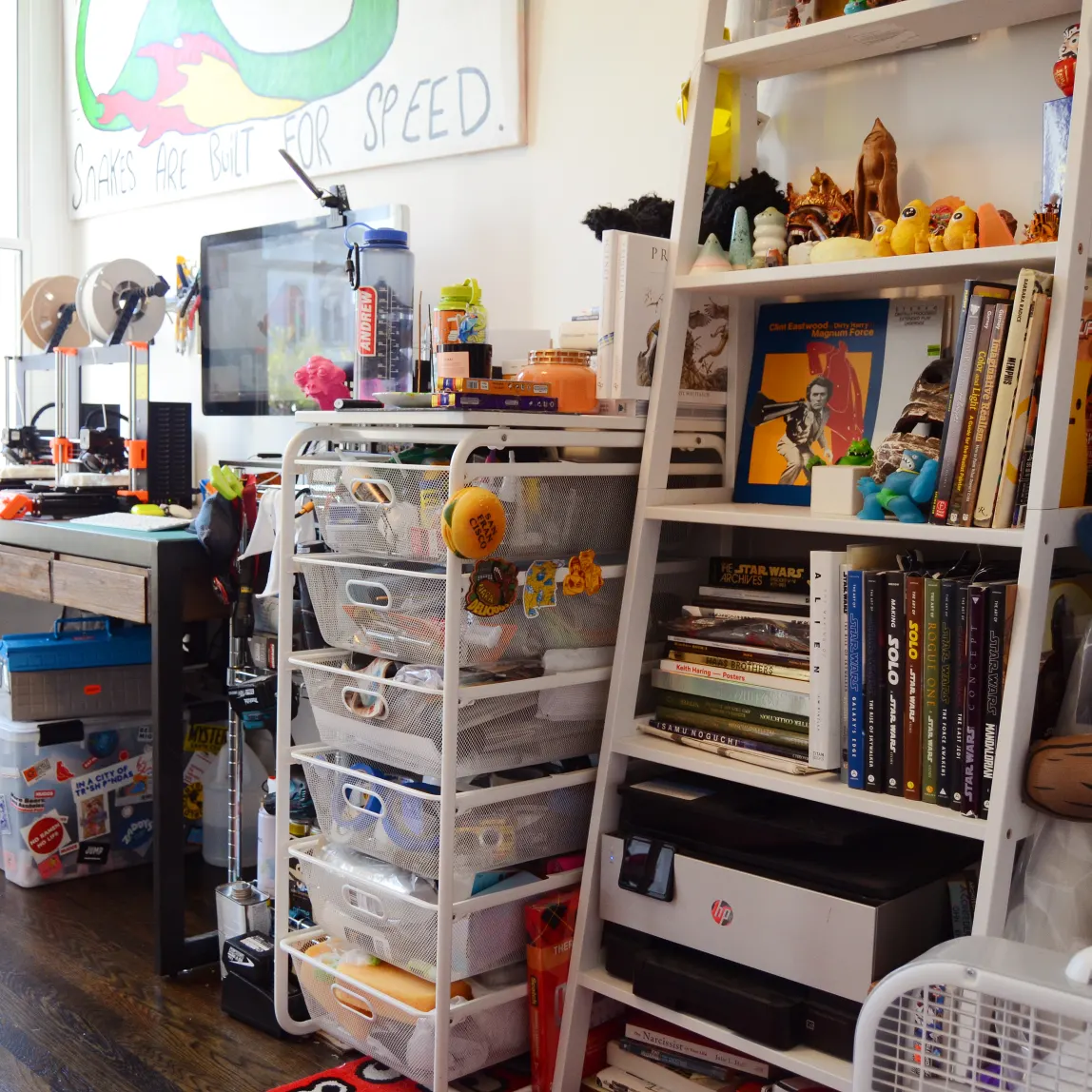
My workspace is an explosion of color, an arrangement of knick knacks on my desk and shelves that serve as pieces of inspiration. Some have been with me for more than 25 years. Others are recent additions, both things I’ve collected and gifts from friends and relatives who have spotted things they thought were special or entertaining and might fit well.
I don’t keep a journal, but my knick knacks function as sort of a substitute practice for that. They capture both some of the chronology of my life and the emotional state I was in when I received them. I have alien action figures from my childhood that remind me of how genuinely afraid I was of aliens as a kid and how far my thoughts and imagination could stray. But there are also items I’ve collected while dating my partner, like a meaningful piece of coral from my first trip to her home in Hawaii. It’s sort of like free-form scrapbooking, just not confined to a leather-bound tome that gathers dust. While nothing’s written down, that history is captured, and I get to scan and revisit it regularly.
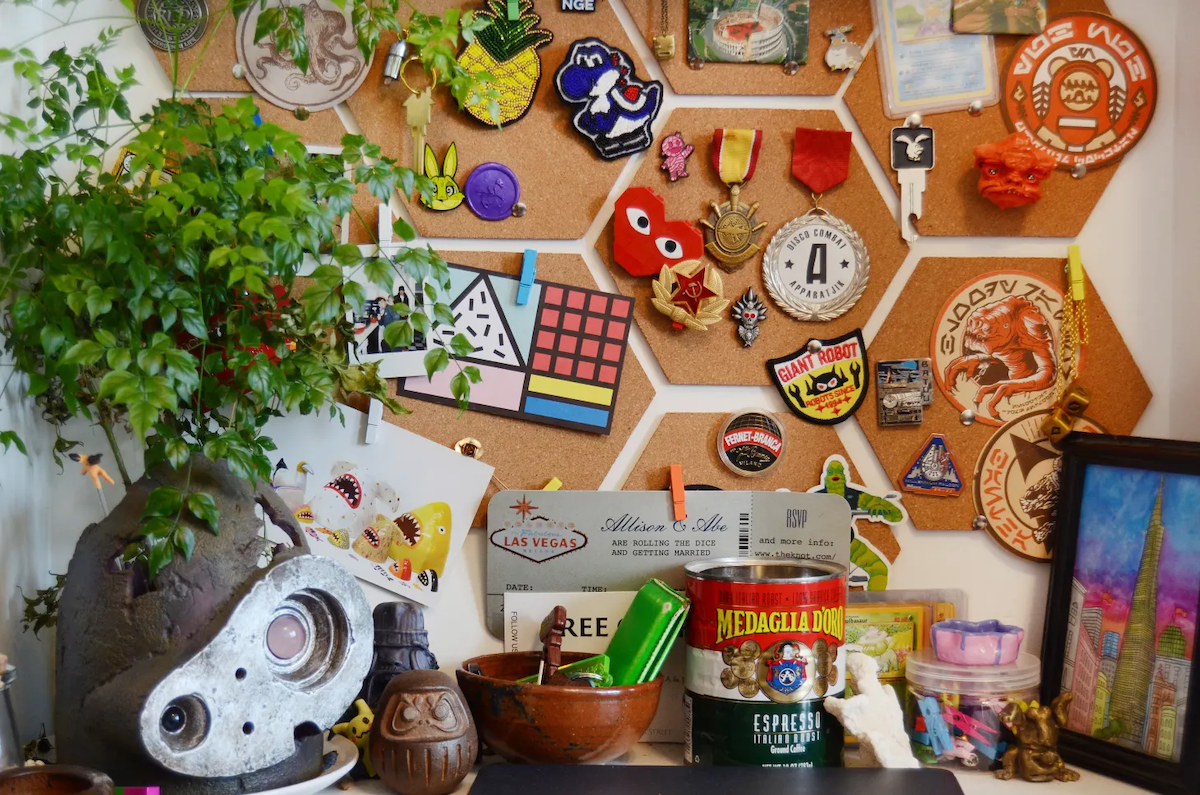
The clutter is curated but not fixed. I rotate the items, and that process is rejuvenating and refreshing. To keep things from straying toward hoarder territory, I stick to a couple rules: I only hang on to the things that have some kind of value to me, and if I can’t move something without knocking something else over, I need to reassess.
I live with my partner, who is adamant that she is not a fan of clutter, but our friends will laugh and say “What are you talking about?” Her approach is an even more curated and refined way of displaying objects, and I think it’s a good illustration of there not being one “right” way to do it. Your curated clutter could be five items or five hundred. Ultimately, if clutter is made up of the things that have no home, curated clutter is made up of the things that make your home.
For many people, designing their workspace or spaces in their home is a very purely aesthetic process, like, I like the way this lamp looks, or this pencil holder looks. That process can end up being devoid of emotion, which I think can result in a space that's not necessarily built to address our emotional well-being—a consideration that’s more important than ever these days.
I know incredible designers who project a very clean designer persona and have tasteful objects in their houses: walnut, leather, beautiful brass hardware. And then you look at their inspiration boards for work and they're wacky, and I don’t see the purpose in reining in that inspiration. Sometimes the idea of what is good taste causes people to censor their living space. That’s not for me. I’d much rather be in a place that’s overstimulating than understimulating.
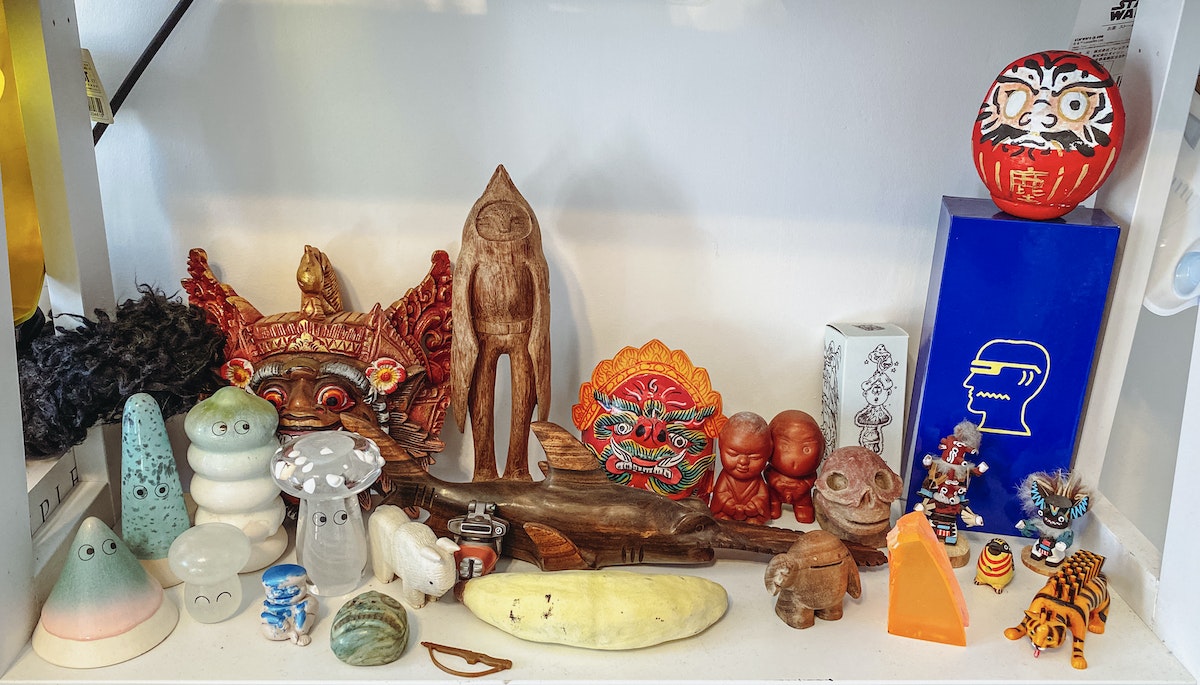
I would say almost every day I feel inspired by what surrounds me. It’s a library of thoughts and thought-beginners, especially my desk, which puts different textures and color combinations and parts and mechanisms in front of me. But above all else, my curated clutter provides a sense of comfort, which ends up supporting my emotional well-being. At times when I feel anxious or overwhelmed, it grounds me because it’s an extension of myself: a way of revisiting people and moments that matter. It’s like flipping through your journal to remind yourself where you come from, then feeling energized enough to flip to the next blank page and keep going.
Multiple studies have suggested that cluttered workspaces are no good for us, or even downright harmful. Connections have been made between clutter and procrastination, stress, and even life dissatisfaction.
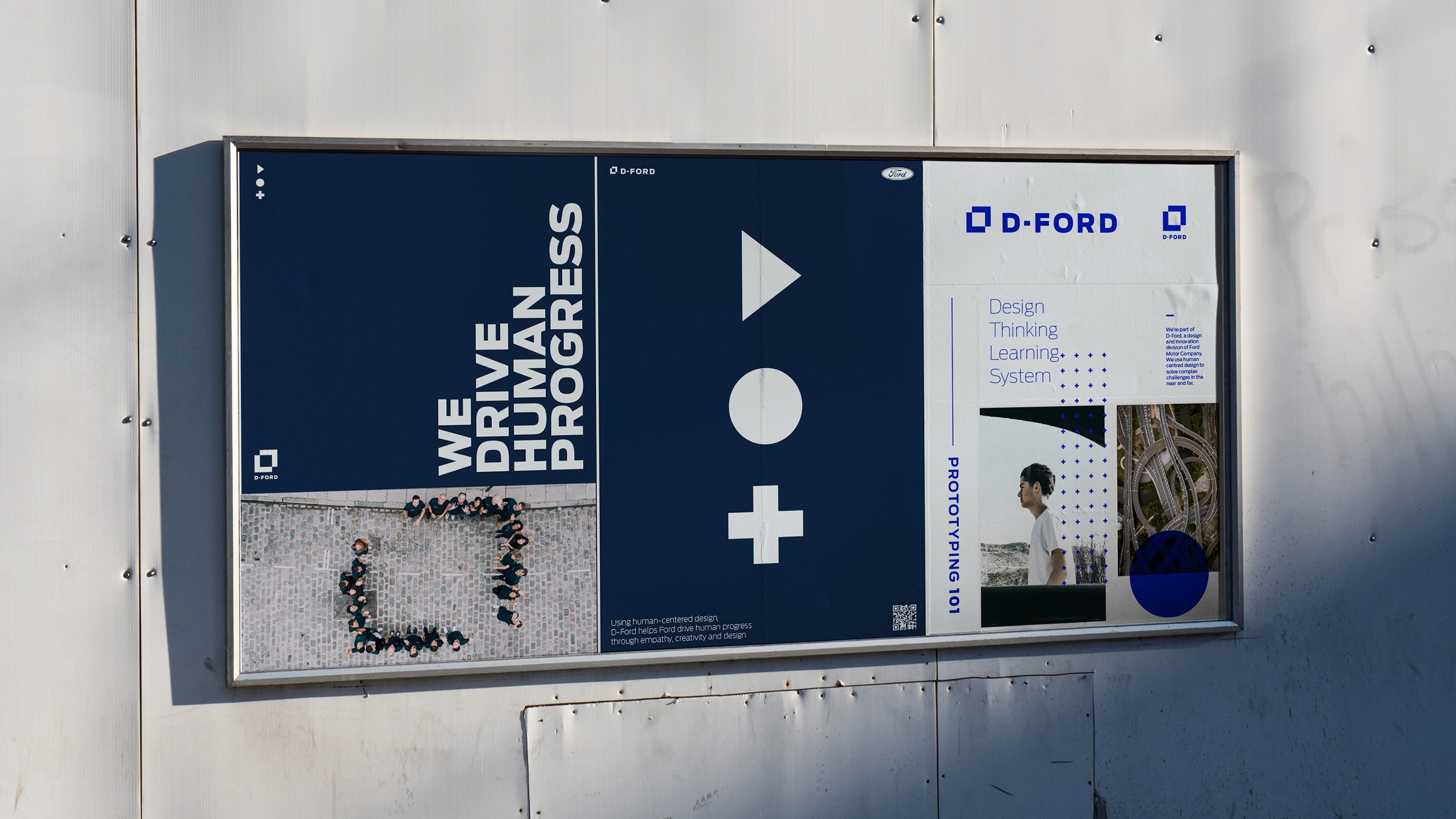
Letting go of ego helped this designer create a transformational brand
Luca talks with IDEO about his time at D-Ford.
On its face, those client experiences might sound worlds apart. And they were, but not for the reason you might expect.
I came to IDEO from those luxury ateliers and joined a team that was designing a new brand for Ford Motor Company. I brought with me the best of what I learned in Paris: a vigilance about being a brand-guideline guardian and a proficiency in creating highly aspirational brands.
Our remit was to come up with a brand for the innovation lab of the 118-year-old automotive company—what would come to be D-Ford. The lab’s remit was to use human-centered design to drive progress, so the brand had to give new meaning to the word “design,” which was very specifically associated with car design internally. It also had to be capable of being comfortably and regularly used by everyone, designers and non-designers alike.
We landed on a brand that involved no special fonts and a few shapes that quite literally anyone could draw. It may not sound lofty, but it was incredibly challenging. And more than that, it was impactful—on the client and on me.
In the luxury ateliers, I was accustomed to interacting with and designing for designers, not the wider organization. I operated in a space where brand books specs were jealously guarded and consistency was the goal.
With D-Ford, the goal was to maximize brand adoption, which was ultimately about adopting the purpose of the lab. To do that, we had to educate ourselves about the organization.
What unfolded was a co-design approach. Our team traveled to different parts of the company and spoke to people, even people who felt they were very far from design. That was such a different approach and scope for me, but it surfaced an important reality: design, historically, was seen as a practice for the few at Ford, where the number of engineers outweigh that of car designers.
With D-Ford, we needed everyone to feel capable of being a designer. Our team had to set up design tools that aligned with the typical employee’s skillset, meaning the brand system had to work seamlessly with Google Slides and PowerPoint.
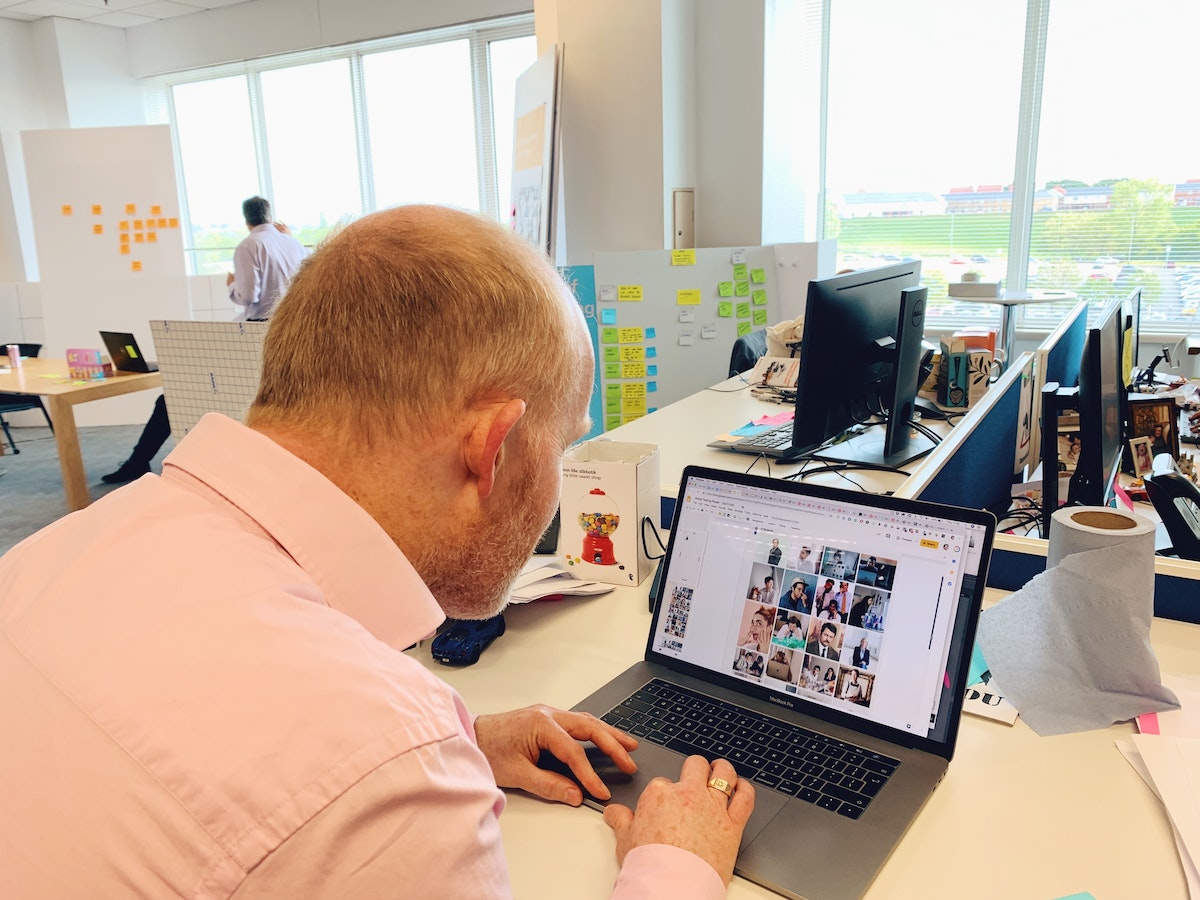
We sat at people’s desks to see how they built presentations, which fonts they had installed on their laptops, and what they knew about Adobe. We realized we had to design soft guardrails—no software to learn, no new typefaces to install—so that whatever they produced in the lab could be easily shared across the wider organization.
The brand needed to stick, be easy to replicate, and take into account what we found to be pretty consistent opinions about specific colors and shapes across the company. For instance, every engineer wanted us to steer clear of red because of its association with danger.
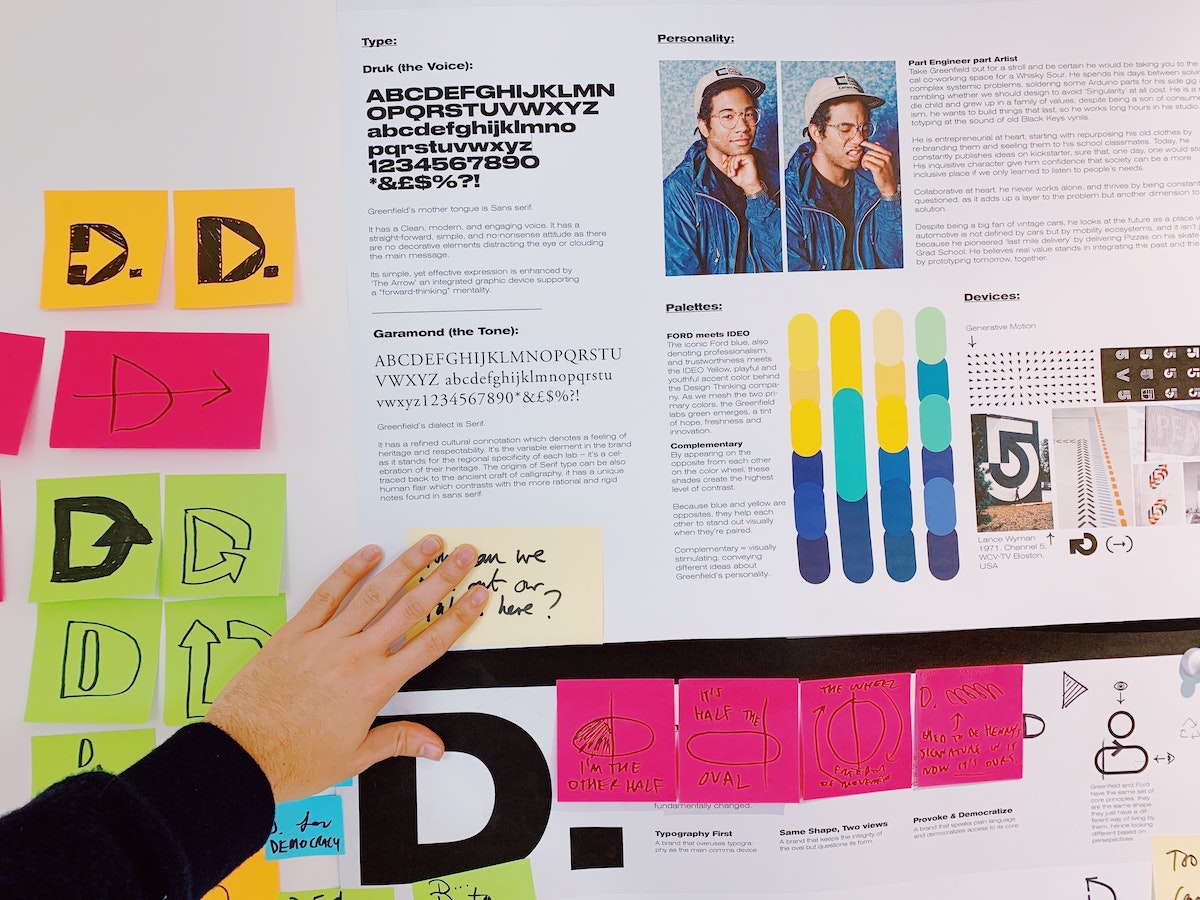
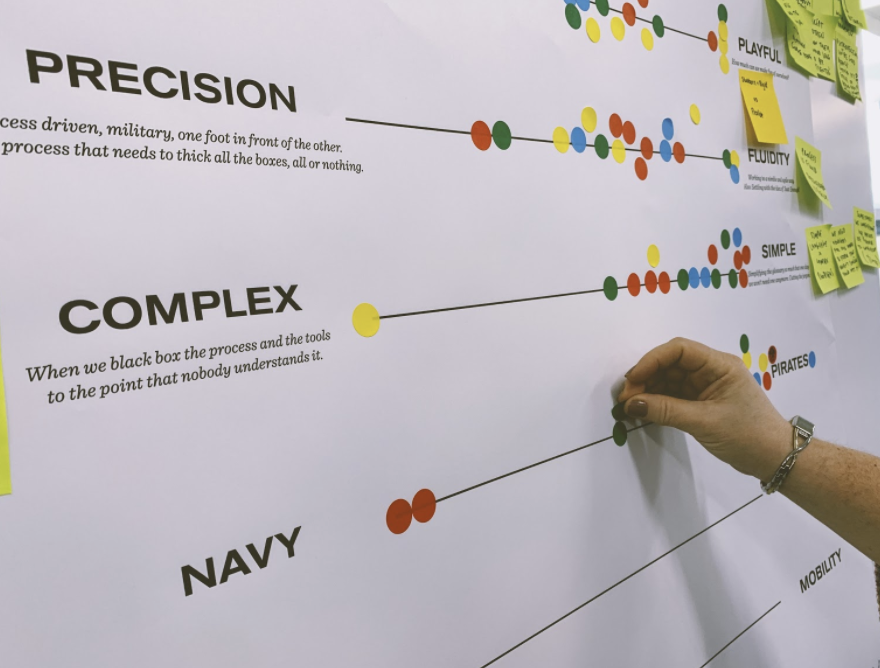
We settled on three simple geometric shapes that linked to D-Ford’s three-word purpose statement and were ones that anyone could draw. A triangle for drive, a circle for human, and a plus sign for progress. They were graphic assets everyone could recreate regardless of their design proficiency, and they provided a simple but effective visual link to the story of what D-Ford stood for.
As for typeface, we ultimately chose the same one Ford was already using, meaning there was familiarity there, but we employed a different typesetting to create a completely fresh result.
The goal here was a grassroots ownership of the assets. When the 12-week project ended, our engagement with D-Ford continued [IDEO has had a nearly 20-year relationship with the carmaker], so I got to watch how the brand design was adopted and evolved and the life it took on in the hands of non-traditional designers.
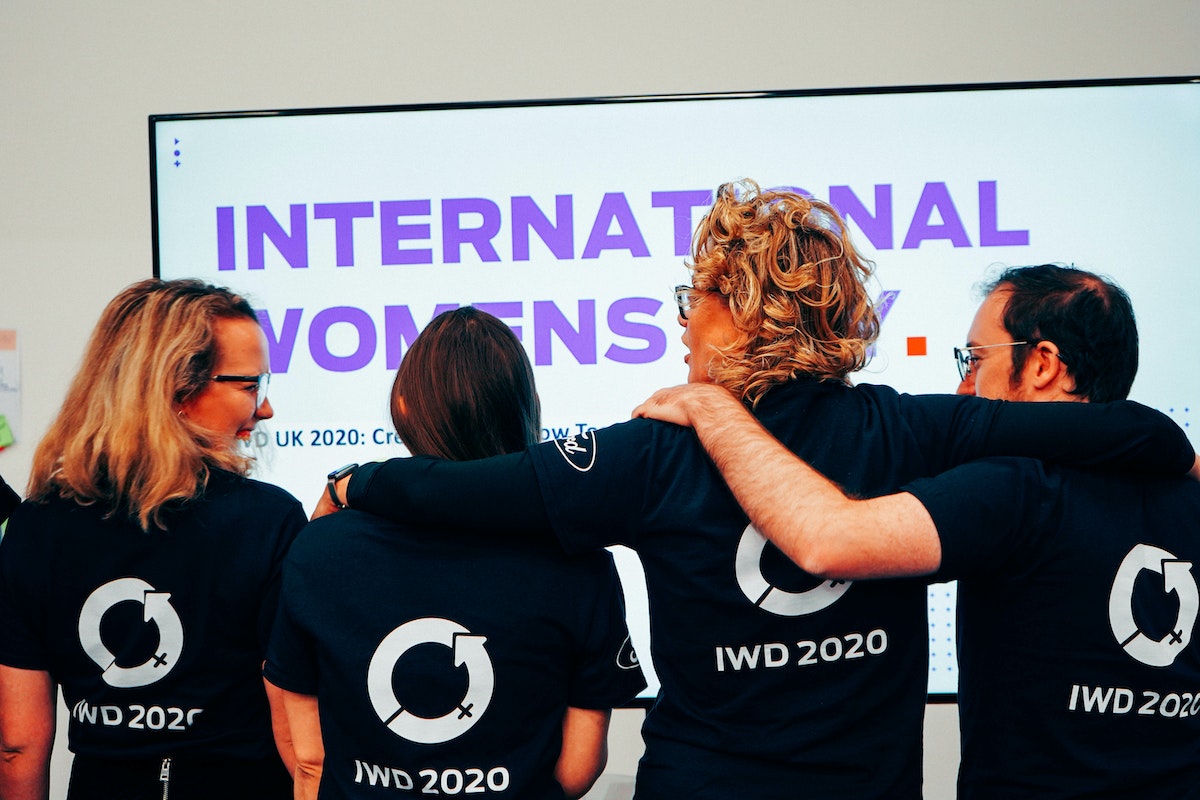
For instance, there was one lab team member who had never designed anything for print before. He used the simple templates that had been created to design a booklet for a presentation he was giving. His enthusiasm and confidence in sharing his creative work with another engineering division was the type of behavior we had hoped the internal brand would foster.
Brand design is often mistaken with art. It has an artistic component but needs to be democratic. We didn’t want to create the brand as an art piece to look at but as an open book to use. The only way to make that happen was to be very empathetic. We needed empathy to understand the employees’ worries, challenges, and motivators within their existing culture, but even more than that, we had to understand what was needed to promote a different behavior—a culture of experimentation.
The aesthetics of design are important. It’s what gives us as designers the sensitivity to what works and what doesn’t visually. But the aesthetic is only as good as what people can do with it.
What attracted me to design in the first place was that I was going to push materials to the edge to design something that would be compelling. That was certainly true with luxury, where I regularly tested how far I could push tangible things. How much can I bend this plastic without it cracking? At D-Ford, I needed to bend people and their behaviors, and it was much less tangible.
The D-Ford work helped me understand the value of that different kind of design work and really demonstrated how impactful your work can be even if it feels at first like it’s going to be more gray.
Giving up the reins and not having tight control of the usage of the brand—it’s a challenge to the ego. But that’s part of what it means to design a brand that is owned by the people. If you distribute ownership you distribute ego.
That made for a humbling experience. It helped me realize how complex an organization can be and that brand does not have to get in the way of it. If anything it needs to simplify. If I had listened to that ego the end result may have been loftier and better for my personal portfolio. But the work would not have had the impact the organization needed. In the end, the right impact is what every designer strives for.
I’m in a drafty room in Farringdon, London, shaking the hands of a dozen mechanical engineers. A few months before, I was scoring paper at an airy luxury atelier in Paris.
The possibilities business
An oral history of organization transformation.
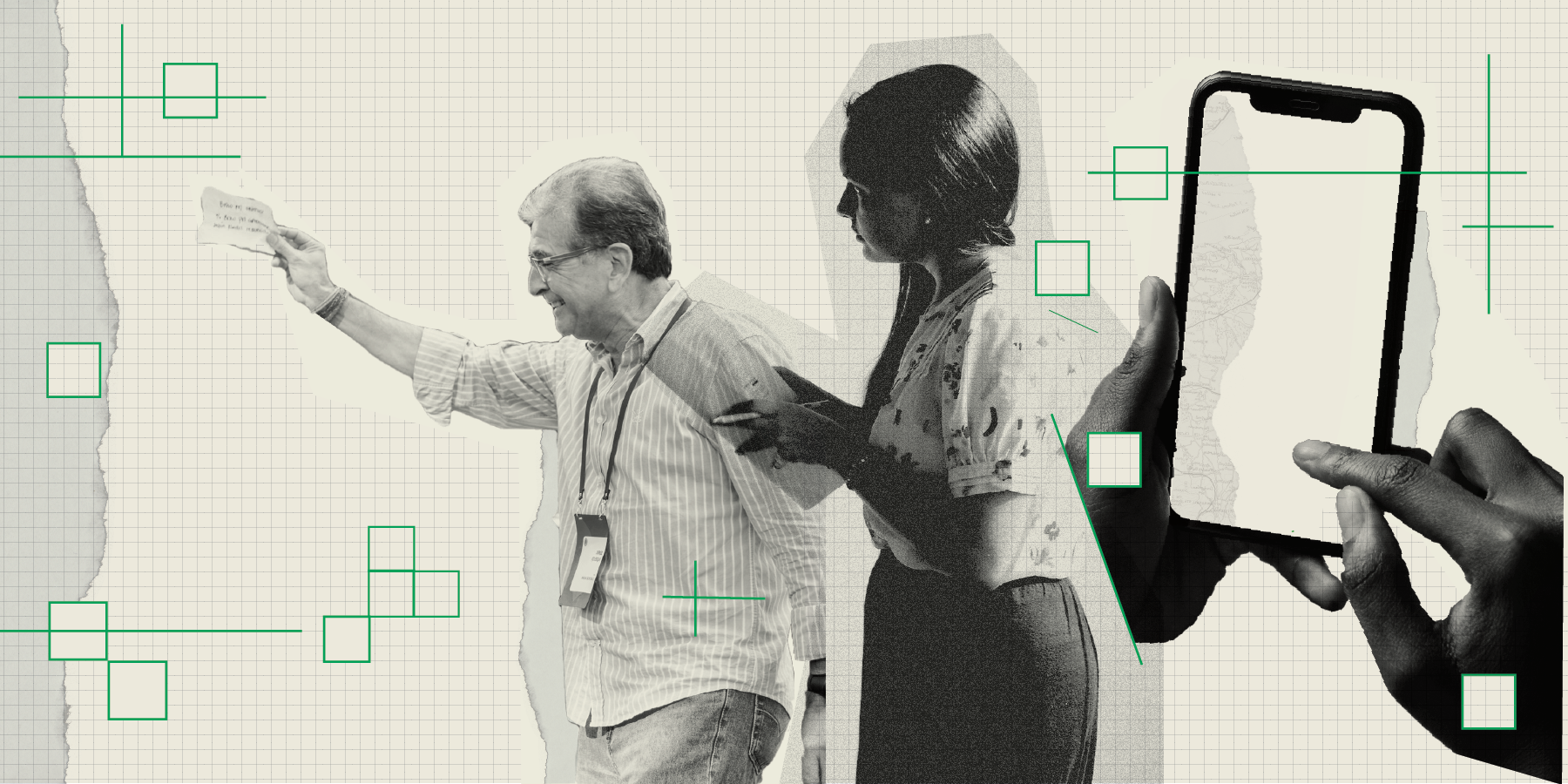
A decade ago, Rodríguez-Pastor asked IDEO to help him realize a unifying, human-focused, mission: to leverage the power of its business to uplift Peru’s middle class.
Beginning with a single engagement in 2011, IDEO and Intercorp’s work together grew into an unusual entanglement of organizational cultures, brimming with stories of mutual influence.
Since then, IDEO’s work with Intercorp has touched more than two dozen different companies across the group as the business grew from $2.9 billion in revenue in 2011 to $8.5 billion in 2021. Intercorp now employs more than 80,000 people and its revenue represents more than 3.5 percent of Peru’s gross domestic product.
Yet the greatest change has been in the minds of Intercorp’s leaders. In looking back on 10 years of collaboration, a key theme emerges: Working with IDEO on dozens of projects has taught Intercorp’s teams new capabilities, and that has snowballed into a new way of thinking for this broad-reaching company.
The following oral history recounts how the organization has transformed over the last decade through a series of leaps: imagining a more human-centered future, using digital experiments to gain confidence, and changing mindsets across the company to ensure resilience over the next decade.
I. Building belief: I can see what we need to do
Carlos Rodríguez-Pastor was born in Peru, and educated in the United States after his father became a political exile in 1969. The family returned in the 1990s, and Rodríguez-Pastor’s father began building a banking business, which became known as Interbank. When he died suddenly in 1995, Rodríguez-Pastor himself became the bank’s chairman, a position he used as a beachhead for growth in Peru’s liberalizing economy. With the founding of Intercorp in 1997, Rodríguez-Pastor charted an audacious path beyond banking, with its unifying force being the well-being and prosperity of Peruvians. It was a far-reaching ambition that bridged people and profit—but to pull it off, he needed help.
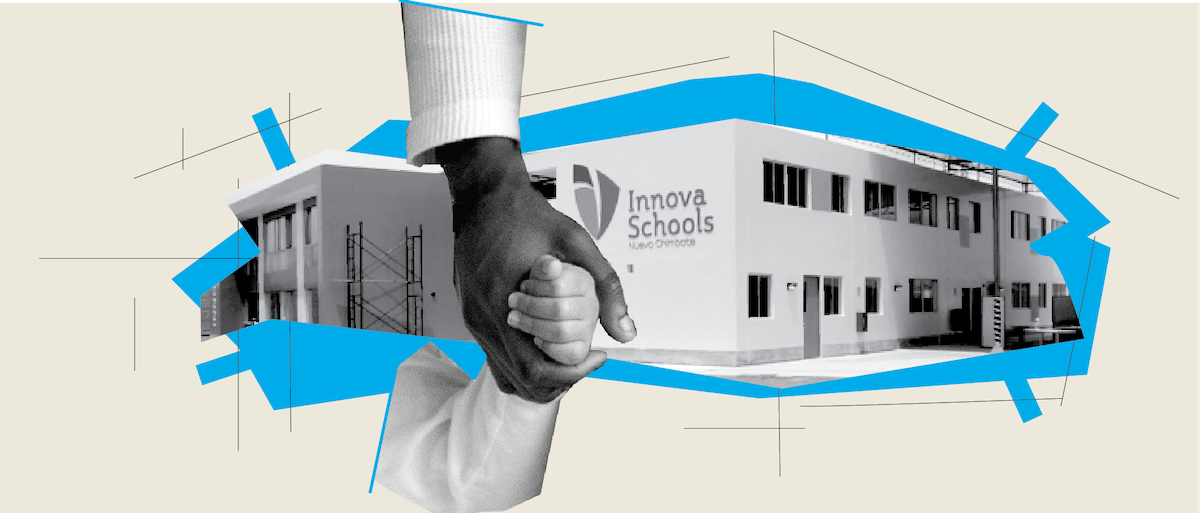
Rodríguez-Pastor asked IDEO for help with two distinct projects: a new school system that would be affordable for the emerging middle class; and a new customer experience for Interbank, Intercorp’s flagship bank.
Carlos Rodríguez-Pastor: “We had a big goal—to make Peru the best place to raise a family in Latin America—which was both a moral obligation and an opportunity. We saw that if you make the pie bigger, then we’re going to help a lot of people, and our businesses are also going to do better. Our education system was struggling and we wanted to help change it."
Sandy Speicher, CEO of IDEO: “It was really a brave moment, both for Carlos and for us. Carlos knew how important it was to create opportunities for people by securing their educational foundation. But Peru, at the time, was one of the lowest ranked countries on an international survey of education systems."
The new school system, known as Innova Schools, was a success on its own terms: In 2020 it enrolled 42,000 students across 68 locations in 3 countries (Peru, Mexico, and Colombia); boosted 4th grade students’ math and reading test scores 2x compared to local public schools; and saw 99 percent of graduates go on to higher education or actively prepare for college. For Intercorp and IDEO, this formative project suggested broader possibilities—for organizational change across Intercorp, which could in turn inspire societal change across Peru.
Interbank presented a different type of challenge. Peru’s history of political instability had left a consumer banking environment controlled by security concerns. IDEO and Intercorp prototyped an experimental space called Interbank Explora, which brought the staff out from behind bulletproof glass and into the middle of the banking hall, making for a more welcoming experience.
Luis Cilimingras, Partner at IDEO: “We realized the intimidating environment wasn't welcoming for customers, and also meant that branch employees and managers were out of touch with the customer's day to day experience. We asked, ‘How could you redesign the banking experience so people would feel good about going inside?’”
Luis Felipe Castellanos, CEO of Interbank: “Before, everything was done on the basis of surveys or a focus group, at the most. IDEO gave us a different way to understand our clients, and get involved in their day-to-day lives. We almost lived with them."
Luis Cilimingras: “With the new branch experience in place, Interbank’s employees told us ‘Now some of my customers kiss me goodbye!’”
In Interbank Explora’s first sixty days, sales increased by 30 percent, customer satisfaction improved, and profitability grew by 32 percent. Building on that success, the changes were rolled out across the bank’s 2,200 branches.
Luis Cilimingras: “The investment and the participation of the leaders in the process made them realize: ’we need to be working in this way.’ They were just immediately converted.”
II. Launching an innovation engine: We can do this
Intercorp and IDEO began considering ways to extend their collaboration across the group—meaning to more of Intercorp’s diverse holdings—by building an internal innovation lab in Lima.
Luis Cilimingras: “Carlos [Rodríguez-Pastor] was like, ‘Okay, first time, with Innova: Lucky! Second time, with Interbank: It seems I have a partner!’ Intercorp saw us as somebody who can help them imagine the future, who is going to help drive change.”
In 2012, Hernan Carranza, then a young executive at Casa Andina, Intercorp’s hotel company, spent a summer working in IDEO’s Munich studio. Afterwards, he pitched Carlos Rodríguez-Pastor on the idea of an in-house digital innovation shop. That idea evolved into building a human-centered design team that could work across Intercorp’s companies. Rodríguez-Pastor seized on the idea, and made Carranza Intercorp’s first Chief Innovation Officer.
Hernan Carranza, Chief Innovation Officer of Intercorp: “That's when we said, ‘Hey, why don't we have a design team—a mini-IDEO—in Lima?’ That would put it much closer not only to the Peruvian family, which is who we design for, but also to the executives of the Intercorp group, who are the people with whom we co-create the solutions for the families.”
Luis Cilimingras: “We were bringing a new set of techniques and approaches to solving problems and they were bringing operational expertise and local talent who understood the context in which we were working. But these were far from what I had imagined as the 'ideal conditions' to set up an innovation team. It was jarring to realize how much I had to learn to be effective. With a product mindset, you have this vision of what the end result will be like. I had to scrap that and embrace what I didn’t know as the key ingredient for success.”
Hernan Carranza: “If Intercorp and IDEO had a child, that would be La Victoria Lab. But even a love child isn’t easy! We found a way to have our own voice that is authentic to us. But what we conserve are the foundations of IDEO’s approach: being highly experimental, being truly curious, being intuitive. All those mindsets that we learned from IDEO are the cornerstone of what we do.”
Watch "It's Up to Us", a short film about IDEO's 10-year partnership with Intercorp and how it transformed the organization.
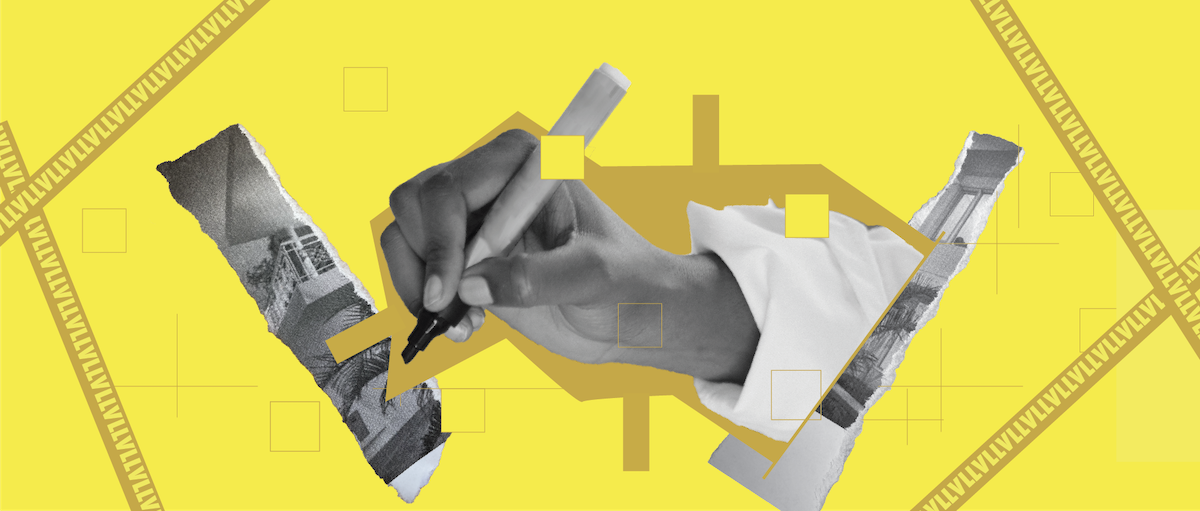
La Victoria Lab (LVL) opened in 2014 in a converted house a few blocks away from Intercorp’s headquarters. Their first project was a deep ethnography of the Peruvian middle class, presented in a way that would engage executives across Intercorp.
Maria Paula Loayza, Portfolio Lead at La Victoria Lab: “We turned our own office into a small exhibition, so people could walk around and experience the research, as if they are dropping into someone’s house.”
Luis Cilimingras: “We invited leaders from across Intercorp, and we shared these stories with them. And that built La Victoria Lab’s brand within Intercorp—you can come to us when you have a human problem. Don't come to us with an efficiency problem. Come to us when you have something that has a deeply human need.”
In its first two years, La Victoria Lab grew to over 20 designers and launched multiple initiatives across Intercorp with a single objective: to build belief and confidence in their ability to design impactful services and experiences for Peruvian families. Given the vast scale of the conglomerate, this early work was just a start, but it was consequential in its ability to inspire Intercorp’s leaders.
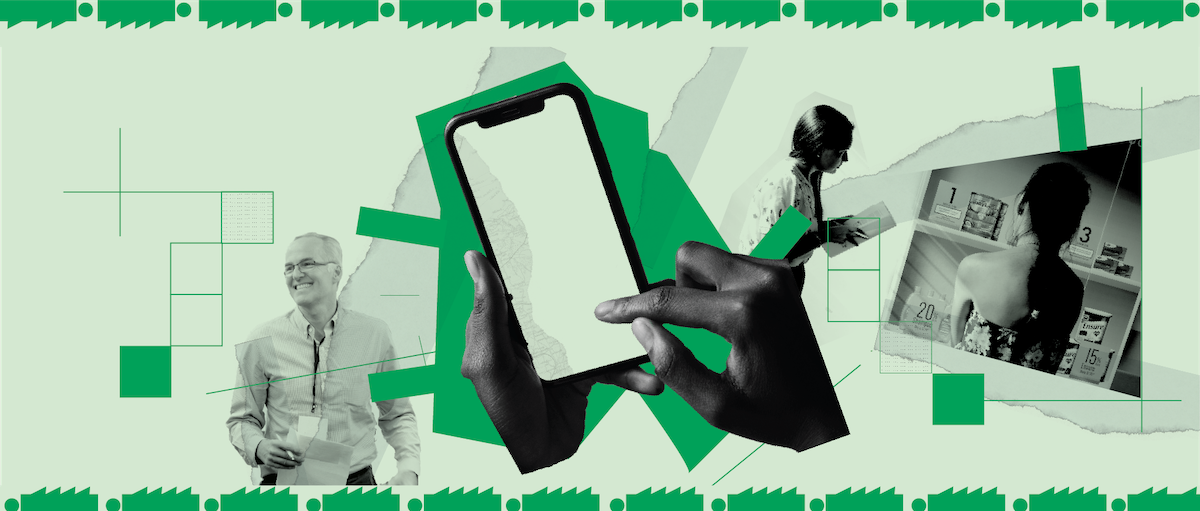
III. Unleashing a digital transformation
With La Victoria Lab on its feet, its designers homed in on a “theory of change,” a method by which their small team could create work that inspired innovation across Intercorp. For years, Rodríguez-Pastor had been pushing for a company-wide digital transformation, but there was little progress. The businesses had a vestigial brick-and-mortar mentality and didn't see digital as something that would take hold in Peru for another decade. LVL saw this as their challenge: to become a hotbed of digital experimentation, executed in a way that built confidence and capability across Intercorp. Conceived to be highly visible, this category of projects became known internally as “beacons”, digital products whose design and launch would convey to the organization what it needed to change in order to scale digital ways of working.
Maria Paula Loayza: “The beacons were conceived to shine back to the organization everything that needed to change.”
Hernan Carranza: “We were not thinking of ourselves as the scalers of innovation. We were more like igniters. We were always like, ‘how do we inspire the leadership?’"
Maria Santolaria, Program Director at IDEO: “Our thesis was that by injecting something—a team that worked differently, or a digital product that was built and launched in a different way—the organization could mimic that behavior and change organically.”
The most popular of the early beacons were for Inkafarma, Intercorp’s consumer pharmacy chain, and Interseguro, their insurance company. Inkafarma’s project became a model across Intercorp for a digital-first strategy. By making it seamless and convenient for Peruvian customers to get medications delivered to their door, Inkafarma’s mobile platform predicated many of the features that would become essential during the COVID-19 pandemic. The app now drives up to 20 percent of Inkafarma’s business in urban areas.
Hernan Carranza: “In creating Inkafarma’s delivery app, which considered the needs and pain points of the consumer first and foremost, the team started designing and implementing on the fly, with the goal of putting functional products in the hands of users—in order to capture real reactions.”
Maria Paula Loayza: “At first, everybody at Intercorp was kind of looking at us weirdly, because what we were putting in the hands of consumers was crude. But we were able to apply our learnings as we went, and show how these small projects could be like proof points—prototypes that build confidence and begin the complex process of transforming organizations.”
Patricia Conterno, VP of Digital and Analytics at Interseguro: “Interseguro was not then a company centered on the user. When we developed a new product, we just did what we thought was right and hoped people liked it. Our beacon with LVL helped change that. Now we're constantly experimenting, testing with users, and trying to solve any friction they might have. To do so, we’ve now put 15-20 percent of employees in digital transformation roles. Once we launch a product, it is never finished.”
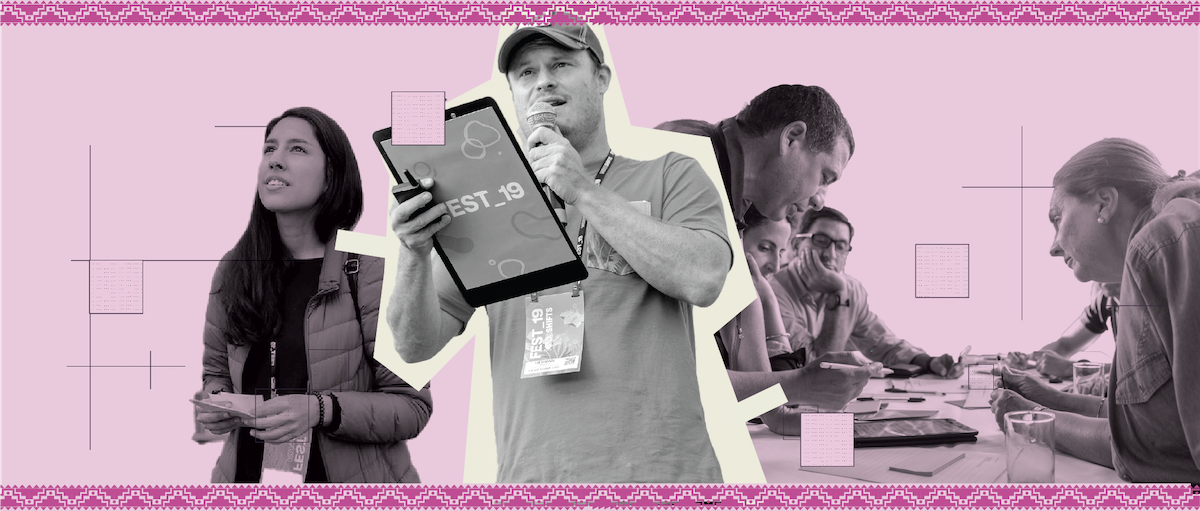
IV. Changing mindsets: This is us now
As La Victoria Lab’s reputation grew within Intercorp, IDEO’s role shifted. Intercorp had the ability to tackle core business opportunities in-house, so IDEO turned to guiding critical, strategic programs (like climate change and DEI initiatives); industry deep dives in sectors like health care; and continued support for leaders as they embraced new mindsets and ways of working.
Hernan Carranza: “A specific behavior we developed with IDEO is what we internally call ’tunking,’ which is when someone leading a creative project looks to others for honest feedback. I remember Luis Felipe Castellanos, the CEO of Interbank, once called me and said, ’Hey, can you send me six, seven more tunkeros to look at and tune my five-year vision?’ I thought that was fabulous. It's a sign that this leader is becoming a more vulnerable person, a more open leader who wants to listen to other perspectives.”
Luis Felipe Castellanos: “Leadership is not about having all the answers, it's about having the right questions. Working with IDEO has made me a much more human leader, focused on understanding the human being behind all of our solutions and all of our offerings.”
Fernando Zavala, CEO of Intercorp: ”What IDEO and La Victoria Lab have done is to permanently push us to think differently, to open our minds, to confront our ideas and, based on that confrontation, to get the best out of it.”
Hernan Carranza: “IDEO infected us with this little bug of permanent curiosity. To be constantly learning all the time—but, even more importantly, constantly unlearning. For Intercorp’s leaders, La Victoria Lab has become a stone in the shoe, always looking to discomfort, to challenge, and to take solutions to the next level."
After a decade, IDEO and Intercorp have come to an unusual understanding of what they have most meaningfully created together: not projects and businesses, but people and culture. It has been a transformation not only of design and efficiency, but also of mindset and approach.
Hernan Carranza: “I think my main learning in this last decade is that the transformation of a conglomerate of 80,000 people starts with the transformation of oneself as a leader. If you are able to start transforming your mental model, that makes another leader, another leader, and leadership begins to cascade.”
Sandy Speicher: “They’ve built this massive organization of learning. They’ve taken this model that we designed with them, and built an organization that continuously learns, and continuously designs, and continuously evolves.”
Carlos Rodríguez-Pastor: “Ten years into our relationship with IDEO, Intercorp is a totally different company. We are a much more customer-centric company. I think we have more empathy. We want to become the best place to raise a family in Latin America. I think that's achievable within the next 10 years. It's really up to us.”
Illustrations by Stephanie Sizemore
When the public sector falls short, should business step in? That question was top of mind for Carlos Rodríguez-Pastor, President of Intercorp, a Peruvian conglomerate with an expansive range of companies from banking to education to health care to retail.

Lindsey Turner
I’m passionate about building brands, products, and experiences that help organizations show up with meaning and momentum.
I help organizations cut through complexity by shaping how they show up, through brand strategy, identity, and storytelling.
Working at the intersection of brand and business, I bring an editorial eye and a bias toward making—turning ideas into tangible experiences that people can understand, trust, and believe in.
My work spans government, healthcare, financial services, media, and consumer goods, from launching Gen Z-focused ventures to building innovation labs and reimagining legacy brands. I relish moments of ambiguity and enjoy translating across teams, perspectives, and priorities to move ideas forward.
I started my career in editorial and digital design, shaping cross-platform experiences and identity systems in publishing and agency environments. That foundation still shapes how I work today: I’m detail-oriented, collaborative, and overreliant on the Oxford comma. I hold a BFA in Visual Communication from the School of the Art Institute of Chicago.

Rachel Young
My work helps organizations see who their products aren't working for—and build the will and the tools to do something about it
For 25 years, I've asked the same question: Who does this design exclude—and what are we going to do about it?
My work spans human-centered strategy, inclusive design, and qualitative research, with clients ranging from Microsoft, Google, and Verizon to the National Science Foundation, and San Francisco Unified School District.
Before IDEO, I taught elementary school in East Palo Alto and spent a decade doing design work with social service organizations—where I learned firsthand what it costs people when systems are built without them in mind.
I am currently writing User Error, a nonfiction book about digital access and the design decisions behind it. I live in Oakland, California.

Brian Pelsoh
I lead with craft, ensuring our work is creatively excellent: rooted in deep human insight and imagination, while also grounded in the realities of business and technology.
My expertise spans brand, communication, and product design across tech, education, the arts, and social impact.
I believe great work demands both high-level vision and obsessive attention to detail, and only happens through collaboration.
I bring an inclusive, hands-on approach and a deep understanding of business, which enables me to consistently deliver excellence while always asking why.
Before joining IDEO, I worked at the brand firms Pentagram and VSA Partners. I began my career as a designer, leading teams at the School of the Art Institute of Chicago and the Milwaukee Art Museum. I hold an MFA in graphic design from Maryland Institute College of Art and a BFA in communication design from the Milwaukee Institute of Art & Design, and have taught at some of the best design schools in the US.

Tony Wong
I am responsible for IDEO’s long-term success in China and working with clients to use design as a tool to enable growth.
I am responsible for IDEO’s long-term success in China and working with clients to use design as a tool to enable growth. Specifically, I have helped Chinese companies design holistic brand solutions through the development of their products, communication, services, and innovation teams, and I have helped multinationals expand their presence and influence in China.
I advise global leaders on developing China-led innovation and capabilities.
In over 15 years in IDEO Shanghai, I have worked on projects that use design to elevate the quality of the experience of healthcare products and services, streamline processes that increase productivity, create spaces and programs that promote and enable inclusive communities, and build next generation mobility solutions that are planet-positive.
Before joining IDEO, I worked at Philips Electronics and the Electrolux Group in Italy, the Netherlands, and Singapore on a number of breakthrough commercial products. I am a member of the Young President Organization in Shanghai.

Building a personal AI for the messiness of life: Sida Li
Most AI products today are built for work—a space with clear problems and established systems. One founder noticed a gap: personal life is messier, harder to systematize, and mostly left behind by the AI boom. So she built Cue, a personal AI that lives inside iMessage and group chats, to go where the other tools haven't.
In this episode, Becca Carroll, IDEO's Chief Strategy Officer, talks with Sida Li, co-founder and CEO of Shared Context Lab, about staying anchored to a human need while the technology around her keeps changing shape, why she treats her business model with the same rigor she'd bring to a product, and what it feels like to build a company at this particular, disorienting moment in AI.
The conversation also gets into how Sida makes design decisions: the language Cue uses to describe itself, the tradeoffs behind building inside iMessage instead of a new app, and a real story about a business idea that didn’t pan out.
This is the second in a two-part series profiling founders from IDEO's Startups-in-Residence program. The first conversation is with Johannes Seemann, founder of Sooner, on designing GenAI for the emotional side of money.

Designing GenAI for the emotional side of money: Johannes Seemann
Most personal financial tools are built to run the numbers and optimize towards a budget. While that works for some, most people experience money as a lived relationship that does not neatly fit into a spreadsheet. Johannes Seemann and Becca Carroll discuss why money is emotional before it is mathematical, and what a human-centered approach to building a generative AI financial product looks like in practice.

The curious leader's edge in uncertainty: Scott Shigeoka
Mina Seetharaman talks with Scott Shigeoka, author of Seek and Head of Curiosity Cultivation at the Eames Institute, about what distinguishes genuinely curious leadership from performative curiosity, how power dynamics shape curiosity, and why practicing curiosity can restore energy rather than drain it.

How constraints make us more creative: David Epstein
Mina Seetharaman talks with David Epstein, author of Inside the Box and Range, about why total freedom often produces average work, how leaders can design useful limits on purpose, and what organizations such as General Magic and Pixar reveal about the relationship between boundaries and creativity.
Looks like you might be in search of something very specific?
Or reset the filters above and try another angle.
Here’s some random inspiration

Podcasts about creative leadership

Articles about the power of prototyping
