
.svg)



Arming a 19th-century company with a 21st-century digital venture
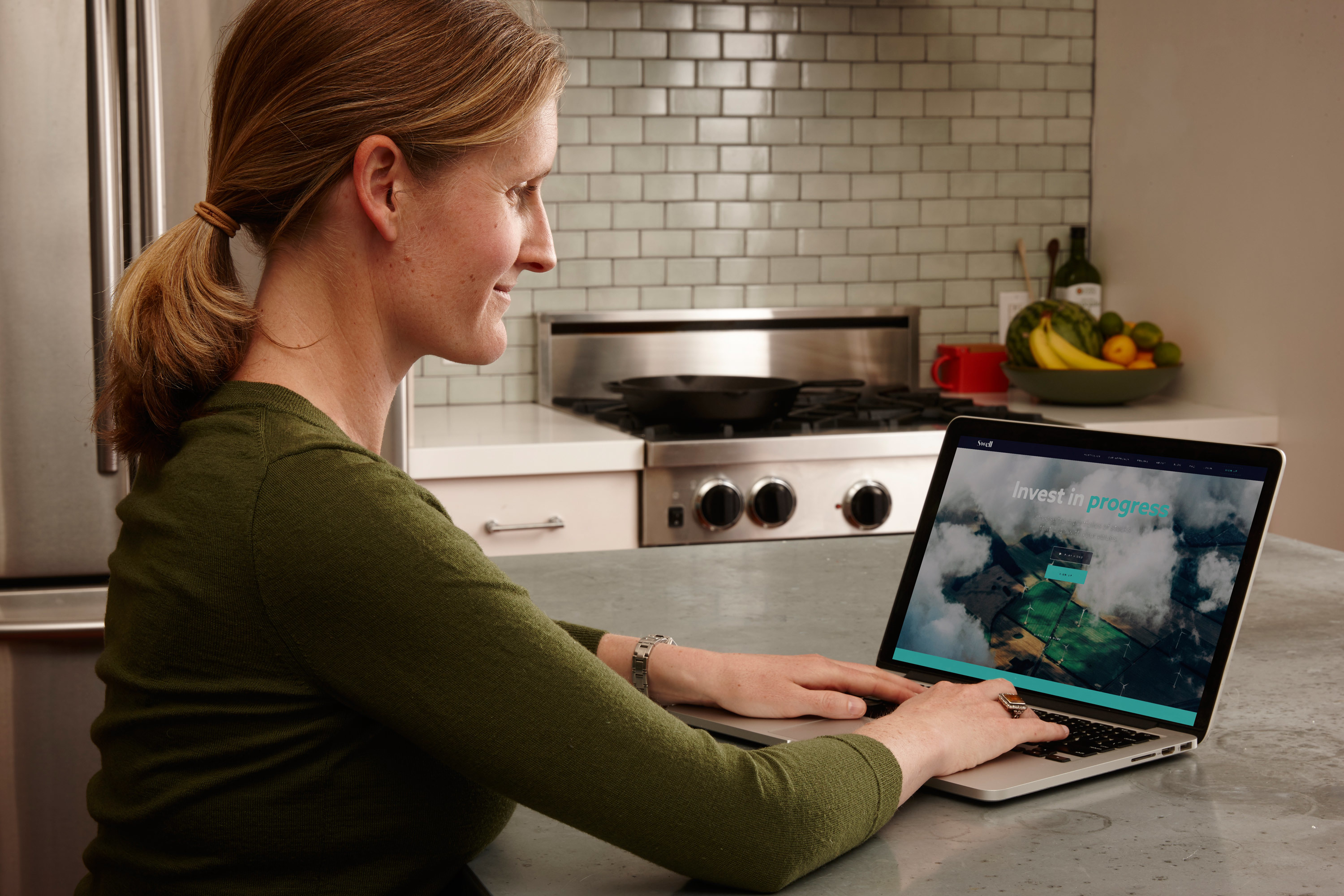
Swell enabled values-driven consumers to make informed investment decisions.
For the socially-conscious, investing can be a tricky proposition. The same people who wish to vote with their wallets may find that their options for investment funds and 401K plans are rife with companies that violate causes they believe in. So far, there have been few options in the marketplace that give consumers the opportunity to put their money in financial products that not only cut out environmental and social offenders, but actually contribute to the well-being of the environment and society.
Dave Fanger, a financial professional, was determined to design a solution. He approached IDEO to help create a startup venture for socially-conscious investors. Pacific Life, a Fortune 500 financial services company and Fanger’s employer at the time, offered the resources to develop and launch the idea. The online impact investment platform gave consumers the opportunity to invest in high-growth industries that are addressing global, environmental, and social challenges. Swell rigorously screened companies for both impact and performance, so consumers could be confident that their investments were in line with their values.
A holistic approach
Embedded as core team members, IDEO designers worked alongside Swell’s founder to shape the company. In just one year, they went from an initial concept and prototype to an SEC-registered investment adviser with a fully developed business model, a digital platform with initial investors, and well-defined branding that set the look and feel of the values-driven company. The IDEO team helped to hire the initial team of employees, working to ensure that the fintech startup would have the creative talent it needed to operate post-launch, as well as a defined culture that would help it grow.
A new investment platform
From the outset, it was important for the team to build an innovative, digitally-fluent, and customer-centered platform to make it easy for investors to back causes they care about. Working in close collaboration with software development partner Carbon Five, Swell and IDEO committed to act nimbly, take risks, move fast, and ditch decks for prototypes. Understanding the motivations of the investor—their values and what drives their investment decisions—was key, so the team leveraged IDEO’s network to form a consumer council, which helped to quickly iterate and refine prototypes throughout the duration of the product development process. Having that core group involved every step of the way made it easy for the team to keep consumers at the center of the design and validate key decisions quickly.
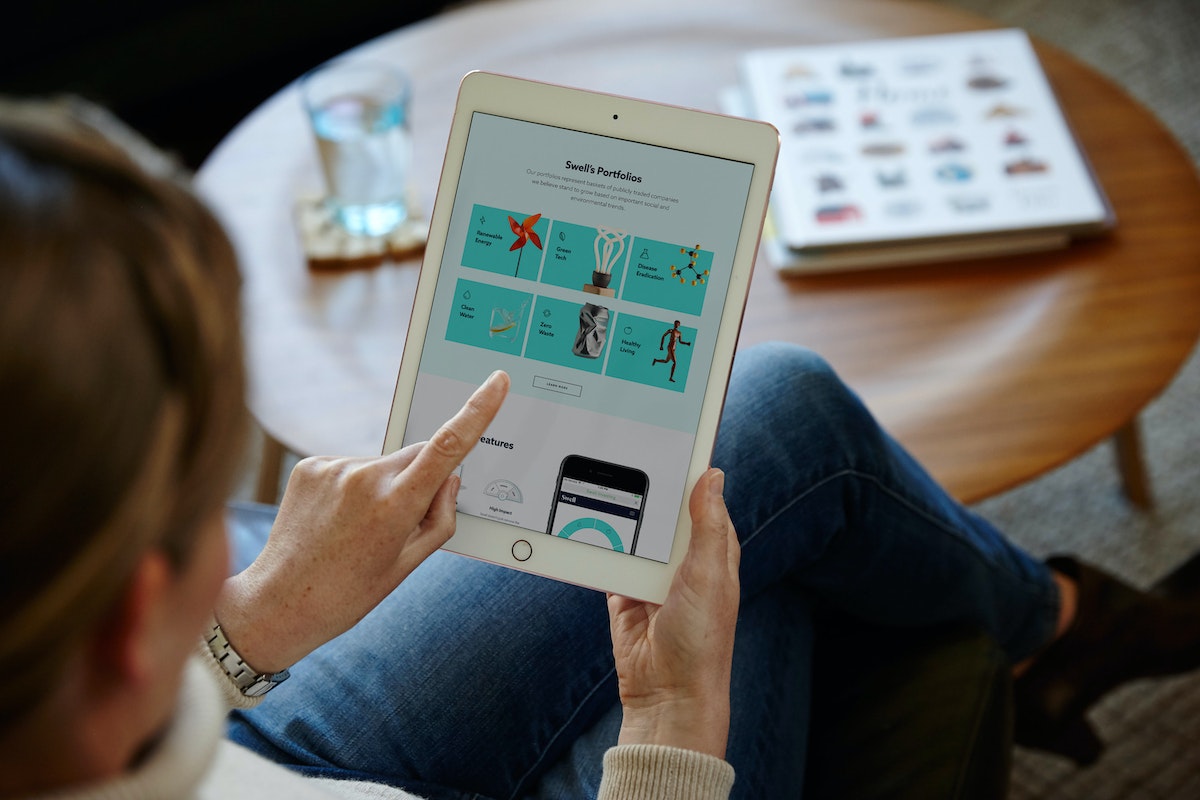
Swell offered consumers portfolios of companies that work to solve some of today's biggest challenges. The six impact portfolios offered were: green tech, renewable energy, zero waste, clean water, healthy living, and disease eradication.
As of June 2019, Swell had attracted over 15,000 investors—more than half under the age of 34—and $35 million AUM. Nearly 40 percent of investors were making investments on a recurring basis.

For kids, a new tactile way to learn coding
Helping Google design a set of blocks that can be arranged to code almost anything.
Learning to code isn’t just about knowing symbols and syntax—it can help unlock kids’ imagination by inspiring them to build new things and interact with everyday objects through discovery and play.
With that in mind, Google Creative Lab came to IDEO to help with user experience and product design on their new coding tool for children. The result of the collaboration, Project Bloks, is a simple and interactive experience that teaches kids how to code using physical blocks. This establishes a new paradigm for learning computer science: it takes a language typically only understood through screens and keyboards, and makes it tangible.
Project Bloks was also designed as an open hardware platform, enabling developers and educators to build tangible programming applications that are innovative, educational and fun.
Kid-centered design
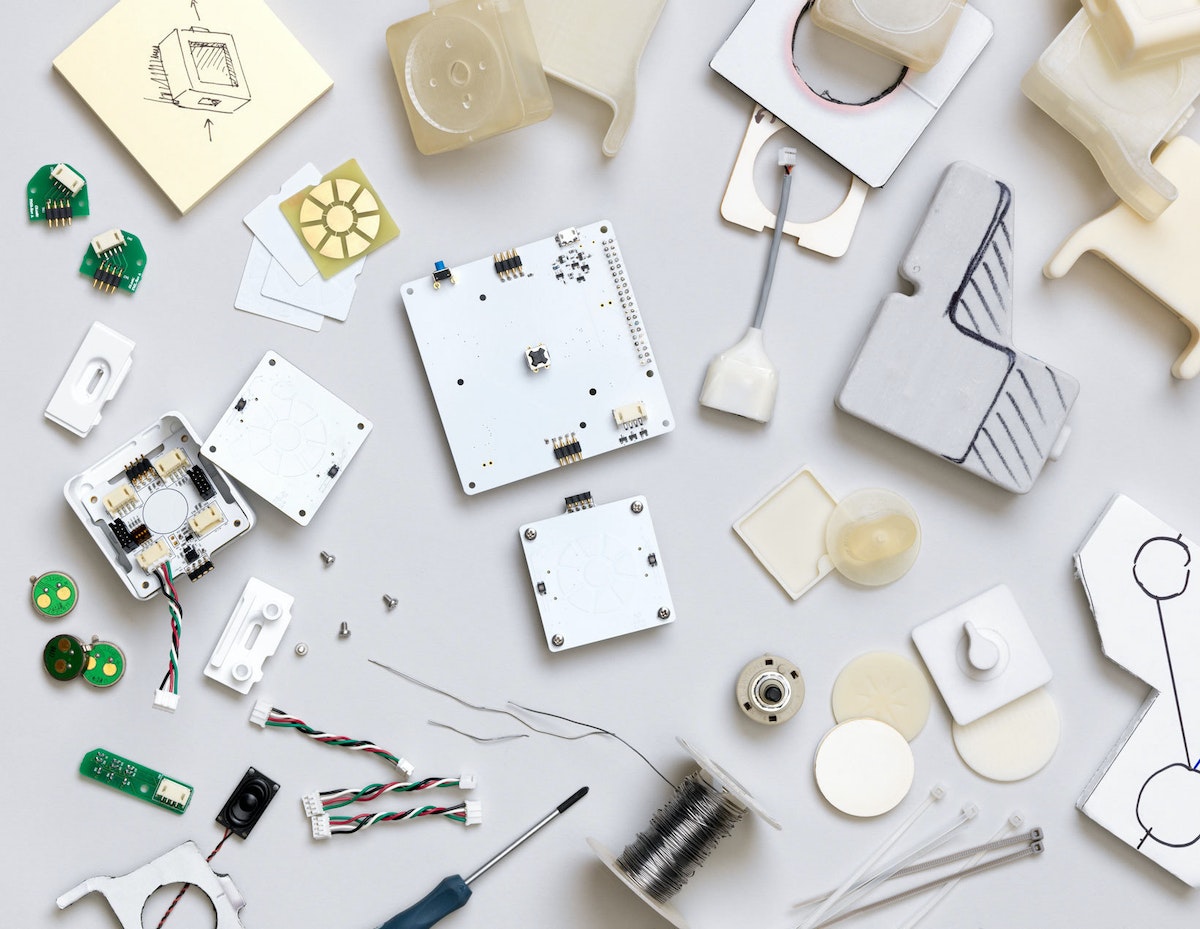
From the very beginning, how kids physically play and learn were at the center of the project. Designers quickly iterated using sketches, foam core, paper, Play-Doh, and 3D-printed models to see how slight changes informed children’s experiences. Understanding what deepened kids’ engagement, increased their curiosity and changed their behaviors drove the language, taxonomy, architecture, and physical form of Bloks.
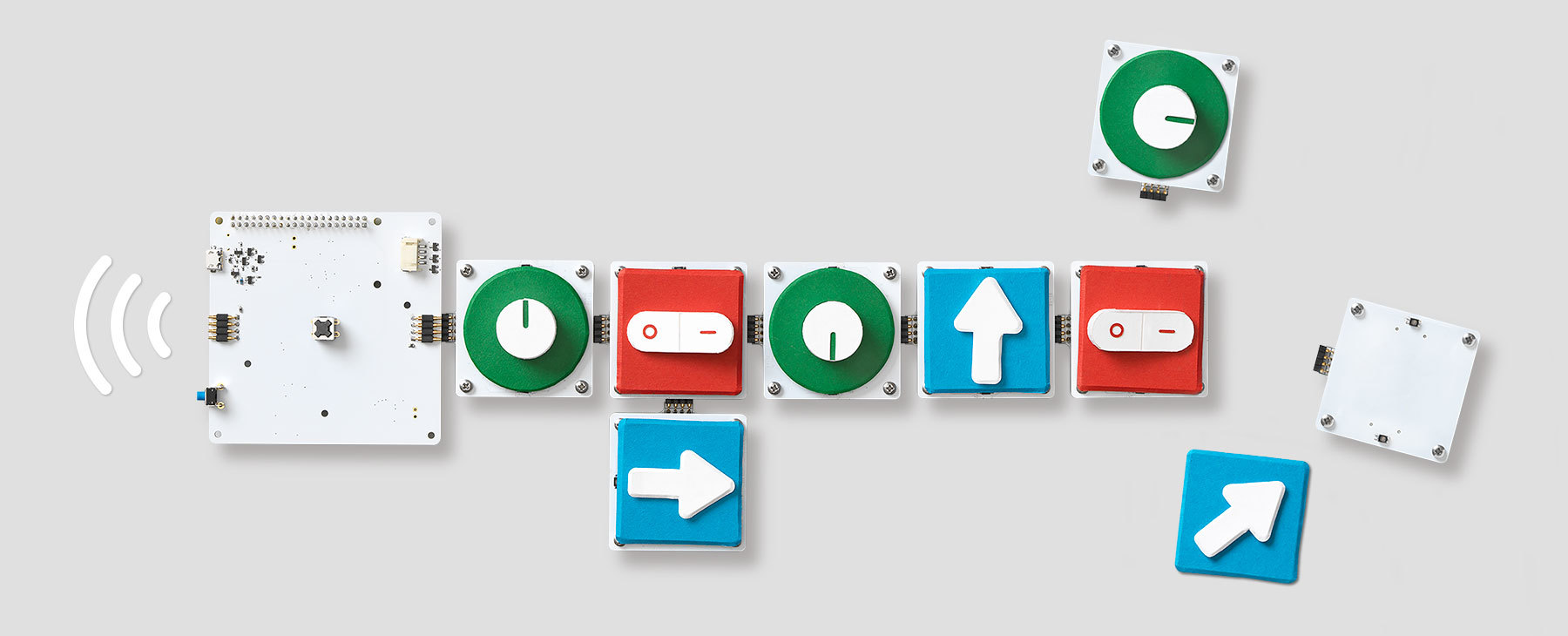
Because play and physical building is an important way in which many kids develop skills, designers began with a set of blocks and sought to help them discover coding through tangible objects. Each block was given a specific function and shape, guiding kids to arrange, combine, and rearrange the blocks to create commands and control things like robots or speakers in the real world. Children could also create block patterns together by physically building on each other’s ideas.
An inside look at the design process. Video by Google.
Designing for early learners also forced the team to rethink how a new language could be taught. An early version of the blocks was based on how programmers typically code, from top to bottom. However, the team quickly realized that the orientation had to be driven by the child’s natural instincts. Given young children are just learning to read from left to right, designers observed that the switch in directions was too confusing and changed the arrangement of Bloks commands to go left-right in addition to top-bottom.
The final outcome of Project Bloks was an interactive coding kit comprised of three key parts - pucks, baseboards and a brainboard. The puck is a critical component that controls a command, whether it’s an on/off switch or the ability to move in a particular direction. It’s the piece that enables children to move from words to the world of graphics and play. The puck is easy to produce and can take an unlimited range of forms and functions, enabling the Bloks system to scale.
The baseboard reads the puck’s instruction and is activated when a puck is placed on top. The brainboard provides the power and connectivity. When hooked up to a baseboard or a chain of baseboards, the brainboard sends the instructions—turn left, jump, get louder—to a connected object, like a rocket or a speaker.
The boards can be rearranged, sequenced, and packaged however kids like, opening up a vast realm of possibilities. Children can code anything from a toy robot drawing a shape on a piece of paper, to a sensor turning on a fan when the temperature gets too high.
Enabling innovation for education
Beyond a tangible coding kit, what makes Bloks unique is that it’s an open platform. Educators, developers, and designers can build on it to accelerate new ways of teaching and exploring tangible programming. The platform can fit into various curriculums around the world. The pucks can take on different shapes and graphics. The material used can be fabricated by 3D printing.
The Bloks platform is a new vernacular that allows kids to interact with the language of code in a way that’s less prescriptive and more open-form, like a sandbox. And the more kids play with Bloks, the more opportunities they discover for what they can create with a little bit of code.
Helping students navigate college and beyond
Creating a digital experience to support first-generation college students.
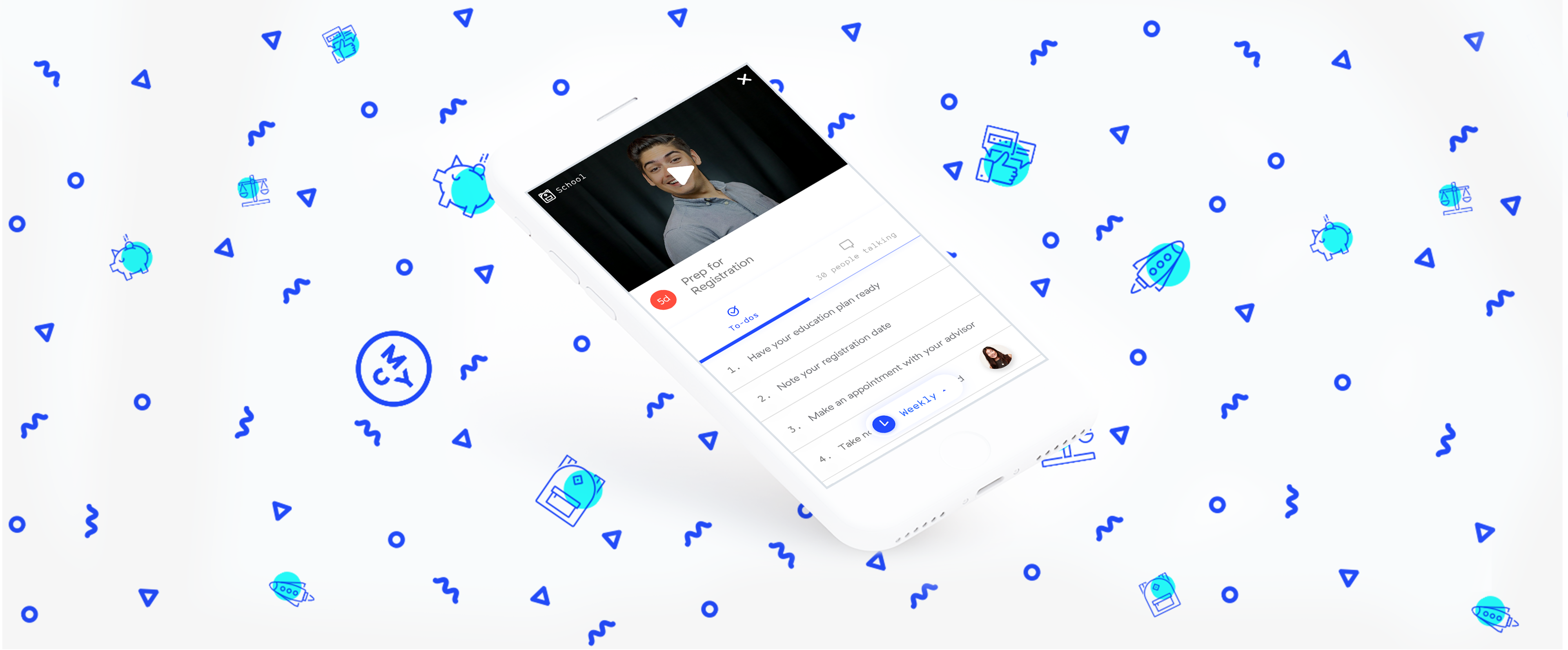
For students who are the first in their families to pursue higher education, navigating college can often feel like navigating a foreign country. Challenges like not having enough money or poor access to support services can make graduating an insurmountable hurdle. In fact, only 55% of these students in the United States end up completing their degrees.
To help change this statistic, IDEO partnered with Beyond 12, an organization that provides personalized, virtual coaching to first-generation college students to help them learn how to register for classes, apply for financial aid, and much more. The challenge was to scale Beyond 12’s successful coaching model using technology in order to benefit as many students as possible.
In 2014, IDEO designed the MyCoach app, with the goal of helping students take ownership of their education and feel in control of their future. After the early version of the app was named as a finalist in the prestigious Robin Hood Foundation College Success Prize, Beyond 12 piloted the product with 3,500 college students across the US. Following the pilot, Beyond 12 and IDEO went back to work, using the resulting insights and data to design the next evolution of MyCoach.
First and foremost, IDEO sought to develop a more flexible model for Beyond 12 to enable scalability of the offering. As some students need more support than others, a blended business model was envisioned to recognize the spectrum of students’ needs. Engaging in-app content forms a supportive layer that helps students get organized, stay on track, and learn the skills they need to stay in college, while students who need more hands-on assistance can connect directly with coaches. An invisible data layer works behind the scenes to assess student risk and dynamically tailor student support throughout the school year.
Once the app’s model was solidified, creating a user experience that compels students to use it became essential to its efficacy. Growing up with technology has reshaped how many students engage with the world, and tools like Snapchat have set a new dynamic for participation. Youth today are the masters of their own digital worlds, fluidly jumping between conversations, engaging with stimulating content and contributing their own perspectives. As a result, MyCoach needed to speak students’ language and to create content that was authentically youthful and effective in order to be effective. By drawing inspiration from popular social sites, digital experiences and games, the team designed a user experience that keeps pace with a digitally native state of mind.
IDEO Designer, Isabela Sá explains the approach that led to MyCoach’s design and content strategy, “We created an app that makes no distinction between content and utility. We borrowed the content-first approach of social apps like Snapchat and Instagram and used it to teach students the skills and strategies they need to graduate. With that, the digital experience became more human. The intricate system that we had designed to power the whole thing was hidden below the surface. For students, the app was just the means to learn how to help themselves and get in touch with a coach when they needed one.”
Development is underway for the next version of MyCoach, which will allow Beyond 12 to scale its offering to reach exponentially more students in need.
Redesigning how Coca-Cola works, plays, and profits
Designing for Coca-Cola’s 2020 vision strategy.
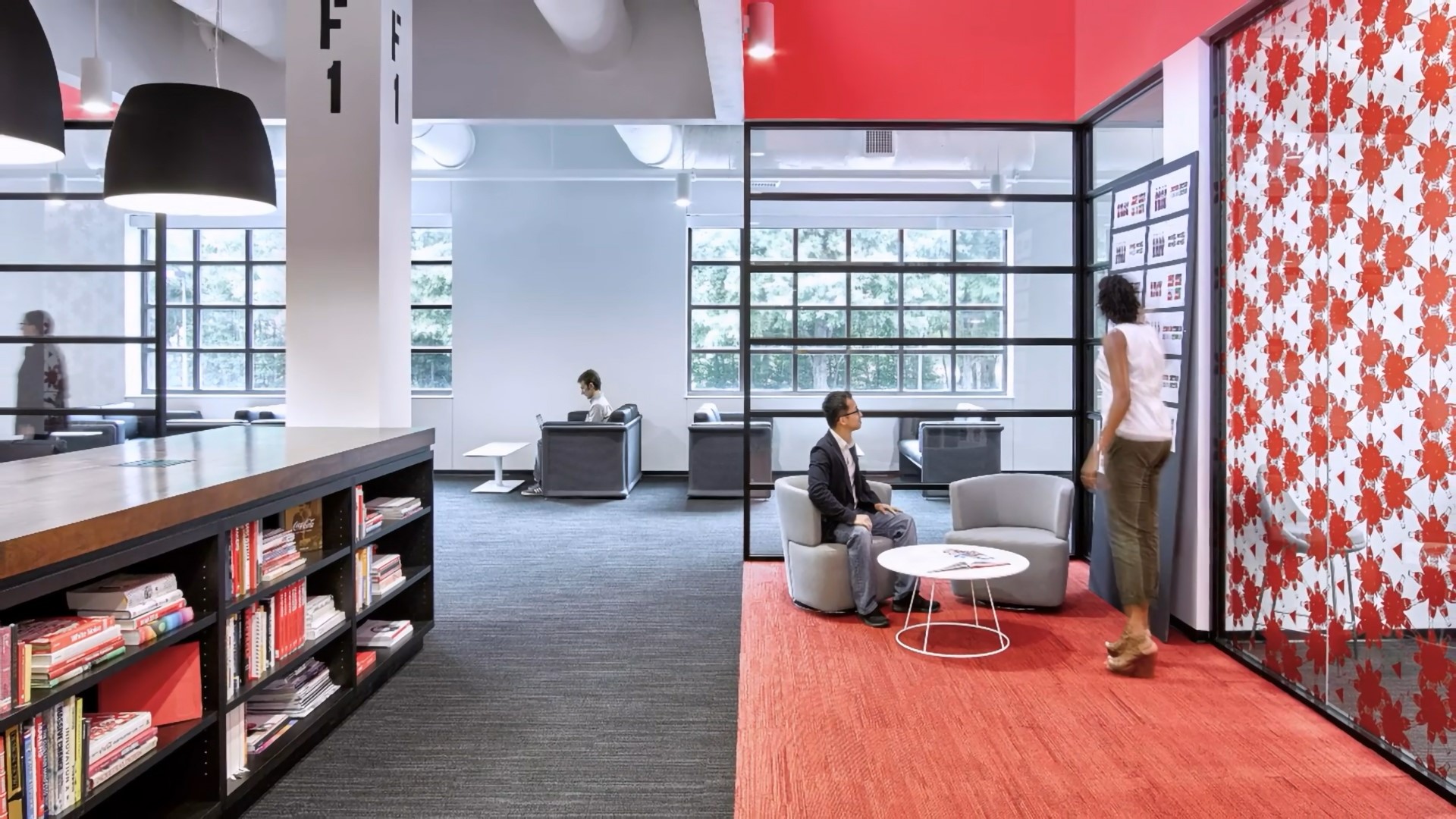
Coca-Cola is one of the world's most iconic brands. More than 5,000 people work at its global headquarters in Atlanta.
Back in 2010, Coca-Cola found itself at a major crossroads. As the company grew, it became clear that in order to stay competitive, any kind of campus renovation would have to take into account a vision of the future of how people work at Coca-Cola. Before the company hired architects, they came to IDEO to help design this important part of their 2020 vision strategy; ultimately the redesign would change the way the company works, plays, and profits.
Imagery courtesy of Coca-Cola, Gensler, and IDEO
Keeping kids safe, while giving them the best of technology
Google’s Director of Mental Health shares insights into its core principles.
As part of that work, I attended an event last year hosted by the Biden-Harris Administration’s Kids Online Health and Safety Task Force and Stanford University. There, I reconnected with Megan Jones Bell, Director of Consumer and Mental Health at Google. Throughout her career, she has drawn on her own experiences with mental health to build and improve digital tools, access to resources, and safeguards.
Now at Google, she’s helping one of the world’s largest and most influential companies shape policies that help kids and teens safely access information, play, and connect online. After the event, we came together for a conversation about how Google is working to promote digital well-being among kids and teens, the ways organizations across tech and other sectors are uniting to protect them, and how friction can help keep people safe. (Content warning: The following text includes mentions of suicide, mental health issues, sexual abuse, self-harm, and eating disorders.)
Michelle Lee: It was wonderful to catch up at the event and get a peek into what you're up to right now. I’m curious—how do you define digital thriving in your work?
Megan Jones Bell: When it comes to kids and teens, it's really about how we design experiences that help them get the best out of technology to be creative, to learn, to play, and to safely connect with others online.
ML: I love that. What are the core principles that help guide your approach?
MJB: Our cross-cutting principles are built to protect, designed to respect, and created to empower kids and families. These overarching principles guide our approach across Google products. Last year, YouTube also announced Youth Principles that further clarify our commitment to creating a safer and more enriching environment for young people. Our principles include:
- The privacy, physical safety, mental health, and well-being of children and teenagers require special protections online. That's the one a lot of my team's work ladders to, and I love that we were able to be declarative about it.
- Parents and caregivers play an important role in setting the rules for their family's online experiences, particularly for the youngest children. How do we put the right tools into their hands so that they can manage their kids’ exposure to technology?
- All children deserve free access to high-quality and age-appropriate content that meets their individual interests and needs. This is really about the fundamental right to information that is appropriate for different age groups.
- The developmental needs of children differ greatly from those of teenagers, and should be reflected in their online experiences. This is also an area that we’re deeply focused on.
- With appropriate safeguards, innovative technologies can benefit children and teenagers.
ML: I appreciate how you started with safety as the baseline, but progress to helping youth benefit from technology. Last month, I saw YouTube and other global partners announce the 2025 Youth Digital Well-being Initiative. Can you tell us more about this, and what you hope it will accomplish?
MJB: YouTube has joined over a dozen regional content creators and distributors representing 10 countries to participate in the initiative. The goal is to support a unified vision for the development of high-quality, age-appropriate content for young people. It will involve responsible product design and content creation tailored to local needs. We hope this will raise industry standards and positively shape the online experiences of youth around the world, across a diverse set of languages. We also hope the effort will give kids and teens access to content that promotes media literacy and digital citizenship, foster learning in and outside of the classroom, support child development and well-being, and enable a setting for healthy screen time.
ML: That's great. I'm so excited to see that partnership come together. To back up a bit, I first met you when you were at Headspace. I see a theme in your work across tech and mental health. What’s brought you to this work?
MJB: When I was in college, I decided I wanted to turn my suffering and hard experiences with mental health into something that was a strength. So I became a youth advocate for mental health. As I was running a body image and eating disorder prevention program that we ultimately scaled through the Girl Scouts, I found out how hard it was to scale and maintain quality. I became convinced that technology was a tool that could help us scale access to preventive interventions—which is really where my passion is.
At that point, in 2004, my main interest was promoting mental health and well-being by identifying and modifying risk factors to prevent the onset and progression of disorders. But I felt that being in academia would limit my impact, so I became an entrepreneur quite reluctantly.
Then, when I switched from having to literally write the code of the programs I was building at Stanford to working with actual engineers and UX designers, I thought, “I'm never going back.” So pretty quickly, I got pulled out of my academic path into more human-centered design and real product development, and actually did a bunch of programs at IDEO to learn about the methodology.

ML: Oh, that's great! I didn’t know that.
One of the themes that came out of the Stanford event was the importance of nuance. We hear so much about how tech is the problem. But tech also has benefits. Where are we seeing it help us in our work addressing mental health issues?
MJB: It is absolutely nuanced. Across our products, our approach has been to ensure that we are elevating authoritative, meaningful, accurate information that comes from a verifiable source.
With funding from Google, the National Academies convened experts to define online authoritative information for health overall: peer-reviewed medical journals, or accredited health institutions, like hospitals or health systems and government sources. Then, we asked the World Health Organization (WHO) to help us internationalize that framework. From there, we partnered with the Council of Medical Specialties to help us verify the licensure of individual creators. Whether it's a nonprofit, a company, or an individual creator, we verify. And they are badged, so that each video has a visual cue that says, “This information comes from a licensed mental health professional.”
At the same time, people also want to hear from someone who's walked a mile in their shoes. So, we built a personal story shelf that elevates lived experience content. It has guardrails around it to make sure that it is safe content, particularly for sensitive issues, like eating disorders or suicide. We’re also age-gating it to 18-year-olds.
The next piece is partnering with local resources to support people in crisis. In the U.S., on YouTube, the crisis resource panel is a full-screen takeover; it's essentially a pause page that helps introduce some friction into the experience with a clear call to action. We do that for suicide, and in certain countries, depending on the availability of appropriate partners, eating disorders, self harm, domestic violence, sexual assault, and substance use.

ML: I’m intrigued that you introduce the idea of friction, because one of the big promises of technology is that it's going to make your life simpler. Where do you think technology really needs to introduce friction?
MJB: We believe our responsibility as product designers is to provide external cues that help people have a chance to activate their internal ones—whether that’s helping someone realize they’ve been online longer than intended, or that it’s time to go to bed to be ready for school, or something more serious like showing a crisis hotline number such as 988 to someone potentially at-risk for suicide.
ML: As someone who feels like the world just keeps running at top speed, I really appreciate that.
As you look forward, I’m curious about what you think is going to shape the future of digital well-being for kids and youth, and how you and Google Health are preparing for that.
MJB: We joke that you can't get through a conversation right now without saying "AI" 100 times. My team is in the guts of our Generative AI products, making sure they’re safe. But we also need to be creative. We used GenAI on our suicide classifier to better detect personal crisis queries on Search long before it was a popular thing to talk about. And so we know how it works, and we also know what it's good at and bad at.
ML: Glad to hear that, because GenAI is accelerating quickly, and we have many lessons from apps, social media, video games—all these places where we have moved too fast in the past, and had to go back and fix our mistakes later on.
When we were at the event, I was fascinated by how different tech companies came together to have this conversation, when they’re often competitors. How does Google work alongside other organizations?
MJB: We've essentially said "yes" to joining most kids’ online safety and well-being initiatives. There are other predicates for how Google has worked across the industry on things like child sexual abuse material online. As soon as we do something, we try to be transparent about our approach. A year ago, we updated our eating disorders policy to take more of a preventative lens. And then several other companies updated theirs. Our reaction isn’t, “Oh they copied us.” It's, “Hooray! We're collectively protecting more kids.” I’ve heard from others in tech that they liked our approach so adapted it for their product.
But we shouldn't be the arbiters of defining what authoritativeness means in the context of health information; that should be an expert dialogue that we then align our product with, not the other way around. We’re in the process of doing it again with the WHO to figure out how to make developmentally-appropriate teen mental health content. As soon as WHO had a set of principles, they were published—even before we had a launch to go with it. And if another company took that and executed faster? Good for them.

ML: It’s great to hear about these positive strides. At the same time, Jonathan Haidt’s book, The Anxious Generation, is getting a lot of attention. His hypothesis is that digital devices and social media are strongly linked to the increase in youth mental health issues. I’m curious to hear your reaction.
MJB: I do have concerns about the science behind his work because it's not consistent with authoritative scientific bodies. When groups like the American Psychological Association or the National Academies have a point of view that differs from one person who is trying to write a fear-based bestseller, we should be skeptical.
At the same time, I do agree that parents need to play a very active role in helping their kids navigate their online experiences. When my son wanted to play a particular video game, we went on Common Sense Media and read about why it wasn't appropriate for him. And he said, “Yeah, okay. What games can I play?” It takes work, but I am so intentional about where he is physically, what’s going on at school, and what he’s eating. We need to learn how to bring that attention to online experiences, too.
We also need to advance our understanding of the effects of technology. For years we’ve had Google Takeout, which essentially gives researchers access (with the appropriate consent) to data about everything people do online. Combine that with other markers of mental health, and researchers can begin to tell a story of cause and effect. It's not appropriate for us to go measure the mental health of a Google user. That needs to be done in an academic context. But we can encourage higher quality research methods that answer some of the open questions. We have a bunch of researchers in Google Health who are excited about helping organizations use these tools.
ML: That's one of the reasons I'm excited to have these conversations. Knowing that people are seeing this moment as a chance for us to mobilize, to work together and figure out how to make our relationship with technology better, across industries, government, and academia—that gives me a lot of hope. Thanks so much for sharing the work that you’re doing at Google, and for being a great thought partner on possibilities for the future.
Looking to design products and experiences with digital thriving in mind? Get in touch.
This article is part of a series of Q&As on digital thriving. Check out part one, an interview with a student advocate for more responsible social media, and part two, an interview with LEGO Senior Design Strategist Pia Breum Corlin.
For the past few years, IDEO’s Play Lab has focused on a concept we call “digital thriving”—the idea that we can and should design online spaces that support mental health and well-being.
Redesigning retail for the next generation
Community is the future of brand-building. Participation is the future of retail.
But it’s not about going back. It’s about reclaiming control.
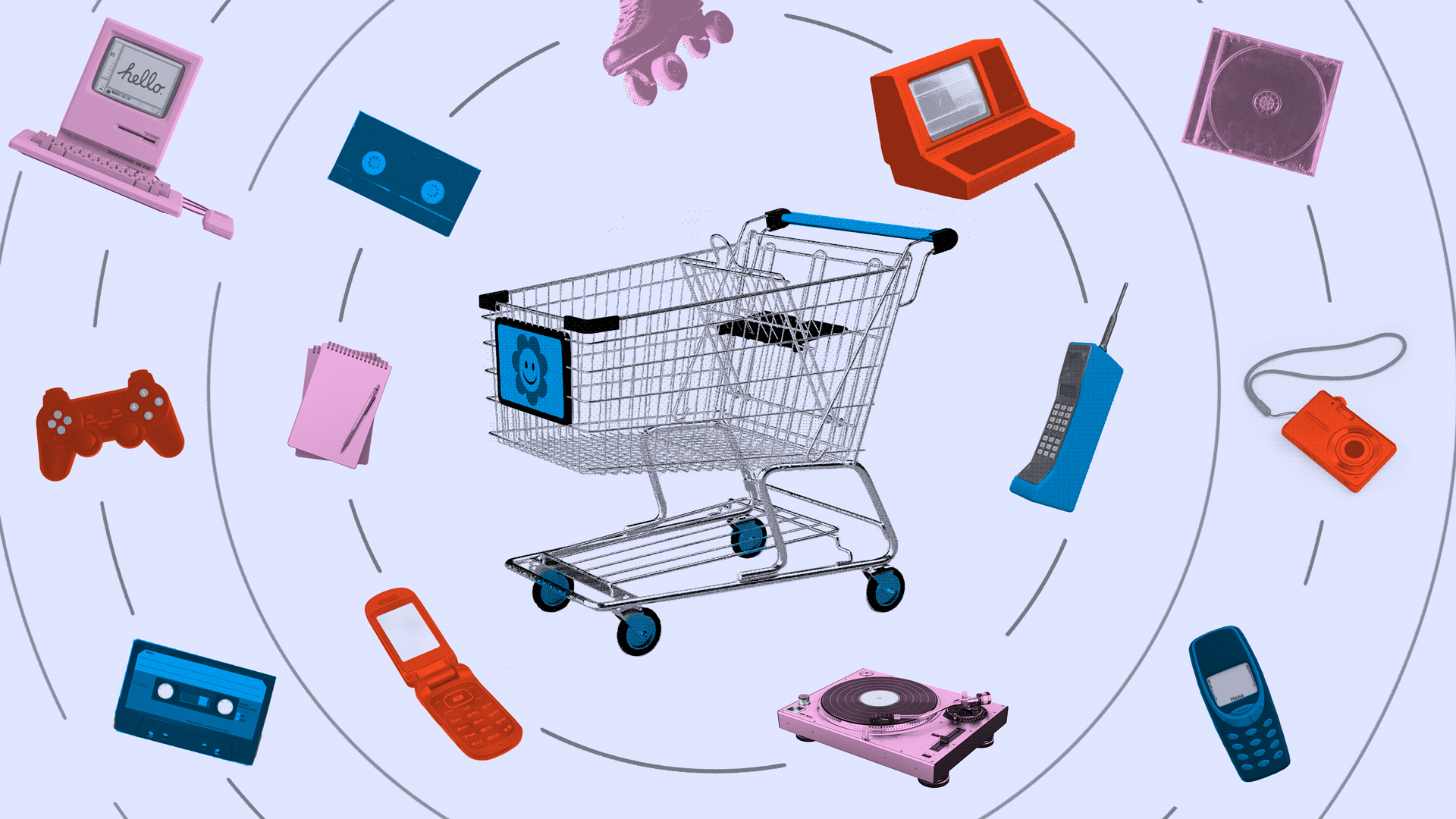
Across markets—from Seoul to London to New York—young consumers are reaching for clunkier, older tech: The original iPhone SE, with its physical home button and hazy-colored photos; point-and-shoot digital cameras; even new versions of decoupled technology, like offline MP3 players.
It’s tempting to accept these trends at face value and think, “We should double down on nostalgia!” Or, “Let’s bring back retro products!” Or even, “This has nothing to do with our business.” Instead, leaders need to look at the underlying need driving these behaviors in young people: a desire for a more human and connected world they didn’t get to experience, and a rebellion against automated, algorithmic pressure. This shift poses a critical challenge for brands and retailers—and an incredible opportunity for the future. For brands willing to reimagine themselves not just as sellers, but as enablers of identity, connection, and co-creation, there is an enormous opportunity to lead.
From chasing trends to building identities
Especially for this generation of customer, the constant pursuit of the next “it” thing—the next viral aesthetic, the next must-have product—has become exhausting. For too long, filters and algorithm-driven feeds have pressured them to represent themselves in unrealistic ways that relate less to who they are and more to a perception of how society, their peers, and algorithms think they should be. Instead of trying to keep pace, they’re trying to discover, “What actually feels like me?”
Last year, we worked directly with a group of Gen Zs to test out a handful of AI product concepts focused on creativity, travel, and relationships. Across the board, they were clear: They do not want companies glossing over the awkward parts of growing up, building relationships, or exploring their own creativity. They crave real-life experiences that shape their sense of self, and help them foster new connections.
For customer-facing brands, this is a wake-up call. Brands of the future will serve as connectors, offering consumers an active role in co-creating content and programming. Instead of mass-market activations like yet another celebrity sneaker drop, they’ll invest in community-driven experiences like LEGO’s Ideas platform, which lets fans share what they’ve built, propose new ideas for bricksets, and vote on models built by fellow fans. The next wave of influence and brand building will come from enabling customers to co-author the future of their favorite brand and its products, sharing their identity to inform and build experiences for and with others. Younger customers are drawn back to brands that reflect their identities, because they feel they belong.
From points-of-sale to places to connect
For a long time, the industry narrative declared that physical retail was doomed, outpaced by the convenience of e-commerce, and compounded by the catastrophic disruption of a global pandemic. But now, consumers are increasingly seeking out in-person experiences, especially those with a community dimension. This shift is especially visible among younger consumers. In the last quarter of 2024, 88 percent of UK consumers visited a physical retail destination. Under-35s are leading this shift, making more than twice the number of in-person retail visits compared to those over 55. For them, shopping is no longer a solo, efficiency-driven task—it’s a social and immersive experience. Smart retailers are responding, going beyond maintaining established brick-and-mortar storefronts to re-imagine them as destinations, hubs of culture, connection, community, and value-add experiences beyond shopping. Why? Because physical retail isn’t about a customer journey that ends with a purchase anymore. The future of retail will reimagine methods for connecting with customers, and serve their needs in ways digital simply can’t replicate.
Digital-first and social media influencer brands like MyGlamm and Shein are making the leap to physical storefronts. Saint Laurent opened a sushi restaurant in its Rive Droite store. In addition to its workout gear, Lululemon has built a lifestyle brand through community engagement, in-store experiences, and digital fitness platforms. Sephora has kicked off its largest capital investment project since its founding—to transform its stores across North America—all 700 of them, and also partnered with IDEO to build the store of the future in Asia.
Meanwhile, for Printemps’ first opening in the US in its 160-year history, the French department store’s New York location launched with a façade that proclaimed, this is “not a department store.” Instead, it has been designed as a French apartment, a place where customers can peruse Printemps’ unique curation of French products, take a French class with other customers, or get a head massage while enjoying a glass of champagne with dishes created by Chef Gregory Gourdet. Retail spaces today are becoming third places for people to meet and share—blending hospitality, cultural relevance, and discovery.
From passive consumption to active co-creation
Young consumers are over the whirlpool of social media influencers whose product recommendations are bought and sold right off their screens. Since 2023, a movement rejecting influencer culture has been picking up steam (ironically tagged #deinfluencing). That same year, “authentic” was Merriam-Webster’s Word of the Year. In an interview IDEO conducted with Khoa-Nathan Ngo, member of #GoodforMEdia, a group at the Stanford Center for Youth and Mental Health and Wellbeing led by college-age students, we learned about the critical importance of companies directly involving young people in the development of new offers. Ngo argues that when their voices weren’t considered in the design of social media, for example, it “created a major crisis in terms of our mental health.”
In 2021, Lush Cosmetics boldly exited from major social media platforms, stating, “Social media is making it harder and harder for us to talk to each other directly. We are tired of fighting with algorithms." Bottega Veneta also decided to shutter its social media accounts, replacing them with a quarterly digital journal, trusting that meaningful engagement would come from content that is deeper, slower, more thoughtful, and curated. The result? The rallying of passionate customer fan accounts like @newbottega, which now rivals the brand’s original social media following, demonstrates that community-led advocacy can be just as powerful—if not more so—than brand-owned channels. One benefit of this approach is that it creates a deeper sense of trust and reciprocal engagement rather than a one-way push from the brand. While industry experts observed Bottega Veneta’s social media strategy skeptically, the brand entered Lyst’s ranking of the Top 10 hottest fashion brands for the first time in 2020—and has maintained its ranking in the Top 10 since.
Companies that want to continue to engage with the next generation need to eschew the traditional paradigm of the seller-buyer relationship and invite customers into a participatory role, inviting them to become true co-creators who help shape the future of the brand experience, offers, and engagements. In our partnership with Athleta, we brought together a council of women to co-design an equitable, inclusive, and sustainable model for omnichannel community-building that is unique and authentic to their brand and customers. This is a powerful example of a belief that IDEO has championed through our work; that people care about what they’ve had a hand in co-creating, and it’s the best way to create long-term brand loyalty and advocacy.
From selling products to meeting needs
If community is the future of brand-building, then participation is the future of retail. Brands need to move beyond traditional omnichannel thinking to strategies that invite customers to directly shape brand meaning and value in real-time, through a living ecosystem of customer co-design touchpoints, both large and small.
The companies that win over this next generation won’t just sell products, they’ll actively invite them to shape what the brand stands for, how it shows up in the world, and how it delivers value. This goes beyond one-way engagement, to strategic collaboration that turns customer participation into a market advantage. For young shoppers, brand advocacy comes from feeling seen, heard, and influential. Businesses that meet these genuine needs will move beyond fleeting attention, unlocking lasting loyalty, sustainable growth, and entirely new avenues for continual innovation.
Looking to design new products or retail experiences of your own? Get in touch.
The surge in sales of “dumb" phones and digital cameras among Gen Zs is easy to misread as a throwback to nostalgia.
A look inside LEGO’s digital design toolbox
And more lessons on how the brickmaker approaches digital thriving.
Together, the LEGO Group and UNICEF (with funding from the LEGO Foundation), created the Responsible Innovation in Technology for Children (RITEC) project. Through deep research with children at schools and in homes around the world, the project created a toolbox for incorporating support for children’s well-being in the design process.
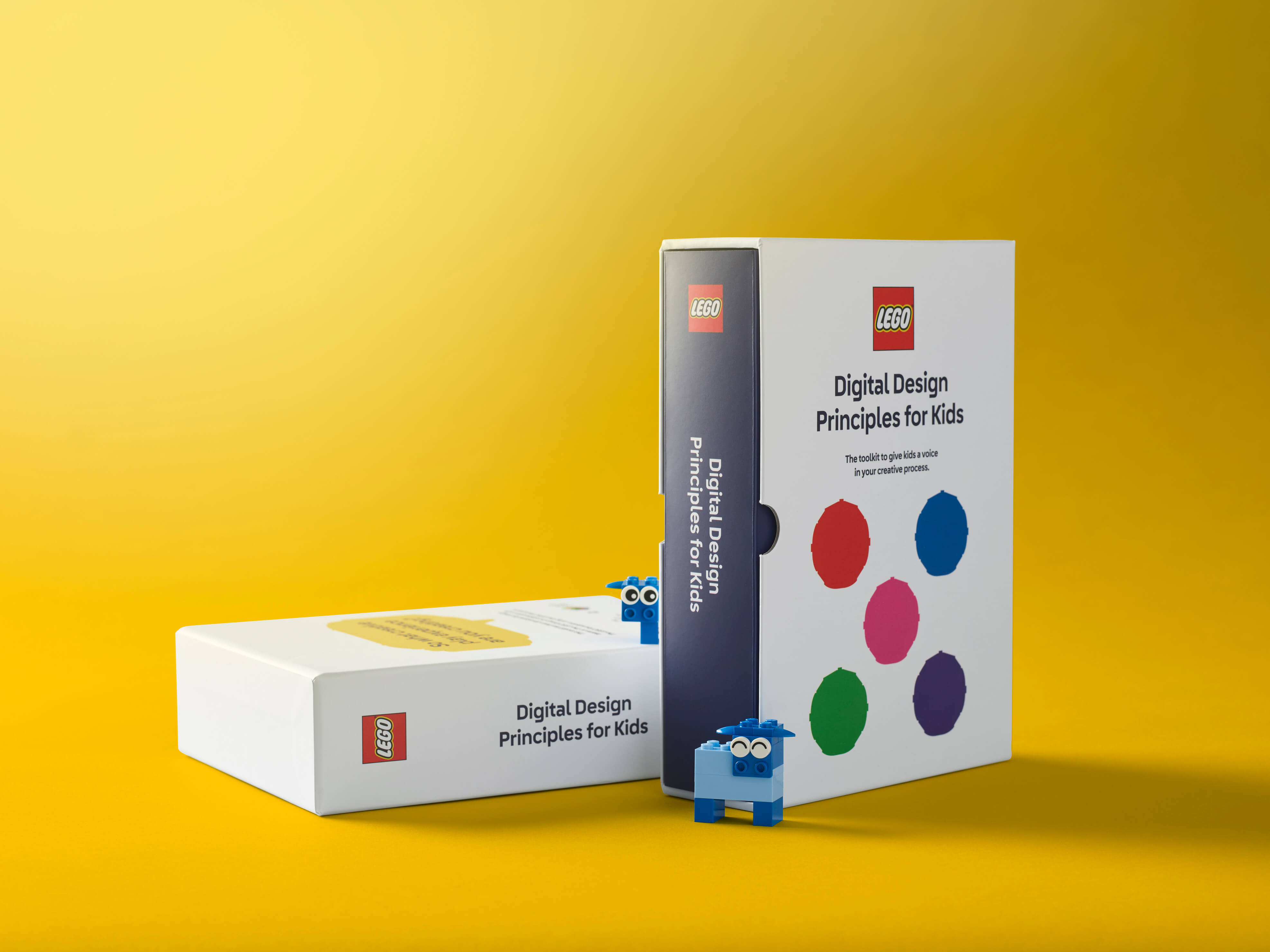
In addition to this important work, Senior Design Strategist Pia Breum Corlin led the creation of the LEGO Group’s own Digital Design Principles for Kids, which help shape every digital product the company creates. She and her team also developed one of the cooler design tools I’ve ever seen: a physical toolkit that leads designers through the process, helping them design for well-being and a diverse play experience. I caught up with her to learn more about the company’s approach to digital thriving, how M&Ms can help fuel the design process, and much more.
Michelle Lee: There are a lot of people who grew up with the LEGO brand, myself included, and we know it primarily as a company that makes toy bricks. But a lot of the work you’re doing has to do with digital play. Could you give an introduction to that work?
Pia Breum Corlin: At the LEGO Group, it's not just about games; it’s about redefining play entirely. For kids, there’s no real distinction between physical and digital play—they naturally blend the two. That’s why we focus on hybrid play, where the physical and digital worlds intersect. That way, we don’t end up having kids just sitting in front of a screen—we actually foster their creativity.
Michelle Lee: What does that catalog of digital play look like?
Pia Breum Corlin: It’s actually quite big. It includes partnering with games, like with LEGO Fortnite, and also the LEGO Builder app, which is the digital version of the building instructions. We all know the paper version from our childhood. It's very structured, starting with opening bag number one. It feels like something you do on your own. But the digital instructions let you open different bags, and then build small parts of something, which you can then pass off to someone else. It’s more like a board game. So you can suddenly have a set as a family and build together.
Michelle Lee: That sounds incredible. I'd love to learn a little bit more about your role as a design strategist. What does it look like? And how did you get here?
Pia Breum Corlin: My journey to this role is anything but linear. I am trained as a civil engineer in industrial design. It’s a mix between engineering, a lot of math, and design—focused on that intersection between the product and who is using it. That’s where design strategy came in—it taught me that design is more than making things pretty and pixel-perfect, and really about catering to a need.
I joined the LEGO Group about 10 years ago, and my real interest in play came when we started to create design principles to really understand what it is. I have a tendency to get deep into things that I design for—I really want to understand the user's needs and the behavior behind them.
Michelle Lee: What led you to this path of wanting to focus on play and well-being within the LEGO Group?
Pia Breum Corlin: At the LEGO Group, everyone talks about digital well-being and thriving in everything we do. We don’t want to do any harm. We want kids to be in a better place after they use an app or product.
When we created LEGO Life, a social media app for LEGO fans, including kids, we wanted to have an internal language that designers could use to say, “Yes, we can do it from a legal perspective. But the big question is, should we? Does it fit into the ethics and well-being perspective that we are trying to promote?” So we created digital design principles that provide a really strong language for that.
Michelle Lee: I’m curious to hear more about the core principles, and how they guide your approach.
Pia Breum Corlin: For me, the principles are about empowering children to navigate, engage, and create positive social connections that can support their well-being and personal growth.
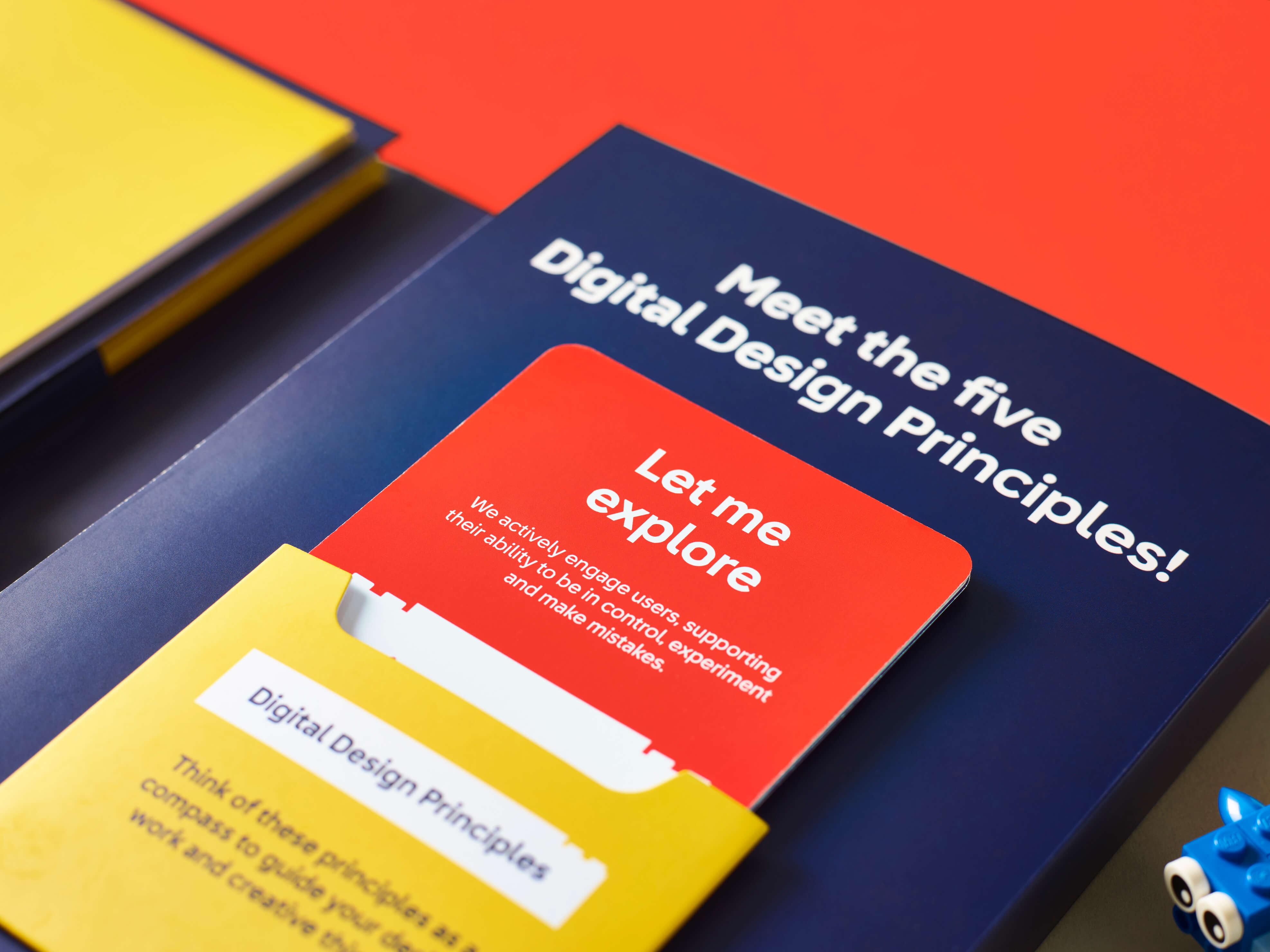
The first is, “Let me explore,” which is about giving kids agency and autonomy. “Show me the way” is a reminder to us to not be the police—kids have enough authority in their lives. It’s about helping kids feel supported and to learn something from what they’re doing. “Make me feel joyful” links into emotions, and the level of immersive play. “Support my right to play” taps into creativity from a well-being perspective. And the last one, “Speak my language,” is about identities, diversity, and inclusion.
LEGO Life was one of the first apps that was designed with the “Show me the way” perspective. The concept was to give kids the skills and tools to navigate a digital space and social environment. How do you write comments? How do you not write comments? Instead of telling them, no, you cannot take pictures, we teach them how to create better pictures. We think of it kind of like a mama duck and baby duck. We’re leading the way, but always looking to see if they follow.
We also had a non-player character in the app called Captain Safety who shared tips and advice about staying safe online, and who they can contact if something happens.
Michelle Lee: I’m so glad you brought up LEGO Life, one of the first efforts to create a safe social space for kids. The camera is a really nice example of that—what are some other ways you navigated that tension between safety and freedom?
Pia Breum Corlin: We’re in close contact with the legal and safety teams, and they’re always involved in early analysis. But for us, it really comes down to not telling kids what to do, but showing them possibilities of how to do things. And of course, everything is moderated. But we’ve also discovered that kids are good at regulating each other. It’s one of the really good things about these communities—they learn, and they try to teach others how to get it right.
Michelle Lee: I’m very interested in hearing about the work by the LEGO Group, the LEGO Foundation and UNICEF that led to Responsible Innovation in Technology for Children (RITEC), an initiative to promote children’s well-being in a digital world. How does your work tie to that? And how does that link to the LEGO Digital Design Principles for Kids toolkit?
Pia Breum Corlin: RITEC is a three-year project between the LEGO Group, the LEGO Foundation, and UNICEF. It began with research with children across the globe, and culminated in the RITEC Design Toolbox. It’s a framework to help designers create digital experiences that promote positive wellbeing. We have been so lucky to be a part of it.
We actually wrote our design principles before RITEC started. But when I saw their work for the first time, I said, “We need to find a way to get all that information into something tangible and practical, so the designers don’t have to read a 200-page report.” And that led to the LEGO toolkit.

Michelle Lee: I love that. There are so many people who are bringing digital thriving into the conversation, but they're not necessarily putting it into a form that's easily accessible by designers.
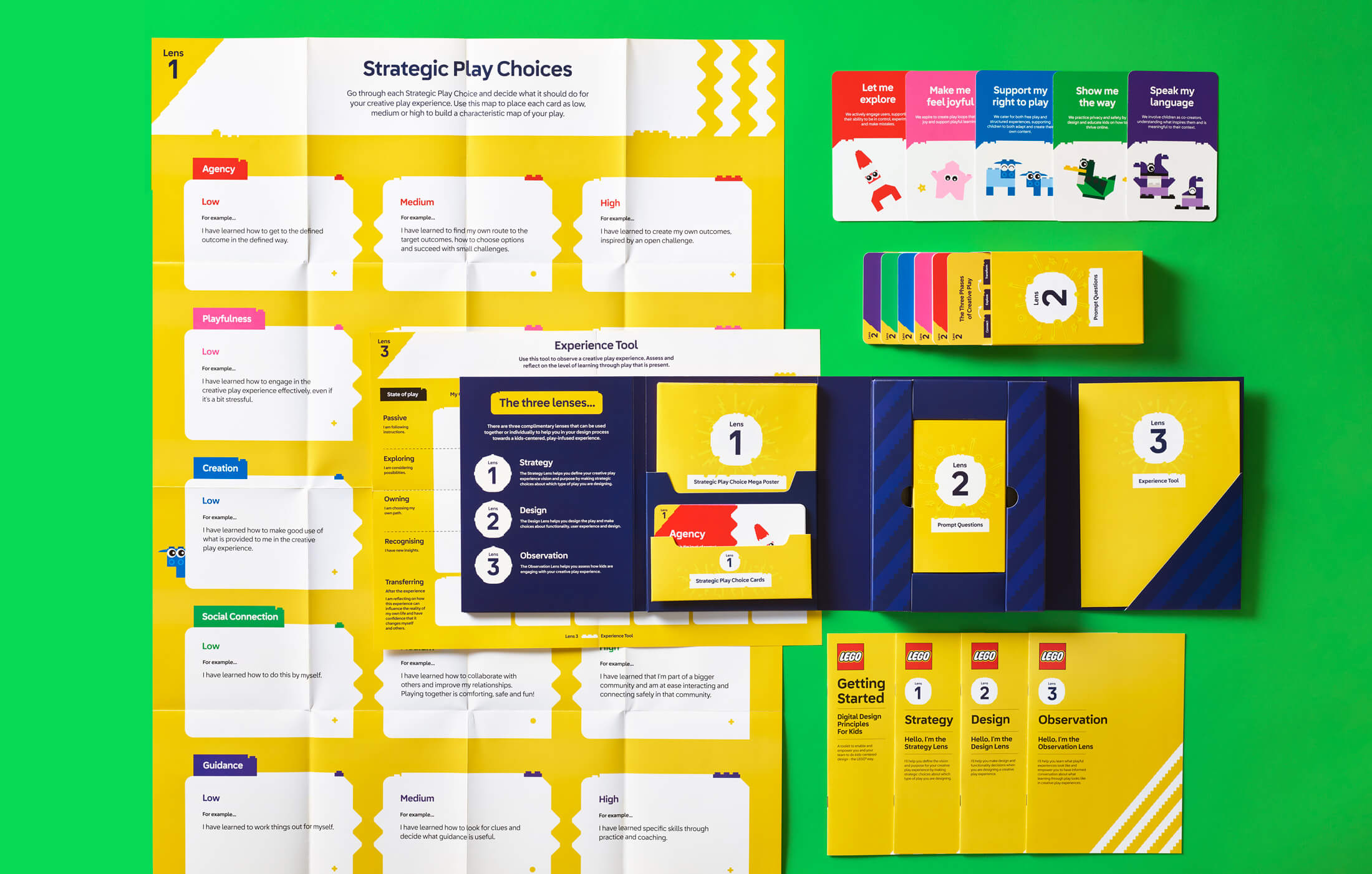
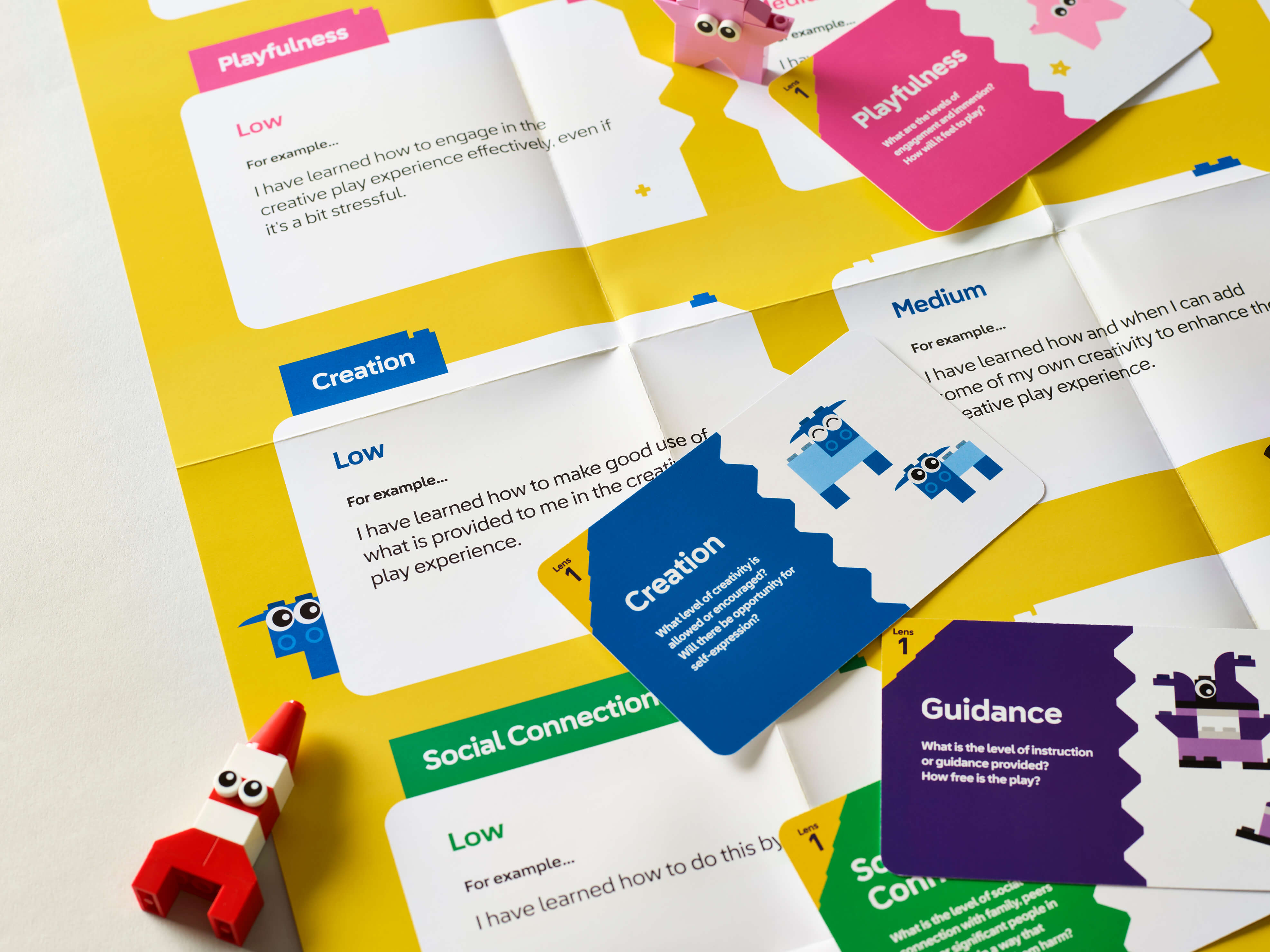
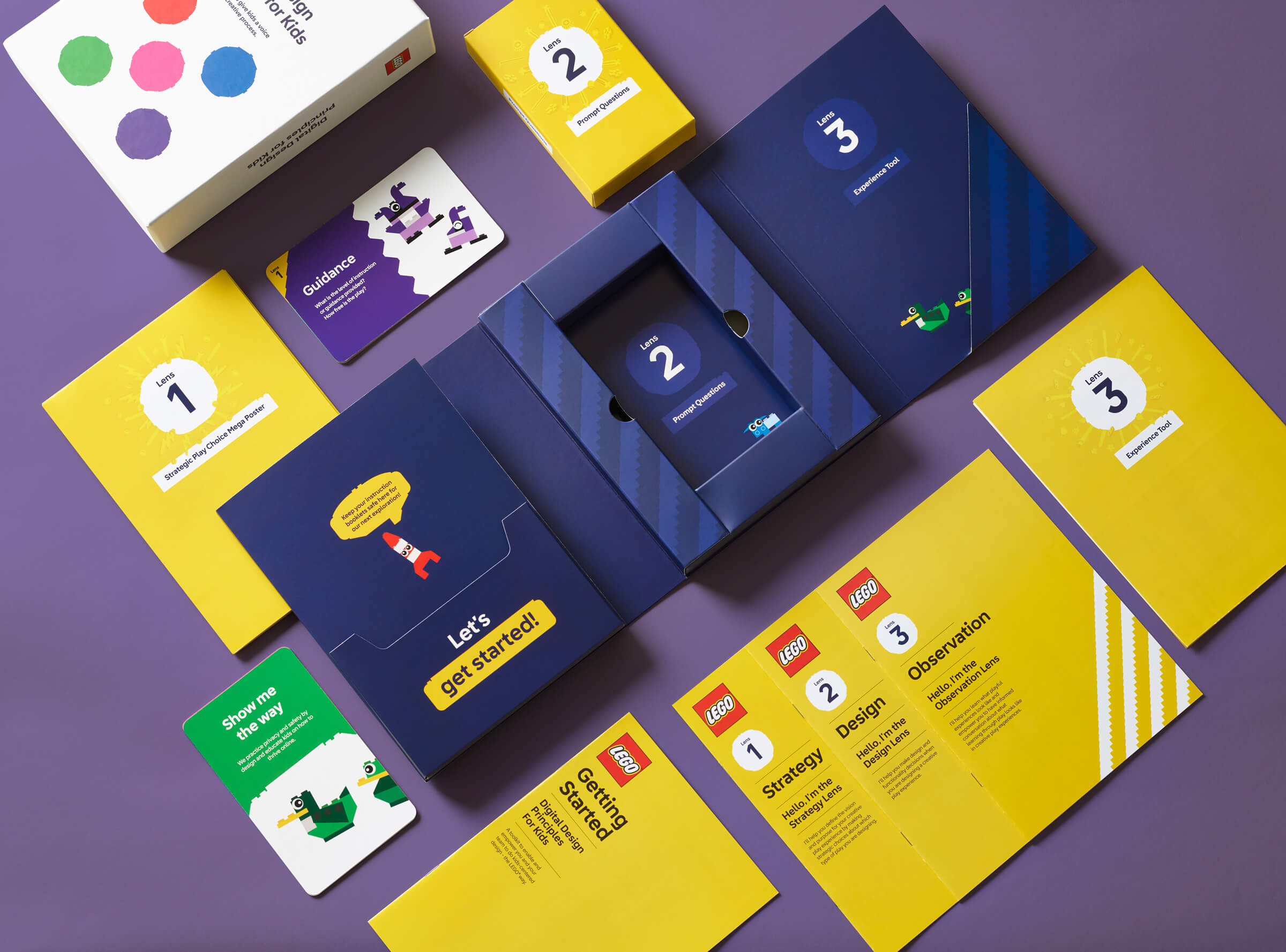
Pia Breum Corlin: Our toolkit is tangible—a box you can unfold. When you open it, you see our five principles laid out in a matrix so you can see how each links back to the different pieces of RITEC as well as strategic choices designers can make in each experience they create . For example, a game that’s low agency, high guidance is about learning to follow rules, which is a pretty good skill to have as a child. But from a play perspective, it can get quite boring. So we need to have different types of play in the portfolio.
Before we even start thinking about any features, we activate the principles by asking ourselves, “What type of play are we designing?” As a team, we’ll agree on, for example, a play experience that is medium in agency, but flexible depending on the kids’ skill level, so they can grow. It needs to be low in playfulness because we need it to be calm and relaxed. We want low creation, meaning that we want them to use what is already available—like a coloring book, or a set you can add your own bricks to. Social connection is low (playing solo) to medium (playing with a few friends).
Michelle Lee: Once the principles are clear, where do you go from here? How do you then design the features of the experience?
Pia Breum Corlin: That's where my role stops, and the designers’ role begins. They rely very much on the design principles and the prompt questions that we included inside the box. It's made to spark curiosity, not to be a checklist. Because there's no right and wrong answer to these things.
Michelle Lee: Can designers outside of LEGO access the kit?
Pia Breum Corlin: Originally, it was designed for internal use. We were finally allowed to talk about it publicly last year, and there’s been huge demand for it. But it’s an expensive box, and we hold an in-person training for it. No slides, set in a children’s room, decorated with toys and posters. To get participants in the right mindset, we hand out M&Ms: a red one at the start, when they have to play like children. And then we pause and give them a blue M&M when they have to become adults again. I’m hoping to work on how we could share it externally next year.
Michelle Lee: I can’t wait until more people have access to this! In the meantime, do you have any advice for parents or designers navigating the digital age?
Pia Breum Corlin: Go play with kids. As parents, we have a tendency to have feelings about what’s right and wrong in the digital space. Instead, play with kids to understand what they think is so fun. See what you can learn from them, and earn their trust.
We know the data is really bad. Kids are getting mean messages and pictures they shouldn’t online. But if we are there playing with them, and they know we support the things they like, I believe they will be more likely to tell us if bad things happen there.
The same advice goes for designers. If you're designing for kids, go out and play alongside them. You will learn so much.
Trying to solve your own challenges with digital thriving? Get in touch. We’d love to help.
As we explore best practices in digital thriving, we couldn’t help but think of the LEGO Group, a company that is at the forefront of thoughtfully designing engaging experiences for kids.

In the age of AI, human-centered design is crucial
David Kelley and Derek Robson on lessons for building the future.
Recently, IDEO founder David Kelley and CEO Derek Robson sat down to chat about the importance of human-centered design in creating impactful, useful AI products, the flaws of vending machines, how to bring naysayers along on the innovation process, and much more.
For the last 40 years, you've championed the use of human-centered design, helping clients weather seismic technological shifts. As AI stands to bring massive change, are there any examples of other technological shifts that could help provide a roadmap for what’s coming?
David Kelley: The world has been through all kinds of shifts. The personal computer. iPhones. The internet. AI. And in each one, the technology was the shiny, exciting thing, but it took some insight, some creative leap to figure out how people would actually interact with it to make it successful. The one that was most impactful in my life was the move toward personal computing. When I was young, computers were these big machines in the basement. But as they became more accessible and more human-centered, they made explosive inroads into people's lives.
The most famous piece that IDEO worked on was the Apple mouse. The concept of pulldown menus and mice were developed at SRI and Xerox Parc. IDEO invented the technology and did the human factors and industrial design. The fun part was figuring out how people would use it. On the engineering side, we were trying to make it very accurate. If you moved the mouse one inch on the table, it would move an inch on the screen. But as we did more and more user testing with different kinds of people, it became clear that that was a complete waste of time. The human brain understood what was happening—you didn't have to make it the same distance. And because of that insight, we were able to make the mouse very cheap. Which has a lot to do with why it's successful—the cost is inconsequential.
Do you see parallels between that moment in time and today, when so many technologists are trying to deliver on the promise of AI?
David Kelley: Yes. We're just at the beginning. It’s going to be wildly useful, but at the present time, AI products are going to be hit or miss. It feels like a lot of other technologies we witnessed that didn’t find widespread adoption until someone discovered the right use cases.
Derek Robson: At the same time, AI is with us already, in products we use every day, like Netflix. Right now, AI is very prominent without necessarily having the use cases that you can point to and say, “everyone is using this” or “this is changing the world.” To David's point, we're at the start of a journey.

How crucial is it to implement human-centered design in the creation of AI products?
Derek Robson: It’s fundamental. How many things were meant to be great big breakthroughs, but they just don't work because they don’t take into account what humans want from the technology? In our own AI projects, we co-design with users early in the process, testing concepts to see what they want and need long before a product hits the market.
David Kelley: It reminds me of when Bill Moggridge, one of IDEO’s leaders for many years and a champion of interaction design, was working on the first laptop computer, called Grid Systems. He took it home one night after it was functional, and he came back and he said to me, “This software stuff is way too important to leave it to the software people.” At the time, it had that feeling that you had to be an insider to know how to use it—it wasn’t for the general public. Similarly, AI is far too important to leave just to the technologists—human-centered design is a crucial part of it.
Is part of that the engineering mentality—that the question is often, “can we do that,” rather than, “should we?”
David Kelley: We do see that in a lot of companies, especially when they’re designing for people like themselves. But 99 percent are designing for customers who are not like them.
Over the years, IDEO has worked with thousands of clients. What have you learned from them?
Derek Robson: If you go back through the history of the company, there's a type of leader that has a clear vision of what they want—a sense of bravery, a purpose. They have a dream of how they see the product and their brands evolving. Often, they’re on a path at odds with the rest of the culture. It started with Steve Jobs, and we’ve now had many wonderful clients over the years.
The best ones really get involved with us and embrace the process. And when they do, you find at the end that they've changed too. As much as we are a design and innovation company, we are also an experience company. We take you on a journey of looking at something in a new way and helping you to see the potential of things that aren’t there yet.
David Kelley: In the early days of IDEO, we'd send a proposal that included phase one, the human-centered design part, and the client would come back and say, “Could we just skip that first phase and get going?” But that is where our big ideas came from—from understanding what's meaningful to people. Eventually I had the guts to say, “Nope, we can't cut phase one.” That's what we're good at, taking all that information, all those interviews, all those observations, and making a creative leap to a new place.

Where did your confidence in this approach come from? Are there moments that solidified just how important it is?
David Kelley: Early on, we were working for Pepsi, and Jane Fulton Suri, who really pioneered empathy in design research, went to a place with vending machines. After watching people use them, she said, “Do you think it's right that the soda comes out at your ankles?” And that's so obvious, right? But the people who built the machine didn't see it. The rest of the team didn't see it. That wasn't how product companies were thinking back then.
Derek Robson: When you work on something for a very long time, you can start to believe that you know how your product works, and how people use it. And that's not necessarily the case. There are so many things that I've worked on in my life where people use products in a different way than they were intended to be used. And if you don't look at it anew, then you will never be able to move something forward.
Long ago, I worked for a company that was responsible for the Got Milk? ads. And the insight behind them was that people don’t think about milk until they don’t have it—they realize its value in its absence. It’s an insight that can only really come from being deeply connected to what humans want.

Aside from AI, what factors do you see influencing design in the foreseeable future?
Derek Robson: Climate. Human-centered design doesn't mean the human at the expense of everything else. We need to design things so that we’re not destroying the planet. We have to think about not just the composition of materials, but actually how people use those materials. What is going to happen to those materials over time? There's a never-ending list of things we are considering as we design.
David Kelley: As pedestrian as it seems, it all boils down to humans. Even with these big systems problems, you have to ask, what could we design to help people do their part? Think about recycling. It was a systems problem, but also a human problem. Once you had curbside and they came and picked it up, people got behind it.
Derek Robson: We also have to keep in mind that different people have different requirements from the things that we design. Not just from a climate perspective, but also from an ethical perspective. My two daughters think very differently about which companies they engage with than I did at their age. I didn't think about where products were sourced from, or the labor policies for the company. And while that's not for everybody, it is for many young people, and companies need to consider those factors. If they don't, they might not be able to generate the kind of demand they are looking for.

Four decades in, what are you most excited about for IDEO’s future?
Derek Robson: The best work for IDEO is still ahead of us. The mindset of this place is that the next project is the most important project. We're about solving problems, but we're also about asking bigger questions. And we're at a moment where there are so many questions that I think we are perfectly placed to help people answer.
David Kelley: I'm really looking forward to the variety. We're being trusted to do more interesting, diverse things than we ever have before. The mashup of what we learn in all those diverse places and putting that together gives IDEO a kind of database of insights that’s extremely valuable.
Derek Robson: When I joined, we had one team working on the collection of poop for a medical company and another redesigning a government system. The compounding effect of working on different things is what makes us unique. And the kinds of people that work on those problems are probably the most interesting and diverse set of creative people you are ever going to meet. We often say that the team of an IDEO design project sounds like the start of a joke. A mechanical engineer, an ethnography PhD, a physicist, and a doctor walk into a room to solve a problem. I don't think there's any organization on Earth with the diversity of creative talent and working on the variety of work that we have. And I’m excited for what we’ll do next.
Need help with a design challenge of your own? Get in touch. We’d love to hear from you.
Earlier technological shifts have a lot to teach us about the futures we're designing for.

Lindsey Turner
I’m passionate about building brands, products, and experiences that help organizations show up with meaning and momentum.
I help organizations cut through complexity by shaping how they show up, through brand strategy, identity, and storytelling.
Working at the intersection of brand and business, I bring an editorial eye and a bias toward making—turning ideas into tangible experiences that people can understand, trust, and believe in.
My work spans government, healthcare, financial services, media, and consumer goods, from launching Gen Z-focused ventures to building innovation labs and reimagining legacy brands. I relish moments of ambiguity and enjoy translating across teams, perspectives, and priorities to move ideas forward.
I started my career in editorial and digital design, shaping cross-platform experiences and identity systems in publishing and agency environments. That foundation still shapes how I work today: I’m detail-oriented, collaborative, and overreliant on the Oxford comma. I hold a BFA in Visual Communication from the School of the Art Institute of Chicago.

Rachel Young
My work helps organizations see who their products aren't working for—and build the will and the tools to do something about it
For 25 years, I've asked the same question: Who does this design exclude—and what are we going to do about it?
My work spans human-centered strategy, inclusive design, and qualitative research, with clients ranging from Microsoft, Google, and Verizon to the National Science Foundation, and San Francisco Unified School District.
Before IDEO, I taught elementary school in East Palo Alto and spent a decade doing design work with social service organizations—where I learned firsthand what it costs people when systems are built without them in mind.
I am currently writing User Error, a nonfiction book about digital access and the design decisions behind it. I live in Oakland, California.

Brian Pelsoh
I lead with craft, ensuring our work is creatively excellent: rooted in deep human insight and imagination, while also grounded in the realities of business and technology.
My expertise spans brand, communication, and product design across tech, education, the arts, and social impact.
I believe great work demands both high-level vision and obsessive attention to detail, and only happens through collaboration.
I bring an inclusive, hands-on approach and a deep understanding of business, which enables me to consistently deliver excellence while always asking why.
Before joining IDEO, I worked at the brand firms Pentagram and VSA Partners. I began my career as a designer, leading teams at the School of the Art Institute of Chicago and the Milwaukee Art Museum. I hold an MFA in graphic design from Maryland Institute College of Art and a BFA in communication design from the Milwaukee Institute of Art & Design, and have taught at some of the best design schools in the US.

Tony Wong
I am responsible for IDEO’s long-term success in China and working with clients to use design as a tool to enable growth.
I am responsible for IDEO’s long-term success in China and working with clients to use design as a tool to enable growth. Specifically, I have helped Chinese companies design holistic brand solutions through the development of their products, communication, services, and innovation teams, and I have helped multinationals expand their presence and influence in China.
I advise global leaders on developing China-led innovation and capabilities.
In over 15 years in IDEO Shanghai, I have worked on projects that use design to elevate the quality of the experience of healthcare products and services, streamline processes that increase productivity, create spaces and programs that promote and enable inclusive communities, and build next generation mobility solutions that are planet-positive.
Before joining IDEO, I worked at Philips Electronics and the Electrolux Group in Italy, the Netherlands, and Singapore on a number of breakthrough commercial products. I am a member of the Young President Organization in Shanghai.

Building a personal AI for the messiness of life: Sida Li
Most AI products today are built for work—a space with clear problems and established systems. One founder noticed a gap: personal life is messier, harder to systematize, and mostly left behind by the AI boom. So she built Cue, a personal AI that lives inside iMessage and group chats, to go where the other tools haven't.
In this episode, Becca Carroll, IDEO's Chief Strategy Officer, talks with Sida Li, co-founder and CEO of Shared Context Lab, about staying anchored to a human need while the technology around her keeps changing shape, why she treats her business model with the same rigor she'd bring to a product, and what it feels like to build a company at this particular, disorienting moment in AI.
The conversation also gets into how Sida makes design decisions: the language Cue uses to describe itself, the tradeoffs behind building inside iMessage instead of a new app, and a real story about a business idea that didn’t pan out.
This is the second in a two-part series profiling founders from IDEO's Startups-in-Residence program. The first conversation is with Johannes Seemann, founder of Sooner, on designing GenAI for the emotional side of money.

Designing GenAI for the emotional side of money: Johannes Seemann
Most personal financial tools are built to run the numbers and optimize towards a budget. While that works for some, most people experience money as a lived relationship that does not neatly fit into a spreadsheet. Johannes Seemann and Becca Carroll discuss why money is emotional before it is mathematical, and what a human-centered approach to building a generative AI financial product looks like in practice.

The curious leader's edge in uncertainty: Scott Shigeoka
Mina Seetharaman talks with Scott Shigeoka, author of Seek and Head of Curiosity Cultivation at the Eames Institute, about what distinguishes genuinely curious leadership from performative curiosity, how power dynamics shape curiosity, and why practicing curiosity can restore energy rather than drain it.

How constraints make us more creative: David Epstein
Mina Seetharaman talks with David Epstein, author of Inside the Box and Range, about why total freedom often produces average work, how leaders can design useful limits on purpose, and what organizations such as General Magic and Pixar reveal about the relationship between boundaries and creativity.
Looks like you might be in search of something very specific?
Or reset the filters above and try another angle.
Here’s some random inspiration

Podcasts about creative leadership

Articles about the power of prototyping
