
.svg)




Helping a startup design video games to build kids’ emotional strength
A one-month sprint to develop new products—and a new way of working.
For 6-year-old Dave Jr., a long line at Disneyland triggered a massive meltdown. His parents were concerned and a little embarrassed, but not surprised; Dave Jr. struggled to keep his emotions in check.
Hoping to help, Dave Jr.'s uncle, entrepreneur Craig Lund, joined forces with researchers at Harvard Medical School and Boston Children’s Hospital, along with a video game designer who had worked on Quick Hit and NBA 2K. Together, they set out to design something that could teach coping skills to kids like Dave Jr. who need to manage “big emotions,” as well as children suffering from anxiety, ADHD, and other behavior issues, which are on the rise.
Their collaboration resulted in a video game called Mightier and a startup called Neuromotion Labs—a 10-person team of psychologists, game designers, and engineers who embedded at IDEO Cambridge for a one-month sprint to improve the game and get ready for launch.
To play Neuromotion's game, kids are first taught simple, calming breathing exercises. During gameplay, kids wear heart-rate monitors on a wrist or arm that detect spikes caused by stress or anger; as their heart rates go up, the game's difficulty increases. Kids have opportunities to pause and try deep breathing to counter the ramped up challenge. As it turns out, "gamifying" restraint builds strong incentives for kids to take charge of their emotions—they have to if they want to win.
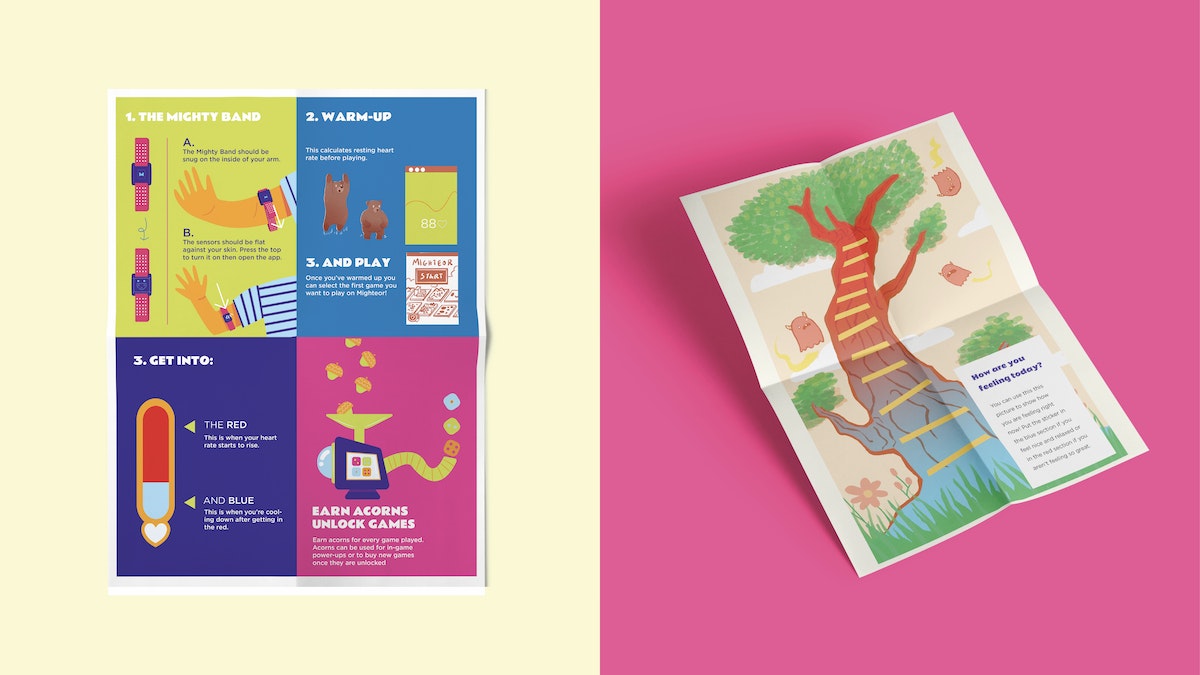
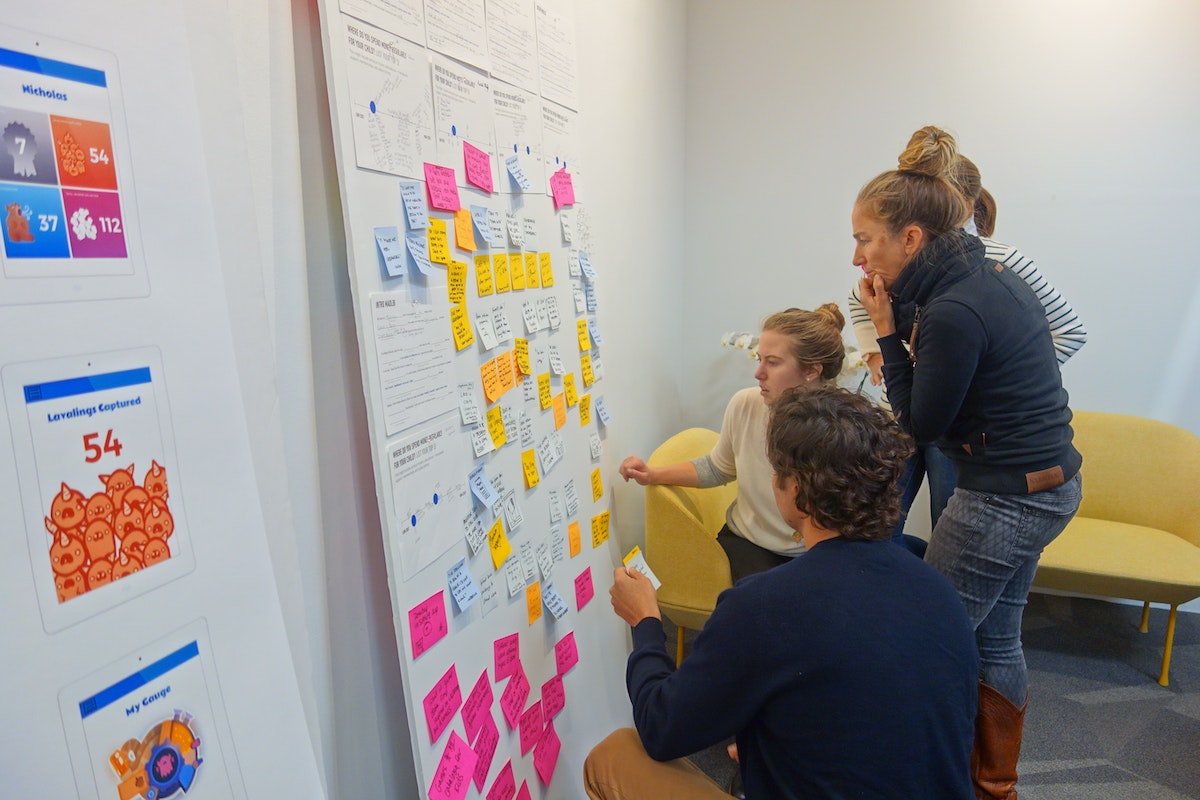
Already activated around boosting mental and emotional health, IDEO's design team worked side-by-side with Neuromotion to study how parents and children experience Mightier. From home visits to group interviews to a summer camp-style design session with kid players, live feedback fueled the next iteration of the gaming platform and better product-market fit.
IDEO helped Neuromotion hone the visual design and mechanics of Mightier and expand it's suite of games. The team observed that the Mightier program was more successful the more involved parents of players became, which revealed a need for additional resources for adults. So they created new supports, including a more detailed orientation and a personalized coaching service for parents staffed by trained therapists.
But can a video game actually help kids cope? Early peer-reviewed studies showed that playing Mightier reduced outbursts by 62 percent, oppositional behaviors by 40 percent, and parental stress by 19 percent. After 12 weeks of using Mightier, a survey of kids and parents showed that 96 percent of parents saw positive behavior changes in their children, while 92 percent of kids learned new coping skills.
Shortly after the design sprint, Neuromotion secured its next round of funding and officially launched Mightier’s array of “bioresponsive games.” The games have already been played more than a million times, and Neuromotion has measured more than a 100 million heartbeats. Mightier games are helping kids and families across the country.
What about Dave Jr.? Recently, his sister told Lund she "accidentally" bumped Dave Jr.’s bike off a pier and into the ocean. She was expecting an outburst of anger, but after eight months of playing Mightier, Dave Jr. stayed cool. His uncle couldn’t be prouder.
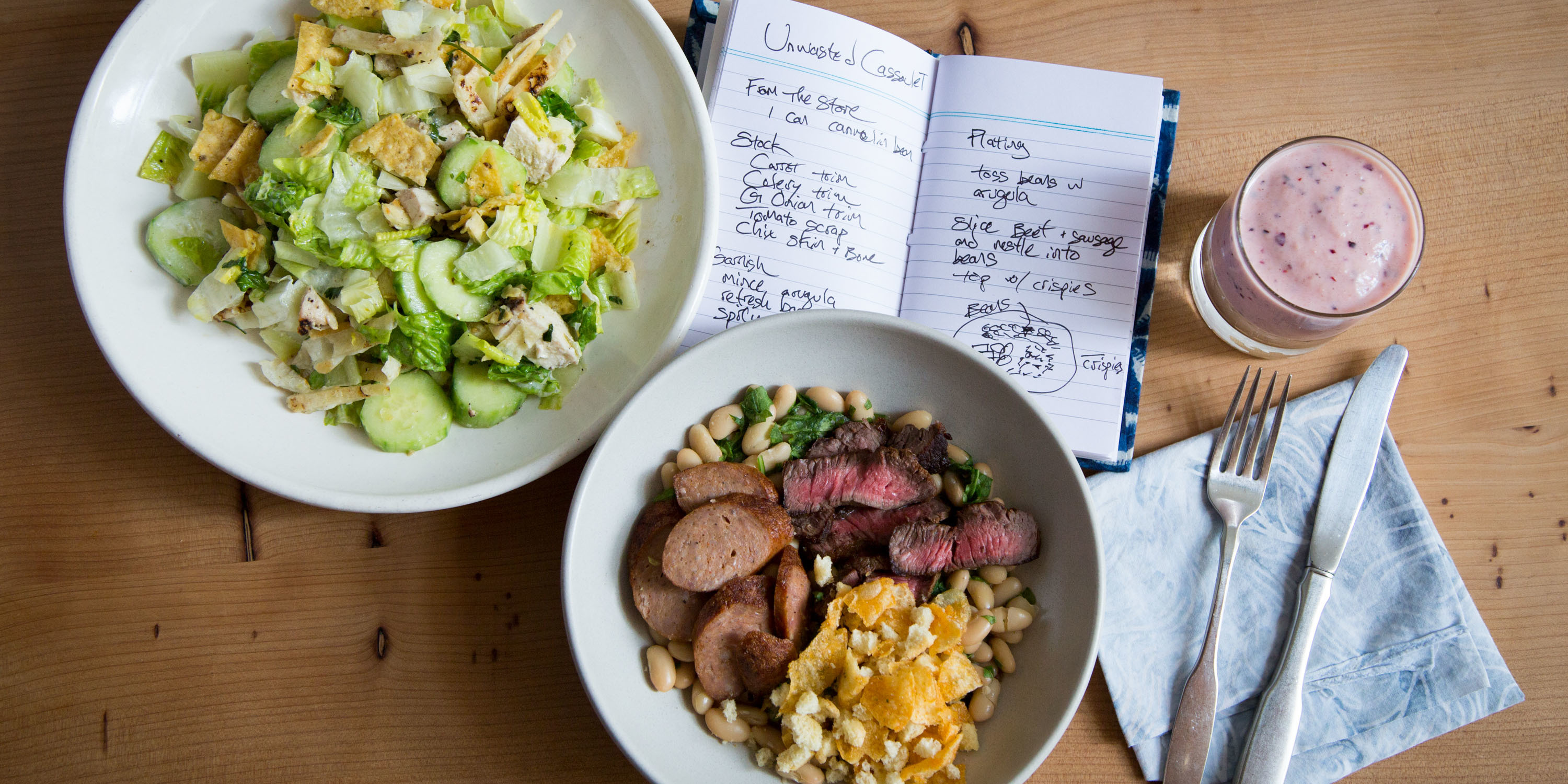
Designing waste out of the food system
IDEO partnered with hotels, food banks, foundations, and entrepreneurs to combat food waste.
Many of us have let vegetables wither in the crisper drawer, or thrown out a child’s half-eaten restaurant meal, but the sheer scale of food waste around the globe is hard to grasp. According to the United Nations, about a third of the food the world produces every year—1.3 billion tons—is lost during production or tossed by consumers, with North Americans throwing out the most food per capita. The average American wastes enough food each month to feed another person for 19 days.
IDEO received a series of grants from The Rockefeller Foundation to find solutions, given the power of IDEO’s human-centered design approach to address systemic challenges. Through a number of projects with The Rockefeller Foundation and other organizations, IDEO designers from across the U.S. devised novel ways to tackle food waste.
For IDEO’s first initiative, designers tapped into the enthusiasm of the broader creative community, in partnership with The Rockefeller Foundation, the City of San Francisco’s Department of Environment, the Closed Loop Foundation, ReFED, and other groups. In the summer of 2016, OpenIDEO—IDEO’s open innovation practice—launched the Food Waste Challenge, asking how people might curtail waste by rethinking our relationship with food. Between June and October, more than 20,000 people from 113 countries took part in the challenge, tracking their personal waste and brainstorming solutions.
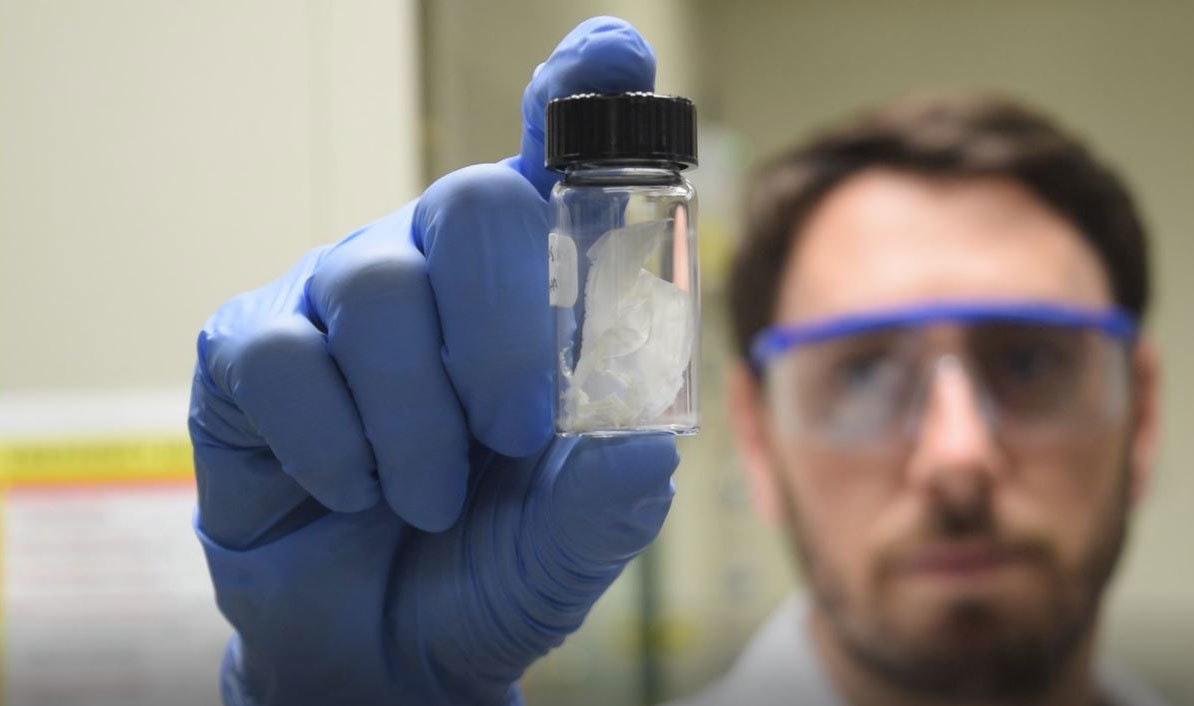
Challenge participants submitted more than 450 ideas. A team of food industry experts helped select the 12 top proposals, which included software to help people buy food collectively from wholesalers and a service that delivers extra meals from corporate events to those in need. Ultimately, the Closed Loop Foundation chose to award Full Cycle Bioplastics a $50,000 grant to scale up its idea to convert inedible food and paper waste into a fully compostable alternative to oil-based plastic.
At the conclusion of the Food Waste Challenge, OpenIDEO launched the Food Waste Alliance, a platform for participants and experts to stay engaged with the most promising ideas and innovators. The alliance helped entrepreneurs share resources, prototype new concepts, secure funding, hire staff, and form partnerships. OpenIDEO invited hundreds to join the alliance, and 92 percent of members told IDEO they made progress in their work as a result. One member company, RISE, received funding from another participant who discovered RISE through the alliance. This investment let RISE prototype its concept for milling spent grain from beer brewing into flour for baked goods and ultimately join the prestigious Food-X accelerator.
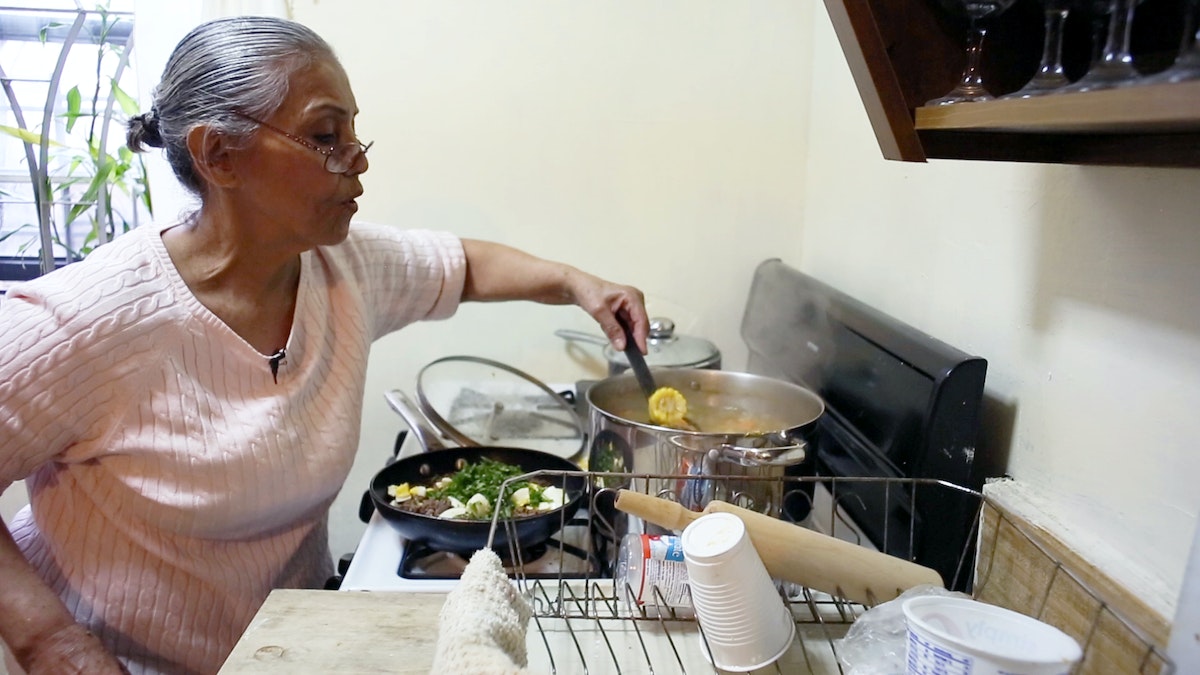
The Rockefeller Foundation also supported IDEO’s work with City Harvest, a New York organization that collects 160,000 pounds of unused food each day and delivers it to soup kitchens and food pantries. City Harvest wanted to understand the habits of local families who visit food banks in an effort to ensure all the food the group distributes gets eaten. To get a peek into these families’ kitchens, in January 2017, IDEO researchers conducted observations and interviews across New York City’s five boroughs. Pantry customers cooked for the researchers, giving them an inside look at how the families engaged with the food they had available and what food meant to each of them: tradition, stability, even adventure. Based on insights from pantry visitors, IDEO made recommendations for City Harvest, including community-run cooking classes and a way for families to request specific foods or reserve pick-up times by text message. IDEO also created three video vignettes to help build even greater empathy between City Harvest and the people it serves.
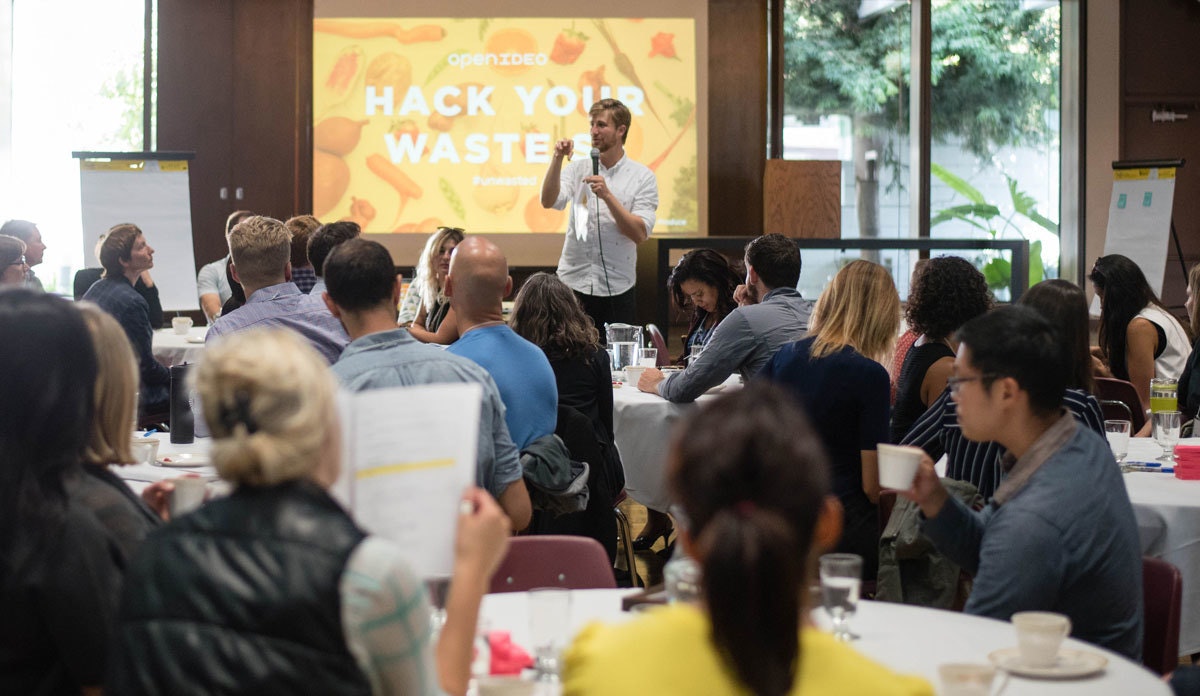
In spring 2017, capping IDEO’s work with The Rockefeller Foundation, the organizations teamed up with World Wildlife Fund and Hyatt hotels in Florida, New York, and New Jersey to rethink all-you-can-eat buffets. IDEO studied diners and staff at Hyatt buffets and found that employees—from event planners to kitchen staff—each add a cushion of extra food to cover their bases, while guests overfill their plates to avoid missing out. In the end, diners eat just half the food organizers serve, while the rest goes to waste. This and other data-driven insights gleaned about diners’ habits led to subtle substitutions, including smaller plates of meats and cheeses that can be ordered from servers and individual pastries rather than whole cakes. These alternatives have not only built on Hyatt’s existing food waste management strategies, but have also helped reduce buffet costs at Hyatt Regency Orlando and continued to receive support from guests.
The problem of food waste is too enormous to ignore. Wasted food means squandered resources, lost money, and ultimately, hungry people—more than 15 million in the United States alone. Designers and innovators from coast to coast have helped find solutions to the crisis that fulfill a variety of needs, from preserving produce sent to food pantries to keeping plastic packaging out of the oceans. The Rockefeller Foundation and other IDEO partners are leveraging powerful design techniques to pave the way for a waste-free future.
Launching a bootcamp for data scientists
Designing a rigorous program that prepares students for a career in the data-driven economy.
In 2017, IDEO acquired longtime partner Datascope and integrated the company’s data scientists and engineers. Datascope team members aren’t just passionate data scientists; they’re human-centered designers who happen to work with data, as illustrated by successful collaborations like this one:
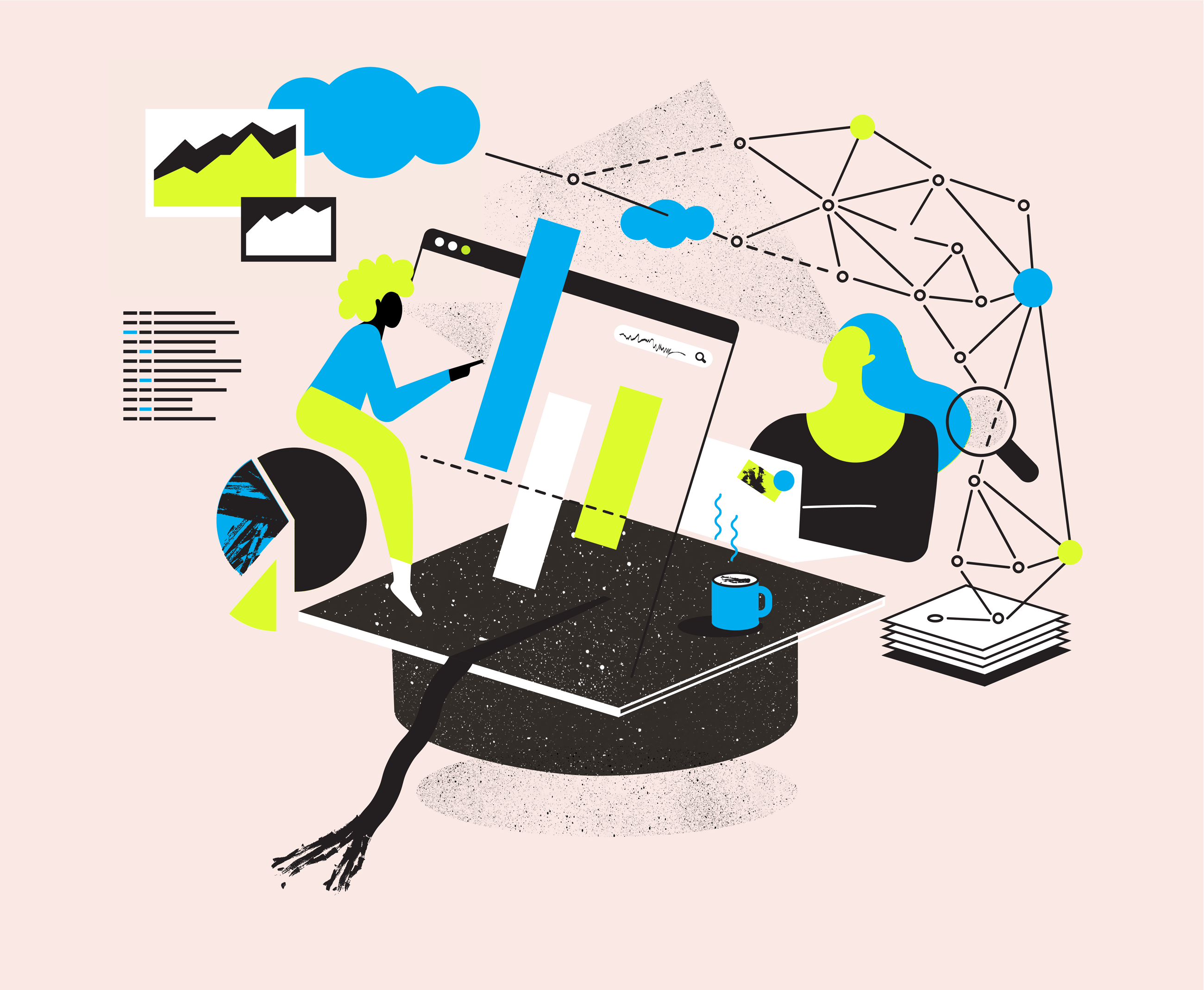
In today’s job market, there’s no such thing as being "done" with your education. This is particularly true in the fields of data science, machine learning, and AI, where significant advances are made on a monthly basis. To meet this need for more in-depth training, Metis—part of Kaplan—wanted to create a comprehensive data science program for students from all backgrounds. Metis asked Datascope to design the curriculum from scratch, drawing on the company’s deep expertise in the field.
Datascope spoke with practitioners across industries to identify the key skill sets that make them successful: a grasp of design; fluency with data management, coding, and algorithms; and effective communication with coworkers and the wider world. The team crafted a 12-week bootcamp that develops these specific abilities.
In order to prepare students for the work world, the bootcamp is structured less like a class and more like a company, where students are “hired” as data scientists—with projects to complete—starting on day one.
Students collaborate on group projects and presentations in a way that mirrors real workflows, and practice pair programming to learn from one another. Using techniques drawn from design, students are invited to refine their project briefs and continually reevaluate their approach.
Instead of a final exam, at the end of the course, students tackle five real-world, open-ended data science projects inspired by Datascope’s client work. One project involves using data from subway turnstiles to detect patterns in the volume of street traffic; another asks students to use data they scrape from the web to predict a movie’s box office profits using regression analysis.
After students complete the bootcamp, they receive an additional three months of career support, from mock interviews to site visits with potential employers. In addition to designing the curriculum, Datascope taught the first three student cohorts and helped Metis build its teaching team as it expanded the program from New York to San Francisco, Chicago, and Seattle. Metis now offers online courses, evening classes, and corporate trainings in data science.
If you’re going to take a data science bootcamp, it’s best to take one designed by data scientists.
Designing the Levi’s Commuter Trucker Jacket with Jacquard by Google
When Google teamed up with Levi’s to craft a jacket with technology woven in, the company turned to IDEO to help make the experience of wearing the garment feel seamless, intuitive, and familiar.
You’re whizzing along on your bike, en route to a new restaurant for a client meeting. You reach an unfamiliar intersection; which way to go now?
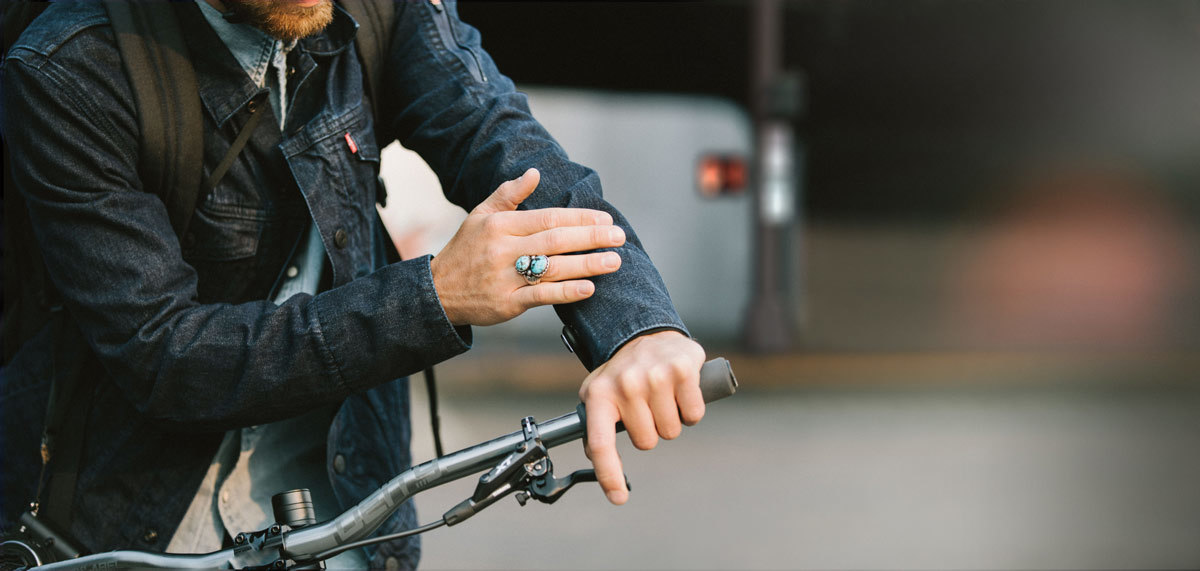
Instead of dismounting and digging for a phone, you brush your hand along your jacket sleeve for directions, then double-tap the denim to re-start your music. Without taking your eyes off the road, you’ve taken care of the problem.
This intuitive interface for connected apparel began with Levi's, makers of durable workwear for 140 years, and Google, creators of forward-looking technology, which joined forces to fashion the first item of clothing with touch-sensitive, copper-core threads woven directly into the fabric. Once it was established that the first connected garment from the partnership would be a jacket within Levi’s Commuter line, with interaction on the sleeve, Google worked with IDEO, leaders in designing for human needs, to develop the gesture language of the jacket and industrial design of the technology within.
This is the first connected garment that helps us break free from devices. It seamlessly incorporates Jacquard by Google technology to perform digital tasks, such as navigation, communication, and music playing with a few swipes or taps on the sleeve.
Jacquard by Google—a platform that makes it possible to integrate touch and gesture interactivity into fabrics using conductive yarn and standard, industrial looms—was inspired by a curious twist of history. The Jacquard loom, invented in France in 1804, used punch cards to automate the process of weaving complex patterns into fabric. In the 1940s and ’50s, engineers employed a similar punch-card technique to program the first computers.
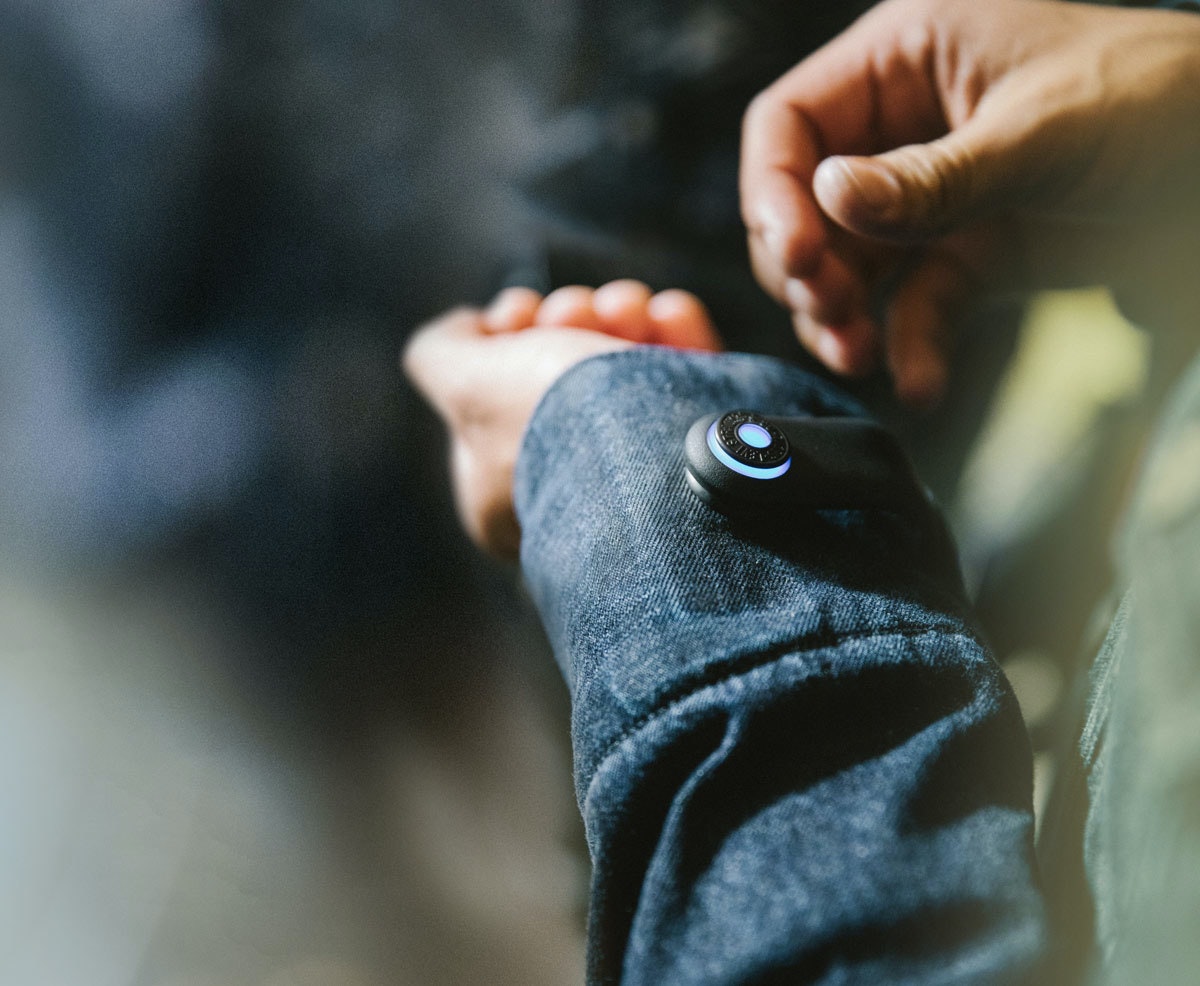
IDEO spent time on the project early on, collaborating with Google engineers and Levi’s clothiers on the jacket’s development, helping craft an experience that would make the intelligent threads intuitive to wearers.
Working alongside Google and Levi’s, IDEO’s work included:
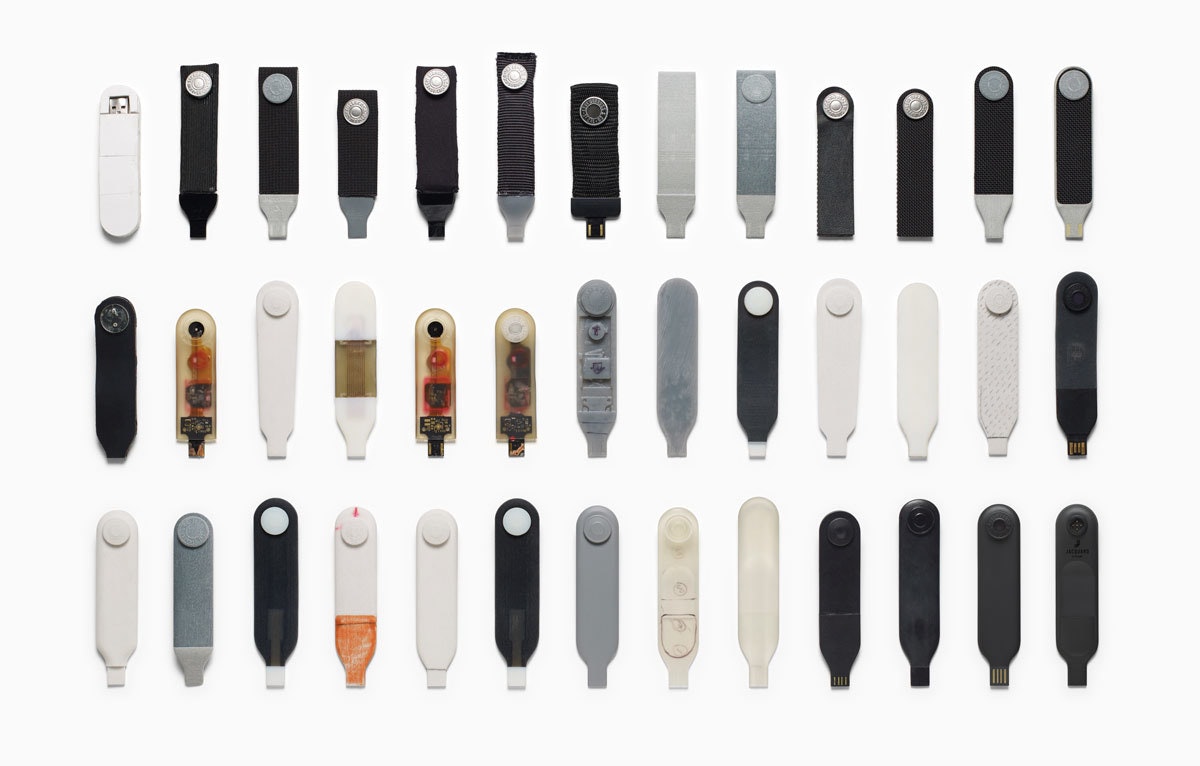
- The industrial design of the electronics integrated into the snap tag and connector (the tag snaps onto the jacket’s cuff and connects to your phone via Bluetooth)
- A vocabulary of gestures on the cuff of the jacket that lets you interact with the jacket’s technology
- Early exploration of the basic design philosophy and conceptual design for the interaction model of a corresponding smartphone app that ties it all together (works with both iOS and Android phones)

The IDEO team’s first task was to validate what commuters of all stripes wanted from the garment, in addition to the work Levi’s did in researching with its consumers. In interviews, group exercises, and wear tests with urban cyclists and other workers on the go, the team learned that cyclists needed a way to stay connected, while still living in the moment. That meant being able to answer calls, hear text messages, get the next direction, and control their music without using a screen.
Levi’s, Google, and IDEO developed a language of movement for Jacquard-enabled fabric that feels familiar and human and builds on the ways people would naturally interact with a garment (a whole-hand brush along the sleeve, as opposed to a one-finger tap on a touch screen, for instance).
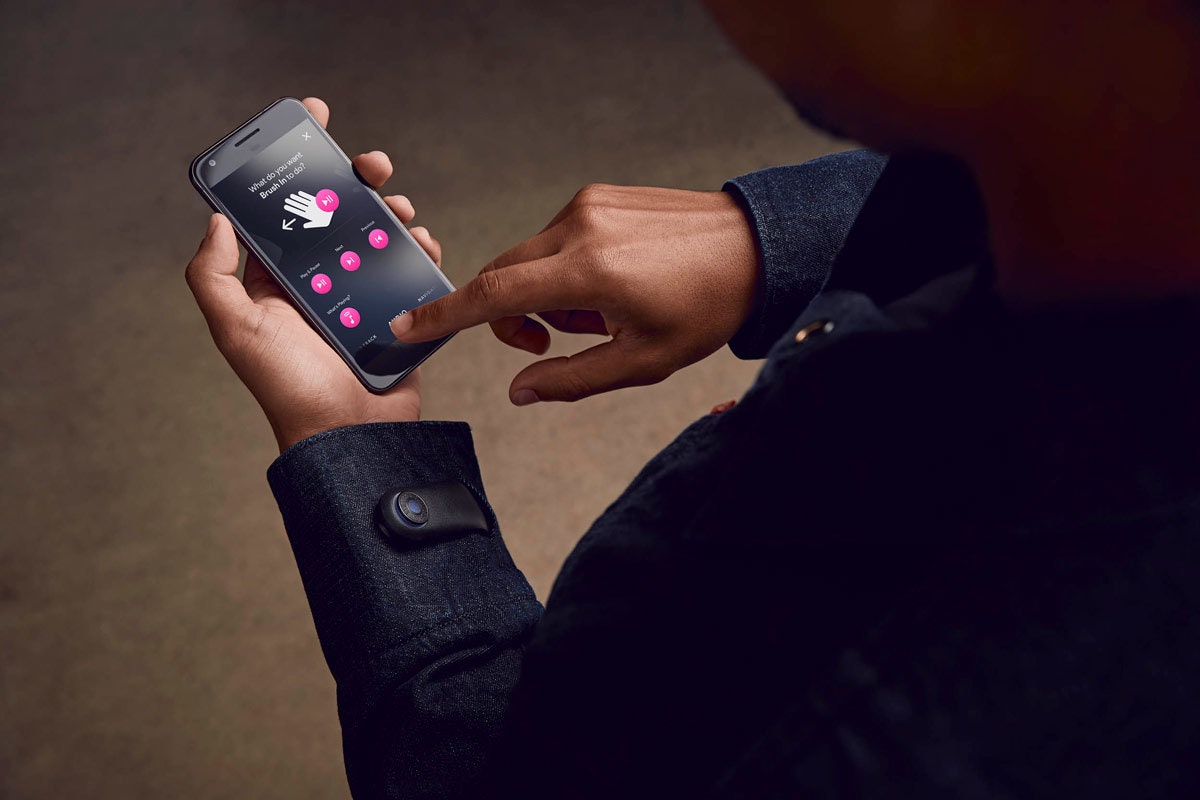
Then came the design and engineering of the snap tag on the jacket’s cuff, which gently notifies you of calls, texts, and other jacket interactions with light and vibration feedback. The flexible, lightweight strap incorporates the look and feel of a Levi’s jean button, while housing advanced electronics that capture touch data. The tag is removable, charges via USB connection, and works in conjunction with a mobile app that lets you configure settings for the garment, set notifications, and customize gestures and interactions.
The Levi’s Commuter Jacket with Jacquard by Google changes the game because it’s simply that—a jacket—with technology that adds new utility and value, allowing us to wear our everyday interactions on our sleeves.
The Levi’s Commuter Trucker Jacket with Jacquard by Google hit stores in October 2017.
IDEO and Google have a long history of collaboration. Learn more about our work on Google Bloks here.
How workplace rituals can strengthen connection in a virtual community
Embracing constraints and designing for serendipity can create the conditions for innovation, trust, and collaboration.
At their core, rituals are intentional actions that follow a particular repeatable pattern. Certain words or phrases, symbolic props, and patterned movements are used to elevate everyday moments into meaningful and memorable experiences. Rituals have a unique ability to make intangible values and beliefs concrete because they bridge the mind and the body, the two ways humans process and make sense of the world. We use them all the time in religion, politics, and sports to help groups navigate change, form a shared sense of identity and purpose, and enhance performance—but we forget they can also be incredibly powerful at work.
In the past year, we’ve had a lot of time to learn about rituals for the virtual world. Some of IDEO Chicago’s favorites are featured in a new book by Stanford’s Ritual Design Lab called “Rituals for Virtual Meetings: Creative Ways to Engage People and Strengthen Relationships.” The book highlights remote rituals from companies around the world that help with focus, connection, flow, and more. Here are some of our favorites.
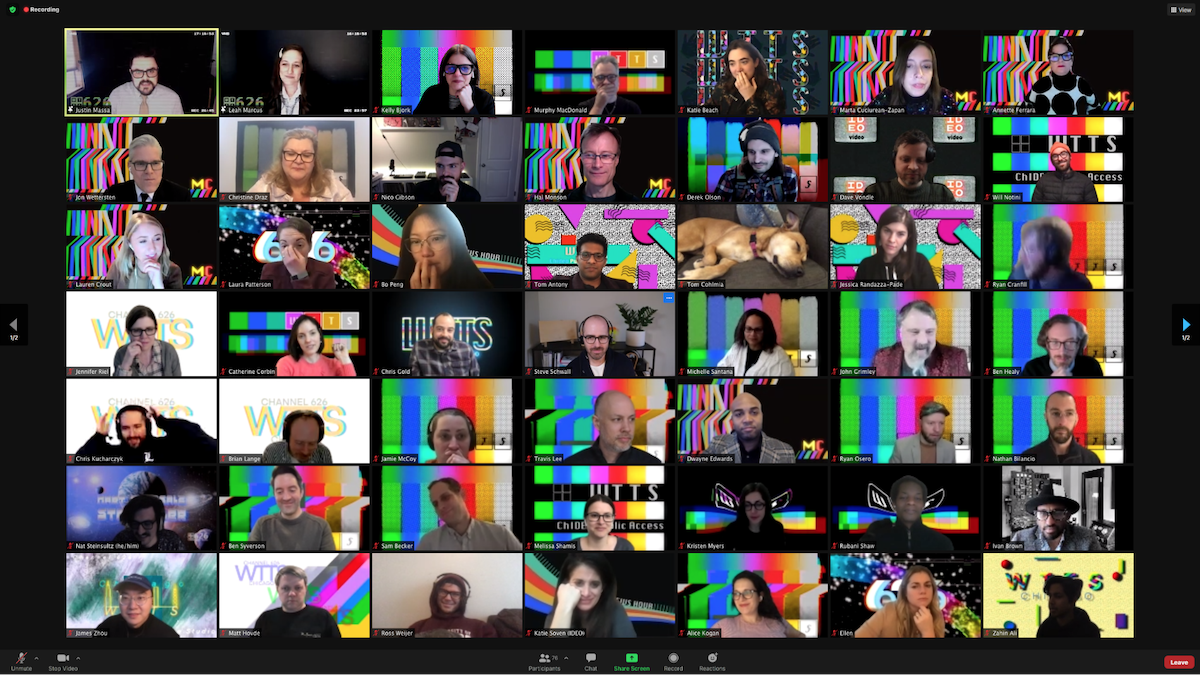
Embrace the cacophony
For years, all-hands Monday Lunch Meetings (MLMs) have been an important weekly ritual for sharing inspiration, information, and project work over a meal at IDEO studios across the globe. When we first entered round-the-clock remote life, presenters were faced with an intimidating, feedback-free void. It felt cold and awkward, and nothing at all like the MLMs we knew and loved.
To fix that, we identified that the MLM routine itself wasn’t enough—we needed to design moments of consistent virtual connection to revive the feeling of the shared experience. So we sped up the pace of shares, encouraged side conversations in chat, added sound effects like air horns through a creative hack using DJ software, and fully leaned into the awkward audio latency tendencies of video calls with our monthly singing of “Happy Birthday.” By embracing the cacophony, we subverted the silence and saved each other from being isolated in the void, retaining some semblance of consistency and communal spirit during an otherwise unpredictable and lonely time.
Find serendipity through structure
When we were together in our studio, we could rely on the walls and furniture to create safe boundaries and immersive experiences. But in a video room, space can feel infinite and spontaneous conversation challenging. We realized we needed to design specifically for serendipitous encounters.
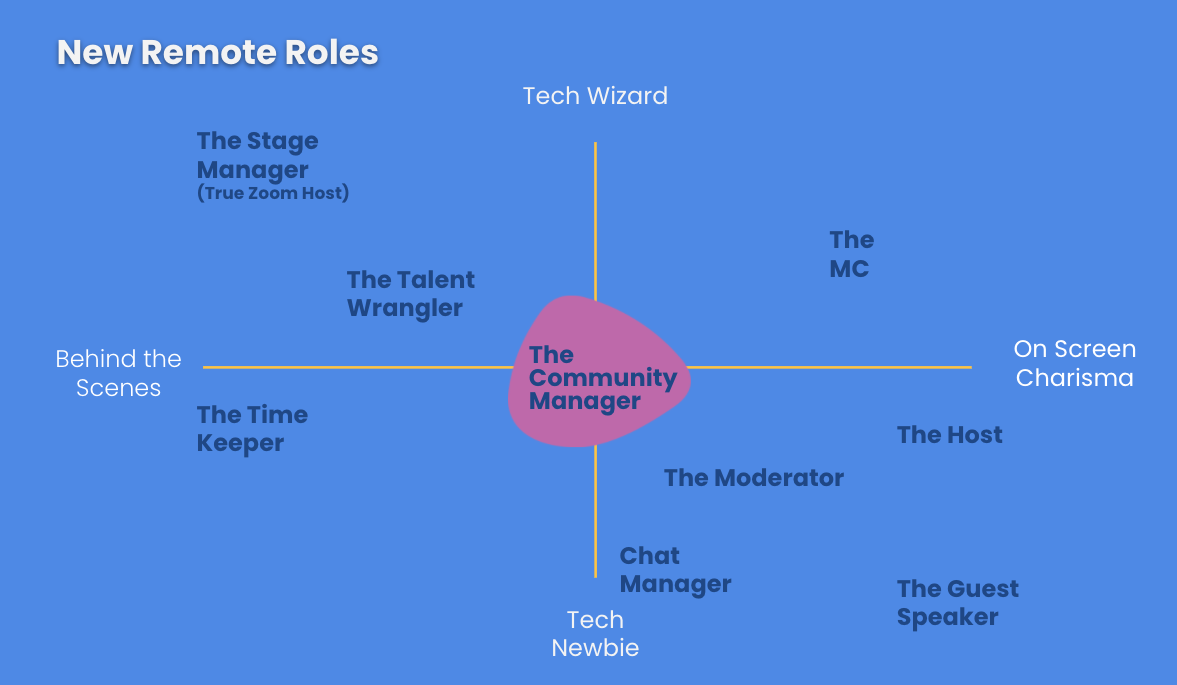
One of the first events we created was the ChIDEO Variety Hour. An event inspired by improvisational, slapstick variety shows (think The Muppet Show and old telethons), it’s meant to showcase the range of talent and work being done in the studio. It feels spontaneous and whimsical thanks to two constraining factors: First, presenters sign up in advance for “on-screen time”—from as little as one minute to as long as 30. Second, two hosts write a script for the show and get robust “back of house” support from a team that monitors live technical aspects like time keeping or moderating chat.
At the first Variety Hour we had a research share from recent project work, an intermission dance party, and one minute of screaming, to name a few examples. It was the most participatory virtual event we had ever had, and Variety Hour has since become a beloved monthly ritual in our digital studio.
Make the most of digital tools
When everyone works remotely, the physical distance becomes compounded with digital invisibility. The right ritual can manufacture proximity, rebuild trust and connection, and mimic the ebb and flow of a good house party. This is where digital tools can shine.
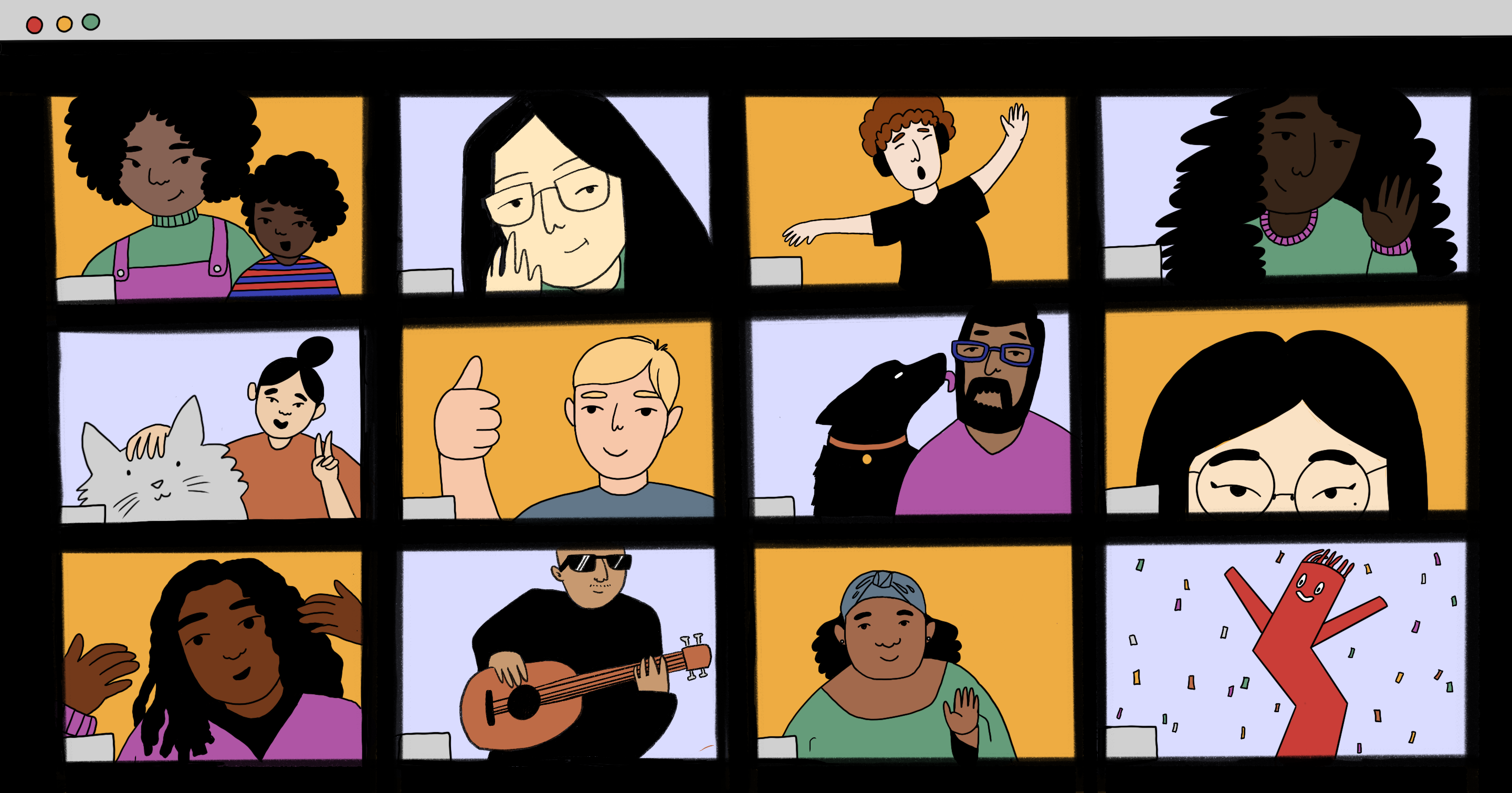
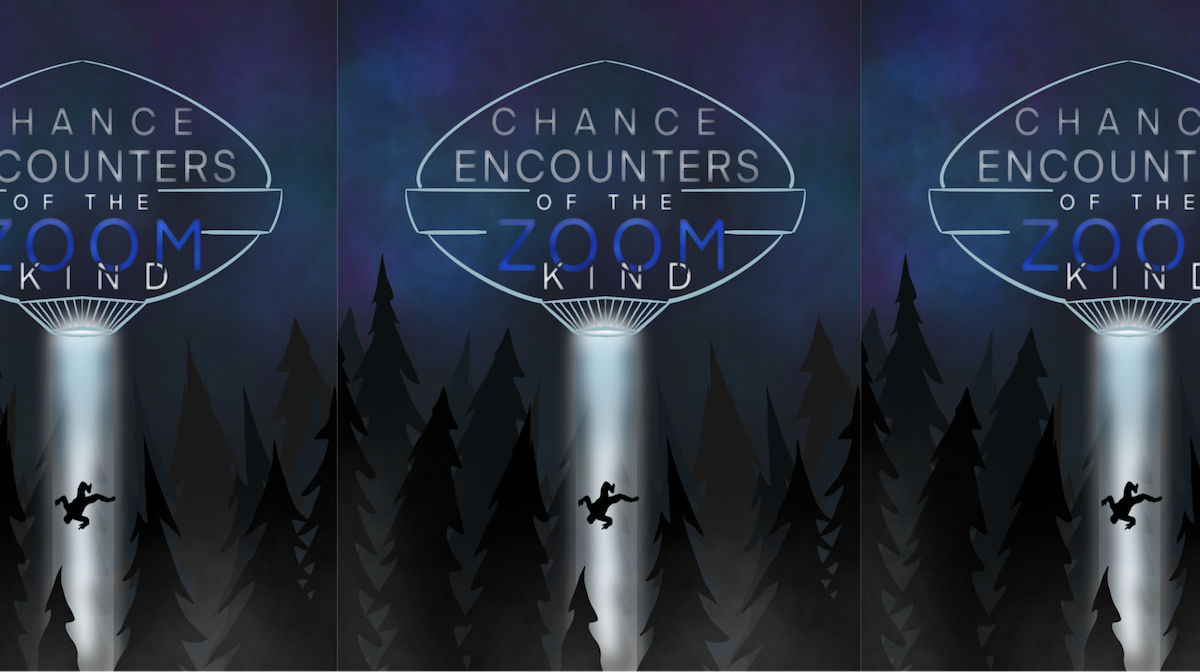
The Breakout Room function is meant for subdividing large webinar audiences, but we asked, what if it was used for something like speed dating? Breakout Rooms can be randomized, sized in different ways, and attendees can even move between them on their own. We harness these features for an icebreaker game called “Chance Encounters of the Zoom Kind.” By randomly placing participants in different breakout rooms together, keeping the duration a surprise, and providing thought-provoking conversation prompts to break the ice, we recreated casual collisions for the digital office. In some cases, it was the first time people had seen each other since the lockdown began, and it provided much needed reconnection, randomness, and joy.
Developing your own rituals
If you’re looking to decrease the stress that accompanies change, create conditions that kickstart innovation, inspire greater trust and collaboration among coworkers, or turn the mundane into the memorable, consider creating your own workplace rituals from scratch—or turn to the dozens outlined in Rituals from Virtual Meetings for inspiration.
When COVID first sent office workers remote, many companies struggled with the decentralization and loneliness of virtual work. Thankfully, at the IDEO Chicago studio we had a secret weapon we knew would help us bring serendipity, joy, and creativity into the uncharted landscape of perpetual videoland: rituals.
Creative visions from Asian and Pacific Islander Americans we admire
In celebration of Asian Pacific American Heritage Month in the U.S., we're sharing reflections from some of the incredible creatives who continue to inspire us.
Our personalities and outlooks, where we grew up, and all of the experiences we’ve ever gone through in life get filtered and expressed through the things we create. And—perhaps even more importantly—our identities impact why we create, helping us find meaning and purpose in our creative work.
In celebration of Asian Pacific American Heritage Month (APAHM), we're sharing reflections from some of the incredible creatives who continue to inspire us. Here, they share insight on what drives them and their goals for the future—bound to, centered in, and empowered by their unique identities.
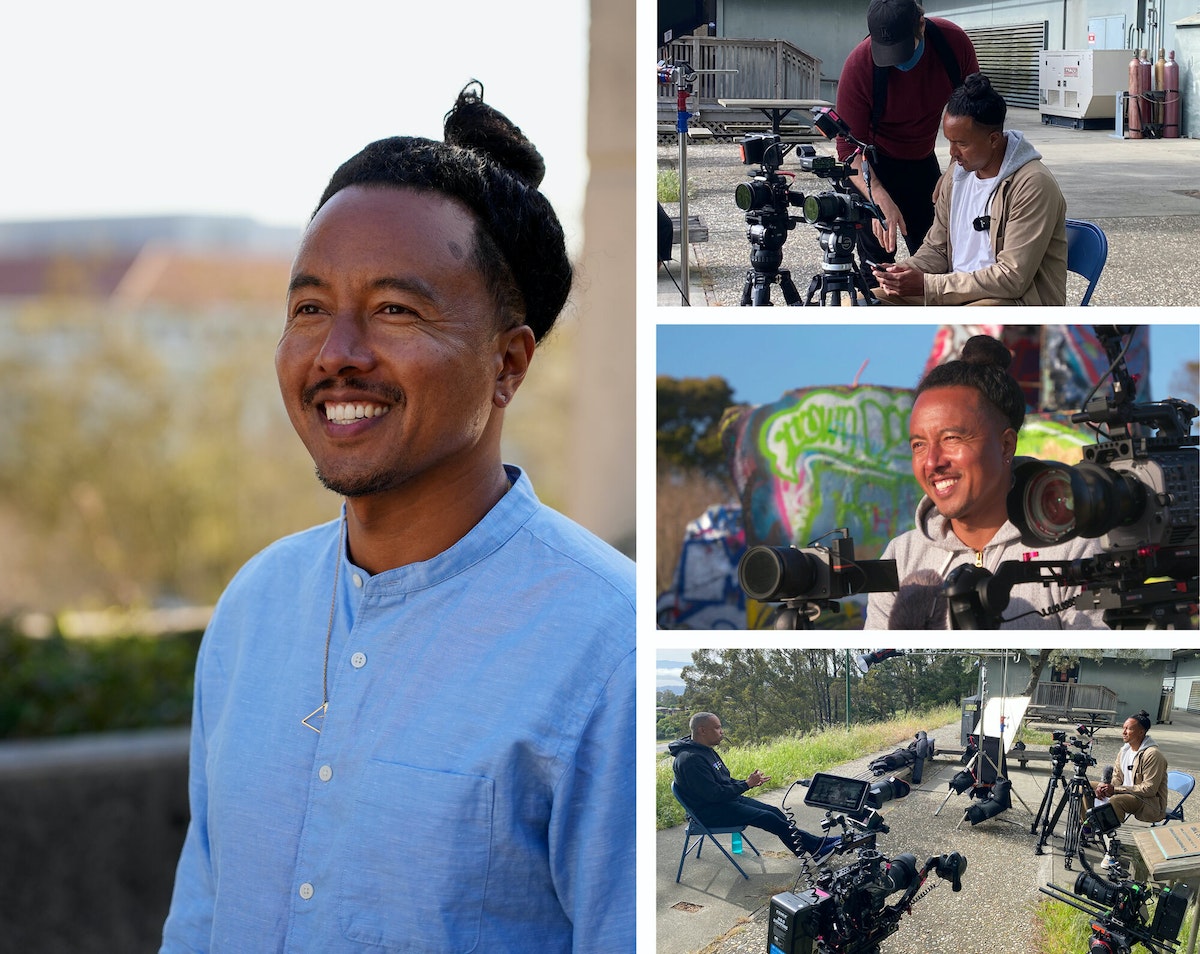
Adamu Chan, Writer, Filmmaker, and Community Organizer
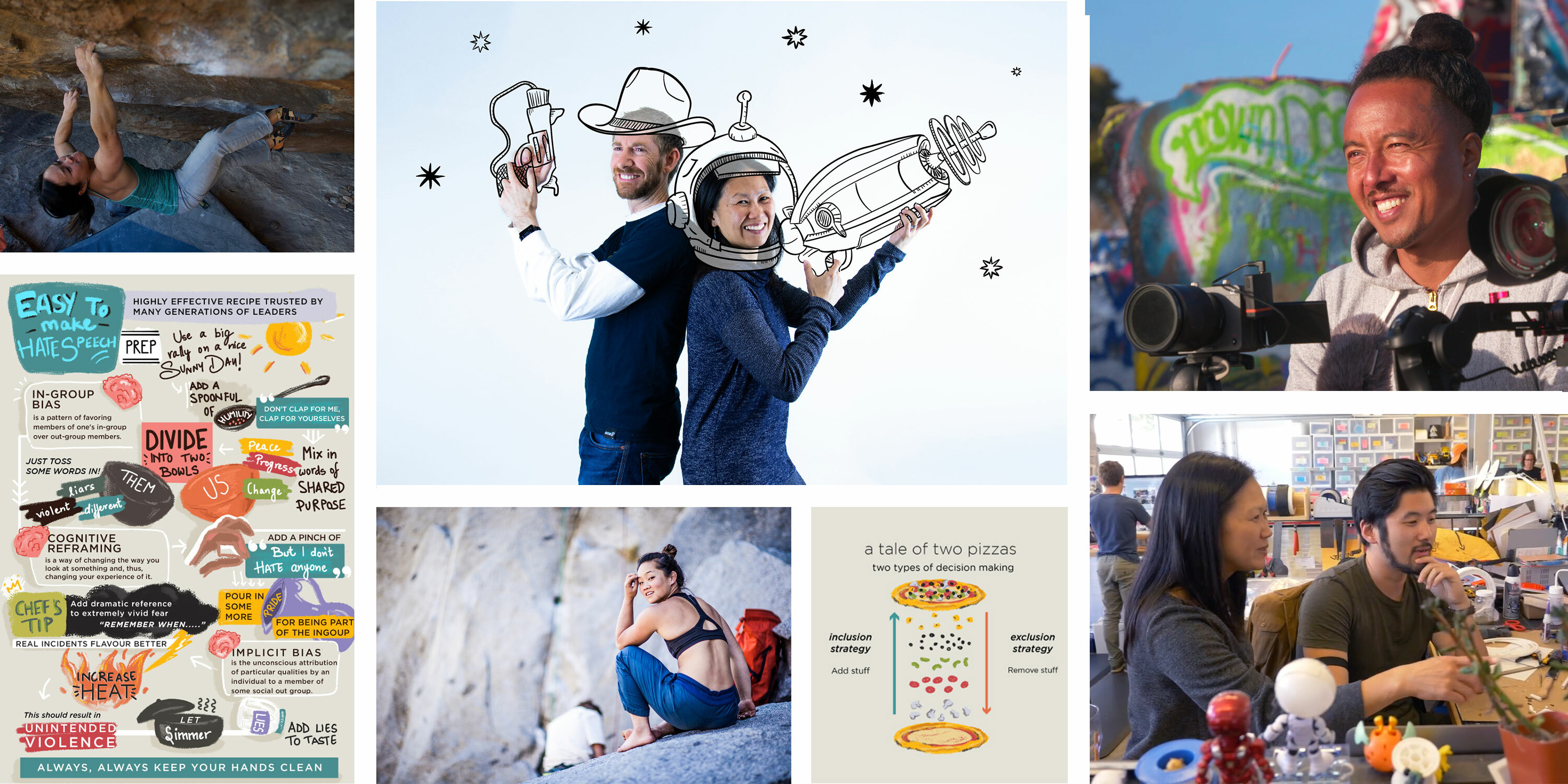
Adamu Chan is a formerly incarcerated writer and filmmaker whose work is shaped by his connections to community. He’s written for Slate about the impact of COVID-19 on prisons, and has published a short film from within San Quentin. He sees his role as a catalyst to drive change in society.
“Culture and history are our collective memory, and history is usually shaped by dominant groups. Art has historically been one of the only avenues for marginalized peoples to participate in dominant discourses, and so I believe it is the job of artists to produce cultural projects that propel political and social transformation. I would like to be remembered as someone who helped move our world towards being more equitable, just, and inclusive.
If we are committed to transforming ourselves and our society, it is important to hear the stories of those who have always lived at the margins, because they hold the answers to what is broken, and in their stories of survival are the solutions we are seeking.”
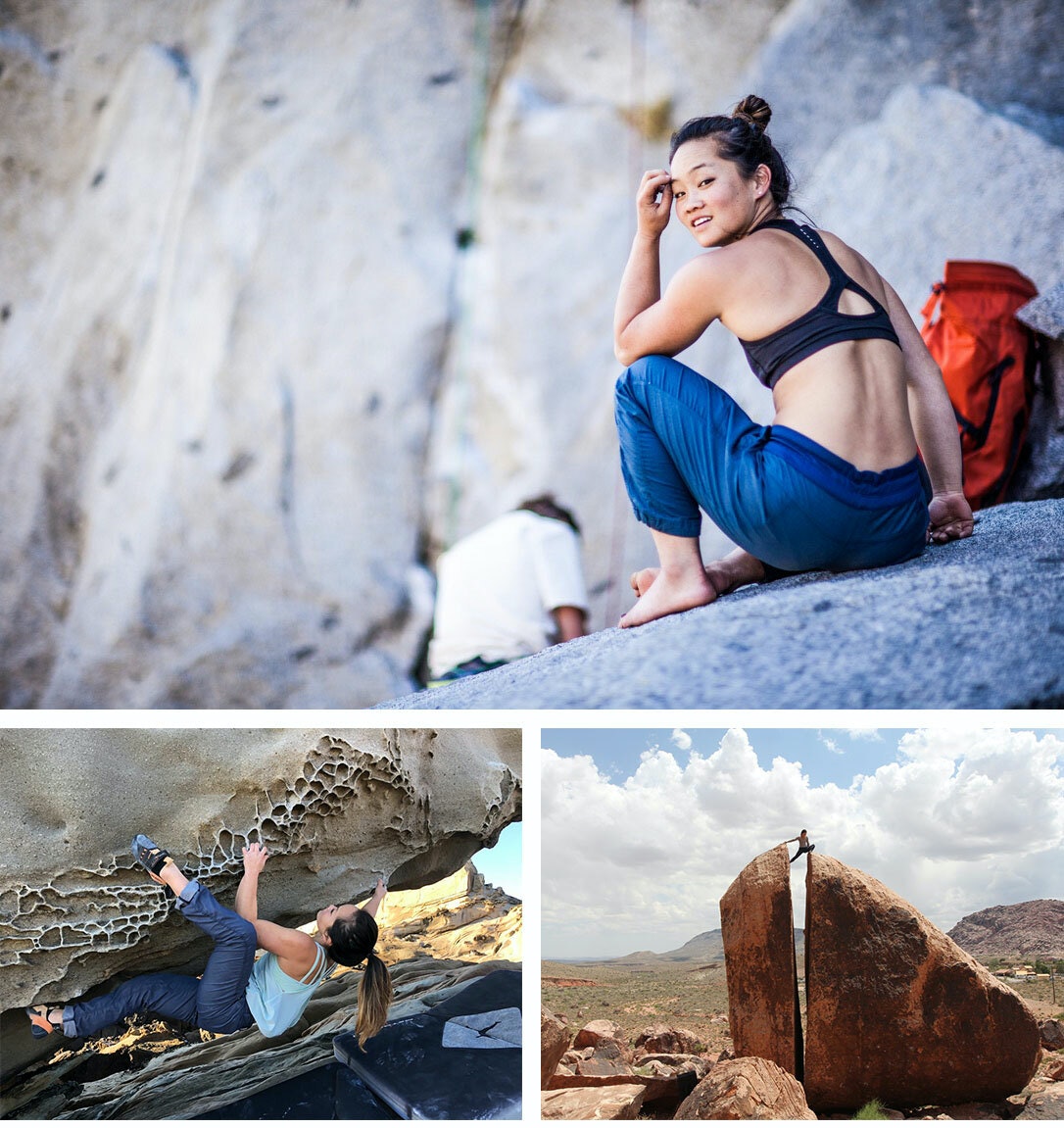
Kimberly Ang, CEO and founder of of KAYA
Kimberly Ang is the founder and CEO of KAYA, an app that connects climbers and helps them track and get insights from their workouts. Prior to that, she led IDEO’s Design for Health portfolio. Today, Kimberly is focused on forging a path so that others like her feel welcome within the climbing community.
“Looking ahead, there are three changes we’re focused on: 1) Democratize access to the insights and coaching people need to learn how to climb and climb well 2) Celebrate a much more diverse range of climbers to show everyone they can be included in this community and 3) Take care of our public lands and ensure we grow sustainably.
I hope to be remembered as leading with heart and being myself, and creating space for others to do the same.”
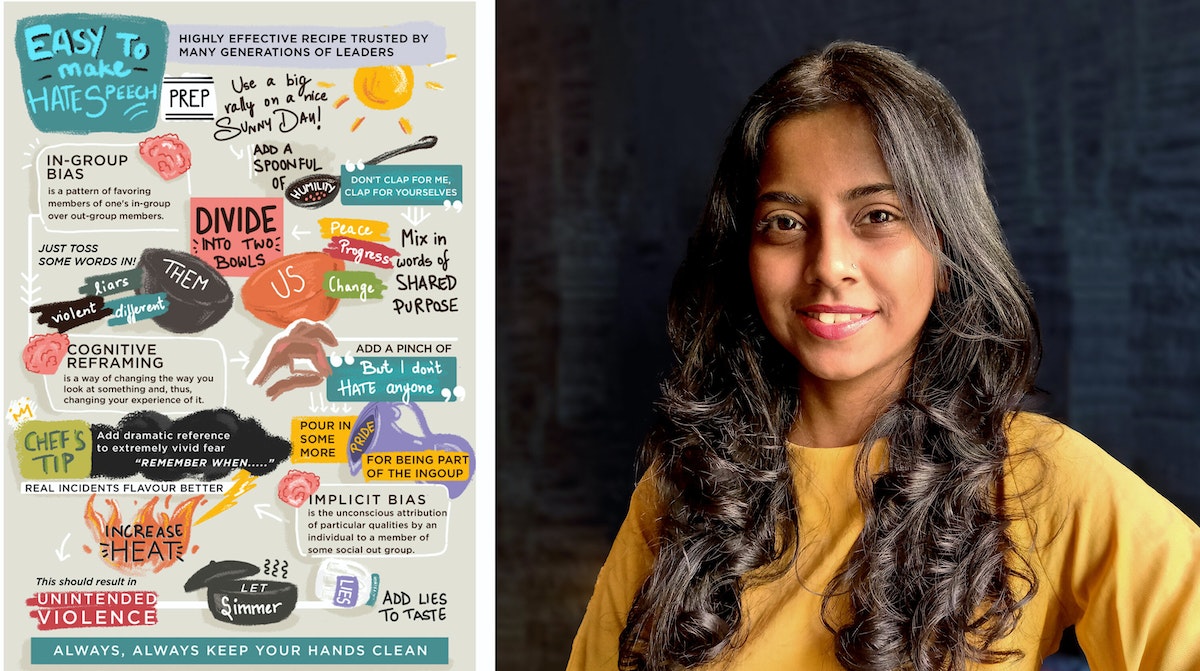
Anupama Rao, Communications Designer and Behavioral Science Practitioner
Anupama Rao is the creator behind BrainGoo, a library of visual storytelling sequences (often in the form of Instagram posts and stories) that explain complex words and make observations about the world. In her day job, she’s a Design Researcher at Qure.ai. Her work is fueled by a desire to make healthcare access more equitable and compassionate.
“I work in the intersection between the future of design and behavioral science so that I get the chance to tackle wicked problems, especially those focused on women’s rights and healthcare, via small incremental changes. I’m fueled by my experience as my mother’s primary caregiver from a young age. The idea is to work towards inclusive design by consciously accounting for representation, systemic inequalities, social biases, and lack of access.
Currently, as a designer at Qure.ai, I work with experts to create AI products that make healthcare affordable and accessible, which is equal parts challenging, overwhelming, and rewarding. I love seeing how design can play a role. For example, can designing this report differently save a healthcare professional 10 seconds? What factors influence a crowded ER when a patient is having a stroke? How can I make this relevant to a low-resource, sparsely populated village?
I want the legacy of my work to be its empathy for the context it lives in, and its ability to create sustainable and positive behavior change.”
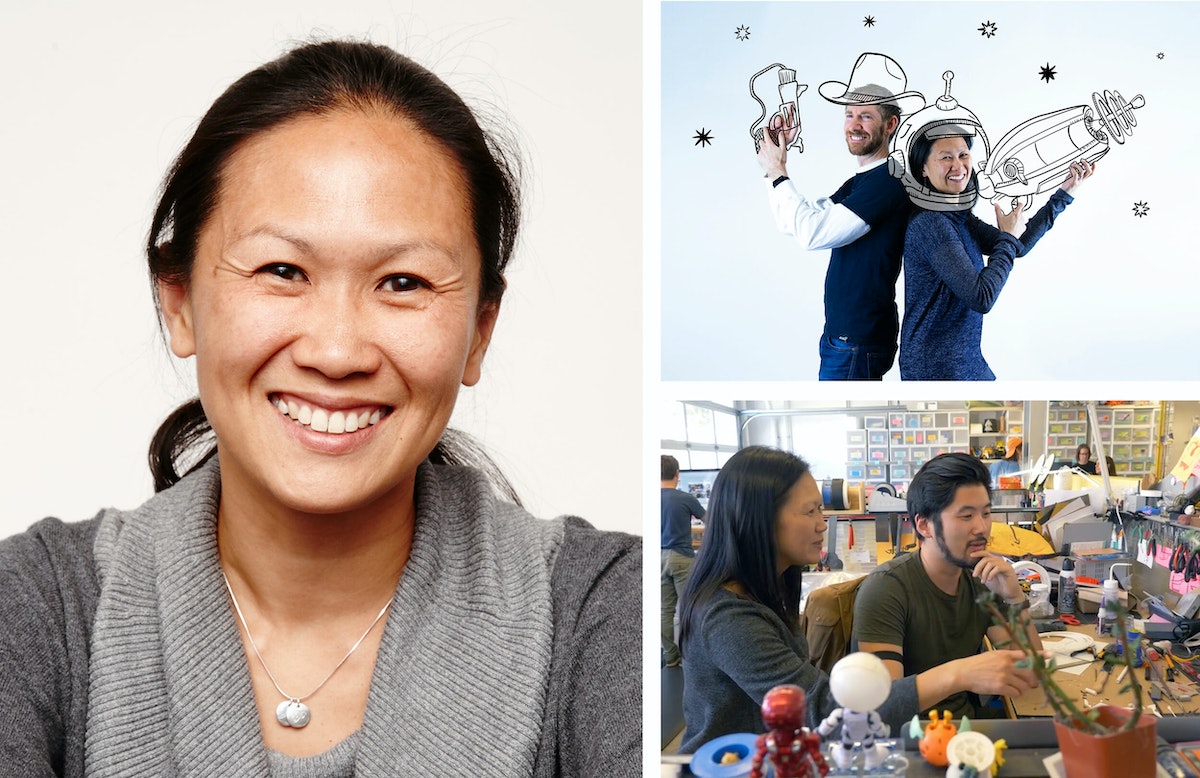
Michelle Lee, Managing Director, Design For Play at IDEO
Michelle Lee leads the Design for Play studio at IDEO, where she designs actual toys—but also finds ways to bring games and play into other unexpected industries, like education and health.
“My initial career in toy design taught me that play has potential far beyond the world of kids and toys. Through play, we stretch our imaginations, conquer our fears, realize new possibilities and take on challenges with optimism and confidence. It enables us to find meaning and happiness in the world. At IDEO, I lead a team that harnesses this power of play to ensure that aging is joyful, education is engaging and environmental action is inspiring.
I see the future in bringing play to tackle some of society’s biggest challenges—helping people thrive mentally and physically, building inclusive communities and helping to elevate voices that are often unheard. Driving lasting change by aligning these important issues with what brings people joy.”
Want to learn more, and get inspired by other Asian and Pacific Islander creatives? Follow the #AsianCreativeNetwork tag on social media, and check out our Asian Pacific American Heritage Month series on Instagram.
What you make is who you are. For many designers, creativity is rooted in identity.
The future is already here
Is your organization prepared for it?
From flexible working conditions to the coexistence of both physical and digital experiences, COVID-19 has accelerated the trends and behaviors that have been rearing their heads for some time, and pushed them to the forefront of our everyday lives.
Indeed, the future is already here. How might we fully step into it with creativity and resilience?
Recently, a group of IDEO designers in Tokyo convened a creative project to brainstorm and design for the implications of the pandemic on the future of Japan. Called “Emergent Futures,” the goal of the work—accessible below—was not to predict the future, but to prepare for the possibilities it may bring.
To envision these “emergent futures,” we started where we always do: with people, and by observing ourselves, our families, and communities. For each future, we describe what it looks like and what behaviors prevail, the evidence we see for this future already emerging, and what design opportunities exist for Japan-focused businesses.
For example, the first emergent future we explore is Leftover Spaces—the idea that physical spaces will become more dynamic due to public health concerns around occupancy. With this, business opportunities related to rent, consumer preferences, space design, and co-ownership emerge. We explore and ground this emergent future through Kei, an IDEO designer and blossoming curry chef, whose needs inspired us to prototype a pop-up system concept—the Kei Truck. Our research reveals how some businesses are already prototyping this future, including restaurants operating as corner stores and Hoshino Resorts, who is leveraging data tracking to keep guests safe. These examples provoke key takeaways for leaders, from the need to develop a more entrepreneurial, adaptable workforce to using data in a human-centered way.
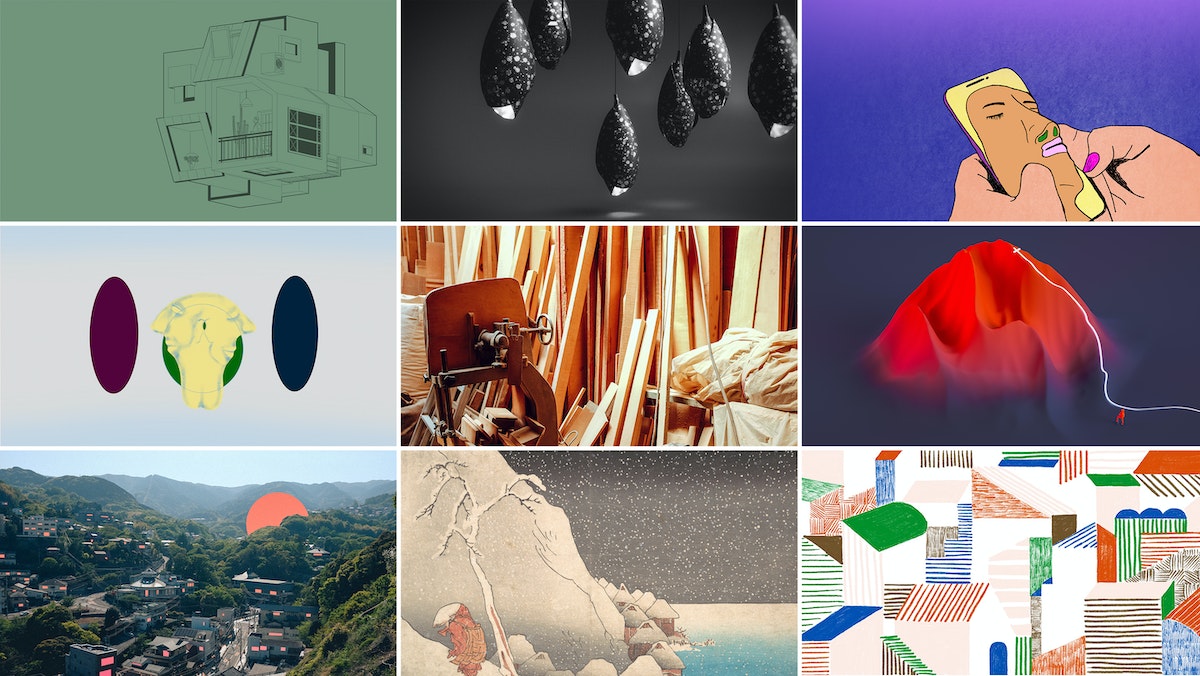
Though Emergent Futures is a collection of provocations about the state of Japan post-pandemic, the value of this futuring exercise and framework is universal, especially now. For Japan and other parts of the world to meet the challenges and opportunities we face post-COVID—from how to safely utilize physical spaces to how to remain competitive in a changing job market—our response must be human-centered, innovative, and imaginative.
Please share the work far and wide. We hope to spark the global collaboration required to ensure the future is evenly distributed, so we can step into it with confidence and creativity, together.
Download and share Emergent Futures here.
“The future is already here—it’s just not very evenly distributed.” Though attributed to essayist William Gibson nearly 20 years ago, the quote could not be more relevant today.

Widening the pathway to a career in design
A new fellowship program for underrepresented young designers.
It was a result of her own tenaciousness, her creativity, and the support of RepresentED, a small organization with a big mission to prepare students for careers in industries where they are underrepresented. The organization uses a human-centered approach to diversify the next generation of leaders through training, mentorship, and internships. RepresentED’s founder, Rashida Hanif, met Cisneros when she was a transfer student at UC Berkeley. Hanif notes that transfer students—particularly Black, Indigenous and People of Color (BIPOC) young adults—are missing out on what she calls the “hidden curriculum of life.”
Cisneros immediately saw the opportunity to help other Black and Brown transfer students like herself attain university education and gain visibility into concealed opportunities for their futures. Cisneros first learned about RepresentED in 2017, when she applied to join the first cohort of fellows. As part of the fellowship, she participated in a design thinking workshop led by former IDEO designer Scott Shigeoka. Later, she and her team competed in OpenIDEO's Future of Higher Education Challenge and designed an app that connected transfer students with much-needed community and resources. The experience and process introduced Cisneros to an industry she had never considered before. “Learning about design was absolutely pivotal for me,” she says.
Making change from within
After the competition, Cisneros was encouraged to apply to IDEO, and was hired as a recruiting coordinator before being promoted to her current role. Today, she leads Color by Design (CxD), which she helped launch in the wake of the rise in activism for social justice last year. She also helps facilitate internal programs at IDEO like business and inclusive leadership trainings, which seek to support IDEO’s senior leaders (and eventually all employees) to better understand how to create a culture of belonging. “In these trainings, we’re going to provide tangible leadership skills which help build awareness of where people are in their own personal journey,” she explains.
Shifting the power dynamic
This month RepresentED and IDEO are opening application submissions for the fall session of CxD. The program is open to all BIPOC students from backgrounds that have been historically underrepresented in design.
“It was important to shift away from the typical ‘company-intern’ power dynamic,” said Hanif. “It’s about an equal exchange of value that shifts the long-held power dynamics between the company and the fellow.” Following a bootcamp in design thinking, the cohort will receive placement on a six-month full-time IDEO project and have the opportunity to pursue a career at IDEO. Whether they decide to continue a design career or not, fellows will leave the program with a deeper understanding of design that they can apply to nearly any line of work.
Fellows will also be trained holistically for entry into culturally white-dominated industries, preparing them for challenges that are likely to come up, like imposter syndrome. “Having the ability to name things like imposter syndrome enabled me to step into my own authenticity,” explains Cisneros, “while understanding that institutions need to do their own work in order truly create a culture of belonging.”
A signal to the industry
Looking forward, there’s a lot of potential for programs like CxD to drive lasting change within other companies and industries. “This isn’t just a pipeline program, it’s a signal to the industry,” Hanif notes. Companies that have more diversity in their staff will have a greater competitive edge, and the design skills fellows bring to the table can be applied to more than just traditional design work—they can be used anywhere.
“It's not about checking DE&I boxes,” she adds, “When you build products and services, you want the people who buy those products to be represented in the design process—there’s a real business case for that.”
The first cohort has been invited into IDEO in January 2022 for a 6-month period, and an iteration of the program will launch by the end of 2023. We will share more updates as we get closer to the recruitment season. If you have any questions, please contact cxdinfo@ideo.com.
For Jordan Cisneros, a Senior Specialist on IDEO’s Global Learning and Development Team, access to a career in design was not a given.

Lindsey Turner
I’m passionate about building brands, products, and experiences that help organizations show up with meaning and momentum.
I help organizations cut through complexity by shaping how they show up, through brand strategy, identity, and storytelling.
Working at the intersection of brand and business, I bring an editorial eye and a bias toward making—turning ideas into tangible experiences that people can understand, trust, and believe in.
My work spans government, healthcare, financial services, media, and consumer goods, from launching Gen Z-focused ventures to building innovation labs and reimagining legacy brands. I relish moments of ambiguity and enjoy translating across teams, perspectives, and priorities to move ideas forward.
I started my career in editorial and digital design, shaping cross-platform experiences and identity systems in publishing and agency environments. That foundation still shapes how I work today: I’m detail-oriented, collaborative, and overreliant on the Oxford comma. I hold a BFA in Visual Communication from the School of the Art Institute of Chicago.

Rachel Young
My work helps organizations see who their products aren't working for—and build the will and the tools to do something about it
For 25 years, I've asked the same question: Who does this design exclude—and what are we going to do about it?
My work spans human-centered strategy, inclusive design, and qualitative research, with clients ranging from Microsoft, Google, and Verizon to the National Science Foundation, and San Francisco Unified School District.
Before IDEO, I taught elementary school in East Palo Alto and spent a decade doing design work with social service organizations—where I learned firsthand what it costs people when systems are built without them in mind.
I am currently writing User Error, a nonfiction book about digital access and the design decisions behind it. I live in Oakland, California.

Brian Pelsoh
I lead with craft, ensuring our work is creatively excellent: rooted in deep human insight and imagination, while also grounded in the realities of business and technology.
My expertise spans brand, communication, and product design across tech, education, the arts, and social impact.
I believe great work demands both high-level vision and obsessive attention to detail, and only happens through collaboration.
I bring an inclusive, hands-on approach and a deep understanding of business, which enables me to consistently deliver excellence while always asking why.
Before joining IDEO, I worked at the brand firms Pentagram and VSA Partners. I began my career as a designer, leading teams at the School of the Art Institute of Chicago and the Milwaukee Art Museum. I hold an MFA in graphic design from Maryland Institute College of Art and a BFA in communication design from the Milwaukee Institute of Art & Design, and have taught at some of the best design schools in the US.

Tony Wong
I am responsible for IDEO’s long-term success in China and working with clients to use design as a tool to enable growth.
I am responsible for IDEO’s long-term success in China and working with clients to use design as a tool to enable growth. Specifically, I have helped Chinese companies design holistic brand solutions through the development of their products, communication, services, and innovation teams, and I have helped multinationals expand their presence and influence in China.
I advise global leaders on developing China-led innovation and capabilities.
In over 15 years in IDEO Shanghai, I have worked on projects that use design to elevate the quality of the experience of healthcare products and services, streamline processes that increase productivity, create spaces and programs that promote and enable inclusive communities, and build next generation mobility solutions that are planet-positive.
Before joining IDEO, I worked at Philips Electronics and the Electrolux Group in Italy, the Netherlands, and Singapore on a number of breakthrough commercial products. I am a member of the Young President Organization in Shanghai.

Building a personal AI for the messiness of life: Sida Li
Most AI products today are built for work—a space with clear problems and established systems. One founder noticed a gap: personal life is messier, harder to systematize, and mostly left behind by the AI boom. So she built Cue, a personal AI that lives inside iMessage and group chats, to go where the other tools haven't.
In this episode, Becca Carroll, IDEO's Chief Strategy Officer, talks with Sida Li, co-founder and CEO of Shared Context Lab, about staying anchored to a human need while the technology around her keeps changing shape, why she treats her business model with the same rigor she'd bring to a product, and what it feels like to build a company at this particular, disorienting moment in AI.
The conversation also gets into how Sida makes design decisions: the language Cue uses to describe itself, the tradeoffs behind building inside iMessage instead of a new app, and a real story about a business idea that didn’t pan out.
This is the second in a two-part series profiling founders from IDEO's Startups-in-Residence program. The first conversation is with Johannes Seemann, founder of Sooner, on designing GenAI for the emotional side of money.

Designing GenAI for the emotional side of money: Johannes Seemann
Most personal financial tools are built to run the numbers and optimize towards a budget. While that works for some, most people experience money as a lived relationship that does not neatly fit into a spreadsheet. Johannes Seemann and Becca Carroll discuss why money is emotional before it is mathematical, and what a human-centered approach to building a generative AI financial product looks like in practice.

The curious leader's edge in uncertainty: Scott Shigeoka
Mina Seetharaman talks with Scott Shigeoka, author of Seek and Head of Curiosity Cultivation at the Eames Institute, about what distinguishes genuinely curious leadership from performative curiosity, how power dynamics shape curiosity, and why practicing curiosity can restore energy rather than drain it.

How constraints make us more creative: David Epstein
Mina Seetharaman talks with David Epstein, author of Inside the Box and Range, about why total freedom often produces average work, how leaders can design useful limits on purpose, and what organizations such as General Magic and Pixar reveal about the relationship between boundaries and creativity.
Looks like you might be in search of something very specific?
Or reset the filters above and try another angle.
Here’s some random inspiration

Podcasts about creative leadership

Articles about the power of prototyping
