
.svg)



Designing the connected future of diabetes management
Expanding IDEO's partnership with Ascensia to develop an engaging, internet-enabled blood glucose monitoring system.
Keeping diabetes in check isn’t easy. Between checking blood sugar multiple times a day, keeping a detailed activity record, and logging food intake, staying healthy can be daunting.
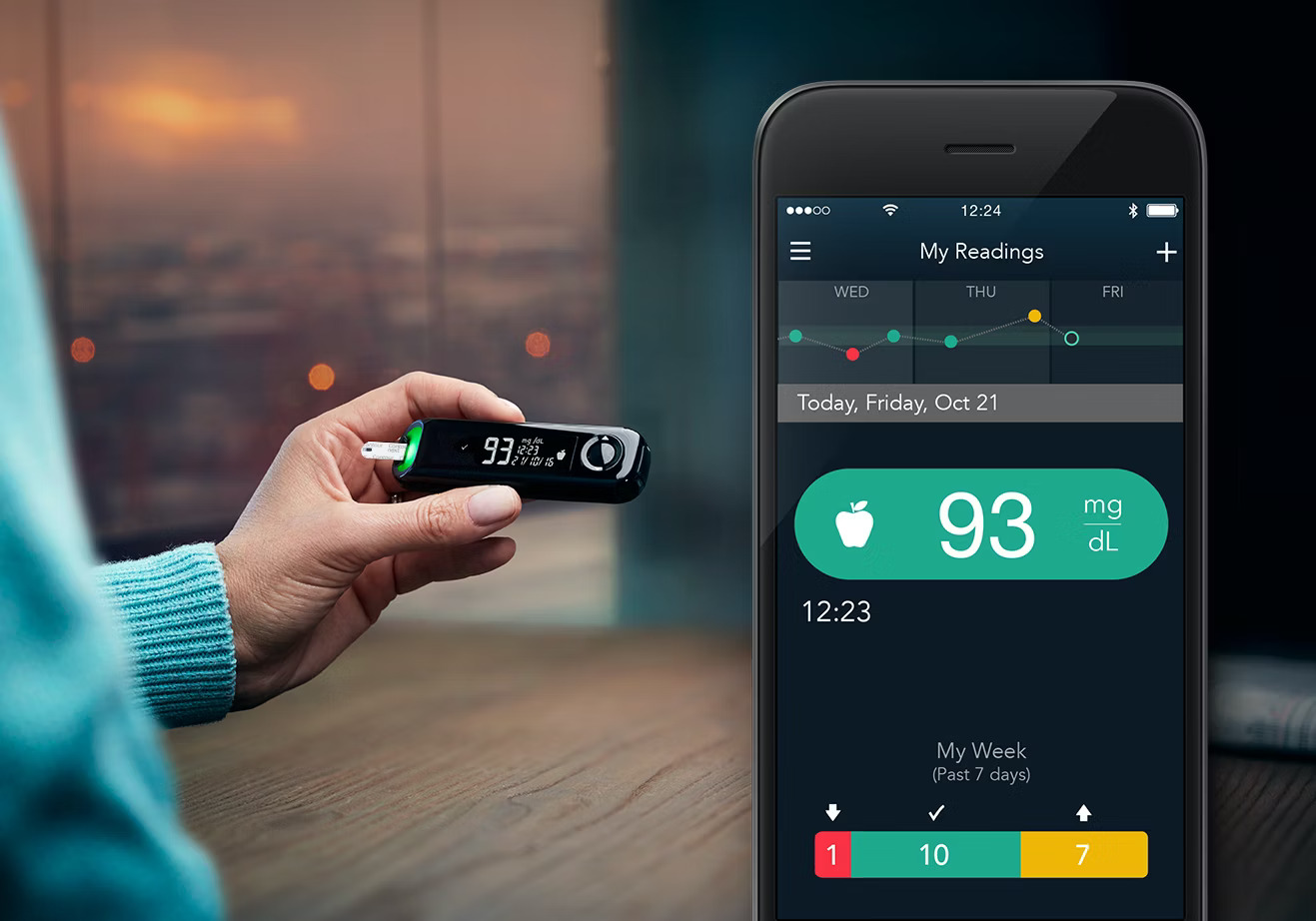
But a recent advance in smart diabetes management—Ascensia’s CONTOUR NEXT ONE blood glucose meter and the CONTOUR DIABETES app—can give patients more clarity and control.
The CONTOUR NEXT ONE is the latest product to spring from a multi-year collaboration between IDEO and Ascensia Diabetes Care (formerly Bayer Diabetes Care). In 2009, Ascensia and IDEO developed the award-winning CONTOUR USB blood glucose meter—the first meter to plug directly into a computer, providing patients and their doctors with instant access to blood sugar data and personal trend reports.
Buoyed by the success of the first collaboration, Ascensia asked IDEO to help design a next-generation diabetes management system (and the company’s first internet-connected device).
To help reduce the stigma of checking blood sugar in public, IDEO designed the CONTOUR NEXT ONE to look and behave like today’s modern tech devices. The highly simplified, seamless system allows patients to upload blood glucose readings automatically to the app, which helps guide informed, real-time decisions. The meter’s red, green, or yellow smartLIGHT feature gives instant feedback about whether blood sugar levels are below, within, or above the target range.
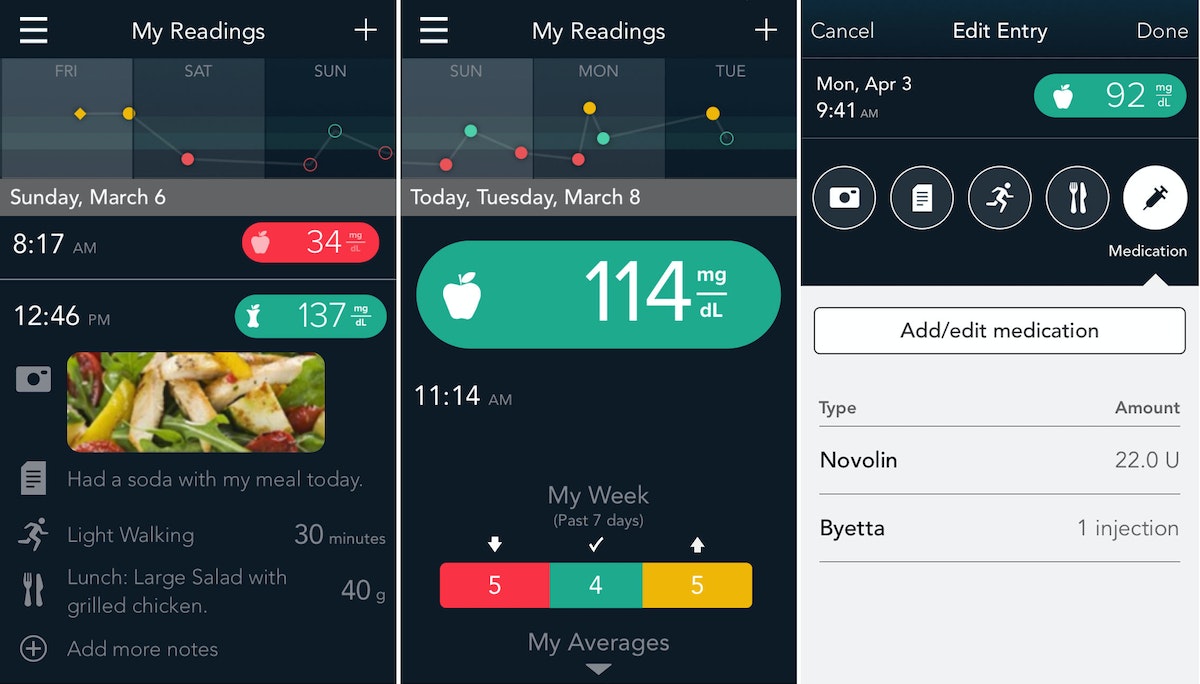
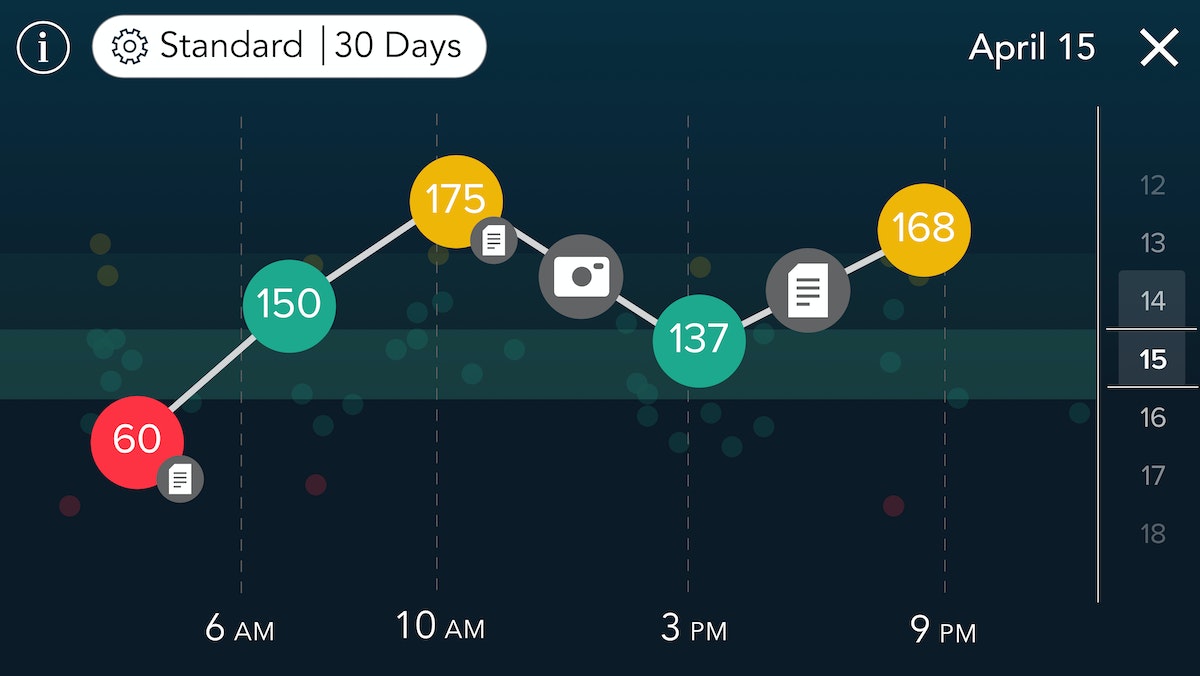
Seeing contextual data, which includes physical activity logs and photos of meals, paired with recent and historic blood sugar levels, nudges patients toward healthier lifestyle choices and better control of their condition.
For doctors, the accuracy and quantity of the data combined with the app’s easy-to-read pattern views invites more comprehensive, actionable conversations with patients.
The CONTOUR NEXT ONE hit shelves in Europe in 2016 and is now available in the U.S. Ascensia is poised to develop more products enabled by rich, personalized data to help people with diabetes live longer, healthier lives.
.jpeg)
Designing the city skies of tomorrow
Designing the city skies of tomorrow.
What if we could use the sky to provide alternative solutions to these problems, creating more space for living and transportation? What exciting future awaits us?
At JAXA’s Aeronautical Technology Directorate (ATD), researchers are conducting research and development on aviation science and technology for the future. They are working to affect positive impact through research like noise reduction of airframe and an integrated aircraft operation management system for disaster relief and crisis management.
Normally, JAXA begins their projects by examining the needs of the aircraft industry or comparing themselves against global technology standards. This approach often leads to ideas that are merely an extension of the current technology. JAXA needed a new approach in order to create radical ideas and real change.
The key question was: What solutions would emerge from prioritizing people’s needs over the most advanced technological possibility—taking a human-centered approach to tackling the most pressing societal challenges?
JAXA ATD voluntary partnered with IDEO to attempt to answer this question, identifying new research areas by envisioning people’s needs in the near future. Together, JAXA and IDEO developed four scenarios of future societies.
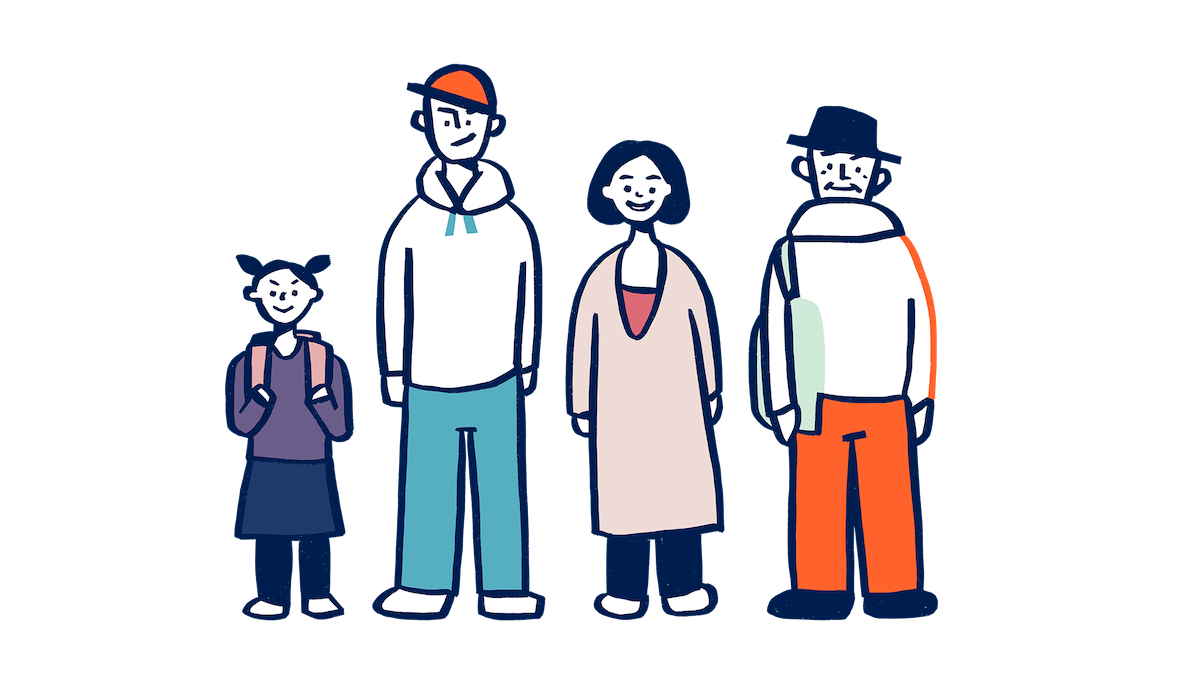
The scenarios do not necessarily focus on technologies. Rather, the focus is on telling stories that help readers put themselves in the shoes of the four personas. At the same time, the team worked with industrial designers to illustrate convincing demonstrations of the vehicles and machines of the future.
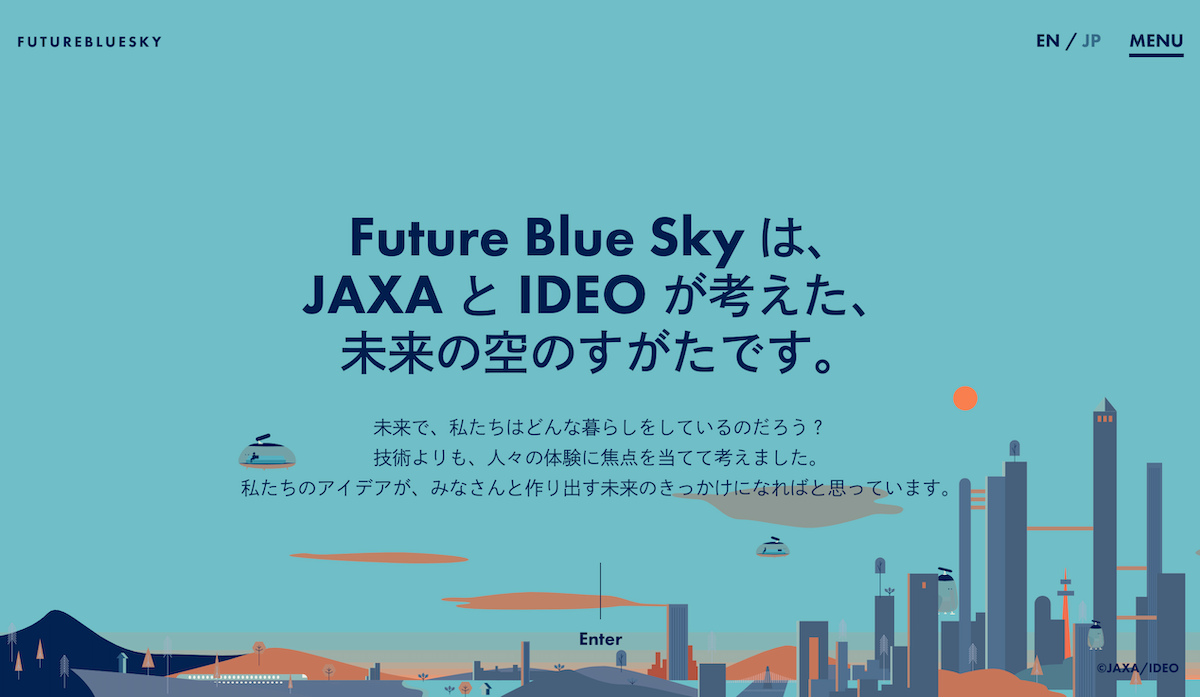
JAXA’s team embraces the belief that “technologies developed at JAXA should incorporate emotional aspects to blend seamlessly into people’s lives.” Driven by this philosophy, the visual design of the four scenarios used a friendly illustration style intended to be approachable and understandable for people of all ages.
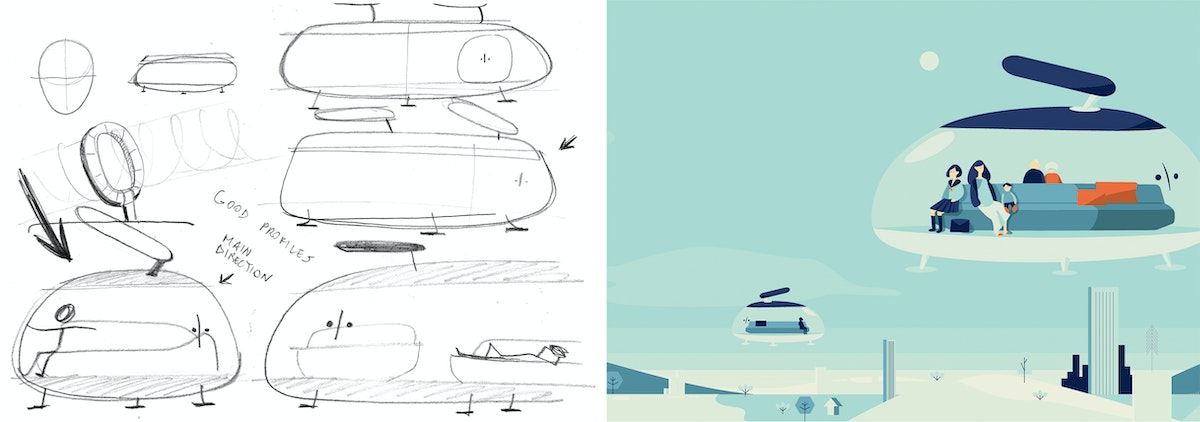
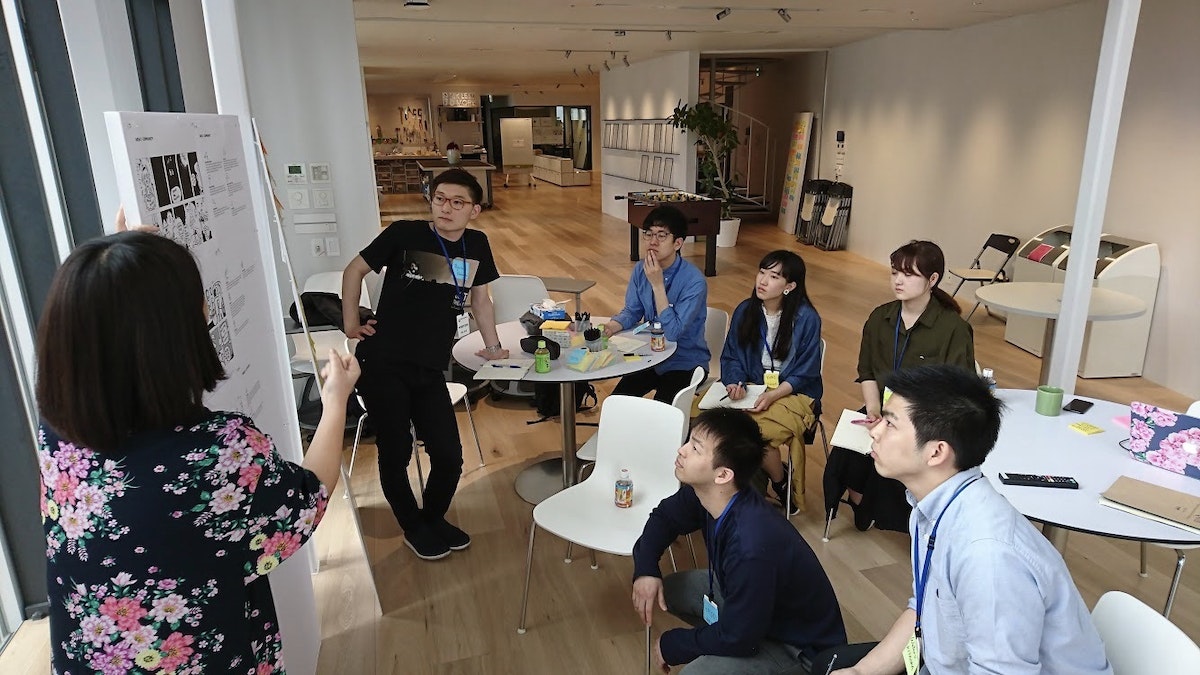
In order to develop human-centered concepts from scratch, the IDEO and JAXA team first undertook research and inspiration-gathering. They skydived, observed cities from above, brainstormed with students from the department of architecture at Waseda University. They interviewed airline employees, a former Judo world champion, skyscraper lovers, a business producer who focuses on new working styles. Throughout the research phase, the team explored the possibilities of the sky as a “living space,” not just a place for transportation.
The team was surprised and excited when they learned from a former fighter pilot that old cockpit designs were inspired by the Japanese tea room, highlighting a historic precedent for taking inspiration from real life to inform new technology designs.
The team synthesized their research and developed several concepts, each informed by a different social issue or pressing concern. Each issue was brought to life through a fictional personal narrative.
How might we relieve city congestion and pollution using the sky, while still keeping it clean and blue? Floating public lights, a skyway that regulates air traffic, camouflaged planes that keep the sky blue—concepts introduced in this scenario were the closest to the technologies already being researched at JAXA ATD. They show us how the sky could become an infrastructure that supports our daily lives. Meet Ayame, a girl from Gunma prefecture, ready to begin her college life in Osaka.
How might we make travel feel easy for people of all ages, no matter how far they need to go? While the researchers at JAXA ATD are working to improve the mobility of aircraft, like reducing air friction or increasing the engine efficiency of aircraft, this scenario explored how people could travel door-to-door through the sky with or without aircraft. A day-in-the-life of Naoto, a 72-year-old man who commutes twice a month from Tottori to Tokyo for medical checkups.
How might we leverage the sky as a resource for reusable energy and economic growth? One of the criteria of JAXA’s R&D activities is to improve the environment. While JAXA has been focusing on “protecting” the environment, this scenario focused on “creating” new environments. A day-in-the-life of Toshi, who runs a “sky-to-table” farming business.
How might we help people live with peace of mind, even during a disaster? JAXA’s disaster relief technologies have been extremely valuable in countries like Japan, which frequently suffers from natural disasters. In this scenario, we approached the problem from victims’ point of view while exploiting the potential of a network of aircrafts and other flying objects. Here's the story of Yuri, a victim of an earthquake in Tokyo who reunites with her family after evacuating to the sky.
The purpose of the project website is not to present answers, but to introduce new directions towards an exciting future. By presenting JAXA ATD’s vision through these four scenarios, the team invited people from all industries and of all ages to participate in co-creating the future.
Just like movies, cartoons, and novels from childhood stimulate the imagination, this project aims to spark new conversation and vision for a radically different, positive future.
By illustrating and communicating a more human-centered future to a wider audience, Japan’s top aeronautical technology development agency may already be changing the future of the sky for the better.
The speed and scale of change in our world are unprecedented. As more people relocate to cities, our lives are impacted by urbanization problems such as pollution, congestion, depopulation of rural areas, resource, and energy deficiencies.
Preparing an industrial leader for the digital future
Changing the culture, mindset, and way of working at a global manufacturing firm.
For factory operators, a smart valve is a game-changer. It gathers data on how smoothly the system is running and feeds it to an app, making it easier to troubleshoot from anywhere. And when things get overheated, it can automatically shut down the machinery, avoiding a meltdown.
Georg Fischer (GF), the Swiss-based, B2B industrial manufacturer collaborated with IDEO to design that valve, along with a system that adds value for generations of engineers to come.
And there were some surprises along the way. When the team set out to interview customers, they learned a lot about their real needs. “We showed a customer a sacrificial concept of a smart valve and asked, what do you think about this?” says Laura Barrabia, GF’s Head of Corporate Design Thinking. “The customer answered, we don’t want your valve to be smart, we want to be smart. If GF is providing a smart valve, where is my value?”
For GF Piping Systems, these insights helped shape initial prototypes and guided the direction of the design to something that would tie parts together into smart systems and more efficient industrial facilities—a competitive advantage.
Yves Serra, GF’s CEO, recognized early on that his company needed to strengthen its customer-centricity and digital capacity, so he approached IDEO to begin shifting GF’s culture from engineering-led and procedural to customer-focused, multidisciplinary, collaborative, and flexible. That kicked off a decade-long relationship that would help GF take a design-based approach.
Learn what it means to move from being technology-driven to being truly customer-centric.
To help GF identify clients’ pain points and address them with new digital offers, IDEO proposed three “lighthouse” projects, one for each of GF’s divisions: Piping Systems, Casting Solutions, and Machining Solutions. Lighthouse projects (also called “Beacons”) are proofs of concept that light the way for an organization and help it shift its way of working.
For example, GF Machining Solutions built a prototype for an application that uses real-time data to help customers identify and fix problems in the machines, laying the foundation for truly predictive maintenance. Making data streams more transparent for customers also simplified life for the GF service engineers, who keep the machines running.
Learn how Georg Fischer is moving from hardware offerings to digital solutions.
For GF Piping Systems, the design team developed the GF Digital Line, a set of products, apps, dashboards, and other services that help customers plan, install, and maintain water and chemical piping systems. GF teams went back to customers to test several prototypes and gather feedback on the Digital Line and make sure it addressed current and future needs. They also built internal capabilities to support product development, laying the groundwork for future innovation.
Lastly, IDEO helped GF Casting Solutions escape the “commodity trap” of competing with foreign automotive suppliers. To better understand the pressures car manufacturers face, the design team explored the development cycles of two car manufacturers. They learned how challenging it is to implement solutions to reduce vehicle weight—essential for cutting fuel consumption. As an expert in aluminum die casting, GF was well positioned to help manufacturers meet that challenge, not just with quality parts, but also with digital engineering to deliver cutting-edge lightweight casting solutions, which are harder to replicate.
By the end of these lighthouse projects, GF had rolled out a global design thinking training program that had touched more than 1000 employees. After the training, employees throughout the organization adopted a new way of working and became passionate ambassadors. The enthusiasm spread from the R&D department to HR to finance and many other departments.
Today, GF has permanent design thinking and digital teams to continue this work. All three divisions aim to launch the first releases of their lighthouse projects by early 2019. And with every project, GF’s business—and solutions—get smarter about how to meet the needs of a fast changing world.
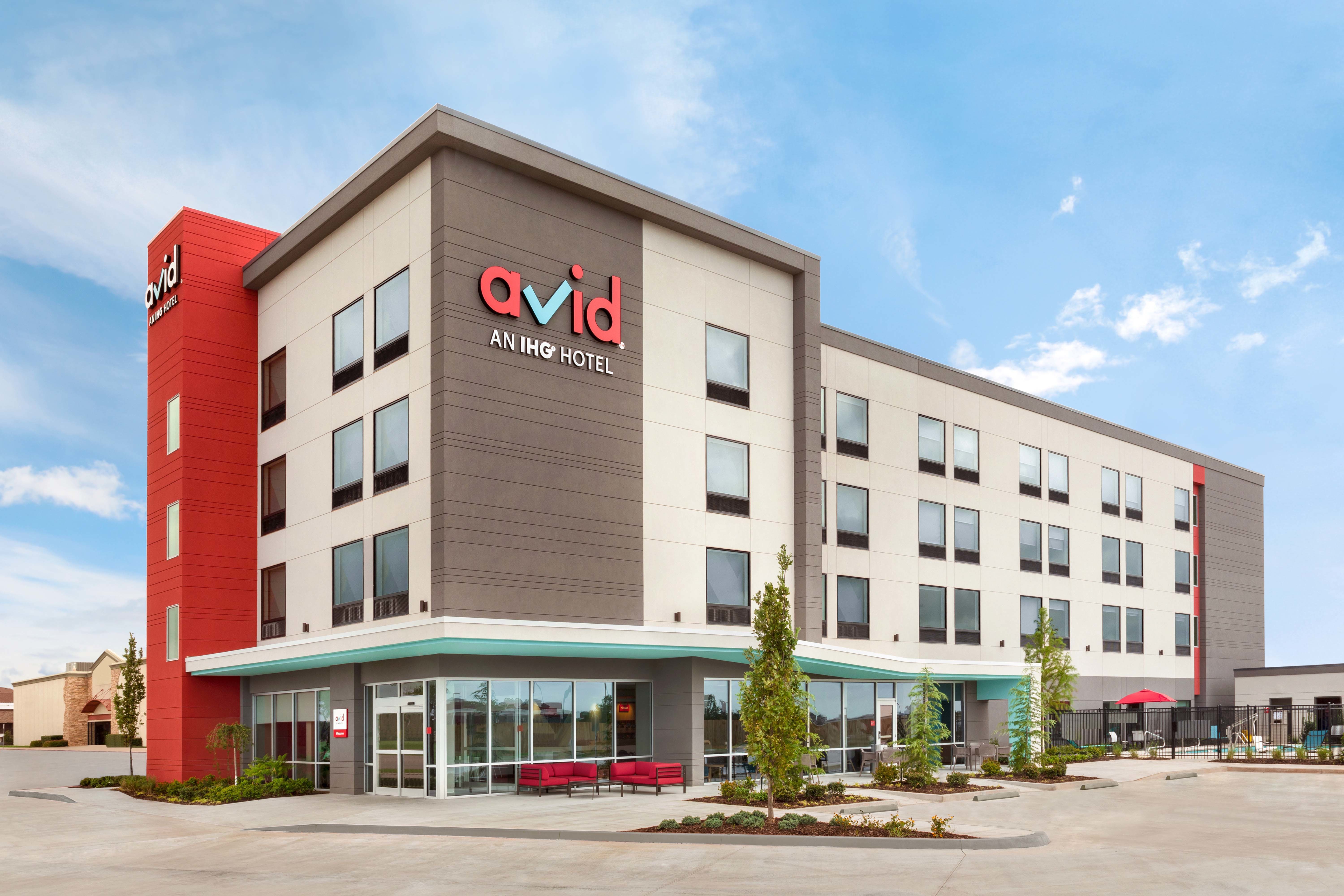
Reimagining everyday travel for America and beyond
Designing a new hotel experience that feels just right, every time.
IHG’s ambition is to grow in service of its guests around the world. IHG’s Atlanta-based team had identified a major opportunity for hotels in the midscale space—a market segment known for its inconsistency.
Alongside colleagues at London-based forpeople, IDEO was invited to help IHG shepherd that business opportunity into a human one, by asking how IHG might reimagine the everyday travel experience for people relying on this category of hotel. What kind of offer might resonate equally with guests and with the owner/operators who’d need to buy into a new brand and bring it to life?
IDEO began by talking to travelers to better understand their lives, values, and needs—travelers who spend one or two nights on the road a few times every year; travelers who regularly take short trips to small cities or away from city centers; and travelers who live on the road, moving from hotel to hotel. These included court stenographers, medical technicians, consultants, conference-goers, and more.
Early research insights evolved into two distinct concepts for a new hotel brand, which were built out into two full-scale physical prototypes at IHG’s design center in Atlanta. Over three weeks, IDEO and its IHG partners led potential guests and hotel owners through each model, gathering their feedback on new formats for breakfast offerings, service details, booking experiences, and overall tone.
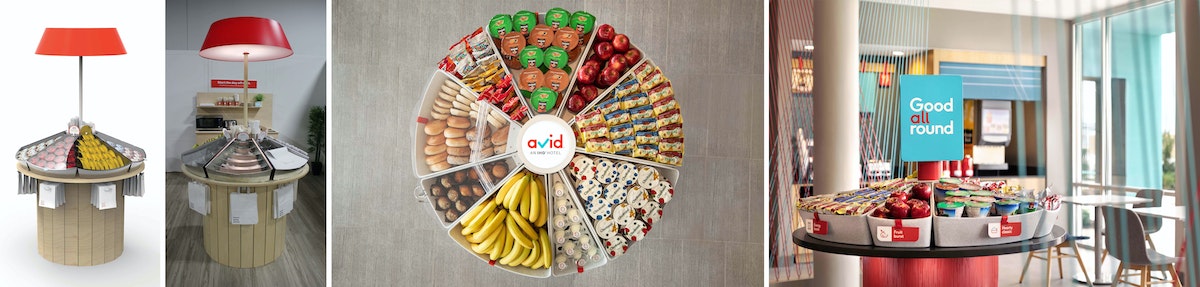
The investment in prototyping paid off with surprising and actionable insights. Despite wide variation in occupation and income, these guests are sophisticated and self-reliant; they know what’s out there, and they know what’s reasonable to expect. In fact, many describe a syndrome IDEO dubbed “anticipation anxiety:” the sense of dread that comes from not knowing whether a lower-priced hotel is going to be clean or safe, or provide a bed that enables restful sleep. Many have so little confidence in the cleanliness of hotels in this price range that they travel with their own packs of wet wipes.
IDEO, along with the IHG team, recognized these behaviors as an unanswered cry in the market. The purpose of the new brand crystallized around extinguishing that anxiety and rewarding guests with something much better. avid hotels exceeds its competition by doubling down on quality in just a few select areas: an extraordinary mattress; rigorously high standards of cleanliness; a focused, high-quality, grab-and-go breakfast and coffee experience; and an overall tone of warmth and straightforwardness.

These guests made clear that for trips like this, they aren’t interested in bells and whistles, or communication that isn’t frank or to the point. That led to an insight that upends an industry truism: for these guests—and there are many of them—choosing a hotel is rarely only about the price of the room. avid guests can often afford to stay in a more expensive place for a honeymoon or a vacation or a trip with friends; they’ll spend more when they need more. But for functional stays of one or two nights, it just feels wasteful. It goes against their values and their principles.
IHG and IDEO heard a clear call for a sense of focus and affordability—but never at the expense of quality. Guests should be able to access a simple booking process, rooms designed for sound sleep, and a quality breakfast, all at a fair price. And hotel owners ought to be able to deliver that experience with confidence and consistency, at costs that build a compelling case for their own business.
That’s what avid hotels is designed to deliver, every single time. Early traveler reviews have been exceedingly positive and have noted specifically the unique differentiating offers avid brings to the market.
Within a year of partnering with IDEO, IHG had issued 150 avid hotels licenses to franchisees in the US, Mexico, and Canada, and announced a development deal for 15 avid hotel locations in Germany over the next five years—a scale of success that came at unprecedented speed for the industry. The collaborative, inclusive design process is now serving as a model for how to develop robust, guest-centered hospitality brands that deliver where it matters for people.
.webp)
5 principles for easing the burden on caregivers
From designers who know the role too well.
Becoming a caregiver can happen overnight. A change in condition, an unexpected accident, a life-changing diagnosis. For many of us, it’s a job with no prep time: Someone who was once just a partner, child, sibling, son, daughter, or friend is suddenly a caregiver. It’s already happened to 63 million informal caregivers in the US. It’s also happened to both of us.
Caregiving is incredibly complex. We know what it’s like to constantly navigate tools that fail to meet our needs, as well as the systemic issues in our healthcare system that overlook and undervalue us, while expecting us to live up to an identity we stepped into by circumstance. Our needs shift based on the conditions of those we care for, the quality of the systems we engage with, and the gaps in experience and confidence that we continue to discover.
As designers, we’ve partnered with companies to better serve the needs of this growing population. And out in the world, we’re seeing the emergence of many new services, from AI companions with emotional intelligence (like ElliQ) to robots that assist with manual tasks (like E-BAR). As the number of caregivers continues to increase, it’s essential that we get these products, services, and experiences right. Here are five principles for designing solutions that truly meet caregivers’ needs.
.webp)
1. Design for people who did not choose this role—and were not trained for it
During our research for a recent project, a caregiver told us, “Like most people, I didn’t even think about caregiving until my father was diagnosed with cancer.” Informal caregivers are unpaid and without professional training. They have to learn as they go, performing medical tasks, navigating complex systems, and advocating for their loved ones, all without the preparation or recognition that this role deserves.
We need to prioritize designing tools and systems that make stepping into caregiving feel less like being thrown into the deep end, and more like having a calm guide by your side. (Particularly when 40 percent of caregivers provide high-intensity care, like administering injections and managing equipment, yet only 22 percent receive any kind of training.) That includes speaking in plain language and avoiding medical jargon, designing inclusive digital tools for people who may not be tech-savvy, and using simple visuals to summarize health data and make it actionable. Ultimately, it’s about designing for reassurance, not just task completion.
What might that look like? Something like Abbott's FreeStyle Libre continuous glucose monitors. They quickly condense a constant stream of data into just a few colors that are easy to understand at a glance: green indicates that glucose levels are within the normal range, while orange or red signals that levels are dangerously low or high.
Another good example of designing for reassurance is The Sandwich Club, a community support network for parents and caregivers where anyone can find answers to caregiving questions, big or small. Designed by The Holding Co. to be as accessible as possible, it costs only $1 a month (free for regular contributors). The club fosters an active community of peers who share their knowledge, and it includes a helpful AI that provides immediate responses and highlights insights from the community. It’s an incredible resource for questions like, “Am I doing enough for my aging parent?” to “How can I encourage a disabled person to exercise regularly?”
2. Healthcare tools need to be accessible to patients—and everyone involved in their care
Healthcare systems are designed to be patient-centered. That’s a good thing, but it can have unintended consequences. When caregivers need to talk with a provider or insurer on behalf of the patient, those systems often don’t recognize the caregiver and may even restrict their access. Many caregivers have spent countless hours on the phone with a call center simply to reset a patient’s password, only to use the patient’s login instead of their own to manage care. Caregivers should be authorized partners in care by default—not mere visitors who must repeatedly prove their legitimacy. Imagine how much more seamless the experience could be if every patient portal had a “care circle” view—where designated caregivers could see what patients need, message providers, manage tasks, and coordinate—without navigating permission mazes.
These tools could draw inspiration from location sharing. When we can’t find a friend in a crowded place, we flip on our live location feature in a messaging app, Google Maps, or a service like Life360. While it shares highly precise GPS data, you can control how long you share that data—just an hour, or forever—and with whom. The New York Times also offers a simple model for shared accounts: each user receives a personalized experience, while collaboration is encouraged.
.webp)
3. Assume caregiving is a secondary role with primary consequences
Sixty-one percent of family caregivers also work, according to AARP and the National Alliance for Caregiving. This means caregivers often have to make important decisions while managing complex schedules, fitting care in between meetings, late at night, or early in the morning.
Designers need to create tools for users with other roles, limited time and attention, and irregular usage patterns. Caregiving tools should allow users to pause, resume, and re-enter tasks without penalty. We need to facilitate decision-making in short time frames from anywhere—on a lunch break, in a parking lot, or at the grocery store.
We can draw inspiration from TurboTax’s save-and-return feature, which allows users to pause their tax prep and pick up where they left off. This feature respects people’s busy lives, lets them move at their own pace, and reduces anxiety about making mistakes or losing their progress while tackling complex tasks.
4. The true cost of care transcends medical bills
Being a caregiver can be expensive. In addition to the physical and emotional toll, caregivers spend an average of more than $7,000 per year on out-of-pocket expenses, according to the Caregiver Action Network and AARP. These costs can include home modifications, medications, and transportation. Then there are the opportunity costs for careers, and income potential: nearly a third of workers, including senior executives, report their careers have been adversely affected by their caregiving responsibilities, according to a Harvard Business School study.
Instead of assuming cost is incidental to care, health systems need to treat it as a primary factor in the patient experience. Caregivers need tools that clearly explain potential costs—from medical expenses to time tradeoffs—as well as help navigate them more easily.
Rocket Money’s Subscription Finder is a strikingly simple tool that makes the invisible visible. Once you link your accounts, it surfaces auto-renewing expenses that you might have forgotten about, from subscriptions to streaming services, and then helps you cancel them (sometimes a multi-step rigamarole). No more missing yet another auto-renewal deadline.
.webp)
5. Caregivers are emotionally exhausted long before they are visibly overwhelmed
More than 60 percent of caregivers report symptoms of burnout, yet much of that strain remains hidden. Support should not only reduce friction but also create moments of reassurance and self-efficacy. Improving the experience of being a caregiver is a necessary part of sustaining care over time.
We need to build systems that not only track patients’ health, but also caregiver strain. Shared portals between patients and caregivers could offer tools for mental health care—meditation, counseling options, and help managing big sources of stress, like paying bills or understanding medical care. They could also include message boards where patients and caregivers could ask questions and share their experiences.
We’re inspired by Soluna, a digital mental health platform for California youth, co-designed by IDEO and Kooth with 150 young people. Soluna integrates supportive conversations, self-reflection tools, and community connections to support users in moments when they feel vulnerable, uncertain, or overwhelmed. This approach serves as a model for caregiving tools, emphasizing the importance of treating emotional labor as essential infrastructure.
We know from personal experience how important interventions that reduce caregiver burdens are. We also know from our work in the health sector that this need will only continue to grow. By 2030, 73 million Americans will be over 65, and 70 percent of them will require care. Meanwhile, there is already a shortage of paid caregivers. More and more of us will need support to fulfill this role. And more and more of us will need designers to get it right.
Looking back, early in our journeys, we didn’t think of ourselves as caregivers. Then things shifted. Our family members needed more support, and somewhere along the way, we realized we needed more, too. Now, with hindsight and the lens of human-centered design, we have a better sense of how health systems and care services need to improve, especially for informal caregivers. If we can do this, we believe we can improve care for everyone. Because more likely than not, we’ll all serve as caregivers one day.
Looking to redesign your own products and services to benefit caregivers? Get in touch.
Healthcare systems are designed to be patient-centered. That’s a good thing, but it can have unintended consequences.
.webp)
“Hey AI, buy my vitamins”
A conversation with rediem on loyalty and discovery in the age of AI.
Over the past few years, technology has redefined what a “great” customer experience looks like, raising the bar for convenience and personalization. Discovery, consideration, and purchase no longer follow a neat, linear path, and it’s painfully obvious when legacy systems and operating practices fail to align with consumer expectations. Particularly when it comes to loyalty programs that feel deeply transactional. Ever head to a new-to-you brand site only to get served a spin-the-wheel pop-up that demands your email and phone number in exchange for 10 percent off? Or have a cashier push a store-branded credit card on you when you already have one?
It doesn’t feel like loyalty when a brand doesn’t even know who you are.
And yet, loyalty is growing more important than ever, as commerce becomes increasingly mediated by AI—flattening the internet into a shortlist of what to buy. When platforms are incentivized to optimize for efficiency and sameness, brand and experience must become the primary levers for differentiation. A brand’s best bet is to go after the source data: the communities that form around your brand and your products, and ensure they have genuinely great things to say. Because increasingly, that may be how your next generation of customers learns you even exist.
Which is why I was excited to chat with Sarah Ganzenmuller and Regan Jayne, cofounders of rediem, a community-driven loyalty platform that has helped brands like Sun Bum and Olipop nurture and grow a community of passionate fans through both direct-to-consumer and traditional retail channels. Here’s our conversation about redesigning the future of loyalty from the inside out.
Diana Tobey: What was the original “aha” moment that made you say, “We have to reimagine loyalty differently”?
Sarah Ganzenmuller: The initial inspiration was a desire to understand how an emotional connection between a brand and a customer is formed. I was interested in how brands wield power and how you could harness that power as a force for good while also driving deeper brand affinity.
Originally, rediem was a consumer app. Customers participated in challenges with positive environmental or social impact and received rewards from brands like Allbirds. When these brands began asking us to white-label our software so they could host challenges on their own sites, we realized there was a significant opportunity to disrupt an overly transactional and stale loyalty industry.
.webp)
Regan Jayne: My background is in behavioral economics. I was at Harvard Law School working on policy mechanisms to change consumer behavior when I met Sarah. The law tells consumers, “You have to recycle, or you’ll be fined.” But when a brand people love, like Olipop, says, “We’ll give you exclusive access to some really cool thing if you recycle,” that’s gold.
Diana Tobey: I love that example, and that we’ve both been pushing against the limitations of traditional, transaction-driven loyalty. In your view, how has consumer expectation of loyalty evolved over the past five years—and where do you see it heading in the next five?
Sarah Ganzenmuller: Five years ago, loyalty meant points, tiers, and discounts. Points are a primitive marketing tool. They assume loyalty is making a purchase. The real loyalty currency is participation, productized through contributions, rituals, and culture-shaping moments.
People want three things: to identify with the brand they buy from, to feel a sense of community by joining other like-minded people, and to have the ability to co-create with brands.
In general, people want three things: to identify with the brand they buy from, to feel a sense of community by joining other like-minded people, and to have access, inclusivity, and the ability to co-create with brands. This is particularly true for Gen Z, but in general, consumers are starting to expect brands to act differently.
Over the next five years, this trend will accelerate as AI handles transactions. People won’t go to brand websites; they’ll say, “Hey AI, buy my vitamins,” and the AI will choose where to buy. So loyalty has to evolve into something AI can’t replace: emotional connection, belonging, and identity.
Regan Jayne: Today, loyalty is a multiplayer game. We’ve created this ecosystem where people feel like valued members of the community. They’re citizens of the brand, not just customers, who feel their voices are heard, valued, and reflected in what the brand does, how it communicates, how it develops new products, and its impact on the world.
Diana Tobey: I love the term “citizens of the brand.” It’s an interesting reframe that makes the customer’s role more active and engaged.
At IDEO, we think a lot about the difference between behavioral loyalty (what people do) and attitudinal loyalty (how they feel). I know you’re hearing similar things from the brands you work with. Where are you seeing promising approaches that address the emotional and psychological side of loyalty?
Regan Jayne: Most brands optimize for behavioral loyalty: “Did they buy again?” But real brand love is emotional.
.webp)
The brands we love are already part of our everyday routines, but they don’t always do a great job of creating magical post-purchase moments. For example, Oh Clem fans showing off their earring stacks, Sun Bum fans sharing beach day photos, or Olipop fans hunting for limited-edition cans. Once someone sees themselves inside a brand, they build an emotional connection. This is one of the most powerful levers for Lifetime Value (LTV) and repeat purchase, but the purchase is a symptom of emotional connection, which is far more powerful.
Sarah Ganzenmuller: Authentic engagement is becoming increasingly important as AI increasingly commoditizes products and distribution. To go to market, we believe that a company’s only true competitive moat is brand belonging, community, and creating an authentic place for people to show up and be creative.
Diana Tobey: Many loyalty programs are hyper-focused on promotions and creating value through pricing. How do you encourage brands to broaden their lens and move toward genuine loyalty?
Regan Jayne: The problem with previous iterations of loyalty programs was that they were pay-to-play. The only way you could build status or agency with a brand was to spend. In a transactional version of loyalty, if you’re obsessed with a certain beauty brand, you have to keep buying lip gloss to gain status in hopes that the celebrity founder notices you.
It’s a give-and-get experience, not just, “Hey, tell us your birthday and we’ll give you five points.”
But now, brands are rewarding customers for snapping a selfie of a makeup look of the day or for doing a random act of kindness. And they treat rewards points they earn as real currency, allowing shoppers to donate them to charity or an impact fund, or use them to unlock a VIP in-person experience. The value the brand gets back from these customers is priceless. Brands get valuable user-generated content, co-creation feedback, zero-party data, and grassroots advocacy in return. It’s a give-and-get experience, not just, “Hey, tell us your birthday and we’ll give you five points.”
Diana Tobey: Co-creation and building a brand community seem especially important for Gen Z. I’m curious to hear your thoughts on why that is and how that might develop in the near future.
Sarah Ganzenmuller: Social media really shifted how brands engage with customers. Older generations had very professional, polished advertisements. It was a one-way relationship in which brands tried to sell you something. Today, we see co-creation as one of the most powerful levers a brand can use. Bringing customers into the process gets them emotionally invested and gives them a real sense of ownership. The future of loyalty is about identity architecture—who I am in relation to the brand, the community, and the culture around it.
Regan Jayne: Previous generations weren’t seeking education or validation from brands the way that teens do now. Gen Z looks to brands to educate them about their products, not just to advertise them. It’s more about a bidirectional dialogue.
We’re moving toward loyalty systems where your value in the community is determined by how much you contribute, not just how much you spend.
Diana Tobey: What is the next frontier in how brands should reward or co-create with their customers? Do we need better metrics to track that as well?
Sarah Ganzenmuller: We’re moving toward loyalty systems where your value in the community is determined by how much you contribute, not just how much you spend. And yes, we absolutely need new metrics for this. Traditional loyalty key performance indicators capture only a small slice of what actually drives brand love.
One of our clients, Tru Earth, is a sustainable laundry detergent company. They wanted to encourage people to wash their clothes in cold water, which is more sustainable, so now we have people submitting images of themselves washing their clothes on the cold cycle week after week. We’ve also been sending customers surveys to measure brand affinity and brand mindshare, which are hard to quantify and don’t necessarily show up in a customer’s LTV.
Regan Jayne: Because our software can also track purchases at the SKU level, many of our brands, like Tru Earth, Reel, and Harmless Harvest, are creating communications that highlight each individual’s personal impact, which is extremely powerful psychologically.
Other new metrics we’re looking at include contribution scores (which track how much someone participates in a community and the value they add), sentiment lift (measured using machine learning algorithms), participation velocity, and community influence. And, obviously, we’re still going to be looking at the bottom line, because ultimately that’s what drives business decision-making. Although we have had a few brands say, “We don’t really care if this moves the needle in the business. We want to mobilize our community for good.”
Diana Tobey: As you think about brands stepping into these communities and building more gamified experiences, what are the right things to do, and what are some guardrails to prevent loyalty experiences that feel like very lame applications of game design?
Regan Jayne: That’s the billion-dollar question! I think what’s interesting and compelling, and rather nascent in the loyalty space, is brand collaboration. Interoperability is something we are designing and testing right now because there’s a strong opportunity for complementary, non-competitive brands to play together. We’re seeing this happen naturally, in an ad hoc way, and I think we can do it more scalably.
The other trend we’re seeing is an increase in omnichannel and IRL experiences. When AI slop is everywhere, you’re going to feel really, really special when you get a phone call from a brand, and it’s an actual person. Or when you get an invitation to a cocktail party with the founder and a few VIPs because you’re a loyal customer and live in New York. These truly human, community-coded omnichannel experiences will be pivotal.
Sarah Ganzenmuller: I think where companies go wrong is when they build out a challenge or an engagement method based on the success of another brand. Every brand is different. Their ideal customer profiles are different. Ensuring you stay true to who you are as a brand and to your mission is probably the most critical.
Diana Tobey: As retail becomes increasingly agentic and customers buy products through ChatGPT, I’m curious what loyalty should look like when the storefront is an AI interface. What should remain human for that emotional connection, that relationship with a brand, to really play out?
Sarah Ganzenmuller: We think a lot about what the future of brand loyalty looks like when there aren’t brand websites, or at least they don’t exist as we think of them today. In this world, discoverability is incredibly important.
Regan Jayne: YouTube and Reddit crush it on AI discoverability right now. That changes weekly, if not daily, so we’re monitoring closely what’s moving the needle. With rediem, for instance, we can identify a trending subreddit asking, “What’s the best sunscreen for people who love to surf?”
We see an opportunity for brands to mobilize and incentivize their customers to join the conversation and boost discoverability when there’s a trending subreddit or a get-ready-with-me video on YouTube.
If you were to ask ChatGPT for the best sunscreen, three brands would probably pop up: Vacation Sunscreen, Sun Bum, and Supergoop. We see an opportunity for brands to mobilize and incentivize their customers to join the conversation and boost discoverability when there’s a trending subreddit or a get-ready-with-me video on YouTube.
Human preference becomes much more pronounced when everything else is stripped away. Right now, there are a million and one reasons I’m choosing one brand over the other. It might be that I’m at Target, and the other brand is sold out, or I’m at a convenience store, and it’s a last-minute emergency, so I just grab something, or I get triggered by an ad on TikTok. It’s very situational. But when you’re in an agent-to-agent commerce world, many of those factors are gone. Now I have three sunscreen options, all with the same formulation and priced the same. Why am I choosing one over another? Personal taste? A sense of belonging or one brand over another? A mission I’m connected to? In that moment, human preference is so potent.
Diana Tobey: Recently, IDEO has been working with a Fortune 10 company to redesign its next-gen loyalty program, and we know there are many cultural, operational, and structural challenges that can hinder the adoption of more innovative approaches to loyalty. What do you think is most critical for setting businesses up for success?
Sarah Ganzenmuller: One of the biggest challenges is a legacy mindset oriented around a discount or a discount channel. There needs to be a shift toward a more relationship-oriented engine. Loyalty is a cross-functional effort. Often, internal teams are siloed. For this new concept of loyalty to succeed, it can’t be the responsibility of the head of retention or e-commerce alone; customer experience, product, retail, and social media teams need to be involved.
Regan Jayne: The landscape of loyalty is moving in this new direction—all you have to do is look at LinkedIn to see the types of positions brands are hiring for, like head of community, social commerce, community activations, events, and community partnerships. Brands are seeing these trends, evolving, and meeting customers where they are—especially the next generation.
"Loyalty has to evolve into something AI can’t replace: emotional connection, belonging, and identity."
.webp)
Why design must evolve alongside technology
How mutualism can reframe the way we think about AI.
Inspired by biology, this thought experiment underlies a bold new idea that’s also a powerful old one: mutualism, which we began to explore in our talk at SXSW in March of last year.
A firehose of AI news is coming at us every day. Right now, humans are still in charge. However, these systems are increasingly designed with higher levels of agency and independent action, with attendant novel qualities, behaviors, and perhaps even needs. Such systems will likely affect their creators and environments in unpredictable and far-reaching ways, and with the unintended consequences to match.
This is the typical off-ramp to dystopian sci-fi stories of technological regret and human resistance against the robots. It’s not hard to see why: Our current relationship with technology is messy, unhealthy, and fractured. If we stay on this trajectory, we may indeed find ourselves consumed by the other, or dominated, or controlled.
As designers, we look for ways to shape the future that…aren’t awful. And we imagine a different path, one that recognizes our growing interdependence. Mutualism, a type of symbiotic relationship in biology, is a relationship in which two different species benefit from each other and aid in each other’s survival, such as animals and people. This type of interconnection offers a framework for creating a world where humans and advanced technologies can coexist and flourish together. If not, we risk entering winner-takes-all or doomsday scenarios feared by many technologists. And while the idea may sound out there, some progressive companies are already designing AI tools meant to benefit humans at their core, like Claude.
Technology as a living-ish being
The foundation of mutualism is to think of technology not as static, but as something dynamic, something close to a living entity—even if it isn’t, and isn’t likely to become one. This feels important, because even if technology is not technically alive, human beings can’t help but anthropomorphize something you can chat with—or something that looks like a living being. Think Casio’s Moflin, a fuzzy, gerbil-like robot companion powered by emotional AI that exhibits pet-like behaviors and develops a unique personality over time based on interactions with its owner.
When you interact with something like a Moflin, you start to feel that shift viscerally. Whether or not the Moflin is alive, we, as humans perceive it to be. It still shapes what we think of it and how we interact with it; its behaviors pull you into a relationship, one where you’re responding to its cues and it’s responding to yours. That small, almost mundane exchange is a reminder that even artificial beings participate in systems of dependence and care, which brings us to the question of what their needs actually are.
We all have needs—even technology
For example, technology requires nutrients: the minerals, metals, and energy it relies on to thrive and grow. Those things are finite resources. Humans can relate. We need a healthy, sustainable natural environment to do the same. Mutualism prompts us to consider: How might the world change if industries welcomed advanced technologies as our partners in planetary care and protection? Imagine the impact of technologies acting out of mutual interest to help us find ways to derive value from the planet without further despoiling it in the process.
Technologies such as AI require another kind of raw material: data that enriches its ability to compute and predict in new ways. Similarly, humans need data we can trust and that we can ground our actions against. Here, too, mutualism offers a way forward: What if companies approached data as a resource critical to mutual nourishment, one that requires data practices centered in careful cultivation and respect? Imagine the consequences for civic health, news ecosystems, and our ability to navigate the real challenges of an increasingly unreal world.
From tools to colleagues
Mutualism invites us to construct a healthier state of affairs, one that moves beyond exploitation and extraction toward mutual recognition, negotiation, and survival. It’s not about making technology more human; it’s about recognizing that emerging technological systems possess their own kind of aliveness—not biological, but behavioral, relational, and world-shaping. It no longer serves us to think of them simply as tools to be wielded; we must imagine them as colleagues, with needs and trajectories that intersect with our own.
And when we take that stance seriously, the way we design begins to shift. Some companies are already moving in this direction. Microsoft’s positioning of Copilot, for example, frames AI less as a product and more as a companion built around human potential, creativity, and relationships. It's an entity that adapts to your context, learns from your feedback, and orients toward your interests. It offers a glimpse of what it might look like to design technologies not for us or against us, but with us, in a shared system of mutual flourishing.
Symbiosis as an evolutionary imperative
Maybe this shouldn’t be surprising. In Blaise Agüera y Arcas’s Long Now talk, “What is Intelligence?”, the VP Fellow and CTO of Technology & Society at Google reminds us that life has always evolved symbiotically. Humans, in fact, are composites of countless bacterial and microbial partnerships that have made our survival possible. If symbiosis is the engine of evolution, then the question isn’t if we’ll coexist with new forms of intelligence, but how we’ll participate in that long lineage of co-creation. From that perspective, the future isn’t a break from what we are, but an extension of the way life has always unfolded: through mutual transformation.
If we want an AI future that values mutualism, we must start practicing it today. Here are three emerging design principles we’re using in our own work at IDEO.

1. Never go alone: Adopt a stance of interdependence over independence
As we continue to develop technologies that can operate with increasing autonomy, it becomes crucial to recognize the interdependence between humans and machines. Mutualism invites us to design systems that not only serve human needs but also evolve in ways that reflect and enhance shared values. This shift from a purely utilitarian, transactional approach to one of relational alliance could foster deeper connections between technology, society, and our shared environments.

2. Keep evolving: Use dynamic adaptability to meet changing needs
Mutualism encourages the creation of flexible systems that can adapt as new information, contexts, and needs emerge. This adaptability ensures that as technology evolves, it remains aligned with the well-being of all stakeholders, from individuals to entire ecosystems. It’s about designing with the understanding that change is constant, and that technology must be able to respond to such change in meaningful ways.

3. Lift your head: Imagine and consider implications beyond the immediate
By focusing on the holistic impact of technology, mutualism pushes us to consider not just the immediate effects of our designs but their long-term implications for society, the environment, and future generations. This principle challenges us to go beyond short-term gains and to create technologies that contribute positively to the broader fabric of life.
Even as we build this framework, we know that abstraction doesn’t build the future—choices do that. Design does that. We still have an opportunity to help shape this critical emerging relationship between humans and autonomous, agency-rich technologies. And the organizations that figure out how to put mutualism into practice will be the ones most likely to reap its rewards.
Curious to explore these questions in the context of your organization? Reach out: ai@ideo.com.
A special thanks to Ryan Sherman and IDEOers Jenna Fizel, Tim Brown, Chris Hill, and Jason Robinson, alums Kate Schnippering and Natalia Vasquez, and many more for their contributions.
What if we treated our relationship with advanced technologies, such as AI, as we would treat relationships with new life forms? How might we co-exist? What would happen if we chose to evolve together? And how would it change design?

8 takeaways from CES ‘26
Designing for real needs matters more than novelty.
At IDEO, we approach CES the same way we approach any design challenge—with a human-centered lens. We’re interested in how new technologies fit into real lives, not just how impressive they look on a show floor. CES is valuable precisely because it reveals where ambition meets assumption: what companies think people want, what they think people will tolerate and pay for, and what they think people are ready to trust.
This year, alongside our partners at Autodesk, we spoke about preserving the human touch in AI-enabled design: helping teams move faster without losing sight of the people they’re designing for. That tension echoed throughout the show, from autonomous vehicles to health tech to gaming.
Here are the themes and ideas that stayed with us, and the questions they raised about how technology can better serve real human needs.
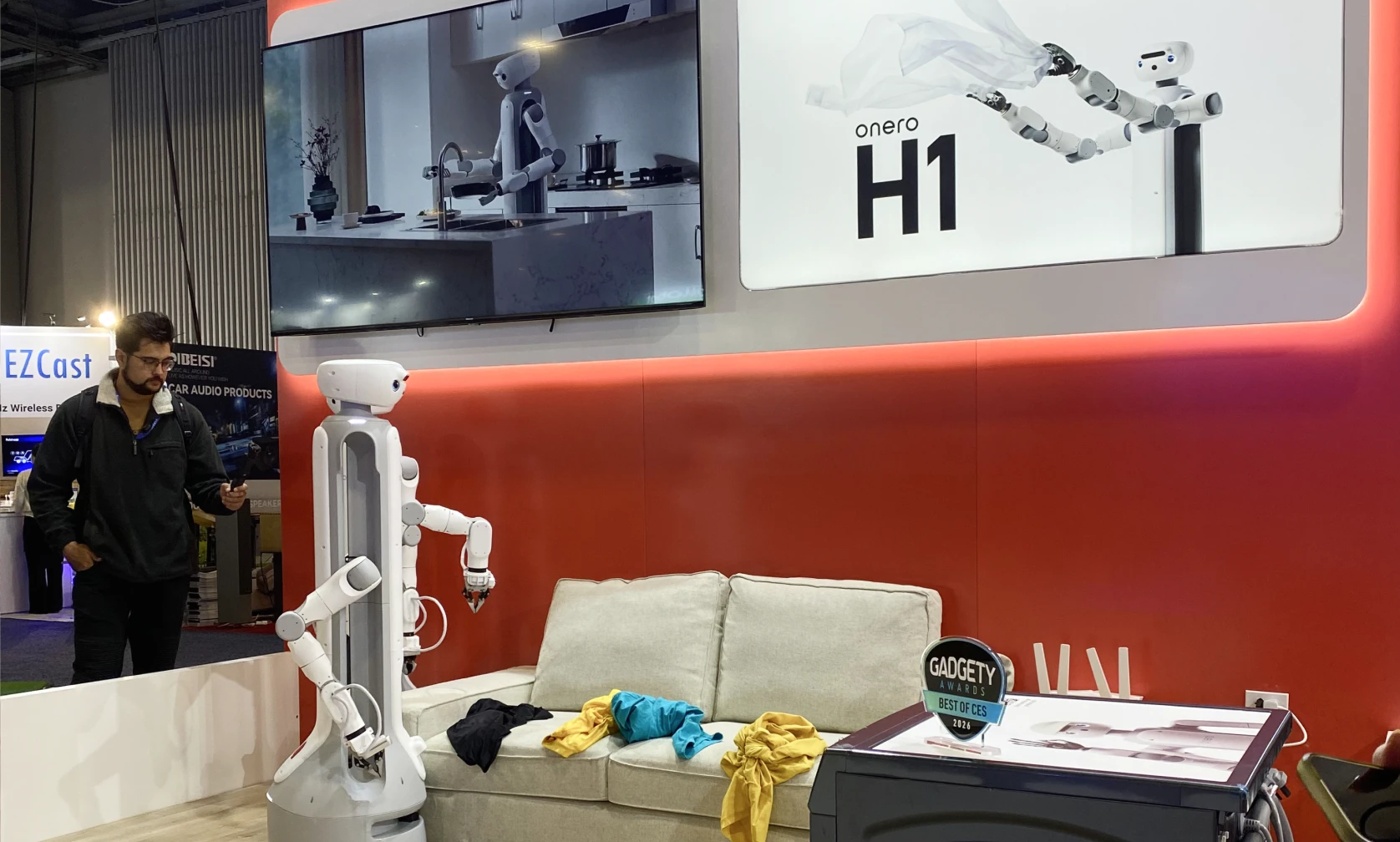
1. Are we designing better products or better outcomes?
Everywhere we went, companies were going all in on humanoid robots taking on mundane human tasks: loading dishwashers, tidying kitchens, picking up socks. But a conversation with The Verge publisher Helen Havlak prompted us to wonder whether these machines were solving the right problem in the first place.
Training a robot to load a dishwasher in a private home is an astonishingly complex challenge. It requires object recognition, dexterity, spatial reasoning, and an understanding of a customized environment designed entirely for human hands. But if you step back to ask the fundamental question—what is the most effective way to clean dishes?—the answer is probably a box that washes them.
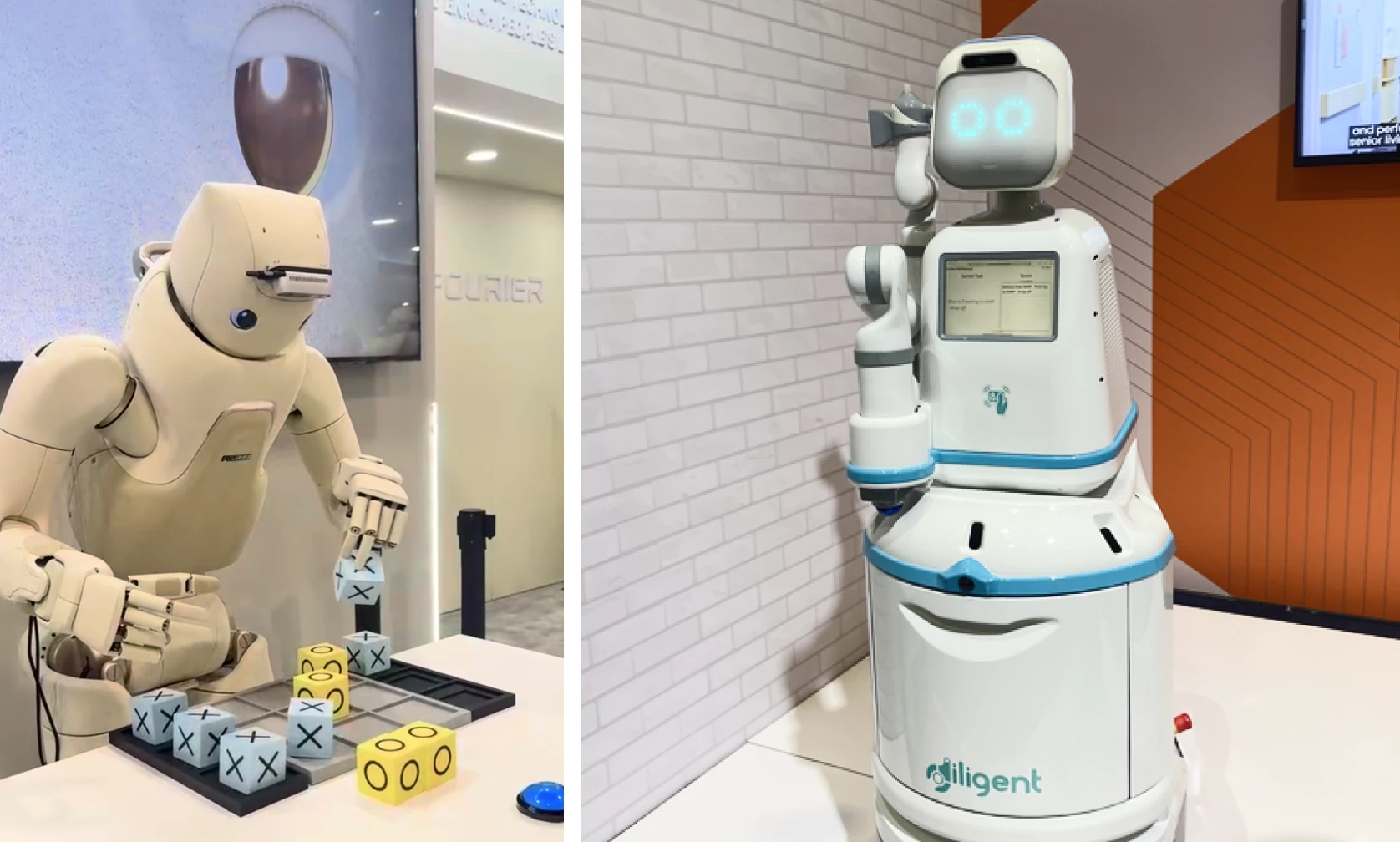
We don’t need a humanoid assistant to load and unload dishes more efficiently. We need a system that reliably turns dirty things into clean ones—which, for the most part, we already have. The more useful design challenge may be less about building ever-smarter robots and more about rethinking the environments in which those tools operate. What if smart appliances adjusted their capacity, energy use, and footprint based on how many people were in the home that week—or even that day? Or what if companies focused less on replicating human motion and more on solving the parts of domestic labor that still lack good machine-based solutions, like tackling the mental load of household management? These questions shift the focus from mimicking human behavior to redesigning systems around real needs, constraints, and rhythms of everyday life.
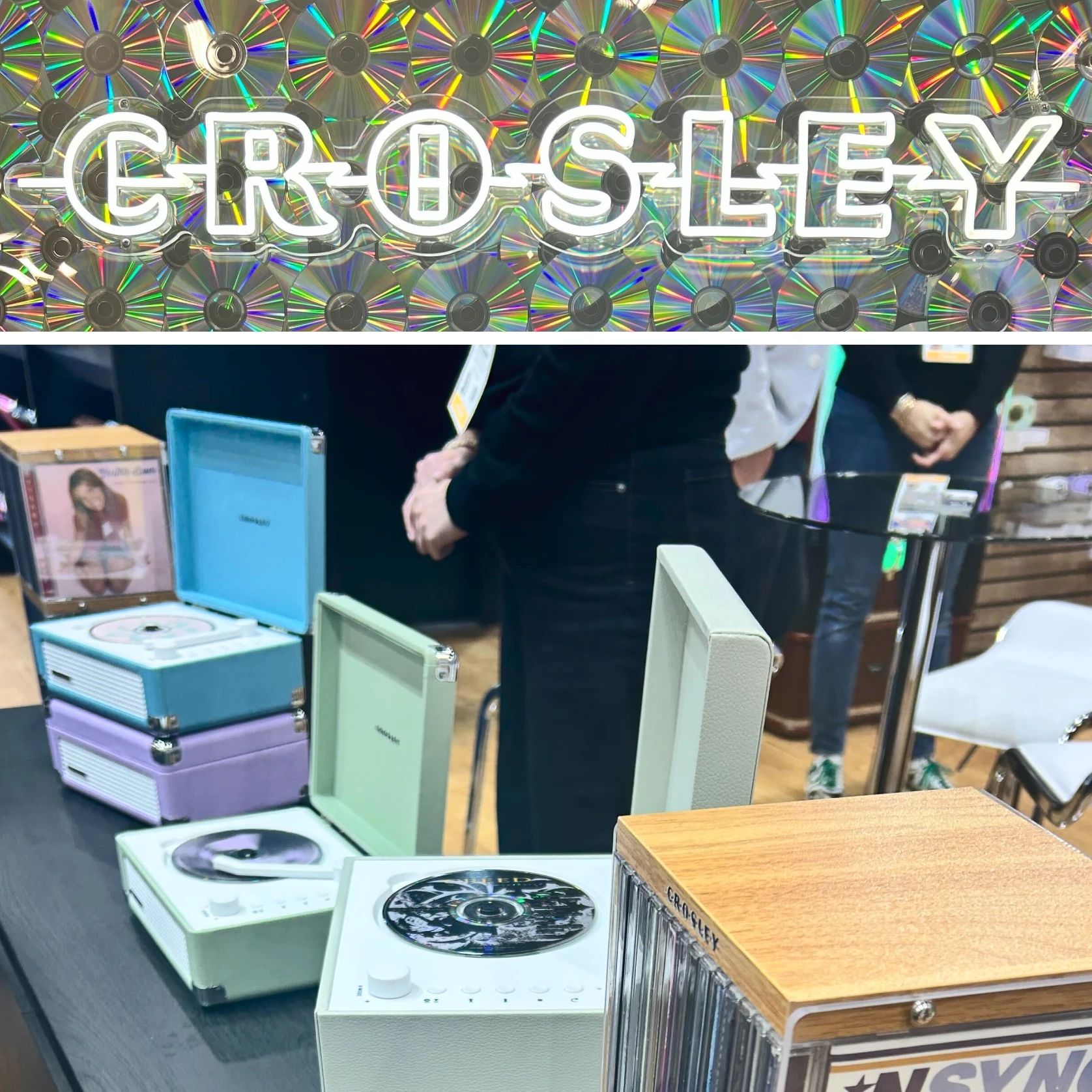
2. The nostalgic appeal of ditching screens
In between the glut of AI demos and autonomous everything, we saw something unexpected: a CD player blasting Britney Spears. As much as we enjoyed the throwback moment, it captured something deeper than nostalgia. In a world defined by speed and abstraction, there’s a growing desire for technology that feels tangible and controllable. From pinball machines to screen-free experiences for kids (like Tonies), these products aren’t trying to do more on our behalf; they’re designed to restore our agency. You know what they do, how they work, and when to turn them off.
We’re seeing this play out culturally, too. Parents are buying landlines to give younger children agency and an option to connect with their friends and grandparents without increasing their screen time or exposing them to online risks. In our own research with a slightly older cohort—Gen Z—we found there is a clear limit to how much they want technology to interfere in their lives, particularly when it comes to developing their own creativity or building relationships. Choosing simpler tools can be a way of reclaiming agency. Sometimes consumers really want less, not more.
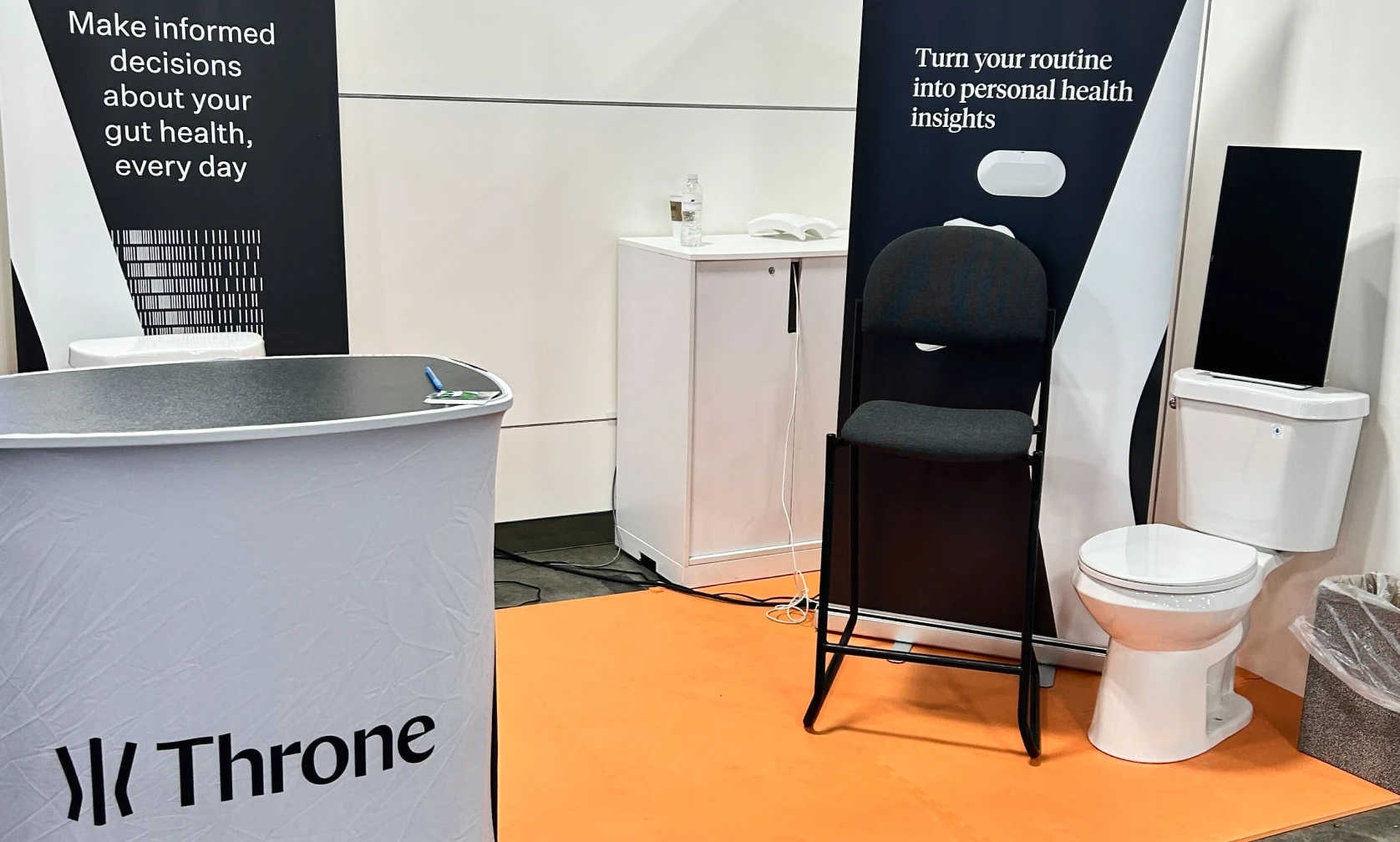
3. The body as a platform—and who gets to own it
“Longevity” was definitely a buzzword this year. The conversation is shifting from optimizing performance (the domain of elite athletes and body hackers) to how technology supports living longer, healthier, and more independent lives. We were encouraged to see this reflected not only in products for aging populations, with the continued presence of AARP and age tech, but also in growing attention to women’s health, fertility, and everyday wellbeing (areas we noted were missing or underrepresented in 2025).
What stood out wasn’t that so many products were collecting health data—it was how they were collecting it. At one end of the spectrum were products that relied on clearly defined wearables—such as Neurable or Plaud—which ask users to consciously opt in by strapping technology onto their bodies. On the other end were more ambient approaches, embedding sensors into everyday objects and places, from smart toilets (assessing biomarkers linked to hydration, infection, metabolic health, and digestive function) to doorways (tracking movement to infer activity, safety, or well-being). The benefits are convenience and invisibility, but such devices also raise questions about consent, agency, and trust. Does a guest who uses a toilet automatically consent to a urine test? Or having their movements monitored? Do aging parents, or teens who share your toilet?
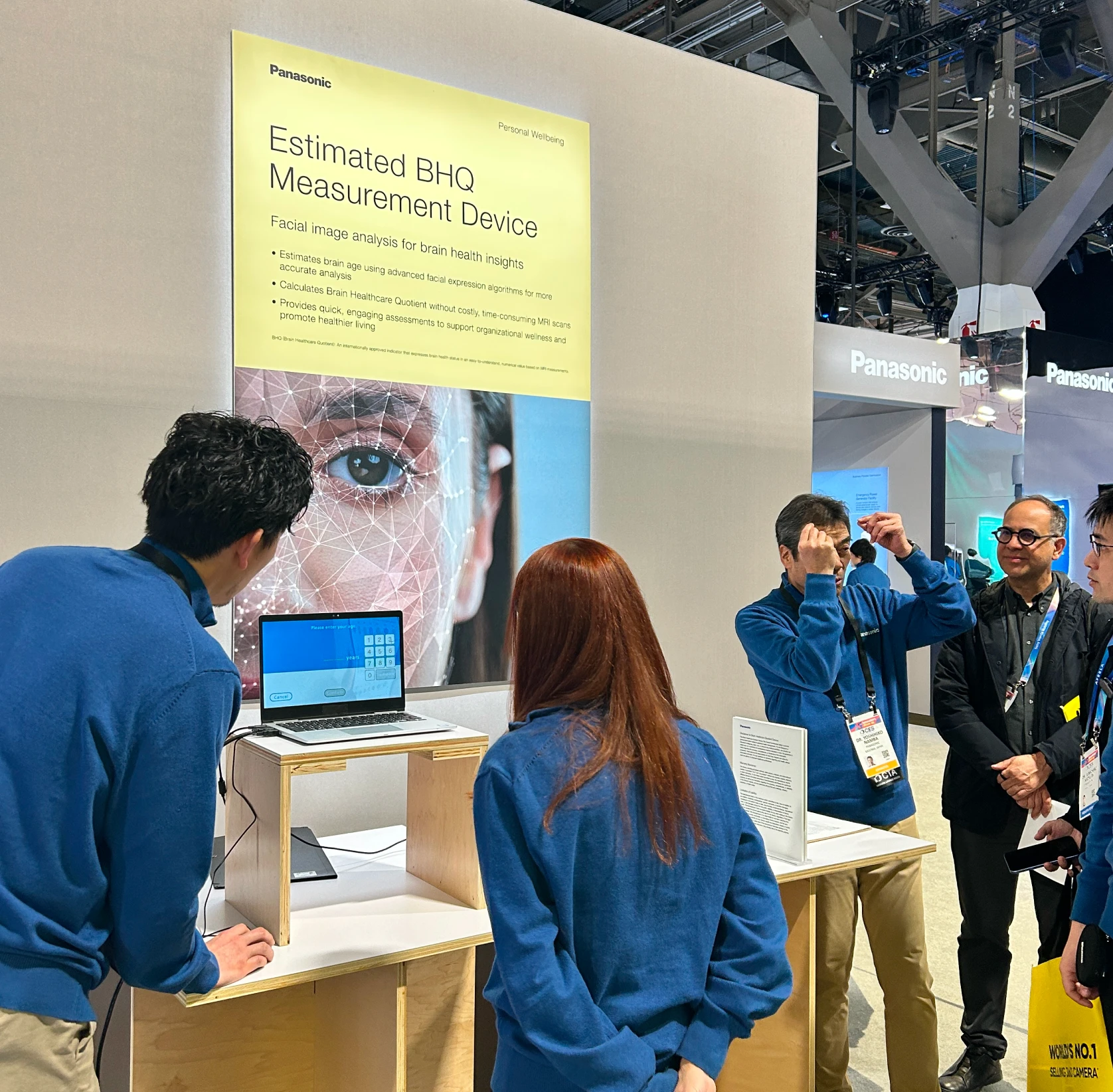
And what about data storage? As more of our biological signals are captured, where does that information live—and who controls access to it? Alongside familiar cloud-based subscription models, we saw emerging alternatives that store personal health data locally at home. These approaches hint at a future in which people retain more autonomy over their most intimate information, rather than renting access to their bodies to a platform; but only if autonomy, consent, and control are treated as core design requirements, not tradeoffs made in the name of convenience.
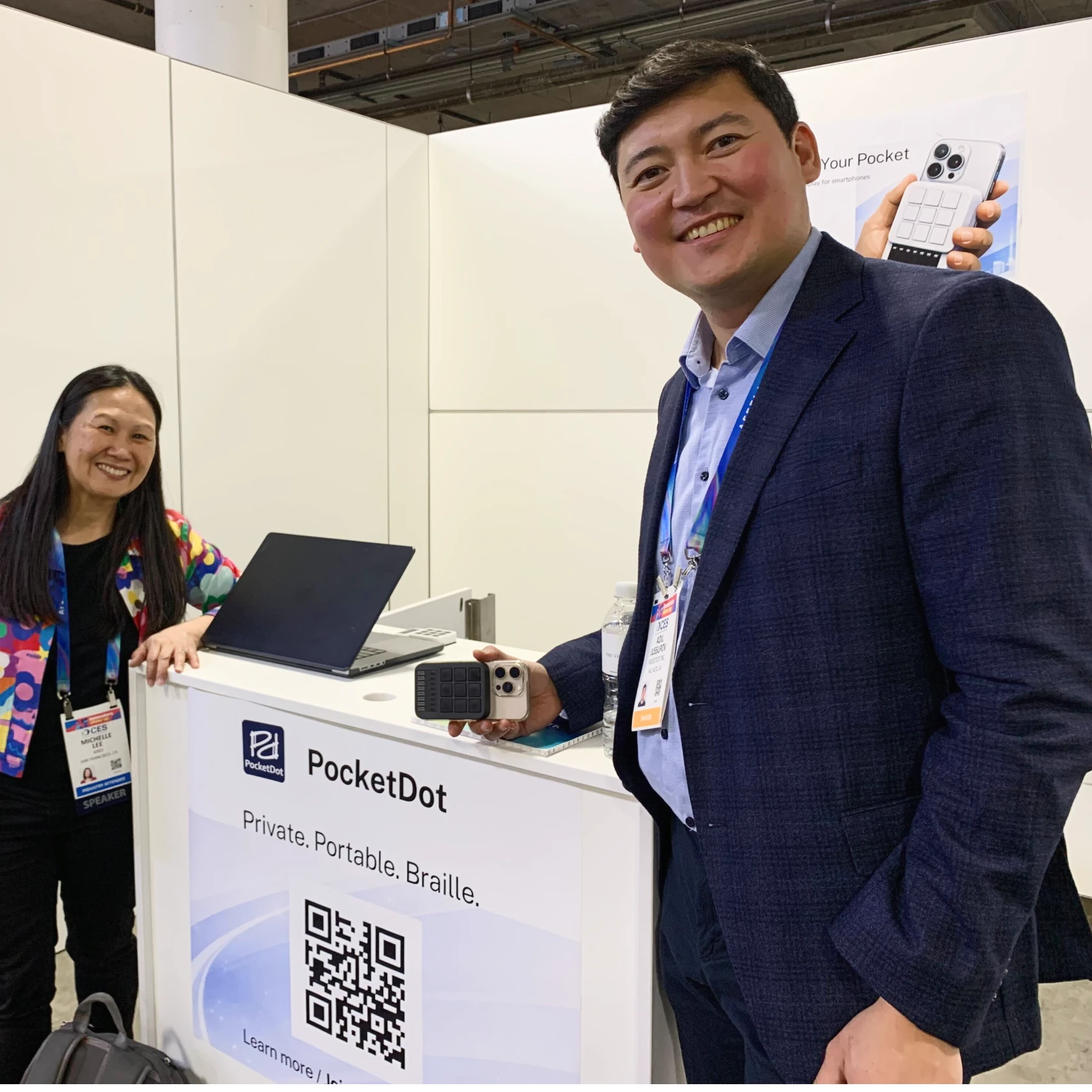
4. The body as an interface
We were also heartened to see meaningful progress in accessibility: devices that translate on-screen text into dynamic Braille, glasses that support navigation for people with low vision, and exoskeletons designed not only for rehabilitation, but for recreation and everyday work. Together, these examples point to a broader shift: one where the body is increasingly treated as an interface. How exactly it will happen is still to be designed. Whether these systems empower people with greater agency and dignity will depend less on sensing technology itself and more on the choices designers make about desirability, consent, ownership, and control. We’d love to see these technology systems evolve to empower people to actively shape and adapt their own interfaces themselves, rather than being locked into assumptions companies make when they design. If past regulatory changes are any indication (such as the FDA’s move to establish a new over-the-counter hearing aid category), reducing friction and gatekeeping in these domains can lead to more inclusive, creative, and beneficial product innovation.
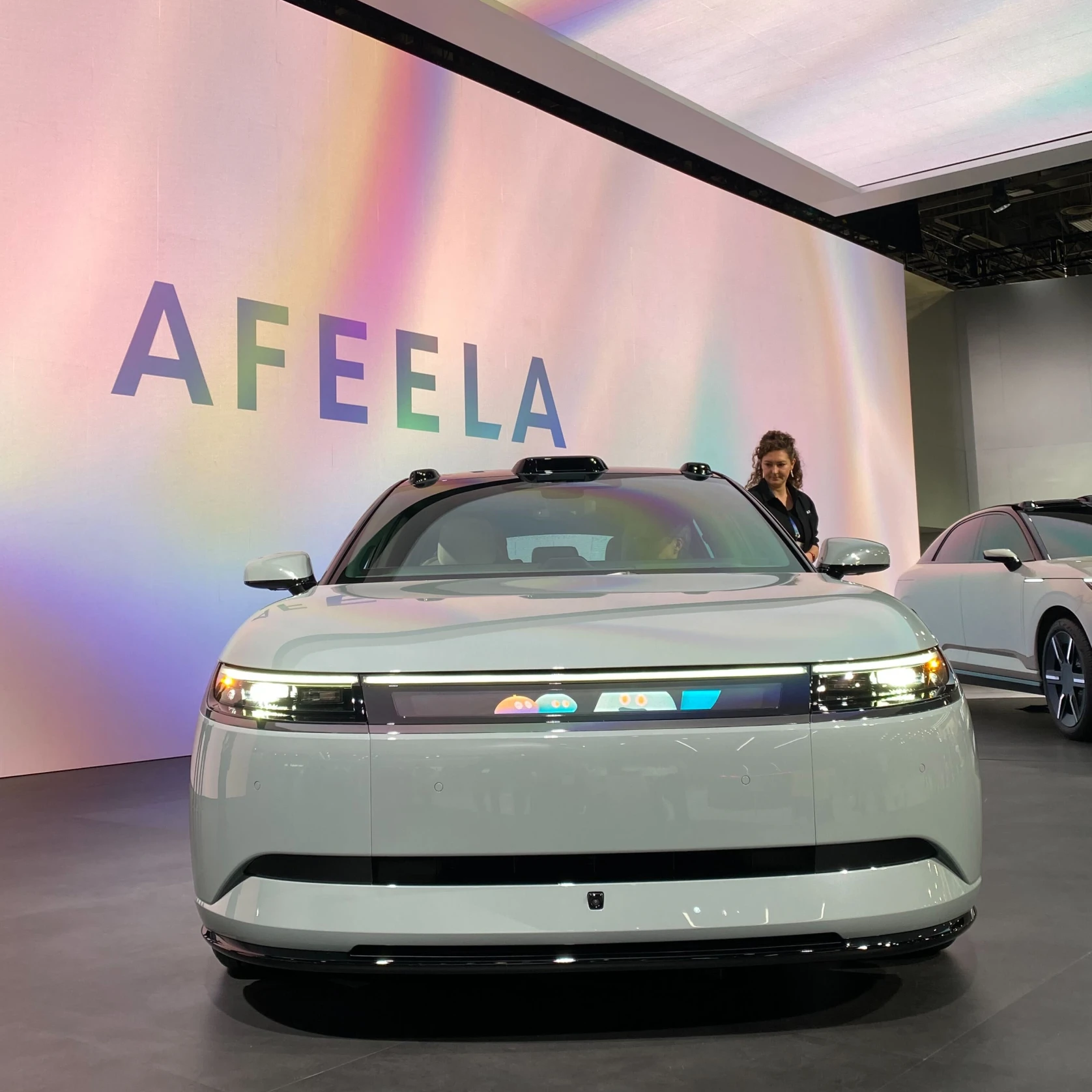
5. Joy, play, and delight are the end goals
In a year dominated by efficiency, optimization, and automation, the technologies that stood out were the ones that made us smile. As leaders in IDEO’s Play Lab, this wasn’t surprising—but it was still reassuring. As Steven Johnson explores in the book Wonderland: How Play Made the Modern World, many of our most transformative technologies arrive through entertainment rather than technology alone. Play creates permission to explore and challenge existing ways of thinking.
This year, the floor featured fewer technologies that simply automate the parts of life we tolerate, and more tools that help people live more fully and even celebrate the wonder of being human. From the Sweekar pocket pet (a Tamagotchi-like companion device that uses AI to grow with you) to LEGO’s experiments with smart bricks, we were impressed by inviting products that lowered the barrier to entry by making curiosity feel safe and fun.
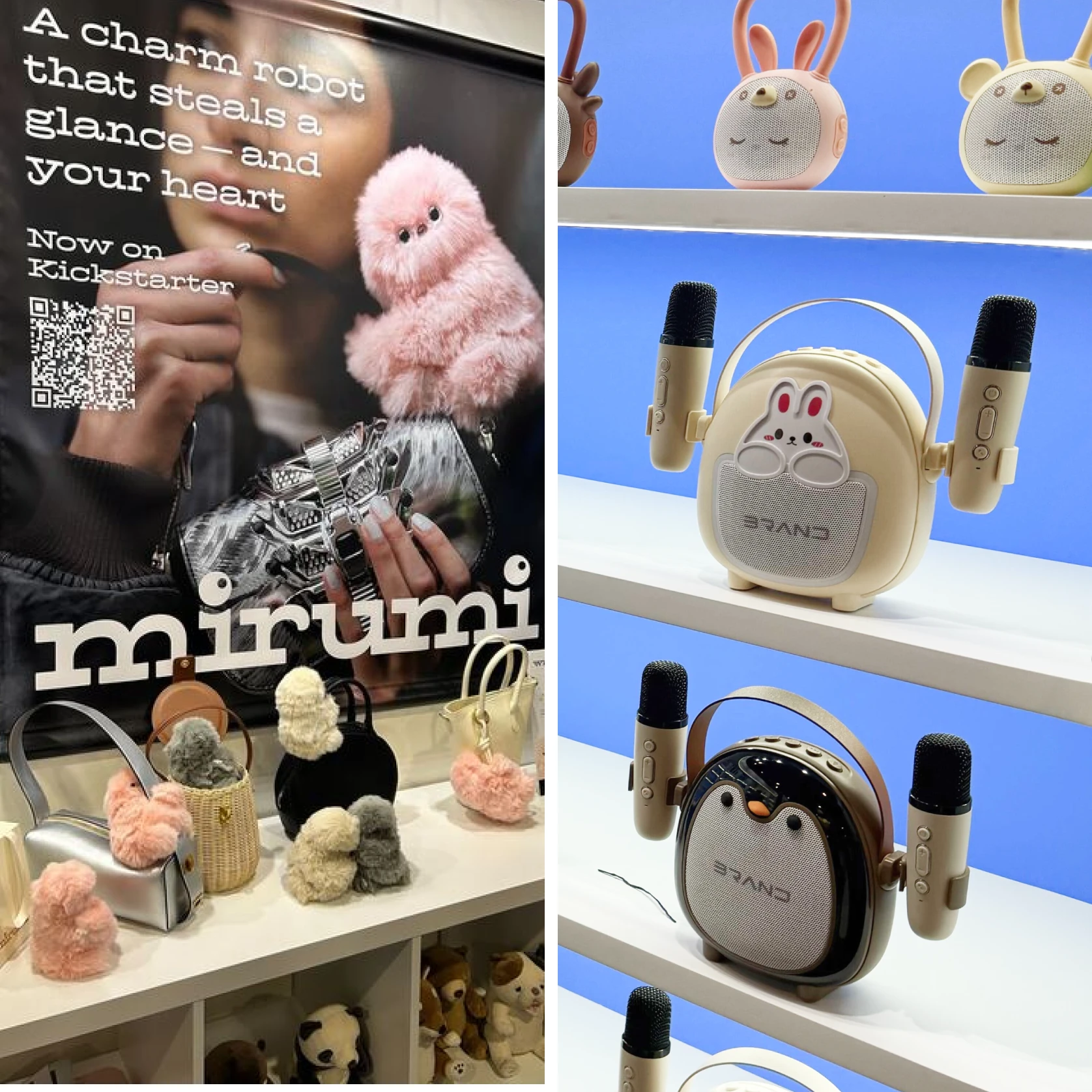
We saw the same impulse in the recreation and mobility space: AFEELA cars greeted passengers with emojis; Zoox’s autonomous vehicles offered starry ceilings; and Garmin shared tools that help people fish, kayak, or explore more confidently. These moments of delight carry value—they build trust, emotional resonance, and attachment, qualities that matter just as much as performance when companies are introducing unfamiliar technology into everyday life.
If last year’s CES reminded us that kids aren’t impressed by AI alone, this year reinforced a related truth: joy is often the mechanism that makes new technology feel usable, trustworthy, and worth inviting into everyday life.
6. The infrastructure advantage
One of the clearest signals from the floor at CES: Novelty alone is not enough. Regardless of how cool or advanced your product is, it’s hard to sustain a business on product alone. In an increasingly crowded landscape, the companies best positioned for sustained growth are shipping impressive products AND building the infrastructure to support them. That includes faster iteration cycles, deeper integration across components, and ecosystems that support repair, reuse, and evolution over time.
The contrast between iRobot and Dreame made this especially clear. iRobot helped make our Jetsons-era dreams of home robots feel real—so real that for many of us, the Roomba became shorthand for the category itself. But its products were largely designed to stand alone, with new product versions debuting on predictable release cycles. Dreame, by comparison, is thriving because it’s built on a portfolio—from robot vacuums to beauty tools to electric vehicles—where components, intelligence, and manufacturing capabilities are shared, reused, and continuously improved.
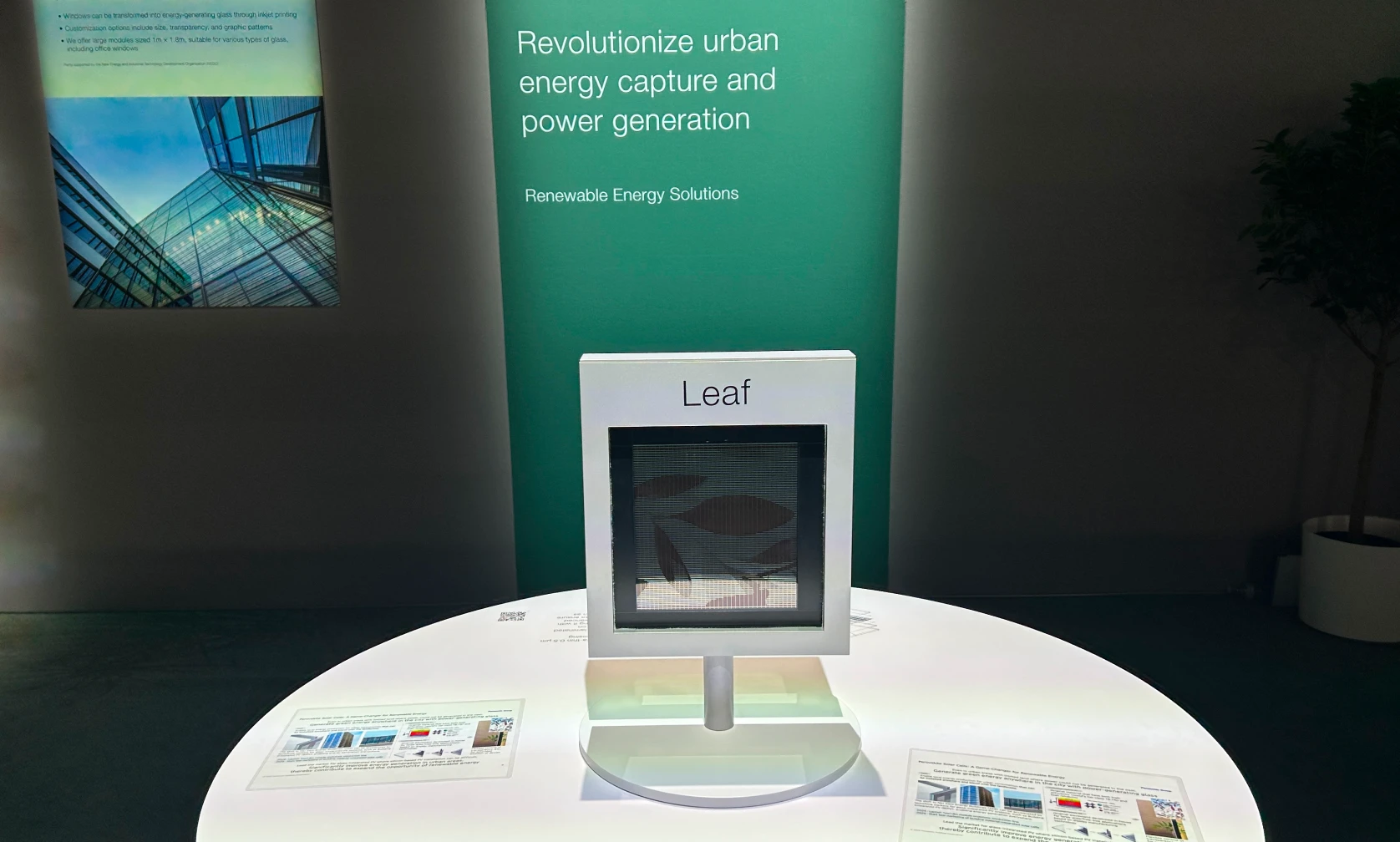
We saw this same infrastructure-first thinking at a larger scale, too. Concepts like Panasonic’s Leaf integrate power generation directly into the built environment, using perovskite solar cells embedded in windows so energy becomes a byproduct of spaces we already live and work in—rather than a separate system to manage.
7. Supporting existing behaviors
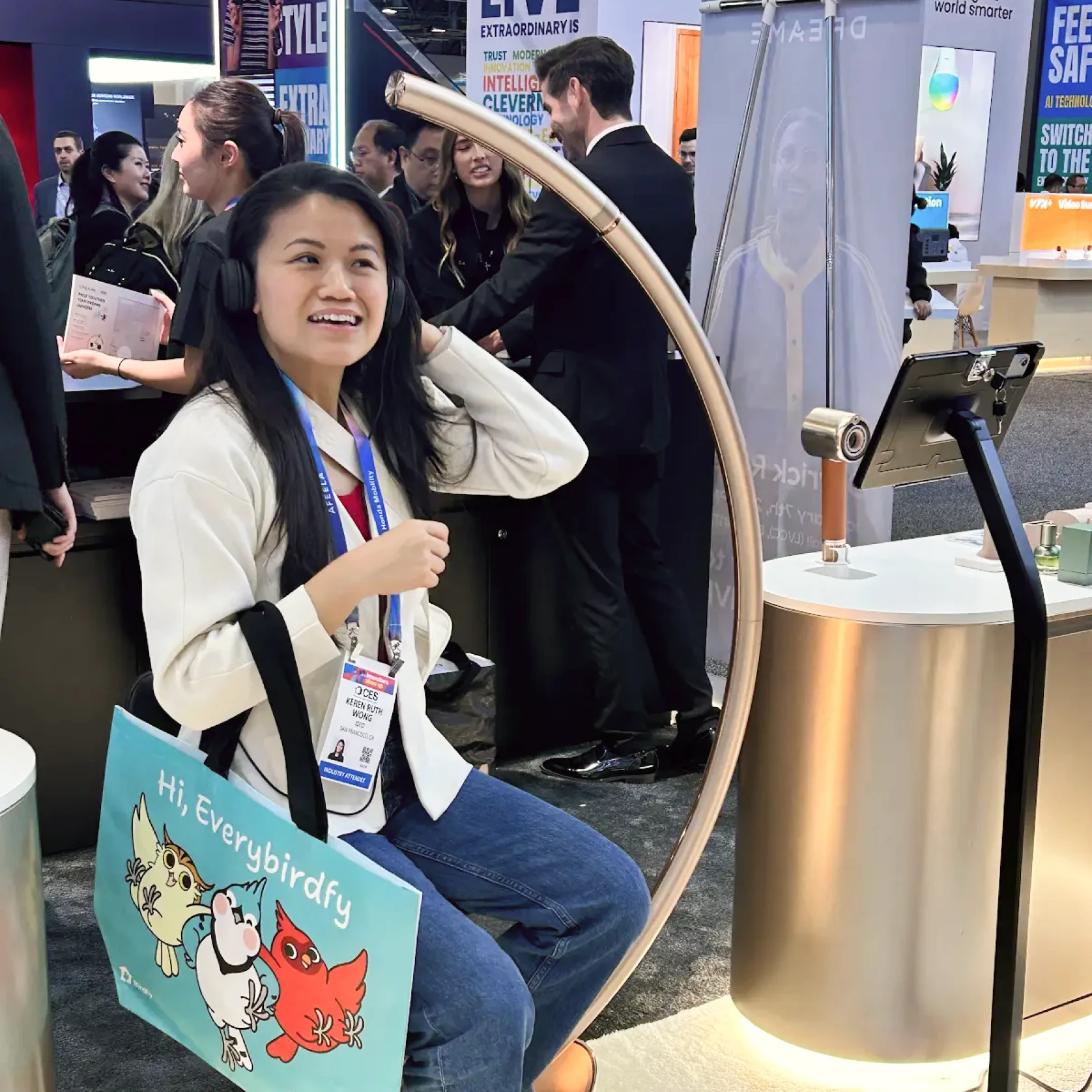
Rather than asking people to adopt entirely new behaviors when they buy a new product (such as remembering to charge yet another device or embrace a new daily ritual), some companies are designing products that quietly fit into existing habits. The Pebble Index 01, for example, is a small ring with a single button and microphone that acts as an external memory for your brain, almost like a modern dictaphone. Its battery lasts for years, sidestepping one of the most common frustrations of modern tech: the need to manage endless charging cycles. Headphones with built-in cameras follow a similar logic, adding new capability to something people already wear every day. The Dreame Halo, a robotic hair dryer that doubles as an architectural floor lamp, pushes this idea to an interesting place, imagining a future where technology integrates so seamlessly into daily life that even chores can feel relaxing and luxurious. These choices may seem incremental, but they reflect a deeper understanding of human-centered adoption: market success often comes from fitting into people’s lives as they are, not asking them to reorganize around a product.
8. What we hoped to see—and didn’t
Compared to CES 2025, the conversation about investment in sustainability and climate-forward innovation felt muted, squeezed by the urgency of the AI race and tightening capital markets.
We also found ourselves wishing for more attention to the content, brand, and systems that sit alongside hardware. As agentic commerce and AI-driven discovery reshape how products are discovered, it may become even harder for smaller upstarts—such as the many companies filling Eureka Hall—to stand out in a landscape trained on decades of legacy data and dominant brands. Designing a great product is only part of the challenge; investing in brand, narrative, and trust signals that help new ideas be recognized, remembered, and chosen may be just as critical.
(Special thanks to Tiange Wang and Zoey Zhu for their contributions to this story, and credit to the Consumer Technology Association (CTA)® for the header image.)
In this third year of AI-powered everything, CES once again raised a familiar question for us: Just because we can build something, should we?

Lindsey Turner
I’m passionate about building brands, products, and experiences that help organizations show up with meaning and momentum.
I help organizations cut through complexity by shaping how they show up, through brand strategy, identity, and storytelling.
Working at the intersection of brand and business, I bring an editorial eye and a bias toward making—turning ideas into tangible experiences that people can understand, trust, and believe in.
My work spans government, healthcare, financial services, media, and consumer goods, from launching Gen Z-focused ventures to building innovation labs and reimagining legacy brands. I relish moments of ambiguity and enjoy translating across teams, perspectives, and priorities to move ideas forward.
I started my career in editorial and digital design, shaping cross-platform experiences and identity systems in publishing and agency environments. That foundation still shapes how I work today: I’m detail-oriented, collaborative, and overreliant on the Oxford comma. I hold a BFA in Visual Communication from the School of the Art Institute of Chicago.

Rachel Young
My work helps organizations see who their products aren't working for—and build the will and the tools to do something about it
For 25 years, I've asked the same question: Who does this design exclude—and what are we going to do about it?
My work spans human-centered strategy, inclusive design, and qualitative research, with clients ranging from Microsoft, Google, and Verizon to the National Science Foundation, and San Francisco Unified School District.
Before IDEO, I taught elementary school in East Palo Alto and spent a decade doing design work with social service organizations—where I learned firsthand what it costs people when systems are built without them in mind.
I am currently writing User Error, a nonfiction book about digital access and the design decisions behind it. I live in Oakland, California.

Brian Pelsoh
I lead with craft, ensuring our work is creatively excellent: rooted in deep human insight and imagination, while also grounded in the realities of business and technology.
My expertise spans brand, communication, and product design across tech, education, the arts, and social impact.
I believe great work demands both high-level vision and obsessive attention to detail, and only happens through collaboration.
I bring an inclusive, hands-on approach and a deep understanding of business, which enables me to consistently deliver excellence while always asking why.
Before joining IDEO, I worked at the brand firms Pentagram and VSA Partners. I began my career as a designer, leading teams at the School of the Art Institute of Chicago and the Milwaukee Art Museum. I hold an MFA in graphic design from Maryland Institute College of Art and a BFA in communication design from the Milwaukee Institute of Art & Design, and have taught at some of the best design schools in the US.

Tony Wong
I am responsible for IDEO’s long-term success in China and working with clients to use design as a tool to enable growth.
I am responsible for IDEO’s long-term success in China and working with clients to use design as a tool to enable growth. Specifically, I have helped Chinese companies design holistic brand solutions through the development of their products, communication, services, and innovation teams, and I have helped multinationals expand their presence and influence in China.
I advise global leaders on developing China-led innovation and capabilities.
In over 15 years in IDEO Shanghai, I have worked on projects that use design to elevate the quality of the experience of healthcare products and services, streamline processes that increase productivity, create spaces and programs that promote and enable inclusive communities, and build next generation mobility solutions that are planet-positive.
Before joining IDEO, I worked at Philips Electronics and the Electrolux Group in Italy, the Netherlands, and Singapore on a number of breakthrough commercial products. I am a member of the Young President Organization in Shanghai.

Building a personal AI for the messiness of life: Sida Li
Most AI products today are built for work—a space with clear problems and established systems. One founder noticed a gap: personal life is messier, harder to systematize, and mostly left behind by the AI boom. So she built Cue, a personal AI that lives inside iMessage and group chats, to go where the other tools haven't.
In this episode, Becca Carroll, IDEO's Chief Strategy Officer, talks with Sida Li, co-founder and CEO of Shared Context Lab, about staying anchored to a human need while the technology around her keeps changing shape, why she treats her business model with the same rigor she'd bring to a product, and what it feels like to build a company at this particular, disorienting moment in AI.
The conversation also gets into how Sida makes design decisions: the language Cue uses to describe itself, the tradeoffs behind building inside iMessage instead of a new app, and a real story about a business idea that didn’t pan out.
This is the second in a two-part series profiling founders from IDEO's Startups-in-Residence program. The first conversation is with Johannes Seemann, founder of Sooner, on designing GenAI for the emotional side of money.

Designing GenAI for the emotional side of money: Johannes Seemann
Most personal financial tools are built to run the numbers and optimize towards a budget. While that works for some, most people experience money as a lived relationship that does not neatly fit into a spreadsheet. Johannes Seemann and Becca Carroll discuss why money is emotional before it is mathematical, and what a human-centered approach to building a generative AI financial product looks like in practice.

The curious leader's edge in uncertainty: Scott Shigeoka
Mina Seetharaman talks with Scott Shigeoka, author of Seek and Head of Curiosity Cultivation at the Eames Institute, about what distinguishes genuinely curious leadership from performative curiosity, how power dynamics shape curiosity, and why practicing curiosity can restore energy rather than drain it.

How constraints make us more creative: David Epstein
Mina Seetharaman talks with David Epstein, author of Inside the Box and Range, about why total freedom often produces average work, how leaders can design useful limits on purpose, and what organizations such as General Magic and Pixar reveal about the relationship between boundaries and creativity.
Looks like you might be in search of something very specific?
Or reset the filters above and try another angle.
Here’s some random inspiration

Podcasts about creative leadership

Articles about the power of prototyping
