
.svg)


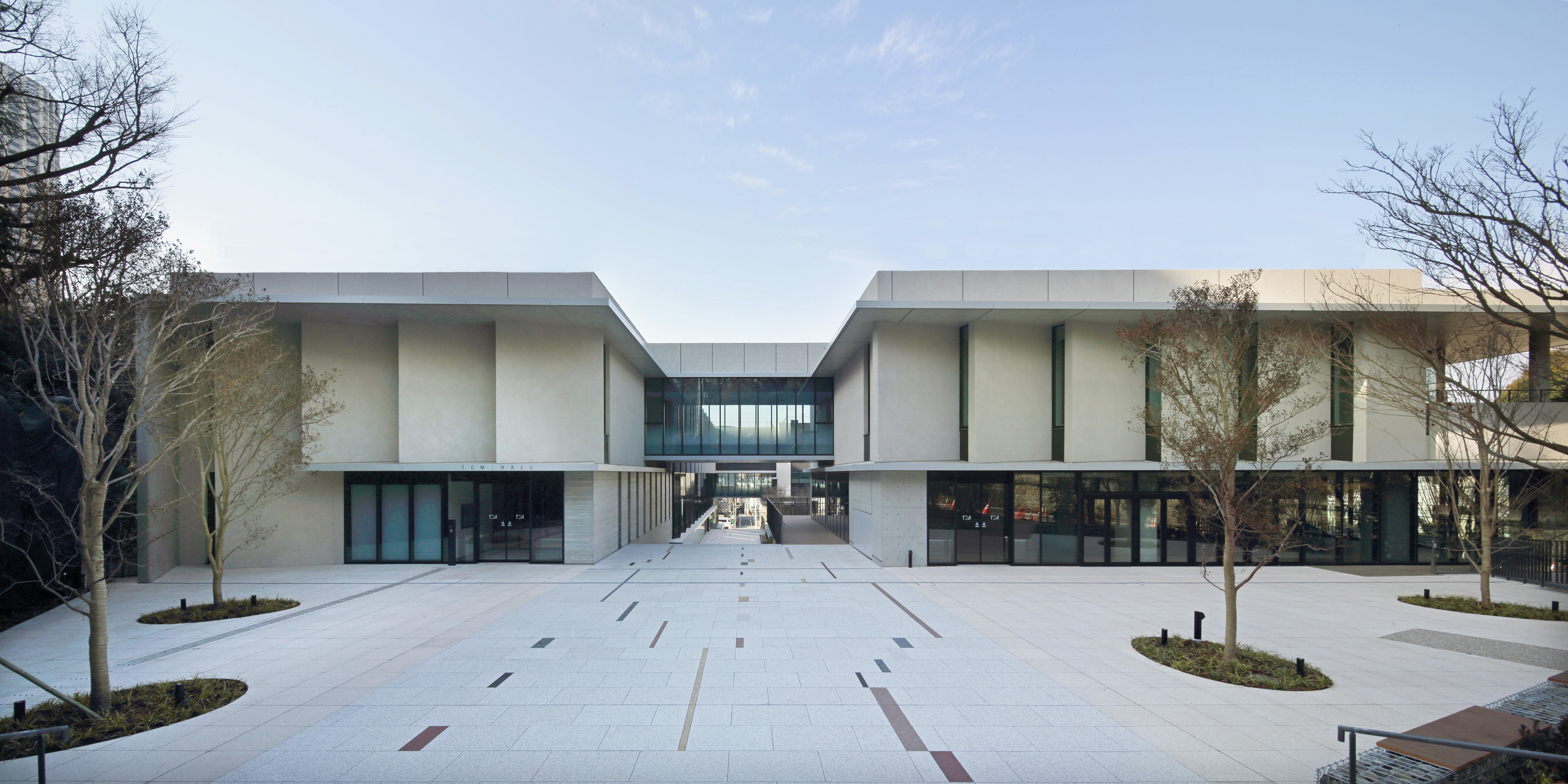

Transforming a historic music college into a collaborative learning platform
A new campus concept and student experience for Tokyo College of Music.
Since its founding over a century ago, Tokyo College of Music (TCM) has trained countless world-class musicians. Despite its well-established reputation, however, the school was feeling a pressing need to reconsider its role in order to remain relevant in a changing world.
The college had plans to build a second campus in Daikanyama, a prominent area of Tokyo known for being a hotbed for new global trends. Taking advantage of this opportunity, TCM leaders asked IDEO to help them develop a new concept for the school, and to redesign the learning experience while preserving a focus on classical music.
To kick off the research phases of the project, IDEO designers interviewed TCM students, and traveled to London, New York, and Boston visiting educational institutions, music schools, and arts facilities.
The team observed that students at music colleges outside of Japan were giving serious consideration to their career plans at an early stage in their studies, acquiring a variety of skills and mindsets through a well-rounded education. By contrast, TCM students were focused on learning and performing classical music, but tended not to have a clear image of future career opportunities.
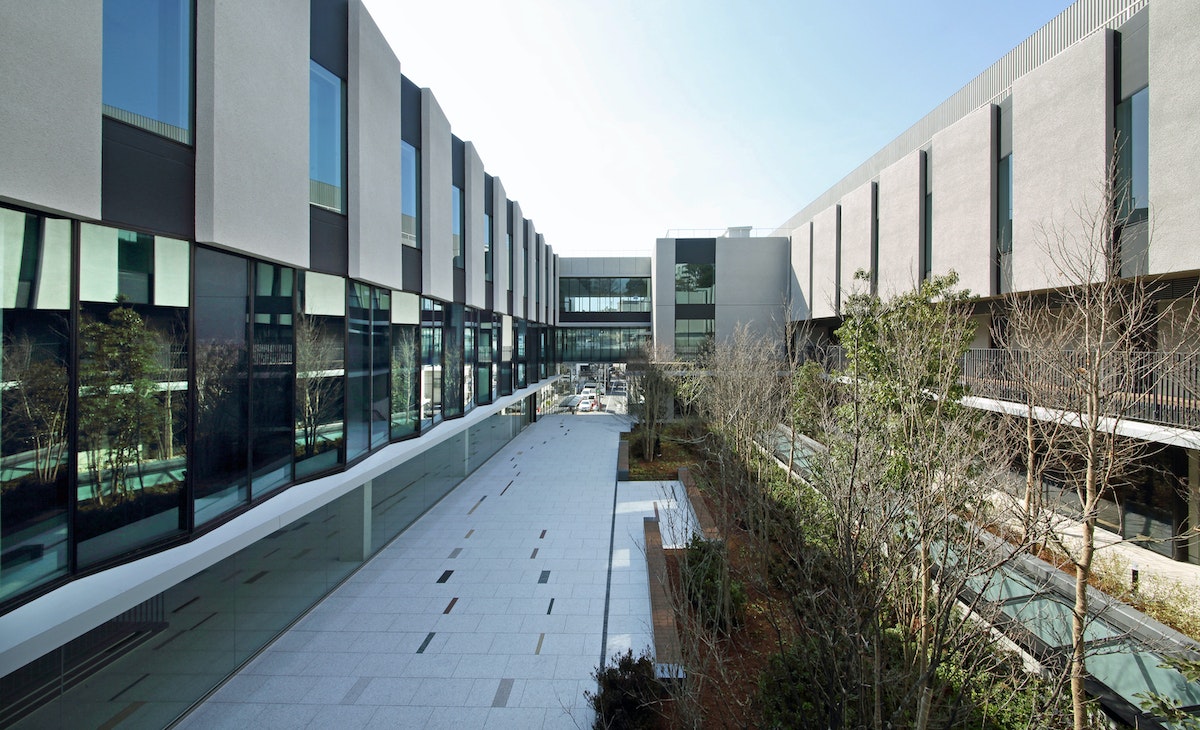
IDEO proposed four specific directions for TCM’s new campus, based on an overarching theme of “culture, fields, and people collaborating across boundaries.” The first aim was to foster a business mindset and entrepreneurial spirit among the students that surpassed their classical music training. Next was to increase opportunities for actual performances, collaborations with professionals outside the school, and joint projects. The third aim was to position the college as a platform that would encourage the spontaneous creation of communities within and outside the school. The final aim was to develop students who were digitally savvy and fluent in new technologies, enabling them to continue evolving in response to developments in the real world. These goals are reflected in the various spaces of the school, as well as in the design of the experiences that occur in those spaces.
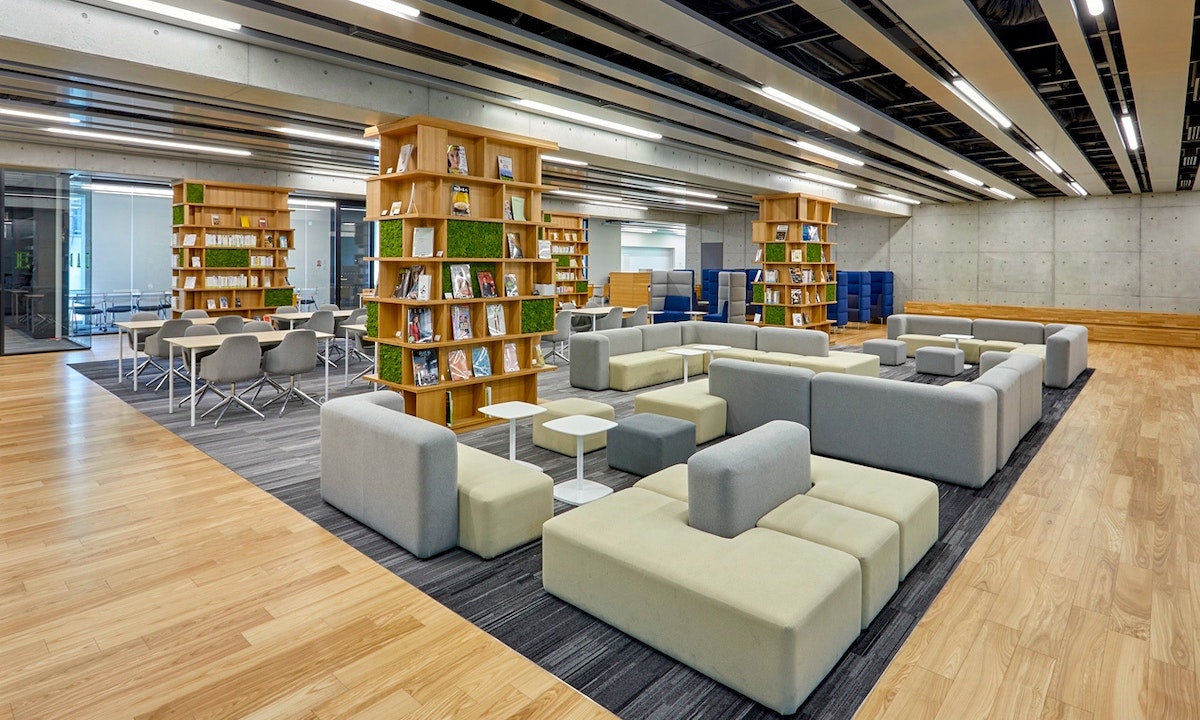
The most symbolic of these spaces is the Creative Lab. Originally intended as a library, the space now functions as a platform where people from within and outside the school community can collaborate and generate innovative ideas. The open layout, which encloses a cafeteria for students and faculty, can be altered depending on programming needs. The Creative Lab provides a venue not only for live performances in which the students can polish their improvisational skills, but for holding workshops and other events on topics such as cultural exchange, business, and new technologies.
New furniture and objects were carefully selected to inspire spontaneous encounters and conversation between students from different departments and staff, creating a flow of activity.
Even the landings on the staircases, which tend to be dead space, were designed with this concept in mind. One student commented that the space facilitates meeting new people and creates “opportunities for deeper interaction with students from other departments.” This intentional, open design has transformed the space into a hub within the school and the local community.
Through the new environment and educational opportunities at TCM's Daikanyama campus, students now have stronger opportunities to apply their creative talents in numerous fields worldwide, creating impact informed by the various perspectives, skills, and relationships they have developed at TCM.
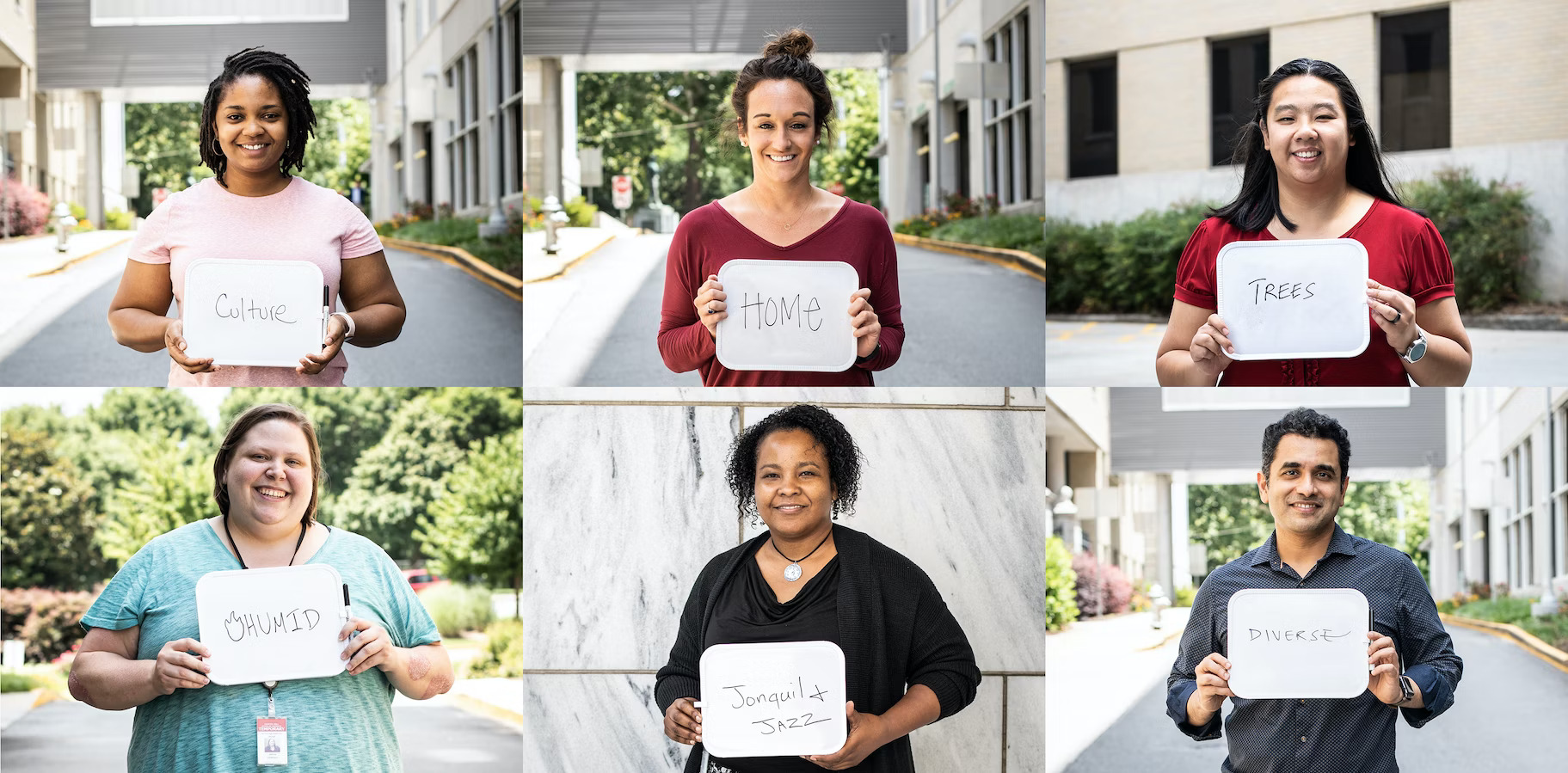
Designing a modern digital platform for the constituents of Georgia
Building a more efficient, trustworthy service for Georgia's residents.
Georgia is among the most populous states in the American South. It’s a place with a storied past and promising future—on the rise economically, and continuing its powerful cultural impact on music, TV, cuisine, and tourism. Over 10.4 million people call Georgia home, and nearly all of these people will at some point navigate the state’s websites for securing everyday services. Ideally, this online platform would provide unifying and accessible government resources for everyone, whether they’re renewing their vehicle registration, seeking a fishing license, or looking up tax law updates.

Georgia’s Office of Digital Services (DSGA), part of the Georgia Technology Authority, was challenged with designing a platform to modernize the collective and individual online presence of 80+ state agencies, many of which used visually disconnected formats and color palettes that could leave the public feeling confused. DSGA recognized that they could provide more efficient and higher quality service to the public if they simplified the language, designed the site from the user's point of view, and created a more cohesive look and feel across agencies.
IDEO worked with the DSGA to identify the priorities of Georgia residents who use the various agency websites. On a road trip from Savannah to Atlanta, with stops in Macon and Dublin, the IDEO team immersed themselves in the rich culture of Georgia, connecting with social workers, low-income residents, state agency leadership and civic organizations to learn how Georgia’s digital properties could better address their disparate needs.
The design research underscored that there isn’t just one Georgia—it’s a tapestry of people, geographies and political orientations. Yet several common themes emerged, including:
Georgians want their government to “give it to them straight.” On the redesigned Georgia.gov platform, the people of Georgia can easily search popular topics to get the information they need. This includes learning how to apply for food stamps, renewing a business license, or simply finding out the location of a local office in their area. If a user has remaining questions, they can connect directly with a real human for further assistance, balancing direct information with warmth and a personal touch. User feedback on the site provides the opportunity for continuous design improvement.
Georgians want to take pride in the legacy and the future of their state. IDEO developed an entirely new design system with new navigational elements, fonts, and a color palette inspired by Georgia’s landscapes, all of which can be modified for individual agencies while remaining consistent with the state brand.
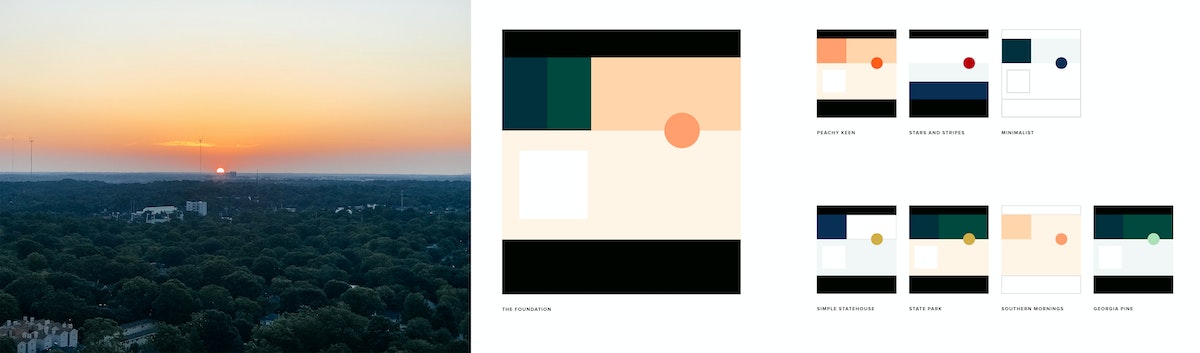
A distillation of the original Georgia seal adds authority, and new icons anchor the site’s menus and bring more clarity to the search function. The platform was designed to be Section 508 and WCAG 2.0 AA compliant, providing clear and accessible page content that adheres to federal laws and international web standards. To instill trust in Georgia’s online presence, each page also has a header that indicates it’s an official Georgia State website and outlines the uniform features constituents can use to identify this.

With improved navigation and easy-to-access prioritized content, Georgia.gov is a much more efficient platform for addressing requests from citizens. The site projects a happy-to-help, citizen-centered approach that aims to empower all Georgians so that they feel confident, informed, and prepared.
A holistic, human-centered approach to managing diabetes care
A digital-first diabetes management system that helped patients get the support they needed when they needed it.
According to the Centers for Disease Control and Prevention, nearly 30 million Americans have diabetes, almost 10% of the population. The vast majority of these diagnoses are type 2, which is commonly treated through a combination of medicine, diet, and exercise. Today, one of the major barriers to better outcomes is access to trusted information. As little as 15 percent of people with diabetes receive adequate education from their healthcare providers on managing their disease and making recommended lifestyle changes.
Ascensia Diabetes Care, a global healthcare company, has been a leader in diabetes treatment for over 70 years, known primarily for producing blood glucose meters. IDEO has worked with Ascensia for more than a decade, helping develop and design their CONTOUR NEXT ONE meter in 2016. In 2017, Ascensia engaged IDEO with a new goal of moving the company beyond physical devices. Ascensia envisioned a first-of-its-kind approach to educating and monitoring diabetes patients. In partnership with IDEO, they wanted to build a comprehensive solution—one that would not simply take glucose readings and document food intake, but would consider all factors that impact a person's health.
Through deep collaboration, Ascensia and IDEO built a powerful app-based service. The project began with a strategic vision for the experience and ended with the delivery of an all-encompassing health offering, including training of providers, packaging, app design, content creation, and visual design.
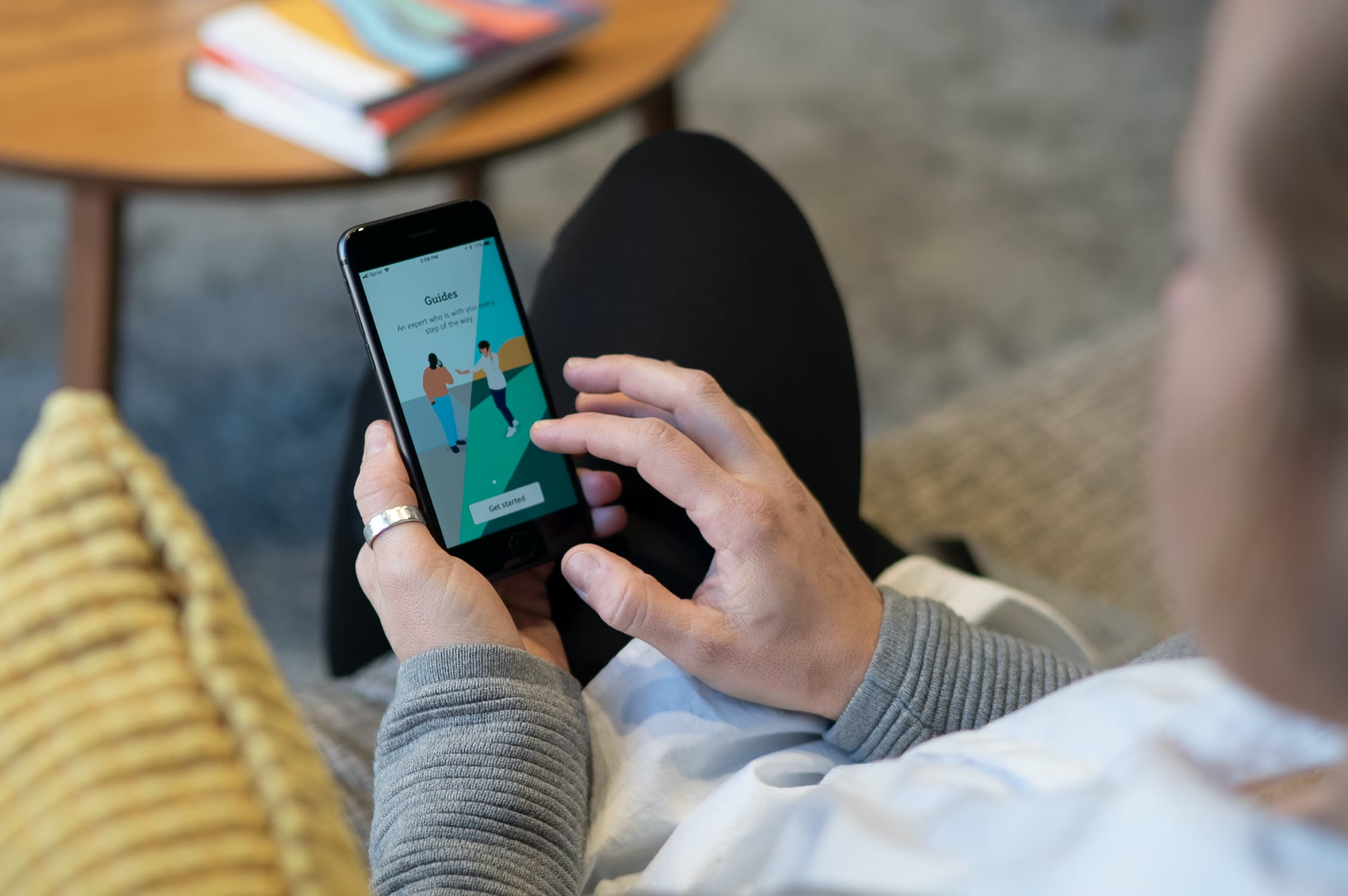
The patient experience married data and tracking, real-life mentorship, and personalized content. When a patient signed up, they were paired with a Certified Diabetes Educator (CDE) who created a tailored program based on their needs and linked them to relevant articles on topics like cooking, mental wellbeing, and sexual health. The IDEO team led the charge in hiring and training guides, crafting the educational content, and even designing the content management hub.
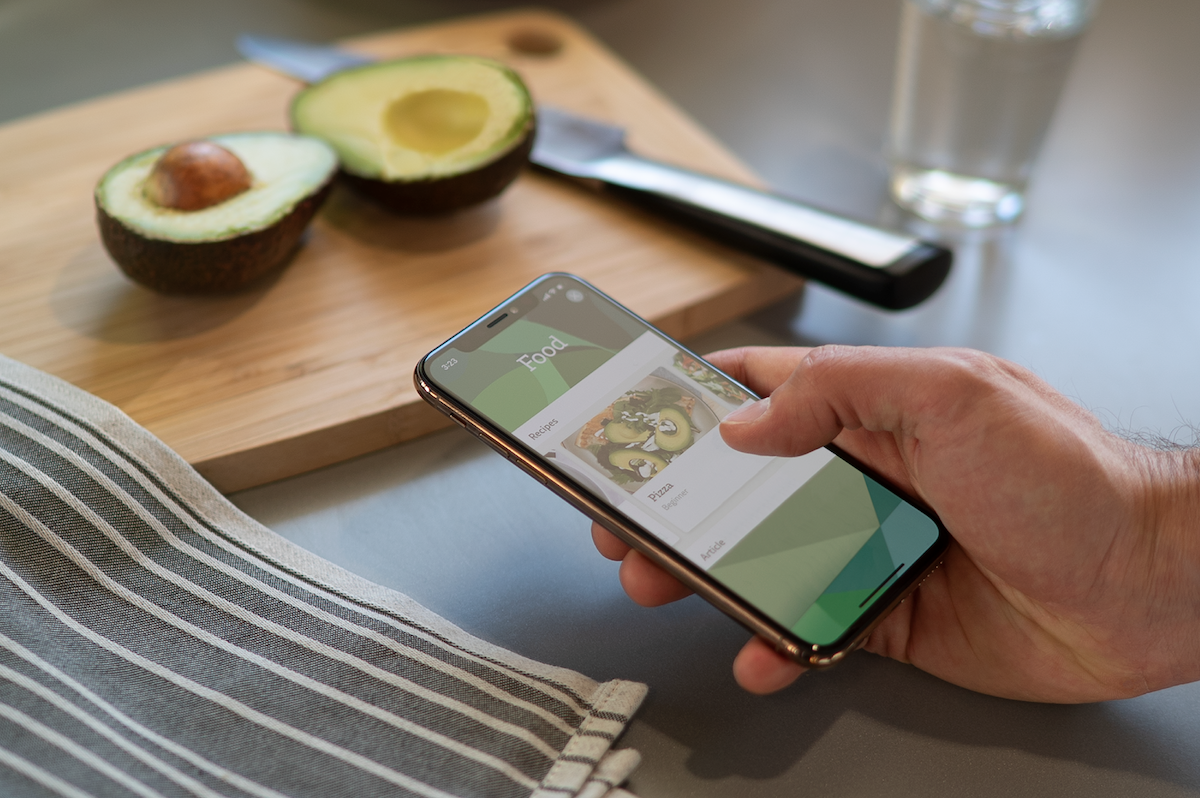
The data engine behind the app is another one of the program's stand-out qualities. The app pulled data from multiple data sources—exercise bands and glucose meters—to provide constant feedback, track progress, and continually refine the experience. To generate empathy, as well as build the app's initial data set, IDEO's data scientists tested the product on themselves. One designer wore a wrist full of exercise monitors around the office and tracked her blood sugar after every meal.
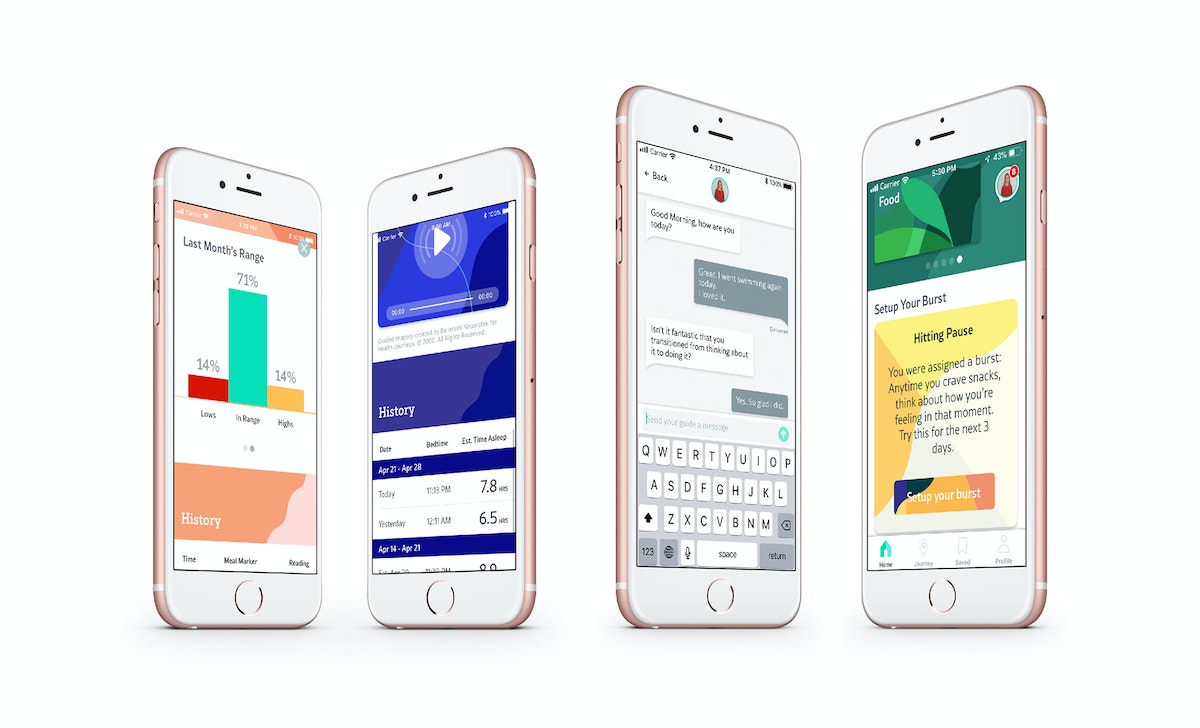
The app-based service was tested with 60 people and demonstrated remarkable early results. Only two participants failed to complete the study—a stunning success rate when adherence to therapy for chronic illnesses in developed countries averages around 50%. Additionally, participants reported drastic improvements in both physical and mental health. One recently widowed 70-year-old woman emerged from depression, returned to swimming, and started having regular blood sugar readings.
The project required Ascensia to embrace new ways of working internally, adopt a broader view of their offering, and ultimately expand the way they serve people with diabetes.

Creating an out-of-this-world STEM learning experience
Aboard the Verizon Explorer Lab, students can travel to Mars and learn engineering basics along the way.
When Mr. Gordon told his fifth grade students they were taking a field trip on a bus, many of them envisioned the city bus that they ride each day to school. But when they saw the Verizon Explorer Lab pull into the school parking lot, they realized a unique experience awaited them. Painted in bright colors, this bus promised something very different from their daily commute.
“Climb aboard, explorers!” says the Lead Explorer. The students walk through the bus’ sliding doors and inside, where instead of rows of seats, they find a sleek research lab. Suddenly, the lights dim. The bus makes a rumbling noise as though it’s about to lift off. And on a large screen, a vision of Earth from space appears. The students listen and point as the video narrator briefs them on NASA’s ongoing search for life in space.
Science education isn’t always this fun. Some kids have a chance to learn through interactive games, immersive experiences, or engaging field trips; but many lack access to rich educational experiences in science, technology, engineering, and math (STEM). As a result, they can be less likely to pursue careers in STEM, though many future jobs will demand mastery of these subjects. This not only impacts a student’s potential and future, but reduces the diversity and number of qualified STEM job applicants.
In under-resourced schools, students are often limited to the scarce tools available for STEM learning in their classrooms. Many kids rarely have a chance to leave their neighborhoods. For these kids, mobile learning experiences that come to their school offer unparalleled exposure to cutting-edge, technologically advanced, and—most importantly—inspiring gateways into these critical academic subjects.
As part of its focus on digital inclusion, Verizon partnered with IDEO to share the excitement of STEM learning with middle schoolers. To facilitate access and discovery of STEM, the team designed a learning experience that takes place on a coach bus and can be scaled to reach kids across the nation.
The team set out to transform the bus into the Verizon Explorer Lab: a futuristic research lab that transports kids to new environments, from outer space to under the sea. As part of the larger Verizon Innovative Learning program, the Verizon Explorer Lab offers delightful and rigorous content that meets national science standards.
A multidisciplinary team comprised of designers across interaction, communication, environments, games, and software partnered with Verizon to bring the Verizon Explorer Lab to life.
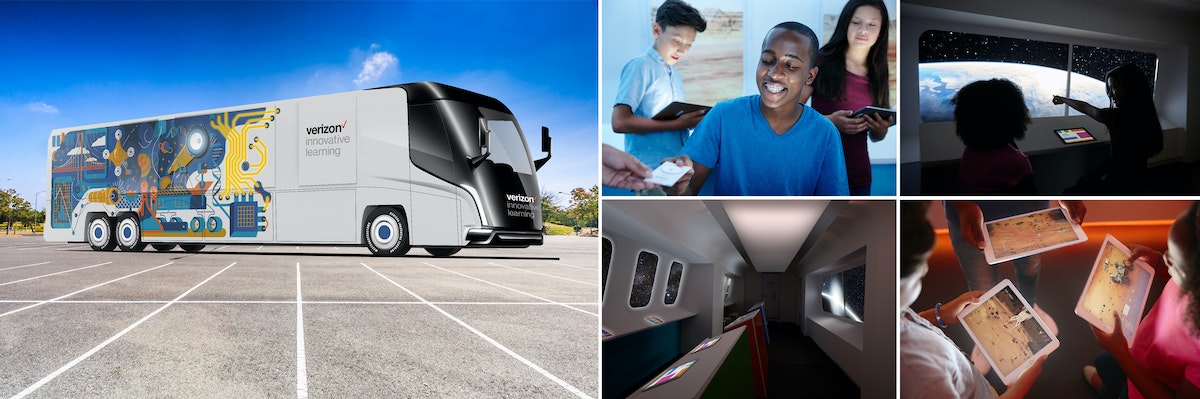
To keep the student at the center of the experience, the team designed alongside kids. Their gravitation toward play, interaction, and technology inspired the digital game that students play onboard the bus. When developing the game’s narrative, the designers turned to popular kids’ books and movies. What began as a card game prototype eventually became a 360-degree video and virtual reality expedition to Mars—complete with a custom musical score—that introduces middle schoolers to engineering basics.
After stepping through the bus doors and taking a tour of the solar system, Mr. Gordon’s students receive an emergency call from NASA: They must rescue the missing Curiosity rover, which is dedicated to collecting evidence of life on Mars. Eager to save Curiosity, the students become immersed in the adventure at hand. And through the adventure, they become immersed in science.
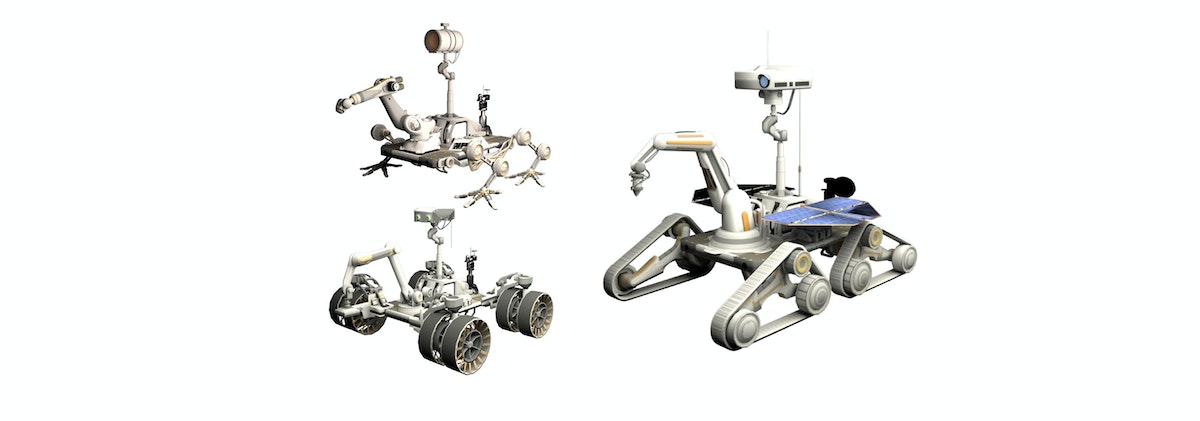
Students use tablets to design their own Mars rover. Each rover appears on a large screen and traverses the planet’s extreme terrain. The goal is to collect data that suggests life on Mars, including ice deposits, photos, and more. Students iterate on their rover’s design—wheels, power sources, and sensors—to test if it can stand up against dust storms and craters. The team consulted a NASA planetary scientist to ensure accuracy, as well as educators to establish cohesion with classroom curricula.
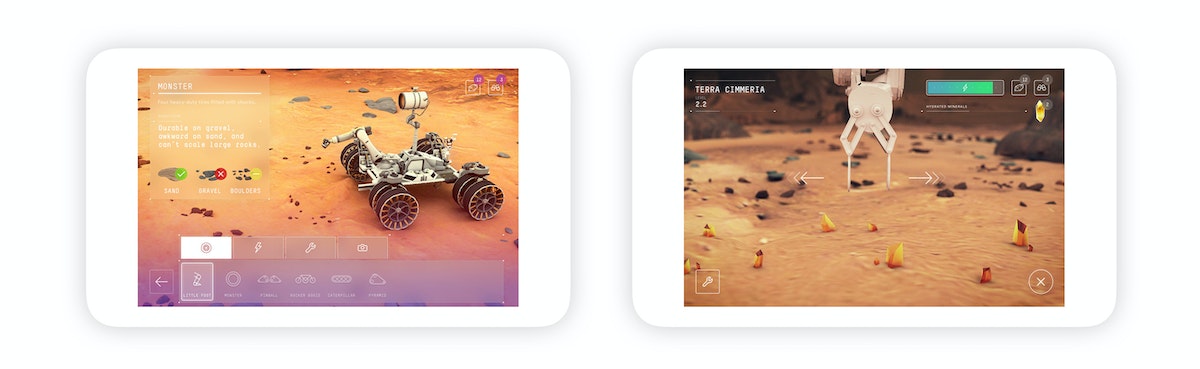
During the game, students are encouraged to compare designs and learn from each other: One rover may be able to travel long distances and take various photos, while another can carry large quantities of ice and sediment samples but can’t go far because of its size. At the end of the mission, the group finds Curiosity and sends all of the evidence they’ve collectively gathered back to NASA to aid the search for life beyond Earth. Before departing the bus, students watch an animated video that explains various jobs in STEM and encourages kids to pursue one of these careers.
The Verizon Explorer Lab teaches students the engineering design loop, the value of collaboration and teamwork, and what a career in STEM might look like. The mission to Mars game is just one of many potential STEM learning opportunities for students and integrated, customizable learning modules for teachers.
Since launch, the Verizon Explorer Lab has traveled to various parts of the United States and reached thousands of kids. It continues to be managed by Learning Undefeated, Verizon’s nonprofit partner. By designing for and with students, it’s possible to create educational experiences that facilitate meaningful learning and genuine fun. The Verizon Explorer Lab represents progress towards a more inclusive future for employers and the STEM field.
IDEO’s New Podcast Asks Food World Visionaries About the Future They Want to See
Food by Design explores the future of our food systems by asking experts how we’ll design what we need for tomorrow...starting now
How’d we end up on this culinary carousel, from learning about kelp’s role in addressing climate change to understanding the significance of seeing kernza, an unusual perennial grain, in the cereal aisle by 2040? We spend our days working in the food world, hearing about its challenges: Hunger is rampant, but so is food waste, and the food system is responsible for 25 percent of global carbon emissions. This leads many to believe that the system is broken. But it’s not broken—it was designed this way. And if it was designed this way, then it’s time for a redesign. That’s what IDEO’s new narrative podcast, Food by Design, is all about.
The experts featured are living proof that we can create a system that’s nourishing for people and the planet. Below are some of the new ideas, staggering statistics, and inspiring stories they generously shared with us. Let’s dig in.

A human-centered approach that prioritizes equity is required
The food system is inherently about food, but without humans, the system doesn’t work. Improving a system that’s been ravaged by multilayered crises—health, racial injustice, climate, and economic—depends on how we value those doing the actual labor in it. The role and importance of human-centeredness and equity (and the current lack of both) can’t be ignored.
We spoke with Saru Jayaraman, a professor at the University of California Berkeley who leads the Food Labor Research Center and founder of the non-profit One Fair Wage. In episode seven, she explains how the legacy of slavery still impacts how much money restaurant and food service workers make today—sometimes as low as two dollars and thirteen cents an hour—despite the cruel irony that the industry is the largest and fastest growing in the U.S.
Dr. Ricardo Salvador, Director of the Food and Environment Program at the Union of Concerned Scientists, adds to Saru’s perspective in a later episode: “We've been creating people that are affluent and at the same time we've been creating people that are poor,” he says. “All of that is a direct consequence of the way that the agricultural system in the United States was born. The system of slavery did not completely disappear. It has been transformed.”

We need both individual and structural change—it’s not an either/or situation
We’ve been told that individual action is enough, but we’ve also been told that it isn’t—we need bigger changes. Eating red meat is often the subject of this debate, as animal agriculture is the second-worst contributor to greenhouse gases after fossil fuels. But here’s the thing: we need both individual and structural change to design a better food system.
While doing research for our second episode, we met Lisa and Loren Poncia of Stemple Creek Ranch, cattle ranchers who now consider themselves carbon farmers. Through practices like rotational grazing (which allows pastures to rest and regenerate), they actually sequester carbon into the soil, keeping it from being released into the atmosphere where it contributes to greenhouse gases that cause climate change. When we recorded the episode, Stemple Creek Ranch was sequestering enough carbon to offset 285 passenger vehicles per year, and that number is growing.
With additional incentives, like those baked into the Federal Farm Bill, even more ranchers like Lisa and Loren might adopt these practices. “I wish that the federal government would jump on board and subsidize carbon and carbon sequestration instead of corn and soy,” says Loren. “In a very short amount of time, we'd have a lot of carbon stored in our soil.” (That’s a good thing.) In our sixth episode, we talk about how producing red meat conventionally can create nearly 10x the emissions of vegetables. But if individuals buy regenerative red meat from carbon ranches like Stemple Creek Ranch, it could help shift the rest of the industry this way and lead to more structural policy changes, having a huge impact on the health of the entire system.
Another example of the need for both individual and structural efforts comes from Karen Leibowitz and her partner, who established a climate-minded restaurant in San Francisco. Every detail of the Perennial aimed to minimize carbon emissions, from using recycled appliances and napkins meant to be fed as compost to worms to hydroponically-grown vegetables.
But just one business can't change the system. Armed with this insight, Karen and her partner closed the Perennial to scale their ambition across many restaurants—creating a more effective way to fight climate change. Their nonprofit Zero Foodprint asks restaurants to add a one percent charge to their bills and use those funds to fight climate change.

Embrace mental “flips” and blank slates...or cardboard boxes
Again and again, the individuals we interviewed shared that in order to create a better food system for all people and the planet, we must build something entirely new—whether reimagining the restaurant business model, altering what we believe is edible, or redefining the meaning of sustainability.
We talked to chef and restaurateur Camilla Marcus in our seventh episode, who is rethinking the power dynamic that gave rise to the harassment and racial and gender inequities in the restaurant industry. Her restaurant west~bourne turned the “front-of-house, back-of-house” hierarchy—which Camilla describes as a caste system in disguise—on its head. During an intensive training program, every team member becomes fluent in all areas of the business, from dishwashing to wine tasting. “If you envision a world a different way, you have to start from the beginning and be willing to redesign how everything is done,” says Camilla. “You can't just hope for a different outcome and keep using the same process and system.”
Like Camilla, Mr. Lyan—a professional moniker for Ryan Chetiyawardana—is another food visionary. Mr. Lyan was crowned world’s best bartender in 2015, and his bar Dandelyan, now reopened as Lyaness, was named the world’s best bar in 2018. He’s known for experimenting with “closed loop cocktails”—any waste from the production of these drinks is used as ingredients for future drinks. For instance, he pressure-cooks leftover citrus and uses the resulting flavorful stock to create fruit jelly desserts. He doesn’t stop at fruit: Mr. Lyan even boils down cardboard delivery boxes with lemongrass, chamomile, sugar, and water, then strains it and turns it into a syrup. “People saw it as an affront,” he tells us. “So much of what we faced was this idea that the world that we were inhabiting—you know, luxury food and drink—was at odds with the idea of sustainability.” (Until, of course, a restaurant critic said that the drinks were the best he’d ever had in the city.)
Nearly a year before we found ourselves professing our love to baby kelps, we were carpooling home from IDEO’s San Francisco studio to our homes in Oakland. As our conversation quite naturally ping-ponged from an upcoming CSA delivery to methane-producing cow burps to Indigenous agriculture to aquafaba (a chickpea byproduct) to workers’ rights, a creative lightbulb went off. And the idea for Food by Design was born.
We wanted to connect the dots across all these topics and better understand the potential opportunities for design. So we set out to explore the question: How might we build a climate-positive food system that favors the many instead of the few? We hope the array of voices and stories shared on Food by Design not only demonstrate the breadth, interconnectedness, and gaps of the food system, but just how many people depend on it being sustainably and equitably redesigned, and can help us do this, together. Listen to some of their stories today on Apple Podcasts, Spotify, or wherever you tune into your podcasts.
On a chilly December morning, Bri Warner gave us a tour of her kelp facility in Saco, Maine. The room was filled with giant tanks of seawater containing thousands of baby kelps. “We change their tanks constantly,” said Bri. “We play them music. When nobody's looking, I'll lean over and be like, ‘Hi, babies.’” On another occasion, we spent an entire afternoon chatting up Larisa Jacobson of Soul Fire Farm, a BIPOC-centered community farm committed to ending racism and injustice in the food system.

Use These ‘Dummy Numbers’ When Prototyping With Data
Dummy text for when you need to build a prototype with better fake data
While the text is close to coherent if you can read Latin, it appears as legible nonsense to the rest of us. Lorem ipsum looks realistic but doesn’t convey any information to the reader that could otherwise color their interpretation of the mockup. This is great for text-based layouts, but when it comes to placeholder data, we don’t really have an equivalent. What if we had something like Lorem ipsum... but for numbers?
The numbers problem
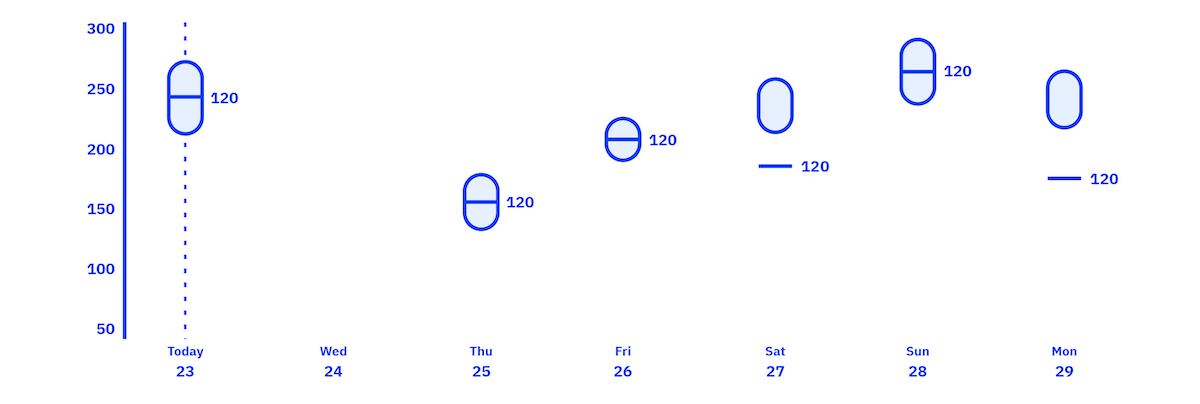
This idea came from a real project: IDEO data scientist Chris Kucharczyk ran into a problem while prototyping a dashboard for a client. The dashboard was supposed to show sales data for business owners. He was using placeholder data in the mockup, but it just didn’t look right. At IDEO, we often use placeholder data in these mockups before we know what kind of real data we need. It allows us to prototype, then pivot quickly if and when we learn a different kind of data is needed.
By sharing a prototype, Chris was hoping it could help his team talk to the client and better understand what questions business owners would have when coming to the dashboard. More specifically, he and the team were wondering this: How do these business owners use data to help them run their business, and what would they change if they saw certain patterns in the data
The foreign language effect
We’ve learned that people often interrogate numbers more scrupulously than they do other parts of a design and are very sensitive to numbers looking “wrong.” Whether it's restaurant data or health data, a wrong number—even if it's a placeholder—causes the viewer to want to correct that "wrong-ness" rather than respond to the placement, color, or size of the numbers.
In fact, numbers that appear uninformed can derail a conversation even if the point of the conversation is to find out what kinds of numbers are needed. While mockups plainly look unfinished, numbers always look high-fidelity due to the “foreign language” effect.
For example, if you were to pick up a newspaper written in a language you didn't understand, your eyes physically look at that differently. But if that newspaper has charts or graphs, you'll be able to wonder what those are and what they mean because you can read and understand the numbers visually.
Back to the project. Chris had a few options. If he left the numbers at zero, the dashboard wouldn’t have anything to visualize. On the other hand, if he populated them randomly, it would look nonsensical. Any pattern chosen would need to be relevant to the larger context of the project. What he needed to do was come up with an alternative written language for numbers that mimicked the effect that using Latin has in copywriting and layout design.
Designing Norum Ipnum
To respond to this problem, we went down a creative rabbit hole with software designer Ben Syverson to design a collection of font families called Norum Ipnum ("No" as a play off the typographic shorthand of the numero № and "num" substitution as in "number") that are alternatives to numeral letterforms. They act as visual placeholders without conveying data. (The font families can be downloaded for free here!)
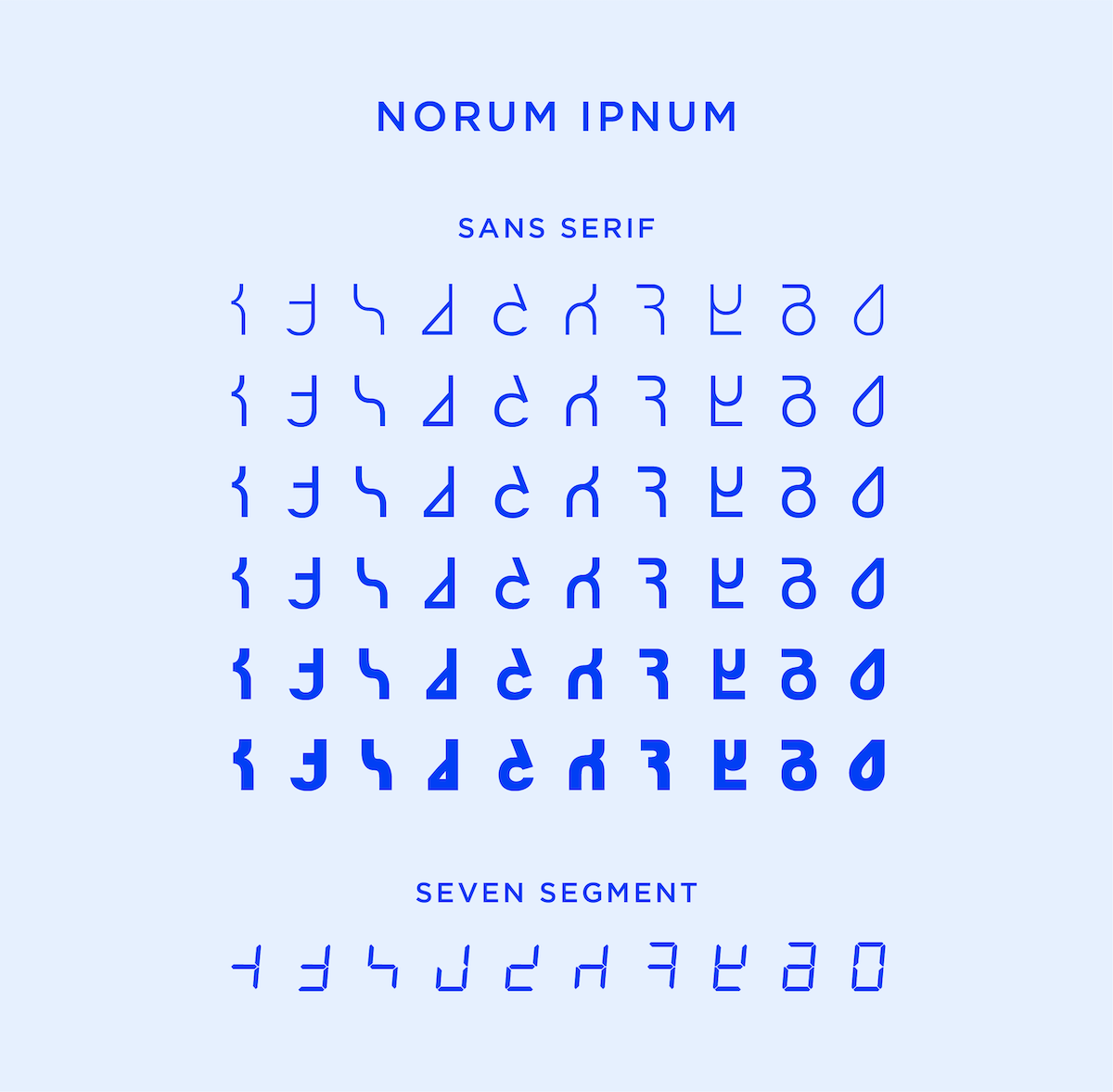
This is an example of how it might be used in a mockup:

Here’s how it all came together. In the IDEO Chicago studio, Chris and another data scientist, Joe Gambino, set up a foamcore board to capture ideas from the studio on Post-its.
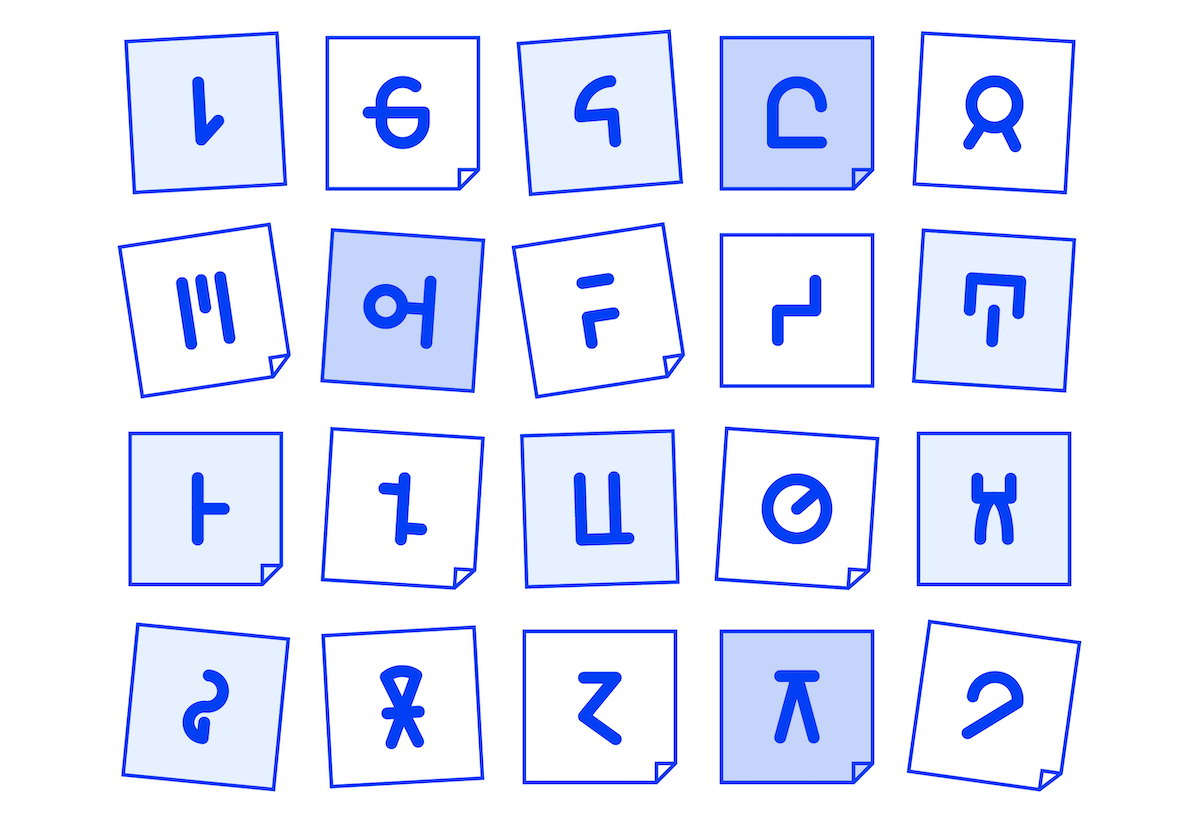
They asked for people to add a fake digit idea to the board as they passed by. We got a lot of ideas to work from, but one idea stood out as an interesting exploration.
What if we used the tried and true seven-segment display as inspiration for what these numbers could look like? You might be familiar with this type of display from a digital watch or a microwave. The reason these displays are used in electronics is because they can communicate all ten numerals by “lighting up” patterns of the seven simple lines they contain.

Using the seven-segment display as inspiration, Joe then wrote a Python script to draw out all of the different non-numeral permutations of what a seven-segment display could show. We then took that print-out and starred the different characters that looked different enough from letters and numbers to have a working set of ten numerals.
This was a great start to narrowing down a set of digits. Using this set of digits, we continued the process using the brief: If these digits were the abstracted form of an original numeral, what did those numerals look like?
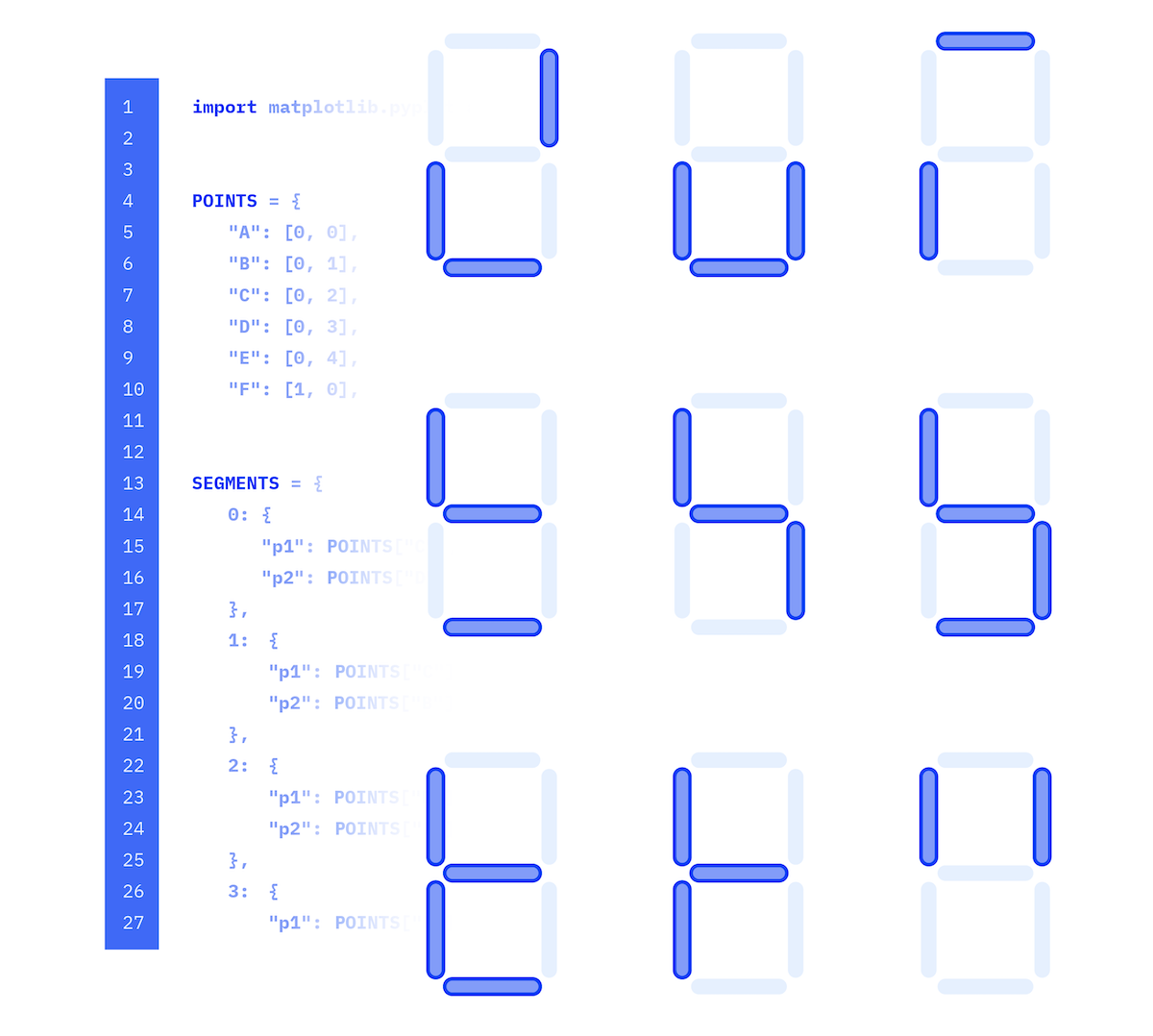
After this initial exploration, it seemed like there was something here we could work with. At this point, Ben suggested we do a range of weights and typefaces of these numerals to help aid in layouts, and offered to work on a serif version. Ben recommended the fantastic tool, Glyphs, that we used to build these font families, and after a few revisions, we ended up with the collection presented here.
There are two font families in the set: sans and segment (with serif to hopefully come in the future). For sans, these have six different weights and italics. They are also selectable between tabular and proportional lining.
We hope these fonts are fun to play with and useful for your mockups. Please let us know if you find an interesting use for them! The families are Open Font licensed under the SIL-OFL, and we have provided the Glyph App source files, so feel free to make your own variants and add to the collection. The Github repository can be found here.
We hope you find some fun uses for it!
If you’re a designer, chances are you’ve heard of Lorem Ipsum—a block of text loosely based on Cicero's De finibus bonorum et malorum that's commonly used as placeholder copy in graphic layouts.

6 ways to design value into your membership model
Earning loyalty depends on delivering one of two types of value.
Some speculate that this rising tide might lift all boats, nudging every business to become a subscription business. But as the last six months have shown, the impact of COVID-19 has been unevenly distributed; winners and losers are determined by how favorable their offering is to the everything-from-home context. While all companies are working to make their products and services remote-friendly, this can obscure the fundamental question of how to design a compelling and intentional membership proposition, one that can endure and flex to exogenous shocks. In this article, we’ll explore six levers for designing membership and fostering loyalty right now and in the future.
A membership offering must accomplish either of these two things
There is no one formula for designing a compelling membership offering. But membership should be more than a basic loyalty program. It must offer either exceptional rational value or deep emotional value.
Rational value implies tangible benefits: customers know exactly what they’re getting from the offering, and it’s easy and straightforward to justify and explain their continued loyalty. Emotional value is intangible but at least equally powerful. While it may not be quantifiable, it creates genuine connection that generates sustained engagement and loyalty.
There are various levers—value drivers to design a membership offering around—that ladder up to and provide rational or emotional value. Cost, convenience, and incentives and rewards provide rational value; identity, community, and experience provide emotional value.
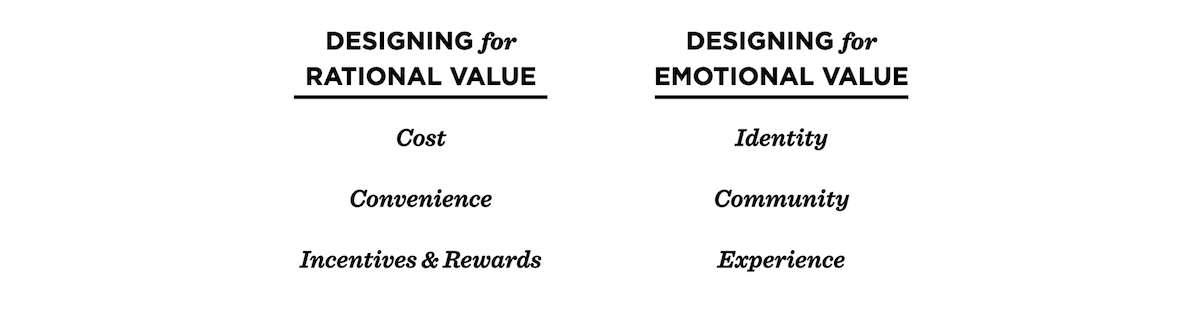
Designing for rational value: Cost, convenience, and incentives and rewards
LEVER 1: COST
One fundamental value proposition of a membership model is its ability to offer customers savings. By committing to a monthly or annual fee, subscription-based organizations can often afford to provide members with preferential pricing. This is the most basic element and value driver of a membership rooted in rational value.
One of the originators of the warehouse model, Costco offers members bulk quantities of goods at attractive prices. Costco prioritizes savings beyond other benefits, like high-touch customer service or an elevated store experience. And yet, Costco consistently receives top marks for customer satisfaction. They achieve this through an unwavering understanding and dedication to their key value proposition.
Costco has been able to sustain a successful business rooted in cost savings because of significant economies of scale, which help create barriers of entry for potential competitors. In many other industries, attempts to define and differentiate a value proposition on price and discounts will almost inevitably lead to brutal competition and eventual commoditization. Accordingly, companies considering cost as a membership lever must carefully think through the strategic and viability implications within their particular market.
Prompts for teams:
- Do your brand and mission align primarily with the idea of providing savings?
- Can you provide savings to customers while maintaining a sustainable business?
- What benefits will you not provide in order to deliver on cost savings?
LEVER 2: CONVENIENCE
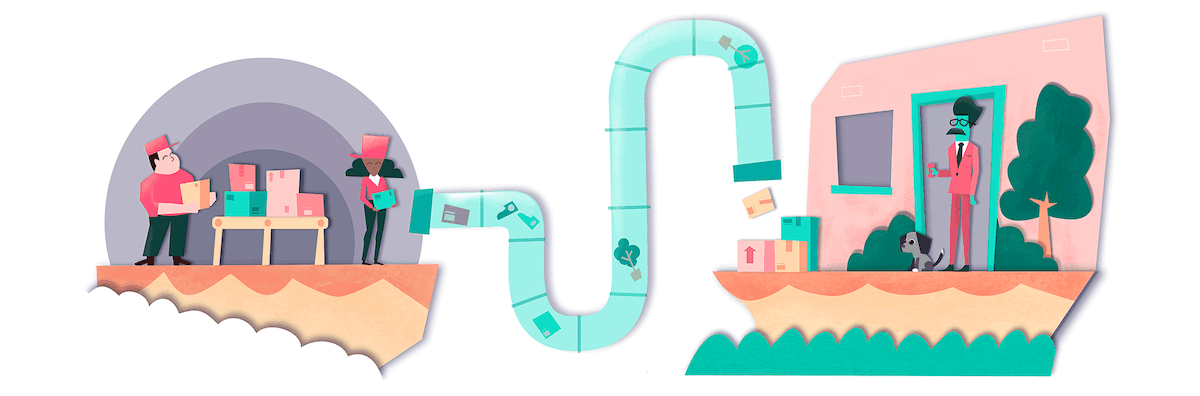
As they say, time is money. As a source of rational value, convenience is as compelling as cost savings. In today’s convenience economy, technology is being leveraged to save time and effort in every market and pocket of daily life.
Amazon’s largest lever for rational value is the convenience it provides members. For an annual fee of $119, Amazon Prime members can get almost anything they could possibly need shipped to them in two days or (increasingly) less. This one benefit has allowed Amazon to forge a relationship with members that transcends loyalty to resemble something closer to dependence. This convenience proposition has become so powerful that it arguably provides members emotional value, too. Ask almost any new parent and they’ll probably rank Amazon somewhere between a utility and a member of the family. Providing rational value to such a degree that it also drives emotional value is a rare achievement, but demonstrates how impactful convenience can be.
Prompts for teams:
- How critical is convenience to the value proposition that you provide customers?
- What are the biggest challenges and bottlenecks your customers face in fulfilling their needs on a daily basis that your industry, market, or product area can help address?
- Can your company provide something to customers that they truly can’t live without?
LEVER 3: INCENTIVES & REWARDS
Incentives and rewards are often employed as part of membership programs to drive engagement and encourage specific behaviors such as sign-ups, spending, and referrals. They tend to be utilized in industries with limited differentiation, such as airlines and credit cards.
The credit card industry in particular has developed an incentives model that uses referrals, sign-up bonuses and points multipliers to drive customer acquisition and encourage early spending. This model has quickly become both the industry norm and customer expectation. In 2016, Chase made headlines by offering 100,000 points for its Sapphire Reserve card, the most extreme sign-up incentive the space had seen. Chase also won customer favor by simplifying the points to dollar value to 100:1, a calculation which many other credit cards obscure to make comparison more difficult.
There’s no denying the ability of financial incentives to drive behavior. But keep in mind, space for innovation is slim and an over-reliance on this lever runs the risk of creating a transactional relationship with the customer. Depending solely on financial incentives can also attract customers who are focused on “gaming” the system. Moreover, it creates an inevitable race to the bottom where eventually no player can viably compete. Balancing incentives and rewards with other rational or emotional value drivers can help mitigate these effects.
Prompts for teams:
- What is truly differentiating about the incentives and rewards that you can offer?
- How can you design your incentives and rewards to be less transactional and instead reinforce your core value proposition?
- How might you leverage incentives and rewards with other sources of value in your loyalty program?
Designing for emotional value: Identity, community, and experience
LEVER 4: IDENTITY
Some companies and brands are able to command loyalty through the strength of their identity, which is reflected in their brand, mission, or values. A membership rooted in identity is enabled when a company can rally customers around shared values and reinforce them through its offering, allowing members to see and express themselves through their participation.
One example is Ellevest, an investing platform for women that aims to educate, empower, and advance its customers in pursuit of their financial goals and to close the gender wealth gap. Ellevest differentiates itself from the many other investing options in the market through this dedicated focus, which is reflected in both its purpose and product—its algorithm recommends an investment plan that is designed to help address the gender investing gap.
In June 2020, Ellevest added a membership program to its core product that includes new features and services that strongly tie to their core mission. In addition to banking and debit products, the membership provides career workshops, coaches, and financial planners. While all of these benefits are designed to further members’ financial success, Ellevest is selling more than these services: they’re asking members to buy into their mission. An Ellevest member could receive similar products from any number of institutions. Being a part of the membership signals the salience of identity—both that it is key to the experience of managing money and an alignment of values.
Prompts for teams:
- What does your organization stand for and what are its most powerful, emotionally rich territories for design and differentiation?
- How can you tap into your organization’s mission or purpose as a way to create more emotionally resonant services and experiences?
- What would it look like to evolve the membership offering to reflect these values or enable members to express themselves?
LEVER 5: COMMUNITY
When community is a key value proposition of a membership, members not only feel connection with the brand, but also a sense of belonging and kinship with other members. From religious communities to career networks to social media, being part of a group creates powerful emotional currency.
WW, formerly known as Weight Watchers, is a company that has differentiated its membership offering through community. The organization’s promise is rooted in its origin story: a Queens mom who began inviting people into her home to discuss weight loss strategies. The concept quickly grew into a global organization that outlives various fad diets and health trends because of its core value: guiding people in their weight loss journeys through social and emotional support. Whereas before, every diet and nutritional program was designed to be undertaken alone, WW was designed to be interactive and communal through weekly group meetings. This structure provides people with support, inspiration, and accountability. The group convenes to share challenges and victories and provide each other with encouragement. The impact and effectiveness of this value proposition is reflected in WW's strong retention: many members continue attending meetings for years even after achieving their goal.
Prompts for teams:
- How authentic is the promise of community for your organization? Do members truly interact and benefit from other members?
- What is the role of exclusivity in your membership? Exclusivity is a powerful driver for people, but what does it say about your brand and what it stands for?
- How can you empower your community with roles, tools, rituals, and shared experiences?
LEVER 6: EXPERIENCE
Finally, there’s the element of experience, which can be a vague, squishy term that many companies claim to offer. People are drawn to memberships that provide unique, enriching, and inspiring experiences. An experience can be physical or digital, a product or service, communal or individual. While it can be delivered with pomp and circumstance, meaningful experiences can also be remarkably simple.
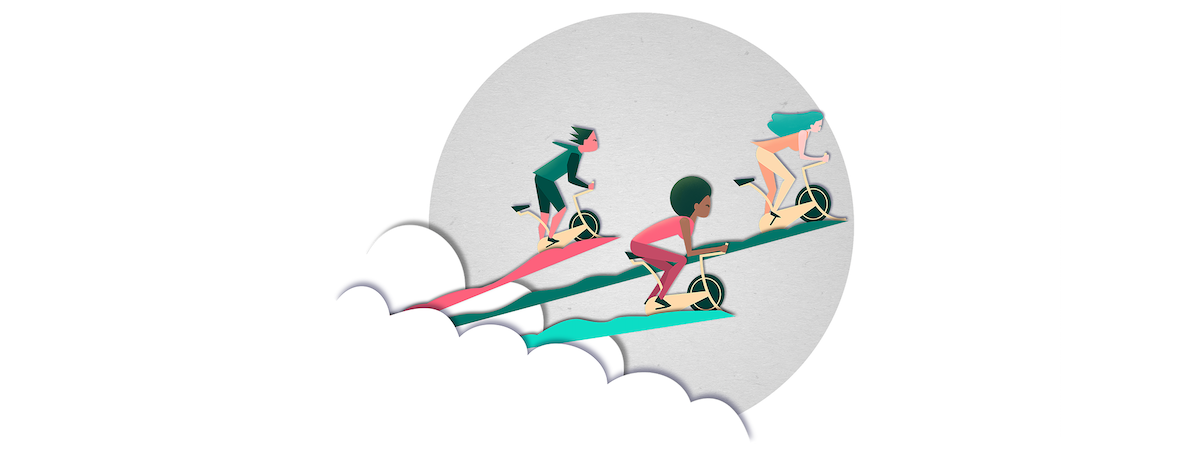
An example of an exceptional experience born out of a simple idea is SoulCycle. Interestingly, SoulCycle doesn’t technically offer membership; they sell individual drop-in classes or class packs. But with its cult-like following of diehard riders, SoulCycle certainly feels like a membership. The fitness start-up achieved this status through their distinct vision for what a spin class should be. The founders recognized that when exercising, people are looking not only for a physical release, but a mental one, as well. While most cycling classes focused on providing a great workout, SoulCycle designed an entirely different kind of ride: a collective, uplifting, and emotional experience that is as much a part of its value proposition as the sweat.
During COVID-19, SoulCycle has suffered, given its reliance on in-studio group sessions. By contrast, Peloton is soaring because it was designed to be experienced at home. As SoulCycle pivots to offer their own at-home bike, the way it evolves the experience to elevate its collective and emotional DNA will be crucial for success.
Prompts for teams:
- What are the needs that your experience is designed to serve?
- How can experience be a differentiating factor of your membership offering?
- What qualities define your experience, and how might you elevate or amplify the value they provide your customers?
The power of offering rational and emotional value
Cost, convenience, and incentives and rewards can be powerful sources of value in membership because they offer rational, straightforward value. However, because they provide limited dimensions for differentiation, they can lead to competition and be challenging to sustain. Designing around emotional tenets—identity, community, and experience—presents different starting points and opportunities for membership offerings.
But memberships that draw on more than one of these levers—particularly those that generate both rational and emotional value—will be especially effective. While Costco’s core value proposition is rooted in cost savings, its business provides emotional value, too, through its famous food court and food and beverage sampling experiences and additional services. This combination of rational and emotional value has proven incredibly compelling in both customer experience and membership proposition: Costco has some of the highest customer satisfaction scores and retention rates in the business.
Keep your purpose, mission, and value proposition top of mind
The six levers we discussed can individually, or more powerfully in combination, form the foundation of a differentiated, value-driving membership offering. But in any of these territories, companies must have (or earn) their customers’ permission to play.
At its core, membership demands an ongoing relationship and commitment from its customers. Designing membership for this level of loyalty boils down to both an organization’s value proposition and who they fundamentally are: What is the essence of what’s being provided through membership, and what does the company stand for? And critically, do these two things match—does the membership feel authentic to a company’s purpose?
By aligning purpose with a compelling rational or emotional value proposition, companies can cultivate reciprocally authentic and lasting customer loyalty.
Illustrations by Simon Heather
In the last decade, we’ve witnessed the explosion of subscription-based “membership,” from movies, music, and audiobooks to elite global communities, razor blades, and dog food. While this phenomenon has been fueled in part by the growth of digital channels, targeted marketing, and the rise of the sharing economy, what’s ultimately driving companies across industries to adopt a version of this business model is the irresistible promise of recurring revenue and sustained customer loyalty.
The Rules of Brainstorming Change When Artificial Intelligence Gets Involved. Here’s How.
Recent advances in machine learning have created a new catalyst for design
My “partner” that day was a technology called GPT-3 from OpenAI. You may have heard of it already; if not, you can think of GPT-3 as a really good autocomplete. Like, shockingly good. Once I shared some of the output of my brainstorm with others on Slack, there were plenty of 🤯reactions—and honestly, our minds are still blown. But clients and design teams will need to tread carefully and watch their ethical compass as they imagine inspiring, human-centered applications for this new tool. As with any new technology, there are new risks to account for. Here's how I started my experimentation.
How to run a virtual brainstorm
In order to work with a so-called “transformer model” such as GPT-3, you feed it a pre-written prompt, then the model uses everything it's seen before (in this case, a substantial portion of the internet) to guess what should come next.
I wrote some context: This is an IDEO brainstorm, which follows our 7 Rules of Brainstorming, including “encourage wild ideas.” I gave GPT-3 a real client challenge from a past project: The team is developing a new app for a bank to encourage millennials to better utilize savings accounts. Then I wrote a brainstorm prompt: How might we help young people turn saving money into a lifelong habit?—and fed it five example ideas.
As soon as I pressed submit, the model began churning out new ideas. Not all of them were gold, but many were perfectly good brainstorm concepts. After all, the rules also tell us to “defer judgment” and “go for quantity.” Without cherry-picking too much, here's a sample of some of the ideas it generated:
- Allow the user to share their saving goals with friends and have a community of people who will cheer them on or challenge them if necessary
- Reward the user with real money if they don't spend money at all in a month
- Allow the user to set up “fun budgets” (aka “triggers”) to save more money, e.g. whenever they go to Target, they'd get a pop-up asking if they'd like to put $5 towards savings
- Similar to the Future View idea, show how much more could be saved if the user decides to forgo a coffee every day or splurge on new sneakers instead of taking an extra vacation
In the last example, you can even see the model “build on the ideas of others”—another rule of brainstorming—by riffing on an idea called Future View that I had given in the prompt.
This stuff is on par or better than some of what I've seen from humans. Some [of it] is worse, too. But that anything is better is wild.
An IDEO Director on GPT-3's brainstorming output. Watch out, humans.
Another colleague suggested we tweak the prompt we gave GPT-3 to encourage it to use analogous inspiration, which primed the model to produce some truly wild ideas:
- Have “clowns” jump out of ATM's, making it less fun to withdraw money
- Create a virtual reality experience where users are in an arena full of savings monsters, and need to slay them by depositing money into savings
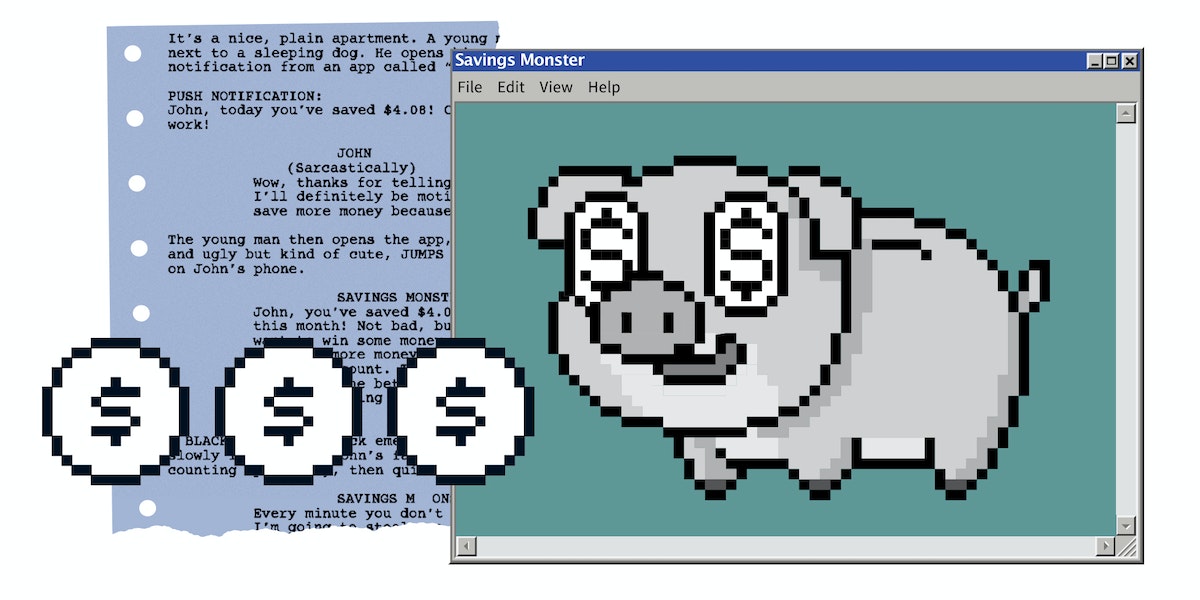
- Create a “Savings Monster” similar to those featured on Chinese lottery shows where viewers have to guess the amount saved in order to win money
“I'd love to know what a Savings Monster is,” I mused on Slack, and a colleague responded, “Why don't you ask it?” Of course! After the brainstorm, I started a Q&A session with the model (my prompt is in bold):
Q: Quick question: What exactly is a savings monster? You mentioned it twice.
A: I'm glad you asked! This was just an idea that emerged from the brainstorm. A savings monster is a physical manifestation of your savings goal. For example, let's say I want to save $500 by the end of next year. If I deposit $10 every day, that will get me pretty close to my goal at the end of the year, but what happens if one day I don't have $10? Now my savings monster is underfed, and he starts to throw a tantrum (eg. negative cash flow notification).
A: Yes, this is an idea inspired by Chinese lottery shows (and World War Z). We thought it might be fun for users to have a physical manifestation of their goals that they could feed (ie. save more money) when they meet their goals, and starve (ie. spend more money) when they fall short. In order for this idea to work however, the savings monster would have to be very cute, and a bit terrifying.
As it turns out, the model doesn't skip a beat when you change up the input’s format. So I decided to try my luck: In my next prompt, I asked GPT-3 to choose its favorite idea from the brainstorm and create a script for a promo video. Thankfully my virtual brainstorm partner selected the Savings Monster concept. The resulting script was so good that I found an animator to bring it to life.
So what is this good for?
As exciting as this technology is, GPT-3 is not Artificial General Intelligence, and it was interesting to find the edges of its abilities. For example, this model can easily summarize a news article, or turn it into a fairy tale. But it's surprisingly difficult to get it to remove references to a specific person, or change the subject of a certain paragraph.
To put this in human-centered design terms, these large transformers are an extremely valuable way to augment the team during divergent moments in a project, when we're creating choices. The tech struggles, however, in convergent moments, when we're making choices. Thankfully, humans are still required to synthesize massive amounts of information about human needs into concrete human-centered design decisions.


Gotchas
There are two other issues we have to confront when considering transformer models for our prototypes and design recommendations: toxicity and bias. These models are trained on big chunks of the internet, and optimized to produce output that looks like the input. The result is that the model can reproduce the language of a scientific paper just as easily as it can mimic an internet troll. You get the good with the bad.
My experiments sparked a conversation with Jess Freaner, an IDEO Data Scientist with a special interest in ethics and AI. “Though the rules governing how it all works might not be explicitly written on the wall,” Jess told me, “being a product of our world as it exists now and in our past (the internet is an excellent, incomplete archive) we need to consider what GPT-3 reinforces and when it can reveal what needs to be subverted about society.”
Problems with toxicity and bias are not unique to GPT-3. OpenAI is working on both—they have built-in tools to manually and automatically flag output as toxic. They’re also working on the issue of bias, but it’s a thornier problem. These models literally encode a snapshot in time, and are inherently biased to reproduce the status quo. Companies and designers will need to question and problematize the output of these models with the same rigor that we are learning to bring to our human interactions.
Future possibilities
Despite the challenges, it's clear that in the past 12 months, natural language models have crossed an invisible threshold of usefulness, in the same way that speech recognition was frustratingly terrible for decades—until one day it wasn't. Early proof of concept prototypes demonstrate how this type of model can transform a description of an interface into functional UI code. Talk about “declarative programming.” Imagine a future in which the job of a UI designer is to write a description of the interface rather than laying out each button and label by hand. The same description might result in totally different visual expressions or interactions depending on the individual user's needs, interests, or current context.
As transformer models improve, I'm inspired by a future where people are literally in conversation with their software. Users might be able to easily adapt the same app to become a widget in their AR glasses, a quirky voice assistant, or an animated character. Because who knows: for some people, the perfect solution just might be a Savings Monster.
Illustrations by Katie Kirk
Back in early August, I opened my laptop and kicked off a remote brainstorm. Immediately, my partner started generating a huge number of ideas—a perfect blend of wild, hilarious ideas and pragmatic solutions. That's not unusual at IDEO, but what made it remarkable is that my partner wasn't just remote—it wasn’t human at all.

Lindsey Turner
I’m passionate about building brands, products, and experiences that help organizations show up with meaning and momentum.
I help organizations cut through complexity by shaping how they show up, through brand strategy, identity, and storytelling.
Working at the intersection of brand and business, I bring an editorial eye and a bias toward making—turning ideas into tangible experiences that people can understand, trust, and believe in.
My work spans government, healthcare, financial services, media, and consumer goods, from launching Gen Z-focused ventures to building innovation labs and reimagining legacy brands. I relish moments of ambiguity and enjoy translating across teams, perspectives, and priorities to move ideas forward.
I started my career in editorial and digital design, shaping cross-platform experiences and identity systems in publishing and agency environments. That foundation still shapes how I work today: I’m detail-oriented, collaborative, and overreliant on the Oxford comma. I hold a BFA in Visual Communication from the School of the Art Institute of Chicago.

Rachel Young
My work helps organizations see who their products aren't working for—and build the will and the tools to do something about it
For 25 years, I've asked the same question: Who does this design exclude—and what are we going to do about it?
My work spans human-centered strategy, inclusive design, and qualitative research, with clients ranging from Microsoft, Google, and Verizon to the National Science Foundation, and San Francisco Unified School District.
Before IDEO, I taught elementary school in East Palo Alto and spent a decade doing design work with social service organizations—where I learned firsthand what it costs people when systems are built without them in mind.
I am currently writing User Error, a nonfiction book about digital access and the design decisions behind it. I live in Oakland, California.

Brian Pelsoh
I lead with craft, ensuring our work is creatively excellent: rooted in deep human insight and imagination, while also grounded in the realities of business and technology.
My expertise spans brand, communication, and product design across tech, education, the arts, and social impact.
I believe great work demands both high-level vision and obsessive attention to detail, and only happens through collaboration.
I bring an inclusive, hands-on approach and a deep understanding of business, which enables me to consistently deliver excellence while always asking why.
Before joining IDEO, I worked at the brand firms Pentagram and VSA Partners. I began my career as a designer, leading teams at the School of the Art Institute of Chicago and the Milwaukee Art Museum. I hold an MFA in graphic design from Maryland Institute College of Art and a BFA in communication design from the Milwaukee Institute of Art & Design, and have taught at some of the best design schools in the US.

Tony Wong
I am responsible for IDEO’s long-term success in China and working with clients to use design as a tool to enable growth.
I am responsible for IDEO’s long-term success in China and working with clients to use design as a tool to enable growth. Specifically, I have helped Chinese companies design holistic brand solutions through the development of their products, communication, services, and innovation teams, and I have helped multinationals expand their presence and influence in China.
I advise global leaders on developing China-led innovation and capabilities.
In over 15 years in IDEO Shanghai, I have worked on projects that use design to elevate the quality of the experience of healthcare products and services, streamline processes that increase productivity, create spaces and programs that promote and enable inclusive communities, and build next generation mobility solutions that are planet-positive.
Before joining IDEO, I worked at Philips Electronics and the Electrolux Group in Italy, the Netherlands, and Singapore on a number of breakthrough commercial products. I am a member of the Young President Organization in Shanghai.

Building a personal AI for the messiness of life: Sida Li
Most AI products today are built for work—a space with clear problems and established systems. One founder noticed a gap: personal life is messier, harder to systematize, and mostly left behind by the AI boom. So she built Cue, a personal AI that lives inside iMessage and group chats, to go where the other tools haven't.
In this episode, Becca Carroll, IDEO's Chief Strategy Officer, talks with Sida Li, co-founder and CEO of Shared Context Lab, about staying anchored to a human need while the technology around her keeps changing shape, why she treats her business model with the same rigor she'd bring to a product, and what it feels like to build a company at this particular, disorienting moment in AI.
The conversation also gets into how Sida makes design decisions: the language Cue uses to describe itself, the tradeoffs behind building inside iMessage instead of a new app, and a real story about a business idea that didn’t pan out.
This is the second in a two-part series profiling founders from IDEO's Startups-in-Residence program. The first conversation is with Johannes Seemann, founder of Sooner, on designing GenAI for the emotional side of money.

Designing GenAI for the emotional side of money: Johannes Seemann
Most personal financial tools are built to run the numbers and optimize towards a budget. While that works for some, most people experience money as a lived relationship that does not neatly fit into a spreadsheet. Johannes Seemann and Becca Carroll discuss why money is emotional before it is mathematical, and what a human-centered approach to building a generative AI financial product looks like in practice.

The curious leader's edge in uncertainty: Scott Shigeoka
Mina Seetharaman talks with Scott Shigeoka, author of Seek and Head of Curiosity Cultivation at the Eames Institute, about what distinguishes genuinely curious leadership from performative curiosity, how power dynamics shape curiosity, and why practicing curiosity can restore energy rather than drain it.

How constraints make us more creative: David Epstein
Mina Seetharaman talks with David Epstein, author of Inside the Box and Range, about why total freedom often produces average work, how leaders can design useful limits on purpose, and what organizations such as General Magic and Pixar reveal about the relationship between boundaries and creativity.
Looks like you might be in search of something very specific?
Or reset the filters above and try another angle.
Here’s some random inspiration

Podcasts about creative leadership

Articles about the power of prototyping
