
.svg)




Rethinking the food bank
A crucial resource reconsiders everything to design more dignity into its digital tools.
Giving food assistance is about more than handing over a box of groceries. It’s about allowing people to make their own choices.
But the pandemic only narrowed people’s choices. Undeterred, Northern Illinois Food Bank (NIFB) put people’s needs above everything else, leading to innovations that could improve food banks everywhere. IDEO recruited neighbors to co-design a new digital tool intended to improve people’s access to food. Local residents provided more than insights—they steered design decisions and helped transform the relationship between NIFB and the community.
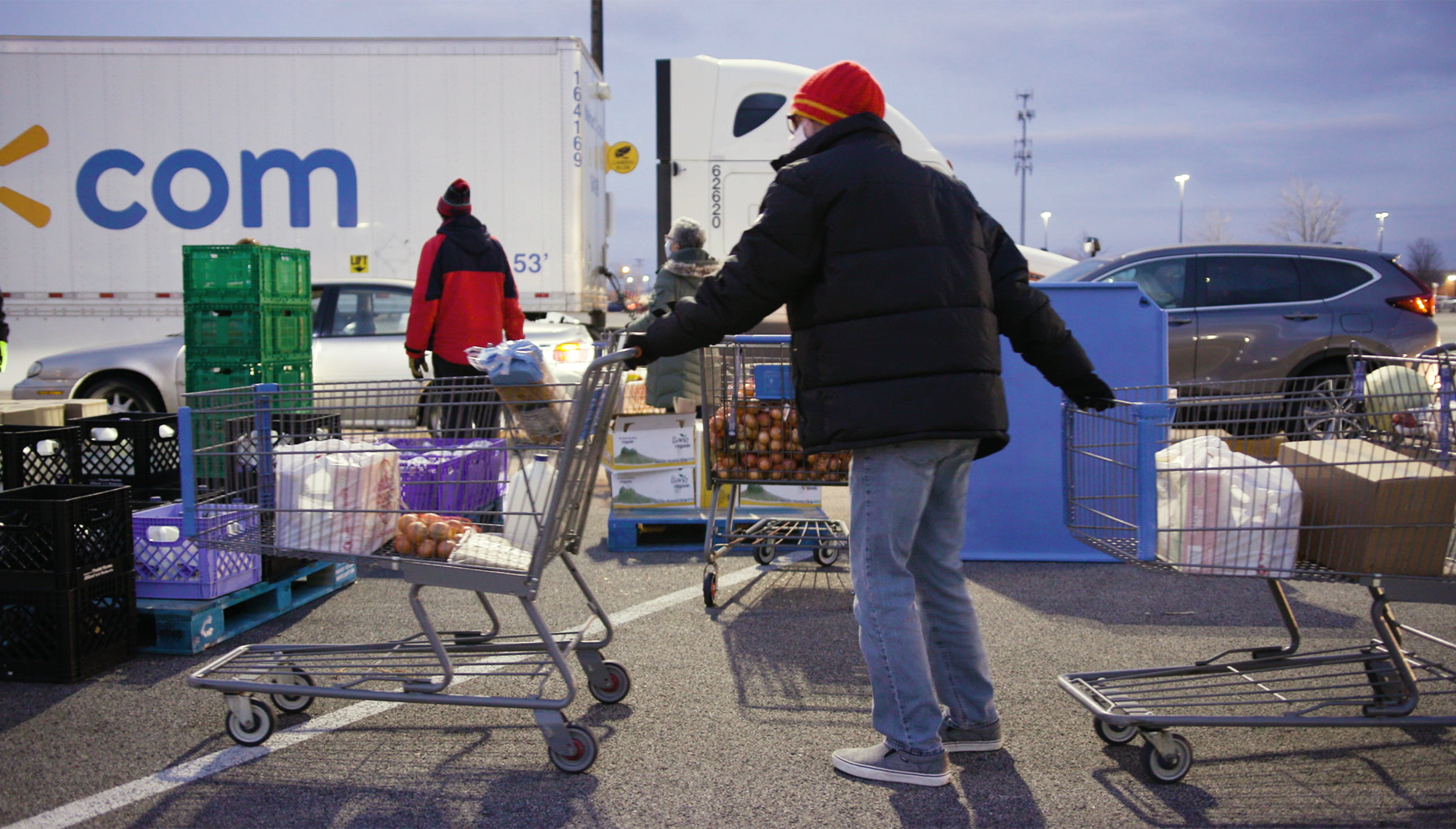
Northern Illinois Food Bank’s My Pantry Express app allows people to browse and order groceries online and to choose a pickup time and location that works for their schedule. We designed the app to provide useful information on dietary preferences and to be inclusive of cultural differences. The result allows choice and flexibility, helps prevent food waste, and preserves the dignity of shoppers throughout the process by making My Pantry Express feel like any other grocery site.
Ultimately, Northern Illinois Food Bank and IDEO’s strategy for success relied on new metrics. In addition to measuring effectiveness in pounds of food distributed, we found new ways to measure shoppers’ satisfaction—a solution that works better for all parties involved because it was designed by all parties involved.
An estimated 1 in 8 Americans experience food insecurity.
The food insecurity rate is 2-3x higher for persons of color than for white households.
60% of food insecure households do not use food pantries.
1.9M
meals distributed through My Pantry Express in 2021
50%
increase in distribution from prior year
New skill city
The people of South Bend, IN, have the power to design a lifelong learning platform for themselves.
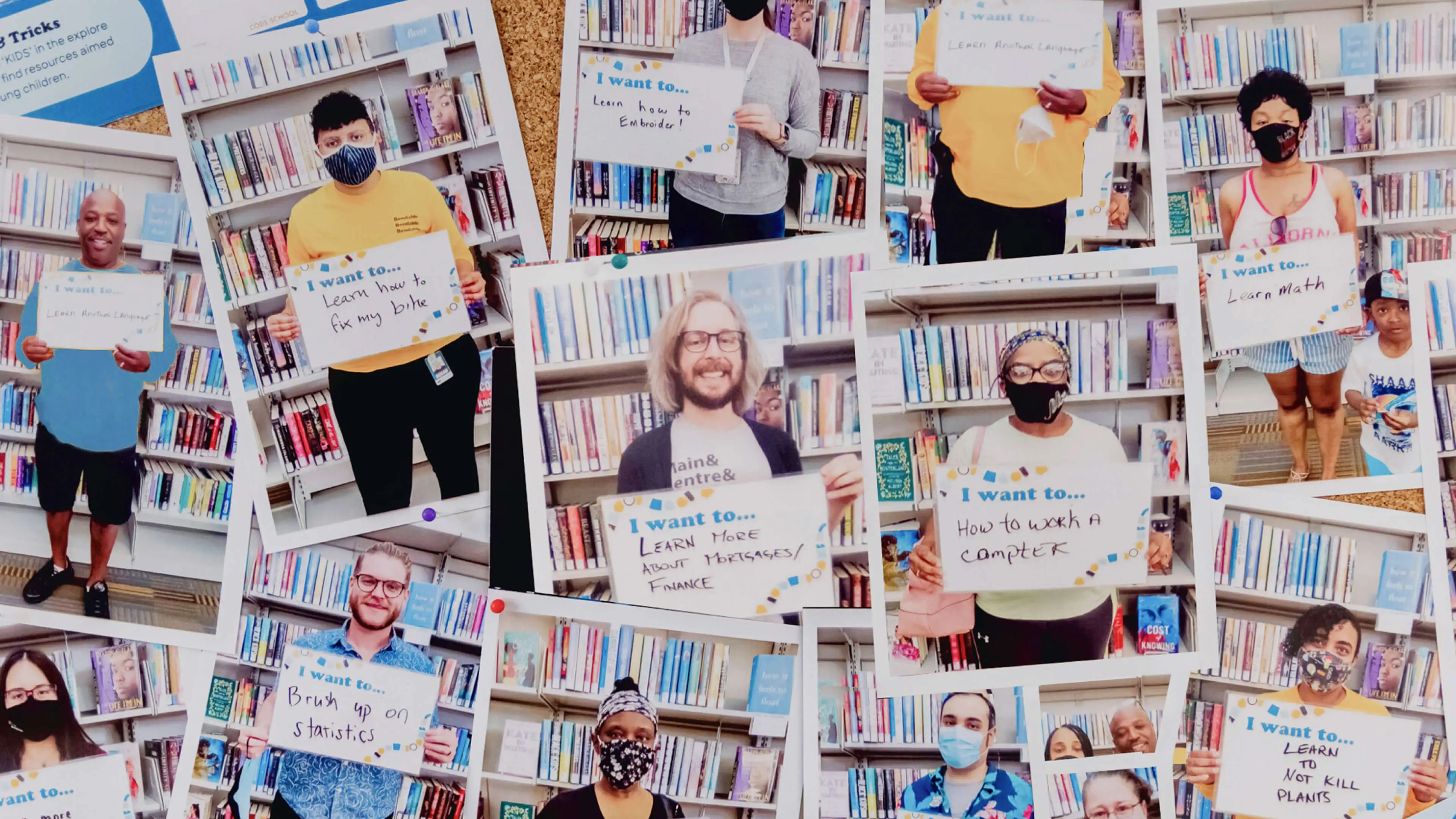
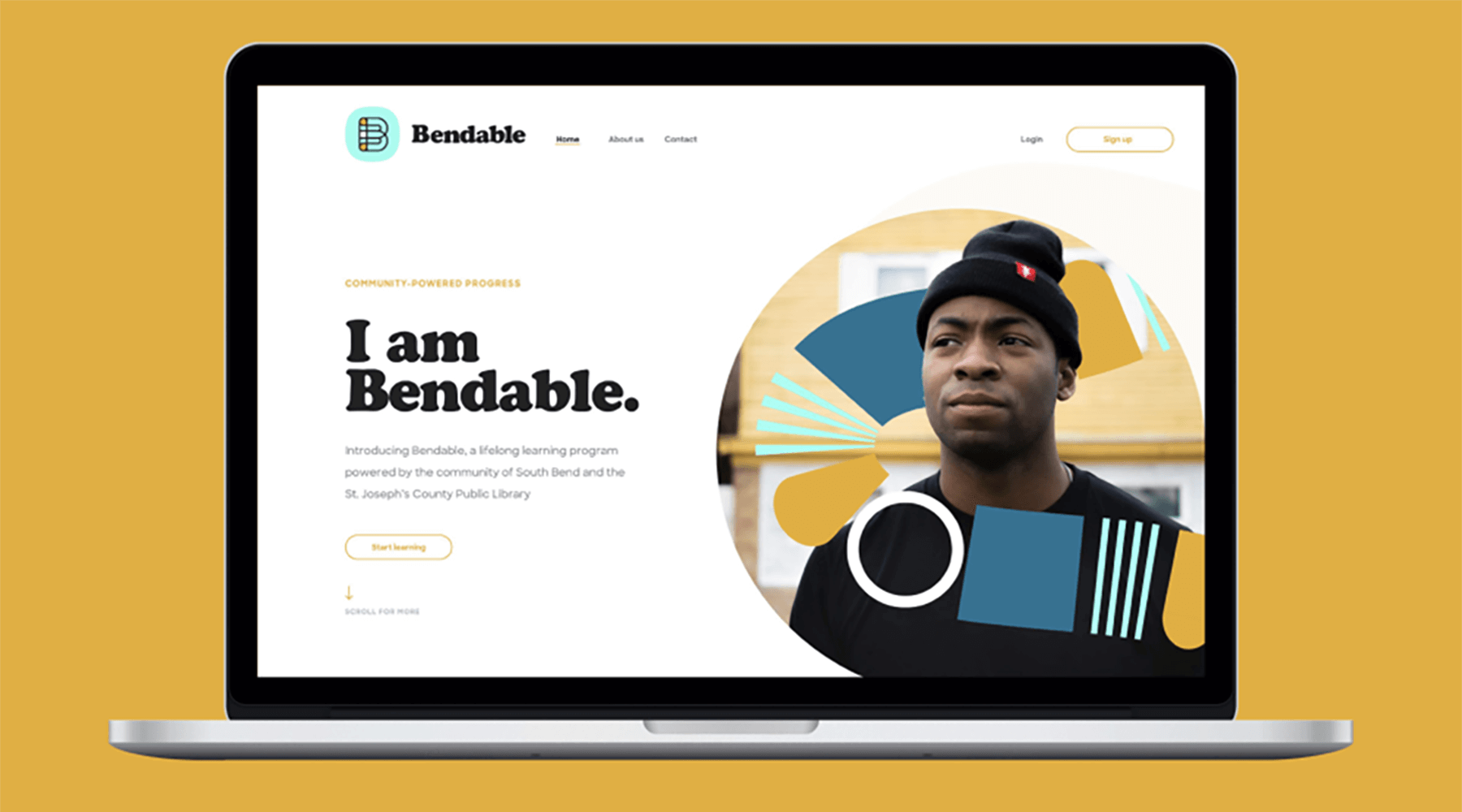
To create Bendable, IDEO worked alongside the people closest to the problem, so every important decision grew out of their experience.
IDEO and the Drucker Institute aligned with the library system and city leaders in South Bend, Indiana, on a single objective: build a learning platform that offered education opportunities to people affected by the decline of manufacturing in the region. But even the earliest phases of research revealed that there’s no common profile that matched the diversity of learners. There are innumerable reasons why people seek to learn and as many barriers holding them back.
Knowing this, South Bend residents were the acknowledged authority for this work, and a design consultancy all their own. This radically simplified crucial decisions. Negative associations around traditional education led people to seek knowledge from those they already trusted. And they often lacked awareness about or the ability to access the many free resources already available.
The residents of South Bend helped the entire consortium see that the city wasn’t under-resourced but under-connected. That insight, and the power the community and the library system held to rectify it, made Bendable into the people-driven, connection-based learning platform it is today.
By 2025, as many as 85 million jobs will be displaced by automation, yet 97 million new ones could emerge.
More than a third of adults pursuing postsecondary education before the COVID-19 pandemic were forced to abandon those plans.
25
programs and other resources offerings are now available to residents of South bend
4
states have begun to integrate Bendable into library systems
Making voting easier
The country’s largest jurisdiction creates a more accessible voting experience.
Protecting the right to vote means ensuring that all citizens can cast their ballots privately, independently, and easily.
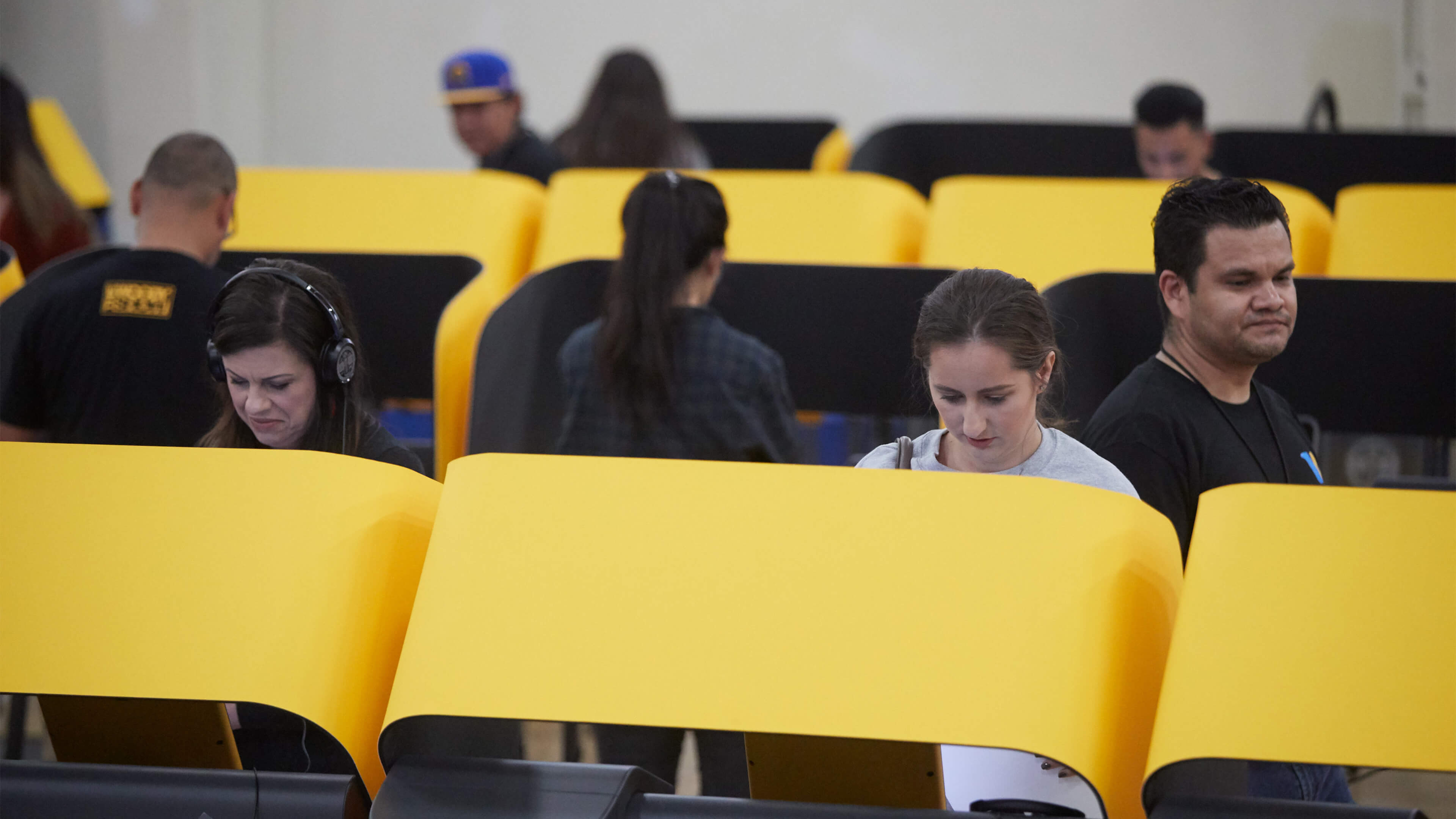
With that principle in mind, Los Angeles County sought out a design strategy firm to create a next-generation, customizable system that would meet the needs of its large and diverse voter population while satisfying myriad voting regulations. The result: an accessible, self-enclosed ballot-marking device with a touchscreen that allows any voter to easily navigate, mark, verify, and submit a paper ballot. We also worked to improve the entire voting experience, including vote-by-mail ballots, interactive sample ballots, and the tally process.
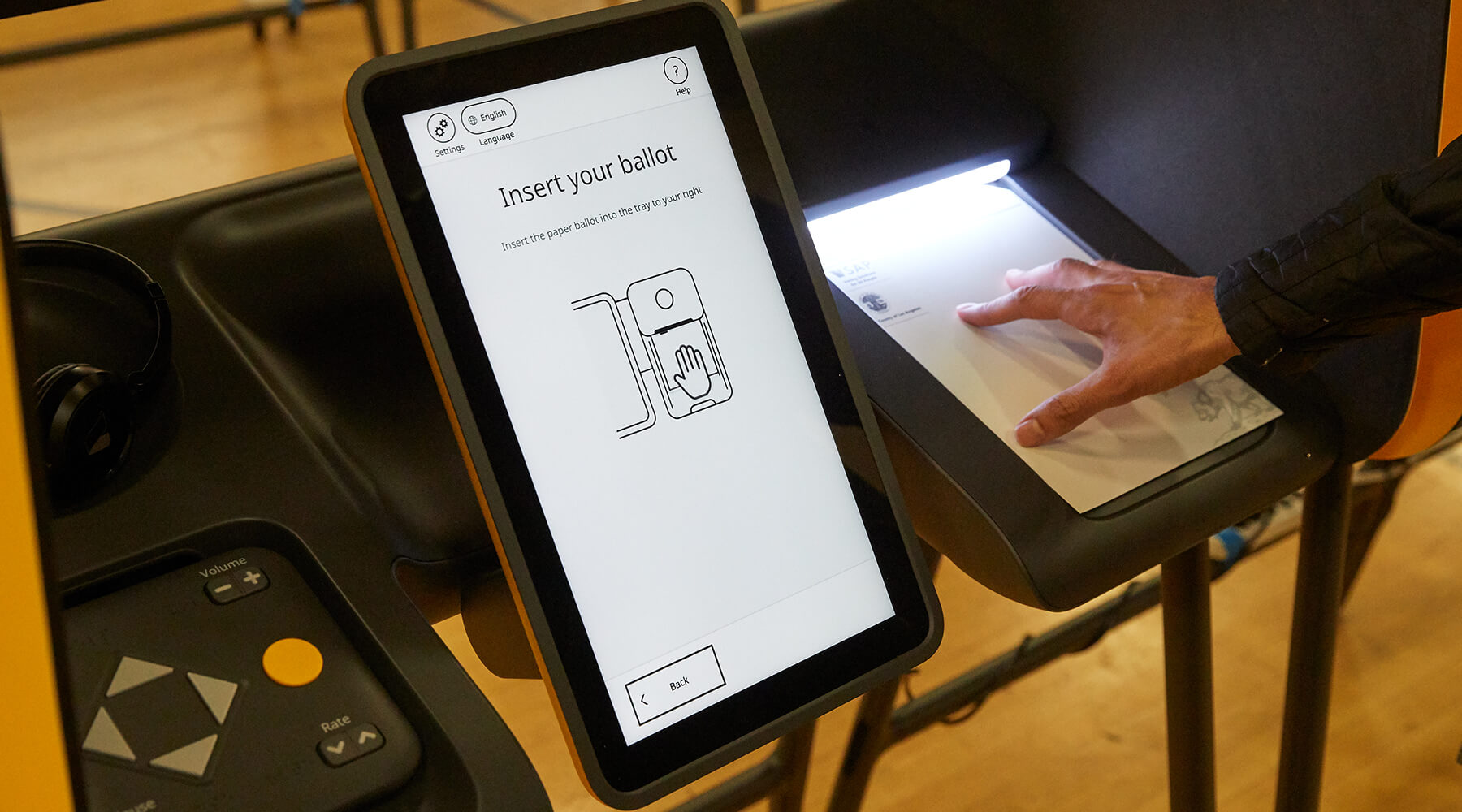
As with any inclusive design, details matter. Voters with vision impairment or reading disabilities can opt for audio and tactile experiences with the push of a few simple buttons. And for voters who prefer to read the ballot in their native language—Spanish, Chinese, Korean, or any one of the 11 others supported by the county—the device lets them select their preference.
After extensive research and testing with constituents, we designed a solution that makes voting easier for anyone. And knowing that the only constant is change, we made the system flexible enough to adapt to emerging needs and technologies, protecting voters’ rights now and in the future. Read the full case study here.
26% of American adults have some type of disability. In the 2020 election, 18% of disabled voters nationally reported difficulty voting, about twice as many as non-disabled voters.
In 2020, national voter turnout among disabled people was 7% lower than among non-disabled people in the same age group.
"Intuitive & secure"
was the sentiment most Los Angeles County voters expressed about the new voting system after the 2020 primary election

Human problems, human solutions
A conservation leader rewrites the role humans play in the narrative of climate change.
Conservation International is made up of conservation experts. To bolster its work, we bring a focus on scale, speed, and the human element to every project.
How does that look in the field? To restore the forest of Fiji, Conservation International paid a cash incentive to the community to buy, plant, and care for new trees and foliage. But once those cash incentives stopped flowing, the work ground to a halt. Taking a human-centered-design approach, one employee uncovered an insight: Fijians are more motivated to help in exchange for longer-term, noncash incentives like building infrastructure in villages. Small projects such as footpaths, repairs to communal trucks, beehives, or sports programs for youth continually reminded the community that the environment is a provider for their families, imparting a feeling of shared ownership in its conservation.
Stories like this, repeated around the globe, are how we hope to help Conservation International find sustainable outcomes. Our work together, including a six-month fellowship to help emerging leaders develop new capabilities, and a series of strategic, future-focused events for executives, has brought more tangibility and deeper collaboration to the organization.
Together we hope to create businesses, food solutions, and energy alternatives that conserve nature, and improve human health—because humans are a part of nature, too.
The scientific community overwhelmingly agrees that we have ten years to drastically cut greenhouse gas emissions or humanity will suffer devastating consequences.
We need to conserve one third of the global ocean using area-based measures and ensure at least 75% of seafood is harvested using socially responsible, environmentally sustainable methods by 2030.
75% of the world’s poor rely on agriculture for their livelihoods, which in turn depends on nature for pollination, irrigation, and soil replenishment.
20
leaders integrated human-centered design into annual goals, project pipelines, and fundraising efforts
20%
of the organization is now involved in design-thinking projects

What’s in my Moleskine: Dave Russell
Dave Russell's doodles have a life of their own
IDEO: Tell us about your drawings
Dave Russell: A few months ago I committed myself to drawing a comic a day for one month. I’ve never consciously drawn comics before, but I’ve always admired the narrative skill of artists like Chris Ware and Adrian Tomine, so I thought it would be fun to experiment with the format. While both these artists employ a semi-realistic style to tell human stories, I’m equally inspired by the strange and absurd worlds created by the likes of David OReilly and Pendleton Ward.
When do you find the time?
For me, drawing can be a way of escaping the everyday and exploring imagined worlds. Doodling is like my meditation—it clears my mind and helps me to focus. I try to keep these scribblings to a minimum in face-to-face meetings, but when I’m on the phone my drawing hand has a mind of its own. I’m often surprised by what ends up on the page.
What are your favorite tools?
My go-to, everyday weapon is the Muji Gel Pen. It’s versatile—thin enough to write with and a great weight for small sketches. It’s got to be black and it’s got to be 0.5mm. No exceptions. I recently started using a Pentel Sign Pen to draw with, too. It’s super smooth and the nib feels quite dynamic. It also bleeds less than Sharpies, the ubiquitous IDEO design tool.
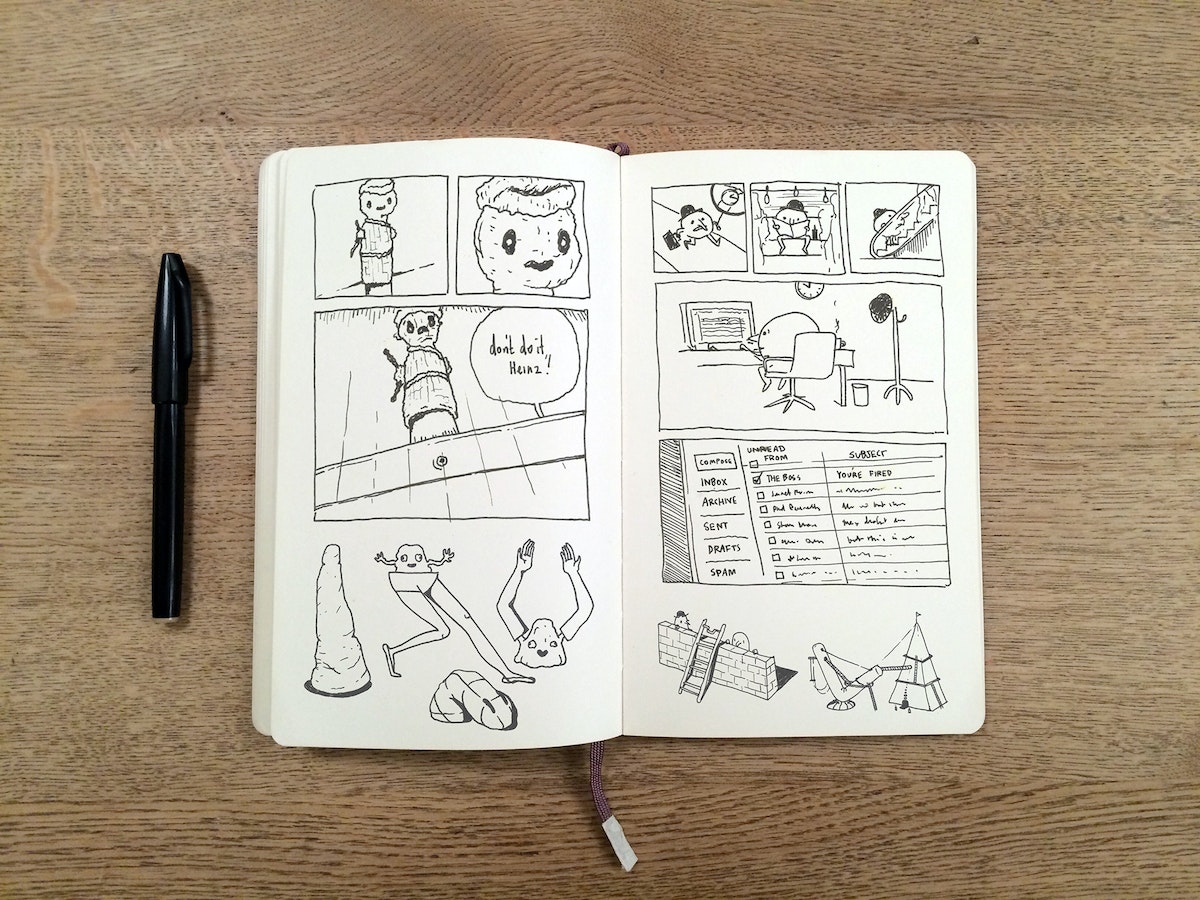
Welcome to the What's in My Moleskine series, a periodic peek inside the notebook of an IDEO designer. Fast Company recently did the same with IDEO's Joe Brown, who had a lot to say about the all-powerful Muji thread-bound A6 notebook.
In this installment we hear from Dave Russell, a communications designer based in our London studio.
Just Skeu It
Translating physical objects to the digital realm through skeuomorphism
I have to find out if I can pull off a successful translation.
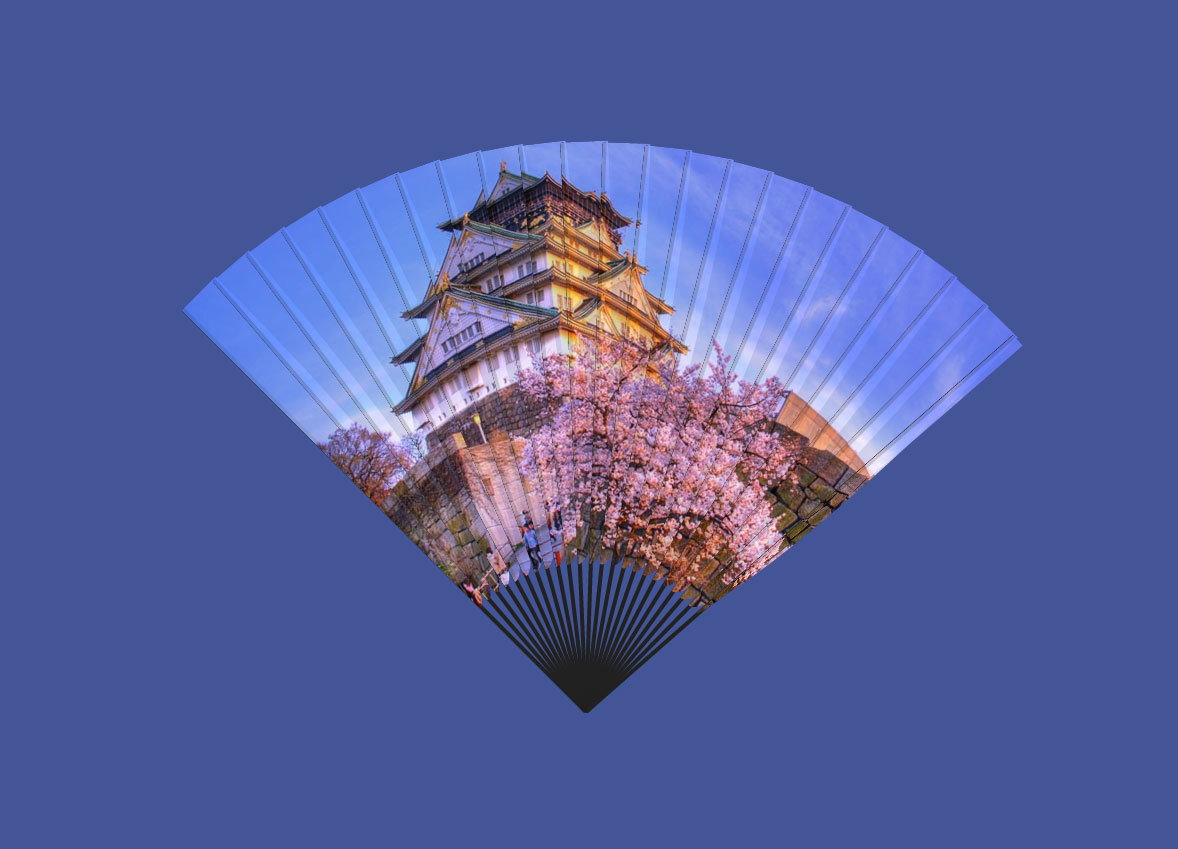
I found my most recent skeuomorphic inspiration in Tokyo’s Nezu museum, one of the best traditional Japanese art museums in the country. Nezu was hosting an exhibit on sensu fans. Originally invented in China, sensu fans were popularized in Japan by artists and calligraphers, who used them as a medium for their work.
Taking in the fans, I immediately appreciated the fantastic woodblock artwork and beautiful brush strokes, but what really struck me was their construction and mechanics: the hand-held fans open with the flick of a wrist. I couldn’t get them out of my mind. How did they open and close so efficiently? How did the bamboo supports slide smoothly over one another? Did the creators consciously build them to open with a simple hand gesture? And what was the point of making them retractable in the first place?
I began to realize that the only way to satiate my curiosity was to make a digital re-creation of the sensu fan. Translating the fan’s physical systems to the digital world would test my skills as a designer and help me to understand its essential systems.
Observable systems
In any skeuomorphic project, the question I usually start with is: What elements capture the essence of the subject? Is it its purpose? Or is it characterized by its design, its construction, its movement, or its interaction? To find the answer, I need to look beyond the face of the object and break it down into the shapes, motions, and systems that define it.
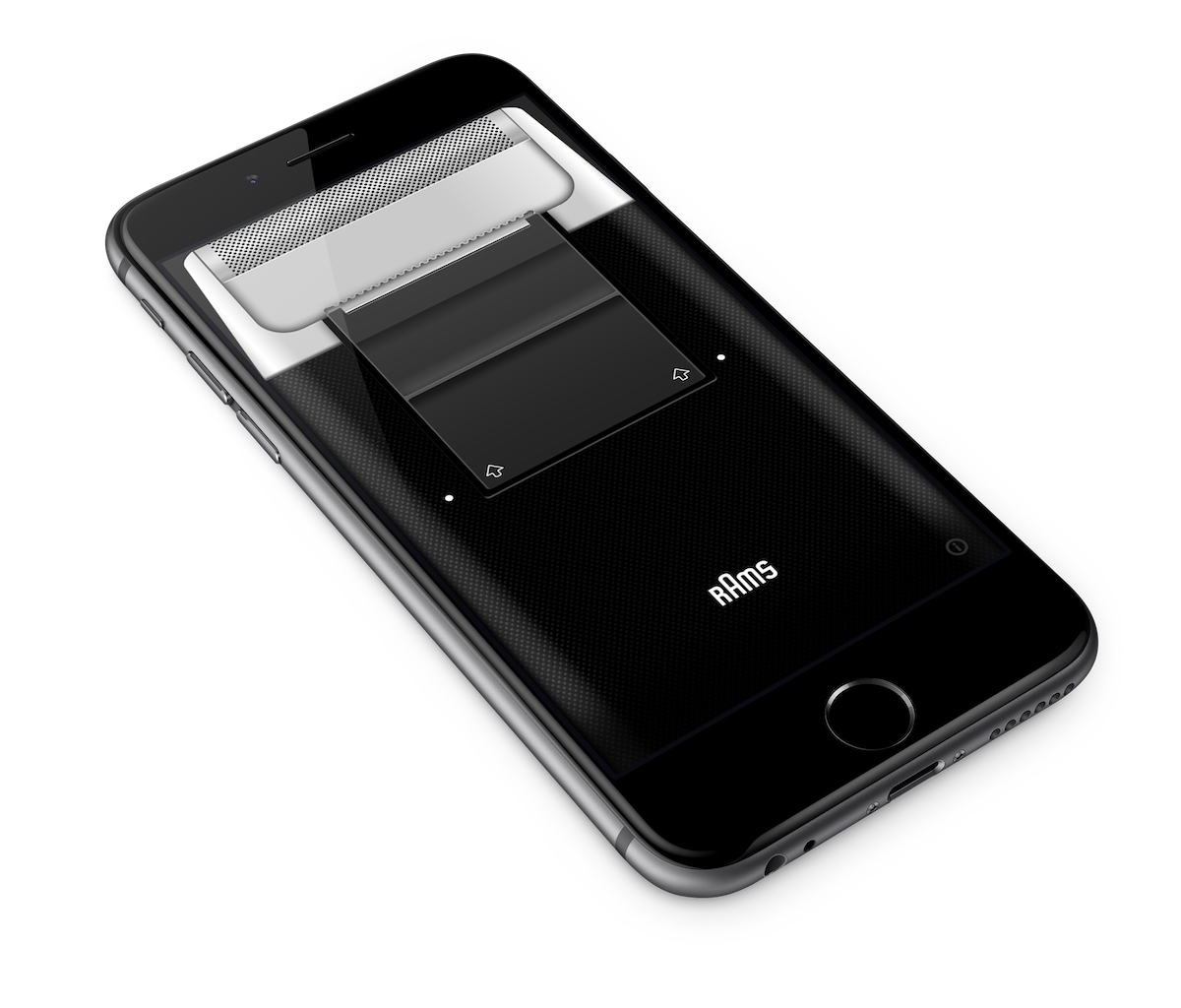
The first app I ever created was a tribute to an electric razor from the late 70s designed by Dieter Rams. I can remember watching my father run that razor over his face every morning. Though I didn't know it at the time, it was the first well-designed product I ever came in contact with. I can still hear the click of the slide-up power button and the sound of the vibration that it made as it glided over my dad’s stubble. When I built an app version of the razor, I realized that the sound and the micro-movements were the two key aspects of the design that I had to translate to make a satisfying digital interpretation.
I used a combination of animation, vibration, and sound (tilting the phone toward your face makes the phone play a beard-cutting sound) to bring the razor to life. The result was a super-tangible app that made the device feel so much like a real razor that you could almost forget it was a phone. Unfortunately, Apple didn’t quite get it—they claimed it was “too useless” for the app store—but for me, it was a ticket back to my childhood.
Considering design
Far from useless, skeumorphic explorations make me a better designer. The challenge of breaking down a real-world object into a set of Photoshop layer styles is my idea of time well spent. I strive for efficiency: Whether it’s lines of code or the number of layer effects, minimization is the key to honing my design skills.
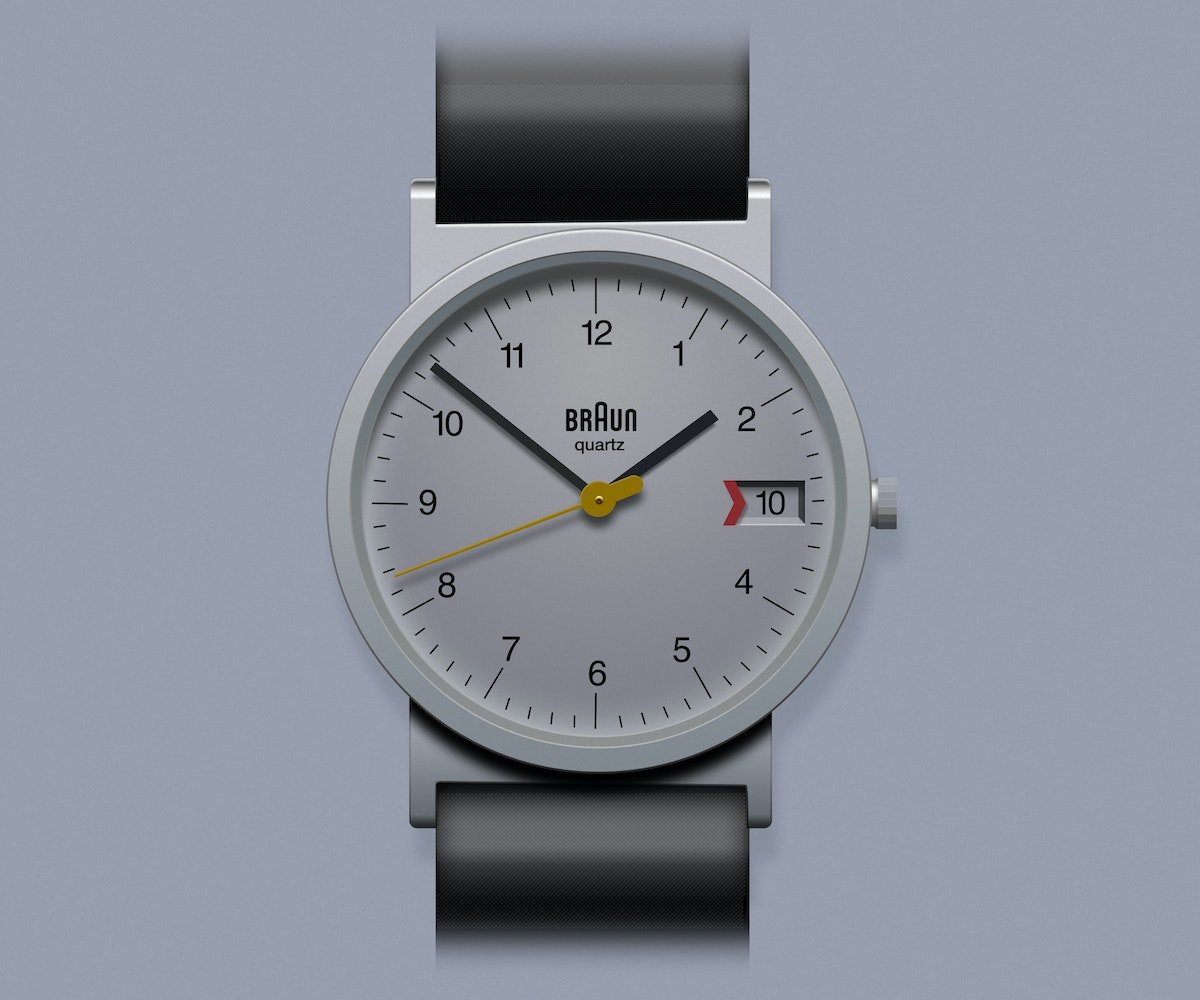
When I did a translation of my Braun AW-20 watch, I managed to perfectly capture the essence of the watch in 27 layers with one to three styles each. I plan on returning to it one day to bring it life in code.
Bringing it to life
When I began my skeumorphic translation of the sensu fan, I felt it was critical to capture the physics of the opening and closing motion. This meant that I wasn’t working with Photoshop layers, but with code. At IDEO, I tend to design with code as much as I do with Photoshop or Sketch. Having a good grasp on code allows me to think deeper about physical-to-digital translations, and real-world systems are better expressed and executed in certain programming languages than others. My first attempts at recreating the fan were standalone applications in openFrameworks—a set of C++ libraries packaged together for creative programming. I started playing with the Box2D add-on for openFrameworks, which was put together by my colleague Todd Vanderlin from our Cambridge office. While the add-on worked perfectly, the digital replication of the fan’s real-world physics just didn’t capture the magic of the construction and movement.
Because the stand-alone nature of openFrameworks limited the reach of the project, I moved on to exploring more accessible web technologies like CSS3 and JavaScript. I had to compromise slightly on the real-world look of the fan, but the final expression really embodies the movement and interaction that fascinated me when I encountered the Sensu fans at the museum. What’s more, users can manipulate jQuery parameters to change the fan's size, color, and decoration—a digital version of what traditional Japanese artists have done with the fans throughout history.
By creating these translations and exploring the life of the subject, I end up discovering something deeper about the object's design and meaning in the world. Likewise, by creating these challenges, I end up discovering something about myself and my skills as well.
A few times a year, I’ll come across something—maybe an object or system; maybe just an idea—and I’m overwhelmed with a burning urge to translate it into code and design. It’s a practice usually referred to as skeuomorphism, and once a project captures my imagination, there's no going back.
How We Did It: Buildings Tell Us Just How Green They Really Are
A revolutionary new LEED plaque makes sure structures live up to their green potential
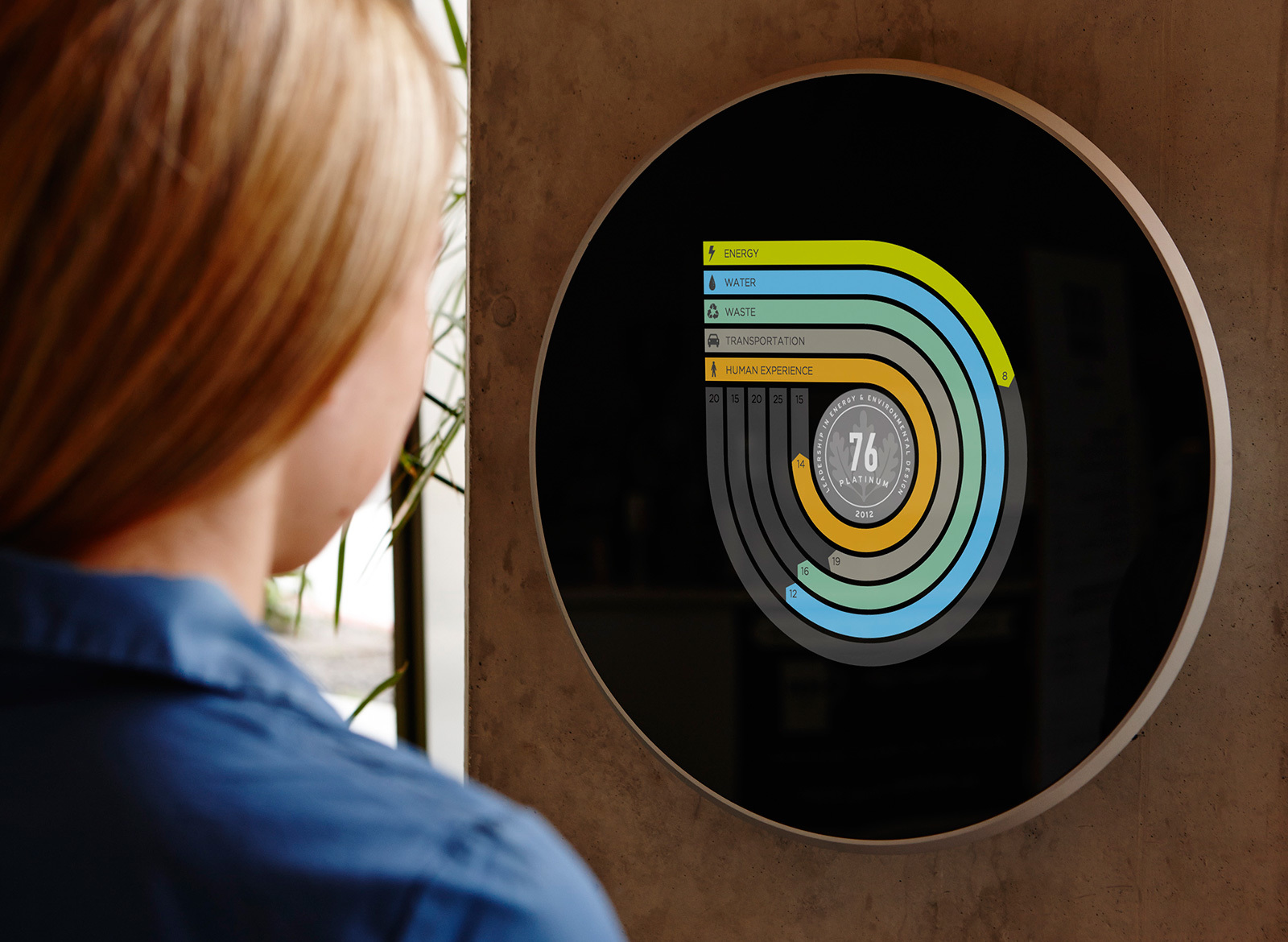
But when IDEO worked with the USGBC to come up with a new LEED certification plaque, it became clear that software design would be a fundamental part of LEED’s future: The idea was to replace the static plaque with a continually updated digital display. Initially, LEED only looked at a building’s performance at the time of certification. The USGBC has long been working on ways to evaluate what happens after certification, and a recertification program has been in place since 2004. The new plaque was conceived to go even further, monitoring a building’s sustainability in real time on a dynamic digital graph.
That sounds (and looks) pretty simple and intuitive, but to make it work, we had to bust down some interesting technical walls, in a way that nicely encompassed the breadth of IDEO's capabilities, from design research, business development, industrial design, shop building, and interaction design to the software I helped create with an incredible team.
I came on board after the actual visual design had been finished. A small IDEO team had already completed a concept video, unveiled at the 2013 Greenbuild conference, for a plaque that calculates a building’s ongoing performance in five categories: energy, waste, water, transportation, and human experience. For each of the five ratings, there is a curving pathway that gets longer as the score improves.
The team came up with this “racetrack” design to show real sustainability data in a way that encourages positive behavior change. Familiar graphics like charts and graphs tend to make people focus on the negative, whereas we wanted people to focus on progress. No matter how long the strip on the racetrack is, you can see that you’re on your way, even if you still have a ways to go. We weren’t sure we could achieve the requisite combination of elegance and functionality in the time allotted. But it was a good challenge, and that in itself was compelling.
The animation has a big purpose: Showing the building’s use of energy, waste, and water makes people more aware and more conscientious of their own use. I think that’s really positive. The plaque also shows how occupants travel to and from the building, as well as how comfortable and happy they feel when they’re inside, which are new ideas for what it means for a building to be “green.” I wouldn’t have thought, when LEED was introduced in 2000, that a software developer could have a meaningful impact on sustainable architecture, but the fact that I could really speaks to the opportunities that will be open to us in the future.
--
Many folks helped to contribute to this post. Huge thanks to Scot Horst, Gretchen Sweeney, Jennifer Easton, Kim Cullen, Gerry Harris, Steve Bishop, Beau Trincia, Mark Harrison, John Stoddard, Alastair Warren, and Building Robotics.
I've always had a layman's interest in architecture and in LEED, the U.S. Green Building Council’s certification program for sustainable buildings. I’m a software developer, so designing buildings is well outside my area of expertise.
Nature Cards
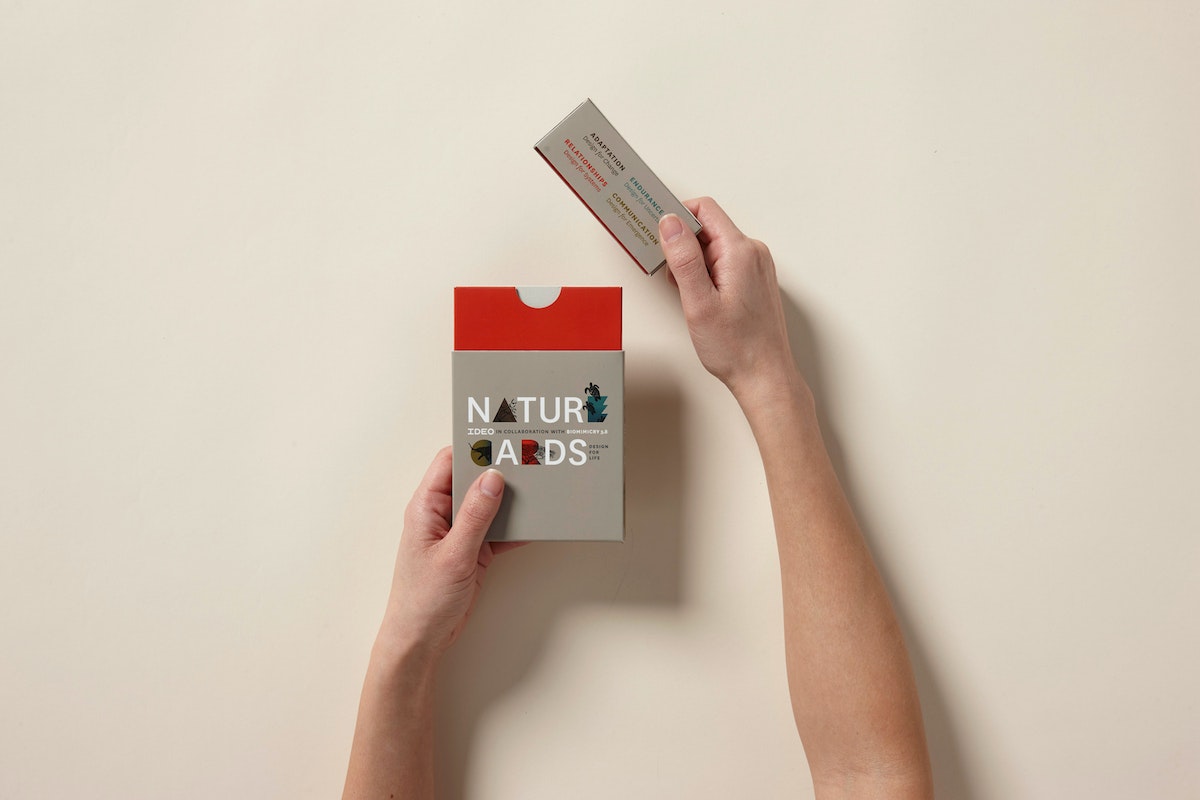
Nature Cards are a collection of cards featuring strategies from the natural world that inspire us with a new mindset as we approach design challenges.
Nature Cards are a collection of cards featuring strategies from the natural world that inspire us with a new mindset as we approach design challenges. Use them to frame your design challenge, evolve your business strategy, brainstorm, teach, or simply to think creatively and holistically with nature in mind.
As human-centered designers and innovators, our work has always been inspired by observing people’s natural behavior in its physical, social, and cultural context. As we address increasingly complex and systemic challenges, recently some of us at IDEO have been exploring how human-centered design might broaden its lens to include observation of the natural world in which humans are an integral part. With the help of experts in biology and the life sciences, we are learning about the principles of successful strategies in living systems. This knowledge is inspiring new thinking about how and what we can create for a thriving future.
Download the complete set of Nature Cards here.

Lindsey Turner
I’m passionate about building brands, products, and experiences that help organizations show up with meaning and momentum.
I help organizations cut through complexity by shaping how they show up, through brand strategy, identity, and storytelling.
Working at the intersection of brand and business, I bring an editorial eye and a bias toward making—turning ideas into tangible experiences that people can understand, trust, and believe in.
My work spans government, healthcare, financial services, media, and consumer goods, from launching Gen Z-focused ventures to building innovation labs and reimagining legacy brands. I relish moments of ambiguity and enjoy translating across teams, perspectives, and priorities to move ideas forward.
I started my career in editorial and digital design, shaping cross-platform experiences and identity systems in publishing and agency environments. That foundation still shapes how I work today: I’m detail-oriented, collaborative, and overreliant on the Oxford comma. I hold a BFA in Visual Communication from the School of the Art Institute of Chicago.

Rachel Young
My work helps organizations see who their products aren't working for—and build the will and the tools to do something about it
For 25 years, I've asked the same question: Who does this design exclude—and what are we going to do about it?
My work spans human-centered strategy, inclusive design, and qualitative research, with clients ranging from Microsoft, Google, and Verizon to the National Science Foundation, and San Francisco Unified School District.
Before IDEO, I taught elementary school in East Palo Alto and spent a decade doing design work with social service organizations—where I learned firsthand what it costs people when systems are built without them in mind.
I am currently writing User Error, a nonfiction book about digital access and the design decisions behind it. I live in Oakland, California.

Brian Pelsoh
I lead with craft, ensuring our work is creatively excellent: rooted in deep human insight and imagination, while also grounded in the realities of business and technology.
My expertise spans brand, communication, and product design across tech, education, the arts, and social impact.
I believe great work demands both high-level vision and obsessive attention to detail, and only happens through collaboration.
I bring an inclusive, hands-on approach and a deep understanding of business, which enables me to consistently deliver excellence while always asking why.
Before joining IDEO, I worked at the brand firms Pentagram and VSA Partners. I began my career as a designer, leading teams at the School of the Art Institute of Chicago and the Milwaukee Art Museum. I hold an MFA in graphic design from Maryland Institute College of Art and a BFA in communication design from the Milwaukee Institute of Art & Design, and have taught at some of the best design schools in the US.

Tony Wong
I am responsible for IDEO’s long-term success in China and working with clients to use design as a tool to enable growth.
I am responsible for IDEO’s long-term success in China and working with clients to use design as a tool to enable growth. Specifically, I have helped Chinese companies design holistic brand solutions through the development of their products, communication, services, and innovation teams, and I have helped multinationals expand their presence and influence in China.
I advise global leaders on developing China-led innovation and capabilities.
In over 15 years in IDEO Shanghai, I have worked on projects that use design to elevate the quality of the experience of healthcare products and services, streamline processes that increase productivity, create spaces and programs that promote and enable inclusive communities, and build next generation mobility solutions that are planet-positive.
Before joining IDEO, I worked at Philips Electronics and the Electrolux Group in Italy, the Netherlands, and Singapore on a number of breakthrough commercial products. I am a member of the Young President Organization in Shanghai.

Building a personal AI for the messiness of life: Sida Li
Most AI products today are built for work—a space with clear problems and established systems. One founder noticed a gap: personal life is messier, harder to systematize, and mostly left behind by the AI boom. So she built Cue, a personal AI that lives inside iMessage and group chats, to go where the other tools haven't.
In this episode, Becca Carroll, IDEO's Chief Strategy Officer, talks with Sida Li, co-founder and CEO of Shared Context Lab, about staying anchored to a human need while the technology around her keeps changing shape, why she treats her business model with the same rigor she'd bring to a product, and what it feels like to build a company at this particular, disorienting moment in AI.
The conversation also gets into how Sida makes design decisions: the language Cue uses to describe itself, the tradeoffs behind building inside iMessage instead of a new app, and a real story about a business idea that didn’t pan out.
This is the second in a two-part series profiling founders from IDEO's Startups-in-Residence program. The first conversation is with Johannes Seemann, founder of Sooner, on designing GenAI for the emotional side of money.

Designing GenAI for the emotional side of money: Johannes Seemann
Most personal financial tools are built to run the numbers and optimize towards a budget. While that works for some, most people experience money as a lived relationship that does not neatly fit into a spreadsheet. Johannes Seemann and Becca Carroll discuss why money is emotional before it is mathematical, and what a human-centered approach to building a generative AI financial product looks like in practice.

The curious leader's edge in uncertainty: Scott Shigeoka
Mina Seetharaman talks with Scott Shigeoka, author of Seek and Head of Curiosity Cultivation at the Eames Institute, about what distinguishes genuinely curious leadership from performative curiosity, how power dynamics shape curiosity, and why practicing curiosity can restore energy rather than drain it.

How constraints make us more creative: David Epstein
Mina Seetharaman talks with David Epstein, author of Inside the Box and Range, about why total freedom often produces average work, how leaders can design useful limits on purpose, and what organizations such as General Magic and Pixar reveal about the relationship between boundaries and creativity.
Looks like you might be in search of something very specific?
Or reset the filters above and try another angle.
Here’s some random inspiration

Podcasts about creative leadership

Articles about the power of prototyping
