
.svg)



Changing the way biotech innovates
Building a culture of user-centered innovation in the name of science.
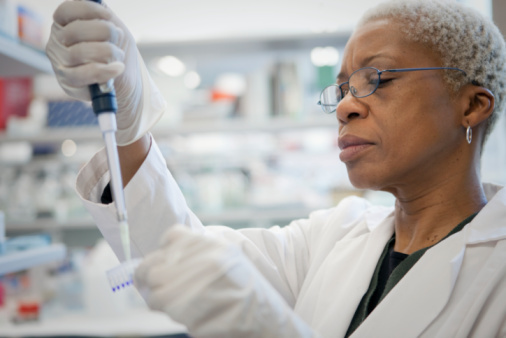
Life Technologies, a global biotech company that supplies scientists with products and services, needed to grow big, from a $4 billion to a $10 billion enterprise. So it hired IDEO to help seed innovation across the company.
"When we started out, it was an R&D thing for driving innovation in new products. Now it’s not just R&D; user-centered innovation is a central part of our culture. It’s what we do throughout the organization," said Amy Cuneo, Associate Director, Customer Insights.
Over a three-year engagement, IDEO helped transform Life Technologies’ corporate culture through the introduction of User-Centered Innovation (UCI), an optimistic, experiential approach to problem-solving. Far outperforming its ambitious goal, Life Technologies is now a $13.6 billion company and uses UCI to inspire innovation throughout the 10,000-person organization.
After working with Life Technologies, IDEO designers came up with three products that have gone to market, including, a new bottle that showcases superior handling and storage, easier identification, and additional room for supplements. And Life Technologies has transformed from a company that aspires to focus on customers to one that truly does.

Building a birth control support network for women
A multimedia public service campaign as a vehicle to encourage smart choices.
Unplanned pregnancies are a big problem in the US, especially among unmarried 18- to 29-year-olds. Seven in 10 pregnancies in this demographic are unplanned, a statistic that applies to women of all ethnicities and socioeconomic levels. Complicating matters are the social tension between abstinence-only and contraception-inclusive education, and the difficulty and expense associated with obtaining prescription birth control.
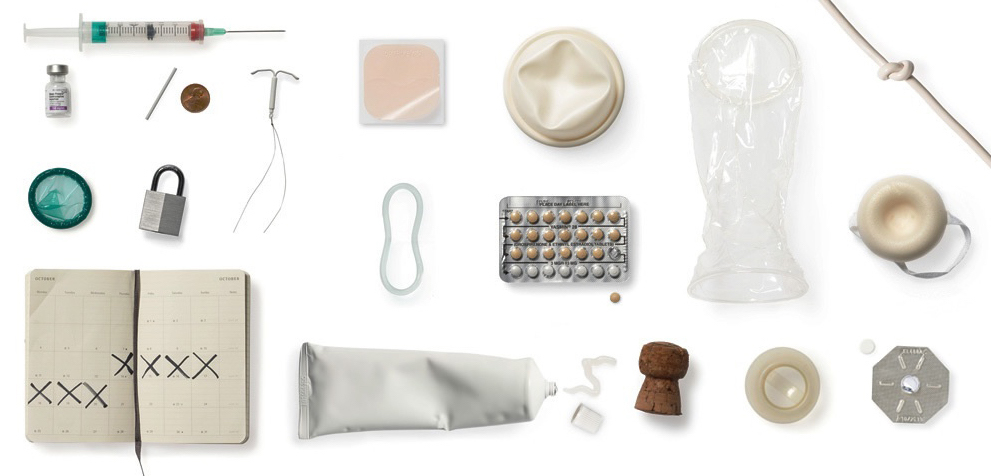
Since 2009, IDEO has worked closely with the National Campaign to Prevent Teen and Unplanned Pregnancy, a nonprofit NGO, to address this pressing social challenge. One of the first insights on the project was identifying the need for comprehensive birth control support. Designers looked at ways to transform birth control from a prescription (a piece of paper that is handed to you by a doctor) into a subscription (a program that ensures you start using birth control, use it correctly, and migrate to more effective methods).
Given the complex and potentially overwhelming subject matter, the IDEO team interviewed women in the target demographic; talked with doctors, counselors, and other experts with varying opinions about birth control; and hosted roundtable discussions. They developed several concepts and scenarios that allowed members of the National Campaign to see sex and pregnancy through the eyes of the young women they’re working to reach.
Research and prototyping efforts led to the design of Bedsider, a multi-touchpoint birth control support system with a carefully crafted sex-positive brand, which is uncommon for the healthcare industry. Bedsider focuses on five key areas (awareness, motivational drivers, digital offerings, services, and loyalty) and acts as a vehicle for behavioral change that’s flexible, with room to grow into a much larger movement.
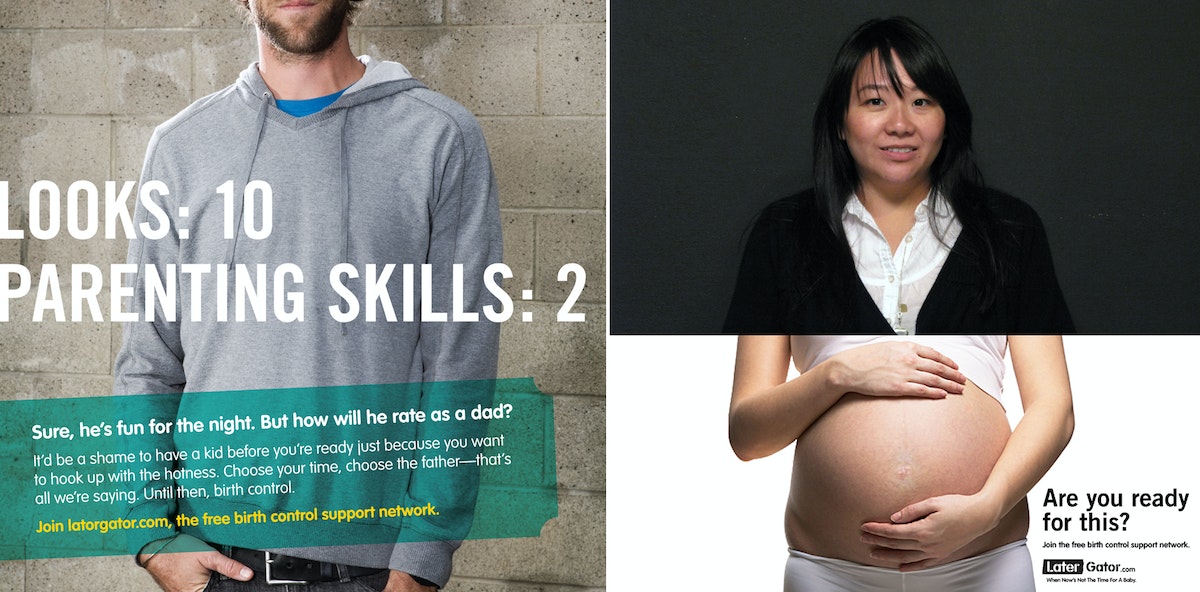
The Ad Council and the National Campaign debuted a multiyear, multimedia public service campaign in November 2011. The Bedsider website offers comprehensive education about existing birth control methods. This includes opt-in reminder services, personal stories from women across the country on why they chose a particular method, a phone service that provides information in both English and Spanish, features such as “Fact or Fiction” (hilarious animated clips debunking popular myths), a “Frisky Friday” newsletter, and more.
Bedsider has launched nationally with the help of an Ad Council campaign that drives sexually active women ages 18–24 to Bedsider.org. The multimedia Public Service Announcement effort includes television, radio, print, web, and nontraditional advertising, as well as an integrated social media program.
“We hope that Bedsider will be a useful tool for women to learn about their birth control options, better manage their birth control, and in the process avoid getting pregnant until they’re ready,” said Planned Parenthood of South Florida and the Treasure Coast in its monthly newsletter. Planned Parenthood and Philliber Research Associates joined forces with the National Campaign to Prevent Teen and Unplanned Pregnancy to help test and evaluate Bedsider.
Through a social media campaign called #ThxBirthControl, people are voicing their thoughts about what birth control has made possible for women, men, families, and society. It’s all part of Thanks, Birth Control Day, launched in November 2013 as part of a continuing initiative to encourage positive conversations and more consistent use of birth control by the National Campaign to Prevent Teen and Unplanned Pregnancy. To celebrate the movement, IDEO wrote, scored, and performed an animated musical featuring condoms and pill packs dancing the cancan.
According to an independent evaluation of the program, Bedsider is the first digital intervention in reproductive health in the U.S.—with adults as an audience—that has shown to prevent unplanned pregnancy. Turns out that when women and men have the ability to plan, prevent, or space pregnancies, they’re more likely to finish school, achieve their goals, and ultimately have healthier families, according to the nonprofit organization.
Bringing bikes to the streets of Chicago
Using the joy and freedom of cycling to brand Chicago’s bike-sharing initiative.
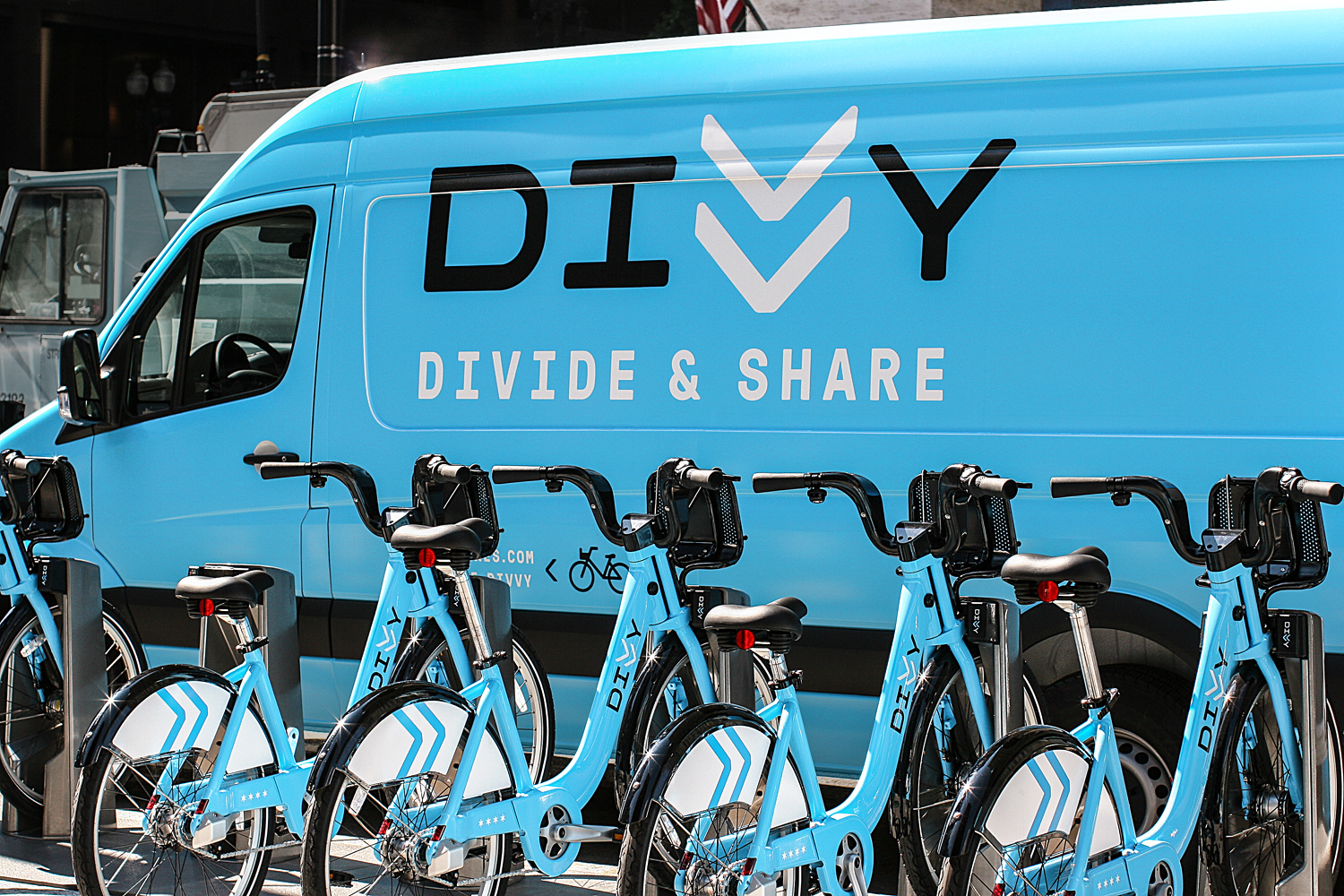
Chicago’s federally funded, citywide bike-sharing service, called Divvy, makes a fleet of bicycles available to commuters and tourists 24 hours a day. Alta Bicycle Share (which runs bike-sharing systems in Boston, the Bay Area, DC, and New York City) collaborated with IDEO to spread Divvy’s message, “Divide and Share!” to the cyclists and would-be cyclists of Chicago through the brand.
The new brand would appear on its bikes, stations, company vans, member fobs, and website—and it needed to be ready to hit the streets in just six months. IDEO partnered with local brand strategy studio Firebelly Design to collaborate on a solution. IDEO led the early research, conceptual brand development, and naming phase of the project; the Firebelly team led the visual design and developed the brand guidelines.
The brand has become a functional and fun part of Chicago’s transportation landscape and has been embraced by Chicago commuters. Just three weeks after it launched, the City of Chicago called the Divvy Bikes program the busiest bike-sharing system in the world. Six months into the service, enthusiastic cyclists have racked up over 780,000 trips and 1.7 million-plus miles, and over 12,000 Chicagoans have become members.
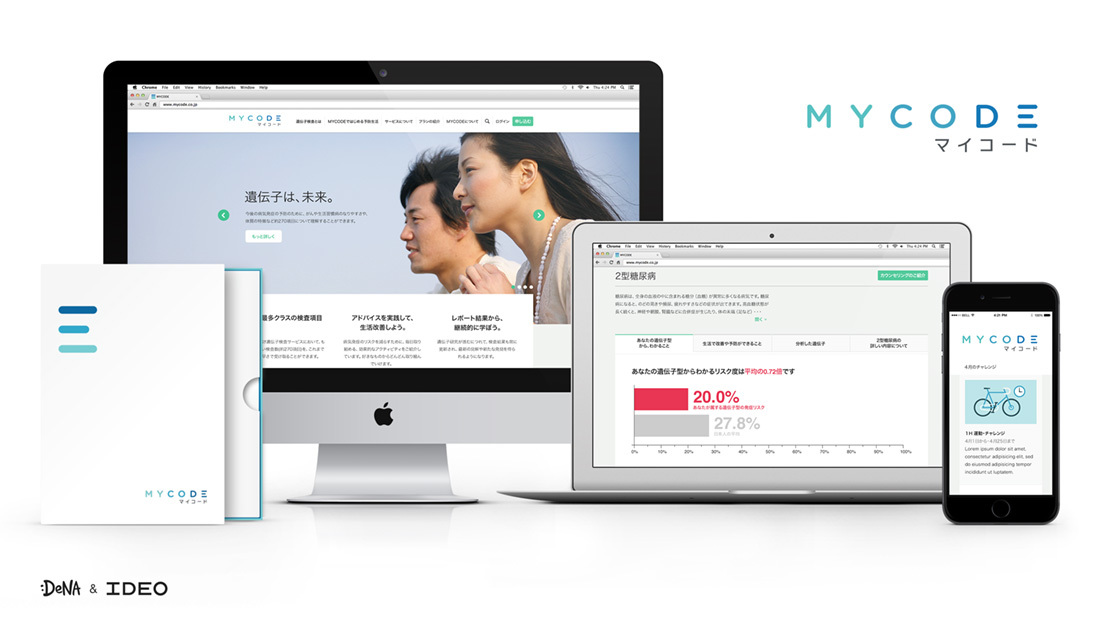
Bringing mass-market genetic testing to Japan
A Japanese mobile internet company quickly builds a genetic testing business.
After watching her husband suffer from cancer, Tomoko Namba, founder of Japan’s leading mobile internet company, DeNA, wanted to empower people with better health information to aid them in making medical decisions. DeNA partnered with IDEO to help with the design of a genetic test that had mass-market appeal.
Together, IDEO and DeNA designed all the consumer touchpoints from the ground up for the expanding new business, called MYCODE. The aim was not only to create a functioning, usable product, but also to introduce the notion of genetic testing in a privacy-sensitive country that for the most part, hadn’t yet considered it an option. What would make MYCODE resonate with mass-market Japan? How could genetic testing results be shared in a way that was accurate but also actionable and motivating?
The team worked with doctors, nutritionists, medical governing bodies, and more, setting up fast, iterative cycles, and conceptualizing and prototyping almost every aspect of MYCODE in just 16 weeks. Data design, home testing experience, purchase flow, and how the service would be used over the long-term were all considered, along with traditional branding elements, like name, logo, and visual identity.
The result is a product that puts reliable genetic information into the hands of Japanese consumers, helping them to make more informed healthcare decisions. MYCODE went to market in August 2014, just nine months after the engagement with IDEO began. Not only did MYCODE fulfill Namba’s mission, it helped the company find new ways to grow: Upon announcement of the new service, DeNA’s share price jumped 6.7 percent.
.jpeg)
Put your phone down and sit in a circle
Lessons on fellowship design, from a fellow themself.
As I swam, in a meditative cycle of inhale and exhale, I was deep in my brain, totally engaged, thinking about the project I’m working on as part of my fellowship with the Aspen Institute. That’s when I realized just how well-designed this fellowship is. And I should know. I design fellowships for a living.
The First Movers Fellowship is part of the Business and Society Program at the Aspen Institute, a non-profit organization committed to realizing a free, just, and equitable society. Since its founding, the Institute has worked to drive change through dialogue, leadership, and action in communities at home and around the world.
Back in 2009, Nancy McGaw, author of Making Work Matter, designed the fellowship with her team and some help from IDEO. The idea behind the program is to advance “social intrapreneurship” within organizations; aka to drive social impact goals alongside business goals. Because, as McGaw put it in her book, “There is increased urgency in companies to adapt and innovate … with attention to the footprint they are leaving on communities and the planet.”
Now, a decade after I first heard about it, and four years since I first designed a fellowship, I’m a First Movers Fellow. My project is about centering and amplifying the practice of inclusive/responsible design at IDEO. I am so lucky to get the chance to be a part of this amazing cohort, and also part of IDEO’s history with the program. (In 2009, Jocelyn Wyatt, former CEO of IDEO.org, was a fellow working on a project that soon became IDEO.org itself. A few years ago, Michelle Lee partnered with toymakers and external organizations to help drive digital experiences that can help people thrive. Pretty big shoes to fill.)
Already, I am learning so much from the other fellows and the curriculum. But as a fellowship designer, I am also relishing the details and intentional design that creates truly transformative experiences. Here are some core principles that can make a fellowship genuinely great.

Seeing eye to eye (literally)
It’s important to design fellowships to ease folks into new spaces—and meeting new people—with care. Groups bond more quickly when facilitators break up mass conversation into smaller groups and randomize them, to get everyone to talk to everyone. When I met with the Aspen Fellows for the first time, we sat around a circular table, where everyone could look at each other. (There is even a circular building on the Aspen Institute campus specifically for this purpose.) It made a surprisingly big impact. And there were no fancy titles on our nametags—just our first and last names. (And pronouns. Which may have been on my behalf, and I really appreciated it.)
At a retreat I helped design for the Earthshot Prize, Prince William’s environmental award, my team focused a lot of our time together on helping our fellows bond. We created peer groups, paired fellows up to go on walks with discussion prompts—we even had them make chocolate together. At dinner in Aspen, they scrambled our name tags every night, and gave us new conversation prompts to facilitate table-wide sharing. One night, they asked, “What’s one thing that your younger self would be proud of?” Which, at my table, had us talking about everything from chicken nuggets to the origins of our names—and yes, some of us cried.

No tech at the table. Ever.
In the business world, we’re so used to using technology to be in multiple places at once. But how well do we show up in either place when we do that? On the first day in Aspen, they told us, “When you’re here, you’re here, and if you have to take a call or text someone, leave the room. The table is a sacred place for presence and connection.”
Draconian, maybe, but I can’t tell you how productive I felt while we had our phones turned off, how-in-the-moment and engaged I remained. It works. And everyone should enforce it more: at fellowships, at conferences, even on daily standup meetings. Presence is powerful.

Nature AND nurture
Many fellowships are held at naturally beautiful places, and there is really something to it. Being in nature helps people breathe more deeply, and allows nervous systems to calm down, especially for city dwellers so used to the sounds of buses and 4 a.m. trash hauling. It’s actually something people have asked for in every fellowship I’ve ever worked on, and for climate activists, scientists, and organizers, it’s also a deeper connection to their work to save the planet.
At The Rockefeller Big Bets Climate Fellowship, fellows meet at Bellagio, the foundation’s property tucked on the lush mountainous hillsides of Italy. It should be a part of every fellowship—because boy do fellows need it. (Don’t we all?)

Roses are red. Tears are blue. Reflection makes people vulnerable, too.
The First Movers Fellowship is designed around four pillars: community, innovation, leadership, and reflection. As I read that last point, I was skeptical. When I was running fellowships and we were short on time, reflection was the first thing to go.
But the Aspen Institute holds it sacred. Every morning, we’d read a poem together as a group, and then reflect on it together. No matter how packed the schedule, or how busy the day ahead, we’d read a poem, journal, go slow, and stay quiet. It was an on-ramp to the day. And a beautifully deliberate design choice.
On the third day, they shared this poem, (which someone in my cohort aptly called a sermon). After three days of becoming more vulnerable and authentic together, half the room was sobbing, openly, loudly. This openness led to more sharing, more intimate conversations, and funnily enough— better advice for my project. Yes, we instantly felt closer, which had an impact on how we worked together.

Read the room
As much as I valued poetry and reflection at Aspen, it is really important that fellowship designers keep their agendas dynamic, and adjust to the needs of the people in the room. At the Earthshot Prize retreat, we tried to make space for reflection—but we learned, it wasn’t what fellows needed most. While our sound bath activity was highly-attended, we swapped out our daily morning meditation moment to give fellows more transition time in the after-breakfast time slot. I loved writing and leading these nature-based visualizations, but loved giving the fellows that space to do what they wanted, even more.

Free time frees the mind
When I looked at our schedule for the Aspen seminar, I was astonished to see big breaks every day. There were organized activities that folks could go do together, like hikes, gondola rides, and ice cream in downtown Aspen, but fellows could own their schedules. I swam each day, and really took reflection to heart. And every afternoon, I found myself coming back ravenous for the content and conversation, more engaged and more present. It seems counterintuitive, really, but those breaks made me work more.
After the first year of the Earthshot Fellows retreat, we asked for feedback about the experience. One of the resounding themes was a call for “more time to just relax,” and “space to get to know each other outside of the content.” And we listened, adding it in the next year.

It’s hard to solve big problems alone
When I was being interviewed by a former Aspen fellow as part of the application process, they stressed over and over how important community and connection is for the success of the program. After only five days with the Aspen fellows, I felt so close to all of them—a crucial source of support in the fight to tackle big problems, like inclusive AI and research, menopause tech, indigenous farming support, equitable financial systems, to name a few.
And creating intentional space for people to be vulnerable and honest about what they're going after —It's the only way to set them up to make true progress. And it’s the future vision that I’ll never stop designing for.
A few weeks ago, in the middle of a Monday, I was slowly swimming laps in a beautiful saline pool just below the peaks of Aspen, away from my laptop and dings of Slack.

Innovating in health? Here are 6 places to start
Innovation for patients, providers, and the industry at large.
For years, our system has been grappling with ever-constricting constraints—low supply, high demand; increasing life expectancy; and escalating treatment costs. There’s no question that the healthcare landscape is at a critical juncture. As Ian Abbs, Managing Director of Guy's and St Thomas' hospitals in the UK, so eloquently articulated in Amsterdam last month, “Health care as we know it will end; change has to come."
But as we know well, big constraints and difficult conditions can be an incredible impetus for innovation. We now have remarkable new tools, therapies, and emerging technologies at our disposal. The potential to accelerate drug development has never been greater, and we amass more and more data every day. The organizations that take advantage of these opportunities and develop innovative solutions will be at the forefront of enormous value creation.
From the transformative potential of AI to the urgent need to rethink emergency medicine, here are the six key opportunity areas we took away from HLTH EU 2024 in Amsterdam. These areas have the potential to produce significant improvements in health outcomes and substantial advantages for organizations that bring them to life with a human-centered lens.

1. The promise of digital health is still waiting to be fulfilled
Ten years ago, digital health was poised to revolutionize healthcare. It was the promised future, the answer to the worst of our problems, and the route to better, healthier lives. Yet, despite such a clear need, its full potential remains untapped, focused instead on data collection, controlling costs, and optimizing for outdated systems
Digital health needs to shift its focus to the meaning behind the data, and how to better support patient and provider health. Remote care channels could extend the reach of doctors. Sensing technologies could enable whole-body care. Digital therapeutics could complement more traditional care. But realizing the potential of this space requires a deep understanding of the core needs and a mastery of digital channels.
Designers and digitally-fluent innovators will play a critical role in creating patient- and provider-centered, secure digital health solutions that improve patient outcomes and deliver on this decade-long promise.
2. AI will be transformative–if we are able to learn from the past
Artificial intelligence (AI) stands to revolutionize global healthcare systems; its potential spans from expediting drug development to increasing the efficacy of patient care. But only if we learn from the errors of digital health.
Products that harness AI to interact with patients, collect more accurate data, and summarize medical histories and symptoms without time constraints could provide healthcare workers more time to focus on patient care, complex cases, and advancing their fields. Hospital administrators could use AI to create digital twins, aiding in patient assessment, disease mitigation, and treatment plans. And with an expected 20 percent increase in demand for care, but only a projected eight percent growth in workforce, AI could reduce the administrative burden by over 40 percent, making it a vital tool for the long-term sustainability of healthcare systems
But these myriad applications need to be so much more than the latest cool tech, or a tool for operational efficiency. If we are able to demonstrate the genuine potential of the technology by placing the human experience at the center, we will enhance the healthcare experience and improve patient outcomes. But only if we avoid the missteps of the past.
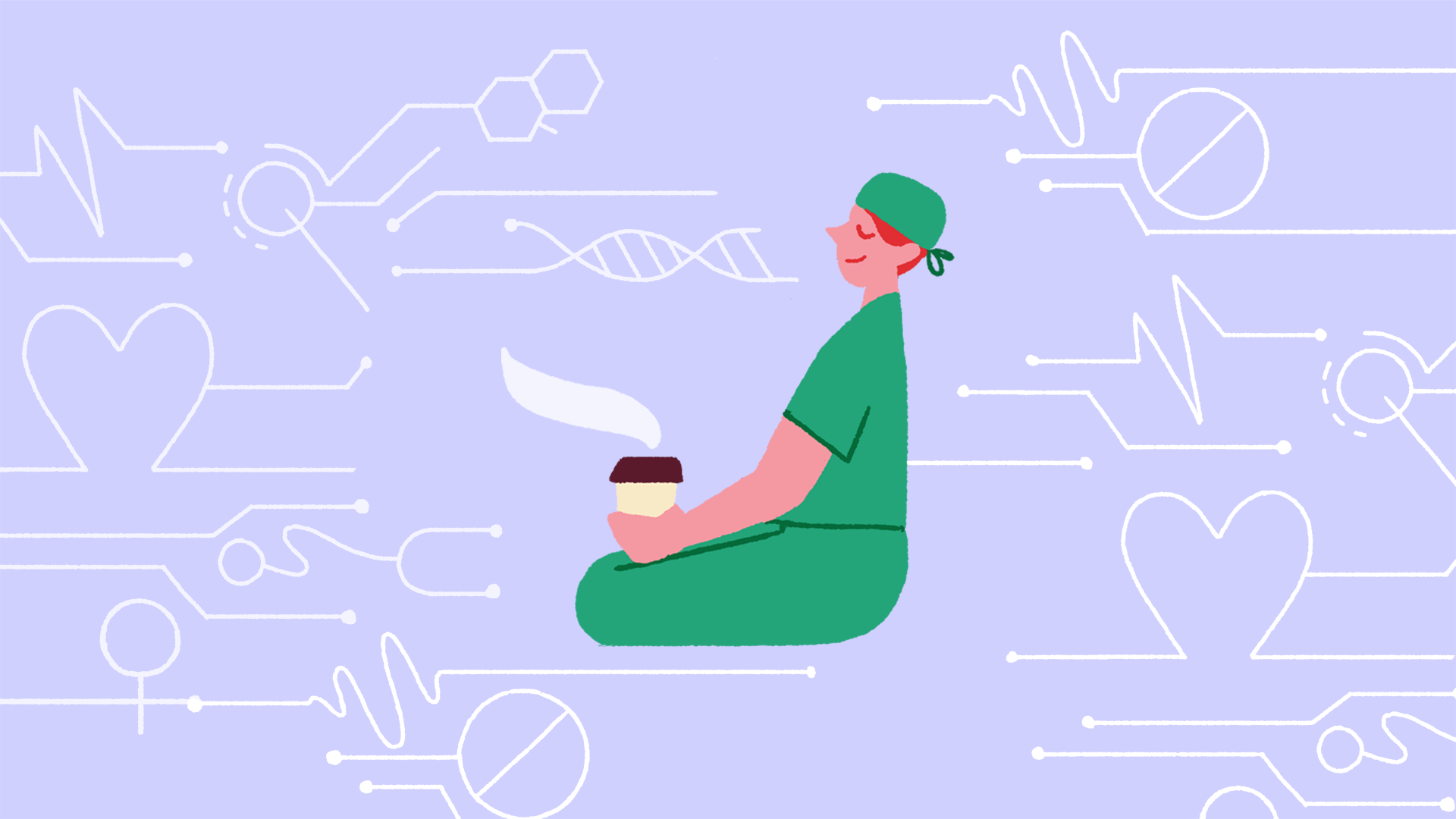
3. Addressing burnout is crucial to the sustainability of health systems
The healthcare sector is facing workforce shortages and severe provider burnout, which was only worsened during the pressures of the COVID-19 pandemic. The shifting expectations of the next generations of healthcare workers—Millennials, Gen Z, and soon, Gen Alpha—make attracting and retaining healthcare professionals even more challenging, further straining availability of talent.
It is hard to be compassionate at work when your workplace doesn't have compassion for you. We need to center the experience of healthcare workers to address this crisis head-on. Healthcare organizations can create holistic approaches to staffing, leverage technology to support administrative tasks, become more purpose-driven to align with the values of a new generation of caregivers, and create authentic work environments that support the reasons younger generations get into healthcare. Designers have a unique role to play in envisioning and implementing solutions that not only alleviate burnout, but also reimagine the future of work in healthcare.
4. How is women’s health not a more urgent priority?
Women make up more than 50 percent of the patient base and influence a significant share of healthcare spending and decisions, and yet women's health continues to be marginalized. Centuries of historical biases in medical research and clinical trials, along with more recent policy shifts, have resulted in a chronic a lack of understanding and funding, and an inability to effectively treat women.
This is fundamentally an issue of equity. Elevating women's health requires focused efforts to address these historical gaps, including increasing representation in clinical trials and prioritizing gender-specific research. The rise of health startups focused entirely on women is beginning to fill this void, but much more needs to be done.
By championing women's health initiatives, prioritizing better understanding the needs of women, and supporting female-led ventures in health, we can significantly improve care and counter these long-held biases. This not only enhances health outcomes, but also designs for the influence women have in healthcare decisions.
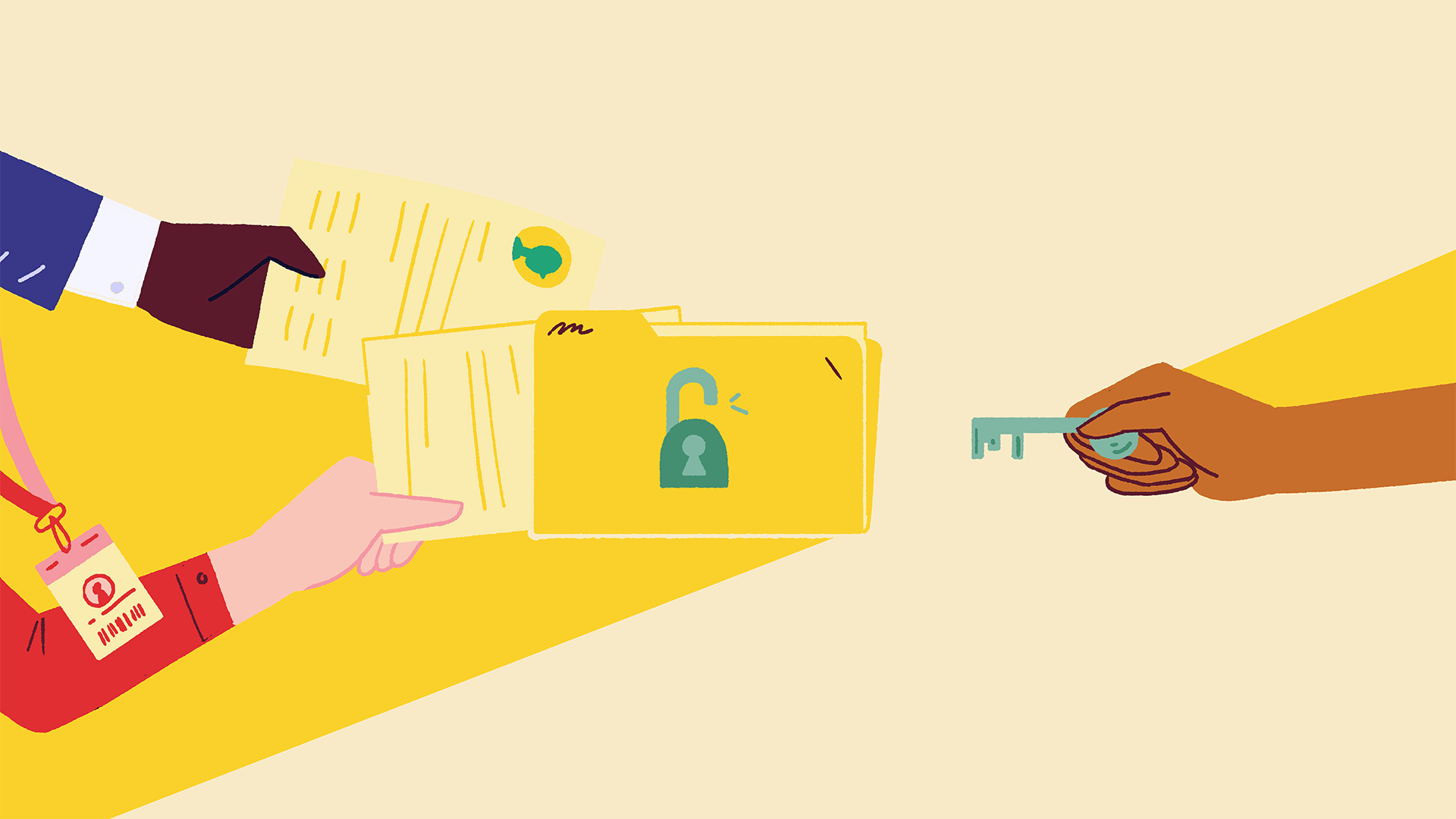
5. Data could change the whole game
The explosion of personalized data presents both an incredible opportunity and one of the most significant challenges in healthcare today. The question of who controls data—individuals, organizations, or government—remains unresolved.
Healthcare urgently needs to find the appropriate balance of data use, and to do so at a human level. Personalized data should be owned by the patient. Carefully anonymized data needs to be shared for learning and improvement. And empowering people to understand and use health data remains an outsized opportunity for healthier living.
Designing systems that balance these valid concerns requires a collaborative effort across sectors to establish patient-centered solutions that treat and respect each patient today and tomorrow. Doing so will be the key to unlocking growth and scale.
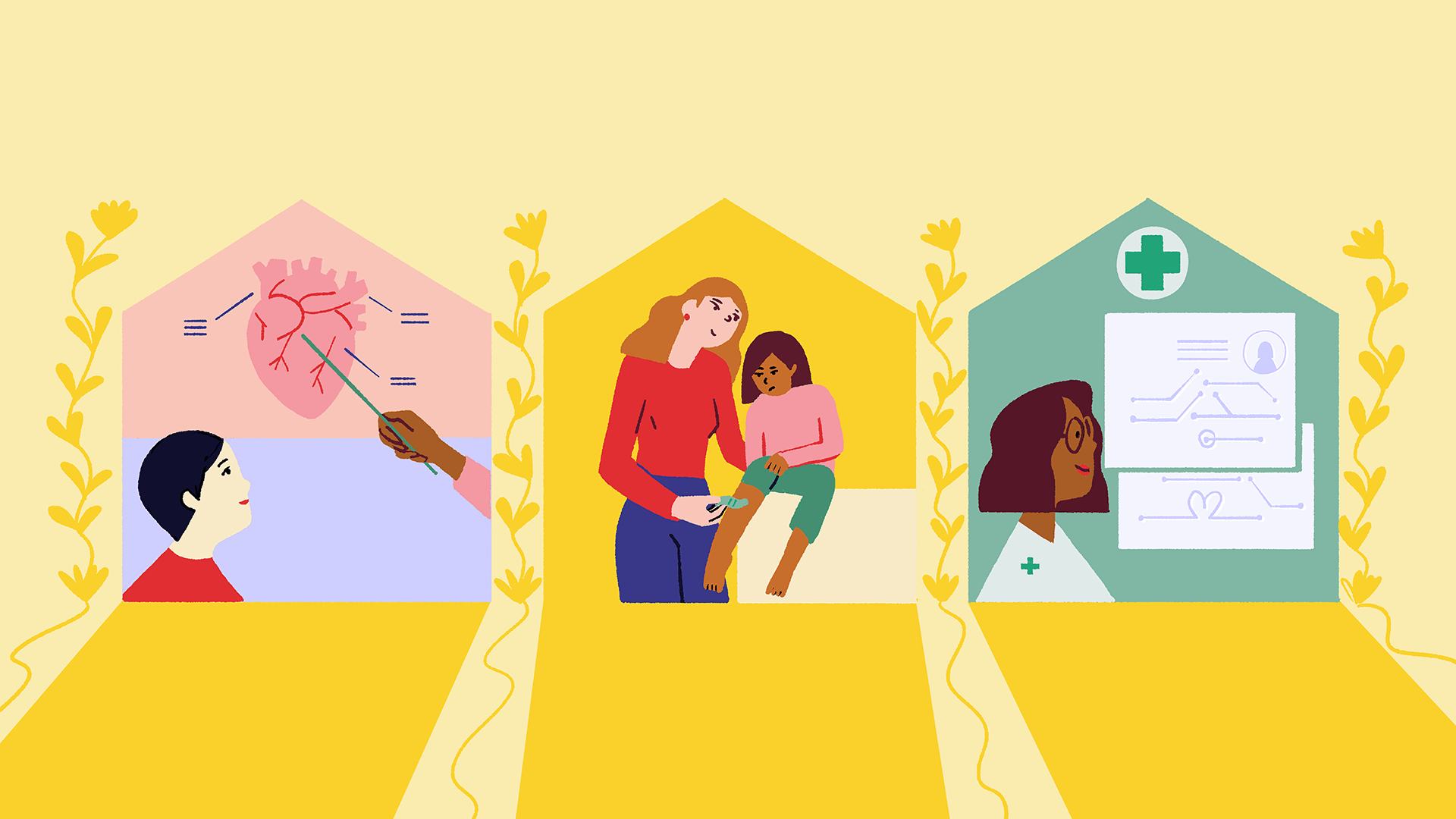
6. Emergency rooms cannot be the first mile of care
Emergency medicine has become the de-facto single point of entry into healthcare for many, rather than a safety-net, which is neither sustainable nor efficient. To improve outcomes and reduce costs, we need to radically rethink how and where patients best access care.
Innovative solutions, such as telehealth, community-based care, and better deployment of in-home services could radically improve care for chronic conditions. Meanwhile, strengthening public education to help people discern true emergencies can alleviate strain, and reimagining triage systems by integrating data when patients are en route to emergency rooms can improve speed and efficacy, creating a human connection between patients and healthcare practitioners in a way that meets patients in the context of their lives.
To do that, we’ll need to design for flexibility and resilience, and always place humans at the center of the experience, ensuring that emergency services can adapt to varying levels of demand while maintaining high standards of care.
The challenges we face are significant, but they also present unprecedented opportunities for transformation. By thinking radically about the role of technology, centering onthe human experience, and designing widely and inclusively, we can create healthcare systems that are more equitable, resilient, and sustainable.
At IDEO, there’s nothing we love more than diving into the biggest, gnarliest challenges of an industry alongside leading experts. If you are interested in exploring these opportunities further or partnering with us to drive change in healthcare, get in touch.
Together, we can create a healthier future for all.
Globally, healthcare systems are under massive strain—and not just because of the lingering effects of Covid.
7 principles to guide your prototyping
The 8th one? Have fun!
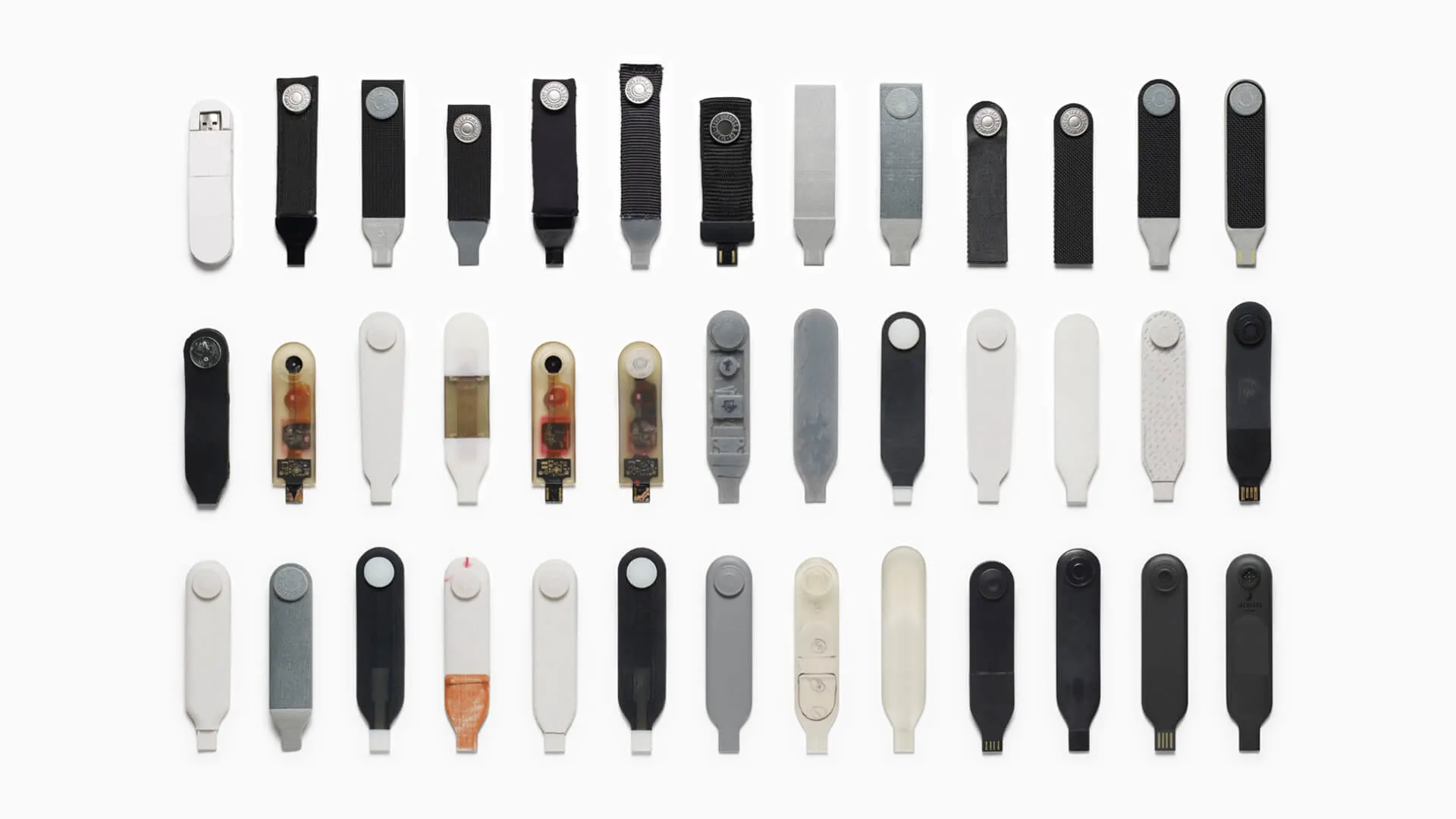
Originally designed for cyclists, the idea was that we could give them access to information from their phones while reducing distraction. As we worked to progressively learn how the electronics and denim could work together as one seamless product, we explored hundreds of variations of the smart tag, failing our way toward the best version. From 3D-printed shapes to sewn straps and overmolded silicone assemblies, each iteration brought us one step closer to an ultimately successful product launch.
At IDEO, we’re big believers in the idea that if you want to succeed sooner, you’re going to have to fail earlier. And fail a lot. But each time you build something, you learn something new about the challenge you are trying to solve. This iterative cycle of question, make, answer, and ask a new question is why prototyping is such an important part of the design process. The more you make, the more—and the faster—you learn. And ultimately, the better the end product. That’s why we always encourage our teams to make something—early, often, and repeatedly.
Here are seven principles that help guide our prototyping process, as we fail our way to the best version of whatever we’re making.
Early prototypes should be rough, rapid, and right
When you are working at a lower fidelity, you spend less time and fewer resources on each iteration, so you can build more and learn more. The key is to know what questions you’re trying to ask—and answer—with each new variation. What can you make to address those questions first? What is the fastest way to make something you can test? Keep those goals in mind to guide your process.
On a project developing a new laryngoscope (a device that helps doctors examine the larynx), we needed to quickly explore many ways a retraction mechanism might work, and what the implications each option would have on the device’s internal architecture. We prototyped at just enough fidelity to convince ourselves and our client that the task was possible, and to align on the leading methods we had for achieving it.

Add refinement only when and where you need it
Every time a prototype helps you answer a question, you take a step toward a higher-fidelity design. In this progression, the prototypes usually start to get more complex—as do the methods for making them. Improvements and iterations start to take more time as complexity grows, so prioritize your efforts accordingly. Keep asking yourself, “What do I want to learn from this prototype, specifically?”
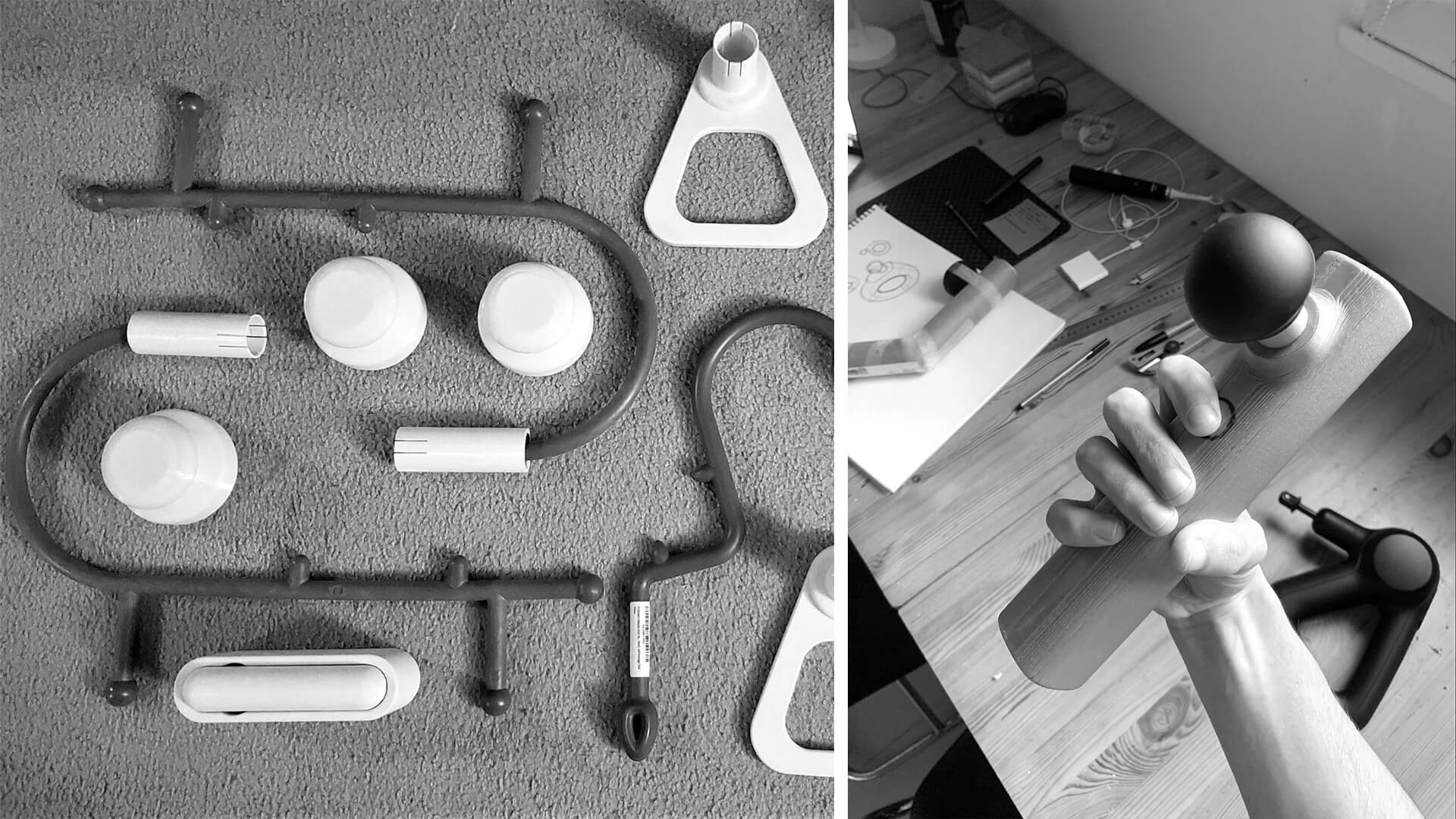
On a fairly recent project, one of our teams was designing a new handheld massage device that incorporated a digital touchscreen. Even though it was a big part of the final product, we consciously chose to keep that complex element out of our prototypes for months, because we hoped to evaluate ergonomics, size, and use patterns before digital interactions. We added functional digital elements once we felt we needed feedback to keep evolving and testing the concept.
Embrace pivots
When you are building early, low-fidelity prototypes, try to keep all the possible doors open and maximize exploration. We like to work with modular elements, and avoid permanently removing or attaching things. That way you can quickly change directions or incorporate new ideas without having to start from scratch. It’s a practical way to save time and money, and to keep yourself from locking in on one idea.
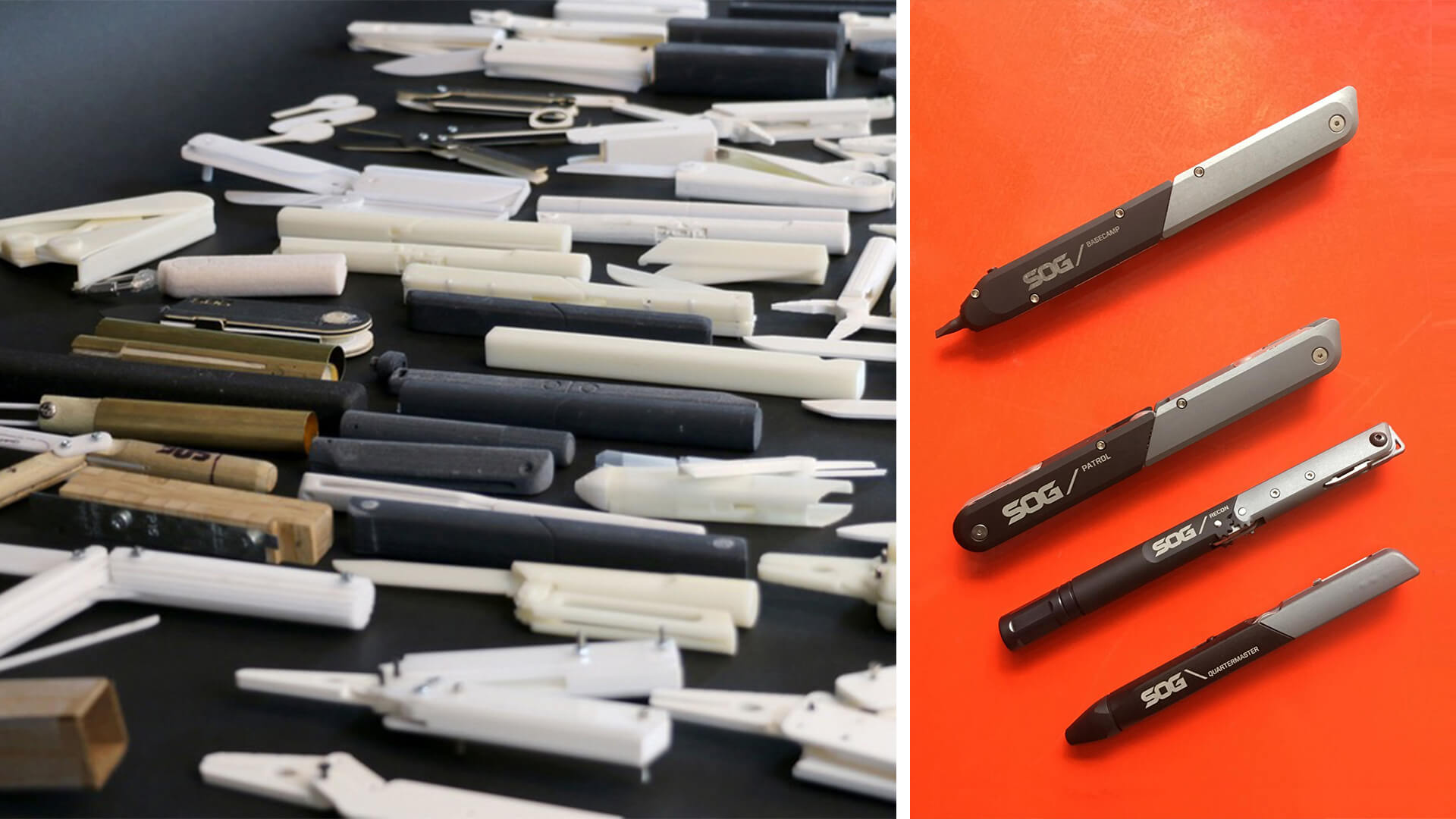
Embracing pivots was key to our success when we were designing a new set of multi-tool experiences for SOG, a specialty knife and tool manufacturer. A multi-tool can do so many things, but each form factor lends itself to being particularly good at just a few core tasks. By prototyping in a way that allowed us to mix and match functions across form factors, we were able to easily pivot and experiment with various tool elements across the product line without over committing to a specific direction too soon.
Don’t reinvent the wheel
You could fabricate bespoke elements for each prototype you’re building—or you could take advantage of what's already out there, using existing products as a foundation. No point in wasting time building something you could easily grab from elsewhere. The spirit of prototyping is all about speed of execution, so it’s always better to focus on what you want to learn without getting bogged down solving additional problems. Plus, taking things apart is in itself a way to learn—and it’s fun!
When we developed a scent-ring-blowing robot with the furniture company Moooi, we turned to all sorts of other products as we figured out the best way to create visible scent rings. We landed on a viable solution sooner because we started from existing product architectures—like solenoid valves (electrically -controlled valves used to allow or prevent the flow of media) and speakers.
Always be documenting
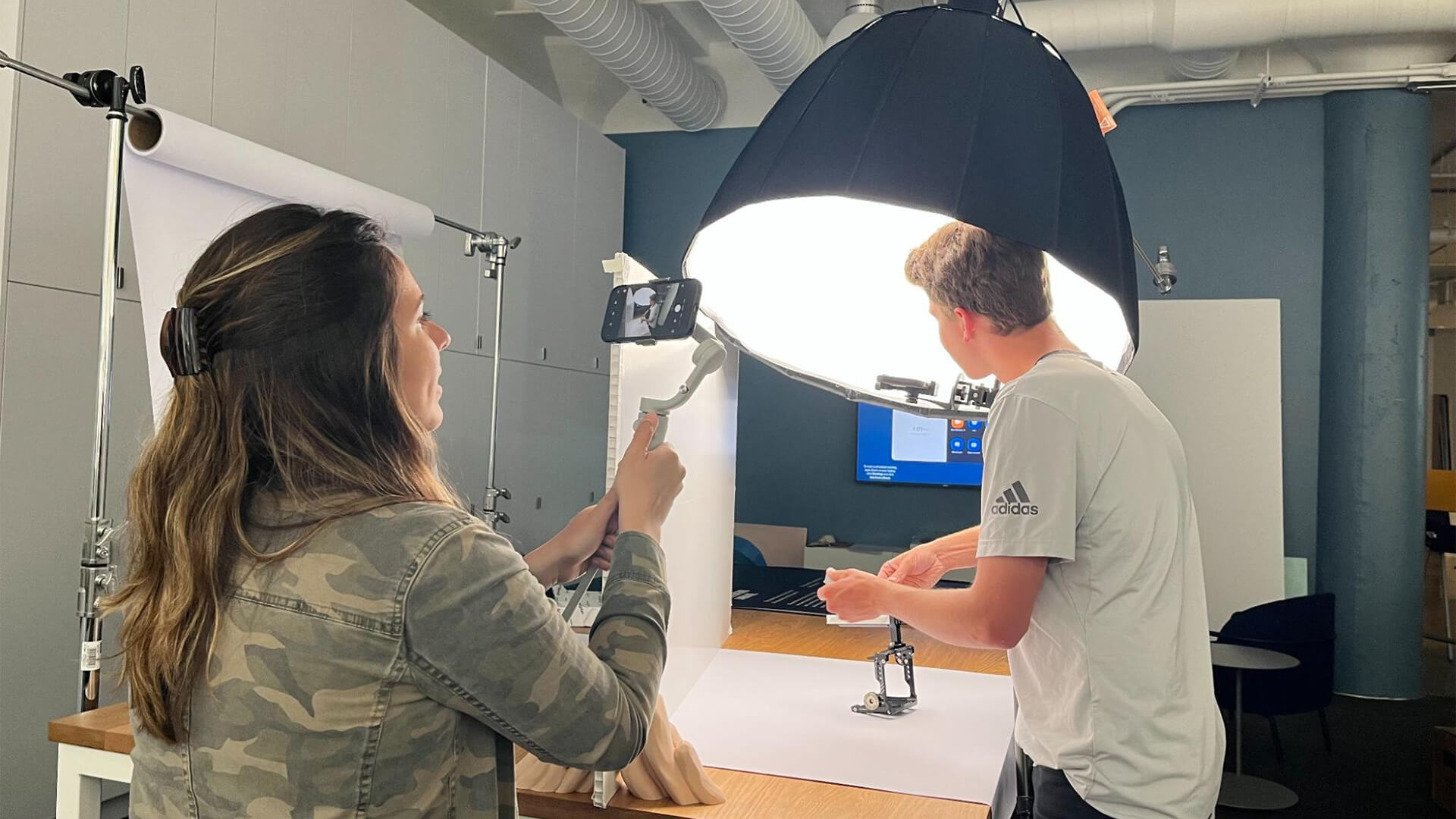
If every prototype is a question, and every interaction with a prototype provides an answer, you need to capture those answers as best you can. Plus, when you’re working at low fidelity, things can break, fall apart, or even disappear. It can be easy to forget to set up a phone and hit record, but don’t make that mistake. Short videos and still images are amazing tools for telling the story behind a prototype—why you made it, what you hoped to learn, what users' reactions were, and ultimately how the prototype pushed your design forward.
No one wants to get the message, “Hey I think I just broke the prototype.” But it happens to all of us, and having documentation can be a lifesaver. When our team was creating a folding infant travel bassinet for an IDEO PlayLab client, a delicate, 3D-printed collapsing mechanism was broken just hours before we needed to ship our functional model to the client. Luckily, sending them a video of the mechanism in action created the extra time we needed to print new parts and fix the model—just in the nick of time.
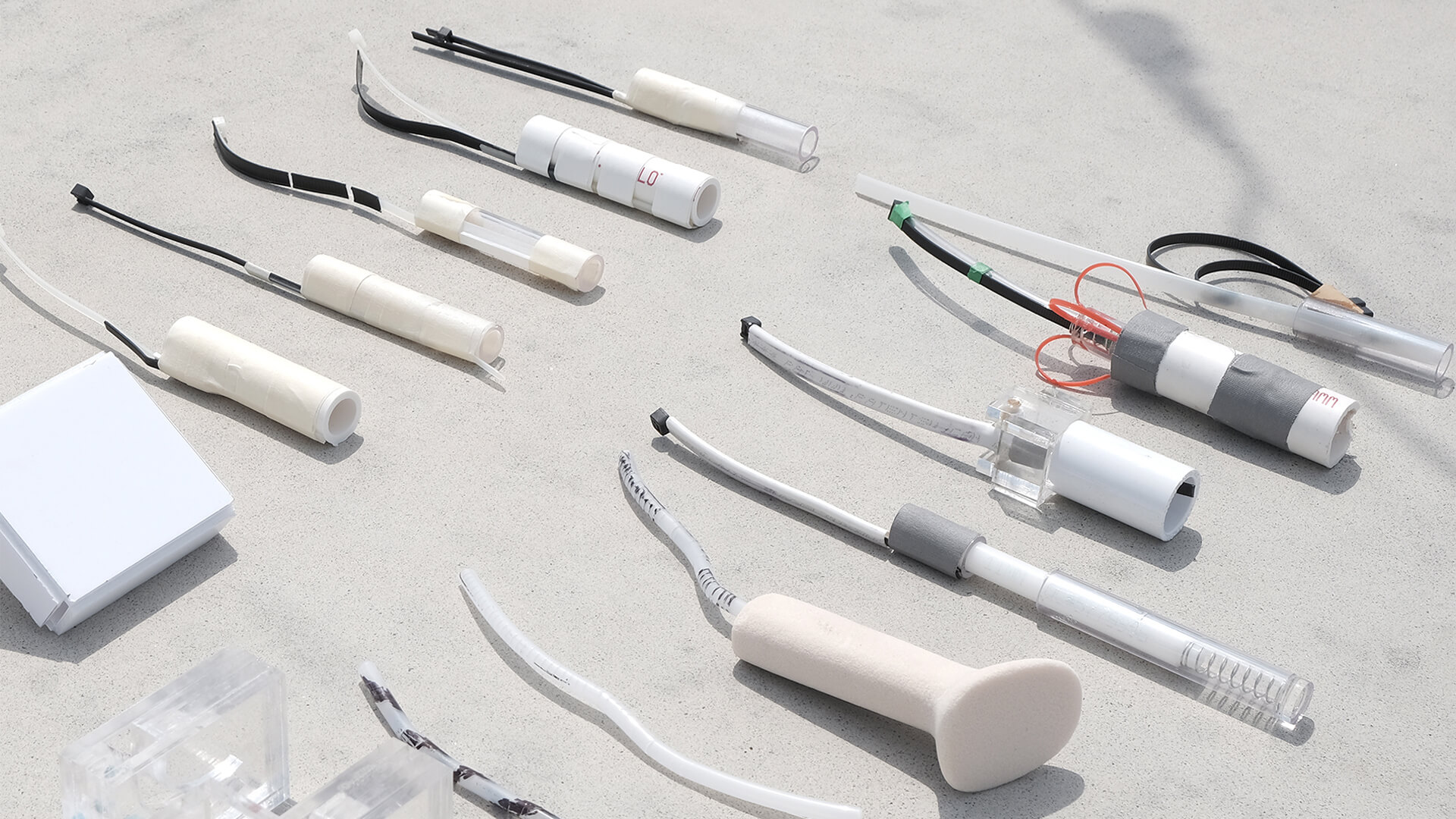
Don’t forget your prototype is … just a prototype
All prototypes are meant to be learning tools that elicit feedback, and the point of prototyping is to discover new challenges, problems, and flaws as you progress to the right solution. Sometimes that means you’ll hear critical things about a prototype you may have spent hours working on—and eventually you’ll probably have to provide feedback for others, too. Prototyping isn’t about defending your perfect creation; it’s about amplifying the speed at which you can learn to enable you to get to the right solution.
Often, IDEO will send research participants several prototypes for evaluation. One of the first things we tell people is, “It's okay if you break the prototype,” because we know it frequently happens. It's more important to allow for genuine interactions and feedback than it is to be overly precious with our models.
This might seem like a lot of information, but these principles are simply guidelines—there’s no right or wrong way to prototype. We think of it as a dance between questions and answers, constantly taking steps toward a more resolved and robust design. That’s why the last principle is, don’t forget to have fun! Rolling up your sleeves and making something is one of the most rewarding parts of the design process, and one of the critically important ingredients in IDEO’s approach to solving hard problems with our clients.
Getting stuck in your own prototyping process? Get in touch so that we can work together to figure it out.
A few years ago, we partnered with Google and Levi’s to build the mechanics inside the Jacquard jacket, which allows wearers to control their smartphones with a brush of their sleeves.

5 talismans for designing a more desirable future
Here’s what they have to teach us.
We’re already living in the future. We’ve had small computers in our pockets for almost two decades that have more computing power than the first space missions. We have cars that drive themselves. There’s a man out there who has a Neuralink chip implanted in his brain, allowing him to control Mario Kart. This is the stuff of futuristic science fiction—except it’s our reality.
And already, we’ve begun to chart the next era of humanity and technology, as we live out the initial stages and repercussions of the technological, social, and political future that we and others drafted as designers of technology. But this future that we now live in has us asking some panicked questions about what the next one will mean for our jobs, the environment, and our kids. Because we’re realizing: This future we’ve created is not good enough.
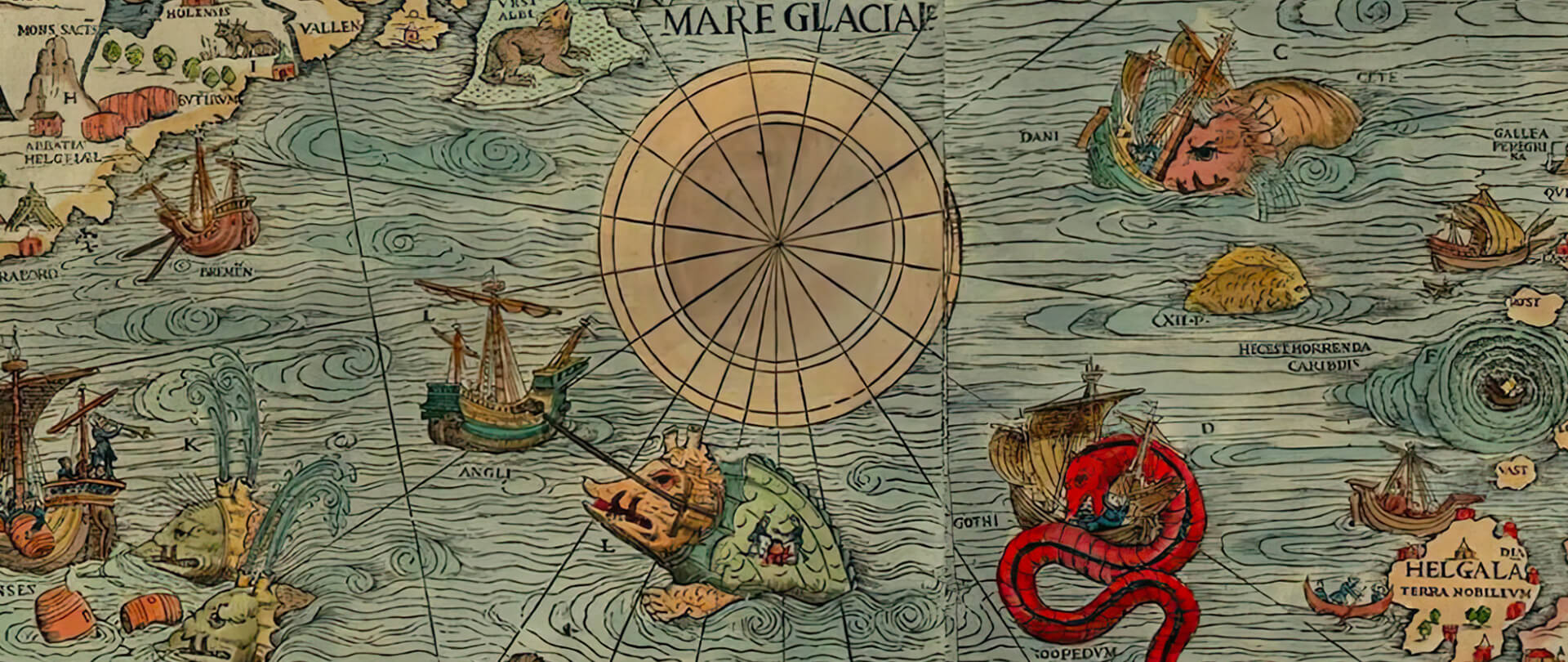
Early cartographers once depicted the vast oceans on ancient maps with intricate illustrations, often accompanied by the warning, "Here Be dragons." These words marked the thresholds of the unknown world, the entry point to unknown realms. In his essay “Here Be Dragons,” James Baldwin pushes us to consider what it looks like to meet those shores with curiosity, empathy, and compassion, to use moments of facing the unknown to overcome fear and uncertainty. Right now is a moment to be brave: Not to react with fear and step back from the edge, but to dive in and see what we find and if we can make the future better, together.
To accompany us in our journey to design a better future, we’ve created a set of talismans that represent what we already know about what’s coming.

1. Eve’s apple: We can’t go back to reality
We’re building a world of deepfakes, synthetic humans, and invented K-pop bands. The real, the invented, and the generated are blending more every day.
Think about U.K.-based Synthesia, which makes tools that can turn a one-off performance by an actor into an endless stream of deepfake avatars, reciting whatever script you give them at the push of a button. According to the company, its tech is now used by 56 percent of Fortune 100 companies.
Hyperreality is here, and we can’t go back—so let’s see where it takes us. What if the debate between “real” and “fake” becomes irrelevant? Maybe our creative expressions will no longer be bound by the limits of human imagination.

2. The heartbeat: Everything is alive
To be alive is to breathe, to pulse, to love, or to dream. But what if life also emerges from calculations, from quanta, and from superpositions? The sharp line between animate and inanimate is blurring, fading, and vanishing fast; life is no longer limited to the organic. What if this is the end of human exceptionalism? What if every object around us becomes alive?
These questions inspire projects like Hume AI’s Empathic Voice Interface (EVI) and ChatGPT-4o, which interpret emotional expressions and generate empathic responses. With systems like these, technology feels more “alive,” because it can understand and react to human emotions with nuance. We can have full conversations with a machine that almost feels like a living being.

3. The Tweezer: Develop taste and precision
In a future of abundant AI-generated content, anyone can create anything, at any time. This means an explosion of creative output, no longer constrained by cultivation of craft.
In this world, we’ll have to select and curate experiences. Otherwise, we’ll drown in options. So, what if taste becomes a valuable currency? Imagine if finding compelling worlds was more valuable than making them.
Consider Pharrell Williams’s role as Louis Vuitton's Men's Creative Director. Broadly known as a musician, he’s an example of a broader trend in the luxury fashion industry, where the role of a creative director evolves beyond traditional design skills. Now, it can include curating and connecting broad artistic expressions to form and build new kinds of media that stand out among the noise.

4. The Hotdog: Orchestrate digital ingredients
More and more, technology is moving from standalone apps to integrated and embedded functions. At WWDC, Apple Intelligence presented visions of technology that can seamlessly anticipate our needs and meet them. Instead of flipping through apps to find recipes for a dinner party, a system like this could come up with a menu based on guests’ dietary preferences, choose a date that fits calendars, and order groceries. Similarly, the vision from the movie Her, which ChatGPT is largely modeled after, is an all-in-one voice assistant that knows all of our needs and preferences, and supports our emotional and social wellbeing—and even provides a romantic connection.
Let’s lean into that trend. Picture technology acting as an innate extension of oneself, rather than as isolated tools. The essential skill is no longer using different apps to complete a task, but mastering the orchestration of digital agents.

5. The Parrot: How to bridge realms
Words matter. But there are so many more ways to communicate, many that humans have never been able to access—until now.
We’re leaving behind the confines of human-to-human communication, and unlocking the secret languages of animals, natural systems, and time. Think about the Earth Species Project, which has been working for the better part of a decade to use AI to decode animal language to support conservation.
So, what if we could decipher the dialogues of the animal kingdom? What if translations could capture the essence of cultures and the subtleties of metaphors? Imagine if we could bridge the ultimate divide—time itself.
In their TeleAbsence series, researchers like the MIT Media Lab’s Hiroshi Ishii and D. Pillis are experimenting with technologies to facilitate dialogues with digital renditions of those we've lost, redefining our concepts of connection and presence. Their project, MirrorFugue, is a piano that captures how a loved one plays, and then plays itself back, allowing you to touch the keys and feel the piano move as it would if they were actually playing it.
Thanks to these talismans, we have a sense of what’s beyond the edge of the map, the future that lies beyond. But, if we want to be the ones to draw the map, we have to live in the real world. And that means folding in not just pie-in-the-sky ideals, but building the best version of business and commerce. So how do you make sure we build the future we want, while creating a future that makes commercial sense?
We believe that great design commercializes emerging technology by marrying what’s possible with what people want and need. That’s the future we’re working to build. As we listen to the panicked questions, let’s unpack the human needs behind them, mapping them to the incredible potential of technology, designing a future that we want to live in.
What is the future you want to live in? Let us know: ai@ideo.com
What can a heartbeat, a pair of tweezers, a hotdog, a parrot, and an apple tell us about what’s coming?

Lindsey Turner
I’m passionate about building brands, products, and experiences that help organizations show up with meaning and momentum.
I help organizations cut through complexity by shaping how they show up, through brand strategy, identity, and storytelling.
Working at the intersection of brand and business, I bring an editorial eye and a bias toward making—turning ideas into tangible experiences that people can understand, trust, and believe in.
My work spans government, healthcare, financial services, media, and consumer goods, from launching Gen Z-focused ventures to building innovation labs and reimagining legacy brands. I relish moments of ambiguity and enjoy translating across teams, perspectives, and priorities to move ideas forward.
I started my career in editorial and digital design, shaping cross-platform experiences and identity systems in publishing and agency environments. That foundation still shapes how I work today: I’m detail-oriented, collaborative, and overreliant on the Oxford comma. I hold a BFA in Visual Communication from the School of the Art Institute of Chicago.

Rachel Young
My work helps organizations see who their products aren't working for—and build the will and the tools to do something about it
For 25 years, I've asked the same question: Who does this design exclude—and what are we going to do about it?
My work spans human-centered strategy, inclusive design, and qualitative research, with clients ranging from Microsoft, Google, and Verizon to the National Science Foundation, and San Francisco Unified School District.
Before IDEO, I taught elementary school in East Palo Alto and spent a decade doing design work with social service organizations—where I learned firsthand what it costs people when systems are built without them in mind.
I am currently writing User Error, a nonfiction book about digital access and the design decisions behind it. I live in Oakland, California.

Brian Pelsoh
I lead with craft, ensuring our work is creatively excellent: rooted in deep human insight and imagination, while also grounded in the realities of business and technology.
My expertise spans brand, communication, and product design across tech, education, the arts, and social impact.
I believe great work demands both high-level vision and obsessive attention to detail, and only happens through collaboration.
I bring an inclusive, hands-on approach and a deep understanding of business, which enables me to consistently deliver excellence while always asking why.
Before joining IDEO, I worked at the brand firms Pentagram and VSA Partners. I began my career as a designer, leading teams at the School of the Art Institute of Chicago and the Milwaukee Art Museum. I hold an MFA in graphic design from Maryland Institute College of Art and a BFA in communication design from the Milwaukee Institute of Art & Design, and have taught at some of the best design schools in the US.

Tony Wong
I am responsible for IDEO’s long-term success in China and working with clients to use design as a tool to enable growth.
I am responsible for IDEO’s long-term success in China and working with clients to use design as a tool to enable growth. Specifically, I have helped Chinese companies design holistic brand solutions through the development of their products, communication, services, and innovation teams, and I have helped multinationals expand their presence and influence in China.
I advise global leaders on developing China-led innovation and capabilities.
In over 15 years in IDEO Shanghai, I have worked on projects that use design to elevate the quality of the experience of healthcare products and services, streamline processes that increase productivity, create spaces and programs that promote and enable inclusive communities, and build next generation mobility solutions that are planet-positive.
Before joining IDEO, I worked at Philips Electronics and the Electrolux Group in Italy, the Netherlands, and Singapore on a number of breakthrough commercial products. I am a member of the Young President Organization in Shanghai.

How to use AI as an editor, not a writer
Ed White shares how he uses AI as an editor—not a writer—to sharpen storytelling, rehearse ideas, and preserve the productive friction that makes creative work better.
Ed White has a rule he's tested on his own writing: hold yourself as the writer, and let AI be your editor. Ed is a Senior Design Director at IDEO's London studio, where he co-leads the firm's AI portfolio across Europe. Before IDEO, he spent 12 years as a writer and editor at the Financial Times, Wired, and Contagious. So when he talks about when to use AI for storytelling and when not to, it comes from two decades of crafting his storytelling skills.
In this episode, Mina Seetharaman talks with Ed about two specific tools he uses to keep AI in an editor's seat: a "roasting agent" prompted to critique his drafts without any sugarcoating, and a simulated audience he rehearses pitches on before the real thing. They also get into what Ed is hearing from design leaders at Anthropic, Lovable, Shopify, and Google Creative Lab about how creative work is changing, and why he thinks the friction of writing something yourself is worth protecting rather than automating away.

Building a personal AI for the messiness of life: Sida Li
Becca Carroll talks with Cue co-founder Sida Li about designing a personal AI for the messiness of everyday life—not just work. They explore how Sida stays anchored to human needs while navigating fast-changing technology, product tradeoffs, business-model experimentation, and the realities of building an AI company today.
Most AI products today are built for work—a space with clear problems and established systems. One founder noticed a gap: personal life is messier, harder to systematize, and mostly left behind by the AI boom. So she built Cue, a personal AI that lives inside iMessage and group chats, to go where the other tools haven't.
In this episode, Becca Carroll, IDEO's Chief Strategy Officer, talks with Sida Li, co-founder and CEO of Shared Context Lab, about staying anchored to a human need while the technology around her keeps changing shape, why she treats her business model with the same rigor she'd bring to a product, and what it feels like to build a company at this particular, disorienting moment in AI.
The conversation also gets into how Sida makes design decisions: the language Cue uses to describe itself, the tradeoffs behind building inside iMessage instead of a new app, and a real story about a business idea that didn’t pan out.
This is the second in a two-part series profiling founders from IDEO's Startups-in-Residence program. The first conversation is with Johannes Seemann, founder of Sooner, on designing GenAI for the emotional side of money.

Designing GenAI for the emotional side of money: Johannes Seemann
Designing financial tools around the feelings that shape money decisions.
Most personal financial tools are built to run the numbers and optimize towards a budget. While that works for some, most people experience money as a lived relationship that does not neatly fit into a spreadsheet. Johannes Seemann and Becca Carroll discuss why money is emotional before it is mathematical, and what a human-centered approach to building a generative AI financial product looks like in practice.

The curious leader's edge in uncertainty: Scott Shigeoka
How genuine curiosity helps leaders navigate uncertainty with greater confidence.
Mina Seetharaman talks with Scott Shigeoka, author of Seek and Head of Curiosity Cultivation at the Eames Institute, about what distinguishes genuinely curious leadership from performative curiosity, how power dynamics shape curiosity, and why practicing curiosity can restore energy rather than drain it.
Looks like you might be in search of something very specific?
Or reset the filters above and try another angle.
Here’s some random inspiration

Podcasts about creative leadership

Articles about the power of prototyping
