
.svg)



Mattress designs that led to a cultural transformation
How the world’s largest mattress manufacturers transitioned from operations-centered to customer-centered.
Sealy and IDEO first collaborated in 2008, to rethink the design of its Stearns & Foster line. For years, Sealy, the largest mattress manufacturer in the world, had taken the standard industry approach to selling mattresses and watched market share and sales flatten; it knew something had to change. Stearns & Foster evolved from a single product design into a keystone for transforming the organization.
IDEO helped Sealy use actionable consumer insights to develop a scalable design methodology and new brand principles, which it applied to product design, operational and manufacturing decision-making processes, and sales and marketing strategy. This “brand-to-product” framework was subsequently used for three separate and consecutive product launches—Stearns & Foster, Embody, and Posturepedic—resulting in an overhaul of 85 percent of Sealy’s mattress portfolio.

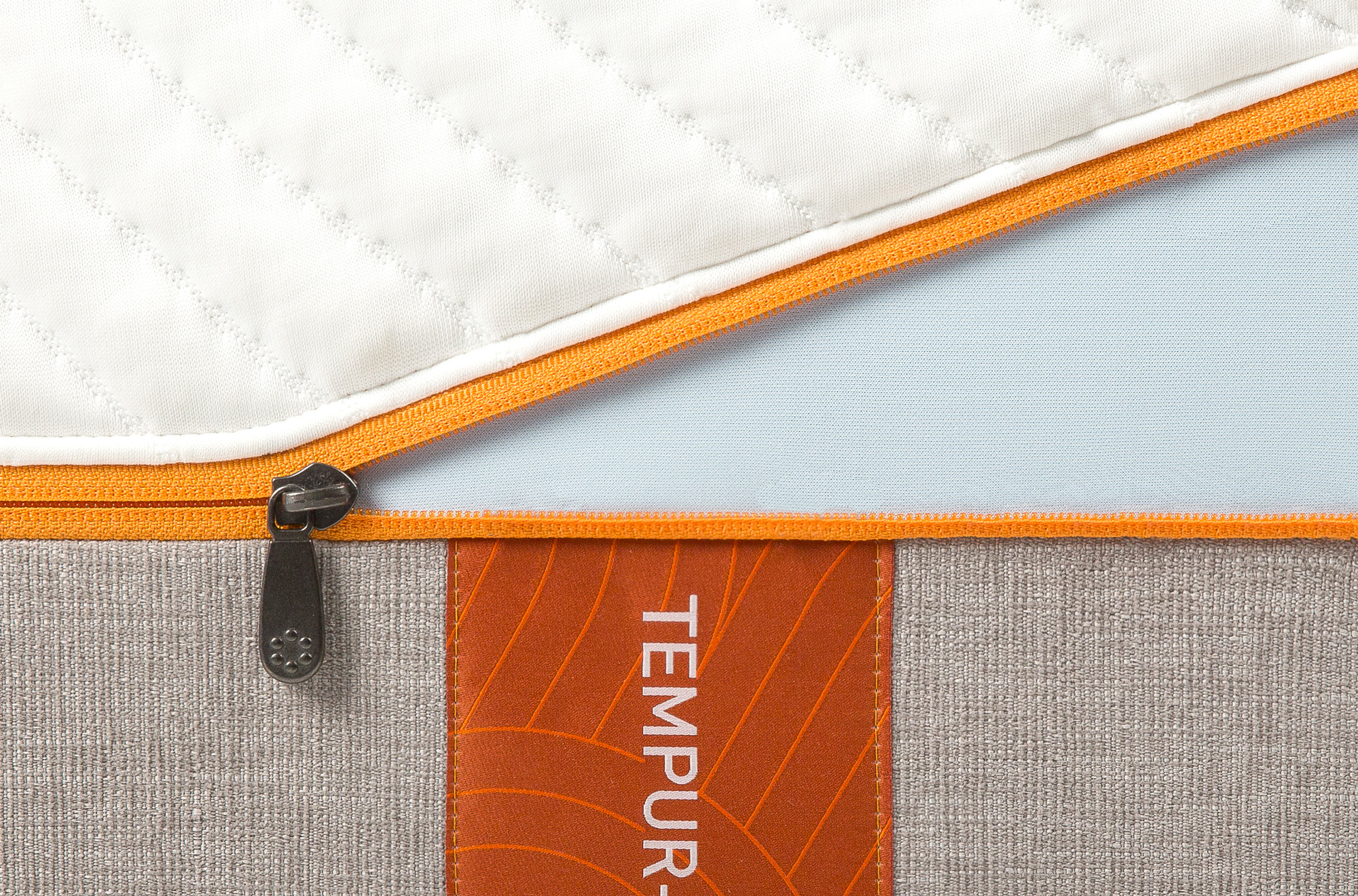
Tempur-Pedic was already working with IDEO on a new mattress design when it acquired Sealy in 2013. It was also interested in how design thinking and human-centered design could improve its business. Once solely focused on the technological elements of designing a mattress, together with IDEO, Tempur-Pedic redesigned the outer shells of its mattresses to reflect the quality on the inside. This design change led to the company to look at new ways to infuse design into their products.
“The initial project was to design the mattress,” said Thomas Overthun, associate partner and design director at IDEO. “But the second project was to create a whole design language from the mattress out to what it meant for any other product, from pillows to blankets and other accessories. It eventually became bigger than just the mattress.”
Working on the Tempur-Pedic/Sealy relationship has been gratifying, said IDEO partner and design director Michael Hendrix, because although home goods can be thought of as simply products, nothing could be further from the truth. IDEO and Tempur-Pedic/Sealy changed the course of the mattress company's business through the transformative power of designing where, and ultimately how, people sleep. And in the process, the organization itself changed as well, moving siloed departments to cross-functional teams, with the brand division central to their cooperation, which led to consistent and aligned decisions across the board.

Some of the projects include:
Stearns & Foster Luxury Mattress
Sealy teamed up with IDEO to develop a design language for Stearns & Foster mattresses that would reestablish what the brand stood for. Through redefining brand principles and rounds of prototypes that focused on evocative details, the new Stearns and Foster mattress was the highest rated in Sealy’s portfolio since it started keeping records, and initial retailer orders were three times what management projected.
Next-Generation Posturepedic
An icon in the mattress industry was brought into the 21st century by developing a new product that delivered on the long-running promise of the brand. Together, IDEO and Sealy designed a product that focused on holistic back health. In its earnings report, the company said US bedding sales for the quarter were up 10.6 percent, to $253.4 million, a figure driven by the new product line’s introduction. According to Sealy’s Q3 earnings report, the Posturepedic launch represented the largest and fastest rollout in the company’s history.
Embody by Sealy
The project began by defining the market opportunities for all-foam beds, and ended with the modern, streamlined Embody mattress as well as a simplified design language, free of industry jargon, to help retailers talk about the mattress to customers. “Sealy collaborated with IDEO to create an approachable and attractive mattress that delivers the simple, healthy rest consumers want with a selling story they can easily understand,” said Jodi Allen, Sealy’s Chief Marketing Officer.
Tempur-Pedic Sleep System
Best known for the revolutionary, NASA-proven Tempur material inside its mattresses, Tempur wanted to transform the exterior of its mattresses to match the caliber of innovation inside. Together with IDEO, Tempur created a new sleep system, including an easily removable and washable fabric mattress cover. “Tempur-Pedic was born of innovation, but we were never a design-driven company until we worked with IDEO,” said Patrice Varni, senior vice president of brand marketing, Tempur Sealy North America, LLC. “Seeing consumer need in a new way through IDEO’s eyes has transformed us. Our product design, our creative psyche, our brand are all fundamentally changed by this sharper focus. This collaboration has given us all a renewed sense of pride.”


Designing the future of urban farming
Helping a Berlin startup strengthen its offer of vertical farming products and services.
The challenge of how we’ll feed the exploding world population in the future—in a sustainable, cost-effective, and environmentally friendly way—is seeding an agricultural revolution in Europe.
In 2012, INFARM founders Erez, Guy Galonska, and Osnat Michaeli found that vertical farms could be a solution to urban self-sufficiency. These farms could allow people to grow vegetables and herbs in small spaces, with no soil and far less water.
An approach that’s captured the imagination of futurists for decades, vertical farming involves growing vegetables and herbs in stacked units or inclined surfaces, within which moisture, light, temperature, and nutrients are monitored, and controlled.
After creating their first vertical farming experiment in their apartment in Berlin, the founders brought together plant scientists and industrial designers to explore and develop vertical farming’s potential.
Since then, the startup has created custom growing systems for clients including Airbnb, Mercedes-Benz, and Weber. Most recently, INFARM installed a vertical farm growing herbs and vegetables at the Berlin branch of German supermarket chain Metro, the fourth-largest retail chain in the world, to sell to the public. It’s been profiled in Wired Germany, Süddeutsche Zeitung, The Guardian, and Zeit.

INFARM collaborated with IDEO to further explore their B2B offer, including concepts for the industrial design of the stackable, modular, climate-controlled units; the interaction design of an accompanying app to monitor and control the units, and its business model.
Urban farmers will sign up for “farming as a service,” comprising the units themselves, as well as a monthly subscription for seeds, cartridges filled with nutrients, and a pH regulator. Because they’re stackable, the modules can be scaled to suit anyone from a home grower to a restaurant chef or supermarket owner. And Erez claims a 1 square meter growing tray can yield four to six mature plants every day, 365 days a year, doubling that of state-of-the-art hydroponic greenhouses.
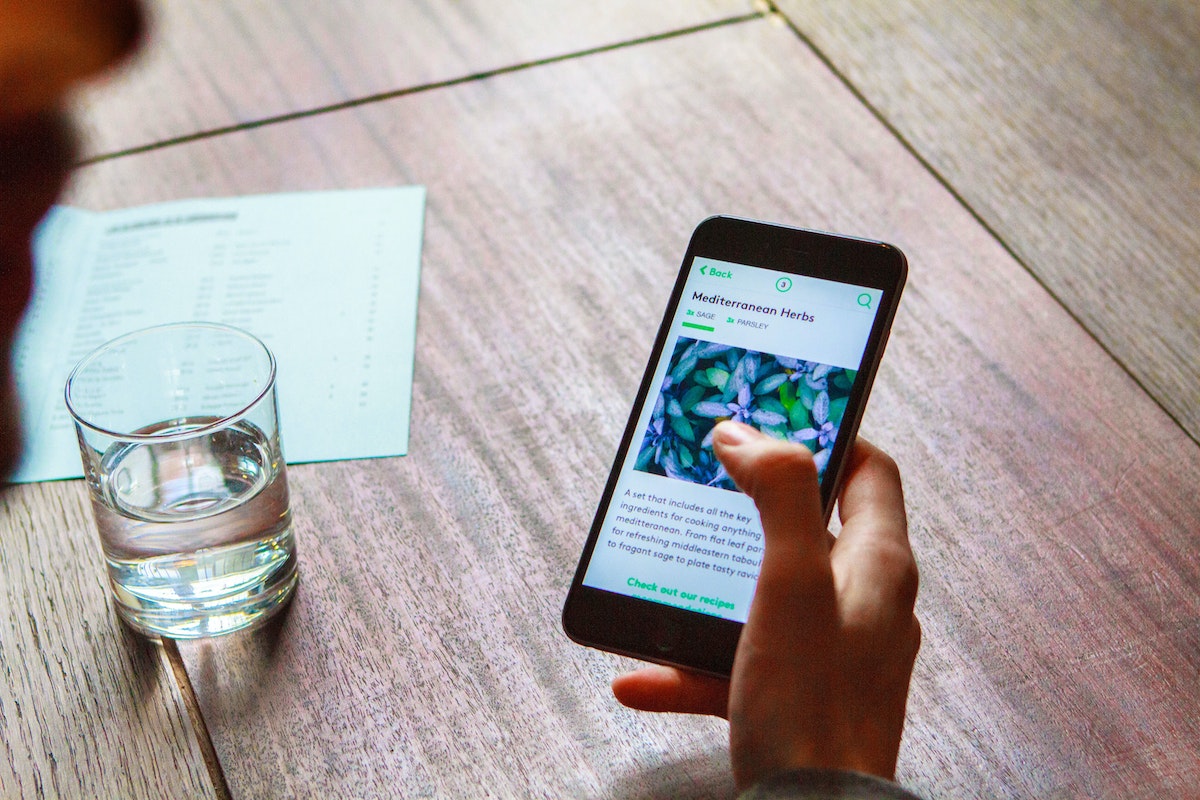
As well as remotely regulating each unit’s climate, the app will educate growers about new vegetables and herbs, selling packs of complementary seeds, with suggested recipes for them, and cooking instructions. Aiming to promote biodiversity, the firm will sell rare-breed and heirloom seeds too.
The startup has funding from the EU’s European Pioneers fund, and is now looking to secure investment to accelerate software development and ramp up their hardware production capabilities. Quite literally, it's growing its business.

Bringing beloved children's characters to a new platform
Sesame Street iPhone apps for Sesame Workshop.
Sesame Workshop is the nonprofit educational group that revolutionized children’s television with the launch of the landmark Sesame Street program in 1969. The show, which has since become a household name, is now watched in more than 150 countries worldwide. The Workshop also creates educational content for new media platforms, and partnered with IDEO to design a line of Sesame Street–themed apps for Apple’s iPhone. The Elmo Calls app, which functions as a utility app for parents and as an entertaining behavioral-development app for kids, is now one of the Top 100 paid iPhone apps in the iTunes store.
The collaboration began with a mutual desire to bring the show’s beloved characters to the iPhone platform—and to do so using a human-centered design approach. Child-development experts, educators, toy and interaction designers, and even the Sesame Street puppeteers weighed in on the design decisions. The team also worked closely with families throughout the project—from initial concepts to early prototyping to the final development—in order to stay focused on how children actually use the iPhone for play. The games were designed accordingly. For example, the team omitted menus from the Sesame Street apps to keep the experiences simple, playful, and fun for a young child. And each game features exclusive new Sesame Street videos, allowing players to enjoy “lean back” moments along with interactive ones.
The resulting iPhone applications let children engage with the favorite Sesame Street characters in a whole new way. Kids touch, shake, swipe, and tilt their way through original games featuring Elmo, Grover, Bert, Rosita, and the Count.

The titles, all of which are available from iTunes, include:
- Elmo Calls: Engages 2- to 5-year-olds in listening-skills practice and active participation during everyday situations.
- Elmo’s Monster Maker: Allows kids to create unique monster friends that dance and play with Elmo.
- Sesame Street Video Maker: Lets kids star in their own music videos, mashing recordings of themselves with popular Sesame music videos and adding their own stamps and special effects.
- Sesame Street Makes Music: Helps kids explore an array of instruments as they contribute to new renditions of classic preschool tunes with their Sesame friends.
Nurturing a creative culture
How writing a book about our shared values helped articulate what it means to be successful at IDEO.
How do you know when you’re successful in your work? You can check off a list of technical skills and expertise you bring to the table. You can use a career development rubric to make sure you’re hitting the right goals. But often, it’s your behaviors—the intangibles that are the most difficult to articulate—that make the most impact. Things like your ability to stay optimistic or your willingness to adapt when there’s no roadmap.
Because of the nature of our work at IDEO, these intangibles are a big part of what defines the experience of working at the company. So in 2012, a global team of designers from our U.S., Europe, and Asia offices came together to codify these values and behaviors as part of a larger effort to evolve IDEO’s career development platform. More often than not, when IDEOers hit road bumps in their career, it was not about what they were doing, but how they were doing it.
The team agreed that, in addition to identifying the technical requirements needed to progress through one’s career, it was just as crucial to give IDEOers the tools they need to navigate the complex culture. So they captured the values they believed were foundational to the culture and most strongly shared across the IDEO community, and put them to paper in The Little Book of IDEO. The title is meant to reflect its purpose for readers—a handbook that’s compact, useful, and free of any corporate jargon.

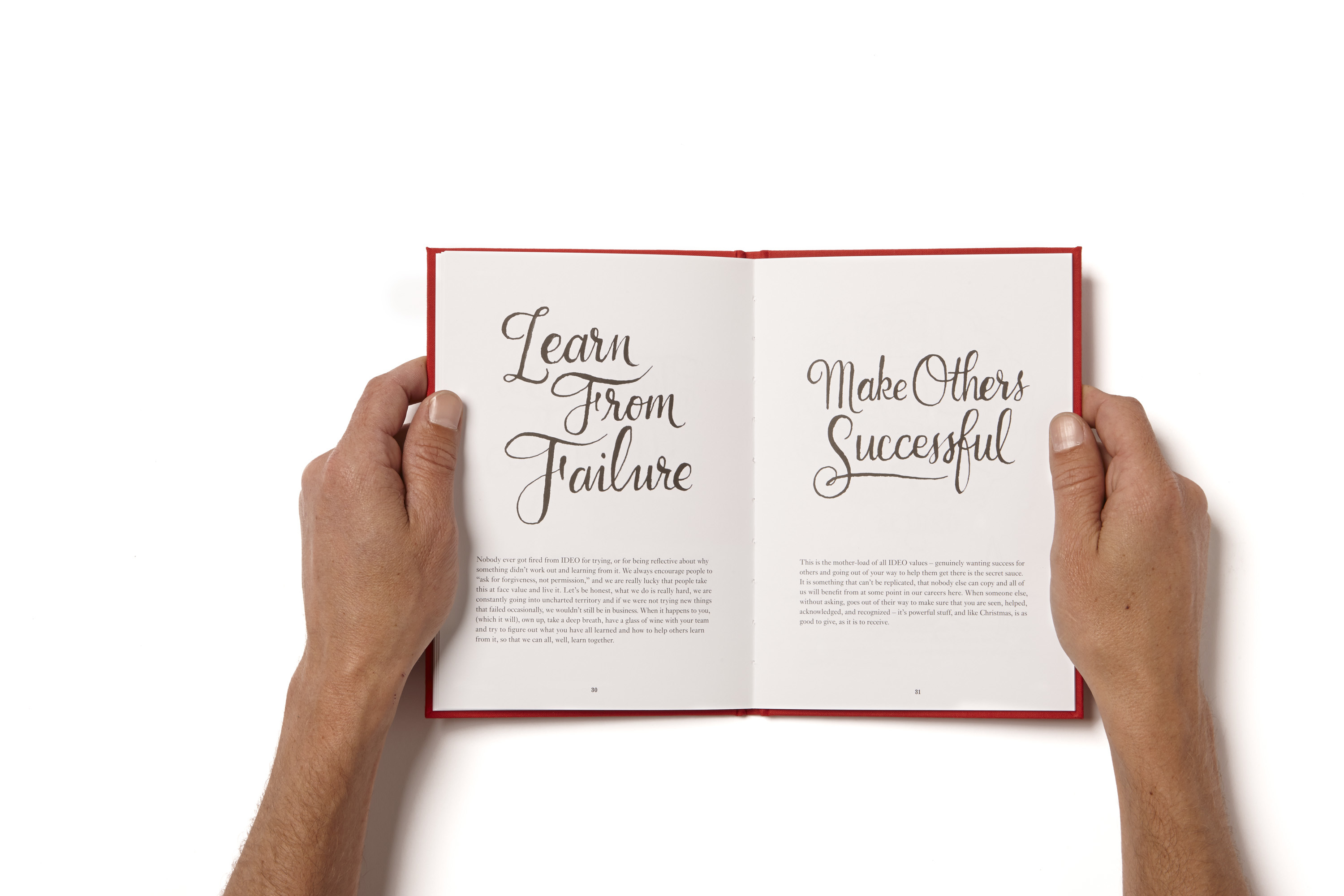
For IDEO-ers, this red cloth-bound guide provides a shared lexicon around both the hard and soft skills we need to succeed. It describes things like why IDEO is so loosely structured, where it comes from, and where it’s headed.
Most importantly, the book identifies the organization’s seven core values. These are by design specific, actionable, and integral to the kind of work we do and the environment in which we do it, going beyond common sense and general ethical practice. The intention: to foster meaningful conversations within the community about life at IDEO, and how to achieve success along the way. With each succinct expression comes a deeper explanation of why it matters, and how it shapes our experience at IDEO.
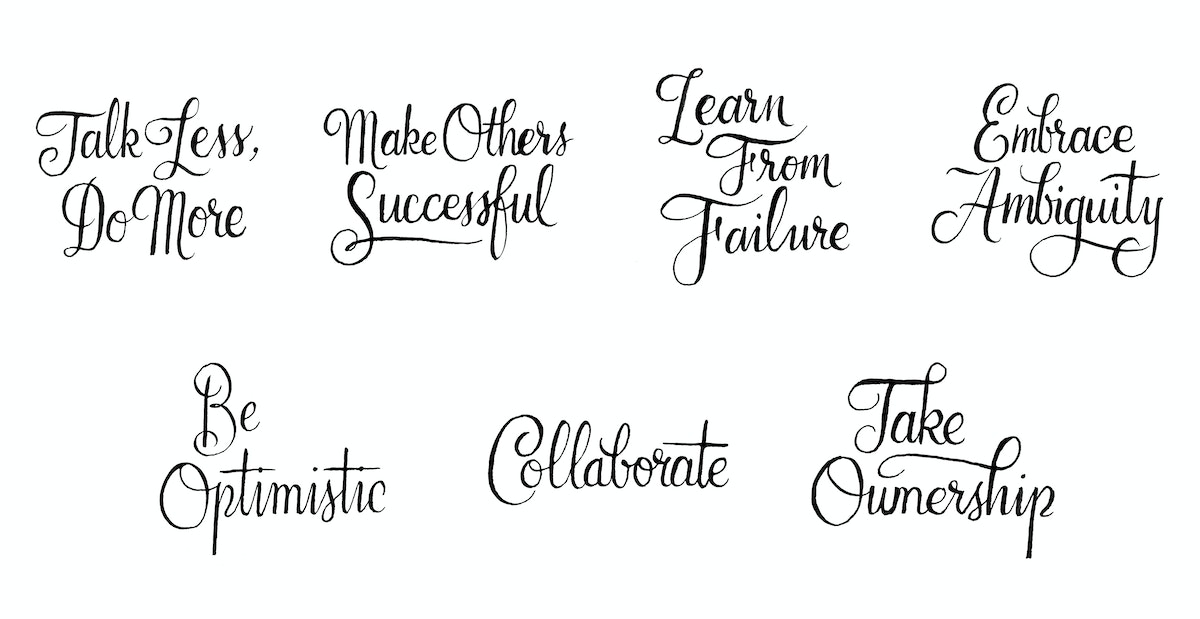
Over the years, the book has been roundly embraced by the IDEO community as an honest articulation of who we are, as opposed to what we aspire to be, and what we appreciate most about working together. When IDEOers first got their hands on it, a movement took shape to create videos that bring each of the core values to life. To depict the value of "Embracing Ambiguity," for example, New York-based designers built a makeshift cardboard rowboat, and while simulating a storm, navigated their way through uncharted territory with teamwork and optimism. San Francisco produced a Jacques Cousteau inspired look at the lifestyle and behaviors of designers in their natural collaborative habitat.
Through the process of making the videos, IDEOers came together to reflect on each of the values, talking through what resonated and what didn’t. It gave them a sense of ownership, and a platform through which to share their interpretations.
A Global Conversation
IDEO has a global presence—offices in two countries in Europe, two countries in Asia, and multiple locations across the U.S. As an organization that embraces a human-centered culture, it felt important to learn if the values resonated with the IDEO community in all of these locations, especially in a country like China, whose working culture is so different from the west. We saw the authenticity and resonance of the values as essential for attracting, motivating, and retaining local talent.
So how did The Little Book of IDEO land in Shanghai? Exploring this question would illuminate insights into how our own clients are often challenged to keep their company culture resonant within the global landscape.
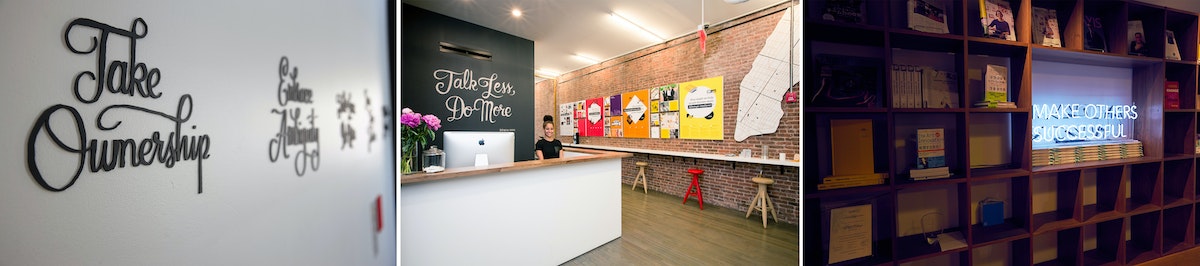
A team of IDEOers in our Shanghai office took on the challenge of exploring the meaning behind each of the values. They were surprised with what they discovered—that despite the firm’s Western origins, locals felt largely connected to the values. It even helped to further solidify their identity as a community, even if it may have been in tension with local working culture, because it was rooted in a set of shared beliefs.
In some instances, the Shanghai team built on the existing values in order to refine the meaning for the local context. For example, the core value "Be Optimistic" rings true, but could sound naive when translated directly to Chinese, implying "rose-tinted glasses.” So in the Mandarin edition, an extra phrase was added to convey the measuredness we mean when we talk about optimism at IDEO. The lesson here: The treatment of something as fundamental and nuanced as our values requires authenticity and emotional connection, and therefore more of a transcreation process than straight translation.
Lasting Power
As an organization, we are designed to be flexible. This means we’re always changing—even when it comes to how we are structured—so that we can respond to the kinds of challenges that clients come to us for. In the midst of our constant evolution, The Little Book of IDEO is as resonant today as it was when it was published.

Why your office needs a laugh detector
How one data scientist set out to track the volume of laughter as a measure of success
As a data scientist, this idea got my gears turning: What if I could use machine learning to build a laugh-detecting algorithm?
Prototyping is a great way to explore how emerging technologies will play a role in our connected future. But instead of focusing on how we will teach our machines to sense human behavior, I’m interested in designing what we will do with the information our devices are learning. In a world filled with machines that learn and interact with us, it’s important that they are able to respond to all parts of our humanity—including the things that make us laugh.
I wanted to see what kind of laugh detection prototype I could build in a few weeks. Here’s how I did it:
1. Building the algorithm
To build the laugh-detecting algorithm, I knew that I wanted to use deep learning, so I turned to Keras, a programming library which makes creating neural networks fast and simple. To train the laugh detector, I needed to use sequences of audio as the input and predict whether or not laughter would result as the output. Fortunately, I found Audioset, a collection of over two million 10-second audio clips with labels from over 6,000 categories. Using a subset of the Audioset collection that is half laughter and half speech, I was able to get a laughter detection model running with 87 percent accuracy within a few days.

After creating a training dataset, I got started on the machine learning challenge. The Audioset data does not contain the extracted raw audio, only a 128-length feature vector for each second of input, which is created using a convolutional network operating on the raw audio spectrogram. These feature vectors will be the input for the machine learning algorithm, and the output will be a binary label of whether the input contained laughter. Since I am working with a relatively large dataset, I wanted to use some deep learning methods, so I turned to keras, an API that makes creating and training neural networks extremely simple, while still leveraging the computational efficiency of optimized tensor computation libraries like TensorFlow and Theano.
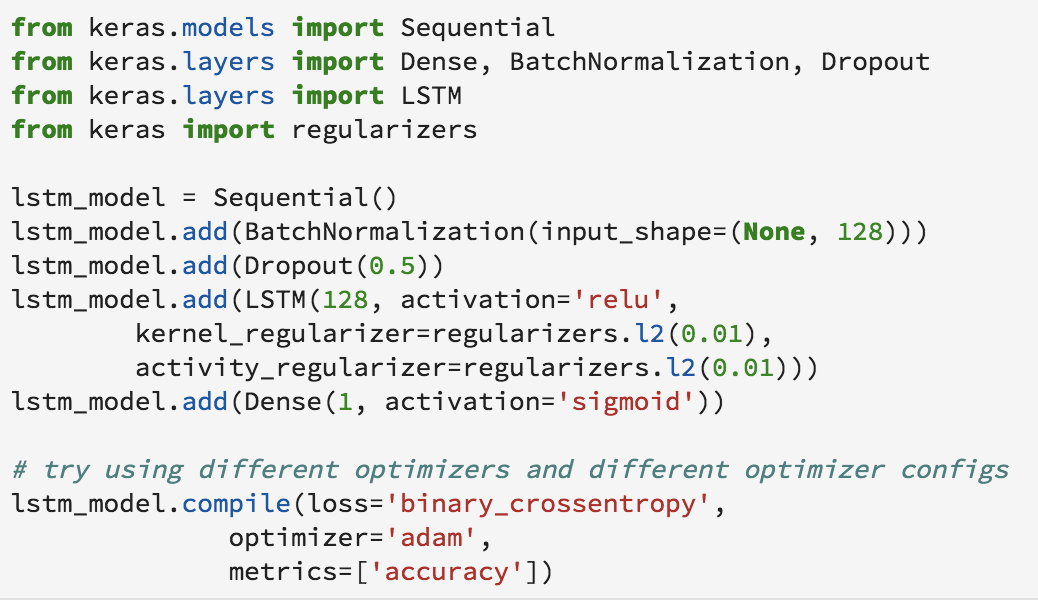
Since the model input is sequential, I wanted to try a recurrent neural network first. I started with a single layer LSTM model that quickly converged to 87% accuracy. Learning from the code in a very similar project, I found that applying batch normalization to the LSTM input was very important for getting the model to converge. One of the headaches of deep learning is that seemingly trivial details like this can have a large impact on convergence. I was happy with the performance of my first LSTM model, but I decided to try out a couple more options before moving on. I tried a 3-layer LSTM (because if one layer is good, three must be better), then I tried a simple logistic regression model to see if the fancy RNN architecture made a difference. The models performed with 88% and 86% accuracy, respectively, which showed me that, in this case, more layers did not equate to more power.
Ultimately, I ended up choosing the single layer LSTM, even though it was larger than the logistic regression model, because it was able to handle variable length input. The training data was all sequences that were 10 seconds long, but I wanted the laughter detector to be able to respond quicker than that. While the logistic regression could only operate on input that was the same length as the training data, the LSTM model can still operate on any input length, as long as it is split into one-second chunks.
To take the trained model and run it as a live laugh detector, I put together a python script that pulled together a few different steps. First, the audio is captured from the microphone using pyaudio and chunked into three-second clips. (The length of these clips is an adjustable parameter.) The raw audio is then fed into the pre-trained vggish network and converted to a sequence of feature vectors with the same parameters I used for creating the Audioset training data. The sequence is then fed into the trained LSTM model, and the laughter prediction score is returned and written to a timestamped .csv file. By default, the raw audio is then discarded, and only the score is saved. That way, there are no concerns about storing or transmitting anyone’s private conversations. By running the audio capture and processing in separate threads, I was able to run this continuously without any lag on my laptop.
2. Designing the experience
Once I had the ability to measure laughter, I had to tackle the real design challenge: How do we implement the laugh detector in project spaces without making it seem obnoxious or creepy?
I enlisted the help of a few smart colleagues to approach the challenge from multiple angles: a software designer experienced in designing for play, an environments designer to explore how the detector would show up in a project space, and a communication designer who’s written on the science of laughter.
We had a brainstorm around what we might be able to do with a laughter detector, and the ideas poured in. Perhaps we could use laughter as a weekly indicator of morale (similar to Bhutan’s gross national happiness), or host a competition between project teams for who laughed the most? If we could determine when people are laughing, maybe we could figure out why they are laughing, too. We could determine when laughter is genuine or just polite, which jokes are the funniest, or even measure who is laughed at the most.
Some of the more wild ideas included a gif of an IDEO Chicago director Jon Wettersten (below) who laughs along with us, or an alert that would play videos of clowns if we went too long without laughing.
Ultimately, we wanted to select ideas that would give teams insight into their laughter, but not be too intrusive or prescriptive.
Information systems shouldn’t overwhelm users—particularly when that information concerns people’s moods. There are times when it’s appropriate to not be laughing; you don’t want your smartwatch telling you to laugh more during your grandma’s funeral. And if we were to build a device that listens for laughter, we'd need to make sure that we communicate and maintain people’s expectations of privacy.
With all this in mind, we narrowed it down to two concepts that we would take forward into the prototyping phase.
3. Hatching prototypes
The first thing we made was a simple information dashboard built in Dash. We referred to this design as a “FitBit for laughter,” as it was meant to help teams set goals and measure their progress towards those goals.
This raised the the question, what if you could track your emotional health in the same way that you tracked your physical health? What kind of goals would you set? What would your “laughter workout” look like?
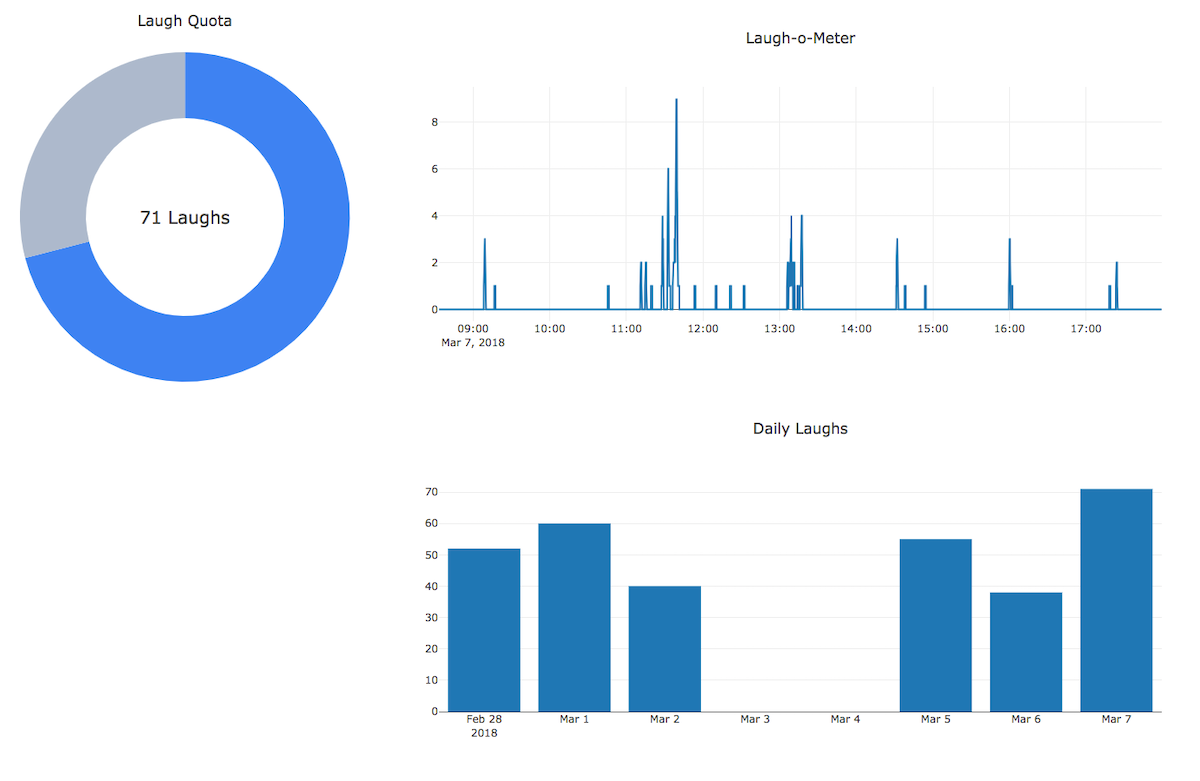
To start, we measured laughs by time of day over a period of 24 hours, laughs per day over the past week, and how close teams are to achieving a daily “laugh quota.”
The second prototype used the output of the laugh detector to control the color and intensity of a Hue lightbulb. When there is a lot of laughter in a room, the light glows a bright yellow to mirror the warmth that laughter brings to a space. When there is less laughter, it transitions to a dim blue to help teams stay calm and focused. In this way, the environment responds to the activities and emotion of its inhabitants.
What if the smart systems we create could react not only to a user’s presence or interaction, but adapt to the user’s mood? How might we design smart systems or spaces that are emotionally responsive?
4. User testing
We wanted to see how people would react to the laugh-bulb, so we got a few colleagues to sit down and test it out. The original plan was to play funny videos to stimulate laughter, but as soon as people sat down, they started joking so much, the videos were unnecessary.
Laughter is a reinforcing behavior; when you laugh, the people around you laugh too, creating a virtuous cycle that can leave you laughing until you’re sore. Seeing the light grow brighter as the room fills with laughter adds energy to that cycle. The group that came in to test the laugh-bulb ended up laughing so much that you could hear them throughout the studio.
WATCH: Testing the laugh-bulb prototype.
Next up, I’d love to put these prototypes in front of more people to see whether quantifying laughter can affect their mood. And I'm left wondering, which emotional or mental health signals could be measured and recorded next?
As more aspects of our lives are recorded, we are going to be able to quantify and improve our lives in ways we can’t yet imagine. Let’s design these systems not just to make us smarter, but to make us more joyful, too.

Play goes hand in hand with innovation. I learned this from Brendan Boyle, director of IDEO's Play Lab, who says that if you measure the amount of laughter in a project space, the teams who chuckle most are also the most successful.

How to motivate a team to pull off the impossible
These life-size origami installations are built by creative leaders at IDEO
As soon as the rain stopped, we got on our bikes to survey the damage. We saw the flowers on the horizon: droopy and sad-looking. Then, suddenly, they started illuminating, one after the other—opening up, blooming. To this day, we still don’t know how they came to life. But the sight was exactly what we had envisioned. Better even.

That was 2014: the official start of FoldHaus Art Collective. Since then, our art installations have become bigger and more audacious. Shrumen Lumen, five massive, origami mushrooms, followed in 2016 (they’re now on exhibit at the Smithsonian American Art Museum), and we most recently built a five-story tall, geodesic sphere covered with 42 origami shells called RadiaLumia.
Each project takes months to design, prototype, and build. Which means I often get asked: Why do you spend your nights and weekends doing this when you have a fulfilling day job as a creative leader?
For me, it means that I get to work with a bunch of other creative types who pitch in to build something beautiful that’s bigger than what any one of us could do on our own. I get to work with my hands in a way that’s rare in my day job, and every project stretches my own sense of what’s possible.
And because FoldHaus projects are always a group effort, we need to broaden the question: Why do any of us—between five and 30 volunteers contribute to our projects on any given weekend—give up sleeping in to solder? Or skip the beach to code LED patterns? As one of the leaders of the group, I have learned a few things about what it takes to build a strong community and take a bold vision from a Post-it to the Playa.
Here are the 5 principles that have helped this team pull off increasingly ambitious projects:

1. Set an audacious—and contagious—vision
Drawing in a team requires not only that you love your idea, but that others do, too. After all, if you’re asking them to volunteer their time, they’ve got to be pulled in week after week, when they could easily be at the taco truck.
Blumen Lumen was a hit because everybody loves flowers. With the Shrumen Lumen, it took some convincing—many worried about associations with 'shrooms at Burning Man. This year, I made sure to test out the RadiaLumia concept with a few key members of the team, so I knew I had broad support. The buy-in worked, and has yielded our biggest team of volunteers by far.
The bottom line: Pressure-test your idea early—before you get too attached to it—so others will want to join up and help you realize the vision.
2. Stand on your own shoulders
Leading people to a grand vision is impressive only if you can actually pull it off. Ladder up from where you (and your team) actually are to where you want to go. And, acknowledge that it may not all happen at once.
Even before our Blumen Lumen, we built three shade structures for Burning Man. One was a disaster, but we learned from it. Now, we ensure that we are leveraging all we mastered the previous year to create the next installation. People are drawn to us because of our bold vision, but they stay with us because they know we have what it takes to make it happen.
The bottom line: Learn from previous outings that you can get over the mountain, so you can ask people to stretch and meet a new challenge.
Folding the origami pieces looks easier than it is.
3. Make it accessible
Part of the fun of leading a creative team is building camaraderie and community. But that can be constrained if a project requires too much specialized knowledge. Ensuring that part of the project is achievable by those without technical or unique skills is key to drawing a crowd when you need it.
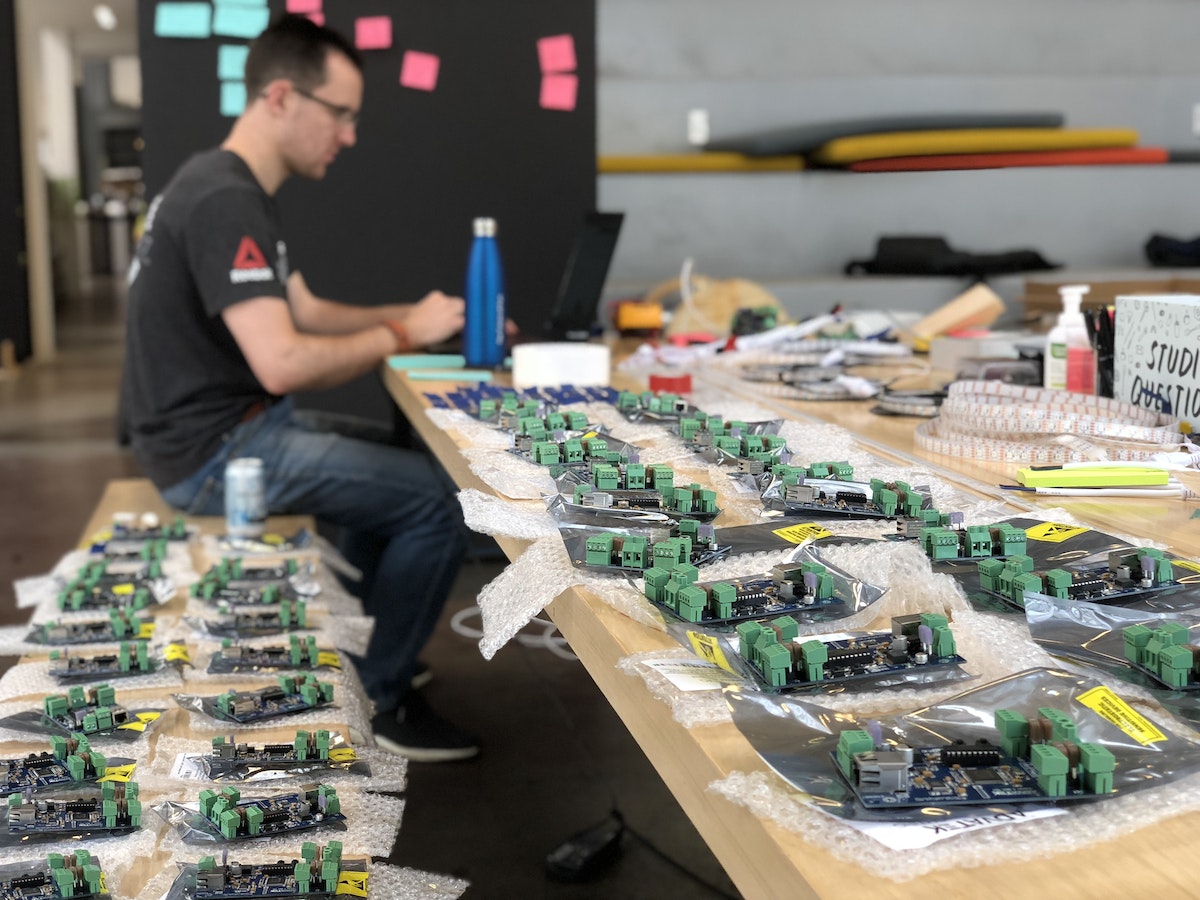
On all of our projects, a big part of the effort is folding the plastic origami pieces. That requires pure manual labor, and anyone can be trained to do it, so we hosted all-hands-on-deck build parties every weekend leading up to Burning Man.
The bottom line: If you want to draw a crowd, create easy ways for people to participate without specialized expertise.
4. Leave room for individual passions
When people are motivated to do something, get out of their way and let them go for it. Given the freedom, teammates will create something together that’s more amazing than what a single creative leader could pull off. Set the vision, then let people self-select into groups to get it done.
With RadiaLumia, no one person knows everything that’s going on at every given moment, which is kind of scary but also amazing, because it’s coming together despite—or because—of that!
When we shared the vision at the kickoff meeting in February, there were a bunch of people who’d only just met. Within minutes, they were already troubleshooting light placement. By the end of the afternoon, they’d demonstrated a cool light show—on day one! We now have several self-directed teams that are loosely connected, but working independently.
The bottom line: If you create a compelling enough vision and rough guardrails, you’ll create the conditions for people to self-organize in a way that will surprise you.

5. Embrace ambiguity
The beauty of large-scale creative endeavors is in all of the unknowns. Try to remain flexible about who realizes the vision (and how).
Each year there are moments of extreme uncertainty. Weeks before installing the Shrumen Lumen at Burning Man, the origami kept getting stuck when we tried to pull the stems over the steel substructure that would anchor them to the ground. This was completely unexpected and took two weekends to debug. (Spoiler alert: We fixed it, but not without panic!). Troubleshooting is part of the process.
The bottom line: Expect the unexpected, and look for the beauty and lessons in it rather than the difficulty.
One of the most rewarding parts of FoldHaus is that while I may set the vision, once we pull off a communal project, the whole team feels immense ownership and pride. Being able to share both the process and the result is what makes the late nights and desert rainstorms worth it.
See RadiaLumia come to life at Burning Man 2018.
Also: We’d love to hear about your ambitious team efforts, at Burning Man or elsewhere, using the hashtag #MakerArt.
Special thanks to Amy Bonsall for her massive help crafting this story.
We’d been working 16-hour shifts to install our art piece, a series of 10 larger-than-life, undulating, mechanical origami flowers. It was our first big build at Burning Man, and it took way longer than we expected to set up. After days, the flowers still weren’t working. Then came a torrential rainstorm.

Trust is earned, not machine learned
AI needs to earn our trust, just like any human relationship
Direct feedback that teaches rather than chides requires trust, and trust takes time.
Unlike humans, AI craves to know when it’s wrong. The entire premise behind machine learning is that it learns from failure or success. For example, we may feel that weather algorithms always get it wrong, but they can only improve by comparing their forecast to what actually happened. It’s therefore our job to tell the system when it’s wrong and acknowledge when it gets it right—but that requires a level of trust.
We can often tell if our friends or partners are unhappy with our actions, even if they don’t directly tell us. We can read their facial expressions, subtle changes in their tone of voice, and body language. Machines, however, don’t have that kind of intuition. Until we’re all walking around with some kind of lightweight EEG machine strapped to our head, machines will need to find proxies for how to sense human emotions, desires, and preferences. The obvious way to do this is to just to ask us, but that is manufacturing a transactional relationship, not a trusting one.
All I’m asking AI is for a little respect
A good example of an AI asking for trust rather than earning it can be found in the personal styling services that are popping up. They are doing some amazing things in integrating data science into every component of their business to drive growth. But my experience put me in the awkward position of feeling like I needed to explain myself and share sensitive personal details with someone I’d just met.
Signing up for the subscription service begins with a long and detailed survey about body type and style preferences. I spent a good 30 minutes thoughtfully answering myriad questions to create my style profile, and yet I returned everything that they sent me in the first box. None of it jived with my personal style, and only one thing fit.

I had put the time into creating a relationship with the AI—training it with my intimate information, such as how my body was shaped—and that process had given me a false sense of mutual understanding. If it had just taken a look at my Instagram profile and sent me a box, I would have given it permission to get it all wrong. But its surprisingly clunky and unnatural way of “sensing” my preferences for clothes set an unrealistically high expectation of what was to follow. Questions about slightly nuanced styles of plaid let me to believe that it could understand I like simple patterns—and then it sent me a shirt better fit for my grandfather.
By asking me to train a system before we had established a relationship of trust, the AI had breached it before it had even formed. When I’m in a trusting relationship, I can forgive someone for an error. But this felt different—like I’d been duped into a false sense of intimacy. I’m going to try one more box, but I have a strong hunch I’ll be cancelling my subscription soon.
AI is a relationship
While rare, there are a few AI with whom I’m in a trusting relationship of mutual respect. I relish my moments of training them because they respect my time and provide me with value as I train them—even when the AI is mostly wrong. I’ve come to truly value those moments when they tell me I’m wrong, because they do so in a way that deeply respects my position as a human and their position as a machine.
The format of the playlist is likewise brilliant: I don’t need to rate the songs but simply listen to them or skip them after I’ve heard a bit, and songs that I love get added to my own playlists or saved to my phone. Over time, it learns my preferences and can dish me up even better tunes. There’s no artificiality to training Spotify, and each and every time I train it, there’s value back to me as the user. Most importantly, Spotify has earned my trust through helping me discover a slew of new artists and, in doing so, earned its right to be wrong. (I don’t really love St. Vincent, but I understand why Spotify thinks I would.)

But we’re not the only one doing the teaching. When it comes to “training” humans, Waze and Google Maps are setting the standard. Their features are clearly based on a deep understanding of the common human emotional conditions that we endure during traffic: stress, anxiety, impatience, and a deep temptation to bail on our algorithmically recommended route in favor of our own “shortcuts” (which are almost never shorter).
Maybe the most brilliant bit of human-centered design inside of these navigation apps is how they highlight alternative routes and how much longer they’d take. Instead of having to blindly trust the route the AI has chosen, it considers its own possible fallibility and assures us by showing us the other routes we might be considering. Thinking of bypassing the highway? That’ll take another four minutes. Want to cut through that residential area? Here’s some construction of which you might not be aware.
In this way, Waze and Google Maps serve as a sort of angel on our shoulder, counseling us away from our inner traffic-hating demons. They’re not “AI-splaining” or chiding us for considering alternate routes, but rather giving us the necessary information to make the right decision. They’re rooted in a deep respect of human agency.
At IDEO, we prefer to think of AI as Augmented Intelligence rather than Artificial Intelligence. Taking a human-centered approach to building relationships between AI and humans compels us to meet humans on their terms, building relationships of trust and respect, and always remembering that intelligent systems must exist in service of humanity, not the other way around.
Beautiful, human-centered, human-AI relationships are about understanding human beings and our wonderful, weird intricacies and inconsistencies. They’re about designing the experience of AI around humanity, rather than the other way around. AI can only function well if it learns from its mistakes, and that means establishing trusting relationships with humans so they’ll feel comfortable saying when it’s wrong.
This article was originally published in Quartz Ideas.
Illustrations by Cassandra Fountaine.
It’s awkward to correct a stranger when they’re wrong. How did you feel when Miguel from IT, whom you’ve only met once, told you that “learnings” wasn’t a real word? Or when Robin lectured you about the correct pronunciation of “macaron” at the office holiday party?

Teaching AI to see our best side
Teaching machines to respond to our most personal preferences
But, for the most part, that relationship is passive. And that begs the question, what if we could teach our machines more actively? Could we school them on very specific things that are important to us? That thought became the perfect setup to build a little experiment involving selfies.
A self-portrait or a selfie is actually more than just one picture. It’s one picture out of endless tries which all look pretty much the same ... except that they don’t. At least not to the person taking the self-portrait. That person’s individual aesthetic, packed with subtle and subjective nuances, must be captured at exactly the right moment. Adding to the challenge, it's hard to explain to someone else the way you squint your eyes when you nail your smile or how you purse your lips to look roguish.
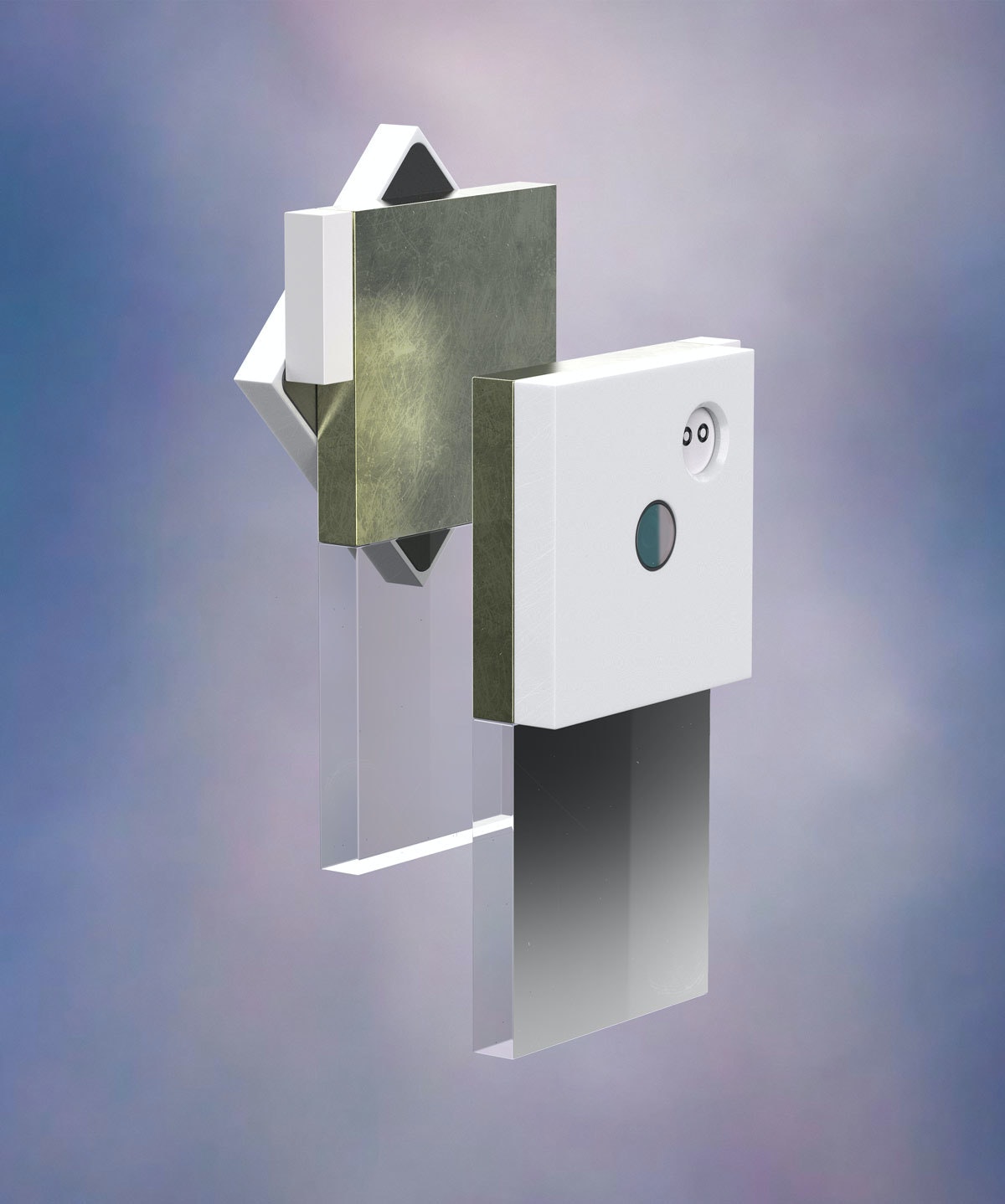
Enter Brainchild: a machine learning–based camera that can be taught individual preferences and make them accessible as a function. You can train the camera to understand how you like to see yourself without going through 100 iterations. And most importantly, it allows you to share your sensibility with somebody else.
Brainchild is just a prototype for now, but I'm hoping others will be inspired to build on the idea.
Beautiful, baby, beautiful
Machines are a billion times faster in quantitative tasks than we are. For a long time, the problem was one of not understanding quality. But that has changed with the improvement of so-called deep learning techniques—a subset of AI or machine learning.
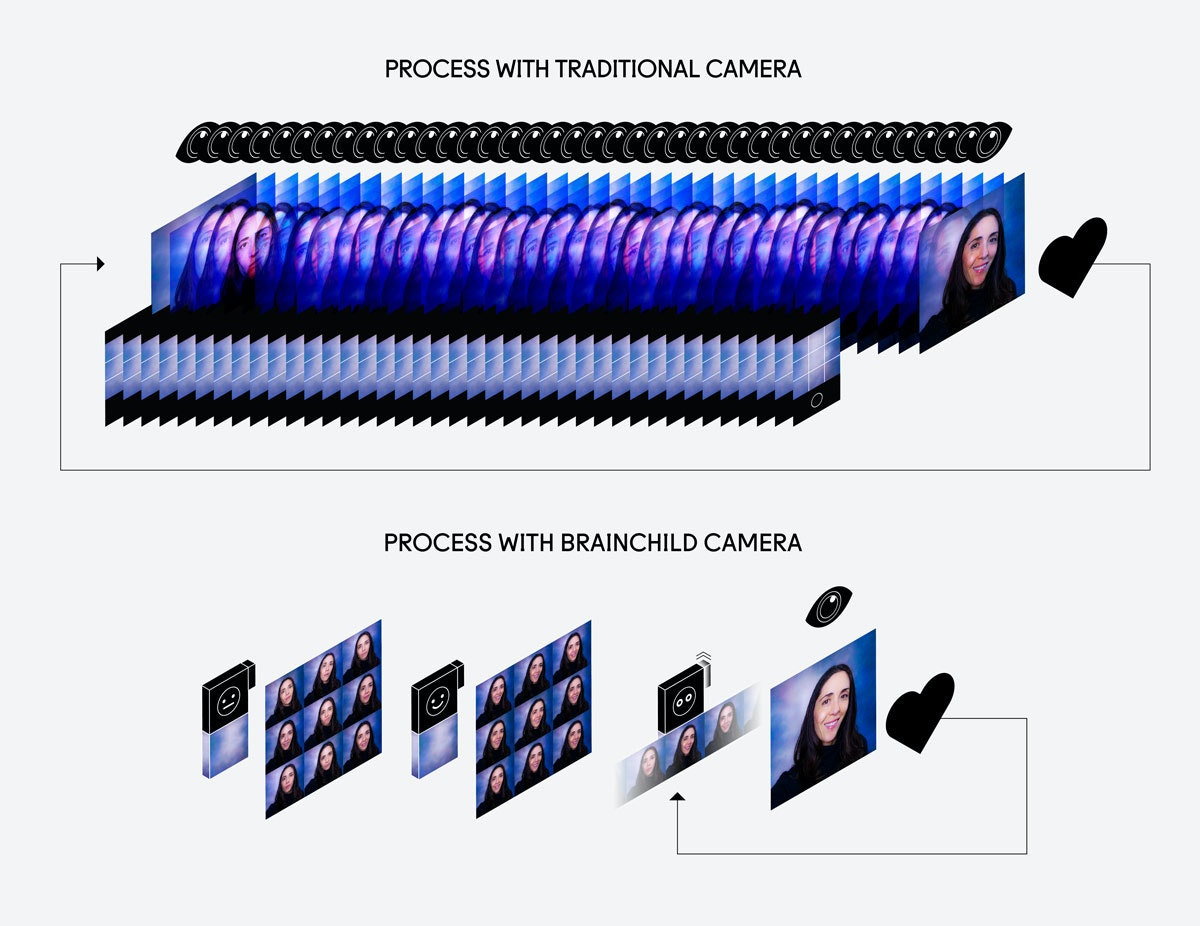
By teaching Brainchild how you would like to be portrayed, it can assess the quality of what it sees in real time, and give you haptic feedback when it perceives you looking your best, so you can simply take that one picture.
It also allows others taking a snapshot of you to see you as if through your own eyes. Taking portraits is a very intimate art. Rather than taking the human out of the loop, Brainchild augments this human-to-human interaction by making it more collaborative.
A feel-good feedback loop
The intervals between interacting with machine-learning products and experiencing their learnings are often very long. There are many technical challenges, but more accessibility and immediate feedback would help us teach more actively and develop a better intuition for them. In return, machines could learn better and become more personal.
Brainchild is designed to provide immediate feedback. You teach it how you like to be portrayed, instead of letting it guess, and every picture you take based on its haptic recommendation serves as feedback on how well it learned and how well you taught it. (Plus, it's private. Brainchild works offline and stores all of your information locally, so there's no danger of it being shared.)
Smile!
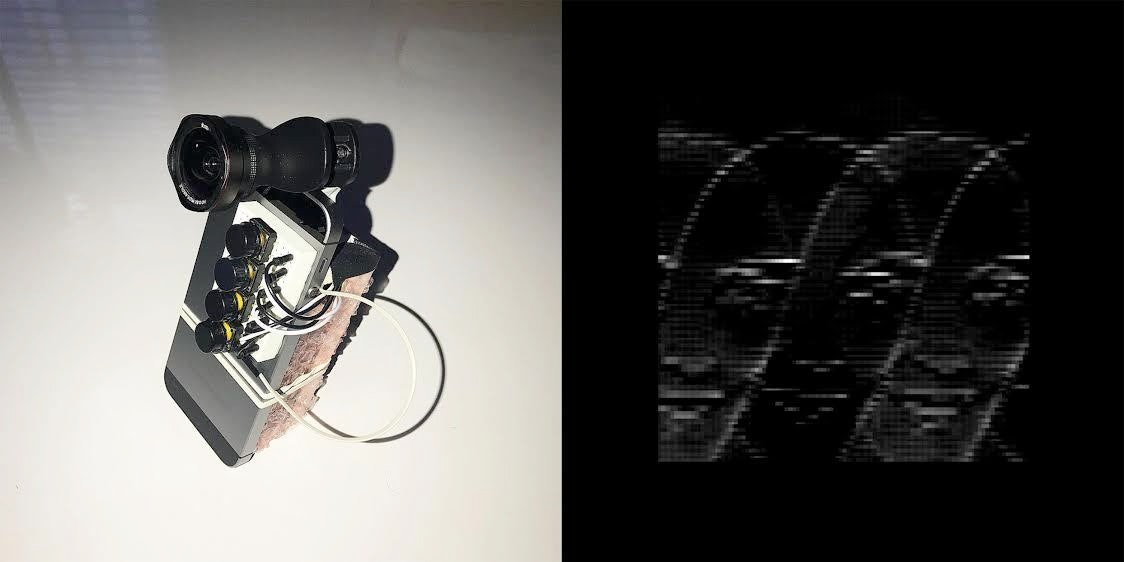
How does the Brainchild prototype work? There are countless technical parameters we could talk about, but in the most simple terms, it makes use of a so-called transfer learning process based on a fine-tuned convolutional neural network—a technique frequently used in computer vision.
Brainchild needs to be taught five fundamentals:
- What a human face looks like
- How to learn about new faces
- How to isolate the face in a picture
- The way the portrait subject looks normally
- The way the portrait subject looks when they deem themselves looking their best
The first two points require huge amounts of coding, data, number crunching, and time. That’s what consumed most of my time (next to working on the wrong file for a day!).
The third point addresses the fact that when you take a portrait there is always something behind you. To focus only on you without distraction, Brainchild extrudes your face from the background. That is something it learns before you use it.
Then you become the teacher. In order to learn how you look your best, it needs to know how you look normally. So, you feed it a few examples of both, either by taking new snapshots, or by using pictures stored on your phone.
To help Brainchild differentiate between the two picture sets you simply twist the front plate, switching between two learning modes. The serious smiley means every picture you take will teach Brainchild how you look “normally”. Switching to the happy smiley means every picture you take will teach it what it looks like when you look your best. This is how you get to know each other.
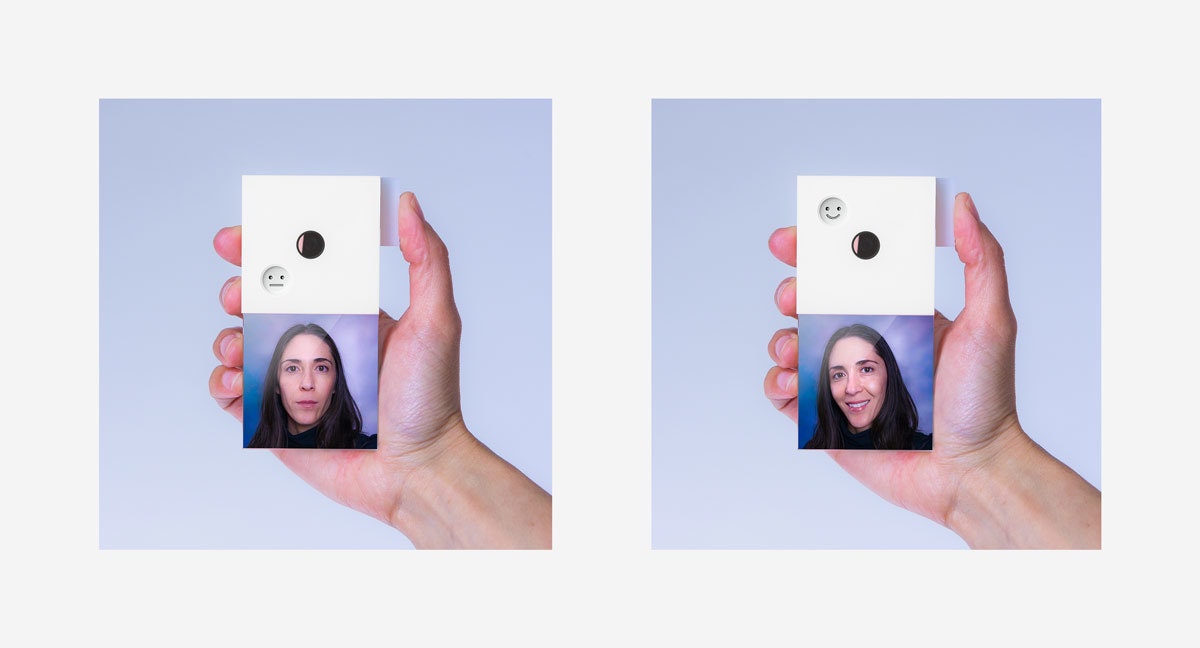
As soon as the camera spots you in a way that matches what you taught it about looking good, it will gently vibrate and light up the camera’s trigger button. The vibration and brightness increase the closer your match with your own ideal.
Brainchild doesn’t snap the photo for you, it just signals you at the optimal moment to do so. You can also hand the camera to someone else to capture you in the way you like to be captured. And the more you teach it, the more accurate it becomes.
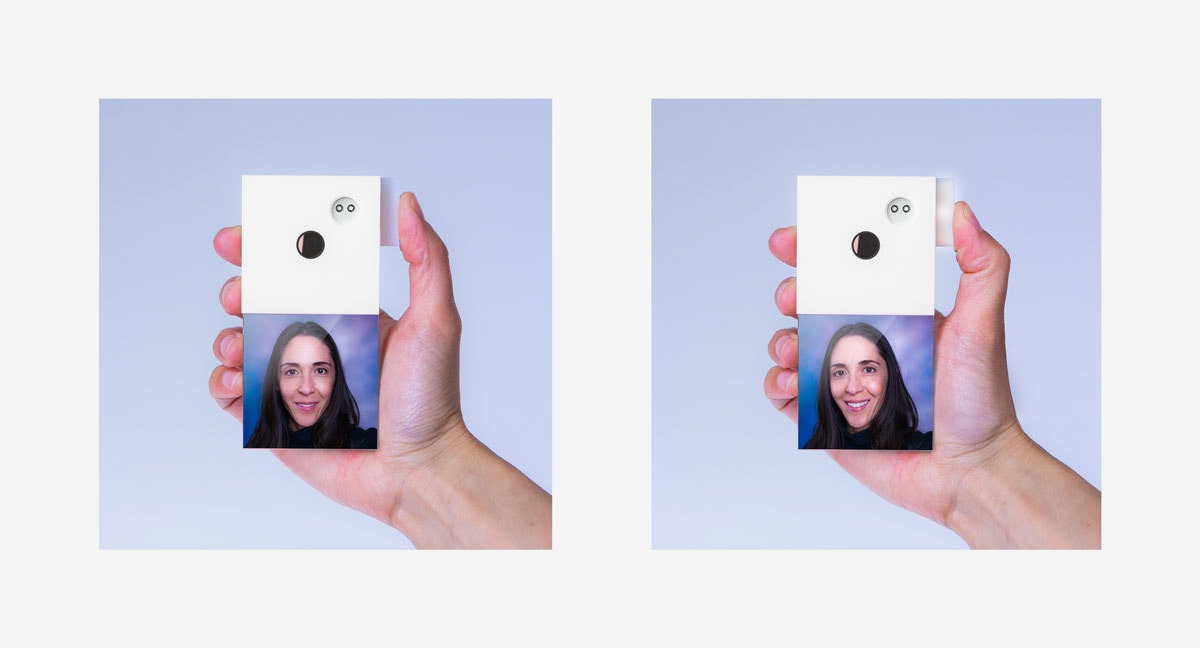

It might seem mundane to teach a camera how to take a better selfie, but the technology has already inspired one of our clients to rethink parts of a high precision medical device that could dramatically reduce treatment costs for patients, and another software engineer to work on a playful version of FaceID.
I myself am now working on a body pose add-on for fashion photography, and am curious to see all of the other ways we might actively teach our machines and help them augment us in more personal ways.
Instagram: @brain_children
Concept and Technology: Jochen Maria Weber
Visual Design: Tiffany Yuan
Industrial Design: Leo Marzolf
Special thanks: Tobias Toft
We teach our machines every day. Voice assistants learn how to talk to us based on what we say to them. Navigation apps guide us based on the routes we take. Without millions of teachers like you, our machines would be much dumber.

Lindsey Turner
I’m passionate about building brands, products, and experiences that help organizations show up with meaning and momentum.
I help organizations cut through complexity by shaping how they show up, through brand strategy, identity, and storytelling.
Working at the intersection of brand and business, I bring an editorial eye and a bias toward making—turning ideas into tangible experiences that people can understand, trust, and believe in.
My work spans government, healthcare, financial services, media, and consumer goods, from launching Gen Z-focused ventures to building innovation labs and reimagining legacy brands. I relish moments of ambiguity and enjoy translating across teams, perspectives, and priorities to move ideas forward.
I started my career in editorial and digital design, shaping cross-platform experiences and identity systems in publishing and agency environments. That foundation still shapes how I work today: I’m detail-oriented, collaborative, and overreliant on the Oxford comma. I hold a BFA in Visual Communication from the School of the Art Institute of Chicago.

Rachel Young
My work helps organizations see who their products aren't working for—and build the will and the tools to do something about it
For 25 years, I've asked the same question: Who does this design exclude—and what are we going to do about it?
My work spans human-centered strategy, inclusive design, and qualitative research, with clients ranging from Microsoft, Google, and Verizon to the National Science Foundation, and San Francisco Unified School District.
Before IDEO, I taught elementary school in East Palo Alto and spent a decade doing design work with social service organizations—where I learned firsthand what it costs people when systems are built without them in mind.
I am currently writing User Error, a nonfiction book about digital access and the design decisions behind it. I live in Oakland, California.

Brian Pelsoh
I lead with craft, ensuring our work is creatively excellent: rooted in deep human insight and imagination, while also grounded in the realities of business and technology.
My expertise spans brand, communication, and product design across tech, education, the arts, and social impact.
I believe great work demands both high-level vision and obsessive attention to detail, and only happens through collaboration.
I bring an inclusive, hands-on approach and a deep understanding of business, which enables me to consistently deliver excellence while always asking why.
Before joining IDEO, I worked at the brand firms Pentagram and VSA Partners. I began my career as a designer, leading teams at the School of the Art Institute of Chicago and the Milwaukee Art Museum. I hold an MFA in graphic design from Maryland Institute College of Art and a BFA in communication design from the Milwaukee Institute of Art & Design, and have taught at some of the best design schools in the US.

Tony Wong
I am responsible for IDEO’s long-term success in China and working with clients to use design as a tool to enable growth.
I am responsible for IDEO’s long-term success in China and working with clients to use design as a tool to enable growth. Specifically, I have helped Chinese companies design holistic brand solutions through the development of their products, communication, services, and innovation teams, and I have helped multinationals expand their presence and influence in China.
I advise global leaders on developing China-led innovation and capabilities.
In over 15 years in IDEO Shanghai, I have worked on projects that use design to elevate the quality of the experience of healthcare products and services, streamline processes that increase productivity, create spaces and programs that promote and enable inclusive communities, and build next generation mobility solutions that are planet-positive.
Before joining IDEO, I worked at Philips Electronics and the Electrolux Group in Italy, the Netherlands, and Singapore on a number of breakthrough commercial products. I am a member of the Young President Organization in Shanghai.

How to use AI as an editor, not a writer
Ed White shares how he uses AI as an editor—not a writer—to sharpen storytelling, rehearse ideas, and preserve the productive friction that makes creative work better.
Ed White has a rule he's tested on his own writing: hold yourself as the writer, and let AI be your editor. Ed is a Senior Design Director at IDEO's London studio, where he co-leads the firm's AI portfolio across Europe. Before IDEO, he spent 12 years as a writer and editor at the Financial Times, Wired, and Contagious. So when he talks about when to use AI for storytelling and when not to, it comes from two decades of crafting his storytelling skills.
In this episode, Mina Seetharaman talks with Ed about two specific tools he uses to keep AI in an editor's seat: a "roasting agent" prompted to critique his drafts without any sugarcoating, and a simulated audience he rehearses pitches on before the real thing. They also get into what Ed is hearing from design leaders at Anthropic, Lovable, Shopify, and Google Creative Lab about how creative work is changing, and why he thinks the friction of writing something yourself is worth protecting rather than automating away.

Building a personal AI for the messiness of life: Sida Li
Becca Carroll talks with Cue co-founder Sida Li about designing a personal AI for the messiness of everyday life—not just work. They explore how Sida stays anchored to human needs while navigating fast-changing technology, product tradeoffs, business-model experimentation, and the realities of building an AI company today.
Most AI products today are built for work—a space with clear problems and established systems. One founder noticed a gap: personal life is messier, harder to systematize, and mostly left behind by the AI boom. So she built Cue, a personal AI that lives inside iMessage and group chats, to go where the other tools haven't.
In this episode, Becca Carroll, IDEO's Chief Strategy Officer, talks with Sida Li, co-founder and CEO of Shared Context Lab, about staying anchored to a human need while the technology around her keeps changing shape, why she treats her business model with the same rigor she'd bring to a product, and what it feels like to build a company at this particular, disorienting moment in AI.
The conversation also gets into how Sida makes design decisions: the language Cue uses to describe itself, the tradeoffs behind building inside iMessage instead of a new app, and a real story about a business idea that didn’t pan out.
This is the second in a two-part series profiling founders from IDEO's Startups-in-Residence program. The first conversation is with Johannes Seemann, founder of Sooner, on designing GenAI for the emotional side of money.

Designing GenAI for the emotional side of money: Johannes Seemann
Designing financial tools around the feelings that shape money decisions.
Most personal financial tools are built to run the numbers and optimize towards a budget. While that works for some, most people experience money as a lived relationship that does not neatly fit into a spreadsheet. Johannes Seemann and Becca Carroll discuss why money is emotional before it is mathematical, and what a human-centered approach to building a generative AI financial product looks like in practice.

The curious leader's edge in uncertainty: Scott Shigeoka
How genuine curiosity helps leaders navigate uncertainty with greater confidence.
Mina Seetharaman talks with Scott Shigeoka, author of Seek and Head of Curiosity Cultivation at the Eames Institute, about what distinguishes genuinely curious leadership from performative curiosity, how power dynamics shape curiosity, and why practicing curiosity can restore energy rather than drain it.
Looks like you might be in search of something very specific?
Or reset the filters above and try another angle.
Here’s some random inspiration

Podcasts about creative leadership

Articles about the power of prototyping
