
A new employment venture to increase customer engagement and financial security
Introducing Moonrise, a digital platform that helps companies hire untapped talent and workers make ends meet.
More than half of Americans don’t have the cash to cover a $400 emergency expense like a car repair or trip to the hospital. Taking that reality to heart, American Family Insurance, a Fortune 500 company that offers auto, home, business, and life insurance, was seeking a way to make an impact by helping people earn and protect—not just insure—the things they value.
American Family approached IDEO with an ambitious goal: to innovate in a way that would help working families—many of them existing American Family customers—who need a financial cushion in case of the unexpected. This new mission fell in line with American Family’s overall orientation toward increased social responsibility, including committing to a liveable wage for all employees, helping with student loans, and providing college scholarships and tuition reimbursement for employees’ children.
In early discussions, American Family thought people might need budgeting tools, but from the very first research interview, a different urgent need emerged: people needed a way to shore up their savings enough to protect against unforeseen needs. This same story came from numerous places. In Tennessee, the IDEO design team sat in the kitchen of a working single mom of four, who explained how her lifestyle was built around her extremely constrained budget. She couldn’t afford childcare, so she’d organized her home to allow her 11-year-old to watch the younger kids: partitioned snacks, timers on the TV, chore charts on the fridge. She managed her budget meticulously, it was clear, and she didn’t need new financial tools. What she really needed, she said, was extra income cushions so a surprise expense like a doctor’s visit or stretch investment like a kid’s basketball uniform wouldn't derail her plans. Like many of the people the team visited across the country, she didn't want to take on debt; she wanted extra work and the dignity and peace of mind that comes with it.
Could we, the team wondered, offer people who already have jobs the extra hours and income they need in a way that reduces, rather than exacerbates, the stress they already face? Would employers get on board?
The short answer was yes. Today’s businesses depend on on-demand work, including seasonal warehouse and retail shifts. Typically, companies look to temp agencies whose model is built on staffing with the goal of permanent placement. Moonrise enables companies to tap into a workforce that's already employed, allowing them the benefits of passive recruiting (reliability, consistency), but for short term work.
Knowing innovation was the path to growth, American Family took a chance by embracing a radically new brief: Create a service to help families living on the edge bridge the gap between the size of their paychecks and the size of their dreams. The result was a new business venture called Moonrise.
When customers told us that having an easy way to earn extra money could improve their lives, we were compelled to pursue a solution. Moonrise is a business with a human-centered mission. We’re proud it’s part of our American Family.
Jack Salzwedel, Chairman & CEO, American Family Insurance
The Moonrise platform lets workers sign up for shifts with partner organizations through a simple text message interface, and get paid as soon as their shifts are done. Employers who sign up to partner with Moonrise can list open shifts on the platform.
“Moonrisers” are W-2 employees of Moonrise, not contractors, so they don’t have to pay self-employment taxes. They also get personalized business and comment cards to take to job sites, making their interactions with employers feel more professional. In this way, Moonrise helps workers not only build a buffer against unexpected bills, but also explore new positions and fields—and perhaps even land new full-time work with Moonrise partners.
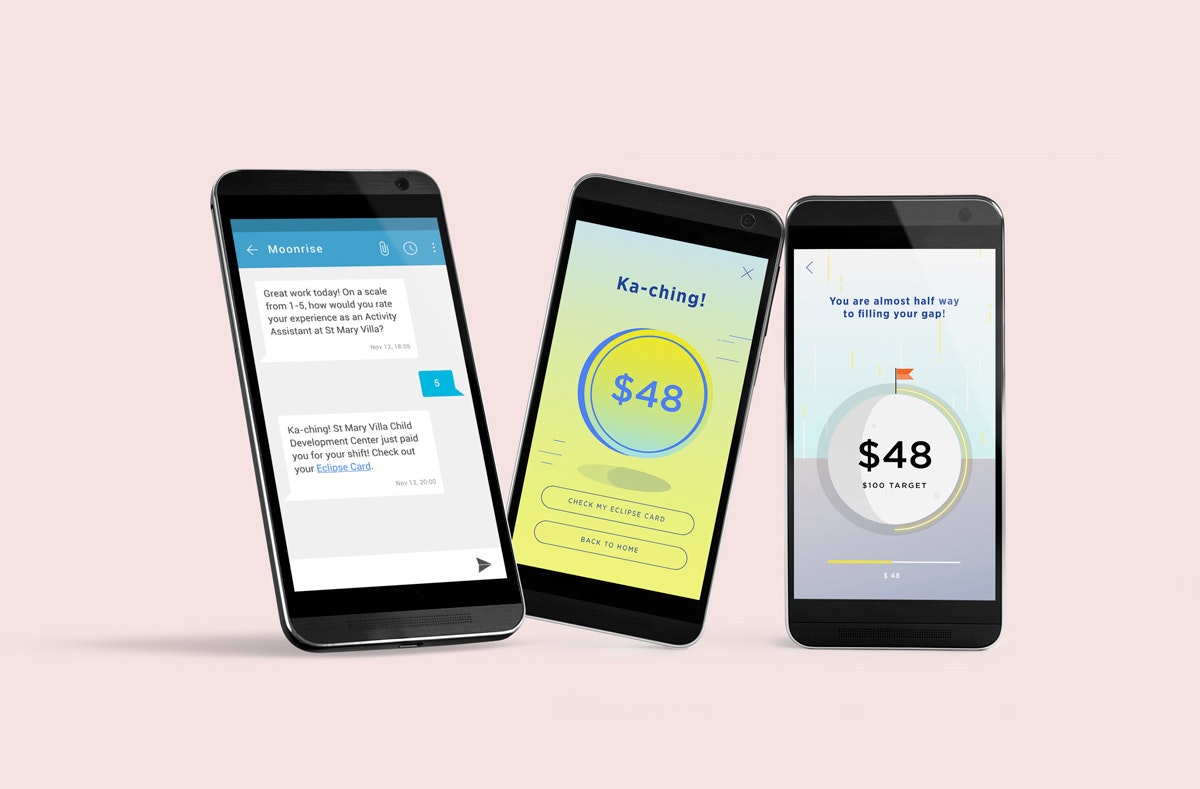
To test the program in real time, IDEO and American Family assembled 11 Moonrisers, six employers, and a team of designers and programmers to work out kinks in the platform. During a one-week live pilot in Wisconsin, Moonrisers finished a combined 28 work shifts, earning an average of $121 each, while IDEO designers worked behind the scenes to keep the process running smoothly.
Based on the success of the pilot, American Family created a new startup company called Moonrise, which became a wholly owned subsidiary of American Family. Moonrise launched to the public in the Chicago area in 2018, with plans for an eventual nationwide rollout. Moonrise signed Enterprise Rent-A-Car as its first employer and actively matches workers in Chicago with shifts, while continuing to build more corporate partnerships.
Since launching in 2018, over 7,000 people have applied to become Moonrisers, more than 7,000 shifts have been fulfilled, and over $500,000 has been put into the pockets of hardworking Moonrisers. Additionally, Moonrise will be expanding into 3 additional states in 2019.
IDEO and American Family Insurance interviewed customers of The General—a division of American Family—about how they budget to make ends meet. In this conversation, customer Chandra told designers how $62 could be the difference between breaking down and breaking even for her family.
It’s not always easy for established companies to innovate, especially outside their core business. But innovation is a high priority for American Family. Creating an employee -centered startup like Moonrise solves an urgent problem and distinguishes them from their competition. Together, American Family and IDEO identified a pressing human need and built a program from the ground up to meet it.

Helping a startup design video games to build kids’ emotional strength
A one-month sprint to develop new products—and a new way of working.
For 6-year-old Dave Jr., a long line at Disneyland triggered a massive meltdown. His parents were concerned and a little embarrassed, but not surprised; Dave Jr. struggled to keep his emotions in check.
Hoping to help, Dave Jr.'s uncle, entrepreneur Craig Lund, joined forces with researchers at Harvard Medical School and Boston Children’s Hospital, along with a video game designer who had worked on Quick Hit and NBA 2K. Together, they set out to design something that could teach coping skills to kids like Dave Jr. who need to manage “big emotions,” as well as children suffering from anxiety, ADHD, and other behavior issues, which are on the rise.
Their collaboration resulted in a video game called Mightier and a startup called Neuromotion Labs—a 10-person team of psychologists, game designers, and engineers who embedded at IDEO Cambridge for a one-month sprint to improve the game and get ready for launch.
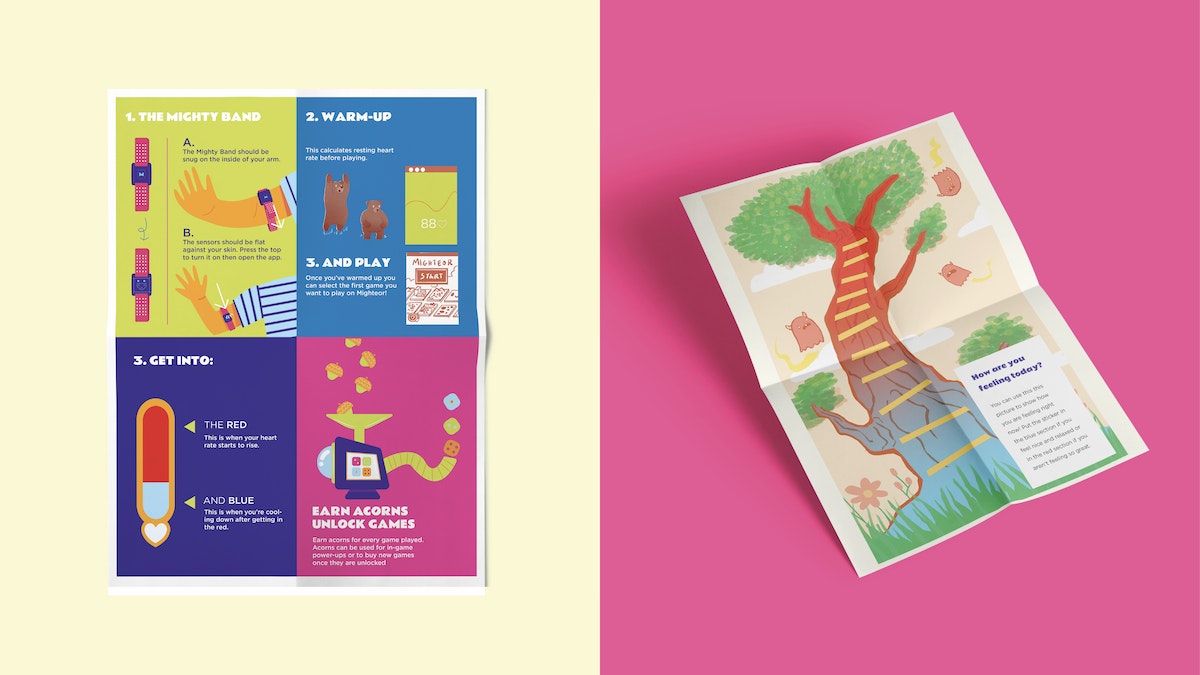
To play Neuromotion's game, kids are first taught simple, calming breathing exercises. During gameplay, kids wear heart-rate monitors on a wrist or arm that detect spikes caused by stress or anger; as their heart rates go up, the game's difficulty increases. Kids have opportunities to pause and try deep breathing to counter the ramped up challenge. As it turns out, "gamifying" restraint builds strong incentives for kids to take charge of their emotions—they have to if they want to win.
Already activated around boosting mental and emotional health, IDEO's design team worked side-by-side with Neuromotion to study how parents and children experience Mightier. From home visits to group interviews to a summer camp-style design session with kid players, live feedback fueled the next iteration of the gaming platform and better product-market fit.
IDEO helped Neuromotion hone the visual design and mechanics of Mightier and expand it's suite of games. The team observed that the Mightier program was more successful the more involved parents of players became, which revealed a need for additional resources for adults. So they created new supports, including a more detailed orientation and a personalized coaching service for parents staffed by trained therapists.
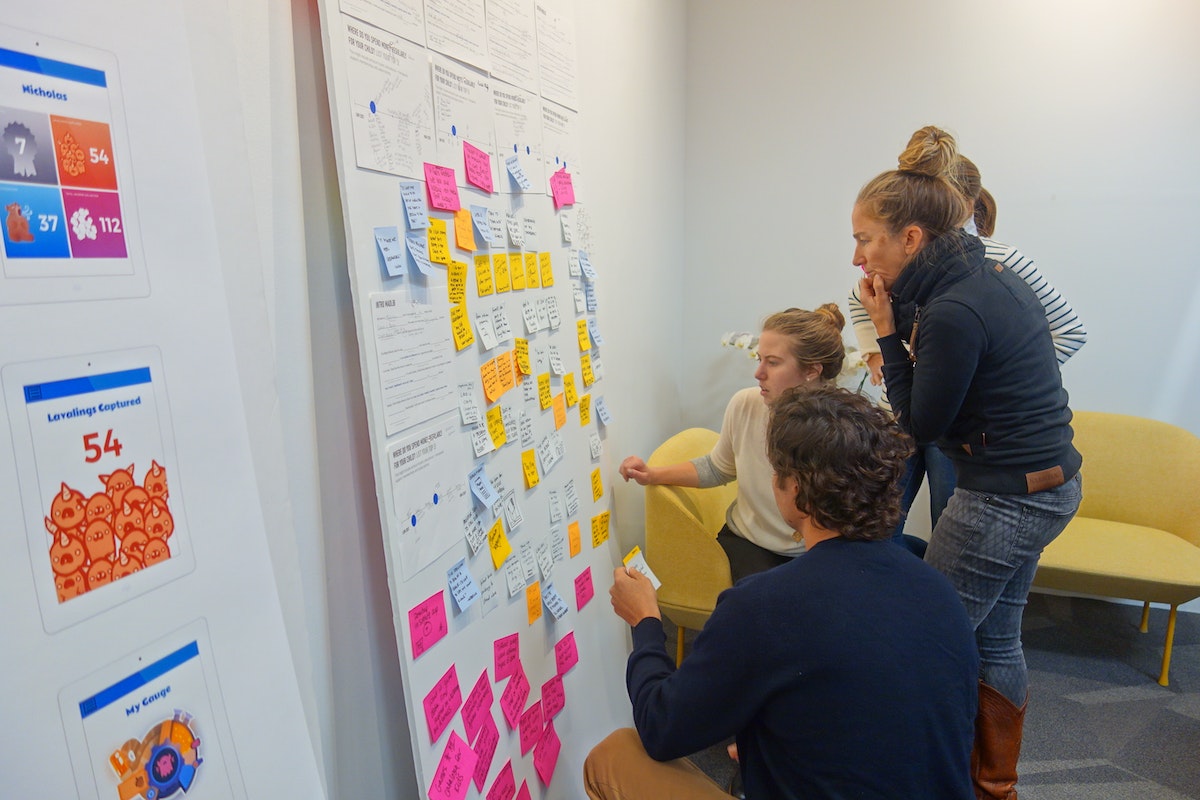
But can a video game actually help kids cope? Early peer-reviewed studies showed that playing Mightier reduced outbursts by 62 percent, oppositional behaviors by 40 percent, and parental stress by 19 percent. After 12 weeks of using Mightier, a survey of kids and parents showed that 96 percent of parents saw positive behavior changes in their children, while 92 percent of kids learned new coping skills.
Shortly after the design sprint, Neuromotion secured its next round of funding and officially launched Mightier’s array of “bioresponsive games.” The games have already been played more than a million times, and Neuromotion has measured more than a 100 million heartbeats. Mightier games are helping kids and families across the country.
What about Dave Jr.? Recently, his sister told Lund she "accidentally" bumped Dave Jr.’s bike off a pier and into the ocean. She was expecting an outburst of anger, but after eight months of playing Mightier, Dave Jr. stayed cool. His uncle couldn’t be prouder.

Designing waste out of the food system
IDEO partnered with hotels, food banks, foundations, and entrepreneurs to combat food waste.
Many of us have let vegetables wither in the crisper drawer, or thrown out a child’s half-eaten restaurant meal, but the sheer scale of food waste around the globe is hard to grasp. According to the United Nations, about a third of the food the world produces every year—1.3 billion tons—is lost during production or tossed by consumers, with North Americans throwing out the most food per capita. The average American wastes enough food each month to feed another person for 19 days.
IDEO received a series of grants from The Rockefeller Foundation to find solutions, given the power of IDEO’s human-centered design approach to address systemic challenges. Through a number of projects with The Rockefeller Foundation and other organizations, IDEO designers from across the U.S. devised novel ways to tackle food waste.
For IDEO’s first initiative, designers tapped into the enthusiasm of the broader creative community, in partnership with The Rockefeller Foundation, the City of San Francisco’s Department of Environment, the Closed Loop Foundation, ReFED, and other groups. In the summer of 2016, OpenIDEO—IDEO’s open innovation practice—launched the Food Waste Challenge, asking how people might curtail waste by rethinking our relationship with food. Between June and October, more than 20,000 people from 113 countries took part in the challenge, tracking their personal waste and brainstorming solutions.

Challenge participants submitted more than 450 ideas. A team of food industry experts helped select the 12 top proposals, which included software to help people buy food collectively from wholesalers and a service that delivers extra meals from corporate events to those in need. Ultimately, the Closed Loop Foundation chose to award Full Cycle Bioplastics a $50,000 grant to scale up its idea to convert inedible food and paper waste into a fully compostable alternative to oil-based plastic.
At the conclusion of the Food Waste Challenge, OpenIDEO launched the Food Waste Alliance, a platform for participants and experts to stay engaged with the most promising ideas and innovators. The alliance helped entrepreneurs share resources, prototype new concepts, secure funding, hire staff, and form partnerships. OpenIDEO invited hundreds to join the alliance, and 92 percent of members told IDEO they made progress in their work as a result. One member company, RISE, received funding from another participant who discovered RISE through the alliance. This investment let RISE prototype its concept for milling spent grain from beer brewing into flour for baked goods and ultimately join the prestigious Food-X accelerator.
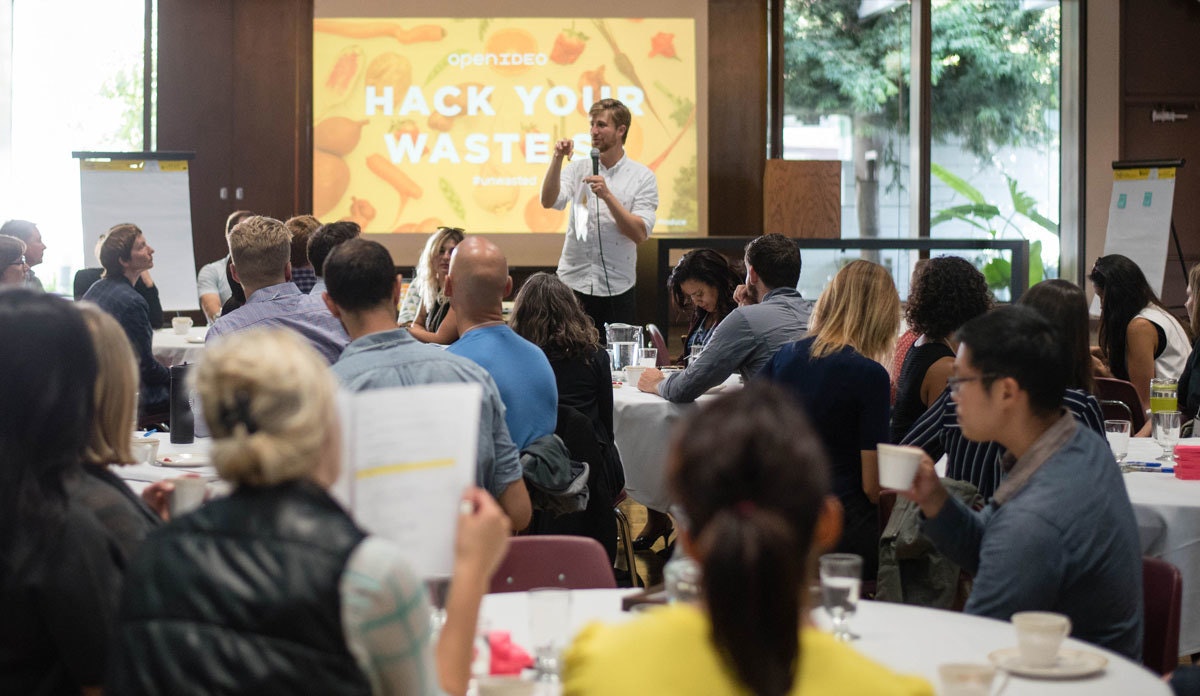
The Rockefeller Foundation also supported IDEO’s work with City Harvest, a New York organization that collects 160,000 pounds of unused food each day and delivers it to soup kitchens and food pantries. City Harvest wanted to understand the habits of local families who visit food banks in an effort to ensure all the food the group distributes gets eaten. To get a peek into these families’ kitchens, in January 2017, IDEO researchers conducted observations and interviews across New York City’s five boroughs. Pantry customers cooked for the researchers, giving them an inside look at how the families engaged with the food they had available and what food meant to each of them: tradition, stability, even adventure. Based on insights from pantry visitors, IDEO made recommendations for City Harvest, including community-run cooking classes and a way for families to request specific foods or reserve pick-up times by text message. IDEO also created three video vignettes to help build even greater empathy between City Harvest and the people it serves.
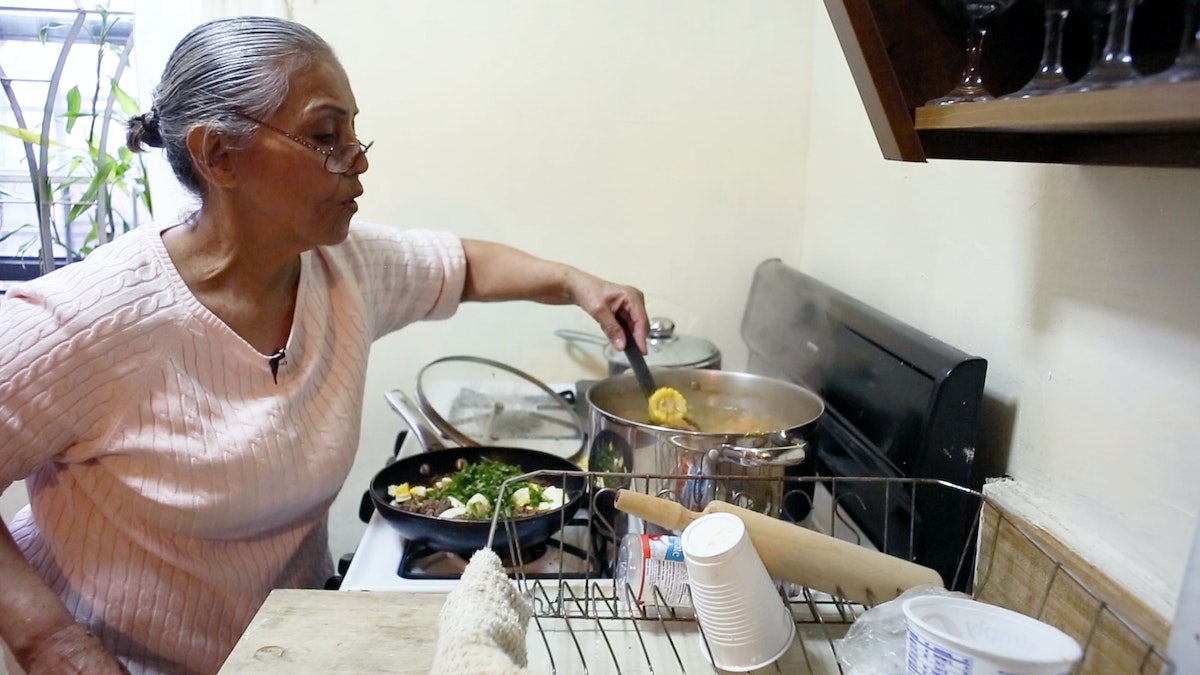
In spring 2017, capping IDEO’s work with The Rockefeller Foundation, the organizations teamed up with World Wildlife Fund and Hyatt hotels in Florida, New York, and New Jersey to rethink all-you-can-eat buffets. IDEO studied diners and staff at Hyatt buffets and found that employees—from event planners to kitchen staff—each add a cushion of extra food to cover their bases, while guests overfill their plates to avoid missing out. In the end, diners eat just half the food organizers serve, while the rest goes to waste. This and other data-driven insights gleaned about diners’ habits led to subtle substitutions, including smaller plates of meats and cheeses that can be ordered from servers and individual pastries rather than whole cakes. These alternatives have not only built on Hyatt’s existing food waste management strategies, but have also helped reduce buffet costs at Hyatt Regency Orlando and continued to receive support from guests.
The problem of food waste is too enormous to ignore. Wasted food means squandered resources, lost money, and ultimately, hungry people—more than 15 million in the United States alone. Designers and innovators from coast to coast have helped find solutions to the crisis that fulfill a variety of needs, from preserving produce sent to food pantries to keeping plastic packaging out of the oceans. The Rockefeller Foundation and other IDEO partners are leveraging powerful design techniques to pave the way for a waste-free future.
Launching a bootcamp for data scientists
Designing a rigorous program that prepares students for a career in the data-driven economy.
In 2017, IDEO acquired longtime partner Datascope and integrated the company’s data scientists and engineers. Datascope team members aren’t just passionate data scientists; they’re human-centered designers who happen to work with data, as illustrated by successful collaborations like this one:
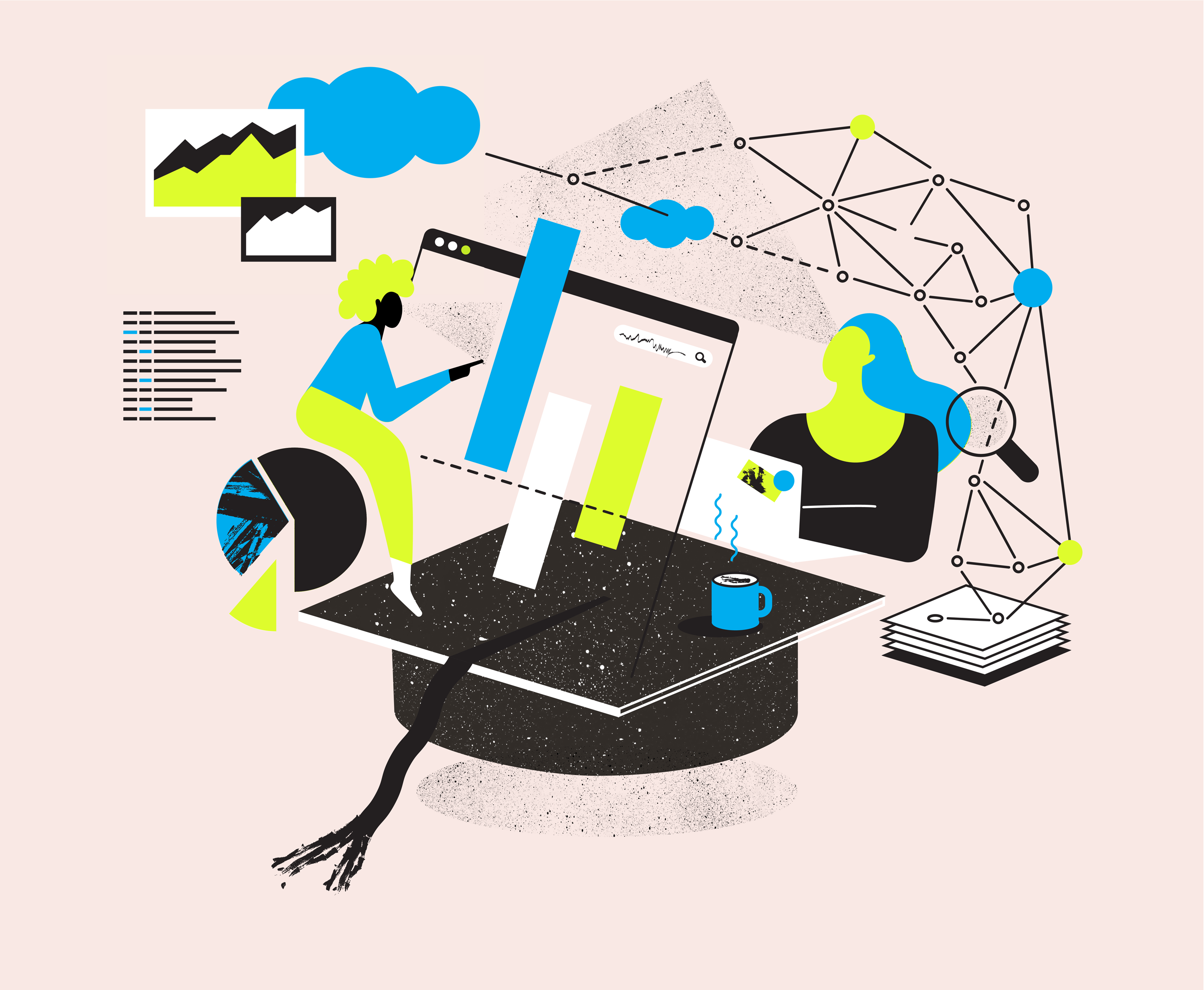
In today’s job market, there’s no such thing as being "done" with your education. This is particularly true in the fields of data science, machine learning, and AI, where significant advances are made on a monthly basis. To meet this need for more in-depth training, Metis—part of Kaplan—wanted to create a comprehensive data science program for students from all backgrounds. Metis asked Datascope to design the curriculum from scratch, drawing on the company’s deep expertise in the field.
Datascope spoke with practitioners across industries to identify the key skill sets that make them successful: a grasp of design; fluency with data management, coding, and algorithms; and effective communication with coworkers and the wider world. The team crafted a 12-week bootcamp that develops these specific abilities.
In order to prepare students for the work world, the bootcamp is structured less like a class and more like a company, where students are “hired” as data scientists—with projects to complete—starting on day one.
Students collaborate on group projects and presentations in a way that mirrors real workflows, and practice pair programming to learn from one another. Using techniques drawn from design, students are invited to refine their project briefs and continually reevaluate their approach.
Instead of a final exam, at the end of the course, students tackle five real-world, open-ended data science projects inspired by Datascope’s client work. One project involves using data from subway turnstiles to detect patterns in the volume of street traffic; another asks students to use data they scrape from the web to predict a movie’s box office profits using regression analysis.
After students complete the bootcamp, they receive an additional three months of career support, from mock interviews to site visits with potential employers. In addition to designing the curriculum, Datascope taught the first three student cohorts and helped Metis build its teaching team as it expanded the program from New York to San Francisco, Chicago, and Seattle. Metis now offers online courses, evening classes, and corporate trainings in data science.
If you’re going to take a data science bootcamp, it’s best to take one designed by data scientists.
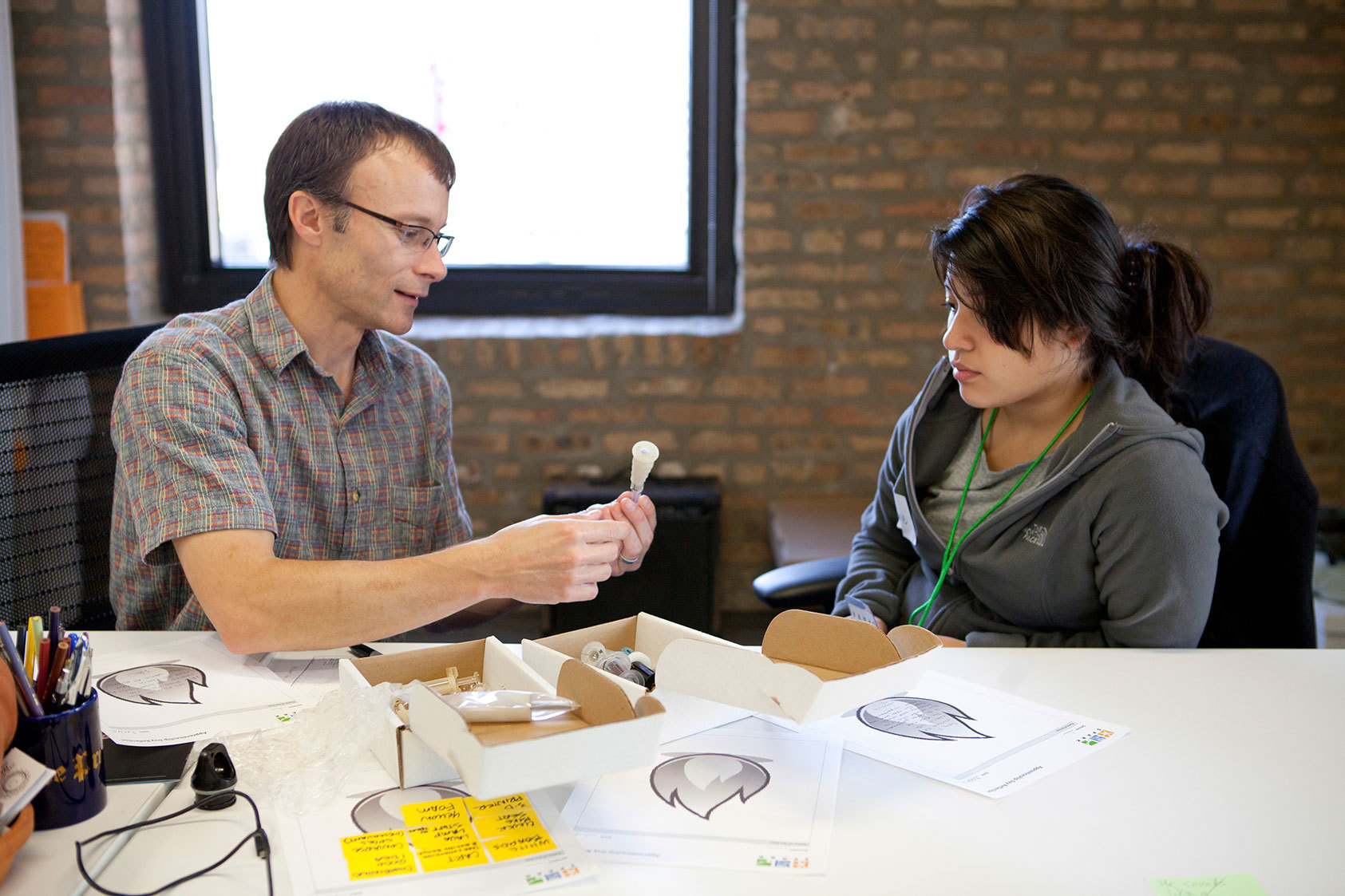
If We Could Turn Back Time
Advice for our younger selves
1. Ditch the Plan
Don't try to build a 20-year plan—or even a two-year plan. The world is changing too fast. Figure out what you’re interested in right now and what the most interesting opportunities are in front of you and pursue those. —Aaron Ferber, Mechanical Engineer & Portfolio Director, @ IDEO since 2007
2. Just Do It
Don’t be paralyzed by making the “right choice.” Just make some decisions. While you’re working on one thing, don’t stop looking for your next thing. Don’t wait for others to offer you opportunities. Create your own stepping stones. —Erin Henkel, Service Design Portfolio Director, @ IDEO since 2006
3. I.D. Your Obi-Wan
Find someone you admire and follow his or her advice. —Andrew Burroughs, Mechanical Engineer & Partner, @ IDEO since 1992
4. Make Like Magellan
Make time to travel. It might be a cliché, but getting out of your own culture makes you more mindful and observant. You question everything you once took for granted. When my own children are trying to figure out what direction to take their lives next, I tell them, "Take out your passports. It’s time to book a trip." —Tim Brown, CEO, @ IDEO since 1987 (before it was IDEO)
So, young designer, you have your degree and now you have our advice. Time to bravely leap into your career with both feet and an open mind. Or, in the words of the ever-wise Yoda: "Do. Or do not. There is no try."
When you're fresh out of school, your career possibilities can seem endless. So endless, in fact, it can be hard to know where to start. We feel you. We’ve been there. To help you enter the brave new world of design feeling a bit more surefooted, we asked a few of our most senior creatives—even our CEO (!)—what piece of advice they’d share with their younger selves. With over 75 years of professional experience between them, we think they know a thing or two.
Finding Beauty in Potholes
Chicago’s Jim Bachor puts the "street" in street art
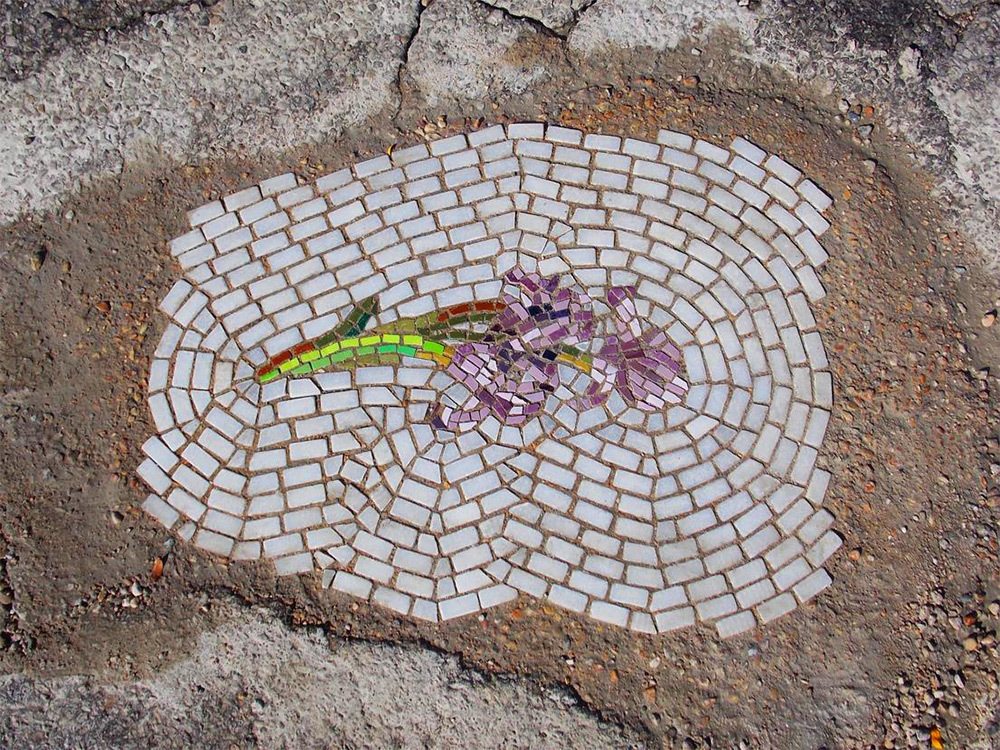
I went back and stared: Inside what had been a pothole the size of a dinner plate, someone had constructed a beautiful mosaic of an iris.
The symbolism hit me hard: Here was an example of how someone could take a bad thing and turn it into something of transcendent beauty. Instead of complaining about my bad day, I should be looking for an opportunity to make something great. Or as the slogan goes, “When things fall apart, make art.” Once I’d spotted this one transformed pothole, I noticed more of them around Chicago, and resolved to track down the mysterious mosaic artist who was seeding the city’s broken streets with beauty. I’d like to tell you that my quest was long and heroic, but, in reality, all I did was type “Chicago pothole art” into Google.
The name it threw back at me was Jim Bachor. I emailed him, and soon we were chatting.
How did you get into mosaics?
I went to Europe in the late '90s, and saw Paris, London, and Rome. That trip changed my life: It gave me a passion for ancient history. I started traveling in Greece and Turkey, checking out ancient sites, and saw that the art that survives is the sculpture and the mosaics. The mosaics got me going, particularly in Pompeii. I saw that glass and marble do not fade. That thought has driven my work ever since. I took a course in Ravenna, near Venice, and learned how to make mosaics in the ancient, tedious, and expensive way. Back in Chicago, I started making them on the side as a hobby, while working as a designer at an ad agency. Then, in August 2011, I was laid off and I decided to pursue art full-time.
What led you to potholes as sites for art?
The street outside my house was beat up. There was this one pothole that refused to stay fixed. I thought it might be funny to solve this problem. So I did it one night. I was very paranoid: I felt like I was too old to get arrested. And it wouldn’t be a good example for my kiddies. So I didn’t even claim ownership of it, at first. But then, a buddy of mine started spreading the word. And from there, it went viral.
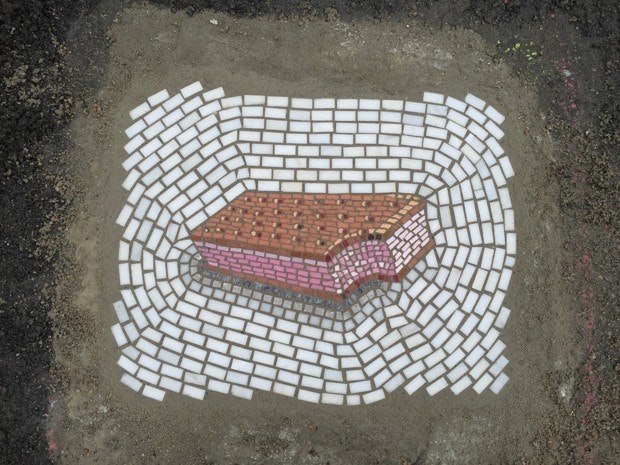
All photos courtesy of Jim Bachor.
Do you do it during daytime now?
Yes. I wear orange reflective gear. And have cones. I started off with my boys’ orange soccer cones. Now I have industrial, two-foot-tall cones. I look like a city worker who's spending way too much time on one pothole. I’m not trying to fool anyone: I’m just trying not to be hit.
What about passers-by?
I don’t really make eye contact with people and they mostly ignore me.
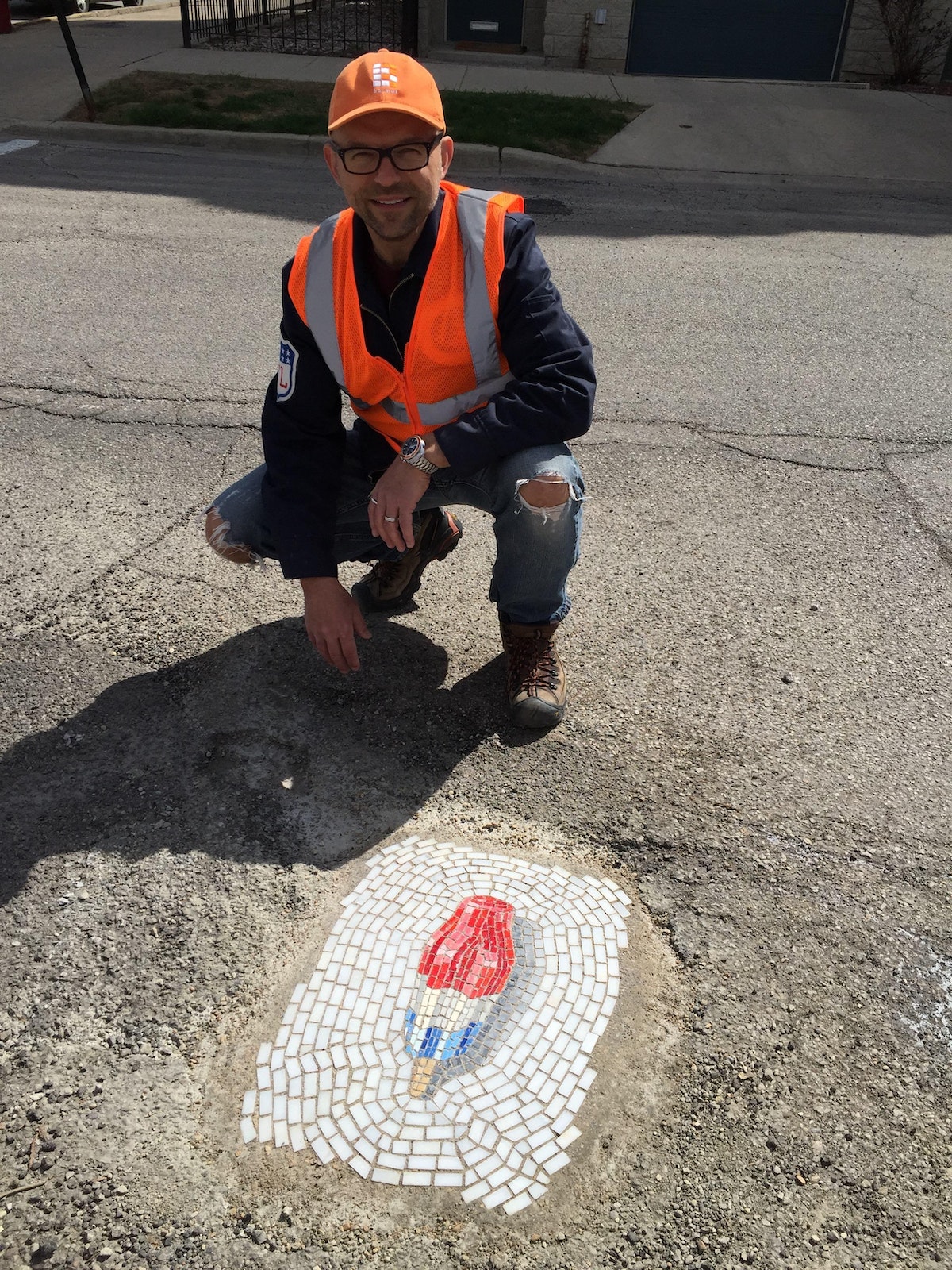
I look like a city worker who's spending way too much time on one pothole.
JIM BACHOR
What else have you done with the mosaic form?
I did a super realistic "Snack Chip" series. It’s kind of funny to see a snack chip rendered in an ancient medium. For the Cheetos one, I carbonized some Cheetos, and then mixed the black powder into the mortar. The artwork truly has essence of Cheeto in it.
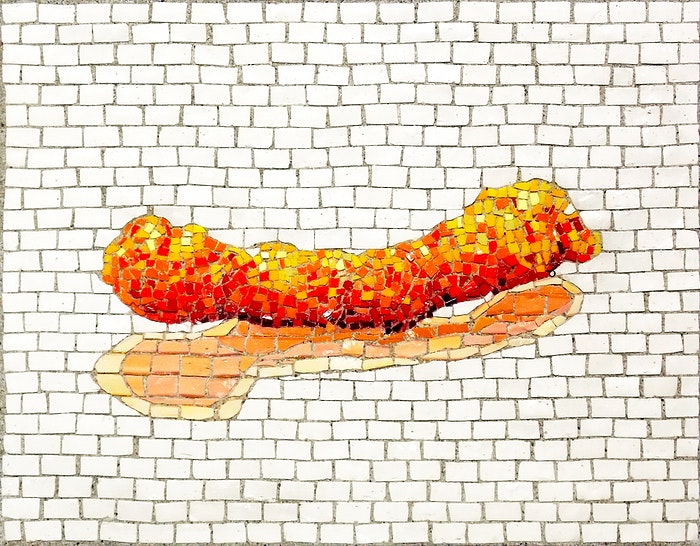
See more of Jim Bachor’s mosaic art at bachor.com.
One afternoon, I got on my bike to leave our Chicago office after a really bad day. It was one of those times when it feels like everything you touch falls apart, and I was in a hurry to get home and lie down in the dark. I rode through the West Loop neighborhood and turned right to head north on Green Street. But then something passed by beneath my front wheel that caused me to stop and turn around.
Designer’s Playlist #1
A few things IDEO NY's Loren Flaherty can't stop thinking about
Name: Loren Flaherty
Location: New York
Role at IDEO: Senior Communication Designer, which means I work collaboratively with project teams, helping them visually tell the story of the project. Through compelling visual narratives, I move from complex business challenges to strategic solutions.
Joined IDEO: 2014
Instagram: @lorenipsum
Titillating Fact: I have an obsession with finding numbers and keep a blog called A Number Of to record them. I started the blog in 2009. I find most of the numbers myself, although friends that know about it give me numbers that they find. A couple rules: Numbers must be dominant on the piece that's found, and the piece has to be smaller than 8.5 by 11. I especially like finding pieces when I travel.
1. Tortus Copenhagen
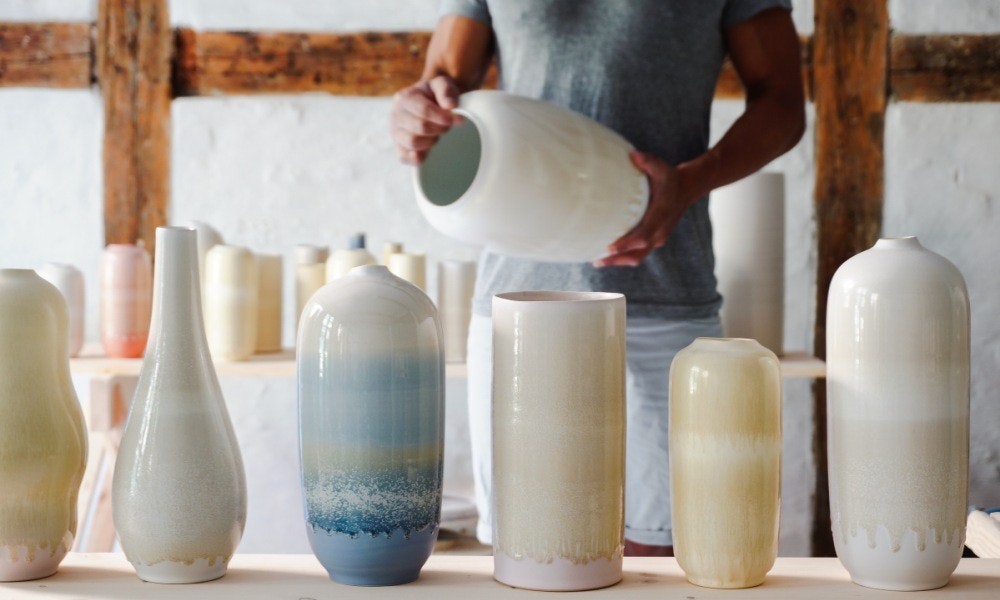
As a result of doing pottery for a couple years, I try to keep my eye out for inspiring ceramicists. I recently found the work of Eric Landon and Karin Blach Nielsen of Tortus Copenhagen on Instagram. I love the depth and gradient of the glazes on the large curved forms.
2. Numero Group
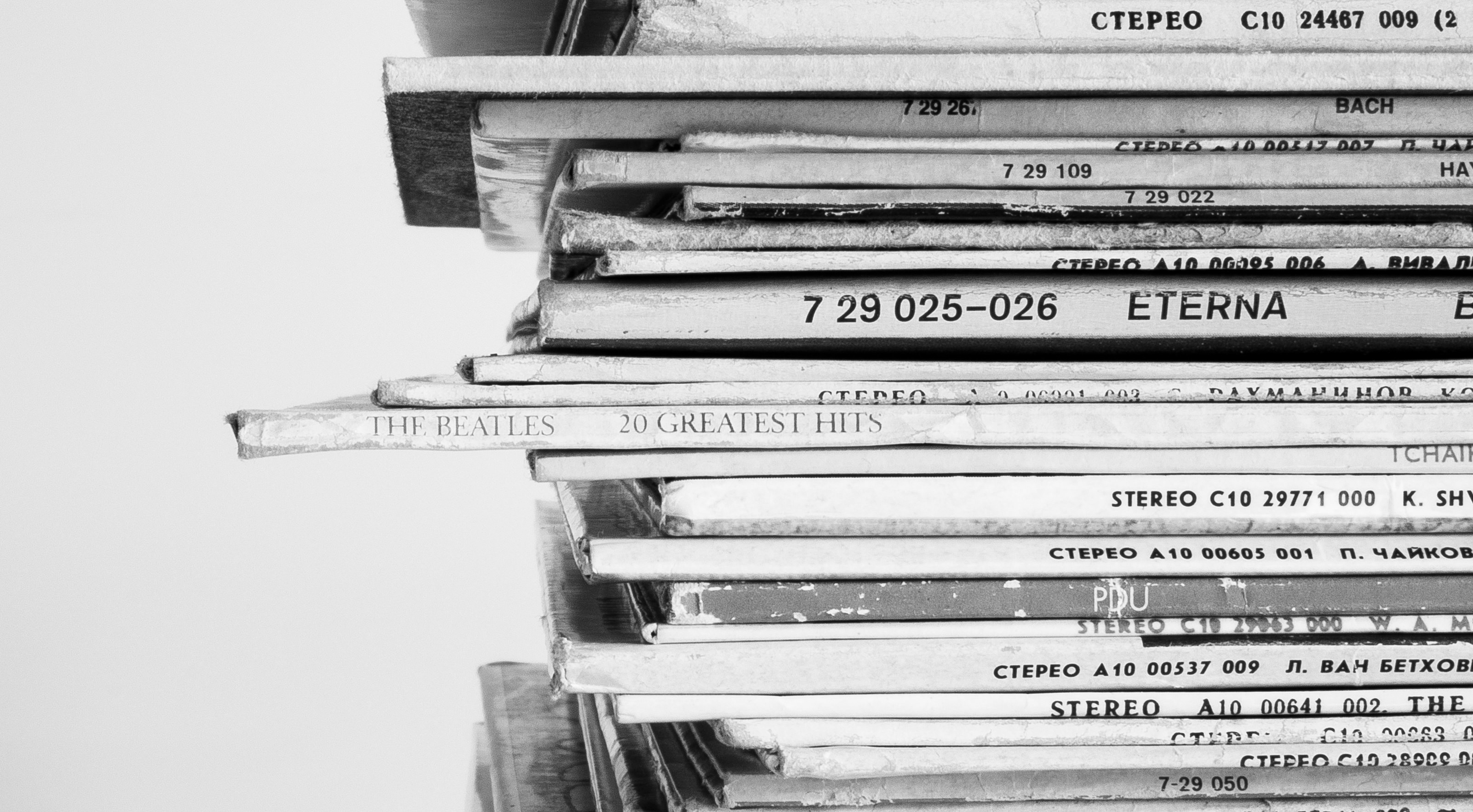
I spend a lot of time listening to music while working. I found this label when I lived in Chicago. The label finds otherwise unreleased, dusty, forgotten-about tracks and re-releases them. If you like soul music, check out their Eccentric Soul Series. They have a couple sample playlists on Spotify.
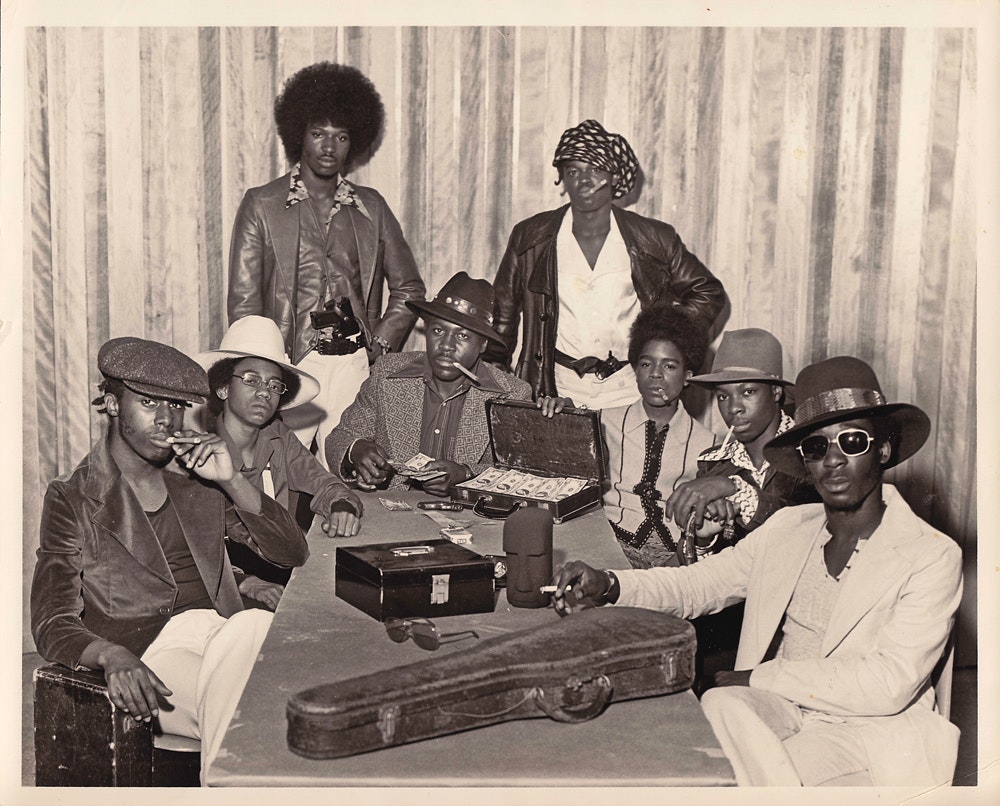
3. Photofit: Self-Portraits
This is an older project but I just re-found it. Fourteen people were asked to create self-portraits using a police Photofit kit from the 1970s, without referring to a photograph or mirror.

In this series, we ask IDEO designers to share the stuff they're digging right now—tools, books, music, sites, people, places—so you, too, can drink from the fount of inspiration bubbling up here. This week's guest star: This week's guest star: Loren Flaherty.
Yes, We Too Have a Podcast
IDEO Europe’s first podcast, How Might We, digs into how technology is changing intimacy
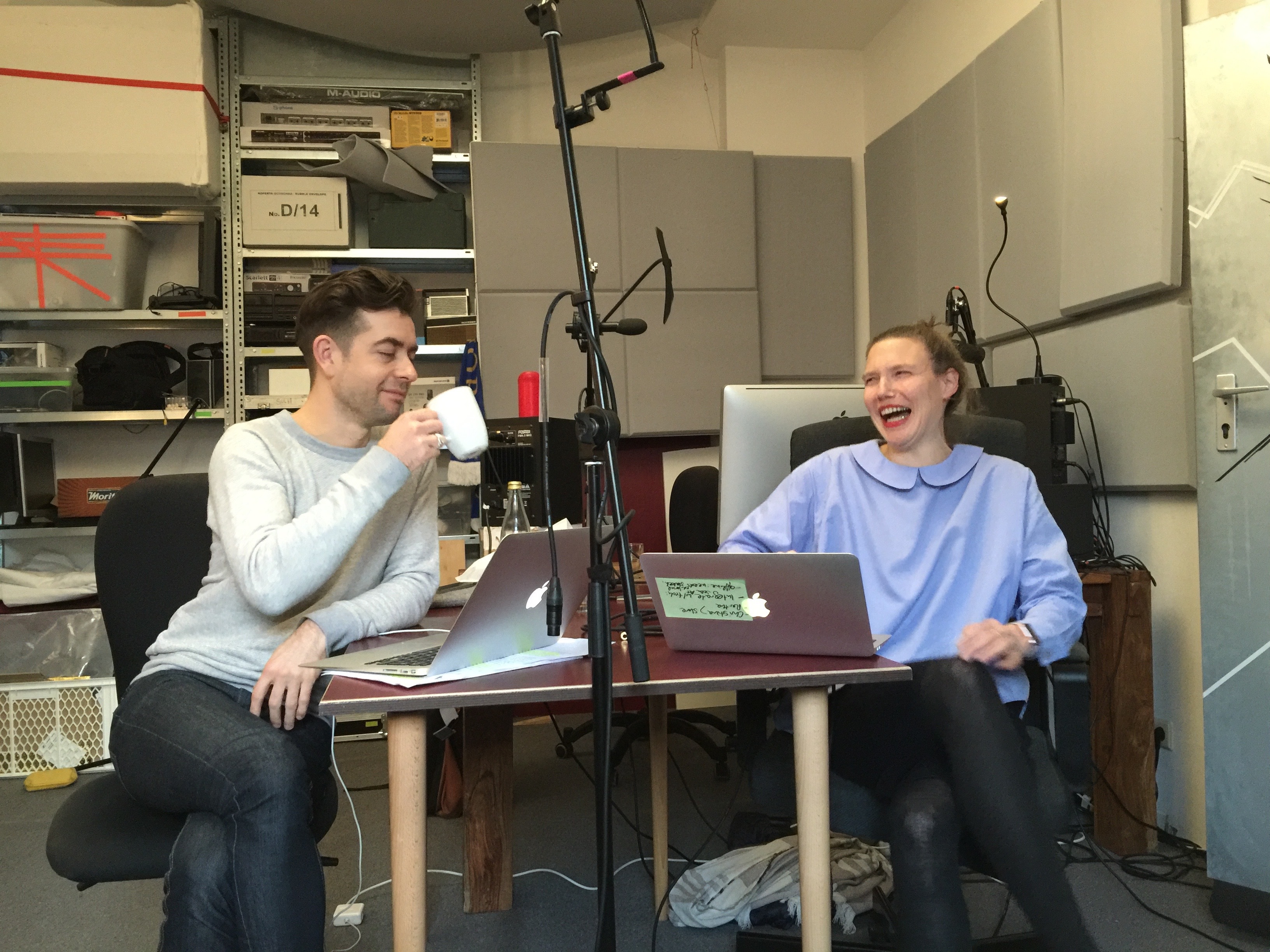
In our first episode, Berlin-based digital design director Anne Pascual sat down with London's senior editor Ed White to talk about how technology is changing intimacy, and what that means for designers.
We set out to speak to some people designing at the edges of intimacy, to better understand both sides.
We spoke to Pia, the founder of a "paid dating" app called OhLaLa, to talk about mobile, expanding choices, and the ever more complicated boundaries of the modern mating game.
We chatted to the founder of OffTime, an app designed to help you get offline and focus on meaningful, real-world moments with your family and friends.
Technology needs to support us in our efforts to reconnect with others, to find intimacy instead of what most of the technology is doing, which is just exploiting our weaknesses.
OFFTIME, MICHAEL DETTBARN.

Lastly, we caught up with Internet activist Zara about how technology both empowers vulnerable people and minority groups. But while people can find comfort online, they’re also increasingly exposed to the dangers of sharing their data.
What will the next episode bring? The future of work, the circular economy, ageing? Let us know what you think: IDEOEurope@ideo.com.
We're always connected, but are we actually connecting? Billions of mobile phones and Tinder hookups later, many feel increasingly lonely, overloaded, and disenfranchised. IDEO Europe’s first podcast, How Might We, digs into how technology is changing intimacy.

Lindsey Turner
I’m passionate about building brands, products, and experiences that help organizations show up with meaning and momentum.
I help organizations cut through complexity by shaping how they show up, through brand strategy, identity, and storytelling.
Working at the intersection of brand and business, I bring an editorial eye and a bias toward making—turning ideas into tangible experiences that people can understand, trust, and believe in.
My work spans government, healthcare, financial services, media, and consumer goods, from launching Gen Z-focused ventures to building innovation labs and reimagining legacy brands. I relish moments of ambiguity and enjoy translating across teams, perspectives, and priorities to move ideas forward.
I started my career in editorial and digital design, shaping cross-platform experiences and identity systems in publishing and agency environments. That foundation still shapes how I work today: I’m detail-oriented, collaborative, and overreliant on the Oxford comma. I hold a BFA in Visual Communication from the School of the Art Institute of Chicago.

Rachel Young
My work helps organizations see who their products aren't working for—and build the will and the tools to do something about it
For 25 years, I've asked the same question: Who does this design exclude—and what are we going to do about it?
My work spans human-centered strategy, inclusive design, and qualitative research, with clients ranging from Microsoft, Google, and Verizon to the National Science Foundation, and San Francisco Unified School District.
Before IDEO, I taught elementary school in East Palo Alto and spent a decade doing design work with social service organizations—where I learned firsthand what it costs people when systems are built without them in mind.
I am currently writing User Error, a nonfiction book about digital access and the design decisions behind it. I live in Oakland, California.

Brian Pelsoh
I lead with craft, ensuring our work is creatively excellent: rooted in deep human insight and imagination, while also grounded in the realities of business and technology.
My expertise spans brand, communication, and product design across tech, education, the arts, and social impact.
I believe great work demands both high-level vision and obsessive attention to detail, and only happens through collaboration.
I bring an inclusive, hands-on approach and a deep understanding of business, which enables me to consistently deliver excellence while always asking why.
Before joining IDEO, I worked at the brand firms Pentagram and VSA Partners. I began my career as a designer, leading teams at the School of the Art Institute of Chicago and the Milwaukee Art Museum. I hold an MFA in graphic design from Maryland Institute College of Art and a BFA in communication design from the Milwaukee Institute of Art & Design, and have taught at some of the best design schools in the US.
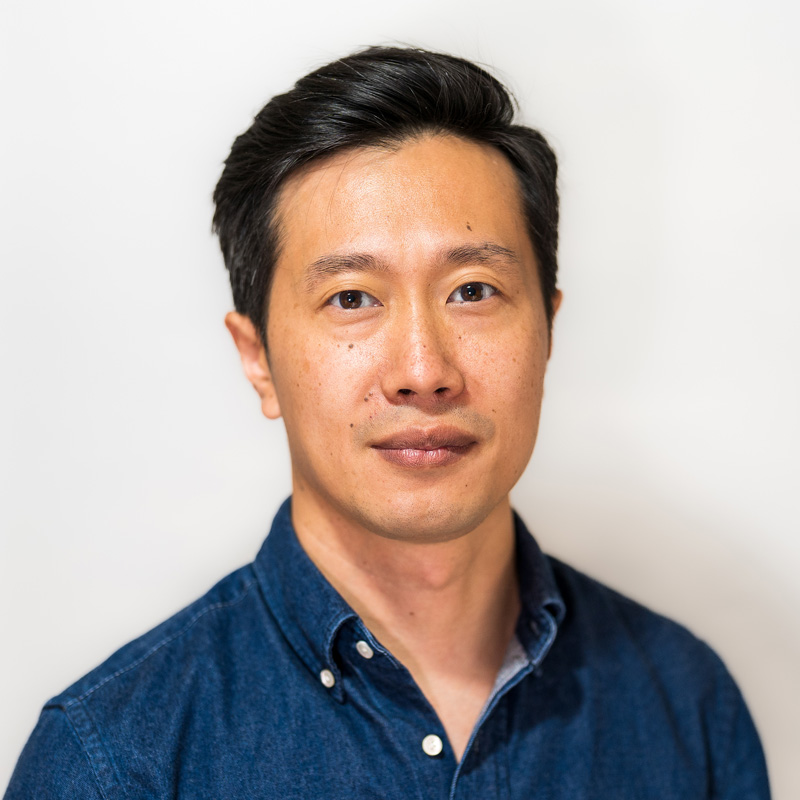
Tony Wong
I am responsible for IDEO’s long-term success in China and working with clients to use design as a tool to enable growth.
I am responsible for IDEO’s long-term success in China and working with clients to use design as a tool to enable growth. Specifically, I have helped Chinese companies design holistic brand solutions through the development of their products, communication, services, and innovation teams, and I have helped multinationals expand their presence and influence in China.
I advise global leaders on developing China-led innovation and capabilities.
In over 15 years in IDEO Shanghai, I have worked on projects that use design to elevate the quality of the experience of healthcare products and services, streamline processes that increase productivity, create spaces and programs that promote and enable inclusive communities, and build next generation mobility solutions that are planet-positive.
Before joining IDEO, I worked at Philips Electronics and the Electrolux Group in Italy, the Netherlands, and Singapore on a number of breakthrough commercial products. I am a member of the Young President Organization in Shanghai.
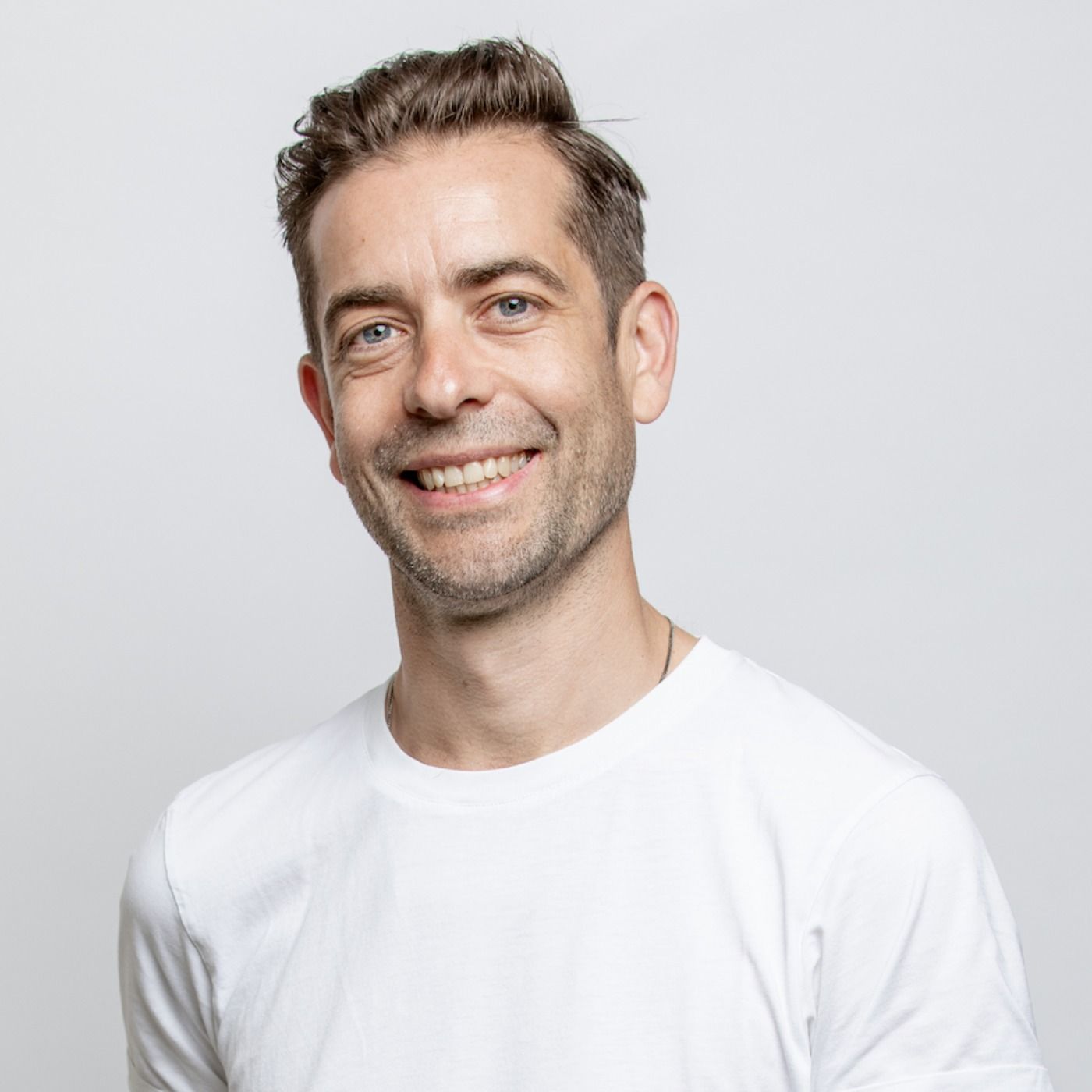
How to use AI as an editor, not a writer
Ed White shares how he uses AI as an editor—not a writer—to sharpen storytelling, rehearse ideas, and preserve the productive friction that makes creative work better.
Ed White has a rule he's tested on his own writing: hold yourself as the writer, and let AI be your editor. Ed is a Senior Design Director at IDEO's London studio, where he co-leads the firm's AI portfolio across Europe. Before IDEO, he spent 12 years as a writer and editor at the Financial Times, Wired, and Contagious. So when he talks about when to use AI for storytelling and when not to, it comes from two decades of crafting his storytelling skills.
In this episode, Mina Seetharaman talks with Ed about two specific tools he uses to keep AI in an editor's seat: a "roasting agent" prompted to critique his drafts without any sugarcoating, and a simulated audience he rehearses pitches on before the real thing. They also get into what Ed is hearing from design leaders at Anthropic, Lovable, Shopify, and Google Creative Lab about how creative work is changing, and why he thinks the friction of writing something yourself is worth protecting rather than automating away.

Building a personal AI for the messiness of life: Sida Li
Becca Carroll talks with Cue co-founder Sida Li about designing a personal AI for the messiness of everyday life—not just work. They explore how Sida stays anchored to human needs while navigating fast-changing technology, product tradeoffs, business-model experimentation, and the realities of building an AI company today.
Most AI products today are built for work—a space with clear problems and established systems. One founder noticed a gap: personal life is messier, harder to systematize, and mostly left behind by the AI boom. So she built Cue, a personal AI that lives inside iMessage and group chats, to go where the other tools haven't.
In this episode, Becca Carroll, IDEO's Chief Strategy Officer, talks with Sida Li, co-founder and CEO of Shared Context Lab, about staying anchored to a human need while the technology around her keeps changing shape, why she treats her business model with the same rigor she'd bring to a product, and what it feels like to build a company at this particular, disorienting moment in AI.
The conversation also gets into how Sida makes design decisions: the language Cue uses to describe itself, the tradeoffs behind building inside iMessage instead of a new app, and a real story about a business idea that didn’t pan out.
This is the second in a two-part series profiling founders from IDEO's Startups-in-Residence program. The first conversation is with Johannes Seemann, founder of Sooner, on designing GenAI for the emotional side of money.

Designing GenAI for the emotional side of money: Johannes Seemann
Designing financial tools around the feelings that shape money decisions.
Most personal financial tools are built to run the numbers and optimize towards a budget. While that works for some, most people experience money as a lived relationship that does not neatly fit into a spreadsheet. Johannes Seemann and Becca Carroll discuss why money is emotional before it is mathematical, and what a human-centered approach to building a generative AI financial product looks like in practice.
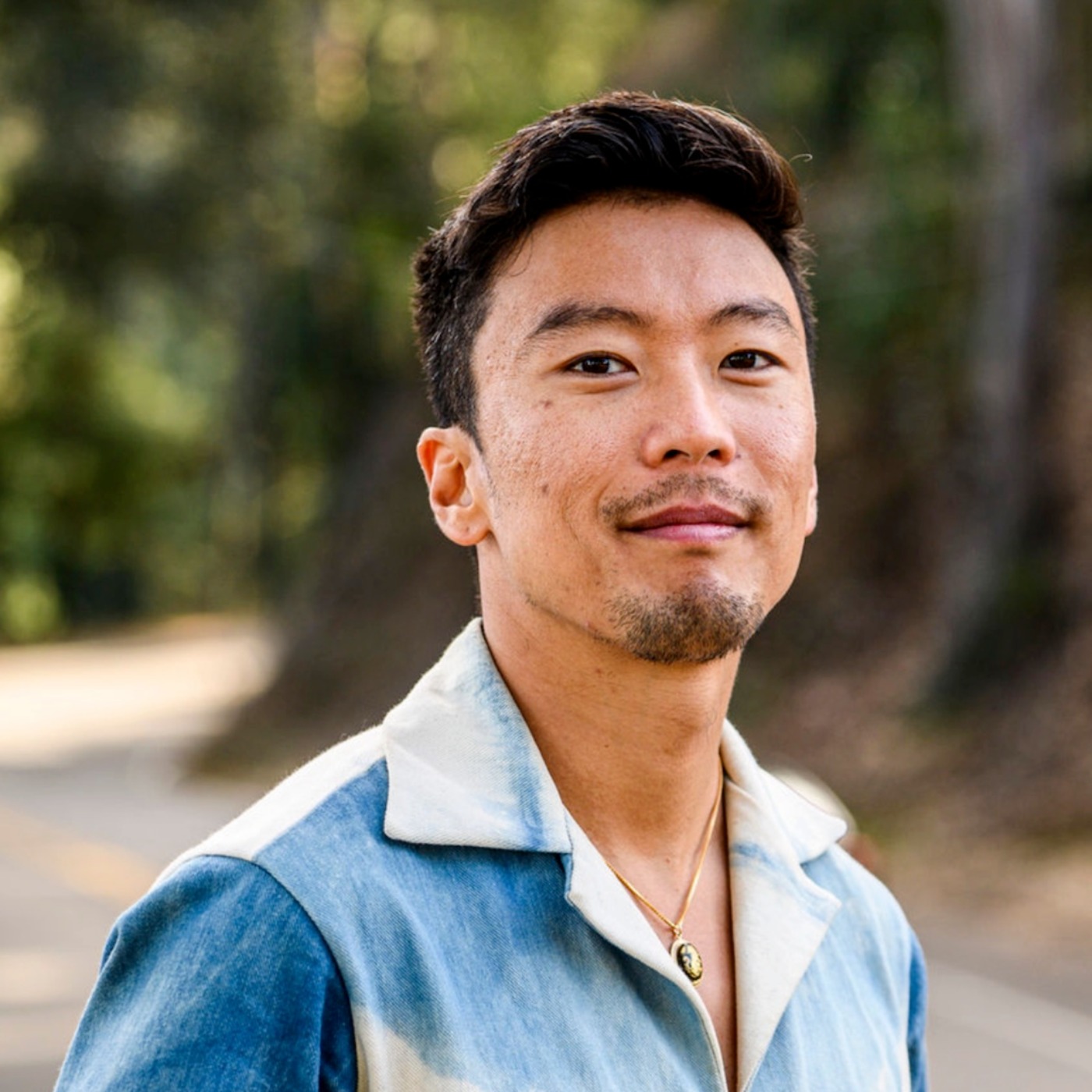
The curious leader's edge in uncertainty: Scott Shigeoka
How genuine curiosity helps leaders navigate uncertainty with greater confidence.
Mina Seetharaman talks with Scott Shigeoka, author of Seek and Head of Curiosity Cultivation at the Eames Institute, about what distinguishes genuinely curious leadership from performative curiosity, how power dynamics shape curiosity, and why practicing curiosity can restore energy rather than drain it.
Looks like you might be in search of something very specific?
Or reset the filters above and try another angle.
Here’s some random inspiration
Podcasts about creative leadership
Articles about the power of prototyping