
.svg)


Boston's new citizen-centered site
Designing a welcoming, intuitive platform for Bostonians.
More than 7 million people each year came to the Boston.gov site to tap into all sorts of city services: reporting a pothole, learning the assessed value of their property, paying a parking ticket, checking recycling schedules.
Boston wanted to create a beautiful platform that would make the process of finding and navigating information easy and intuitive, one that prioritized the needs of its people.
The Boston.gov site had outgrown its existing structure and needed an overhaul. The user experience was mired by the fact that Boston City Hall has nearly 50 different departments, each with its own microsite, navigation and content standards that feed into a centralized site.
So the City of Boston hired IDEO to design its new digital home, Boston.gov. IDEO designers worked with the major stakeholders—department heads, employees, and Boston residents, with a focus on those in underserved communities and those with varying levels of technical proficiency—to gather insights into what users needed.
The objective was to design something that would simplify how people navigate the site, to make it easier for residents to find answers to common questions, and, in the process, serve as a community facilitator—an up-to-date, reliable resource that makes life in the city more manageable.
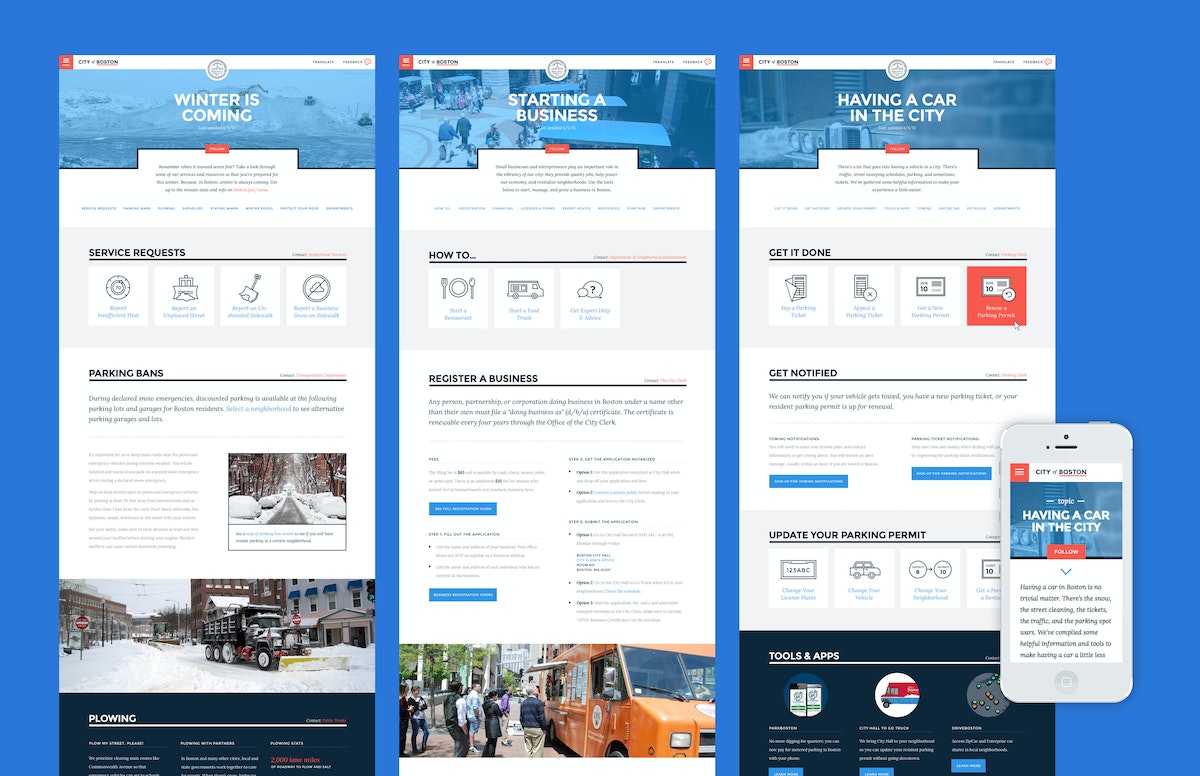
Rather than organize the site by the city’s departments, the design solution was rooted in illuminating relevant content by topics—people’s life moments—many of which overlapped through different branches of government. Owning a car in the city, for example, is closely related to preparing for winter, so bridging those common threads allowed for a more intuitive organizing principle.
In the process of the site redesign, IDEO also helped to create a visual identity system that underscores Boston’s strengths: the city’s confidence, humility, personality, and optimism.
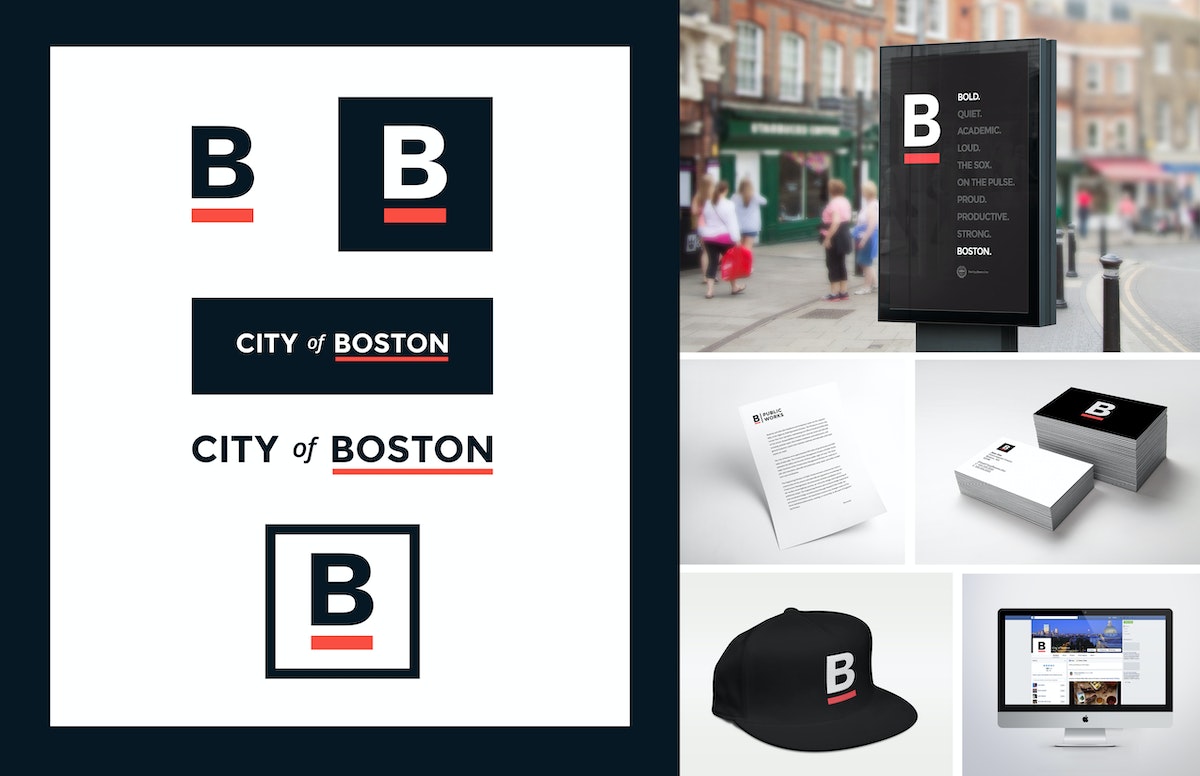
In addition to the web architecture and redesign, IDEO also produced a comprehensive style guide to help maintain design consistency, so departments can add content without compromising the overall integrity of the site, as well as a brand look that the city has decided to adopt across nearly all of its consumer-facing media. Now you’ll see the famous underlined B on T-shirts, banners, and even snow shovels.
Holding true to its mission to include Boston residents and all site users in its design process, the new Boston.gov site was piloted for six months, and the process document on the city’s blog (including the IDEO designed brand guide), before a full launch was rolled out in July 2016.
“The website should act like a helpful human. This is one of the big differences between the old site and the new site,” said Jascha Franklin-Hodge, the city’s chief of information technology in a Boston Globe article. “Oftentimes, when you looked at something on the old site, it would feel like you were interacting with some sort of lawyer-robot that was speaking to you in government-speak, using very formal language. We are trying to move away from that so your experience is akin to a person.”
The City of Boston was in need of a new digital home—one that emphasized a shift to a more welcoming tone and commitment to its citizens.

Growing an American brand in China
How an outdoor retail company found a new audience through digital and physical shops.
In the Western Hemisphere, The North Face brand has long represented an active, sporty lifestyle that’s filled with challenges and adventures. But appreciating “the great outdoors” in China is less about extreme sports and more about connecting with nature in a communal, spiritual way. This research-based insight led the team to identify new opportunities for The North Face to better target its messaging.

Designers found a key opportunity: Encourage Chinese consumers to escape the pressures of hectic city life by enjoying the freedom and renewal that comes with spending time outdoors.
Today, as people find less time to enjoy the benefits that lie just beyond China’s large cities, there’s a tangible desire to return to the outdoors to refresh, reassess, and renew oneself. The North Face aims to help consumers do exactly that.
To create a compelling new brand vision for The North Face in China, the team’s design research tapped into Chinese ways of spending time outdoors. IDEO’s insights and creative brief provided the essential brand story for The North Face in China and informed the tagline of the company’s current marketing campaign, “Go Wild” (去野). The North Face brand’s new messaging links “old nature” and “new outdoors” through a combination of digital, retail, and interactive community channels.
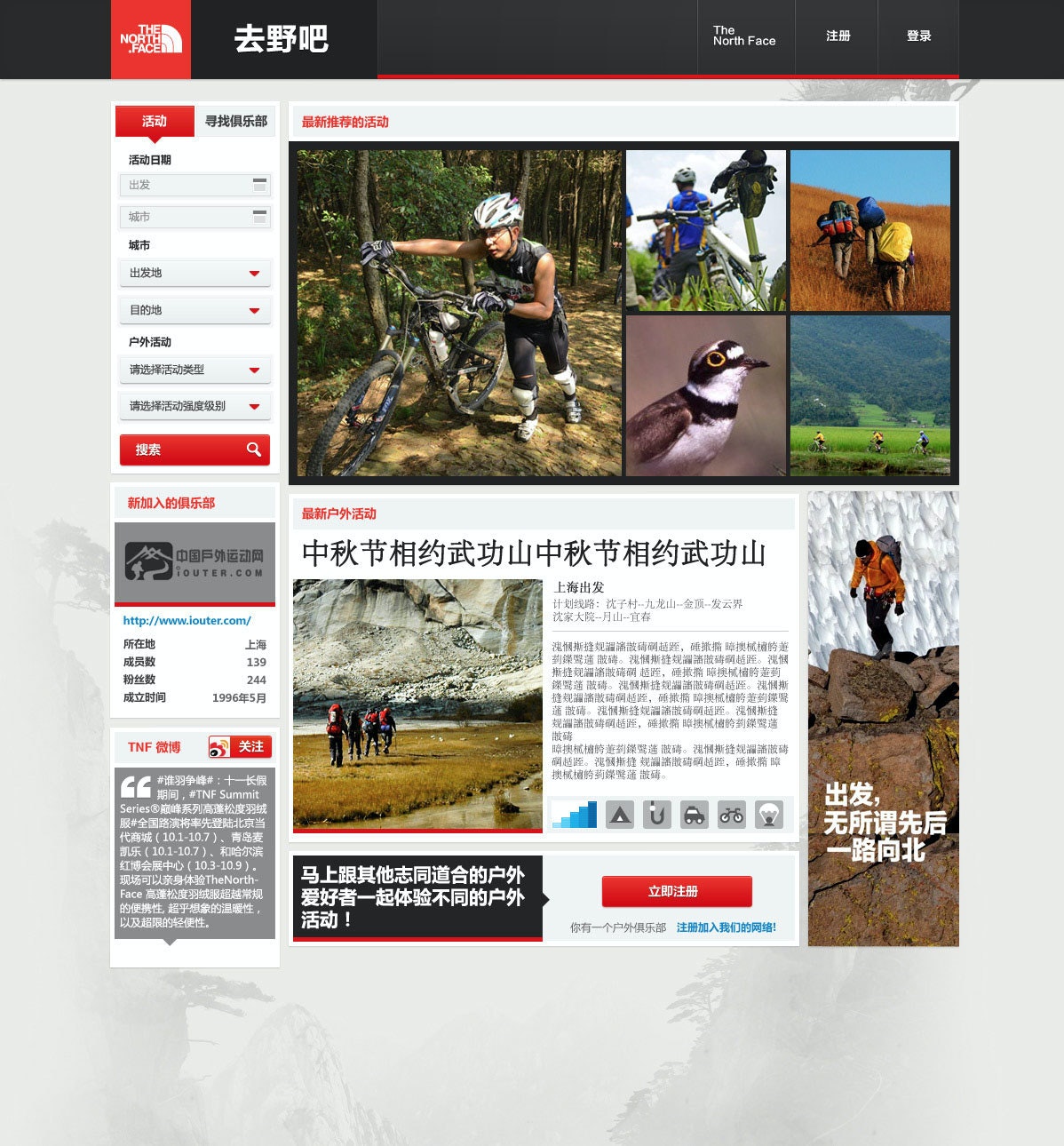
IDEO also collaborated with the company on designs and prototypes for a new digital platform and an updated store-within-a-store merchandising display. The digital community aims to attract newcomers and connect them with more experienced outdoors enthusiasts and clubs. As the platform evolves, it will help aspiring adventurers plan trips, learn skills, and share their experiences through photos.
The retail community space aims to integrate this digital community with in-store shoppers and an effort to turn the “buy-a-product moment” into a “join-the-outdoors moment.” Both will be integrated to provide a holistic brand experience in China centered on nature and community.
In the West, The North Face, with its decades-long history, has long symbolized an adventurous, active lifestyle. In China, however, the outdoor market only began accelerating in the early 21st century.
Success in this growing market depends on building strong and deep connections with Chinese consumers.
20% sales growth in China
from 2012 to 2013—the year the project was completed—propelling the brand from sixth place to a market-leading position
Nearly 40 years of designing pharmaceutical excellence
How a decades-long collaboration with Eli Lilly has transformed patients' lives and health outcomes.
Over the last 36 years, IDEO and Lilly, along with the pharmaceutical giant’s other design, development, and manufacturing partners, have collaborated on more than 250 projects. During this time, Lilly has not only honed its engineering-focused internal device-development team but also transformed into a human-centered organization with extensive, robust in-house innovation capabilities.
Early in the relationship, a team of IDEO designers and Eli Lilly leaders traveled the world to understand how people with diabetes live with the disease. Their findings led to the design of a series of award-winning insulin injection pens like SAVVIO. Portable, aesthetically pleasing, and discreet, the pens are suitable for use in both medical and personal settings. Combined with Lilly’s technical design prowess, this human-centered focus allows the devices to seamlessly integrate into patients’ lives and routines, making a challenging disease like diabetes feel more manageable.
Fast forward to today, Lilly’s innovative, easy-to-use auto-injectors are not only continuing to provide life-saving treatments to people with diabetes but also enabling the adoption of the popular GLP-1 weight-loss drugs Mounjaro and Zepbound, which together accounted for the majority of the company’s annual revenue in 2025. Perhaps most importantly, patients consistently rate the experience of using Lilly’s auto-injectors as relatively pain-free, easy to use, and preferable to competitors’ brands, improving adherence, satisfaction, and health outcomes.
This unwavering focus on driving innovation through a patient-first mindset is evident in some of the most impactful projects Lilly and IDEO collaborated on over the years:
GLP Auto-injectors
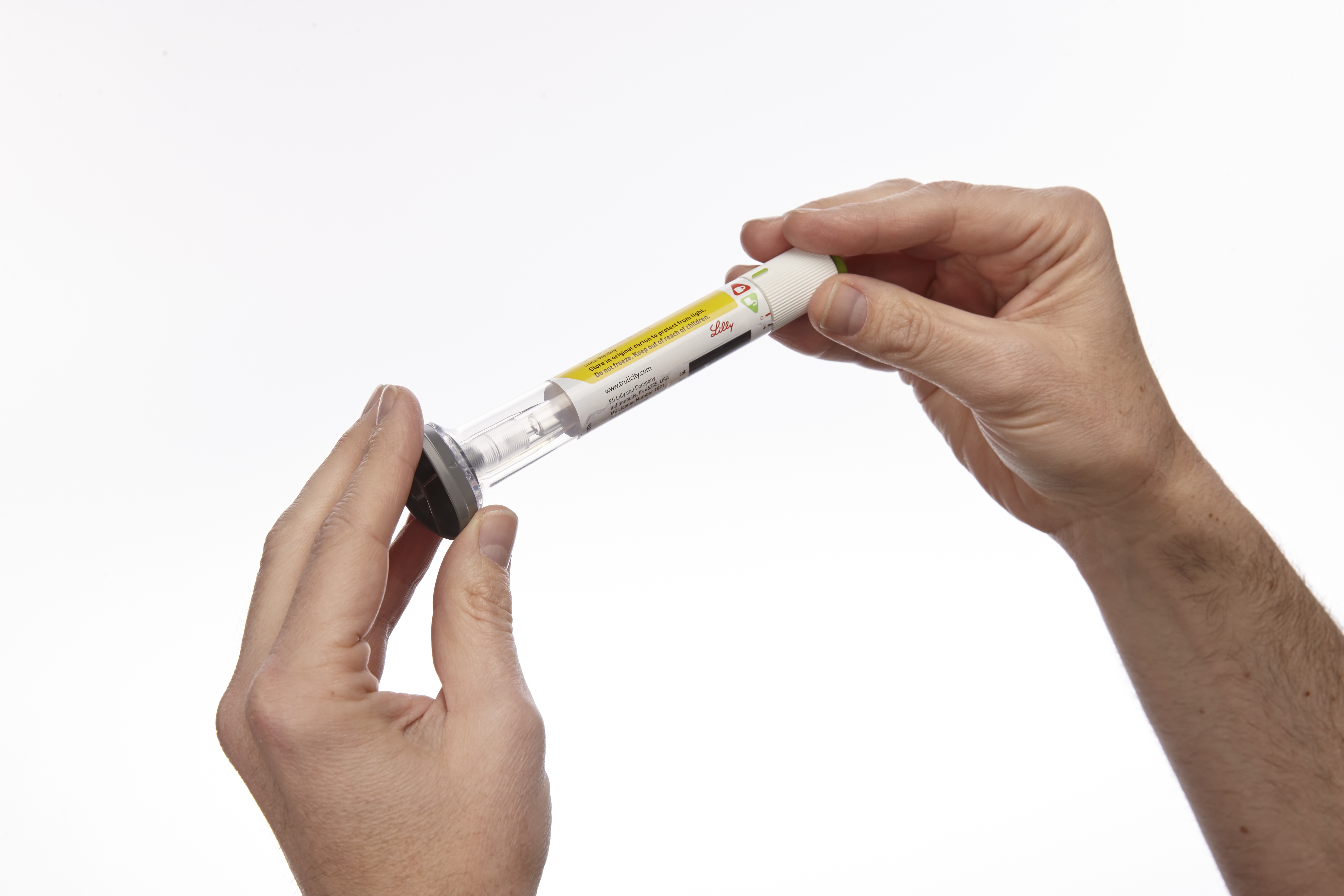
Convenient and cutting-edge, the first Trulicity injection device was originally designed to deliver the GLP-1 drug to treat type 2 diabetes. Today, it has been adapted for use with other GLP-1s, Mounjaro and Zepbound, which are increasingly popular weight-loss drugs and are also administered once weekly via fixed-dose injections. A wide base enables the pen to be held securely against the injection site, and the device automatically regulates the dose and needle depth.
Taltz Injectors
For most patients, living with severe plaque psoriasis means being your own medical technician—metering your drug dosage each time, and attaching and removing needles by hand. Taltz provides patients with clear visual and auditory feedback throughout the injection process through simple icons, bright colors, a translucent material, and clicking sounds. The devices are available in both autoinjector and prefilled-syringe formats and are adapted for Emgality, a preventive monthly migraine treatment, and Ebglyss, which helps treat eczema or atopic dermatitis.
HumaPen SAVVIO Injection Pen
Key insights informed the design of SAVVIO, including patients’ preference for insulin pens that look less like medical devices and more like everyday objects you’d find in a backpack or purse. The sleek, colorful device was created to help patients feel comfortable and confident about fitting mealtime injections into their everyday lives.
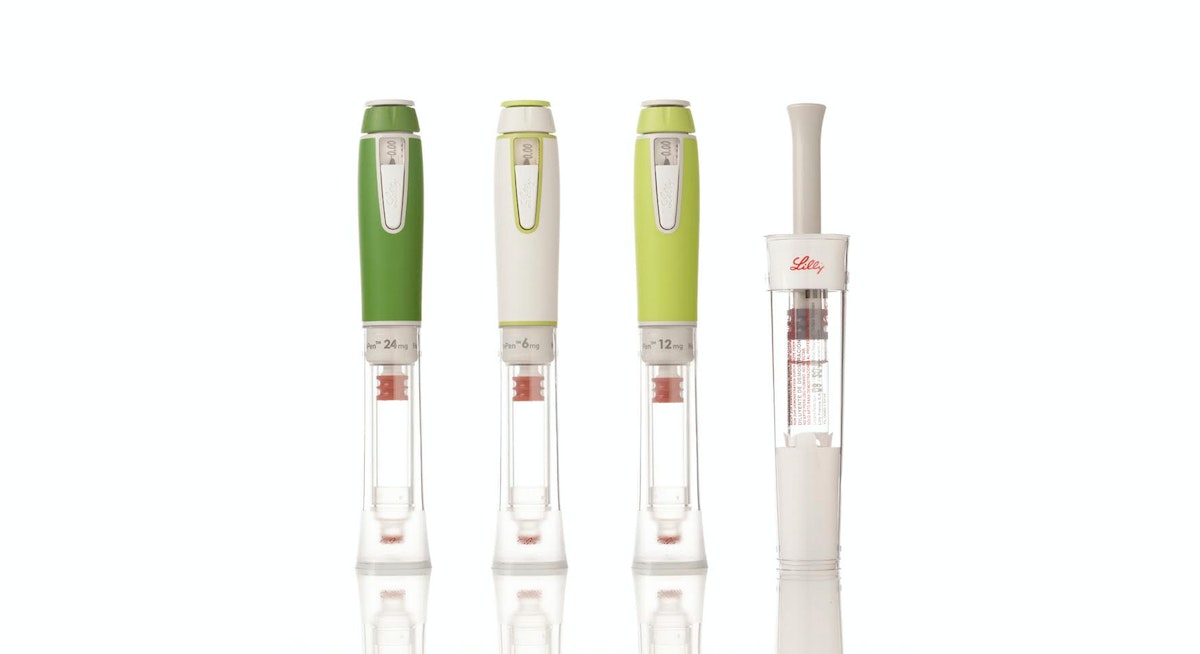
Refillable Human Growth Hormone (HGH) Injector and Reconstitution Device
Designed to be kid-friendly, the Refillable HGH Injector leverages insights into pediatric treatment adherence to create a more integrated, systematic approach to treatment, while the Reconstitution Device makes mixing Lilly’s powder-and-liquid drug easier and less intimidating for parents and healthcare professionals alike.
KwikPen Insulin Pen
KwikPen is a next-generation, prefilled insulin injection pen that builds on the success of two previous designs, reducing its size to 5.7 inches and enhancing ease of use for patients.
HumaPen(R) Luxura™ Insulin Pen
HumaPen Luxura combines several innovations into a robust yet elegant pen that can be carried and used anywhere—an insulin pen solution that improves dosing accuracy, dose setting, and injection force.
In addition to designing products to meet the needs of people with diabetes, IDEO and Lilly have developed innovations in areas of oncology, autoimmunity, and men’s health. The results of this collaboration and expansion have won numerous design awards and produced one of the longest and most fruitful innovation relationships in IDEO’s history.
In the 1990s and early 2000s, Eli Lilly had a number of new, life-changing medications and two big challenges: Most of its drugs were self-injectables, not pills, so patients were hesitant to take them. And its drug-delivery device platform lagged behind its drug pipeline.
99%
of Trulicity users reported the auto-injector was “easy” to “very easy” to use in a JDST study
$36.5B
of Lilly’s $65.2B 2025 revenue came from sales of its auto-injectable GLP-1s, Mounjaro and Zepbound, a 45% increase from 2024

Reimagining San Quentin
Bringing together many voices for a report for the Governor of California.
“…the Advisory Council will recommend transformational programmatic, cultural, and physical change to San Quentin that can serve as a practical model that can be replicated and scaled to other institutions.”
Source: Office of Governor Gavin Newsom: Governor Newsom Names Leading Criminal Justice and Public Safety Experts to San Quentin Transformation Advisory Council, May 05, 2023 https://www.gov.ca.gov/2023/05/05/san-quentin-transformation-advisory-council/
The Advisory Council included the expertise of established criminal justice, public safety, healthcare, academic, reentry, and rehabilitation professionals, along with system-impacted/formerly incarcerated community leaders, and representatives of crime victims/survivors. The premise of IDEO’s involvement is to augment the Advisory Council Co-Chairs’ and members’ expertise in evidence-based best practices and lived experience living and working in prisons, with expertise in collaborative design, synthesis, visualization, storytelling and bringing visions to life.
Specifically, IDEO was brought in to facilitate input-gathering, and assist with incorporating the many viewpoints into a single, cohesive report of recommendations to the Governor. This included meeting the challenge of bringing together the viewpoints of 21 people on the Council (17 members, three Co-Chairs and an advisor to the Governor); incorporating the views of people who are most impacted (those incarcerated at San Quentin, San Quentin staff, community-based organizations, victim/survivor groups, among others); and formatting and designing the final report.

IDEO’s facilitation included workshops with the full Advisory Council, individual interviews and check-ins with Council members to gather their input to inform the recommendations. Each Advisory Council member was asked to speak with, and record feedback from, no fewer than five people at San Quentin or in affected communities and to share this feedback with IDEO. IDEO integrated this information and feedback into this report.
Research activities included visits to San Quentin to speak with and facilitate conversations with:
- San Quentin residents (100+) including the Citizens/Inmate Advisory Council, focus groups with Spanish-speaking residents, former gang members, ACT (LGBTQIA+), Voices Heal, People in Blue, San Quentin Citizens Advisory Council.
- San Quentin staff (100+) including interviews with numerous officers.
- San Quentin staff and residents together.
- Current participants and staff at Amistad (MCRP) and Beacon (former lifer) campuses (many who were previously incarcerated at San Quentin).
IDEO also organized listening, information sharing and feedback sessions, both at San Quentin and in the community, between Co-Chair representatives and various stakeholder groups, including victim/survivor groups, labor unions, and advocacy organizations. These perspectives were also brought into the report.
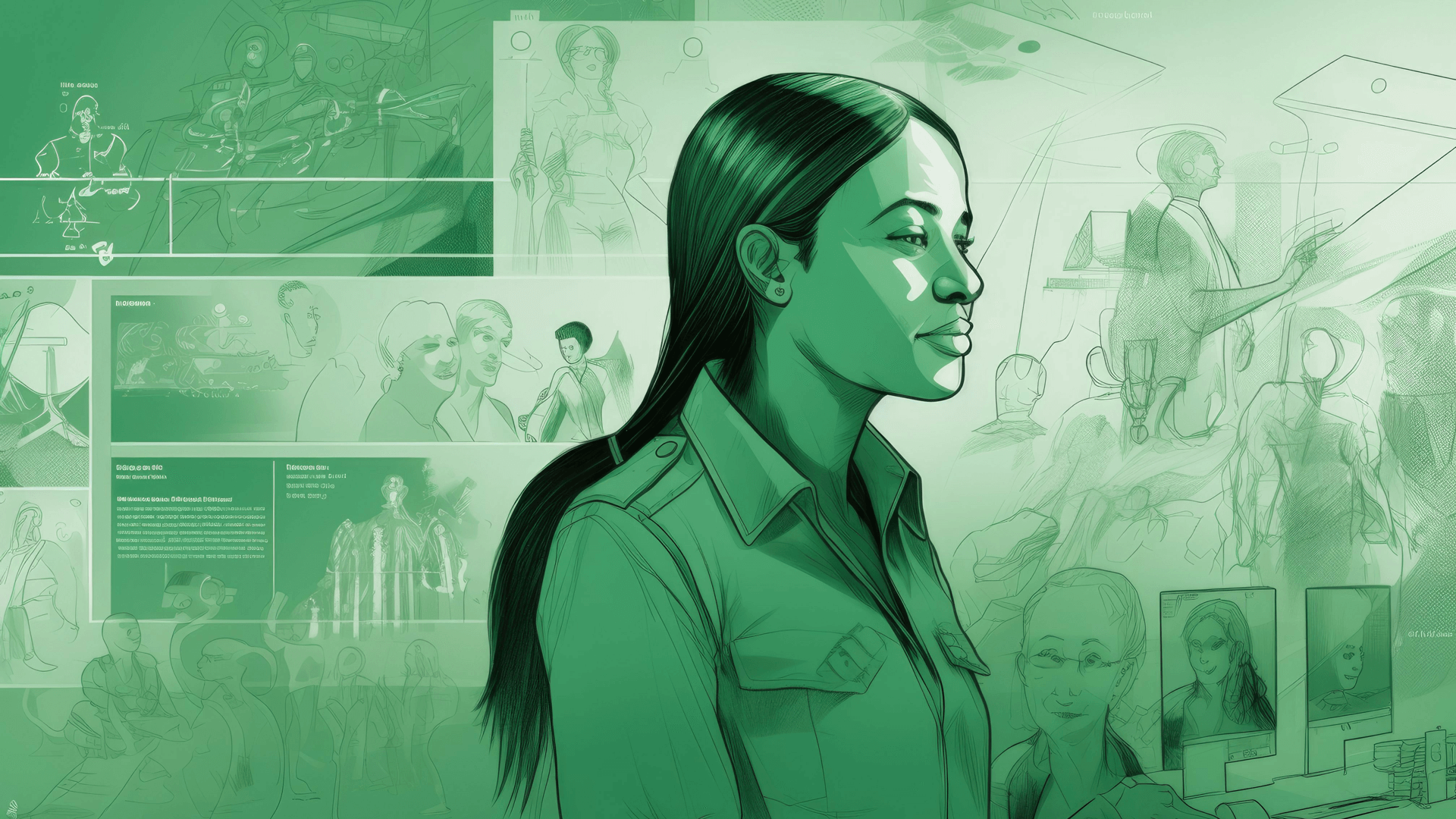
We tried to build a health venture With ChatGPT
What worked—and what didn’t—in the process.
To answer that question, we teamed up with Healthworx Studio to run an intensive five-week sprint and design a business that would address issues of access in rural health, leaning on AI to supercharge the process.
We kicked off with a lot of questions: Could we produce more rigorous, higher-quality results if we used gen AI tools to augment our team? Would it come up with innovative ideas for how to make healthcare more equitable? Could we get further faster? The answer was yes—with a lot of caveats. (For a deep dive into our approach, principles, and learnings, check out our Designing with AI Report.)
It quickly became clear that while Gen AI tools can’t replace human ingenuity, they certainly fuel it. When it came to generating solutions to a problem this complex, AI had very little to offer in comparison to human teammates. But it did help us innovate much faster and with more depth, bringing us up to speed on initial stakeholder context and synthesizing and incorporating datasets —crucial parts of the process that can take a lot of time. Here’s where we succeeded and failed, and what that taught us about using AI going forward.

Opening the aperture
Did a machine just listen to dozens of podcasts, summarize them, and give us themes in an hour? Yes it did. Thanks to tools like Preplexity.ai, which enables social listening on platforms like Reddit, we were able to quickly synthesize diverse perspectives from varied sources and distill themes that seamlessly integrated into our research process.
Working with these tools feels like being bitten by a radioactive spider and gaining a suite of superpowers. We can rapidly develop contextual awareness of numerous stakeholders and their pain points in relation to the challenges we aim to address. With our lens widened, the questions we asked became more pointed and the concepts we designed more crisp. “The AI enables efficient pattern matching across massive datasets, unlocking value from information that was previously siloed or inaccessible,” explains Jaime Goff, Product Design Lead at Healthworx Studio. “By leveraging these capabilities, we can incorporate a breadth of knowledge beyond what our team could internalize before. It really expands what we can achieve by connecting us to data in new ways.”

The importance of coming together
But as our use of AI tools increased, there were unexpected sandtraps, too. For one, we noticed a steep decline in the quality of our team interactions. We thought that getting an AI boost would be “like having an extra designer in the room with us.” But the reality was we each retreated into our corners with our own AI assistant, forging ahead with new ideas. When it was time to reconvene, we were on wildly divergent tracks, and re-aligning to move forward as a team was an enormous undertaking.
Another caveat: While generative AI tools helped us gather new forms of data, it was still critical to hear directly from the people who would be using these solutions.
Nicole lives on a ranch the size of the City of San Francisco. After her husband broke his leg in a freak accident, she had to make a harrowing journey, traveling two hours to the nearest hospital. Stories like Nicole’s taught us a lot about what it’s actually like to access healthcare in rural areas, and the resilience it requires. It was the people we spoke with who brought nuance to the problem our team was trying to solve, inspiring our most critical insights and building confidence in our concepts. As much as we tried, we could not find an artificial substitute that could come close.
It was the people we spoke with who brought nuance to the problem our team was trying to solve, inspiring our most critical insights and building confidence in our concepts. As much as we tried, we could not find an artificial substitute that could come close.
Smelling the AI B.S.
When reviewing a few AI-generated venture concepts with the Healthworx team, the room fell silent. The concepts were all variations of the same idea, repeated and rehashed. “Generative AI can rapidly spin up concepts that seem good enough at first glance,” Goff says. “But when you scrutinize them, the limitations become obvious.” Even after extensive prompting with our AI co-pilots, we were still back to the same place, with a bunch of repetitive concepts.
But when the team mined our own insights, we were able to find a truly compelling venture idea.
Late into the night, when the team was riffing, we shifted our approach from working alongside AI to guiding it. We had ChatGPT review and improve on its own ideas, asking it to strengthen the overall concept as it went. The tool acted like jet fuel, helping us add rigor and build out the venture, ultimately producing a successful pitch presentation that included high-fidelity mockups, early working AI prototypes, and an in-depth pitch deck.

Supercharging our process
We’re in the caveman era of generative AI, and there are plenty of unintended consequences to be concerned about. But we’re optimistic about how a human-AI partnership that leverages human creativity and nuanced subject matter expertise alongside AI tools allows us to quickly outsource parts of the process, add rigor, and iterate faster, supercharging design and innovation.
And while the AI hype is founded, its limitations, which became patently clear in the ways it addressed a complex challenge like rural healthcare, made us appreciate how important humans are to this equation. Goff says it best: “This project showed the value of individuals bringing their unique brains and nuance to the table to work alongside AI. Our minds provide the spark that drives real progress.”
For those who crave the details, learn more about our approach, principles, and experiments with our transformative collaboration with Healthworx Studio here or reach out to ai@ideo.com
Visuals created with Midjourney.
Healthcare has a lot of big problems to solve. Could AI help?

Can failure be and feel productive?
It doesn’t pay to cling to a bad idea.
At a recent business roundtable, the topic was how to set product innovation up for success. I spend the bulk of my days helping organizations stretch to tackle business challenges by coming up with breakthrough ideas, so it might seem sacrilegious to allow those ideas to fail. But since that breakfast, I found myself scrutinizing not only what failure looks like, but also how it feels.
There’s a saying that’s usually applied to writing: “Kill your darlings.” It’s a nudge to let go of a much-chewed-over clever phrase that doesn’t help the overall story.
We use the saying at IDEO, too. But our “darlings” are hypotheses or “sacrificial concepts” that we quickly put to the test and are willing to abandon. Iteration is the lifeblood of the design process—and the magic of it is that it allows for what Harvard Business School professor Amy Edmondson calls “productive failure.”
When companies face business challenges that require innovation, the instinct is to look for and land on a solution and sell it internally, so you secure permission to move forward. And what if the path you’ve chosen doesn’t pan out? We have a natural instinct to persist: The company has allocated money and resources, and it’s easier to hang onto the hope that a turnaround is just ahead than to pivot.
But hope isn’t enough in an era of new baselines like disruptive AI and climate change. Companies must stretch further, build resilience, and find ways to meet an ever-evolving new customer.
To keep pace, we have to reframe business challenges as human challenges: What is desirable from a human point of view? What do people really need? How can we help a brand like H&M meet its customers’ desire to use less plastic? And also help the retailer meet its climate goals by reducing waste from its supply chain? Insights drawn from in-depth interviews with and observation of customers and other stakeholders combined with data already collected by the organization help us generate hypotheses that we can quickly test.
In the case of H&M, we suggested replacing the plastic packaging they used to ship online orders with paper. But there were many hurdles to clear to make sure that would work across a global supply chain with multiple brands. It ended up taking several months and multiple pilots to ensure the more sustainable packaging would work.
Finding out that something doesn’t work—and, crucially, why—sets you up to more deeply understand the constraints you're operating within. And reframing an abandoned concept as a learning rather than a failure allows you to prioritize continuous improvement, keep teams motivated, and build stakeholder confidence .
Organizations may feel like they don’t have the luxury of time to test innovative ideas. But proof of concept needn’t take more than one to two weeks and can be done at low-cost. One timesaver is to test hypotheses in parallel. That approach also allows teams to let go of darling concepts and view the goal as learning rather than validation.
By one estimate, 95 percent of new products fail, and baking failure into the exploratory phase helps ensure the product or service that emerges has been battle-tested. A hypothesis that doesn’t work out isn’t a Failure, it’s a failure, and that feels different. In the case of H&M, prototyping packaging options not only led us to a paper solution that cut plastic, it led to us digging deeper on climate goals and ultimately redesigning their supply chain to cut millions of tons of waste.
At the roundtable, we talked about the challenge of working within a company culture that doesn’t tolerate failure. I’ve worked in a number of those environments and cultures; they’re tough. Failure carries emotional baggage. If you got a taste of it as a child and were a diligent but mostly average student like me, you did everything you could to avoid seeing that red letter atop a test ever again.
I’m currently working within a culture that makes room for failure. Some of that is inherent in the design process, which is optimistic and pragmatic. But my colleagues also share an important mindset. They focus more on impact than the idea or activity that produces it. There is a deep respect for diversity of perspective and a shared belief that if there’s a better way to do it, we’re going to do it that way.
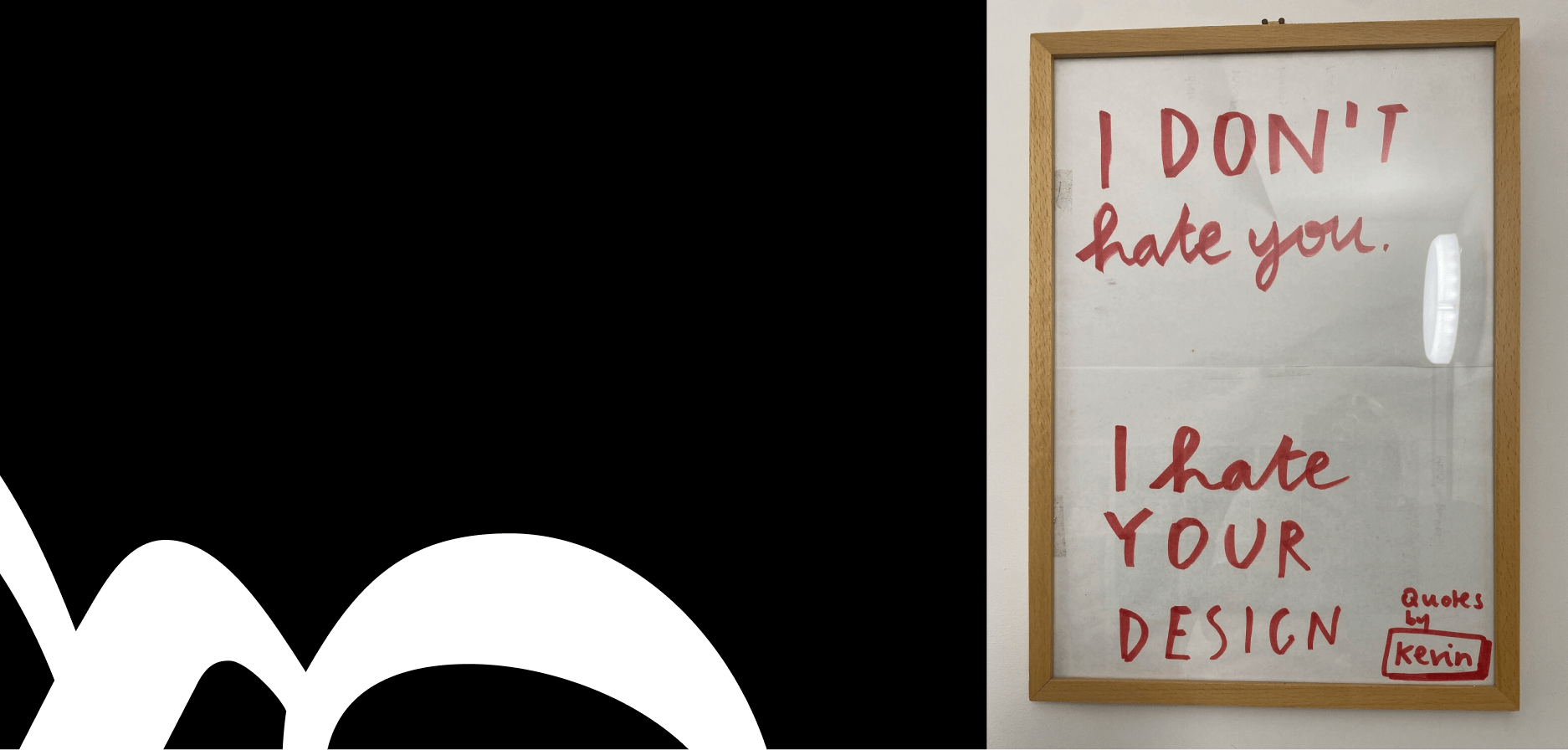
In IDEO’s London studio, we have a framed, handwritten quote: “I don’t hate you, I just hate your idea.” It was never intended to be framed, but it’s a fabulous reminder about not taking failure personally. If we truly share a collective goal of doing well and doing good, we need to generate and test as many ideas as we can—and be okay with killing our darlings to get there. It’s the only way to make real change.
Is your intolerance for failure holding you back? I’d love to hear more.
Should we allow new ideas to fail?

How AI can help us solve the climate crisis
From talking jeans to Nature boardrooms, we’re stretching to meet the future.
Two of those shifts? Generative AI, and our rapidly changing climate.
Together, these two forces are moving both the people side of the equation—what we need and how we behave—and the how side of design: what’s possible.
Welcome to the Climate Era
A new age is upon us. Steam propelled the original Industrial Revolution; electricity powered the second; preliminary automation and machinery engineered the third; and cyberphysical systems—or AI-powered computers—are shaping the Fourth Industrial Revolution.
But the universal context is our climate. The Climate Era is our time-windowed opportunity to reverse the costs of the industrial and digital eras—creating a more abundant future for all. The way through it is to find ways to reinvent our economies, in part by turning necessary choices (like conservation and circularity) into desirable ones.
To the degree that the climate crisis can be solved, we already have solutions and technologies. The central question of the Climate Era is not can we do it? It’s will we do it?
Hello, generative AI
If the challenges of the Climate Era have been building up over centuries, the transformative power of generative AI seems to have hit the world in a flash.
And this is a critical moment to interrogate our relationship with technology. At IDEO we do that through the tools and habits of design: building to think, taking time to understand people deeply, investigating the farthest consequences we can imagine, and embracing new skills, disciplines, and ways of being in the world through experiments.
Combined forces
These two forces—AI and the Climate Era—have the potential to change everything for everyone. And in some ways, they already have. More often than not, AI and Climate thought live in different conversations. But what might happen when they’re brought together?
The pull of personality
Here’s an example of how AI might help us be climate-friendly manufacturers and consumers: It can help you get to know your clothes before you buy them.
We want and we need to build a circular economy. But its biggest challenge is scale: getting to the necessary infrastructure and processes, and—maybe the most challenging—getting enough people to participate.
There are signs of shifts at the policy level: You see it in Europe, for example, where the EU has a regulatory framework to promote (and require) circular behaviors from both businesses and consumers alike. And more and more people are participating in circular-like ways, such as thrifting. We see younger consumers pushing brands to become more active in developing and promoting sustainable versions of their products (so long as they’re not more expensive).
All that made us think about a pair of jeans.
Jeans lack the physical traits necessary for conversation. But, for an exhibit of speculative design at IDEO, we imagined them capable of communication.
For starters: We might ask the jeans about their (un)life story, what went into their creation, or how they like to be treated. We might learn about where they were manufactured, their previous owners, and how to fix them if they ripped. Knowing all this about your jeans would give you a much better sense of whether they were a good fit.
Through AI, all of us will soon be conversing regularly with non-humans. And what else might “speak” through AI? Vehicles that remind us that they’re happier when filled with passengers and bound for the carpool lane?
Speaking for the trees
Most of the sustainability problems we seek to fix were created in the design and strategy choices that were made early on in a product’s journey. The lifecycle analysis is a robust process. But it’s costly and generally retrospective, analyzing only those products and practices that already exist.
What about when we’re exploring different potential options and what could be, not what is?
AI can help us incorporate a real sense of the “true cost” of a product and give nature a seat at the table early on. AI that draws on scope 1,2, and 3 datasets could help protect nature’s best interests in the decision-making phase. To be credible and useful, such an AI would need to synthesize scientific data, cultural data, and archives of experiments. And it would need to have some ability to understand the ground truth of things: learning from both human and technical inputs how things really are, right now, in the soil, in the ocean, in the community, and on and on.
With such a nature-centered AI in play, deployed ethically, we can imagine it occupying different roles and settings. As an advocate in the boardroom (where it might pose strategic questions or even cast a vote), or as an inventor in the materials lab (where it might suggest radically more sustainable ways to use resources and optimize production).
Everything in play
When we talk about making great choices in the Climate Era, especially at the policy or regulatory level, we’re talking about something unbelievably complicated. There are so many factors to consider, in so many dimensions.
And AI can help us think systemically. Take something like fishing. To regulate it, we need to understand the immediate economic impact (such as business profit); the effect on communities and livelihoods; taxation and employment; the effect of granting more or fewer fishing licenses; how to balance production and protection of spawning areas); and biodiversity. AI can synthesize all of that information and data and make suggestions that expand our imagination about what’s possible.
Another thing artificial intelligence has a knack for is running simulations. What if AI could help you simulate the tradeoffs among biodiversity, job creation/local livelihoods, and business success?
We imagined this kind of thing in a piece of work with our friends at Conservation International.
A simulation is often quite technical, and AI is already great at that. But we can also imagine an AI pushing people to consider their choices in other ways. What if it could point you to the right humans, on island nations for example, to enrich your understanding of potential impacts, far beyond your own frames of reference?
The age of transformers
There are so many ways the Climate Era and AI, two transformative forces, might collide in service of building better futures. We picked out just three:
• Driving consumer adoption and adaptation by making things that are better
• Optimizing and reimagining production by giving nature a voice and a seat at the table
• Radically reworking how we make climate choices, especially at the largest scale
But, of course, they’re not the only transformers at work. We are, too. Especially those of us in positions of power and influence.
The Climate Era is here.
The Age of AI has arrived.
And it’s still our world to make and remake—for the better, if we choose.
This article is adapted from a session delivered by IDEO in NYC at the 2023 FastCo Innovation Festival. With editing support from Christina Drill.
The problems we’re being asked to solve are changing. It’s less about helping partners innovate in incremental ways, and more about big transformational shifts in how we live and work.

The illusion of knowing everything
To understand people’s needs, we must stretch beyond data.
In some cases, we knew nothing about the people we were trying to reach, so addressed them with the default direct marketing salutation, “Dear Valued Customer.” Finding the target audience was like being spun around blindfolded, then praying you were walking in the right direction.
Thirty-seven years later, we know virtually everything about everyone. Thanks to data mining and feeble privacy laws, we can pinpoint your exact location, health status, consumption habits, and, troublingly, what makes you laugh, cry—even think. All of that data is now being poured into the greased pan of generative AI where—we are promised—it will bake the most delicious cake, made just for us.
From direct marketing to AI-driven personalization, I’ve witnessed a transformation in how businesses reach their customers. We've never known so much about people, and yet we've rarely understood them less. In my view, using data alone to understand people has the same flattening effect as “Dear Valued Customer.”
But there is an antidote: Human-centered design.

Goodbye “Dear Valued Customer”
Once, at an international conference, I heard a speech by someone who worked for a large social media company. The premise of the talk was that a person’s “likes” could mirror their answers on a personality test. The more likes the social media company could analyze, the better they could predict a person’s personality—and to a level of accuracy that could beat what your friends knew of you; beat your family; and maybe know you better than you knew yourself.
With that kind of knowledge, companies are able to design user experiences that feel like intimate conversations. But are they, really? Or is it only the illusion of intimacy—the hackneyed output of a data-driven predictive power?
It made me wonder: Is how we appear online—even to ourselves—who we really are?
Of course not. People are not reducible to their preferences. People contain multitudes. People change their minds, regularly and often. They respond to things that feel authentic and responsive to their experiences and identity—especially if they have historically been written off, underrepresented, or marginalized.
The new customer, if we can imagine them in their infinite richness, has in recent times slogged through a global pandemic; discovered the unwelcome uplands of hiked interest rates and housing shortages; and likely contended with some form of professional burnout. Human lives are necessarily messy: You can’t rely on troves of data and canned messages to reach them, let alone persuade them. People can smell a door-to-door algorithm from a mile away.
The best organizations are able to stretch how they think about their customers. The most successful businesses are able to understand and reflect back to people things that they don’t even know about themselves.
The power of starting small
In China, a client once questioned IDEO’s decision to root an entire concept in the preferences and needs of a small group of people. But when the product was delivered, the client recognized a level of human understanding that data alone could not achieve.
My time at IDEO has shown me that understanding people requires research at depth. For us, that often means ethnography, and you don’t have to have thousands or hundreds or even 50 people in the room to do it. What you need is a small sample of people with a diversity of lived experiences whom you get to know very well.
Starting small requires designing with people and communities rather than for them, too. Innovation doesn’t spring from our heads as Athena from the forehead of Zeus; it's uncovered through the careful and considered use of tools, mindsets, and methods which we share with teams and communities.
Great organizations recognize that the work of understanding their customers is never complete. They continuously challenge themselves to listen and respond to what their customers are telling them, not only through data, but also by including them as co-designers.

The brutality of perfection
I once had a custom suit made for me for my wedding. To appear cool and unconventional, I asked for a red lining. The tailor wondered if I would still be fond of that red lining in 10 years. A simple question based on lots of experience. Upon a moment of honest self-reflection, my answer was, no, I would not. So, I followed his advice. I still wear that suit today; not once have I wished for a red lining. Of course, a company selling that same suit to me based on tracked preferences would’ve gladly hawked me any lining I wanted. But I am not sure I would trust that company again. I’d move on.
The organizations that will endure will be the ones that stretch their ability to deliver long-term, unexpected value to their customers.
I am thrilled by the possibilities of generative AI. IDEO’s experiments with emerging technology are as fervent today as they’ve ever been. And one of the qualities of which I’m most proud is our collective hunch that the most interesting opportunities lie in the messiest places.
That runs counter to the brutal attraction of data and AI in the current moment: an implied promise that an objectively “right” answer is within reach. Much of what we love in the world is so wrong it’s right. Perfect is not interesting, it’s not personal. In our pursuit of the spotless and ideal, we lose the essence that makes us human. The truth is, we value imperfection over perfection.

New customer, new organization, new baselines
I believe we’ve now reached an inflection point where many of us are experiencing a similar moment, only all at the same time. The last few years have changed how we work, how we socialize, how we spend our money, and how we think about our time. And we are being pushed to rethink how we do business, too.
One of the baselines affecting us all is the arrival of the Climate Era. The planet reminds us daily that we have entered into a new normal. July was the hottest month on human record, impacting anyone who works outside or without AC—such as the drivers and workers delivering boxes upon boxes to our doorsteps.
We can expect increased absenteeism and reduced efficiency, much more disruption to supply chains, and customers moving away from known polluters and toward brands that reward their conscience and their wallet. Climate regulation is coming too: The EU is working to impose tougher rules on production and consumption in fast fashion.
Yet, while two-thirds of businesses are affected by climate change, few are doing enough to prepare for it. If we’re to avoid catastrophe, we’re going to have to redesign everything. And, if we want people to adopt Climate Era behaviors, we’re going to have to make things that are irresistible to them.
That means creating sustainable products and services that are simply better than the competition. By stretching to meet new and emerging customer needs, organizations can create products that people love and that are fit for the Climate Era.
When the instinct is to contract, great leaders stretch
The SF adman Howard Gossage had this saying: “Nobody reads advertising. People read what interests them. And sometimes it’s an ad.” After 36 years as an advertising executive, I know better than anyone that we can’t always predict what will interest people.
But now, as the leader of an extraordinary community of designers, I know we have ways to help organizations figure it out. Creative, mind-bending ways that leaders and their teams can stretch to meet their markets and the new customer.
How? By continuously reassessing and expanding our understanding of what people want and need, with care, imagination, and sensitivity. We owe that to people, and we owe it to the planet all of us call home.
Because in the end, the things that make our time here on Earth worthwhile are the things no algorithm can come up with on its own, no matter how much of the internet it’s ingested. They’re the irreducible things that make us who we are.
Early in my career, I worked on direct marketing mailers for British Telecom’s high-value customers.

Lindsey Turner
I’m passionate about building brands, products, and experiences that help organizations show up with meaning and momentum.
I help organizations cut through complexity by shaping how they show up, through brand strategy, identity, and storytelling.
Working at the intersection of brand and business, I bring an editorial eye and a bias toward making—turning ideas into tangible experiences that people can understand, trust, and believe in.
My work spans government, healthcare, financial services, media, and consumer goods, from launching Gen Z-focused ventures to building innovation labs and reimagining legacy brands. I relish moments of ambiguity and enjoy translating across teams, perspectives, and priorities to move ideas forward.
I started my career in editorial and digital design, shaping cross-platform experiences and identity systems in publishing and agency environments. That foundation still shapes how I work today: I’m detail-oriented, collaborative, and overreliant on the Oxford comma. I hold a BFA in Visual Communication from the School of the Art Institute of Chicago.

Rachel Young
My work helps organizations see who their products aren't working for—and build the will and the tools to do something about it
For 25 years, I've asked the same question: Who does this design exclude—and what are we going to do about it?
My work spans human-centered strategy, inclusive design, and qualitative research, with clients ranging from Microsoft, Google, and Verizon to the National Science Foundation, and San Francisco Unified School District.
Before IDEO, I taught elementary school in East Palo Alto and spent a decade doing design work with social service organizations—where I learned firsthand what it costs people when systems are built without them in mind.
I am currently writing User Error, a nonfiction book about digital access and the design decisions behind it. I live in Oakland, California.

Brian Pelsoh
I lead with craft, ensuring our work is creatively excellent: rooted in deep human insight and imagination, while also grounded in the realities of business and technology.
My expertise spans brand, communication, and product design across tech, education, the arts, and social impact.
I believe great work demands both high-level vision and obsessive attention to detail, and only happens through collaboration.
I bring an inclusive, hands-on approach and a deep understanding of business, which enables me to consistently deliver excellence while always asking why.
Before joining IDEO, I worked at the brand firms Pentagram and VSA Partners. I began my career as a designer, leading teams at the School of the Art Institute of Chicago and the Milwaukee Art Museum. I hold an MFA in graphic design from Maryland Institute College of Art and a BFA in communication design from the Milwaukee Institute of Art & Design, and have taught at some of the best design schools in the US.

Tony Wong
I am responsible for IDEO’s long-term success in China and working with clients to use design as a tool to enable growth.
I am responsible for IDEO’s long-term success in China and working with clients to use design as a tool to enable growth. Specifically, I have helped Chinese companies design holistic brand solutions through the development of their products, communication, services, and innovation teams, and I have helped multinationals expand their presence and influence in China.
I advise global leaders on developing China-led innovation and capabilities.
In over 15 years in IDEO Shanghai, I have worked on projects that use design to elevate the quality of the experience of healthcare products and services, streamline processes that increase productivity, create spaces and programs that promote and enable inclusive communities, and build next generation mobility solutions that are planet-positive.
Before joining IDEO, I worked at Philips Electronics and the Electrolux Group in Italy, the Netherlands, and Singapore on a number of breakthrough commercial products. I am a member of the Young President Organization in Shanghai.

Building a personal AI for the messiness of life: Sida Li
Most AI products today are built for work—a space with clear problems and established systems. One founder noticed a gap: personal life is messier, harder to systematize, and mostly left behind by the AI boom. So she built Cue, a personal AI that lives inside iMessage and group chats, to go where the other tools haven't.
In this episode, Becca Carroll, IDEO's Chief Strategy Officer, talks with Sida Li, co-founder and CEO of Shared Context Lab, about staying anchored to a human need while the technology around her keeps changing shape, why she treats her business model with the same rigor she'd bring to a product, and what it feels like to build a company at this particular, disorienting moment in AI.
The conversation also gets into how Sida makes design decisions: the language Cue uses to describe itself, the tradeoffs behind building inside iMessage instead of a new app, and a real story about a business idea that didn’t pan out.
This is the second in a two-part series profiling founders from IDEO's Startups-in-Residence program. The first conversation is with Johannes Seemann, founder of Sooner, on designing GenAI for the emotional side of money.

Designing GenAI for the emotional side of money: Johannes Seemann
Most personal financial tools are built to run the numbers and optimize towards a budget. While that works for some, most people experience money as a lived relationship that does not neatly fit into a spreadsheet. Johannes Seemann and Becca Carroll discuss why money is emotional before it is mathematical, and what a human-centered approach to building a generative AI financial product looks like in practice.

The curious leader's edge in uncertainty: Scott Shigeoka
Mina Seetharaman talks with Scott Shigeoka, author of Seek and Head of Curiosity Cultivation at the Eames Institute, about what distinguishes genuinely curious leadership from performative curiosity, how power dynamics shape curiosity, and why practicing curiosity can restore energy rather than drain it.

How constraints make us more creative: David Epstein
Mina Seetharaman talks with David Epstein, author of Inside the Box and Range, about why total freedom often produces average work, how leaders can design useful limits on purpose, and what organizations such as General Magic and Pixar reveal about the relationship between boundaries and creativity.
Looks like you might be in search of something very specific?
Or reset the filters above and try another angle.
Here’s some random inspiration

Podcasts about creative leadership

Articles about the power of prototyping
